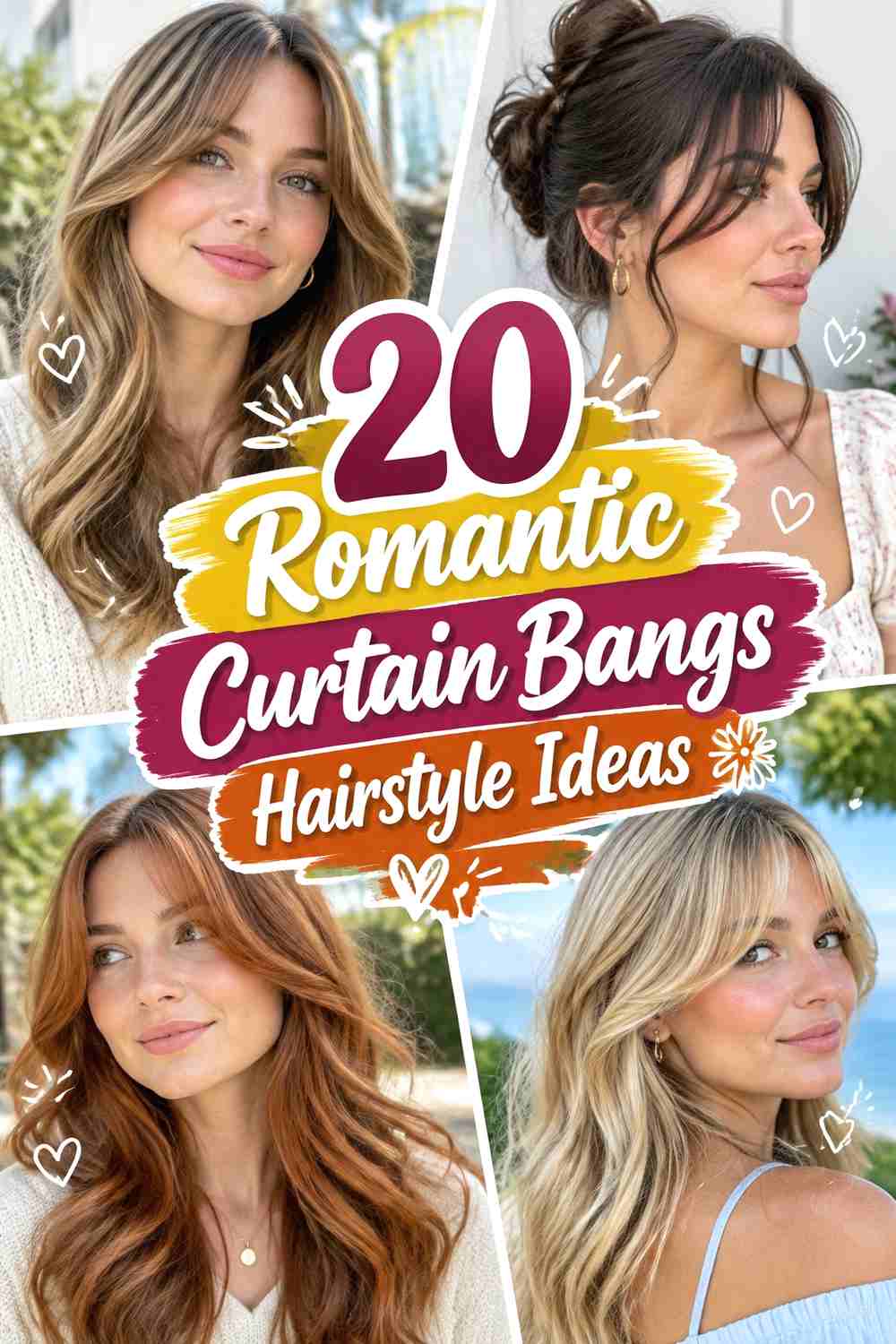
12 Retro Curtain Bangs Hairstyle Ideas
Retro curtain bangs bring instant softness around the face, blending nostalgic shape with modern layers, natural movement, and easy everyday styling.
Curtain bangs are especially adaptable because they can feel distinctly retro without locking the entire haircut into one era. Feathered ends lean into a ’70s mood, a rounded blowout creates polished volume, and softer Bardot-inspired sections bring a relaxed vintage finish. The same center-opening fringe can also work with bobs, lobs, long layers, curls, and waves.
The most important details are length, density, parting, and how the bangs connect to the rest of the haircut. Shorter curtain pieces create more obvious framing, while longer versions are easier to tuck away. Before choosing a look, consider your natural texture, daily styling time, and how much fringe maintenance feels realistic.
Quick List
- Feathered 70s Curtain Bangs Hairstyle
- Voluminous Blowout Curtain Bangs Hairstyle
- Soft Shag Curtain Bangs Hairstyle
- Retro Bob Curtain Bangs Hairstyle
- Long Layered Curtain Bangs Hairstyle
- Wavy Curtain Bangs Hairstyle
- Curly Curtain Bangs Hairstyle
- Sleek Center Part Curtain Bangs Hairstyle
- Flipped End Curtain Bangs Hairstyle
- Shoulder Length Curtain Bangs Hairstyle
- Textured Lob Curtain Bangs Hairstyle
- Soft Bardot Curtain Bangs Hairstyle
1. Feathered 70s Curtain Bangs Hairstyle
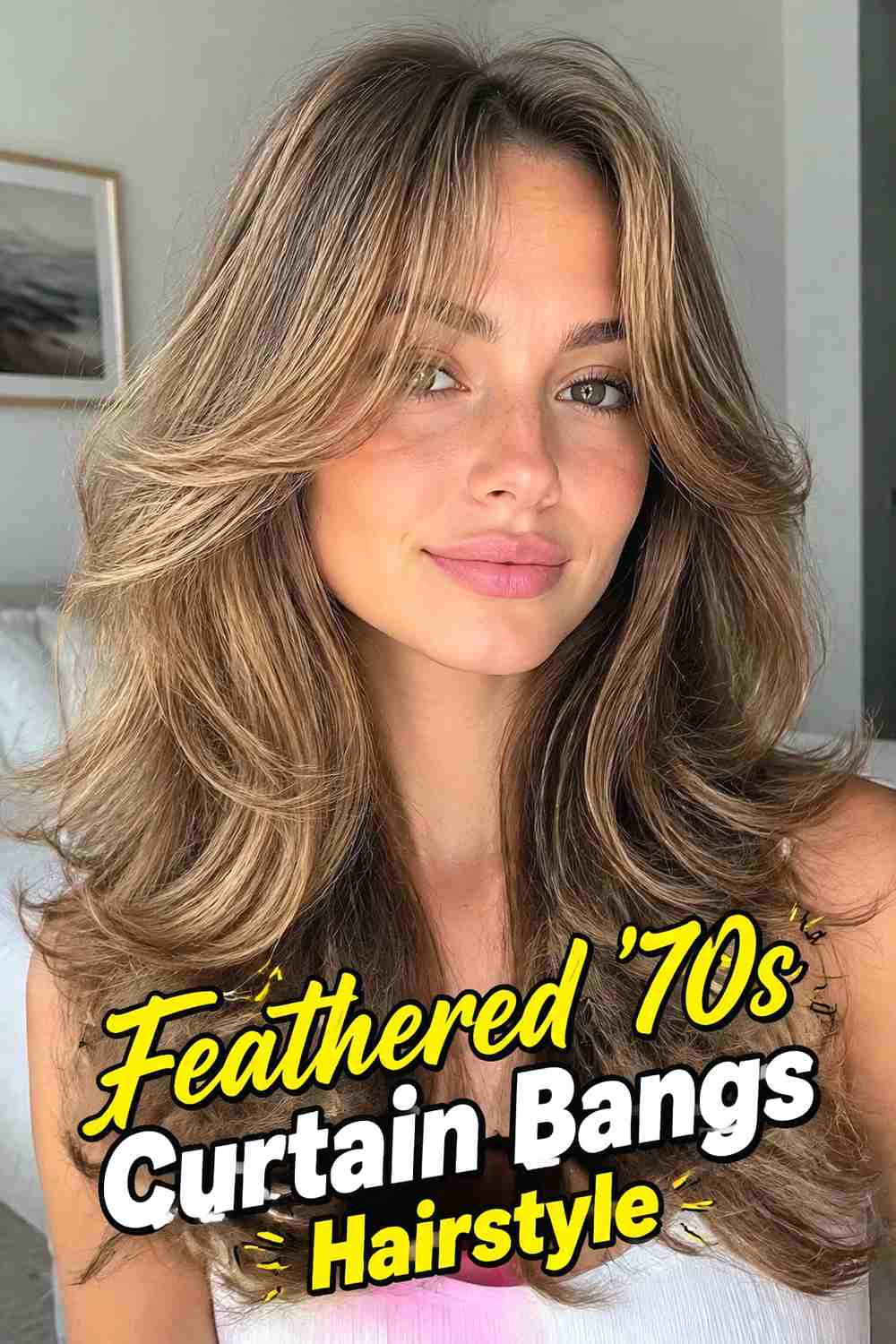
Feathered curtain bangs capture the classic ’70s mood with a center opening and soft pieces that sweep outward toward the temples. The most convincing version blends the fringe into face-framing layers rather than leaving an abrupt line between the bangs and the rest of the haircut. Medium to long hair gives the feathering plenty of room to continue through the sides, especially when the ends have a gentle outward bend. The crown can retain moderate volume without becoming excessively teased. This look works particularly well on straight and wavy hair, though the exact finish should follow natural density. A soft, airy texture keeps the retro inspiration wearable rather than costume-like.
Styling Notes
Direct the bangs away from the face while drying, then allow them to settle naturally toward the cheeks. Avoid over-curling the ends into stiff rolls.
2. Voluminous Blowout Curtain Bangs Hairstyle
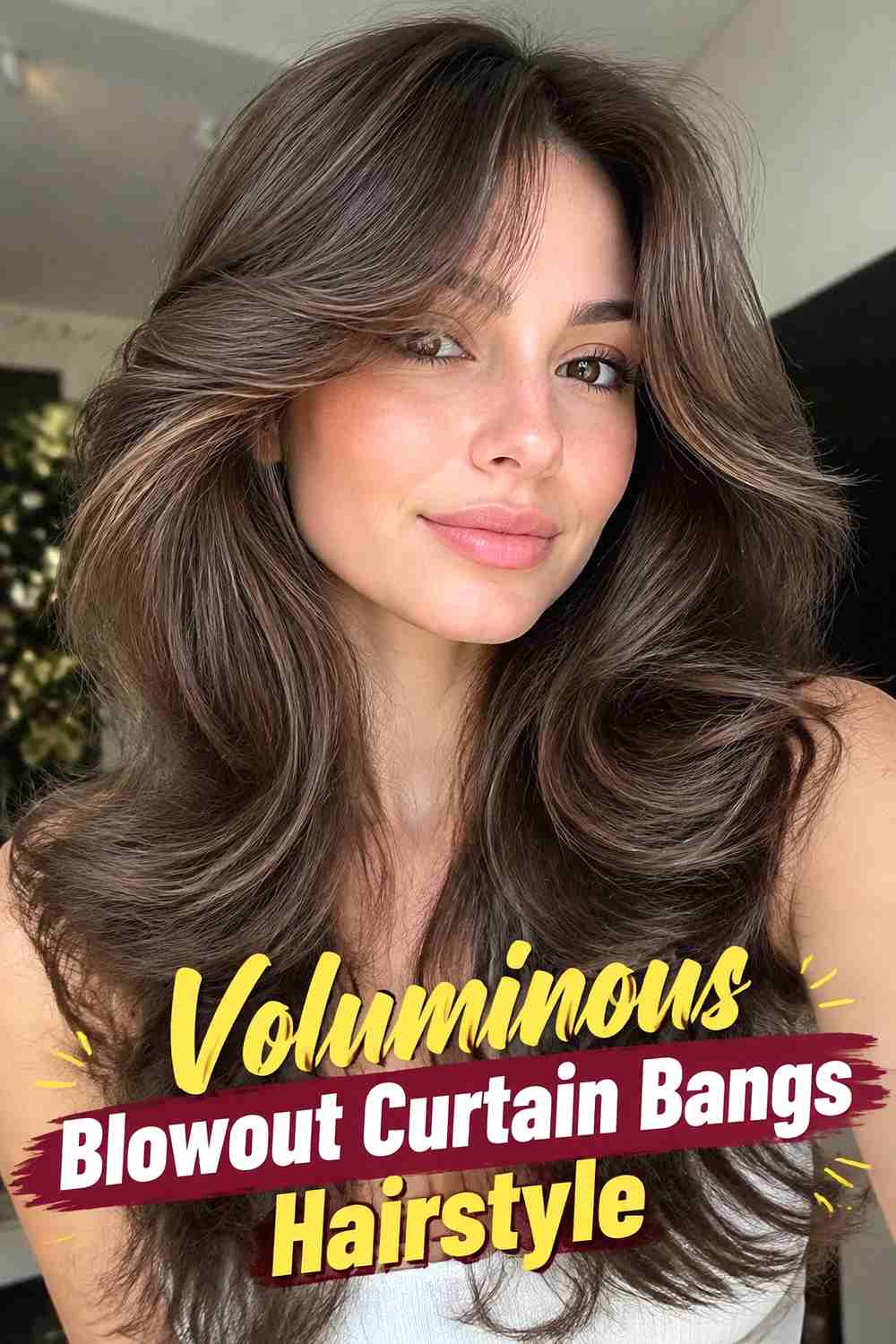
A voluminous blowout gives curtain bangs a fuller, polished shape that feels inspired by vintage salon styling while still fitting modern haircuts. The fringe opens through the center and curves outward, connecting into rounded layers around the cheekbones and shoulders. The rest of the hair carries lift through the roots and broad movement through the lengths rather than tight curls. This works especially well on medium-long and long hair because the volume can develop gradually without becoming too concentrated around the face. Dense hair may need internal layering to keep the blowout buoyant, while finer hair often benefits from lighter sections. The final finish should look soft, mobile, and touchable.
Pro Tip
Let each front section cool in its curved position before separating it. That helps the curtain shape hold while preserving natural movement.
3. Soft Shag Curtain Bangs Hairstyle
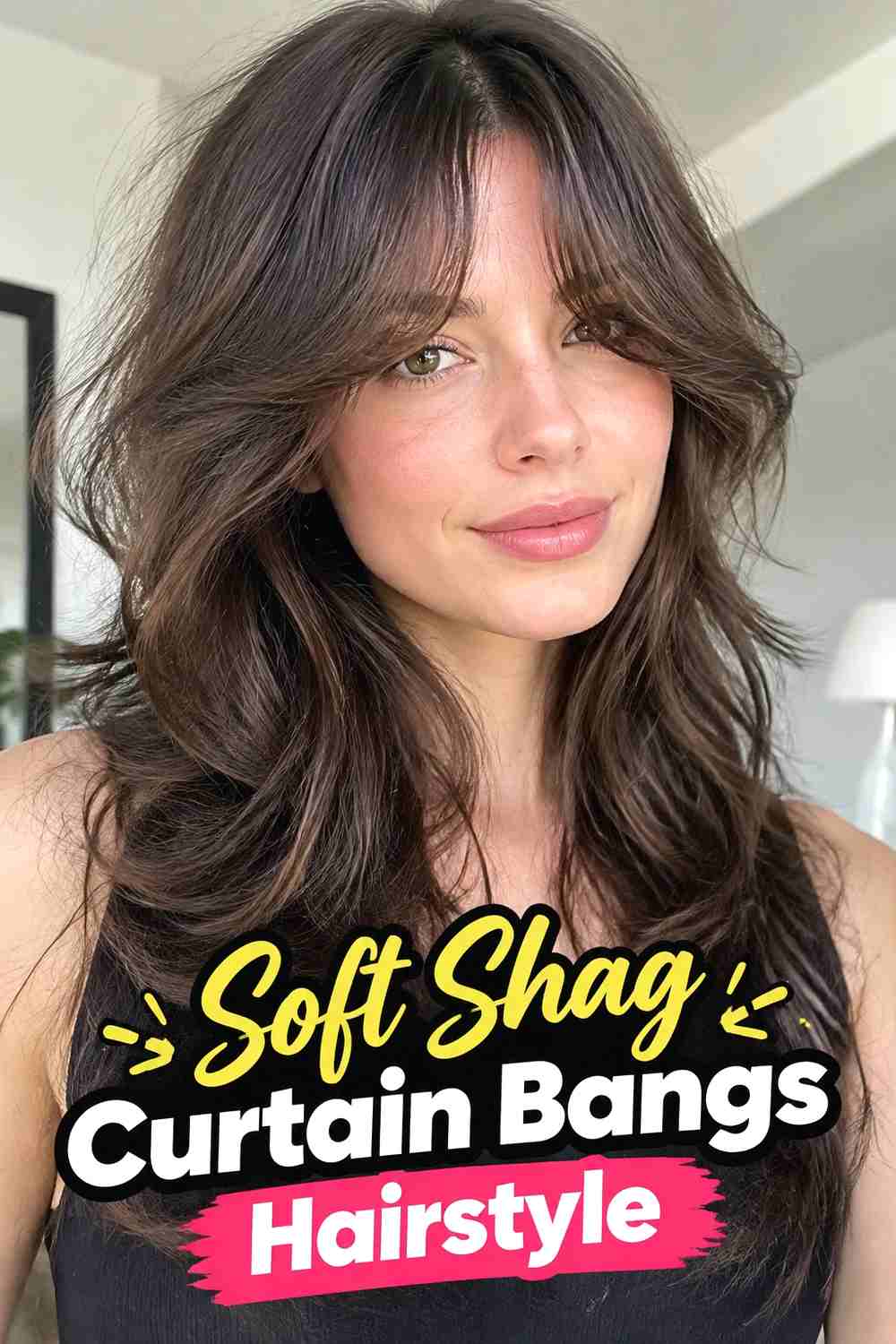
A soft shag pairs naturally with curtain bangs because both rely on gradual layering and movement rather than strict, blunt lines. The fringe can begin shorter near the center before blending into longer pieces toward the temples, while the haircut carries textured layers through the crown and sides. Unlike a highly disconnected shag, this version keeps enough weight through the ends to feel wearable and easy to grow out. Wavy hair can show the shape with very little effort, while straighter textures may need a small amount of bend to emphasize the layers. The finished look should feel relaxed and slightly undone, with visible strand separation instead of overly polished uniformity.
Hair Type & Length
Medium-length wavy or lightly textured hair is a natural match, though the cut can be adapted for straighter or curlier textures by adjusting the layer placement.
4. Retro Bob Curtain Bangs Hairstyle
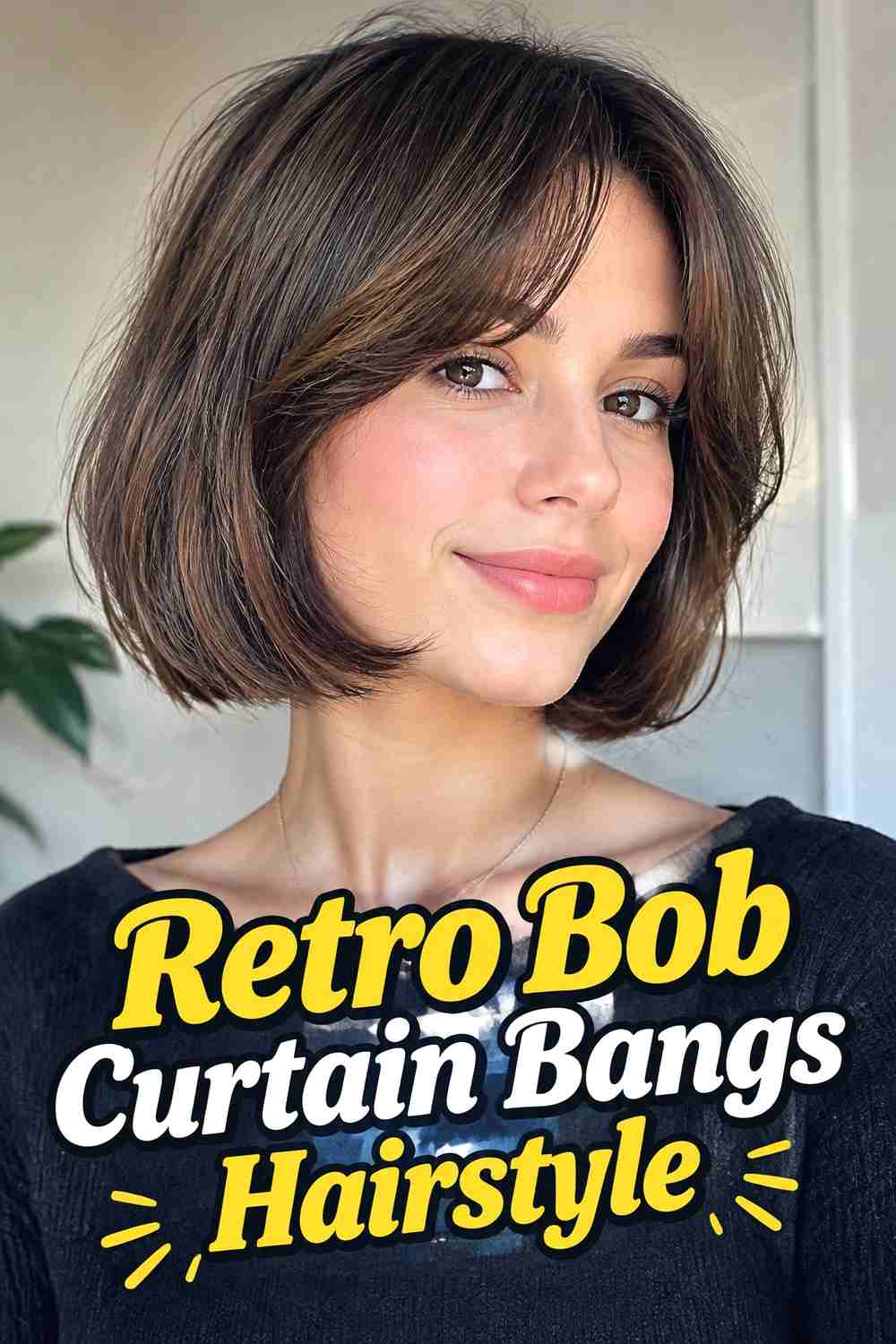
A retro bob with curtain bangs combines a compact haircut with a soft, parted fringe that keeps the overall shape from feeling too severe. The bob can sit around the jaw or chin, with the bangs curving outward and blending into the front corners of the cut. A slight bend through the ends gives the silhouette a vintage finish without forcing every section into the same direction. This style works beautifully on straight and softly wavy hair, while thicker hair may need subtle internal shaping so the bob remains balanced. Because the fringe and perimeter are both visually important, regular trims help preserve the intended proportions as the hair grows.
Why It Works
The soft curtain fringe breaks up the stronger bob perimeter, creating a useful balance between structure and movement.
5. Long Layered Curtain Bangs Hairstyle
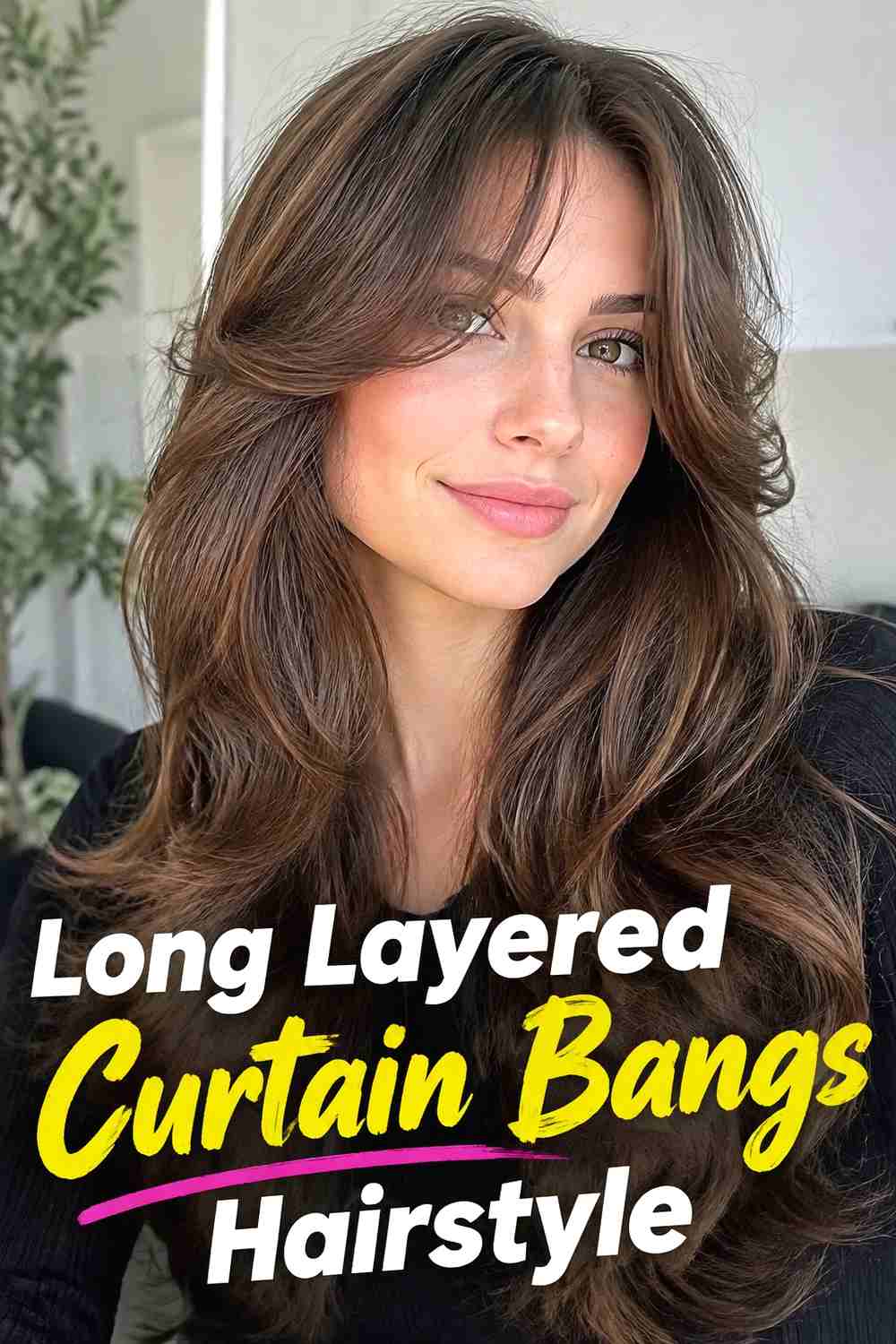
Long layered hair gives curtain bangs plenty of room to blend naturally into the rest of the haircut. The shortest fringe pieces can sit around the brows or cheekbones before transitioning into longer face-framing layers that continue through the sides. This gradual connection is what gives the style its soft retro quality rather than making the bangs feel separate from the length. Straight, wavy, and lightly textured hair can all wear the look, with longer layers providing movement without sacrificing overall length. It is also a practical choice if you like tying your hair back, since the longer curtain pieces can often be tucked behind the ears or incorporated into a loose ponytail.
Wear & Maintenance
Trim the front sections before they become too long to separate clearly at the center. The rest of the haircut can usually grow more gradually between shaping appointments.
6. Wavy Curtain Bangs Hairstyle
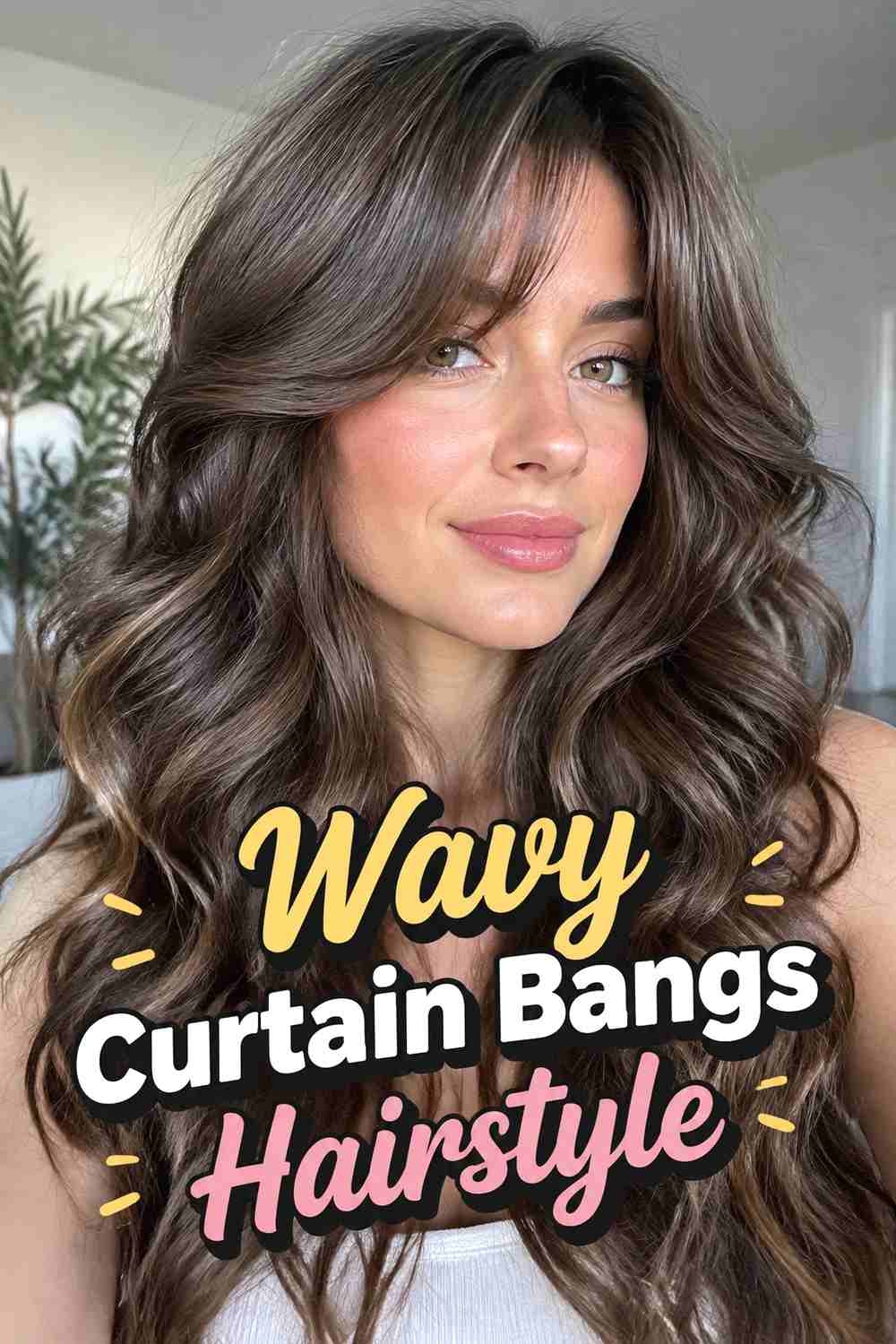
Wavy curtain bangs feel especially natural because the fringe can follow the same soft bends as the rest of the hair. Instead of forcing the front pieces perfectly straight, let them open around the forehead and curve into the cheek area with a little texture and variation. The overall hairstyle can sit anywhere from shoulder length to long, with loose waves helping the fringe blend into surrounding layers. This style is useful if you prefer an undone retro finish rather than a highly polished blowout. A few irregular bends and natural flyaways keep the result believable. Avoid cutting the bangs too short if your wave pattern tends to spring upward as it dries.
Styling Notes
Work with the direction of your natural wave whenever possible. Light reshaping around the front is often enough to establish the curtain effect without restyling the entire head.
7. Curly Curtain Bangs Hairstyle
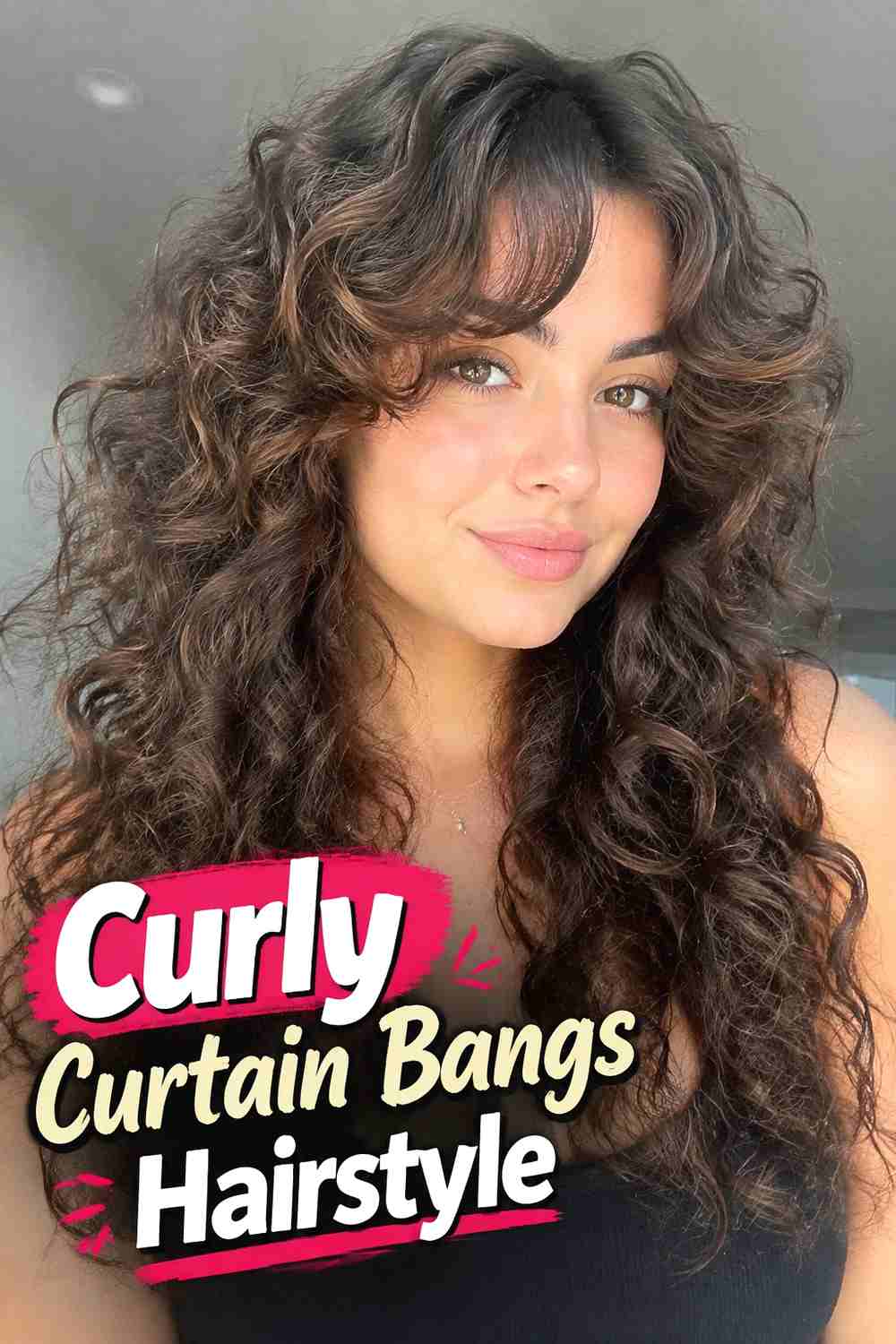
Curly curtain bangs create a soft center-opening shape while preserving natural curl spring and variation. The front pieces should be planned with shrinkage in mind, since curls can sit considerably shorter once fully dry. Rather than expecting two perfectly symmetrical arcs, allow the fringe to separate organically around the forehead and blend into curls near the temples and cheeks. Layered curly hair helps support the transition and prevents the bangs from looking disconnected from the rest of the silhouette. The finished look can range from compact ringlets to fuller curls depending on texture and density. Maintaining natural movement is more important than forcing every front curl into identical placement.
Pro Tip
Evaluate the fringe at its normal dry length before removing more hair. Small changes can have a significant effect once the curls spring back into shape.
8. Sleek Center Part Curtain Bangs Hairstyle
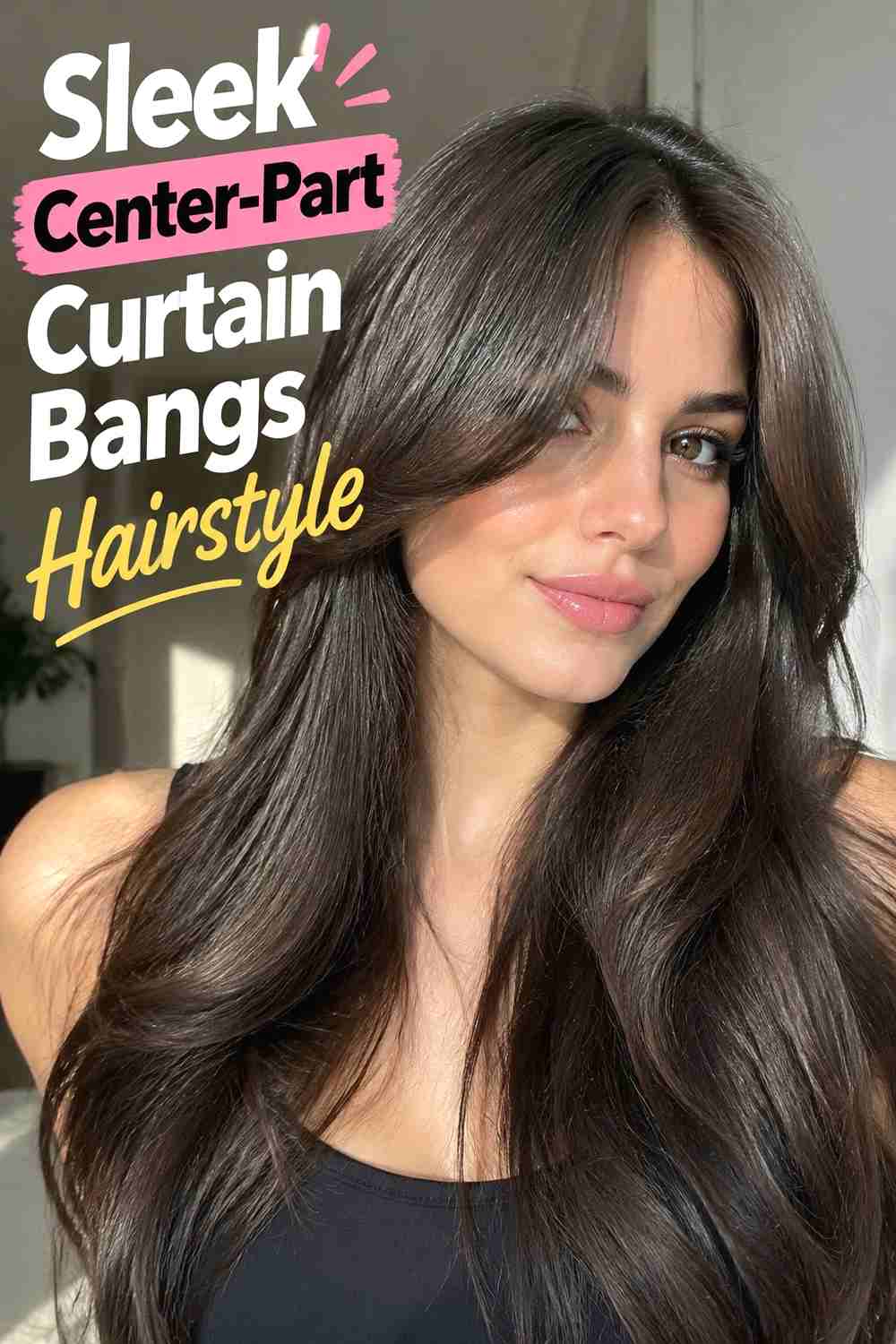
A sleek center-part version gives retro curtain bangs a cleaner, more controlled finish. The fringe opens precisely through the middle and bends softly away from the face, while the rest of the hair remains smooth through the lengths. This style can work on medium or long hair and looks particularly polished when the front pieces connect into subtle face-framing layers. The goal is smoothness without making the hair appear stiff or overly flat; visible strand detail and natural weight keep the finish believable. Compared with a voluminous blowout, this option feels quieter and more minimalist, making it a useful choice when you like the vintage curtain shape but prefer a modern overall silhouette.
Best For
Choose this look if your daily style leans polished and you prefer controlled movement over large root volume or heavily feathered ends.
9. Flipped End Curtain Bangs Hairstyle
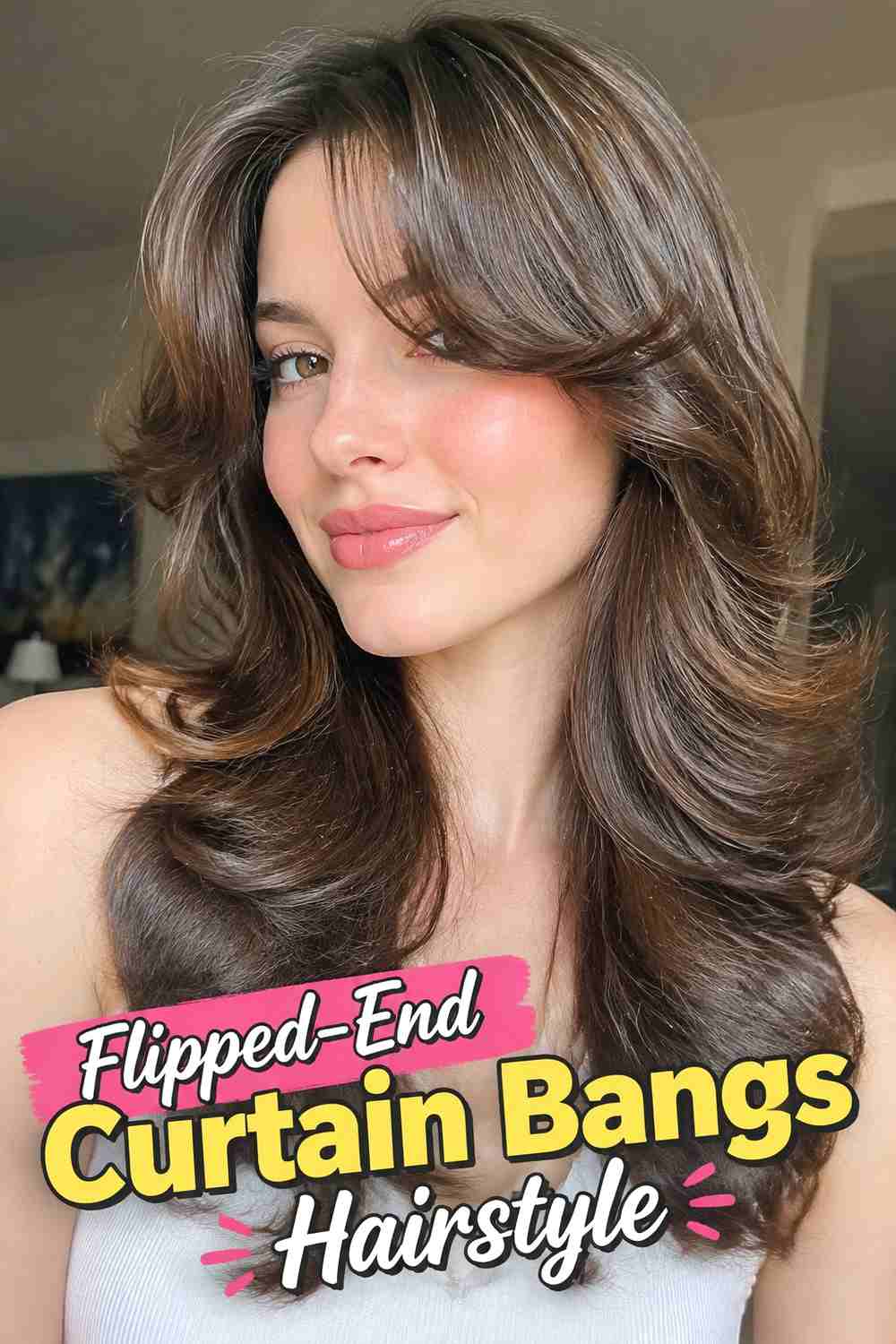
Flipped ends give curtain bangs an unmistakable retro accent while keeping the hairstyle playful and wearable. The bangs sweep away from the face, and the longer layers or perimeter repeat that outward movement near the shoulders or ends. The key is moderation: a gentle flip looks softer and more modern than a sharply turned, heavily sprayed shape. Shoulder-length and medium-long hair show the repeated curve especially clearly, though longer hair can use more subtle flips through selected layers. Straight and wavy textures are easiest to shape this way. Keeping the crown relatively smooth allows the outward movement at the bangs and ends to remain the main feature.
Styling Notes
Shape the ends in broad sections rather than curling tiny pieces individually. Larger bends create a softer vintage effect and keep the hair from looking overly set.
10. Shoulder Length Curtain Bangs Hairstyle
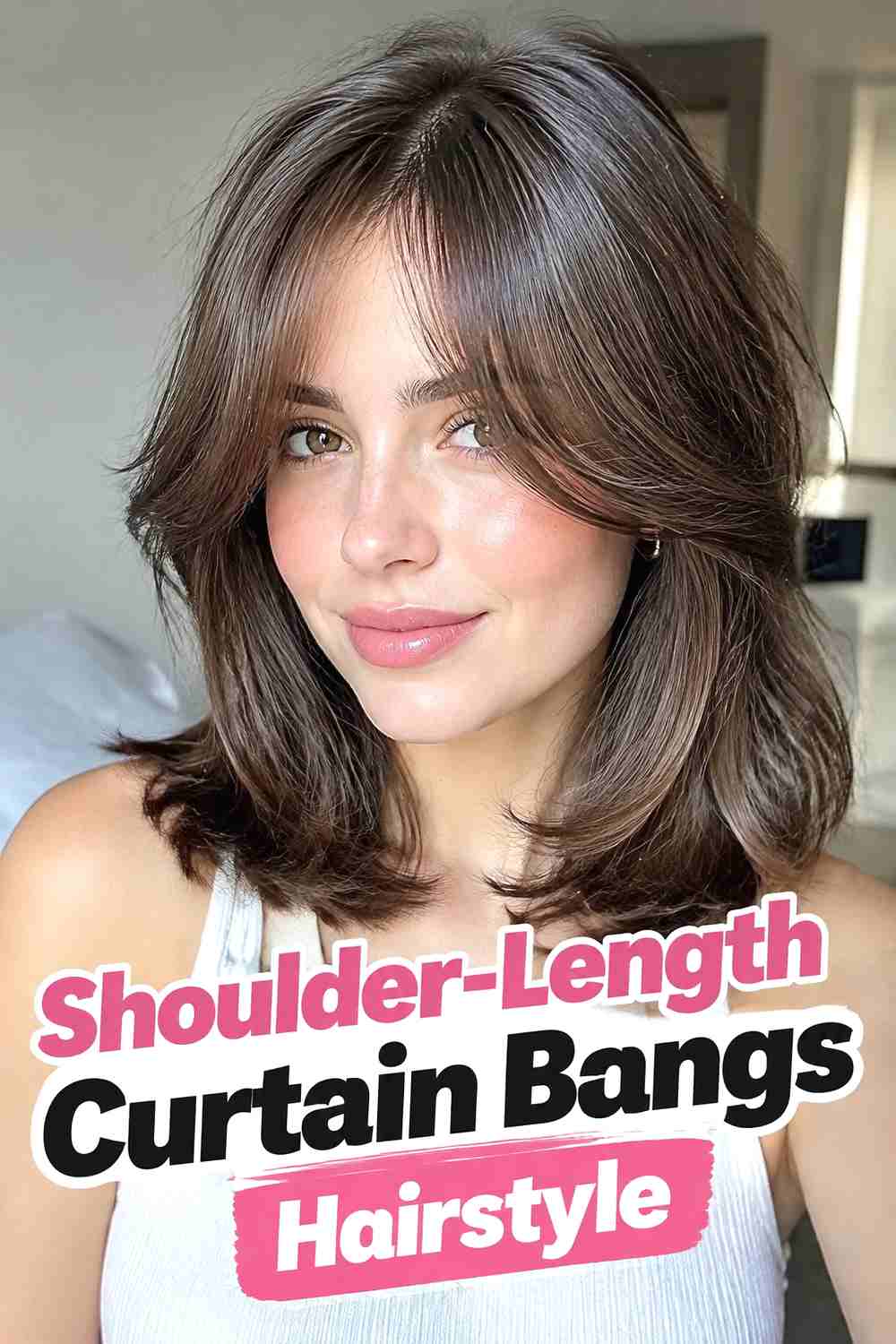
Shoulder-length hair is an especially versatile base for curtain bangs because the fringe can blend into layers without requiring a very long haircut. The center pieces frame the forehead and cheeks, while longer sections connect gradually into the shoulder-grazing perimeter. This length can be worn smooth, wavy, lightly flipped, or naturally textured, making it useful if you like changing the overall finish while keeping the same fringe shape. The retro influence comes from the parted, outward-moving bangs rather than extreme volume. Because shoulder-length hair often interacts with collars and naturally flips at the ends, a little intentional movement can actually support the vintage feel instead of needing to be completely straightened.
Why It Works
The medium length keeps the haircut flexible while giving the curtain fringe enough surrounding hair to blend naturally and maintain a balanced silhouette.
11. Textured Lob Curtain Bangs Hairstyle
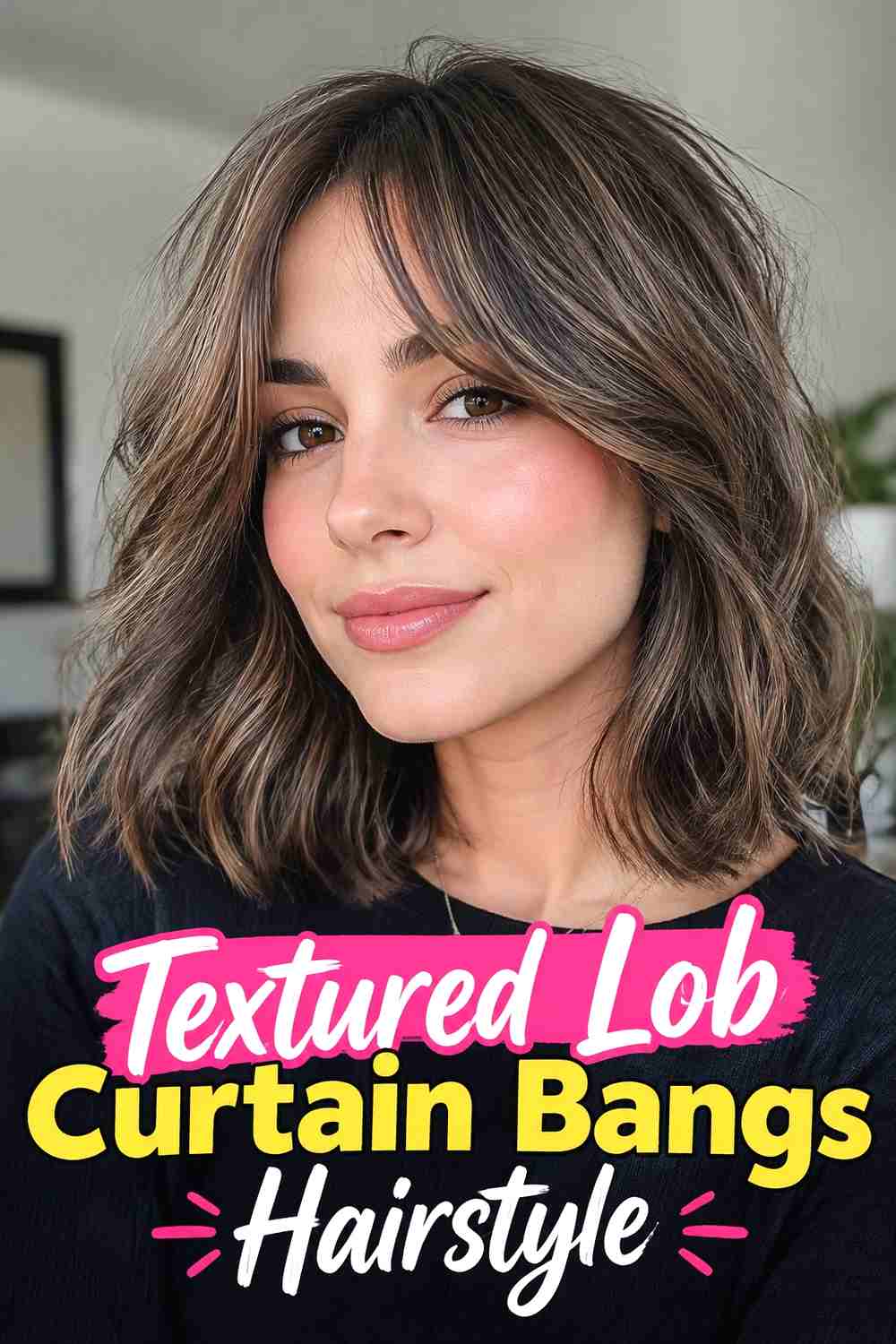
A textured lob gives curtain bangs a slightly undone, modern-retro setting. The main length sits around the shoulders or collarbone with soft internal layers and irregular bends, while the fringe opens through the center and blends toward the cheekbones. This combination is especially useful for wavy hair because the natural texture can create movement without a full blowout. Straighter hair can achieve a similar effect with broad, loose bends rather than tight curls. Keep the perimeter substantial enough that the lob still has a recognizable shape. The bangs should feel connected to the overall texture, with natural separation and a few soft flyaways rather than a perfectly polished, uniform finish.
Wear & Maintenance
Refresh the curtain sections separately on days when the rest of the lob already has good texture. The front often needs more frequent attention than the lengths.
12. Soft Bardot Curtain Bangs Hairstyle
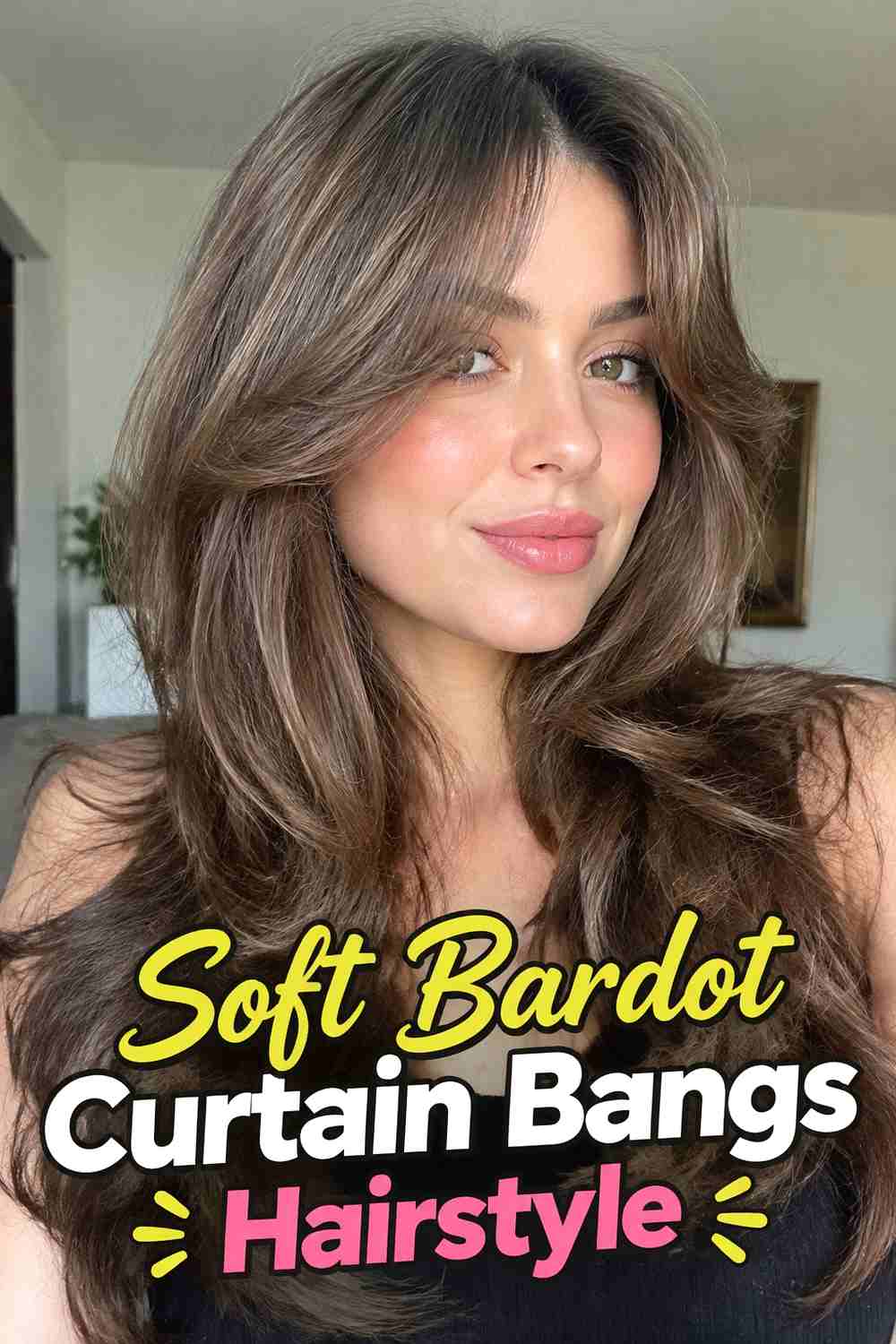
Soft Bardot-inspired curtain bangs create a fuller center-parted fringe with relaxed volume around the forehead and temples. The bangs can sit slightly shorter near the middle and lengthen toward the sides, blending into loose layers with an airy, lived-in finish. Instead of rigid vintage styling, keep the roots softly lifted and the front pieces curved enough to frame the face without forming identical rolls. Medium-long and long hair work especially well because the surrounding length balances the fullness of the fringe. A little texture through the rest of the hair keeps the style cohesive. The finished effect should feel romantic and retro-inspired while remaining casual enough for everyday wear.
Best For
Choose this version if you like fuller bangs with visible volume but still want the flexibility of a center opening and longer side pieces.
How to Choose the Right Look
Start with how much fringe you want around your face. Longer curtain bangs are easier to tuck away and blend naturally into long layers, while shorter versions create a stronger retro statement and usually need more frequent shaping.
Natural texture matters just as much. Wavy hair can suit shaggy or softly separated curtain bangs, curls need enough length to account for shrinkage, and straighter hair can emphasize feathered, flipped, or blowout shapes. Density also affects the result: thicker bangs create more visible fullness, while lighter sections feel softer and airier.
Think about daily styling time before committing. A polished blowout or flipped finish may need regular reshaping, while longer layered or naturally wavy curtain bangs can be more relaxed. Choose the version that works with your real routine rather than relying on constant styling to maintain the look.
Final Thoughts
Retro curtain bangs can shift from softly ’70s to sleek and modern depending on the cut around them. Focus on the fringe length, blend, texture, and amount of volume that suit your hair, then let the center-opening shape provide the vintage character.
FAQs
1. Are curtain bangs good for a retro hairstyle?
Yes. Their center-parted shape works naturally with ’60s- and ’70s-inspired blowouts, shags, bobs, flipped ends, and layered haircuts.
2. Which retro curtain bangs are easiest to maintain?
Longer curtain bangs that blend into face-framing layers are generally easier to tuck back and can tolerate more grow-out than shorter fringe.
3. Can curly hair have curtain bangs?
Yes. Curly curtain bangs can work beautifully when the cut accounts for shrinkage and allows the front curls to separate naturally around the forehead.
4. Do curtain bangs need a center part?
A center opening creates the classic curtain effect, but the part can be slightly off-center if that works better with your natural growth pattern or preferred styling.
5. How often do curtain bangs need trimming?
It depends on the starting length and how defined you want the fringe to remain. Shorter pieces usually need more frequent shaping, while longer curtain bangs can grow out more gradually.
CTA
Save your favorite retro curtain-bang look, share these ideas with someone planning a fringe refresh, and explore more vintage-inspired hairstyle inspiration.