17 Textured Side Braids With Tartan Midi Skirt Outfits
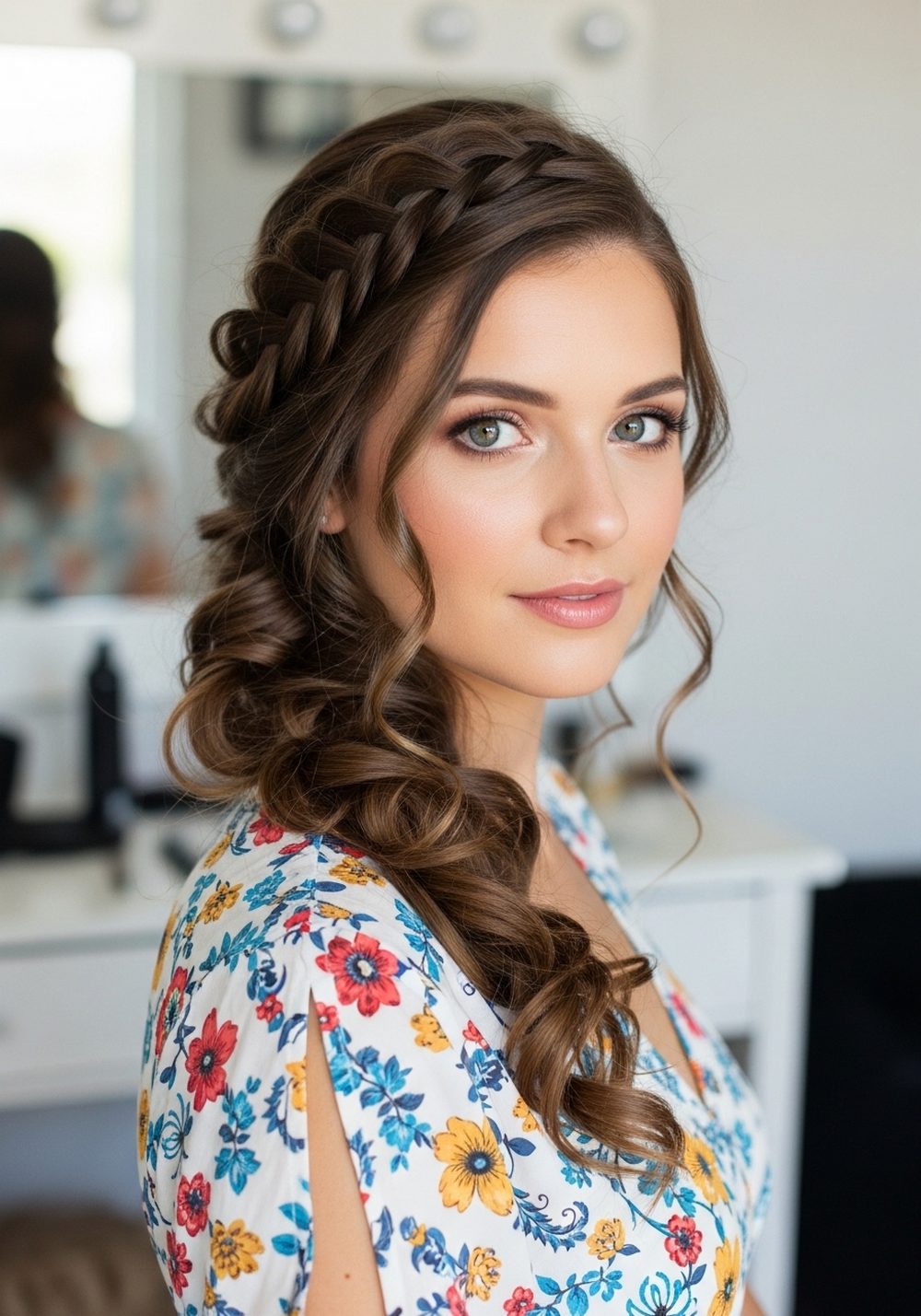
Textured side braids bring soft movement to tartan midi skirts, balancing structured checks with loose weaving, natural volume, and relaxed feminine detail.
A tartan midi skirt already carries plenty of visual pattern, so a side braid works best when its texture feels intentional without becoming overly complicated. Loose three-strand braids, fishtails, Dutch braids, twists, and braided ponytails all create a directional silhouette that keeps the hairstyle visible from the front while leaving the outfit’s pattern easy to see.
The ideal option depends on your length, density, natural texture, and how polished you want the outfit to feel. Chunkier braids can complement heavier wool tartans, while softer, narrower styles suit lighter skirts and fitted knits. Pay attention to comfort around coats, collars, and scarves, and use texture strategically rather than pulling every braid excessively loose.
Quick List
- Loose Textured Side Braid Hairstyle
- Deep Side Part Fishtail Braid Hairstyle
- Soft Pancaked Side Braid Hairstyle
- Wavy Side Dutch Braid Hairstyle
- Rope Twist Side Braid Hairstyle
- Face Framing Side Braid Hairstyle
- Textured Low Side Braid Hairstyle
- Curly Side Braid Hairstyle
- Side Crown Braid Hairstyle
- Boho Side Braid Hairstyle
- Crimped Side Braid Hairstyle
- Side Braid Ponytail Hairstyle
- Side Swept Pull Through Braid Hairstyle
- Voluminous Side French Braid Hairstyle
- Ribbon Woven Side Braid Hairstyle
- Textured Side Braid Bun Hairstyle
- Coily Side Braid Hairstyle
1. Loose Textured Side Braid Hairstyle
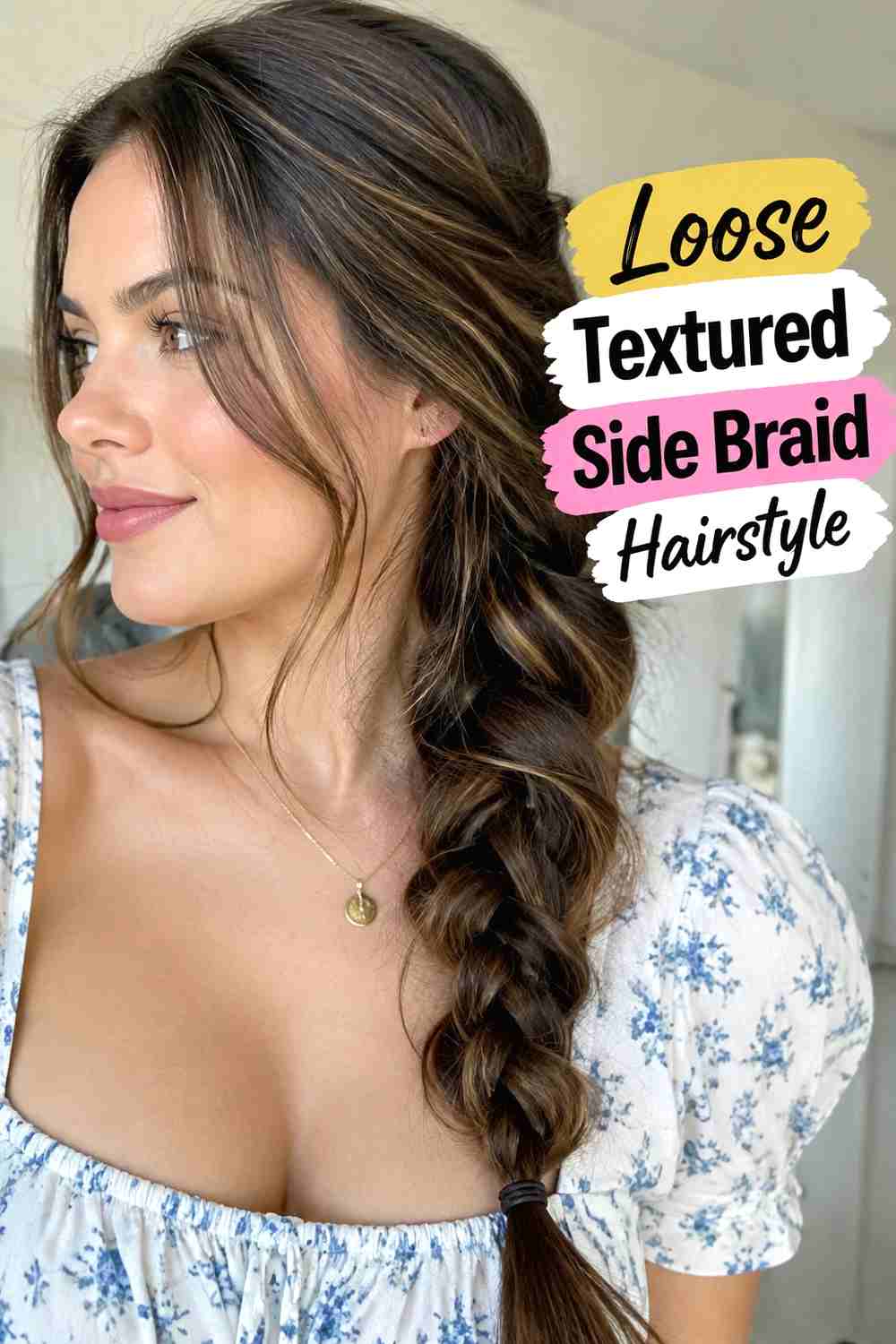
A loose textured side braid gives a tartan midi skirt outfit an easy, softly styled finish without competing with the skirt’s bold checks. Sweep the hair toward one shoulder and create a simple three-strand braid, leaving the crown slightly relaxed and the braid itself full rather than tightly woven. A few natural flyaways and gently released front pieces keep the look casual. Medium-long to long hair works best because enough length is needed for the braid to remain visible from the front. Light waves or natural texture before braiding can add grip and dimension, especially on fine hair. Keep the elastic small and understated so the overall effect stays soft, wearable, and balanced with cozy knitwear or a fitted jacket.
Styling Notes
Braid with moderate tension first, then loosen selected outer sections afterward. Pulling everything apart equally can make the braid unstable and less natural.
Best For
This is an easy option for long hair when you want a relaxed tartan outfit to feel polished without looking dressed for a formal event.
2. Deep Side Part Fishtail Braid Hairstyle
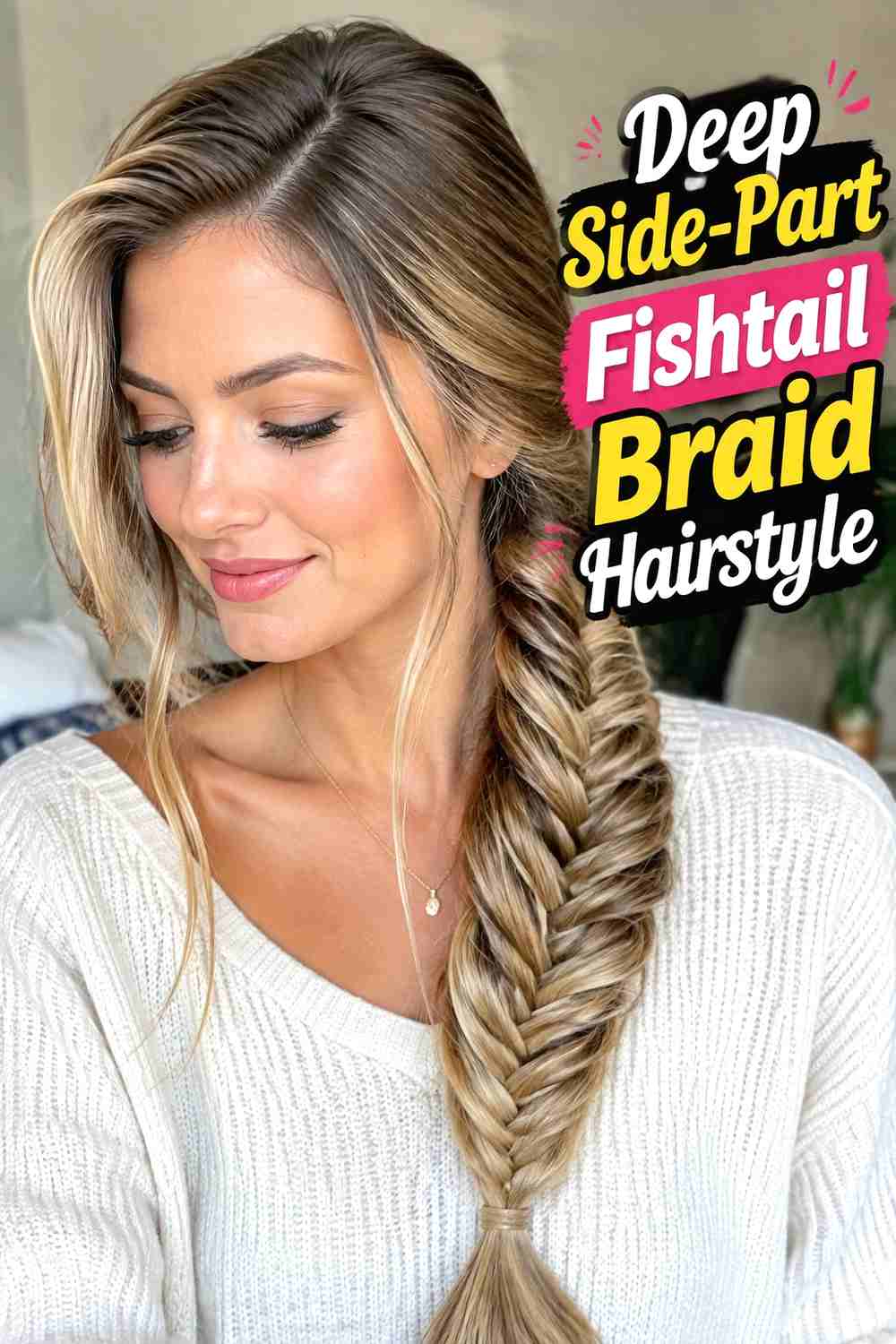
A deep side-part fishtail braid creates fine, intricate texture that contrasts beautifully with the larger geometric pattern of tartan. Start with a defined side part and direct most of the hair over the fuller side before dividing the length into two sections. Build the fishtail with small crossed pieces, then gently widen it once the braid is secure. The crown can stay smoother for contrast while the lower braid becomes progressively softer. Long hair is particularly suited to this style because extra length lets the fishtail pattern remain visible. A little pre-styling texture helps slippery hair hold, while naturally wavy hair can be braided with minimal preparation. The result feels detailed but still relaxed enough for boots, knitwear, and a midi skirt.
Hair Type & Length
Medium-long and long hair give the clearest fishtail pattern. Fine hair benefits from gentle expansion, while dense hair can create a naturally substantial braid.
Pro Tip
Use smaller sections near the top of the braid and slightly larger pieces lower down. This keeps the structure secure while allowing the ends to look softer.
3. Soft Pancaked Side Braid Hairstyle
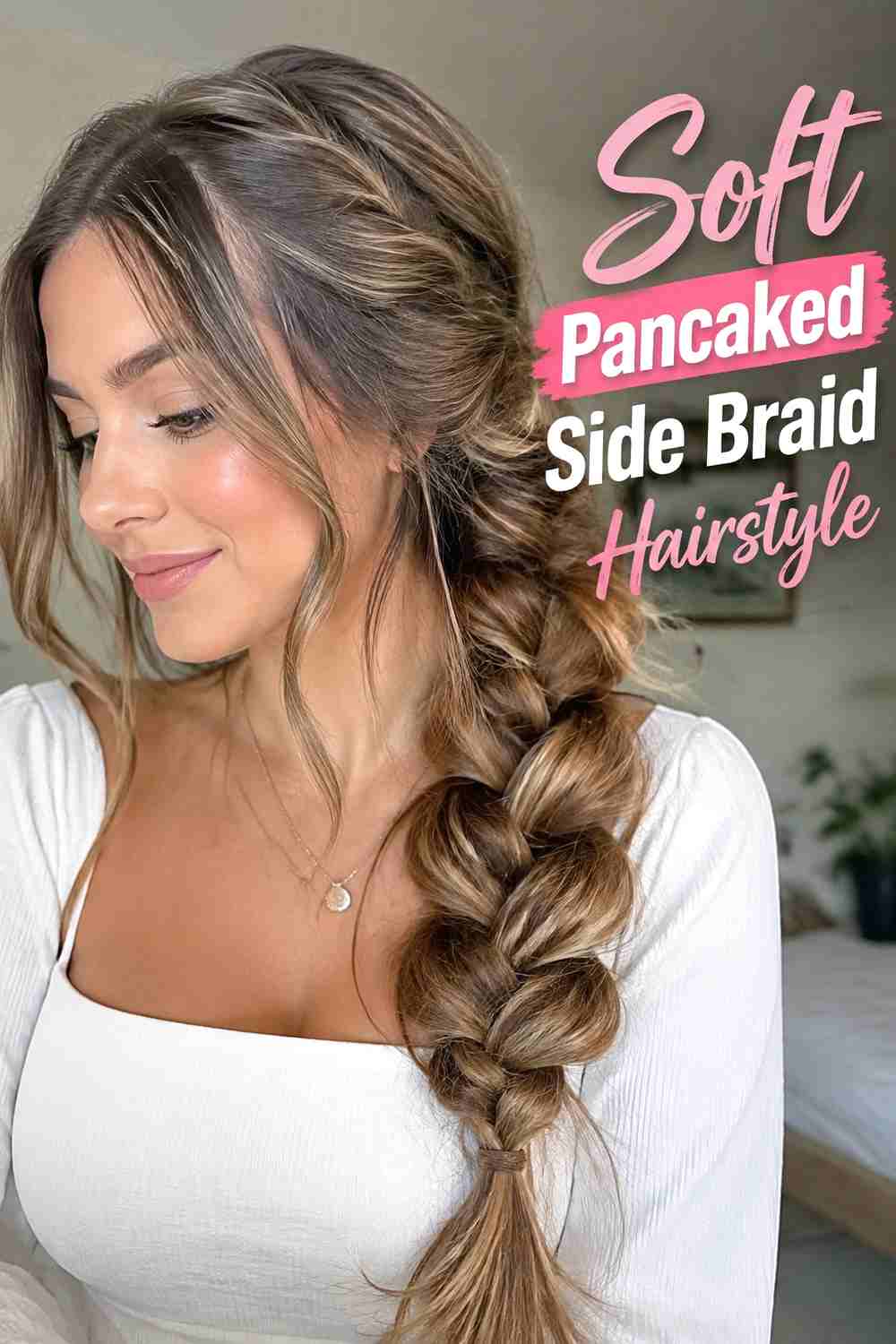
A soft pancaked side braid focuses on width and visible texture, making it a strong match for substantial tartan fabrics. Create a standard braid over one shoulder, secure the end, and carefully pull only the outer edges of each section to widen the shape. The finished braid should look full and airy without appearing stretched apart. This technique is especially helpful for fine to medium-density hair because it creates visual volume without requiring extra length or complicated weaving. Keep the crown slightly lifted and allow small pieces around the temples to soften the transition into the braid. With a tartan midi skirt, the broad braid provides enough visual presence to hold its own beside the pattern while still keeping the overall outfit relaxed and feminine.
Styling Notes
Begin with a braid that is secure enough to hold its shape. Loosen each section gradually from the bottom upward rather than pulling large pieces out at once.
Why It Works
The expanded braid adds rounded softness next to tartan’s straight lines and checks, creating contrast without introducing another busy pattern.
4. Wavy Side Dutch Braid Hairstyle
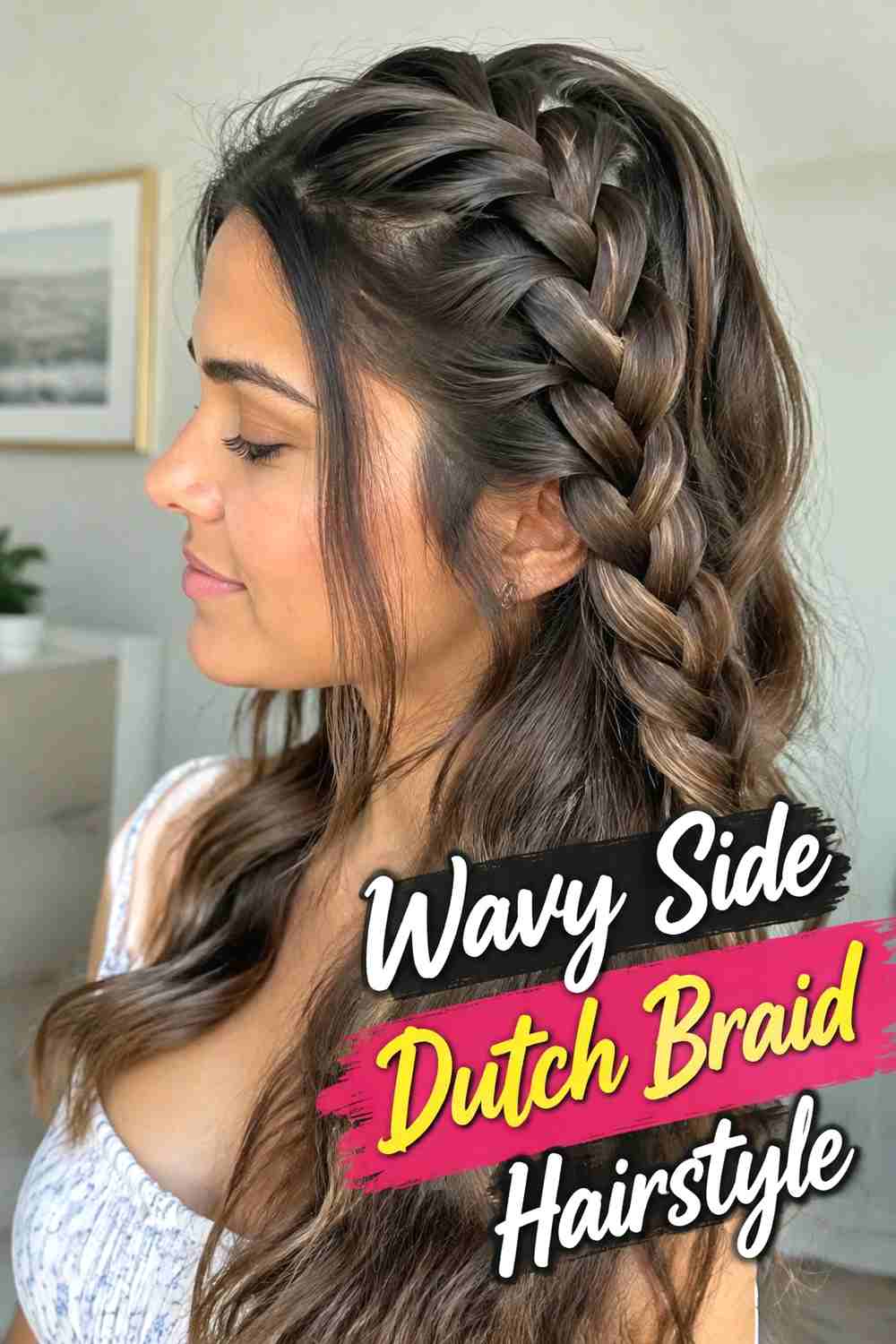
A wavy side Dutch braid combines visible braid structure with soft movement around the head. Begin near the heavier side of a side part and braid underneath each section so the plait sits raised above the surface. Continue diagonally toward the opposite side or guide the braid down over one shoulder, depending on your length. Leaving the unbraided ends softly waved keeps the finish from feeling too strict. This style suits medium to long hair and works especially well when some natural wave or pre-styled texture gives the sections extra grip. Against a tartan midi skirt, the raised braid has enough definition to remain noticeable while the waves echo the softer movement of sweaters, blouses, and winter layers.
Styling Notes
Keep the Dutch braid comfortably firm near the scalp, then gently loosen its outer edges after securing the end. This protects the structure while adding dimension.
Best For
Choose this look when you want more braid detail around the crown rather than concentrating all the texture below the shoulder.
5. Rope Twist Side Braid Hairstyle
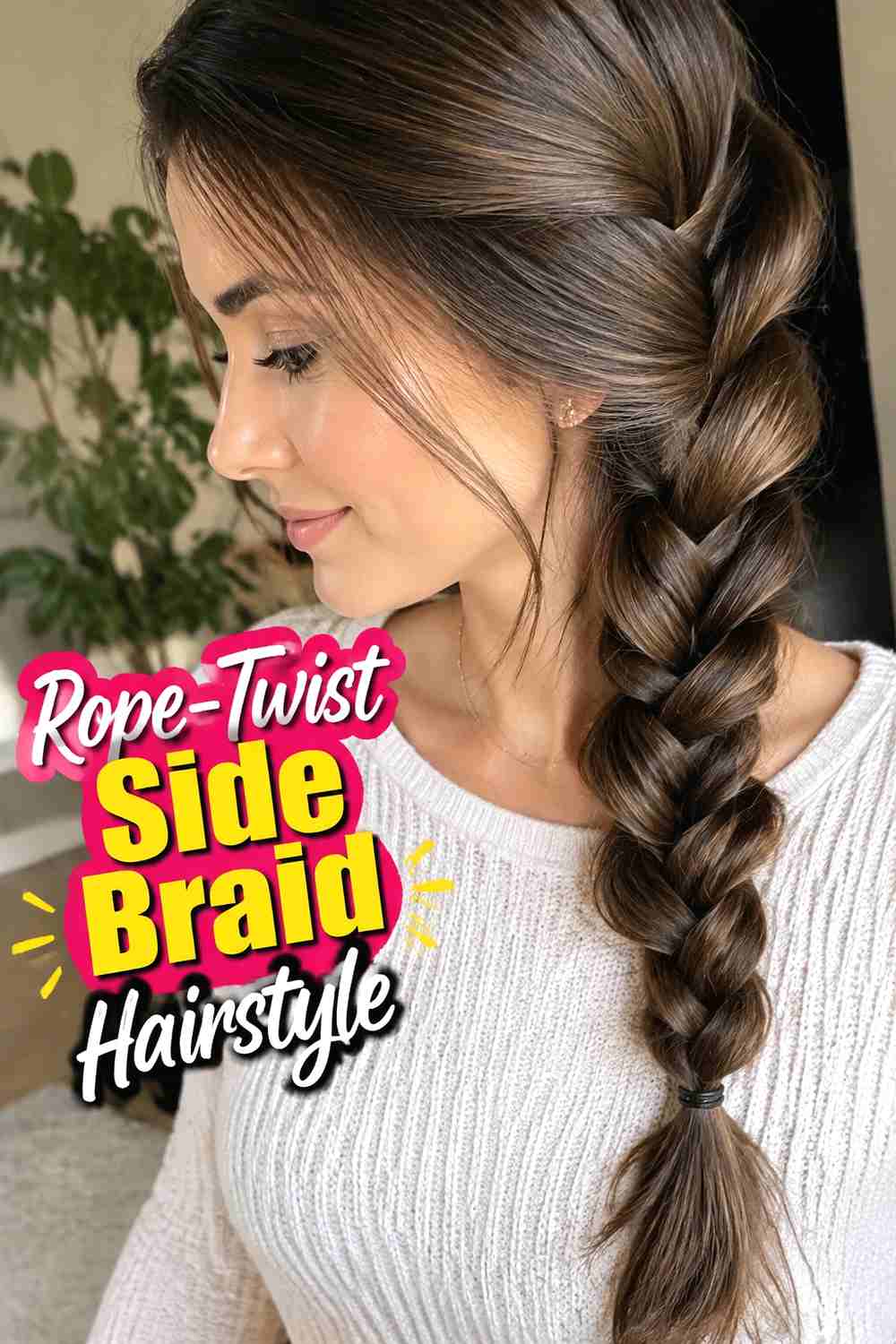
A rope-twist side braid offers a simpler alternative to traditional plaits while still creating plenty of visible texture. Gather the hair over one shoulder, divide it into two sections, twist both sections in the same direction, and then wrap them around each other in the opposite direction. That opposing tension helps the rope shape stay intact. The result looks especially good with tartan because its spiral texture feels distinct from the skirt’s checked pattern. Medium-long to long hair is easiest to work with, and lightly textured or wavy lengths generally hold the twist better than very slippery strands. Keep the crown soft and slightly asymmetrical, and leave the rope braid defined rather than excessively pulled apart so its pattern remains clear.
Wear & Maintenance
Secure the end with a firm elastic because rope twists can loosen faster than three-strand braids. A little flexible hold through the length can also improve staying power.
Pro Tip
Twist each section evenly from top to bottom before wrapping them together. Uneven tension can cause the rope shape to unravel or bend awkwardly.
6. Face Framing Side Braid Hairstyle
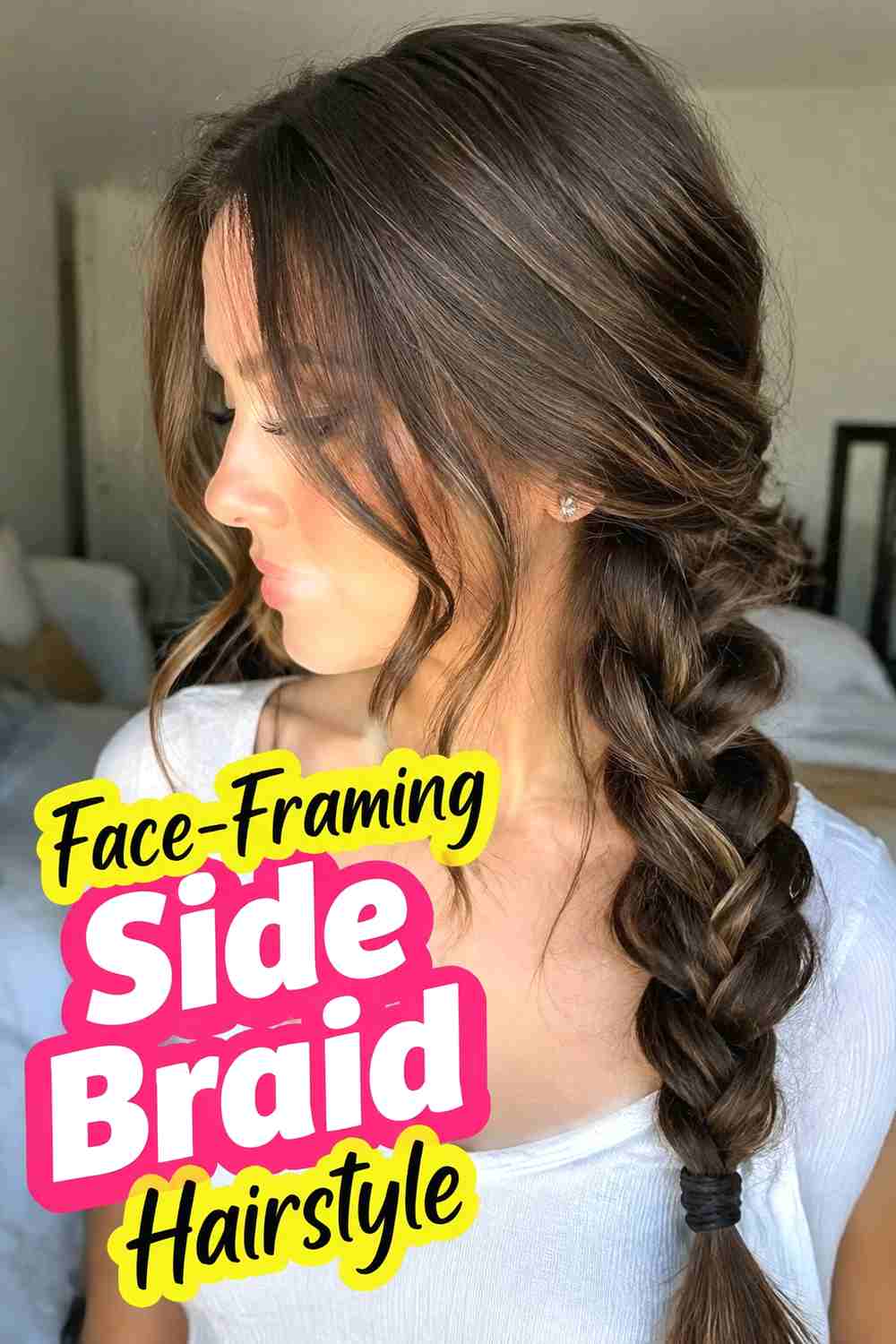
A face-framing side braid keeps the overall shape soft by leaving intentional pieces around the temples and cheek area. Sweep the majority of the hair to one side and braid from around the nape downward, allowing shorter layers to remain free rather than forcing them into the plait. Those pieces can follow their natural wave, curl softly, or stay mostly straight depending on your texture. The result works particularly well with tartan midi skirts styled with simple knits because the hair introduces movement without overwhelming the patterned fabric. Medium to long layered hair is ideal, although blunt cuts can achieve the same idea by releasing a few fine sections near the front. Keep the braid loose but secure enough for comfortable all-day wear.
Best For
This look works well when you prefer softer styling around the face and do not want every strand pulled tightly into the braid.
Styling Notes
Choose face-framing pieces deliberately before braiding. Pulling strands out afterward can create unwanted gaps in the braid or loosen its foundation.
7. Textured Low Side Braid Hairstyle
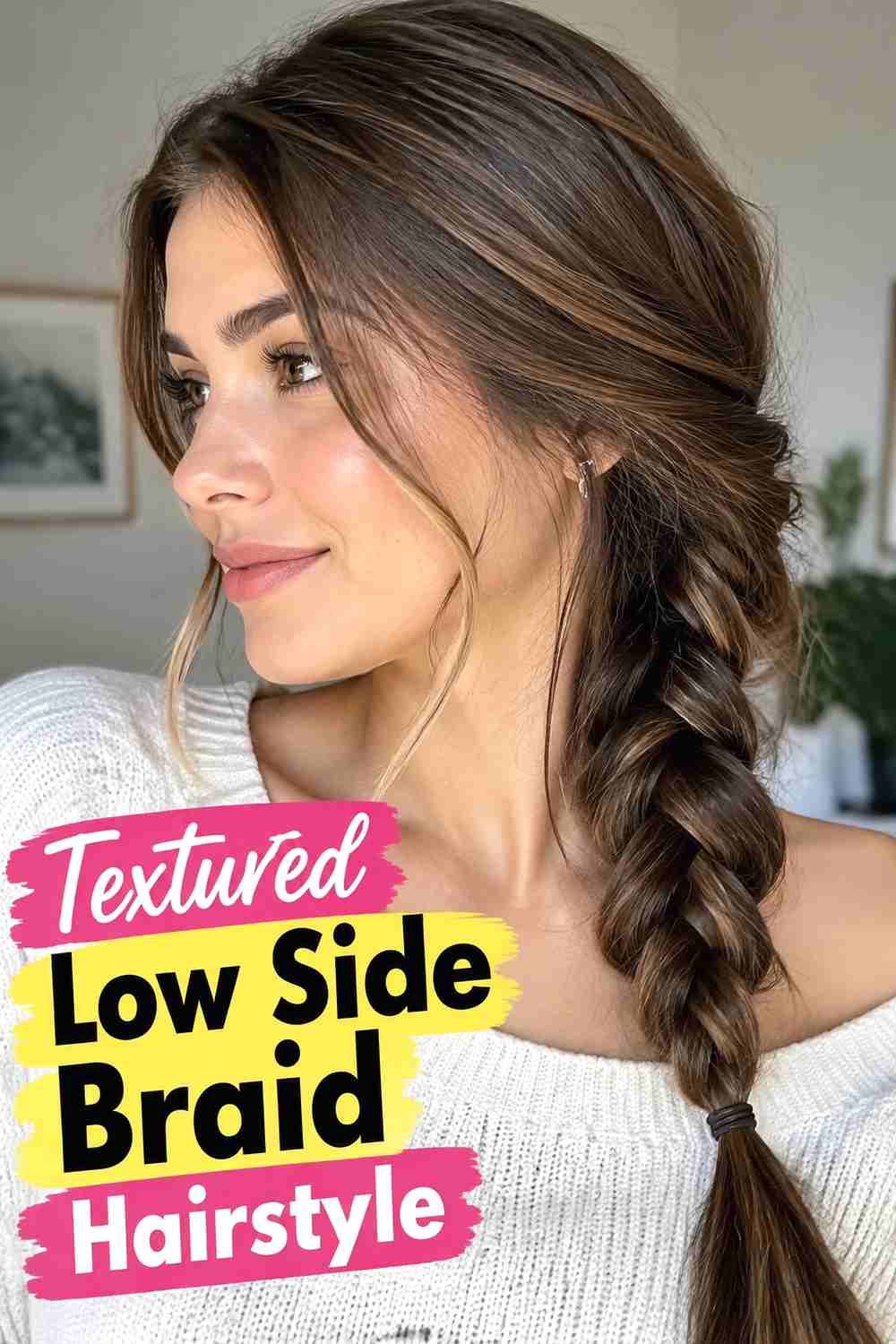
A textured low side braid begins close to the nape, creating an understated shape that works beautifully with classic tartan skirts. Instead of building volume high on the crown, keep the upper hair natural and direct the lengths gently toward one shoulder before starting the braid. This lower placement makes the style easy to combine with berets, soft hats, or lightweight winter layers. Waves, natural bends, and slight flyaways add enough texture to keep the braid interesting without making it overly bohemian. Medium-long and long hair are the easiest lengths for this style. If your hair is layered, allow shorter pieces to settle naturally rather than using excessive product to force them into place. The finished look should feel comfortable, loose, and quietly polished.
Wear & Maintenance
Position the braid so it sits in front of the shoulder rather than rubbing continuously against a jacket collar. A small elastic helps keep the end unobtrusive.
8. Curly Side Braid Hairstyle
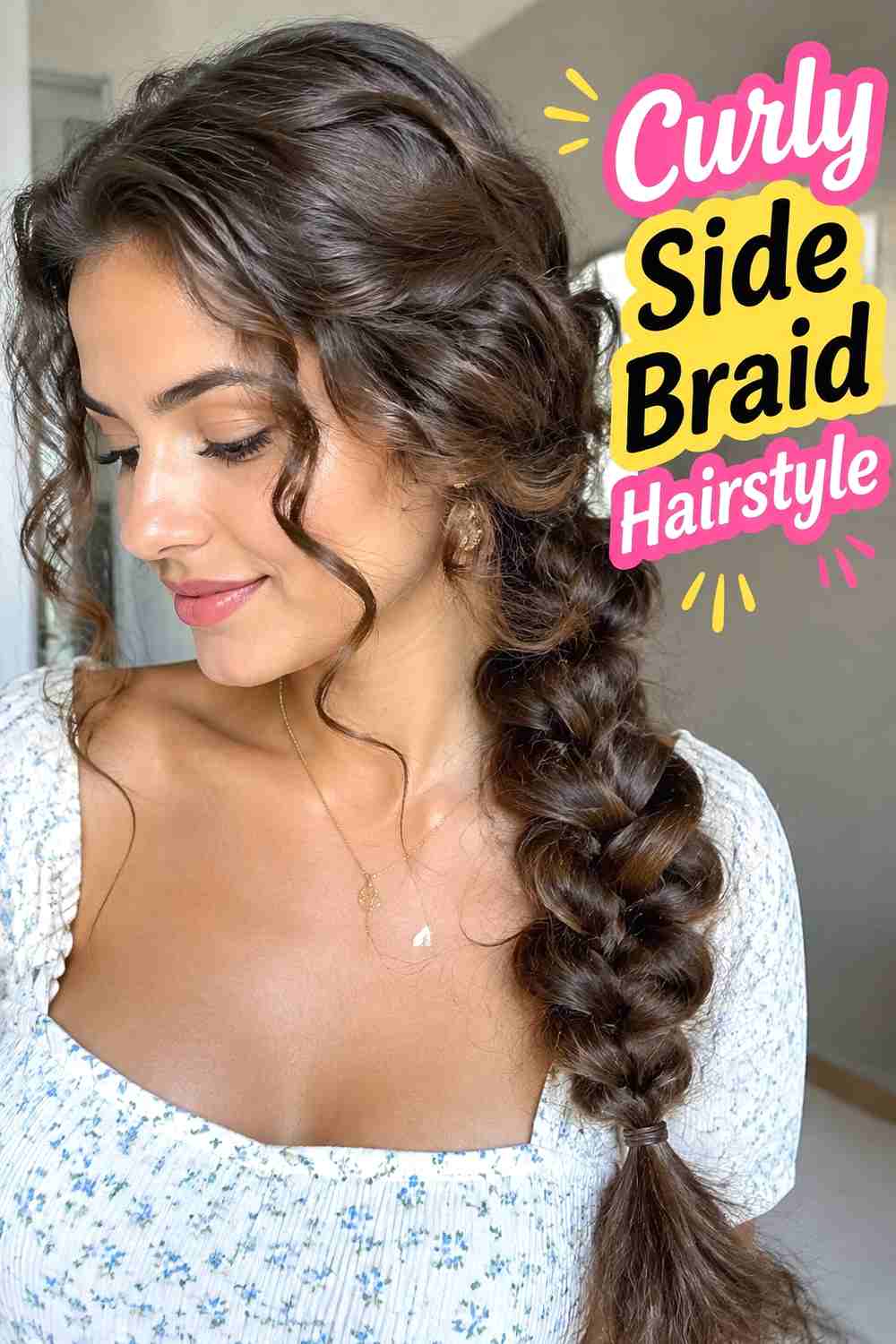
A curly side braid keeps some natural curl character visible while gathering the length into a practical over-the-shoulder shape. Instead of brushing curls smooth before braiding, preserve their definition and gently separate the hair into larger sections. A loose three-strand or simplified braid allows curls to peek through the woven structure, creating more dimension than a tightly compressed plait. This approach works well with tartan because the organic curl pattern softens the skirt’s orderly checks. Medium to long curly hair provides the most visible braid, although shorter layers can remain free around the crown. Use the amount of moisture and hold your curl pattern needs, but avoid coating the braid so heavily that individual curls lose their natural separation and movement.
Hair Type & Length
This style is especially suited to naturally curly hair with enough length to gather comfortably over one shoulder. Dense curls often create a naturally full braid.
Pro Tip
Finger-detangle only as much as necessary before braiding. Preserving some curl grouping helps the finished braid retain texture instead of becoming fluffy or undefined.
9. Side Crown Braid Hairstyle
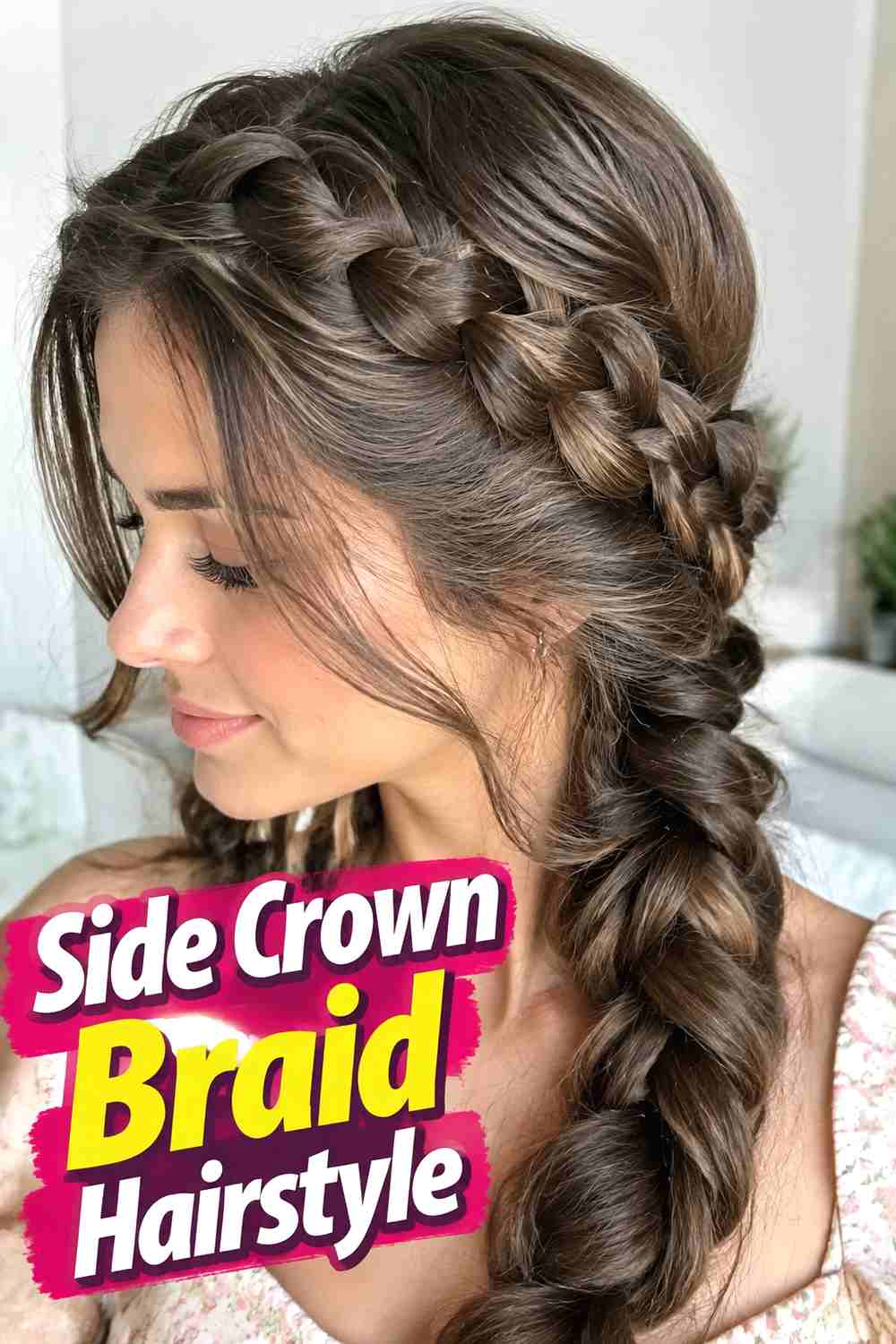
A side crown braid creates texture higher around the head, making it a useful choice when you want the tartan midi skirt to remain the strongest detail below the shoulders. Start near one temple and braid along the side of the head, following the hairline or curving toward the back. The remaining lengths can continue into a side braid or be tucked discreetly depending on hair length. Keep the braid slightly raised and dimensional rather than tightly flattened. Medium to long hair is easiest for a continuous crown effect, while shorter hair may require pins to secure the ends. This style looks especially balanced with simple fitted tops, cardigans, or cropped jackets because it moves visual interest upward without adding bulky loose hair around the outfit.
Styling Notes
Follow the natural curve of the head rather than forcing the braid into a perfectly straight path. This usually produces a more comfortable and believable shape.
Why It Works
The elevated braid creates a clear hairstyle detail without competing directly with the tartan pattern around the skirt.
10. Boho Side Braid Hairstyle
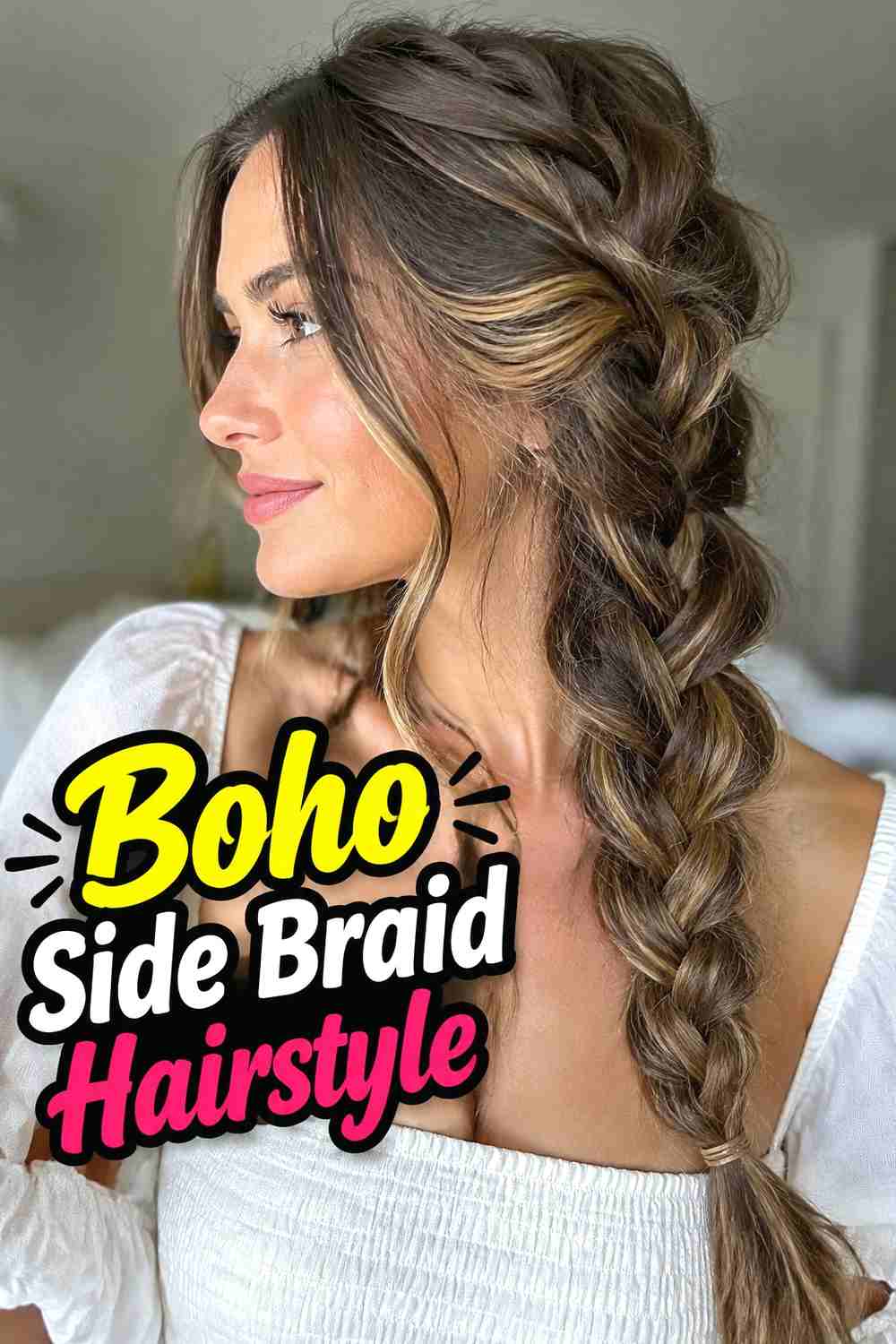
A boho side braid leans into looseness, irregular texture, and a slightly undone finish while still keeping the hair controlled over one shoulder. Begin with soft waves or your natural texture, gather the lengths casually, and braid without trying to make every section identical. A few smaller pieces can be twisted into the braid for extra dimension, but the structure should remain readable rather than overly complicated. Long layers are especially effective because they create soft movement around the face and braid edges. This style pairs naturally with tartan midi skirts worn with chunky knits, ankle boots, or suede accessories. The key is restraint: a few flyaways feel relaxed, while excessive pulling can make the braid unstable and distract from the outfit.
Best For
Choose this look for casual daytime outfits, weekend gatherings, or relaxed seasonal styling where a perfectly polished braid would feel too formal.
Wear & Maintenance
Use hidden pins near the nape if the braid keeps slipping backward. This adds control without changing the loose appearance.
11. Crimped Side Braid Hairstyle
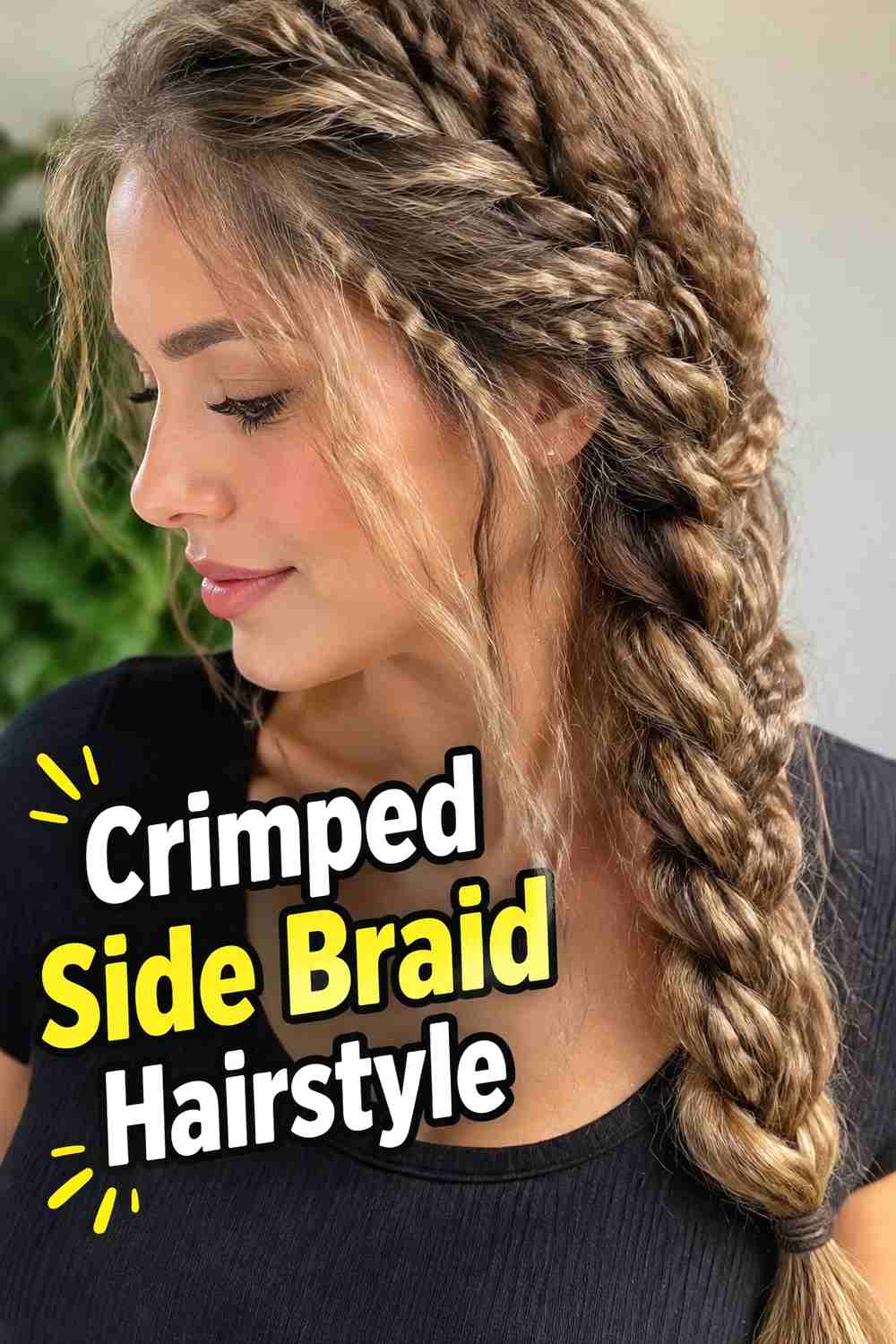
A crimped side braid uses small-scale texture to create extra volume and grip before the hair is woven. The crimping does not need to cover every strand; concentrating it through selected mid-lengths can produce dimension while keeping the roots softer. Once textured, gather the hair over one shoulder and form a loose braid that allows the crimp pattern to remain visible between sections. This is a strong option for fine or very smooth hair that normally slips out of braids quickly. With a tartan midi skirt, the hairstyle adds a subtle secondary pattern without copying the checks directly. Keep the finish modern by avoiding extreme root volume and by leaving the ends slightly softer than the rest of the braid.
Hair Type & Length
Medium-long and long straight or slightly wavy hair is easiest to crimp and braid. Naturally textured hair may not need this extra preparation.
Pro Tip
Crimp selectively rather than from root to tip. Small textured areas can provide enough grip without making the entire hairstyle feel overly styled.
12. Side Braid Ponytail Hairstyle
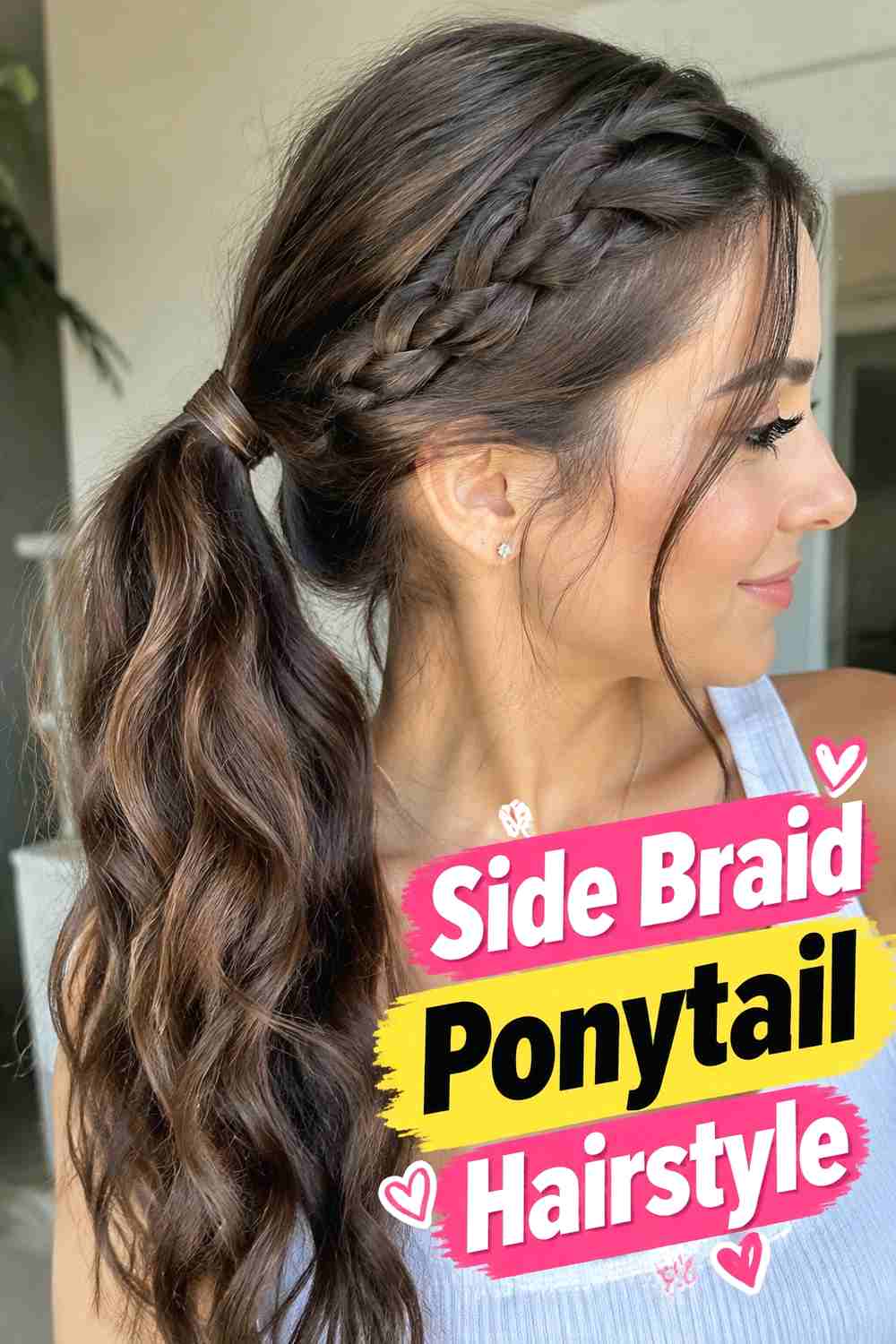
A side braid ponytail combines a structured braided detail with loose movement through the remaining length. Begin with a side part and braid a section from the heavier side toward the back, then gather it with the rest of the hair into a low ponytail near one shoulder. The ponytail can stay straight, softly waved, or naturally textured depending on the outfit. This hybrid style is useful when you like visible braid detail but do not want all of the hair woven. Medium to long hair gives the most balanced result. It pairs particularly well with tartan midi skirts and fitted tops because the braid adds interest around the face while the loose ponytail keeps the overall silhouette relaxed and wearable.
Styling Notes
Secure the braid before forming the ponytail if your hair is slippery. This prevents the woven section from loosening while you gather the remaining lengths.
Best For
This is a practical choice when you want the security of a ponytail with more texture and personality around the crown.
13. Side Swept Pull Through Braid Hairstyle
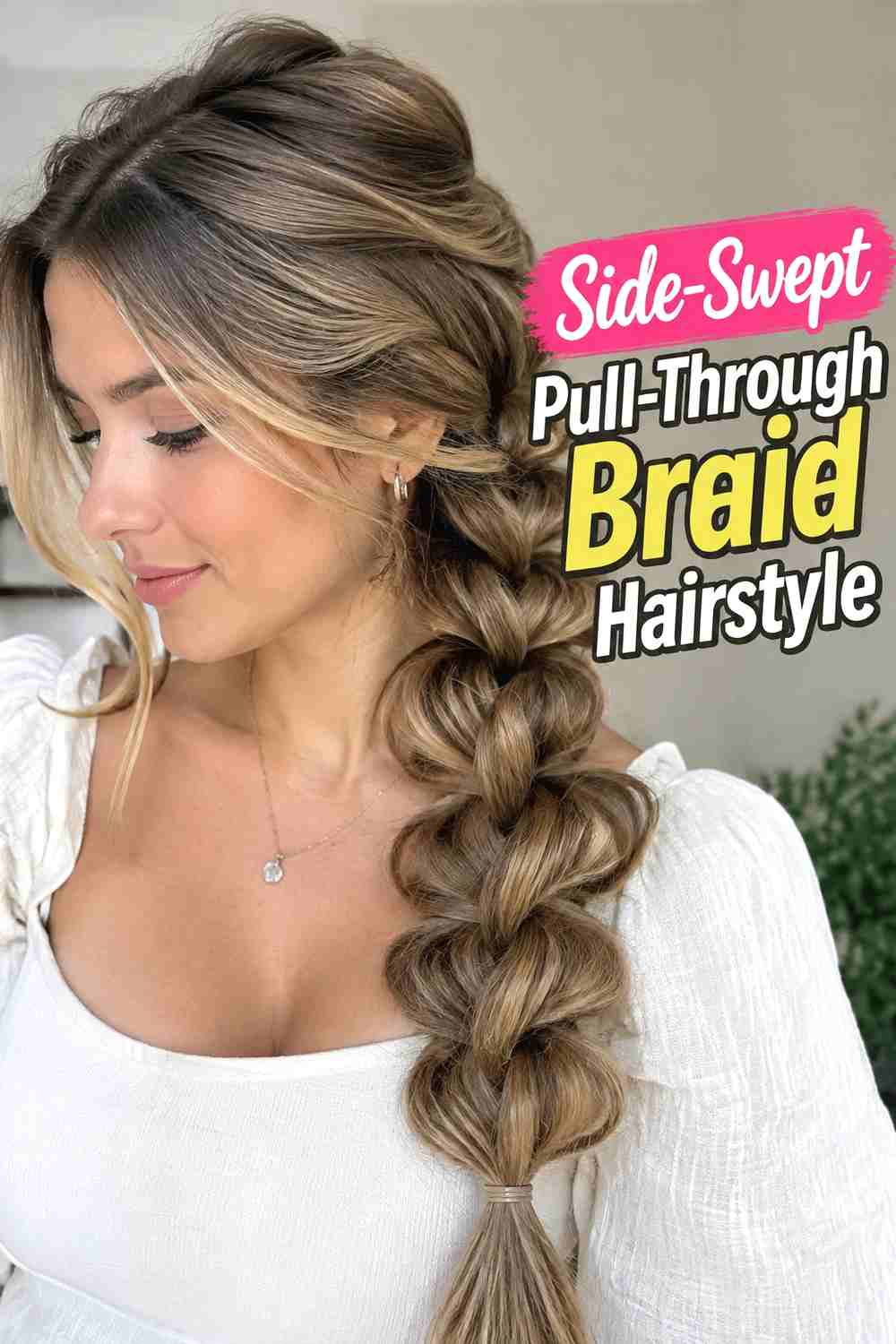
A side-swept pull-through braid creates a chunky, dimensional effect using connected ponytail sections rather than a traditional woven braid. Position the hair over one shoulder and build the shape gradually, expanding each section just enough to create a full, rounded silhouette. The finished result can look especially striking with a tartan midi skirt because the braid’s large repeating sections contrast with smaller checks and pleats. Medium-long and long hair work best, and fine hair can appear fuller because the technique allows controlled expansion. Keep the crown comparatively simple so the braid remains the focal point. Small clear elastics are usually easiest to hide within the structure, while a few soft front pieces can prevent the style from feeling overly engineered.
Wear & Maintenance
Make sure each elastic is secure before expanding the section around it. Pull-through braids depend on those anchor points for their shape and stability.
Why It Works
The rounded braid pattern adds volume without requiring intricate hand braiding, making it visually detailed yet relatively structured.
14. Voluminous Side French Braid Hairstyle
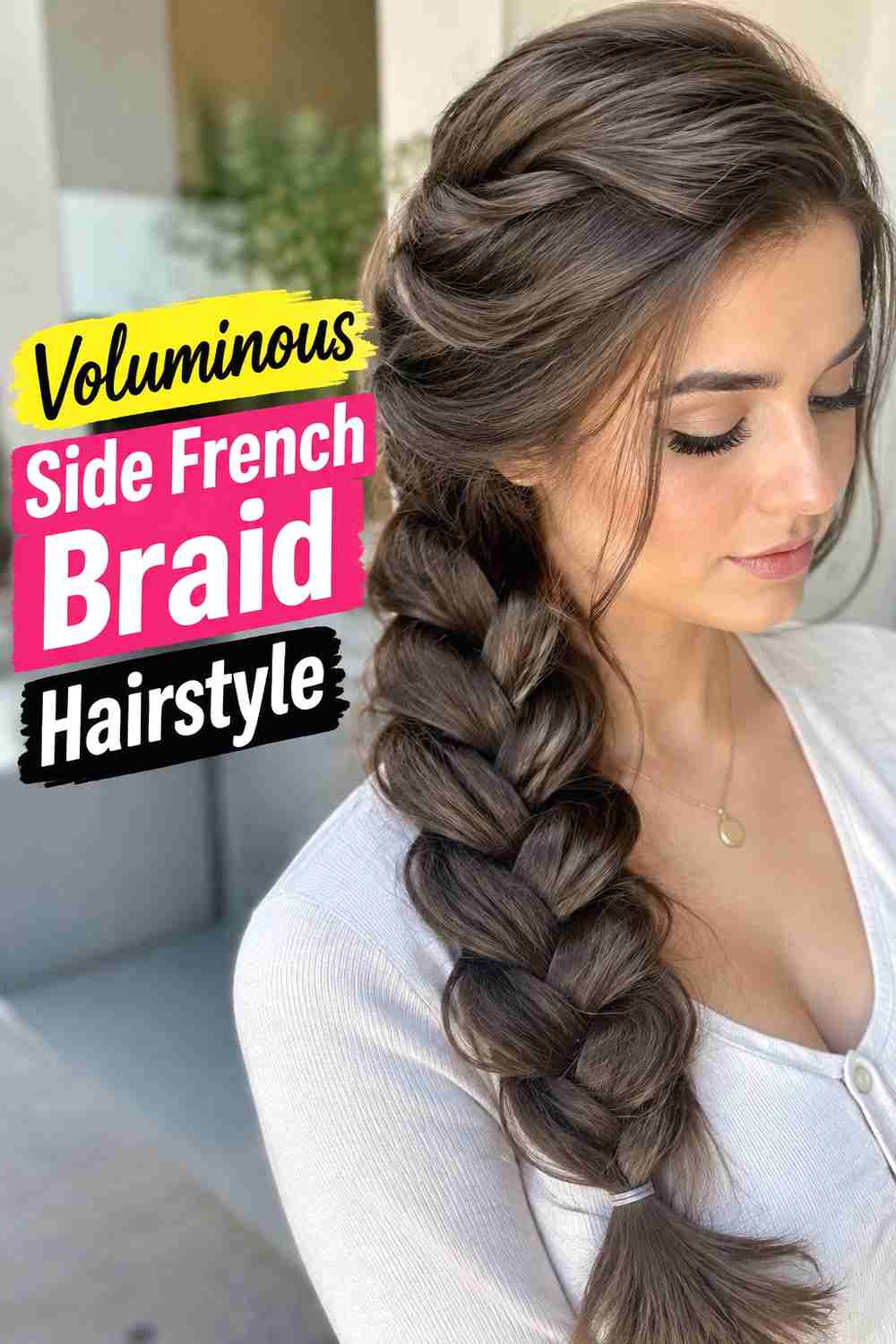
A voluminous side French braid starts near the crown and gradually gathers hair as it travels toward one shoulder. The continuous structure gives the hairstyle a polished foundation, while gently loosening the outer edges adds enough softness for casual tartan styling. Keep the braid’s path diagonal rather than straight down the back so the final length remains visible from the front. Medium to long hair with some natural texture is easiest to grip, although smooth hair can be prepared with a light texturizing product. The style works particularly well with simple turtlenecks, fitted cardigans, or tailored coats because it keeps most of the hair contained while still providing substantial visual interest. Avoid pulling the crown too loose if you want reliable all-day hold.
Styling Notes
Add similar-sized sections as you French braid so the structure stays balanced. Create extra volume only after the braid has been fully secured.
Best For
This braid suits days when you want more hold than a loose side plait but still prefer a soft, textured finish.
15. Ribbon Woven Side Braid Hairstyle
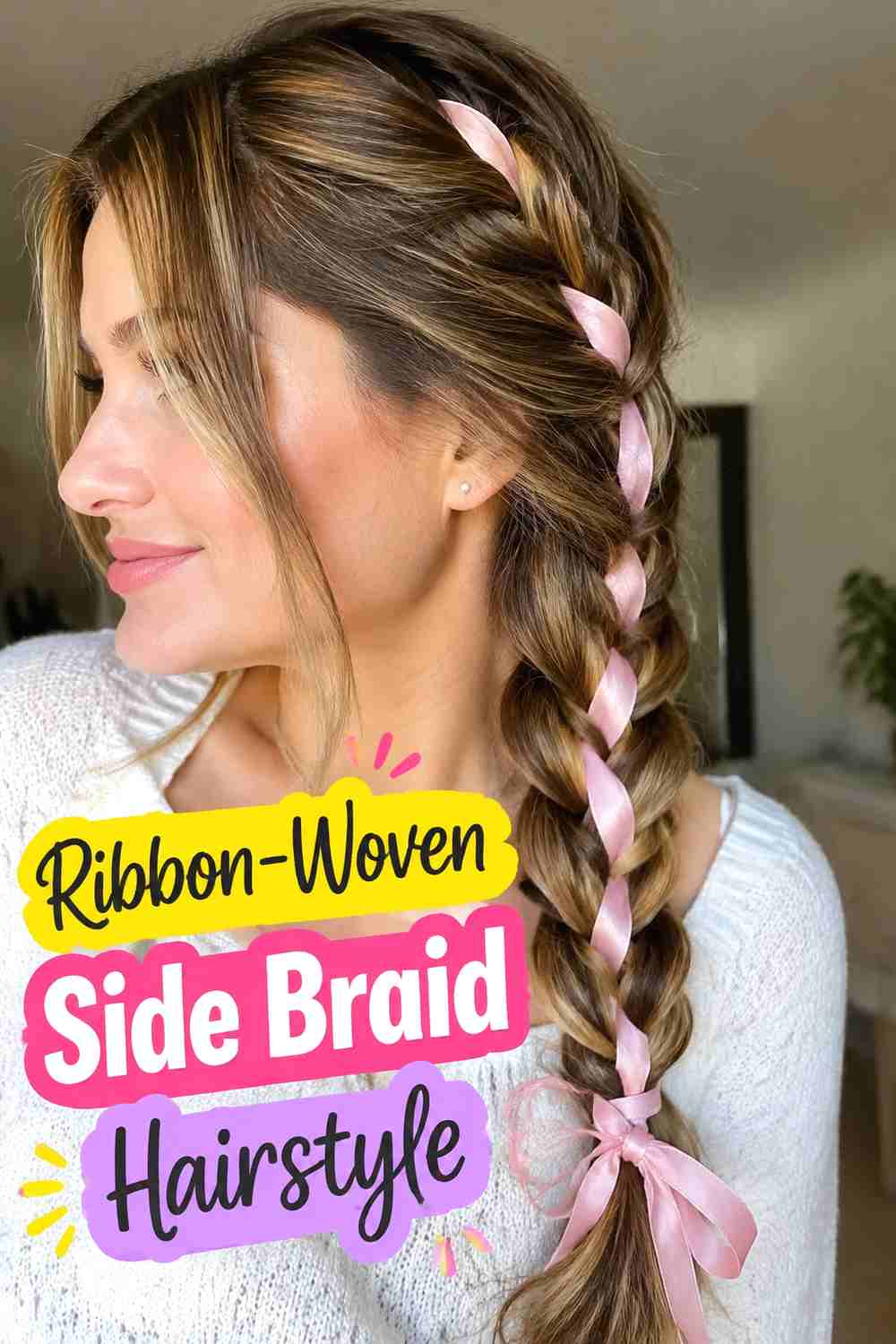
A ribbon-woven side braid can echo the colors of a tartan midi skirt without becoming overly coordinated. Choose a narrow ribbon in one shade already present in the outfit, then incorporate it into a simple braid over one shoulder. The ribbon should act as a subtle accent rather than dominate the hair, so keep the braid itself textured and slightly relaxed. Long hair provides enough length for the woven detail to show clearly, while medium-length hair can use a shorter ribbon concentrated near the lower half. Matte or softly textured ribbon usually sits more naturally than highly reflective material. This style works especially well for seasonal dinners, daytime events, or festive outfits where a small accessory adds personality without requiring an elaborate updo.
Styling Notes
Anchor the ribbon discreetly beneath a small section of hair before braiding. This gives it a secure starting point and reduces visible knots.
Pro Tip
Pull one color from the tartan rather than matching every shade. A single burgundy, navy, cream, or forest-toned accent usually looks more refined.
16. Textured Side Braid Bun Hairstyle
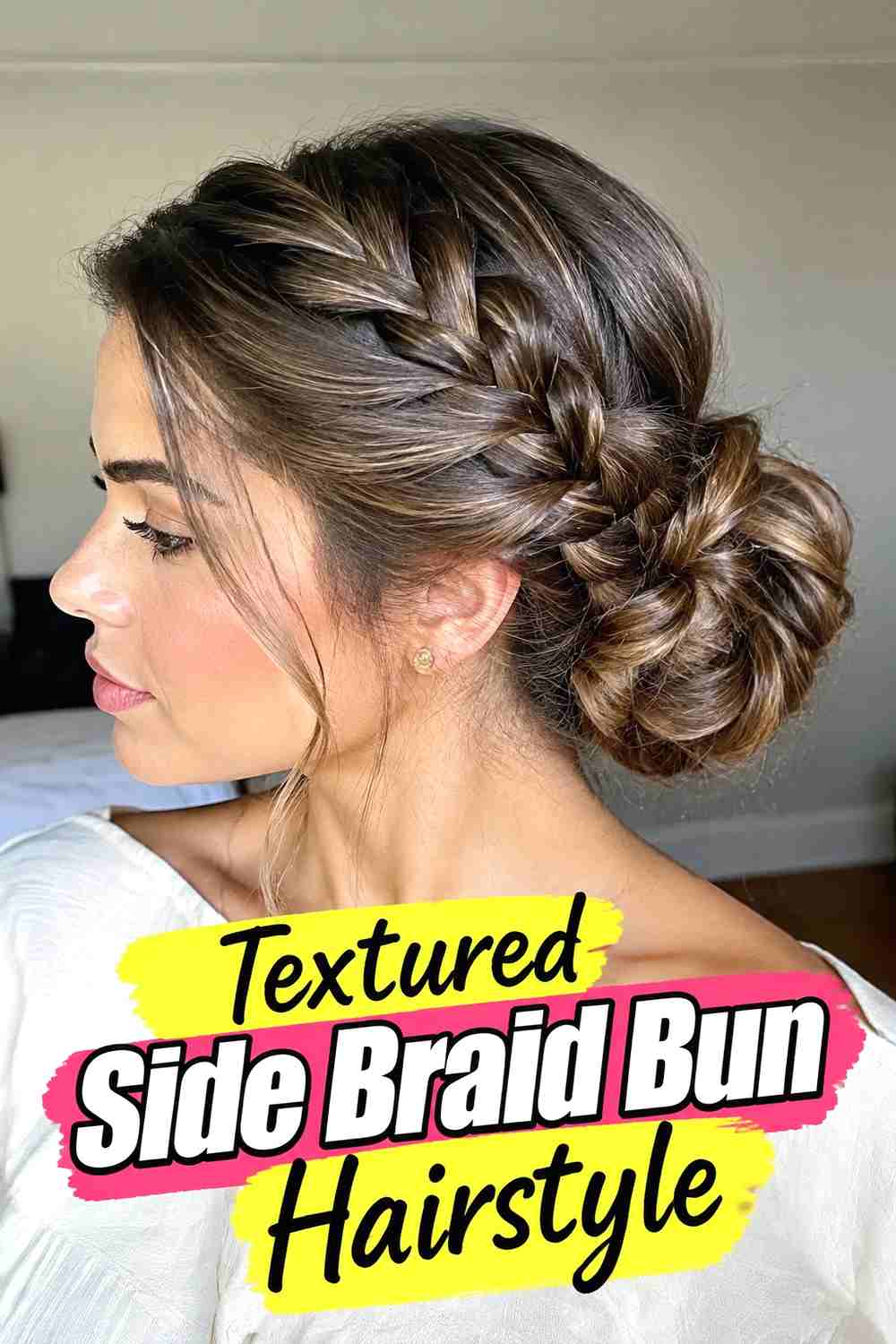
A textured side braid bun turns the over-the-shoulder braid into a compact updo while keeping the woven detail visible. Create a side braid from the crown or temple, continue it toward the nape, and coil the remaining length into a low bun slightly off-center. Keep the braid softly expanded and the bun textured rather than perfectly smooth so the style does not become overly formal. Medium to long hair provides enough length to build both elements, while shorter layers can be pinned naturally into the shape. This is especially useful with tartan midi skirts worn with jackets or high-neck knits because it keeps hair away from the collar. The asymmetry adds interest while leaving the skirt and upper outfit clearly visible.
Wear & Maintenance
Pin the bun slightly above any coat or jacket collar to reduce friction. Anchor the braid separately before forming the bun so both sections stay secure.
Best For
Choose this look when you want the texture of a side braid with the practicality of having the lengths completely off the shoulders.
17. Coily Side Braid Hairstyle
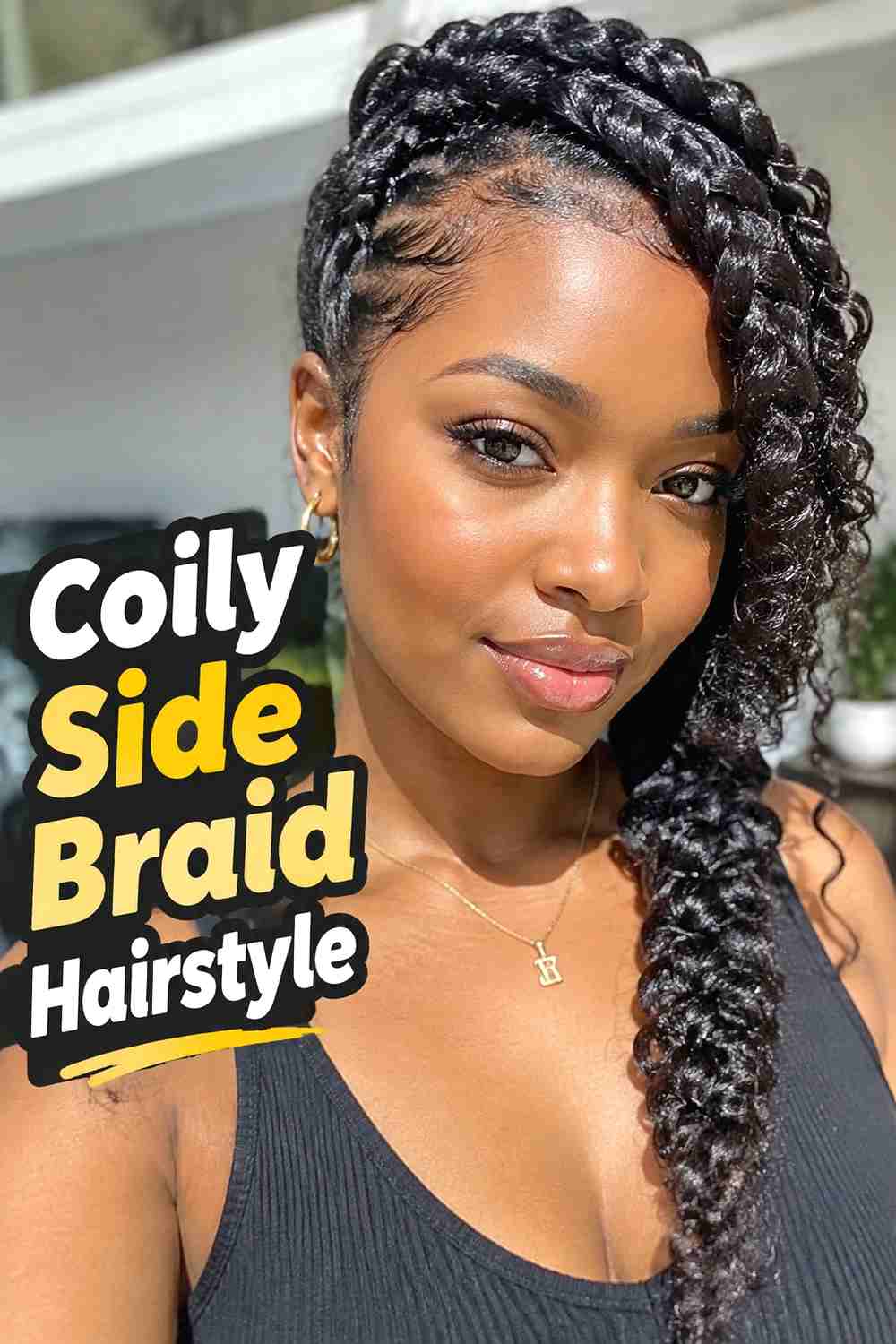
A coily side braid keeps natural texture central to the look rather than smoothing it away. Direct the hair toward one side and create a braid that works with the density and curl pattern, allowing some coils to remain visible around the crown, edges, and woven sections. The braid can be compact or fuller depending on length and volume, but it should feel secure without excessive tension. Medium to long coily hair can create a substantial side braid, while shorter layers may remain softly defined around the face. Against tartan, the organic variation of coils creates a beautiful contrast with the skirt’s precise grid. Focus on moisture, definition, and comfortable hold rather than forcing every section into identical size or shape.
Hair Type & Length
This look is designed for naturally coily and tightly curled textures with enough length to gather toward one side comfortably.
Wear & Maintenance
Use the braiding tension that feels appropriate for your hair and scalp. Keeping the base comfortable matters more than creating an extremely tight, perfectly uniform finish.
How to Choose the Right Look
Start with your available length. Medium-long and long hair can support fishtails, French braids, pull-through braids, rope twists, and larger pancaked styles, while layered lengths often work beautifully with face-framing or low side braids. If your hair is shorter, a side crown braid or partial braided style may be easier to secure.
Texture matters just as much. Straight or slippery hair may benefit from waves, selective crimping, or light texture before braiding, while curly and coily hair can use its natural definition to create dimension without extensive preparation. Fine hair often looks fuller with pancaking or pull-through techniques, whereas dense hair may already produce a substantial braid.
Consider the tartan pattern too. A busy, multicolored skirt often pairs best with a simpler braid, while a restrained two- or three-color tartan can handle more intricate details such as fishtails, ribbons, or crown braids.
Finally, think about comfort and hold. Braids worn over one shoulder can rub against coats and scarves, so lower styles may need discreet anchoring. For longer wear, choose a braid with a secure base and loosen it only after the structure is firmly in place.
Final Thoughts
Textured side braids are a natural partner for tartan midi skirts because they soften the pattern’s clean geometry without hiding it. From relaxed three-strand braids to fishtails, curls, rope twists, and braided buns, the strongest choice is one that works with your real length and texture. Keep the braid secure where it needs support, then add softness selectively for a balanced, wearable finish.
FAQs
1. What side braid looks best with a tartan midi skirt?
Loose three-strand, fishtail, French, and Dutch side braids all work well. Choose a simpler braid for a very busy tartan and a more detailed braid for a restrained pattern.
2. How can I make a side braid look more textured?
Start with natural waves, curls, or light pre-styling texture, then gently loosen selected outer braid sections after securing the end. Avoid pulling every section equally.
3. Which side braid works well for fine hair?
Pancaked braids and pull-through braids are useful because they can create the appearance of more width. Light texture before braiding can also improve grip.
4. Can curly or coily hair be worn in a textured side braid?
Yes. Natural curl and coil variation can add excellent dimension. Preserve definition where possible instead of brushing all the texture smooth before braiding.
5. How do I keep a side braid from sliding behind my shoulder?
Start the braid slightly farther to the side and use a discreet pin near the nape if needed. A secure base helps the braid remain comfortably forward.
CTA
Save your favorite textured side braid, share these tartan outfit ideas, and explore more wearable hairstyle inspiration for your next look.