18 Copper Melt Hair Color Ideas for Dark Roots
Deep roots melting into glowing copper create rich, dimensional color with everything from subtle cinnamon warmth to fiery rust, golden ends, and polished auburn blends.
Copper melt hair color uses a gradual transition rather than an abrupt shift between a dark root and warmer lengths. Brunette, espresso, or dark auburn at the top can flow into cinnamon, rust, bronze, golden copper, or brighter orange-red through the mid-lengths and ends. The result keeps depth near the scalp while allowing copper to become increasingly noticeable farther down.
The right version depends on how much contrast you want, your current base, hair length, texture, and preferred maintenance level. A chocolate-to-copper melt stays brunette-led, while golden or bright copper ends make a stronger statement. Waves and curls display several tones at once, while straight hair reveals the gradient more clearly.
Quick List
- Classic Copper Melt Hairstyle
- Dark Chocolate Copper Melt Hairstyle
- Auburn Copper Melt Hairstyle
- Burnt Orange Copper Melt Hairstyle
- Cinnamon Copper Melt Hairstyle
- Rusty Copper Melt Hairstyle
- Golden Copper Melt Hairstyle
- Face Framing Copper Melt Hairstyle
- Long Layered Copper Melt Hairstyle
- Wavy Copper Melt Hairstyle
- Curly Copper Melt Hairstyle
- Bob Copper Melt Hairstyle
- Lob Copper Melt Hairstyle
- Soft Rooted Copper Melt Hairstyle
- Dimensional Copper Melt Hairstyle
- Copper Caramel Melt Hairstyle
- Smoky Copper Melt Hairstyle
- Bright Ends Copper Melt Hairstyle
1. Classic Copper Melt Hairstyle
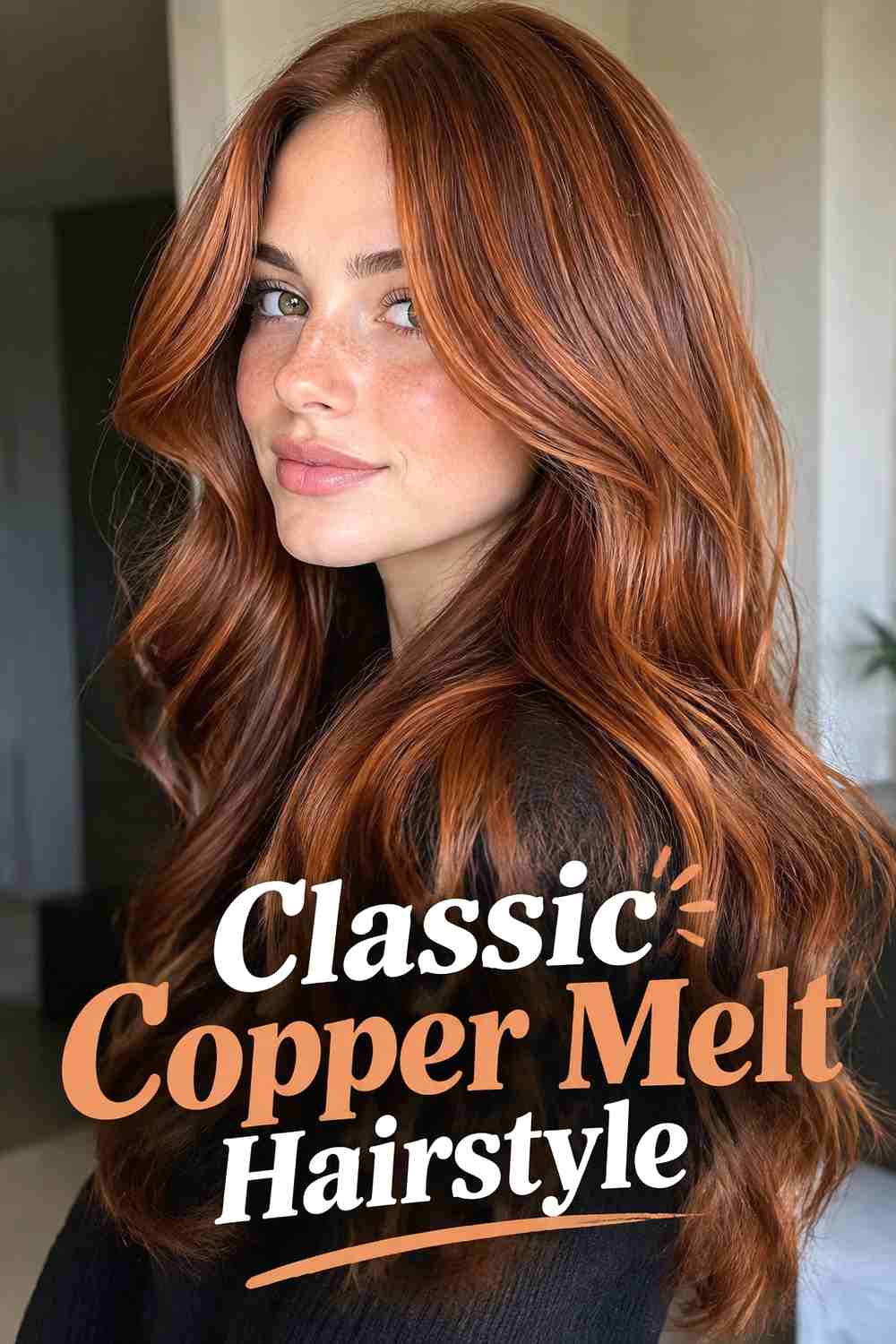
The Classic Copper Melt Hairstyle starts with naturally deep brunette roots and gradually warms into medium copper through the mid-lengths before becoming slightly brighter at the ends. The key is a smooth progression rather than an obvious line between dark and warm color. Keeping a few deeper strands running through the copper helps the transition look dimensional instead of uniformly orange. A soft blowout or loose wave pattern makes the different tones especially visible, although straight styling can showcase the gradient beautifully. This version is a versatile starting point if you want recognizable copper without giving up the depth of darker roots or committing to equally bright color from scalp to ends.
Why It Works
Dark root depth gives the warmer lengths contrast, while the gradual transition keeps the overall color cohesive.
Wear & Maintenance
Copper can shift as it fades, so periodic glosses or color refreshes may help maintain the preferred warmth and saturation.
2. Dark Chocolate Copper Melt Hairstyle
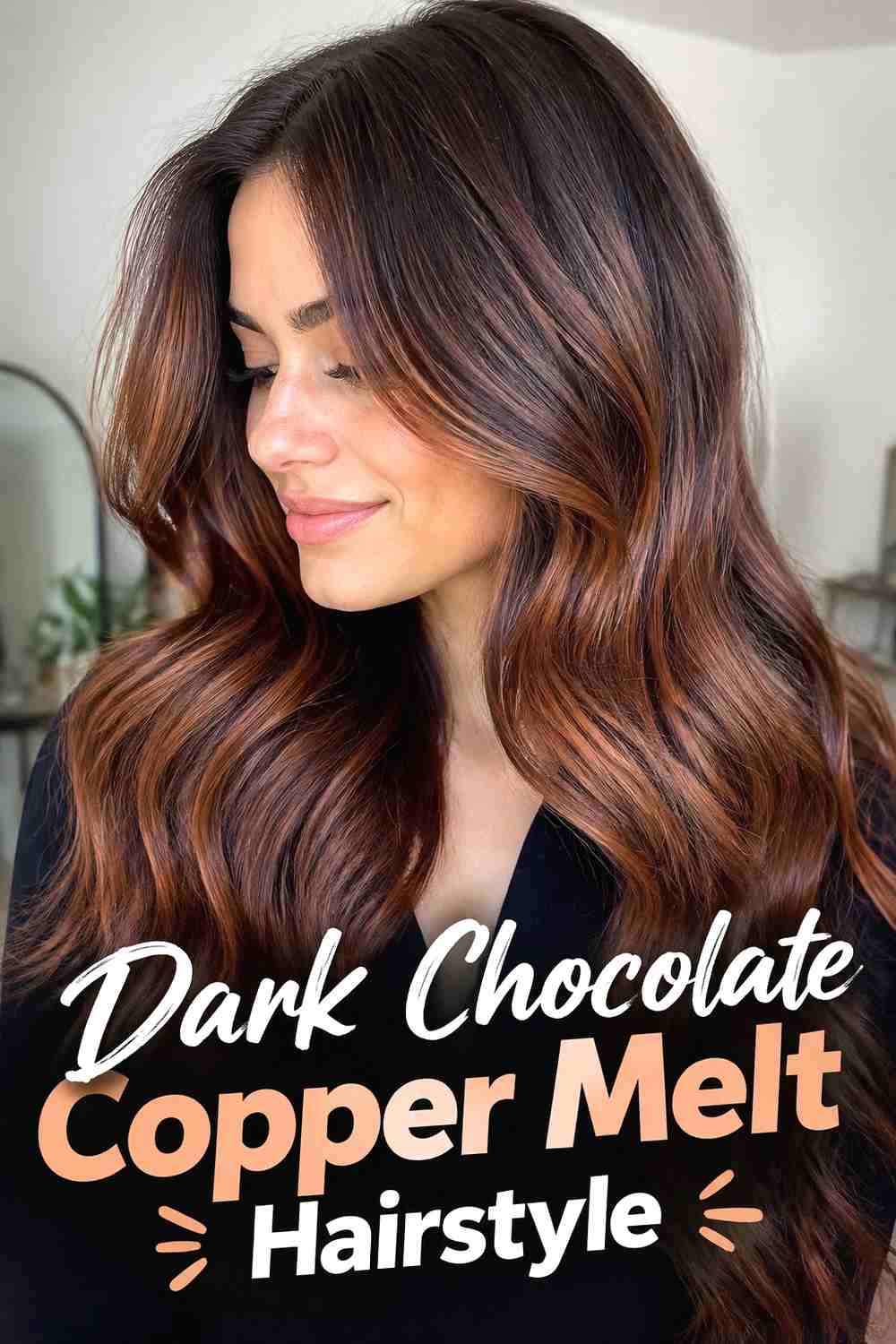
The Dark Chocolate Copper Melt Hairstyle keeps the upper portion distinctly brunette, allowing rich chocolate brown to transition gradually into muted copper and cinnamon through the lower lengths. This is one of the softer ways to wear a copper melt because the warm color appears as an extension of the dark base rather than a dramatic contrast. A few chocolate ribbons can continue into the ends for depth, preventing the lower section from becoming completely copper. Loose waves reveal the blend naturally as brown and warm red-orange pieces overlap. The finished result is especially useful if you want warmth and dimension but still prefer the hairstyle to read primarily as deep brunette from the roots.
Best For
Choose this version if you want a subtle copper transition with plenty of visible dark brown remaining throughout the hairstyle.
Pro Tip
Preserving a few darker interior pieces through the ends can make the melt appear richer and less one-dimensional.
3. Auburn Copper Melt Hairstyle
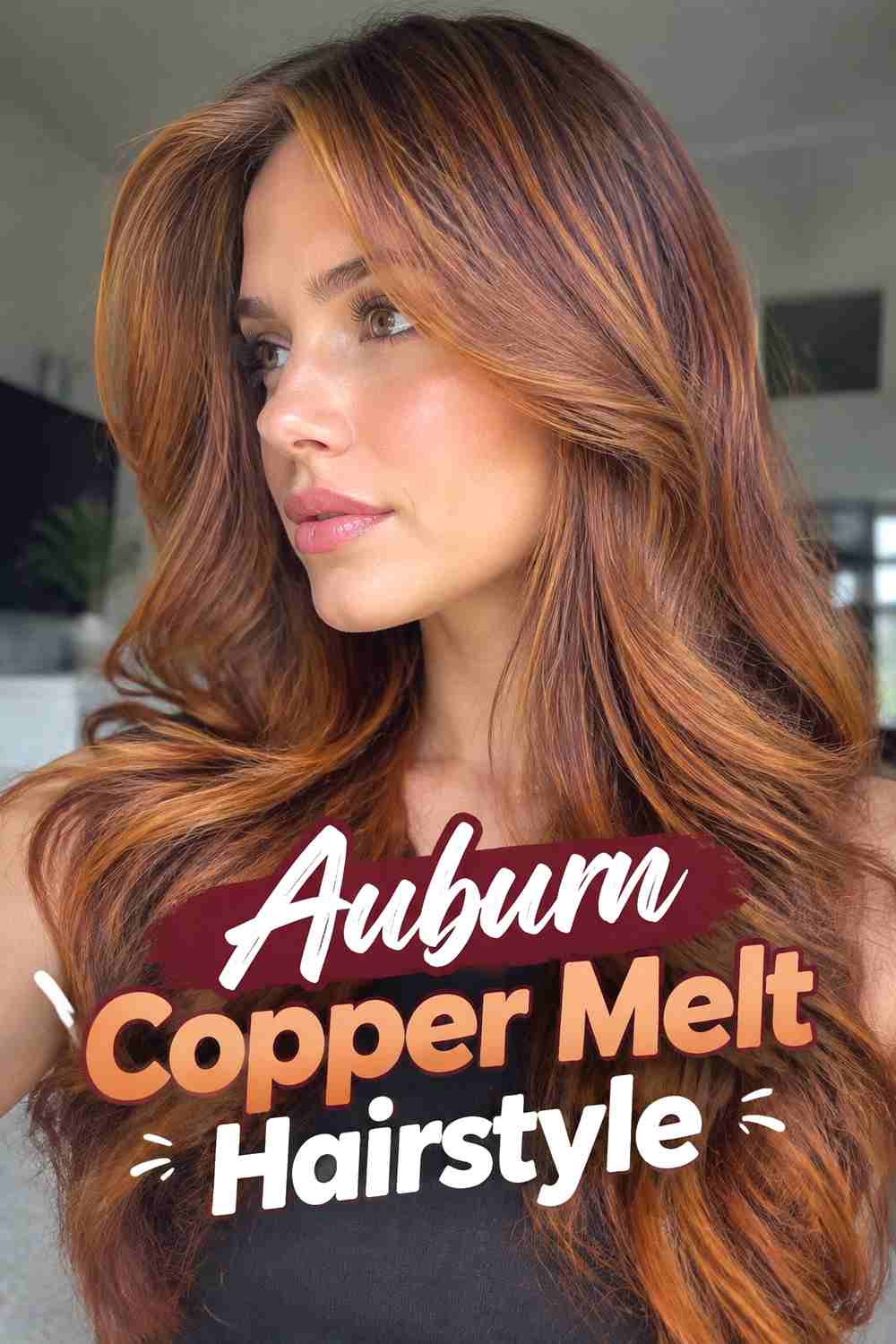
The Auburn Copper Melt Hairstyle bridges dark roots and bright copper with a red-brown middle tone. Deep brunette or dark auburn at the scalp transitions into richer auburn through the upper lengths, then becomes more noticeably copper toward the ends. This layered progression makes the melt feel especially natural because each stage shares warmth with the next. Long waves or a blowout help expose the different tones, but the color also looks polished on straight hair. The auburn zone keeps the overall effect deeper than a classic orange copper melt, making it a strong option if you prefer red-brown richness with just enough copper brightness through the lower sections.
Why It Works
Auburn acts as a natural bridge between dark brunette roots and brighter copper lengths, reducing harsh contrast.
Best For
This direction suits anyone who prefers red-brown depth over a highly orange or golden copper finish.
4. Burnt Orange Copper Melt Hairstyle
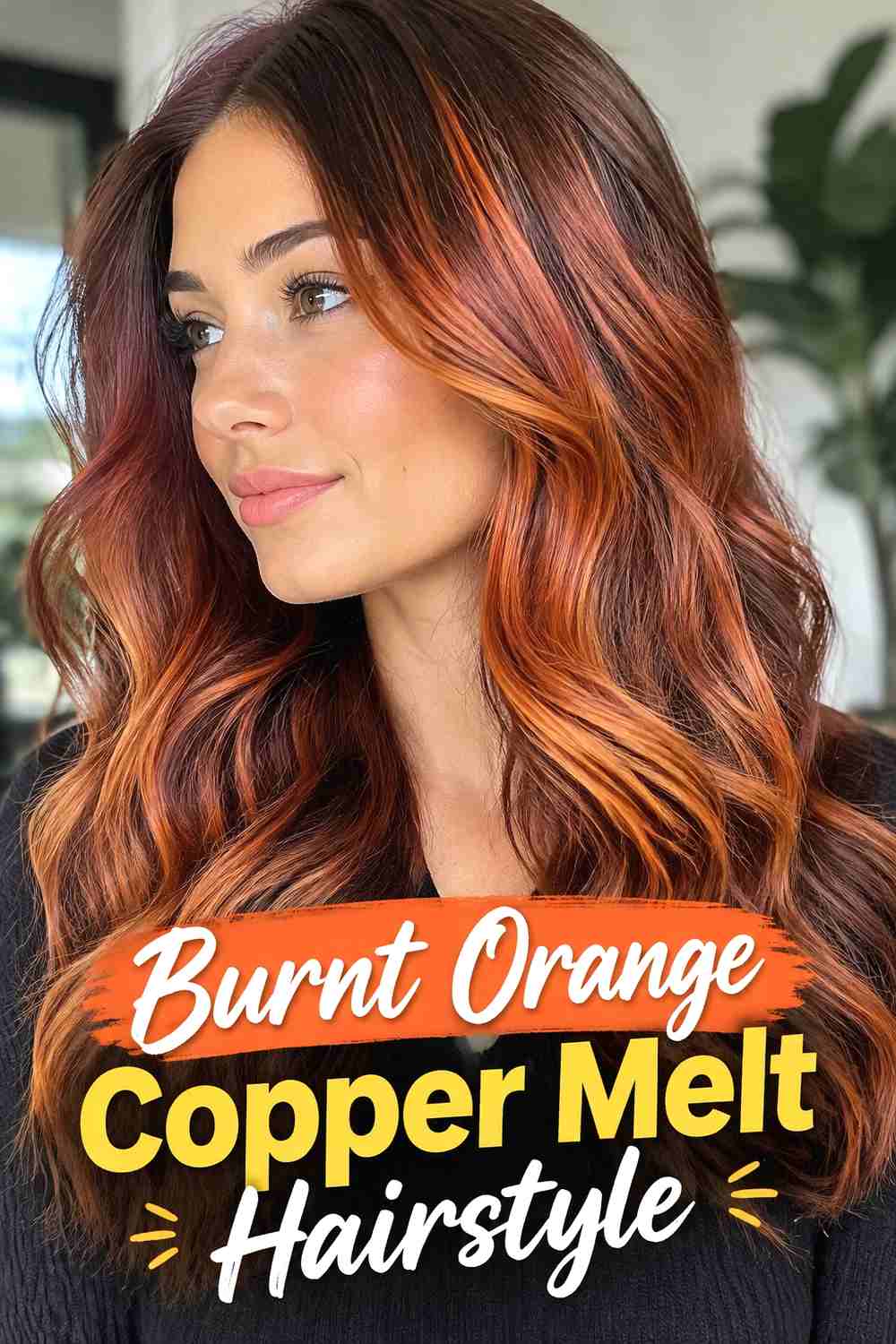
The Burnt Orange Copper Melt Hairstyle creates a stronger transition by moving from dark roots into rich, earthy orange-red lengths. Rather than using a neon or extremely bright orange, the copper is deepened with rust and red-brown undertones so the result remains sophisticated. The most saturated color can sit through the lower mid-lengths and ends, while softer copper connects it to the dark root area. Long layers make the transition especially visible because different sections reveal varying amounts of warmth. A few deeper strands through the ends can keep the color from appearing flat. This is a confident choice when you want the copper part of the melt to be unmistakable.
Styling Notes
Loose waves help burnt orange and darker copper sections overlap naturally, creating more depth than a completely flat finish.
Wear & Maintenance
Stronger copper-orange tones can show fading more clearly, especially if you prefer a consistently saturated result.
5. Cinnamon Copper Melt Hairstyle
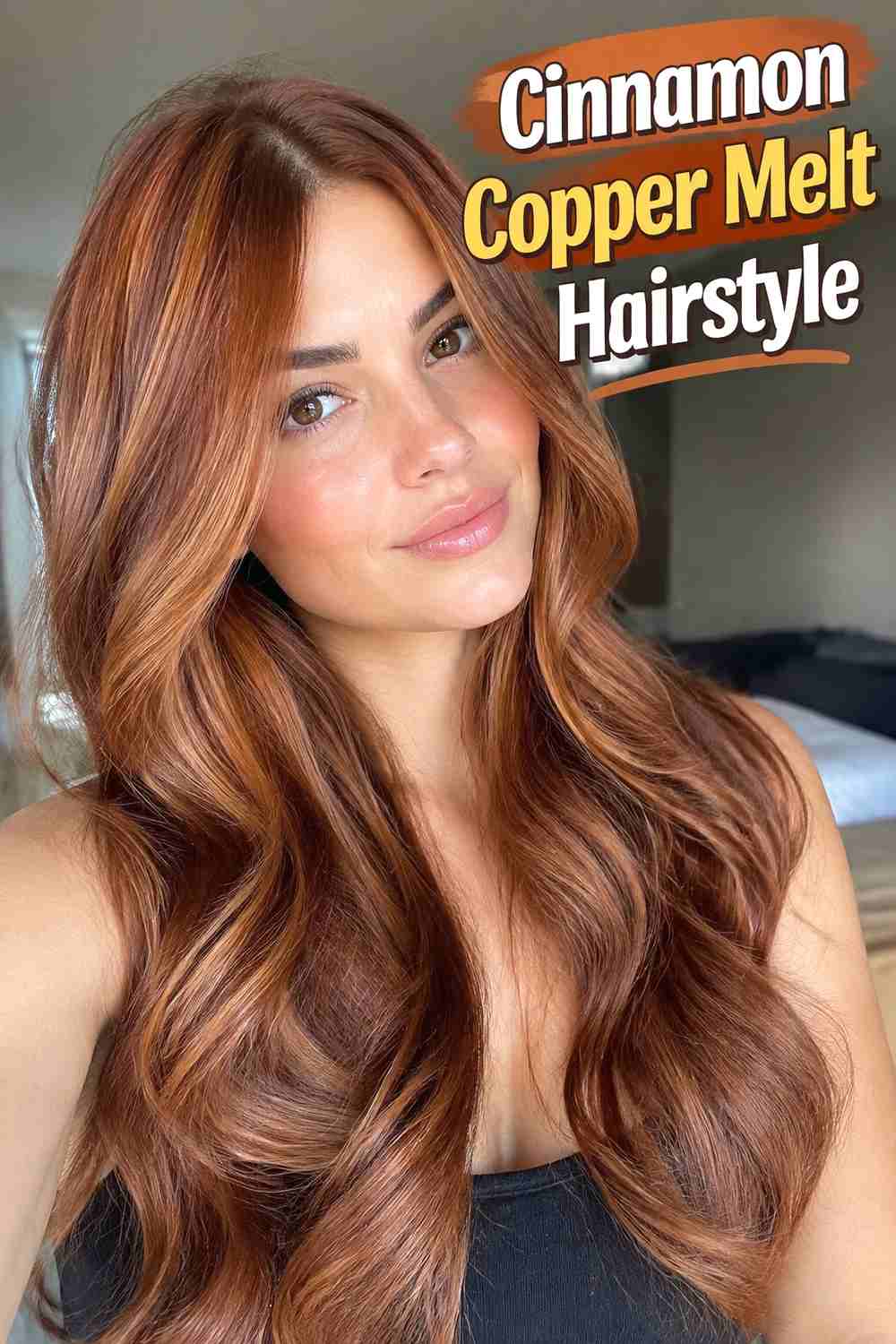
The Cinnamon Copper Melt Hairstyle uses brown-red warmth for a softer, spiced interpretation of copper. Dark roots flow into cinnamon through the mid-lengths, then pick up a brighter copper glow toward the ends without becoming intensely orange. Because cinnamon contains noticeable brown depth, the transition works particularly well when you want the root area to stay natural-looking and rich. Gentle waves can reveal subtle tonal variation, while straight hair gives the gradient a clean, glossy appearance. This shade also works well with layered cuts because shorter pieces can carry slightly warmer color around the face while the deeper root and interior sections provide shadow.
Why It Works
Cinnamon shares brown tones with dark roots and red-orange warmth with copper, creating a naturally cohesive bridge between the two.
Best For
This melt is a good choice if you want warmth without an especially bright or fiery finish.
6. Rusty Copper Melt Hairstyle
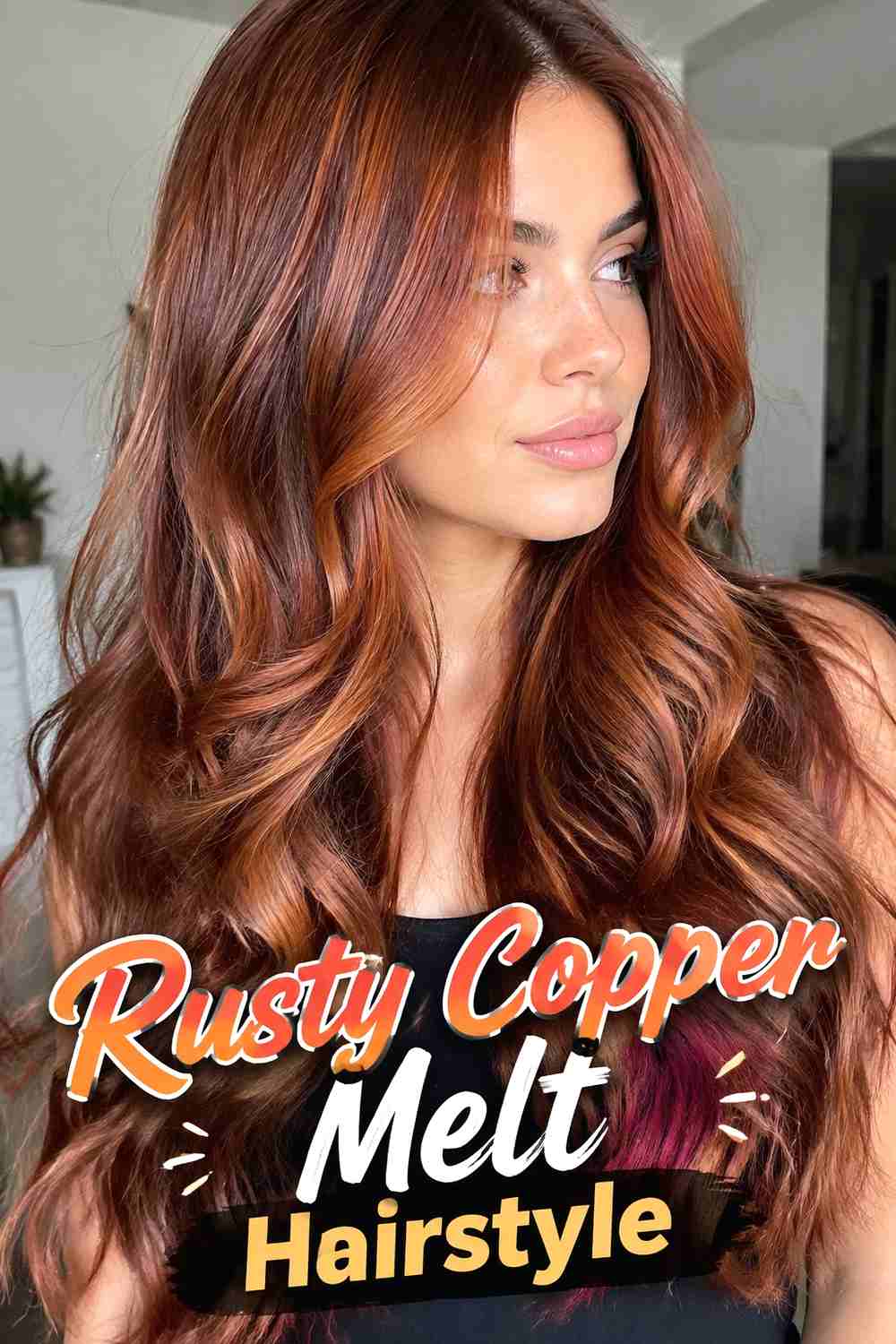
The Rusty Copper Melt Hairstyle brings muted red-orange warmth into the lengths while preserving deep root contrast. The color can begin as a dark auburn near the upper mid-lengths before shifting into rust and weathered copper toward the ends. Compared with golden copper, rust feels deeper, earthier, and slightly more subdued. Soft waves enhance that dimensional quality by letting dark, medium, and brighter sections appear at different angles. The melt should remain irregular enough to avoid a horizontal band, with some warmer pieces beginning higher and others lower. Keeping the root area untouched or deeply shadowed gives this color extra depth and makes the rusty lower lengths look richer.
Styling Notes
Use varied movement through the lengths rather than identical curls so the rust and dark root tones remain visible in changing proportions.
Why It Works
Rust provides strong warmth while still carrying enough depth to connect smoothly with darker roots.
7. Golden Copper Melt Hairstyle
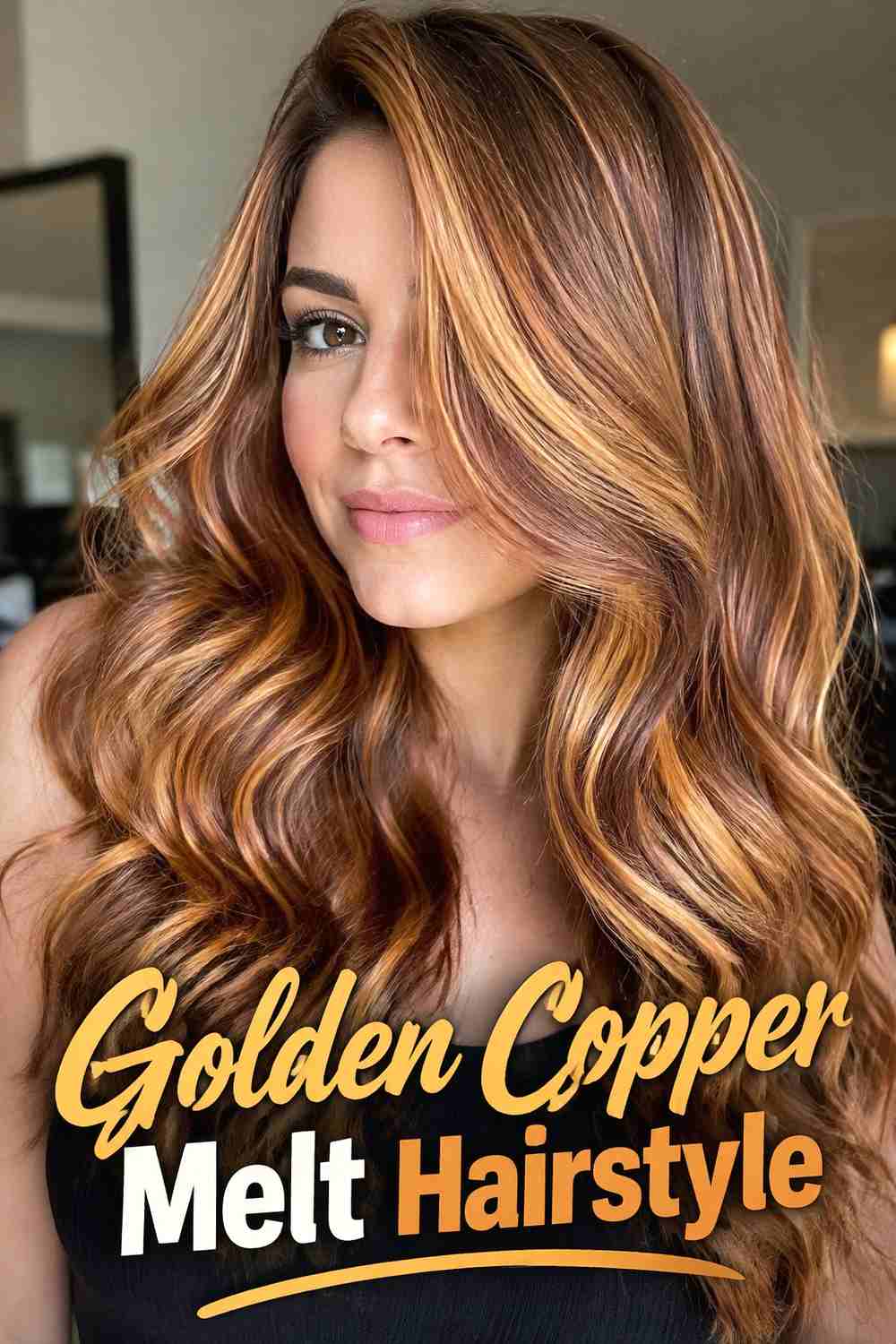
The Golden Copper Melt Hairstyle brightens the lower lengths with warm, reflective copper that carries subtle golden undertones. The roots remain deep brunette, while medium copper creates a transition zone before the ends become more luminous. This creates a sunlit effect without losing the richness at the top. The golden influence makes the copper appear softer and less red than auburn-based versions, especially in bright natural light. Long waves show the gradient beautifully because the lighter ends catch more light as they curve forward. A few medium copper pieces can continue through the ends to keep the lower section dimensional rather than uniformly bright.
Best For
Choose this direction if you want a brighter copper melt with warm golden lightness rather than deep red or burgundy undertones.
Wear & Maintenance
Lighter copper ends may show changes in tone more noticeably, so color care can help preserve the intended golden warmth.
8. Face Framing Copper Melt Hairstyle
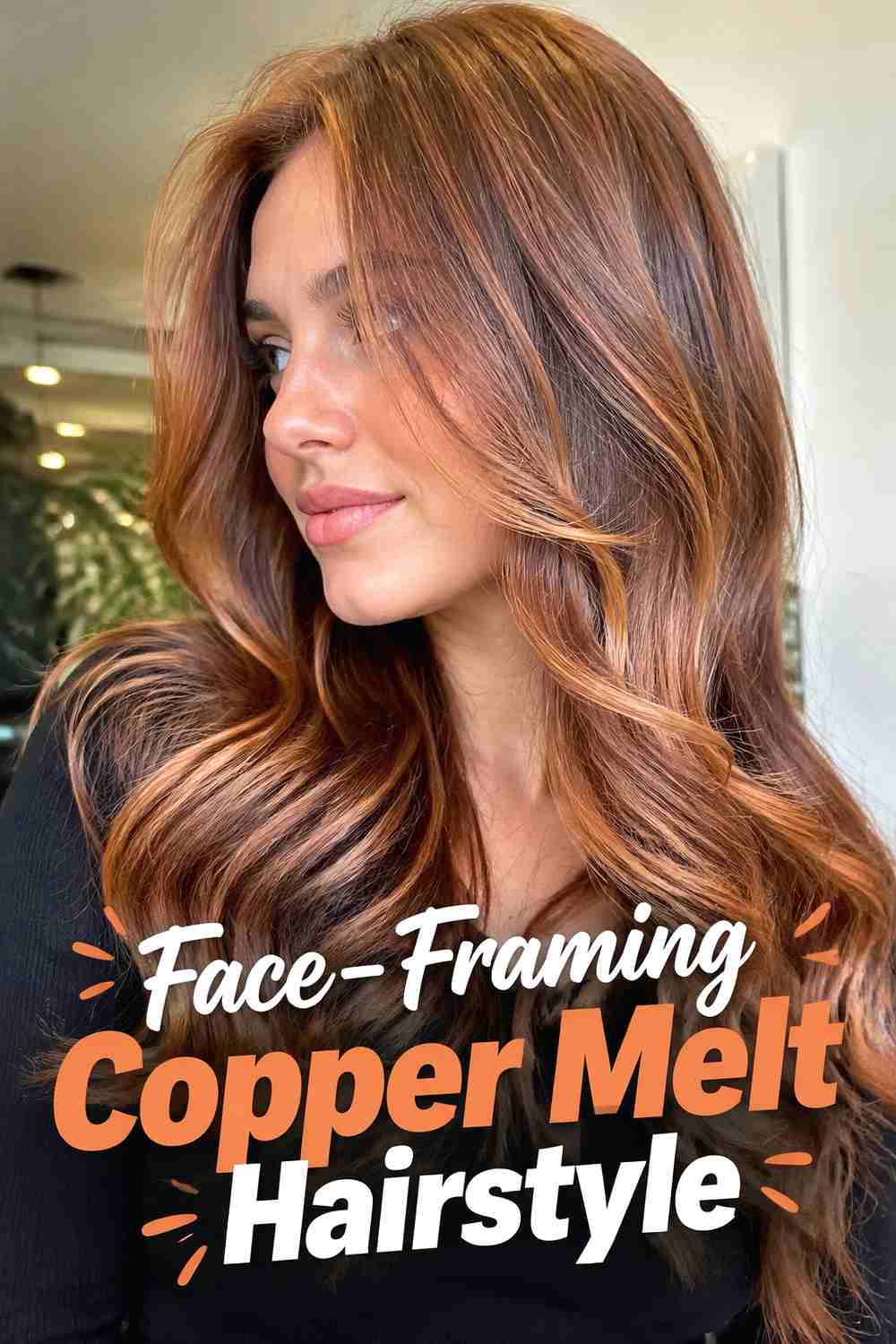
The Face-Framing Copper Melt Hairstyle places the brightest warmth around the front while keeping the roots and much of the back deeper. Copper pieces can begin higher around the temples and cheekbones, then gradually become brighter through the lower lengths. Behind them, the main color transitions more softly from dark brown into medium copper. This creates a visible focal point without requiring the entire head to have equally bright placement. Layered front sections work especially well because the warm pieces can move independently around the face. A blowout or broad wave helps the brighter copper curve forward and remain visible while still blending into the darker surrounding hair.
Styling Notes
Shape the front layers away from the face so the brighter copper remains visible through the full length of each section.
Pro Tip
Keep some deeper color between the front pieces to preserve contrast instead of letting them merge into one large bright panel.
9. Long Layered Copper Melt Hairstyle
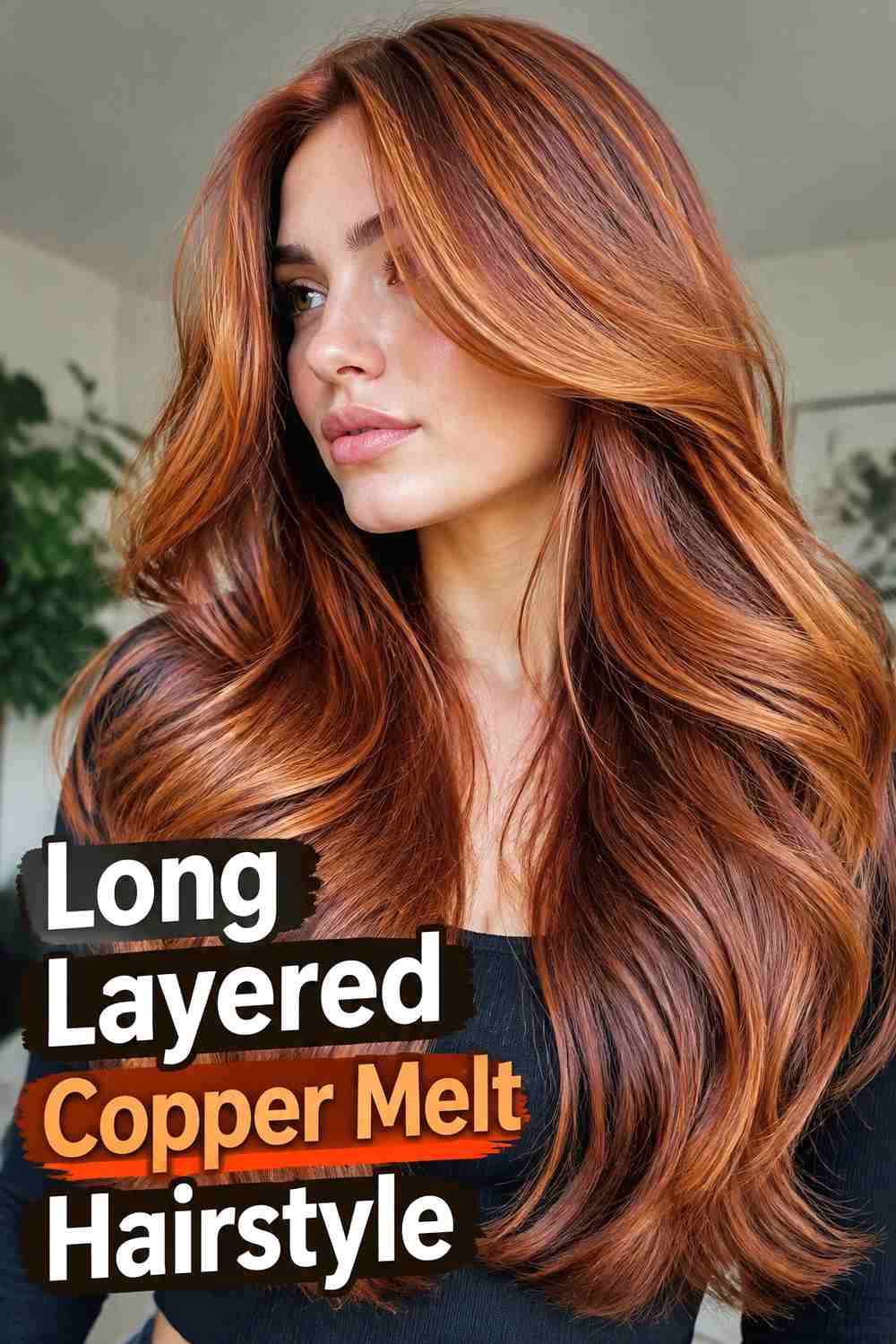
The Long Layered Copper Melt Hairstyle uses multiple hair lengths to show the gradient at several levels. Deep roots can remain visible near the crown while shorter face-framing layers shift into copper sooner than the longest sections. This means some warm pieces appear around the shoulders while others become brightest farther down the back. The variation keeps long hair from looking like one simple two-color gradient. A soft blowout emphasizes the individual layers and makes the transition appear more dimensional, while waves create a more blended effect. Keeping brunette or auburn depth underneath also prevents the ends from looking too light compared with the strong root area.
Hair Type & Length
Medium to long layered hair provides the most space for several stages of dark-to-copper transition.
Pro Tip
Plan the warmest color around visible layers so the haircut and melt enhance each other rather than competing.
10. Wavy Copper Melt Hairstyle
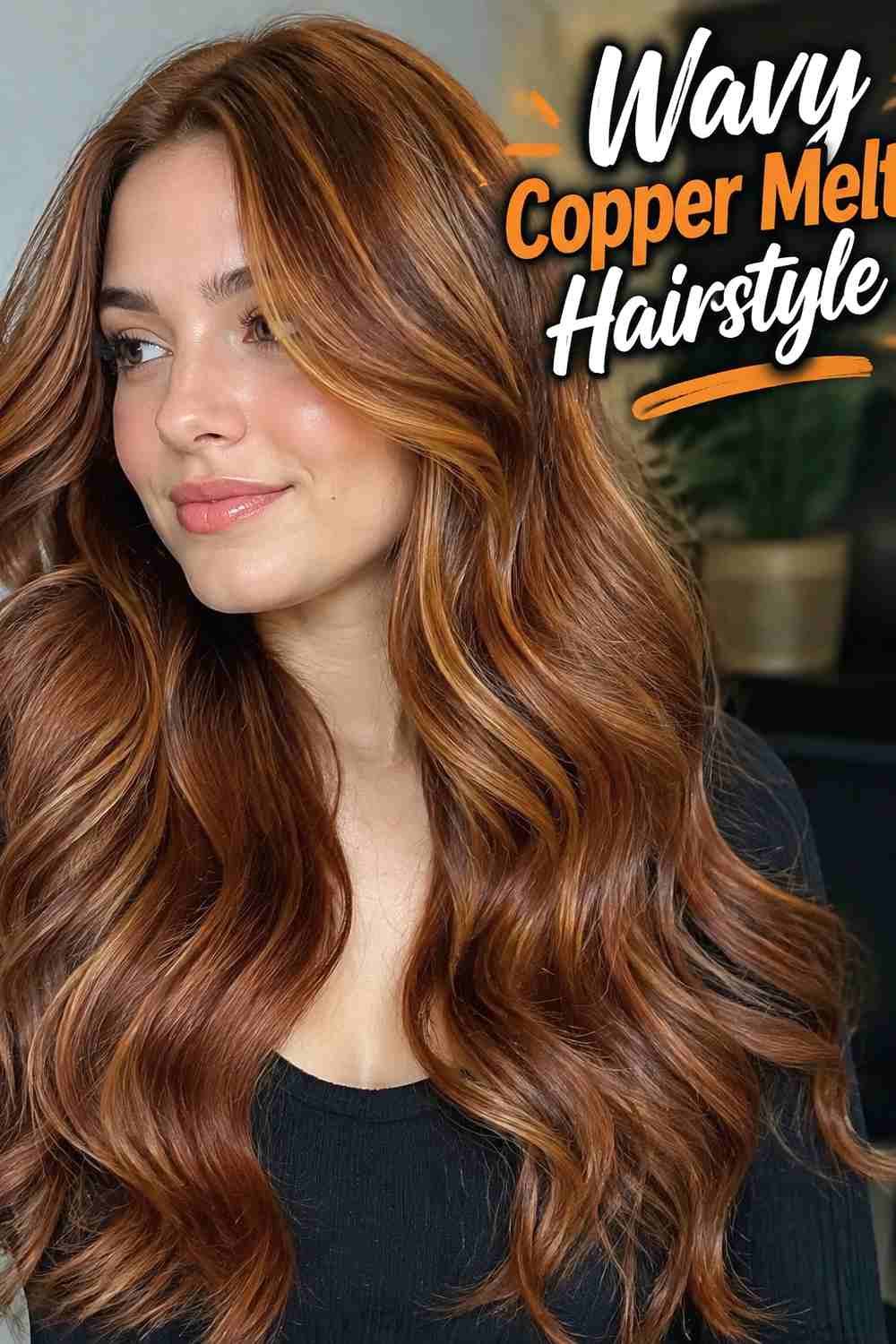
The Wavy Copper Melt Hairstyle uses loose bends to reveal dark roots, intermediate auburn tones, and brighter copper through one flowing shape. Because waves overlap, the color transition appears softer than it would on completely straight hair. Some bends expose deeper pieces while others bring the copper ends forward, creating natural-looking variation throughout the style. The root area can remain almost entirely dark, with warmth beginning gradually below the upper lengths. Keeping the wave pattern irregular helps avoid a repetitive striped appearance. This version is especially effective if you want a noticeable copper melt that still feels blended and dimensional rather than arranged in clearly separated color zones.
Why It Works
Waves visually mix the transition tones, making the gradient look softer while still allowing the bright copper to stand out.
Styling Notes
Alternate wave direction and leave the ends slightly relaxed so the dark and copper sections remain naturally intermixed.
11. Curly Copper Melt Hairstyle
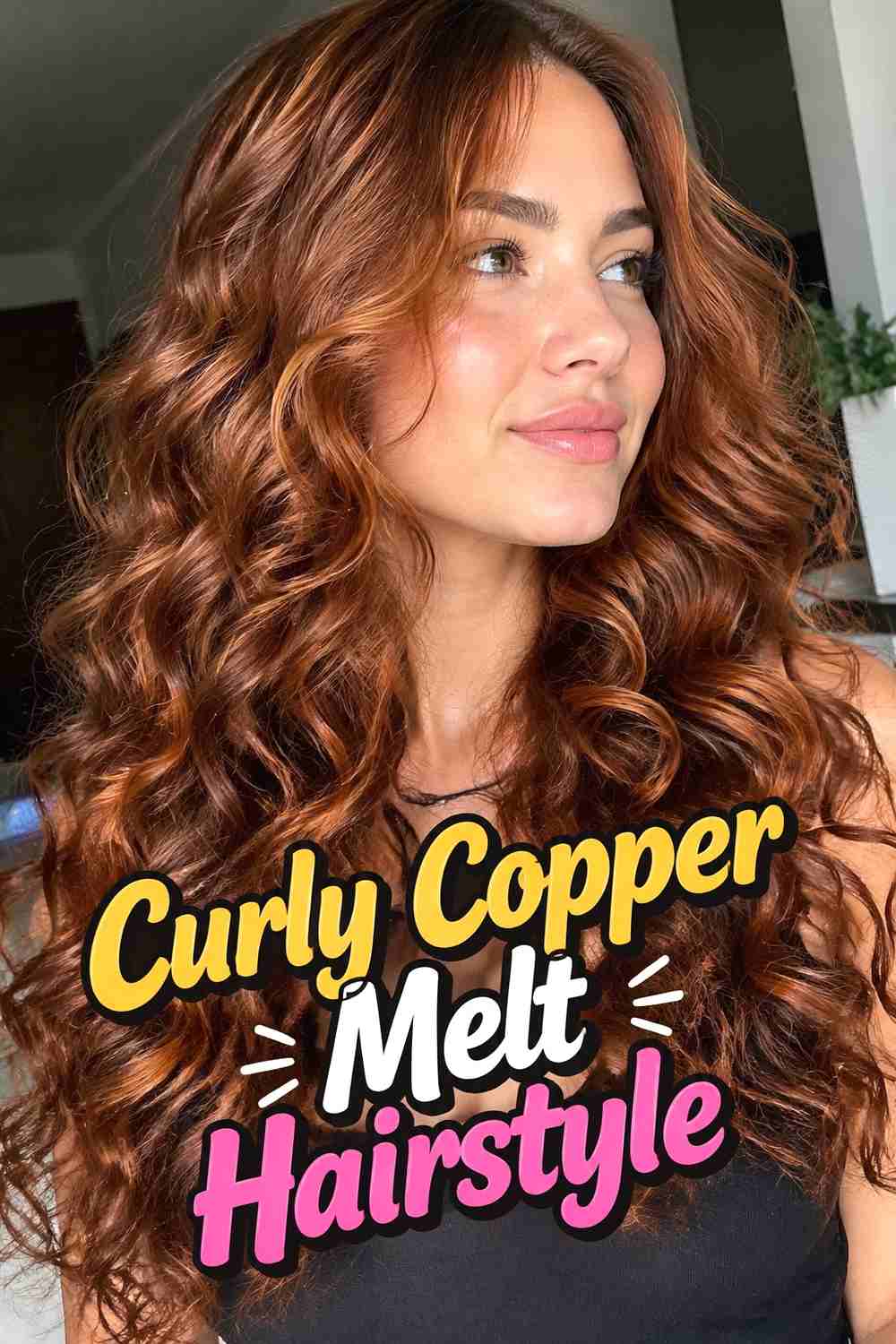
The Curly Copper Melt Hairstyle follows the natural curl pattern instead of creating a perfectly horizontal transition from dark to warm. Roots can remain deep, while selected curl groups gradually become auburn, rust, or brighter copper farther down their lengths. Because curls shrink and overlap, the warm color may appear at different heights throughout the hairstyle, giving the melt an organic finish. Darker interior curls preserve depth and make brighter copper pieces more visible. The color placement should be considered in the hair’s normal dry state, since stretched hair can make the gradient appear very different. Flexible styling keeps each curl visible and allows the various copper tones to show naturally.
Hair Type & Length
The final melt should account for curl pattern, shrinkage, density, and where the warmest curl groups sit once fully dry.
Pro Tip
Evaluate the transition after styling so the brighter copper lands in balanced areas rather than clustering unexpectedly.
12. Bob Copper Melt Hairstyle
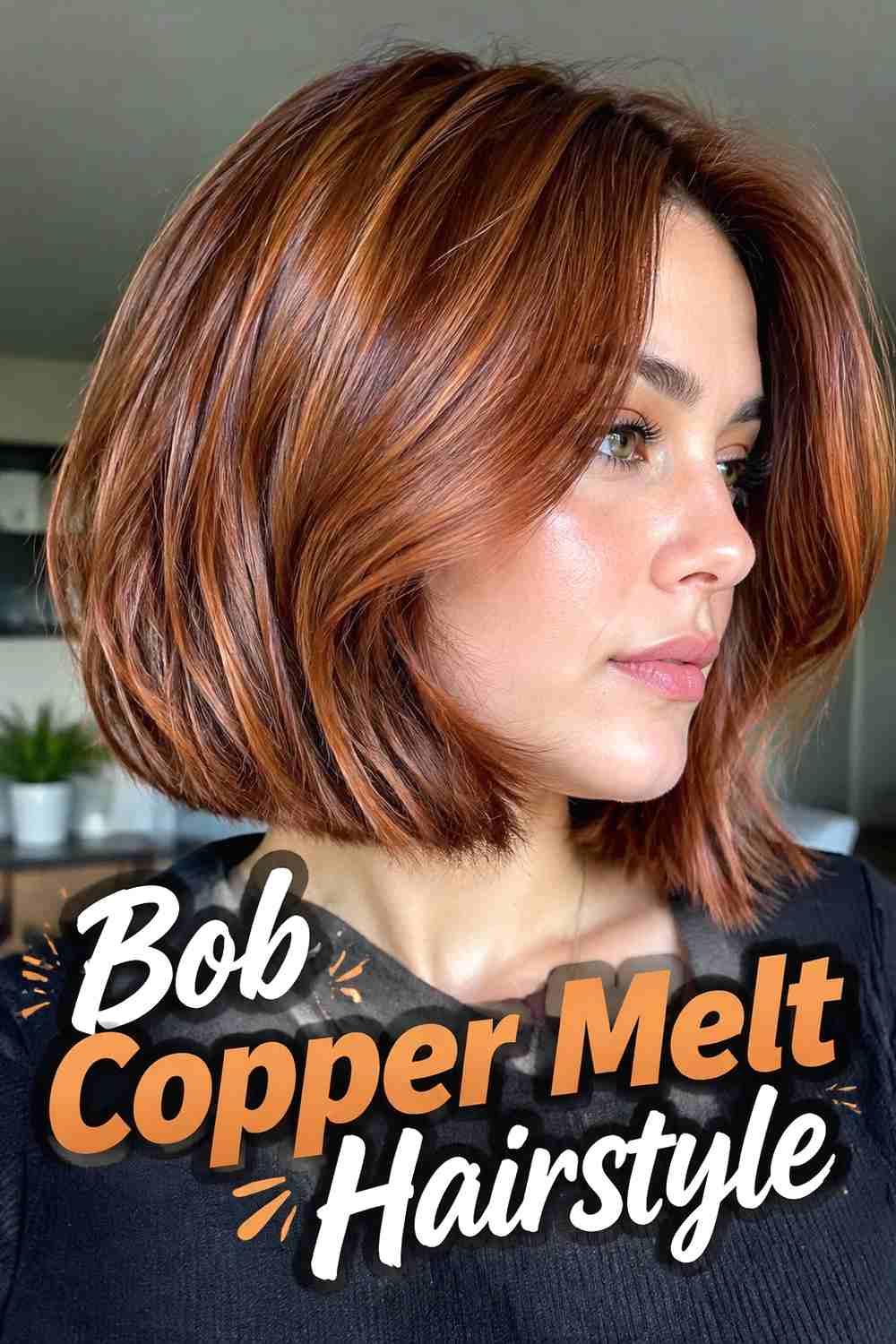
The Bob Copper Melt Hairstyle compresses the dark-to-warm transition into a shorter silhouette. Deep roots may extend through the upper third of the haircut before shifting into auburn or medium copper, with the brightest tone concentrated near the perimeter. Because there is less length for the colors to transition, careful blending is especially important. A sleek bob makes the gradient easy to see, while a tousled finish turns it into smaller flashes of dark and warm color. Keeping some deeper pieces through the lower section prevents the ends from looking disconnected from the roots. This option gives a short haircut noticeable warmth without requiring all-over copper at the scalp.
Best For
Choose this variation if you want a defined short cut with a visible copper gradient and darker root depth.
Wear & Maintenance
Regular bob trims can remove some of the brightest ends, so the melt may need reshaping as the haircut is maintained.
13. Lob Copper Melt Hairstyle

The Lob Copper Melt Hairstyle offers more room than a bob for a gradual transition while keeping the overall cut manageable. Dark roots can move into muted auburn around the upper mid-lengths, then brighten into copper through the collarbone-level ends. Subtle internal layers can expose different tones without making the perimeter appear thin. Loose bends are particularly effective because they reveal the middle transition shade as well as the brighter lower color. Keeping a few dark pieces running through the ends adds dimension and ties the gradient back to the roots. The result can feel polished enough for straight styling but still dynamic when worn wavy or tucked behind the ears.
Why It Works
The lob provides enough length for a believable multi-stage melt without requiring the maintenance and styling of very long hair.
Styling Notes
Add broad bends rather than tight curls if you want the root-to-copper gradient to remain easy to see.
14. Soft Rooted Copper Melt Hairstyle
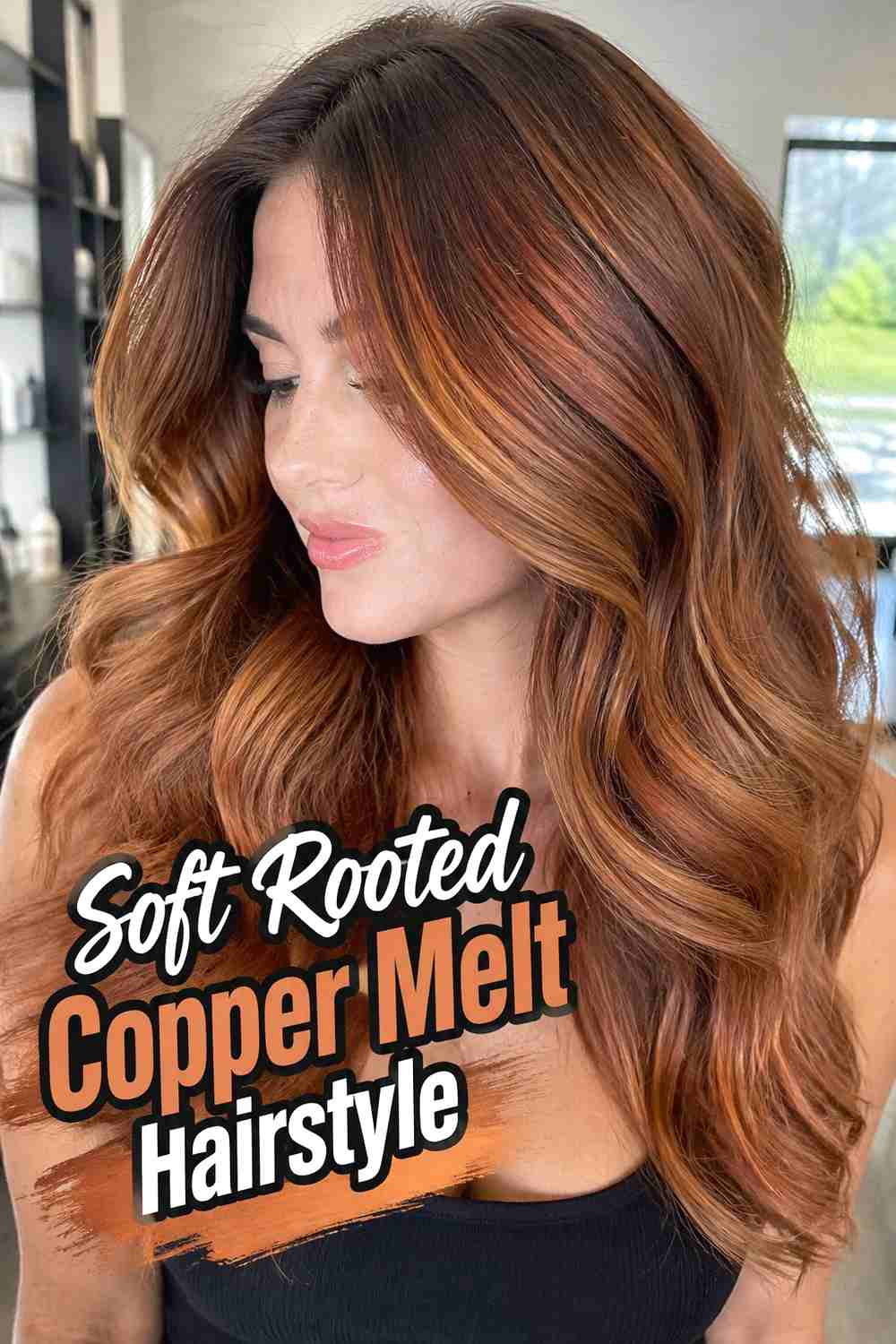
The Soft Rooted Copper Melt Hairstyle keeps the darkest area close to the scalp while creating an exceptionally diffused transition into warm lengths. Instead of a strong dark band, the root shade fades gradually into brown-red, cinnamon, and medium copper. The result feels cohesive from top to bottom, with no abrupt starting point for the brighter color. A few root-colored strands can extend farther into the mid-lengths to add depth and make the transition even softer. This style is well suited to long or medium hair where the gradient has room to develop. Gentle movement through the lengths helps display the melt without making the root area appear too heavy.
Best For
This approach works well if you like dark roots but want the transition into copper to feel especially seamless.
Wear & Maintenance
The soft root zone can make new growth less visually abrupt, though the copper lengths may still need tonal refreshes over time.
15. Dimensional Copper Melt Hairstyle
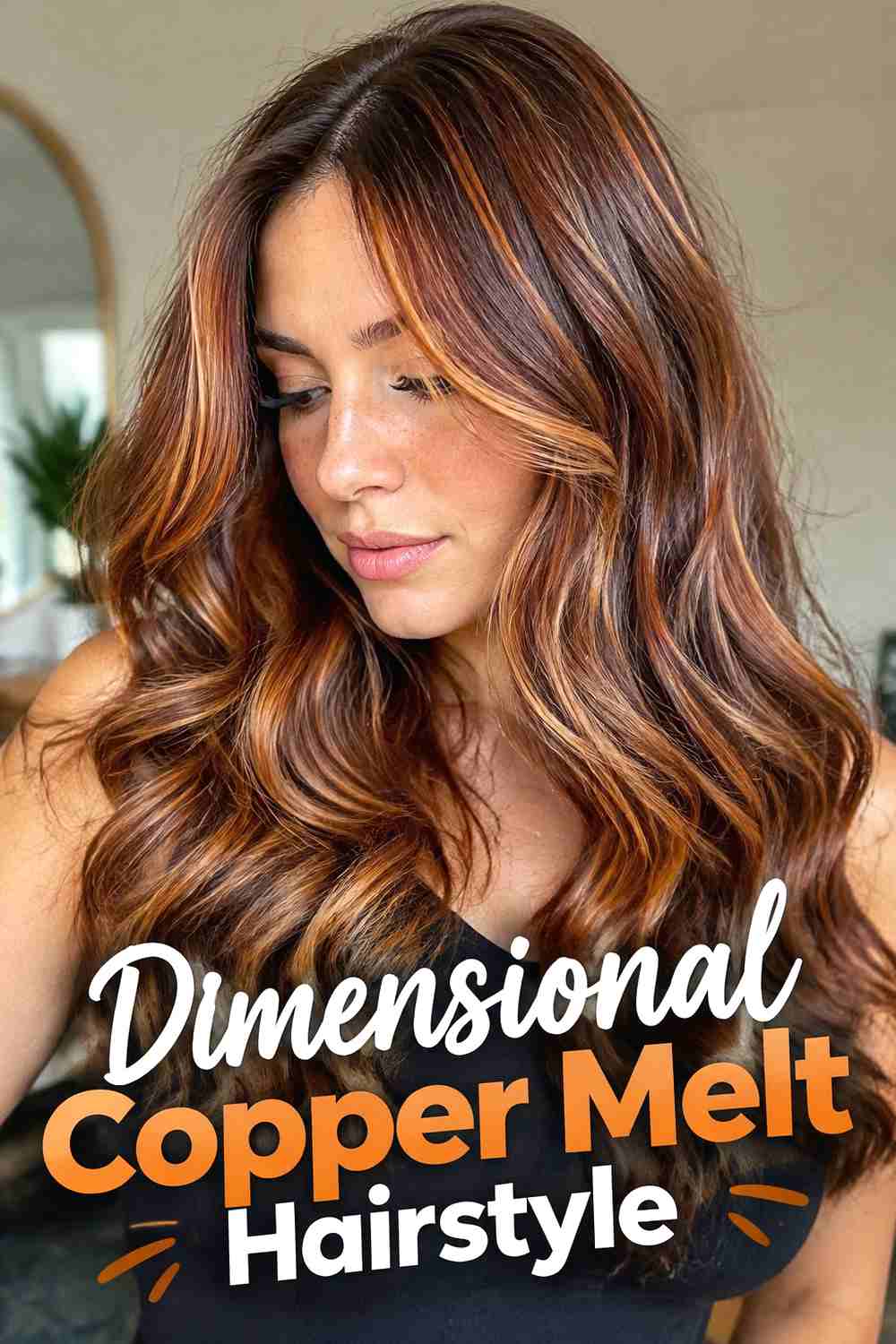
The Dimensional Copper Melt Hairstyle combines several related warm tones rather than moving from dark roots into one repeated shade. Deep brunette at the top can transition through auburn, cinnamon, rust, medium copper, and brighter copper in selected areas. The effect is rich rather than striped because the sections begin and end at different heights. Waves or layered styling reveal the full tonal range, while a polished blowout gives the color a glossy finish. The brightest copper can be reserved for surface pieces and lower ends, with deeper shades underneath creating shadow. This multi-tonal approach is particularly useful when you want the melt to look complex and full rather than simply dark-to-orange.
Why It Works
Several related transition shades make the gradient feel natural while adding visible depth from roots to ends.
Styling Notes
Soft movement shows the tonal variation best; completely flat styling may hide some of the darker interior dimension.
16. Copper Caramel Melt Hairstyle
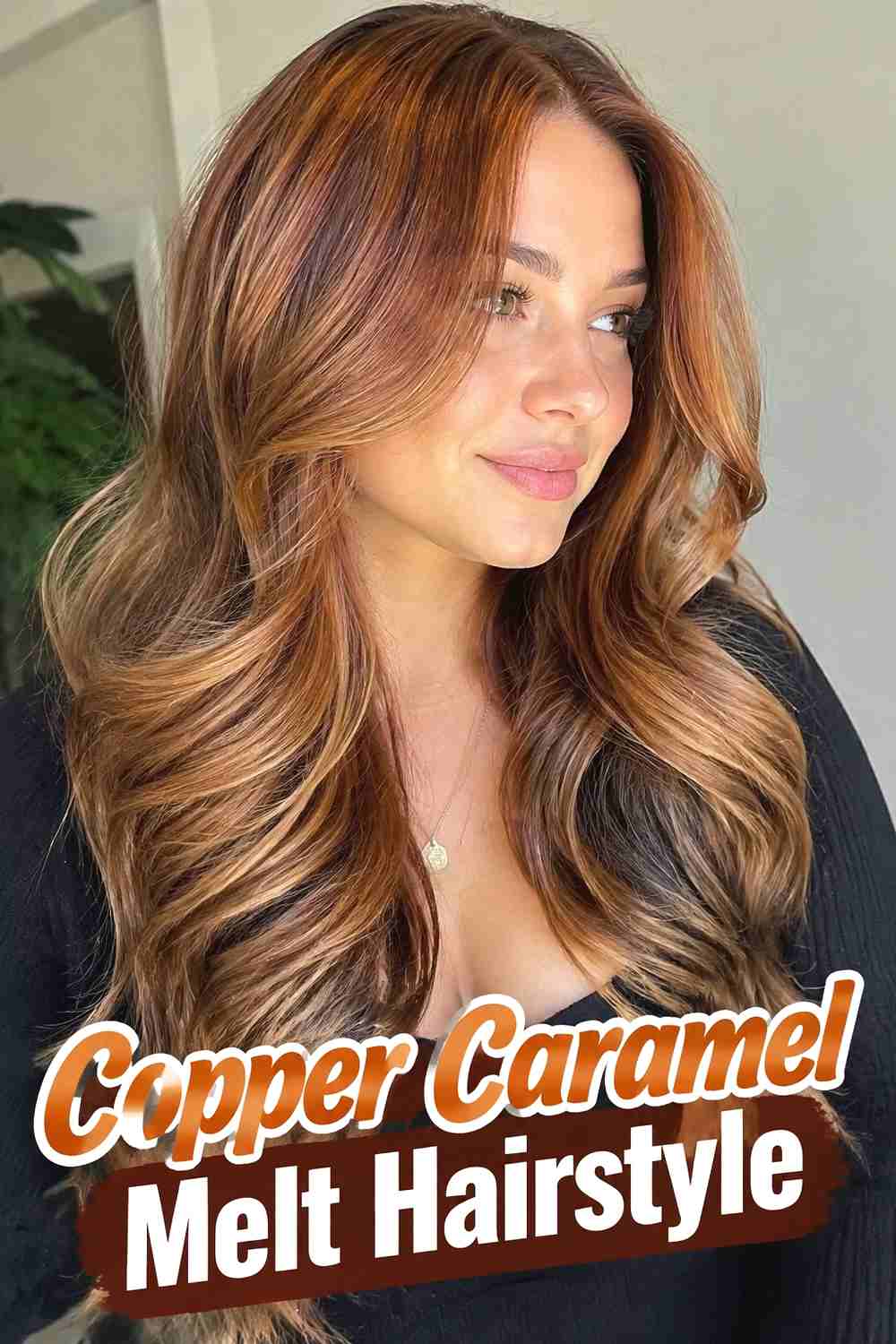
The Copper Caramel Melt Hairstyle softens fiery copper with warm brown-gold tones through the middle and lower lengths. Dark roots flow into cinnamon brown before caramel-copper begins to appear, creating a warmer and slightly more neutral gradient than bright red-orange copper. A few lighter golden pieces can sit near the ends, while deeper copper remains underneath for richness. This version works especially well with loose waves because caramel and copper catch the light differently without looking like unrelated colors. It is a good option if you enjoy warm hair but want the final result to feel balanced between brunette, copper, and golden tones rather than strongly red.
Best For
Choose this melt if you prefer warm, softly golden copper with less emphasis on fiery orange-red saturation.
Why It Works
Caramel tones naturally connect dark brown roots with brighter copper, creating a smooth transition with extra warmth.
17. Smoky Copper Melt Hairstyle
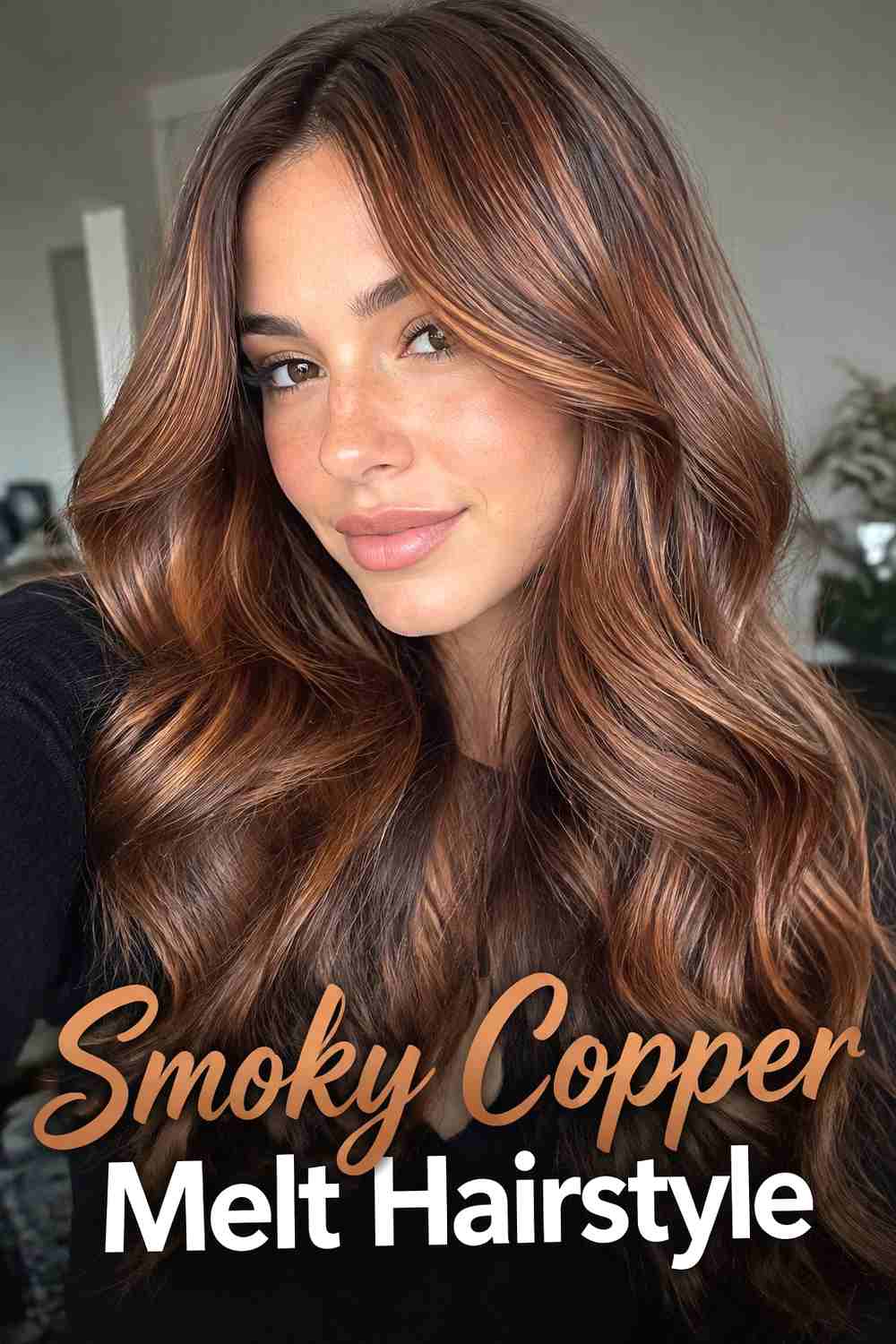
The Smoky Copper Melt Hairstyle tones down traditional copper with muted brown, auburn, and slightly neutral depth. Dark roots remain prominent, while the middle lengths shift into subdued cinnamon or brown-red before developing a soft copper finish toward the ends. The result still feels warm but lacks the intense brightness of golden or burnt-orange versions. Straight styling can emphasize the sophisticated gradient, while waves reveal subtle differences between the smoky transition tones. This is particularly appealing if you want copper that feels understated and earthy. Keeping the ends glossy is useful because muted copper relies on dimension and reflectivity rather than extremely bright saturation for its visual impact.
Why It Works
Neutralized undertones soften the warmth, allowing the copper to connect naturally with deeper roots without a sharp color jump.
Best For
This version suits anyone who prefers a muted, sophisticated copper palette over bright orange or golden ends.
18. Bright Ends Copper Melt Hairstyle
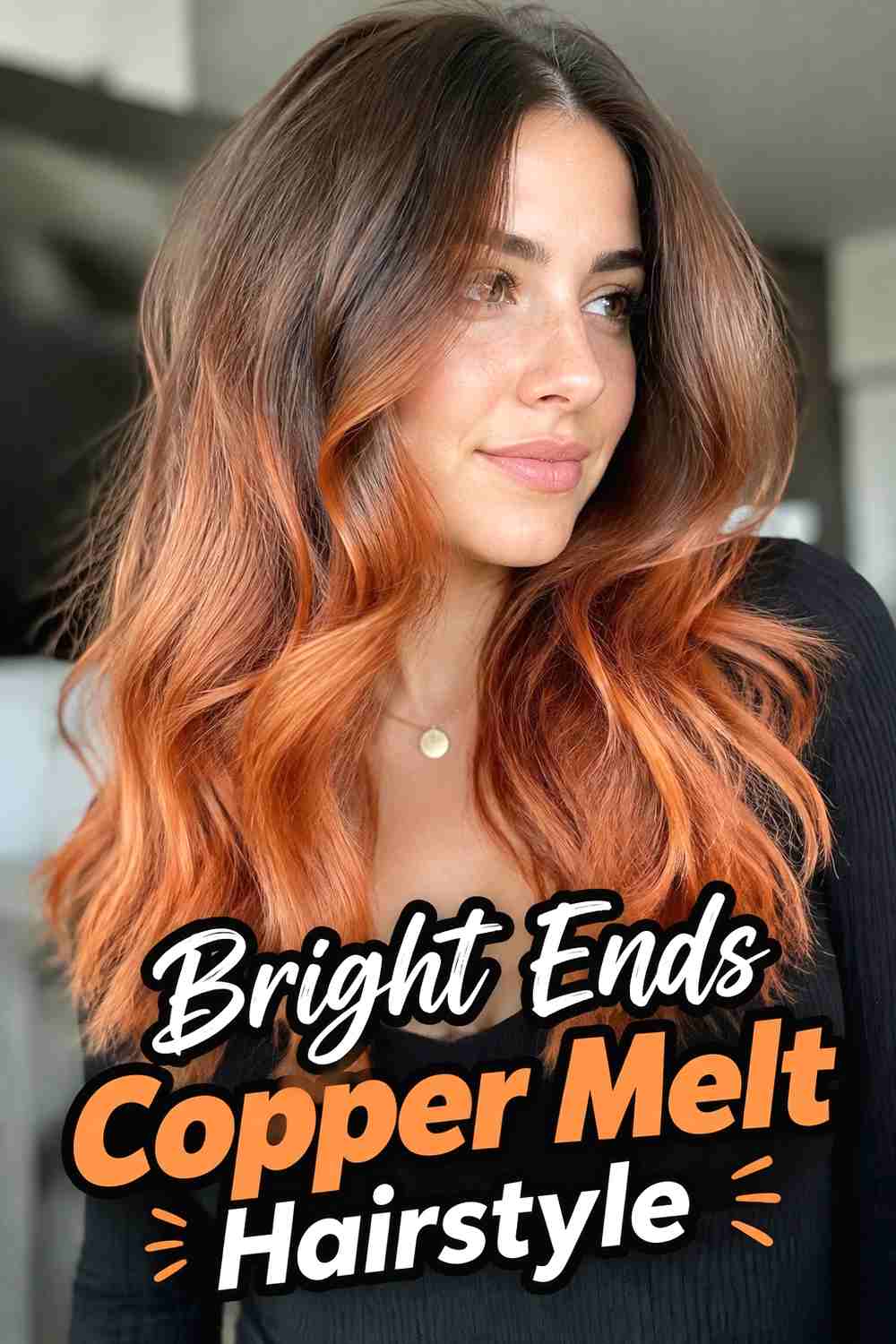
The Bright Ends Copper Melt Hairstyle saves the strongest color for the bottom portion of the hair. Dark roots remain deep and rich through the upper lengths, while auburn and medium copper form a transition before the ends become noticeably brighter. The gradient should stay irregular, with a few brighter pieces beginning higher and some darker strands extending lower to avoid a dip-dyed line. Long hair gives this look plenty of room to develop, but medium lengths can also create a strong effect. Soft waves make the bright copper ends move through darker pieces, while straight styling showcases the complete root-to-tip progression with maximum clarity.
Styling Notes
Keep the transition zone broad enough that the bright ends feel melted into the darker hair rather than abruptly attached.
Wear & Maintenance
The lighter, brighter lower sections may show tonal fading more noticeably, so refreshes can help preserve their intensity.
How to Choose the Right Look
Start with how much contrast you want between the roots and lengths. Dark chocolate, cinnamon, smoky, and soft-rooted melts create a more gradual transition, while burnt orange, golden copper, and bright ends produce a stronger difference between the top and bottom.
Your existing base matters too. Deep brunette roots transition naturally through chocolate, auburn, or cinnamon before reaching copper. Using an intermediate shade often creates a softer melt than jumping directly from very dark roots into bright orange-red.
Hair length affects how much room the gradient has to develop. Long layers can show several tones, while bobs need a more compressed transition. Lobs provide a useful middle ground. Waves and curls visually blend the shades, while straight hair makes each stage easier to see.
Finally, consider maintenance and finish. Copper tones can shift as they fade, and brighter ends may show those changes more clearly. Choose a depth and transition pattern you will still enjoy between color refreshes.
Final Thoughts
Copper melt hair color is especially versatile with dark roots because the contrast can be adjusted from subtle cinnamon warmth to bright golden or rusty ends. Chocolate blends stay brunette-led, layered and wavy versions emphasize dimension, and brighter melts make the lower lengths the focal point. Choose a transition that complements your haircut, texture, starting base, and realistic maintenance routine.
FAQs
1. What is a copper melt with dark roots?
It is a gradual color transition that keeps the root area dark and blends through intermediate brown, auburn, or cinnamon tones before becoming copper through the mid-lengths and ends.
2. What dark root shades work with copper hair?
Deep brunette, espresso, chocolate brown, dark auburn, and similar rich bases can all transition into copper when the intermediate tones are blended carefully.
3. What is the most subtle copper melt option?
Dark chocolate, cinnamon, smoky copper, and soft-rooted melts are among the more understated options because they preserve plenty of deeper color and use muted transition tones.
4. Does copper melt work on curly hair?
Yes. The gradient can follow natural curl groups, with darker roots and increasingly warm color farther down each curl while accounting for shrinkage and dry placement.
5. How can a copper melt look more dimensional?
Use more than one transition shade. Dark roots moving through auburn, cinnamon, rust, and brighter copper generally create more visible depth than a simple two-color gradient.
Save your favorite copper melt hair color ideas, share the looks you love, and explore more dark-root color inspiration for your next hair update.