12 Soft ’70s Fringe Hairstyle Ideas
Soft, feathered fringe and flowing layers bring easy ’70s-inspired movement to blowouts, bobs, waves, curls, and modern everyday haircuts.
Soft ’70s fringe is all about movement rather than a heavy, sharply defined bang. The fringe typically opens around the center, curves away from the face, and blends into longer pieces near the cheekbones or temples. That softer shape makes it easy to pair with everything from layered long hair to shorter bobs.
The best version depends on your natural texture, haircut length, density, and how much styling you want to do. Some looks lean into full feathered volume, while others keep the retro influence subtle with loose waves, natural curls, or a gently flipped finish.
Quick List
- Classic Soft 70s Fringe Hairstyle
- Feathered 70s Fringe Hairstyle
- Center Parted 70s Fringe Hairstyle
- Soft 70s Fringe With Long Layers Hairstyle
- Soft 70s Fringe With A Shag Hairstyle
- Soft 70s Fringe With A Blowout Hairstyle
- Soft 70s Fringe With Loose Waves Hairstyle
- Soft 70s Fringe With Shoulder Length Hair Hairstyle
- Soft 70s Fringe With A Bob Hairstyle
- Soft 70s Fringe With Flipped Ends Hairstyle
- Soft 70s Fringe With Natural Curls Hairstyle
- Soft 70s Fringe With Voluminous Layers Hairstyle
1. Classic Soft 70s Fringe Hairstyle
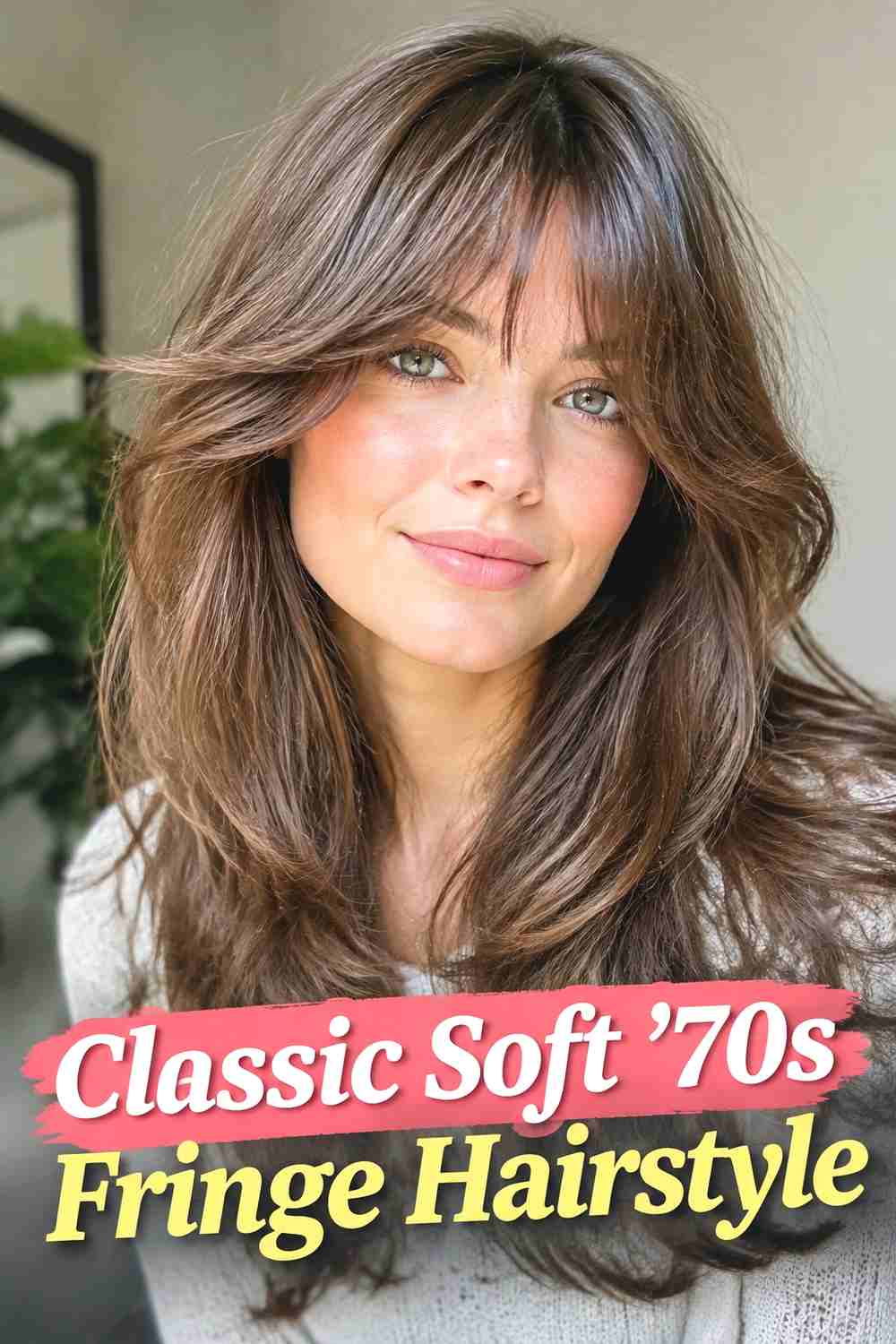
The classic soft ’70s fringe combines a lightly opened center with pieces that sweep outward toward the temples. Instead of sitting flat across the forehead, the bangs carry a gentle curve that creates movement around the eyes and cheekbones. The outer edges can remain slightly longer so the fringe blends smoothly into the rest of the haircut. This version works especially well with medium and long hair worn straight, softly waved, or lightly blown out. The key is keeping the shape flexible rather than overly sprayed or curled. A little root lift helps establish the retro character, while natural separation prevents the fringe from feeling like a costume-inspired recreation.
Styling Notes
Dry the fringe forward first, then divide it near the center and guide each side outward with a round brush.
Best For
This is a versatile choice if you want visible ’70s influence without committing to dramatic feathering throughout the entire haircut.
2. Feathered 70s Fringe Hairstyle
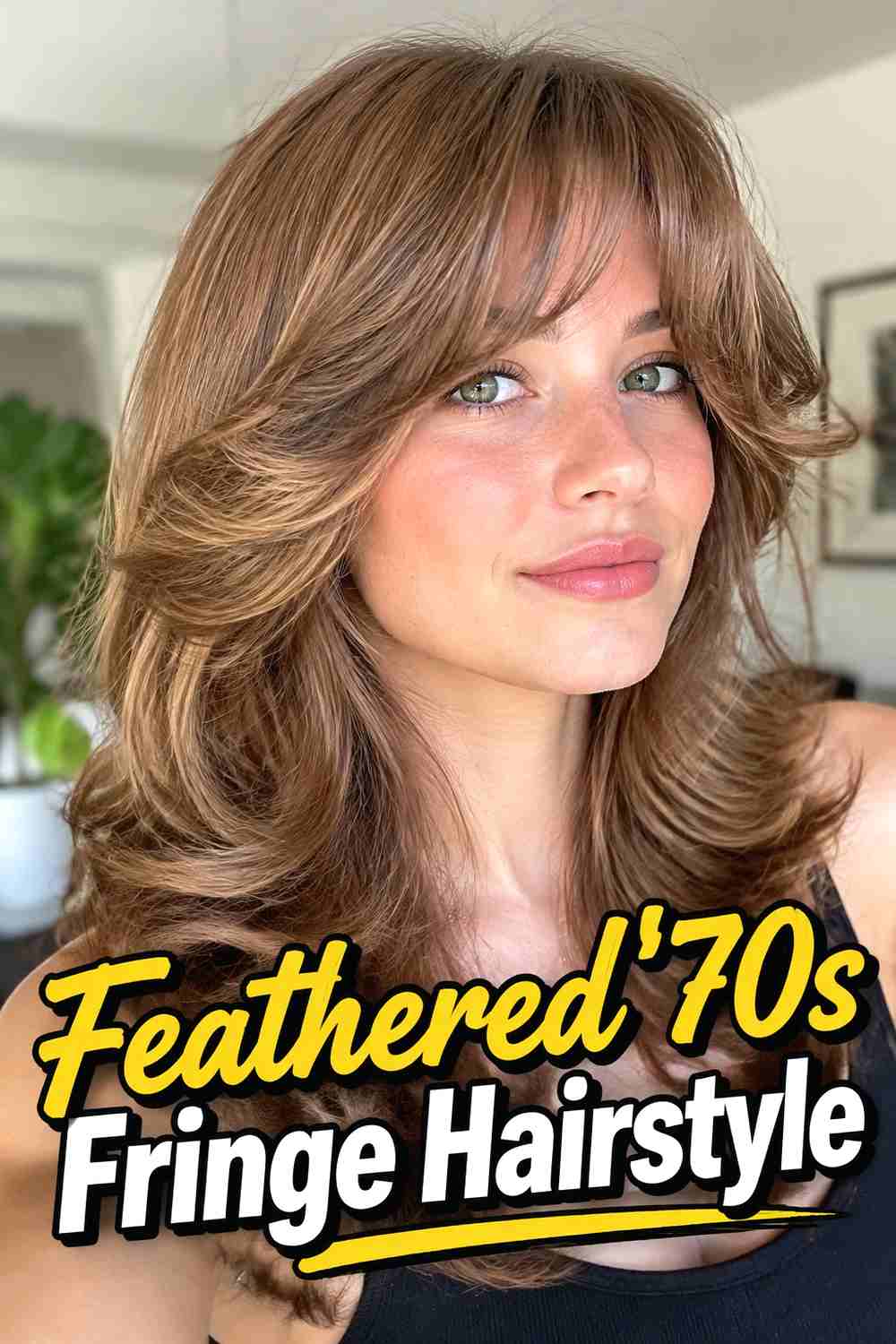
Feathered ’70s fringe emphasizes separation and outward movement, with shorter front pieces flowing into progressively longer sections around the temples. The fringe feels airy because the strands overlap rather than forming one solid curve. This shape looks particularly effective on hair with medium or higher density, since enough fullness remains to support visible feathering without making the ends look sparse. A blowout enhances the layered texture, but the finished style should still move freely rather than appearing stiff. Pairing the fringe with long or medium layers creates continuity through the sides and gives the haircut a more complete retro-inspired silhouette while keeping the overall result wearable.
Hair Type & Length
Medium-to-long hair provides enough space for the feathered fringe to transition gradually into longer face-framing layers.
Pro Tip
Direct neighboring sections slightly differently during styling so the feathering stays visible instead of collapsing into one large curl.
3. Center Parted 70s Fringe Hairstyle
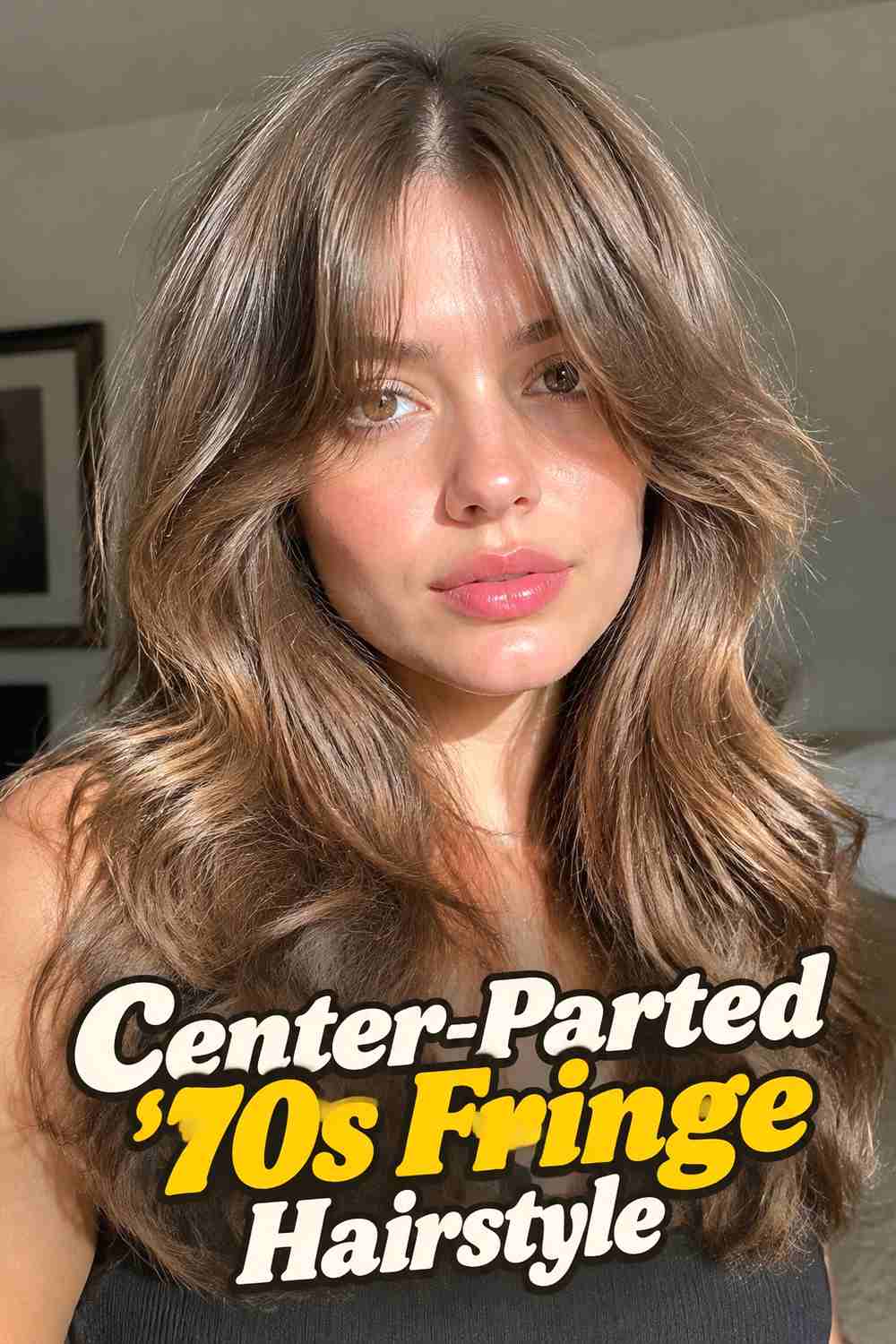
A center-parted ’70s fringe creates a soft opening through the forehead while keeping plenty of movement around the face. The shortest pieces can sit around the brows or upper cheekbones, with longer sides curving naturally toward the temples. Unlike a sharply divided curtain bang, the part does not need to look perfectly straight or symmetrical. A softer split gives the fringe a more relaxed finish and makes it easier to blend into layered hair. This version is especially useful if you like bangs but still want your forehead partially visible. It can also be refreshed quickly between wash days by dampening only the front and reshaping the fringe.
Why It Works
The center opening gives the hairstyle balance while the longer outer pieces create the signature sweeping shape associated with soft ’70s fringe.
Wear & Maintenance
Refresh the fringe separately with a small round brush or roller instead of restyling all of your hair.
4. Soft 70s Fringe With Long Layers Hairstyle
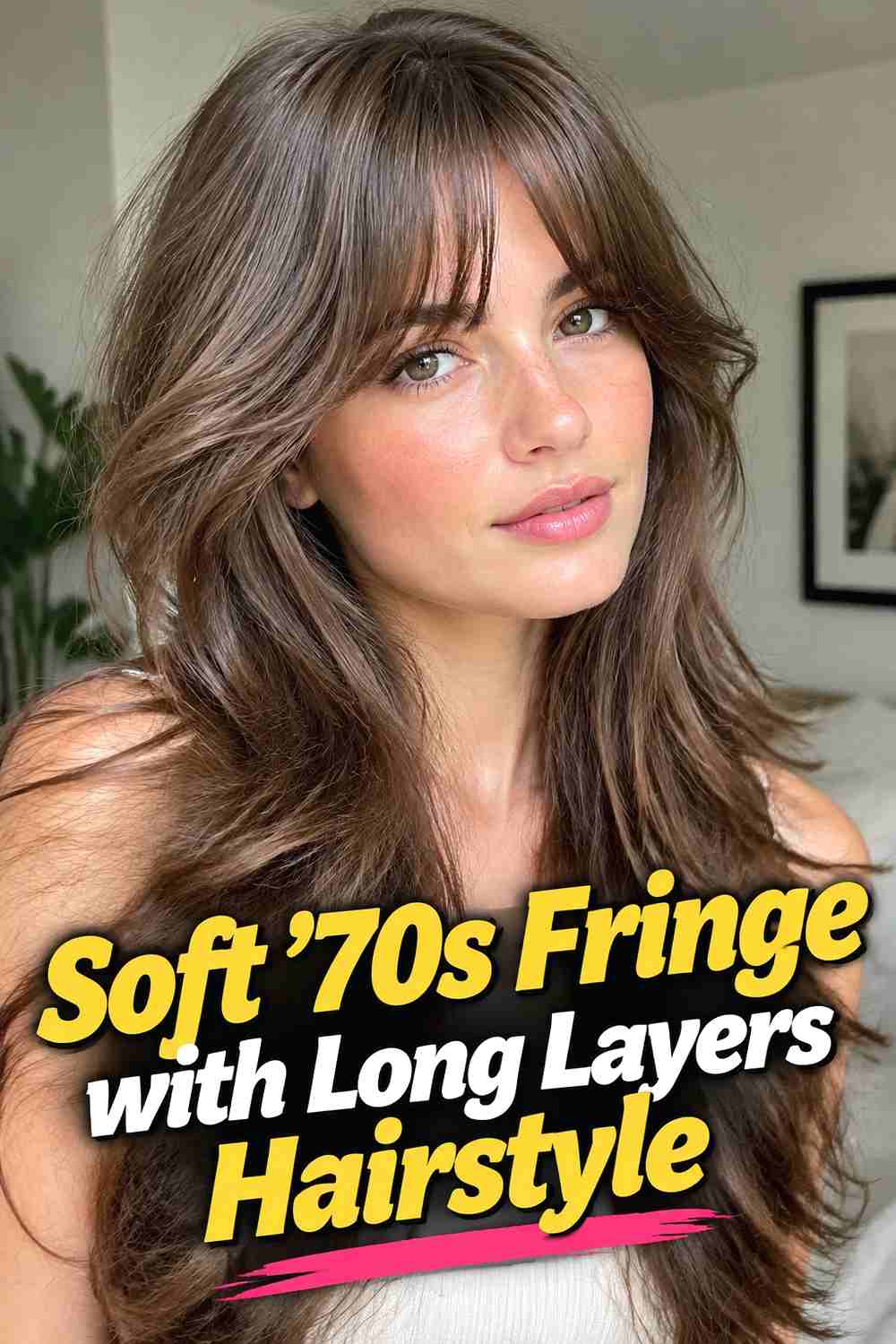
Long layers give soft ’70s fringe the space to flow naturally from the forehead through the cheekbones and into the lengths. The fringe becomes the shortest point of a gradual series of face-framing sections, while longer layers create movement farther down the hair. This keeps the haircut full but prevents very long hair from appearing overly heavy. A blowout can make the layering more visible by turning the front pieces away from the face and adding a broad bend through the ends. The look also works with softer natural texture, especially when the layers are cut to move instead of relying entirely on heat styling for shape.
Styling Notes
Use progressively larger brush sections as you move down the hair so the fringe stays defined while the longer layers develop broader curves.
Best For
Long hair that needs more movement around the face can benefit from this graduated layered structure.
5. Soft 70s Fringe With A Shag Hairstyle
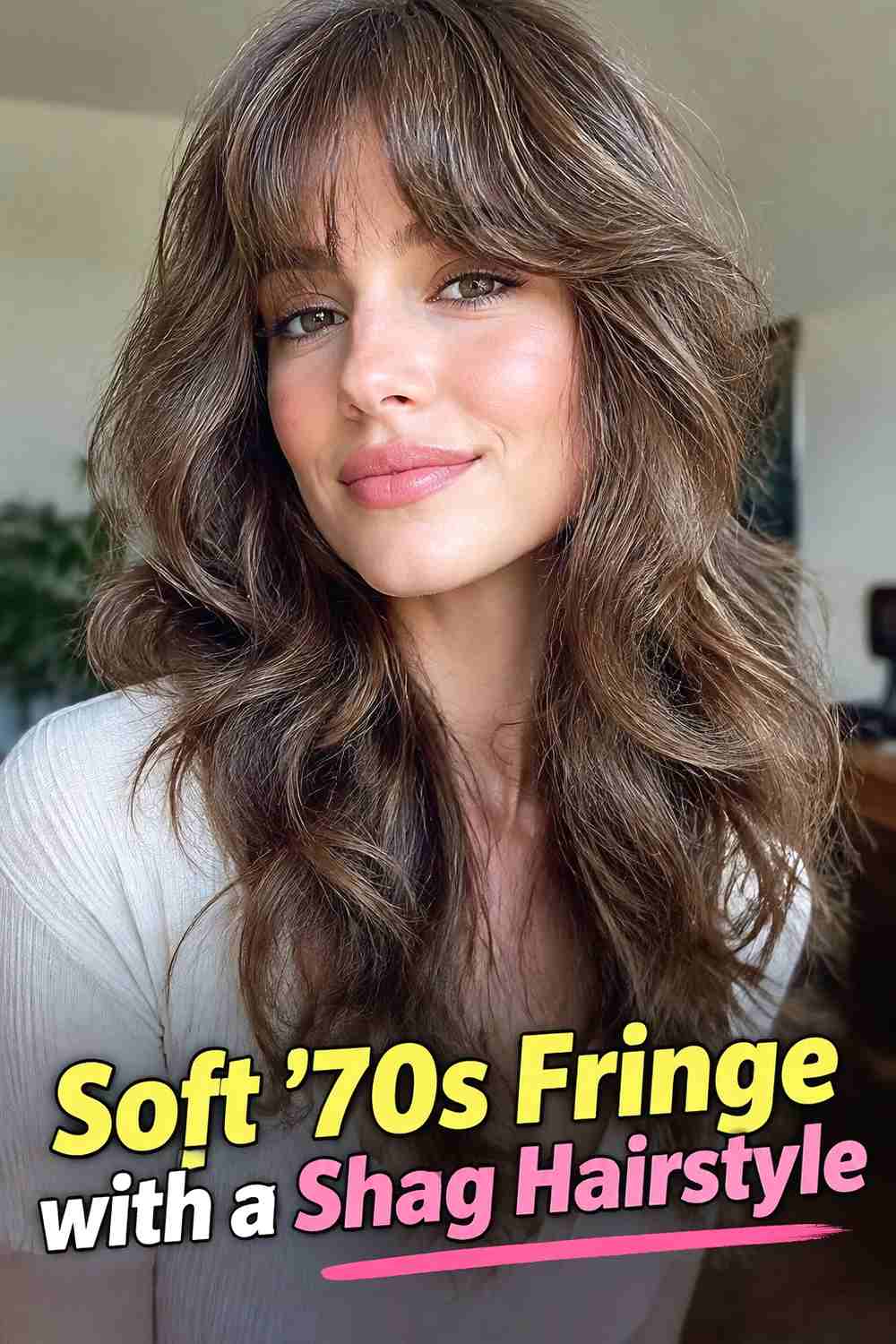
A shag gives soft ’70s fringe a textured, lived-in character by repeating shorter layers throughout the crown and sides. The fringe can sit around the brows before opening gently toward the temples, while shaggy sections around the cheekbones and jaw create additional movement. Naturally wavy hair often suits this combination because the layers encourage texture without requiring perfect styling. Straight hair can also wear it with a loose blow-dry or light texture product. The important balance is keeping enough weight through the lower lengths so the haircut does not become overly thin. The finished effect should feel deliberately airy and relaxed rather than heavily sculpted.
Hair Type & Length
Medium and long hair give the shag layers enough room to develop while preserving visible length through the perimeter.
Why It Works
The fringe and shag layers share the same soft, separated texture, so the front feels naturally connected to the rest of the haircut.
6. Soft 70s Fringe With A Blowout Hairstyle
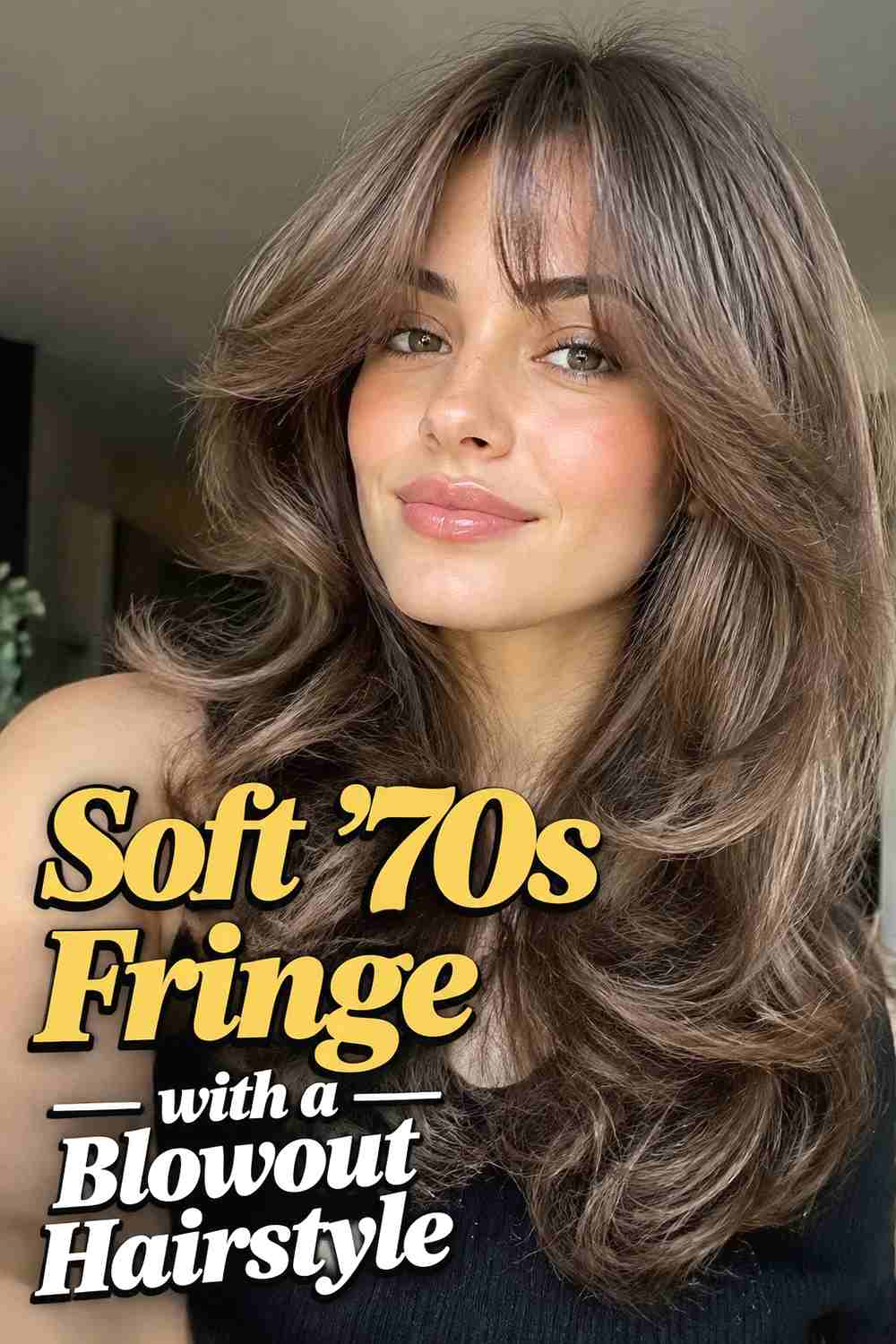
A blowout brings the full sweeping shape of soft ’70s fringe into focus by adding lift at the roots and broad curves through the face frame. The fringe should open lightly at the center, then roll away toward the temples without becoming a tight curl. Through the lengths, smooth volume and gently bent ends continue the same flowing direction. Large round-brush sections help create movement while preserving softness, and allowing the hair to cool in shape can improve hold without excessive hairspray. This version works particularly well on layered medium or long hair where multiple sections can move independently instead of forming one heavy, rounded silhouette.
Styling Notes
Focus on lifting the roots before shaping the ends; volume concentrated only at the bottom can make the hairstyle feel unbalanced.
Pro Tip
Let each section cool before separating it so the blowout keeps its shape while remaining flexible.
7. Soft 70s Fringe With Loose Waves Hairstyle
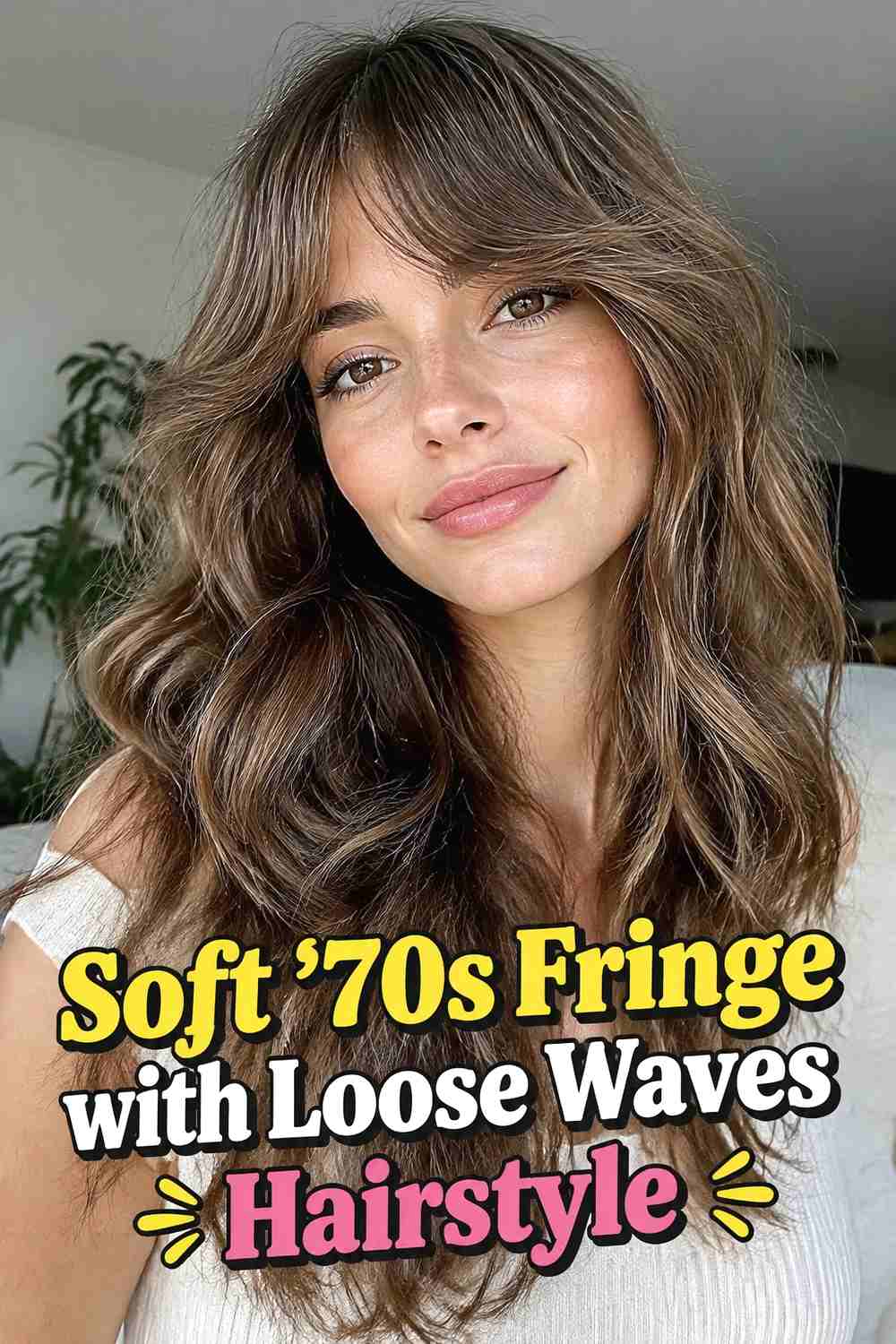
Loose waves give soft ’70s fringe a casual interpretation that feels less polished than a full blowout but still maintains the retro-inspired face frame. The bangs can stay smoother around the forehead before curving outward at the sides, while the lengths develop broad, irregular bends. Starting the waves below the roots helps keep the crown relaxed and prevents the entire style from becoming overly curled. Natural wave patterns work especially well because slight differences between sections add to the softness. If the hair is straighter, a large curling iron or heatless styling method can create enough movement without making the hairstyle look too formal.
Why It Works
The soft fringe creates structure near the face, while loose waves add movement through the lengths without competing with the bangs.
Pro Tip
Alternate wave directions and loosen the finished texture with your fingers for a more natural result.
8. Soft 70s Fringe With Shoulder Length Hair Hairstyle
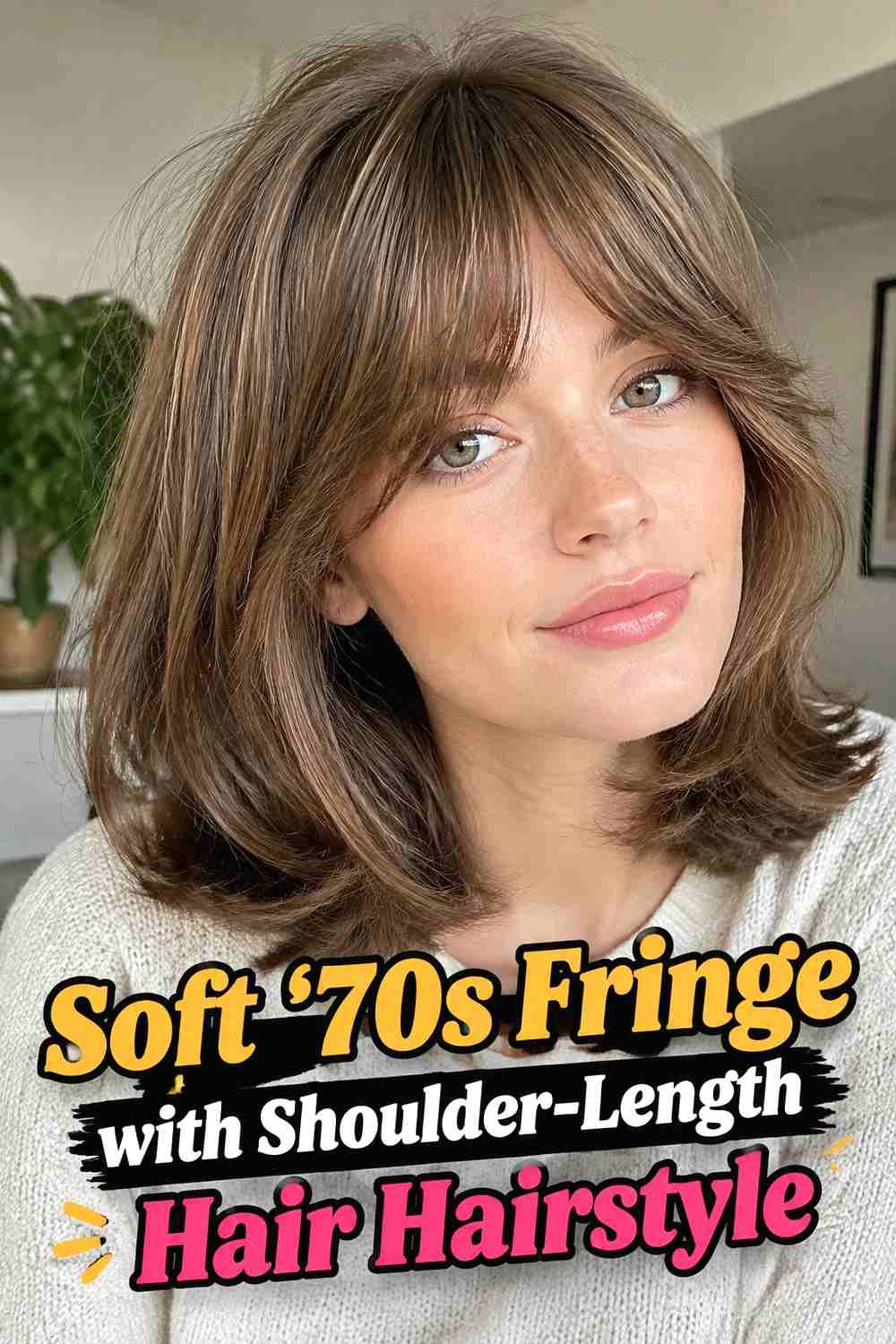
Shoulder-length hair creates a compact, lively setting for soft ’70s fringe. The bangs can sweep outward around the brows and cheekbones, while the remaining hair bends naturally near the shoulders. Subtle layering helps keep the perimeter from becoming too boxy and allows the front pieces to blend smoothly into the cut. This length is especially practical because it provides enough hair for ponytails and half-up styles while still feeling noticeably shorter and lighter than long hair. The ends may turn inward, outward, or remain softly tousled depending on texture. A moderate blowout adds polish without overwhelming the relatively short silhouette with too much volume.
Best For
This version works well if you want ’70s-inspired movement while keeping a manageable medium length.
Styling Notes
Shape the ends deliberately where they meet the shoulders so natural bends look intentional rather than uneven.
9. Soft 70s Fringe With A Bob Hairstyle
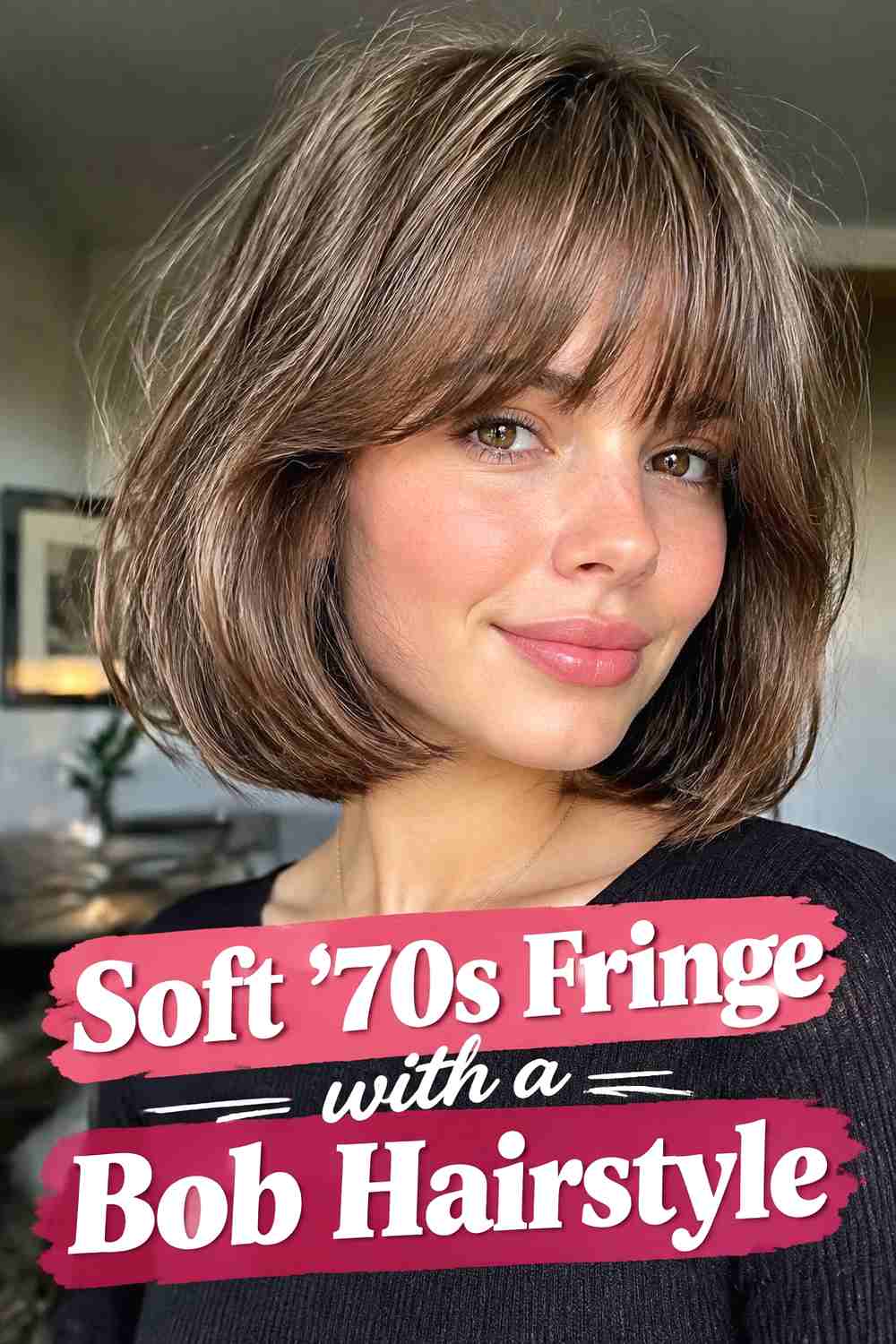
A bob paired with soft ’70s fringe combines a defined short perimeter with lighter movement around the forehead and temples. The bob can sit around the jaw or upper neck, while the fringe opens gently from the center and curves toward longer side pieces. Keeping the bangs airy prevents the shorter haircut from feeling too dense. A slightly textured or softly rounded bob complements the retro influence without requiring exaggerated volume. Straighter hair can highlight the contrast between the perimeter and sweeping fringe, while wavy hair creates a more relaxed result. Because both the fringe and bob line are prominent, regular shaping helps maintain the intended proportions.
Why It Works
The structured bob gives the hairstyle a clean foundation while the soft fringe adds movement and reduces visual heaviness around the face.
Wear & Maintenance
Short perimeters and fringe both show growth quickly, so this option may require more frequent trims than longer layered styles.
10. Soft 70s Fringe With Flipped Ends Hairstyle
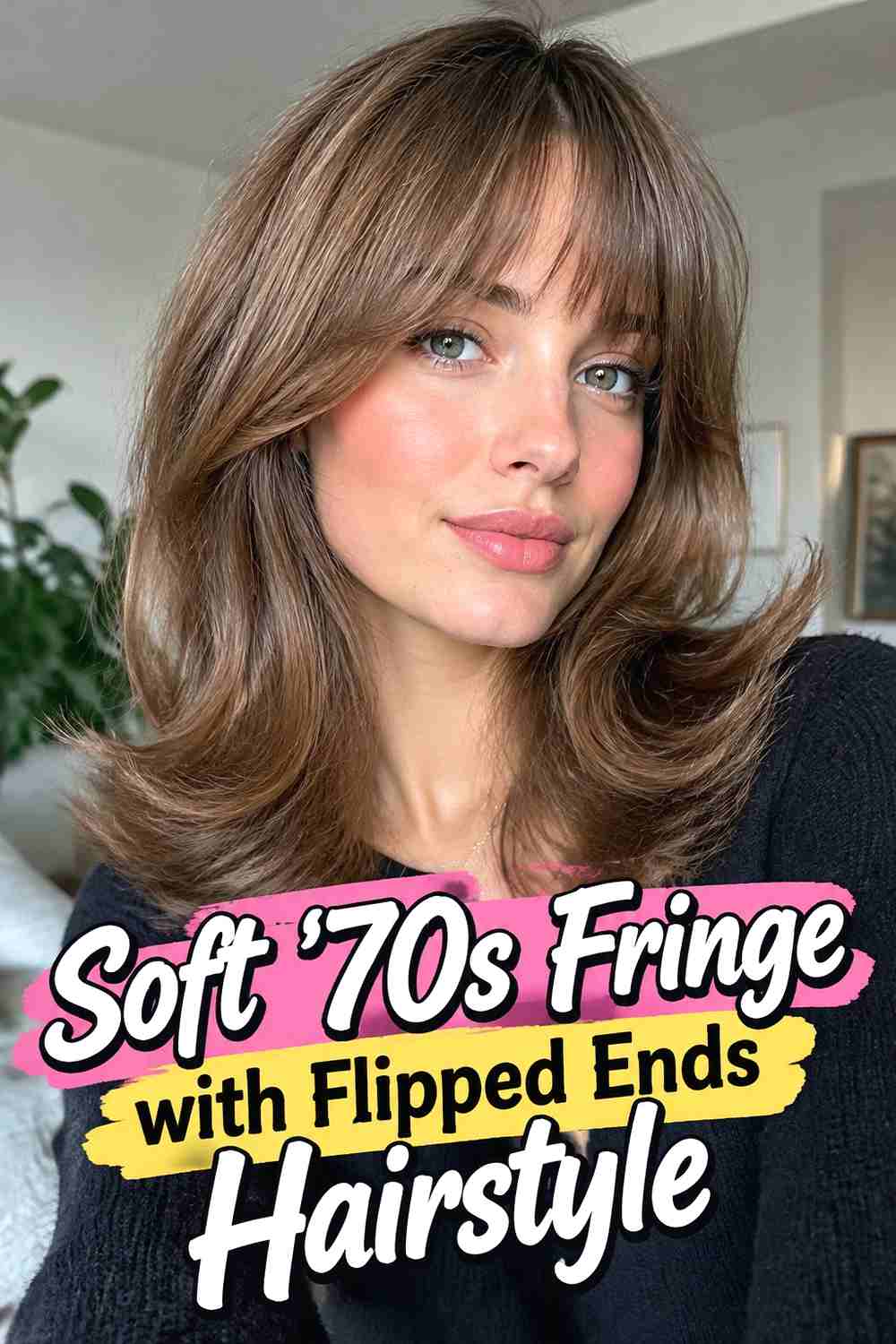
Flipped ends reinforce the outward movement of soft ’70s fringe by repeating it at the bottom of the hairstyle. The bangs sweep away from the face, while the final few inches of the lengths curve outward for a playful finish. Keeping the mid-lengths relatively smooth prevents the look from becoming too busy and creates clear separation between the face frame and perimeter. The flip can be subtle for everyday wear or more pronounced when you want stronger retro influence. Medium and shoulder-length cuts tend to showcase the effect especially well because the ends remain light enough to hold the curve without needing excessive product.
Styling Notes
Use a round brush or flat iron to guide only the ends outward while leaving the middle sections smooth.
Pro Tip
Vary the flip slightly from section to section so the movement feels natural rather than perfectly uniform.
11. Soft 70s Fringe With Natural Curls Hairstyle
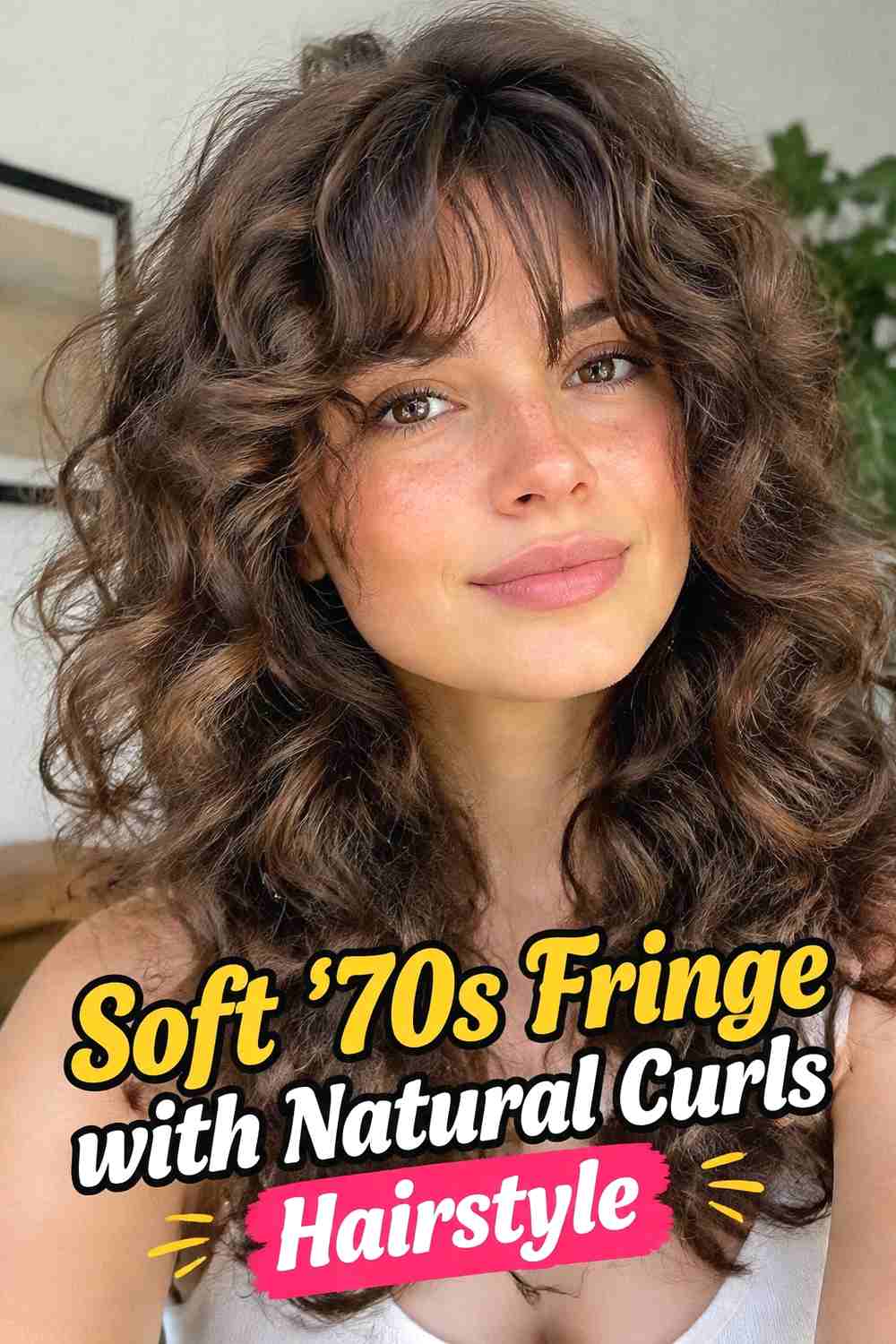
Natural curls can reinterpret soft ’70s fringe without forcing the hair into a straight feathered shape. The fringe can open lightly through the center, with individual curls falling around the brows and sweeping toward longer sections at the temples. The surrounding haircut should preserve enough layering for the curls to move while still maintaining fullness through the ends. Because curls can shrink noticeably when dry, the fringe length needs to account for each curl pattern rather than being judged only when wet or stretched. The finished result feels soft and expressive, with the ’70s influence coming from the rounded face frame and layered movement rather than from a perfectly smooth blowout.
Hair Type & Length
Curly textures benefit from shaping based on their natural dry pattern, density, and individual shrinkage.
Pro Tip
Use lightweight curl product through the fringe and avoid excessive handling while drying so the curls remain defined but flexible.
12. Soft 70s Fringe With Voluminous Layers Hairstyle
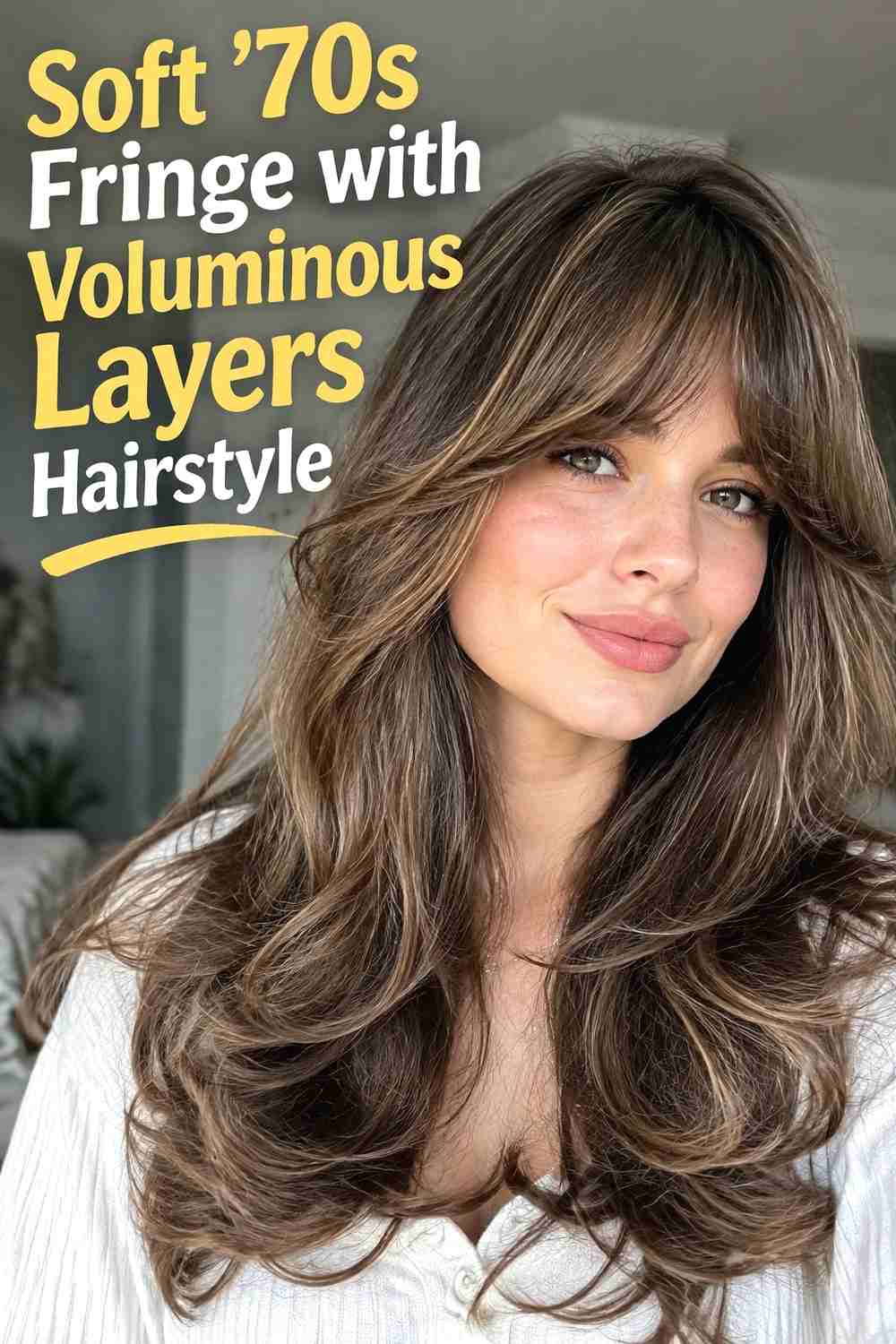
Voluminous layers create one of the boldest interpretations of soft ’70s fringe, extending broad movement from the face frame throughout the entire haircut. The bangs open from the center and curve outward, while layered sections around the cheekbones, shoulders, and lengths build progressively larger shapes. Root lift is important so the style feels balanced from top to bottom rather than becoming full only at the ends. Medium or long hair with enough density can support this layered volume especially well. Despite the fullness, the hair should remain mobile, with visible strands and slightly varied bends keeping the finish modern instead of overly set.
Styling Notes
Build root lift first, then use large round-brush sections to shape the layers into broad curves rather than tight curls.
Best For
Choose this version if you want a more noticeable retro-inspired silhouette with plenty of bounce and movement.
How to Choose the Right Look
Start with your hair length and how much layering you are comfortable with. Long layered versions create the smoothest transition from fringe to lengths, while shoulder-length cuts and bobs make the fringe a stronger focal point. A shag gives the style more texture, whereas a blowout or voluminous layered cut feels more polished.
Natural texture also matters. Straight hair can show feathered separation clearly, waves create an easy relaxed finish, and curls need shaping that respects shrinkage and natural movement. Fine hair may benefit from fewer layers so the ends remain full, while dense hair can often support more feathering and internal movement.
Think about daily styling time as well. Full blowouts and flipped ends require more deliberate shaping, while loose waves, shags, and natural curls can work with a more relaxed routine. Finally, decide how dramatic you want the ’70s influence to feel. A soft center part is subtle, while feathered and voluminous layers create a stronger retro-inspired finish.
Final Thoughts
Soft ’70s fringe works because it combines movement, softness, and face-framing shape without requiring a heavy bang. You can keep the effect understated with loose waves or a bob, or emphasize it with a full blowout and voluminous feathered layers. The most wearable choice is one that works with your natural texture, preferred length, and realistic styling routine.
FAQs
1. What is soft ’70s fringe?
Soft ’70s fringe is a light, face-framing bang that usually opens around the center and sweeps outward toward longer pieces at the temples.
2. Is ’70s fringe the same as curtain bangs?
They are similar, but ’70s fringe often emphasizes more feathering, volume, and outward movement through the sides and surrounding layers.
3. Can soft ’70s fringe work with short hair?
Yes. A bob or shoulder-length cut can pair well with the fringe as long as the outer pieces transition naturally into the shorter perimeter.
4. Does curly hair work with ’70s fringe?
Yes. The shape can be adapted to natural curls by focusing on a soft center opening, layered movement, and fringe length that accounts for shrinkage.
5. How do I keep ’70s fringe from going flat?
Build light root lift while drying, let the fringe cool in its curved shape, and avoid heavy products that can weigh down the front sections.
Save your favorite soft ’70s fringe hairstyle idea, share it for your next haircut reference, and explore more feathered and layered hairstyle inspiration.