19 Loose-Root Box Braid Hairstyle Ideas
Soft-rooted box braids combine clean sections with a more relaxed-looking start, creating plenty of room for long lengths, compact bobs, updos, and textured finishes.
Loose-root box braids keep the familiar square or rectangular sectioning of classic box braids while allowing the root area to appear less tightly pulled. The braids can still look neat and deliberate, but the softer start changes the overall feel and can pair beautifully with everything from center parts to sweeping side styles.
When choosing a look, compare braid size, overall length, weight, parting, and how often you want to restyle the braids. Curled ends and boho pieces create more movement, while ponytails and buns offer structured alternatives. The best option is one that gives you the shape you like while remaining comfortable during wear.
Quick List
- Classic Loose Root Box Braid Hairstyle
- Center Part Loose Root Box Braid Hairstyle
- Deep Side Part Loose Root Box Braid Hairstyle
- Jumbo Loose Root Box Braid Hairstyle
- Small Loose Root Box Braid Hairstyle
- Shoulder Length Loose Root Box Braid Hairstyle
- Waist Length Loose Root Box Braid Hairstyle
- Bob Length Loose Root Box Braid Hairstyle
- Curly End Loose Root Box Braid Hairstyle
- Boho Loose Root Box Braid Hairstyle
- Half Up Loose Root Box Braid Hairstyle
- High Ponytail Loose Root Box Braid Hairstyle
- Low Ponytail Loose Root Box Braid Hairstyle
- Side Swept Loose Root Box Braid Hairstyle
- High Bun Loose Root Box Braid Hairstyle
- Low Bun Loose Root Box Braid Hairstyle
- Face Framing Loose Root Box Braid Hairstyle
- Beaded End Loose Root Box Braid Hairstyle
- Layered Loose Root Box Braid Hairstyle
1. Classic Loose Root Box Braid Hairstyle
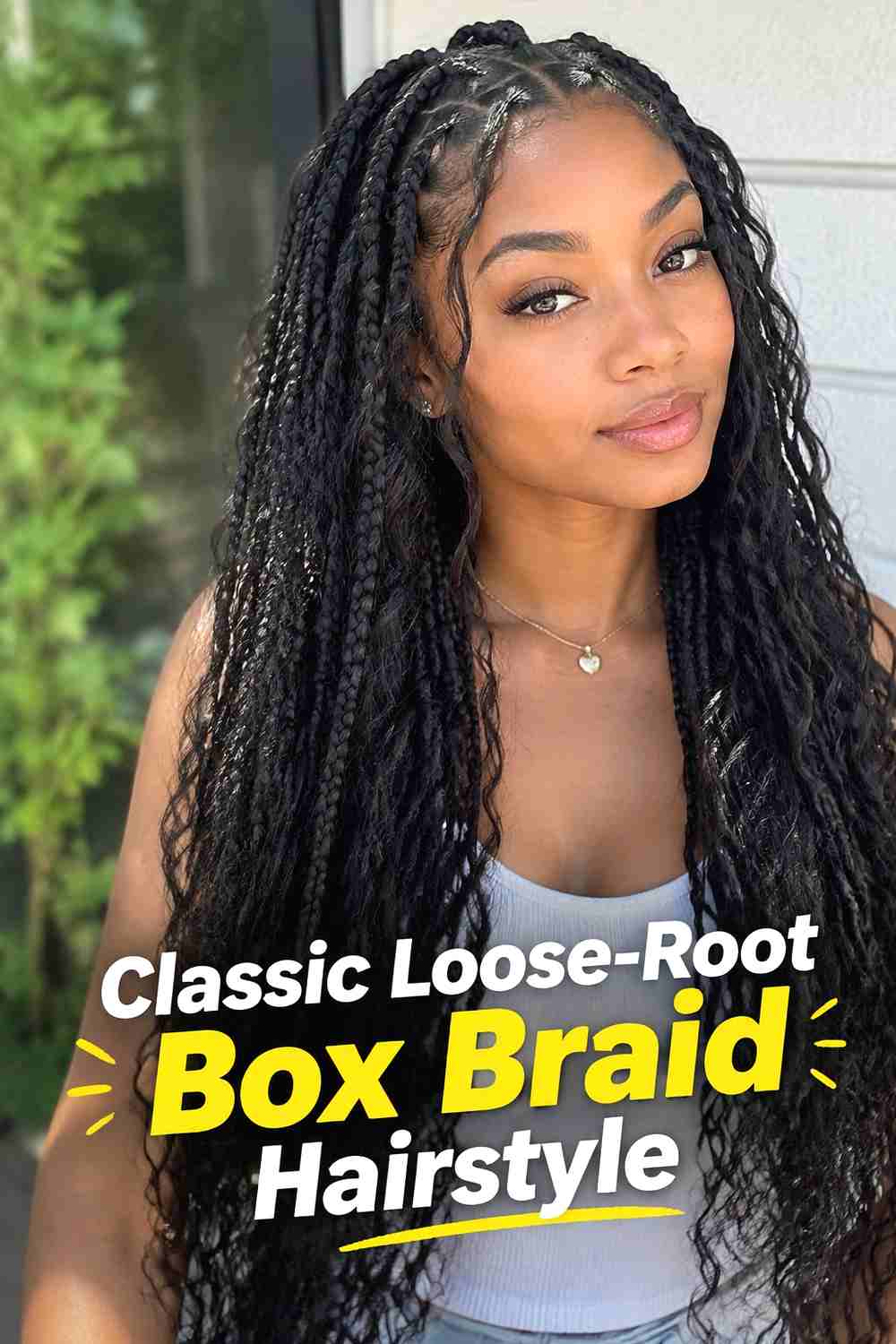
The Classic Loose-Root Box Braid Hairstyle keeps the overall design simple so the braid texture and clean parting can stand on their own. Medium-width braids fall naturally from softly secured roots, creating a balanced look that works well at mid-back or longer lengths. The sections can stay fairly uniform without looking overly rigid, and a natural amount of movement at the scalp helps the braids settle comfortably in different directions. This version is especially versatile because it can be worn loose, tucked behind the shoulders, or gathered later without depending on a highly specific part. A gentle taper toward the ends can keep longer braids from appearing unnecessarily bulky.
Styling Notes
Keep the section sizes consistent and allow each braid to fall naturally from its part instead of forcing every root into the same direction.
Best For
This option works well when you want a straightforward foundation that can be restyled in several different ways.
2. Center Part Loose Root Box Braid Hairstyle
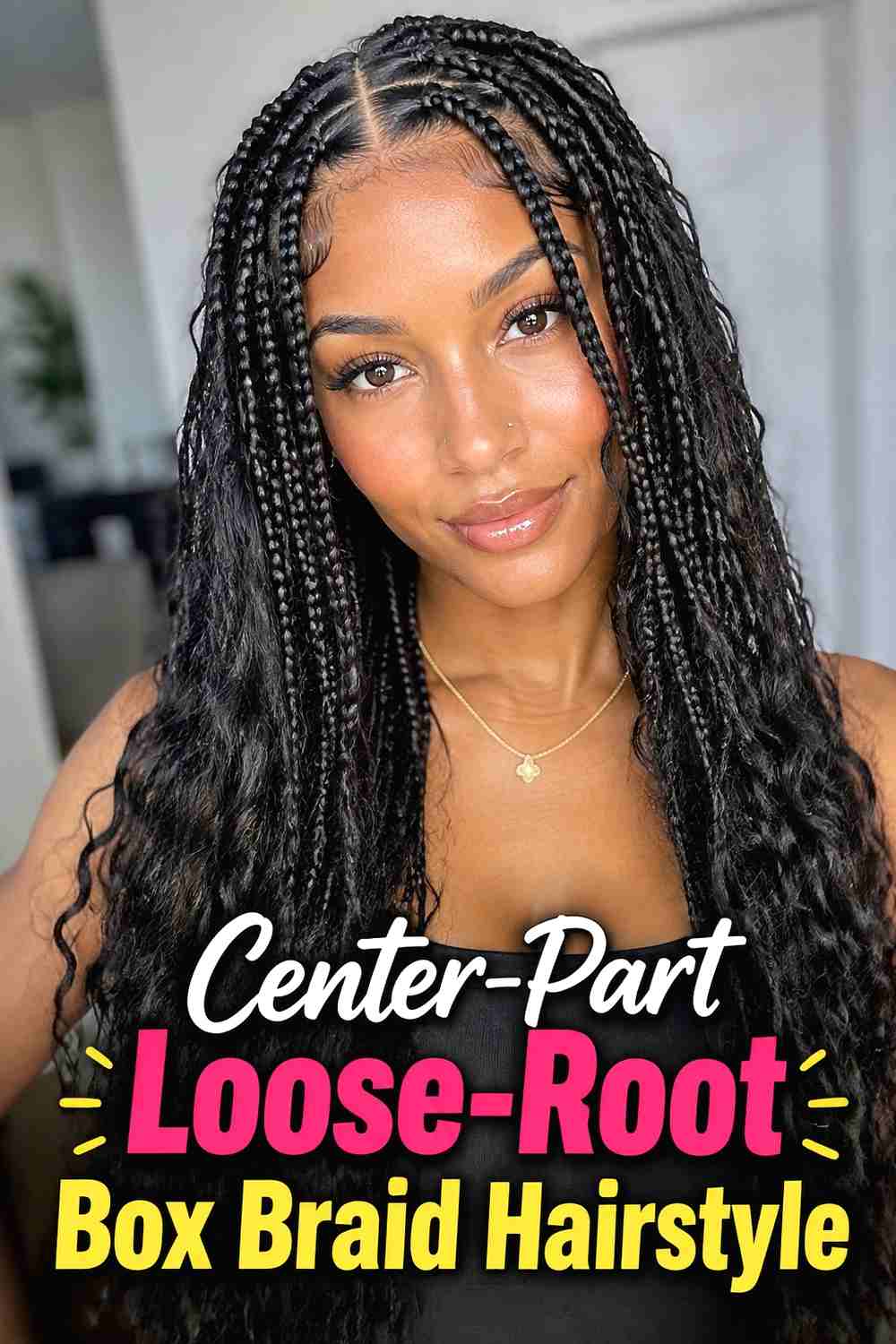
A center part creates a balanced front view and lets the braids fall evenly on both sides of the face. The softly rooted sections keep the part from looking excessively stretched, while the box pattern remains visible enough to give the style structure. Medium or small braids work particularly well because they can divide naturally around the part without creating large gaps. The lengths may remain straight or carry a slight taper toward the tips for movement. Because symmetry is the main feature, similar fullness on both sides helps the silhouette look intentional, although individual braids should still shift naturally rather than forming two perfectly rigid curtains.
Why It Works
A centered division keeps the look balanced while the soft root placement prevents the front from appearing overly severe.
Pro Tip
Establish the part before braiding so each section naturally falls to the correct side after the style is finished.
3. Deep Side Part Loose Root Box Braid Hairstyle
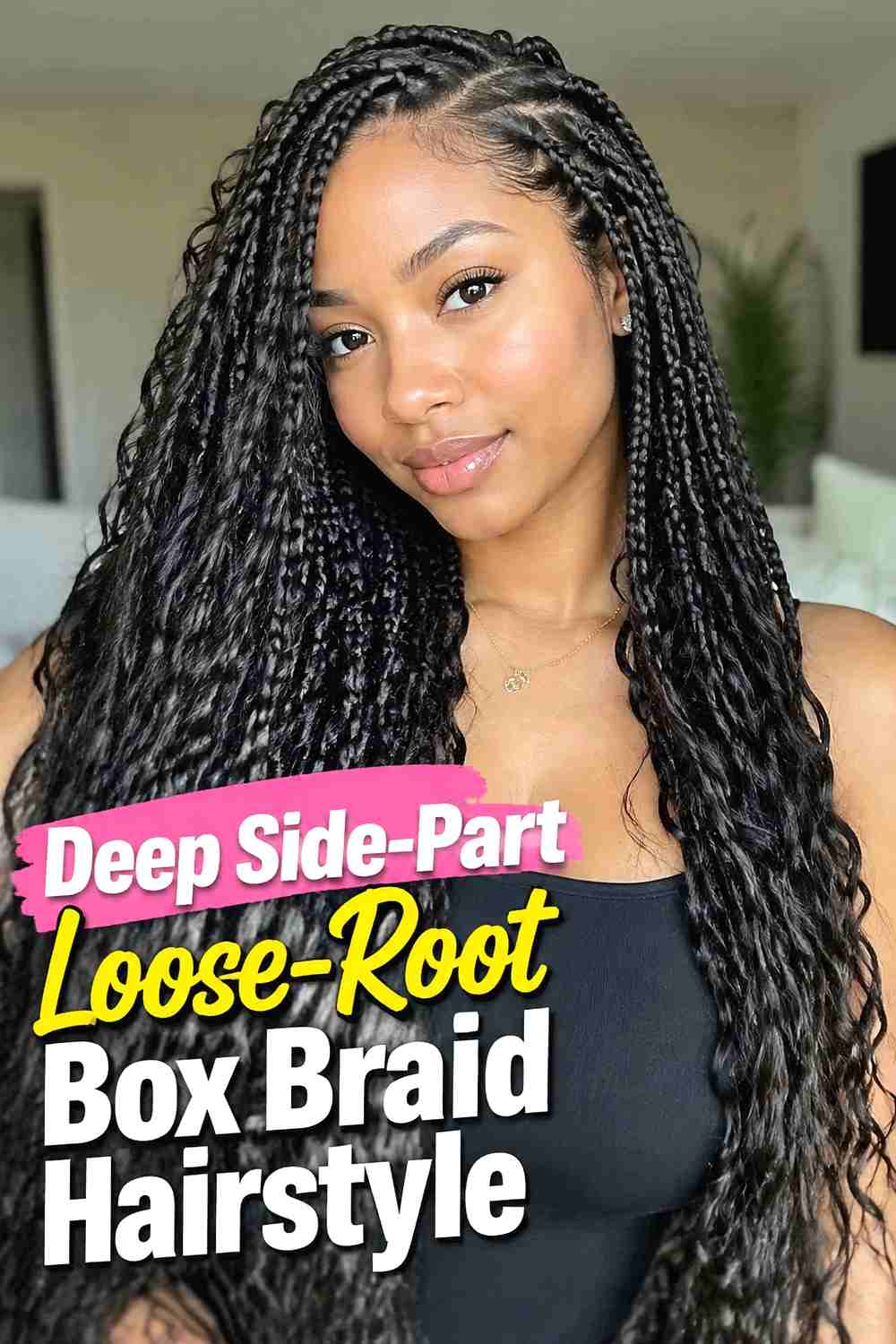
A deep side part shifts more braid volume toward one side, instantly giving box braids a stronger sense of movement. The heavier side can sweep across the upper forehead before falling over the shoulder, while the lighter side remains closer to the head. With a loose-root finish, the braids can change direction without looking sharply pulled at the hairline. Medium and smaller braids are easiest to reposition because they move more freely than very thick sections. This variation works especially well at shoulder, mid-back, or waist length, where the shifted weight creates a noticeable silhouette without needing pins or complicated styling.
Styling Notes
Place the part where you intend to wear it most often so the braid direction naturally supports the side-swept volume.
Why It Works
Uneven distribution creates visual interest while preserving the clean sectioning that makes box braids recognizable.
4. Jumbo Loose Root Box Braid Hairstyle
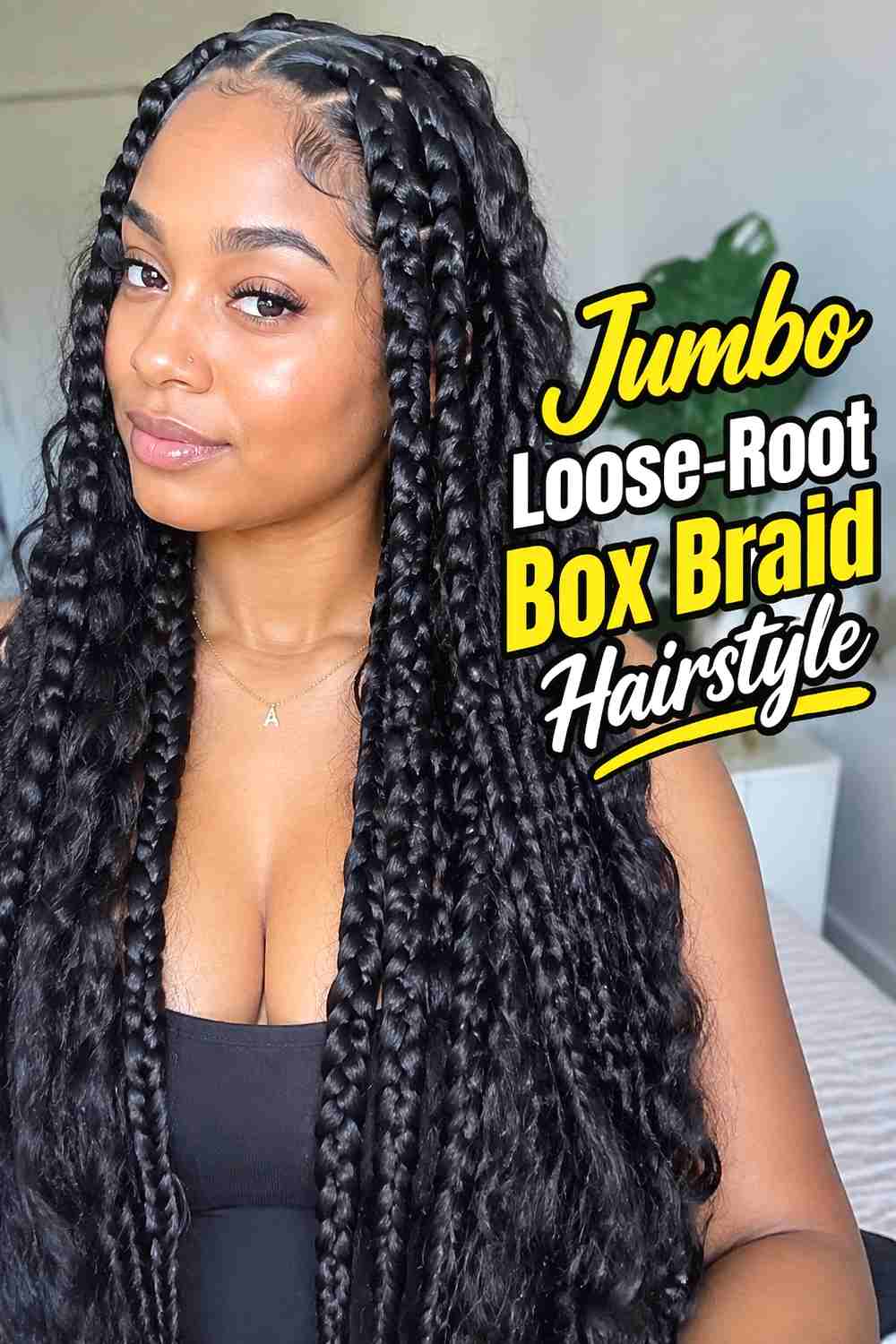
Jumbo box braids create a bold look with fewer, larger sections and a highly visible braid pattern. Keeping the root area softer helps balance the scale of each braid and prevents the style from looking excessively rigid at the scalp. Because jumbo braids can carry more weight per section, moderate length is often easier to manage than extremely long, very full versions. The braids can remain uniform or taper slightly toward the ends for a lighter finish. Clean parting matters here because each section is easy to see, but the overall arrangement does not need to look perfectly geometric to feel polished and wearable.
Hair Type & Length
Jumbo braids work across several lengths, but the total amount of added hair should remain proportionate to the size and number of sections.
Wear & Maintenance
If individual braids feel heavy at their roots, reducing length or fullness can make the style easier to wear.
5. Small Loose Root Box Braid Hairstyle
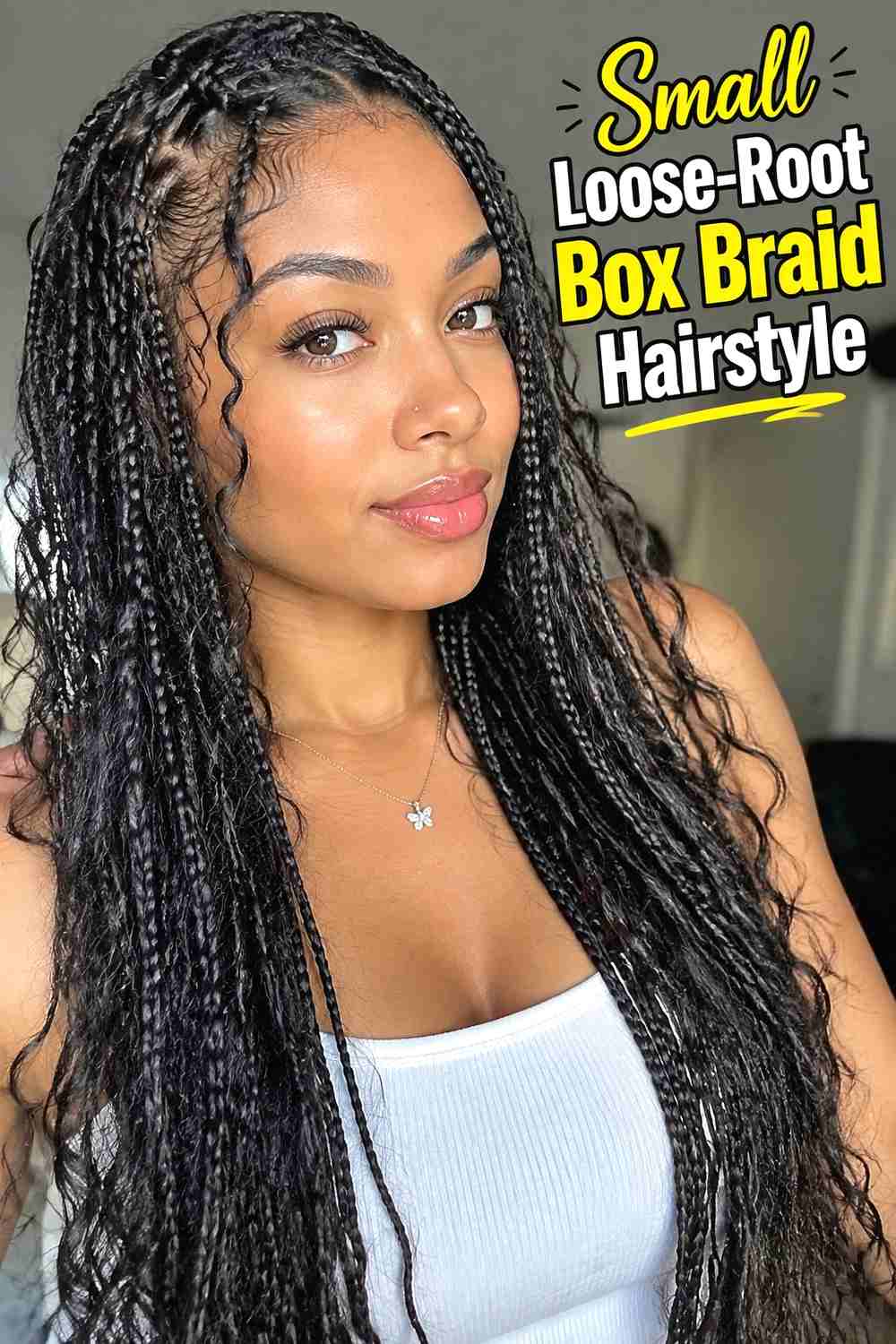
Small box braids create a finely detailed texture with plenty of flexibility for parting, ponytails, buns, and side-swept styling. The smaller sections make the finished look dense and fluid, while a softer start at the roots keeps the scalp area from appearing overly tight. Because there are many individual braids, the installation can feel visually full even when each braid is lightweight. Longer lengths create beautiful movement, but shoulder and mid-back versions can be easier to manage. The cleanest finish comes from consistent sections and a natural amount of variation in how each braid settles rather than trying to make every piece fall in an identical direction.
Best For
Choose smaller braids if styling flexibility and detailed texture matter more to you than the bold scale of jumbo sections.
Wear & Maintenance
Protect the braid surface from excessive rubbing so the numerous smaller sections stay neat without constant manipulation.
6. Shoulder Length Loose Root Box Braid Hairstyle
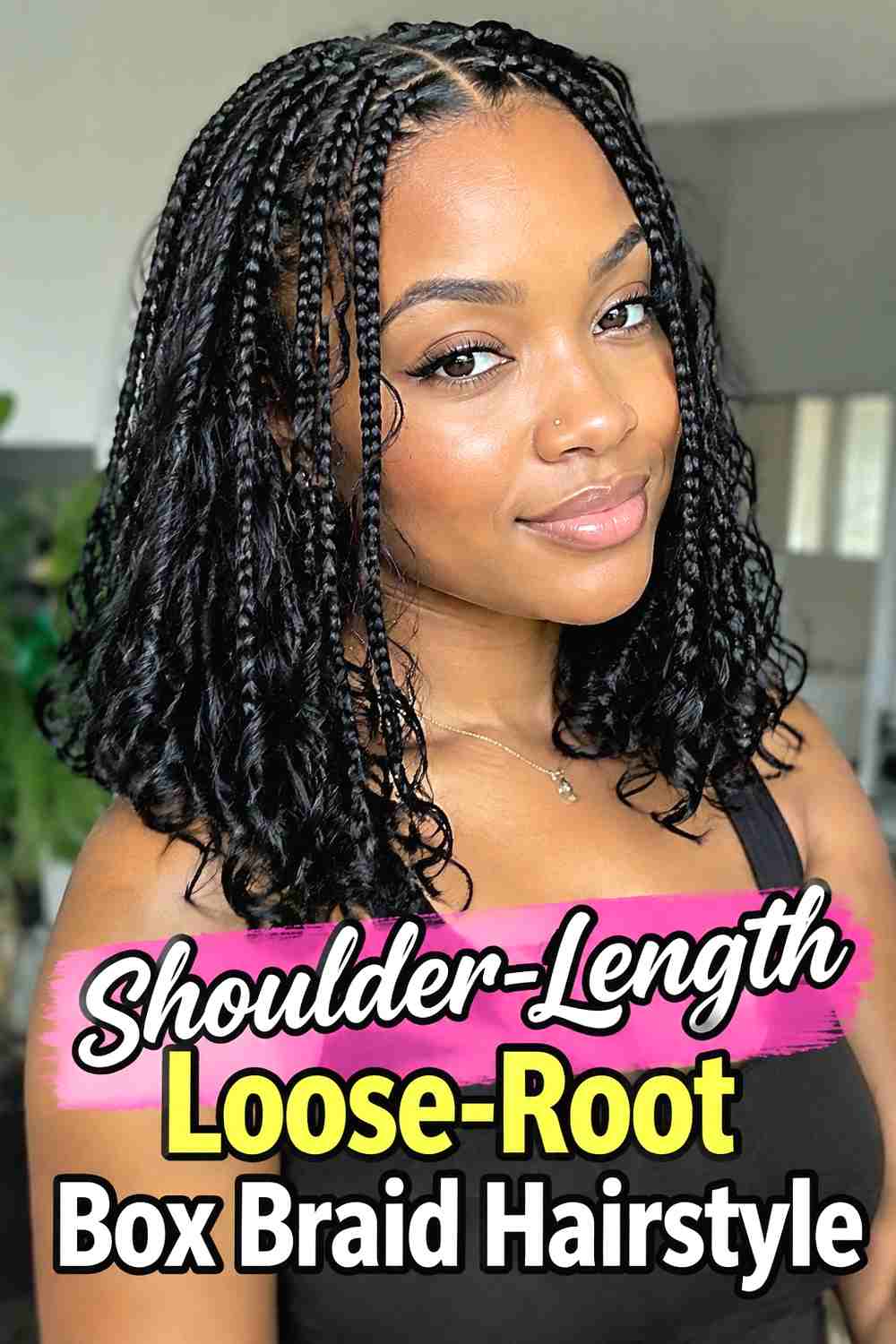
Shoulder-length box braids create a lighter, more compact silhouette while still offering enough movement for different parts and half-up looks. The ends sit around the shoulders instead of extending far down the back, which keeps the style visually crisp and reduces the amount of hanging length to manage. Medium-width braids are particularly suited to this shape because they make the perimeter noticeable without becoming overly bulky. Soft roots complement the shorter length and allow the braids to shift naturally around the face. The tips can remain straight, lightly tapered, or gently curled depending on how polished or relaxed you want the finished bob-like shape.
Why It Works
The shorter length keeps the style lively and allows the braid pattern to remain prominent from roots to ends.
Best For
This option suits anyone who wants box braids with less length to gather, wrap, or move during everyday wear.
7. Waist Length Loose Root Box Braid Hairstyle
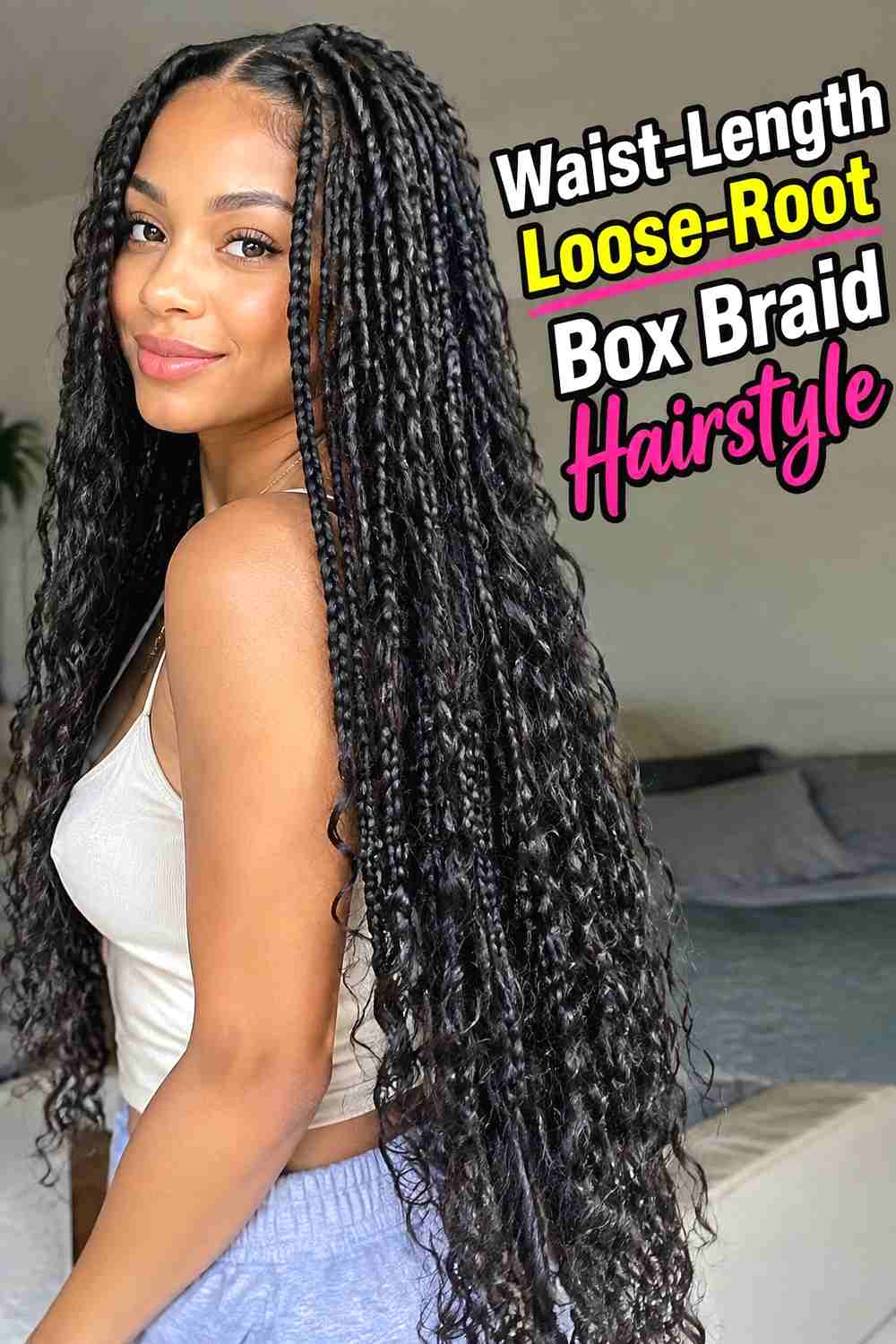
Waist-length braids create a long, flowing silhouette that makes the box-braid pattern feel especially dramatic. A softer root area can help the braids hang naturally rather than appearing rigid where they begin. Medium or small sections generally distribute the visual weight more evenly across the head, while tapered ends keep the lower half from looking too dense. The extra length offers plenty of styling options, including ponytails, half-up looks, and side sweeps, but it also creates more weight and movement. The finished braids should have a believable gradual fall from roots to tips rather than maintaining identical thickness through every inch.
Styling Notes
Keep the amount of added hair proportional to the section size so the long braids remain balanced rather than excessively heavy.
Wear & Maintenance
Consider how the length feels during sleep and daily movement, not just how it looks when worn loose.
8. Bob Length Loose Root Box Braid Hairstyle
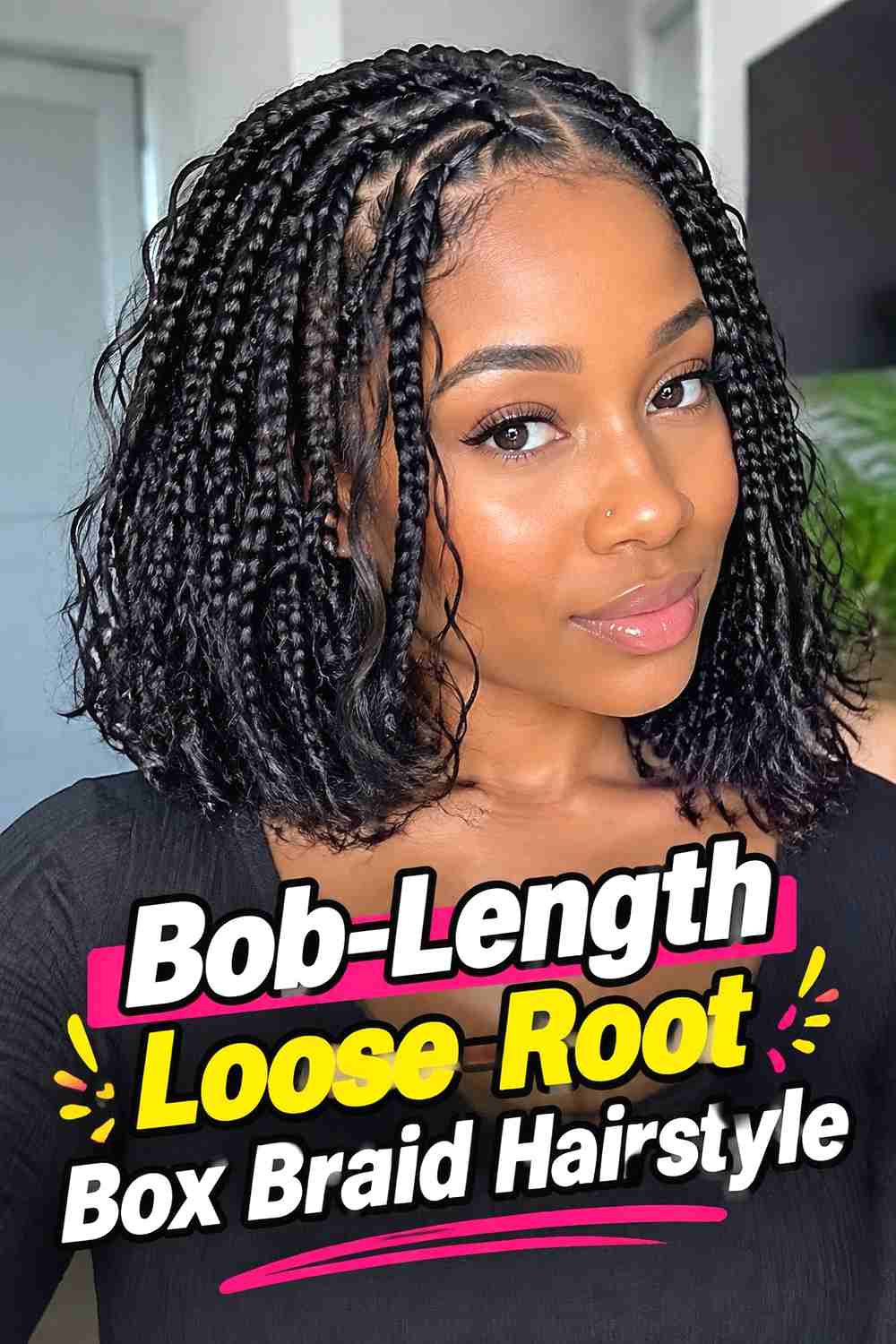
A bob-length version gives box braids a compact, structured shape that usually falls between the jaw and shoulders. The shorter perimeter makes each braid more visible and can create an especially clean silhouette when the ends finish around a similar length. Soft roots keep the scalp area relaxed-looking and allow the braids to move instead of sticking rigidly away from the head. A center or side part can both work well, depending on whether you prefer symmetry or stronger directional volume. Medium-sized braids tend to suit the shortened length because they provide enough texture without crowding the bob outline.
Hair Type & Length
The finished braids should settle around jaw, neck, or shoulder level to maintain the recognizable bob proportion.
Pro Tip
Keep the ends light enough to move freely so the shorter braids do not form an overly stiff perimeter.
9. Curly End Loose Root Box Braid Hairstyle
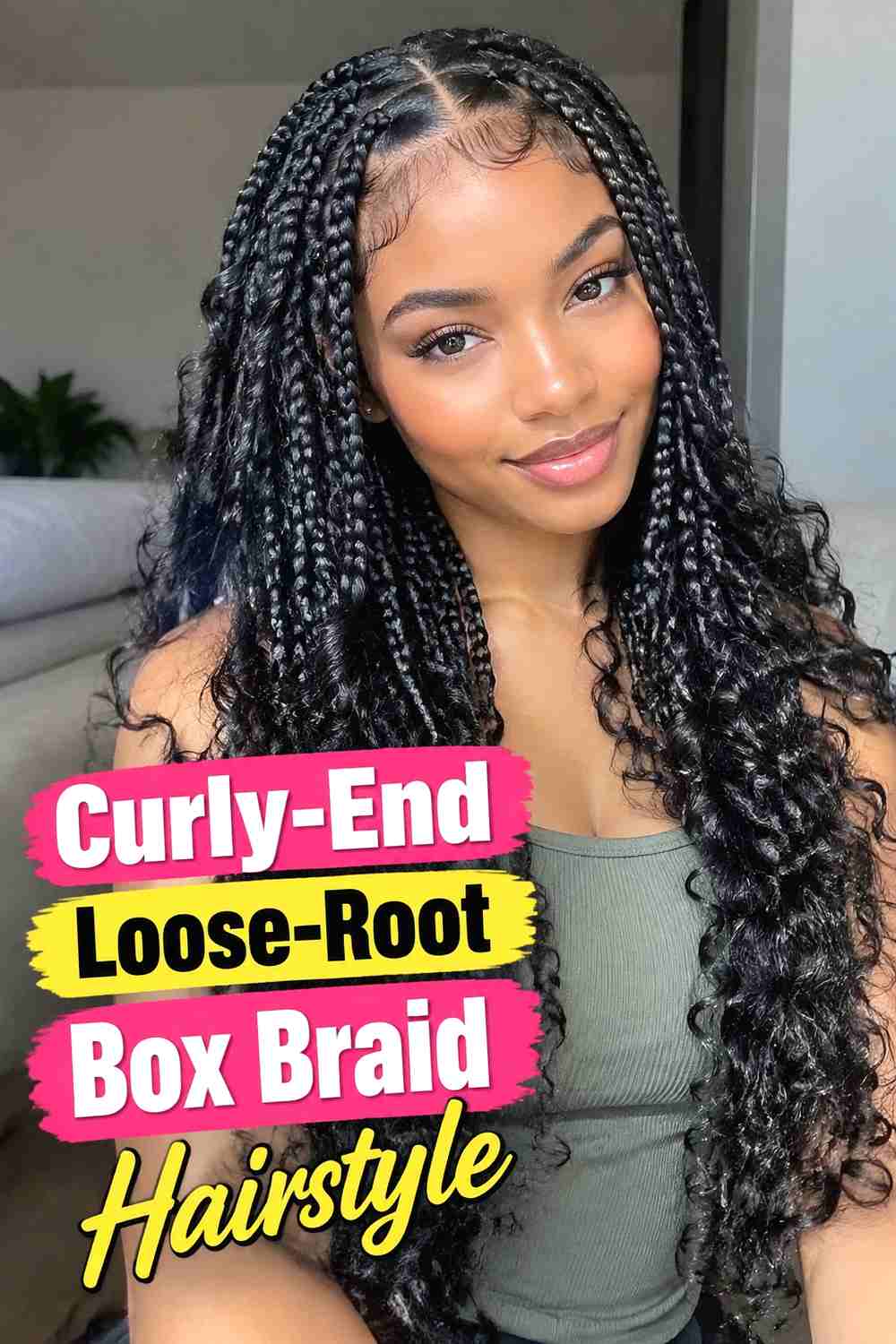
Curled ends add bounce and softness beneath the more structured length of box braids. Each braid stays defined through most of its length before transitioning into a curl or loose spiral near the tip. The root area remains softly secured, creating a consistent relaxed quality from top to bottom. Larger curls produce a broad, romantic finish, while smaller curls make the ends look more textured and lively. This version works especially well at shoulder, mid-back, and waist lengths because there is enough space to show the transition clearly. Keeping the curls varied slightly helps them look natural instead of forming an overly uniform row.
Styling Notes
Keep the transition point fairly consistent while allowing the individual curls to differ subtly in shape and direction.
Wear & Maintenance
The loose ends can tangle more readily than fully braided tips, so handle them gently during nighttime protection and refreshing.
10. Boho Loose Root Box Braid Hairstyle
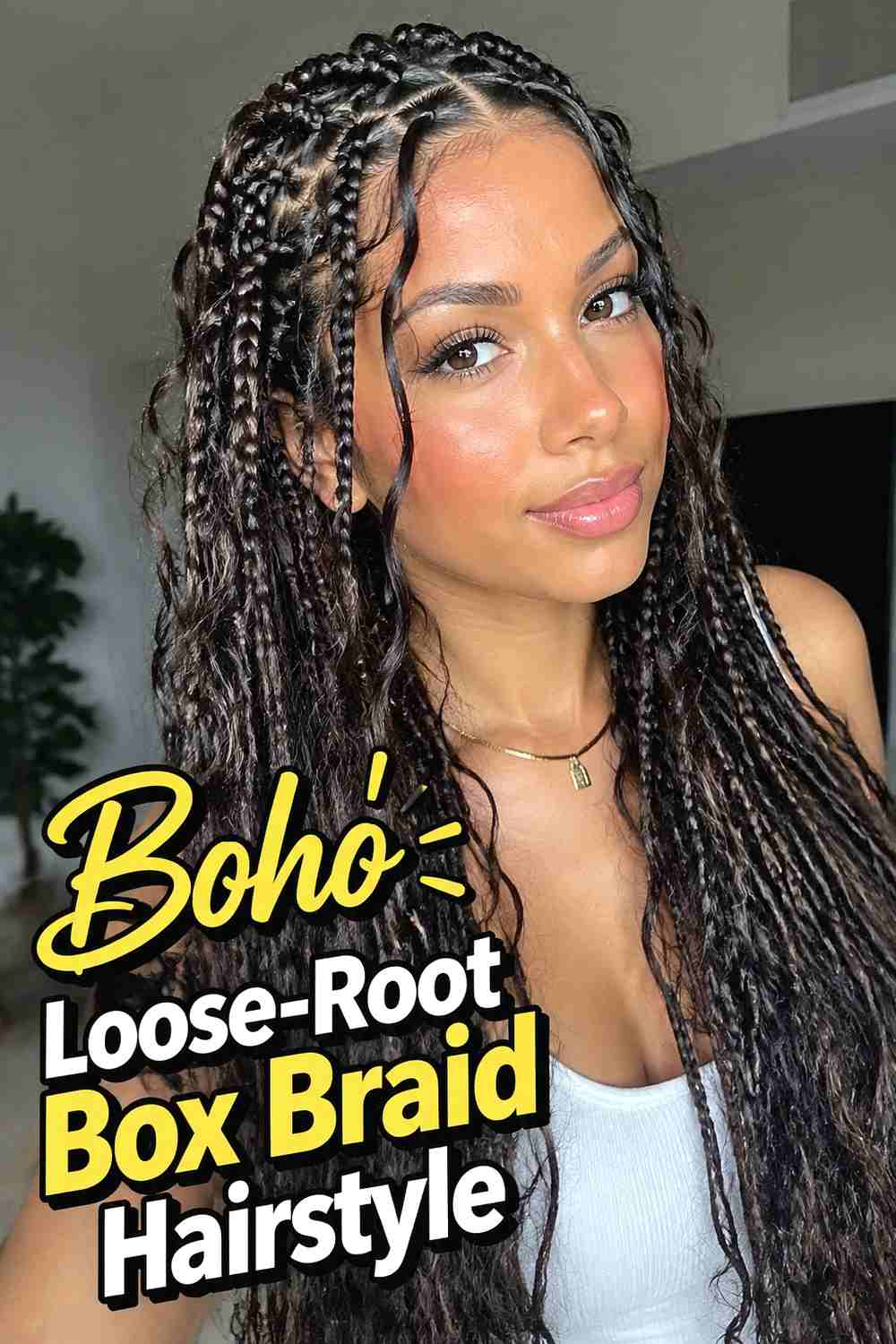
The Boho Loose-Root Box Braid Hairstyle mixes traditional braids with selected loose curls or textured strands throughout the lengths. These free pieces break up the uniformity of the braids and create a softer, more romantic silhouette. A relaxed-looking root area complements the bohemian finish because the style feels less rigid overall. The loose texture should be scattered thoughtfully rather than added to every section, allowing the box braid structure to remain easy to recognize. Medium and long lengths provide enough room for the curls to weave naturally between the braids. Leaving some ends loose can make the boho effect feel even more cohesive.
Why It Works
The combination of structured braids and free-moving texture creates depth without hiding the box-braid foundation.
Wear & Maintenance
Loose strands usually require more detangling attention than fully braided sections, so maintenance can be higher than a classic finish.
11. Half Up Loose Root Box Braid Hairstyle
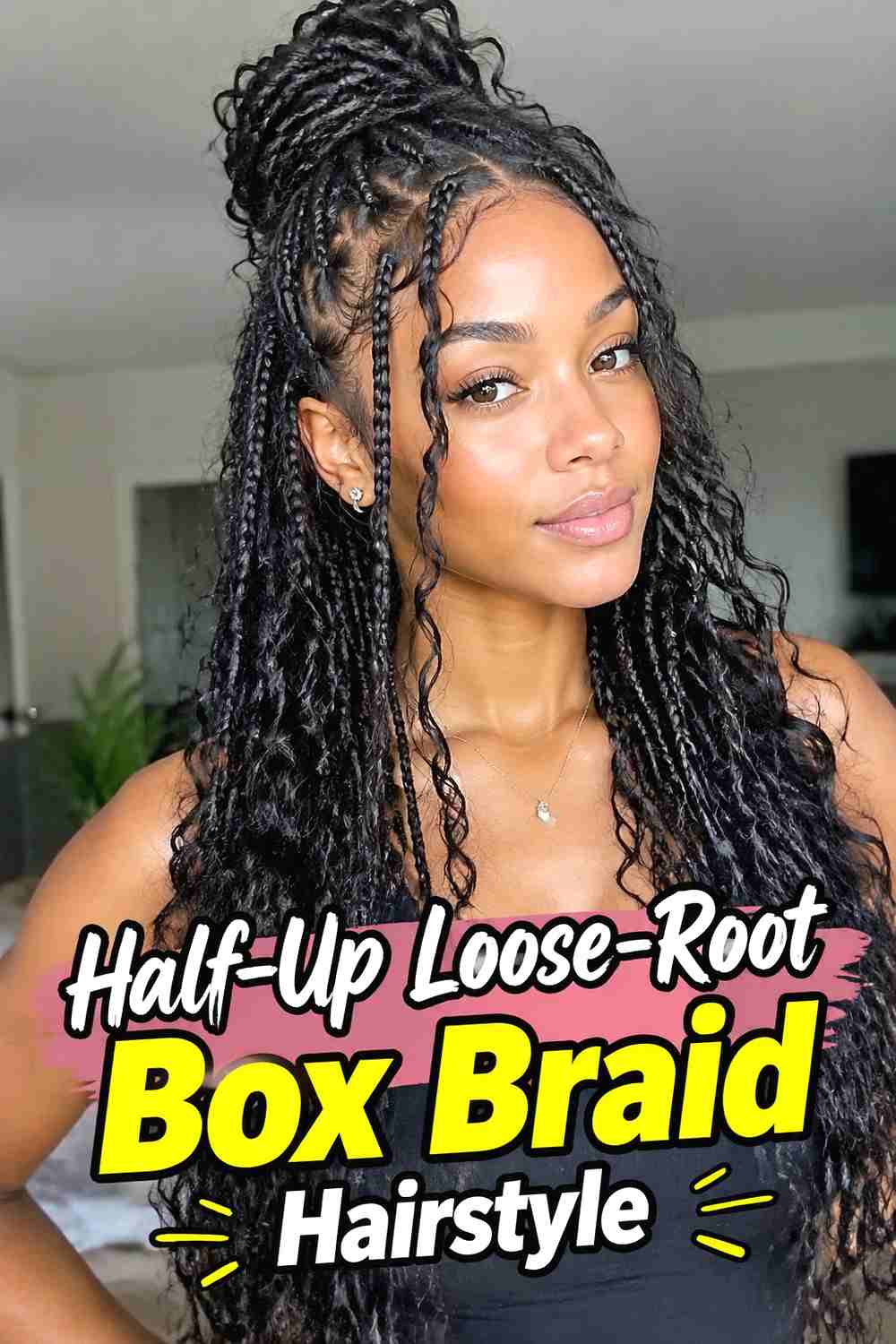
A half-up arrangement gathers the upper box braids while leaving the lower section loose through the back. The lifted portion can sit near the crown as a small ponytail, loose knot, or softly secured bundle, creating height without moving every braid. Because the roots have a more relaxed appearance, the gathered section should be arranged with enough softness to match rather than tightly cinched. Medium and long braids work particularly well because the hair left down still provides plenty of visible length. A few braids can remain free near the temples if you want the front to feel less structured and more casual.
Best For
This style is useful when you want hair away from the face while still showing most of your braid length.
Pro Tip
Gather only the upper layers needed for the shape so the half-up base does not become unnecessarily heavy.
12. High Ponytail Loose Root Box Braid Hairstyle
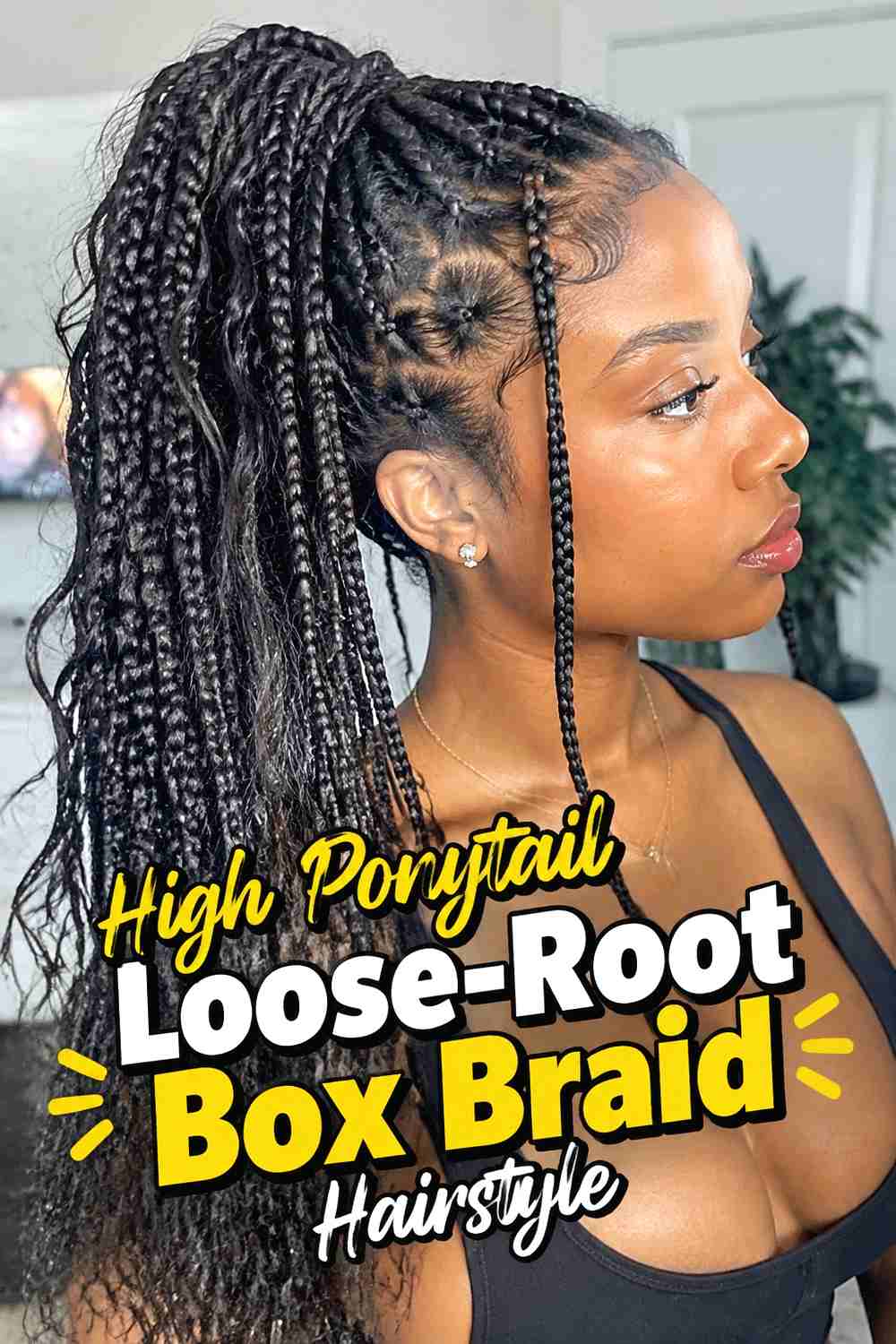
A high ponytail creates lift and makes the hanging braids especially visible from the front and side. The box braids are gathered near the crown, where they can fan out before falling down the back. With loose-root braids, the ponytail should be positioned without aggressively pulling every section flat against the scalp. Medium or smaller braids often gather more smoothly than very large sections, especially at longer lengths. Leaving a couple of front braids loose can soften the silhouette if desired. Because the ponytail redirects substantial weight upward, comfort at the base matters just as much as the height of the finished style.
Styling Notes
Use a secure but flexible tie and arrange the braids around the base rather than repeatedly tightening the ponytail.
Wear & Maintenance
If the high placement causes persistent pulling, lower the ponytail or reduce the amount of hair gathered into it.
13. Low Ponytail Loose Root Box Braid Hairstyle
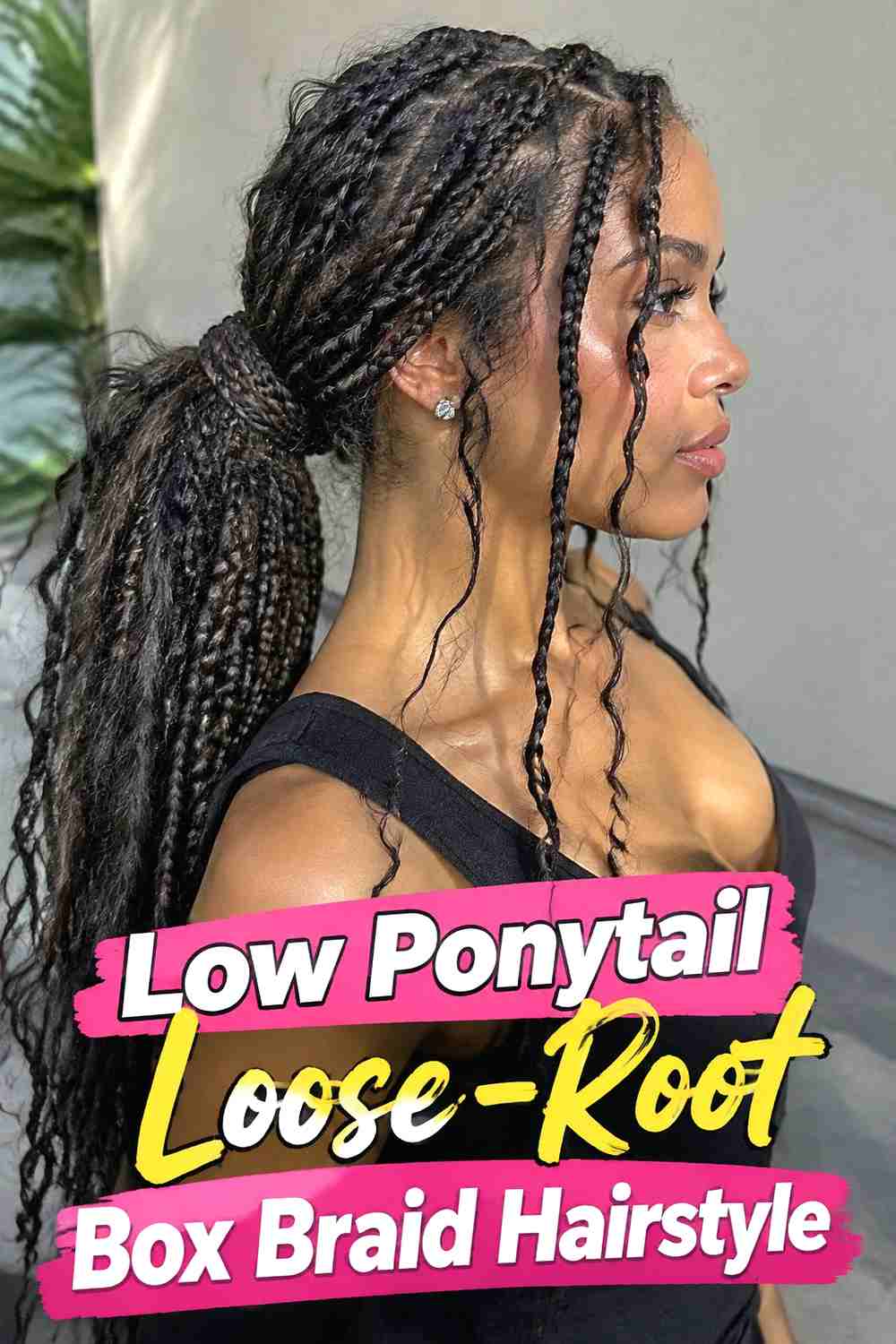
A low ponytail gathers the braids near the nape, following their natural downward direction for a clean and understated finish. This placement works especially well with longer box braids because the lengths can continue smoothly down the back without needing to curve sharply upward first. The roots remain softly positioned, while the ponytail tie provides enough structure to keep the braids together. A center part can make the front feel balanced, while a side part gives the low ponytail a slightly more directional effect. For a polished touch, one braid can wrap loosely around the base to conceal the tie.
Why It Works
The low placement keeps the silhouette streamlined and requires less redirection of the braids than a high ponytail.
Best For
Choose this look when you want a simple gathered style that still shows the full length and texture of the braids.
14. Side Swept Loose Root Box Braid Hairstyle
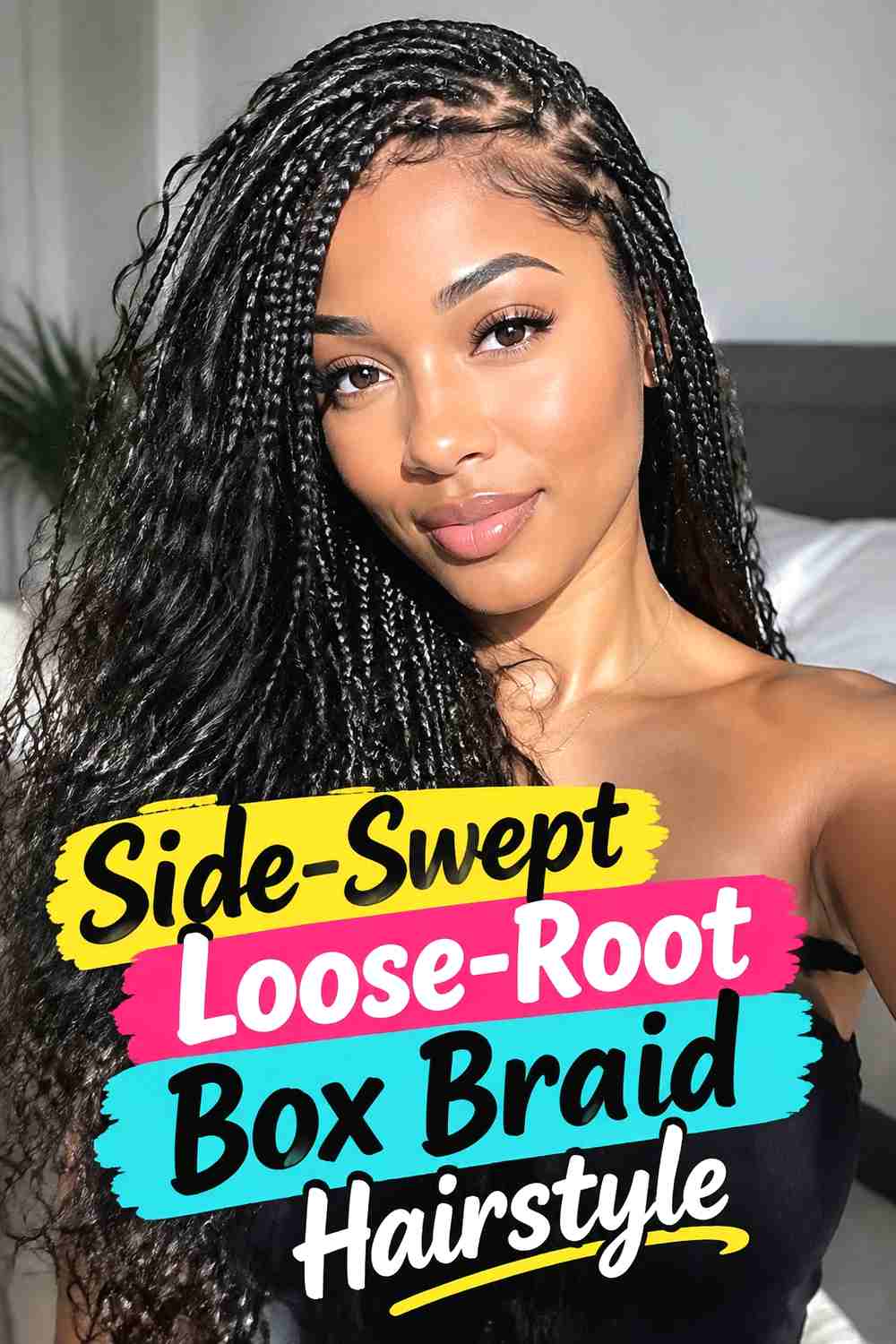
Sweeping the braids over one shoulder creates an immediate asymmetrical look without needing a new installation or complicated updo. A deep side part can emphasize the direction, while a few braids on the lighter side may be tucked behind the ear or pinned discreetly. The softer roots allow the braids to shift more naturally as they are moved, which helps the sweep feel fluid instead of sharply molded. Medium and long lengths show the effect most clearly because the braids can cascade down one side of the body. Keeping the arrangement slightly loose prevents the heavier side from looking like one solid bundle.
Styling Notes
Move the braids in small groups so the sweep retains layers and visible separation rather than becoming a single dense section.
Why It Works
Concentrating the lengths over one shoulder highlights both the braid texture and the overall movement of the style.
15. High Bun Loose Root Box Braid Hairstyle
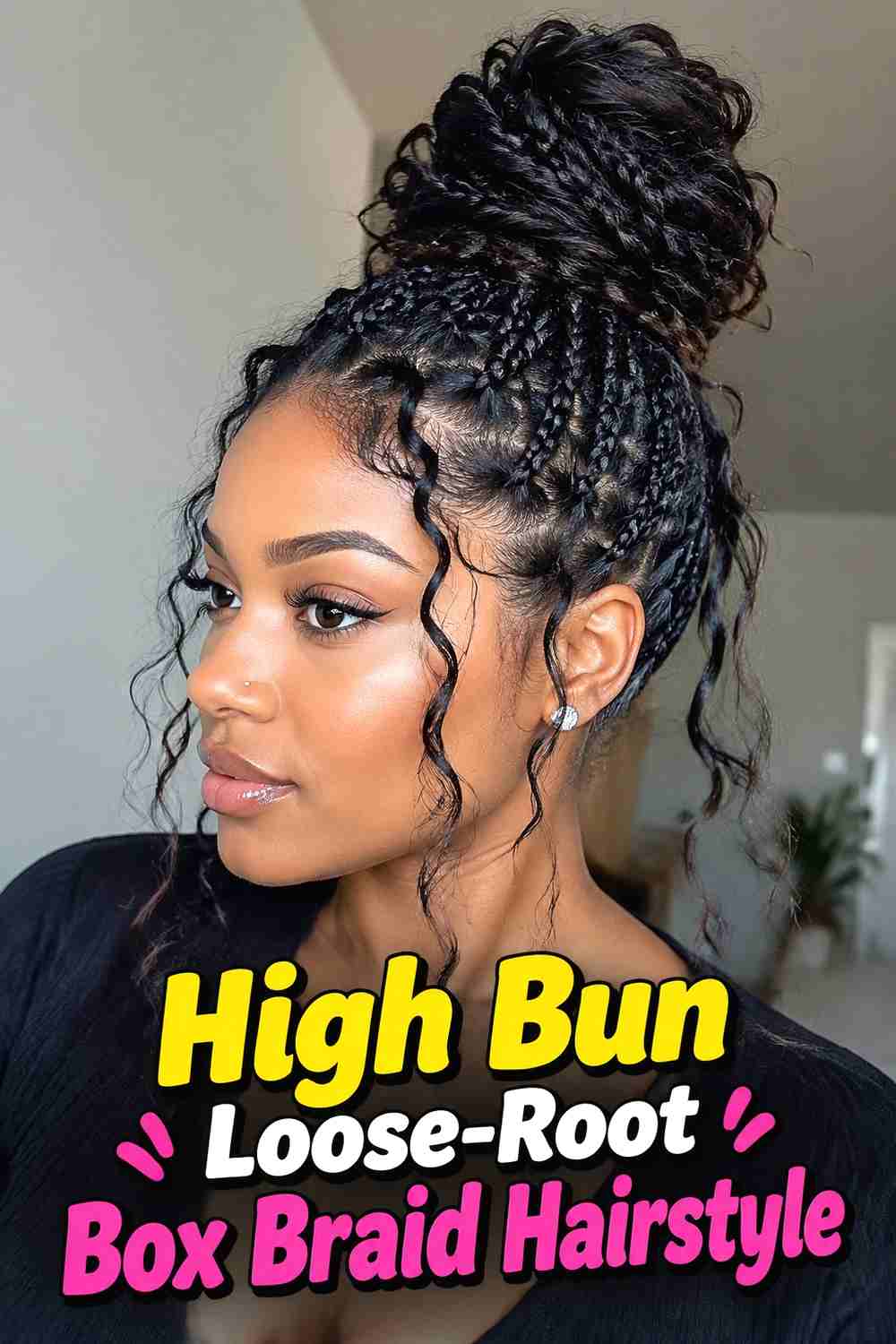
A high bun transforms loose-root box braids into a lifted updo with strong visual impact. The braids are gathered near the crown and wrapped into a rounded or slightly irregular bun, while a few selected pieces may remain loose near the face. Because multiple braids are stacked at one point, the bun should be built with enough softness to avoid an overly compressed appearance. Smaller and medium braids usually wrap more easily than jumbo sections. The finished shape can be neat or slightly textured, but the underlying braids should remain visible rather than disappearing into one smooth mass.
Best For
This style works well when you want the full length off the shoulders and prefer a more elevated silhouette.
Wear & Maintenance
Avoid making the bun larger or tighter than necessary, especially when the braids are long or particularly full.
16. Low Bun Loose Root Box Braid Hairstyle
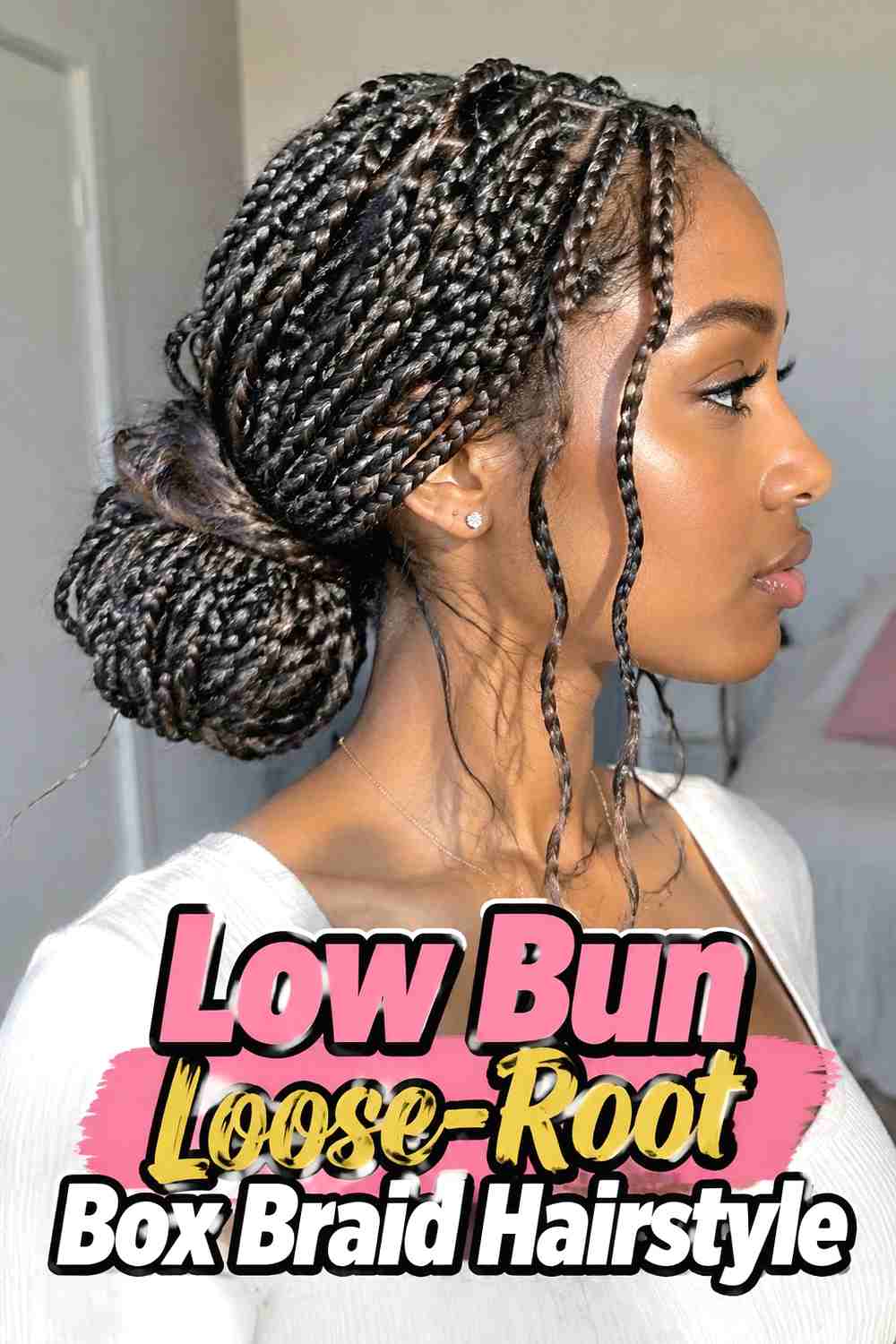
A low bun gives box braids a polished, grounded shape near the nape. The braids can be gathered into a loose coil, tucked bundle, or overlapping wrap that keeps the braid texture visible. A center or side part can remain intact at the front, while the softer root area prevents the updo from appearing excessively pulled back. This style works particularly well with medium and long braids because there is enough length to form a substantial bun without needing sharp folds. Leaving one or two braids loose near the front can create an even softer finish while maintaining the overall structure of the updo.
Styling Notes
Wrap the braids in sections instead of forcing the entire length into one tight coil, which can create unnecessary bulk.
Best For
Choose this version when you want an updo with less height than a crown bun and a more understated profile.
17. Face Framing Loose Root Box Braid Hairstyle
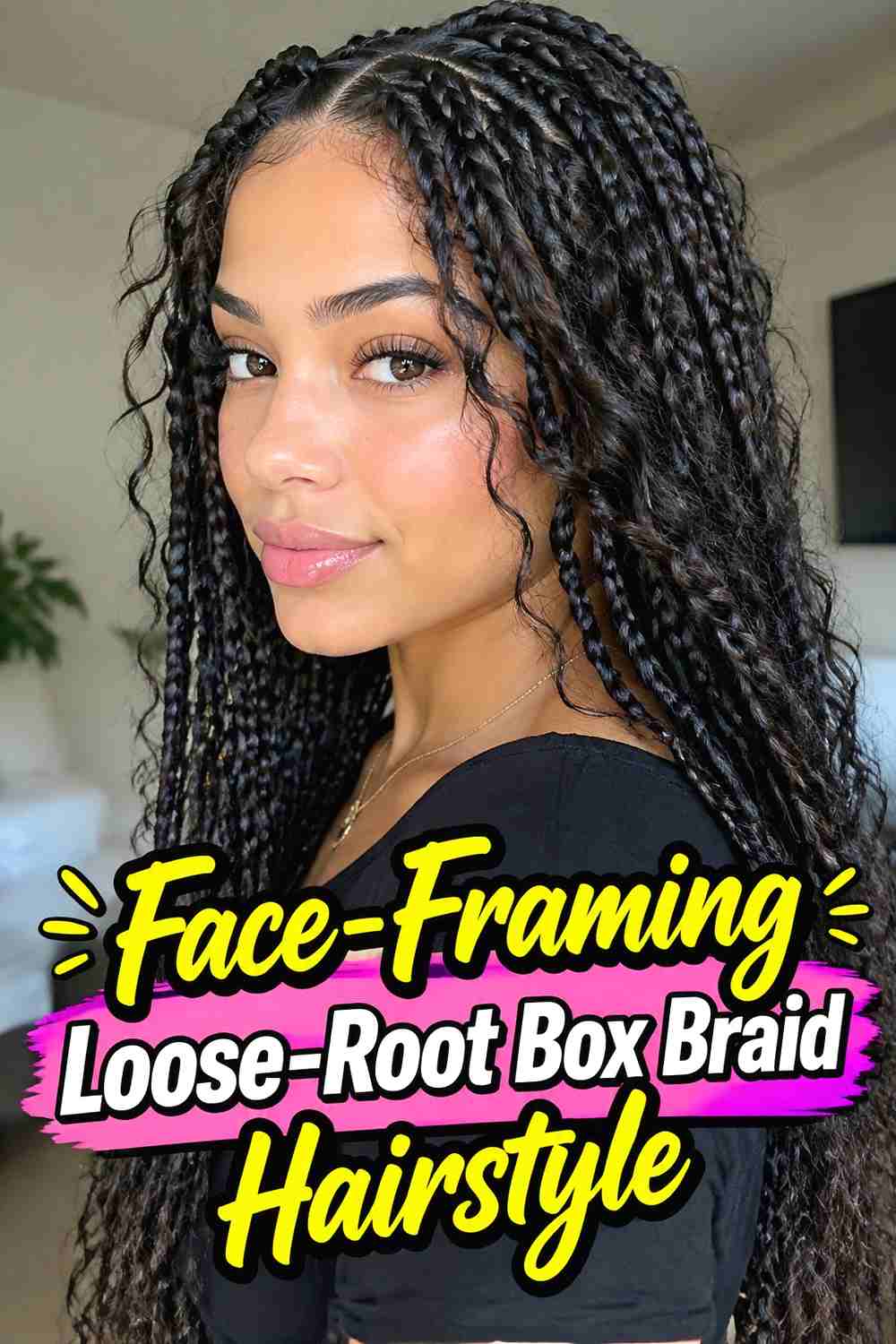
Face-framing box braids use a few strategically placed sections at the front to create movement around the cheeks and jaw. These braids may be slightly shorter, curled at the ends, or simply left loose while the remaining hair falls behind the shoulders. The softer root appearance works well here because the front pieces can move naturally without looking sharply anchored. A center part creates balanced framing, while a side part can make the pieces feel more asymmetrical. The key is keeping the number of forward braids limited so the style frames the face without hiding the overall shape or turning into a heavy curtain.
Why It Works
A few intentional front pieces soften long box braids and give the hairstyle more dimension from the front.
Pro Tip
Start with fewer face-framing braids and release additional pieces only if the front needs more movement.
18. Beaded End Loose Root Box Braid Hairstyle
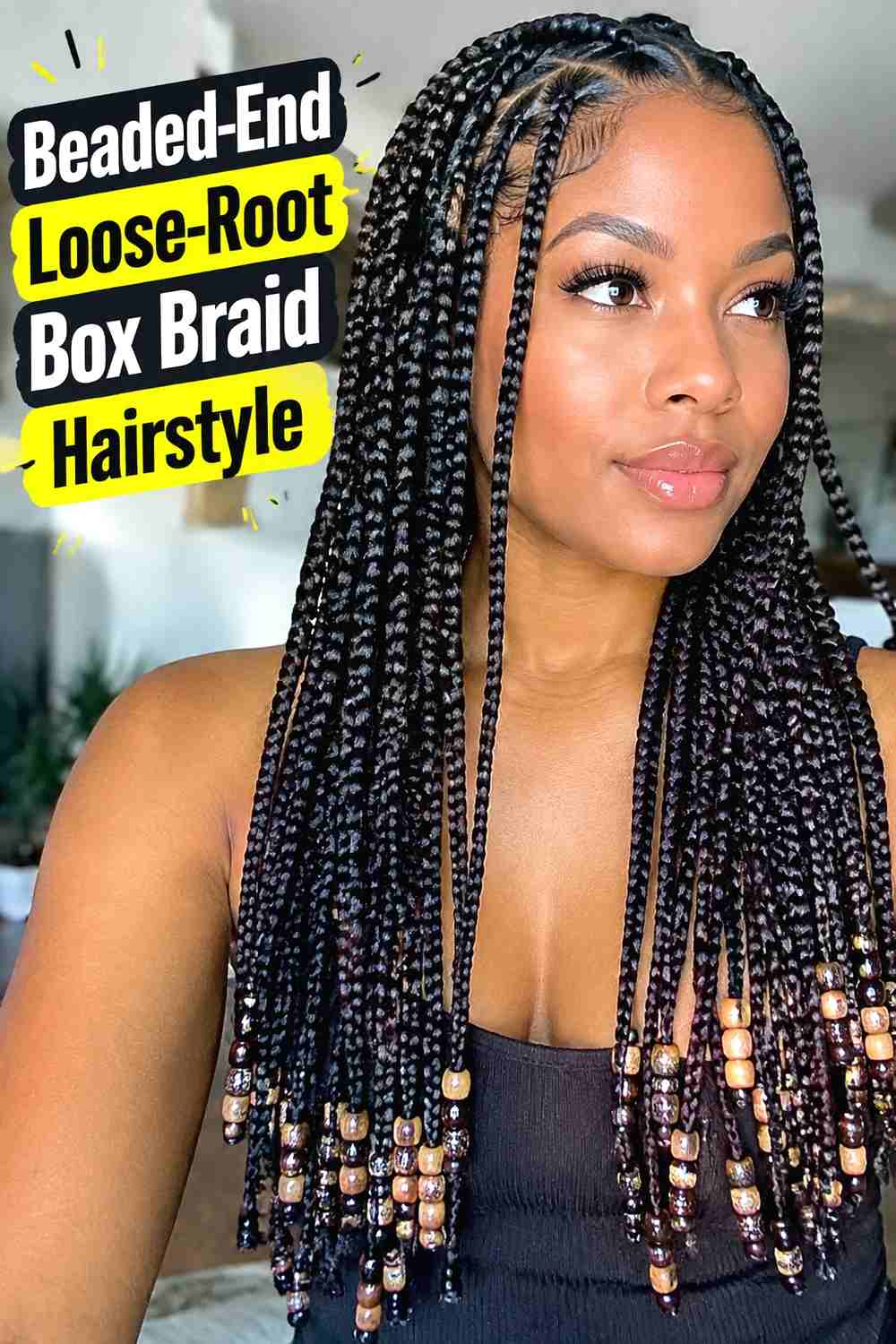
Beads add detail to the ends of loose-root box braids without changing the clean sectioning at the scalp. A few beads can be placed on selected braids for a subtle accent, or repeated more consistently around the perimeter for a stronger decorative effect. Shoulder and mid-back lengths often display the detail clearly because the beads remain visible rather than disappearing far down the back. Keeping the root styling simple allows the accessories to become the main extra feature. The size and number of beads should remain proportional to the braids so the ends move naturally and do not look overloaded.
Styling Notes
Distribute beads intentionally rather than adding heavy clusters to every braid, especially if you want the finished style to retain easy movement.
Wear & Maintenance
Choose placements that feel comfortable during sleep and everyday activity, since hard accessories can add noticeable weight or contact.
19. Layered Loose Root Box Braid Hairstyle
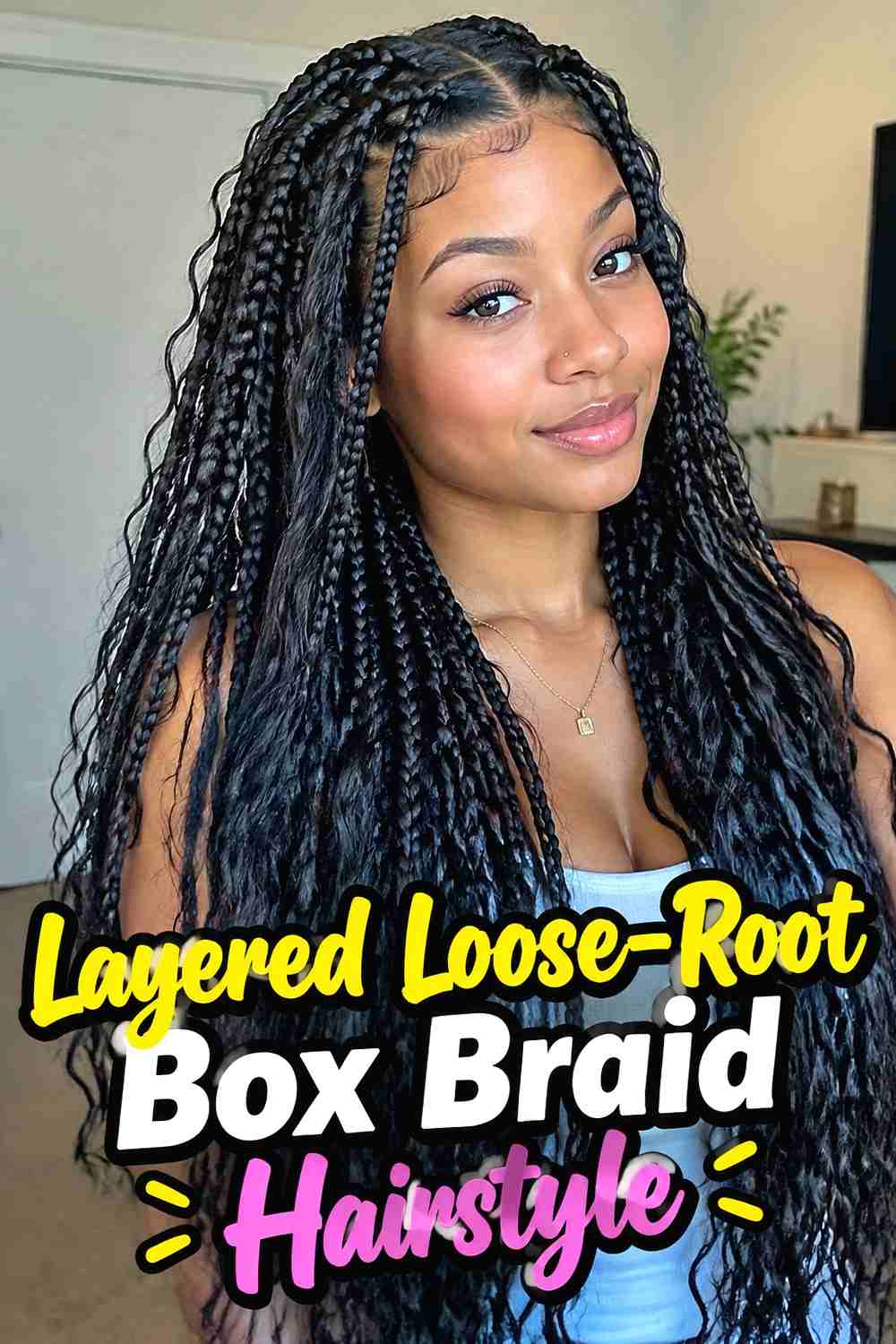
Layered box braids use varied finished lengths to create movement instead of allowing every braid to end at the same point. Shorter pieces around the front or upper sides can frame the face, while longer braids continue through the back for a cascading effect. The loose-root finish keeps the layers flexible and allows individual sections to settle naturally around one another. This look works particularly well with medium or small braids because the length changes blend more smoothly than they might with very thick sections. A gentle taper through the longest pieces prevents the lower half from becoming visually heavy and helps the layered silhouette remain clear.
Why It Works
Different lengths create natural movement and dimension while preserving the familiar box-braid texture throughout the style.
Styling Notes
Keep the transitions gradual so the layers look intentional and connected rather than like unrelated groups of short and long braids.
How to Choose the Right Look
Start with braid size. Jumbo box braids create bold sections and a simpler overall pattern, while smaller braids provide more detailed texture and greater flexibility for buns, ponytails, and half-up styles. Medium braids sit comfortably between those two effects.
Length is another major factor. Bob and shoulder-length braids create lighter, more compact silhouettes, while waist-length versions offer dramatic movement and more styling options but also add more hanging weight. Consider how the length will feel during daily activity and sleep, not only how it looks worn down.
Next, choose your preferred finish. Curly ends and boho pieces add softness, while classic fully braided lengths look more uniform. Beads provide decorative detail, and layered lengths create movement without requiring loose texture.
Finally, think about how often you want to gather the braids. Ponytails and buns can be useful, but they should feel comfortable. If an arrangement causes persistent pulling or soreness, loosen it, lower it, or reduce the number of braids being gathered.
Final Thoughts
Loose-root box braids can move from simple and classic to highly styled without losing their recognizable sectioned foundation. Length, braid size, parting, curls, accessories, and updo placement all give the look a different personality.
Choose the version that fits your preferred amount of weight and styling flexibility, and keep both the installation and any later updos comfortably secure rather than excessively tight.
FAQs
1. What are loose-root box braids?
Loose-root box braids keep the traditional sectioned box-braid structure while allowing a softer-looking start at the scalp instead of an extremely tight appearance.
2. Can loose-root box braids still look neat?
Yes. Clean parting, consistent braid construction, and tidy finishing can create a polished style even when the root area is not tightly pulled.
3. Are short loose-root box braids possible?
Yes. Bob and shoulder-length versions can create compact, lightweight-looking silhouettes while keeping the box-braid pattern clearly visible.
4. Can loose-root box braids be worn in buns and ponytails?
Yes. They can be gathered into high or low styles, but the finished arrangement should remain comfortable rather than relying on excessive tension.
5. Which finish gives box braids the most movement?
Curly ends, boho pieces, layered lengths, and side-swept arrangements can all increase visible movement compared with a uniformly straight, equal-length finish.
Save your favorite loose-root box braid hairstyle ideas for your next braided look, and share the collection whenever you need fresh box-braid inspiration.