14 Two-Tone Pink and Brunette Hair Color Ideas
Rich brunette and playful pink create a high-contrast color pairing that can feel soft, edgy, romantic, or bold depending on placement and tone.
Two-tone pink and brunette hair works because the depth of brown gives brighter pink shades a strong visual base, while softer rose, blush, and dusty tones can create a more blended effect. Placement matters just as much as shade choice: pink can frame the face, sit underneath the brunette, appear only at the ends, or run through the hair in ribbons and panels.
Before choosing a look, compare contrast, upkeep, starting hair color, and how much pink you want visible every day. Brighter pinks usually make a stronger statement, while muted tones can create a softer transition against chocolate, espresso, or medium brunette shades.
Quick List
- Half And Half Pink And Brunette Hairstyle
- Pink Money Piece Brunette Hairstyle
- Pink Peekaboo Brunette Hairstyle
- Pink Underlayer Brunette Hairstyle
- Pink Dip Dye Brunette Hairstyle
- Rose Pink Balayage Brunette Hairstyle
- Chunky Pink Highlights Brunette Hairstyle
- Pastel Pink Panels Brunette Hairstyle
- Hot Pink Face Framing Brunette Hairstyle
- Dusty Pink Ombre Brunette Hairstyle
- Pink Tipped Brunette Hairstyle
- Hidden Pink Streaks Brunette Hairstyle
- Magenta And Chocolate Brunette Hairstyle
- Blush Pink Ribbon Brunette Hairstyle
1. Half And Half Pink And Brunette Hairstyle
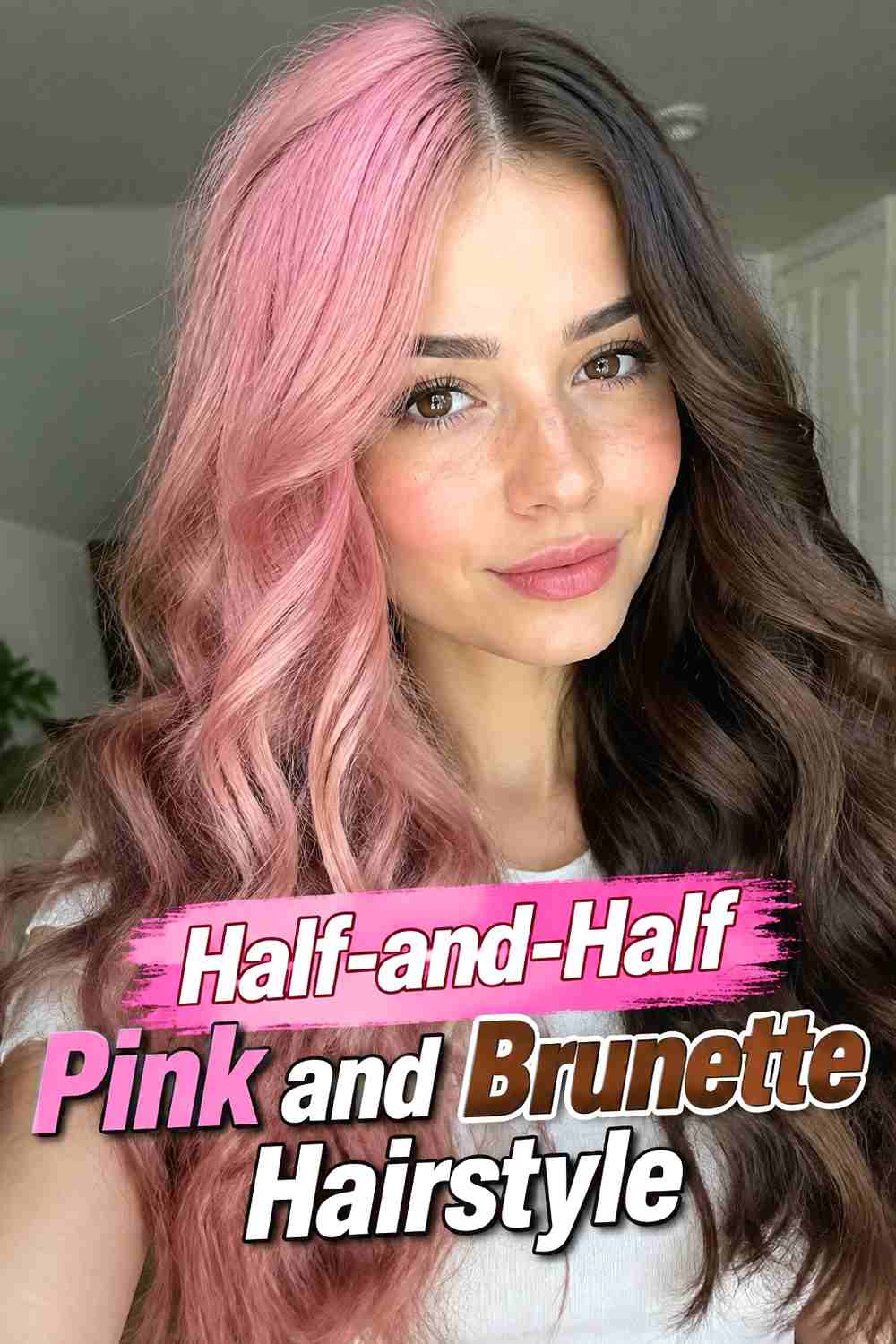
Half-and-Half Pink and Brunette Hairstyle creates the clearest two-tone statement by dividing the hair into two contrasting color sections. One side remains brunette while the other becomes pink, making the placement immediately visible from roots to ends. Chocolate brown paired with saturated rose or vivid pink creates strong contrast, while a softer medium brunette with dusty pink feels more muted. This color layout looks especially striking on straight hair, loose waves, and center parts because the division stays easy to see. Root upkeep can become noticeable as both shades grow, so this is better for someone comfortable with regular color maintenance and a deliberately bold finish.
Wear & Maintenance
Keeping both sides glossy and evenly toned helps the split look intentional. Pink may need more frequent refreshing than the brunette section, especially in brighter or pastel shades.
2. Pink Money Piece Brunette Hairstyle
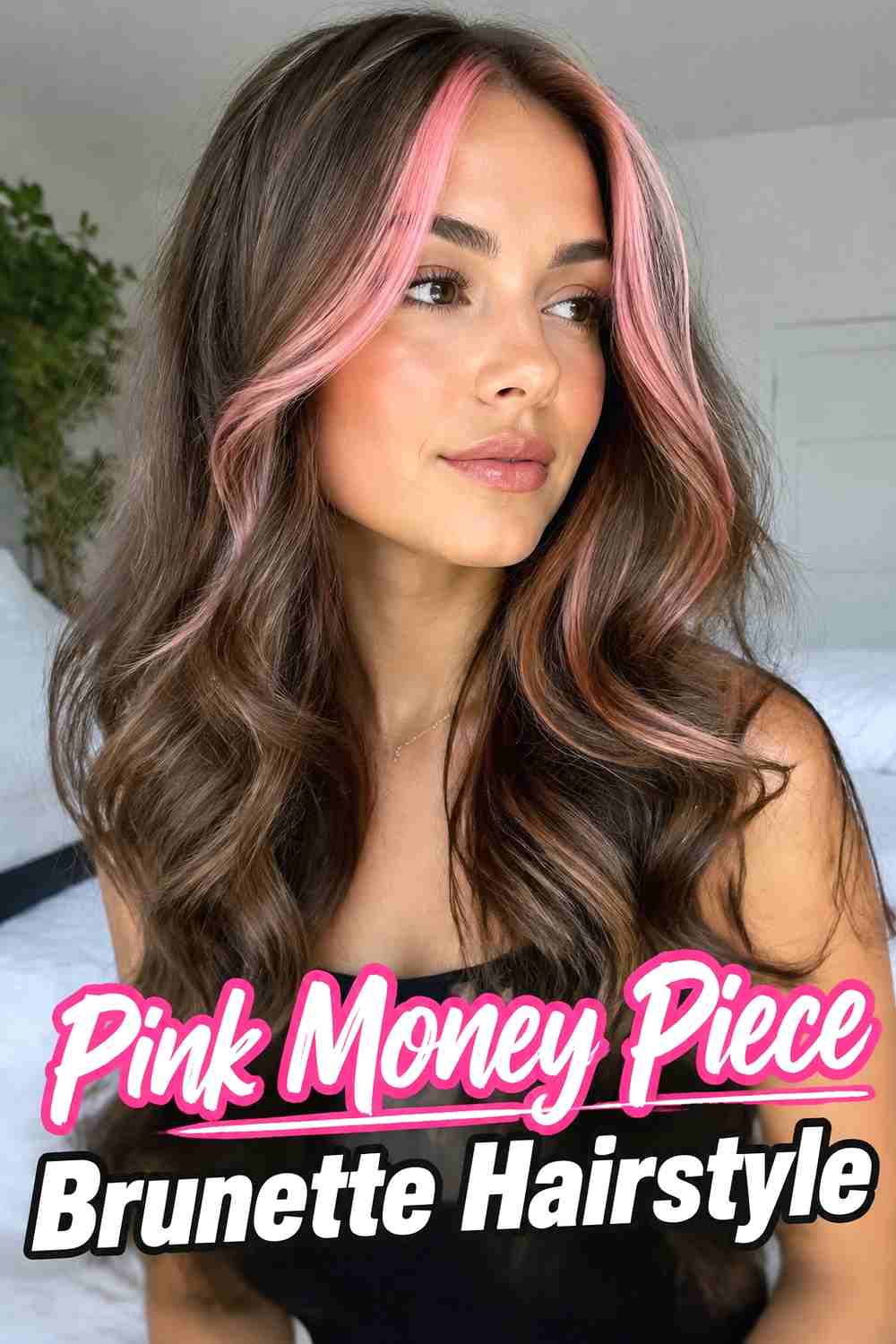
Pink Money Piece Brunette Hairstyle keeps most of the hair brown while concentrating pink around the front hairline. The contrast draws immediate attention to the face without requiring a full-head color change, making it a practical way to experiment with vivid color. Thin pink pieces create a delicate accent, while wider sections produce a bolder frame. Deep brunette bases look especially striking with hot or bubblegum pink, while softer browns can pair beautifully with rose tones. The placement is easy to showcase with center parts, ponytails, and loose waves. Because the front pieces are highly visible, fading and root growth tend to show more quickly than with hidden color.
Best For
This option works well if you want strong color impact concentrated around the face while keeping most of your natural or brunette shade intact.
3. Pink Peekaboo Brunette Hairstyle
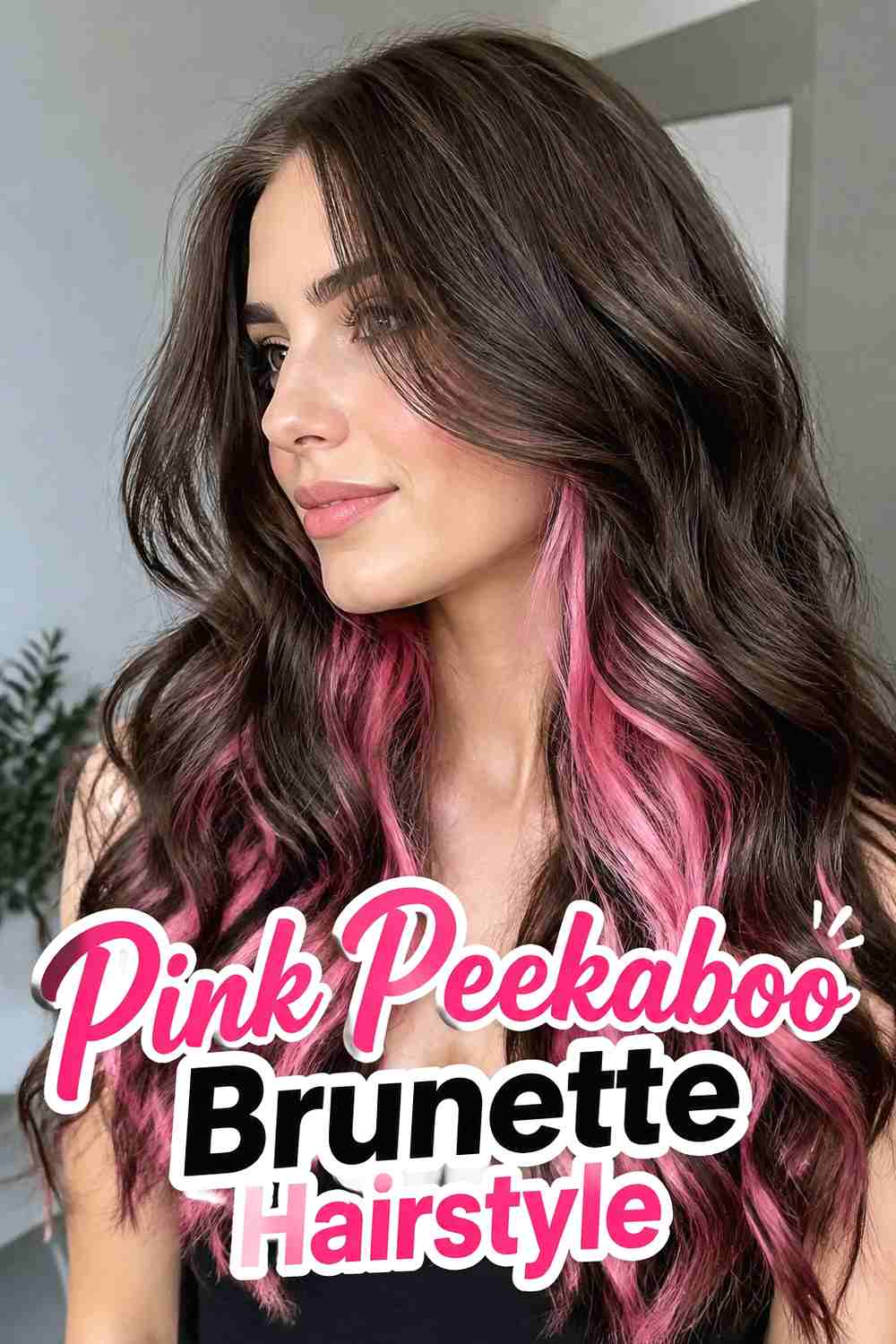
Pink Peekaboo Brunette Hairstyle hides flashes of pink beneath the top brunette layers so the color appears mainly when the hair moves, parts, or is styled up. The result can feel surprisingly subtle when the hair is down and dramatically different in braids, ponytails, or half-up styles. Placement can range from narrow sections near the nape to larger panels underneath the sides. A deep brown top layer creates a rich contrast against brighter pink, while muted rose underneath medium brunette produces a softer reveal. Because much of the pink is protected from constant visibility, slight fading can be less obvious than with face-framing placement.
Why It Works
The brunette surface keeps the overall look wearable, while the concealed pink adds an unexpected burst of color whenever the underneath sections become visible.
4. Pink Underlayer Brunette Hairstyle
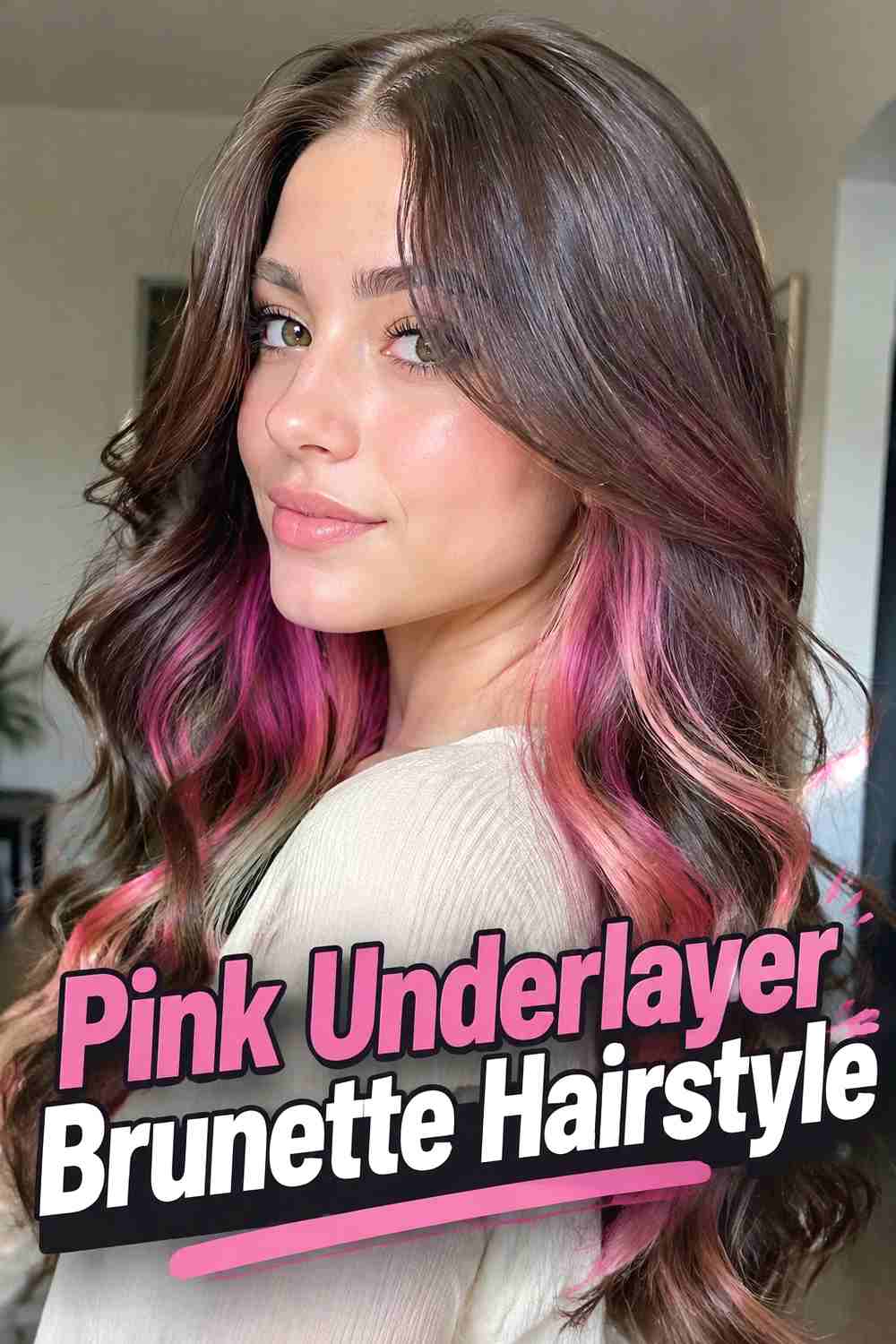
Pink Underlayer Brunette Hairstyle uses a broader band of pink beneath the brunette surface, creating more color coverage than a traditional peekaboo placement. The brown upper layer remains dominant from the front and crown, while the pink becomes visible through movement and along the lower edge of the hairstyle. Straight hair shows the clean division clearly, while waves allow the two colors to weave visually through each other. Bright fuchsia can create a graphic contrast against espresso brown, while rose pink gives a softer result. This design is particularly effective on medium and long hair because there is enough length for the hidden lower layer to become noticeable.
Styling Notes
Half-up styles, braids, and high ponytails reveal the underlayer more dramatically, while wearing the hair down keeps the pink comparatively understated.
5. Pink Dip Dye Brunette Hairstyle
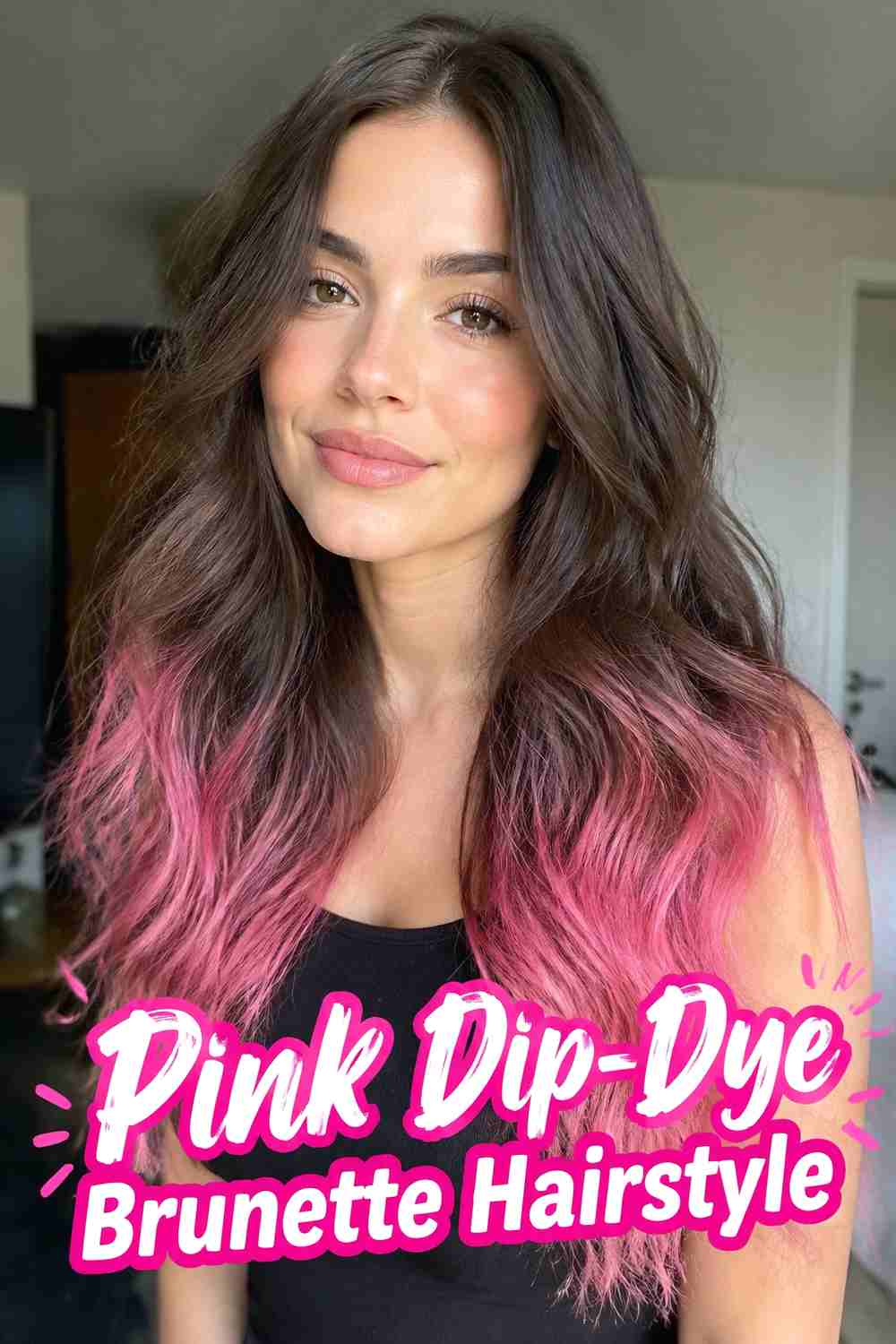
Pink Dip-Dye Brunette Hairstyle keeps the brunette shade intact through most of the hair before switching clearly to pink near the lower lengths. The transition can be crisp and graphic or slightly softened depending on the desired finish. Because the color is concentrated away from the roots, this placement offers more flexibility with regrowth than a full pink section. Long straight hair highlights the horizontal transition, while waves break up the line for a softer look. Hot pink creates a striking contrast against dark brown, whereas dusty rose or muted berry can feel more blended. The ends need enough condition and shine to keep the bright color looking polished rather than dry.
Wear & Maintenance
The brunette roots require little special upkeep, but the pink ends may need periodic refreshing as vivid tones gradually lose intensity.
6. Rose Pink Balayage Brunette Hairstyle
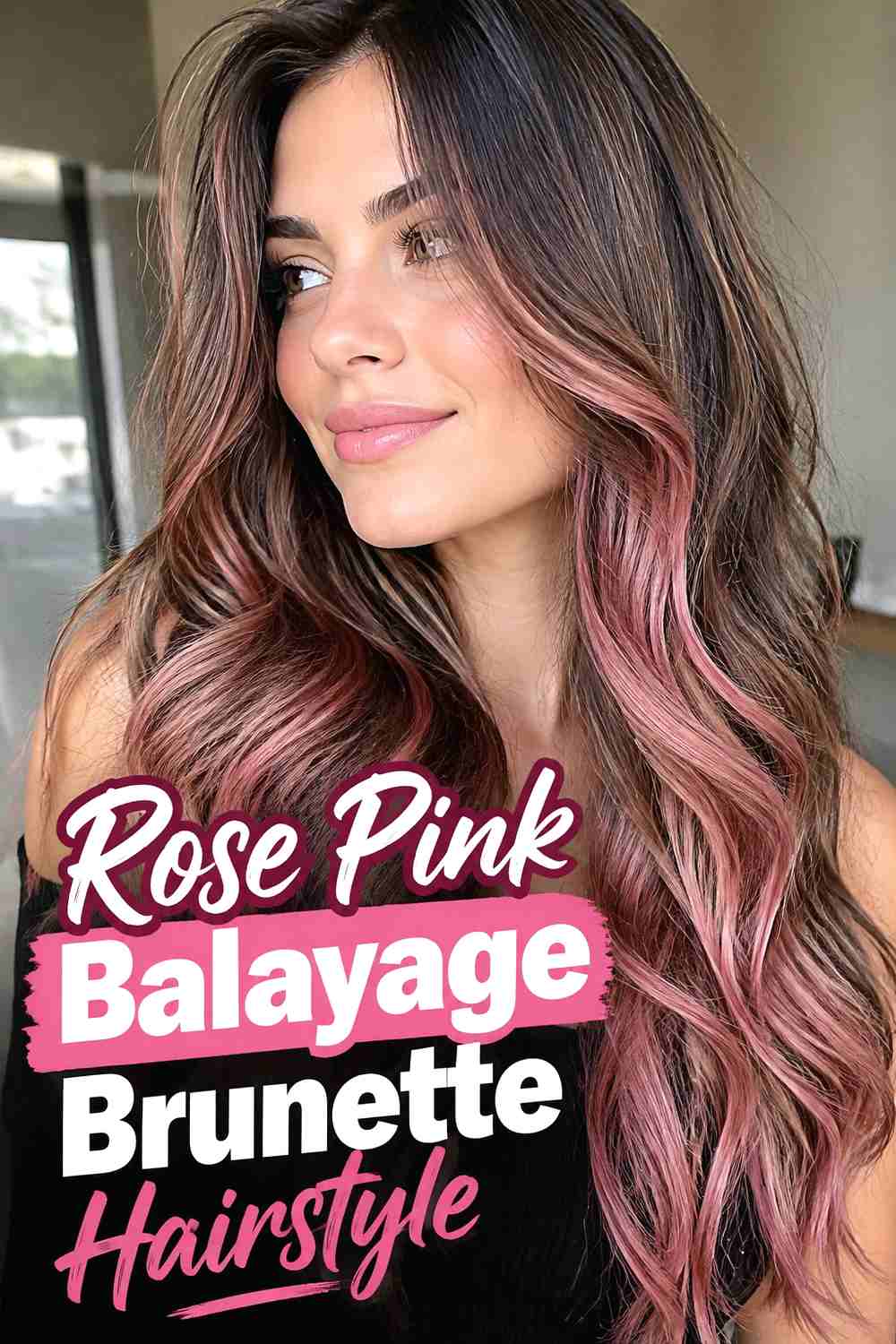
Rose Pink Balayage Brunette Hairstyle blends hand-painted rosy pieces through a brunette base for a softer two-tone effect. Instead of creating one obvious dividing line, the pink appears gradually through the mid-lengths and ends, with selected pieces placed higher for dimension. This approach can look particularly beautiful on waves because each bend reveals a slightly different mix of brown and rose. A warm chocolate base pairs naturally with rosy pink, while cooler brunette tones can suit mauve-leaning shades. The blended placement makes regrowth less abrupt than root-to-end pink, although the lighter sections may still need tone refreshes to keep the rose effect distinct.
Best For
Choose balayage if you prefer two-tone color with a softer transition and less obvious root maintenance than split dye or full panels.
7. Chunky Pink Highlights Brunette Hairstyle
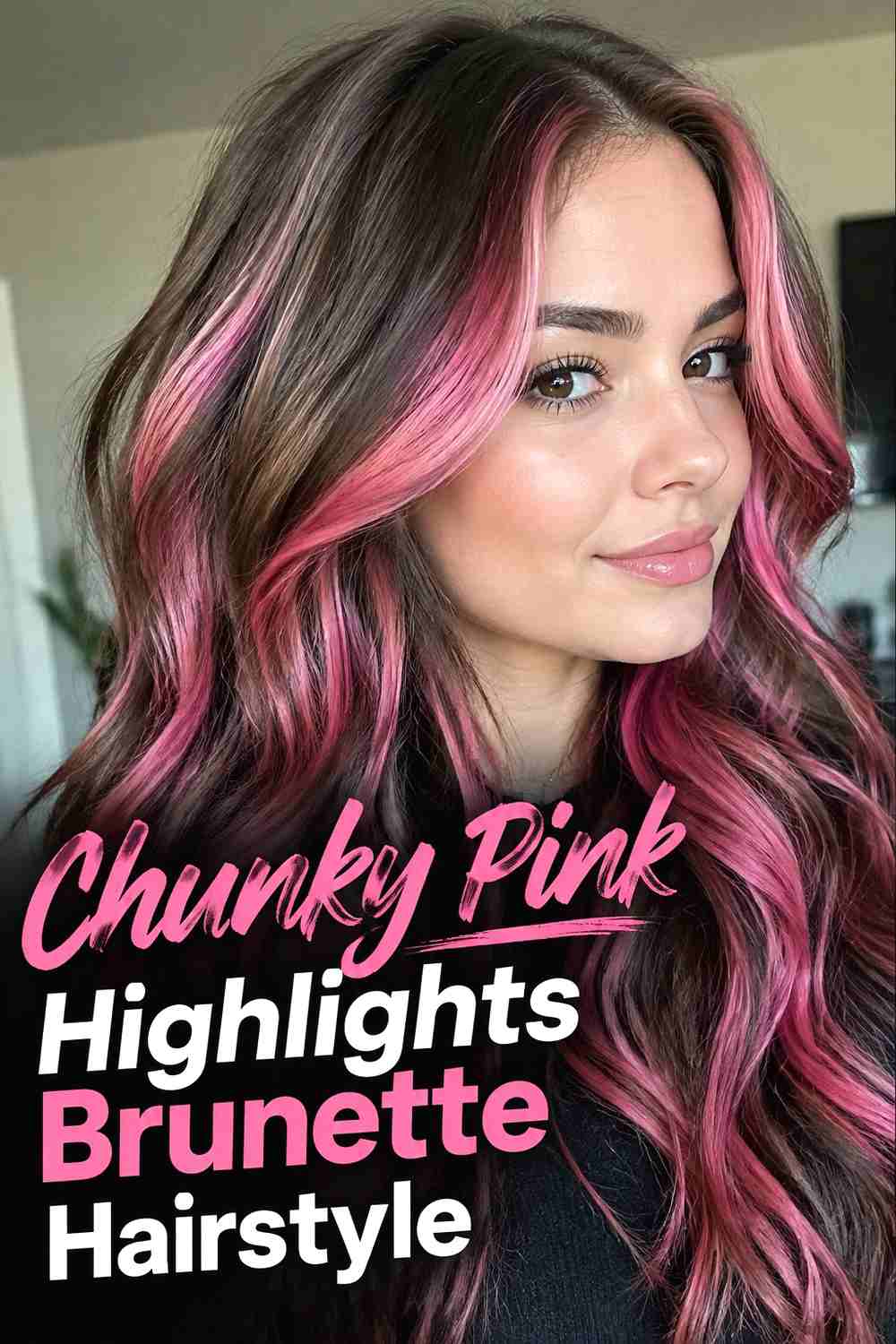
Chunky Pink Highlights Brunette Hairstyle brings a strong retro-inspired contrast to brown hair with wider, intentionally visible pink sections. Instead of fine blended highlights, these pieces are designed to stand apart from the brunette base. Placement around the face and through the top layers creates the boldest effect, while fewer sections through the lower hair keep the look more controlled. Bright pink against dark brunette produces a high-impact finish, while muted rose highlights can make the same placement feel softer. Waves and layered cuts show the individual color bands particularly well because each section moves separately. Maintaining clear tonal contrast helps prevent the finished color from appearing muddy.
Pro Tip
Spacing the pink sections intentionally allows enough brunette to remain visible between them, which keeps the chunky-highlight pattern clear and dimensional.
8. Pastel Pink Panels Brunette Hairstyle
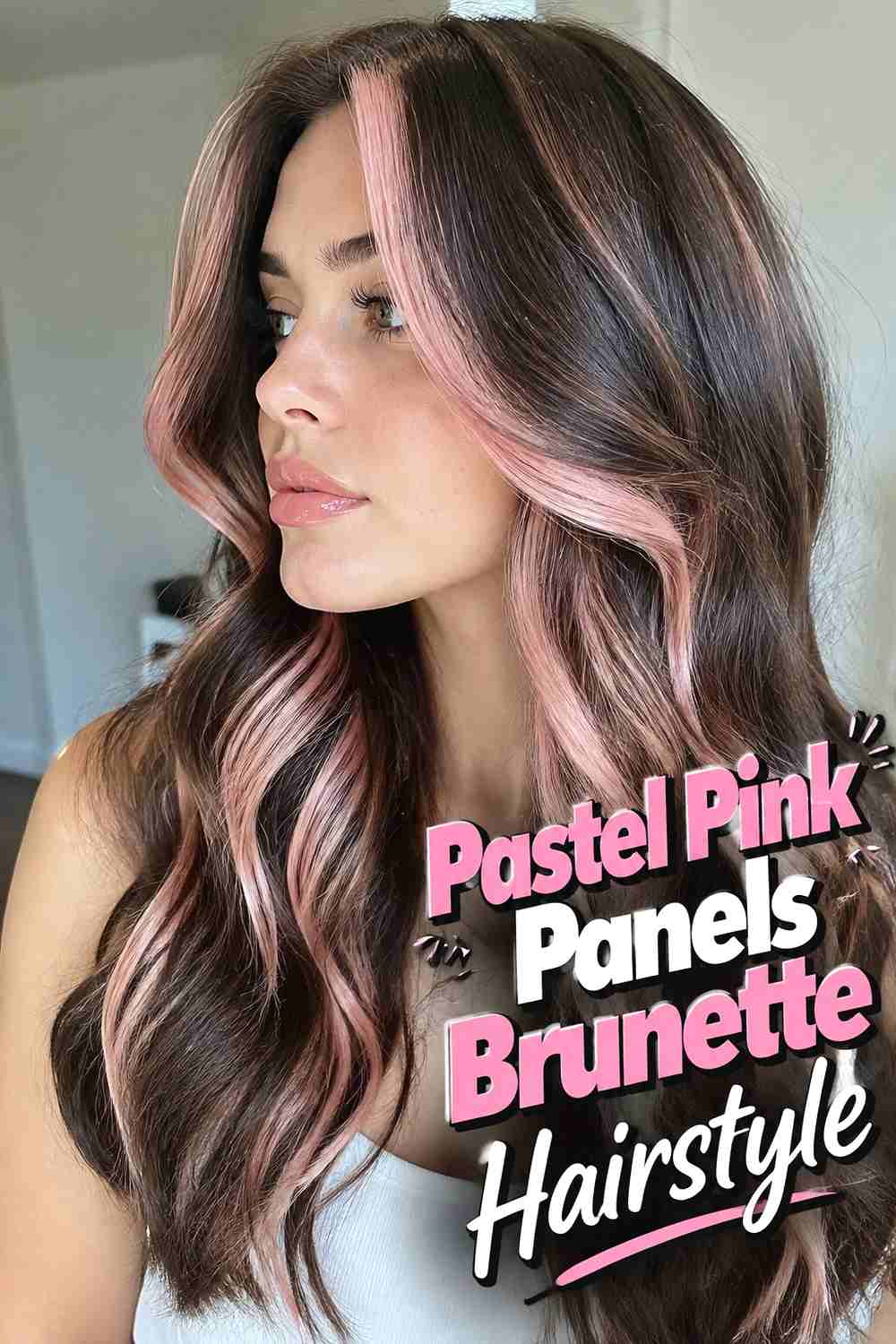
Pastel Pink Panels Brunette Hairstyle uses defined blocks of soft pink against a deeper brunette background. The pale color creates a striking contrast because pastel tones are much lighter than the brown base, especially when placed near the sides or underneath the top layers. Straight and sleek finishes show each panel clearly, while waves create a more blended visual effect. Because pastel pink usually needs a light base beneath it, the selected sections may require more preparation than deeper pink shades. This look can range from a single statement panel to several strategically placed blocks. Keeping the brunette rich and glossy makes the softer pink appear cleaner and more deliberate.
Wear & Maintenance
Pastel tones can lose intensity relatively quickly, so refreshing the pink may become part of the routine if you want to maintain a noticeably pale result.
9. Hot Pink Face Framing Brunette Hairstyle
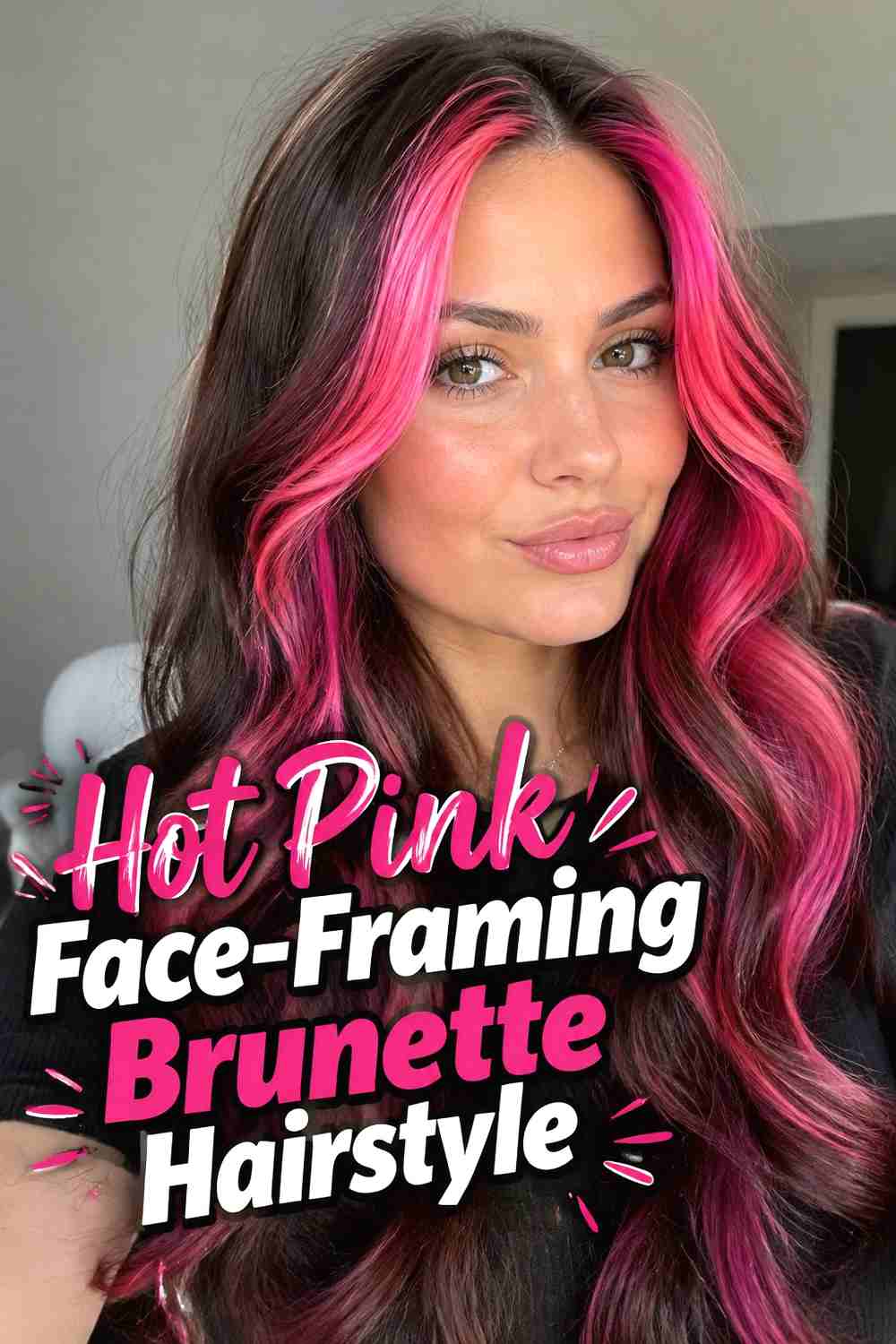
Hot Pink Face-Framing Brunette Hairstyle makes vivid pink the focal point by placing saturated color through the pieces surrounding the face. Unlike a narrow money piece, this variation can extend through larger sections near the temples and front layers, creating a stronger halo of color. Dark brunette gives hot pink a dramatic background, while medium brown keeps the contrast slightly softer. Long layers and curtain-style face framing can make the pink sections flow through several different lengths. Because these pieces sit prominently around the hairline, they are easy to display in both loose and tied-back styles. The placement works best when the front color stays bright and clearly separated from the brunette.
Why It Works
The intense pink is concentrated where it has maximum visibility, while the brunette lengths keep the overall color scheme grounded and dimensional.
10. Dusty Pink Ombre Brunette Hairstyle
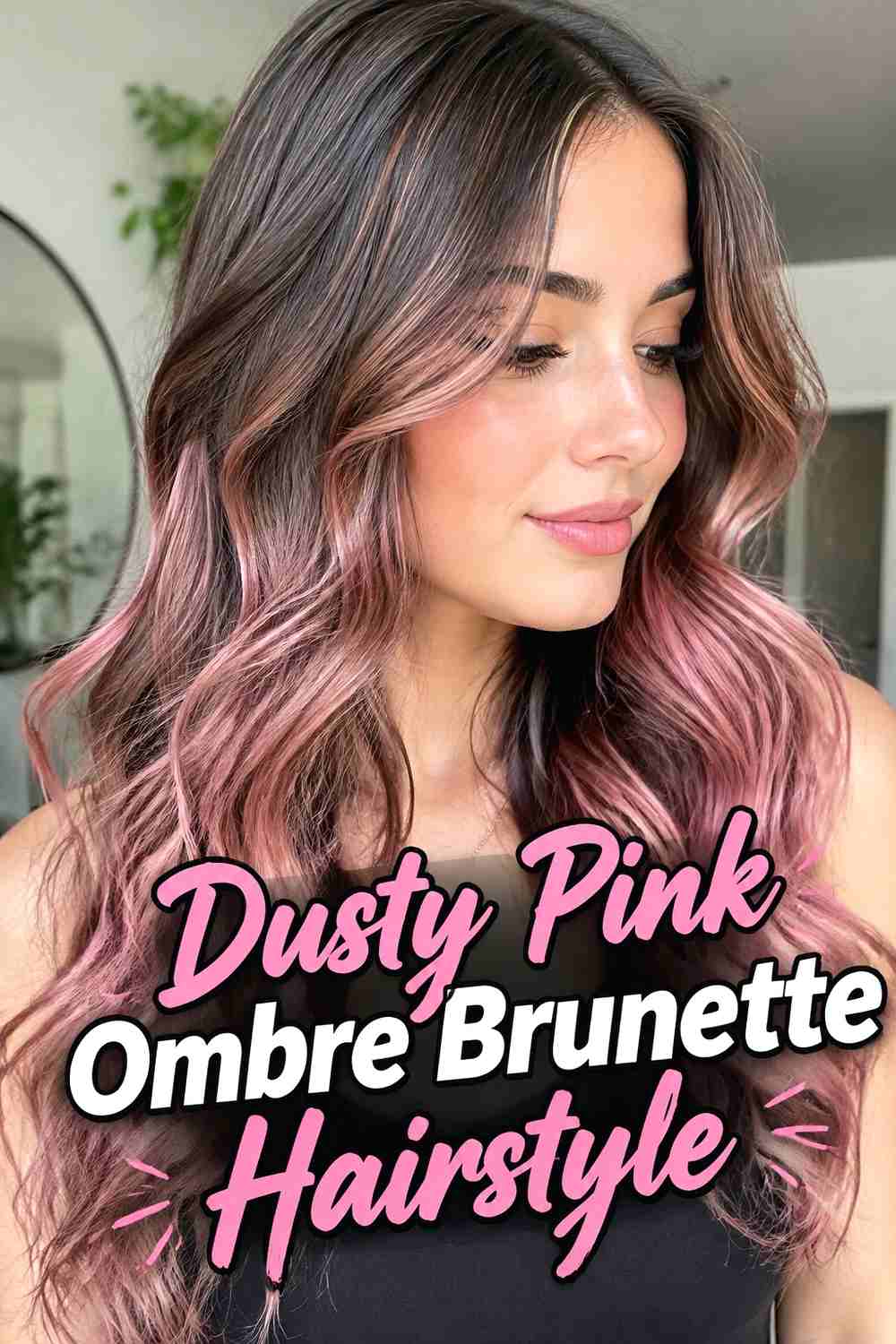
Dusty Pink Ombre Brunette Hairstyle transitions from brunette roots into a muted pink through the mid-lengths and ends. Unlike a sharp dip-dye line, ombre uses a more gradual shift so the two shades appear to melt into each other. Dusty pink works particularly well for this technique because its softened tone can bridge medium and deep browns without looking overly bright. Waves emphasize the gradient by blending the transition across multiple bends, while straight hair makes the color progression easier to see. Keeping the root area brunette makes future growth comparatively forgiving. The pink can also be adjusted toward mauve or rose depending on the desired undertone.
Best For
This is a strong choice if you like visible pink through the lengths but prefer a softer, more gradual transition than a split or dip-dyed effect.
11. Pink Tipped Brunette Hairstyle
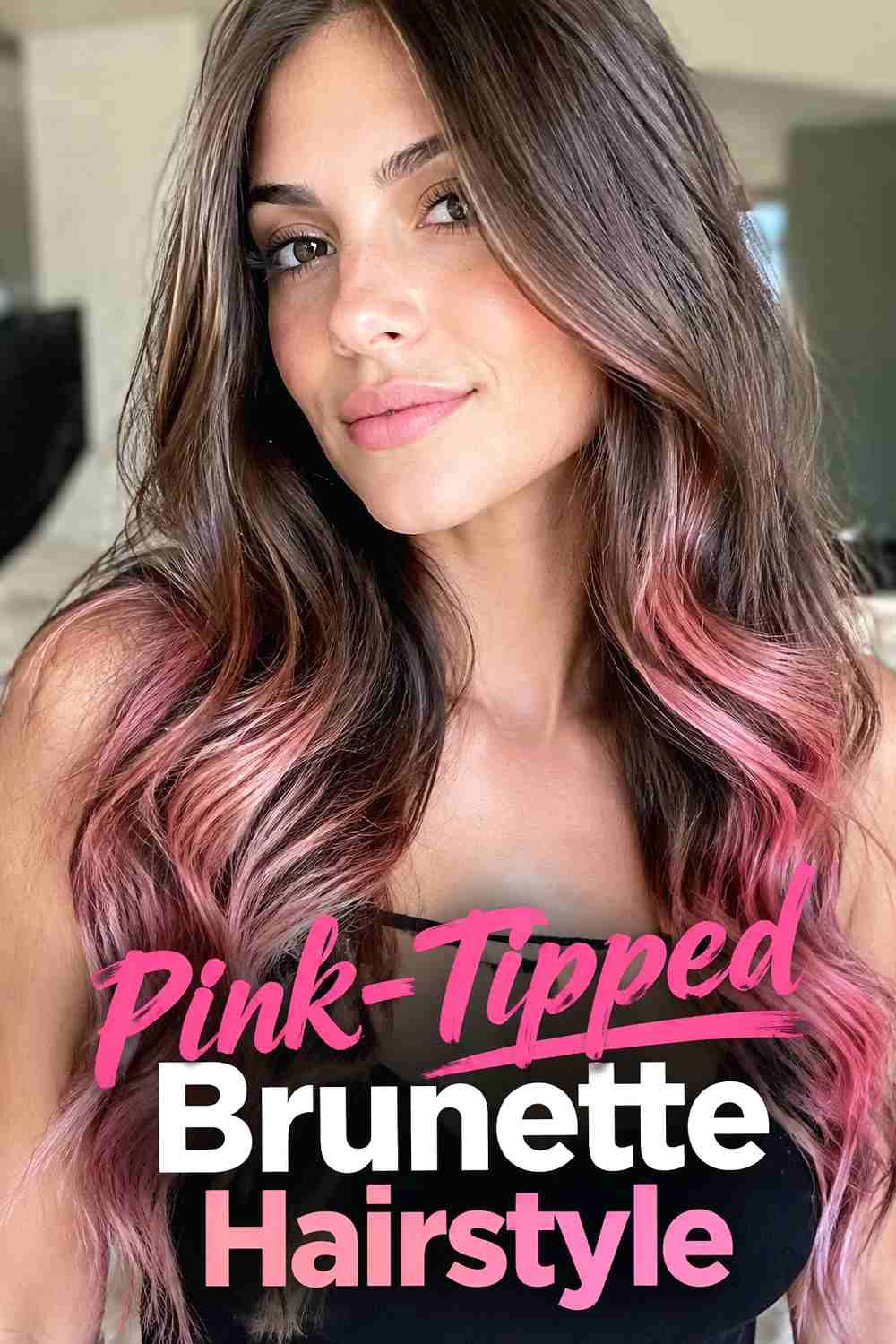
Pink-Tipped Brunette Hairstyle keeps the color change confined to the very ends for a playful accent that does not dominate the entire haircut. The brunette remains visible through nearly all of the length, then finishes with a narrow band of pink at the tips. Bright shades create a graphic edge, while blush or rose pink offers a subtler finish. This placement works on bobs, medium cuts, and long hair, although the color becomes especially noticeable when the ends are blunt or softly waved. Because the pink sits far from the roots, regrowth is not a major concern. The main maintenance priority is keeping the colored ends looking healthy and evenly saturated.
Styling Notes
Smooth ends show the tipped effect most clearly, while loose waves scatter the pink through the lower silhouette for a softer result.
12. Hidden Pink Streaks Brunette Hairstyle
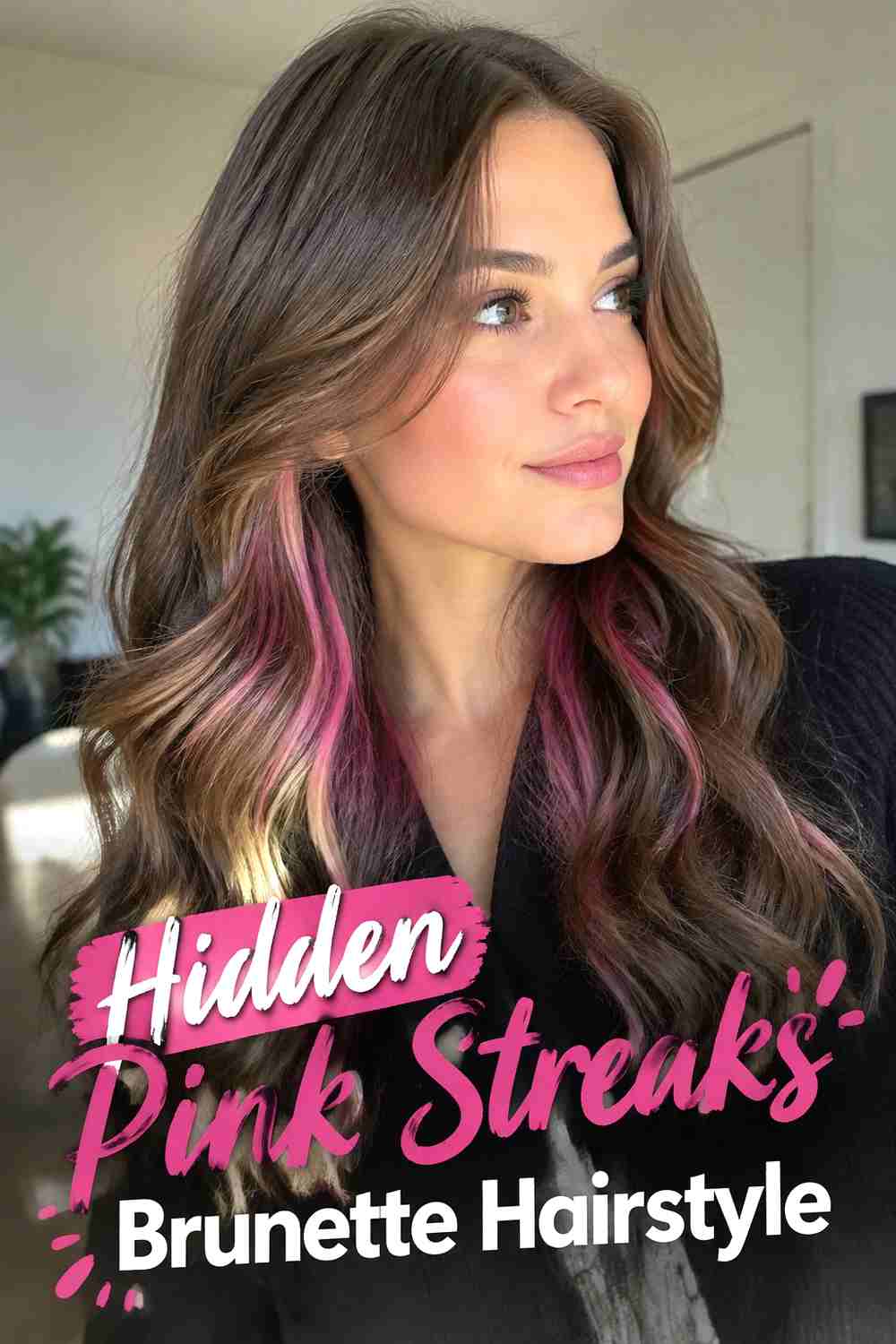
Hidden Pink Streaks Brunette Hairstyle uses narrow pink sections beneath or between brunette layers for small flashes of color rather than large blocks. The streaks can sit near the temples, behind the ears, around the nape, or throughout the underneath sections. This makes the final effect highly customizable: a few thin pieces feel subtle, while multiple streaks create more visible contrast when the hair moves. Rich brunette paired with bright rose or magenta produces the strongest separation. Layered hair can reveal the hidden streaks naturally, and braids or half-up styles make them even more noticeable. Because the placement is scattered, fading often looks less obvious than on one large pink panel.
Best For
This option is useful when you want playful color that can stay relatively discreet in everyday styling but become more visible when the hair is moved or pinned back.
13. Magenta And Chocolate Brunette Hairstyle
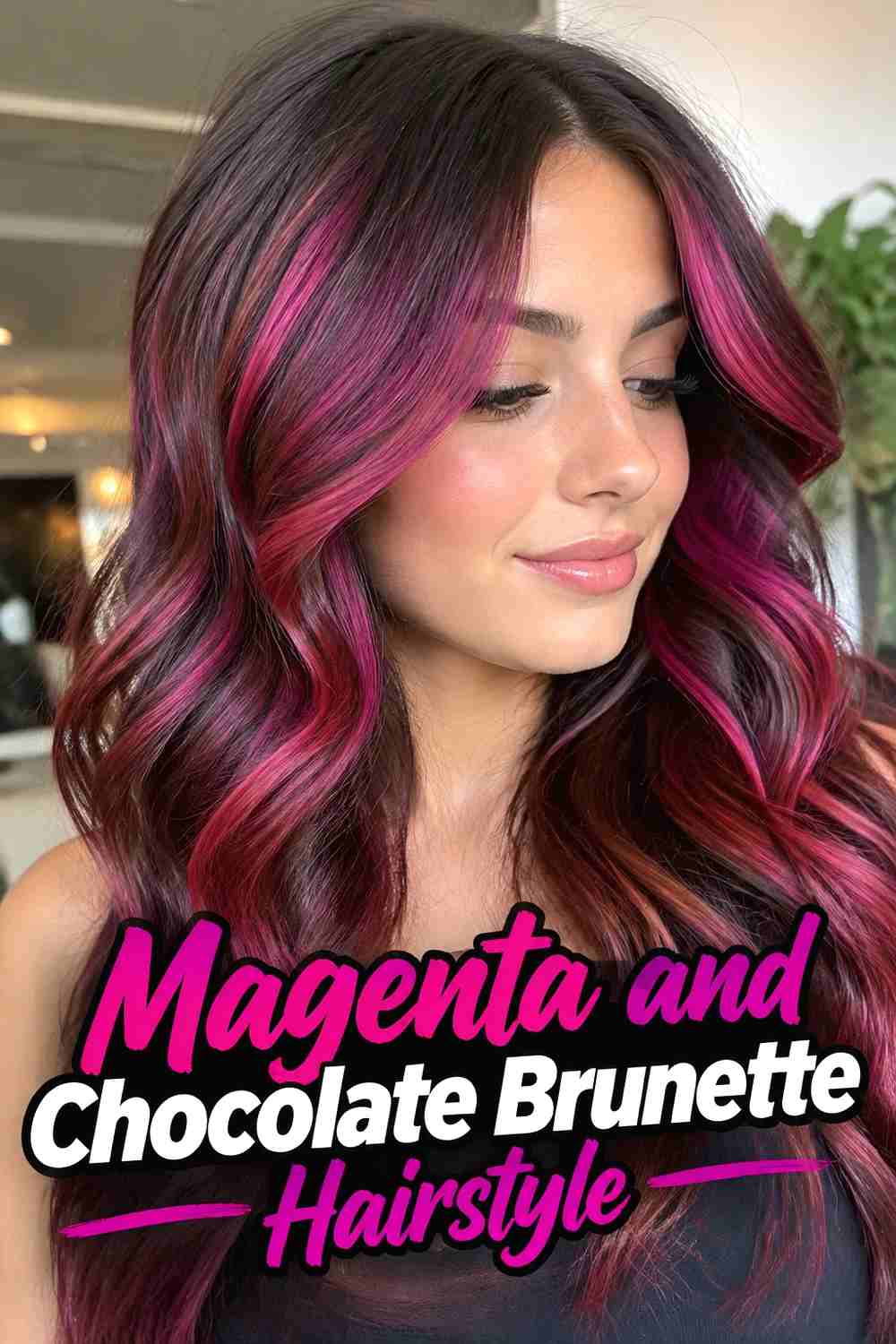
Magenta and Chocolate Brunette Hairstyle combines a warm, rich brown with deep pink-purple accents for a saturated two-tone look. Magenta has more depth than pastel or bubblegum pink, so it can sit confidently beside dark chocolate without requiring the same extreme light-versus-dark contrast. The color can be used in bold panels, ribbons, or larger face-framing sections depending on how dramatic you want the result. Loose curls and waves help the two shades intertwine visually while still preserving their individual richness. This pairing can feel especially polished when both tones have strong shine and similar depth. Maintenance focuses on preserving magenta vibrancy while keeping the brunette from becoming dull.
Why It Works
Both colors have enough richness to hold their own, creating a saturated contrast that feels dimensional rather than extremely light against dark.
14. Blush Pink Ribbon Brunette Hairstyle
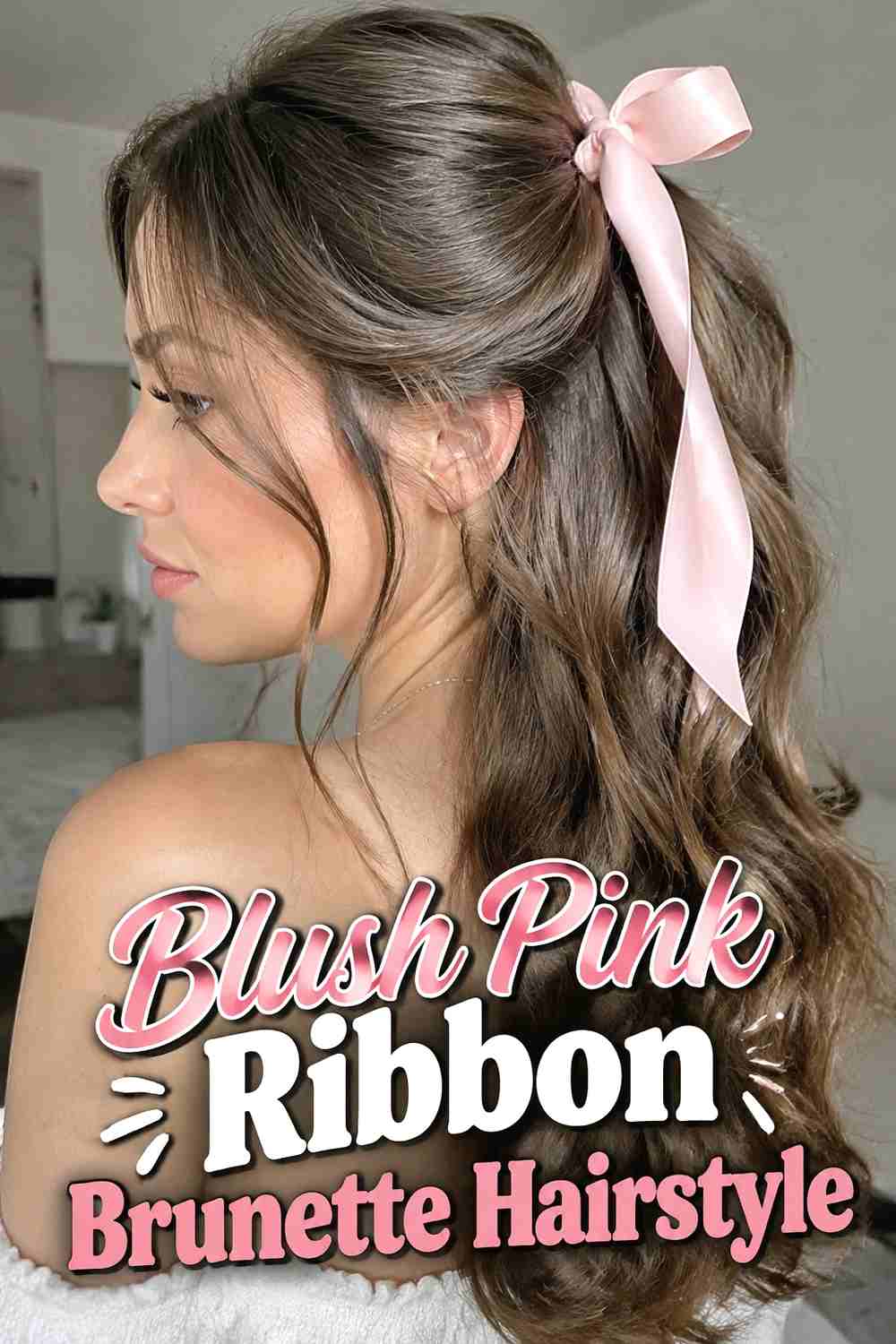
Blush Pink Ribbon Brunette Hairstyle threads soft pink pieces through a brunette base in narrow, flowing sections that resemble ribbons. Unlike chunky highlights, the color placement is slimmer and more blended, creating flashes of blush without overtaking the brown. Long waves or layered hair make the ribbon effect particularly visible because each section curves independently through the hairstyle. A neutral or chocolate brunette base gives blush pink enough contrast to remain noticeable while keeping the overall palette soft. Placement can be concentrated around the face or scattered through the lengths for a more balanced effect. The final result works best when the pink remains light, clean, and distinct from the brunette.
Styling Notes
Loose waves help expose different ribbon sections throughout the hair, while a sleek finish makes the individual placement lines look more precise.
How to Choose the Right Look
Start with how visible you want the pink to be. Half-and-half color, hot pink face framing, and chunky highlights make an immediate statement, while peekaboo sections, hidden streaks, and underlayers can stay much more discreet when the hair is worn down.
Think about contrast next. Hot pink, fuchsia, and magenta create strong separation against brunette, whereas dusty rose and blush shades produce a softer palette. Pastel pink creates a different kind of contrast because it is significantly lighter than most brown bases.
Placement also affects maintenance. Root-to-end panels and face-framing color make regrowth obvious sooner, while ombre, balayage, dipped ends, and hidden color generally allow more flexibility between appointments.
Finally, consider your starting color and finish. Some pink shades may require selected sections to be lightened first to appear clearly. Waves enhance blended dimension, while straight styling shows graphic panels and split-color placement more precisely.
Final Thoughts
Pink and brunette hair can range from a tiny hidden accent to an unmistakable half-and-half color statement. For softer results, consider blush ribbons, rose balayage, or dusty ombre. If you want maximum contrast, vivid face framing, chunky highlights, split dye, or magenta panels make the pink much more prominent. Choose the placement and shade that fit both your preferred look and the level of color maintenance you are comfortable with.
FAQs
1. Does pink show clearly on brunette hair?
Deeper pinks such as magenta can create visible contrast on dark hair, but lighter or pastel pink shades may require the selected sections to be lightened first for a clear result.
2. Which pink shade looks good with brunette hair?
Rose, blush, hot pink, fuchsia, dusty pink, and magenta can all pair well with brunette. The best match depends on the depth and undertone of both colors.
3. What is the easiest two-tone pink and brunette look to grow out?
Ombre, dip-dye, balayage, and pink-tipped styles are generally more flexible because the brunette root area remains intact.
4. Can two-tone pink and brunette hair look subtle?
Yes. Hidden streaks, peekaboo color, soft underlayers, and narrow blush ribbons can keep most of the brunette visible while adding controlled pink accents.
5. How can I make the pink color stand out more?
Choose a higher-contrast shade or placement, such as hot pink around the face, bold panels, chunky highlights, or half-and-half color. Strong shine also helps both tones look more defined.
Save your favorite two-tone pink and brunette hair color idea, share this collection, and explore more creative color inspiration for your next look.