19 Baby Bangs With Soft Jawline Layers
Short baby bangs paired with soft jawline layers create a playful contrast between a compact fringe and flowing face-framing movement.
This haircut combination is all about proportion. Baby bangs keep the forehead open and create a defined focal point, while layers landing around the jaw soften the transition into the rest of the hair. Depending on the texture and length, those layers can curve inward, flick outward, blend into waves, or connect to longer face-framing sections.
Small changes make a noticeable difference. A wispy fringe feels lighter than a blunt micro bang, while rounded bangs create a softer outline. Jawline layers can also be subtle or dramatic depending on density, texture, and overall length. Compare your natural movement, styling routine, desired fringe maintenance, and preferred amount of face framing before choosing a version.
Quick List
- Soft Baby Bangs With Jawline Layers Hairstyle
- Wispy Baby Bangs With Feathered Jawline Layers Hairstyle
- Rounded Baby Bangs With Soft Jawline Layers Hairstyle
- Piecey Baby Bangs With Airy Jawline Layers Hairstyle
- Micro Baby Bangs With Chin Skimming Layers Hairstyle
- Curved Baby Bangs With Jawline Bob Layers Hairstyle
- Soft Baby Bangs With Long Face Framing Jawline Layers Hairstyle
- Textured Baby Bangs With Shaggy Jawline Layers Hairstyle
- Blended Baby Bangs With Shoulder Length Jawline Layers Hairstyle
- Side Swept Baby Bangs With Soft Jawline Layers Hairstyle
- Baby Bangs With Wavy Jawline Layers Hairstyle
- Baby Bangs With Curly Jawline Layers Hairstyle
- Baby Bangs With Sleek Jawline Layers Hairstyle
- Baby Bangs With Fine Hair Jawline Layers Hairstyle
- Baby Bangs With Thick Hair Jawline Layers Hairstyle
- Baby Bangs With Jawline Butterfly Layers Hairstyle
- Soft Baby Bangs With Jawline Lob Layers Hairstyle
- Choppy Baby Bangs With Soft Jawline Layers Hairstyle
- Air Dried Baby Bangs With Jawline Layers Hairstyle
1. Soft Baby Bangs With Jawline Layers Hairstyle

Soft baby bangs create a short, airy fringe without the severity of a dense blunt line. Paired with jawline layers, they form a balanced haircut in which the shortest pieces sit high across the forehead while longer front sections curve naturally beside the cheeks and jaw. Keeping a little separation between the bangs helps the fringe move instead of looking solid. The jawline layers can then blend into medium or long lengths without creating an abrupt shelf. This version is especially versatile when styled with a soft bend because the front sections can turn slightly inward or away from the face. The result feels neat but not overly structured.
Styling Notes
Dry the fringe first so it settles naturally, then shape the jawline pieces with a small round brush or soft bend rather than a tight curl.
2. Wispy Baby Bangs With Feathered Jawline Layers Hairstyle
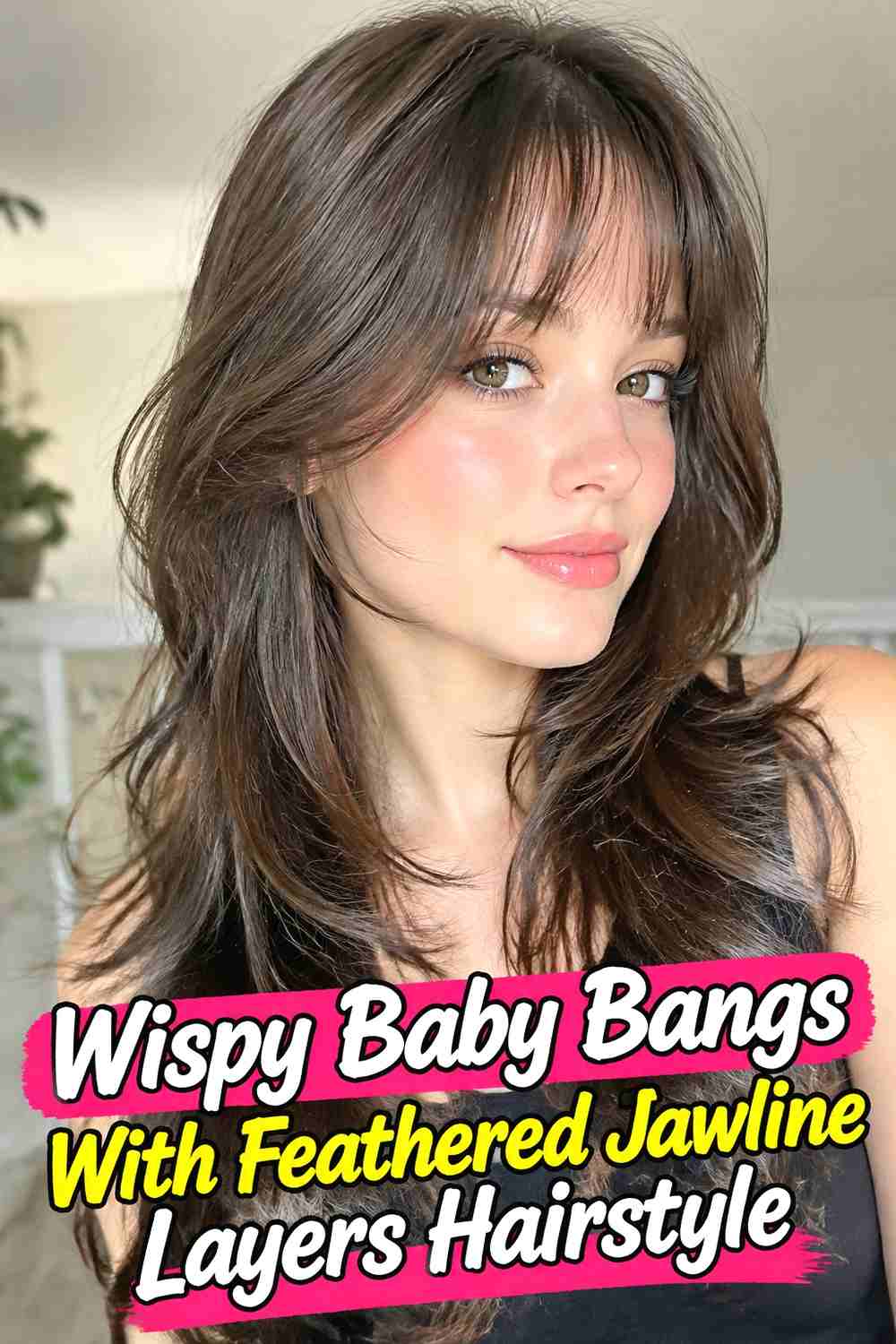
Wispy baby bangs use fine, separated pieces to create a delicate front edge, making them a natural partner for feathered layers around the jaw. The face-framing sections can gradually lengthen from the temples toward the chin, producing movement without looking heavily stepped. Feathering the ends keeps the layers light and allows them to flick outward or curve softly depending on styling. This look works especially well when the overall haircut has enough length to contrast with the compact fringe. The bangs should remain intentionally sparse rather than accidentally thin, with enough density to read as a defined feature while still showing small glimpses of the forehead between strands.
Best For
This version suits straight to softly wavy hair and anyone who wants baby bangs to feel light rather than graphic or heavily cut.
3. Rounded Baby Bangs With Soft Jawline Layers Hairstyle
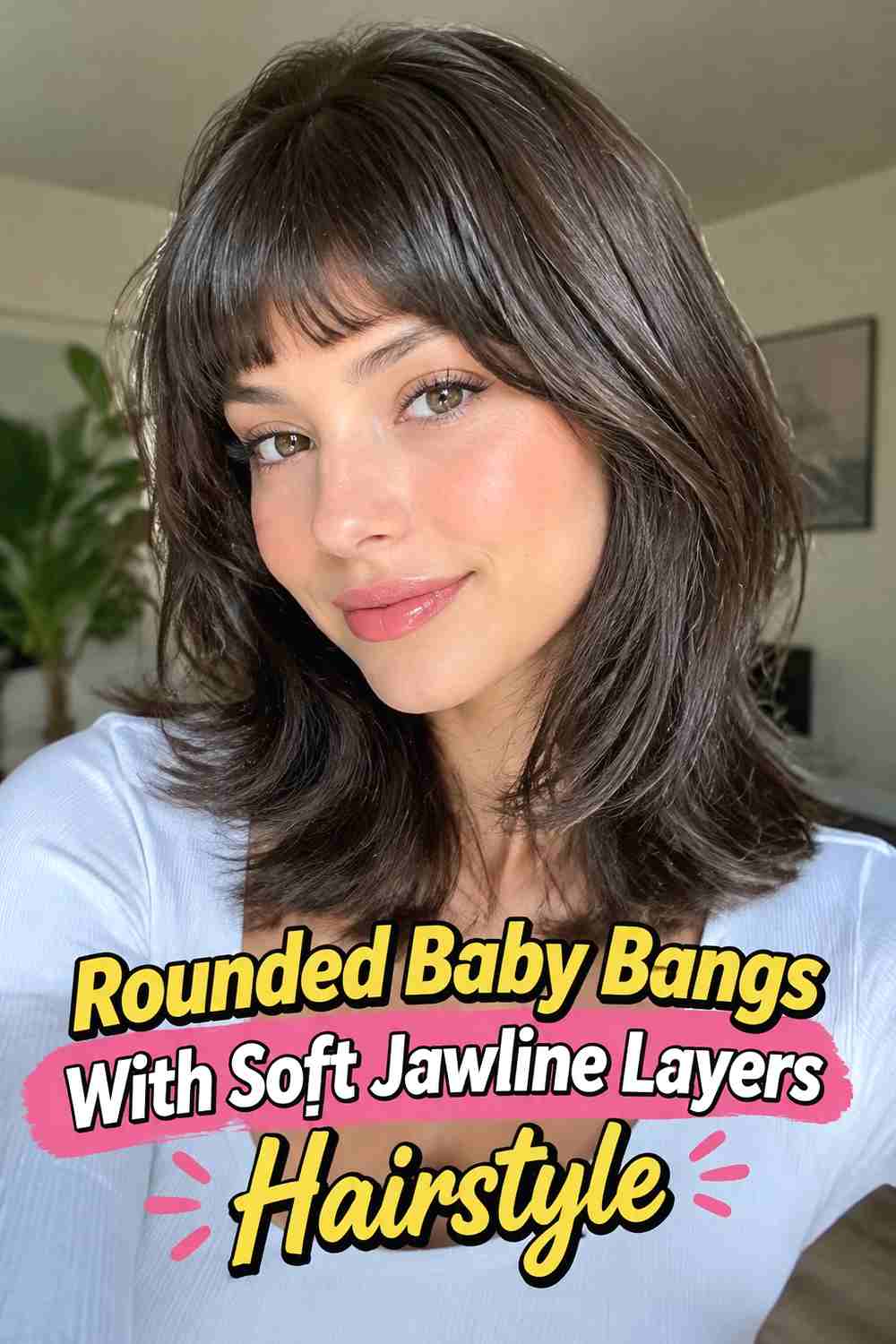
Rounded baby bangs follow a gentle curve across the forehead rather than sitting in a perfectly horizontal line. That softer contour pairs well with jawline layers that curve around the face, creating a cohesive silhouette from the fringe down through the front sections. The layers can begin near the cheekbones and become most noticeable around the jaw, then blend into longer lengths behind them. Keeping the ends polished but not rigid helps the style retain natural movement. A subtle inward bend can emphasize the rounded shape, while a looser blowout gives the haircut more air. This option offers noticeable structure without relying on sharp angles or heavy graduation.
Why It Works
The curved fringe and softly shaped front layers repeat the same rounded visual language, making the haircut feel intentional from top to bottom.
4. Piecey Baby Bangs With Airy Jawline Layers Hairstyle
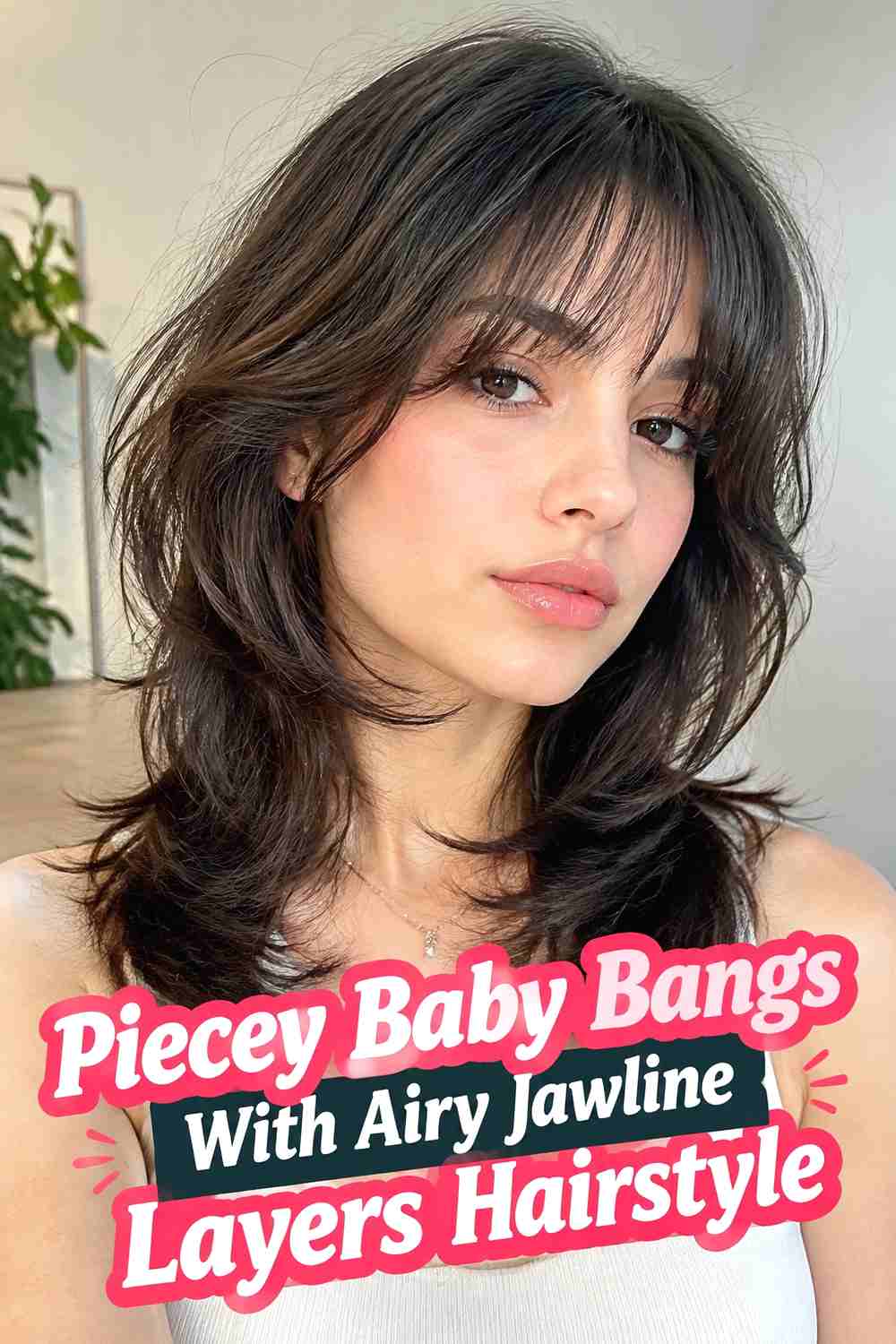
Piecey baby bangs break the fringe into small, visible sections instead of forming one continuous block. When combined with airy jawline layers, the haircut feels relaxed and slightly undone while still maintaining a clear shape. The front layers can be lightly textured so individual pieces move around the cheekbones and chin without creating excessive bulk. This approach works particularly well on hair that naturally separates or carries a small amount of bend. The key is avoiding too much thinning through the jawline area, since the layers need enough weight to remain visible. A light styling cream can define the pieces while preserving softness and natural strand movement.
Pro Tip
Apply product sparingly to the ends of the fringe and face-framing pieces rather than coating the roots, which can make baby bangs separate too heavily.
5. Micro Baby Bangs With Chin Skimming Layers Hairstyle
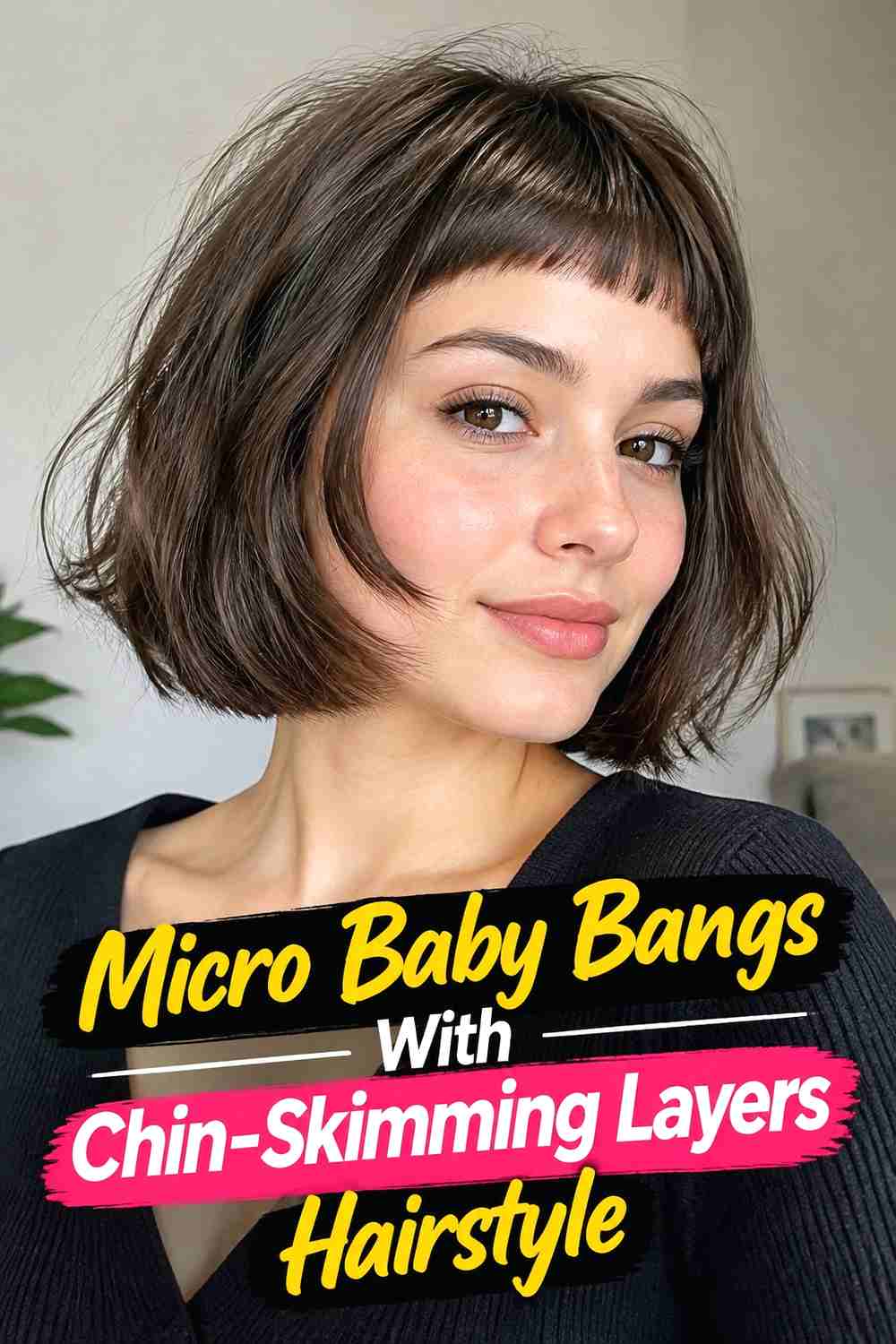
Micro baby bangs make the strongest contrast in this collection by sitting noticeably above the brows while longer front sections skim the chin. The distance between the two lengths gives the haircut a modern, graphic quality, yet soft layering around the face prevents it from feeling too severe. Chin-length pieces can be slightly curved or feathered so they blend naturally into the rest of the haircut rather than creating a blunt ledge. Because micro bangs show growth quickly, their exact length should match how often you are comfortable maintaining the fringe. The longer front sections provide styling flexibility and can be tucked behind the ears, waved, or worn sleek.
Wear & Maintenance
Expect the fringe to need more frequent reshaping than the longer layers. Chin-skimming pieces can grow out more gradually and usually retain their face-framing effect longer.
6. Curved Baby Bangs With Jawline Bob Layers Hairstyle
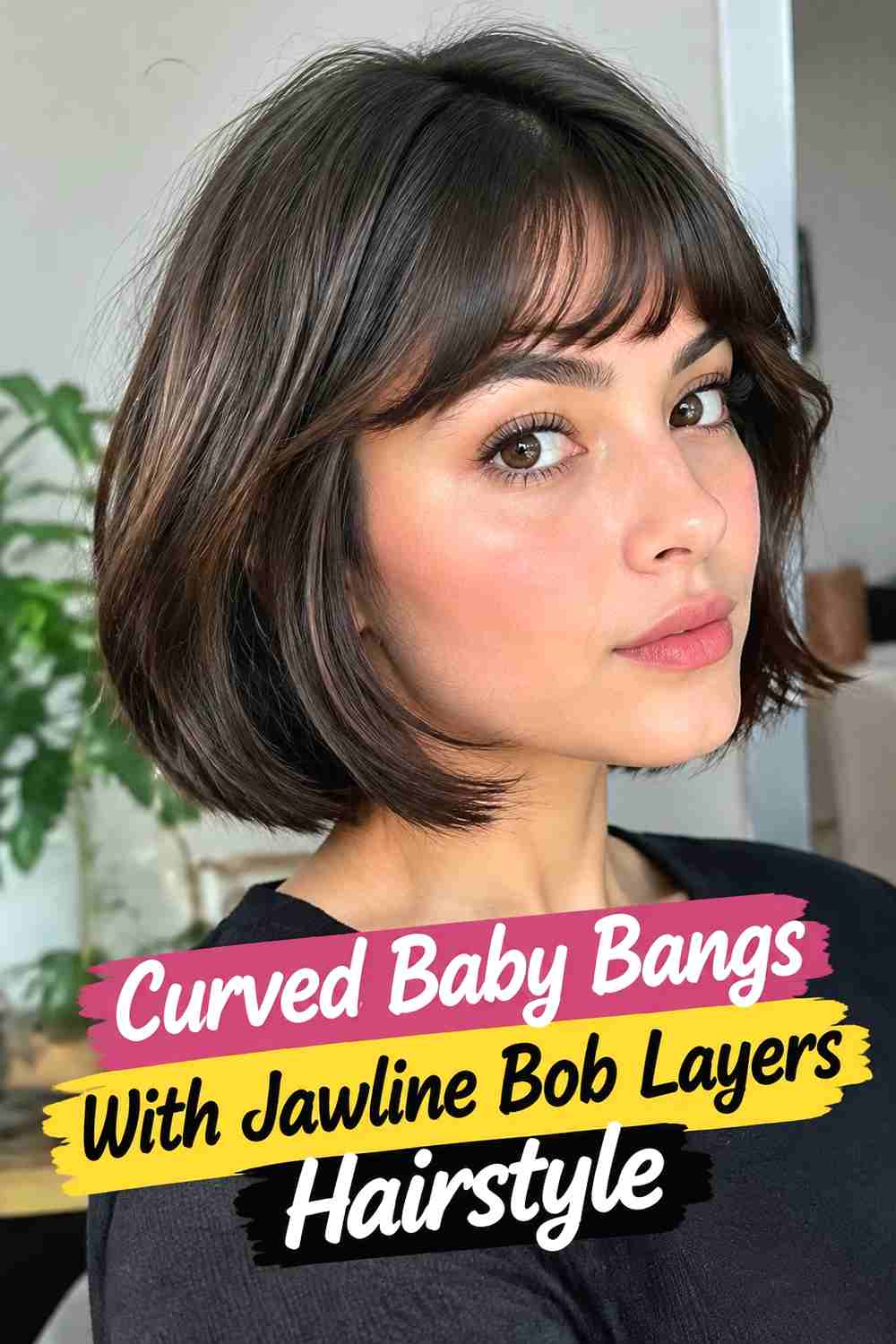
A jawline bob becomes more playful when paired with curved baby bangs and subtle internal layering. The compact overall length keeps the haircut visually focused around the face, while short layers near the front prevent the bob from feeling too blunt. Curved bangs can sit slightly shorter in the center and soften toward the sides, echoing the rounded movement of the cut. Keeping some weight through the perimeter gives the bob structure, while the jawline layers introduce enough separation to create swing. This style can be worn smooth for a clean finish or with soft bends for a more relaxed shape, making it adaptable without losing its defined silhouette.
Styling Notes
Use a controlled blow-dry to encourage a soft curve through the bob, then separate a few front pieces so the jawline layers remain visible.
7. Soft Baby Bangs With Long Face Framing Jawline Layers Hairstyle

Long hair gives jawline layers plenty of room to stand out because the face-framing pieces create a noticeable break before blending into much longer lengths. Soft baby bangs add an even shorter element at the forehead, making the haircut feel layered from the very front without removing significant length overall. The jawline pieces can begin near the cheekbones and sweep toward the chin before connecting with longer layers below. This works especially well when the front is styled away from the face, allowing the layered progression to remain easy to see. Maintaining enough density through the back and ends prevents the longer hair from looking overly thinned beside the shorter face frame.
Best For
This option is ideal for anyone who wants a noticeable front transformation while keeping most of their overall length intact.
8. Textured Baby Bangs With Shaggy Jawline Layers Hairstyle
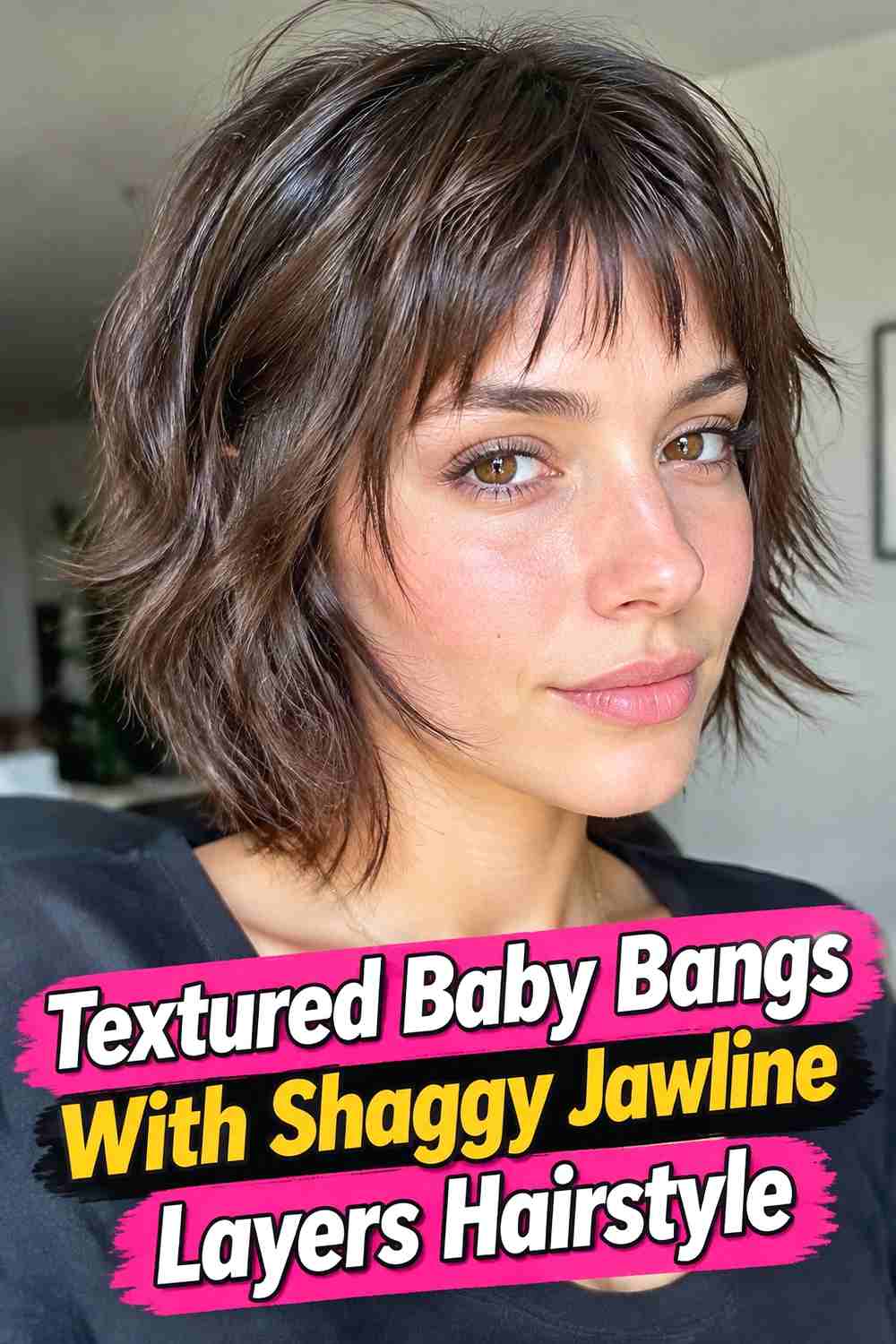
Textured baby bangs fit naturally into a shag-inspired haircut because both rely on separation and uneven-looking movement. The fringe can be slightly choppy, with individual strands or small groups falling at subtly different lengths. Around the face, jawline layers create a broken, airy outline that connects with shorter crown pieces and longer lengths below. The goal is controlled texture rather than random thinning, so enough density should remain through the ends to keep the haircut substantial. A slightly tousled finish can enhance the shaggy character, particularly on hair with natural wave. Rather than smoothing every piece, allow small flicks and irregular bends to become part of the finished shape.
Styling Notes
Use your fingertips to direct the fringe and face-framing layers. Over-brushing can remove the separation that gives this haircut its textured character.
9. Blended Baby Bangs With Shoulder Length Jawline Layers Hairstyle
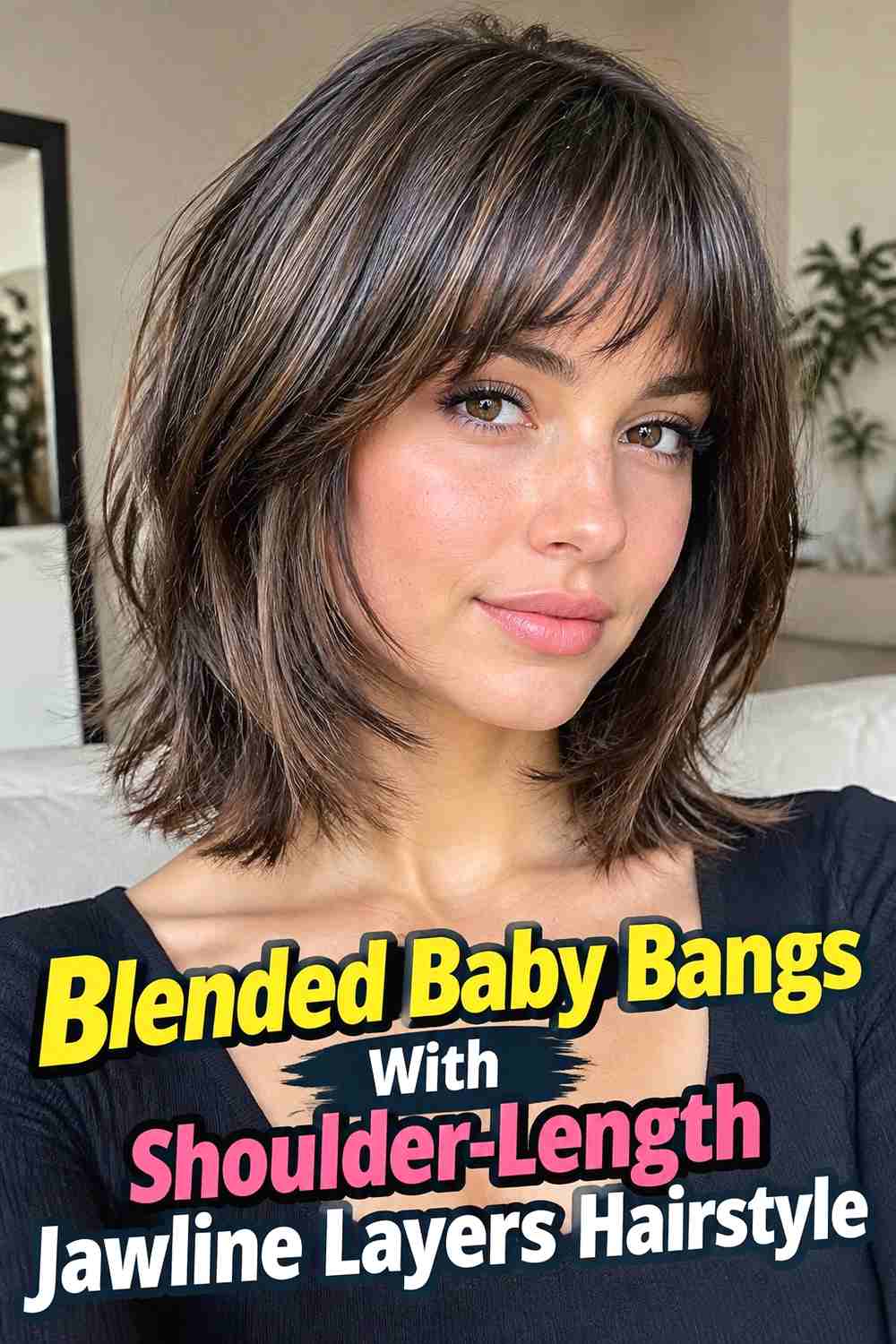
Shoulder-length hair creates an easy middle ground for baby bangs and jawline layers because there is enough length for visible movement without the weight of very long hair. A blended baby fringe stays short but softens slightly toward the temples, helping it connect with longer pieces around the face. The jawline layers can then curve into the shoulder-length perimeter without creating a disconnected step. This shape works well worn straight, softly waved, or with a relaxed blowout. Keeping the lower half moderately full preserves movement and prevents the ends from appearing sparse. The result is a balanced haircut that feels layered and modern without becoming heavily shagged or dramatically graduated.
Why It Works
The medium length gives the short fringe contrast while allowing the jawline sections to blend smoothly into the rest of the haircut.
10. Side Swept Baby Bangs With Soft Jawline Layers Hairstyle
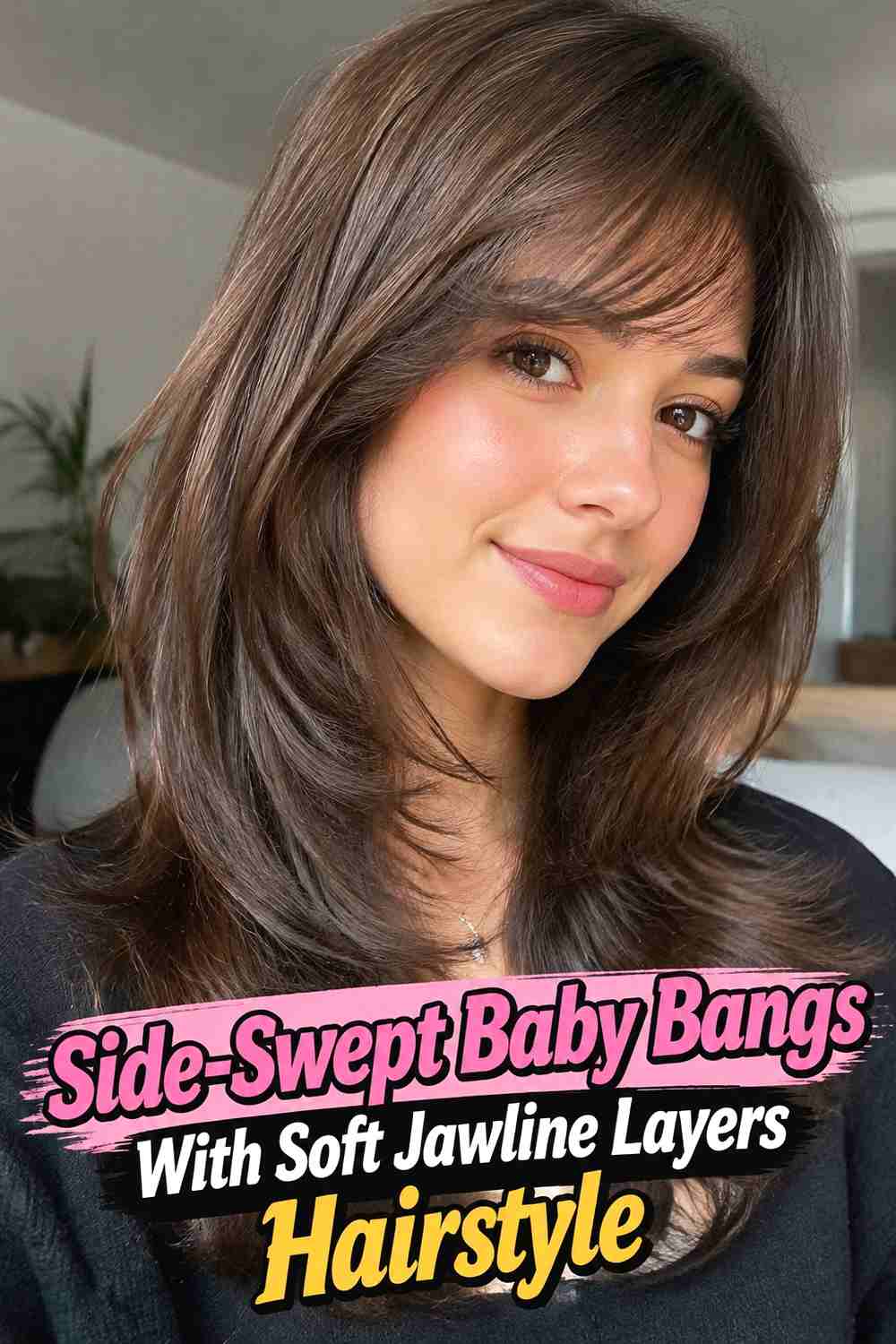
Side-swept baby bangs offer an asymmetrical alternative to a straight-across fringe. Although the bangs remain short, directing them slightly toward one side creates softer movement and can work naturally with an off-center part. Jawline layers on the heavier side can follow the same direction, forming a diagonal flow from the fringe toward the cheek and chin. The opposite side can remain lighter and more tucked back for balance. This version works especially well when the hair already has a natural growth pattern that resists perfectly centered bangs. Keeping the fringe soft rather than heavily fixed allows it to shift slightly while still preserving the overall side-swept effect.
Pro Tip
Dry the bangs in their intended direction early in the styling process instead of trying to redirect them after they have fully dried.
11. Baby Bangs With Wavy Jawline Layers Hairstyle
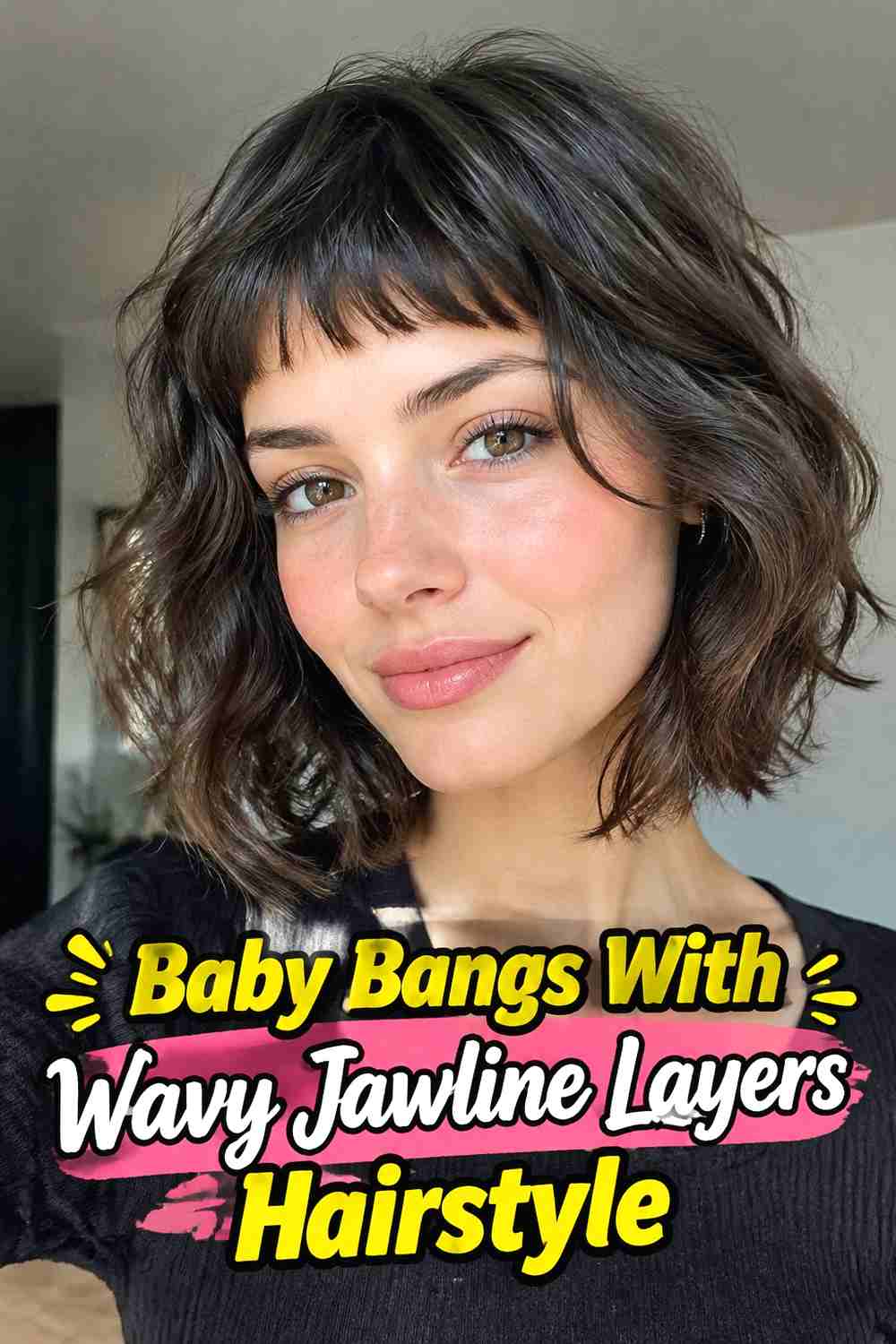
Natural or styled waves can make jawline layers especially noticeable because each shorter section bends independently around the face. Baby bangs create a compact contrast above the brows, while the wavy front pieces add softness through the cheeks and chin. The most natural-looking version avoids making every wave identical; some sections can curve inward while others flick gently away. Layers should support the wave pattern rather than break it apart too aggressively, particularly if the hair is fine. A medium or longer overall length gives the jawline pieces room to move without making the haircut feel overly short. Light definition through the ends helps the front shape remain visible.
Hair Type & Length
This style works naturally with loose waves and can also be created on straighter textures using soft bends rather than tightly defined curls.
12. Baby Bangs With Curly Jawline Layers Hairstyle
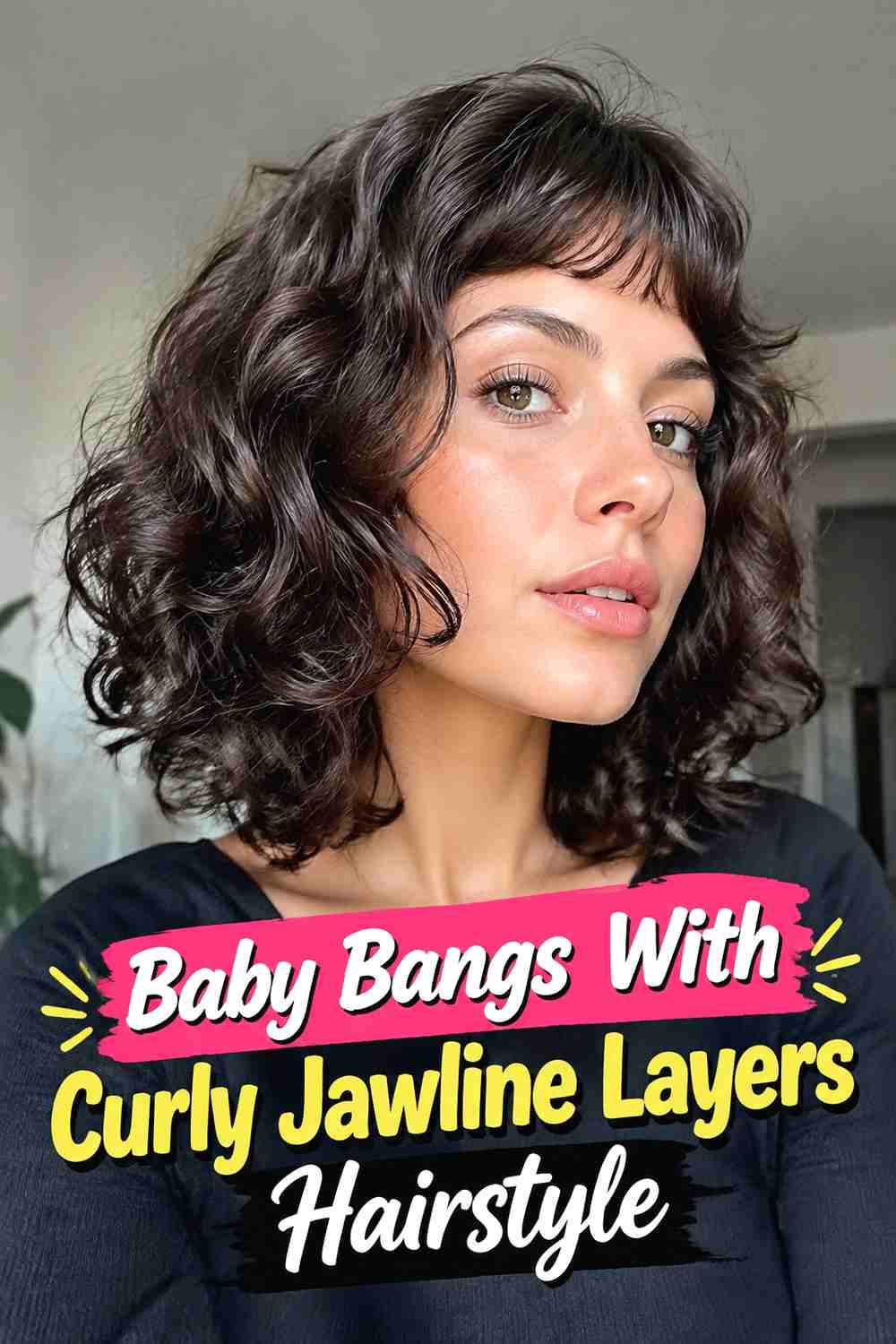
Curly hair gives baby bangs and jawline layers extra dimension because shrinkage creates visible separation between each level of the haircut. The fringe can form small curls above the brows, while longer face-framing curls sit around the jaw and blend into the surrounding shape. Planning the cut around the dry curl pattern is especially important because the bangs and front pieces may spring considerably shorter after washing. The jawline layers should remain full enough to preserve recognizable curl groups instead of becoming overly wispy. This version can look polished with defined curls or softer with expanded texture, but the overall silhouette should remain balanced so the fringe feels connected to the rest of the haircut.
Wear & Maintenance
Account for shrinkage before committing to very short bangs, and reshape the fringe conservatively if the curls change length significantly between wet and dry states.
13. Baby Bangs With Sleek Jawline Layers Hairstyle
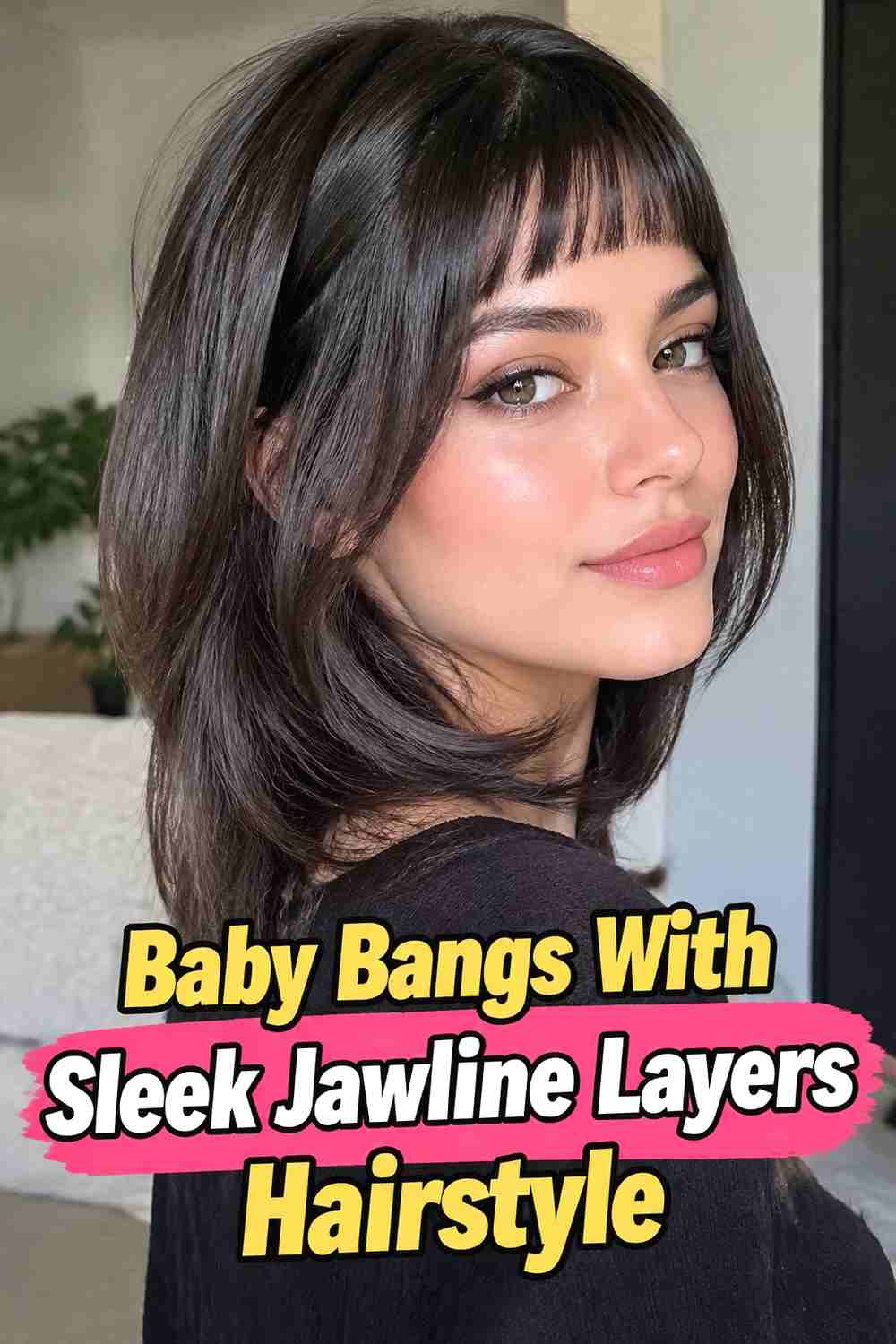
A sleek finish makes every detail of baby bangs and jawline layers easy to see. The fringe can sit cleanly across the forehead with slightly softened ends, while smooth face-framing pieces fall toward the jaw before blending into longer lengths. Instead of relying on texture for movement, this version uses precise layering and subtle direction. A gentle inward curve near the chin can emphasize the jawline sections without creating a dated, heavily rolled finish. Because sleek styling exposes the haircut clearly, balanced density becomes important; overly thinned front pieces can look sparse beside a fuller back section. Keeping the hair smooth but mobile preserves a modern feel rather than making the style overly stiff.
Styling Notes
Use controlled tension while blow-drying and finish the front layers with a soft bend. Avoid excessive product that could flatten the fringe or remove natural movement.
14. Baby Bangs With Fine Hair Jawline Layers Hairstyle
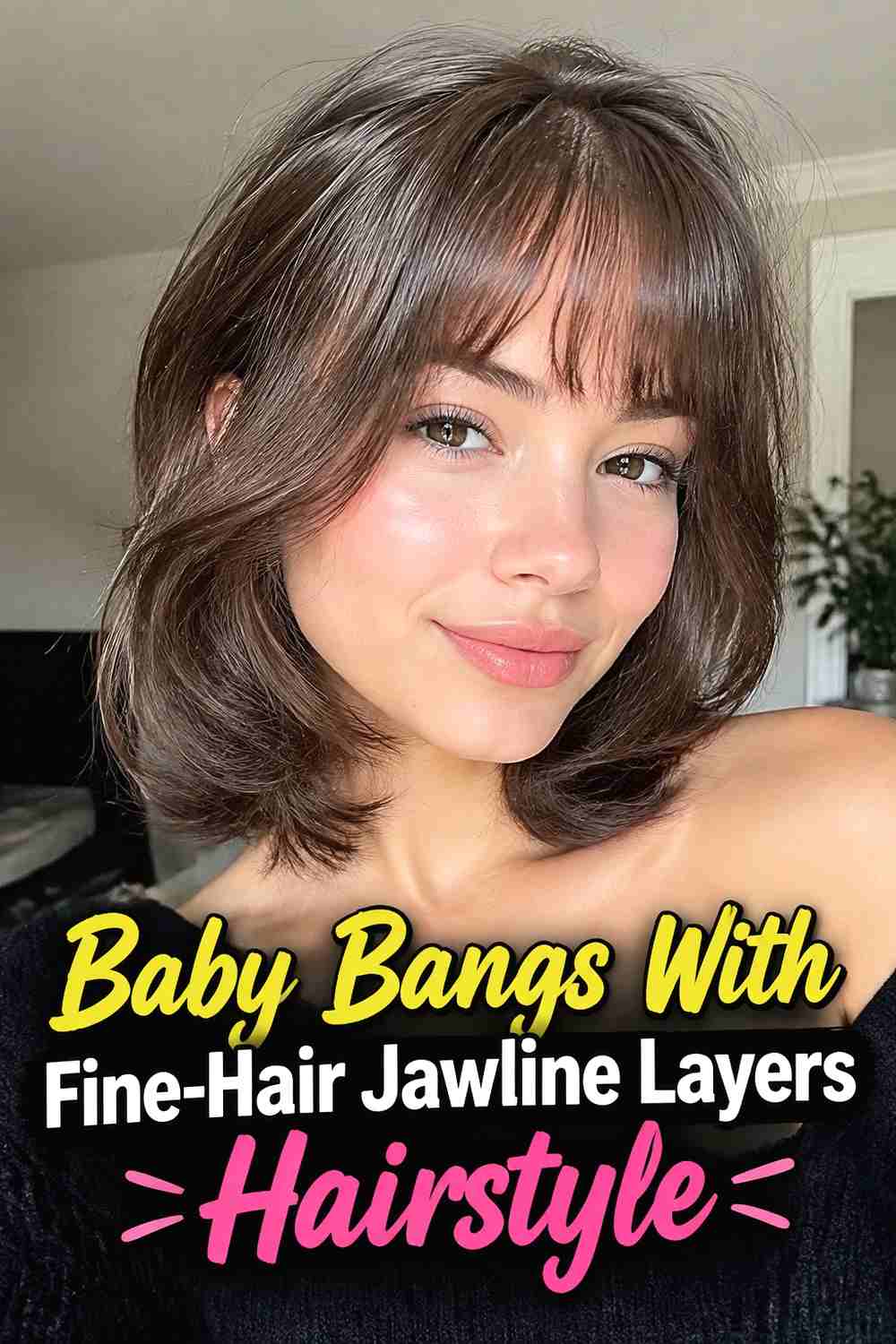
Fine hair can wear baby bangs and jawline layers successfully when the cut preserves enough overall density. The fringe should use a modest amount of hair so it does not take too much fullness away from the front, while the jawline layers are best kept selective rather than heavily feathered. A few carefully placed pieces around the chin can create visible movement without making the perimeter thin. Medium lengths often provide a useful balance because they offer enough weight for a strong outline while remaining light enough to lift at the roots. Soft blow-drying or gentle bends can give the front sections more presence without requiring exaggerated volume or extensive layering.
Pro Tip
Ask for targeted face framing rather than aggressive thinning. Fine hair usually benefits from preserving solid-looking ends while adding movement only where it is most useful.
15. Baby Bangs With Thick Hair Jawline Layers Hairstyle
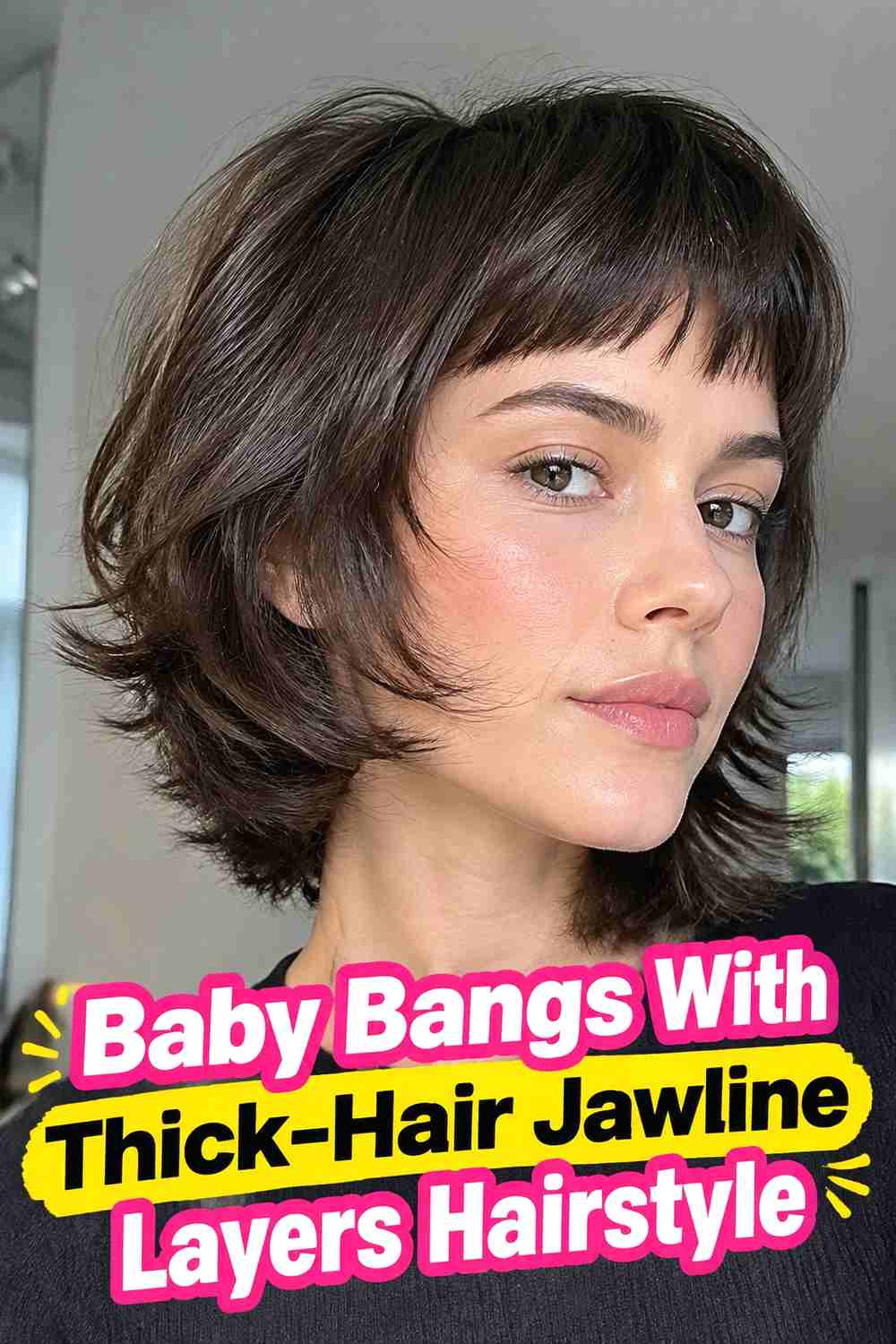
Thick hair gives jawline layers enough density to create a substantial, sculpted frame around the face. Baby bangs reduce some visual weight at the forehead while providing a crisp contrast with the fuller front sections below. Internal layering can help the jawline pieces move more freely, but the perimeter should retain enough substance to keep the haircut balanced. On straight or wavy thick hair, the layers can be styled with an outward flick for extra separation; on smoother finishes, they can curve inward toward the chin. The most wearable result usually comes from controlling bulk strategically rather than removing weight everywhere, allowing the hair to remain full while still responding easily to styling.
Hair Type & Length
Medium to thick densities can support more face-framing graduation, especially when the overall haircut is shoulder length or longer.
16. Baby Bangs With Jawline Butterfly Layers Hairstyle
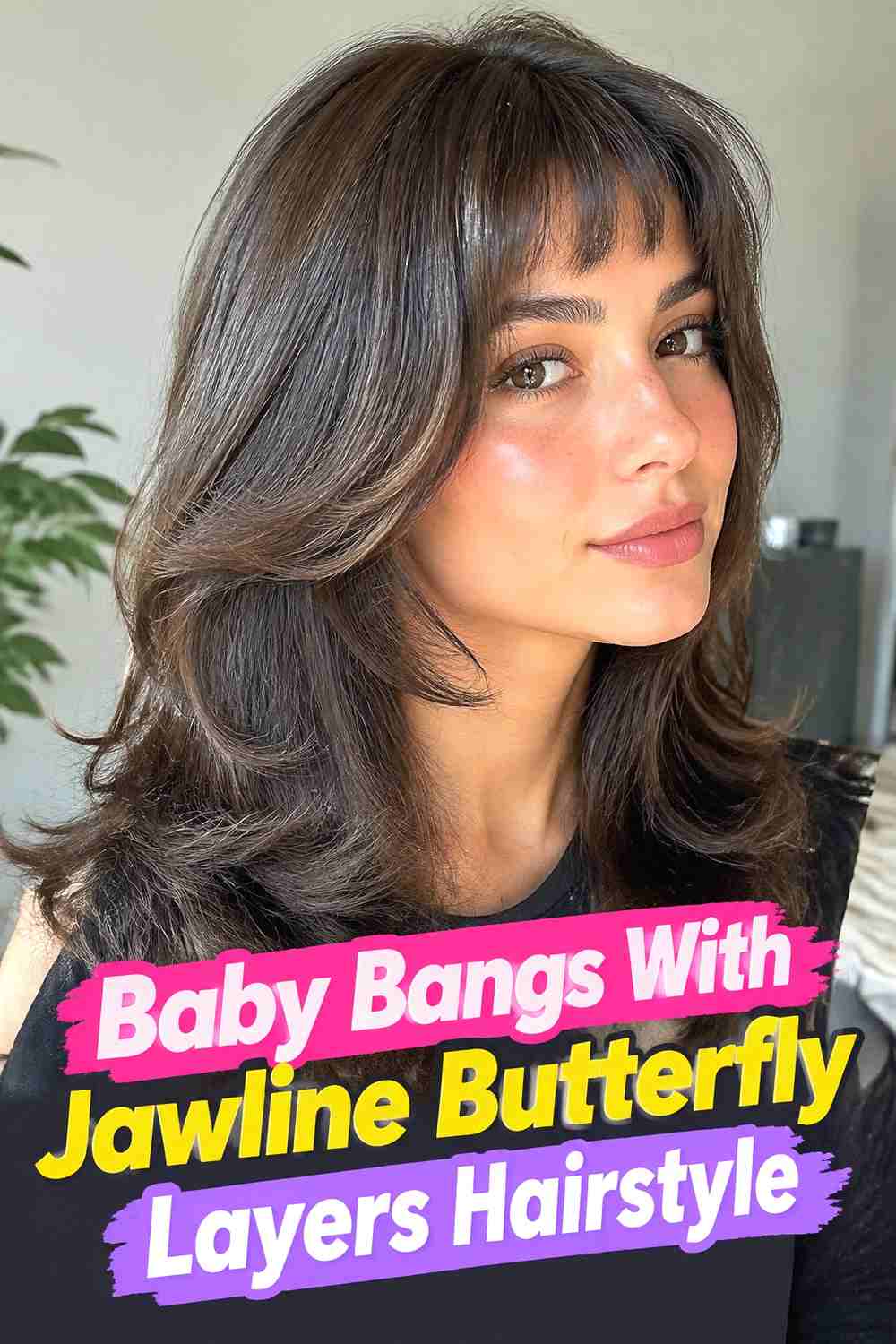
Butterfly-inspired layering creates a soft, lifted frame around the face, and baby bangs give the look a shorter, more playful focal point. Jawline sections can sweep outward from the cheeks and chin, then blend into longer layers that continue through the body of the hair. The style works particularly well with a bouncy blowout because the front pieces open away from the face while the fringe remains compact. Keeping the baby bangs lighter prevents them from competing with the larger movement of the butterfly layers. This variation is best viewed as a softer, layered interpretation rather than an extreme high-volume cut, making it easier to adapt for everyday wear and different hair densities.
Styling Notes
Direct the jawline layers away from the face with a round brush or large roller, but keep the baby bangs softly forward so the two lengths remain visually distinct.
17. Soft Baby Bangs With Jawline Lob Layers Hairstyle

A layered lob gives baby bangs a clean medium-length foundation. The main perimeter can sit between the jaw and shoulders, while shorter pieces around the face land directly at the jaw to create extra movement. Soft baby bangs keep the upper part of the haircut light, balancing the stronger outline of the lob below. This version can be worn with a smooth finish, loose waves, or slightly flipped ends depending on the desired mood. Keeping the jawline layers subtle ensures the lob still has a recognizable shape rather than turning into a heavily feathered cut. The combination works particularly well for anyone who wants noticeable framing without maintaining very long hair.
Best For
Choose this version if you want a medium-length haircut that feels structured while still offering soft movement around the face.
18. Choppy Baby Bangs With Soft Jawline Layers Hairstyle

Choppy baby bangs create an intentionally irregular front edge, with small differences in length giving the fringe more texture. Pairing that detail with softer jawline layers keeps the haircut from becoming too sharp. The longer front pieces can curve gently around the chin, creating a contrast between the graphic fringe and fluid lower layers. This style works well on straight and softly wavy textures where the choppy bang pattern remains easy to see. The fringe should still be balanced rather than randomly hacked, with shorter and longer pieces placed deliberately. A light, touchable finish allows the jawline layers to move naturally and keeps the overall look modern.
Why It Works
The textured fringe adds personality, while the softer jawline sections provide enough movement to balance the stronger line across the forehead.
19. Air Dried Baby Bangs With Jawline Layers Hairstyle

An air-dried version embraces the hair’s natural bends, waves, and small irregularities instead of relying on a perfectly controlled finish. Baby bangs can settle lightly across the forehead, while jawline layers move according to the natural texture and growth pattern. This approach works especially well when the haircut is designed around how the hair normally dries, allowing the shorter front sections to fall into place without extensive heat styling. Slight frizz or uneven movement can add softness rather than detracting from the look. The key is keeping the underlying cut balanced, with enough structure around the jaw to remain visible even when the texture is less polished or uniform.
Best For
This option suits anyone who prefers a lower-effort styling routine and wants the haircut to work with natural movement rather than requiring a precise blowout every day.
How to Choose the Right Look
Begin with the type of baby bangs you actually want to maintain. Wispy and soft fringes give you more visual flexibility, while micro and choppy bangs create a stronger statement and usually show growth more quickly. If you prefer a gentler look, rounded or side-swept versions can make the short fringe feel less severe.
Next, consider where the jawline layers should begin. Layers starting near the cheekbones produce more visible face framing, while pieces beginning closer to the chin create a subtler effect. Fine hair usually benefits from fewer, carefully placed layers, whereas thicker hair can often support more internal shaping and graduation.
Texture also matters. Wavy and curly hair will make jawline pieces spring and separate naturally, while sleek hair displays the exact outline of the cut more clearly. If you air-dry most days, choose a shape designed around your natural movement instead of one that depends on a polished blowout.
Finally, be realistic about fringe maintenance. Baby bangs change quickly as they grow, so choose a length and density that fit your trimming schedule and daily styling habits.
Final Thoughts
Baby bangs and soft jawline layers work well together because they combine a defined short fringe with gentler movement around the face. The best version depends on your density, texture, length, and preferred level of styling. Whether you choose a wispy fringe, a sleek lob, natural waves, or a shaggy finish, keeping the jawline layers connected to the rest of the cut creates the most wearable result.
FAQs
1. What are jawline layers?
Jawline layers are shorter face-framing sections designed to fall around the jaw or chin area before blending into the longer hair behind them.
2. Do baby bangs work with long hair?
Yes. Long hair creates strong contrast with baby bangs, while jawline layers help connect the very short fringe to the longer lengths more gradually.
3. Can fine hair wear baby bangs with jawline layers?
Yes, but preserving density is important. A lighter fringe and a few targeted jawline pieces can create movement without making fine hair look overly thin.
4. Are baby bangs suitable for wavy or curly hair?
They can be. Natural shrinkage and movement should be considered carefully so the bangs do not finish much shorter than intended when the hair dries.
5. How often do baby bangs need trimming?
That depends on the starting length and how precise you want them to remain. Very short micro bangs generally show growth sooner than softer, slightly longer baby bangs.
CTA
Save your favorite baby bang and jawline layer ideas, share the looks you love, and explore more face-framing haircut inspiration for your next style.