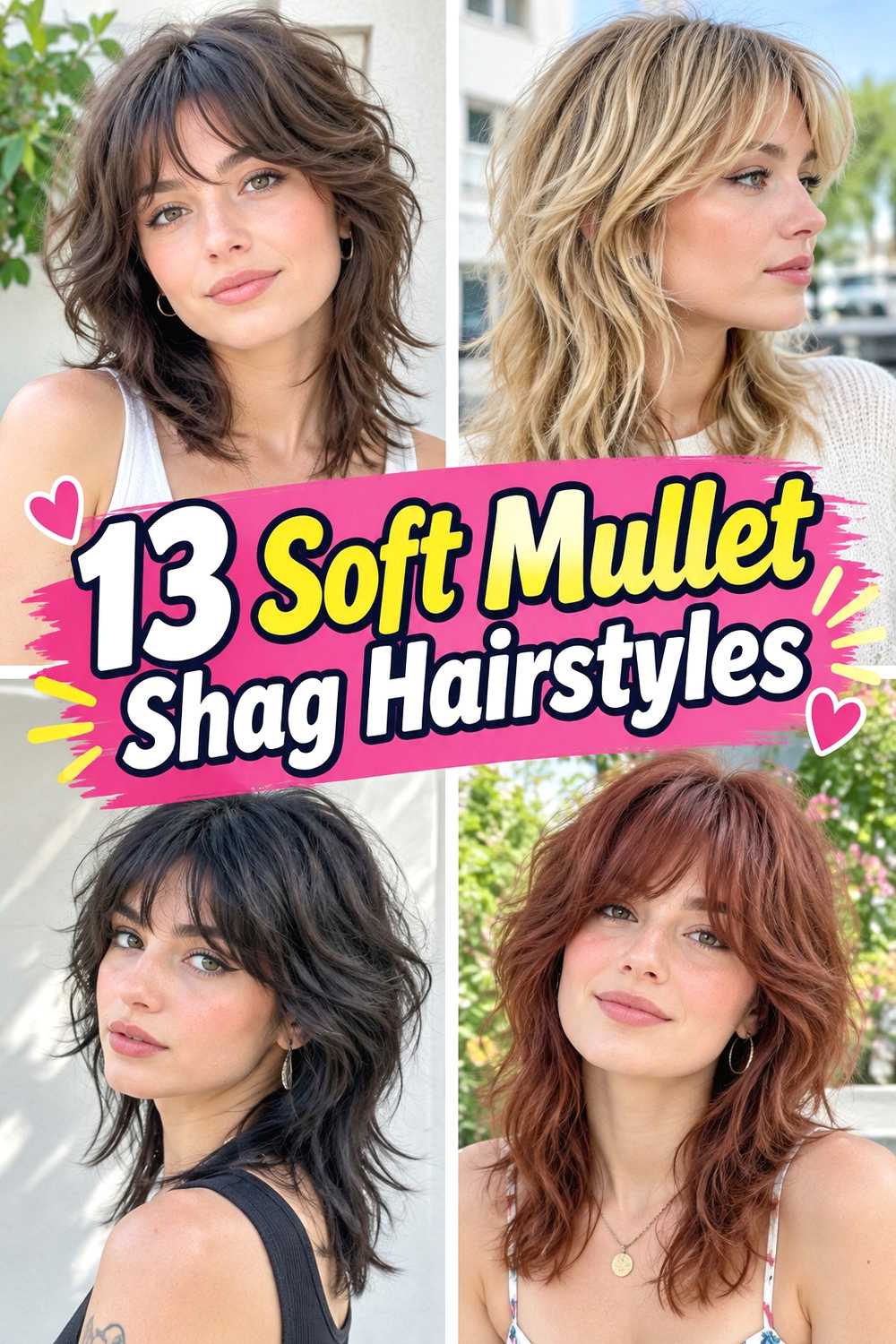
14 Micro Bangs With Soft Wolf Cut
Micro bangs give a soft wolf cut an edgy focal point while airy layers, tapered ends, and face-framing movement keep the overall shape relaxed.
The wolf cut does not have to be aggressively shaggy. A softer version uses gentler crown layering, gradual face framing, and enough weight through the ends to keep the silhouette wearable. Adding micro bangs creates contrast at the front without changing the flowing character of the rest of the haircut.
The best version depends on how much texture you want. Wispy or airy bangs suit subtle layers, while jagged or razor-cut fringe pairs naturally with more separated ends. Length also changes the effect, from compact collarbone shapes to long wolf cuts with cascading layers. Consider your hair density, natural texture, styling habits, and preferred fringe maintenance before choosing.
Quick List
- Airy Micro Bangs Soft Wolf Cut Hairstyle
- Choppy Micro Bangs Layered Wolf Cut Hairstyle
- Wispy Micro Bangs Soft Wolf Cut Hairstyle
- Piecey Micro Bangs Midi Wolf Cut Hairstyle
- Rounded Micro Bangs Soft Wolf Cut Hairstyle
- Razor Micro Bangs Tapered Wolf Cut Hairstyle
- Textured Micro Bangs Collarbone Wolf Cut Hairstyle
- Micro Bangs Face Framing Wolf Cut Hairstyle
- Soft Jagged Micro Bangs Wolf Cut Hairstyle
- Micro Bangs Long Soft Wolf Cut Hairstyle
- Feathered Micro Bangs Wavy Wolf Cut Hairstyle
- Micro Bangs Rounded Layer Wolf Cut Hairstyle
- Micro Bangs Tousled Soft Wolf Cut Hairstyle
- Micro Bangs Sleek Soft Wolf Cut Hairstyle
1. Airy Micro Bangs Soft Wolf Cut Hairstyle
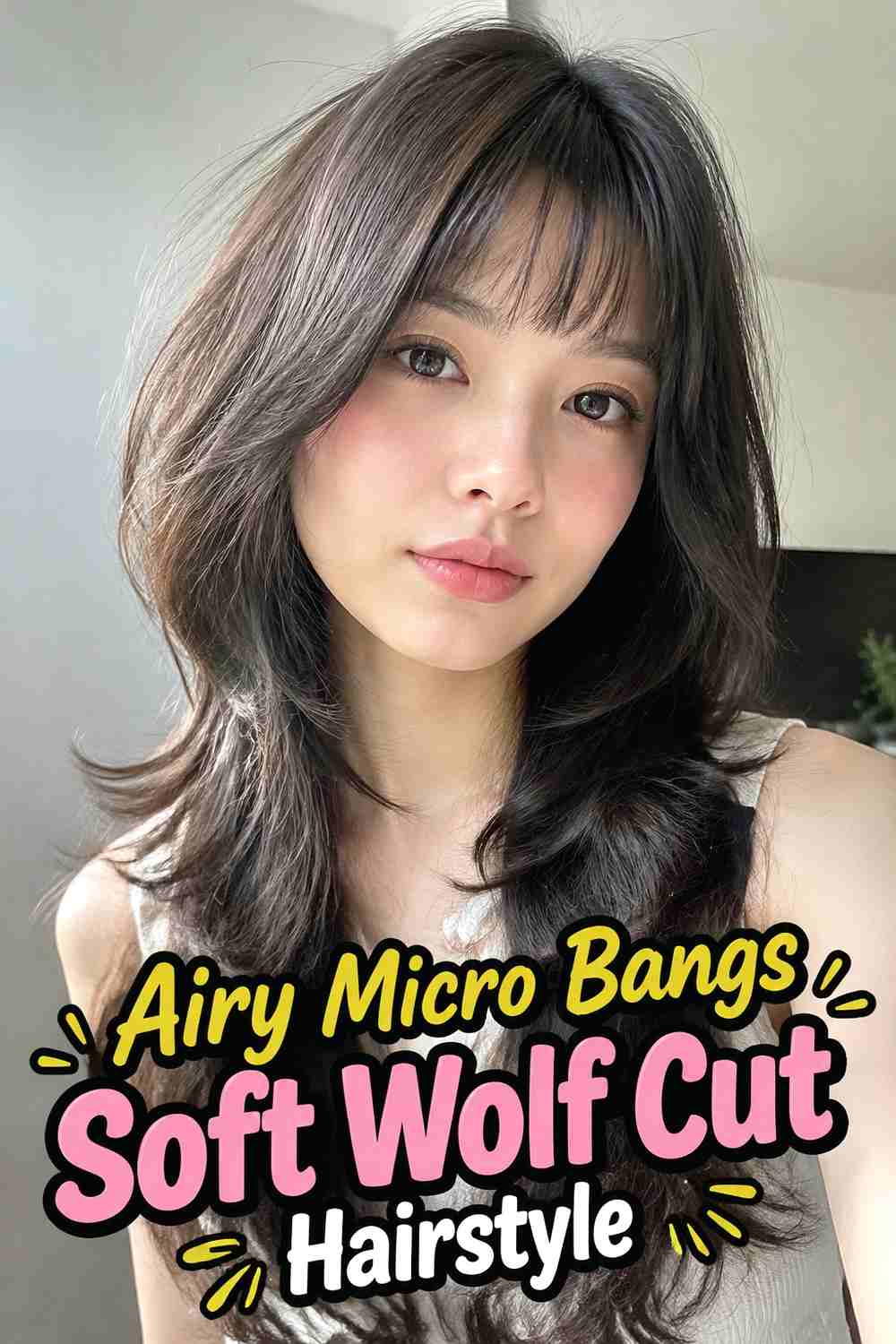
Airy micro bangs give a soft wolf cut a light focal point without making the fringe look dense or overly graphic. The short pieces sit above the brows with visible spacing, while longer face-framing sections gradually connect them to the cheekbones and jaw. Through the crown, gentle layering adds lift without creating a dramatic mullet-like separation. The lower lengths stay relatively full, giving the haircut softness and making it easier to wear smooth or slightly tousled. This version works especially well when you like the wolf-cut silhouette but want a more refined finish. Natural bends or a soft blow-dry can reveal the layers without requiring exaggerated texture.
Styling Notes
Dry the micro bangs forward with minimal tension, then add light movement through the longer layers with a round brush or loose bends.
Best For
This variation suits anyone who prefers subtle texture and a fringe that feels light rather than solid.
2. Choppy Micro Bangs Layered Wolf Cut Hairstyle
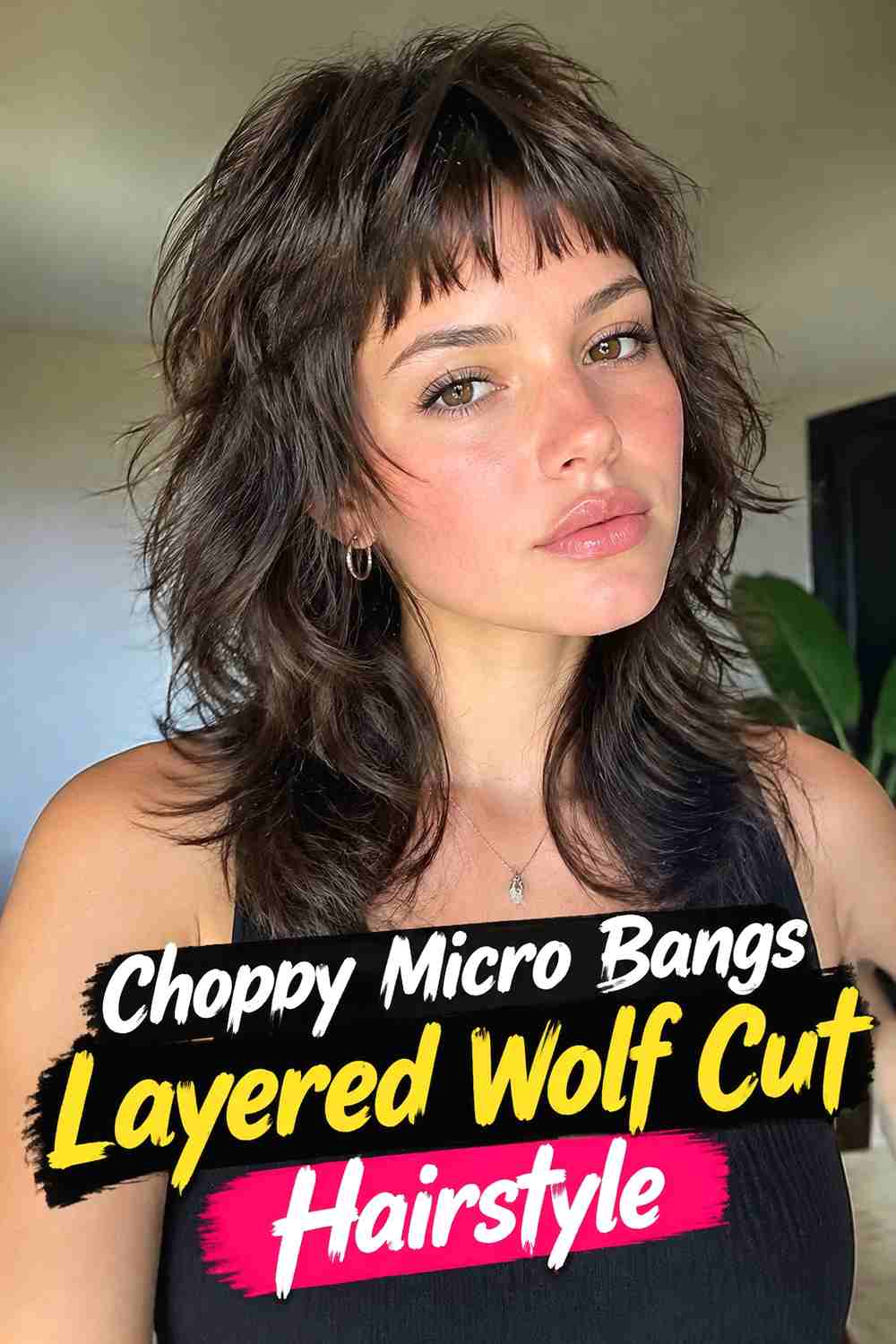
Choppy micro bangs add stronger texture to a layered wolf cut while keeping the overall shape soft enough for everyday wear. The fringe uses small variations in length rather than one perfectly straight edge, creating an intentionally fragmented look. Around the face, graduated layers can begin near the cheekbones and flow into longer sections around the shoulders. Crown layering adds volume, but leaving more weight through the bottom prevents the cut from becoming overly shaggy. This combination works particularly well on straight-to-wavy hair that can show clear separation between the short fringe and longer pieces. A slightly undone finish brings out the texture without requiring every section to be heavily styled.
Why It Works
The short, irregular fringe echoes the layered movement through the cut while the fuller perimeter keeps the silhouette balanced.
Pro Tip
Keep the choppiness controlled so the bangs look intentionally textured rather than randomly uneven.
3. Wispy Micro Bangs Soft Wolf Cut Hairstyle
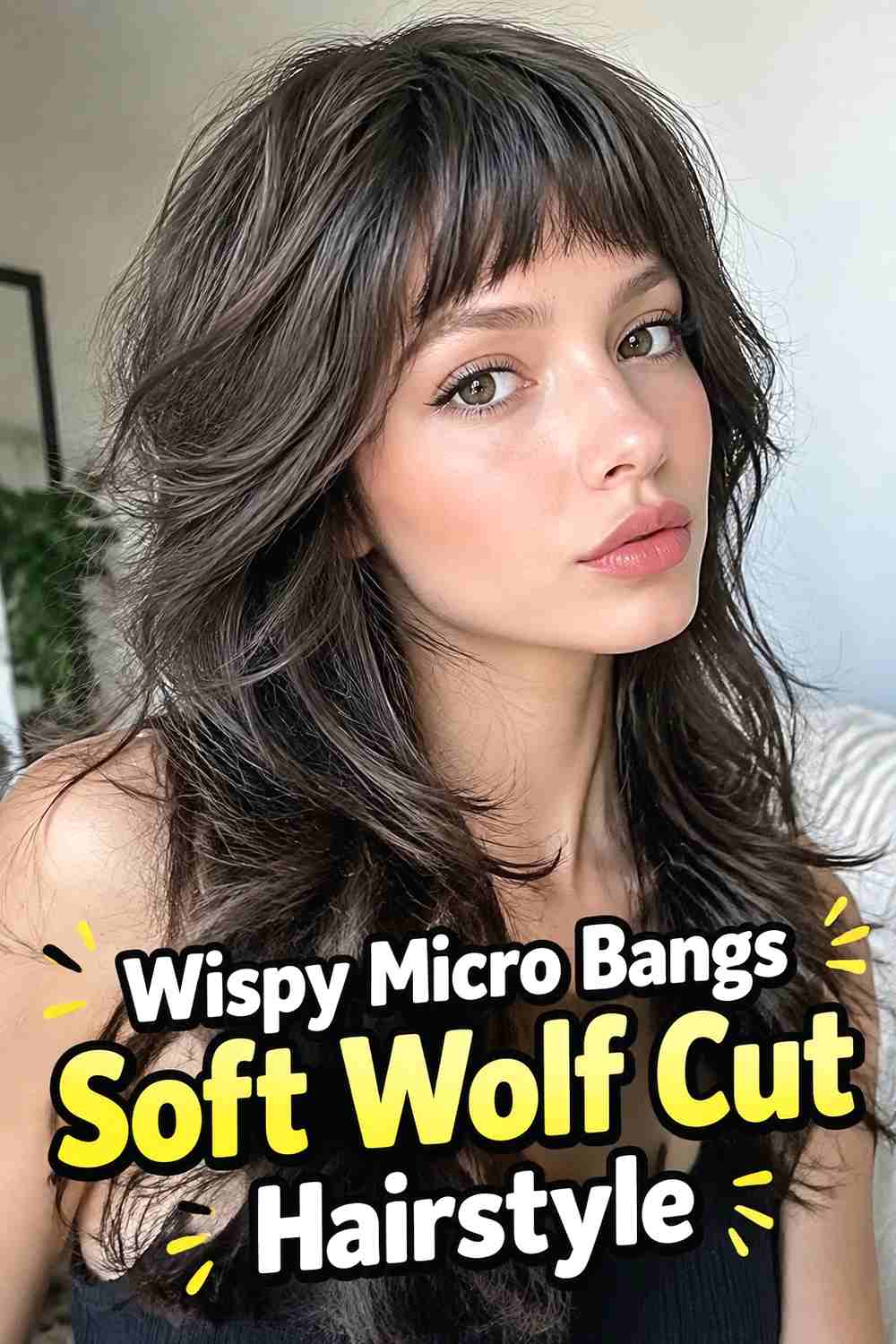
Wispy micro bangs create one of the gentlest ways to pair short fringe with a wolf cut. The bang section is kept light, allowing small spaces between strands, while the main haircut uses flowing layers instead of sharply disconnected sections. Shorter pieces around the temples and cheeks help bridge the fringe into the longer silhouette. Toward the ends, restrained tapering encourages movement without removing too much density. This version can work beautifully with naturally straight or softly wavy hair because it does not depend on dramatic volume. A lightweight texture finish can make the layers visible while still preserving softness. The result feels airy, modern, and less aggressive than a heavily chopped wolf cut.
Hair Type & Length
Medium to long hair provides enough space for gradual layering while allowing the wispy fringe to remain a distinct feature.
Styling Notes
Use minimal product around the bangs and concentrate any texture spray through the mids and ends instead.
4. Piecey Micro Bangs Midi Wolf Cut Hairstyle
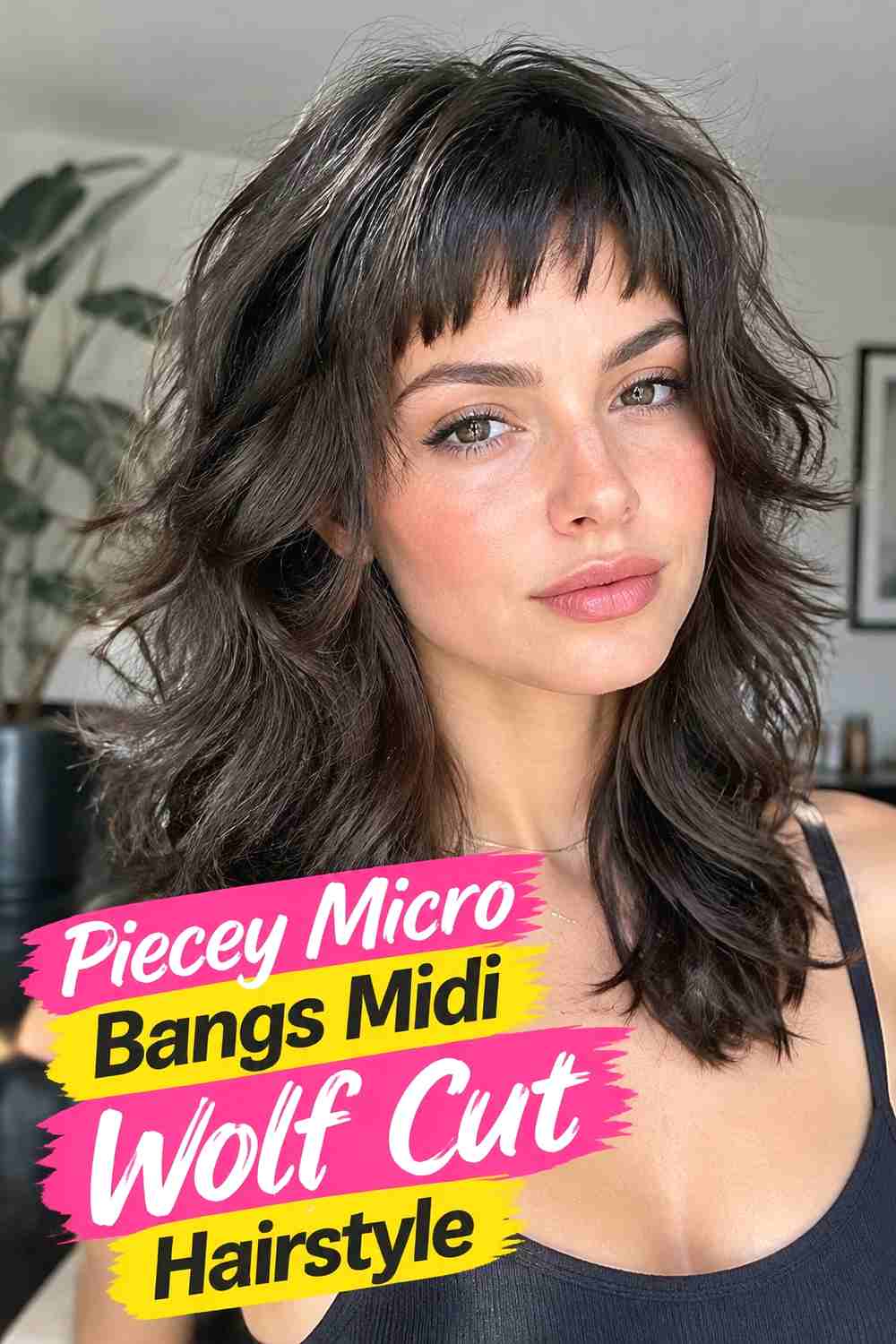
A midi wolf cut gives piecey micro bangs a balanced frame that falls between a short shag and a long layered haircut. The fringe is separated into visible sections, while the main length sits around the collarbones or upper chest with gentle crown and face-framing layers. This creates enough movement to show the wolf-cut influence without sacrificing density around the lower perimeter. The piecey fringe works particularly well with the softer silhouette because both rely on controlled separation rather than heavy blunt lines. Wear the style with smooth bends for a polished finish or use light tousling for more texture. The midi length also makes the cut flexible enough for everyday styling and partial updos.
Best For
This is a practical choice if you want a noticeable wolf-cut shape without committing to very long or heavily shagged hair.
Wear & Maintenance
The main shape can grow softly, but the micro fringe needs more regular attention to keep its short proportion.
5. Rounded Micro Bangs Soft Wolf Cut Hairstyle
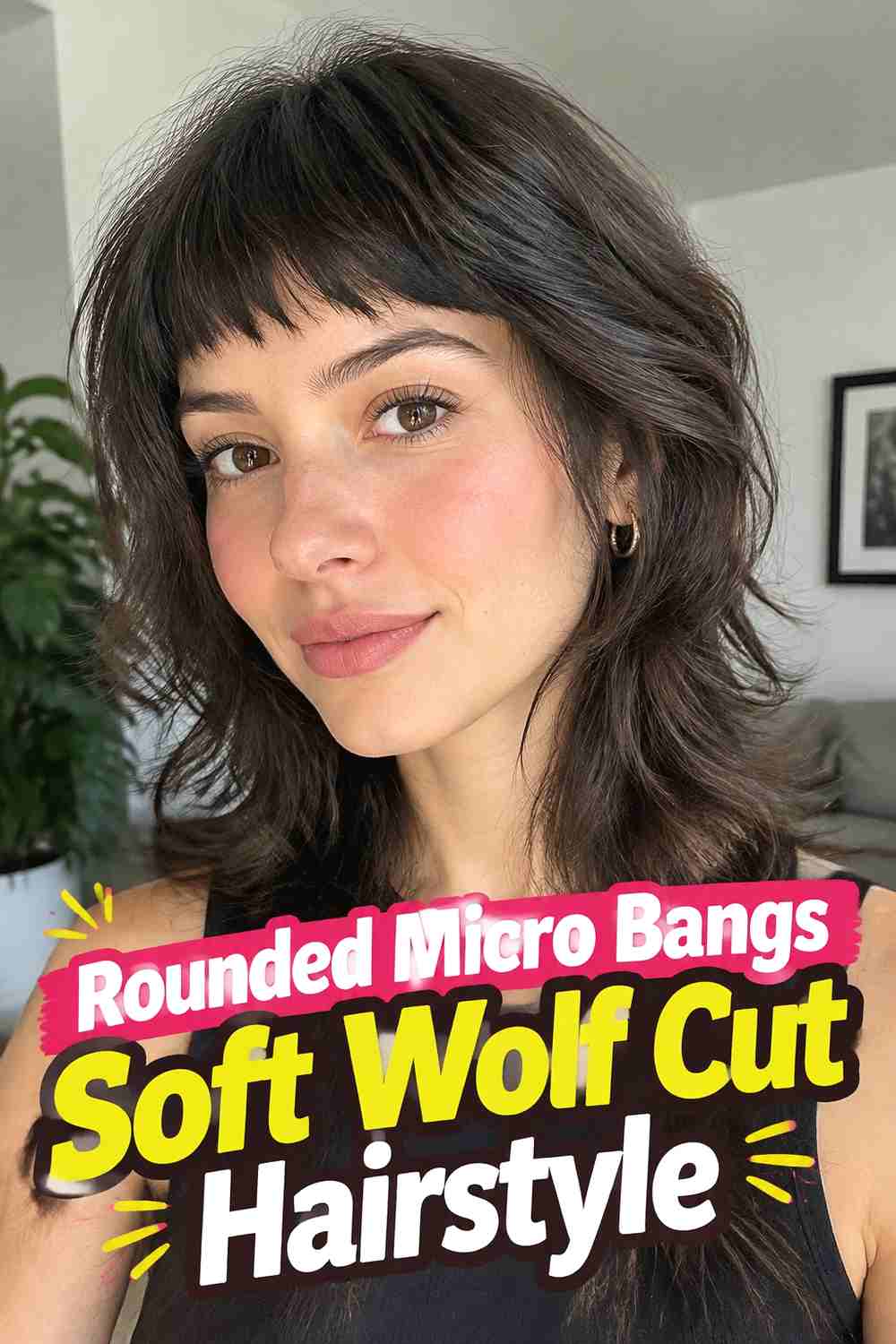
Rounded micro bangs bring a more polished edge to the relaxed movement of a soft wolf cut. Instead of forming a jagged line, the fringe follows a gentle curve across the forehead, with the center sitting slightly shorter than the outer edges. Below it, face-framing layers and subtle crown lift create movement without competing with the fringe shape. Keeping the lower lengths fuller helps the rounded bangs feel intentional rather than overly formal. This version suits a smoother styling approach, particularly when the hair is straight or lightly waved. A soft blowout can curve the longer layers away from the face while the micro fringe remains compact and controlled above the brows.
Styling Notes
Keep the fringe curve subtle and use broader movement through the longer layers rather than tight curls.
Why It Works
The clean rounded fringe contrasts with the irregular layered lengths, giving the soft wolf cut a clearer focal point.
6. Razor Micro Bangs Tapered Wolf Cut Hairstyle
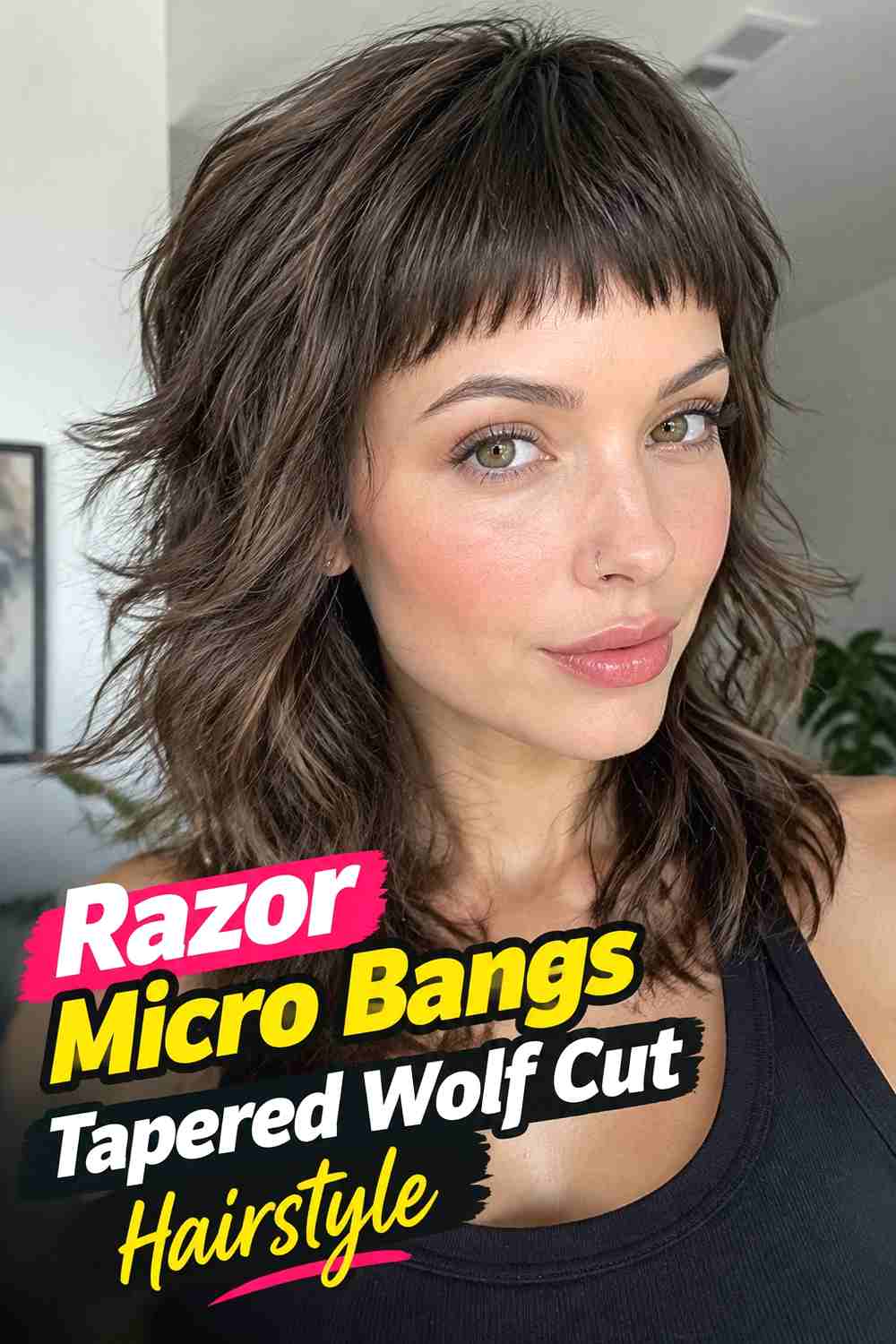
Razor-textured micro bangs pair naturally with a tapered wolf cut because both elements rely on fine separation and softened edges. The fringe can have a lightly fragmented finish, while the main haircut gradually loses weight through the lower lengths instead of ending in a heavy line. Shorter crown layers build movement, but the transitions stay fluid rather than sharply disconnected. This works particularly well for medium-to-thick hair that needs some weight removed while still retaining enough density through the ends. When styled with natural bends, the tapered sections appear light and mobile. The look feels edgy without requiring extreme volume or a dramatically short crown.
Hair Type & Length
Medium to long hair with enough density to support tapering can show the layered shape especially clearly.
Pro Tip
Razor cutting should be adapted to the individual texture and condition of the hair rather than treated as a one-size-fits-all technique.
7. Textured Micro Bangs Collarbone Wolf Cut Hairstyle
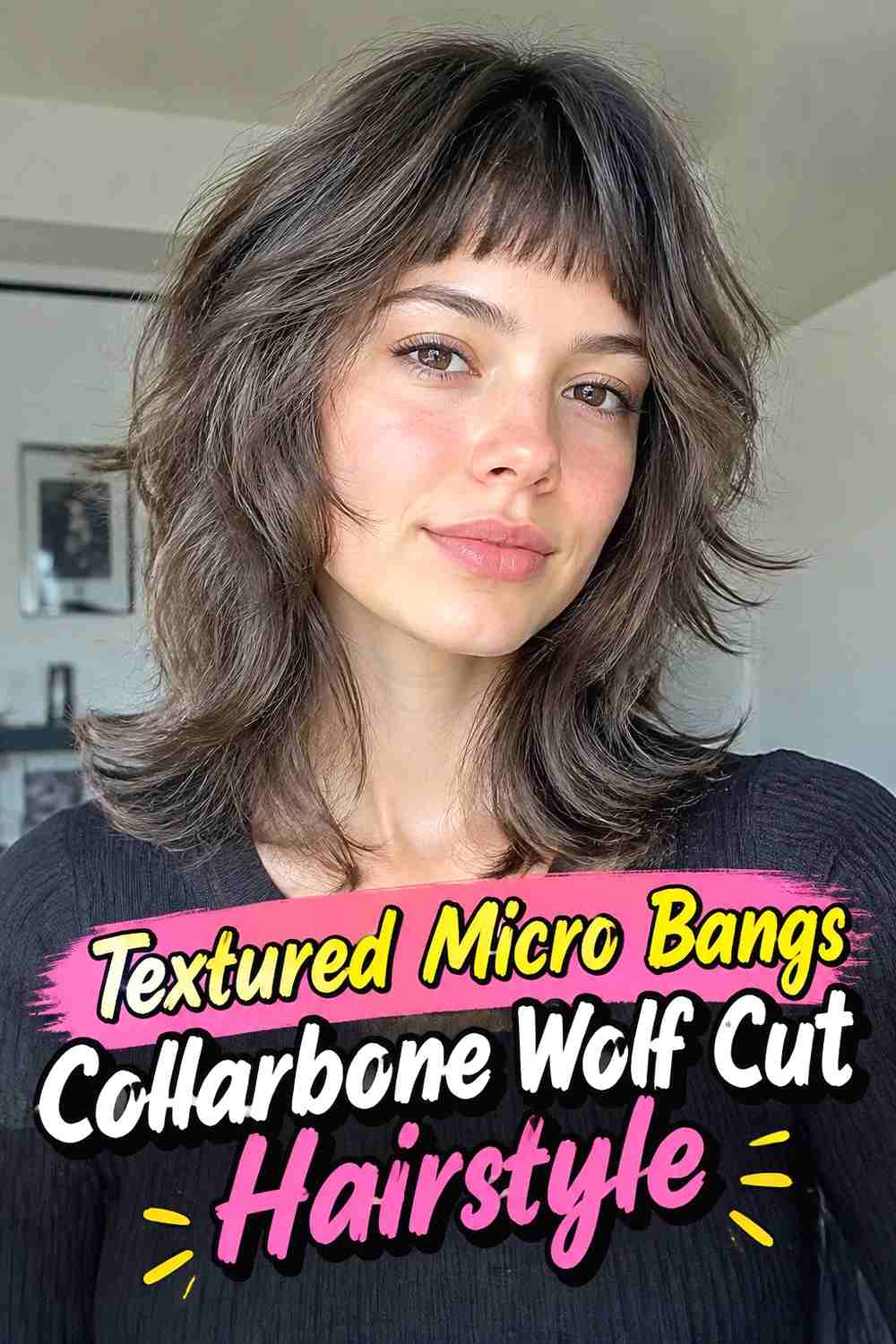
A collarbone wolf cut keeps the silhouette compact while textured micro bangs make the front feel bold and modern. The fringe sits short with an irregular edge, while the main haircut uses soft crown layers and graduated face framing that falls toward the shoulders. Because the length is relatively contained, too many layers can make the ends look thin, so preserving a substantial lower edge is important. Gentle bends through the sides help reveal the different layer lengths without turning the cut into a full shag. This is a wearable option if you want the personality of a wolf cut but prefer a shape that feels lighter, shorter, and easier to style than longer versions.
Styling Notes
Create movement mainly around the face and crown while allowing the collarbone-length ends to remain fuller.
Best For
This length works well for anyone wanting a soft wolf cut that still feels compact enough for everyday styling.
8. Micro Bangs Face Framing Wolf Cut Hairstyle
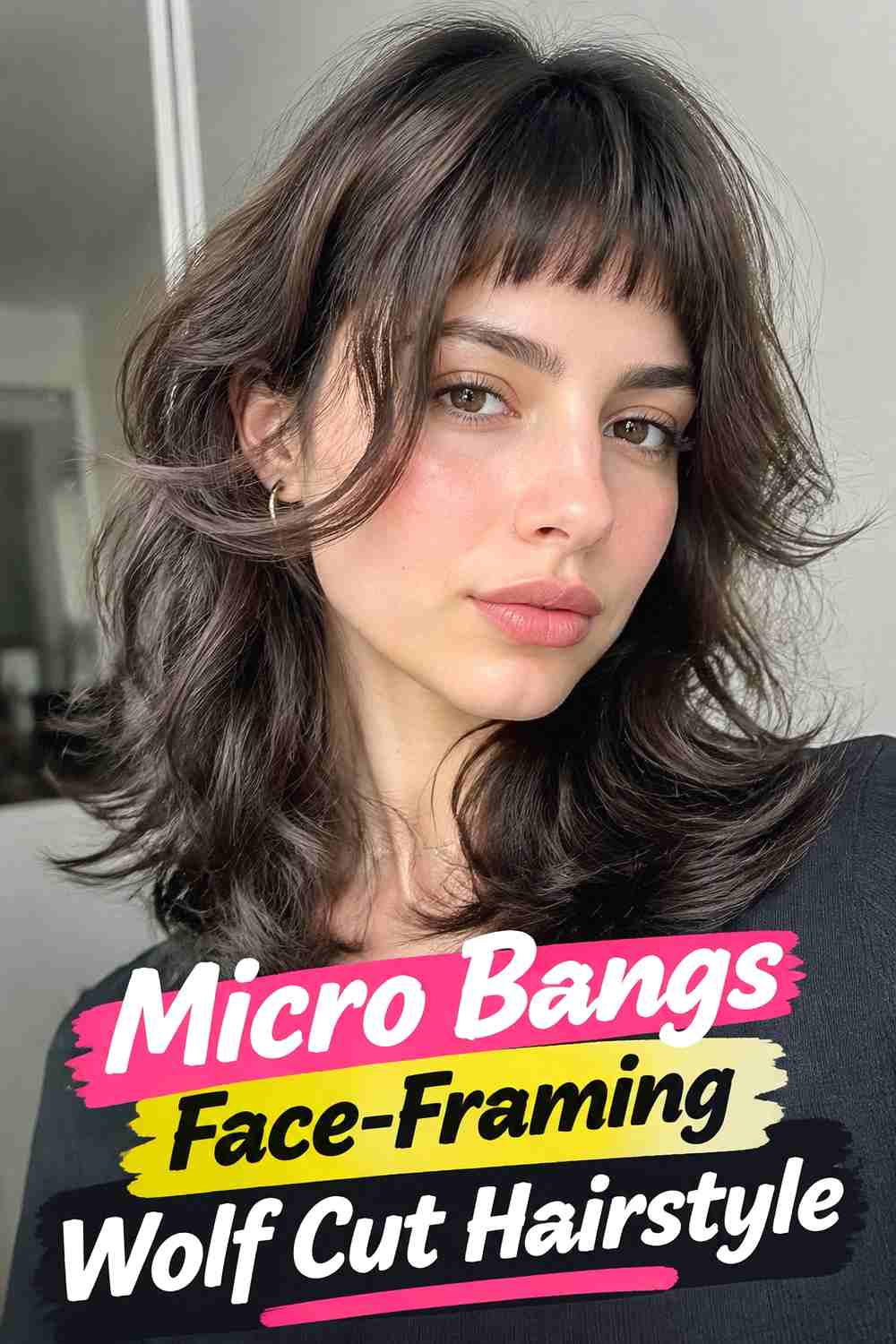
Face-framing layers make micro bangs feel more connected to the rest of a wolf cut. The fringe remains the shortest point, but longer pieces begin around the temples, cheekbones, and jaw to create a gradual transition into the main length. Through the back, soft layering adds movement without taking away too much weight. This version is particularly useful if the jump from micro bangs to long hair feels too abrupt. Straight hair shows the graduated framing clearly, while wavy hair gives the layers a looser, more casual finish. A smooth blowout can emphasize each level, but the cut also works with natural movement when the face-framing pieces are positioned thoughtfully.
Why It Works
The staggered front layers create a visual bridge between the tiny fringe and longer hair, making the overall haircut feel more cohesive.
Styling Notes
Direct the longer front layers slightly away from the face while keeping the micro bangs mostly forward.
9. Soft Jagged Micro Bangs Wolf Cut Hairstyle
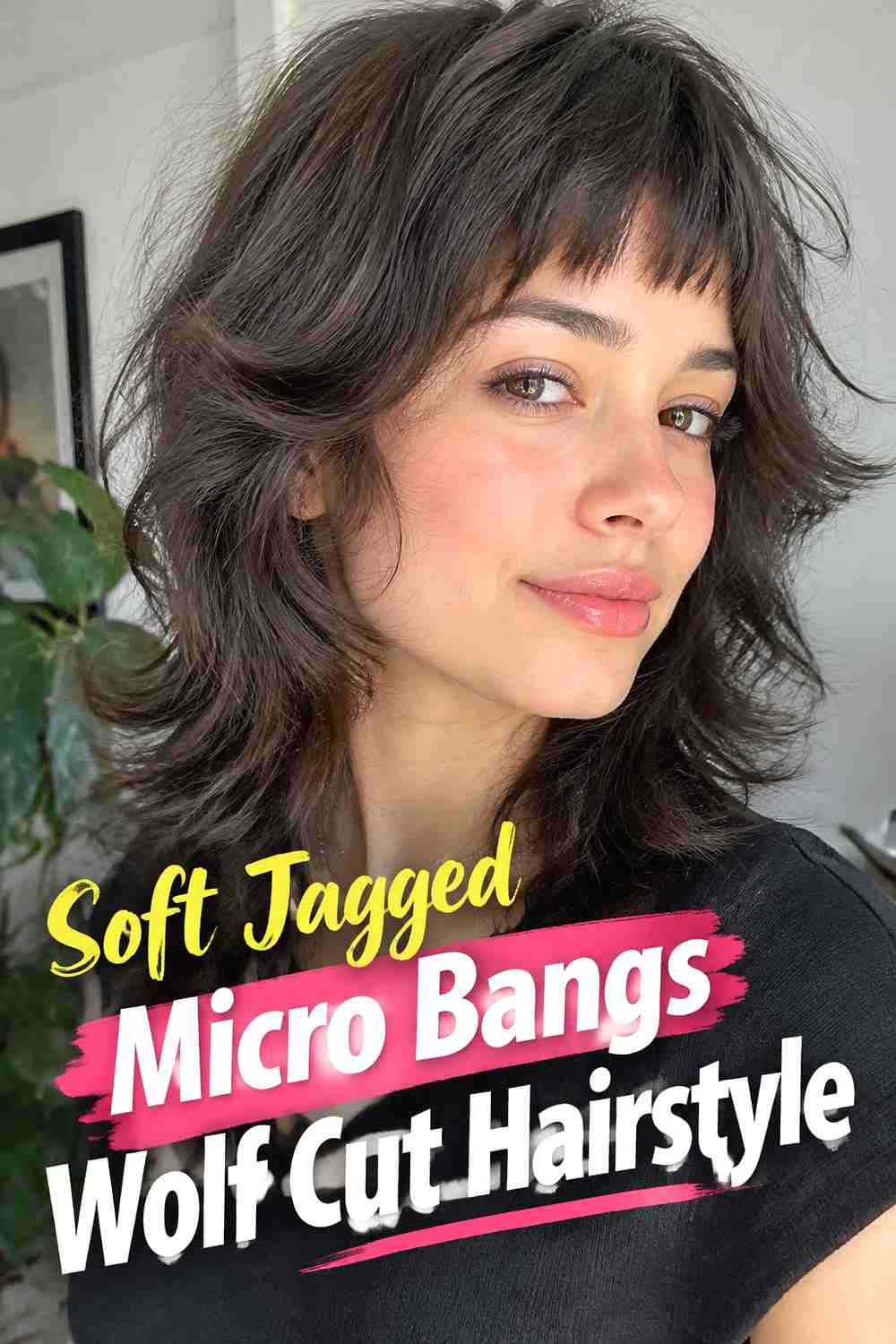
Soft jagged micro bangs use tiny peaks and dips along the fringe line to create texture without looking aggressively chopped. Paired with a wolf cut, the effect feels intentionally undone while the longer layers remain fluid and wearable. The crown can have a little extra lift, with face-framing pieces gradually connecting to tapered mids and ends. Keeping the bottom relatively full prevents the haircut from becoming too thin, especially on finer or medium-density hair. This version looks especially good with slight natural texture because the bangs and layers share the same imperfect movement. Even when styled smooth, the subtle unevenness at the fringe keeps the look from feeling overly polished.
Best For
Choose this variation if you like an edgy fringe but still want the overall wolf cut to feel soft rather than heavily punk-inspired.
Pro Tip
Small variations usually create a more wearable jagged effect than large, dramatic differences in fringe length.
10. Micro Bangs Long Soft Wolf Cut Hairstyle
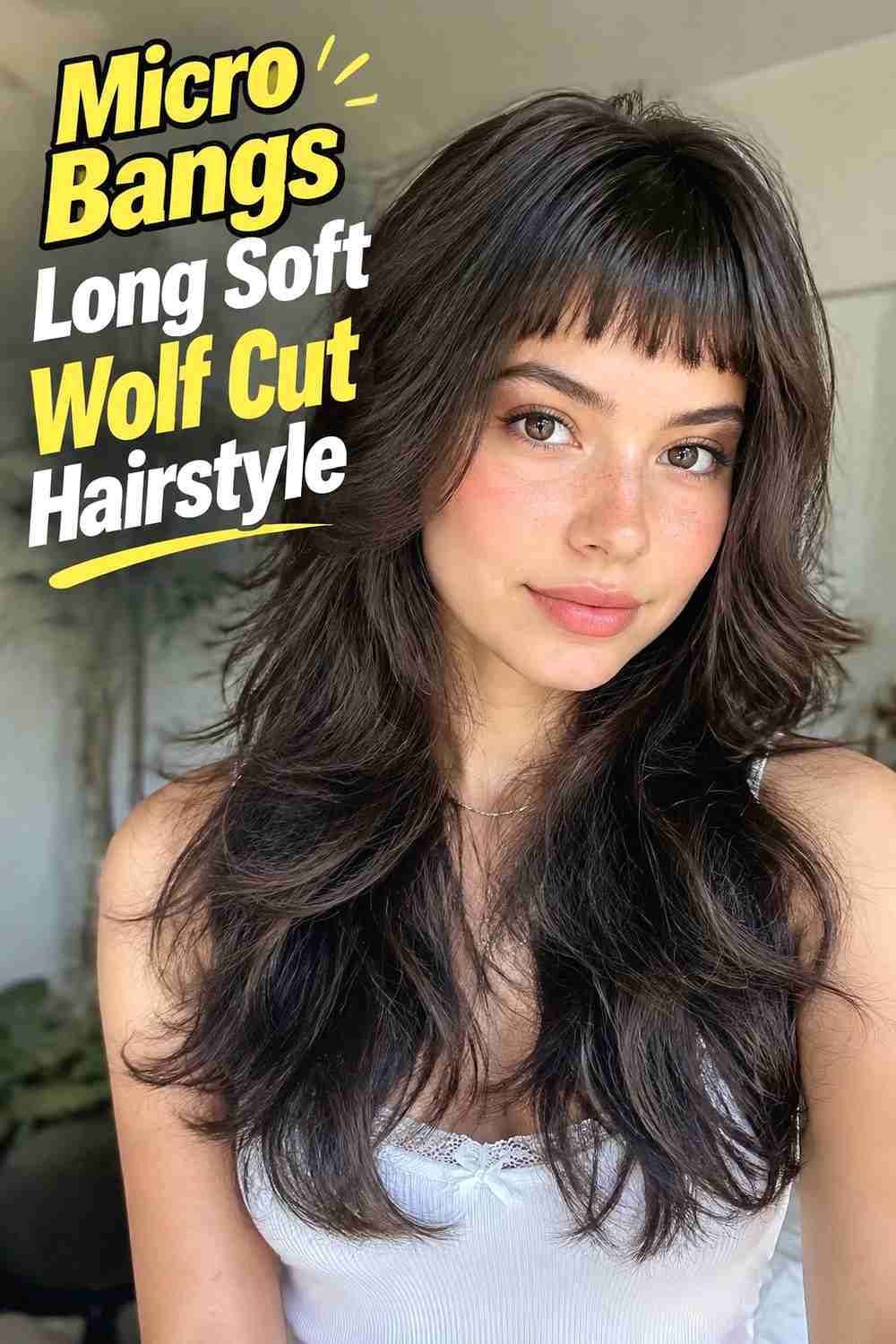
A long soft wolf cut lets you keep substantial length while still adding lift through the crown and movement around the face. Micro bangs introduce a sharp short detail at the front, creating a dramatic contrast with cascading lower layers. The main haircut can begin with face-framing pieces around the cheekbones or jaw, then transition into longer sections that preserve fullness toward the ends. This version suits anyone who wants the character of a wolf cut without giving up long hair. Broad waves or a relaxed blowout can reveal the layers, but straight styling also works because the graduated structure remains visible. Keeping the crown layering moderate helps the cut feel flowing rather than top-heavy.
Hair Type & Length
Long hair with medium or thick density generally provides enough weight to support layered movement while maintaining a substantial perimeter.
Why It Works
The extreme length contrast between the fringe and ends creates interest while gradual layering keeps the silhouette soft.
11. Feathered Micro Bangs Wavy Wolf Cut Hairstyle
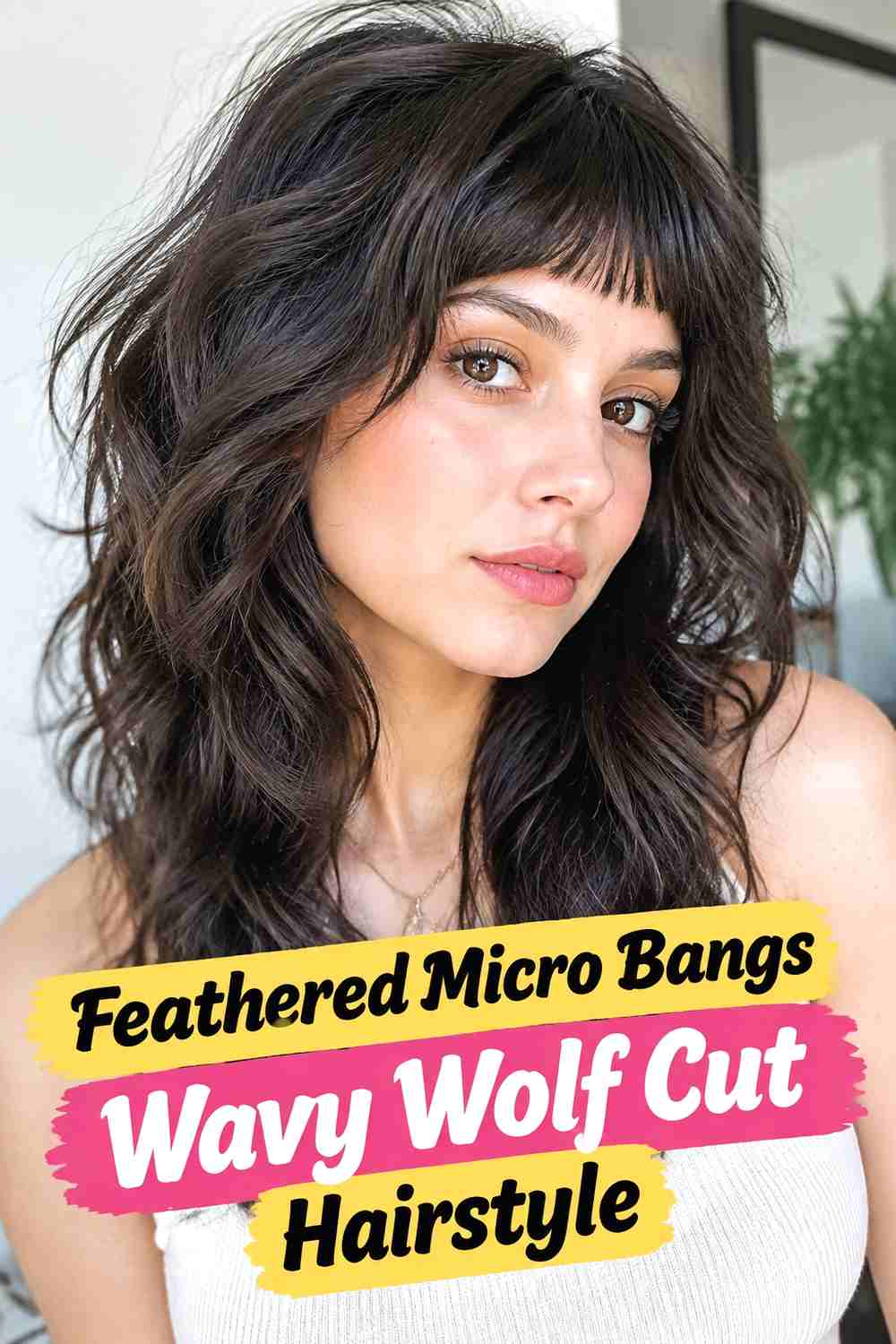
Feathered micro bangs blend naturally with a wavy wolf cut because both rely on softness and movement. The fringe has lightly diffused edges rather than a solid line, while the main haircut encourages waves to form across different layer lengths. Face-framing pieces can begin high enough to show movement around the cheeks, with longer sections continuing through the shoulders and back. The cut should work with the natural wave pattern rather than forcing every section into identical bends. Keeping enough density through the ends prevents the layers from becoming stringy. This version feels relaxed and airy, making it particularly appealing if you want a wolf cut that looks good with natural texture instead of a precise daily blowout.
Styling Notes
Let the waves vary naturally and use lightweight definition rather than brushing them into one uniform pattern.
Best For
Naturally wavy or easily textured hair can show the feathered fringe and graduated layers with relatively little manipulation.
12. Micro Bangs Rounded Layer Wolf Cut Hairstyle
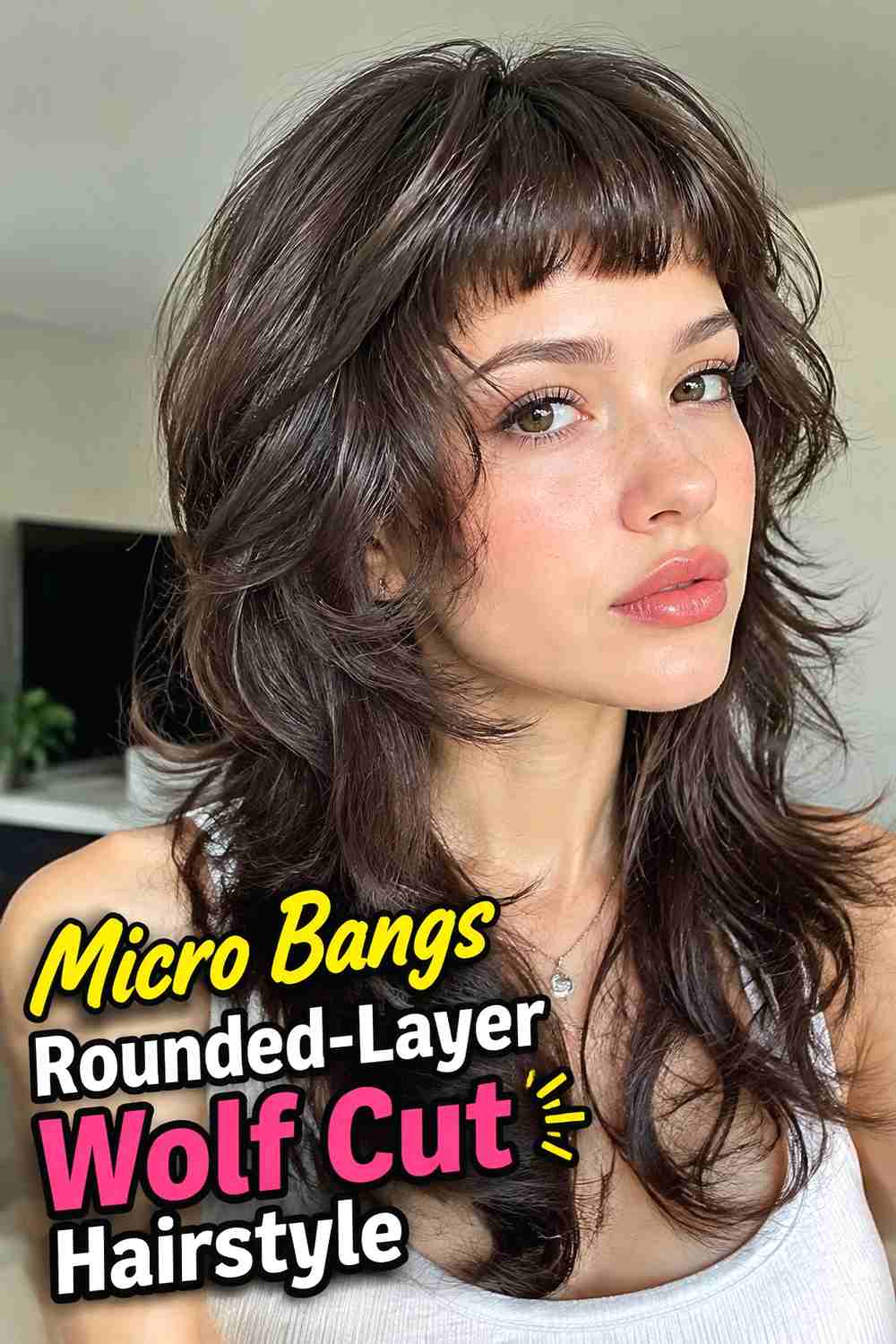
Rounded layers soften the outline of a wolf cut by replacing sharp, separated pieces with broader curves through the crown, sides, and ends. Micro bangs create a short focal point above the brows, while the rest of the haircut moves in smooth, overlapping sections. This variation works particularly well if you like the volume and face framing of a wolf cut but not the most aggressively shaggy versions. A round-brush finish can enhance the curved shape, allowing the side layers to sweep away from the face while the ends remain full. The fringe can stay slightly textured so it does not look too formal against the softer layered body.
Styling Notes
Use broad curves and controlled lift instead of tight curls to maintain the rounded layered silhouette.
Why It Works
The fuller, curved layers make the wolf cut feel softer while the micro fringe adds enough contrast to keep the look distinctive.
13. Micro Bangs Tousled Soft Wolf Cut Hairstyle
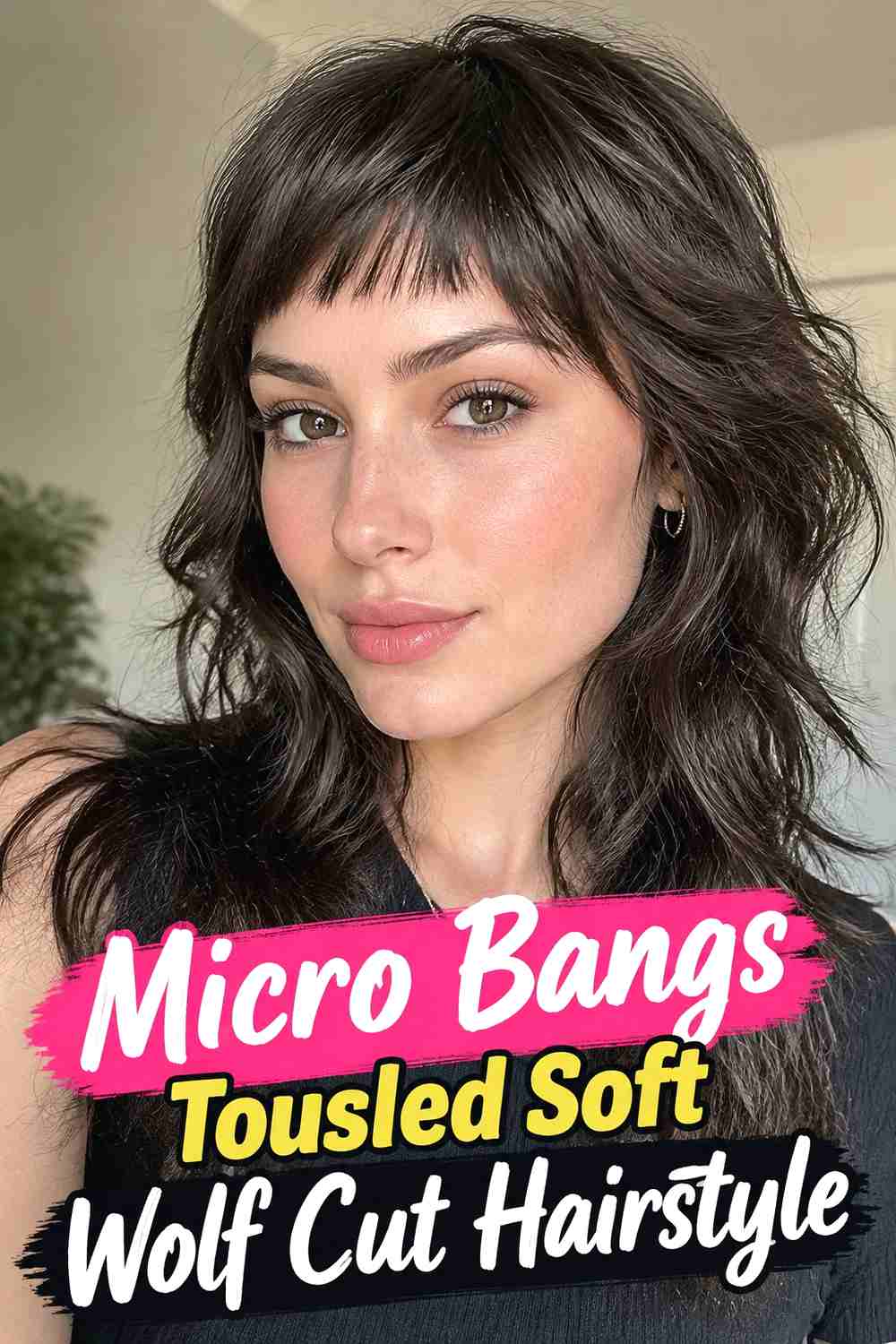
A tousled soft wolf cut pairs naturally with micro bangs because neither element needs to look overly precise. The fringe can be lightly separated and slightly irregular, while the longer hair uses airy crown layers, loose face framing, and relaxed movement through the ends. Instead of a perfect blowout, the style benefits from natural bends, slight flips, and controlled flyaways. The underlying haircut still needs enough structure to maintain its shape, particularly around the crown and face. This option is ideal if you enjoy texture but do not want to spend time making every layer fall in exactly the same direction. The overall result should feel casual and deliberate rather than messy without shape.
Best For
This works especially well for straight-to-wavy textures that can develop soft movement with minimal styling.
Styling Notes
Use fingers and lightweight texture products to encourage separation while keeping heavier creams away from the micro fringe.
14. Micro Bangs Sleek Soft Wolf Cut Hairstyle
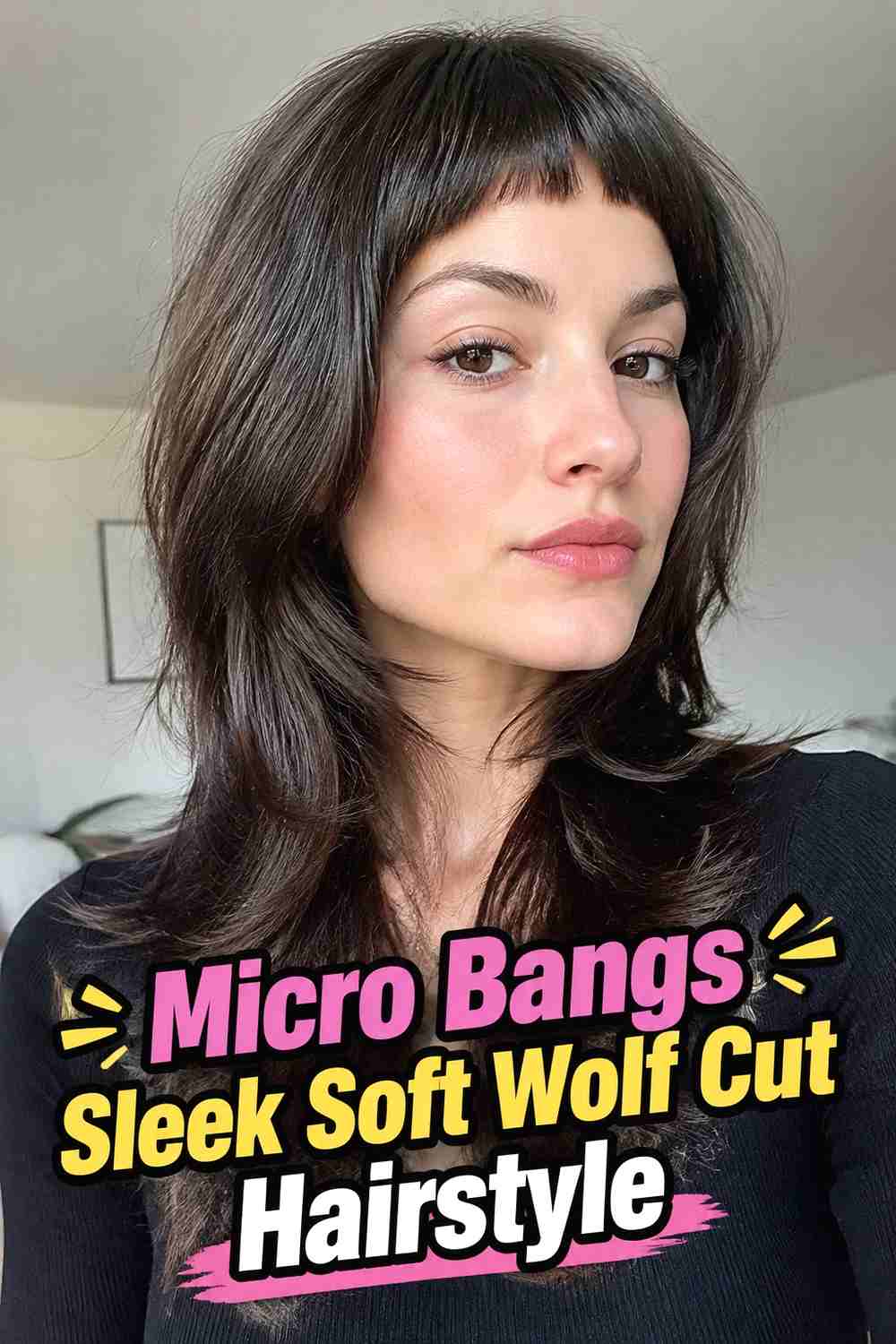
A sleek soft wolf cut proves that the shape does not always need tousled texture. The haircut uses gentle crown layering, restrained face framing, and softly tapered lengths, but the finished surface stays smooth and polished. Micro bangs provide a short, graphic detail that becomes especially noticeable against the sleek body of the hair. Straight styling reveals the cut’s graduated structure without relying on curls or waves, making this a strong option for naturally straight hair. The ends should still show some movement so the wolf cut does not become visually flat. Light internal layering can reduce bulk while preserving a clean exterior and enough fullness through the lower lengths.
Why It Works
The polished surface makes the short fringe stand out while subtle layering preserves the movement associated with a wolf cut.
Wear & Maintenance
Use lightweight smoothing products through the lengths and keep the short fringe relatively product-free so it remains separated and fresh.
How to Choose the Right Look
Start with how bold you want the micro bangs to feel. Airy, wispy, and feathered versions create a lighter transition, while choppy, jagged, and razor-textured fringes make a stronger statement. Rounded micro bangs are a good choice when you prefer a cleaner, more polished edge.
Then consider the amount of wolf-cut layering. Collarbone and midi versions keep the silhouette compact, while long wolf cuts preserve more length and create a stronger contrast with the short fringe. If your hair is thick, tapered or internal layering can help manage bulk. Finer hair may benefit from softer crown layering and more weight through the ends.
Your styling routine matters too. Wavy and tousled versions can work with natural movement, while rounded and sleek shapes generally look more defined after intentional styling. Micro bangs also show growth quickly, so fringe maintenance should be part of your decision.
Final Thoughts
Micro bangs can make a soft wolf cut feel sharper and more distinctive without losing the relaxed movement that makes the haircut wearable. Whether you prefer wispy fringe, choppy texture, rounded layers, or a long cascading shape, balance the short bangs with enough softness and density through the rest of the cut.
FAQs
1. Do micro bangs work with a soft wolf cut?
Yes. Their short length creates contrast with the layered silhouette, while a softer wolf cut prevents the overall style from feeling overly aggressive.
2. What makes a wolf cut look soft?
Gradual layering, restrained crown volume, blended face-framing pieces, and fuller ends create a softer effect than sharply disconnected or heavily thinned layers.
3. Which micro bangs are easiest to pair with a wolf cut?
Airy, wispy, piecey, and softly choppy micro bangs blend naturally with layered movement because their edges do not look overly rigid.
4. Can straight hair wear a soft wolf cut with micro bangs?
Yes. Straight hair can show the graduated layering clearly, especially with face-framing pieces, subtle tapering, or a sleek finish.
5. How often do micro bangs need trimming?
Because micro bangs are very short, growth can change their proportion relatively quickly. Trim frequency depends on your growth rate and how precise you want the fringe to remain.
Save your favorite micro-bang wolf cut, share these ideas for inspiration, and explore more soft layered fringe looks before your next haircut.