14 Headband Hairstyles for Curly Hair That Show Off Your Texture
Headbands and curls make an effortless pairing, adding shape, polish, and personality while still allowing natural texture to remain the main attraction.
A well-placed headband can completely change the silhouette of curly hair without requiring an elaborate styling routine. Slim bands can create a subtle polished finish, while wider fabric styles can hold the front sections neatly in place and emphasize volume through the crown and ends. The best choice depends on whether you want to highlight definition, create height, control shorter layers, or pull curls away from your face.
This collection includes relaxed everyday looks, structured updos, playful options, and styles that work especially well with short, medium, and long curls. As you compare them, consider your curl pattern, density, desired volume, headband width, styling time, and how firmly you want the accessory to hold your hair.
Quick List
- Pineapple Puff Headband Hairstyle
- Defined Wash-and-Go Headband Hairstyle
- Curly Bob Headband Hairstyle
- Half-Up Curly Headband Hairstyle
- Low Curly Bun Headband Hairstyle
- High Curly Ponytail Headband Hairstyle
- Side-Swept Curls Headband Hairstyle
- Curly Pixie Headband Hairstyle
- Braided Front Curly Headband Hairstyle
- Loose Romantic Curls Headband Hairstyle
- Curly Space Buns Headband Hairstyle
- Tucked-Back Curls Headband Hairstyle
- Voluminous Afro Headband Hairstyle
- Curly Updo Headband Hairstyle
1. Pineapple Puff Headband Hairstyle
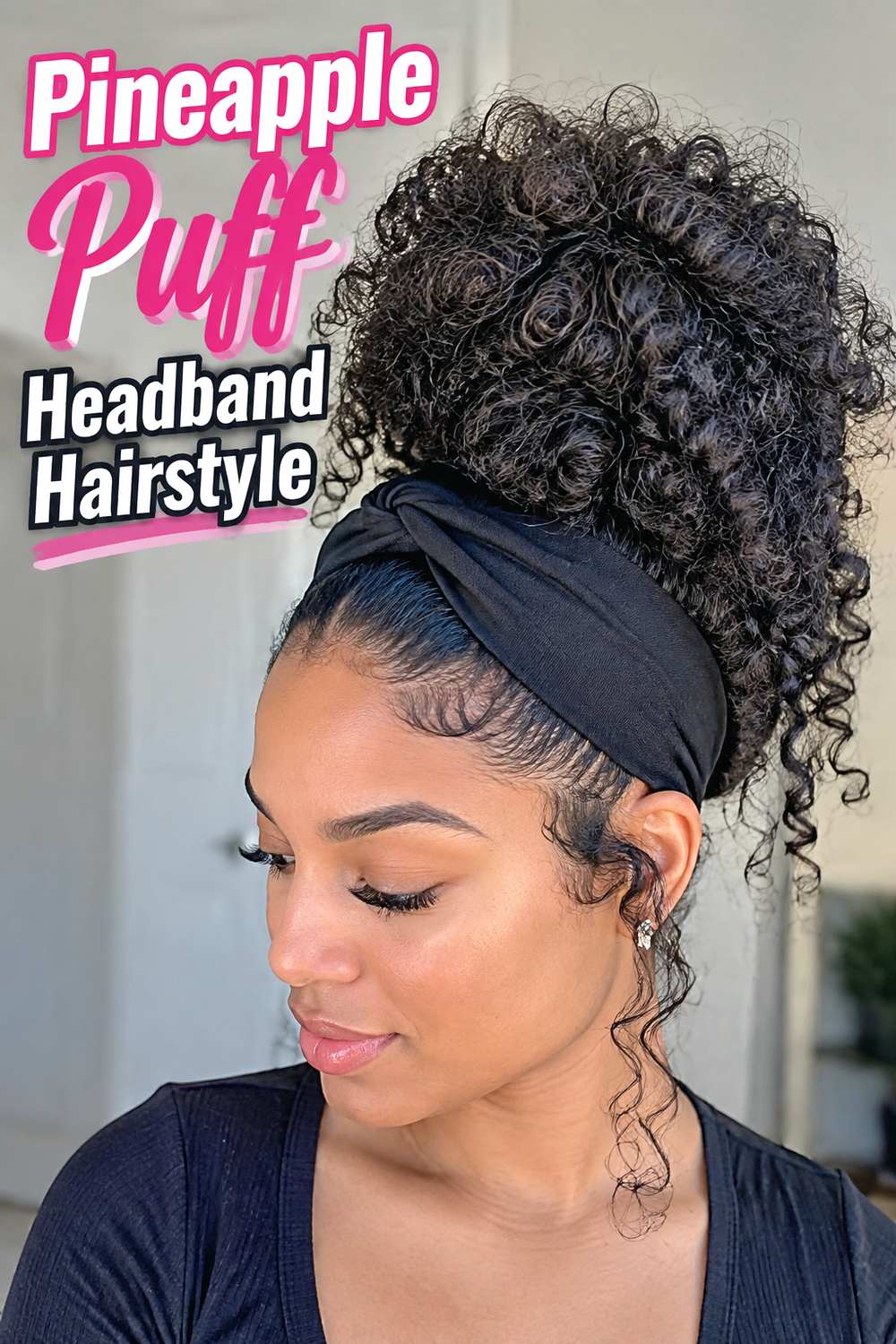
The Pineapple Puff Headband Hairstyle puts curly volume high on the head while leaving the texture soft, rounded, and intentionally full. A stretchy headband sits around the front hairline and helps smooth shorter pieces without flattening the puff itself. This style is especially flattering when the curls have enough length to gather loosely near the crown, allowing the ends to fan naturally in different directions. Rather than brushing everything sleek, preserve some texture around the edges so the finish feels relaxed and modern. It is a practical choice for casual days, warm weather, second- or third-day curls, or anytime you want maximum impact with relatively little manipulation.
Styling Notes
Gather the hair with a soft elastic or loose scrunchie rather than pulling it tightly. Position the headband after forming the puff so you can adjust the front without disturbing the curl shape.
Wear & Maintenance
Refresh flattened sections with a light mist of water or curl refresher, then reshape individual curls with your fingers instead of recoating the entire puff with product.
2. Defined Wash And Go Headband Hairstyle
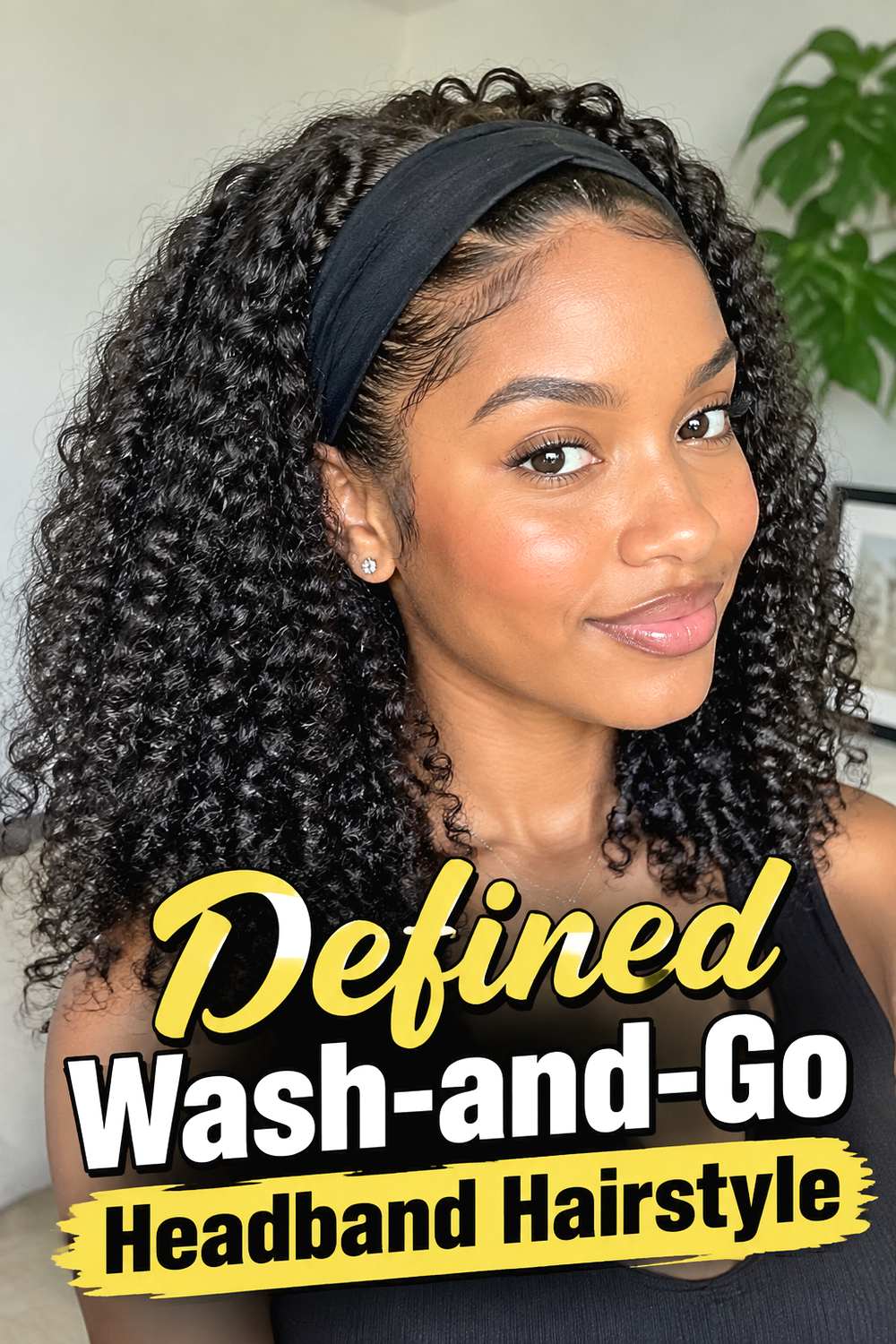
The Defined Wash-and-Go Headband Hairstyle keeps the natural curl pattern completely visible while adding a clean accessory at the hairline. The effect is simple but polished: defined curls fall around the shoulders or face, while the headband gently directs the front sections backward. It works particularly well when you want your curl pattern, shine, and natural movement to remain the focus instead of creating a complicated shape. A narrow band gives the look a minimal finish, while a wider fabric headband makes more of a statement and offers extra control. Choose a band that feels secure without pressing too firmly against the roots, since excess tension can reduce volume and create an uncomfortable fit.
Hair Type & Length
This approach adapts well to many curl patterns and works on short, medium, or long hair as long as the curls have been defined in their usual wash-and-go routine.
Pro Tip
Let curls dry fully before adjusting the headband whenever possible. Moving damp curls repeatedly can separate clumps and create extra frizz around the crown.
3. Curly Bob Headband Hairstyle
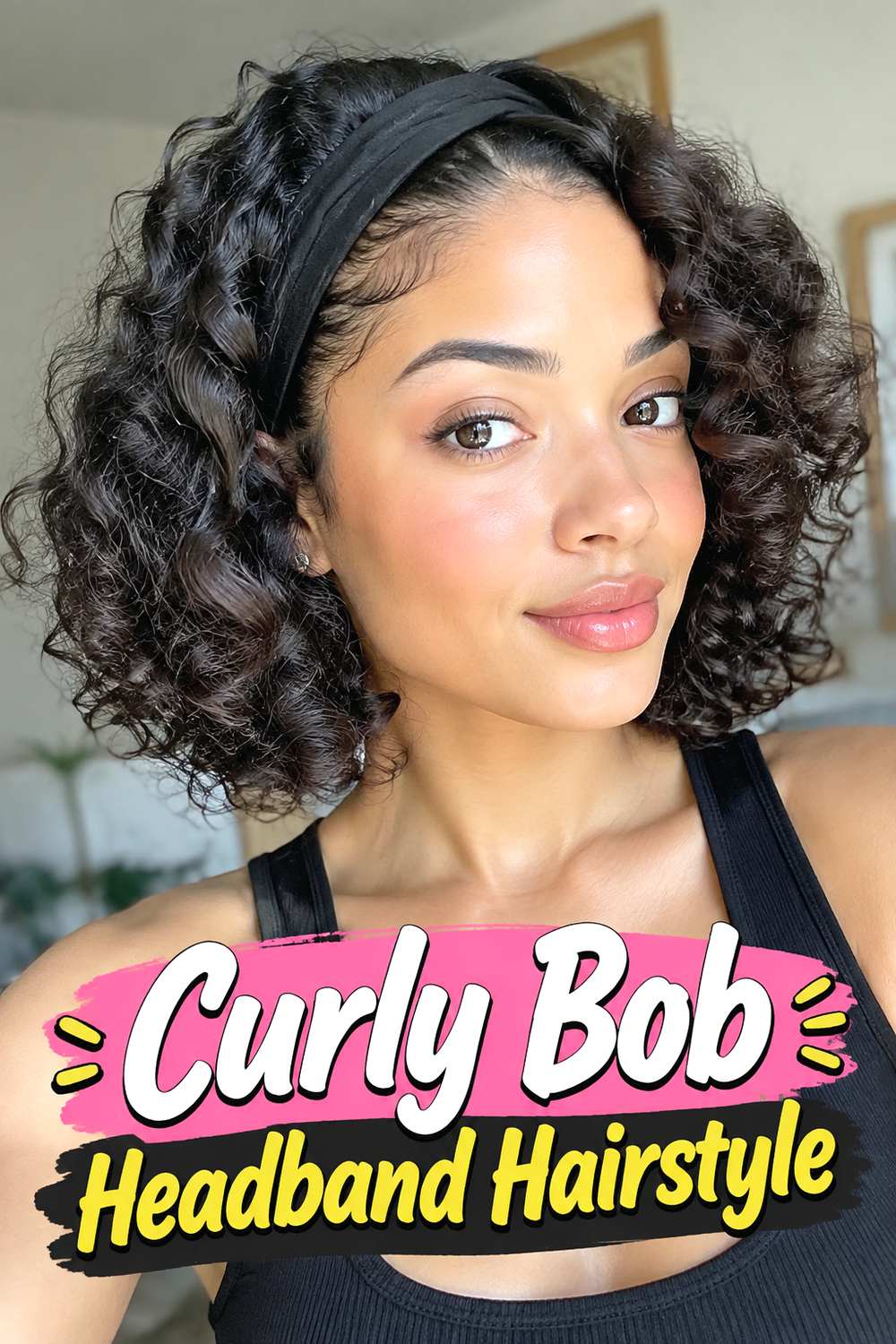
The Curly Bob Headband Hairstyle highlights the compact, rounded shape of a short curly cut while keeping the face open. The headband pushes the front curls just far enough back to reveal the hairline, but the sides and ends remain bouncy and full. This contrast works beautifully with chin-length and jaw-length cuts because the accessory emphasizes the bob silhouette instead of hiding it. A slim padded band can add structure, while a soft fabric version creates a more relaxed effect. Keep the curls around the sides slightly separated rather than overly uniform; natural variation gives the bob more movement and prevents the shape from looking stiff or helmet-like.
Why It Works
Short curls already have a strong silhouette, so a headband adds definition without requiring pins, complicated sectioning, or enough length for a ponytail.
Styling Notes
Place the band slightly behind the hairline instead of pushing it too far toward the crown. This keeps some lift at the front and avoids compressing the entire top section.
4. Half Up Curly Headband Hairstyle
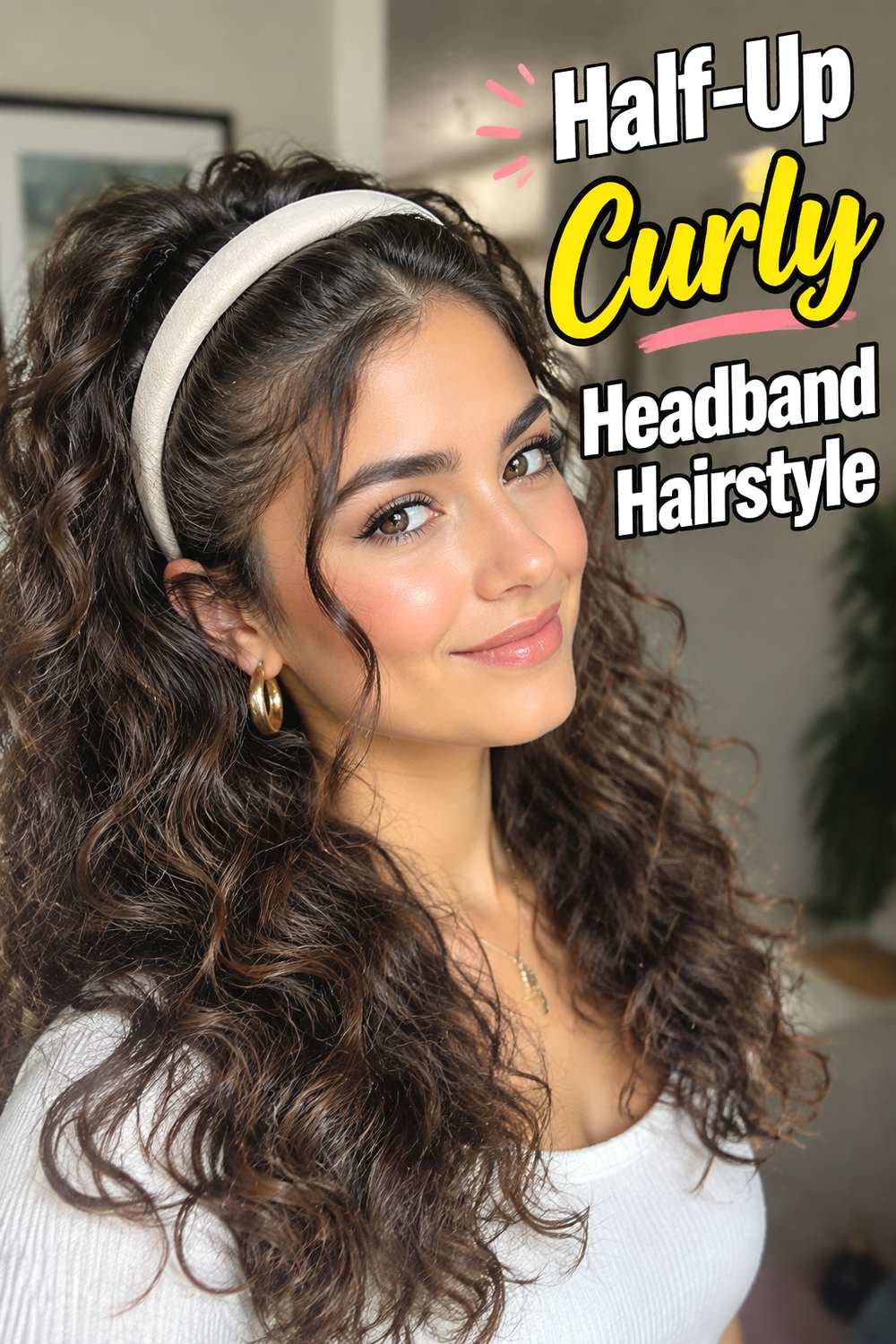
The Half-Up Curly Headband Hairstyle combines controlled height at the crown with loose curls through the lower lengths. The upper section is gathered gently away from the face, while a headband creates a neat transition between the hairline and the lifted curls. Because the bottom half remains loose, the style keeps plenty of movement and texture even though the front feels more structured. It is a versatile option for medium and long curly hair, particularly when you want an everyday style that feels a little more intentional than leaving everything down. Let a few small curls sit naturally around the temples if you prefer a softer frame rather than a completely pulled-back finish.
Best For
This style is useful when you want facial openness without committing to a full ponytail or bun, and it works well for casual outings, workdays, or relaxed events.
Wear & Maintenance
Secure the half-up section loosely enough to preserve crown volume. If it starts flattening, lift the roots gently with your fingertips rather than tightening the elastic.
5. Low Curly Bun Headband Hairstyle
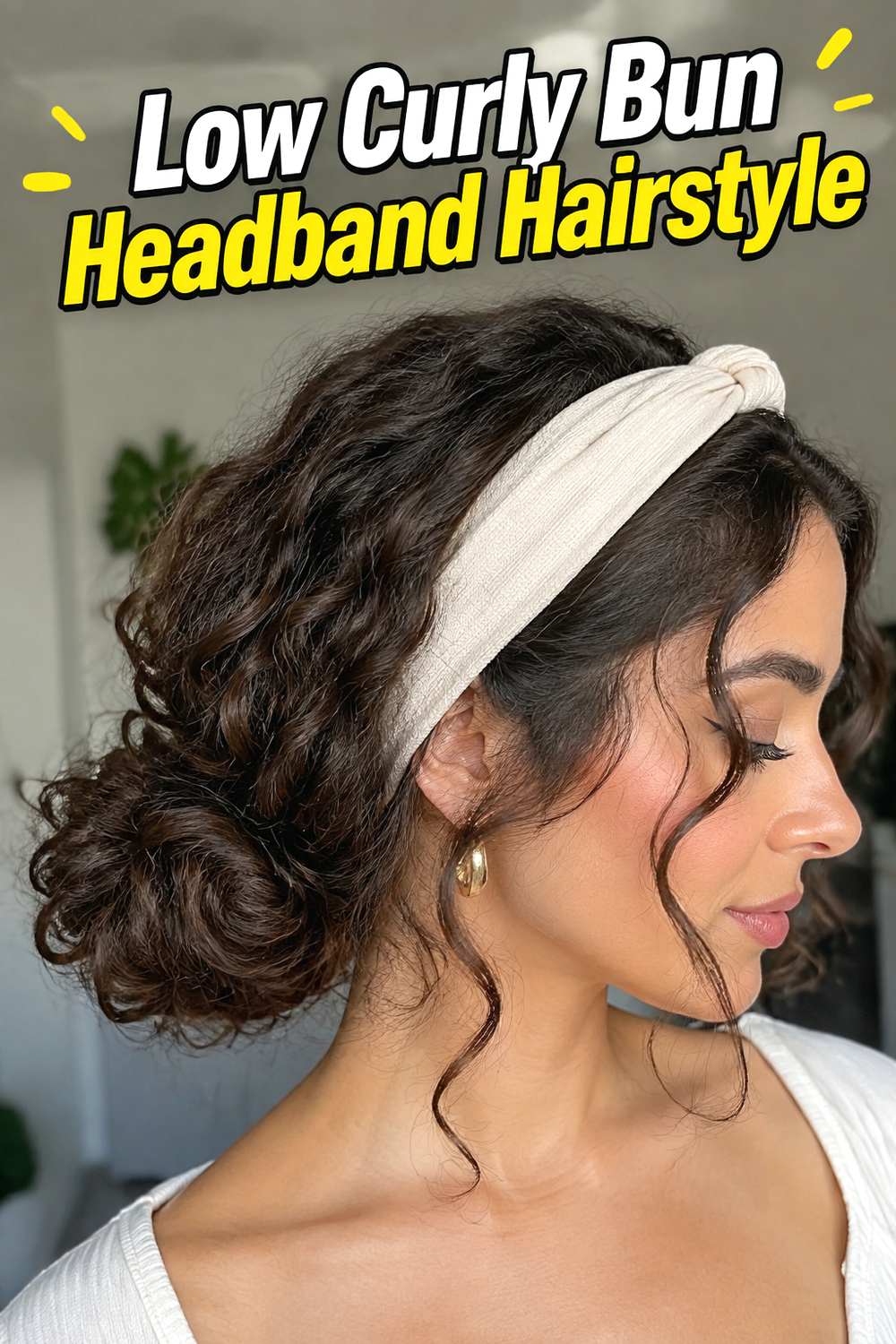
The Low Curly Bun Headband Hairstyle creates a soft, elegant shape at the nape while the headband keeps the front smooth and comfortably contained. Instead of twisting curls into a severe knot, gather them loosely so some texture remains visible around the bun. This makes the style feel polished without removing the character of curly hair. A fabric or lightly padded headband can balance the low placement of the bun and give the front more visual interest. The look works especially well when you need the hair off your neck but still want something gentler than a tight slicked-back style. Allowing a few curls around the ears can make the finish feel romantic and less formal.
Styling Notes
Use a few discreet pins to anchor the bun rather than forcing every curl beneath one elastic. This lets you shape the bun while maintaining dimension.
Best For
Choose this option for office wear, dinners, special occasions, or days when you want a tidy silhouette with minimal hair around your shoulders.
6. High Curly Ponytail Headband Hairstyle
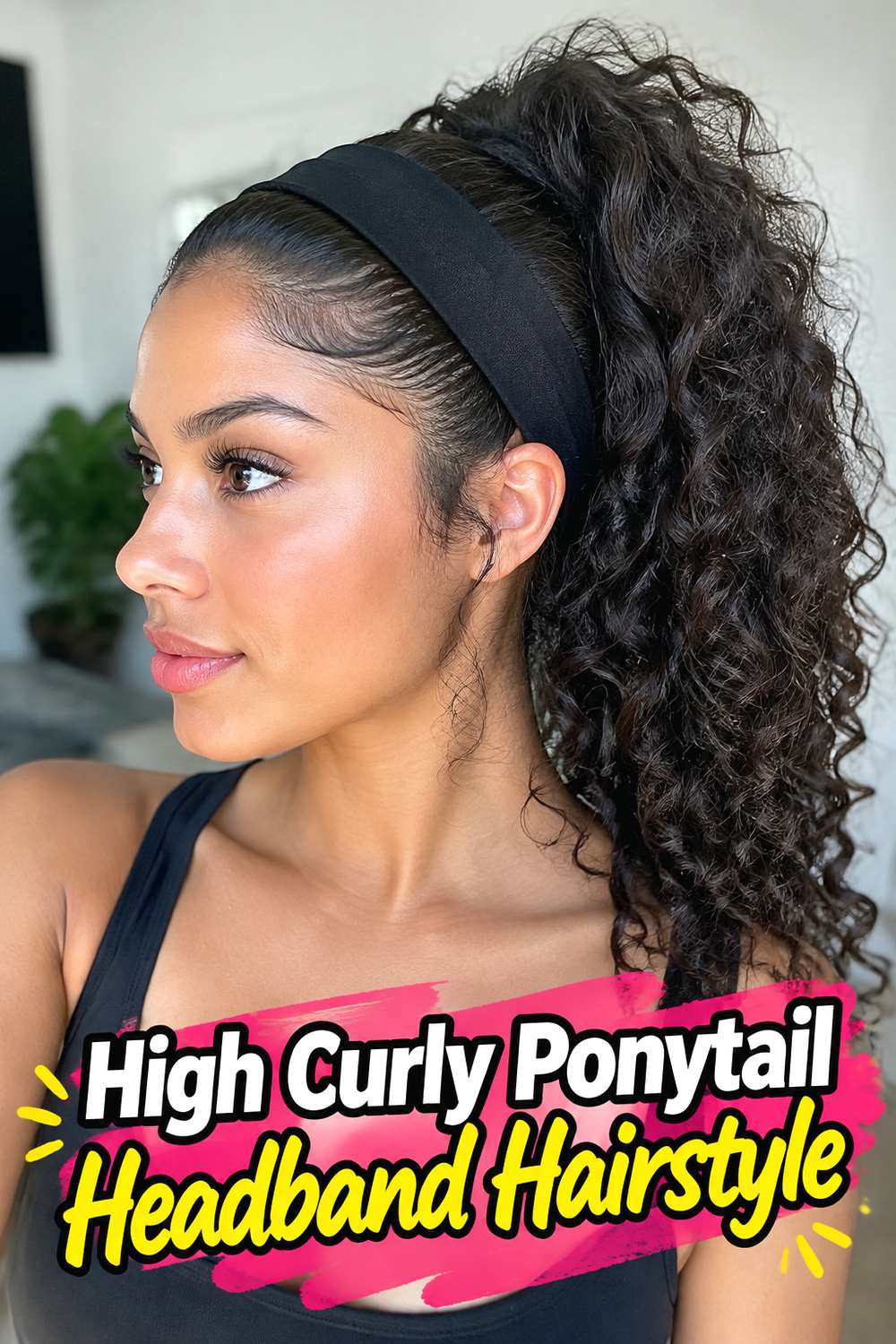
The High Curly Ponytail Headband Hairstyle places the volume high on the crown, creating a lively silhouette that makes curls look especially full. The headband controls shorter pieces around the front while the ponytail cascades behind or slightly to one side. Unlike a sleek straight ponytail, this version benefits from a little softness through the roots and plenty of texture at the ends. Medium and long curls work best because they provide enough length for the ponytail to spring freely after being gathered. For a balanced finish, avoid positioning both the headband and elastic too tightly; the style should feel lifted rather than stretched against the scalp.
Why It Works
Raising the ponytail concentrates curl volume at eye level and above, which can create a flattering, energetic shape while keeping the neck and shoulders clear.
Pro Tip
After securing the ponytail, separate only a few curls at the base and ends with your fingers. Over-fluffing can blur definition and make the shape less controlled.
7. Side Swept Curls Headband Hairstyle
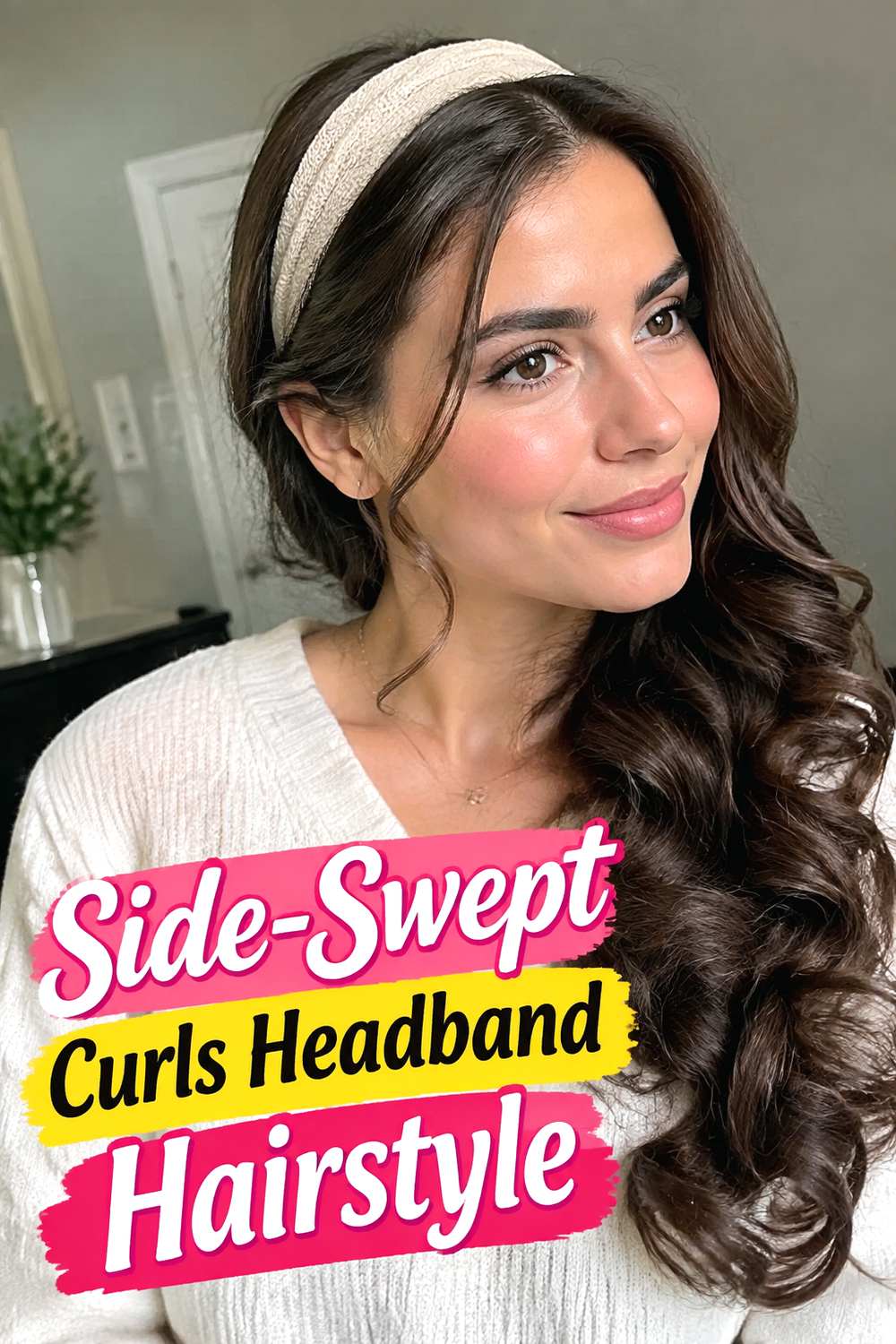
The Side-Swept Curls Headband Hairstyle uses asymmetry to make a simple accessory feel more styled. Most of the curls are directed toward one shoulder or one side of the face, while the headband keeps the opposite side neat and emphasizes the sweep. This arrangement is especially effective on medium to long curls because there is enough length to create visible movement across the silhouette. The finish can be glamorous with defined ringlets or more relaxed with fluffy, separated curls. A slim headband usually works best because it supports the shape without competing with the directional volume. Pinning one hidden section near the back can help the curls stay on the chosen side.
Best For
This is a strong option for date nights, dinners, photos, weddings, and occasions where you want curls to look intentionally arranged without creating a full updo.
Wear & Maintenance
Keep the headband comfortable and use hidden pins for the actual hold. Relying on a tight band alone may flatten the roots and shift the style during wear.
8. Curly Pixie Headband Hairstyle
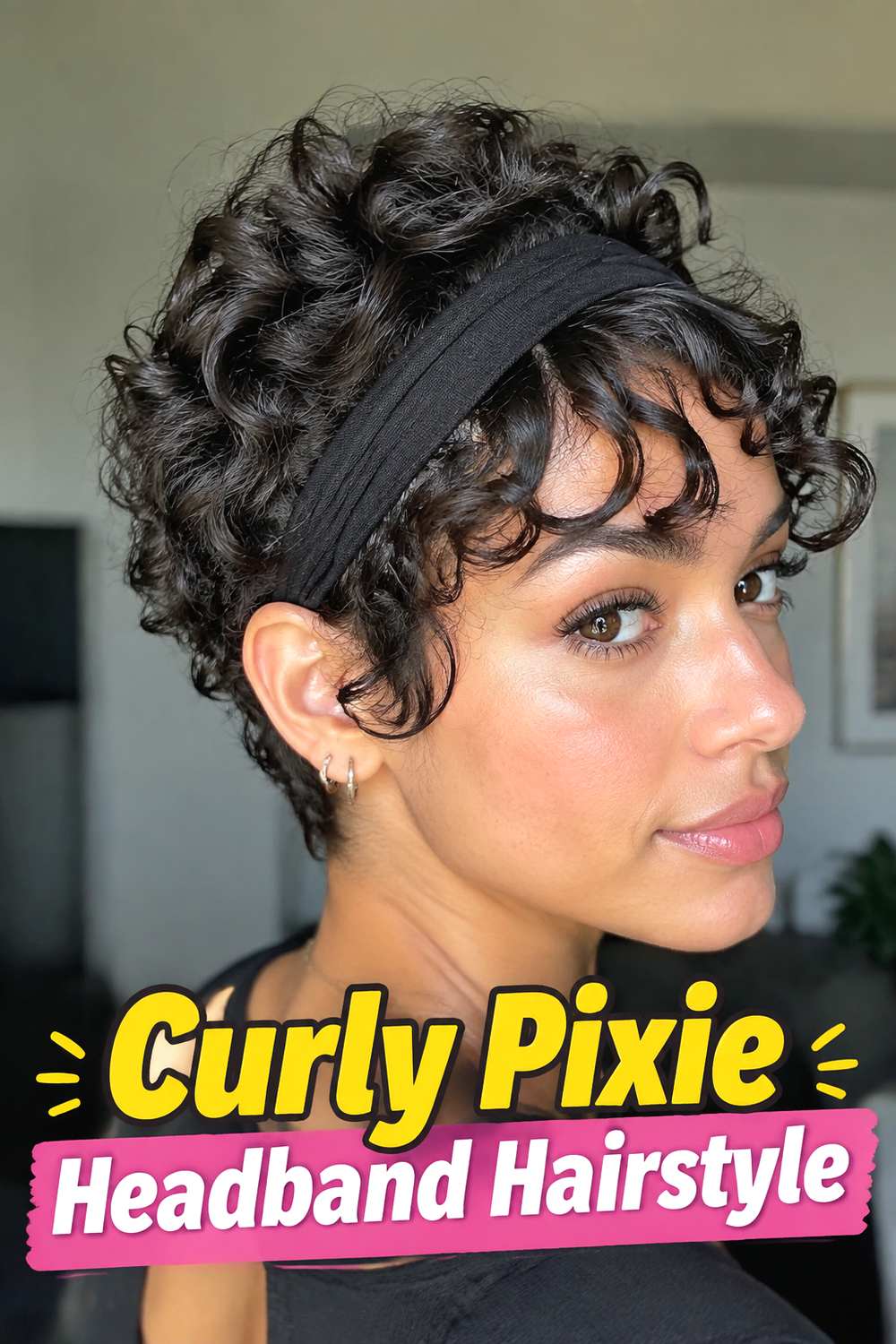
The Curly Pixie Headband Hairstyle proves that a headband can be just as useful on very short textured hair. A narrow band placed behind the hairline gives the cut definition while leaving the curls or coils on top visibly textured. Because there is less length to work with, placement becomes especially important: position the accessory so it separates the front from the crown without pushing all the volume backward. This can highlight the shape of a cropped cut, showcase natural texture, and manage small curls around the temples at the same time. A simple band keeps the result refined, while a decorative style can turn the accessory into the focal detail for evenings or special events.
Styling Notes
Shape the curls first, then add the headband. Once it is in place, lift any compressed sections with your fingertips so the crown retains its intended height.
Hair Type & Length
This look suits cropped curls, coils, and short textured pixies where the top has enough length to show definition even after the front is gently held back.
9. Braided Front Curly Headband Hairstyle
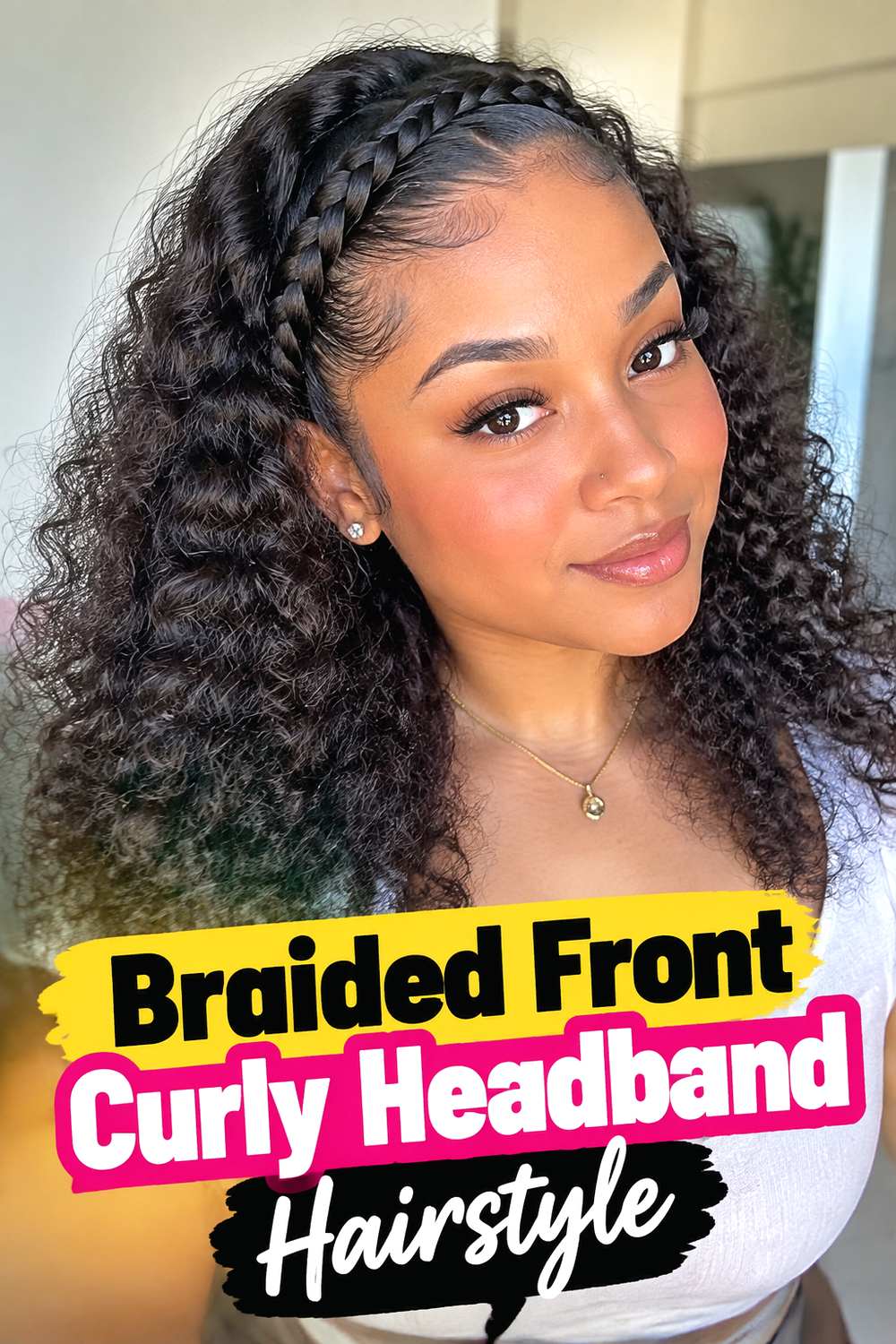
The Braided Front Curly Headband Hairstyle adds a small braided detail near the hairline before the headband, giving the style extra texture without overwhelming the curls. One or two narrow braids can be created along the front or temple area, while the remaining hair stays loose and naturally curly. The headband sits just behind the braided section, creating a layered effect that feels more intricate than a standard loose style. This is particularly useful when you enjoy decorative details but still want most of your curl pattern visible. Keep the braids comfortably loose at the roots, and choose a headband that complements rather than covers them so each element remains easy to see.
Why It Works
The combination of braiding, a clean accessory, and loose curls creates three distinct textures, giving the hairstyle detail without requiring a complete braided or pinned-up look.
Pro Tip
Use smaller sections for the front braids so they sit flat and neat. Bulky braids can compete with the headband or create pressure around the hairline.
10. Loose Romantic Curls Headband Hairstyle
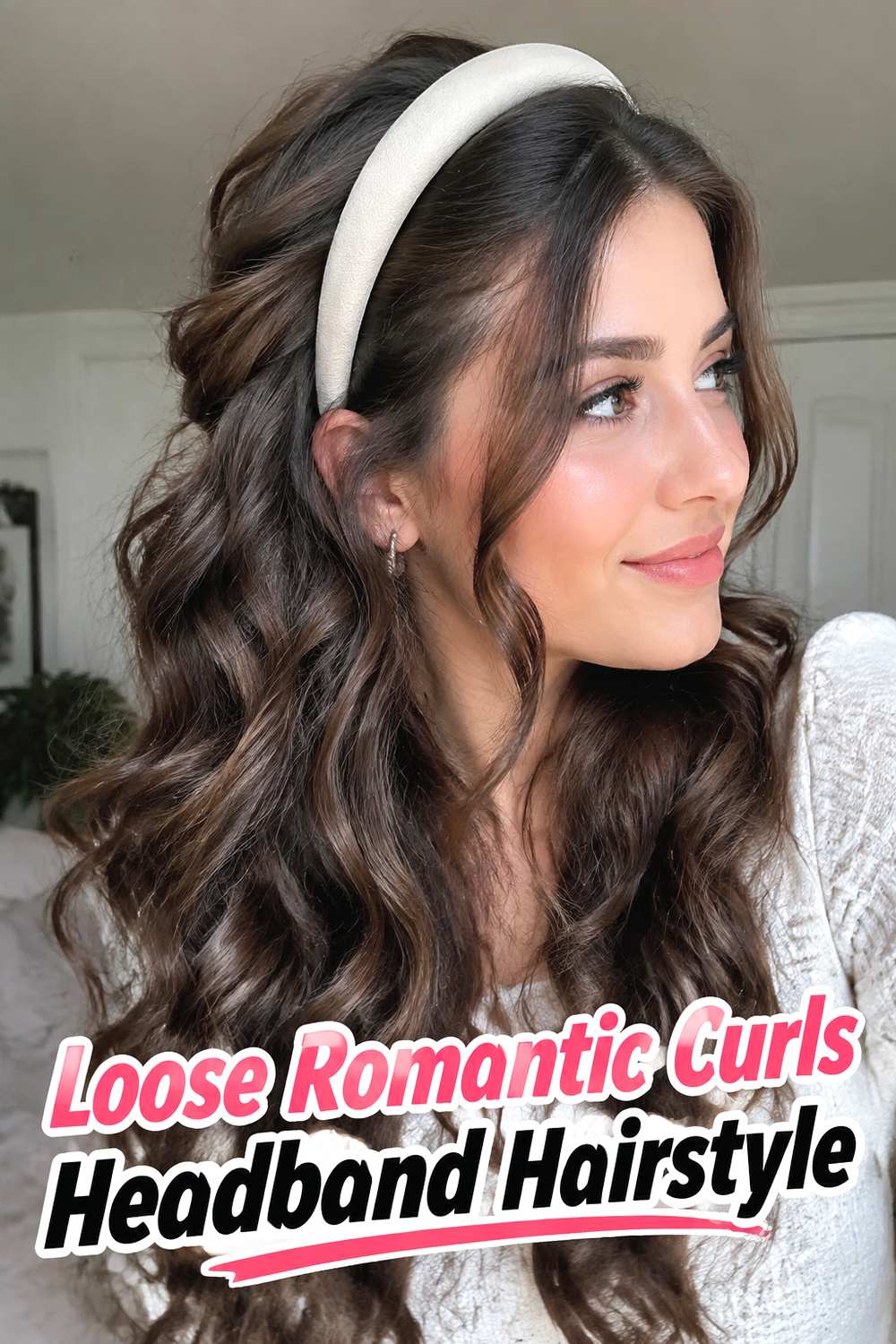
The Loose Romantic Curls Headband Hairstyle is soft, airy, and ideal when you want polished curls without a rigid shape. The hair remains mostly down, with the headband placed gently behind the front sections so the curls can frame the face and fall naturally around the shoulders. Rather than aiming for identical spirals, keep subtle variation in curl size and direction for a more believable, touchable finish. A slim metallic, pearl-inspired, satin, or padded headband can change the mood from relaxed to dressy while preserving the same basic silhouette. This style suits medium and long hair particularly well and pairs beautifully with curls that have definition through the mid-lengths but softer movement at the ends.
Best For
Consider this style for weddings, parties, dinners, celebrations, or any occasion where you want a feminine finish without pinning the hair into a formal updo.
Styling Notes
Keep styling products light around the crown so the band does not sit on stiff or sticky hair. Flexible hold helps the curls move naturally throughout the day.
11. Curly Space Buns Headband Hairstyle
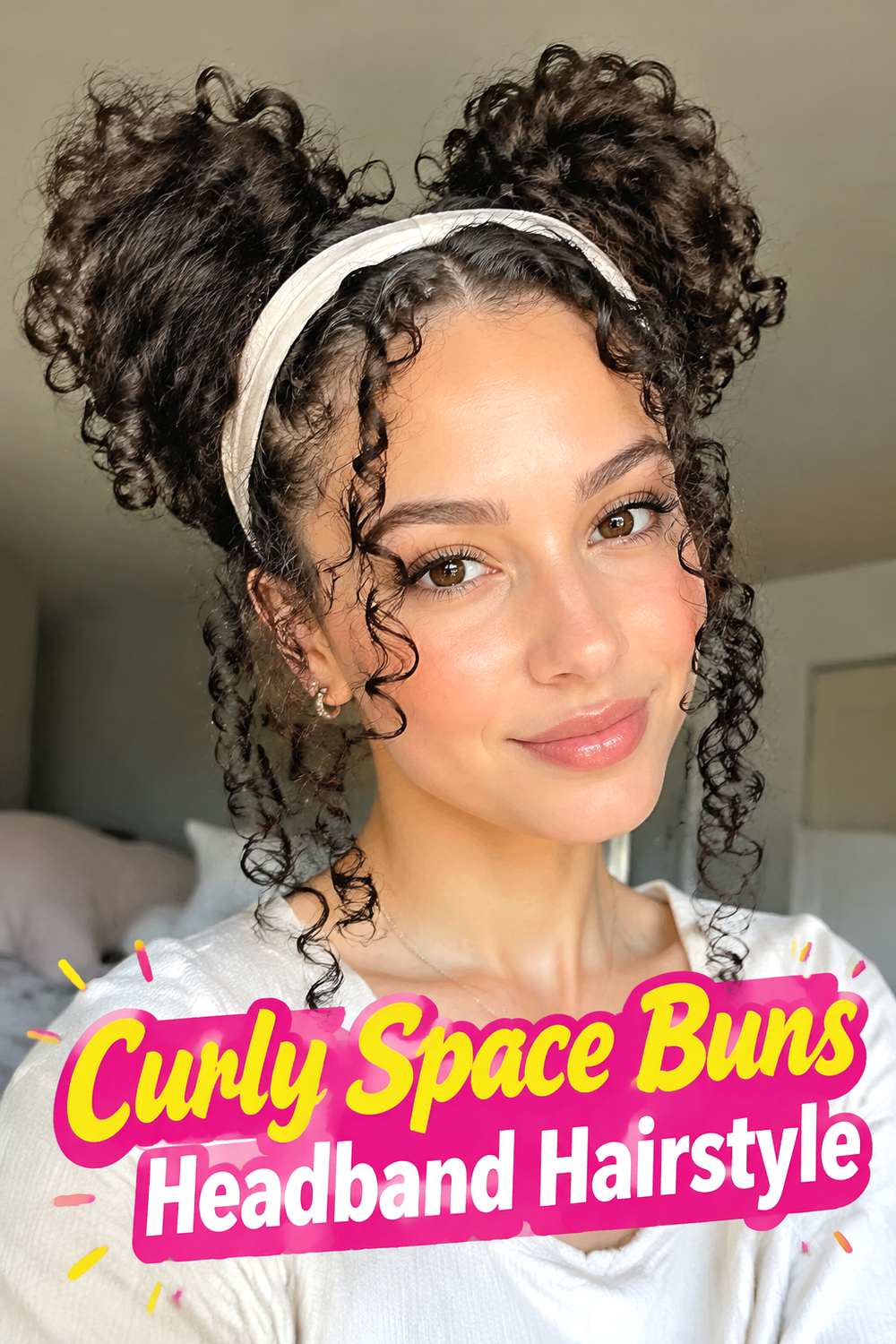
The Curly Space Buns Headband Hairstyle brings a playful shape to textured hair while keeping the front controlled. Hair is divided into two sections and gathered into buns high on either side of the head, with curly ends tucked, pinned, or intentionally left visible for texture. A headband across the front gives the style a finished appearance and can help manage smaller curls around the hairline. The buns do not need to be perfectly identical; slight differences often look more natural on curly hair. This option is particularly fun for casual weekends, festivals, creative outfits, or anytime you want your hairstyle to feel energetic rather than classic.
Styling Notes
Create each bun loosely and pin individual curls into place instead of twisting the hair extremely tight. This maintains softness and reduces unnecessary tension.
Wear & Maintenance
Check that both the buns and headband feel comfortable before leaving them in for extended wear. Loosen either element if you notice pulling around the temples or scalp.
12. Tucked Back Curls Headband Hairstyle
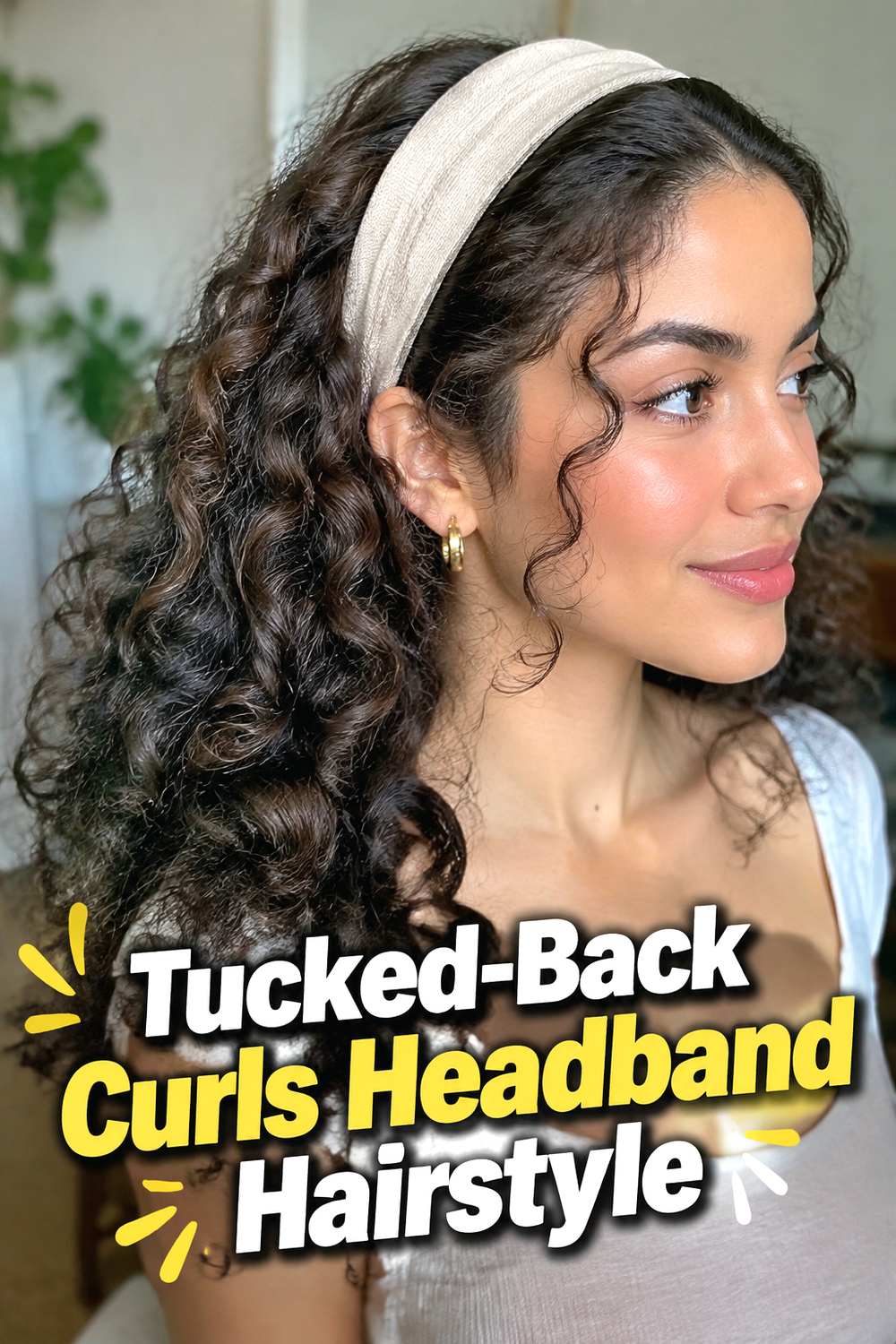
The Tucked-Back Curls Headband Hairstyle creates a clean, understated finish without putting the hair fully up. The headband gently guides curls away from the forehead and temples, while the lengths stay loose behind the shoulders or around the back. Unlike a strong pushed-back look, this version keeps a little lift near the roots so the hair still feels full. It is especially practical for medium-length curls that frequently fall forward during work, errands, or everyday activities. Choose a flexible headband with enough grip to stay in place without squeezing. The overall effect is effortless and tidy, making it a useful bridge between a completely loose style and a structured ponytail or bun.
Why It Works
The hairstyle controls the areas most likely to fall into the face while leaving the majority of the curls untouched, which helps preserve definition and natural movement.
Pro Tip
Slide the headband into place gradually rather than pushing it back in one motion. This reduces tangling and gives you more control over front volume.
13. Voluminous Afro Headband Hairstyle
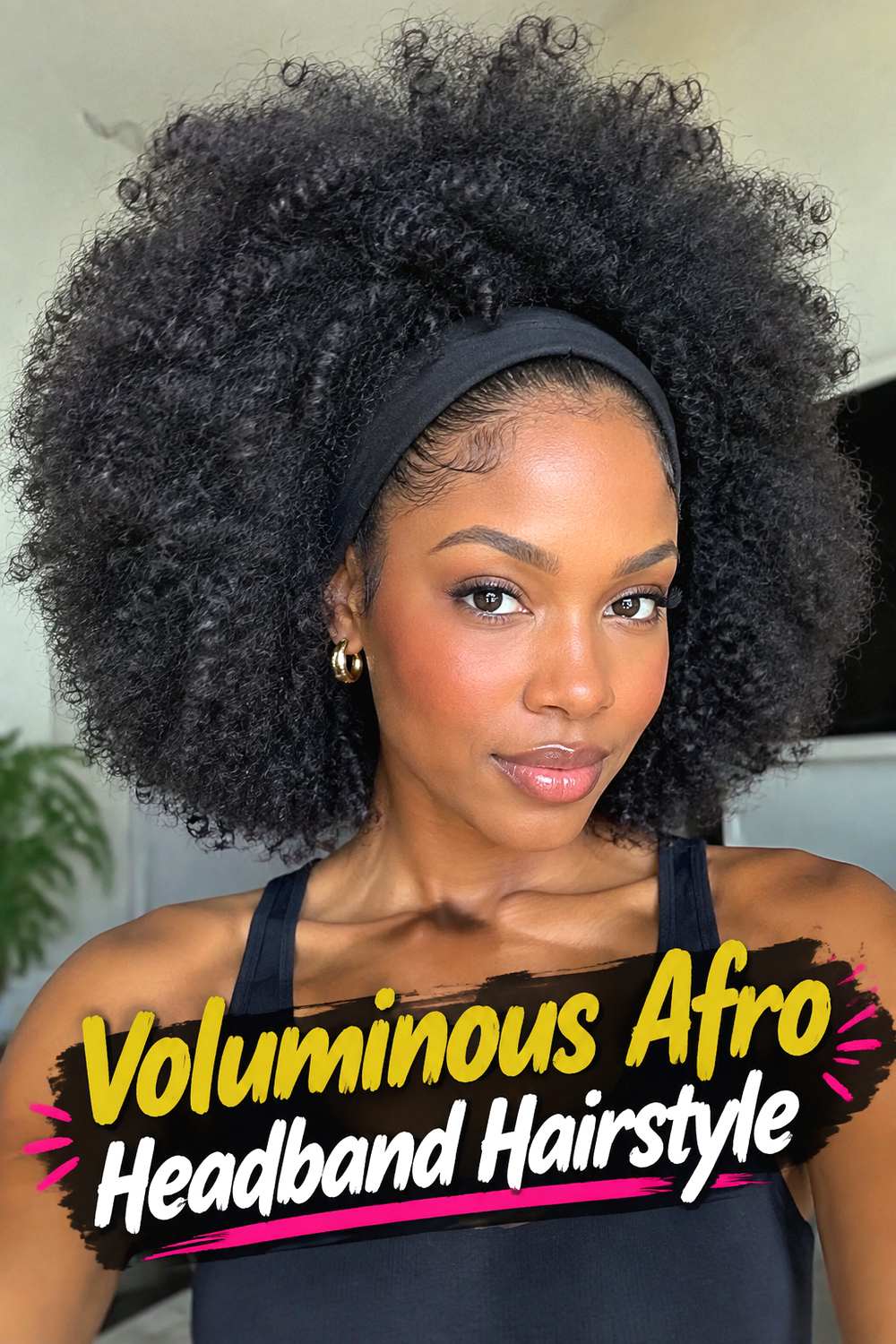
The Voluminous Afro Headband Hairstyle uses the headband to frame natural fullness instead of trying to reduce it. A wide or medium-width band sits securely around the front, while the curls or coils expand freely above, beside, and behind it. The contrast between the defined accessory and the soft rounded texture creates a strong silhouette that looks intentional from every angle. This approach works beautifully when the goal is to celebrate density and volume while keeping the immediate hairline neat. Pick a band with comfortable stretch and enough width to stay visible against full hair, but avoid one so tight that it compresses the shape or causes pressure at the temples.
Hair Type & Length
This style is especially suited to dense curls, coils, and afro-textured hair with enough volume to create a rounded or softly sculpted silhouette around the headband.
Styling Notes
Shape the hair with your hands or a wide-tooth tool only where needed. Focus on balancing the overall silhouette rather than separating every curl or coil.
14. Curly Updo Headband Hairstyle
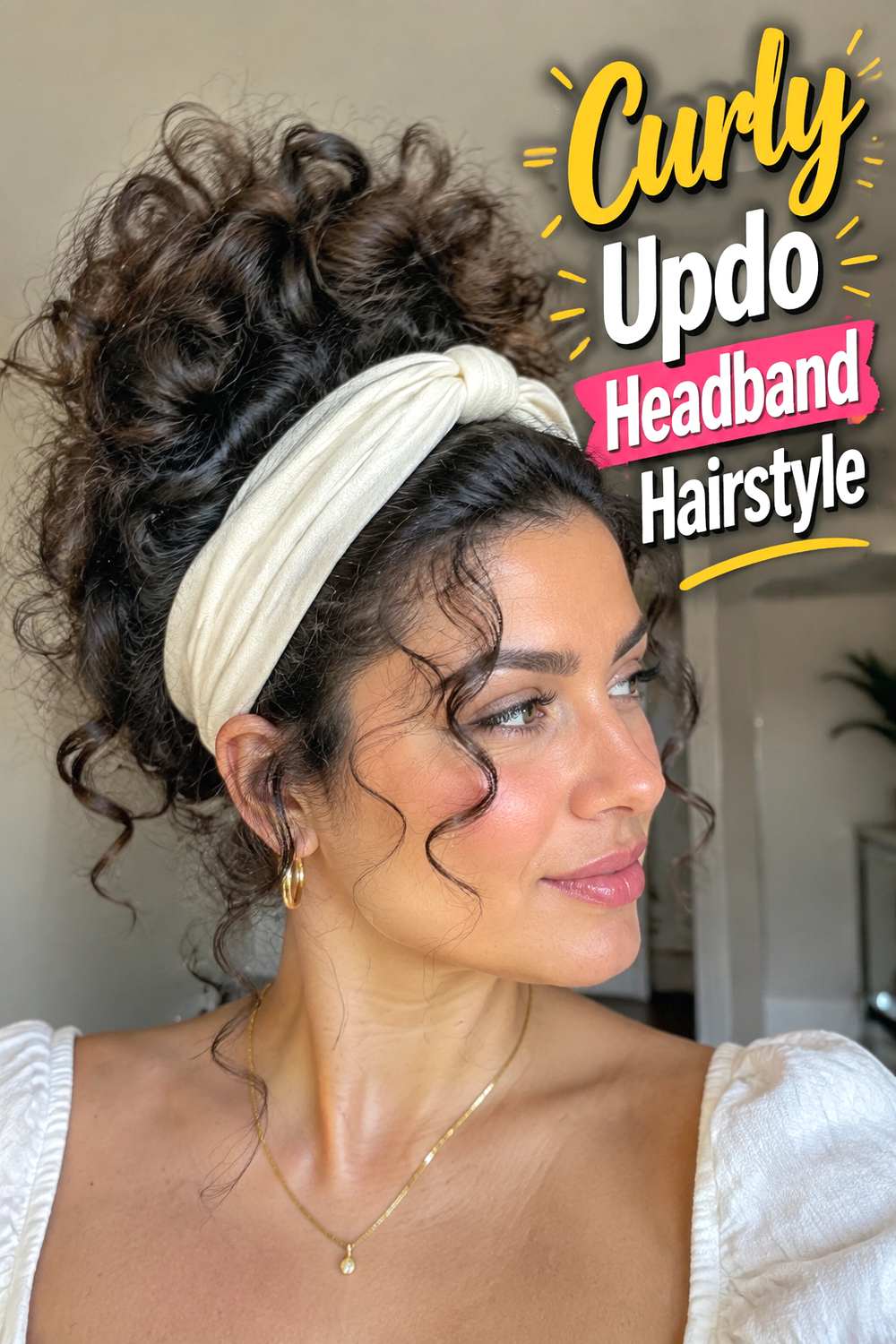
The Curly Updo Headband Hairstyle gathers the hair upward while intentionally leaving texture visible through the crown and pinned sections. Instead of smoothing every curl into a tight shape, the updo can include soft loops, defined curls, and a few carefully placed face-framing pieces. A polished headband finishes the front and gives the style enough structure for dressier occasions. This is a flexible choice because the updo can sit low, centrally, or higher depending on hair length and the desired silhouette. For the most natural result, pin curls individually where possible so the finished shape feels dimensional rather than compressed into one solid bun.
Best For
This style works well for weddings, formal dinners, celebrations, professional events, and occasions where loose curls may feel less practical but you still want visible texture.
Wear & Maintenance
Use pins to distribute the hold across several sections instead of depending on one tight elastic. This helps maintain the shape while keeping the updo more comfortable.
How to Choose the Right Look
Start with your hair length and natural volume. Short curls pair especially well with the Curly Pixie Headband Hairstyle or Curly Bob Headband Hairstyle because the accessory enhances an existing silhouette without requiring much length. Medium and long curls offer more flexibility for ponytails, buns, half-up styles, and formal updos.
Texture also affects how much control you may want from the headband. Defined curls can look beautiful with narrow bands that leave most of the pattern exposed, while dense curls and coils may benefit from wider bands that remain visible against greater volume. Choose comfortable materials with smooth edges whenever possible, particularly if you plan to wear the style for many hours.
Think about styling time as well. The Defined Wash-and-Go Headband Hairstyle and Tucked-Back Curls Headband Hairstyle require relatively little rearranging once your curls are styled. Braided details, space buns, and formal updos require more sectioning and pinning.
For maximum hold, combine the headband with discreet pins, elastics, or scrunchies instead of choosing an excessively tight band. If comfort is the priority, loose puffs, half-up styles, and soft low buns usually allow more flexibility. For volume, choose pineapple puffs, high ponytails, or afro-inspired shapes. For a smoother, refined finish, consider the low bun, tucked-back style, or structured updo.
Finally, match the finish to the occasion. Casual outfits can handle wider fabric bands and intentionally fluffy curls, while slim, satin, metallic, or embellished headbands can make loose curls and updos feel more polished for special events.
Final Thoughts
The best headband hairstyles for curly hair work with your natural texture rather than hiding it. Start with the amount of volume, hold, and styling time you actually want, then choose a headband that supports the shape comfortably. Whether you prefer a simple wash-and-go, a high puff, a playful updo, or soft curls worn down, small adjustments in placement and tension can make the look feel completely different.
FAQs
1. What type of headband works best for curly hair?
Soft fabric, flexible, padded, and smooth-edged headbands are useful options because they can hold curls without requiring extreme tension. The best width depends on your hair density and the amount of control you want.
2. How do I wear a headband without flattening my curls?
Avoid pushing the band too far back or choosing an overly tight fit. Place it gradually, then use your fingertips to lift any compressed roots and reshape the crown.
3. Can I wear a headband with short curly hair?
Yes. Headbands can work especially well with curly pixies and bobs because they control front pieces while emphasizing the shape and texture of the cut.
4. How can I stop a headband from sliding on curly hair?
Choose a band with gentle grip and position it where it sits securely against the head. Hidden bobby pins near the sides can add stability without requiring a tighter headband.
5. Should I put a headband on wet or dry curls?
Dry or mostly dry curls are generally easier to arrange without disrupting definition. Adding and repeatedly moving a headband while curls are very wet can disturb curl clumps and change the finished shape.
CTA
Save your favorite headband hairstyles for your next curly-hair refresh, and share the ideas with someone looking for an easy new way to style their texture.