17 Baroque Hair Pin Updo Ideas
Baroque hair pins turn simple updos into ornate statement styles, adding sculptural detail, pearls, gilded accents, and vintage-inspired elegance without overwhelming the hair.
The most effective Baroque hair pin updos treat the accessory as part of the hairstyle rather than an afterthought. A decorative pin can define the seam of a French twist, sit across a low chignon, highlight a braided crown, or add contrast to a softly undone bun. The shape and placement of the updo determine how much of the ornament remains visible.
When choosing a look, consider hair length, density, hold, accessory weight, and the amount of texture you want around the face. Larger pins usually need a stable bun or roll underneath them, while smaller ornate pins can be clustered or placed asymmetrically. Structural pins should hold the hairstyle first; decorative pieces can then be added without carrying the full weight of the updo.
Quick List
- Low Chignon Baroque Hair Pin Updo Hairstyle
- French Twist Baroque Hair Pin Updo Hairstyle
- Braided Crown Baroque Hair Pin Updo Hairstyle
- High Bun Baroque Hair Pin Updo Hairstyle
- Side Chignon Baroque Hair Pin Updo Hairstyle
- Soft Twisted Baroque Hair Pin Updo Hairstyle
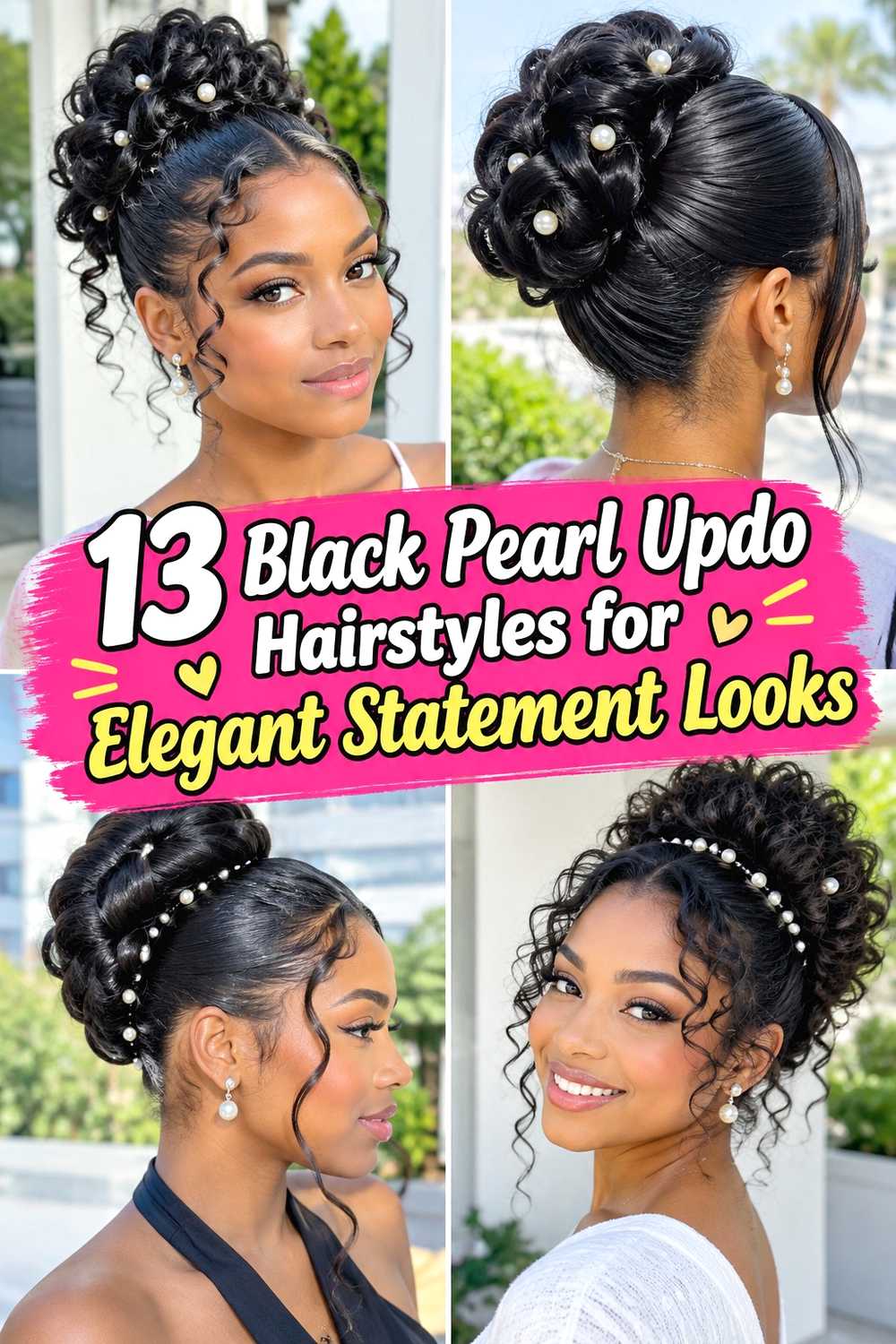
- Pearl Baroque Hair Pin Low Bun Hairstyle
- Sculpted Roll Baroque Hair Pin Updo Hairstyle
- Messy Bun Baroque Hair Pin Updo Hairstyle
- Double Twist Baroque Hair Pin Updo Hairstyle
- Gilded Baroque Hair Pin Top Knot Hairstyle
- Romantic Curly Baroque Hair Pin Updo Hairstyle
- Wrapped Bun Baroque Hair Pin Updo Hairstyle
- Asymmetrical Baroque Hair Pin Updo Hairstyle
- Low Braided Baroque Hair Pin Updo Hairstyle
- Half Crown Baroque Hair Pin Updo Hairstyle
- Clustered Baroque Hair Pin Chignon Hairstyle
1. Low Chignon Baroque Hair Pin Updo Hairstyle
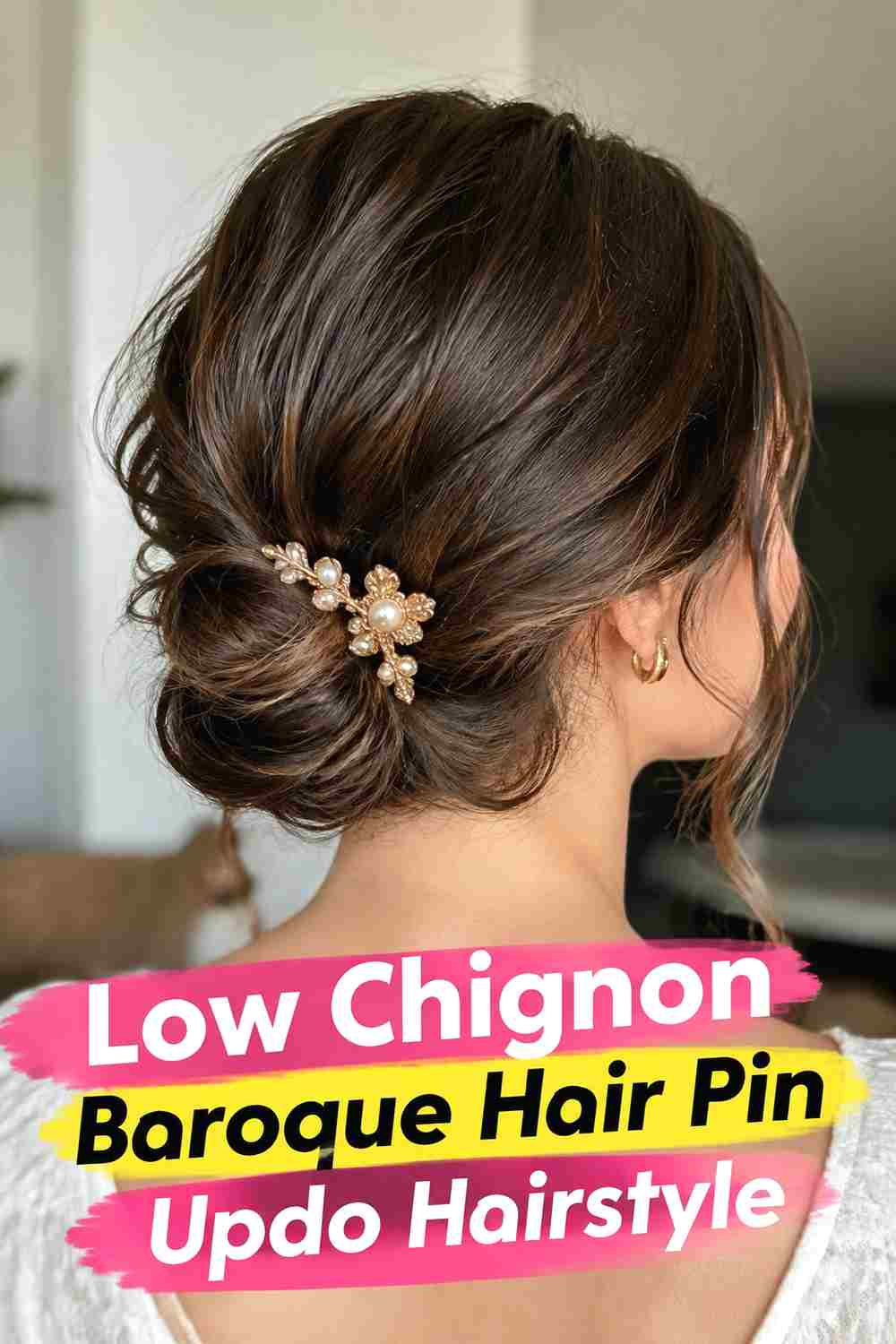
A low chignon provides a clean foundation for a decorative Baroque hair pin because the rounded bun gives the ornament a stable, visible backdrop. Gather the hair near the nape and shape it into a smooth or softly textured chignon, then place the pin diagonally across one side or horizontally above the bun. A gold-toned floral, scrollwork, or pearl-accented design can add richness without requiring additional accessories. Keep the crown slightly lifted so the hairstyle does not look overly flat from the side. If the pin is substantial, secure the chignon independently first and insert the decorative piece only after the structure feels stable.
Styling Notes
Position the ornament where it can be seen from the back and side without covering the entire bun. Hidden bobby pins should handle the main hold.
Best For
This elegant combination works well for weddings, formal dinners, evening events, and occasions where you want a polished but not overly tall updo.
2. French Twist Baroque Hair Pin Updo Hairstyle
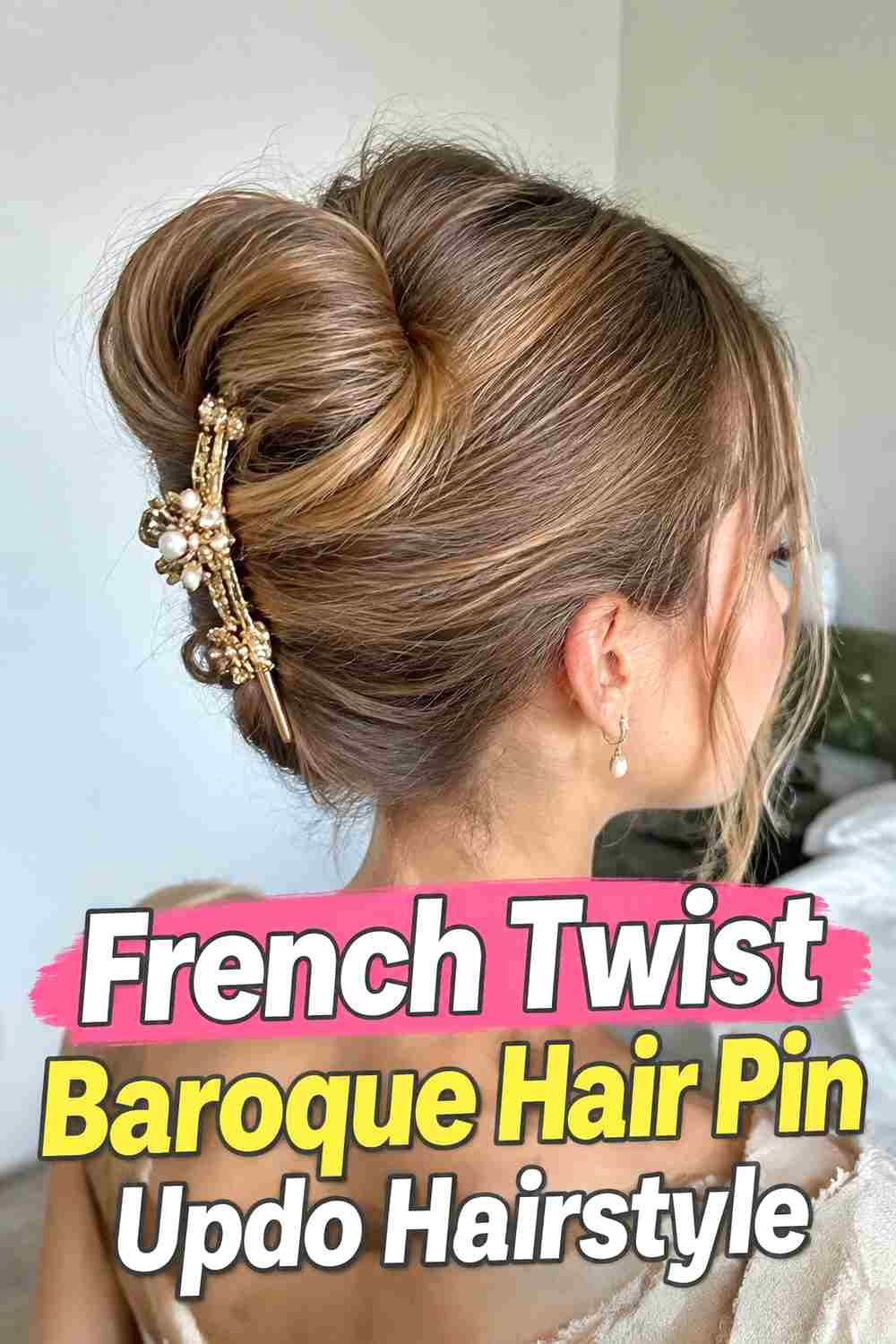
A French twist pairs naturally with Baroque ornamentation because the vertical seam creates an ideal line for a long decorative pin. Sweep the hair inward and roll it into a classic central twist, leaving a little texture at the crown if you prefer a softer finish. Once the seam is secured with hidden pins, insert a Baroque hair pin along the upper third of the roll or angle it across the fold. Scroll-shaped metalwork, faux pearls, and antique-inspired motifs look especially cohesive with this silhouette. Avoid using the decorative pin as the only support; the twist should remain intact even if the ornament is removed.
Why It Works
The long vertical shape of the French twist mirrors the elongated form of many decorative hair pins, making the accessory look intentionally integrated.
3. Braided Crown Baroque Hair Pin Updo Hairstyle
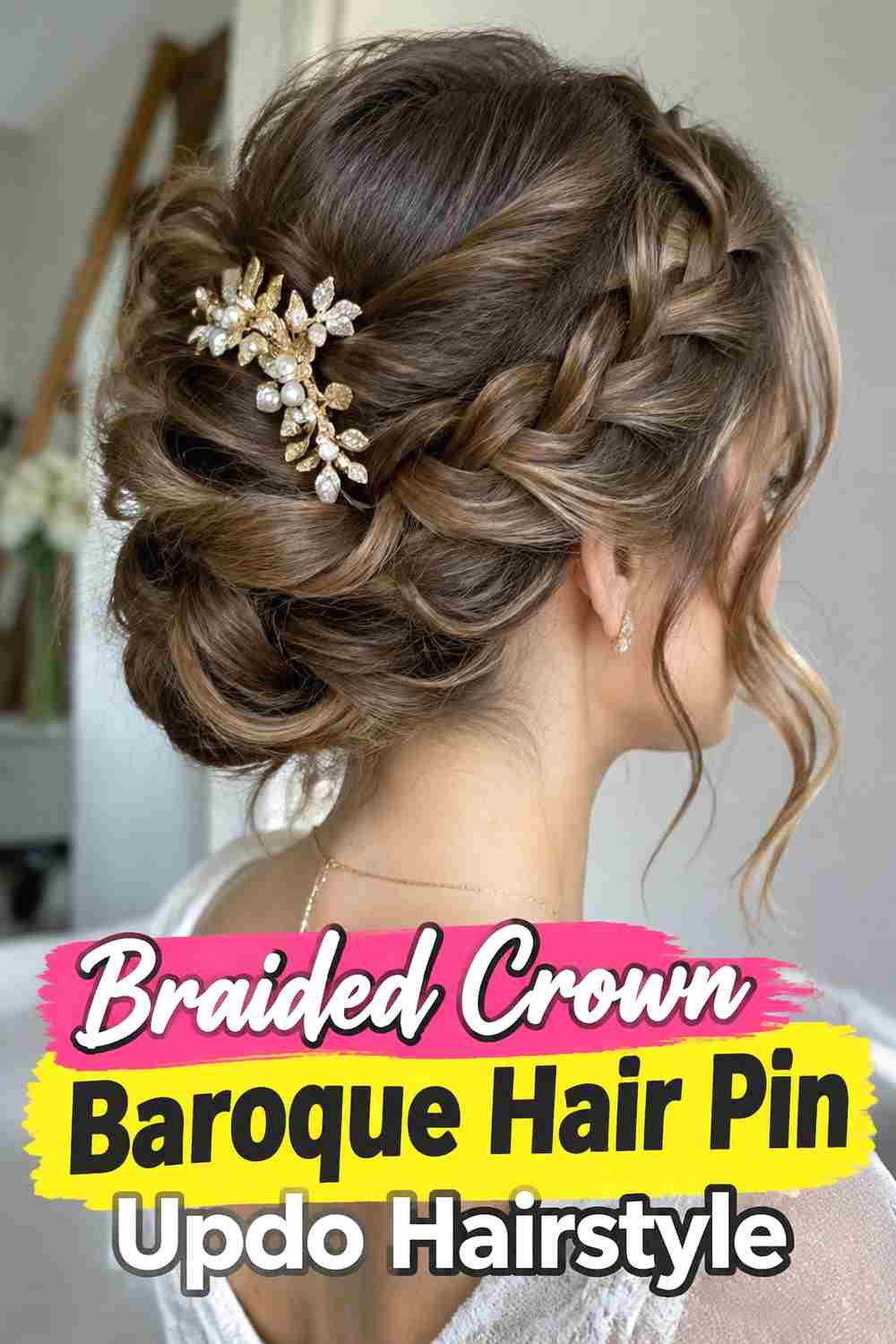
A braided crown gains a regal finish when a Baroque pin is positioned where the braid meets or overlaps. Create a substantial braid around the head or use two braids brought together at the back, then tuck the ends securely. Place an ornate pin just above the joining point so it appears almost like a small crown ornament. The braid texture provides visual detail, so choose a pin that complements rather than competes with the plait. Gold filigree, pearl clusters, or leaf motifs can work particularly well. Keep the braid softly expanded for width, but avoid loosening it so much that the pin lacks a firm section to sit against.
Styling Notes
Secure the braid completely before adding the ornament. Insert the pin into a dense section near the overlap rather than into loosely pancaked edges.
4. High Bun Baroque Hair Pin Updo Hairstyle
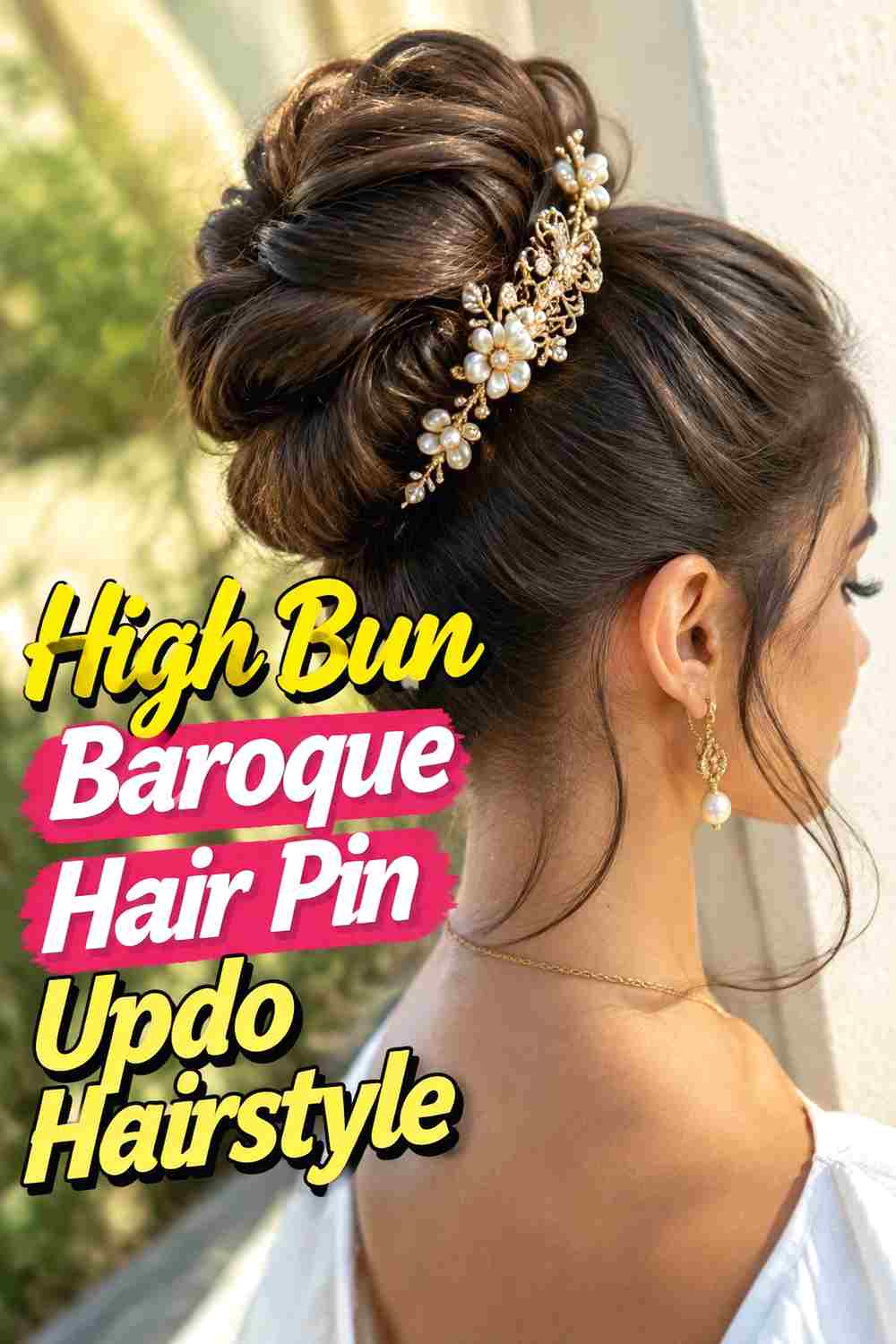
A high bun creates a dramatic base for a Baroque hair pin, especially when the ornament sits at the lower edge of the bun where it remains visible from the front or profile. Gather the hair toward the crown, shape it into a rounded bun, and secure it firmly before adding the decorative piece. A curved gilded pin can follow the bun’s base, while a vertical pin creates a stronger statement. Keep the top polished enough that the accessory looks deliberate, but allow some natural texture if you prefer a softer finish. The bun should remain balanced so the added weight of the pin does not pull the style backward or to one side.
Wear & Maintenance
If the pin is heavy, support the bun with multiple hidden pins around its base so the ornament does not become a structural anchor.
5. Side Chignon Baroque Hair Pin Updo Hairstyle
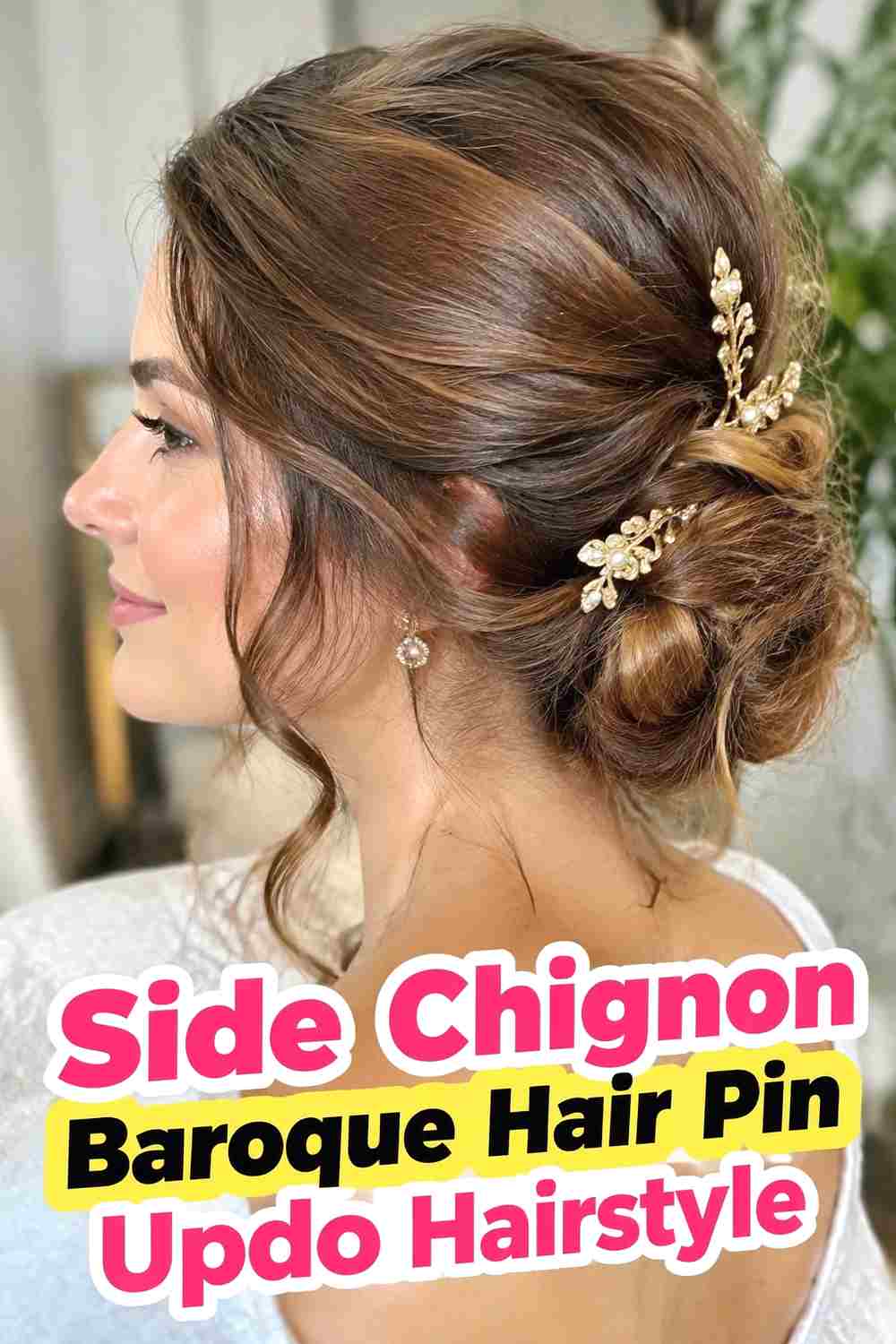
An off-center chignon creates natural asymmetry and gives an ornate hair pin a more dramatic role. Sweep the hair toward one side of the nape, form a compact or softly twisted chignon, and place the pin just above or through the outer edge. The accessory can extend upward toward the ear or angle across the bun depending on its shape. Because the hairstyle already has directional movement, one substantial Baroque pin is often enough. Keep the opposite side relatively clean so the eye naturally travels toward the decorated chignon. A few face-framing pieces can soften the look without distracting from the ornamented side.
Best For
This style works beautifully for formal portraits, weddings, evening events, and occasions where you want the hair accessory to be visible from the side.
6. Soft Twisted Baroque Hair Pin Updo Hairstyle
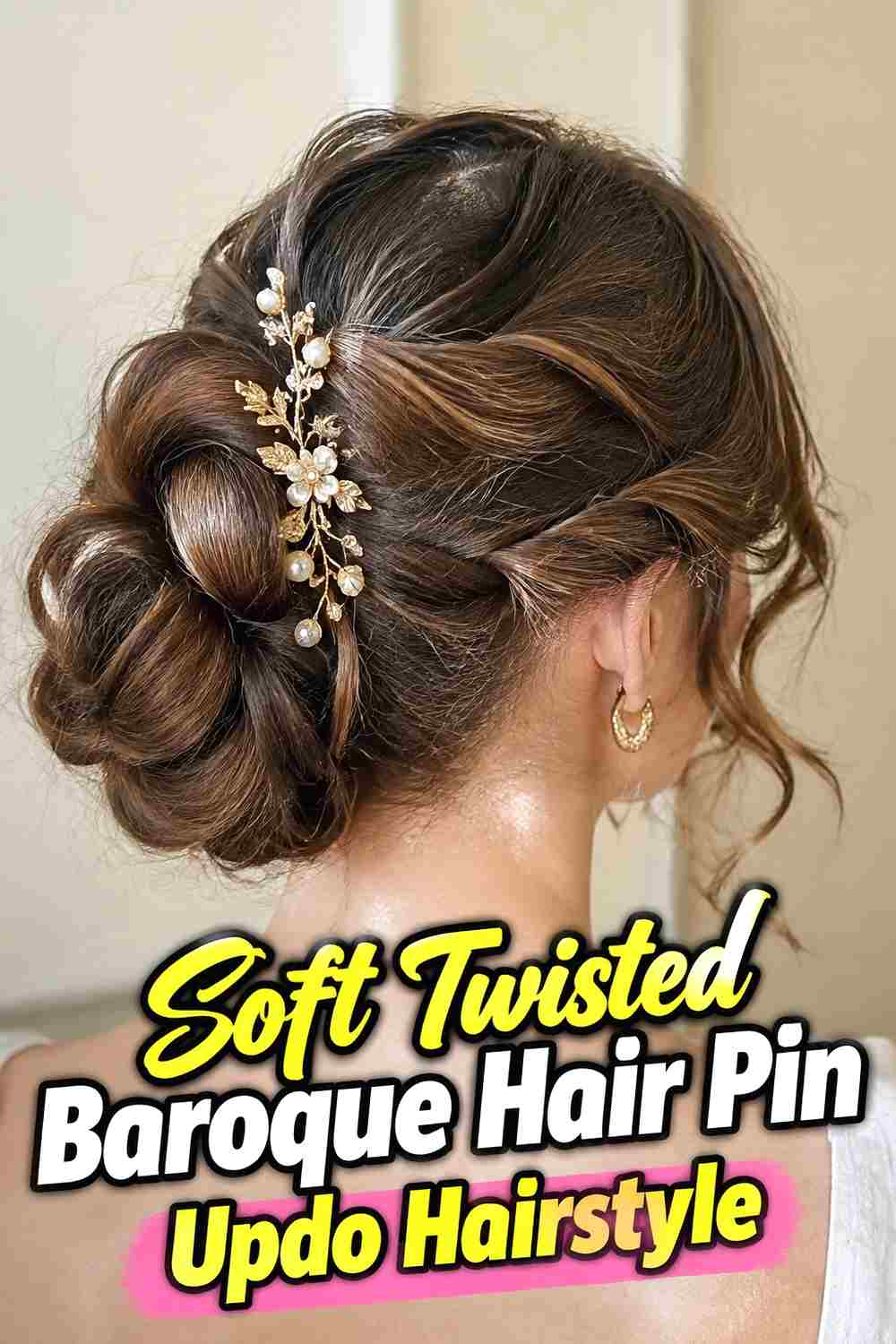
A soft twisted updo uses overlapping sections instead of one tightly controlled bun, creating a romantic background for an ornate pin. Twist sections from each side toward the back, overlap them near the nape or mid-crown, and tuck the ends into a loose central shape. Once the structure is secure, slide the Baroque pin across the joining point so it conceals some of the hidden pins beneath. Leave the surface softly textured rather than overly slick. This look pairs well with delicate gold scrollwork, floral designs, and smaller pearl accents because the hairstyle itself already has plenty of movement. Keep the ornament central enough to unify the overlapping twists.
Pro Tip
Add the decorative pin last so you can adjust the softness of the twists without repeatedly removing and reinserting the accessory.
7. Pearl Baroque Hair Pin Low Bun Hairstyle
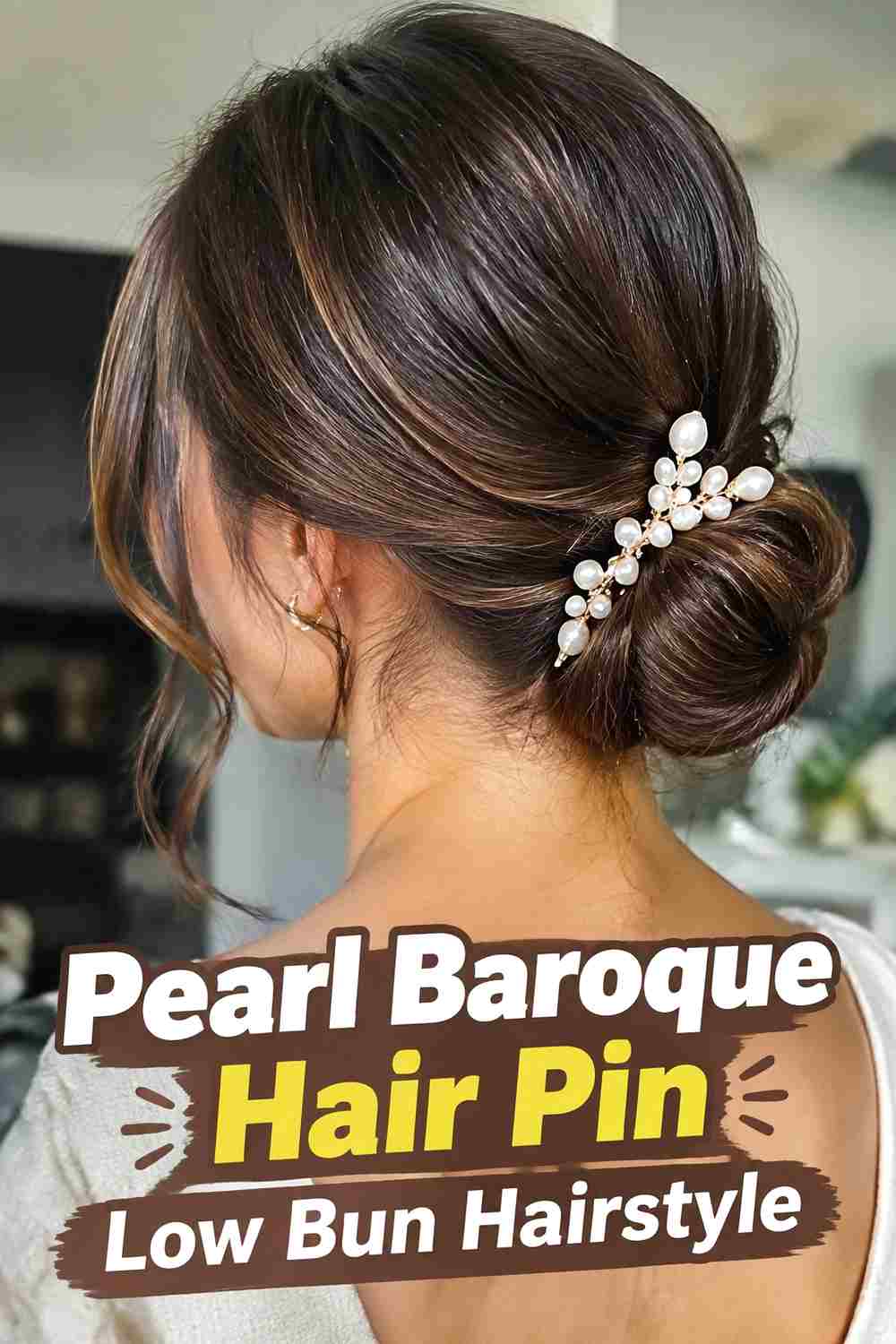
Pearls give a low bun a softer Baroque feel while still maintaining the richness associated with ornate accessories. Form a neat bun at the nape, then place a pearl-detailed pin along one side so the beads follow the curve of the hairstyle. Mixing small pearls with gold-toned leaves or filigree creates a vintage-inspired effect without making the bun look costume-like. Keep the crown smooth or gently voluminous depending on the occasion. If the pin contains several pearl branches, angle it outward slightly so the details remain visible rather than disappearing into the bun. The underlying bun should provide enough density for the stem to sit firmly.
Styling Notes
Place the pin after the bun is fully secured and test the angle from the side before pushing it completely into position.
8. Sculpted Roll Baroque Hair Pin Updo Hairstyle
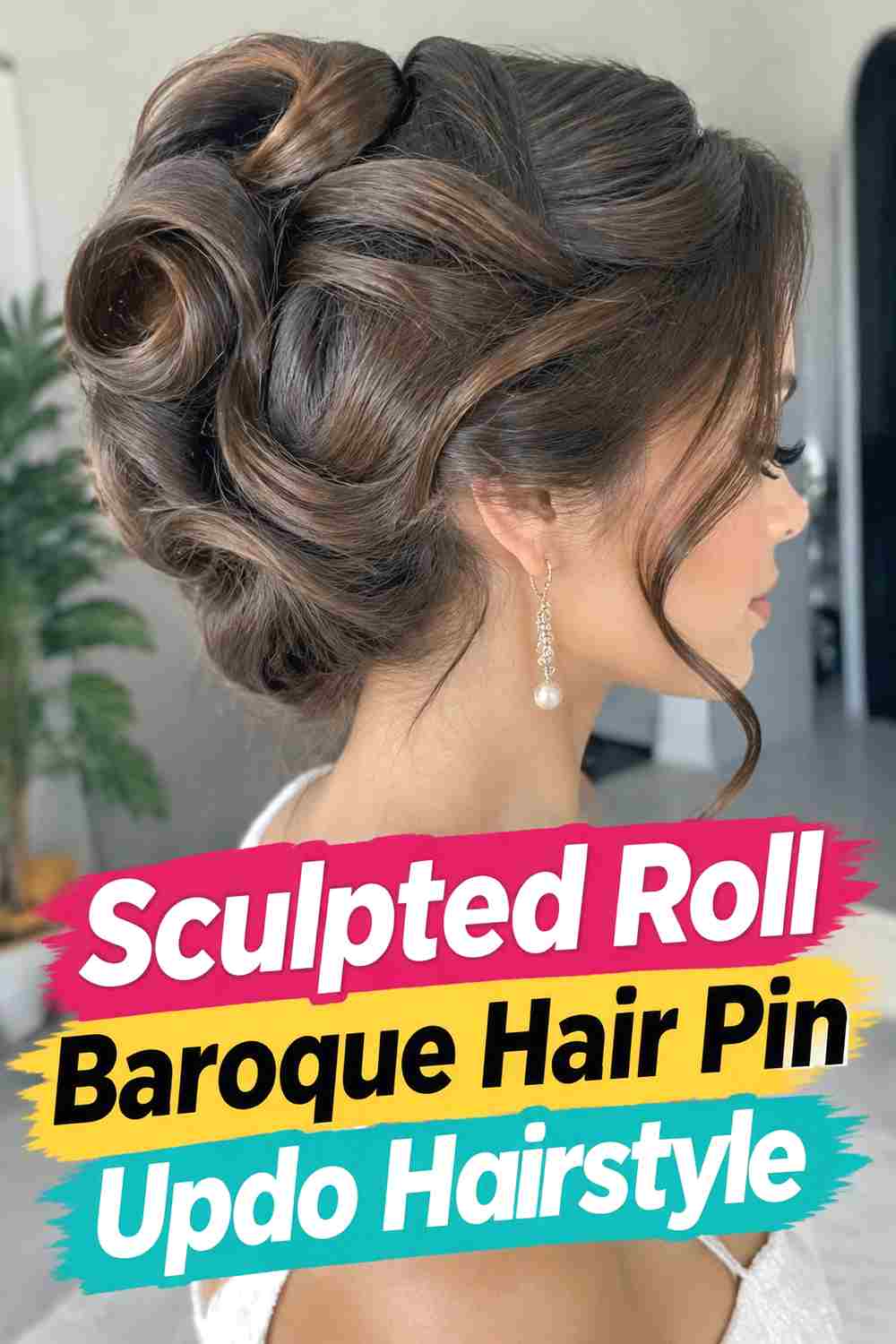
A sculpted roll creates a strong architectural shape that can carry a larger Baroque ornament without looking overwhelmed. Roll the hair inward from one or both sides, forming a raised ridge through the back, then secure the structure with hidden pins. Place the decorative hair pin across the upper edge of the roll or along one side of the seam. Because the shape is already dramatic, keep the surface relatively clean so the accessory remains easy to see. A wider filigree design or antique-inspired metal pin can work especially well here. The roll should feel firm but not excessively compressed, with enough internal support to carry the ornament comfortably.
Best For
Choose this version for formal events, editorial-inspired styling, evening occasions, and situations where a more sculptural updo feels appropriate.
9. Messy Bun Baroque Hair Pin Updo Hairstyle
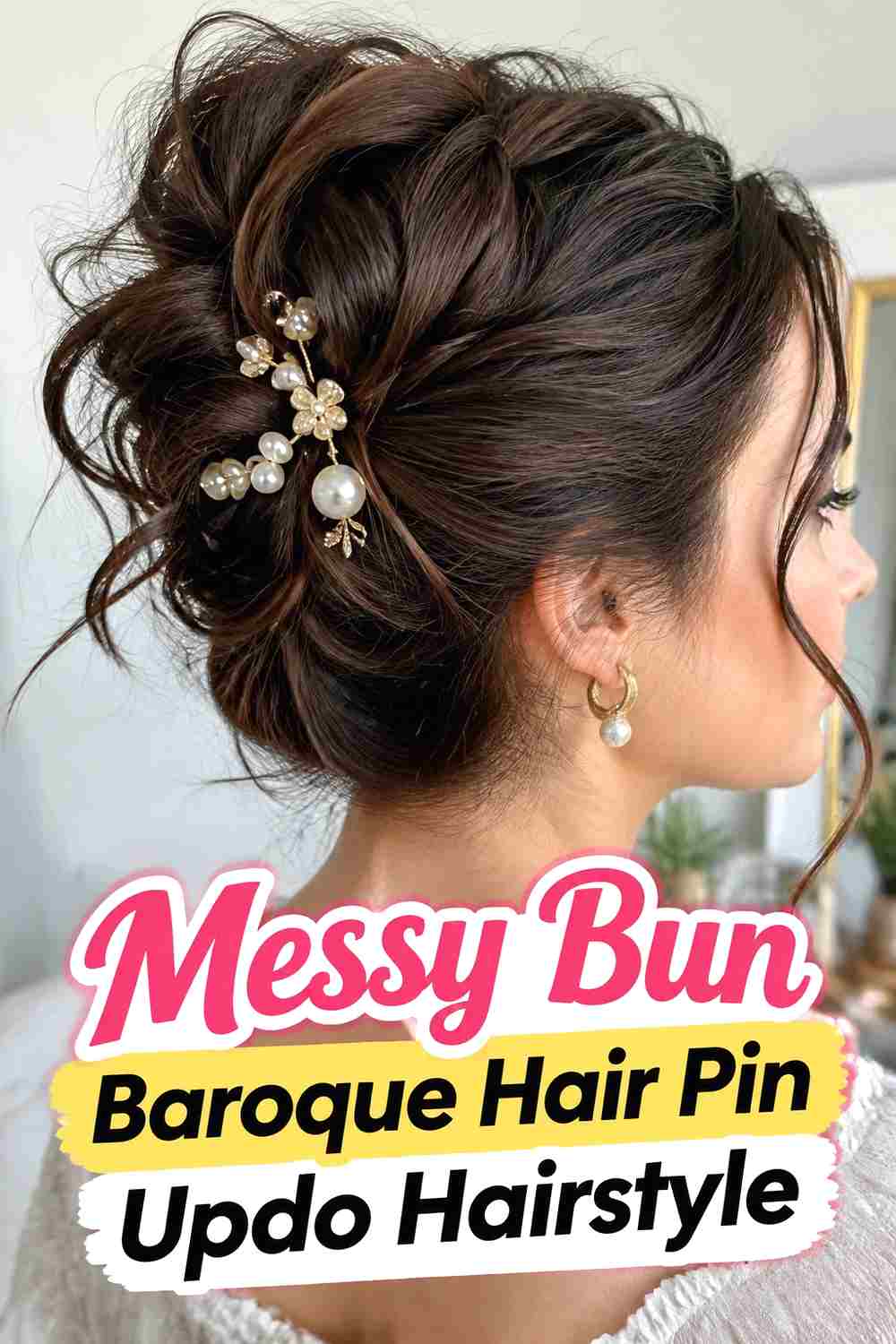
A softly messy bun creates an appealing contrast with an ornate Baroque hair pin. Gather the hair into a loose mid or low bun, allowing some texture and a few wispy sections to remain visible. Once the bun is structurally secure, insert the decorative pin slightly off-center so the polished metalwork stands out against the relaxed texture. This mix of formal accessory and casual styling keeps the look from feeling overly historical. Avoid making the bun so loose that the pin has nothing dense to grip. Instead, maintain a stable center with softer outer sections. A medium-size pin usually works better than a very large piece when the hairstyle itself is intentionally airy.
Why It Works
The contrast between an intricate accessory and a loose bun creates visual interest while making the overall hairstyle feel modern and wearable.
10. Double Twist Baroque Hair Pin Updo Hairstyle
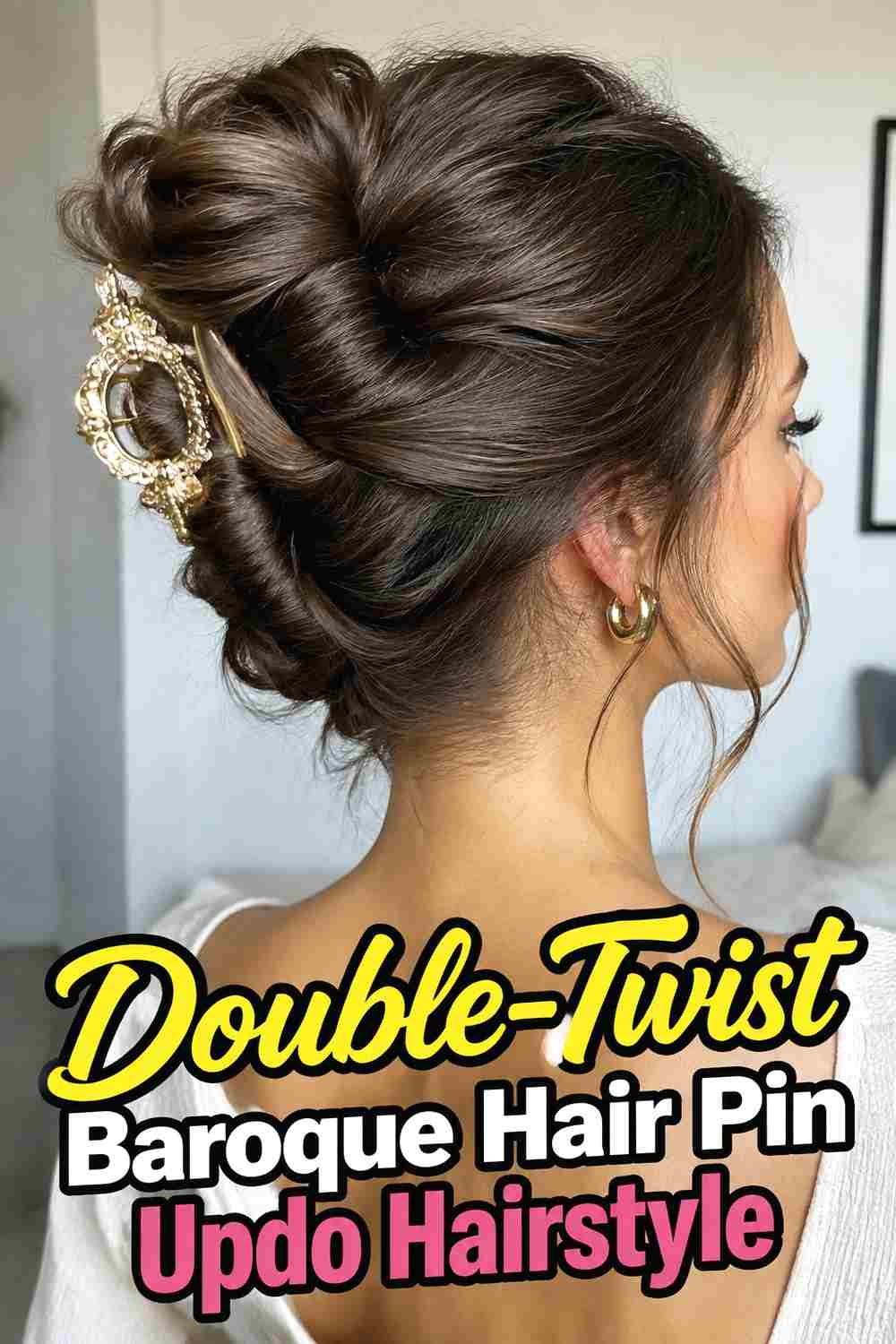
This updo uses two substantial twists that meet at the back, creating a natural central location for a decorative Baroque pin. Bring one section from each side toward the middle, twist them inward, and tuck or overlap the ends to create a compact updo. Position the pin across the point where the two twists meet, allowing its decorative top to sit above the seam. The hairstyle can be smooth for a formal finish or gently loosened for softer texture. A symmetrical ornament works particularly well here because it echoes the balanced two-sided structure. Keep the twists substantial enough to support the pin and prevent it from sliding through loosely gathered hair.
Styling Notes
Pin both twists independently before adding the accessory. The Baroque pin should decorate the meeting point rather than hold the two sides together by itself.
11. Gilded Baroque Hair Pin Top Knot Hairstyle
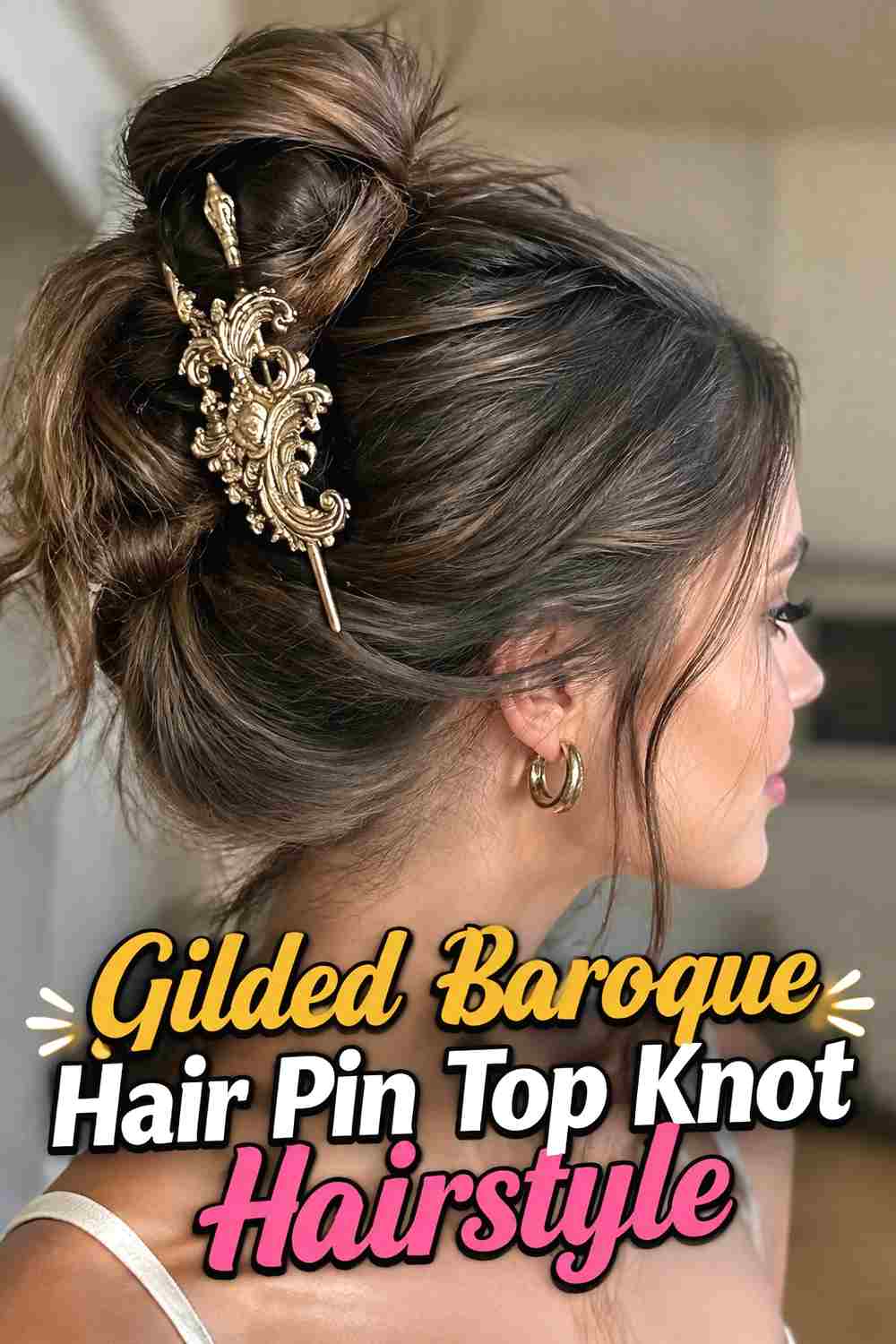
A top knot becomes more elegant when paired with a gilded Baroque pin placed at its base. Gather the hair high, form a secure knot, and position the ornament slightly to one side so the metalwork remains visible rather than disappearing behind the bun. A gold-toned design with carved leaves, floral curves, or small jewel details can create a rich finish without needing additional accessories. Keep the knot smooth enough to provide contrast with the ornate pin, or allow subtle natural texture if you prefer a less formal look. Since the accessory sits high on the head, choose a pin that feels lightweight enough to remain comfortable during extended wear.
Wear & Maintenance
Check that the ornament does not shift the top knot’s balance. Hidden pins should stabilize the bun before the decorative piece is inserted.
12. Romantic Curly Baroque Hair Pin Updo Hairstyle
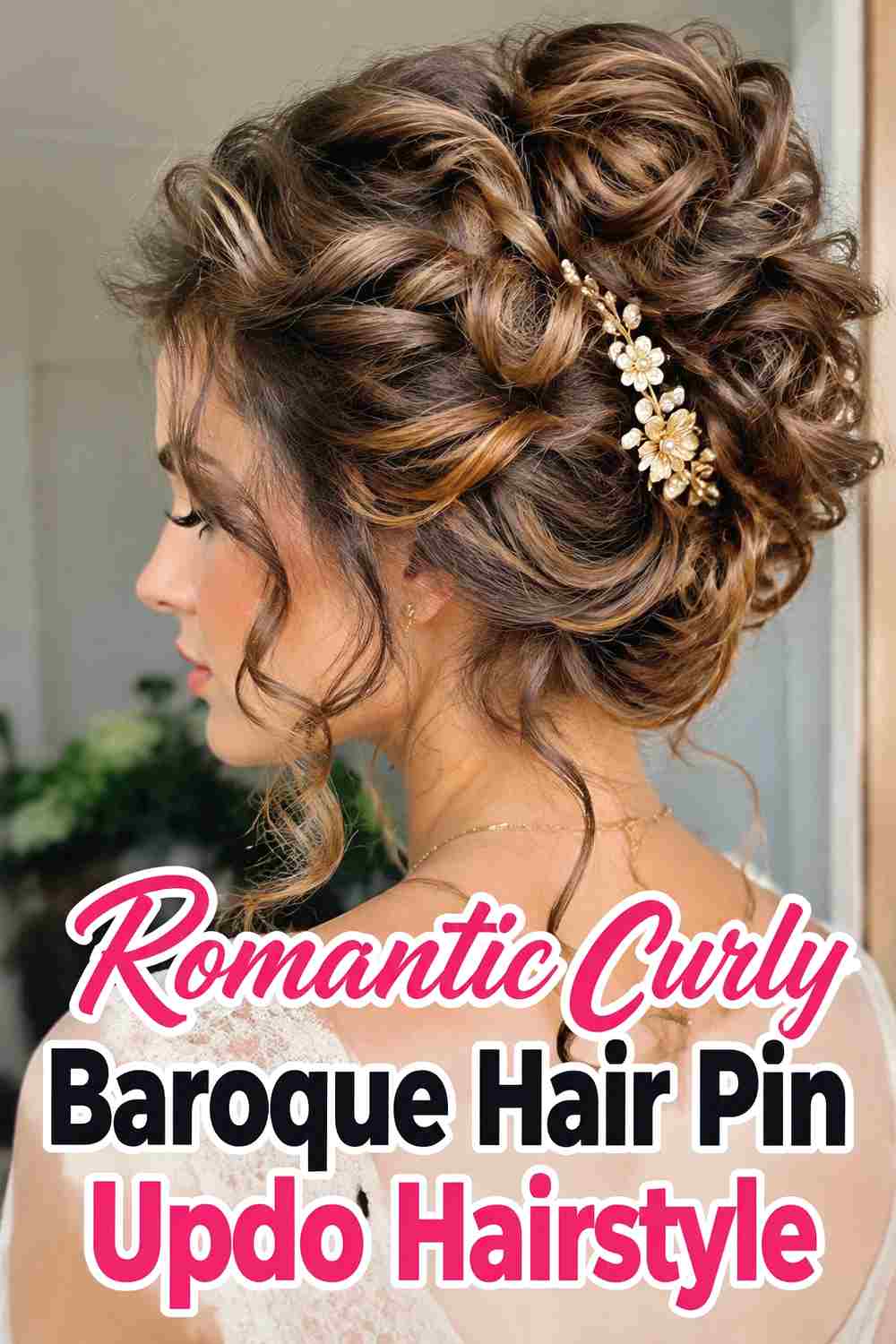
Visible curls make a Baroque hair pin updo feel softer and more romantic. Gather most of the hair into a loose back or low updo while leaving several defined curls arranged around the top, sides, or nape. Place the ornate pin near the main gathering point so it anchors the visual design without covering the curls. Pearl, floral, or vine-like motifs complement the movement of the texture especially well. Keep loose curls intentional and spaced so the style remains elegant rather than unfinished. The decorative pin should sit against a secured base, while the curls can be individually pinned around it to create a fuller, dimensional finish.
Best For
This style is especially suited to weddings, romantic dinners, formal photographs, and events where you want both visible curl texture and an ornate accessory.
13. Wrapped Bun Baroque Hair Pin Updo Hairstyle
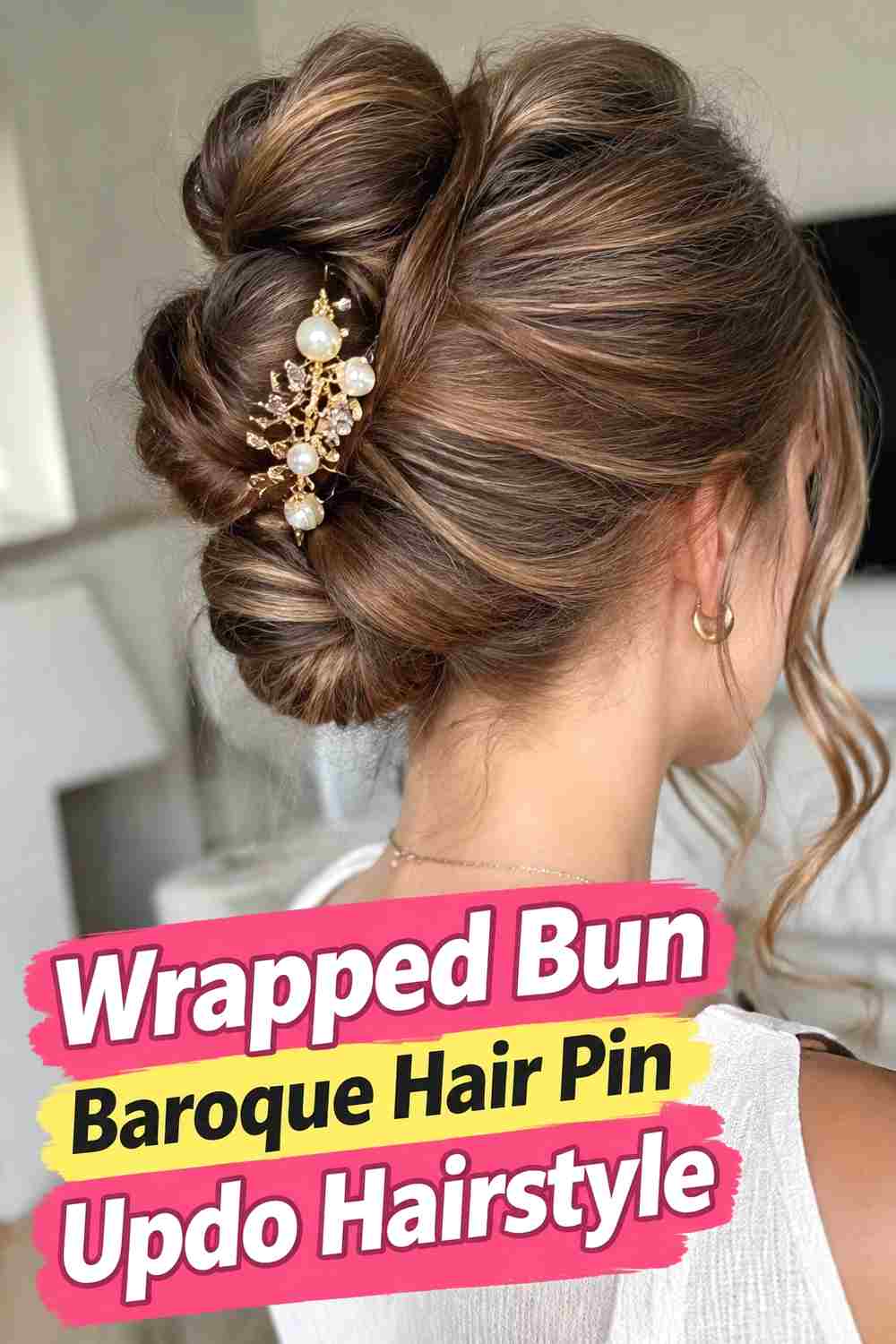
A wrapped bun has clean directional lines that make an intricate hair pin easy to highlight. Create a central bun, then reserve one section of hair to wrap around the base, concealing elastics and creating a polished outer band. Insert the Baroque pin where the wrapped section ends so the ornament naturally disguises the final tucked point. This placement makes the accessory feel functional even though hidden pins are still doing the actual structural work. Keep the wrap smooth enough for the design to remain visible. A long filigree pin or small pearl-and-gold piece can both work, depending on the scale of the bun and the amount of ornamentation you prefer.
Pro Tip
Reserve the wrapping section before forming the main bun so the final band remains smooth and easy to position around the base.
14. Asymmetrical Baroque Hair Pin Updo Hairstyle
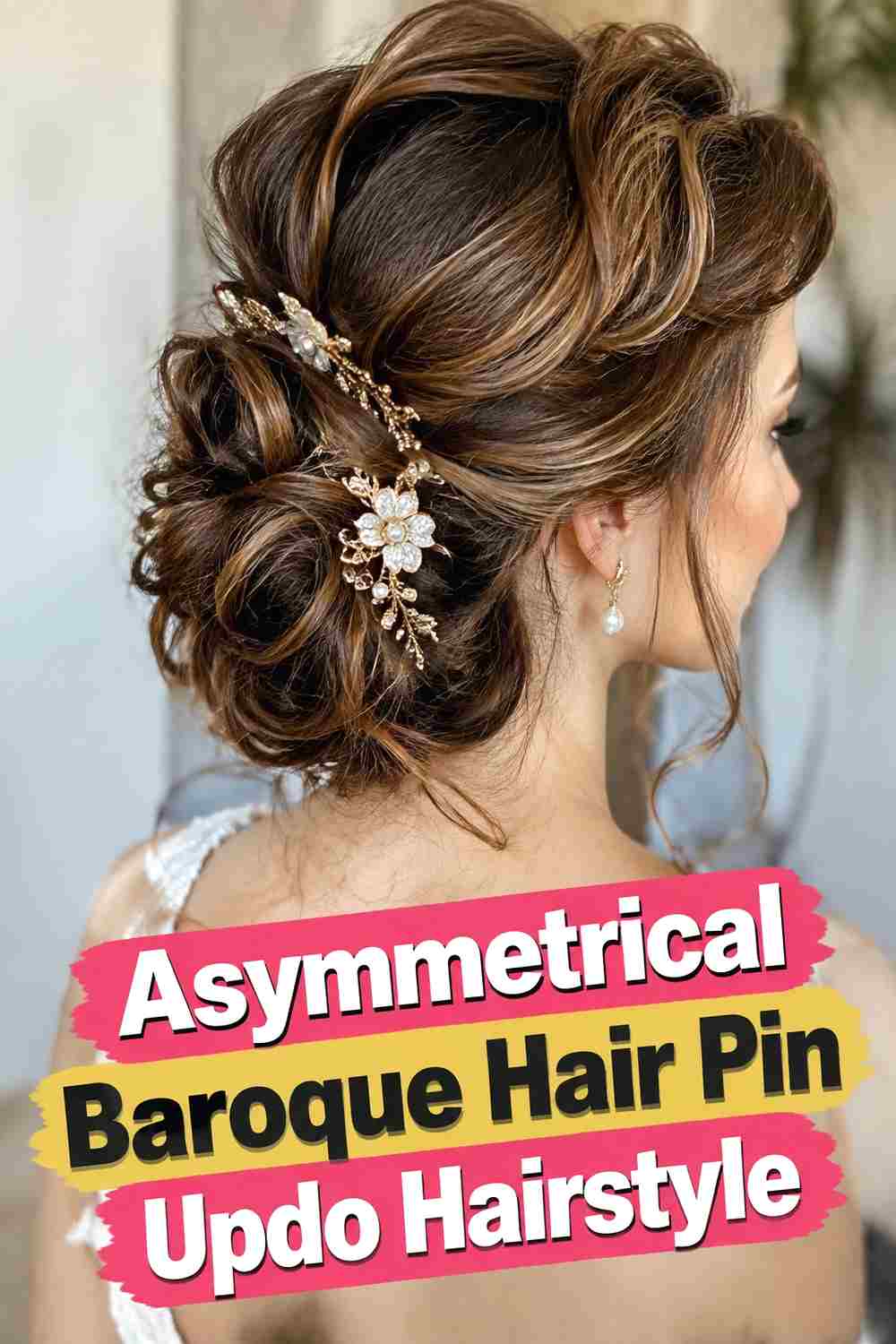
An asymmetrical updo allows the Baroque hair pin to emphasize one side of the hairstyle rather than sitting in the center. Sweep more volume toward one side, create a twisted tuck or off-center bun, and place the ornament along the cleaner edge where its details remain visible. The opposite side can have more texture or height, creating a deliberate contrast. This approach works particularly well with irregular floral or branch-shaped pins because their organic design complements the uneven silhouette. Keep the overall style balanced even though it is not symmetrical; the accessory should enhance the direction of the updo rather than make one side look unexpectedly heavy.
Styling Notes
Choose the pin placement after shaping the updo so the ornament follows the existing direction instead of forcing the hairstyle to accommodate it.
15. Low Braided Baroque Hair Pin Updo Hairstyle
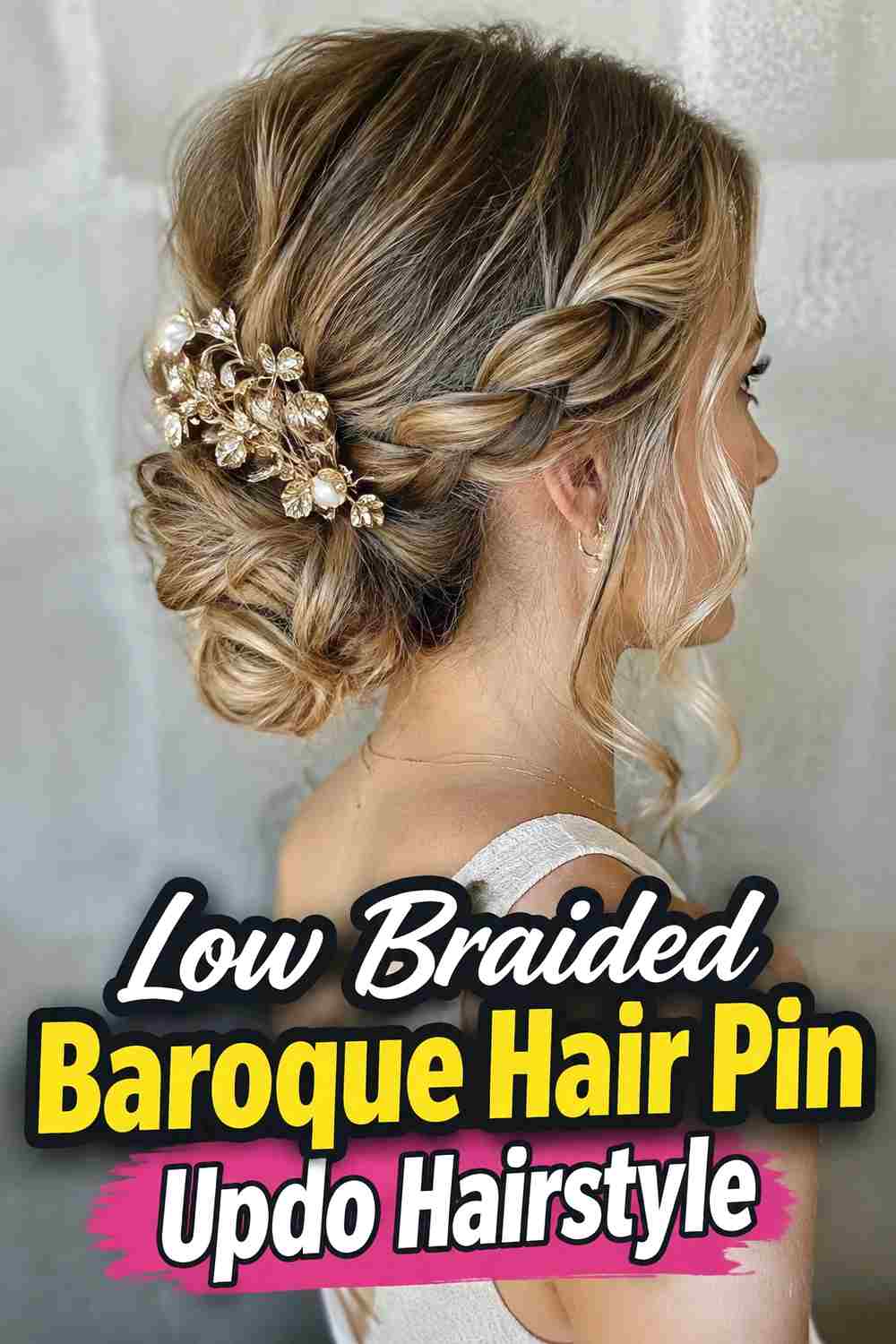
A low braided updo creates rich texture around the nape and gives an ornate pin a secure place to sit. Form one or more braids, coil them into a low bun, and pin the shape firmly before placing the Baroque accessory across the upper or side edge. The braid pattern already provides detail, so a pin with a clear but not overly busy silhouette usually works best. A small gilded comb-style pin, pearl cluster, or leaf motif can add enough contrast without hiding the woven texture. Slightly loosen the outer braid loops for softness, but leave the center dense enough to support the accessory.
Hair Type & Length
Medium-long to long hair provides enough length for a visible braid pattern and a stable coiled bun, while thicker hair naturally creates a fuller shape.
16. Half Crown Baroque Hair Pin Updo Hairstyle
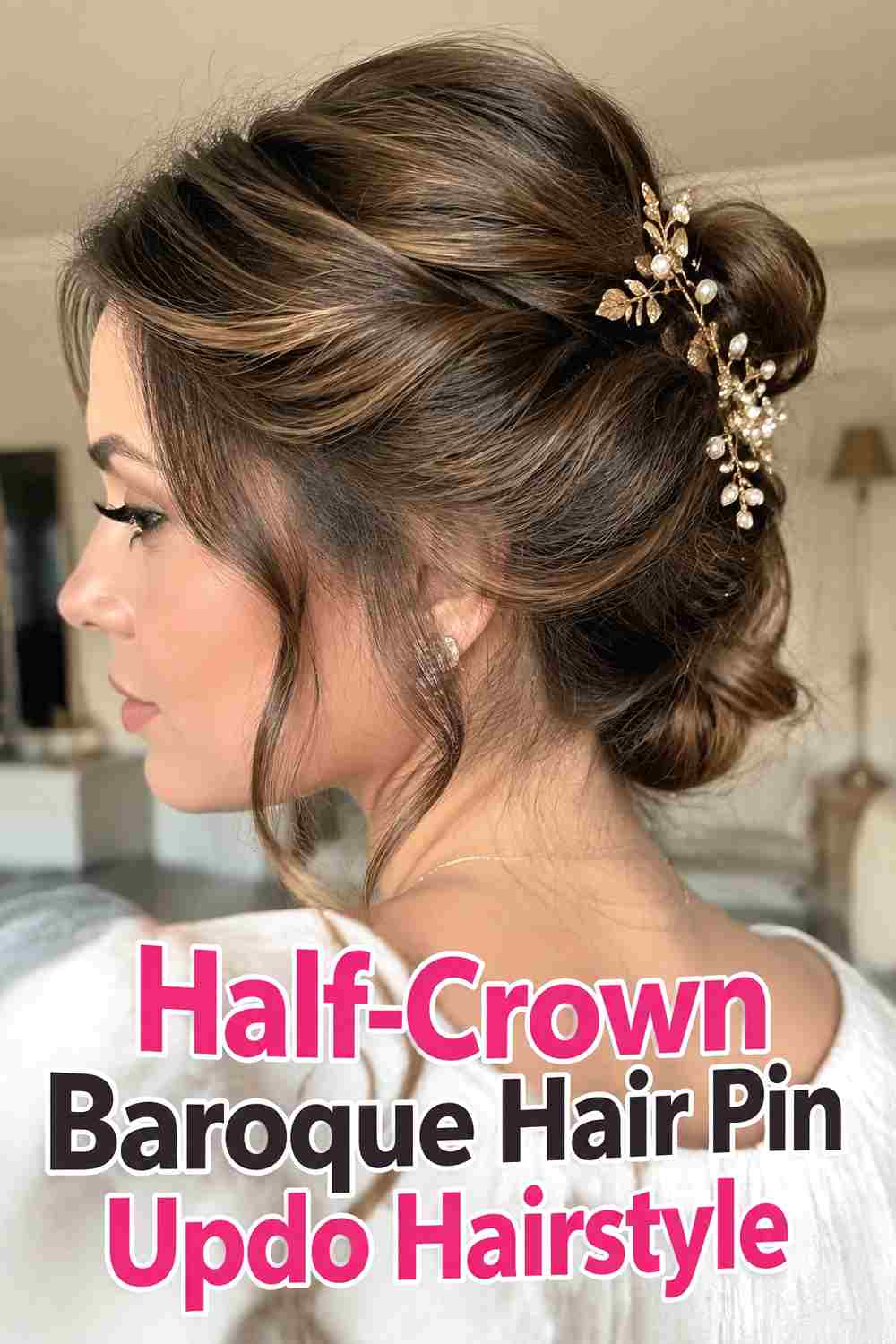
This style creates a crown-like effect without wrapping the entire head. Twist or braid sections from both temples toward the back, join them across the upper crown, and tuck the remaining lengths into a small updo beneath. Position the Baroque pin at the center where the two sides meet so the ornament resembles a decorative clasp. The rest of the hairstyle can stay softly voluminous, allowing the accessory to become the focal point from behind. This placement works particularly well with symmetrical pins featuring pearls, floral scrollwork, or fan-like details. Keep the crown sections secure but not overly tight so the updo remains soft and comfortable.
Why It Works
The centered ornament visually connects the two crown sections and gives the hairstyle a regal effect without requiring a full halo braid or oversized accessory.
17. Clustered Baroque Hair Pin Chignon Hairstyle
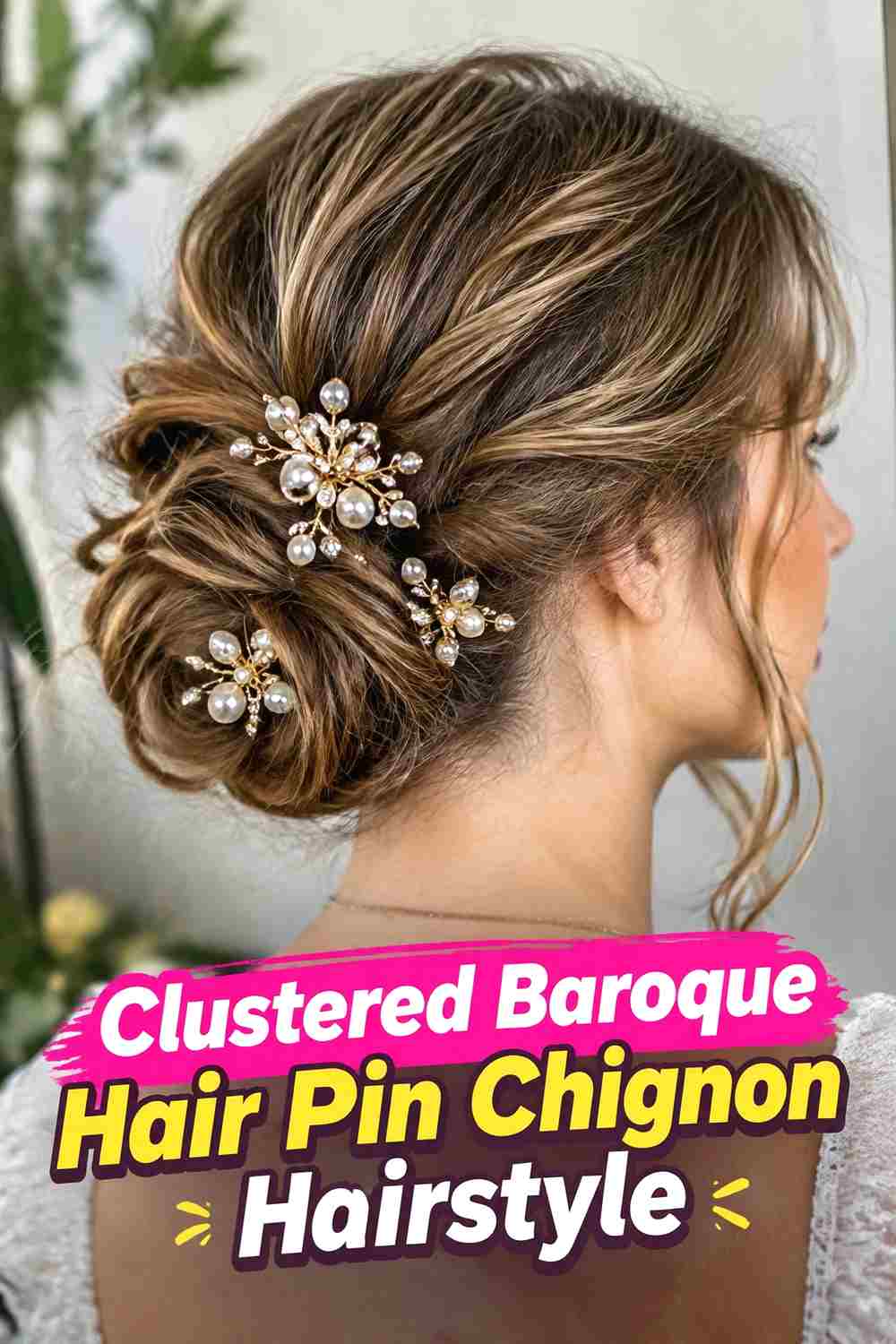
Instead of using one large statement pin, this chignon combines several smaller Baroque-style hair pins placed in a controlled cluster. Form a secure low or mid chignon first, then arrange two or three coordinated pieces along one side of the bun. Mixing small pearls, gilded leaves, and delicate floral motifs can create depth while still looking cohesive. Keep the cluster concentrated rather than scattering pins around the entire hairstyle, which can make the design feel busy. Varying their angles slightly helps the arrangement look organic. The underlying bun should remain relatively simple so the grouped accessories become the main decorative detail without competing with complicated braiding or excessive texture.
Styling Notes
Place the largest accessory first, then add smaller pins around it while checking the overall balance from the back and side.
How to Choose the Right Look
Start with the shape of the updo. Low chignons, braided buns, and wrapped buns provide broad, stable surfaces for statement pins, while French twists and sculpted rolls work particularly well with longer ornaments placed along a seam. High buns and top knots make accessories more visible from the front and profile.
Next, consider the scale of the hair pin. A large gilded piece can overwhelm a very small bun, while a tiny decorative pin may disappear against a full, textured updo. Clustered pins are useful when you want more coverage without relying on one heavy accessory.
Hair texture also affects placement. Smooth buns make intricate metalwork stand out clearly, while curls, braids, and messy twists create a more romantic layered effect. If the hairstyle already contains substantial detail, choose a simpler Baroque motif so the accessory and hair do not compete.
Comfort matters, especially with heavier pins. Build the updo with normal bobby pins, elastics, or hairpins first, then insert the Baroque piece decoratively. This reduces pressure on the scalp and helps prevent shifting.
Finally, match the ornament to the occasion. Pearls and soft gold can feel romantic, sculpted filigree can look formal, and slightly irregular antique-style pieces pair beautifully with softer, more relaxed updos.
Final Thoughts
Baroque hair pins can transform a familiar bun, braid, roll, or French twist by adding ornate texture and a vintage-inspired focal point. The most effective looks give the accessory a clear placement rather than covering the hairstyle with unnecessary decoration.
Choose an updo sturdy enough to support the ornament, secure the hair independently, and then position the pin where its shape complements the lines of the hairstyle. Whether you prefer pearls, gilded metalwork, floral motifs, or sculptural filigree, one thoughtful accessory can give a simple updo a beautifully distinctive finish.
FAQs
1. What is a Baroque hair pin?
A Baroque hair pin is an ornate decorative hair accessory often featuring scrolling metalwork, floral motifs, pearls, stones, leaves, or other elaborate vintage-inspired details.
2. Can a Baroque hair pin hold an entire updo?
Some sturdy pins can assist with hold, but it is usually better to secure the hairstyle with hidden pins or elastics first and use the decorative piece mainly as an accessory.
3. Which updo works best with a large Baroque hair pin?
Low chignons, wrapped buns, French twists, and sculpted rolls usually provide enough structure and surface area for a larger statement accessory.
4. Can I wear more than one Baroque hair pin?
Yes. A small coordinated cluster can look elegant when the pieces are grouped intentionally on one side of a simple bun or chignon rather than scattered throughout the hairstyle.
5. Where should a Baroque hair pin be placed?
Good placements include above a low bun, along a French twist seam, across a braided overlap, at the base of a high bun, or at the joining point of a crown-style updo.
Save your favorite Baroque hair pin updo ideas, share the styles you love, and explore more elegant hairstyle inspiration for your next special look.