16 Bardot Volume Blowout Hairstyle Ideas
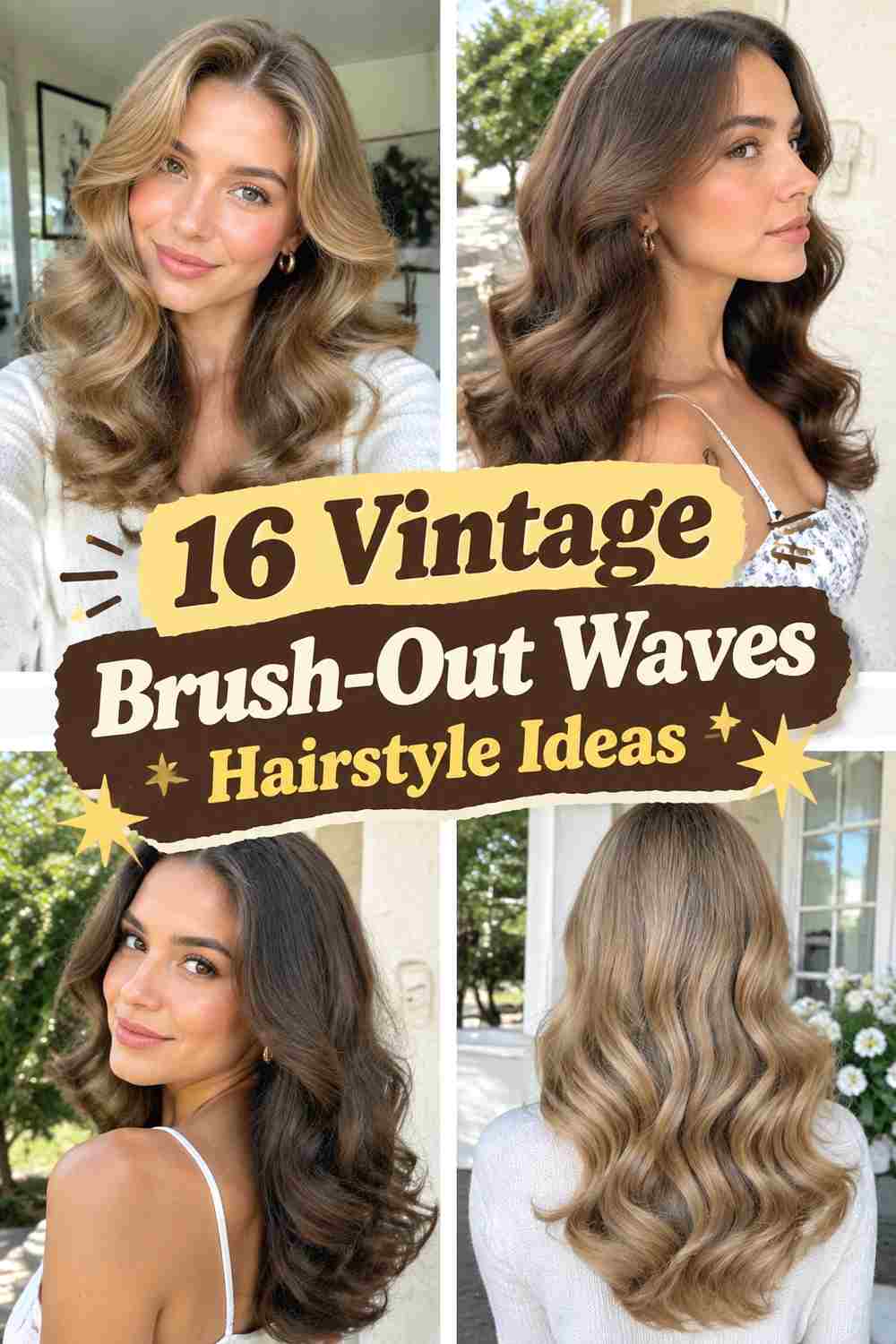
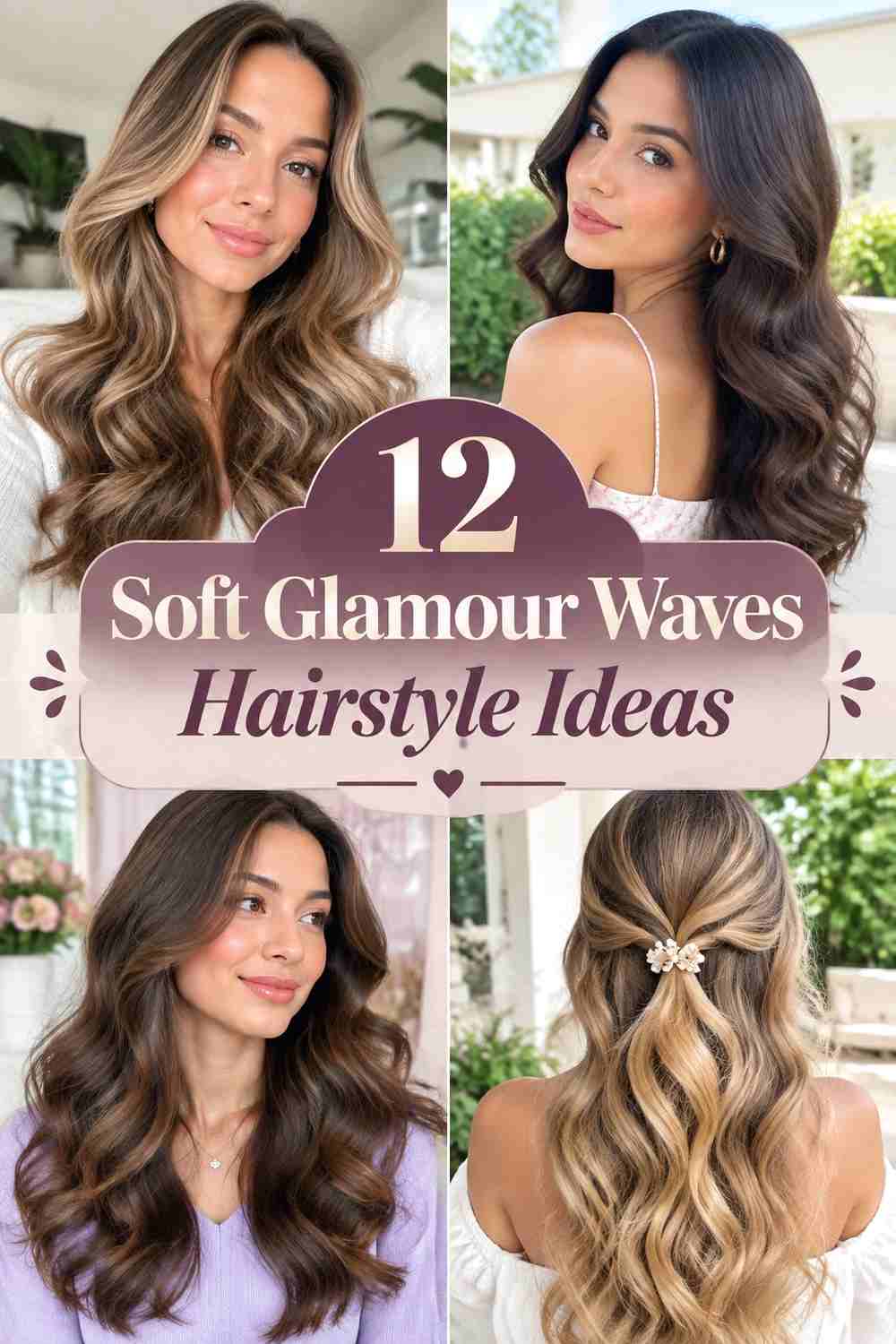
Big crown lift, sweeping face framing, and touchable bends give these Bardot volume blowouts their signature mix of retro glamour and modern softness.
A Bardot-inspired volume blowout is less about perfectly curled hair and more about shape. The crown has visible lift, front sections open away from the face, and the lengths carry broad bends that look airy rather than tightly set. Soft fringe or longer face-framing pieces can strengthen the retro influence without making the result feel costume-like.
The right variation depends on your length, density, layer placement, and preferred amount of volume. Some versions concentrate height at the crown, while others emphasize feathered sides, flipped ends, or a softer wavy finish. The best result usually keeps the hair flexible enough to move instead of relying on stiff hold.
Quick List
- Classic Bardot Volume Blowout Hairstyle
- Center Part Bardot Volume Blowout Hairstyle
- Side Part Bardot Volume Blowout Hairstyle
- Curtain Bangs Bardot Volume Blowout Hairstyle
- Wispy Bangs Bardot Volume Blowout Hairstyle
- Face Framing Bardot Volume Blowout Hairstyle
- Crown Lift Bardot Volume Blowout Hairstyle
- Feathered Bardot Volume Blowout Hairstyle
- Flipped End Bardot Volume Blowout Hairstyle
- Soft Wavy Bardot Volume Blowout Hairstyle
- Extra Long Bardot Volume Blowout Hairstyle
- Shoulder Length Bardot Volume Blowout Hairstyle
- Layered Bardot Volume Blowout Hairstyle
- Sleek Root Bardot Volume Blowout Hairstyle
- Tousled Bardot Volume Blowout Hairstyle
- Polished Bardot Volume Blowout Hairstyle
1. Classic Bardot Volume Blowout Hairstyle
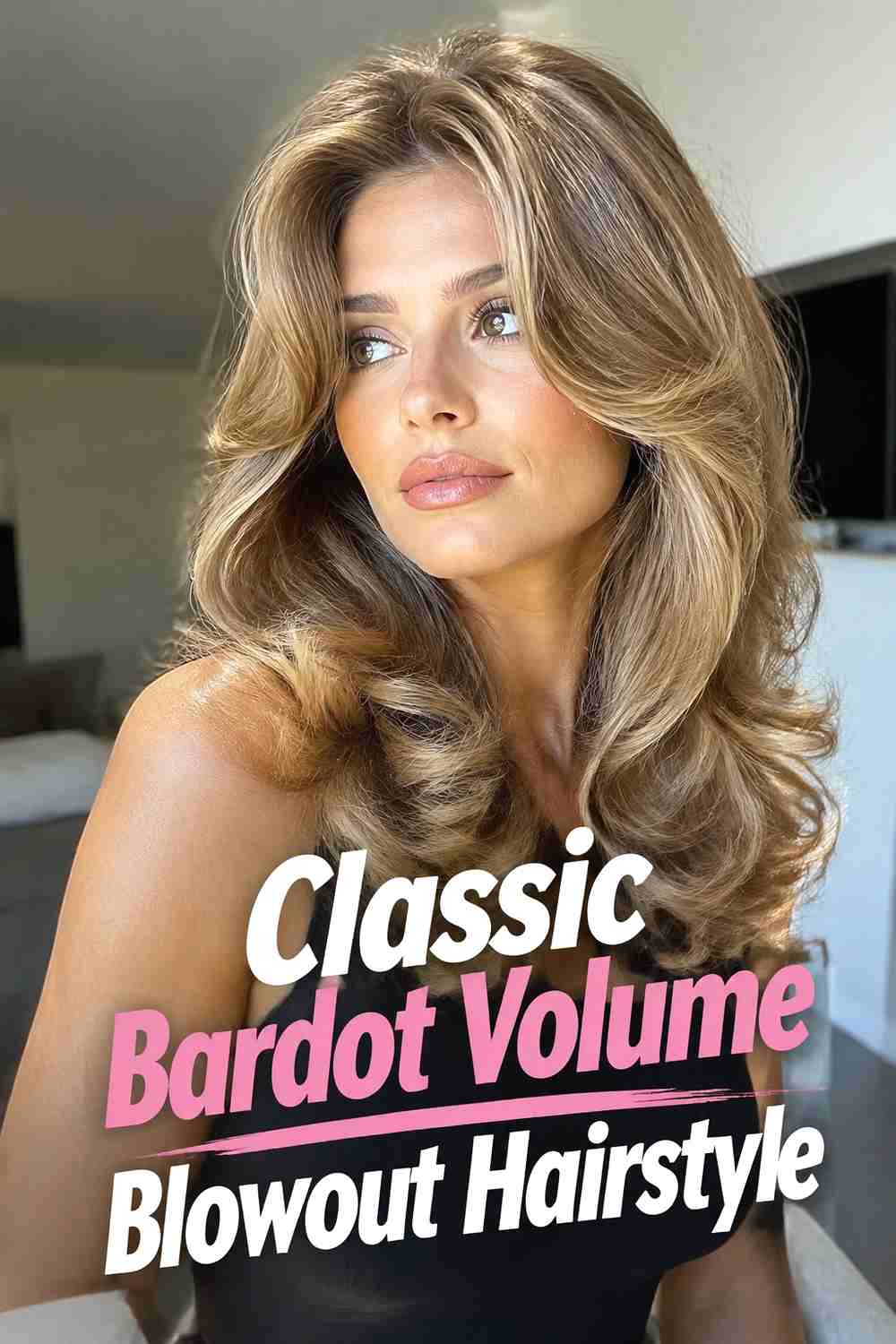
Classic Bardot Volume Blowout Hairstyle combines controlled crown height with broad, outward-moving layers around the face. The top should look lifted rather than teased into extreme height, while the mid-lengths and ends carry enough bend to create movement from every angle. Longer front pieces can open around the cheekbones, helping the silhouette feel soft despite the substantial volume. Medium and thick hair often hold this shape especially well, though finer hair can create a lighter version with targeted root lift. Use a large round brush through generous sections, allow each one to cool, then loosen the finished style with fingers so the volume stays airy instead of rigid.
Styling Notes
Build lift at the roots before shaping the lengths. The Bardot effect comes from the overall silhouette, not simply curling the ends.
2. Center Part Bardot Volume Blowout Hairstyle
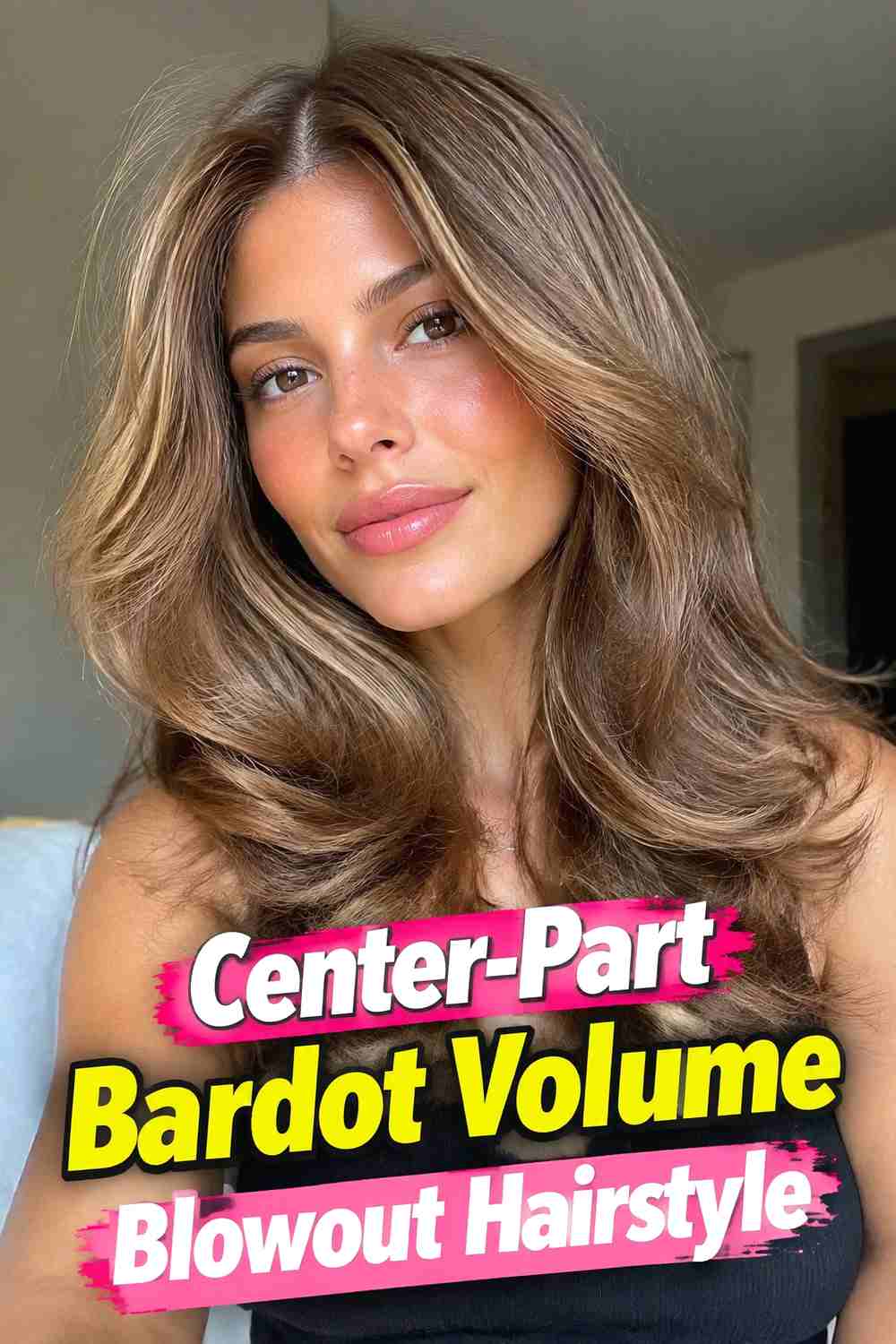
Center-Part Bardot Volume Blowout Hairstyle creates a balanced frame by opening the front evenly on both sides while maintaining rounded volume through the crown. The part should remain soft rather than sharply defined, allowing the front pieces to lift and sweep naturally toward the temples. Long face-framing sections work particularly well because they can curve away from the cheeks and blend into the larger bends through the lengths. Straight-to-wavy textures are easy to shape with a round brush, though density determines how dramatic the final volume can be. Keep the roots slightly elevated along the center line and avoid flattening the top with heavy finishing oils.
Pro Tip
Dry the roots in alternating directions first, then settle the hair into the center part to create lift without aggressive teasing.
3. Side Part Bardot Volume Blowout Hairstyle
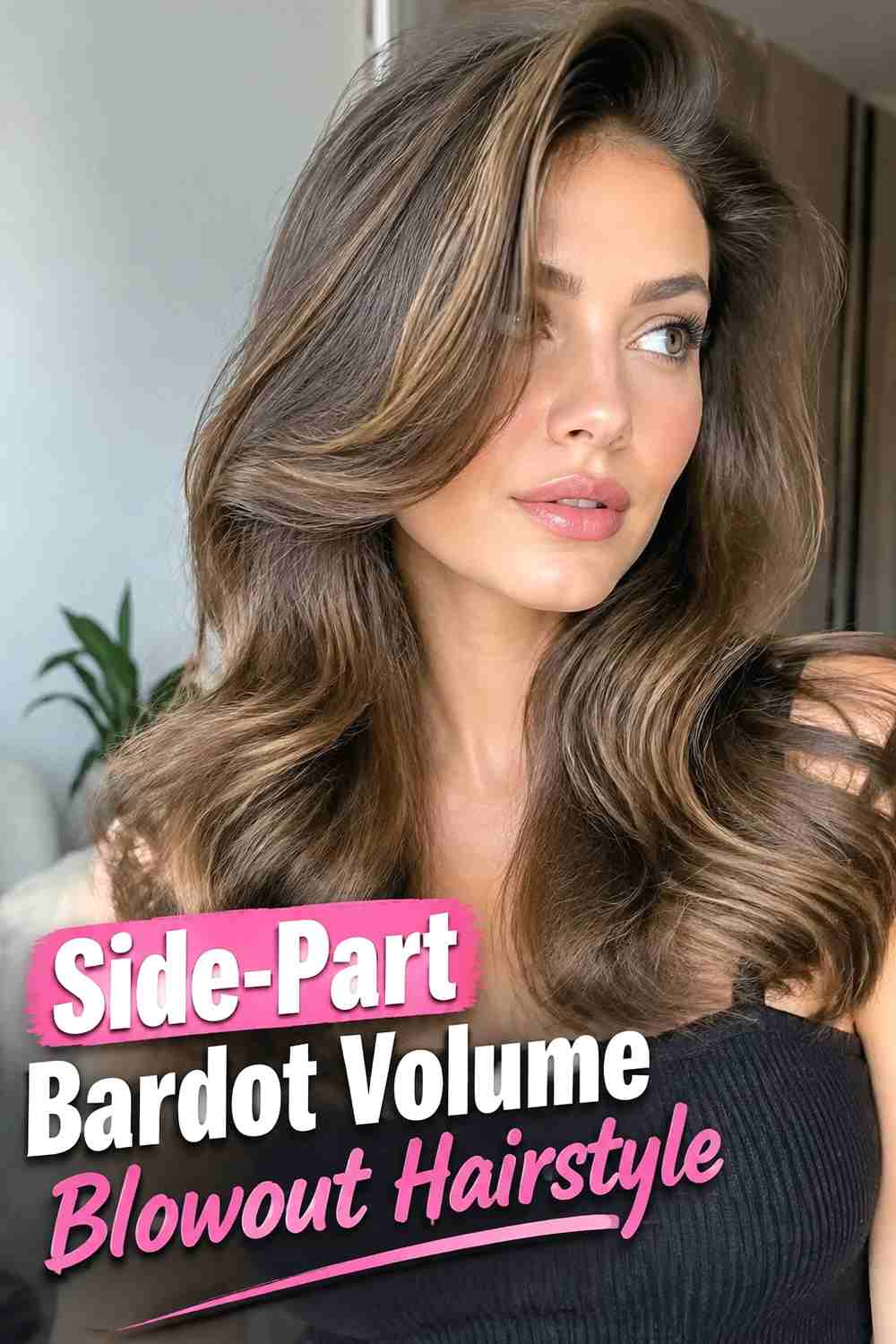
Side-Part Bardot Volume Blowout Hairstyle shifts the fullness toward one side for a more dramatic, sweeping finish. The heavier front section can lift above the forehead before curving toward the cheekbone, while the opposite side stays smoother and slightly closer to the head. Crown volume remains important, but the asymmetry makes the style feel less formal than a perfectly balanced blowout. This version works particularly well for medium-to-thick hair or anyone whose hair naturally prefers an off-center part. Use a large round brush to reinforce the root direction, then blend the front into broad bends through the sides. Flexible hairspray can support the sweep without freezing the movement.
Best For
Choose this version if you like visible root volume and a more glamorous, asymmetrical front rather than a centered retro silhouette.
4. Curtain Bangs Bardot Volume Blowout Hairstyle
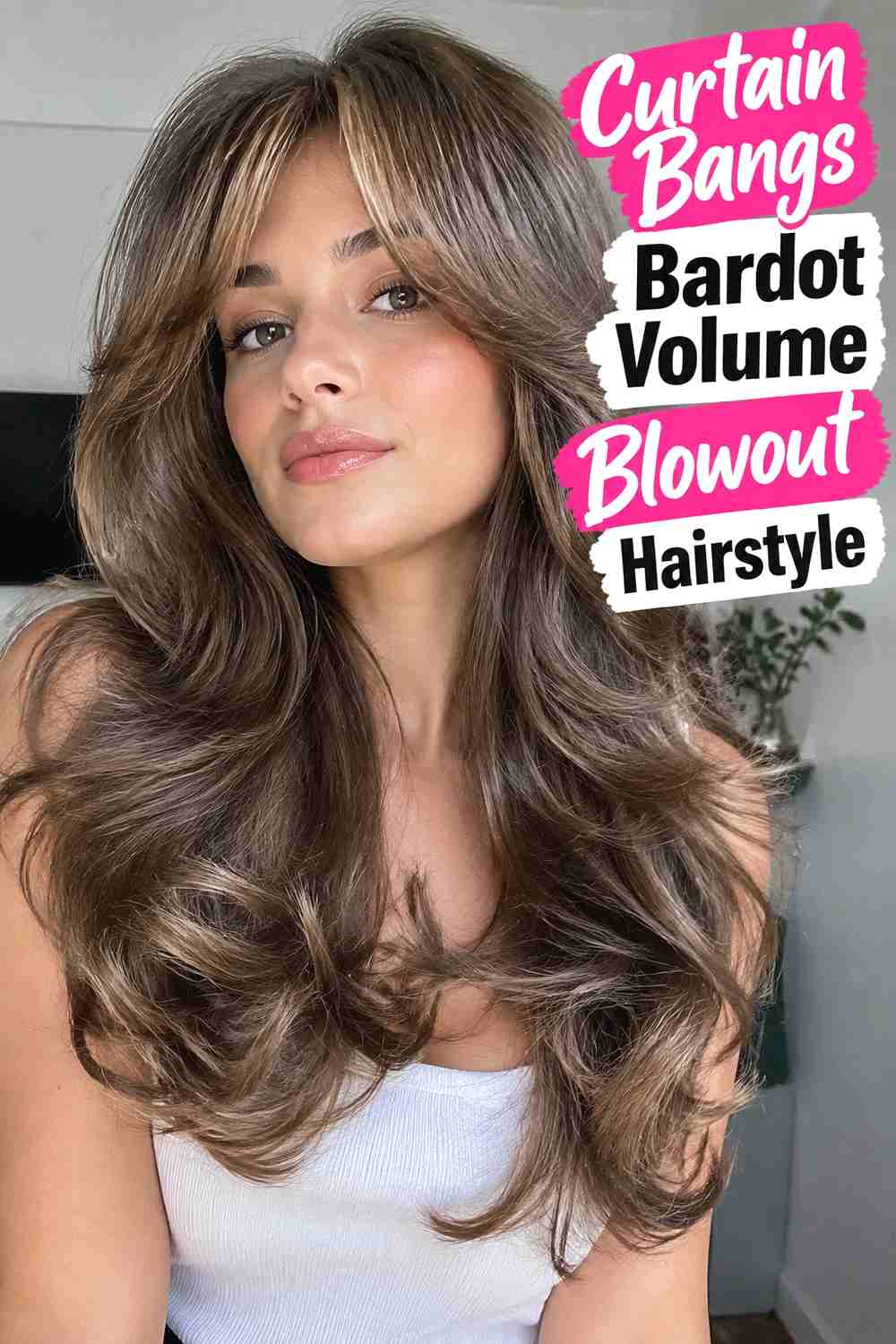
Curtain Bangs Bardot Volume Blowout Hairstyle puts softly divided fringe at the center of the look. The bangs open around the forehead, curve through the cheekbones, and connect to longer layers that continue the outward movement through the sides. Crown lift adds the Bardot influence, while a fuller blowout through the lengths prevents the fringe from feeling disconnected. This style works especially well on medium or long hair with enough layering to create multiple visible curves. Dry the bangs first, then switch to a larger round brush for the rest. Once everything cools, loosen the front slightly so the curtain shape remains soft rather than perfectly symmetrical.
Wear & Maintenance
The fringe usually needs quicker refreshing than the rest of the blowout. Restyling only the front can often revive the entire look.
5. Wispy Bangs Bardot Volume Blowout Hairstyle
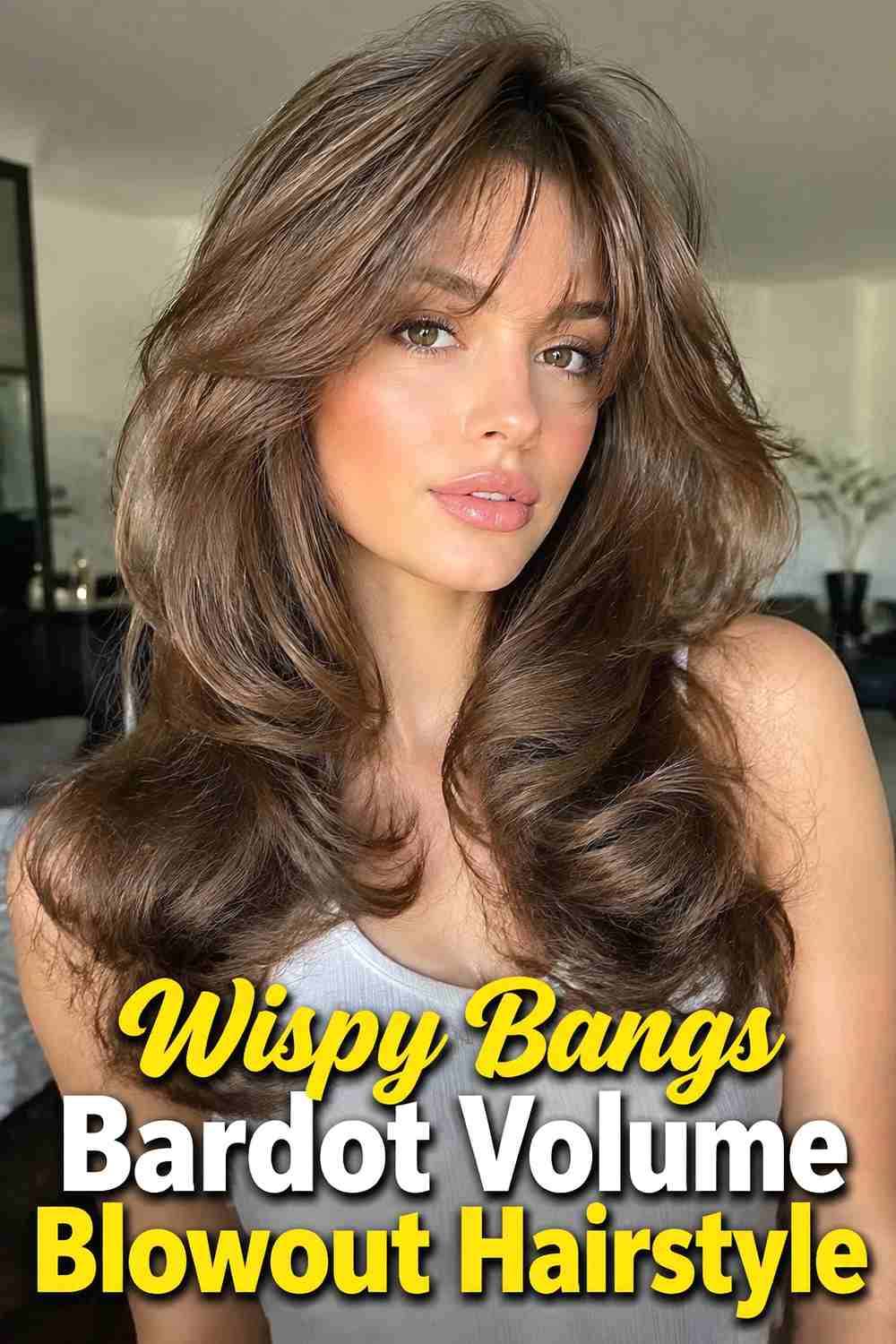
Wispy Bangs Bardot Volume Blowout Hairstyle softens the retro volume with an airy fringe that shows small gaps across the forehead. The lighter bangs contrast nicely with a lifted crown and fuller lengths, keeping the front from looking too heavy. Longer wispy pieces near the temples can blend into cheekbone-level layers for a gradual transition. Fine and medium-density hair can wear this variation particularly well because the fringe uses less hair while the blowout creates fullness elsewhere. Keep the bangs lightly curved with a small brush, then create broader bends through the remaining hair. Avoid heavy products around the forehead, since they can collapse the delicate separation quickly.
Hair Type & Length
Fine and medium-density hair often suits this version best when the fringe remains light and the lower lengths keep a fuller perimeter.
6. Face Framing Bardot Volume Blowout Hairstyle
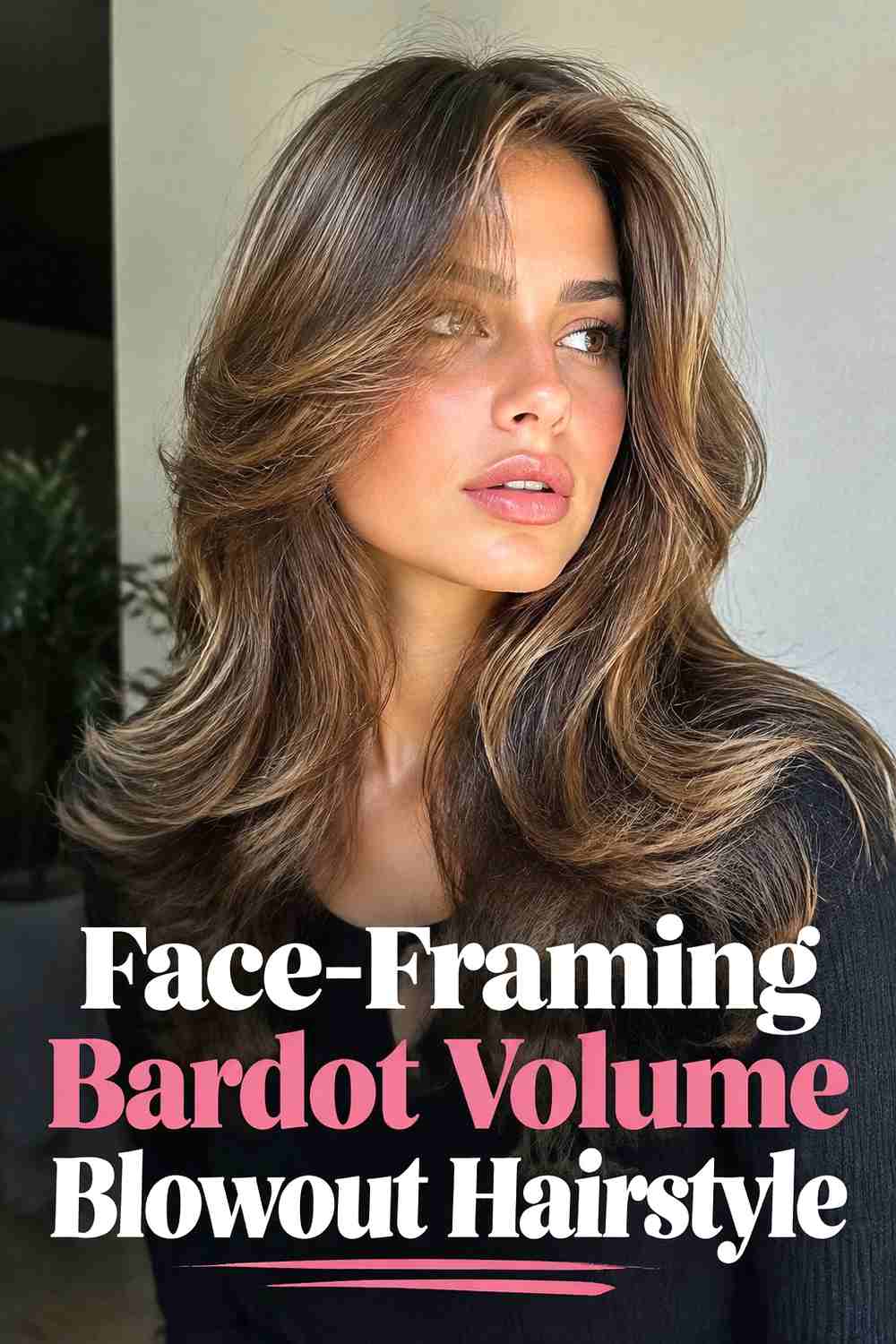
Face-Framing Bardot Volume Blowout Hairstyle makes the shorter front layers the main visual feature. Pieces beginning near the cheekbones or jaw sweep away from the face and continue into progressively longer sections, creating a wide, airy frame. The crown carries moderate lift, but the strongest movement sits around the sides rather than directly on top. This can be a flattering choice for medium and long hair because the face frame remains noticeable without requiring traditional bangs. Use a round brush to direct each front section outward, then keep the back bends broader and softer. Connected layering is important so the front feels integrated instead of forming isolated wings.
Why It Works
Concentrating movement around the face creates the Bardot-inspired openness while preserving plenty of length and fullness through the back.
7. Crown Lift Bardot Volume Blowout Hairstyle
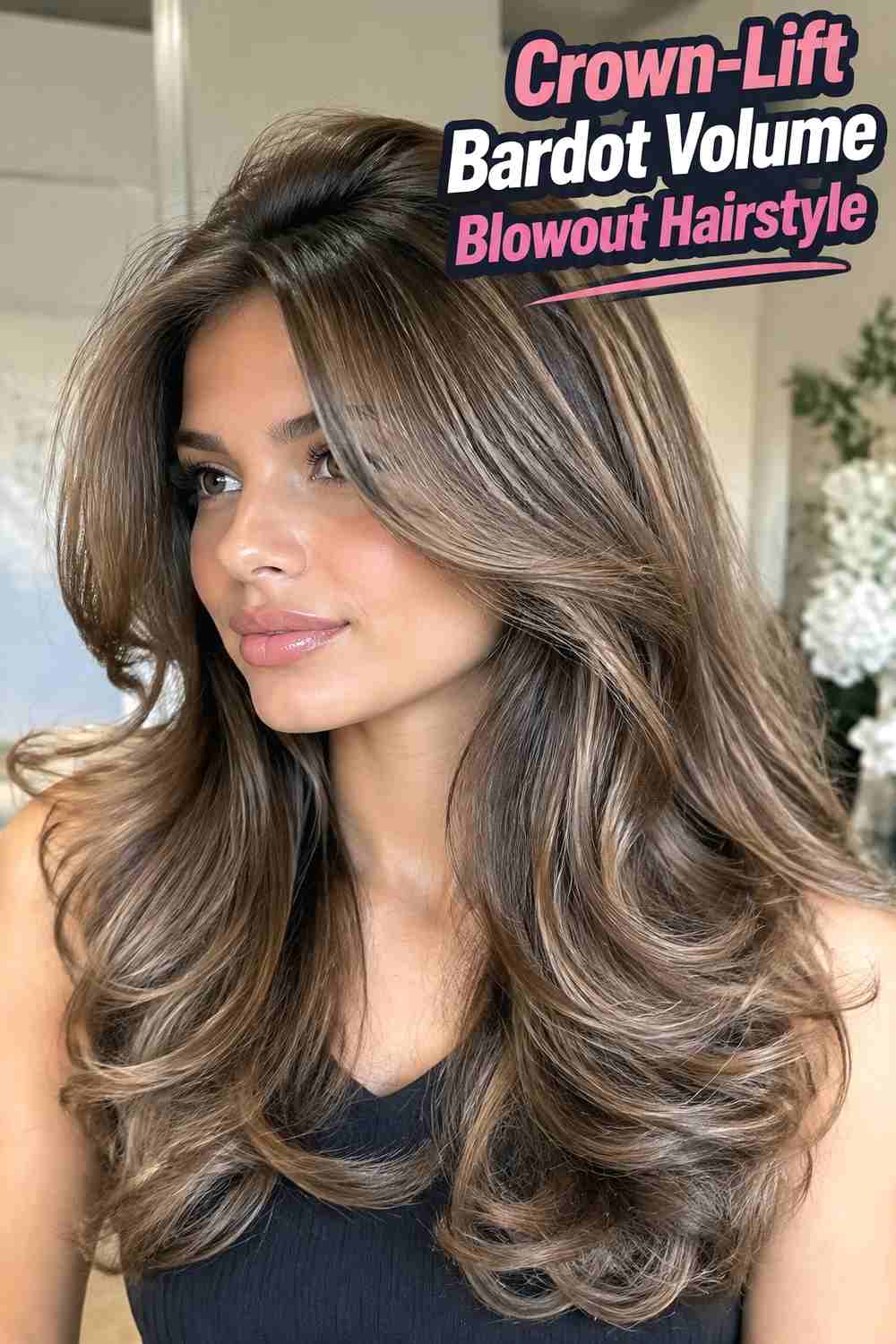
Crown-Lift Bardot Volume Blowout Hairstyle emphasizes height through the upper back of the head while keeping the sides and ends relatively controlled. The lift creates a subtle bouffant influence, but the finish should remain smooth and touchable rather than heavily teased. Front sections can be parted softly and swept away from the face, helping connect the raised crown to the rest of the blowout. Medium and thick hair often supports this shape naturally, while finer hair may benefit from a lightweight volumizing product at the roots. Use a round brush to overdirect the crown upward, let it cool fully, then smooth only the surface to preserve the interior lift.
Styling Notes
Avoid brushing through the crown repeatedly after it cools. Too much smoothing can remove the height that defines this version.
8. Feathered Bardot Volume Blowout Hairstyle
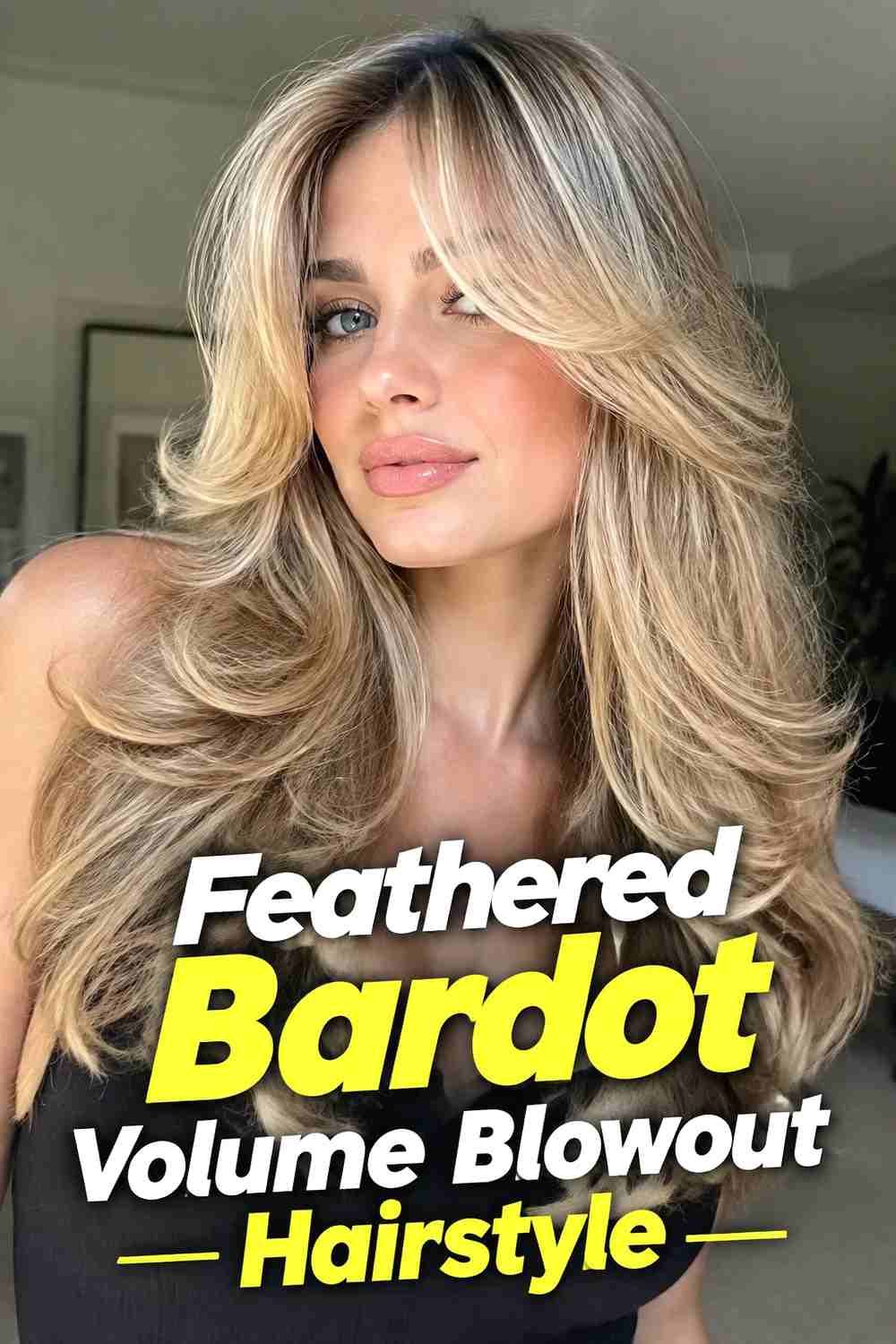
Feathered Bardot Volume Blowout Hairstyle uses outward-sweeping layers to create a lighter, more directional finish through the sides. The front opens broadly around the face, while medium and long layers fan outward before settling into softer bends below. Crown lift remains present but does not overpower the feathered movement. This variation works particularly well on medium-to-thick layered hair because there is enough density to create several visible sections without thinning the perimeter excessively. Blow-dry the side layers away from the face with a round brush, then loosen them after cooling. The goal is airy separation and flowing movement rather than identical, tightly flipped sections.
Pro Tip
Use larger sections for a modern feathered effect. Very small sections can create a sharper, more heavily styled retro finish.
9. Flipped End Bardot Volume Blowout Hairstyle
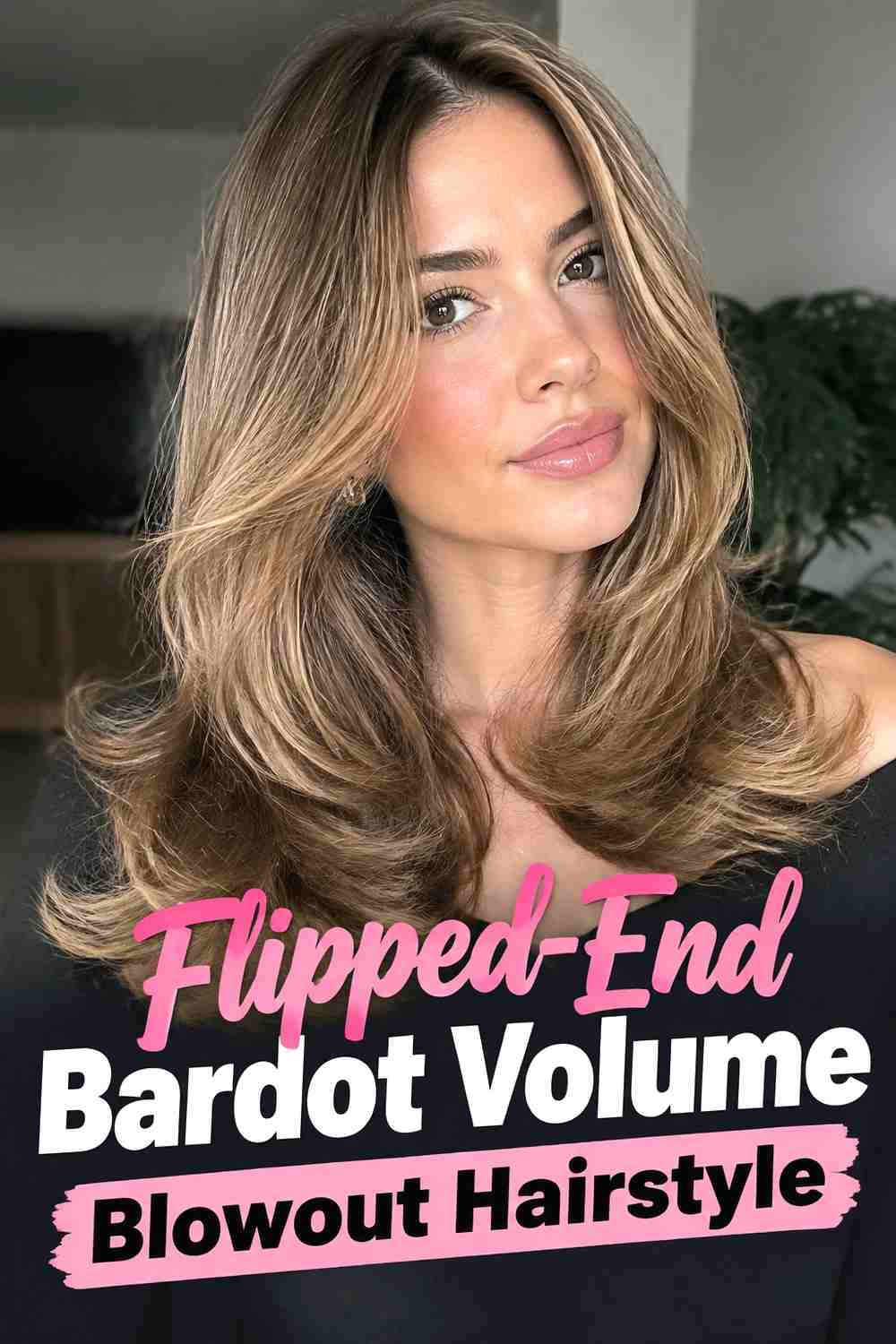
Flipped-End Bardot Volume Blowout Hairstyle keeps the classic lifted crown and soft face framing but adds a playful outward kick through the ends. The roots and mid-lengths stay smooth and full, allowing the flipped lower sections to read clearly without turning the whole hairstyle into curls. Straight-to-wavy hair that holds a bend works especially well for this version. Use a large round brush through the main blowout, then redirect only the final few inches outward. Some sections can flip more strongly than others for a softer, less uniform finish. Flexible hold helps preserve the shape while allowing the ends to move naturally as the hair settles.
Why It Works
The flipped ends add retro character while the broader Bardot volume keeps the style soft, feminine, and wearable.
10. Soft Wavy Bardot Volume Blowout Hairstyle
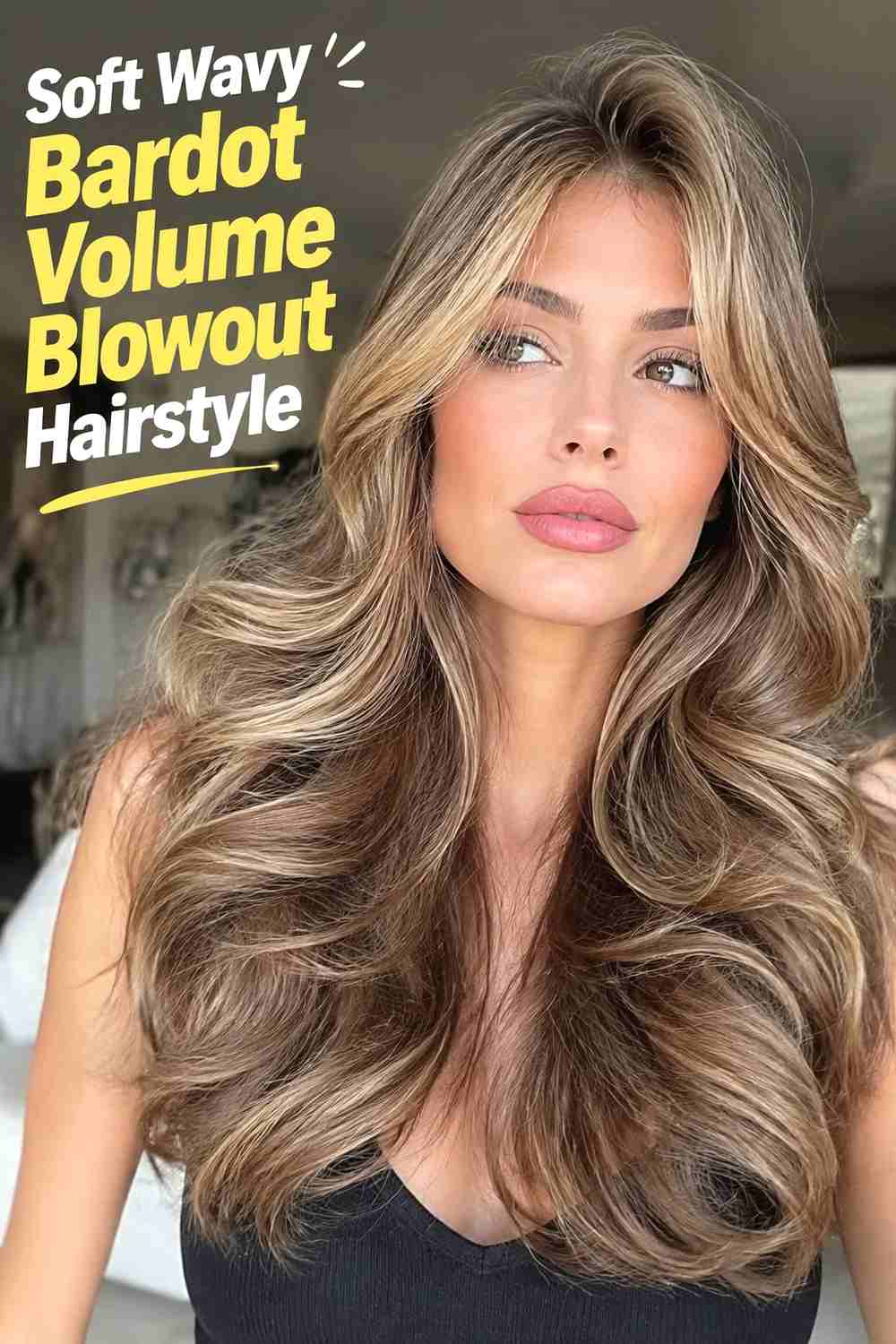
Soft Wavy Bardot Volume Blowout Hairstyle blends a polished blowout with loose, irregular bends for a more relaxed finish. Crown volume and face-framing lift establish the Bardot silhouette, while the lower lengths soften into waves instead of maintaining perfectly rounded brush curls. This is especially useful for naturally wavy hair because the blowout can focus on the roots and front without completely removing the hair’s original movement. Use a round brush around the crown and face, then allow the lower sections to form looser bends. A few pieces can remain straighter for variation. The finished result should feel full and romantic without looking overly set.
Best For
Choose this variation if you want Bardot-inspired volume but prefer a softer, more casual finish through the lengths.
11. Extra Long Bardot Volume Blowout Hairstyle
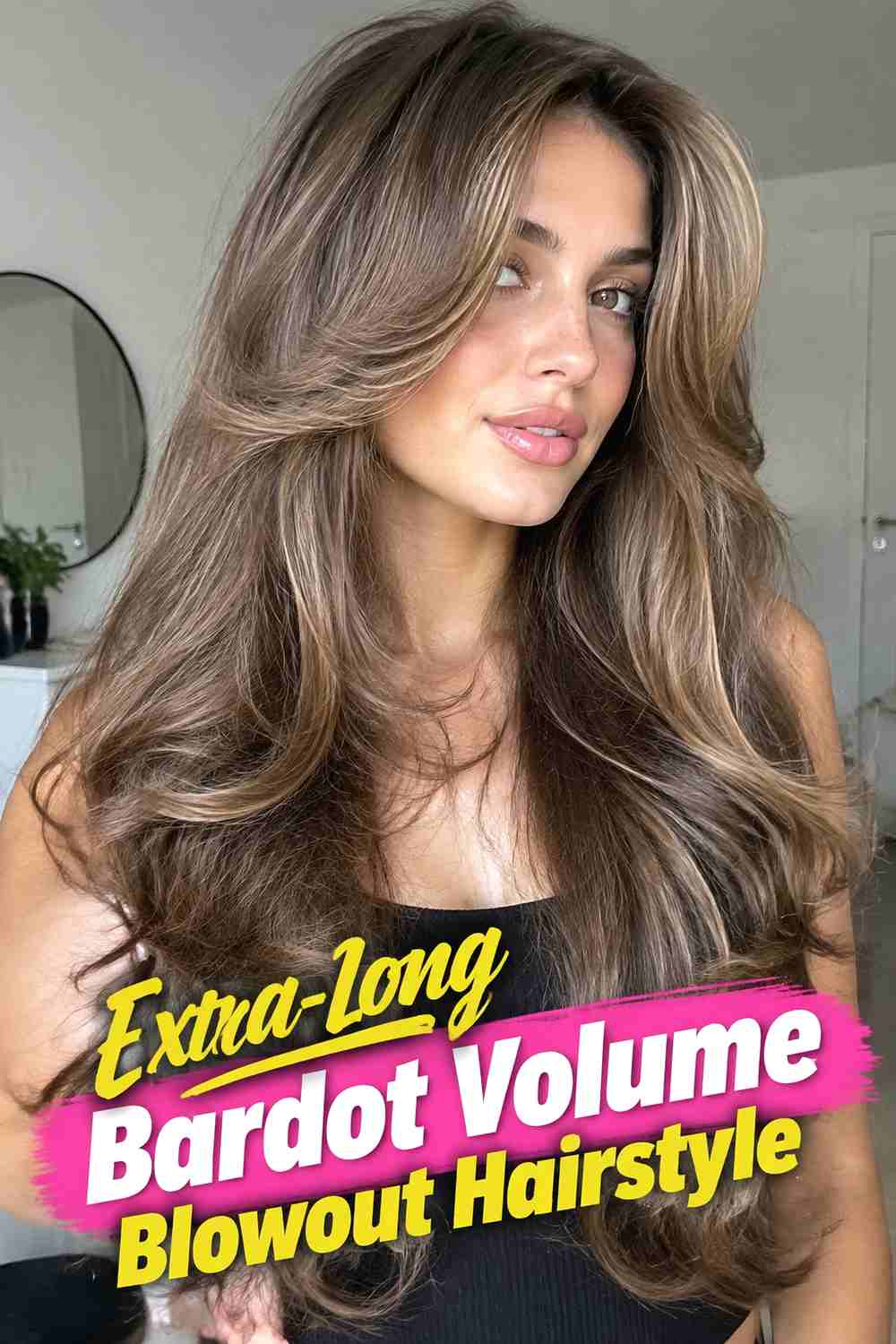
Extra-Long Bardot Volume Blowout Hairstyle uses sweeping layers to prevent very long hair from looking weighed down. The crown gains controlled lift, the front opens around the face, and longer layers create broad curves through the mid-lengths without sacrificing overall length. Dense hair can support stronger layering, while finer long hair usually benefits from keeping the perimeter fuller and concentrating most of the movement near the face. Work with large brush sections so the blowout stays expansive rather than curly. Because extra-long hair can pull volume downward, root direction and cooling time matter. Lightweight products are generally preferable to heavy creams that can collapse the upper shape.
Hair Type & Length
Long and extra-long hair works best when the layer placement creates movement without removing too much weight from the ends.
12. Shoulder Length Bardot Volume Blowout Hairstyle
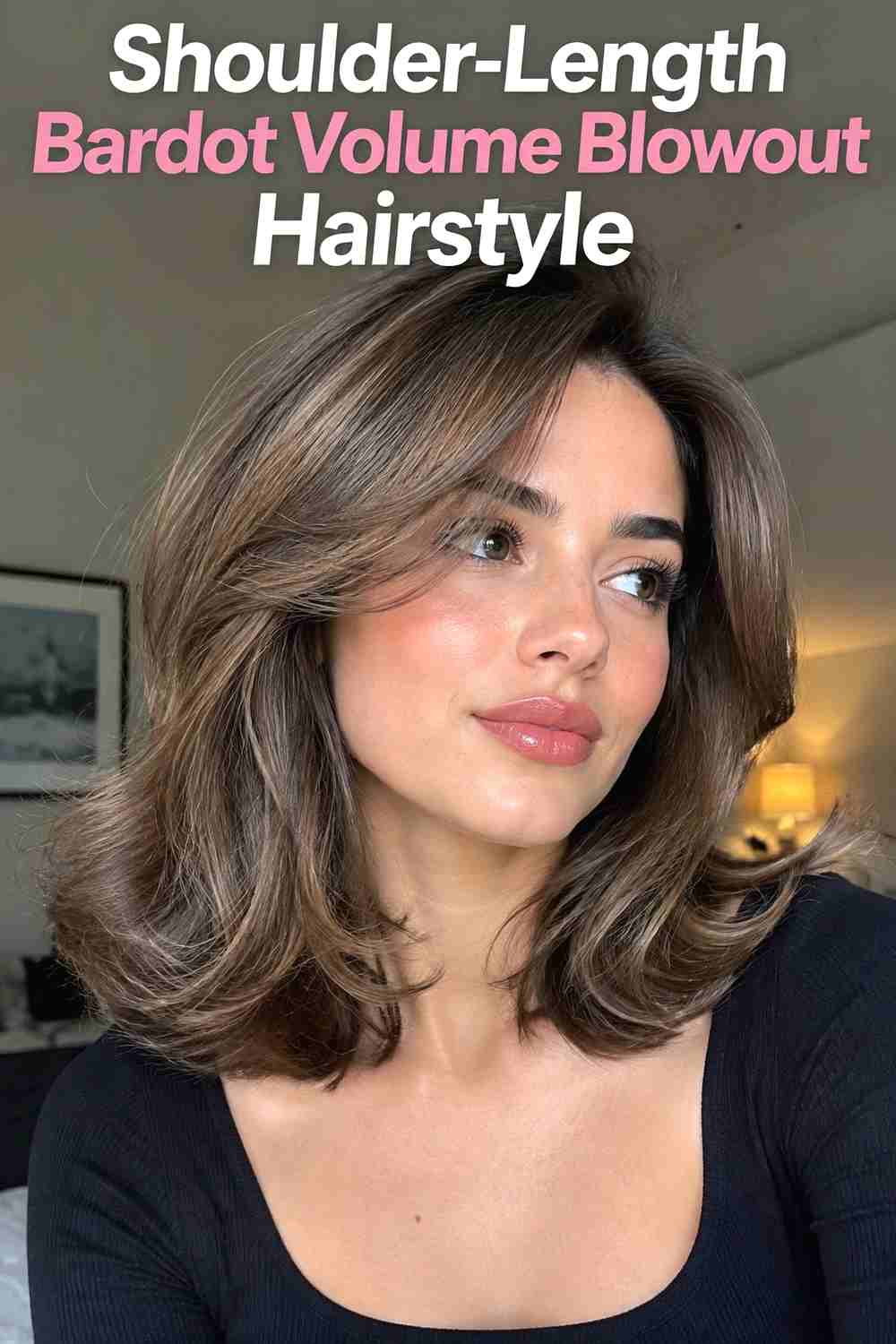
Shoulder-Length Bardot Volume Blowout Hairstyle compresses the glamorous shape into a more practical medium length. The crown can still carry noticeable lift, while shorter layers around the face and sides create outward movement that feels especially bouncy at shoulder level. Because there is less length weighing the style down, medium hair may hold the blowout with less effort than very long hair. A strong perimeter helps keep the lower edge full, particularly on finer textures. Use a medium round brush for controlled volume and shape the front pieces away from the face. Keep the bends broad so the cut looks voluminous rather than tightly curled.
Styling Notes
Focus on root lift and face-framing movement first; shoulder-length ends usually need only a gentle curve to complete the silhouette.
13. Layered Bardot Volume Blowout Hairstyle
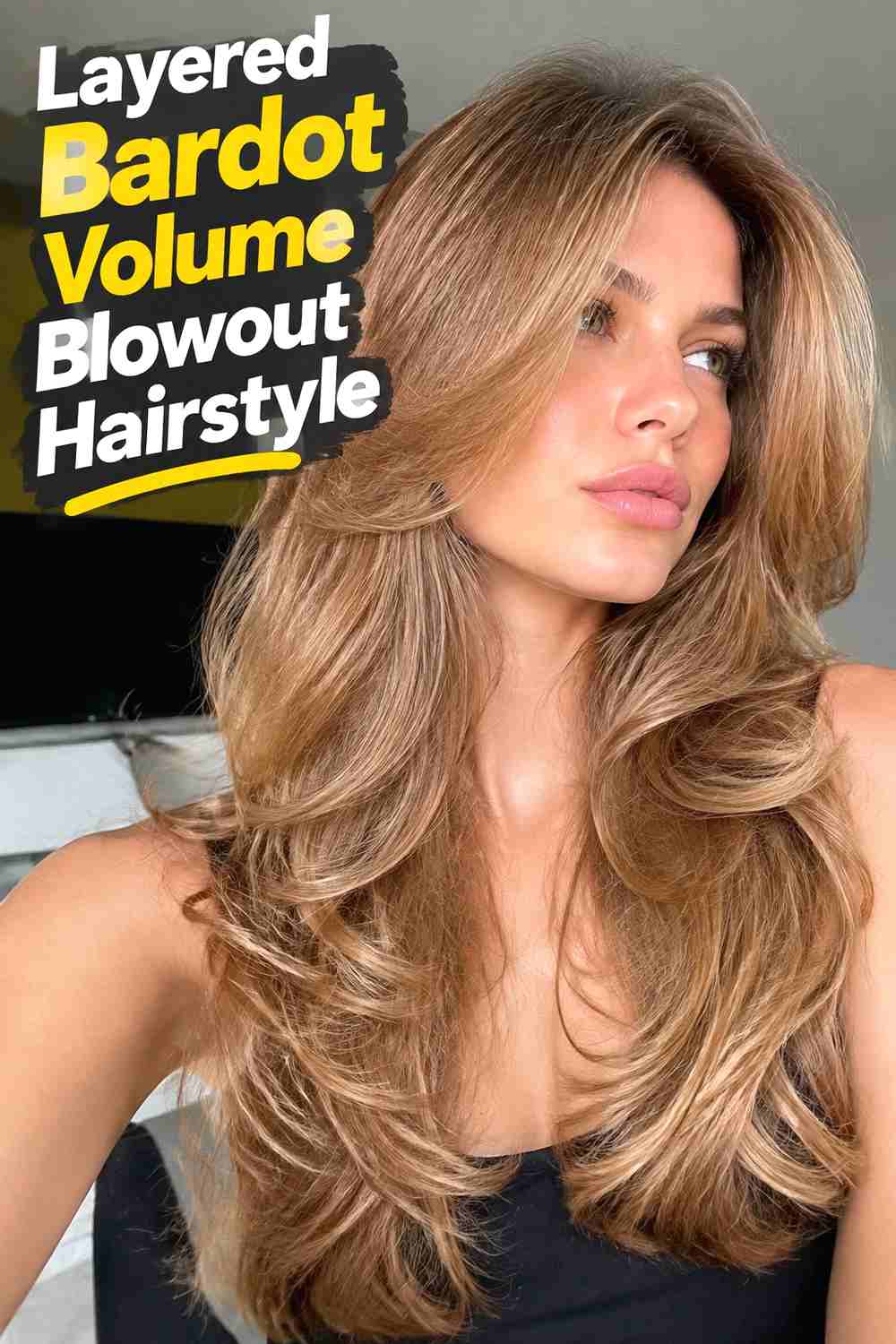
Layered Bardot Volume Blowout Hairstyle uses multiple connected lengths to create visible movement from the crown through the ends. Shorter layers near the face sweep outward, medium sections add body through the sides, and longer pieces keep the overall shape flowing. The haircut itself does much of the work, making this version especially effective when you want a blowout that looks dimensional from every angle. Medium-to-thick hair can support more layers, while fine hair should keep them longer and more selective. Blow-dry each section in the direction it is meant to fall, then allow everything to cool before brushing through lightly for a cohesive, airy finish.
Why It Works
Connected layers create natural lift points throughout the haircut, so the volume does not depend entirely on styling product or teasing.
14. Sleek Root Bardot Volume Blowout Hairstyle
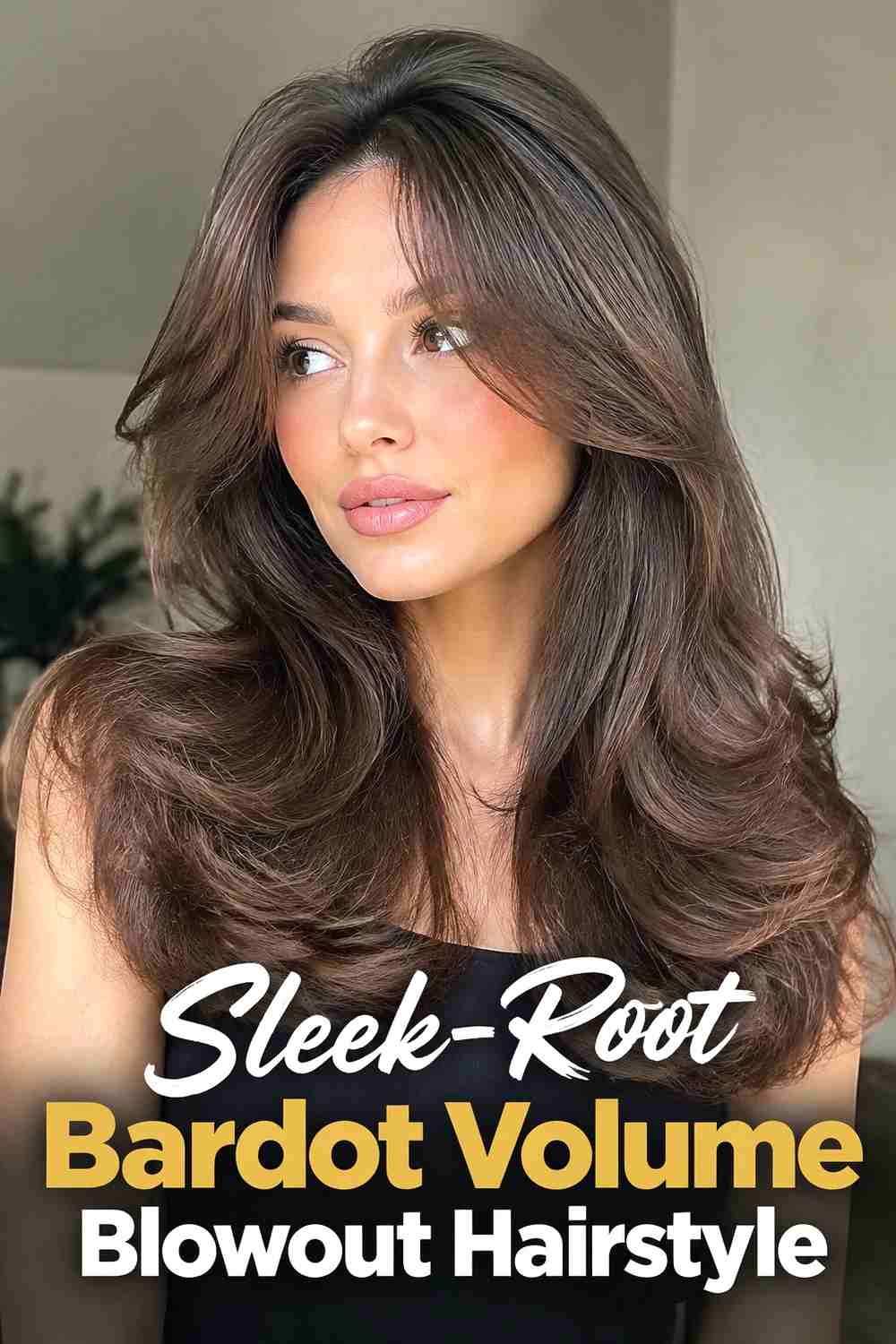
Sleek-Root Bardot Volume Blowout Hairstyle creates contrast by keeping the roots controlled and glossy while allowing the volume to build through the mid-lengths and ends. The crown still has gentle lift, but it is smooth rather than highly teased. Face-framing pieces curve outward and transition into fuller bends below, giving the hairstyle its Bardot-inspired shape without excessive height. This version works especially well when you want a polished interpretation suitable for dressier settings. Use a flat or round brush to smooth the upper sections, then increase the bend gradually through the lower hair. Keep finishing serum light so the roots remain fresh and the lengths retain bounce.
Best For
This option suits anyone who likes retro-inspired movement but prefers a cleaner, more controlled finish around the scalp and parting.
15. Tousled Bardot Volume Blowout Hairstyle
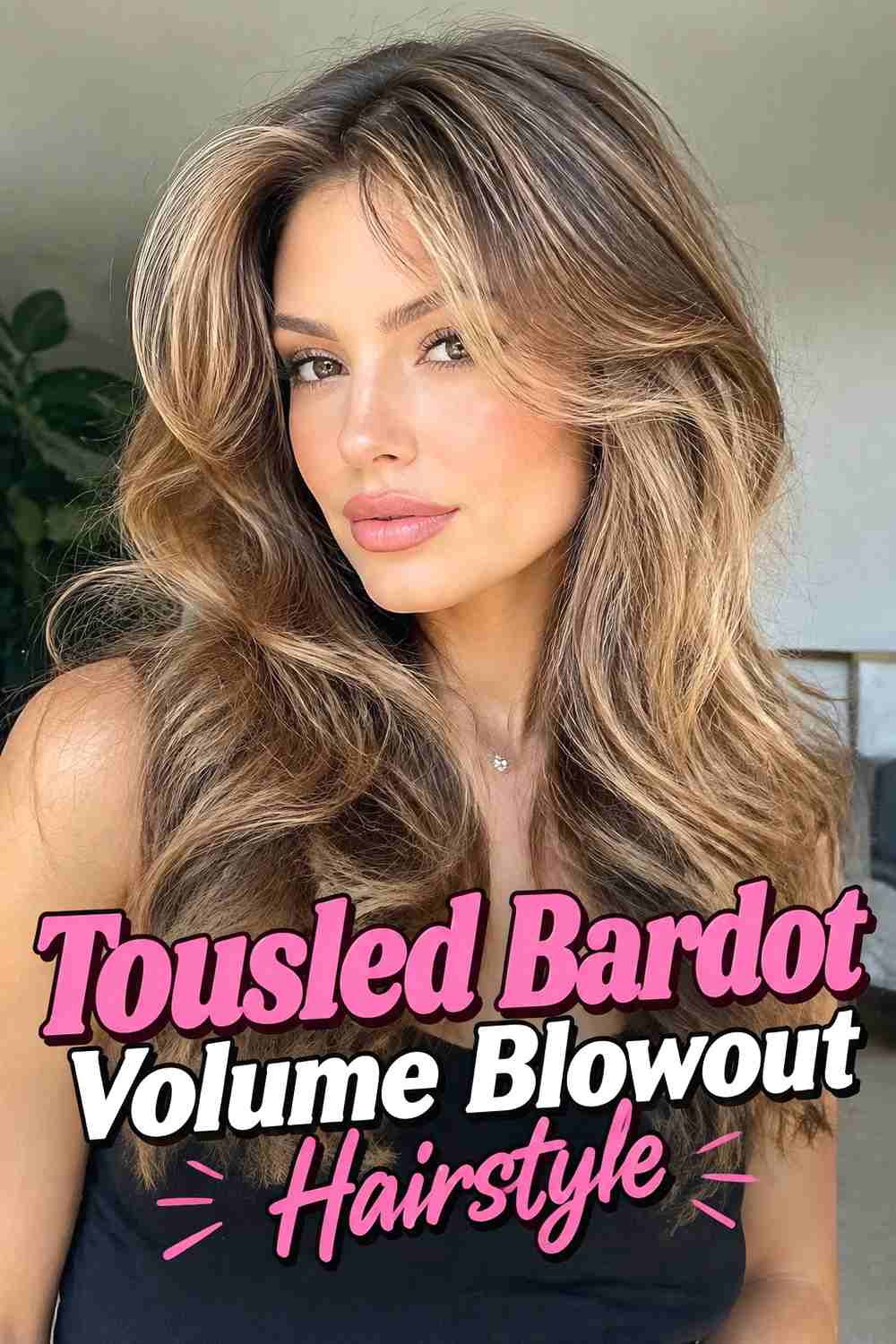
Tousled Bardot Volume Blowout Hairstyle deliberately loosens the polished blowout so the volume feels worn-in and effortless. The crown stays lifted, but small flyaways, varied bends, and imperfect separation are allowed through the lengths. Face-framing sections can open away from the cheeks without forming identical curves on both sides. This version works beautifully on wavy or textured hair because the natural movement can blend with the blowout instead of being completely smoothed away. Start with root and crown lift, shape the front, then use fingers rather than a brush to break up the lower bends. Finish with a light texture spray instead of strong hairspray.
Styling Notes
Stop styling before every section looks identical. Slight variation is what gives this version its relaxed, modern character.
16. Polished Bardot Volume Blowout Hairstyle
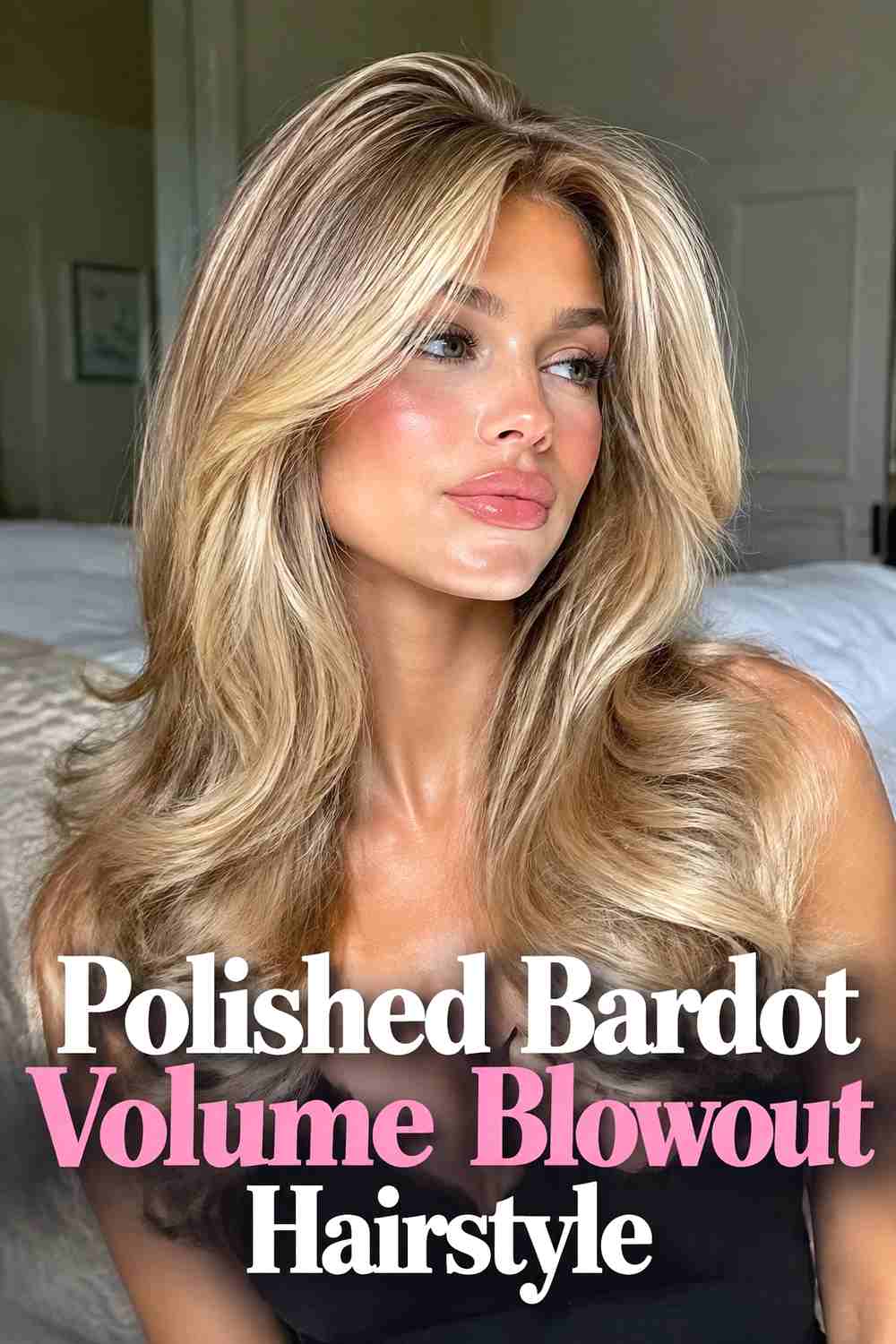
Polished Bardot Volume Blowout Hairstyle refines the retro-inspired shape with a smooth surface, controlled crown height, and carefully blended bends. The front sections open cleanly away from the face, while the lengths carry broad, glossy movement rather than tousled texture. This makes the style especially suited to events or occasions where the hair needs to look finished from multiple angles. Medium and long hair can both work, provided the layering supports the desired amount of lift. Apply heat protectant, style in consistent sections, and allow the curls or bends to cool fully before smoothing them together. Finish with flexible hold so the shape stays polished without becoming stiff.
Wear & Maintenance
Use light product in layers rather than one heavy finishing coat. This helps preserve shine, movement, and volume at the same time.
How to Choose the Right Look
Start with where you want the volume to live. Crown-lift and classic versions emphasize height through the top, while feathered and face-framing styles shift more movement toward the sides. If you prefer a cleaner finish, sleek-root and polished blowouts keep the surface controlled while preserving shape through the lengths.
Hair density matters too. Thick hair can usually support stronger layering and bigger bends, while fine hair often looks fuller with fewer layers, a stronger perimeter, and targeted root lift. Very long hair may need lighter products because its own weight can pull the blowout downward.
Fringe changes the overall mood. Curtain bangs create the strongest Bardot frame, while wispy bangs keep the front lighter. If you prefer no true fringe, cheekbone or jaw-length face framing can create a similar open effect with easier grow-out.
Finally, think about finish. Flipped ends feel more retro, soft waves look relaxed, and a polished blowout feels dressier. Choose the version that matches how much styling time and hold you realistically want.
Final Thoughts
A Bardot volume blowout works best when the hair looks lifted, open, and touchable rather than stiff. Crown height, sweeping face framing, and broad bends create the recognizable silhouette, while fringe, layers, length, and finish can personalize the result. Keep the volume proportionate to your density and use the lightest products that provide enough support for the shape.
FAQs
1. What is a Bardot volume blowout?
It is a retro-inspired blowout with crown lift, sweeping face-framing sections, and broad, soft bends through the lengths rather than tight curls.
2. Do I need bangs for a Bardot blowout?
No. Curtain or wispy bangs strengthen the look, but longer cheekbone or jaw-length face-framing layers can create a similar open, sweeping effect.
3. Can fine hair wear a Bardot volume blowout?
Yes. Fine hair usually benefits from fewer layers, lightweight root products, and strategic lift rather than heavy creams or excessive teasing.
4. What hair length works best?
Medium and long hair both work well. Shoulder-length hair creates a bouncier shape, while longer hair allows more sweeping layers but may need extra root support.
5. How can I make the blowout look softer?
Use larger sections, let the hair cool before loosening it, and finish with fingers or a wide brush instead of creating tight, identical curls.