12 Bedhead Low Ponytail Hairstyles for an Effortlessly Undone Look
Soft texture, loose pieces, and a low tie turn the everyday ponytail into a relaxed hairstyle that looks stylish without feeling overly polished.
Bedhead low ponytail hairstyles balance casual texture with an intentionally shaped silhouette. Instead of smoothing every strand into place, these looks make room for airy volume, imperfect waves, wispy pieces, natural curls, and subtle flyaways. The result can work for relaxed weekends, coffee dates, casual offices, travel days, or dressed-up occasions where you want your hair to feel softer and less formal.
When choosing a version, compare where the volume sits, how much hair frames the face, and whether you prefer waves, curls, straighter texture, bangs, or a defined part. Tie placement matters too: keeping the ponytail near the nape creates the signature low silhouette, while the finish around the crown determines whether the style looks romantic, casual, modern, or deliberately undone.
Quick List
- Tousled Face-Framing Low Ponytail Hairstyle
- Messy Wavy Low Ponytail Hairstyle
- Loose Textured Low Ponytail Hairstyle
- Softly Curled Bedhead Low Ponytail Hairstyle
- Piecey Bangs Low Ponytail Hairstyle
- Voluminous Crown Low Ponytail Hairstyle
- Center-Parted Undone Low Ponytail Hairstyle
- Side-Parted Bedhead Low Ponytail Hairstyle
- Scrunchie Bedhead Low Ponytail Hairstyle
- Hair-Wrapped Messy Low Ponytail Hairstyle
- Natural Curly Bedhead Low Ponytail Hairstyle
- Second-Day Straight Low Ponytail Hairstyle
1. Tousled Face Framing Low Ponytail Hairstyle
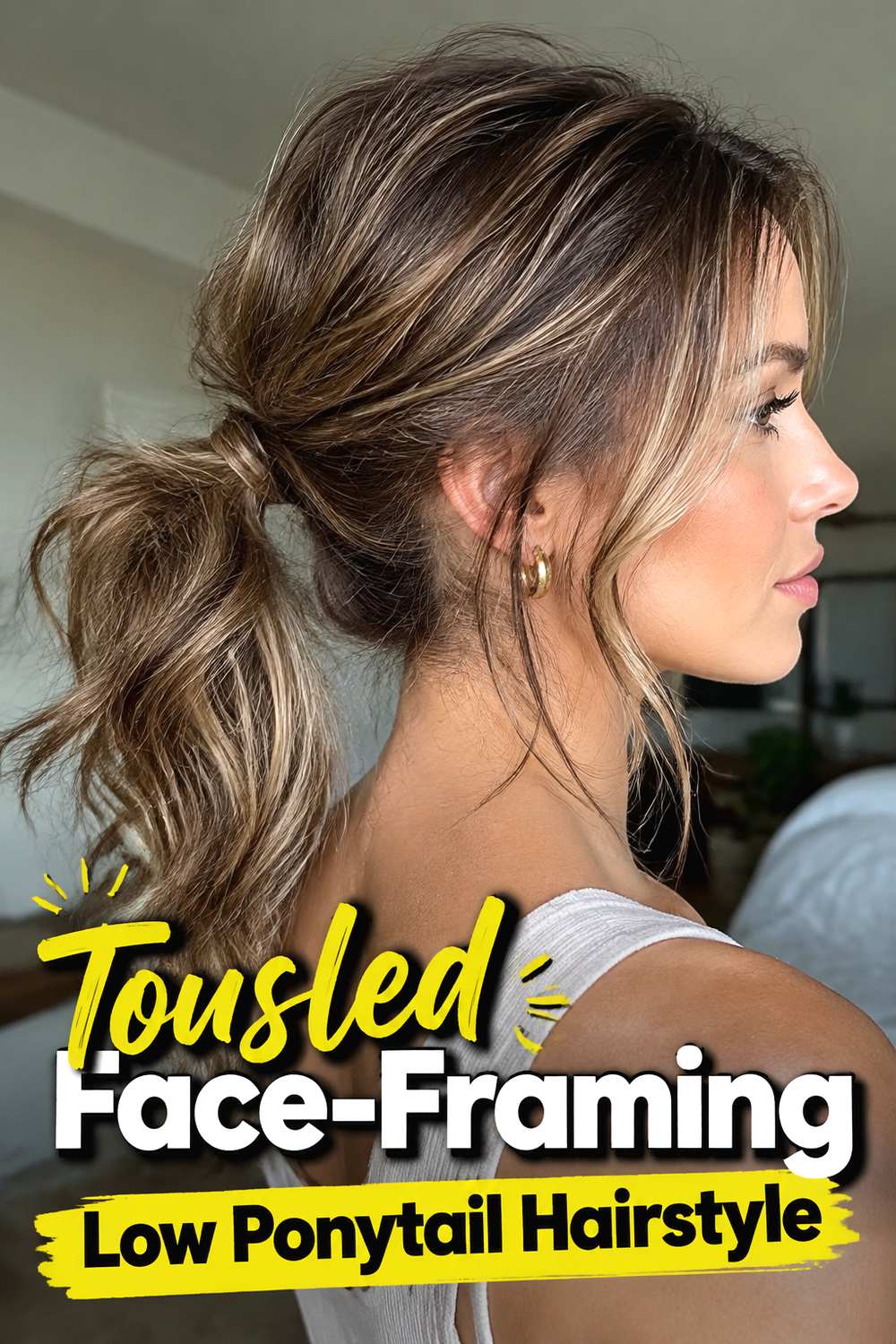
This version puts the relaxed detail where it matters most: around the face. The ponytail sits softly at the nape while several intentionally loose sections fall near the temples and cheekbones. Light bends through the lengths keep the style from looking flat, and a slightly lifted crown adds enough shape to separate it from a ponytail that was simply tied back in a hurry. It is especially appealing if you enjoy romantic, softly undone hair without wanting heavy curls. Pull out the face-framing pieces gradually after securing the ponytail rather than leaving large sections loose from the beginning; this gives you better control over balance and prevents the front from looking disconnected.
Styling Notes
Start with dry hair that has some natural movement or add a few loose bends through the mid-lengths. Gather the hair with your fingers instead of a fine-tooth comb so a little surface texture remains visible.
Best For
This approach works particularly well on medium to long hair with layers around the face. Longer curtain pieces or grown-out bangs can make the undone effect feel even more intentional.
2. Messy Wavy Low Ponytail Hairstyle
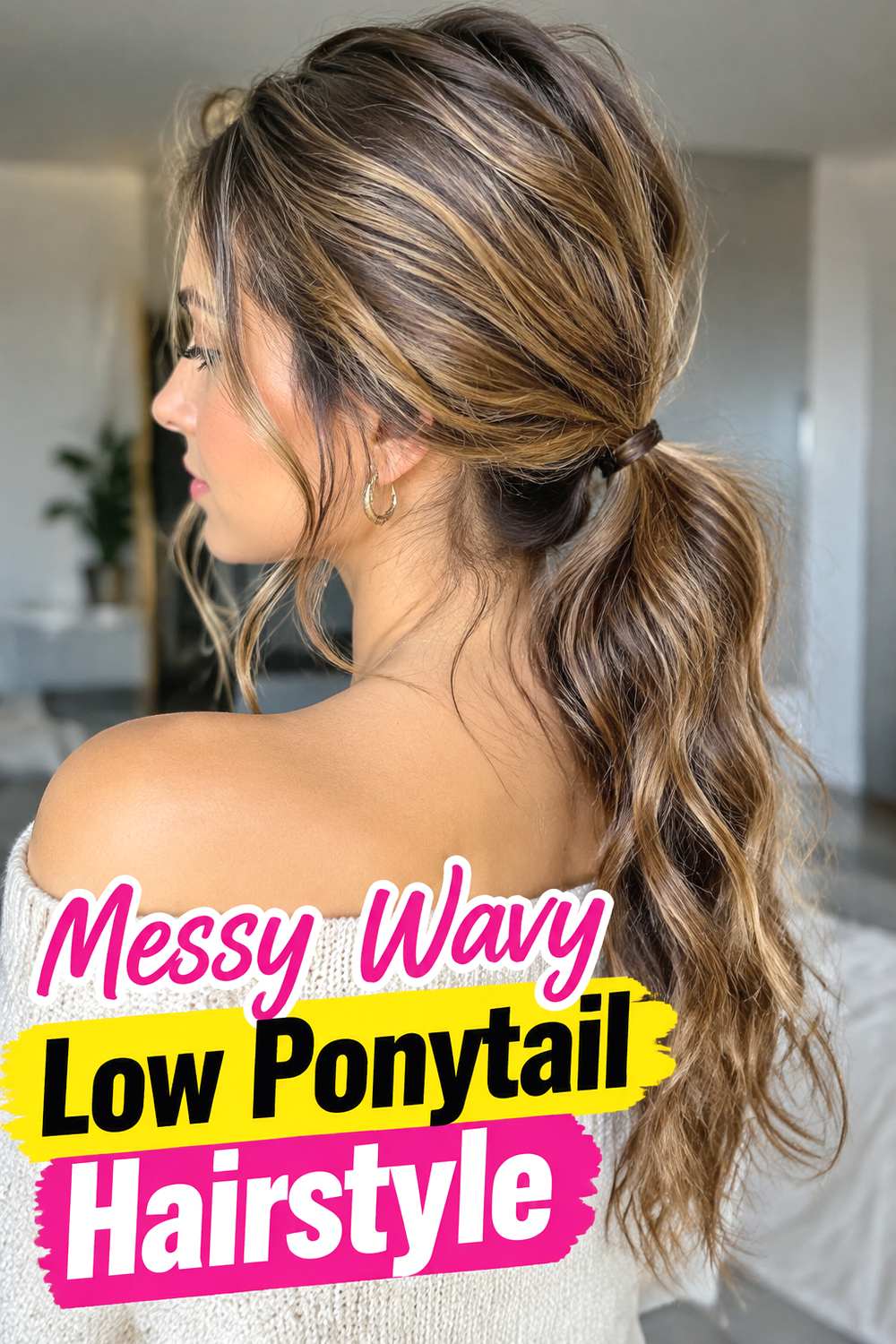
A wavy ponytail naturally lends itself to the bedhead aesthetic because the uneven bends create fullness and movement without requiring a perfectly sculpted finish. Here, the waves should look soft rather than uniformly curled, with some sections more defined than others. The base stays low and relaxed, while a few wispy strands around the hairline keep the shape airy. This is a useful option when you want the ponytail itself to carry most of the visual interest. If your waves tend to collapse after tying your hair, create slightly stronger bends before gathering it and then loosen the ponytail with your fingers. A gentle shake through the ends can help separate the waves rather than compress them into one solid shape.
Why It Works
Variation is what gives this style its casual character. Alternating wave direction and leaving the ends less curled produces a softer result than identical, polished waves.
Wear & Maintenance
Use a comfortable elastic that holds the base without squeezing it tightly. Over-tightening can flatten the crown and stretch out the texture closest to the tie.
3. Loose Textured Low Ponytail Hairstyle
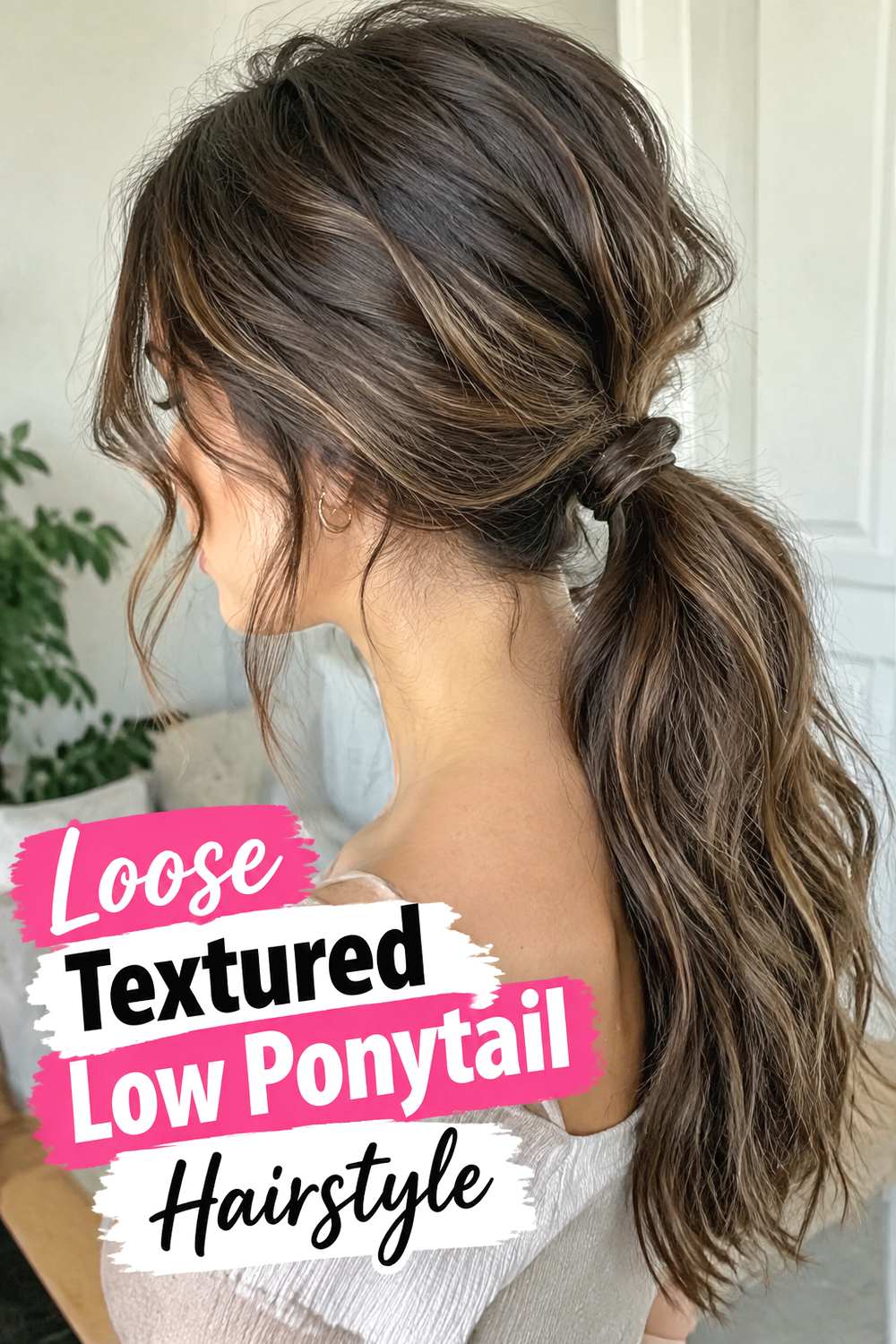
The loose textured ponytail is one of the most adaptable versions because it does not depend on a specific curl pattern. Instead, its appeal comes from softly separated strands, a relaxed crown, and gentle irregularity through the lengths. The ponytail can have subtle bends, natural texture, or a lightly brushed-out finish as long as the overall shape stays airy. Keep the base secure enough for normal wear but avoid pulling the hair tight against the scalp. Once the elastic is in place, carefully pinch small sections at the crown and sides to create dimension. Work slowly so you add controlled looseness rather than large bumps. The finished result should feel easy and touchable while still maintaining a recognizable shape.
Hair Type & Length
Medium and long lengths are easiest to gather into this silhouette, while straight, wavy, and loosely curled textures can all create convincing variations.
Pro Tip
Apply texturizing product lightly through the mid-lengths before tying the ponytail. Concentrating too much product at the roots can make intentionally tousled hair appear heavy rather than airy.
4. Softly Curled Bedhead Low Ponytail Hairstyle
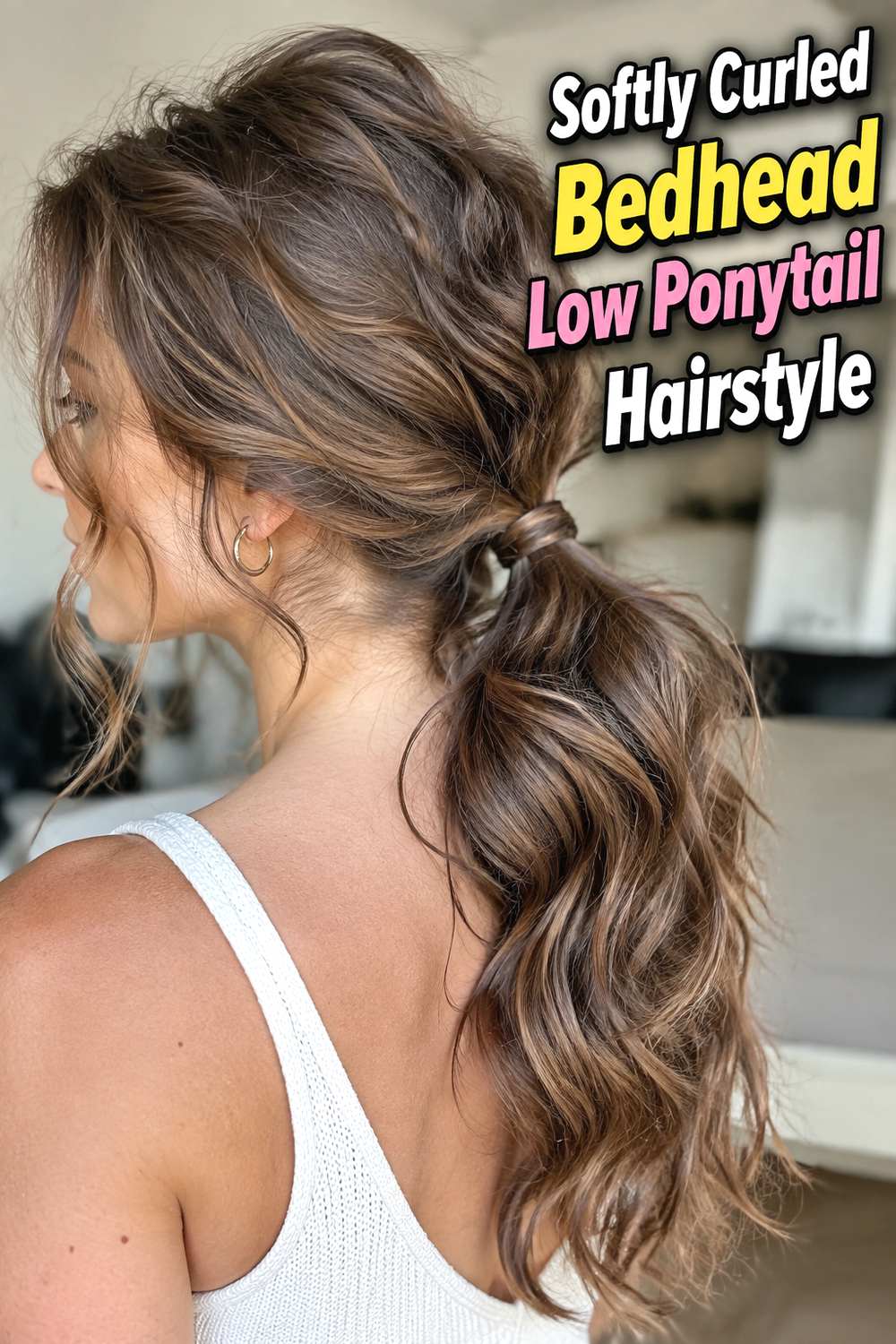
For a slightly more romantic take, use soft curls as the foundation and then deliberately break up their polished pattern. The curls give the ponytail fullness and a graceful shape, while loose strands and softened definition keep it from turning into a formal curled pony. This combination is particularly pretty when the hair has longer layers because individual pieces can fall naturally around the shoulders and neckline. Curl sections loosely, allow them to cool, and separate them gently with your fingers before gathering the hair at the nape. Avoid brushing until everything blends into one smooth wave. The beauty of this style comes from visible variation, so a few straighter ends and less-defined sections can actually strengthen the bedhead finish.
Styling Notes
Use a larger curl rather than tight ringlets if you want the style to remain relaxed. Leaving the final inch or two of some sections less curled can make the texture look more casual.
Best For
Choose this version when you want an undone ponytail that can transition easily from daytime plans to dinner, parties, or other occasions that call for a softer dressed-up finish.
5. Piecey Bangs Low Ponytail Hairstyle
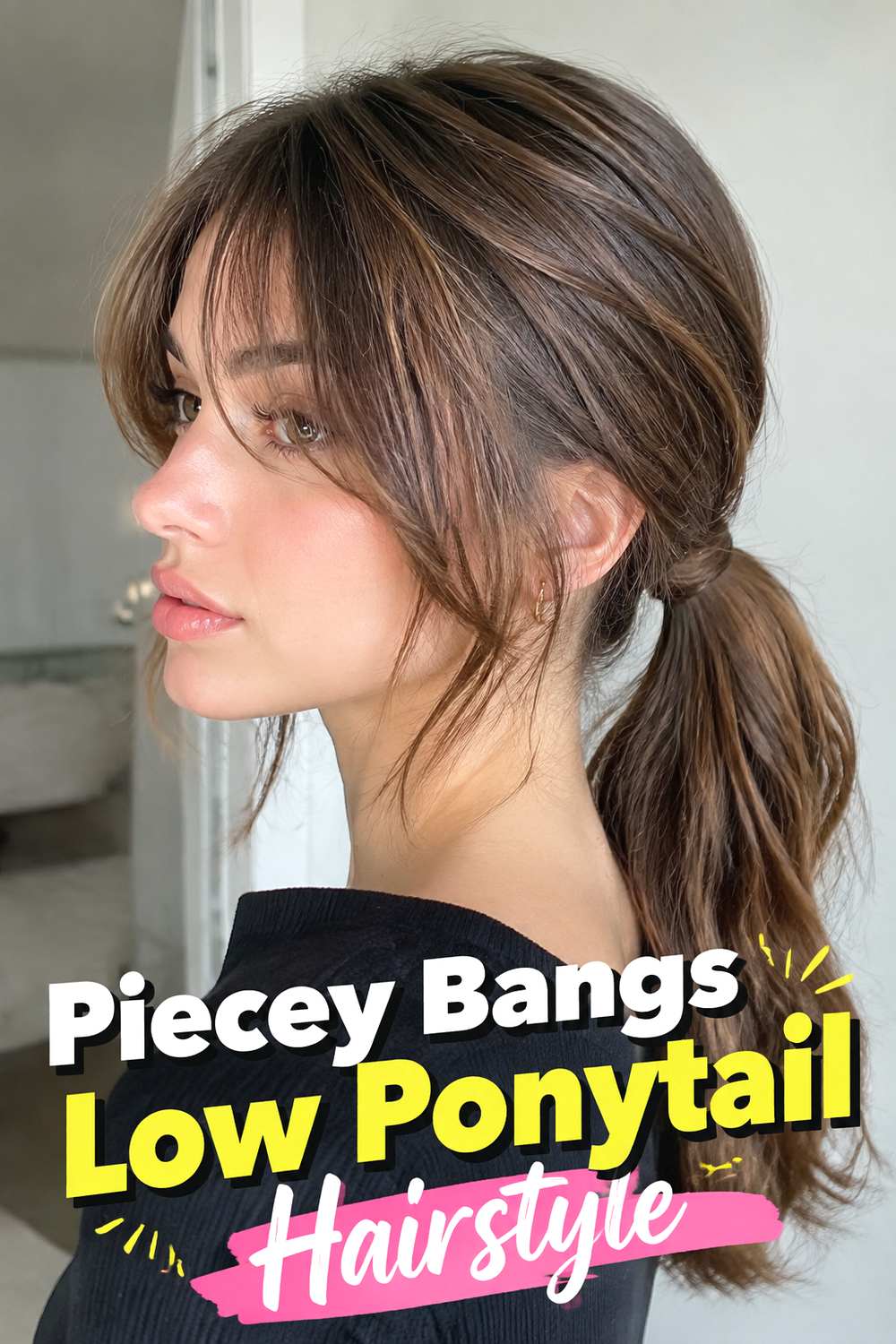
Piecey bangs give a low ponytail an instant casual edge because the front stays textured rather than perfectly arranged. Whether you have wispy bangs, curtain bangs, or a grown-out fringe, the key is to let individual sections separate naturally instead of forming one heavy block across the forehead. The rest of the hair can stay comparatively simple: a loose ponytail at the nape with light bends and subtle crown volume is enough to balance the detailed front. If your bangs tend to look too freshly styled, use your fingertips to soften them after shaping. Keep product application minimal near the fringe, since too much wax, oil, or spray can make separated pieces look greasy instead of deliberately tousled.
Why It Works
The bangs create movement close to the face, so the hairstyle still feels detailed even when the ponytail itself is uncomplicated.
Wear & Maintenance
Carry a small comb or simply use clean fingertips to reset the fringe during the day. Bangs usually need more attention than the low ponytail behind them.
6. Voluminous Crown Low Ponytail Hairstyle
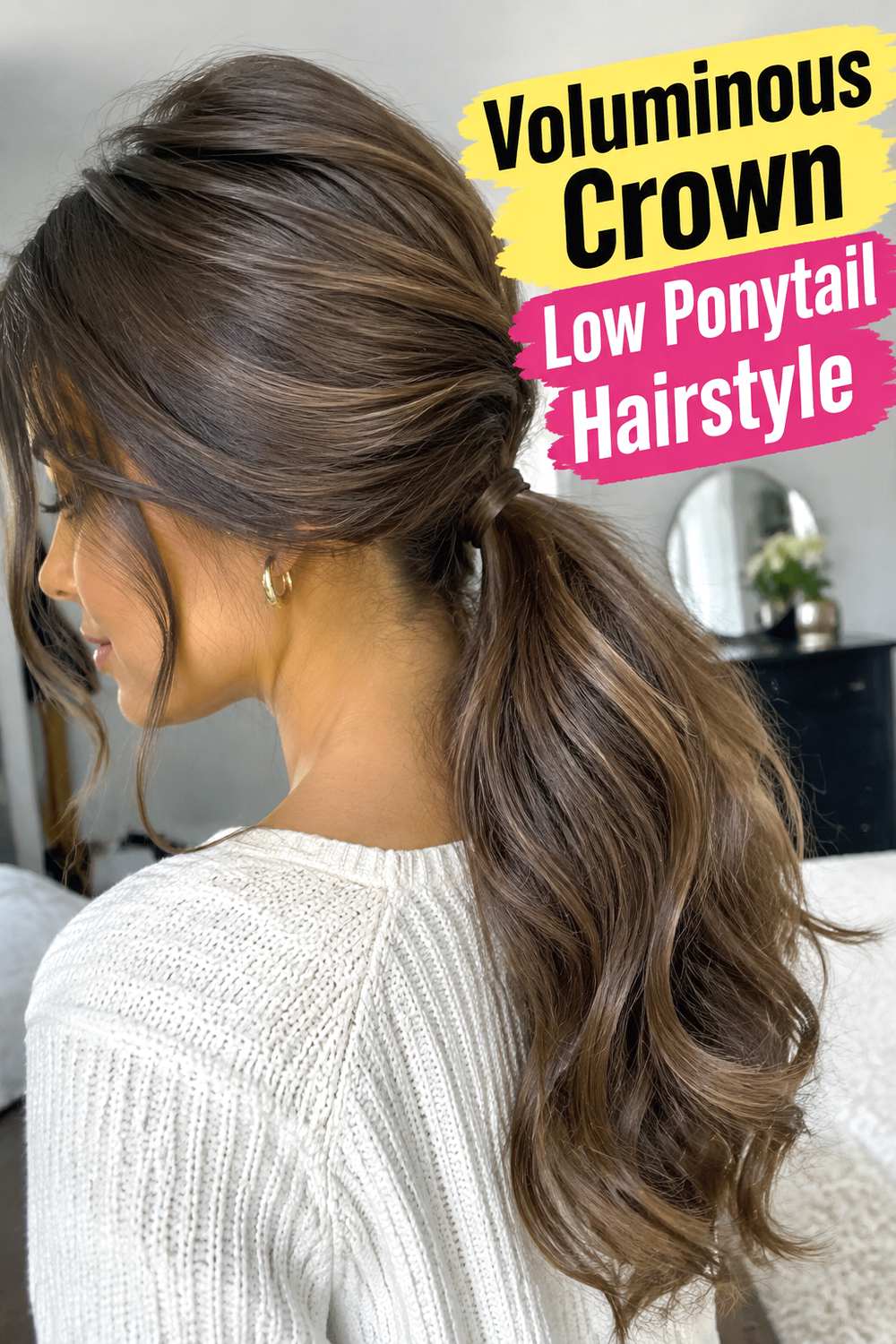
This bedhead ponytail shifts attention upward by adding noticeable but soft lift through the crown. Instead of creating a stiff teased bump, the goal is an expanded silhouette that looks as though the hair naturally has extra body. The ponytail stays low and slightly loose, allowing the fuller top to remain the focal point. It can be especially flattering when you want to avoid hair sitting flat against the scalp after it has been gathered. Build volume before securing the ponytail, then gently loosen small sections around the crown with your fingertips. Keep the sides somewhat softer and closer to the head so the height does not become exaggerated. A few loose strands near the ears help blend the volume into the relaxed overall finish.
Styling Notes
A light root-lifting or texturizing product can create grip before styling. Add volume in small increments; it is much easier to loosen more hair than to correct an oversized crown afterward.
Hair Type & Length
Fine and medium-density hair may particularly appreciate this approach, but thick hair can also wear it beautifully when bulk at the base is kept controlled.
7. Center Parted Undone Low Ponytail Hairstyle
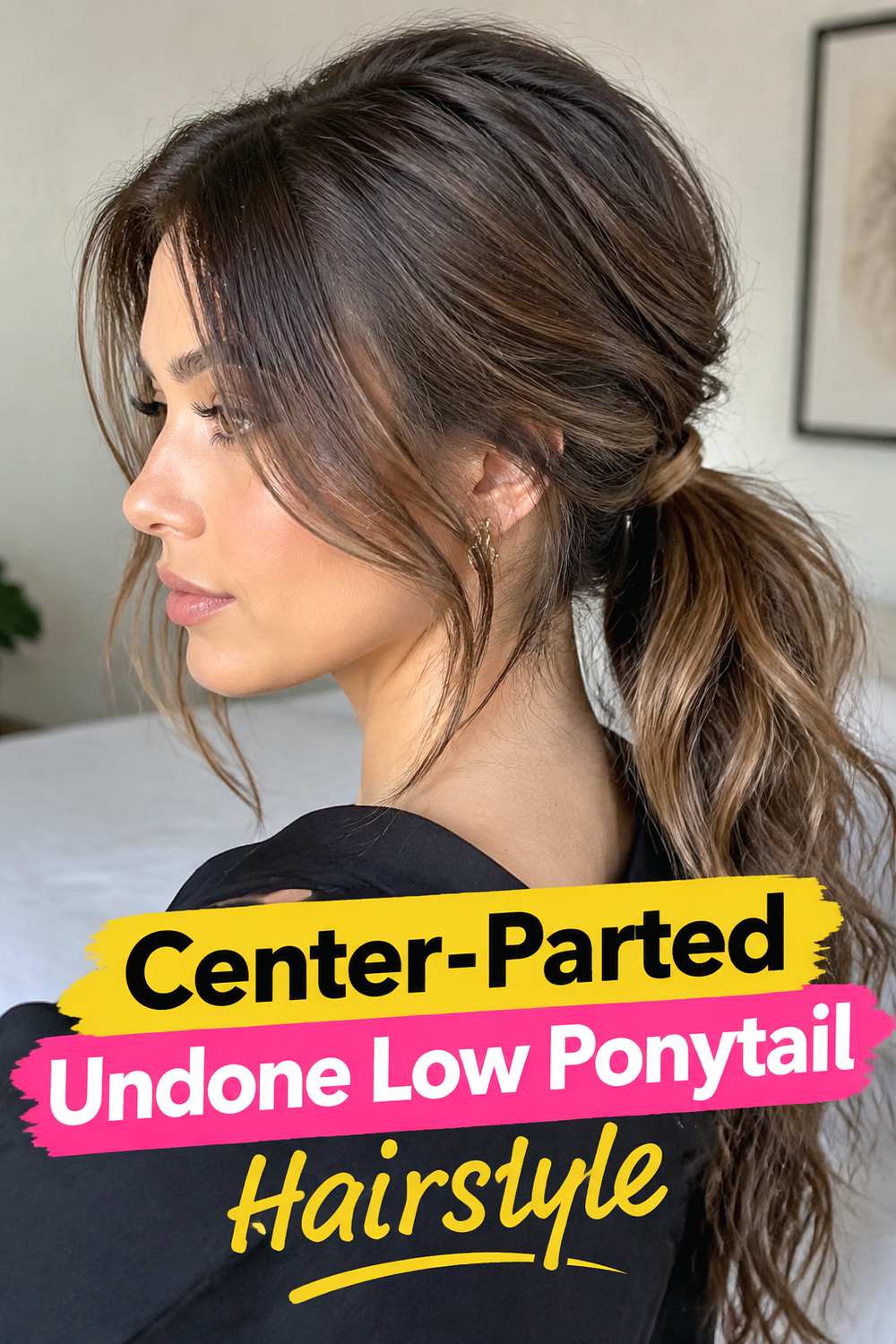
A center part gives the bedhead ponytail a clean structural line, making the surrounding imperfect texture feel especially intentional. The front sections fall evenly on both sides while the crown remains softly loosened rather than slicked down. This contrast works well for anyone who enjoys minimalist hairstyles but finds a completely sleek ponytail too severe. Keep the part visible from the hairline backward, then gather the remaining hair gently at the nape. Instead of smoothing every flyaway, allow a small amount of natural texture to remain through the sides and around the ears. Loose bends in the ponytail prevent the strong center part from making the overall look feel too rigid and add movement from different angles.
Best For
This style complements longer front layers, curtain bangs, and medium-to-long hair that can be gathered comfortably without pulling the shorter sections too tightly.
Pro Tip
Create the part before adding texture to the lengths. That keeps the dividing line neat while allowing the rest of the hairstyle to remain purposefully imperfect.
8. Side Parted Bedhead Low Ponytail Hairstyle
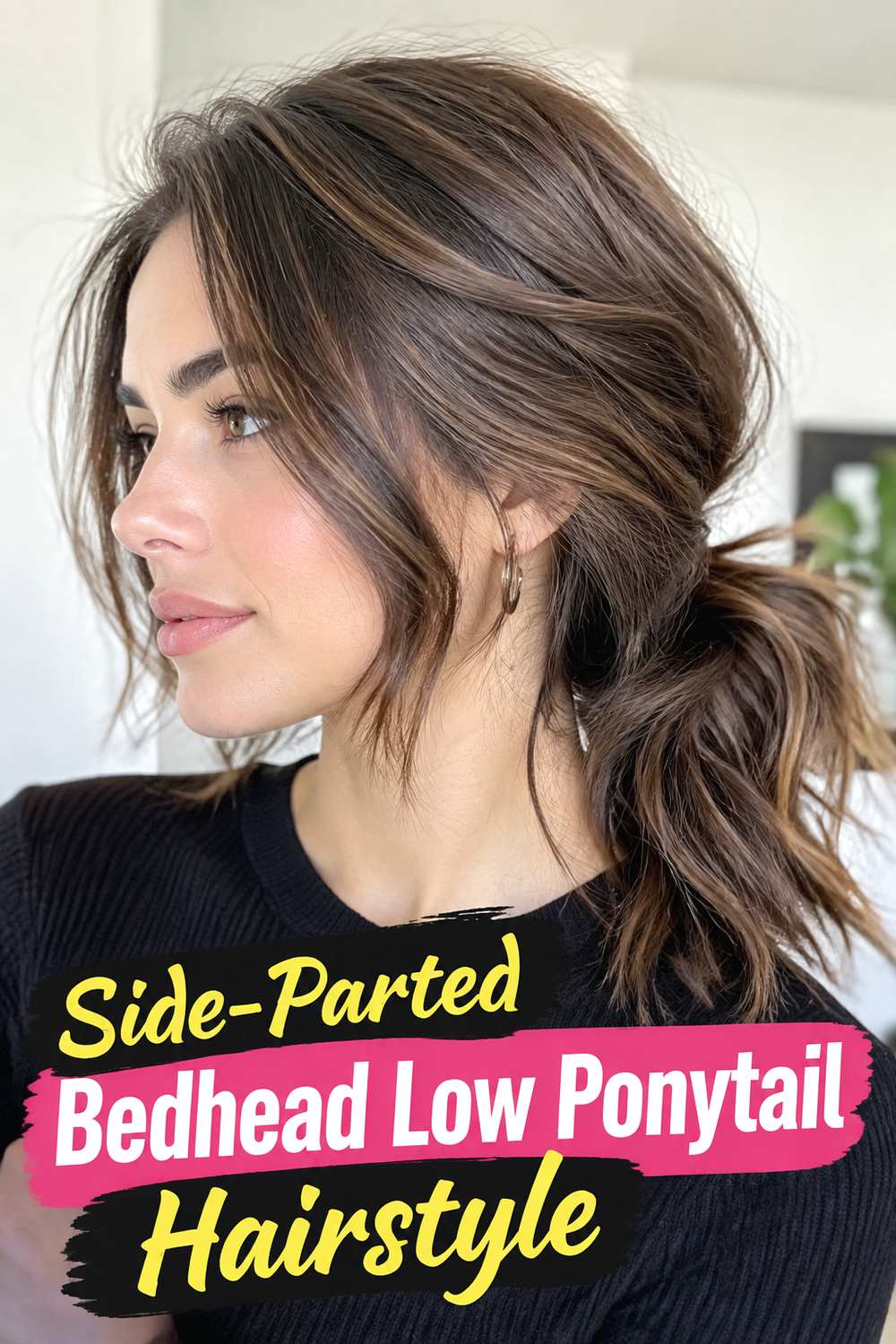
A deep or relaxed side part creates natural asymmetry, giving the low ponytail an easy, swept-over feeling. One side can carry slightly more volume while the other sits closer to the head, which makes the style visually interesting without adding complicated details. Soft waves through the ponytail strengthen that movement, especially when the front section curves gently around the forehead or cheek. Keep the hair near the part flexible rather than heavily sprayed so it does not resemble a formal side-swept style. After tying the ponytail, lift the heavier side lightly at the roots and loosen a few fine pieces near the ears. The result should feel casual and softly unbalanced in a flattering, intentional way.
Why It Works
The asymmetry gives naturally imperfect texture somewhere to go, which can make flyaways and uneven volume feel like part of the design rather than something that needs correcting.
Wear & Maintenance
If your part tends to shift throughout the day, a small amount of flexible-hold product near the roots can preserve the direction without freezing the hair in place.
9. Scrunchie Bedhead Low Ponytail Hairstyle
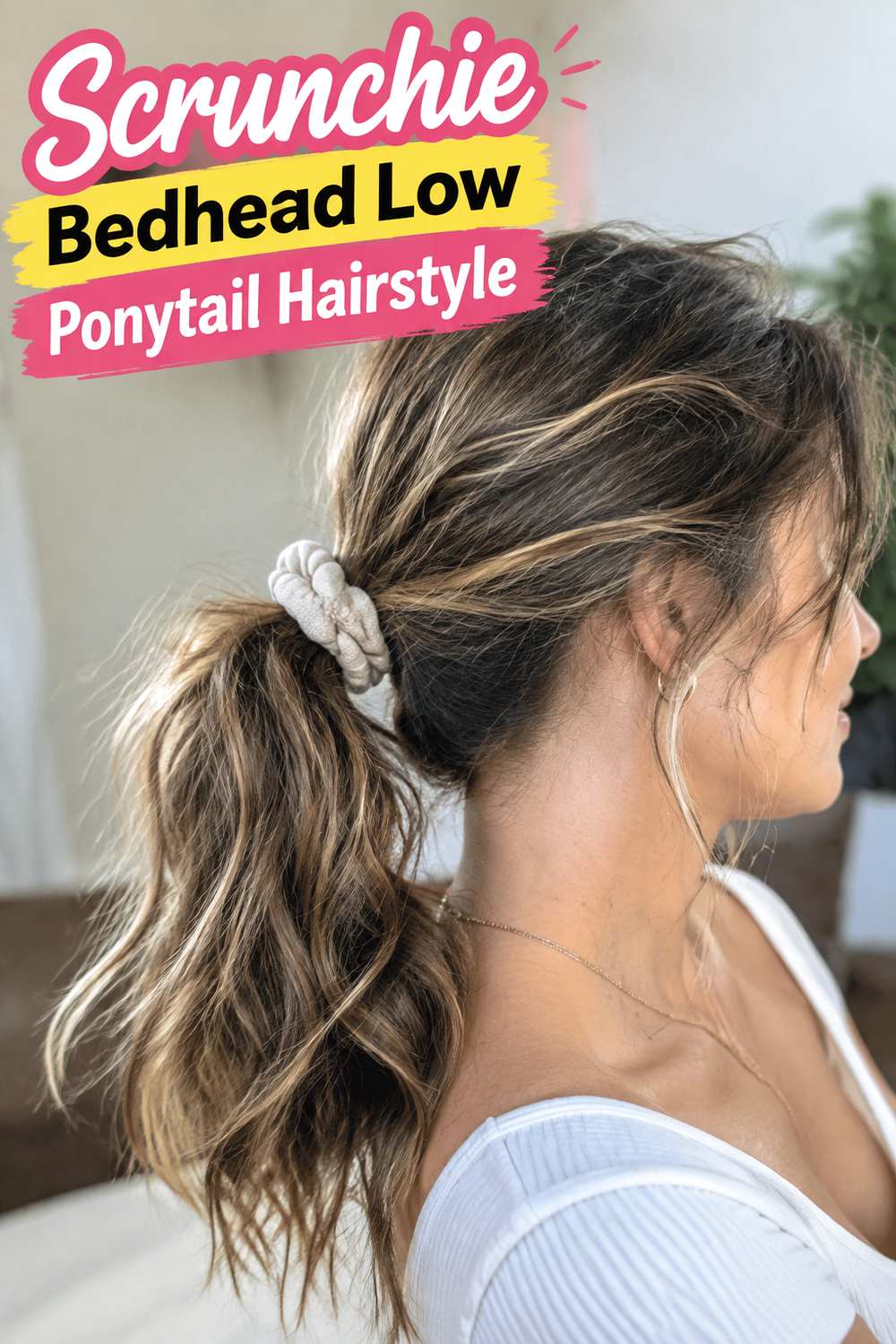
Adding a scrunchie makes the relaxed intention of a bedhead ponytail immediately obvious. The accessory gives the tie point more presence while allowing the rest of the style to stay simple and imperfect. Choose a scrunchie that is substantial enough to show but not so oversized that it overwhelms the ponytail. Soft waves, slightly puffed roots, and a few loose front strands pair particularly well with this casual detail. Because scrunchies create a different amount of tension than standard elastics, check that the ponytail is secure before loosening the crown. If it slips easily, anchor the hair first with a discreet elastic and place the scrunchie over it. This preserves the relaxed appearance while offering more reliable hold.
Best For
This option is ideal for casual days, travel, errands, brunch, or any setting where a visible accessory feels natural rather than overly dressed up.
Pro Tip
Coordinate the scrunchie with the overall mood rather than matching it exactly to your outfit. A simple neutral fabric keeps the focus on the texture of the hair.
10. Hair Wrapped Messy Low Ponytail Hairstyle
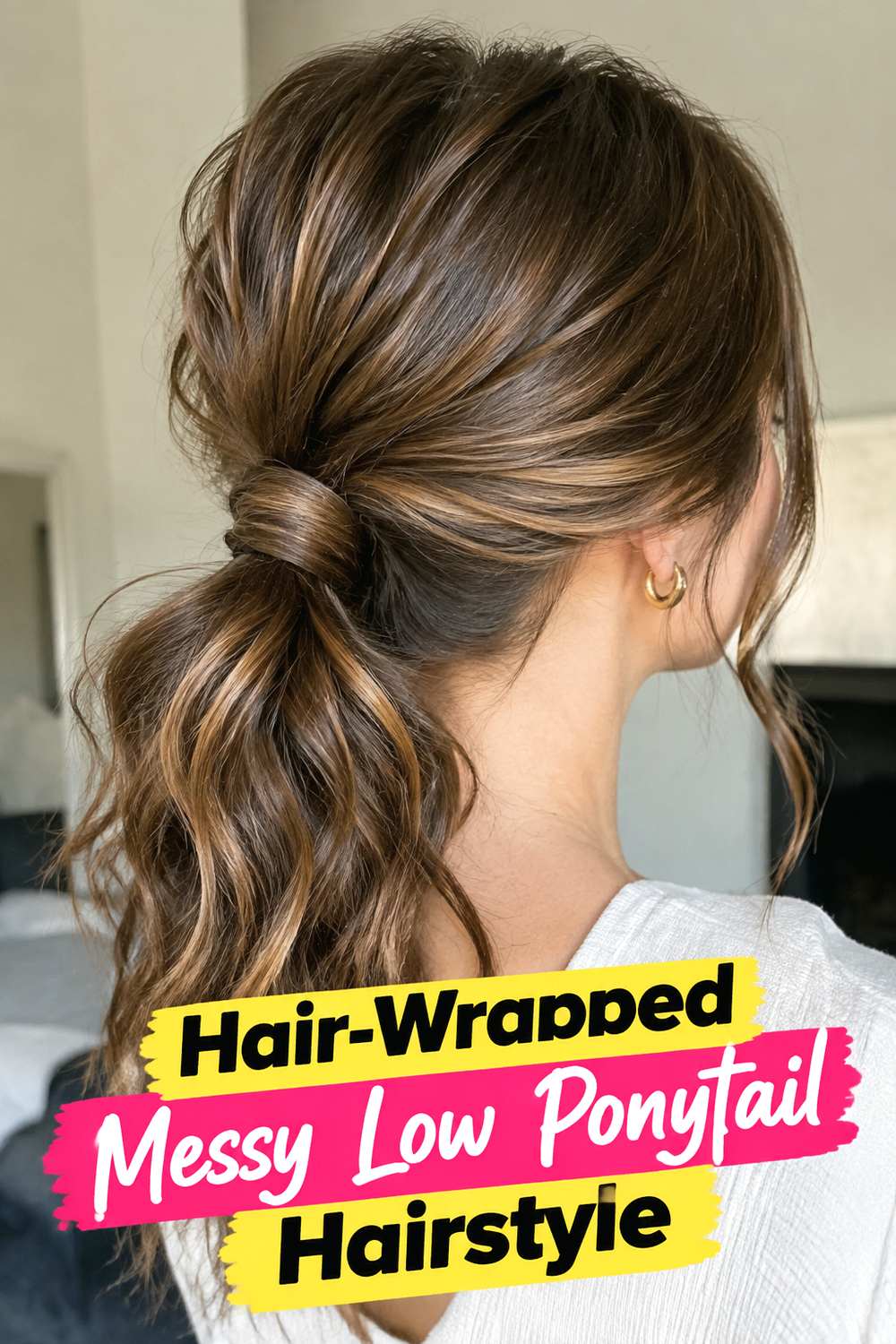
A wrapped base adds one polished detail to an otherwise tousled low ponytail, creating a balanced look that can feel casual yet finished. The hair above the elastic remains softly textured, and the ponytail itself can carry loose waves or natural bends. After securing the style, take a narrow section from underneath the ponytail and wrap it around the elastic, concealing the tie before pinning the end discreetly underneath. Do not make the wrapped section too thick, since a bulky band can fight against the effortless character of the hairstyle. Leaving a few airy strands at the temples also stops the clean base detail from making everything look too formal. It is an effective middle ground between an everyday ponytail and a more occasion-ready style.
Styling Notes
Pin the wrapped section underneath the ponytail rather than beside it whenever possible. This keeps the fastening less visible and helps the wrap look continuous.
Best For
Try this version when you want a bedhead finish for a date, dinner, casual event, or workplace where a plain exposed elastic might feel too informal.
11. Natural Curly Bedhead Low Ponytail Hairstyle
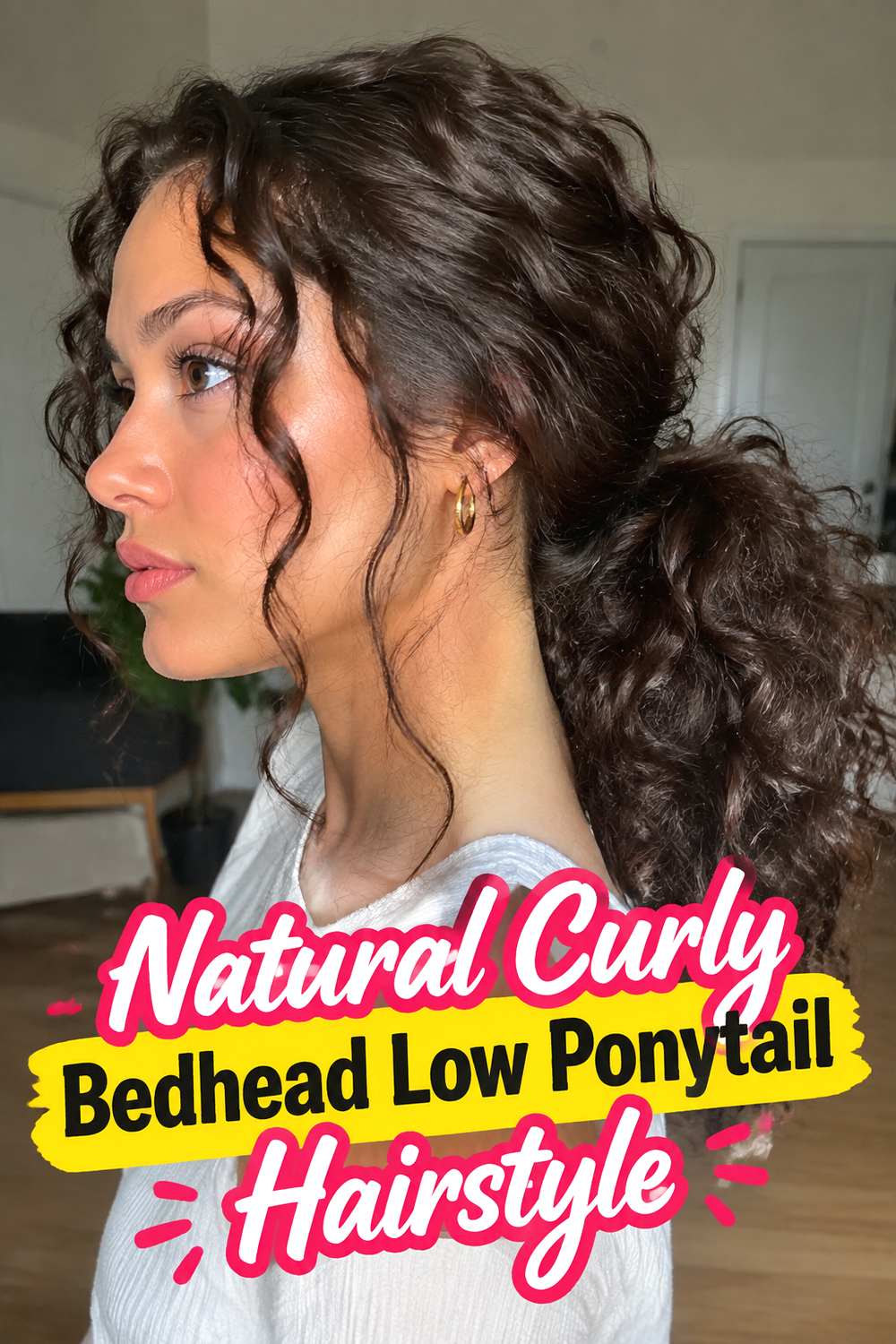
Natural curls give a low ponytail built-in texture, making it possible to create a beautifully undone finish without forcing the hair into waves first. The goal is to preserve curl variation, volume, and movement rather than stretching everything smooth against the scalp. Gather the curls gently toward the nape, leaving enough room at the crown and sides for their natural shape to remain visible. A few shorter curls can stay loose around the hairline, especially if they naturally frame the face. Avoid repeatedly brushing through dry curls before styling, which can separate the pattern more than desired. Instead, arrange the shape with your hands and refresh individual areas as needed. The resulting ponytail should showcase the curl pattern rather than hide it.
Hair Type & Length
This look is especially suited to curly and coily textures long enough to gather at the nape, though the exact ponytail shape will naturally vary with shrinkage, density, and curl pattern.
Wear & Maintenance
Use a tie that offers secure hold without excessive tension. Preserving comfort at the hairline is more important than forcing every short curl into the ponytail.
12. Second Day Straight Low Ponytail Hairstyle
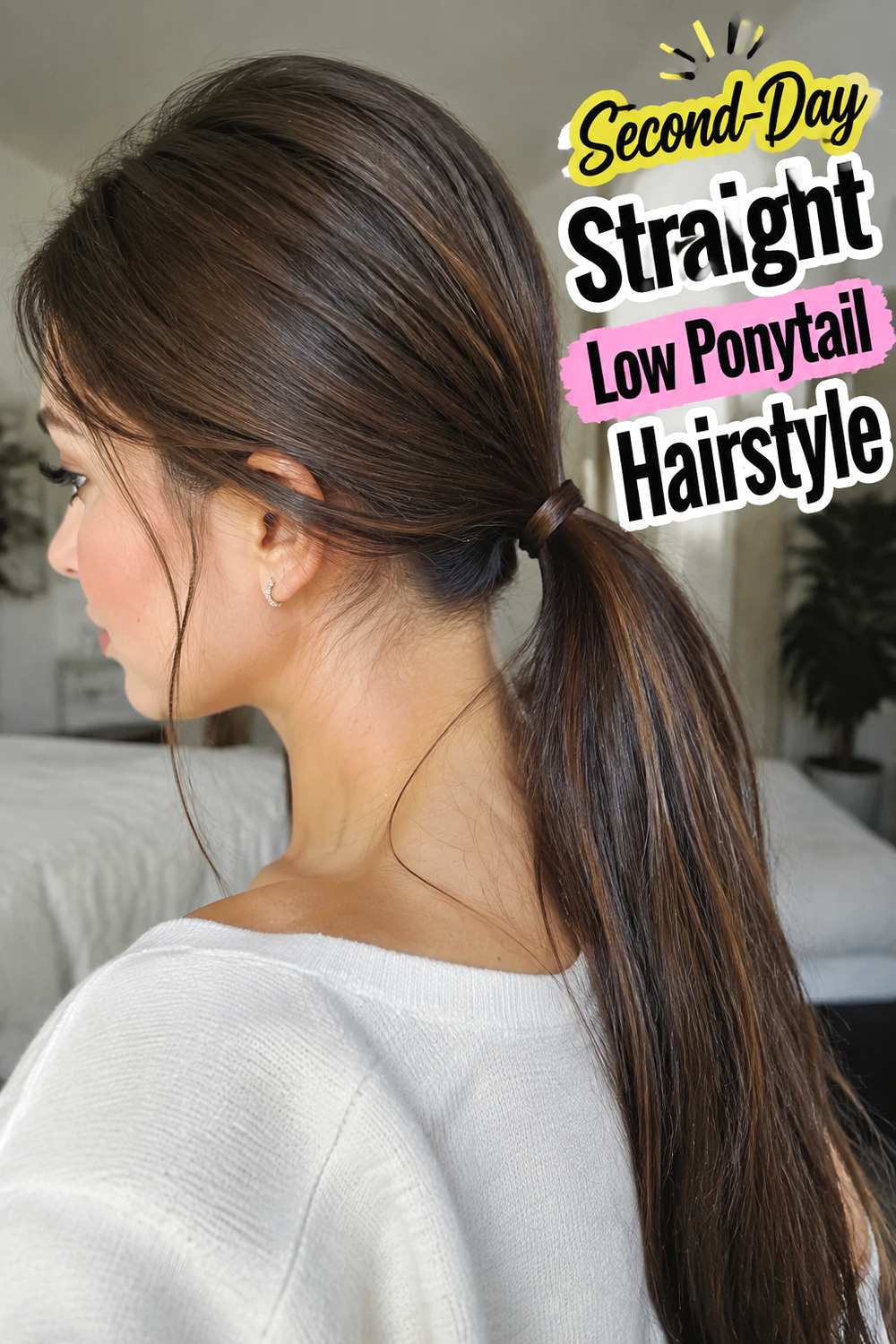
Straight hair does not need curls to achieve a convincing bedhead ponytail. Second-day texture can provide just enough grip, slight root separation, and natural movement to keep the style from looking overly sleek. Gather the hair loosely at the nape and allow the ponytail to fall with its natural weight. Subtle bends left from sleeping, previous styling, or tucking the hair behind the ears can contribute to the undone appearance rather than needing to be corrected. Add a little crown lift with your fingertips and release several fine sections near the front if desired. The key is avoiding extremes: perfectly flat roots can look severe, while too much artificial texture can take away from the simple straight-haired character of the style.
Why It Works
Slightly lived-in straight hair often has more grip than freshly washed lengths, helping the ponytail maintain soft separation without requiring elaborate styling.
Pro Tip
If the roots need refreshing, apply dry shampoo sparingly and work it in completely before gathering the hair so no visible powder or chalky texture remains.
How to Choose the Right Look
Start with your natural hair texture and decide how much preparation you realistically want to do. Naturally wavy hair can move easily into the Messy Wavy or Loose Textured Low Ponytail Hairstyle, while curls can remain expressive in the Natural Curly Bedhead Low Ponytail Hairstyle. Straighter hair can stay close to its natural finish with the Second-Day Straight version or gain dimension through soft bends.
Hair length also affects your options. Medium lengths may benefit from face-framing pieces and a secure tie at the nape, while longer hair gives you more room for waves, curls, wraps, and visible ponytail volume. If shorter layers escape naturally, consider treating them as part of the bedhead effect instead of repeatedly pinning them down.
For styling time, the Scrunchie and Second-Day Straight versions are among the simpler choices. Soft curls or a hair-wrapped base require more preparation. If long wear is important, prioritize a secure elastic underneath the relaxed finish rather than tying the entire style loosely.
Comfort matters as much as appearance. A bedhead ponytail should look relaxed, but it should not depend on uncomfortable pulling or constant readjustment. Keep tension moderate, particularly around the temples and hairline.
Finally, consider the finish you want. Choose crown volume for extra lift, a center part for understated structure, a side part for asymmetry, curls for romance, or a wrapped base when you need the style to feel slightly more polished.
Final Thoughts
The best bedhead low ponytail is not simply a messy ponytail—it combines controlled shape with believable looseness. Start with the variation closest to your natural texture, then adjust the face-framing pieces, crown volume, part, and ponytail texture to suit your hair. A few imperfect strands usually contribute more to this look than trying to make every section match.
FAQs
1. How do I make a low ponytail look intentionally messy instead of unfinished?
Keep the tie point secure, then add looseness selectively. Lift small areas around the crown, release a few face-framing strands, and preserve some texture through the ponytail instead of pulling random large sections loose.
2. Can I create a bedhead low ponytail on freshly washed hair?
Yes. Fresh hair may simply need extra grip. Let it dry fully, then use a small amount of lightweight texturizing product before gathering the ponytail so the style does not become too slippery or flat.
3. Do bedhead ponytails work on straight hair?
Absolutely. Straight hair can look intentionally undone through subtle root volume, natural separation, a few loose pieces, and slight bends through the lengths. You do not have to curl the entire ponytail.
4. Where should a low ponytail sit?
For the classic low silhouette, secure it close to the nape rather than around the middle of the back of the head. You can move the tie slightly higher or lower depending on comfort, hair length, and the shape you prefer.
5. How can I keep a messy low ponytail from falling apart?
Build security underneath the softness. Use a reliable elastic first, then loosen the crown and front sections after the base is stable. If needed, discreet pins can hold shorter layers while still allowing a few intentional pieces to remain free.
CTA
Save your favorite bedhead low ponytail hairstyles and use them as inspiration the next time you want an easy, softly undone look.