21 Blue Black Halo Hair Color Ideas
Blue-black halo color combines inky depth with cool blue dimension, creating a luminous perimeter that can look subtle indoors and more vivid when it catches natural light.
The halo technique can be interpreted in several ways with blue-black hair. Some versions keep the interior almost jet black and add stronger blue around the hairline, while others reverse the contrast with a blue-black perimeter surrounding a slightly softer black base. Undertones ranging from navy and indigo to cobalt, steel, teal, and violet can make the same basic concept feel completely different.
Placement matters just as much as tone. Narrow sections create a discreet glow, while thicker perimeter pieces produce a more graphic result. Texture, haircut, existing color, and maintenance should also guide the choice, especially because vivid cool tones can fade or shift over time.
Quick List
- Classic Blue Black Halo Hairstyle
- Midnight Blue Black Halo Hairstyle
- Electric Blue Black Halo Hairstyle
- Navy Blue Black Halo Hairstyle
- Cobalt Blue Black Halo Hairstyle
- Indigo Blue Black Halo Hairstyle
- Smoky Blue Black Halo Hairstyle
- Steel Blue Black Halo Hairstyle
- Sapphire Blue Black Halo Hairstyle
- Teal Tinted Blue Black Halo Hairstyle
- Violet Blue Black Halo Hairstyle
- Jet Black With Blue Halo Hairstyle
- Blue Black Rooted Halo Hairstyle
- High Contrast Blue Black Halo Hairstyle
- Subtle Blue Black Halo Hairstyle
- Blue Black Halo Bob Hairstyle
- Blue Black Halo Lob Hairstyle
- Wavy Blue Black Halo Hairstyle
- Curly Blue Black Halo Hairstyle
- Long Layered Blue Black Halo Hairstyle
- Hidden Underlayer Blue Black Halo Hairstyle
1. Classic Blue Black Halo Hairstyle
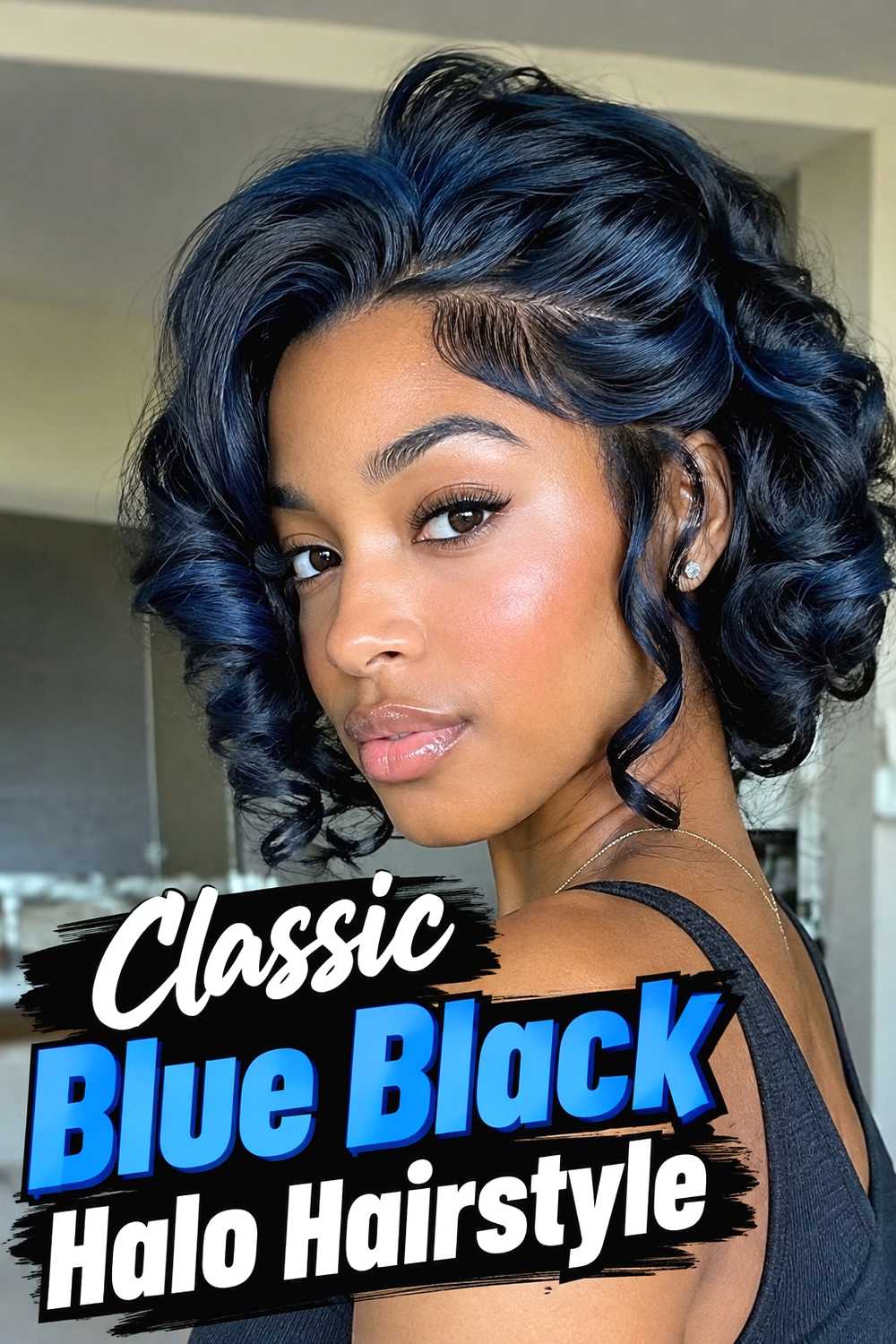
A classic blue-black halo keeps the overall hair very dark while concentrating cool blue-black richness around the face and outer hairline. The contrast does not need to be dramatic; the halo can sit only slightly brighter or bluer than the interior, becoming most visible when sunlight catches the perimeter. This creates a polished result that reads almost black from a distance but reveals blue dimension as the hair moves. Smooth styling emphasizes the reflective surface, while a few bends keep the color from looking flat. The key is maintaining enough tonal difference between the halo and the base for the placement to remain noticeable without turning the look into a bold two-tone effect.
Best For
This version suits anyone who wants an understated interpretation of blue-black color rather than an obviously vivid blue perimeter.
Wear & Maintenance
Color-safe care and occasional glossing can help preserve the cool reflective finish as the blue tone gradually softens.
2. Midnight Blue Black Halo Hairstyle
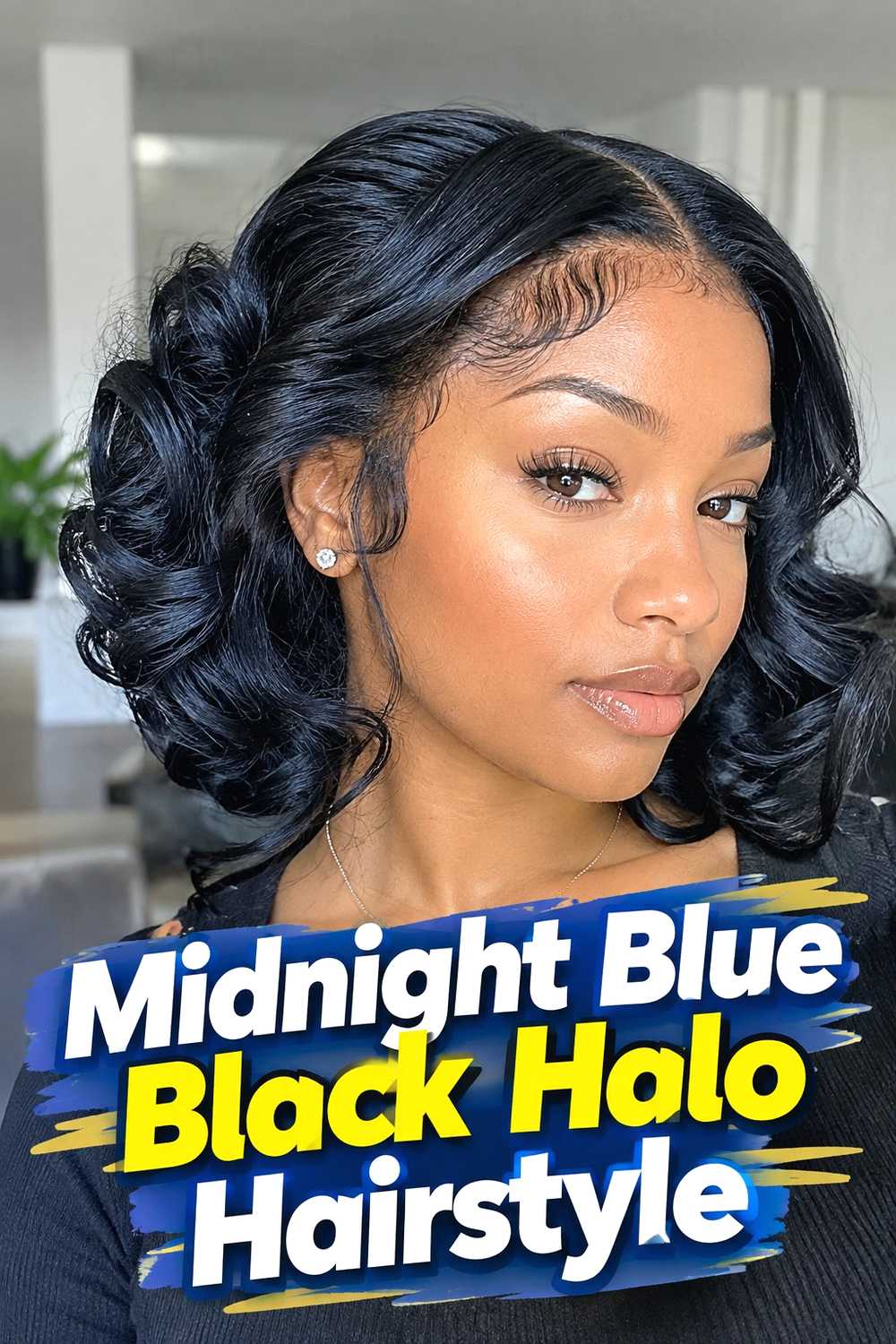
Midnight blue creates a halo that feels almost black in low light but shows a rich navy cast under brighter conditions. The perimeter can begin close to the front hairline and continue through the temples, with the darkest black reserved for the interior. This small difference creates depth without relying on a very bright fashion shade. Long, sleek hair shows the transition beautifully because the surface catches light in broad sections, while waves reveal flashes of blue from multiple angles. The finish works particularly well when the halo remains deep and saturated rather than overly bright, giving the style a mysterious but wearable quality that still fits within a dark overall color palette.
Why It Works
The blue becomes visible mainly through reflected light, allowing the halo to look dimensional without losing the depth associated with black hair.
Pro Tip
Keep the blue undertone deep and inky if you want the color to remain sophisticated rather than reading as a bright primary blue.
3. Electric Blue Black Halo Hairstyle
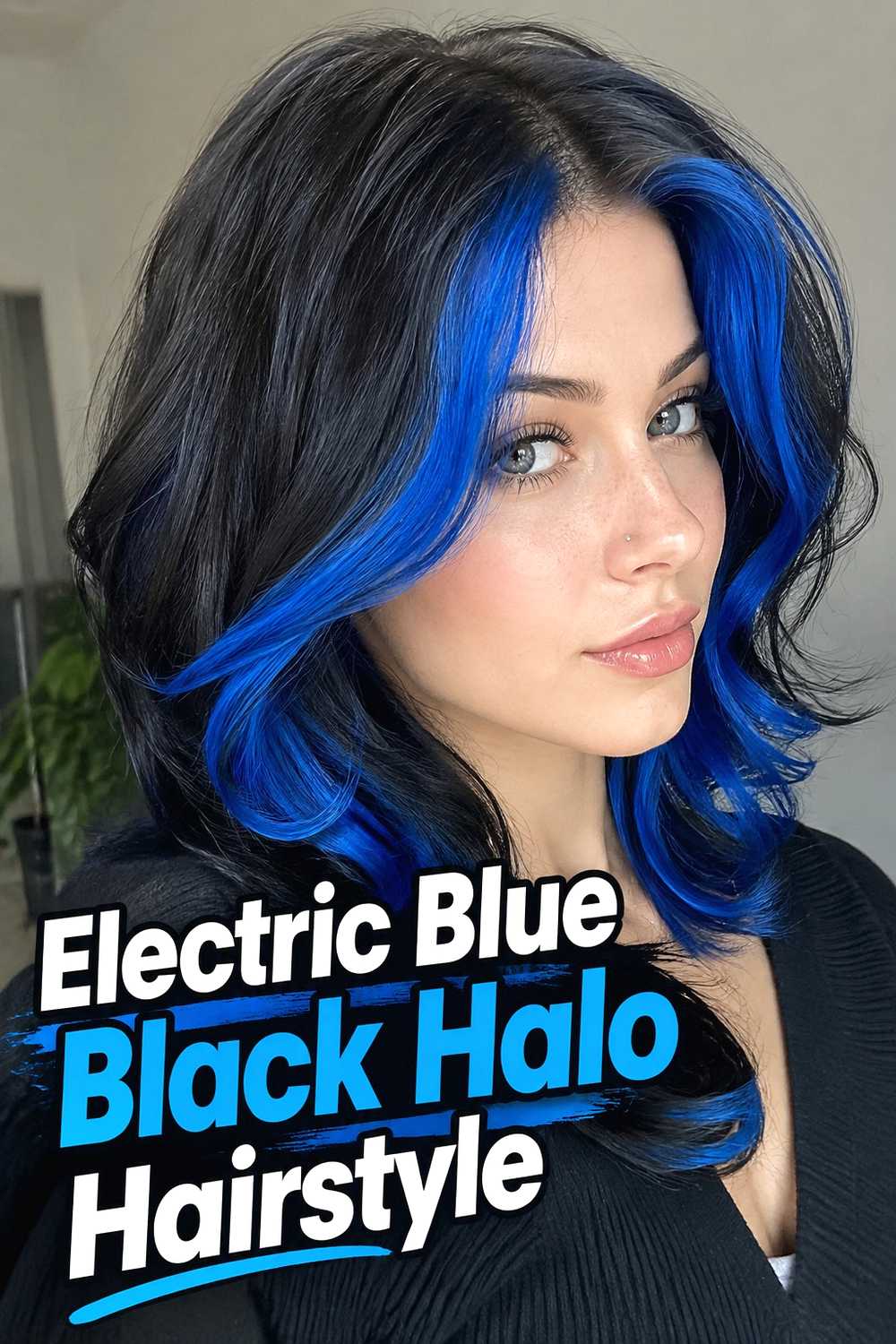
An electric blue-black halo creates a much bolder perimeter by pairing dark interior hair with highly saturated blue sections around the front and outer hairline. The brightest color can frame the temples and face, while smaller connecting ribbons prevent the placement from looking abruptly disconnected. Keeping the base close to jet black makes the electric blue stand out clearly, especially on straight or softly waved hair. This version is intentionally graphic, so it works best when the halo is meant to become a major visual feature rather than a subtle undertone. Because vivid blues can lose intensity with repeated washing, realistic maintenance should include gentle cleansing and periodic color refreshing.
Best For
Choose this version when you want the blue element to be immediately noticeable rather than visible only in strong light.
Wear & Maintenance
Vivid blue pigments can fade noticeably, so cooler water, color-safe products, and refresh appointments may help maintain saturation.
4. Navy Blue Black Halo Hairstyle
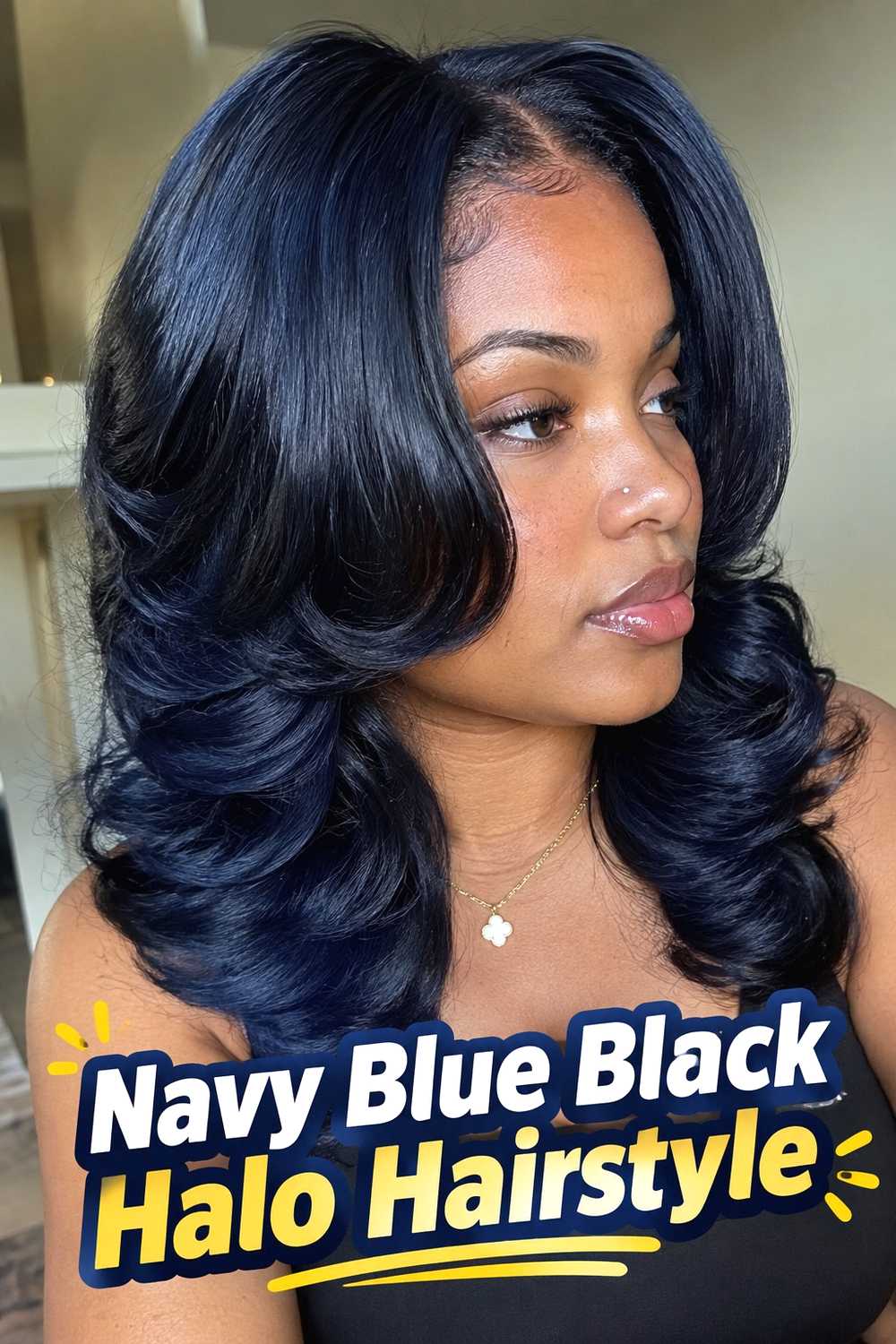
A navy halo sits between subtle midnight blue and brighter cobalt, offering clear blue dimension without becoming neon. The color can be concentrated around the hairline, temples, and selected outer sections, while the interior stays deep black for contrast. Because navy is still relatively dark, the halo integrates smoothly with the base and can look surprisingly understated in indoor lighting. Loose waves make the placement more dimensional by revealing alternating navy and black sections as the hair bends. This tone is useful when you want visible blue color but prefer a richer, more sophisticated finish. Maintaining gloss is especially important because shine helps separate the cool navy undertone from ordinary black.
Styling Notes
Smooth waves or a polished blowout help the navy tone catch light and show its blue character more clearly.
Best For
This is a versatile option if electric blue feels too bold but a nearly black midnight tone seems too subtle.
5. Cobalt Blue Black Halo Hairstyle
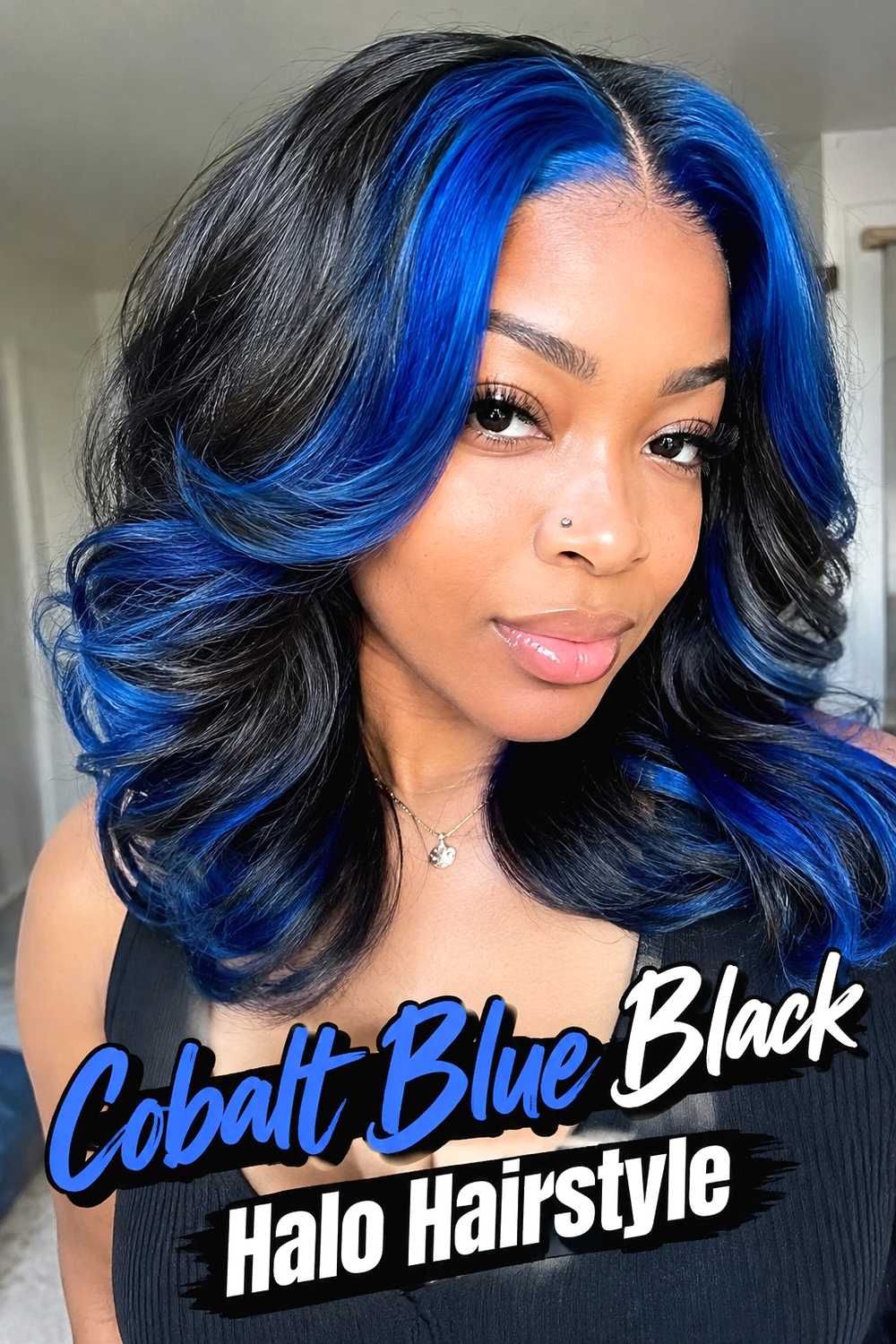
Cobalt creates a saturated, cool-toned halo with more brightness than navy but less neon intensity than electric blue. Against a black interior, the color produces a crisp outline around the face and perimeter. The front pieces can be slightly stronger while the side sections become narrower, allowing the placement to transition gradually around the head. Cobalt looks especially striking on straight, glossy hair where the saturated tone appears clean and concentrated, but textured styles can make it feel more dimensional. Leaving plenty of true black between the blue sections prevents the overall color from becoming uniformly bright. The result is bold, polished, and highly visible without losing the dark foundation.
Why It Works
A jet-black base creates maximum depth, making the cooler cobalt perimeter look more vivid without requiring blue throughout the entire head.
Pro Tip
Keep the placement intentional and limited if you want the cobalt halo to remain the focal point rather than becoming an all-over blue look.
6. Indigo Blue Black Halo Hairstyle
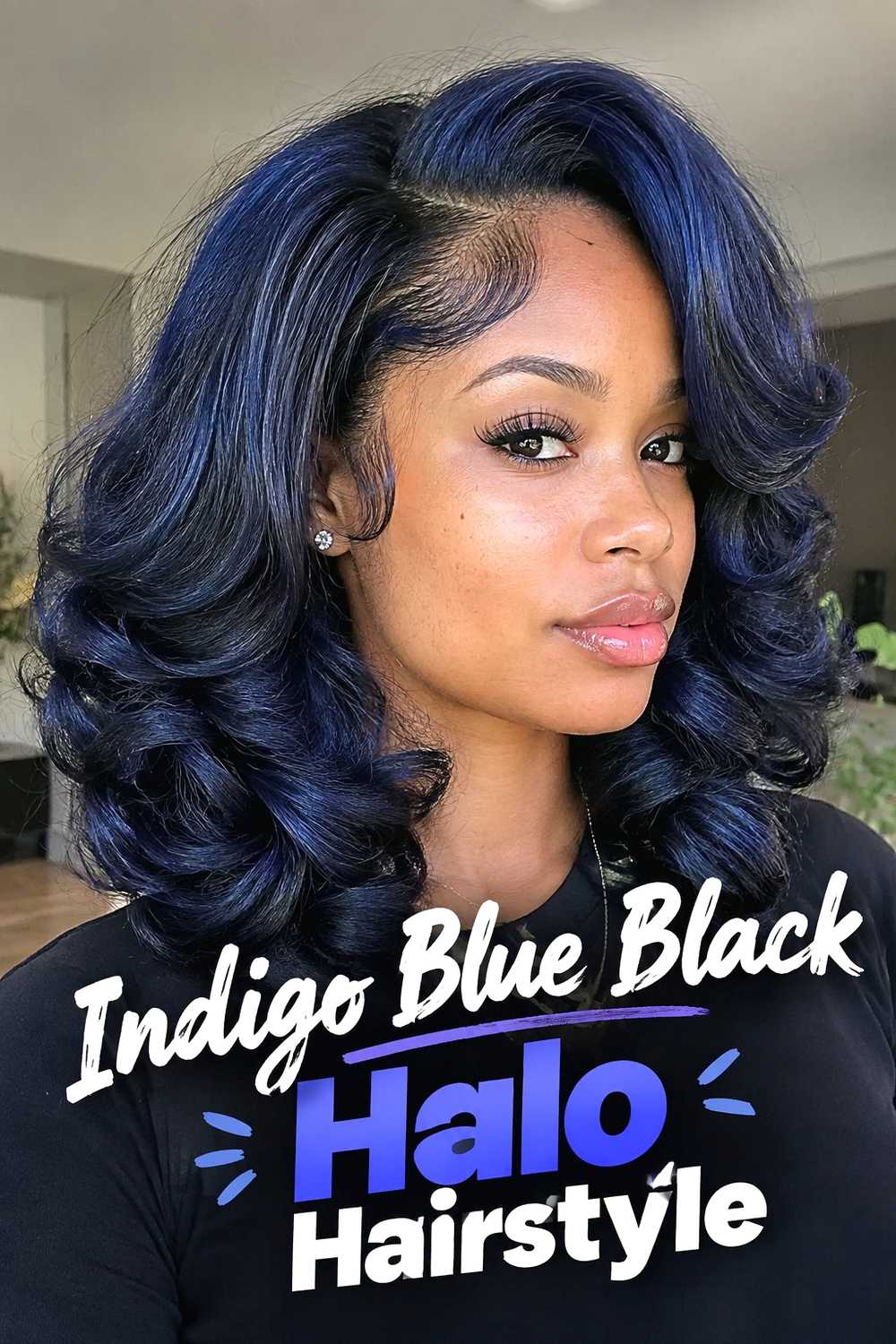
Indigo brings a slightly violet-leaning depth to a blue-black halo, creating a color that shifts between blue, purple, and black depending on the lighting. The halo can be strongest around the temples and front pieces, where the cooler undertone is most visible against the face, then blend gradually into a deep black interior. This multidimensional shade works beautifully with waves because different angles can reveal more blue or violet at different moments. It also offers a softer alternative to pure cobalt for anyone who prefers complex jewel tones. A glossy finish keeps the indigo looking rich rather than muddy, while preserving some black sections provides the contrast needed for the halo placement to remain distinct.
Best For
Indigo is ideal when you want the blue-black effect to include a subtle violet shift rather than a straightforward navy or cobalt tone.
Wear & Maintenance
Blue-violet tones may change as they fade, so periodic glossing or color refreshes can help preserve the intended balance.
7. Smoky Blue Black Halo Hairstyle
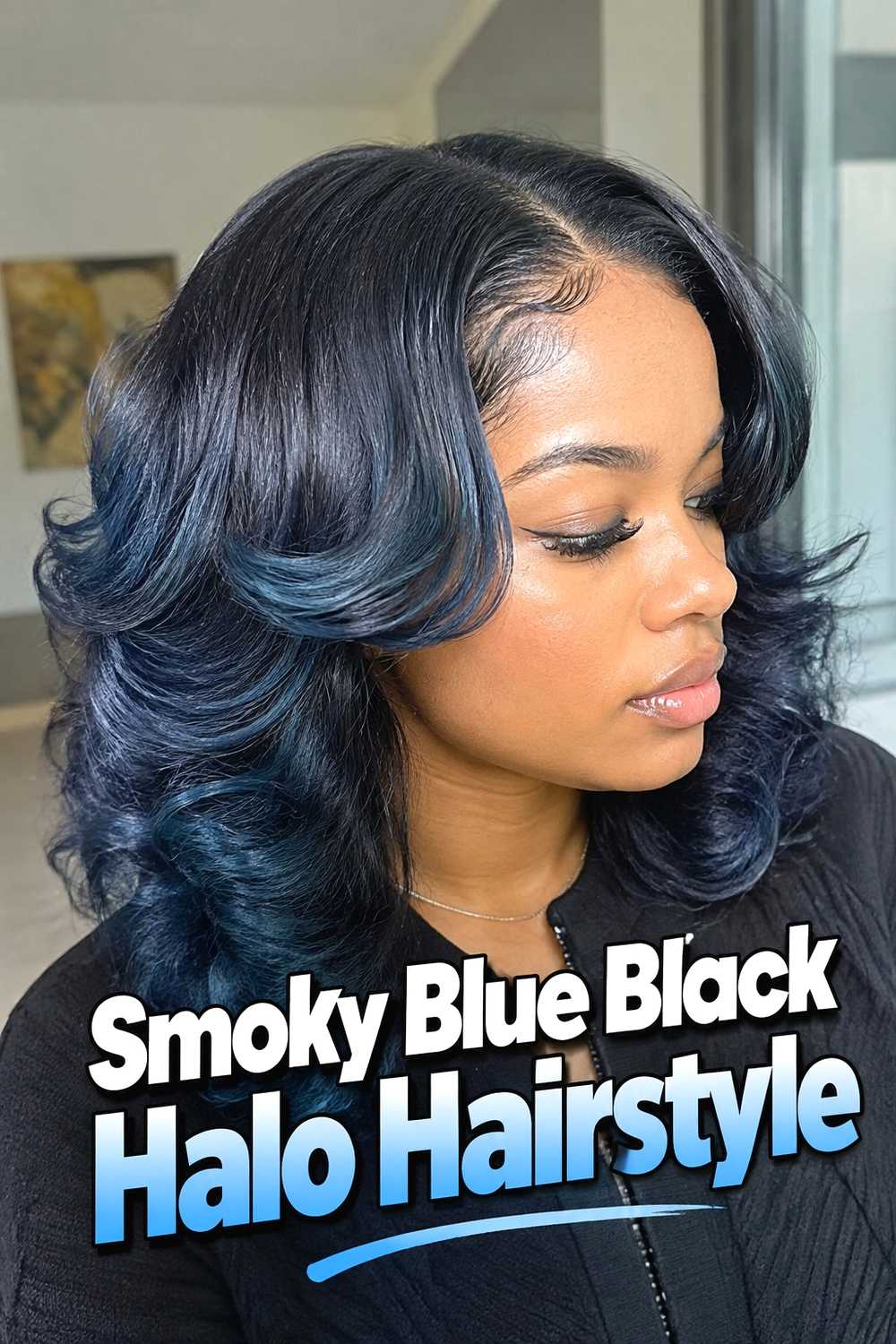
Smoky blue-black creates a muted halo with gray-blue undertones rather than strong saturation. The effect feels softer and more atmospheric, especially when paired with a charcoal-black or cool brunette interior. Around the hairline, the halo can appear slightly lighter and dustier than the base, creating dimension without a vivid fashion-color finish. Straight hair shows the tonal difference clearly, while waves help the smoky sections blend into the darker interior. Because the color is intentionally subdued, maintaining the right balance matters; too much gray can make the hair look flat, while too much blue can shift it toward a brighter navy. Shine keeps the muted tone looking deliberate.
Styling Notes
A sleek or softly waved finish helps the smoky halo remain polished instead of appearing dull.
Why It Works
The softened blue-gray perimeter introduces cool dimension while keeping the overall hairstyle dark and understated.
8. Steel Blue Black Halo Hairstyle
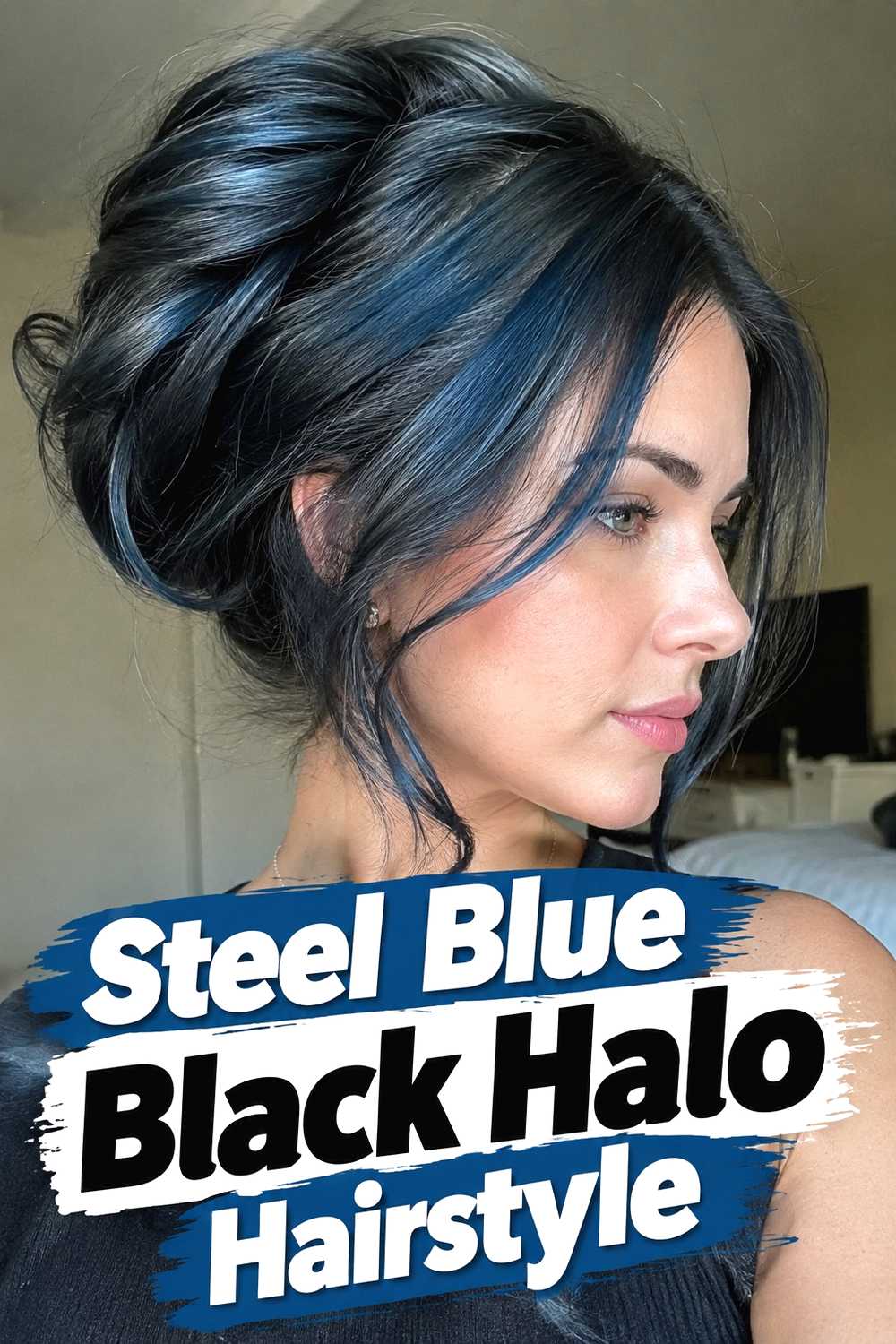
Steel blue creates a cooler, slightly metallic-looking halo that contrasts with a deep black base without becoming brightly saturated. The color has a gray-blue cast that looks especially striking on smooth hair because light reflects along the perimeter in clean lines. The strongest sections can sit around the face, while smaller steel-blue ribbons continue through the outer hairline for continuity. This variation feels more modern and industrial than navy or sapphire, making it a good option for someone drawn to cool, muted color. A darker root can help the steel tone transition gradually, while carefully maintained shine prevents the gray undertone from appearing flat or overly matte.
Best For
This tone suits anyone who prefers cool, muted blue shades and wants a halo that feels sleek rather than highly vivid.
Wear & Maintenance
Cool steel tones can warm or soften as they fade, so toner or gloss may be useful for keeping the intended gray-blue balance.
9. Sapphire Blue Black Halo Hairstyle
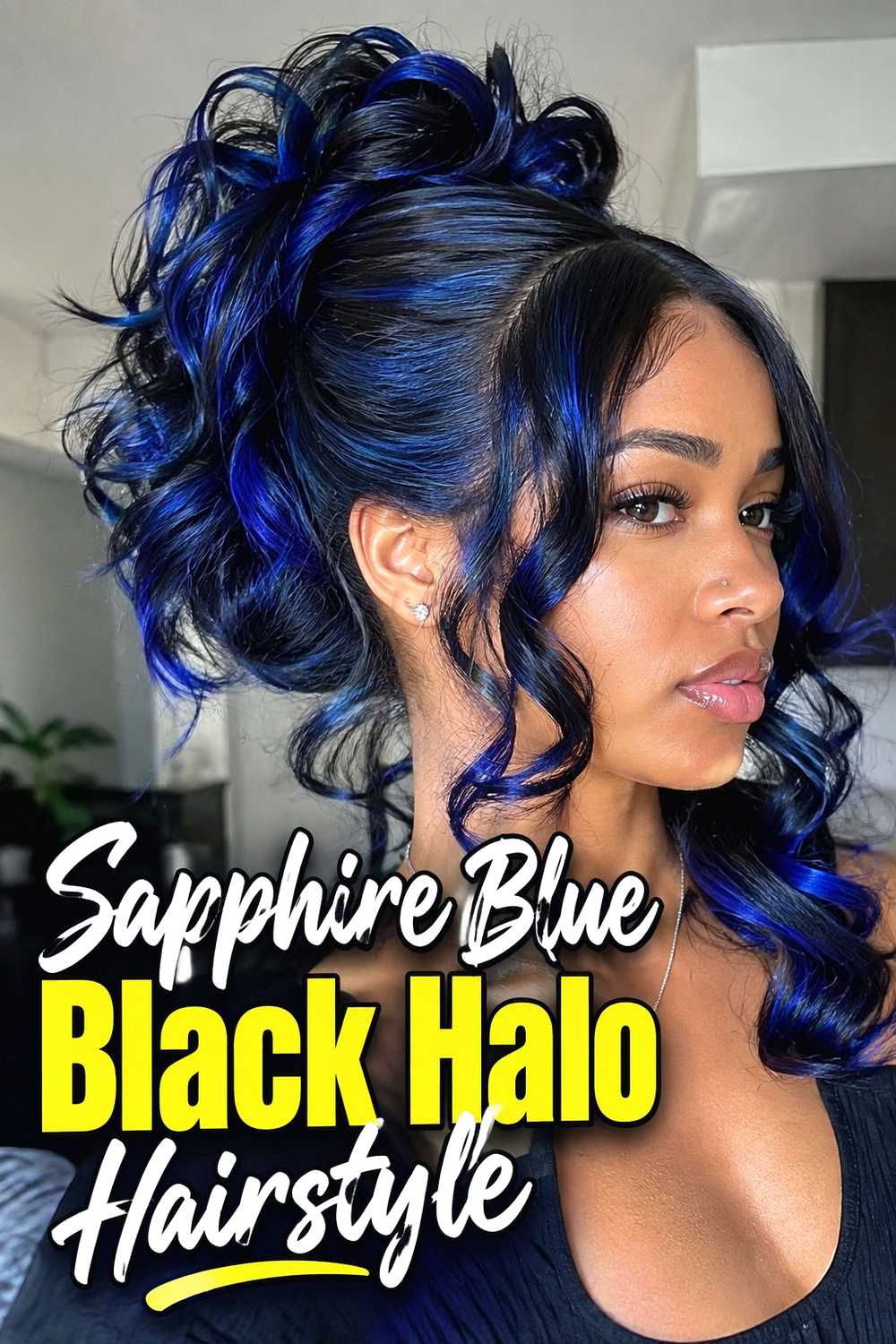
Sapphire blue creates a jewel-toned halo with enough richness to remain sophisticated while still looking clearly blue. The color can be concentrated through the front perimeter and temple pieces, where it forms a luminous frame against the deeper black interior. Unlike electric blue, sapphire has more depth, giving the halo a glossy, multidimensional quality rather than a neon effect. Loose curls or waves enhance the result by revealing alternating flashes of black and jewel blue. A few thinner sapphire strands can also extend into the side lengths to connect the halo with the rest of the hairstyle. The finished color feels vibrant but still grounded by the dark base.
Styling Notes
Soft waves or curls show the jewel tone particularly well because the bends catch light from several directions.
Best For
Sapphire works well when you want obvious blue color with more depth and richness than a bright electric shade.
10. Teal Tinted Blue Black Halo Hairstyle
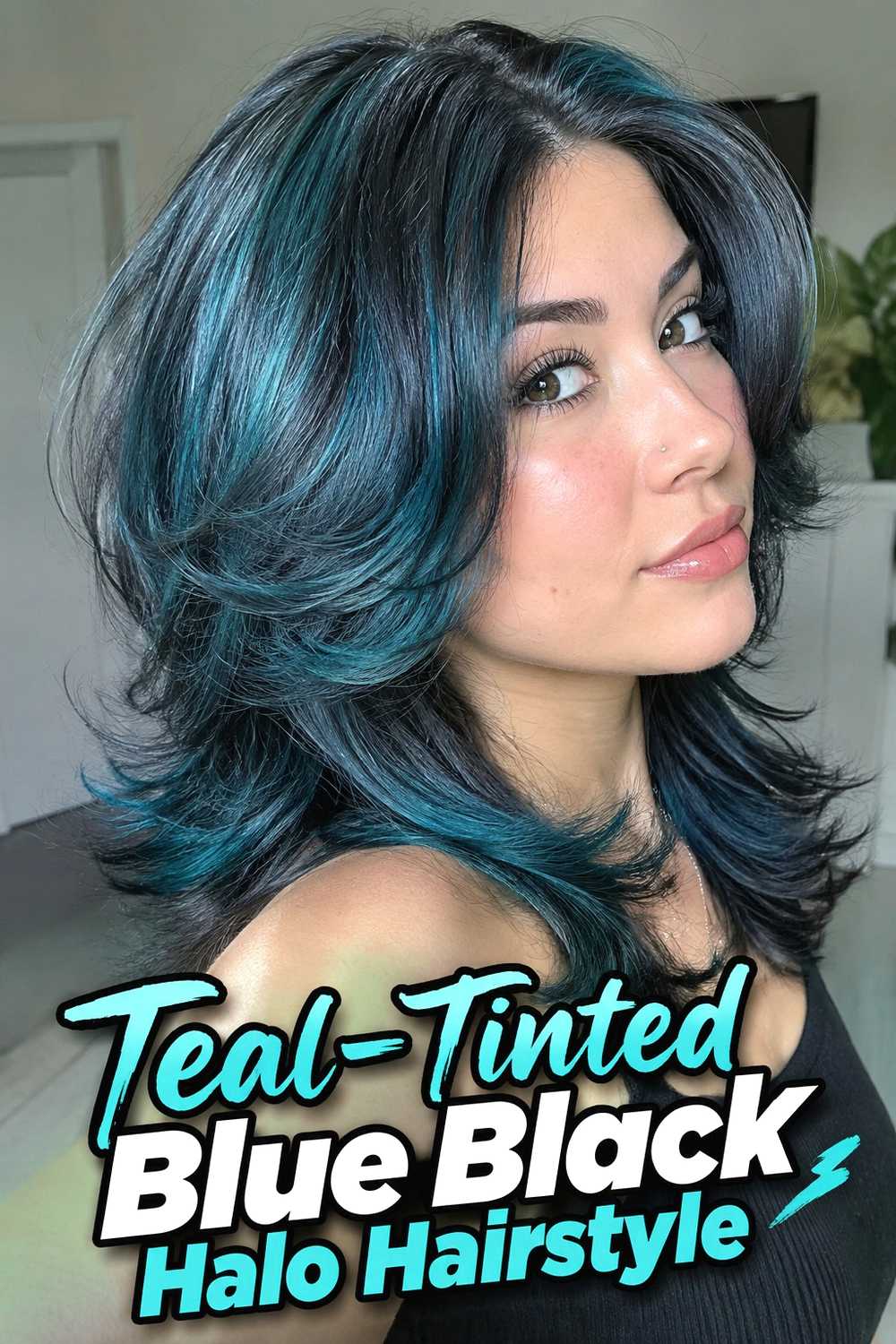
A teal-tinted halo adds a subtle green-blue shift to classic blue-black color, creating an unusual perimeter that can change noticeably under different lighting. The base remains dark enough to preserve the black foundation, while selected hairline pieces carry a cooler teal cast. This works especially well when the teal is deep rather than pastel, allowing it to blend naturally with the darker interior. Waves can reveal the tonal shift more effectively because the color appears brighter where the hair catches direct light. Keeping the teal limited to the halo prevents the style from becoming uniformly green-blue, while the black underneath maintains strong depth and contrast.
Why It Works
The green-blue undertone introduces variation without abandoning the dark, inky character that defines blue-black hair.
Wear & Maintenance
Teal pigments can shift as they fade, so maintaining the intended balance may require periodic color-depositing refreshes.
11. Violet Blue Black Halo Hairstyle
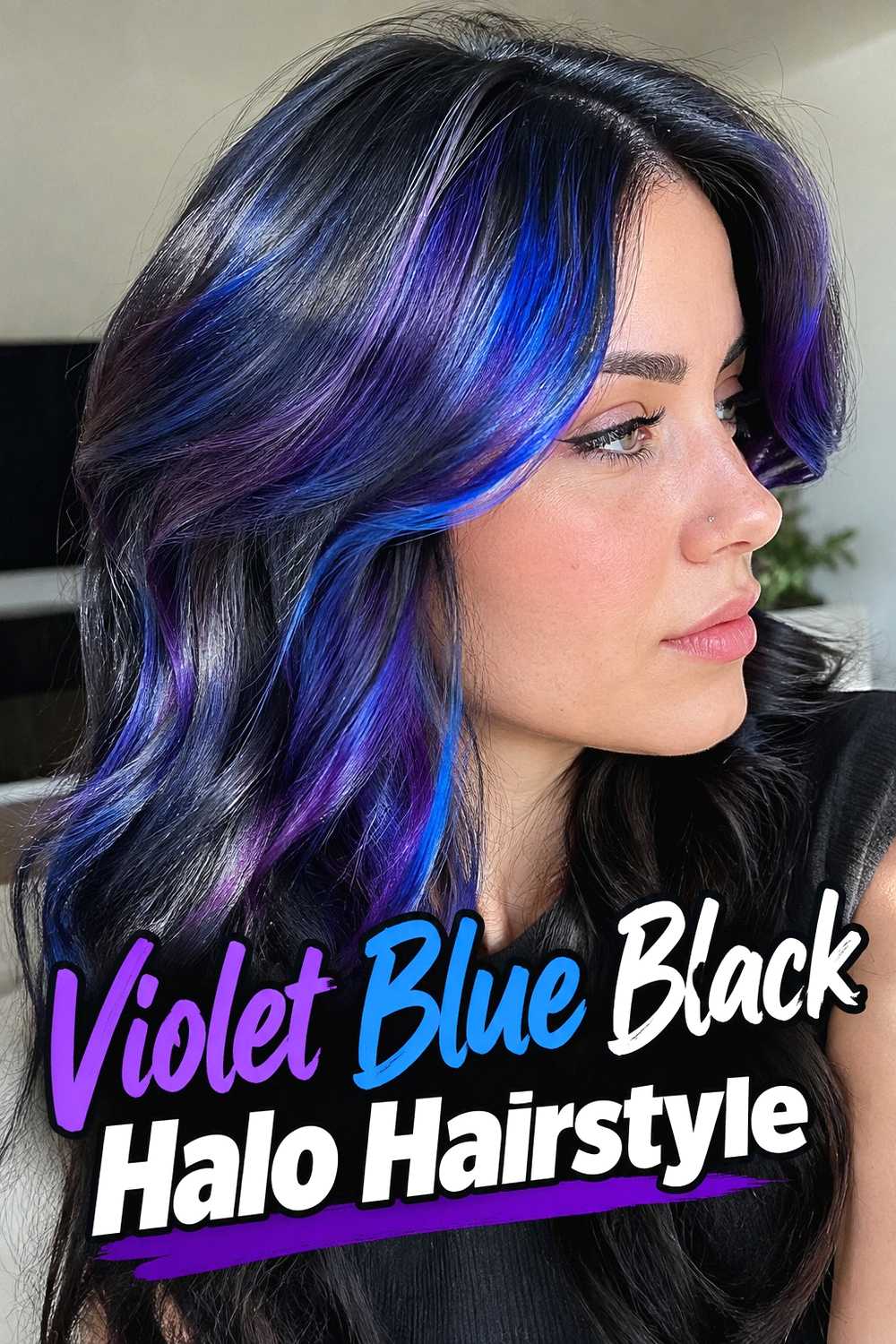
A violet blue-black halo combines cool blue with a subtle purple undertone, producing a deep color that can appear nearly black indoors and more jewel-toned in daylight. The halo placement can focus on the front and temples, while the interior stays dark and neutral enough to create contrast. This version looks particularly dimensional on layered hair because different sections catch either the blue or violet aspect of the color. It is less graphic than a bright purple-and-black split, but more noticeable than classic blue-black. Keeping the surface glossy helps both undertones remain visible, while a darker root provides a smoother transition as the halo grows.
Best For
This version suits anyone who likes blue-black but wants a subtle purple shift for extra depth and complexity.
Pro Tip
Keep the violet undertone restrained if you want the finished result to remain recognizably blue-black rather than reading primarily purple.
12. Jet Black With Blue Halo Hairstyle
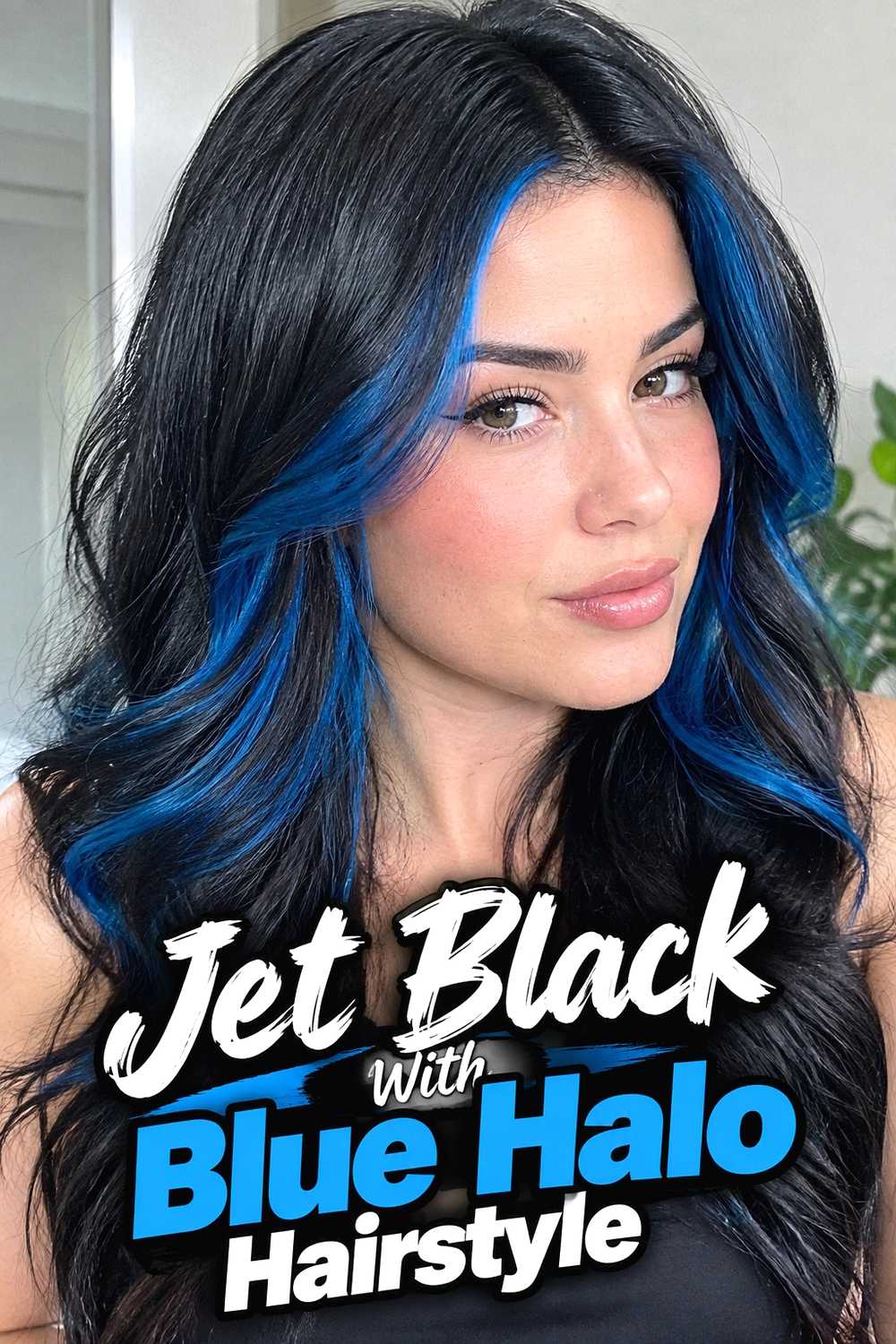
Jet black provides the deepest possible backdrop for a clearly visible blue halo. The interior remains intensely dark, while the perimeter pieces are colored a brighter navy, cobalt, or sapphire tone to create strong contrast around the face. Because the difference is deliberate, the halo can be slightly wider near the temples and narrower toward the back for a balanced shape. Sleek styling emphasizes the graphic contrast, while waves make the two colors blend visually as the hair moves. This approach is especially useful if you want to keep most of the hair black but still introduce a noticeable cool color element without committing to an all-over blue transformation.
Why It Works
The depth of jet black makes even medium-dark blue shades appear brighter and more saturated by comparison.
Wear & Maintenance
A clean contrast requires both shades to stay distinct, so refreshing faded blue while keeping the black glossy can preserve the intended effect.
13. Blue Black Rooted Halo Hairstyle
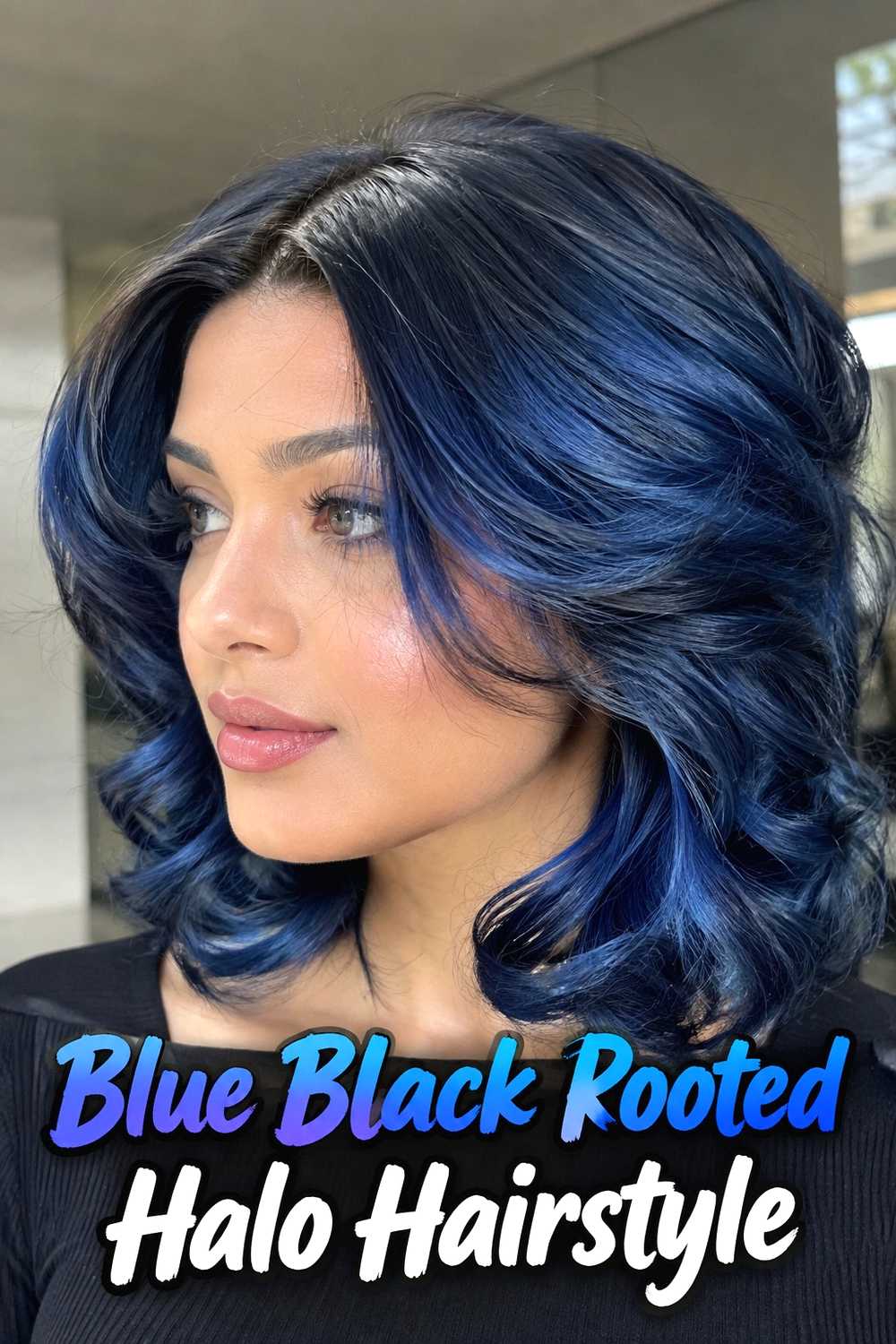
A rooted halo softens the transition between the natural or dark root and the blue-black perimeter. Instead of taking the brighter blue tone directly to the scalp, the color begins slightly below the root and blends gradually into the surrounding black. This creates a more forgiving grow-out while still maintaining visible brightness around the front and outer hairline. The root can remain natural black, dark brown, or soft black depending on the existing base. Waves and long layers make the transition especially seamless because the halo appears to flow through the surface rather than beginning as one sharp band. This is a practical choice for anyone who prefers lower-contrast regrowth.
Best For
Choose a rooted version when you want the halo effect but prefer a softer transition at the scalp.
Wear & Maintenance
Keeping the root close to your natural depth can extend the time before regrowth becomes visually obvious.
14. High Contrast Blue Black Halo Hairstyle
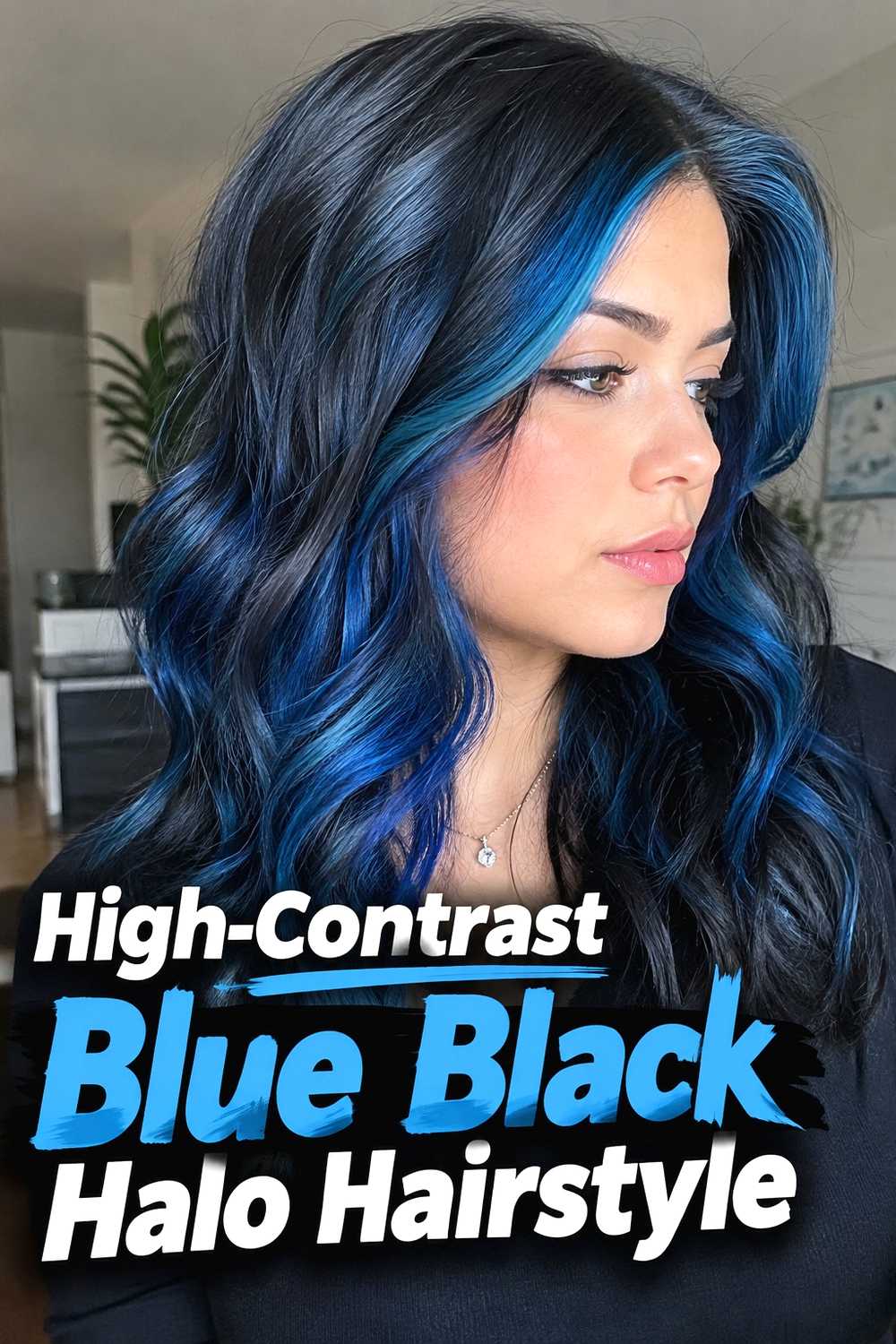
A high-contrast halo uses noticeably brighter blue sections around the perimeter against a nearly black interior, making the placement an intentional design feature. The front pieces can be relatively wide, creating a vivid frame around the face, while narrower sections continue around the outer hairline. Cobalt, sapphire, or electric blue can all work depending on how bold you want the result to appear. The contrast looks particularly strong on straight hair, where the color blocks stay clean and easy to see. Wavy styling softens the division slightly but still keeps the halo obvious. This approach is best when the goal is visible color architecture rather than subtle tonal dimension.
Styling Notes
Wear the hair sleek when you want maximum contrast or add loose waves when you prefer the blue and black sections to blend visually.
Best For
This style suits anyone who wants the halo technique itself to become one of the most noticeable parts of the hairstyle.
15. Subtle Blue Black Halo Hairstyle
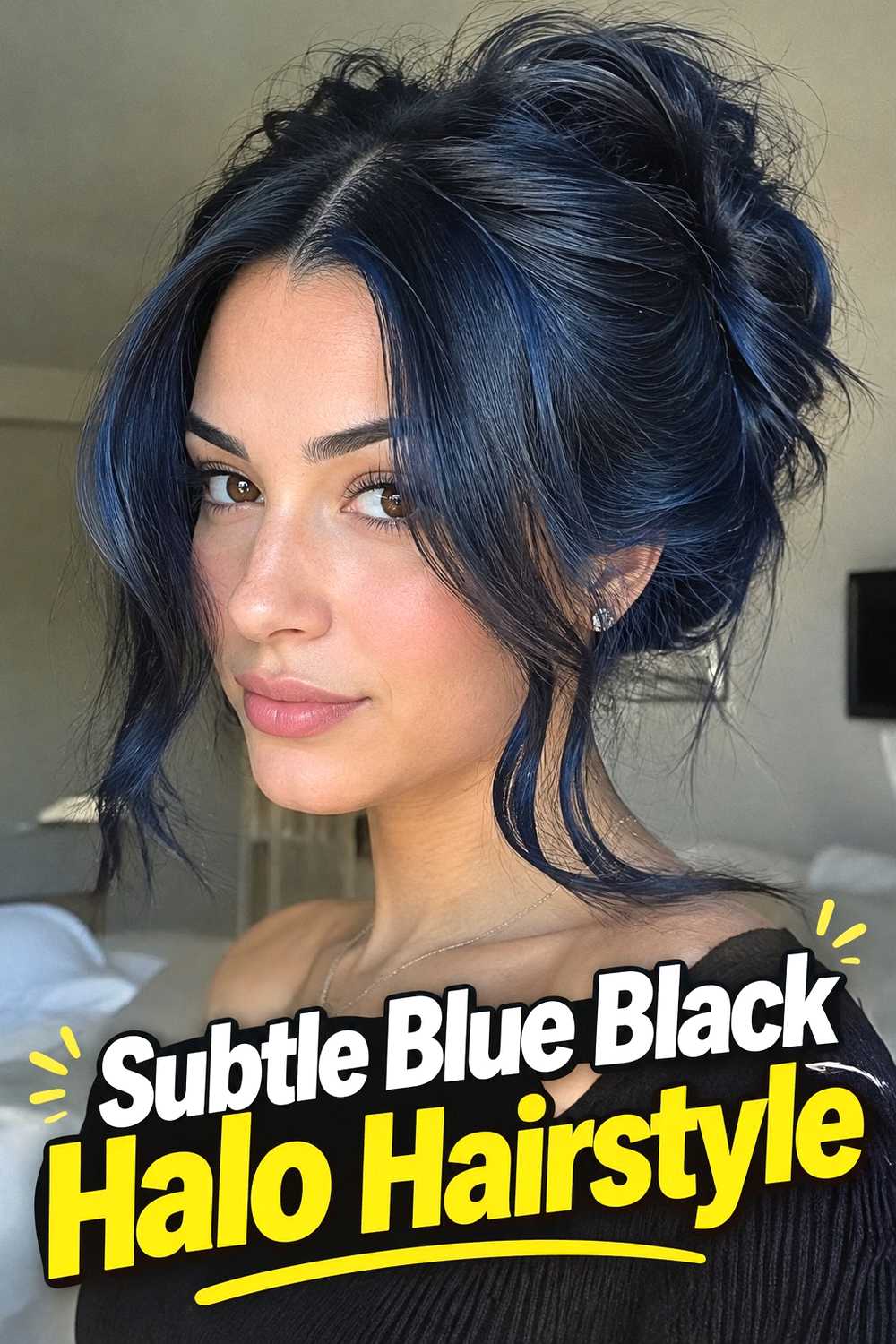
A subtle halo uses only a slight shift between the perimeter and interior, often keeping both sections within the blue-black family. The hairline may lean a little more navy or reflective, while the inner hair remains closer to neutral black. This difference can be almost invisible in dim light and become noticeable only outdoors or under brighter lighting. Fine placement around the temples and front creates dimension without producing a dramatic two-tone effect. A smooth blowout emphasizes the shine, while natural waves can make the color appear even softer. This version is ideal if you like dark hair and want blue dimension without committing to an obviously vivid color placement.
Why It Works
Small tonal differences add depth while allowing the overall hairstyle to remain convincingly dark and cohesive.
Wear & Maintenance
Because the contrast is low, fading tends to look softer than it would on a very bright blue halo.
16. Blue Black Halo Bob Hairstyle
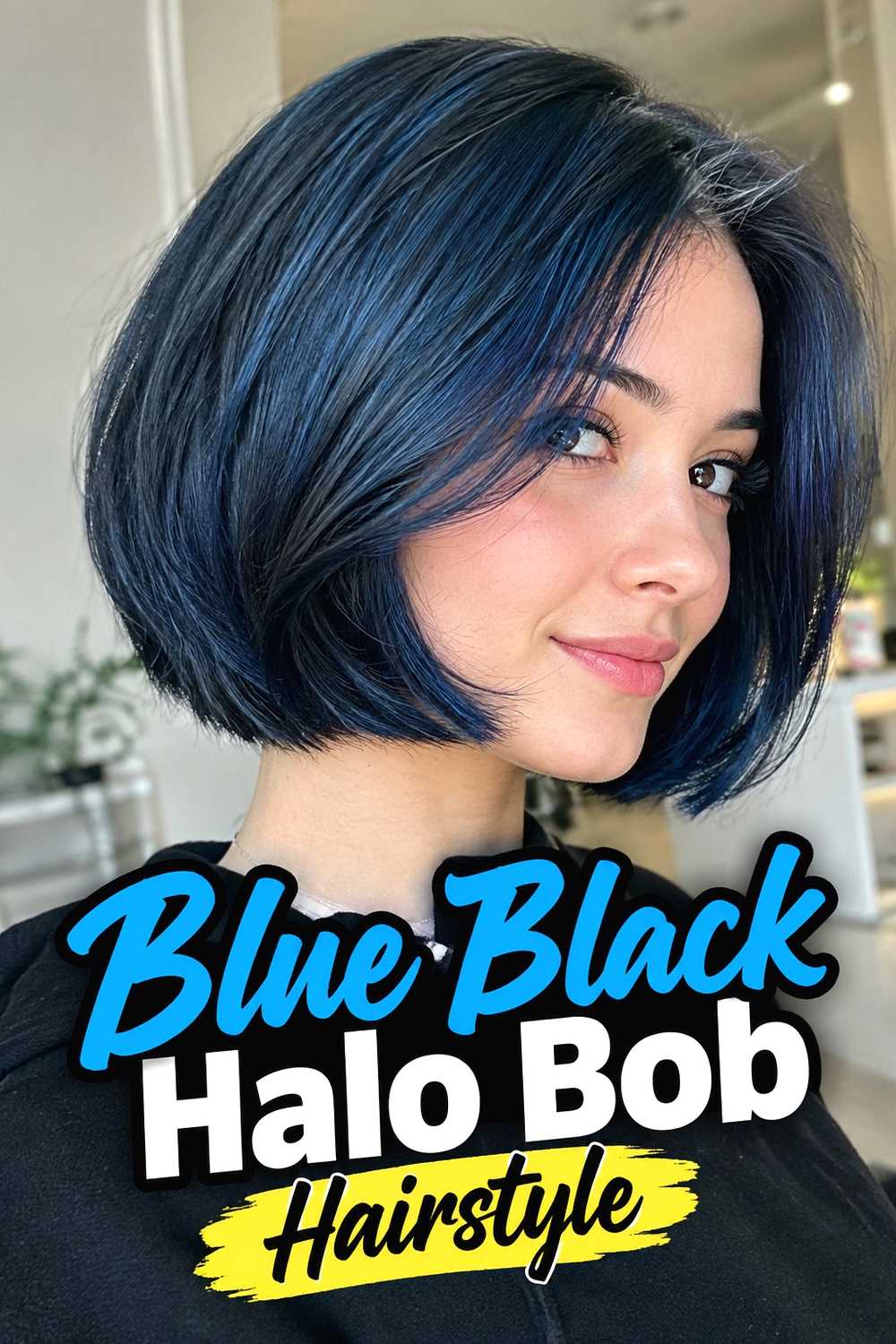
A bob makes blue-black halo placement particularly noticeable because the shorter shape keeps the perimeter close to the face and exposes the hairline clearly. Dark interior hair can remain almost jet black while the halo introduces navy, cobalt, or sapphire around the front and sides. On a blunt bob, the contrast looks clean and graphic; on a softly layered bob, the brighter sections move more freely through the surface. Straight styling maximizes the structure, while a slight bend can soften the result. Because the haircut itself is compact, a relatively narrow halo may be enough to create a strong visual effect without overwhelming the shape.
Best For
This version works especially well if you want bold color placement on a short, structured haircut.
Wear & Maintenance
Bob trims and halo refreshes can be coordinated so the cut and color continue to support the same perimeter placement.
17. Blue Black Halo Lob Hairstyle
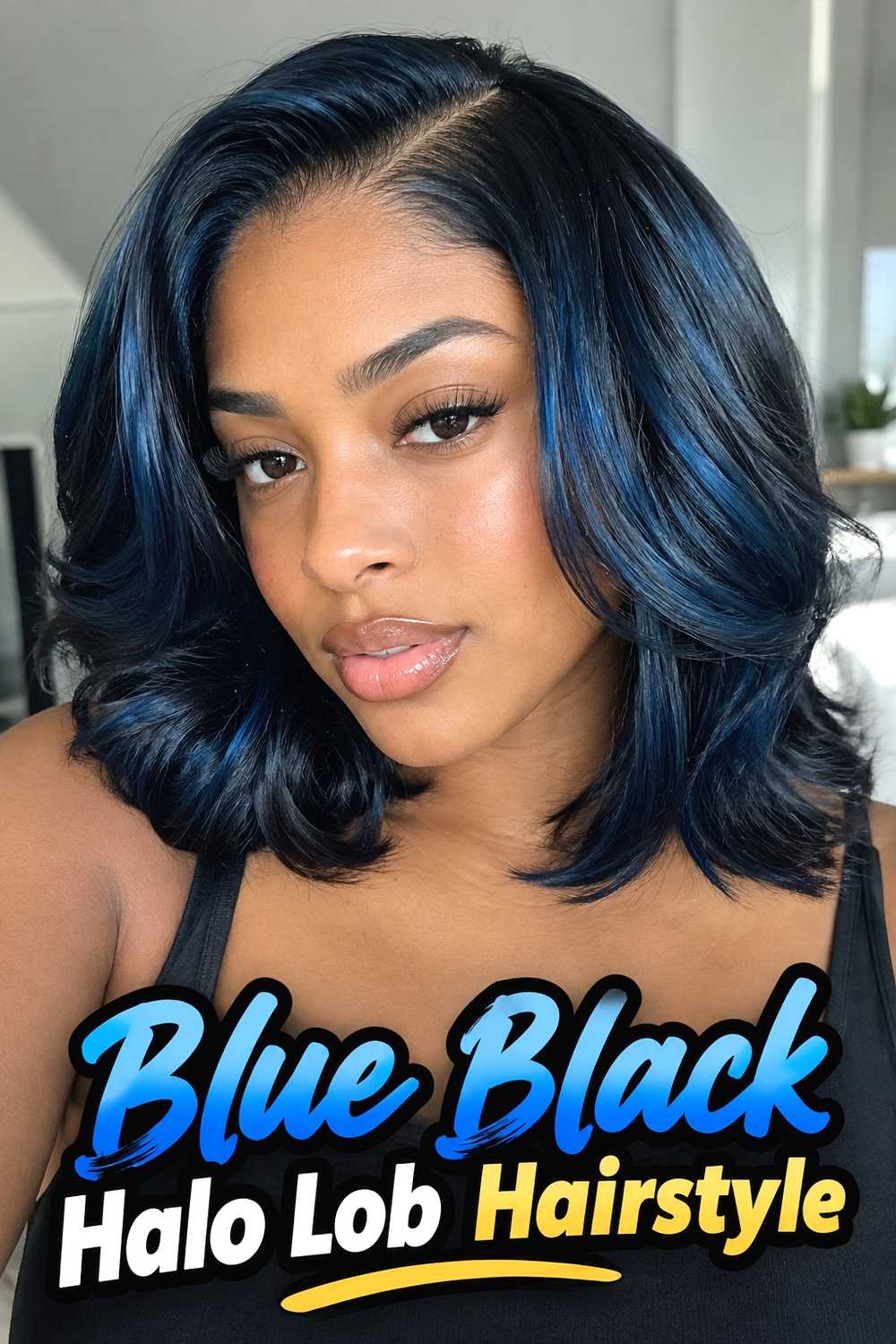
A lob provides more length than a bob while still keeping the halo placement highly visible around the jaw, neck, and shoulders. The interior can remain dark black, while blue-black perimeter sections follow the hairline and continue into the outer lengths. This creates a luminous frame that becomes especially noticeable when the lob is tucked behind the ears or styled with loose bends. Because there is more length to work with, the halo can transition gradually from brighter front pieces into subtler side ribbons. The result is versatile enough for polished straight styling, relaxed waves, or half-up looks while maintaining the strong dark-and-blue color story.
Styling Notes
Broad bends through the mid-lengths help the halo sections move across the darker interior and show more dimensional contrast.
Why It Works
The lob’s medium length provides enough movement for dimensional color while keeping the perimeter close enough to make the halo easy to see.
18. Wavy Blue Black Halo Hairstyle
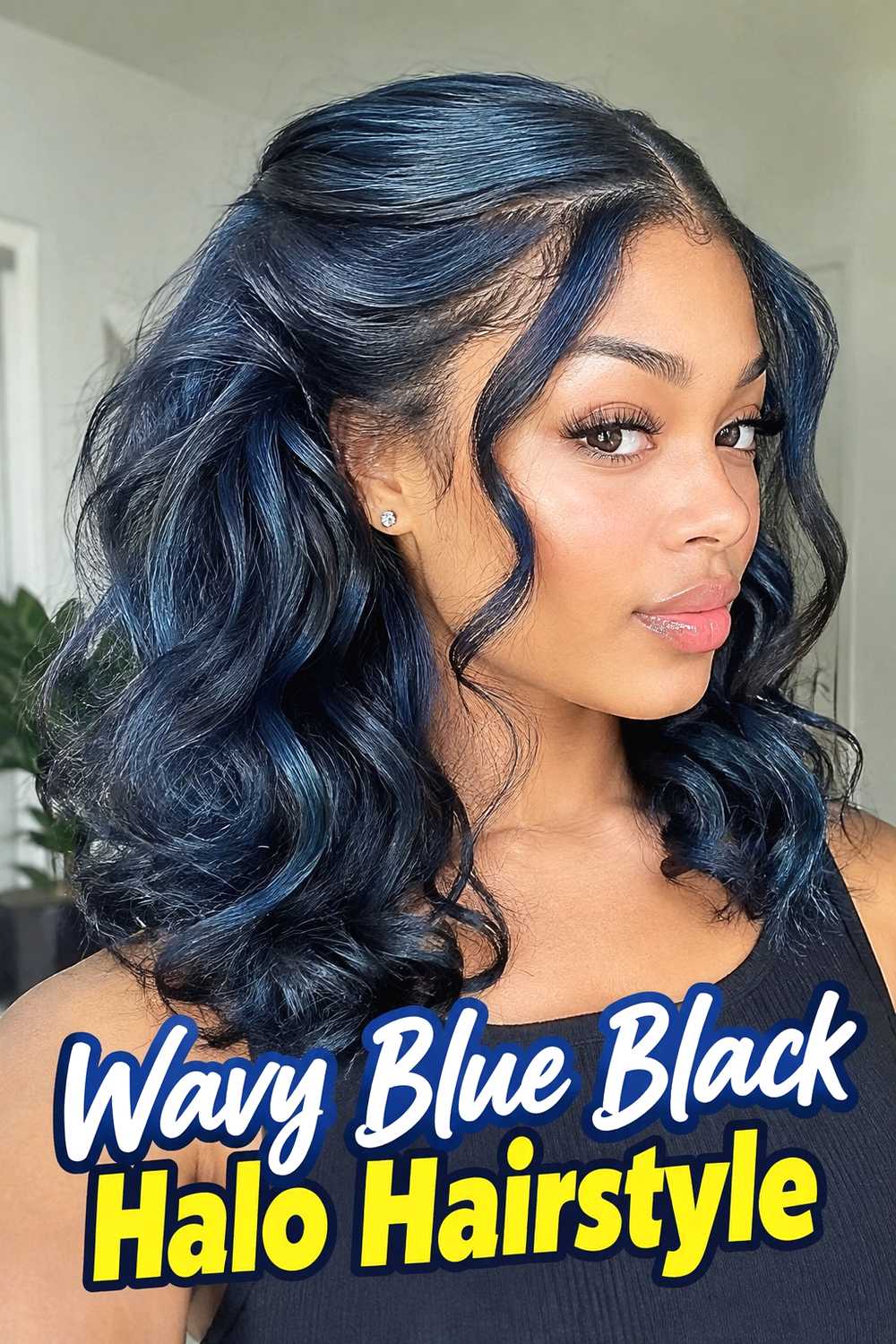
Waves give blue-black halo color extra depth because the lighter perimeter sections move in and out of view as the hair bends. The halo can be navy, sapphire, or a brighter cobalt depending on the desired contrast, while the interior remains deep black. Leaving darker sections between the blue pieces keeps the style dimensional rather than uniformly colored. Loose, irregular waves work especially well because they reflect light differently across each section, making the blue undertone appear stronger in some areas and almost black in others. This variation feels less graphic than straight high-contrast placement, making it a good option if you want obvious color with a softer overall finish.
Styling Notes
Use broad, uneven waves instead of identical curls so the blue and black sections overlap naturally.
Best For
Naturally wavy or easily styled medium-to-long hair can show dimensional halo placement particularly well.
19. Curly Blue Black Halo Hairstyle
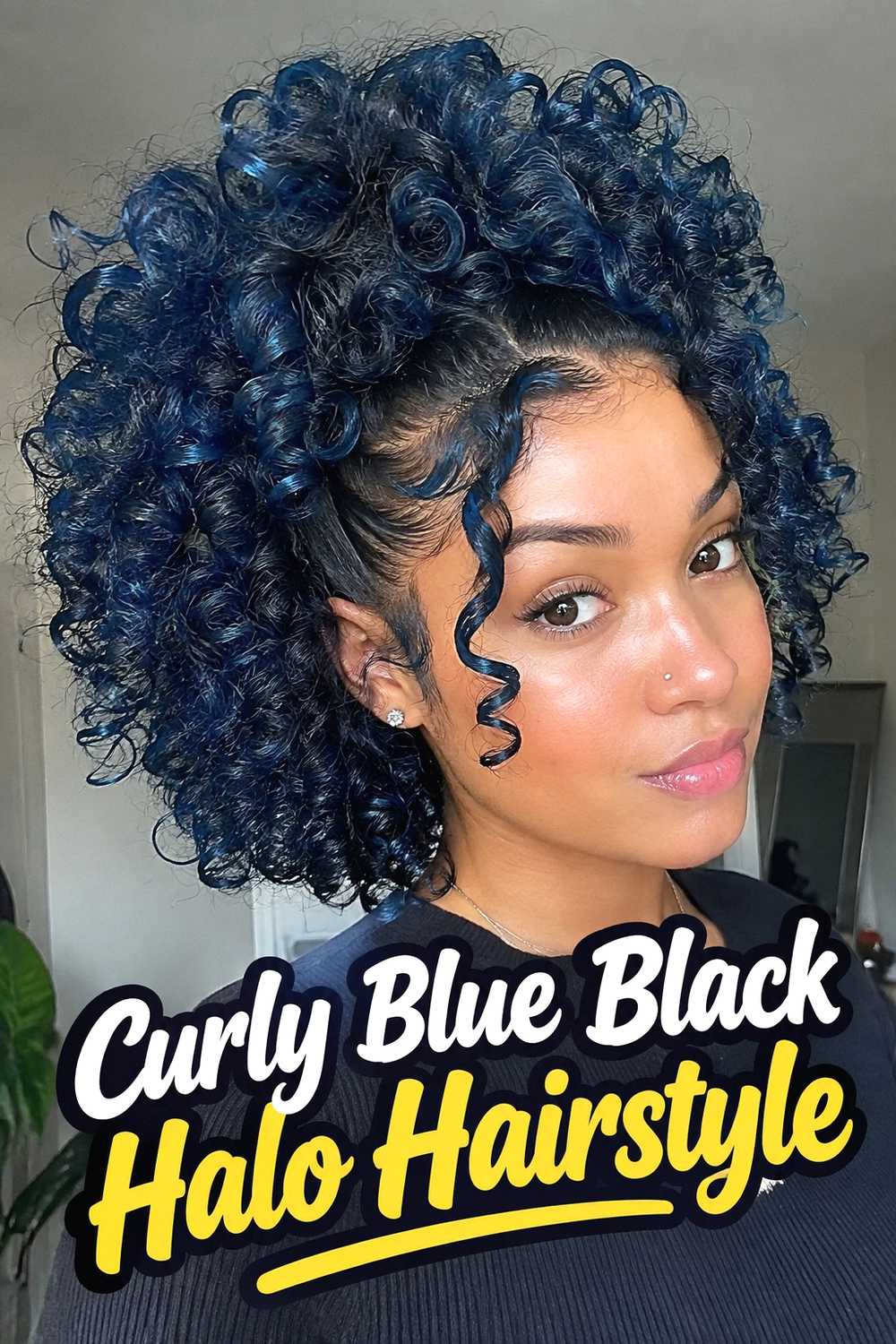
Curly hair creates a naturally multidimensional canvas for blue-black halo color because each curl exposes different parts of the perimeter as it turns. The color can be concentrated through selected front curls and outer sections rather than applied uniformly around every curl. Leaving deep black pieces between the brighter blue sections preserves contrast and prevents the halo from becoming a solid band. Placement should account for where the curls fall when dry, since shrinkage and movement can change which pieces frame the face. Navy, sapphire, and indigo tones all work beautifully with this texture, especially when curl definition remains strong enough for the different colors to stay visually distinct.
Hair Type & Length
Wavy-curly, spiral, and coily textures can all wear halo placement when color sections are planned around the natural dry pattern.
Pro Tip
Evaluate the front curls near their normal dry position so the brightest pieces land where they are intended.
20. Long Layered Blue Black Halo Hairstyle
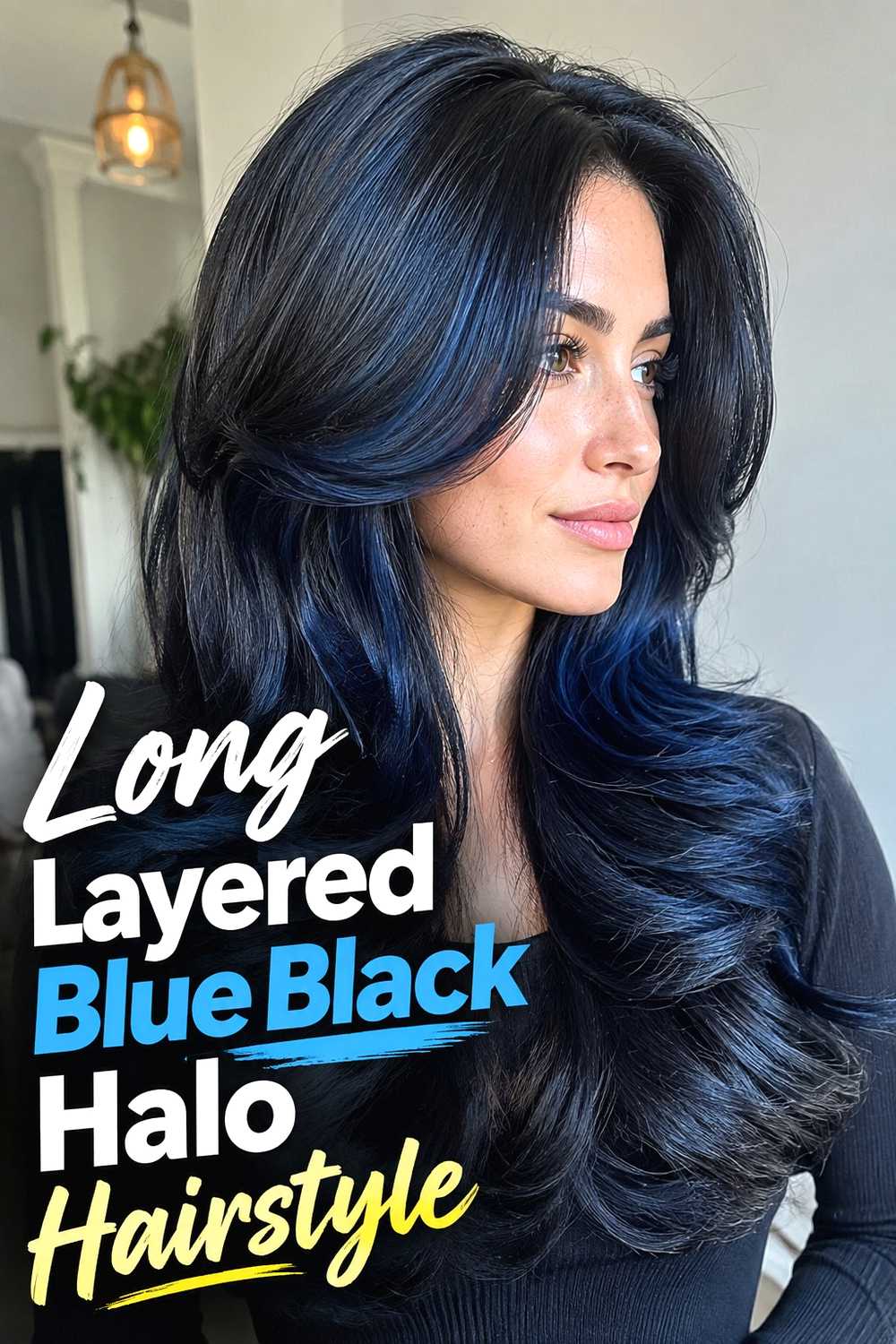
Long layered hair gives blue-black halo color room to travel through the hairstyle instead of stopping at the hairline. The brightest blue-black pieces can begin around the face and continue into selected surface layers, while deeper black remains visible underneath. As the layers move, the color alternates between dark and cool blue, creating dimension without requiring all-over vivid dye. A layered blowout makes the placement particularly easy to see because the face-framing pieces sweep away from the cheeks and reveal the darker interior. The result can be subtle with midnight blue or bolder with cobalt and sapphire, making this one of the most adaptable versions for longer hair.
Styling Notes
Style the front layers away from the face so the blue perimeter sits visibly over the darker interior.
Best For
Medium to long layered hair provides enough surface movement to extend the halo effect beyond the immediate hairline.
21. Hidden Underlayer Blue Black Halo Hairstyle
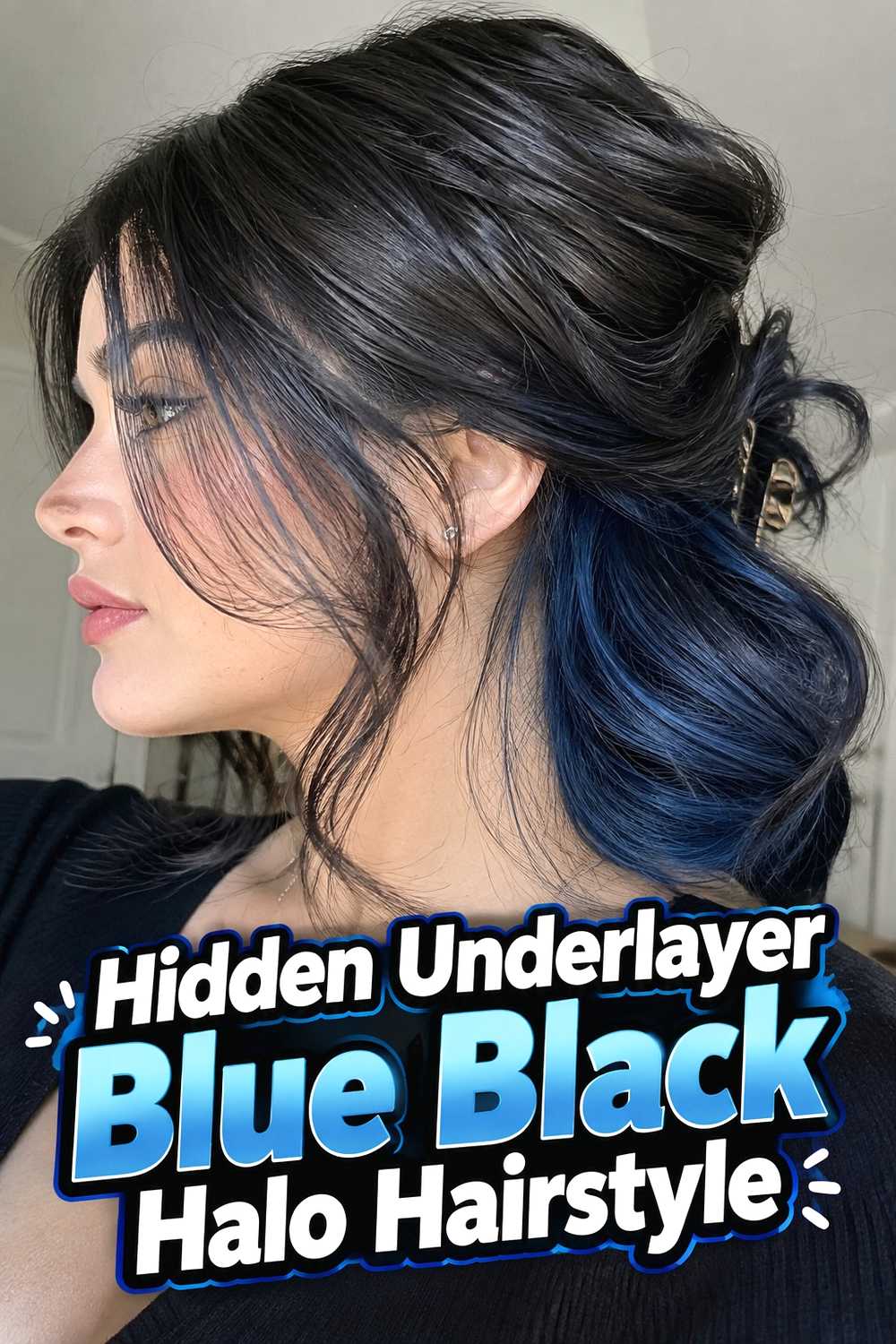
A hidden underlayer halo places much of the blue-black color beneath the surface, allowing it to appear selectively when the hair moves, is tucked back, or is styled up. The top remains predominantly black, while deeper navy, indigo, or sapphire sections trace the underside near the hairline and perimeter. This creates a secretive version of the halo trend that can look almost completely dark when worn down and much more colorful in braids, ponytails, or half-up styles. The contrast can remain subtle or become highly saturated depending on the chosen shade. Because the color is partially covered, the style offers more flexibility than a fully exposed bright perimeter.
Why It Works
The surface hair controls how much color is visible, giving you the option to reveal or conceal the halo through styling.
Pro Tip
Place the strongest color near sections you naturally tuck, lift, or tie back so the hidden halo becomes easier to reveal intentionally.
How to Choose the Right Look
Start by deciding how visible you want the blue to be. Midnight, subtle, smoky, and rooted versions stay closer to black and tend to reveal their cool undertones mainly in brighter light. Electric, cobalt, sapphire, and high-contrast halos make the color placement much more obvious.
Next, choose the undertone. Navy and midnight stay deep and classic, cobalt and sapphire feel more jewel-toned, steel and smoky blue create a muted finish, teal introduces a green-blue shift, and indigo or violet blue adds purple depth.
Your haircut and texture also matter. Bobs make halo placement look clean and graphic, while lobs and long layers allow the color to flow through more movement. Waves and curls reveal alternating blue and black sections naturally, while sleek straight hair shows the placement with greater precision.
Finally, consider maintenance. Bright fashion blues generally need more refreshing than very dark blue-black tones. Rooted and subtle versions can offer a softer grow-out, while vivid color placed directly at the hairline usually requires more regular attention.
Final Thoughts
Blue-black halo hair color can range from an almost invisible midnight glow to a bold cobalt or sapphire frame. Keep the contrast low for a refined dark finish, or increase the saturation when you want the perimeter to become a major feature. Texture and haircut can change the effect dramatically, so choose both the tone and placement around how you normally wear your hair.
FAQs
1. What is blue-black halo hair color?
It is a color placement that uses blue-black or brighter blue tones around the hairline or perimeter while keeping deeper black or related dark shades through the interior.
2. Does blue-black hair always look blue?
No. Very dark blue-black can appear almost black indoors and show a stronger navy or blue cast only in bright light. More saturated shades such as cobalt appear blue much more consistently.
3. Can I have a subtle blue-black halo?
Yes. Using narrow sections and choosing a dark navy or midnight tone close to the base creates a much softer halo effect.
4. Does blue-black halo color work on curly hair?
Yes. Curly hair can make the placement highly dimensional because different blue and black sections become visible as the curls turn. Color should be planned around the natural dry pattern.
5. Is blue-black halo hair high maintenance?
It depends on the intensity. Deep midnight and subtle blue-black shades generally fade less obviously, while vivid cobalt, sapphire, or electric blue sections may need more frequent color refreshing.
Save your favorite blue-black halo hair color ideas, share the shades you love, and explore more dimensional dark-hair inspiration for your next color change.