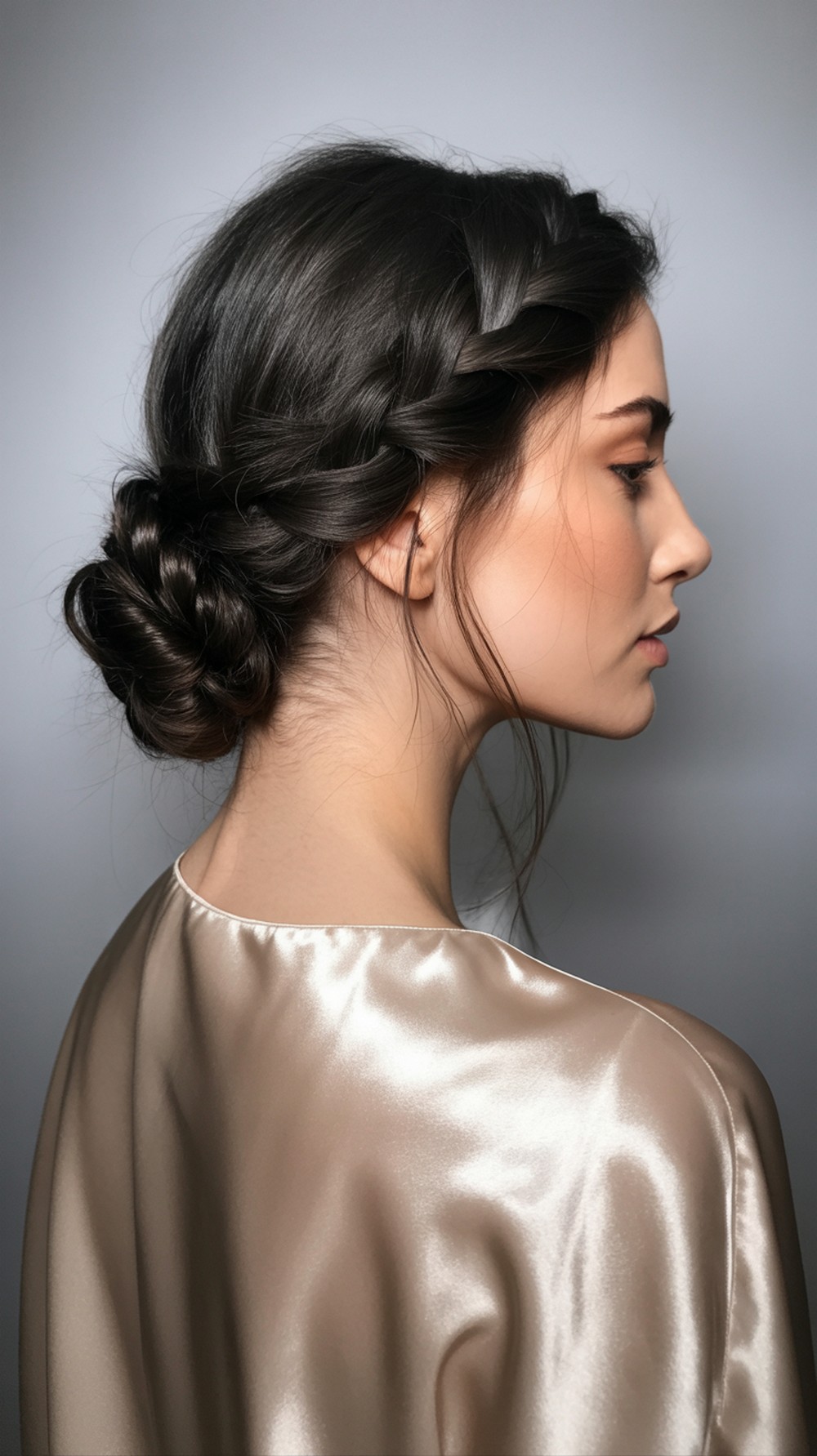
14 Braided French Twist Hairstyle Ideas
Braided detail meets the sculpted shape of a French twist in these elegant updos, creating texture, dimension, and plenty of polished styling possibilities.
A braided French twist combines one or more woven sections with the classic vertical roll of a French twist. The braid may frame the side, travel over the crown, become part of the roll itself, or simply add texture before the hair is pinned into place.
The right version depends on your hair length, density, texture, and desired level of polish. Medium-to-long hair generally offers more flexibility for braiding and rolling, while textured or layered hair can create a softer finish. These 14 ideas range from clean, structured versions to romantic and event-ready styles.
Quick List
- Classic Braided French Twist Hairstyle
- Side Braid French Twist Hairstyle
- Crown Braid French Twist Hairstyle
- Dutch Braid French Twist Hairstyle
- Fishtail Braided French Twist Hairstyle
- Rope Braid French Twist Hairstyle
- Loose Romantic Braided French Twist Hairstyle
- Sleek Center Part Braided French Twist Hairstyle
- Face Framing Braided French Twist Hairstyle
- Textured Braided French Twist Hairstyle
- Double Braid French Twist Hairstyle
- Pearl Accent Braided French Twist Hairstyle
- Low Braided French Twist Hairstyle
- Polished Event Braided French Twist Hairstyle
1. Classic Braided French Twist Hairstyle
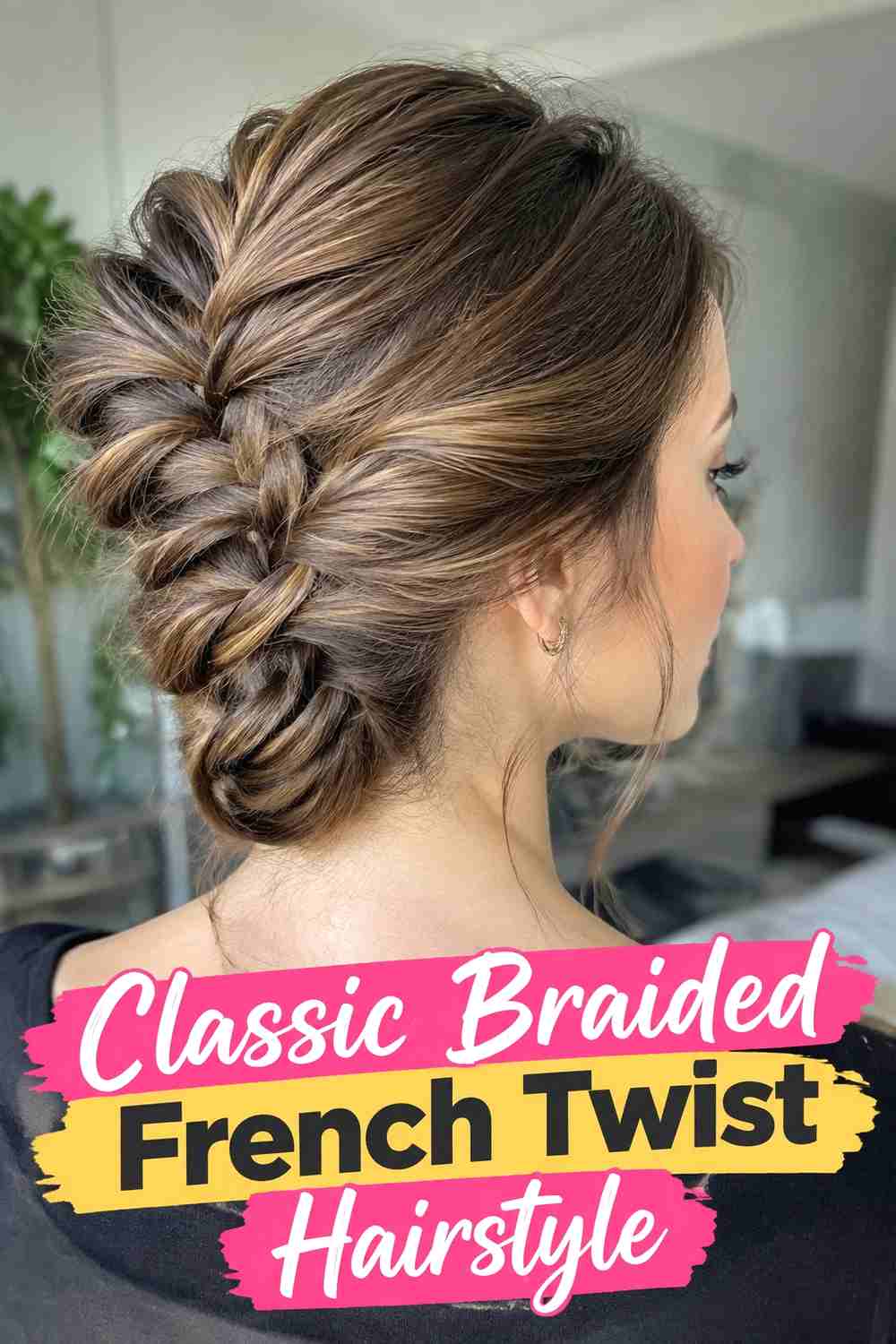
The Classic Braided French Twist Hairstyle keeps the familiar vertical roll while adding one clean braid that feeds naturally into the twist. Start with a side or upper section, braid it toward the back, then gather the remaining hair and roll it inward to create the French-twist shape. The braid should remain visible without competing with the smooth central roll. Medium-to-long hair gives you enough length to form both elements comfortably, while a little texture can help pins grip more securely. Keep the crown controlled and use hidden pins along the inner seam of the twist. The finished style should feel structured and elegant, with the braid acting as a deliberate detail rather than an entirely separate hairstyle.
Styling Notes
Secure the braid temporarily before building the twist so its placement stays neat while the rest of the hair is rolled.
Best For
This balanced version works well for formal dinners, work events, ceremonies, and polished occasions.
2. Side Braid French Twist Hairstyle
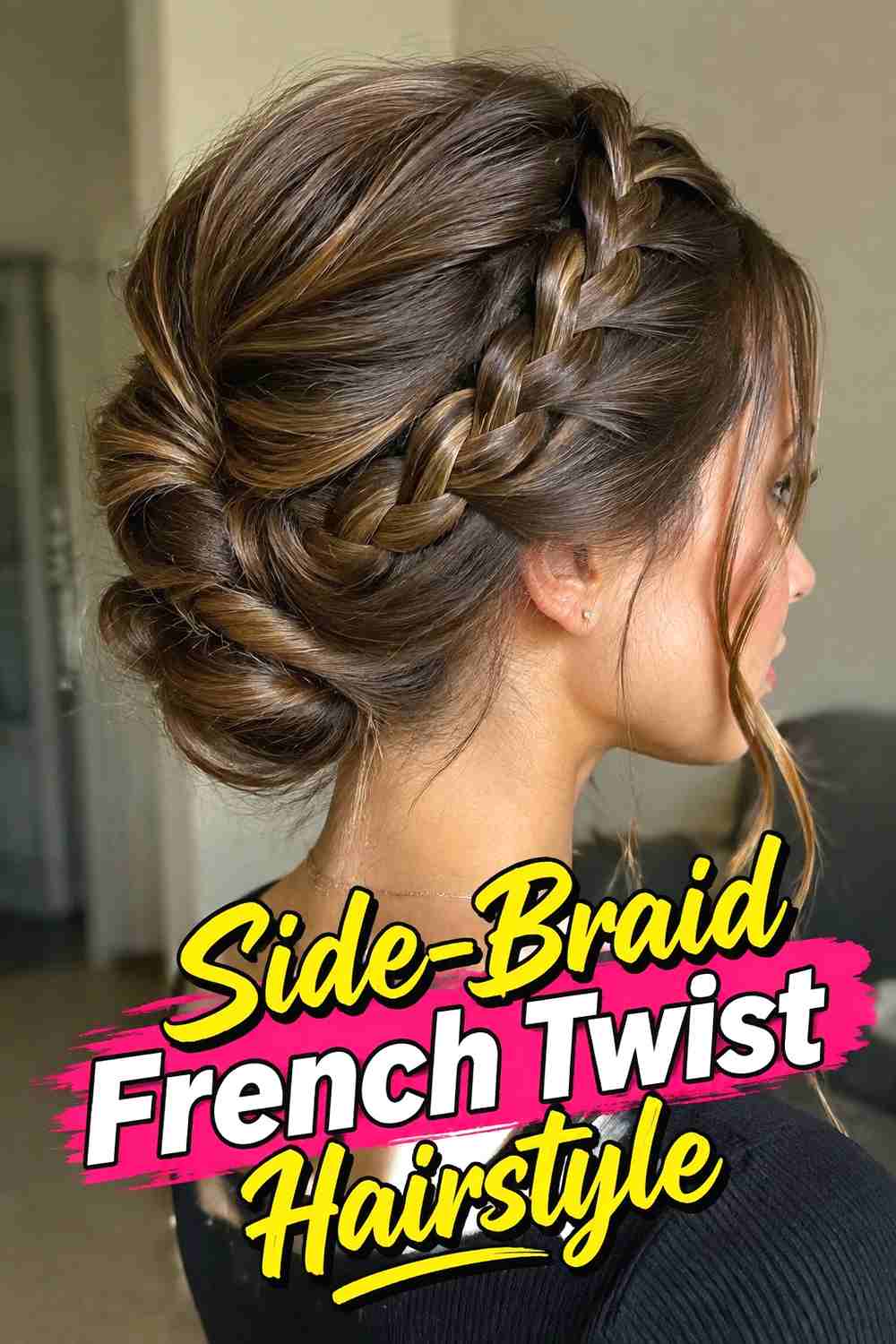
The Side-Braid French Twist Hairstyle places most of the braided detail along one side before it disappears into the vertical roll. A French or simple three-strand braid can begin near the temple and travel diagonally toward the back, creating visible movement around the profile. The remaining hair is then swept inward and pinned into a French twist, with the end of the braid tucked discreetly into the seam. Keep the braid moderately loose if you want its pattern to remain visible after pinning. This version is especially attractive from the side because the woven section creates a clear transition from the front into the sculpted back.
Why It Works
The diagonal braid guides the eye naturally toward the twist and adds dimension without changing the classic vertical silhouette.
Pro Tip
Tuck the braid end into the inner seam before adding the final pins so the transition looks continuous.
3. Crown Braid French Twist Hairstyle
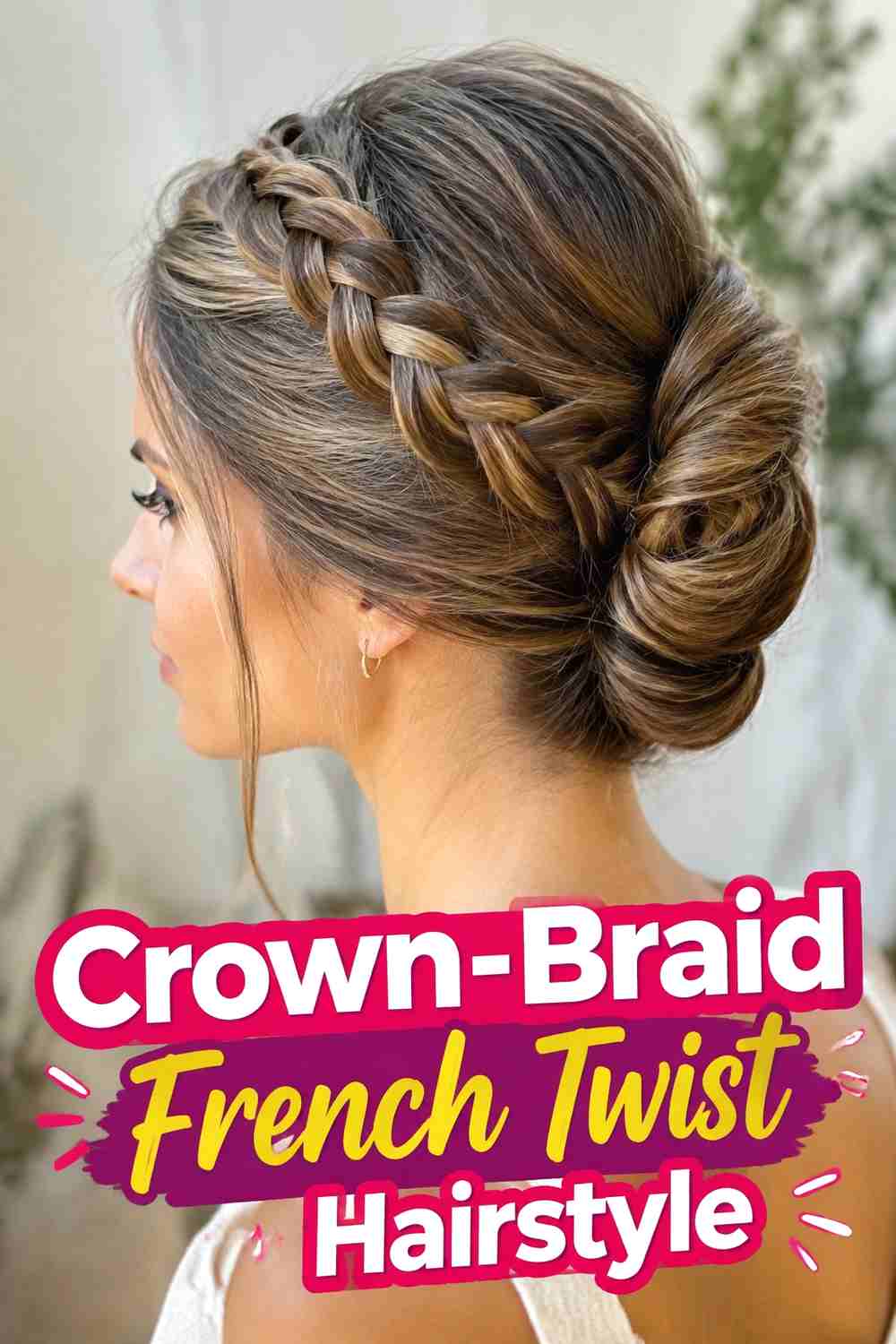
The Crown-Braid French Twist Hairstyle uses a braid across the upper head to create a decorative frame before the hair rolls into the twist. The braid can begin near one temple, cross the crown, and finish toward the opposite back section, where it blends into the updo. Keep the braid wide enough to be visible but not so loose that it loses stability. The French twist below should remain sleek enough to contrast with the braided texture above. This works especially well on longer hair because the crown braid needs enough length to travel across the head before joining the remaining sections. Use discreet pins under the braid and inside the twist to maintain a clean finish.
Hair Type & Length
Medium-long to long hair provides the easiest foundation for a crown braid that can travel far enough to integrate naturally.
Styling Notes
Build the crown braid before rolling the lower lengths so the twist does not interfere with the braid’s path.
4. Dutch Braid French Twist Hairstyle
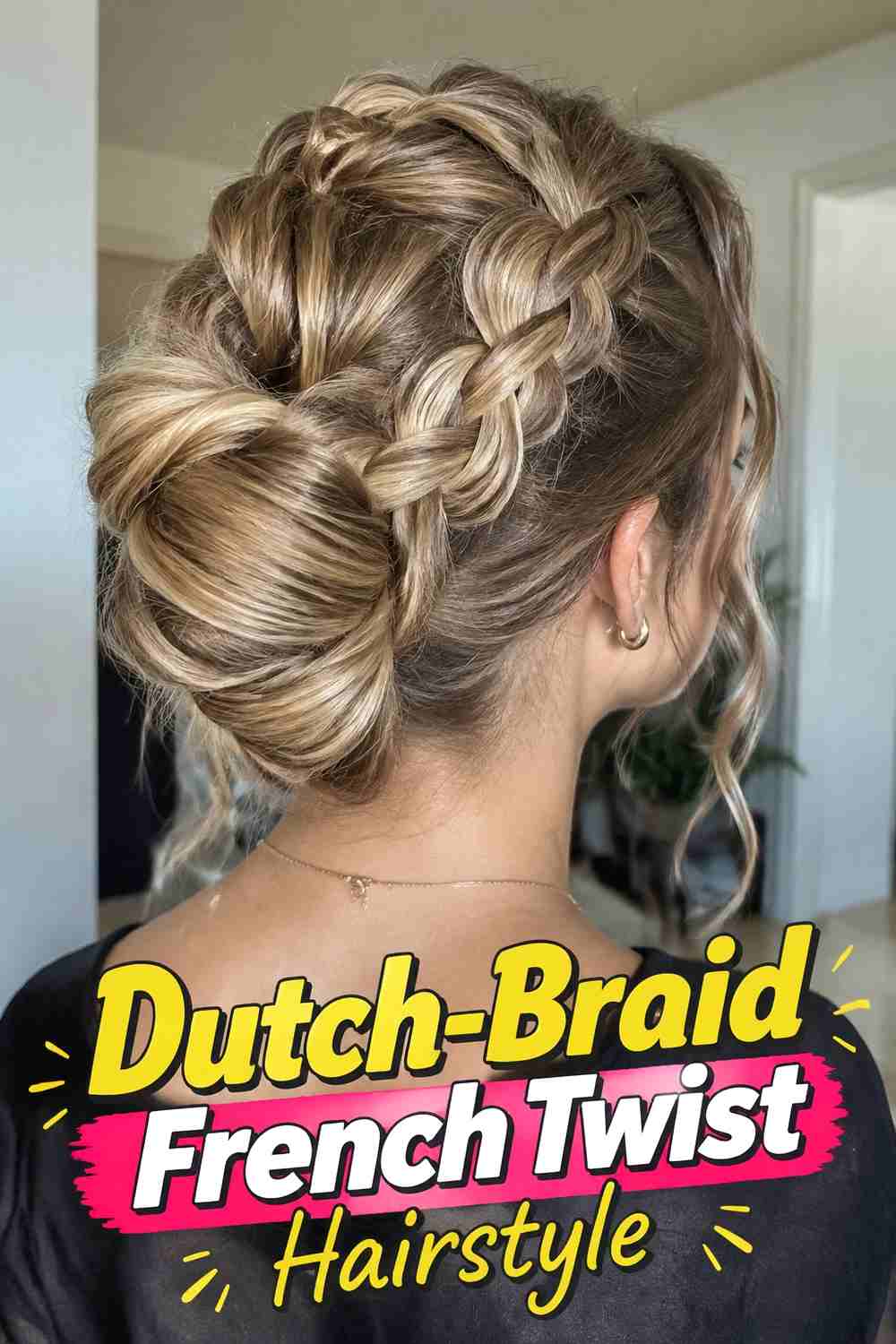
The Dutch-Braid French Twist Hairstyle creates stronger texture because the braid sits visibly on top of the hair rather than blending flat against it. Begin a Dutch braid along one side or near the crown, adding sections underneath so the woven pattern becomes raised and dimensional. Once the braid reaches the back, gather the remaining hair and form the French twist beneath or alongside it. Gently widen the braid before final pinning if you want more definition, but avoid pulling so much that the structure loosens. The contrast between the raised braid and smooth rolled section creates a detailed finish that works especially well for events where the back of the hairstyle will be visible.
Why It Works
The raised Dutch braid adds strong texture and gives the French twist a more dimensional, architectural appearance.
Pro Tip
Secure the twist first before making final adjustments to braid width so the overall foundation remains stable.
5. Fishtail Braided French Twist Hairstyle
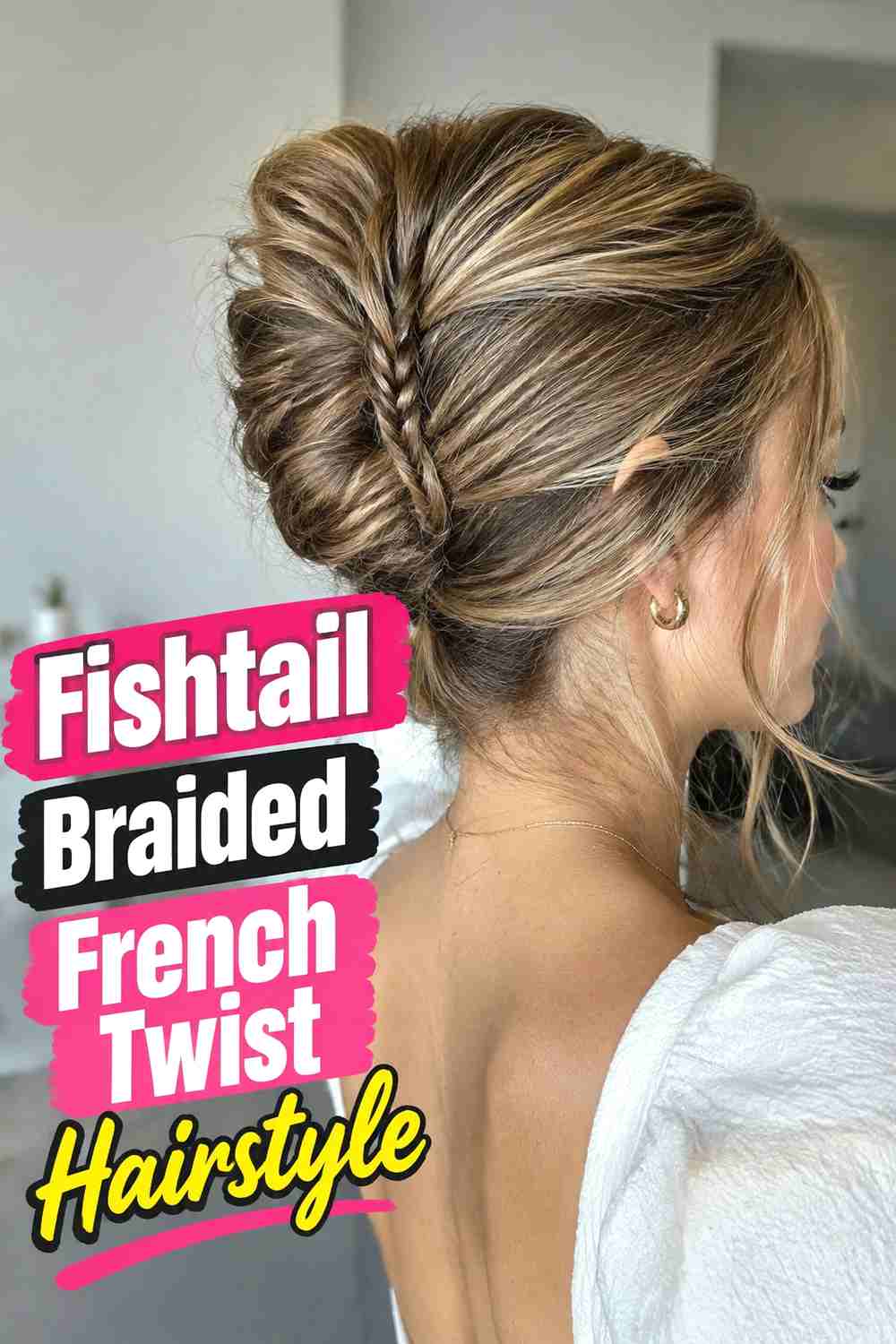
The Fishtail Braided French Twist Hairstyle brings finer, more intricate texture to the classic roll. A side or lower section can be divided into two parts and woven into a fishtail braid before being incorporated into the French twist. Keep the braid slightly relaxed so its detailed pattern remains visible rather than compressing into a narrow rope. Because fishtail braids can loosen easily, secure the end temporarily before rolling the rest of the hair. Once the twist is built, tuck the braid into the seam or drape it along one edge and pin it discreetly. The final result feels delicate and detailed without needing decorative accessories.
Styling Notes
Widen the fishtail gently after braiding but before placing it into the twist, since adjusting it afterward can disturb the surrounding pins.
Best For
This variation works particularly well for weddings, dinners, photographs, and occasions where intricate detail suits the overall look.
6. Rope Braid French Twist Hairstyle
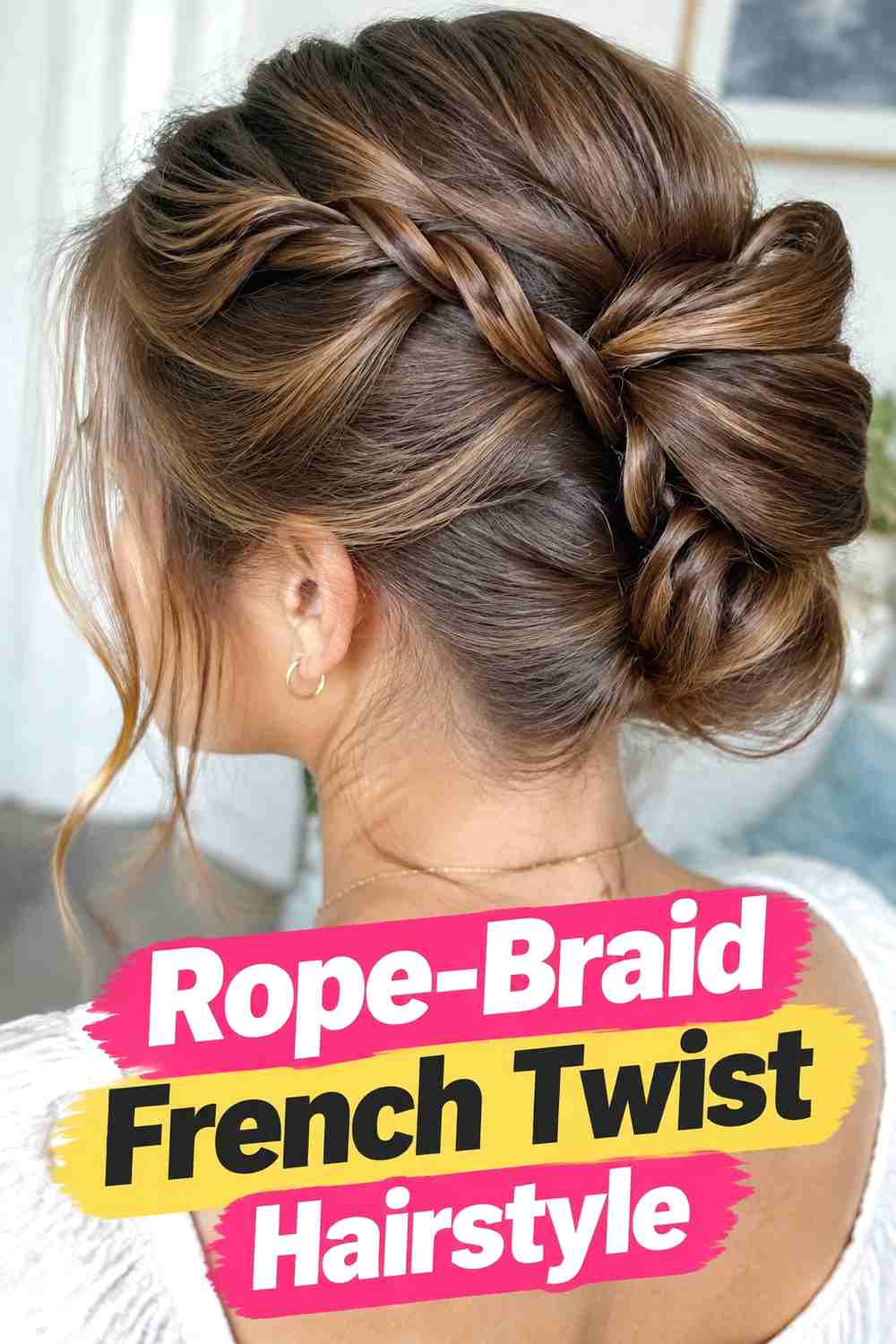
The Rope-Braid French Twist Hairstyle uses two twisted sections wrapped around each other to create a clean, linear detail. Because rope braids are quicker than many woven braids, this version can look intricate without requiring a complicated technique. Form the rope braid along one side or through a section of the ponytail-length hair, then direct it toward the vertical roll. The remaining hair can be swept inward and pinned into a classic French twist, with the rope braid laid along the outer edge or tucked into the seam. Keep the tension even so the rope maintains its shape. A little texture spray can help slippery hair hold the twists.
Why It Works
The rope braid echoes the twisting motion of the French roll, creating a cohesive shape with less visual contrast than a traditional braid.
Styling Notes
Twist both strands individually in the same direction, then wrap them around each other in the opposite direction for better hold.
7. Loose Romantic Braided French Twist Hairstyle
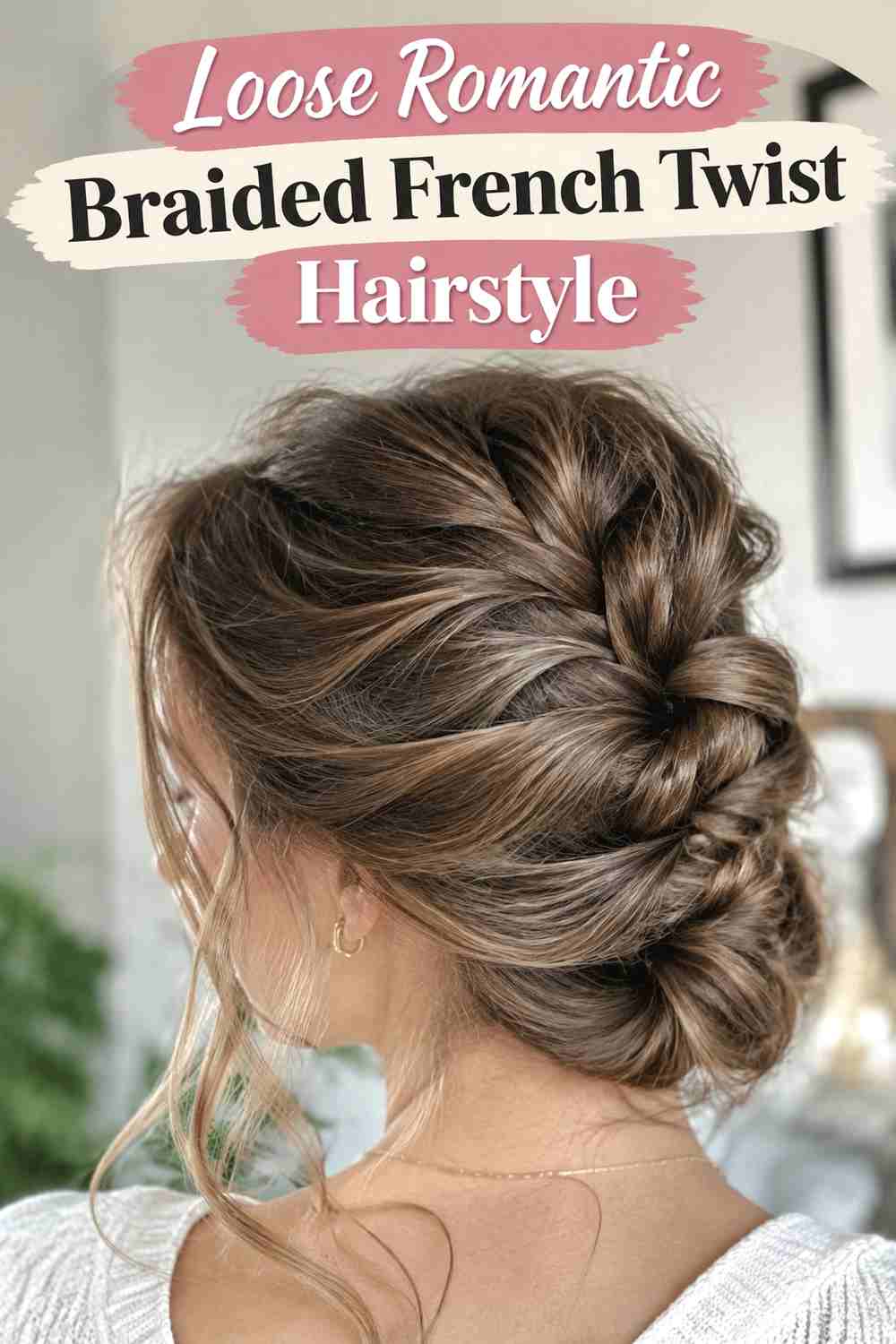
The Loose Romantic Braided French Twist Hairstyle softens the classic structure with airy braid texture, gentle crown volume, and slightly relaxed edges. Start with softly waved or naturally textured hair, create a loose side braid, and then roll the remaining lengths into a French twist without pulling the crown completely flat. A few fine strands can remain loose around the temples or ears for extra softness. The braid should look full and relaxed, but its internal structure still needs to be secure. Hidden pins inside the roll provide stability while the surface remains touchable. This is an ideal version when you want an elegant updo that feels less formal than a tightly sculpted twist.
Best For
This style works well for weddings, romantic dinners, garden events, and celebrations where a softer updo fits the mood.
Wear & Maintenance
Secure the interior firmly before loosening the surface so the romantic finish does not compromise the hold.
8. Sleek Center Part Braided French Twist Hairstyle
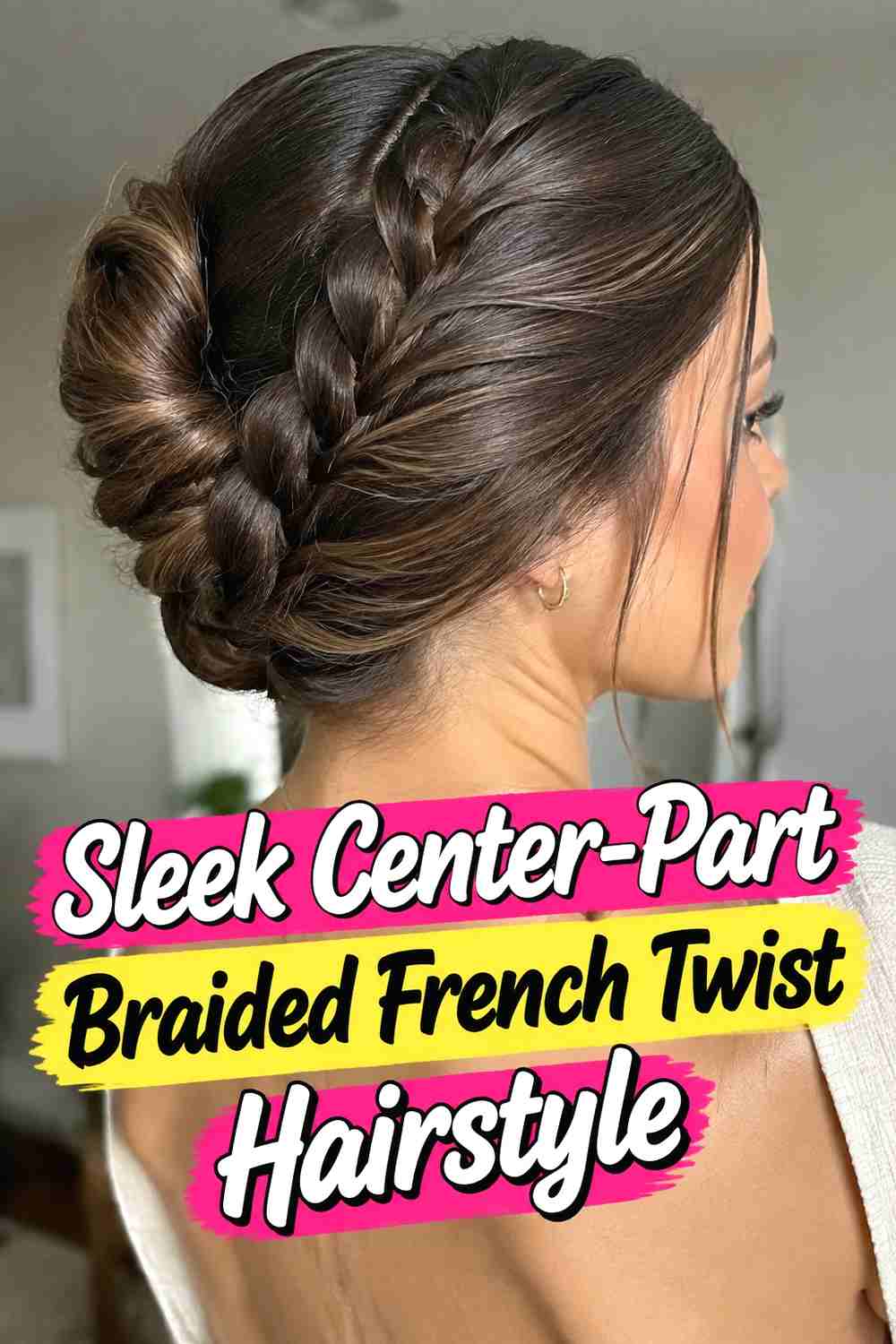
The Sleek Center-Part Braided French Twist Hairstyle combines a precise middle part with controlled side sections and a neatly integrated braid. The front stays smooth and symmetrical, while a narrow braid can run along one side or disappear into the seam of the twist at the back. Keep the braid compact so it complements the clean lines rather than making the style overly busy. Smooth the roots first, gather the lengths, and create the French roll with the braid tucked securely inside or positioned along its edge. The finished result should feel modern, structured, and minimal despite the extra woven detail.
Styling Notes
Use a smaller braid if you want the center part and smooth surface to remain the strongest visual features.
Best For
Choose this version for formal work events, minimalist outfits, evening occasions, or any setting where polished structure matters.
9. Face Framing Braided French Twist Hairstyle
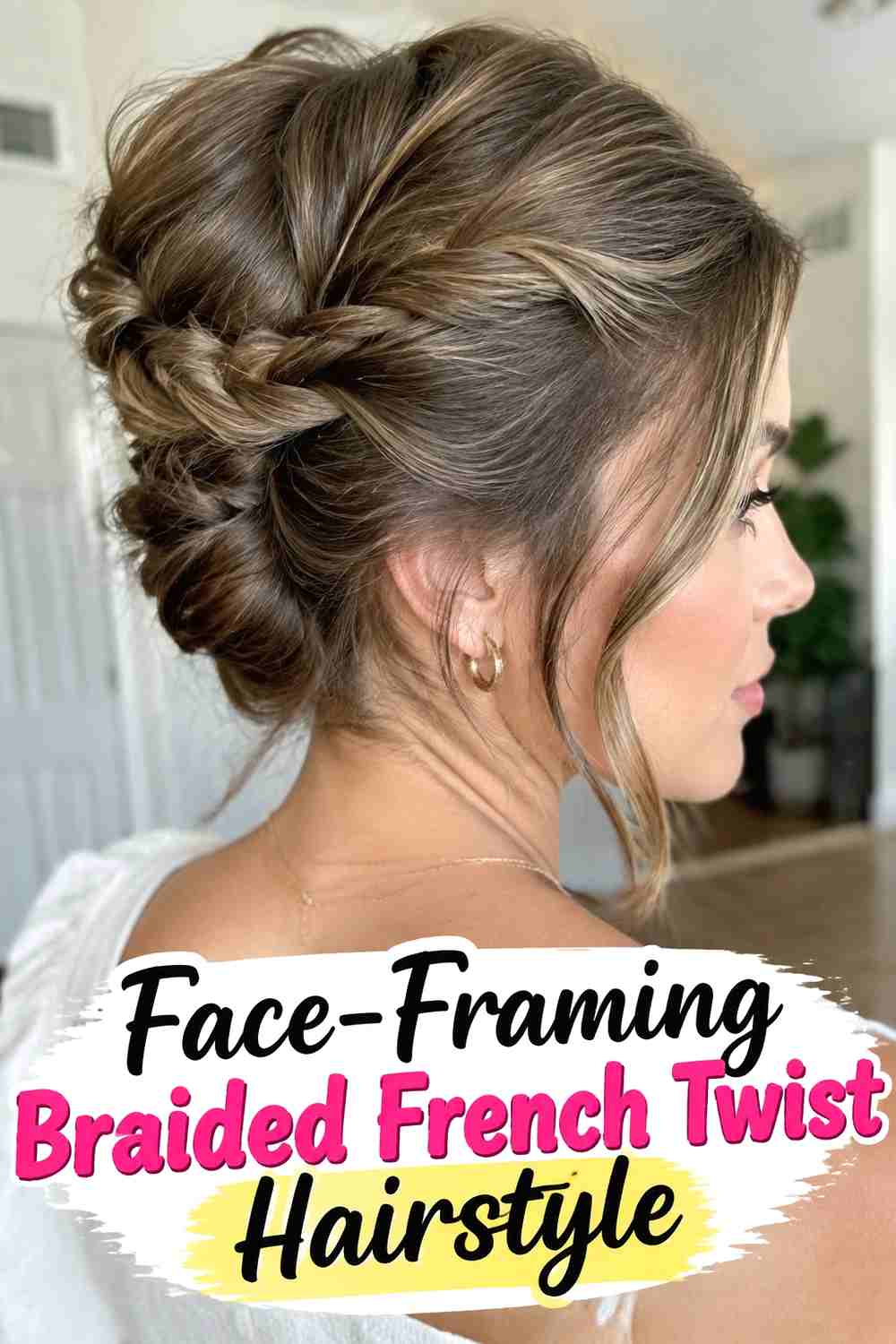
The Face-Framing Braided French Twist Hairstyle balances a structured back with softer pieces around the face. Leave out short layers or selected strands before creating a side braid and rolling the remaining hair inward. The braid can begin near the temple and move toward the back, while the loose front pieces stay gently curved around the cheeks or jawline. This gives the style a more approachable finish without weakening the French twist itself. Avoid pulling out large sections after the updo is complete, since that can loosen the braid or roll. A slight bend through the front strands is usually enough to connect them visually with the softer braided detail.
Why It Works
The braid adds structure while loose front pieces prevent the updo from feeling overly severe or formal.
Pro Tip
Decide which face-framing pieces to leave out before braiding so the sides remain balanced and secure.
10. Textured Braided French Twist Hairstyle
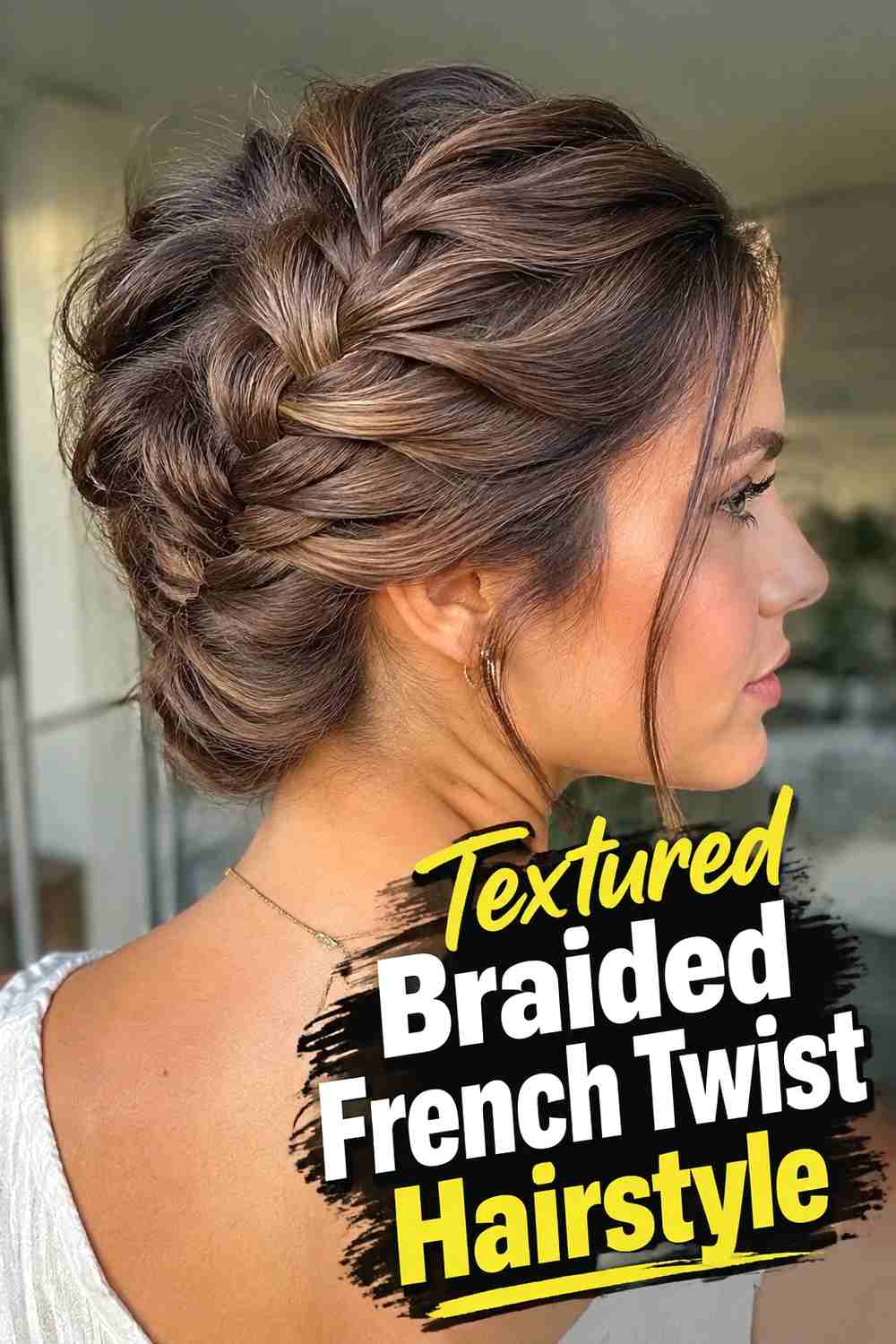
The Textured Braided French Twist Hairstyle embraces visible separation through the braid, crown, and rolled section. Natural waves, curls, or a little added texture can help the style look fuller and give pins more grip. Instead of brushing the hair completely smooth, keep subtle ridges through the sides before creating the braid and rolling the lower lengths inward. The French twist can remain softly irregular on the surface as long as the inner seam is securely pinned. This version is especially useful for hair that does not naturally stay sleek or for anyone who prefers an updo with more movement and dimension.
Hair Type & Length
Wavy, curly, or pre-textured medium-to-long hair provides an excellent foundation for this fuller, softer finish.
Wear & Maintenance
Refresh individual loose pieces if needed instead of brushing through the finished style and disturbing its texture.
11. Double Braid French Twist Hairstyle
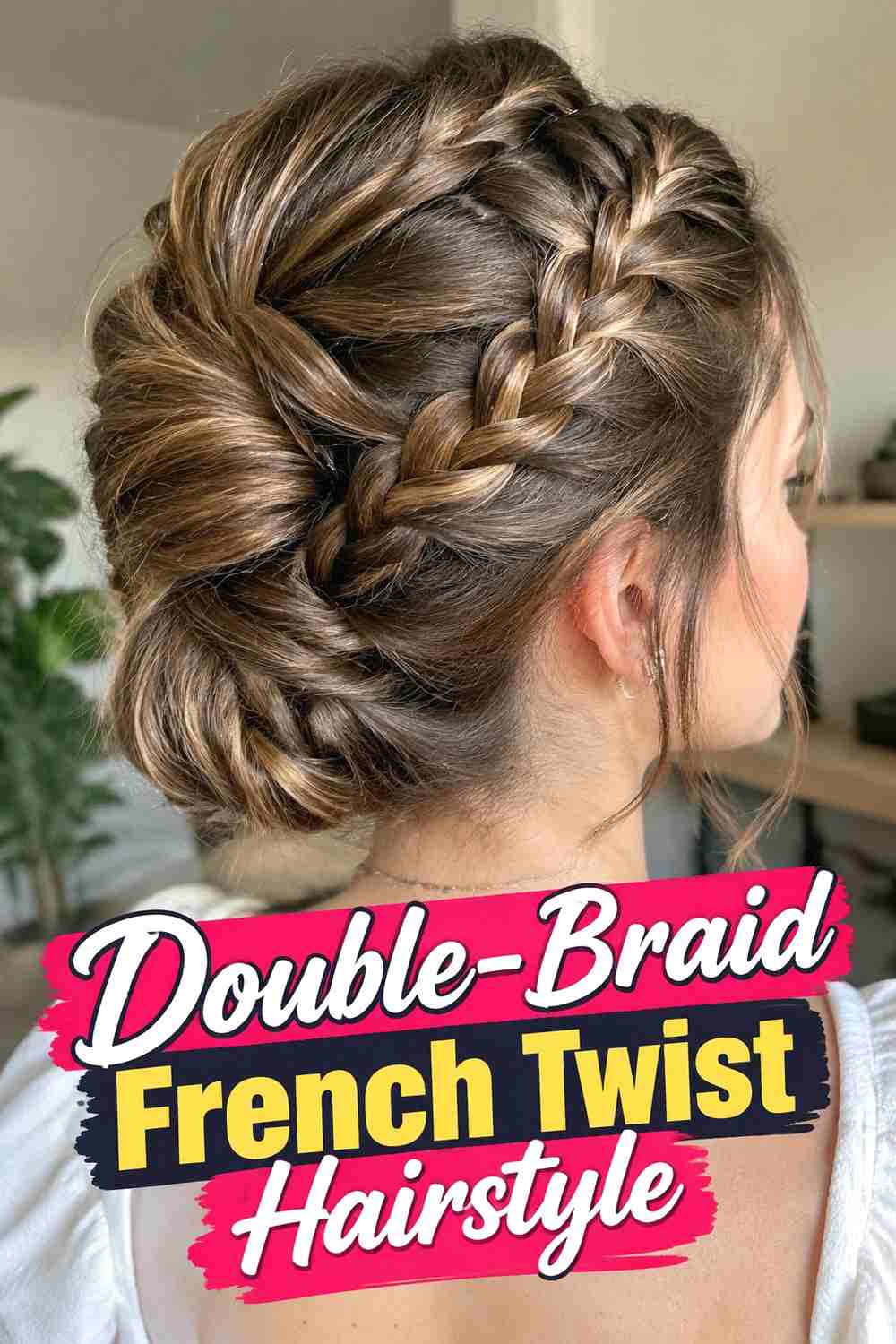
The Double-Braid French Twist Hairstyle uses two separate braids to frame or feed into the central roll. One braid can begin on each side of the head, meeting at the back before the remaining lengths are folded into the twist. Another option is to position one braid along the crown and a second lower along the seam. Keep both braids similar in scale so the final style feels balanced. Secure their meeting point before rolling the rest of the hair, then hide the ends inside the French twist. This version offers more detail than a single-braid style while still maintaining a clear vertical updo shape.
Styling Notes
Anchor both braids where they meet before creating the roll so they do not shift while the twist is being pinned.
Why It Works
Two braids add symmetry and texture while directing attention toward the central French twist.
12. Pearl Accent Braided French Twist Hairstyle
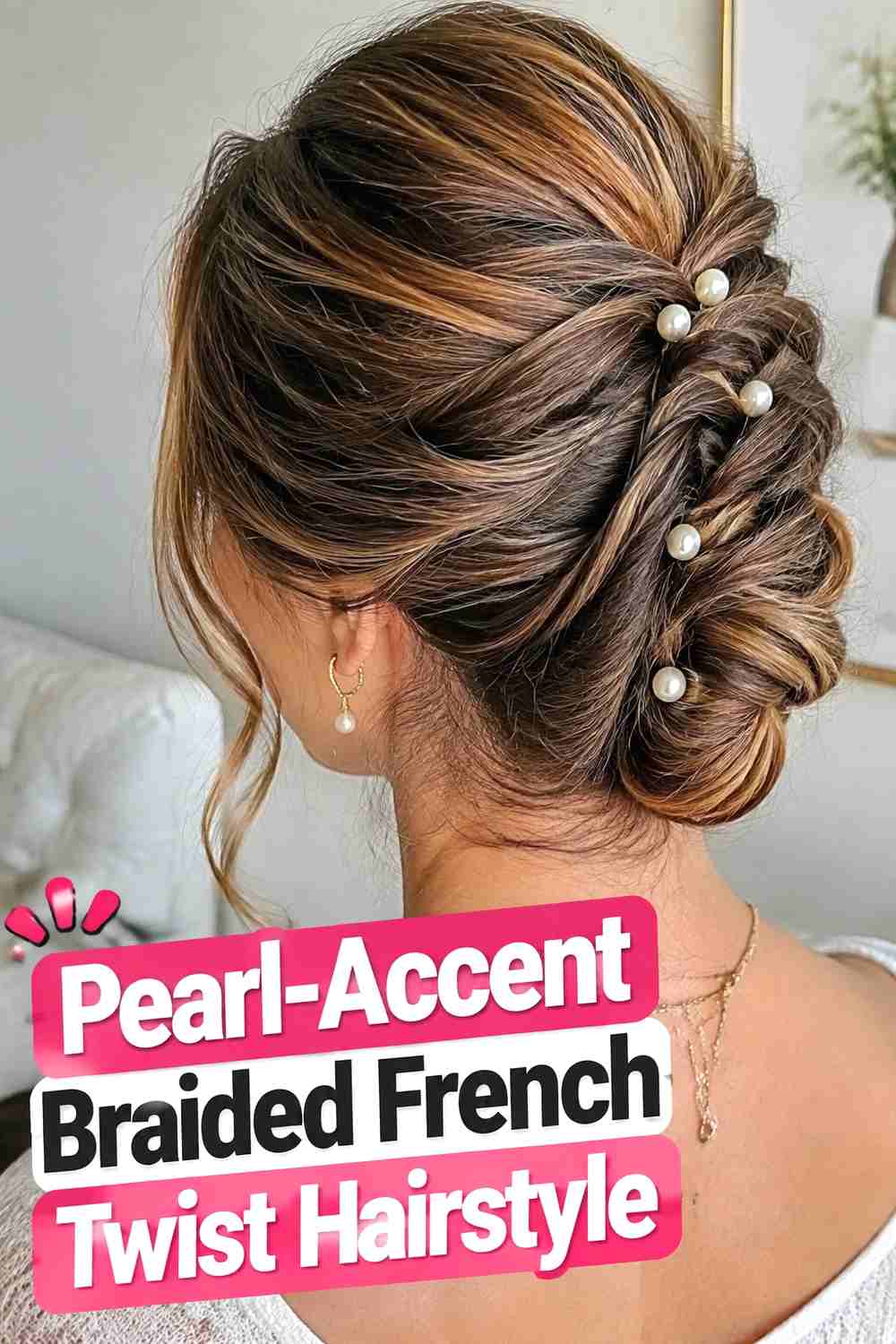
The Pearl-Accent Braided French Twist Hairstyle combines woven texture with a few small decorative pins for a polished special-event finish. Build the braid and French twist first, making sure the structure is completely secure before adding accessories. Then place a few pearl pins along the braid, near the seam, or at the point where the braid disappears into the roll. Keep the decoration restrained so the braid remains visible and the hairstyle does not become crowded. A smooth or softly textured crown can both work, depending on the occasion. Decorative pins should enhance the style rather than carry the structural weight of the twist.
Best For
This variation suits weddings, bridal events, formal dinners, celebrations, and photo-focused occasions.
Pro Tip
Use standard pins for stability first, then add pearl pins only where they complement the braid and twist shape.
13. Low Braided French Twist Hairstyle
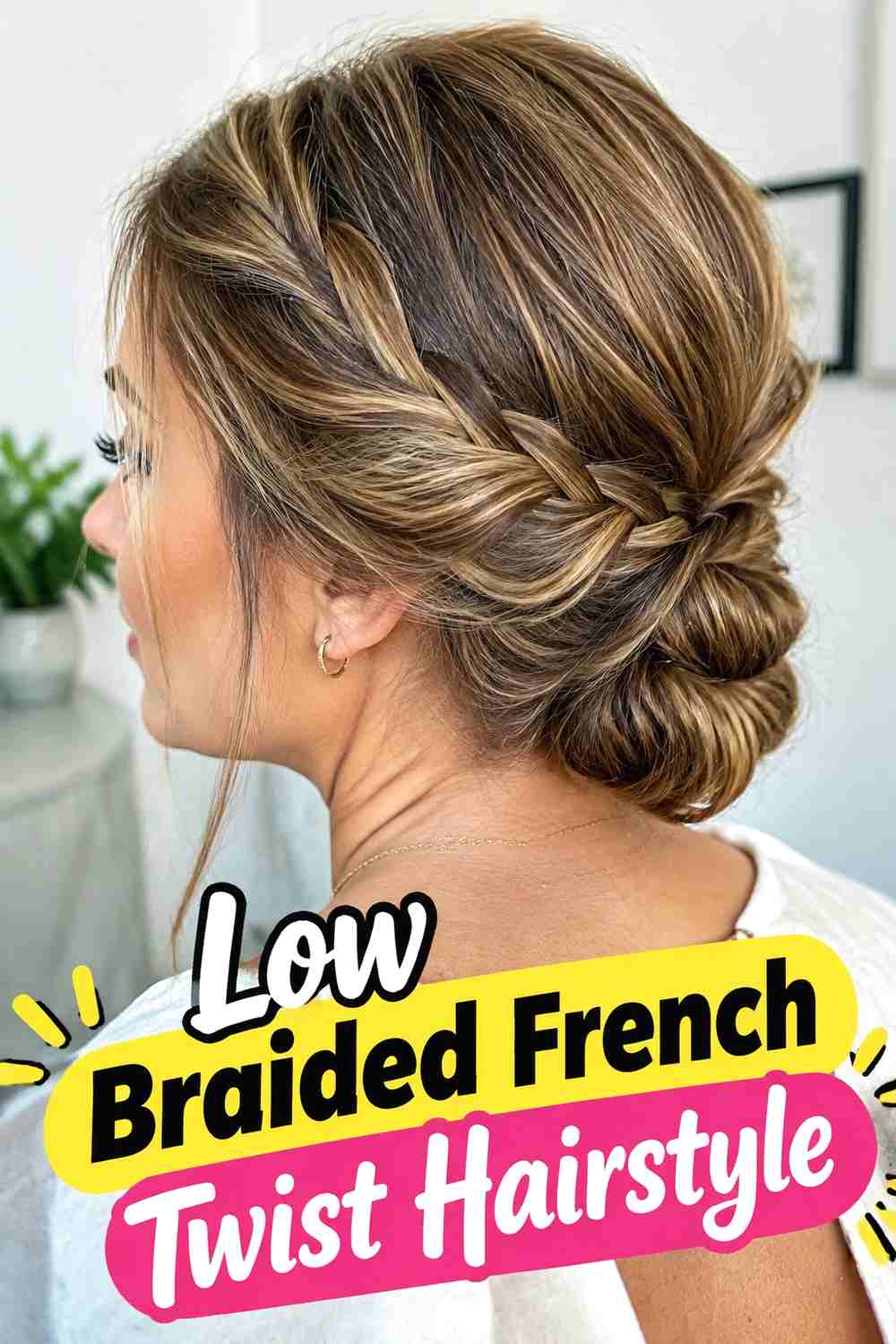
The Low Braided French Twist Hairstyle shifts the roll closer to the nape, creating a compact profile with braided detail concentrated near the lower back of the head. Start with a braid along one side or through the lower lengths, then roll the hair inward at a lower angle than a traditional high French twist. The resulting shape feels understated and can be more comfortable for extended wear because the weight sits closer to the neckline. Keep the braid visible along one edge of the roll, and tuck the ends securely inside. This version works particularly well with medium or long hair that can fold cleanly without producing too much bulk.
Why It Works
Lower placement creates a softer profile while the braid keeps the compact twist visually interesting.
Wear & Maintenance
Use several small pins along the lower seam to distribute the weight instead of relying on one large anchor point.
14. Polished Event Braided French Twist Hairstyle
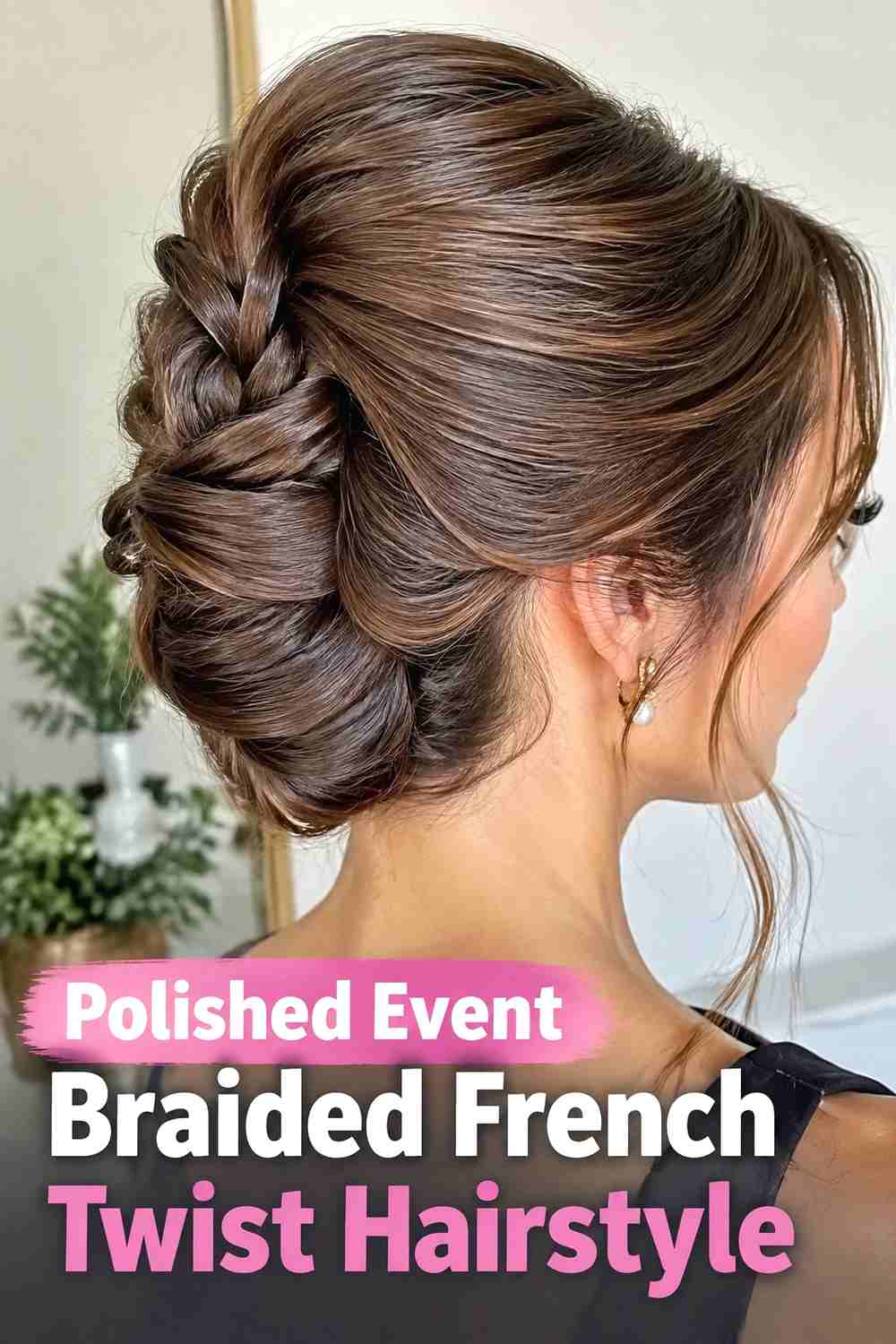
The Polished Event Braided French Twist Hairstyle combines a carefully placed braid, smooth crown, balanced vertical roll, and secure internal pinning for longer wear. The braid can travel along one side and merge into the twist, while the main roll stays clean from multiple angles. Work in controlled sections, anchor the braid before creating the twist, and use crossed pins inside the seam for stability. A flexible finishing spray can manage flyaways without making the surface stiff. Keep decorative details minimal unless they suit the occasion, because the braided construction already provides visual interest. The finished style should feel refined, secure, and elegant enough for formal photographs or extended events.
Best For
This is the most formal option for weddings, galas, ceremonies, parties, or occasions where the updo needs to stay polished for several hours.
Wear & Maintenance
Carry a few matching pins for minor adjustments instead of repeatedly reshaping the braid or roll once the style is set.
How to Choose the Right Look
Start with how much braid detail you want. A Classic, Side-Braid, or Rope-Braid French Twist keeps the woven element relatively simple, while Dutch, Fishtail, Crown, and Double-Braid versions make the braid a stronger focal point.
Hair length matters because both the braid and roll need enough material to form securely. Medium-long hair can usually handle a basic braided twist, while longer hair gives you more flexibility for crown braids, double braids, and larger rolls. Thick hair may require more internal pinning, while fine hair can benefit from light texture before styling.
Think about the finish too. Sleek Center-Part versions look structured and modern, while Loose Romantic, Textured, and Face-Framing styles feel softer. A Low Braided French Twist creates a more compact silhouette, while event styles benefit from stronger anchoring and cleaner surface control.
For accessories, add them only after the braid and twist are secure so decorative pins never replace the structural foundation.
Final Thoughts
Braided French twists combine the sculpted elegance of a classic roll with the added dimension of woven texture. By changing the braid type, placement, parting, volume, and finish, you can make the style feel minimal, romantic, intricate, or fully event-ready while keeping the same graceful vertical silhouette.
FAQs
1. What is a braided French twist?
It is a French twist updo that incorporates one or more braids into the sides, crown, seam, or rolled section of the hairstyle.
2. How long should hair be for a braided French twist?
Medium-long hair is usually easier to work with because there must be enough length for both the braid and the rolled twist. Longer hair offers even more styling options.
3. How do I keep the braid visible in a French twist?
Keep the braid slightly wider, place it along an outer edge or side, and avoid burying the entire woven section inside the roll.
4. Can textured or curly hair wear a braided French twist?
Yes. Natural texture can add fullness and grip. You can preserve some of that texture or smooth selected sections depending on the finish you want.
5. How can I make a braided French twist last for an event?
Build a secure foundation, anchor the braid before forming the roll, use multiple hidden pins through the inner seam, and finish with flexible hold.
Save your favorite braided French twist ideas, share the styles that inspire you, and explore more elegant braided updos for everyday wear and special occasions.