12 Braided Headscarf Ponytail Ideas for Stylish Everyday Hair
Braids, ponytails, and colorful scarves come together in these wearable looks that add texture, movement, and personality without feeling overly complicated.
A braided headscarf ponytail combines three versatile styling elements: the structure of a braid, the practicality of a ponytail, and the color or pattern of a scarf. Depending on placement and texture, the result can feel polished, sporty, romantic, bohemian, or relaxed enough for everyday wear.
The best version depends on your hair length, density, natural texture, desired hold, and how much styling time you want to spend. Some looks keep the roots sleek and controlled, while others work better with softness, curls, loose strands, and visible volume. These 12 ideas offer a range of finishes while keeping the headscarf and braid central to the style.
Quick List
- Classic Braided Headscarf Ponytail Hairstyle
- High Dutch Braid Headscarf Ponytail Hairstyle
- Low Fishtail Headscarf Ponytail Hairstyle
- Crown Braid Headscarf Ponytail Hairstyle
- Side Braided Headscarf Ponytail Hairstyle
- Rope Braid Headscarf Ponytail Hairstyle
- Half Up Braided Headscarf Ponytail Hairstyle
- Double Dutch Braided Headscarf Ponytail Hairstyle
- Curly Braided Headscarf Ponytail Hairstyle
- Feed In Braided Headscarf Ponytail Hairstyle
- Boho Loose Braid Headscarf Ponytail Hairstyle
- Scarf Woven Braided Ponytail Hairstyle
1. Classic Braided Headscarf Ponytail Hairstyle
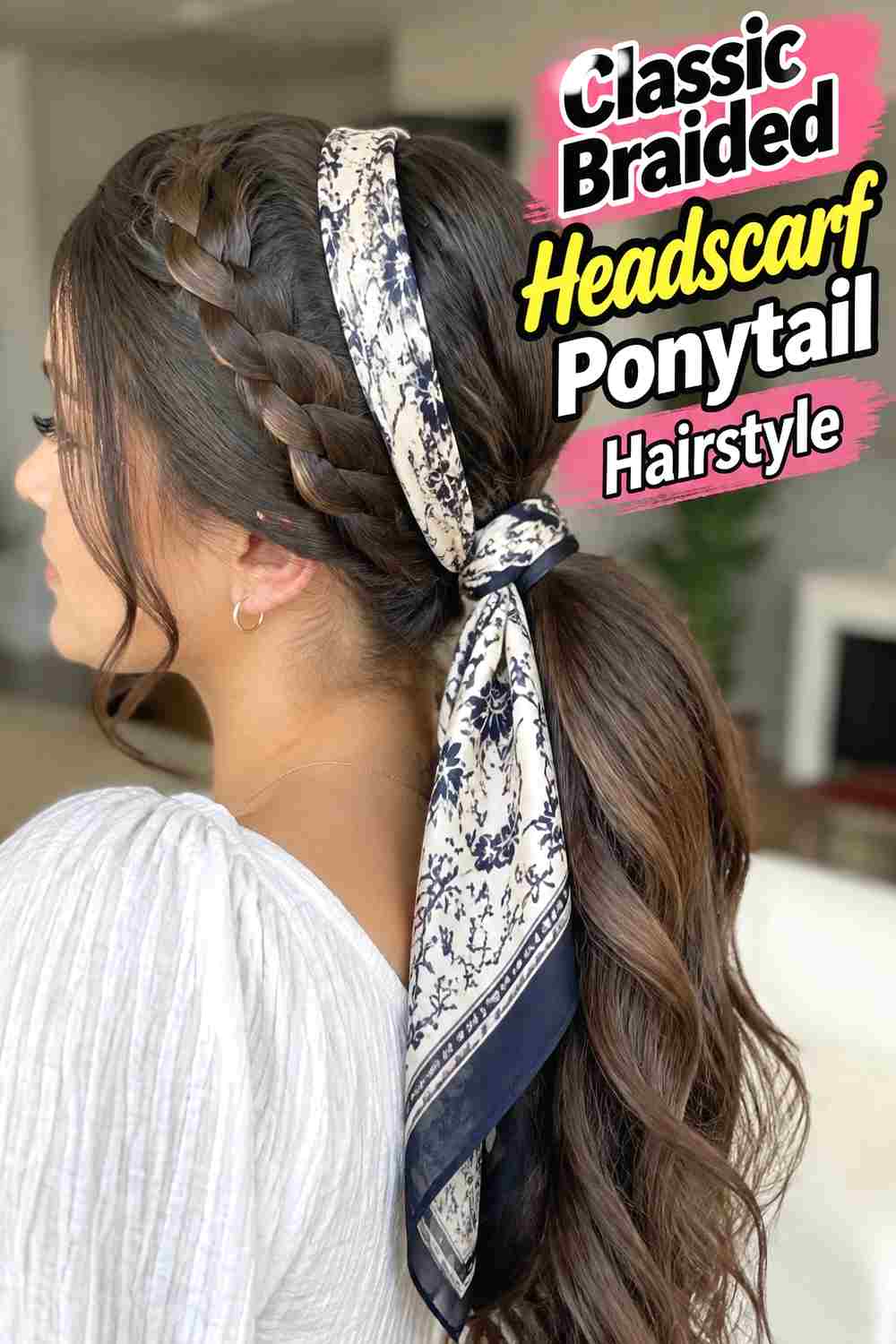
The classic version keeps the idea simple and easy to recognize: gather the hair into a mid-height ponytail, secure it comfortably, braid the length into a traditional three-strand braid, and finish with a scarf tied around the ponytail base. The scarf gives the style an instant focal point without interfering with the braid itself. A slightly relaxed crown keeps the finish wearable rather than severe, while neat braid sections make the ponytail look intentional. This version works especially well when you want a style that feels pulled together but still casual enough for errands, brunch, travel, or an easy daytime outfit.
Styling Notes
Choose a scarf that is narrow enough to knot securely without creating excessive bulk around the elastic. Letting the ends fall beside the braid creates extra movement and makes the accessory feel integrated.
Best For
This is a practical starting point for medium to long hair and suits straight, wavy, or stretched textured hair when there is enough length to form a visible braid.
2. High Dutch Braid Headscarf Ponytail Hairstyle
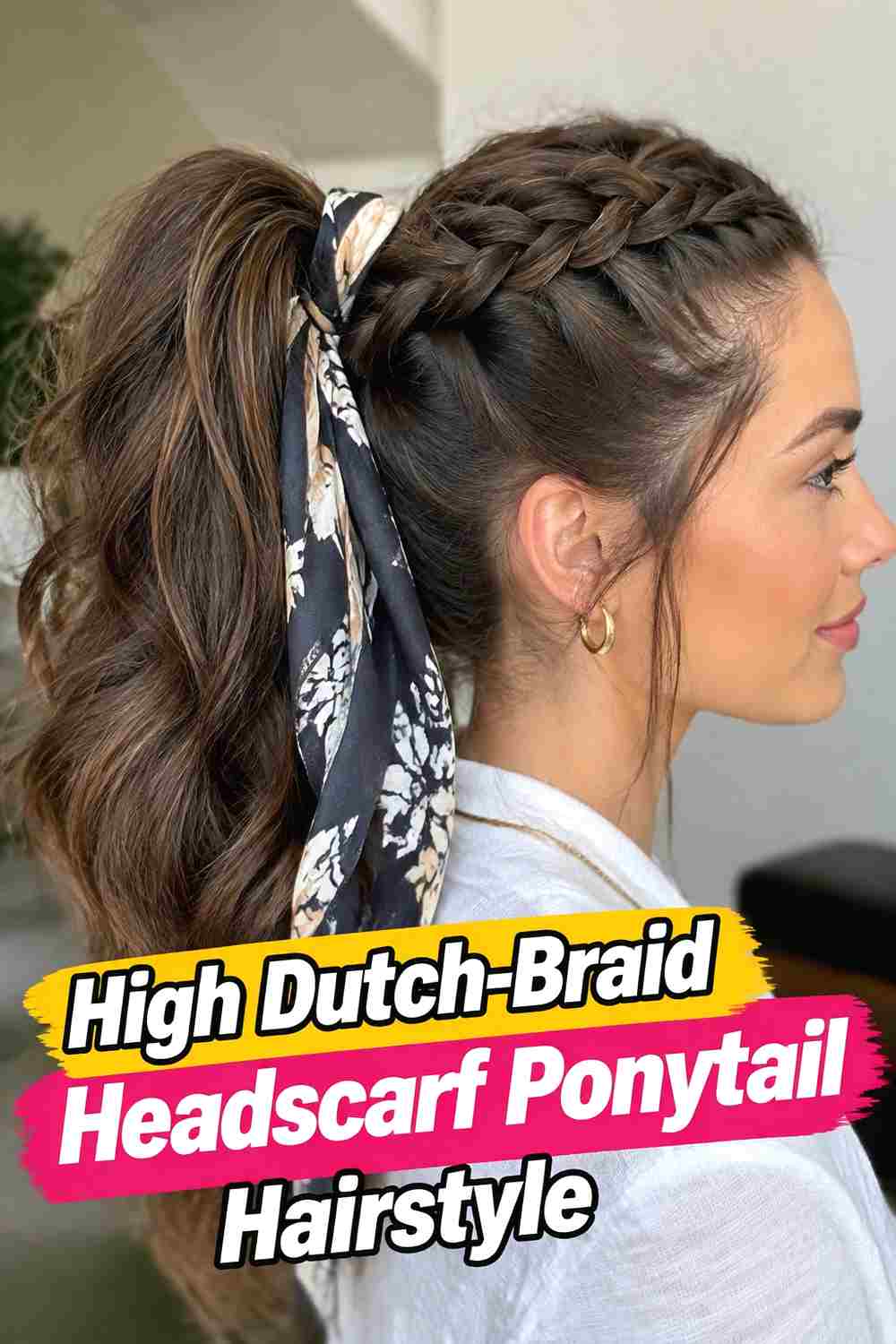
A high Dutch-braid ponytail creates stronger shape through the top of the head before the hair reaches the ponytail. Start the braid near the front hairline and build it backward with sections crossed underneath, allowing the braid to appear raised and dimensional. Once it reaches the crown, gather the remaining hair into a high ponytail and continue braiding the length if desired. A scarf tied at the ponytail base softens the structured braid and introduces color without hiding the detail. The combination has a sporty, confident finish that can work well for active days, casual outings, or whenever you want the braid to stay visually prominent.
Wear & Maintenance
A high ponytail needs enough support to hold both the hair and scarf comfortably. Avoid tying either element excessively tight, especially when wearing the style for several hours.
Pro Tip
Gently widen the outer edges of the Dutch braid after securing it if you want more visible dimension without dramatically loosening the whole style.
3. Low Fishtail Headscarf Ponytail Hairstyle
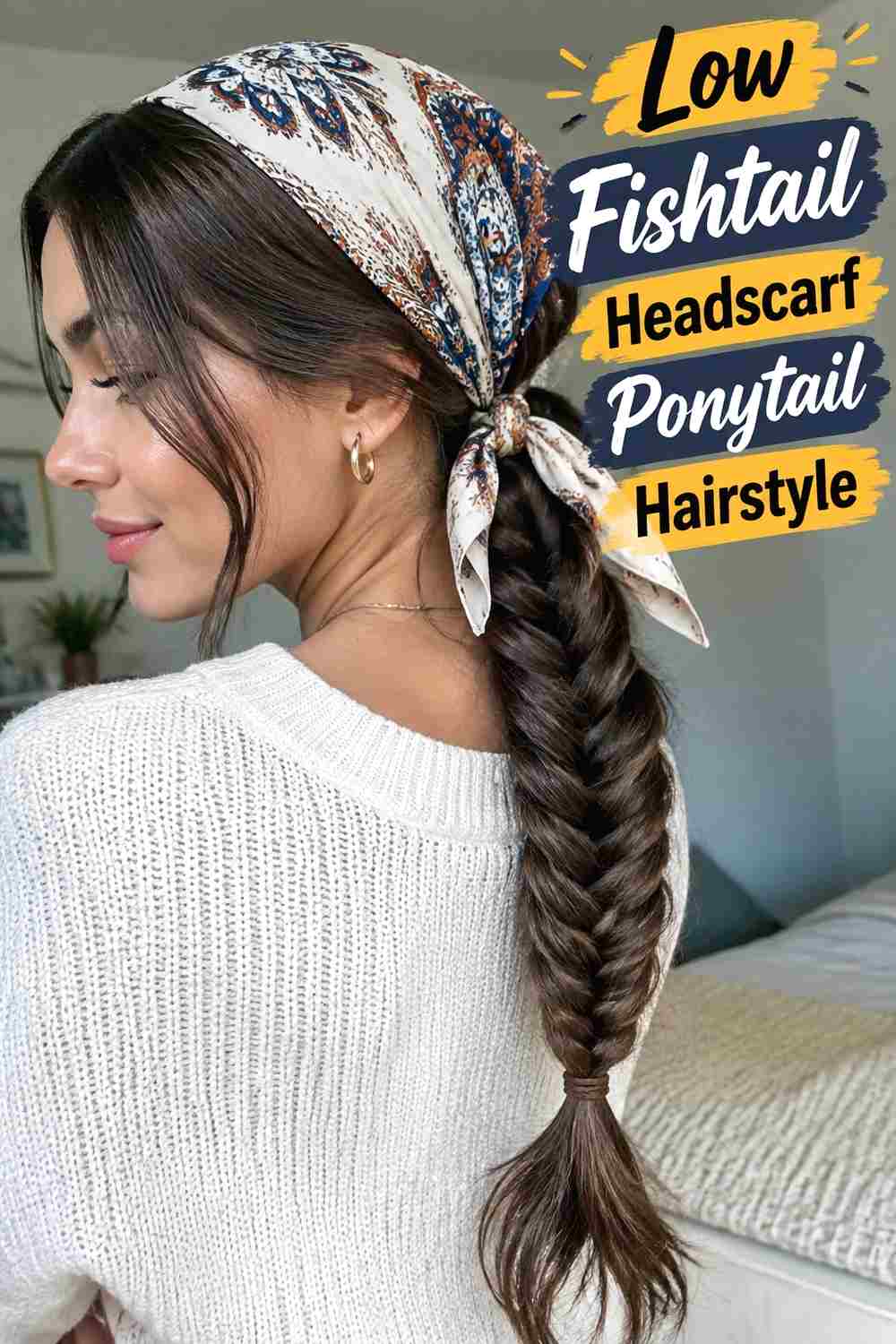
The low fishtail version has a softer, more detailed finish than a standard braid. Gather the hair near the nape, secure the ponytail, and divide it into two larger sections before crossing small pieces from one side to the other. The narrow woven pattern gives the ponytail a delicate texture that looks especially attractive with a lightweight scarf knotted over the elastic. Keeping the roots smooth but not overly slick allows the style to retain an effortless feel. A few controlled face-framing pieces can make the silhouette even softer. Because the ponytail sits low, it can also feel comfortable with jackets, hats, and everyday layered outfits.
Hair Type & Length
Medium-long to long hair shows the fishtail pattern most clearly. Hair with layers can still work, although shorter pieces may need light styling product or discreet pins.
Why It Works
The low placement keeps the style understated while the fishtail braid and scarf add enough detail to prevent a basic ponytail from feeling plain.
4. Crown Braid Headscarf Ponytail Hairstyle
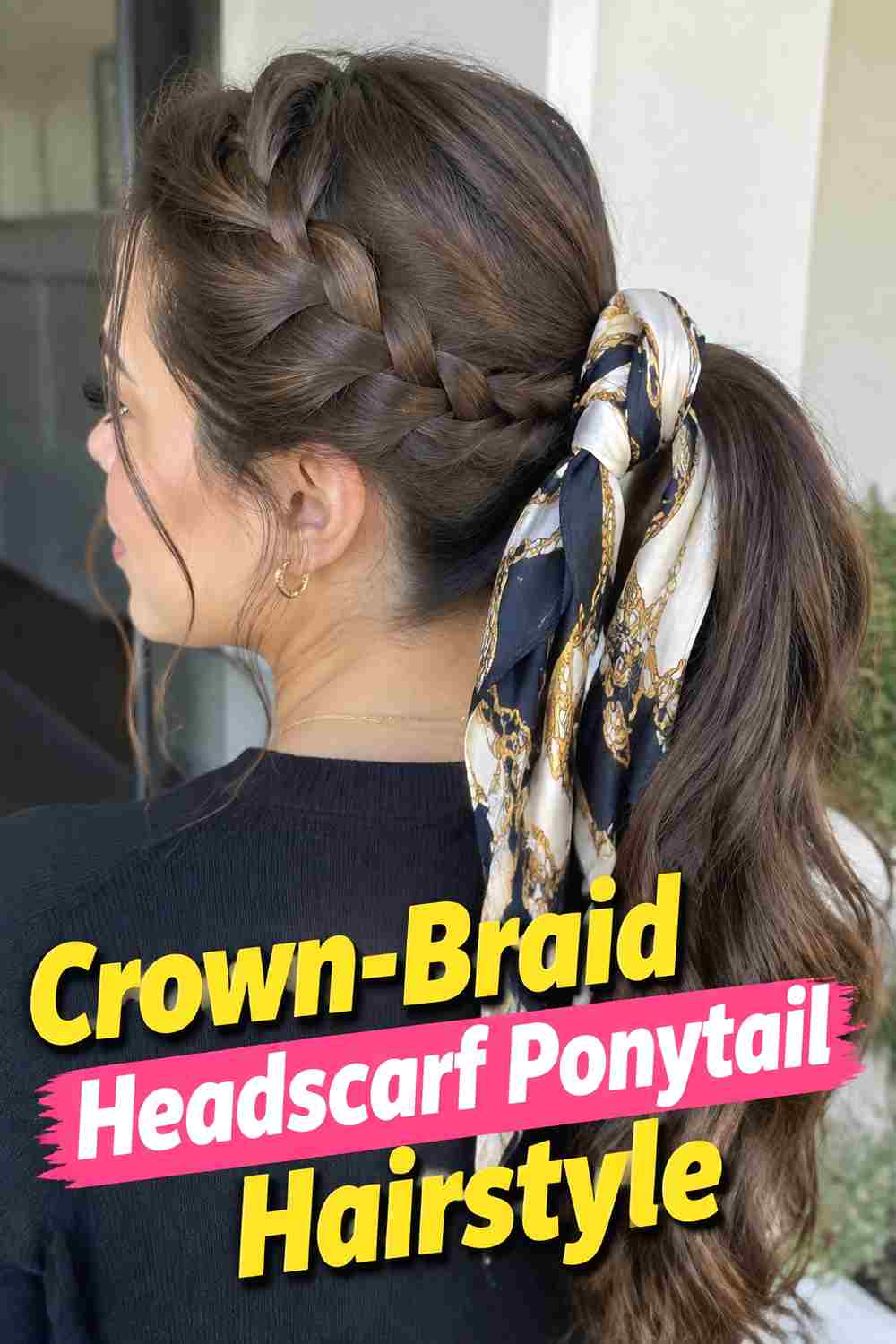
This variation uses a partial crown braid to frame the head before flowing into a ponytail. Sections from one or both sides are braided toward the back, creating a curved detail that follows the natural shape of the head. The braids then meet at a mid or low ponytail, where a scarf conceals the elastic and adds a clean decorative finish. Leaving the ponytail lightly textured keeps the style balanced so the crown does not look too formal. It is a useful choice when you want visible detail from multiple angles, since the braided shape can be seen from the sides as well as the back.
Styling Notes
Keep the crown braid close enough to the head to stay secure, but avoid pulling every section perfectly flat. Slight softness gives the style a more natural finish.
Best For
This look is especially effective on medium-long and long hair where there is enough length to create side braids and still leave a substantial ponytail.
5. Side Braided Headscarf Ponytail Hairstyle
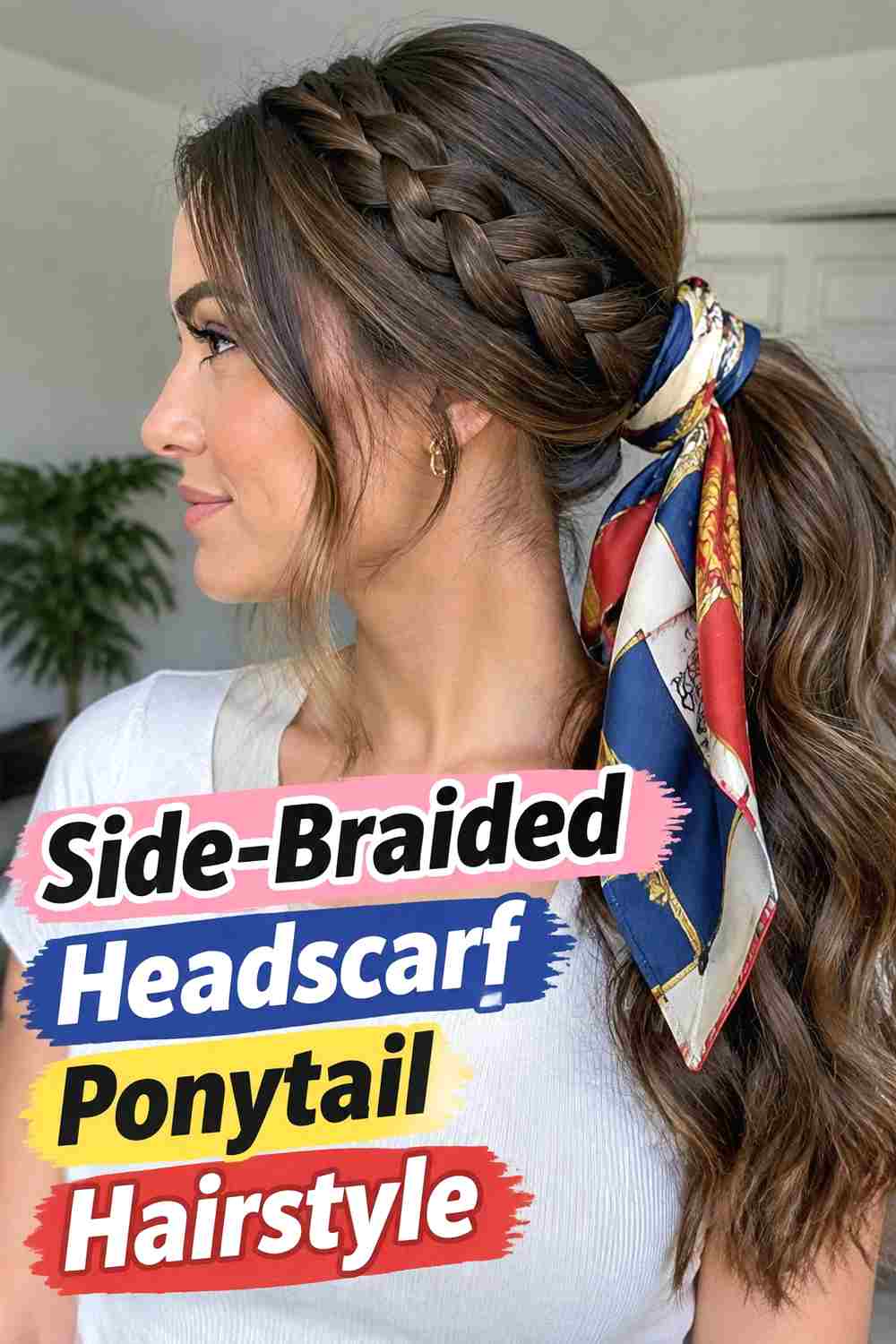
A side braid gives the ponytail an asymmetrical detail that feels playful without requiring a complicated full-head pattern. Create a French, Dutch, or simple three-strand braid along one side of the head, directing it toward the ponytail base. Gather the remaining hair into a mid-height or low ponytail and secure the scarf around the elastic so the knot sits near the braid connection. The opposite side can remain smooth for contrast. This approach is particularly useful if you like visible braided detail from the front, because the braid can begin near the temple and remain noticeable instead of disappearing completely behind the head.
Why It Works
The single braid adds structure while leaving most of the hair easy to manage. It also creates a natural place for the eye to travel toward the scarf and ponytail.
Pro Tip
Direct the braid toward the exact spot where you plan to place the ponytail. This helps the finished shape look connected instead of appearing like two separate hairstyles.
6. Rope Braid Headscarf Ponytail Hairstyle
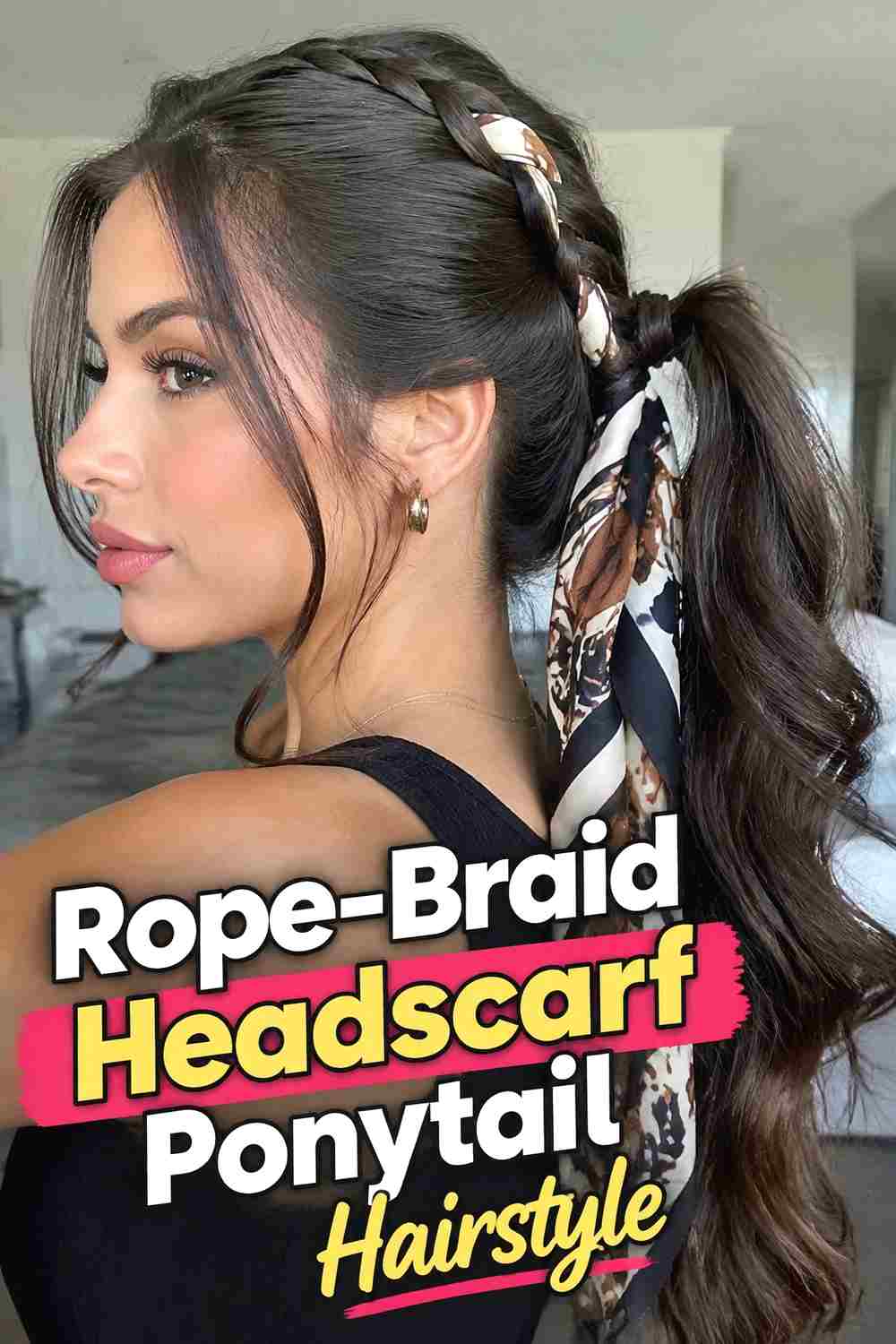
A rope braid gives a braided ponytail a clean spiral effect with fewer sections to manage. After securing the hair into a ponytail, divide it into two pieces, twist each section in the same direction, then wrap them around each other in the opposite direction. This creates the distinctive rope shape while helping the twist hold. Tie a slim scarf around the ponytail base and allow the ends to fall beside the braid for a streamlined finish. The result looks polished but slightly different from a classic three-strand braid, making it a useful option when you want texture without an intricate braiding process.
Styling Notes
A small amount of styling cream can help keep shorter layers incorporated into the twist. Secure the end firmly because rope braids can loosen quickly if the final elastic slips.
Hair Type & Length
This style works best when the ponytail has enough length to show several full twists. Straight, wavy, and stretched textured hair can all create a defined rope pattern.
7. Half Up Braided Headscarf Ponytail Hairstyle
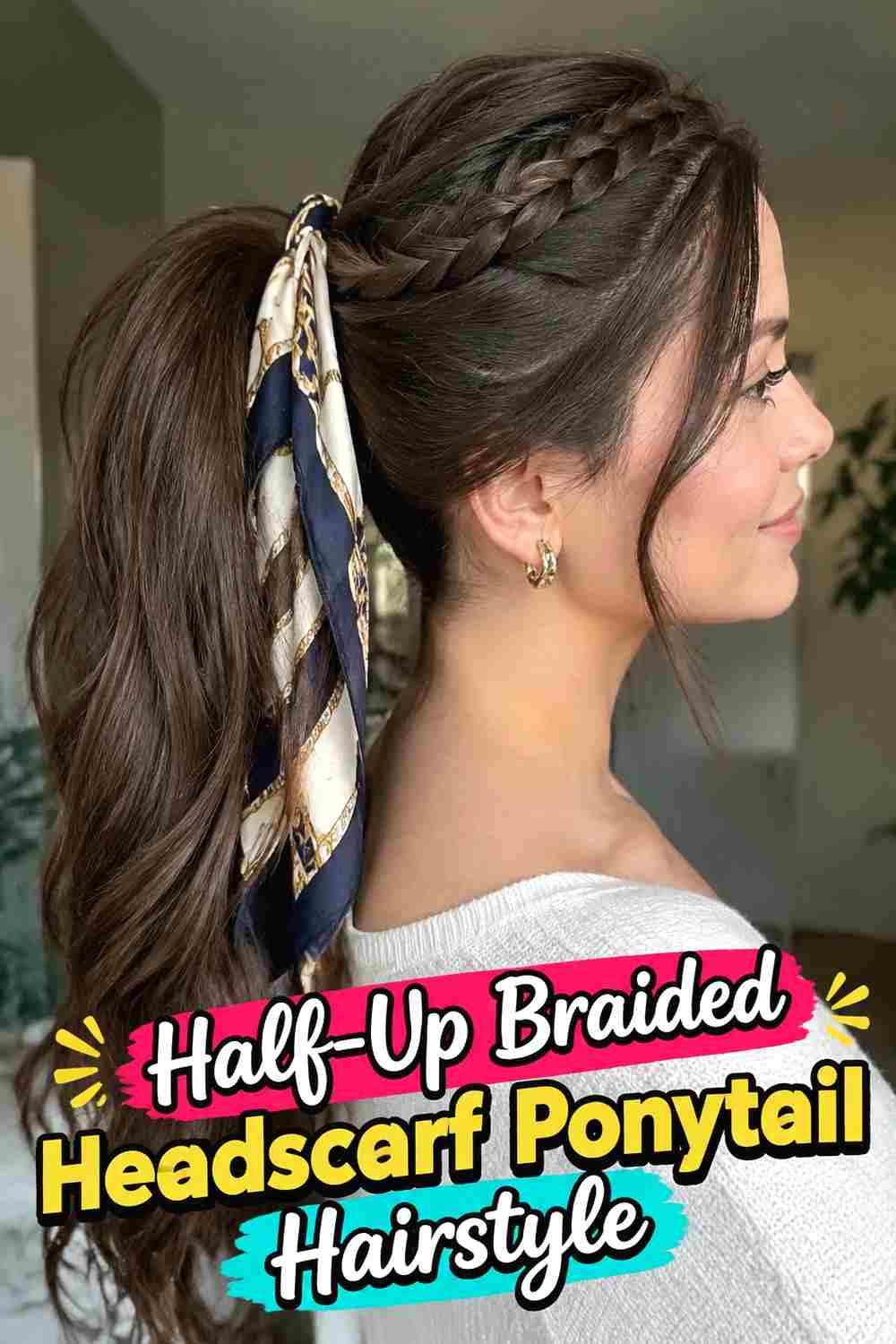
The half-up version is ideal when you want the shape of a ponytail without gathering every strand. Take the upper section of the hair, add one or more small braids through the crown or sides, and secure everything into a half-up ponytail. Tie a headscarf around the base so the scarf sits over the loose lower layers. The contrast between the controlled braided top and flowing hair underneath creates movement and keeps the overall look relaxed. Soft waves or natural texture can make the lower section feel especially full. This variation also gives you more freedom around the face than a completely pulled-back ponytail.
Best For
Choose this option when you enjoy wearing your hair down but still want the lift, detail, and accessory placement of a ponytail. It works particularly well with medium and long lengths.
Wear & Maintenance
Use a lighter scarf so the half-up section is not pulled downward by unnecessary weight. A smaller knot usually looks proportional and stays more comfortable.
8. Double Dutch Braided Headscarf Ponytail Hairstyle
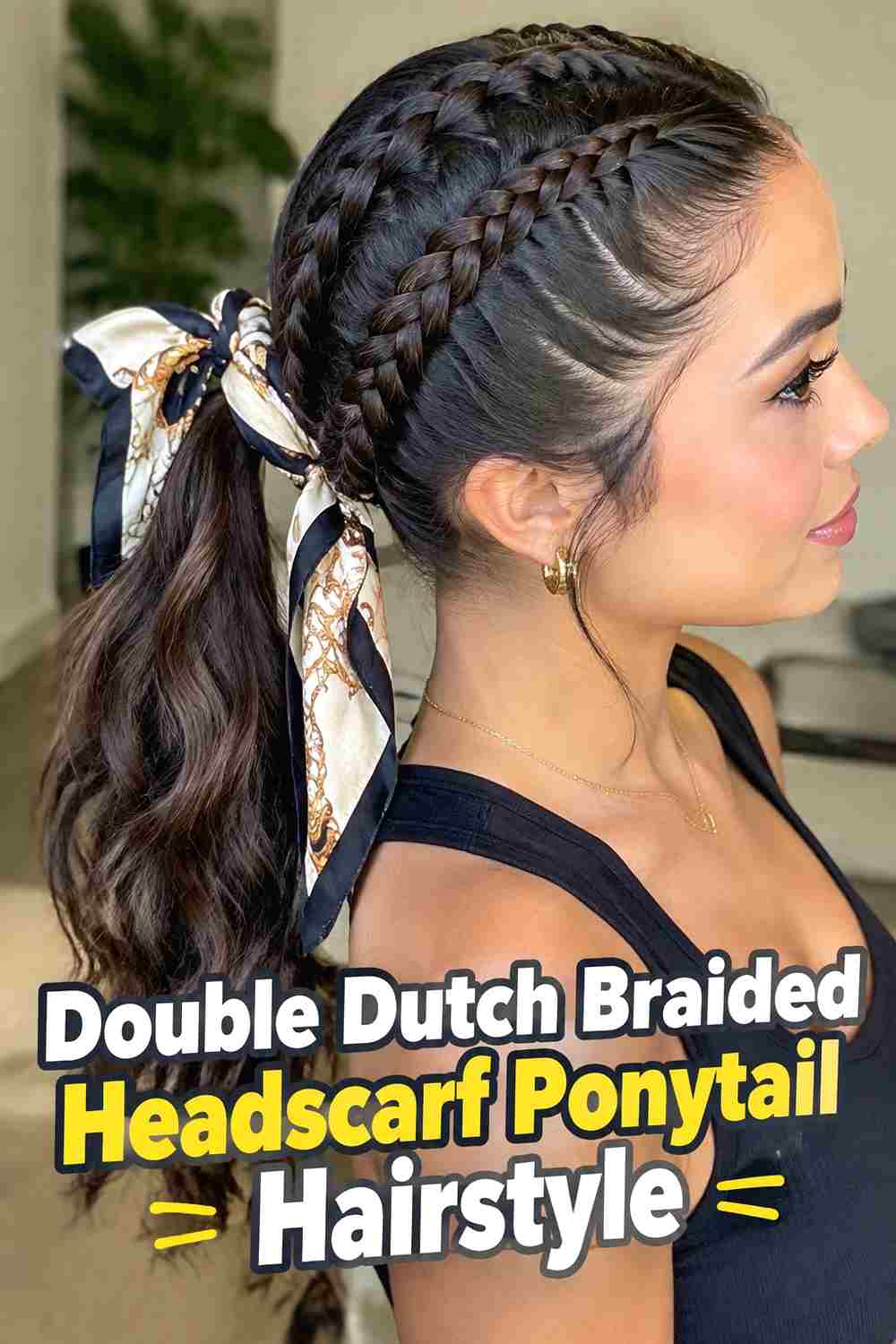
Two Dutch braids create a bold, symmetrical path from the front of the head into one unified ponytail. Part the hair through the center, braid each side backward using the under-crossing Dutch technique, and stop around the crown or upper back of the head. Combine both sections with the remaining hair into a ponytail, then tie the scarf around the base. The twin braids provide strong definition through the roots, while the ponytail prevents the style from feeling like a full double-braid look. Depending on how neatly the sections are braided, this can range from sporty and practical to polished and fashion-forward.
Hair Type & Length
Medium-long or long hair gives you enough working length for the braids to transition naturally into the ponytail. Denser hair can create especially pronounced Dutch-braid sections.
Pro Tip
Try to keep both braids similar in width and tension. Checking their placement from the back before securing the ponytail can help create a more balanced finish.
9. Curly Braided Headscarf Ponytail Hairstyle
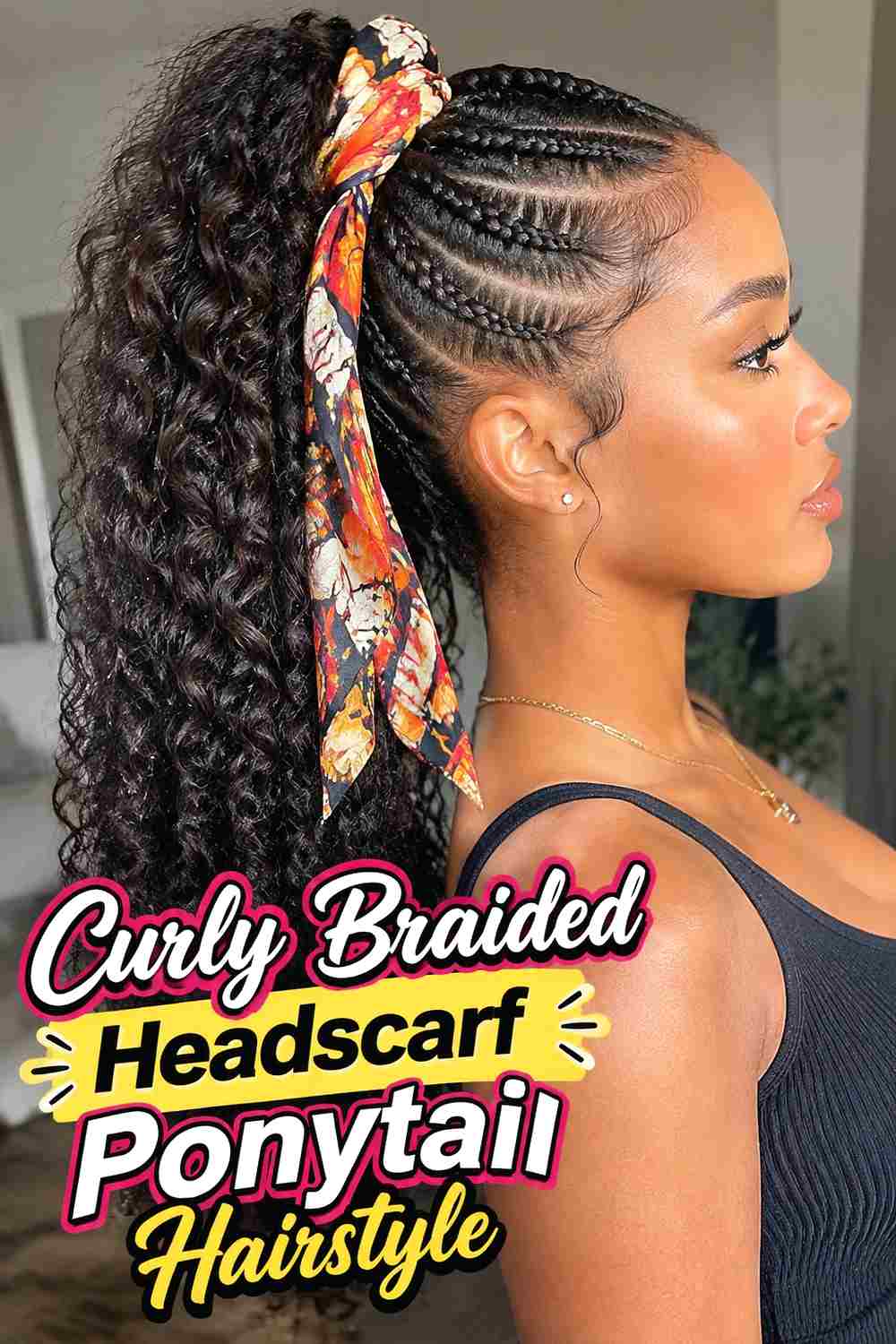
This variation keeps the ponytail intentionally curly while using smaller braids to add definition around the scalp or ponytail base. One or two side braids can feed into a high or mid-height ponytail, allowing natural curls, coils, or styled curls to remain loose through the length. The scarf wraps around the base without covering the curl pattern, creating a clear separation between the braided detail and the full textured ponytail. Rather than trying to make every strand uniform, the appeal comes from visible variation in curl size, softness, and movement. It is an effective way to combine structured braiding with a fuller, more expressive ponytail silhouette.
Why It Works
The braids control selected areas while the loose curls maintain volume and natural movement. The scarf provides a strong visual transition between those two textures.
Wear & Maintenance
Position the scarf around the ponytail base rather than tightly over delicate curls. Keeping the knot secure but comfortable helps preserve the intended shape.
10. Feed In Braided Headscarf Ponytail Hairstyle
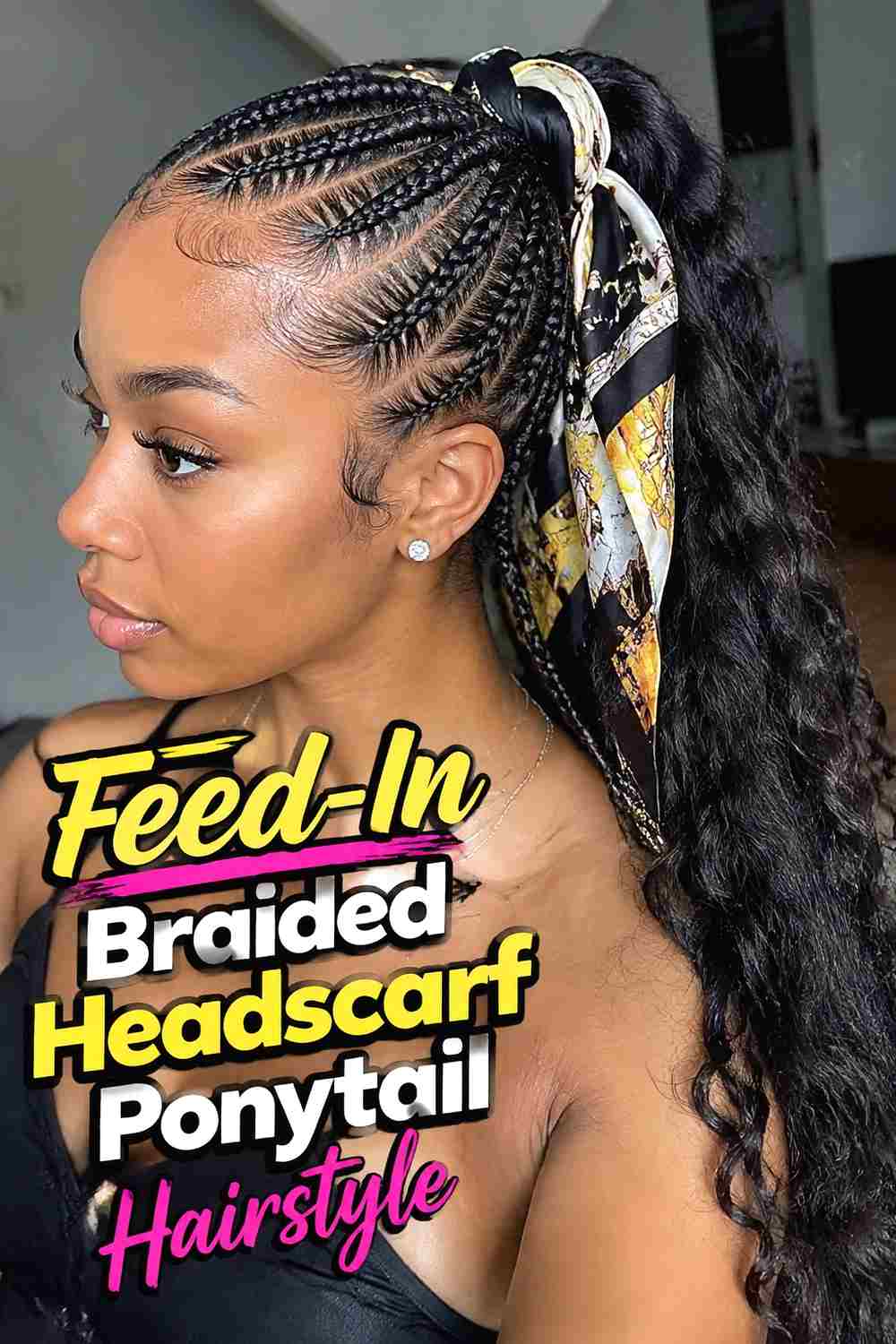
Feed-in braids can create a sleek, directional base that leads naturally into a ponytail. Several neat braids are formed from the hairline toward a central gathering point, with added hair incorporated gradually when the technique and desired style call for it. The ponytail can then continue as one larger braid or remain loose before being finished with a scarf around the base. Clean parting makes this look particularly graphic and polished. Because braid size, placement, tension, and added hair can substantially change the finished result, the style is highly customizable while still maintaining the recognizable headscarf ponytail silhouette.
Styling Notes
Plan the braid direction before beginning so every section reaches the intended ponytail point cleanly. A scarf can hide the elastic and transition area without covering the detailed braid pattern.
Best For
This option suits anyone looking for a more structured braided base and is especially useful when you want the hairstyle to look intentional from the front, sides, and back.
11. Boho Loose Braid Headscarf Ponytail Hairstyle
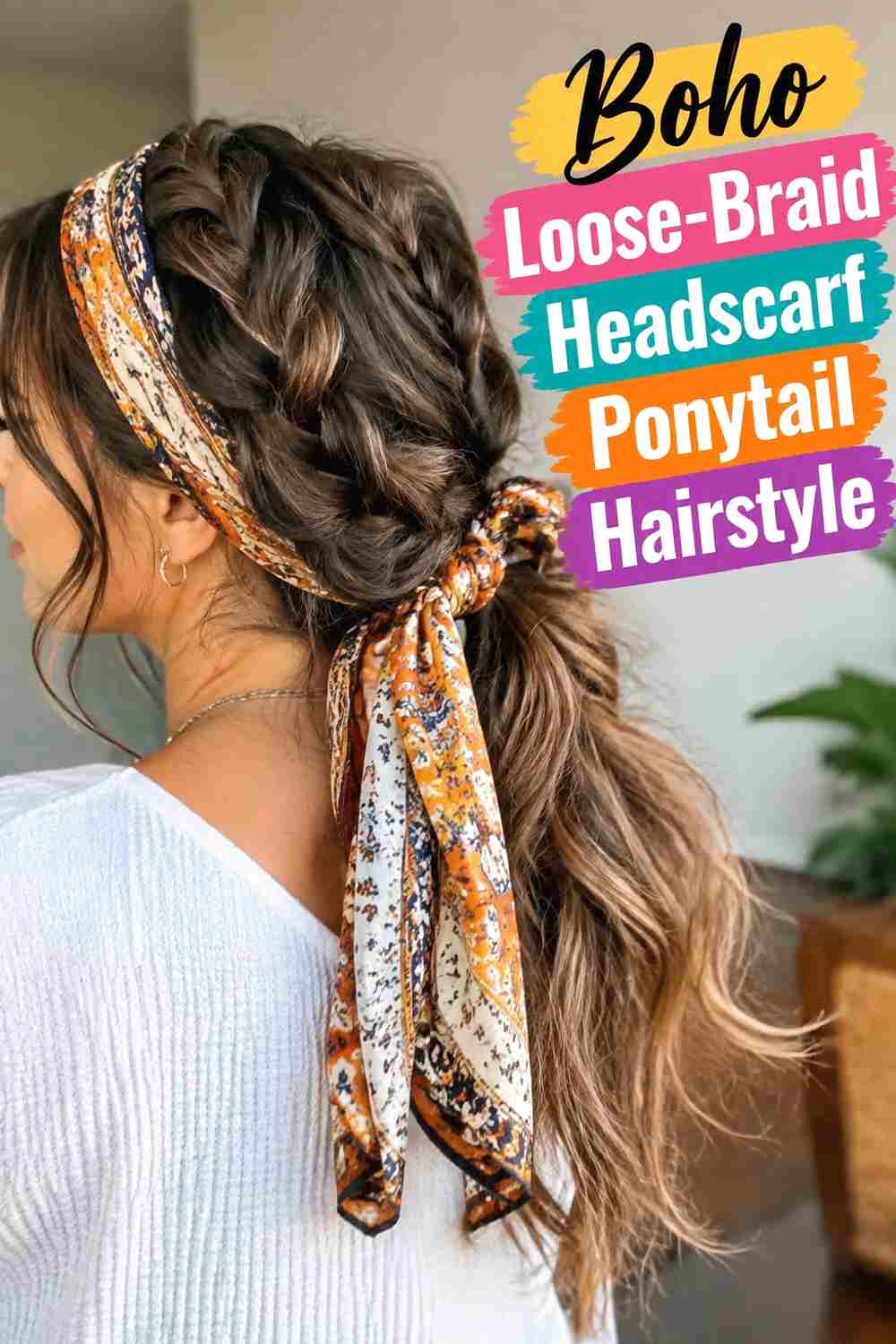
A loose boho braid replaces sharp precision with softness, visible texture, and a slightly undone finish. Start with a relaxed ponytail and create a three-strand or loosely woven braid, leaving enough ease that the sections do not appear tightly compressed. A patterned scarf tied at the base strengthens the casual, free-flowing effect, especially when its ends hang beside the braid. Gentle crown volume, soft waves, and a few intentional face-framing strands can complete the silhouette. The key is controlled looseness rather than a braid that is actually falling apart. This makes the style appealing for outdoor gatherings, casual weekends, vacations, or relaxed warm-weather outfits.
Styling Notes
Create a secure foundation first, then soften selected areas. Loosening the braid after it has been tied is generally easier to control than beginning with sections that are too slack.
Why It Works
The visible texture keeps the look romantic and relaxed, while the scarf provides enough color and structure to make the hairstyle appear deliberately styled.
12. Scarf Woven Braided Ponytail Hairstyle
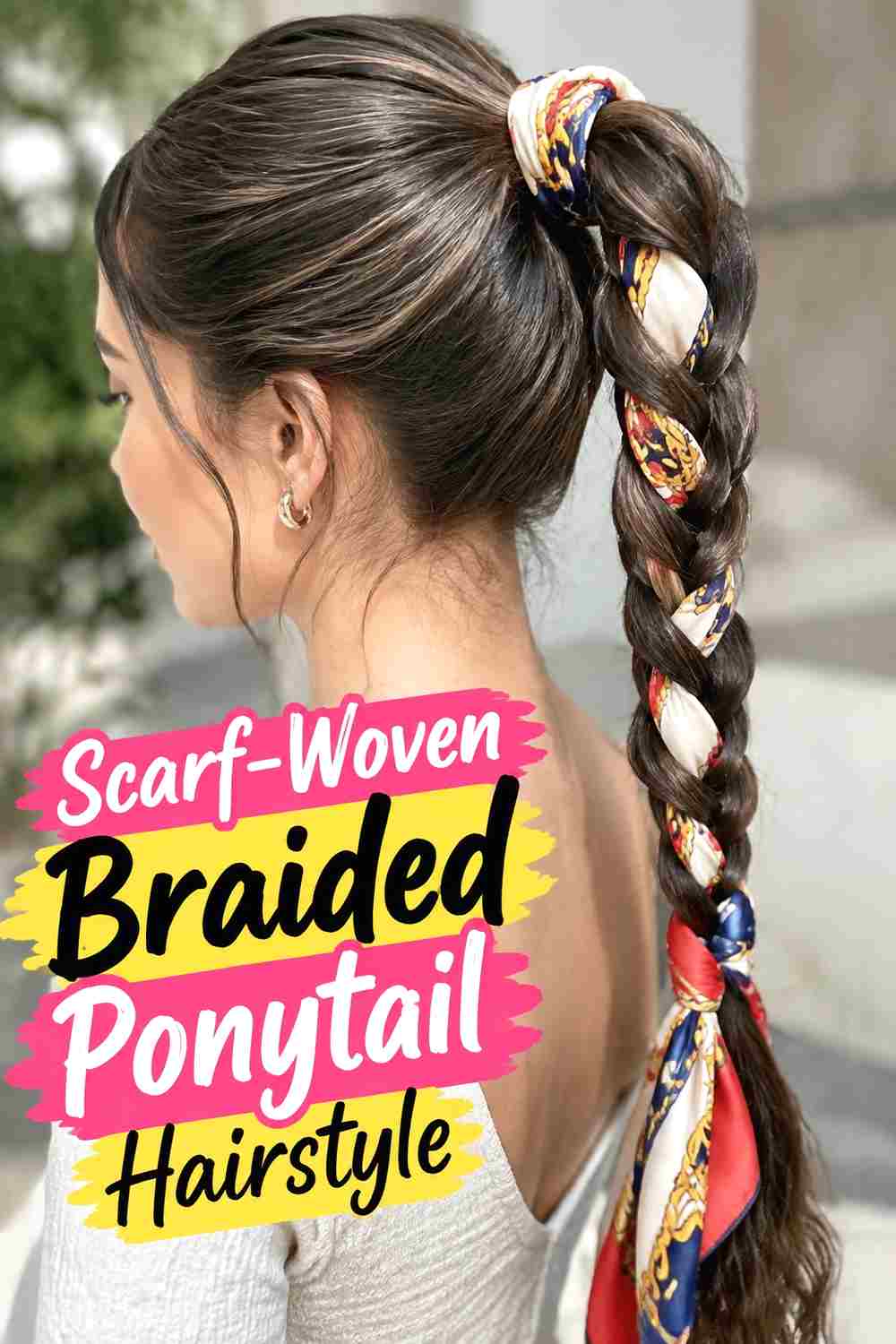
Instead of keeping the scarf only at the ponytail base, this style incorporates part of the scarf directly into the braid. Secure a ponytail first, anchor a narrow scarf near the elastic, and use one scarf end as a visible strand or wrap it strategically through sections of a three-strand braid. The fabric creates flashes of color throughout the ponytail and makes the accessory feel like part of the hairstyle rather than an added finishing piece. A scarf with a clear pattern can create an especially striking effect, but the fabric should remain narrow enough that it does not overwhelm the hair or distort the braid.
Pro Tip
Choose a scarf with enough length to travel through the braid while still leaving a manageable end. Lightweight fabric is usually easier to weave than bulky material.
Wear & Maintenance
Make sure the scarf is anchored securely before braiding. If it slips at the base, the entire woven pattern can shift even when the hair itself remains tied.
How to Choose the Right Look
Start with your available hair length. Low fishtail, rope, and scarf-woven braids need enough ponytail length to make their patterns visible, while crown, side, and half-up variations can create interest even when the loose ponytail is somewhat shorter.
Next, consider your natural texture and the finish you prefer. A curly braided ponytail allows natural volume to remain visible, while feed-in and Dutch-braid styles emphasize cleaner structure around the scalp. If you like a softer finish, the boho loose-braid or half-up version leaves more movement around the face and crown.
Styling time also matters. A classic three-strand or rope-braid ponytail is relatively straightforward once the ponytail is secured. Double Dutch, crown, and feed-in styles require more sectioning and control. For longer wear, prioritize a comfortable elastic, balanced braid tension, and a scarf that is light enough not to pull at the ponytail base.
Finally, consider the scarf itself. Thin scarves create cleaner knots and are easier to weave into braids, while slightly wider scarves make a stronger statement around the ponytail base. Choose colors and patterns that contrast enough with your hair to make the accessory visible without distracting from the braid detail.
Final Thoughts
Braided headscarf ponytails can be adjusted from simple and casual to highly detailed without losing their practical appeal. Start with a braid technique that feels manageable, choose a ponytail height that is comfortable, and let the scarf supply the color or pattern. Small changes in braid placement, texture, scarf width, and tension can make the same basic concept feel completely different.
FAQs
1. What type of scarf works best for a braided ponytail?
Lightweight, narrow scarves are usually the easiest to knot or weave into a braid. Silk-like, satin, cotton, and soft lightweight fabrics can all work depending on the finish you want.
2. Can I create a braided headscarf ponytail on layered hair?
Yes, although shorter layers may escape from detailed braids. A small amount of styling product and a few discreet pins can help keep shorter pieces controlled.
3. Should the scarf go above or below the ponytail elastic?
The elastic should generally secure the ponytail first. The scarf can then be tied over or around the elastic so it functions mainly as a decorative element rather than the only source of hold.
4. Can braided headscarf ponytails work with curly hair?
Yes. You can braid selected sections while leaving the ponytail naturally curly, or stretch and braid more of the length depending on the desired finish.
5. How do I keep a headscarf from slipping off a ponytail?
Start with a secure ponytail, use a manageable scarf width, and tie the scarf firmly without excessive tension. Anchoring it close to the elastic can also help reduce movement.
Save your favorite braided headscarf ponytail ideas and explore more hairstyle inspiration whenever you want a fresh way to update your everyday look.