12 Brushed-Out Waves Hairstyle Ideas
Dreamy, touchable, and full of movement, these brushed-out waves turn traditional curls into soft, polished hairstyles with effortless-looking volume.
Brushed-out waves begin with defined curls or bends, then soften them into a smoother, fuller pattern. Depending on the curl direction, parting, layers, and finishing technique, the result can look glamorous and sculpted, airy and romantic, or intentionally tousled.
The best version is not simply the biggest or glossiest one. Consider your hair length, density, natural texture, desired hold, and how much styling time you want to spend. Across this collection, the emphasis stays on believable strand detail, wearable volume, and clearly differentiated wave patterns.
Quick List
- Soft Brushed Out Hollywood Waves Hairstyle
- Deep Side Part Brushed Out Waves Hairstyle
- Center Part Airy Brushed Out Waves Hairstyle
- Shoulder Length Brushed Out Waves Hairstyle
- Long Layered Brushed Out Waves Hairstyle
- Voluminous Root Lift Brushed Out Waves Hairstyle
- Glossy S Curve Brushed Out Waves Hairstyle
- Brushed Out Waves With Curtain Bangs Hairstyle
- Brushed Out Waves With Face Framing Layers Hairstyle
- Soft Retro Brushed Out Waves Hairstyle
- Tousled Brushed Out Beach Waves Hairstyle
- Polished Brushed Out Waves With Tucked Side Hairstyle
1. Soft Brushed Out Hollywood Waves Hairstyle
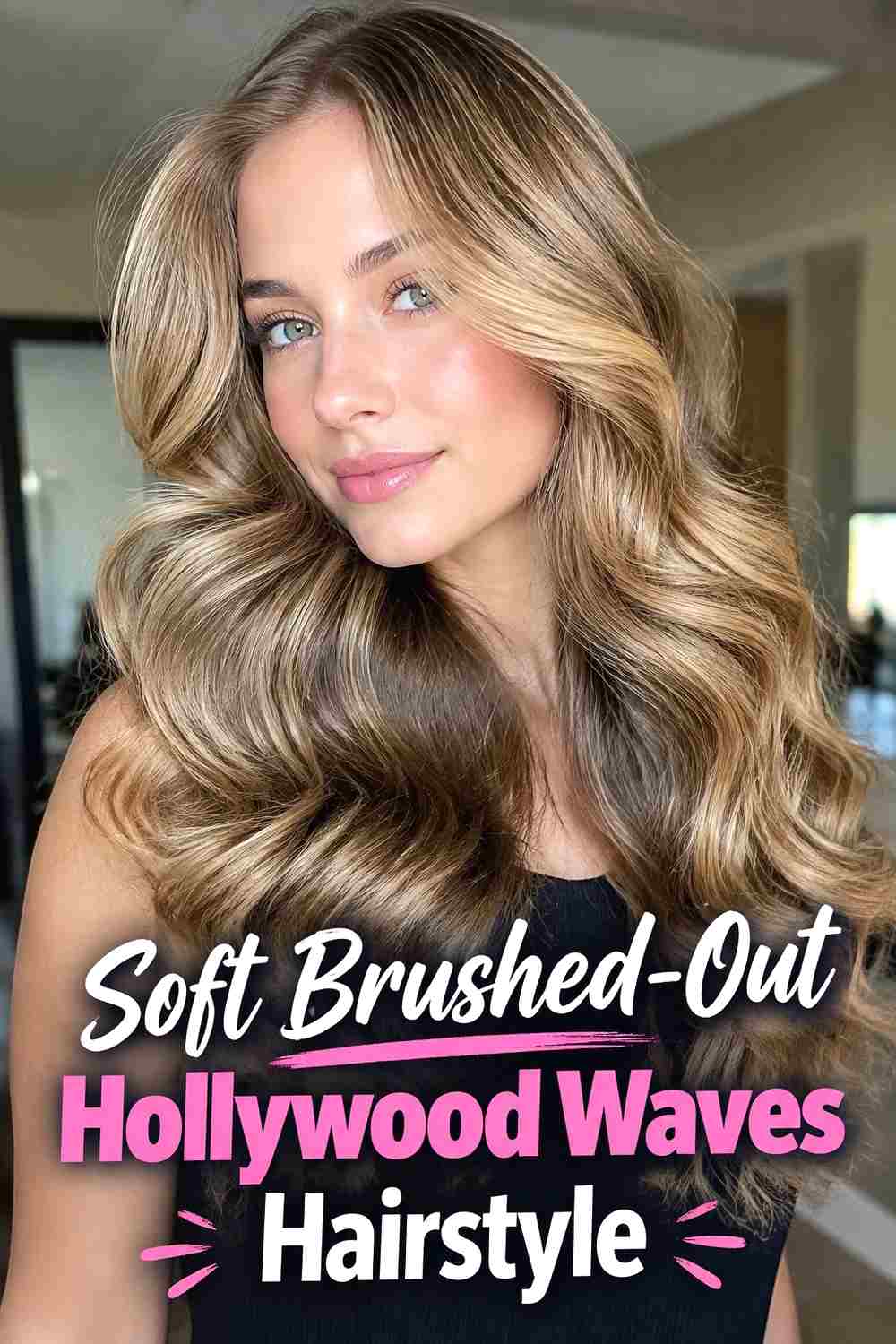
Soft Brushed-Out Hollywood Waves combine old-school glamour with a more relaxed modern finish. The hair is curled in a consistent direction, allowed to cool, and gently brushed until the individual curls connect into broad, flowing waves. Instead of creating a stiff red-carpet shape, the ends remain soft and touchable with visible movement. This look is especially striking on medium to long hair because extra length gives the wave pattern room to develop. A smooth crown and controlled shine help keep the style polished, while a few natural flyaways prevent it from looking overly set. It is a strong choice for dinners, formal events, weddings, and photo-ready occasions.
Styling Notes
Curl sections in the same direction and let them cool completely before brushing. A wide paddle brush or soft bristle brush can merge the curls without flattening all their shape.
Wear & Maintenance
Use flexible-hold spray rather than a hard-setting formula if you want the waves to continue moving naturally throughout the day.
2. Deep Side Part Brushed Out Waves Hairstyle
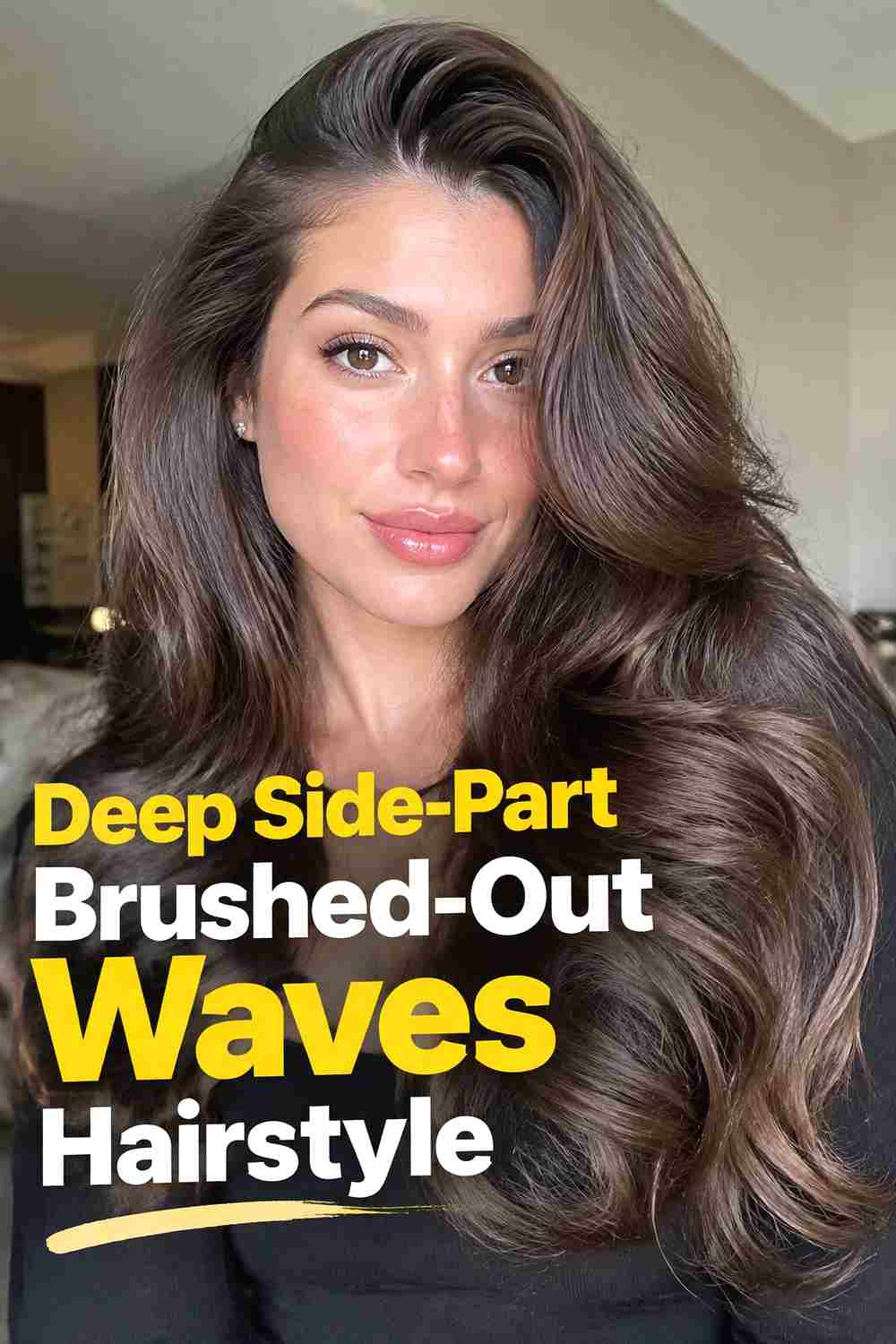
A deep side part changes the balance of brushed-out waves by concentrating extra height and movement on one side. The heavier section can sweep across the forehead before falling into broad waves, while the opposite side stays slightly flatter and cleaner. This asymmetry makes the hairstyle feel dramatic without requiring complicated pinning or accessories. It works particularly well when the first bend begins near cheek or eye level, giving the front section a sculpted but still wearable shape. Medium and long lengths provide the easiest canvas, although a collarbone cut can also carry the style beautifully. Keep the roots controlled rather than overly teased so the side part remains sleek and intentional.
Best For
This variation works well for evening events, formal photos, special occasions, or anytime you want brushed-out waves to feel a little more glamorous.
Pro Tip
Direct the front section away from the face while curling so it naturally sweeps back once brushed.
3. Center Part Airy Brushed Out Waves Hairstyle
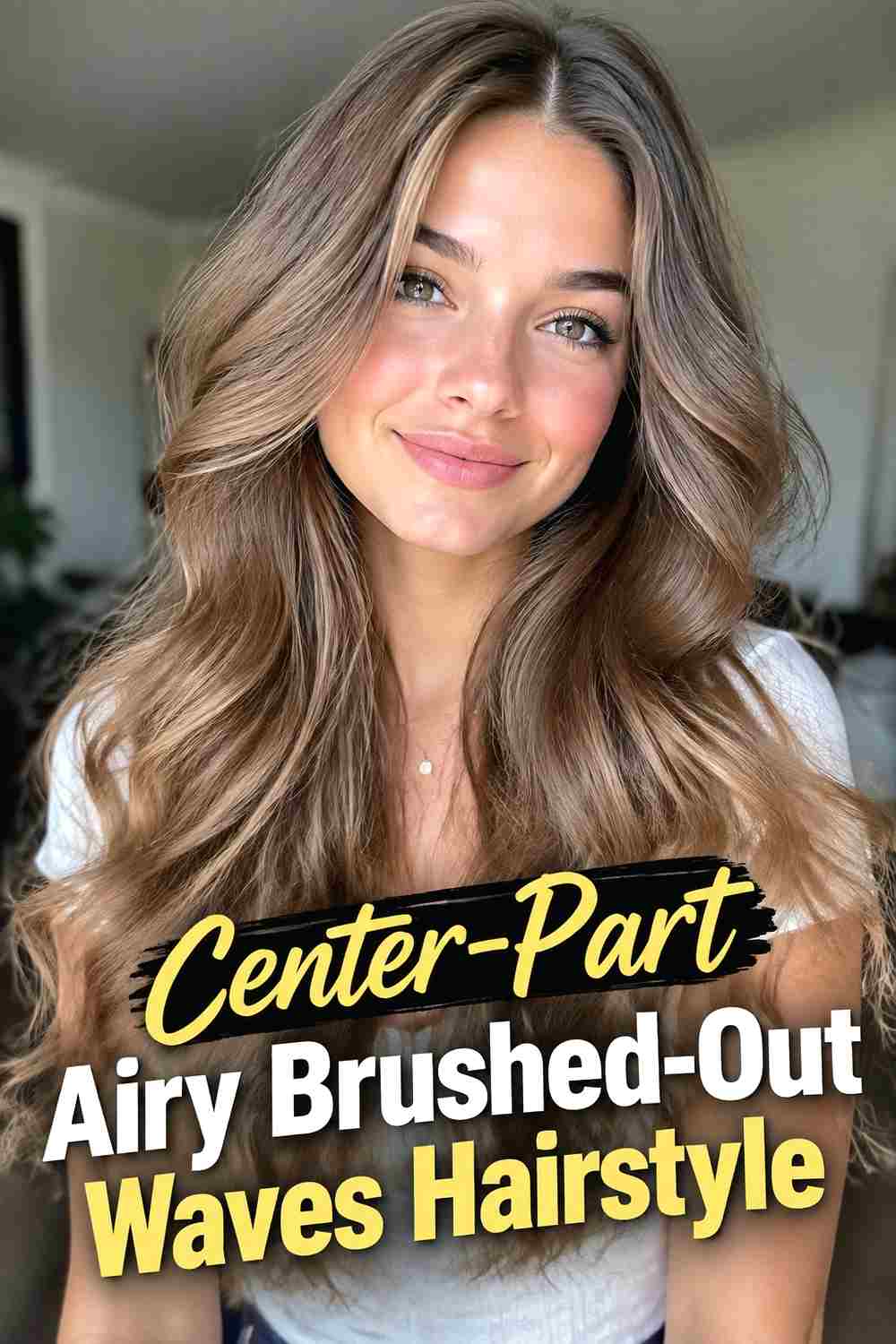
Center-Part Airy Brushed-Out Waves have a lighter, more relaxed finish than traditional glamour waves. Rather than creating one perfectly uniform pattern, the curls are brushed until they separate into soft bends with gentle volume through the mid-lengths and ends. The center part keeps the silhouette balanced and allows both sides to frame the face evenly. This style looks especially natural when the wave pattern starts a few inches below the roots, leaving the crown smooth and easygoing. Long layers can make the movement even softer by preventing the ends from forming one heavy line. The finished effect feels polished enough for an occasion while still working with casual outfits and daytime styling.
Hair Type & Length
Medium to long hair is ideal, particularly when layers allow the brushed curls to expand without creating excessive weight around the ends.
Styling Notes
Use larger curling sections for a looser pattern, then brush with light pressure rather than repeatedly working through the hair.
4. Shoulder Length Brushed Out Waves Hairstyle
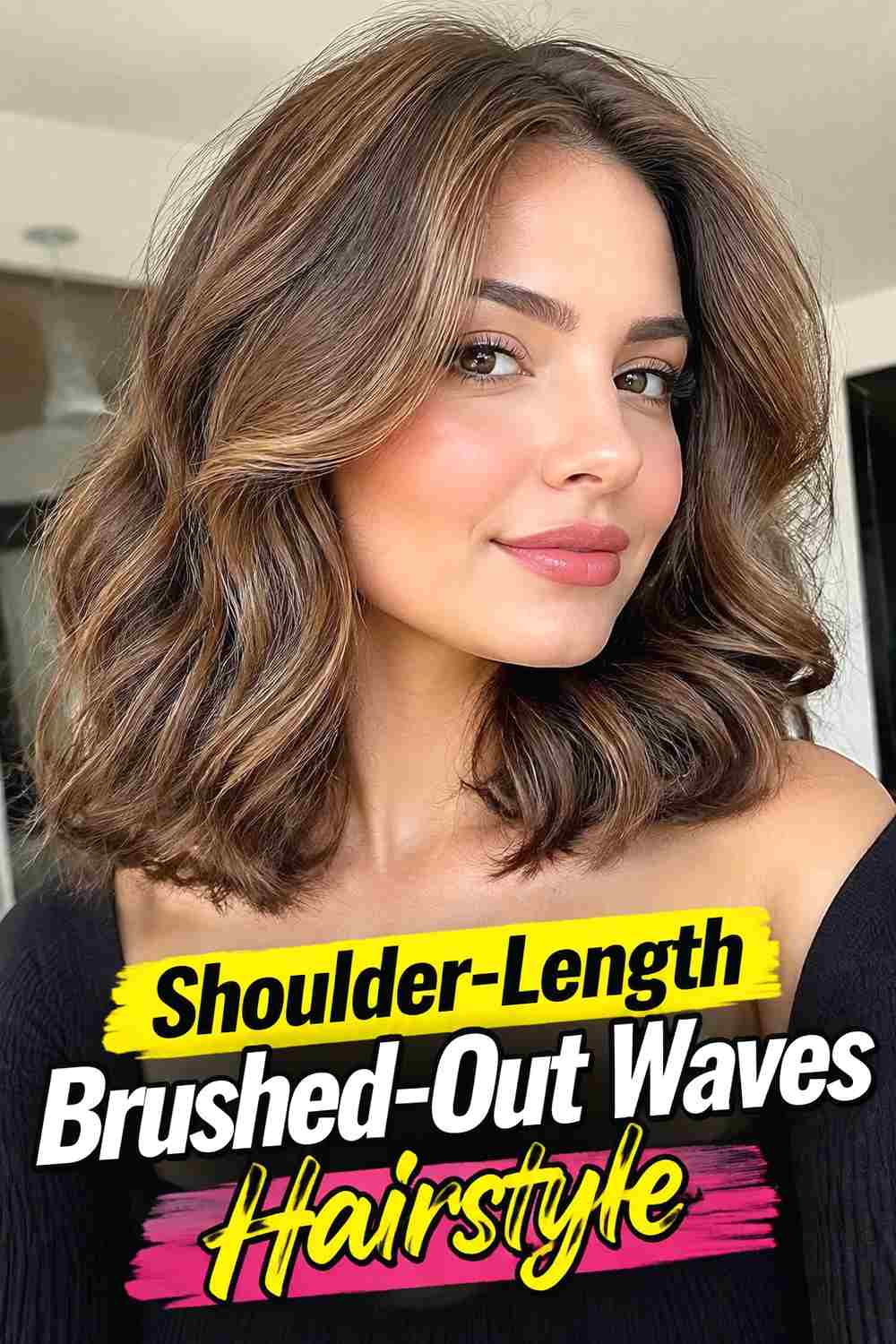
Shoulder-length hair gives brushed-out waves a lively, bouncy shape because the shorter ends are not weighed down by extra length. Curls can be set from around ear level downward, then loosened with a brush until they form plush bends that skim the shoulders. The resulting silhouette feels fuller around the perimeter and can make a lob or grown-out bob look freshly styled without changing the haircut. Keeping the root area relatively smooth helps stop the overall shape from becoming too round. A slightly irregular wave pattern also works beautifully at this length, especially if you prefer a softer everyday finish rather than a perfectly synchronized vintage wave.
Why It Works
The shorter length helps the waves retain spring and shape, while brushing removes the defined ringlet effect and creates a fuller, more fluid outline.
Wear & Maintenance
Avoid overloading the ends with oils or heavy creams, which can make shoulder-length waves separate and lose bounce more quickly.
5. Long Layered Brushed Out Waves Hairstyle
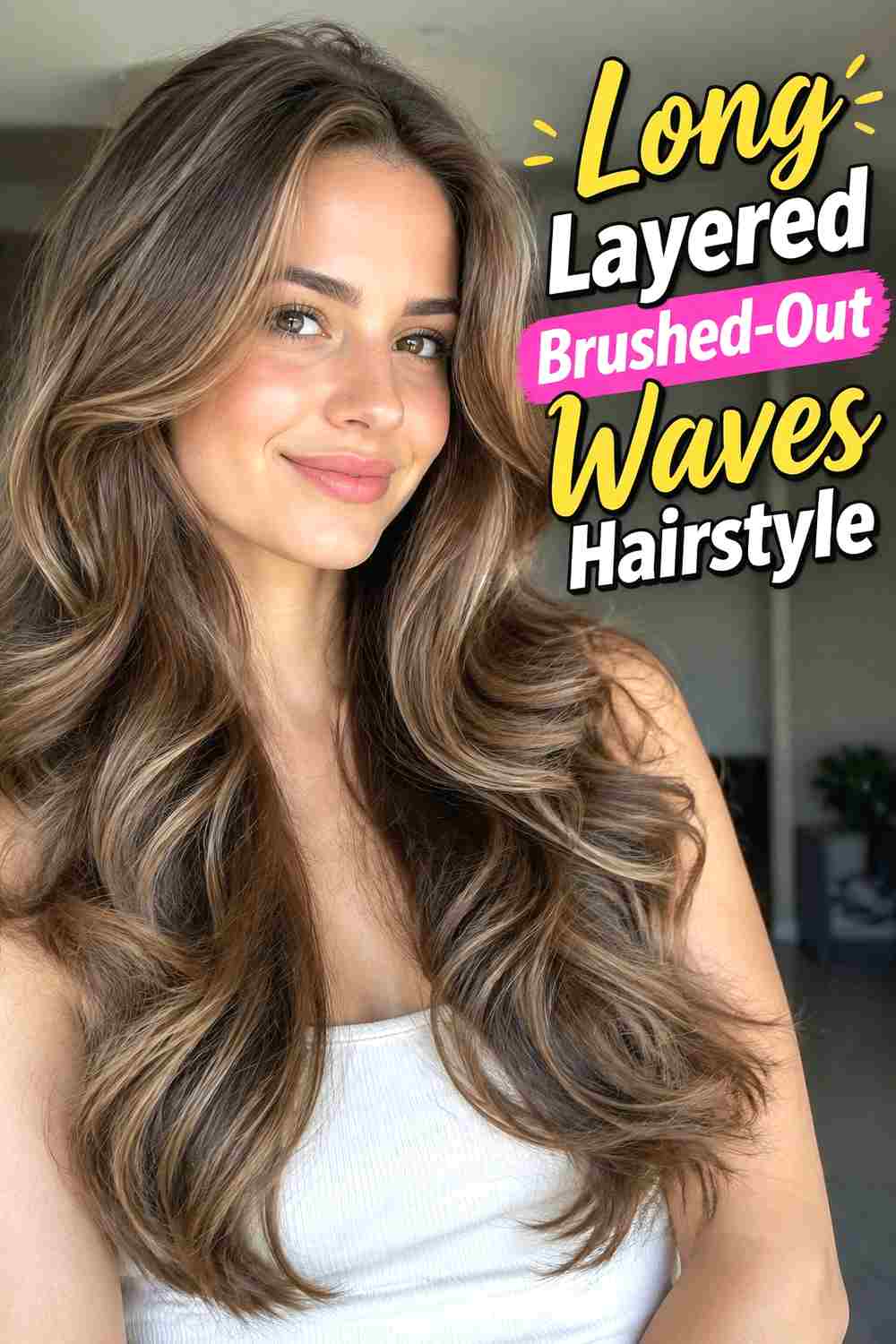
Long layers give brushed-out waves extra dimension by allowing shorter pieces to move independently around the face and through the lengths. Once curled and brushed, the layers create overlapping bends instead of one solid curtain of hair. This makes the style particularly flattering for dense or very long hair that can otherwise look heavy when curled. The top can stay smooth while volume builds gradually from the cheekbones downward, keeping the overall shape balanced. For a soft, expensive-looking finish, aim for broad curves rather than tightly defined curls. This version suits everyday polished styling as easily as it does parties and events because the layered movement keeps the result relaxed.
Hair Type & Length
Long hair with medium or high density usually shows the layered wave pattern most clearly, although fine hair can achieve a lighter version with strategic layering.
Pro Tip
Curl the shorter face-framing layers with slightly less tension so they blend smoothly into the larger waves below.
6. Voluminous Root Lift Brushed Out Waves Hairstyle
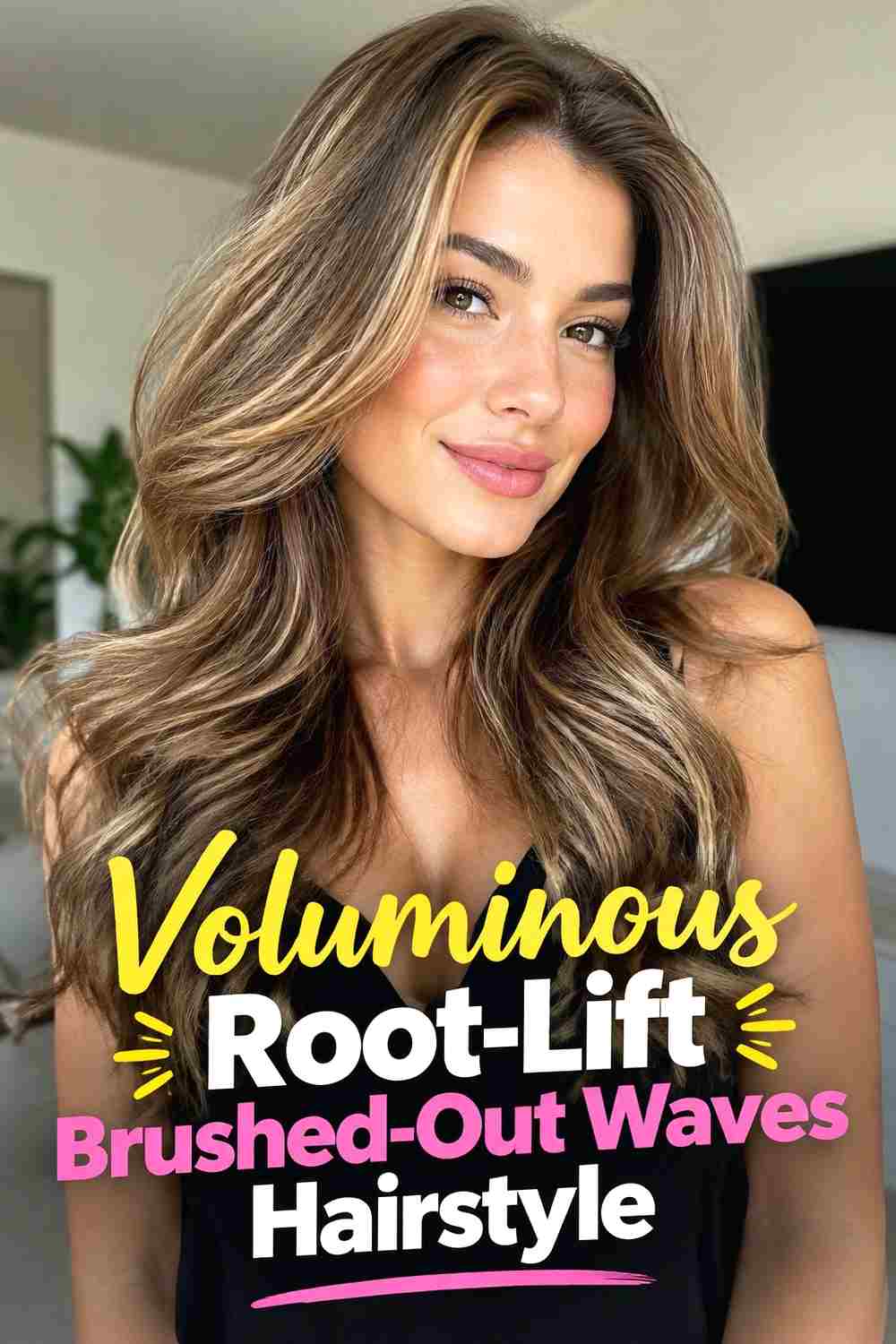
Voluminous Root-Lift Brushed-Out Waves place as much emphasis on the crown as the wave pattern itself. The roots are gently lifted before the lengths fall into large, brushed curls, creating a fuller silhouette from top to bottom. The goal is controlled body rather than extreme teasing, so the hair still looks soft and touchable. This approach can be especially useful when long hair tends to sit flat at the crown after curling. A slightly off-center or center part both work well, depending on how balanced you want the final shape to feel. Keep the biggest wave movement through the mid-lengths so the elevated roots transition smoothly instead of looking disconnected from the rest of the style.
Styling Notes
Create lift while blow-drying or with large root rollers before curling the lengths. This gives the crown structure without relying on heavy backcombing.
Best For
Choose this look when your main goal is noticeable volume, especially for special events, photos, or fuller evening styling.
7. Glossy S Curve Brushed Out Waves Hairstyle
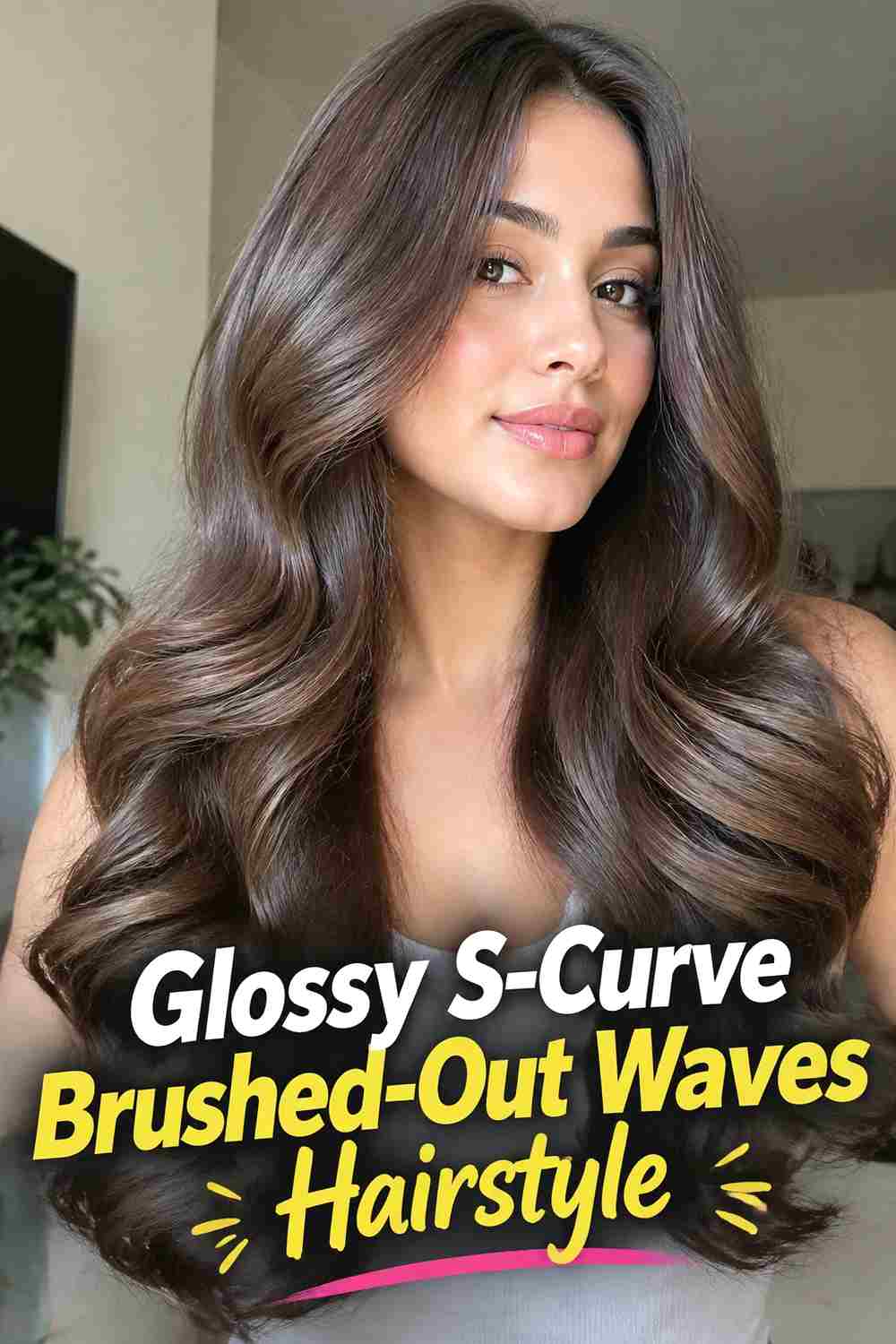
Glossy S-Curve Brushed-Out Waves are defined by smooth, repeating bends that flow down the hair in a connected pattern. The style begins with controlled curls, but careful brushing transforms them into wider S shapes rather than fluffy volume. Shine is important here because it emphasizes every curve and gives the waves a sleek, dimensional finish. The roots generally stay smooth, letting the sculpted pattern become the main feature from around cheek or jaw level downward. This version works particularly well on medium to long hair with enough density to hold a visible wave line. It is polished without needing stiff lacquered sections, making it a modern alternative to more rigid vintage finger-wave styles.
Styling Notes
After the curls cool, brush them slowly in the same direction. Lightly guide the curves with your hands until the S pattern settles naturally.
Why It Works
Consistent curl direction creates a connected wave rhythm, while brushing softens the edges enough to keep the hairstyle wearable rather than overly structured.
8. Brushed Out Waves With Curtain Bangs Hairstyle
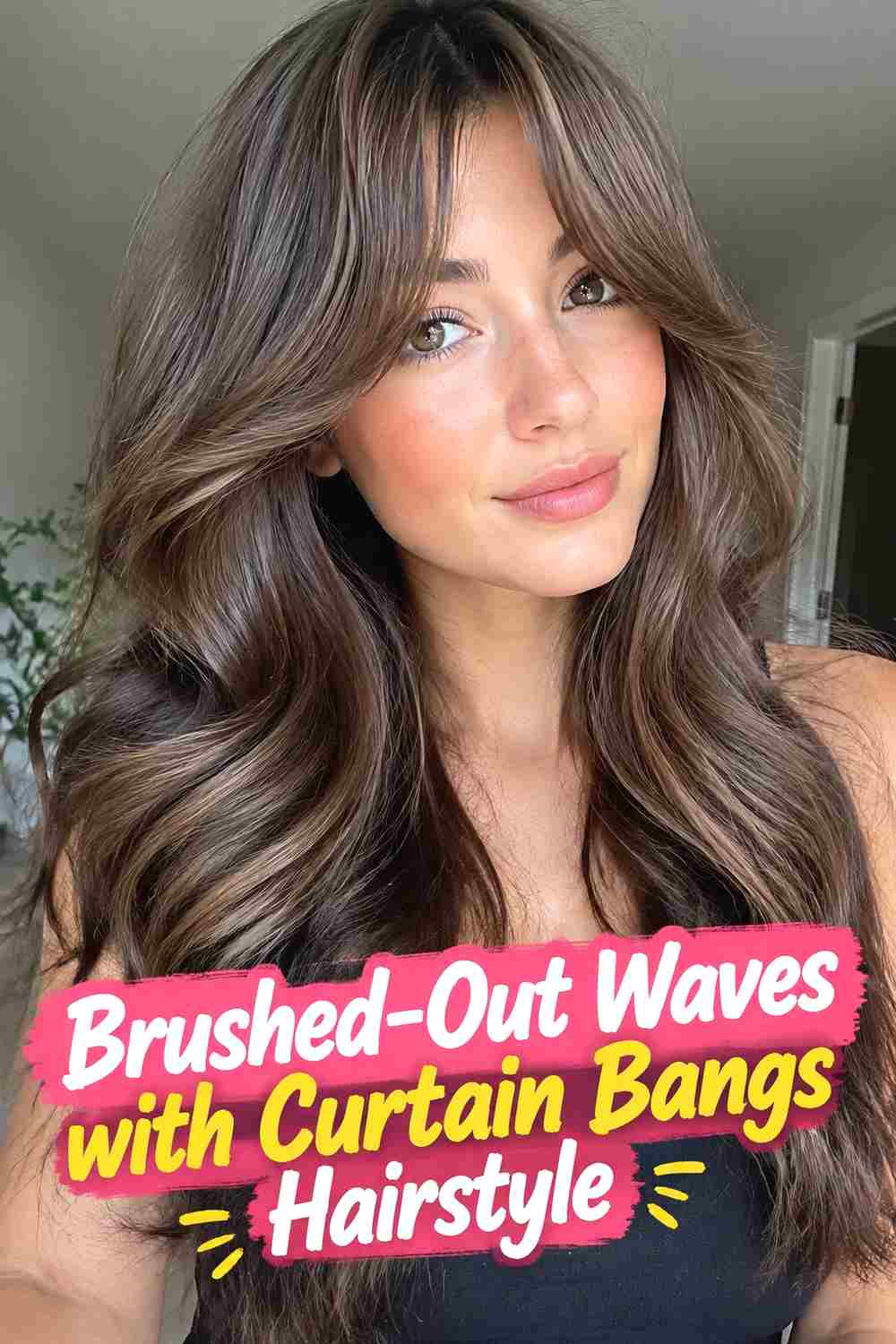
Curtain bangs add soft movement around the forehead while the rest of the hair falls into loose brushed-out waves. The bangs can be blow-dried away from the center so they curve around the cheekbones, then blended into the first wave on each side. This connection is what keeps the style cohesive instead of making the fringe look separate from the lengths. The waves themselves can stay airy and slightly imperfect, which works especially well with the relaxed character of curtain bangs. Medium to long layered hair provides plenty of movement, though the look also translates nicely to collarbone cuts. Avoid curling the fringe too tightly; a broad bend usually blends more naturally.
Styling Notes
Shape the curtain bangs first with a round brush or large roller, then curl the surrounding face-framing sections away from the face.
Best For
This option is ideal if you already wear curtain bangs and want a wave style that incorporates them instead of pinning or flattening them away.
9. Brushed Out Waves With Face Framing Layers Hairstyle
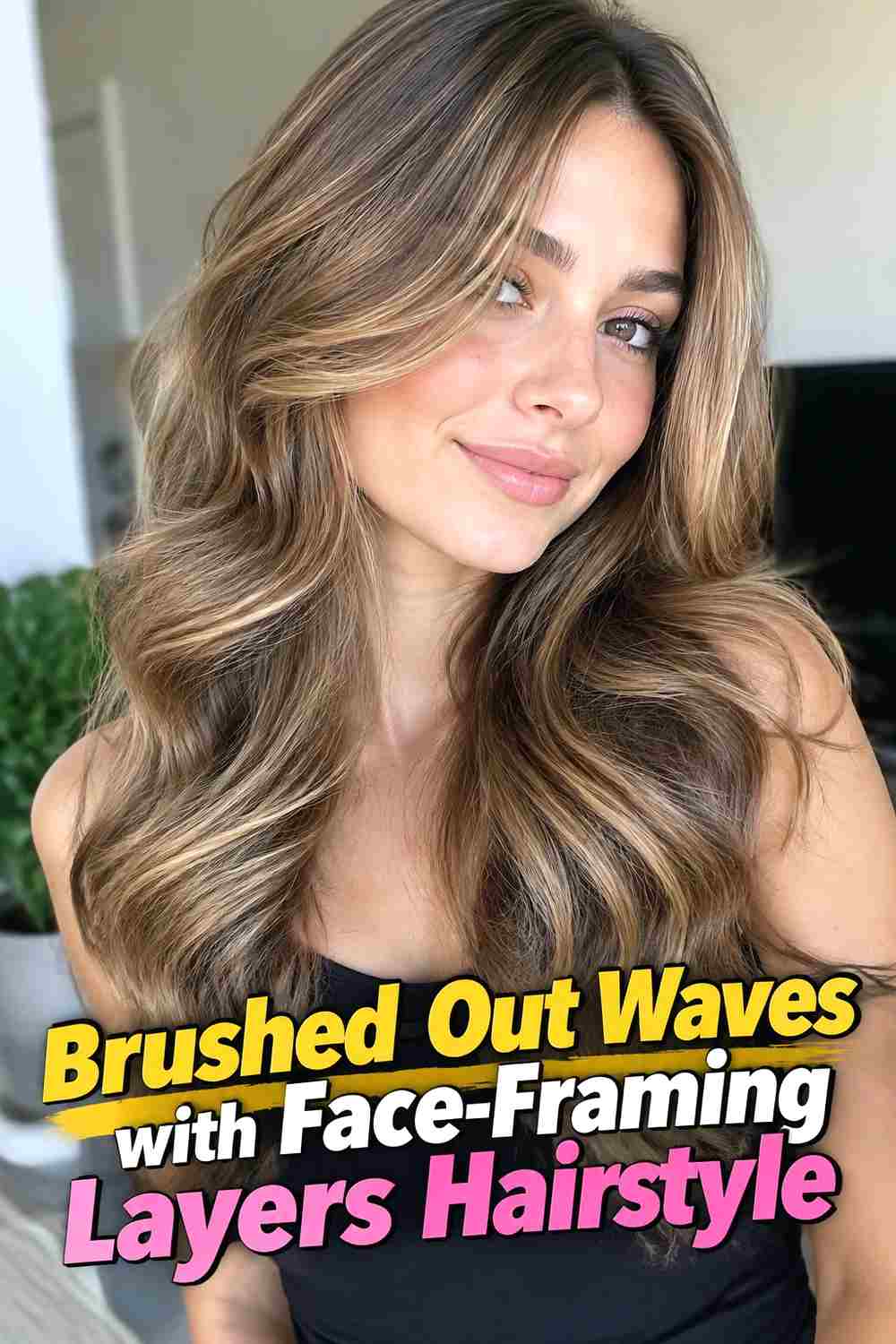
Brushed-Out Waves with Face-Framing Layers create extra softness around the cheekbones, jaw, and neckline. The shorter front pieces are curled away from the face, while the longer sections form broader waves through the body of the hair. After brushing, these different lengths overlap and create natural-looking movement rather than one uniform curl pattern. The result can feel lighter than full-length Hollywood waves, particularly on thick hair. This style also makes it easy to keep the front visible and open instead of having large curls fall forward over the face. Finish with just enough smoothing product to define the layered curves without causing the pieces to clump together.
Hair Type & Length
Medium and long layered cuts work best because they provide enough variation in length to create visible movement around the face.
Pro Tip
Brush the front layers separately from the back sections at first, then blend them together once the desired face-framing shape is established.
10. Soft Retro Brushed Out Waves Hairstyle
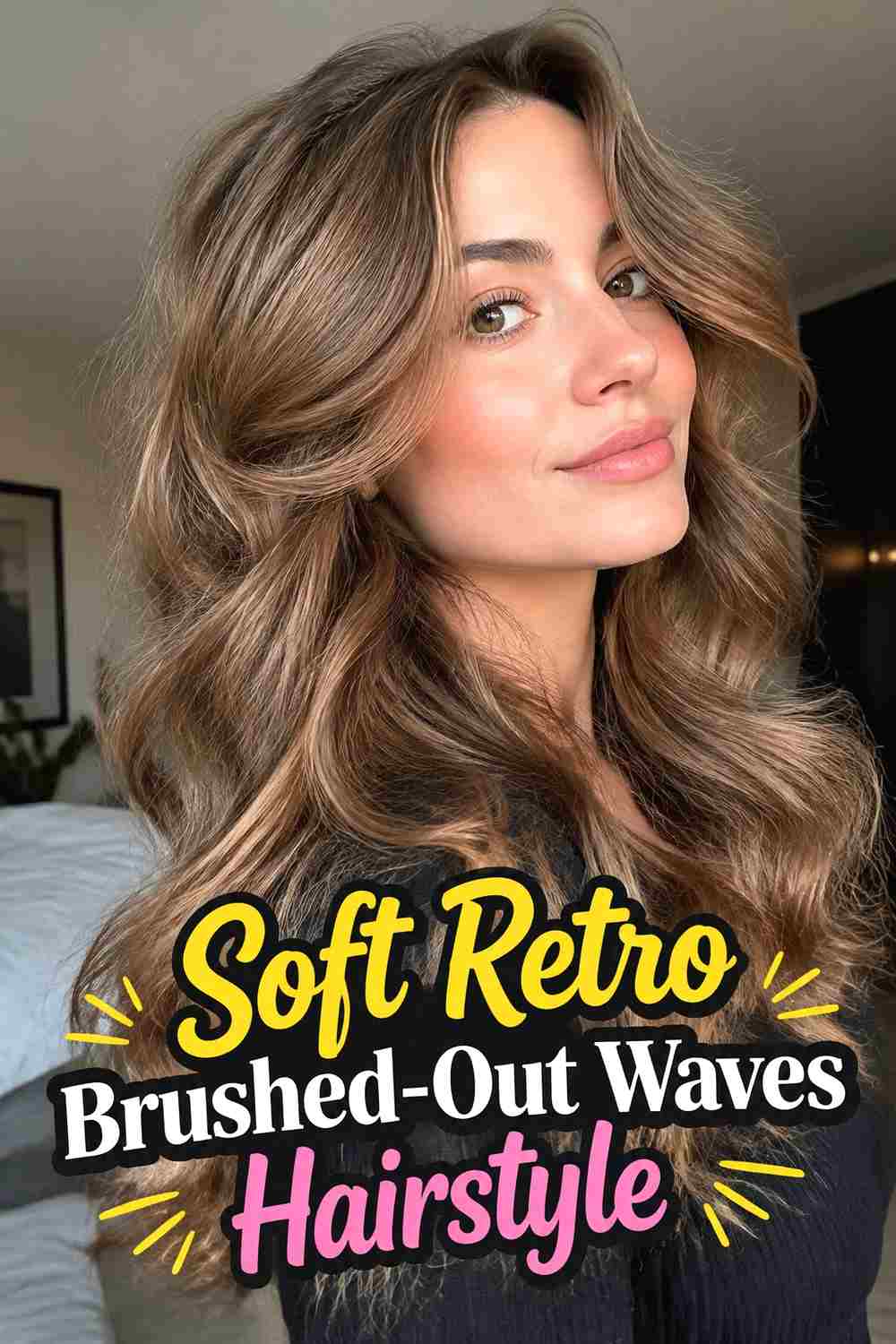
Soft Retro Brushed-Out Waves borrow their shape from vintage styling but keep the finish looser and more touchable. The waves are broad, rounded, and intentionally connected, often beginning close to the temple or cheekbone before flowing toward the ends. A side part adds classic character, while softened edges keep the result from feeling costume-like. Medium-length hair is especially effective because the wave pattern stays visible without becoming too elongated. For a modern interpretation, avoid excessive stiffness and leave a little natural separation near the ends. The style pairs beautifully with simple clothing because the hair already provides plenty of visual structure and works particularly well for dinners, celebrations, and polished photo sessions.
Why It Works
The connected wave pattern creates a recognizable retro silhouette, while a softer finish and flexible movement keep the style current.
Wear & Maintenance
Once shaped, avoid repeatedly running your fingers through the waves. Gentle surface smoothing usually preserves the pattern better.
11. Tousled Brushed Out Beach Waves Hairstyle
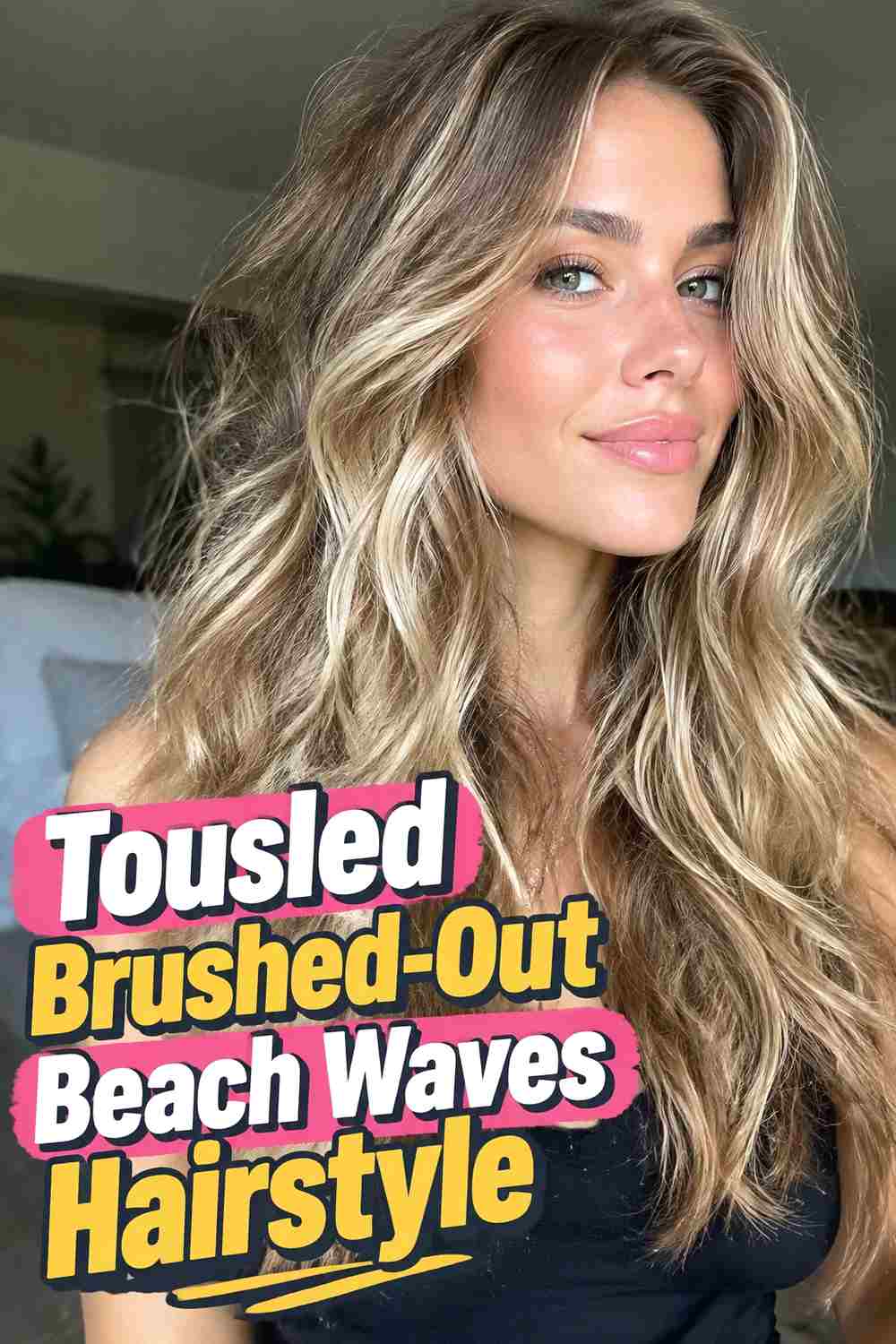
Tousled Brushed-Out Beach Waves are the most casual option in the collection, trading perfect alignment for airy bends and slightly undone texture. Curl sections in alternating directions, let them cool, and brush just enough to break up obvious spirals. The finished shape should have movement throughout rather than one synchronized wave line. A little separation at the ends makes the style feel especially relaxed, while a smooth crown keeps it from appearing messy. This variation works across medium and long lengths and adapts well to layered cuts. Instead of chasing maximum shine, aim for natural texture and soft definition so the waves retain the easy, lived-in character associated with beach-inspired styling.
Styling Notes
Alternate the curl direction through the lengths and leave the final inch or two slightly straighter for a less formal finish.
Best For
This is a practical choice for casual days, vacations, brunch, relaxed parties, or anyone who prefers brushed waves without a highly polished look.
12. Polished Brushed Out Waves With Tucked Side Hairstyle
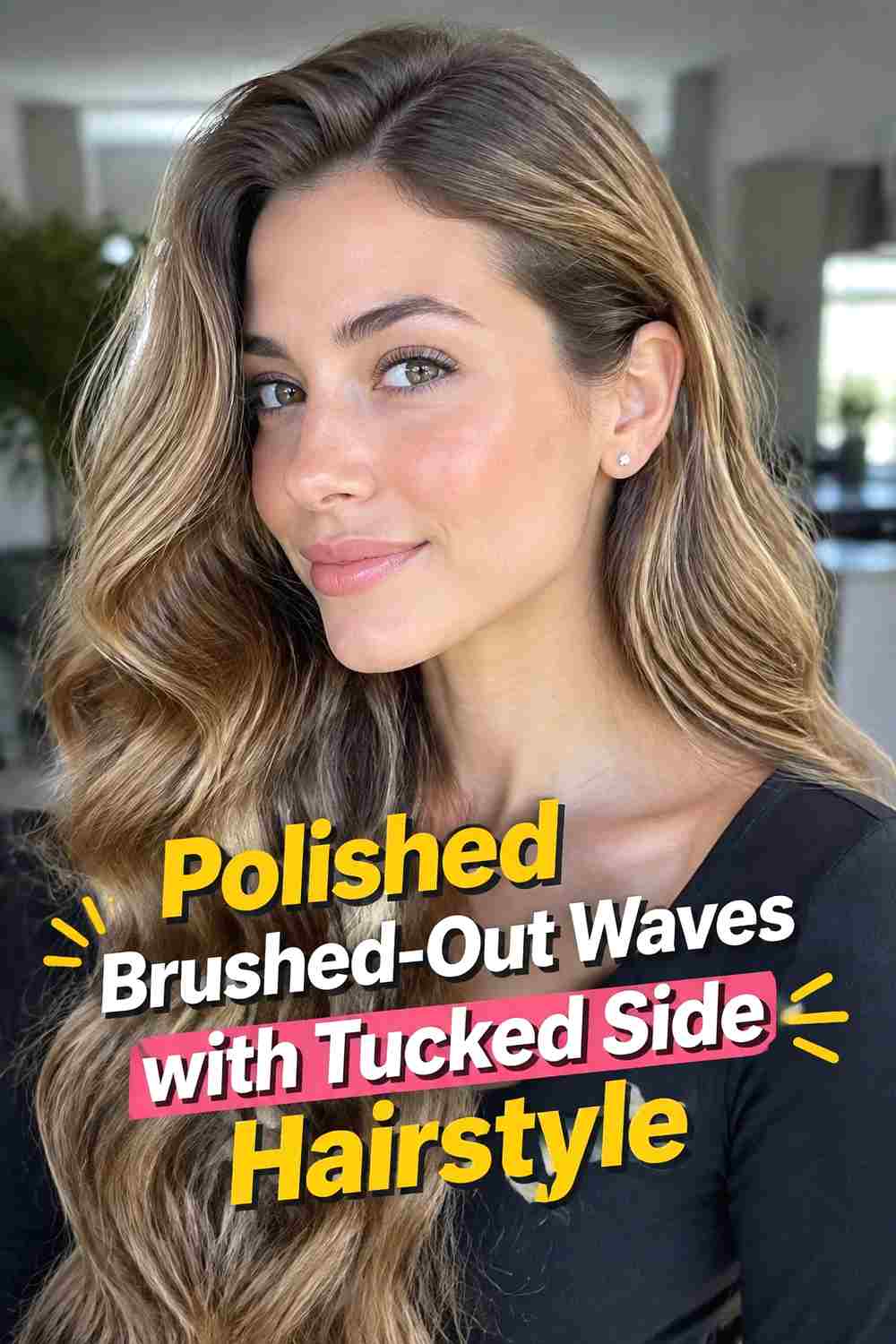
A tucked side gives brushed-out waves a sleek focal point while leaving the opposite side full and flowing. The hair is softly waved throughout, then one front section is placed behind the ear so the face and neckline remain visible. The contrast between the cleaner tucked side and the voluminous opposite side makes this style feel refined without requiring an updo. It works beautifully with deep side parts, although a softer off-center part can create a more understated version. For reliable hold, secure the tucked section discreetly if needed rather than coating it with excessive product. A smooth finish around the ear and temple helps the loose waves look even more polished by comparison.
Styling Notes
Complete and brush the waves before creating the tuck. This prevents the front section from becoming overly flat while you are shaping the rest of the hair.
Wear & Maintenance
A hidden bobby pin behind the ear can help the tucked side stay secure while allowing the surrounding hair to remain soft and flexible.
How to Choose the Right Look
Start with your hair length. Shoulder-length hair tends to produce bouncier, rounder waves, while longer hair gives you more room for flowing Hollywood shapes, layered movement, and extended S curves.
Next, think about texture and density. Fine hair may benefit from airy waves, root lift, and lighter finishing products that preserve volume. Dense or layered hair often works beautifully with long brushed-out waves because the extra movement helps break up visual weight.
Your preferred styling time also matters. Polished Hollywood, retro, and glossy S-curve styles usually require more careful curl direction and brushing. Tousled beach waves are more forgiving because the sections do not need to align perfectly.
For hold and comfort, consider how long you need the hairstyle to last. A flexible spray can support movement for everyday wear, while special-event looks may need slightly stronger hold or discreet pins. If you dislike hair falling around your face, the tucked-side or face-framing variations can feel easier to wear.
Finally, choose your preferred finish. Go glossy and connected for a glamorous effect, soft and airy for romantic movement, or intentionally tousled for a relaxed look. The most successful option is the one that works with your haircut and realistic styling routine rather than fighting them.
Final Thoughts
Brushed-out waves can shift from vintage glamour to relaxed everyday texture with surprisingly small changes in parting, curl direction, layering, and finish. For polished occasions, try Hollywood, retro, or glossy S-curve waves. For softer everyday movement, airy center-part waves, layered styles, or the tousled beach version may feel more natural.
Whichever look you choose, allow the curls to cool before brushing and adjust the amount of brushing gradually. That gives you far more control over whether the finished waves stay defined, become airy, or develop into a smooth connected pattern.
FAQs
1. What are brushed-out waves?
Brushed-out waves are created by curling the hair first and then gently brushing through the cooled curls. This blends individual curls into softer, wider bends and waves.
2. Should I brush curls immediately after curling?
It is usually better to let the curls cool first. Cooling helps the curl pattern set, giving you more control when you brush it into the desired wave shape.
3. What brush is best for brushed-out waves?
A paddle brush, soft bristle brush, or mixed-bristle brush can work well. The best choice depends on whether you want smooth connected waves or a lighter, fluffier finish.
4. Can brushed-out waves work on shoulder-length hair?
Yes. Shoulder-length hair can create especially bouncy brushed-out waves because the shorter length places less weight on the curled sections.
5. How can I stop brushed-out waves from becoming too fluffy?
Start with controlled curls, brush gradually, and use a small amount of lightweight smoothing product on the surface and ends. Avoid repeatedly brushing once the wave shape looks right.
Save your favorite brushed-out wave looks for your next styling day, and share this collection with anyone searching for soft, polished hair inspiration.