14 Earmuff Hairstyles for Winter
Cozy earmuffs can become part of your winter hairstyle, pairing beautifully with soft waves, polished buns, braids, curls, and easy layered looks.
Winter hair has an extra challenge: your hairstyle needs to look good while fitting comfortably under or around warm accessories. Earmuffs can flatten volume near the crown, disturb curls around the ears, or compete with bulky updos, so placement and silhouette matter just as much as the finished texture.
The most wearable earmuff hairstyles keep bulk away from the band and ear pieces while preserving movement through the lengths. You can choose loose hair for a relaxed winter look, a low ponytail or braid for better control, or a compact bun when you want everything contained. Hair texture, earmuff size, and how long you will wear them should all guide your choice.
Quick List
- Loose Waves With Plush Earmuffs Hairstyle
- Sleek Low Ponytail Earmuff Hairstyle
- Soft Curly Bob Earmuff Hairstyle
- Braided Low Ponytail Earmuff Hairstyle
- Straight Center Part Earmuff Hairstyle
- Messy Low Bun Earmuff Hairstyle
- Long Layered Earmuff Hairstyle
- Side Braid Earmuff Hairstyle
- Textured Lob Earmuff Hairstyle
- Half Up Winter Earmuff Hairstyle
- Natural Curls Earmuff Hairstyle
- Low Twin Braids Earmuff Hairstyle
- Face Framing Layers Earmuff Hairstyle
- Polished Low Bun Earmuff Hairstyle
1. Loose Waves With Plush Earmuffs Hairstyle
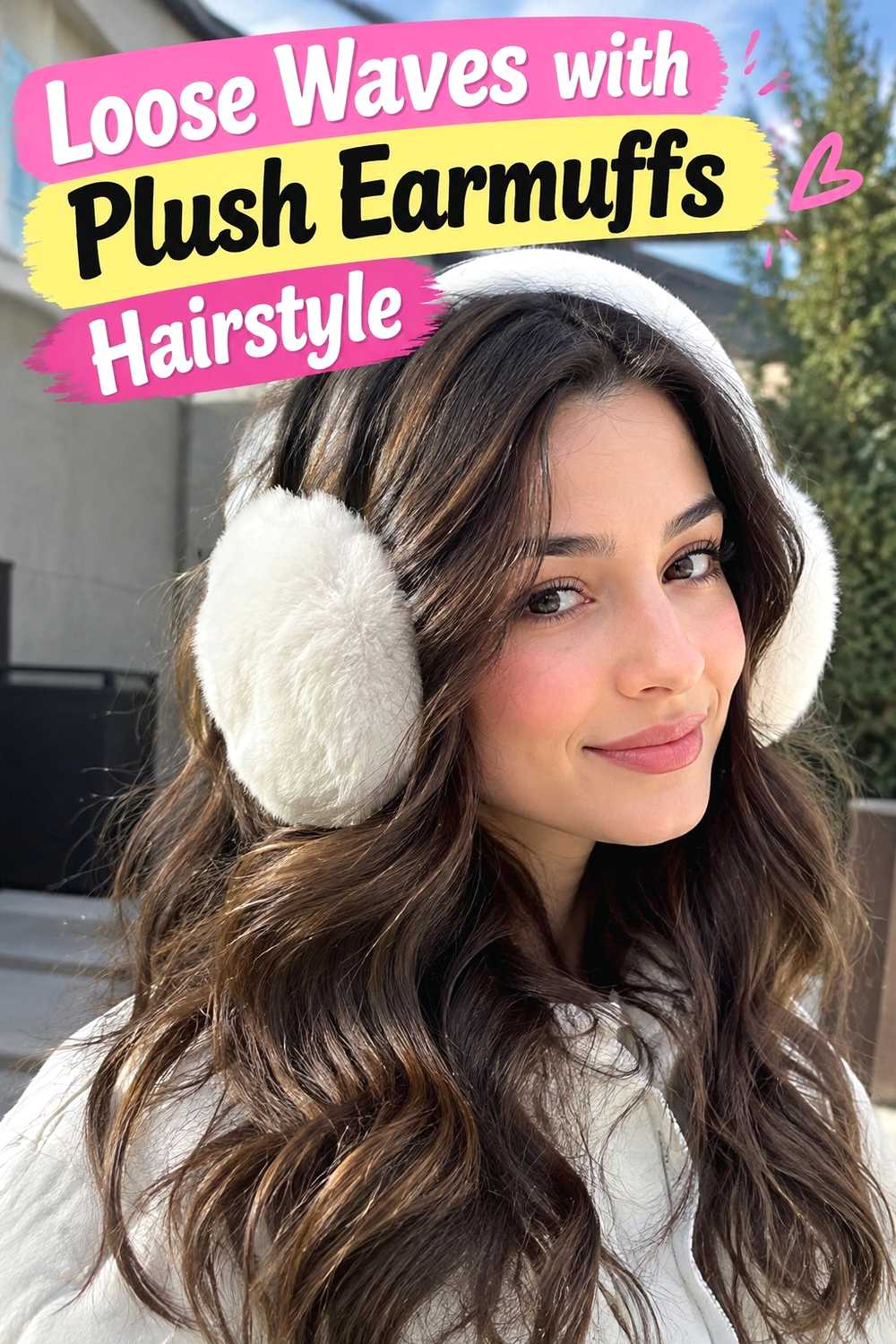
Loose waves are one of the easiest ways to make earmuffs look intentional rather than purely practical. Keep the crown relatively smooth so the headband can sit comfortably, then concentrate movement from around cheek or jaw level through the ends. This placement helps preserve the waves even if the earmuffs press lightly against the sides of the hair. A soft center or slightly off-center part works particularly well because it gives the accessory a balanced frame. Let a few natural strands fall in front of the earmuffs instead of forcing every section behind them. Medium and long hair provide the clearest cascading shape, while subtle dimension in the color can make each bend more visible in winter daylight.
Styling Notes
Create the waves before putting on the earmuffs, then allow them to cool fully. Avoid building too much volume exactly where the earmuff band will rest.
Best For
This style is ideal for winter outings, casual dates, holiday markets, outdoor photos, and everyday cold-weather outfits.
2. Sleek Low Ponytail Earmuff Hairstyle
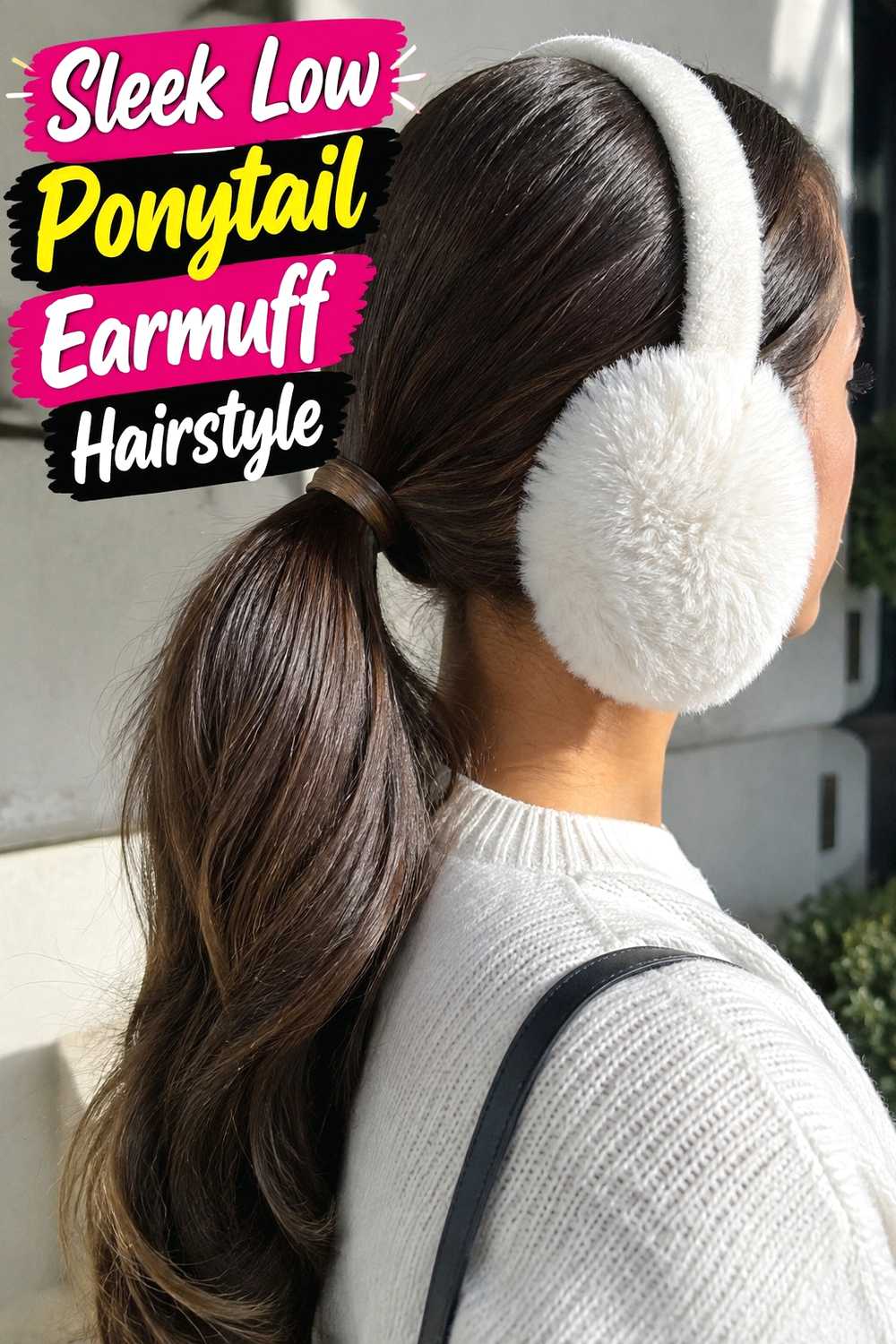
A sleek low ponytail keeps hair controlled while leaving the top and sides flat enough for earmuffs to sit securely. Use a center part or clean side part, smooth the hair toward the nape, and fasten the ponytail beneath the level of the ear pieces. The low placement is important because a higher tie can interfere with the earmuff band or create pressure at the back of the head. The ponytail itself can stay straight for a minimalist finish or have a slight bend at the ends for softness. This option works especially well with structured coats and scarves because the clean hair shape prevents too many bulky elements from competing around the neck and shoulders.
Wear & Maintenance
Use a secure but comfortable elastic and keep the base low enough that it does not push against the earmuff structure. A small amount of smoothing product can control flyaways.
Why It Works
The streamlined crown accommodates the accessory naturally, while the ponytail keeps longer hair from tangling against coats and scarves.
3. Soft Curly Bob Earmuff Hairstyle
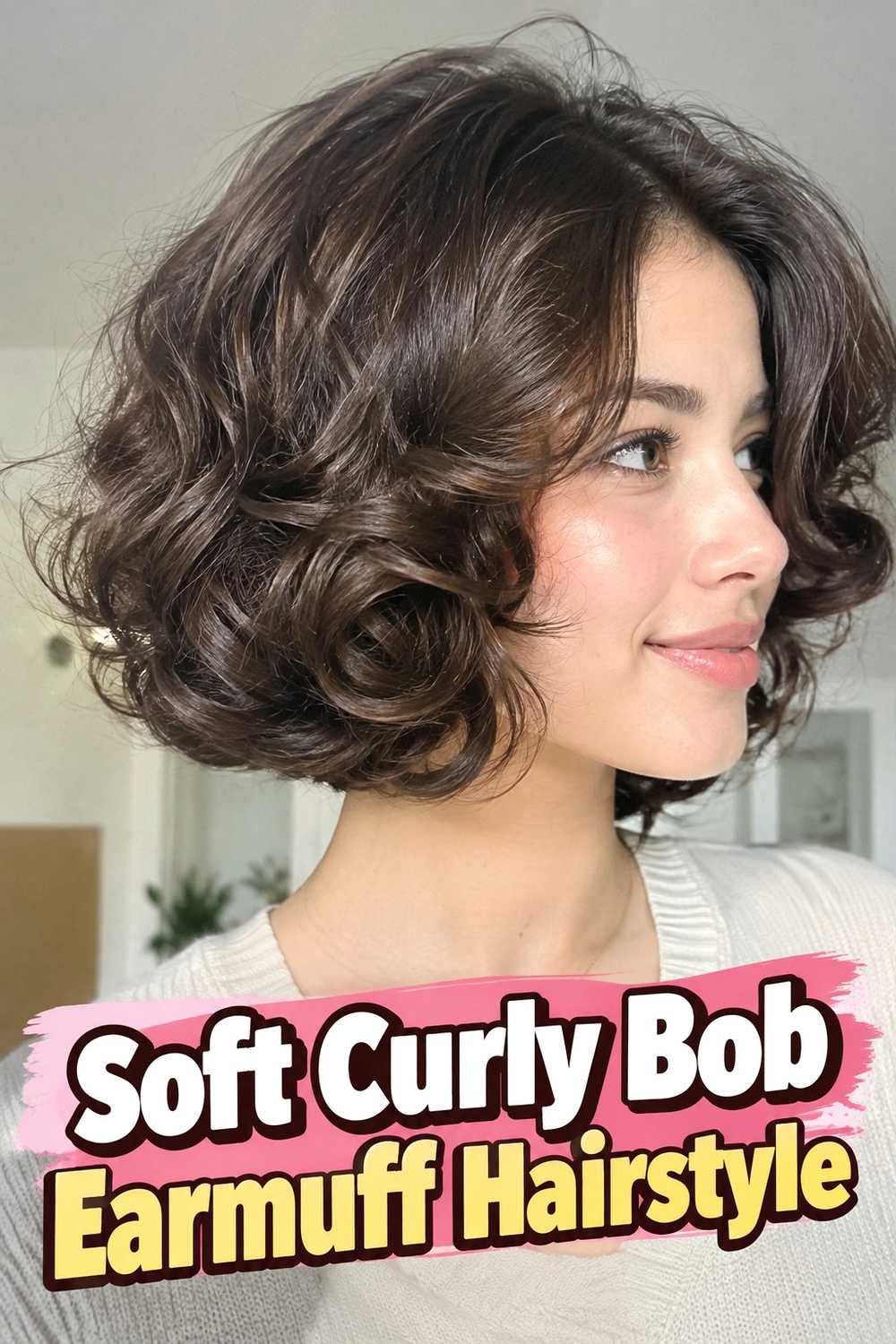
A curly bob looks charming with earmuffs because the shorter silhouette keeps the texture close to the face while the accessory adds a cozy winter frame. Rather than flattening all the curls beneath the ear pieces, arrange a few sections forward and allow others to sit naturally around the sides. The goal is to preserve curl variation instead of creating two compressed patches. A bob that falls between the chin and shoulders works especially well because there is enough length for movement without much hair getting trapped inside a coat collar. Keep the roots softly defined rather than heavily lifted so the earmuff band has a comfortable surface to rest on. Smaller earmuffs generally preserve the bob’s proportions best.
Hair Type & Length
This style suits naturally curly, coily, or curled short-to-medium hair. Dense textures may need slightly roomier earmuffs to avoid excessive compression.
Pro Tip
After removing the earmuffs, gently separate compressed curls with your fingertips rather than brushing them, which can disturb the curl pattern.
4. Braided Low Ponytail Earmuff Hairstyle
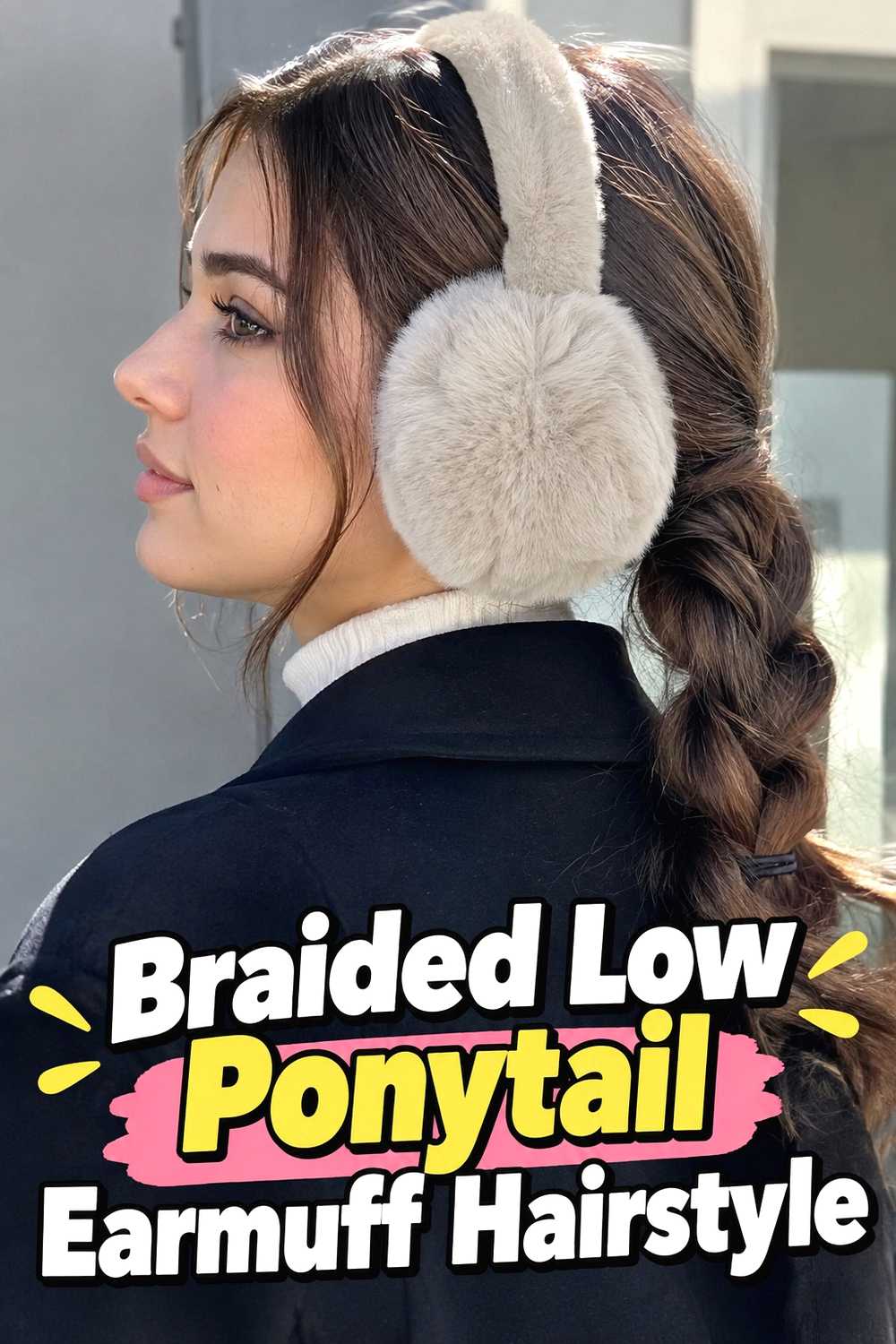
A braided low ponytail combines the practicality of a secured winter style with enough texture to remain visually interesting. Gather the hair close to the nape, fasten it with a small elastic, then braid the length using a classic three-strand or loose fishtail pattern. Keeping the base low allows the earmuff band and ear pieces to sit without bumping into the hairstyle. The braid also limits tangling when your hair rubs against knit scarves, wool coats, or high collars. You can leave the crown smooth for a clean finish or loosen a few short pieces around the hairline. For a softer appearance, gently widen the braid after securing the end without pulling it so loose that winter wind quickly disrupts it.
Styling Notes
Build the ponytail before braiding so the structure stays secure. If your hair has many layers, a few discreet pins can keep shorter sections from escaping near the nape.
Best For
This is a practical choice for long winter walks, commuting, travel days, outdoor events, and windy weather.
5. Straight Center Part Earmuff Hairstyle
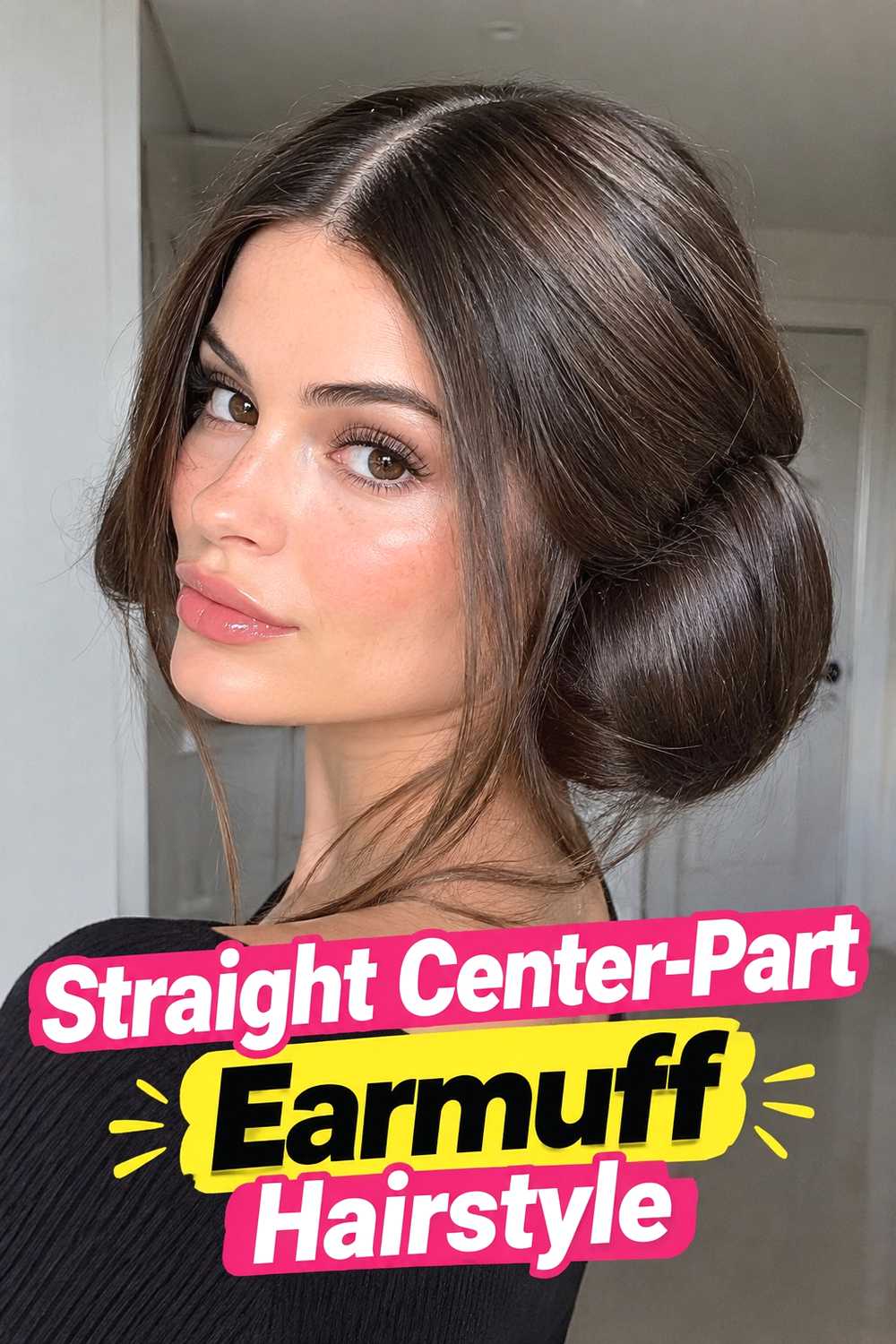
Straight hair with a clean center part creates a simple, polished frame for winter earmuffs. Keep the roots smooth and allow the lengths to fall naturally on either side of the shoulders rather than tucking everything behind the ear pieces. That small detail helps the hairstyle maintain movement and prevents the earmuffs from looking disconnected from the hair. A soft, realistic straight finish usually works better than an extremely flat one because a little natural body keeps the style from appearing limp after the accessory is removed. This look suits medium and long hair especially well and pairs easily with oversized coats, scarves, and minimal winter outfits. It also requires very little adjustment throughout the day.
Hair Type & Length
Naturally straight or gently wavy hair is easiest to prepare for this look, although other textures can be smoothed. Medium-to-long lengths create the most balanced silhouette.
Wear & Maintenance
Keep heavy oils away from the roots, as pressure from the earmuff band can make an overly coated crown appear flatter than intended.
6. Messy Low Bun Earmuff Hairstyle
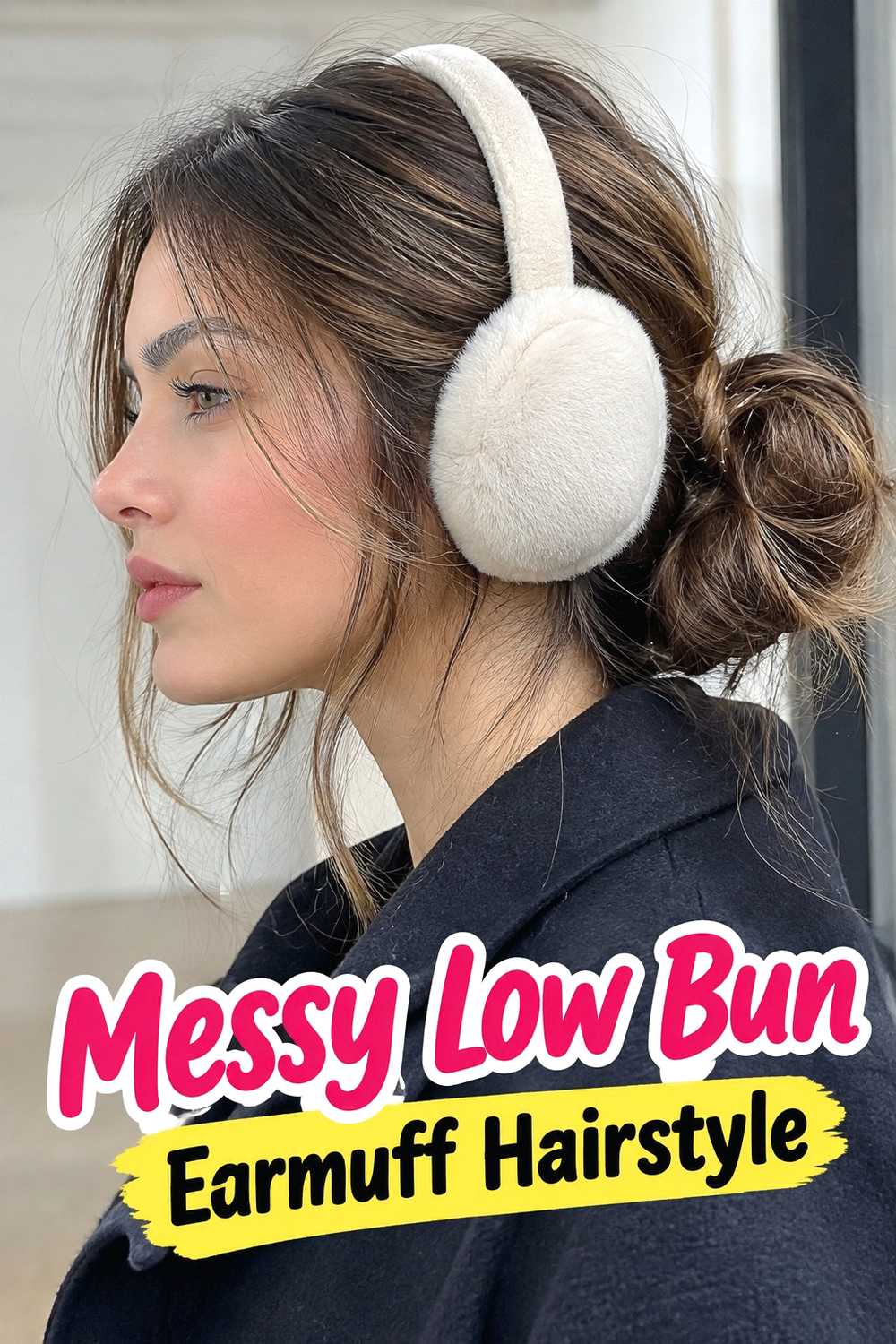
A messy low bun keeps most of your hair out of the way while leaving plenty of room for earmuffs above it. Gather the hair loosely at the nape, twist or wrap it into a compact bun, and secure it with pins rather than placing it too high on the back of the head. Softness around the crown and a few face-framing strands give the style a relaxed winter feel, while the low placement prevents the bun from colliding with the earmuff band. This is particularly useful for second-day hair or lengths that become tangled easily inside coats. The finish does not need to be perfectly symmetrical; a slightly undone shape actually complements plush and knitted winter accessories beautifully.
Styling Notes
Start with hair that has a little texture or grip. Keep the bun compact rather than wide so it does not press awkwardly against scarf collars.
Best For
Wear it for casual winter errands, coffee dates, travel, outdoor walks, or days when you want quick styling with reliable control.
7. Long Layered Earmuff Hairstyle
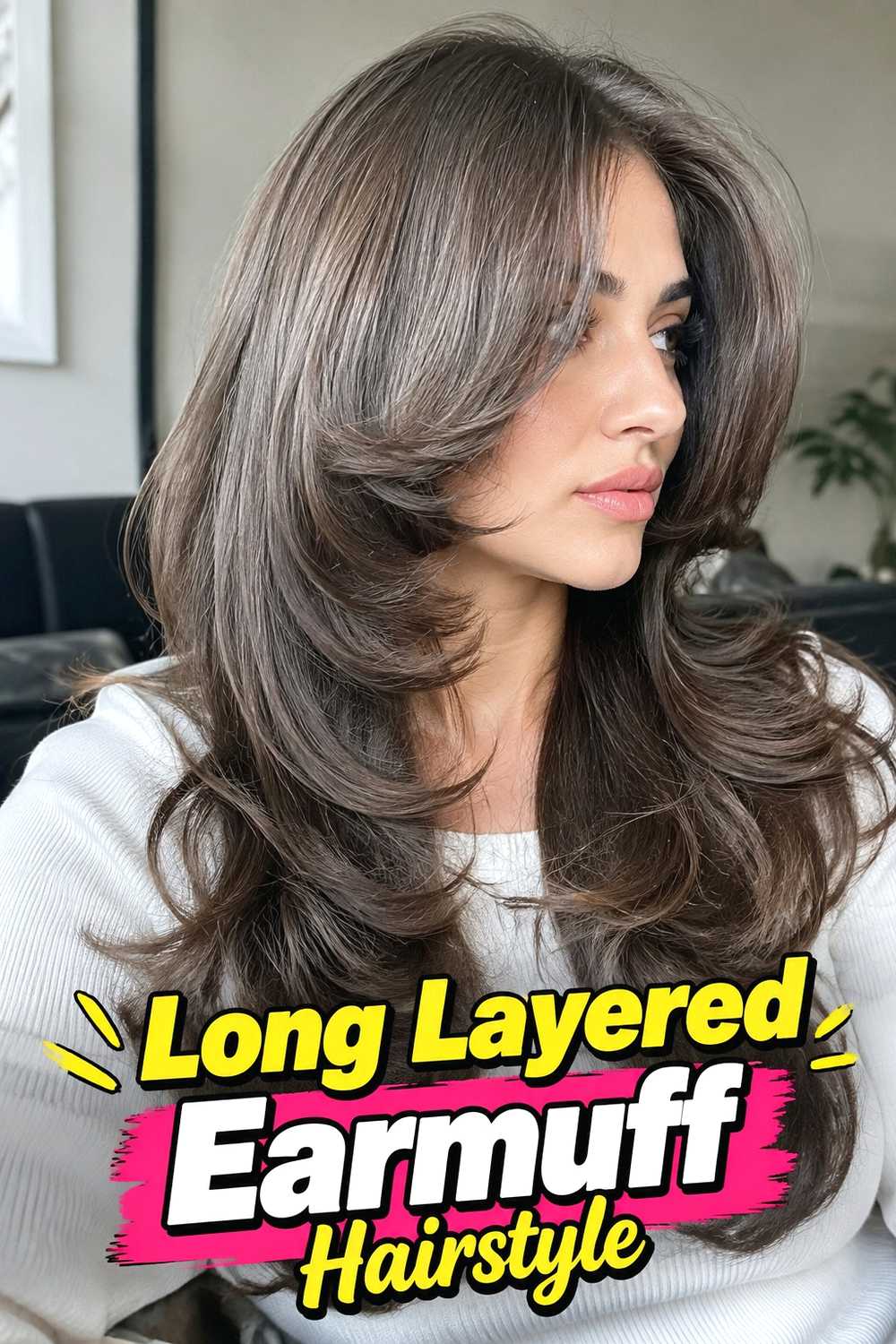
Long layers can frame earmuffs beautifully because different lengths create movement around the face and shoulders without requiring an elaborate style. Keep shorter front layers free to fall around the ear pieces, while the longer sections remain behind or over the shoulders depending on your coat and scarf. A subtle bend through the mid-lengths can highlight the layered shape, but the hairstyle also works with naturally straight or gently wavy texture. Avoid creating excessive crown lift where the headband rests, since that volume will usually collapse once the earmuffs are in place. Instead, concentrate body through the lower half of the hair. This approach makes the hairstyle look intentional both while the earmuffs are worn and after they are removed indoors.
Why It Works
Layers prevent long hair from appearing like one heavy block around bulky winter accessories. They also provide natural movement near the cheeks and collarbone.
Pro Tip
Style the front layers slightly away from the face before adding earmuffs so they can curve around the accessory rather than being trapped beneath it.
8. Side Braid Earmuff Hairstyle
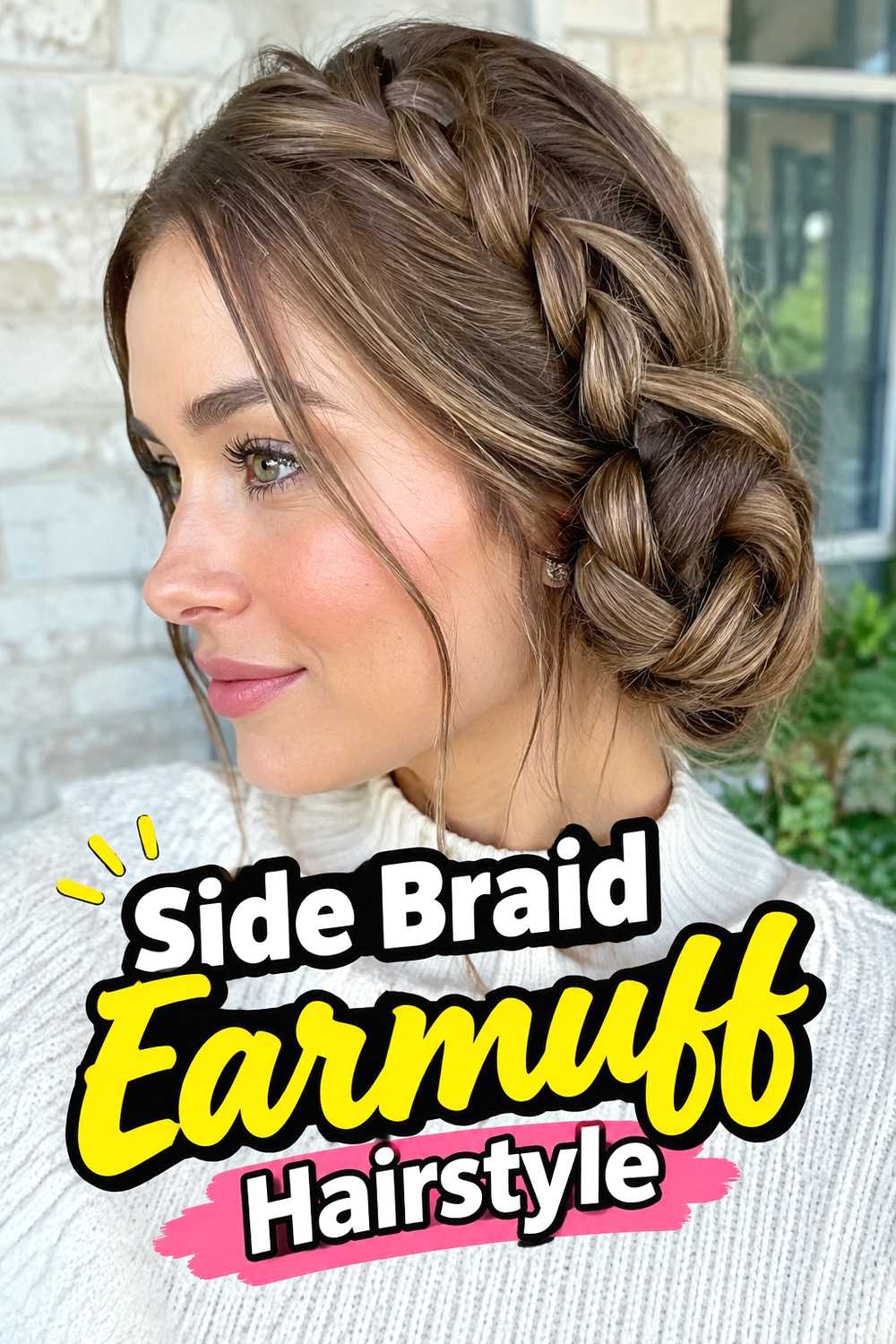
A side braid is a dependable winter option because it keeps most of the hair gathered while adding texture that remains visible below scarves and coat collars. Bring the hair over one shoulder and begin the braid low enough that the earmuff on that side can still sit comfortably. A three-strand braid gives a classic finish, while a fishtail creates finer detail. Keep the braid slightly relaxed so the look feels soft rather than severe, but secure the end firmly for windy conditions. A few shorter strands can be left around the face as long as they do not sit directly between the ear and earmuff padding. This hairstyle works especially well for medium-to-long hair that tends to tangle during cold-weather outings.
Wear & Maintenance
Place the braid on the side opposite a bulky scarf knot or crossbody strap if possible. This reduces friction and helps preserve the shape.
Best For
Choose it for outdoor festivals, winter sightseeing, commuting, casual gatherings, or cold days when you want long hair contained without a bun.
9. Textured Lob Earmuff Hairstyle
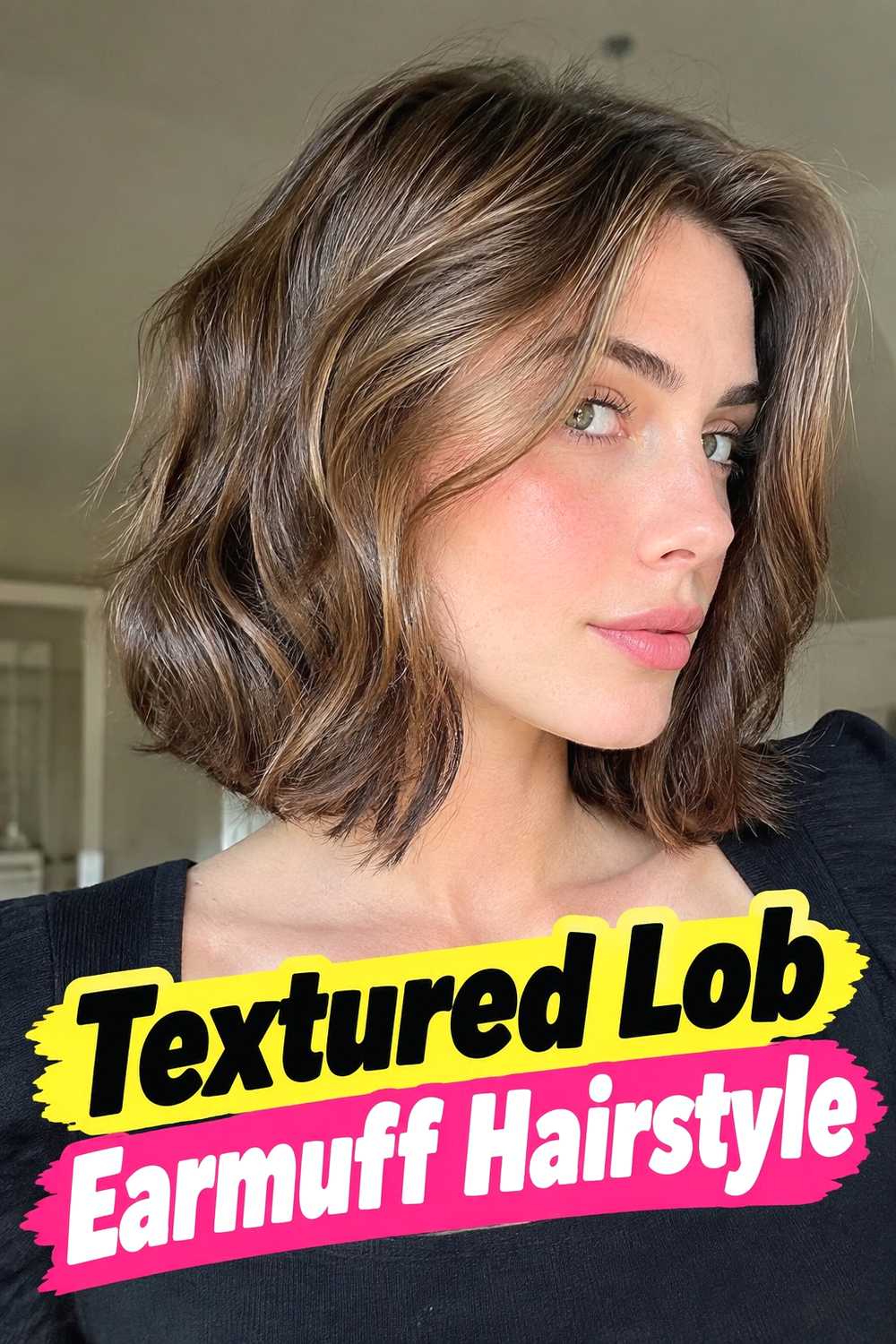
A textured lob has enough length to move naturally around earmuffs without creating excessive bulk beneath the accessory. Soft bends from mid-length to ends give the haircut dimension, while a relatively smooth crown keeps the headband comfortable. Let the front sections fall in front of the ear pieces for a relaxed look, or sweep one side slightly back if you prefer a cleaner silhouette. Because a lob usually sits around the shoulders, it is less likely than longer hair to become trapped under thick scarves or coat collars. The key is maintaining believable, irregular texture rather than perfectly identical waves. That variation helps the hairstyle keep its shape even if the earmuffs compress a small section near each ear.
Styling Notes
Use alternating bends and leave the ends slightly straighter for a modern finish. Keep the strongest texture below ear level so the accessory does not flatten it.
Best For
This style suits everyday winter outfits, city walks, casual parties, and anyone who wants a polished but low-maintenance earmuff look.
10. Half Up Winter Earmuff Hairstyle
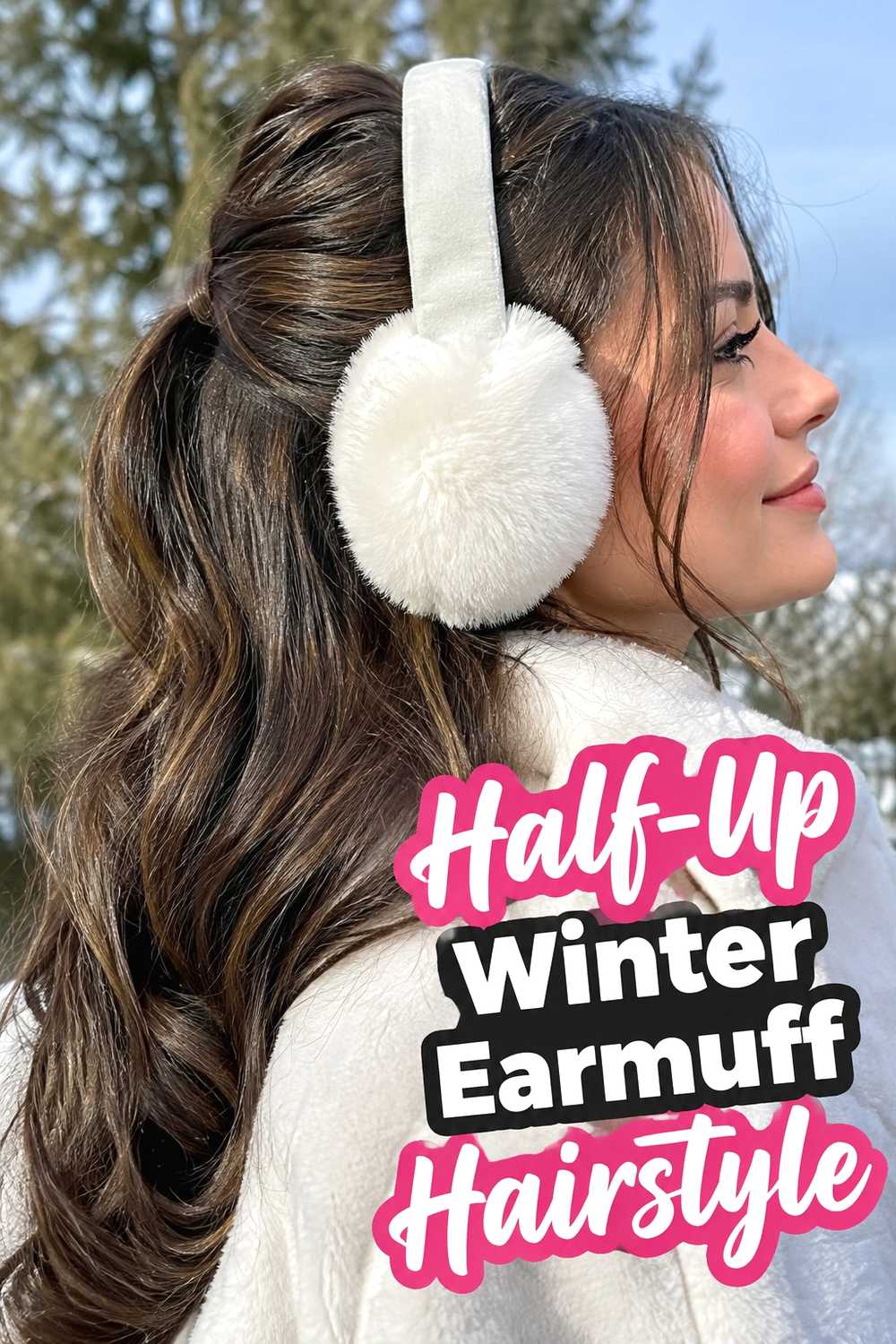
A half-up style can work with earmuffs when the gathered section sits low enough to avoid the headband. Take small sections from the temples or just above the ears, bring them toward the back, and secure them near the upper nape rather than directly at the crown. The remaining hair can stay straight, wavy, or softly curled, providing movement beneath the accessory. This approach keeps front pieces from constantly slipping into the face while preserving the appearance of wearing most of the hair down. A tiny elastic, subtle clip, or compact barrette works better than a large accessory that may compete with the earmuffs. Medium and long hair give the easiest proportions, although shoulder-length cuts can create a smaller version.
Styling Notes
Put the earmuffs on briefly before choosing the exact tie point. This makes it easier to identify where the band ends and where the half-up section can sit comfortably.
Why It Works
The style controls the front hair without adding bulky structure at the crown, making it a practical compromise between loose hair and a full updo.
11. Natural Curls Earmuff Hairstyle
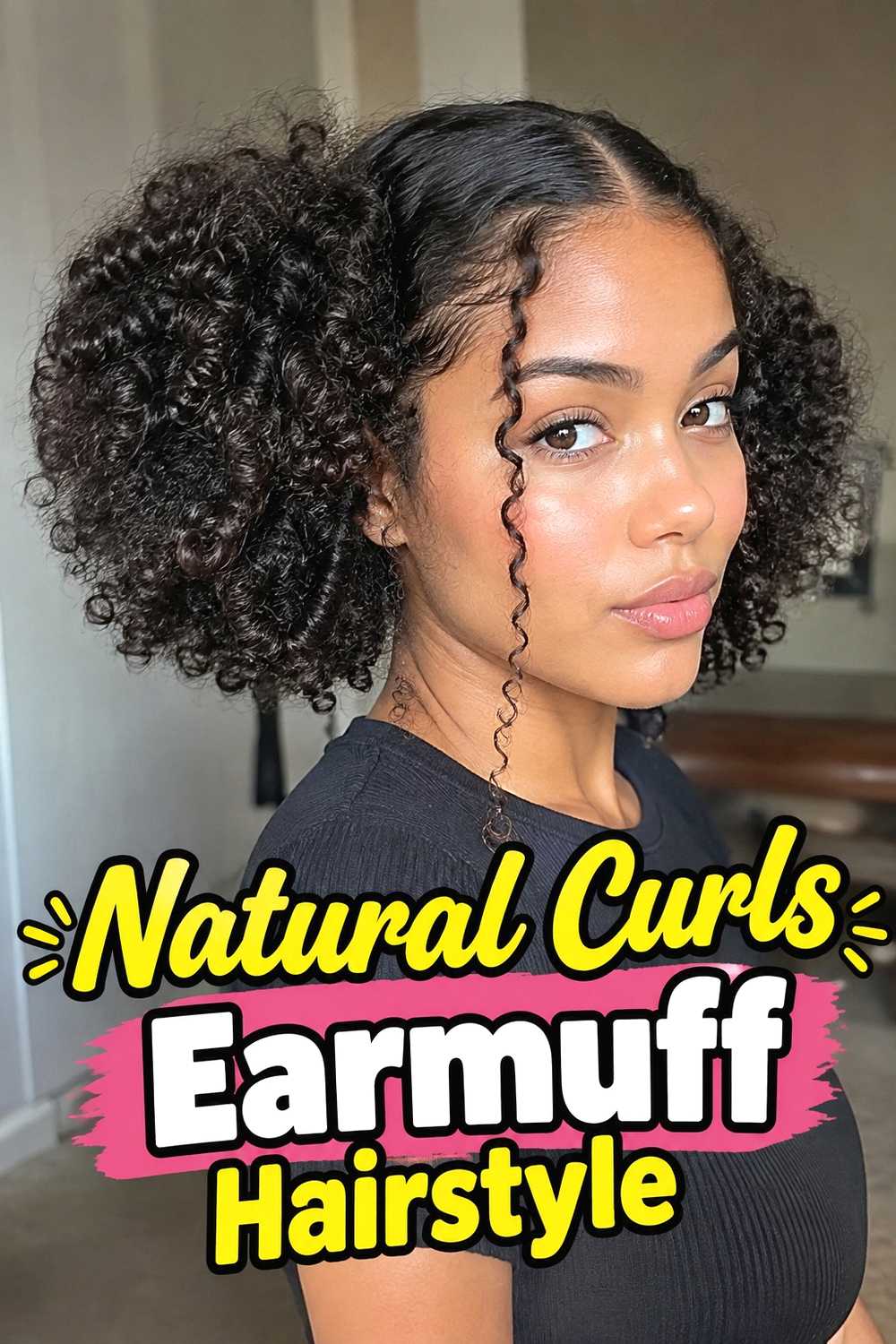
Natural curls can look beautiful with earmuffs when the goal is to work with the volume rather than compress it completely. Choose an earmuff band that has enough room for your density, then arrange curls around the ear pieces instead of forcing large sections underneath them. Keeping a little volume at the top is fine as long as the band does not require excessive pressure to stay in place. Defined curls around the face can soften the accessory and create a balanced winter silhouette, while the rest of the texture remains free through the sides and back. The exact appearance will vary with curl pattern and length, which is part of the appeal. Focus on preserving individual curl definition and a natural overall shape.
Hair Type & Length
This look works across curly and coily textures, especially when the earmuffs accommodate the hair’s natural density. Short, medium, and long curls can all be adapted.
Pro Tip
After taking earmuffs off, lightly lift the roots with your fingertips and reshape only the compressed areas instead of disturbing the entire hairstyle.
12. Low Twin Braids Earmuff Hairstyle
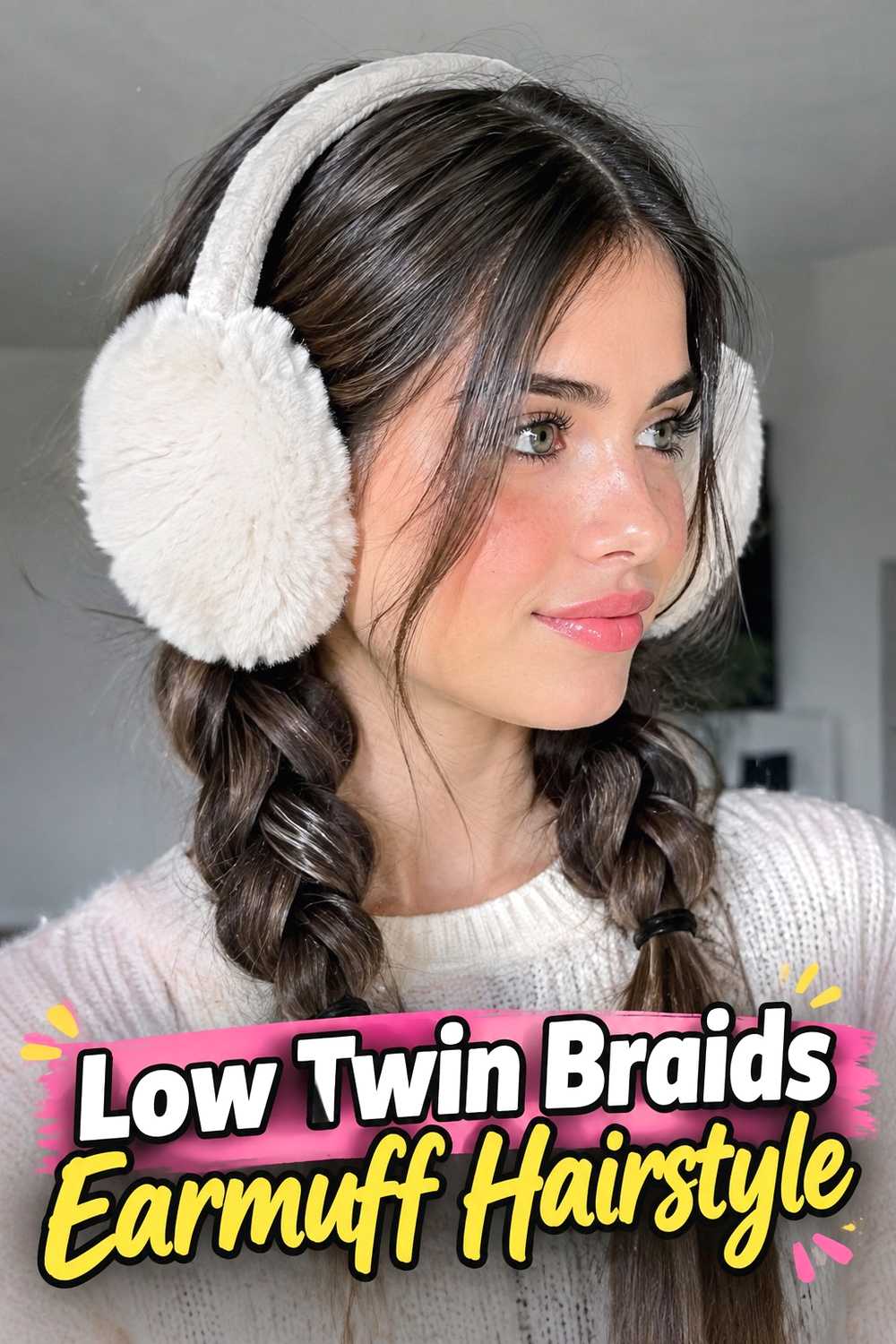
Low twin braids bring a playful winter feel while keeping hair extremely manageable beneath earmuffs. Divide the hair into two even sections and start each braid below the ears, leaving the upper sides smooth enough for the earmuff padding. Classic three-strand braids are simple and secure, while looser braids create a softer finish. The low placement is especially useful with longer hair because both sides remain controlled and are less likely to knot against a scarf. You can keep the part centered for symmetry or slightly offset it for a more relaxed look. Small elastics at the ends keep the braids neat, and shorter face-framing strands can remain free as long as they do not interfere with the earmuff seal.
Wear & Maintenance
Keep each braid below the ear line to prevent uncomfortable pressure. If your hair is layered, apply a small amount of styling cream before braiding to control shorter pieces.
Best For
This style is practical for snowy days, outdoor adventures, casual winter photos, travel, and active cold-weather plans.
13. Face Framing Layers Earmuff Hairstyle
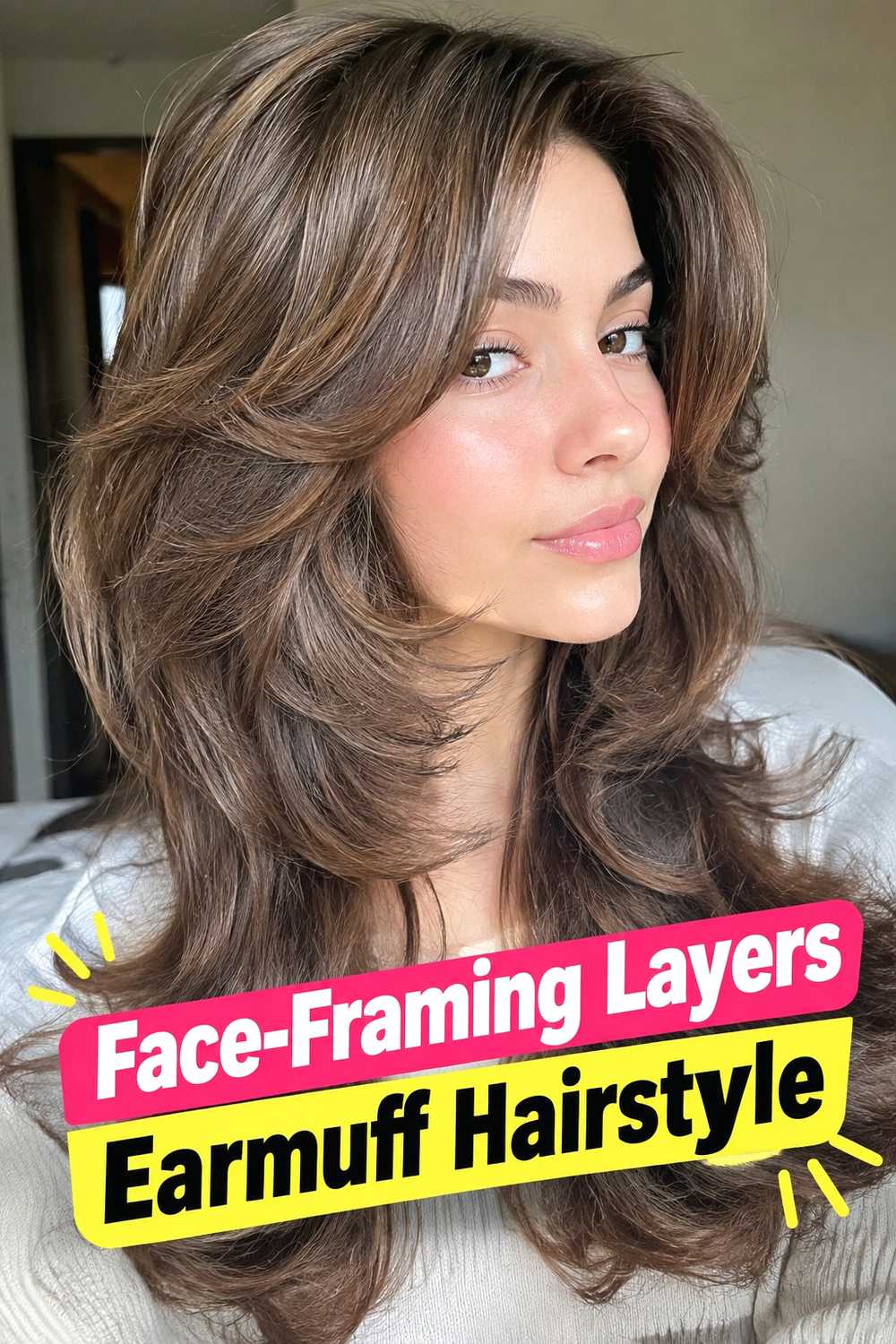
Face-framing layers help integrate earmuffs into the hairstyle by creating soft movement around the cheeks, jawline, and accessory edges. Instead of tucking every front section behind the ear pieces, allow a few shorter layers to fall naturally in front. The longer hair can remain straight, softly waved, or gently curled depending on the finish you prefer. This is particularly effective for medium and long cuts with noticeable graduation around the face. Keep the crown smooth and avoid placing the most dramatic bend exactly beneath the earmuff padding. When styled thoughtfully, the shorter layers remain visible even while the ears are covered, preventing the accessory from hiding all of the haircut’s detail.
Styling Notes
Direct the front sections slightly away from the face before putting on the earmuffs. They can then settle around the edges instead of being crushed underneath.
Why It Works
The shorter pieces create definition around a bulky winter accessory while the longer lengths maintain softness and balance through the shoulders.
14. Polished Low Bun Earmuff Hairstyle
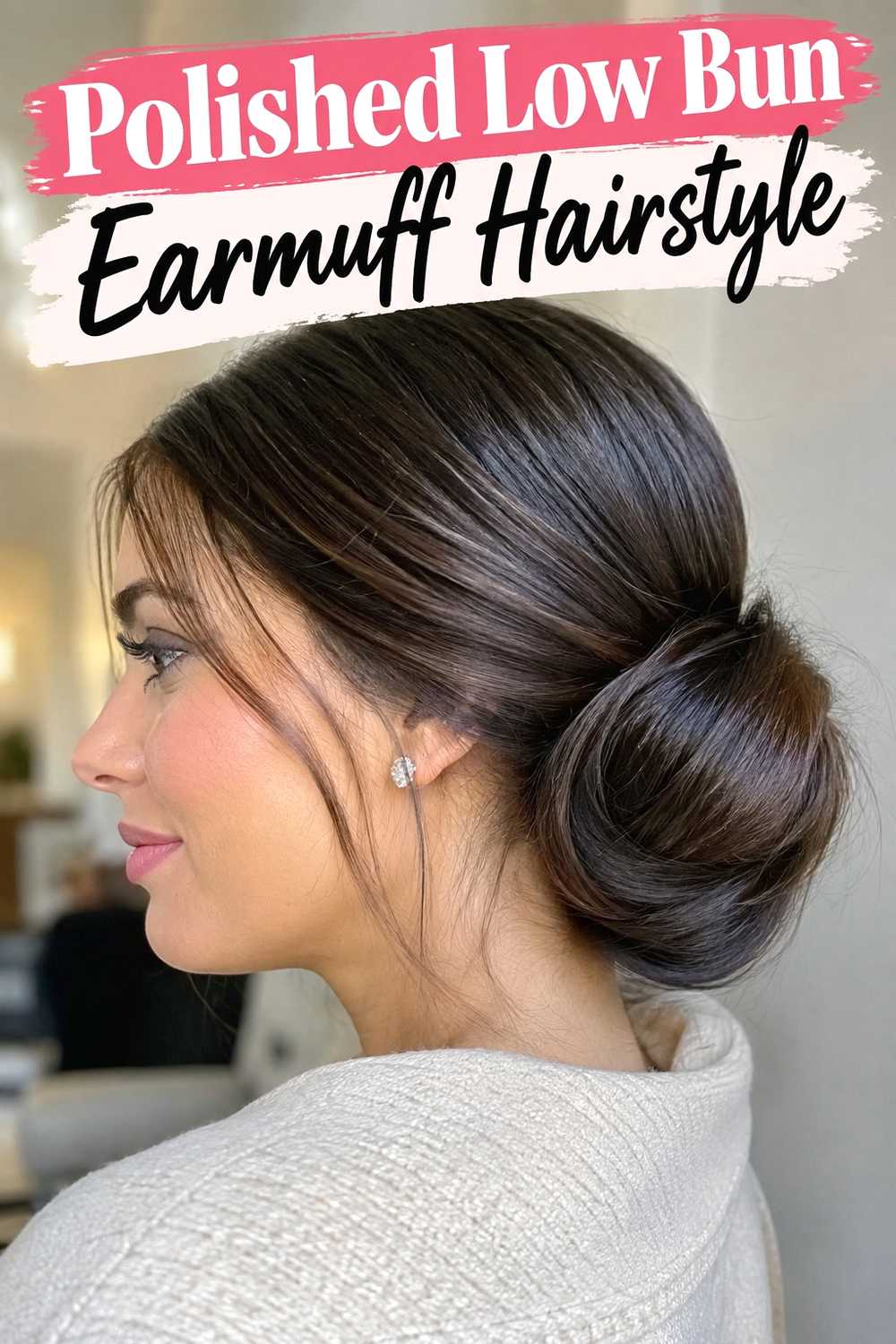
A polished low bun is one of the cleanest options for wearing earmuffs with a more elevated winter outfit. Part the hair neatly, smooth it toward the nape, and form a compact bun below the level of the earmuff band. The silhouette should stay close to the head rather than extending widely to the sides, which helps it fit comfortably with scarves and structured coats. A sleek finish gives the style a refined appearance, but preserving realistic strand detail keeps it from looking overly stiff. This hairstyle is particularly useful when moving between outdoor cold and indoor events because it stays controlled after the earmuffs come off. It also showcases earrings, high collars, and detailed winter outerwear without leaving loose hair around the neckline.
Wear & Maintenance
Use pins that match your hair color and place the bun low enough that the accessory does not press against it. Light finishing spray can help manage flyaways.
Best For
Choose this look for winter dinners, work events, holiday gatherings, formal outings, or any occasion where you want earmuffs to coordinate with a polished hairstyle.
How to Choose the Right Look
Start by considering where your earmuff band and ear pieces actually sit. Hairstyles with concentrated volume at the crown or directly behind the ears may become uncomfortable, while low ponytails, low buns, braids, and smoother loose styles usually leave more usable space.
Hair length also changes the best approach. Short bobs and lobs can stay loose because there is less hair competing with scarves and coat collars. Medium and long hair may feel easier to manage in a ponytail, braid, or low bun, especially during windy weather. Curly and coily textures benefit from earmuffs that provide enough room to avoid unnecessary compression.
Think about how long you will keep the earmuffs on. If you will remove them frequently, choose a hairstyle that recovers easily, such as loose waves, natural curls, or layered hair. For all-day outdoor wear, braids and secured low styles generally need less readjustment.
Finally, match the finish to your plans. Relaxed texture suits casual winter outings, while sleek ponytails and polished buns pair naturally with dressier coats and evening events.
Final Thoughts
The best earmuff hairstyle works with the accessory instead of competing against it. Keeping bulky styling away from the band, protecting your natural texture, and choosing a comfortable low or loose silhouette can make winter hair much easier to manage.
Whether you prefer curls, layers, braids, waves, ponytails, or buns, small placement adjustments can help your hairstyle look intentional both outdoors with earmuffs and indoors after you remove them.
FAQs
1. What hairstyles work best with earmuffs?
Low ponytails, low buns, braids, smooth straight styles, loose waves, and natural curls generally work well because they can keep excessive bulk away from the earmuff band.
2. How can I prevent earmuffs from flattening my hair?
Avoid concentrating volume where the band sits. Build texture mainly through the mid-lengths and ends, and gently lift the roots with your fingers after removing the earmuffs.
3. Can I wear earmuffs with curly hair?
Yes. Choose earmuffs with enough room for your hair density and arrange curls around the ear pieces rather than forcing large sections beneath them.
4. Are high buns practical with earmuffs?
They can interfere with some earmuff bands depending on placement. A low bun is usually easier because it leaves more open space across the crown and back of the head.
5. Should hair go over or under earmuffs?
Either can work. Allowing some hair to fall in front of or around the ear pieces often looks softer, while keeping most hair outside the padding can reduce unwanted flattening.
CTA
Save your favorite winter earmuff hairstyles and share these cozy ideas whenever you need cold-weather hair inspiration.