19 Cheekbone Baby Bob Haircut Ideas for a Fresh Short Look
Sharp, airy, and face-framing, these cheekbone baby bob ideas show how small changes in texture, fringe, and finish can transform a short cut.
A cheekbone baby bob sits noticeably shorter than a traditional bob, creating a compact silhouette that places attention around the cheekbones, eyes, and jaw area. The cut can look crisp and architectural, soft and French-inspired, naturally textured, or intentionally undone depending on the perimeter, layering, part, and styling method.
When comparing these looks, pay attention to more than the finished photo. Think about your natural texture, shrinkage, density, preferred part, fringe commitment, and how often you want to heat-style your hair. A beautifully shaped baby bob should work with the way your hair naturally falls rather than depending on constant correction.
Quick List
- Classic Cheekbone Baby Bob Hairstyle
- Blunt Cheekbone Baby Bob Hairstyle
- French-Inspired Cheekbone Baby Bob Hairstyle
- Softly Layered Cheekbone Baby Bob Hairstyle
- Side-Parted Cheekbone Baby Bob Hairstyle
- Center-Parted Cheekbone Baby Bob Hairstyle
- Tucked-Behind-the-Ears Cheekbone Baby Bob Hairstyle
- Wavy Cheekbone Baby Bob Hairstyle
- Curly Cheekbone Baby Bob Hairstyle
- Air-Dried Textured Cheekbone Baby Bob Hairstyle
- Wispy Bangs Cheekbone Baby Bob Hairstyle
- Micro-Bangs Cheekbone Baby Bob Hairstyle
- Curtain-Fringe Cheekbone Baby Bob Hairstyle
- Sleek Glass-Hair Cheekbone Baby Bob Hairstyle
- Tousled Cheekbone Baby Bob Hairstyle
- Rounded Cheekbone Baby Bob Hairstyle
- Razored-Ends Cheekbone Baby Bob Hairstyle
- Deep Side-Swept Cheekbone Baby Bob Hairstyle
- Piecey Cheekbone Baby Bob Hairstyle
1. Classic Cheekbone Baby Bob Hairstyle
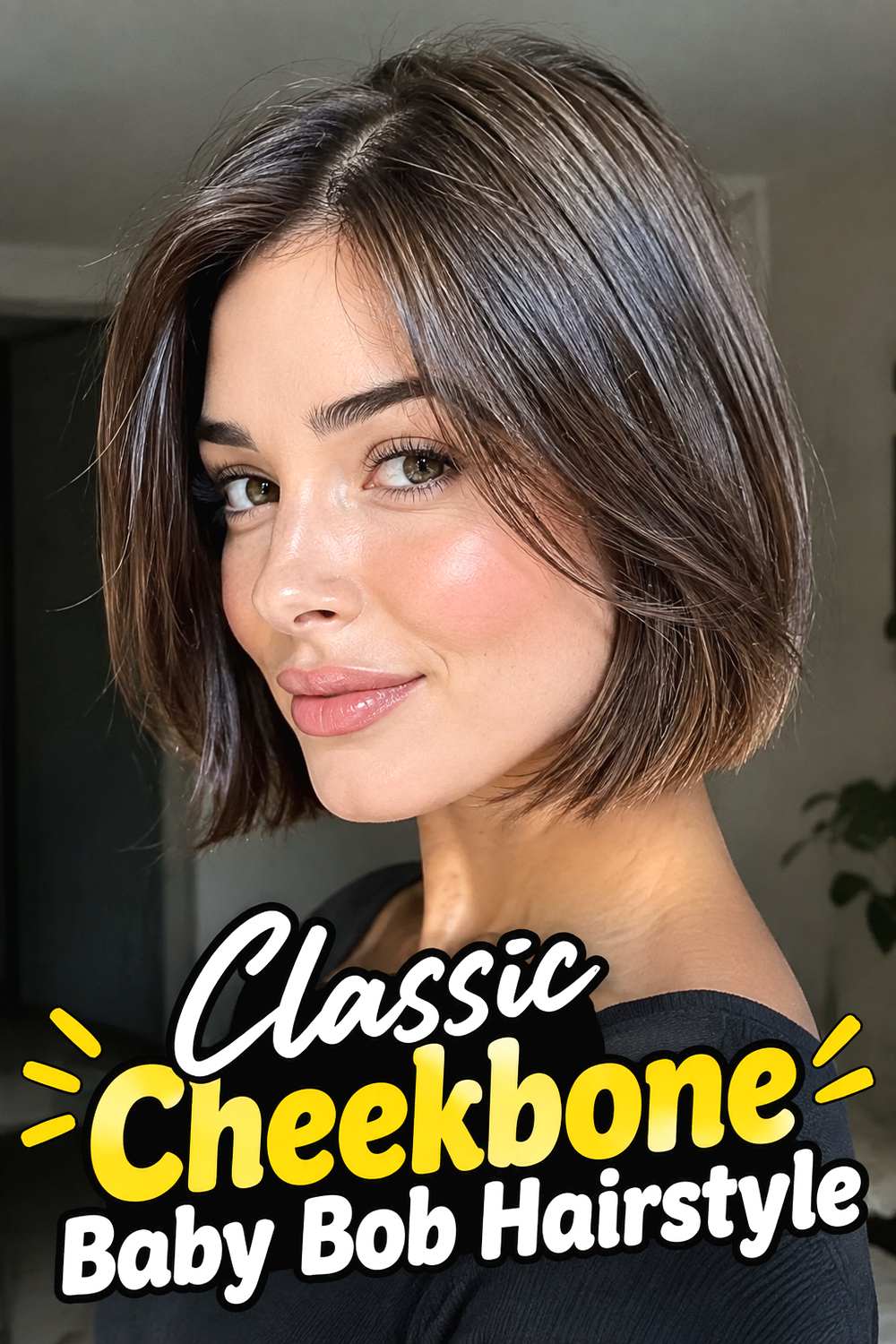
The classic cheekbone baby bob keeps the shape clean and compact without making the perimeter look excessively severe. The ends hover around the cheekbone area, creating a short frame that brings attention toward the center of the face. A subtle bend through the lengths prevents the cut from appearing stiff while still preserving its recognizable bob silhouette. This version works particularly well for anyone who wants the impact of very short hair without moving fully into pixie territory. Fine to medium hair can emphasize the crisp outline, while denser hair may need carefully placed internal weight removal. A small amount of smoothing cream or lightweight styling balm can help keep the shape defined without flattening its natural movement.
Hair Type & Length
Ask for a true cheekbone-level perimeter while discussing how much your hair lifts or shrinks once dry. The final dry length matters more than the wet cutting line.
Pro Tip
Before cutting, decide whether you usually tuck your hair behind your ears. Frequent tucking can change where the front pieces visually sit.
2. Blunt Cheekbone Baby Bob Hairstyle
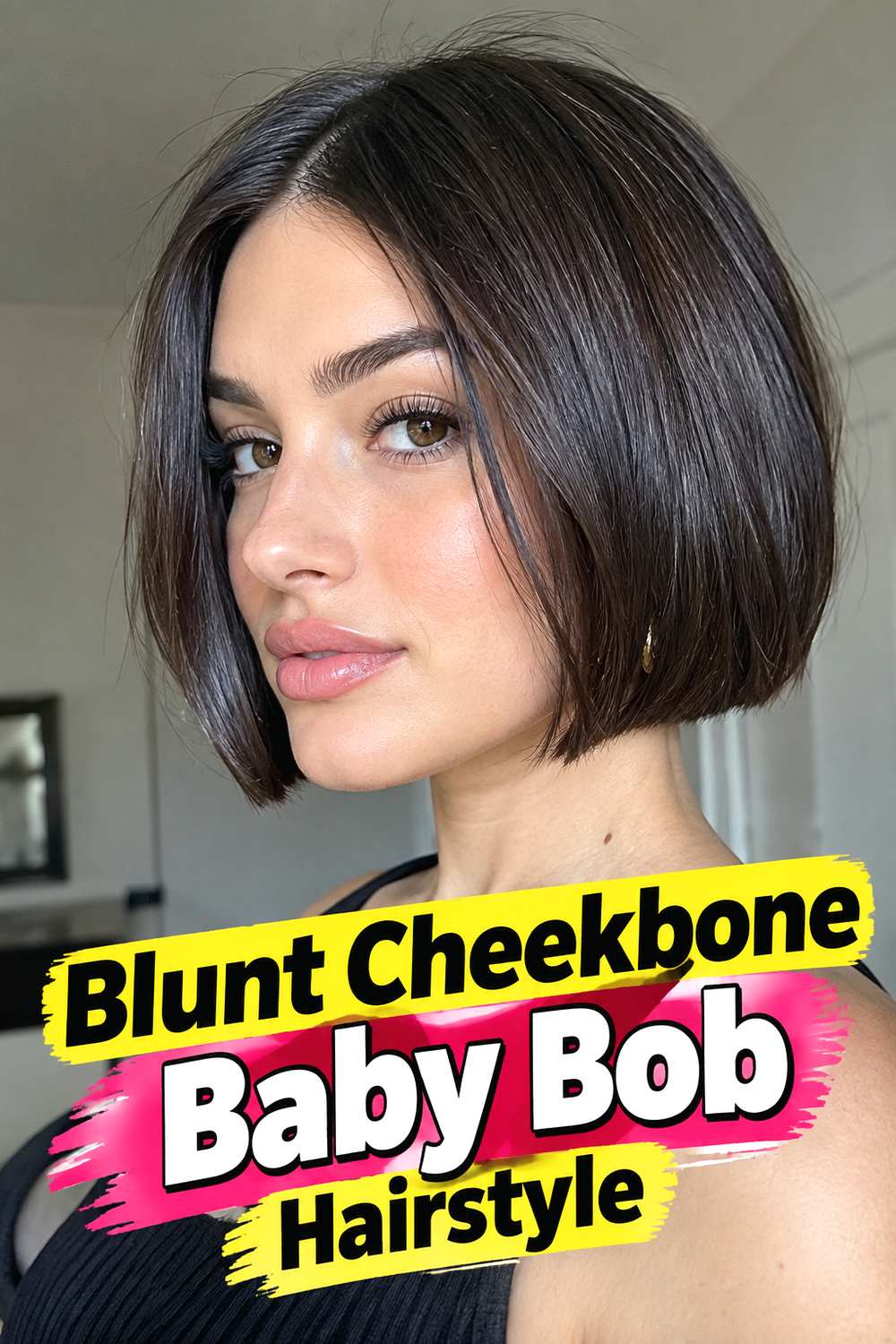
A blunt cheekbone baby bob makes the short length feel especially intentional. Instead of feathered or heavily softened ends, the perimeter forms a strong visual line that gives the hair a fuller-looking edge. The simplicity allows shine, density, and precise shaping to become the main features. Straight and lightly wavy textures can show the blunt outline particularly clearly, although thicker hair may benefit from discreet internal removal so the silhouette does not become triangular. This haircut can be worn polished or slightly bent at the ends depending on the mood. Because every millimeter of the perimeter is visible at this length, regular reshaping becomes more noticeable than it would on a longer bob. Keep styling products light so the ends stay mobile rather than rigid.
Why It Works
The uninterrupted perimeter creates visual weight at the shortest part of the cut, making the bob look deliberate even with minimal daily styling.
Wear & Maintenance
Plan for periodic trims when the cheekbone length itself is the feature you want to preserve, since even modest growth changes the proportions quickly.
3. French Inspired Cheekbone Baby Bob Hairstyle
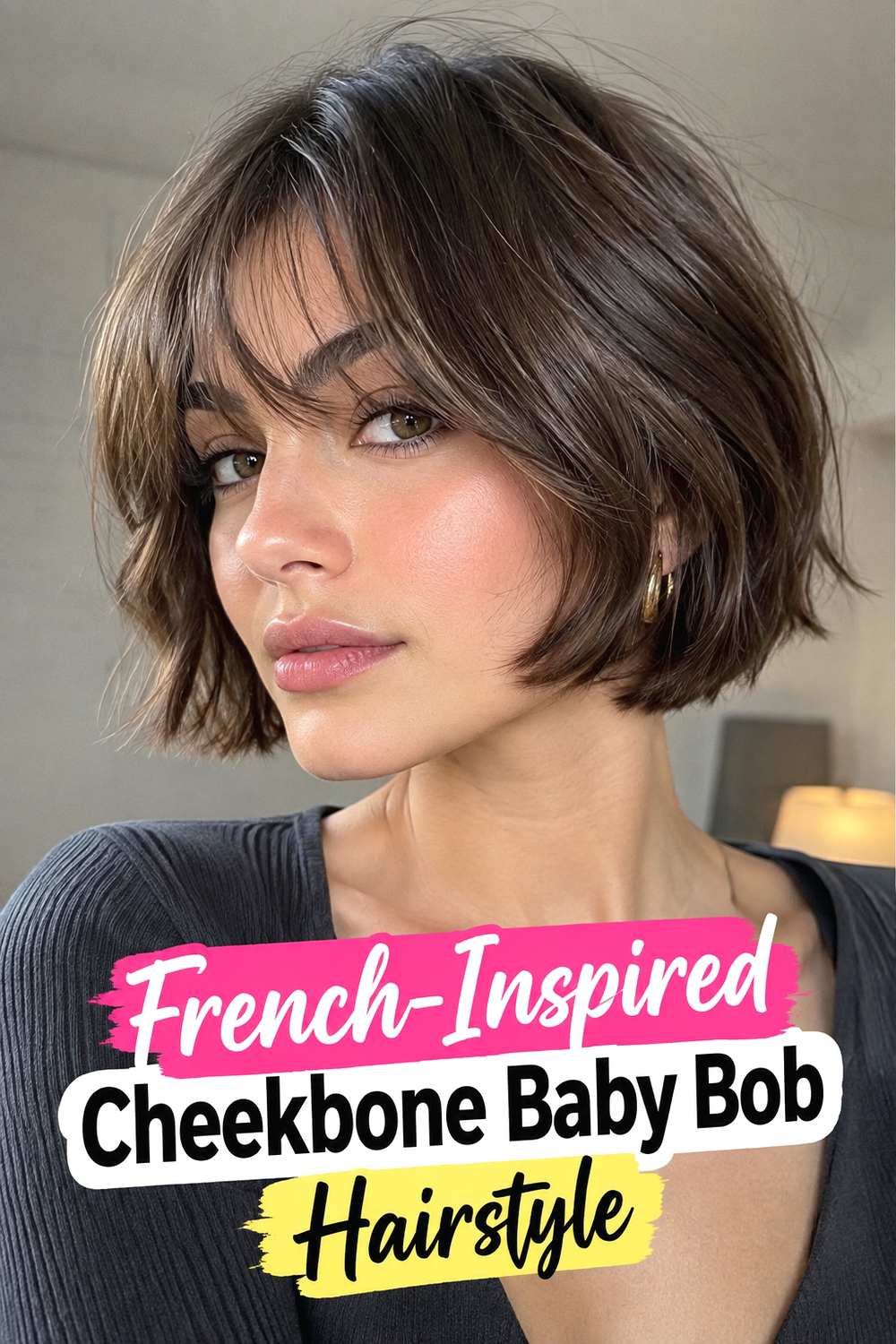
The French-inspired cheekbone baby bob feels relaxed rather than perfectly sculpted. Its charm comes from combining a compact length with subtle irregularity, soft movement, and an almost air-dried finish. The perimeter can stay fairly solid while a few discreetly softened sections prevent the haircut from looking overly geometric. A natural bend, slight wave, or imperfect part suits this version better than a rigidly straight finish. It is a strong option for someone who prefers hair that looks stylish without appearing heavily arranged. The key is restraint: too many layers can change the bob into a shag, while excessive smoothing can remove the casual character. A pea-sized amount of texture cream worked through dry ends is often enough to separate the shape without making it look product-heavy.
Styling Notes
Let the hair develop its natural movement before refining only the sections that need help. Slight variation from strand to strand supports the relaxed finish.
Best For
This approach suits people who enjoy a soft, effortless-looking bob and are comfortable with a little natural texture rather than perfect uniformity.
4. Softly Layered Cheekbone Baby Bob Hairstyle
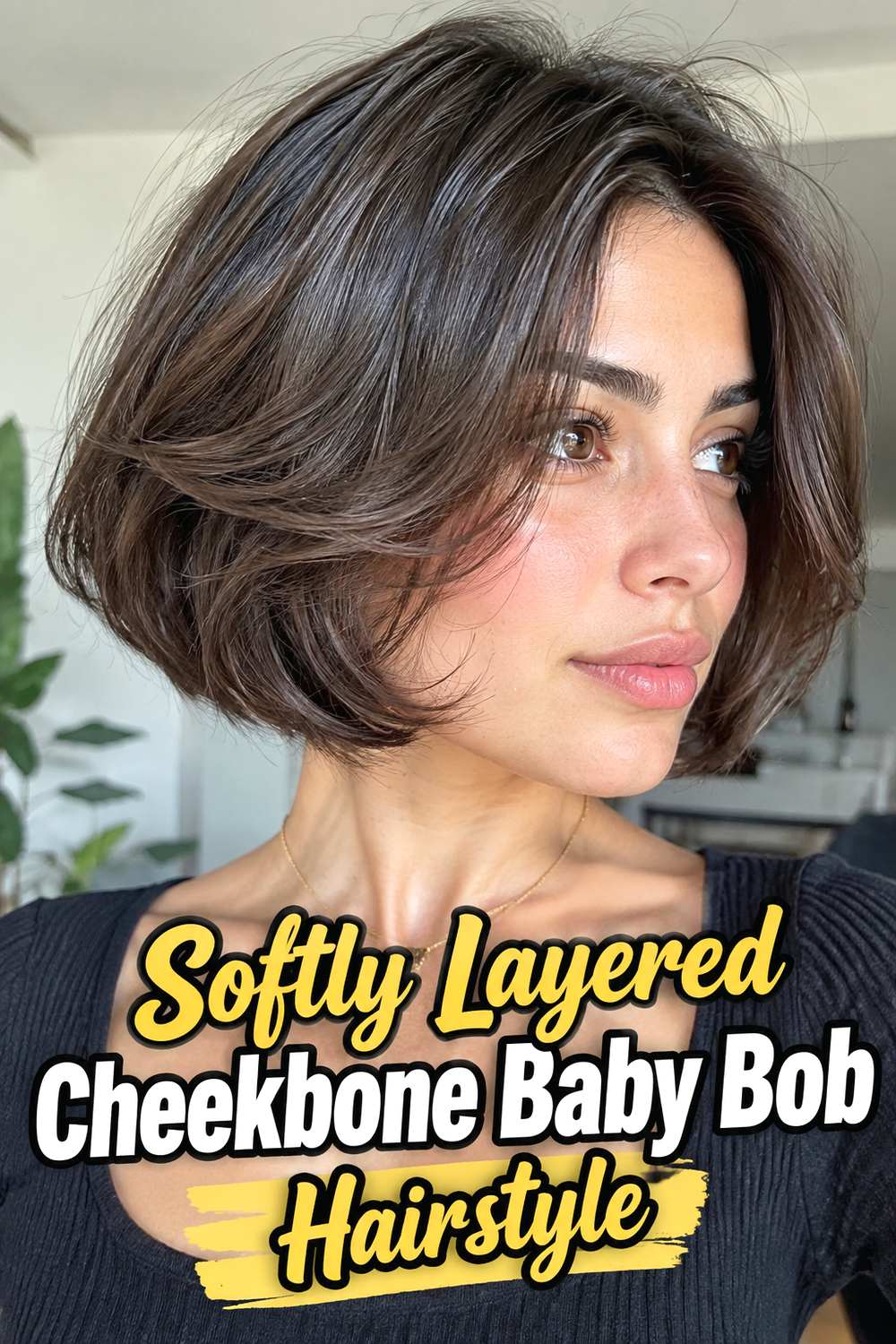
Soft layering can make a cheekbone baby bob feel lighter while preserving the recognizable short-bob outline. Rather than creating obvious stacked layers, the cut uses subtle graduation and movement through selected areas so the hair does not sit as one dense block. This is especially useful for medium or thicker hair that tends to expand around the sides. The finished shape should still read as a baby bob first, with the layers supporting movement rather than dominating the design. Gentle blow-drying with the fingers can encourage separation, while a small round brush can refine only the front pieces. Avoid loading the roots with heavy styling creams; this haircut usually looks best when the crown retains some natural lift and the ends can move freely.
Hair Type & Length
Medium-density and fuller hair may benefit most from controlled internal movement. Very fine hair generally needs more perimeter weight left intact.
Why It Works
The hidden softness reduces bulk without sacrificing the compact cheekbone-level silhouette that makes the baby bob distinctive.
5. Side Parted Cheekbone Baby Bob Hairstyle
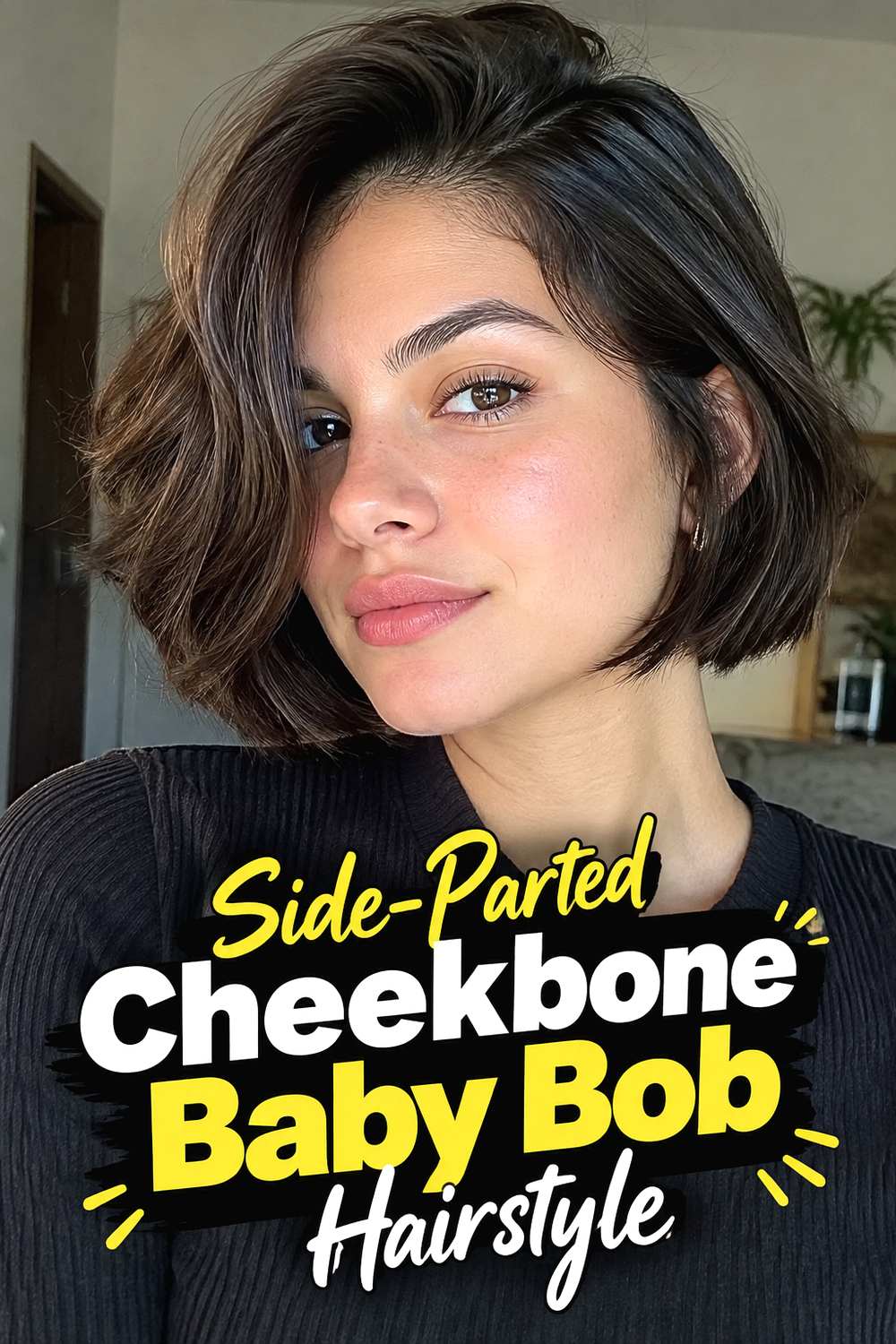
Moving the part slightly to one side gives a cheekbone baby bob instant asymmetry without changing the actual haircut dramatically. One side gains more volume and sweeping movement while the opposite side sits closer to the head, creating a flattering contrast within the short silhouette. The look can be sleek, softly bent, or naturally textured depending on the hair type. It is also a practical way to change the character of an existing baby bob without adding bangs or removing more length. If your hair strongly prefers a natural part, work with that growth pattern rather than forcing a dramatic shift every morning. A light root spray or a few seconds of directional blow-drying can help the fuller side hold its shape while keeping the overall finish touchable.
Styling Notes
Dry the front section in the opposite direction first, then flip it into the preferred part once mostly dry for an easy boost at the root.
Best For
This version is useful for anyone wanting extra movement around the forehead and cheekbone without committing to a separate fringe.
6. Center Parted Cheekbone Baby Bob Hairstyle
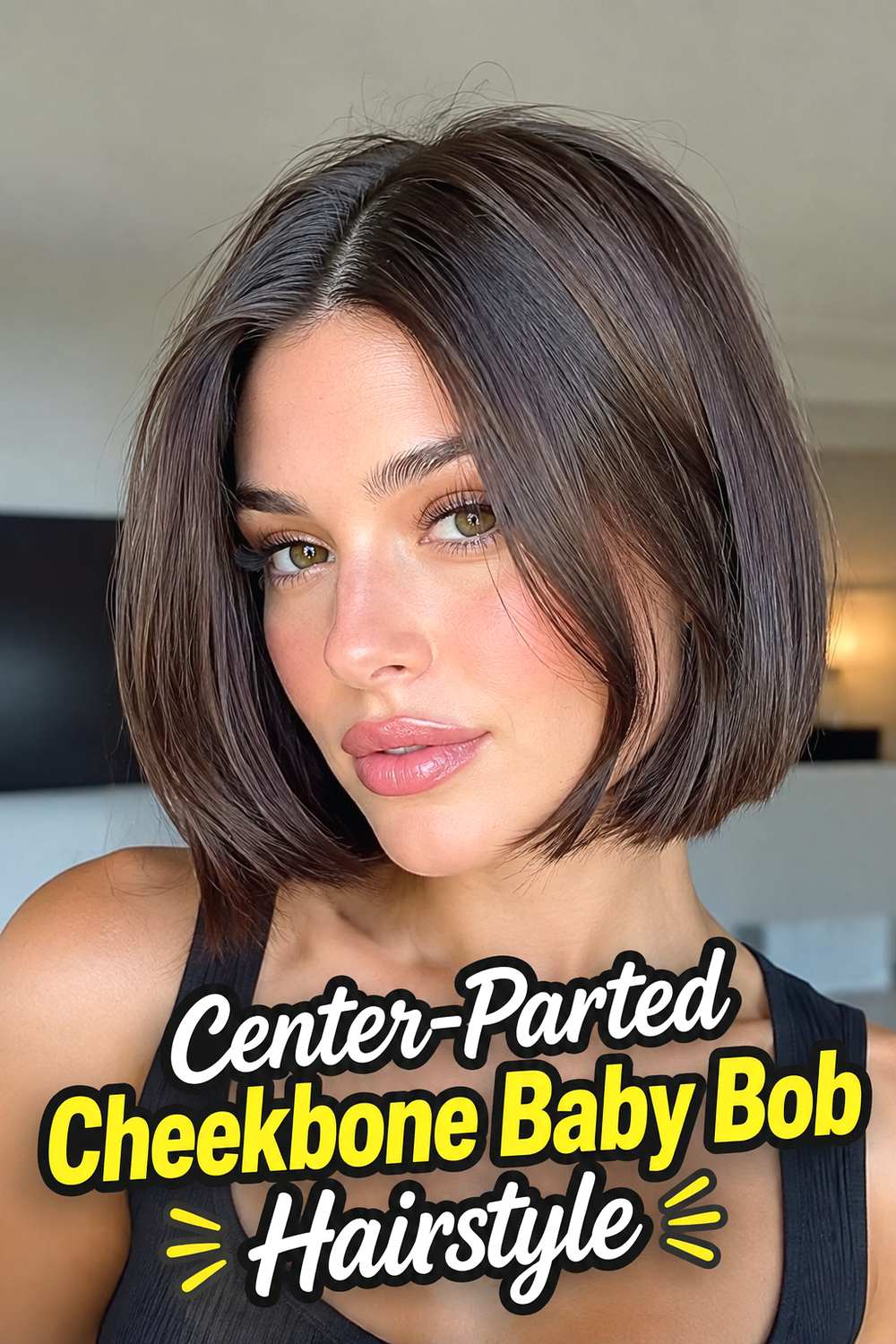
A center part gives the cheekbone baby bob a balanced, graphic quality. Because both sides fall in a nearly symmetrical frame, the precise length and condition of the ends become particularly visible. The look can feel minimalist when worn straight, but it also works beautifully with a soft natural wave that keeps the symmetry from becoming too rigid. The front sections should sit comfortably around the face rather than repeatedly falling forward into the eyes. If your natural part is slightly off-center, you may need a little root training or gentle blow-drying to maintain the placement. For a smooth result, apply a lightweight heat protectant before styling and keep the ends softly mobile rather than pressing them completely flat against the face.
Why It Works
The centered division makes the short perimeter the focal point and creates a clean frame around the cheekbones and jaw.
Pro Tip
Check the finished bob from both sides before leaving the salon, since a centered part makes small differences in front length easier to notice.
7. Tucked Behind The Ears Cheekbone Baby Bob Hairstyle
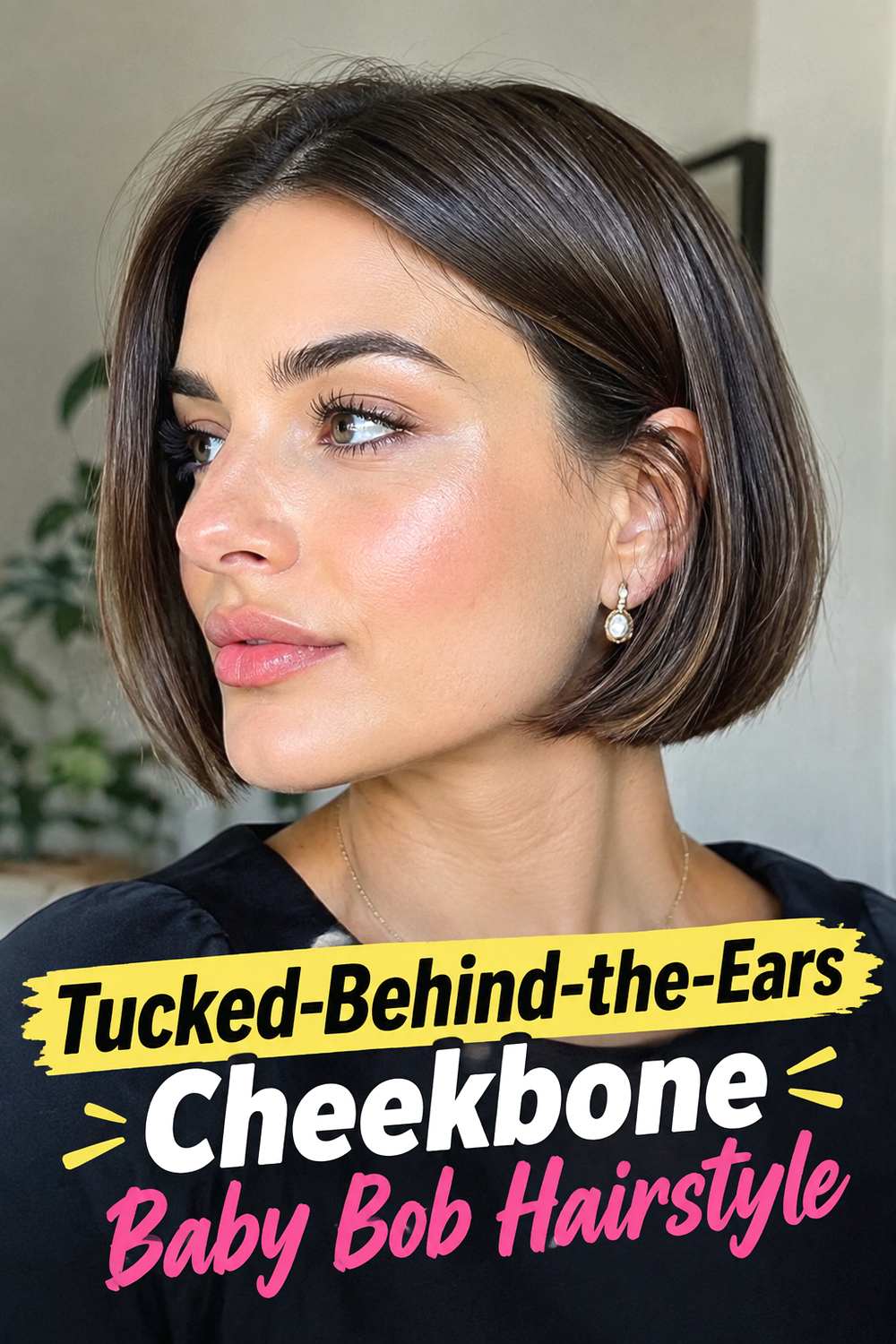
Tucking a cheekbone baby bob behind the ears exposes more of the face and gives the haircut an especially neat, compact silhouette. The front pieces stay short enough to feel modern, while the tuck creates a subtle change in shape without clips, pins, or complicated styling. This version works best when the hair around the ears has enough flexibility to sit comfortably instead of springing forward immediately. Keeping a little fullness above the ears prevents the style from appearing overly flat. You can wear both sides tucked for a clean finish or tuck only one side for asymmetry. A tiny amount of flexible styling cream around the front sections can improve control, but avoid stiff gels that leave the tucked area looking separated from the rest of the bob.
Wear & Maintenance
Consider how the haircut sits both tucked and untucked. The perimeter should still look intentional when the hair falls naturally around the face.
Best For
This styling approach is ideal when you want a short cut that easily shifts between an open, polished look and a softer face-framing shape.
8. Wavy Cheekbone Baby Bob Hairstyle
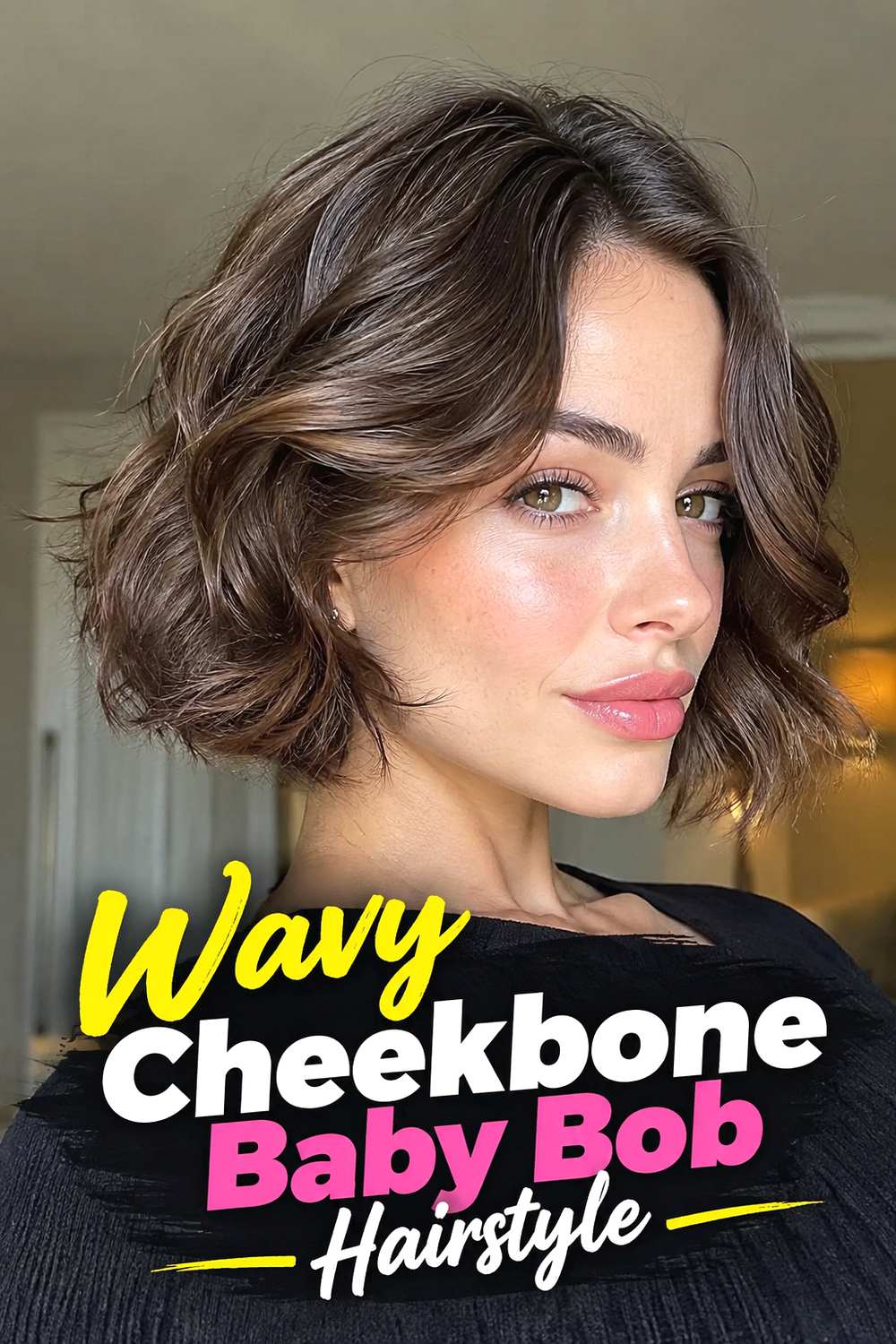
Natural or created waves add softness to the sharply cropped proportions of a cheekbone baby bob. Instead of emphasizing a perfectly straight perimeter, the bends create small variations in length and movement that make the silhouette feel airy. Loose S-shaped waves work especially well because they preserve the overall bob structure without turning the style into a mass of curls. Since waves make hair appear slightly shorter, the cut should be planned around the finished dry shape rather than relying only on wet length. A lightweight mousse or wave cream can enhance texture without making the short sections feel sticky. If using a heated tool, alternate the direction of a few bends and leave the very ends less curled for a modern, less uniform finish.
Hair Type & Length
Naturally wavy hair should be assessed in its usual dry pattern because individual sections may spring up differently around the cheekbones.
Styling Notes
Focus on creating separation rather than perfect waves. Too much repetition can make such a short cut look overly styled.
9. Curly Cheekbone Baby Bob Hairstyle
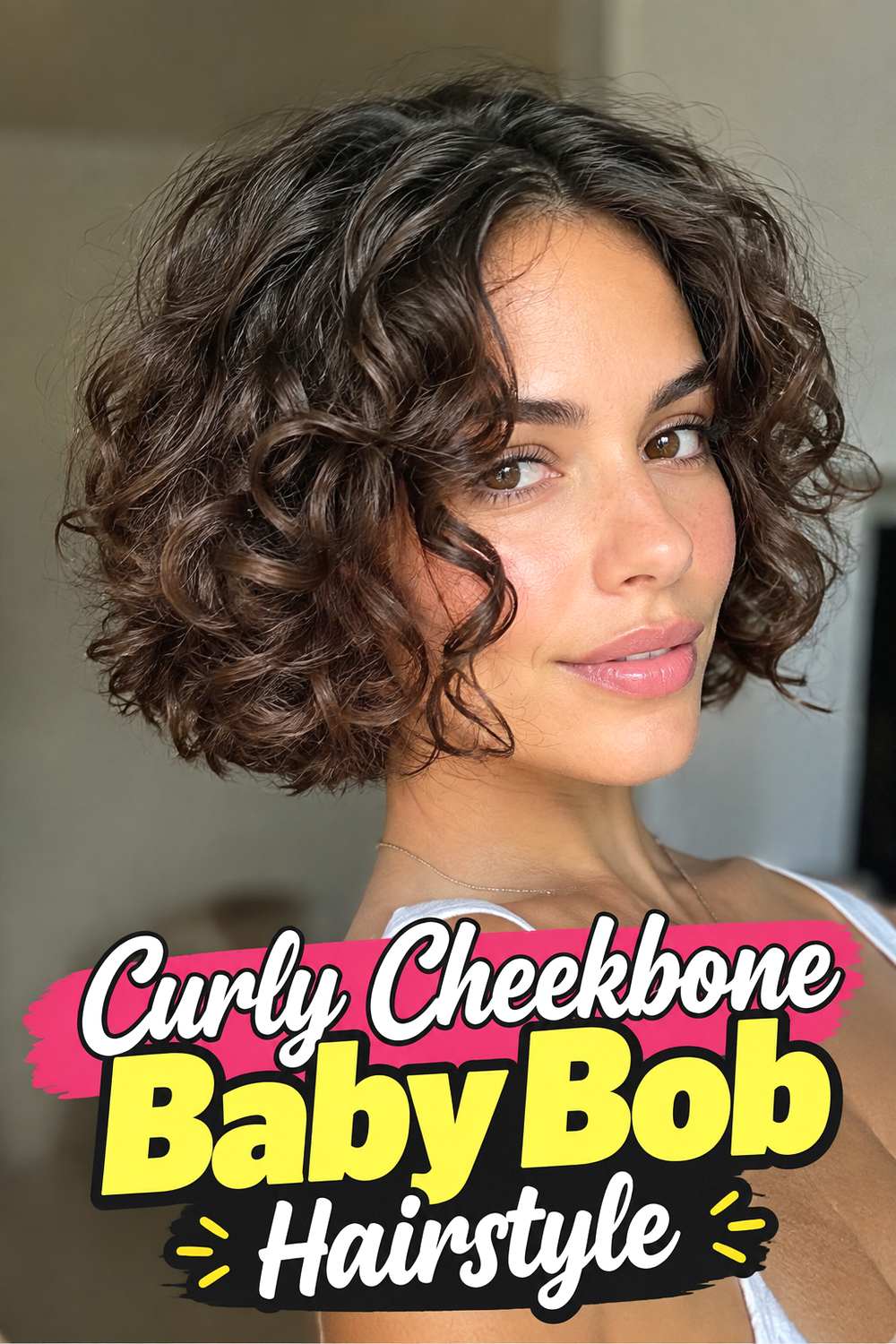
A curly cheekbone baby bob combines a cropped outline with natural bounce, giving the style a rounded but lively shape. Because curls shrink differently according to pattern, density, hydration, and styling method, the finished length should be judged on dry or nearly dry hair whenever possible. The strongest versions keep enough weight at the perimeter to read as a bob while using thoughtful shaping to prevent excessive bulk at the sides. Individual curls around the face can be left slightly longer or strategically placed to create a softer frame. Apply curl product in small amounts so the short shape stays buoyant. Finger-coiling a few face-framing curls can add definition, but the whole haircut does not need to be perfectly uniform to look intentional.
Pro Tip
Show your stylist how your curls normally dry and where you usually part them. That information helps determine the most realistic cheekbone-level finish.
Wear & Maintenance
Refresh individual curls with water and a small amount of product instead of coating the entire bob again between washes.
10. Air Dried Textured Cheekbone Baby Bob Hairstyle
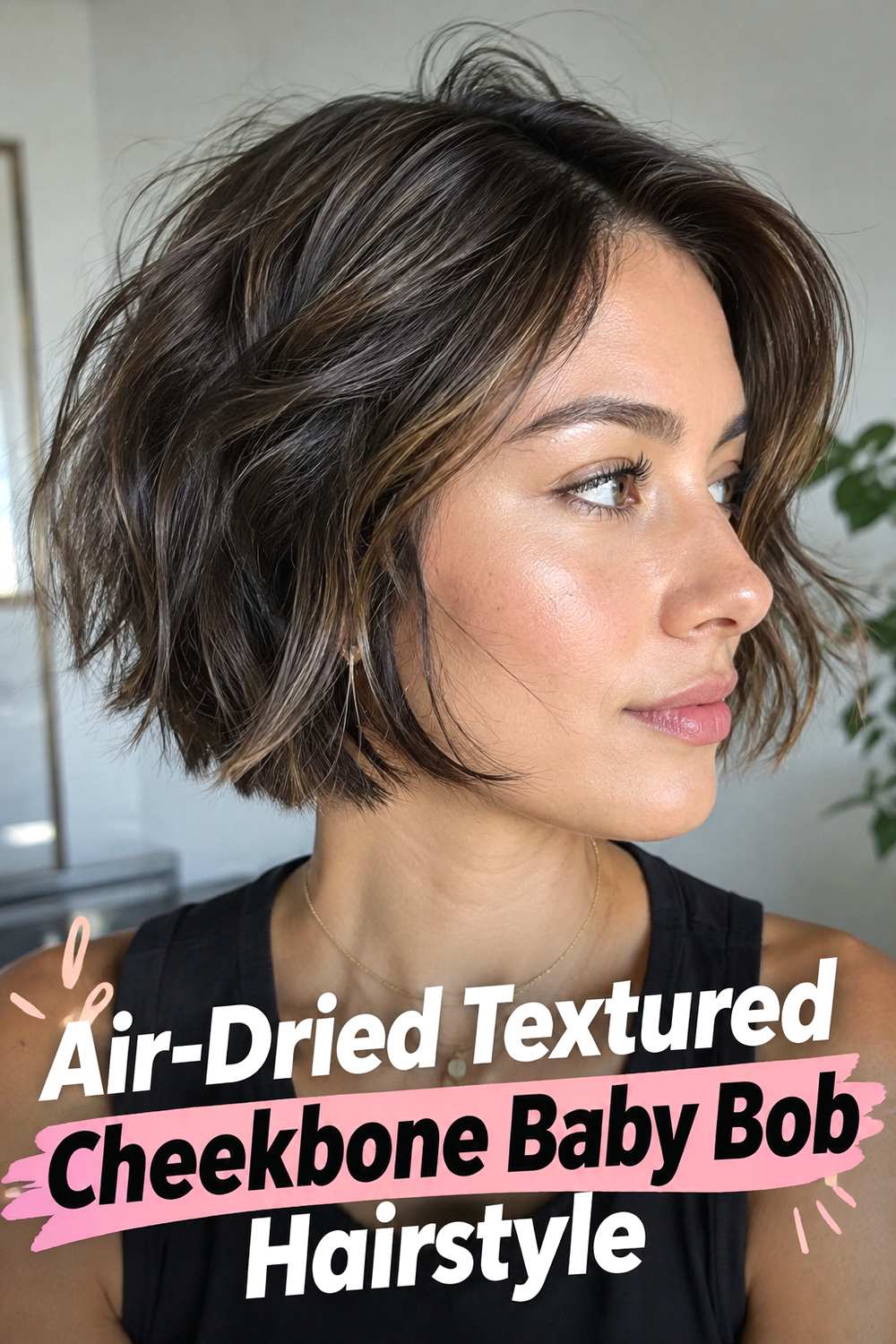
An air-dried textured baby bob is designed around the hair’s existing movement rather than a highly controlled blowout. Subtle bends, natural separation, and a few flyaways become part of the finish, making the compact cheekbone length feel relaxed and wearable. The success of this version depends heavily on a haircut that behaves well without constant heat styling. Weight distribution matters: too much bulk can make the sides expand, while excessive thinning may create frizz or weak ends. Apply a lightweight leave-in or texture enhancer to damp hair, arrange the front pieces, and then minimize touching while it dries. Once dry, gently separate only the sections that need more definition. The goal is believable texture and movement rather than a deliberately messy result.
Why It Works
The simple drying routine allows the natural pattern to provide personality, so the short haircut does not depend on a perfectly polished finish.
Hair Type & Length
This approach works best when the cut is customized to the hair’s real dry behavior, whether that pattern is slightly bent, wavy, or mixed.
11. Wispy Bangs Cheekbone Baby Bob Hairstyle
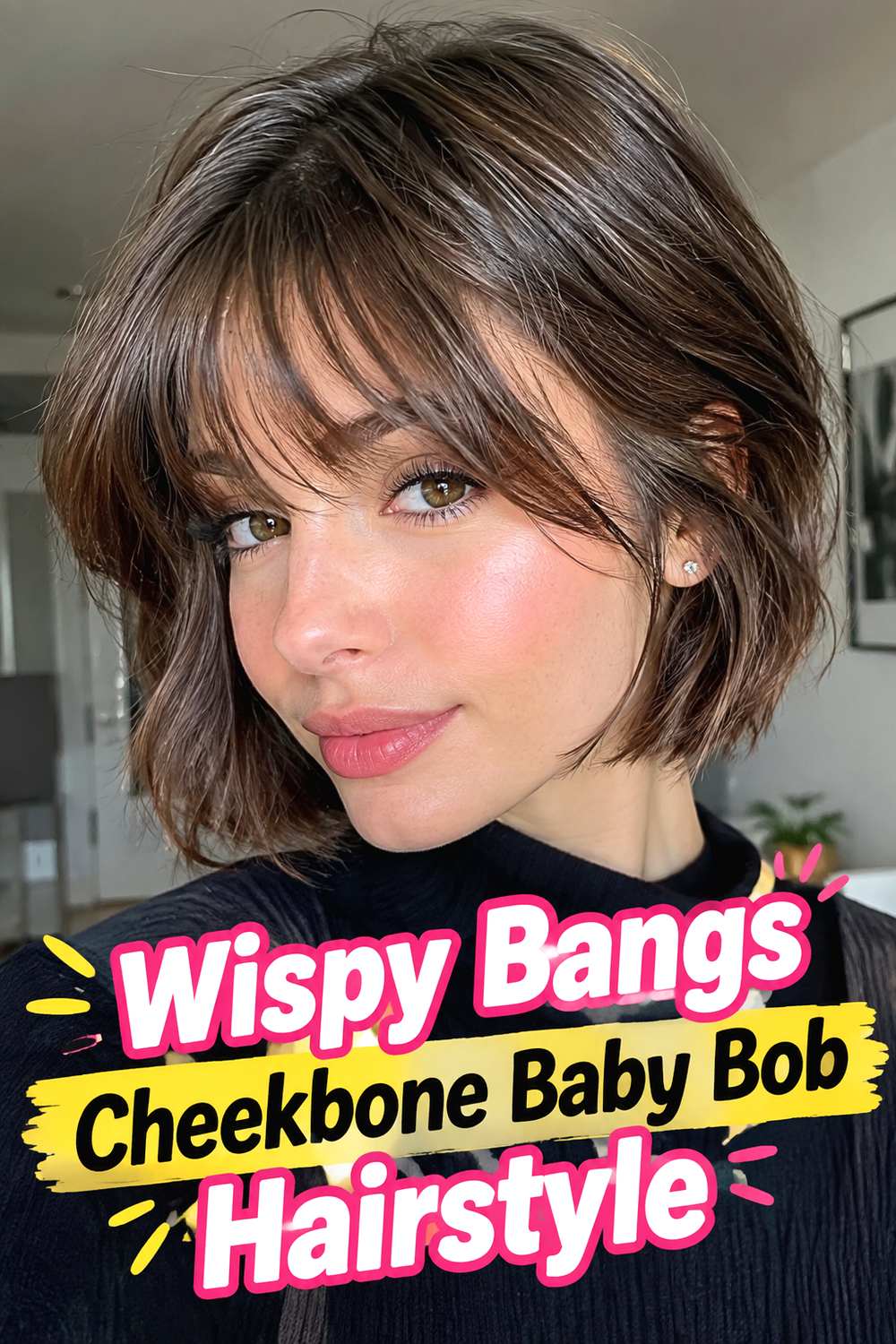
Wispy bangs soften the bold proportions of a cheekbone baby bob by adding a light veil across the forehead. Unlike a heavy full fringe, the finer sections allow some skin to remain visible and blend naturally into the short sides. This creates an attractive balance between the strong bob perimeter and a more delicate front detail. The bangs can be slightly irregular for a relaxed finish or neatly shaped for a cleaner look. Fine to medium hair often suits this treatment well because the fringe does not require a large amount of density. Use minimal product near the forehead so the pieces stay airy. A quick pass with a small brush or gentle finger styling is usually more flattering than heavily straightening every strand.
Best For
Choose wispy bangs if you want forehead coverage without the visual weight and styling commitment of a dense blunt fringe.
Wear & Maintenance
The fringe will show growth sooner than the rest of the bob, so occasional bang-only trims can help preserve the intended light shape.
12. Micro Bangs Cheekbone Baby Bob Hairstyle
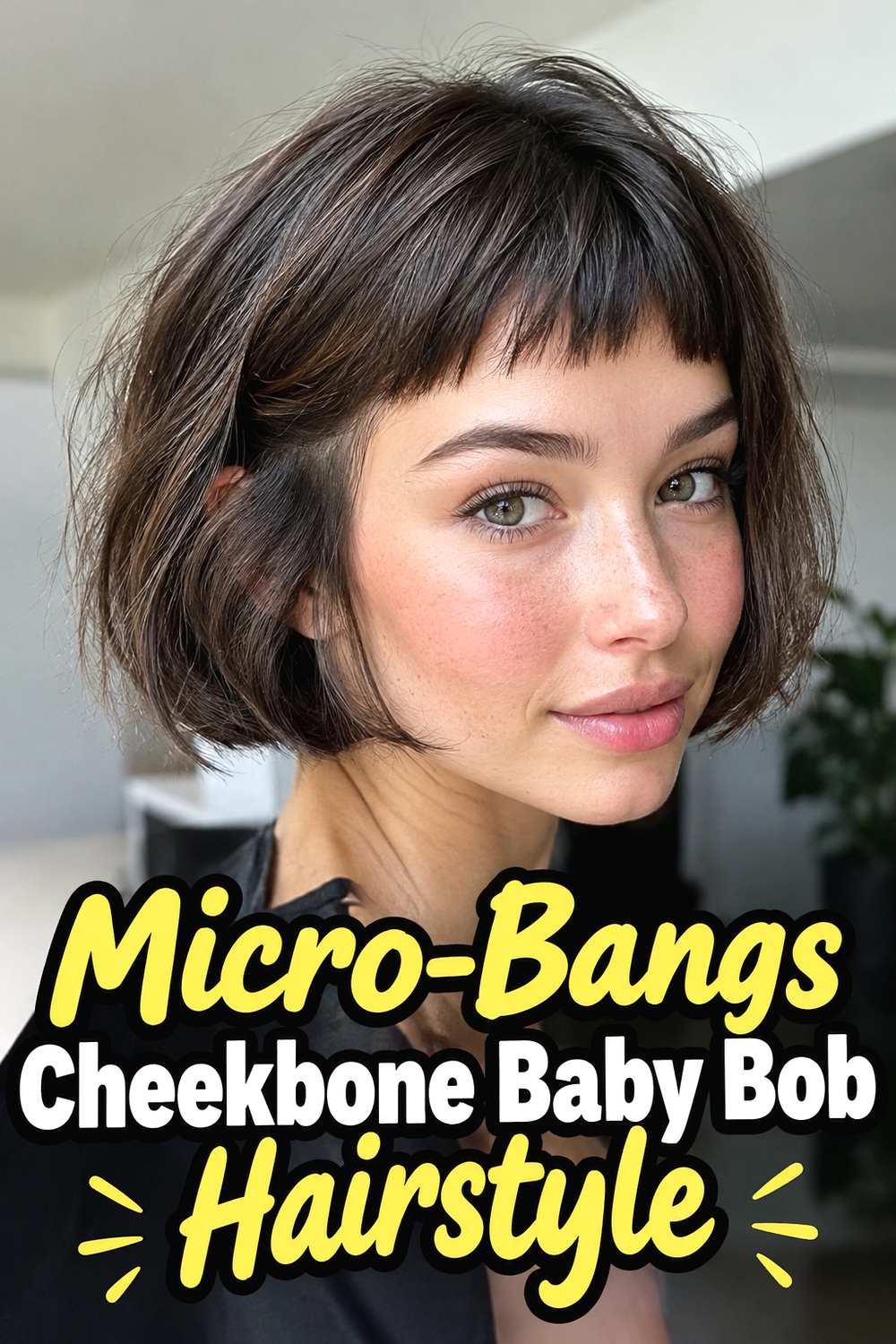
Micro bangs push the cheekbone baby bob in a sharper, more editorial direction. The very short fringe creates clear space above the brows while the cropped bob frames the sides of the face, resulting in a graphic combination of horizontal lines. This is not a fringe that disappears quietly into the haircut, so it works best for someone who genuinely wants a noticeable design feature. Straight and softly textured hair can both carry the look, although cowlicks and strong growth patterns should be discussed before cutting. Keep the fringe lightweight enough to move naturally instead of forming a rigid strip. Styling usually requires only a small amount of directional drying, but the short length makes changes in growth visible fairly quickly.
Styling Notes
Dry micro bangs early after washing so the roots set in the desired direction before the rest of the hair is finished.
Pro Tip
Start slightly longer if you are new to micro bangs. The fringe can always be refined shorter after seeing how your hair settles when dry.
13. Curtain Fringe Cheekbone Baby Bob Hairstyle
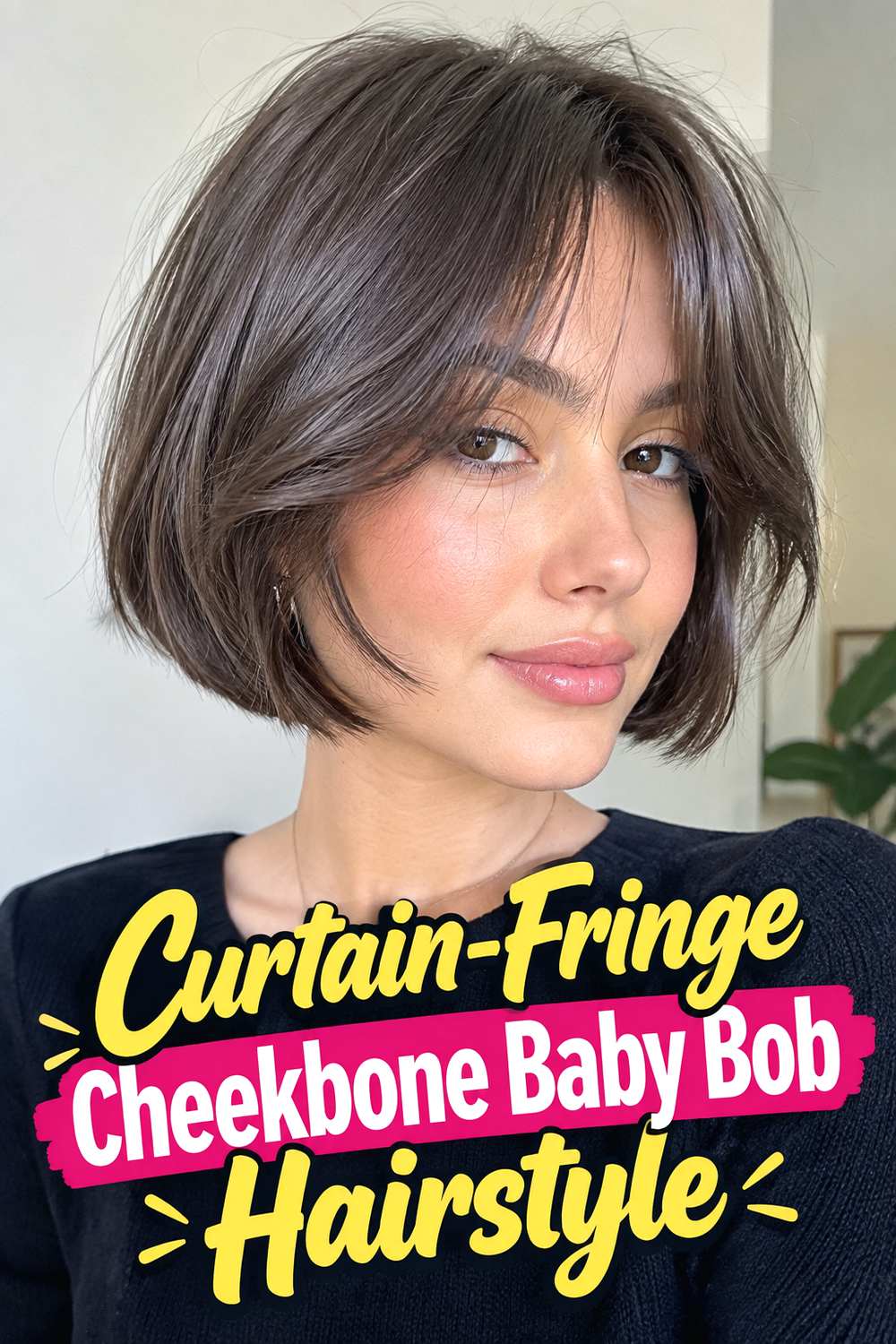
A curtain fringe introduces softness and movement around the eyes while maintaining the compact body of the cheekbone baby bob. Instead of covering the forehead completely, the fringe separates near the center and sweeps toward the sides, gradually connecting with the bob. On such a short haircut, the transition needs to be intentional so the fringe does not look disconnected from the perimeter. A subtle bend at the roots helps the pieces open naturally without creating oversized volume. This variation is especially appealing if you enjoy face-framing movement but want more styling flexibility than a blunt fringe provides. Use a small round brush, rollers, or simple directional blow-drying, then loosen the shape with your fingers so the curtain effect stays soft.
Why It Works
The longer fringe creates a visual bridge between the forehead and cheekbone-length sides, making the short cut feel softer around the face.
Wear & Maintenance
As the fringe grows, it can usually transition into longer face-framing pieces, giving this version more flexibility between full haircuts.
14. Sleek Glass Hair Cheekbone Baby Bob Hairstyle
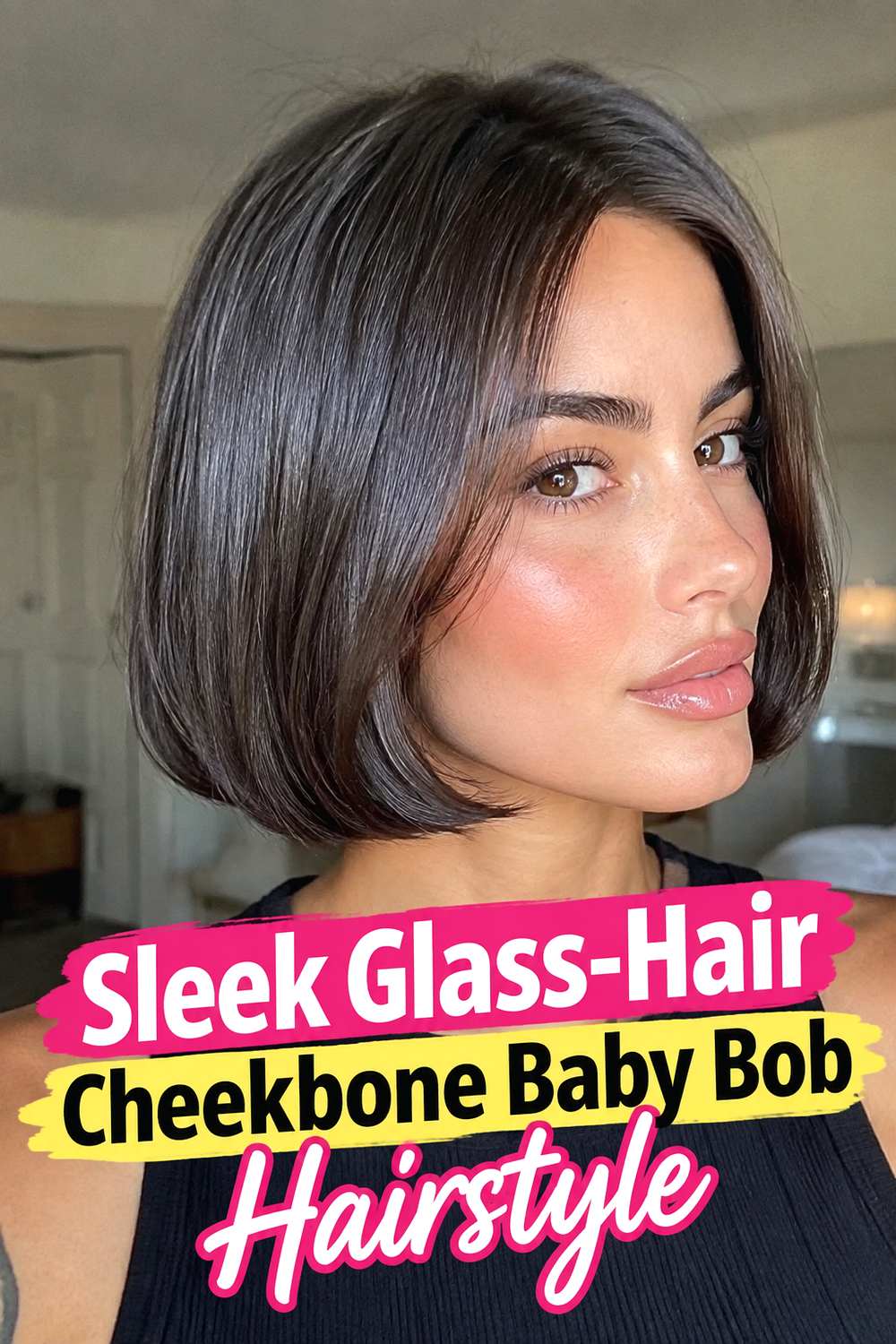
The sleek glass-hair version highlights every clean line of a cheekbone baby bob. Smooth roots, reflective shine, and a controlled perimeter create a polished finish that makes the short length feel precise and sophisticated. The goal is glossy movement rather than a stiff, helmet-like surface, so the hair should still show natural strands and a little flexibility. Start with heat protection and use controlled tension while blow-drying before refining only where necessary with a straightener. Fine hair may need very little finishing product, while coarser textures may benefit from a light smoothing serum concentrated through the mid-lengths and ends. Avoid saturating the roots with shine products, since the compact length can quickly appear flat when too much product is applied near the scalp.
Styling Notes
Work in small sections for smoothness, but keep heat passes efficient. The finish should look polished without visibly frying or flattening the hair.
Best For
This version suits occasions or personal styles where a crisp, glossy finish is preferred over airy texture and visible volume.
15. Tousled Cheekbone Baby Bob Hairstyle
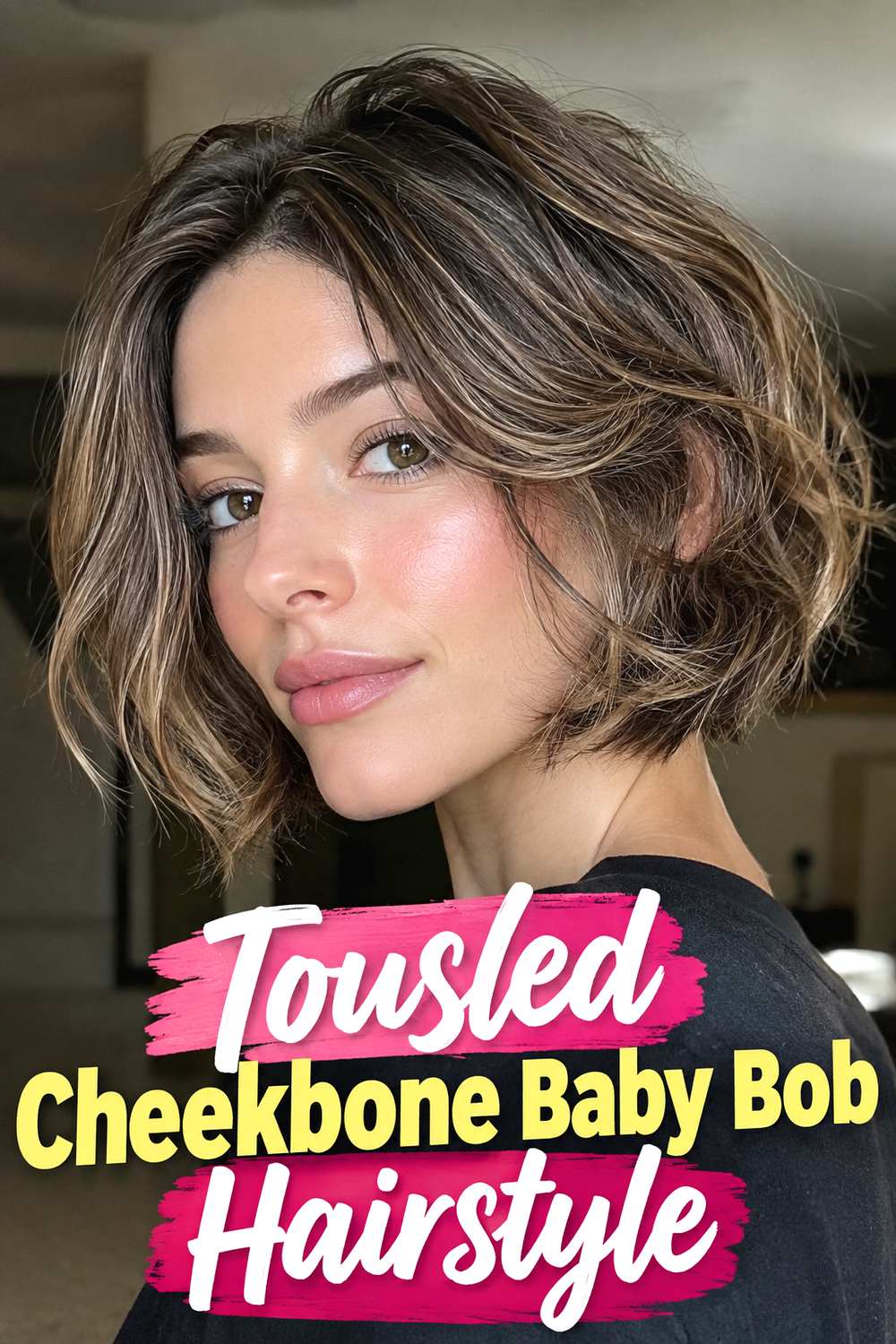
A tousled baby bob takes the strong cheekbone-length base and breaks up its formality with irregular bends and soft separation. The perimeter remains recognizable, but the surface looks slightly undone rather than freshly pressed into place. This styling direction can be particularly useful for second-day hair because a little natural texture supports the finish. The best result has controlled imperfection: too much teasing can overwhelm the short silhouette, while too much wax can make the ends clump heavily. Add gentle bends through selected sections, then loosen them with your fingers instead of brushing everything into uniform waves. A small amount of dry texture spray near the roots can provide lift, but preserve enough shine and movement for the hair to still look healthy.
Why It Works
The loose finish offsets the precision of the short cut, creating a playful contrast between a defined perimeter and an easygoing surface texture.
Pro Tip
Style fewer sections than you think you need. Leaving some strands straighter creates the variation that makes a tousled bob look natural.
16. Rounded Cheekbone Baby Bob Hairstyle
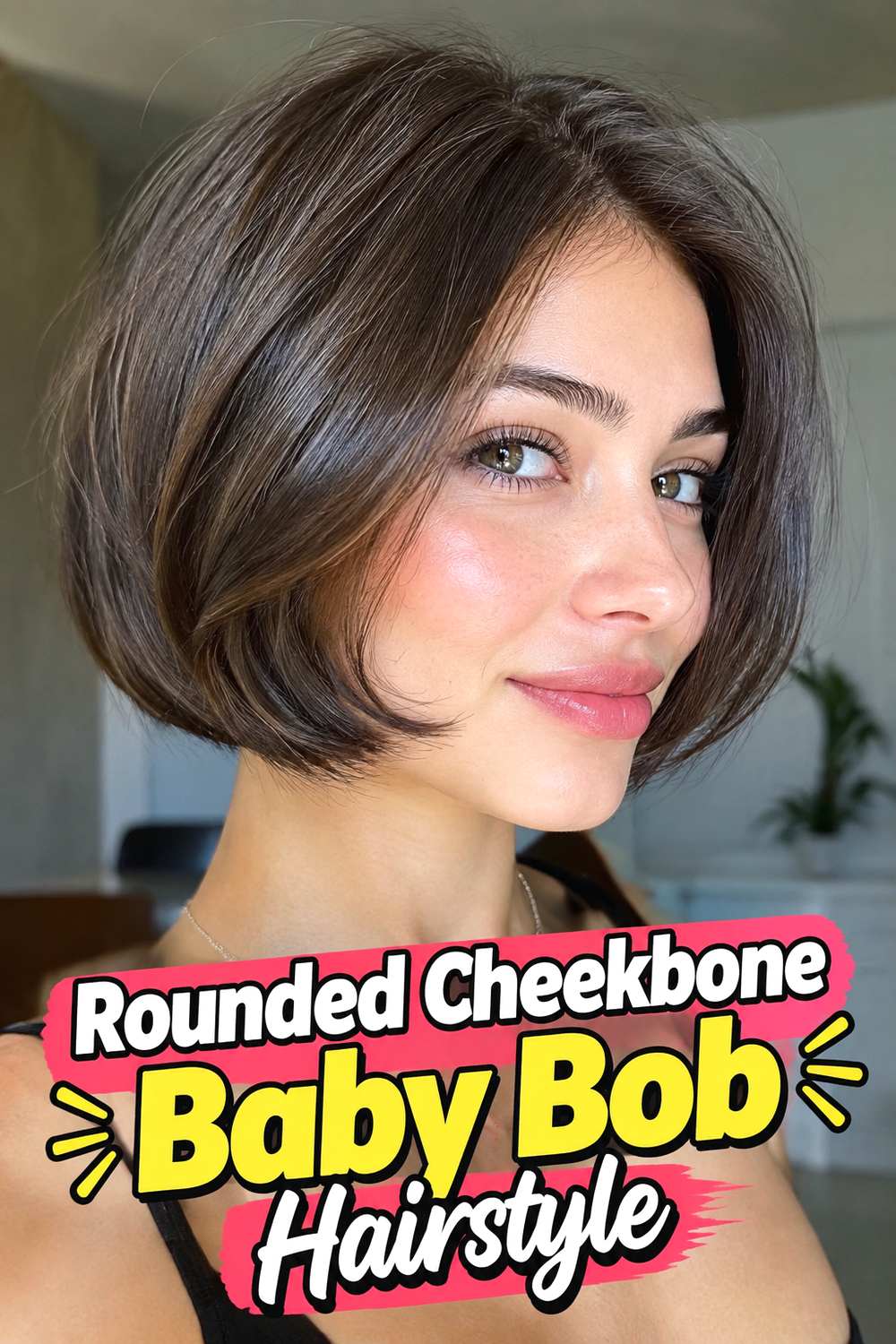
The rounded cheekbone baby bob uses gentle curvature to create a smooth, softly sculpted silhouette. Rather than hanging completely straight from the roots, the hair follows the shape of the head and turns subtly inward near the perimeter. This gives the cut a polished vintage influence without requiring an exaggerated under-curl. The shape can be particularly effective on straight to softly wavy hair that responds well to directional blow-drying. Density should be carefully considered because overly heavy sides can make a short rounded bob appear bulky. A medium or small round brush can guide the ends inward, but keep the bend relaxed. Finishing with a light flexible spray helps maintain the contour while allowing the bob to move when you turn your head.
Hair Type & Length
Straight and softly textured hair can show the rounded outline clearly. Fuller hair may require internal shaping so the curved silhouette stays controlled.
Styling Notes
Direct the airflow downward while gently curving the ends rather than aggressively rolling them under, which can make the finish look dated.
17. Razored Ends Cheekbone Baby Bob Hairstyle
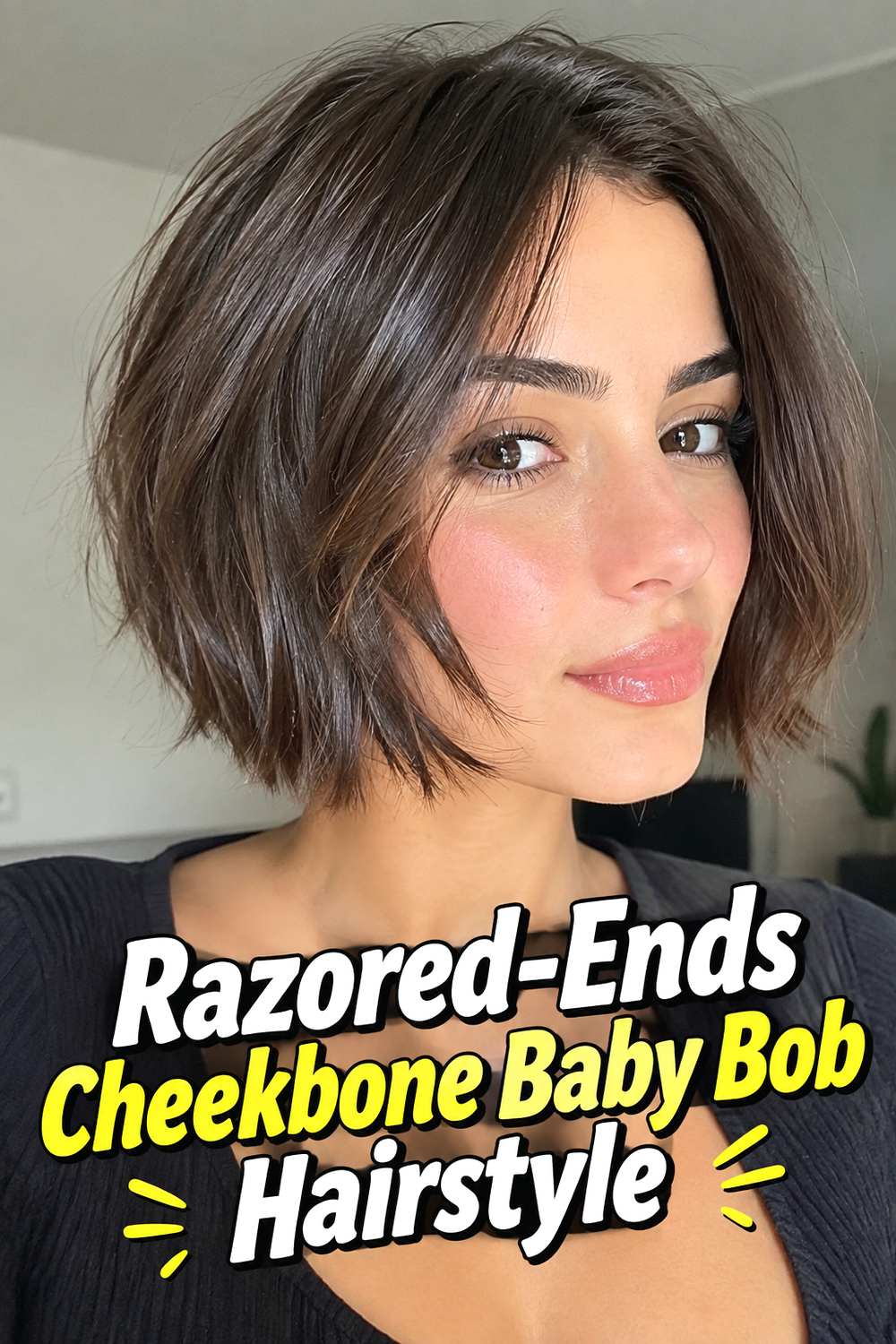
Razored ends give the cheekbone baby bob a lighter, more fragmented edge than a traditional blunt perimeter. Instead of one heavy line, individual pieces appear finely separated, creating softness and movement around the face. The technique can work beautifully on suitable straight, wavy, or medium-density textures, but it should be chosen thoughtfully because heavily razored ends may behave differently on hair that frizzes easily or lacks sufficient density. The overall shape should remain compact enough to read clearly as a baby bob rather than becoming overly feathered. A lightweight styling cream or flexible paste can highlight a few ends after drying. Use only a small amount, warming it between the fingers before touching selected sections so the result stays airy.
Best For
This option suits anyone who likes a defined short cut but finds a perfectly blunt perimeter too severe for their preferred finish.
Pro Tip
Discuss your texture before requesting razor work. The cutting technique should support the way your ends naturally behave instead of fighting them.
18. Deep Side Swept Cheekbone Baby Bob Hairstyle
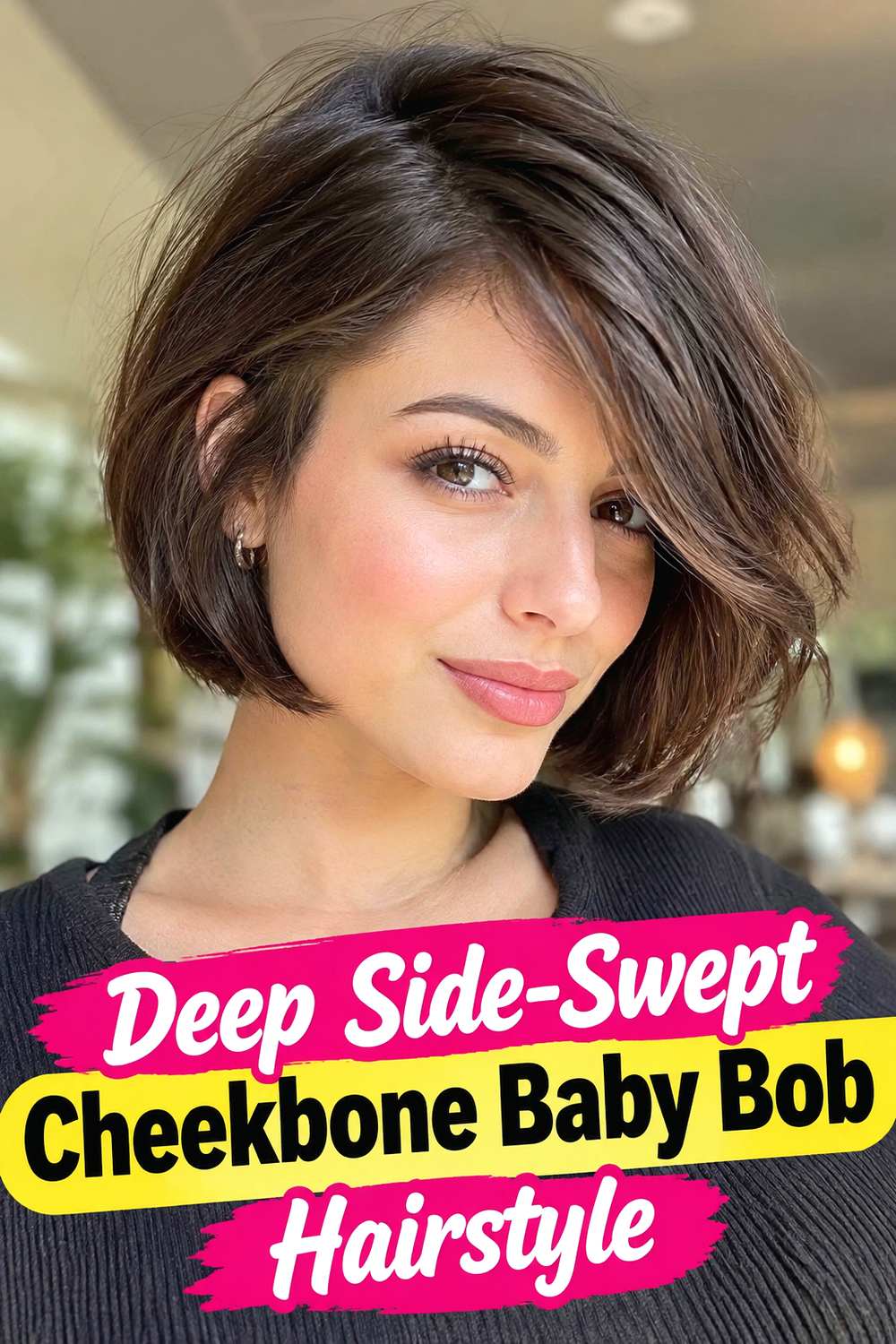
A deep side sweep creates drama through placement rather than additional length. Most of the hair is directed across the top from a low side part, creating a fuller section that moves diagonally toward the opposite cheekbone. The remaining side can sit flatter or tuck neatly behind the ear, making the contrast especially striking on a short bob. This approach works with sleek, wavy, or lightly tousled finishes and can be changed whenever you want a softer part. Root direction is important, particularly if the hair naturally grows straight forward or strongly favors another division. Blow-dry the top section across the head while lifting slightly at the root, then let the ends fall naturally instead of creating an oversized swoop.
Why It Works
The exaggerated part changes the visual balance of the haircut while preserving the same cheekbone-length perimeter underneath.
Wear & Maintenance
If you alternate parts frequently, ask for a shape that remains balanced when the hair returns to its natural placement.
19. Piecey Cheekbone Baby Bob Hairstyle
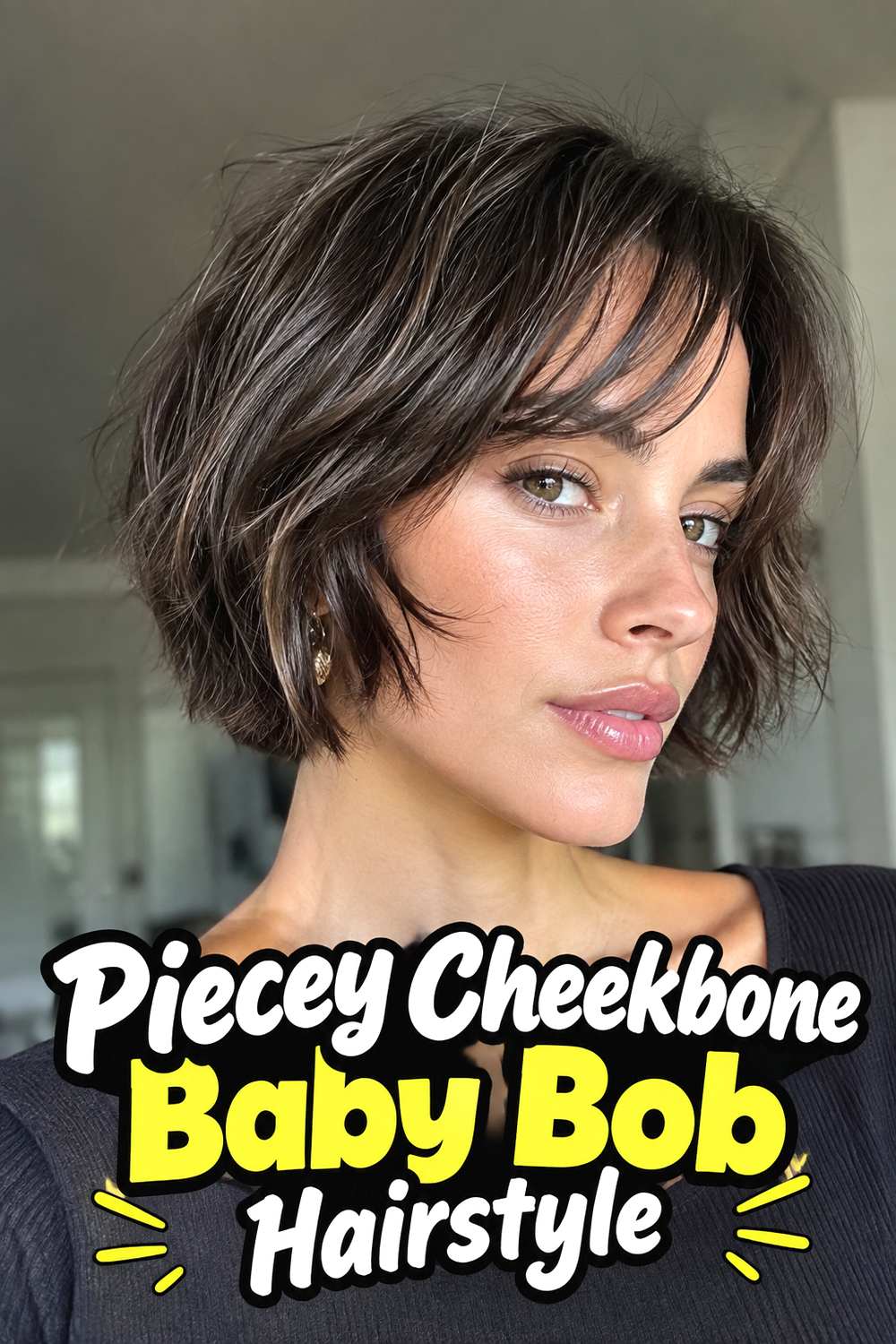
The piecey cheekbone baby bob emphasizes small sections of separation through the ends, giving the short haircut a modern, textured finish without requiring obvious waves. The base can remain relatively blunt or softly layered, but selected strands are encouraged to sit apart so the perimeter looks light and dimensional. This effect is particularly useful when you want definition in straight or subtly textured hair without creating a fully tousled style. The main styling mistake is using too much product, which can turn delicate separation into greasy-looking clumps. Start with completely dry hair and rub a tiny amount of flexible paste or lightweight cream between your fingertips. Pinch only a few ends around the sides and front, then leave the rest of the bob naturally soft.
Styling Notes
Concentrate definition near the perimeter rather than coating every strand. The contrast between separated pieces and untouched hair makes the finish more believable.
Best For
Choose this variation if you enjoy visible texture but still want the haircut to look compact, clean, and easy to refine.
How to Choose the Right Look
Start with the finished length you actually want. A cheekbone baby bob is short enough that natural wave, curl shrinkage, cowlicks, and ear placement can noticeably change where the perimeter appears after drying. If your hair has significant texture, judge the desired length on dry hair rather than relying only on a wet reference photo.
Next, compare density and texture. Fine hair often benefits from blunt or lightly layered versions that preserve visual fullness. Medium and thick hair may need strategic internal shaping to prevent too much width through the sides. Wavy and curly hair can look beautiful at this length, but the silhouette should be designed around the natural pattern instead of straightened first and treated as though it will stay that way.
Consider styling time as well. Air-dried, French-inspired, curly, wavy, tousled, and piecey versions can suit people who enjoy visible natural movement. Sleek glass-hair, rounded, and very blunt versions may need more deliberate smoothing when your natural texture does not already behave that way.
Your preferred hold and comfort also matter. Bangs, deep side parts, ear tucks, and center parts can all change how often hair touches the forehead, eyes, or cheeks. If you dislike adjusting short pieces throughout the day, mention that before choosing fringe or a dramatic part.
For maintenance, remember that a baby bob’s distinctive proportions change as it grows. Crisp blunt edges, micro bangs, and exact cheekbone lengths generally show growth more obviously than softly layered or textured variations. If frequent reshaping is inconvenient, select a version that transitions gracefully into a slightly longer bob.
Finally, choose the finish that feels realistic for your everyday routine. A haircut that looks impressive only after extensive styling may not be the most satisfying choice if you normally air-dry. The most wearable version is the one whose shape, texture, and maintenance requirements fit the way you actually treat your hair.
Final Thoughts
A cheekbone baby bob can shift from precise and graphic to airy and effortless with only small changes in the perimeter, part, fringe, and texture. Narrow your favorites by considering how your hair behaves when dry, how much styling you enjoy, and whether you prefer a clean or softly textured finish. Bring a few references to your stylist and discuss how each shape would translate to your own density, growth pattern, and natural movement.
FAQs
1. What is a cheekbone baby bob?
A cheekbone baby bob is an extra-short bob whose visible perimeter sits around the cheekbone area rather than closer to the chin or shoulders. Exact placement varies according to face shape, hair texture, and shrinkage.
2. Does a cheekbone baby bob work with wavy or curly hair?
Yes. Waves and curls can give the short shape beautiful movement, but the cut should account for shrinkage and the natural dry pattern. A dry or curl-aware consultation can make the intended length easier to plan.
3. Is a blunt or layered baby bob easier to style?
That depends on texture and density. Blunt bobs can be simple on naturally straight hair, while subtle layering may make thicker or naturally moving hair easier to shape without excess bulk.
4. Can I wear bangs with a cheekbone baby bob?
Yes. Wispy bangs, micro bangs, and curtain fringe all create different effects. Consider your forehead growth patterns, styling routine, and willingness to maintain the fringe before choosing one.
5. How do I keep a very short bob from looking too flat?
Use lightweight products, avoid applying heavy oils near the roots, and create lift while drying rather than adding large amounts of product afterward. Texture, a side part, or subtle internal shaping can also help preserve movement.
Save your favorite cheekbone baby bob ideas, compare the shapes with your natural texture, and explore more short-hairstyle inspiration before your next cut.