14 Collarbone-Length S-Wave Hairstyles With Boxy Wool Jackets
Collarbone-length S-waves bring soft, flowing movement to boxy wool jackets while keeping the neckline polished and the jacket’s structured silhouette easy to see.
Boxy winter jackets create width through the shoulders and torso, so the hairstyle works best when it adds movement without building too much extra volume at the same level. Collarbone length is particularly useful because the ends can sit just above, beside, or lightly over the jacket rather than disappearing beneath bulky fabric.
S-waves offer plenty of flexibility within that shape. They can be glossy and controlled, brushed out and airy, naturally textured, or softly separated for a more casual finish. Part placement, root lift, and the strength of the bends all change how the hairstyle balances a broad wool jacket, so these ideas focus on wearable proportions and realistic movement.
Quick List
- Center Part Glossy S Wave Hairstyle
- Soft Side Part S Wave Hairstyle
- Airy Root Lift S Wave Hairstyle
- Face Framing S Wave Hairstyle
- Low Volume Polished S Wave Hairstyle
- Brushed Out Collarbone S Wave Hairstyle
- Off Center Soft S Wave Hairstyle
- Piecey Textured S Wave Hairstyle
- Deep Side Sweep S Wave Hairstyle
- Rounded End S Wave Hairstyle
- Tucked Behind Ear S Wave Hairstyle
- Natural Texture S Wave Hairstyle
- Feathered Collarbone S Wave Hairstyle
- Minimal Glossy S Wave Hairstyle
1. Center Part Glossy S Wave Hairstyle
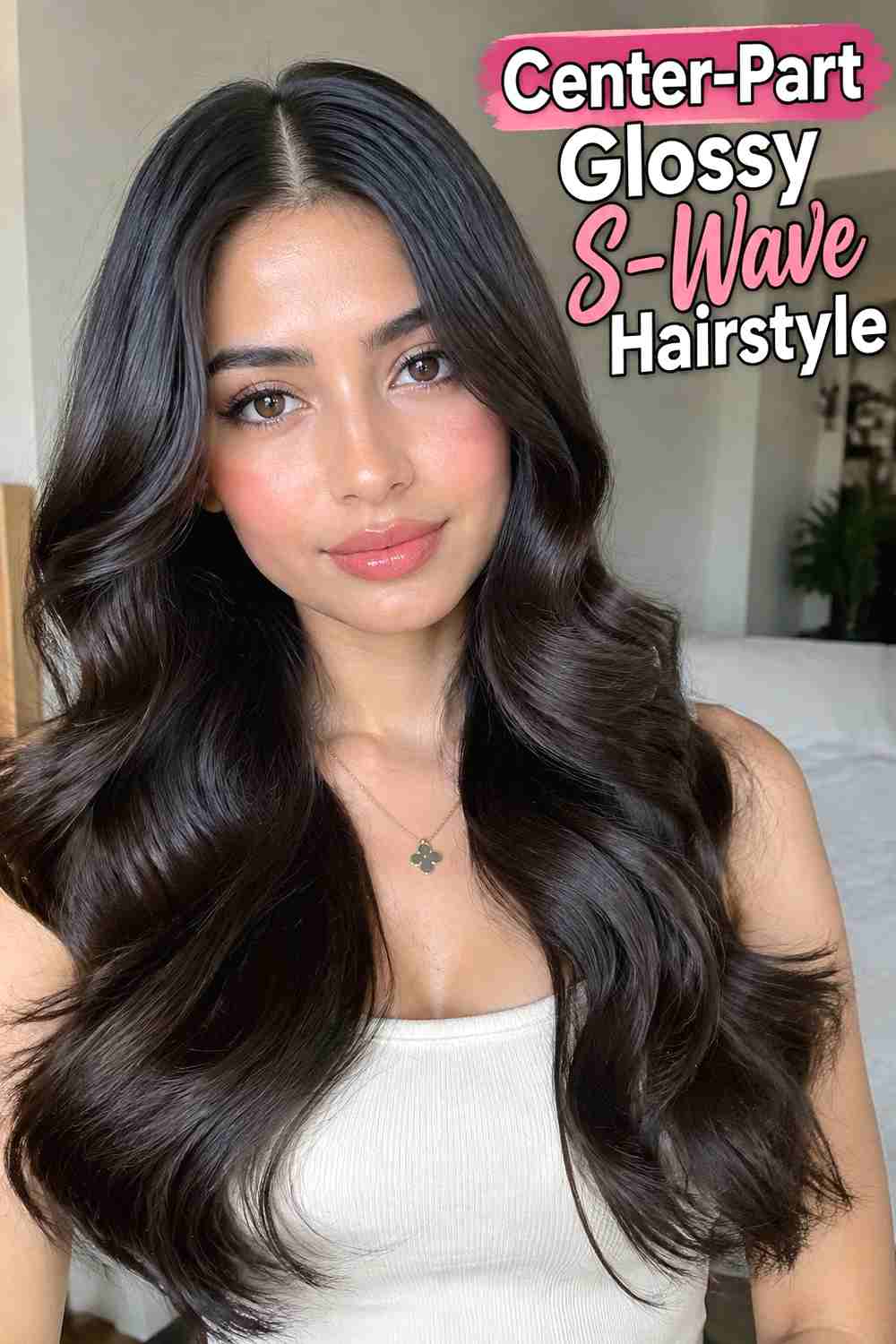
A clean center part gives collarbone-length S-waves a balanced shape that contrasts neatly with a boxy wool jacket. Keep the roots smooth and let the first bend begin around cheek or jaw level, then alternate the direction through the middle and ends. A subtle glossy finish makes each curve easier to see without turning the hair into a rigid, uniform wave pattern. Because the jacket already creates width across the shoulders, keep the side volume controlled and let the hair fall close to the face before opening slightly near the ends. The symmetrical part also works well with oversized lapels or simple high necklines because the hairstyle adds softness without obscuring the structure of the outerwear.
Styling Notes
Use broad bends rather than tight curls, then separate them lightly so the S-pattern remains visible but natural.
Best For
Straight to softly wavy hair with enough density to hold a defined shape works especially well.
2. Soft Side Part S Wave Hairstyle
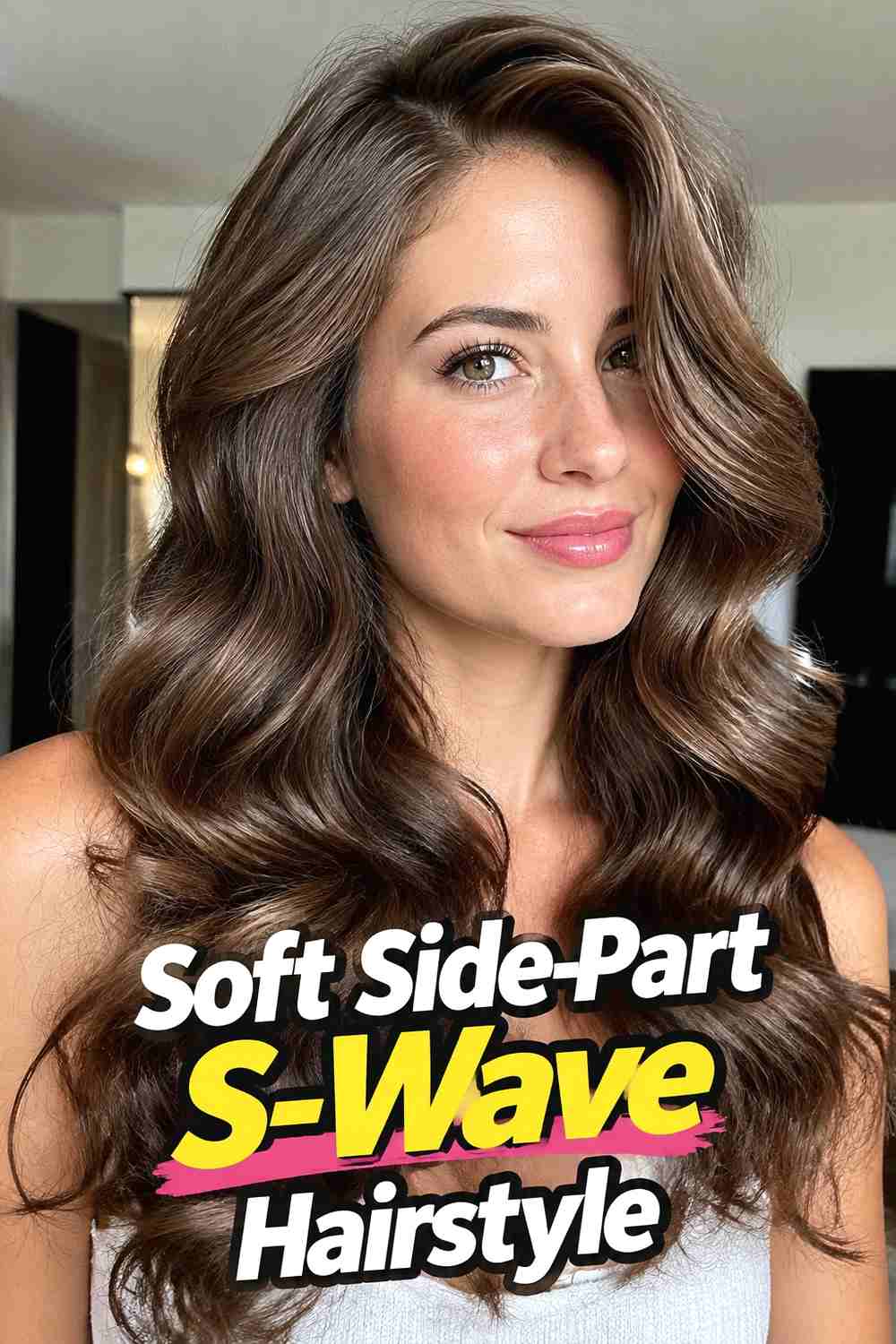
A soft side part gives collarbone-length waves natural height without creating an exaggerated crown. The heavier side can sweep gently across the forehead before forming a wide S-bend near the cheekbone, while the lighter side stays closer to the head. This asymmetry is useful with a boxy jacket because it offsets the garment’s strong, square silhouette. Keep the waves elongated rather than rounded so the hair does not become too wide at shoulder level. The ends can curve lightly outward or inward as they meet the collarbone, creating movement without excessive fullness. The result feels polished but relaxed, making it easy to pair with simple knits, high-neck tops, or buttoned wool jackets.
Why It Works
The asymmetrical part introduces height and direction while keeping the sides relatively narrow.
Pro Tip
Follow your natural parting tendency so the lifted side stays in place without heavy styling product.
3. Airy Root Lift S Wave Hairstyle
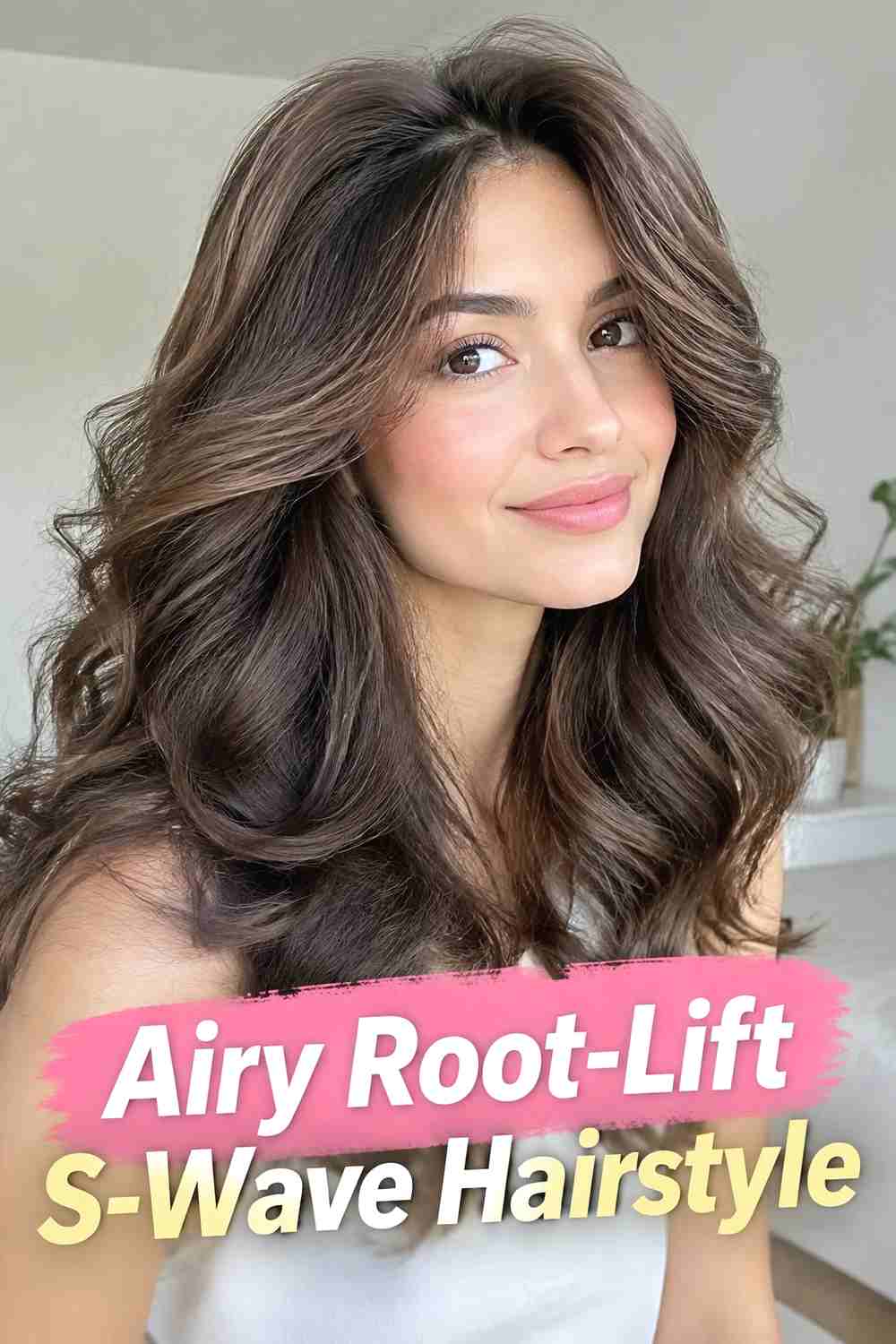
Soft root lift gives an S-wave hairstyle extra dimension above the broadest part of a boxy jacket. Instead of creating width through the sides, concentrate gentle elevation around the crown and part, then let the wave pattern become more visible through the lower half. At collarbone length, this creates a light top and softly moving perimeter that feels balanced against substantial wool fabric. Keep the individual bends broad and slightly irregular so the hair retains believable movement. A few sections can sit closer to the face while others turn outward near the ends. The overall shape should look buoyant rather than teased, with enough separation to prevent the style from becoming overly rounded.
Styling Notes
Lift the root sections first, then create the S-bends farther down so the two types of volume remain distinct.
Best For
Fine to medium-density hair benefits from this strategic placement because the lift adds shape without requiring dense curls.
4. Face Framing S Wave Hairstyle
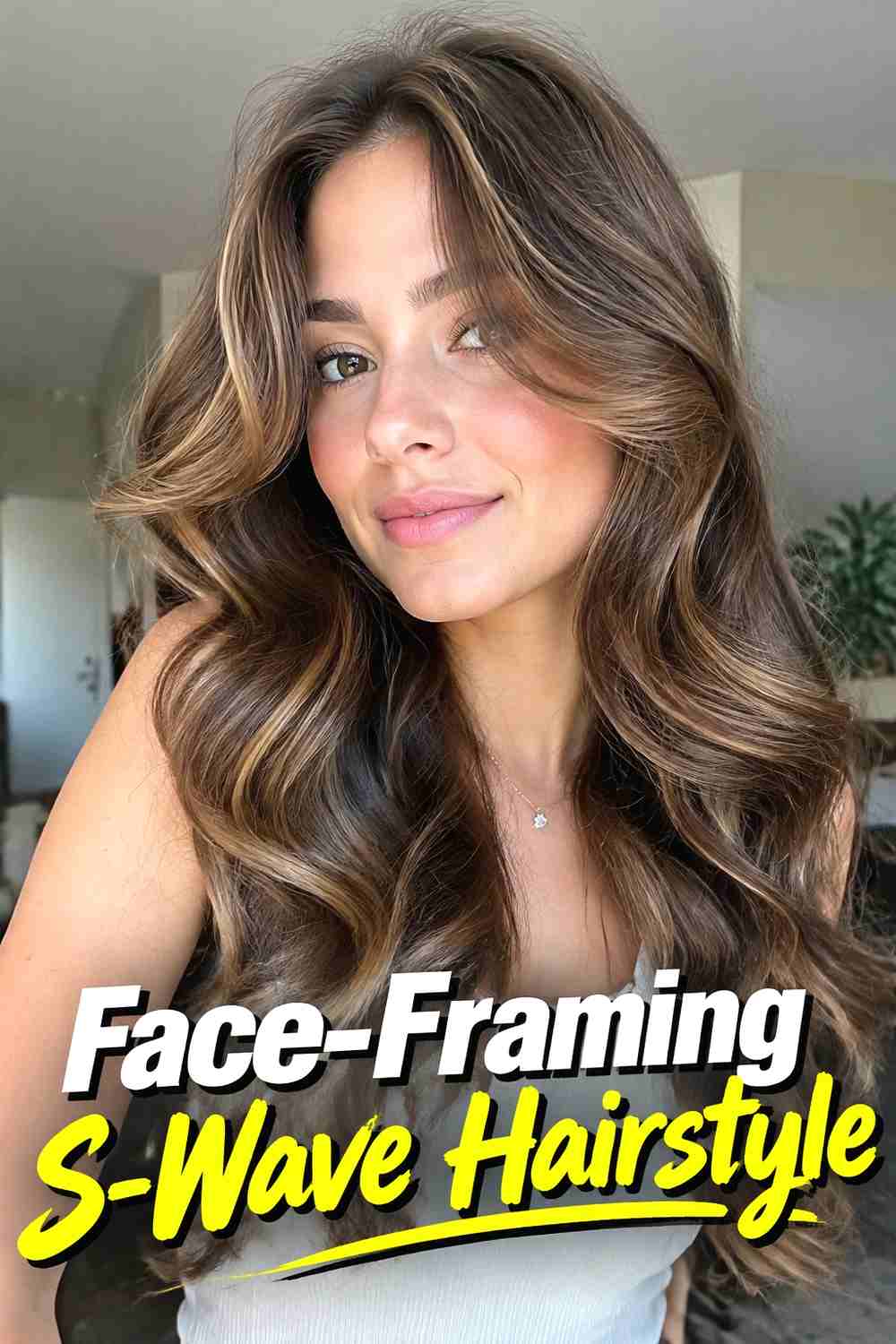
Face-framing pieces make collarbone-length S-waves especially flattering with structured winter outerwear. Shorter front sections can bend away from the cheekbones before merging into broader waves near the jaw and shoulders. This keeps movement concentrated around the face rather than adding unnecessary width beside a boxy jacket. The longest sections should retain enough weight to fall smoothly around the collarbone, while the front pieces stay visibly separate. A center or soft off-center part can both work, depending on where your natural volume sits. The finished style feels dimensional from the front and allows the jacket collar, lapels, or neckline to remain visible instead of being covered by a solid curtain of hair.
Hair Type & Length
Collarbone cuts with subtle front layering show this effect most clearly, particularly on straight to wavy textures.
Styling Notes
Shape the front pieces separately so they do not merge completely into the waves behind them.
5. Low Volume Polished S Wave Hairstyle
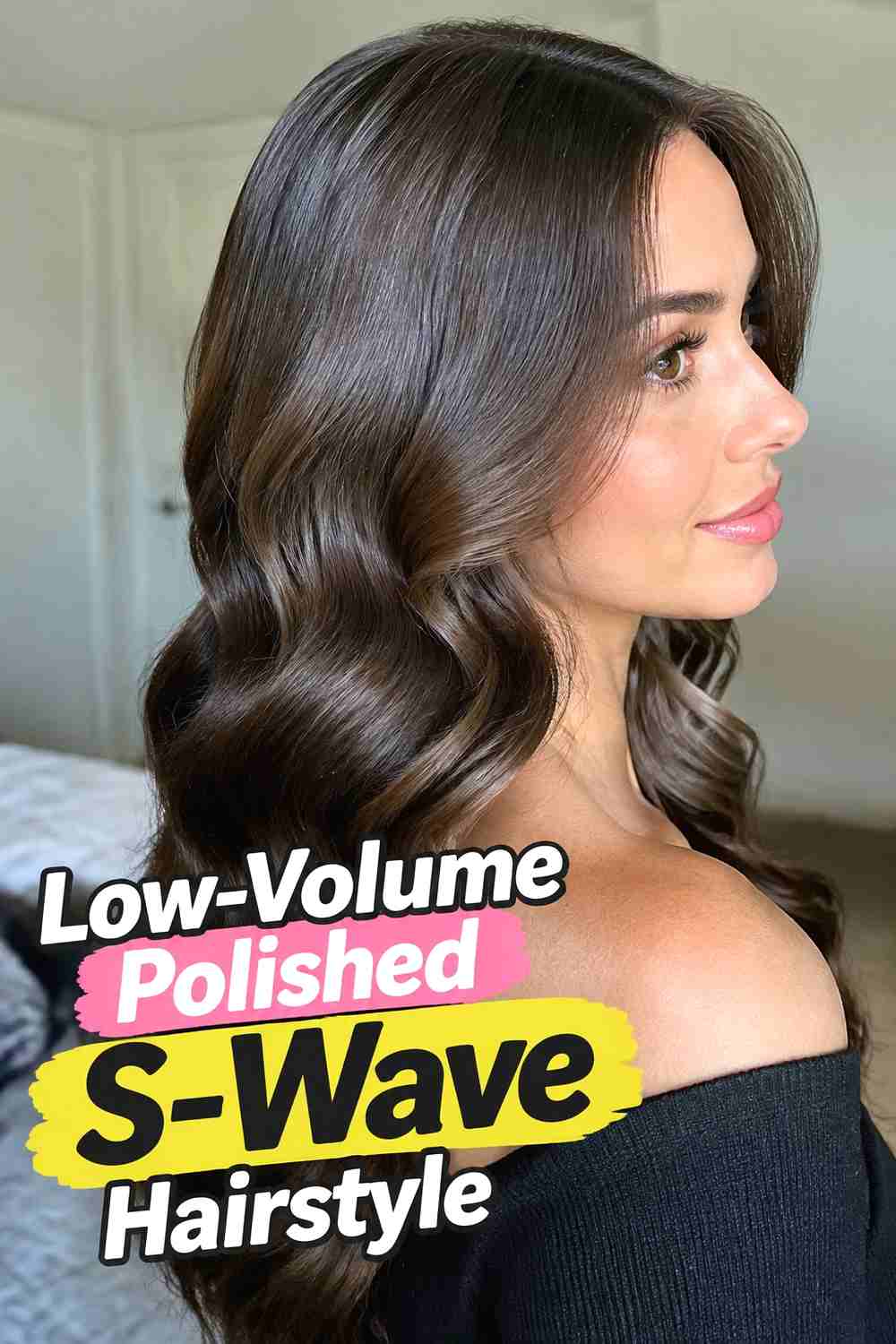
Low-volume S-waves create elegant movement without competing with the strong proportions of a boxy wool jacket. Keep the roots smooth, the sides close to the head, and the wave pattern elongated through the mid-lengths. Instead of expanding outward, each bend should travel downward before gently changing direction. This gives the hair visible texture while preserving a narrow overall silhouette. The ends can rest just above or against the collarbone with a soft curve rather than a pronounced flip. A polished surface works especially well with tailored or minimalist wool jackets because both the hair and clothing maintain clean lines. Natural strand separation prevents the glossy finish from looking overly set or artificial.
Why It Works
Controlled width allows the hairstyle to soften structured outerwear without making the entire upper-body silhouette look broader.
Wear & Maintenance
Finger-comb the waves rather than repeatedly brushing them, which can create unwanted fluff around the sides.
6. Brushed Out Collarbone S Wave Hairstyle
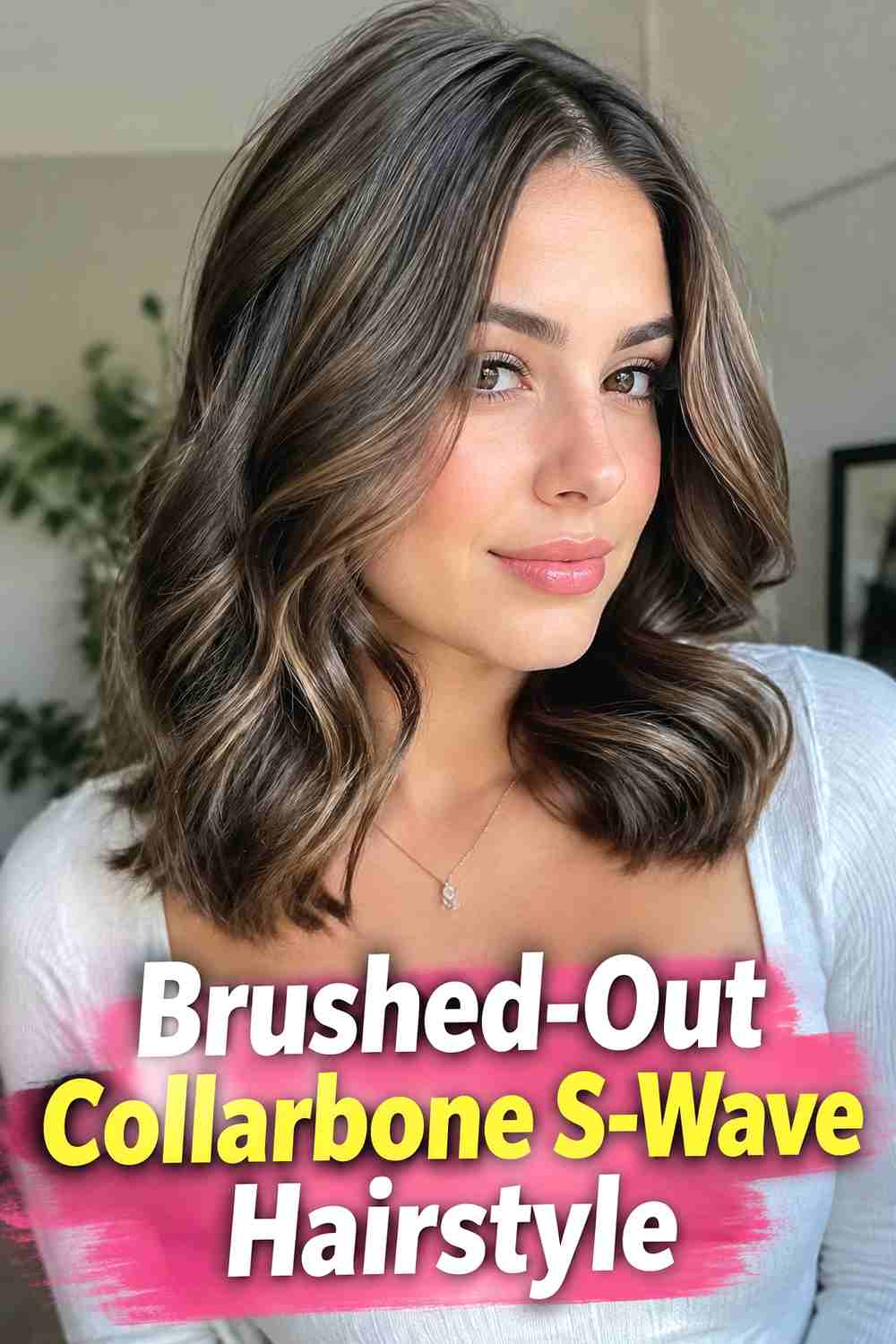
Brushed-out S-waves create soft, blended movement that looks relaxed beside the heavier structure of a wool jacket. Start with clearly formed bends, allow them to set, and then brush gently until neighboring sections begin to merge into larger curves. The result should still show an S-shaped direction change, but with a softer edge and slightly fuller finish. Because the jacket is boxy, keep most of that fullness through the hair’s surface and ends rather than building significant side volume. At collarbone length, the waves can move freely above the shoulders without becoming trapped beneath the jacket. A little natural separation near the ends helps maintain a modern finish rather than an overly formal vintage wave.
Styling Notes
Stop brushing as soon as the bends begin to connect; too much brushing can remove the S-shape entirely.
Best For
Medium-density hair that holds a curl or bend well is especially suited to this plush finish.
7. Off Center Soft S Wave Hairstyle
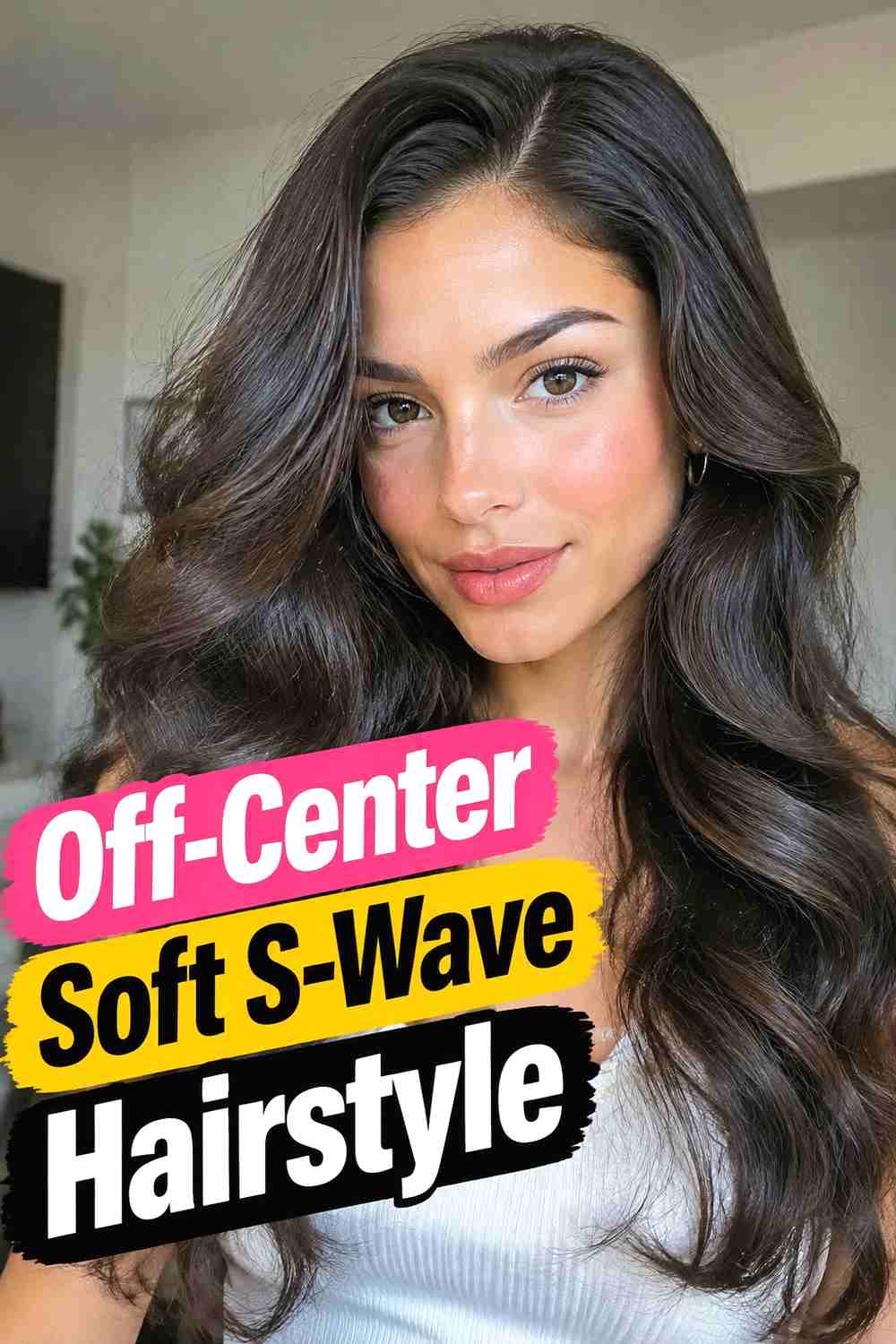
An off-center part provides subtle asymmetry without shifting all of the hair to one side. That makes it a useful choice when pairing collarbone-length waves with a jacket that already has a broad, geometric silhouette. The slightly heavier side gains a touch of natural lift, while both sides still carry soft S-bends through the lower lengths. Keep the wave pattern relaxed and uneven enough to look wearable rather than perfectly sculpted. The ends can turn in opposite directions for additional movement, but avoid creating a wide bell shape at shoulder level. This understated approach works especially well for everyday winter styling because the hair remains polished without looking overly formal or dependent on precise symmetry.
Why It Works
A small change in part placement introduces movement while maintaining enough balance for structured outerwear.
Pro Tip
Shift the part only slightly from center so the lighter side does not lose too much density.
8. Piecey Textured S Wave Hairstyle

Piecey S-waves emphasize individual sections rather than blending the entire hairstyle into one polished pattern. This creates a lighter, more casual texture that works well against dense wool fabric. Begin with broad bends, then use your fingers to separate the hair into smaller visible groups through the middle and ends. Some pieces can remain straighter, while others show a stronger curve, which makes the overall texture look believable. Keep the roots relatively controlled so the visual interest stays below the temples and away from the jacket’s broad shoulder line. At collarbone length, the slightly broken-up ends create movement around the neckline without adding the heavy fullness of a traditional curled bob.
Styling Notes
Use minimal finishing product and concentrate it on individual sections instead of smoothing the entire surface together.
Wear & Maintenance
If the texture flattens, reshape only a few front pieces rather than reworking every wave.
9. Deep Side Sweep S Wave Hairstyle
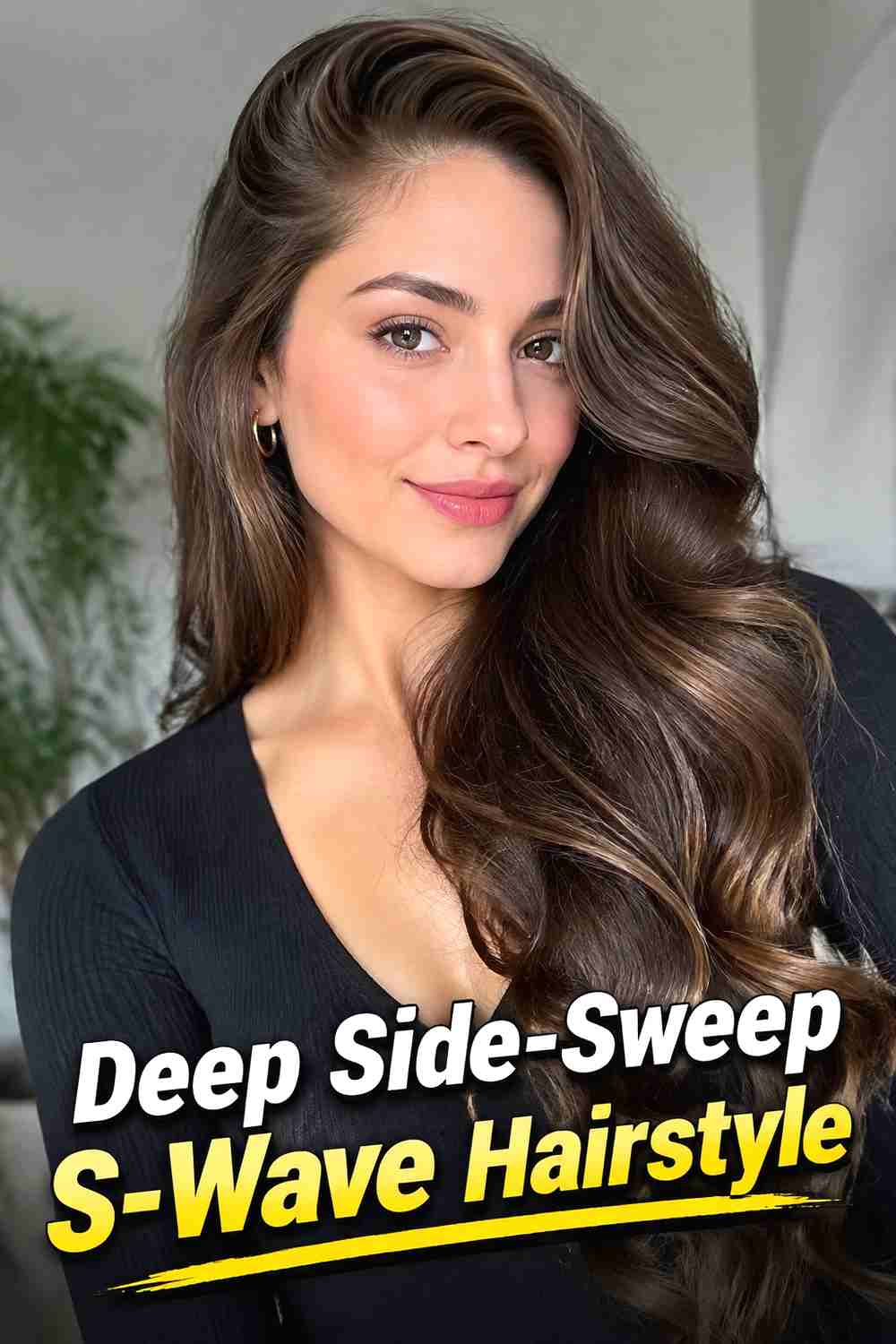
A deeper side part gives collarbone-length S-waves a stronger directional shape, with most of the movement concentrated on one side. The heavier section can sweep across the forehead and form a broad bend beside the cheek before continuing toward the collarbone. Keep the opposite side tucked or relatively flat so the hairstyle does not become too wide against a boxy jacket. This contrast between one fuller side and one controlled side creates an elegant asymmetry that suits simple wool outerwear particularly well. The wave pattern can remain polished or lightly separated, but it should maintain realistic weight. Avoid excessive crown height; the drama should come from direction and shape rather than exaggerated volume.
Best For
Medium-density hair that naturally favors a side part makes this style easier to maintain.
Pro Tip
Tucking the lighter side behind the ear can keep the jacket neckline visible and reinforce the asymmetrical silhouette.
10. Rounded End S Wave Hairstyle
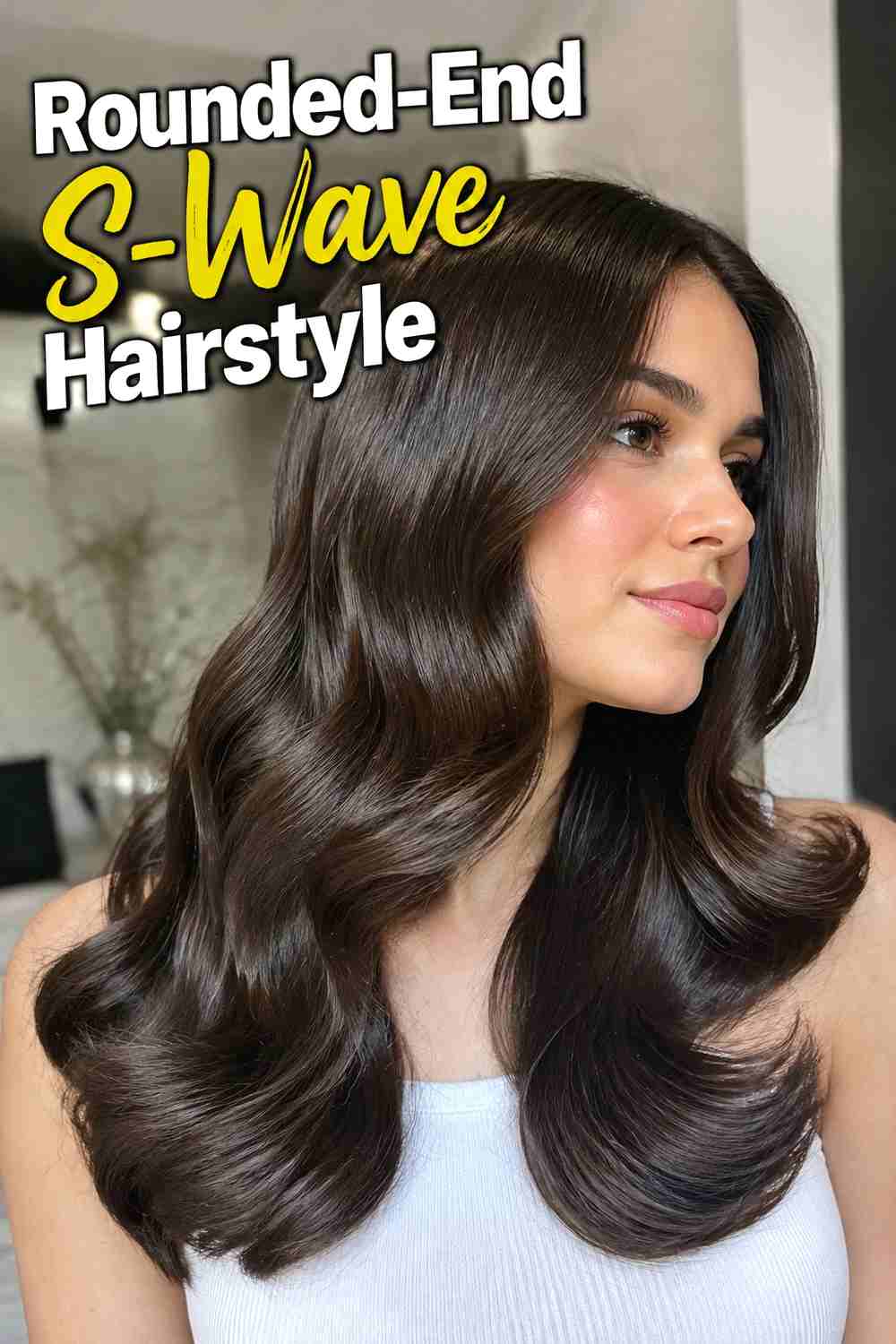
Rounded ends give collarbone-length S-waves a smooth, finished perimeter without turning them into full curls. Keep the roots and upper lengths relatively sleek, introduce a broad bend through the middle, and allow the final few inches to curve softly under or outward. The combination creates an elongated S-pattern with a polished ending that sits neatly around the collarbone. With a boxy wool jacket, this controlled perimeter prevents the hairstyle from competing with the garment’s wider shape. Alternate the final direction slightly between sections so the ends still look natural. The result has enough movement for visual interest while remaining compact enough for jackets with strong shoulders or oversized front panels.
Why It Works
The rounded perimeter adds softness exactly where the jacket’s structure begins, creating contrast without excessive width.
Styling Notes
Shape only the last few inches strongly; curling too high can make the hairstyle look shorter and much fuller.
11. Tucked Behind Ear S Wave Hairstyle
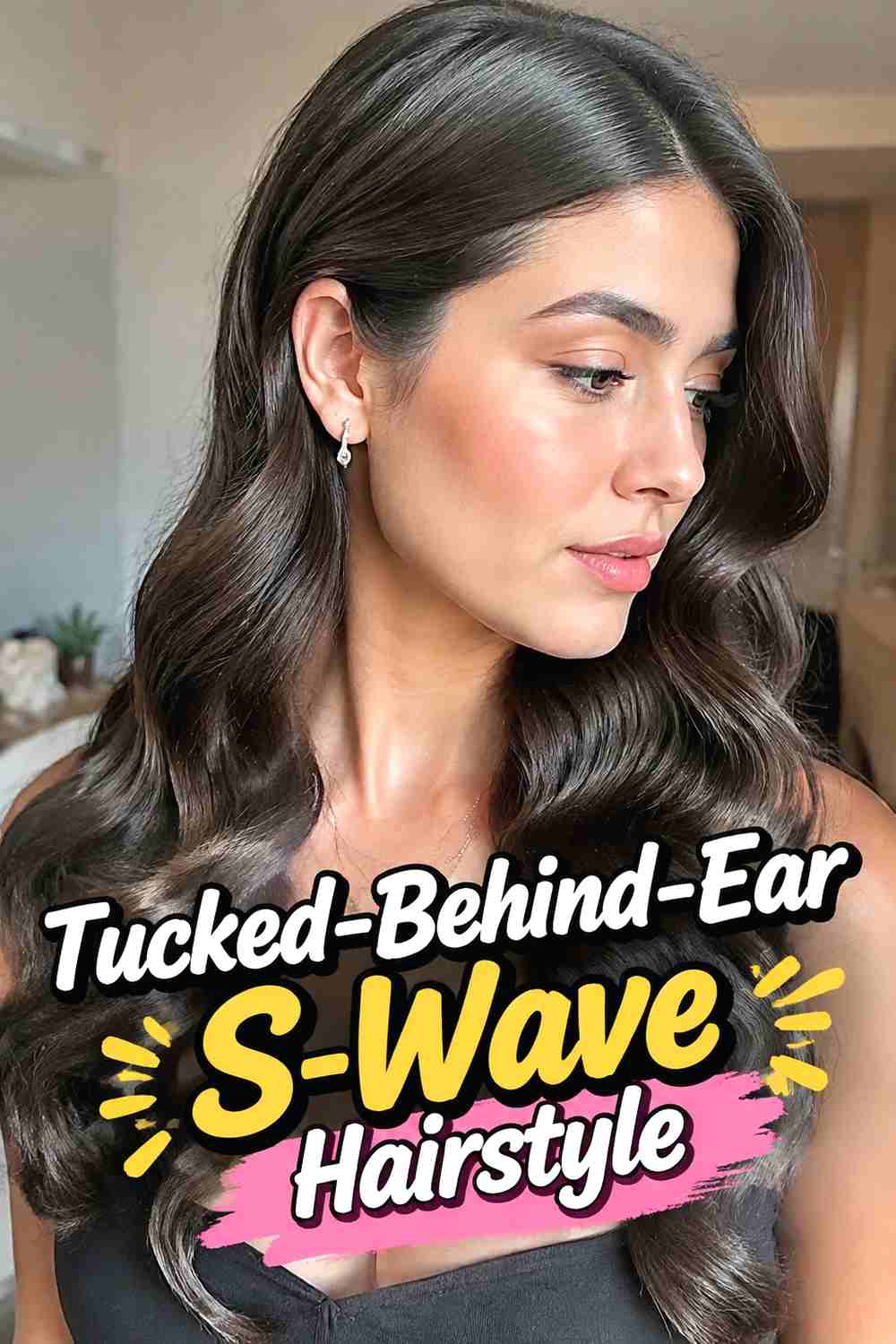
Tucking one side behind the ear is an easy way to control collarbone-length waves when wearing a boxy jacket. The tucked side stays sleek near the temple, while the opposite side carries more visible S-shaped movement. This keeps at least one section of the jacket neckline exposed and prevents the hairstyle from forming equal width on both sides. The lower lengths can still curve naturally around the collarbone, so the style retains softness despite the more controlled upper section. A center or off-center part both work, though a slight side part can enhance the asymmetric effect. The finished look feels clean, modern, and practical for winter days when hair repeatedly meets collars and outerwear.
Wear & Maintenance
Retuck only the small front section when necessary instead of repeatedly handling the full side of the hairstyle.
Best For
This works particularly well with medium to thick hair that otherwise creates too much fullness around a structured collar.
12. Natural Texture S Wave Hairstyle
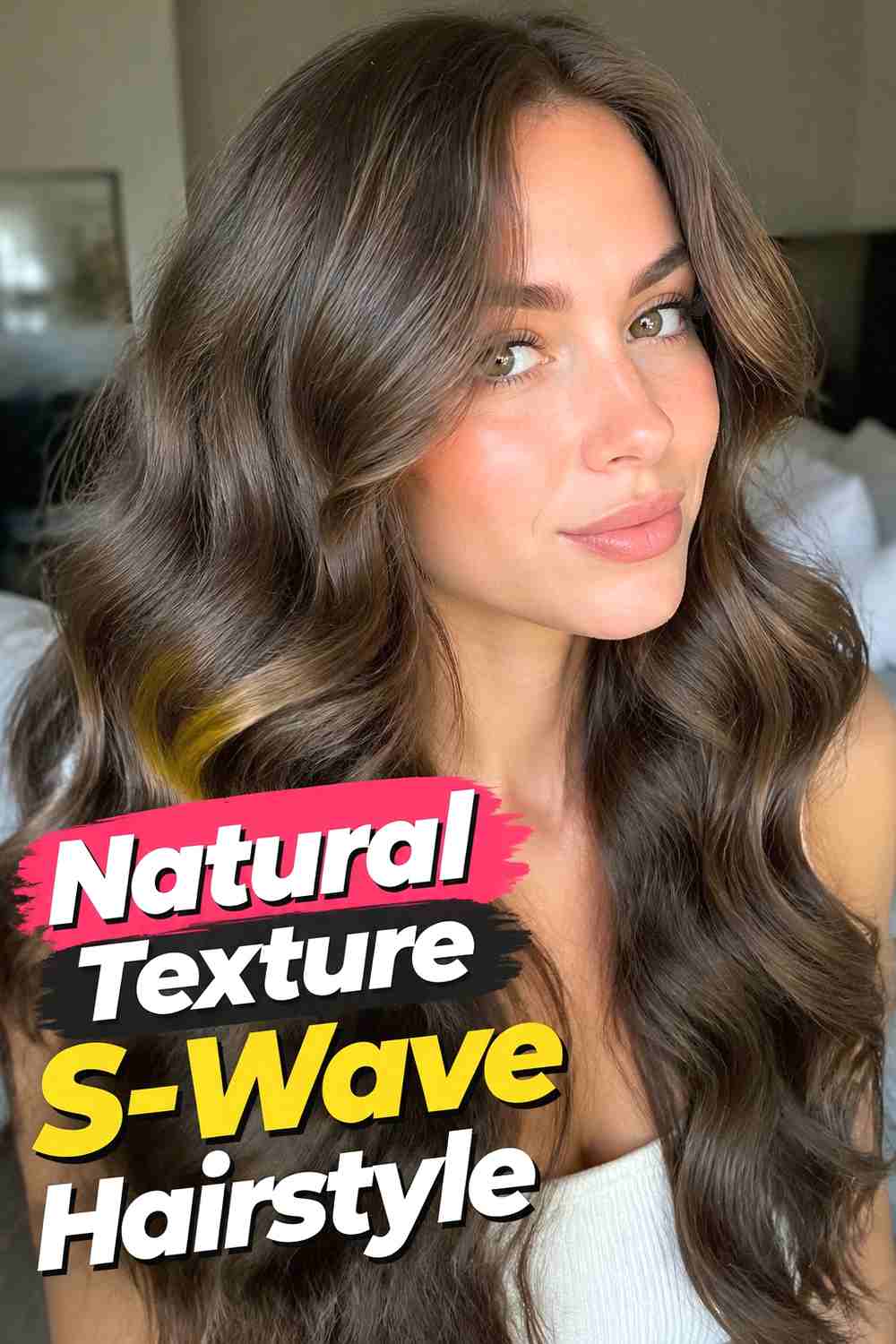
Naturally wavy hair can create beautiful S-shaped movement without making every bend identical. Preserve the existing pattern and focus on defining the most visible sections around the face and collarbone. Some strands may form a stronger S, while others remain looser, creating realistic texture and depth. With a boxy wool jacket, control excessive width by arranging part of the hair slightly behind the shoulders or keeping the roots close to their natural shape. Avoid overworking the texture into a uniform polished wave, since variation is what gives this look its character. At collarbone length, natural bends also remain light enough to move around the jacket rather than becoming trapped beneath heavy outerwear.
Hair Type & Length
Naturally wavy and loosely curly hair at shoulder-to-collarbone length adapts especially well to this approach.
Why It Works
Organic variation softens the jacket’s geometric shape while still maintaining an intentional overall silhouette.
13. Feathered Collarbone S Wave Hairstyle
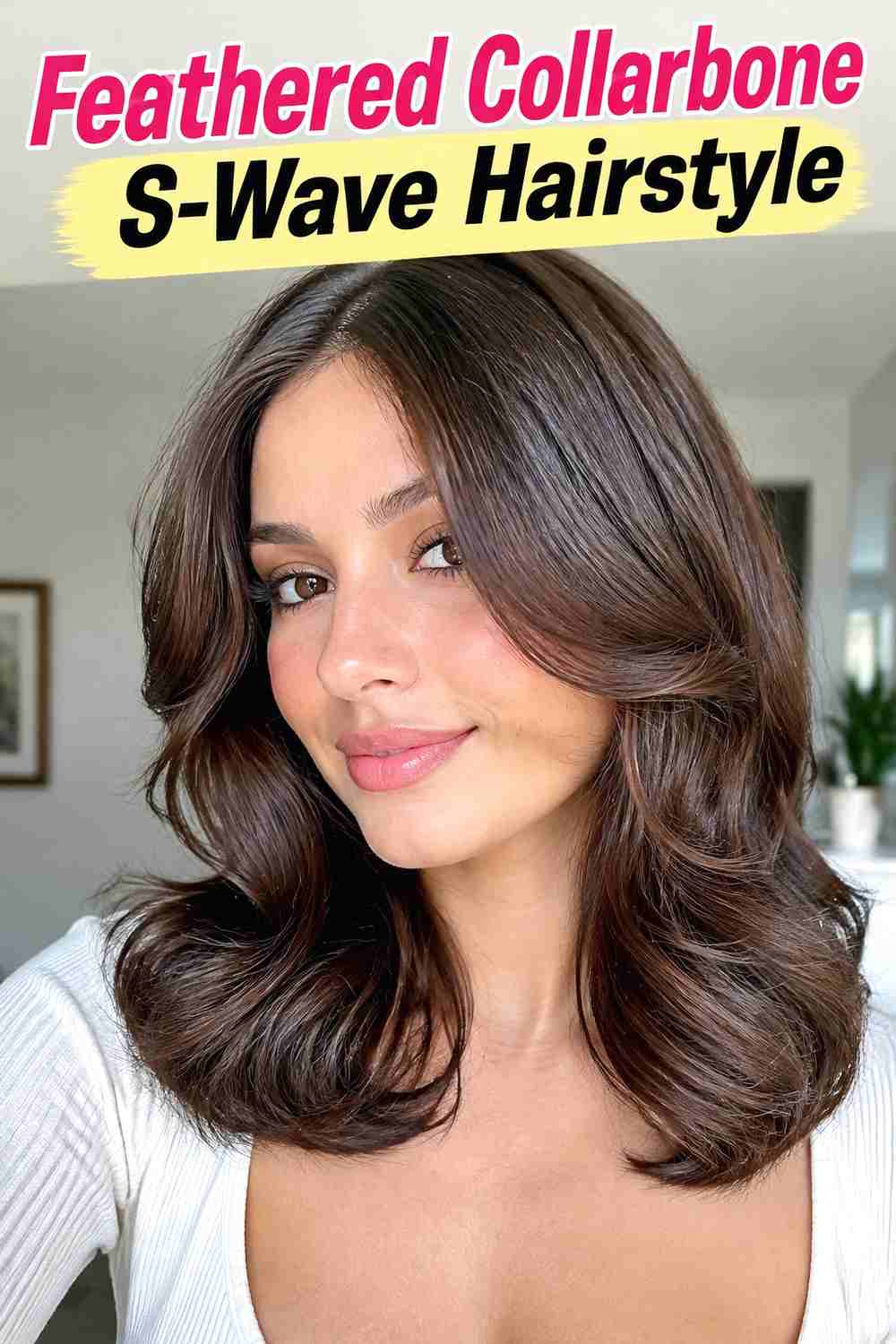
Feathered movement gives S-waves extra lightness by allowing selected layers to turn outward from the face. The first bend can begin around the cheek or jaw, then transition into softer curves through the lower sections. At the collarbone, a few ends can flick outward while others remain closer to the neck, creating separation without forming a wide horizontal shape. This style is particularly useful with boxy jackets because the feathering adds movement while keeping the hair visually light. Keep the roots controlled and avoid excessive side lift so the strongest motion stays within the layered lengths. The result feels airy and slightly retro-inspired while remaining wearable with contemporary winter tailoring.
Styling Notes
Direct only selected layers outward rather than flipping every section in the same direction.
Pro Tip
Use the shortest front layers to establish the feathered shape and let the longer sections remain softer.
14. Minimal Glossy S Wave Hairstyle
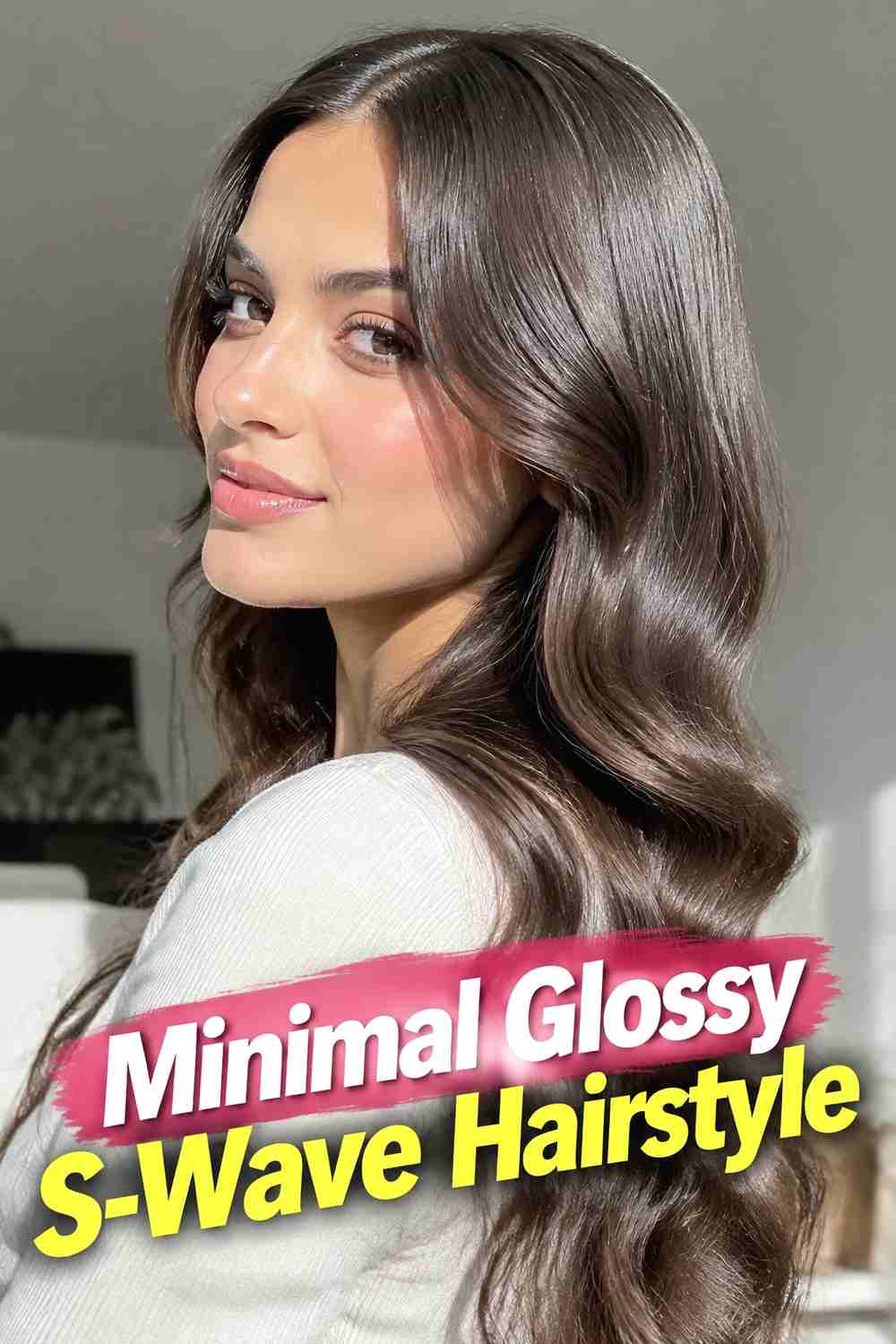
A minimal S-wave hairstyle uses only a few strategic bends to give collarbone-length hair movement. The roots remain smooth, and much of the upper length stays nearly straight before transitioning into subtle direction changes around the jaw and ends. A light glossy finish emphasizes the bends without making the hair look wet or overly coated. This restrained texture is particularly effective beside a boxy wool jacket because it keeps the overall silhouette clean and lets the outerwear remain visually prominent. Allow a few natural flyaways and slight differences between sections so the finish still feels realistic. It is an easy option for anyone who prefers understated styling rather than a full head of carefully defined waves.
Best For
Straight to slightly wavy hair and low-maintenance routines work especially well with this restrained finish.
Pro Tip
Create only the bends that will be visible from the front and sides instead of styling every section identically.
How to Choose the Right Look
Start by considering the width of your jacket. A very boxy or heavily padded wool style usually pairs best with low-volume, tucked, or minimal S-waves that keep the hair close to the head. Softer oversized jackets leave more room for brushed-out, feathered, or root-lifted shapes.
Hair density matters too. Fine hair can benefit from airy root lift or brushed-out bends, while thicker hair may look more balanced with a polished low-volume wave or one side tucked behind the ear. Natural waves can be refined selectively rather than completely reshaped.
Also think about where the jacket collar meets the haircut. Collarbone-length ends may sit above, beside, or directly against the collar, so controlled curves often wear more comfortably than dense curls. For everyday styling, choose flexible movement and moderate hold; for a more polished finish, emphasize a clean part, glossy surface, and clearly shaped S-bends.
Final Thoughts
Collarbone-length S-waves are an easy way to soften the strong proportions of boxy wool jackets. Sleek and low-volume versions keep the silhouette refined, while brushed-out, feathered, and naturally textured options introduce more movement. The best balance comes from controlling width near the shoulders and letting the bends create softness through the face and ends.
FAQs
1. Are S-waves a good match for boxy wool jackets?
Yes. Their curved movement contrasts with the jacket’s straighter structure, especially when the wave volume is controlled around the shoulders.
2. Where should S-waves begin on collarbone-length hair?
Starting around the cheek, jaw, or upper mid-lengths usually creates enough movement without making the roots or sides overly full.
3. Which S-wave style works best for thick hair?
Low-volume polished waves, a deep side sweep, or a tucked-behind-ear style can reduce width while still showing the wave pattern.
4. Can naturally wavy hair create an S-wave look?
Yes. Define selected natural bends and preserve some variation rather than trying to make every section identical.
5. How do I keep S-waves from looking too formal?
Use broader bends, separate them lightly with your fingers, and allow a few sections to remain softer or straighter for a more relaxed finish.
Save your favorite collarbone-length S-wave look, share these winter styling ideas, and explore more hairstyles that pair beautifully with structured outerwear.