16 Dutch Lace Braid Hairstyle Ideas
Dutch lace braids bring raised texture and elegant curves to half-up styles, ponytails, buns, and loose hair without hiding your natural length.
A Dutch lace braid uses the dimensional underhand technique of a Dutch braid while adding new hair along only one side of the braid. That one-sided construction makes it possible to guide the braid around the hairline, across the back, or into graceful curved and diagonal shapes while leaving the surrounding hair loose.
These 16 ideas explore different placements, finishes, textures, and accessories so you can choose a version that fits your length and styling routine. Some keep the braid crisp and controlled, while others gently loosen the outer loops for volume. The best choice depends on how much hold you need, whether you want your lengths loose or gathered, and how prominently you want the lace pattern to show.
Quick List
- Classic Side Dutch Lace Braid Hairstyle
- Half Up Dutch Lace Braid Hairstyle
- Crown Dutch Lace Braid Hairstyle
- Double Dutch Lace Braid Hairstyle
- Curved Dutch Lace Braid Hairstyle
- Side Swept Dutch Lace Braid Hairstyle
- Dutch Lace Braid Ponytail Hairstyle
- Dutch Lace Braid Bun Hairstyle
- Boho Dutch Lace Braid Hairstyle
- Sleek Dutch Lace Braid Hairstyle
- Curly Dutch Lace Braid Hairstyle
- Dutch Lace Braid Headband Hairstyle
- Floral Dutch Lace Braid Hairstyle
- Pearl Accented Dutch Lace Braid Hairstyle
- Diagonal Dutch Lace Braid Hairstyle
- Bridal Dutch Lace Braid Hairstyle
1. Classic Side Dutch Lace Braid Hairstyle
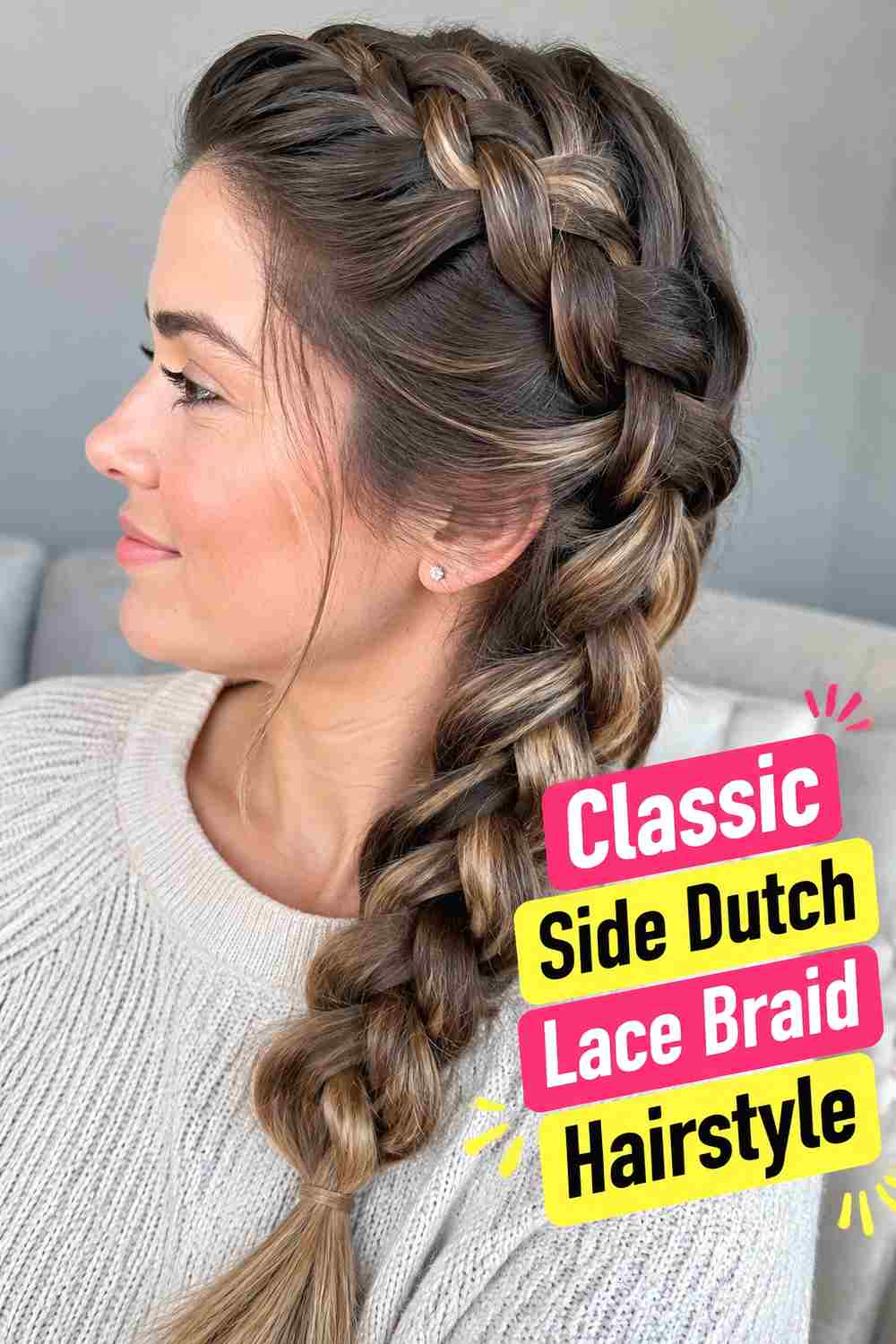
The classic side version is one of the clearest ways to showcase a Dutch lace braid. Start near the temple and work toward the back, crossing the braid sections underneath while adding new hair only from the upper side. This creates a raised woven edge that seems to sit on top of the loose hair. The braid can finish behind the ear or continue toward the center back, depending on the length available. Gently widening the outer loops gives the braid more visibility without making it look overly loose. Wear the remaining hair straight, softly waved, or naturally textured to create contrast with the controlled braided section.
Styling Notes
Keep the added sections fairly consistent in size so the lace edge develops smoothly. Secure the end underneath loose hair with a small elastic and hidden pins for a clean finish.
2. Half Up Dutch Lace Braid Hairstyle
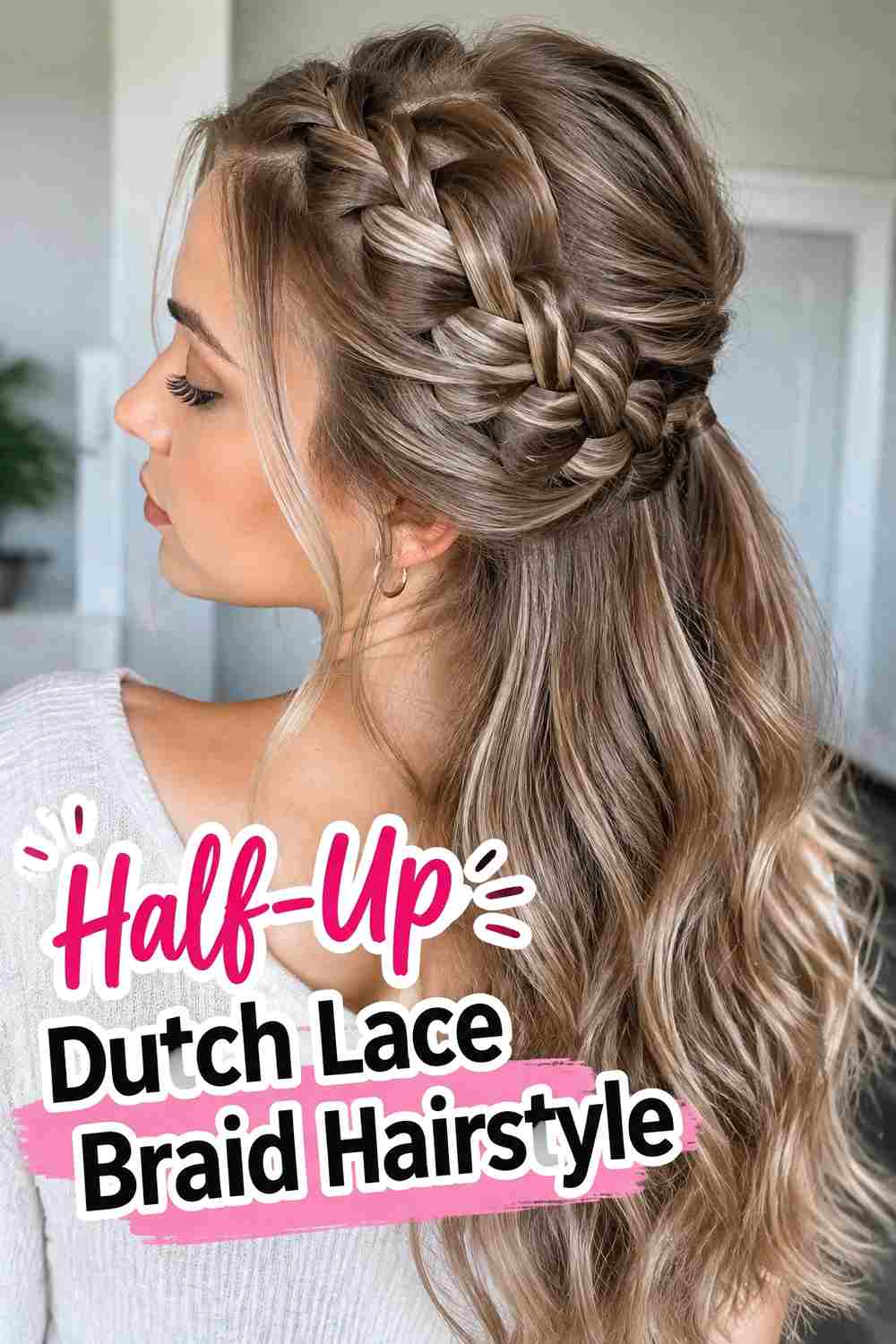
A half-up Dutch lace braid keeps most of the length visible while creating polished detail around the upper portion of the hair. Two lace braids can begin near the temples and travel toward the center back, with hair added only along the upper edge of each braid. Joining them with a discreet elastic creates a balanced shape that frames the loose lengths underneath. This placement is especially attractive on dimensional color because the raised braid exposes highlights and deeper tones as the sections overlap. Add soft waves for a romantic finish or leave the hair smooth for a cleaner look. It is practical for occasions when you want the sides controlled without committing to a full updo.
Best For
Medium to long hair gives the braids enough distance to develop before meeting at the back. Fine hair can be gently expanded after braiding to create more visible texture.
3. Crown Dutch Lace Braid Hairstyle
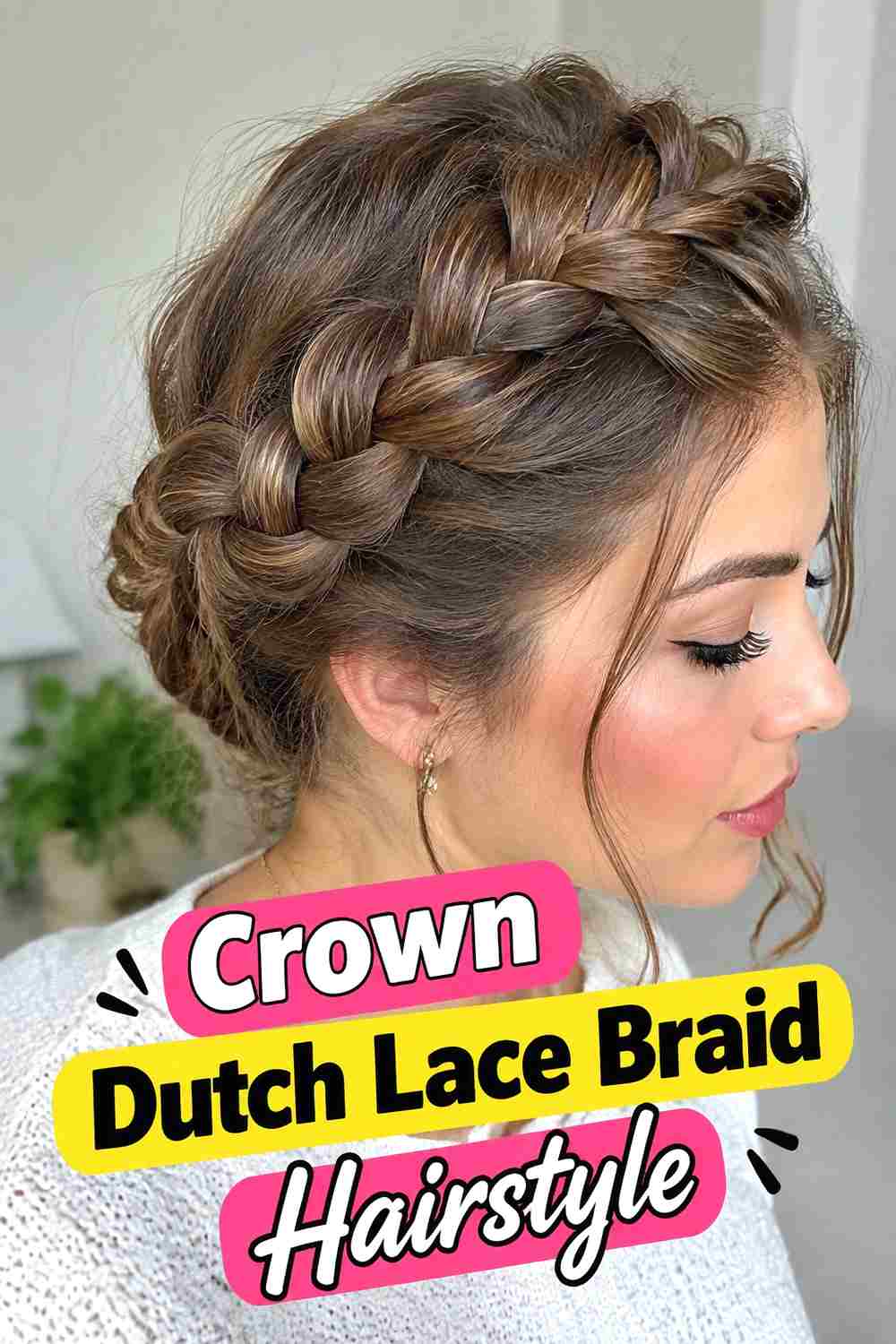
The crown Dutch lace braid follows the upper curve of the head, creating a raised braided border while leaving the lower lengths loose or partially gathered. Begin near one temple and add hair only from the side closest to the crown as the braid travels around the head. This one-sided feeding pattern helps the braid follow a curved path without pulling all of the surrounding hair into the structure. A softly expanded braid feels romantic, while a tighter version creates a more precise finish. The style can work beautifully with waves, curls, or straight hair and is particularly useful when you want noticeable braided detail from the front, side, and back.
Why It Works
The lace technique allows the braid to hug the head like a decorative border while preserving plenty of loose hair beneath it, creating structure without the weight of a full crown braid.
4. Double Dutch Lace Braid Hairstyle
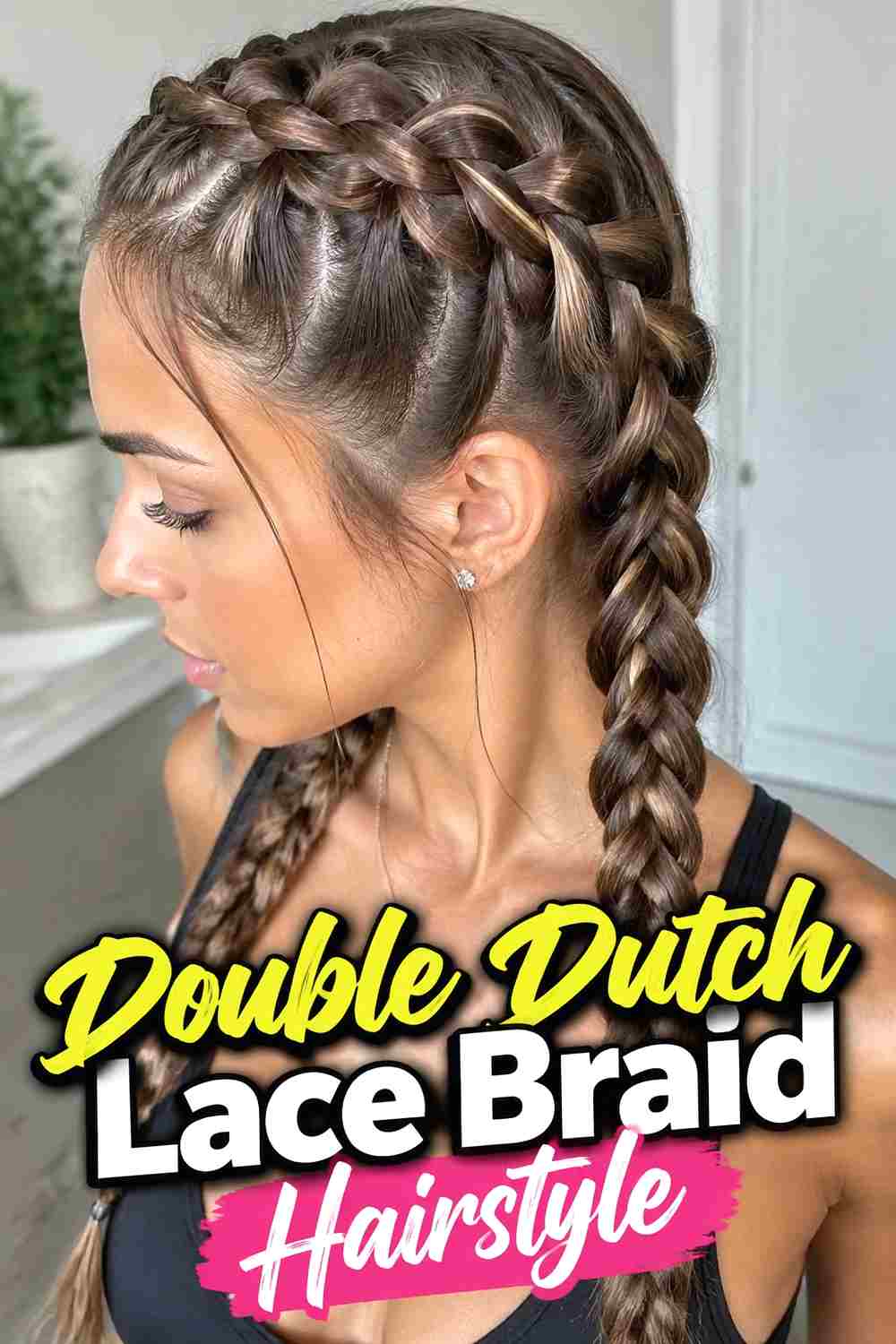
Two Dutch lace braids create extra definition without requiring every strand to be braided. The braids can run parallel along one side, mirror each other from opposite temples, or sit at slightly different heights across the back. Each braid should maintain the same underhand construction, with new hair added from just one side to preserve the lace effect. Leaving a small amount of space between the two braids makes their individual patterns easier to see. The finished style looks intricate but can still feel lightweight because much of the hair remains loose. Gentle waves underneath soften the geometry, while straighter lengths create a sharper and more contemporary appearance.
Styling Notes
Complete and secure the first braid before starting the second. This makes it easier to maintain a clean gap between the rows and prevents their feeding sections from becoming tangled.
5. Curved Dutch Lace Braid Hairstyle
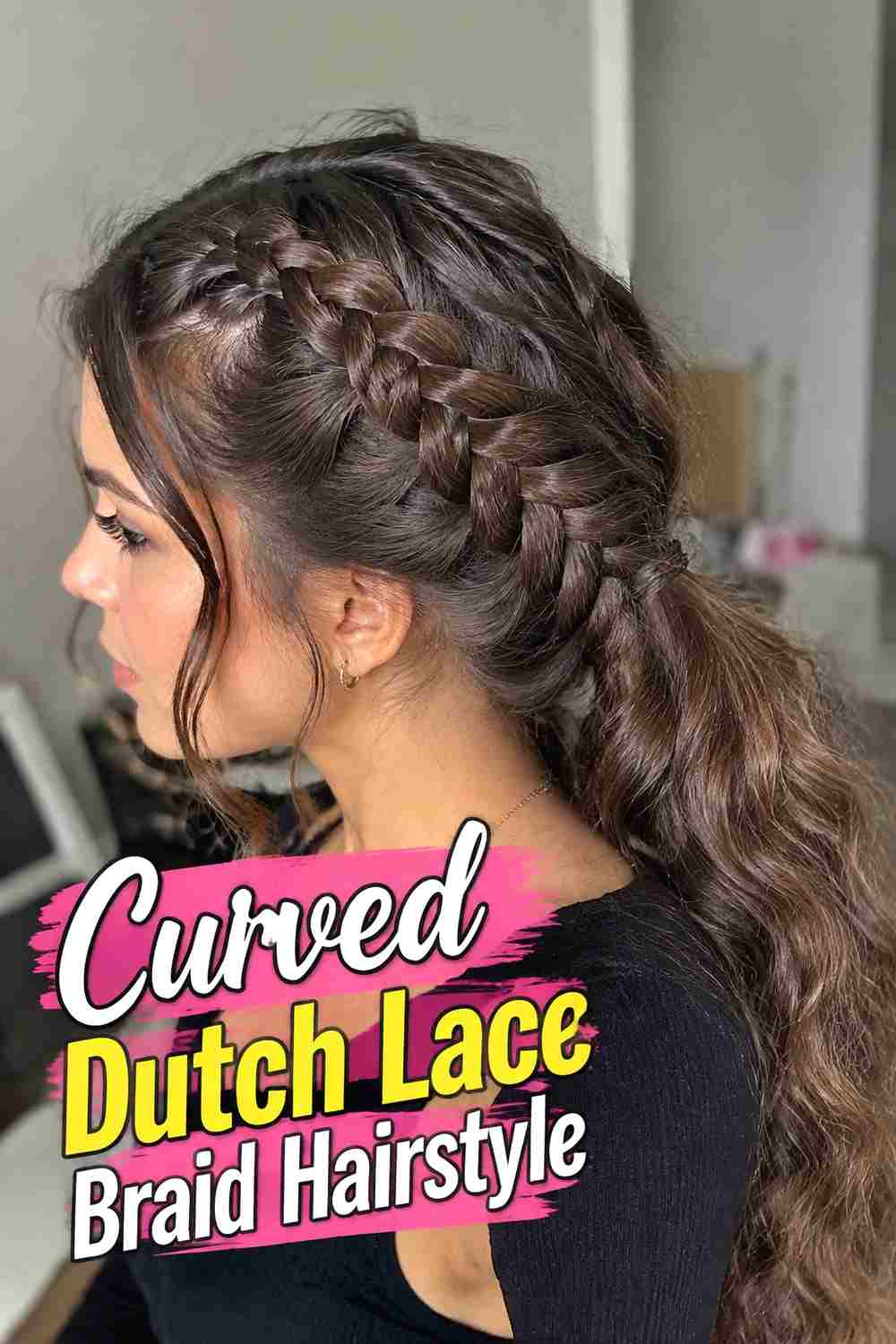
A curved Dutch lace braid uses the one-sided feeding technique to create a sweeping line rather than a straight horizontal braid. Start higher near the temple or upper side, then gradually guide the braid downward as it moves across the back. The curve becomes more visible when the braid is gently expanded after securing it. Loose hair can fall naturally beneath the arc, giving the hairstyle a graceful, flowing silhouette. This variation works especially well on longer hair because there is more space to develop the curve without crowding the braid. It can look soft and romantic with waves or more graphic when paired with smooth, straight lengths.
Pro Tip
Plan the direction before beginning. Adjust the angle gradually rather than sharply changing direction midway, which helps the Dutch lace pattern remain even and physically believable.
6. Side Swept Dutch Lace Braid Hairstyle
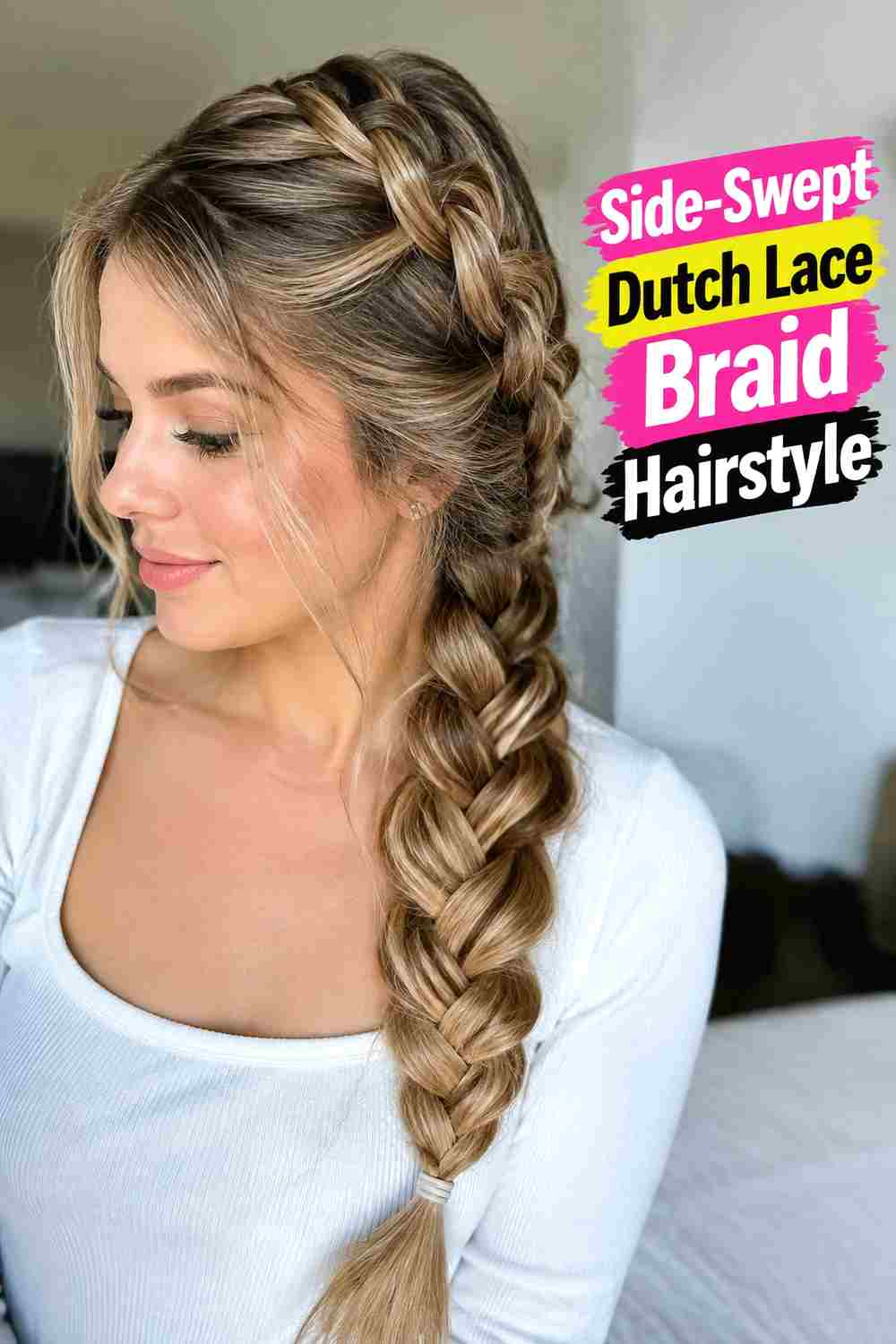
The side-swept version combines a defined Dutch lace braid with most of the hair gathered visually toward one shoulder. Begin the braid on the opposite side and guide it across the back, adding sections from one edge as you work. Once the braid reaches the lower side, secure it discreetly and allow the loose lengths to fall over the shoulder. This creates asymmetry without requiring a full side braid. The raised lace detail helps control shorter layers around the upper head while the remaining hair keeps plenty of movement. Soft curls or waves enhance the sweeping effect, making this a strong option for parties, dinners, wedding guests, or photo-focused events.
Best For
Medium-long and long hair makes the side sweep easiest to maintain. A few hidden pins near the nape can help keep heavier lengths directed toward one shoulder.
7. Dutch Lace Braid Ponytail Hairstyle
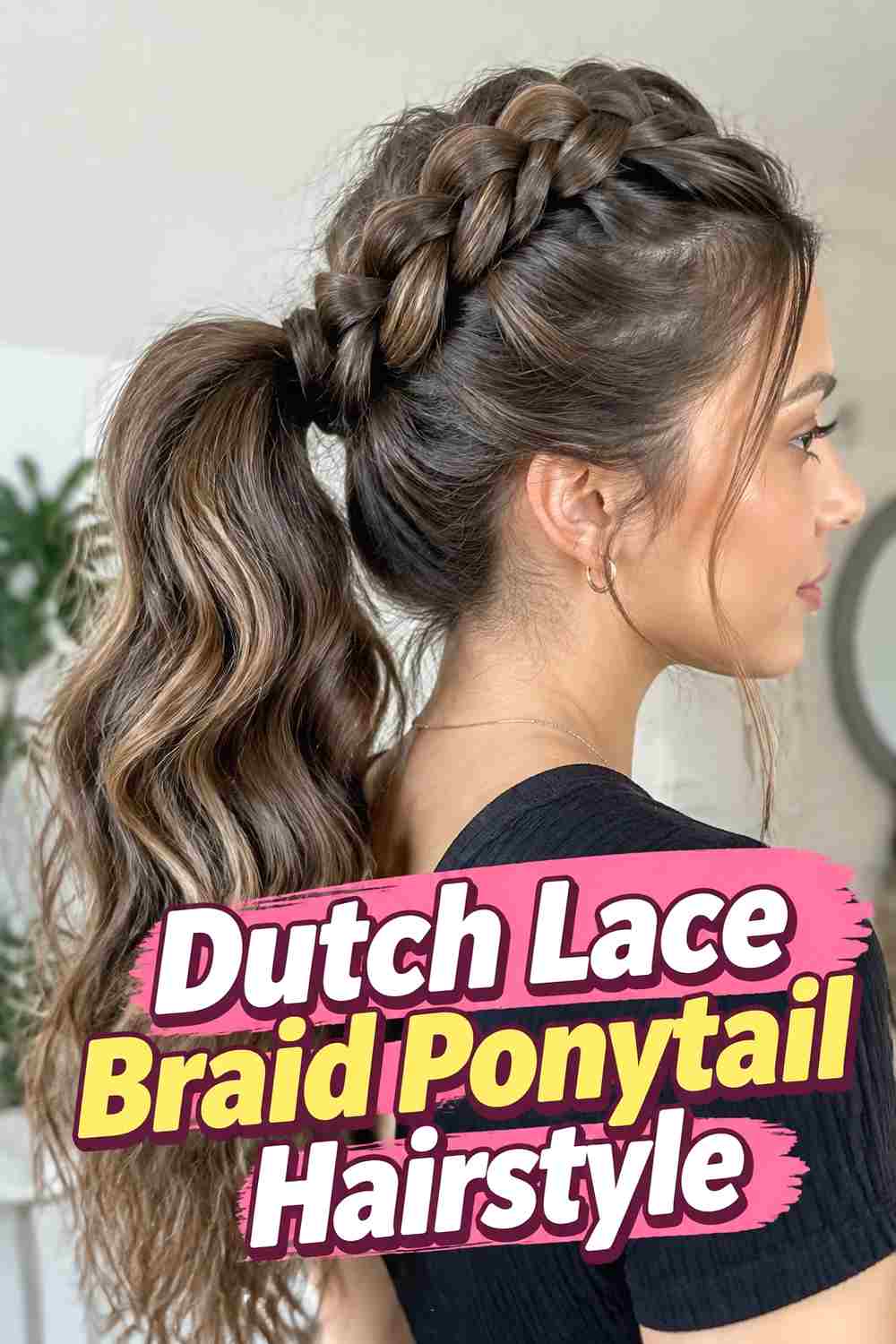
A Dutch lace braid can add detail to a ponytail before the hair is gathered, giving a familiar style a more finished appearance. Start the lace braid near the front hairline and guide it toward the ponytail placement, adding hair from only one side as you go. Secure the braid first, then combine it with the remaining hair in a mid or low ponytail. Wrapping a small strand around the elastic creates a cleaner transition between the braid and ponytail. The raised texture contrasts especially well with a smooth ponytail, although waves through the tail can make the style softer. This option keeps the lengths controlled while still displaying the braid clearly.
Wear & Maintenance
Use the ponytail elastic as the main source of hold rather than pulling on the lace braid. This keeps the decorative woven section comfortable and helps prevent distortion.
8. Dutch Lace Braid Bun Hairstyle
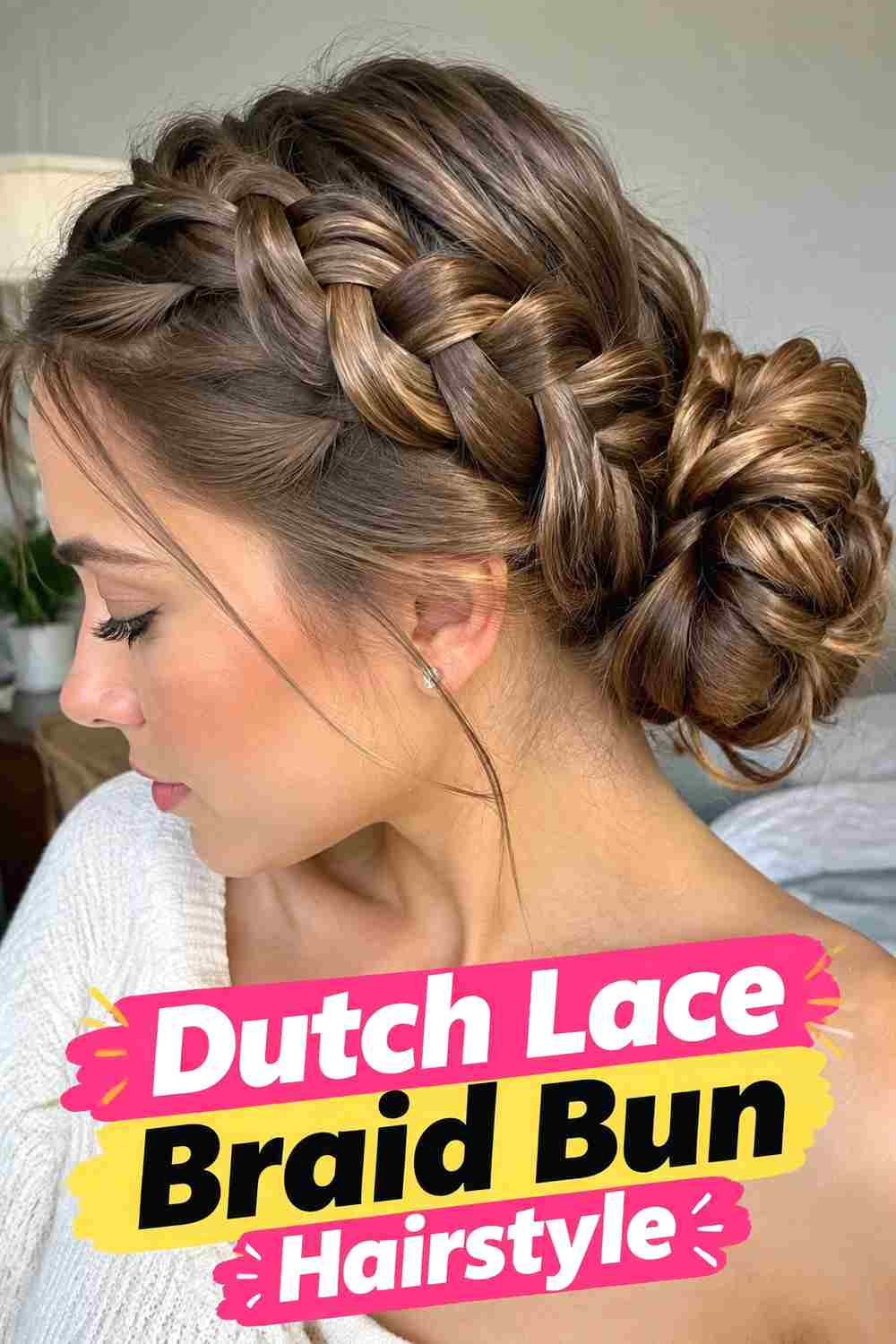
The Dutch lace braid bun uses the braid as a decorative pathway leading into a compact updo. A lace braid can begin at the side or front hairline and travel toward the nape, where the remaining hair is gathered into a low bun. Because new sections enter from only one side, the braid maintains a crisp raised edge while leaving enough hair available to build the bun. A smooth bun makes the braid stand out, while a softly textured bun creates a more romantic finish. This hairstyle works particularly well for events where you want the neck and shoulders visible and need the hair secured for several hours without sacrificing braided detail.
Styling Notes
Build and pin the bun separately after the lace braid is secured. Keeping the two structures independent makes it easier to adjust the braid without loosening the entire updo.
9. Boho Dutch Lace Braid Hairstyle
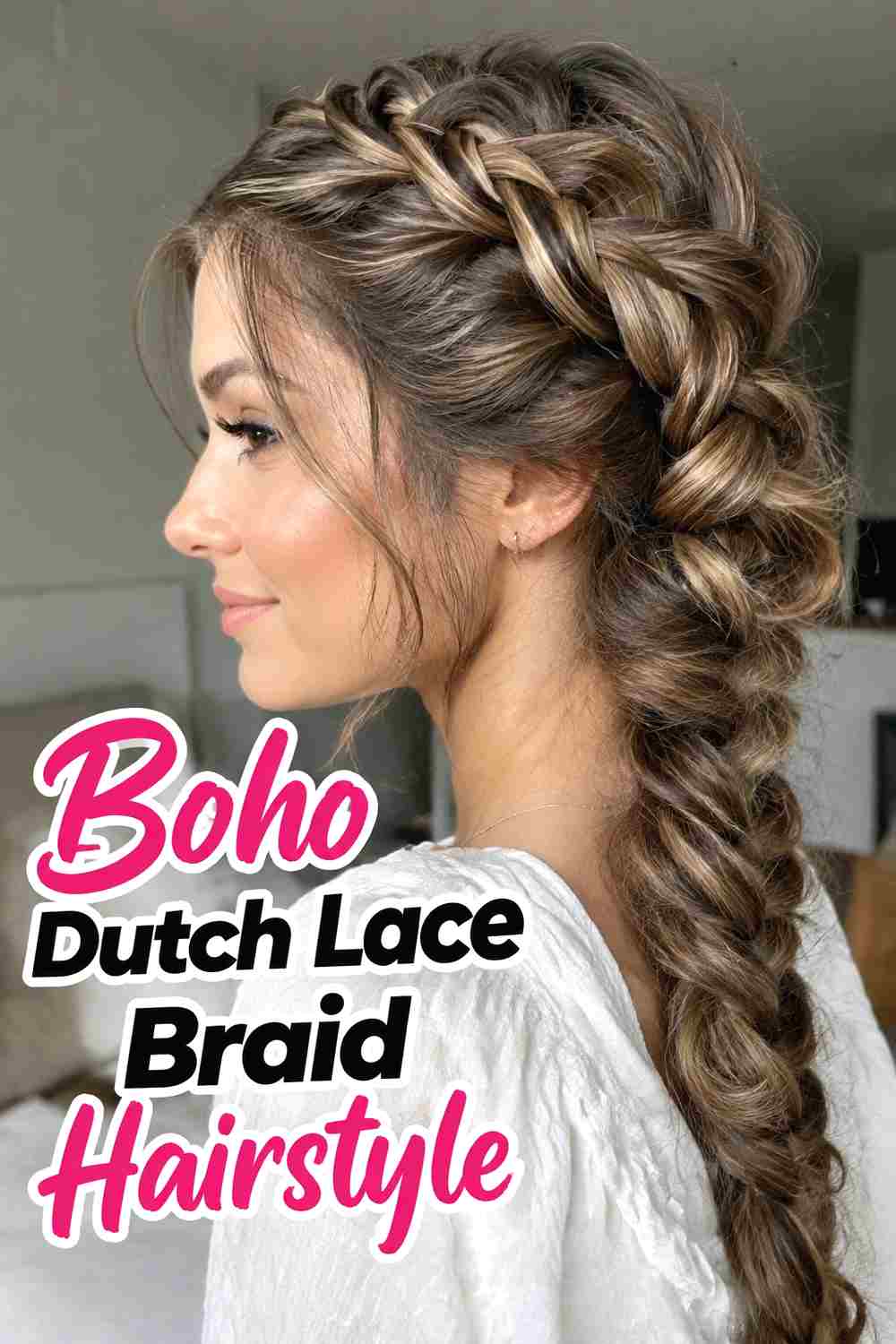
A boho Dutch lace braid softens the precise technique with relaxed texture, gently expanded loops, and natural movement. Begin the braid near the temple and follow a loose curve along one side or across the back, feeding in hair from only the upper edge. Once secured, carefully pull the outer sections outward to create an airy finish without losing the raised Dutch pattern. A few face-framing pieces and natural flyaways help the braid blend into loose waves underneath. The result feels intentionally undone rather than overly polished. It is a natural fit for outdoor celebrations, festivals, vacations, casual weddings, or everyday styling when you want visible detail with a softer mood.
Pro Tip
Loosen only the outer braid loops while leaving the central structure and anchor points firm. This preserves hold while creating the wider, relaxed boho silhouette.
10. Sleek Dutch Lace Braid Hairstyle
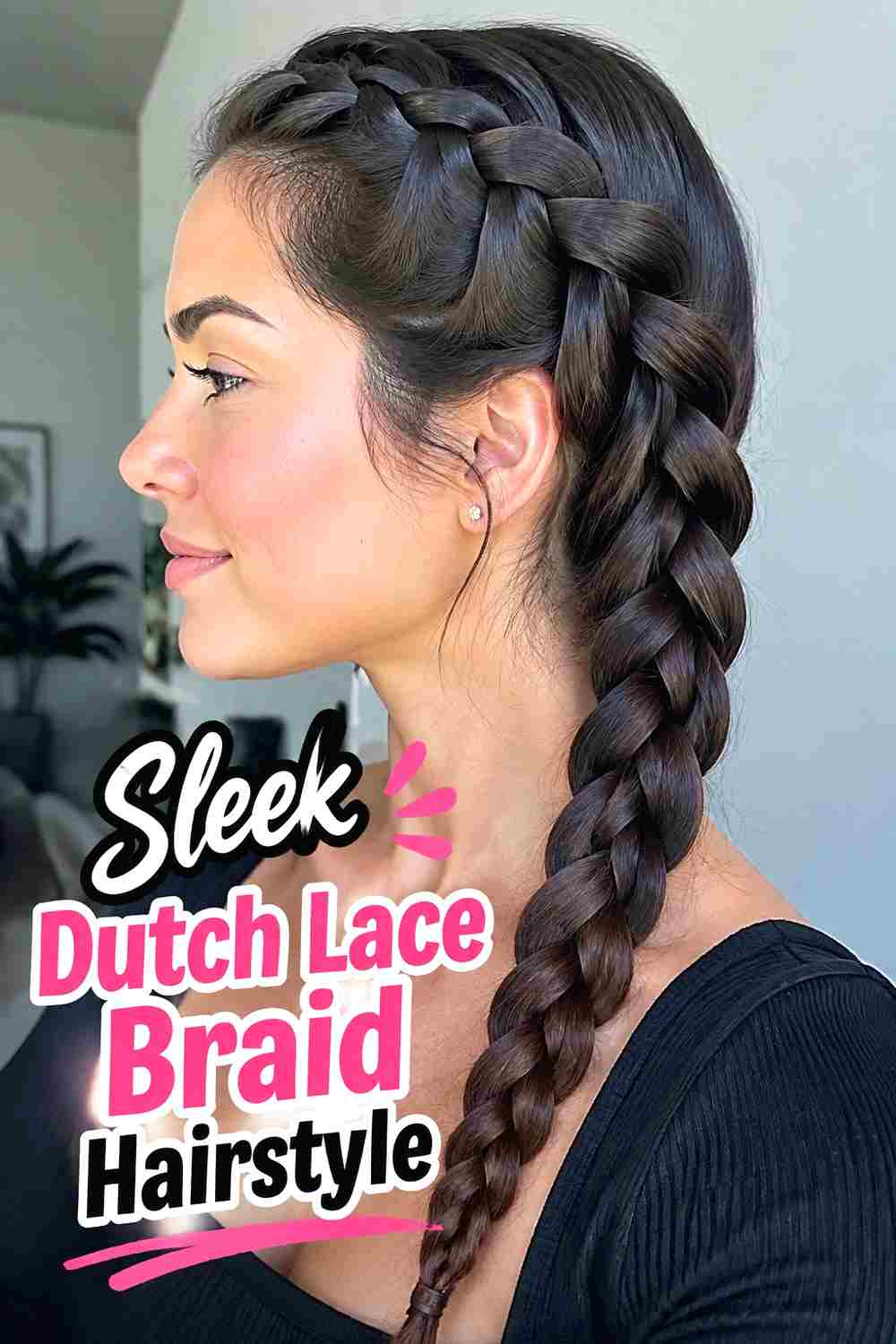
A sleek Dutch lace braid highlights the technique through clean parting, controlled tension, and a smooth surface. The braid can run along one side of the head or travel horizontally toward the back, with each section crossed underneath and new hair added from one edge only. Keeping the surrounding hair straight or smoothly styled creates a strong contrast with the raised woven pattern. Instead of dramatically pancaking the braid, leave it relatively compact so the lines remain crisp. This version suits minimalist outfits and polished occasions because the hairstyle relies on structure rather than accessories or extra volume. It is also useful when shorter side pieces need to stay neatly contained.
Why It Works
A smooth finish makes every crossing of the braid more visible, emphasizing the lace construction and giving the hairstyle a modern, graphic quality without requiring additional decoration.
11. Curly Dutch Lace Braid Hairstyle
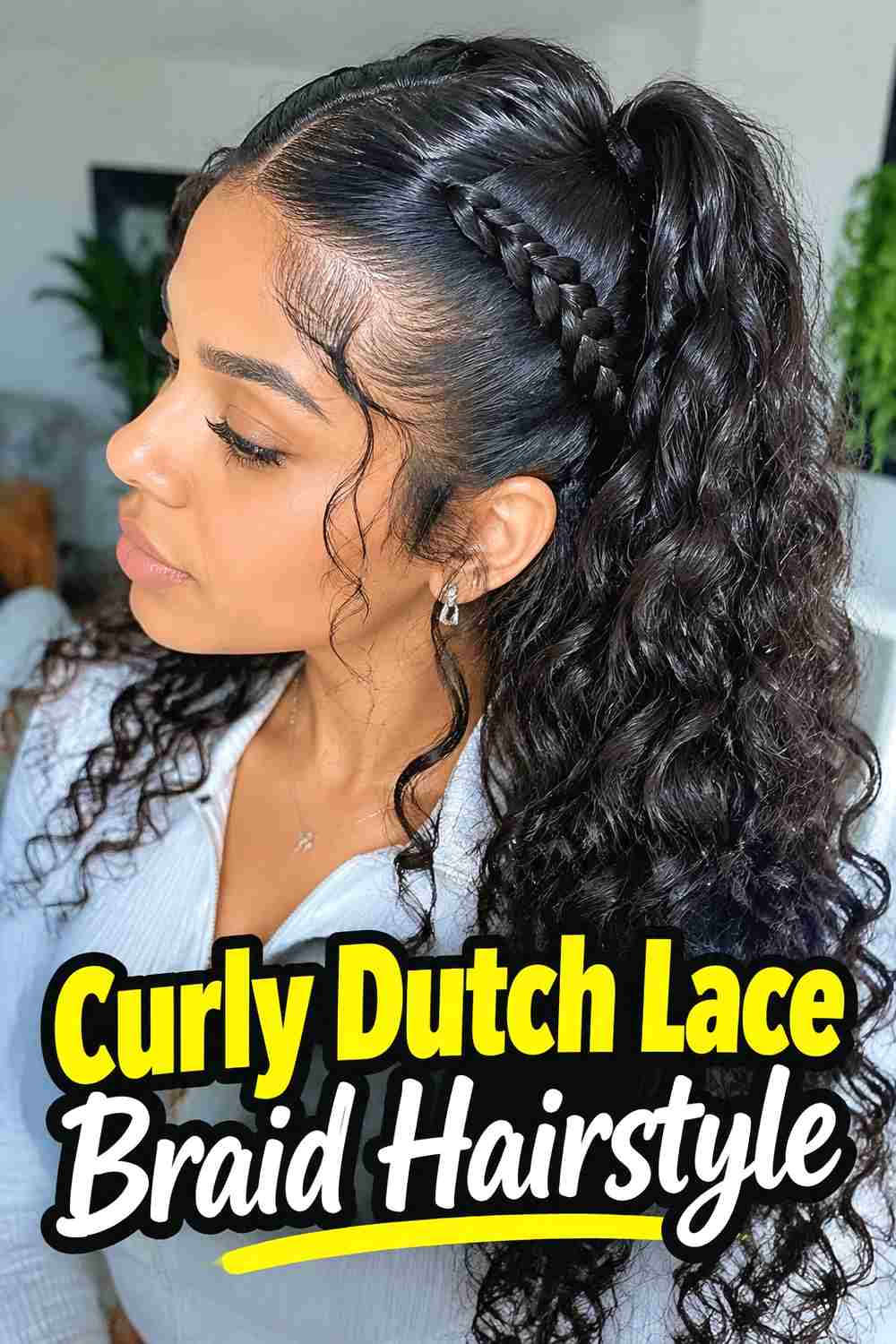
Natural curls add volume and dimensional texture around a Dutch lace braid, creating a style that feels both structured and lively. Use slightly larger sections so the raised braid remains visible against the surrounding curls, and add hair from only one side as the braid travels around the temple or across the back. There is no need to flatten the entire curl pattern before braiding; separating only the necessary sections helps preserve definition throughout the loose lengths. The lace braid can gently control the upper hair while curls remain free beneath it. This makes the style especially appealing for half-up looks where natural movement is part of the finished silhouette.
Hair Type & Length
Medium to long curly hair provides enough room for the braid and loose texture to remain distinct. Dense curls may benefit from a wider braid so the pattern does not disappear.
12. Dutch Lace Braid Headband Hairstyle
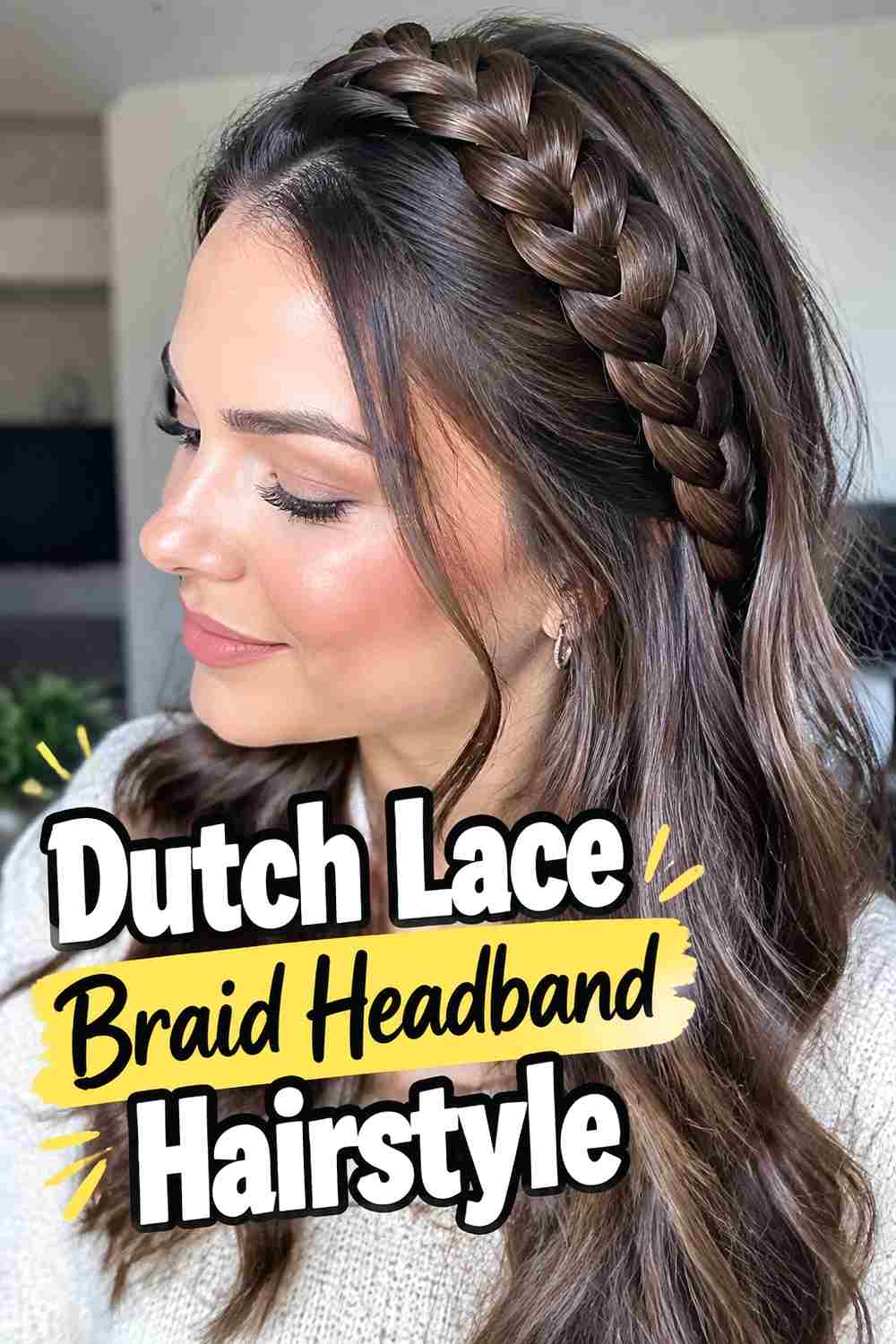
The headband version places the Dutch lace braid close to the front hairline, creating the effect of a braided accessory made from your own hair. Begin near one ear or temple and braid across the upper front section, crossing strands underneath and adding new hair along only one edge. The remaining hair stays separate, allowing it to fall naturally behind the braid. Keeping the lace braid narrow creates a delicate headband effect, while widening the loops gives it more presence. This style can be worn with straight hair, curls, waves, or a low ponytail, making it one of the more adaptable options when you want to keep hair away from the face.
Styling Notes
Keep the braid close enough to the hairline to read as a headband, but avoid excessive tension around the temples. Hide the finished end beneath loose hair near the opposite side.
13. Floral Dutch Lace Braid Hairstyle
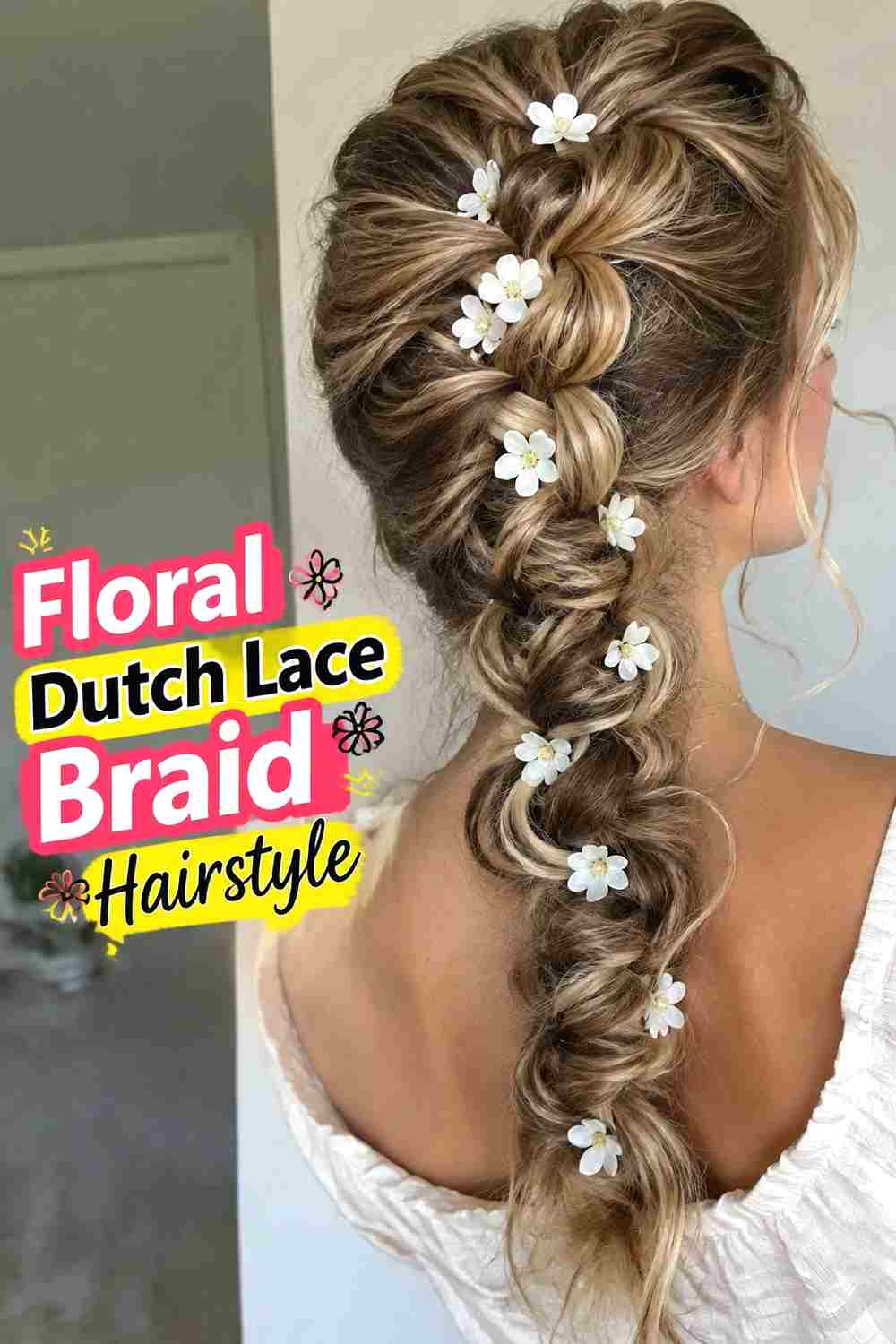
Small floral accents complement the curved structure of a Dutch lace braid without needing to cover the entire hairstyle. Create the braid first, then place miniature hair-safe flowers or floral pins along a short section of the outer edge. An asymmetrical arrangement usually feels more natural than spacing flowers evenly from beginning to end. The raised braid provides useful texture around each accent, while loose waves or soft curls beneath it reinforce the romantic finish. This look can be adapted for garden weddings, outdoor parties, spring events, or styled photos. Keeping the flowers small ensures the one-sided lace construction remains visible instead of disappearing beneath the decoration.
Wear & Maintenance
Secure the braid completely before adding flowers. Lightweight pins are easier to position and less likely to pull open the carefully shaped braid loops during extended wear.
14. Pearl Accented Dutch Lace Braid Hairstyle
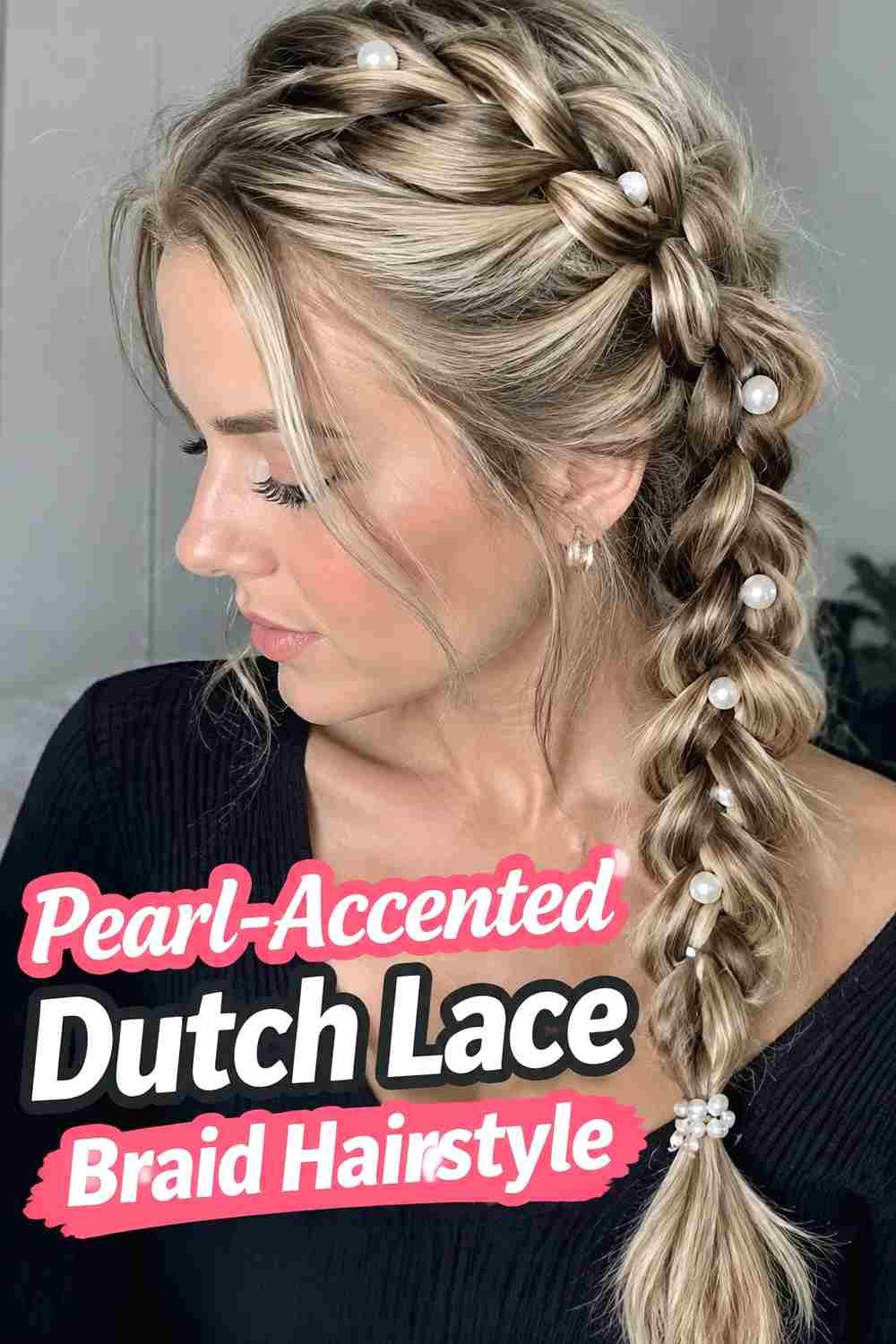
Pearl details give a Dutch lace braid a refined finish while preserving the hairstyle’s clean woven structure. Create a side, crown, or half-up lace braid, then add a few small pearl pins along the raised outer edge. Leave enough space between each pearl for the individual braid sections to remain visible. Softly waved lengths underneath create a romantic effect, while smoother hair makes the pearls feel more contemporary and understated. This variation works especially well for engagement parties, weddings, formal dinners, and other dressed-up occasions where subtle accessories are preferable to a large statement clip. The result should feel balanced, with the pearls supporting the braid rather than becoming the entire hairstyle.
Pro Tip
Place pearls after all loosening and shaping is finished. Adjusting the braid after the pins are inserted can shift the accessories or create uneven tension around the decorated sections.
15. Diagonal Dutch Lace Braid Hairstyle
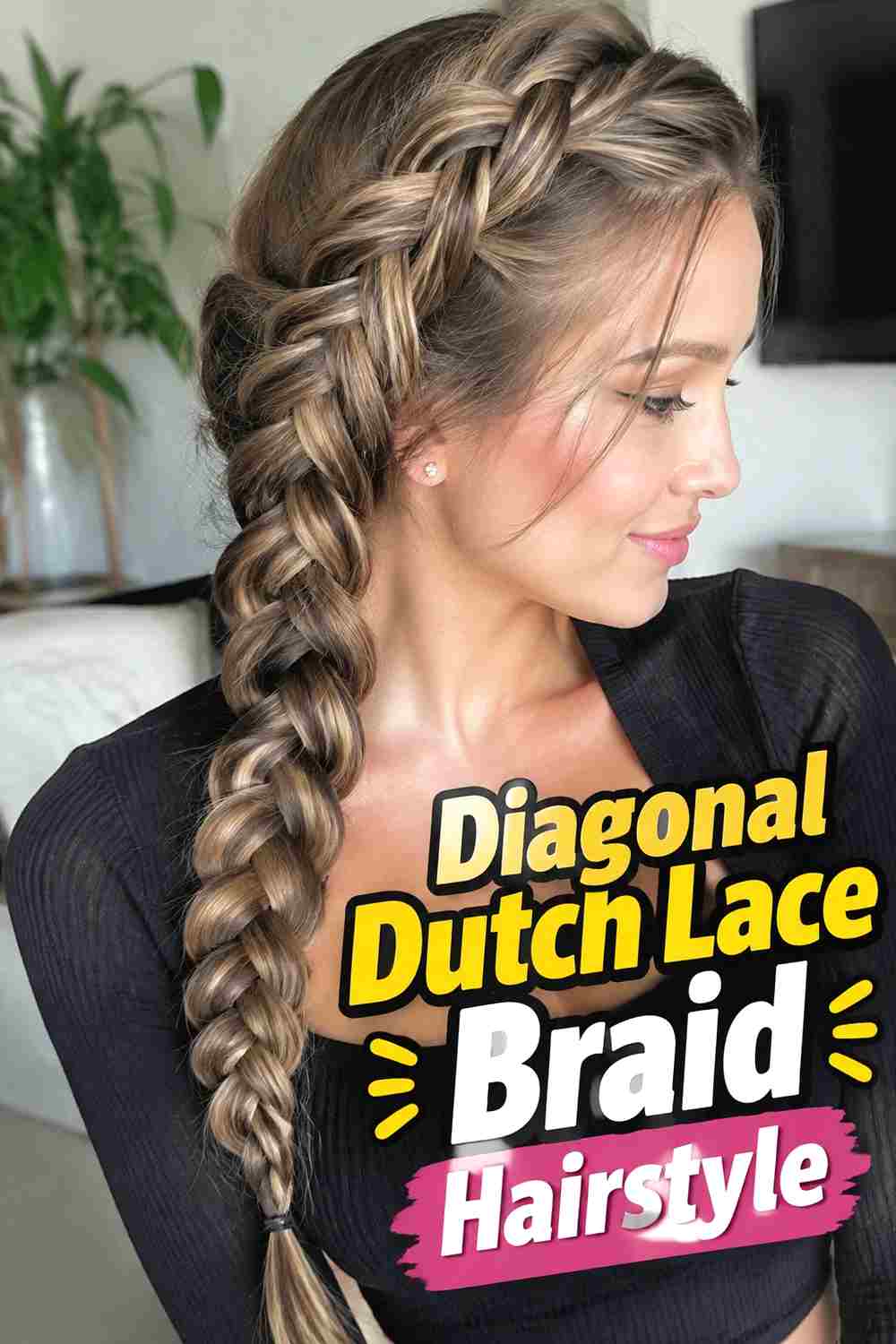
A diagonal Dutch lace braid travels from a higher starting point toward the opposite lower side, creating movement across the back of the head. Begin near the temple or upper side and gradually angle downward while adding hair from only one edge. The raised braid becomes a strong visual line that can finish behind the opposite ear, merge into a low ponytail, or disappear beneath loose lengths. This placement is particularly effective on highlighted hair because the diagonal path exposes changing tones throughout the braid. Soft waves enhance the flowing direction, while straighter hair produces a more precise look. It is an excellent alternative when horizontal half-up braids feel too symmetrical.
Styling Notes
Keep the downward angle gradual and consistent. A sudden change in direction can distort the lace edge and make the braid appear uneven across the back.
16. Bridal Dutch Lace Braid Hairstyle
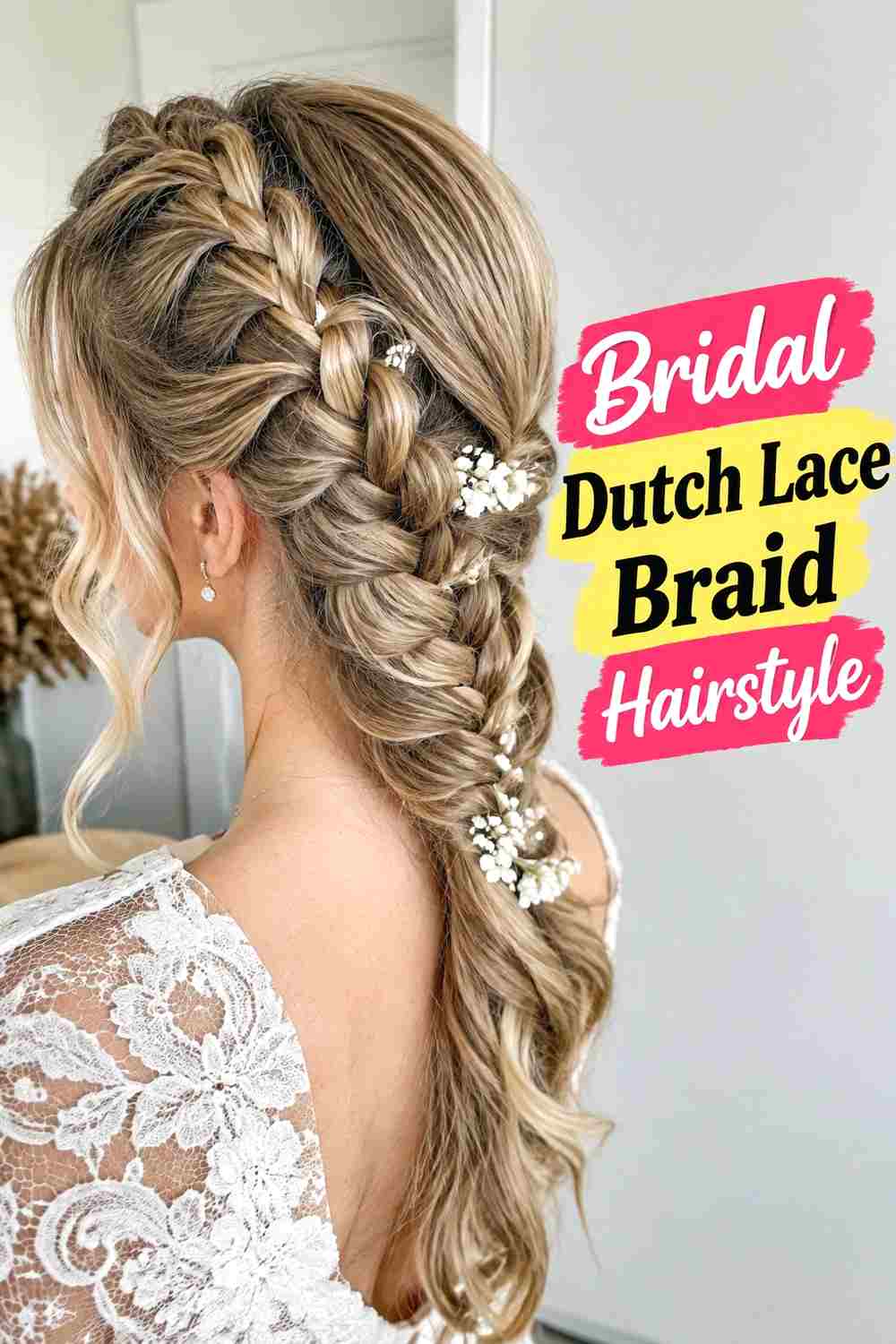
A bridal Dutch lace braid combines the raised definition of the technique with a soft, carefully finished event style. The braid can sweep from one temple into a half-up arrangement, curve around the crown, or lead into a low textured bun. Adding hair from one side preserves the distinctive lace edge, while gentle expansion creates enough volume for the braid to remain visible in photographs. Loose curls, polished waves, tiny pearls, or restrained floral accents can be incorporated according to the overall bridal look. The hairstyle is especially effective when the braid is positioned where it can be seen from multiple angles without interfering with a veil, comb, or other accessory.
Wear & Maintenance
Test the braid with any planned veil or jewelry beforehand. Each major accessory should have a secure anchor so its weight does not depend on the lace braid itself.
How to Choose the Right Look
Start by deciding how much hair you want to leave loose. Classic side, curved, headband, and half-up Dutch lace braids preserve most of the length, while ponytail and bun versions provide more control. Crown, double, and diagonal styles create stronger visual structure and may require extra length or more braiding time.
Texture changes the final effect considerably. Straight hair makes the raised braid look crisp and architectural, waves soften the lace pattern, and curls create fuller contrast around it. Fine hair can gain visual width from gently expanded braid loops, while thick or dense hair often supports a broader braid without much pancaking.
For everyday wear, simple side, half-up, and headband versions are relatively easy to pair with casual outfits. Pearls, flowers, bridal finishes, and low buns suit dressier occasions. Whatever style you choose, keep the feeding sections consistent and avoid uncomfortable tension, especially around the hairline.
Final Thoughts
Dutch lace braids are versatile because the one-sided feeding technique can follow the hairline, sweep across the back, frame a crown, or lead into a ponytail or bun. Choose a placement that suits your length and desired level of hold, then adjust the finish from sleek and precise to loose and romantic. Small changes in braid width, texture, and accessories can make the same technique feel completely different.
FAQs
1. What is a Dutch lace braid?
A Dutch lace braid crosses the braid sections underneath, like a Dutch braid, but adds new hair from only one side. This creates a raised braid that can follow curved or decorative paths.
2. Is a Dutch lace braid different from a regular Dutch braid?
Yes. A regular Dutch braid normally incorporates new hair from both sides. A Dutch lace braid adds hair from only one side, leaving the opposite edge free and more decorative.
3. How long should hair be for a Dutch lace braid?
Shoulder-length hair can work for shorter side or headband versions, while medium-long and long hair provide more flexibility for crown, diagonal, double, ponytail, and bridal designs.
4. Can Dutch lace braids work on curly hair?
Yes. Curly hair can create beautiful volume around the braid. Using slightly larger sections helps the woven pattern remain visible against fuller natural texture.
5. How do I make a Dutch lace braid look fuller?
After securing the braid, gently pull outward on the outer loops a little at a time. Keep the central braid and anchor points firm so the style gains width without losing its structure.
Save your favorite Dutch lace braid hairstyle ideas and explore more braided looks for fresh ways to style loose hair, ponytails, buns, curls, and special-event finishes.