15 Ear-Tucked Textured Bob Haircuts for an Effortlessly Modern Look
A textured bob tucked behind the ears creates the perfect balance of relaxed movement, face-framing shape, and polished short-hair style.
Ear-tucked bobs work especially well when the haircut has enough texture to keep the silhouette from looking flat. Soft bends, airy layers, curls, piecey ends, and subtle root volume can all change how the same basic bob shape feels, from casual and undone to sleek and refined.
As you compare these ideas, pay attention to where the bob ends, how much volume sits around the crown, and whether the texture is concentrated through the ends or throughout the whole cut. Also consider whether you want both sides tucked back or prefer the softer asymmetry of showing one ear while leaving the opposite side loose.
Quick List
- Soft Tousled Ear Tucked Bob Hairstyle
- French Inspired Wavy Ear Tucked Bob Hairstyle
- Choppy Layered Ear Tucked Bob Hairstyle
- Sleek Side Part Ear Tucked Bob Hairstyle
- Air Dried Textured Ear Tucked Bob Hairstyle
- Curtain Bang Ear Tucked Bob Hairstyle
- Piecey Jaw Length Ear Tucked Bob Hairstyle
- Voluminous Root Lift Ear Tucked Bob Hairstyle
- Blunt Ended Textured Ear Tucked Bob Hairstyle
- Curly Ear Tucked Bob Hairstyle
- Deep Side Swept Ear Tucked Bob Hairstyle
- Wispy Fringe Ear Tucked Bob Hairstyle
- Beachy Bend Ear Tucked Bob Hairstyle
- Shaggy Micro Layer Ear Tucked Bob Hairstyle
- Polished Soft Wave Ear Tucked Bob Hairstyle
1. Soft Tousled Ear Tucked Bob Hairstyle
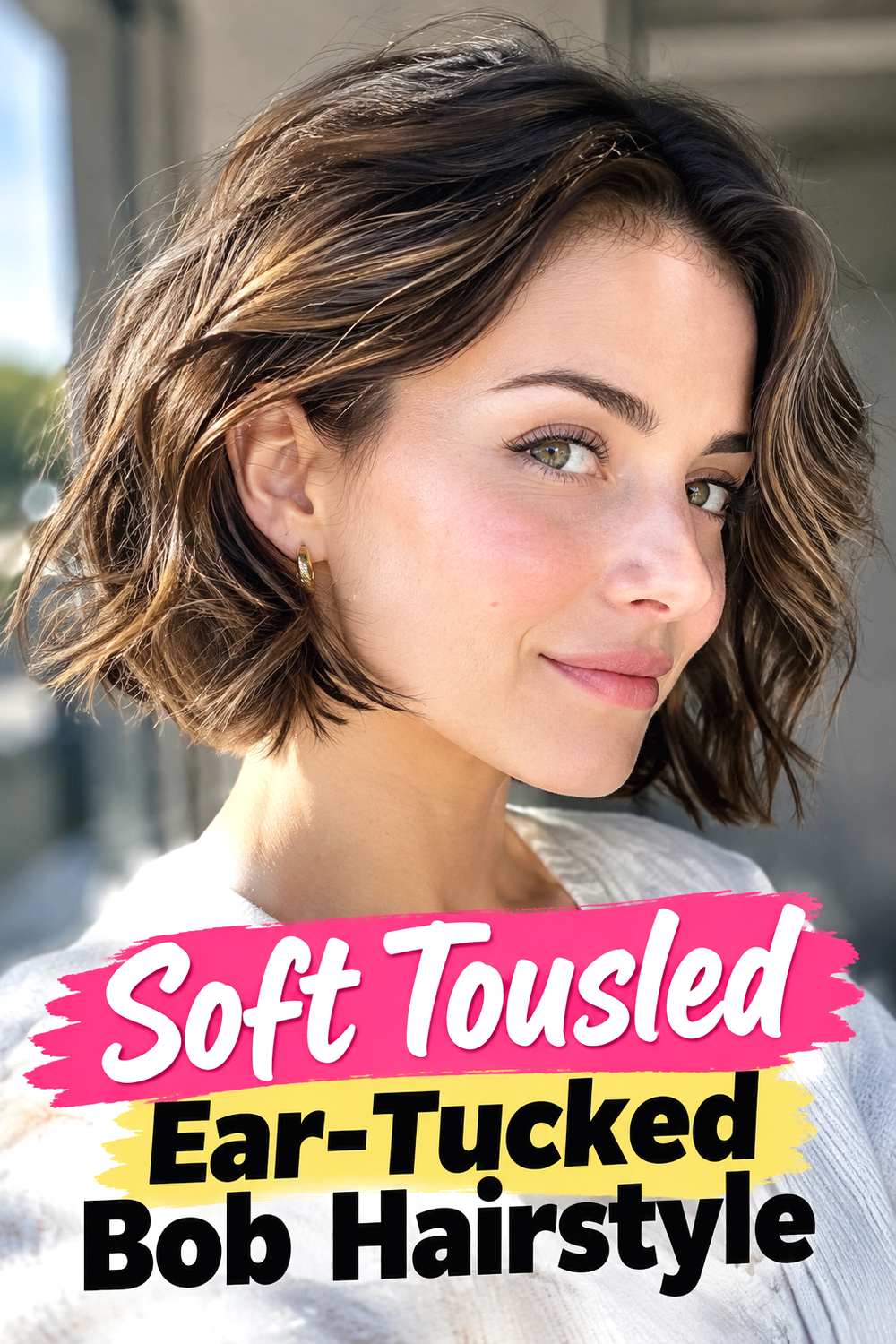
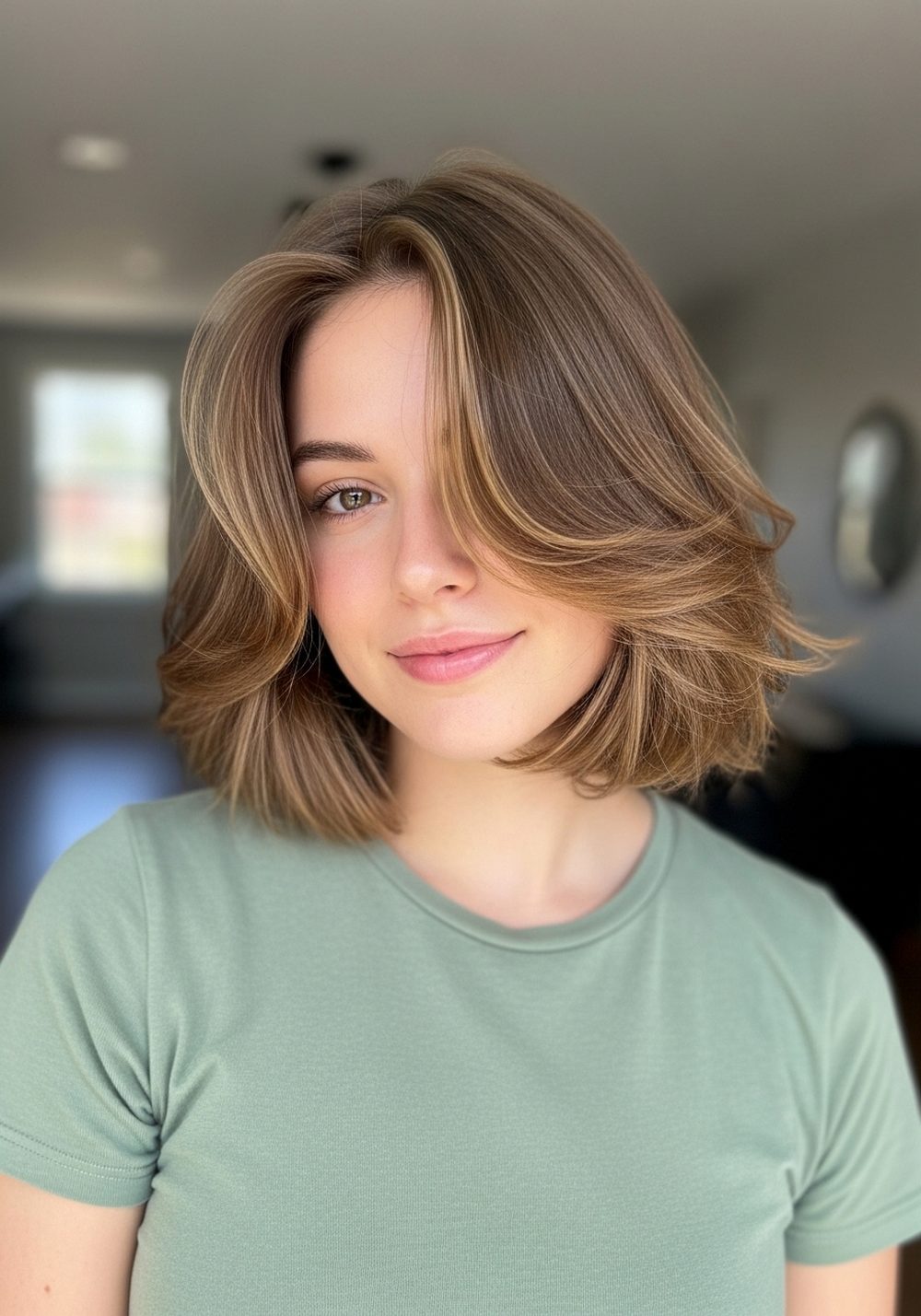
This soft tousled bob combines gentle bends with an easy ear tuck for a shape that feels polished without looking overly styled. The length sits around the jaw or slightly below it, while lightly textured ends prevent the perimeter from appearing heavy. A few imperfect waves through the mid-lengths create movement, and keeping the roots relatively natural gives the hairstyle a modern, relaxed finish. Tucking one or both sides behind the ears opens the face and gives the tousled texture more definition around the cheeks. It is an appealing option for anyone who likes short hair with movement but still wants enough structure for everyday wear, workdays, dinners, and casual weekends.
Styling Notes
Create loose bends rather than full curls, changing their direction slightly as you move around the head. Break them apart with your fingers so the surface remains airy and touchable.
Best For
This style works especially well on straight-to-wavy hair with enough density to hold soft texture while maintaining a clean bob silhouette.
2. French Inspired Wavy Ear Tucked Bob Hairstyle
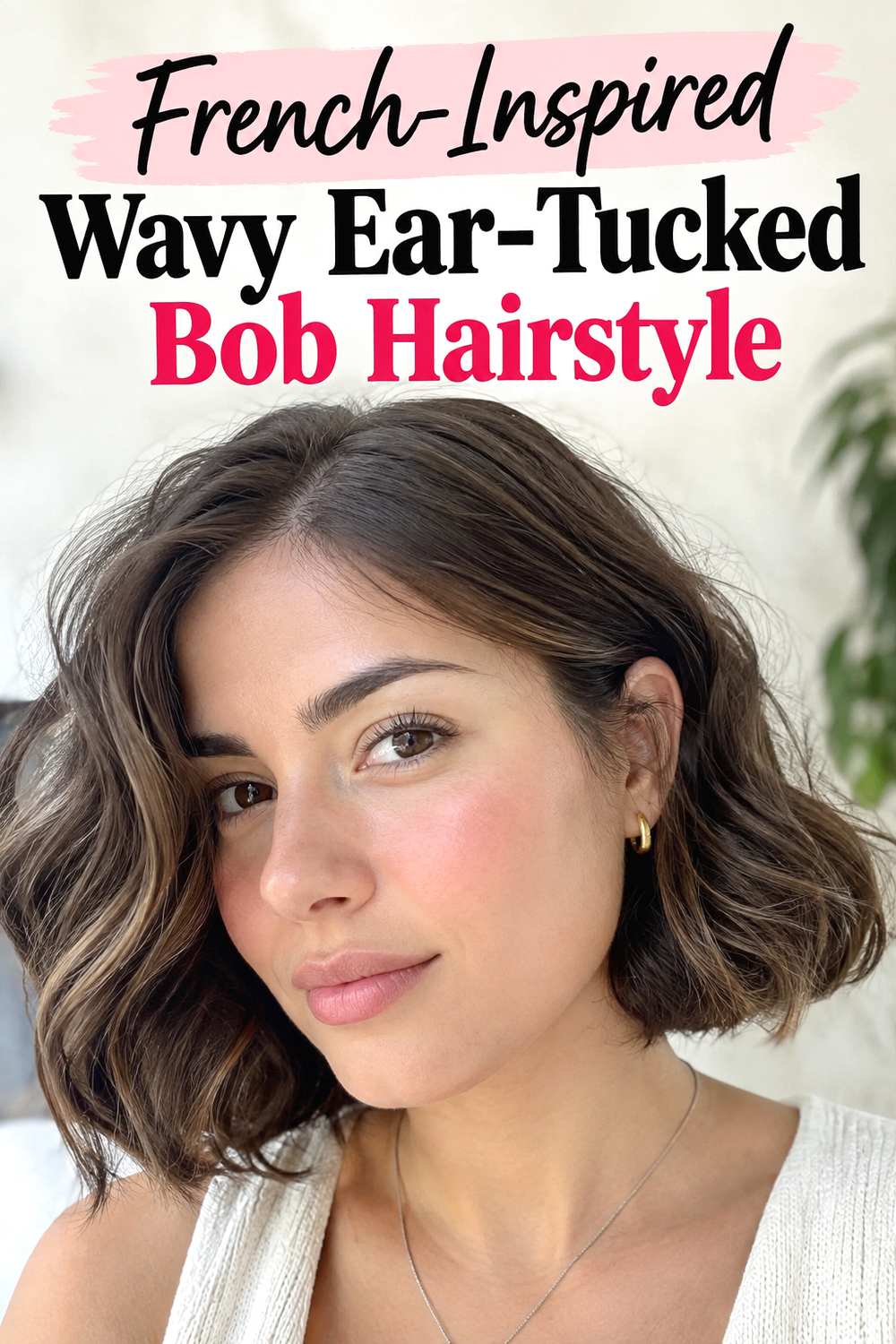
The French-inspired version of the ear-tucked bob has a deliberately unfussy quality. Instead of uniform curls, the hair carries loose, irregular waves that make the cut look lived-in and softly dimensional. A slightly off-center part keeps the shape natural, while the ear tuck reveals the cheekbone and creates the understated elegance associated with relaxed Parisian-inspired styling. The ends can sit anywhere from jaw level to just below the chin, with enough internal texture to stop the bob from becoming triangular. This look is particularly attractive when the waves remain soft and separated rather than glossy and overly defined, making it easy to wear with minimal makeup, simple outfits, or more polished evening styling.
Why It Works
The combination of an exposed ear, imperfect texture, and a clean short silhouette gives the haircut definition without making it look rigid or overdone.
Pro Tip
Leave the final inch of the ends straighter when adding waves. That small detail helps the bob feel modern rather than tightly curled.
3. Choppy Layered Ear Tucked Bob Hairstyle
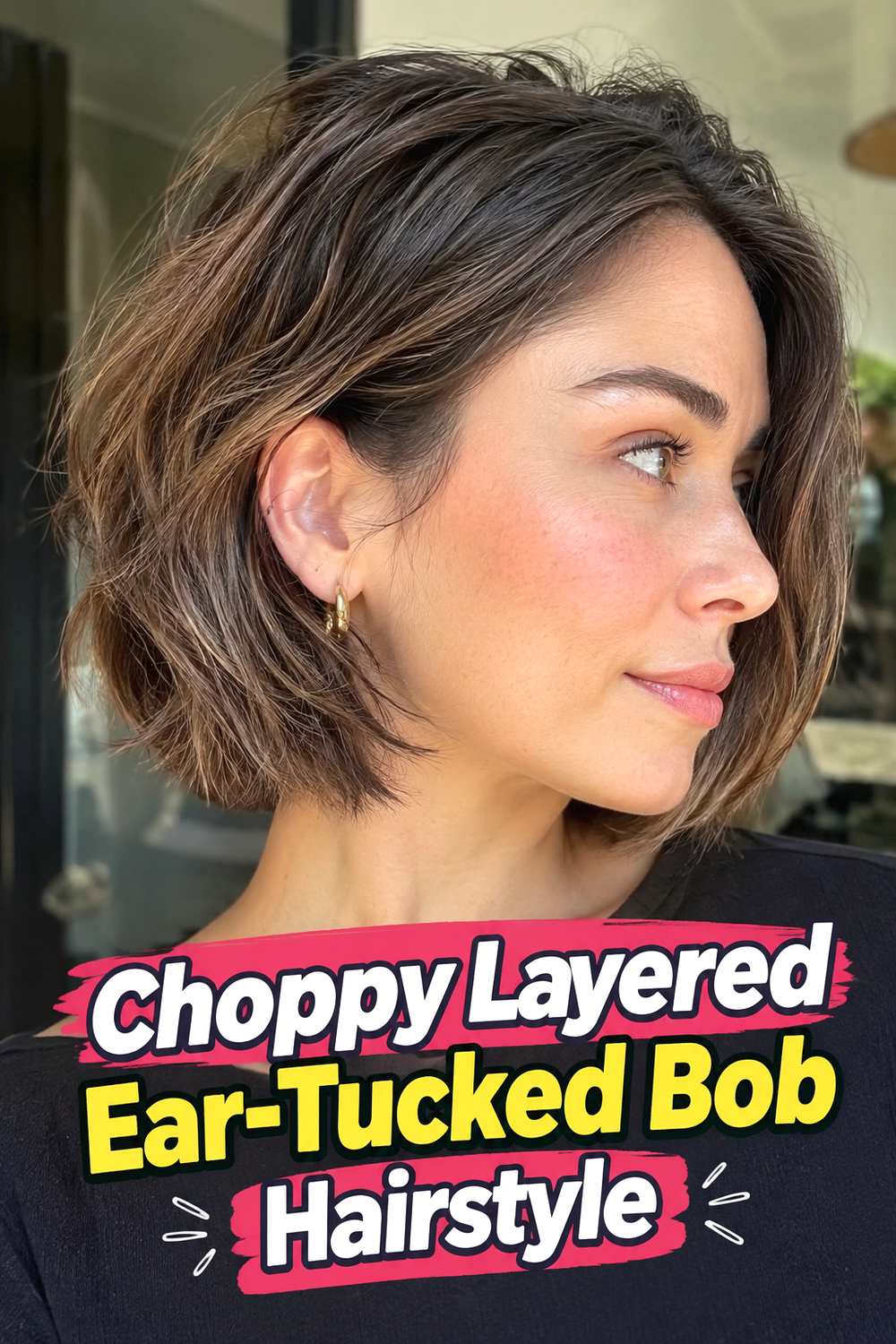
A choppy layered bob brings extra movement to the classic ear-tucked shape by creating visible separation through the ends and interior. Short, carefully placed layers remove some weight and allow sections of hair to move independently, which can make the overall cut feel lighter and more energetic. When one side is tucked behind the ear, those textured pieces become especially noticeable around the jaw and nape. The result has more edge than a soft one-length bob but can still look wearable and polished when the layers are blended thoughtfully. It is a strong choice for someone who likes definition and movement in short hair and does not mind a slightly more undone finish throughout the day.
Hair Type & Length
Straight, slightly wavy, and medium-density hair can show the choppy separation particularly clearly. Keeping the longest point near the jaw preserves the recognizable bob shape.
Wear & Maintenance
Textured layers can grow out more noticeably than a blunt perimeter, so occasional reshaping helps keep the ends intentional instead of uneven.
4. Sleek Side Part Ear Tucked Bob Hairstyle
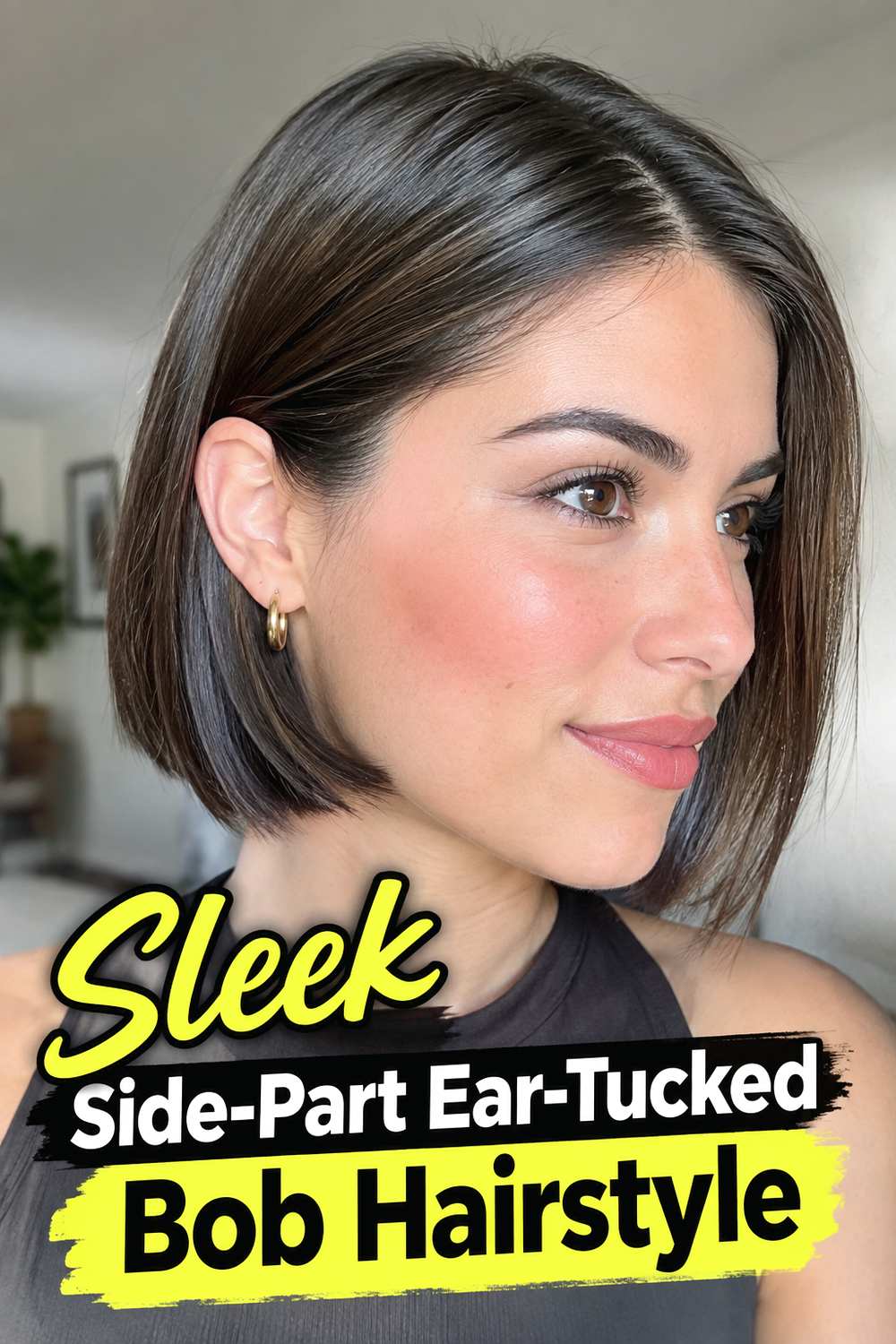
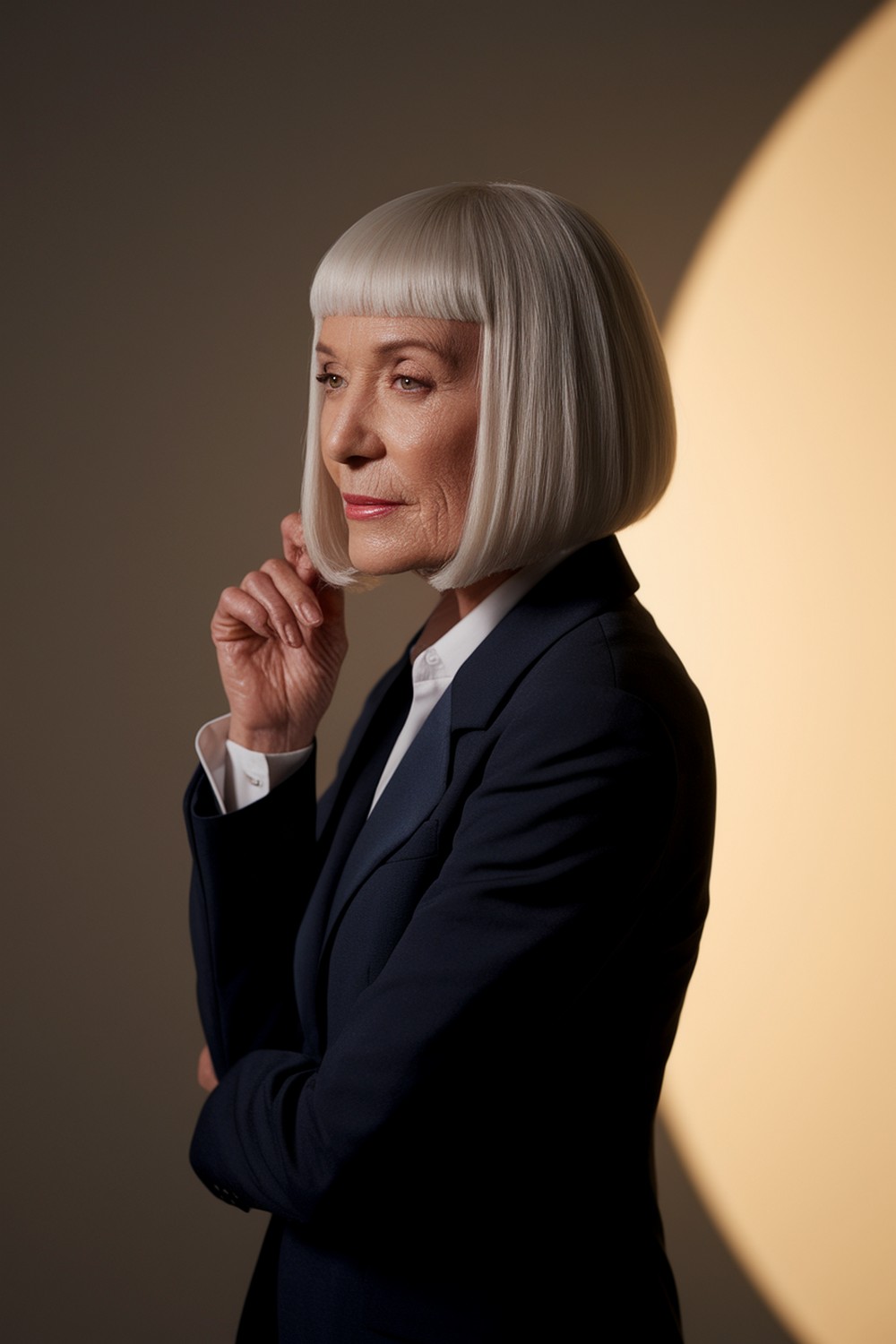
A sleek side-part bob offers a cleaner interpretation of the textured ear-tucked trend. The surface stays smooth and controlled, but subtle movement through the ends keeps the cut from looking stiff. A defined side part creates asymmetry, allowing the fuller side to sweep softly across the forehead while the lighter side is tucked neatly behind the ear. This contrast makes the hairstyle feel sculpted and modern without requiring complicated styling. A jaw-to-chin length works especially well because the shorter silhouette highlights the neckline and cheek area. The style suits occasions when you want short hair to appear refined while still retaining a small amount of softness and natural body.
Styling Notes
Smooth the upper layers first, then add a slight bend only through the lower lengths. This preserves the sleek surface while preventing the bob from appearing completely flat.
Best For
Choose this version if you prefer controlled texture, a visible part, and a hairstyle that transitions easily from professional settings to evening plans.
5. Air Dried Textured Ear Tucked Bob Hairstyle
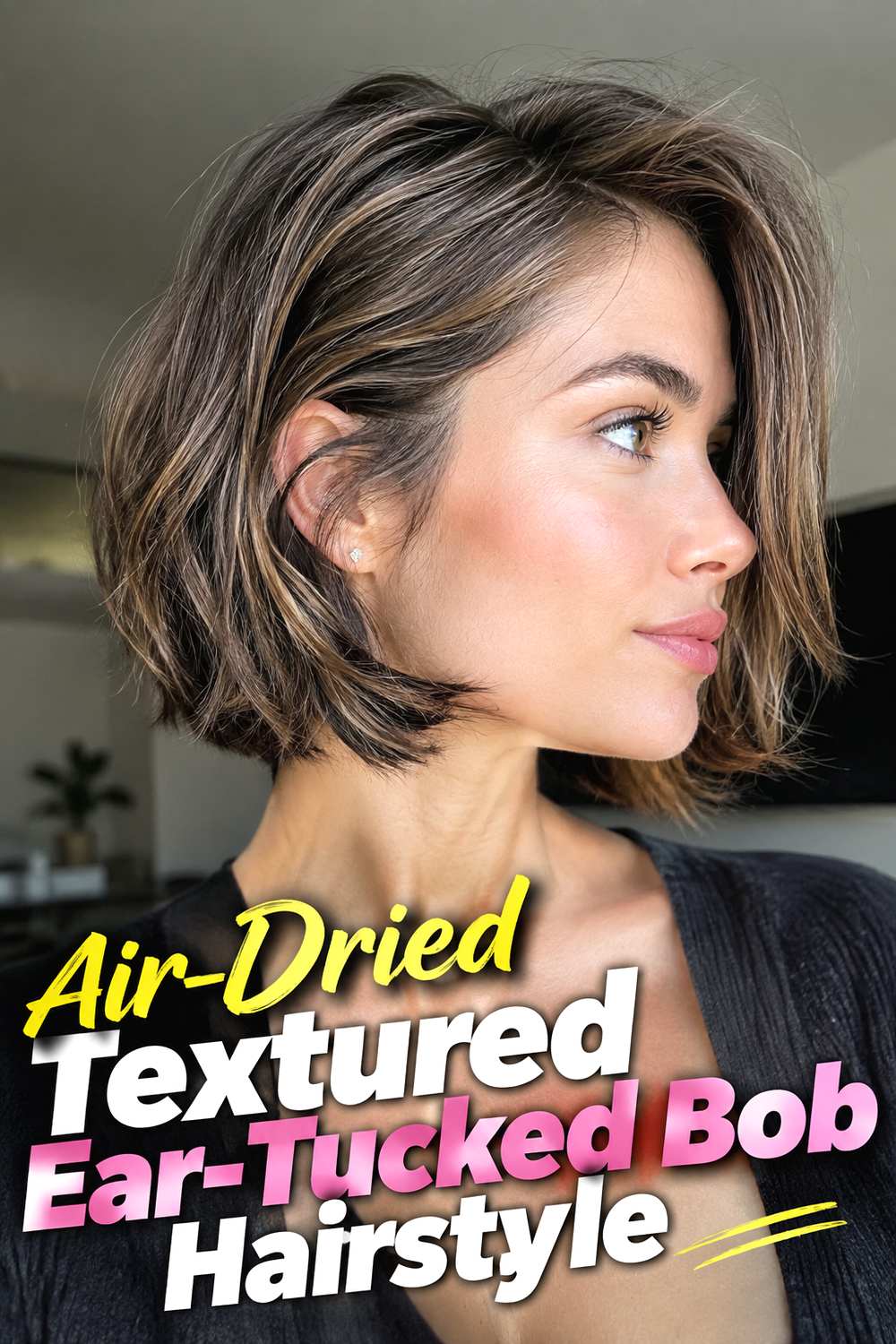
An air-dried textured bob celebrates the natural bends, slight waves, and individual movement already present in the hair. Rather than forcing every section into a matching pattern, the haircut is shaped to let its natural texture create the interest. Tucking the front pieces behind the ears gives the otherwise relaxed finish a cleaner outline and keeps the style from appearing too unstructured. Light layering around the bottom can help encourage movement without removing so much density that the ends become thin. This version is especially practical for people who prefer a lower-effort routine and are comfortable allowing texture to vary slightly from day to day depending on humidity, drying pattern, and natural hair behavior.
Hair Type & Length
Naturally wavy or slightly irregular hair is especially suited to this approach. A chin-to-neck length gives the texture enough room to form without losing the compact bob shape.
Pro Tip
Apply styling product while the hair is still quite damp, then avoid repeatedly touching it as it dries so the natural pattern can develop with less frizz.
6. Curtain Bang Ear Tucked Bob Hairstyle
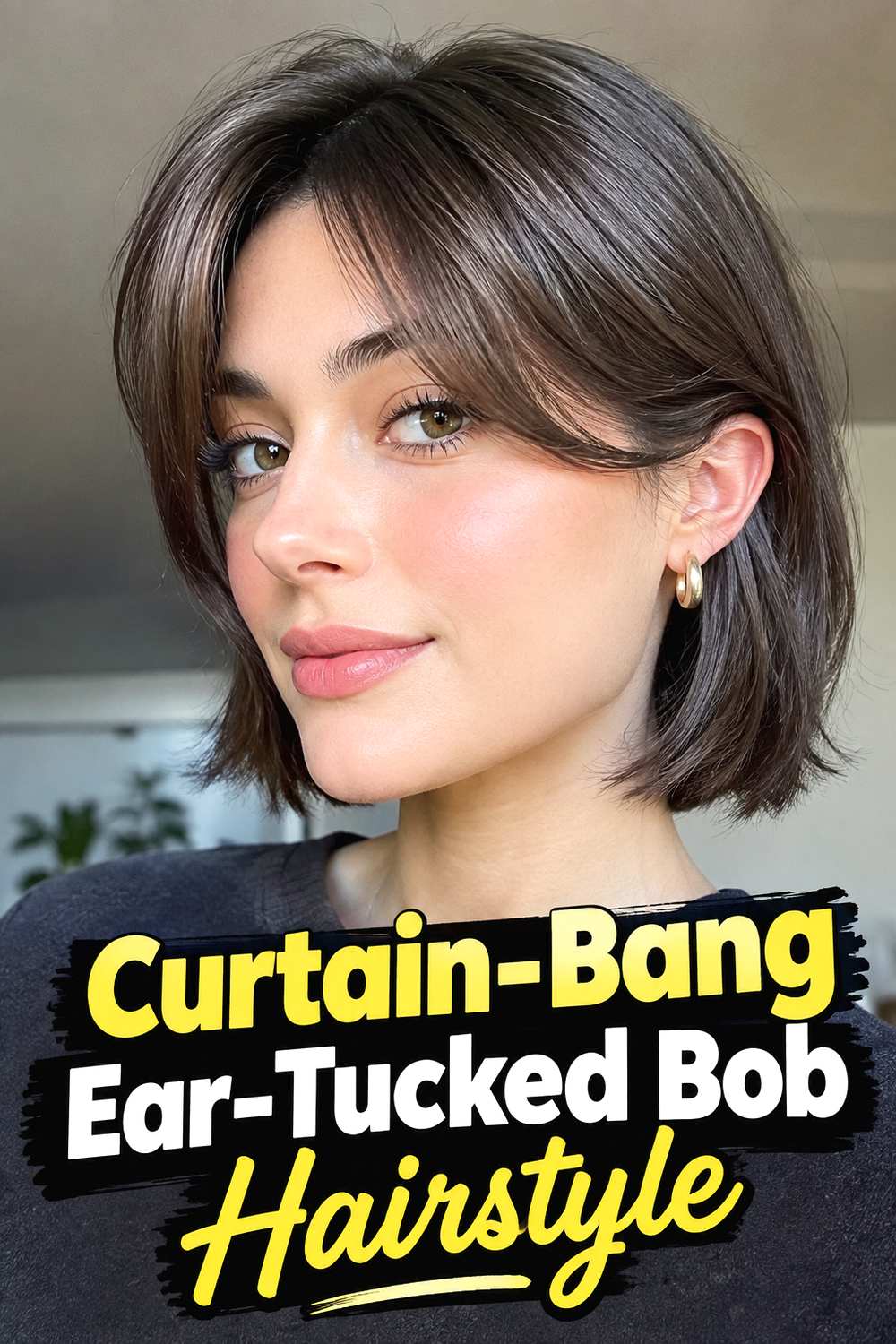
Adding curtain bangs gives an ear-tucked bob extra framing around the eyes and cheekbones while preserving the clean openness created by the tucked sides. The fringe splits softly through the center or just off-center, with the shortest pieces sitting around the brow or upper cheek before blending into the bob. Loose texture throughout the rest of the hair prevents the bangs from feeling disconnected from the cut. This style can be particularly flattering for someone who wants the visual interest of fringe without the heavier appearance of a full straight-across bang. When the sides are tucked back, the curtain pieces remain forward, creating an appealing contrast between softness around the face and structure around the ears.
Wear & Maintenance
The bangs usually need more frequent attention than the rest of the bob. Even a quick refresh around the front can make the entire haircut look more intentional.
Styling Notes
Direct each side of the fringe slightly away from the face while drying, then soften the shape with your fingers rather than creating a pronounced curl.
7. Piecey Jaw Length Ear Tucked Bob Hairstyle
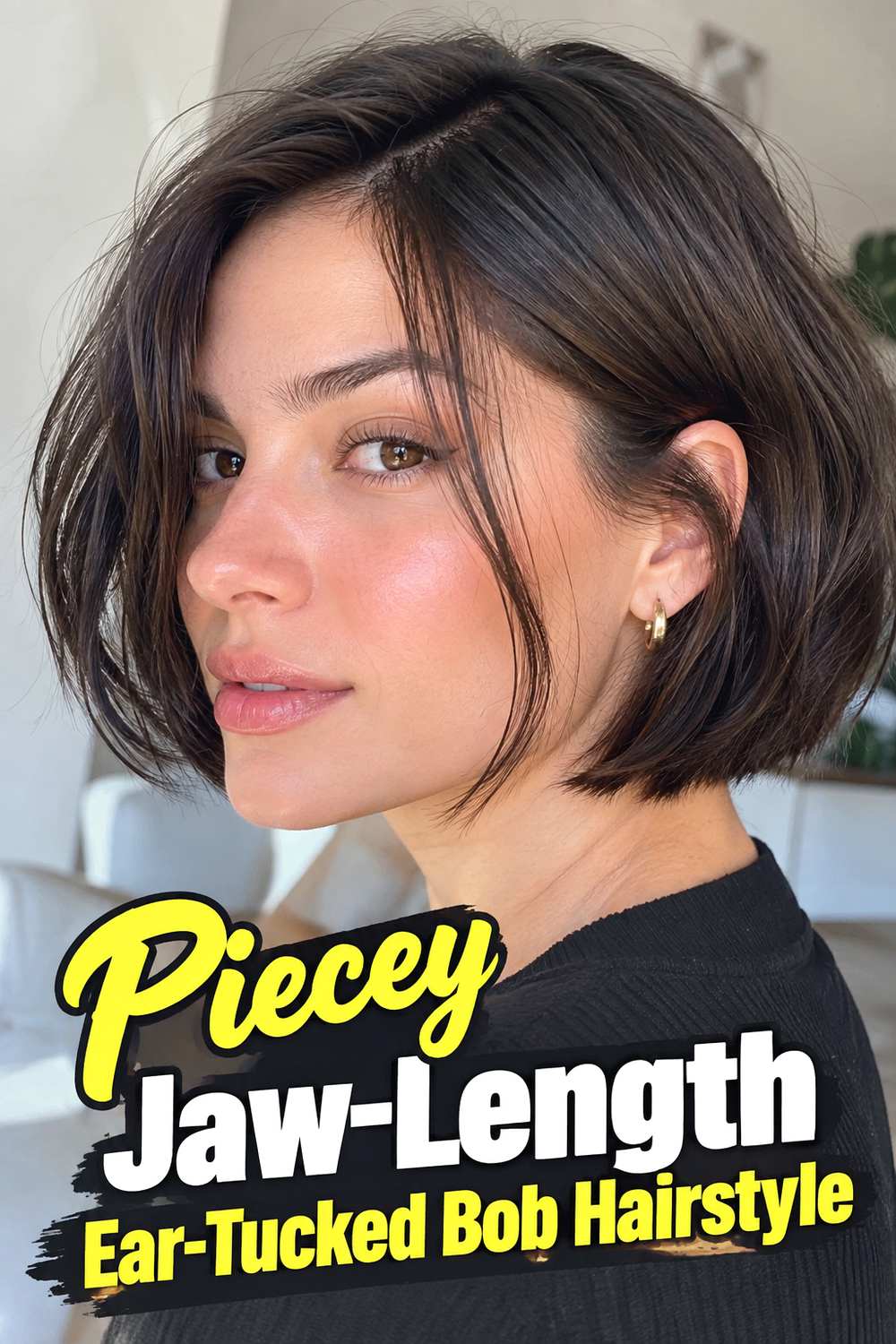
A piecey jaw-length bob places the emphasis directly around the lower face, creating a crisp yet textured silhouette. The perimeter is short enough to feel bold, but separated ends keep the shape from becoming too severe. Small sections around the front can be defined individually, giving the haircut that lightly undone, editorial quality without making it impractical for everyday wear. Tucking one side behind the ear sharpens the outline and makes the opposite side appear slightly fuller, which is useful if you enjoy asymmetrical styling. Because the length sits close to the jaw, even subtle texture becomes highly visible, so the look benefits from deliberate separation rather than large, loose waves.
Why It Works
The compact length gives the bob structure, while piecey ends introduce movement and stop the haircut from appearing like one solid block.
Pro Tip
Use only a small amount of lightweight texture product on the ends. Too much can make short separated pieces look heavy rather than airy.
8. Voluminous Root Lift Ear Tucked Bob Hairstyle
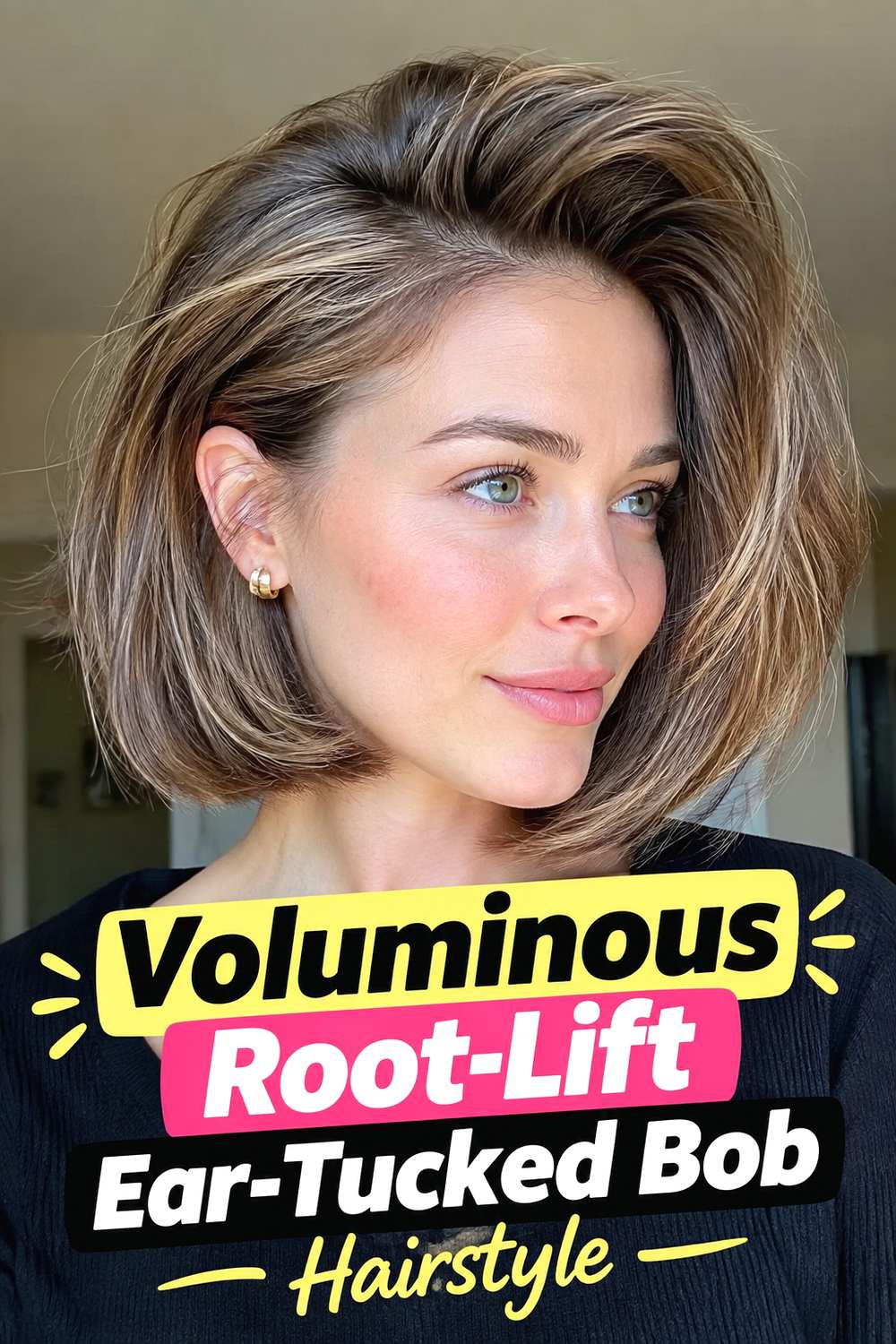
This ear-tucked bob focuses on lift at the crown and upper sides rather than concentrating all the volume at the ends. The elevated roots create a fuller silhouette, while soft texture through the mid-lengths allows the hair to fall naturally toward the jaw. Tucking the sides behind the ears helps contain that volume and keeps the finished shape balanced instead of overly wide. The result feels polished and energetic, especially on hair that tends to collapse close to the scalp. It can also make a short bob look more dimensional in photographs because the raised crown creates visible shape from multiple angles. Keep the ends soft so the root volume remains the main feature rather than competing with heavy curls.
Styling Notes
Direct the roots away from their natural fall while drying, then let them cool before arranging the bob. This helps create lift without excessive teasing.
Best For
This variation is particularly useful for fine-to-medium hair that has enough density through the ends but benefits from more height near the scalp.
9. Blunt Ended Textured Ear Tucked Bob Hairstyle
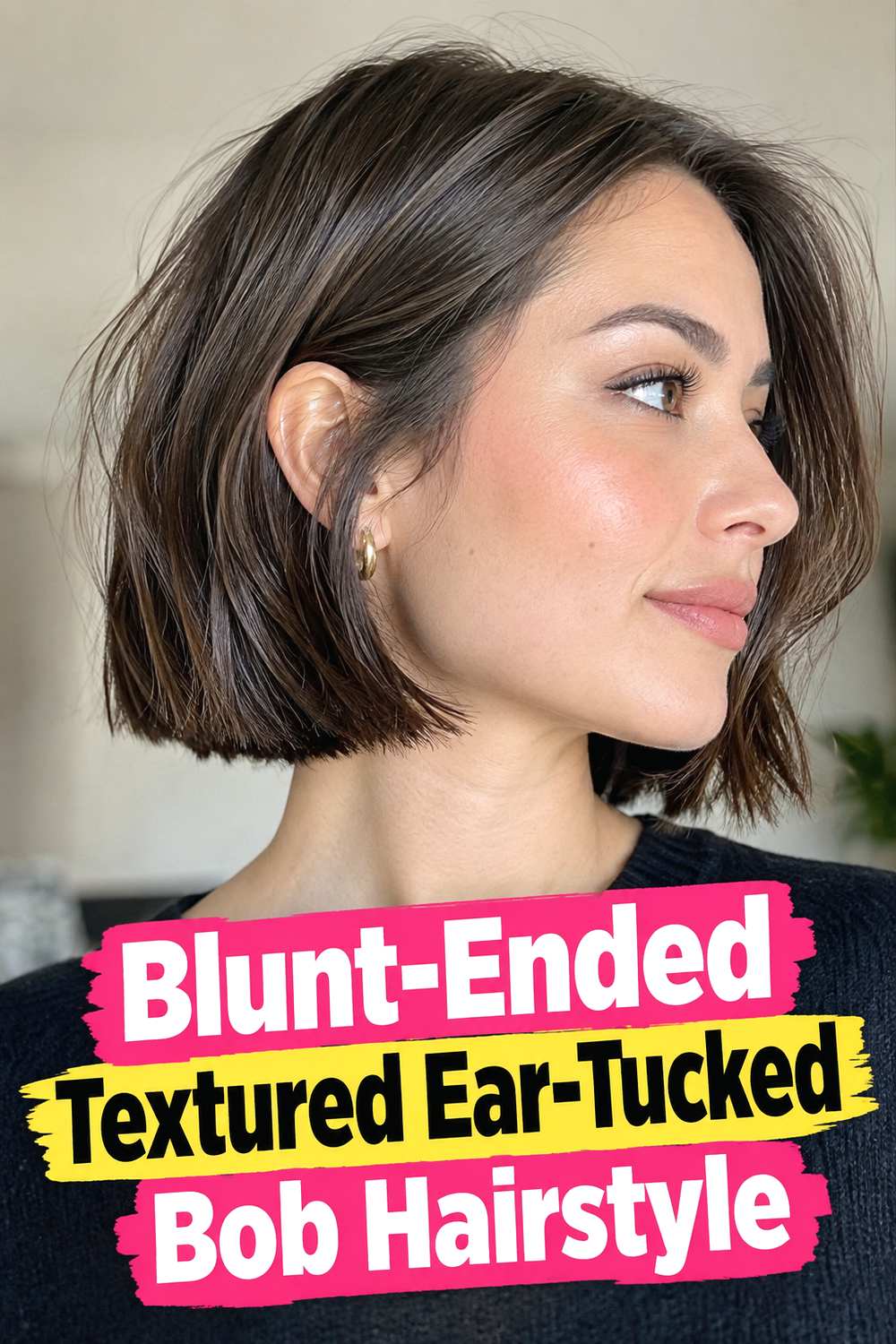
A blunt-ended textured bob combines two contrasting details: a strong perimeter and a softer, more movable surface. The ends are cut with enough weight to create a visible line around the chin or lower jaw, while subtle bends through the interior stop the haircut from looking rigid. Once one side is tucked behind the ear, the blunt outline becomes even more noticeable, giving the style a contemporary graphic quality. Because the texture is intentionally restrained, this option works well for anyone who wants a bob that still feels substantial and polished. It can be worn slightly tousled during the day and smoothed more precisely when you want the stronger outline to become the focus.
Hair Type & Length
Straight and softly wavy textures tend to display the blunt perimeter clearly. A chin-length or slightly longer cut provides enough weight for the shape to stay defined.
Wear & Maintenance
Regular trimming helps preserve the strong bottom line, particularly if the haircut is short enough that even a small amount of growth changes its proportions.
10. Curly Ear Tucked Bob Hairstyle
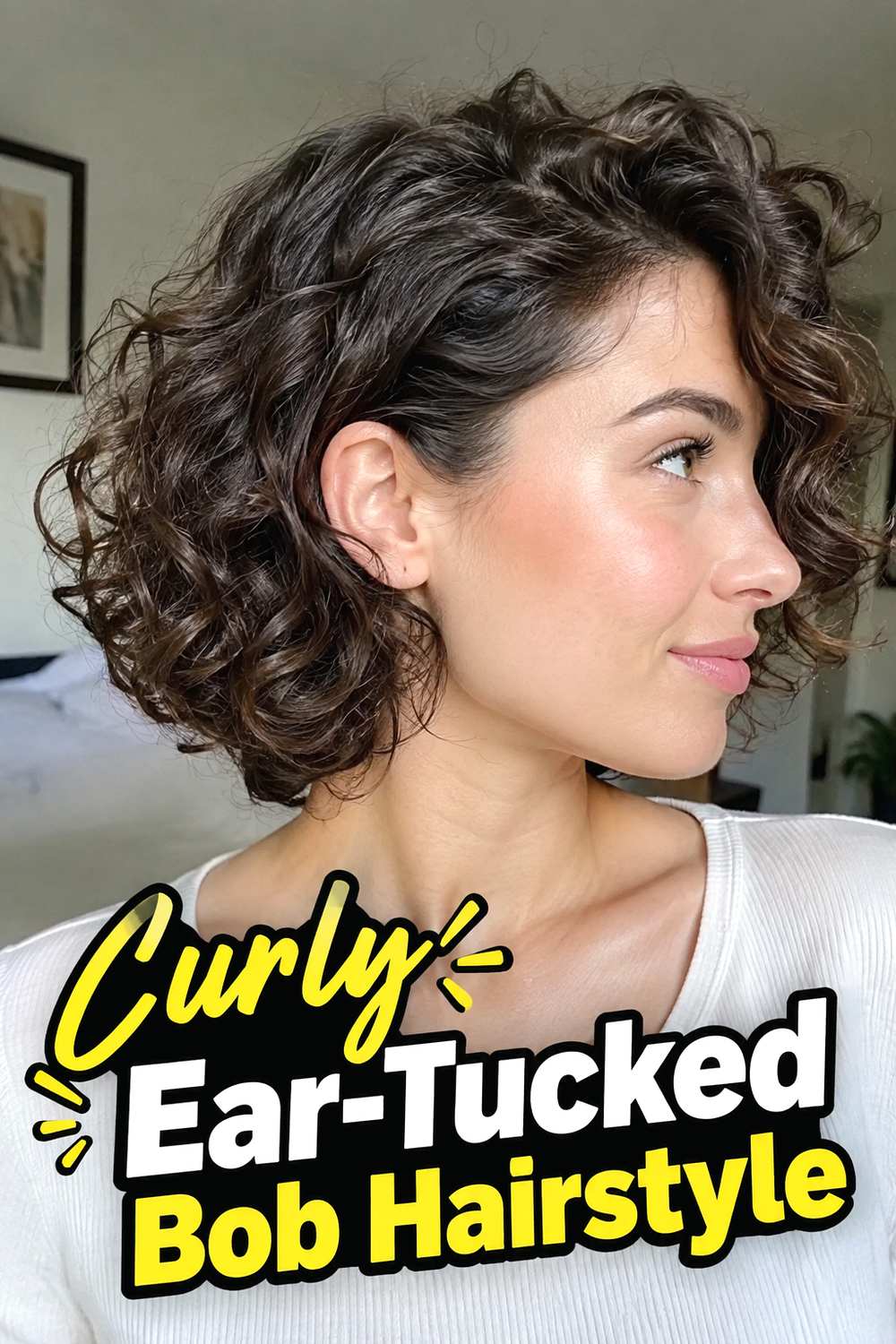
A curly ear-tucked bob uses natural curl formation to create volume and dimension while the tucked sides keep the silhouette controlled around the face. Instead of flattening the curls near the ears, gently placing a few sections behind them reveals the facial profile while allowing the crown and remaining lengths to stay full. A rounded or softly graduated shape can help the curls stack naturally rather than forming excess bulk at the bottom. The strongest versions preserve variation in the curl pattern, with some tighter pieces and some looser ones creating realistic movement. This hairstyle is a beautiful option for anyone who wants a shorter curly cut that feels expressive and full but still has enough structure to frame the face clearly.
Hair Type & Length
The exact finished length depends on curl shrinkage, so the bob should be planned according to where the curls sit when dry rather than relying only on stretched length.
Pro Tip
Arrange the ear tuck after the curls are fully or mostly dry. Repeated handling during drying can disturb definition and create unnecessary frizz.
11. Deep Side Swept Ear Tucked Bob Hairstyle
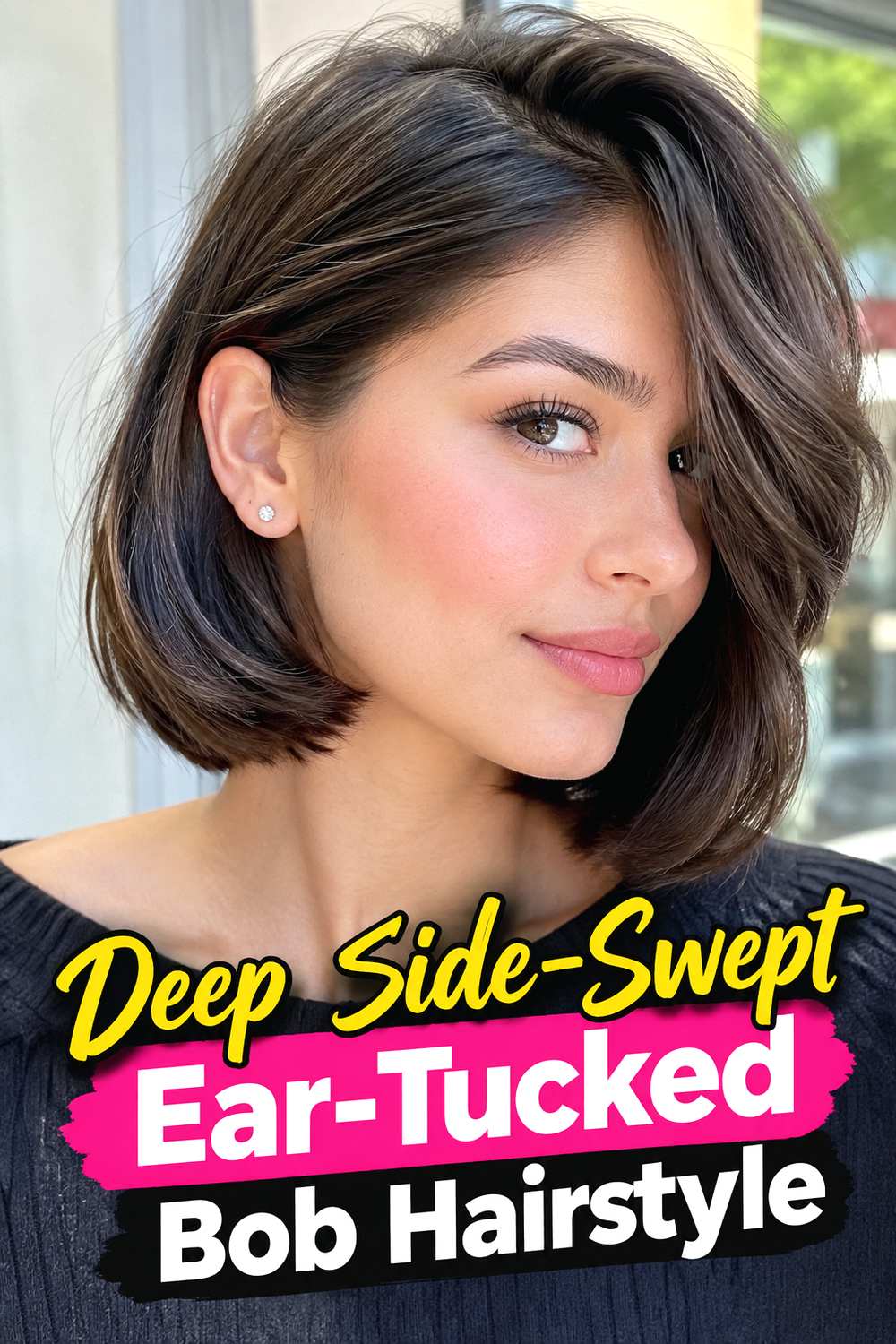
A deep side part transforms a textured bob by creating noticeably different volume on each side of the head. The fuller section sweeps across the forehead with a soft bend, while the smaller section sits neatly behind the ear for a dramatic yet wearable asymmetry. Texture through the lower half keeps the look relaxed enough for everyday styling and prevents the side sweep from becoming overly formal. This version can look especially striking at chin or jaw length because the compact perimeter makes the change in volume more obvious. It also offers flexibility: the sweep can remain loose and casual during the day or be smoothed and defined for a more polished finish in the evening.
Why It Works
Moving more hair to one side creates instant shape and visual movement without requiring additional layers or a major change to the actual haircut.
Styling Notes
Set the part while the roots are damp. Establishing the direction early usually makes the finished sweep look more natural and reduces the need for heavy hold products.
12. Wispy Fringe Ear Tucked Bob Hairstyle
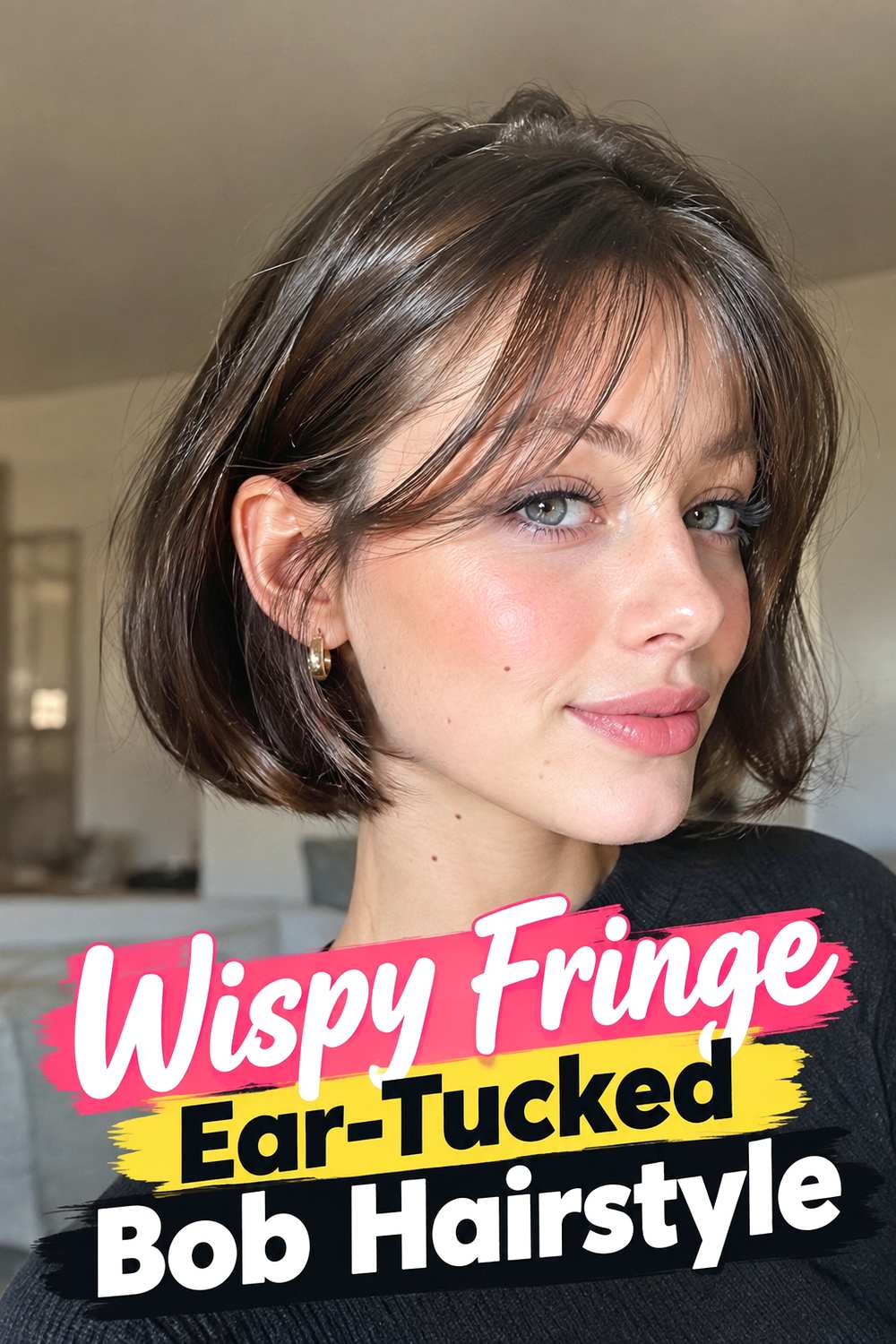
A wispy fringe adds a delicate front detail to the textured bob without hiding the entire forehead. The bangs are light, separated, and soft around the edges, creating movement that complements the broken texture through the rest of the haircut. Tucking the side sections behind the ears prevents the combination of fringe and bob from feeling too enclosed around the face. The overall effect is youthful, airy, and slightly playful while remaining sophisticated enough for everyday wear. This style works particularly well when the bob has gentle movement instead of large waves, allowing the fringe to blend naturally into the silhouette. The key is keeping the bangs intentionally lightweight so they maintain separation rather than merging into one heavy section.
Wear & Maintenance
Because wispy bangs sit directly on the forehead, they can need quick refreshing more often than the rest of the haircut, especially between wash days.
Best For
Consider this version if you want noticeable face framing but prefer something softer and less committed-looking than a dense, full fringe.
13. Beachy Bend Ear Tucked Bob Hairstyle
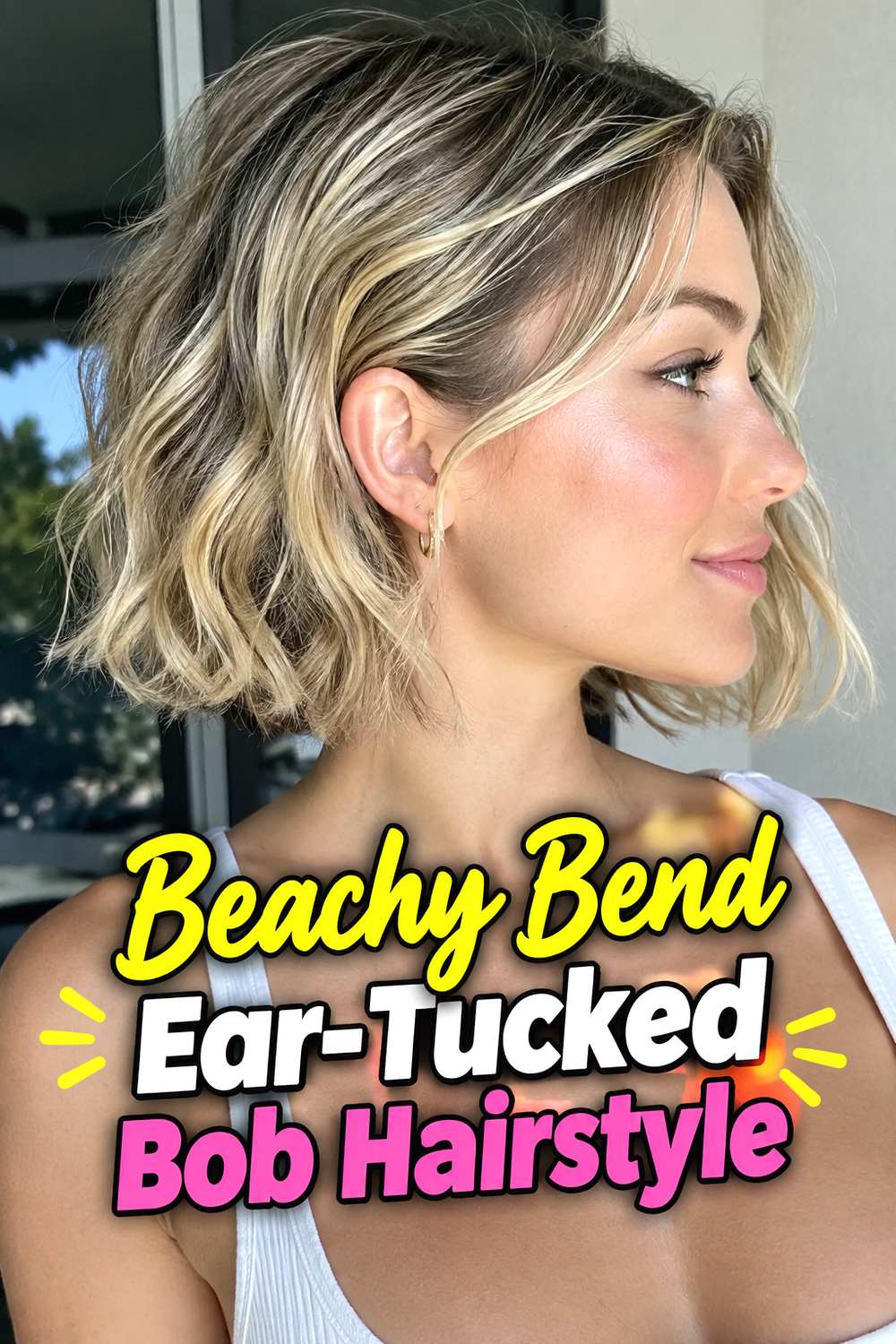
The beachy bend bob uses loose S-shaped movement to give short hair an easy, sun-dried appearance without turning it into a full curly style. The bends begin mainly through the mid-lengths, leaving the roots relatively relaxed and the ends a little straighter. That placement makes the bob look longer and more casual while still producing visible texture. Tucking one side behind the ear adds a clean finishing detail that contrasts nicely with the otherwise undone movement. The style is particularly versatile because it can suit casual outfits, warm-weather events, or more dressed-up looks depending on how polished the texture is. A little irregularity is desirable, so the bends should never look perfectly identical.
Styling Notes
Alternate the direction of a few sections and leave some pieces less textured than others. The variation is what creates the effortless beachy effect.
Pro Tip
Avoid curling every strand from root to tip. Concentrating the movement in the middle keeps the bob from becoming round or overly voluminous.
14. Shaggy Micro Layer Ear Tucked Bob Hairstyle
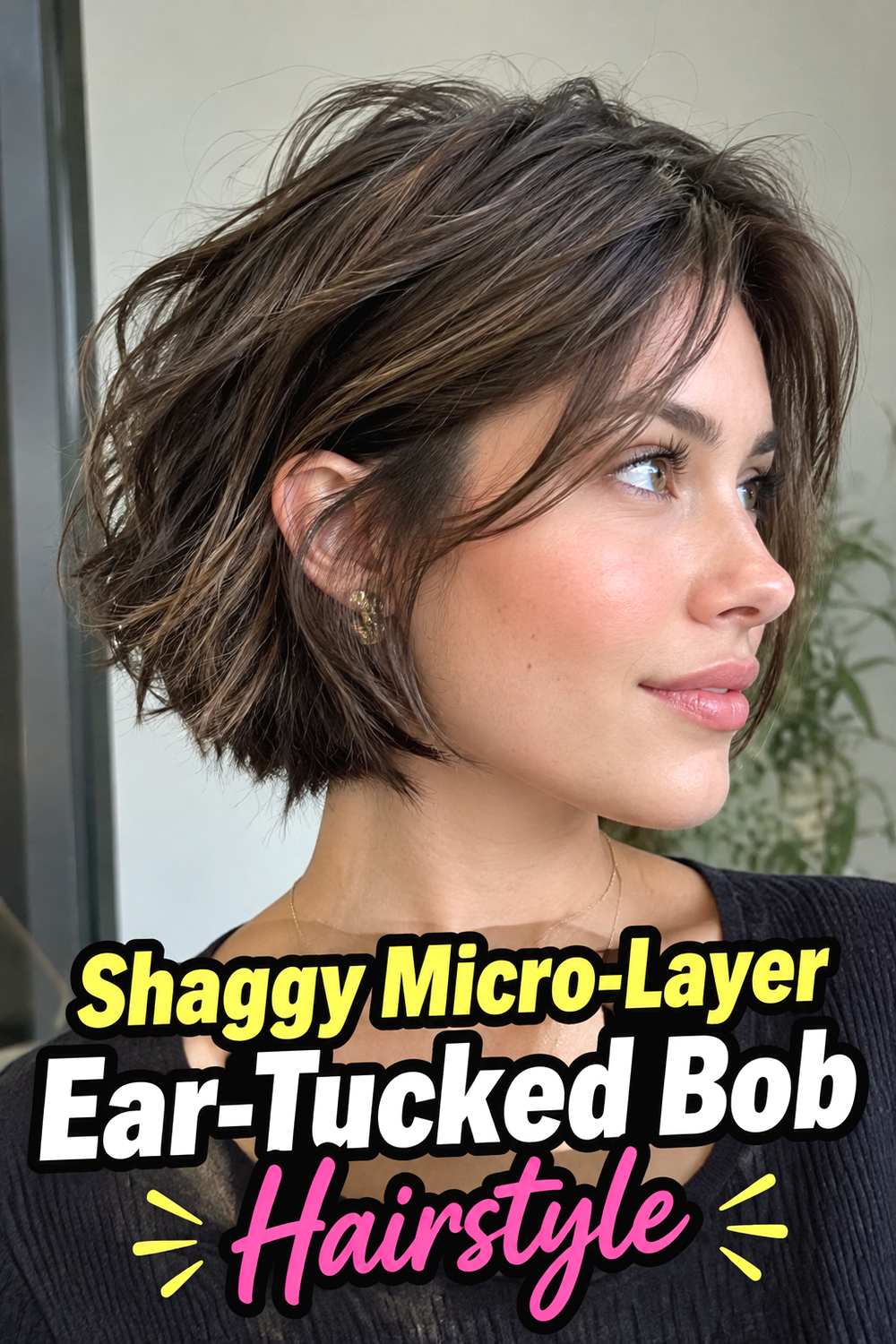
A shaggy micro-layer bob adds subtle short layers throughout the haircut to encourage separation, lift, and a slightly tousled surface. Unlike a dramatic shag, the layers stay controlled enough for the cut to retain a recognizable bob outline. Around the crown, the shorter pieces create gentle movement, while the longer perimeter maintains weight near the jaw. The ear tuck prevents the textured layers from overwhelming the face and gives the style a cleaner profile from the front. This is a useful option for anyone drawn to relaxed, modern cuts that look better with a little natural movement rather than perfect smoothness. It also offers plenty of personality without requiring the heavily feathered shape of a full shag haircut.
Hair Type & Length
Medium-density straight or wavy hair often shows the micro-layers clearly. Very fine hair may need fewer layers to preserve enough fullness through the perimeter.
Wear & Maintenance
Let the layers move rather than trying to press every piece into place. The hairstyle is designed to look slightly irregular, so small flyaways can suit the finish.
15. Polished Soft Wave Ear Tucked Bob Hairstyle
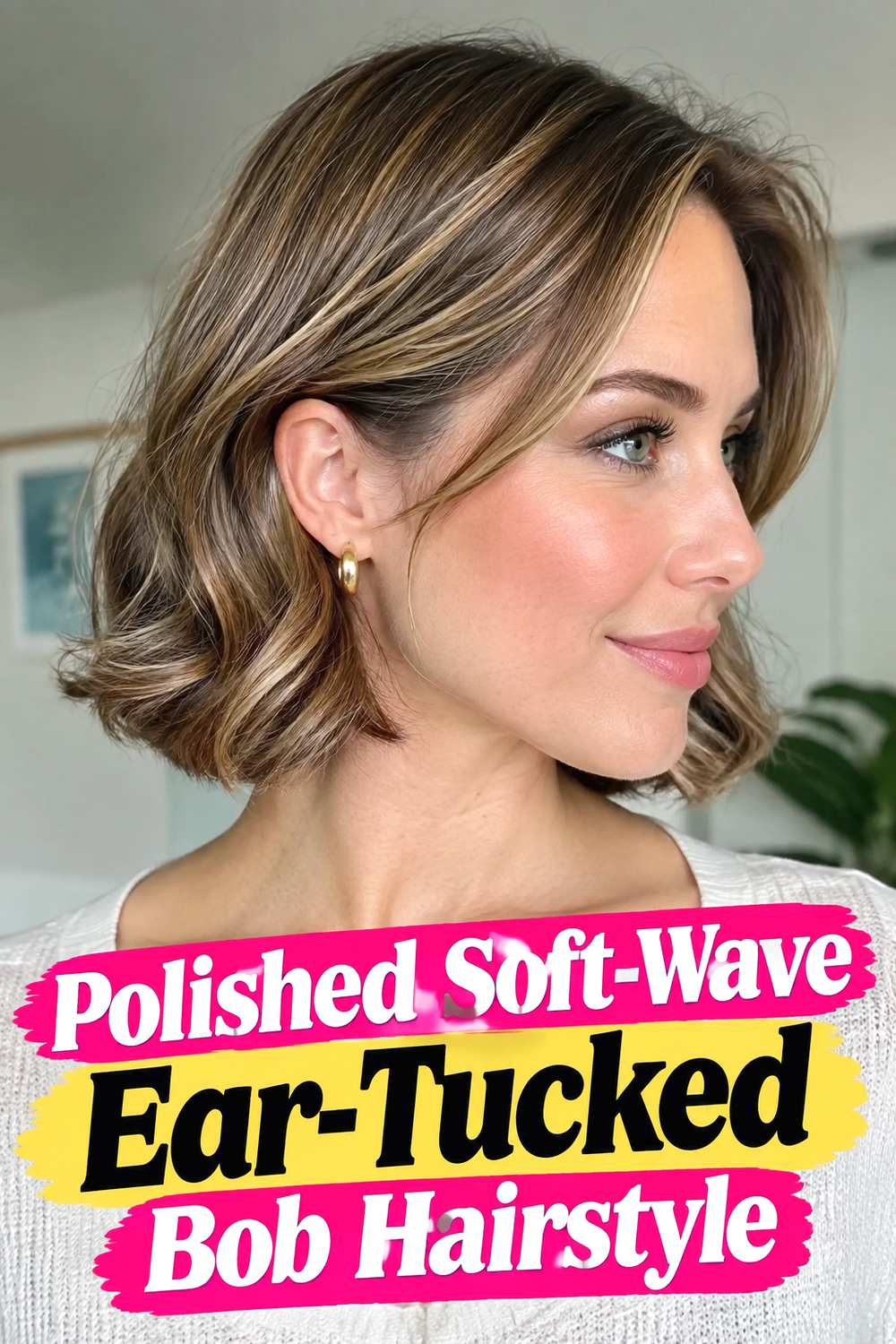
The polished soft-wave bob is an elegant finishing point for anyone who likes texture but wants the overall shape to remain refined. Broad, smooth waves create dimension without breaking the surface into overly separated pieces, and the ends stay softly controlled rather than deliberately messy. Tucking the front sections behind the ears opens the face and makes the gentle curves through the bob more visible. A subtle side or center part can both work, depending on how balanced or asymmetrical you want the finished silhouette to appear. This style adapts particularly well to dinners, weddings, professional events, and other occasions when an undone beachy finish may feel too casual but completely straight hair feels too simple.
Styling Notes
Use larger sections when creating the bends, then lightly brush or finger-comb them together so the texture forms broad, continuous waves instead of individual curls.
Best For
Choose this version when you want an ear-tucked bob that still has movement but reads as smooth, deliberate, and event-ready.
How to Choose the Right Look
Start with your natural texture and realistic styling routine. If your hair already has soft bends or waves, the Air-Dried Textured Ear-Tucked Bob Hairstyle or French-Inspired Wavy Ear-Tucked Bob Hairstyle can work with that movement instead of requiring you to reshape the entire head. Straighter hair may suit the Blunt-Ended Textured Ear-Tucked Bob Hairstyle, Sleek Side-Part Ear-Tucked Bob Hairstyle, or Piecey Jaw-Length Ear-Tucked Bob Hairstyle particularly well.
Next, think about volume. Fine hair that lies flat may benefit from the Voluminous Root-Lift Ear-Tucked Bob Hairstyle, while dense hair may feel lighter with choppy or micro-layered shaping. Naturally curly hair needs a shape that accounts for shrinkage and volume rather than copying proportions designed for straight hair.
Consider how much daily styling you want. Air-dried and shaggy versions are designed to tolerate some irregular movement, while polished waves, sleek surfaces, and precise fringes usually need more deliberate styling. Bangs also add maintenance because the front section may need more frequent trims or refreshing.
Finally, decide what kind of finish fits your lifestyle. Beachy and tousled versions feel relaxed, blunt or sleek bobs look cleaner and more structured, and polished waves sit comfortably between the two. The best choice is one that works with your hair’s natural behavior while still giving you the amount of texture, hold, comfort, and maintenance you are willing to manage.
Final Thoughts
Ear-tucked textured bobs can look dramatically different depending on the length, layering, part, fringe, and type of movement you choose. Start by narrowing the list according to your natural texture and preferred maintenance level, then decide whether you want a soft, shaggy, sleek, curly, or more polished finish. Even a simple change in the part or the amount of texture around the ends can give the same basic bob shape a completely different personality.
FAQs
1. What length works best for an ear-tucked textured bob?
Chin, jaw, and slightly below-the-chin lengths are especially practical because they are short enough to show the bob shape clearly while leaving enough hair around the sides for an easy ear tuck.
2. Can fine hair wear a textured ear-tucked bob?
Yes. Fine hair can benefit from restrained texture, root lift, and carefully placed layers. Keeping enough weight through the perimeter usually helps the bob look fuller.
3. Is an ear-tucked bob suitable for naturally curly hair?
Yes, but the haircut should account for curl shrinkage and natural volume. The final shape is best judged with the curls in their normal dry state rather than stretched straight.
4. How do I keep the tucked side from falling forward?
Establish the part and tuck while styling, and avoid adding too much slippery product around the front. A subtle bend away from the face can also help the section sit behind the ear more naturally.
5. Do textured bobs require a lot of daily styling?
Not necessarily. Air-dried, shaggy, and naturally wavy versions can be fairly low effort, while sleek finishes, defined fringe, and polished waves generally require more regular styling.
CTA
Save your favorite ear-tucked bob ideas for your next haircut, and explore more textured short hairstyles when you are ready for your next look.