14 Edwardian Pompadour Bun Hairstyles for Elegant Vintage-Inspired Looks
Soft front volume, graceful coils, and carefully shaped buns give these Edwardian pompadour hairstyles the elegant vintage character that makes them so visually distinctive.
Edwardian pompadour bun hairstyles are defined by volume around the front and sides paired with hair gathered into a structured bun, roll, or coil. Modern interpretations can preserve that recognizable silhouette while using softer texture, lighter pinning, and subtle accessories for a more wearable finish.
Before choosing a look, compare how much front volume you want, where the bun sits, and how polished or romantic you prefer the texture. Hair length and density also matter because large coils require more material, while smaller rolls and gently expanded sections can create dimension on finer hair.
Quick List
- Classic Edwardian Pompadour Bun Hairstyle
- Gibson Inspired Pompadour Bun Hairstyle
- Low Rolled Pompadour Chignon Hairstyle
- Pearl Accented Edwardian Bun Hairstyle
- Side Swept Pompadour Bun Hairstyle
- Braided Pompadour Crown Bun Hairstyle
- Soft Wave Pompadour Bun Hairstyle
- High Edwardian Coil Bun Hairstyle
- Ribbon Wrapped Pompadour Bun Hairstyle
- Double Roll Edwardian Bun Hairstyle
- Loose Romantic Pompadour Bun Hairstyle
- Sleek Centered Pompadour Bun Hairstyle
- Floral Edwardian Pompadour Bun Hairstyle
- Bridal Edwardian Pompadour Bun Hairstyle
1. Classic Edwardian Pompadour Bun Hairstyle
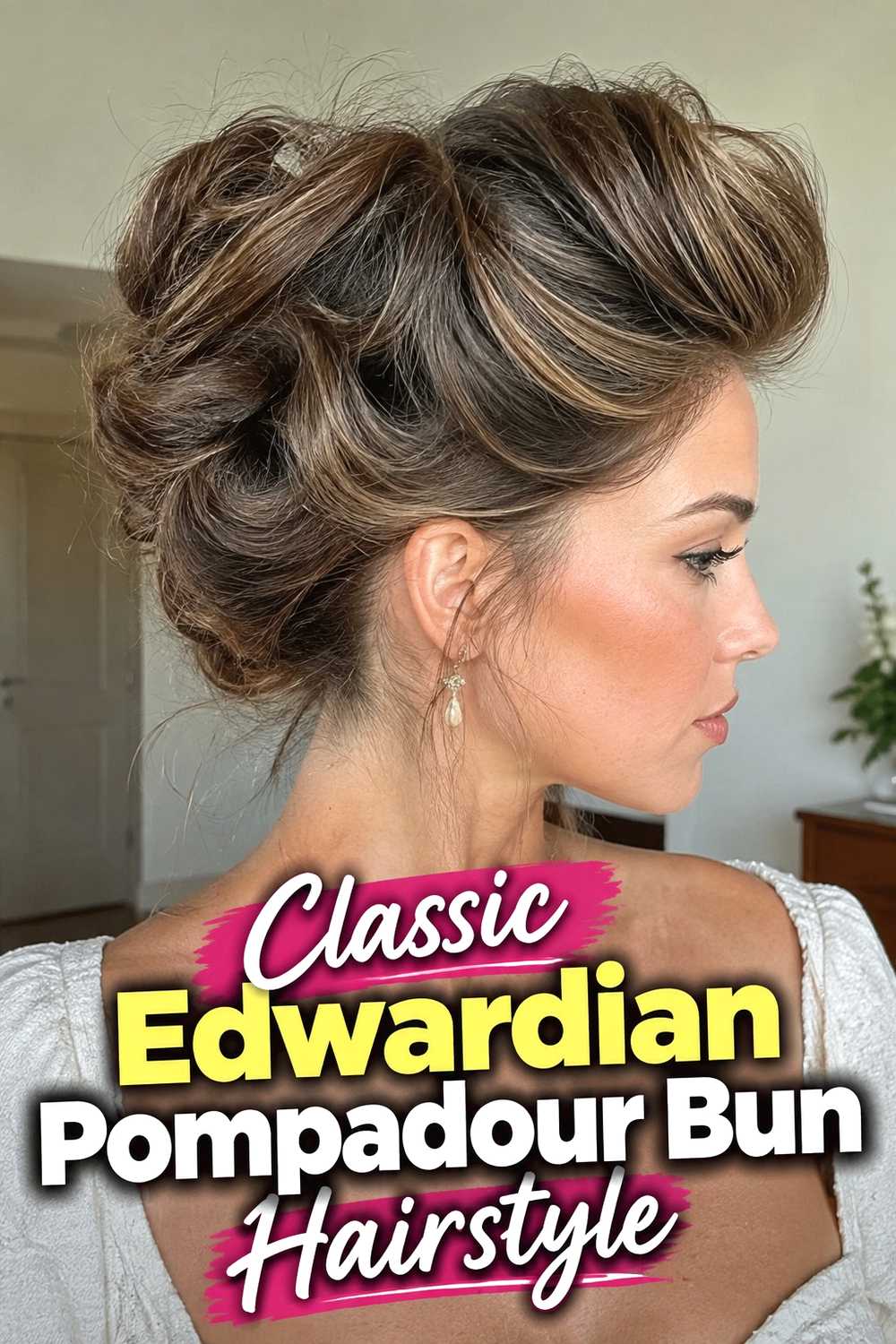
The Classic Edwardian Pompadour Bun Hairstyle centers on rounded volume through the front and sides, with the remaining hair gathered into a substantial bun at the back. The pompadour should look softly lifted rather than stiff, with enough natural strand detail to keep the silhouette believable. A mid-to-high bun complements the elevated front and creates the balanced profile associated with Edwardian-inspired styling. Medium-long to long hair provides the easiest foundation, especially when there is enough density to build both the front volume and the bun. For a modern interpretation, keep the surface polished but not shellacked, allowing a few subtle flyaways and soft texture to prevent the style from looking costume-like.
Styling Notes
Create the front shape before securing the bun. Light backcombing underneath can provide support, while the visible outer layer should remain smooth and softly curved.
2. Gibson Inspired Pompadour Bun Hairstyle
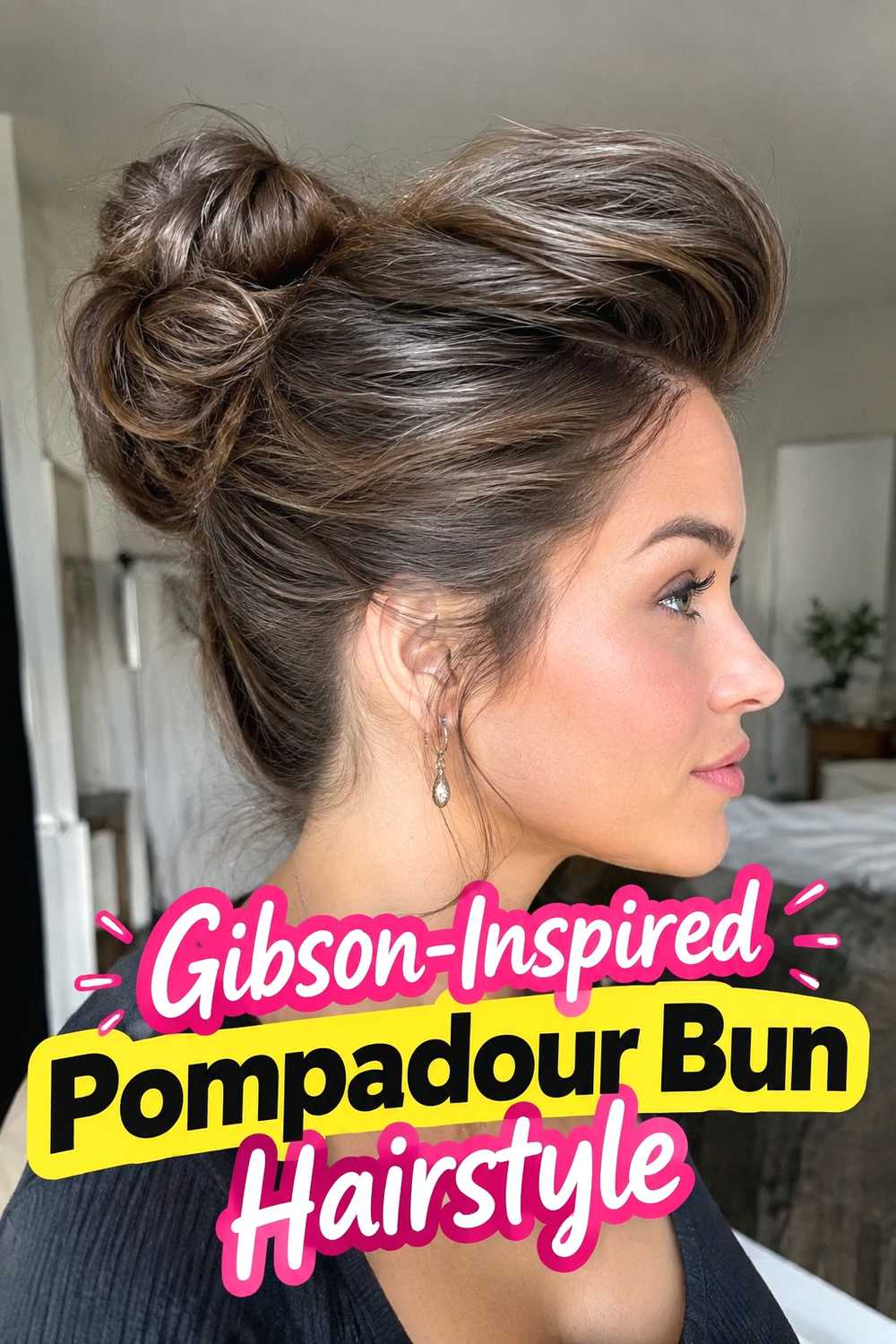
The Gibson-Inspired Pompadour Bun Hairstyle takes its cue from the softly voluminous silhouettes associated with turn-of-the-century fashion. Hair is lifted around the front and sides to create a broad, airy shape before being gathered into a loose but controlled bun toward the back of the head. Unlike a sharply sculpted pompadour, this version looks slightly fuller and more relaxed, making it especially flattering for softly waved hair. The bun should feel substantial without appearing oversized or disconnected from the head. Long hair works particularly well, although medium-long lengths can create a smaller interpretation. Leaving the surface slightly textured helps the hairstyle retain its romantic vintage quality rather than looking overly formal.
Why It Works
The generous perimeter volume balances the bun and creates a recognizable Edwardian-inspired silhouette while still allowing movement and softness through the visible hair.
3. Low Rolled Pompadour Chignon Hairstyle
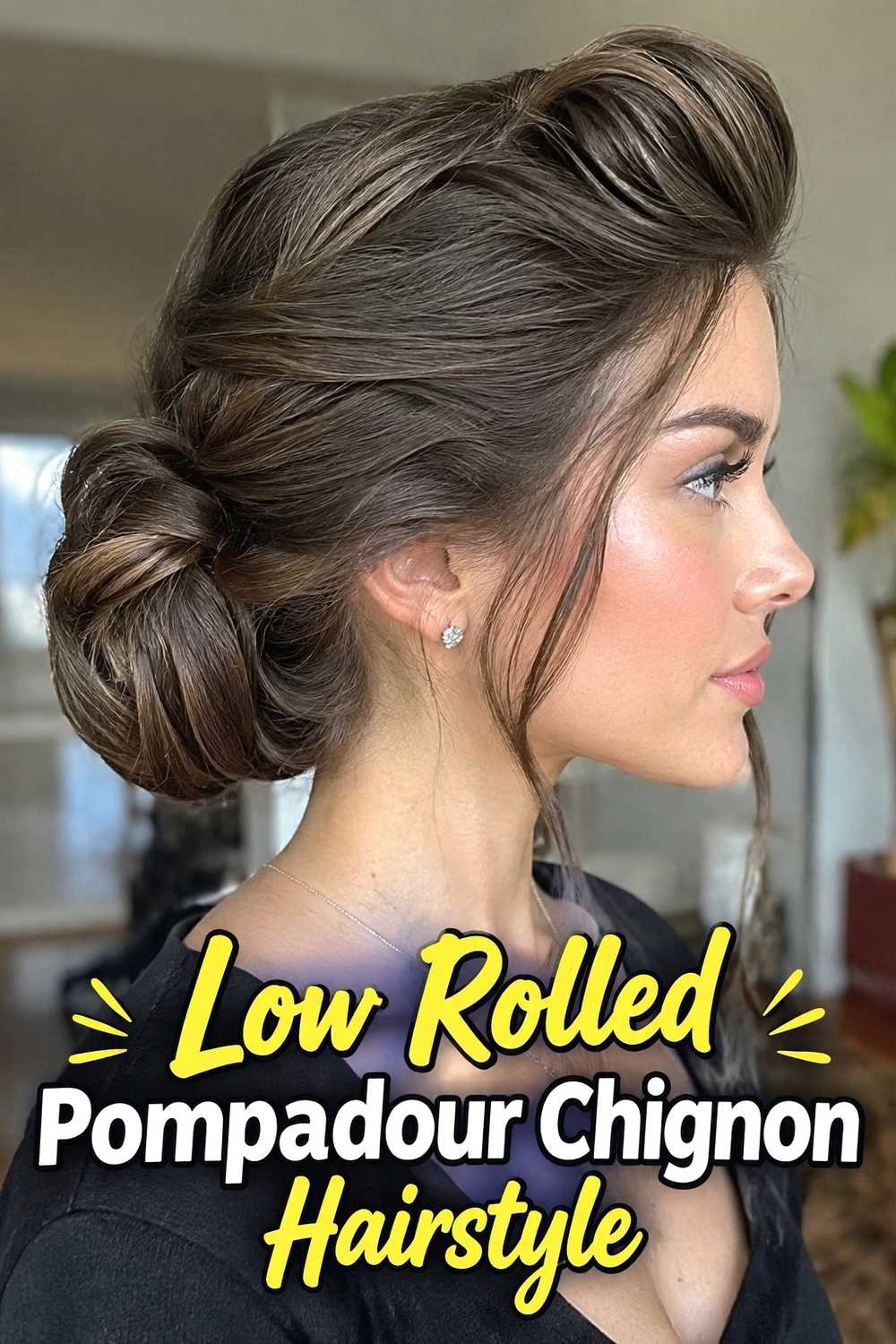
A Low Rolled Pompadour Chignon Hairstyle combines lifted front volume with a horizontally rolled bun positioned close to the nape. This lower placement gives the style a more restrained profile than a high Edwardian coil while preserving the distinctive fullness around the forehead and temples. The roll can be tucked inward for a clean finish, with the ends hidden beneath the central section. Medium-long hair is often enough for this arrangement because the chignon does not require the same length as a large spiral bun. Smooth hair emphasizes the shape, while subtle waves add softer dimension. The style is especially practical for formal occasions where you want vintage influence without a very tall or dramatic silhouette.
Best For
This lower version suits elegant dinners, vintage-inspired events, portraits, or anyone who prefers the comfort and stability of an updo positioned near the nape.
4. Pearl Accented Edwardian Bun Hairstyle
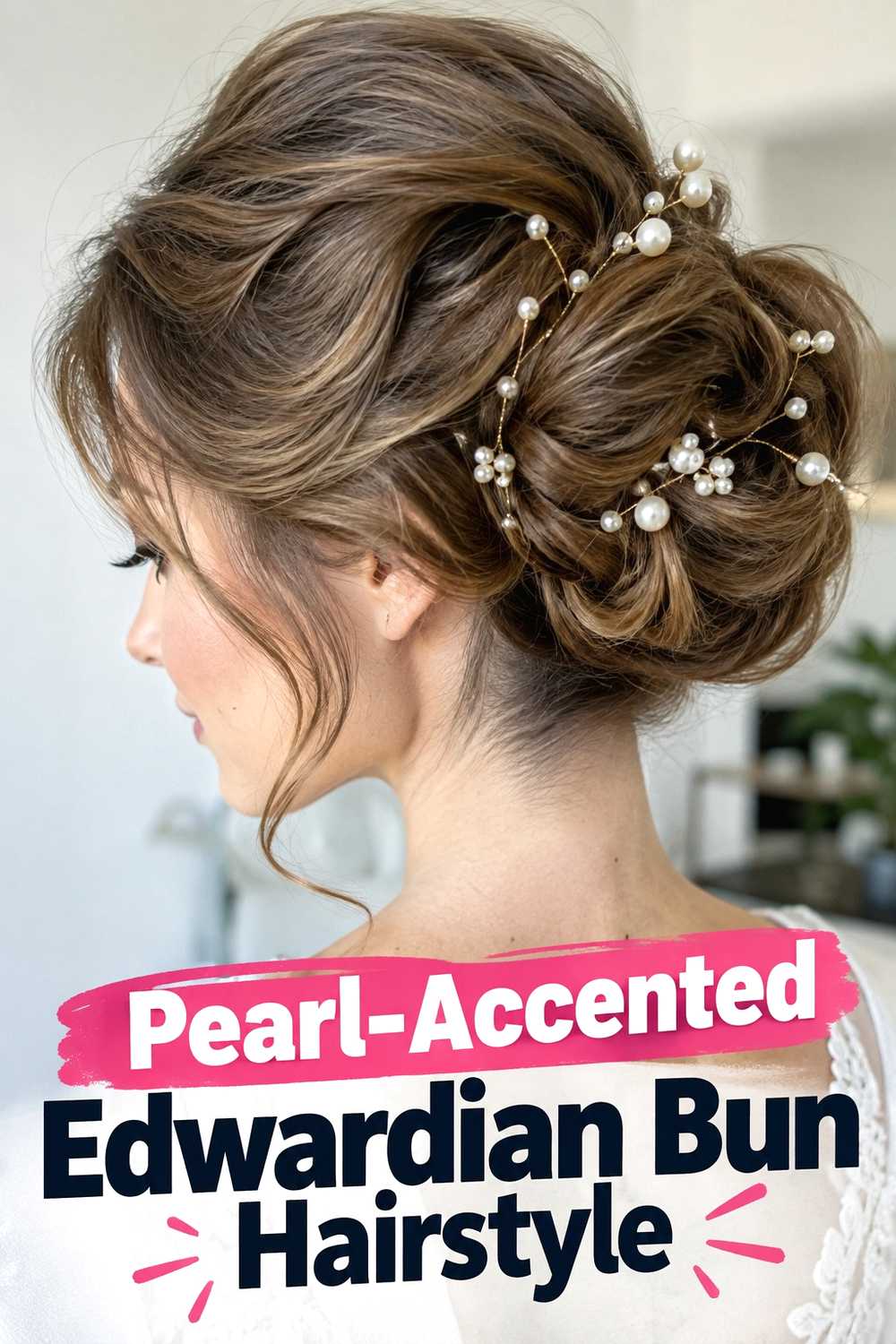
The Pearl-Accented Edwardian Bun Hairstyle adds small decorative details to a classic voluminous updo without allowing the accessories to overwhelm the hair. The front is shaped into a soft pompadour, while the back is gathered into a rounded bun with visible curves rather than a perfectly flat surface. Individual pearl pins can be placed along one edge of the bun or between overlapping sections to catch the light subtly. This approach works especially well for medium-dense to thick hair because the accessories have enough structure to anchor into. Finer hair can use smaller pins and a more compact bun. Keeping the pearl placement asymmetrical often looks more natural than surrounding the entire bun with identical decorations.
Wear & Maintenance
Secure the hairstyle completely before adding pearls. Decorative pins should enhance the finished shape rather than carry the weight of the bun or hold the pompadour in place.
5. Side Swept Pompadour Bun Hairstyle
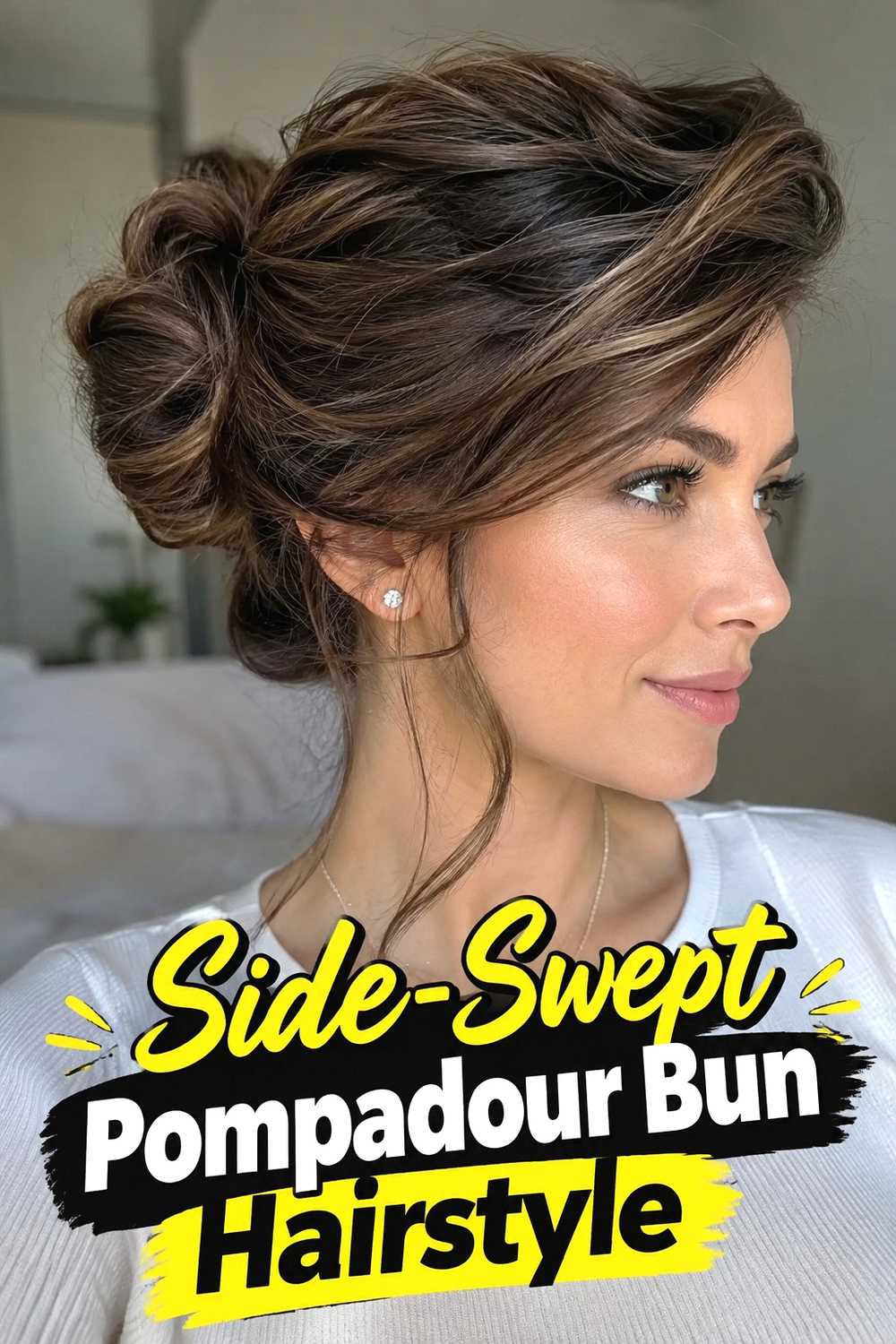
The Side-Swept Pompadour Bun Hairstyle shifts the traditional Edwardian volume slightly to one side, creating a more dynamic silhouette. Instead of forming an evenly rounded front, the hair sweeps diagonally across the forehead before rising into soft volume and flowing toward the bun. The back can remain centered or sit slightly off-center to echo the movement through the front. This style is especially attractive on hair with gentle waves because the texture supports the sweep without requiring a rigid finish. Medium-long to long hair works best, although the amount of volume can be adjusted for density. A few soft strands around the temples can further relax the look while keeping the overall updo polished.
Pro Tip
Build the side sweep with broad sections rather than narrow strands. Wider sections create the smooth, continuous curve that makes the asymmetry look intentional.
6. Braided Pompadour Crown Bun Hairstyle
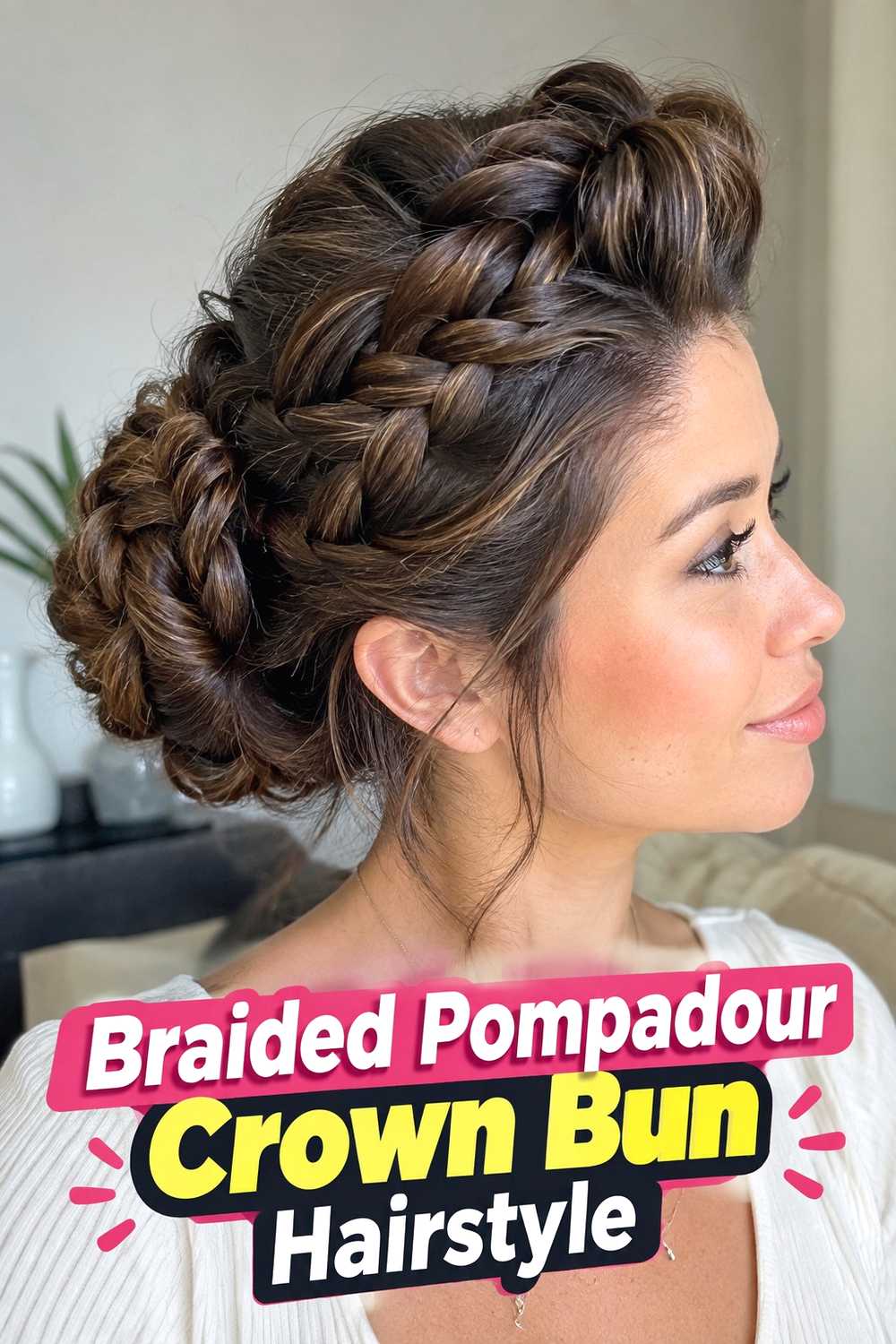
A Braided Pompadour Crown Bun Hairstyle combines Edwardian-inspired front volume with braided detail around the upper back of the head. The front retains the softly puffed pompadour shape, while one or two braids travel behind it before merging into a structured bun. This introduces texture without losing the elevated silhouette that defines the overall look. Long hair offers the most flexibility because enough length is needed for both visible braiding and the bun, though separate side sections can be braided before joining the remaining hair. The braid should remain proportionate to the pompadour; overly large sections can compete with the front volume. Gentle widening after braiding can add definition without making the crown excessively bulky.
Hair Type & Length
Medium-long to long hair is easiest to work with. Straight and softly wavy textures show the contrast between smooth pompadour volume and braided detail particularly clearly.
7. Soft Wave Pompadour Bun Hairstyle
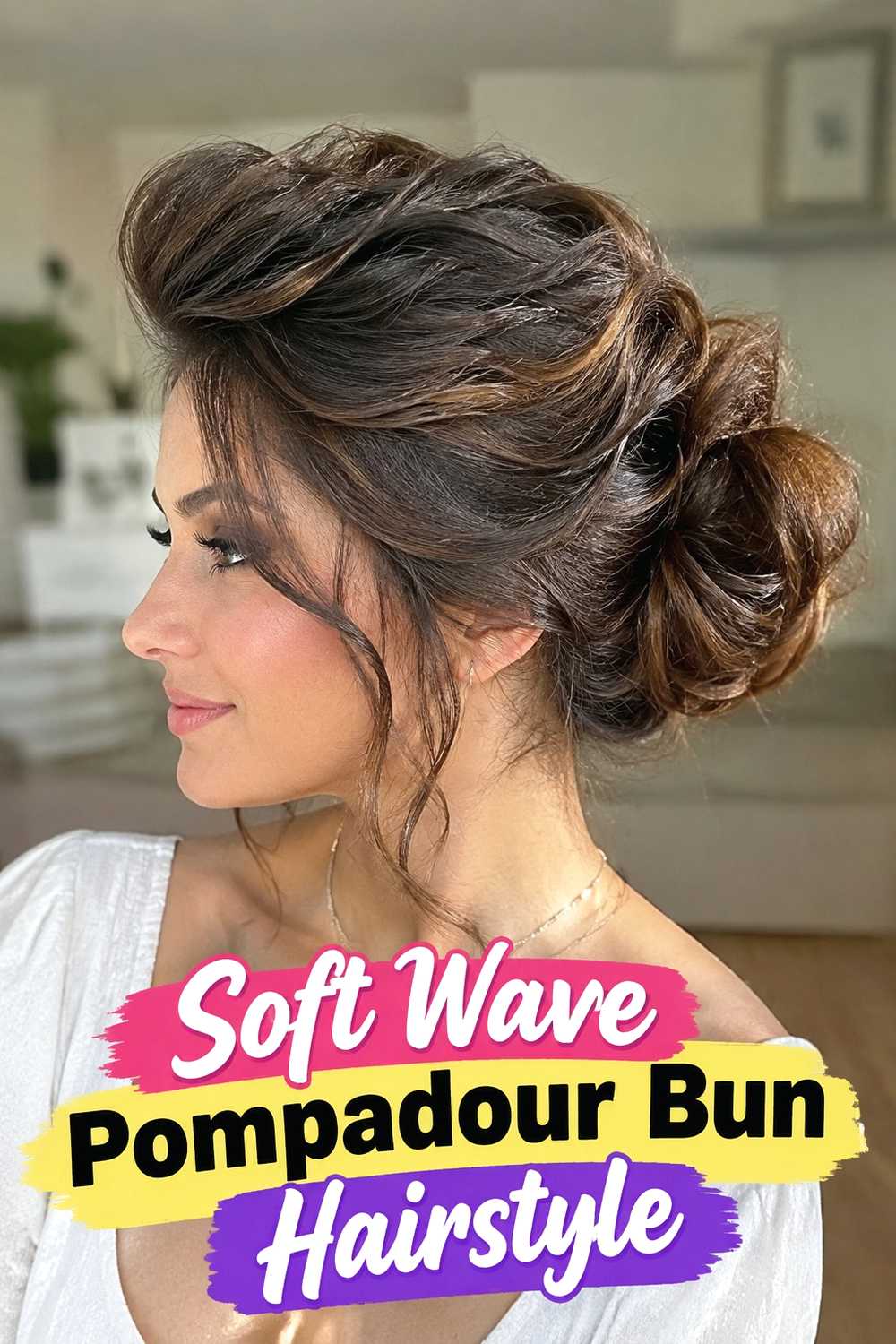
The Soft Wave Pompadour Bun Hairstyle uses gentle texture throughout instead of smoothing every strand into a polished surface. The front still rises into the characteristic pompadour shape, but soft waves remain visible around the sides and through the bun, creating a lighter and more romantic interpretation. This can be especially effective on naturally wavy hair because the existing movement contributes to volume without extensive backcombing. The bun may be loosely coiled at mid-height, with selected sections pinned separately to preserve visible curves. Medium-long hair is usually sufficient, although longer lengths create more layered texture. Keep the front shape controlled enough that the waves support the silhouette instead of collapsing into an undefined mass.
Why It Works
Natural-looking waves soften the strong Edwardian outline and make the hairstyle feel easier to pair with contemporary clothing, romantic dresses, or less formal events.
8. High Edwardian Coil Bun Hairstyle
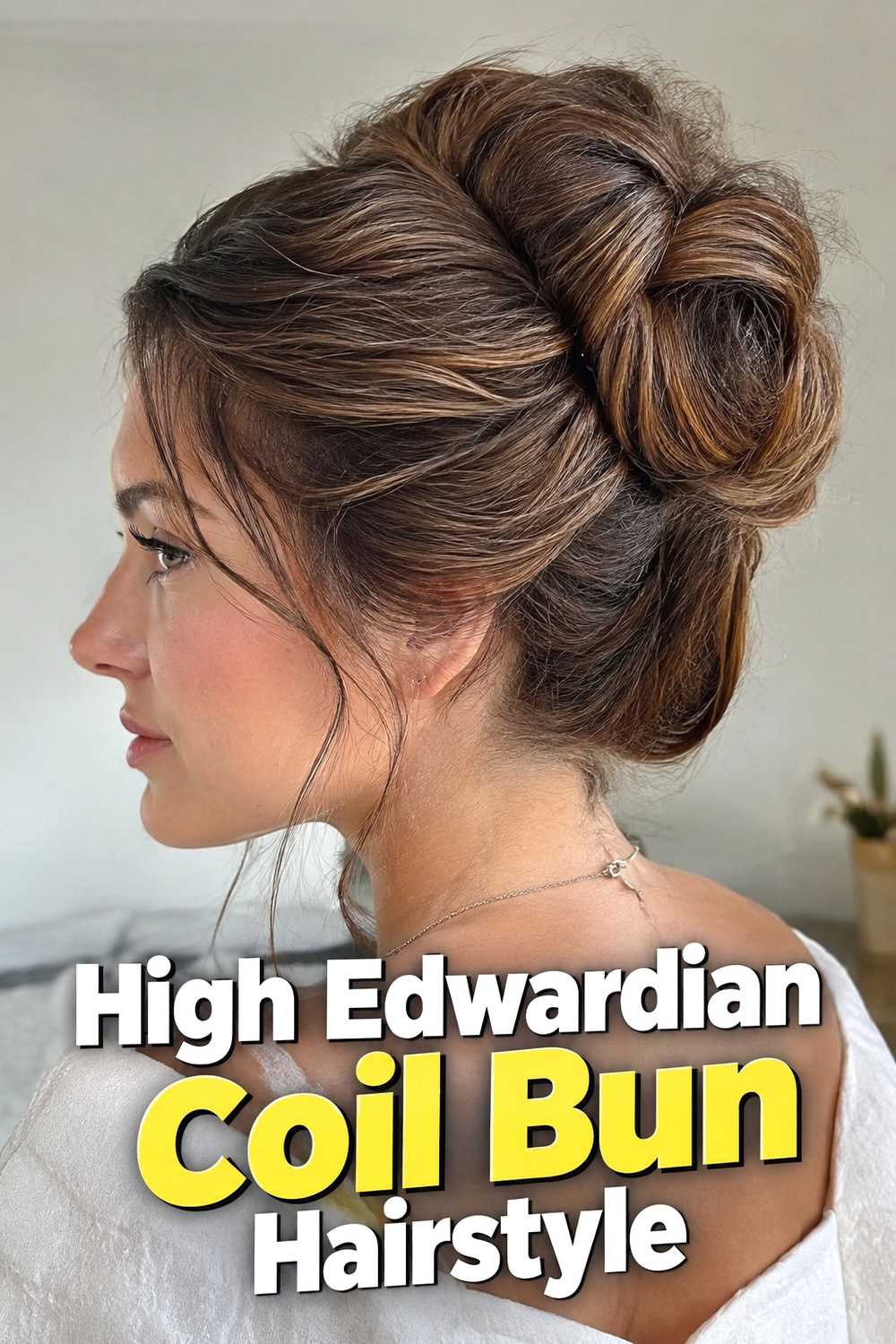
A High Edwardian Coil Bun Hairstyle places the gathered hair toward the upper back of the head, creating a tall profile that complements generous volume through the front and sides. The bun is formed from one or more smooth coils, allowing the curved structure to remain visible rather than creating a simple round knot. Long hair provides the easiest foundation because the coils need enough length to wrap securely while maintaining dimension. Thick hair creates impressive scale naturally, whereas finer hair can use smaller coils and gentle expansion. Because the weight sits higher, balanced pinning is essential. The pompadour should visually connect with the bun so there is no awkward flat section between the elevated front and the high back.
Styling Notes
Anchor the coil at several points around its circumference rather than relying on a few pins at the center. Even support improves both stability and comfort.
9. Ribbon Wrapped Pompadour Bun Hairstyle
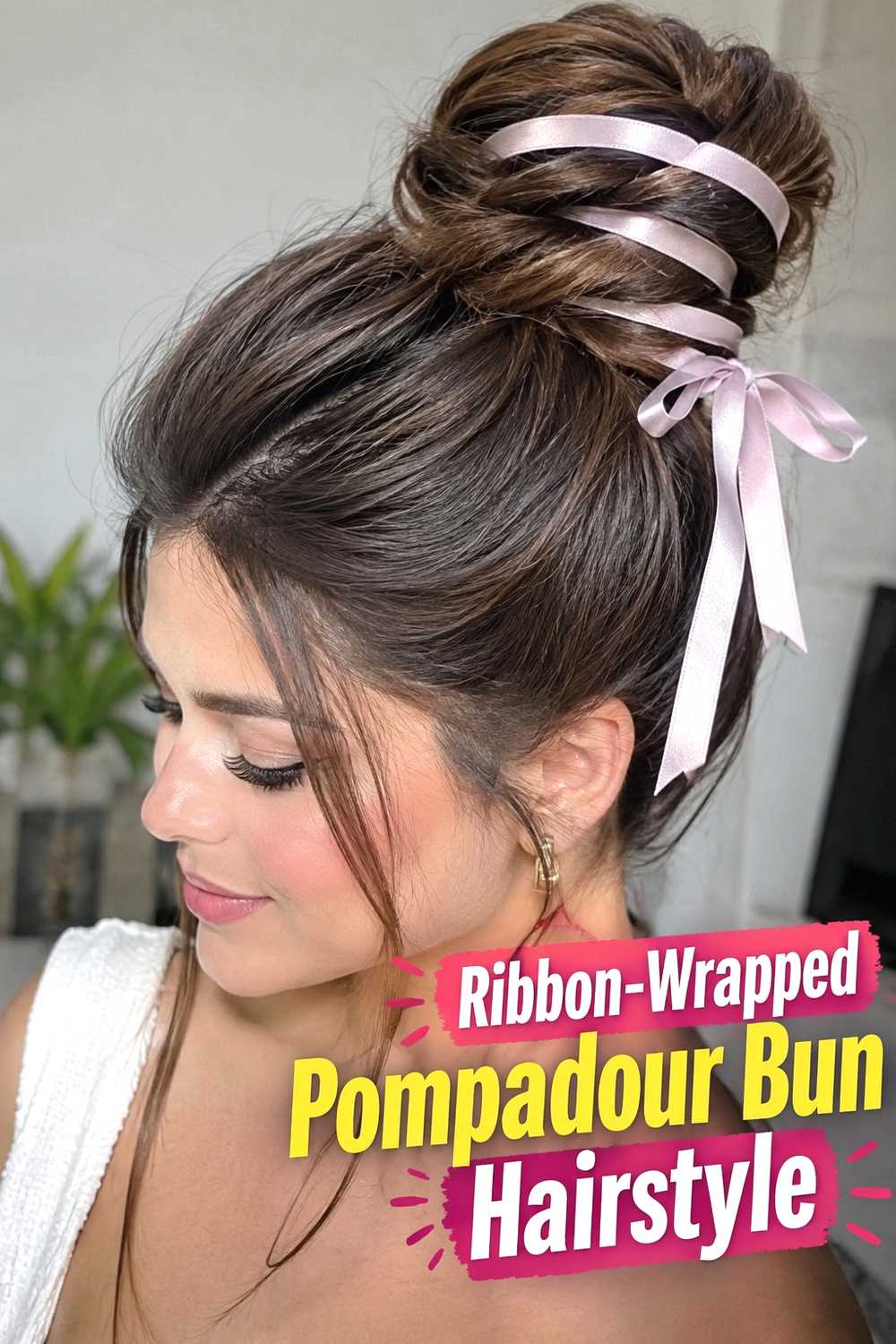
The Ribbon-Wrapped Pompadour Bun Hairstyle adds a narrow ribbon around or through the bun while keeping the lifted front clean and uncluttered. A muted satin, velvet, or grosgrain ribbon can introduce color without changing the core Edwardian-inspired silhouette. The most balanced versions use ribbon sparingly—perhaps circling one coil or threading through selected sections rather than wrapping the entire updo. A mid-height bun provides enough visible surface for the ribbon detail while remaining easy to secure. Medium-long or long hair works well, especially when the bun has natural volume. For a softer finish, allow the ribbon ends to disappear beneath the bun rather than finishing with an oversized bow that competes with the pompadour.
Wear & Maintenance
Secure the bun independently before adding ribbon. This prevents the fabric from tightening unexpectedly during wear and keeps the decorative detail easy to adjust.
10. Double Roll Edwardian Bun Hairstyle
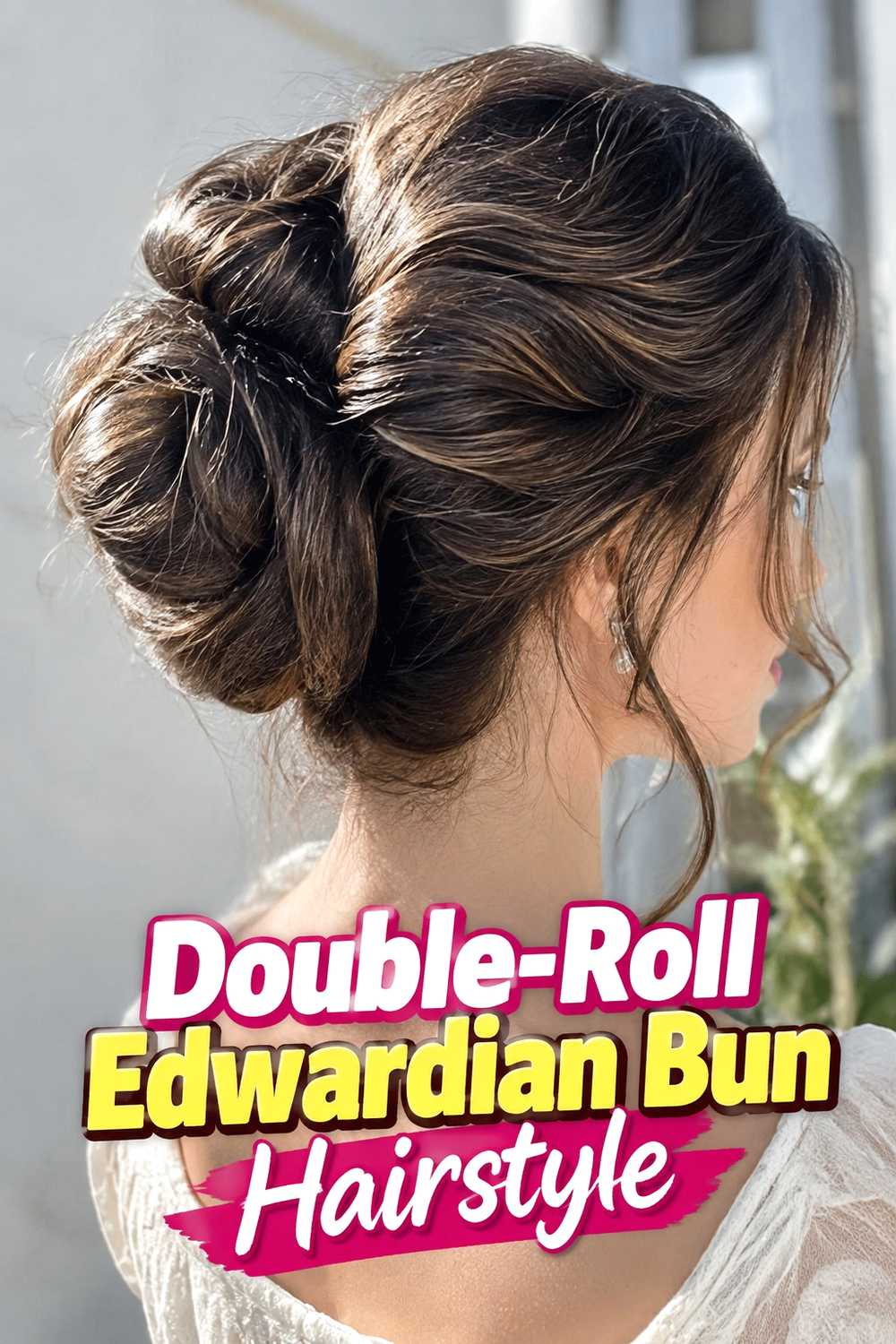
The Double-Roll Edwardian Bun Hairstyle uses two distinct rolled sections at the back, creating a layered shape instead of one conventional bun. The front is lifted into a rounded pompadour, while the remaining hair is divided so one roll sits above or beside the other. This arrangement adds depth and can make very long hair easier to distribute without forming an overly large single coil. Keeping both rolls similar in tension helps the finished hairstyle look balanced, although they do not need to be perfectly identical. Smooth sections emphasize the architectural quality, while light texture gives a softer result. This style benefits from medium-dense or thick hair because the two rolls need enough substance to remain clearly visible.
Pro Tip
Shape and pin the lower roll first, then position the second roll so it overlaps the attachment point. This helps hide pins and creates a more seamless layered finish.
11. Loose Romantic Pompadour Bun Hairstyle
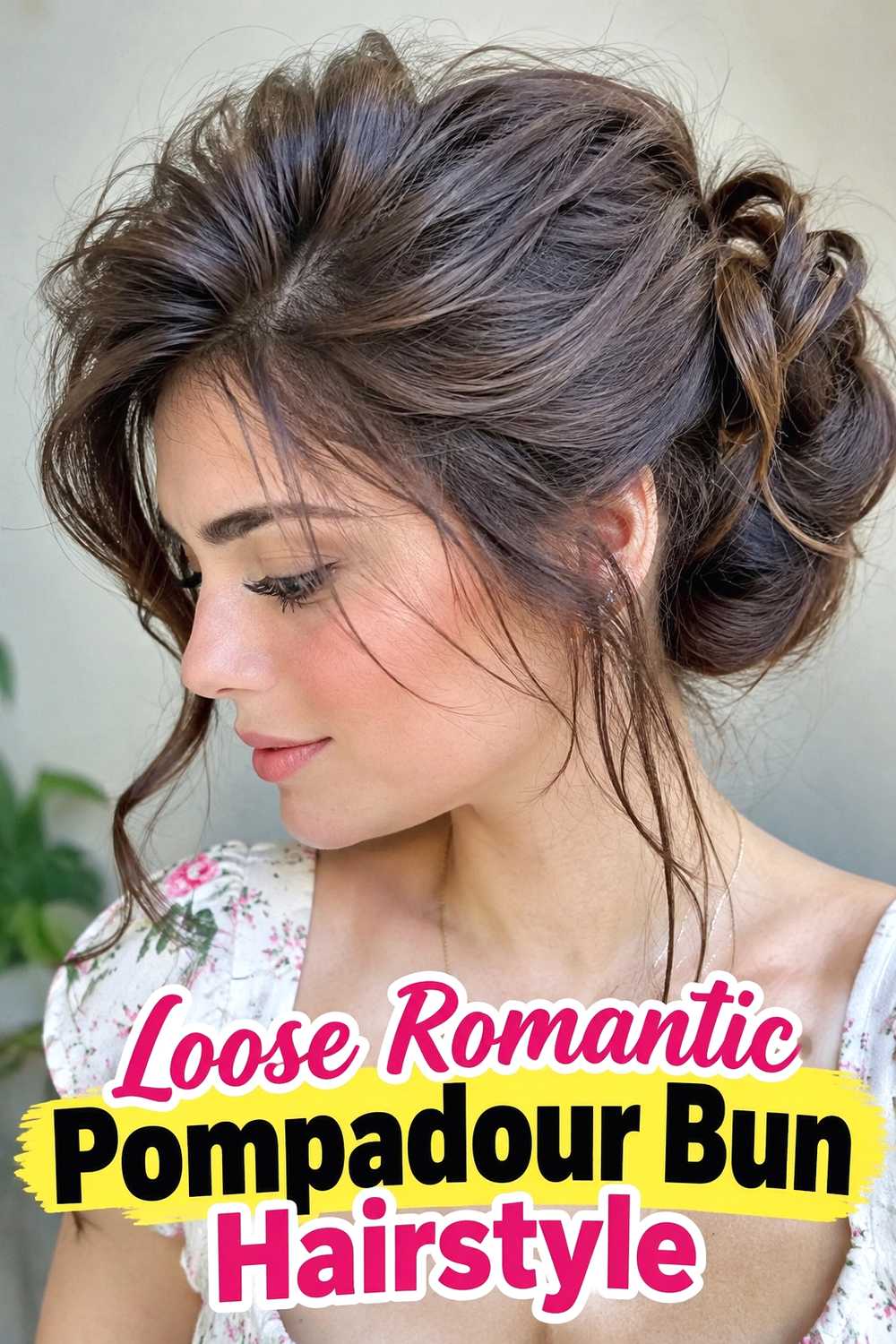
The Loose Romantic Pompadour Bun Hairstyle takes the Edwardian silhouette in a softer direction by combining airy front volume with a relaxed, textured bun. The pompadour remains recognizable but is gently expanded rather than tightly sculpted, while the sides flow backward with visible movement. At the back, loosely twisted sections are pinned into a broad bun instead of being compressed into a smooth coil. This version works beautifully on naturally wavy or softly curled hair because the texture supports fullness and makes small flyaways look intentional. Medium-long to long hair provides enough length for the loose sections. Keep the foundation secure beneath the visible softness so the hairstyle does not gradually collapse during wear.
Best For
This interpretation is well suited to romantic photography, garden events, vintage-themed celebrations, or anyone who likes Edwardian volume without an overly formal finish.
12. Sleek Centered Pompadour Bun Hairstyle
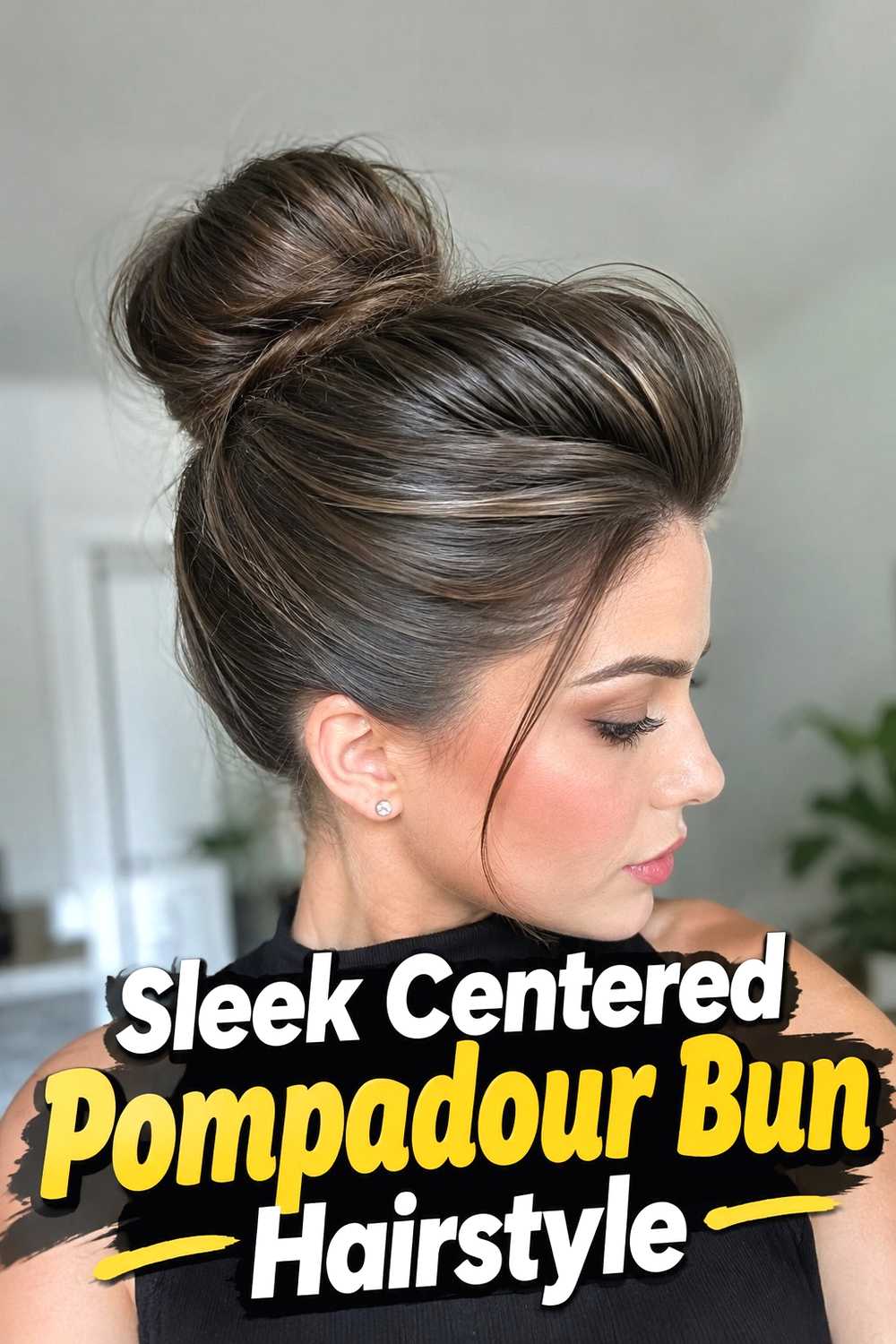
The Sleek Centered Pompadour Bun Hairstyle offers a cleaner and more controlled interpretation with symmetrical front volume and a precisely positioned bun at the back. The pompadour rises evenly from the forehead and curves smoothly toward the crown, creating a strong central silhouette. Hair through the sides is kept polished and directed into a compact coil or rounded bun without excessive texture. This design works particularly well on straight or easily smoothed hair because its appeal comes from clean lines and balanced proportions. Medium-long hair can create the structure effectively, while very thick hair may need to be divided into sections to prevent the bun from becoming disproportionately large. A minimal accessory can be added, but the shape itself should remain the focus.
Styling Notes
Use only enough product to control flyaways. Heavy smoothing products can flatten the pompadour and reduce the soft dimension that keeps the style looking natural.
13. Floral Edwardian Pompadour Bun Hairstyle
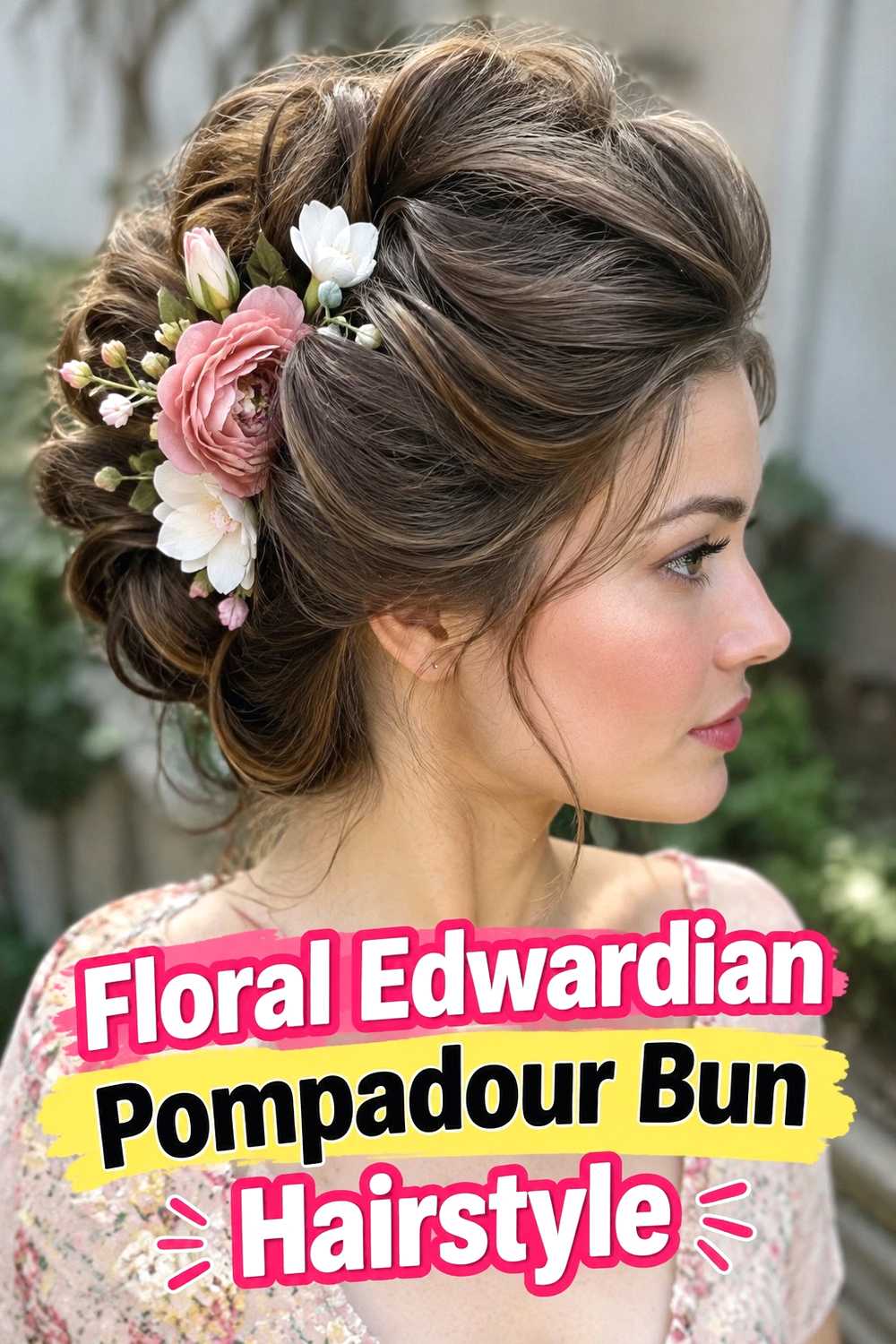
The Floral Edwardian Pompadour Bun Hairstyle combines the characteristic lifted front with a softly arranged bun decorated by a small cluster of floral accents. Rather than covering the entire updo, flowers work best placed along one side of the bun or near the junction between the pompadour and the gathered back section. This keeps the hairstyle visible while introducing a romantic garden-inspired touch. Loose waves or lightly textured hair complement the floral detail particularly well, although smoother versions can feel more formal. Medium-long to long hair offers enough material for a broad bun that balances the decoration. Choose lightweight flowers or floral pins so the accessories do not distort the bun or create unnecessary tension.
Why It Works
The floral detail softens the structured Edwardian silhouette and creates a natural focal point without hiding the front volume or the shape of the bun.
14. Bridal Edwardian Pompadour Bun Hairstyle
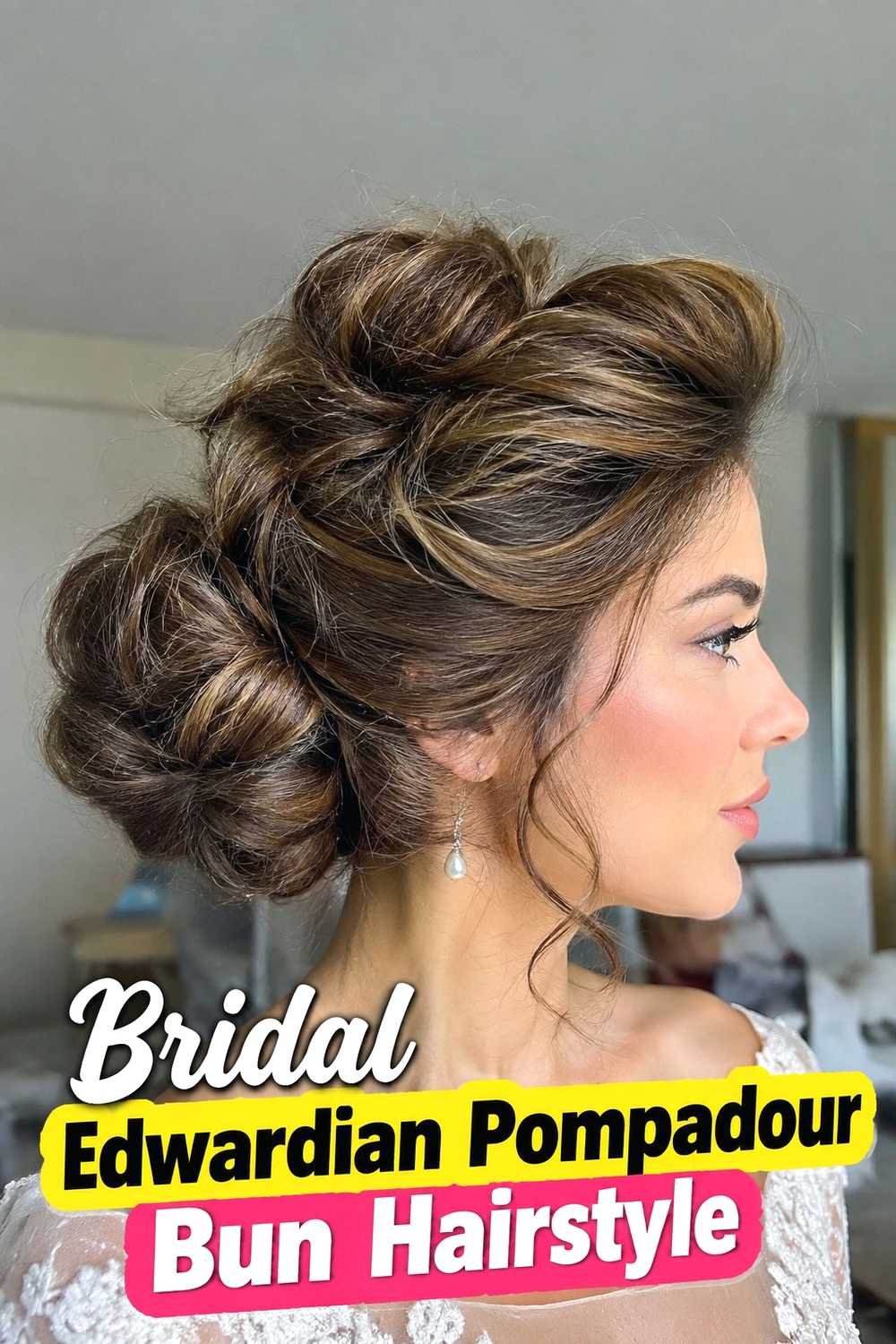
The Bridal Edwardian Pompadour Bun Hairstyle adapts the signature vintage silhouette for formal wedding styling by combining controlled front volume, a substantial low-to-mid bun, and restrained decorative details. The pompadour should feel airy enough to retain softness around the face, while the back needs a secure foundation that can support a comb, veil, pearls, or delicate pins if desired. Gentle waves through the outer sections can prevent the look from becoming too rigid, especially when paired with romantic bridal fabrics. Medium-long to long hair provides the most styling flexibility, though the overall scale can be reduced for finer hair. Keeping the accessories concentrated near the bun allows the distinctive front profile to remain clean and recognizable.
Wear & Maintenance
Test any veil or comb placement after the bun is fully secured. Accessories should slide into reinforced sections so removing them later does not loosen the pompadour or disturb the main structure.
How to Choose the Right Look
Start by deciding how much front volume feels comfortable. A classic or high-coil style creates a stronger Edwardian silhouette, while soft-wave, low-chignon, and romantic versions use gentler elevation that may feel easier for everyday-inspired styling.
Hair length affects the bun options. Medium-long hair can usually support a rolled chignon, centered bun, or smaller pompadour updo. Long hair offers more freedom for double rolls, large coils, braided crowns, and substantial bridal buns. If your hair is fine, focus on controlled expansion and a strong internal foundation rather than trying to create oversized volume.
Texture is another important factor. Straight hair highlights smooth rolls and structured coils, while waves naturally complement softer pompadours and romantic buns. Very slippery hair may need additional grip at the roots and through the sections being pinned.
For extended wear, consider placement and weight. High coils can feel heavier, while low chignons distribute the hair closer to the head. Decorative elements such as ribbons, pearls, flowers, and combs should be added after the hairstyle is secure rather than serving as structural support.
Finally, decide whether you want a polished historical-inspired mood or a softer modern interpretation. Clean rolls and symmetrical pompadours feel more formal, while visible waves, relaxed buns, and subtle flyaways produce a more romantic finish.
Final Thoughts
Edwardian pompadour bun hairstyles are all about balancing volume with structure. Whether you prefer a smooth high coil, a softly rolled chignon, a ribbon-wrapped bun, or a romantic bridal interpretation, the strongest look is one that suits your natural length, density, and comfort level. Build a secure foundation first, then shape the visible hair with enough softness to keep the style dimensional and believable.
FAQs
1. What defines an Edwardian pompadour bun hairstyle?
The most recognizable feature is lifted volume around the front and often the sides, paired with hair gathered into a bun, roll, or coil at the back. Modern versions can be smoother or more relaxed.
2. Do I need long hair for an Edwardian pompadour bun?
Not necessarily. Medium-long hair can create smaller rolls and chignons, while longer hair makes large coils, braided details, and double-roll arrangements easier to construct.
3. How can I create pompadour volume without making it look stiff?
Build support underneath with light backcombing or strategic pinning, then smooth the visible outer layer over the foundation. Avoid compressing the surface with too much product.
4. Which accessories suit Edwardian-inspired buns?
Pearl pins, narrow ribbons, delicate flowers, vintage-style combs, and lightweight jeweled accents can all work. Keep accessories proportionate so the hairstyle remains the main feature.
5. Can an Edwardian pompadour bun work as a bridal hairstyle?
Yes. A softly structured pompadour paired with a secure bun can accommodate pearls, decorative combs, and many veil placements while keeping a distinctive vintage-inspired silhouette.
Save your favorite Edwardian pompadour bun hairstyles, share the looks that inspire you, and explore more elegant vintage hairstyle ideas for your next special occasion.