12 Flat-Twist Halo Looks With Chunky Cream Knits
Soft flat-twist halos and chunky cream knits make a beautiful winter pairing, combining sculpted texture with cozy layers and an effortlessly polished finish.
A flat-twist halo works especially well with substantial winter clothing because the hair is directed close to the head rather than left loose across the shoulders and neckline. The circular shape also creates visual balance beside oversized sweaters, ribbed turtlenecks, and plush cream cardigans without competing with the texture of the knit.
The details make each version feel different. Part placement, twist width, crown height, exposed natural texture, tucked ends, and small accessories can all change the finished silhouette. When choosing a look, consider your hair length, density, twist definition, comfort at the hairline, and how high your sweater or jacket neckline sits.
Quick List
- Classic Center Part Flat Twist Halo Hairstyle
- Deep Side Part Flat Twist Halo Hairstyle
- Double Flat Twist Halo Hairstyle
- Low Crown Flat Twist Halo Hairstyle
- High Crown Flat Twist Halo Hairstyle
- Asymmetrical Flat Twist Halo Hairstyle
- Soft Tendril Flat Twist Halo Hairstyle
- Flat Twist Halo Puff Hairstyle
- Flat Twist Halo Bun Hairstyle
- Gold Cuff Flat Twist Halo Hairstyle
- Chunky Flat Twist Halo Hairstyle
- Sleek Flat Twist Halo Hairstyle
1. Classic Center Part Flat Twist Halo Hairstyle
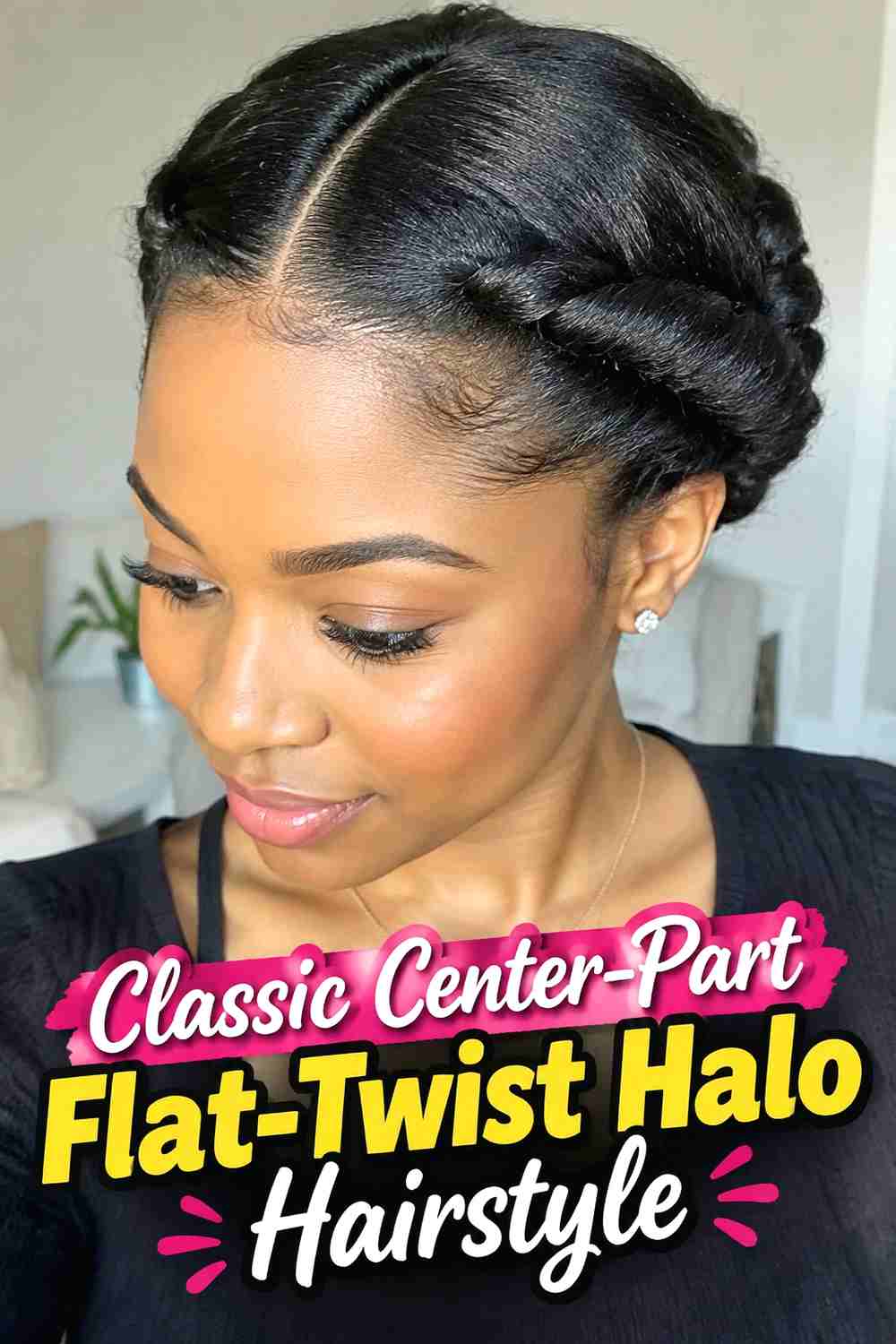
A classic center-part flat-twist halo creates a beautifully balanced frame around the head, making it a natural partner for chunky cream knits. Begin with a defined middle part and form flat twists from each side, directing them backward and around the perimeter before tucking the ends discreetly. The symmetry keeps the hairstyle polished while the twist texture adds enough visual detail to stand out beside soft ribbing or cable-knit fabric. This version works especially well when the twists stay close to the scalp and the crown retains a little natural fullness. Keep the hairline comfortable rather than overly tight, and smooth each section before twisting so the pattern remains clear and even.
Styling Notes
Use consistent section sizes on both sides of the part. Matching the placement matters more than forcing every twist to look perfectly identical.
2. Deep Side Part Flat Twist Halo Hairstyle
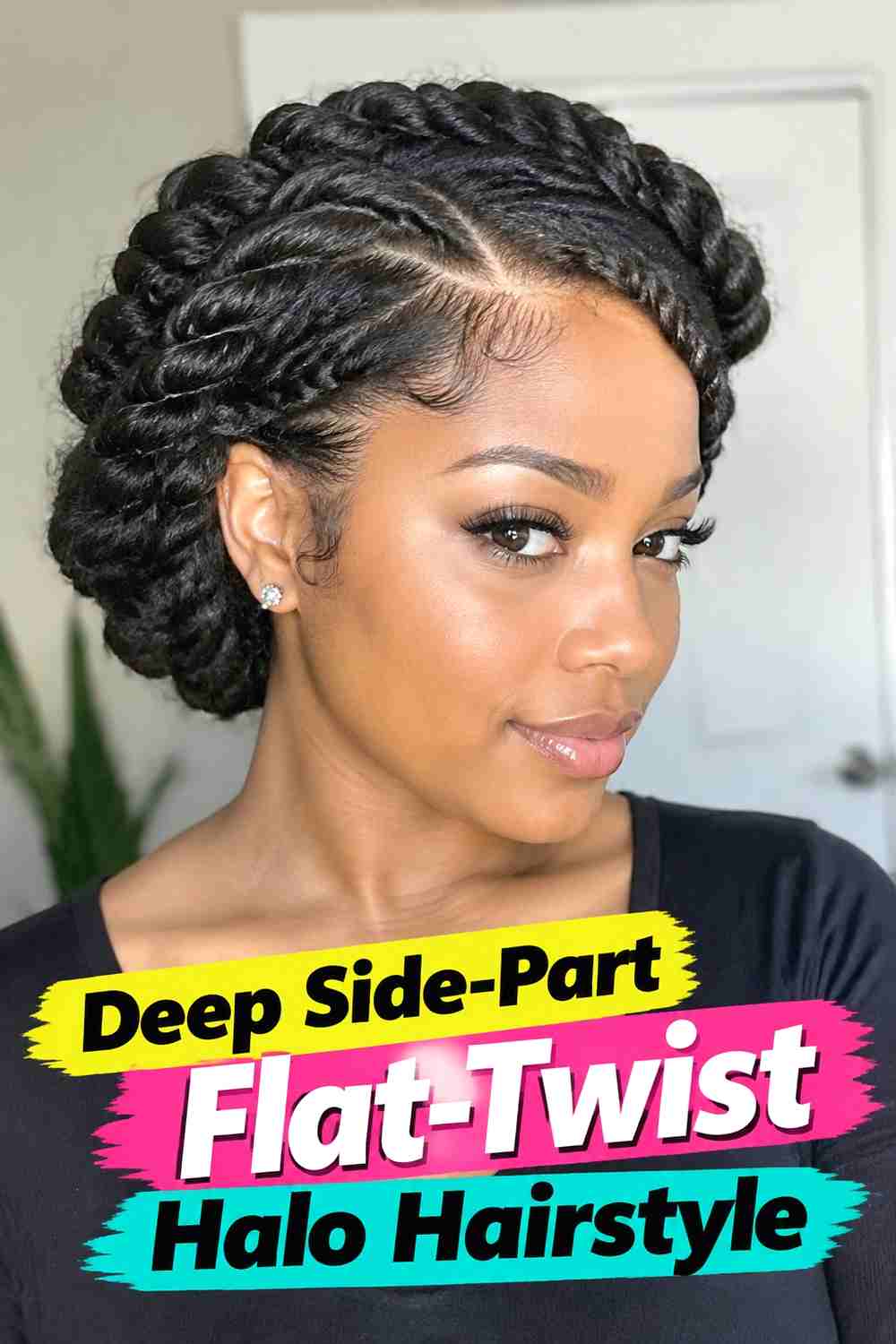
A deep side part gives the flat-twist halo a more directional shape, with one side sweeping broadly across the front before joining the circular pattern. The asymmetry feels elegant beside a cream turtleneck or oversized knit because it adds movement without requiring loose hair around the shoulders. Start the part above one eyebrow and build the first twist along the fuller side, keeping the sections smooth as they curve toward the back. The opposite side can remain slightly narrower for balance. This style suits anyone who likes a halo shape but wants something less formal than perfect center symmetry. Keep the twists defined and avoid pulling aggressively at the hairline just to emphasize the part.
Why It Works
The dramatic part creates visual interest near the face while the tucked halo keeps the neckline clear for thick winter knits.
3. Double Flat Twist Halo Hairstyle
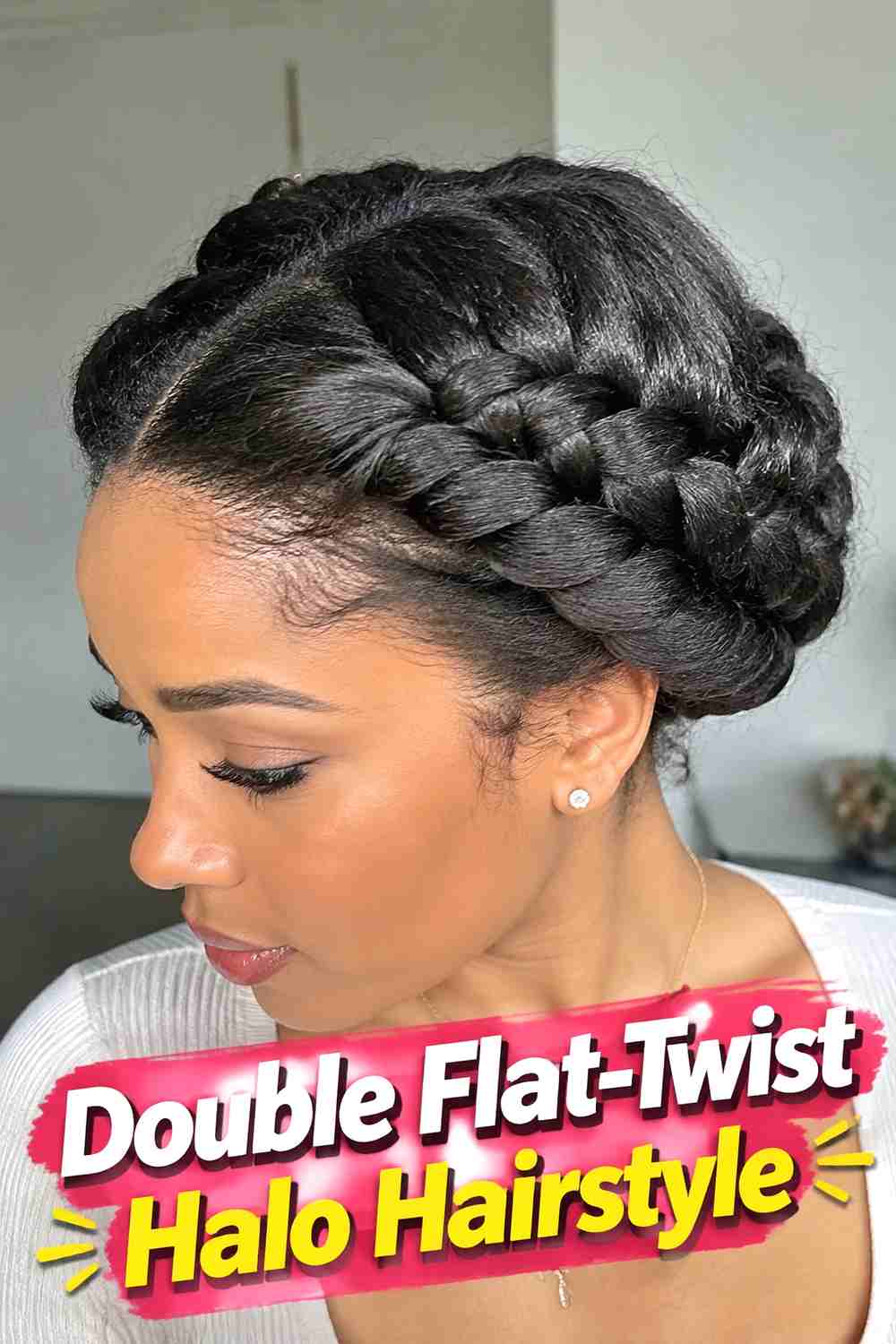
The double flat-twist halo uses two parallel twist tracks instead of one wider continuous section, creating extra definition around the head without adding loose length. The inner and outer twists can follow the same circular direction, producing a layered woven effect that looks especially striking against simple cream clothing. Medium to dense hair usually gives the clearest separation between the two rows, although section size can be adapted to available density. Keep both twists relatively close to the scalp and tuck their ends beneath neighboring sections rather than stacking them into a bulky knot. The finished style has enough texture to feel detailed while maintaining the smooth, contained silhouette that makes halo styling practical with winter layers.
Hair Type & Length
This version works best when there is enough length to continue both twist tracks around the head and enough density to keep the rows visibly separate.
Pro Tip
Part both tracks before you begin twisting. Clean section planning makes the double-halo pattern easier to maintain from front to back.
4. Low Crown Flat Twist Halo Hairstyle
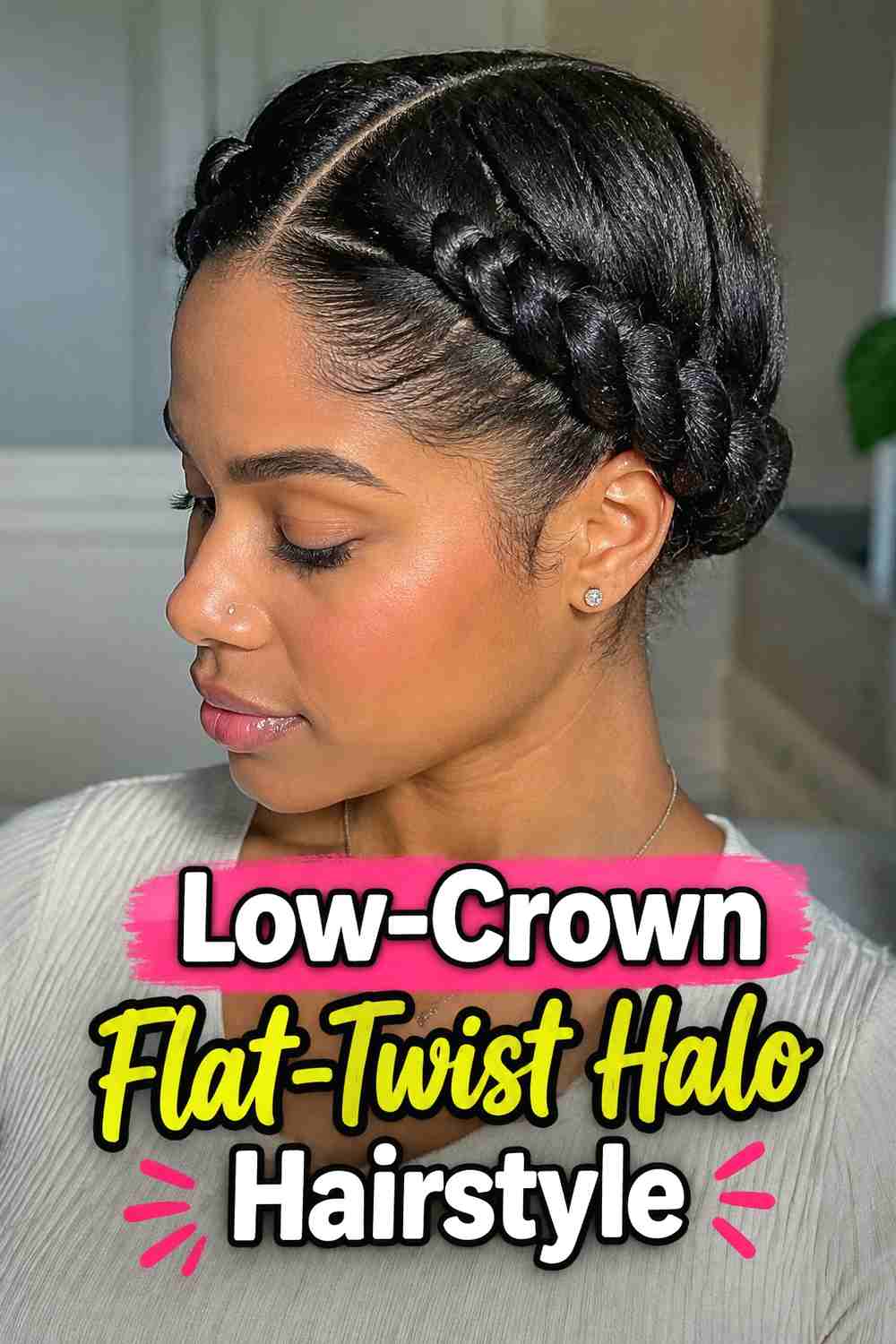
A low-crown flat-twist halo follows the perimeter closer to the ears and lower back of the head, creating a grounded silhouette that feels understated and sophisticated. The placement pairs beautifully with open-neck cream cardigans, crewneck sweaters, and knits that do not rise too high behind the neck. Keep the twist line slightly above the area where the garment naturally rests so repeated fabric movement does not push against the style. This version can look especially graceful with a little soft fullness at the crown, which prevents the head shape from appearing overly flattened. Tuck the final ends securely into the halo and use small concealed pins only where needed to maintain the continuous circular effect.
Wear & Maintenance
Try on the intended sweater before finalizing the back section. If the collar touches the twist, move the halo slightly higher for better comfort.
5. High Crown Flat Twist Halo Hairstyle
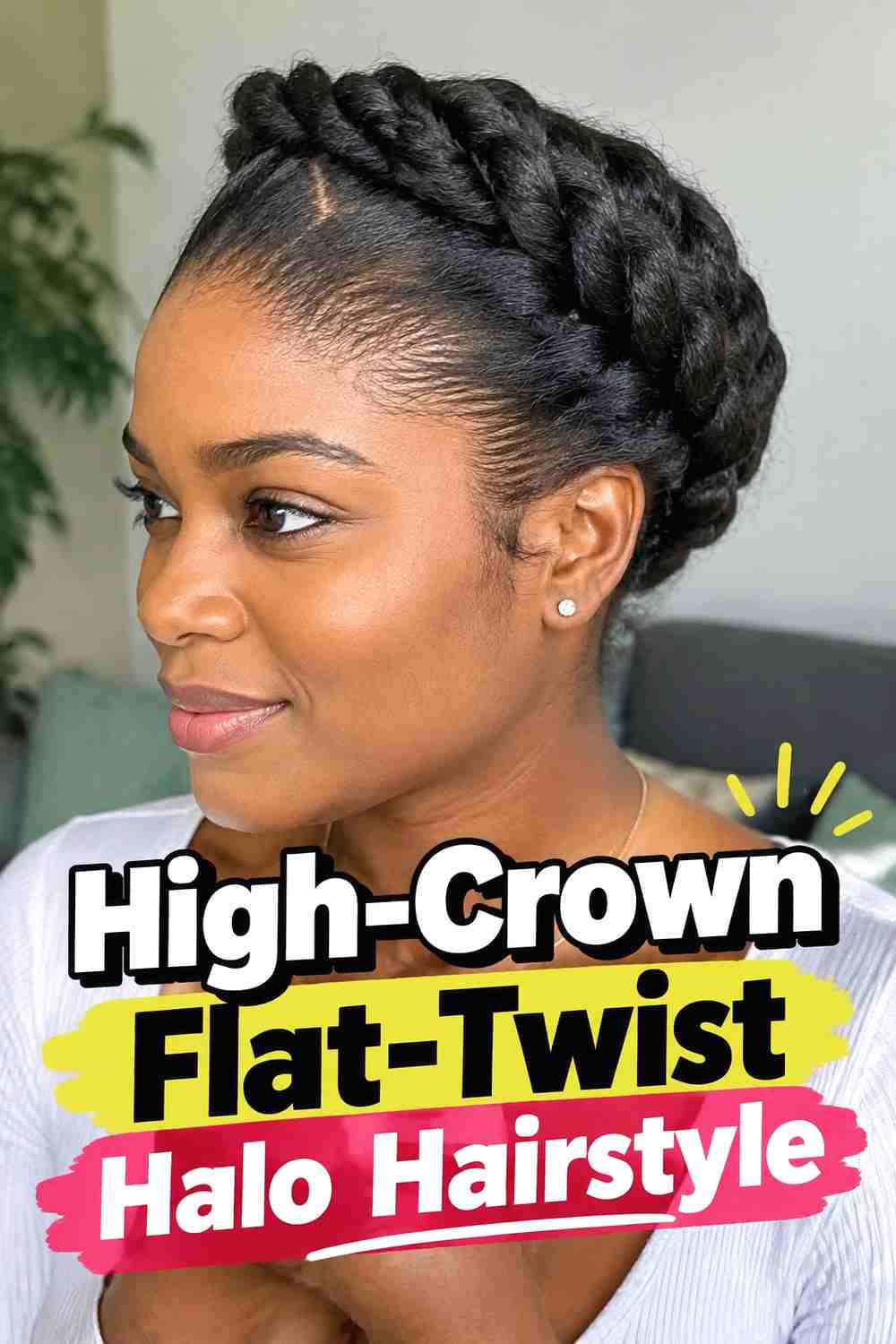
A high-crown halo lifts the flat-twist pattern farther from the neckline, which works particularly well with thick roll-necks and chunky cream sweaters that sit high behind the head. Direct the twists upward as they travel from the sides, creating a raised ring around the crown rather than a low perimeter shape. The extra height gives the hairstyle a softly regal quality while leaving plenty of visual space between the hair and heavy knitwear. Keep the twist width moderate so the raised placement looks intentional rather than bulky. Hair with natural density can create beautiful dimension here, but the style should still feel secure and comfortable rather than tightly stretched upward.
Best For
Choose this placement when your winter wardrobe includes high collars or when you simply prefer more height around the crown.
Styling Notes
Build the elevation through section direction, not excessive tension. Guiding the twists upward gives height without pulling unnecessarily at the edges.
6. Asymmetrical Flat Twist Halo Hairstyle
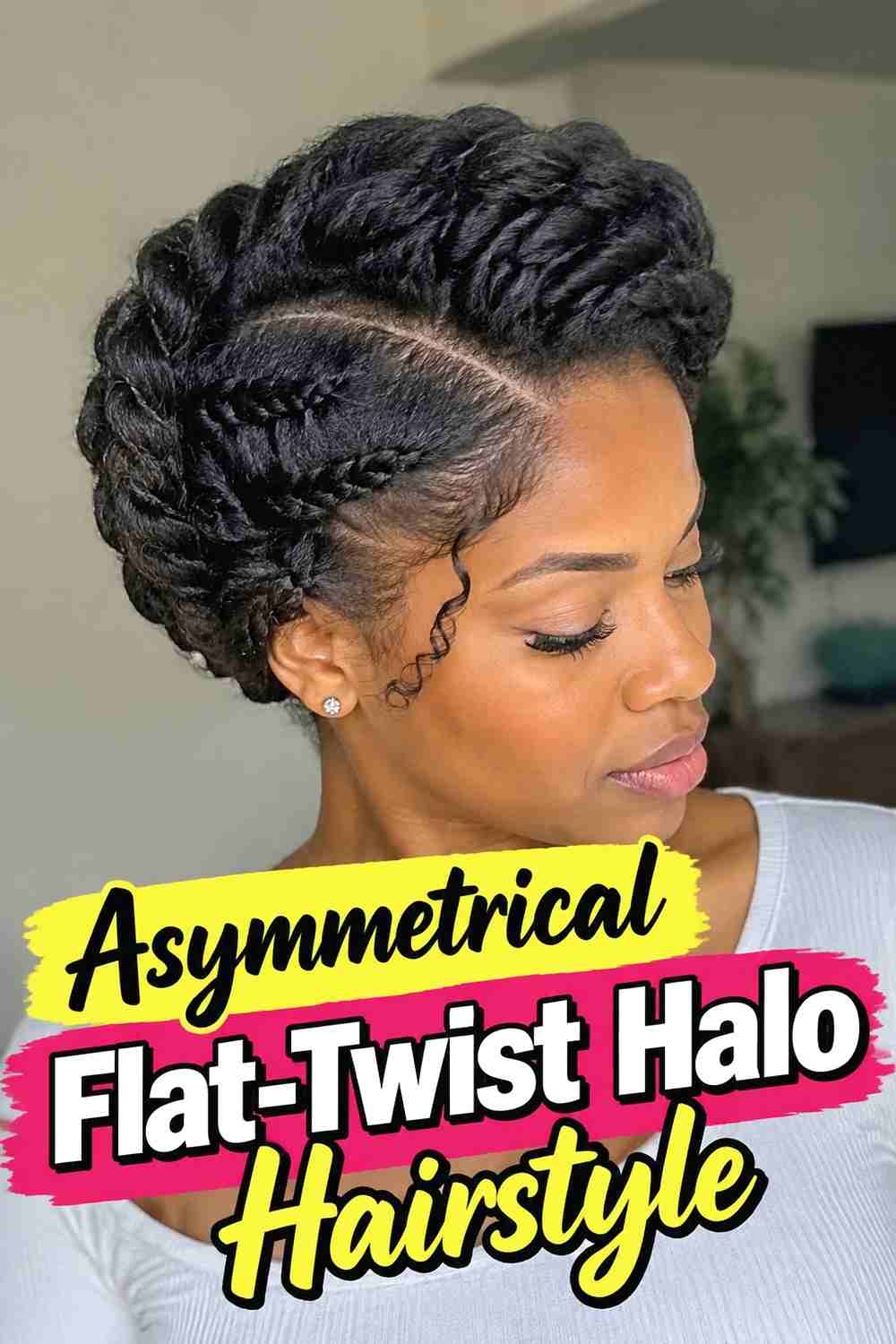
An asymmetrical flat-twist halo shifts the visual weight toward one side, creating a sculptural look that feels modern beside simple monochrome knitwear. One side can feature a wider, more prominent flat twist while the opposite side remains slimmer and closer to the scalp. The two sections then meet toward the back or side and tuck into a continuous halo shape. This approach is useful when you want the protective, contained benefits of a halo without strict symmetry. It also provides flexibility for natural differences in hair density from one side to the other. Keep the transition smooth where the twist widths change, and place any pins underneath the woven sections so the silhouette stays clean.
Why It Works
The uneven proportions add personality while the overall shape remains compact enough to sit neatly above chunky winter layers.
7. Soft Tendril Flat Twist Halo Hairstyle
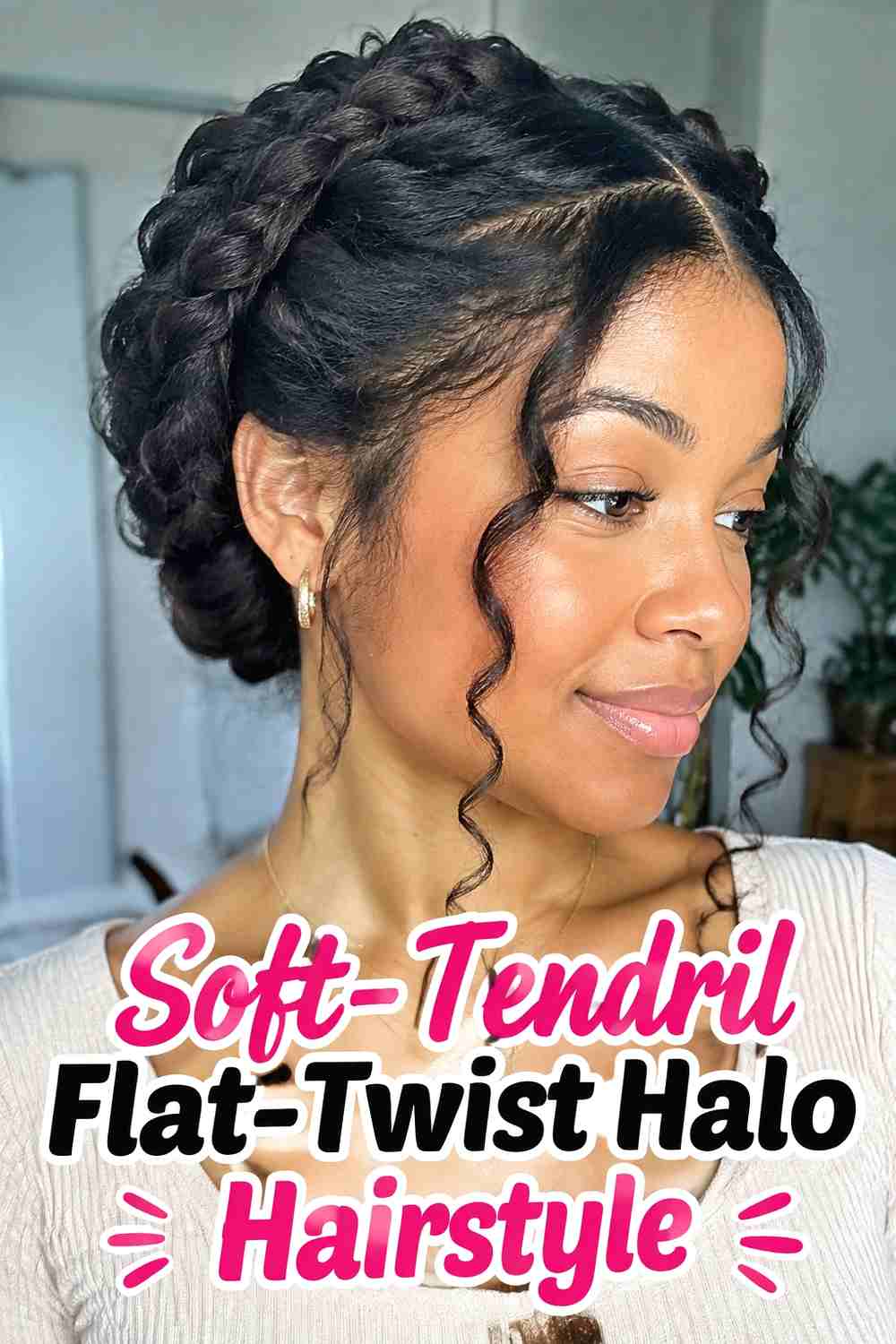
A soft-tendril flat-twist halo balances secure styling with a little face-framing movement. Build the halo around the head as usual, but intentionally leave one or two fine sections near the temples free before twisting. Those pieces can remain naturally coiled, softly stretched, or lightly defined depending on your texture. Against a chunky cream knit, the tendrils soften the transition between the structured hairstyle and substantial clothing, giving the overall look a relaxed winter-romantic quality. Keep the loose pieces selective rather than pulling out many sections after the style is finished. The main halo should remain secure, with the ends tucked and the flat twists clearly defined around the sides and back.
Best For
This is a good choice when a fully tucked halo feels too formal and you want subtle softness around the face.
Pro Tip
Separate the tendril sections before beginning the halo so you do not have to tug strands out of finished twists later.
8. Flat Twist Halo Puff Hairstyle
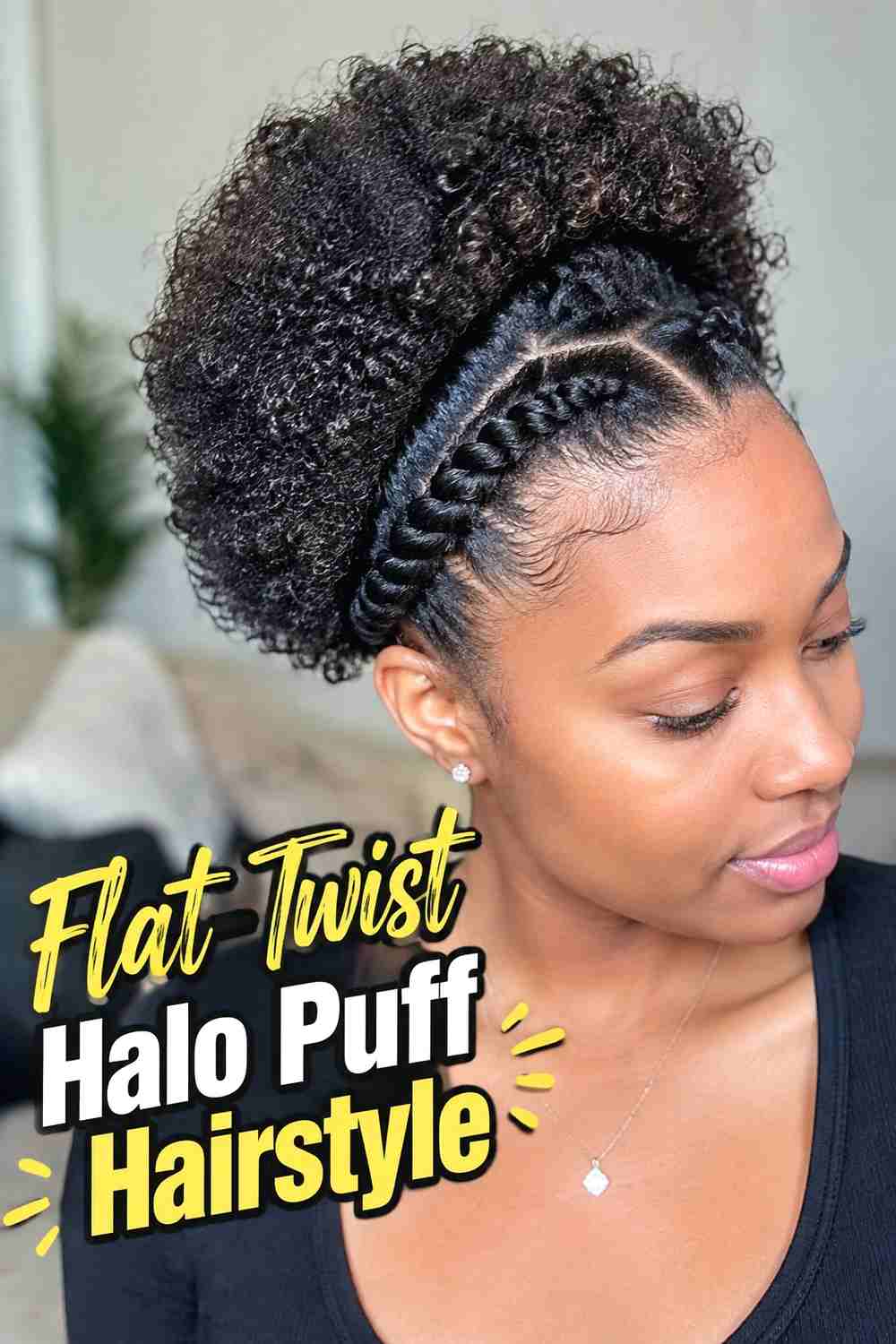
A flat-twist halo puff combines controlled perimeter twists with a soft area of natural volume near the crown or center. The flat twists frame the puff like a sculpted border, keeping the sides tidy while allowing coily or curly texture to remain visible. This contrast looks especially beautiful with chunky cream knits because both the hair and clothing contribute texture without blending into one another. Keep the puff balanced rather than excessively expanded, particularly if you plan to wear a hood or coat over the sweater. The flat-twist sections should feel secure around the perimeter, while the center can be gently shaped with the fingers to preserve natural definition and believable volume.
Hair Type & Length
This style is particularly suited to naturally curly, coily, or kinky textures with enough center length to form a visible puff.
Styling Notes
Shape the puff after the twists are complete. This makes it easier to judge how much volume complements the halo rather than overwhelming it.
9. Flat Twist Halo Bun Hairstyle
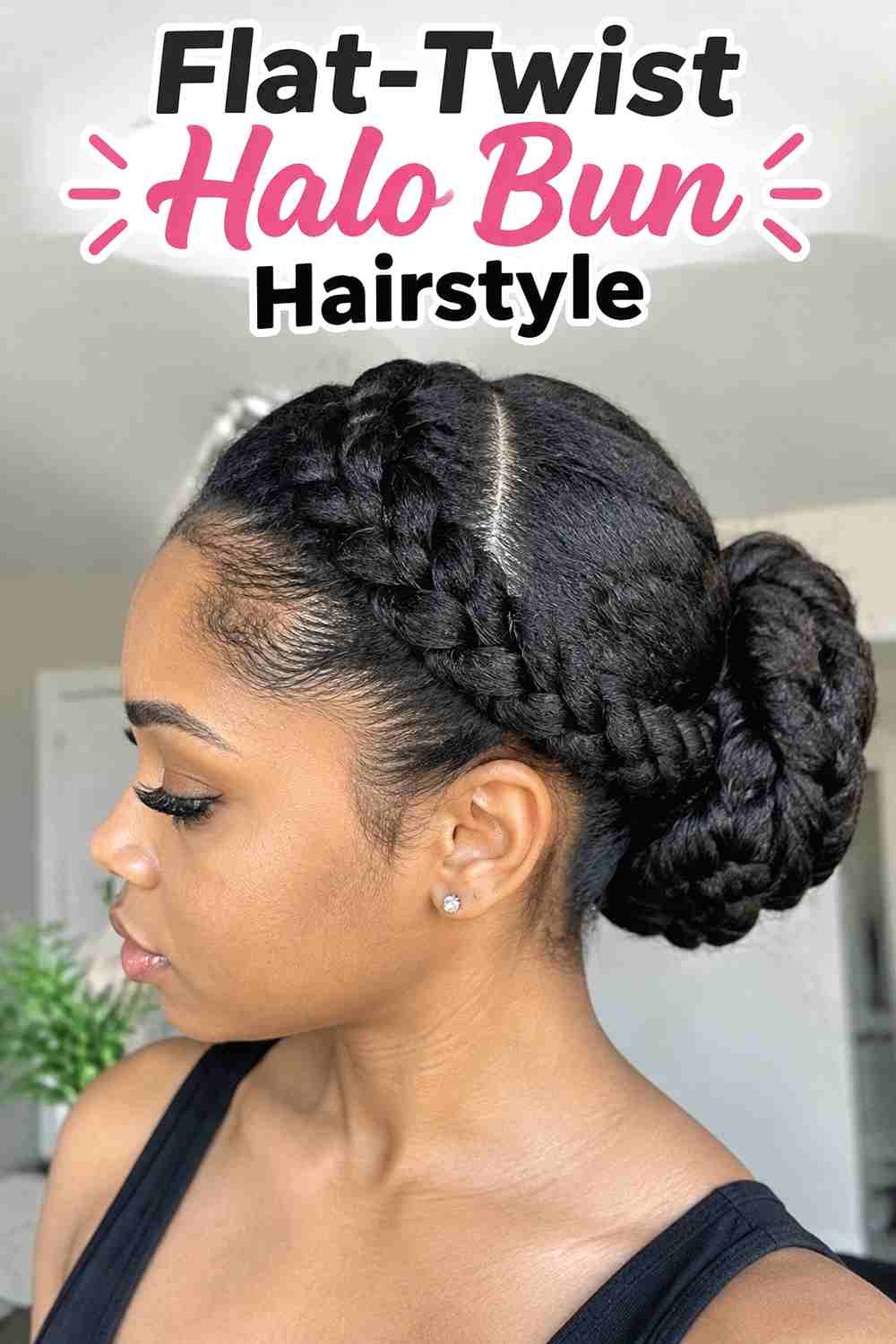
A flat-twist halo bun adds a compact tucked bun where the twist sections meet, creating a more structured finish than a fully continuous halo. Direct the flat twists around the sides and toward the upper back, then gather the remaining length into a small braided or twisted bun. Position it high enough to stay clear of the thick neckline of a cream sweater. The bun becomes a deliberate focal point while the surrounding twists keep shorter sections contained. This version works well when your hair is too long to tuck comfortably into a seamless halo or when you want the back of the hairstyle to show more definition. Keep the bun close to the head for a balanced profile.
Wear & Maintenance
Use several small pins around the bun instead of relying on one point of tension. Distributed support usually makes the shape more comfortable.
10. Gold Cuff Flat Twist Halo Hairstyle
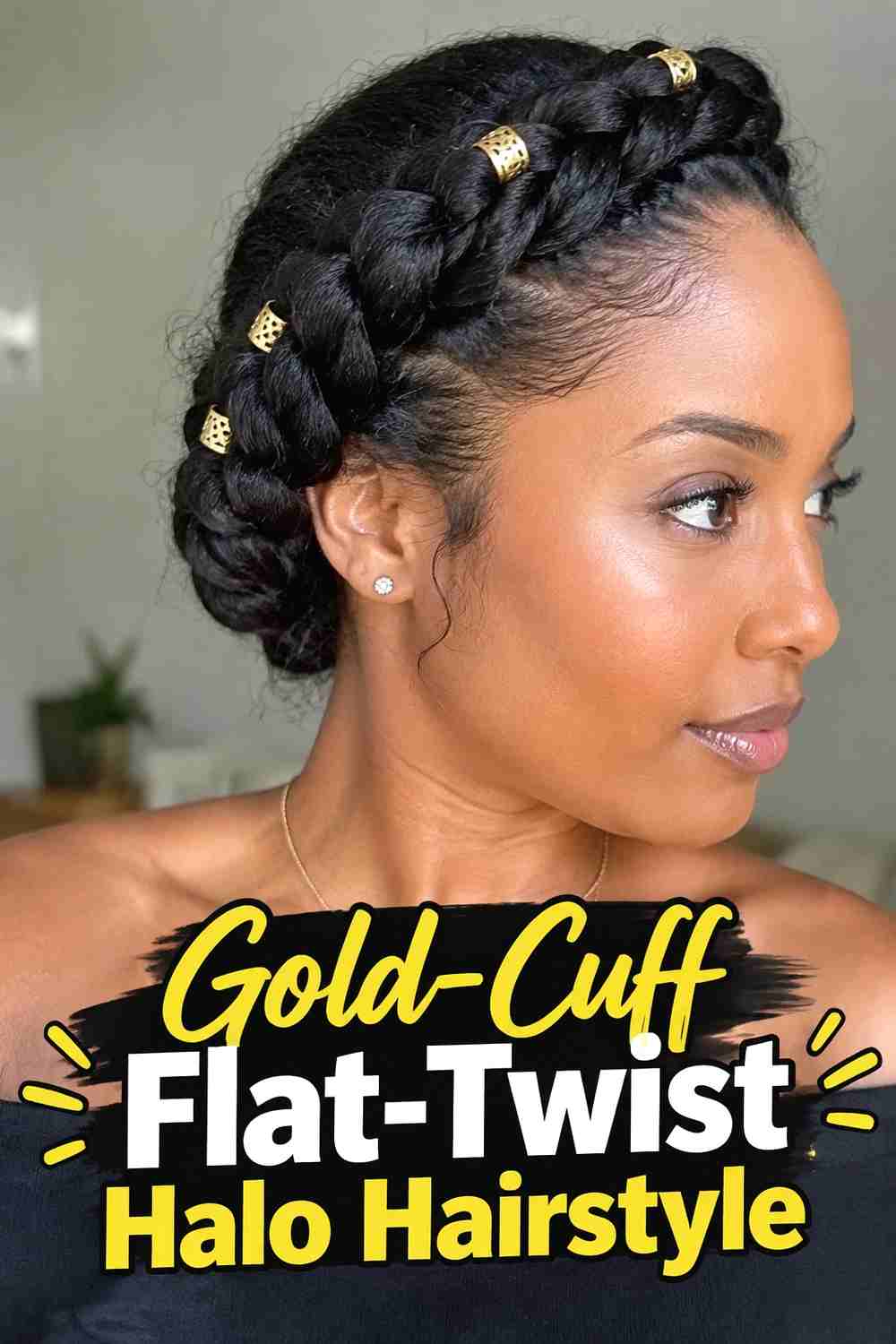
A few small gold cuffs can give a flat-twist halo just enough contrast to stand out against warm cream knitwear. Build the halo first with clean, defined twists, then place the cuffs sparingly along one side or around a selected section rather than covering the entire hairstyle. The metallic detail catches light while the cream clothing keeps the overall palette soft and refined. This look works especially well when the rest of the styling remains simple, allowing the twist pattern and accessories to do the visual work. Choose cuffs that fit securely without pinching the hair, and avoid placing them where a hood or hat would press directly against them.
Styling Notes
Use accessories as accents rather than structural tools. The halo should be fully secure before any cuff is added.
Why It Works
Warm metallic details add dimension to the dark-and-cream contrast while preserving the clean circular shape of the hairstyle.
11. Chunky Flat Twist Halo Hairstyle
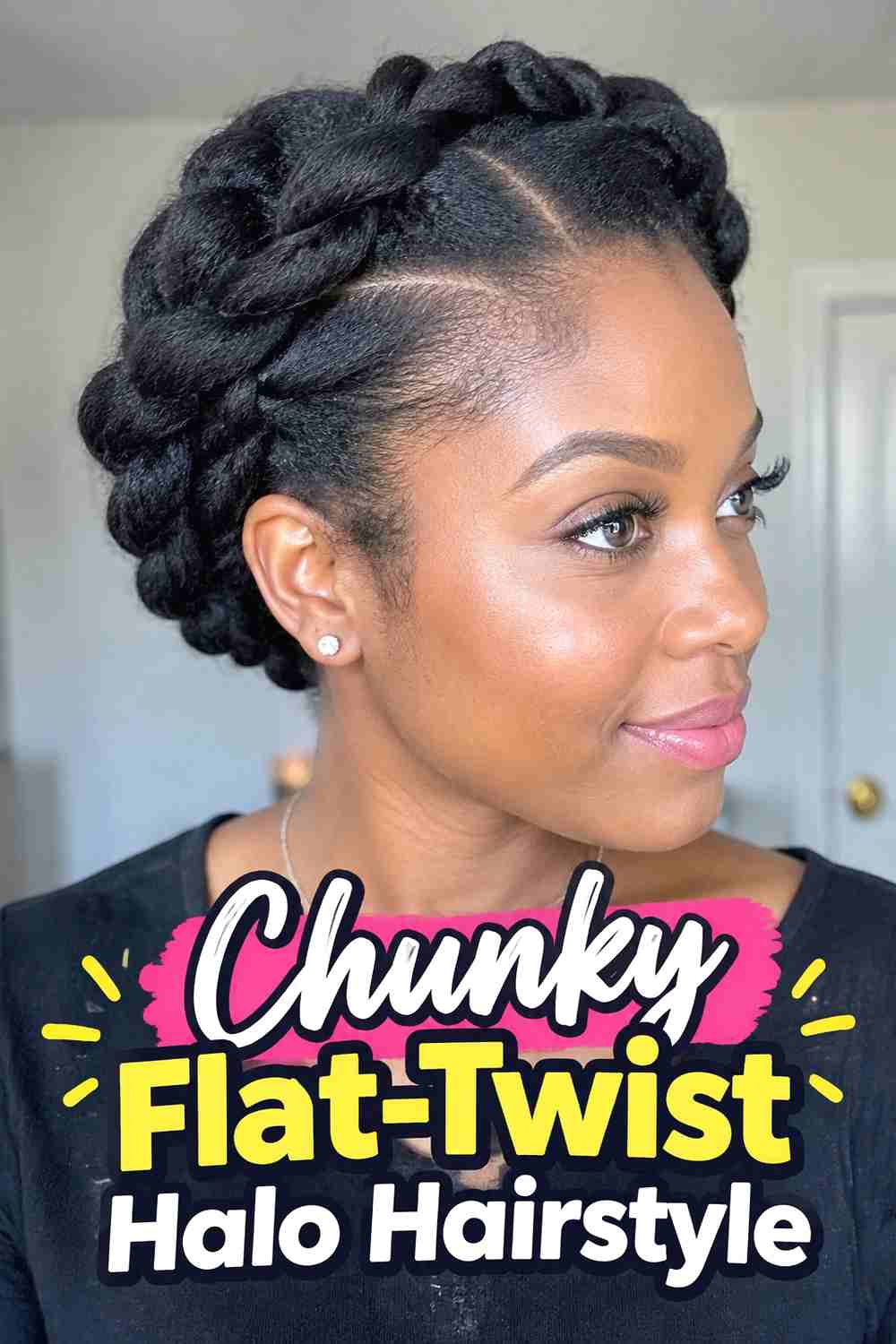
A chunky flat-twist halo uses larger sections to create a bold, visible twist pattern around the head. The substantial texture echoes the scale of thick cable-knit or ribbed cream sweaters, making the pairing feel intentional and winter-ready. Because each flat twist contains more hair, clean sectioning becomes especially important; uneven sections can make the halo appear lopsided. Keep the twists firm enough to maintain their shape but not so tight that the scalp feels strained. This style tends to suit medium to dense hair particularly well, since there is enough volume to create the fuller twist silhouette. Tuck the final section smoothly beneath the starting point for a continuous finished ring.
Best For
Choose this version when you want the hairstyle itself to have strong visual presence beside oversized knitwear.
Pro Tip
Fewer, larger sections create the chunky effect more naturally than making small twists and trying to pull them wider afterward.
12. Sleek Flat Twist Halo Hairstyle
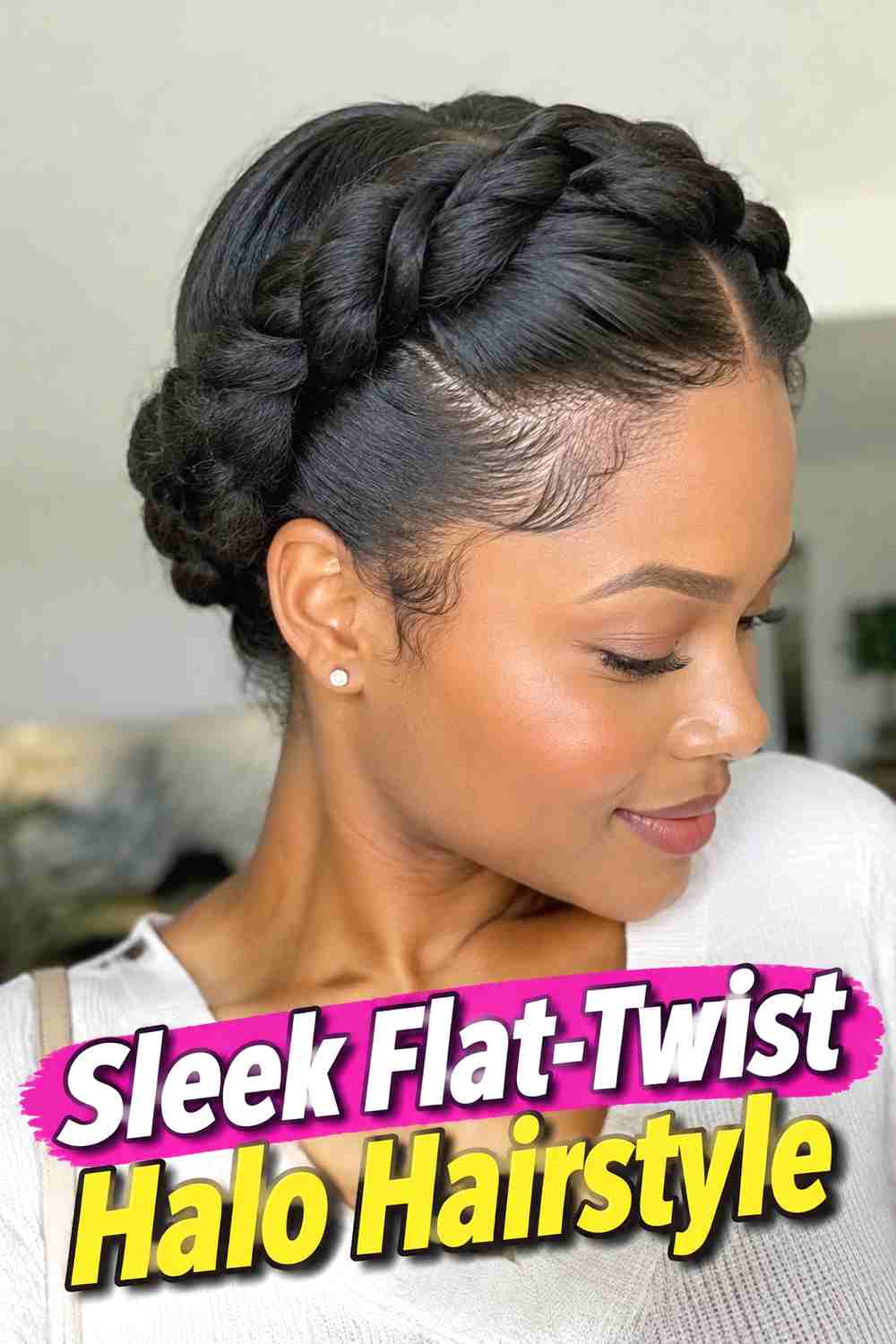
A sleek flat-twist halo emphasizes clean parts, smooth roots, and a close-to-the-head finish for a polished contrast against plush cream knits. The twists follow the perimeter in a controlled line, with minimal loose texture around the hairline and all ends tucked discreetly into the finished shape. This approach can work beautifully for dressier winter outfits because the restrained silhouette balances the softness and bulk of a heavy sweater. Use only enough styling product to support definition and manage flyaways without making the hair look coated. The goal is smooth structure with visible natural texture inside each twist. Keep the edges comfortable and avoid forcing an unnaturally tight finish simply for extra sleekness.
Why It Works
The precise halo creates a clean frame around the face while keeping the neckline open and visually uncluttered beside substantial winter clothing.
How to Choose the Right Look
Start with the neckline of your chunky knit. High turtlenecks and thick folded collars generally pair more comfortably with high-crown halos, halo buns, and other placements that leave additional room at the back of the neck. Lower crewnecks and cardigans offer more flexibility for low-crown styles.
Next, consider density and available length. Chunky and double halos need enough hair to form clearly defined sections, while a slimmer sleek halo can work with more moderate density. If your ends are difficult to tuck continuously, a halo bun may provide a more realistic finish.
Texture should guide the details rather than be hidden. Natural coils can remain visible in a halo puff or soft tendrils, while tightly defined twists create a more polished result.
Comfort matters most. Flat twists should feel secure without pulling excessively at the hairline or scalp. Make section direction, twist size, accessory placement, and crown height work with your hair rather than forcing every halo into the same shape.
Final Thoughts
Flat-twist halos pair naturally with chunky cream knits because both bring texture to a winter look in very different ways. The hairstyle keeps the silhouette controlled around the neckline, while the sweater adds softness and volume below it.
Choose between center parts, directional twists, raised crowns, puffs, buns, or subtle accessories based on your hair’s actual length and density. A believable, comfortably secured halo with clearly defined twists will generally look more polished than one created with unnecessary tension or exaggerated volume.
FAQs
1. What is a flat-twist halo hairstyle?
It is a style in which sections are flat-twisted close to the scalp and directed around the head to create a circular or halo-like shape, with the ends typically tucked or incorporated.
2. Do flat-twist halos work with chunky turtlenecks?
Yes. Higher halo placement is especially useful with thick turtlenecks because it creates more room between the hairstyle and the raised neckline.
3. Can fine or lower-density hair wear a flat-twist halo?
It can, but slimmer twists and a more compact halo usually look more natural than trying to imitate an oversized style designed for much denser hair.
4. How can I make a flat-twist halo look softer?
Leave one or two intentional tendrils near the temples, preserve a little natural crown fullness, or choose a slightly relaxed side part instead of a very sleek symmetrical finish.
5. Can accessories be added to a flat-twist halo?
Yes. Small cuffs or other lightweight accents can add detail, but the hairstyle should be structurally secure before accessories are attached.
Save your favorite flat-twist halo and pair it with a chunky cream knit for an easy winter look with texture, structure, and softness.