18 Ivy Braids Half-Up Hairstyle Ideas
Delicate ivy-like braids winding through loose hair create a dreamy half-up look with just enough structure to highlight waves, curls, and romantic detail.
Ivy braids work especially well in half-up hairstyles because the woven sections can curve across the crown while the lower lengths stay loose and flowing. The result combines visible braid detail with the softness of wearing most of the hair down.
These ideas explore crown braids, climbing side braids, Dutch and fishtail textures, romantic accessories, and sculptural variations. Before choosing one, consider your hair length, natural texture, braid thickness, crown volume, and how much of the lower hair you want to leave loose.
Quick List
- Classic Ivy Braids Half Up Hairstyle
- Crown Ivy Braids Half Up Hairstyle
- Side Climbing Ivy Braids Half Up Hairstyle
- Double Ivy Braids Half Up Hairstyle
- Dutch Ivy Braids Half Up Hairstyle
- Fishtail Ivy Braids Half Up Hairstyle
- Twisted Ivy Vine Half Up Hairstyle
- Center Part Ivy Braids Half Up Hairstyle
- Side Part Ivy Braids Half Up Hairstyle
- Soft Wave Ivy Braids Half Up Hairstyle
- Curly Ivy Braids Half Up Hairstyle
- Bubble Accent Ivy Braids Half Up Hairstyle
- Pearl Accent Ivy Braids Half Up Hairstyle
- Floral Ivy Braids Half Up Hairstyle
- Ribbon Ivy Braids Half Up Hairstyle
- Voluminous Ivy Braids Half Up Hairstyle
- Boho Ivy Braids Half Up Hairstyle
- Sculptural Ivy Braids Half Up Hairstyle
1. Classic Ivy Braids Half Up Hairstyle
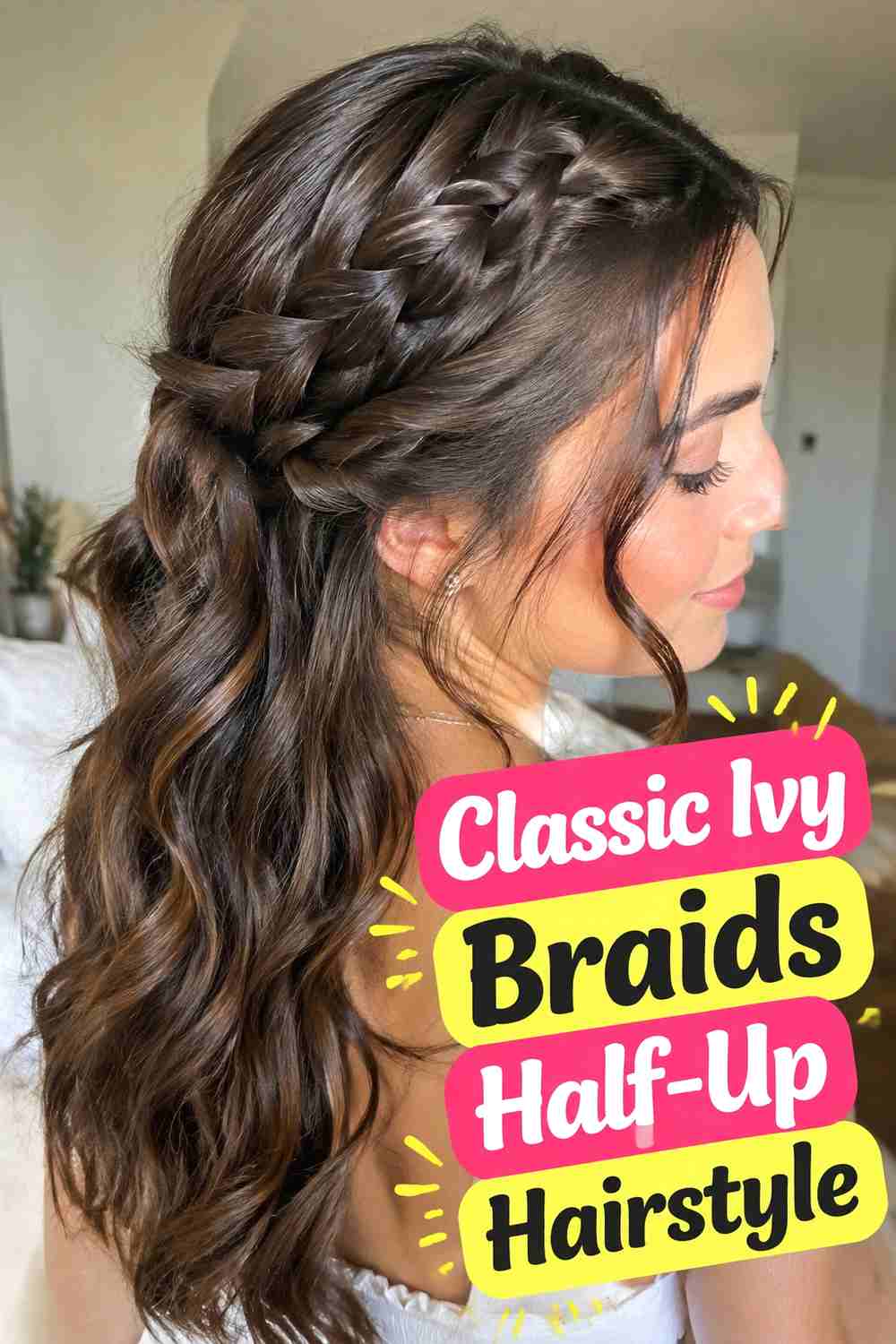
The classic version uses two narrow braids that curve backward from the sides and meet at the center like trailing vines. Instead of pulling a large amount of hair into the half-up section, only enough is gathered to create a secure braided framework, leaving most of the lengths loose below. Soft waves help the lower hair continue the organic movement created by the braids. Gently widening a few outer braid loops gives the woven sections a leafy appearance without making them unstable. Medium to long hair works especially well because the braids have enough length to travel across the back while the remaining hair still looks full and flowing.
Styling Notes
Secure the meeting point discreetly beneath the braids, then loosen selected outer loops only after the half-up structure is stable.
Best For
This balanced look works for weddings, garden parties, dates, and everyday romantic styling.
2. Crown Ivy Braids Half Up Hairstyle
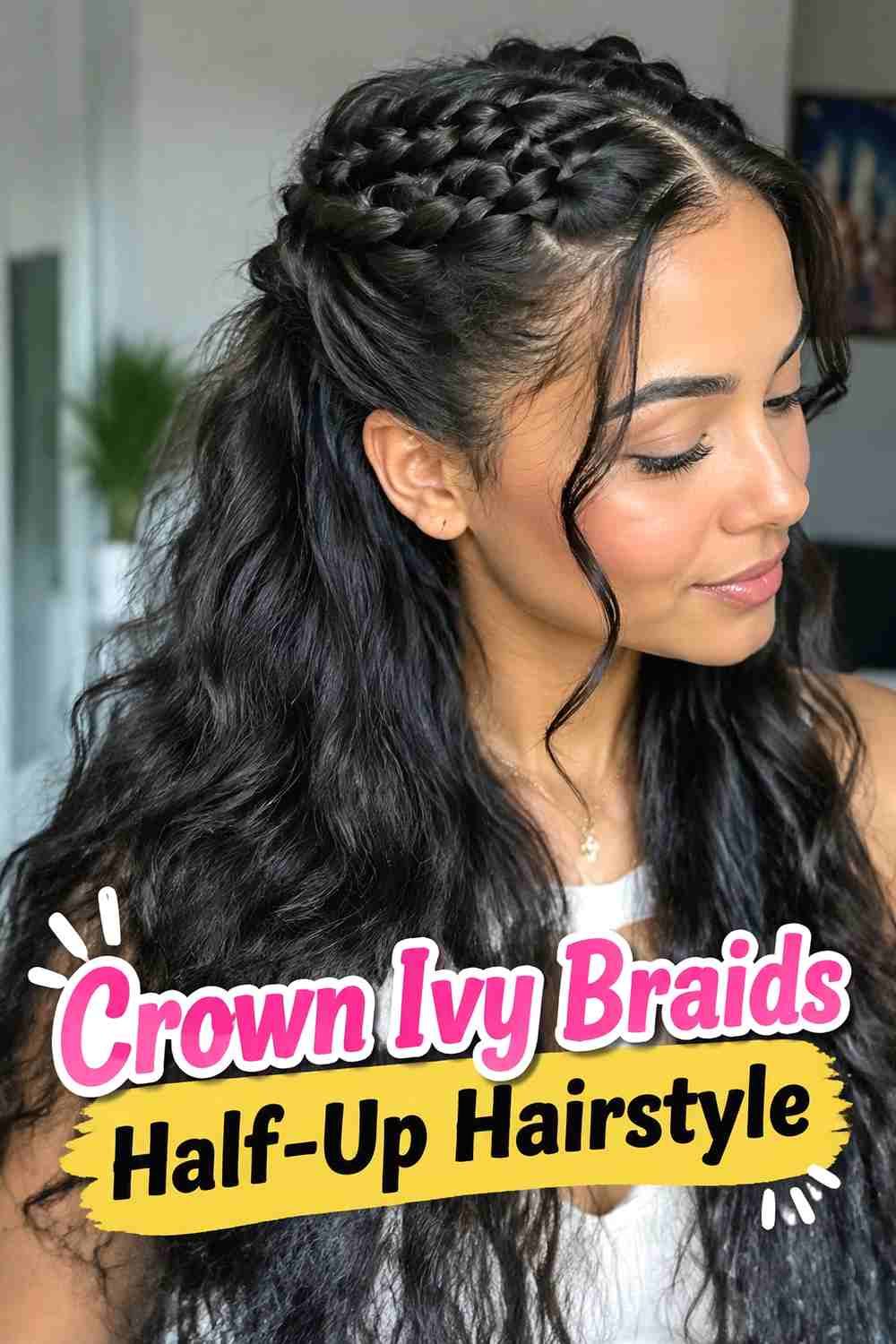
Crown placement gives the ivy braids a soft halo effect while still leaving the lower hair completely loose. Two braided sections begin near the temples and travel higher across the back of the crown before overlapping or meeting at the center. The curved route makes the braids feel more botanical than a straight horizontal half-up style. Below them, long waves or softly textured lengths create contrast with the structured woven detail. Keep a little natural lift beneath the crown braids so they do not flatten the head. The braids can be lightly expanded along their outer edges, but the central weave should remain secure enough to support the half-up shape.
Why It Works
The elevated braid path frames the crown beautifully while preserving the softness and movement of wearing most of the hair down.
3. Side Climbing Ivy Braids Half Up Hairstyle
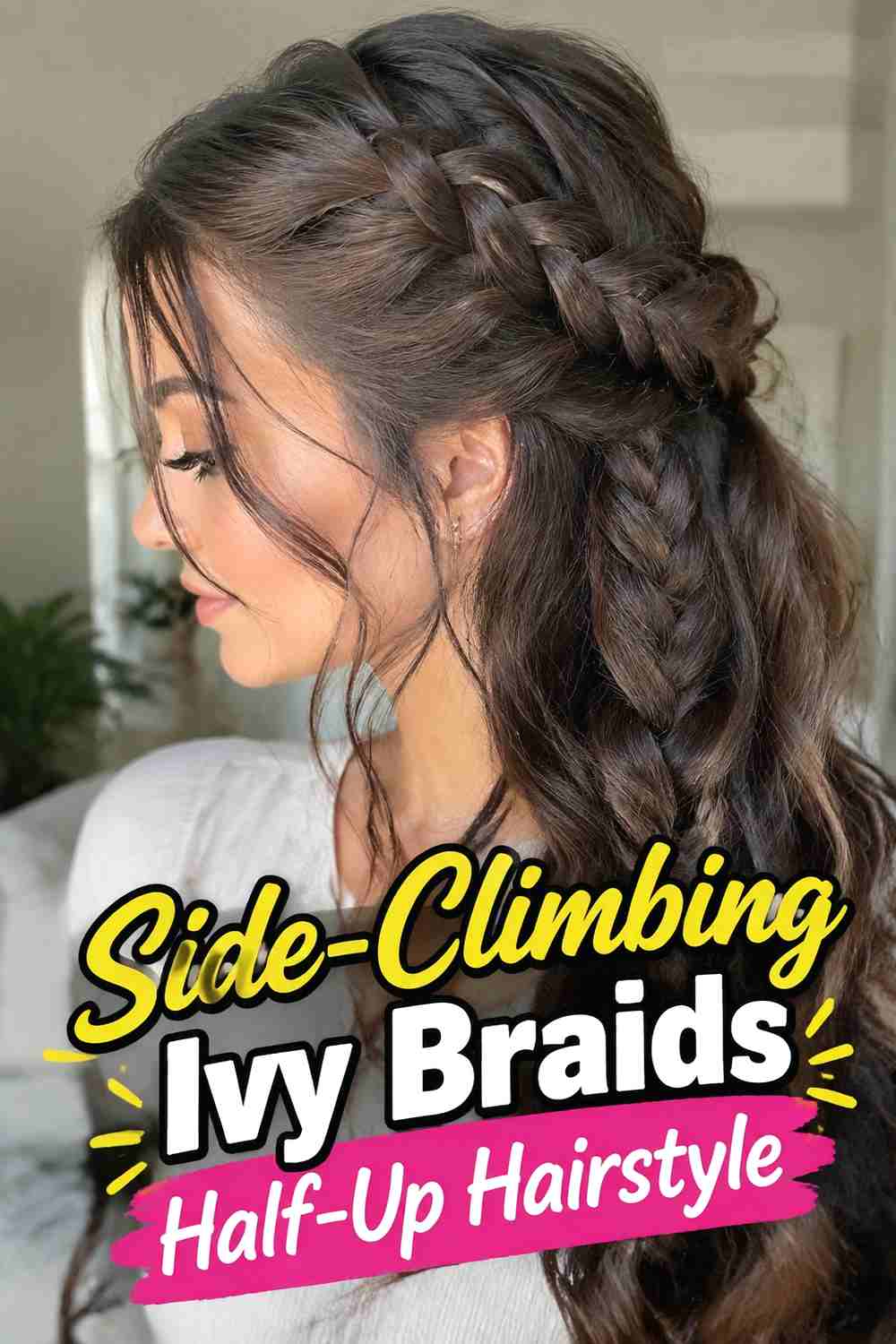
A side-climbing braid introduces a more unusual vine-like direction by beginning lower near one side and traveling diagonally upward toward the center back. A second smaller braid can meet it from the opposite side, or the climbing section can remain the single focal detail. Loose hair underneath can be waved gently so its movement continues the diagonal flow. This style looks especially attractive from the side because the braid appears to grow upward through the hairstyle rather than simply crossing the back. Keep the climbing curve broad and natural, and avoid braiding too tightly against the scalp if you want the finished look to remain soft and romantic.
Styling Notes
Map the braid direction before starting so its curve rises gradually and reaches the half-up gathering point without an abrupt angle.
4. Double Ivy Braids Half Up Hairstyle
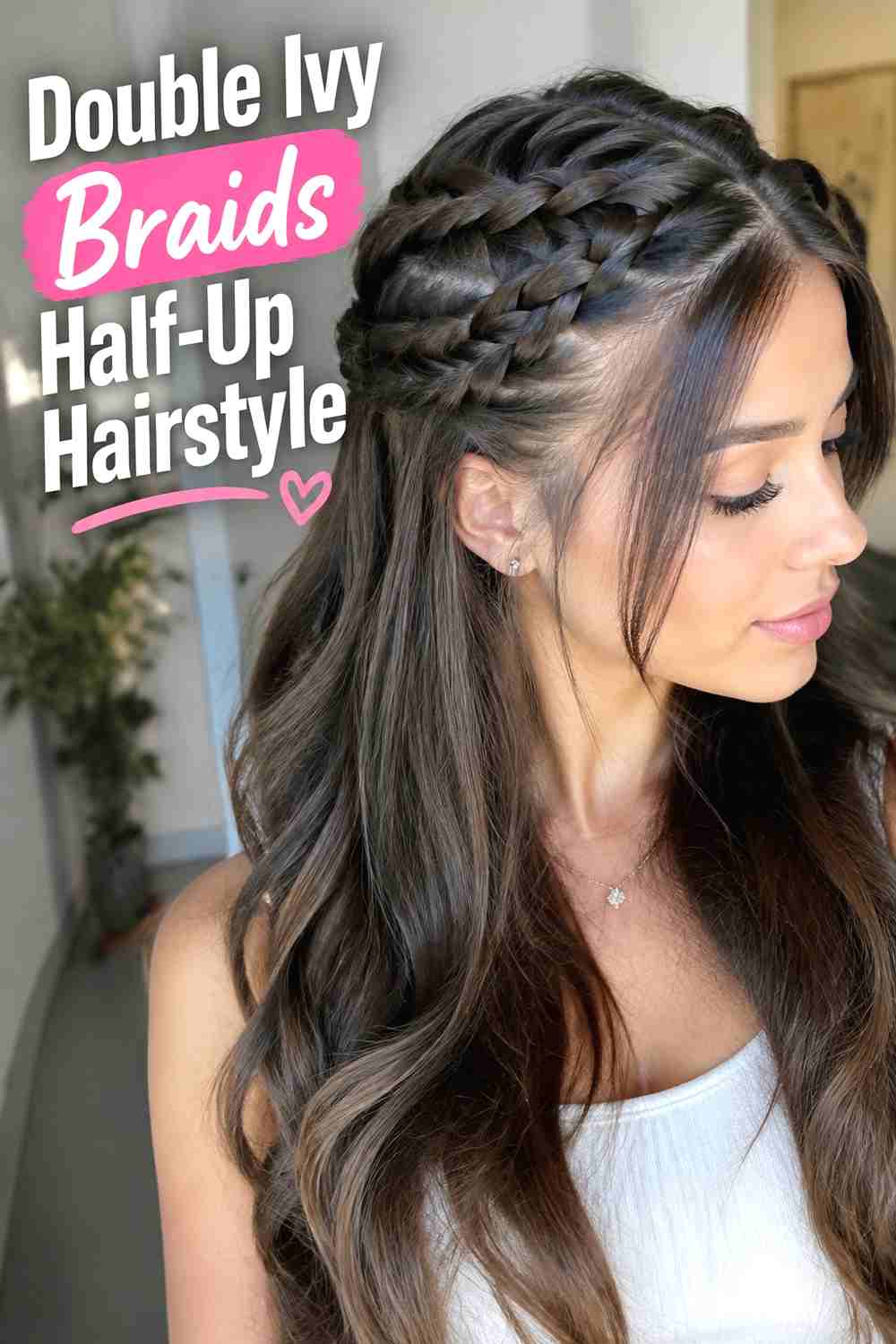
Double ivy braids use two distinct woven paths on each side for a fuller, more intricate half-up design. A slightly wider braid can sit higher on the crown while a narrower companion braid curves underneath it, with both meeting toward the back. The paired strands resemble layered vines and create plenty of detail without requiring the loose lower hair to be heavily styled. Broad waves or natural texture help balance the braid work by adding soft movement below. Keep the two braids different enough in size to avoid a rigid stacked appearance. Their ends can be tucked beneath one another at the center so the finishing point remains clean and discreet.
Best For
This more detailed option suits weddings, engagement photos, parties, and occasions where the back of the hairstyle will be especially visible.
Pro Tip
Keep one braid slightly finer than the other so the layered design feels organic instead of overly symmetrical.
5. Dutch Ivy Braids Half Up Hairstyle
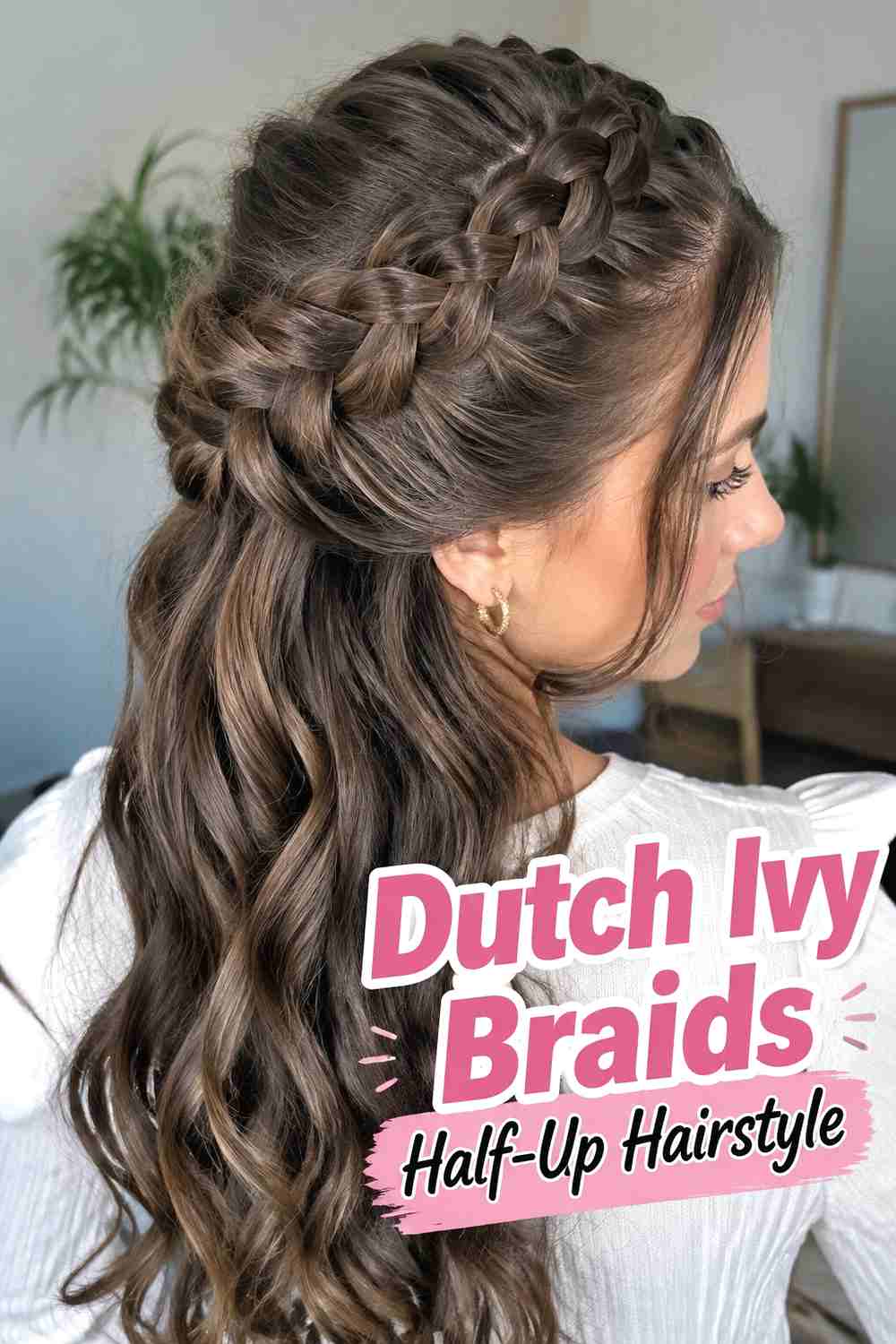
Dutch braids create raised woven sections that stand out clearly against loose hair, making them especially effective for an ivy-inspired half-up look. One braid can curve from each temple toward the back, where they meet above the loose lengths. Because Dutch braiding places the weave on top of the hair, even a relatively narrow braid remains visible. Gently widening the outer loops creates a leafy effect while preserving the firm center structure. Soft waves or straight flowing lengths can both work below, depending on how romantic or polished you want the result. Avoid making the braids overly thick, since the half-up design should still leave plenty of loose hair visible.
Hair Type & Length
Medium to long hair gives the Dutch sections enough length to curve naturally across the crown while maintaining full loose lengths underneath.
6. Fishtail Ivy Braids Half Up Hairstyle
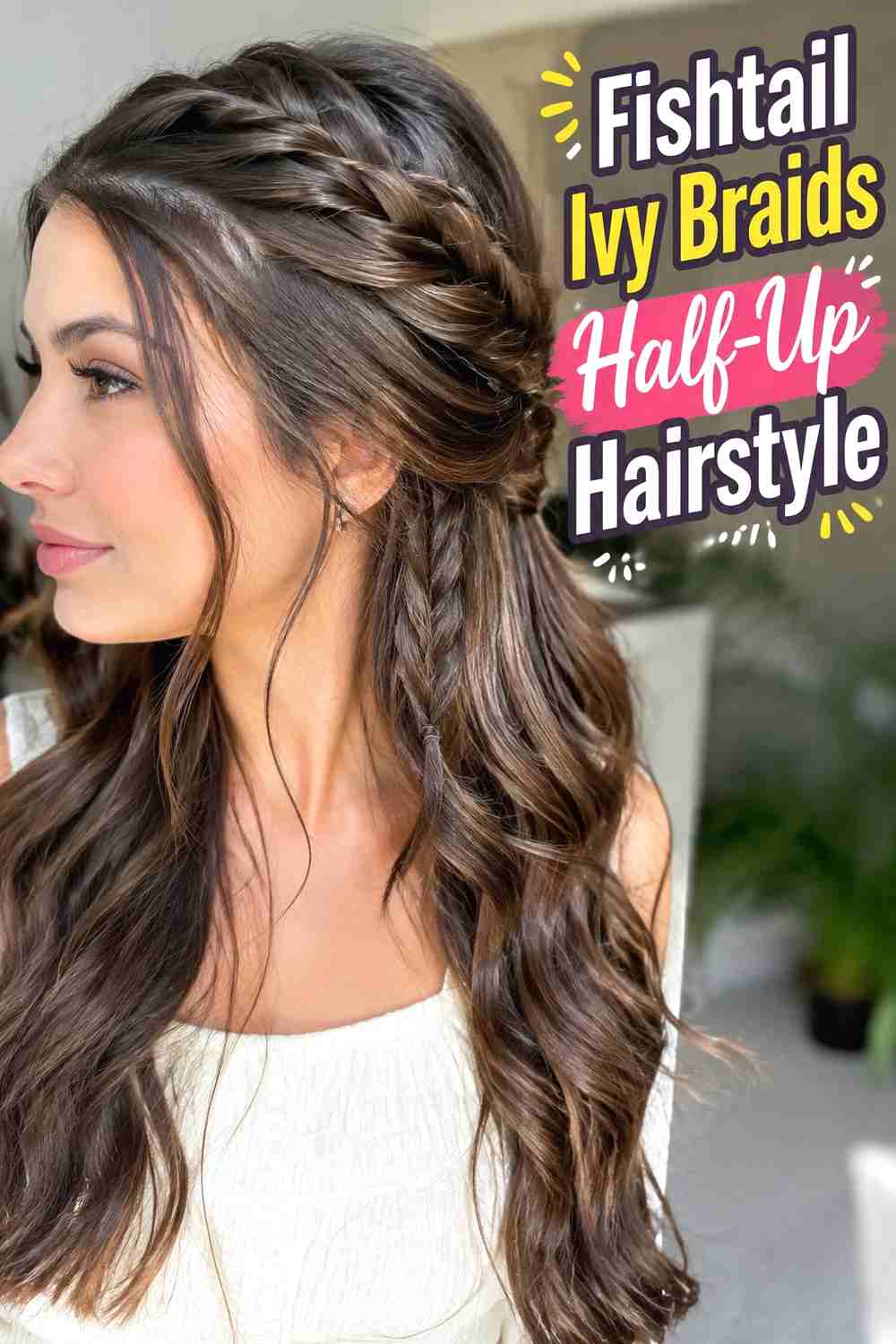
Fishtail braids give the ivy motif a finer, more intricate texture with many small woven crossings. Two narrow fishtails can begin from side sections and curve toward the back, where they overlap or join beneath a hidden elastic. Loosening them slightly helps the detailed pattern remain visible while preventing the braids from appearing too thin. The lower hair looks especially beautiful in broad waves, since the smoother movement contrasts with the tighter fishtail texture above. Because the braids already contain plenty of detail, keep accessories minimal or skip them entirely. Longer hair provides more flexibility for creating visible fishtails without removing too much density from the loose section.
Why It Works
The small repeating fishtail pattern naturally resembles fine leaves along a vine, reinforcing the botanical effect without added decoration.
7. Twisted Ivy Vine Half Up Hairstyle
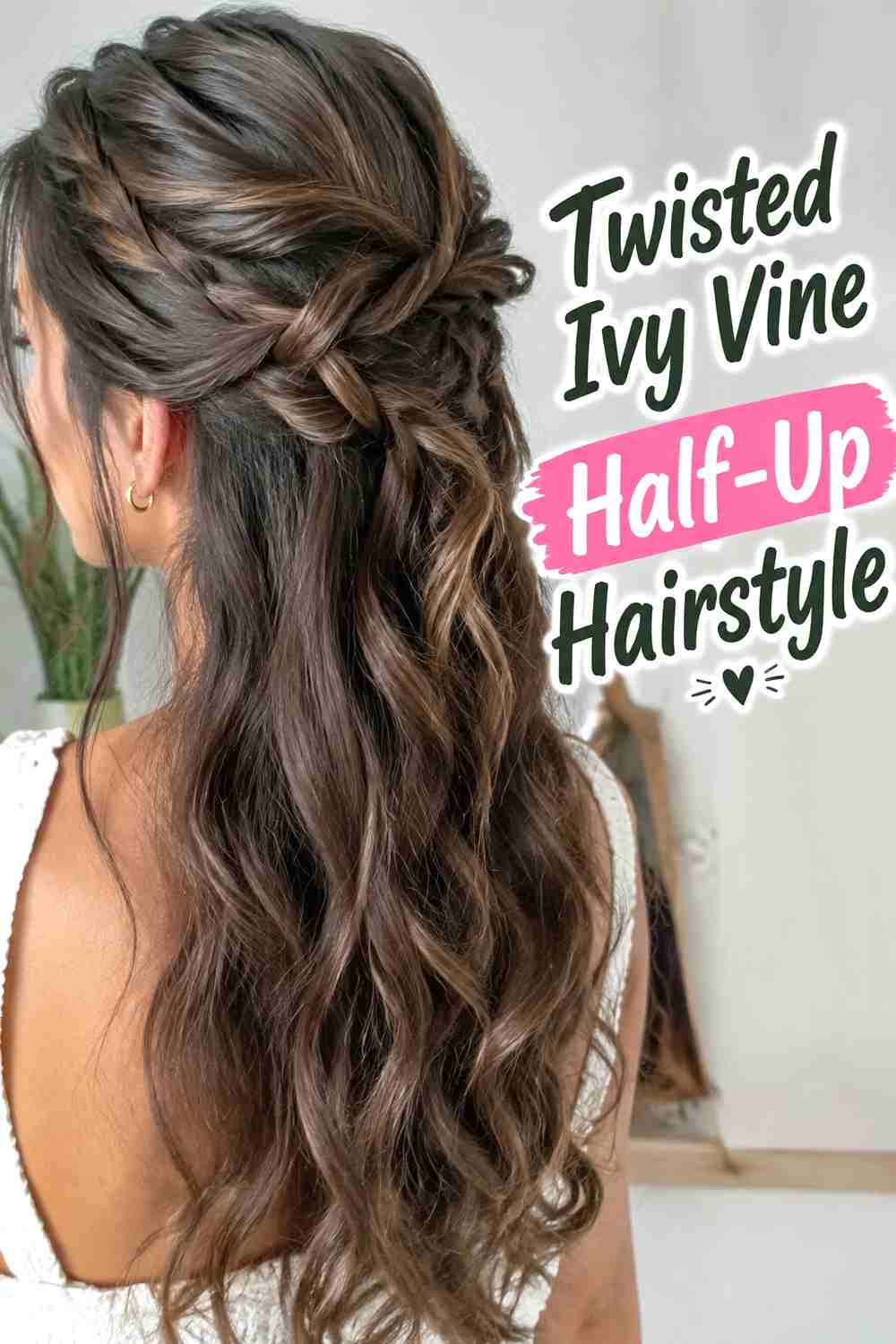
This variation combines narrow braids with broad twisted sections so the back looks like several vines growing together. A small braid can travel alongside a softly rolled twist on each side, and the paired sections meet at the center without gathering too much of the lower hair. The contrast between woven and smooth textures creates dimension even before waves are added through the lengths. Keep the twists loose enough to show their curves while securing the braid ends independently so the overall style remains stable. This look is particularly effective when the hair has subtle highlights, since the changing direction of the twists and braids makes different tones visible.
Styling Notes
Secure the smaller braids first, then lay the broader twists beside them so both textures stay distinct and easy to see.
8. Center Part Ivy Braids Half Up Hairstyle
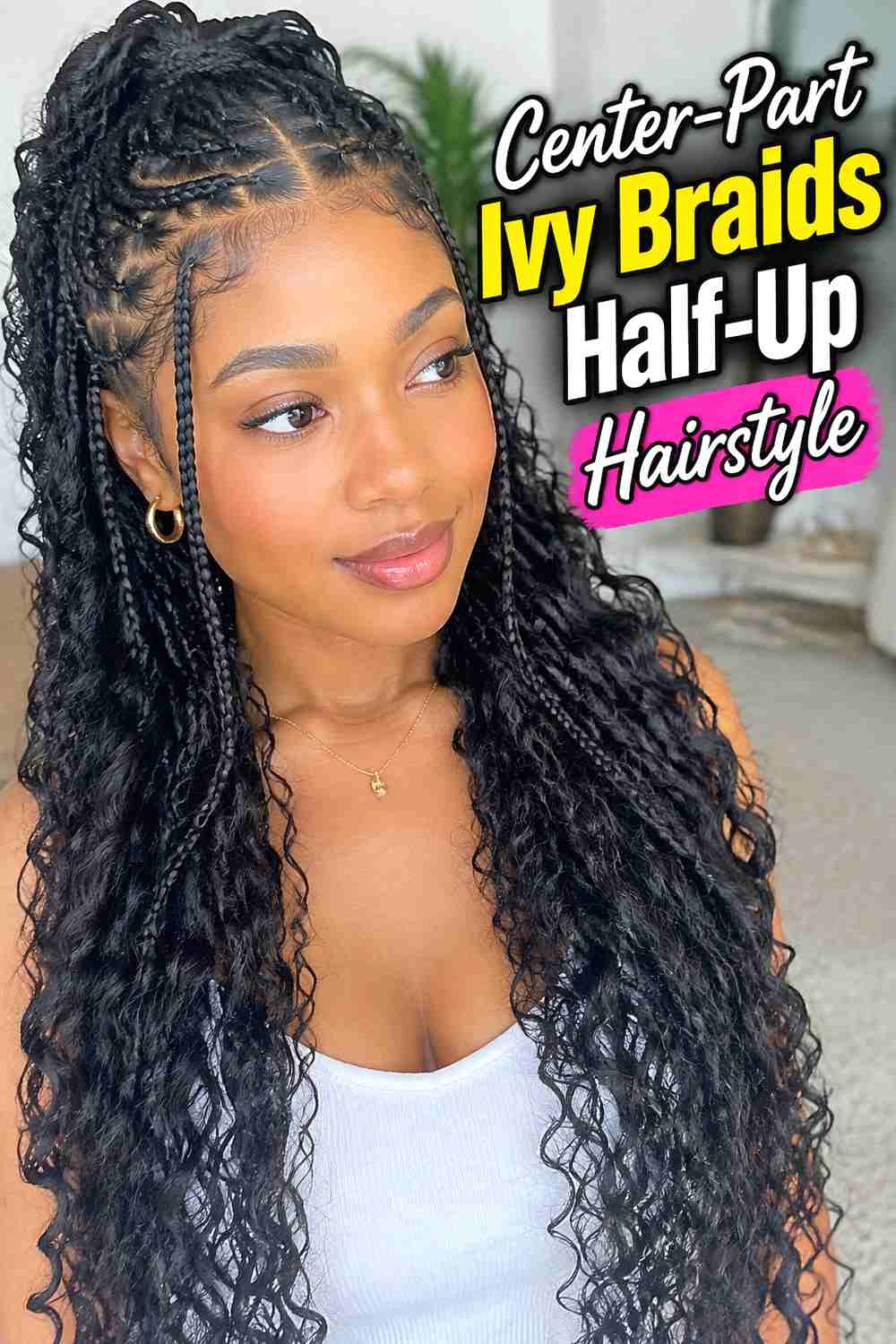
A clean center part gives the front of this half-up style a balanced, modern frame while ivy braids add detail farther back. Leave two smooth or softly curved front sections around the face, then begin narrow braids behind them so the part remains clearly visible. The braids travel symmetrically toward the center back and join above the loose hair. Gentle waves through the lower lengths keep the overall result from becoming too formal. A little root lift on either side of the part adds softness and prevents the front from appearing flat. This is a useful option when you like botanical braid detail but prefer a neat, uncluttered look from the front.
Best For
Choose this version when you want a refined half-up style that keeps the braid detail concentrated toward the crown and back.
9. Side Part Ivy Braids Half Up Hairstyle
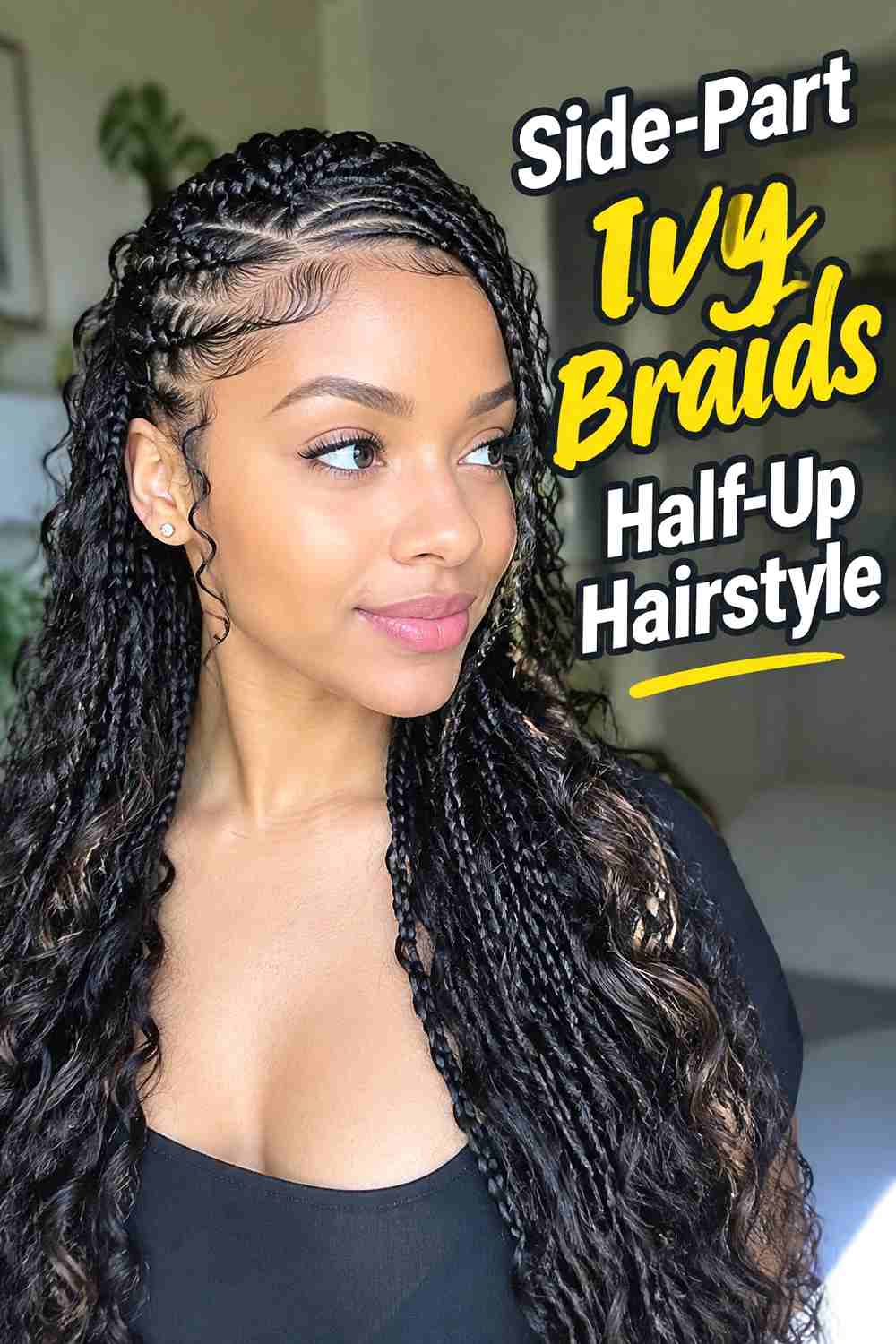
A side part introduces natural asymmetry and lets the ivy braids follow a more directional route. The heavier front section sweeps gently toward one side, while a braid begins beneath or behind it and curves around the crown toward the half-up gathering point. A smaller braid from the opposite side can provide balance without creating perfect symmetry. The lower lengths can remain softly waved or naturally textured, helping the hairstyle feel fluid from front to back. Keep enough root volume near the side part so the sweep stays airy. The braid should follow the head’s shape instead of crossing it in a straight line, which makes the ivy effect more convincing.
Why It Works
The side part creates a natural diagonal flow that complements the curved, vine-like movement of the braids.
10. Soft Wave Ivy Braids Half Up Hairstyle
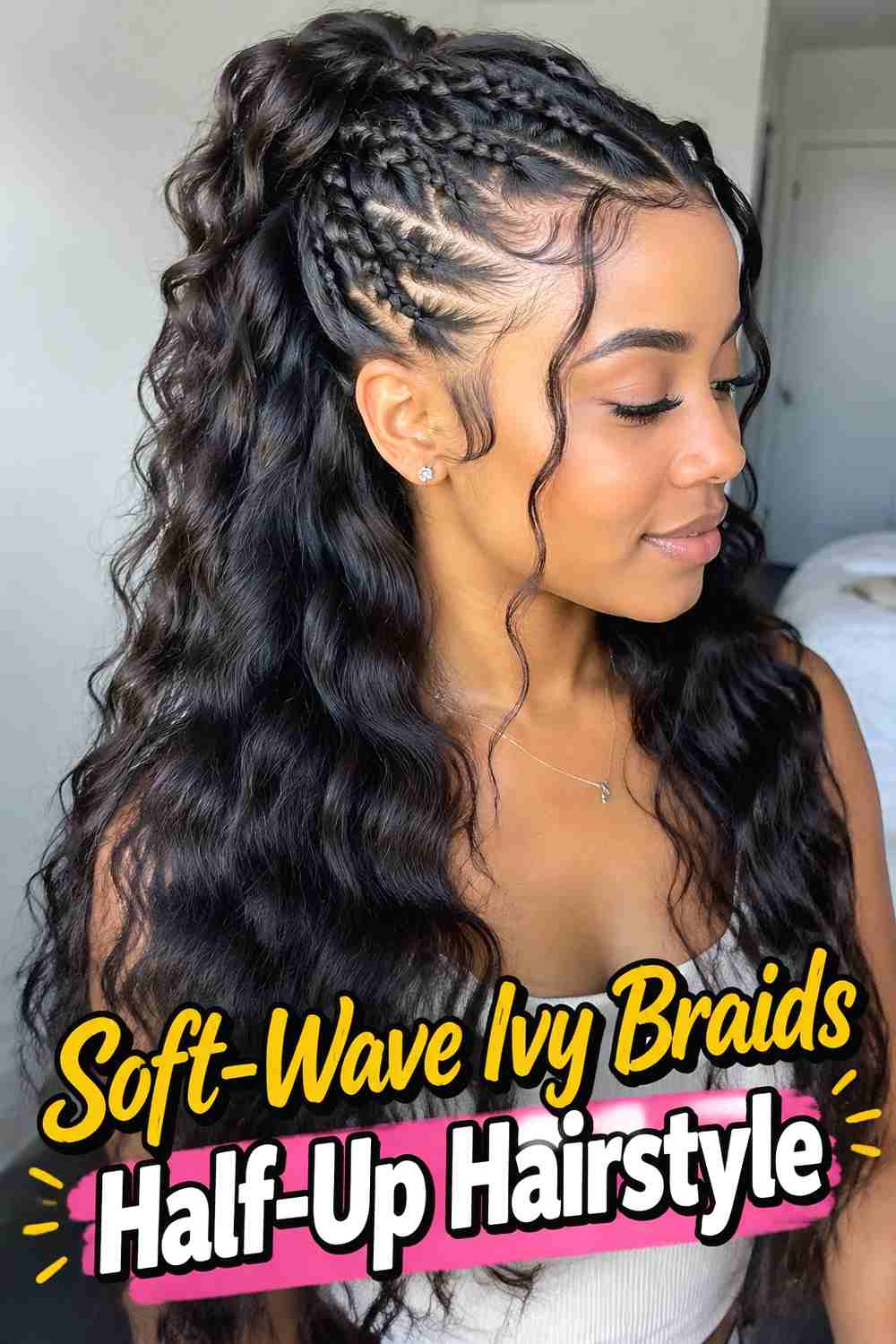
Soft waves become a major feature in this version, with delicate ivy braids acting as a decorative frame across the crown. Broad S-shaped bends begin through the mid-lengths and continue below the half-up section, creating a fluid backdrop for the woven detail. The braids can remain narrow and lightly loosened, allowing them to stand out without competing with the wave pattern. Leave the ends a little softer or straighter for a modern finish instead of curling every section identically. The half-up gathering point should remain small so the waves retain plenty of volume through the back. This style feels polished but still touchable and relaxed.
Pro Tip
Style the waves before braiding, then refresh only the outer loose sections after securing the half-up detail if the texture becomes flattened.
11. Curly Ivy Braids Half Up Hairstyle
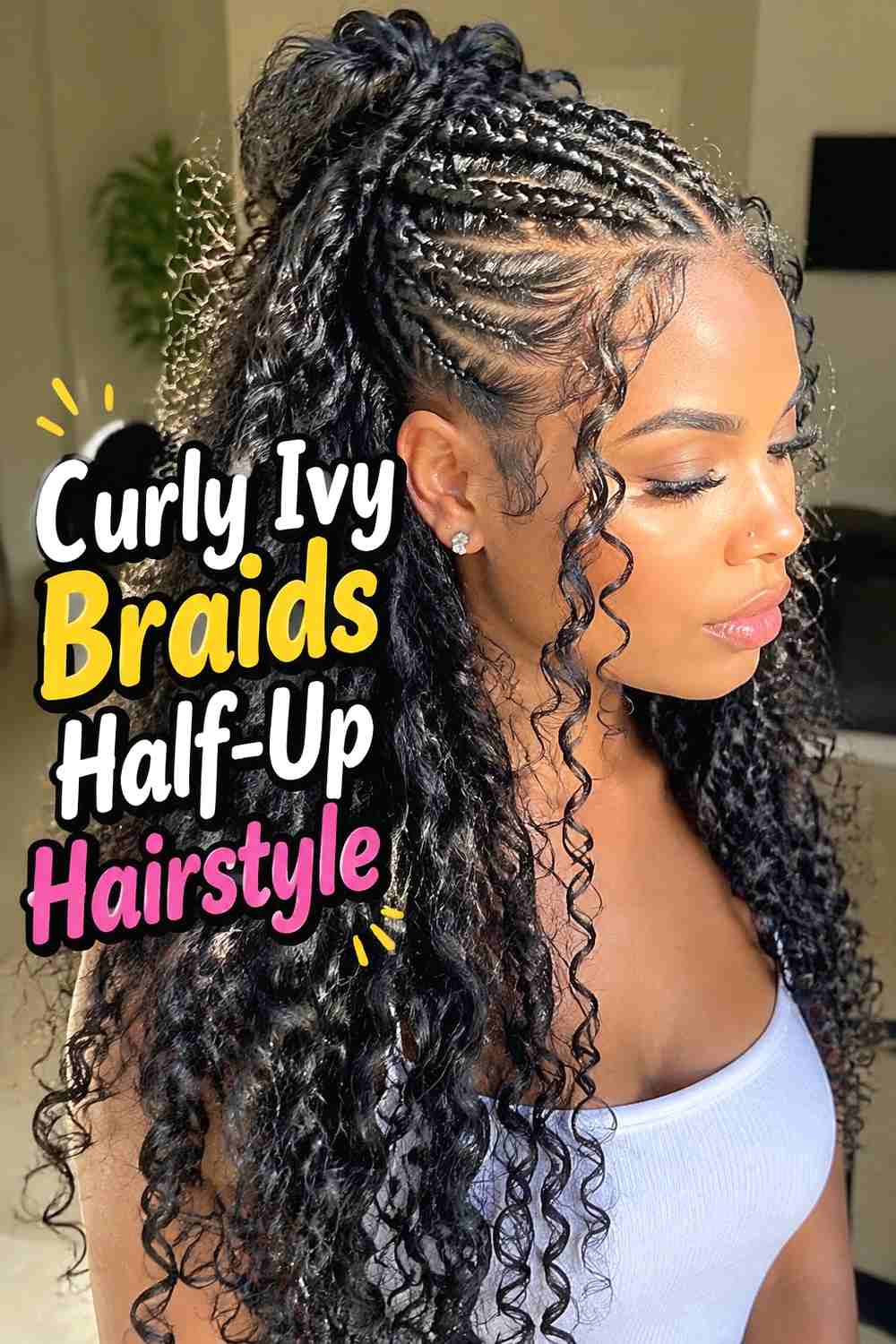
Naturally curly or softly defined curls can create a beautiful backdrop for ivy braids because the loose lengths already have organic movement. Keep the braids slightly broader so they remain visible against the more textured hair, and allow them to curve gently across the crown rather than disappearing into the curl pattern. The half-up section should gather only enough hair to anchor the braids while preserving fullness through the lower curls. Avoid forcing every curl into an identical shape; natural variation helps the hairstyle feel realistic and romantic. A few face-framing curls can remain free, while the back braids provide enough structure to make the overall look feel intentional.
Hair Type & Length
Medium to long curly hair works well when the braid sections are chosen carefully so enough density remains in the loose lengths.
12. Bubble Accent Ivy Braids Half Up Hairstyle
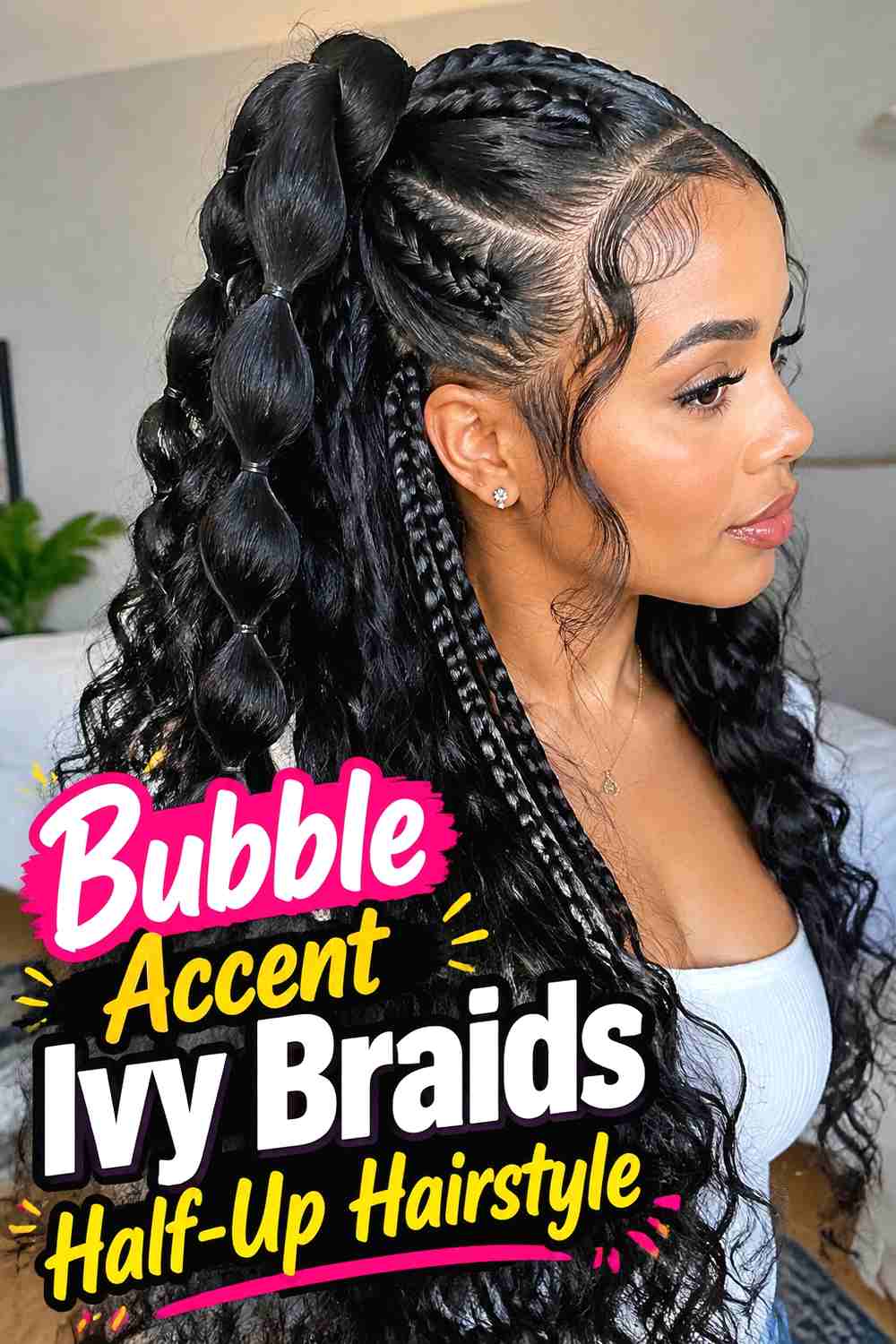
A small bubble detail at the center adds a playful contrast to ivy braids without turning the entire hairstyle into a bubble ponytail. Two vine-like braids travel from the sides toward the back, where they connect into a short half-up section divided by one or two discreet elastics. Gently expanding those sections creates soft rounded bubbles while the remaining hair flows freely below. The braids should remain the dominant detail, so keep the bubble portion compact and proportional. Waves through the loose lengths can soften the transition and make the style feel cohesive. This option works particularly well when you want something slightly different from a standard braided half-up design.
Styling Notes
Keep the bubbles small and centered so they complement the braid paths instead of interrupting the ivy-inspired flow.
13. Pearl Accent Ivy Braids Half Up Hairstyle
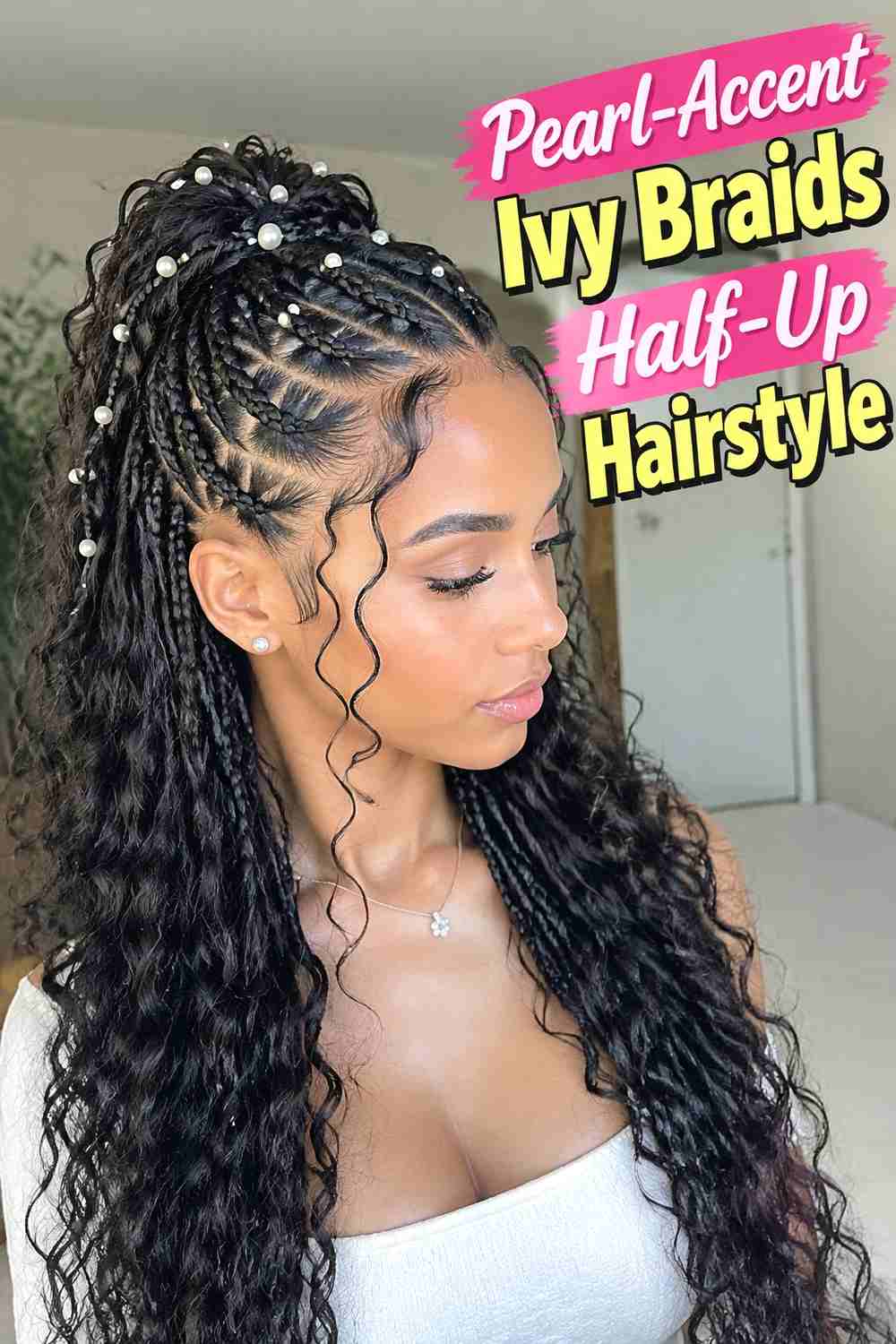
Tiny pearls can sit between selected braid loops like delicate buds growing along the ivy-inspired paths. Begin with two curved braids across the crown, secure the half-up structure, and then add a few pearl pins where the woven sections naturally bend or overlap. Leave generous spaces between accessories so the braid pattern remains visible. Soft waves underneath reinforce the romantic effect without needing additional decoration. Pearls can be concentrated closer to the center back or distributed lightly along one side for a more asymmetrical finish. Keeping the rest of the hairstyle relatively simple allows the combination of braid texture and rounded pearl accents to feel elegant rather than crowded.
Best For
This version is especially suited to weddings, bridal events, anniversaries, engagement photos, and romantic formal occasions.
Pro Tip
Add pearls after the braid is fully secured so accessory placement does not distort the woven sections.
14. Floral Ivy Braids Half Up Hairstyle
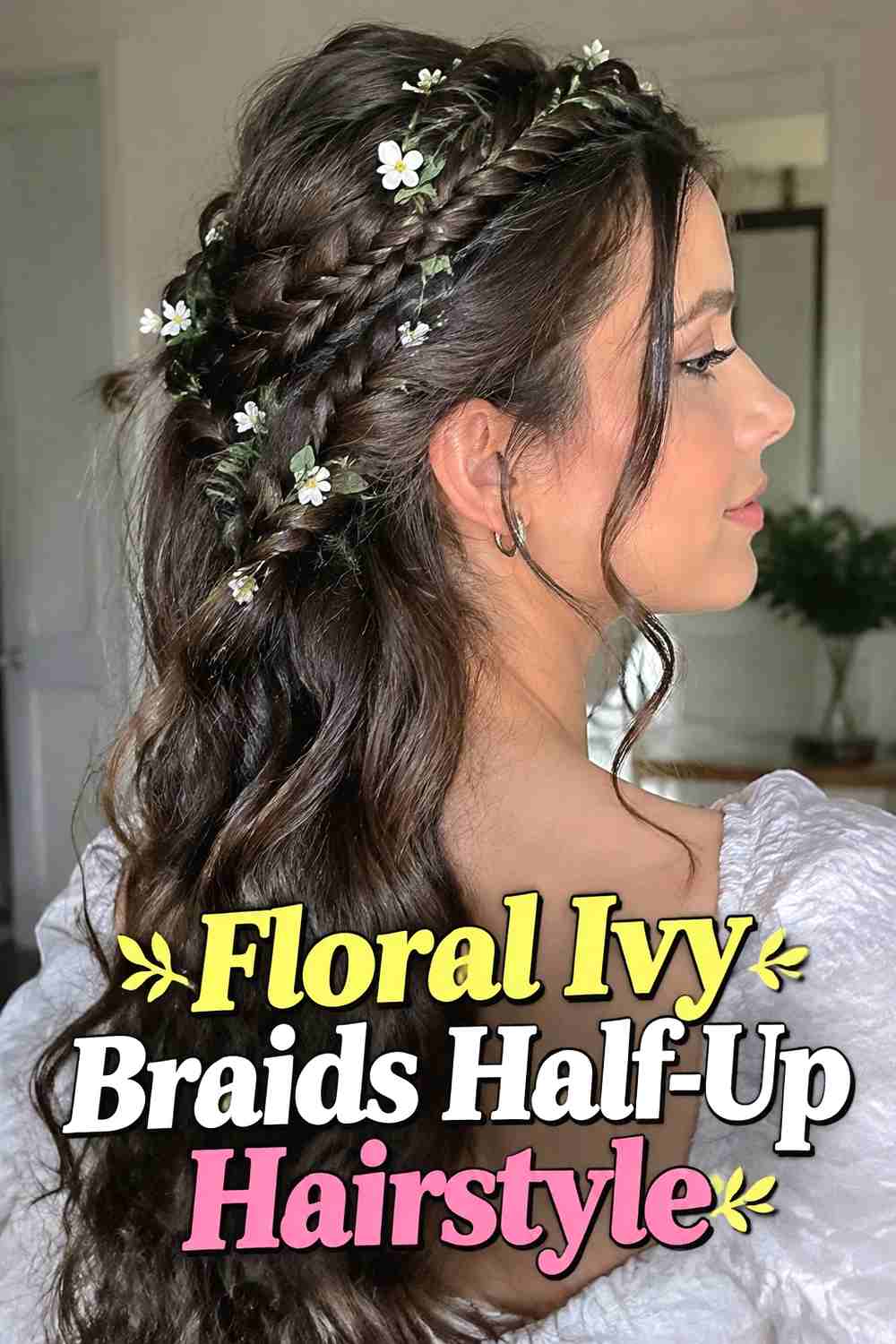
Small floral accents make ivy braids feel even more botanical while still allowing most of the hair to remain loose. The braids curve from the sides toward the center back, and tiny flowers or floral pins are tucked selectively where the strands cross or change direction. The accessories should follow the braid paths rather than appearing randomly scattered through the hair. Loose waves beneath provide softness and help the floral detail feel natural. Avoid using too many blossoms, especially if the braid is already wide or intricate. A few carefully positioned accents create a cleaner effect and keep both the natural hair texture and woven construction easy to see.
Styling Notes
Place floral details only after finishing the braids, using the strongest woven sections as secure anchor points.
15. Ribbon Ivy Braids Half Up Hairstyle
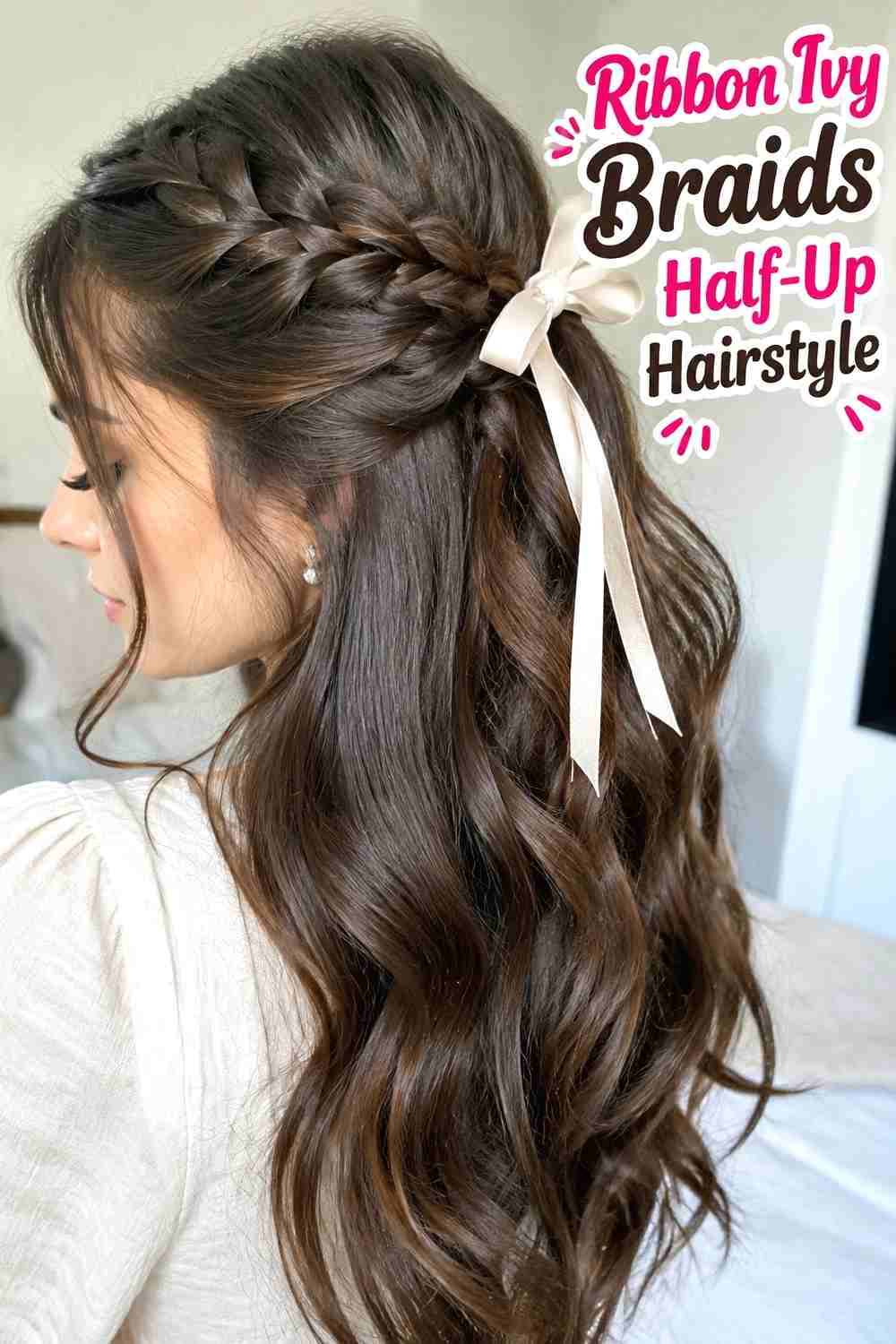
A narrow ribbon can weave through one or both ivy braids to add soft color without covering the natural braid pattern. Choose a flexible ribbon that follows each curve easily, then incorporate it through selected crossings instead of wrapping every section. Two side braids can meet at the center, where the ribbon ends are tucked beneath the half-up connection or tied into a very small finish. Loose waves or softly straight lengths keep the lower portion simple and flowing. The ribbon should remain narrower than the braid so enough hair stays visible around it. This style can feel romantic, playful, or seasonal depending on the fabric and color selected.
Why It Works
The ribbon emphasizes the curved path of the braids, making their vine-like movement even easier to follow from the back.
16. Voluminous Ivy Braids Half Up Hairstyle
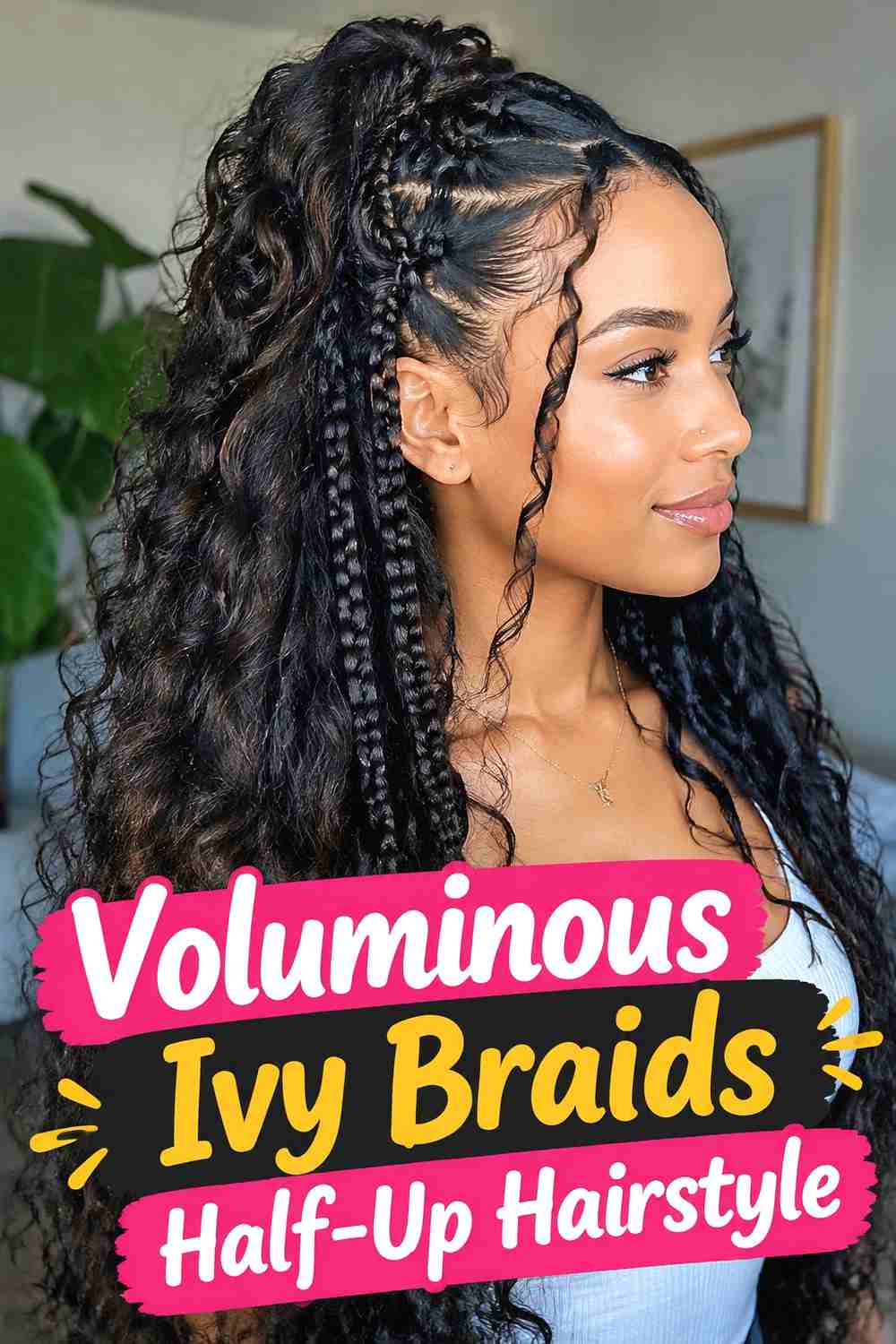
This fuller variation combines softly elevated crown volume with wider ivy braids and abundant loose lengths. The crown is lifted gently first, then substantial braids curve around the sides without pulling the roots flat. At the back, the woven sections meet high enough to preserve the rounded crown shape while leaving the rest of the hair cascading underneath. Broad waves or a soft blowout help distribute volume through the lower lengths so the style stays balanced. Medium to thick hair can create the fullness naturally, while finer hair may benefit from lighter braid sections. Avoid heavy teasing on the visible surface; a smooth outer layer keeps the look romantic and polished.
Pro Tip
Build crown volume before braiding and maintain loose, controlled tension so the side sections do not collapse the shape.
17. Boho Ivy Braids Half Up Hairstyle
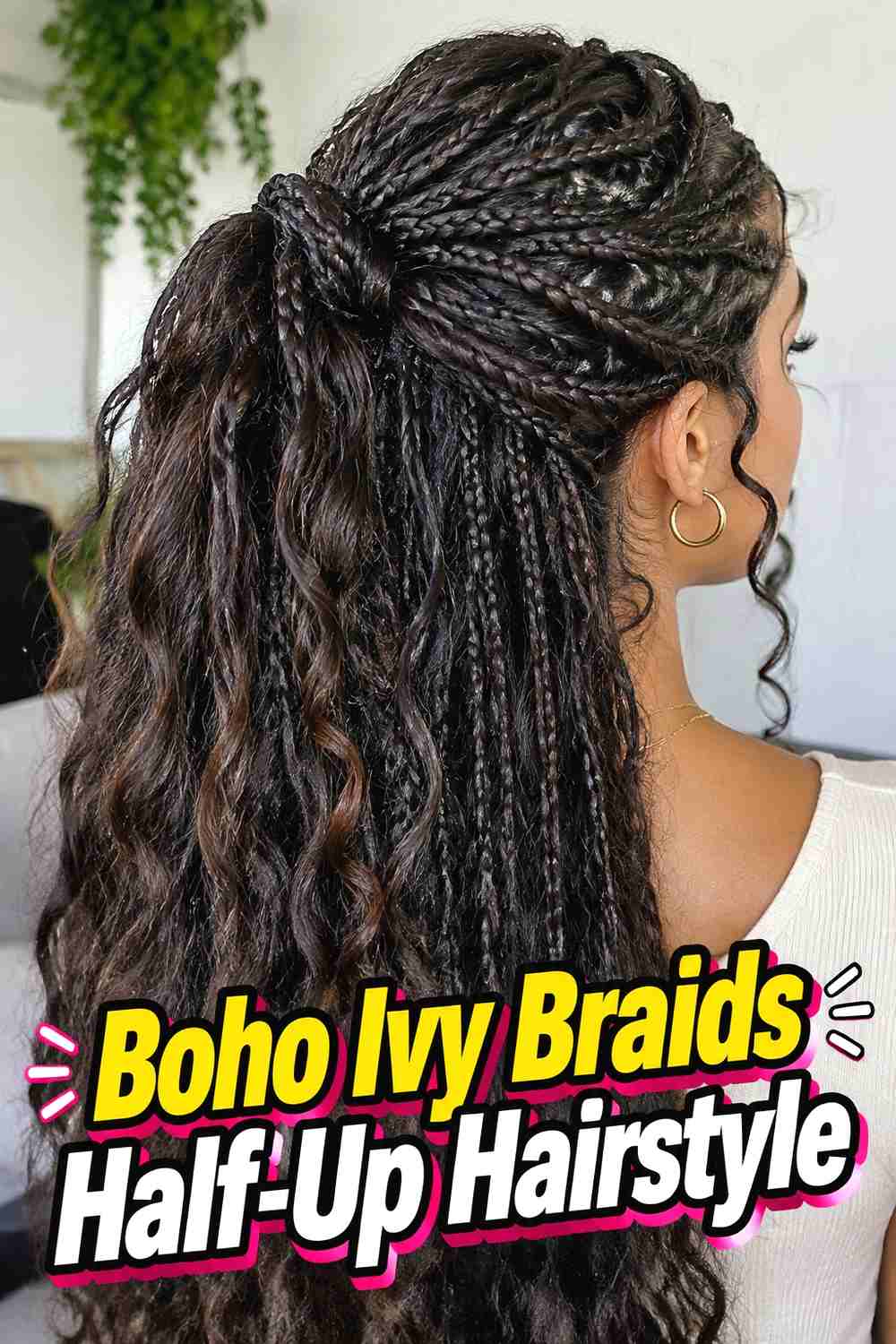
The boho version embraces softly loosened braids, irregular waves, and a little natural flyaway texture. Instead of creating perfectly matched ivy braids, let one curve slightly higher than the other and gently widen selected woven sections for a relaxed, handcrafted feel. The half-up connection can remain discreet beneath overlapping braids, leaving the lower hair loose in natural-looking bends. A few face-framing pieces help continue the undone effect, but the hairstyle should still have enough internal structure to stay secure. Small thread accents or one understated botanical pin can be added if desired, though the braid movement itself is usually enough to create the bohemian mood.
Wear & Maintenance
Keep the internal braid anchors firm and soften only the visible edges so the style looks relaxed without gradually falling apart.
18. Sculptural Ivy Braids Half Up Hairstyle
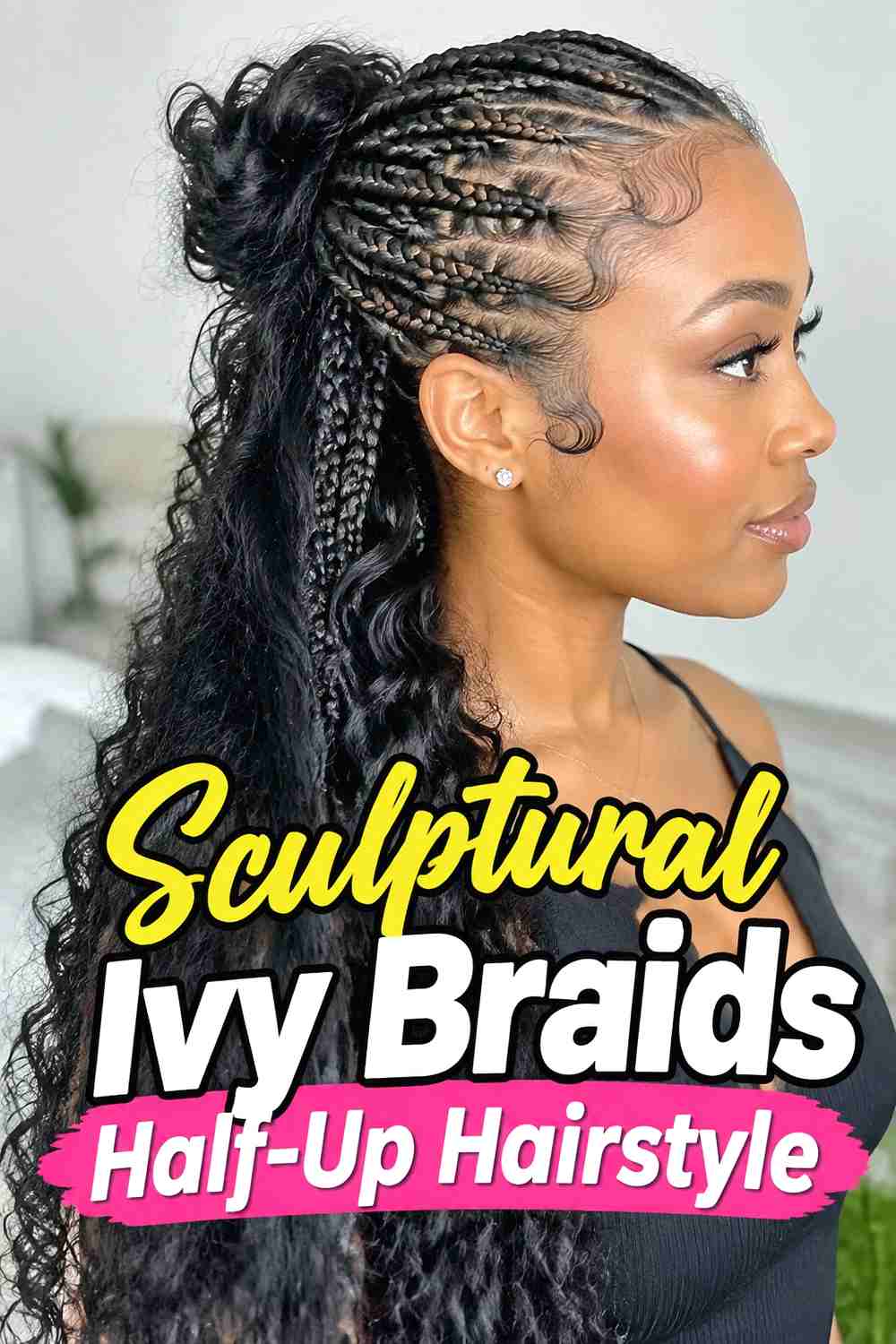
The sculptural version uses broader braid paths, overlapping curves, and carefully folded half-up sections to create a more dramatic back view. Two or three substantial braids can sweep across the crown at different heights, meeting around a small twisted or looped centerpiece while the majority of the hair stays loose below. The design should remain physically connected and believable, with every braid ending at a clear anchor point rather than appearing to float. Long, dense hair offers the most flexibility, although the number of major elements should stay limited. Smooth waves underneath provide contrast and prevent the intricate upper section from making the entire hairstyle feel overly busy.
Best For
Choose this version for weddings, fashion-forward events, formal photography, or occasions where the back of the hairstyle is intended to be a focal point.
Styling Notes
Plan the dominant braid curves first, then keep any secondary twists or loops simpler so the finished structure remains easy to read.
How to Choose the Right Look
Start with braid complexity. Classic, center-part, and side-part versions use relatively simple woven paths, while double, Dutch, fishtail, and sculptural options introduce more visible detail through the crown.
Consider your loose hair texture next. Soft waves complement almost every ivy braid pattern, curls create more volume and romance, and straighter lengths can make the braids stand out more clearly against a smooth background.
Hair length and density affect the design as well. Medium hair can work beautifully with smaller crown braids and half-up gathering points, while longer hair offers more freedom for fishtails, layered braid paths, ribbons, and sculptural sections.
Accessories should support the vine-inspired direction. Pearls, tiny flowers, and narrow ribbons work best when they follow the braid route rather than being scattered randomly.
Finally, protect comfort and fullness. Gather only as much hair as necessary for a stable half-up anchor, leaving enough density in the lower lengths for the hairstyle to remain soft and flowing.
Final Thoughts
Ivy braids are especially effective in half-up hairstyles because the braid detail can travel across the crown while waves, curls, or straight lengths remain loose underneath.
Choose the braid path first, then adapt the parting, texture, volume, and accessories around it. Keeping the woven sections curved, connected, and secure helps the finished hairstyle feel romantic without becoming overly complicated.
FAQs
1. What is an ivy braids half-up hairstyle?
It is a half-up style where one or more braids curve, climb, overlap, or wrap across the crown in a vine-like pattern while the lower hair remains loose.
2. Which braid types work best for ivy half-up hairstyles?
Three-strand, Dutch, fishtail, narrow crown, and accent braids all work because they can be shaped into curved paths across the head.
3. Can medium-length hair wear ivy braids half-up?
Yes. Medium hair can support smaller crown braids and compact half-up sections, although very elaborate fishtail or sculptural designs are easier with additional length.
4. Can pearls or flowers be added to ivy braids?
Yes. Small pearls and floral pins can follow the braid paths beautifully. Use them selectively so the woven pattern stays clearly visible.
5. How do you keep ivy braids secure without flattening the hair?
Use firm hidden anchors at the braid ends, maintain moderate tension while braiding, and loosen only the visible outer loops after the half-up structure is secure.
Save your favorite ivy braids half-up ideas, share them for inspiration, and explore more romantic braided hairstyles for weddings, parties, and everyday styling.