15 Jawline Angled Bob Haircuts for a Sharp, Modern Shape
Jawline angled bob haircuts pair a clean, sculpted perimeter with a slightly longer front for a short style that can look sleek, soft, or textured.
The defining feature is the angle: the back sits shorter, while the front edges extend toward the jawline to create a clear forward-moving silhouette. That difference can be subtle and blended or more graphic, depending on the amount of graduation and how sharply the perimeter is cut.
Texture changes the entire personality of the shape. Straight hair highlights precision, waves soften the line, and strategic layers add movement without erasing the angle. Hair density, fringe choice, stack height, and styling effort should all be considered before choosing the version that best fits your routine.
Quick List
- Classic Jawline Angled Bob Hairstyle
- Sleek Jawline Angled Bob Hairstyle
- Wavy Jawline Angled Bob Hairstyle
- Jawline Angled Bob With Side Swept Fringe Hairstyle
- Jawline Angled Bob With Curtain Fringe Hairstyle
- Textured Jawline Angled Bob Hairstyle
- Stacked Jawline Angled Bob Hairstyle
- Blunt Jawline Angled Bob Hairstyle
- Jawline Angled Bob With Face Framing Layers Hairstyle
- Tousled Jawline Angled Bob Hairstyle
- Fine Hair Jawline Angled Bob Hairstyle
- Thick Hair Jawline Angled Bob Hairstyle
- Deep Side Part Jawline Angled Bob Hairstyle
- Soft Curved Jawline Angled Bob Hairstyle
- Asymmetrical Jawline Angled Bob Hairstyle
1. Classic Jawline Angled Bob Hairstyle
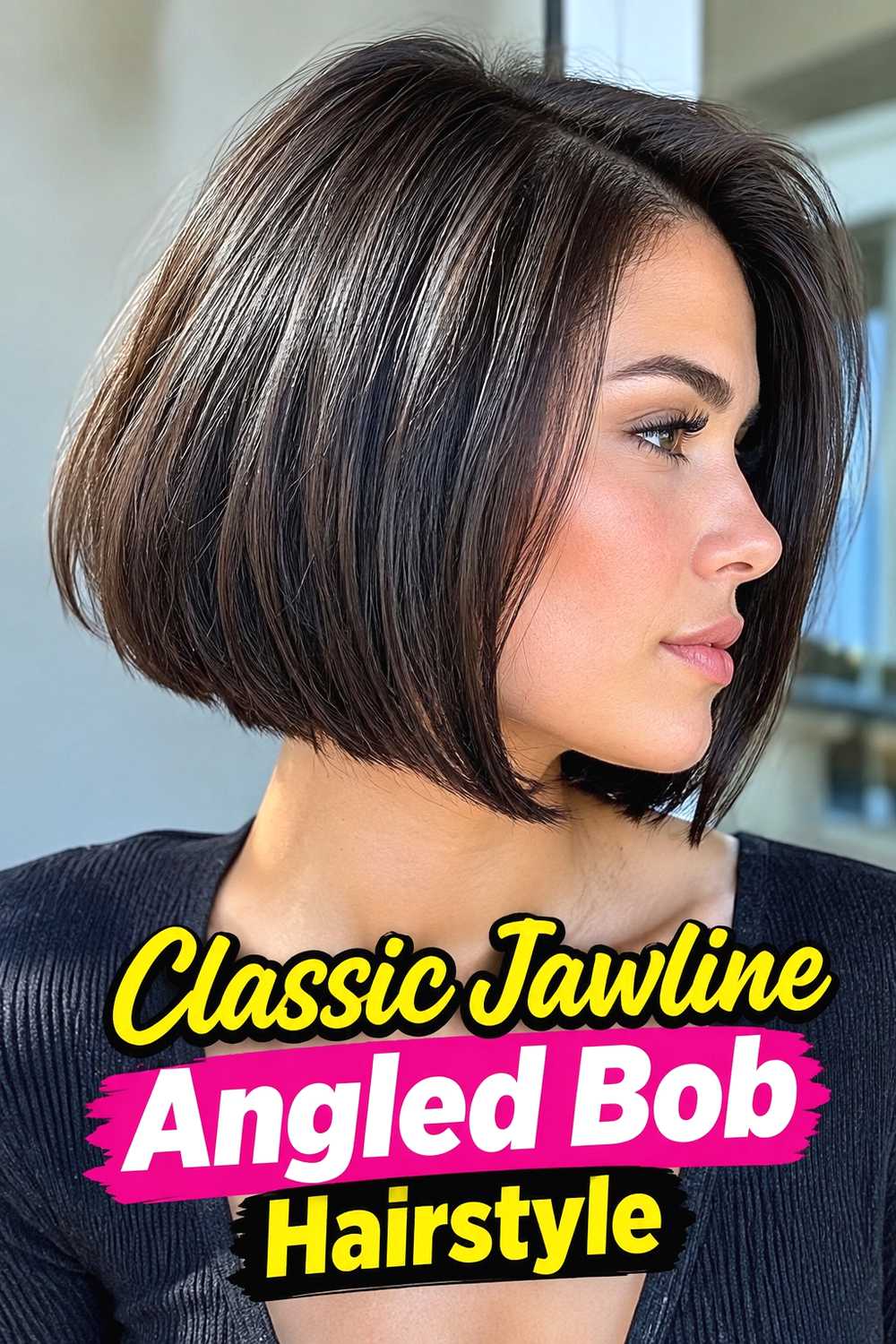
The classic jawline angled bob keeps the structure simple: a slightly shorter back gradually extends toward front pieces that meet the jaw. The angle is visible without becoming extreme, which gives the haircut a clean silhouette that can work with many styling preferences. Minimal internal layering helps the perimeter stay strong, while a small amount of graduation at the back prevents the shape from falling flat. Straight and softly wavy hair both show the line clearly. For everyday styling, a smooth blow-dry with a little bend at the ends is usually enough to emphasize the forward angle. Keeping the nape neat helps the longer front sections stand out without making the overall cut feel overly severe.
Best For
This version is a practical choice if you want a recognizable angled bob without dramatic stacking, heavy fringe, or strong asymmetry.
2. Sleek Jawline Angled Bob Hairstyle
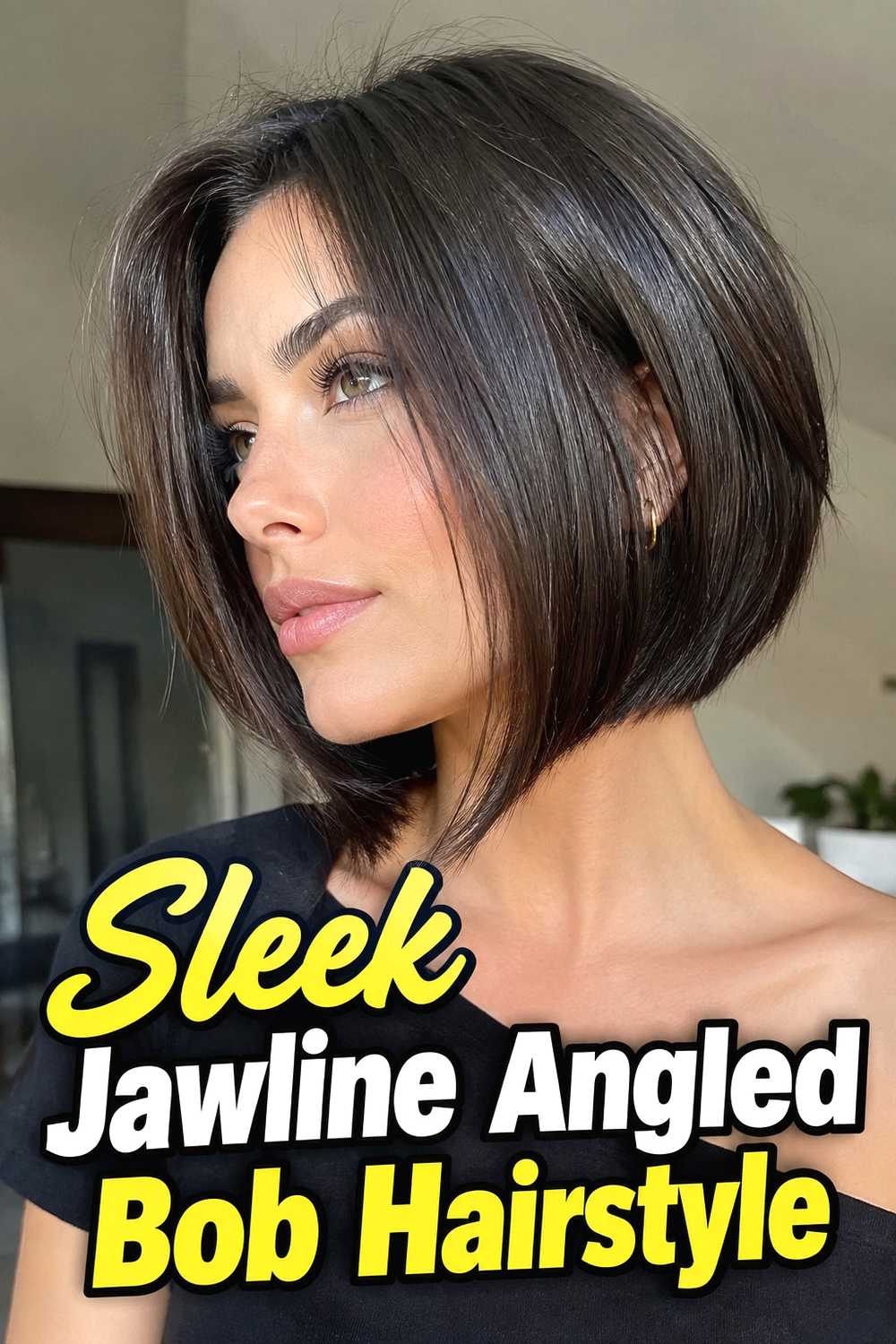
A sleek jawline angled bob places maximum emphasis on the perimeter and the forward-moving line of the cut. The back sits neatly against the nape, while the front sections extend toward the jaw with very little surface texture to interrupt the shape. Straight hair naturally supports this finish, though wavy hair can be smoothed when desired. The most modern version still keeps a slight natural bend and movement rather than looking rigidly flat-ironed. A lightweight smoothing product can control flyaways and increase shine without making the strands look coated. Because every edge is easy to see in a polished finish, regular reshaping can help preserve the clean angle as the bob grows.
Styling Notes
Blow-dry downward with controlled tension, then add a subtle inward or neutral bend at the ends instead of pressing the hair completely flat.
3. Wavy Jawline Angled Bob Hairstyle
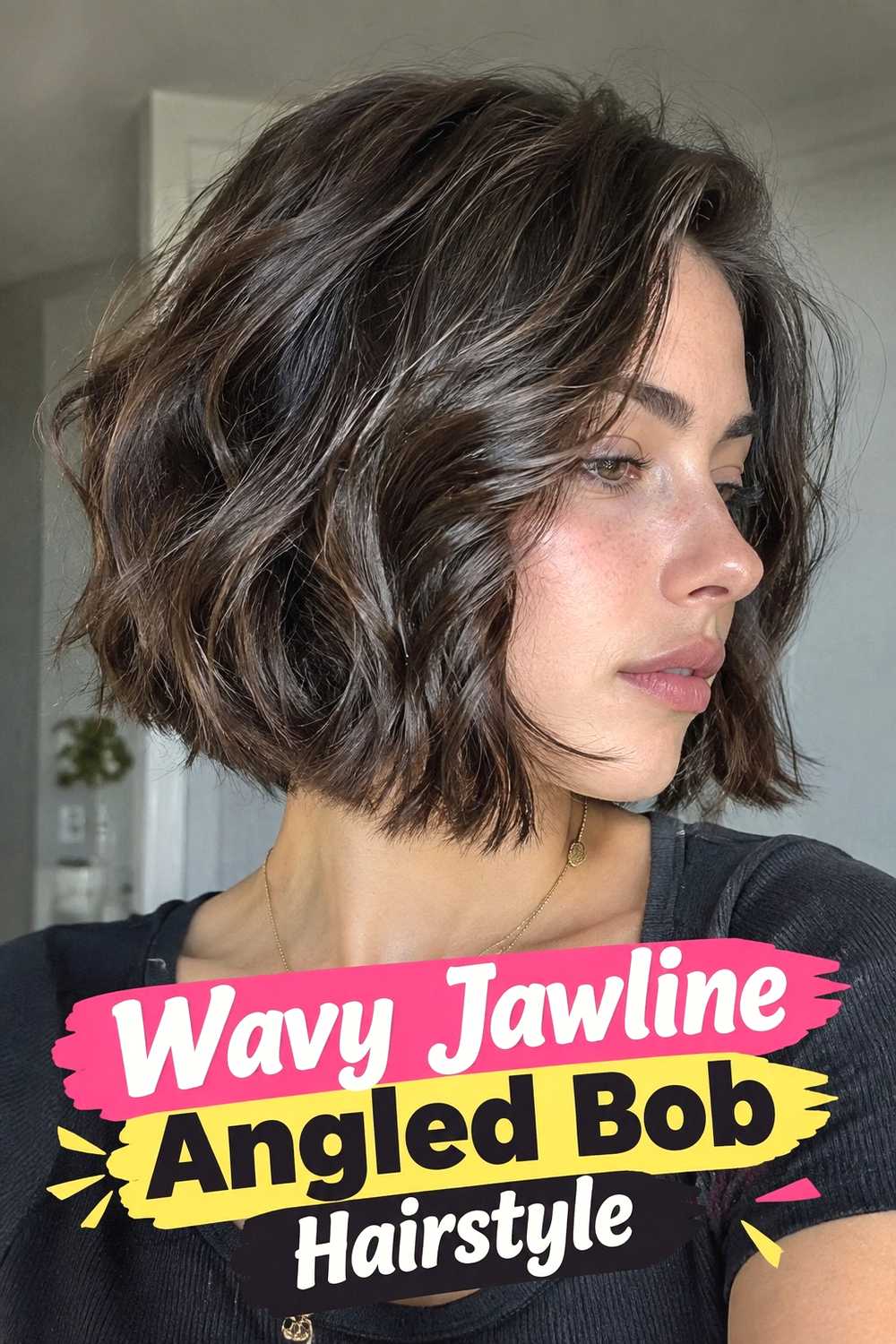
Loose waves give a jawline angled bob a softer personality while preserving the shorter-back, longer-front structure. The best wave pattern begins through the mid-lengths rather than directly at the root, allowing the overall silhouette to remain clear. A few straighter ends can make the finish feel contemporary and keep the angle from disappearing inside too much curl. Naturally wavy hair may need only light definition, while straight hair can achieve the look with broad, alternating bends. Keeping the back slightly more controlled than the front helps maintain the haircut’s forward direction. A flexible mousse or light cream can enhance texture without making a jaw-length cut feel heavy or overly separated.
Why It Works
Waves soften the graphic perimeter while still allowing the longer front sections to frame the jaw and distinguish the angled shape.
4. Jawline Angled Bob With Side Swept Fringe Hairstyle
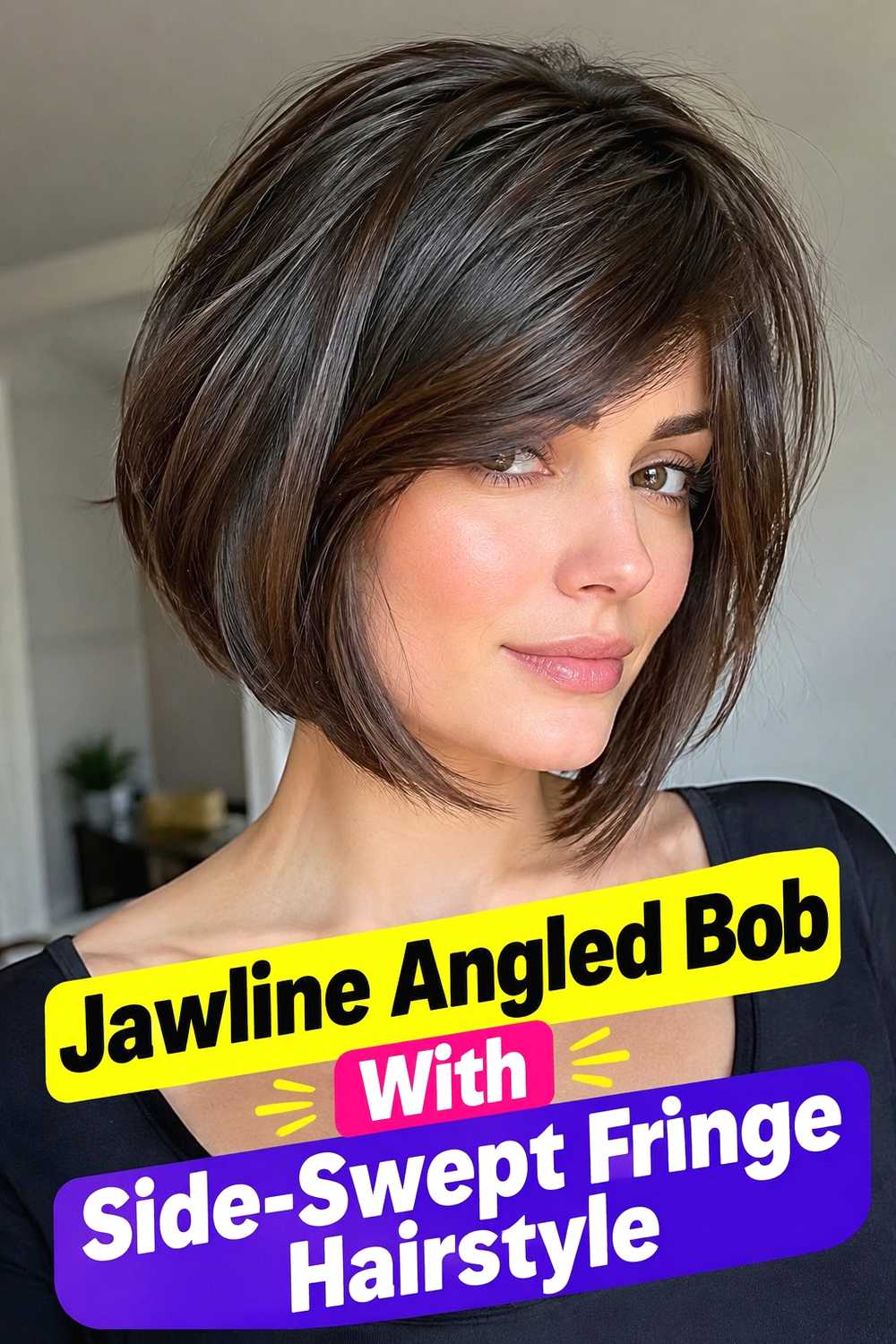
Side-swept fringe adds a diagonal detail that works naturally with the forward angle of this bob. The fringe crosses the forehead and blends into the longer front section, creating an uninterrupted line toward the jaw. At the back, the hair remains shorter and relatively neat, keeping the overall silhouette balanced. This version can be worn smooth or with a slight bend through the lengths, making it adaptable for both polished and relaxed styling. The fringe should retain enough length to move easily to the side rather than sitting as a rigid block. A light blow-dry in the direction of the natural part can help the front settle without excessive product or daily reshaping.
Best For
This option suits anyone who wants forehead coverage while keeping the angled front fluid and easy to blend into the rest of the bob.
5. Jawline Angled Bob With Curtain Fringe Hairstyle
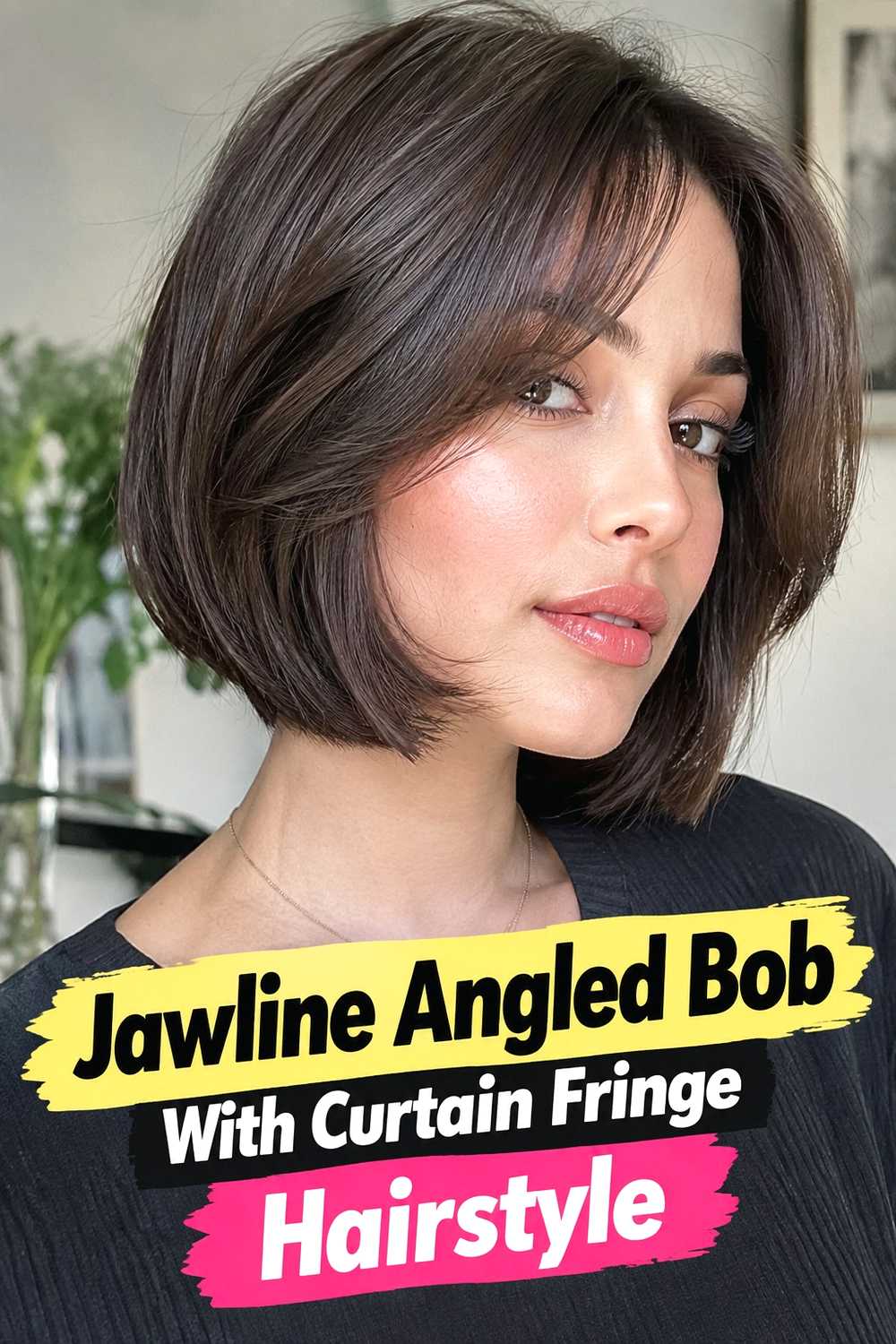
Curtain fringe changes the front of an angled bob by introducing a center opening and softer face-framing movement. The bangs begin shorter toward the middle and lengthen toward the temples, where they connect with jawline-length front pieces. That gradual transition makes the haircut feel less graphic than a fringe-free version while preserving the shorter back. Straight, wavy, and slightly textured hair can all adapt well, especially when the bangs are kept flexible rather than overly styled. A soft bend away from the face helps the fringe separate naturally. The front layers should not become so short or numerous that they obscure the strong perimeter, since the angled outline remains the defining element of the haircut.
Styling Notes
Dry the fringe away from the center and let the outer sections merge into the longer front pieces instead of curling them into a separate shape.
6. Textured Jawline Angled Bob Hairstyle
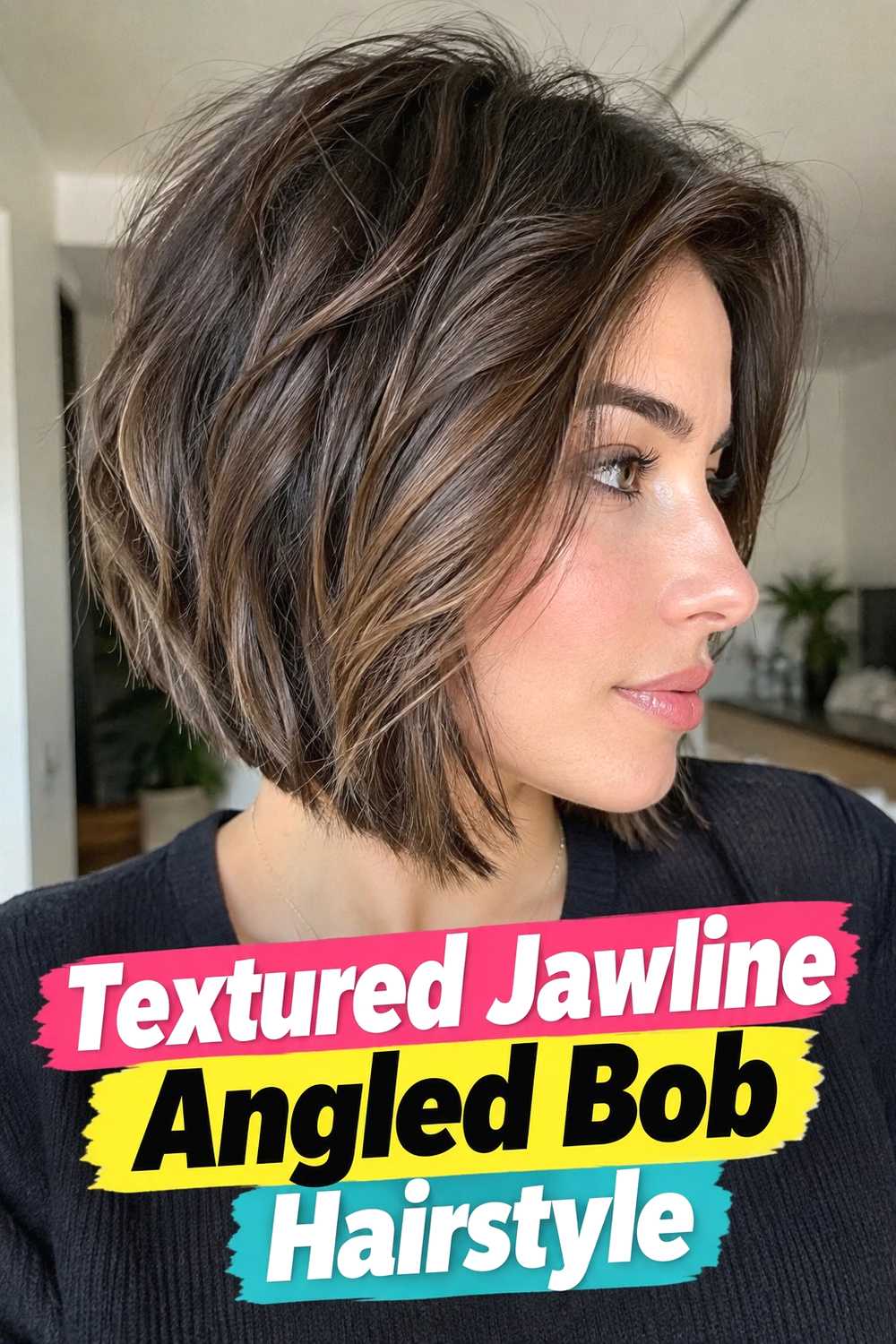
A textured jawline angled bob uses subtle internal layering and separated ends to create movement without sacrificing the clean outline. The back remains shorter, but instead of lying completely smooth, the crown and sides have a little lift and irregular motion. This version works especially well on naturally wavy or slightly coarse hair because the existing texture can make the cut feel relaxed with minimal styling. Straighter hair can achieve a similar effect with bends added to selected sections. The key is preserving enough weight through the perimeter so the angle stays visible. Lightweight texture cream or spray can help define individual pieces, but heavy product may make a jaw-length bob feel compact and reduce its natural movement.
Why It Works
Internal texture softens the cut from within while the stronger outer line keeps the angled bob recognizable from the front and side.
7. Stacked Jawline Angled Bob Hairstyle
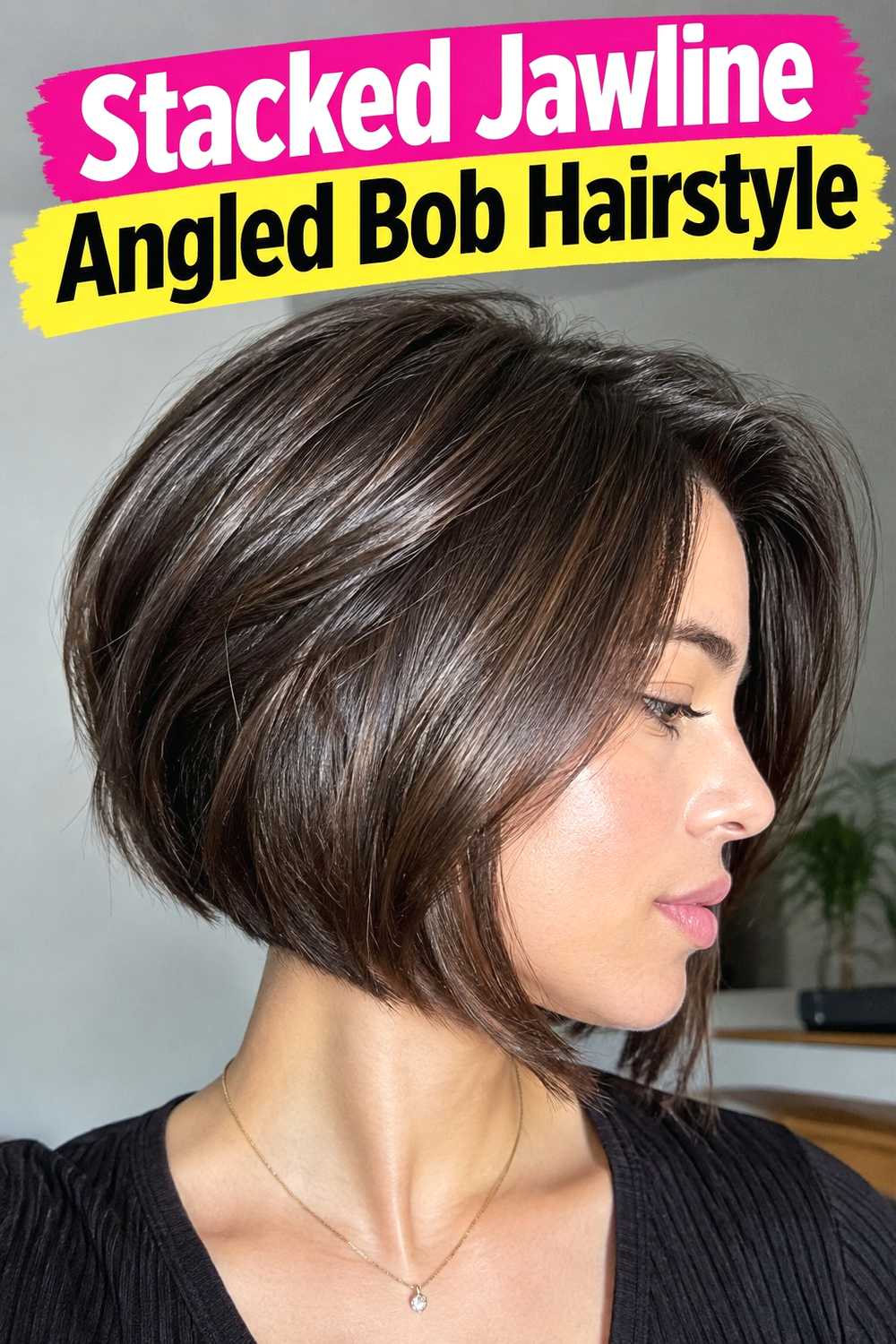
A stacked jawline angled bob combines a forward angle with graduated back layers for extra lift through the crown. The nape sits shortest, and the layers build upward before flowing into longer sections that reach the jaw at the front. This creates a rounded rear profile with a clearer sense of structure than a minimally layered angled bob. Medium to thick hair can support the stack naturally, while finer hair may benefit from a lighter version that avoids excessive layering. Styling should emphasize crown lift without turning the back into a stiff dome. A round brush or directional blow-dry can support the graduation, while the front remains smooth enough for the angle to stay obvious.
Wear & Maintenance
A defined stack usually benefits from regular reshaping because growth at the nape can quickly soften the intended graduation and alter the profile.
8. Blunt Jawline Angled Bob Hairstyle
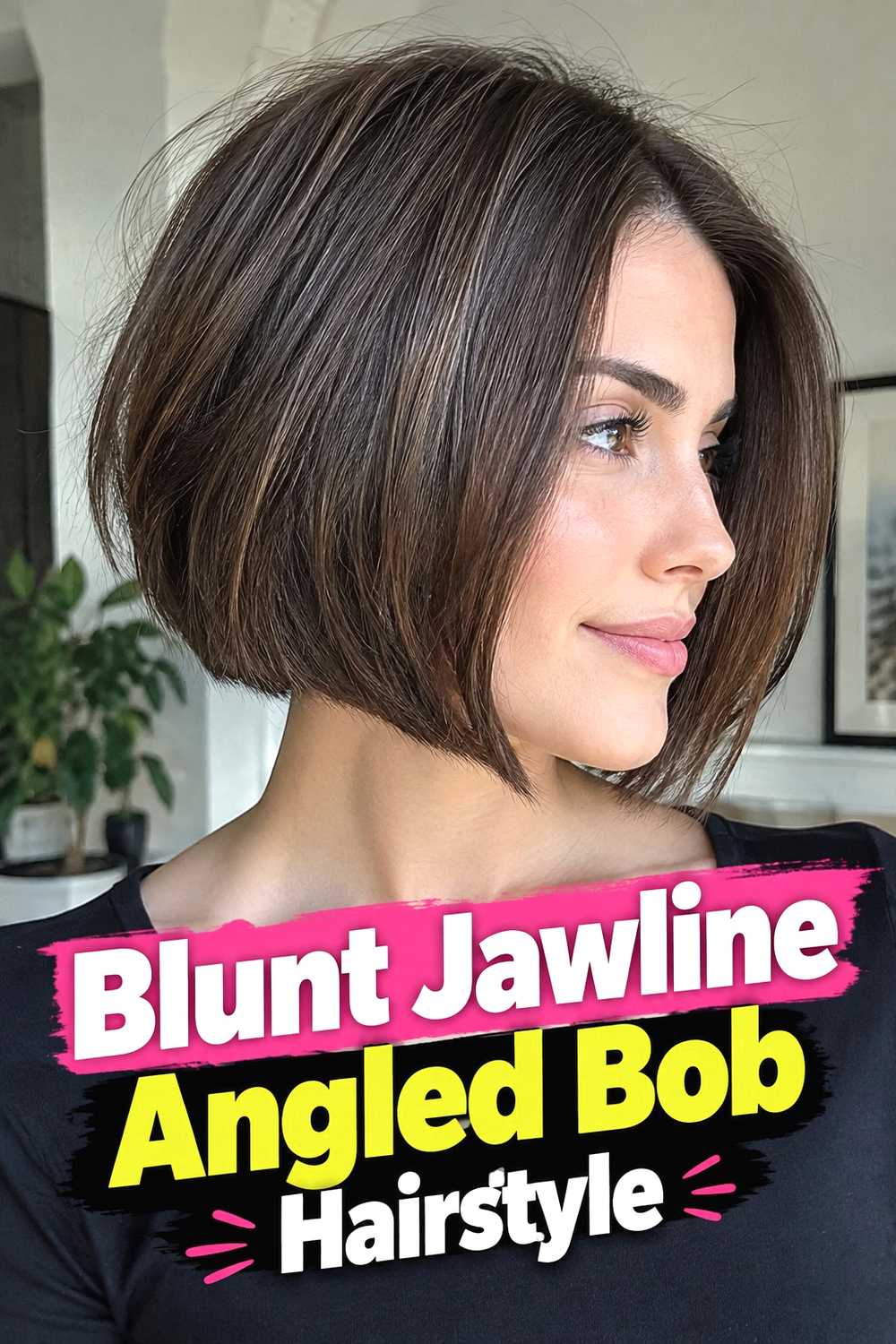
A blunt jawline angled bob keeps layering to a minimum and lets the strong perimeter do most of the visual work. The back is shorter, but the transition toward the front is created through the outer line rather than stacked internal layers. This gives the haircut a dense, polished edge that can be especially effective on fine to medium hair when preserving fullness is a priority. Straight hair makes the geometry easiest to see, although a soft bend can keep the finish from appearing too rigid. Because the perimeter is intentionally substantial, over-thinning should be avoided. Styling can remain simple with a smooth blow-dry and lightweight finishing product that controls flyaways while keeping the ends compact and clean.
Best For
Choose this version if you prefer a strong, graphic outline and want to retain as much visible density through the ends as possible.
9. Jawline Angled Bob With Face Framing Layers Hairstyle
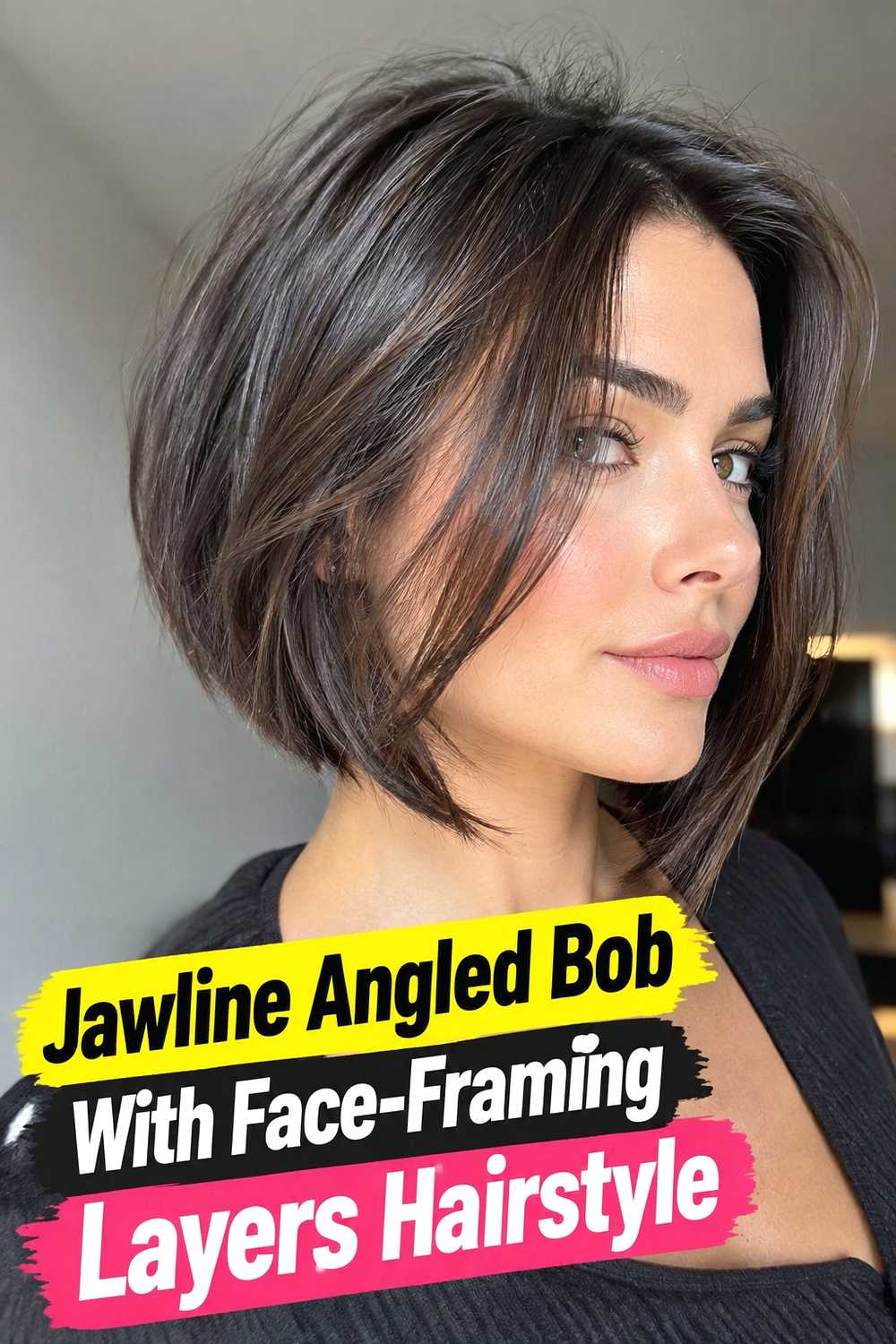
Face-framing layers bring movement to an angled bob without requiring a full fringe. Shorter pieces can begin near the cheekbones and gradually lead into the longer jawline sections, giving the front a softer, more flexible shape. The back remains shorter and relatively structured so the defining angle is still clear. This variation works well on straight and wavy hair because the front pieces can be styled inward, outward, or mixed for different effects. The layers should stay concentrated around the face rather than spreading heavily through the perimeter, which could weaken the bob line. A light bend through the front sections is often enough to highlight the framing while preserving the haircut’s clean profile.
Why It Works
The graduated front adds softness and movement while leaving the shorter back and angled perimeter strong enough to define the silhouette.
10. Tousled Jawline Angled Bob Hairstyle
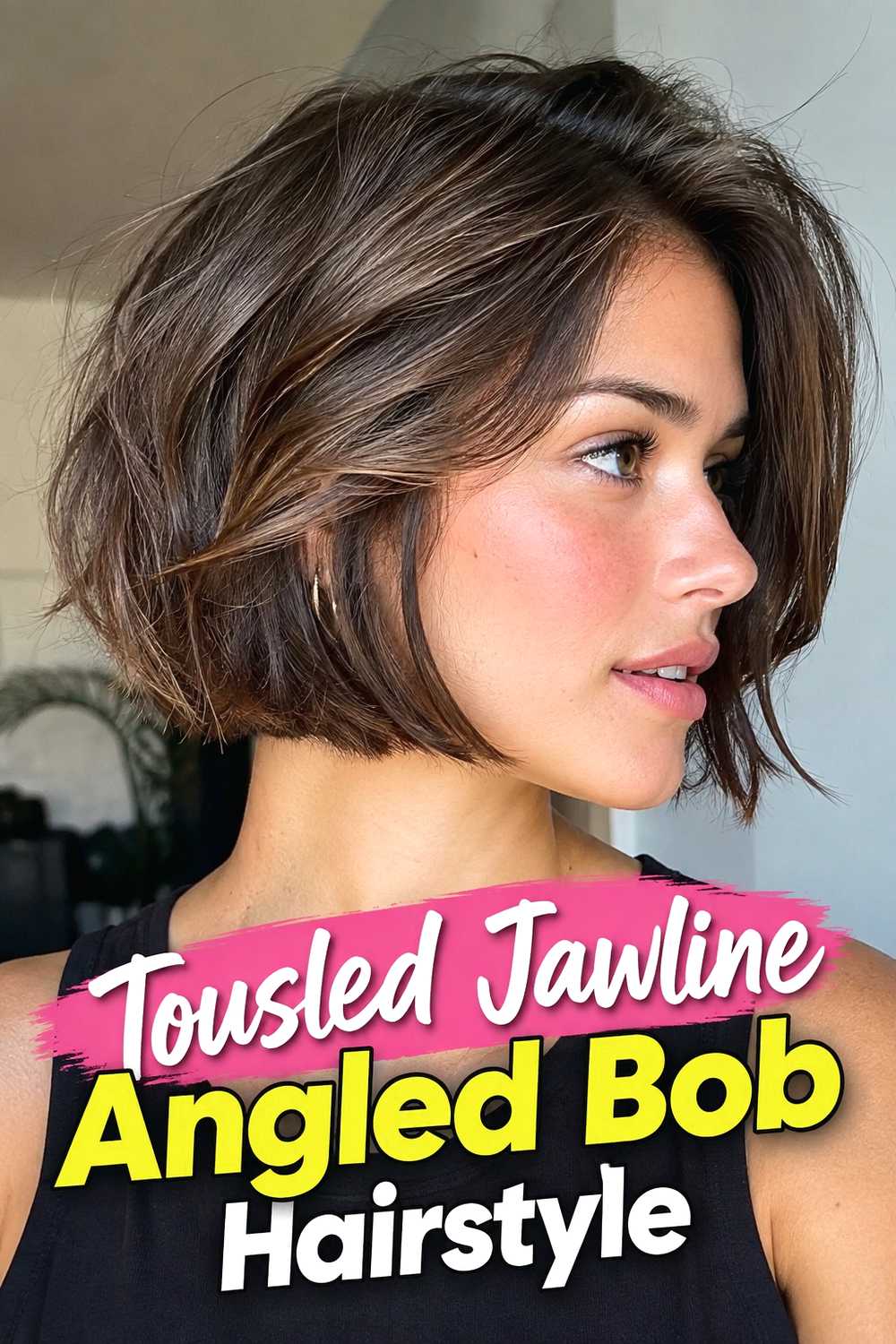
A tousled jawline angled bob pairs the structured perimeter with deliberately imperfect styling. The back remains short enough to establish the angle, while the front reaches the jaw and moves in loose, irregular bends. Some pieces can turn outward, others inward, and a few may stay nearly straight, creating a relaxed finish that does not erase the shape underneath. Naturally wavy hair can make this look especially easy to wear, while straighter textures can be styled with quick alternating bends. A lightweight mousse or texture cream adds enough grip for separation without stiffness. Keep the nape slightly calmer than the rest so the angled front remains visually stronger than the textured back.
Styling Notes
Avoid curling every section uniformly. Mixed bends and straighter ends create a more believable, lived-in finish that still respects the haircut’s structure.
11. Fine Hair Jawline Angled Bob Hairstyle
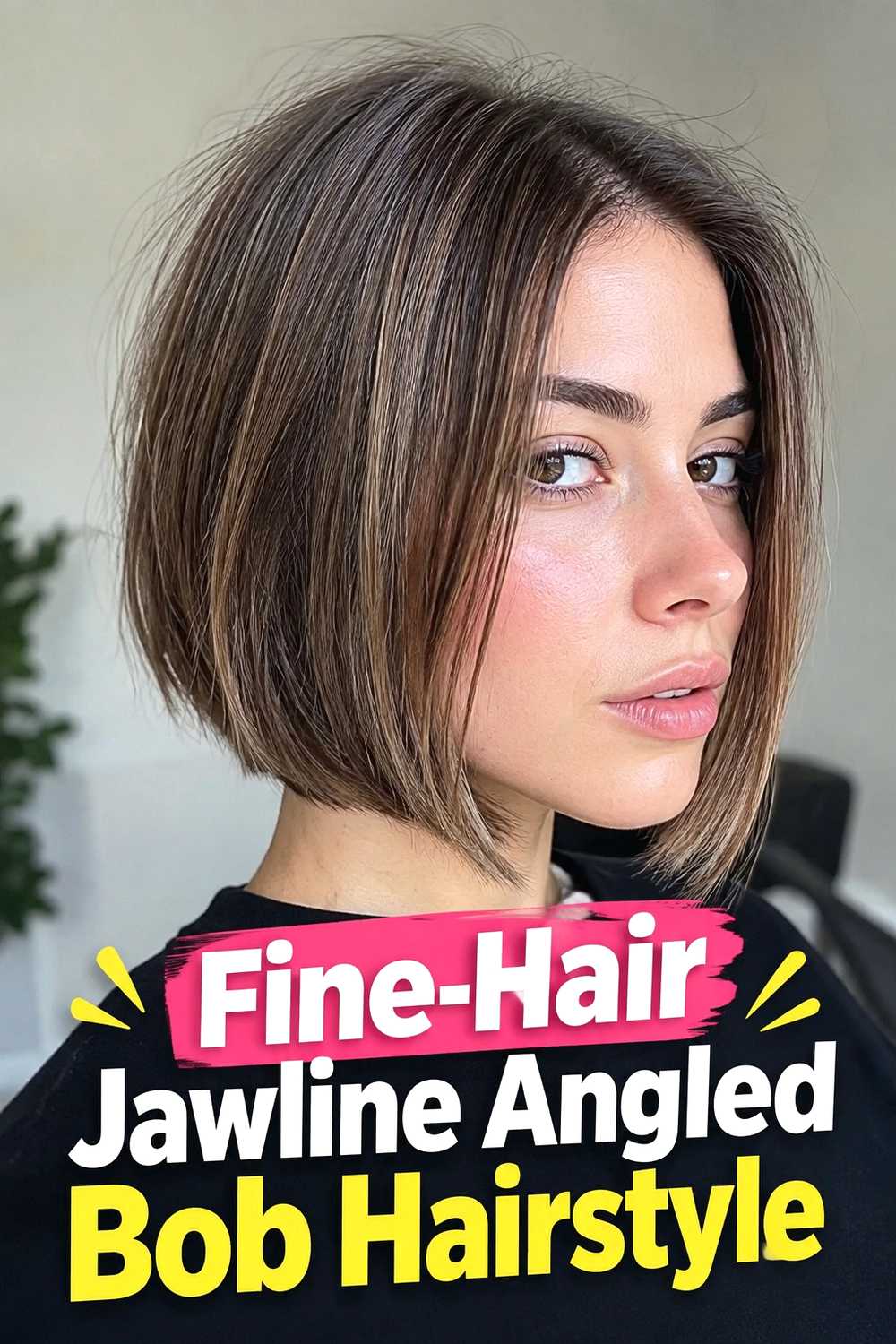
Fine hair can benefit from a jawline angled bob because the shorter length and strong perimeter help preserve visible density. The back should be lightly shaped rather than heavily stacked, with enough weight left through the front and sides to keep the ends looking full. A subtle forward angle adds structure without requiring lots of layers, which can be useful when the hair does not naturally have much volume. Lightweight root lift and a smooth blow-dry can make the crown appear airier, while a small bend at the jaw creates movement. Avoid heavy oils and excessive texturizing, since both can separate fine strands and make the perimeter look thinner than intended.
Hair Type & Length
Fine hair often works best with a compact jaw-length perimeter, restrained layering, and a moderate angle that preserves fullness through the front.
12. Thick Hair Jawline Angled Bob Hairstyle
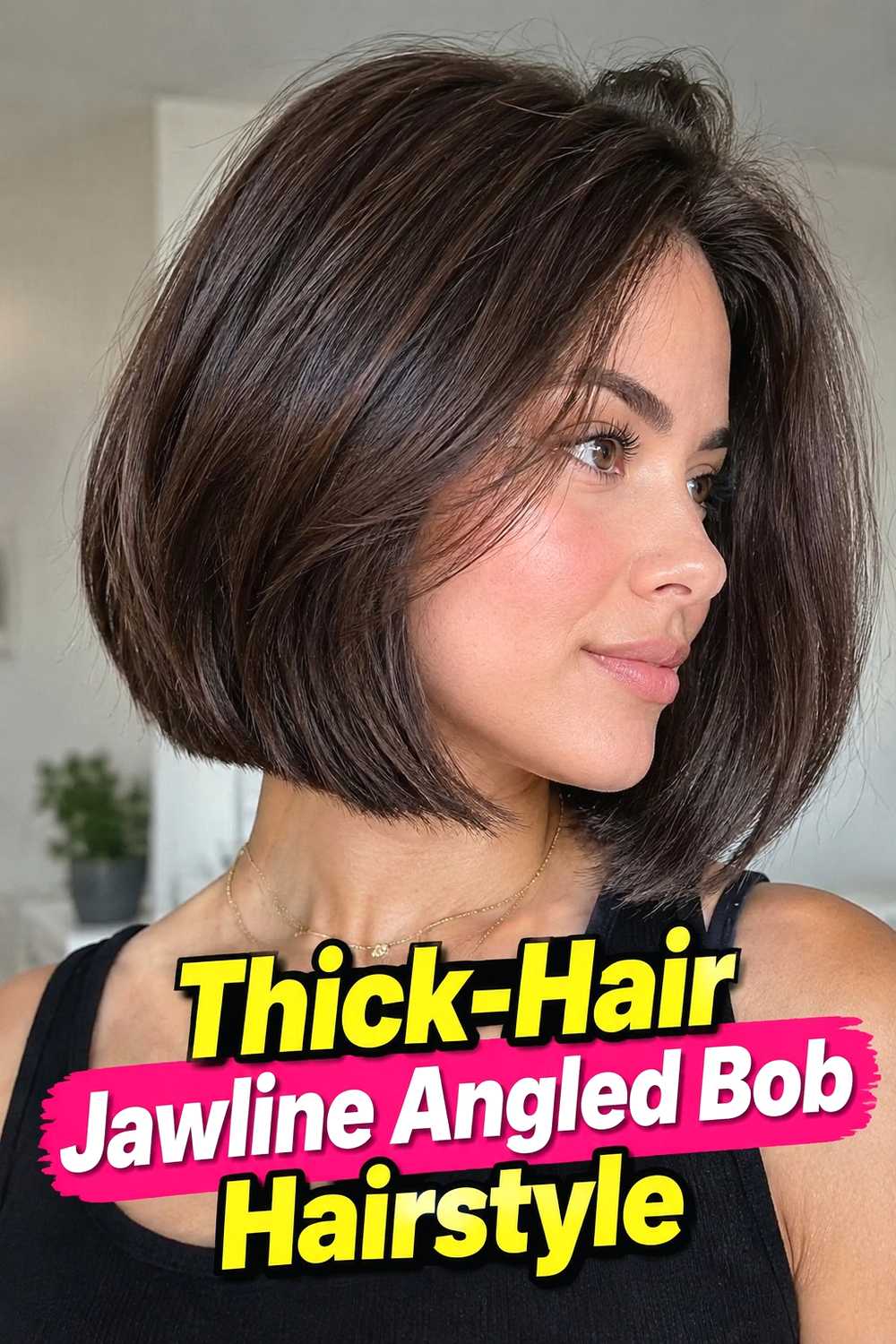
Thick hair can create a beautifully substantial angled bob, but internal weight control is important so the shape does not become excessively wide. The exterior perimeter stays strong, with the front reaching the jaw and the back sitting shorter, while carefully placed internal layers remove bulk without creating a visibly shaggy surface. Straight and wavy thick hair can both wear this structure, although wavier textures may need more room for natural expansion. The nape can be slightly graduated to reduce heaviness and support a cleaner profile. A smoothing cream or light defining product helps control density while preserving movement. The goal is to keep the fullness intentional rather than flattening the hair completely.
Styling Notes
Control bulk underneath and through the interior instead of thinning the outer edge aggressively, which can leave the jawline perimeter looking uneven.
13. Deep Side Part Jawline Angled Bob Hairstyle
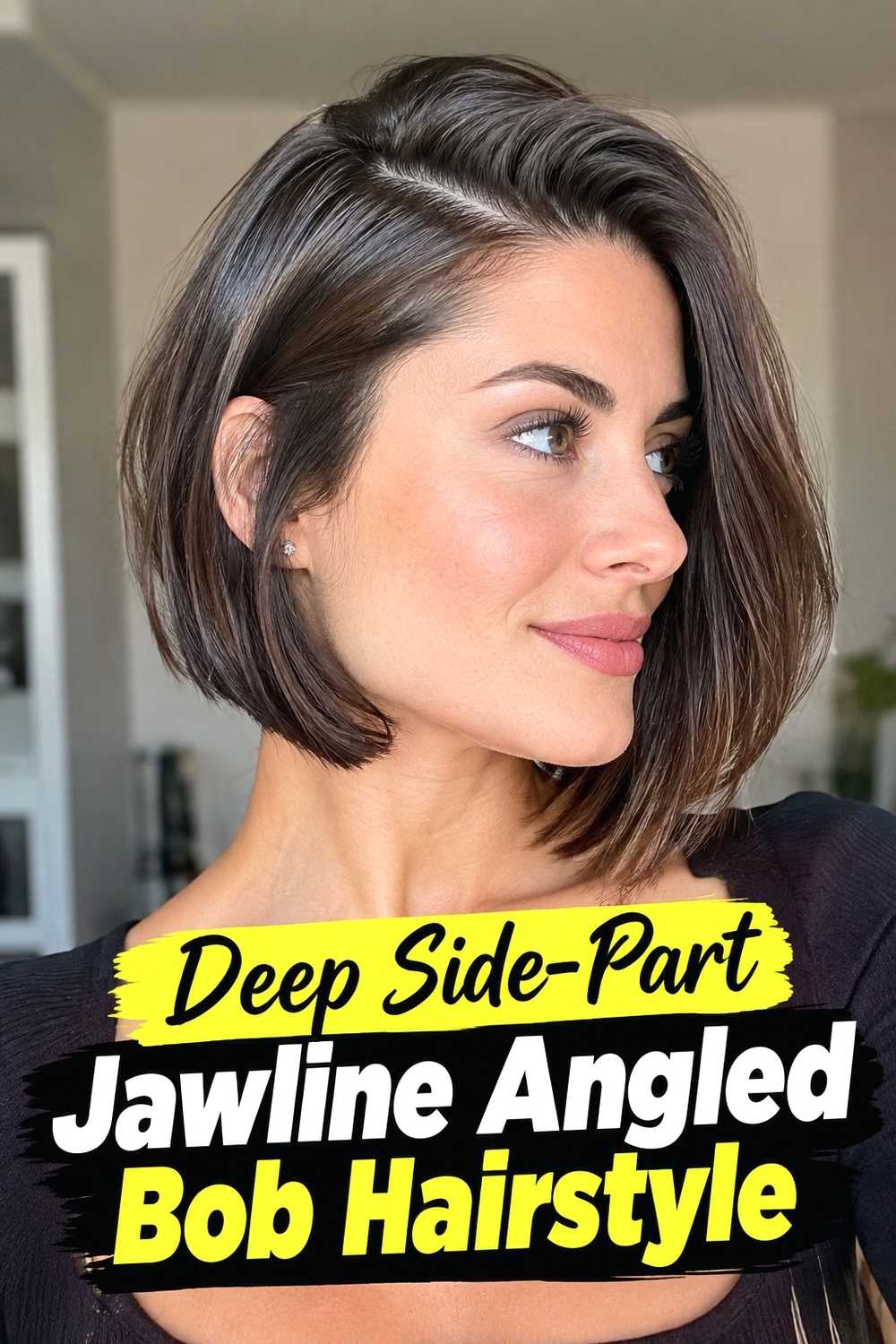
A deep side part shifts the visual weight of a jawline angled bob and creates extra movement through the heavier front section. One side can sweep across the forehead and fall toward the jaw, while the opposite side sits closer to the head or tucks behind the ear. The shorter back maintains the angled silhouette, but the asymmetrical styling makes the cut feel more dramatic without changing the actual perimeter much. This look works particularly well on straight or softly wavy hair with enough flexibility to hold a side-directed shape. A little root lift along the part prevents the heavier side from collapsing, while keeping the ends smooth makes the forward angle easy to see.
Why It Works
The shifted part creates instant contrast and volume at the front while the underlying cut remains balanced and wearable.
14. Soft Curved Jawline Angled Bob Hairstyle
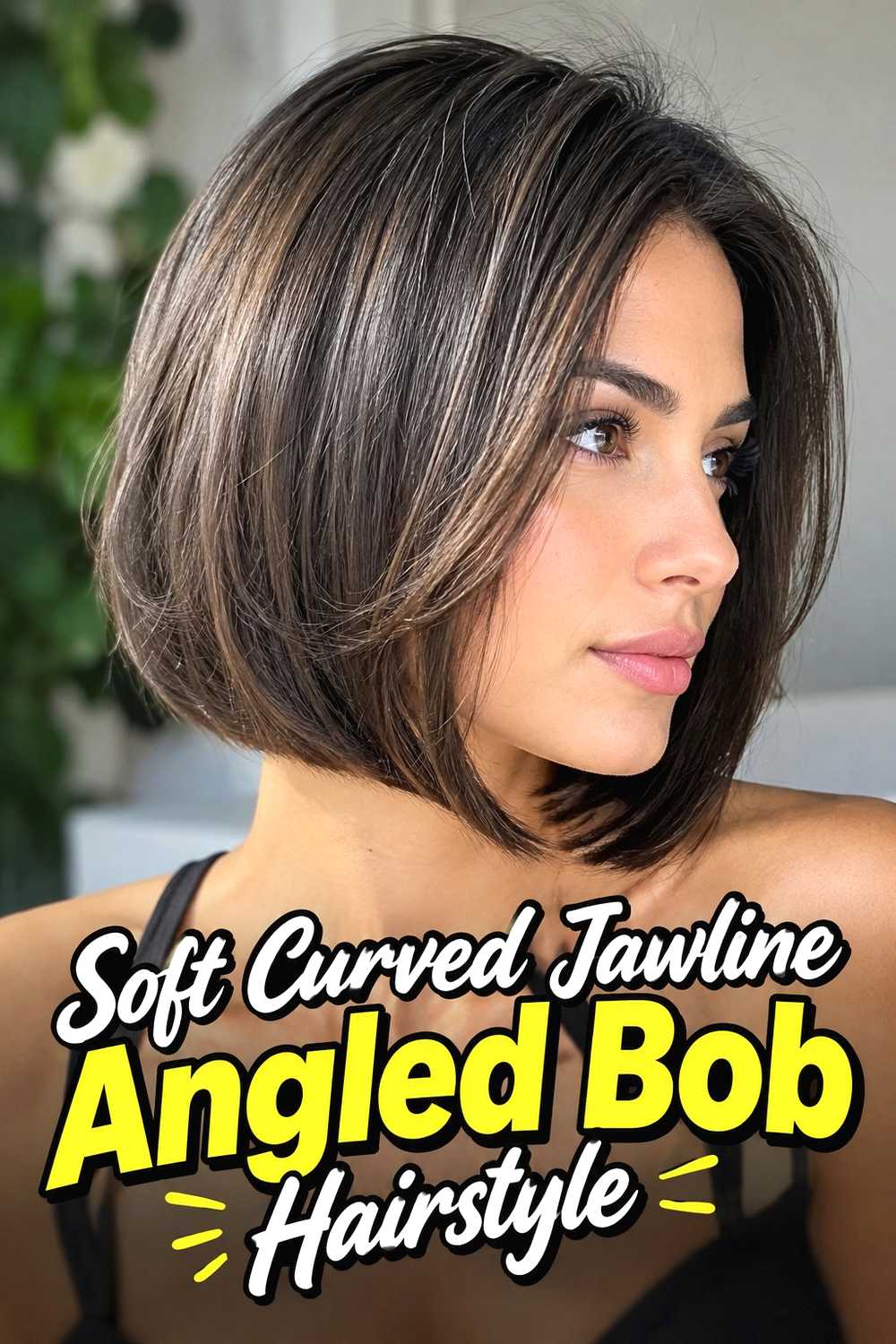
A soft curved jawline angled bob replaces a severe straight edge with a gently rounded finish that hugs the jaw. The back stays slightly shorter, but the perimeter transitions smoothly toward the front rather than forming a sharp geometric point. Subtle internal shaping helps the ends turn inward naturally, giving the bob a polished but not rigid appearance. Straight and slightly wavy hair can both support this look, especially when blow-dried with a soft curve instead of completely flat. The silhouette works best when the front maintains enough length to trace the jaw without tucking too tightly under it. Lightweight smoothing products can enhance shine while leaving the ends flexible and touchable.
Best For
This version is ideal if you like the structure of an angled bob but prefer a softer, rounded perimeter rather than a sharply pointed front.
15. Asymmetrical Jawline Angled Bob Hairstyle
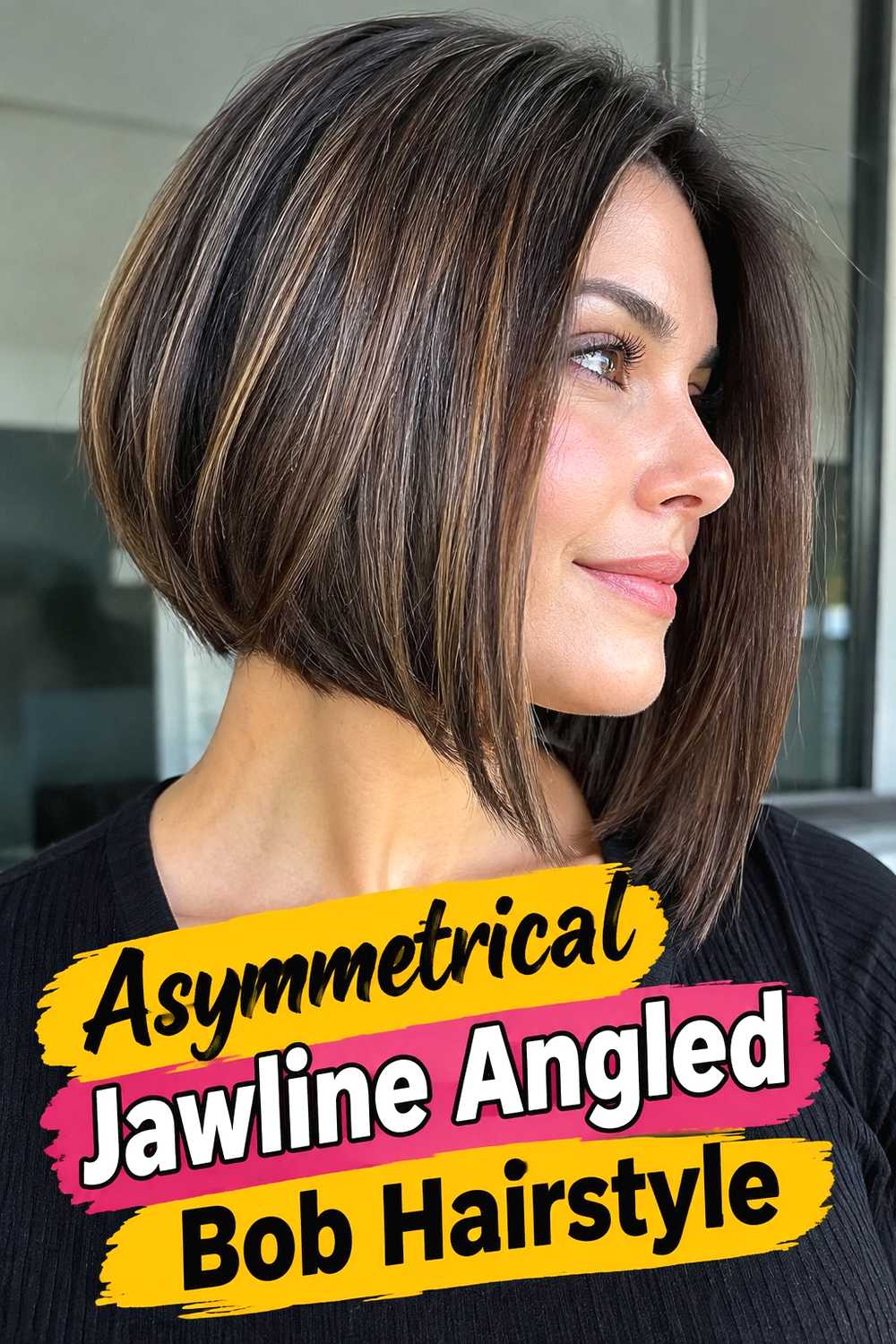
An asymmetrical jawline angled bob adds a stronger directional element by allowing one front side to extend slightly longer than the other. The back remains short and balanced, while the uneven front creates visible movement and a more fashion-forward profile. The difference can be subtle for an understated effect or more obvious for a stronger statement. Straight hair showcases the asymmetry most clearly, but loose waves can soften the contrast and make the cut feel less graphic. Keeping the perimeter precise is important so the uneven lengths appear intentional. Styling the longer side with a smooth bend toward or away from the jaw can further emphasize the asymmetry without requiring complicated daily work.
Styling Notes
Keep the back clean and let the longer front section carry most of the visual drama so the asymmetry remains deliberate rather than unbalanced.
How to Choose the Right Look
Start with the angle. A classic or soft curved bob gives a subtle transition from back to front, while stacked or asymmetrical versions create more visible contrast. If you want a crisp, graphic result, sleek and blunt options keep the perimeter strongest.
Hair density should influence the amount of layering. Fine hair generally benefits from a fuller edge and restrained graduation, while thick hair may need internal weight removal to prevent too much width around the sides and nape.
Texture matters as well. Straight hair shows precision beautifully, while waves and tousled styling soften the geometry. If you want fringe, curtain bangs create an open frame, side-swept fringe gives a diagonal line, and face-framing layers offer softness without full bangs.
Also consider maintenance. A stacked or sharply asymmetrical bob usually needs more regular reshaping, while softer angled versions can tolerate a gentler grow-out. Choose the silhouette that matches both your preferred finish and your everyday styling time.
Final Thoughts
Jawline angled bob haircuts can look polished, textured, soft, or sharply defined depending on the perimeter, layering, and fringe. A blunt or sleek version highlights precision, while waves and face-framing pieces make the shape feel more relaxed. Keep the angle proportionate to your density and styling routine so the bob remains flattering, balanced, and easy to maintain.
FAQs
1. What is a jawline angled bob?
It is a short bob that sits shorter at the back and gradually becomes longer toward the front, with the longest pieces typically reaching around the jawline.
2. Can fine hair wear a jawline angled bob?
Yes. Fine hair often benefits from a strong perimeter and limited layering, which can help the bob maintain visible fullness through the ends.
3. Does an angled bob work with wavy hair?
Yes. Waves can soften the geometric line and add movement, provided the haircut keeps enough structure for the forward angle to remain visible.
4. What fringe works with a jawline angled bob?
Side-swept fringe, curtain fringe, and longer face-framing pieces all work well. The best option depends on how much forehead coverage and softness you prefer.
5. Is a stacked bob the same as an angled bob?
Not exactly. An angled bob refers to the longer-front, shorter-back perimeter, while a stacked bob specifically uses graduated layers at the back. A haircut can combine both features.
Save your favorite jawline angled bob hairstyles, share the looks you love, and explore more short bob inspiration for your next haircut.