15 Loose Jawline Waves With Collarless Tweed Jackets
Loose waves that begin around the jaw bring soft movement to collarless tweed jackets, balancing their neat structure with relaxed, polished texture. Collarless tweed jackets create a clean neckline without the visual weight of lapels or a raised collar. That makes them especially easy to pair with waves that sit around the jaw and upper shoulders. The hair can remain loose and dimensional without fighting against the jacket, while the wave placement adds softness beside the crisp weave and structured edges of tweed. The most flattering version depends on your length, density, natural texture, and preferred amount of polish. Some styles use broad brushed-out bends, while others rely on airy texture, defined curls, or a smooth glossy surface. Keeping the hair realistic, flexible, and naturally weighted is especially important when creating these softer silhouettes.
Quick List
- Soft Center Part Jawline Wave Hairstyle
- Side Part Jawline S Wave Hairstyle
- Air Dried Jawline Wave Bob Hairstyle
- Brushed Out Jawline Wave Lob Hairstyle
- Face Framing Jawline Ribbon Wave Hairstyle
- Tousled Jawline Bend Hairstyle
- Glossy Jawline Wave Hairstyle
- Tucked Ear Jawline Wave Hairstyle
- Layered Jawline Wave Hairstyle
- Fine Hair Jawline Wave Hairstyle
- Thick Hair Jawline Wave Hairstyle
- Curly Texture Jawline Wave Hairstyle
- Short Bob Jawline Wave Hairstyle
- Long Hair Jawline Wave Hairstyle
- Half Up Jawline Wave Hairstyle
1. Soft Center Part Jawline Wave Hairstyle
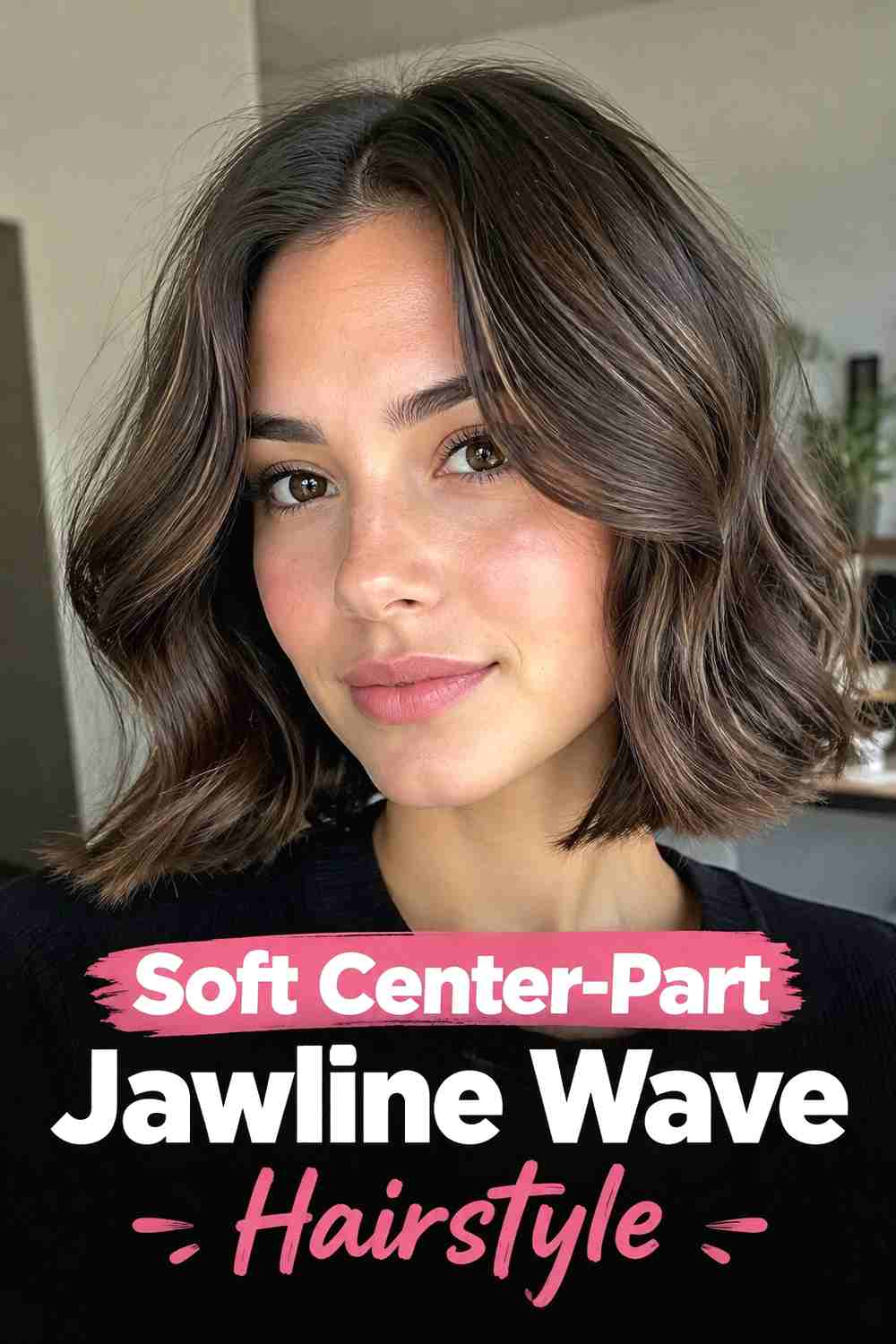
The Soft Center-Part Jawline Wave Hairstyle combines a clean center part with loose bends that begin around the lower cheeks and jaw. Keeping the roots relatively smooth allows the wave pattern to stand out without creating excess fullness beside a structured tweed jacket. The balanced part works especially well with collarless necklines because both sides of the outfit remain visible and uncluttered. Medium-length and long hair give the waves enough space to fall naturally, while a lob can create a more compact version. The best finish is soft rather than tightly curled, with visible strand separation and flexible ends. Keep styling product light near the crown so the hair remains fresh and touchable.
Styling Notes
Use a larger curling tool or loose heatless set, beginning each bend around jaw level rather than directly at the roots. Brush through gently once the hair cools.
2. Side Part Jawline S Wave Hairstyle
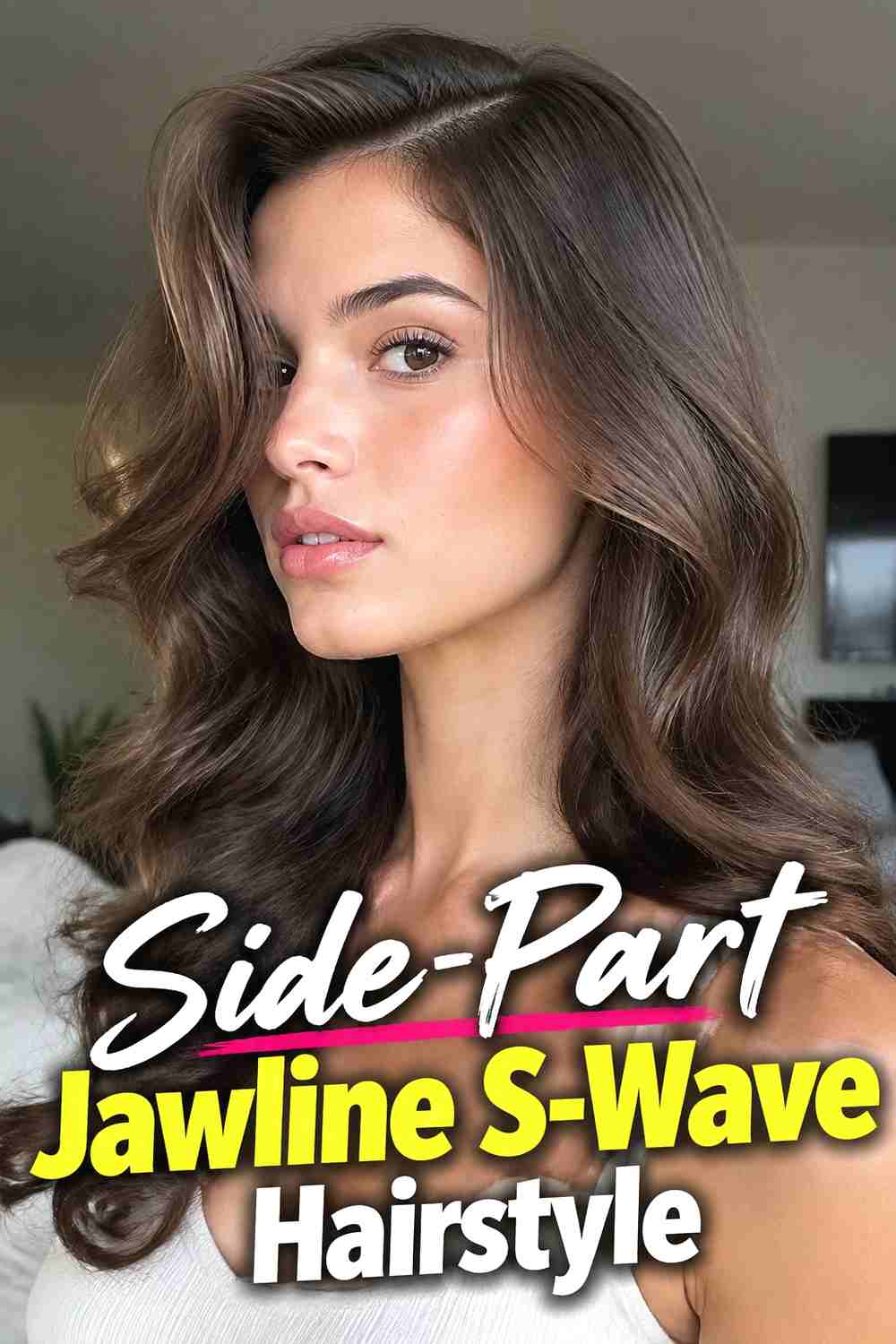
The Side-Part Jawline S-Wave Hairstyle uses an off-center part to create a little more movement through one side while keeping the actual waves broad and relaxed. The first visible bend begins close to the cheekbone or jaw, then flows into a second soft curve through the lengths. This shape can complement a collarless tweed jacket beautifully because the asymmetry adds interest without hiding the jacket’s clean neckline. It works especially well on lobs and medium-long hair with enough length to show the S-pattern clearly. Avoid making every wave identical; slightly different bends produce a more natural result. A touch of lift on the fuller side can keep the style dimensional without becoming overly voluminous.
Best For
Choose this option if you prefer a softer, less symmetrical look than a center part provides. It also works well when one side of your hair naturally holds more volume.
3. Air Dried Jawline Wave Bob Hairstyle
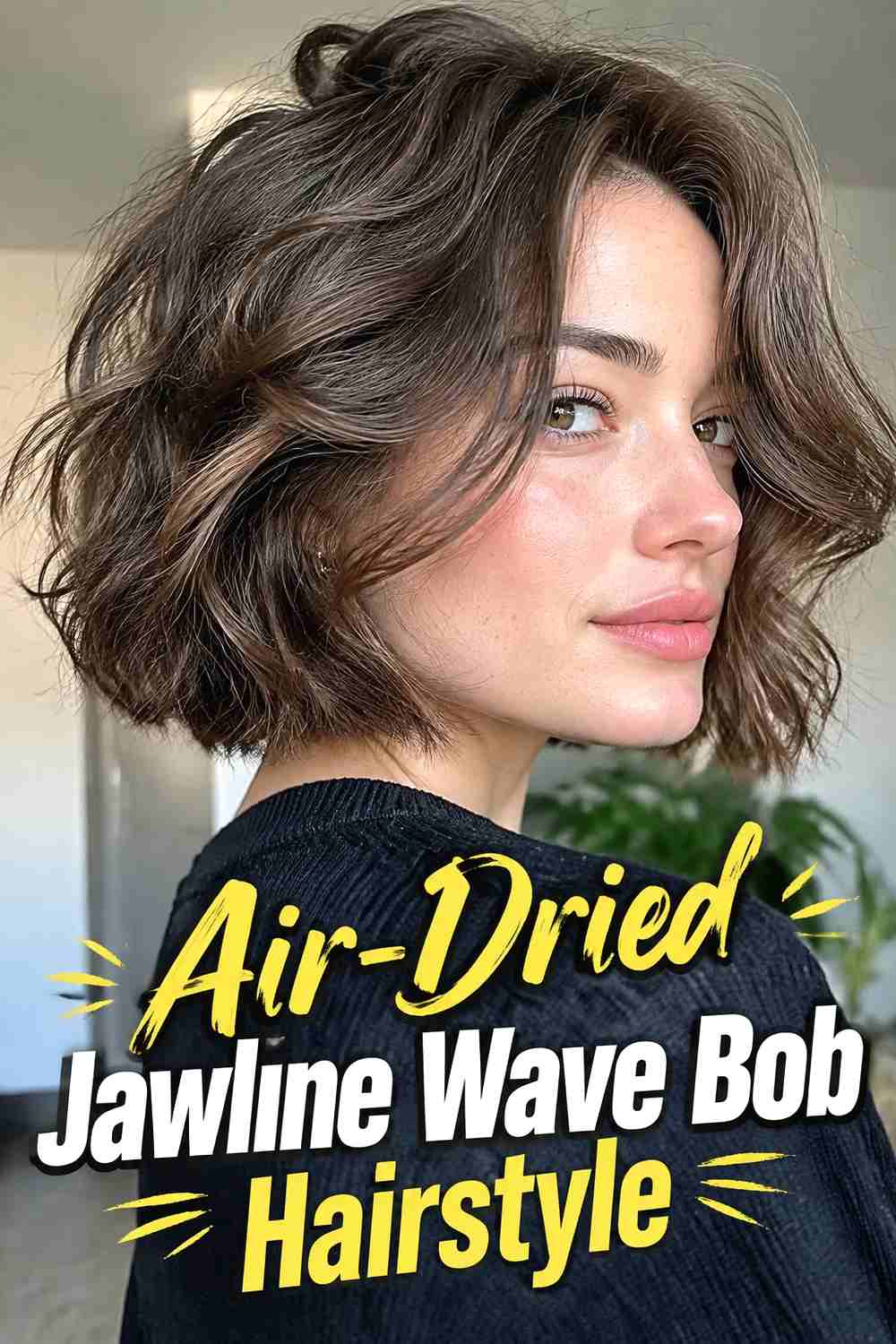
The Air-Dried Jawline Wave Bob Hairstyle has a relaxed finish that suits the tactile quality of tweed without looking overly styled. The bob sits around jaw or chin level, allowing natural waves or gentle bends to define the silhouette rather than relying on a perfect curling pattern. Because a collarless jacket leaves the neck open, the shorter length remains clearly visible instead of disappearing into a bulky neckline. This style is particularly practical for naturally wavy hair, though straighter textures can use light scrunching or a loose overnight set. Encourage movement through the ends and allow a few subtle flyaways. The goal is controlled natural texture, not a completely uniform wave from root to tip.
Hair Type & Length
Naturally wavy chin-length and jaw-length hair is particularly suited to this style. Fine hair benefits from lightweight mousse, while denser hair may need a small amount of cream to control expansion.
4. Brushed Out Jawline Wave Lob Hairstyle
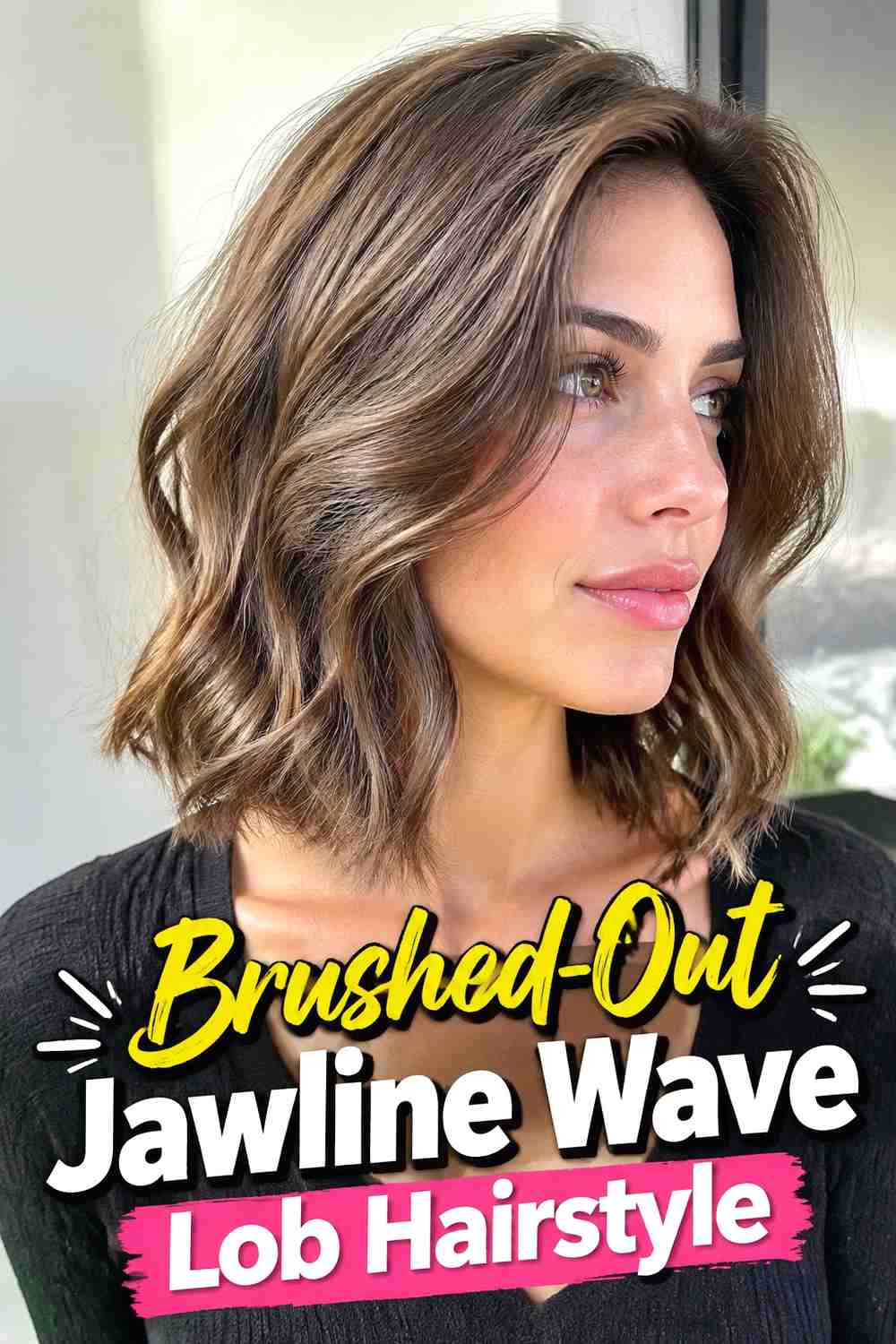
The Brushed-Out Jawline Wave Lob Hairstyle gives shoulder-skimming hair a soft, almost blended wave pattern. Instead of leaving individual curls intact, the hair is gently brushed after styling so the bends merge into one flowing shape. Beginning the movement around the jaw keeps the crown clean and prevents the hairstyle from becoming too wide beside a structured tweed jacket. A collarless neckline works especially well with this length because the lob can sit naturally around the shoulders without being pushed upward by a collar. The finished texture should have movement and light volume rather than stiff definition. This makes the look polished enough for dressier outfits while still feeling wearable during the day.
Pro Tip
Let the curls cool completely before brushing them. Brushing too early can remove the shape entirely instead of creating a soft, connected wave pattern.
5. Face Framing Jawline Ribbon Wave Hairstyle
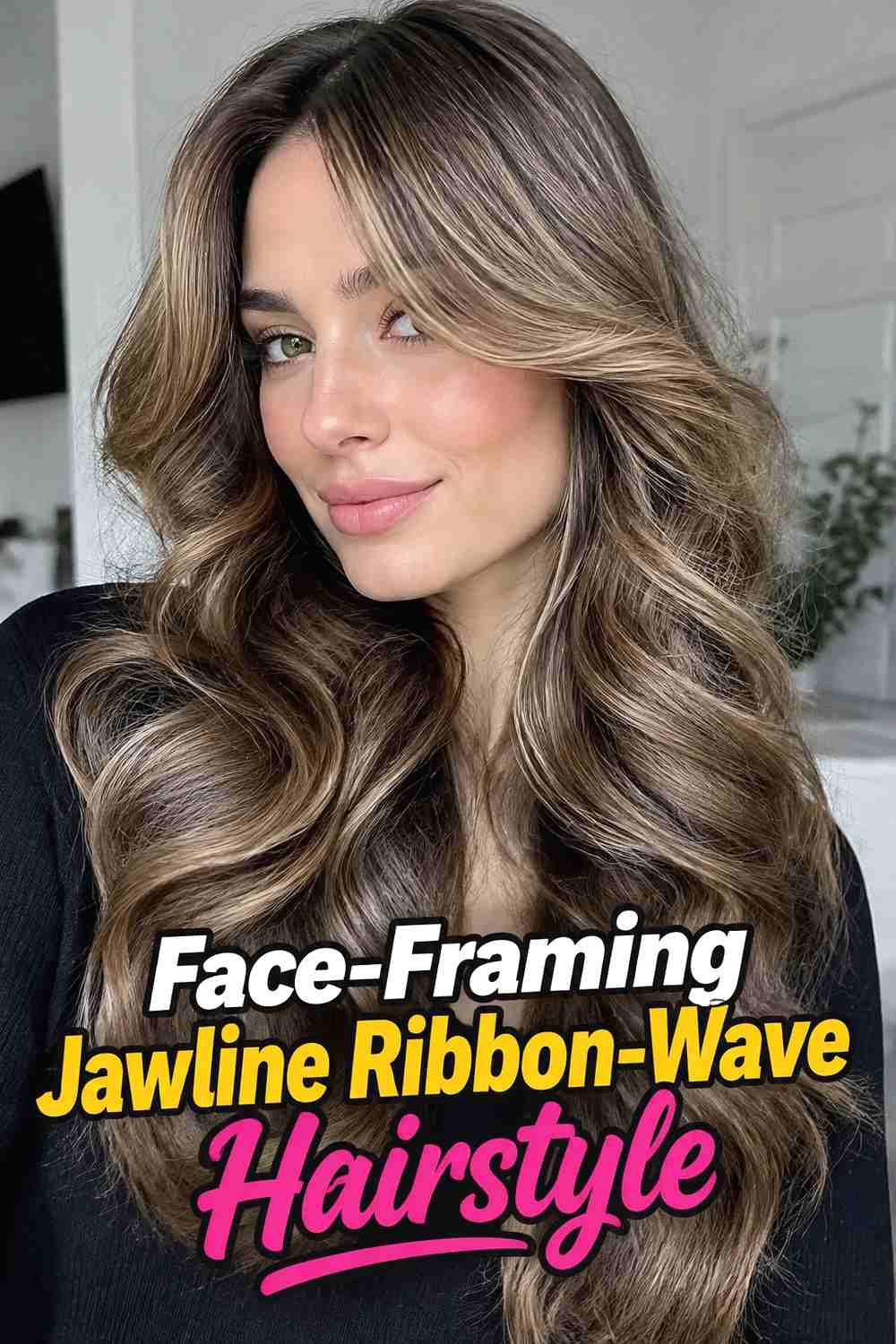
The Face-Framing Jawline Ribbon-Wave Hairstyle focuses its strongest bends around the front sections, creating defined but soft ribbons of hair beside the cheeks and jaw. The remaining lengths can stay more relaxed, which keeps the overall look light against a collarless tweed jacket. Medium to long layered hair works especially well because shorter front pieces can curve naturally into the longer sections. The waves should open away from the face instead of folding inward too tightly, helping the neckline remain visible and balanced. Avoid heavy hairspray around the front; movement is part of the appeal. A polished crown combined with looser jaw-level bends creates enough structure to echo the jacket without making the hair feel formal.
Styling Notes
Style the face-framing pieces separately from the rest of the hair. A broader bend close to the jaw usually looks softer than a tight curl beginning near the temple.
6. Tousled Jawline Bend Hairstyle
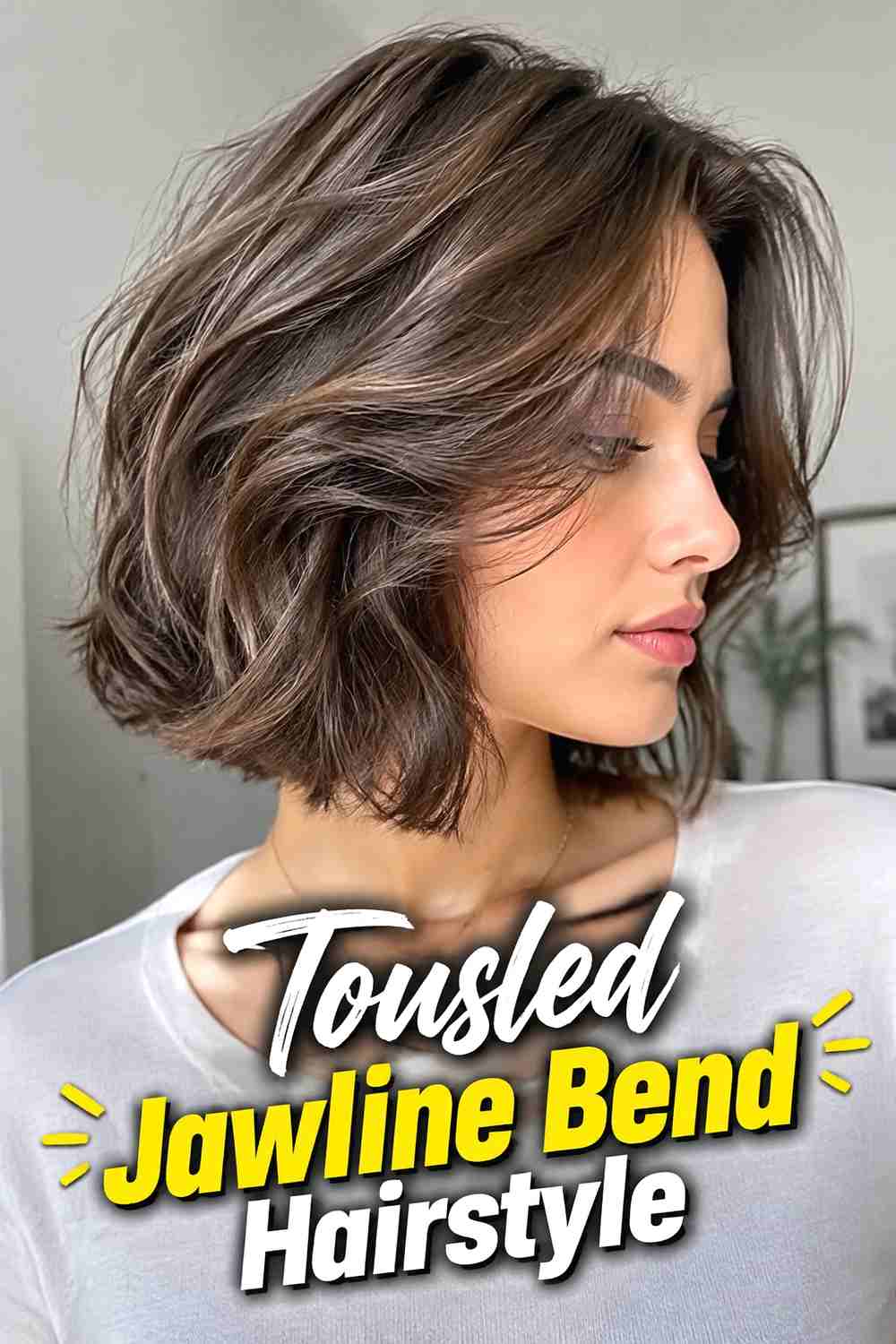
The Tousled Jawline Bend Hairstyle is intentionally less uniform, using irregular loose bends to create movement around the jaw and shoulders. It pairs naturally with tweed because the hair’s softness contrasts with the fabric’s visible texture and tailored construction. Instead of forming complete curls, shape alternating sections with shallow bends, leaving some ends straighter for a relaxed finish. Medium-length cuts are especially suited to this approach because they can hold texture without becoming overly wide. The crown should remain relatively quiet so the movement feels concentrated through the lower half. Use fingers rather than a brush for final separation, and resist trying to make both sides identical. Slight asymmetry gives the hairstyle its effortless character.
Best For
This style is a practical choice for casual tweed outfits, weekend dressing, and naturally wavy hair that already develops imperfect bends through the lengths.
7. Glossy Jawline Wave Hairstyle
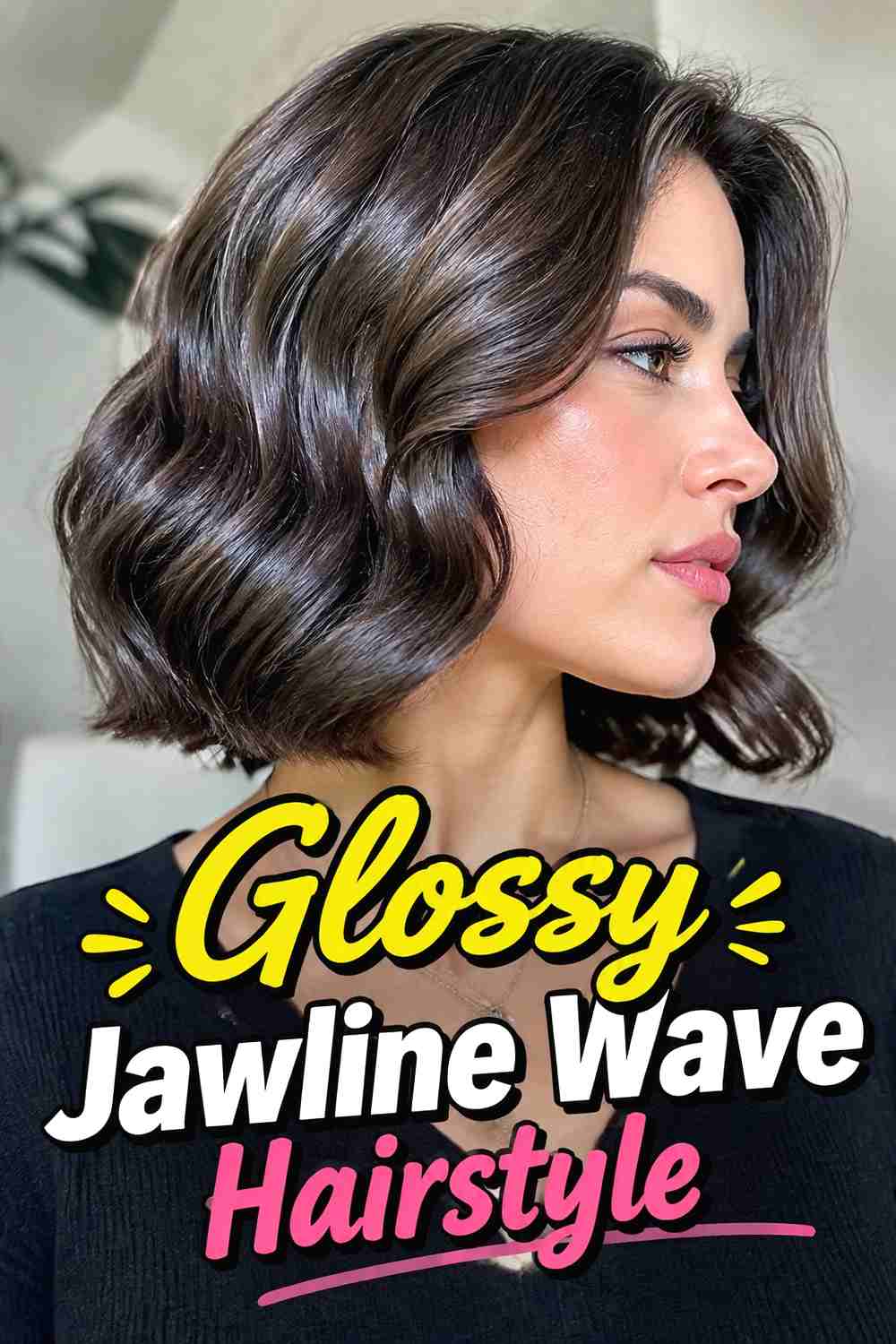
The Glossy Jawline Wave Hairstyle takes a loose wave pattern and gives it a smoother, more refined surface. Hair stays controlled through the crown before opening into broad bends around jaw level, while a light reflective finish emphasizes the shape without making the strands look coated. This polished texture creates an elegant contrast with the matte, woven appearance of many collarless tweed jackets. Straight and softly wavy hair can achieve the finish most easily, though other textures can be smoothed first. Keep shine concentrated through the mid-lengths and ends rather than the scalp. The wave itself should still move naturally, with gentle variation between sections so the hairstyle feels realistic rather than molded into one fixed shape.
Wear & Maintenance
Carry a small comb or use clean fingers to reshape the front sections if the waves become compressed during the day. Avoid repeatedly adding oil, which can make the style heavy.
8. Tucked Ear Jawline Wave Hairstyle
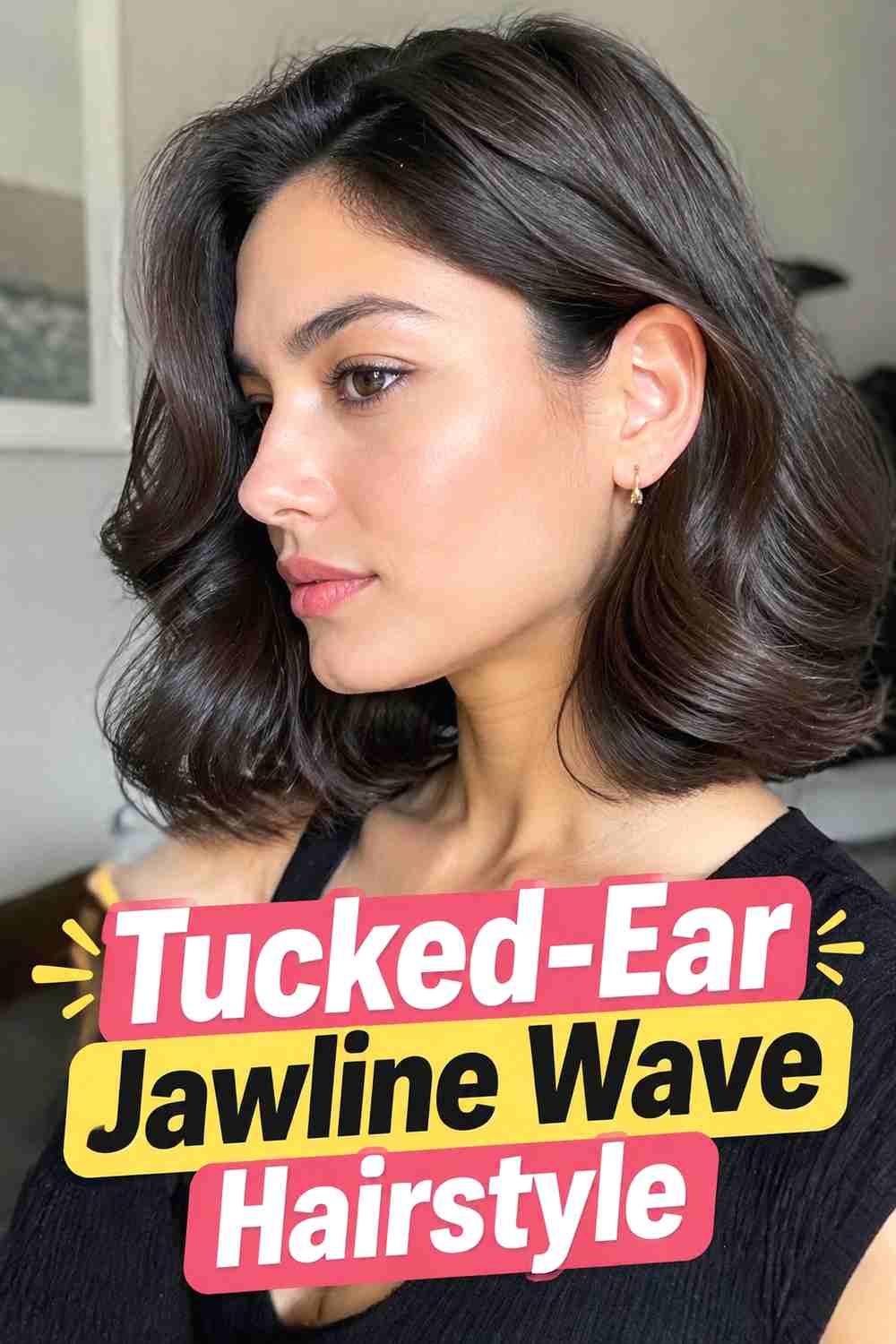
The Tucked-Ear Jawline Wave Hairstyle combines loose movement with a cleaner outline on one or both sides. Waves begin around the jaw, while the front section is tucked neatly behind the ear to expose more of the face and the collarless jacket neckline. This small adjustment makes the hairstyle particularly useful when the jacket features decorative buttons, trim, or textured edging that you want to keep visible. A lob or medium-length cut works especially well, although longer hair can create the same effect. Keep the tuck secure but not overly tight, and allow the remaining waves to fall naturally. If the hair slips forward easily, use a discreet pin behind the ear rather than coating the section with heavy product.
Pro Tip
Tuck only the smoother front section and leave the wave pattern intact behind it. This preserves movement while keeping the silhouette open around the face.
9. Layered Jawline Wave Hairstyle
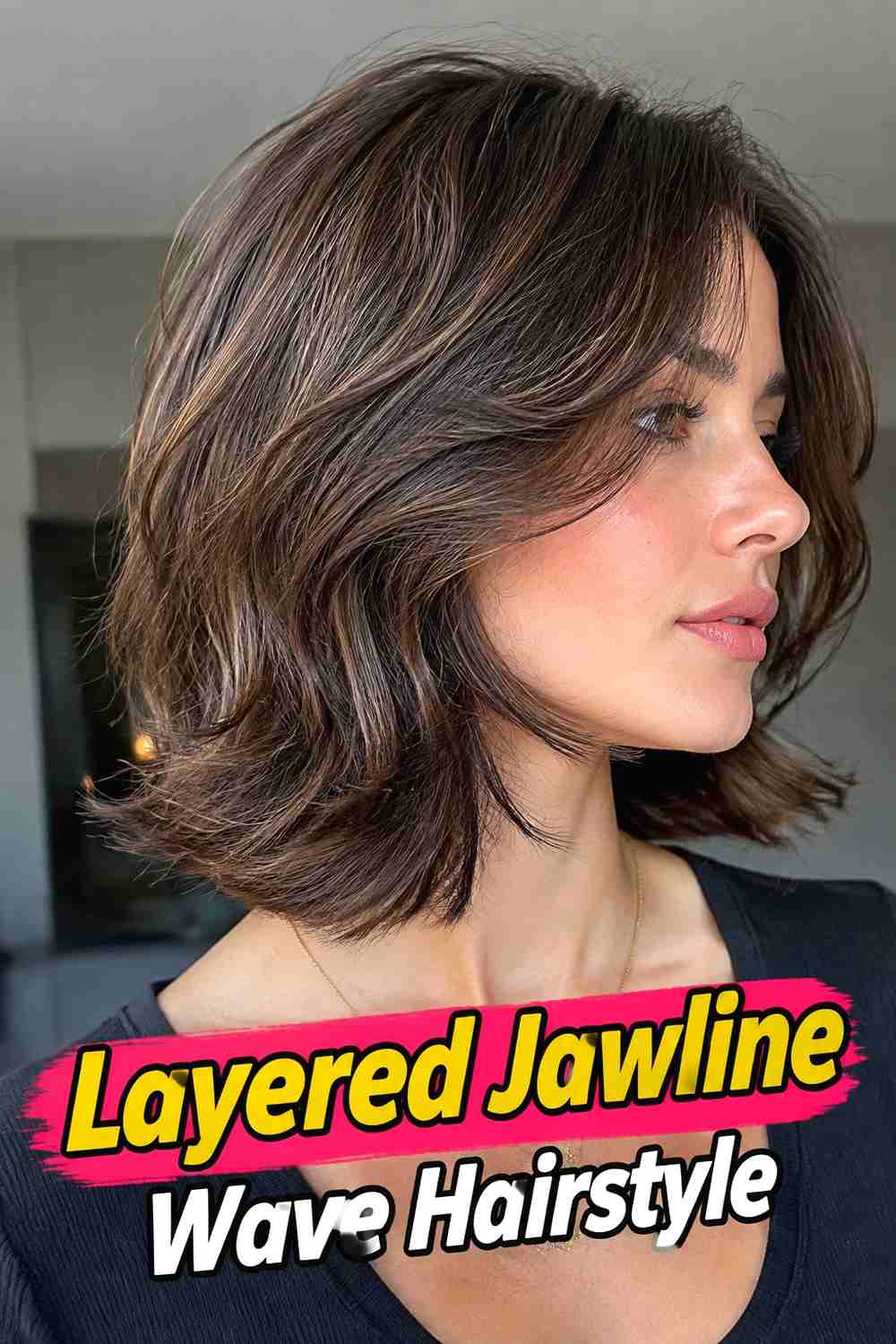
The Layered Jawline Wave Hairstyle uses different hair lengths to create movement that starts around the jaw and continues gradually toward the ends. Shorter layers add lift around the face, while longer sections keep the hairstyle from appearing too round or bulky. This works particularly well with collarless tweed jackets because the layered shape creates softness without covering the neckline in one dense block of hair. Medium and long cuts offer the most flexibility, especially when the layers already fall near the cheekbones or jaw. Keep the waves loose and slightly varied to highlight the haircut rather than disguising it. A light finishing spray can help maintain separation, but the layers should still move naturally when the head turns.
Why It Works
Layering distributes volume through several levels instead of concentrating it at the shoulders. That helps the hair sit more cleanly beside a structured jacket.
10. Fine Hair Jawline Wave Hairstyle
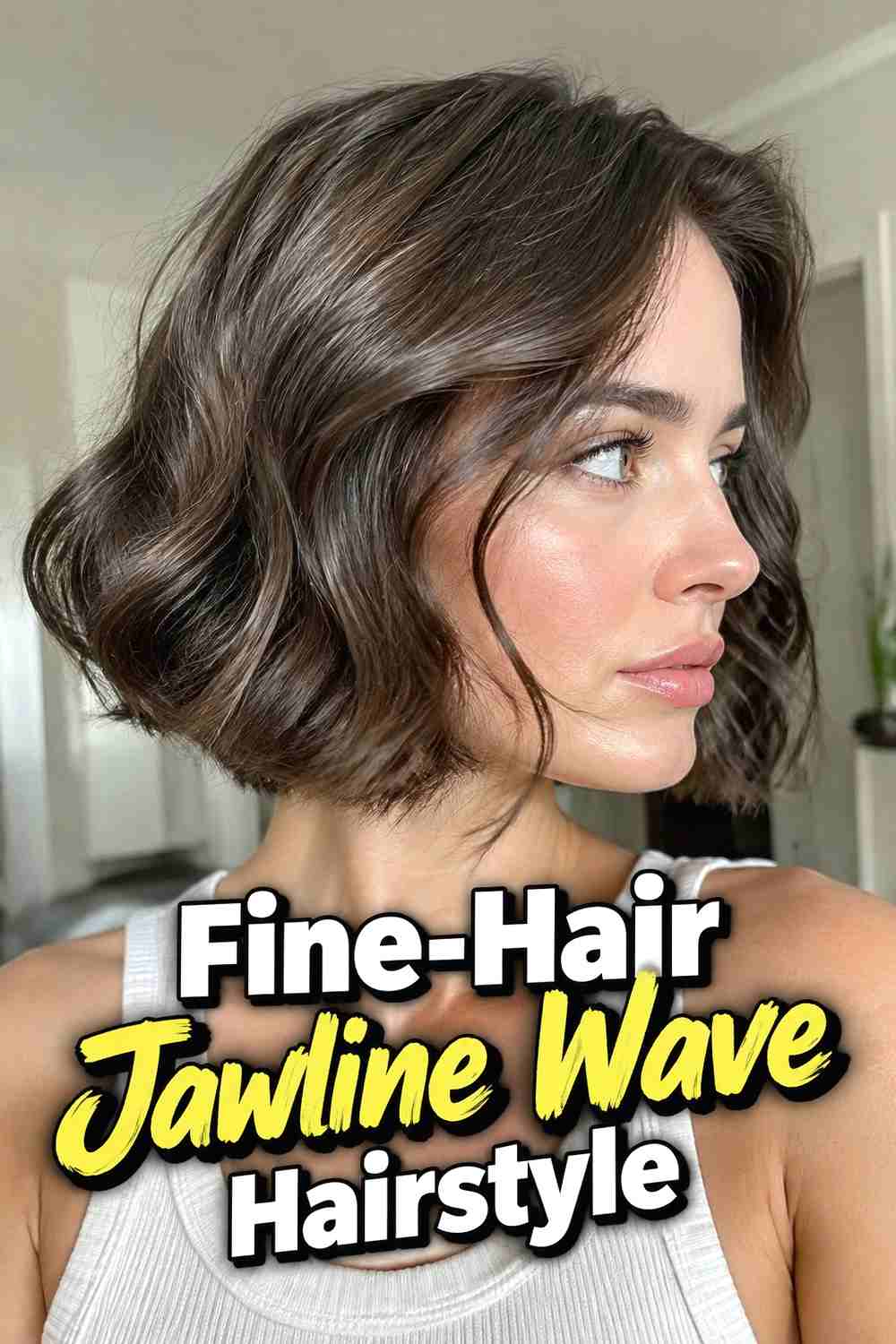
The Fine-Hair Jawline Wave Hairstyle creates the impression of movement and body without relying on heavy product or excessive teasing. A smooth root area transitions into shallow bends around the jaw, giving fine hair shape while preserving its natural lightness. Collarless tweed jackets are useful with this silhouette because there is no raised collar compressing the lower sections and flattening the wave pattern. Shoulder-length and slightly longer cuts often provide a good balance between visible movement and manageable weight. Use fewer, wider sections when styling so the finished waves look full rather than stringy. Keep oils and rich creams to a minimum, especially near the roots, where they can quickly reduce volume and make the part look flat.
Styling Notes
A lightweight volumizing mousse or mist can add support before styling. Let each bend cool before loosening it so fine hair has more chance to retain its shape.
11. Thick Hair Jawline Wave Hairstyle
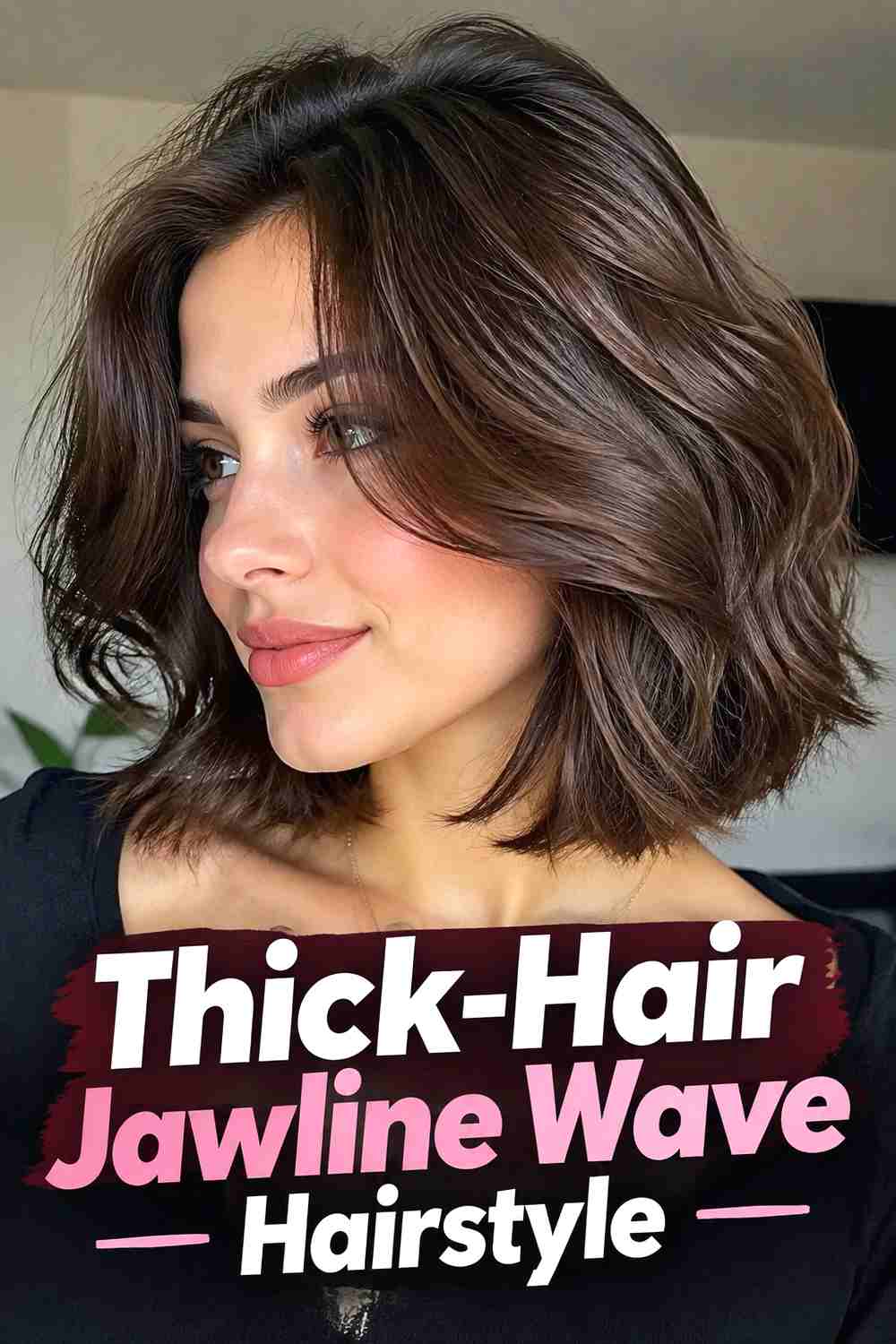
The Thick-Hair Jawline Wave Hairstyle controls natural density by keeping the crown relatively smooth and placing the main movement lower, around the jaw and shoulders. This creates a softer outline without allowing the hairstyle to become excessively wide beside a collarless tweed jacket. Longer lobs and medium-to-long cuts are particularly suitable because the additional length gives thick hair enough weight to settle naturally. Work in larger sections to create broad bends rather than numerous small curls, which can multiply volume quickly. Internal layering may also help the hair move more freely. The finished look should still show healthy density, but with enough separation that the waves feel fluid instead of forming one heavy, triangular shape around the face.
Hair Type & Length
Medium to long dense hair usually handles this wave placement best. Shorter thick cuts can work too, but careful layering may be needed to prevent excessive width around the jaw.
12. Curly Texture Jawline Wave Hairstyle
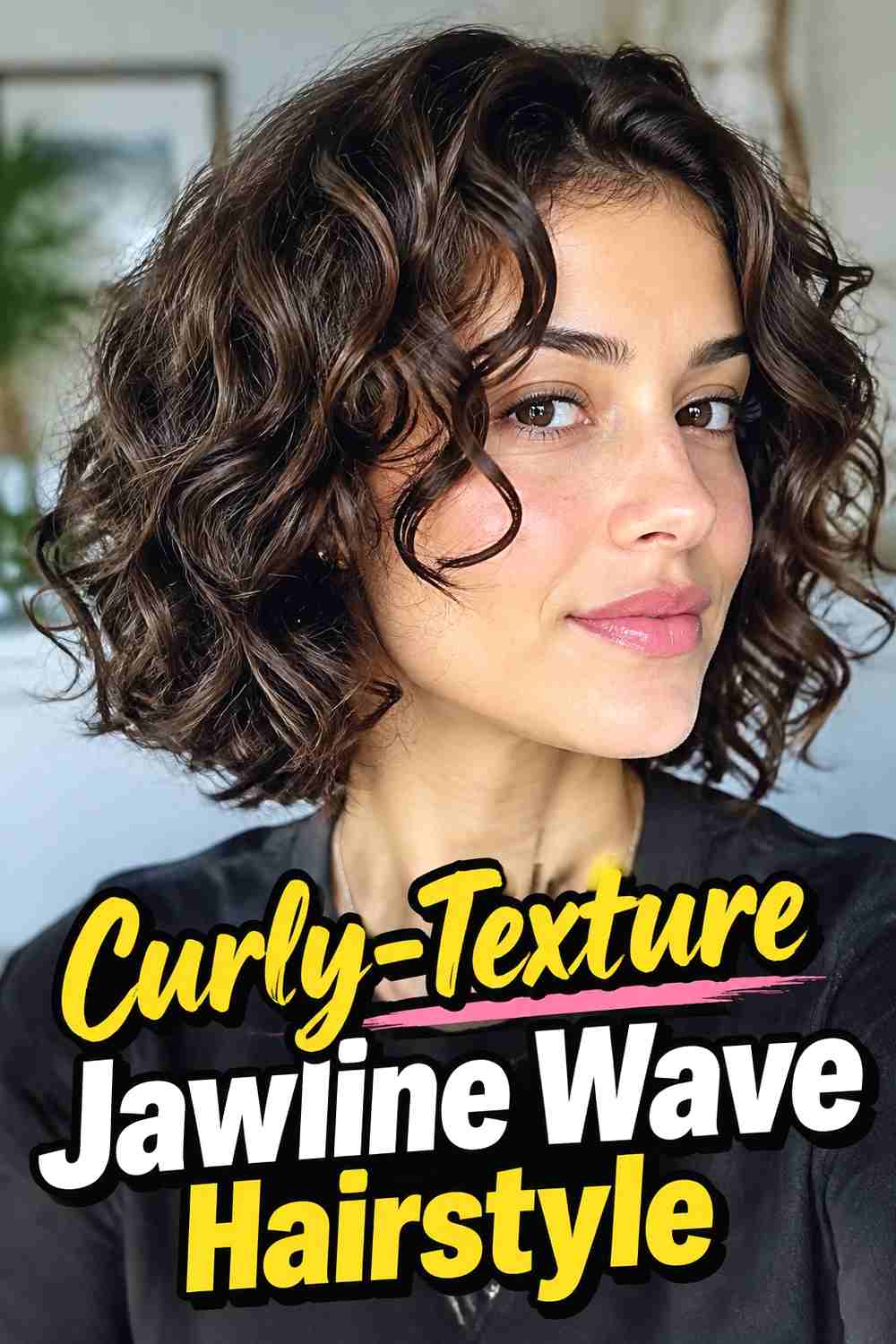
The Curly-Texture Jawline Wave Hairstyle adapts the idea of loose jaw-level movement without forcing naturally curly hair into a uniform wave pattern. The roots and upper sections remain defined but relatively controlled, while curls around the jaw are gently stretched, separated, or shaped to create a softer directional flow. The result retains natural texture while matching the relaxed polish of a collarless tweed jacket. Medium and longer curls give the most room for shaping, although shorter curly cuts can achieve a similar effect by defining selected sections near the face. Avoid brushing dry curls into conventional waves. Instead, work with the existing curl pattern and encourage the front sections to sit where they frame the jaw most naturally.
Pro Tip
Shape the front sections while damp, then allow the curl pattern to set before making small adjustments. Excessive handling once dry can disturb definition and create unnecessary frizz.
13. Short Bob Jawline Wave Hairstyle
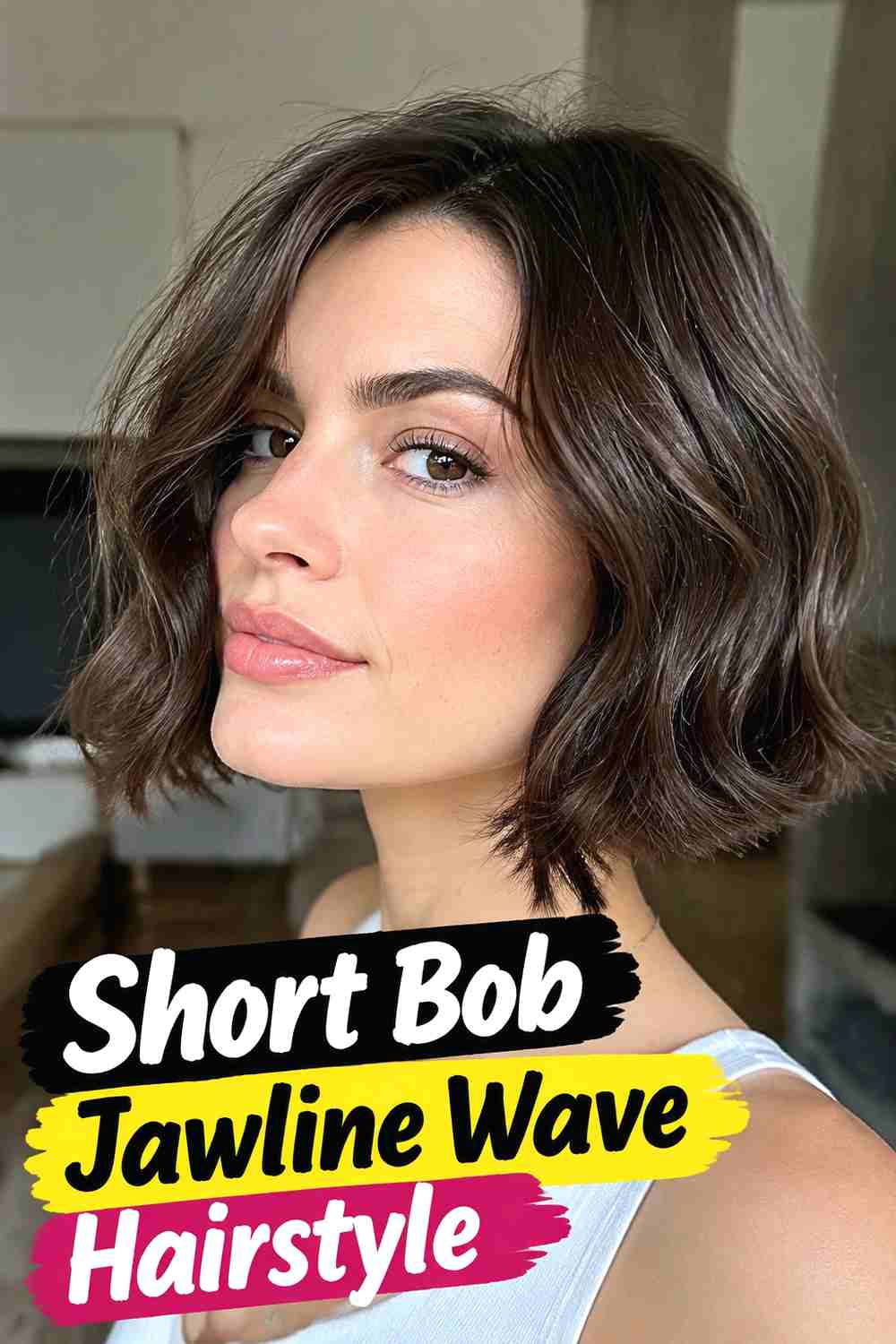
The Short Bob Jawline Wave Hairstyle places soft movement exactly where the haircut ends, making the jawline itself the focal point of the silhouette. A few loose bends prevent a short bob from looking overly rigid while still preserving its clean perimeter. This works especially well with a collarless tweed jacket because both the haircut and neckline remain visible, creating a compact, polished frame around the face and neck. Straight and naturally wavy bobs can both support the look, though the amount of styling required will differ. Keep the crown smooth and avoid curling every section identically. One side can even be tucked behind the ear to introduce subtle asymmetry while maintaining the bob’s neat overall shape.
Best For
This is a strong option for chin-length and jaw-length bobs that need a little softness without losing their crisp outline or becoming overly voluminous.
14. Long Hair Jawline Wave Hairstyle
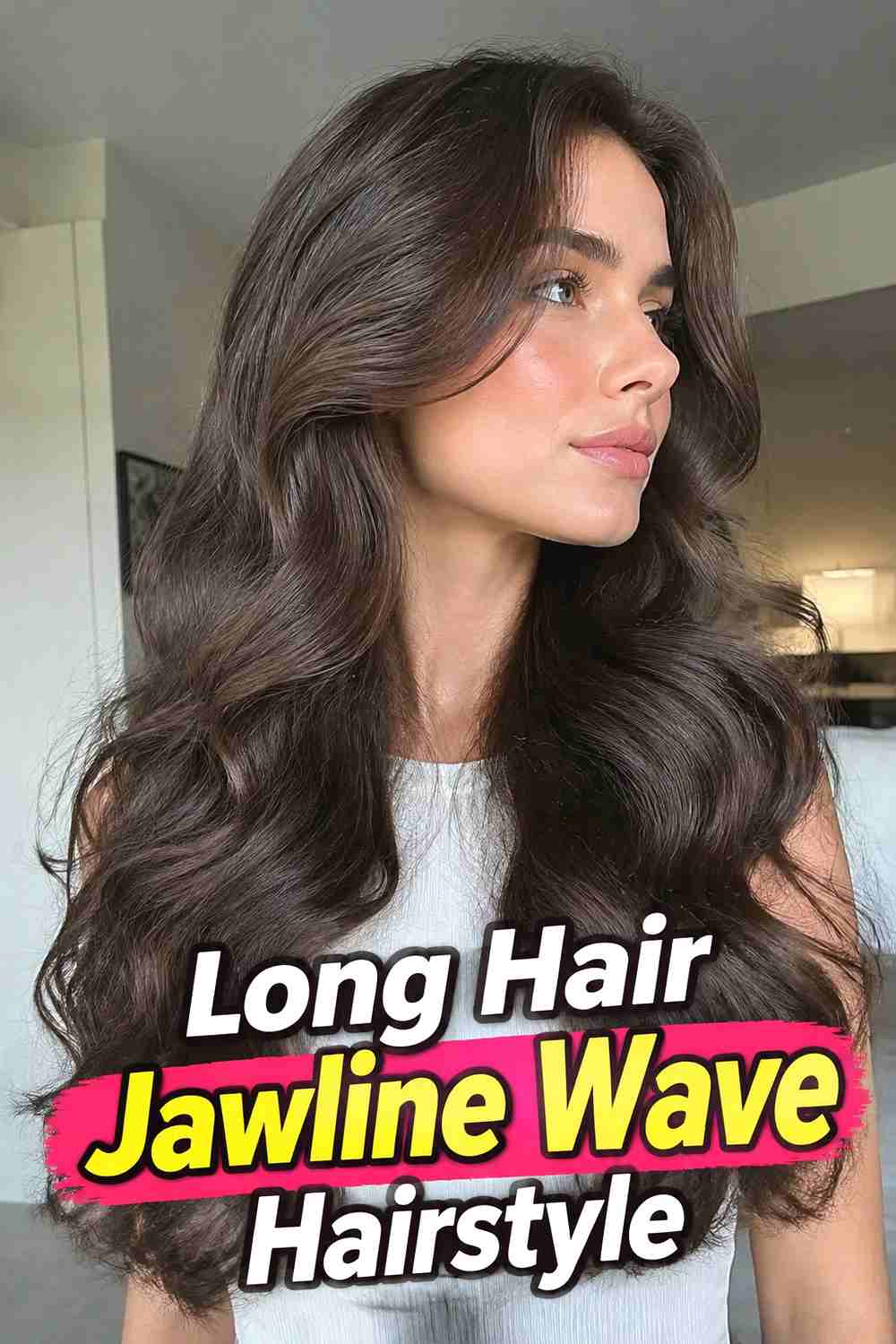
The Long Hair Jawline Wave Hairstyle keeps the first noticeable bend high enough to frame the face while allowing the remaining length to flow in softer waves below. Starting around the jaw prevents long hair from looking flat through the front, yet the crown remains controlled enough to pair neatly with a collarless tweed jacket. The lower waves can become progressively looser toward the ends, creating movement without turning the whole hairstyle into a mass of curls. Long straight and wavy hair adapt especially well to this pattern. If the jacket has decorative edging around the neckline, place some length behind the shoulders so the garment remains visible while still leaving a few softly waved sections forward.
Wear & Maintenance
Long waves can lose definition where they rub against clothing. Keeping part of the hair behind the shoulders reduces friction while maintaining the face-framing movement at the front.
15. Half Up Jawline Wave Hairstyle
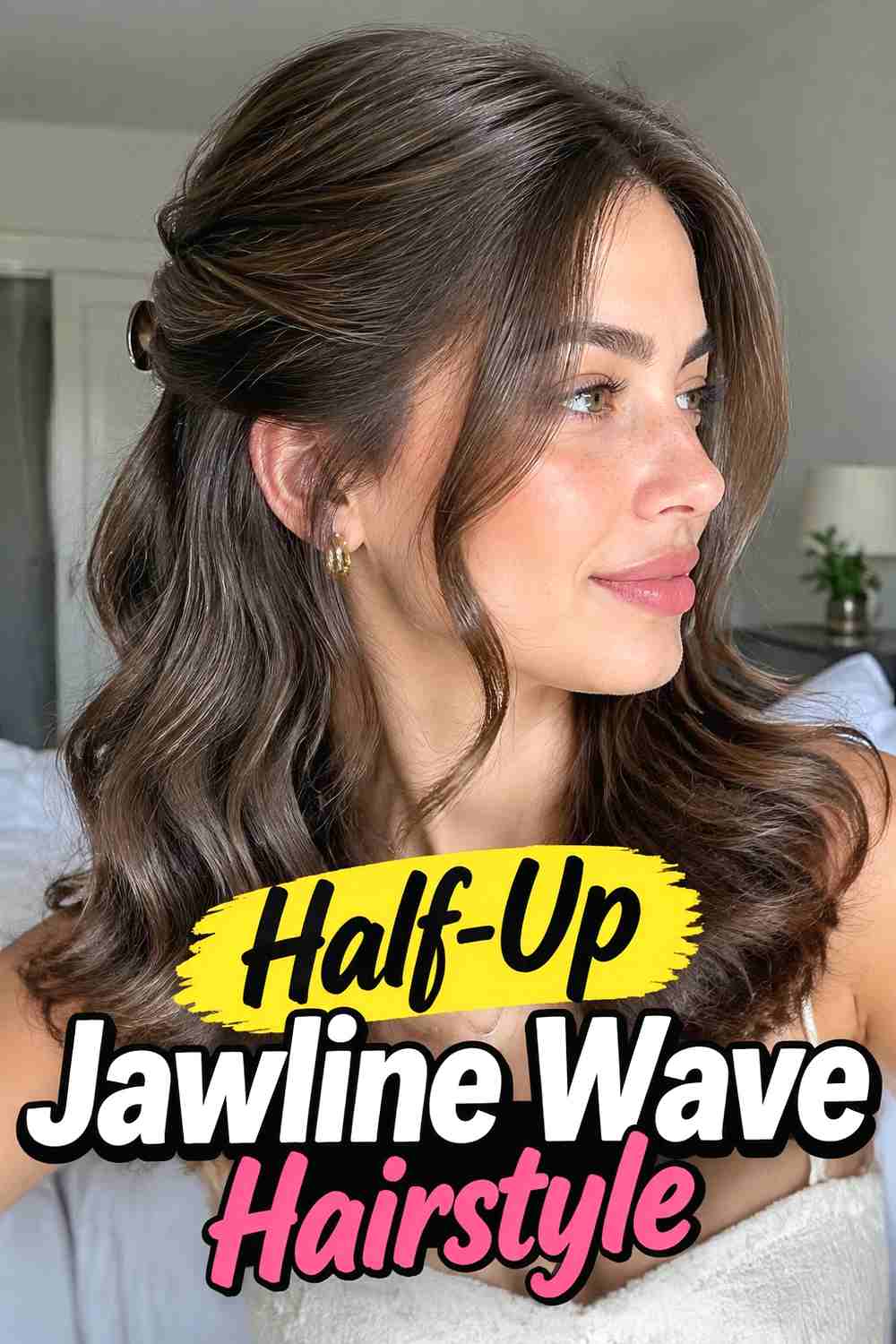
The Half-Up Jawline Wave Hairstyle combines loose lower movement with a practical secured upper section. Hair around the crown and temples is drawn gently backward, while the remaining lengths fall into broad waves beginning near the jaw. This opens the face and neckline without removing the softness that makes the style work so well with collarless tweed jackets. Medium-long and long hair provide the easiest proportions, particularly when there are face-framing layers left loose near the cheeks. Keep the half-up section slightly relaxed instead of pulling it completely flat. A small amount of crown lift maintains balance, while the loose jaw-level waves prevent the style from becoming too formal or overly structured for everyday wear.
Why It Works
Securing the upper sections keeps hair away from jacket detailing while preserving movement through the lower half. It is especially useful when loose front pieces tend to fall forward repeatedly.
How to Choose the Right Look
Start with where your hair naturally holds movement. If you already have waves or curls, an air-dried, tousled, or curly-texture version can require less manipulation. Straighter hair may hold brushed-out bends, ribbon waves, or glossy waves more predictably, especially when the style is allowed to cool before being loosened. Length also changes the effect. Jaw-length bobs create a compact silhouette, lobs provide more room for soft movement, and long hair can carry the wave pattern well below the shoulders. Fine hair usually benefits from lighter products and fewer, broader sections, while thick hair often looks more balanced when volume is concentrated below the jaw rather than at the crown. With collarless tweed jackets, pay attention to the neckline and decorative details. Tucked-ear or half-up styles keep trim visible, while loose lobs and bobs can frame a plain neckline beautifully. For longer hair, consider placing some sections behind the shoulders so the jacket remains part of the overall look.
Final Thoughts
Loose jawline waves provide an easy way to soften the tailored character of a collarless tweed jacket without losing polish. Choose a wave size and finish that suit your natural texture, then adjust the placement, volume, and amount of face framing so the hairstyle works comfortably with your jacket rather than competing with it.
FAQs
1. Where should jawline waves begin?
For this look, the first noticeable bend usually starts around the lower cheek or jaw. Keeping the root area smoother helps the wave placement look intentional.
2. Do loose waves work with short bobs?
Yes. A jaw-length or chin-length bob can use one or two broad bends to create softness while preserving the haircut’s clean outline.
3. How can I keep loose waves from becoming too curly?
Use larger sections and broader bends rather than wrapping small sections tightly. Once the hair cools, gently brush or finger-comb it to loosen the pattern.
4. Are jawline waves suitable for naturally curly hair?
Yes, but you do not need to straighten the curls first. Shape and define the front sections so the texture creates softer movement around the jaw while keeping the natural curl pattern visible.
5. What hairstyle works best if my tweed jacket has detailed trim?
A tucked-ear or half-up wave style can keep decorative edging, buttons, or neckline details more visible while still leaving soft texture around the face. Save your favorite jawline wave ideas, share the looks that complement your tweed jackets, and explore more polished hairstyle inspiration for your wardrobe.