15 Low-Tension Flat Twist Bob Hairstyle Ideas
Soft-rooted flat twists meet the clean proportions of a bob in these textured looks designed around comfortable-looking placement, movement, and versatile short-hair shapes.
A low-tension flat twist bob combines twists that lie close to the scalp with a short or medium-length silhouette around the chin, neck, or shoulders. Rather than creating an extremely tight appearance at the roots, these styles keep the beginning of each twist softer while still using clean sections and deliberate direction.
There is plenty of room for variation within that basic shape. Straight or curved parts can change the scalp pattern, while loose ends, crown volume, tapered napes, and asymmetrical placement alter the finished silhouette. When choosing a look, consider both the bob shape you want and how secure and comfortable the flat twists feel during wear.
Quick List
- Center Part Low Tension Flat Twist Bob Hairstyle
- Side Part Low Tension Flat Twist Bob Hairstyle
- Chin Length Low Tension Flat Twist Bob Hairstyle
- Shoulder Length Low Tension Flat Twist Bob Hairstyle
- Curved Part Low Tension Flat Twist Bob Hairstyle
- Crown Volume Low Tension Flat Twist Bob Hairstyle
- Loose End Low Tension Flat Twist Bob Hairstyle
- Half Up Low Tension Flat Twist Bob Hairstyle
- Pinned Back Low Tension Flat Twist Bob Hairstyle
- Tapered Nape Low Tension Flat Twist Bob Hairstyle
- Face Framing Low Tension Flat Twist Bob Hairstyle
- Asymmetrical Low Tension Flat Twist Bob Hairstyle
- Side Swept Low Tension Flat Twist Bob Hairstyle
- Defined End Low Tension Flat Twist Bob Hairstyle
- Soft Halo Low Tension Flat Twist Bob Hairstyle
1. Center Part Low Tension Flat Twist Bob Hairstyle
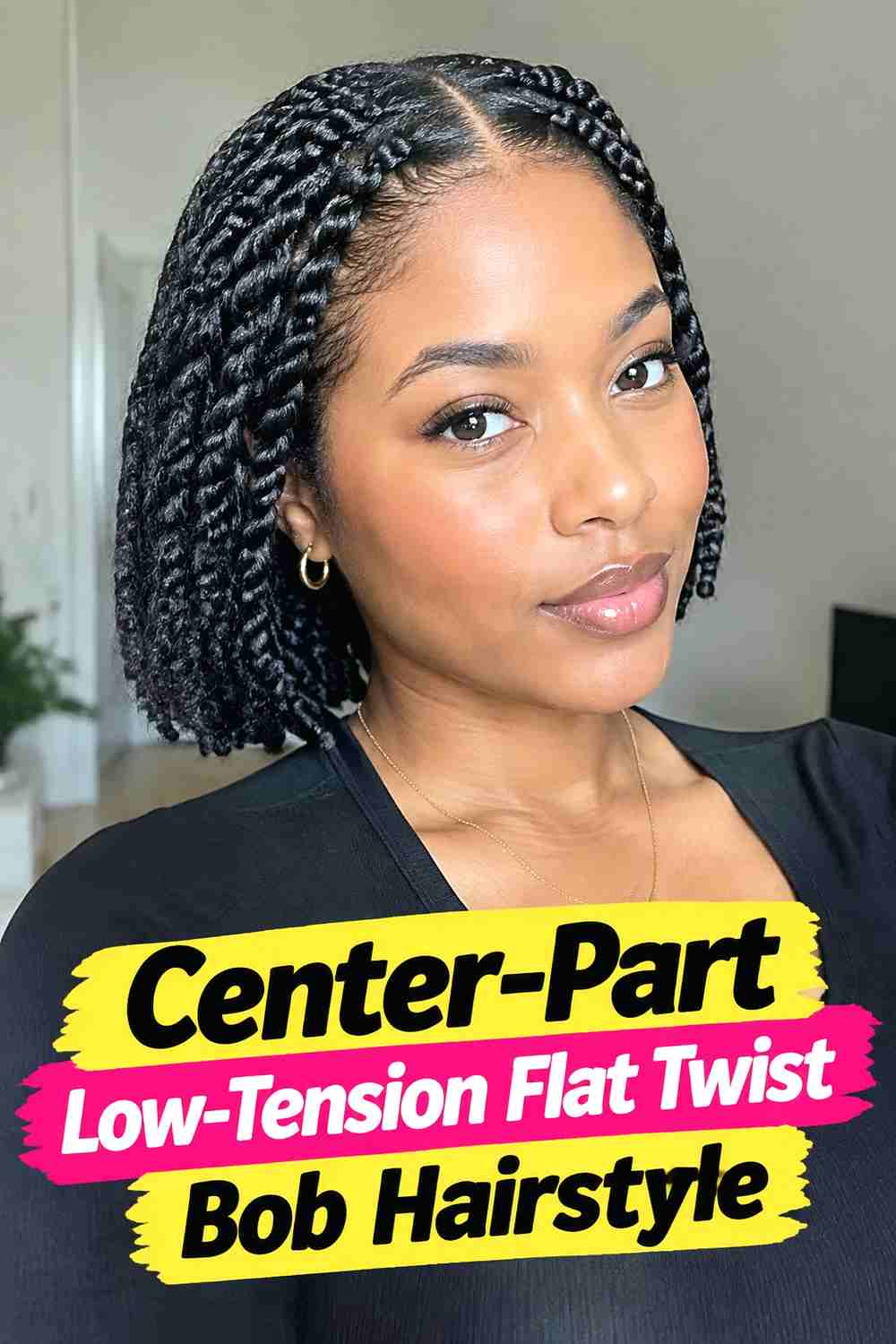
A center part gives a flat twist bob a balanced structure, with twists traveling outward and downward on both sides before finishing around the jaw or neck. Keeping the roots softly secured rather than sharply pulled gives the scalp pattern a more relaxed appearance without losing the neat directional lines of the twists. Medium-width sections work especially well because they remain visible while still fitting comfortably within the compact bob shape. The ends may stay twisted or loosen slightly for movement. Symmetry is the main feature here, so similar volume on each side helps the hairstyle feel intentional while small differences in individual twists keep it natural.
Styling Notes
Create the center part first and direct each flat twist to support the bob’s downward curve rather than pulling every section straight toward the back.
Best For
This variation suits anyone who prefers a balanced, uncomplicated silhouette with the scalp pattern clearly visible from the front.
2. Side Part Low Tension Flat Twist Bob Hairstyle
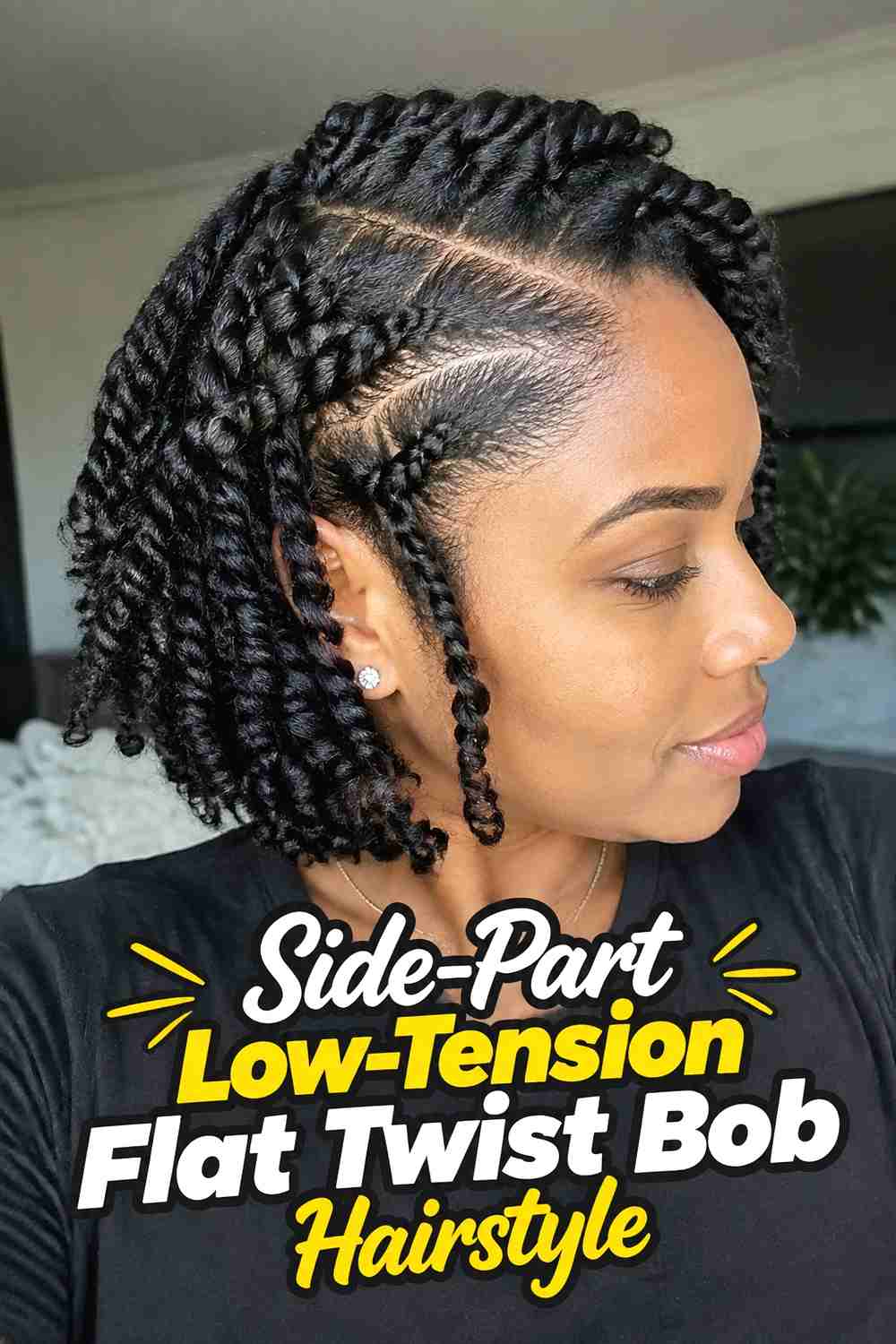
A side part shifts the weight of a flat twist bob toward one side, creating movement before the twists even reach the ends. The fuller side can use slightly broader sections or a more sweeping twist direction, while the lighter side stays compact. A softer root finish keeps the part from looking overly rigid and allows the textured bob to retain a relaxed quality. This version works especially well around chin or neck length because the shorter silhouette makes the uneven distribution of volume easy to see. Leaving the ends with a little movement can further soften the structured scalp pattern and prevent the style from appearing too geometric.
Why It Works
The side part creates natural asymmetry while the flat twists maintain enough structure to keep the bob polished and recognizable.
Pro Tip
Plan the part before sectioning so the twists flow naturally toward the heavier side instead of being repositioned afterward.
3. Chin Length Low Tension Flat Twist Bob Hairstyle
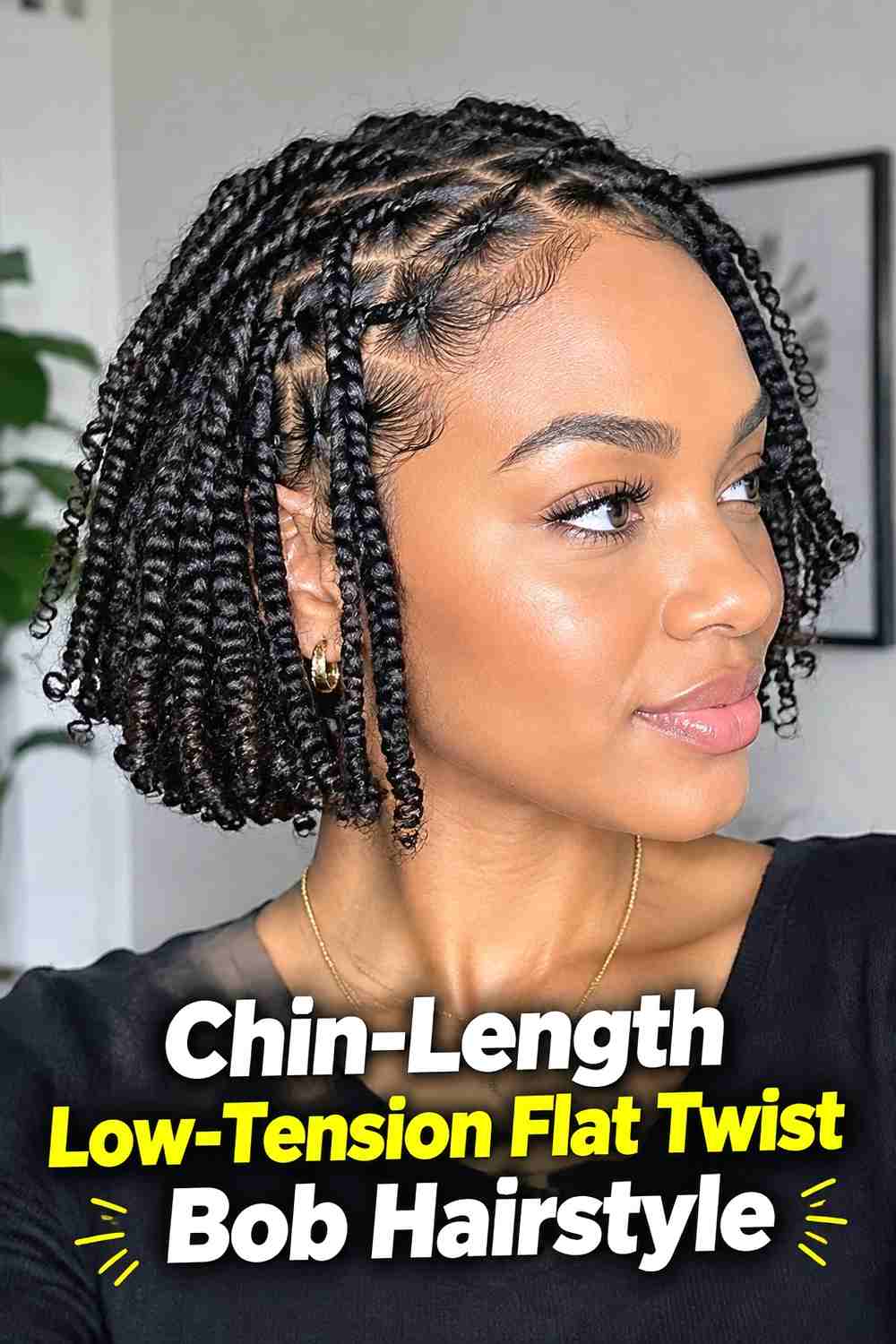
A chin-length flat twist bob creates a compact, defined outline that keeps attention on both the parting pattern and the ends. The twists can follow the head closely before releasing near the lower sides, giving the hairstyle a clean transition from scalp structure to bob movement. Because the length is short, medium or smaller sections generally create better balance than extremely large twists. Softness at the roots helps the finished style feel wearable rather than overly pulled, while a tidy perimeter makes the chin-length shape obvious. A few naturally varied ends can keep the silhouette from appearing stiff or artificially uniform.
Hair Type & Length
This option works best when the finished twists or released ends settle around chin level and can form a visible bob perimeter.
Wear & Maintenance
Protect the lower edges from repeated friction so the compact bob shape stays neat and the ends do not become unnecessarily fuzzy.
4. Shoulder Length Low Tension Flat Twist Bob Hairstyle
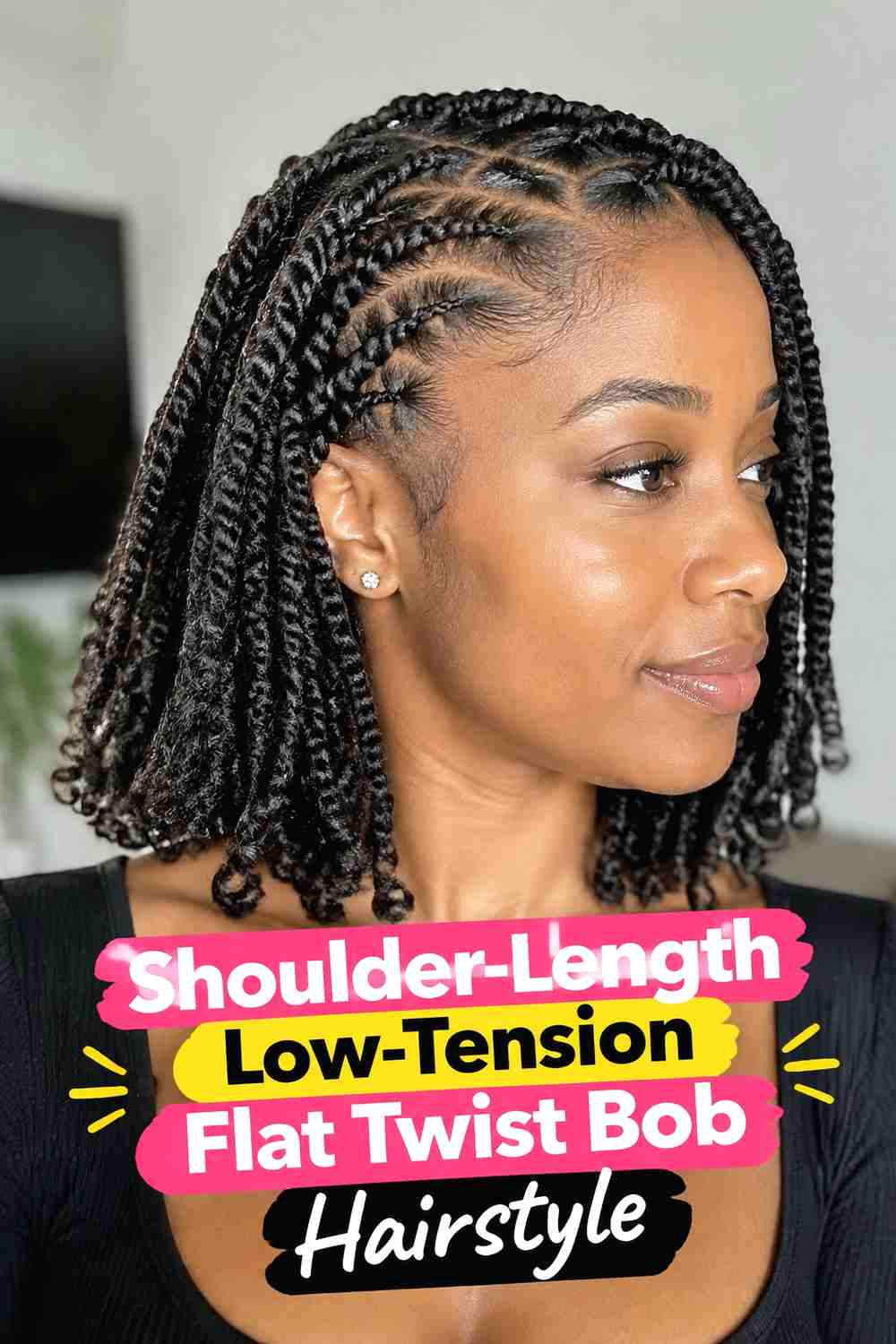
A shoulder-length version gives flat twists more room to move while preserving the proportions of a longer bob. The twists can lie close to the scalp through the upper section, then extend or release into textured lengths that fall near the shoulders. This extra length works well for anyone who wants a bob-like shape without the compact feel of a chin-length cut. Moderate section sizes allow the scalp pattern to remain visible while keeping the lower half from becoming too bulky. The roots should look secure but not excessively stretched, and the ends can stay defined or softly separated depending on how polished you want the final style.
Why It Works
The added length creates movement through the lower half while the flat-twist foundation keeps the upper silhouette controlled.
Best For
Choose this look when you want the versatility of a longer bob with visible flat-twist detail near the scalp.
5. Curved Part Low Tension Flat Twist Bob Hairstyle
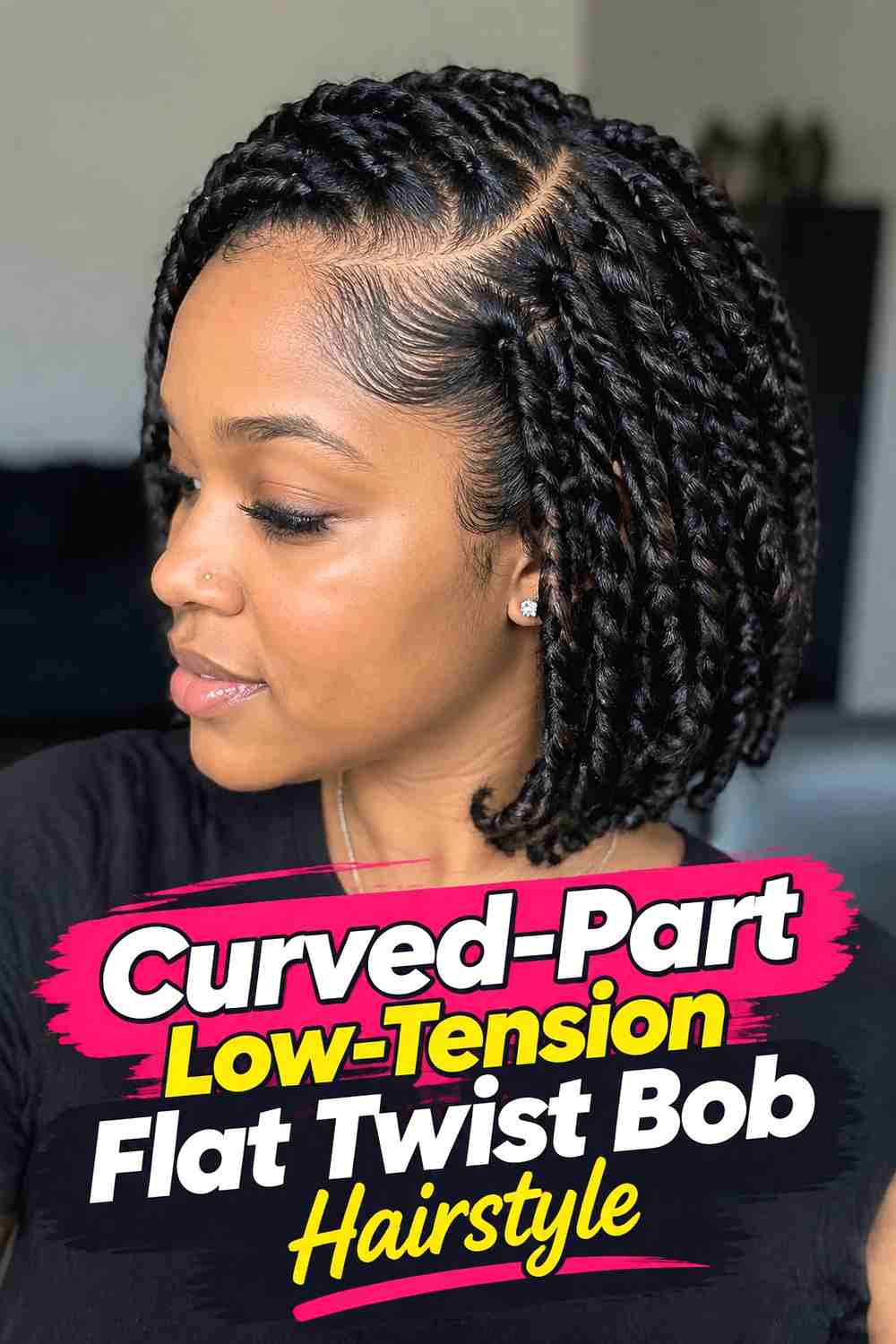
Curved parting introduces movement into the scalp design by allowing each flat twist to sweep rather than follow a straight line. Repeated arcs can travel toward the sides or back before the lengths settle into a compact bob. A low-tension approach works especially well with this pattern because the softer roots complement the fluid direction of the curves. Medium-width twists usually make the design easier to read without overcrowding the top. The bob itself can remain simple, allowing the curved sections to become the focal point. Keeping the curves related in size and direction helps the finished hairstyle feel intentional instead of randomly sectioned.
Styling Notes
Map the curved sections before twisting and repeat similar arcs so the pattern looks connected from one side of the head to the other.
Why It Works
Flowing part lines add decorative interest without requiring extra accessories or complicated finishing at the ends.
6. Crown Volume Low Tension Flat Twist Bob Hairstyle
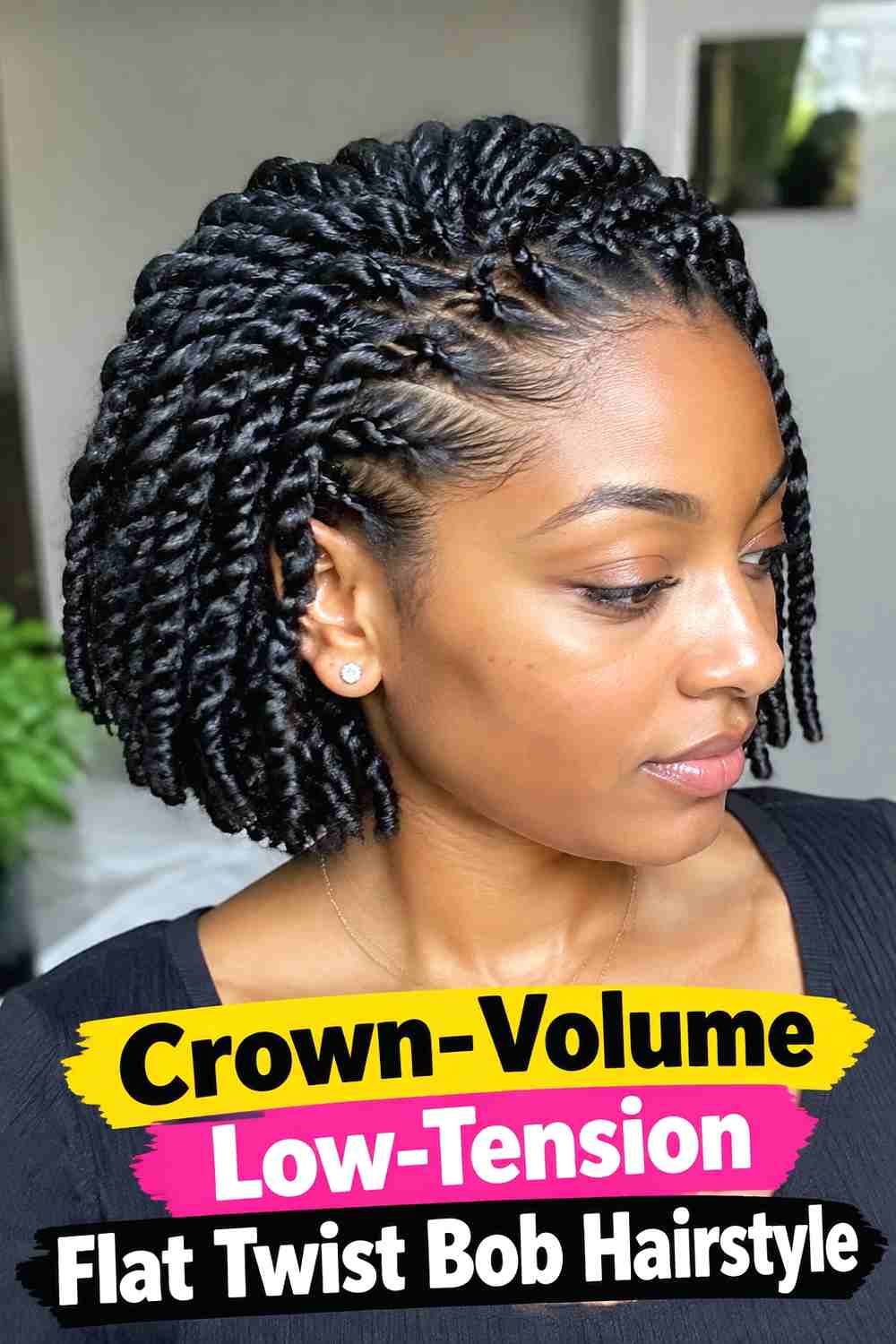
This style uses the direction of the flat twists to create slightly more height around the crown while keeping the lower bob relatively controlled. Sections near the top can travel upward or diagonally before transitioning into fuller textured ends, producing lift without relying on tight pulling at the roots. The sides remain closer to the head so the increased crown volume is easy to see. This arrangement works particularly well on layered or slightly longer bobs where the upper section has enough length to hold some fullness. The finished result should look softly elevated rather than exaggerated, with comfortable-looking roots supporting the shape instead of creating visible strain.
Styling Notes
Build height through section direction and end placement rather than tightening the twists around the crown.
Best For
This option is useful when you want a bob with extra top volume but do not want the entire silhouette to become wider.
7. Loose End Low Tension Flat Twist Bob Hairstyle
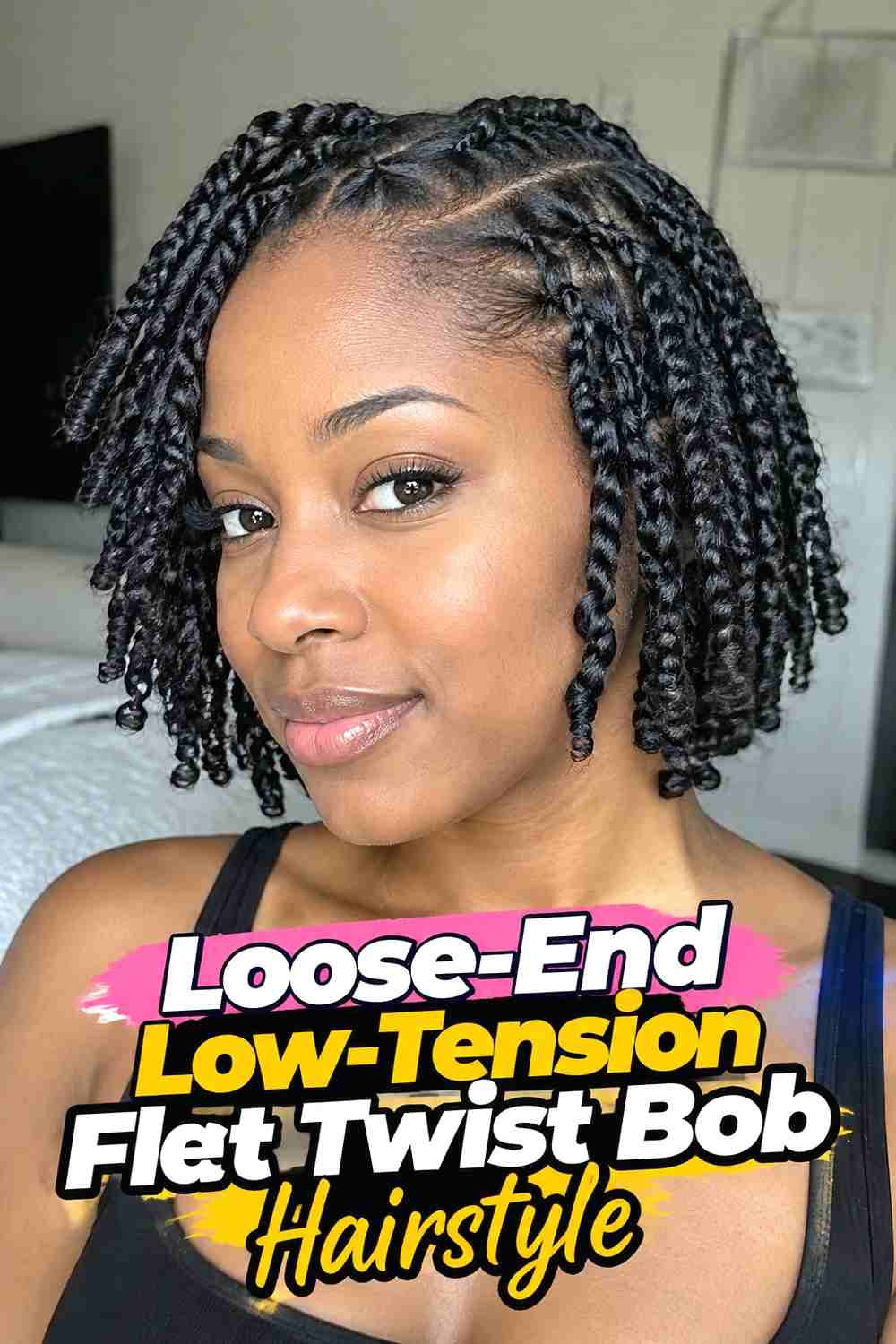
Leaving the ends loose creates a clear contrast between structured flat twists near the scalp and softer texture around the bob perimeter. The twists can stop around the temples, ears, or upper sides before transitioning into curls, coils, waves, or lightly stretched ends. This gives the hairstyle more movement while preserving the recognizable flat-twist pattern above. A chin-to-shoulder length works well because there is enough free hair to create a visible lower shape without overwhelming the scalp design. Keeping the roots softly secured ties the two textures together, making the transition feel relaxed rather than overly formal or rigid.
Why It Works
Structured roots and loose ends provide two distinct textures while still reading as one cohesive bob hairstyle.
Wear & Maintenance
The free ends may need more frequent refreshing than the twisted sections, particularly where they rub against clothing or bedding.
8. Half Up Low Tension Flat Twist Bob Hairstyle
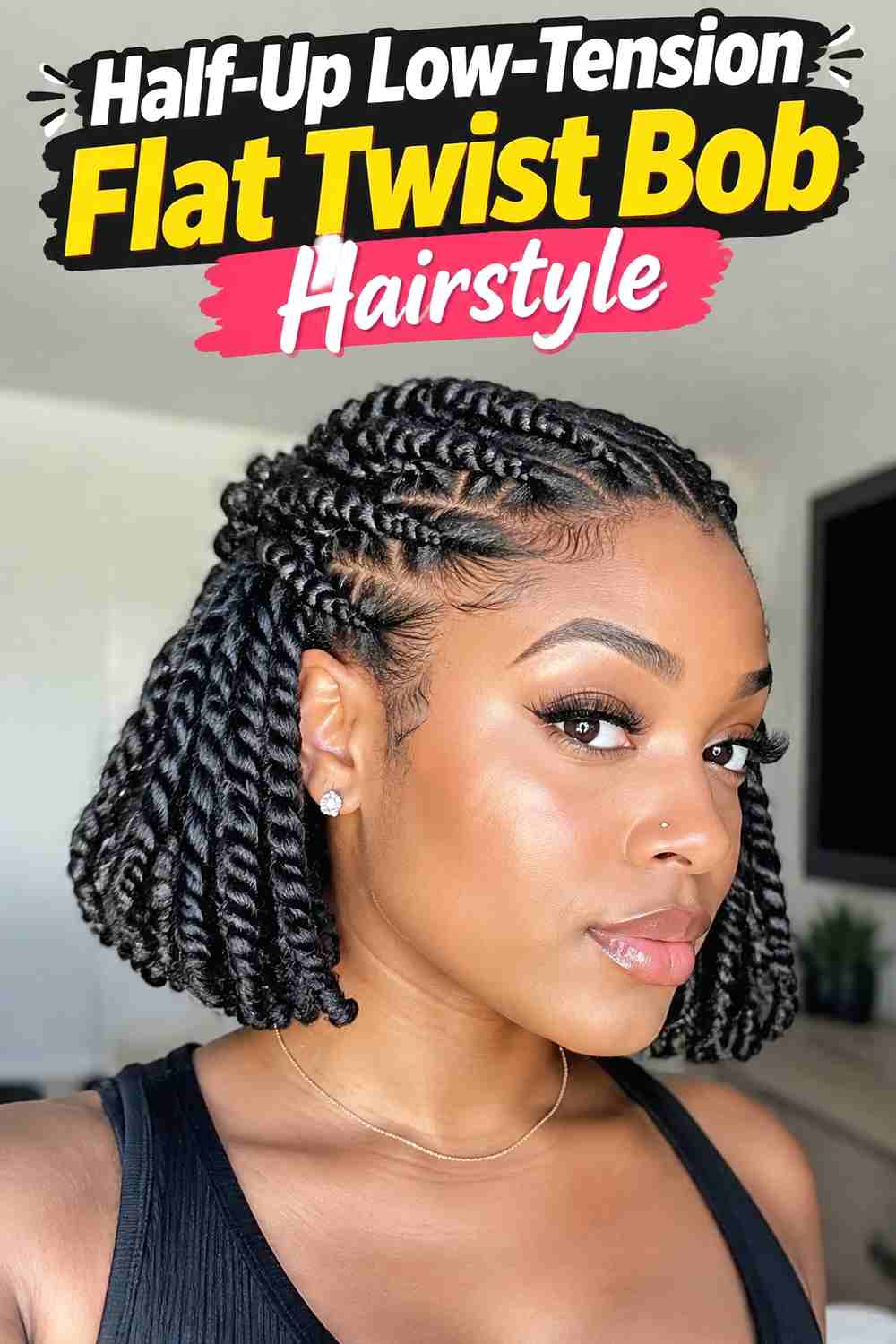
A half-up arrangement gathers selected flat-twist sections toward the crown while allowing the remaining bob length to stay down. This creates an open front and a little extra height without pulling the entire style into an updo. The upper twists can meet at a small ponytail, clip, or softly pinned section, while the lower portion maintains the shape of the bob around the neck or shoulders. The low-tension foundation is important because the gathered top should feel secure without turning the roots into a tightly stretched base. This look is especially useful when you want to change the silhouette without redoing the full twist pattern.
Best For
This style works well when you want some hair away from the face while preserving most of the bob’s visible length.
Pro Tip
Gather only the upper twists needed for the shape so the half-up section does not become unnecessarily heavy.
9. Pinned Back Low Tension Flat Twist Bob Hairstyle
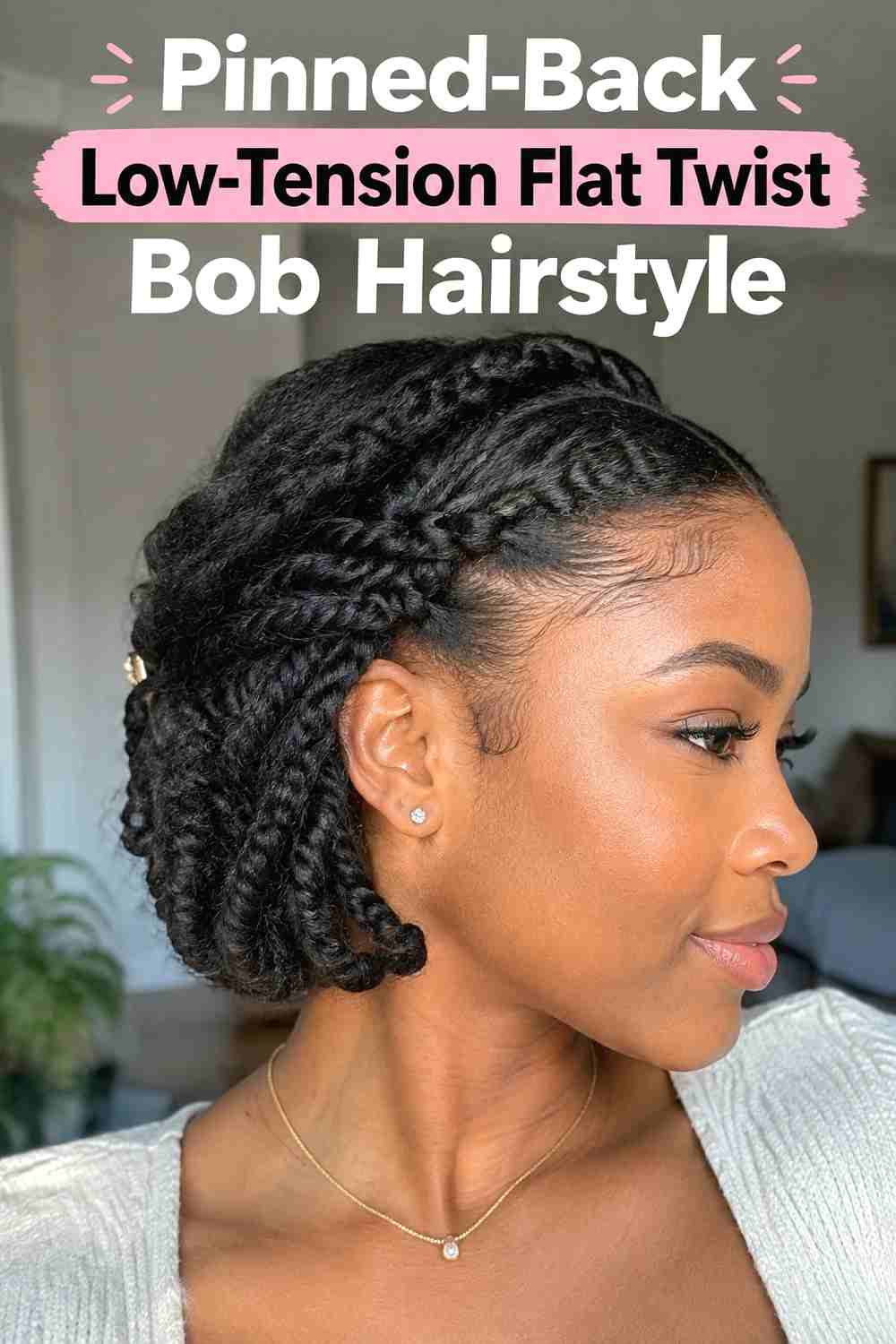
Pinned-back styling offers a subtle way to open the face while keeping most of the flat twist bob loose. A few sections near the temples can be directed gently toward the back and secured without flattening the surrounding twists. The remaining hair falls naturally around the sides and nape, preserving the compact bob silhouette. This approach works especially well with shoulder-length or slightly layered versions because the pinned pieces can blend easily into the rest of the style. A softer root treatment keeps the front from appearing overly pulled, while simple pins or a small clip provide enough structure for everyday wear.
Styling Notes
Secure only a few twists at a time and allow some natural lift near the roots instead of pressing the sides completely flat.
Why It Works
The pinned detail changes the front silhouette while leaving the main flat-twist pattern and bob length intact.
10. Tapered Nape Low Tension Flat Twist Bob Hairstyle
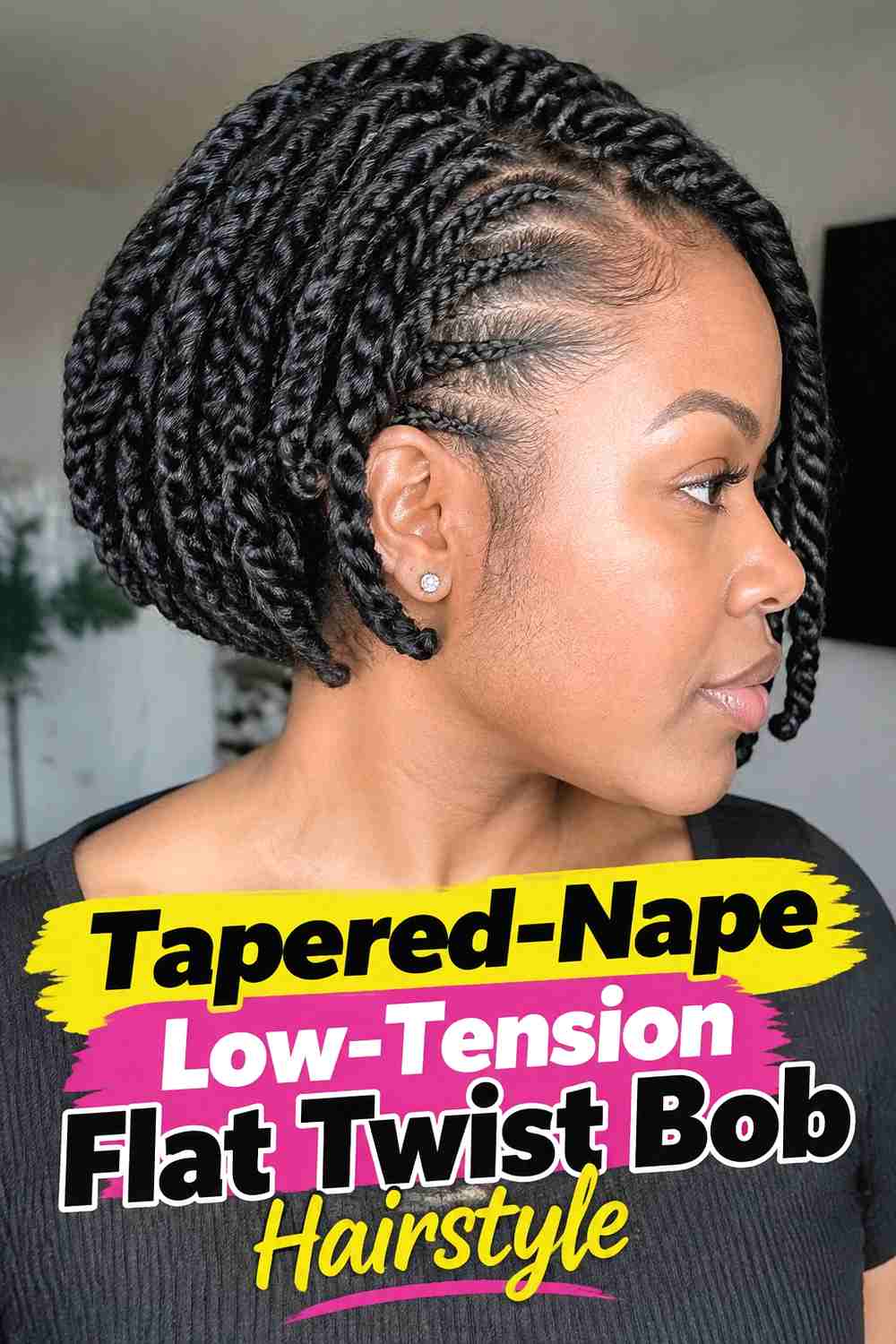
A tapered nape removes some bulk from the back of the bob while keeping more flat-twist texture through the crown and sides. The shorter neckline gives the hairstyle a cleaner profile and can make the upper sections appear fuller by contrast. Flat twists should transition gradually into the tapered area so the back feels connected rather than abruptly divided. This variation works particularly well for dense hair or anyone who prefers less weight resting against the neck. The low-tension approach keeps the scalp pattern softer, while the tapered outline provides enough structure to make the style look polished from the back as well as the front.
Why It Works
Reducing weight near the nape lets the upper twists sit more freely and creates a cleaner bob silhouette from the side.
Wear & Maintenance
The tapered area may need more frequent reshaping if you want to preserve its crisp outline as the hair grows.
11. Face Framing Low Tension Flat Twist Bob Hairstyle
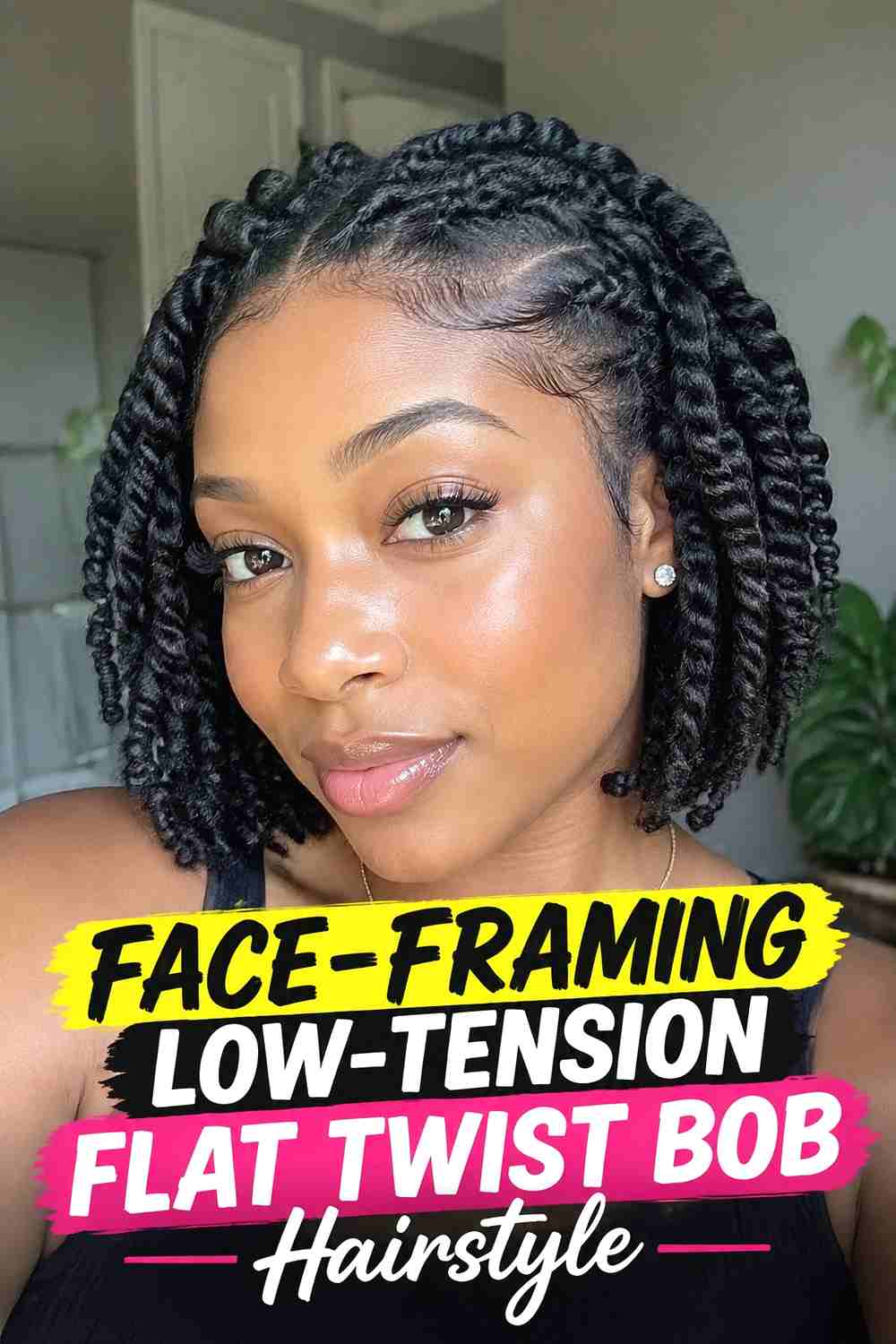
Face-framing sections soften a flat twist bob by directing selected twists toward the cheeks or jaw instead of taking everything straight back. The front pieces may remain fully twisted or release into textured ends that move around the face. Behind them, the remaining sections can follow a simple side or center pattern to keep the overall design balanced. This style works best when the front has enough length to create visible framing without constantly falling into the eyes. Keeping the roots softly placed helps the shorter front sections sit naturally, while the compact bob shape prevents the face-framing detail from turning into a completely separate layered hairstyle.
Styling Notes
Choose a small number of front sections for the framing effect and direct them deliberately before creating the rest of the twist pattern.
Best For
This look suits anyone who wants more movement around the front without adding a full fringe.
12. Asymmetrical Low Tension Flat Twist Bob Hairstyle
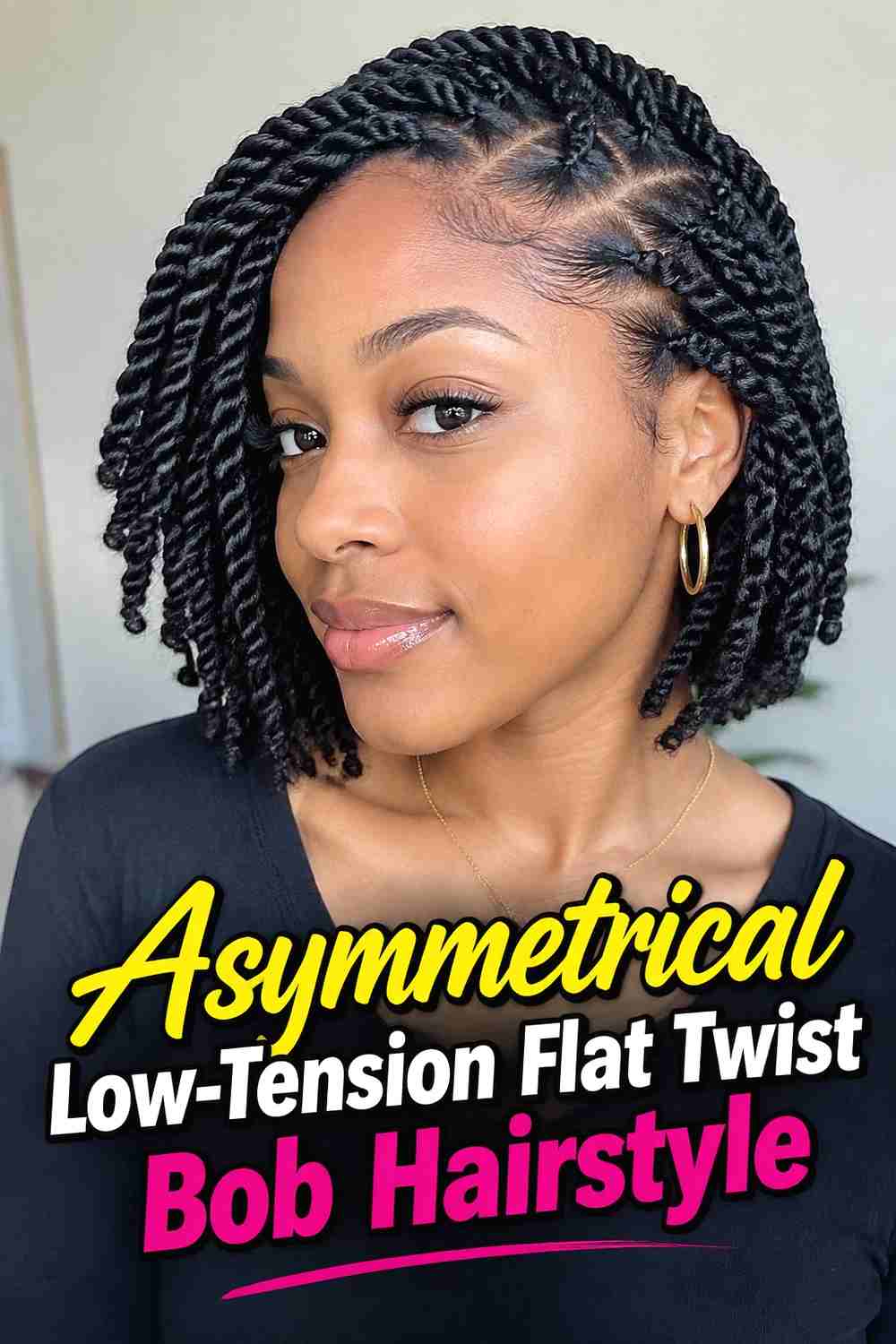
An asymmetrical flat twist bob places more length, volume, or directional detail on one side while keeping the opposite side comparatively compact. The uneven effect may come from the cut itself or from twist placement that encourages one side to fall lower. Flat twists can angle diagonally across the scalp to reinforce this movement before the ends settle into the off-center bob shape. Soft roots help prevent the directional styling from looking harsh. Because the silhouette is intentionally uneven, the perimeter should still appear controlled enough that the difference looks purposeful rather than accidental. A deep side part can make the asymmetry even more noticeable.
Why It Works
Unequal length and directional twisting create visual movement without requiring a complicated collection of braid or twist patterns.
Pro Tip
Work with the side that naturally has more length or volume instead of aggressively flattening the opposite side.
13. Side Swept Low Tension Flat Twist Bob Hairstyle
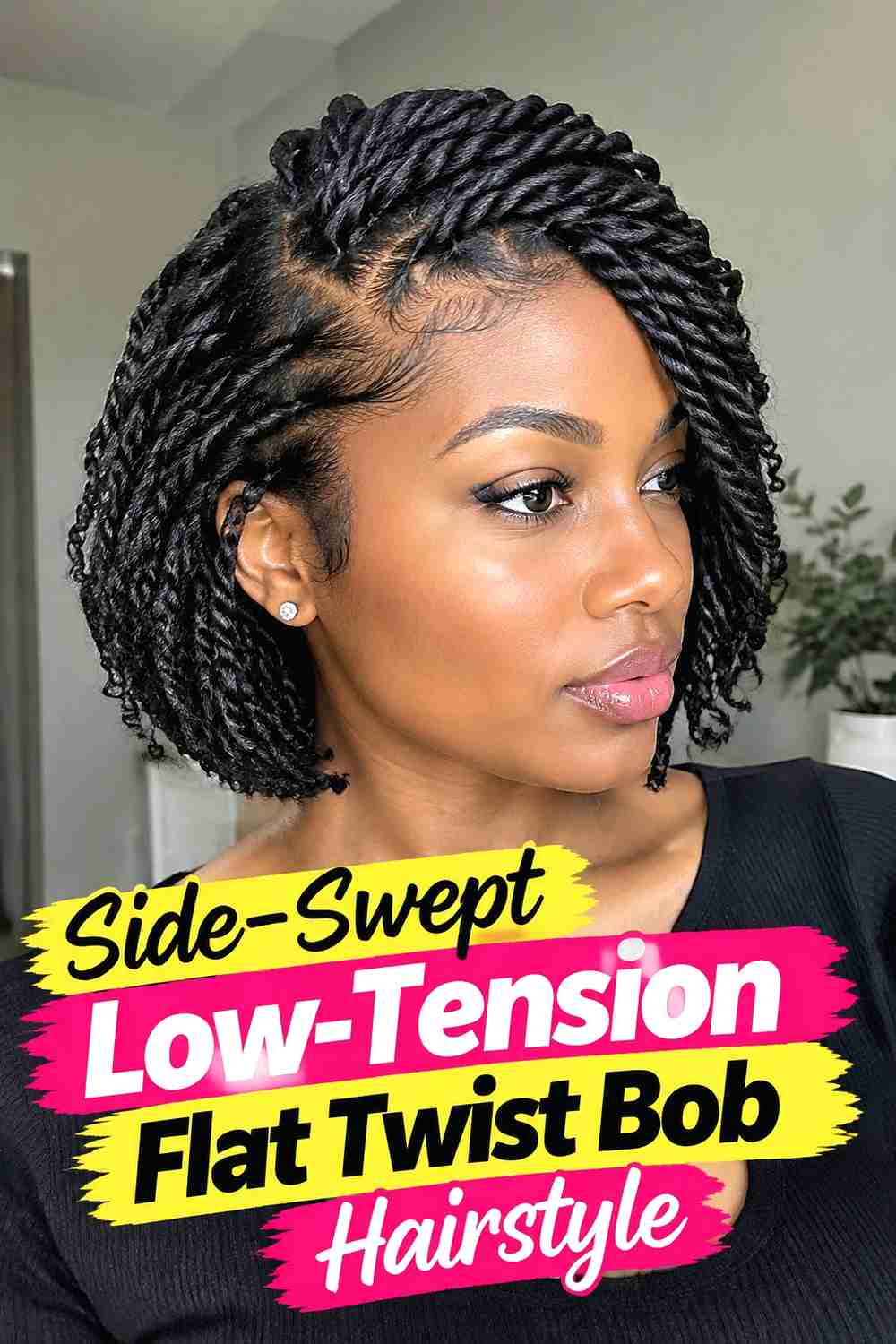
The Side-Swept Low-Tension Flat Twist Bob Hairstyle directs much of the visual weight toward one side without requiring a dramatically uneven haircut. The flat twists can begin near a subtle side part and sweep diagonally toward the opposite side or back before releasing into the bob length. A few soft front pieces can follow the same direction to strengthen the movement. This version looks especially effective when the ends have a little texture, since the lower section continues the flowing line established at the scalp. The low-tension root appearance keeps the sweep soft and wearable rather than looking tightly molded into position.
Styling Notes
Direct the twists during installation so the side sweep develops naturally instead of relying on pins to force the finished hair into place.
Best For
Choose this look when you want directional drama while keeping the overall bob shape soft and practical.
14. Defined End Low Tension Flat Twist Bob Hairstyle
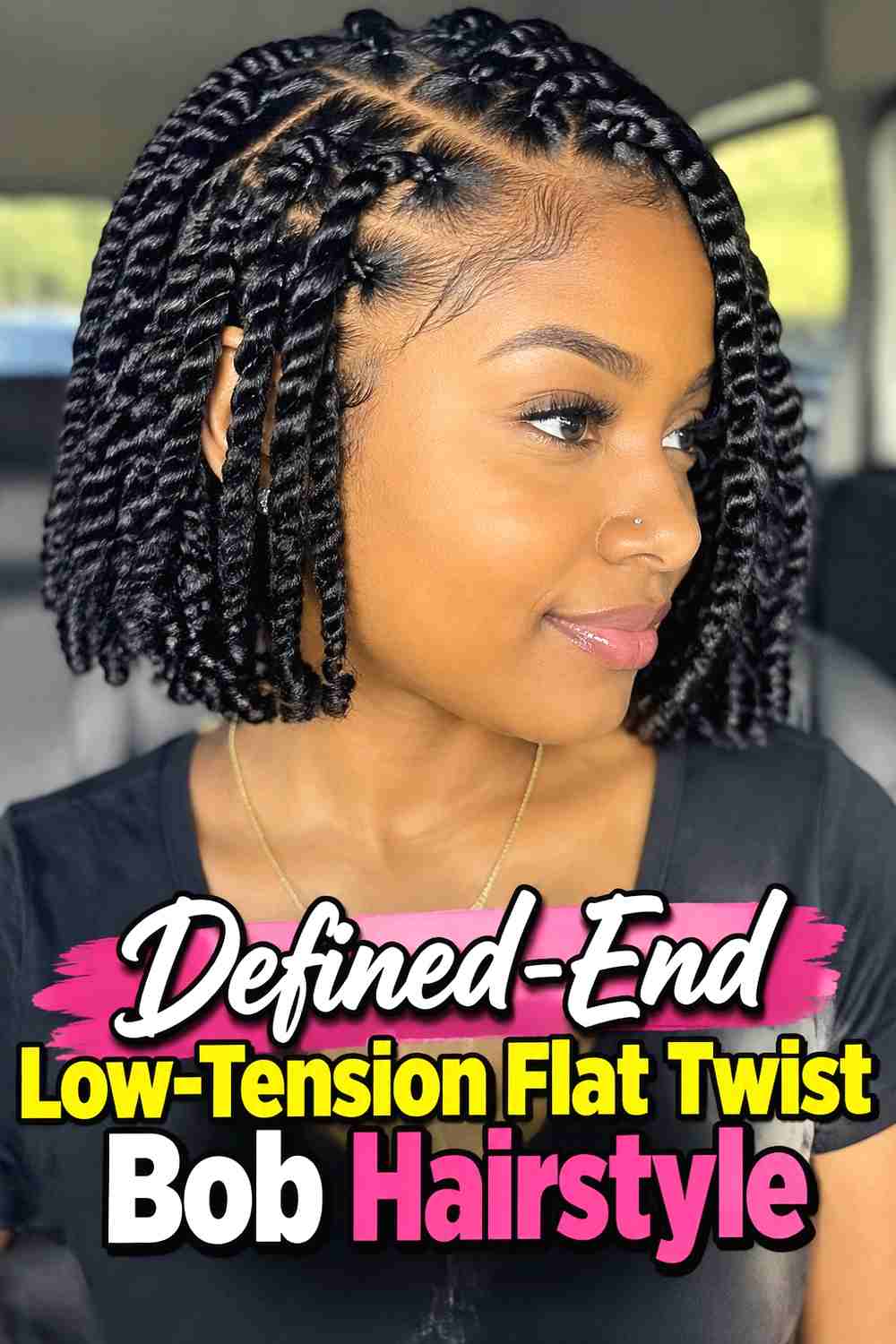
Defined ends give this low-tension flat twist bob a polished lower perimeter. The scalp sections remain softly secured, while the ends are intentionally shaped into visible coils, curls, or compact twists that create a clear finish around the chin or shoulders. Keeping more definition at the bottom works especially well when the upper sections are simple, since the eye naturally moves from the flat-twist pattern to the detailed perimeter. The end texture should remain flexible and believable rather than stiff. This approach can also help distinguish the bob outline when the hair is layered or naturally very full through the middle.
Why It Works
A carefully defined perimeter creates structure at the bottom while the softer roots keep the hairstyle from appearing overly rigid.
Wear & Maintenance
Refresh individual ends as needed rather than adding heavy product across the entire bob and reducing its natural movement.
15. Soft Halo Low Tension Flat Twist Bob Hairstyle
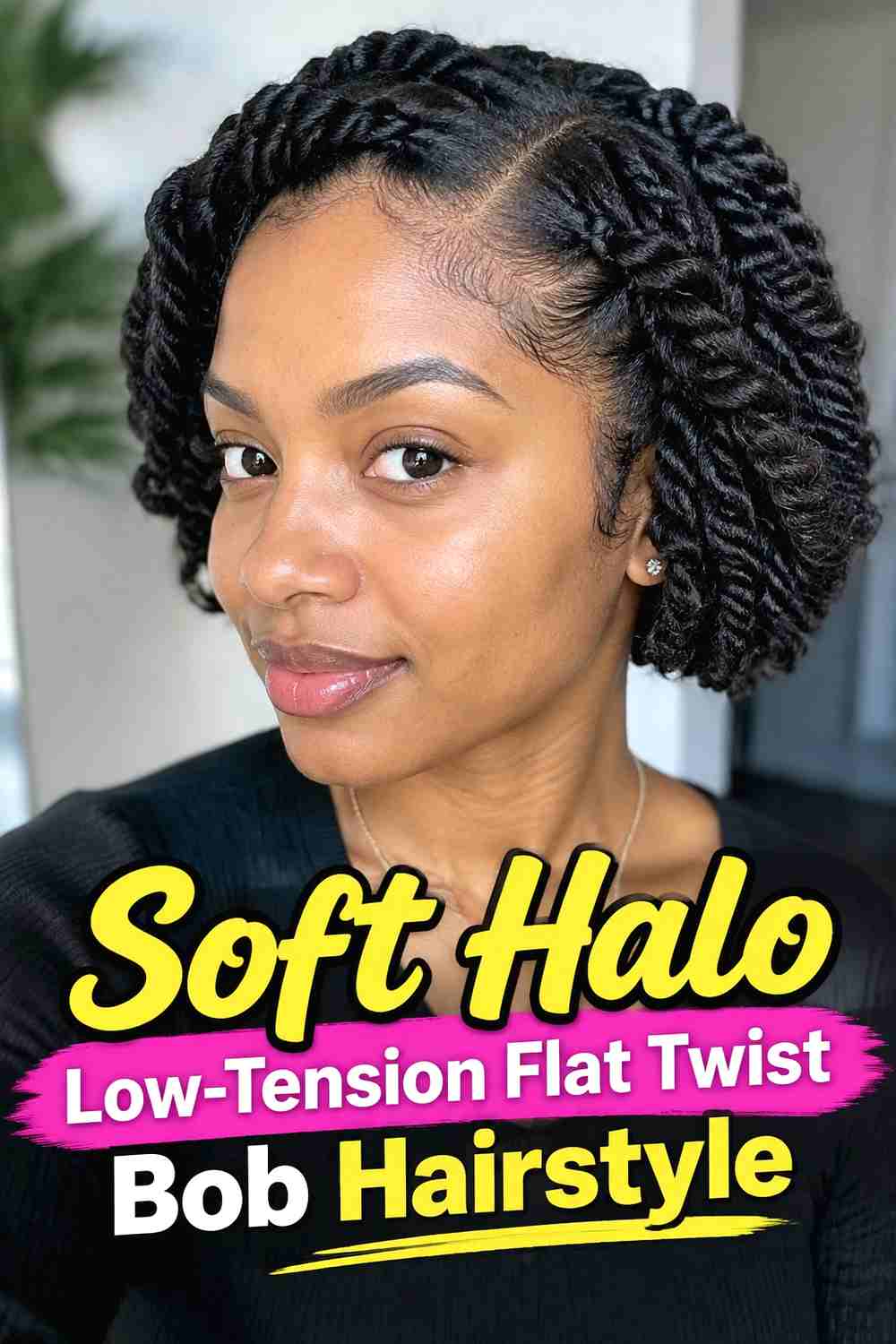
The Soft Halo Low-Tension Flat Twist Bob Hairstyle combines subtle scalp structure with airy volume around the perimeter. The flat twists remain visible near the roots, but the lower sections are released or softly separated enough to create a rounded halo around the head. The result feels fuller than a tightly defined twist bob while still retaining clear directional detail at the scalp. Light layering can help the sides and crown expand without making the bottom unnecessarily heavy. Keeping the root area comfortable and naturally lifted supports the soft finish, while scattered definition through the ends prevents the halo from looking completely brushed out.
Styling Notes
Separate the lower texture gradually and preserve a few defined sections so the perimeter retains depth and visible texture.
Why It Works
The combination of flat-twist structure and diffused bob volume creates a balanced look that feels both polished and relaxed.
How to Choose the Right Look
Start with the bob length you actually want to wear. Chin-length versions feel compact and put more emphasis on the twist pattern, while shoulder-length styles provide extra movement and more options for loose or defined ends. If you prefer less weight around the back, a tapered nape can make the shape feel lighter.
Next, decide how much scalp design you want to show. Straight center and side parts keep the look simple, while curved sections add more decorative movement. Side-swept and asymmetrical versions are useful when you want stronger directional styling.
Think about the ends as well. Fully twisted or defined ends create a more structured finish, while loose ends and soft halo shapes add volume and movement. Half-up and pinned-back versions are useful when you want to change the bob without redoing the twists.
Most importantly, low tension should still feel comfortable. A neat style does not need persistent pulling or soreness; sections that feel uncomfortably tight should be adjusted.
Final Thoughts
Low-tension flat twist bobs offer a useful balance between scalp structure and short, textured movement. Changing the parting, bob length, crown volume, taper, or end finish can make the same basic technique feel noticeably different.
Choose the version that fits your preferred silhouette and daily routine, and keep the roots comfortably secure rather than relying on excessive tightness to hold the design.
FAQs
1. What is a low-tension flat twist bob?
It is a bob-length hairstyle that uses flat twists along the scalp with a softer, less tightly pulled appearance at the roots.
2. Can flat twists work on a chin-length bob?
Yes. Chin-length hair can create a compact flat twist bob, especially when the sections are sized to suit the shorter finished length.
3. Can the ends be left loose with flat twists?
Yes. Flat twists can transition into loose curls, coils, waves, or textured ends to create more movement around the bob perimeter.
4. How can a flat twist bob look fuller?
Crown-focused sections, light layering, loose ends, and selective separation can add volume without requiring the roots to be tightened.
5. Should low-tension flat twists feel completely loose?
No. They should still feel secure enough to hold their shape, but persistent pulling, soreness, or discomfort suggests that the affected sections should be adjusted.
Save your favorite low-tension flat twist bob hairstyle ideas for your next textured look, and share the collection when you want fresh short-hair inspiration.