18 Metal Cuff Ponytail Hairstyle Ideas
Give a simple ponytail a polished statement finish with sleek metal cuffs, soft texture, braids, curls, and modern placements that instantly elevate the look.
Metal cuff ponytails use smooth decorative sleeves, rings, or clips around the ponytail base or along the length to create a clean jewelry-inspired detail. The accessory can be subtle and minimalist or become the central design feature, depending on its size, finish, placement, and how the hair is styled around it.
When choosing a version, consider ponytail height, hair density, texture, and accessory weight. A single cuff can look sleek on fine or smooth hair, while stacked cuffs, bubble sections, and braided details work especially well when there is enough length and fullness to support them. The underlying elastic should provide the hold so the decorative cuff remains comfortable and secure.
Quick List
- Classic Metal Cuff Ponytail Hairstyle
- Sleek High Metal Cuff Ponytail Hairstyle
- Low Polished Metal Cuff Ponytail Hairstyle
- Stacked Metal Cuff Ponytail Hairstyle
- Minimalist Single Cuff Ponytail Hairstyle
- Double Metal Cuff Ponytail Hairstyle
- Gold Metal Cuff Ponytail Hairstyle
- Silver Metal Cuff Ponytail Hairstyle
- Rose Gold Metal Cuff Ponytail Hairstyle
- Braided Metal Cuff Ponytail Hairstyle
- Bubble Metal Cuff Ponytail Hairstyle
- Curly Metal Cuff Ponytail Hairstyle
- Wavy Metal Cuff Ponytail Hairstyle
- Textured Metal Cuff Ponytail Hairstyle
- Wrapped Base Metal Cuff Ponytail Hairstyle
- Side Swept Metal Cuff Ponytail Hairstyle
- Half Up Metal Cuff Ponytail Hairstyle
- Extra Long Metal Cuff Ponytail Hairstyle
1. Classic Metal Cuff Ponytail Hairstyle
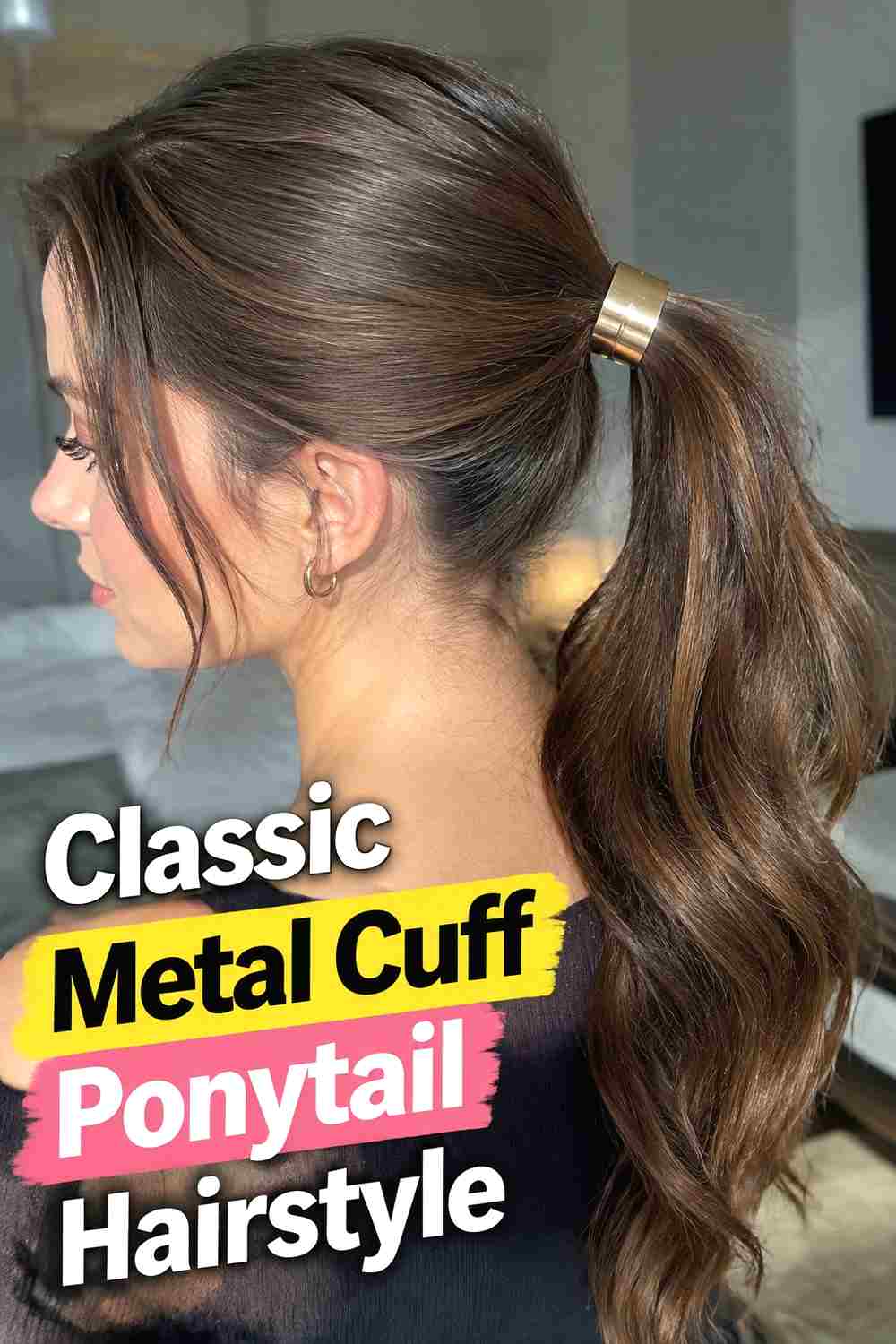
The Classic Metal Cuff Ponytail Hairstyle keeps the hair simple so one polished accessory can become the defining detail. Gather the hair into a clean mid-height ponytail, secure it with a reliable elastic, and position a smooth cuff around the base to conceal the tie. The result feels more finished than a standard ponytail without requiring complicated braiding or curling. Straight, softly waved, and naturally textured lengths can all work, although keeping the area directly beneath the cuff neat makes the accessory look more intentional. Choose a cuff that closes comfortably around the ponytail without pinching or flattening the hair. A medium-width design usually provides enough presence while still allowing the ponytail to move naturally.
Styling Notes
Secure the ponytail first and add the cuff afterward. The accessory should conceal or decorate the base rather than serve as the only source of tension.
2. Sleek High Metal Cuff Ponytail Hairstyle
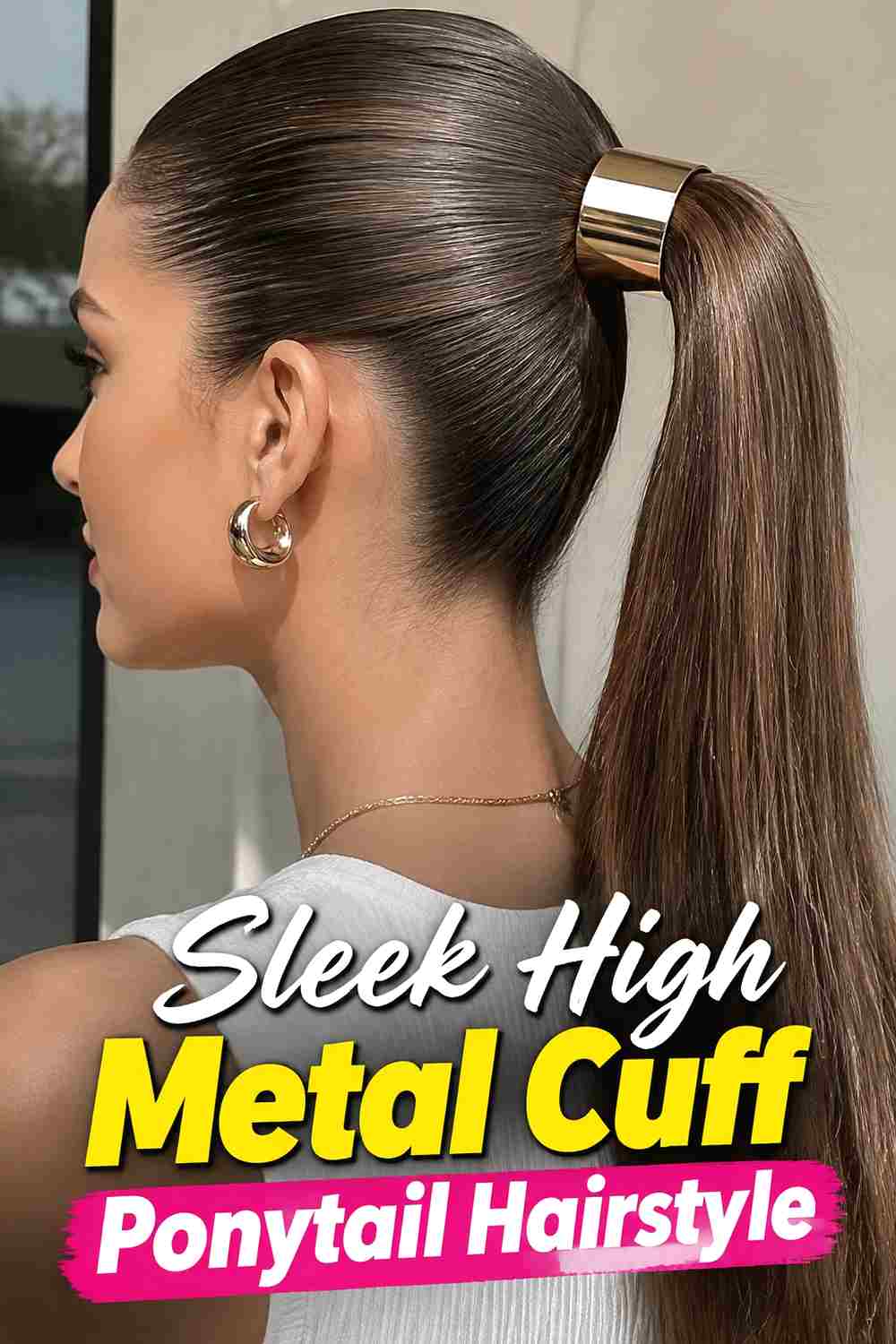
The Sleek High Metal Cuff Ponytail Hairstyle pairs a lifted base with a smooth crown and clean metallic detail for a sharp, modern silhouette. Position the ponytail near the crown, refine the surface without eliminating natural strand detail, and place a cuff around the elastic so the transition into the lengths looks polished. Straight or stretched hair emphasizes the sleek finish, while a little natural movement through the ends prevents the ponytail from looking rigid. Because a high ponytail already creates visual lift, one streamlined cuff is usually enough to make an impact. Choose a lightweight piece that sits securely against the base without sliding downward as the hair moves throughout the day.
Best For
This variation suits polished everyday looks, dinners, events, and outfits where you want a clean hair accessory that feels more jewelry-like than decorative.
3. Low Polished Metal Cuff Ponytail Hairstyle
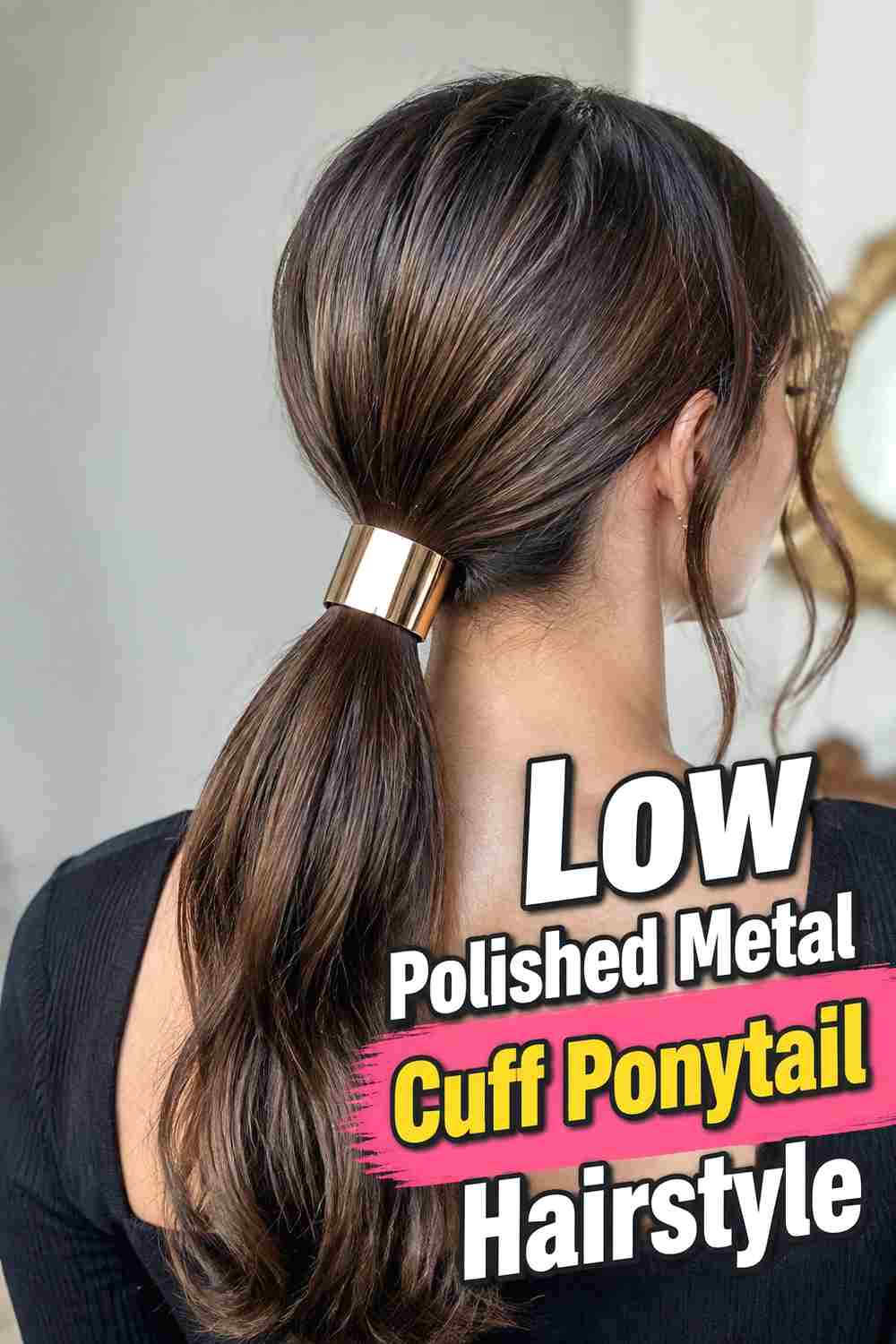
The Low Polished Metal Cuff Ponytail Hairstyle places the accessory close to the nape for a refined, understated effect. A smooth low ponytail naturally creates a clean line from the crown into the cuff, making even a simple metallic piece feel deliberate. The lengths can remain straight, softly bent, or gently waved depending on how formal you want the result to appear. Keep the base secure but comfortable, especially when wearing the ponytail for several hours. A narrow cuff tends to feel minimalist, while a wider cylindrical design creates a stronger statement. Allow the hair below the accessory to fall naturally rather than forcing it into an overly stiff shape, since soft movement balances the structured metal detail.
Wear & Maintenance
Check that the cuff has smooth interior edges and remains stable around the concealed elastic. Remove it gently rather than dragging it down the length of the hair.
4. Stacked Metal Cuff Ponytail Hairstyle
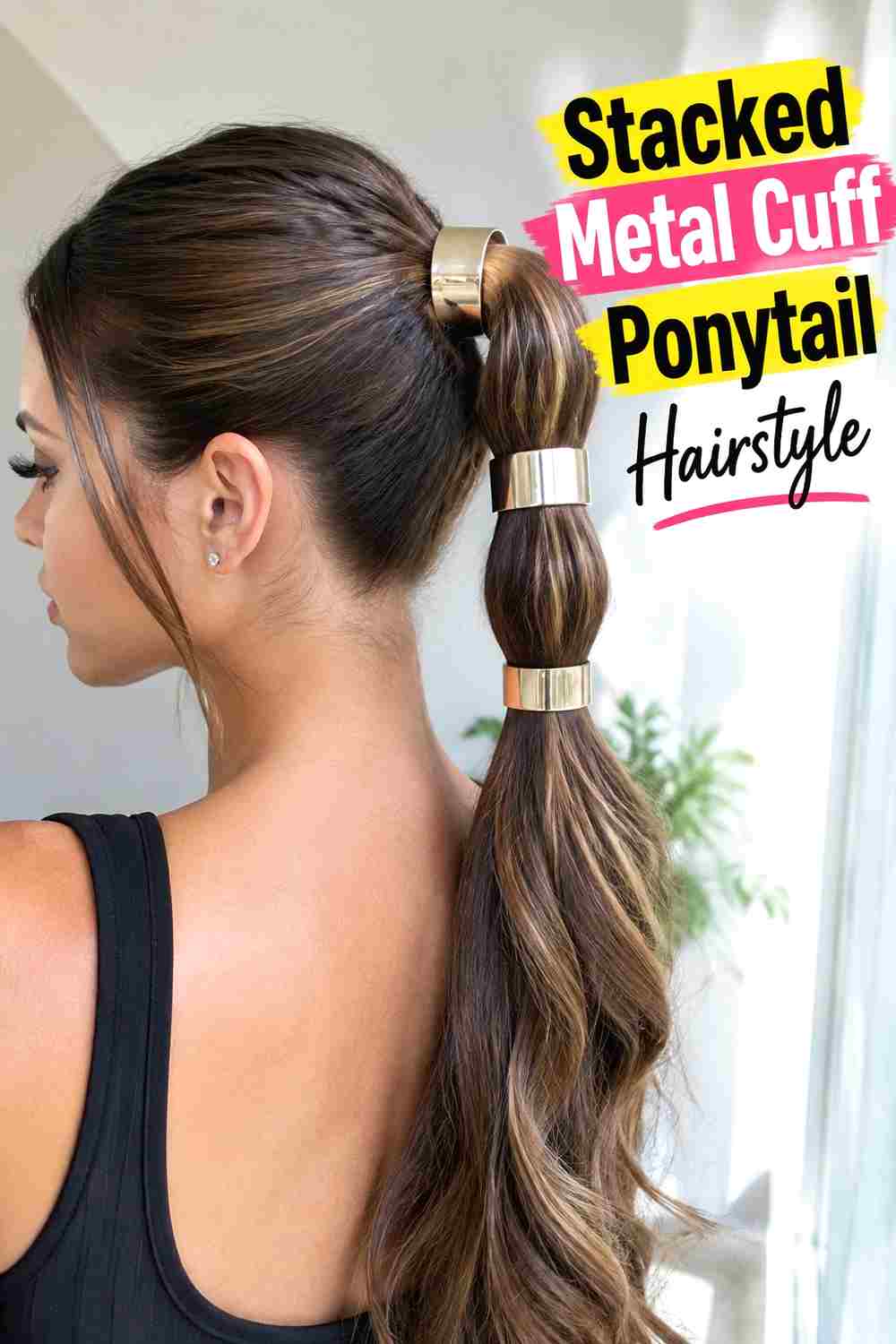
The Stacked Metal Cuff Ponytail Hairstyle uses several slim cuffs close together to create a layered metallic section near the ponytail base. This arrangement can make a basic ponytail feel more architectural while still leaving most of the hair loose and movable. Use cuffs of similar size for a streamlined finish, or combine slightly varied widths for more visual depth. The ponytail should have enough density to support the accessories without becoming compressed, and each cuff should sit securely without overlapping awkwardly. Keeping the crown relatively simple allows the stacked detail to remain the focal point. Metallic pieces in one finish look cohesive, while carefully mixed metals can create a more eclectic effect if the overall styling remains controlled.
Pro Tip
Add one cuff at a time and check the spacing from multiple angles. A short, balanced stack usually looks cleaner than extending heavy accessories too far down the ponytail.
5. Minimalist Single Cuff Ponytail Hairstyle
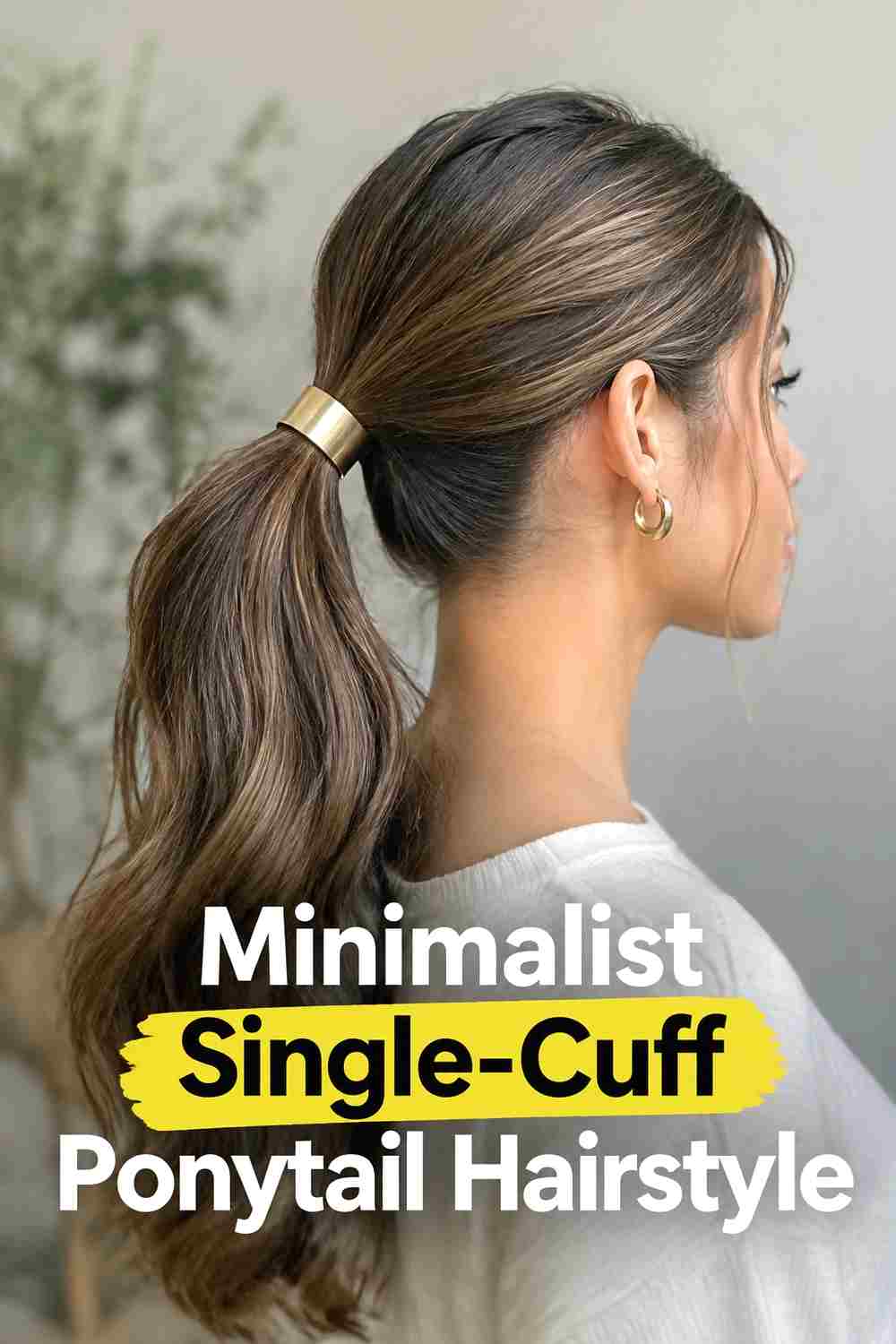
The Minimalist Single-Cuff Ponytail Hairstyle is ideal when you want one small detail to elevate a simple tied-back look. Hair can be gathered high, low, or at mid-height, but the accessory remains restrained: one clean cuff covering the elastic with no extra clips, ribbons, or embellishments. The simplicity highlights the ponytail’s texture and natural movement, making this version particularly versatile for everyday wear. A polished metal finish creates contrast against dark or light hair without requiring a large accessory. Choose the cuff size according to the ponytail’s density so it sits neatly rather than appearing oversized or loose. The best result feels intentional and streamlined, with the accessory supporting the hairstyle instead of overpowering it.
Why It Works
One well-placed cuff gives the ponytail a finished appearance while preserving the practicality and movement of an uncomplicated everyday style.
6. Double Metal Cuff Ponytail Hairstyle
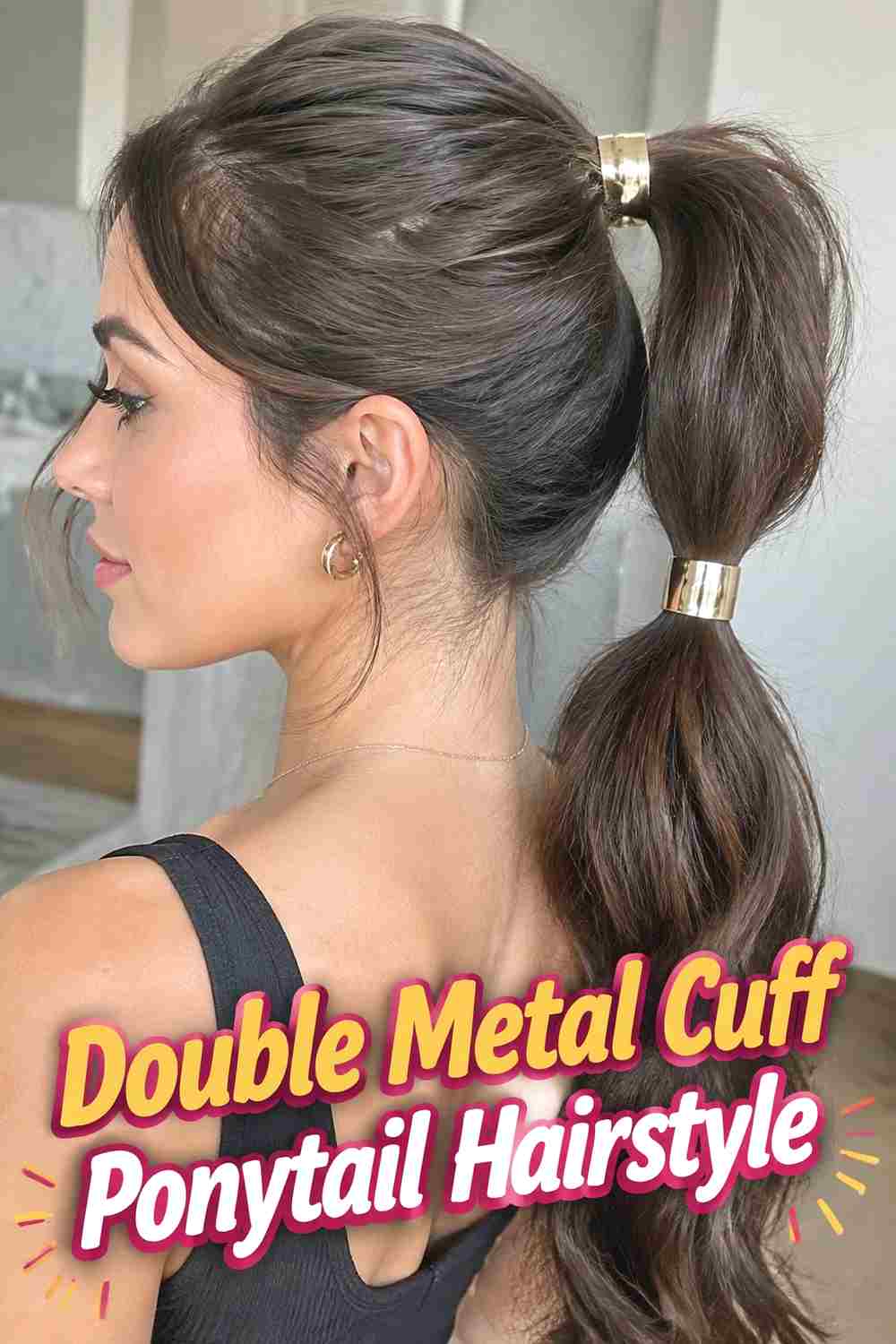
The Double Metal Cuff Ponytail Hairstyle uses two distinct metallic accents to create repetition without the heavier appearance of a full stacked design. One cuff can sit at the ponytail base while the second is positioned a few inches lower, creating a subtle segmented effect. Alternatively, two slim cuffs can be placed side by side around the base for a wider decorative band. Keep the spacing deliberate so the two pieces look connected as part of one design. Medium-to-long hair works particularly well because there is enough visible length beneath the accessories to balance the added structure. Use lightweight cuffs with secure closures, especially if the second piece sits on the ponytail itself rather than directly over an elastic.
Styling Notes
Secure any lower cuff over a small hidden elastic if additional stability is needed. This prevents the accessory from gradually sliding down smooth hair.
7. Gold Metal Cuff Ponytail Hairstyle
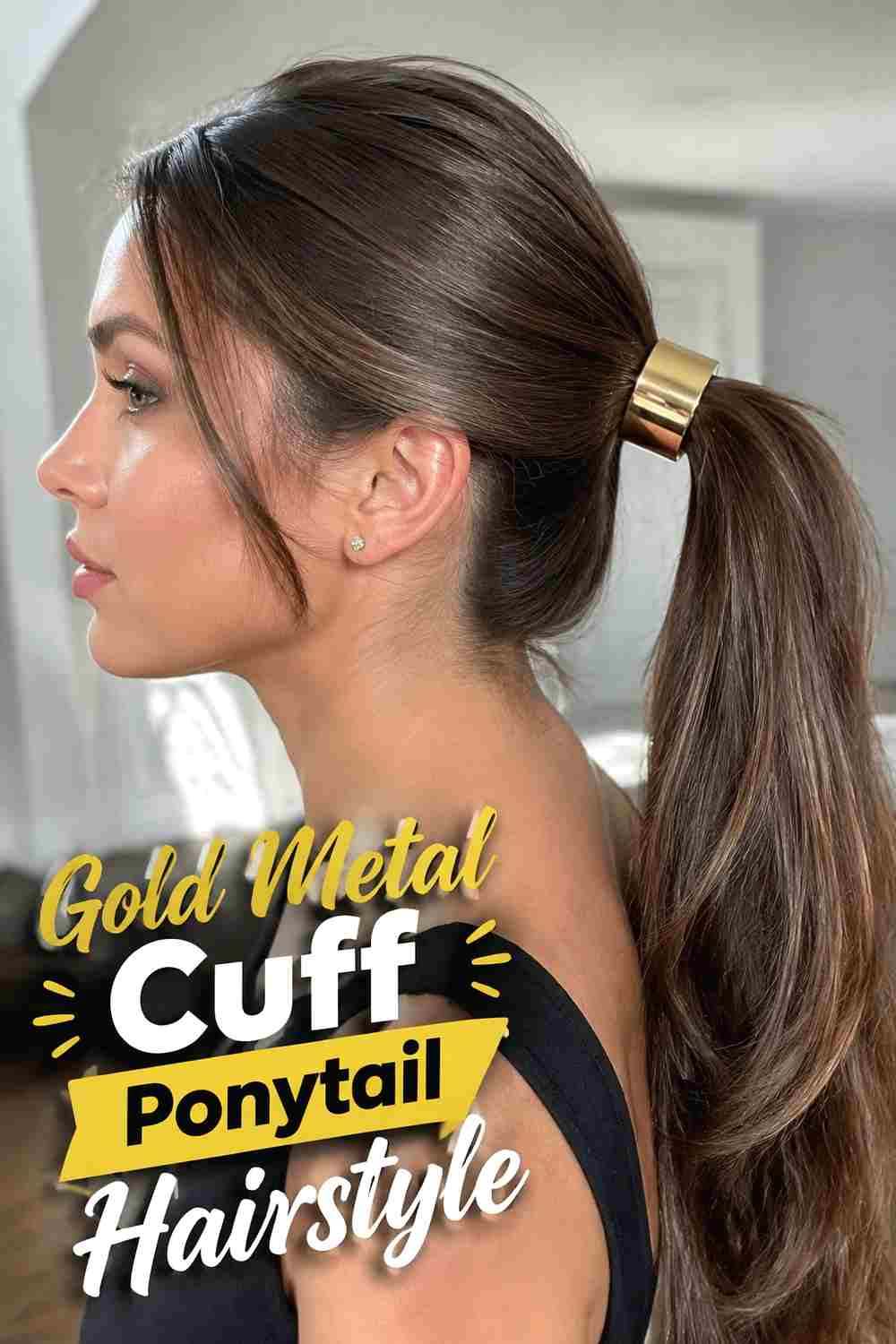
The Gold Metal Cuff Ponytail Hairstyle brings warmth and shine to a simple ponytail using a polished or softly brushed gold-tone accessory. A single gold cuff around the base can stand out beautifully against brunette, black, red, blonde, or highlighted hair, although the overall effect changes with the finish. Bright polished gold feels bolder, while muted or brushed gold looks more understated. Keep the surrounding hairstyle relatively clean so the metallic detail catches the light without competing against too many other accessories. Both high and low ponytails work, but a mid-height or low placement often gives the cuff an elegant jewelry-like quality. Choose a smooth, hair-safe design that fits comfortably around the secured ponytail.
Best For
Gold cuffs pair especially well with warm-toned accessories, dressier outfits, evening looks, and occasions where a small amount of shine feels appropriate.
8. Silver Metal Cuff Ponytail Hairstyle
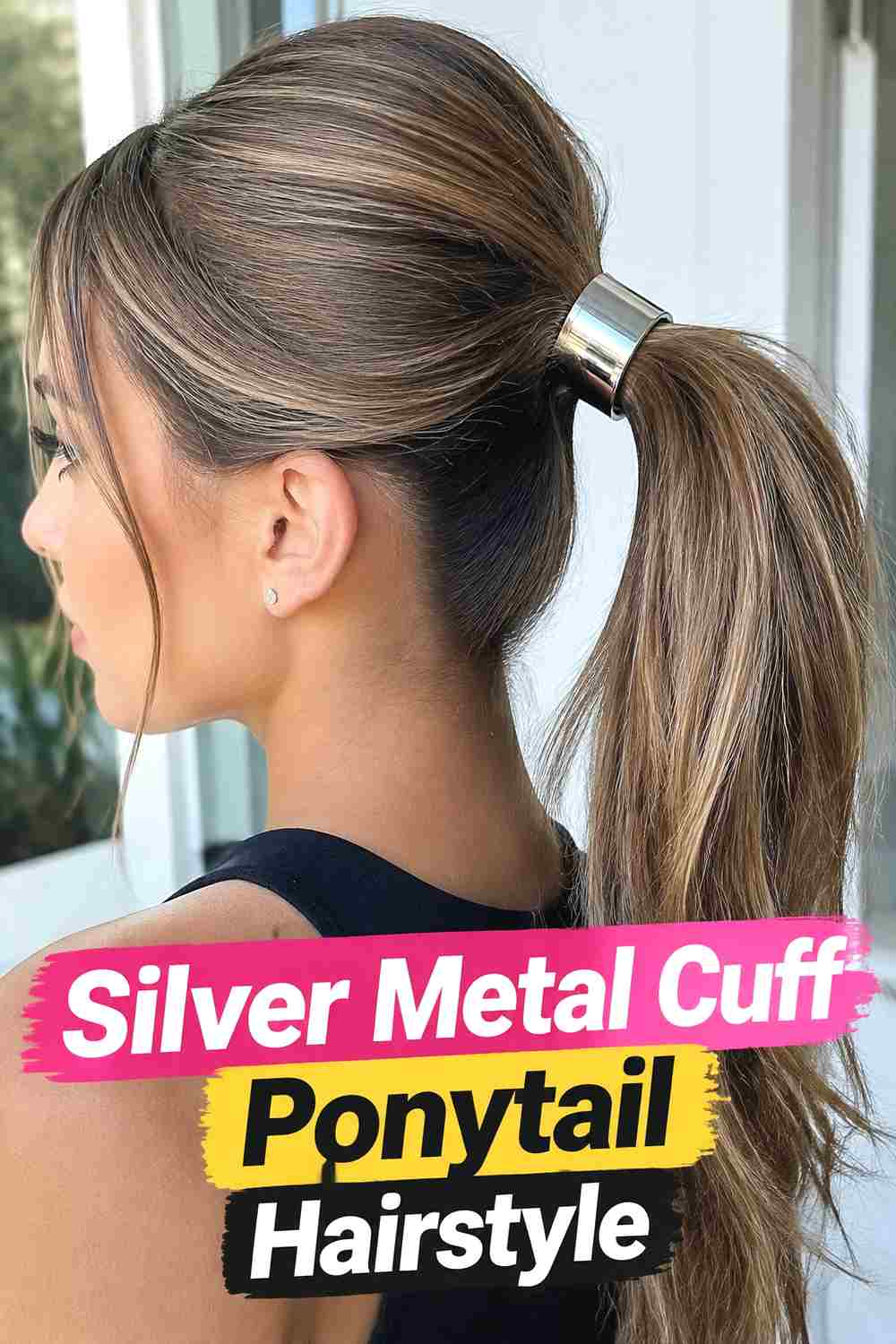
The Silver Metal Cuff Ponytail Hairstyle uses a cool metallic accent for a crisp, contemporary finish. Silver can look particularly striking against sleek hair because its reflective surface creates a clear contrast with the natural texture of the strands. Try it around a high ponytail for a sharper effect or at the nape for something more minimal. Straight lengths reinforce the modern mood, while soft waves make the metallic detail feel less formal. Avoid layering too many competing silver accessories directly around the hair unless you intentionally want a more elaborate design. One smooth cuff can often provide enough impact. As with any metal hair piece, the interior should feel polished and free from rough seams that could catch individual strands.
Why It Works
Cool metallic shine creates a clean visual focal point and can make even a basic ponytail appear more deliberately styled without adding bulk.
9. Rose Gold Metal Cuff Ponytail Hairstyle
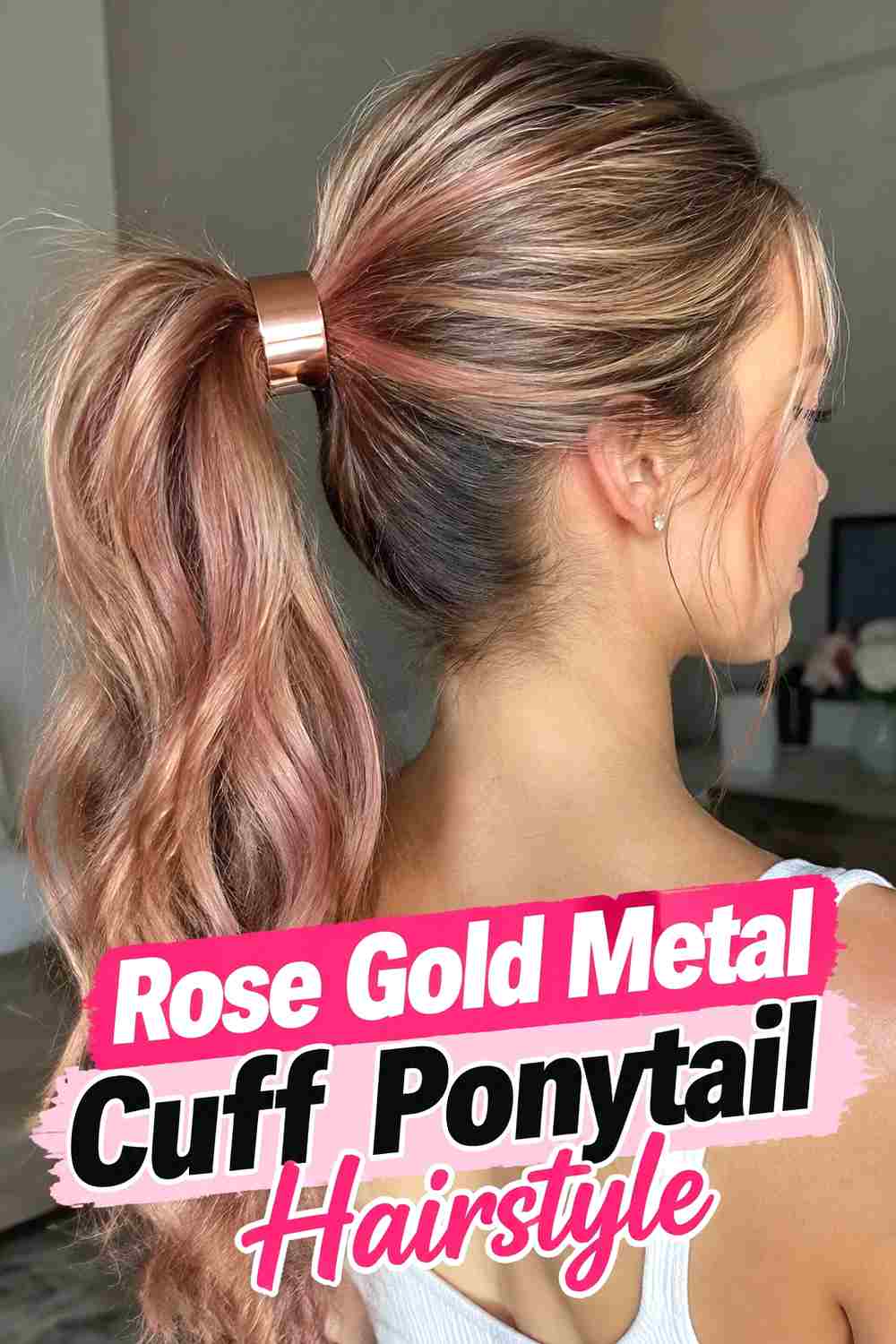
The Rose Gold Metal Cuff Ponytail Hairstyle offers a softer alternative to bright yellow gold or cool silver. Its warm pink-toned finish adds subtle color while still maintaining the structured look of a metal accessory. Pair it with a smooth low ponytail for an elegant effect or a softly textured mid-height ponytail for something more relaxed. Rose gold tends to work best when the cuff design itself is simple, allowing the color to provide the decorative interest. Waves and softly curled ends can enhance the feminine finish without making the style overly ornate. Keep the cuff centered around the ponytail base and make sure the closure sits discreetly underneath or behind the hair.
Styling Notes
Let the metal finish remain the main accent. Too many nearby embellishments can reduce the clean contrast that makes a rose gold cuff visually effective.
10. Braided Metal Cuff Ponytail Hairstyle
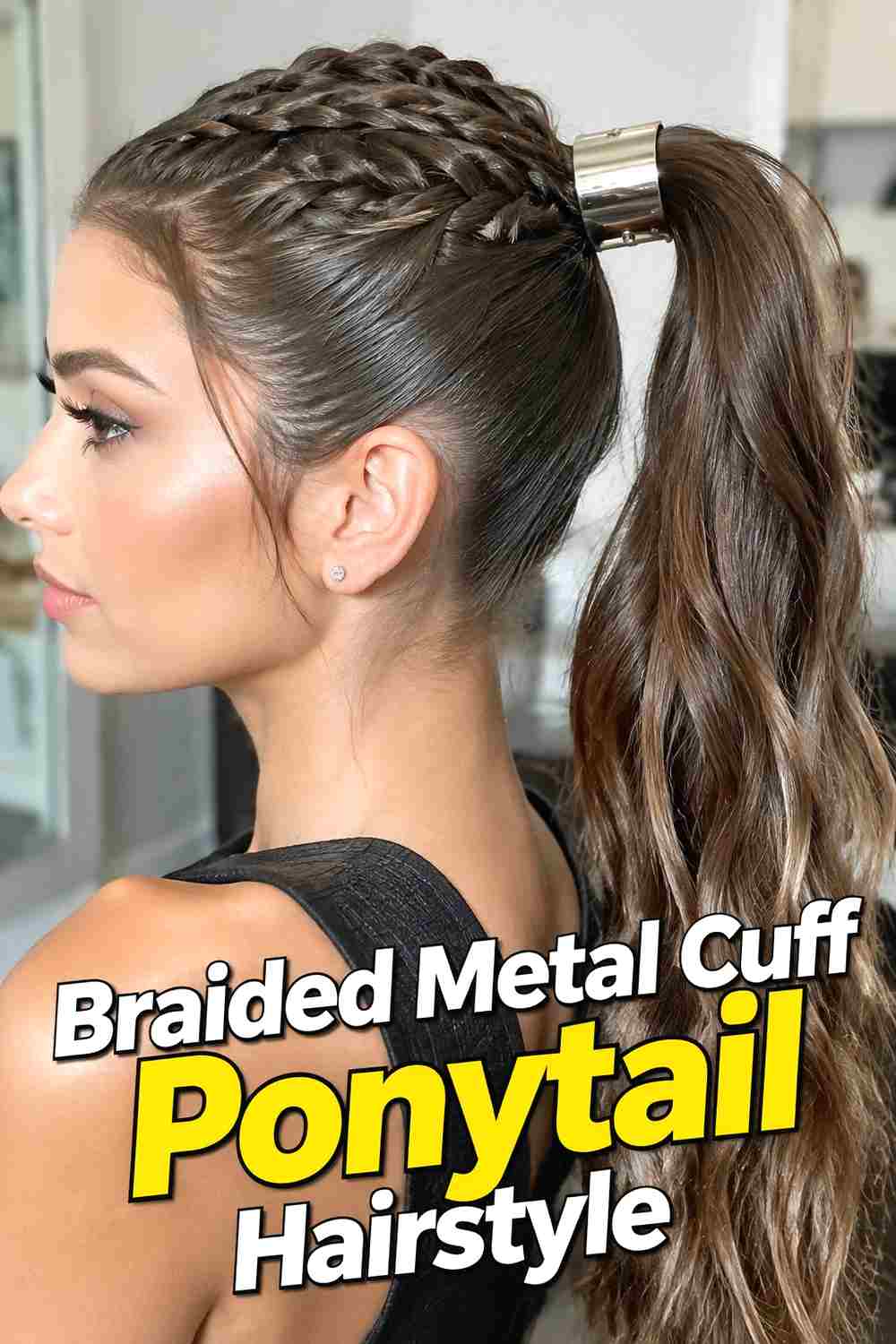
The Braided Metal Cuff Ponytail Hairstyle combines structured braiding with sleek metallic accents for a detailed but balanced look. Begin with a secure ponytail, then braid all or part of the length before adding cuffs at selected points. Small cuffs can be positioned near the base, at braid intersections, or around a few carefully chosen sections rather than covering the entire braid. The accessories should follow the braid’s structure and sit firmly enough to stay in place without squeezing the woven strands. Longer hair gives you more room to show both techniques, while thicker braids can support slightly wider cuffs. Keep the metallic pieces spaced apart so the braid’s natural pattern remains visible between them.
Pro Tip
Finish and secure the braid before adding decorative metal pieces. This makes it easier to judge placement and prevents the cuffs from interfering with the braiding process.
11. Bubble Metal Cuff Ponytail Hairstyle
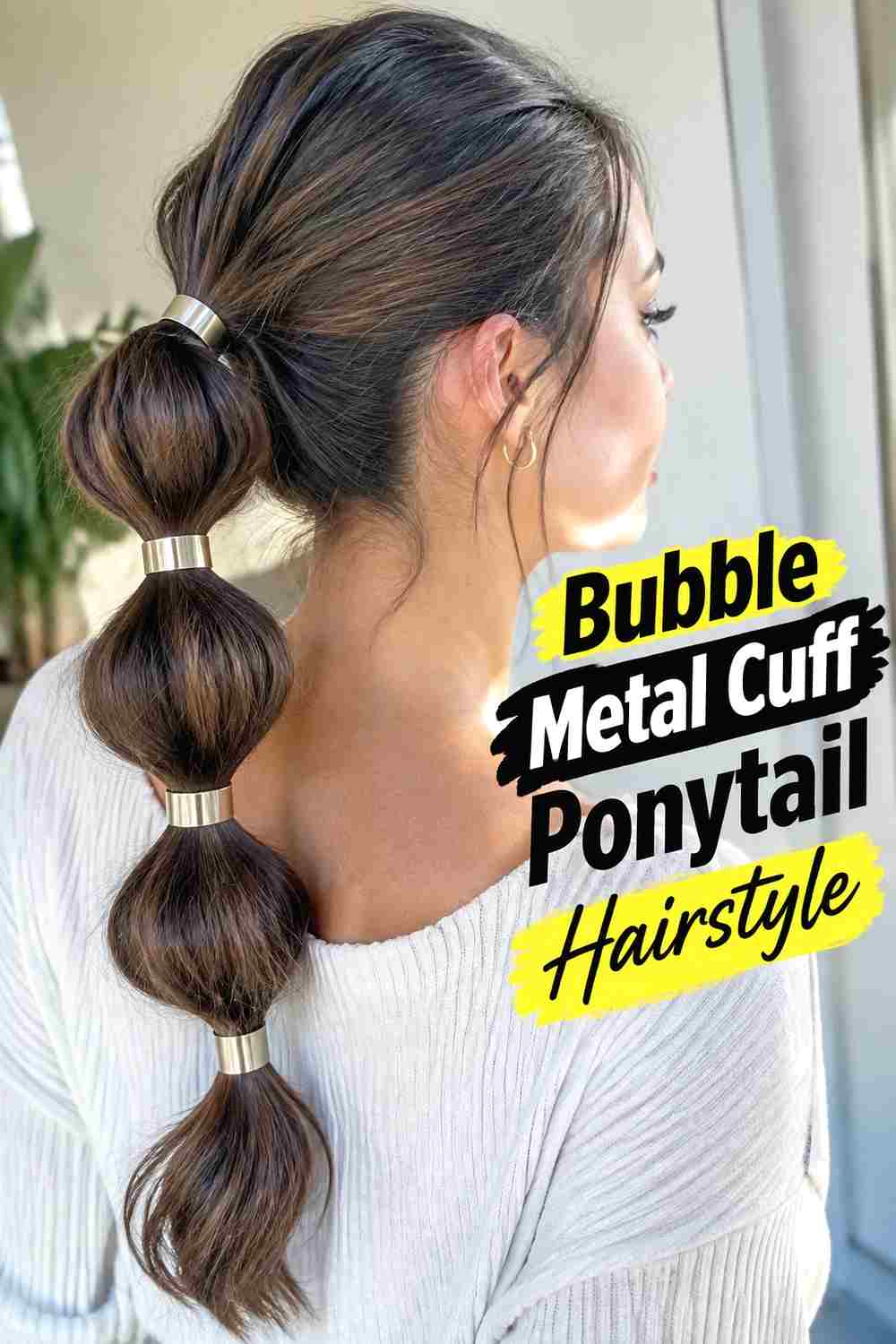
The Bubble Metal Cuff Ponytail Hairstyle replaces or conceals several visible elastics with metallic accents, giving the segmented ponytail a polished jewelry-inspired finish. Start with a secure ponytail and add small elastics down the length at measured intervals. Gently expand the hair between them to create rounded bubbles, then place slim cuffs over selected ties. Using a cuff at every section creates a dramatic pattern, while alternating metal accents with hidden elastics feels lighter. The bubbles should remain soft and dimensional rather than tightly compressed beneath the accessories. Long or dense hair typically provides the clearest shape, although smaller bubbles can work on finer hair. Make sure each cuff fits the section instead of forcing the hair into an unnaturally narrow shape.
Styling Notes
Perfect the bubble volume before adding the cuffs. Once the accessories are positioned, make only small adjustments so the sections stay evenly spaced.
12. Curly Metal Cuff Ponytail Hairstyle
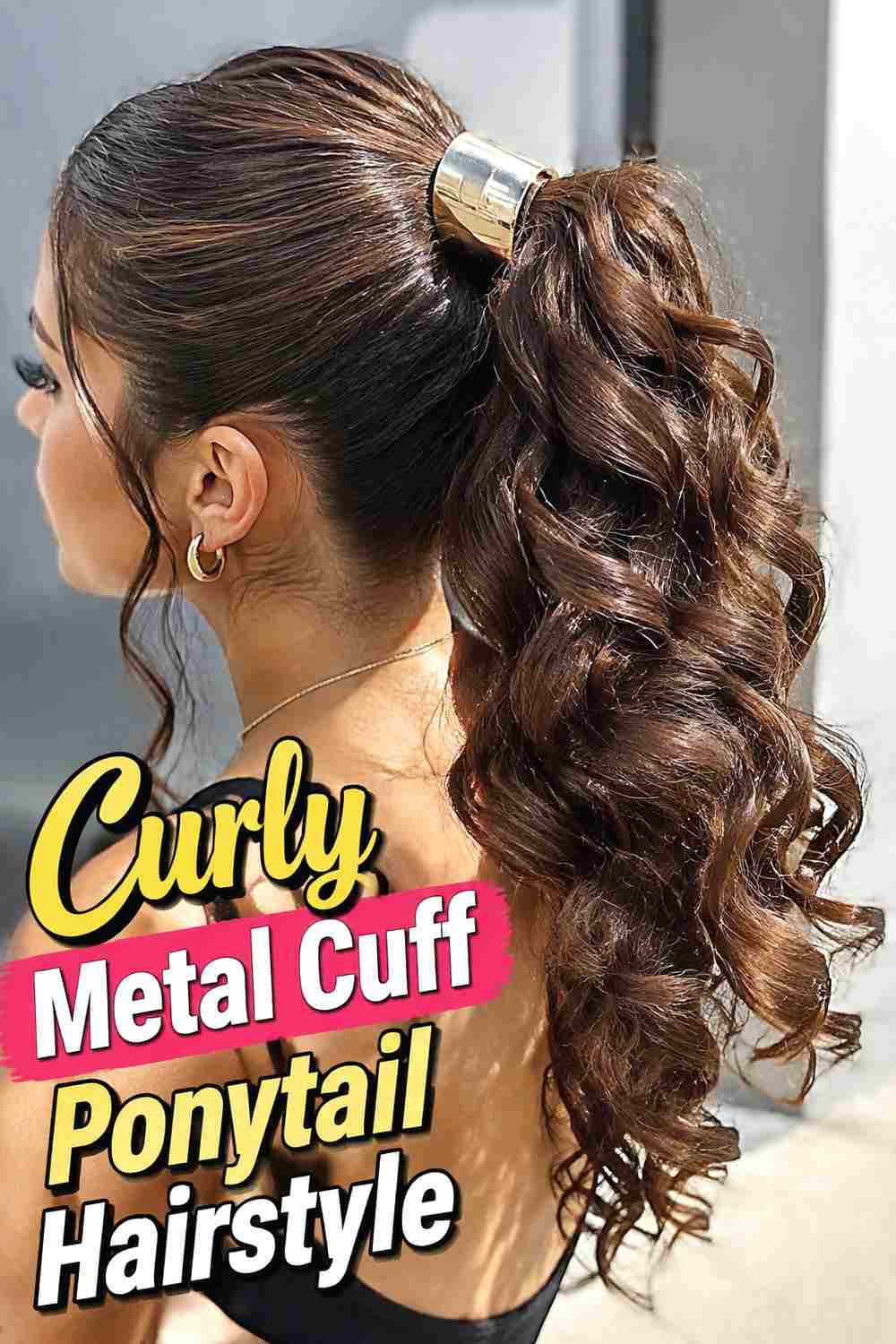
The Curly Metal Cuff Ponytail Hairstyle lets natural or styled curls provide the volume while a smooth metallic cuff gives the ponytail a defined base. A high placement can create a full, lifted silhouette, while a lower ponytail feels softer and more relaxed. Instead of smoothing away all texture near the base, preserve enough curl and natural root detail to keep the style believable. Choose a cuff wide enough to be visible against the volume but light enough that it does not pull downward. Concentrating the metal detail at the base usually works better than adding multiple cuffs through dense curls, where accessories may become hidden or tangled. Let individual spirals and coils remain varied through the ponytail.
Hair Type & Length
Medium-to-long curly hair works especially well because the cuff provides structure at the base while the natural texture supplies fullness through the lengths.
13. Wavy Metal Cuff Ponytail Hairstyle
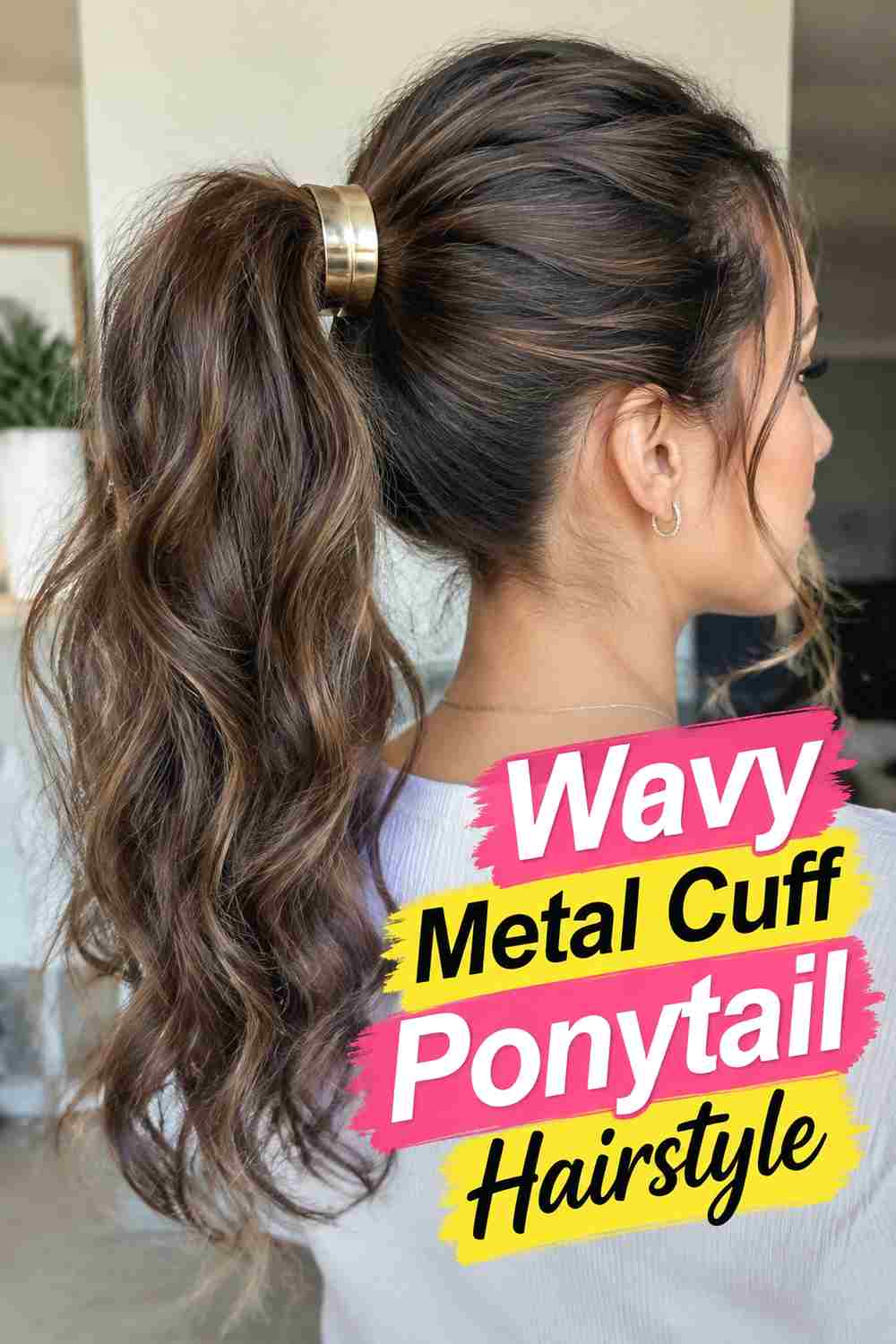
The Wavy Metal Cuff Ponytail Hairstyle balances soft movement with a sleek decorative accent. Loose waves through the ponytail create body and dimension, while a polished cuff at the base adds a clean contrast. A mid-height or low position complements the relaxed texture particularly well because the waves can fall naturally over the shoulders or down the back. Create the movement before gathering the hair so the ponytail retains variation instead of becoming uniformly curled. A medium-width cuff can visually anchor the soft lengths without overwhelming them. This style works beautifully when you want something more finished than an everyday ponytail but less structured than a completely sleek look. Keep the waves touchable and avoid making the metal accessory excessively tight.
Best For
This variation suits dates, celebrations, casual events, and dressier everyday looks where you want softness with one polished statement detail.
14. Textured Metal Cuff Ponytail Hairstyle
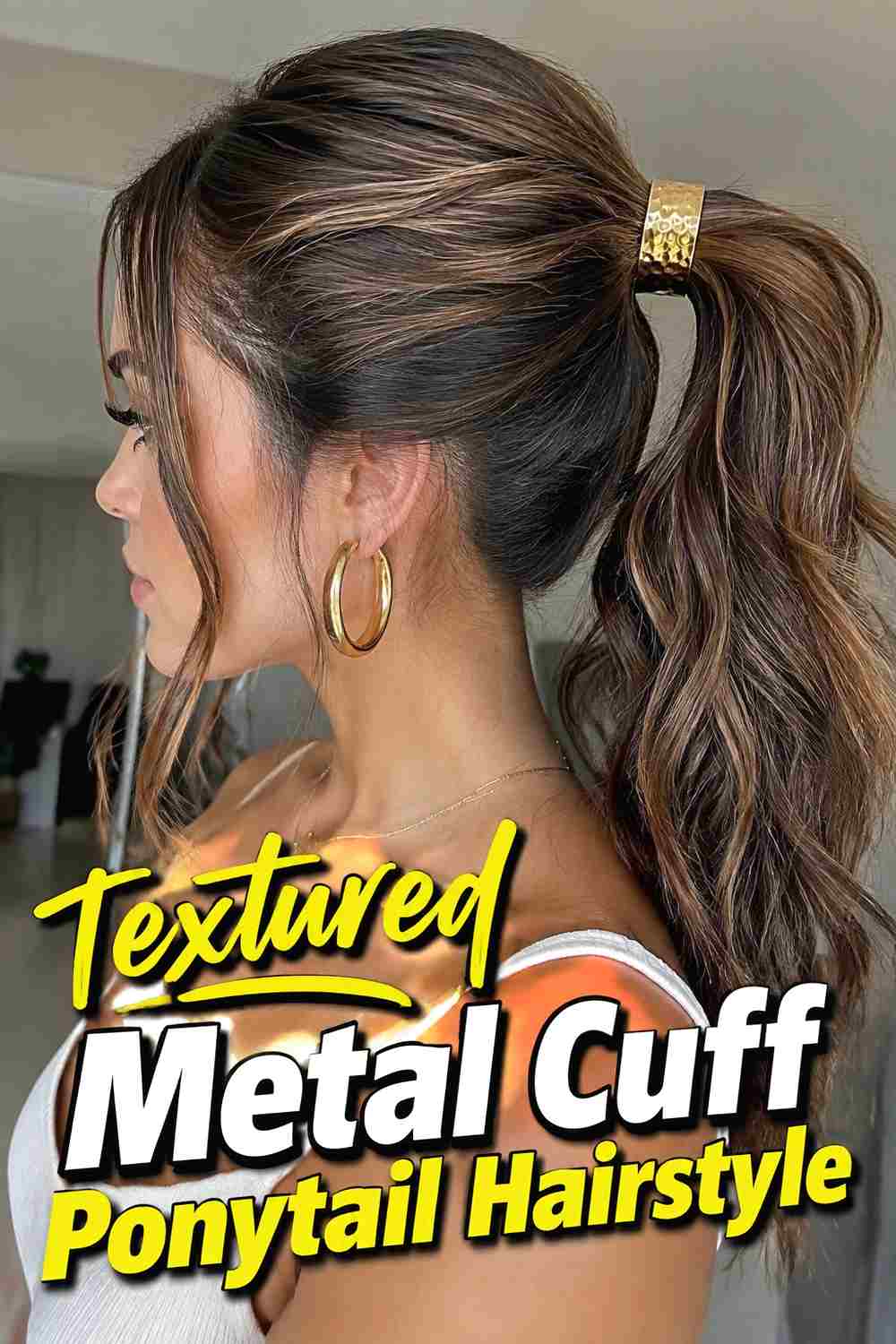
The Textured Metal Cuff Ponytail Hairstyle uses gentle bends, natural volume, and controlled flyaways to create a relaxed backdrop for the metallic accessory. Instead of smoothing every section, allow some texture at the crown and through the ponytail so the cuff provides a clear structured contrast. A brushed or matte metal finish can complement this softer approach particularly well because it feels less formal than highly reflective hardware. The ponytail can sit high or mid-height depending on the desired lift. Keep the base secure even when the surface is intentionally loose, and make sure the accessory is attached over the elastic rather than relying on textured hair alone for grip. A few face-framing pieces can soften the overall silhouette.
Wear & Maintenance
Use light styling products so the texture stays flexible. Heavy waxes or sprays can make the ponytail stiff and reduce the natural movement that defines this version.
15. Wrapped Base Metal Cuff Ponytail Hairstyle
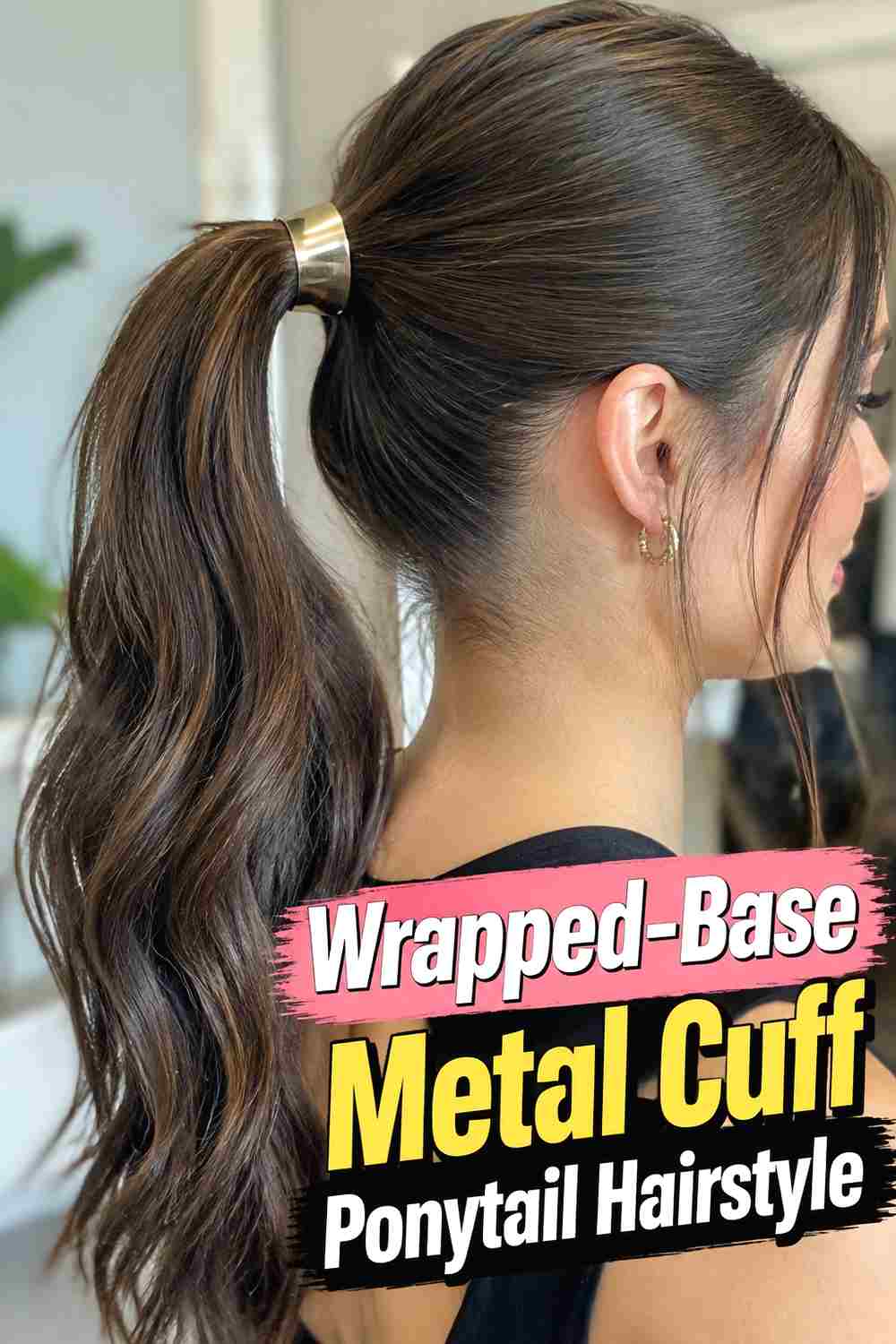
The Wrapped-Base Metal Cuff Ponytail Hairstyle layers a narrow section of hair around the ponytail elastic before adding a metal accessory, creating a more dimensional transition at the base. The hair wrap softens the mechanical appearance of the tie, while the cuff adds a polished focal point over or just below the wrapped section. This works best when the accessory does not completely hide the hair detail, so choose a slim cuff rather than an oversized cylinder. Straight or softly waved ponytails allow the layered base to remain visible. Secure the wrapped strand discreetly underneath before positioning the cuff, since the metal piece should not be responsible for holding loose ends in place. Keep the construction compact so it does not become bulky.
Styling Notes
Complete the hair wrap first, then slide or fasten the cuff into its final position. Check that no pins or rough edges are pressing against the scalp.
16. Side Swept Metal Cuff Ponytail Hairstyle
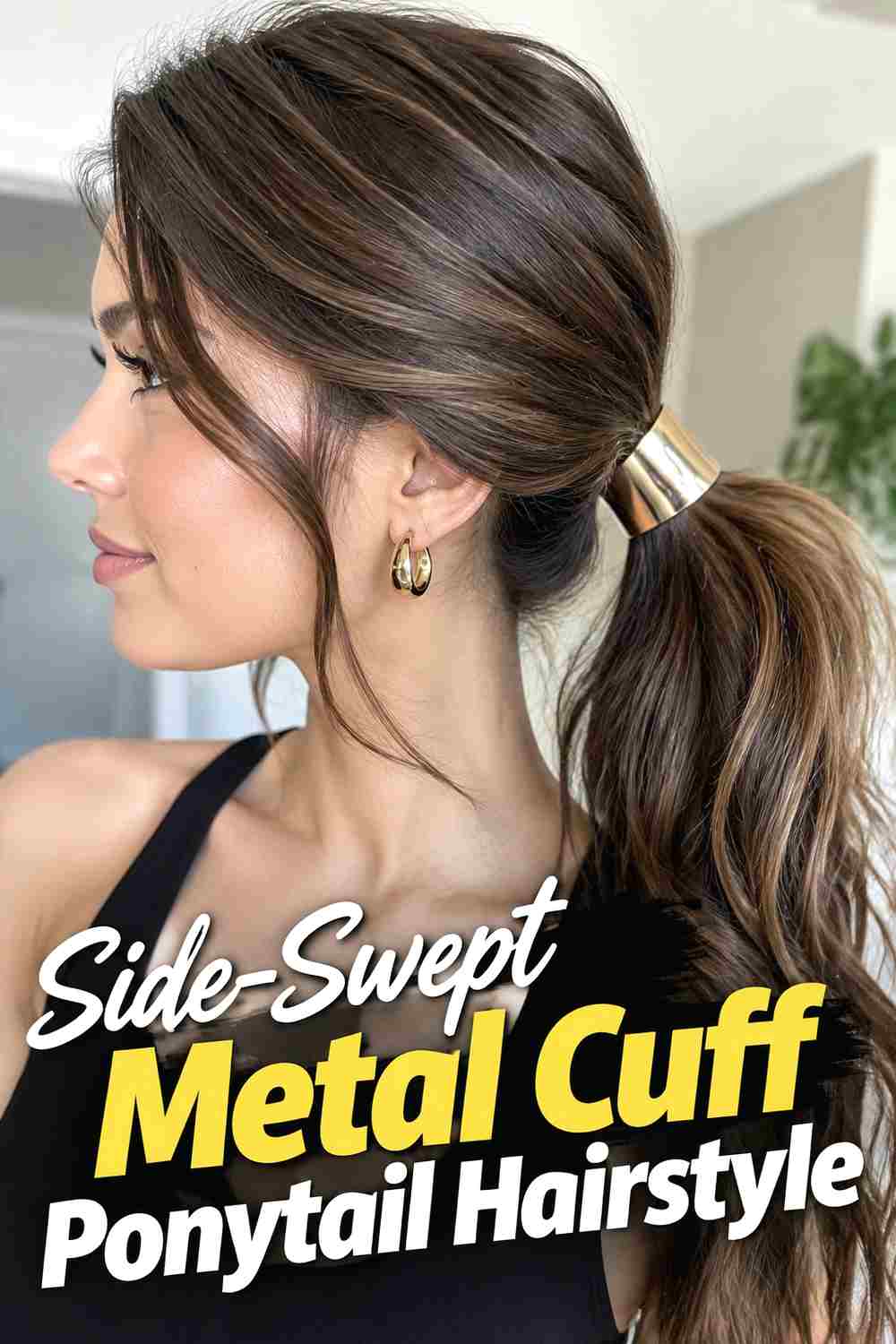
The Side-Swept Metal Cuff Ponytail Hairstyle moves the ponytail toward one shoulder, making the metallic accent more visible from the front. A low side placement is usually the most comfortable because the hair can travel naturally without twisting sharply around the scalp. Position the cuff over the secured base, then let the lengths fall forward in straight, wavy, or softly curled texture. Since both the accessory and ponytail may sit near the neckline, keep the cuff relatively streamlined so it does not catch on clothing or jewelry. The asymmetric placement adds interest without requiring extra decoration, and a polished metal finish can help define the base against softer hair movement.
Why It Works
Bringing the ponytail forward makes the accessory part of the front-facing look, which is useful for photographs, events, and outfits with open necklines.
17. Half Up Metal Cuff Ponytail Hairstyle
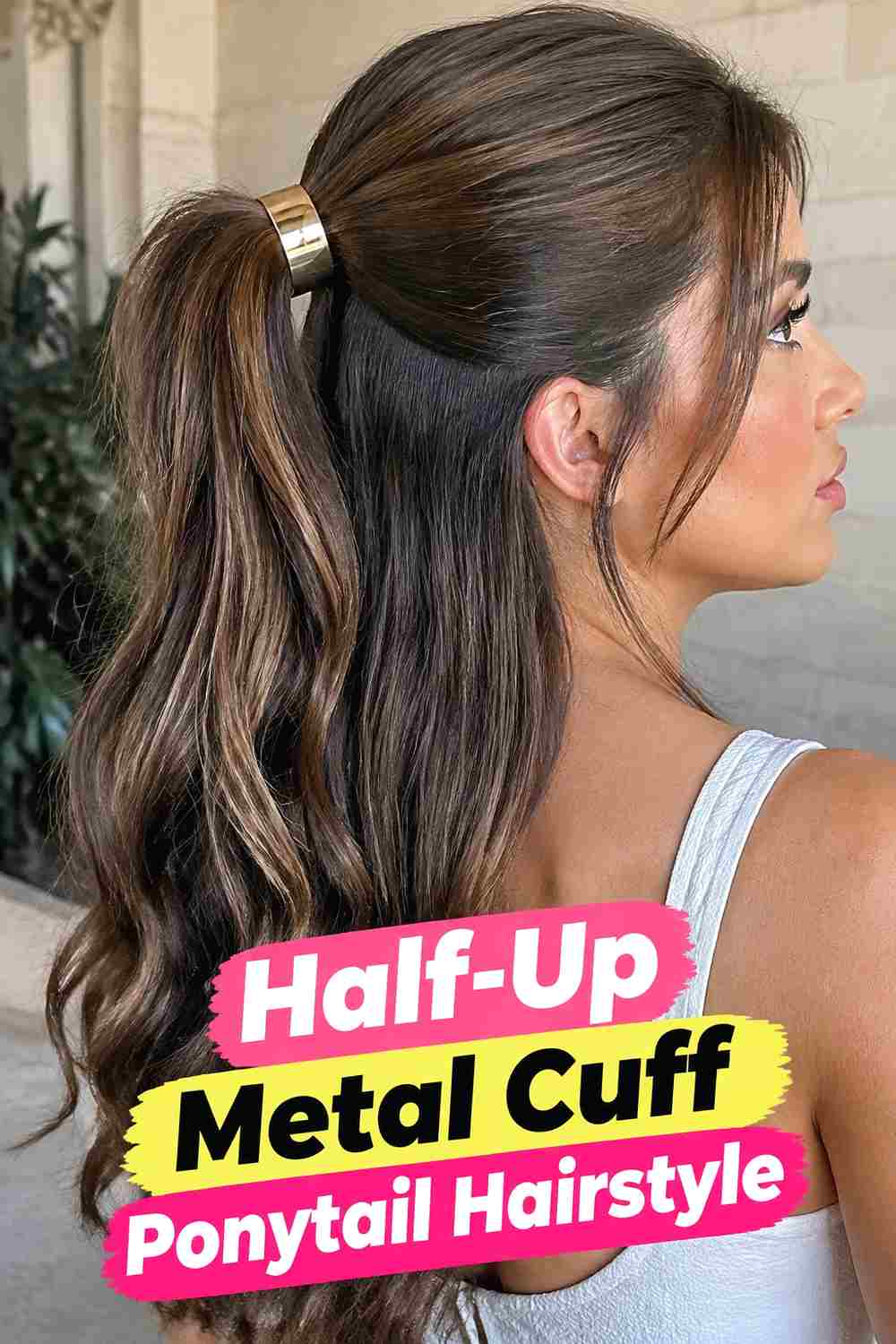
The Half-Up Metal Cuff Ponytail Hairstyle uses a small metallic accessory around the gathered top section while the rest of the hair remains loose. This creates a jewelry-like focal point at the back of the head without committing to a full ponytail. Straight lengths produce a sleek contrast, while waves and curls make the look softer and more dimensional. Because the half-up ponytail contains less hair, choose a smaller cuff that fits securely rather than using a full-size accessory designed for a dense ponytail. Position it over a hidden elastic so the gathered section remains stable. The loose lower hair should retain enough fullness to balance the accessory and prevent the top section from looking disproportionately heavy.
Hair Type & Length
Medium-to-long hair gives the clearest contrast between the cuffed half-up section and the loose lengths underneath, but the style adapts well to several textures.
18. Extra Long Metal Cuff Ponytail Hairstyle
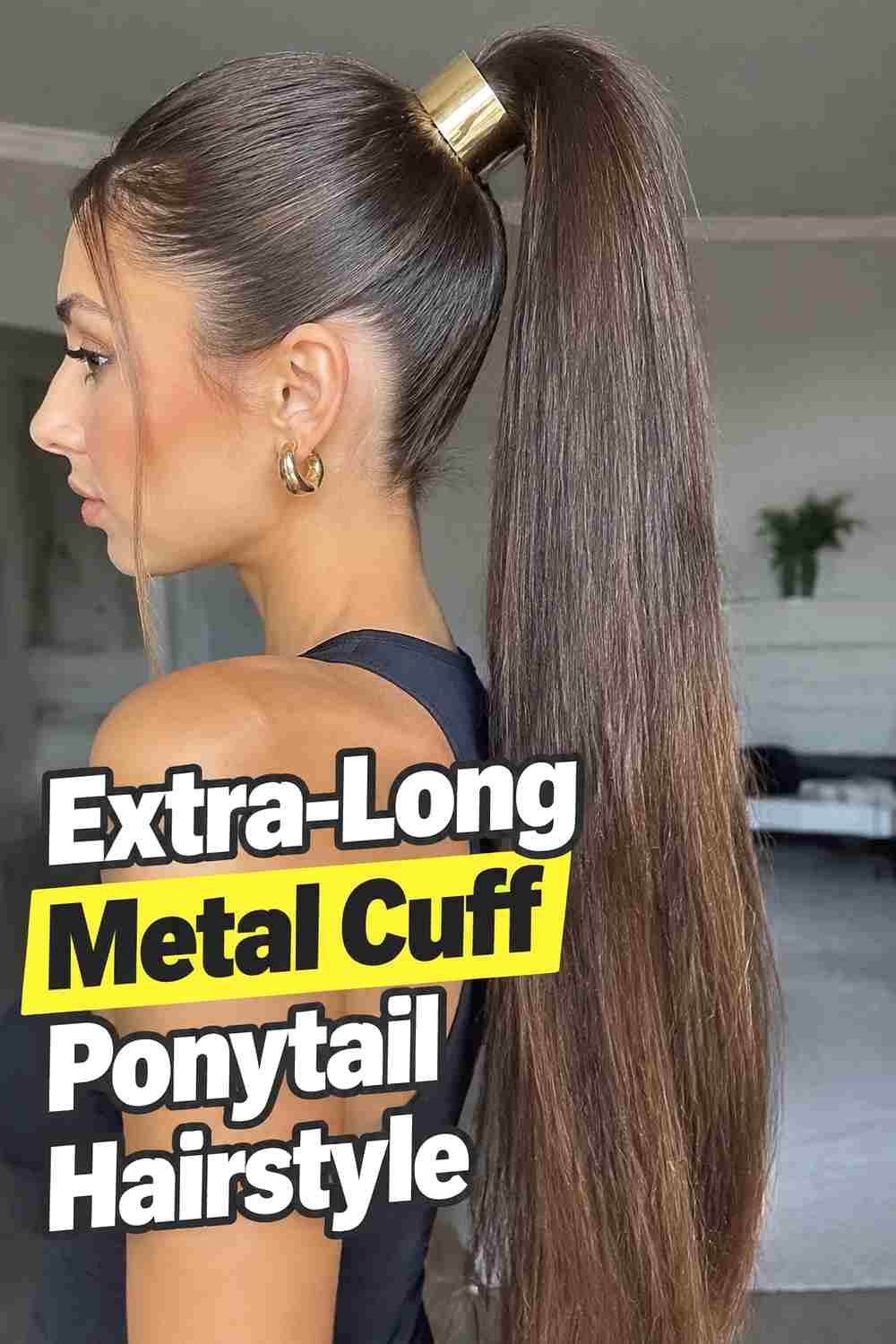
The Extra-Long Metal Cuff Ponytail Hairstyle uses substantial length to create a dramatic flowing silhouette anchored by one or more clean metallic accents. A cuff at the base provides a strong visual starting point, while optional smaller cuffs farther down can divide the length without covering too much hair. Keep the accessory spacing wide enough that the ponytail still swings and bends naturally. If extensions are used, they should blend realistically with the natural hair in shade, texture, and density, and the attachment should remain concealed beneath the secured base. Long hair carries more weight, so lightweight cuffs are usually more comfortable than heavy decorative hardware. Smooth edges and secure closures are especially important to prevent snagging during movement.
Wear & Maintenance
Check longer ponytails periodically because movement can loosen accessories. Remove each cuff individually before brushing or detangling the lengths.
How to Choose the Right Look
Start with placement. High metal cuff ponytails create lift and a sharper statement, while low ponytails feel more understated and polished. Mid-height styles offer an easy balance, and side-swept or half-up versions make the accessory visible from different angles.
Next, consider density and texture. Fine hair often looks best with lightweight single cuffs that do not overwhelm the ponytail. Dense hair can support wider or stacked designs, while curly and textured hair usually benefits from concentrating metal details near the base where they remain visible. Braided and bubble ponytails provide natural points for additional cuffs along the length.
Finish matters too. Gold creates warmth, silver feels crisp and modern, and rose gold offers a softer metallic tone. Polished surfaces make a stronger statement, while brushed or matte cuffs can look more understated.
Most importantly, let a normal elastic provide the actual hold. Choose accessories with smooth interiors, comfortable closures, and no sharp edges, and remove them carefully rather than sliding them forcefully through the hair.
Final Thoughts
Metal cuffs can make even a straightforward ponytail feel more intentional, whether you prefer a single minimalist accent, stacked hardware, braided details, curls, waves, or a segmented bubble finish. Match the size and weight of the accessory to your hair density, keep the underlying ponytail secure, and let the natural texture and movement of the hair remain visible.
FAQs
1. How do you use a metal cuff on a ponytail?
Secure the ponytail with a normal elastic first, then place or fasten the cuff around the base so it covers or decorates the tie without carrying all the tension.
2. Do metal cuffs work on fine hair?
Yes. Smaller, lightweight cuffs are usually easier to balance on fine hair. A hidden elastic underneath can also keep the accessory from slipping.
3. Can metal cuffs be added to braided ponytails?
Yes. They can be placed near the ponytail base or at selected points along a finished braid, provided the accessories fit comfortably without compressing the woven sections.
4. How do I keep a ponytail cuff from sliding?
Use a secure elastic beneath the cuff and choose an accessory sized appropriately for your ponytail. Lower cuffs may benefit from a small hidden elastic at their placement point.
5. Are metal ponytail cuffs suitable for curly hair?
Yes. A cuff at the base can create a polished contrast with curls while allowing the natural volume and curl pattern to remain visible through the ponytail.
Save your favorite metal cuff ponytail ideas, share them for inspiration, and explore more ways to turn a simple ponytail into a polished statement look.