17 Micro Bangs for Wavy Shoulder-Length Hair
Micro bangs give shoulder-length waves an instant focal point, balancing short, expressive fringe with soft movement and natural texture through the lengths.
Wavy shoulder-length hair is especially versatile with micro bangs because the contrast between a short fringe and moving mids and ends creates a defined silhouette. The bangs can look blunt and graphic, airy and delicate, or intentionally piecey depending on density, texture, and how much forehead you want visible.
Before choosing a version, consider how your hair behaves when air-dried, how much your wave pattern shrinks, and whether you are comfortable maintaining a short fringe. Micro bangs usually need more frequent trims than the rest of a shoulder-length cut, while the wavy lengths can often stay soft and relaxed between appointments.
Quick List
- Wispy Micro Bangs With Soft Waves Hairstyle
- Blunt Micro Bangs With Tousled Waves Hairstyle
- Feathered Micro Bangs With Layered Waves Hairstyle
- Curved Micro Bangs With Loose Waves Hairstyle
- Choppy Micro Bangs With Beachy Waves Hairstyle
- Piecey Micro Bangs With Shaggy Waves Hairstyle
- Airy Micro Bangs With Natural Waves Hairstyle
- Textured Micro Bangs With Wavy Lob Hairstyle
- Soft Arched Micro Bangs With Defined Waves Hairstyle
- Micro Curtain Bangs With Soft Wavy Layers Hairstyle
- Asymmetrical Micro Bangs With Undone Waves Hairstyle
- Rounded Micro Bangs With Voluminous Waves Hairstyle
- Razor Cut Micro Bangs With Wavy Layers Hairstyle
- Baby Micro Bangs With Glossy Waves Hairstyle
- Micro Bangs With Wavy Shag Hairstyle
- Side Swept Micro Bangs With Relaxed Waves Hairstyle
- French Inspired Micro Bangs With Wavy Bob Hairstyle
1. Wispy Micro Bangs With Soft Waves Hairstyle
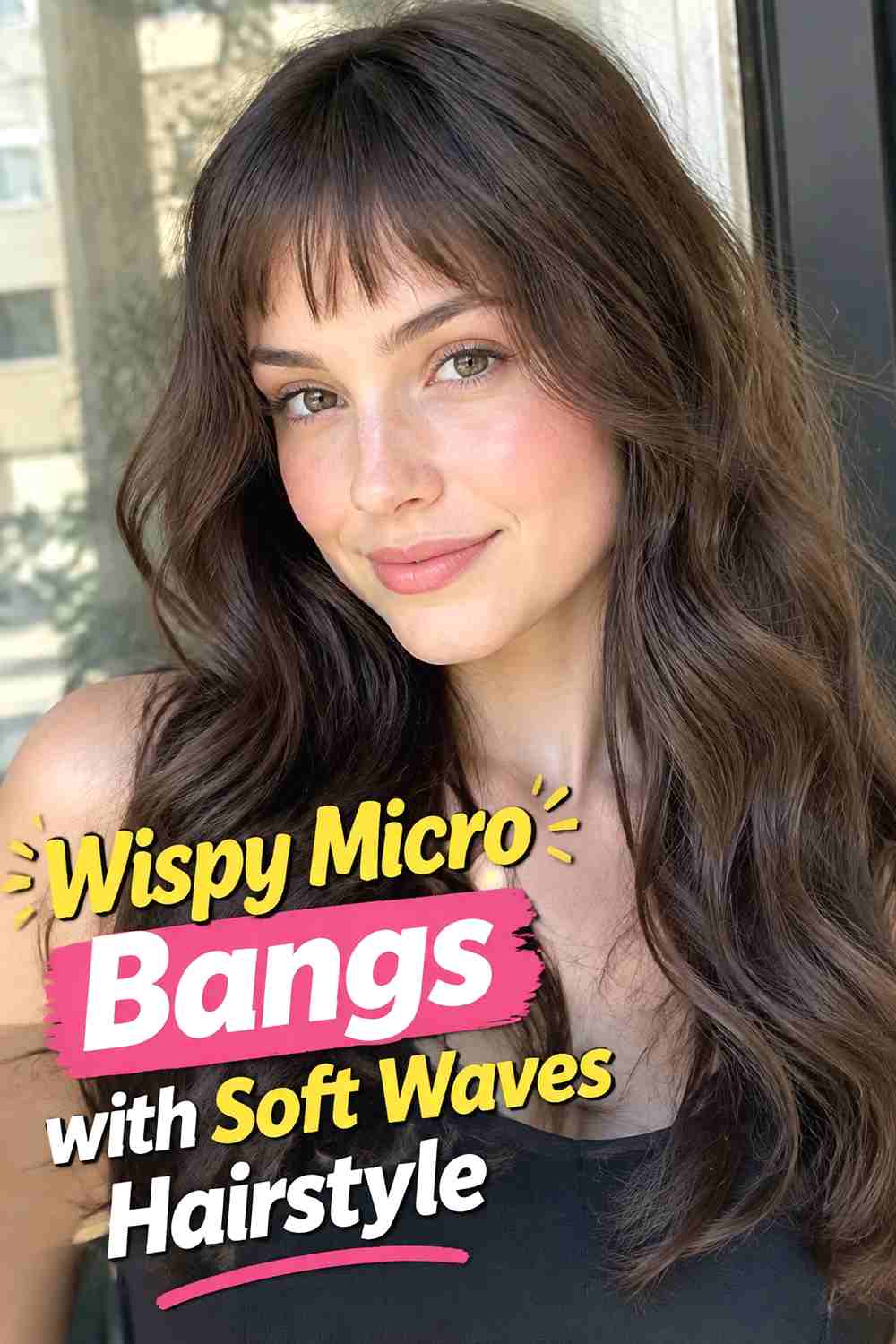
Wispy micro bangs soften the boldness of a very short fringe by leaving visible separation between fine pieces. Paired with shoulder-length waves, they create a light, effortless contrast rather than a heavy horizontal line across the forehead. The bangs can sit slightly unevenly for a natural finish, while the longer hair keeps gentle bends through the mids and ends. This version is useful if you like the idea of micro fringe but want something less dense than a blunt cut. Fine to medium-density hair can wear the look particularly naturally, although the exact amount of fringe should be adjusted to avoid removing too much fullness from the front.
Styling Notes
Use minimal product on the bangs so they stay light and separated. Let the shoulder-length waves keep a softer, less controlled finish for contrast.
Wear & Maintenance
Wispy micro bangs still need regular trims, but their broken-up edge can look forgiving as they begin to grow.
2. Blunt Micro Bangs With Tousled Waves Hairstyle

Blunt micro bangs create a strong, graphic line that looks striking against relaxed shoulder-length waves. The fringe is cut short and relatively straight across, while the rest of the hair stays intentionally loose and tousled. That contrast between precision and movement is what gives the style its character. It works best when the bangs have enough density to hold a defined shape without looking overly sparse. The shoulder-length cut prevents the look from feeling too severe because the waves add softness around the cheeks, jaw, and neck. Styling does not need to be perfectly polished; in fact, slightly irregular bends through the lengths make the sharp fringe stand out even more.
Best For
This version suits anyone comfortable with a more noticeable fringe and willing to maintain a clearly defined short bang line.
Pro Tip
Check how much your bangs spring upward when dry before settling on the final length, especially if the front section has natural wave or bend.
3. Feathered Micro Bangs With Layered Waves Hairstyle
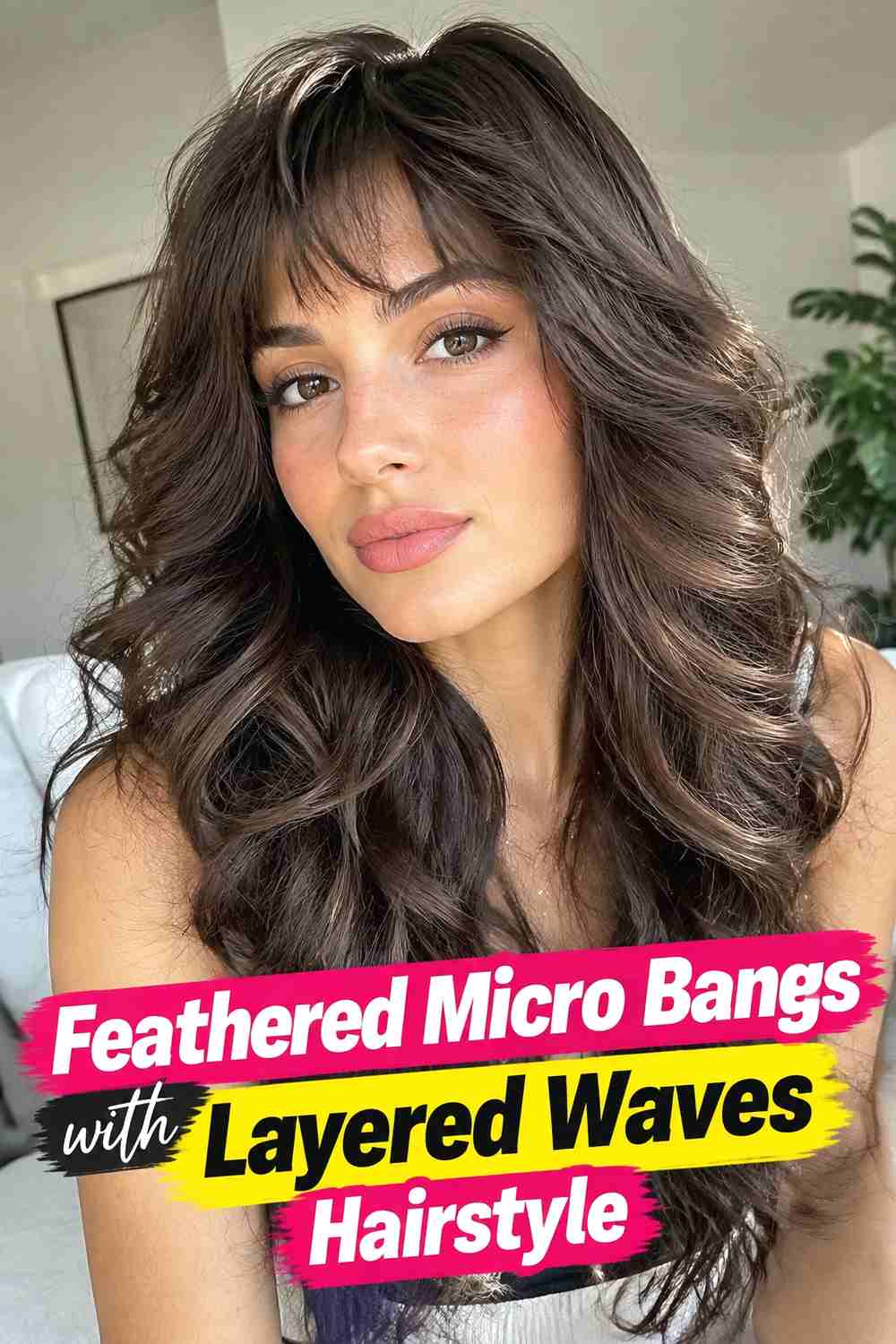
Feathered micro bangs use soft, tapered ends instead of a solid edge, making them an easy match for layered shoulder-length waves. The fringe feels lighter at the perimeter, while subtle layers through the rest of the cut encourage movement around the cheekbones and ends. This approach can create a cohesive shape because both the bangs and lengths rely on texture rather than strict lines. The micro fringe can be styled slightly forward or separated into tiny sections for a more relaxed effect. Since layered waves tend to expand differently depending on humidity and styling, keeping the bangs airy helps them blend with natural movement rather than fighting against it.
Styling Notes
A small amount of lightweight styling cream can define the feathered ends without making them stick together or appear greasy.
Why It Works
The tapered fringe echoes the softness of the layered waves, so the short bang length feels integrated instead of disconnected.
4. Curved Micro Bangs With Loose Waves Hairstyle
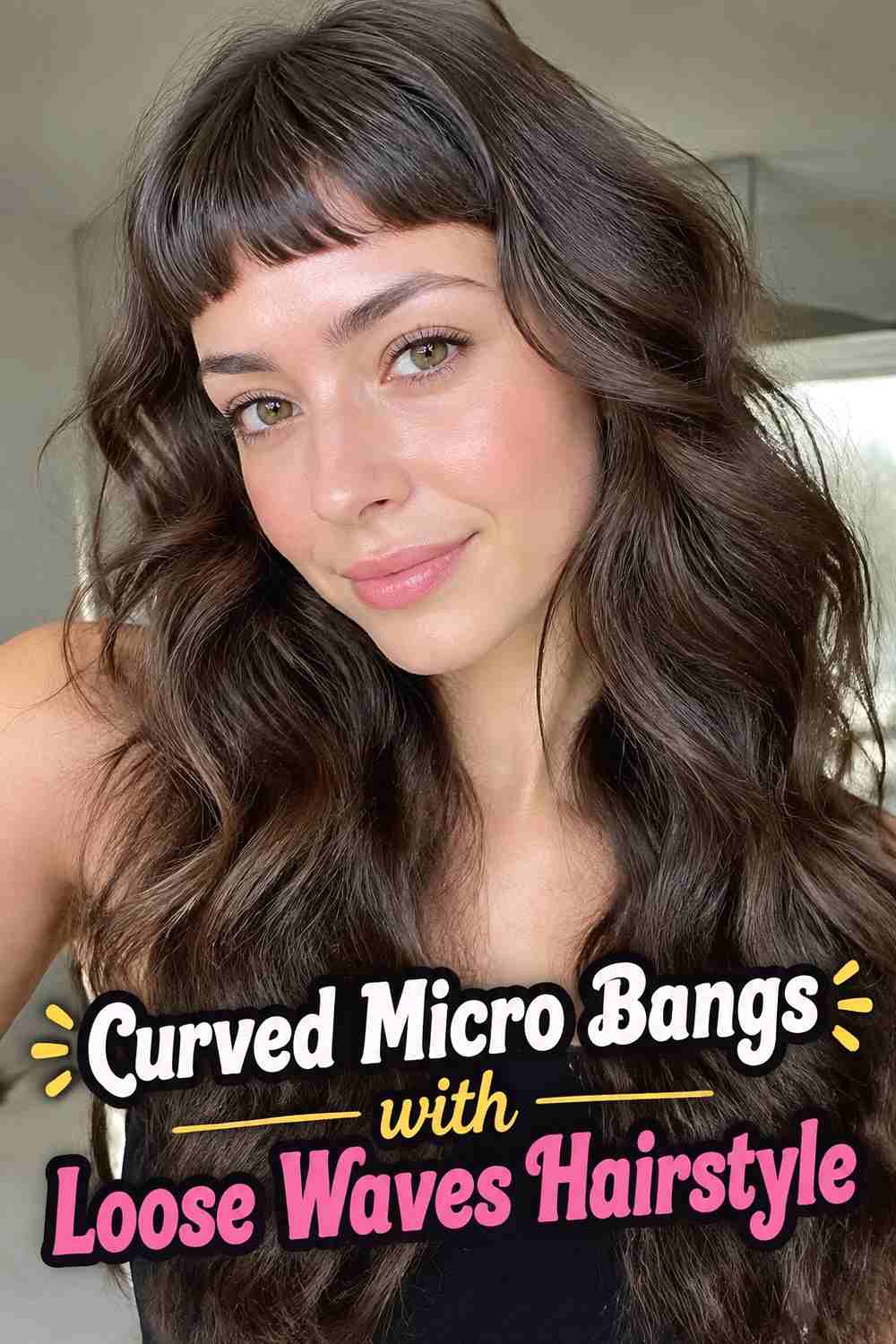
Curved micro bangs follow a softly rounded line rather than sitting perfectly straight across the forehead. They may be slightly shorter in the center and subtly longer toward the sides, creating a gentle frame that connects naturally with loose shoulder-length waves. This shape offers structure while avoiding the severity of a very blunt fringe. The longer lengths can be styled with broad bends that begin around the cheekbones, leaving the crown relatively smooth. Curved micro bangs are particularly effective when you want the fringe to look intentional but still soft. Because the arc depends on accurate cutting, the shape should be planned with the bangs fully dry and sitting in their natural direction.
Best For
This style works well when you prefer a defined fringe but want a softer outline around the temples than a straight-across micro bang provides.
Wear & Maintenance
Frequent small trims help preserve the curve, especially as the center section begins to grow toward the brows.
5. Choppy Micro Bangs With Beachy Waves Hairstyle
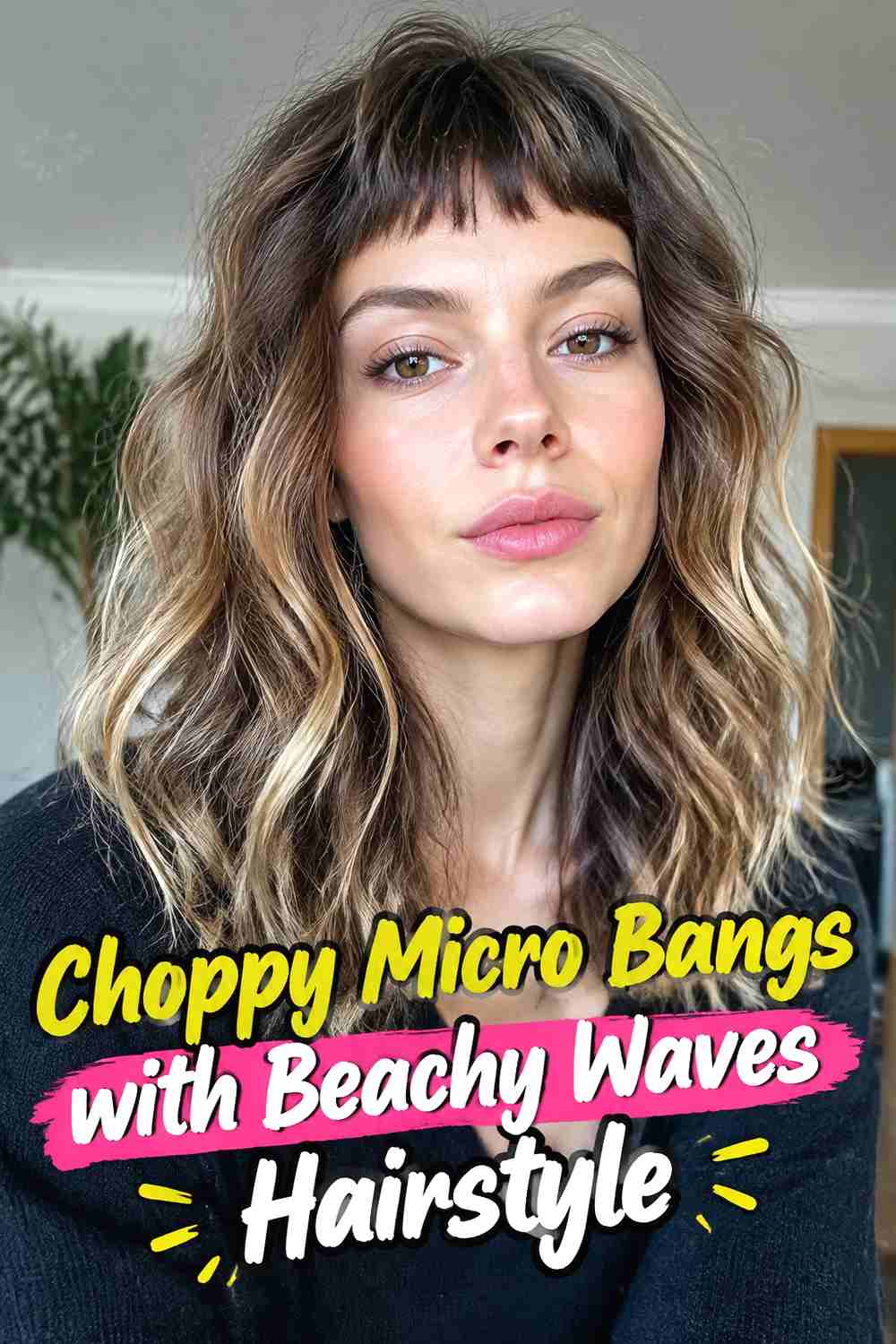
Choppy micro bangs pair naturally with beachy shoulder-length waves because both rely on irregular texture rather than polished symmetry. The fringe is cut into short, varied pieces that create movement across the forehead, while the lengths feature loose bends with straighter ends. This combination feels casual and slightly edgy without requiring highly structured styling. The bangs can be separated with fingertips instead of brushed into a uniform shape, and the rest of the hair can retain natural flyaways and texture. Medium-density hair often gives this cut enough material for a clearly choppy finish, though finer hair can wear a softer interpretation with fewer pieces cut into the fringe.
Styling Notes
Use a light texture product through the lengths and only a trace on the bangs. Too much product can make short pieces clump together.
Pro Tip
Ask for intentionally varied fringe lengths rather than random thinning so the choppy effect still looks balanced when the hair settles.
6. Piecey Micro Bangs With Shaggy Waves Hairstyle
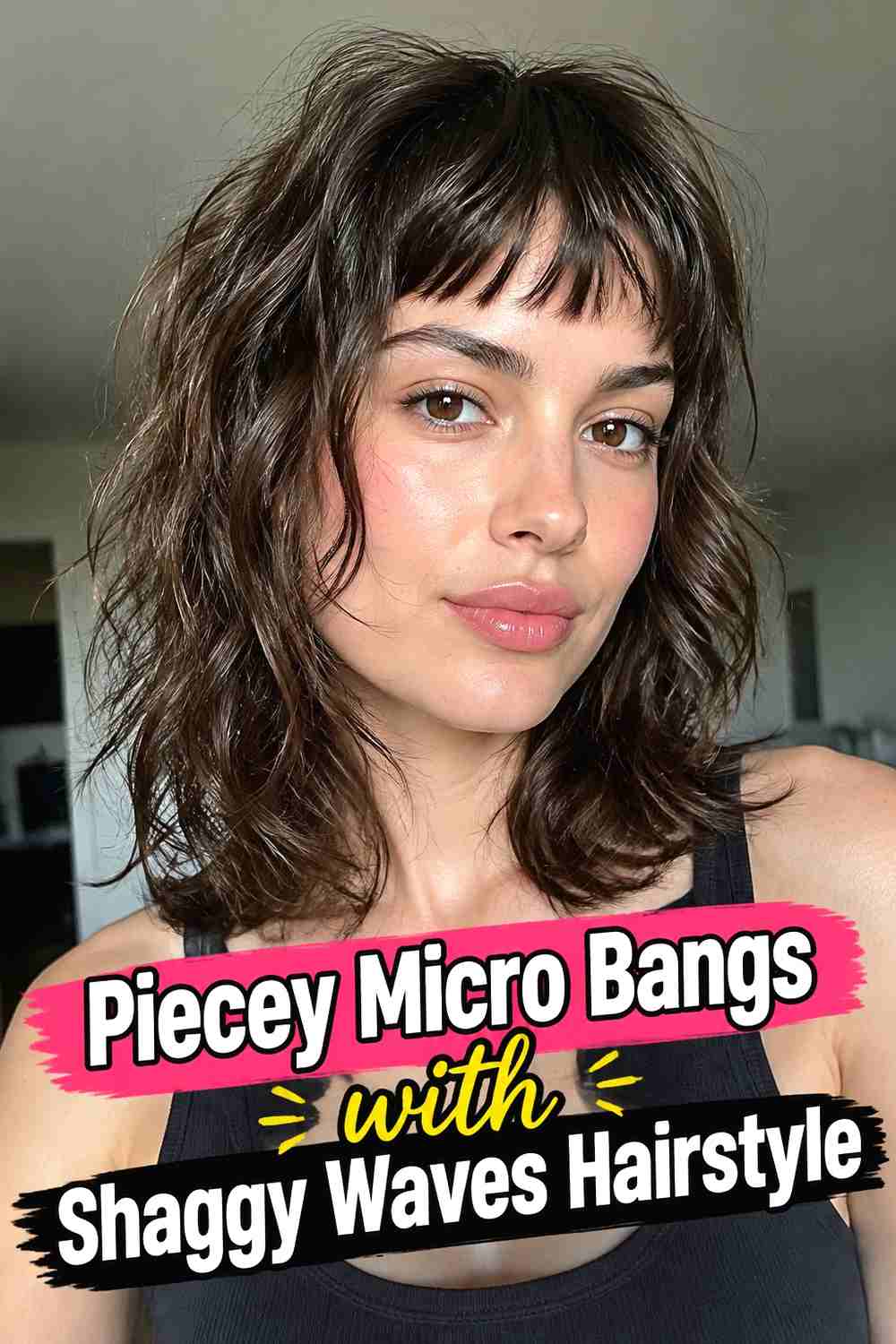
Piecey micro bangs and shaggy waves create an intentionally undone shoulder-length style with plenty of movement. The short fringe separates into distinct pieces, while the longer hair uses interior layers to encourage bends, flicks, and lightweight volume. The result works especially well if your natural waves already have an irregular pattern, since the haircut does not depend on every section forming the same shape. A little texture around the crown helps connect the fringe with the shaggy silhouette. This style can be flexible for medium or thick hair, but removing too much weight from very fine hair may leave the ends looking sparse, so the layering should match your density.
Hair Type & Length
Natural waves with medium density suit this look especially well, though the amount of shag layering can be reduced for finer hair.
Why It Works
Both the fringe and the shoulder-length cut use separation and movement, creating a cohesive textured shape from the forehead through the ends.
7. Airy Micro Bangs With Natural Waves Hairstyle
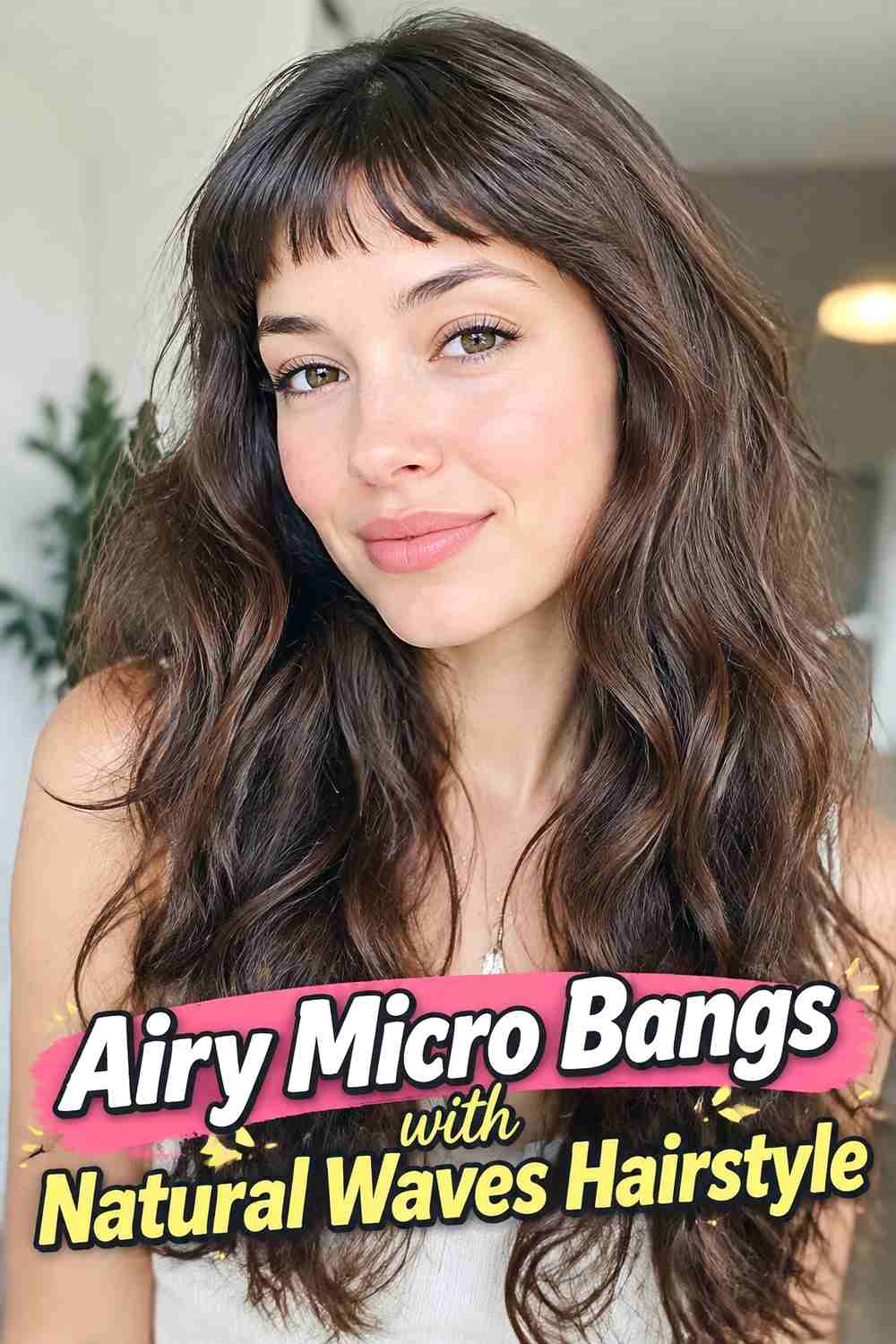
Airy micro bangs are deliberately light and translucent, allowing some forehead to remain visible between individual strands. With naturally wavy shoulder-length hair, they create a gentle focal point that does not overpower the texture. The fringe can be kept soft at the edges and allowed to sit with a slight natural bend instead of being forced completely straight. This makes the style practical for anyone who wants their waves to remain the main feature. The longer sections can be air-dried or diffused, with just enough definition to keep the wave pattern recognizable. Because the fringe uses relatively little hair, it can also preserve more fullness around the front of the cut.
Best For
This option is a good fit if you want micro bangs but prefer a light, minimal fringe instead of a dense or strongly graphic look.
Styling Notes
Dry the bangs first if they tend to separate unpredictably, then let the shoulder-length waves dry with their natural movement intact.
8. Textured Micro Bangs With Wavy Lob Hairstyle
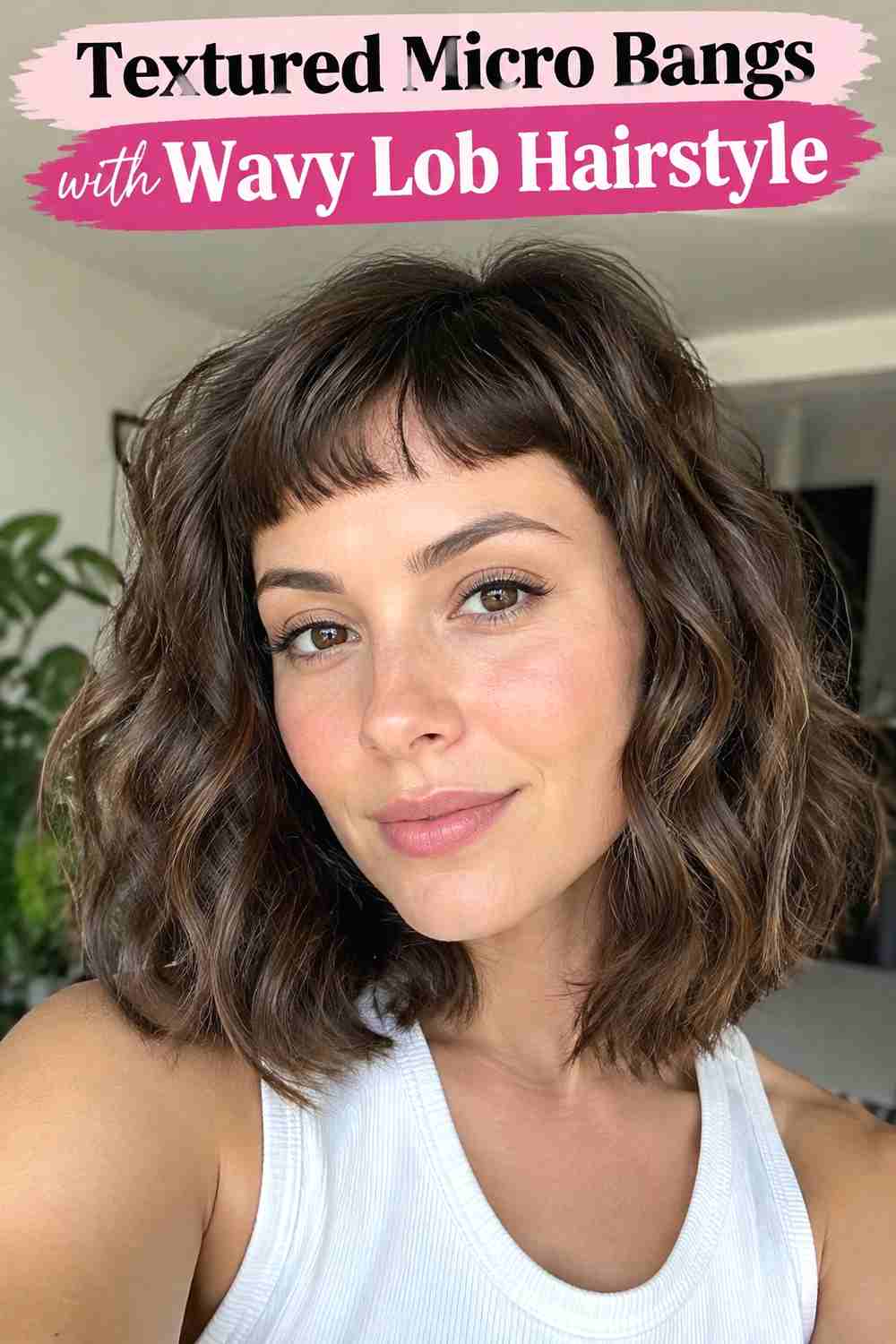
Textured micro bangs give a shoulder-grazing wavy lob extra personality without changing the clean overall length. The fringe has a slightly broken edge rather than one precise line, while the lob keeps soft waves from the mid-lengths through the ends. This creates a balanced mix of structure and movement: the shoulder-length perimeter keeps the haircut grounded, and the short bangs add a modern focal point. A light amount of layering around the front can help the fringe connect with the sides without turning the lob into a shag. This version is useful if you want noticeable micro bangs but still prefer a relatively polished silhouette through the rest of the hair.
Styling Notes
Keep the wave pattern broad rather than overly curled so the lob maintains its shoulder-length shape and does not appear much shorter.
Wear & Maintenance
Trim the fringe more often than the perimeter. The lob itself can usually go longer between shape adjustments.
9. Soft Arched Micro Bangs With Defined Waves Hairstyle
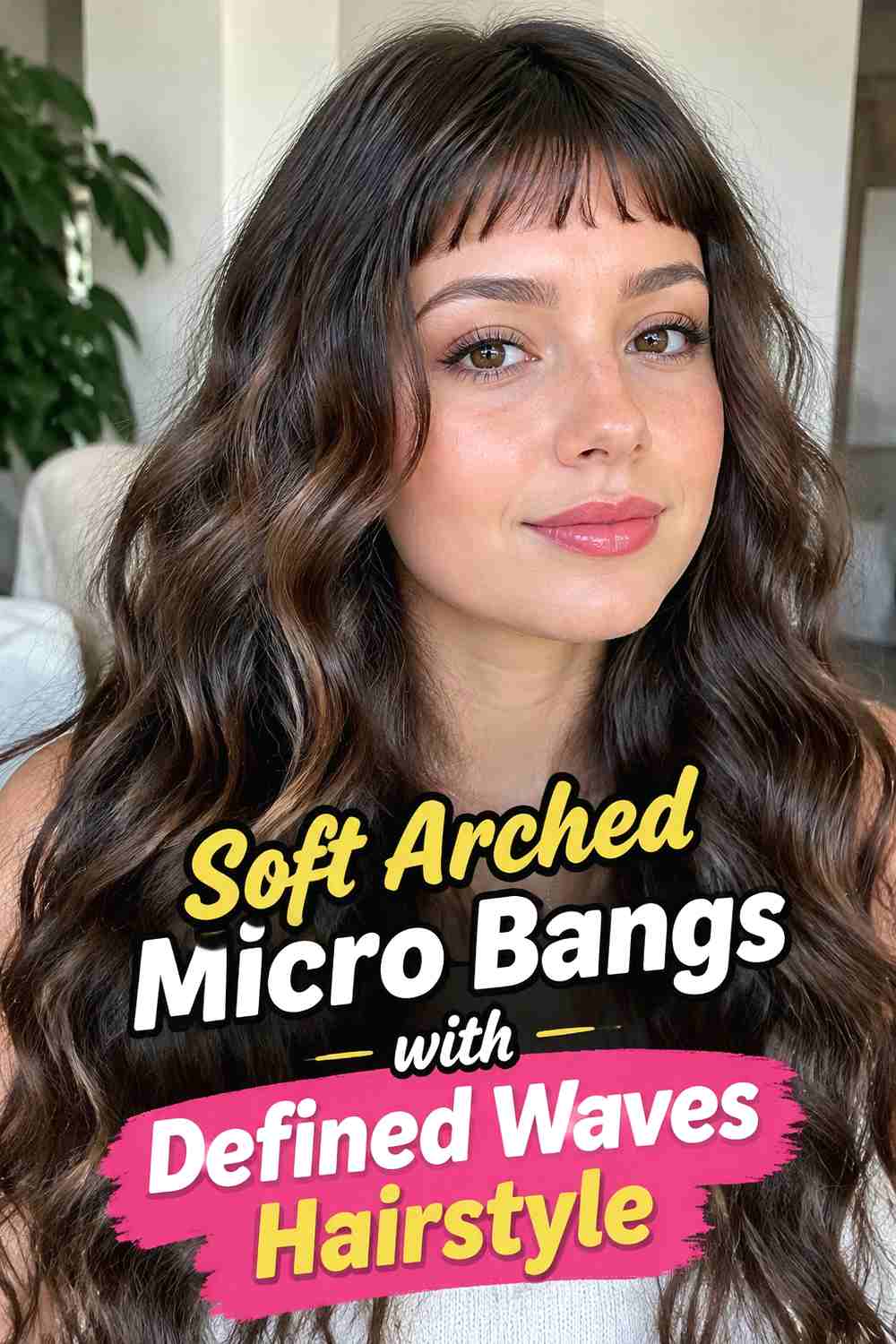
Soft arched micro bangs form a gentle curve across the forehead while defined waves create more polished movement through shoulder-length hair. The fringe can sit slightly shorter at the center and taper subtly toward the temples, giving the short length a flattering sense of shape rather than a rigid line. Below, controlled S-waves add definition without becoming tight curls. This pairing is especially effective when you like a styled finish but still want texture to remain visible. The bangs should stay relatively smooth so their arc remains clear, while the longer sections can carry more shine and separation. A small amount of layering helps keep the waves from becoming too triangular.
Styling Notes
Shape the fringe with a small brush or fingertips, then define the longer waves separately so the bang line remains clear.
Why It Works
The curved fringe and repeated wave pattern create visual rhythm, making the hairstyle look intentional from front to ends.
10. Micro Curtain Bangs With Soft Wavy Layers Hairstyle
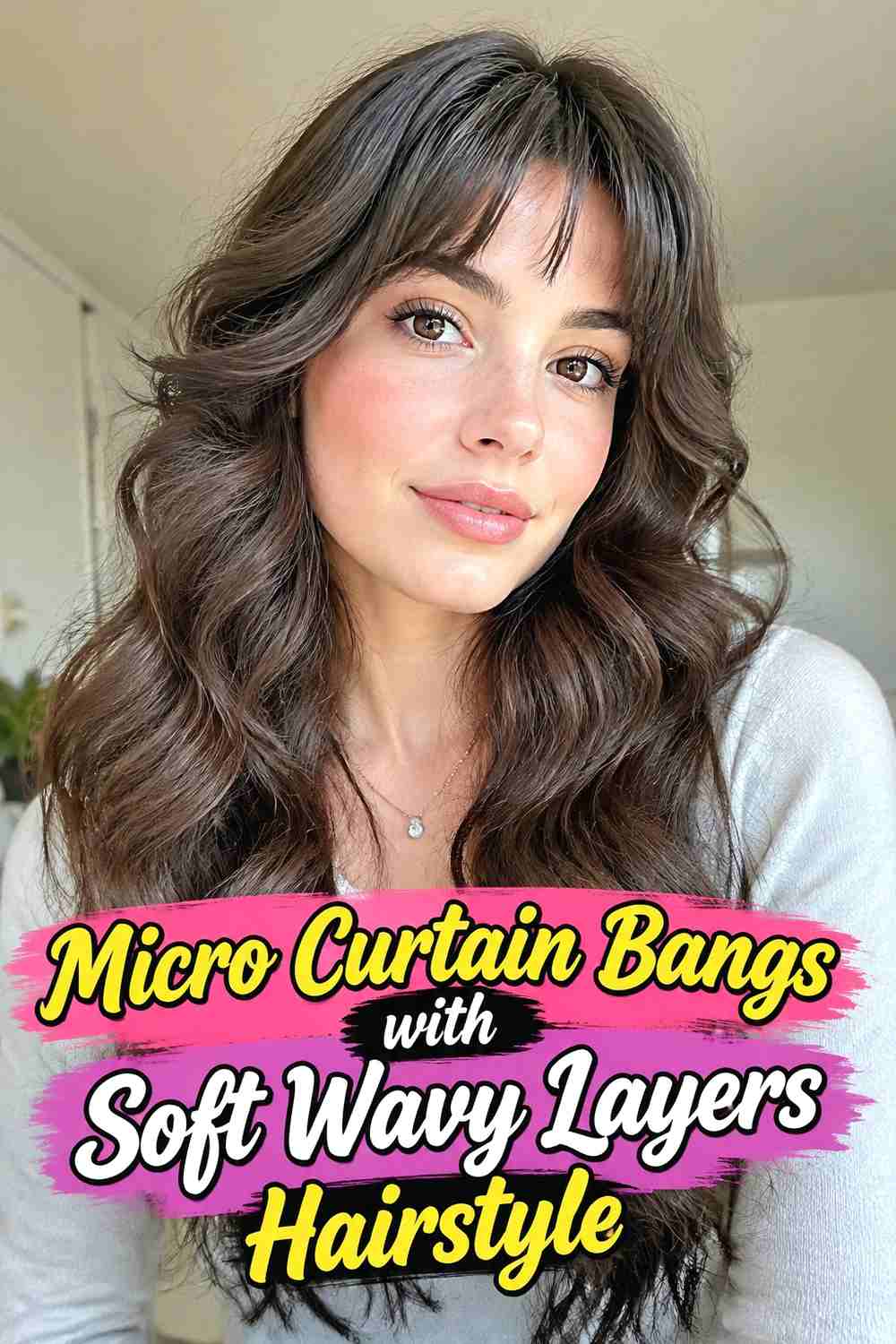
Micro curtain bangs offer a playful variation by keeping the fringe very short while allowing a subtle center separation. Instead of behaving like full-length curtain bangs, the pieces open slightly near the middle and angle outward toward the temples. Combined with soft shoulder-length layers, the result feels airy and expressive. The wave pattern through the longer hair helps the short fringe look less severe, especially when face-framing pieces begin near the cheekbones. This style works best when the fringe naturally tolerates some separation rather than forming a strong cowlick. The micro length still needs careful maintenance, but the broken center can make grow-out feel a little softer than a completely blunt edge.
Best For
Choose this version if you like the openness of curtain fringe but want a much shorter, more fashion-forward interpretation.
Pro Tip
Keep the center split subtle. A very wide gap can make the fringe look disconnected rather than intentionally curtain-inspired.
11. Asymmetrical Micro Bangs With Undone Waves Hairstyle
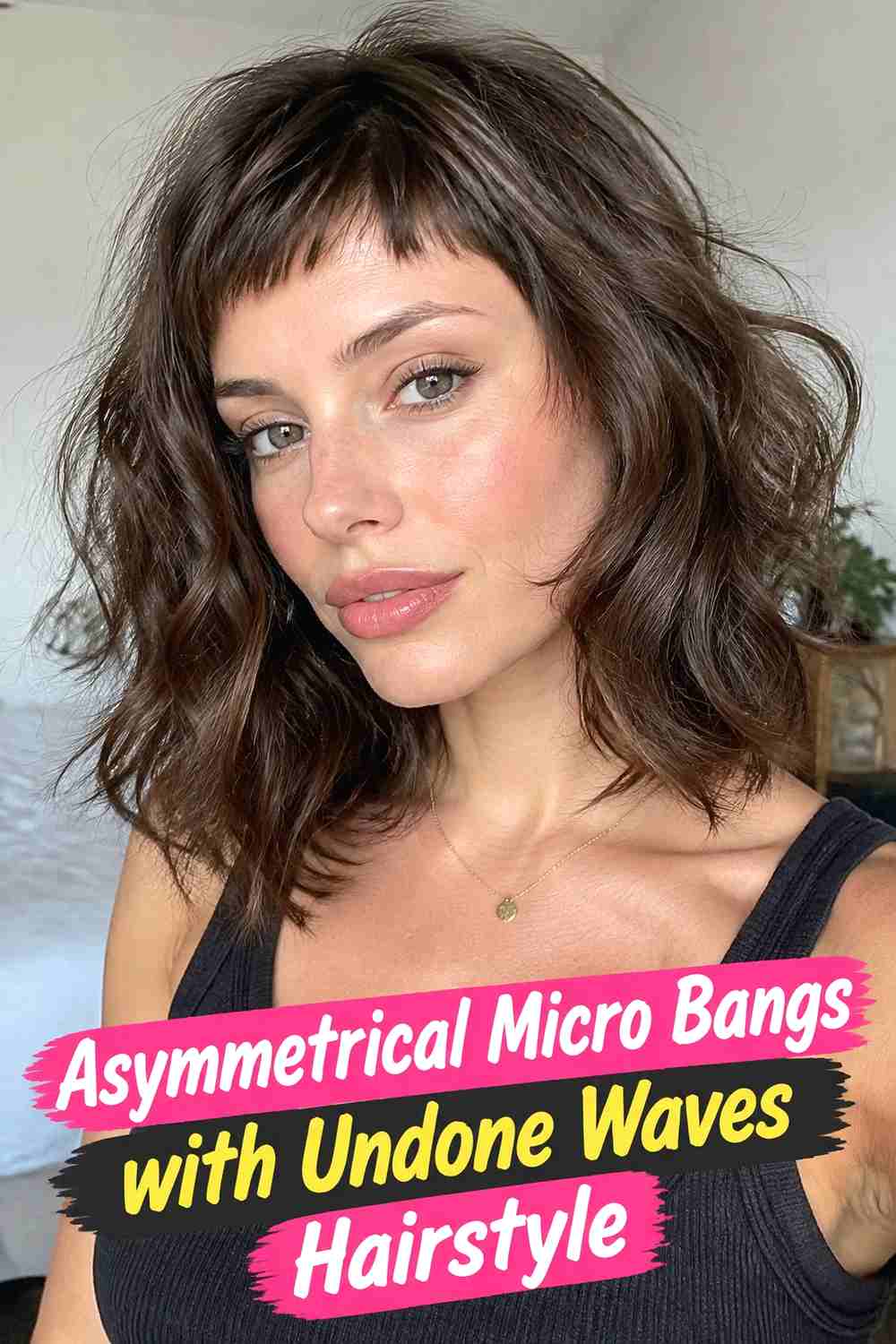
Asymmetrical micro bangs introduce deliberate imbalance, with one side slightly longer or more angled than the other. Against undone shoulder-length waves, the effect feels creative and relaxed rather than overly precise. The longer hair should stay soft and irregular, with bends forming at different points instead of following a uniform curl pattern. This helps the angled fringe feel connected to the overall style. The asymmetry can be subtle enough for everyday wear or more obvious for a stronger statement. Because the fringe depends on its directional shape, the natural part and growth pattern at the hairline should be considered before cutting so the bangs settle predictably after washing.
Styling Notes
Use fingers rather than a round brush to preserve the irregular edge and directional movement of the fringe.
Wear & Maintenance
Small trims should follow the original angle rather than shortening the entire fringe evenly, which would erase the asymmetrical design.
12. Rounded Micro Bangs With Voluminous Waves Hairstyle
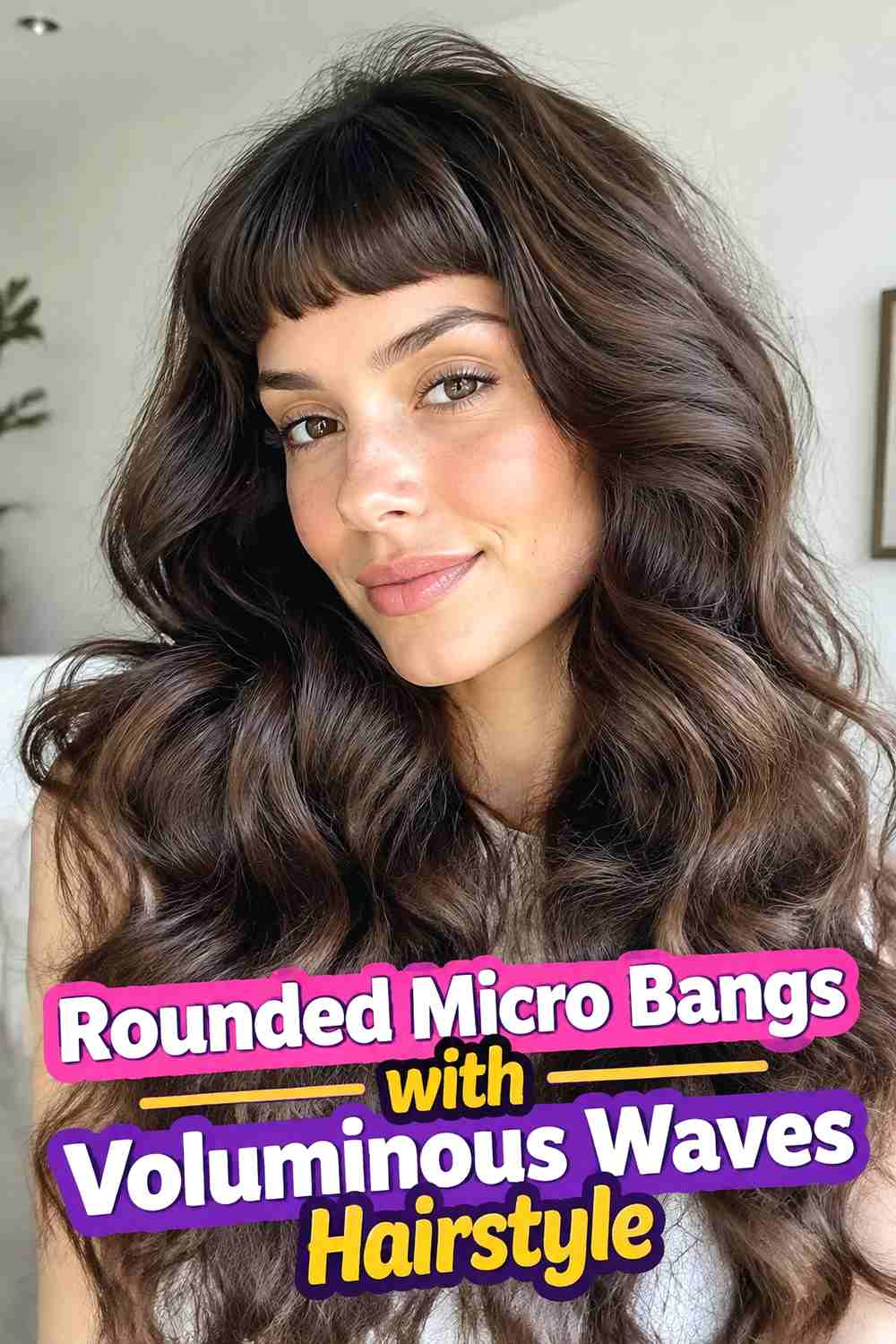
Rounded micro bangs create a fuller, more sculpted fringe that pairs beautifully with voluminous shoulder-length waves. The bangs form a gentle dome across the forehead, while the longer hair carries lift through the crown and broad movement through the mids and ends. This combination can feel polished and retro-inspired without becoming costume-like when the volume stays soft. The fringe needs enough density to maintain its rounded form, so it may not be the best choice if you prefer very sparse bangs. Medium to thick hair can support the look particularly well. The shoulder-length cut keeps the volume manageable and gives the waves enough space to expand without overwhelming the fringe.
Best For
This version suits medium to thick hair when you want the micro bangs to look fuller and more structured.
Styling Notes
Use controlled lift rather than extreme teasing. The rounded fringe should remain smooth while the longer waves carry most of the volume.
13. Razor Cut Micro Bangs With Wavy Layers Hairstyle
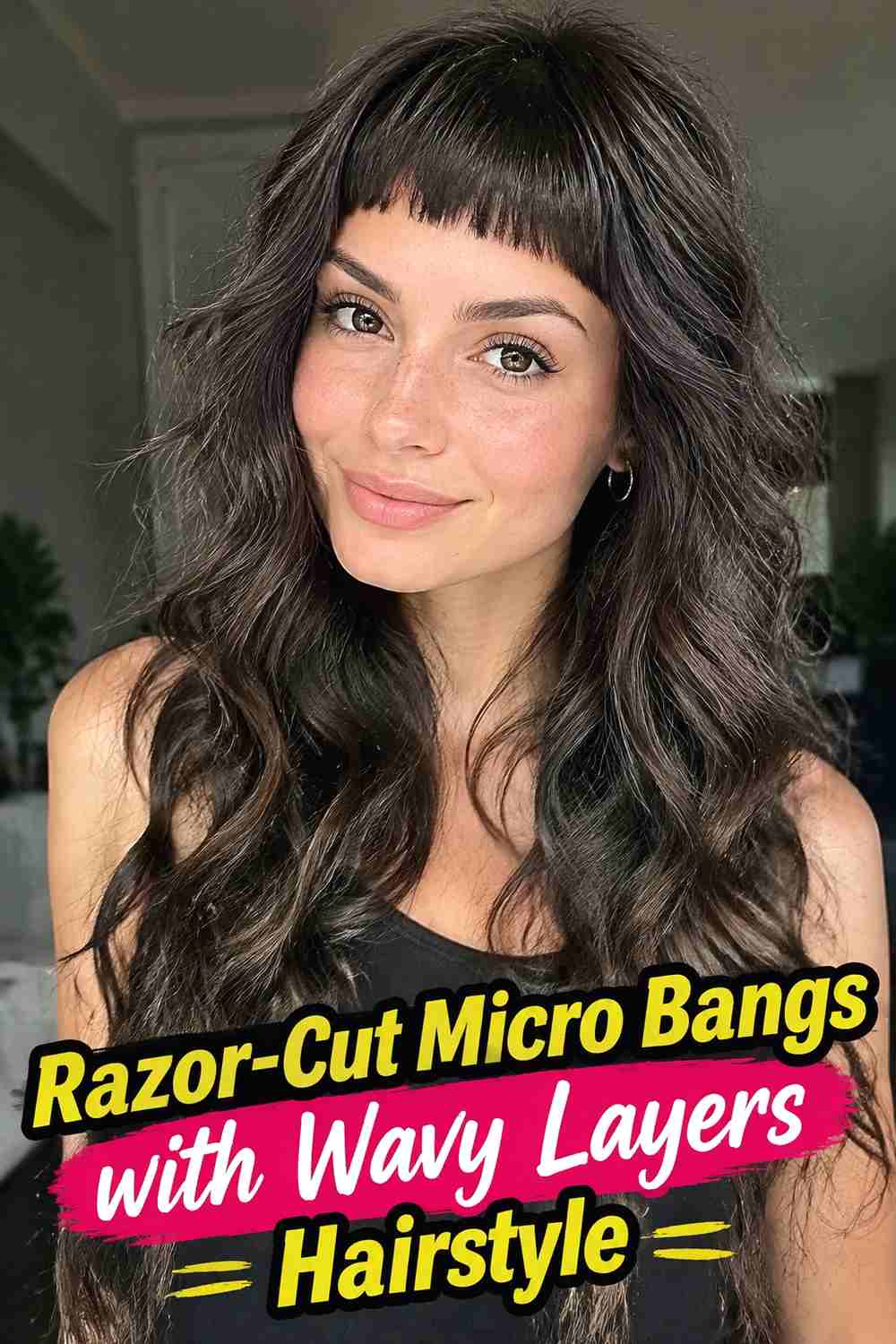
Razor-cut micro bangs have a soft, irregular perimeter that blends easily with shoulder-length wavy layers. Rather than appearing blunt, the fringe ends look lightly tapered and separated, which gives the style an airy edge. The longer cut can include movement around the cheekbones, sides, and ends without becoming heavily shagged. This works especially well when you want micro bangs to feel less graphic and more connected to the natural texture of the hair. The technique should be chosen carefully based on hair type, since some textures respond better to razor work than others. The goal is controlled softness, not excessive thinning or frayed-looking ends.
Hair Type & Length
Straight-to-wavy hair with enough density to support light texturizing often suits this finish, while very fragile ends may need a different cutting technique.
Pro Tip
Ask for softness at the perimeter without over-thinning the fringe. Micro bangs still need enough weight to sit neatly.
14. Baby Micro Bangs With Glossy Waves Hairstyle
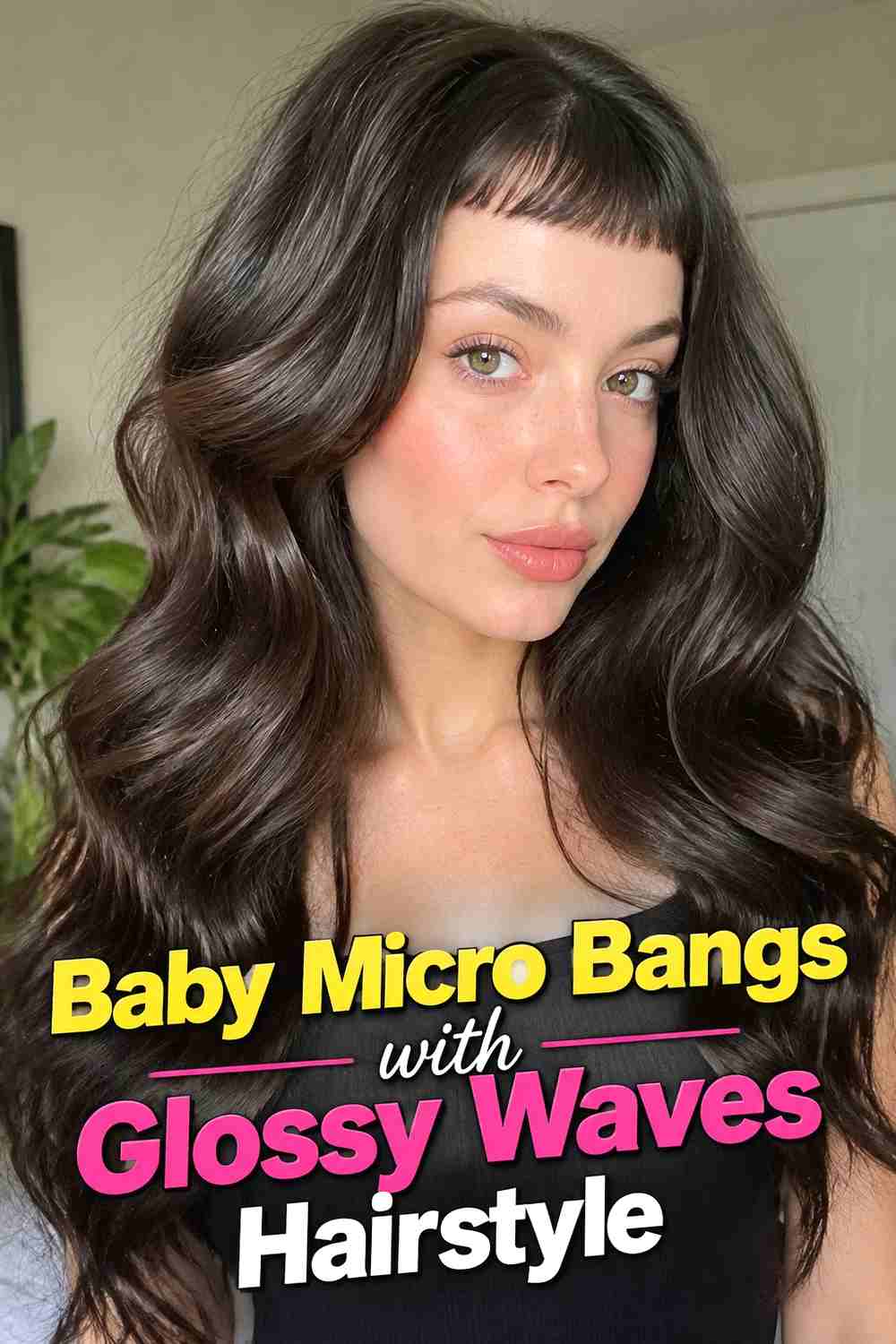
Baby micro bangs sit especially high above the brows, creating a bold contrast with glossy shoulder-length waves. The fringe can be kept clean and compact while the longer hair remains smooth, reflective, and softly curved. This combination is less undone than many wavy micro-bang styles, making it ideal if you prefer a polished finish. The waves should remain broad enough to show shine across the surface rather than breaking into many small curls. Because baby bangs expose more forehead than longer micro fringe, the exact length should be chosen carefully and checked against natural shrinkage. The strong shape also means regular maintenance is part of keeping the style looking intentional.
Wear & Maintenance
Expect more frequent fringe trims than with longer bangs. Even a small amount of growth can noticeably change the proportion of baby bangs.
Styling Notes
Keep the fringe smooth and lightweight, then use a gentle finishing product through the waves for shine without flattening their movement.
15. Micro Bangs With Wavy Shag Hairstyle
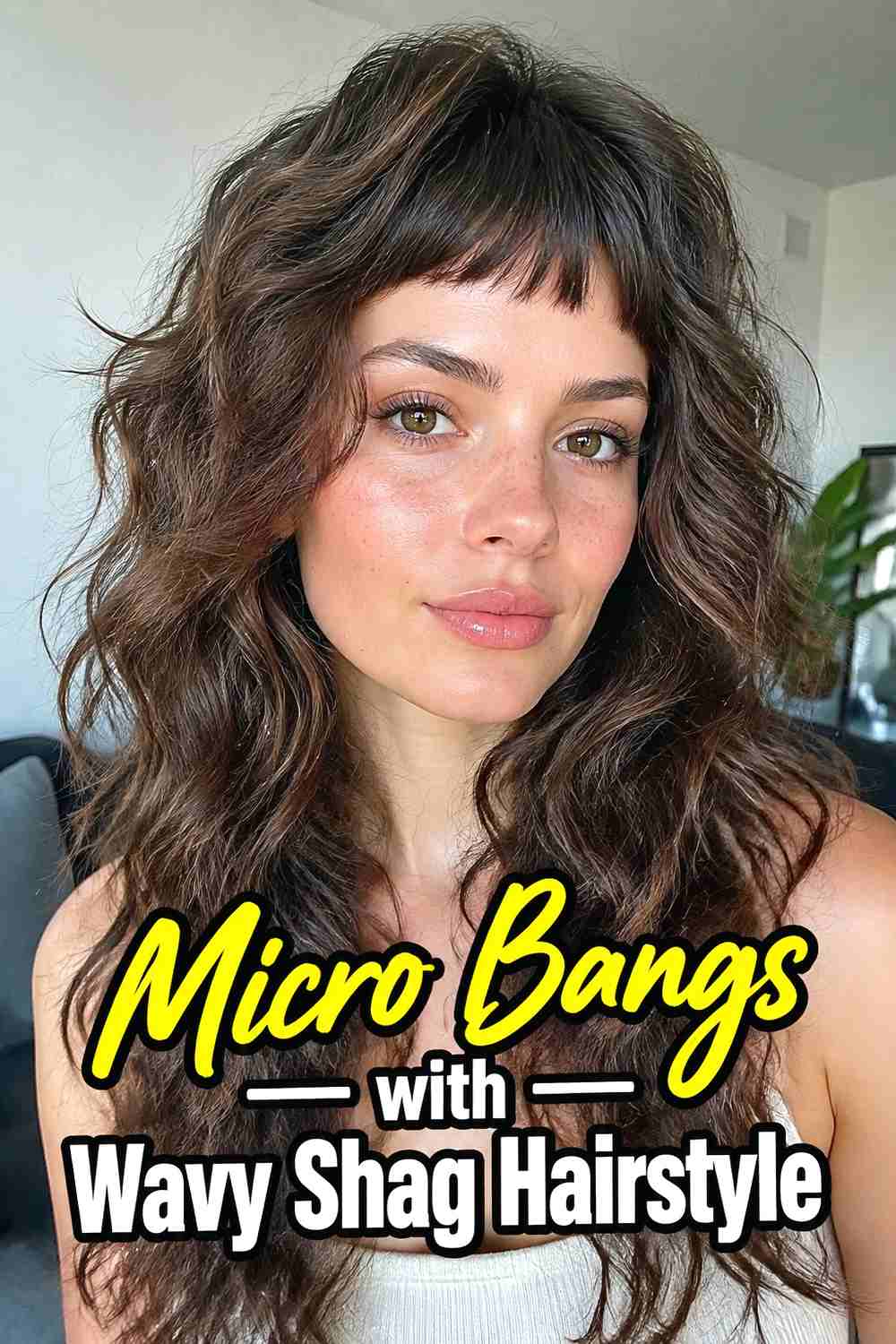
Micro bangs and a wavy shag make a natural pairing because both celebrate texture, layering, and slightly imperfect movement. The fringe sits short and piecey across the forehead, while shorter crown layers transition into shoulder-length waves with flicked or separated ends. The overall silhouette feels lighter than a one-length cut and can create plenty of movement without relying on polished curls. This style works particularly well with natural waves that already form in different directions. Layer placement should still respect hair density; too many short sections can reduce fullness in fine hair. The goal is a lively, textured outline that looks good even when the waves are not perfectly uniform.
Why It Works
The shag’s layered structure prevents micro bangs from feeling isolated, since shorter pieces continue throughout the rest of the haircut.
Styling Notes
Diffusing or air-drying can preserve the natural wave pattern. Finish by separating selected pieces rather than brushing the texture smooth.
16. Side Swept Micro Bangs With Relaxed Waves Hairstyle
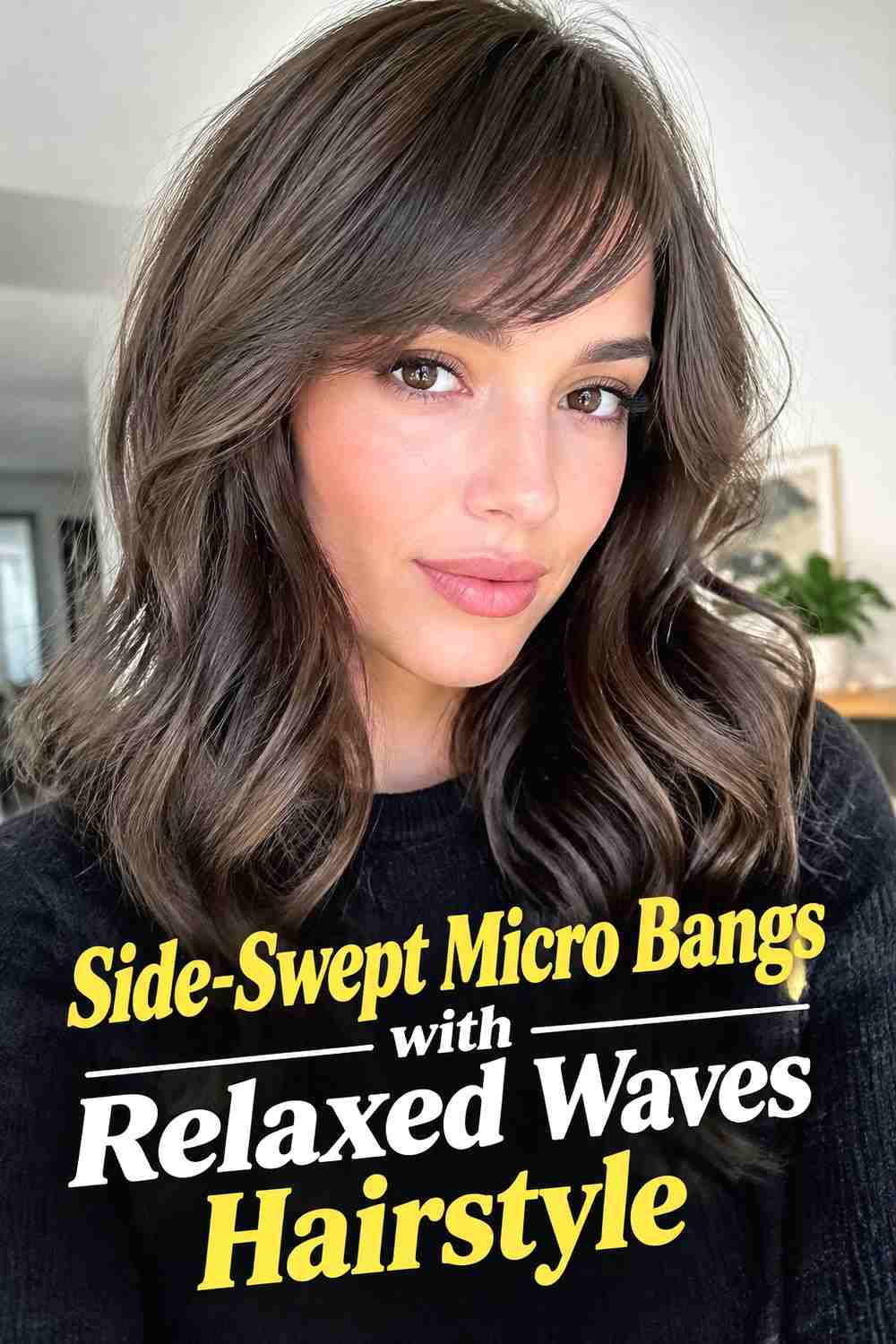
Side-swept micro bangs soften the usual straight-across look by directing the short fringe slightly toward one side. The length remains distinctly micro, but the diagonal movement makes the style feel less rigid. Relaxed shoulder-length waves continue that softness, creating a wearable combination with enough texture to keep the cut interesting. This is especially useful if your natural part already favors one side or if the hairline makes perfectly centered fringe difficult to maintain. The bangs can be separated into light pieces rather than styled as one solid section. Through the lengths, loose bends with straighter ends keep the silhouette modern and prevent the overall style from looking overly curled.
Best For
This option suits anyone who likes micro bangs but prefers an angled, less symmetrical finish or naturally wears a side part.
Pro Tip
Work with the natural direction of the fringe instead of forcing it across the forehead against its growth pattern.
17. French Inspired Micro Bangs With Wavy Bob Hairstyle
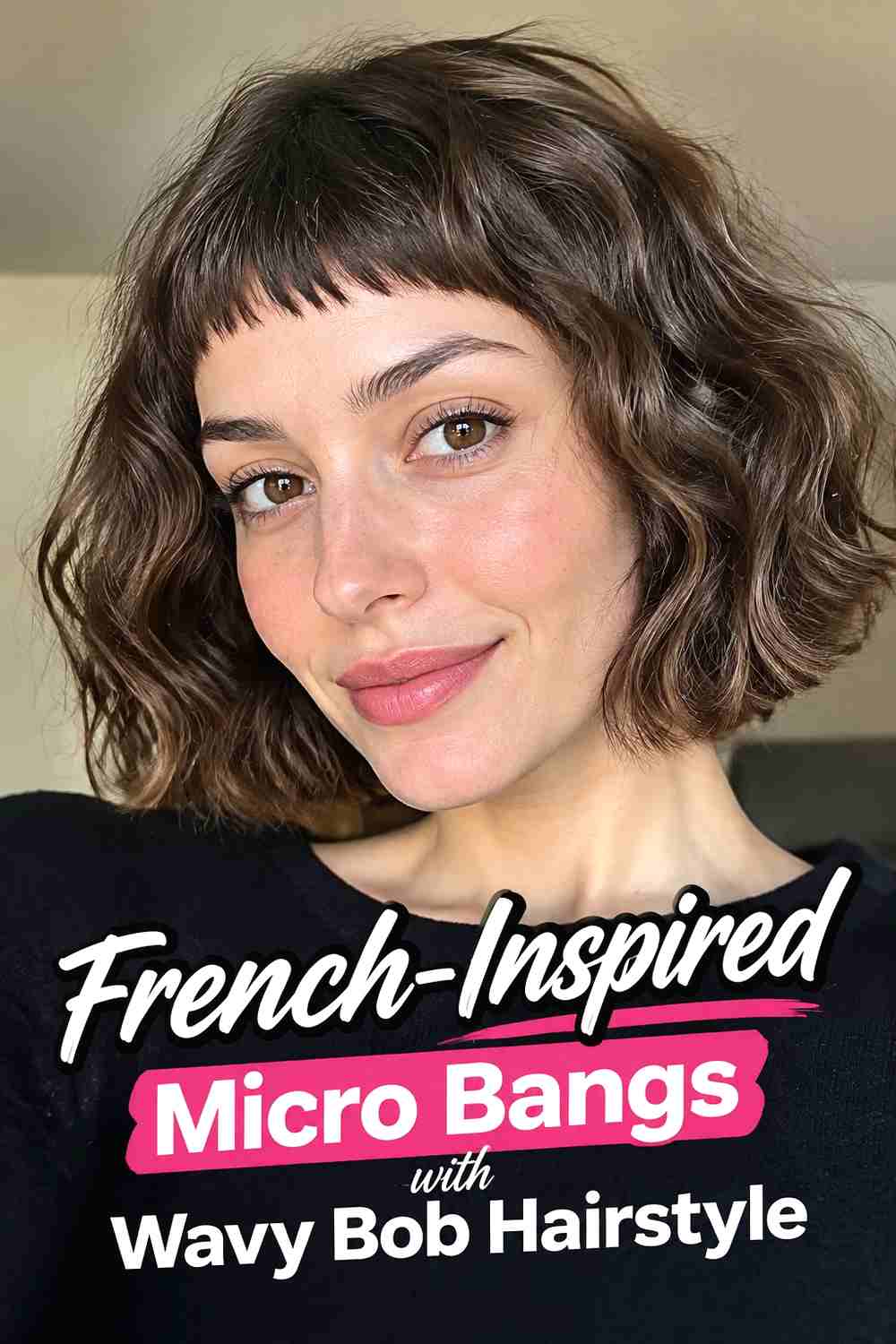
French-inspired micro bangs pair a short, slightly imperfect fringe with a shoulder-length wavy bob for a simple yet distinctive finish. The bangs should look soft rather than overly sculpted, with small variations in spacing and length that keep the edge from feeling severe. Through the bob, loose bends add texture while maintaining a relatively clean perimeter near the shoulders. This style looks strongest when the hair moves naturally and is not overloaded with product. The contrast between short fringe and relaxed waves gives it personality without requiring complicated daily styling. If the natural texture is already wavy, a light air-dried finish can make the haircut feel particularly effortless.
Why It Works
The unfussy fringe and restrained wave pattern create a balanced silhouette that feels expressive without depending on excessive layering or volume.
Wear & Maintenance
Keep the bangs regularly trimmed, but allow the wavy bob to retain slight imperfections so the finished look stays relaxed rather than overly precise.
How to Choose the Right Look
Start with fringe density. Wispy, airy, feathered, and razor-cut micro bangs leave more forehead visible and usually feel softer, while blunt, rounded, and baby bangs create a stronger visual statement. If you are trying micro bangs for the first time, a lighter version may feel easier to adapt to.
Your natural wave pattern also matters. Loose waves pair easily with curved or blunt fringe, while shaggy and irregular textures suit choppy, piecey, and asymmetrical bangs. If the hair at your forehead has its own wave or cowlick, plan the fringe around that behavior rather than assuming it will sit perfectly straight.
Think about styling time as well. Airy and shaggy versions can work with relaxed drying methods, while glossy baby bangs or rounded fringe generally need more deliberate shaping. Shoulder-length hair also changes appearance as waves tighten, so account for shrinkage before choosing the final perimeter.
Finally, be realistic about maintenance. Micro bangs change quickly as they grow because even a small increase in length alters the proportion. If frequent trims are inconvenient, choose a softer, choppier, or feathered edge that can transition more gracefully between appointments.
Final Thoughts
Micro bangs can give wavy shoulder-length hair a completely different personality without sacrificing the movement and versatility of the longer lengths. A wispy or airy fringe keeps the effect soft, while blunt, baby, rounded, or asymmetrical versions make the haircut much more graphic.
Choose the style according to your natural wave pattern, fringe density, daily styling habits, and willingness to maintain the short length. The most convincing combination is one where the bangs and waves feel like parts of the same haircut rather than two separate ideas.
FAQs
1. Do micro bangs work with wavy shoulder-length hair?
Yes. The short fringe creates contrast with the movement of shoulder-length waves, and the bangs can be cut blunt, wispy, choppy, curved, or textured depending on the desired finish.
2. How short are micro bangs?
Micro bangs typically sit noticeably above the eyebrows. The exact length varies, and natural wave or shrinkage should be considered before cutting them very short.
3. Are micro bangs difficult to maintain?
They usually need more frequent trims than longer fringe because small amounts of growth quickly change their shape. Styling difficulty depends on your texture and the type of micro bang.
4. Can naturally wavy bangs be worn as micro bangs?
Yes, but the cut should account for how much the hair bends or springs upward when dry. Cutting the fringe while its natural behavior is visible can help avoid an unexpectedly short result.
5. Which micro bangs are easiest to grow out?
Wispy, feathered, choppy, and piecey versions often transition more softly because their edges are already irregular and can gradually blend into longer fringe.
Save your favorite micro-bang looks, share them with someone considering a short fringe, and explore more wavy shoulder-length hairstyle inspiration for your next cut.