15 Milano Curls Braids Ideas for Soft, Bouncy Style
Fresh Milano curls braids pair defined braid work with soft, flowing curls for looks that can feel polished, romantic, bold, or beautifully relaxed.
Milano curls braids combine visible braided construction with loose curled sections or curled ends, creating more movement than a fully braided style. The curl placement can range from concentrated ends to fuller, curl-heavy lengths, while the braid size, parting, color, and finished silhouette change the overall effect.
When choosing between these ideas, compare more than length. Think about how much curl volume you want around your face and shoulders, whether you prefer smaller or chunkier braids, how much weight feels comfortable, and whether you want to wear the style mostly down or regularly reshape it into ponytails, buns, or half-up looks.
Quick List
- Long Knotless Milano Curls Braid Hairstyle
- Shoulder-Length Milano Curls Bob Braid Hairstyle
- Deep Side-Part Milano Curls Braid Hairstyle
- Center-Part Medium Milano Curls Braid Hairstyle
- Half-Up Half-Down Milano Curls Braid Hairstyle
- High Ponytail Milano Curls Braid Hairstyle
- Low Side Ponytail Milano Curls Braid Hairstyle
- Low Bun Milano Curls Braid Hairstyle
- Fulani-Inspired Milano Curls Braid Hairstyle
- Jumbo Milano Curls Braid Hairstyle
- Micro Milano Curls Braid Hairstyle
- Ombre Milano Curls Braid Hairstyle
- Copper-Highlighted Milano Curls Braid Hairstyle
- Boho Milano Curls Braid Hairstyle
- Crown Braid Milano Curls Hairstyle
1. Long Knotless Milano Curls Braid Hairstyle
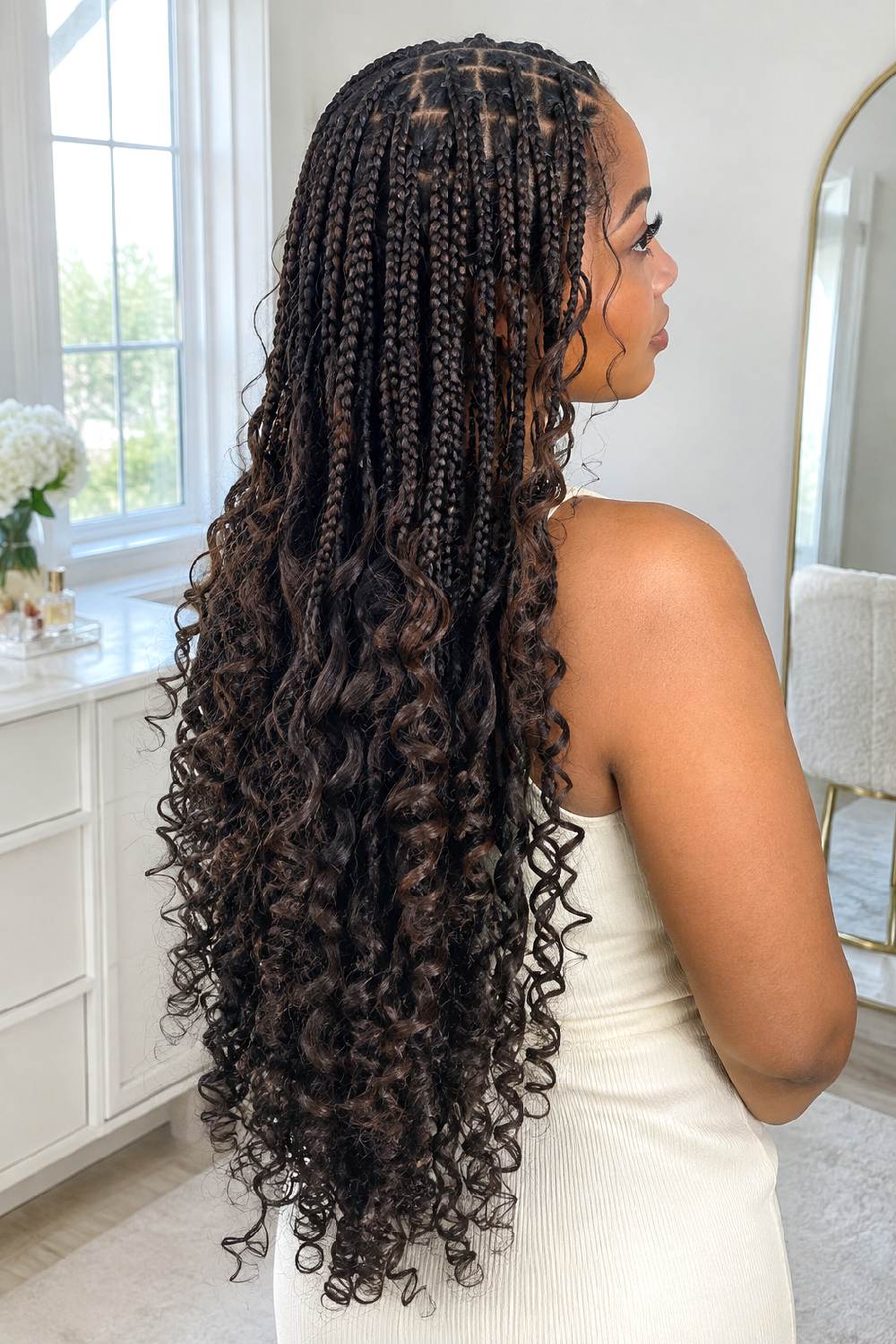
Long knotless braids give Milano curls plenty of room to develop into a flowing, layered-looking finish. A flatter knotless start keeps the roots visually clean, while the curled lower lengths soften the straight vertical lines created by the braids. Waist-length versions feel especially dramatic when the curls are allowed to vary slightly in diameter instead of forming identical spirals. Dark espresso or natural black keeps the look classic, although subtle tonal blending can make individual curls easier to see. This option suits anyone who enjoys noticeable length and movement, but the amount of added hair should still be balanced with comfort and scalp tension.
Hair Type & Length
Medium to long natural hair can be tucked neatly into the braided sections, but the finished length comes mainly from the braiding hair rather than your starting length. Dense hair may need thoughtful section sizing so the finished style doesn’t become unnecessarily bulky.
Wear & Maintenance
Separate and arrange the curled sections with your fingers instead of aggressively brushing through them. At night, gather the length loosely and protect the curls from friction so they don’t become excessively tangled.
2. Shoulder Length Milano Curls Bob Braid Hairstyle
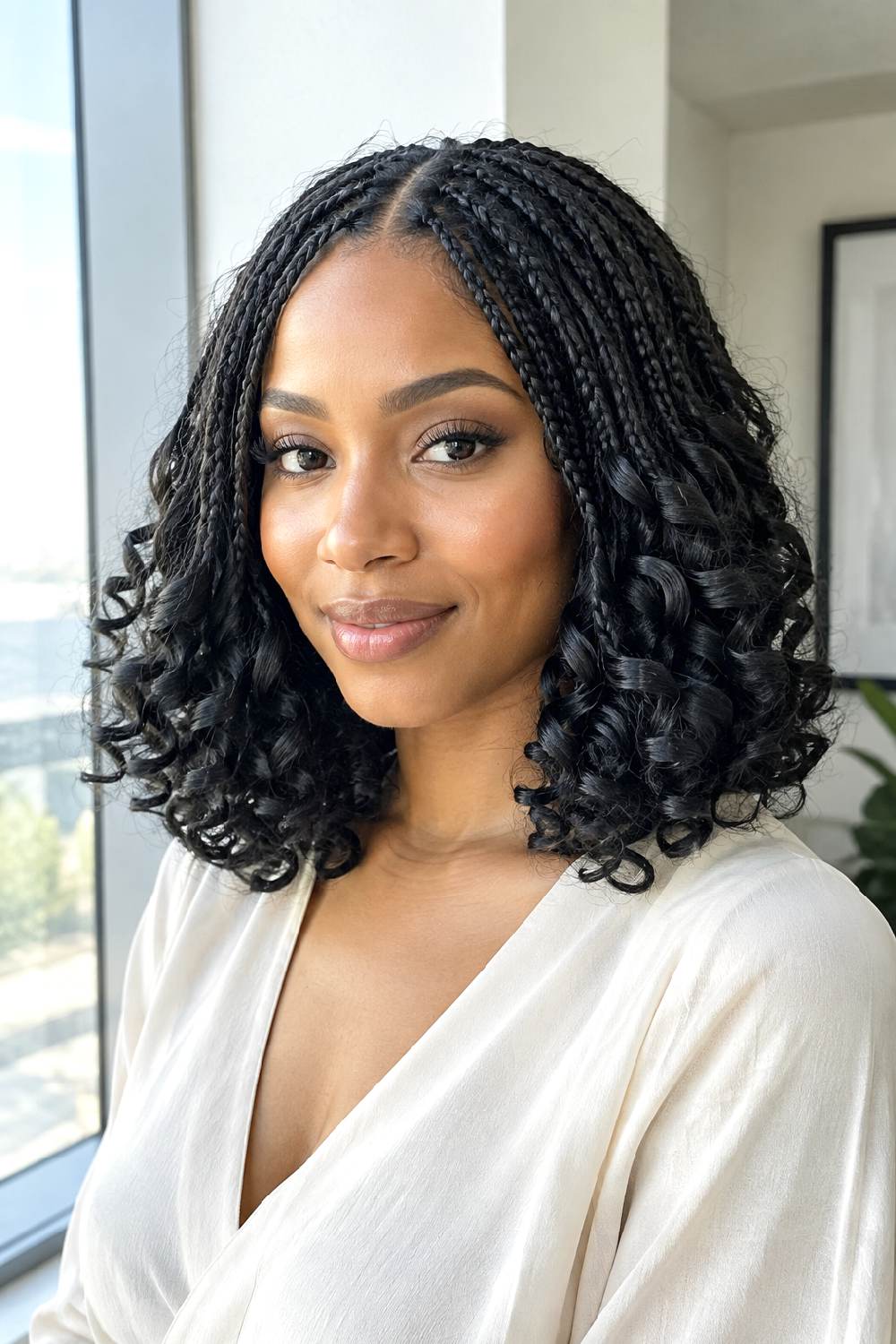
A shoulder-length Milano curls bob trades dramatic length for a compact, rounded silhouette that’s easier to keep away from jackets, bags, and chair backs. Small or medium braids can fall cleanly around the head before opening into curls near the shoulders, giving the ends enough fullness to create a distinct bob shape. The result feels lighter visually than extra-long braids and puts more attention on the neckline and face. A center part creates symmetry, while a slight side part can soften the outline. Because shorter curls can spring outward more noticeably, controlled volume and carefully distributed curl pieces help the bob stay balanced rather than becoming triangular.
Why It Works
The shorter length concentrates the curl pattern around the jaw, neck, and shoulders, so you get visible texture without needing a large amount of length. It’s especially appealing when you want movement but don’t want hair sitting far down the back.
Pro Tip
Ask for the curled ends to finish at slightly varied points rather than one perfectly blunt line. Small differences in length can make the bob feel softer and more natural.
3. Deep Side Part Milano Curls Braid Hairstyle
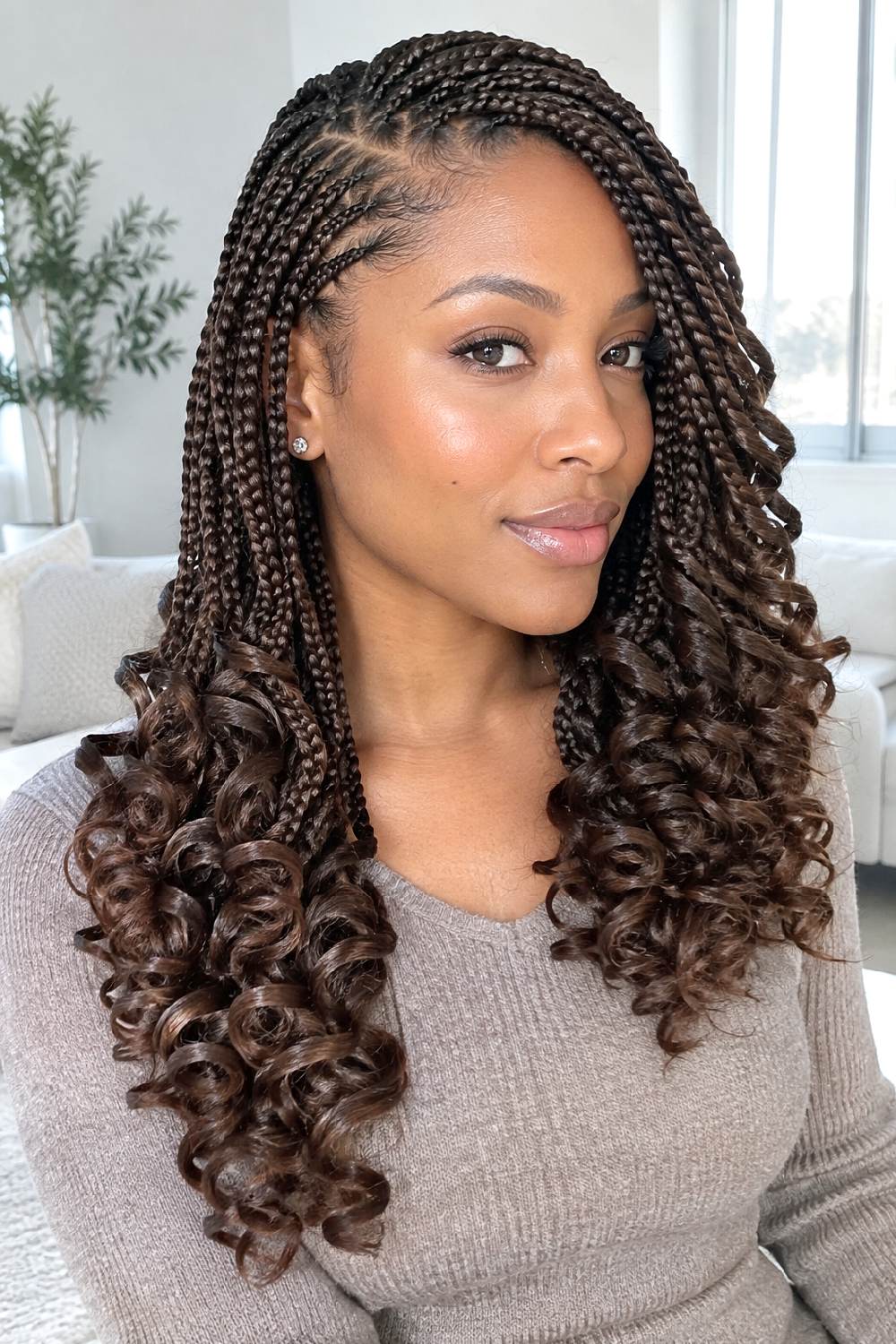
A deep side part changes the entire direction of Milano curl braids by concentrating more volume on one side of the face. The braids can sweep diagonally from the part before dropping into soft curls below the shoulders, creating an asymmetrical finish that’s noticeable without requiring an elaborate updo. This works particularly well when the curls are full enough to support the side sweep but not so dense that they hide the braid pattern. Medium braids keep the construction visible, while chocolate brown or another dimensional shade adds depth. If you frequently change your part, remember that a strongly defined installation pattern may naturally favor the side it was designed for.
Styling Notes
Let the heavier side fall naturally rather than forcing every braid across the part. A few braids sitting closer to the face will make the sweep look intentional without creating too much bulk near the temple.
Best For
Choose this version when you like visible face framing and an off-balance silhouette. It also photographs well from three-quarter angles because both the parting and curled lengths remain visible.
4. Center Part Medium Milano Curls Braid Hairstyle
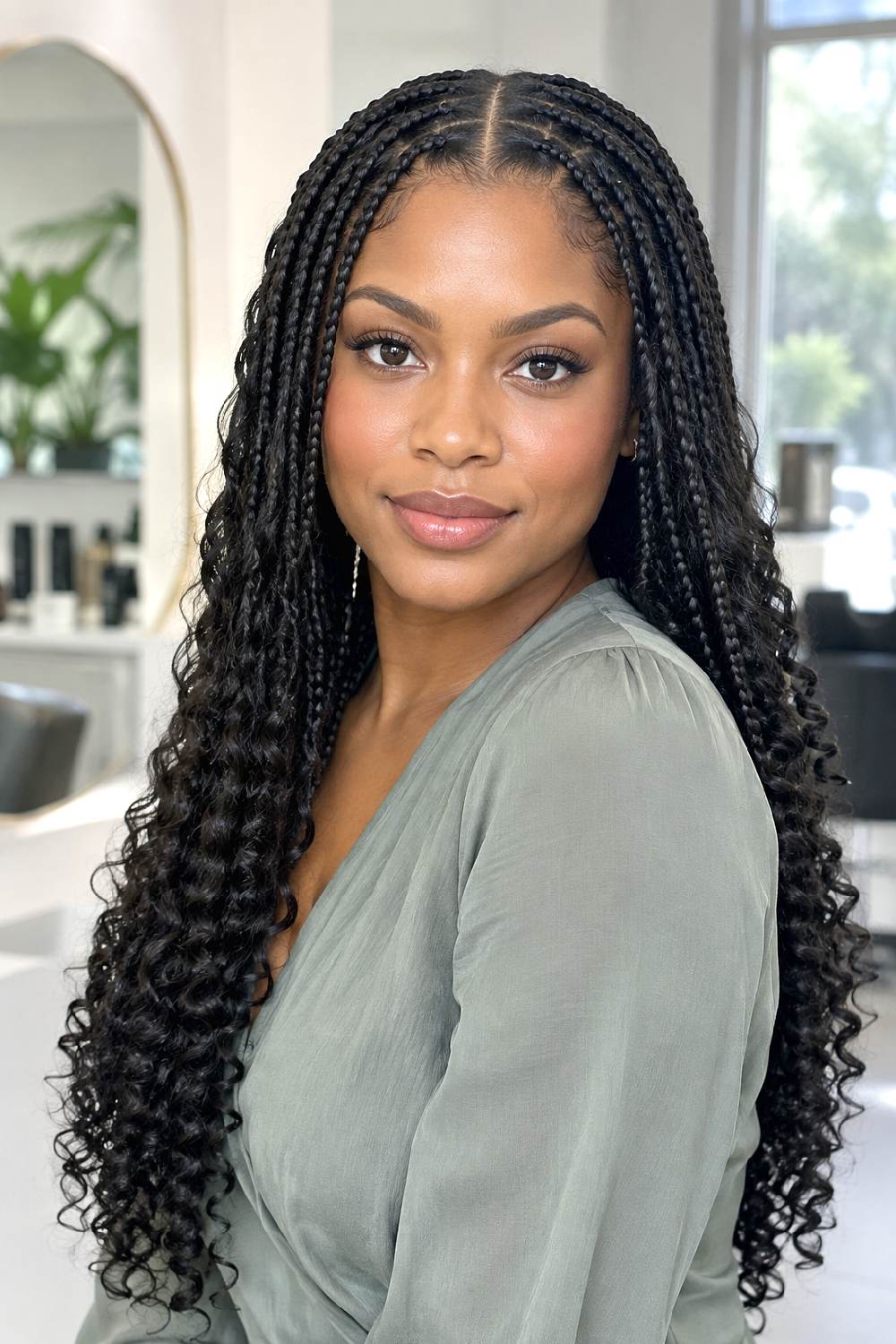
Medium-length Milano curls with a center part create a balanced look that places equal braid and curl volume on both sides of the face. Keeping the braids around mid-back length gives the curls enough room to bounce without producing the weight or maintenance of waist-length hair. The strongest versions use consistent braid sizing at the roots but allow the curled lower sections to vary slightly, so the finish feels textured rather than mechanical. This is a versatile choice when you want to wear your braids down most of the time because the center line gives the overall shape an orderly foundation while the curls bring softness and movement through the ends.
Why It Works
A center part emphasizes balance, making it easier to judge whether one side has become fuller or more tangled than the other. It also creates a straightforward base for half-up styling later.
Wear & Maintenance
Refresh the silhouette by gently separating curls that have clumped together and repositioning individual braids. Avoid repeatedly pulling the same front sections tightly behind the ears if you notice discomfort along the hairline.
5. Half Up Half Down Milano Curls Braid Hairstyle
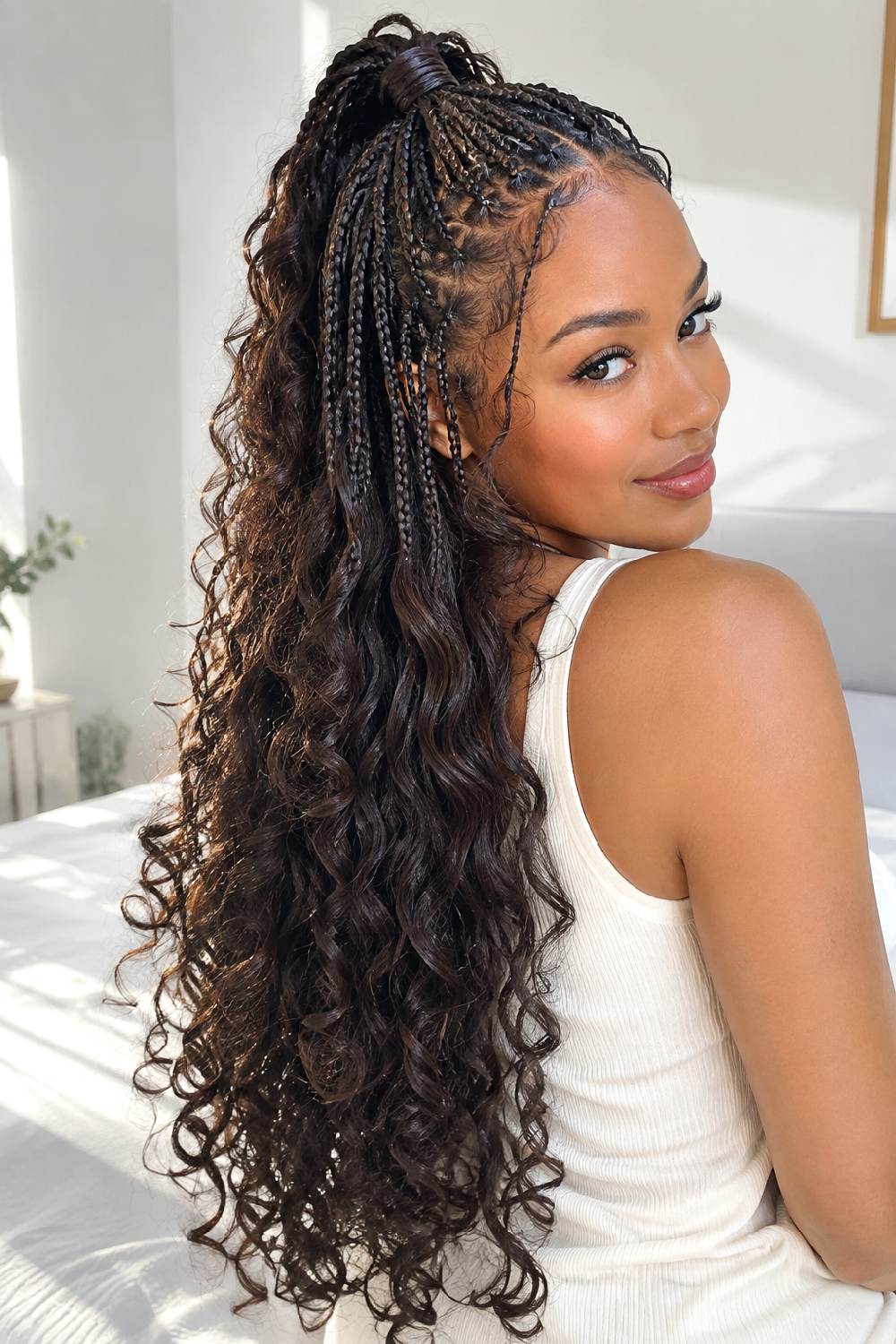
The half-up half-down version gives Milano curls extra height while keeping most of the length loose. The upper braids are gathered into a small ponytail or compact bundle at the crown, and the lower sections remain free so the curls still frame the shoulders and back. This separation is especially flattering visually when the curled lengths are full, because lifting the top section prevents all of that volume from settling in one place. Leaving one or two slim braids near the temples can soften the transition around the face. The key is using only enough hair in the upper section to create lift without building an oversized or uncomfortable base.
Styling Notes
Follow the direction in which the braids naturally fall when gathering the upper section. Pulling braids sharply against their installation pattern can create unnecessary tension and make the half-up portion sit awkwardly.
Pro Tip
A soft, snag-free elastic can secure the top section without adding much bulk. Wrap one braid around the elastic if you want a cleaner finished base.
6. High Ponytail Milano Curls Braid Hairstyle
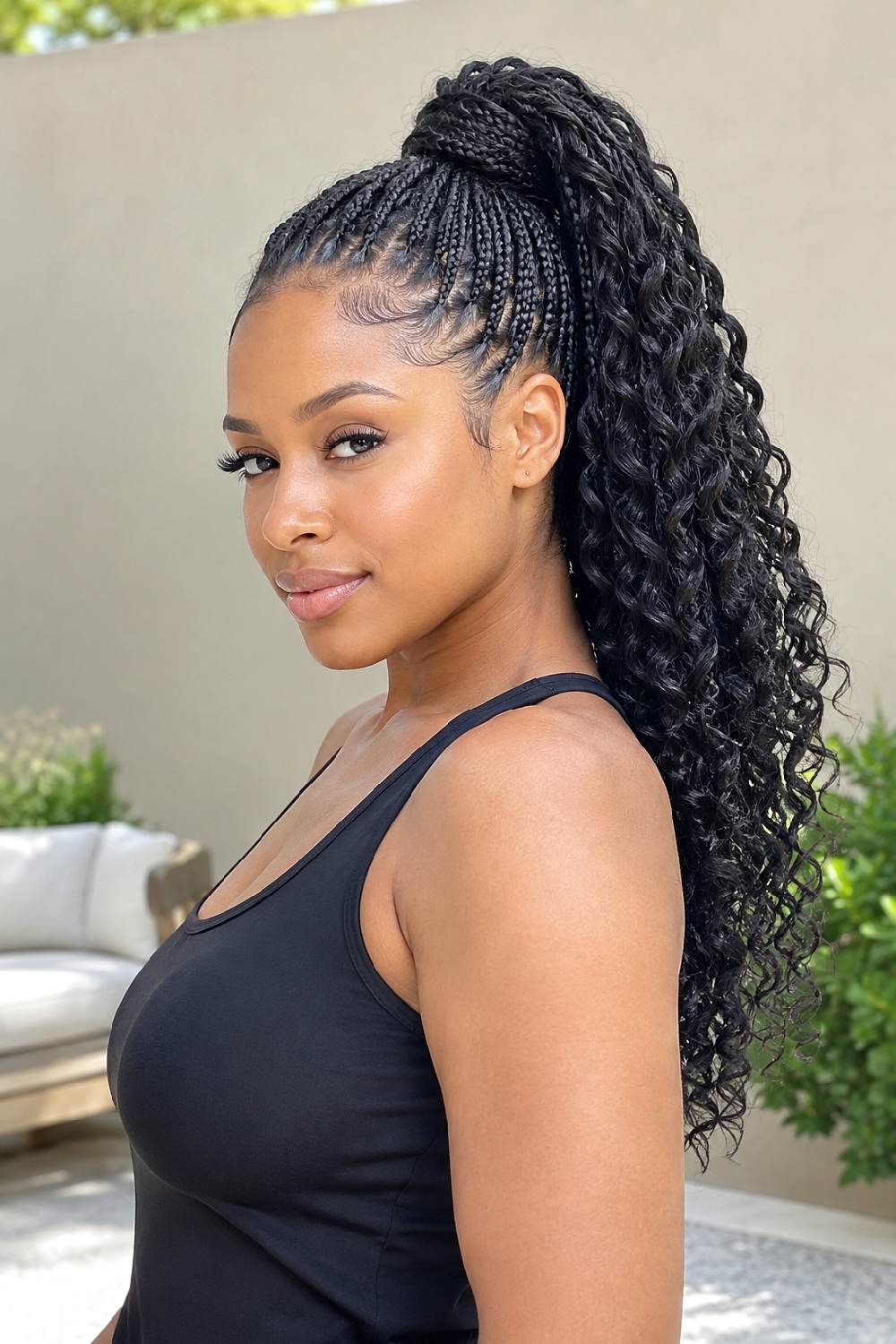
A high ponytail turns Milano curls into a lifted statement style, with the braids directing upward toward the crown before the curled lengths spill down around the head and shoulders. The contrast between the smoother gathered base and the springy ends makes this version feel more sculpted than wearing the braids loose. It works best when the ponytail contains a manageable amount of hair; very long or very dense braids can become noticeably heavier when concentrated at one point. Leaving a couple of slim front braids loose can make the finish feel less severe, while a completely swept-back front creates a cleaner, more polished effect.
Wear & Maintenance
High placement can feel different from wearing the braids down, especially after several hours. If the base begins to pull or feel uncomfortable, lowering the ponytail or releasing it is a more sensible choice than tightening it further.
Why It Works
The elevated tie point exposes more of the neckline and gives the curls room to spread in multiple directions, which makes their shape and movement especially visible.
7. Low Side Ponytail Milano Curls Braid Hairstyle
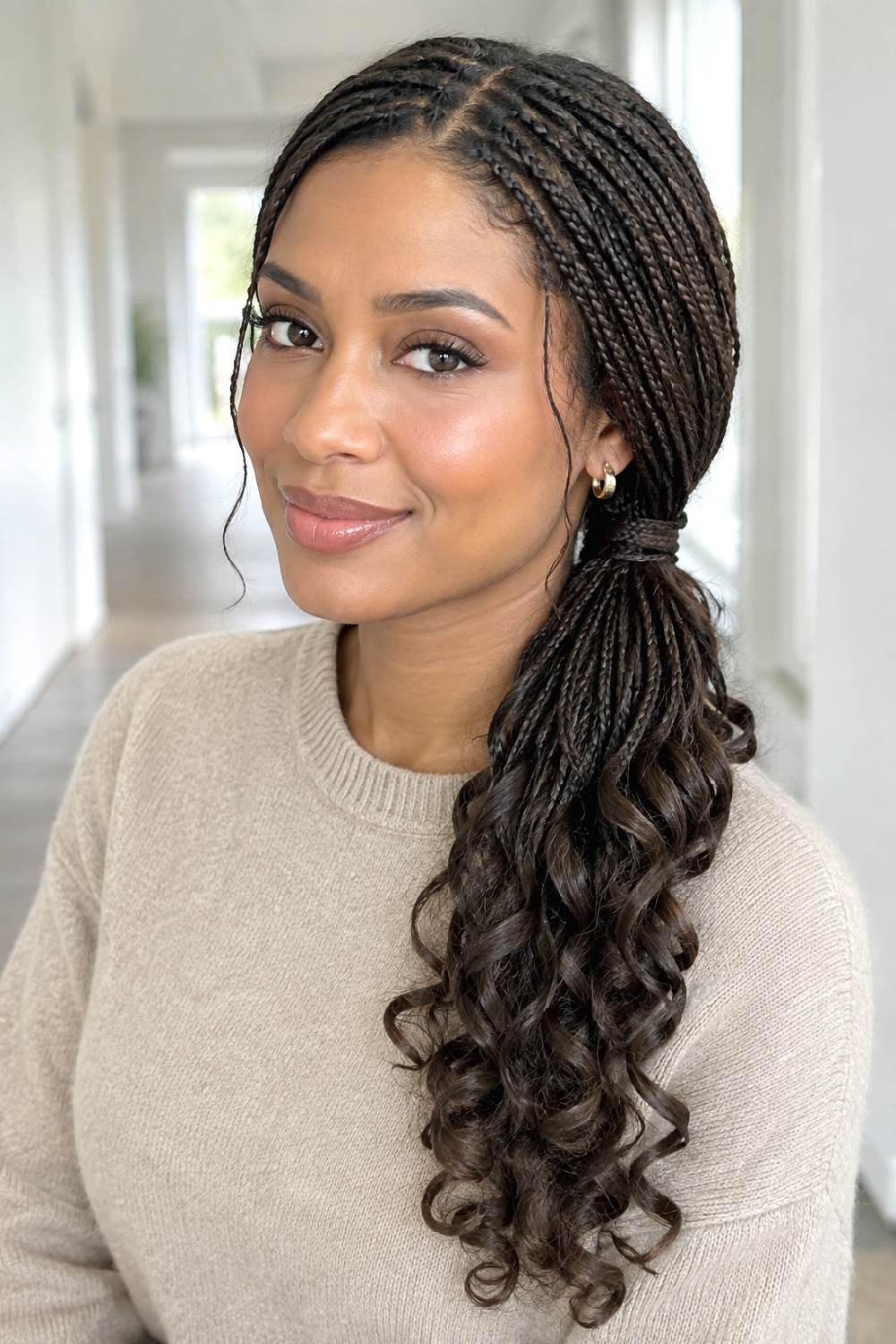
A low side ponytail offers a softer way to gather Milano curls without moving all of the weight to the crown. The braids are collected near one side of the nape and brought over the shoulder, allowing the curls to become the main feature from the front. An off-center part complements this placement because it keeps the overall direction intentional, while medium-length braids help the ponytail sit comfortably rather than extending too far down the torso. This style can shift easily from casual to dressier settings depending on how polished you make the roots. Keep the ponytail base relaxed enough that the braids still curve naturally around the head.
Best For
This is a useful option when you want your curls visible in front-facing photos or prefer keeping most of your hair on one side instead of spread across your back.
Styling Notes
Secure the ponytail close to the nape rather than halfway down the braid lengths. A clearly defined base helps the gathered shape look deliberate and prevents loose braids from slipping unpredictably.
8. Low Bun Milano Curls Braid Hairstyle
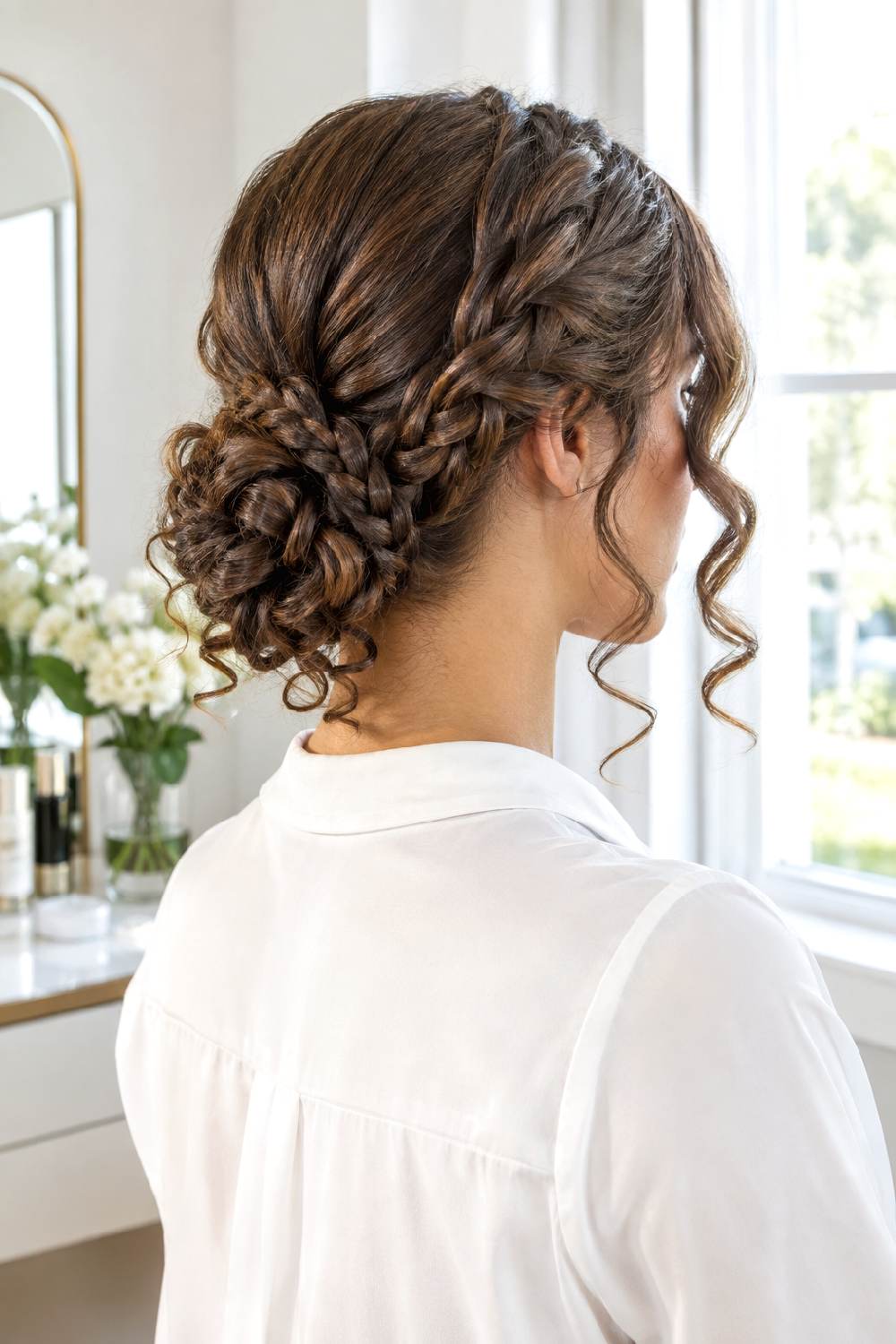
A low bun shows that Milano curls don’t always need to remain fully loose. Gather the braids at the nape and form them into a compact rounded bun, allowing selected curled ends to remain visible around the shape. A pair of soft face-framing curls can echo the texture at the back and keep the finished style from looking overly strict. This version works particularly well for an occasion where you want the braids contained while still showing their curl detail. The bun should be built from the natural fall of the braids rather than forcing them into tight loops, and its size should reflect the actual amount of hair being gathered.
Styling Notes
Use large pins through the braided sections rather than repeatedly piercing or flattening the loose curls. Crossed pins can help stabilize the base while allowing some texture to remain visible.
Best For
Choose the low bun when you want the neckline open, need to keep long curls off your shoulders, or prefer a more controlled silhouette for a dressier outfit.
9. Fulani Inspired Milano Curls Braid Hairstyle
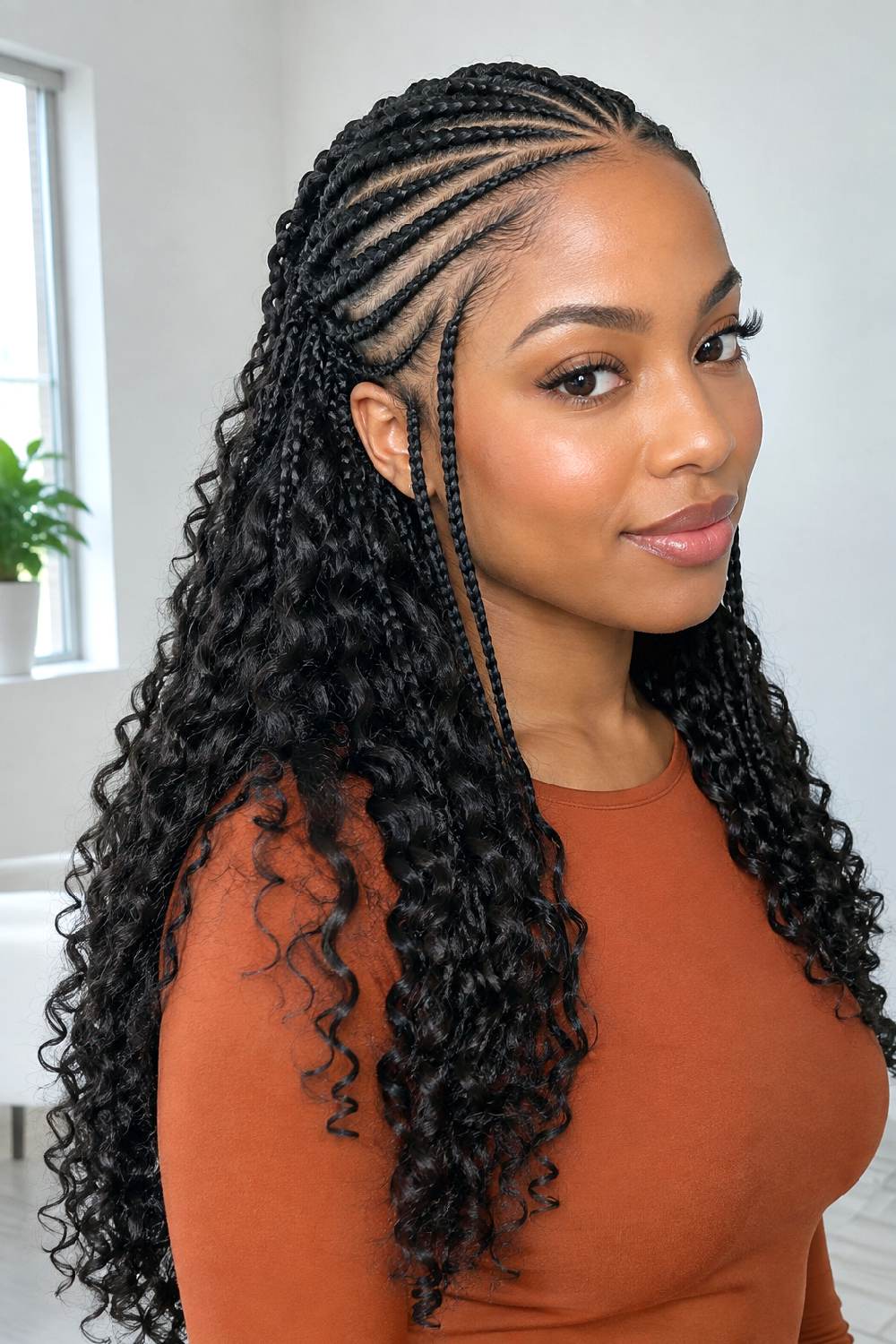
Fulani-inspired detailing adds visible scalp braiding to the softness of Milano curls. Slim front cornrows can travel neatly away from the hairline before transitioning into individual braids, while the back and lower lengths open into full curls. The result creates more structure around the crown than standard box or knotless braids and makes the installation pattern part of the finished design. Keeping the curls mainly through the back prevents them from hiding the cornrow work. This version looks especially cohesive in a natural black or deep brown shade, where clean part lines and braid paths provide enough visual interest without requiring numerous accessories.
Hair Type & Length
The front pattern needs sufficient natural hair for secure, comfortable cornrowing, while the finished length can be customized with added braiding hair. Ask for braid sizing that works with your density rather than forcing very small sections.
Pro Tip
Decide where you normally want the style to fall before the installation begins. The direction of the front cornrows influences how naturally the braids sit when worn down.
10. Jumbo Milano Curls Braid Hairstyle
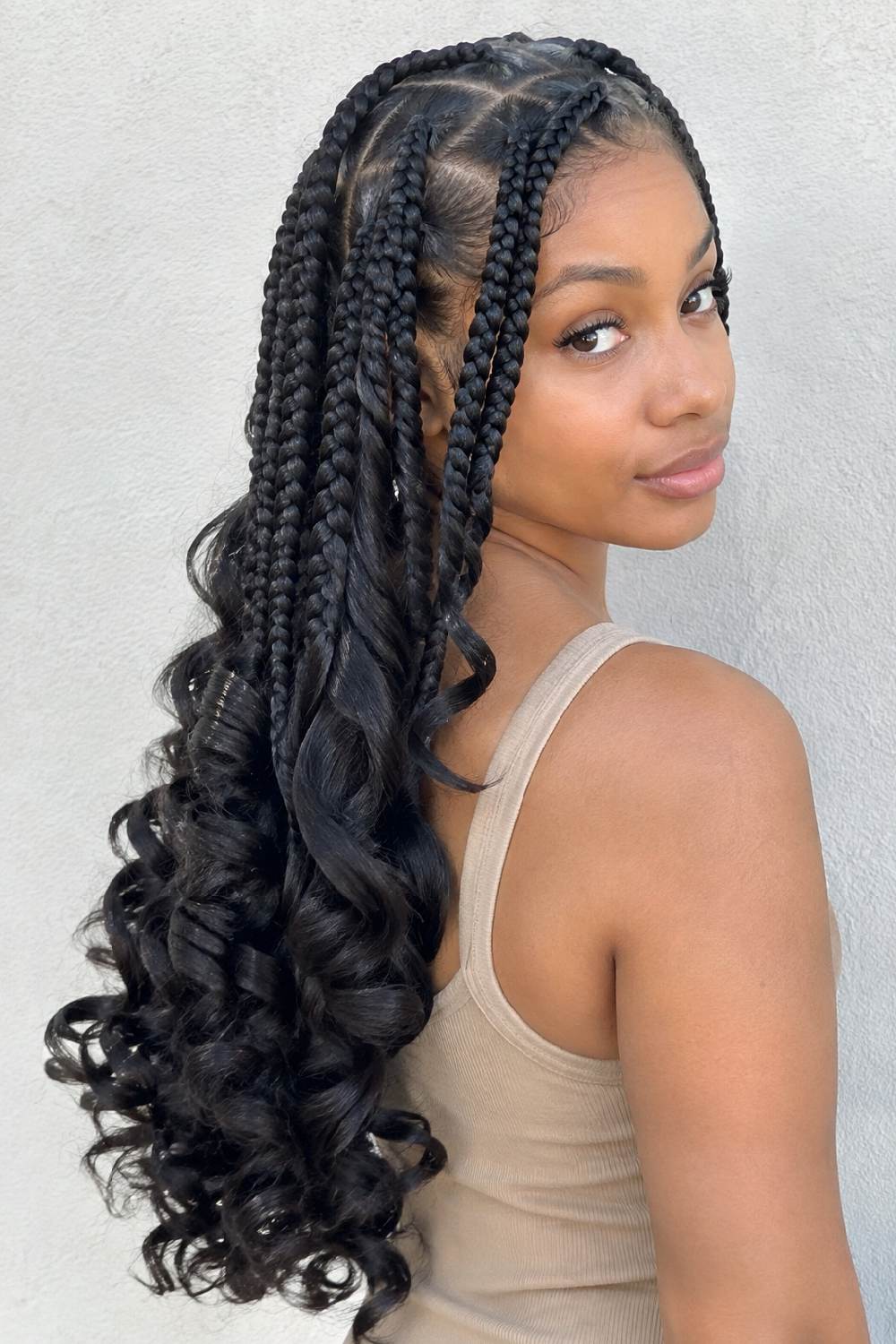
Jumbo Milano curls braids make braid size part of the statement. Larger knotless sections create bold vertical lines through the upper lengths, while oversized curls soften the ends and prevent the style from feeling too rigid. Because there are fewer individual braids, every section, transition, and curl is more visible, so consistent tapering matters. The best effect is full without appearing inflated: each braid should have believable weight, and the curls should vary enough to look naturally arranged. A subtle side part gives the larger braids room to frame the face. This version is ideal when you prefer a strong silhouette and don’t need the flexibility of many tiny braids.
Why It Works
The contrast between thick braids and generous curls is easy to read from a distance, giving the hairstyle a graphic shape while maintaining a soft finish.
Wear & Maintenance
Jumbo sections can expose more scalp between braids, so avoid repeatedly forcing them into positions that tug against their natural direction. Finger-arrange the curls rather than trying to make every end sit identically.
11. Micro Milano Curls Braid Hairstyle
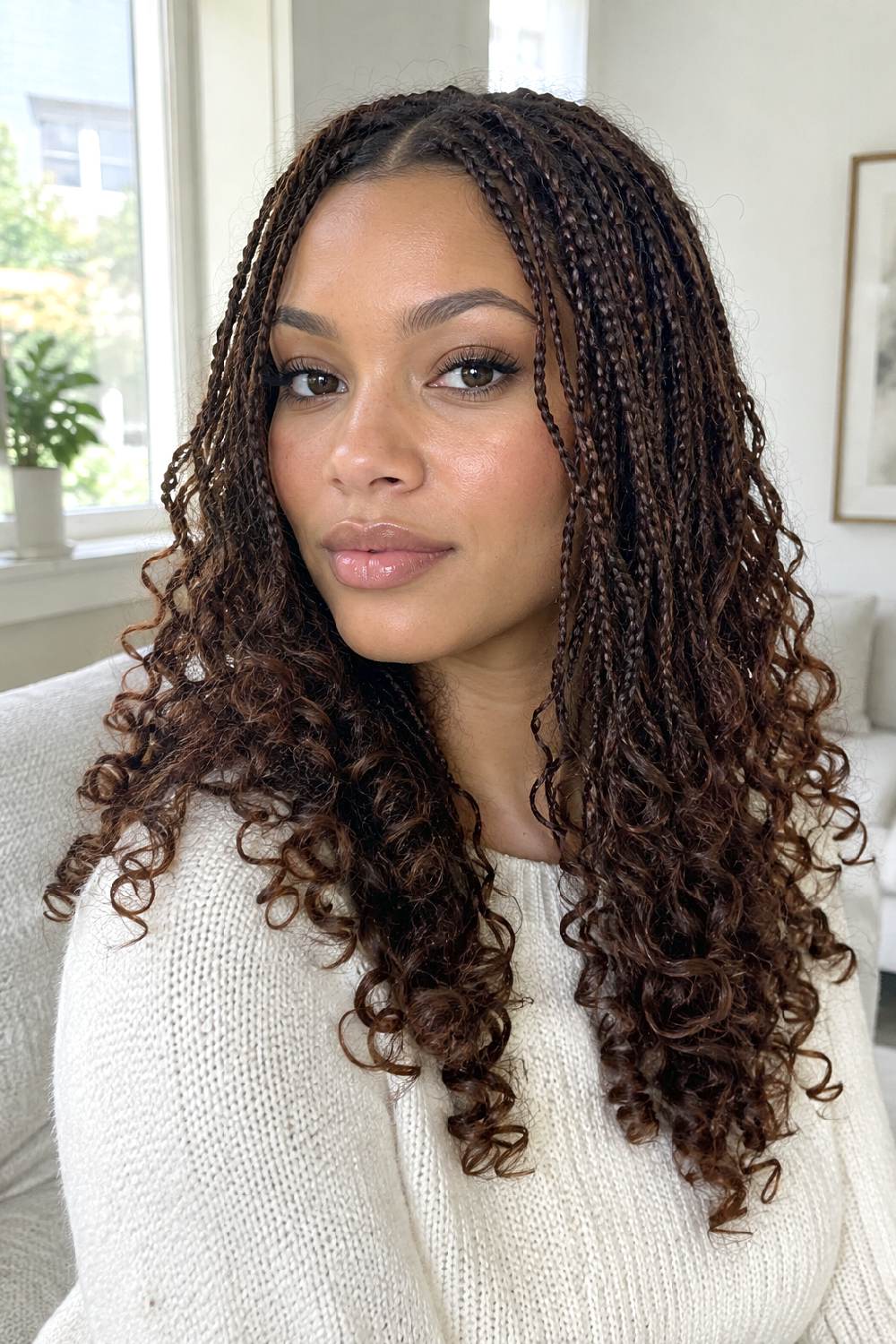
Micro Milano curls braids create a finer, more intricate texture through the upper lengths, then soften into small curls around the chest or shoulders. Because the braids are slim, the transition between braided and curled hair can appear especially fluid, almost like a textured veil around the face and neckline. A soft center part keeps the numerous braids visually organized, while shorter or medium lengths help prevent the finished look from becoming overwhelmingly dense. The individual curls should remain irregular in size and direction; perfectly repeated ringlets can make such a detailed style look artificial. This option suits readers who enjoy delicate braid work and plenty of visible movement.
Hair Type & Length
Very small sections require careful planning around the hairline, where making braids unnecessarily tiny or tight can be uncomfortable. The braid size should still respect the strength and density of the natural hair being incorporated.
Wear & Maintenance
With many small braids and curls, tangling can happen where the loose sections rub together. Handle the ends in sections and keep nighttime friction low rather than repeatedly combing through the curls.
12. Ombre Milano Curls Braid Hairstyle
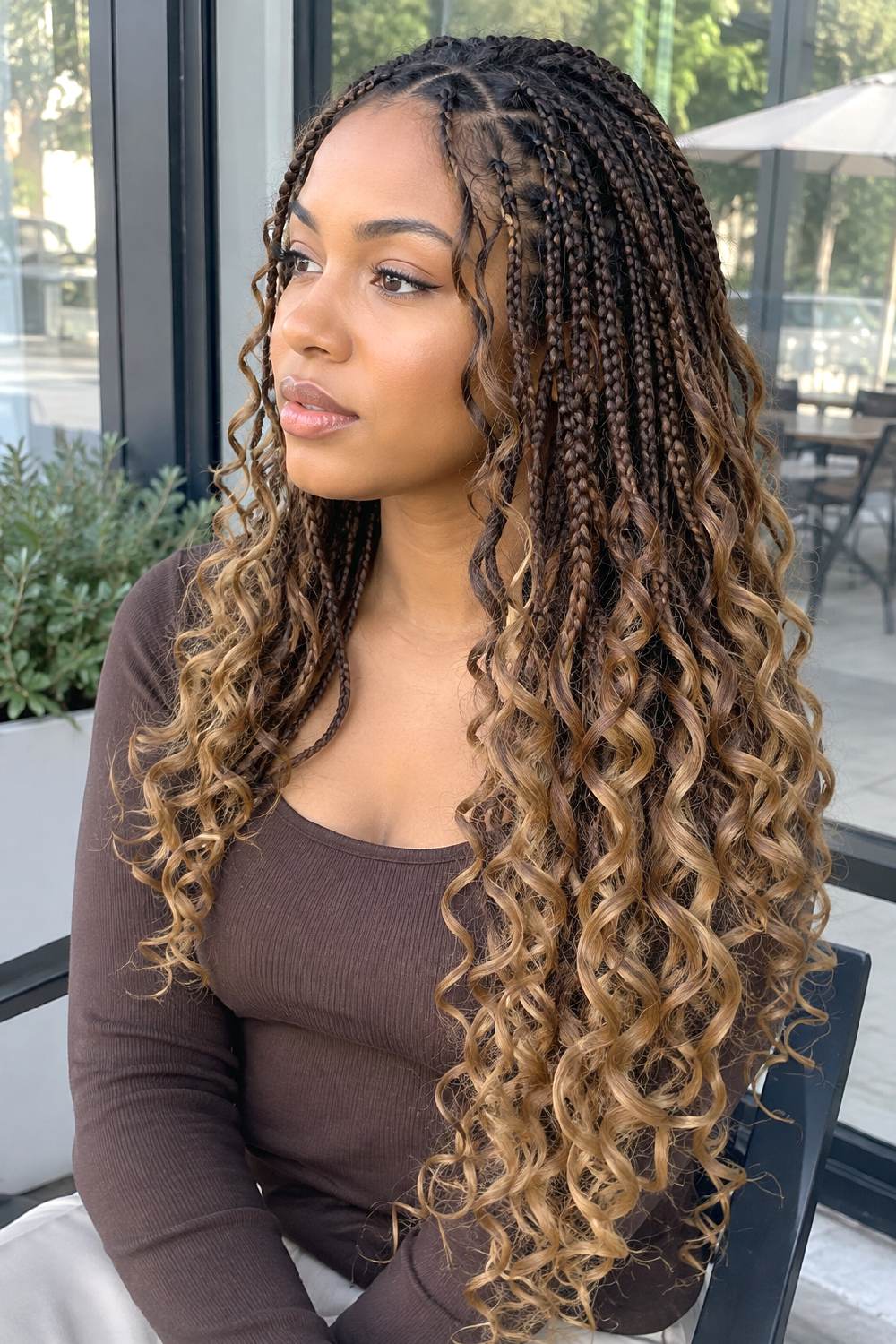
Ombre coloring gives Milano curls extra dimension without changing the underlying braid construction. Dark natural-looking roots can gradually move through caramel brown before ending in honey-toned curls, creating a clear transition that becomes more noticeable as the braids move. The most believable ombre avoids a sudden horizontal color line; instead, slightly varied transition points allow the shades to blend through the hairstyle. Long knotless braids showcase this effect especially well because there is enough vertical space for the color progression to develop. The brighter ends also draw attention to the curls, so maintaining their shape becomes an important part of keeping the finished look polished.
Styling Notes
Keep the darkest shade closest to the roots if you want the new color to feel grounded. A controlled transition also makes it easier to pair the style with different clothing colors.
Pro Tip
Choose two or three related tones rather than stacking many unrelated colors. A restrained palette lets both the braid pattern and curl shape remain visible.
13. Copper Highlighted Milano Curls Braid Hairstyle
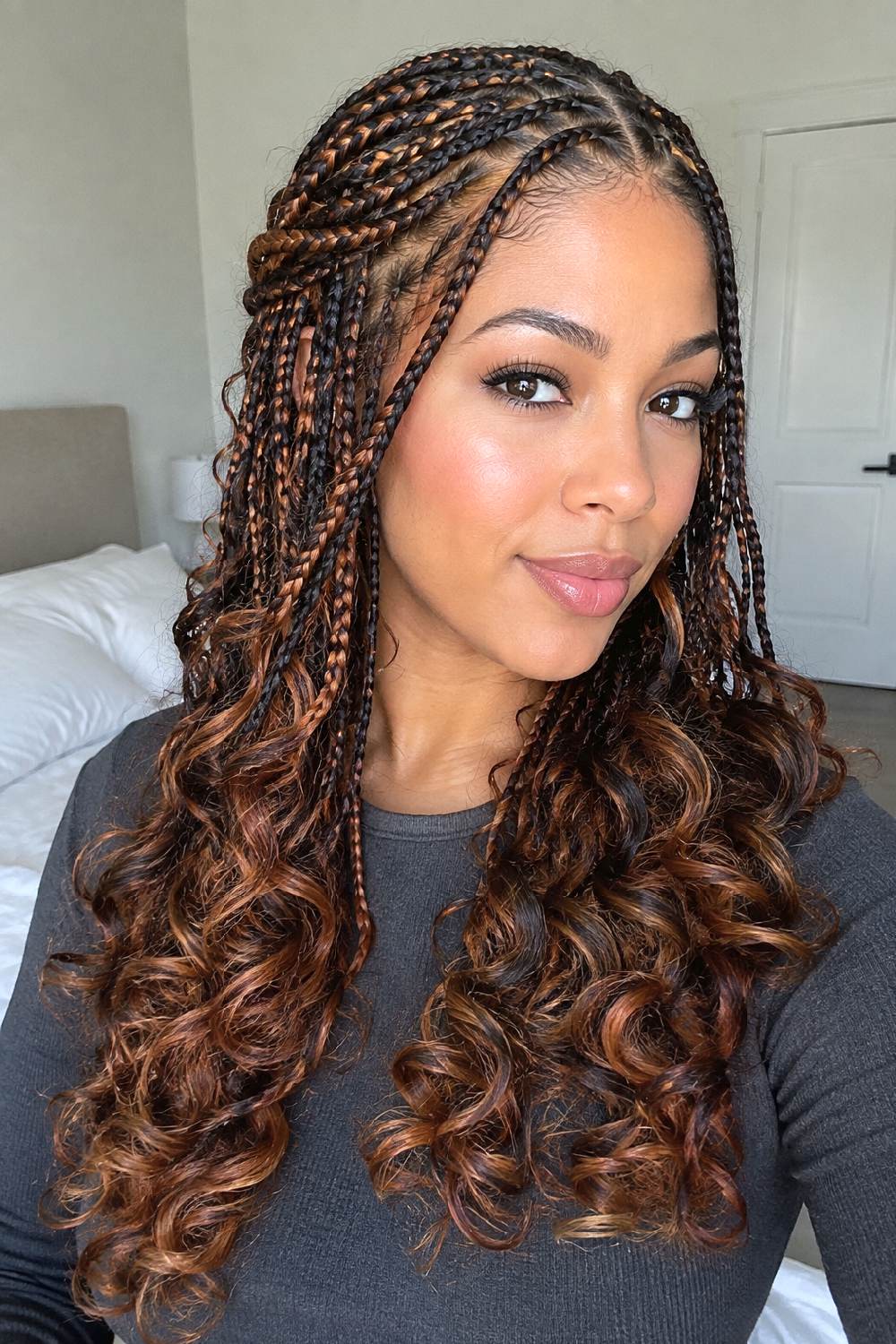
Copper-highlighted Milano curls offer warmth without turning every braid into the same bright shade. The strongest version starts with a dark brown base and scatters copper pieces through selected braids, allowing the highlights to appear and disappear as the hair moves. That irregular placement gives the curled lower lengths visible depth while keeping the roots grounded. Medium-long braids provide enough space for the warm pieces to blend naturally before opening into curls. The color works particularly well when the braid sizes stay moderate, since too many tiny highlighted pieces can make the finish visually busy. Think dimension rather than perfectly alternating dark and copper sections.
Why It Works
Strategic highlights emphasize the bends and spirals in the curl pattern because lighter pieces catch more visible contrast against a darker base.
Wear & Maintenance
Keep styling products light on the curled lengths so the highlights don’t become visually flattened by heavy residue. A clean, separated curl pattern lets the color variation do most of the work.
14. Boho Milano Curls Braid Hairstyle
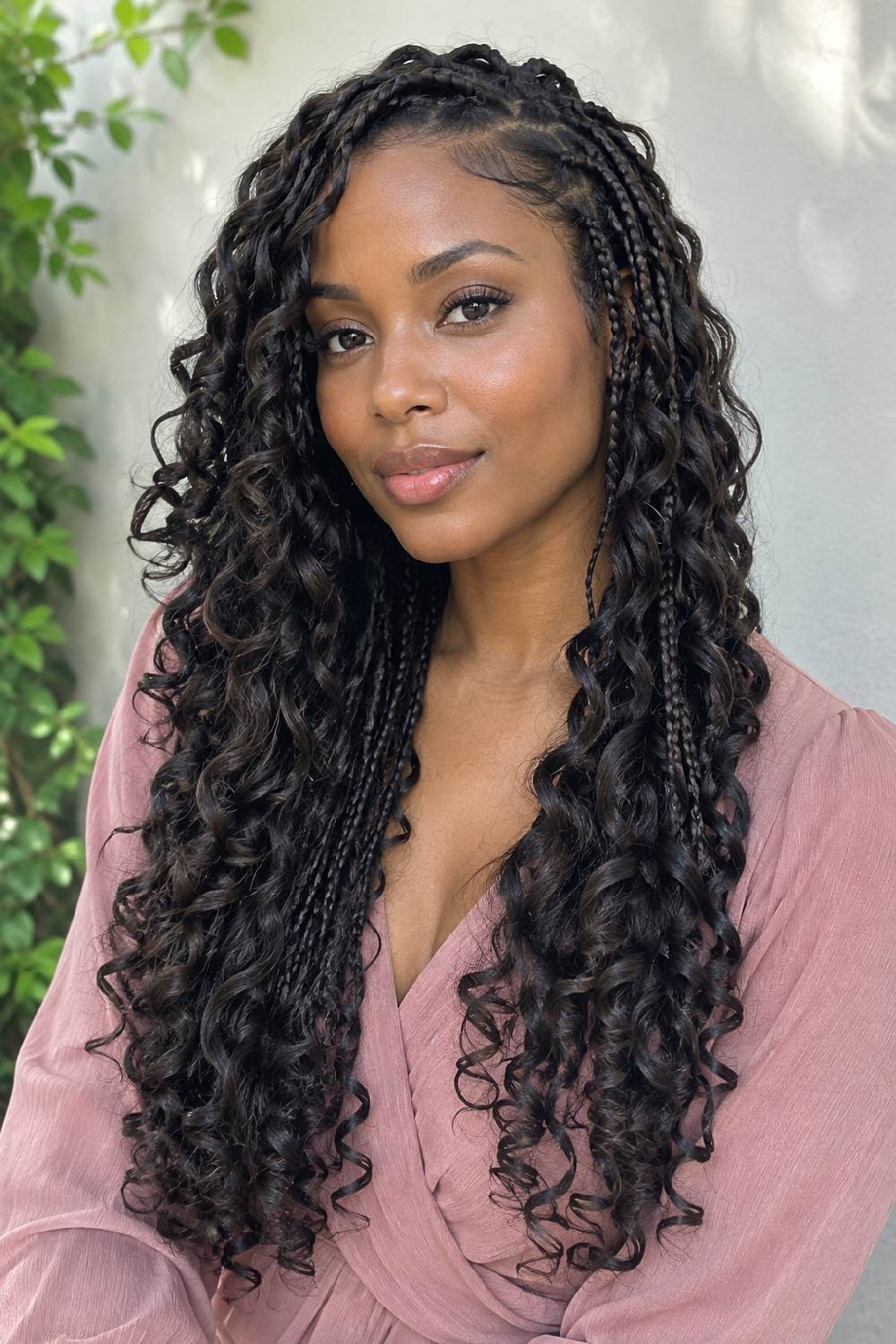
Boho Milano curls increase the amount of loose texture by placing curled pieces between the braids as well as at the ends. Instead of waiting for the lower lengths to become curly, soft tendrils appear throughout the style, giving it a fuller, more relaxed surface. Medium knotless braids make a useful foundation because they remain visible underneath the curls rather than disappearing completely. An off-center part and a few shorter face-framing pieces enhance the casual movement. The challenge is balance: too many loose strands can overwhelm the braids or tangle quickly, so thoughtful spacing generally looks cleaner than filling every section with additional curls.
Styling Notes
Place the loosest curl pieces where they can fall naturally instead of pulling them sharply away from their attachment points. This keeps the braids and curls visually connected.
Wear & Maintenance
Loose boho pieces usually need gentler handling than fully braided sections. Separate tangles patiently with your fingers and avoid rubbing the curls aggressively when refreshing the style.
15. Crown Braid Milano Curls Hairstyle
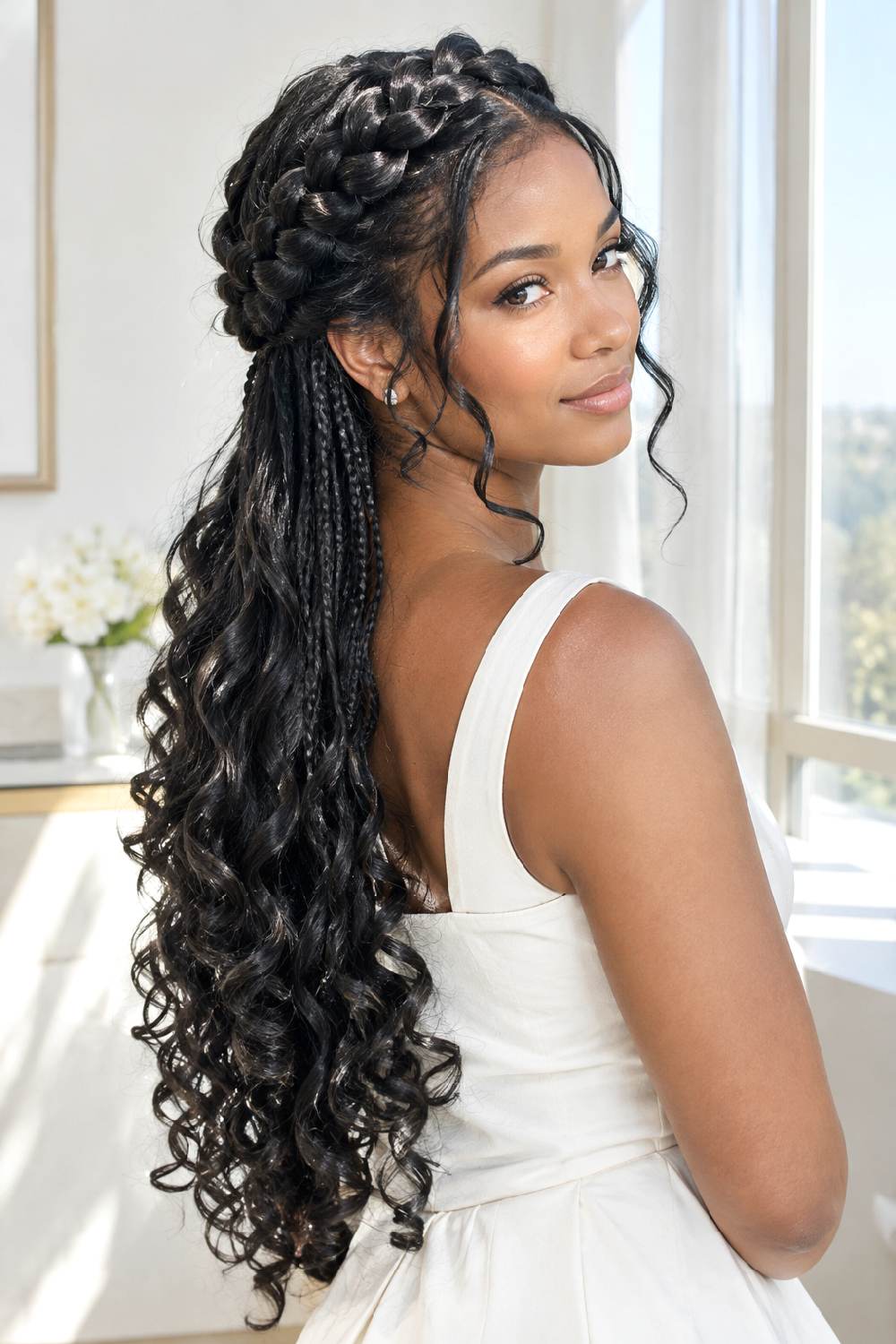
A crown braid gives Milano curls a distinctive upper silhouette while leaving the lower braids free to move. One braided section wraps across or around the crown and is pinned securely into the surrounding hairstyle, creating a visible frame above the loose lengths. The rest of the braids fall naturally down the back before opening into soft curls, so the look combines structured braiding with a romantic finish. Keeping the crown braid proportional is important; an overly thick wrap can dominate the style, while a slimmer braid lets the curls remain equally noticeable. A few narrow pieces near the face can soften the front without distracting from the crown detail.
Styling Notes
The wrapped braid should follow the natural curve of the head and connect securely at both ends. Avoid forcing it to float above the crown simply to create extra height.
Best For
This variation works well when you want an updo effect around the top of the head while still enjoying the length and movement of wearing most of the braids down.
How to Choose the Right Look
Start with length and weight. Shoulder-length and medium Milano curls are easier to keep off your back and usually create a more compact shape, while long knotless, ombre, and micro versions make a stronger visual statement and give curls more room to move. If you have a sensitive scalp or simply dislike heavy styles, braid size, the quantity of added hair, and comfortable installation tension matter more than choosing the longest option.
Next, compare texture and volume. Jumbo braids create larger, cleaner sections, while micro versions produce much finer detail. Boho Milano curls spread loose texture throughout the hairstyle, whereas center-part, long knotless, and ombre versions can keep most of their curl volume closer to the lower lengths. If frizz or tangling is a major concern for you, fewer strategically placed loose curls may be easier to maintain than a very curl-heavy finish.
Think about how you’ll actually wear the braids. High ponytails and half-up looks suit readers who enjoy lift around the crown, while a low side ponytail or low bun keeps the weight closer to the nape. Fulani-inspired and crown-braid versions put more attention on braid construction, making them appealing when you want the scalp pattern or woven detail to be part of the look.
Finally, match the finish to your routine. A polished center part or structured crown can feel dressier, while boho curls and side-swept styles have a softer effect. Your best option is usually the one that gives you the volume, styling flexibility, and maintenance level you genuinely want rather than simply the most elaborate installation.
Final Thoughts
Milano curls braids can move from neat and structured to soft and curl-heavy without losing the contrast that makes the style appealing. If you’re narrowing the list, begin with your preferred length, then decide how much loose curl you want and where you want the volume to sit.
A shoulder-length bob or medium center-part style keeps things streamlined, while long knotless, boho, and ombre versions lean more dramatic. Ponytails, buns, Fulani-inspired patterns, and crown details are useful when you want the braiding itself to shape the silhouette. Whatever you choose, adapt braid size, tension, parting, and added-hair volume to what feels realistic and comfortable for your own hair.
FAQs
What are Milano curls braids?
Milano curls braids are braid-based hairstyles that combine defined braided sections with visible curled hair, often through the ends or interspersed between the braids. The exact braid size, curl density, length, and placement can vary significantly.
Can Milano curls braids be worn at shoulder length?
Yes. A shoulder-length bob is a practical way to showcase the curls without committing to long braids. Keeping the ends softly varied can help the shorter silhouette look natural rather than overly blunt.
Which braid size works best with Milano curls?
There isn’t one ideal size. Jumbo braids create bold separation, medium braids balance definition and versatility, and micro braids produce a finer texture. Choose according to your preferred look, natural-hair density, and comfortable amount of added hair.
How can I keep the loose curls from tangling?
Handle curled sections gently, separate minor tangles with your fingers, limit unnecessary friction, and protect the hair while sleeping. Curl-heavy boho versions generally require more careful handling than styles with curls concentrated mainly at the ends.
Can Milano curls braids be styled into ponytails and buns?
Yes, provided the braids move comfortably in the intended direction. Half-up styles, low ponytails, high ponytails, and nape buns can all work, but avoid pulling the braids tighter just to force a particular shape.