13 No-Snag Ponytail Hairstyles With Zipped Puffer Collars
These no-snag ponytails keep winter hair polished and controlled while sitting comfortably above, beside, or away from a fully zipped puffer collar.
A zipped puffer collar changes how a ponytail behaves. Hair that hangs directly over a zipper can catch, rub, flatten, or become tangled as the collar moves, so placement matters just as much as the finished texture. A well-positioned ponytail keeps the bulk of the hair away from the fastening area while still looking intentional with a padded winter jacket.
The ideas below range from sleek high placements to compact braids, bubbles, curls, and folded lengths. Some prioritize maximum collar clearance, while others redirect the ponytail over one shoulder or secure the length so fewer loose strands reach the zipper. When choosing, consider your hair length, density, natural texture, preferred tension, and how high your puffer collar sits when fully closed.
Quick List
- High Set Sleek Ponytail Hairstyle
- Low Nape Ponytail Hairstyle
- Mid Height Wrapped Ponytail Hairstyle
- Bubble Ponytail Hairstyle
- Braided Ponytail Hairstyle
- Side Swept Low Ponytail Hairstyle
- Crown Lift Ponytail Hairstyle
- Textured Wavy Ponytail Hairstyle
- Curly Defined Ponytail Hairstyle
- Twisted Base Ponytail Hairstyle
- Double Elastic Secure Ponytail Hairstyle
- Micro Braided Accent Ponytail Hairstyle
- Compact Folded Ponytail Hairstyle
1. High Set Sleek Ponytail Hairstyle
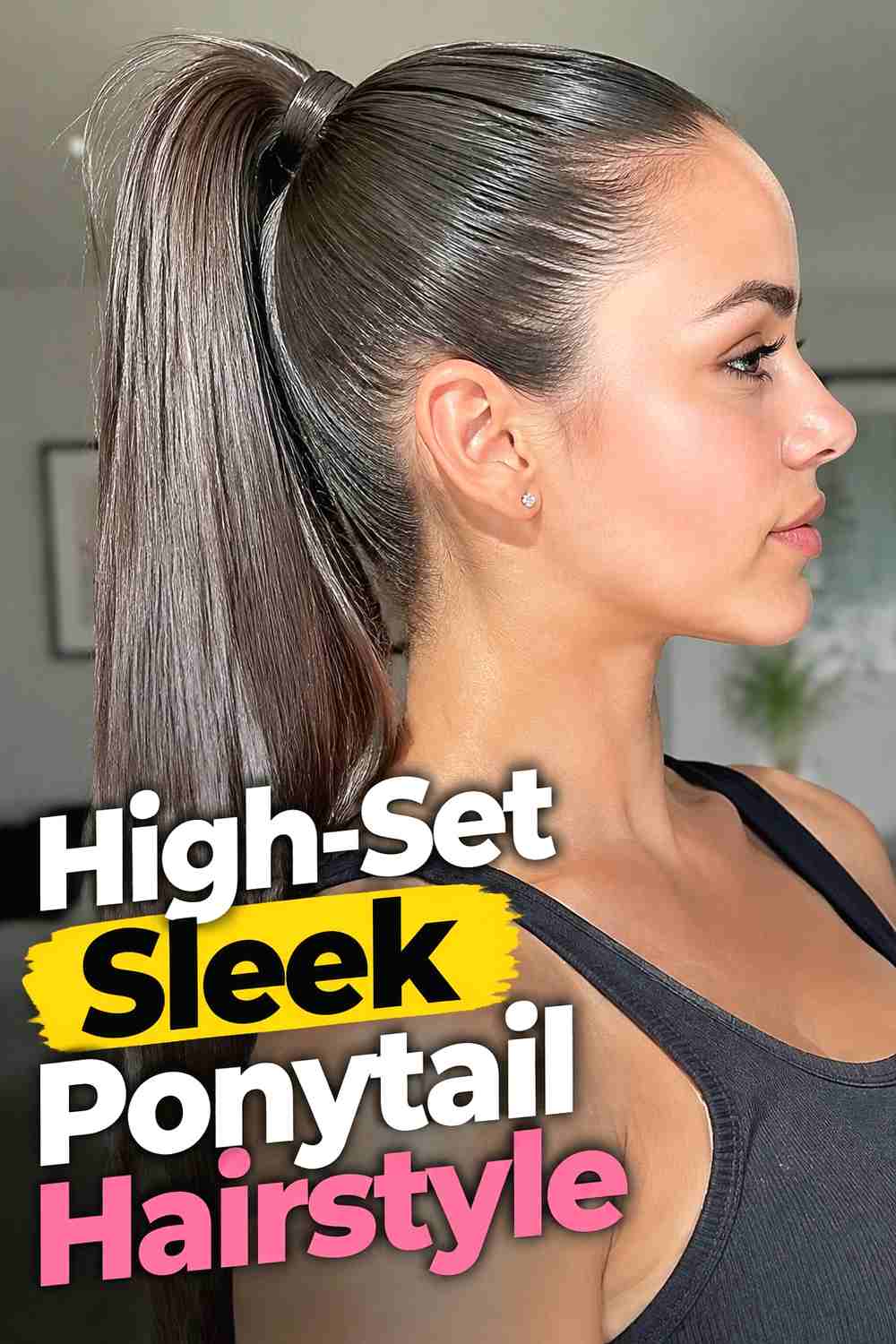
A high-set sleek ponytail keeps the base well above a zipped puffer collar, making it one of the clearest choices when you want minimal contact between the hairstyle and your jacket. The crown is brushed upward into a secure anchor, while the tail falls from a point high enough to swing behind the shoulders without sitting directly on the zipper. A smooth surface gives the look a polished winter finish, but the lengths should still retain natural movement and strand detail. This style works especially well on medium-long to long hair. Keep the base firm rather than painfully tight, and check that the tail does not repeatedly fall forward into the collar when you turn your head.
Styling Notes
Secure the ponytail after putting on the puffer jacket so you can judge the exact amount of collar clearance before tightening the elastic.
Best For
This placement suits anyone who regularly wears tall zipped collars and wants the hair lifted completely away from the neckline.
2. Low Nape Ponytail Hairstyle
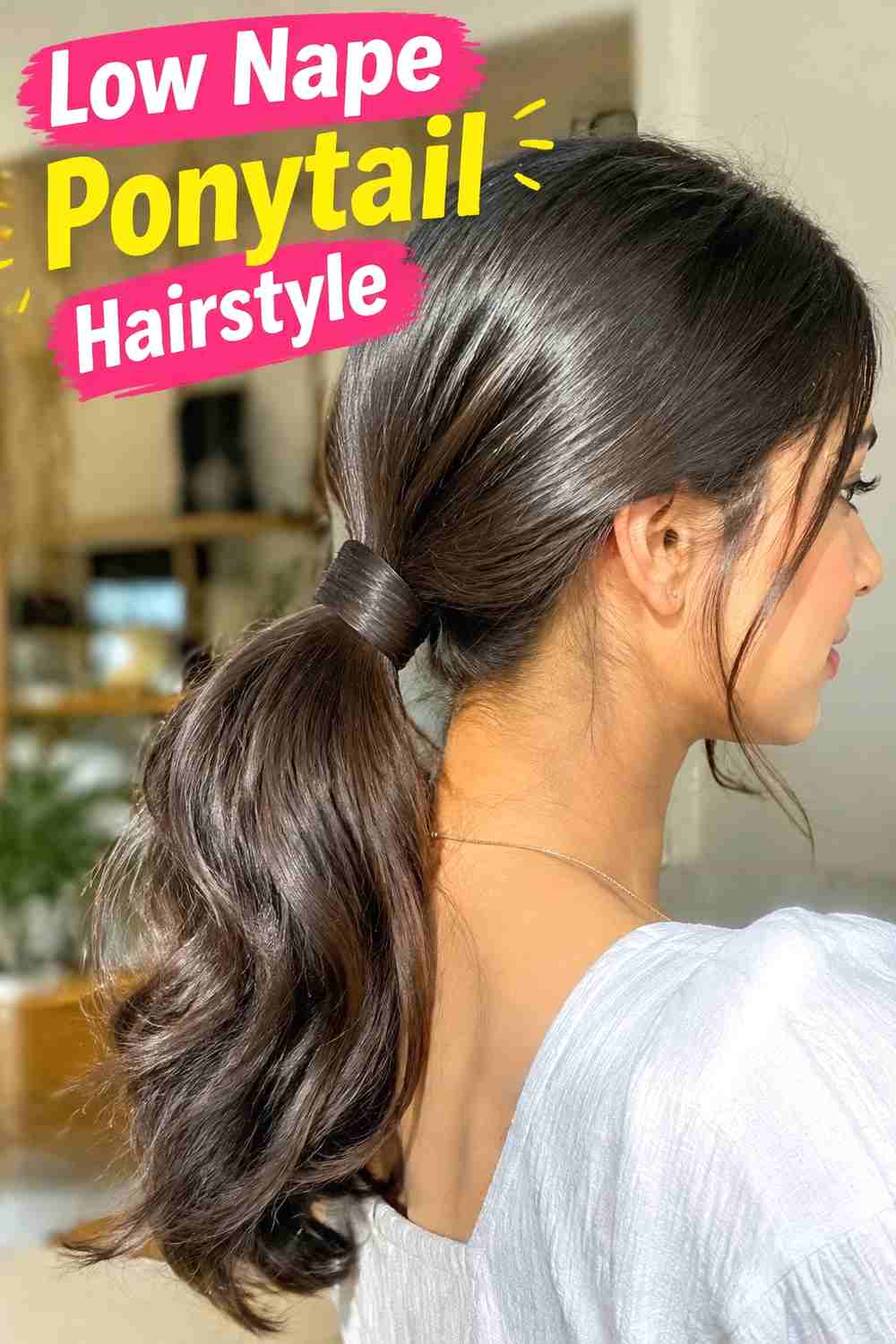
A low nape ponytail can still work with a zipped puffer collar when it is positioned thoughtfully. Instead of centering the elastic directly against the collar edge, place the base slightly above the jacket line or let the finished tail fall cleanly over one shoulder. The smooth, understated silhouette looks especially good with oversized puffers and minimalist winter outfits. Because the ponytail begins low, it avoids crown tension and can feel comfortable for long periods. The important detail is preventing the elastic and zipper from occupying the same spot. Hair with fine to medium density is often easiest to position this way, although thicker lengths can work with a strong, smooth elastic and a little extra clearance.
Wear & Maintenance
Watch for friction where the elastic meets the top of the jacket. If the collar repeatedly pushes the ponytail upward, raise the base slightly.
Pro Tip
Direct the tail over one shoulder before fully closing the zipper instead of trapping it beneath the collar.
3. Mid Height Wrapped Ponytail Hairstyle
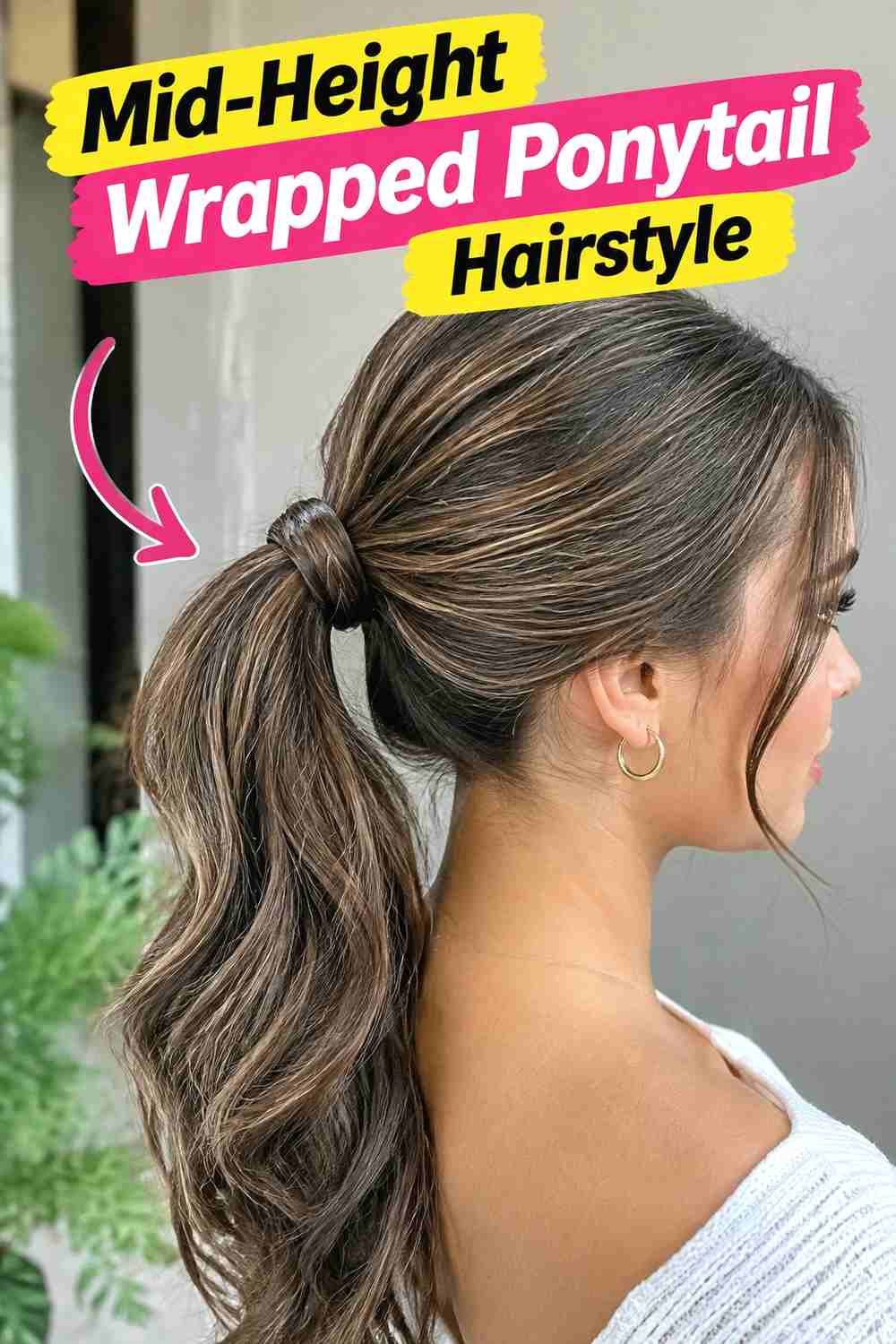
A mid-height ponytail offers a useful compromise between a sporty high pony and a relaxed low placement. Anchored around the middle of the back of the head, it clears most standard puffer collars while keeping the silhouette soft and wearable. Wrapping a small strand of hair around the elastic conceals the fastening and creates a cleaner finish without adding bulky accessories that could catch on jacket fabric. Keep the wrapped section snug and pin the end beneath the base rather than leaving it loose. The tail can remain straight, softly bent, or naturally textured depending on your hair. This placement is especially practical when your puffer collar is substantial but does not rise all the way to the back of the head.
Why It Works
The middle placement lifts the elastic away from the zipper while keeping the ponytail lower and more relaxed than a traditional high pony.
Styling Notes
Use a discreet pin to secure the wrapped strand underneath the ponytail so no exposed hardware sits against the jacket.
4. Bubble Ponytail Hairstyle
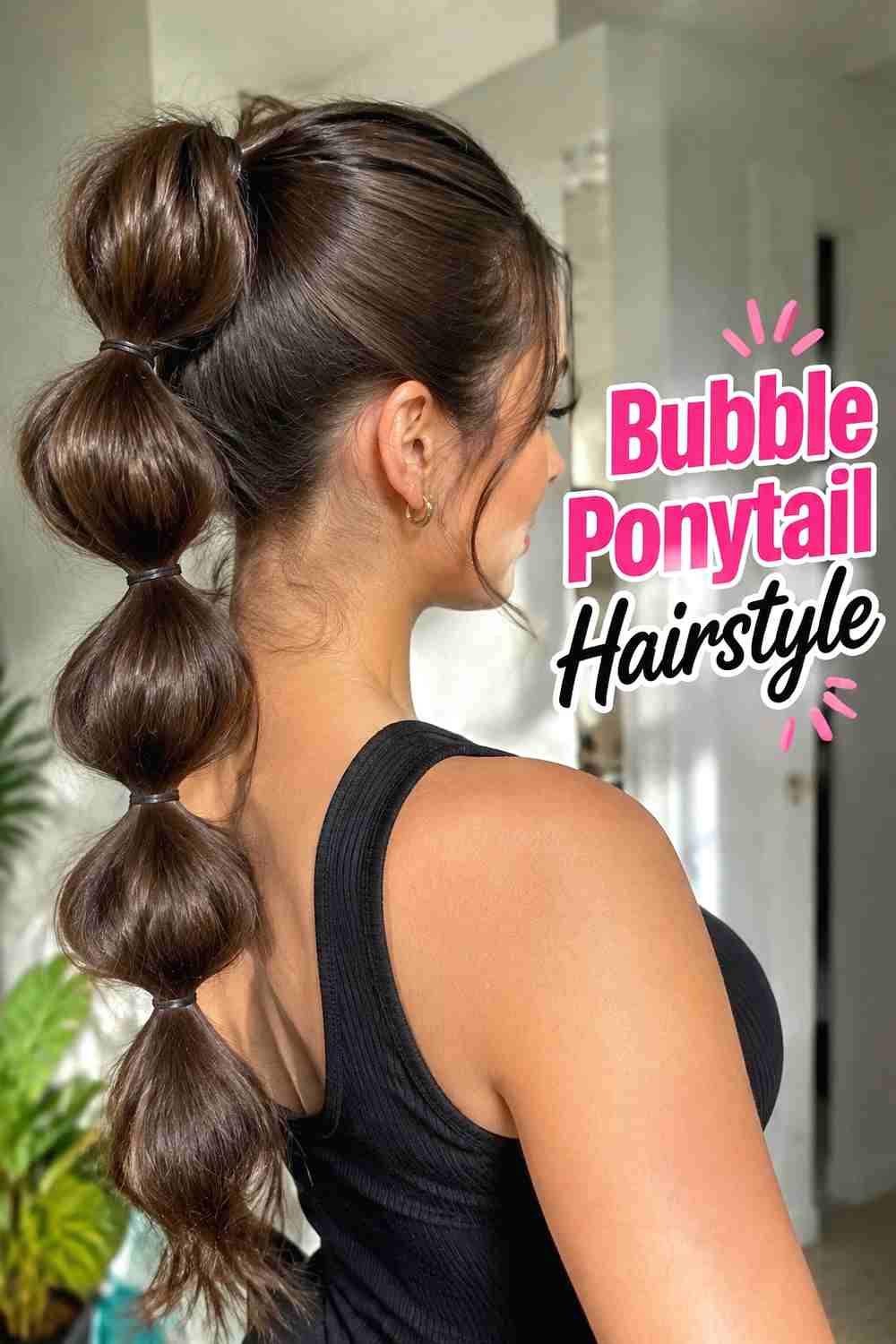
A bubble ponytail controls the length with several spaced elastics, making loose strands less likely to drift toward a zipper or become tangled around a puffer collar. Begin with a ponytail placed above the collar, then add small elastics down the tail at even intervals. Gently expand each section to create rounded bubbles while keeping the overall structure compact. The result has plenty of visible dimension but behaves more predictably than a fully loose ponytail in wind. It works particularly well on long hair because the extra elastics prevent the lower lengths from separating into flyaway pieces. Avoid overexpanding the bubbles near the neck, where excessive width can rub against a tall winter collar.
Hair Type & Length
Longer hair gives the most room for multiple bubbles, while medium lengths can create a shorter two- or three-section version.
Pro Tip
Keep the first bubble narrower than the lower ones so the area closest to the puffer collar remains compact.
5. Braided Ponytail Hairstyle
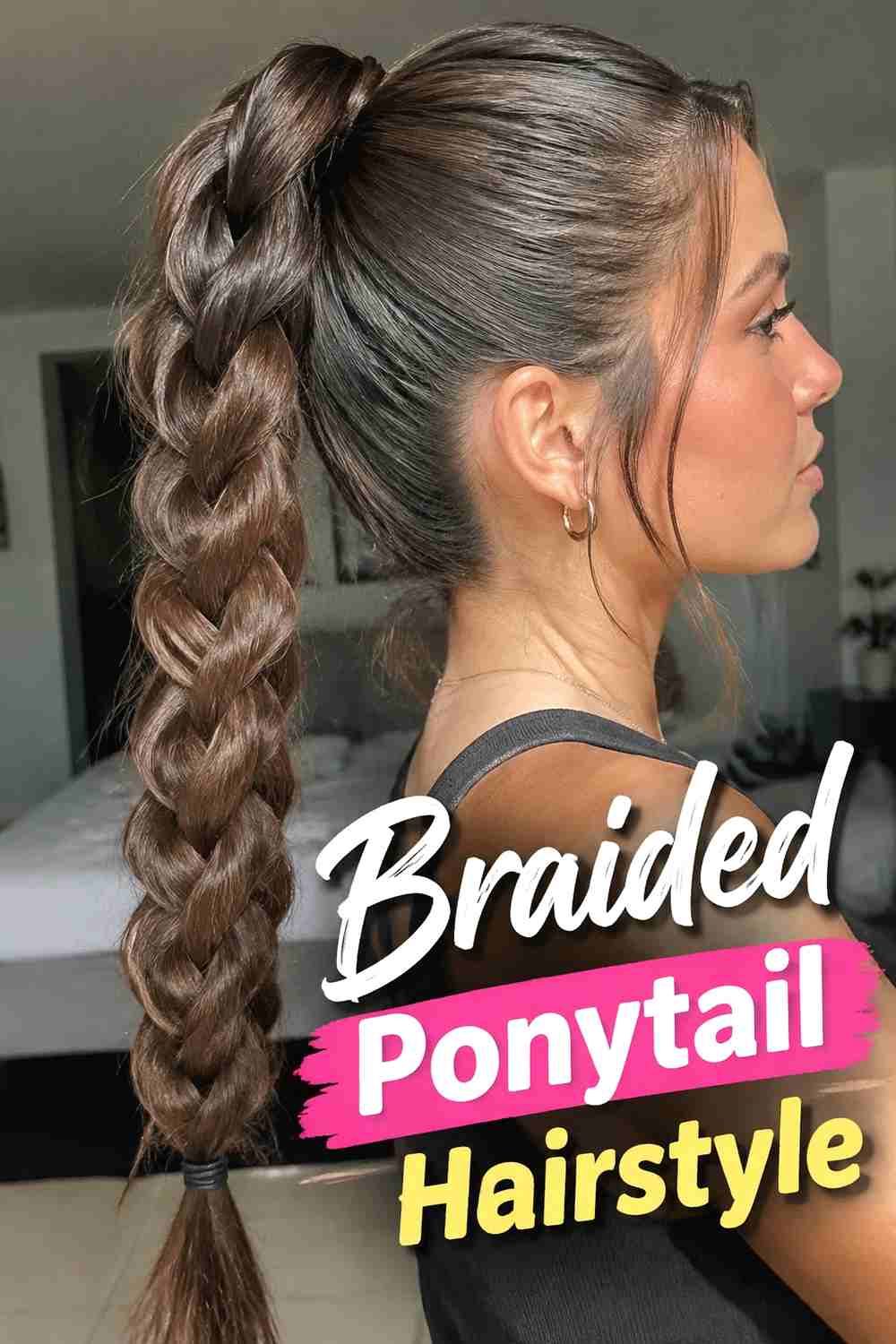
A braided ponytail turns the loose tail into one controlled section, which can make it easier to wear around a fully zipped puffer. Gather the hair into a secure mid-high or high ponytail, then braid the length into a classic three-strand plait. The braid retains texture and visual detail while reducing the number of free strands that can sweep across the zipper. It is especially useful for long hair on windy days, when an unbraided ponytail may move constantly around the collar. Keep the plait firm enough to hold but not so tight that the braid looks rigid. Finish with a small elastic and leave only a short, neat section of loose ends below it.
Wear & Maintenance
If the braid falls forward, place it completely over one shoulder rather than allowing it to sit across the center zipper.
Best For
This option is particularly useful for long or dense hair that tends to spread across bulky outerwear when left loose.
6. Side Swept Low Ponytail Hairstyle
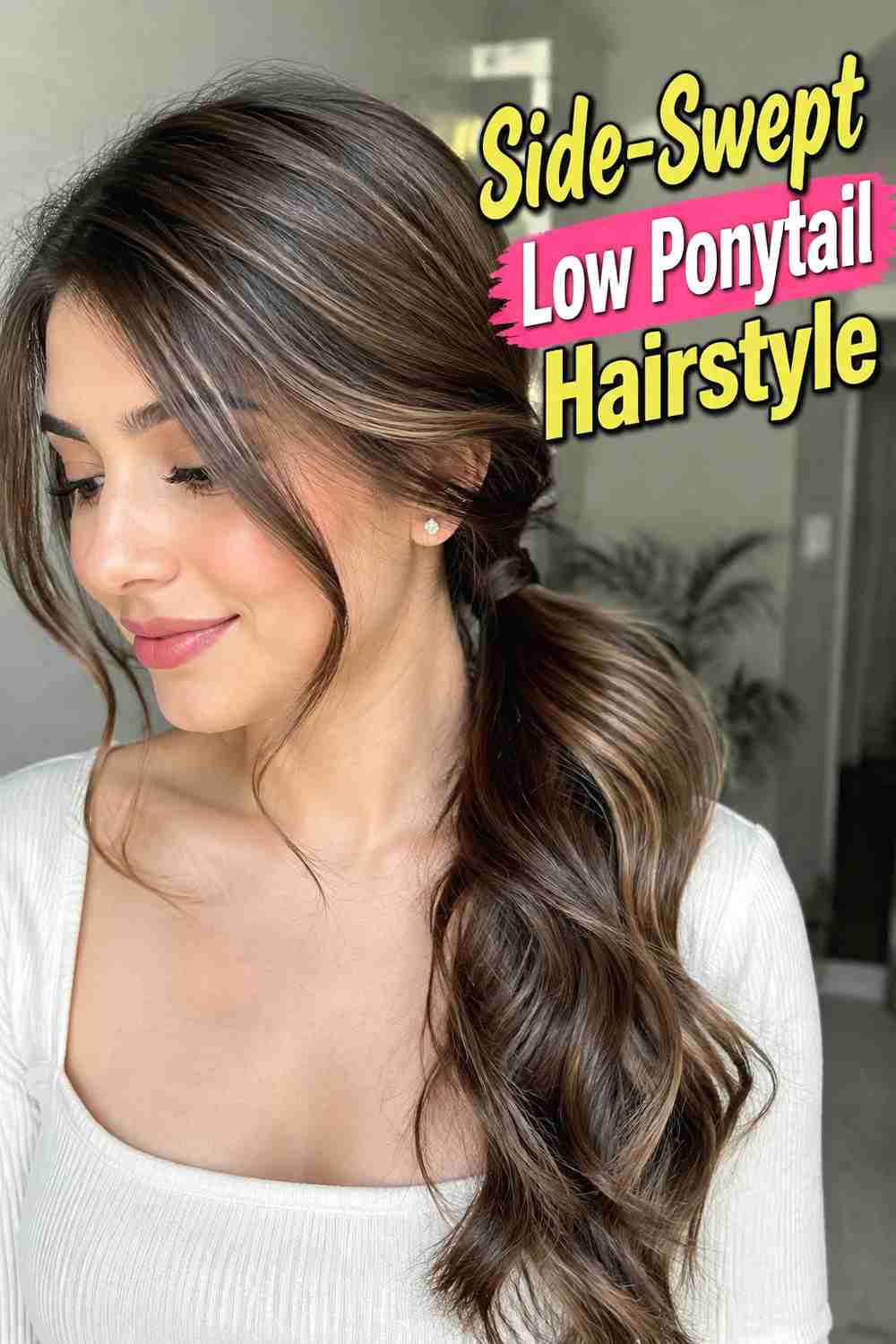
A side-swept low ponytail deliberately moves the hair away from the center-front zipper area. Instead of letting the length fall straight down the back, gather it low and guide the entire tail over one shoulder before closing your jacket. The asymmetrical placement feels relaxed and feminine while remaining practical with padded winter collars. A few controlled face-framing strands can soften the style, but keep them short enough that they do not repeatedly catch near the zipper pull. This ponytail can be sleek, softly wavy, or naturally textured. The key is keeping the base stable enough that the tail stays on its chosen side instead of slipping behind the neck during movement.
Why It Works
Moving the length to one side creates a clear path around the jacket zipper while preserving the simplicity of a low ponytail.
Styling Notes
Choose the shoulder opposite the direction in which you usually carry a bag strap to reduce extra rubbing and tangling.
7. Crown Lift Ponytail Hairstyle
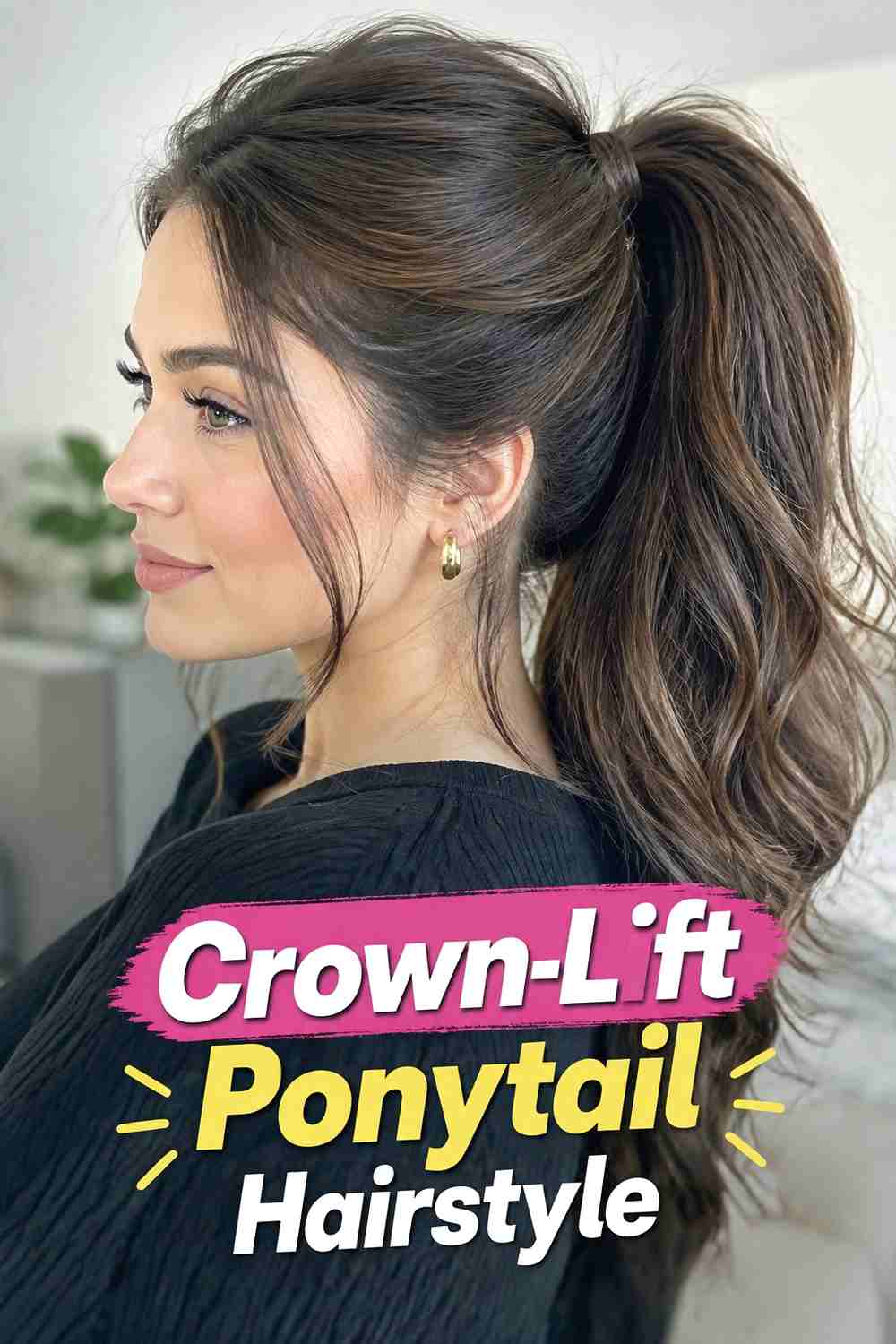
A crown-lift ponytail combines a secure mid-to-high base with gentle volume at the top of the head. Rather than slicking every strand flat, lightly lift the crown before gathering the hair so the finished shape feels softer and more dimensional. The ponytail itself begins high enough to avoid resting on a zipped puffer collar, while the added crown height balances the visual bulk of a padded jacket. This is a useful style when you want winter practicality without an ultra-sleek finish. Keep the volume controlled rather than heavily teased, since excessive backcombing can become difficult to smooth after wearing a hood. A firm elastic and a few strategically placed pins are usually enough to maintain the silhouette.
Best For
This look suits medium to long hair and anyone who prefers softness through the crown instead of a tightly brushed-back finish.
Pro Tip
Create most of the volume before securing the ponytail, then gently adjust only the top layer after the elastic is in place.
8. Textured Wavy Ponytail Hairstyle
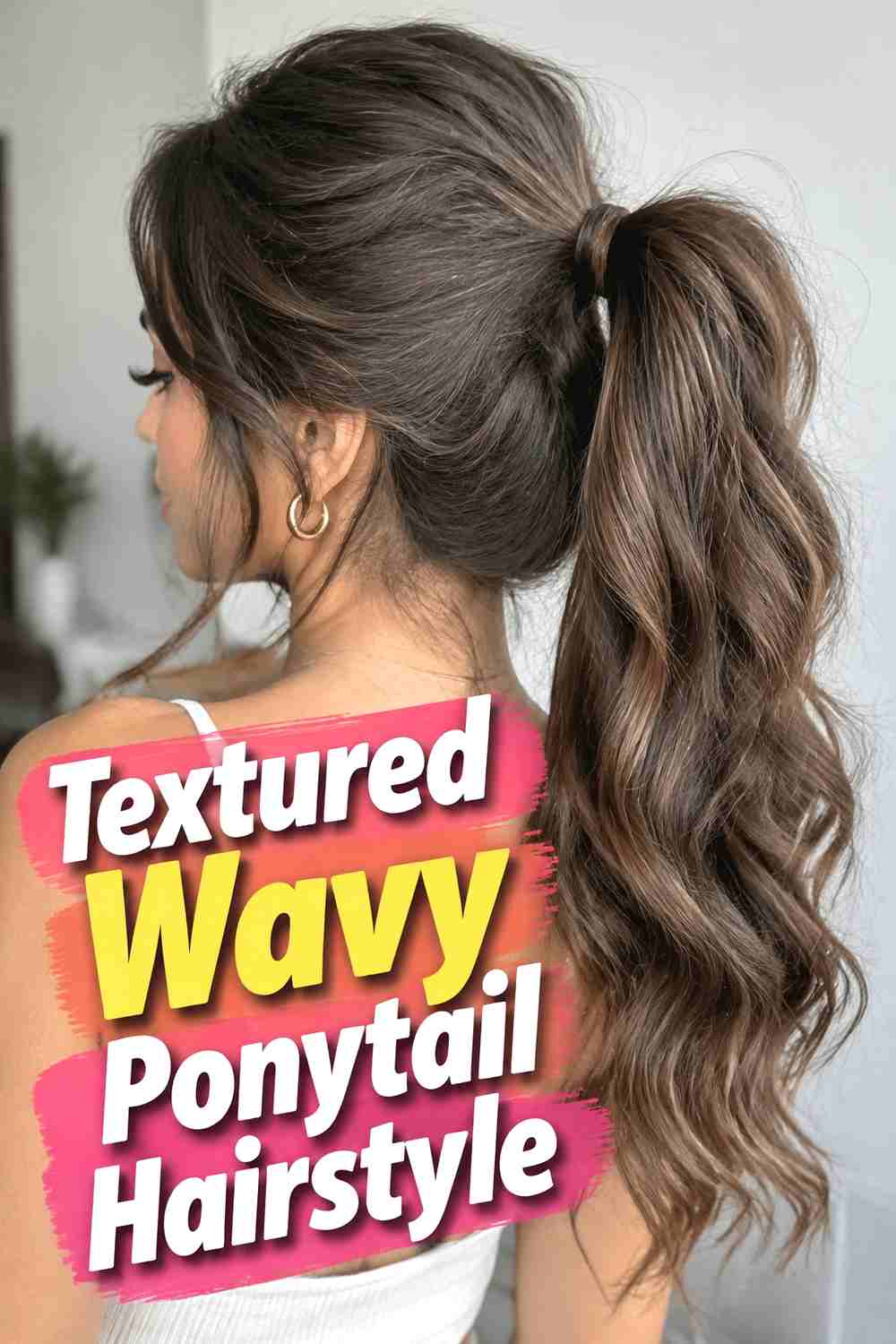
A textured wavy ponytail keeps the base clear of a puffer collar while allowing soft movement through the lengths. Position the ponytail at mid-height or slightly higher, then let natural waves or loose bends create body below the elastic. Because texture increases the apparent width of the tail, the placement should be high enough that the fullest sections do not sit directly against the collar. The result feels relaxed and polished rather than overly formal, making it easy to pair with casual winter layers. Keep the hair nearest the elastic smoother and more controlled, then allow texture to become fuller toward the middle and ends. This creates separation between the jacket neckline and the most voluminous part of the ponytail.
Hair Type & Length
Naturally wavy hair is ideal, but straight hair can be given loose bends before it is gathered into the ponytail.
Wear & Maintenance
If the ends become frizzy from jacket friction, move the entire tail forward over one shoulder rather than repeatedly brushing it against the collar.
9. Curly Defined Ponytail Hairstyle
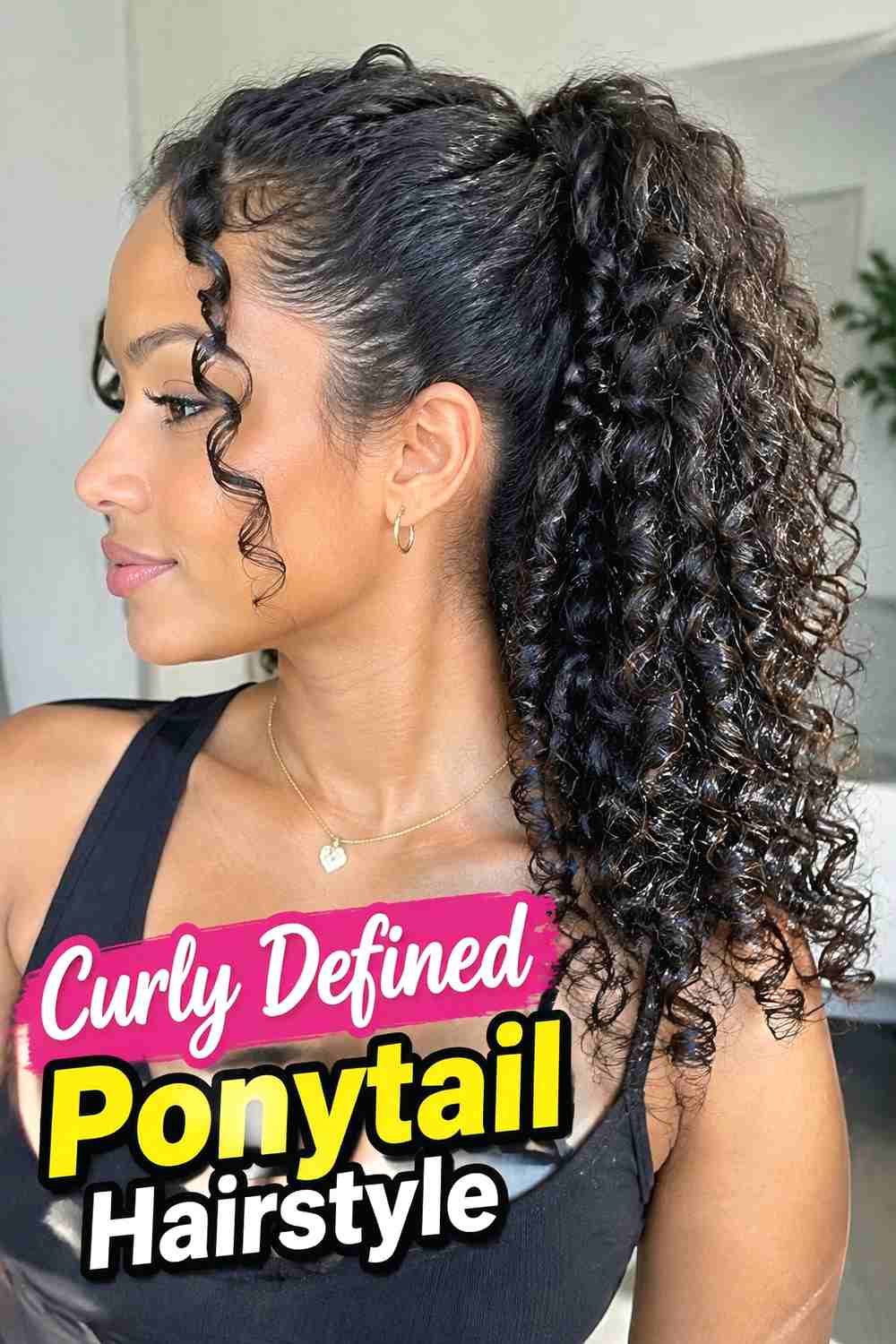
A defined curly ponytail showcases natural texture while keeping the base positioned above the zipped collar. Gather curls carefully so their pattern remains visible instead of flattening the lengths with excessive brushing. A mid-high anchor usually provides enough clearance for a tall puffer collar while allowing the curls to fan out naturally behind the head. Because curly ponytails can have significant volume, consider where the widest section sits when you turn your head or raise the hood. The goal is not to compress the curls but to keep their bulk above the neckline. Soft edge control around the hairline can create a polished contrast, while the ponytail itself should retain spring, variation, and natural movement.
Styling Notes
Use a secure elastic that can hold your density without requiring repeated wrapping that creates uncomfortable tension at the base.
Why It Works
The elevated base separates the fullest curls from the zipper zone while allowing natural texture to remain the focus of the hairstyle.
10. Twisted Base Ponytail Hairstyle
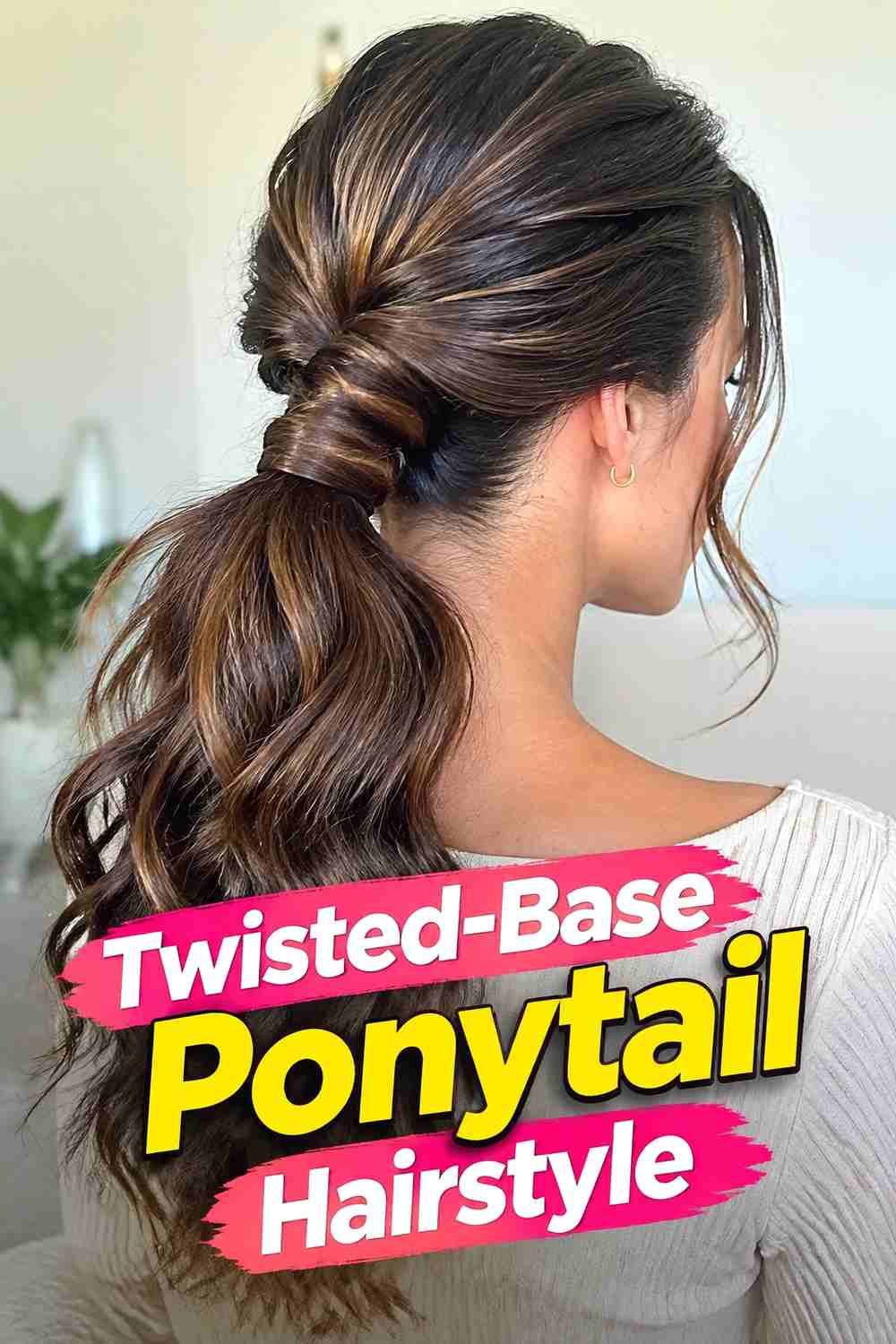
A twisted-base ponytail adds detail near the anchor without introducing dangling accessories that might catch on a puffer collar. Small side sections are twisted backward and joined into a central ponytail, creating a tidy transition from the crown to the tail. The base can sit at mid-height so the twists remain visible above the jacket while the loose length falls clear of the zipper. This style is useful if you want something more decorative than a basic ponytail but still practical for everyday winter wear. Keep the twists close enough to the head that a hood can slide over them comfortably. Secure their ends beneath the main elastic or with hidden pins so there are no loose fastening points near the collar.
Styling Notes
Make both twists before putting the final elastic in place. This keeps the side sections balanced and reduces the need for exposed pins.
Best For
Medium and long hair work particularly well because there is enough length to form the side twists without reducing the ponytail too much.
11. Double Elastic Secure Ponytail Hairstyle
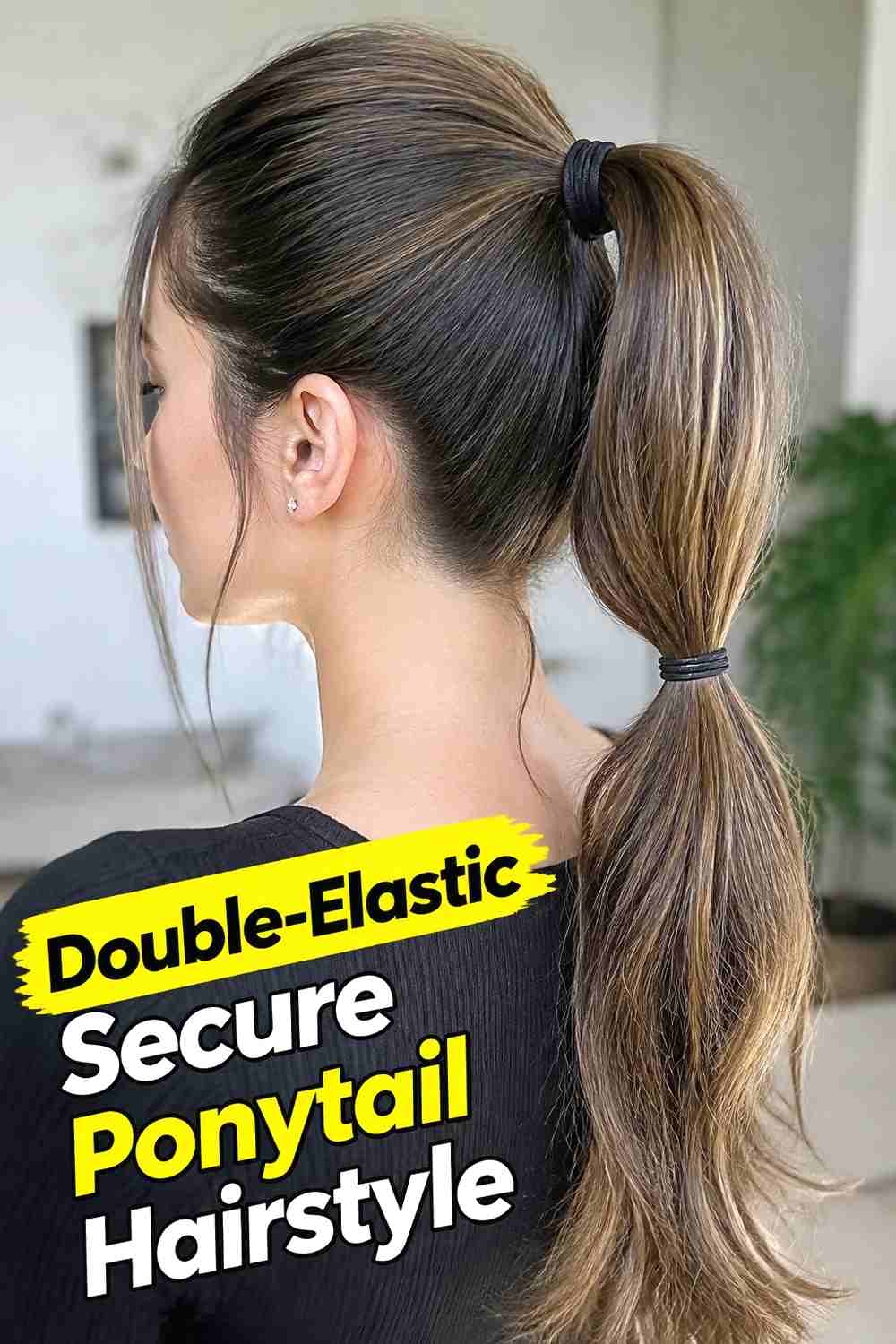
The double-elastic secure ponytail is designed for days when you want the base to stay in one position instead of gradually slipping toward a tall collar. Gather the hair at a comfortable mid-high point and use two slim elastics together, or secure the ponytail with one strong elastic followed by a second for reinforcement. The extra support can be helpful for long or dense hair that tends to pull downward during wear. Keep the fastening compact so it does not create a large knot of tension at the back of the head. With the base stabilized above the puffer, the loose tail can move naturally without repeatedly dragging the elastic toward the zipper line.
Wear & Maintenance
Remove both elastics gently rather than pulling them through the lengths, especially after a full day of winter wear.
Pro Tip
Prioritize comfortable hold over maximum tightness. A higher but comfortable base usually works better than a painfully cinched ponytail.
12. Micro Braided Accent Ponytail Hairstyle
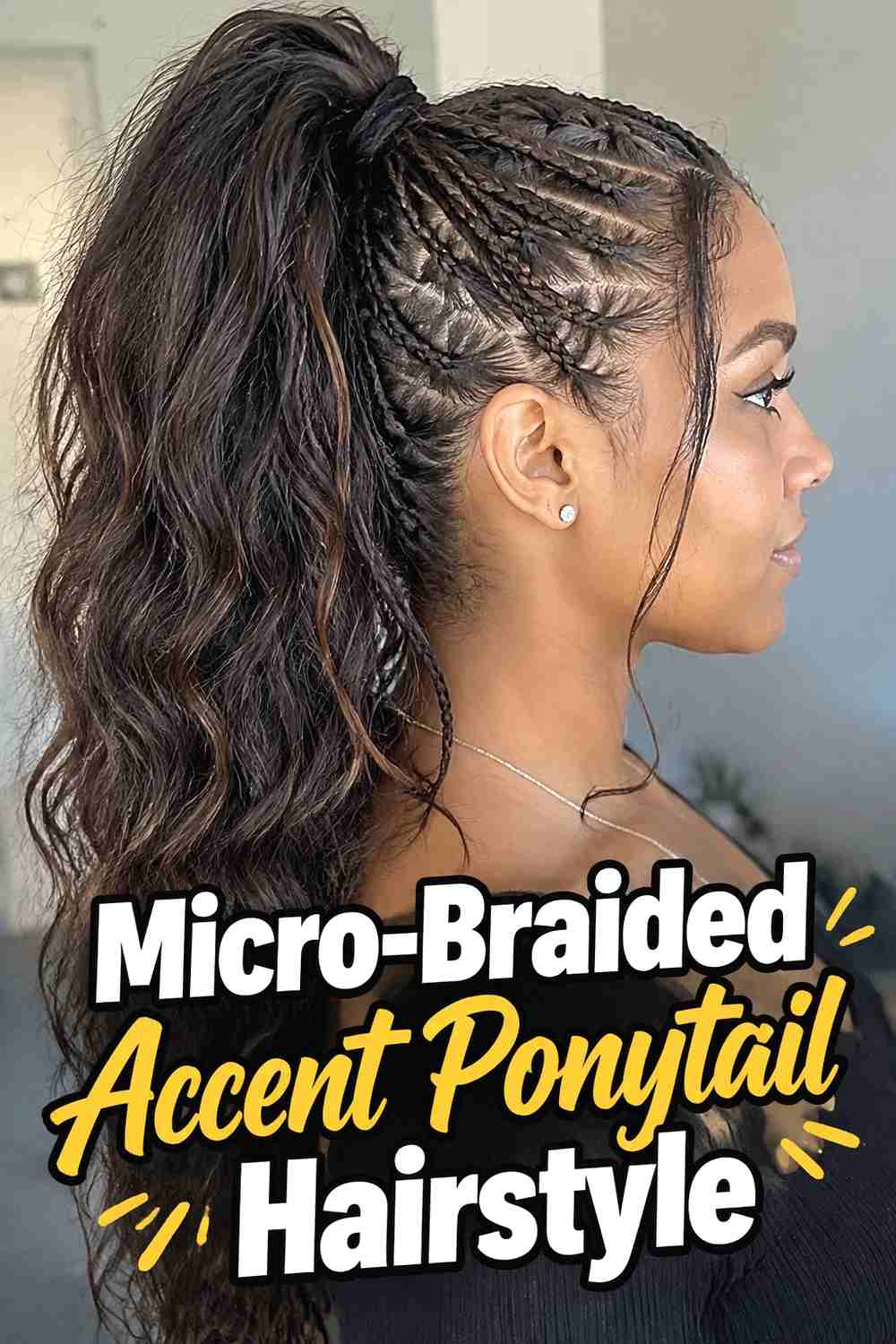
A micro-braided accent ponytail adds visual detail while keeping the main shape streamlined for a zipped puffer collar. Create one or two narrow braids from the front or side sections, then gather them into a mid-high ponytail with the rest of the hair. Because the small braids terminate inside the main elastic, there are no long decorative strands hanging near the zipper. The accent adds texture at the crown while the ponytail remains simple enough for everyday winter outfits. This works especially well when you want a playful detail without ribbons, chains, oversized clips, or other accessories that could rub against outerwear. Keep the braids neat and proportional so they complement rather than overwhelm the ponytail.
Why It Works
The decorative detail stays above the collar, while all loose ends are captured inside the main ponytail instead of hanging near the zipper.
Styling Notes
Make the accent braids narrow enough to lie flat beneath a hood if you plan to wear one over the hairstyle.
13. Compact Folded Ponytail Hairstyle
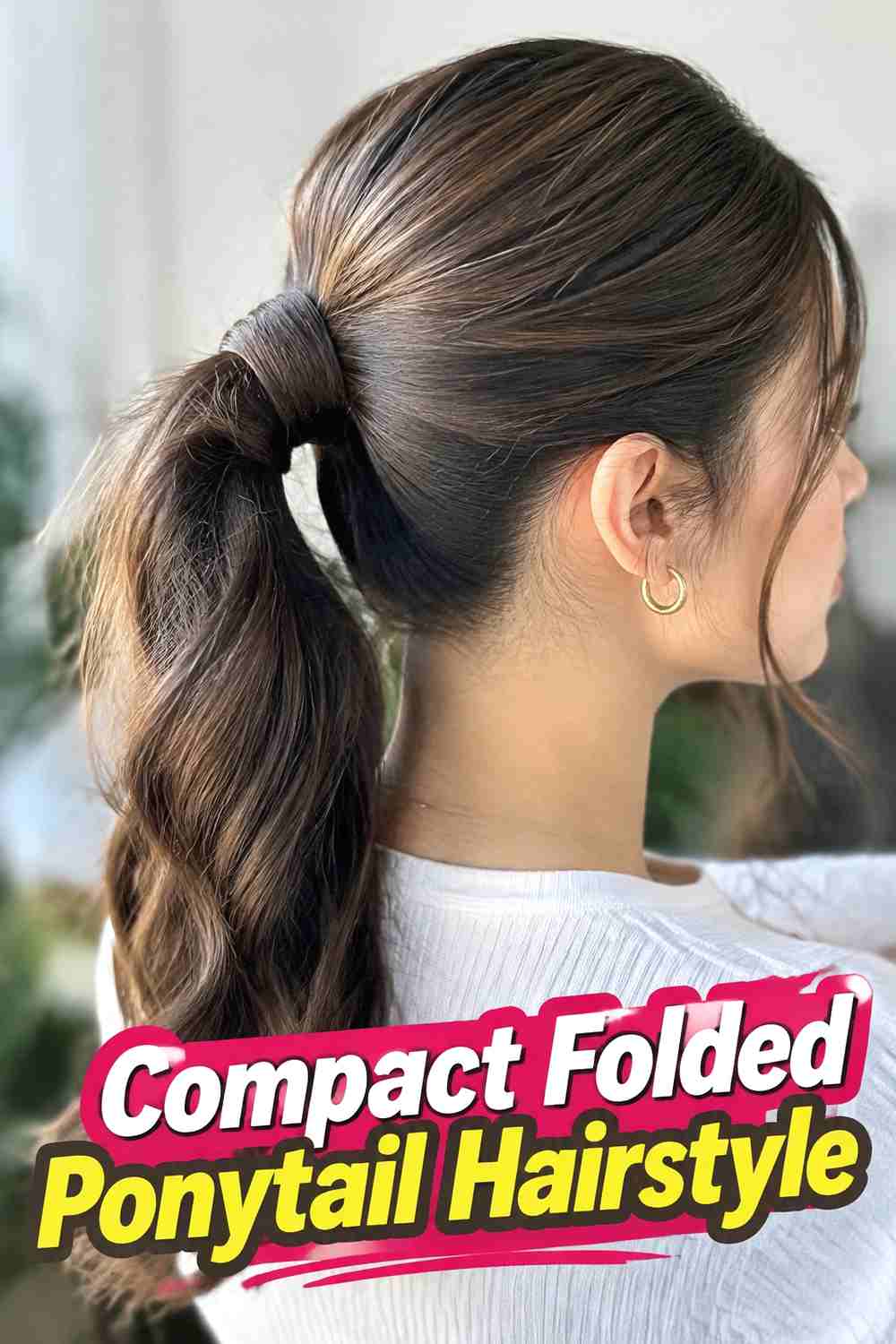
A compact folded ponytail shortens the amount of loose hair hanging near a puffer collar by folding part of the length back toward the base. Start with a secure ponytail positioned above the jacket neckline, then create a controlled fold or loop with the lower section and fasten it so the ends remain contained. The finish sits somewhere between a ponytail and a casual looped updo, retaining visible length without leaving every strand free to swing across the zipper. It is particularly useful for very long hair when you want less movement around outerwear. Keep the fold soft and secure rather than pulling it into a tight knot, and place all elastics comfortably above the jacket edge.
Best For
Long hair benefits most from this approach because folding the length noticeably reduces how much hair reaches the collar and zipper.
Pro Tip
Position the folded section before fully zipping the puffer so you can confirm that the lower edge does not rest directly on the collar.
How to Choose the Right Look
Start with collar height. A tall puffer that reaches close to the jaw generally works best with a high-set, crown-lift, braided, or mid-high ponytail because the base remains clearly above the jacket. If your collar ends lower on the neck, mid-height and carefully positioned low ponytails give you more flexibility.
Hair length affects the best approach as well. Very long hair benefits from bubble sections, braiding, or a compact folded finish because these options control more of the length. Medium hair can often stay clear of the zipper with a straightforward high or mid-height ponytail. Dense curls and waves may need extra vertical clearance because their volume can expand around the collar even when the base itself is high enough.
Also consider styling time and comfort. A sleek ponytail is quick once you know your preferred placement, while micro-braids, bubbles, and twisted sections require more preparation. If you wear a hood frequently, avoid bulky accessories and keep crown details relatively flat. For the most practical no-snag result, focus on a secure elastic, comfortable tension, controlled loose ends, and enough space between the hairstyle and your fully zipped collar.
Final Thoughts
The easiest ponytail for a zipped puffer collar is one that respects where the jacket actually sits. Lift the base for maximum clearance, redirect a low tail over one shoulder, or control extra-long lengths with braids, bubbles, or a folded finish. Small placement changes can make a familiar ponytail feel far more comfortable with winter outerwear without sacrificing texture or style.
FAQs
1. What ponytail height works best with a zipped puffer collar?
A mid-high or high ponytail is usually the simplest option because the base sits above most tall collars. The ideal height still depends on the specific jacket.
2. Can I wear a low ponytail with a fully zipped puffer?
Yes. Position the base above the collar edge or direct the entire tail over one shoulder so the elastic and hair are not trapped against the zipper.
3. How can I keep long hair from catching in a jacket zipper?
Move the hair completely away from the zipper before closing it. Braided, bubble, folded, and side-swept ponytails can also help keep long lengths more controlled.
4. Which ponytail is best for thick hair?
A braided ponytail, double-elastic secure ponytail, or high-set ponytail can work well for thicker hair because each provides additional control. Use an elastic appropriate for your density.
5. Can curly hair work with no-snag ponytails?
Yes. Keep the ponytail base above the collar and allow the curls to remain defined through the lengths. Avoid compressing the natural texture directly between your neck and jacket.
Save your favorite no-snag ponytail idea and pair it with your most-worn puffer for an easier, more polished cold-weather routine.