16 Olsen Tuck Ponytail Hairstyles for Effortless, Polished Style
The traditional Olsen Tuck is usually created by leaving the hair loose and slipping the lengths into a collar, coat, scarf, or high neckline for an understated fashion-meets-beauty effect. These ponytail versions reinterpret that idea with a low tie or discreet anchor, giving the tucked silhouette a little more control while keeping its effortless character.
The key is deciding how polished or relaxed you want the finish to feel. Compare your natural texture, hair density, parting, available styling time, and the neckline you plan to wear. Soft waves make the tuck look casual and dimensional, while straighter finishes create a cleaner line. The ideas below also prioritize believable tie placement, visible texture, natural movement, and realistic shine rather than stiff or overly perfect styling.
Quick List
- Classic Low Olsen Tuck Ponytail Hairstyle
- Sleek Center-Part Olsen Tuck Ponytail Hairstyle
- Soft Side-Part Olsen Tuck Ponytail Hairstyle
- Textured Loose Olsen Tuck Ponytail Hairstyle
- Wavy Olsen Tuck Ponytail Hairstyle
- Polished Straight Olsen Tuck Ponytail Hairstyle
- Face-Framing Olsen Tuck Ponytail Hairstyle
- Ribbon-Tied Olsen Tuck Ponytail Hairstyle
- Scrunchie Olsen Tuck Ponytail Hairstyle
- Hidden-Tie Olsen Tuck Ponytail Hairstyle
- Voluminous Crown Olsen Tuck Ponytail Hairstyle
- Fine-Hair Olsen Tuck Ponytail Hairstyle
- Thick-Hair Olsen Tuck Ponytail Hairstyle
- Curly Olsen Tuck Ponytail Hairstyle
- Messy Olsen Tuck Ponytail Hairstyle
- Evening Sleek Olsen Tuck Ponytail Hairstyle
1. Classic Low Olsen Tuck Ponytail Hairstyle
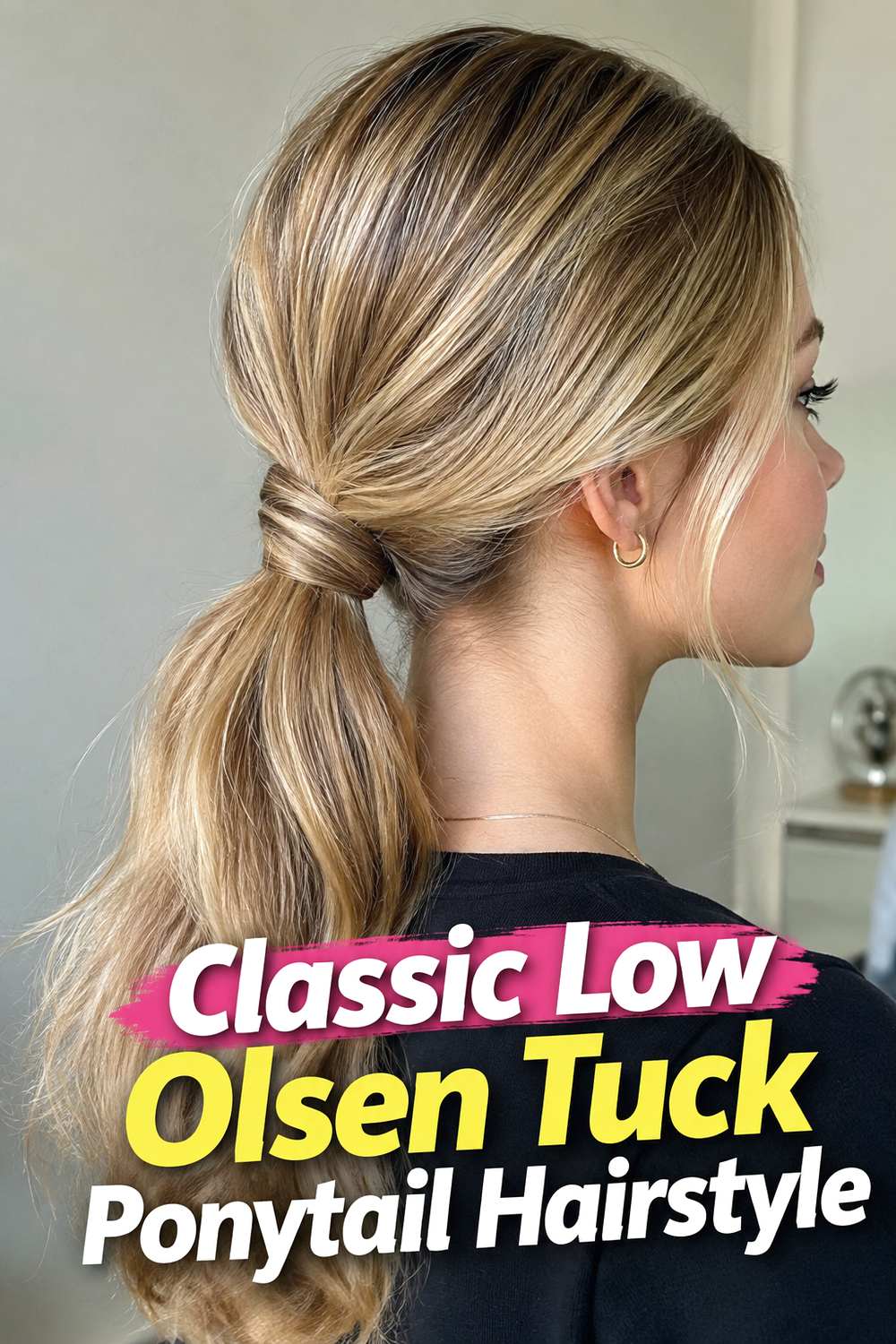
The Classic Low Olsen Tuck Ponytail Hairstyle keeps the silhouette quiet and uncomplicated. Hair is gathered gently at the nape with enough softness around the crown to avoid a pulled-tight finish, then the ponytail is slipped beneath a high collar or tucked into an outer layer. The result gives medium and long hair the visual effect of a shorter, more contained shape while preserving natural movement around the head. A few subtle flyaways can make this version look more convincing rather than unfinished. It is especially appealing with knitwear, structured jackets, and simple neutral clothing because the hairstyle does not compete with the neckline.
Styling Notes
Use a soft elastic at the nape and avoid tightening it repeatedly. Once the ponytail is tucked, loosen the hair slightly above the elastic so the crown follows the head naturally instead of appearing flat.
Best For
This version is a practical starting point for straight, slightly wavy, medium-density hair at shoulder length or longer.
2. Sleek Center Part Olsen Tuck Ponytail Hairstyle
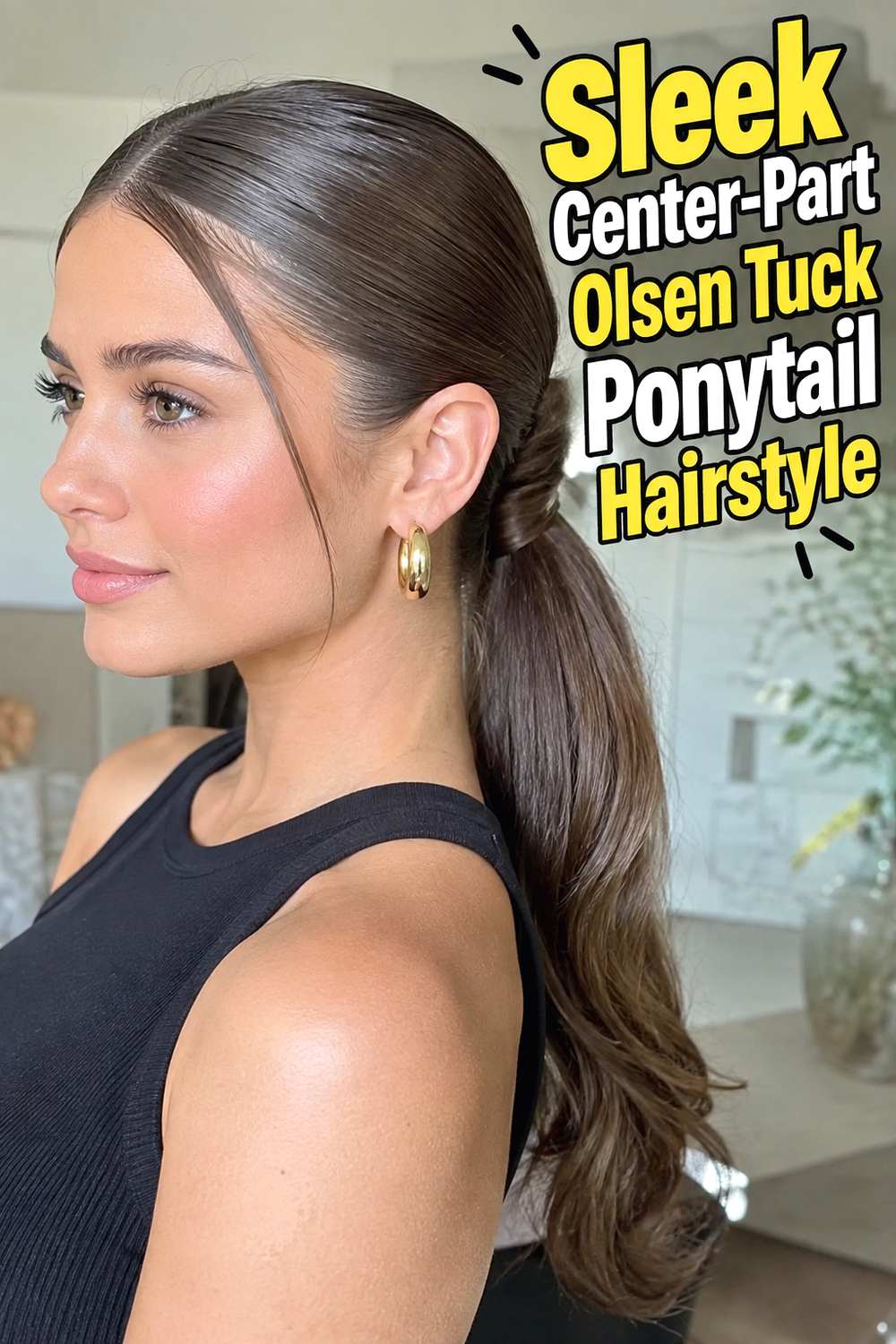
The Sleek Center-Part Olsen Tuck Ponytail Hairstyle brings a sharper, more architectural mood to the tucked look. A precise center part creates symmetry through the front, while the hair is smoothed close to the head and secured low at the nape. Tucking the ponytail beneath a raised collar makes the clean parting and glossy surface the strongest visual features. The style can work particularly well when an outfit already has strong lines, such as a tailored blazer, high-neck dress, or structured coat. Keep the finish sleek without making it rigid; a little movement at the ponytail base prevents the hair from looking pasted down or overly lacquered.
Why It Works
The center part visually balances the face while the low tucked ponytail keeps the overall shape narrow, simple, and intentionally restrained.
Wear & Maintenance
A light smoothing cream or flexible-hold spray can control flyaways. Avoid heavy wax through the lengths if the hair will sit against clothing, where residue can transfer.
3. Soft Side Part Olsen Tuck Ponytail Hairstyle
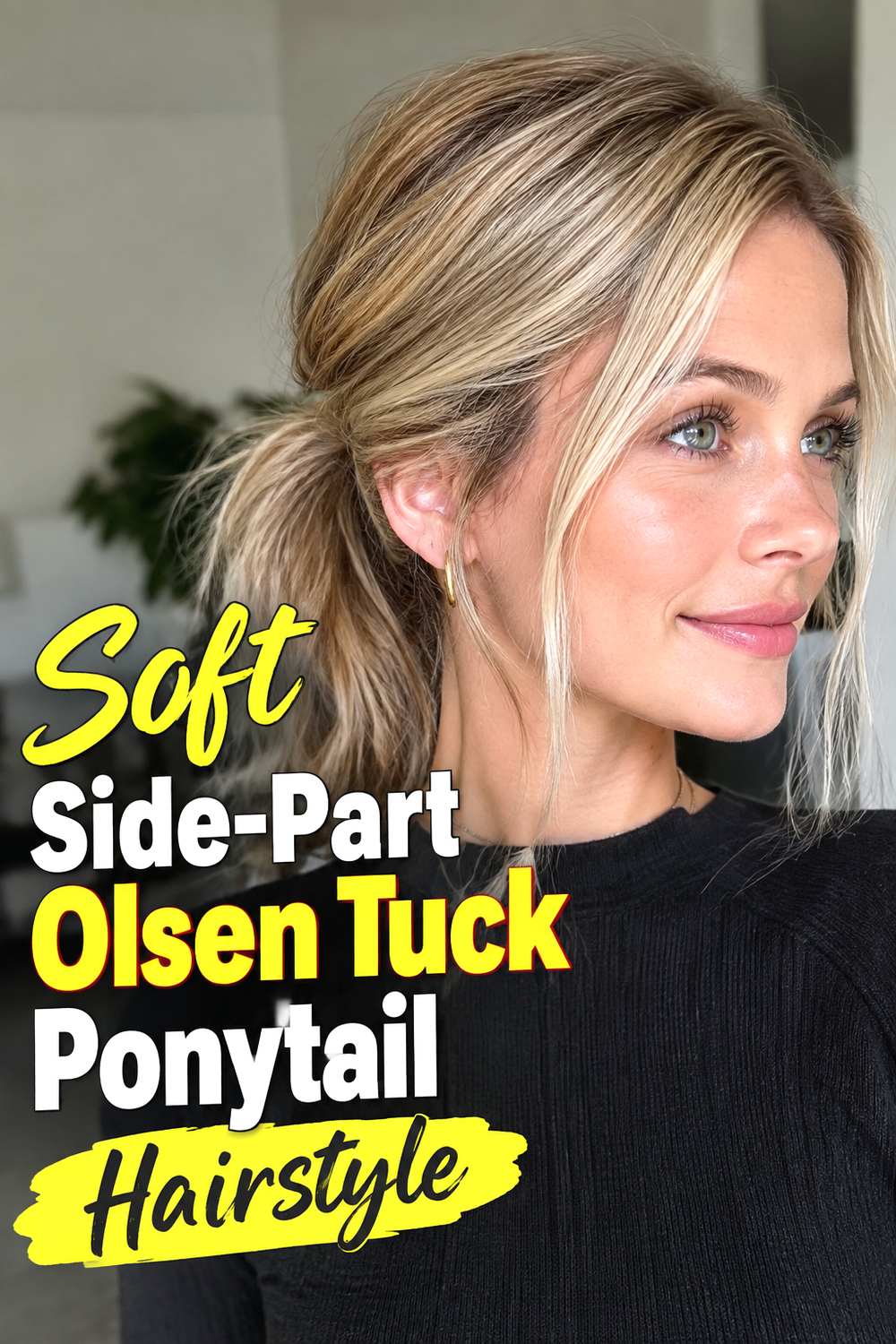
The Soft Side-Part Olsen Tuck Ponytail Hairstyle gives the minimalist tuck a gentler, less symmetrical finish. Rather than creating a deep dramatic side part, move the part slightly away from center and allow the front section to sweep naturally across the forehead. Gather the rest into a low ponytail without flattening the crown, then tuck the length into a jacket, scarf, or tall neckline. This subtle shift can add movement around the face and is useful when a strict middle part feels too severe. The finished style looks especially natural when the roots retain a little lift and the surface has a soft sheen instead of an ultra-glossy finish.
Hair Type & Length
Medium to long straight or softly wavy hair suits this version particularly well because the side sweep stays visible after the lower lengths are tucked away.
Pro Tip
Part the hair before applying styling product. That helps preserve a cleaner root direction without needing to repeatedly comb through finished hair.
4. Textured Loose Olsen Tuck Ponytail Hairstyle
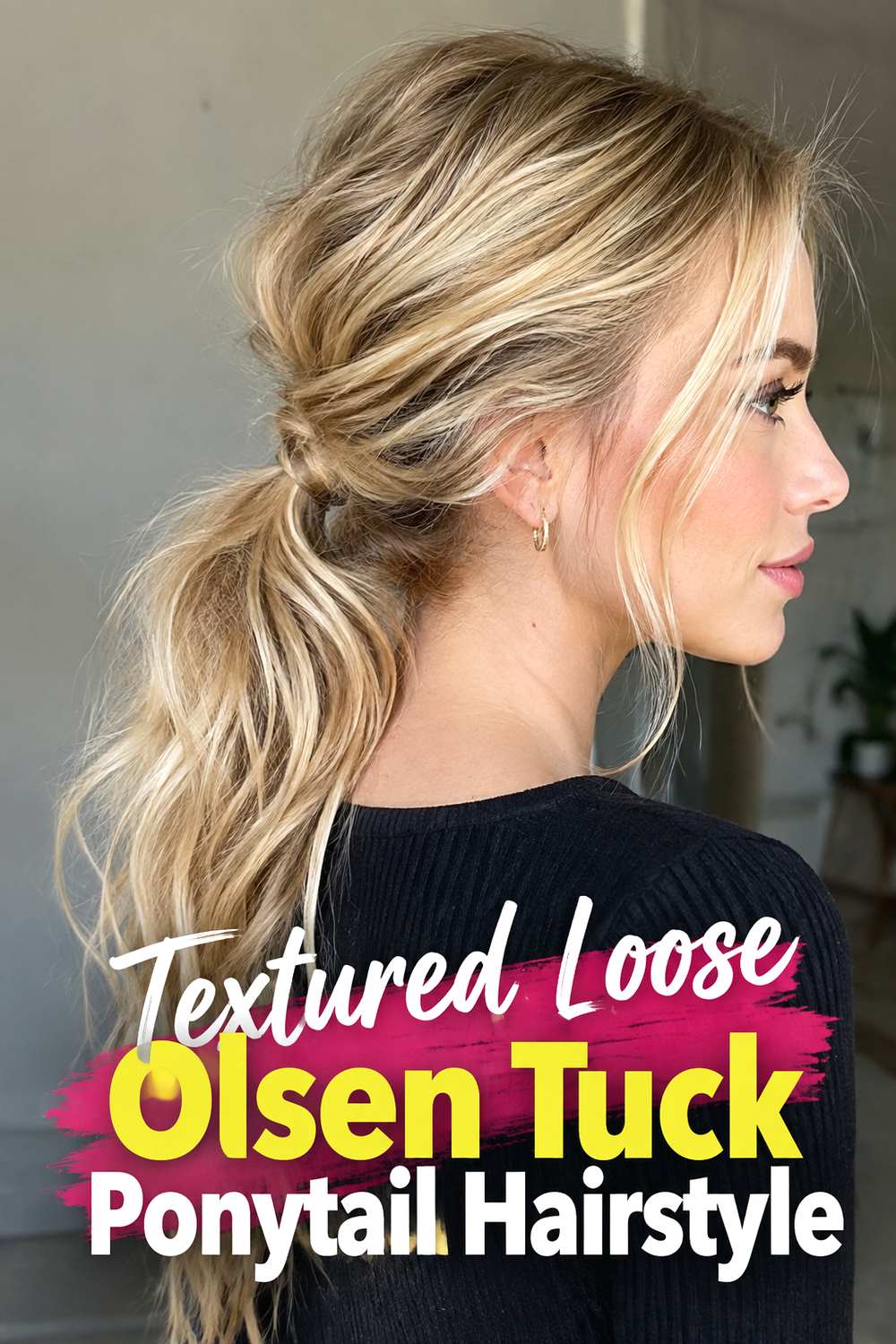
The Textured Loose Olsen Tuck Ponytail Hairstyle is intentionally imperfect, with airy movement through the crown and a relaxed low tie that keeps the style from becoming too controlled. Natural bends, slight waves, and irregular strands are all part of the finished look. Instead of brushing everything smooth, use your fingers to gather the ponytail at the nape, leaving a little softness around the temples and above the ears. Once the ponytail is tucked into a collar, the visible texture creates contrast with the clothing and keeps the hairstyle from looking overly formal. This is a strong option when you want the Olsen-inspired effect to feel casual, lived-in, and easy rather than sharply styled.
Styling Notes
Work with existing texture whenever possible. A small amount of texture spray through the mid-lengths can add separation, but keep the roots touchable and avoid creating a dry, powdery surface.
5. Wavy Olsen Tuck Ponytail Hairstyle
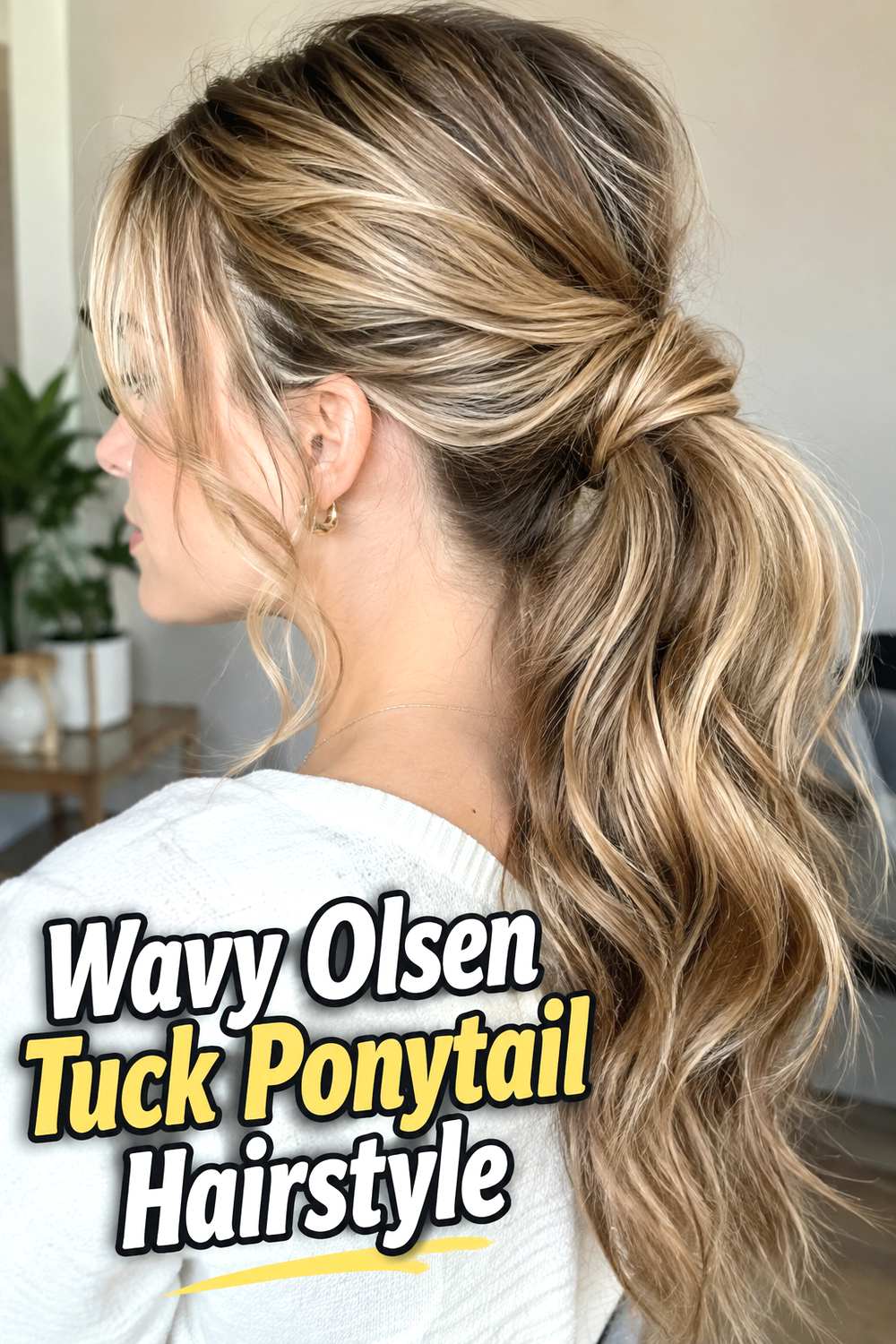
The Wavy Olsen Tuck Ponytail Hairstyle uses soft bends to add dimension before the hair disappears beneath the neckline. Loose waves can be created through the mid-lengths rather than starting tightly at the roots, which keeps the top of the style relaxed and makes the ponytail easier to gather. Leave the wave pattern slightly irregular so the hair looks naturally styled instead of uniformly curled. When tucked into a coat or sweater, only part of the wave is visible, producing a soft, layered effect around the shoulders and collar. This version works beautifully when you want more texture than a straight ponytail but still prefer a refined silhouette.
Best For
It suits medium and long hair with enough length to form a low ponytail comfortably before being tucked. Naturally wavy hair may need very little additional styling.
Pro Tip
Let heat-styled waves cool completely before tying the ponytail. This helps maintain their shape without needing excessive hairspray.
6. Polished Straight Olsen Tuck Ponytail Hairstyle
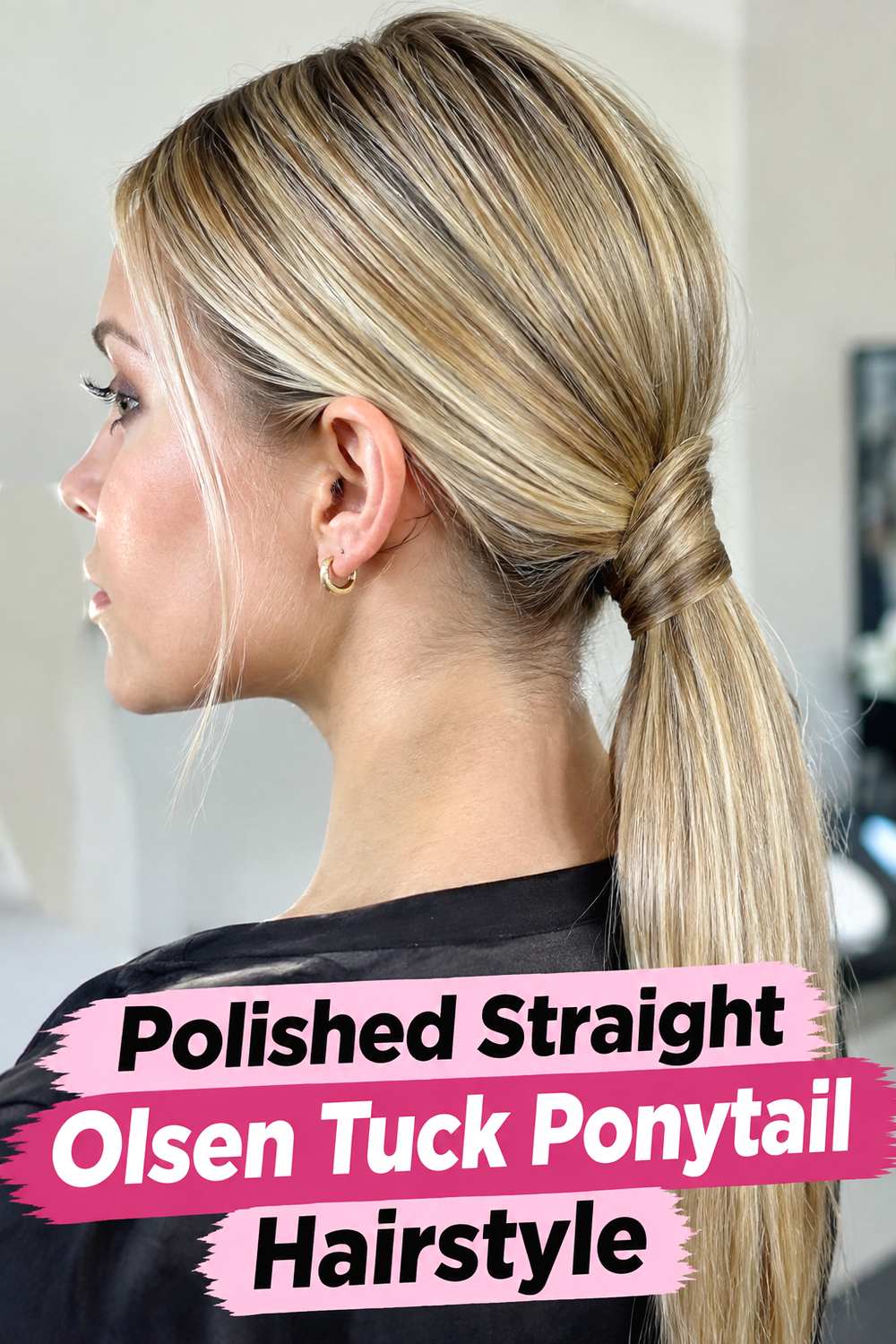
The Polished Straight Olsen Tuck Ponytail Hairstyle highlights smooth lines, clean ends, and understated shine. Hair is worn straight from root to tip, gathered low, and tucked neatly into the neckline so the visible portion follows the head without extra bulk. Unlike a slicked-back ponytail, this variation can keep a natural amount of softness at the roots and around the hairline. The straight texture makes the tucked construction look especially intentional because the silhouette remains narrow and uncluttered. It pairs easily with tailored outerwear, minimalist knitwear, and high-neck tops. A good finish should look healthy and reflective without appearing oily or heavily coated.
Wear & Maintenance
Focus smoothing products on the mid-lengths and ends rather than applying too much at the roots. Brush gently before tying so the surface stays polished.
Hair Type & Length
Naturally straight and straightened medium-to-long hair are the simplest fits, although slightly wavy textures can be smoothed first.
7. Face Framing Olsen Tuck Ponytail Hairstyle
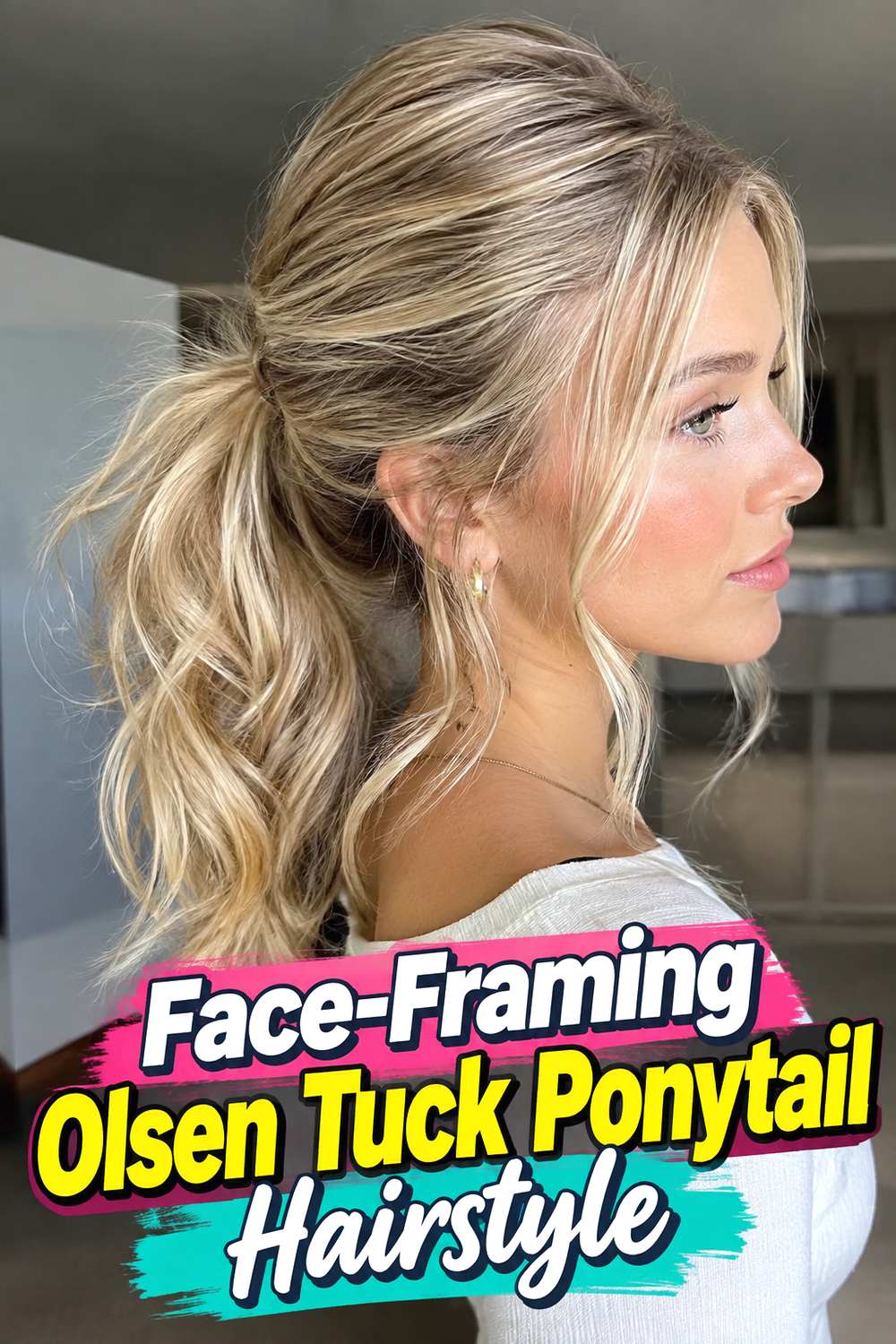
The Face-Framing Olsen Tuck Ponytail Hairstyle keeps the tucked body of the style controlled while deliberately releasing a few pieces around the face. These front strands can be softly curved, slightly wavy, or left close to their natural texture depending on the finish you prefer. The contrast between the hidden ponytail and visible front pieces makes the look feel softer and more approachable than a fully tucked style. Keep the released sections fine enough that they frame rather than overwhelm the face. Because the ponytail sits low at the nape, the exposed strands remain the focal point, making this version useful for anyone who likes some movement around the cheeks or jaw.
Styling Notes
Separate the face-framing pieces before securing the ponytail. Pulling them out afterward can disturb the hair around the temples and create unnecessary frizz.
Why It Works
Visible front pieces soften the strong horizontal line created by a high collar while still preserving the compact Olsen Tuck silhouette.
8. Ribbon Tied Olsen Tuck Ponytail Hairstyle
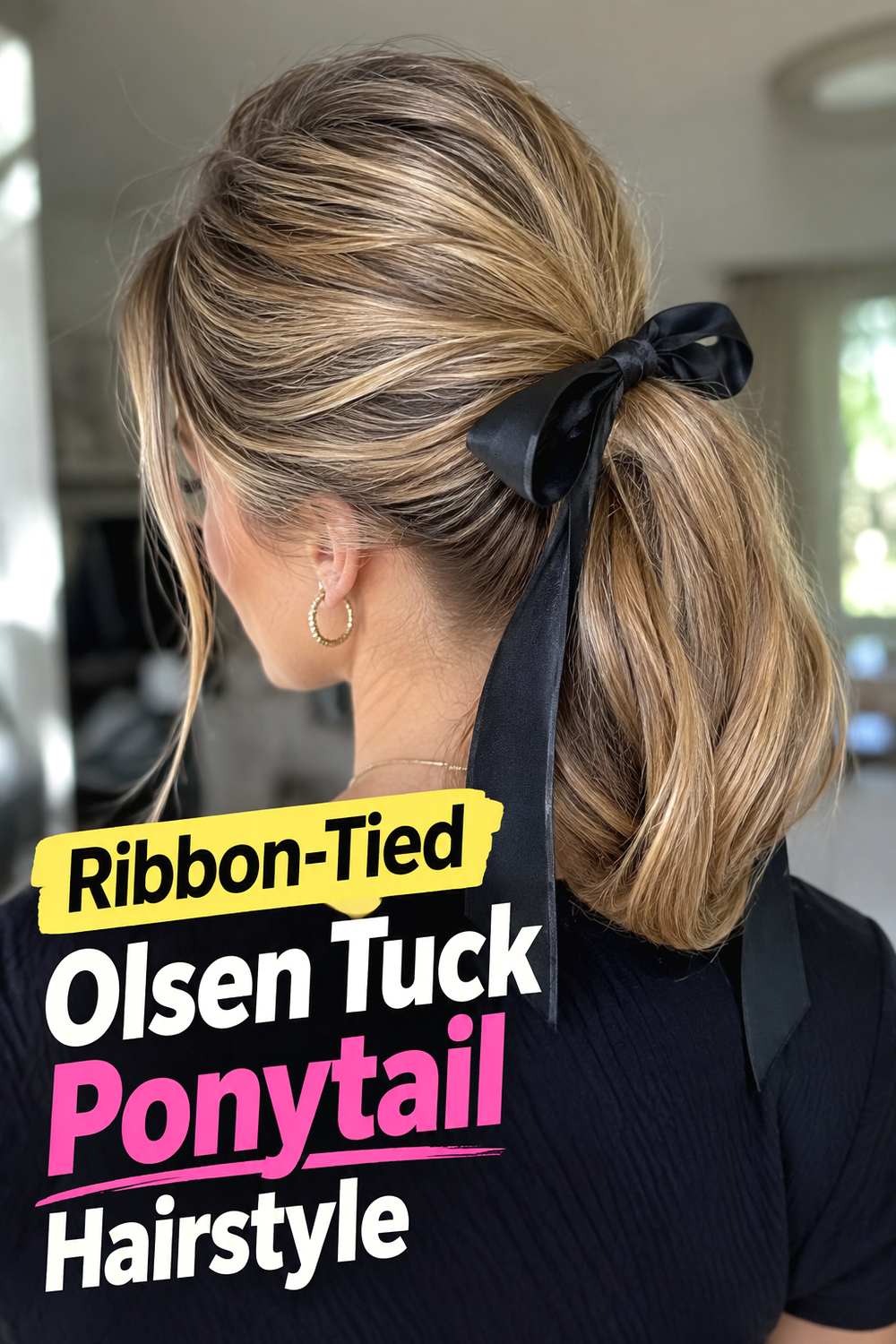
The Ribbon-Tied Olsen Tuck Ponytail Hairstyle adds one delicate detail without losing the minimal character of the look. Start with a simple low ponytail and tie a narrow ribbon around the elastic, allowing the ends to sit close to the nape rather than hanging dramatically down the back. Once the ponytail is tucked, the ribbon becomes a small accent near the collar and can peek out depending on the neckline. Satin, velvet, or matte grosgrain can each create a different mood. Keep the rest of the hair relatively restrained so the accessory feels deliberate rather than decorative overload. This version is especially attractive for dinners, seasonal gatherings, or polished daytime outfits.
Pro Tip
Choose a ribbon that is not so slippery that it loosens during wear. Securing the ponytail with a regular elastic first gives the accessory a stable base.
9. Scrunchie Olsen Tuck Ponytail Hairstyle
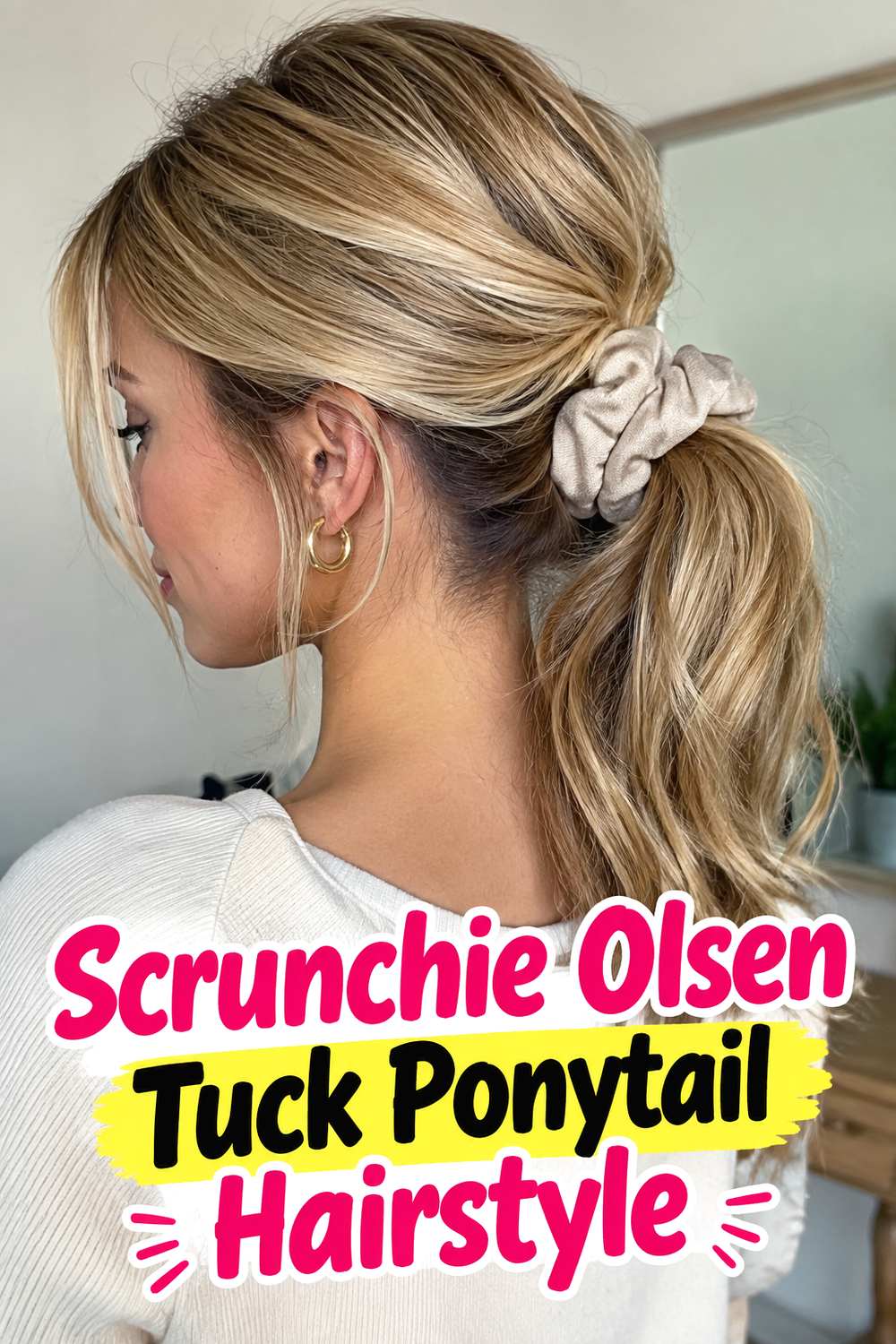
The Scrunchie Olsen Tuck Ponytail Hairstyle brings a softer, more casual feeling to the tucked silhouette. A small or medium fabric scrunchie secures the ponytail at the nape without creating the severe indentation that a very tight elastic can leave. Because most of the length is tucked into the neckline, the scrunchie becomes a visible textural detail rather than the center of attention. Neutral cotton, silk, satin, or velvet options work especially well when they relate to the fabric or color of the outfit. Keep the crown relaxed and allow a few tiny flyaways to remain for a natural finish. The effect feels comfortable, modern, and intentionally low-key.
Best For
This approach is useful for medium to thick hair that needs a little more grip at the base without an extremely tight hold.
Wear & Maintenance
Check that the scrunchie is slim enough to sit comfortably against the collar. Oversized versions can create an awkward bump once the ponytail is tucked.
10. Hidden Tie Olsen Tuck Ponytail Hairstyle
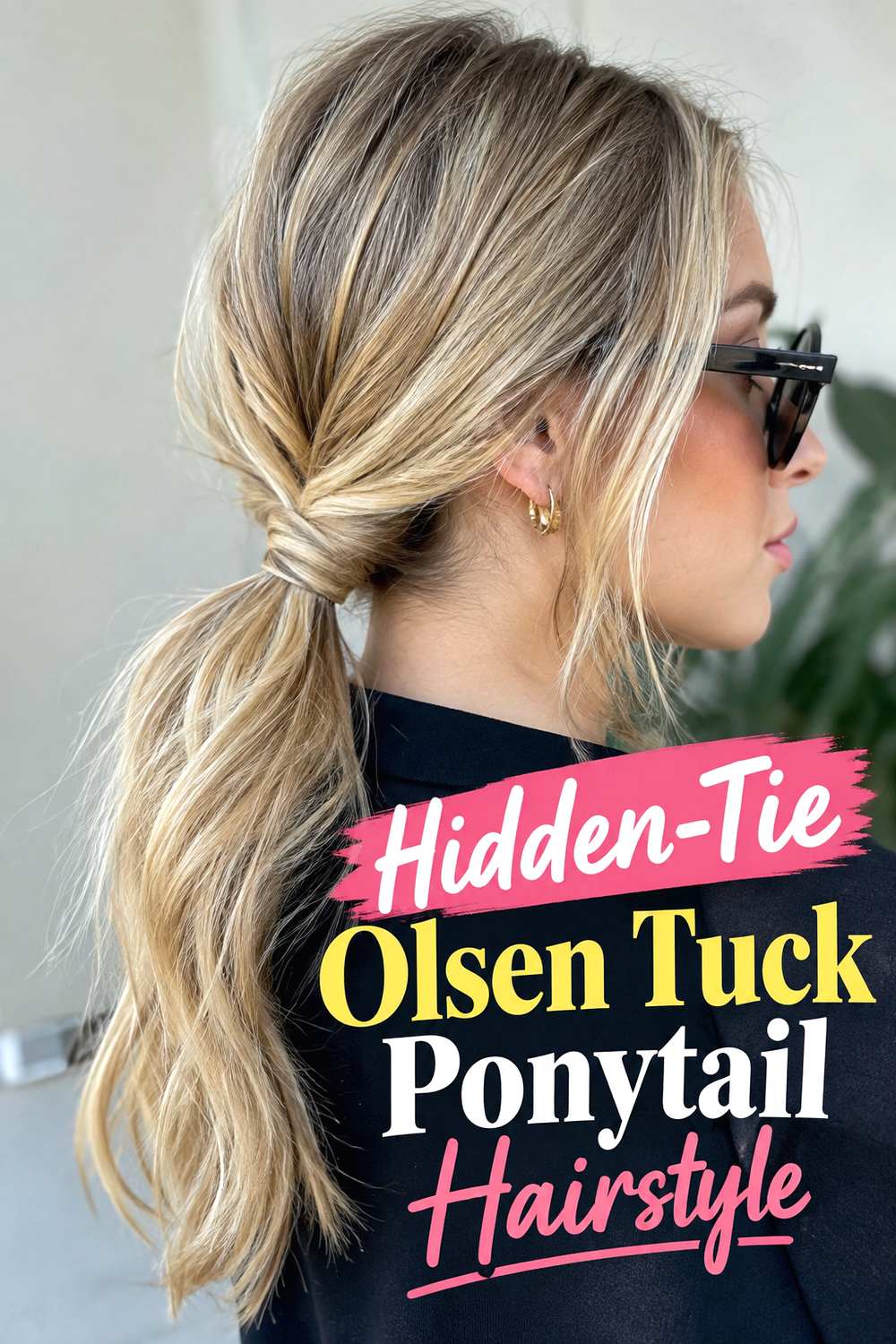
The Hidden-Tie Olsen Tuck Ponytail Hairstyle is designed to make the securing point almost disappear. Hair is gathered at the nape with a thin elastic chosen close to the hair color, and the tucked collar naturally conceals most or all of the tie. That creates the illusion that the hair simply flows downward and vanishes into the neckline, preserving the effortless character associated with the original Olsen Tuck. Keep the gathering point gentle rather than tight so there is no obvious ridge where the ponytail begins. This restrained version works particularly well with simple monochrome outfits, high collars, and clean center or near-center parts.
Why It Works
Removing visible accessories keeps attention on the hair texture, parting, and clothing silhouette rather than the mechanics of the ponytail.
Styling Notes
A small snag-free elastic is usually enough. Place it low enough that the collar can cover it without forcing the ponytail upward.
11. Voluminous Crown Olsen Tuck Ponytail Hairstyle
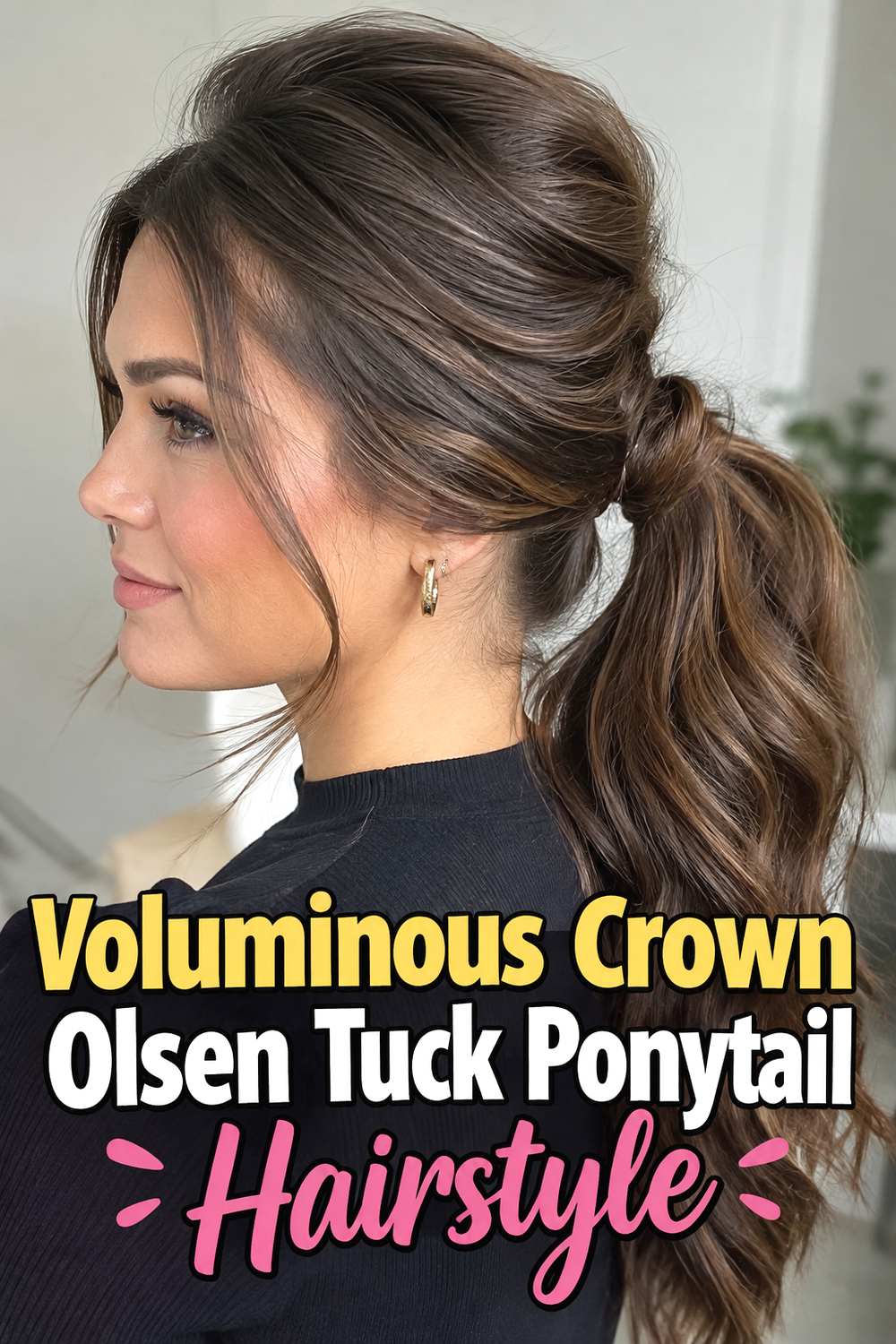
The Voluminous Crown Olsen Tuck Ponytail Hairstyle adds height and softness through the upper head while keeping the ponytail itself low and discreet. Instead of smoothing the roots flat, preserve natural lift at the crown and gently loosen the top section after securing the elastic. The extra volume can make the tucked style feel more romantic and less severe, especially when paired with a relaxed side or center part. Avoid exaggerated teasing, which can create a shape that conflicts with the understated Olsen-inspired mood. Once the ponytail is placed inside the collar, the eye is drawn upward toward the crown and face, giving the hairstyle a fuller silhouette without visible length.
Hair Type & Length
Medium-density and thick hair often creates crown fullness naturally, while fine hair may benefit from lightweight root lift before styling.
Pro Tip
Loosen the crown in tiny increments using fingertips. Pulling out large sections at once can make the shape uneven or cause the ponytail base to sag.
12. Fine Hair Olsen Tuck Ponytail Hairstyle
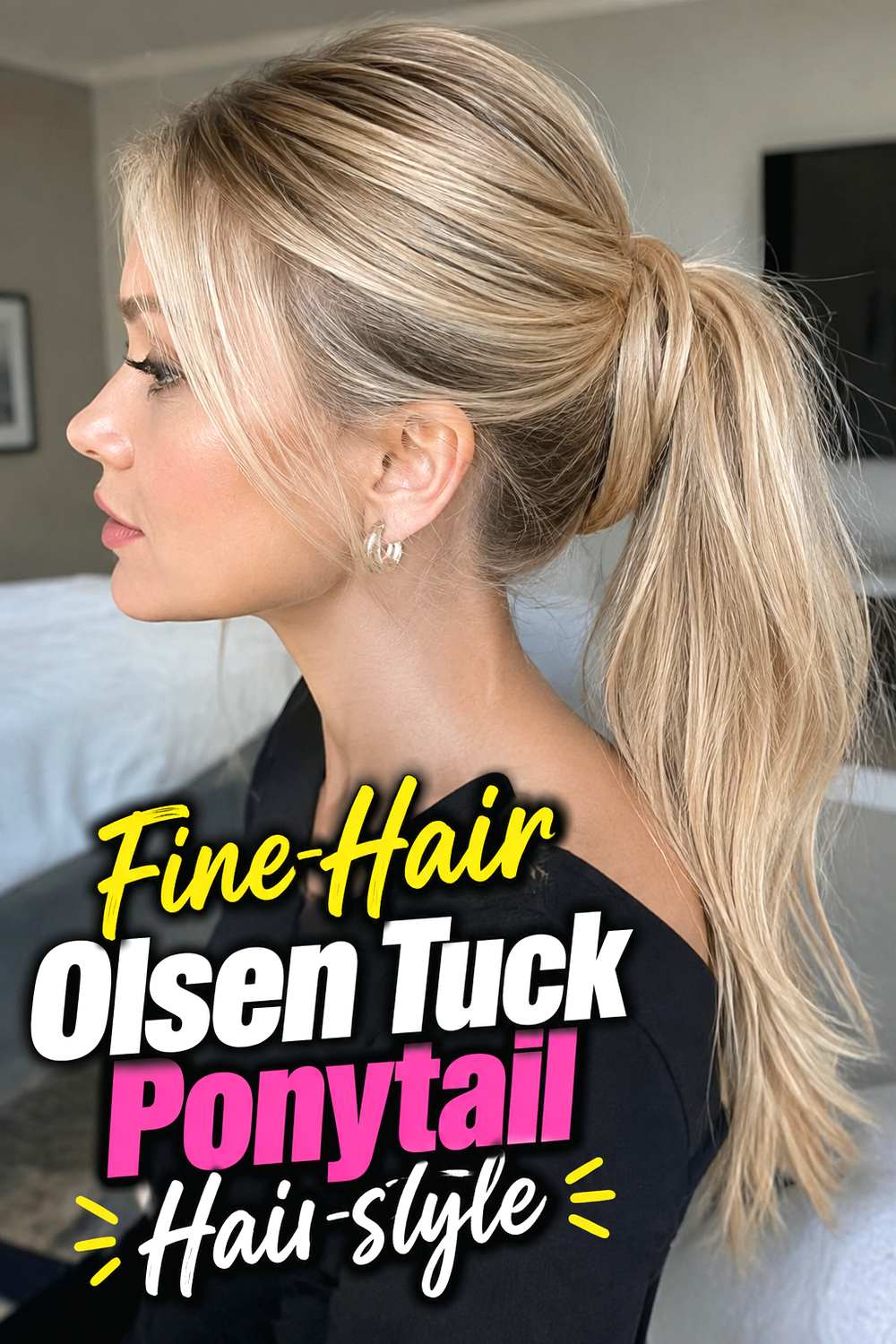
The Fine-Hair Olsen Tuck Ponytail Hairstyle uses softness and strategic texture to make a small low ponytail feel intentional rather than sparse. Start with light root lift and gentle separation through the lengths instead of heavy smoothing products that can collapse fine strands. Secure the hair at the nape with a narrow elastic and loosen the top slightly to preserve air around the crown. Because the ponytail itself is tucked into clothing, its circumference becomes less important than the visible shape around the head. A soft center part or barely off-center part can keep the finish modern. This approach is particularly useful when you want understated styling without trying to manufacture unrealistic volume.
Styling Notes
Dry shampoo or a lightweight texturizing mist can add grip before gathering the ponytail. Use only enough to prevent the hair from becoming overly slippery.
Wear & Maintenance
Avoid thick oils and heavy creams near the roots. Fine hair can lose its lift quickly when too much product is layered onto it.
13. Thick Hair Olsen Tuck Ponytail Hairstyle
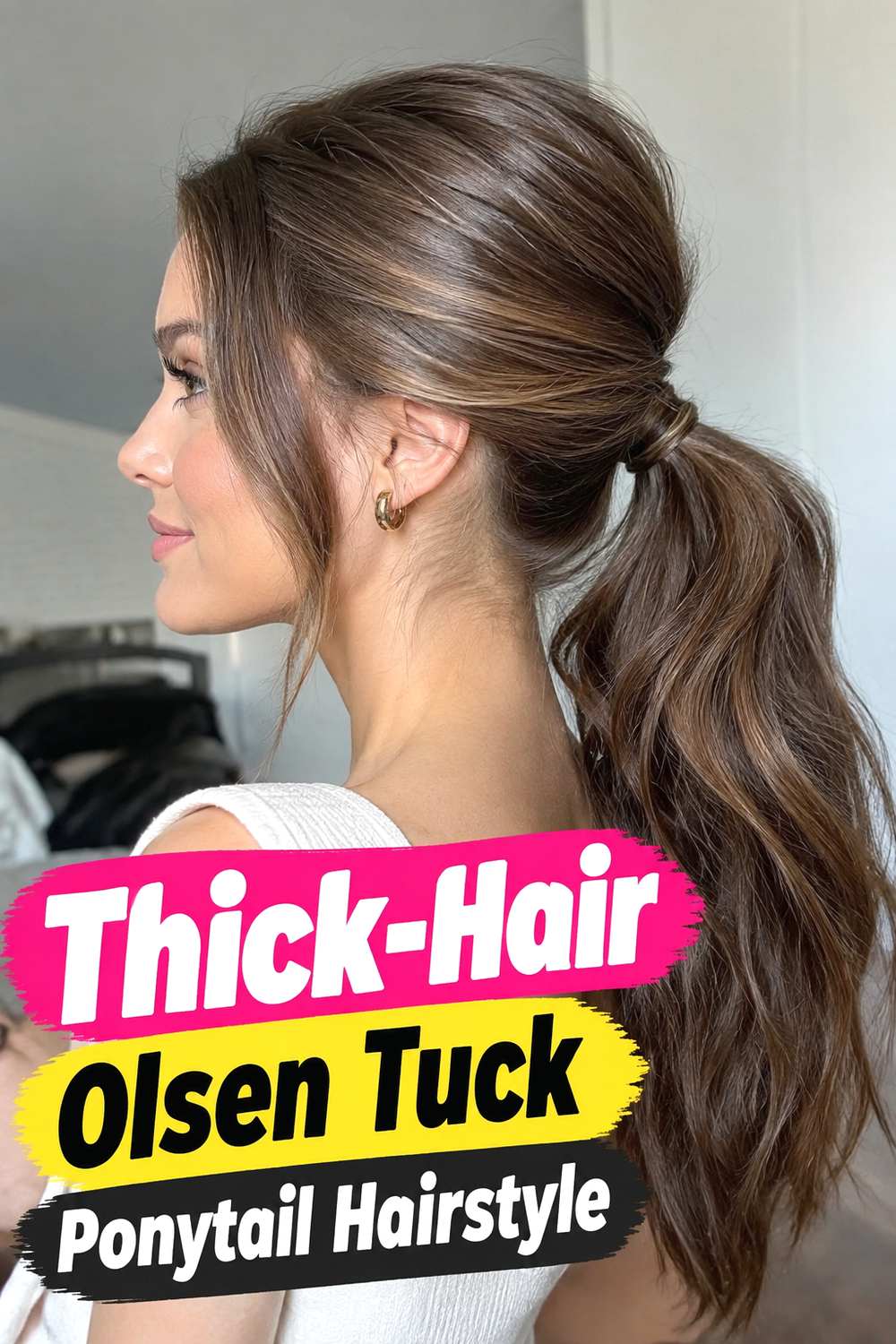
The Thick-Hair Olsen Tuck Ponytail Hairstyle focuses on controlling density without flattening the natural richness of the hair. Gather the hair low and make sure the elastic is secure enough to hold the weight comfortably, then tuck the ponytail gradually rather than forcing the entire length into a narrow collar at once. A roomy coat, oversized scarf, or substantial knit neckline can accommodate thicker lengths more naturally. Leaving some softness around the crown keeps the style from looking overly tight, while a smooth surface around the sides creates a cleaner outline. The finished tuck should look purposeful and comfortable, not bulky or compressed against the back of the neck.
Wear & Maintenance
Choose clothing with enough room around the collar to hold the tucked ponytail without pulling against the scalp. Adjust the hair if the neckline shifts during wear.
Pro Tip
A strong but flexible elastic is usually more comfortable than repeatedly wrapping a thin band around a dense ponytail.
14. Curly Olsen Tuck Ponytail Hairstyle
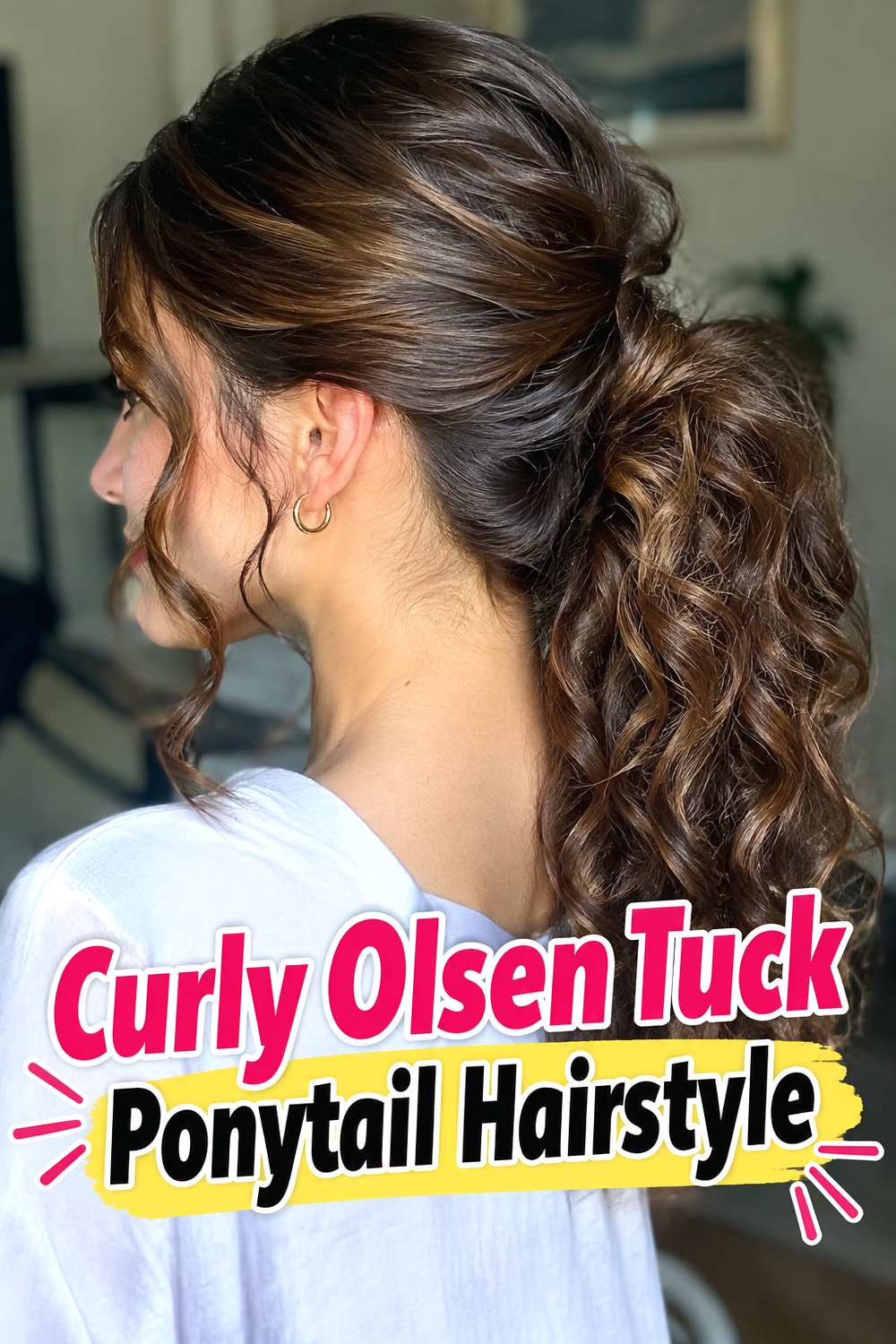
The Curly Olsen Tuck Ponytail Hairstyle lets natural curl definition provide the visual interest while the overall shape stays simple. Gather the curls low without brushing them into a completely uniform surface, preserving variation around the crown, temples, and ponytail base. Once the length is tucked into a collar or scarf, a few curls can remain visible around the neckline and face for a dimensional finish. This version does not need to imitate the flat silhouette of straight hair; its appeal comes from balancing a compact tucked shape with natural texture. Use enough hold to keep the ponytail secure, but avoid stretching the curls more than necessary when positioning the elastic.
Styling Notes
Refresh individual curls around the face before gathering the hair, then use your hands rather than a fine brush to preserve the existing curl pattern.
Best For
Naturally curly medium-to-long hair works beautifully, especially with necklines that provide enough space to accommodate the tucked texture comfortably.
15. Messy Olsen Tuck Ponytail Hairstyle
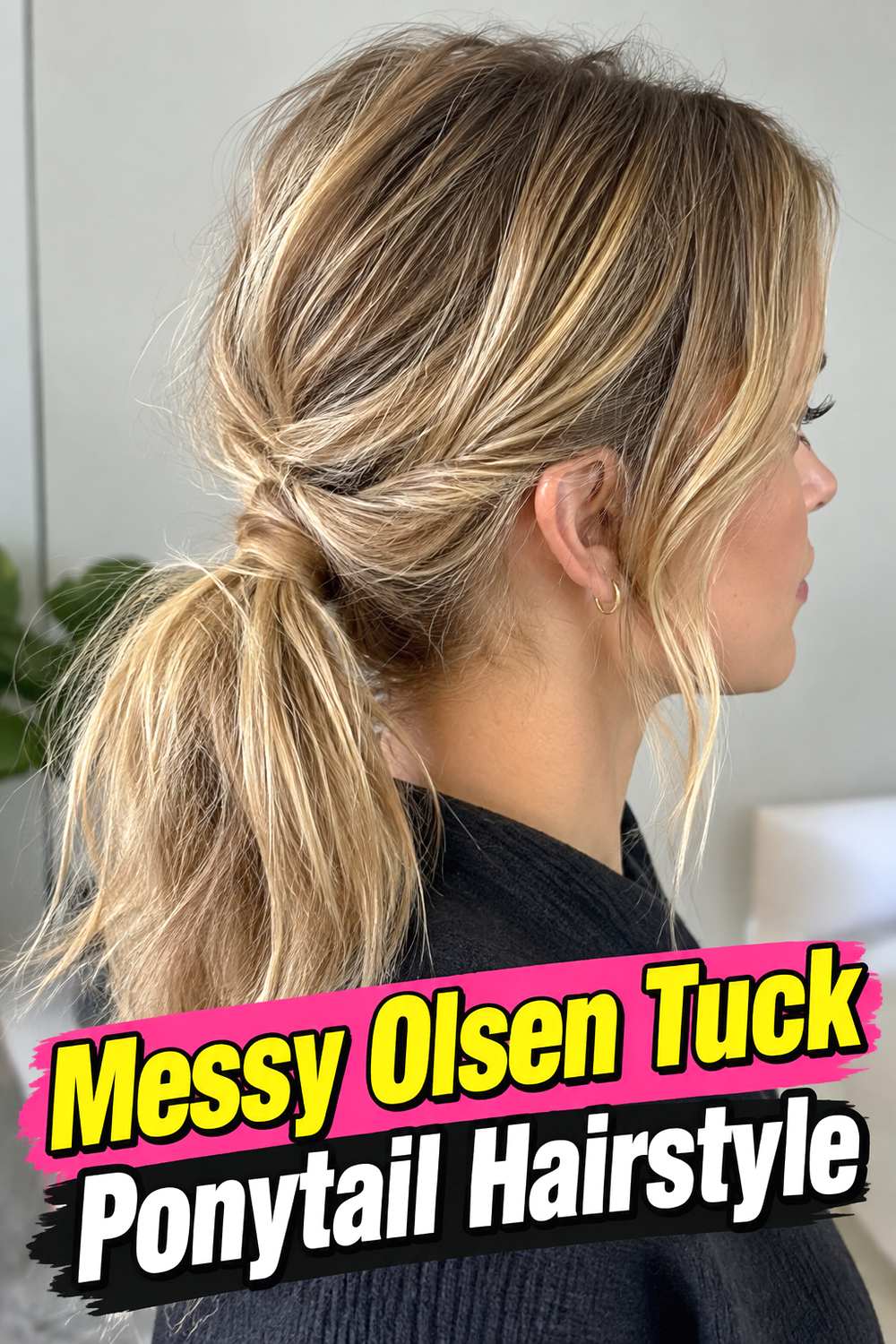
The Messy Olsen Tuck Ponytail Hairstyle embraces controlled imperfection with soft flyaways, uneven bends, and a loosely gathered nape. The goal is not to make the style look careless, but to avoid polishing away every natural detail. Use your fingers to gather the hair and secure it low, allowing a few strands around the ears or hairline to remain free. Tuck the ponytail casually into a coat, knit, or scarf so the length does not appear too carefully arranged. Slightly second-day texture can be useful because it gives the hair grip and separation. This is one of the easiest versions to pair with relaxed layers, oversized outerwear, and casual everyday outfits.
Why It Works
A little irregularity echoes the effortless fashion attitude of the tuck while preventing a simple low ponytail from looking too basic.
Pro Tip
Choose two or three intentional loose areas rather than pulling strands out everywhere. That keeps the result relaxed but still visually balanced.
16. Evening Sleek Olsen Tuck Ponytail Hairstyle
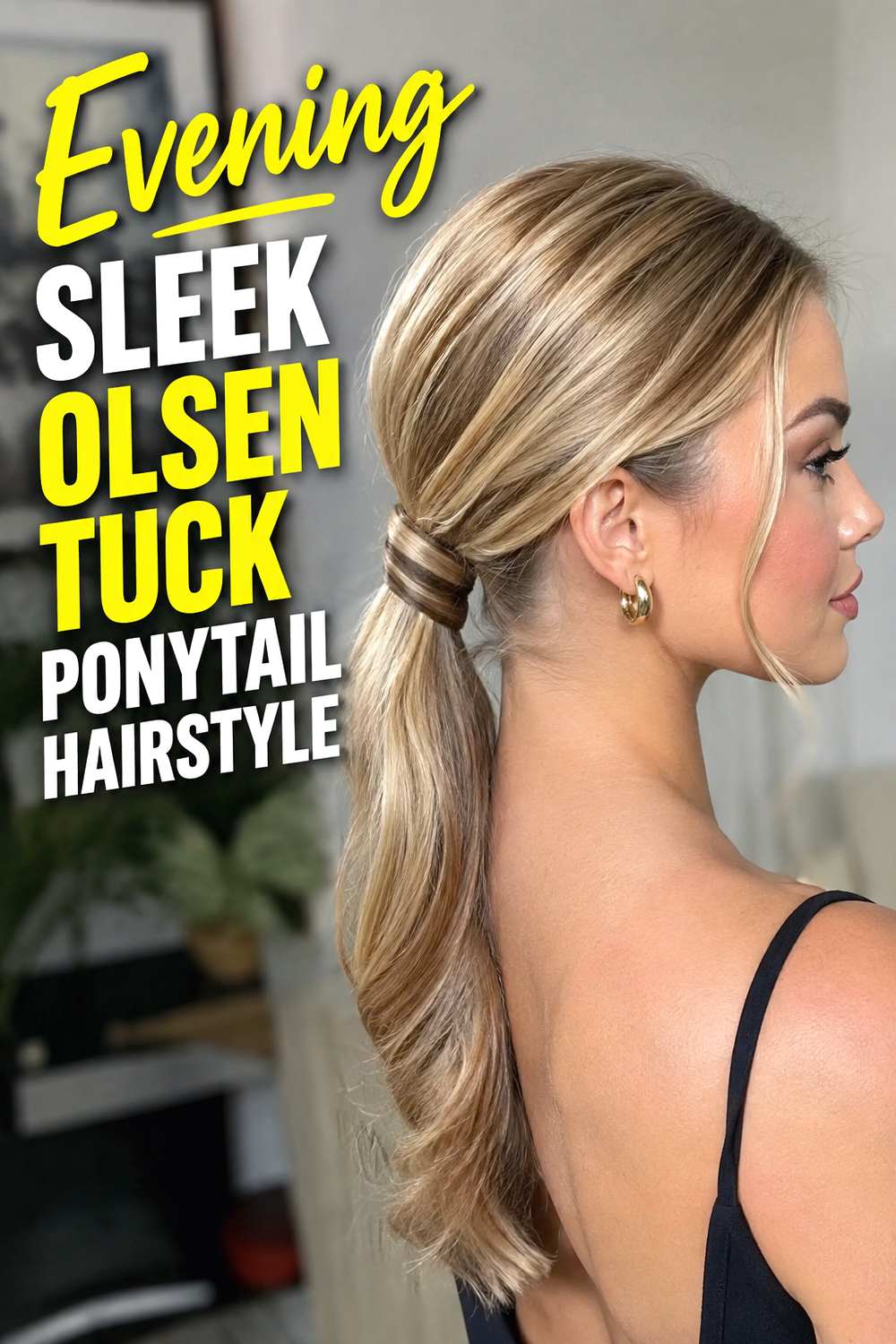
The Evening Sleek Olsen Tuck Ponytail Hairstyle takes the tucked concept into a more refined setting with smooth roots, controlled shine, and a precise low gathering point. A center or softly offset part can keep the front polished, while the ponytail is secured neatly at the nape before disappearing into a high-neck dress, tailored jacket, or elegant coat. Unlike the messier versions, keep flyaways minimal and make the surface look deliberate from every visible angle. The finish can still retain some natural strand detail so it does not become stiff or helmet-like. Pairing the sleek tuck with simple earrings or a clean neckline creates a sophisticated balance without needing an elaborate updo.
Styling Notes
Use a small amount of smoothing serum through the surface and ends, followed by flexible-hold spray where needed. Keep product application light near the scalp.
Best For
This version suits evening dinners, gallery events, formal gatherings, or any outfit where a traditional loose ponytail would interrupt a structured neckline.
How to Choose the Right Look
Start with your hair length. Medium and long hair provide enough length for a secure low ponytail and a comfortable tuck, while shorter layers may need extra pins or may work better as loose face-framing pieces. For fine hair, choose lightweight texture and subtle crown lift rather than heavy smoothing. Thick hair benefits from a strong elastic and a roomier neckline. Curly and wavy textures can keep their natural movement instead of being straightened simply to achieve the silhouette.
Next, consider styling time and finish. A messy, textured, or scrunchie version can be assembled quickly and tolerates natural flyaways. Sleek center-part, polished straight, and evening variations need more precise smoothing. If comfort matters most, avoid an overly tight elastic and make sure the collar has enough space for the tucked ponytail.
Your outfit matters as much as the hair. High collars, scarves, coats, and structured jackets naturally support the tuck, while wide or low necklines provide less structure. For a subtle daytime look, choose hidden ties, soft parts, and natural texture. For a more noticeable finish, try crown volume, a ribbon, defined curls, or sleek shine.
Final Thoughts
Olsen Tuck ponytail hairstyles work best when the hair and clothing feel like one coordinated silhouette rather than two separate elements. Start with the version closest to your natural texture, then adjust the parting, volume, accessory, or level of polish to match the occasion. A low tie, comfortable neckline, and a little intentional softness are often enough to make the tucked effect feel modern and wearable.
FAQs
What is an Olsen Tuck ponytail hairstyle?
The classic Olsen Tuck generally involves loose hair tucked into a collar or outer layer. An Olsen Tuck ponytail variation adds a low elastic or discreet anchor first, giving the hairstyle more control before the length is tucked away.
What hair length works best for an Olsen Tuck ponytail?
Shoulder-length to long hair is usually easiest because there is enough length to form a low ponytail and tuck it comfortably. Longer hair may need a roomier collar or scarf.
Can curly hair wear an Olsen Tuck ponytail?
Yes. Curly hair can be gathered low while maintaining its natural texture. A wider neckline helps prevent the curls from being compressed too tightly.
How do I keep an Olsen Tuck ponytail from slipping out?
Use a secure low elastic and choose a neckline with enough structure to hold the tucked length. Texture spray can also provide light grip on very silky hair.
Does an Olsen Tuck ponytail need to look messy?
No. The style can range from intentionally undone and textured to smooth and evening-ready. The best finish depends on your hair texture, outfit, and how polished you want the overall look to feel.
Save your favorite Olsen Tuck ponytail hairstyles and use them as inspiration the next time you want a simple, fashion-forward way to style a high neckline.