13 Overgrown Shag Bob Haircut Ideas for Effortless Texture
An overgrown shag bob blends relaxed layers, undone texture, and flattering movement for a haircut that looks stylish without feeling overly polished.
The overgrown shag bob sits in that appealing space between a traditional bob and a longer shag. Instead of a blunt, perfectly controlled outline, it uses layered movement, airy ends, and a slightly grown-out length to create a softer silhouette. Depending on the cut, it can look tousled and casual, softly feminine, edgy, curly, or surprisingly polished.
When comparing these ideas, pay attention to where the shortest layers begin, how much volume sits around the crown, and whether bangs or face-framing pieces are part of the shape. Your natural texture also matters: waves and curls can emphasize the shaggy movement, while straighter hair may benefit from strategic layering or lightweight styling products that give the ends separation.
Quick List
- Soft Layered Overgrown Shag Bob Hairstyle
- Wispy Bangs Overgrown Shag Bob Hairstyle
- Curtain Bangs Overgrown Shag Bob Hairstyle
- Wavy Textured Overgrown Shag Bob Hairstyle
- Curly Overgrown Shag Bob Hairstyle
- Razor-Cut Overgrown Shag Bob Hairstyle
- Choppy Ends Overgrown Shag Bob Hairstyle
- Face-Framing Overgrown Shag Bob Hairstyle
- Air-Dried Overgrown Shag Bob Hairstyle
- Sleek Overgrown Shag Bob Hairstyle
- Voluminous Crown Overgrown Shag Bob Hairstyle
- Side-Parted Overgrown Shag Bob Hairstyle
- Highlighted Overgrown Shag Bob Hairstyle
1. Soft Layered Overgrown Shag Bob Hairstyle
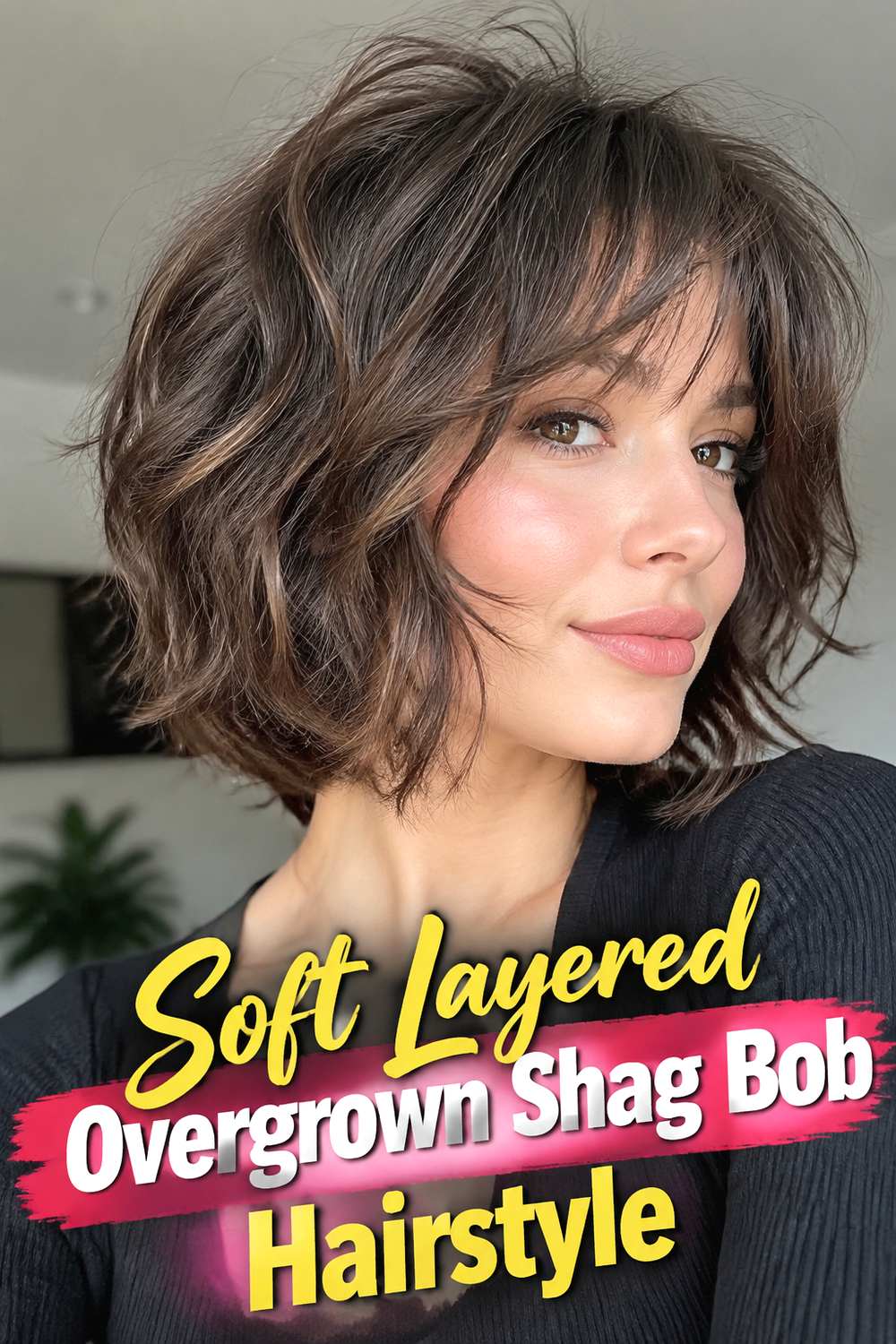
This softer interpretation keeps the recognizable shag shape without making the layers look aggressively choppy. The length falls around the neck or brushes the shoulders, while blended layers remove heaviness and encourage easy movement through the mid-lengths and ends. Slightly shorter pieces around the cheekbones help open the face without creating a dramatic fringe. It is an appealing option if you like lived-in hair but still want the overall silhouette to feel polished and versatile. A light blow-dry with a round brush can smooth the surface while preserving movement, or you can work a small amount of texture cream through the ends for a more relaxed finish.
Best For
This version works especially well for someone transitioning from a bob to longer hair because the layered shape makes the growing-out stage look intentional rather than uneven.
Styling Notes
Avoid coating the hair with heavy oils or thick creams. Lightweight products help the layers remain visible instead of collapsing into one solid shape.
2. Wispy Bangs Overgrown Shag Bob Hairstyle
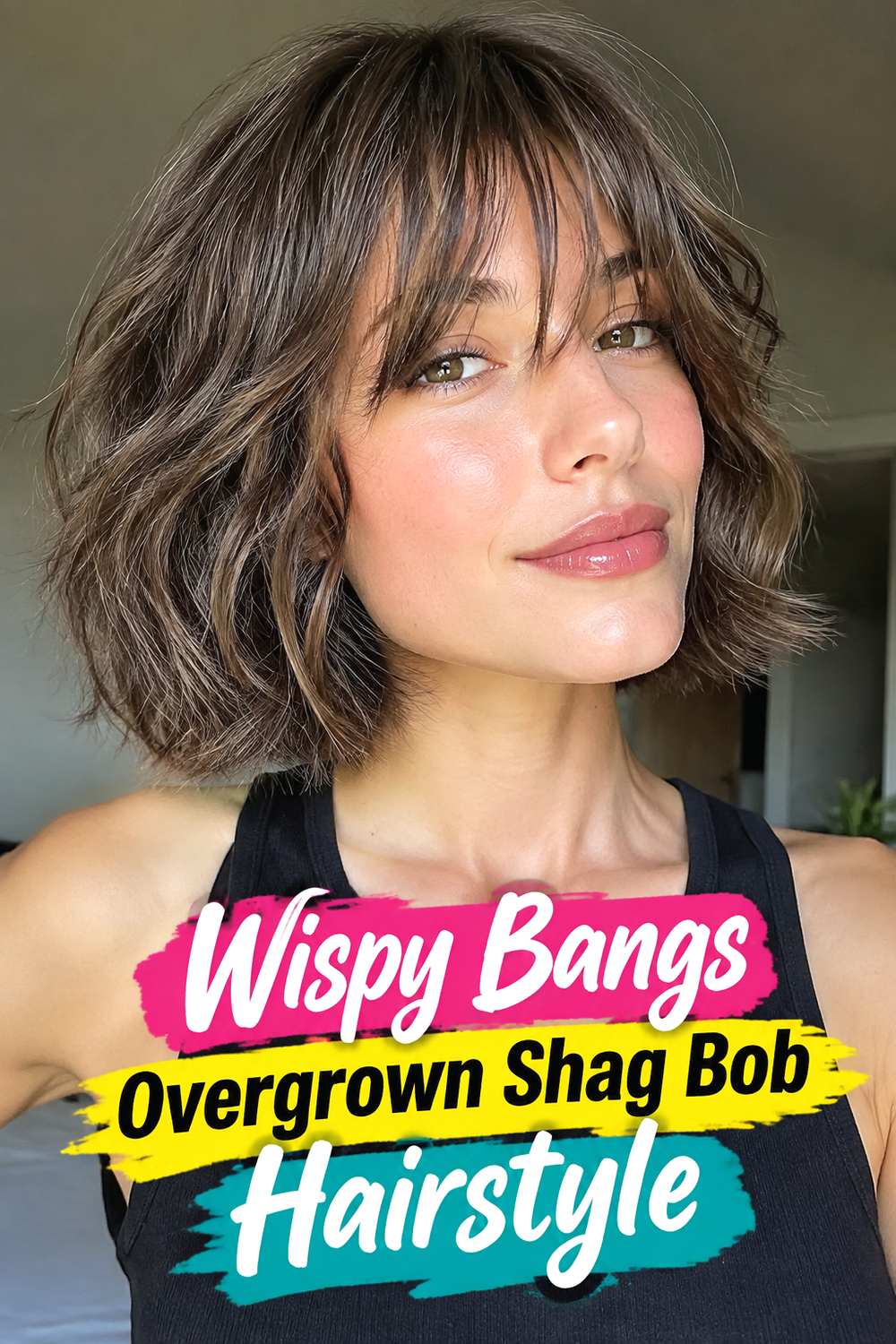
Wispy bangs bring a delicate, airy detail to the overgrown shag bob and make the cut feel lighter around the face. Rather than forming a dense straight line across the forehead, the fringe is separated into fine pieces that blend gradually into the surrounding layers. The longer shaggy bob underneath keeps the overall look relaxed, with broken-up ends and subtle movement near the jaw and neck. This is a useful direction if you want bangs without making the front of your haircut feel heavy. The fringe will usually need more regular attention than the rest of the haircut, but its imperfect finish is forgiving. A quick pass with a blow-dryer can restore its shape in the morning.
Wear & Maintenance
Wispy bangs may need trimming sooner than the longer layers. Keeping them light and slightly irregular helps maintain the soft shag effect as they grow.
Pro Tip
Direct the fringe from side to side with warm air while drying, then let it fall naturally instead of forcing it into a rounded shape.
3. Curtain Bangs Overgrown Shag Bob Hairstyle
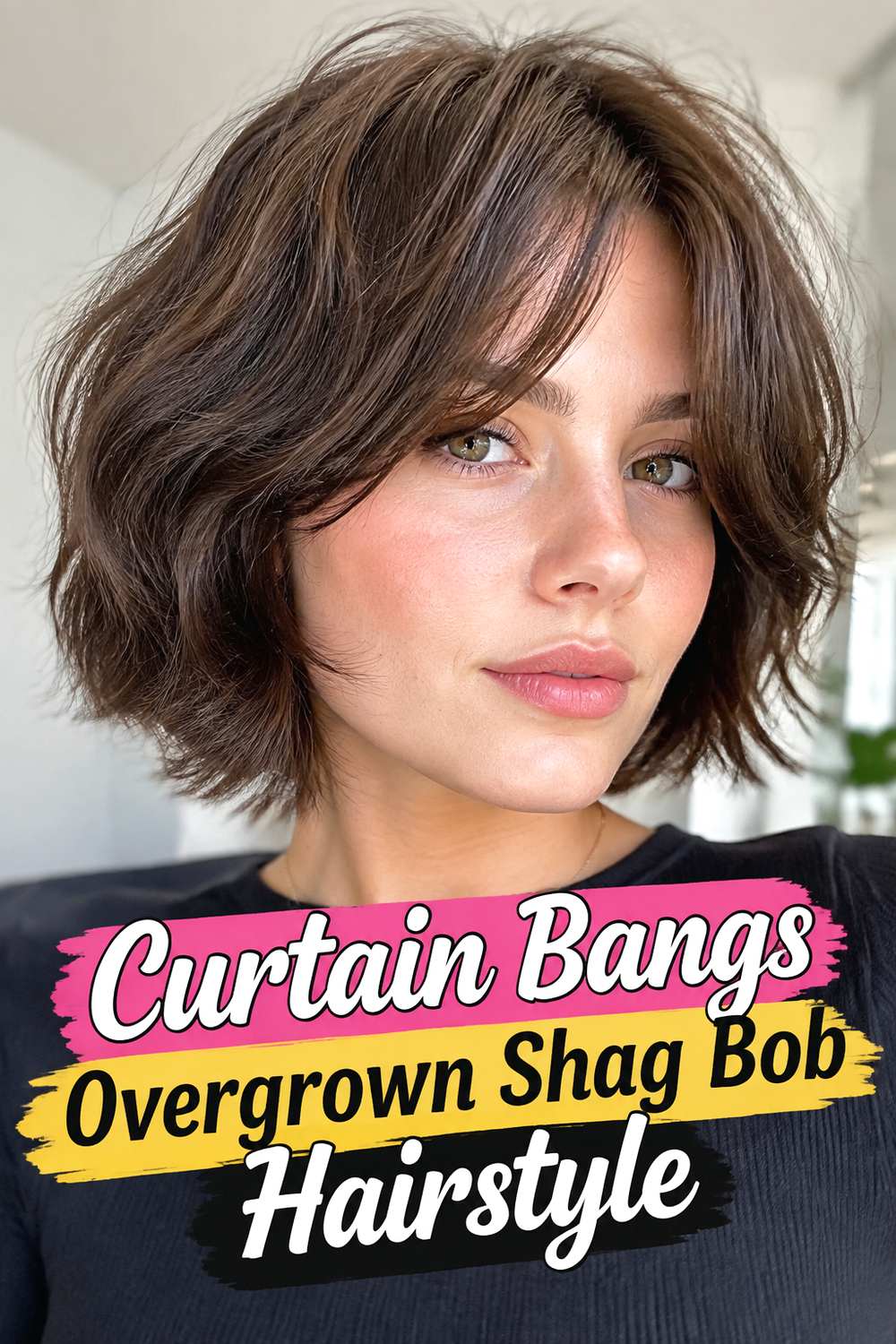
Curtain bangs are a natural companion to an overgrown shag bob because both details rely on movement rather than rigid lines. The fringe typically separates near the center and sweeps outward toward the cheekbones, where it can merge into longer face-framing layers. That gradual transition gives the front plenty of shape while leaving the center of the forehead more open. Through the back and sides, an overgrown bob length creates enough weight to keep the haircut from looking overly feathered. The finished effect feels soft, dimensional, and adaptable. You can enhance the shape with a round brush, large roller, or gentle bend from a styling iron without creating tight curls.
Why It Works
The expanding shape of curtain bangs echoes the outward movement of shag layers, helping the front and sides feel connected instead of looking like two separate haircuts.
Hair Type & Length
This approach is especially practical on neck-length to shoulder-skimming hair with enough density to support visible face-framing layers.
4. Wavy Textured Overgrown Shag Bob Hairstyle
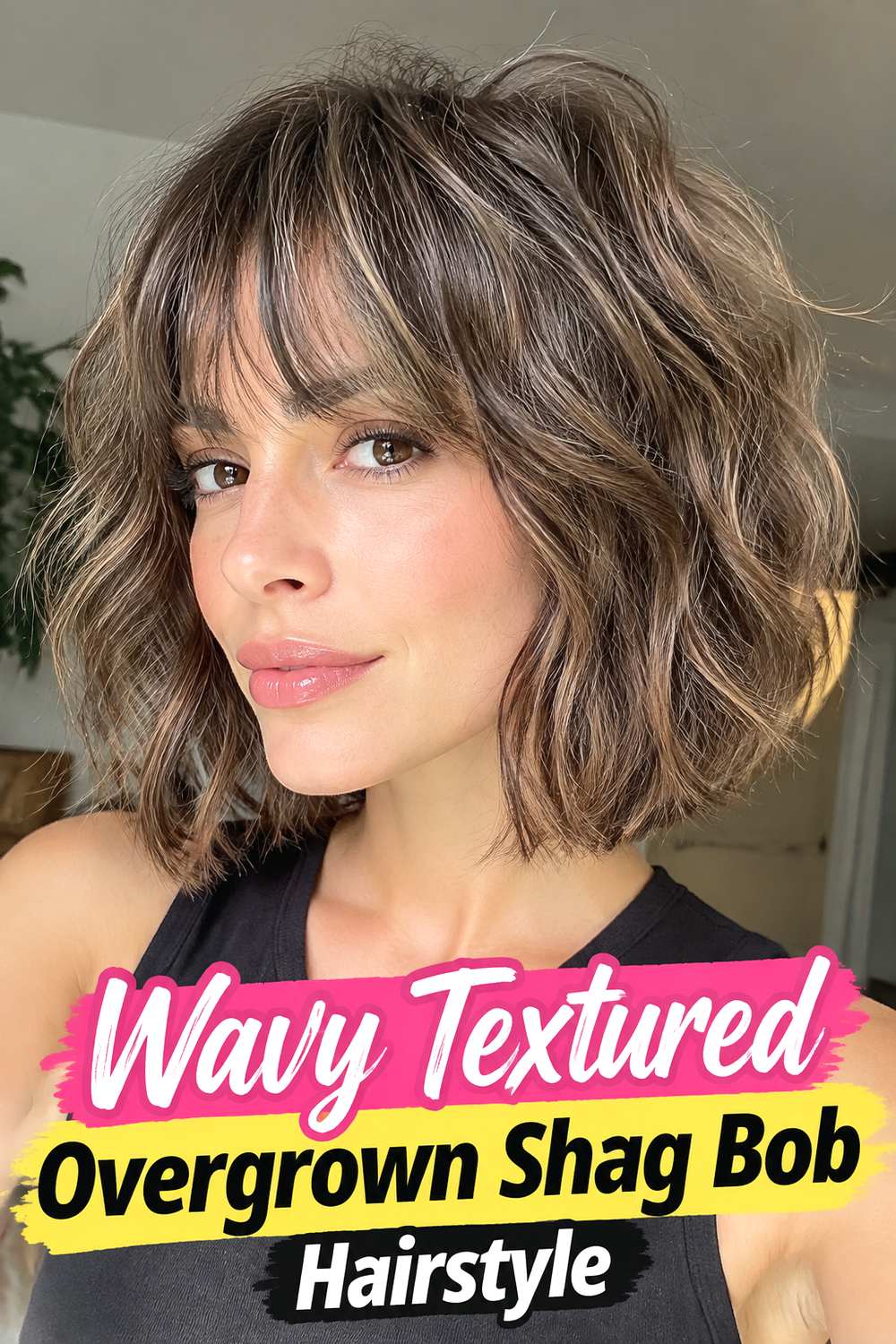
Natural-looking waves make the uneven layers of an overgrown shag bob particularly easy to see. Instead of falling into a perfectly smooth outline, the hair bends at different points, creating pockets of volume and soft separation from the crown to the ends. Keeping the bob slightly longer gives the waves room to form without making the style overly round. The result can look relaxed and beachy while still retaining a recognizable haircut shape. This variation suits people who enjoy visible texture and do not mind a little controlled imperfection. When styling, focus on encouraging individual bends rather than trying to make every wave identical. That variation is what gives the shag its casual character.
Styling Notes
Scrunch a lightweight mousse or wave-enhancing product into damp hair, then diffuse or air-dry. Once dry, separate only the sections that look too uniform.
Best For
Naturally wavy hair can make this one of the lower-effort versions because the texture itself provides much of the movement the cut needs.
5. Curly Overgrown Shag Bob Hairstyle
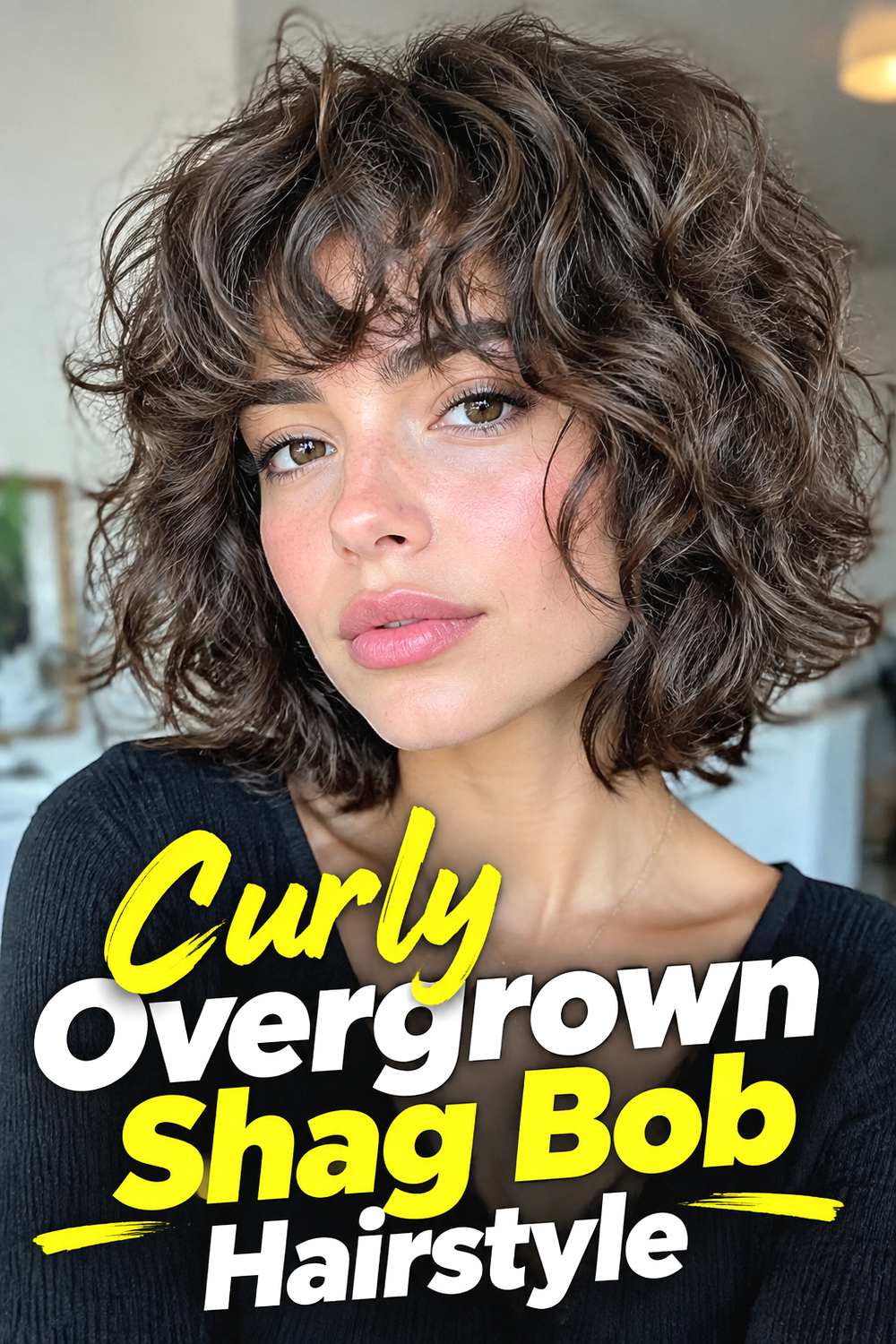
A curly overgrown shag bob uses carefully distributed layers to let curls expand without concentrating all the weight at the bottom. Shorter sections around the crown can encourage lift, while longer curls around the perimeter preserve enough length to keep the shape balanced. Instead of looking like a blunt curly bob that has simply grown out, the silhouette should have intentional graduation and individual curl definition throughout. This cut can create beautiful movement on loose curls, springier ringlets, and mixed curl patterns, but shrinkage should be considered before removing too much length. Styling is usually most successful when the curls are hydrated and allowed to form in their natural groupings rather than being heavily brushed apart.
Hair Type & Length
Curl pattern, density, and shrinkage can dramatically affect the finished length, so the layer placement should be adjusted to how the hair behaves when dry.
Wear & Maintenance
Refresh individual flattened curls between wash days rather than soaking and restyling the entire haircut every time the silhouette loses a little definition.
6. Razor Cut Overgrown Shag Bob Hairstyle
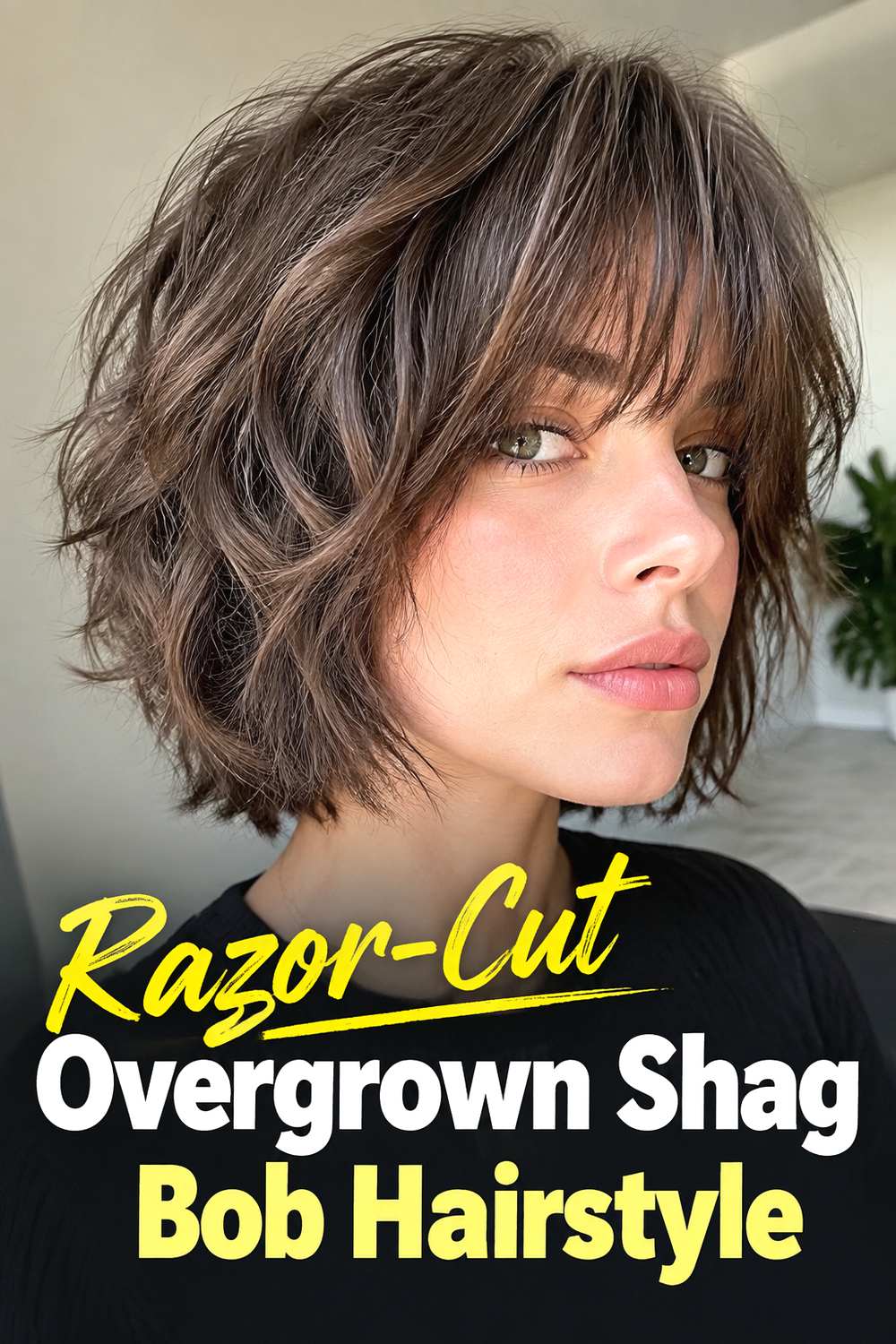
A razor-cut finish can make an overgrown shag bob appear especially light, piecey, and effortless. Instead of creating only crisp scissor-cut edges, carefully executed razor work can taper selected sections so the ends look softer and less uniform. The technique pairs naturally with the shag aesthetic because it encourages visible separation and reduces the blocky feeling that sometimes develops as a bob grows past the jaw. The shape works best when the cutting method is chosen for the individual hair texture rather than applied automatically. On suitable hair, it can create fluid movement with very little styling. A small amount of dry texture product can emphasize the tapered pieces without making the haircut stiff or overly gritty.
Why It Works
The softened edges prevent the longer bob perimeter from looking too solid, allowing the internal layers and exterior shape to flow together more naturally.
Best For
Hair that responds well to tapered, separated ends may benefit most. Your stylist can determine whether razor cutting suits your density, texture, and desired finish.
7. Choppy Ends Overgrown Shag Bob Hairstyle
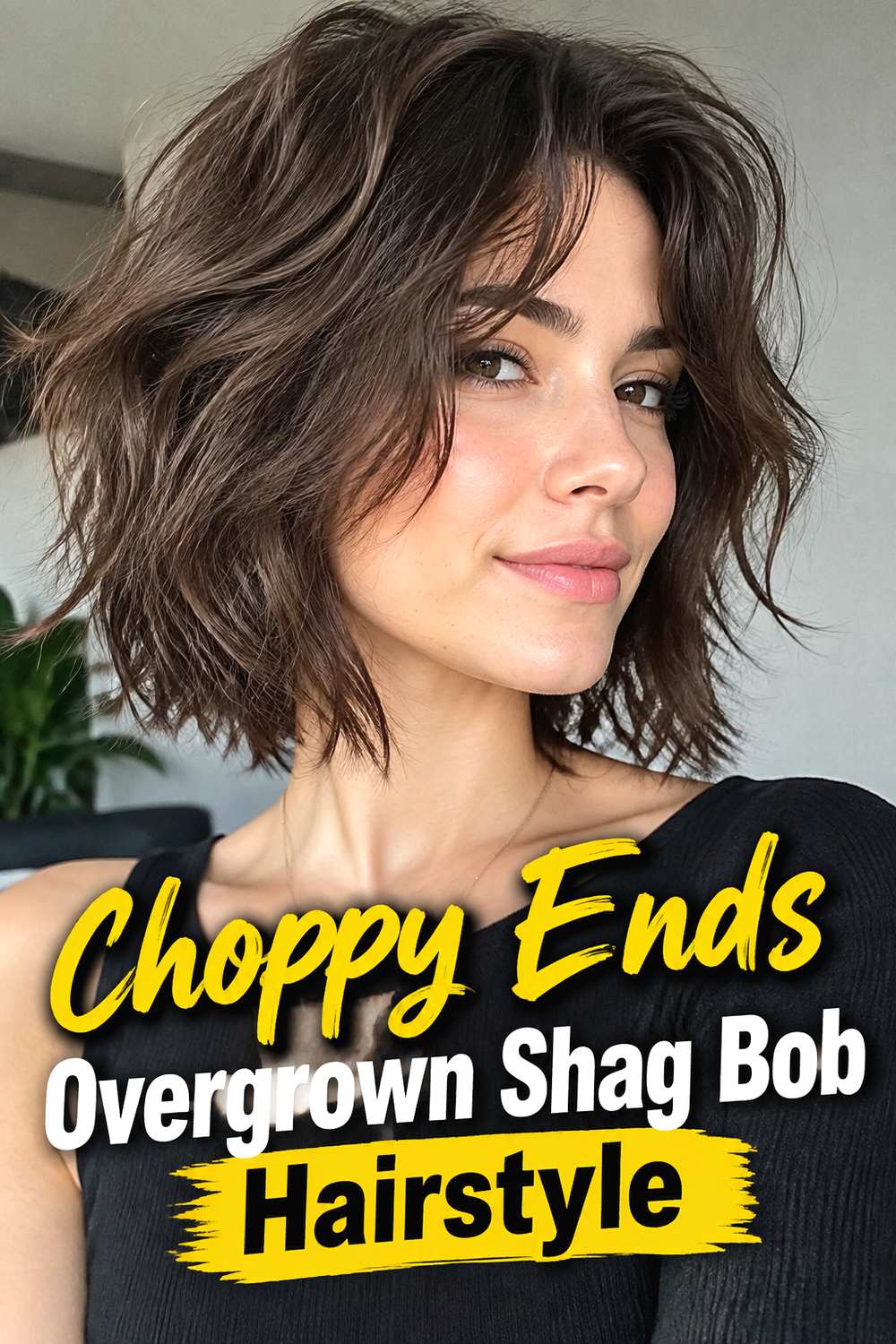
For a more defined, slightly edgier shag, choppy ends create visible breaks around the perimeter instead of a soft blended line. The haircut can sit anywhere from the lower neck to the shoulders, with irregular-looking pieces giving the impression of effortless texture. Strategic layering through the interior keeps that choppiness from becoming bulky, while shorter details around the face can reinforce the shag shape. This look is especially effective when you want the haircut itself to provide visual interest even on days when you do minimal styling. The ends can be flicked, bent, or left naturally uneven. A matte styling paste used sparingly on selected pieces can sharpen the separation without making every section look deliberately placed.
Styling Notes
Work product into only a few ends at a time. Defining every section equally can make a deliberately irregular haircut look artificial and overworked.
Wear & Maintenance
The choppy perimeter may soften as the hair grows, so occasional reshaping helps preserve its distinct broken-up edge.
8. Face Framing Overgrown Shag Bob Hairstyle
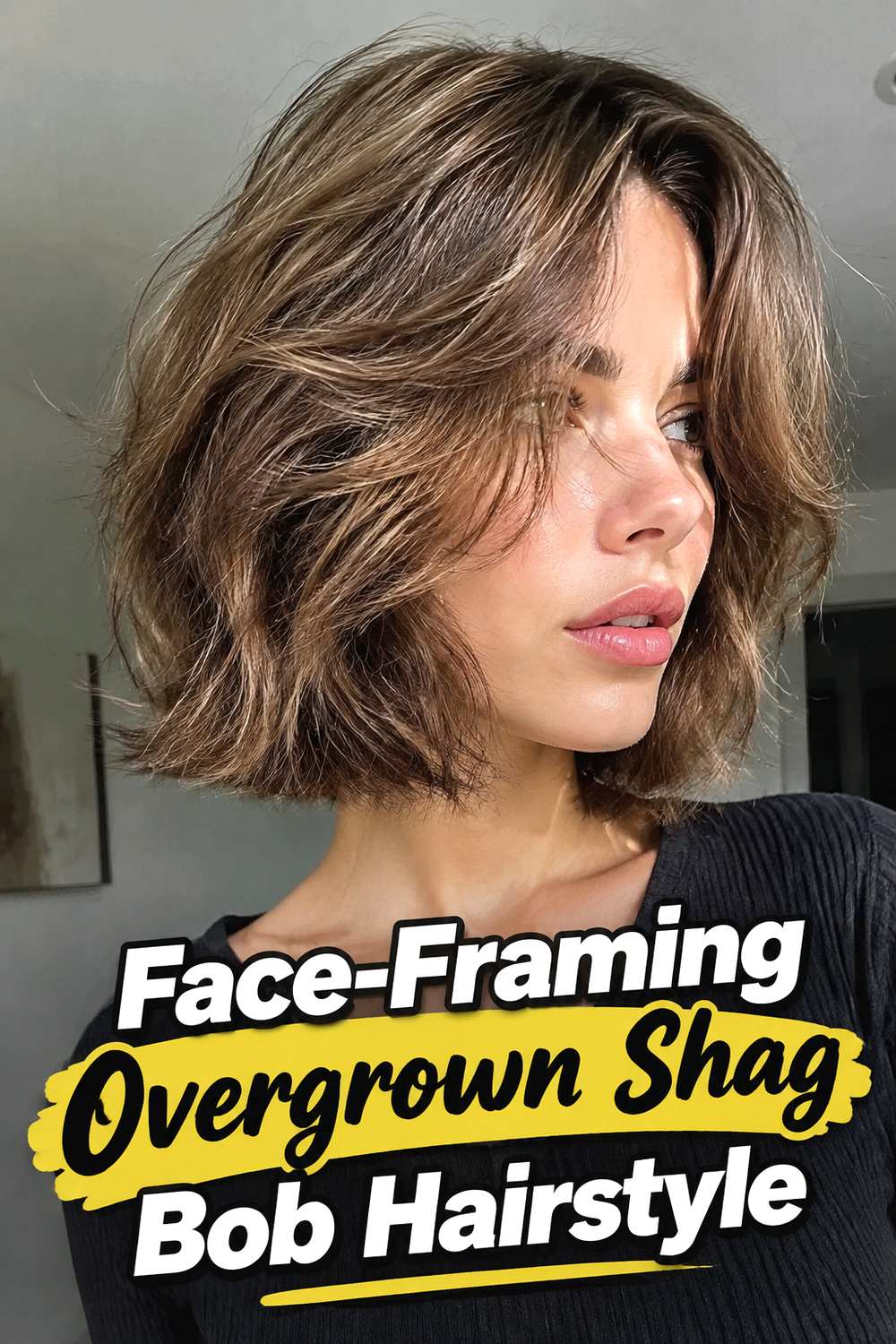
Face-framing layers make the front of an overgrown shag bob the main feature. The shortest sections can begin around the cheekbones or jaw, then gradually lengthen toward the perimeter so the layers sweep naturally into the rest of the haircut. This approach adds movement without requiring full bangs and can be adjusted easily depending on how much hair you want around your face. The back remains long enough to maintain the relaxed bob silhouette, giving the style a useful balance between structure and softness. It is particularly versatile for anyone who frequently wears their hair tucked behind the ears or loosely pulled back, because shorter front pieces can remain visible and prevent simple styling from feeling completely flat.
Best For
This variation is a practical choice if you want a noticeable change around the face while keeping most of your overall length intact.
Pro Tip
Choose the first face-framing layer based on where you want the strongest visual emphasis rather than copying a fixed cheekbone or chin length.
9. Air Dried Overgrown Shag Bob Hairstyle
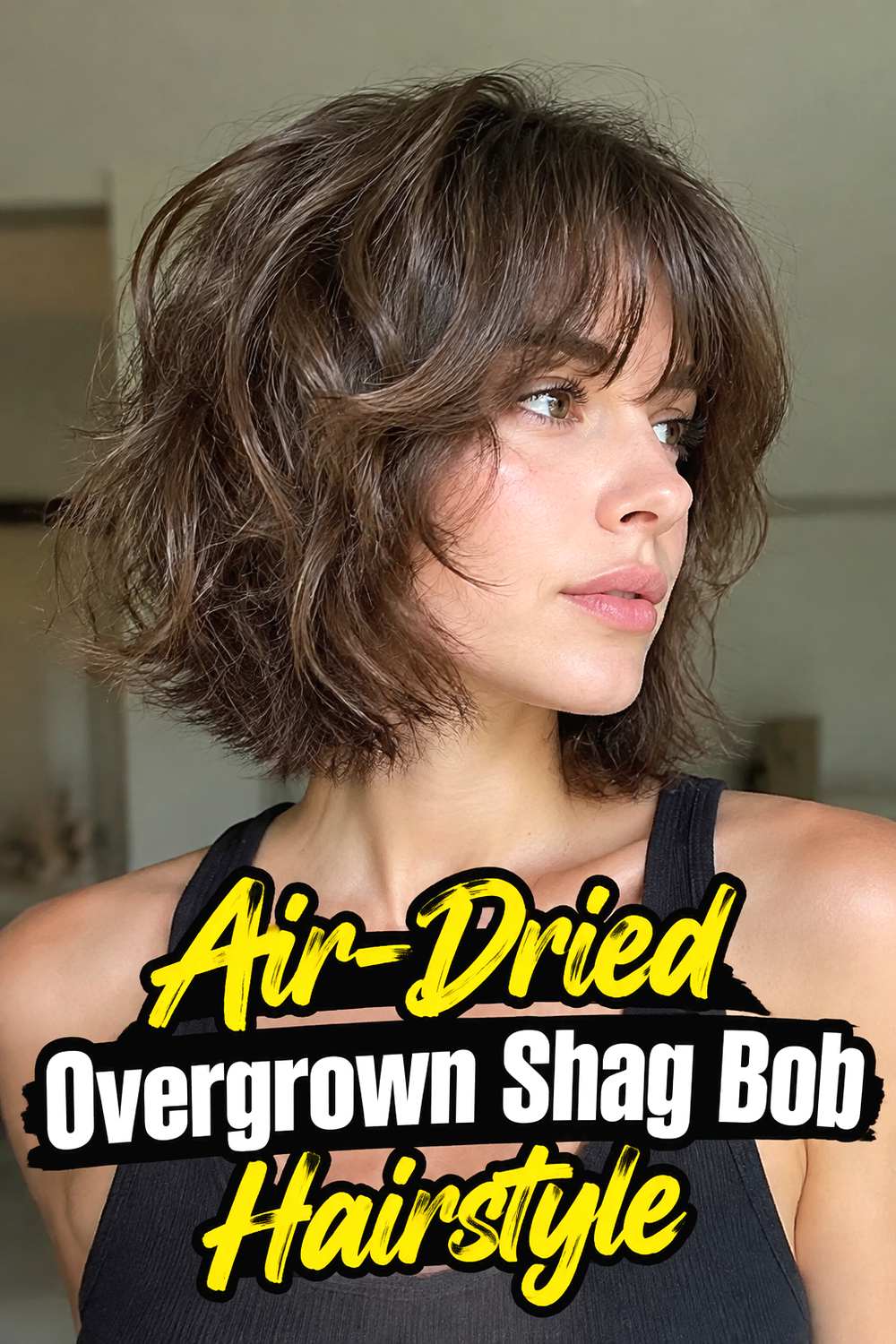
The air-dried version celebrates the naturally imperfect quality that makes an overgrown shag bob appealing in the first place. Layers are arranged to work with the hair’s existing bends, waves, or subtle irregularities so the style does not depend on a polished blowout. Once dry, the silhouette should look loose and dimensional, with some pieces sitting closer to the head and others creating movement around the sides and ends. This is less about making the hair deliberately messy and more about choosing a cut that still has shape when left relatively untouched. A lightweight leave-in or styling foam can provide enough control to reduce unwanted frizz while allowing natural texture to remain visible.
Hair Type & Length
Hair with natural movement tends to show this effect most easily, although straighter textures can still benefit from well-placed layers and a slightly tousled finish.
Styling Notes
Apply product while the hair is damp, arrange the part, and minimize handling as it dries. Too much touching can disturb natural texture and encourage frizz.
10. Sleek Overgrown Shag Bob Hairstyle
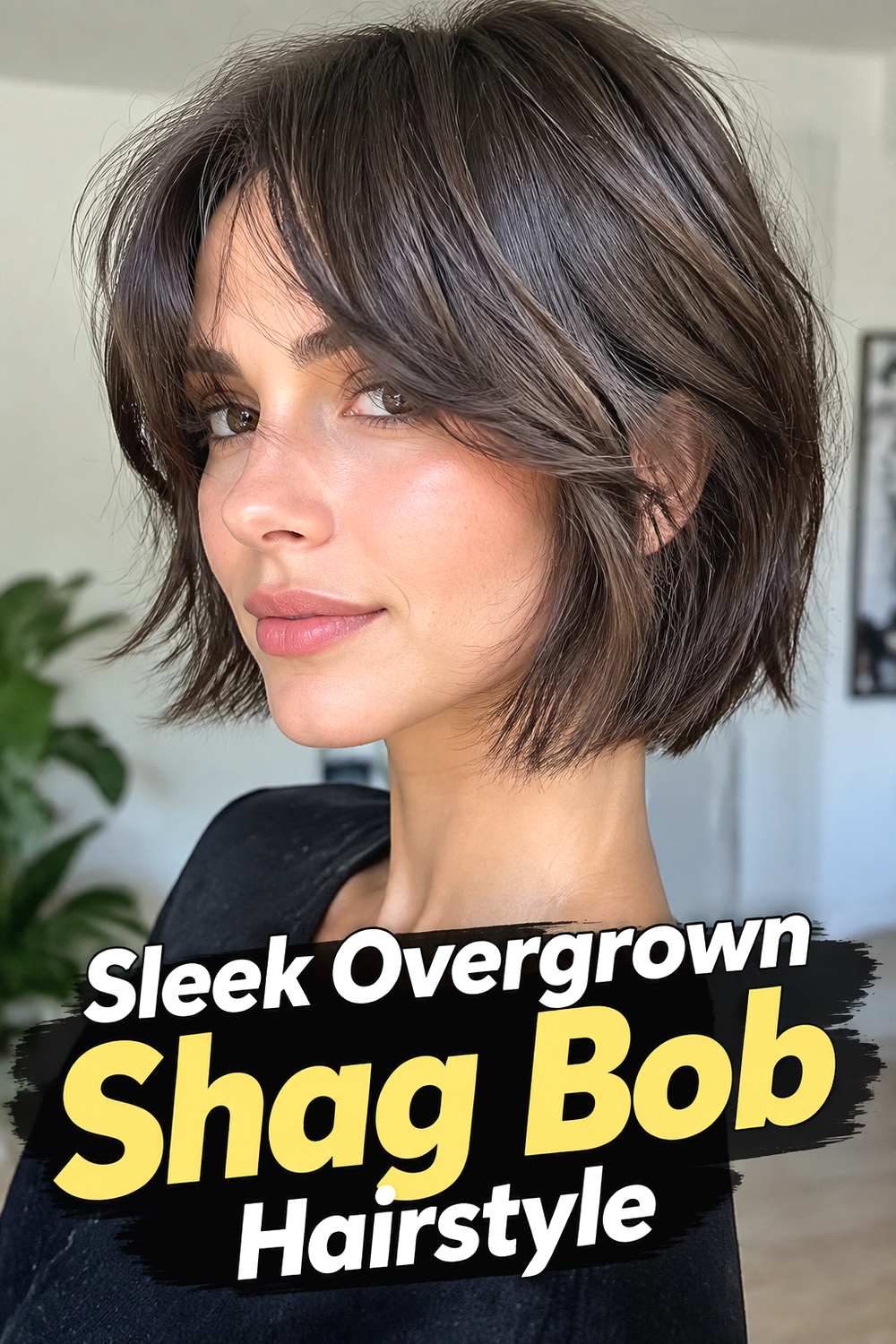
A shag does not always need a heavily tousled finish. Worn sleek, an overgrown shag bob reveals the actual architecture of the haircut: shorter interior layers, longer perimeter pieces, and carefully graduated sections around the face. Smoothing the texture makes those length changes look refined while maintaining more movement than a traditional one-length bob. The finish can be straight or gently curved at the ends, depending on whether you prefer a sharper or softer silhouette. This version is useful when you like the versatility of a layered cut but occasionally need a more polished appearance. Heat styling should enhance the shape rather than press every strand completely flat, since a little root lift and movement keep the shag recognizable.
Why It Works
The contrast between a smooth surface and visibly layered ends gives the haircut structure without losing the loose, modern quality associated with a shag.
Pro Tip
Use heat protection and smooth the hair in sections, but leave a small amount of lift at the roots so the crown does not appear overly compressed.
11. Voluminous Crown Overgrown Shag Bob Hairstyle
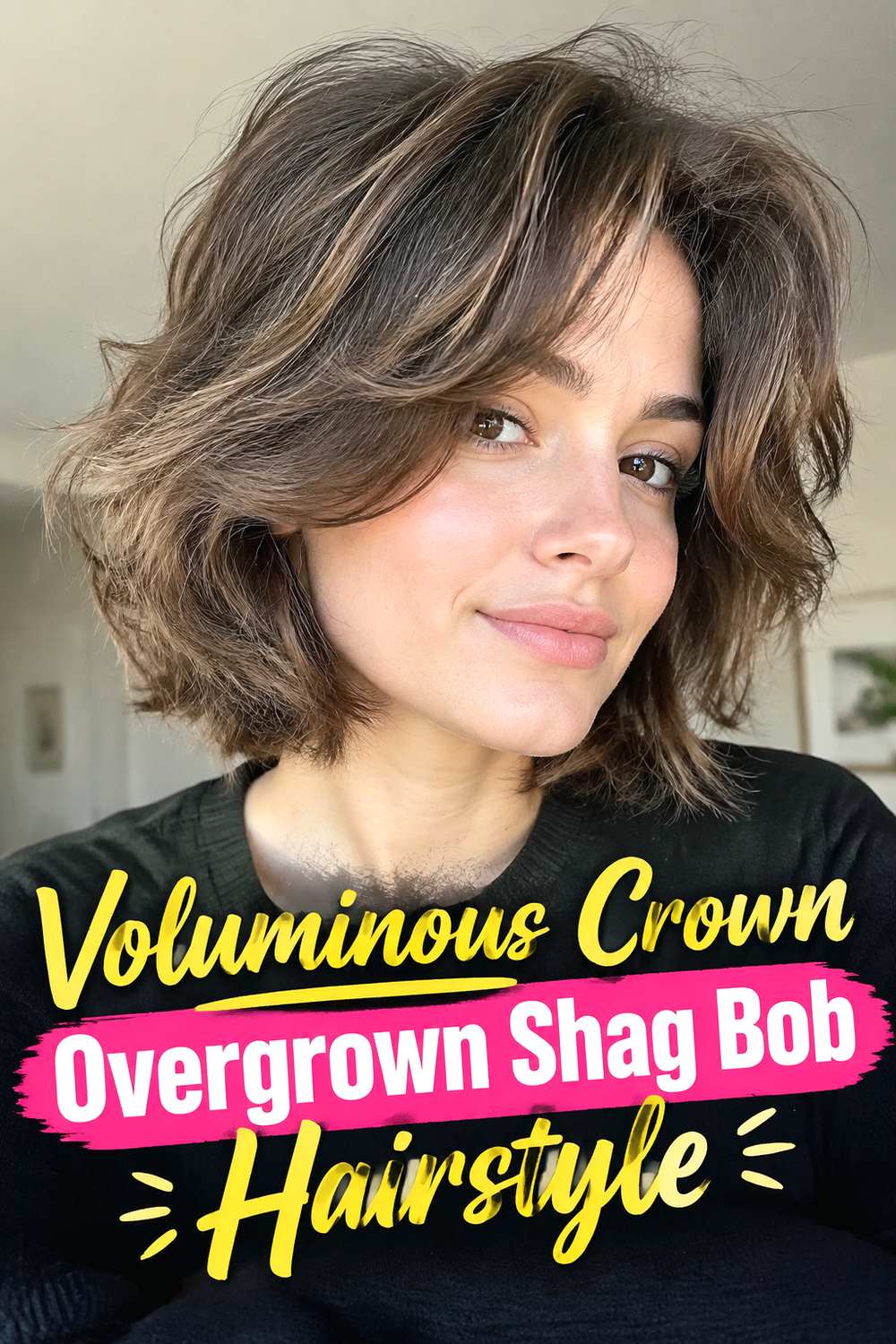
Extra lift at the crown gives the overgrown shag bob a more pronounced shag silhouette. Shorter upper layers create space for the roots to rise, while longer sections through the sides and lower perimeter keep the haircut grounded and prevent it from becoming too round. The result is particularly striking from the side because the profile shows a gradual shift from airy crown volume to softer, tapered ends. This direction can make fine-looking lengths feel more animated, but successful volume comes from proportion rather than simply removing large amounts of hair. Styling can be as simple as lifting the roots during drying and encouraging the upper layers away from the scalp while leaving the lower pieces relaxed.
Styling Notes
Concentrate volumizing product near the roots and crown rather than throughout the full length. Too much product on the ends can work against the airy shape.
Best For
Choose this version if crown lift is a priority and you enjoy a more recognizable retro-inspired shag outline without committing to an extremely short top layer.
12. Side Parted Overgrown Shag Bob Hairstyle
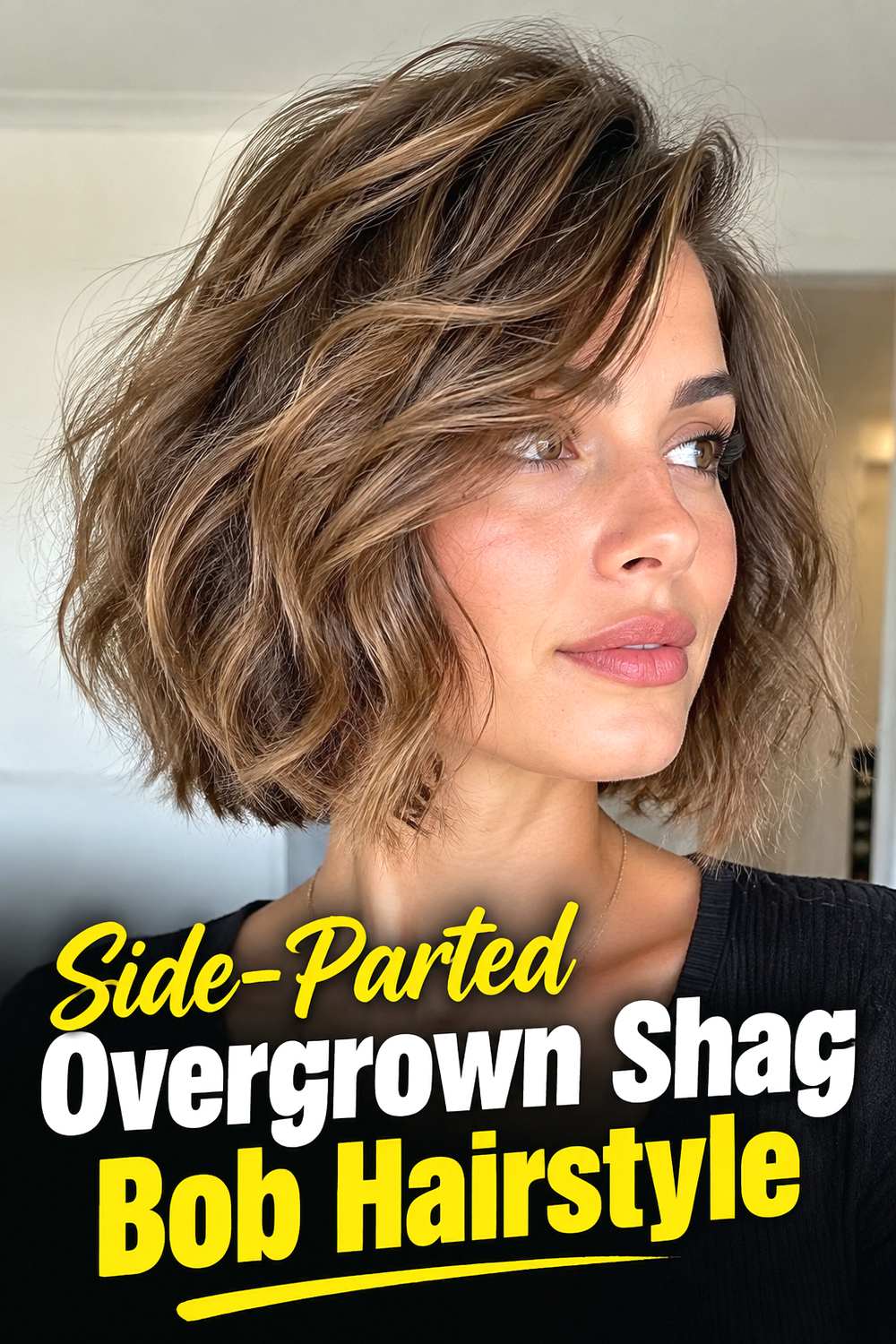
Switching to a deeper side part changes the balance of an overgrown shag bob immediately. One side gains extra lift and sweeping movement, while the opposite side sits closer to the face for an intentionally asymmetrical effect. Layered sections can fall diagonally across the forehead or begin around the cheekbone, making this a useful alternative to permanent bangs. The longer bob length keeps the cut versatile enough to tuck behind an ear, style with loose waves, or wear relatively straight. Because the part itself provides volume, this version can look finished with surprisingly little effort. It also offers an easy way to change the mood of an existing shag bob without cutting additional layers or shortening the perimeter.
Why It Works
The uneven weight distribution created by the side part naturally emphasizes layers and creates movement without requiring heavy teasing or dramatic styling.
Wear & Maintenance
If your hair strongly prefers a center part, drying the roots in the desired direction while they are still damp can help establish the new shape.
13. Highlighted Overgrown Shag Bob Hairstyle
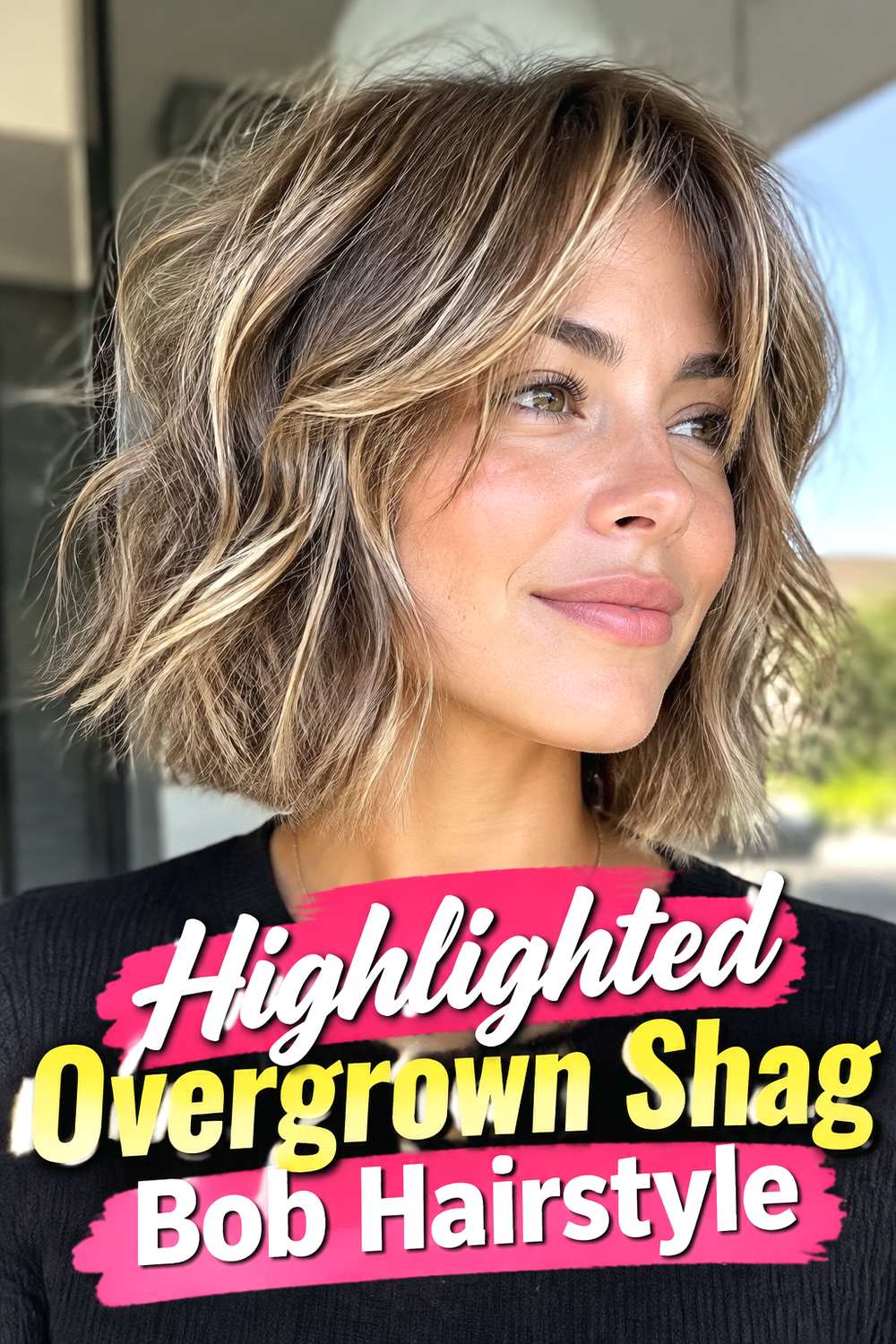
Strategic highlights can make the individual layers of an overgrown shag bob easier to see by creating contrast between overlapping sections. Fine ribbons around the face can brighten the front, while subtle dimensional pieces through the mid-lengths and ends emphasize bends, waves, and choppy texture. The goal is not necessarily dramatic color; even understated tonal variation can give a layered haircut more visual depth. Placement matters because the most flattering color pattern should complement the actual movement of the cut rather than disguising it. This style works especially well when you enjoy wearing your shag with loose waves or natural texture, since changing light across the surface brings attention to the layered silhouette.
Styling Notes
Ask for color placement that follows the haircut’s strongest layers and face-framing pieces. Random brightness can look less cohesive once the hair moves.
Wear & Maintenance
Consider how much color upkeep you want. Softer, blended highlights generally create a less obvious grow-out line than high-contrast placement close to the roots.
How to Choose the Right Look
Start with your preferred length. A neck-length overgrown shag bob will feel lighter and expose the layered shape more clearly, while a shoulder-skimming version gives you more weight, styling flexibility, and room for waves or curls. If you frequently tie your hair back, check whether the shortest front and crown layers will still work with your routine.
Texture should influence both the cut and the styling plan. Naturally wavy hair can make choppy or air-dried versions especially easy to wear, while curls need thoughtful layer placement that accounts for shrinkage and volume. Straighter hair can showcase sleek layers beautifully, although it may require a texturizing product or quick styling step when you want a more tousled effect.
Think about styling time as well. Curtain bangs, wispy bangs, and high crown volume can require a few minutes of reshaping after sleep, while longer face-framing layers are generally easier to leave alone. If you prefer strong hold and an intentionally textured finish, choppy or razor-cut options offer plenty of separation. For a softer feel, choose blended layers and flexible products instead.
Comfort and maintenance matter just as much as appearance. Bangs place more hair on the forehead, short crown layers can create extra volume, and heavily textured ends may need occasional reshaping to remain intentional. For work or formal occasions, a sleeker shag bob offers versatility, while air-dried and wavy versions lean more casual.
Finally, decide how much volume and visual contrast you want. Crown-heavy layering creates a stronger shag shape, whereas subtle layers keep the style closer to a classic grown-out bob. Highlights can increase the appearance of dimension without changing the haircut itself, making color a useful option when you want the layers to stand out more.
Final Thoughts
The best overgrown shag bob should feel intentionally relaxed rather than simply overdue for a trim. Soft layers, choppy ends, curls, bangs, strategic volume, and dimensional color can all change the personality of the same basic silhouette.
Choose the version that works with your natural texture and realistic styling routine first. From there, details such as bangs, face framing, part placement, and finish can be adjusted to make the haircut feel more personal and wearable.
FAQs
1. What is an overgrown shag bob haircut?
An overgrown shag bob is a longer, relaxed variation of a bob that incorporates shag-inspired layers, movement, and textured ends. It commonly falls somewhere between the neck and shoulders and looks less structured than a classic blunt bob.
2. Is an overgrown shag bob good for fine hair?
It can be. Strategic layers may create more visible movement and prevent the shape from looking flat, but removing too much density can make fine hair appear thinner. A balanced layered approach is usually more practical than extreme thinning.
3. Can curly hair wear an overgrown shag bob?
Yes. Curly hair can create a particularly dimensional shag shape, but the layers should account for curl pattern, density, and shrinkage. The finished dry length is more important than relying only on how long the hair appears when stretched.
4. Do I need bangs with an overgrown shag bob?
No. Bangs can strengthen the shag aesthetic, but they are optional. Face-framing layers, a side part, or shorter cheekbone pieces can create movement around the face without committing to a full fringe.
5. How do I style an overgrown shag bob without making it look too messy?
Focus on controlled separation rather than creating texture everywhere. Define a few waves or ends, maintain some shape around the crown and face, and use lightweight styling products so the hair keeps natural movement without becoming stiff or overly piecey.
Save your favorite overgrown shag bob ideas, share them for inspiration, and explore more hairstyle looks that suit your texture, length, and everyday routine.