17 Piecey Micro Fringe Pixie Haircuts
A piecey micro fringe adds sharp little details to a pixie cut, creating texture around the forehead while keeping the overall silhouette light and modern.
Micro fringes can completely change the mood of a pixie haircut. Instead of a solid short bang, a piecey finish separates the fringe into small sections so the hairline looks lighter, more textured, and intentionally imperfect. The detail can work with sleek crops, tousled layers, waves, curls, undercuts, and softer rounded pixies.
The key is choosing a fringe density and pixie shape that suit your natural texture and preferred styling routine. Very short, precise fringes tend to show growth sooner, while softer irregular pieces can be more forgiving. Hair density also matters: fine hair often benefits from lightweight separation, while thicker hair may need strategic texturizing to keep the fringe from becoming bulky.
Quick List
- Piecey Micro Fringe Textured Pixie Hairstyle
- Piecey Micro Fringe French Pixie Hairstyle
- Piecey Micro Fringe Tousled Pixie Hairstyle
- Piecey Micro Fringe Tapered Pixie Hairstyle
- Piecey Micro Fringe Soft Crop Pixie Hairstyle
- Piecey Micro Fringe Curly Pixie Hairstyle
- Piecey Micro Fringe Shaggy Pixie Hairstyle
- Piecey Micro Fringe Sleek Pixie Hairstyle
- Piecey Micro Fringe Undercut Pixie Hairstyle
- Piecey Micro Fringe Feathered Pixie Hairstyle
- Piecey Micro Fringe Wavy Pixie Hairstyle
- Piecey Micro Fringe Choppy Pixie Hairstyle
- Piecey Micro Fringe Side Swept Pixie Hairstyle
- Piecey Micro Fringe Voluminous Pixie Hairstyle
- Piecey Micro Fringe Ear Tucked Pixie Hairstyle
- Piecey Micro Fringe Long Top Pixie Hairstyle
- Piecey Micro Fringe Rounded Pixie Hairstyle
1. Piecey Micro Fringe Textured Pixie Hairstyle
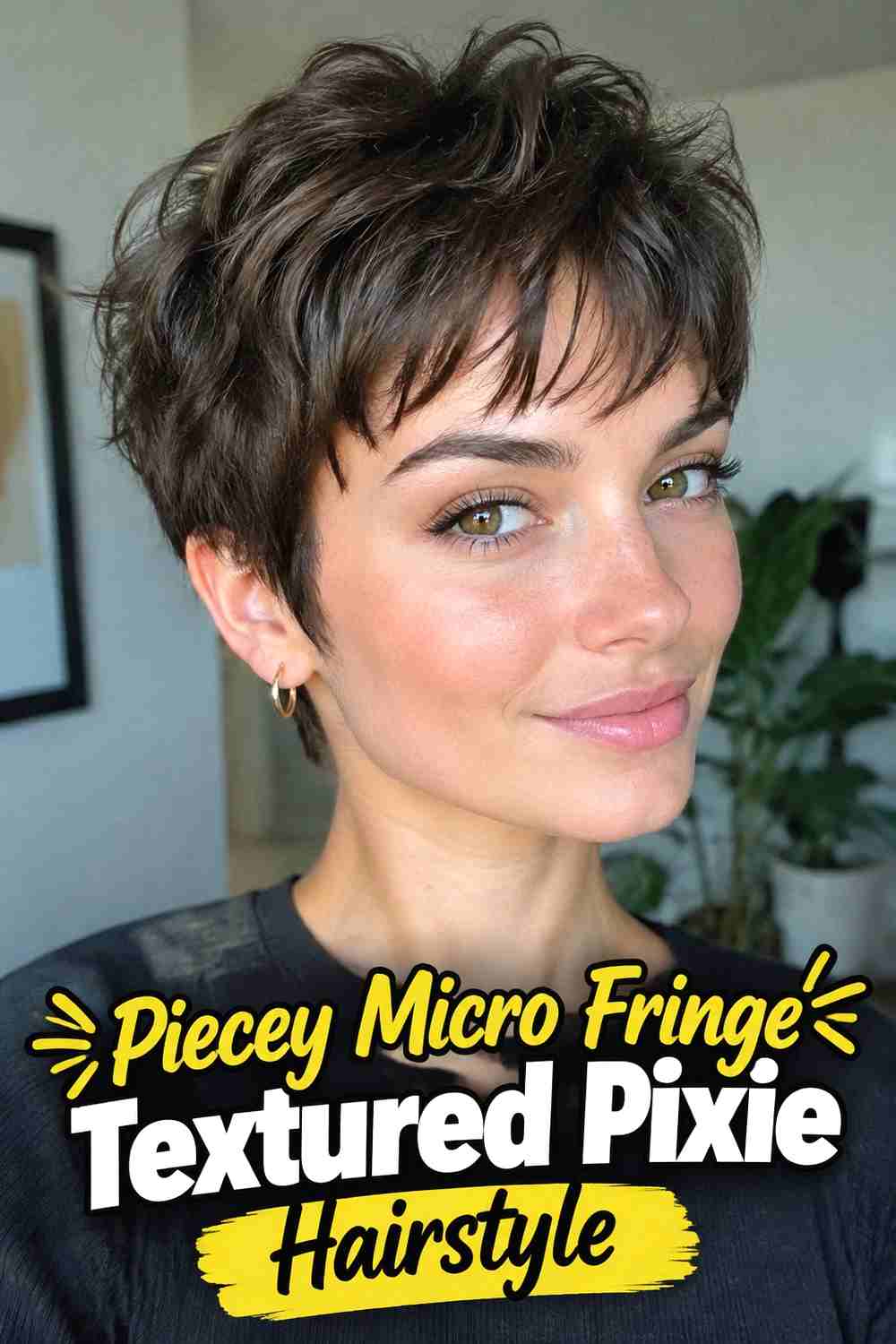
A textured pixie gives a piecey micro fringe a natural place to belong because the separated detail at the forehead can continue through the crown and sides. Short layers create movement without making the haircut look overly sculpted, while tiny irregular fringe sections soften the front edge. The shape works particularly well when a little length is left on top so the hair can be pinched, tousled, or directed forward. Fine hair can gain visual lift from the separation, while thicker hair may benefit from carefully removing bulk through the interior. The finished look should feel airy rather than spiky, with enough softness around the temples to keep the texture wearable.
Styling Notes
Use a small amount of lightweight paste or texture cream on dry hair, concentrating product on the ends rather than coating the roots.
2. Piecey Micro Fringe French Pixie Hairstyle
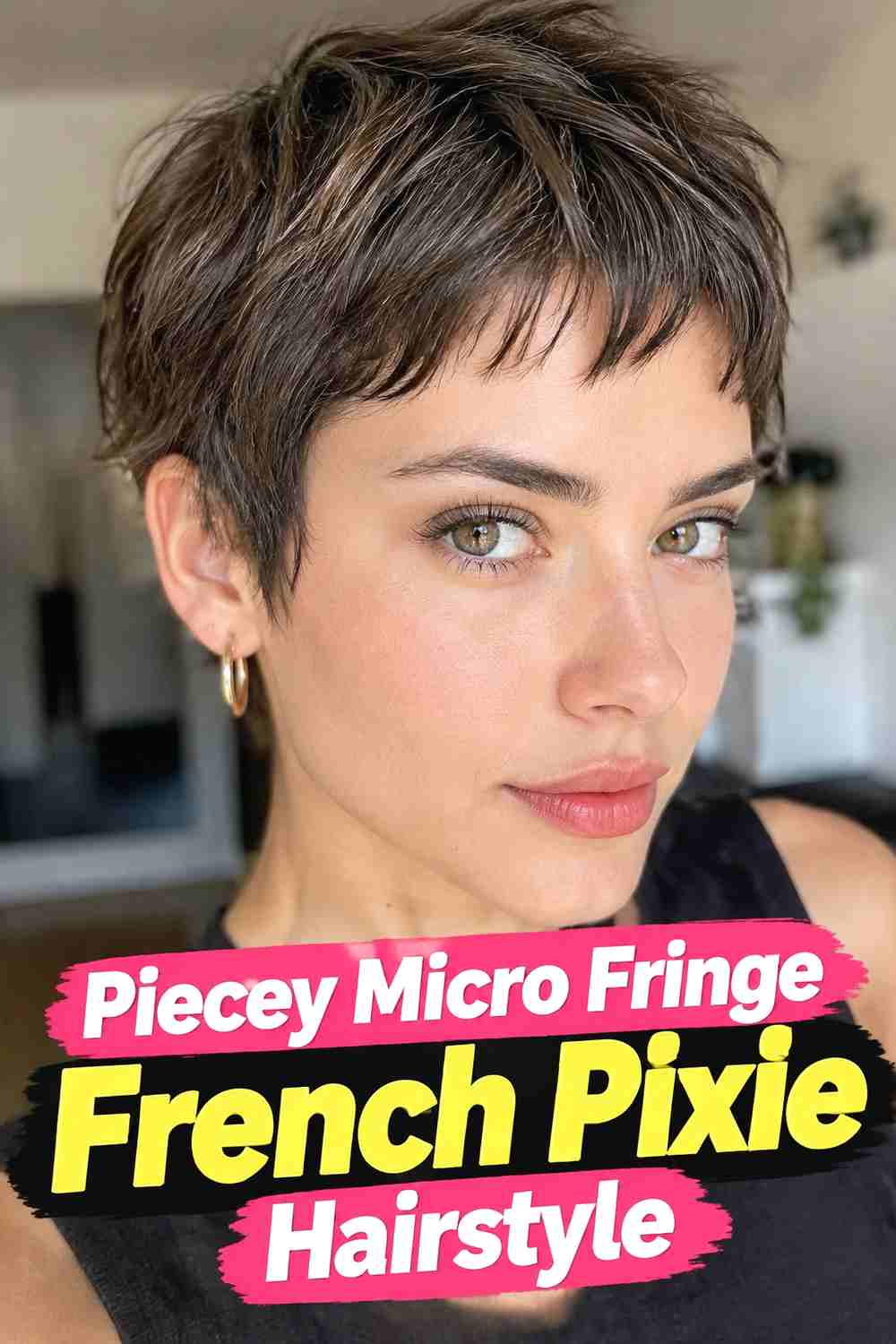
The French pixie combines a compact silhouette with softly imperfect detail, making it an elegant match for a piecey micro fringe. The sides stay neat around the ears while slightly longer hair through the crown gives the cut movement. Across the forehead, the fringe is short but not rigidly straight; tiny separated pieces create a relaxed finish that feels less severe than a blunt baby bang. This look can be especially attractive on straight or gently wavy hair because minimal styling is needed to reveal the shape. Keeping the neckline tidy and the crown softly rounded gives the haircut polish, while the irregular fringe prevents it from becoming too formal or overly precise.
Why It Works
The contrast between a neat pixie outline and an intentionally separated fringe gives this cut its modern, effortless character.
3. Piecey Micro Fringe Tousled Pixie Hairstyle
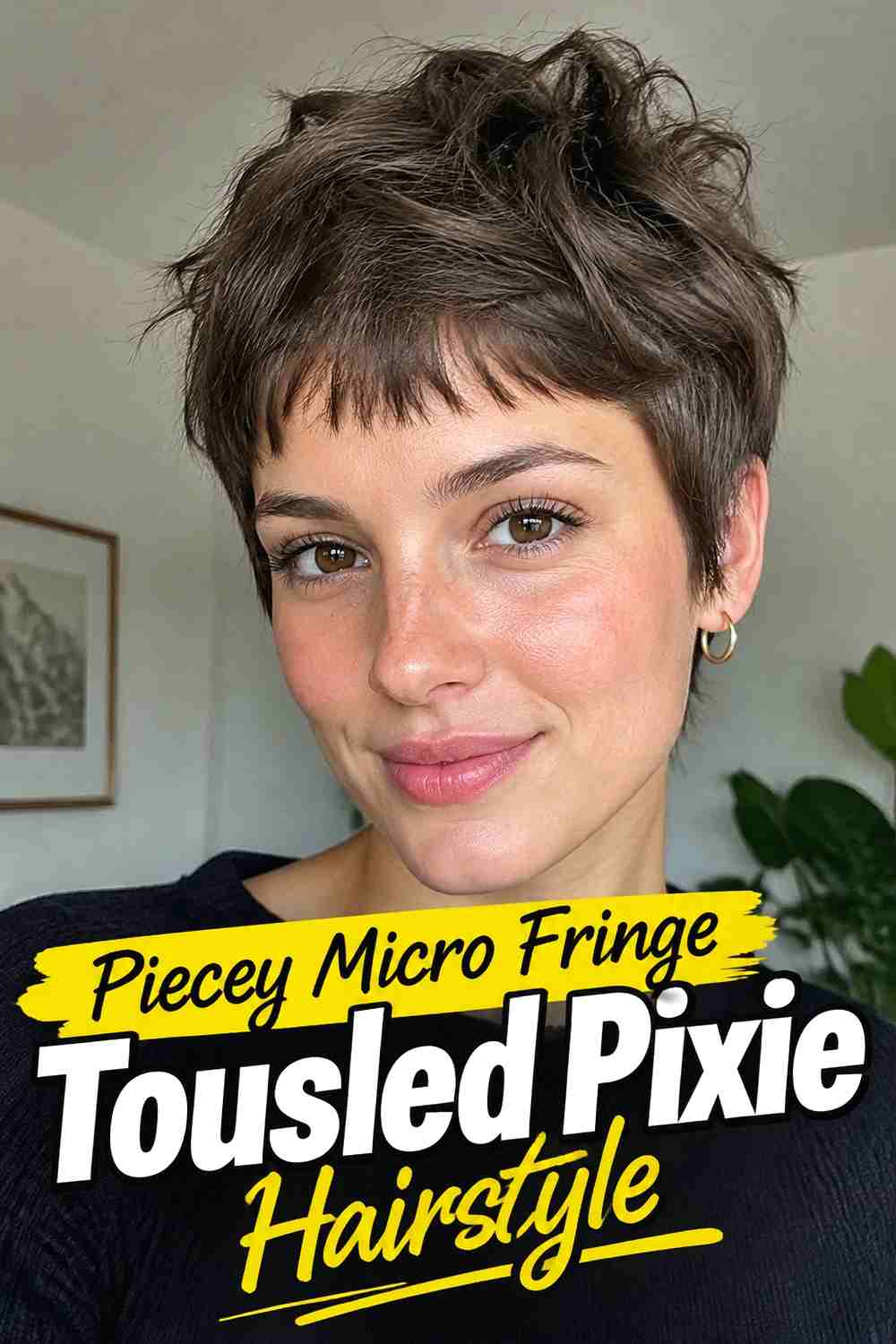
A tousled pixie is designed around movement, so the micro fringe can be deliberately uneven and softly broken apart. Slightly longer layers through the top create enough flexibility to push sections forward, upward, or sideways depending on the day. The short fringe anchors the look and keeps the forehead detail visible even when the crown is styled with more volume. This cut suits hair with natural bend particularly well, since a little unpredictability adds to the finish rather than fighting against it. The key is maintaining a defined overall silhouette around the ears and neckline so the tousled texture feels intentional. Too much heavy product can collapse the separation and make the short layers look sticky.
Best For
Choose this shape if you prefer short hair that looks better slightly undone than perfectly smooth.
Pro Tip
Warm a tiny amount of styling paste between your fingertips before separating just a few fringe and crown pieces.
4. Piecey Micro Fringe Tapered Pixie Hairstyle
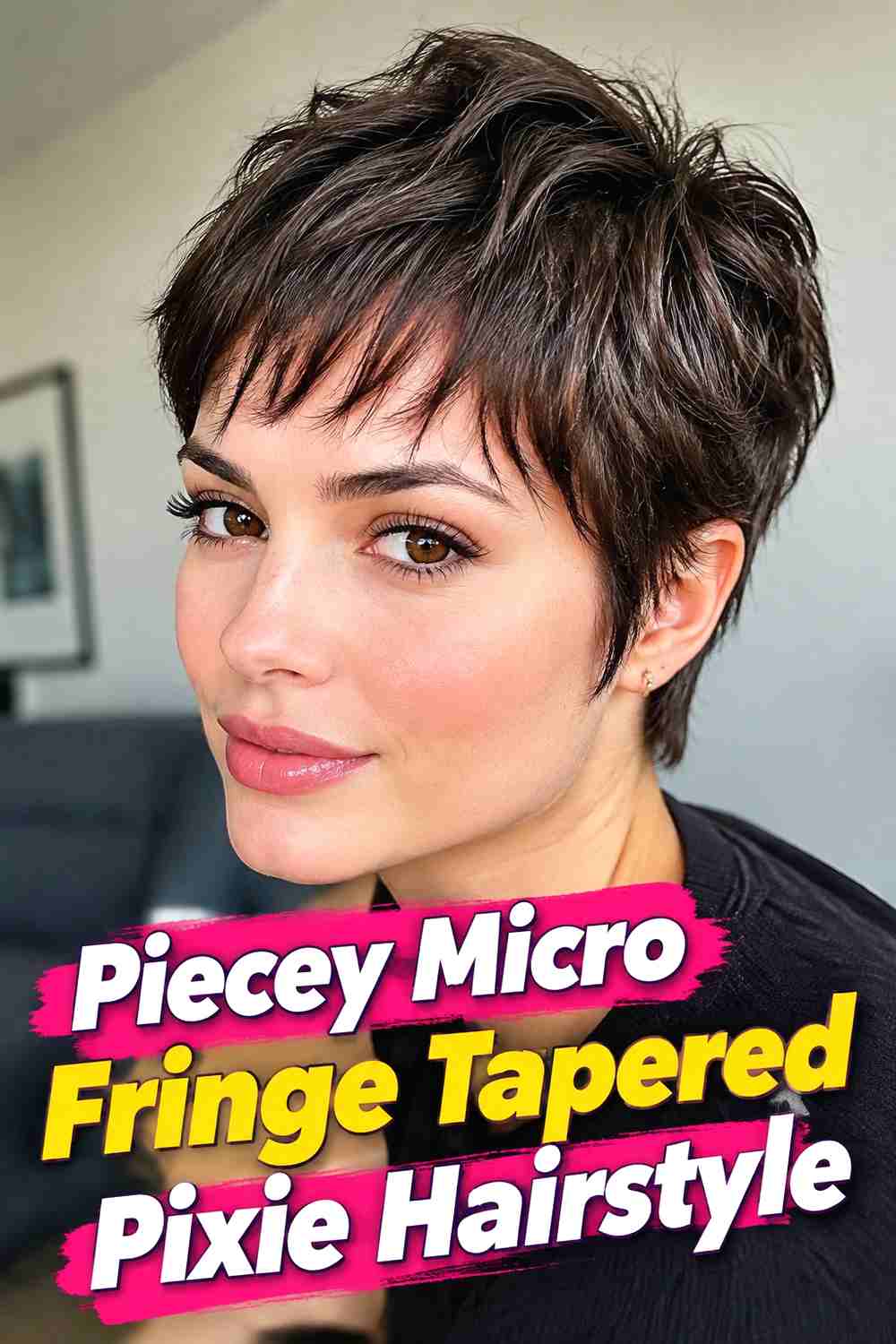
A tapered pixie keeps the sides and nape close while leaving enough length through the top to create contrast with the piecey micro fringe. The gradual reduction in length around the perimeter gives the cut a clean shape without requiring an extreme undercut. At the front, small separated sections can sit lightly across the forehead, echoing the controlled texture through the top. This haircut is especially useful for dense hair because the taper can reduce bulk near the ears and neckline while preserving movement above. A matte or softly satin finish tends to show the shape better than heavy shine. The result feels neat from the sides and back but still textured and expressive from the front.
Wear & Maintenance
The taper will become softer as it grows, so regular trims help preserve the close perimeter if that crisp shape is important to you.
5. Piecey Micro Fringe Soft Crop Pixie Hairstyle
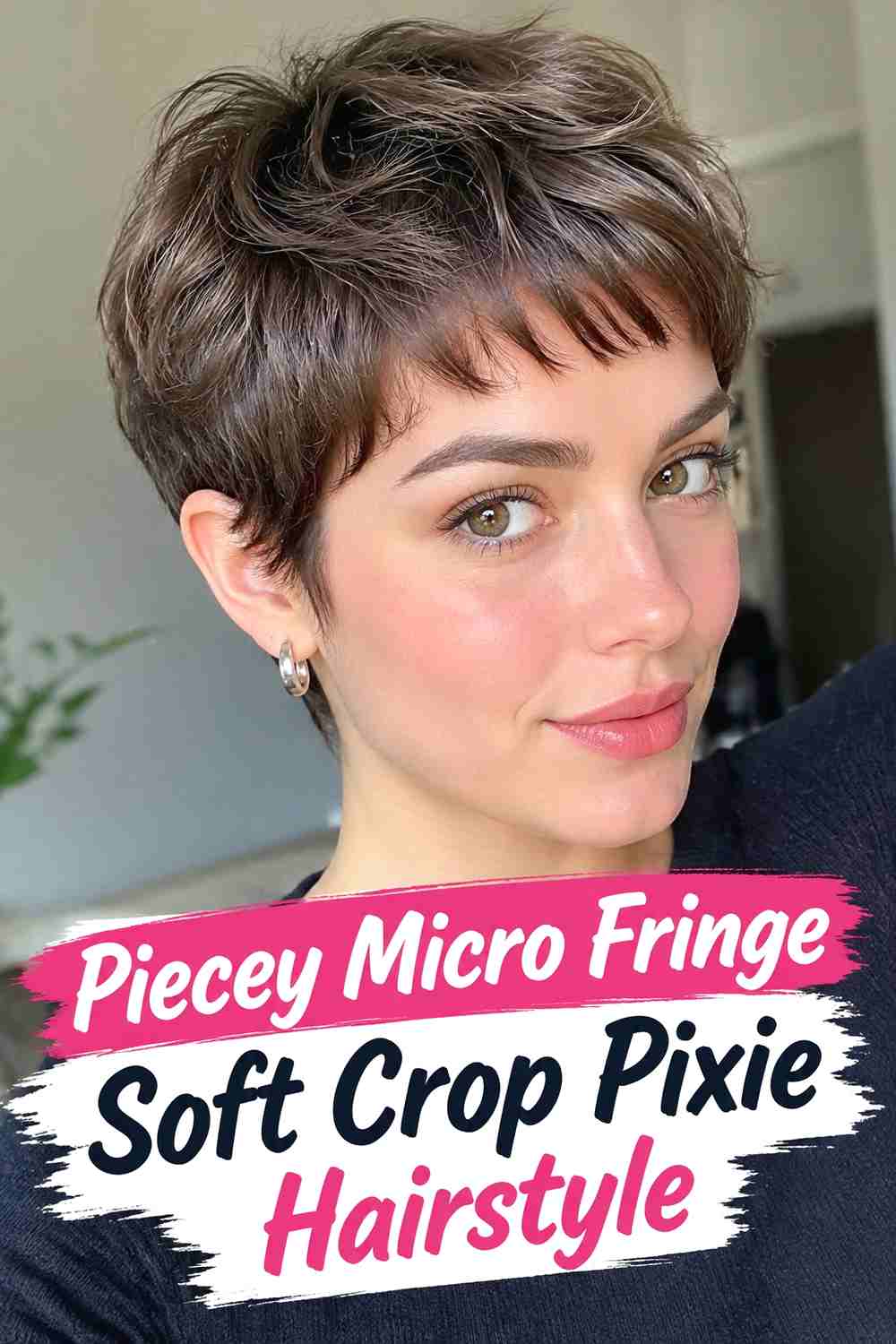
A soft crop pixie keeps the haircut short while avoiding harsh edges or excessive contrast between the top and sides. The micro fringe is cut into light, delicate pieces that sit naturally at the forehead instead of forming a dense horizontal line. Subtle layering through the crown creates gentle lift, while the sides remain softly fitted around the head. This is a good direction for someone who likes the freshness of a very short haircut but wants the overall result to stay feminine and relaxed. The cut can be worn nearly product-free on cooperative straight hair or lightly styled with cream for separation. Allowing a few natural flyaways can make the fringe look even more effortless.
Hair Type & Length
Fine-to-medium straight or softly wavy hair usually suits this lightweight shape particularly well.
6. Piecey Micro Fringe Curly Pixie Hairstyle
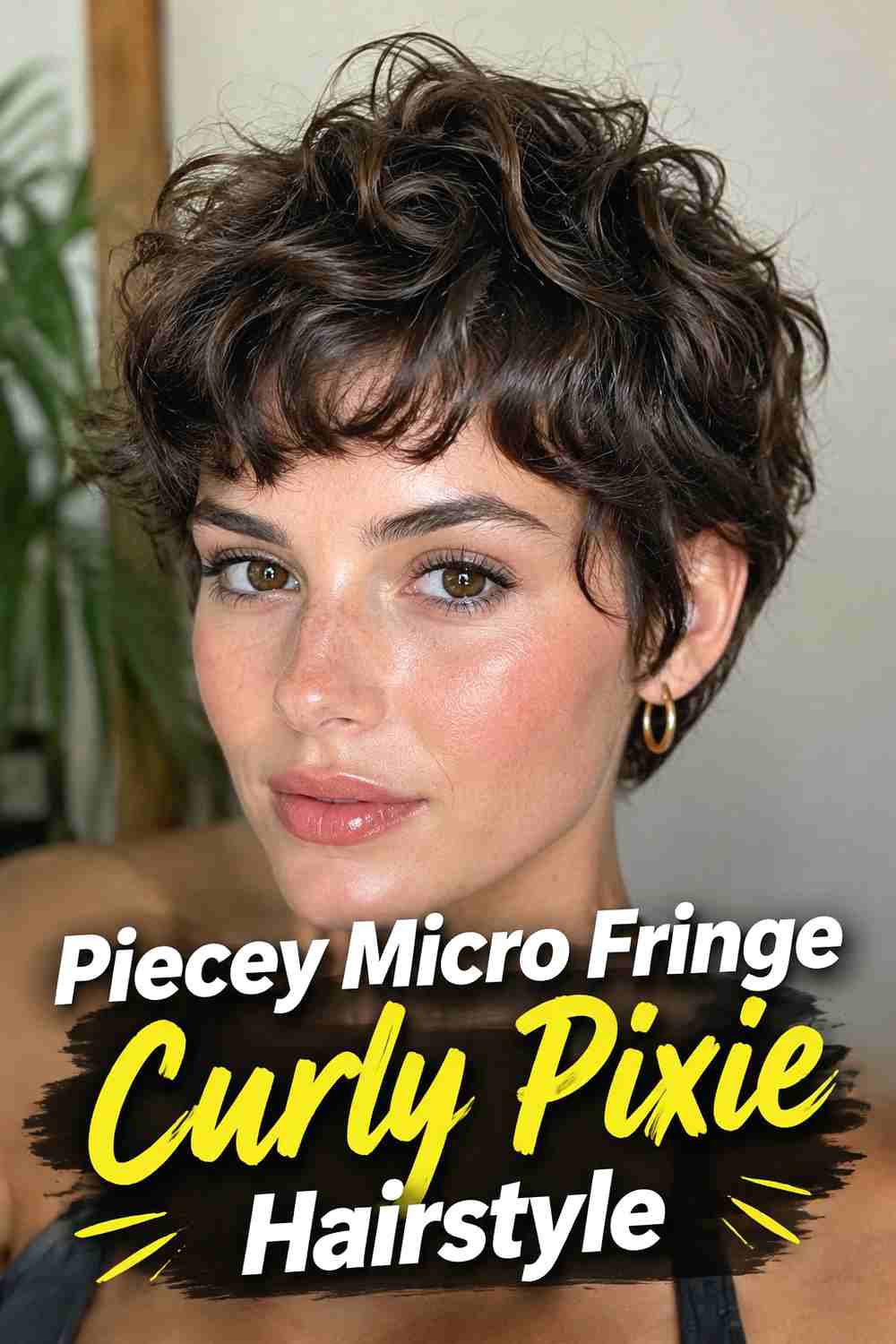
A curly pixie turns the micro fringe into a series of tiny curved pieces rather than forcing curls into a straight baby-bang shape. The shortest front sections can follow the natural curl pattern, while more length is preserved through the top so the curls have room to form without becoming compressed. Keeping the sides shorter helps balance the volume and makes the fringe easier to see. This haircut works best when the stylist considers curl shrinkage before deciding the final fringe length, since wet hair may spring considerably higher once dry. The finished style should preserve variation between individual curls rather than creating a uniform helmet shape. A light curl product can define texture without making short sections feel rigid.
Pro Tip
Discuss shrinkage before cutting the fringe, especially if your curl pattern becomes significantly tighter as it dries.
7. Piecey Micro Fringe Shaggy Pixie Hairstyle
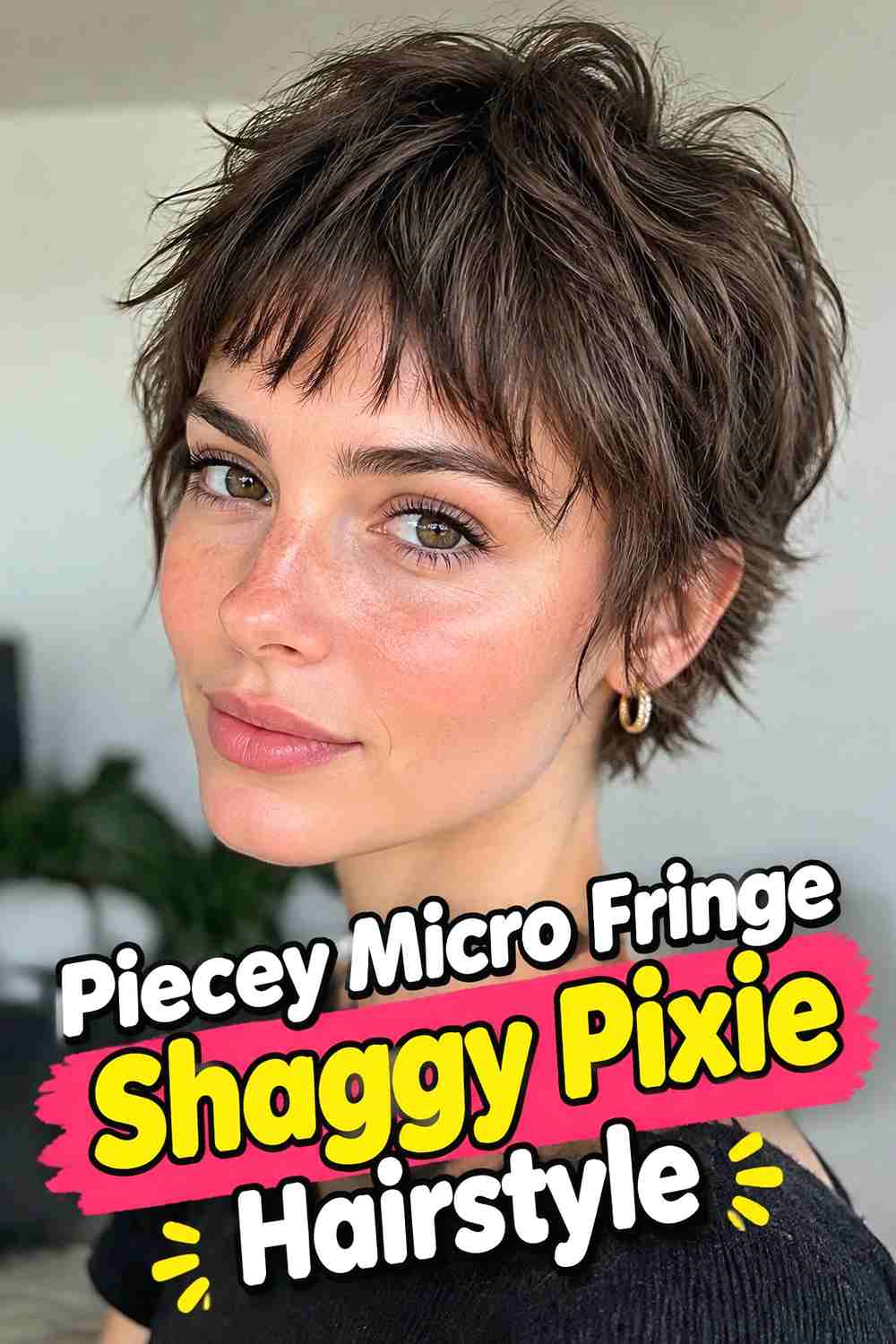
A shaggy pixie brings extra movement to the classic short crop by using irregular layers through the crown, temples, and back. The piecey micro fringe naturally extends that broken-up texture across the forehead, making the entire haircut feel connected. A little extra length near the sideburns and nape can create a softer, more lived-in outline than a traditional close pixie. This option works especially well for straight-to-wavy hair that benefits from lightness and separation. The haircut does not need to sit perfectly flat, which makes small bends and flicks part of the look. Keeping the fringe short prevents the shaggy layers from overwhelming the face and gives the style a clear focal point.
Styling Notes
Scrunch or rough-dry the hair for movement, then define only a few sections with a light paste instead of styling every layer individually.
8. Piecey Micro Fringe Sleek Pixie Hairstyle
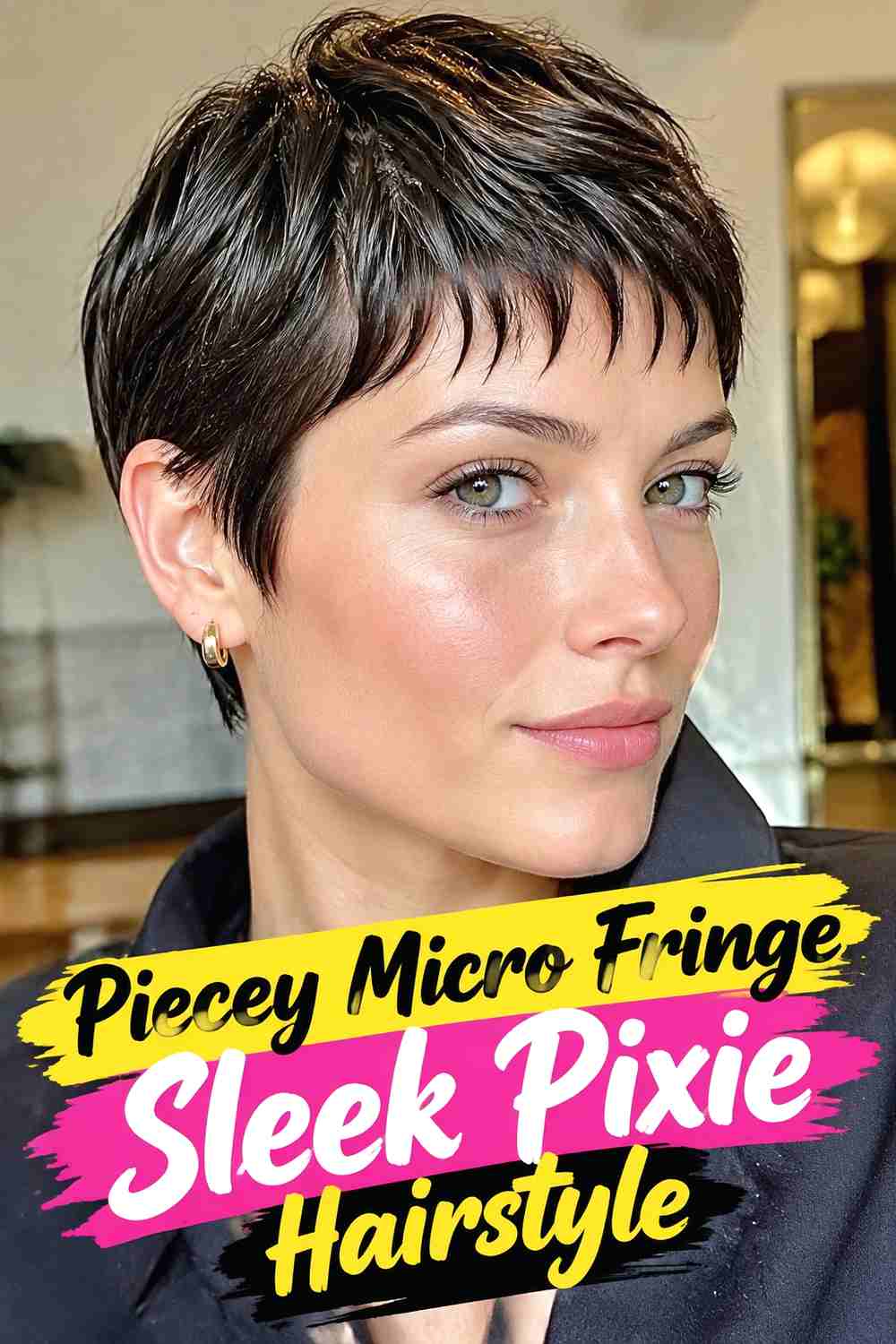
A sleek pixie proves that piecey micro fringe does not have to mean messy texture. The sides and crown can be smoothed close to the head while the fringe remains separated into a few crisp, narrow pieces. That small break in the front edge keeps the haircut from looking too severe and adds visual interest to an otherwise polished silhouette. Straight hair is especially suited to this approach because the surface can remain smooth without extensive manipulation. The cut may be tucked neatly behind the ears or shaped close around them depending on length. Use lightweight styling products so the fringe stays distinct rather than sticking together into one solid section, and avoid excessive product buildup at the roots.
Best For
This style suits anyone who likes short, polished hair but wants a little graphic texture around the forehead.
9. Piecey Micro Fringe Undercut Pixie Hairstyle
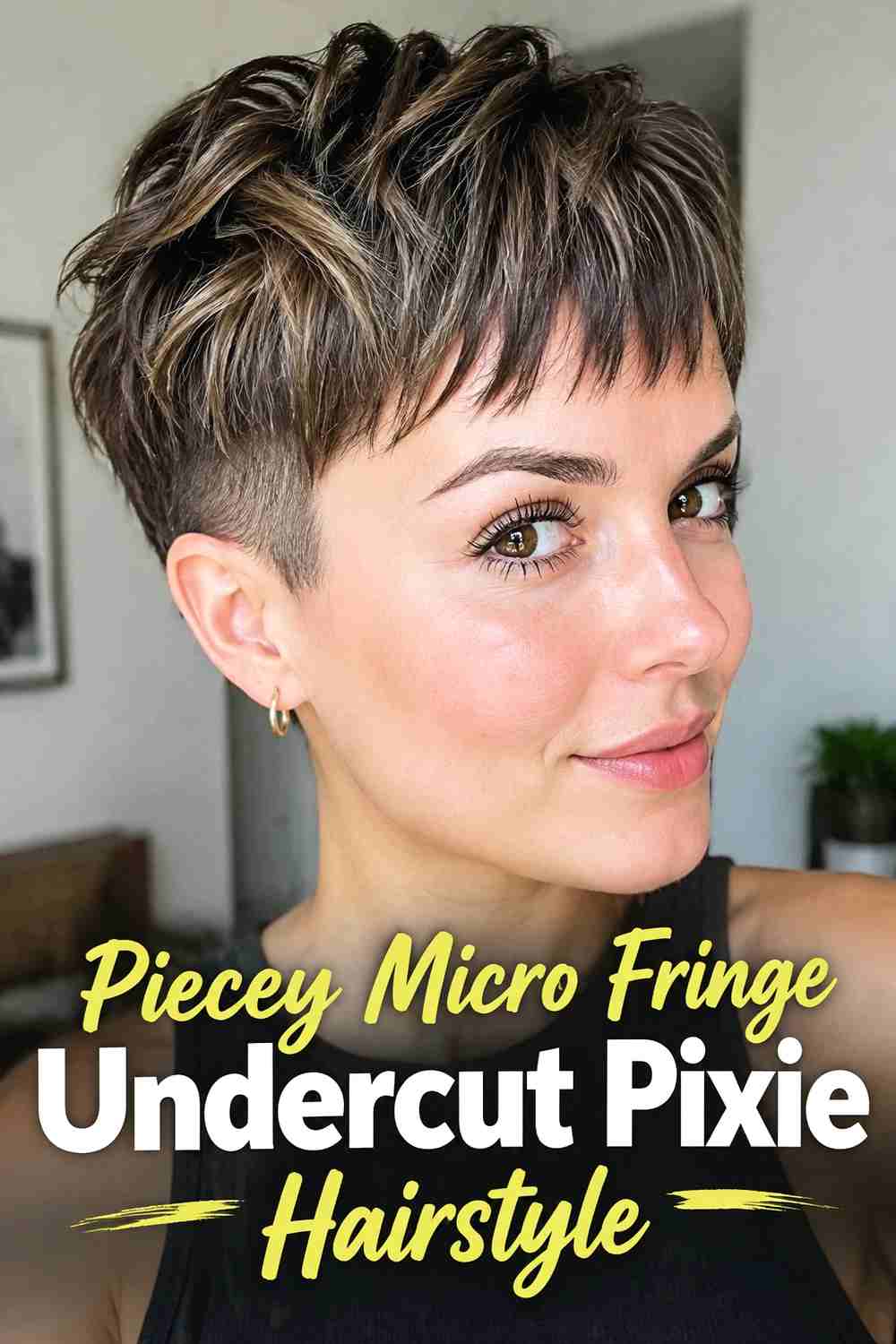
An undercut pixie creates a stronger contrast by keeping the sides or lower back very short while preserving more length on top. A piecey micro fringe makes that longer upper section feel intentional from the front, especially when the fringe is separated into sharp but lightweight points. The haircut can be styled forward for an edgier finish or lifted slightly at the crown for more height. Because the undercut removes substantial bulk, it can work particularly well for dense hair that feels heavy in traditional pixie shapes. The contrast does require commitment, since the shorter sections may look noticeably different as they grow. Keeping the fringe soft rather than overly blunt can make the overall effect more wearable.
Wear & Maintenance
Expect the undercut area to need more frequent reshaping than a softly tapered pixie if you want the contrast to remain obvious.
10. Piecey Micro Fringe Feathered Pixie Hairstyle
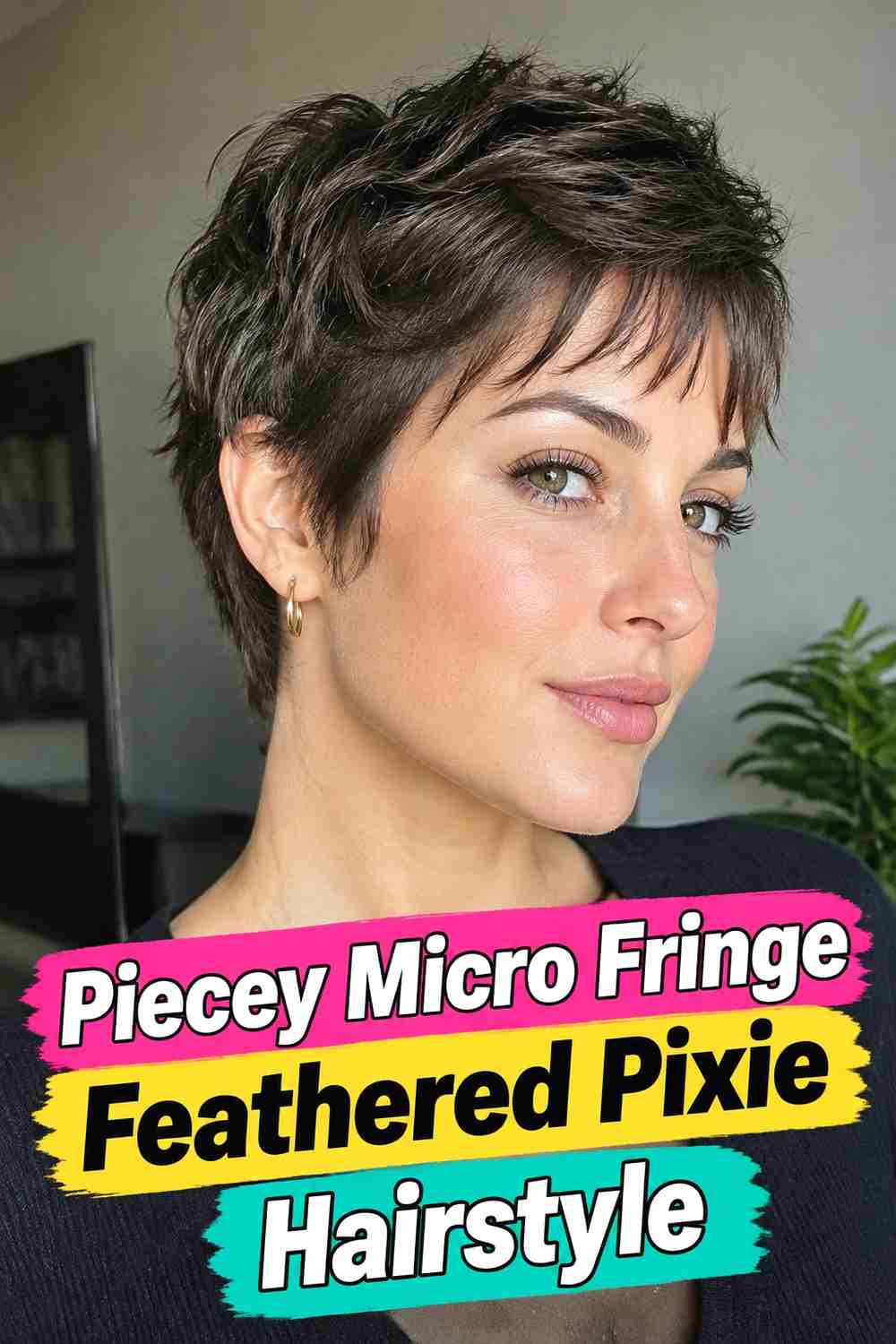
A feathered pixie uses soft directional layers to create movement away from the scalp, giving the haircut an airy finish. The micro fringe can be cut into fine, separated pieces that transition smoothly into the feathered sections near the temples. Instead of looking choppy, the texture feels light and flowing, with the crown gently lifted and the perimeter kept neat. This shape is useful for hair that tends to fall flat because small layers can create dimension without requiring dramatic volume. It also offers a softer alternative to highly textured or spiky pixies. A light blow-dry with the fingers can be enough to encourage movement, especially when the cut has been shaped to follow the natural direction of growth.
Why It Works
The fine fringe mirrors the lightweight layering throughout the cut, creating texture without making the overall silhouette look heavy.
11. Piecey Micro Fringe Wavy Pixie Hairstyle
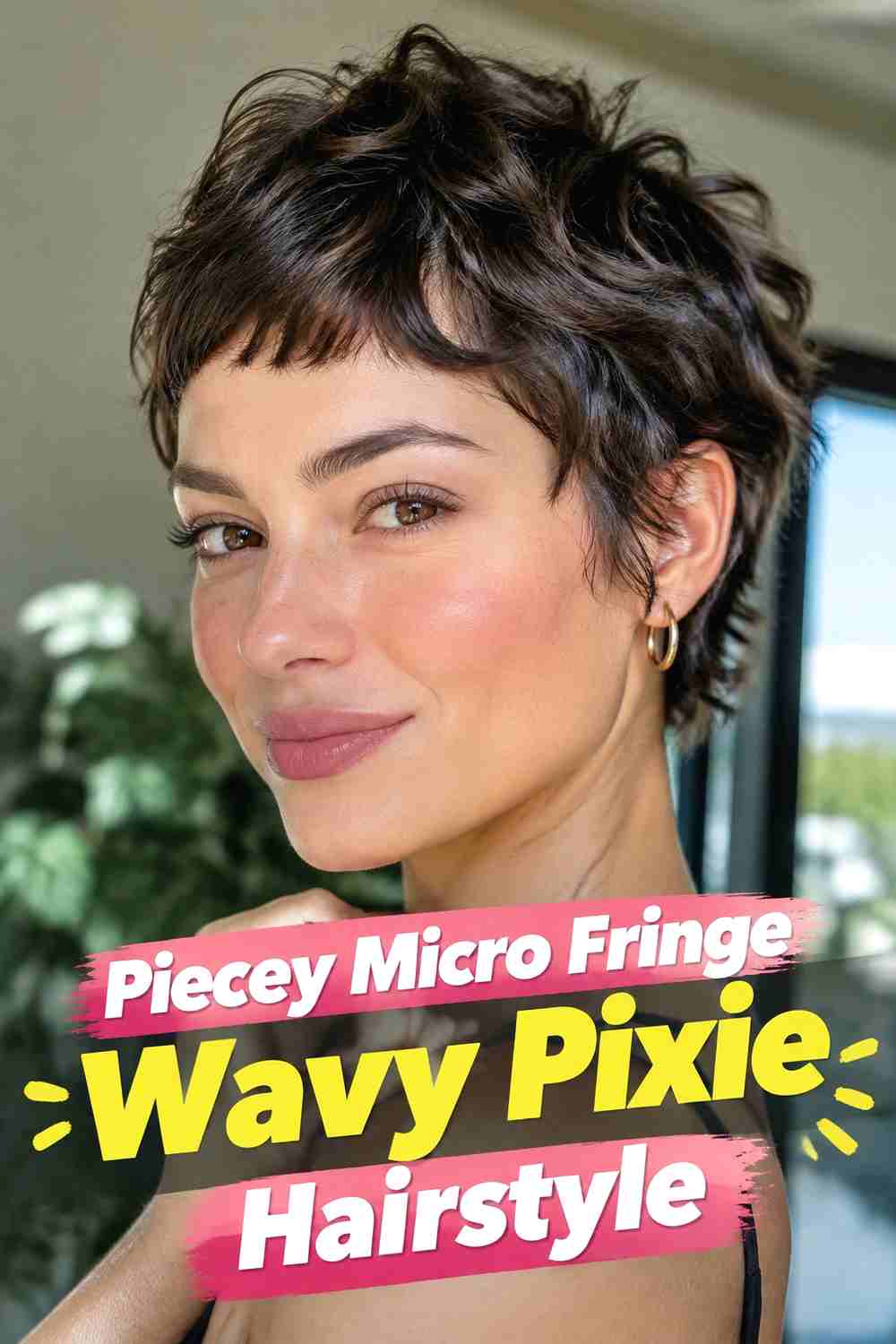
Natural waves can give a pixie cut plenty of personality, especially when the micro fringe is allowed to bend instead of being straightened flat. The top stays long enough for a soft wave pattern to form, while the sides are shortened to prevent the silhouette from becoming overly wide. At the forehead, tiny sections can curve in slightly different directions, producing a naturally piecey finish. This approach works best when the fringe is cut with the hair’s movement in mind rather than forcing every section to the same length. The result feels relaxed and dimensional, with enough structure around the perimeter to keep it recognizably pixie. Minimal manipulation often gives the waves their most natural appearance.
Styling Notes
Apply a small amount of lightweight wave cream to damp hair, then let the texture form before separating the fringe with your fingertips.
12. Piecey Micro Fringe Choppy Pixie Hairstyle
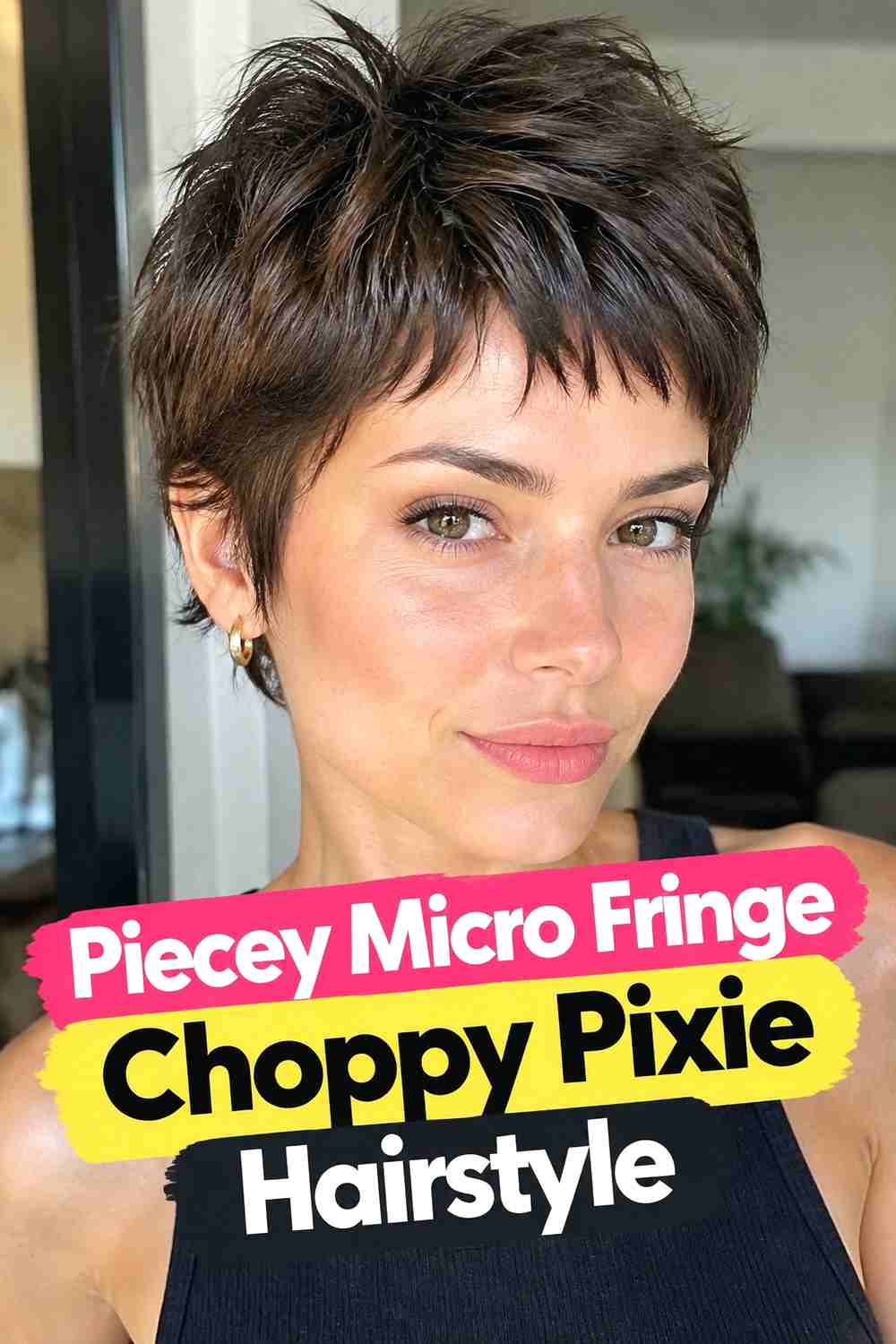
A choppy pixie creates obvious texture through deliberately uneven layers, making it one of the strongest pairings for a piecey micro fringe. Shorter and longer sections alternate through the crown, while the fringe repeats that irregular pattern in miniature across the forehead. The shape can feel edgy without requiring dramatic shaved sides, especially when some softness is left around the ears and nape. Straight and slightly wavy hair can both display the layered detail clearly. The goal is separation, not stiffness, so heavy wax should be used sparingly. This cut tends to look best when the pieces move independently and the silhouette remains slightly imperfect rather than being smoothed into a uniform rounded shape.
Best For
Choose this pixie when visible texture and an intentionally undone finish appeal more than sleek polish.
Wear & Maintenance
Choppy layers can become softer as they grow, so occasional reshaping helps maintain the distinct broken-up texture.
13. Piecey Micro Fringe Side Swept Pixie Hairstyle
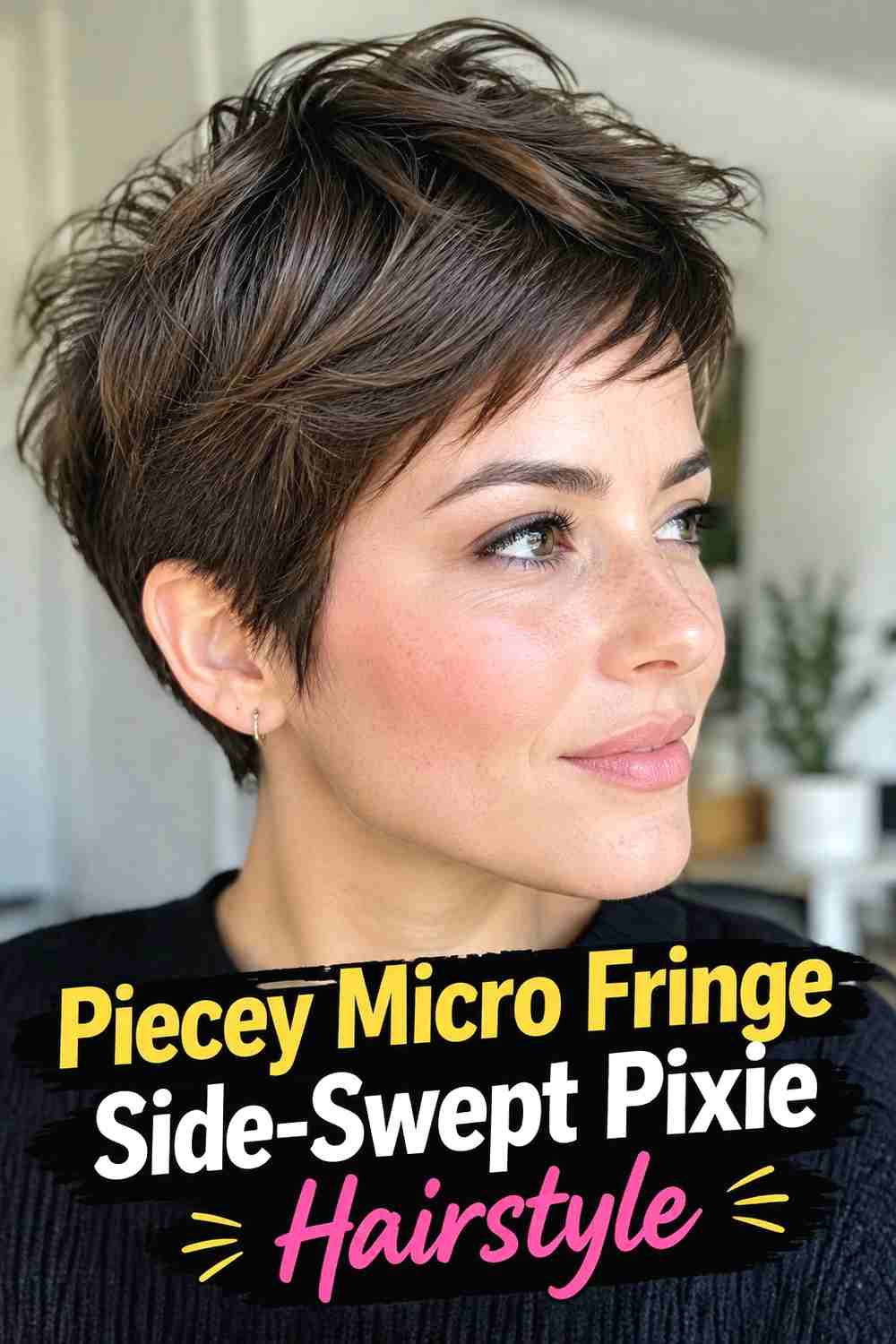
This pixie combines a very short piecey fringe with slightly longer top layers that can move subtly to one side. The contrast creates an interesting front shape: the shortest sections remain visible across the forehead while longer hair above them introduces direction and softness. It is a useful option for anyone who likes side-swept styling but does not want a long fringe covering the brows. Keeping the sides close and the crown lightly layered prevents the top from becoming too heavy. The look can be smooth for a refined finish or gently tousled for more texture. A flexible styling cream works better than a hard gel when you want the layers to move naturally throughout the day.
Why It Works
The short fringe keeps the cut open around the face, while the longer top creates enough asymmetry to make the pixie feel dynamic.
14. Piecey Micro Fringe Voluminous Pixie Hairstyle
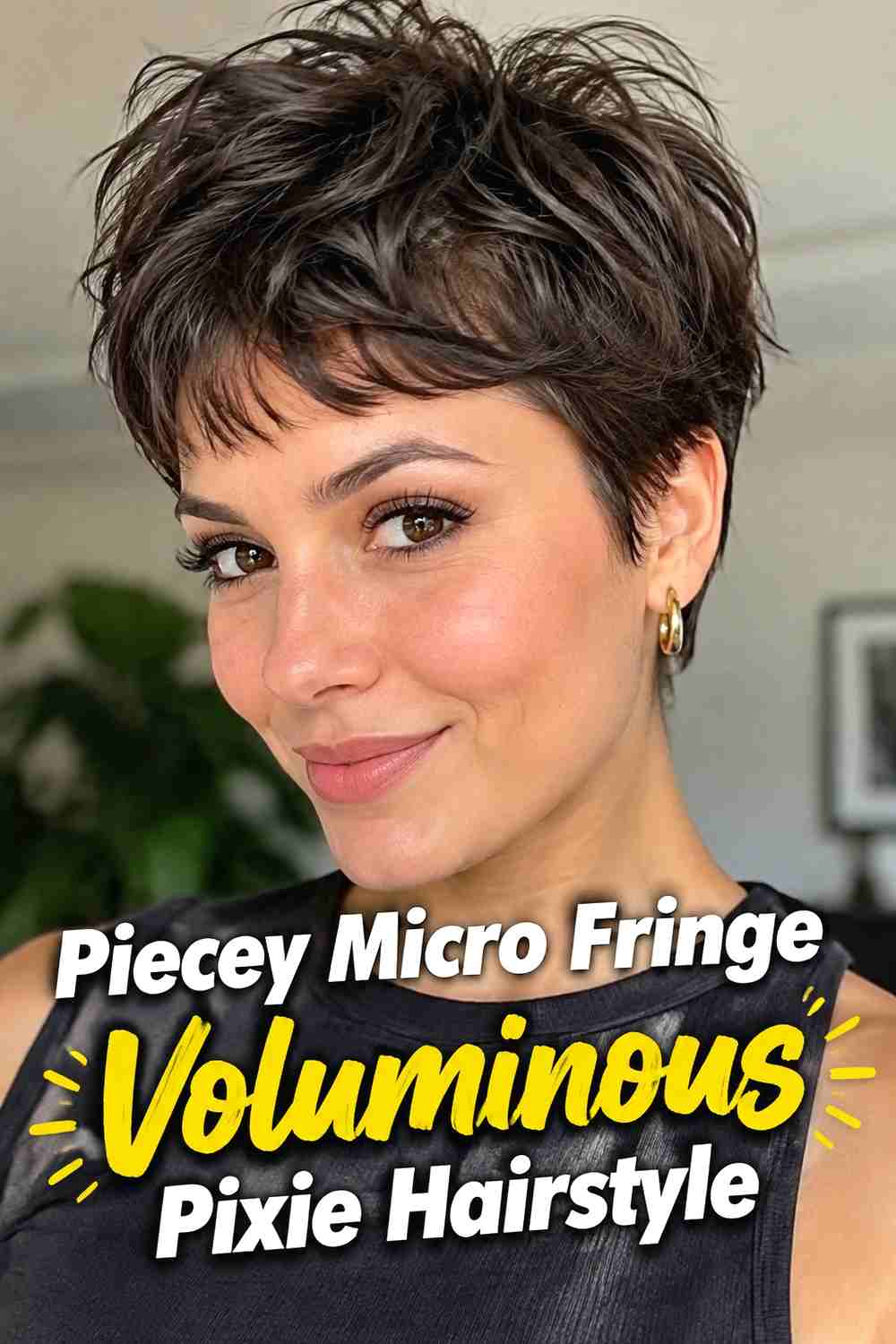
A voluminous pixie concentrates height through the crown while keeping the micro fringe short and light. The difference in length creates a flattering sense of lift without requiring the front hair to be swept completely away from the forehead. Layers through the top can be directed upward or slightly back, while small fringe pieces stay forward to anchor the shape. This cut can be particularly useful for medium-density hair that holds styling well. Very fine hair may need lightweight volumizing support, whereas dense hair may require interior weight removal to prevent the crown from becoming bulky. Keeping the sides tidy ensures the volume looks intentional rather than simply wide, and a matte finish can emphasize the airy texture.
Styling Notes
Direct the roots upward while drying, then use minimal product at the ends so the crown stays lifted instead of becoming weighed down.
15. Piecey Micro Fringe Ear Tucked Pixie Hairstyle
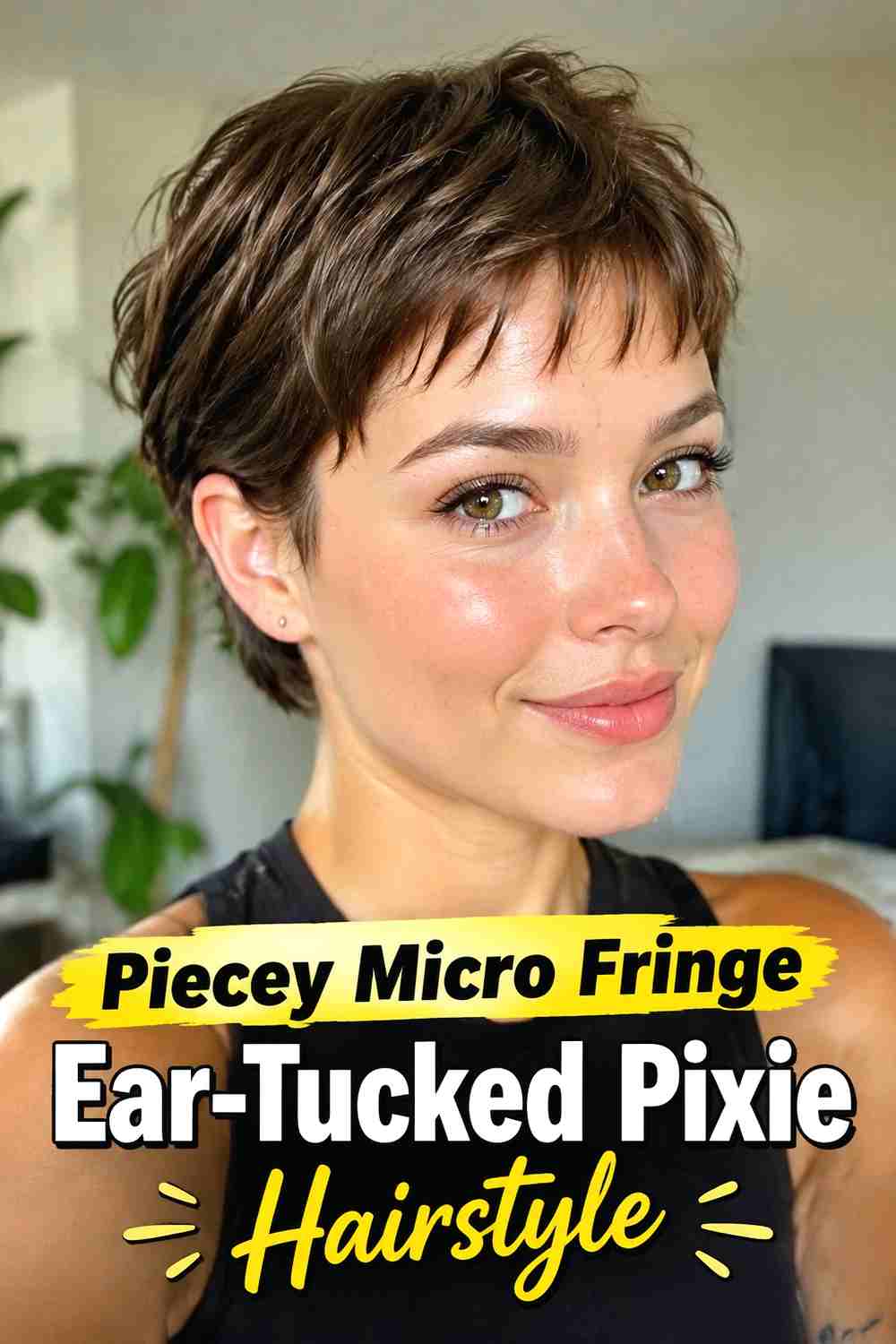
An ear-tucked pixie leaves slightly more length through the sides, allowing those sections to slip neatly behind the ears while the micro fringe remains short at the front. This creates a softer outline than a closely clipped pixie and gives the wearer more flexibility in how the sides are styled. The fringe can be lightly separated to balance the smooth tucked sections, keeping the overall look modern rather than overly polished. This cut works well on straight and softly wavy hair, especially when the top has enough length to create a little movement. Because the sides are not extremely short, the grow-out can feel gentler than a tight taper or undercut, although the fringe itself will still change quickly.
Best For
This shape is useful if you want a pixie that feels soft around the ears and offers more styling flexibility than a close crop.
16. Piecey Micro Fringe Long Top Pixie Hairstyle
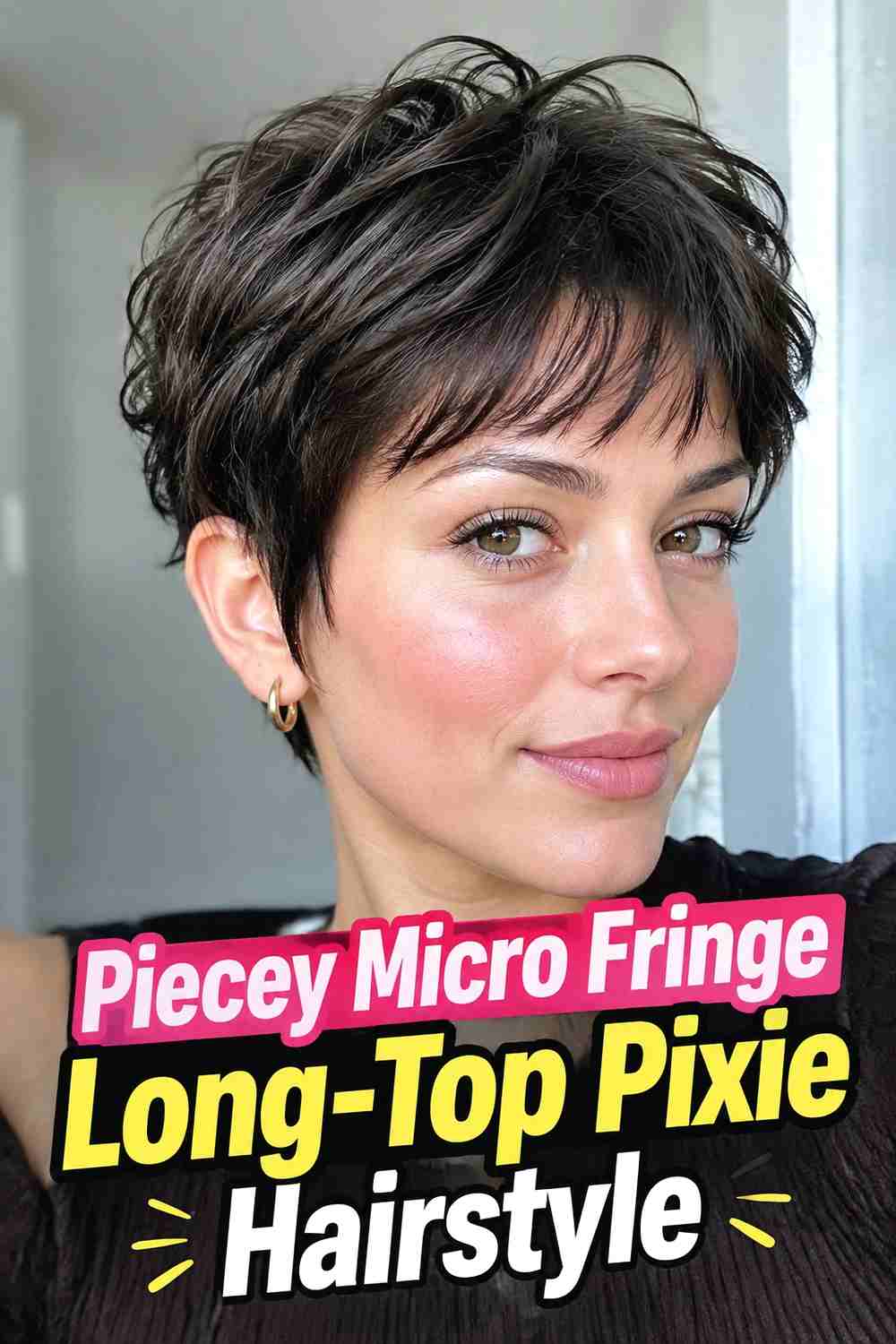
A long-top pixie creates strong styling flexibility by keeping several extra inches through the crown while maintaining shorter sides and a compact nape. The piecey micro fringe gives the front a defined stopping point instead of letting the longer top fall into a conventional bang. That contrast allows the crown to be worn messy, lifted, swept sideways, or softly waved while the forehead remains open. This cut is especially suitable for someone who enjoys changing the finish from day to day. Dense hair may need strategic thinning through the top, while finer hair can benefit from the extra length and lift. The fringe should stay light enough that it does not compete with the larger volume above it.
Styling Notes
Focus volume through the crown and use only a trace of product on the micro fringe to keep its individual pieces visible.
17. Piecey Micro Fringe Rounded Pixie Hairstyle
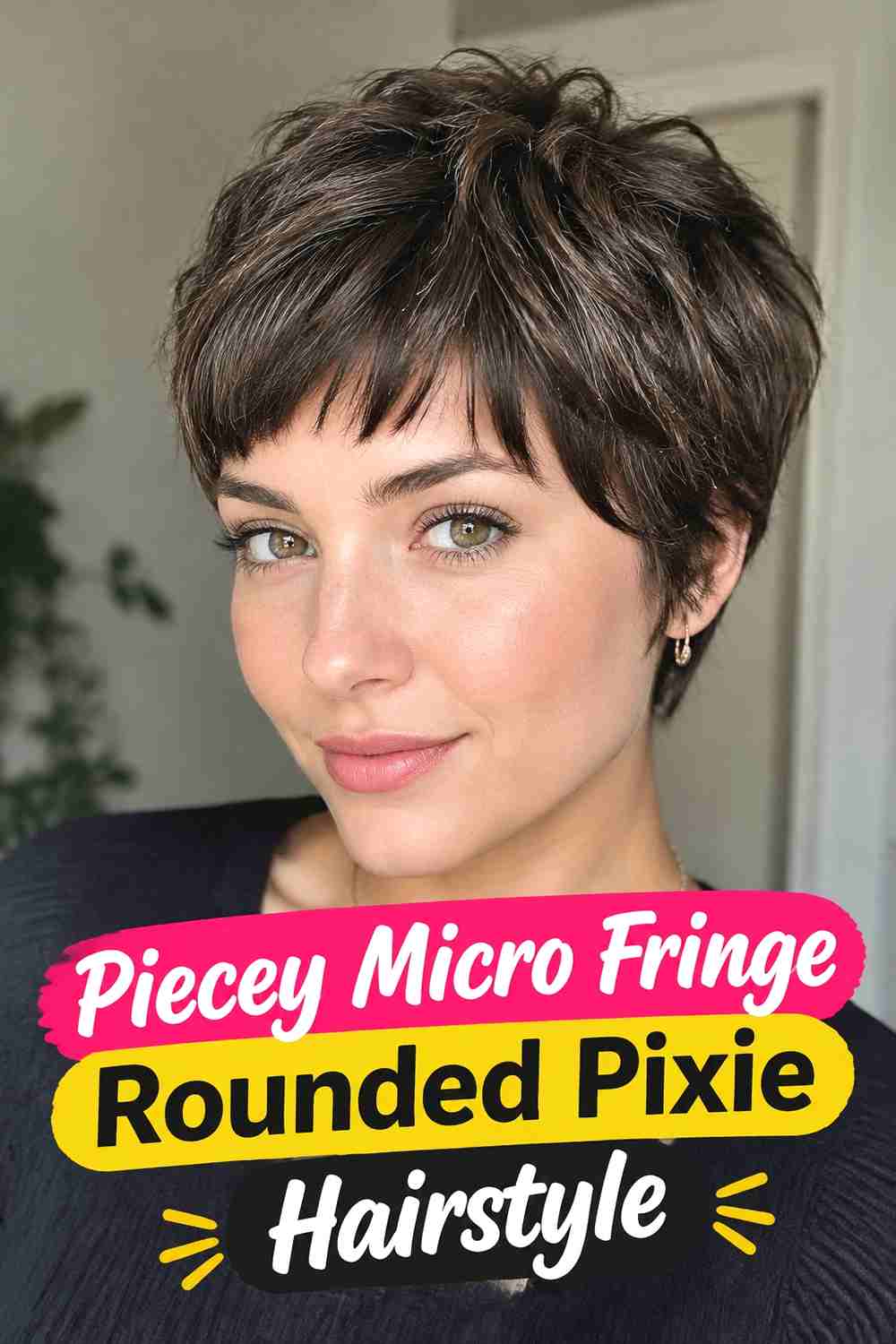
A rounded pixie creates a soft, balanced silhouette by preserving gentle fullness through the crown and sides instead of relying on sharp graduation. The piecey micro fringe breaks up the front edge, preventing the rounded shape from looking too uniform or helmet-like. Subtle internal layers help the hair sit naturally around the head, while a tidy neckline keeps the overall cut polished. This option can suit straight, fine, or softly textured hair, particularly when you prefer a classic pixie with a modern detail rather than a heavily choppy finish. The fringe can be slightly irregular in both length and spacing, giving the haircut visual lightness. A soft styling cream is usually enough to keep the shape controlled.
Why It Works
The delicate fringe introduces contrast against the smooth rounded silhouette, giving a classic short shape a fresher, more contemporary finish.
How to Choose the Right Look
Start with your natural texture. Straight hair can make sleek, French, tapered, and rounded pixies easy to maintain, while wavy or curly hair often looks best when the haircut follows its natural movement rather than fighting it. Tousled, shaggy, feathered, and choppy versions are especially useful when you prefer visible texture.
Think carefully about how short you want the sides. A soft crop or ear-tucked pixie offers a gentler perimeter, while an undercut or strong taper creates more contrast and usually needs more frequent reshaping. Long-top pixies give you extra styling options but can require more daily attention through the crown.
Fringe maintenance matters too. A true micro fringe sits well above the brows, so even a small amount of growth can noticeably change its proportion. Irregular, piecey edges are generally more forgiving than a perfectly straight baby bang because the fringe does not depend on one exact horizontal line.
Finally, consider product use. Fine hair usually benefits from lightweight paste, mousse, or texture spray, while thicker hair may need stronger separation or strategic removal of bulk. The best pixie should complement how your hair naturally behaves, not require a complete restyle every morning.
Final Thoughts
A piecey micro fringe can give almost any pixie haircut a sharper, more modern identity. The detail works with polished French crops, messy shags, curls, waves, undercuts, and softly rounded shapes. Choose the fringe density and pixie silhouette around your natural texture, styling habits, and willingness to maintain short lengths, then let a little irregularity become part of the finished look.
FAQs
1. What is a piecey micro fringe?
It is a very short fringe separated into small, visible sections rather than cut and styled as one dense horizontal line. The piecey finish adds texture and softness.
2. Does a micro fringe work with a pixie cut?
Yes. A micro fringe can complement many pixie shapes, including tapered, choppy, curly, sleek, shaggy, and longer-top cuts.
3. How often does a micro fringe need trimming?
Because it is very short, growth becomes noticeable relatively quickly. How often you trim it depends on the starting length, growth rate, and how precise you want the fringe to remain.
4. Can curly hair wear a piecey micro fringe?
Yes, but the fringe should be cut with curl shrinkage in mind. Letting individual curls form naturally usually creates a more believable result than forcing them straight.
5. What styling product works best for a piecey pixie fringe?
A small amount of lightweight paste, cream, or soft wax can create separation. Start with very little product so the fringe stays airy instead of becoming stiff or greasy.
Save your favorite piecey micro fringe pixie haircut, share it with your stylist, and explore more short-hair inspiration for your next cut.