13 Silver Blending Balayage Ideas for Naturally Gray Hair
Silver balayage can make naturally gray hair look intentional and dimensional, blending brighter strands with deeper tones for a softer, more polished grow-out.
Silver blending works especially well when natural gray is already appearing in different patterns. Some hair turns bright white around the temples first, while other areas remain charcoal, brunette, or dark gray. Balayage can connect those contrasting sections with carefully placed silver, pearl, ash, or smoky ribbons instead of covering every natural strand.
The best approach depends on how much natural gray you want to showcase, where your brightest silver grows, and how much contrast you prefer. A subtle low-contrast blend can soften regrowth, while icy face-framing pieces or platinum ends create a stronger visual statement. Texture, density, haircut shape, and maintenance routine also affect how seamless the final color appears.
Quick List
- Soft Silver Ribbon Balayage Hairstyle
- Smoky Silver Face Framing Balayage Hairstyle
- Pearl Silver Gray Blending Balayage Hairstyle
- Charcoal To Silver Melt Balayage Hairstyle
- Icy Silver Money Piece Balayage Hairstyle
- Salt And Pepper Dimensional Balayage Hairstyle
- Silver Beige Soft Balayage Hairstyle
- Platinum Silver Ends Balayage Hairstyle
- Ash Silver Layered Balayage Hairstyle
- Steel Silver Low Contrast Balayage Hairstyle
- Bright Silver Crown Blend Balayage Hairstyle
- Shadow Root Silver Balayage Hairstyle
- Multi Tonal Silver Long Wave Balayage Hairstyle
1. Soft Silver Ribbon Balayage Hairstyle
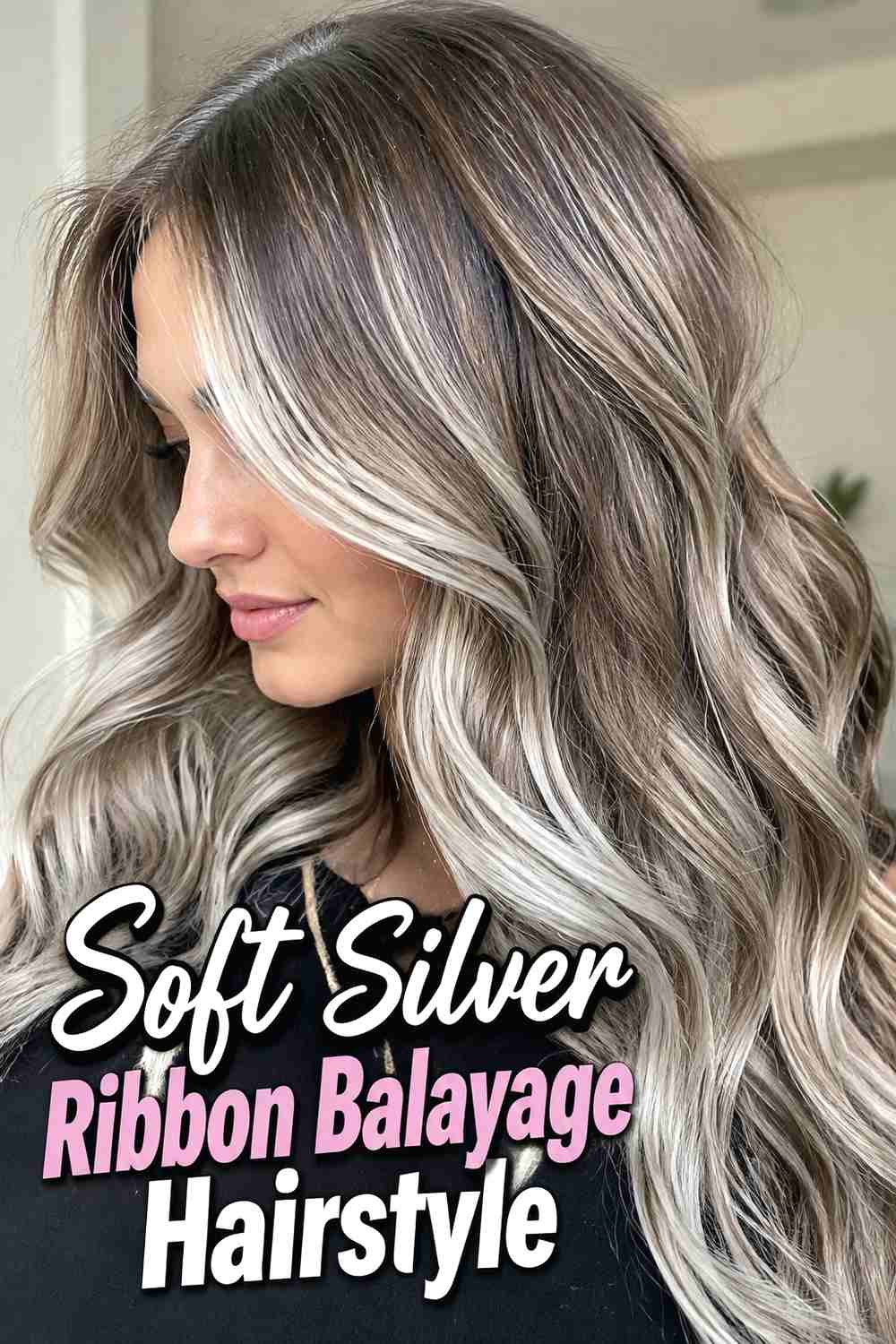
Soft silver ribbons are ideal when the goal is to connect naturally gray strands with darker sections without making the hair look uniformly light. Fine to medium pieces of cool silver can be painted through the mids and ends while existing white strands remain visible at the root. On softly waved or layered hair, the different tones weave together as the hair moves, creating a subtle dimensional finish. This technique works particularly well when natural gray is scattered rather than concentrated in one area. Keeping some charcoal or deeper gray between the ribbons prevents the color from becoming flat and gives the brighter silver pieces enough contrast to stand out.
Best For
This look suits scattered gray patterns and anyone who prefers a natural transition rather than a dramatic platinum effect.
Wear & Maintenance
A softer ribbon placement can make regrowth less obvious because new gray strands become part of the existing blend rather than interrupting a solid color.
2. Smoky Silver Face Framing Balayage Hairstyle
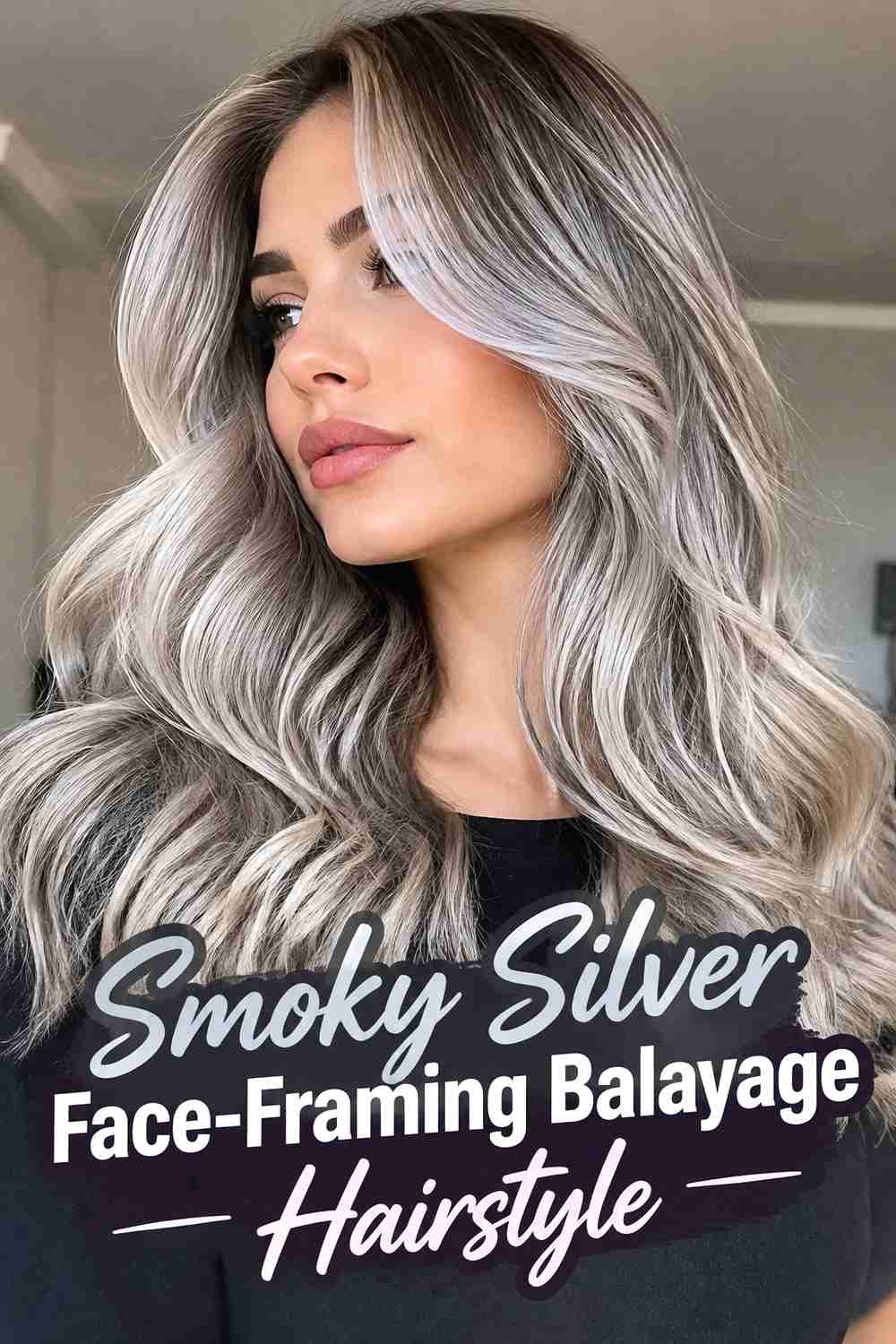
Smoky silver around the face creates brightness without requiring the entire head to become equally light. The front sections can be painted in cool silver and soft graphite tones, then gradually blended into darker gray through the sides. This works beautifully when natural gray is already strongest at the temples because the balayage enhances rather than hides that pattern. A slightly smoky finish keeps the contrast more restrained than an icy white money piece, making the result feel sophisticated and wearable. Layers around the cheekbones or jaw can show off the tonal variation especially well. The darker interior sections preserve depth while the brighter front pieces give the style a fresher, more defined frame.
Styling Notes
A soft bend away from the face helps display the silver placement clearly. Keep styling products lightweight so the brighter sections retain movement.
Why It Works
The face frame emphasizes naturally lighter areas while the smoky undertone bridges the gap between silver and deeper gray.
3. Pearl Silver Gray Blending Balayage Hairstyle
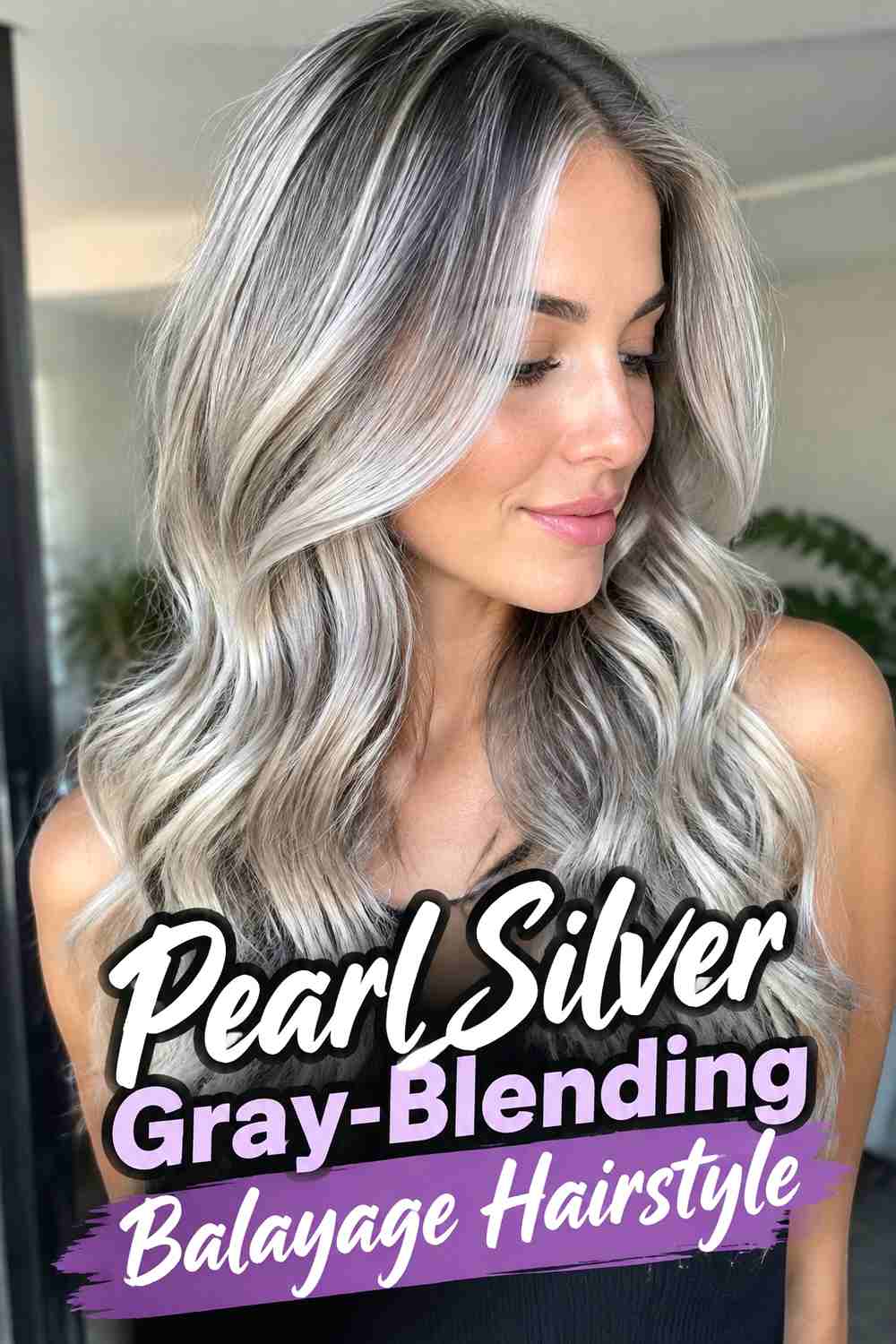
Pearl silver creates a luminous option for naturally gray hair that already contains bright white or pale silver strands. Instead of cooling everything into a flat ash shade, the balayage can combine pearl, soft silver, and natural gray for a reflective multi-tonal effect. The brightest pieces look especially attractive around the hairline and upper lengths, where natural light catches them easily. Darker gray underneath provides enough depth to keep the overall result dimensional. This approach is particularly effective on medium or long hair because there is room for the pearl sections to dissolve gradually through the lengths. The finish feels polished without erasing the natural variation that gives gray hair much of its character.
Hair Type & Length
Medium to long hair gives the pearl tones space to blend gradually, although shorter layered cuts can also showcase strategically placed brightness.
Pro Tip
Keep a few deeper gray sections untouched so the pearl silver remains visible instead of merging into one uniformly pale shade.
4. Charcoal To Silver Melt Balayage Hairstyle
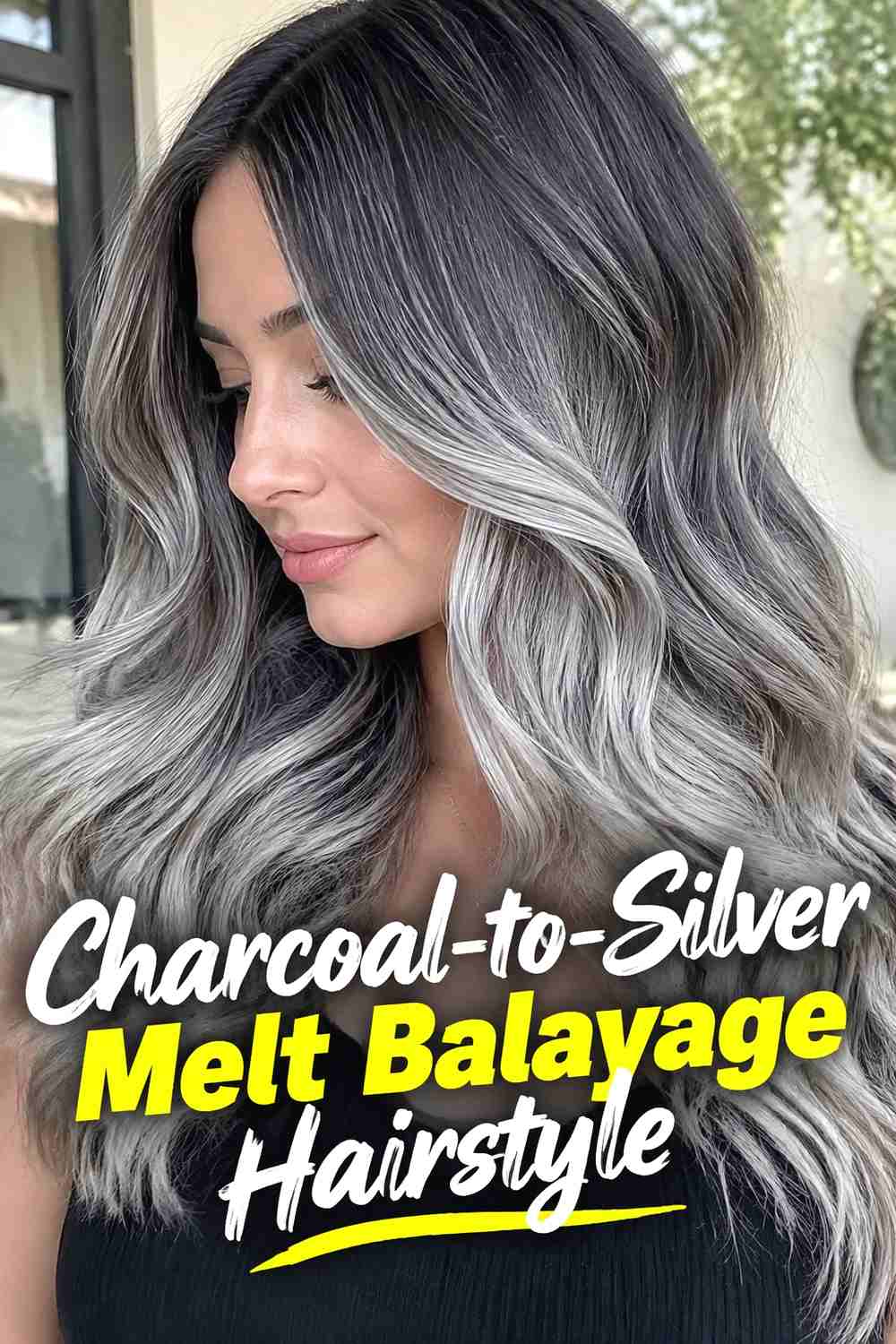
A charcoal-to-silver melt is a strong choice when darker natural hair remains near the roots while gray becomes more visible through the mids and ends. Rather than creating a sharp line between the two tones, balayage can build a gradual progression from charcoal through smoky gray and into brighter silver. The effect is particularly striking on textured, layered, or wavy hair because each bend reveals another part of the transition. This look preserves the richness of darker sections instead of trying to lighten everything at once. It also gives naturally gray strands a deliberate place in the color design, allowing them to merge with painted silver pieces rather than appearing separate from the rest of the hair.
Why It Works
The gradient makes darker roots and lighter lengths feel connected, which can be useful when natural gray is emerging unevenly.
Wear & Maintenance
Because depth is intentionally retained near the root, the style can tolerate some natural regrowth without immediately losing its overall shape.
5. Icy Silver Money Piece Balayage Hairstyle
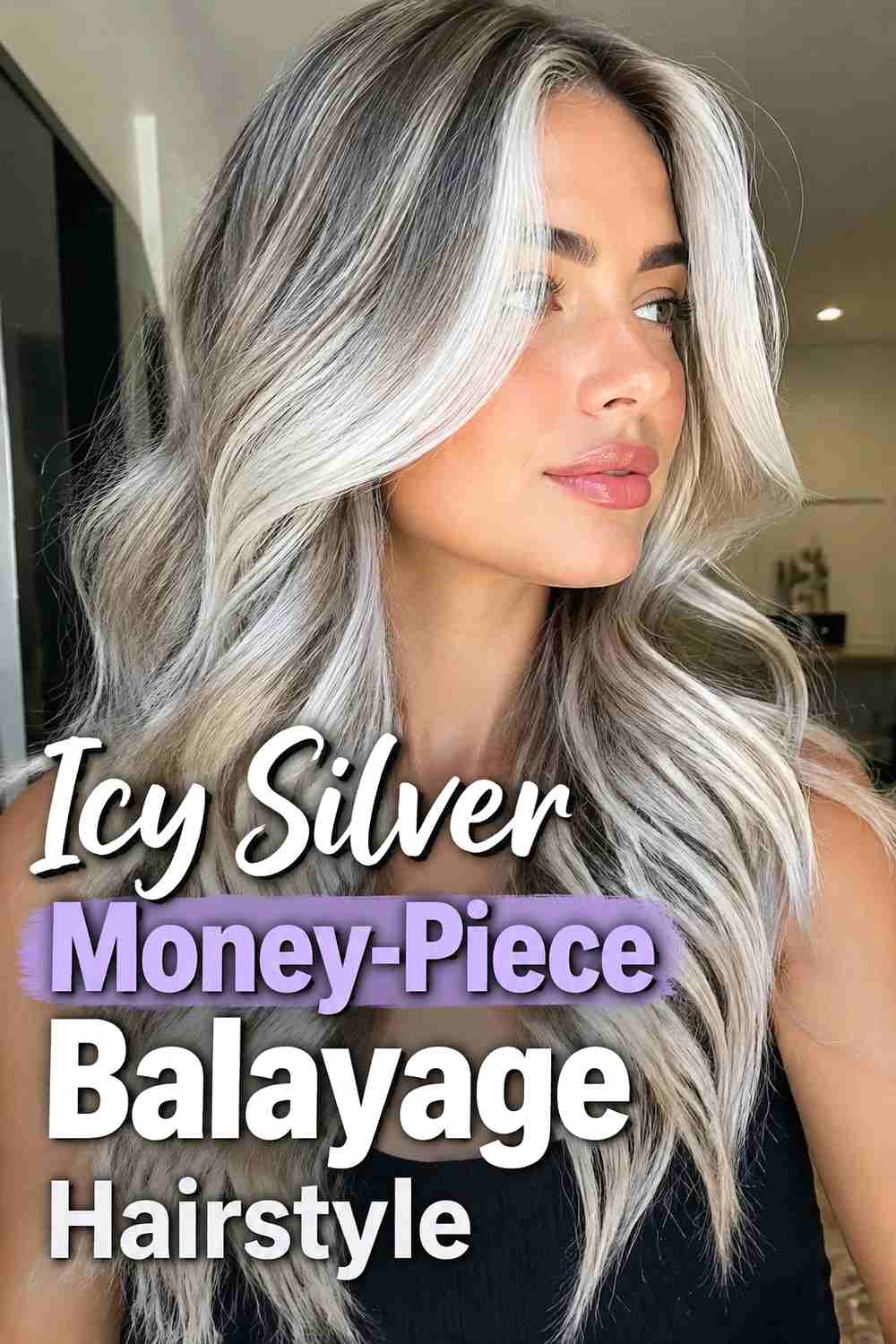
An icy silver money piece brings stronger brightness to naturally gray hair by concentrating the palest color around the front hairline. The rest of the balayage can remain softer, using medium silver and cool gray to connect the face frame with the deeper base. This combination is useful when the temples already grow in very light and you want to emphasize that feature instead of disguising it. The contrast can look bold on dark salt-and-pepper hair or more seamless on an already light gray base. Keeping the money piece slightly wider near the front and more diffused farther back prevents it from looking disconnected. Soft waves or face-framing layers make the brighter silver particularly visible.
Best For
Choose this style when you enjoy noticeable brightness around the face and are comfortable with a more defined contrast between pale silver and darker gray.
Pro Tip
Ask for the icy section to soften as it travels away from the hairline so the front highlight blends naturally into the surrounding balayage.
6. Salt And Pepper Dimensional Balayage Hairstyle
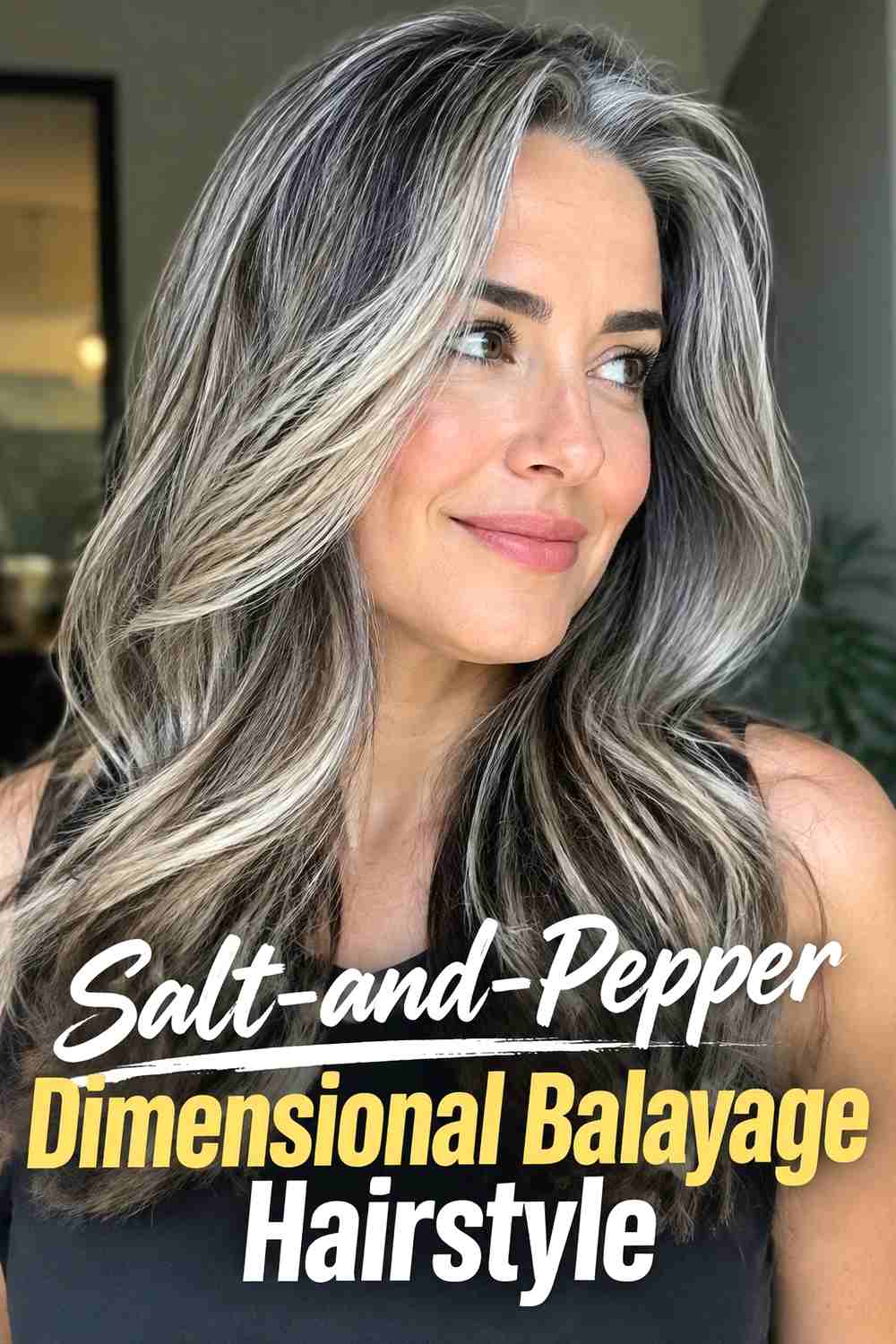
Salt-and-pepper hair already contains natural contrast, so the goal of balayage is often to organize and enhance that dimension rather than replace it. Fine silver pieces can be added beside existing white strands, while deeper charcoal sections are preserved to create separation. The result is a layered mixture of dark gray, medium silver, and pale highlights that looks intentional from roots to ends. This approach is especially useful when the natural gray pattern is uneven, with lighter sections concentrated in some areas and darker hair remaining elsewhere. Movement from waves or layers helps the tones overlap visually, making the transition softer. The final look celebrates both the silver and the darker “pepper” instead of forcing everything toward one shade.
Why It Works
Using the existing contrast as part of the design can produce a more natural-looking blend than covering darker strands completely.
Wear & Maintenance
Maintaining multiple depths may reduce the need for perfectly uniform root coverage, though the silver tone may still benefit from periodic refreshing.
7. Silver Beige Soft Balayage Hairstyle
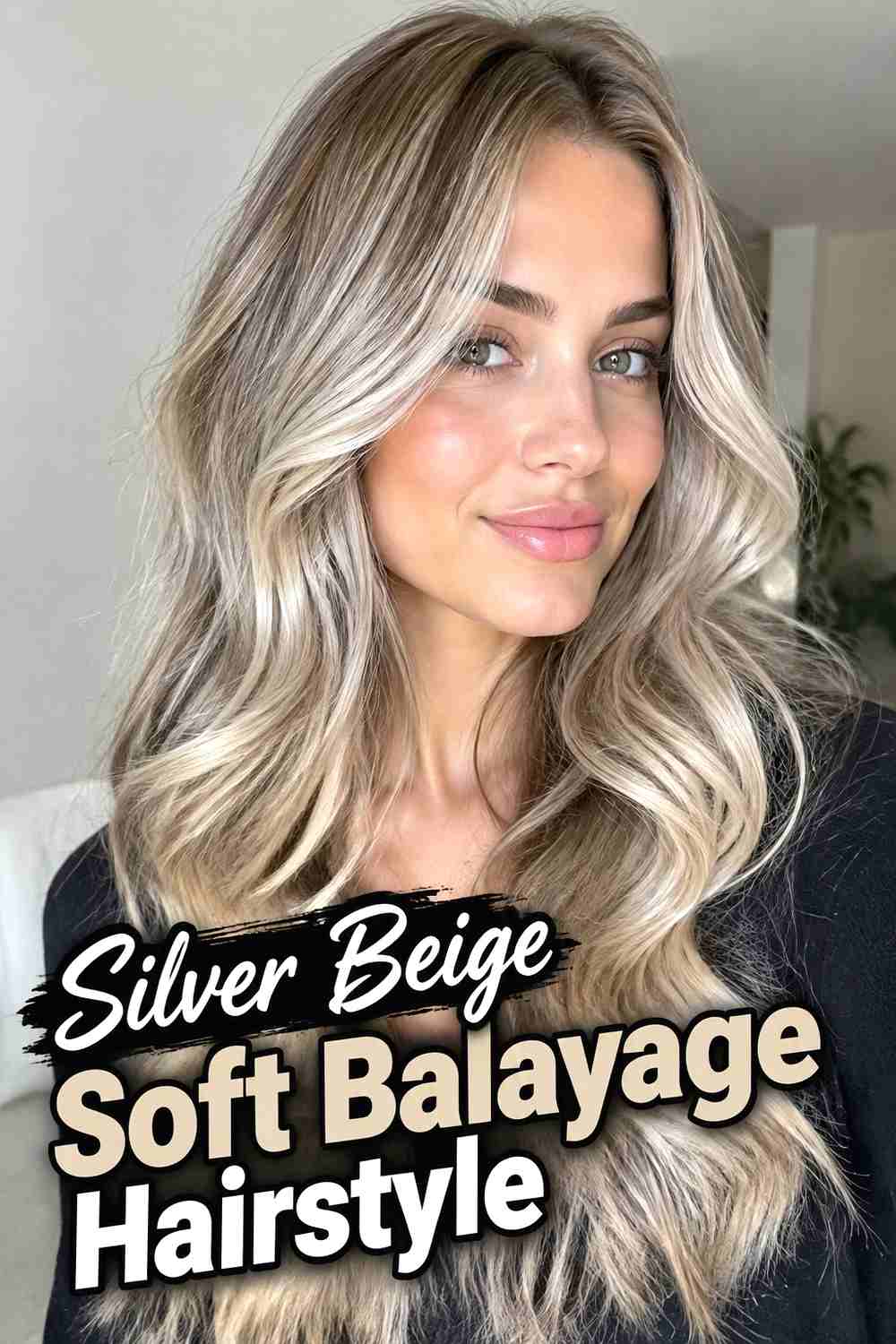
Silver beige offers a gentler alternative to very icy gray, combining cool silver with a muted neutral-beige finish. This can be especially flattering when naturally gray hair includes warmer white, taupe, or soft brown strands that do not blend easily with stark platinum. The balayage can be concentrated through the mids and around the face while deeper natural sections remain visible underneath. Because the tone sits between cool and neutral, the result often appears softer in daylight than pure ash or steel silver. This approach works beautifully with relaxed layers and natural movement, where the beige-silver ribbons can mix with gray without creating a harsh divide. It is understated, dimensional, and easy to wear across different gray patterns.
Best For
This option suits anyone who finds extremely cool silver too severe and prefers a softer neutral transition.
Styling Notes
Use loose movement rather than highly structured curls so the subtle difference between silver, beige, and natural gray remains visible.
8. Platinum Silver Ends Balayage Hairstyle
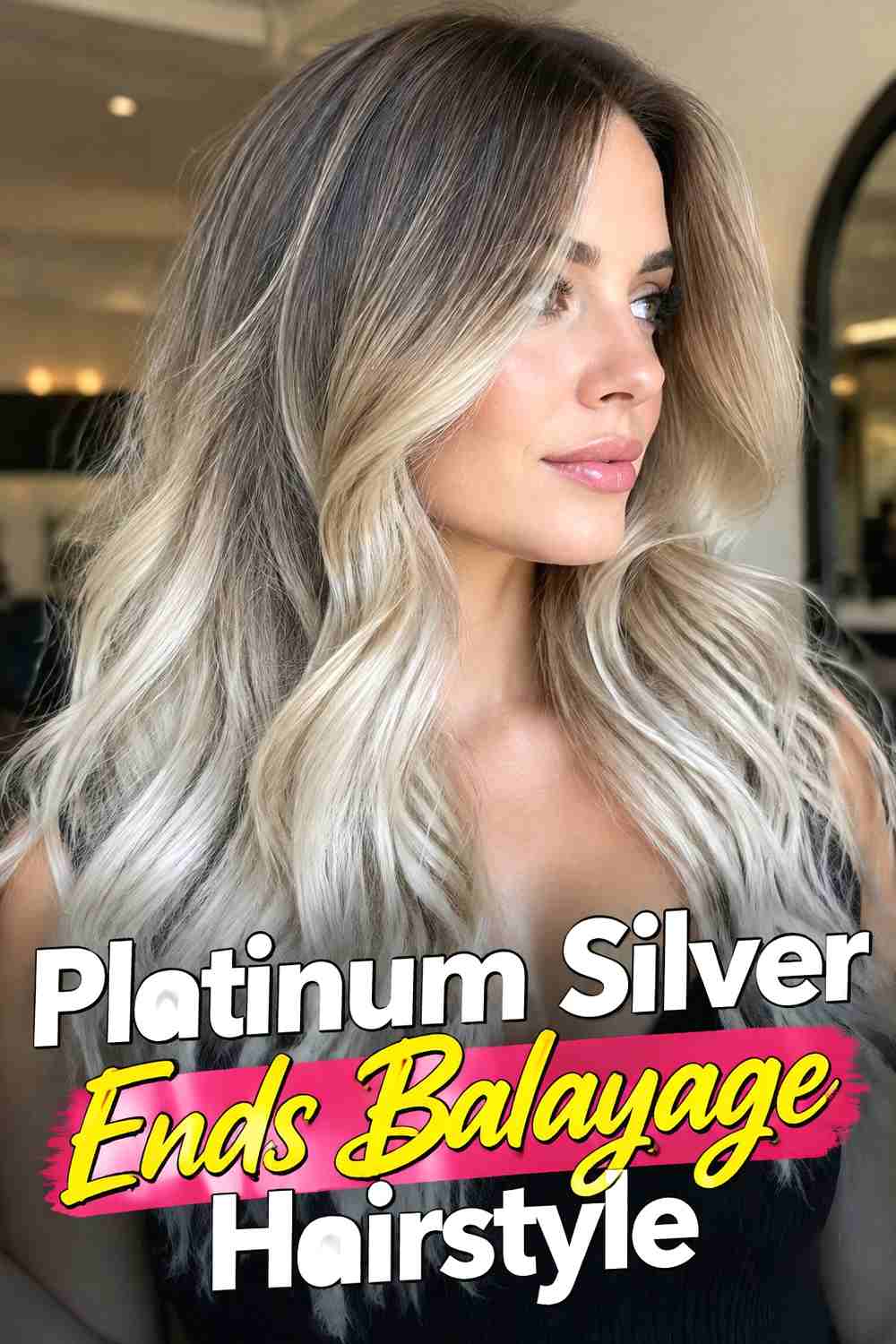
Platinum silver ends create a brighter, more noticeable balayage while allowing natural gray and deeper tones to remain closer to the scalp. The lightest color is concentrated through the lower lengths, with smoky silver used as a bridge between darker roots and pale ends. On long or medium-length hair, this creates a gradual lightening effect that feels modern without demanding an entirely platinum result. Natural white strands near the root can be incorporated into the transition, making the color appear more connected. Waves and layered ends emphasize the palest sections because movement brings them forward. This style is especially appealing when you want dramatic silver brightness but still appreciate the depth and character of your natural gray pattern.
Hair Type & Length
Medium and long hair provide enough space for the transition from gray roots to platinum-silver ends to look gradual rather than abrupt.
Wear & Maintenance
Very pale ends can require extra conditioning and careful upkeep, particularly if the hair needed significant lightening to reach the desired brightness.
9. Ash Silver Layered Balayage Hairstyle
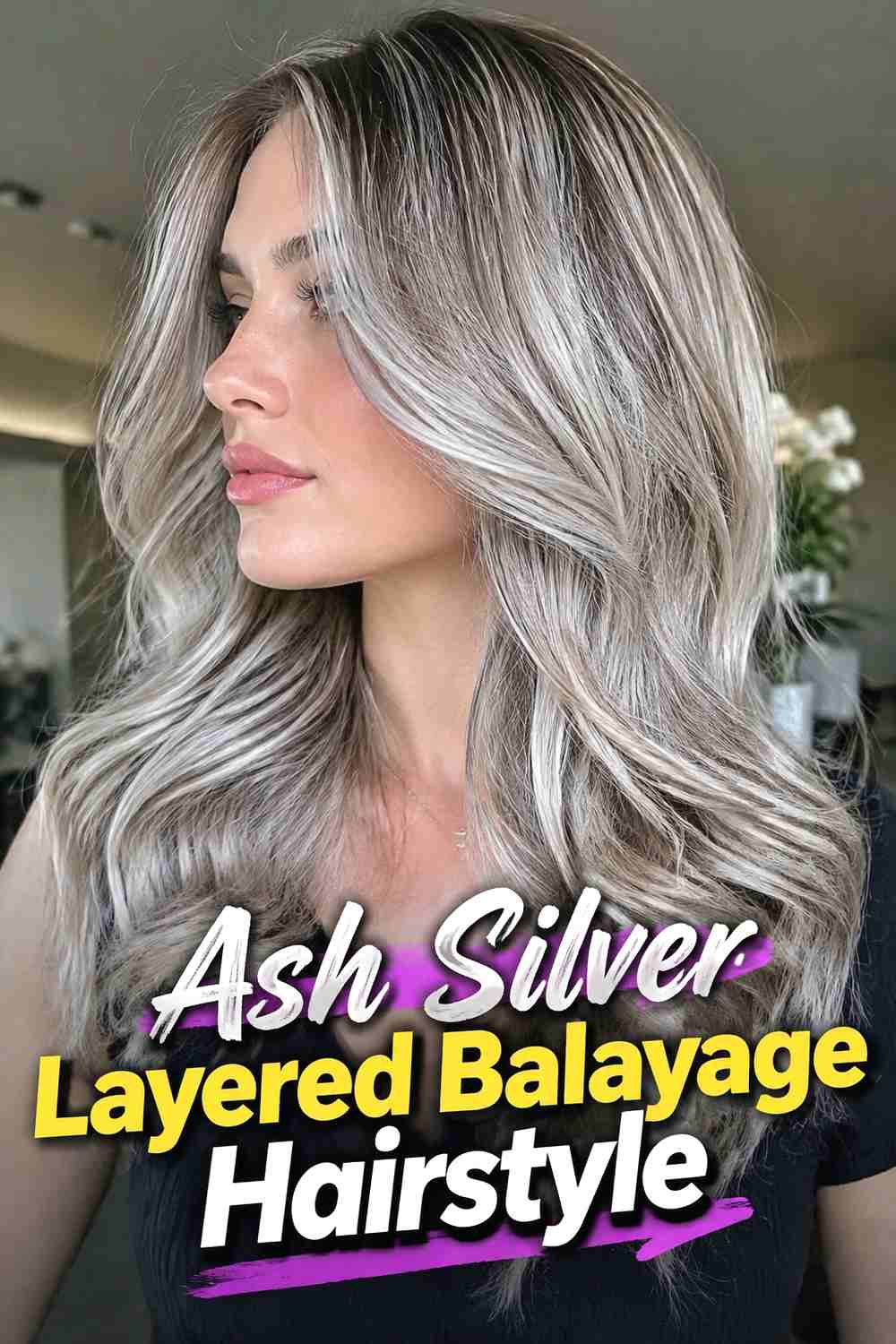
Ash silver balayage pairs especially well with layered hair because the placement can follow the haircut rather than sitting in uniform strips. Lighter silver pieces can be painted over the top layers and around the face, while deeper ash-gray sections remain underneath to create visual depth. As the layers move, different tones become visible, giving naturally gray hair a fuller and more dimensional appearance. This is a practical option when gray has developed at different intensities across the head, since the colorist can selectively brighten darker areas without covering naturally pale strands. The cool ash direction keeps the blend cohesive while avoiding an overly white finish. A soft blowout or relaxed wave pattern helps highlight the layered placement.
Styling Notes
Style the layers with gentle separation instead of heavy smoothing so the different ash and silver sections remain easy to see.
Why It Works
Following the haircut allows the color to enhance movement and shape instead of relying only on root-to-end contrast.
10. Steel Silver Low Contrast Balayage Hairstyle
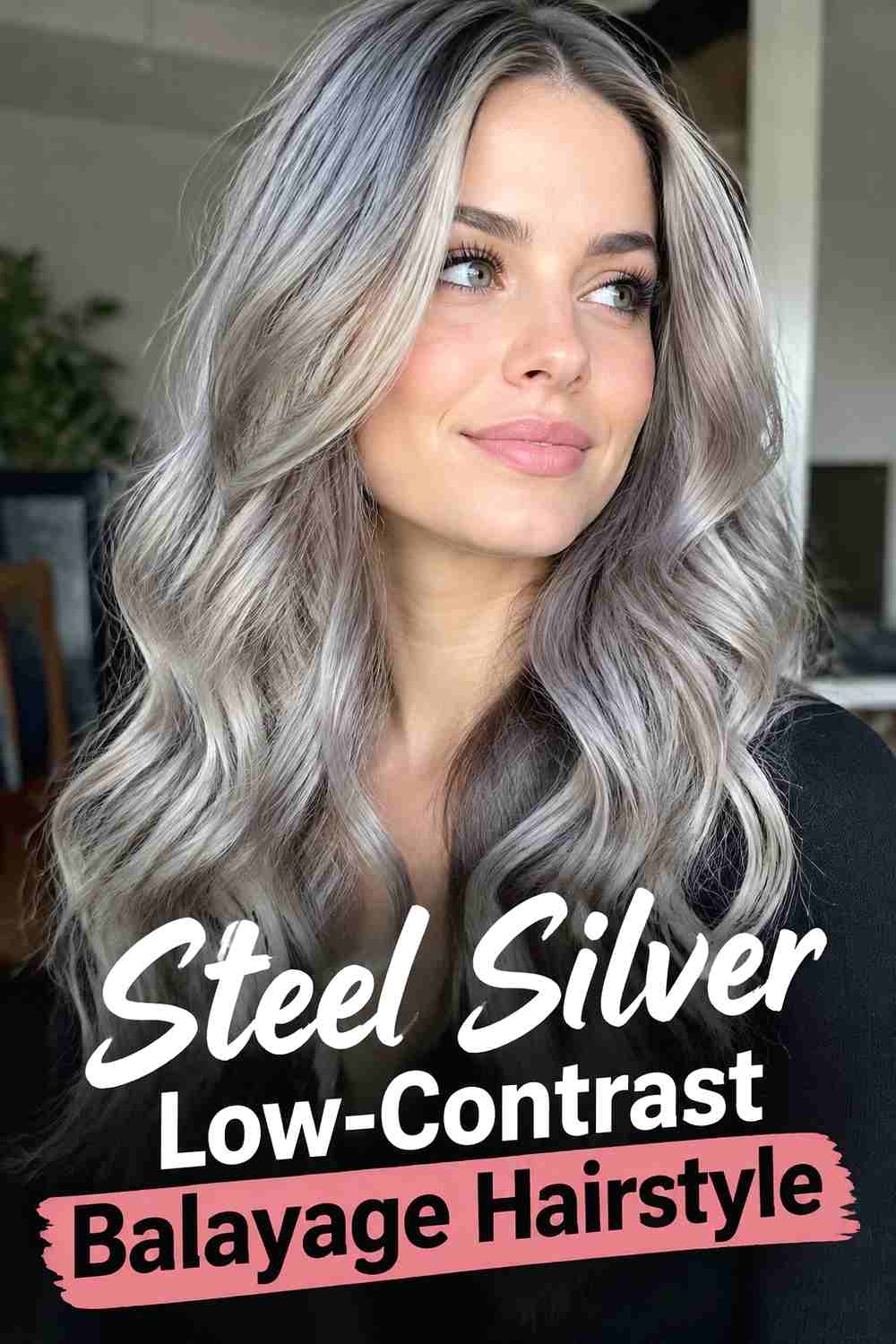
Steel silver creates a sophisticated low-contrast option for naturally gray hair with medium or dark gray depth. Instead of jumping from charcoal roots to pale white highlights, the balayage stays within a narrower range of graphite, steel, and muted silver. This creates a cohesive result that still has dimension but feels quieter than icy or platinum styles. It can be particularly effective on straight, softly waved, or shoulder-length hair where subtle tonal differences are clearly visible. Natural gray strands can remain untouched while neighboring darker pieces are lifted or toned closer to them. The finished effect looks deliberate without eliminating the darker shades that make silver hair interesting, and the restrained contrast can make the overall grow-out feel more forgiving.
Best For
This style works well for anyone who wants refined silver dimension without highly visible light-and-dark striping.
Wear & Maintenance
A lower-contrast palette can make small changes in regrowth less noticeable, though toning may still be useful if the silver begins shifting warmer.
11. Bright Silver Crown Blend Balayage Hairstyle
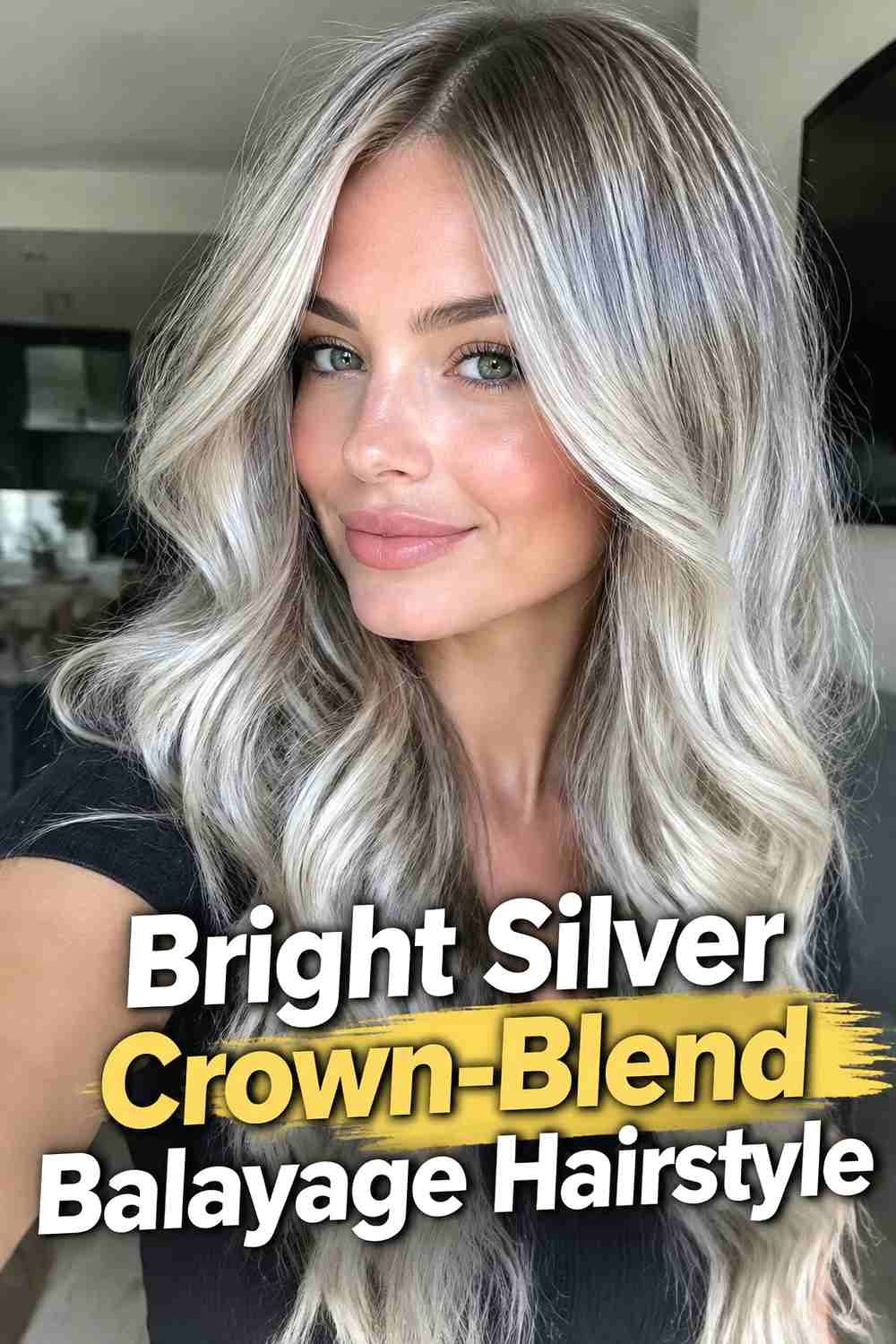
A crown-focused silver blend is useful when gray appears heavily around the part and upper sections while darker hair remains underneath. Instead of covering the bright natural growth, balayage can extend that silver through selected mids and ends so the crown no longer looks disconnected from the rest of the hair. Pale silver pieces can be placed across the top, then softened into medium gray as they move toward the lower layers. This creates a balanced transition while preserving deeper color beneath for dimension. It is especially effective on layered or voluminous hair because the brighter crown catches the light first. The result makes naturally silver roots look intentional and integrated rather than like a separate band of color.
Why It Works
Extending the natural crown brightness downward helps connect new gray growth with previously darker or colored lengths.
Pro Tip
Avoid making every lower section equally pale; preserving some depth underneath keeps the silver crown visible and dimensional.
12. Shadow Root Silver Balayage Hairstyle
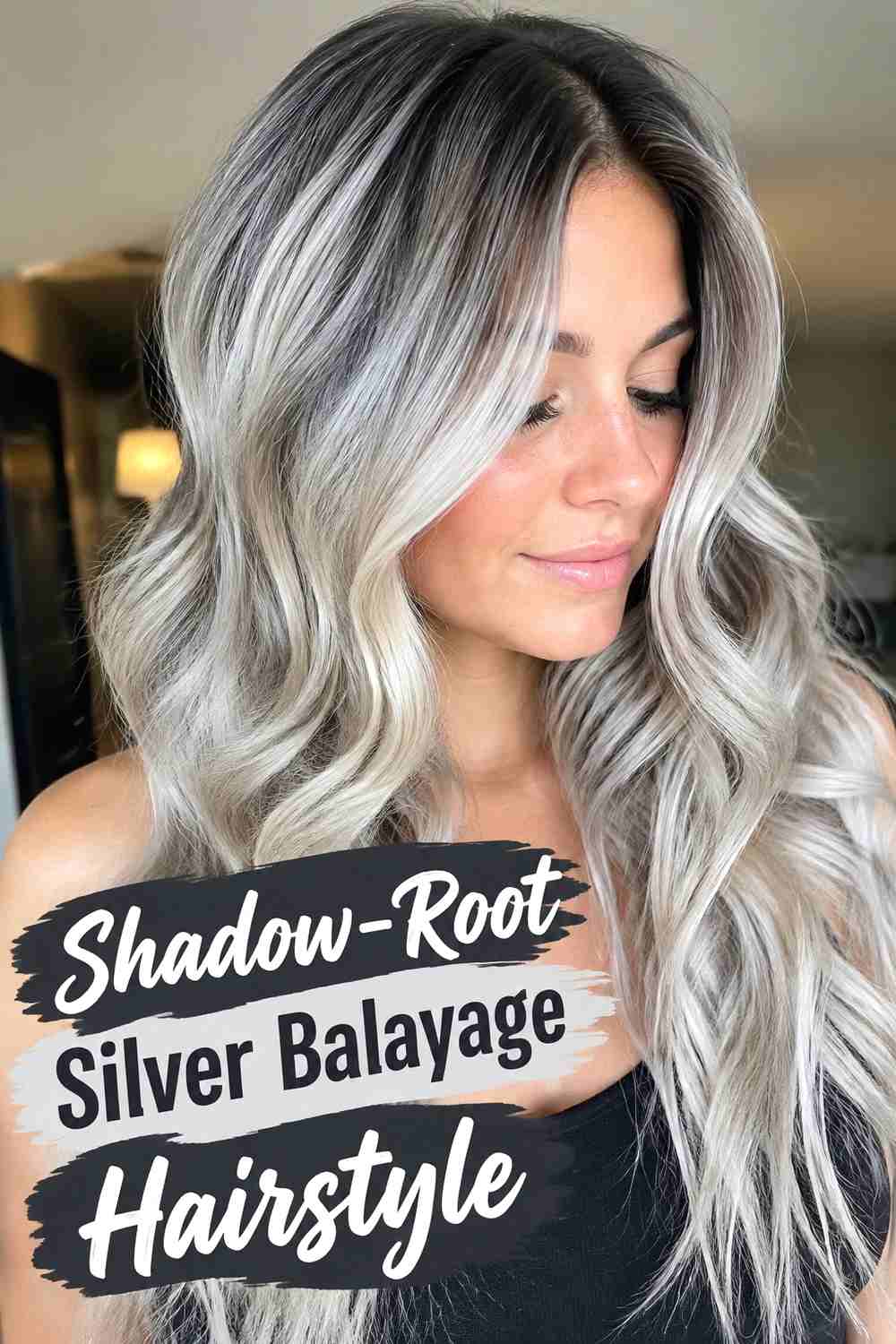
A shadow-root silver balayage deliberately keeps deeper color near the scalp before blending into lighter gray and silver through the lengths. This approach can work beautifully when natural gray is mixed with darker strands and you prefer not to chase complete root uniformity. The shadow can be charcoal, deep ash, or a softened version of the natural base, depending on how much contrast feels comfortable. From there, the balayage gradually becomes brighter, creating a smooth transition into silver mids and ends. The look is particularly flattering on waves because the root depth appears between lighter bends, adding dimension throughout the style. It also offers a modern way to incorporate natural gray while maintaining intentional darkness near the scalp.
Wear & Maintenance
The deeper root area can provide a softer grow-out than a fully lightened scalp-to-end result, especially when the shadow closely matches the natural darker strands.
Hair Type & Length
This technique can work from shoulder length onward, with longer hair providing more space for a gradual silver transition.
13. Multi Tonal Silver Long Wave Balayage Hairstyle
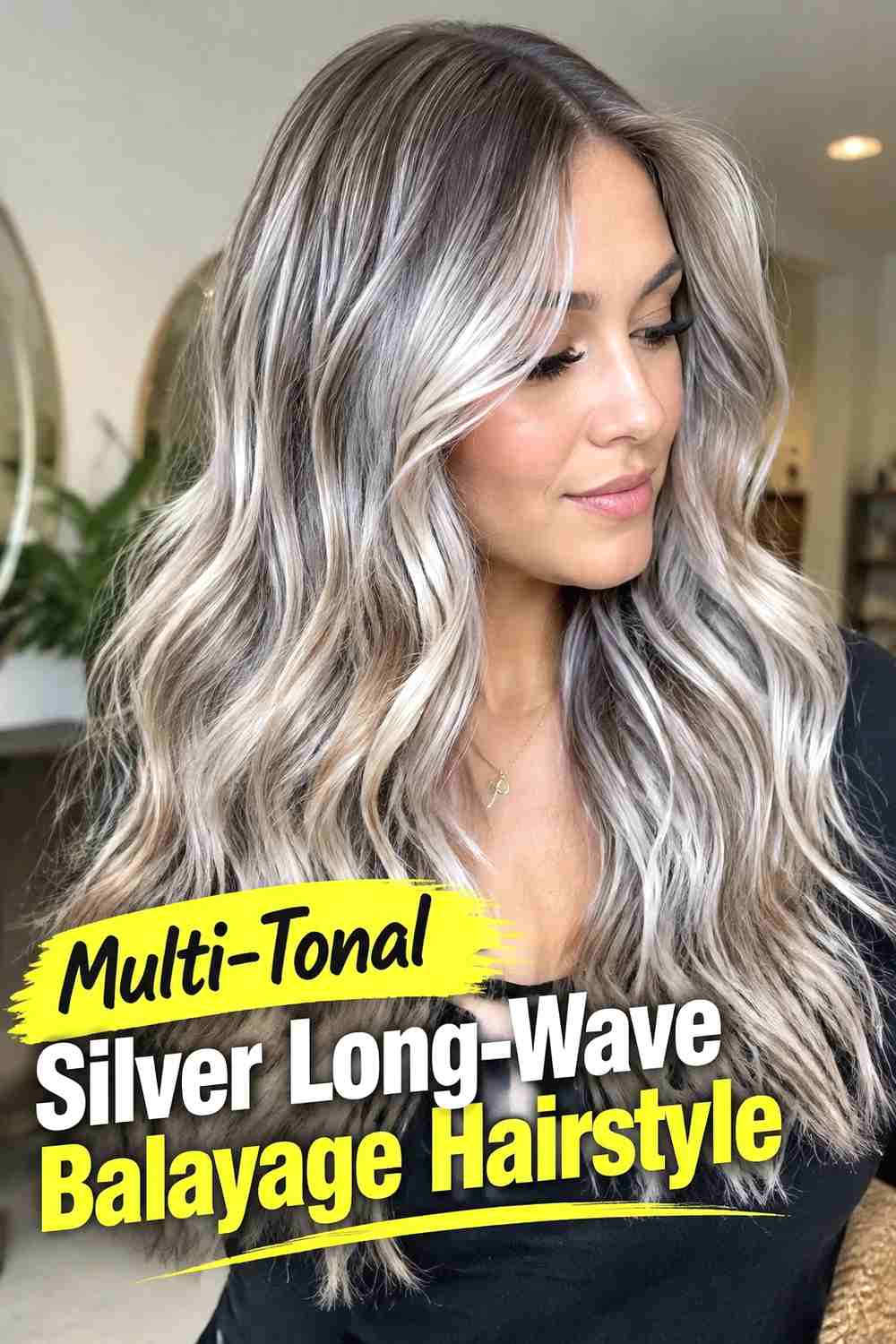
Long waves are an ideal canvas for multi-tonal silver because they allow several shades to appear without looking crowded. The balayage can combine pearl silver, soft gray, steel, and small areas of charcoal, using the brightest pieces near the face and through the outer lengths. Instead of creating one uniform silver shade, each wave reveals a different tone as the hair curves and catches the light. This approach works especially well when natural gray already varies across the head, since the existing strands can become part of the finished palette. Preserving deeper sections underneath keeps the look dimensional and prevents long hair from appearing washed out. The overall effect is flowing, reflective, and intentionally blended from multiple angles.
Styling Notes
Broad waves show off the tonal variation better than very tight curls. Leave some sections softer so the silver transitions remain visible.
Pro Tip
Ask for several related silver tones rather than one flat formula if your natural gray already contains noticeable light and dark variation.
How to Choose the Right Look
Start by studying where your natural gray is concentrated. If the temples and hairline are already bright, a smoky face frame, pearl blend, or icy silver money piece can work with that natural pattern. If most of the silver appears at the crown, extending it through a crown-focused balayage may create a smoother transition into darker lengths.
Contrast is another important factor. Salt-and-pepper, charcoal-to-silver, and platinum-end styles intentionally preserve noticeable light and dark differences. Steel silver and silver beige create a quieter finish when you prefer a more understated blend.
Consider your current length and texture as well. Long hair gives gradual color melts more room, while layered cuts can showcase strategically painted silver pieces around the surface. Waves naturally reveal multiple tones, whereas straighter textures may make placement lines more visible and require especially careful blending.
Maintenance should also influence the decision. Very pale platinum or icy silver may require more toning and conditioning, while rooted, smoky, and low-contrast blends can often appear softer as new gray grows in. Most importantly, work with the gray pattern you already have instead of assuming every section must become the same shade.
Final Thoughts
Silver blending balayage can make the transition to naturally gray hair feel more intentional without removing the contrast that makes gray beautiful. The most believable results usually combine several related tones rather than forcing every strand into identical silver. Choose a placement that works with your natural growth pattern, preferred brightness, haircut, and realistic maintenance routine.
FAQs
1. Is balayage a good option for blending naturally gray hair?
It can be. Balayage allows selected darker sections to be lightened or toned toward the existing gray, helping different colors transition more gradually without necessarily covering all natural silver.
2. What silver shade blends best with salt-and-pepper hair?
Smoky silver, steel, ash, and soft pearl tones can all work well. The best choice depends on whether the natural gray leans bright white, neutral silver, or deeper charcoal.
3. Can silver balayage help during a transition from dyed hair to natural gray?
Yes. Carefully placed lighter pieces can visually connect incoming gray roots with previously colored lengths, although the exact process depends on the existing artificial color and hair condition.
4. Does silver balayage need purple shampoo?
Not everyone needs it regularly. A toning product may help when silver begins looking warmer than desired, but excessive use can leave some hair looking dull or overly violet. Follow the care routine recommended for your specific color.
5. Which silver balayage style has the softest grow-out?
Low-contrast steel silver, shadow-root blends, soft ribbons, and charcoal-to-silver melts generally create gentler transitions because they deliberately retain depth near the roots.
Save your favorite silver blending balayage idea, share it with your stylist, and explore more gray-hair inspiration for a look that works with your natural color.