14 Sandy Blonde Hair With Low-Contrast Lowlights
Sandy blonde becomes softer and more dimensional when subtle lowlights add depth without creating obvious stripes or a dramatic shift from the base color.
Low-contrast lowlights are a natural partner for sandy blonde because they can introduce depth while keeping the overall color blended and understated. Instead of using noticeably dark ribbons, the lowlights stay close to the blonde base, often working through beige, taupe, soft dark blonde, or muted sandy tones. The result can make the color appear more dimensional without losing its light overall character.
Placement matters as much as tone. Fine interior lowlights can create quiet depth, while slightly deeper pieces near the roots or underneath the hair make the blonde look more grounded. Waves reveal more separation, sleek hair shows precise blending, and layers can highlight subtle shifts in tone. These ideas explore several believable ways to wear the combination.
Quick List
- Soft Sandy Blonde With Low Contrast Lowlights Hairstyle
- Beachy Sandy Blonde With Low Contrast Lowlights Hairstyle
- Rooted Sandy Blonde With Low Contrast Lowlights Hairstyle
- Dimensional Sandy Blonde With Low Contrast Lowlights Hairstyle
- Wavy Sandy Blonde With Low Contrast Lowlights Hairstyle
- Long Layered Sandy Blonde With Low Contrast Lowlights Hairstyle
- Lob Sandy Blonde With Low Contrast Lowlights Hairstyle
- Face Framing Sandy Blonde With Low Contrast Lowlights Hairstyle
- Fine Hair Sandy Blonde With Low Contrast Lowlights Hairstyle
- Thick Hair Sandy Blonde With Low Contrast Lowlights Hairstyle
- Cool Sandy Blonde With Low Contrast Lowlights Hairstyle
- Neutral Sandy Blonde With Low Contrast Lowlights Hairstyle
- Sun Kissed Sandy Blonde With Low Contrast Lowlights Hairstyle
- Polished Sandy Blonde With Low Contrast Lowlights Hairstyle
1. Soft Sandy Blonde With Low Contrast Lowlights Hairstyle
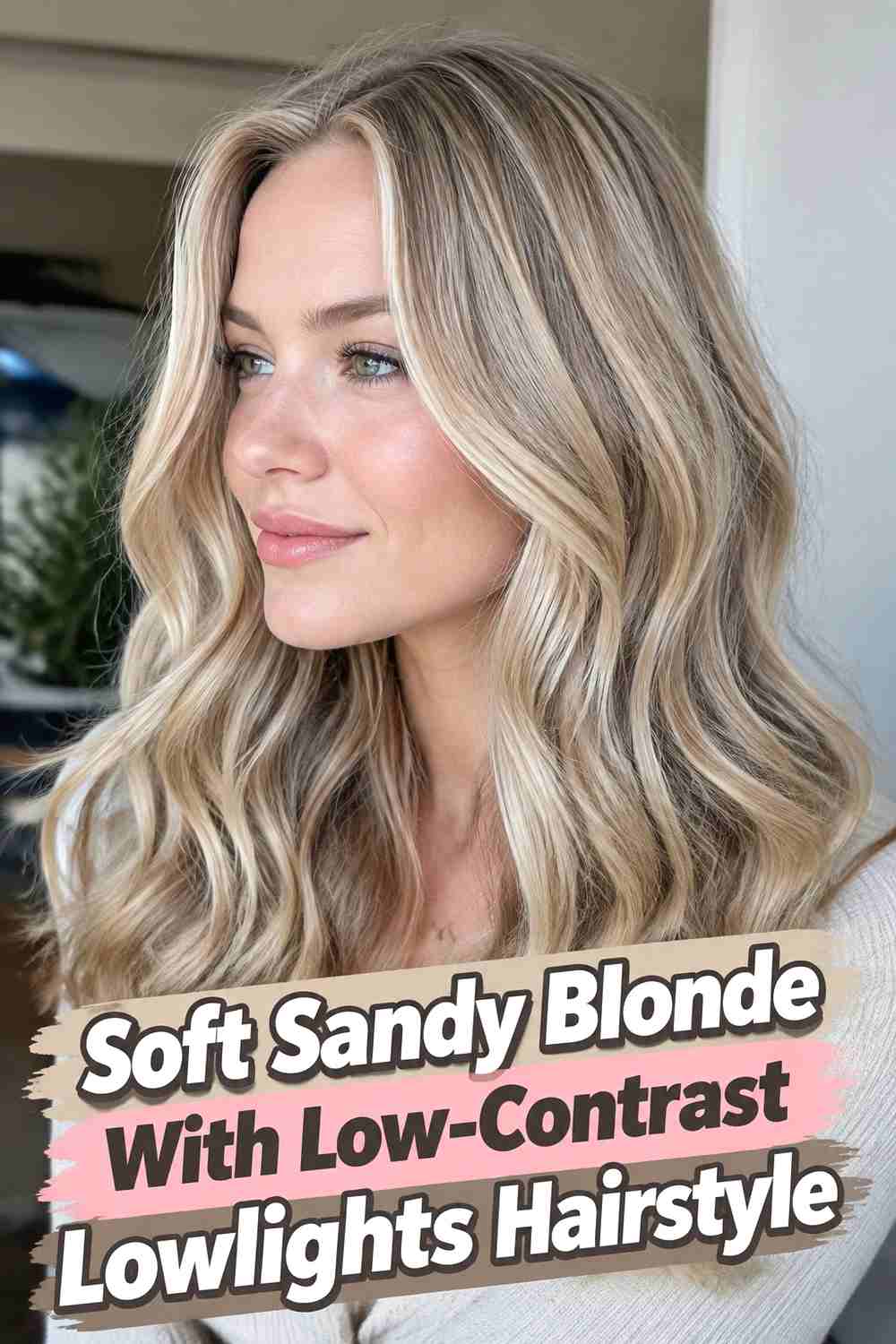
The Soft Sandy Blonde With Low-Contrast Lowlights Hairstyle keeps the entire palette closely blended, using muted deeper blonde pieces to create dimension without obvious dark streaks. A sandy beige base gives the color its neutral softness, while finely placed lowlights sit only slightly deeper through the interior and lower layers. This makes the hair look naturally varied rather than heavily highlighted. Soft waves or a relaxed blowout can reveal the tonal shifts gently, especially around the mid-lengths. The most believable result comes from maintaining a narrow difference between the base and lowlight shades. That way, the color gains definition and movement while still reading as one cohesive sandy blonde.
Why It Works
The close tonal relationship creates depth without breaking up the blonde too strongly, making the overall finish soft and natural-looking.
2. Beachy Sandy Blonde With Low Contrast Lowlights Hairstyle
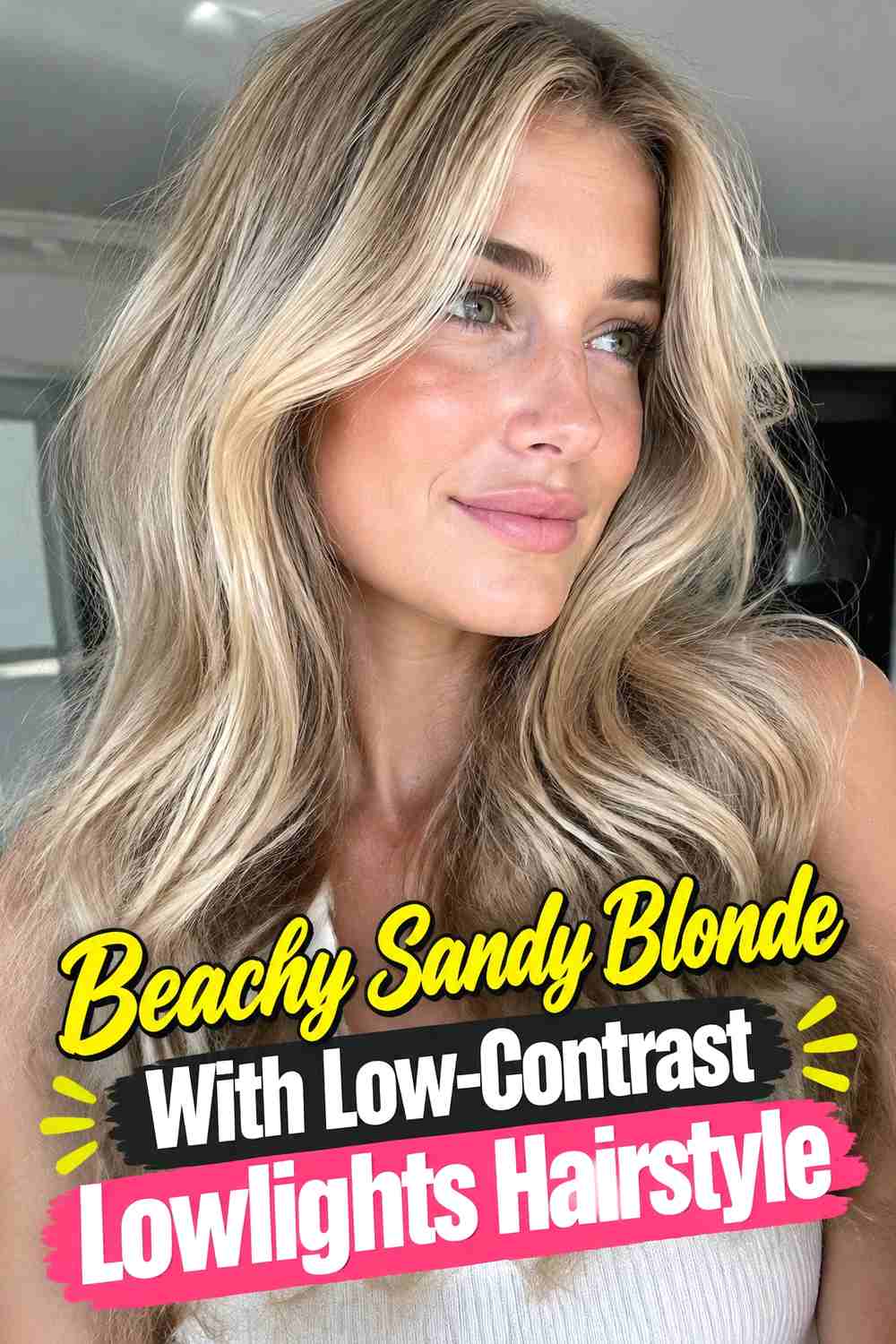
A Beachy Sandy Blonde With Low-Contrast Lowlights Hairstyle combines relaxed texture with subtle darker ribbons that become visible as the hair bends and separates. The base can stay sandy and slightly sun-faded in appearance, while muted beige-blonde or dark sandy lowlights run through the lower layers and interior. Loose, irregular waves make the color especially effective because every bend catches light differently. Instead of creating a bold highlighted pattern, the lowlights add just enough depth to keep the blonde from looking flat or overly uniform. Leaving some brighter ends around the front can maintain a summery finish, while the deeper pieces underneath provide balance and make the overall color feel more dimensional.
Styling Notes
Use loose waves rather than tight curls so the color placement remains visible without looking overly patterned. A lightweight texture spray can add separation without dulling the blonde.
3. Rooted Sandy Blonde With Low Contrast Lowlights Hairstyle
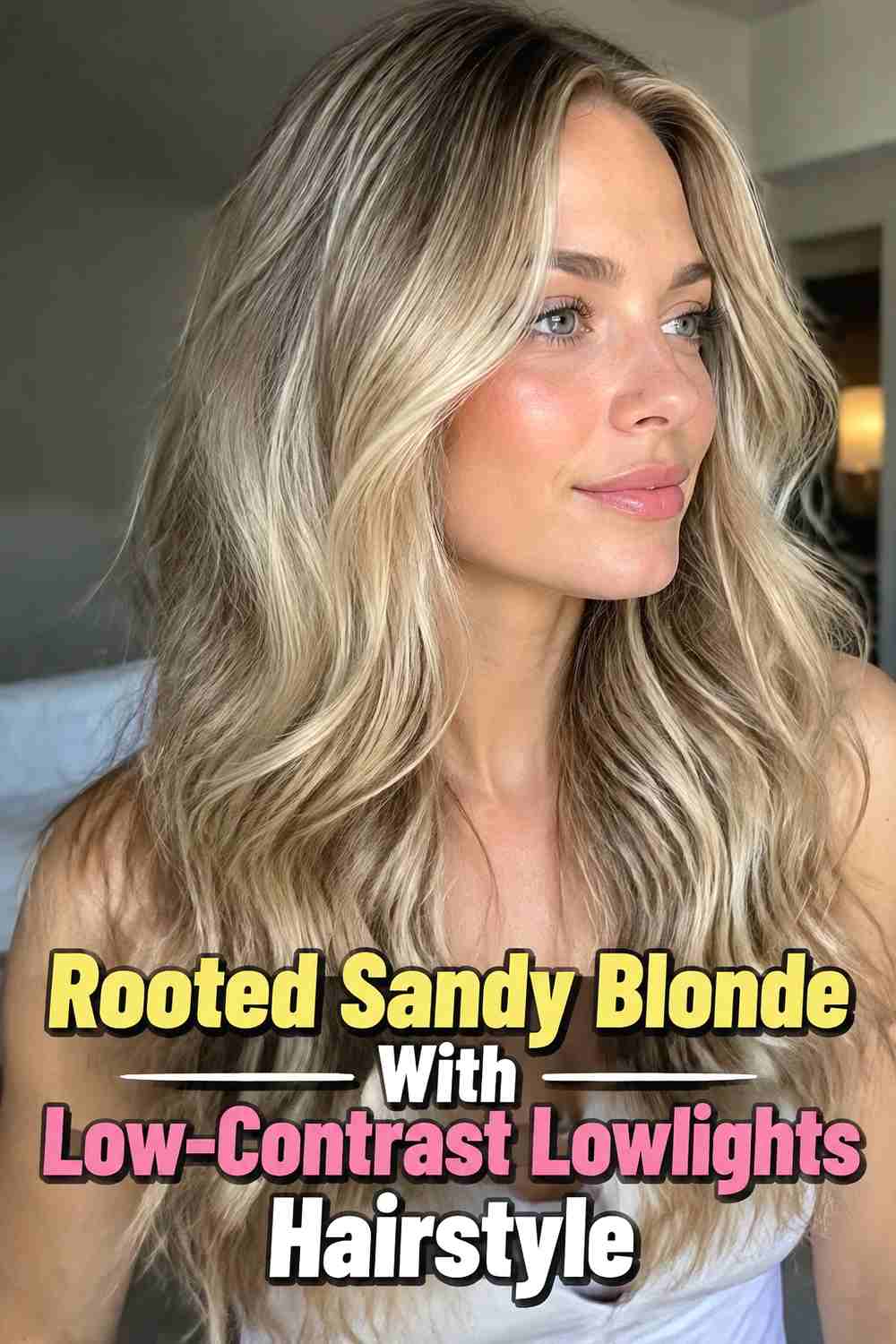
The Rooted Sandy Blonde With Low-Contrast Lowlights Hairstyle creates gentle depth near the scalp while carrying similar muted tones through the lengths. Instead of a sharply dark shadow root, the root area stays close to the sandy blonde base, giving the hair a slightly grounded appearance. Fine lowlights can then be placed beneath the surface and through selected mid-lengths to connect the root depth with the rest of the color. This approach can make regrowth feel less abrupt because the transition is intentionally soft. Straight, wavy, or layered hair can all show the effect differently, but the goal remains the same: natural-looking depth that supports the blonde rather than competing with it.
Wear & Maintenance
A softly rooted approach can create a more forgiving visual transition between color appointments, although exact maintenance depends on the starting shade and chosen formula.
4. Dimensional Sandy Blonde With Low Contrast Lowlights Hairstyle
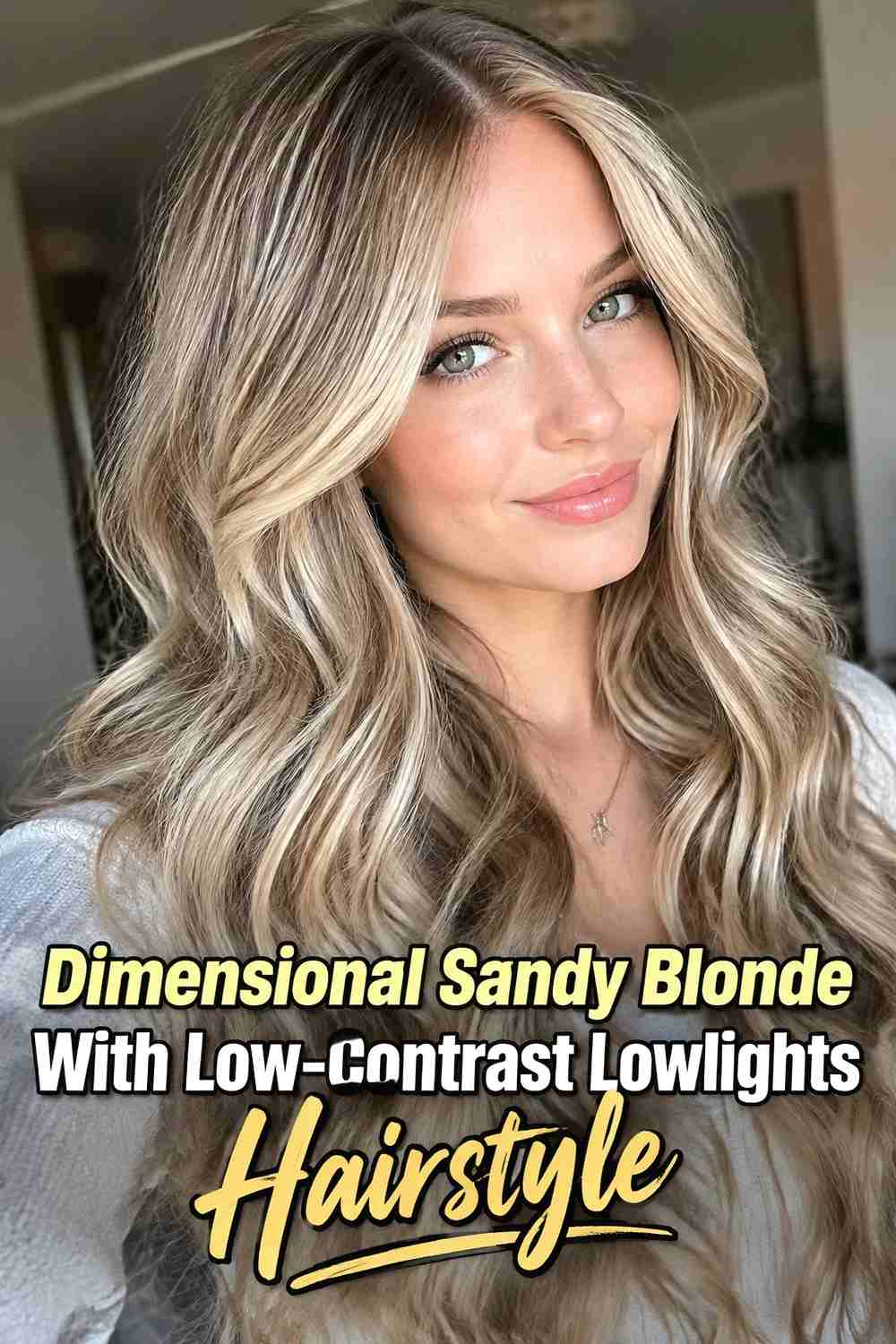
A Dimensional Sandy Blonde With Low-Contrast Lowlights Hairstyle uses several closely related tones instead of relying on a single blonde shade. The main sandy base can be paired with muted beige, soft taupe blonde, and slightly deeper dark-blonde lowlights to create a layered color effect. Because the contrast stays restrained, the different tones become most visible when the hair moves or catches natural light. This works particularly well on medium to long hair where there is enough length for subtle placement to develop. The lowlights can be concentrated beneath the surface while selected brighter pieces remain visible around the top. The result feels dimensional but still cohesive, avoiding the striped effect that stronger contrast can sometimes create.
Pro Tip
Keep the deeper pieces close to the base in tone and vary their placement rather than making every lowlight the same width.
5. Wavy Sandy Blonde With Low Contrast Lowlights Hairstyle
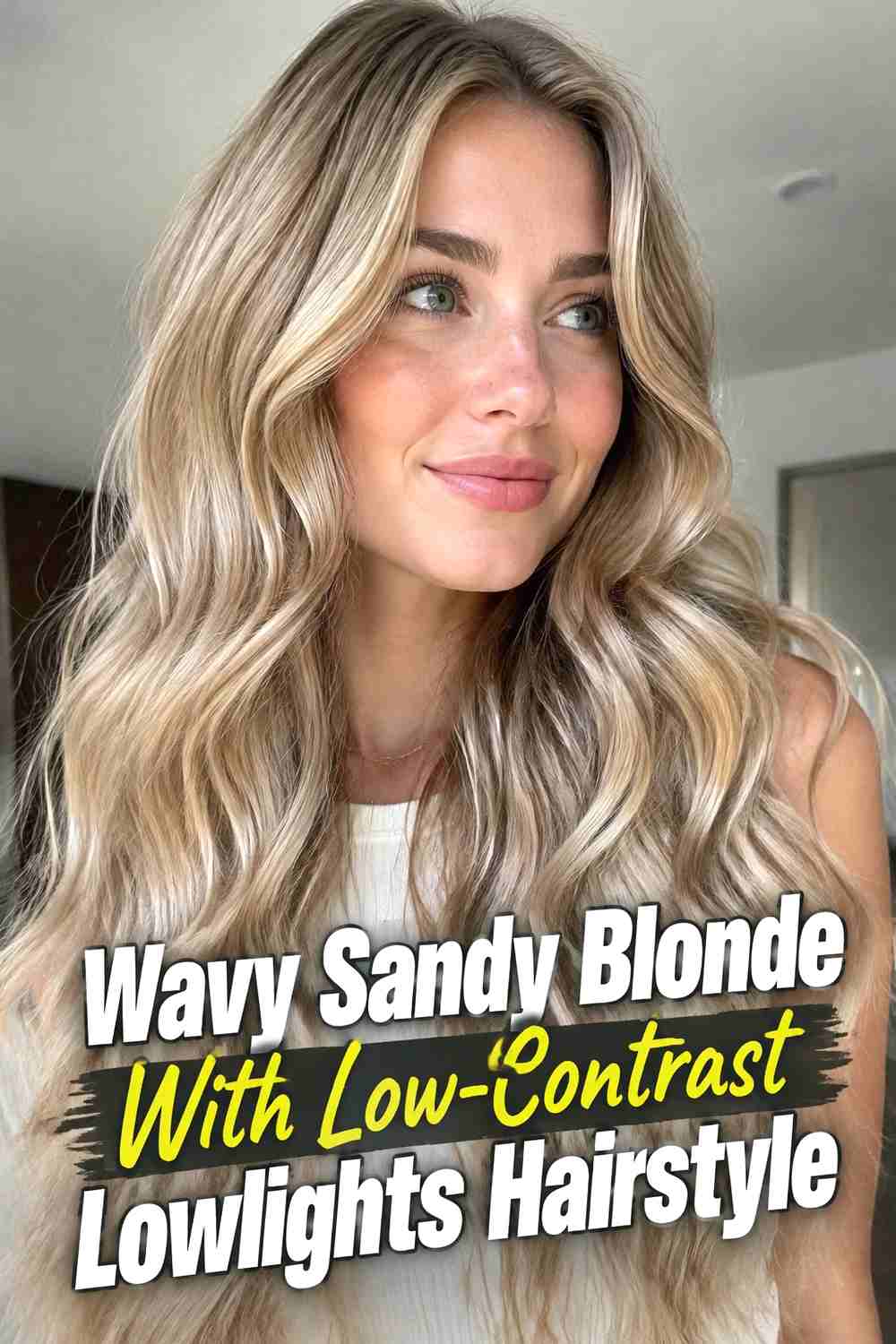
The Wavy Sandy Blonde With Low-Contrast Lowlights Hairstyle makes subtle color variation easier to see because each wave exposes different layers of hair. A neutral sandy blonde base can remain dominant while soft darker-blonde ribbons appear through the bends, especially around the mid-lengths and underneath. The lowlights should stay muted enough that they seem naturally integrated when the hair is straight but become more noticeable once waves create separation. Loose styling works particularly well because it gives the tones movement without making the placement appear too deliberate. Keeping a few lighter pieces around the front can also preserve brightness while the lowlights add depth farther back and beneath the surface.
Styling Notes
Alternate the direction of loose waves and leave some ends straighter. This creates a natural texture that shows off the color without turning every lowlight into a distinct stripe.
6. Long Layered Sandy Blonde With Low Contrast Lowlights Hairstyle
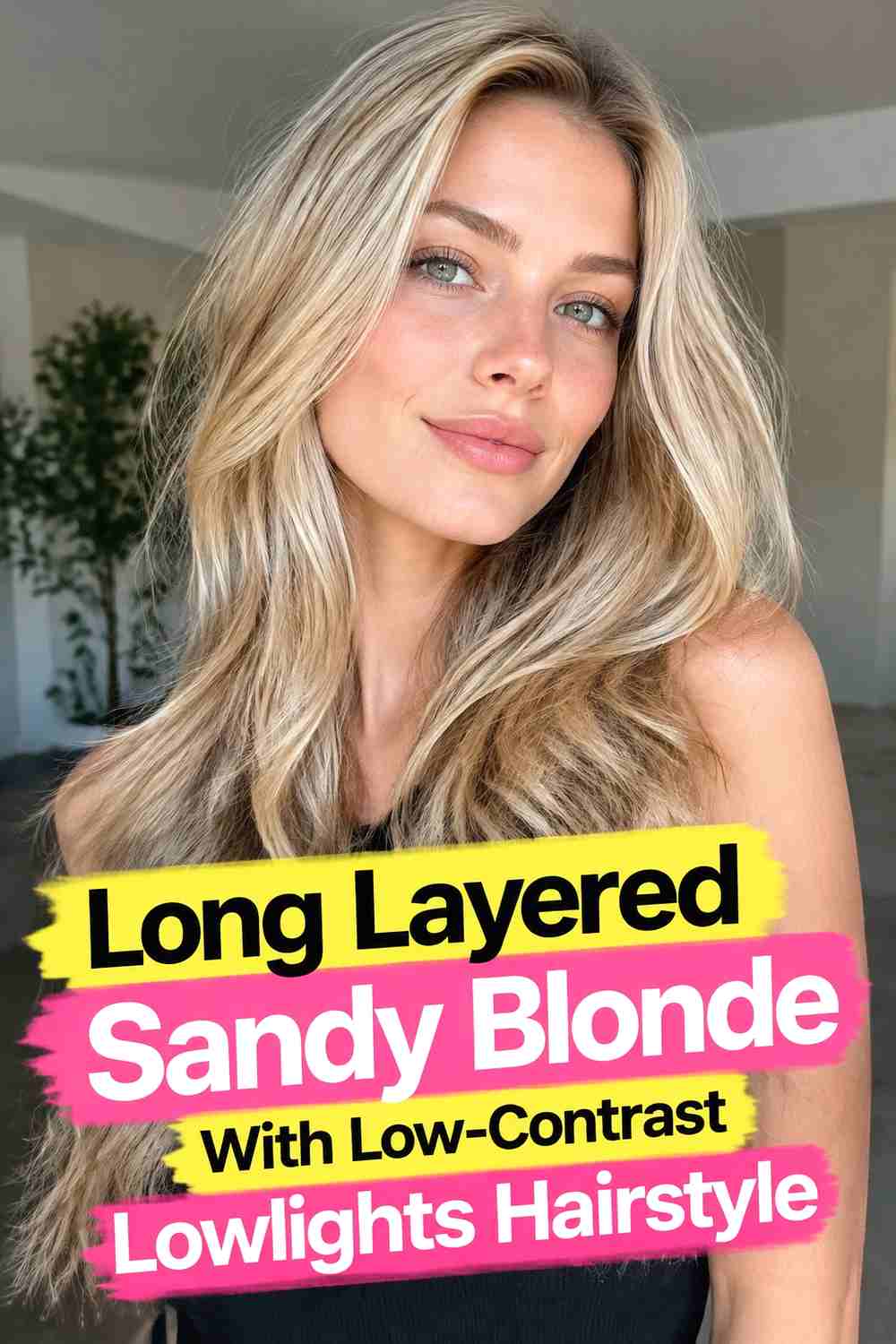
A Long Layered Sandy Blonde With Low-Contrast Lowlights Hairstyle uses cascading layers to reveal subtle tonal differences throughout the lengths. The sandy blonde base stays light and cohesive, while low-contrast deeper pieces are positioned through selected layers so they appear and disappear as the hair moves. Face-framing sections can remain slightly brighter to keep the front illuminated, with more muted beige or dark sandy tones concentrated through the interior. Long hair gives this color approach plenty of space to develop without requiring strong contrast. A blowout or soft waves can highlight the layering beautifully, but even a straight finish will show quiet dimension when the lowlights are fine and thoughtfully distributed.
Hair Type & Length
Medium to long hair gives lowlights more room to blend gradually. Layering can make the tonal changes easier to see without increasing the actual contrast.
7. Lob Sandy Blonde With Low Contrast Lowlights Hairstyle
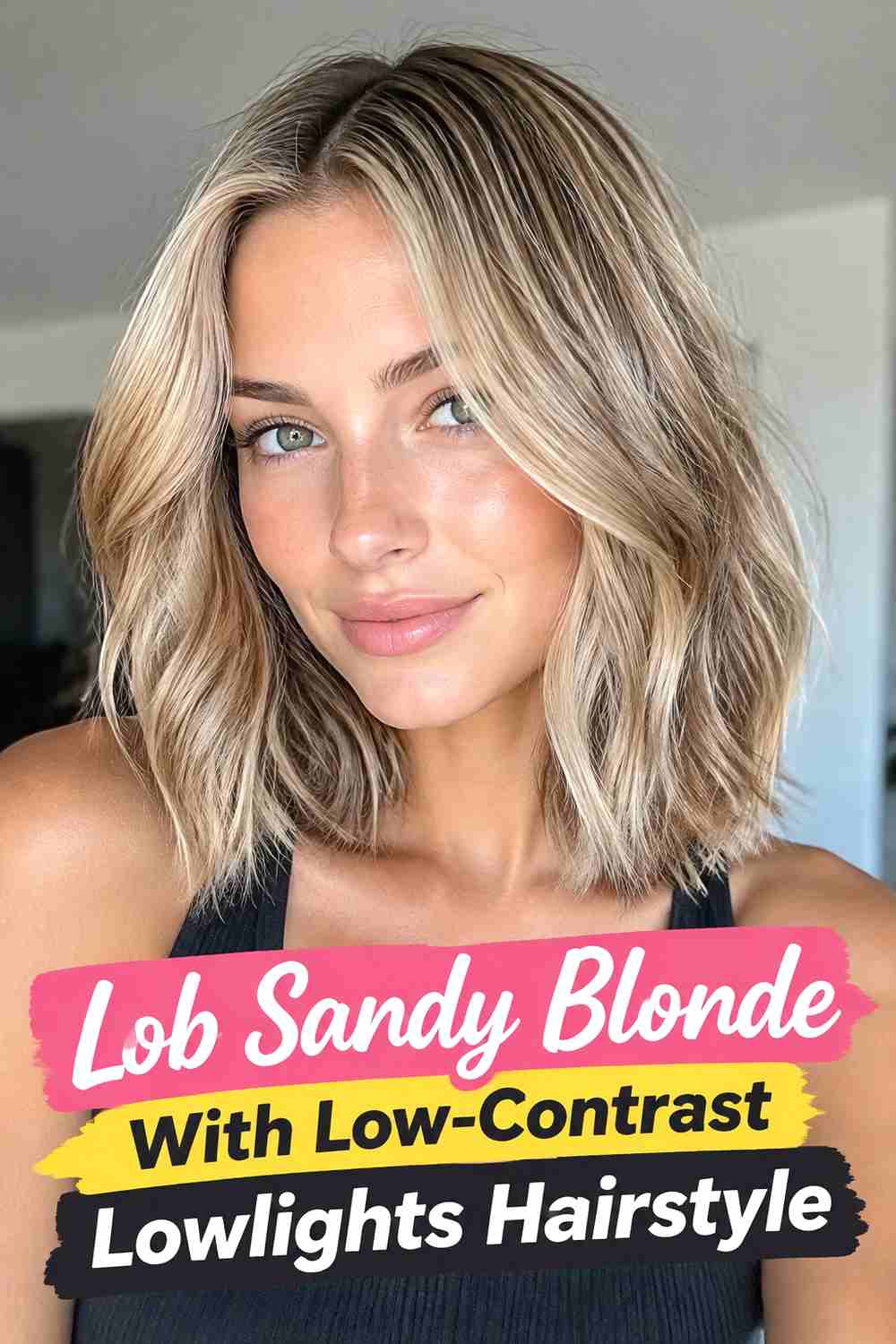
The Lob Sandy Blonde With Low-Contrast Lowlights Hairstyle brings subtle dimension to a shoulder-skimming cut without distracting from its clean silhouette. Sandy blonde keeps the overall finish soft, while fine lowlights add muted depth beneath the top layer and around the interior of the lob. Because shorter cuts have less length for color transitions, restrained placement is especially useful. Slightly deeper pieces near the nape or underneath can make the perimeter look more dimensional while brighter surface strands maintain the blonde impression. Worn straight, the color feels polished and blended; styled with bends, the lowlights become more visible. Either way, the contrast should stay gentle enough to support the haircut rather than create a striped appearance.
Best For
This combination works well when you want a structured medium-length cut but prefer hair color that feels softly dimensional instead of highly contrasted.
8. Face Framing Sandy Blonde With Low Contrast Lowlights Hairstyle
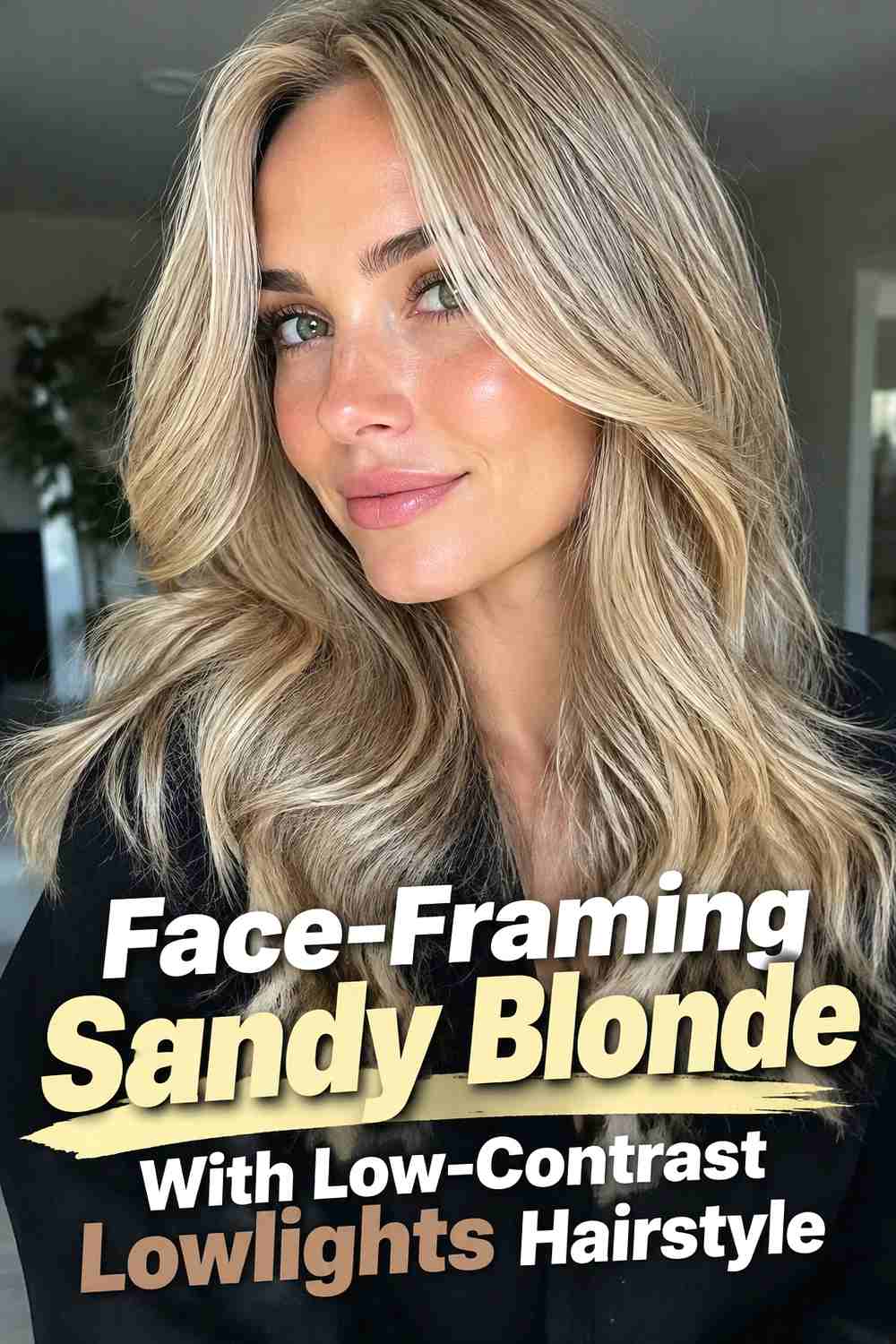
A Face-Framing Sandy Blonde With Low-Contrast Lowlights Hairstyle keeps the front brighter while using soft depth through the surrounding and interior sections. Sandy blonde pieces around the cheekbones can remain slightly lighter, creating a gentle illuminated effect without requiring a bold money piece. Behind them, low-contrast beige or darker sandy strands provide enough shadow to make the front feel more defined. The color transition should stay gradual so the brighter face frame blends naturally into the rest of the hair. This approach works especially well with layered cuts because the varying lengths display the tone changes in a soft sequence. Waves or a rounded blowout can further emphasize the dimensional framing.
Why It Works
The subtle darker background gives the lighter front pieces more definition even when the actual difference between shades remains small.
9. Fine Hair Sandy Blonde With Low Contrast Lowlights Hairstyle
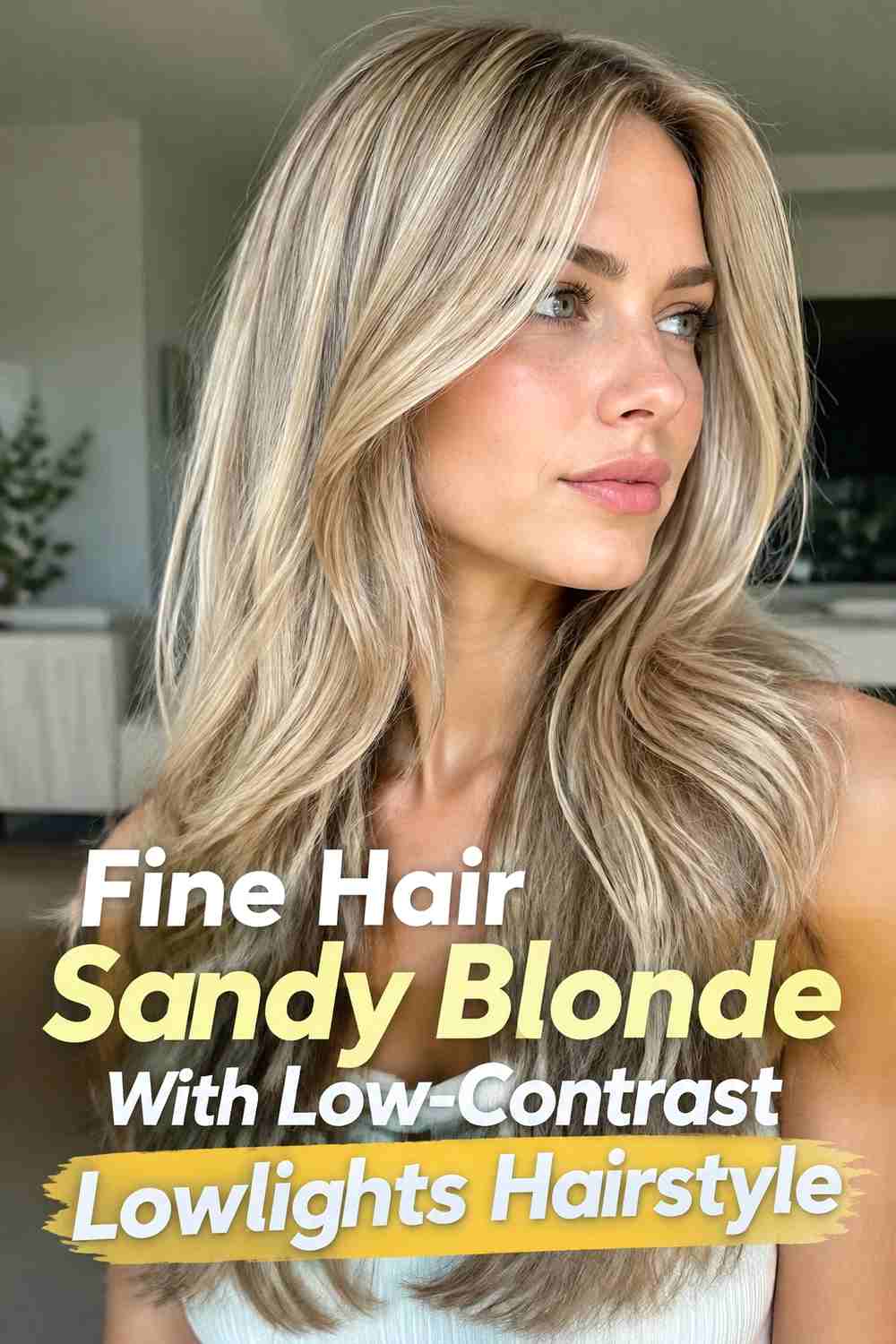
The Fine Hair Sandy Blonde With Low-Contrast Lowlights Hairstyle uses restrained placement so the color adds visual depth without making the hair look overly segmented. A sandy blonde base can stay dominant, with very fine deeper strands introduced selectively through the interior rather than heavily throughout every section. Keeping the surface relatively bright maintains an airy appearance, while the lowlights underneath create gentle shadow and variation. A blunt or lightly layered perimeter can help preserve fullness in the haircut itself, allowing the color to provide dimension without depending on extensive layering. Soft bends can make the tonal differences more noticeable, but a smooth finish also works when the lowlights are blended finely and remain close to the base shade.
Pro Tip
Choose fine, scattered lowlights rather than broad dark sections if the goal is subtle dimension that complements a lighter, delicate overall finish.
10. Thick Hair Sandy Blonde With Low Contrast Lowlights Hairstyle
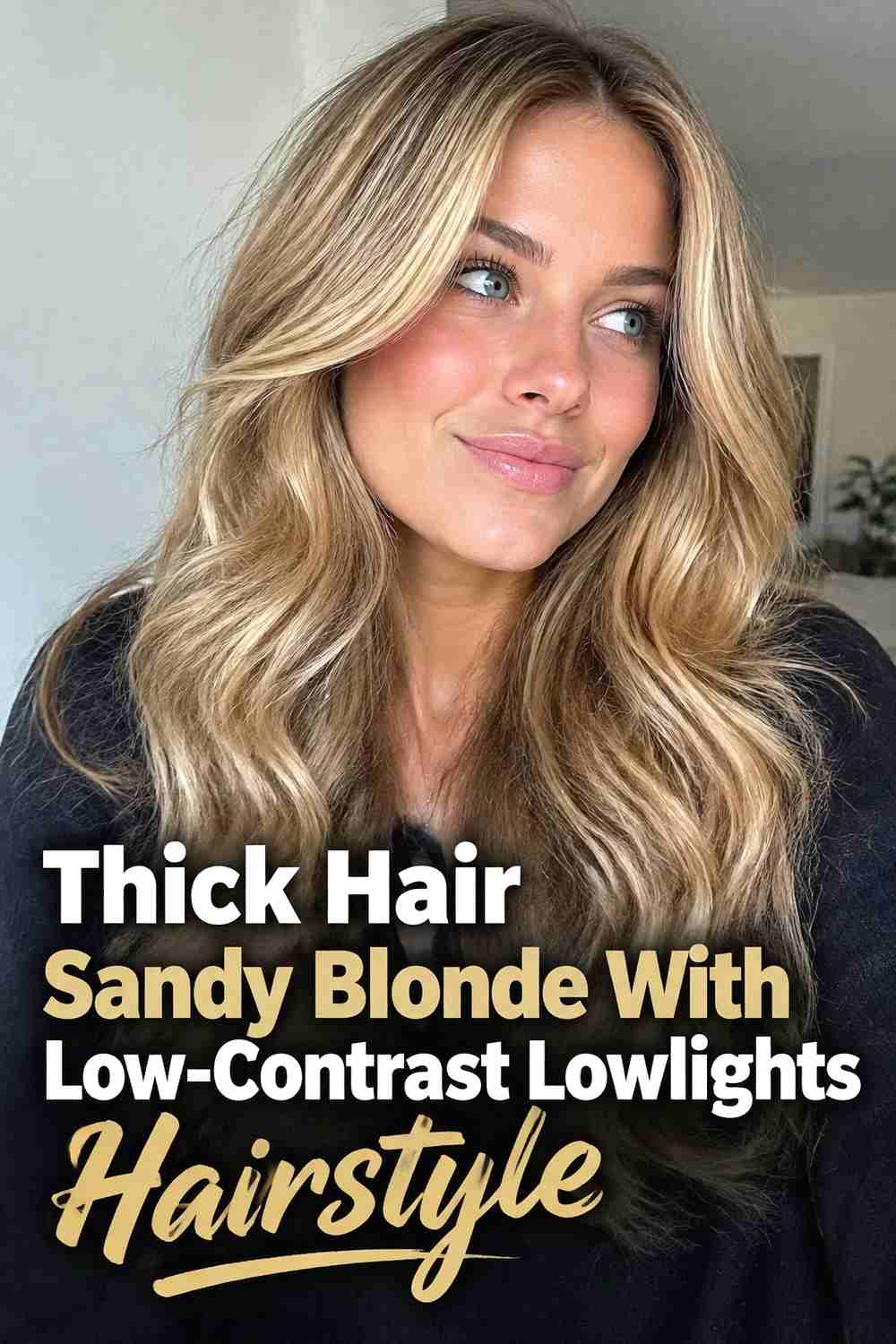
A Thick Hair Sandy Blonde With Low-Contrast Lowlights Hairstyle can use greater depth through the interior because dense hair naturally has more layers for the color to move through. The sandy blonde surface remains bright and neutral, while soft dark-blonde or beige lowlights are woven underneath to break up a large mass of one-tone color. Layering can reveal those deeper pieces gradually, especially around the mid-lengths and ends. The contrast should still remain restrained; the objective is dimension rather than obvious brunette ribbons. Waves, long layers, or a full blowout can all show the variation effectively. Keeping brighter pieces near the top ensures the overall impression stays clearly blonde despite the added interior depth.
Hair Type & Length
Dense medium or long hair provides enough volume for subtle lowlights to appear at different depths without overwhelming the sandy blonde base.
11. Cool Sandy Blonde With Low Contrast Lowlights Hairstyle
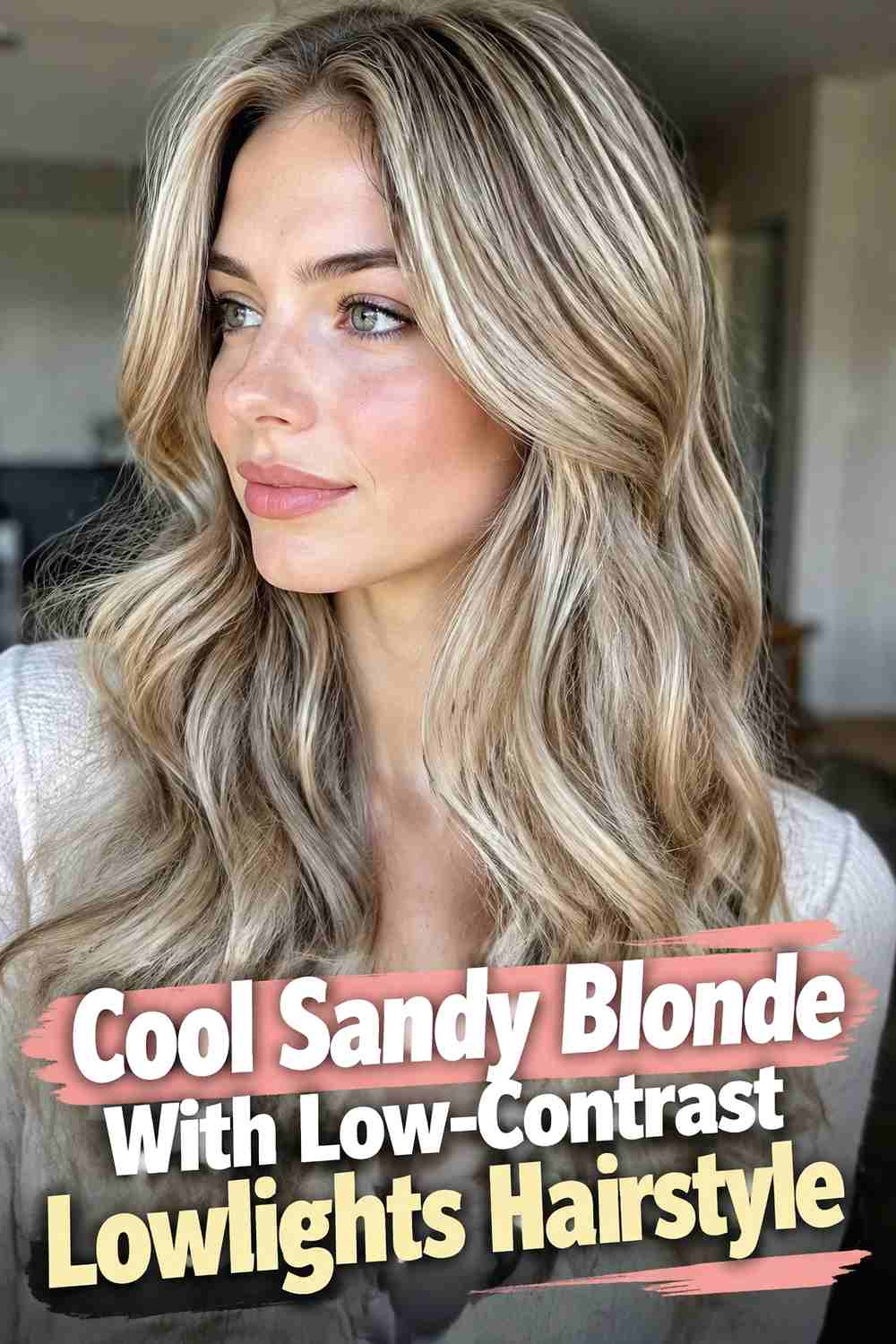
The Cool Sandy Blonde With Low-Contrast Lowlights Hairstyle leans toward muted beige, taupe, and soft ash-blonde tones rather than golden warmth. The lowlights stay only slightly deeper than the base, creating shadow without turning the color noticeably brown. This restrained palette can make the blonde feel sophisticated and softly blended, especially in natural daylight. Fine lowlights through the mid-lengths and underneath help prevent a cool sandy base from looking flat, while slightly lighter pieces near the surface retain brightness. Straight styling shows the tonal blend clearly, whereas waves make the different shades more dimensional. Maintaining balance is important so the color stays sandy and neutral-cool instead of drifting into an overly gray finish.
Wear & Maintenance
Tonal balance can shift between color appointments, so maintenance may include products or salon toning chosen to support the intended cool sandy finish.
12. Neutral Sandy Blonde With Low Contrast Lowlights Hairstyle
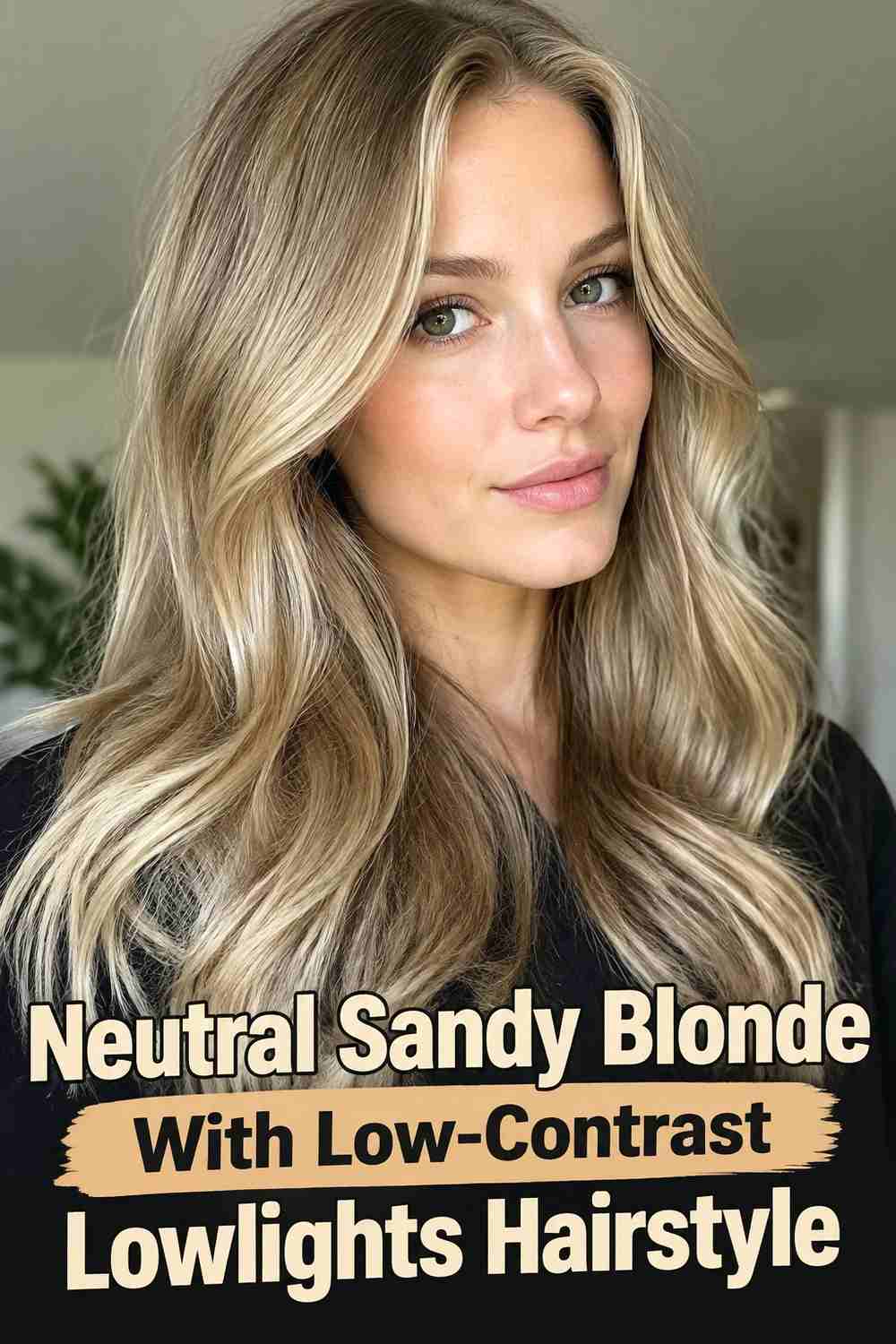
A Neutral Sandy Blonde With Low-Contrast Lowlights Hairstyle sits between distinctly warm and cool blonde, using balanced beige tones for a versatile finish. The base can remain softly sandy while lowlights in a slightly deeper neutral blonde create definition through the interior and lower layers. Because neither tone is dramatically golden nor ashy, the finished color feels understated and easy to pair with different styling finishes. A smooth blowout emphasizes the polished blend, while loose waves show more tonal separation. Keeping brighter strands around the surface prevents the deeper pieces from changing the overall blonde impression. This is a strong option when the goal is dimension that looks noticeable up close but subtle from a distance.
Why It Works
Balanced undertones allow the depth and brightness to coexist without one side of the palette dominating the finished color.
13. Sun Kissed Sandy Blonde With Low Contrast Lowlights Hairstyle
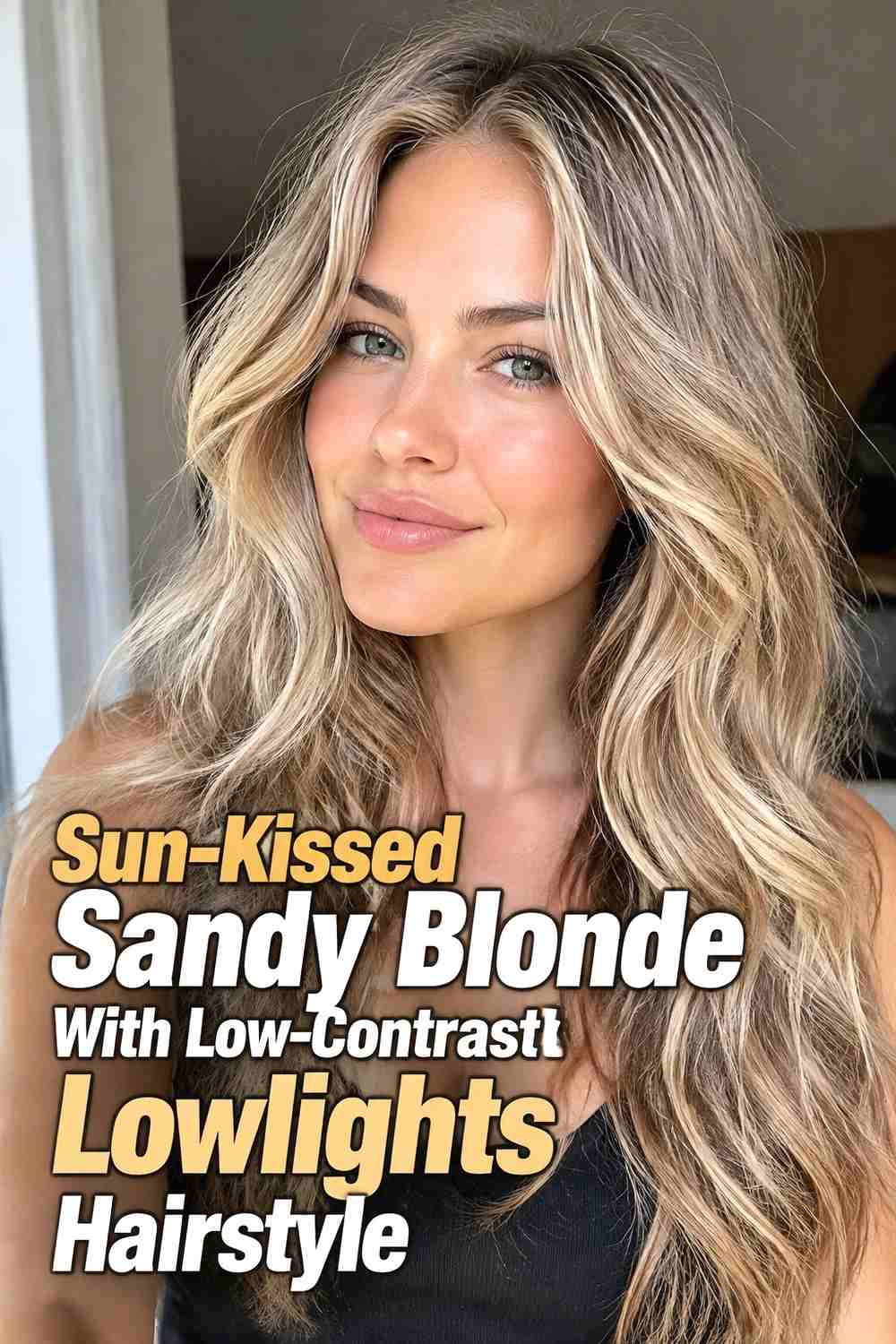
The Sun-Kissed Sandy Blonde With Low-Contrast Lowlights Hairstyle combines softly brightened surface pieces with muted depth underneath for a naturally varied effect. Instead of using dramatic highlights and dark lowlights together, the palette stays within a narrow sandy-blonde range. Slightly brighter strands can concentrate around the face and upper layers, while deeper beige-blonde pieces sit through the interior and lower sections. This creates the impression of hair that has developed natural tonal variation rather than undergone a high-contrast color transformation. Loose waves enhance the effect because different sections catch daylight at different angles. Keeping the lowlights soft is essential so the sun-kissed brightness remains the dominant impression.
Styling Notes
Use a soft wave or relaxed blowout to expose both the brighter surface pieces and deeper interior tones without making the color placement look overly precise.
14. Polished Sandy Blonde With Low Contrast Lowlights Hairstyle
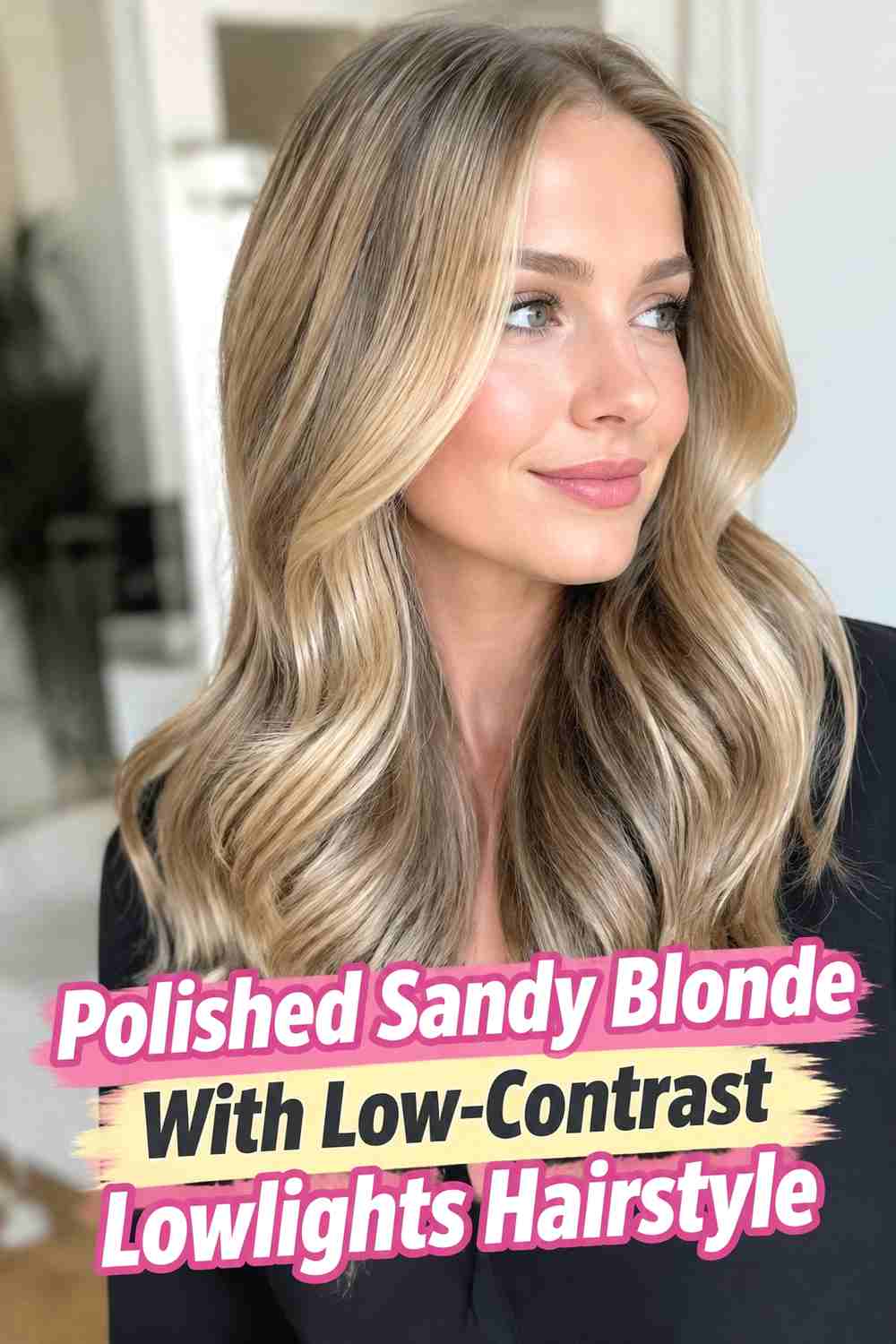
A Polished Sandy Blonde With Low-Contrast Lowlights Hairstyle shows subtle color dimension through smooth, glossy lengths and carefully blended tones. The sandy blonde base stays consistent across the surface, while low-contrast deeper blonde pieces create quiet shadow beneath it. Because sleek styling reveals placement clearly, the lowlights should be fine, softly distributed, and close enough to the base that no single ribbon appears harsh. A clean blowout or smooth straight finish allows natural shine to emphasize the difference between lighter and deeper sections. The result can feel refined without looking flat or overly uniform. A slight bend through the ends keeps the hairstyle moving while preserving the controlled, polished character of the color.
Wear & Maintenance
Use lightweight finishing products so shine remains visible without making the blonde look oily or causing the lowlight pattern to separate into heavy sections.
How to Choose the Right Look
Start with the tone of sandy blonde you prefer. Cool sandy shades lean toward muted taupe and ash-beige, while neutral versions balance warmth and coolness. If you like a brighter result, keep more light pieces around the surface and face while placing lowlights mainly through the interior.
Hair density should also influence placement. Fine hair often benefits from fewer, finer lowlights so the blonde remains airy. Thick hair can usually carry more interior depth because additional layers allow the lowlights to appear gradually rather than dominating the surface.
Texture changes how visible the color becomes. Waves expose multiple sections at once, making subtle lowlights look more dimensional. Sleek styles reveal the precision of the blend, while layers let deeper pieces appear as the hair moves.
Finally, decide how much maintenance fits your routine. A softly rooted version may make the visual grow-out less abrupt, while brighter face-framing pieces can need more attention if you want to maintain their placement and tone.
Final Thoughts
Sandy blonde with low-contrast lowlights is about subtle depth rather than dramatic color separation. By keeping the deeper pieces close to the base shade, you can create movement, shadow, and dimension while preserving the soft overall blonde effect. Choose the tone and placement that work best with your haircut, density, and preferred finish.
FAQs
1. What are low-contrast lowlights in sandy blonde hair?
They are slightly deeper strands placed within sandy blonde hair using shades close to the base color, creating subtle depth instead of a strongly striped effect.
2. What lowlight shades work with sandy blonde?
Muted beige blonde, taupe blonde, soft dark blonde, and similar sandy tones can work well when they stay close enough to the base to maintain low contrast.
3. Can lowlights make sandy blonde look more dimensional?
Yes. Strategically placed darker pieces can create visible depth and variation, particularly when waves or layers expose different sections of the hair.
4. Do lowlights need to be much darker than blonde hair?
No. For a low-contrast result, the deeper shade should remain relatively close to the sandy blonde base rather than creating an obvious dark ribbon.
5. Do low-contrast lowlights work on fine hair?
They can. Fine, selective placement is usually more suitable than broad dark sections when the goal is to maintain an airy overall appearance.
Save your favorite sandy blonde lowlight idea, share these looks with someone planning a color refresh, and explore more dimensional blonde hairstyle inspiration.