14 Sculpted S-Wave Lob Hairstyles for Polished, Glossy Movement
Sculpted S-waves give the classic lob a polished upgrade, combining glossy curves, controlled volume, and graceful movement in one effortlessly photogenic look.
The S-wave lob sits in the sweet spot between structured styling and soft movement. Instead of creating separate ringlets, the hair bends back and forth in smooth curves that form a visible “S” pattern. On a long bob, those bends can make the cut look fuller, more dimensional, and especially polished without hiding its clean silhouette.
The final effect can change dramatically depending on your part, wave size, layers, finish, and root volume. Some versions feel sleek and editorial, while others are brushed out, airy, or inspired by classic Hollywood styling. When choosing a look, consider how much definition you want, how often you plan to restyle it, and whether your lob is blunt, layered, or slightly asymmetrical.
Quick List
- Classic Glossy S Wave Lob Hairstyle
- Deep Side Part S Wave Lob Hairstyle
- Center Part Sculpted S Wave Lob Hairstyle
- Soft Brushed S Wave Lob Hairstyle
- Voluminous Root Lift S Wave Lob Hairstyle
- Sleek Defined S Wave Lob Hairstyle
- Face Framing S Wave Lob Hairstyle
- Textured Tousled S Wave Lob Hairstyle
- Hollywood Inspired S Wave Lob Hairstyle
- Blunt End S Wave Lob Hairstyle
- Layered S Wave Lob Hairstyle
- Tucked Behind The Ear S Wave Lob Hairstyle
- Wet Look Sculpted S Wave Lob Hairstyle
- Asymmetrical S Wave Lob Hairstyle
1. Classic Glossy S Wave Lob Hairstyle
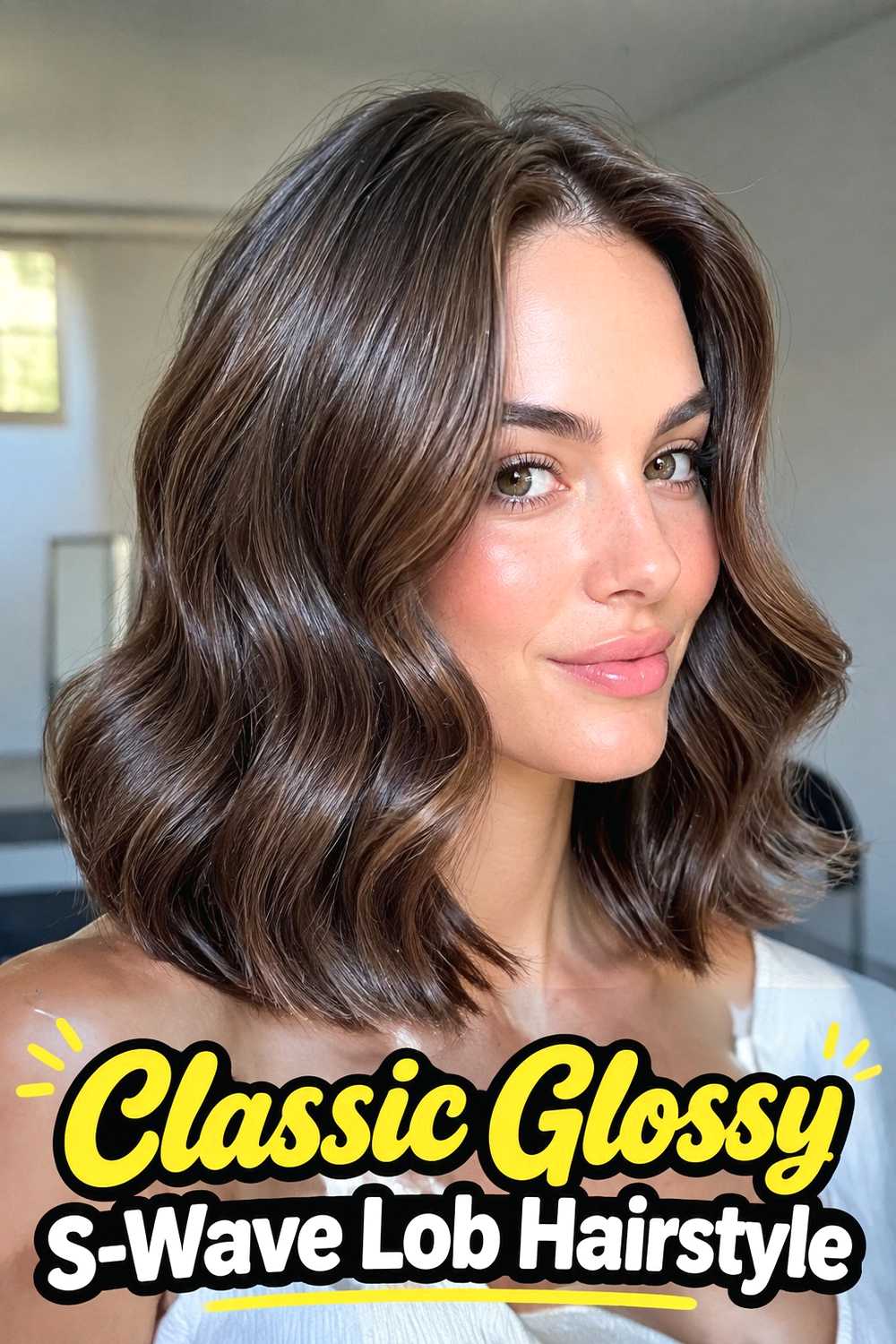
The Classic Glossy S-Wave Lob Hairstyle keeps the shape simple so the polished wave pattern becomes the main feature. Smooth bends travel from around cheek level toward the ends, creating a graceful rhythm without turning into tight curls. A light-reflective finish makes each curve easier to see and gives the lob a refined, salon-styled appearance. This version works particularly well on a one-length or lightly layered lob because the ends remain substantial and clean. Use moderate rather than extreme tension when forming the waves so the hair still has natural movement. A flexible finishing spray can help maintain definition without making the surface look stiff.
Styling Notes
Create each bend in the same direction across a section, then reverse the direction for the next curve. Allow the hair to cool before lightly shaping it with your fingers.
Best For
This option suits anyone wanting a polished S-wave that still feels wearable for dinners, events, work, or elevated everyday styling.
2. Deep Side Part S Wave Lob Hairstyle
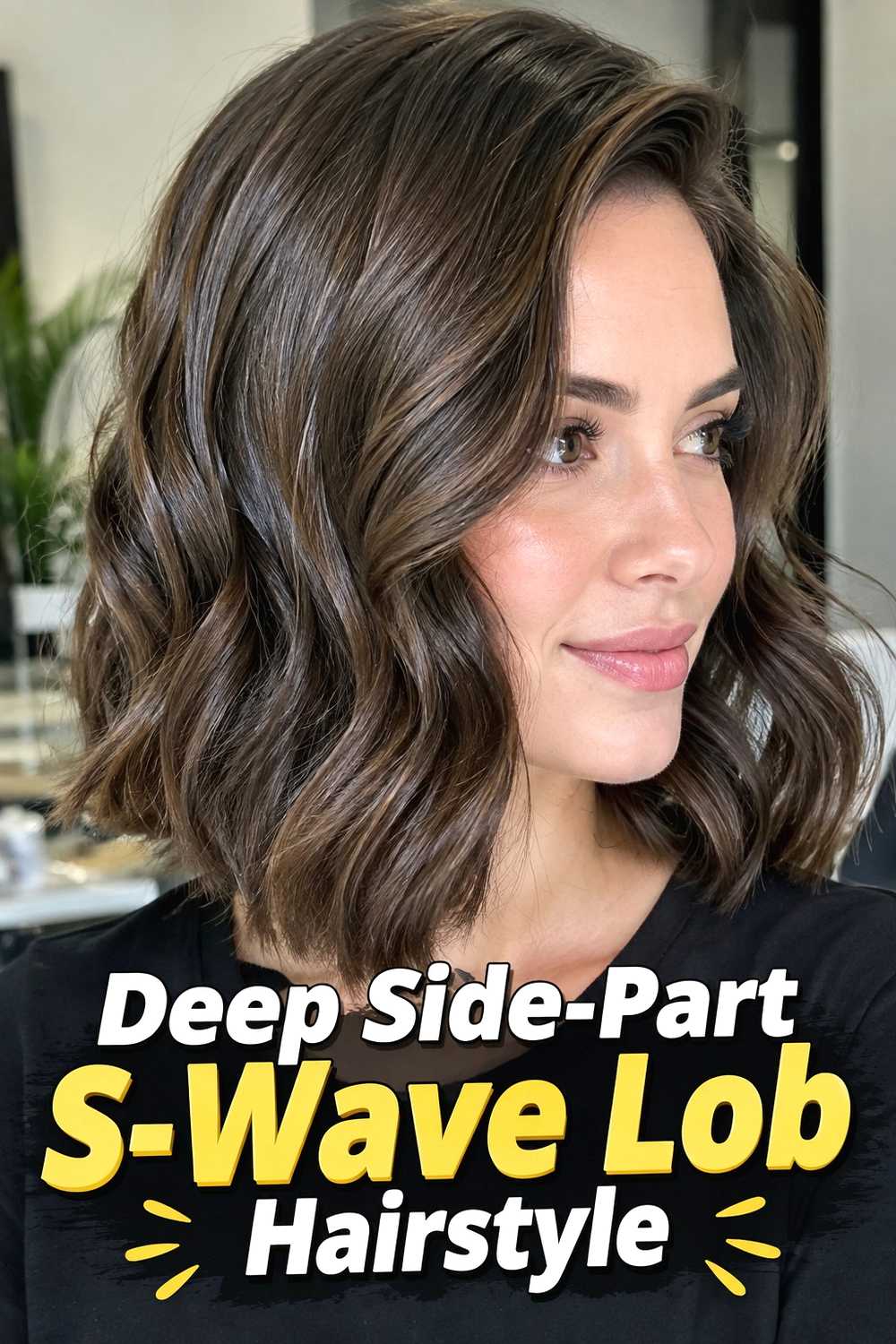
A deep side part adds immediate drama to an S-wave lob by shifting more hair to one side and creating natural height above the forehead. The heavier side can be shaped into wide, sculptural waves, while the lighter side stays closer to the head for contrast. This imbalance gives the hairstyle a glamorous silhouette without requiring extreme volume everywhere. It can be especially striking when the first bend sweeps away from the face and exposes the cheekbone area. Because the style depends on a defined part, start with clean sectioning before forming the waves. Keep the roots smooth enough to maintain polish while preserving a small amount of lift.
Why It Works
The deeper part exaggerates the flowing shape of the S-waves and gives an otherwise classic lob a more dramatic visual direction.
Pro Tip
Set the heavier side in place while it cools, then loosen only the lower waves if you want a softer finish.
3. Center Part Sculpted S Wave Lob Hairstyle
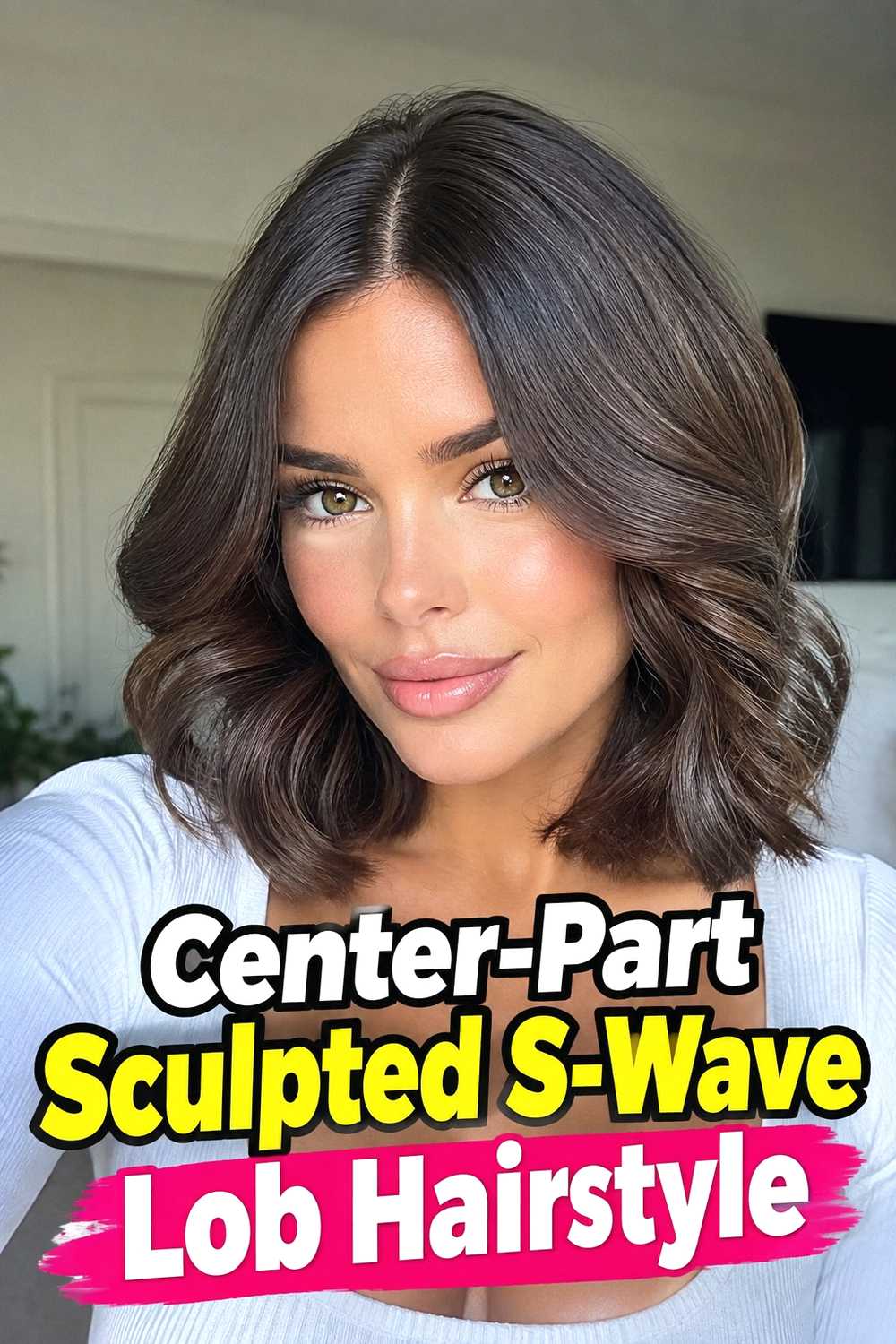
The Center-Part Sculpted S-Wave Lob Hairstyle emphasizes symmetry, making it a strong choice for anyone who loves clean, balanced styling. Waves begin at similar heights on both sides of the face and mirror one another as they move toward the ends. The result feels modern and controlled, especially when the hair has a smooth surface with just enough shine to define each bend. A center part also makes inconsistencies between the two sides more noticeable, so careful sectioning matters. Rather than curling every section separately, shape broader panels of hair to maintain a unified S-pattern. Leaving the ends slightly straighter can keep the lob looking contemporary rather than overly curled.
Styling Notes
Use similar section sizes on both sides and compare the first face-framing bends before finishing the back sections.
Hair Type & Length
A chin-to-collarbone lob with enough length to form at least two visible bends will show this symmetrical pattern most clearly.
4. Soft Brushed S Wave Lob Hairstyle
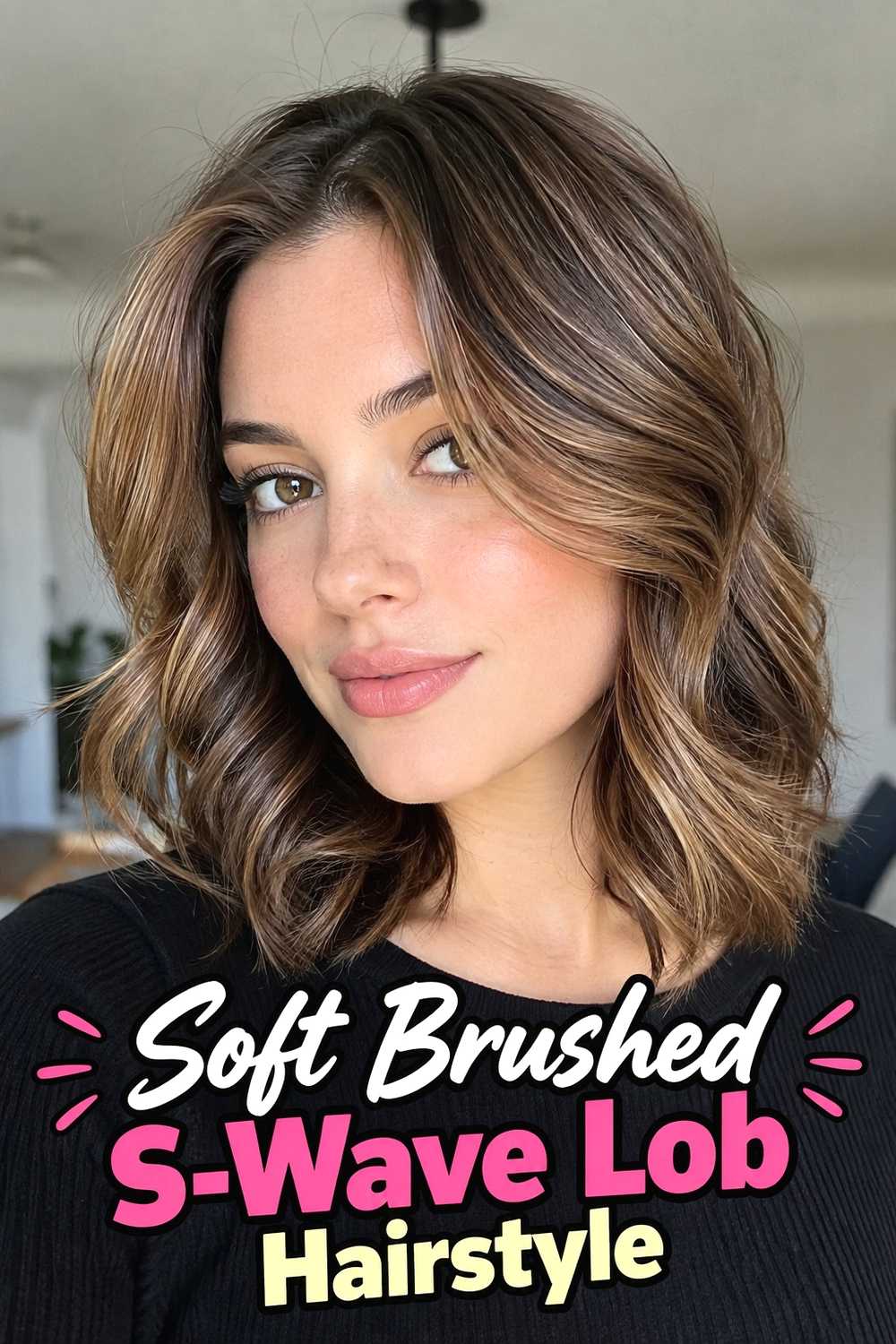
The Soft Brushed S-Wave Lob Hairstyle takes the precision of sculpted waves and relaxes it into something lighter and more touchable. The S-pattern remains visible, but the edges of each bend are softened so neighboring sections blend together instead of appearing individually curled. This gives the lob an airy, elegant texture with subtle volume through the middle and ends. It is especially useful when you want polished movement without an overly formal finish. Form slightly more defined waves than you ultimately want, let them cool completely, and then gently brush through them. Too much brushing can erase the pattern, so work gradually until the curves look connected but still recognizable.
Why It Works
Brushing combines separate waves into a continuous shape, helping the hairstyle look fuller and more fluid.
Wear & Maintenance
Carry a wide-tooth comb rather than a fine brush if you need to refresh the shape without making it too fluffy.
5. Voluminous Root Lift S Wave Lob Hairstyle
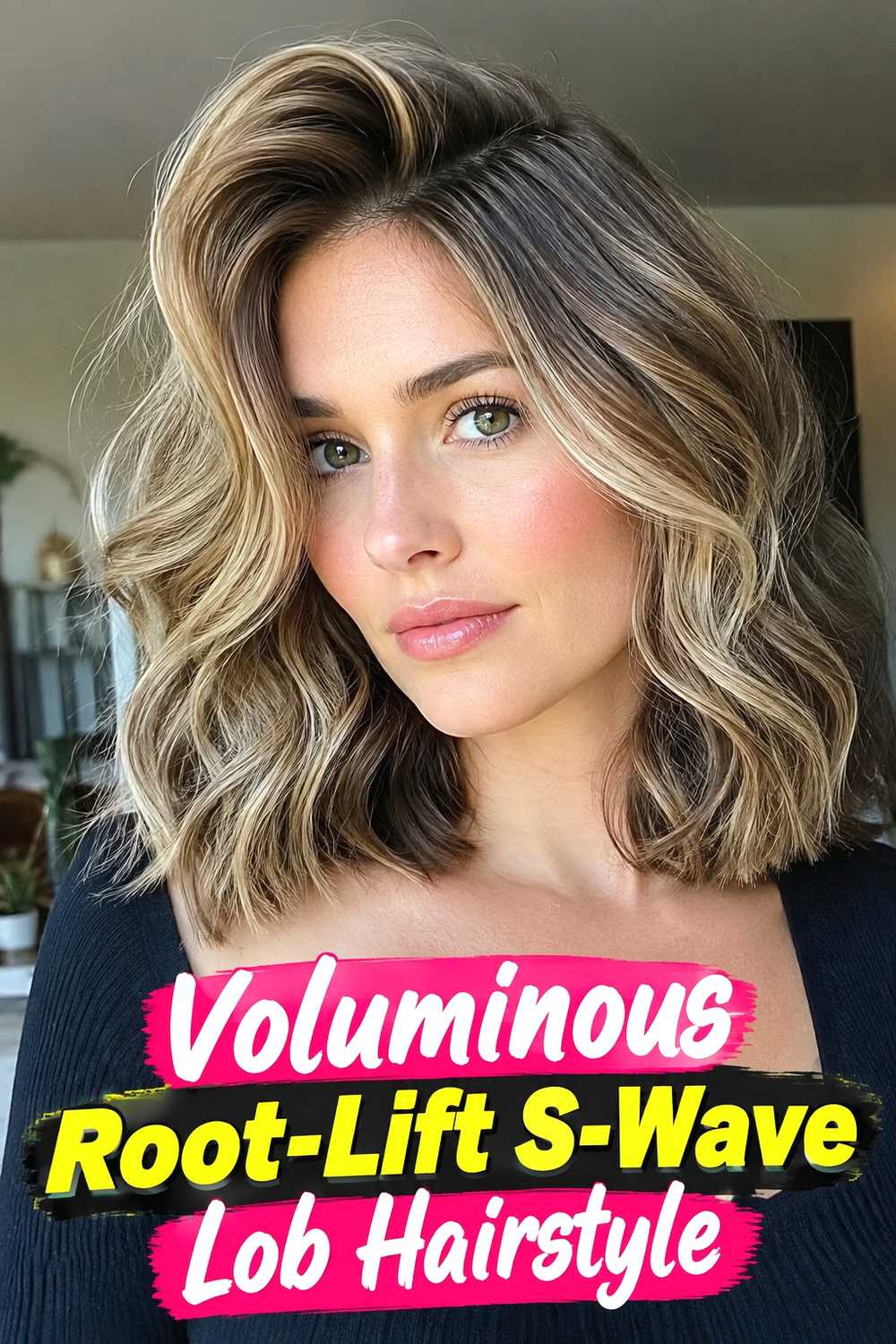
This variation pairs sculpted mid-length bends with deliberate lift at the roots, creating a fuller silhouette from crown to ends. Instead of pressing the top completely flat, the Voluminous Root-Lift S-Wave Lob Hairstyle maintains a soft cushion of height before flowing into structured S-curves. That extra elevation can be especially useful on finer or naturally flatter hair, although the amount of lift should still look proportional to the lob’s length. Concentrate volume near the crown and front rather than teasing every section. The lower waves can remain smooth and glossy so the hairstyle feels polished instead of overly expanded. Lightweight products are generally easier to layer without collapsing the root area.
Styling Notes
Dry the roots in the opposite direction of their natural fall, then return them to position before creating the S-waves.
Best For
Choose this look when you want the lob to appear more buoyant while keeping the ends controlled and sculpted.
6. Sleek Defined S Wave Lob Hairstyle
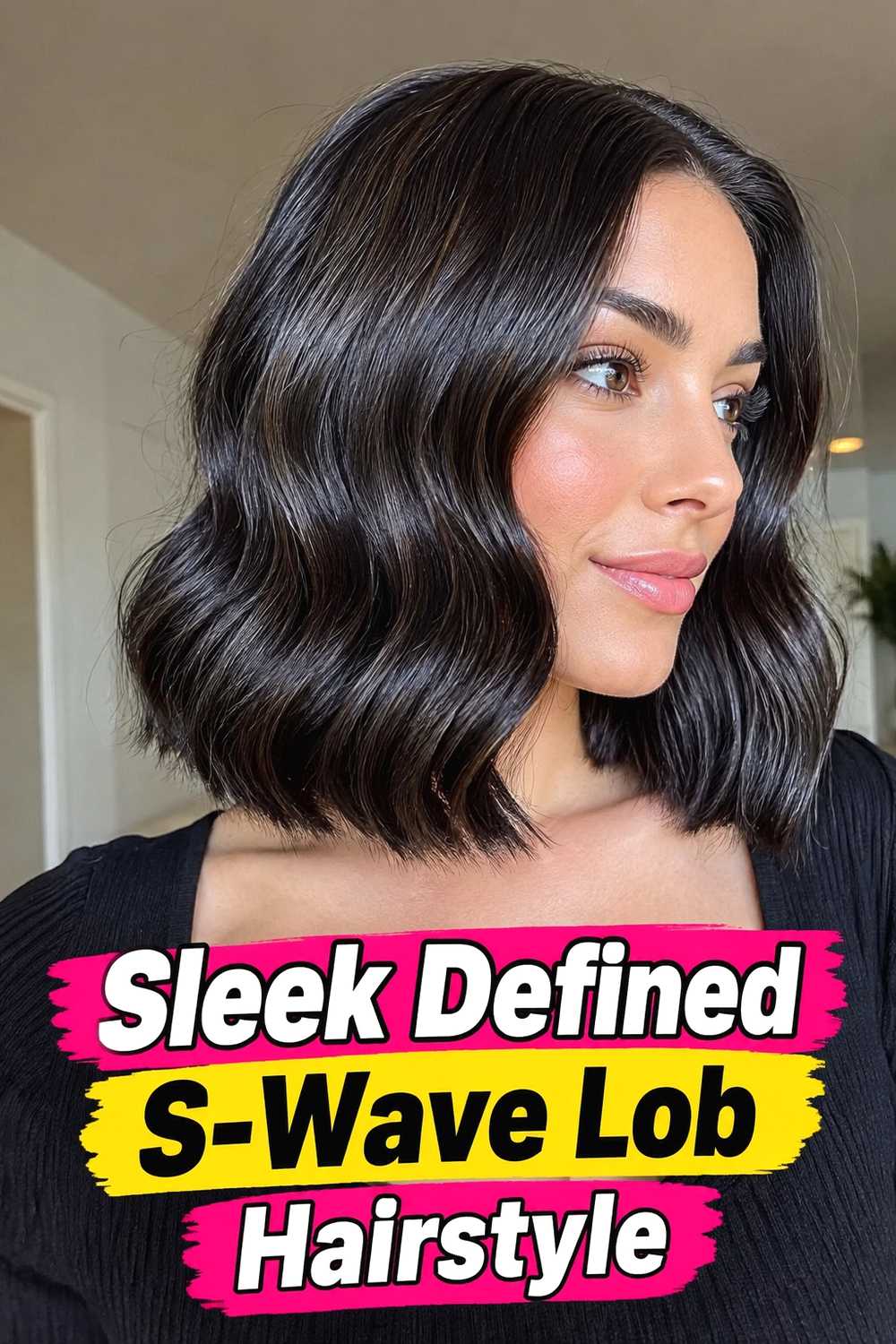
The Sleek Defined S-Wave Lob Hairstyle has a sharper, more graphic quality than softer interpretations. Each curve is deliberately shaped, and the surface stays smooth enough for the S-pattern to read clearly from a distance. The roots are relatively flat, transitioning into structured bends through the mid-lengths before finishing with neat, controlled ends. This treatment can make a simple lob feel more editorial without requiring an elaborate cut. Because high definition reveals flyaways easily, smoothing the hair before waving it helps create a cleaner result. Avoid piling on heavy shine products; a lightweight serum through the lengths is usually enough to emphasize the curves while allowing individual strands to remain visible.
Why It Works
The contrast between sleek roots and deliberate bends makes the wave pattern the strongest visual element of the hairstyle.
Wear & Maintenance
Try to minimize repeated brushing once the shape is finished, since frequent handling can separate the controlled wave formation.
7. Face Framing S Wave Lob Hairstyle
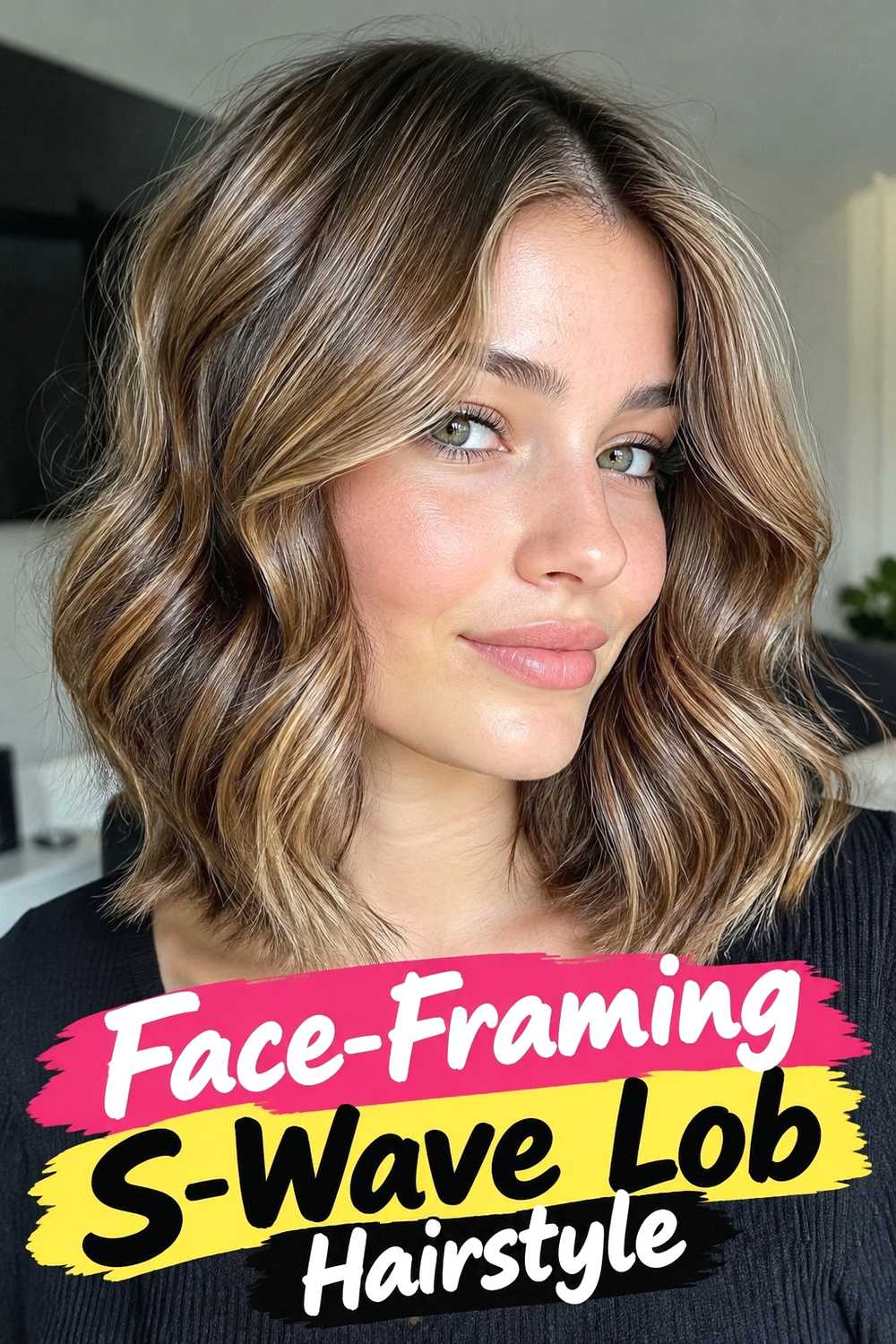
The Face-Framing S-Wave Lob Hairstyle places the most noticeable curves around the front, creating movement that naturally follows the jaw and cheek area. Instead of making every section equally dramatic, the front pieces receive more deliberate shaping while the back remains softer. This creates a flattering sense of direction and keeps the hairstyle from feeling too uniform. Longer face-framing layers can enhance the effect because they allow different bends to sit at slightly different points. Begin the first curve away from the face to keep the front open, then continue alternating direction through the lower lengths. The result is polished but still flexible enough for everyday wear.
Hair Type & Length
This version is particularly effective on lobs with subtle front layering or pieces long enough to curve around the jawline.
Pro Tip
Spend extra time matching the front bends rather than trying to make every wave throughout the back perfectly identical.
8. Textured Tousled S Wave Lob Hairstyle
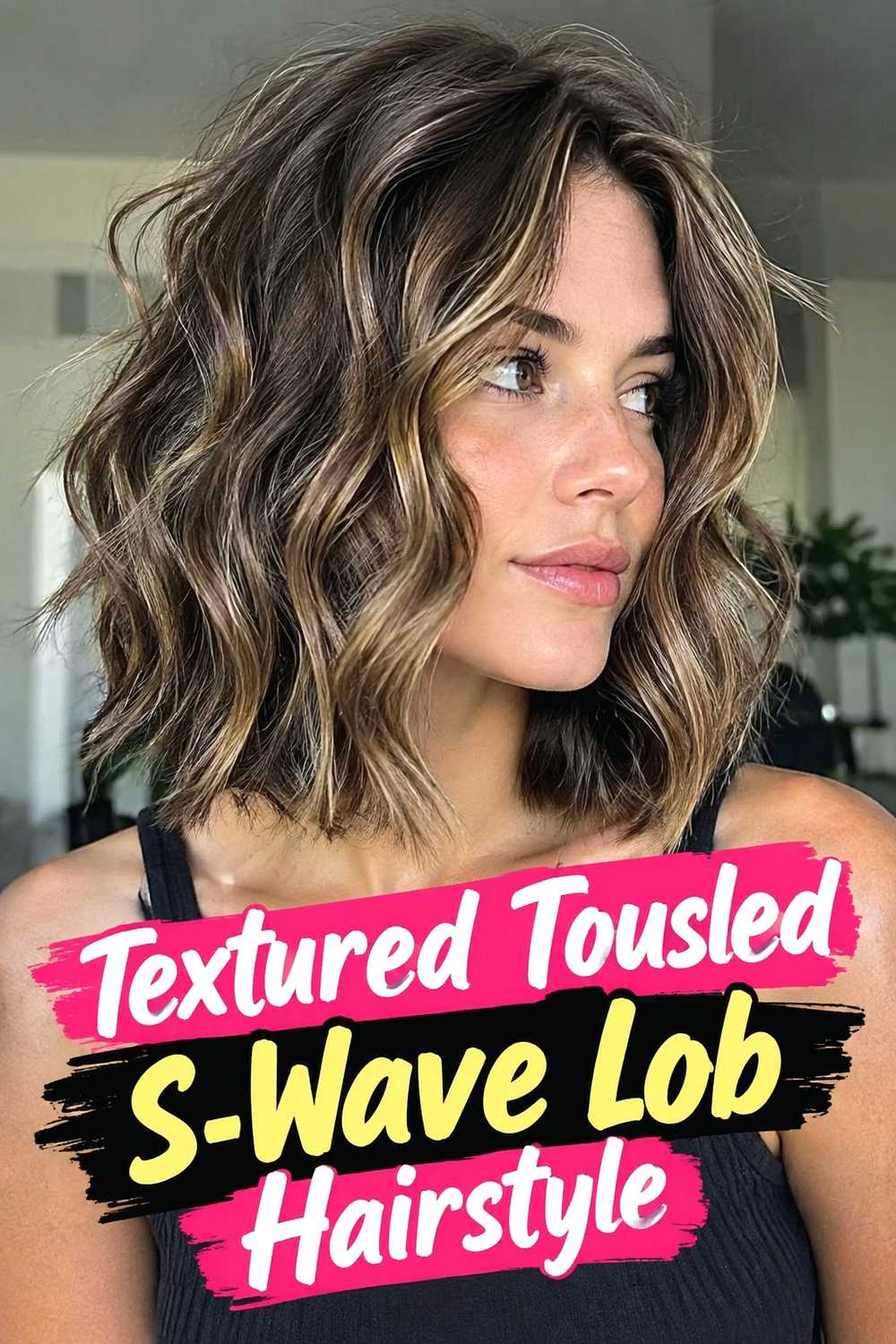
For a less formal interpretation, the Textured Tousled S-Wave Lob Hairstyle loosens the sculpted pattern while preserving its characteristic back-and-forth movement. Some bends can be wider, others slightly tighter, creating a more irregular finish that feels relaxed rather than meticulously set. The ends may flick in different directions, and a few natural flyaways actually help the look feel believable. This approach works well when you like the structure of an S-wave but do not want a glossy, red-carpet finish. Begin with deliberate bends, then separate them gently using your fingers. A light texturizing product can add definition, but avoid excessive grit if you still want the hair to move naturally.
Why It Works
Variation between sections keeps the hairstyle casual while the underlying S-pattern provides enough structure to stop it looking messy.
Styling Notes
Alternate the starting height of a few waves and loosen selected sections rather than disrupting the entire hairstyle.
9. Hollywood Inspired S Wave Lob Hairstyle
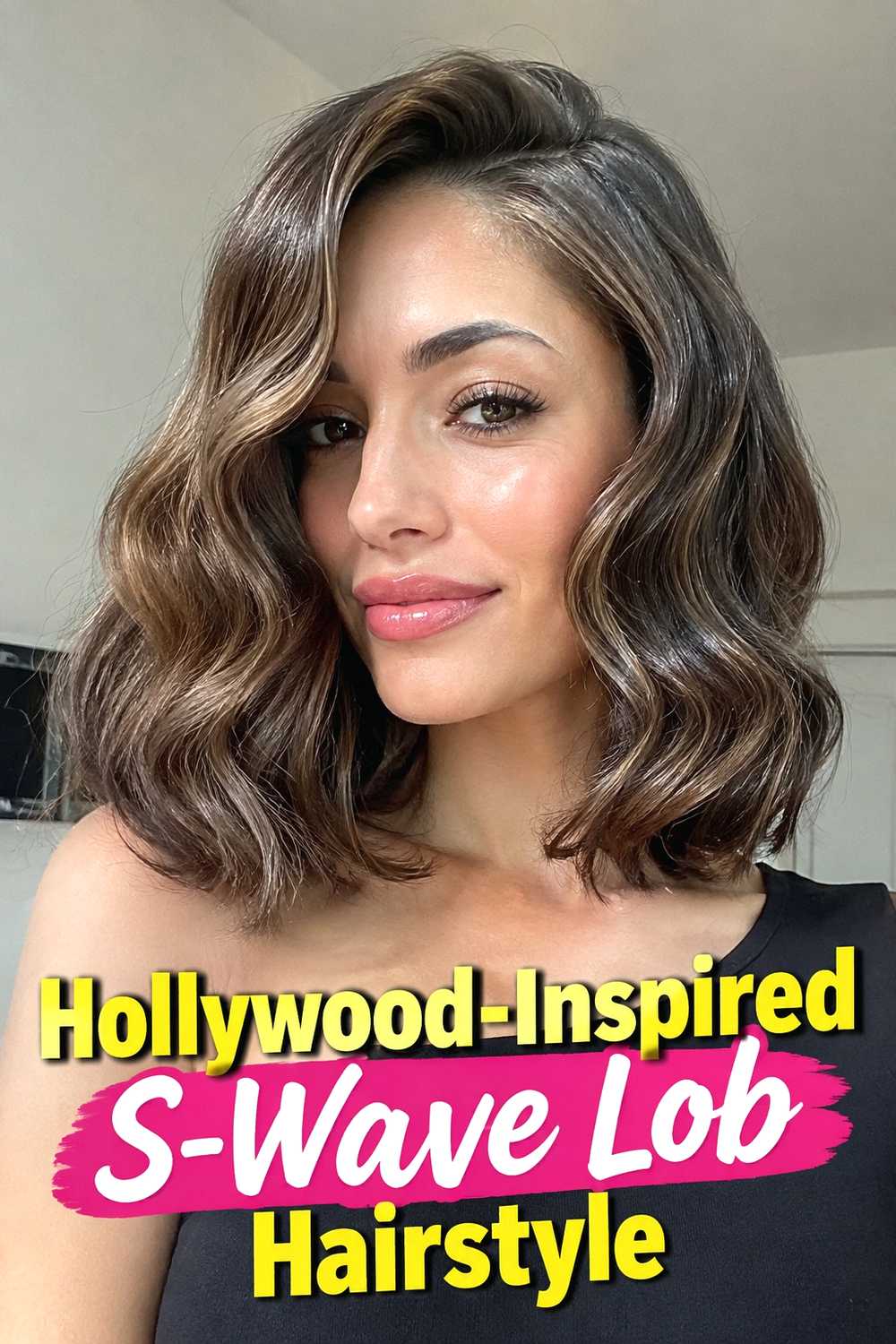
The Hollywood-Inspired S-Wave Lob Hairstyle brings classic glamour to a shorter, more contemporary length. Large, continuous curves are brushed together so the hair appears to move as one polished sheet rather than as separate curls. A side part often complements the look, allowing one front wave to sweep dramatically across the forehead before flowing toward the cheek. The challenge on a lob is preserving enough width in the waves without making the ends puff outward, so larger sections and controlled brushing are useful. Finish with visible shine and a smooth surface, but allow a few natural strands to remain so the style does not appear overly lacquered.
Styling Notes
Set sections in a consistent direction, cool them fully, then brush them together gradually until the individual curls merge into broad S-shaped ridges.
Best For
This look is especially suited to formal dinners, weddings, parties, photo sessions, and other occasions where a more glamorous finish feels appropriate.
10. Blunt End S Wave Lob Hairstyle
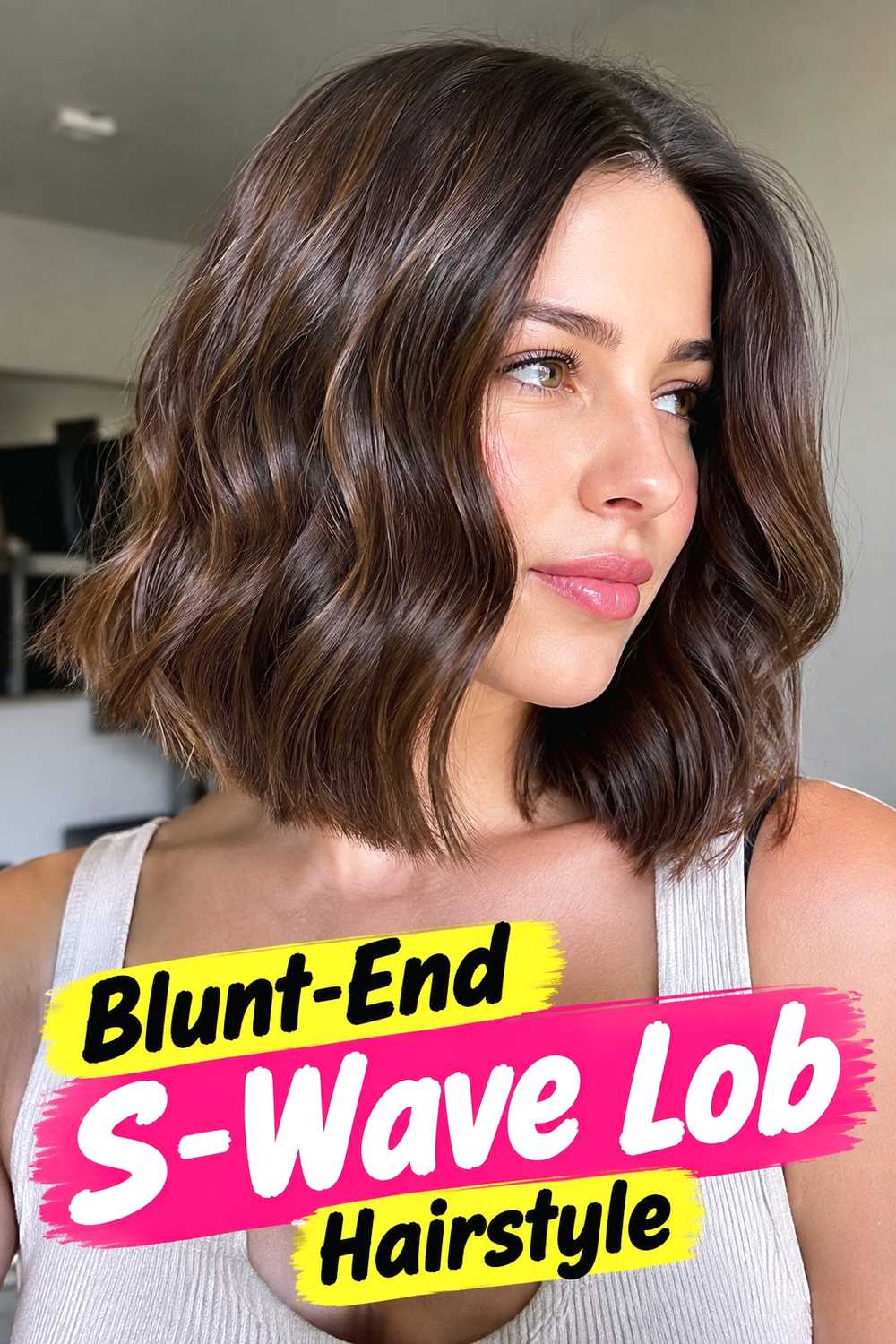
A blunt lob gives S-waves a distinctive structure because the waves move through the lengths while the bottom edge remains visually strong. In the Blunt-End S-Wave Lob Hairstyle, the bends provide softness without disguising the dense, clean perimeter of the haircut. Keeping the final inch or two slightly straighter can make that blunt line more obvious and prevent the style from turning into a rounded bob. This version is particularly appealing on hair with enough density to maintain a solid-looking edge. Form the waves mainly through the middle of each section, and resist curling the tips too tightly. A smooth finish helps highlight the contrast between fluid movement above and crisp ends below.
Why It Works
The structured perimeter acts as a visual anchor, balancing the soft curves through the rest of the hairstyle.
Pro Tip
Clamp or shape the wave above the ends, then allow the final section of hair to fall naturally for a cleaner outline.
11. Layered S Wave Lob Hairstyle
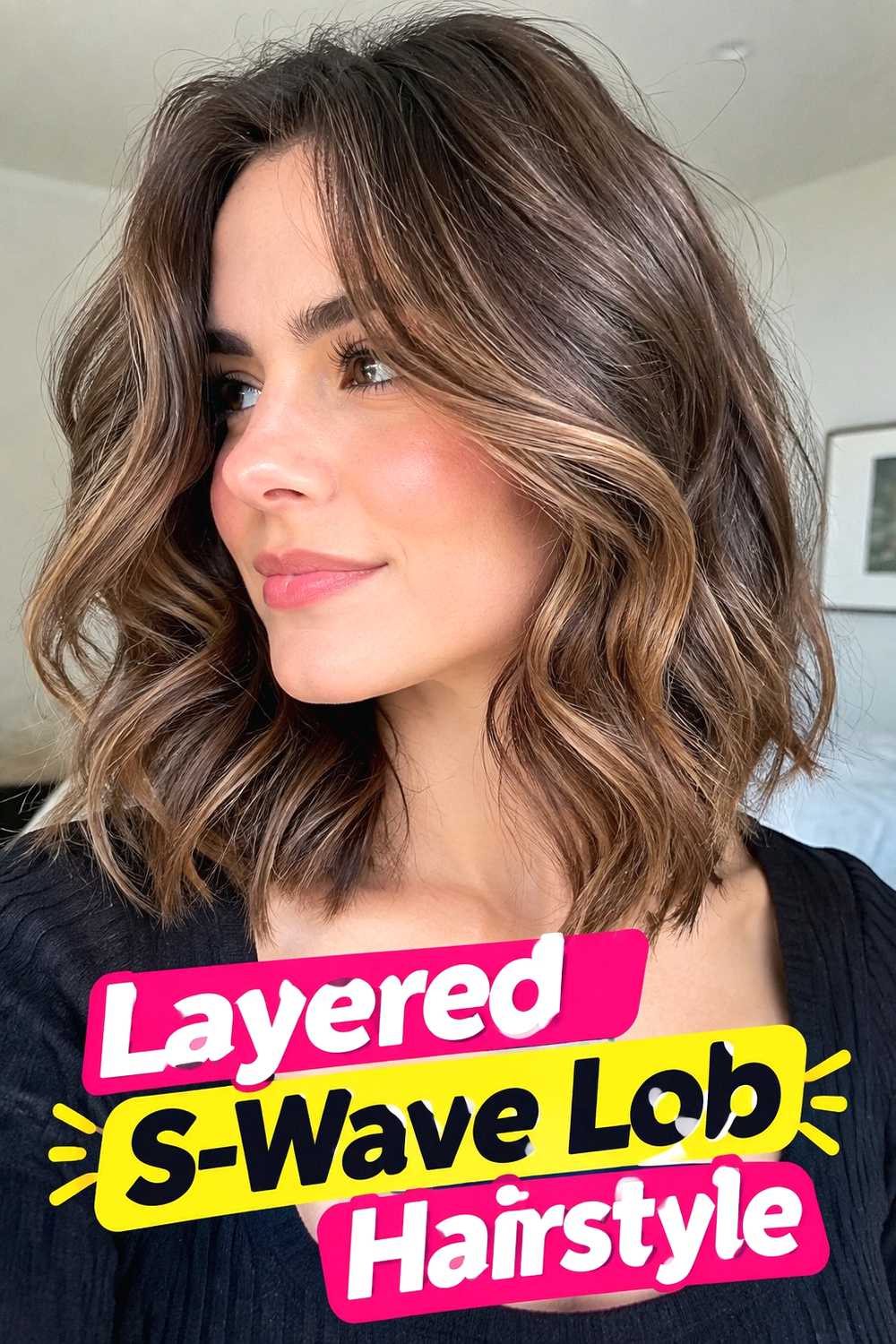
Layers give sculpted S-waves extra movement because different lengths catch the bends at slightly different points. The Layered S-Wave Lob Hairstyle therefore looks lighter and more dimensional than a completely blunt version. Shorter pieces can curve around the face or lift away from the head, while longer layers maintain the overall lob shape underneath. The key is keeping the waves coordinated enough that the hairstyle still looks intentional. Too many competing curl directions can make heavily layered hair appear busy. Shape larger sections first, then refine shorter pieces only where necessary. A lightweight finishing product can separate the layers without creating a stiff or overly piecey texture.
Hair Type & Length
This style is useful for medium to thick lobs with internal or face-framing layers that already encourage natural movement.
Wear & Maintenance
Because layered ends can separate faster, refresh only the pieces that have lost shape instead of reheating the entire hairstyle.
12. Tucked Behind The Ear S Wave Lob Hairstyle
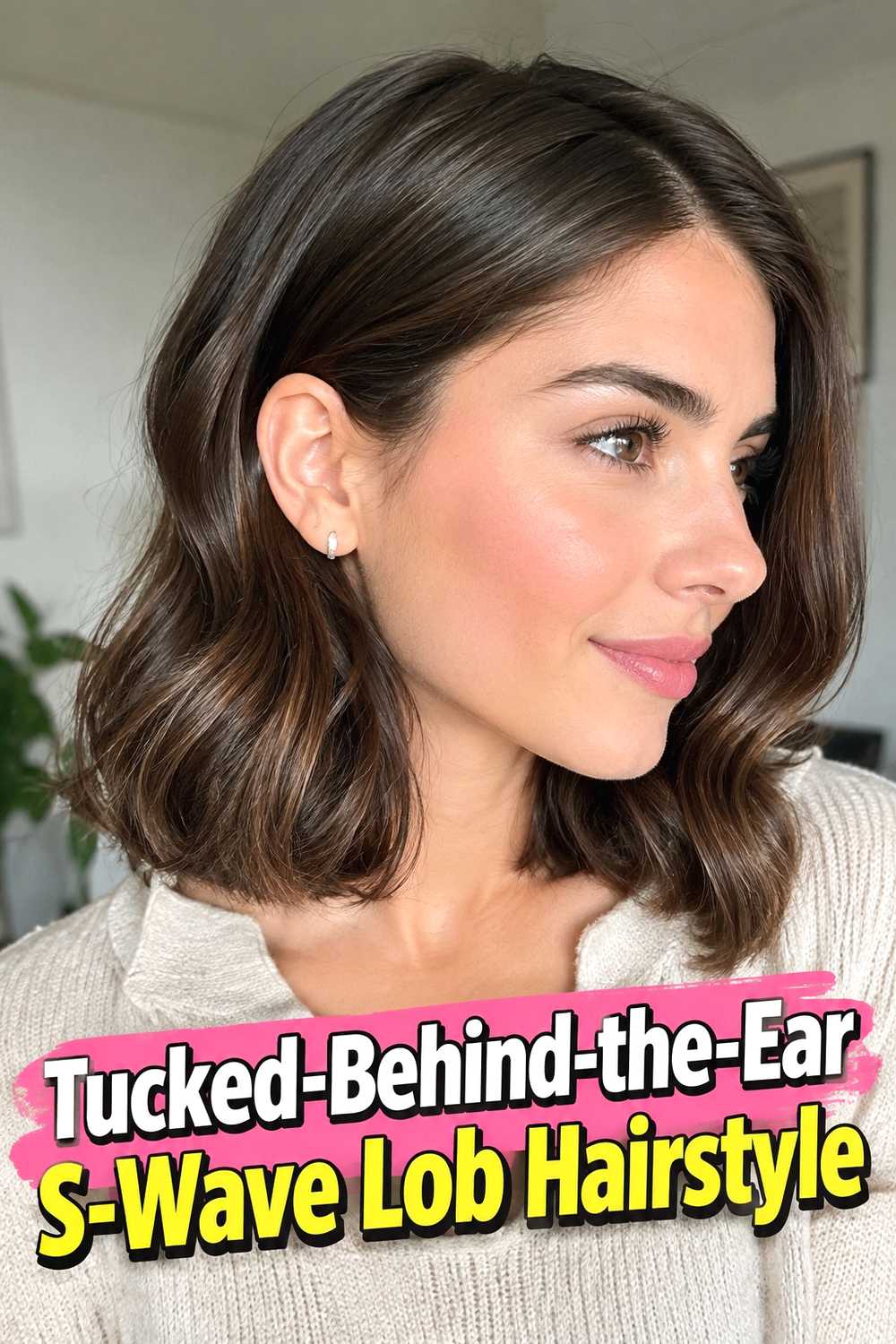
The Tucked-Behind-the-Ear S-Wave Lob Hairstyle creates an attractive contrast between one clean, exposed side and the softer sculpted movement on the other. The tucked section sits close to the head, making earrings or a strong neckline more visible, while the opposite side carries more volume and wave definition. It is a simple adjustment, but it can change the overall silhouette dramatically. For the cleanest result, create the S-waves first and tuck the chosen side afterward rather than flattening it before styling. Leave a small amount of natural root lift on the fuller side so the hairstyle does not appear unbalanced. A discreet pin can provide extra security when needed.
Why It Works
The asymmetry introduces visual interest without changing the actual haircut or requiring a more complicated styling technique.
Pro Tip
Position the tuck just behind the ear and smooth only the surface strands so the rest of the hairstyle retains natural dimension.
13. Wet Look Sculpted S Wave Lob Hairstyle
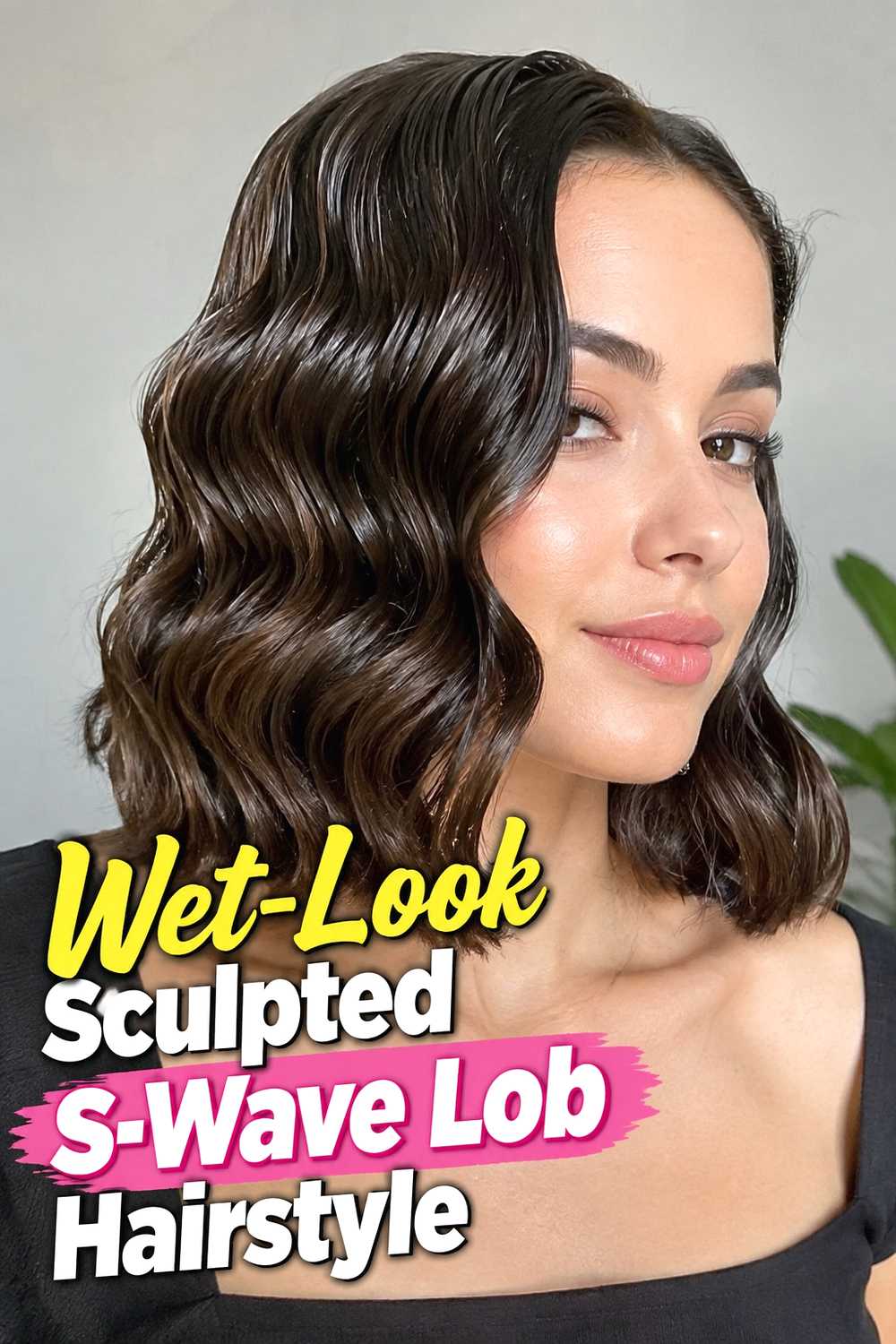
The Wet-Look Sculpted S-Wave Lob Hairstyle has a sleek, fashion-forward finish that emphasizes the curves through shine and close-to-the-head shaping. Rather than creating fluffy volume, this version keeps the roots controlled and uses deliberate bends to form an almost molded S-pattern through the front and sides. The goal is a glossy finish, not hair that looks genuinely soaked, so product quantity matters. Use enough styling product to create definition and hold while allowing natural strands and texture to remain visible. Concentrating the strongest wet-look effect near the roots and upper lengths can make the style more wearable, while slightly softer ends prevent the lob from appearing rigid.
Styling Notes
Work product through small sections and shape the curves before the hair fully sets, using clips temporarily if extra definition is needed.
Best For
This statement version works particularly well for evening events, fashion-forward occasions, or editorial-inspired styling.
14. Asymmetrical S Wave Lob Hairstyle
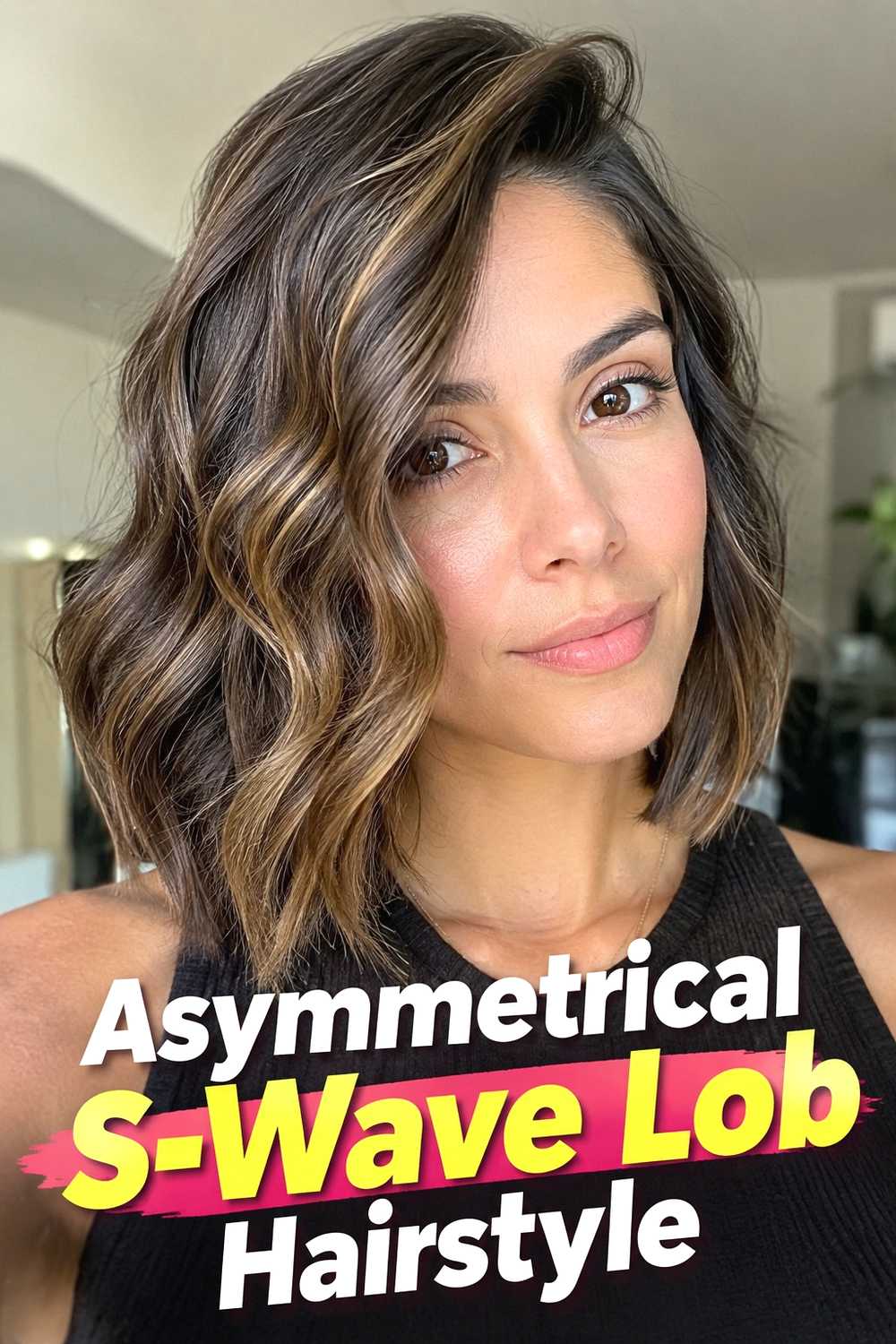
The Asymmetrical S-Wave Lob Hairstyle uses unequal volume, parting, or length to make the familiar S-wave feel more distinctive. One side might sit flatter and closer to the jaw while the other carries a larger wave and greater fullness. If the haircut itself is slightly asymmetrical, sculpted bends can emphasize that difference without making the silhouette look disconnected. Keep at least one consistent element—such as wave direction or finish—across both sides so the overall style remains cohesive. A glossy surface can unify the look, while slightly separated ends maintain movement. This is a useful option when you want a polished lob that feels less predictable than a perfectly balanced wave pattern.
Why It Works
Intentional imbalance gives the hairstyle a modern edge while the repeated S-curves provide enough continuity to keep it refined.
Styling Notes
Finish the more dramatic side first, then keep the opposite side simpler so the contrast feels deliberate rather than accidental.
How to Choose the Right Look
Start with your lob’s actual cut. Blunt lobs naturally suit the Classic Glossy, Sleek Defined, and Blunt-End options because their strong perimeter remains visible beneath the waves. Layered cuts can benefit from Face-Framing, Textured Tousled, or Layered S-Waves, where varied lengths contribute to movement rather than fighting against it.
Next, consider styling time and finish. Highly defined, Hollywood-inspired, or wet-look waves generally require more deliberate sectioning and shaping. Brushed, tousled, and tucked versions are easier to soften or refresh without recreating every curve perfectly.
Hair density matters too. Fine hair may benefit from root lift and lighter products, while thick hair can often support broader waves and stronger definition. If your natural texture resists sleek styling, you can preserve some of that texture instead of forcing an ultra-smooth finish.
Finally, match the level of polish to the occasion. Soft brushed or face-framing waves work easily for everyday settings, while glossy Hollywood waves and sculpted wet-look versions create a stronger statement for special events.
Final Thoughts
Sculpted S-wave lobs can range from clean and glossy to airy, tousled, or dramatically glamorous. The most wearable version is usually the one that works with your existing lob shape and preferred styling routine. Start with the part, wave size, and finish you like most, then adjust the amount of volume and definition to suit your hair’s natural behavior.
FAQs
1. What is an S-wave lob hairstyle?
An S-wave lob is a long bob styled with alternating bends that create a visible “S” shape through the hair rather than separate spiral curls.
2. How long should a lob be for sculpted S-waves?
Most chin-to-collarbone lengths can work, although slightly longer lobs provide more room for multiple visible bends.
3. Can fine hair wear an S-wave lob?
Yes. Fine hair can suit S-waves especially well when lightweight products and controlled root lift are used to maintain movement without weighing the style down.
4. Should S-wave lob ends be curled?
Not always. Leaving the final inch slightly straighter can emphasize a modern lob shape, particularly on blunt cuts.
5. How can I keep sculpted S-waves from looking stiff?
Use flexible hold, allow the waves to cool before touching them, and loosen or brush them only enough to blend the sections while preserving their shape.
Save your favorite sculpted S-wave lob ideas, share the looks you love, and explore more polished hairstyle inspiration for your next styling day.