18 Corset Braid Ponytail Hairstyles for a Detailed Statement Look
Turn a familiar ponytail into a detailed statement with corset-inspired braiding, woven sections, soft texture, polished finishes, and creative decorative accents.
Corset braid ponytail hairstyles combine the practicality of a ponytail with an intricate laced effect through the back or sides of the hair. Depending on the technique, the corset detail can look neat and architectural, soft and romantic, or deliberately relaxed. The result is especially striking when the woven pattern stays visible above a flowing ponytail.
When choosing a version, consider where you want the ponytail to sit, how much tension feels comfortable, and whether your hair has enough length for the woven detail. Smooth finishes emphasize the corset pattern, while waves, curls, ribbons, pearls, and loosened braid sections create a softer or more decorative appearance.
Quick List
- Classic Center Corset Braid Ponytail Hairstyle
- High Corset Braid Ponytail Hairstyle
- Low Sleek Corset Braid Ponytail Hairstyle
- Bubble Corset Braid Ponytail Hairstyle
- Double Sided Corset Braid Ponytail Hairstyle
- Ribbon Laced Corset Braid Ponytail Hairstyle
- Curly Corset Braid Ponytail Hairstyle
- Wavy Corset Braid Ponytail Hairstyle
- Dutch Accent Corset Braid Ponytail Hairstyle
- French Braid Corset Ponytail Hairstyle
- Half Up Corset Braid Ponytail Hairstyle
- Voluminous Corset Braid Ponytail Hairstyle
- Boho Corset Braid Ponytail Hairstyle
- Pearl Accented Corset Braid Ponytail Hairstyle
- Crisscross Corset Braid Ponytail Hairstyle
- Wrapped Base Corset Braid Ponytail Hairstyle
- Side Corset Braid Ponytail Hairstyle
- Glam Corset Braid Ponytail Hairstyle
1. Classic Center Corset Braid Ponytail Hairstyle
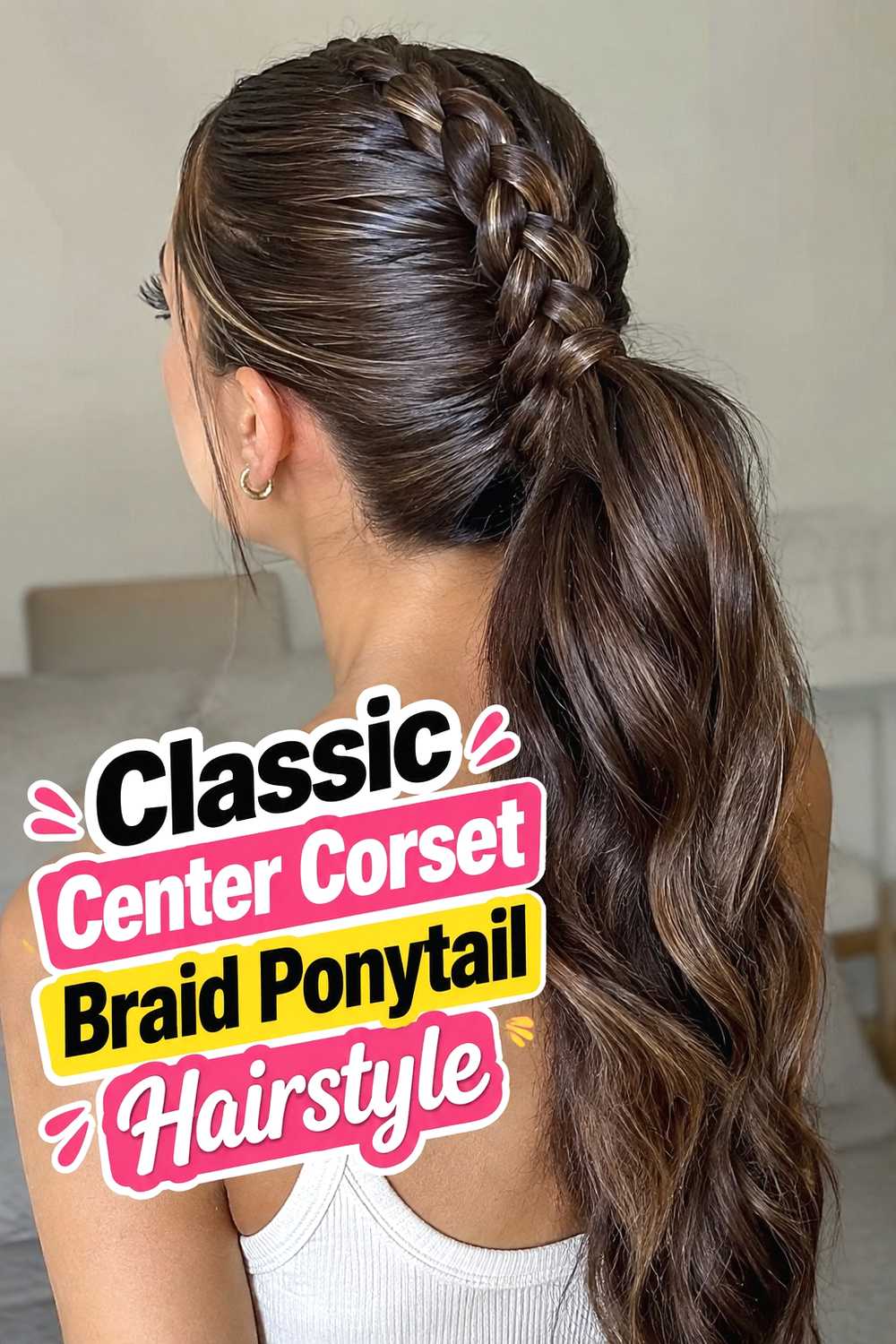
The classic center version gives the corset technique maximum visibility by placing the woven detail directly along the back of the head. Two narrow braid sections can frame a clean center panel, with small pieces of hair threaded or crossed between them before everything joins a medium-height ponytail. Keeping the pattern symmetrical gives the hairstyle its distinctive structured appearance without making the ponytail itself feel overly complicated. Straight or softly waved lengths work especially well because they provide contrast against the detailed top section. Medium-to-long hair is the easiest length for creating enough separation, although added length may help when natural hair is shorter.
Styling Notes
Create clean sections before braiding so the corset pattern remains easy to see. Keep the woven pieces secure but avoid pulling each pass excessively tight.
Best For
This balanced version works well when you want the braid detail to be the main feature rather than accessories or dramatic ponytail texture.
2. High Corset Braid Ponytail Hairstyle
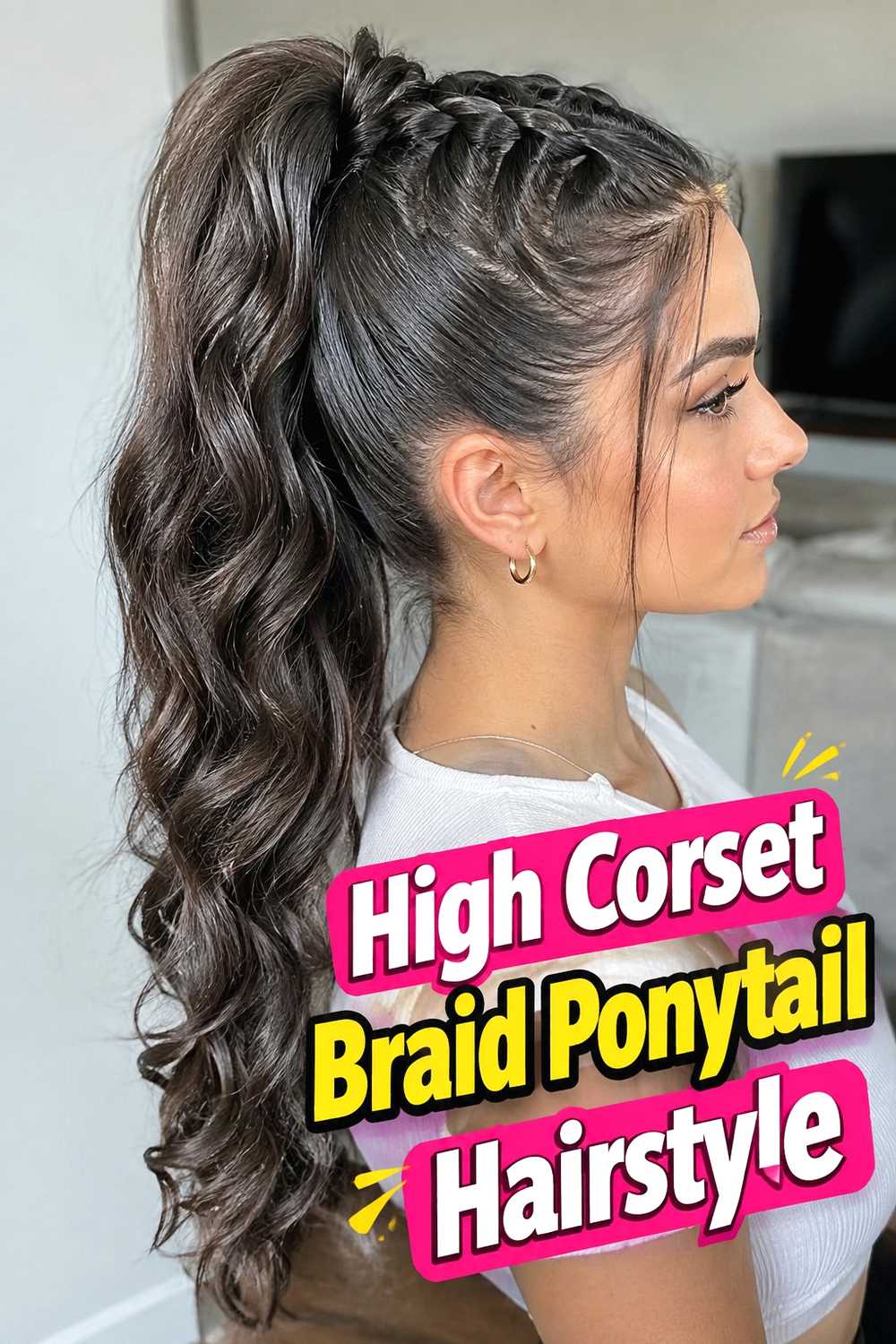
A high ponytail gives the corset braid a lifted, energetic silhouette that works beautifully when the woven section travels upward toward the crown. The lacing can begin at the mid-back of the head and gradually narrow as it reaches the ponytail base, creating a tapered shape that visually leads into the lengths. The high placement also gives curls, waves, or straight hair more movement because the ponytail falls freely behind the head. For a clean finish, smooth the surrounding hair while leaving the corset sections clearly defined. Thick or dense hair offers plenty of material for the design, but finer hair can still create the look when the braid sections remain relatively narrow.
Wear & Maintenance
Use a secure elastic at the final tie point because the upper placement carries more weight. Check that the base feels supportive rather than painfully tight.
3. Low Sleek Corset Braid Ponytail Hairstyle
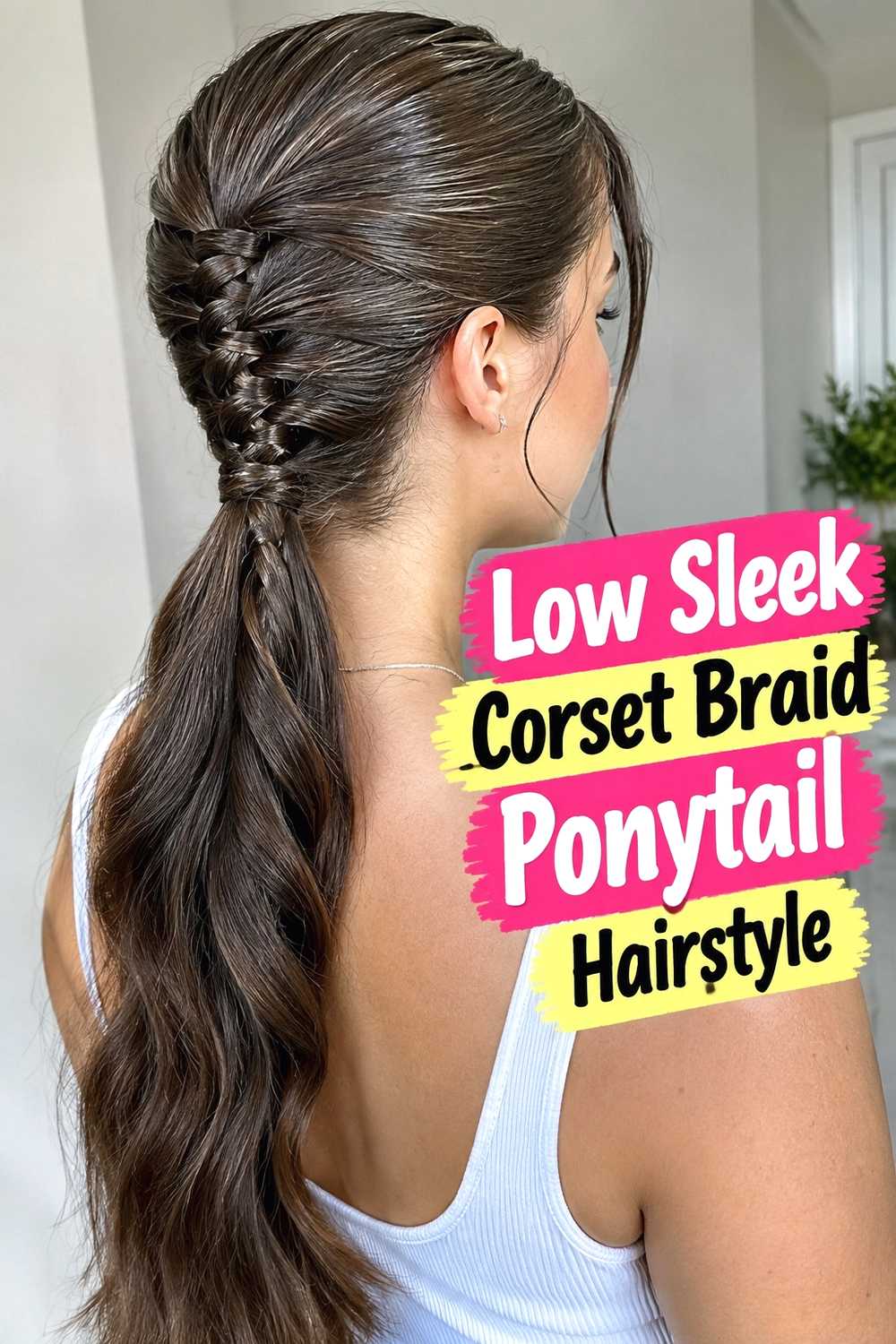
This polished interpretation pairs an intricate corset panel with a low ponytail sitting near the nape. The flatter placement creates an elegant silhouette and lets the woven pattern remain the main point of interest. Hair surrounding the braids can be smoothed close to the head, while the ponytail is kept straight or softly curved through the ends for a refined finish. Because flyaways are more noticeable with this style, controlled sectioning and light smoothing product can help preserve the clean lines. The look is particularly effective on medium or long hair that can reach the nape comfortably without placing excessive tension on shorter layers.
Why It Works
The contrast between a detailed corset pattern and a simple low ponytail keeps the finished hairstyle sophisticated instead of overly busy.
Pro Tip
Wrap a thin piece of hair around the elastic if you want the base to blend seamlessly into the sleek finish.
4. Bubble Corset Braid Ponytail Hairstyle
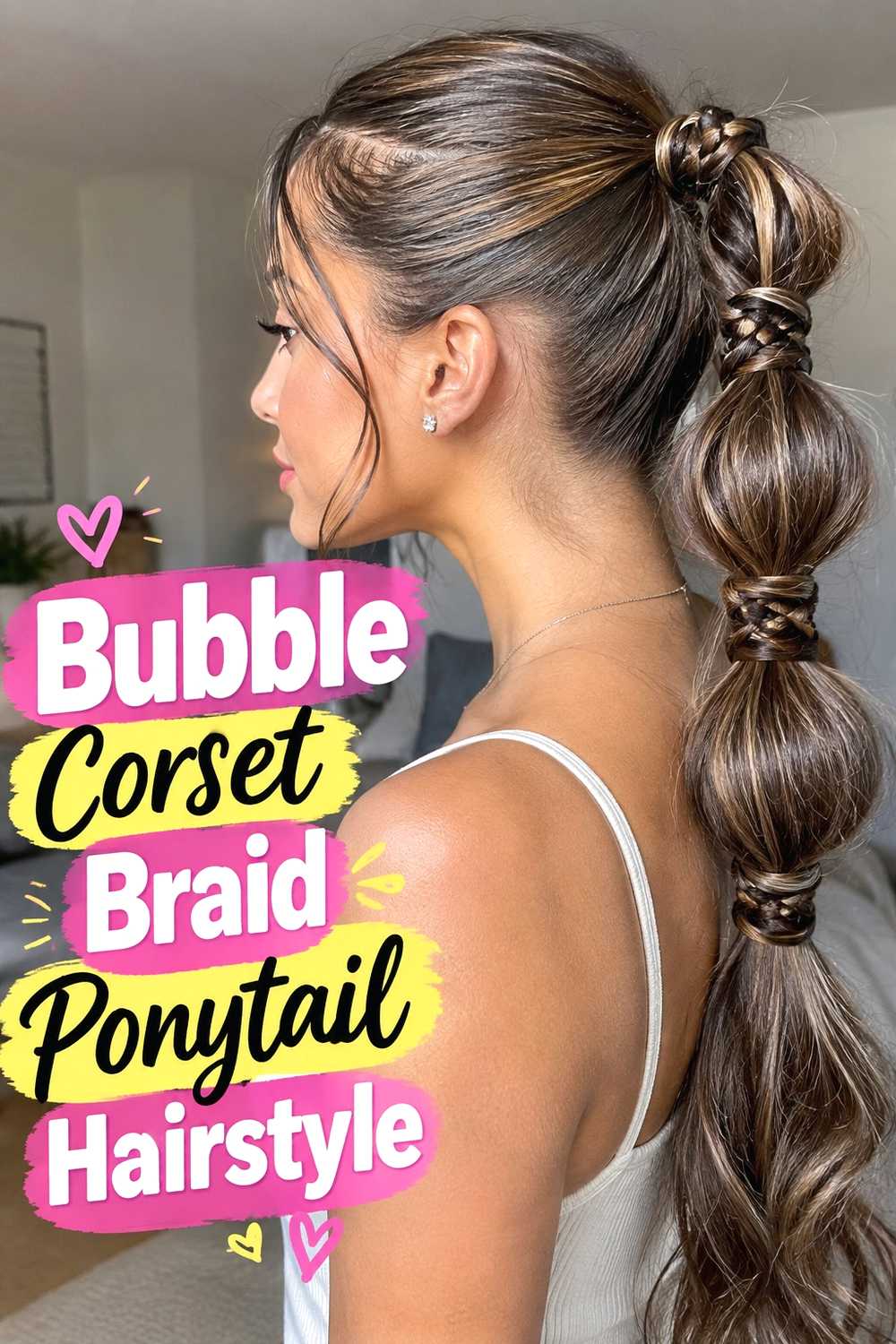
For extra dimension, combine the corset-braid detail with a bubble ponytail through the hanging lengths. The upper section can stay neat and tightly organized, while evenly spaced elastics divide the ponytail into rounded sections below. Gently expanding each bubble produces volume and gives the finished look a playful contrast to the precise lacing above it. This version tends to show best on longer hair because several bubbles can be created without making each section too small. Hair with natural density creates fuller shapes, although individual bubbles can also be carefully loosened on finer hair. Keeping the bubble sizes consistent helps the intricate upper pattern and textured ponytail feel intentionally connected.
Styling Notes
Secure each bubble before gently pulling outward from its sides. Small adjustments are usually easier to control than aggressively expanding the whole section at once.
5. Double Sided Corset Braid Ponytail Hairstyle
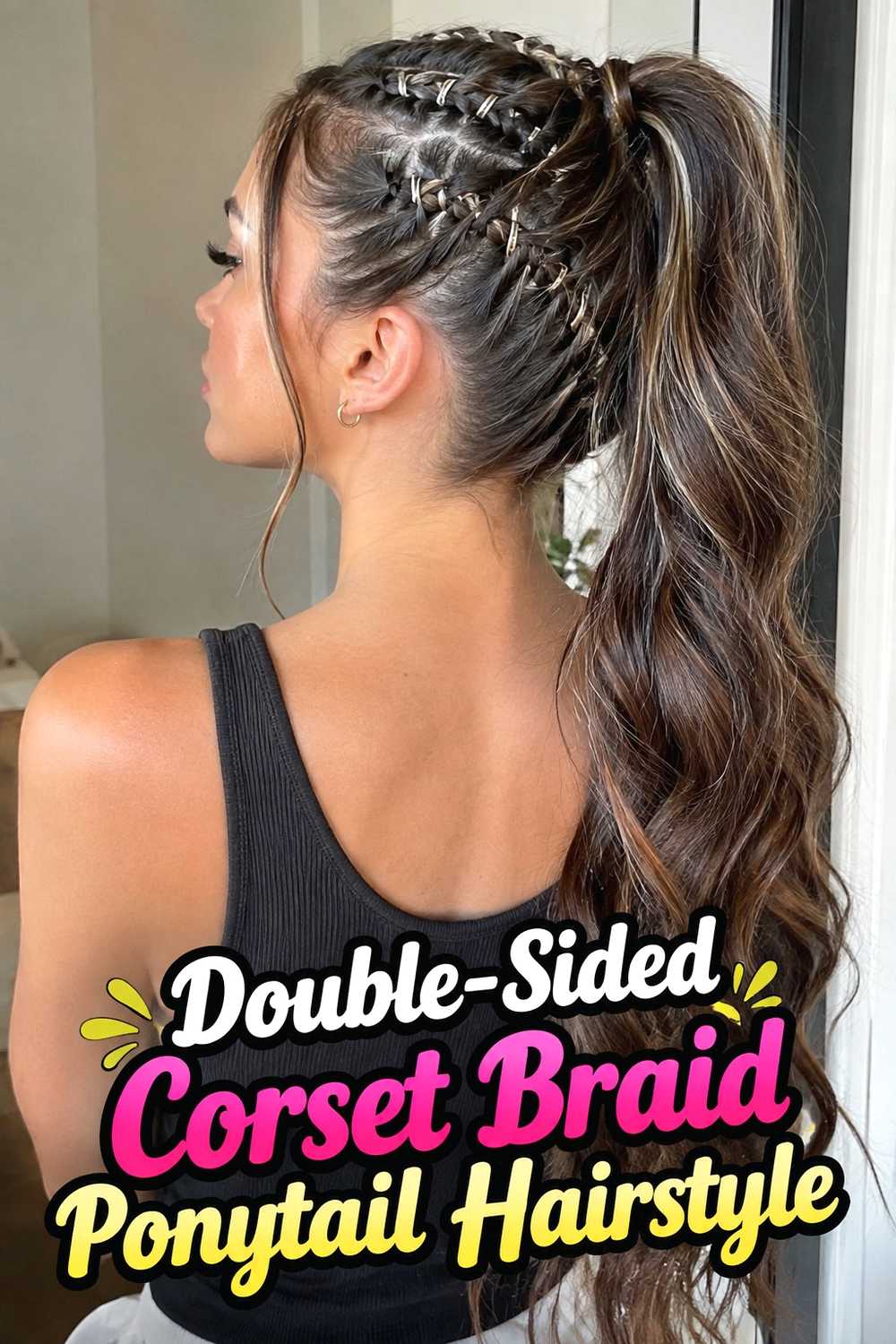
Instead of concentrating every detail in the center, this version places corset-inspired lacing along both sides of the head before the sections meet at the ponytail. The placement creates visual interest from multiple angles and works especially well for photos where the hairstyle will be seen from the side as well as the back. The middle section can remain smooth for contrast, while narrow side braids support the crossed pieces. A medium or high ponytail keeps the finished silhouette balanced and prevents the lower lengths from hiding the side details. This approach requires careful sectioning, so it is particularly suitable when you have enough hair density to separate multiple braid panels without making them look too thin.
Best For
Choose this version when you want a more elaborate braided structure without relying on decorative clips or ribbons.
Hair Type & Length
Medium-to-long hair gives the side sections enough reach to travel cleanly toward a central ponytail base.
6. Ribbon Laced Corset Braid Ponytail Hairstyle
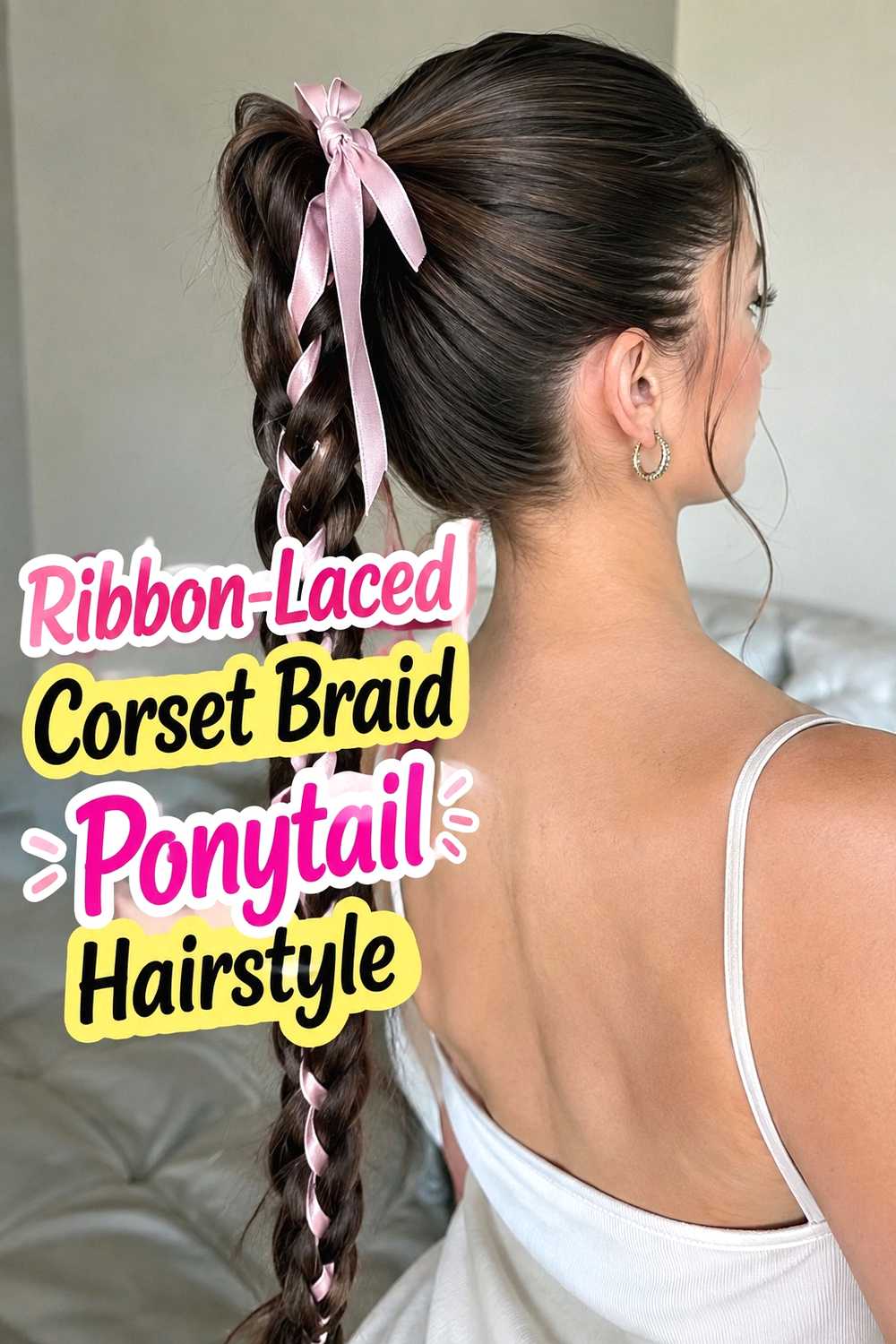
Ribbon makes the corset effect immediately recognizable by emphasizing every crossing in the woven pattern. Two parallel braids can act as the outer edges, while a narrow satin, velvet, or soft fabric ribbon is threaded back and forth between them before being secured near the ponytail base. The ribbon can closely match the hair for a subtle result or provide visible contrast when you want the lacing to stand out. A simple ponytail underneath keeps attention on the decorative upper section. Since ribbon adds another element to manage, this version benefits from firm braid anchors and even spacing. Leaving the surrounding hair softly polished prevents the overall hairstyle from becoming visually overloaded.
Pro Tip
Choose ribbon narrow enough to pass comfortably through the braid sections without flattening or distorting them.
Wear & Maintenance
Tie or pin the ribbon securely near the ponytail base so loose ends do not gradually slide through the braid.
7. Curly Corset Braid Ponytail Hairstyle
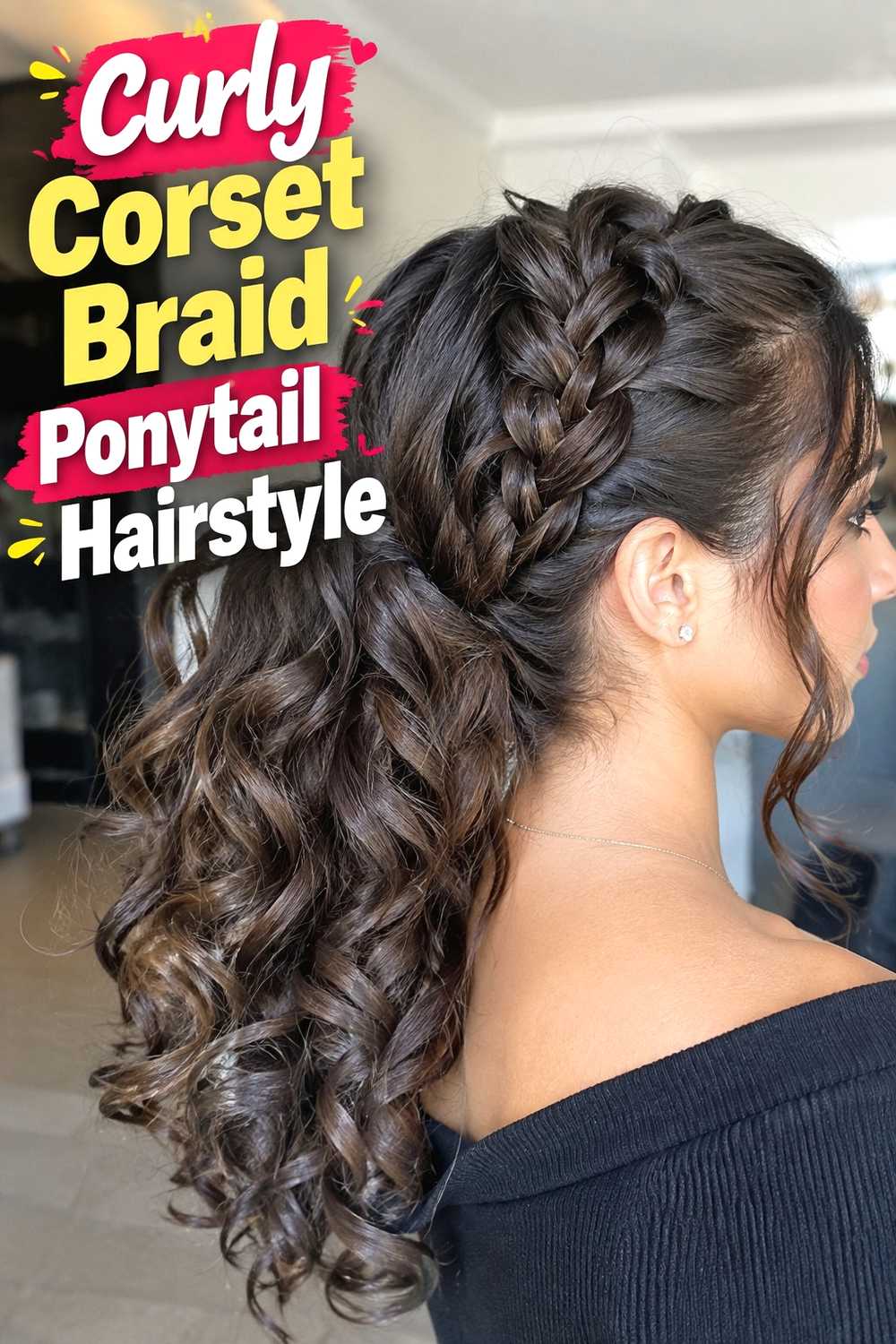
Defined curls add softness and movement to the structured geometry of a corset braid. The top can feature neat, controlled lacing that ends at a medium or high ponytail, while the lengths open into individual curls with visible variation rather than one uniform shape. This creates an attractive contrast between detail at the scalp and fullness below the tie point. Naturally curly hair can be incorporated while preserving some of its texture, or straight and wavy hair can be curled after the ponytail is secured. Avoid overworking the finished lengths, since separating every curl too much may create unwanted frizz and reduce definition. A slightly fuller ponytail also helps balance the visual weight of the corset panel.
Hair Type & Length
Medium and long lengths provide enough room for both the woven upper section and visible curl formation below the elastic.
Why It Works
The curls soften the precise braid pattern, making the hairstyle detailed without appearing overly rigid.
8. Wavy Corset Braid Ponytail Hairstyle
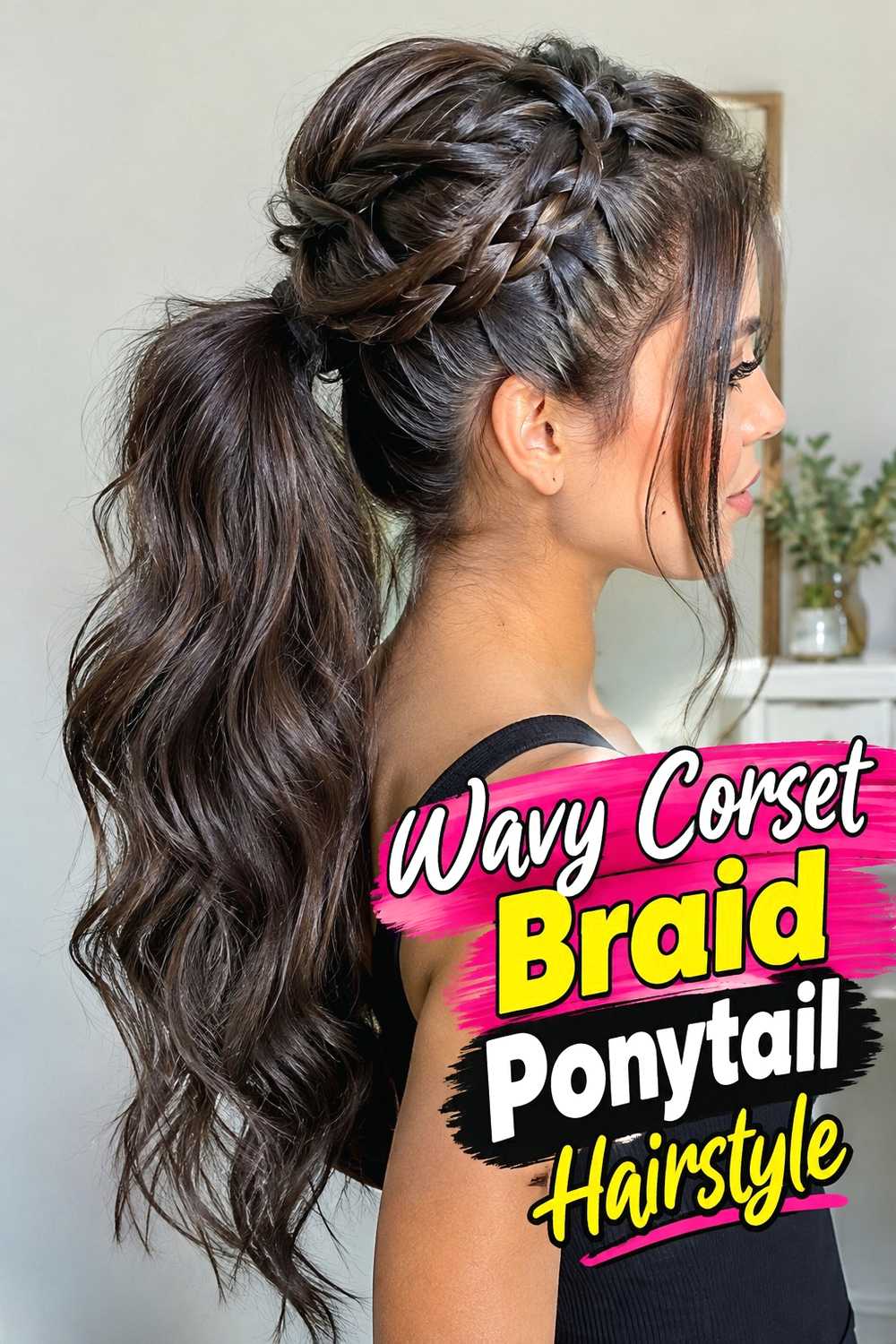
Loose waves give the corset ponytail a relaxed finish while still allowing the upper braid pattern to remain crisp. Start with a clearly defined woven section along the back, then gather the remaining hair into a medium-height ponytail and add broad bends through the lengths. Rather than creating tightly sculpted curls, keep the texture flowing so the ponytail has natural movement and a softer outline. This version is a useful middle ground between an ultra-sleek style and a romantic curly ponytail. It can also be forgiving when the hair contains layers, since softly waved ends blend varied lengths more naturally. Keeping the crown controlled ensures the waves do not compete with the corset detail.
Styling Notes
Alternate the direction of some waves for a more natural finish, then loosen them gently with your fingers once they have cooled.
9. Dutch Accent Corset Braid Ponytail Hairstyle
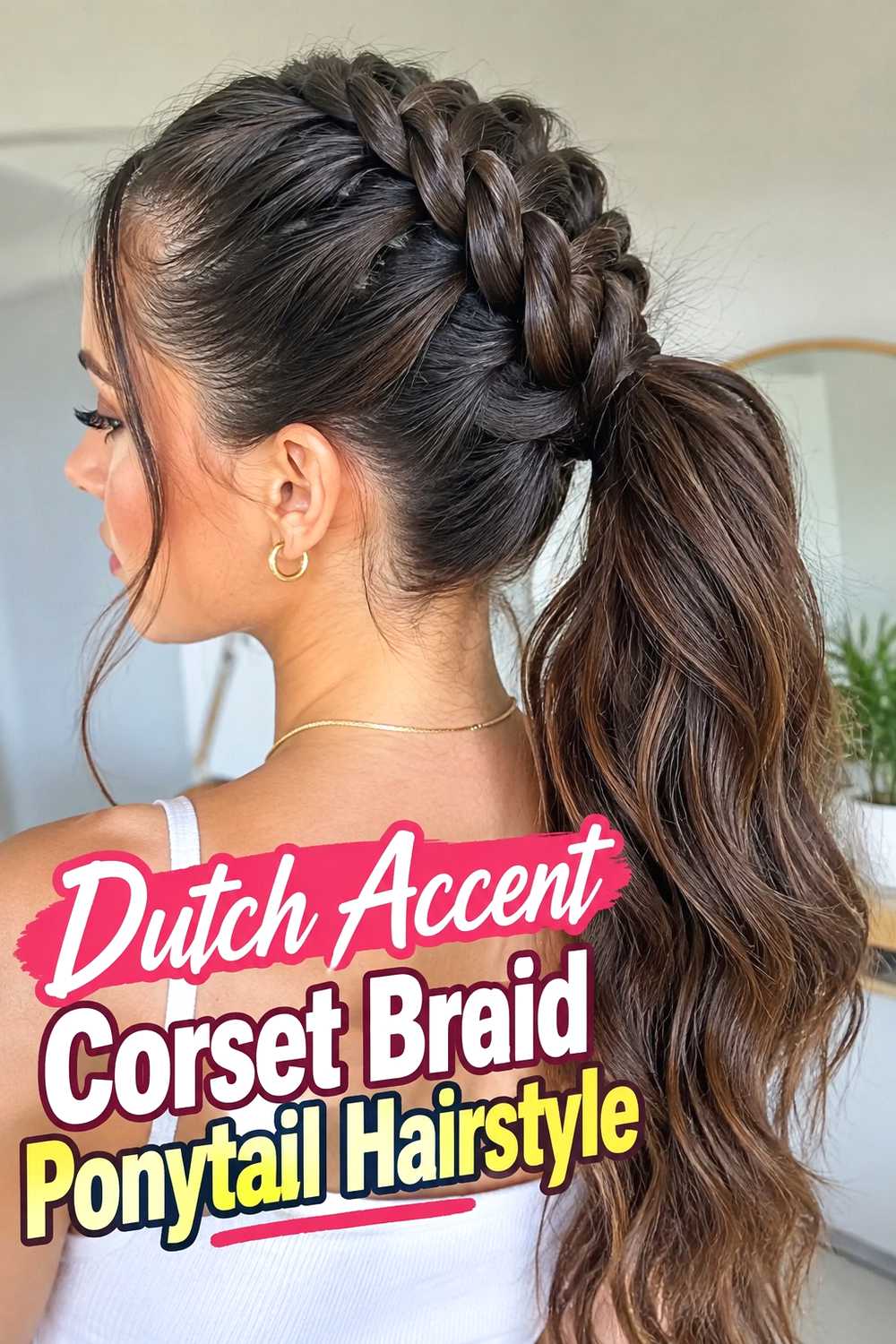
Adding Dutch braids gives the corset structure extra definition because the raised braid edges frame the lacing clearly. Two narrow Dutch braids can travel toward the ponytail base while small hair sections cross between them to create the woven center. Since Dutch braids sit visibly above the surrounding hair, they are particularly useful when you want the corset construction to photograph well from behind. The rest of the hair can transition into a simple straight, wavy, or lightly curled ponytail. Slightly loosening the outer edges of the Dutch braids can add dimension, but the central lacing should remain tidy enough to preserve its pattern. Even section sizes help keep the final design balanced.
Pro Tip
Build the Dutch braids first and check their spacing before adding the laced center so both sides stay visually even.
Best For
This is a strong choice for anyone who enjoys clearly defined braid texture and wants the corset detail to look especially dimensional.
10. French Braid Corset Ponytail Hairstyle
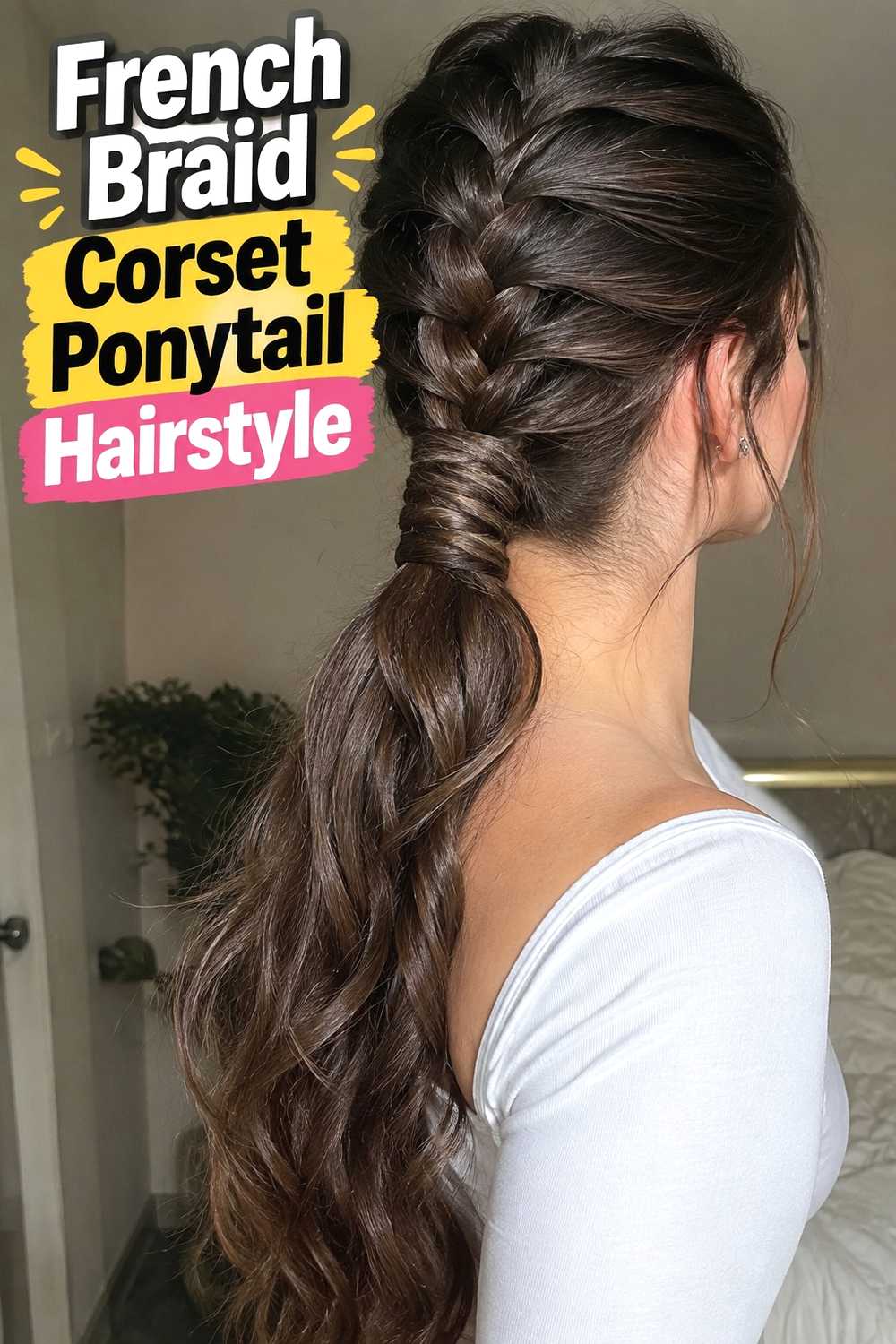
French-braided sections produce a smoother, more integrated corset effect because the braids sit closer to the head than raised Dutch braids. The result feels polished while still offering plenty of detail through the woven center. Two French braids can form the outer framework, with small sections crossed or threaded between them before the hair is gathered into a ponytail. A mid-level placement works particularly well because there is enough space above the elastic to display the pattern clearly. The ponytail can remain smooth for an understated finish or carry soft texture for additional movement. This technique benefits from consistent tension so that one braid does not sit tighter or narrower than the other.
Styling Notes
Work with relatively small additions of hair as you build each French braid. Controlled sections help the outer edges stay neat enough to support the corset pattern.
11. Half Up Corset Braid Ponytail Hairstyle
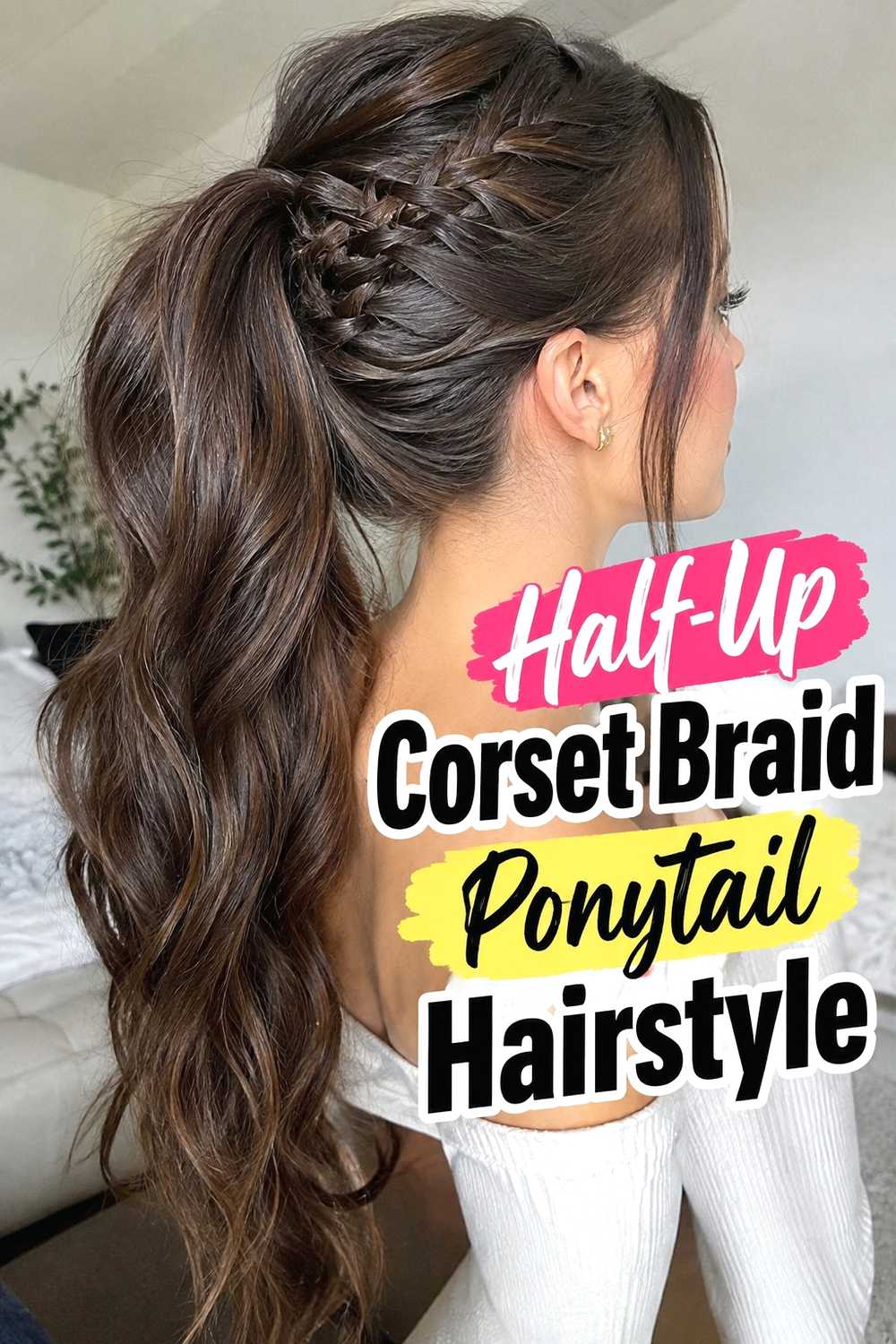
A half-up version offers the laced effect without gathering every strand into one ponytail. The corset section can run through the crown or upper back of the head before finishing in a smaller ponytail, while the remaining hair stays loose underneath. This placement makes the hairstyle feel lighter and allows natural waves, curls, or straight lengths to frame the braided detail. It is also practical when shorter lower layers do not reach comfortably into a full ponytail. The half-up section should contain enough hair to hold the woven design without pulling heavily on the crown. For a cohesive finish, give the ponytail and loose lengths similar texture so they flow together instead of appearing like separate styles.
Best For
This option works particularly well when you want visible corset detail with plenty of loose hair movement.
Wear & Maintenance
Keep the half-up elastic secure but moderate the tension around the crown, especially if the lacing already feels snug.
12. Voluminous Corset Braid Ponytail Hairstyle
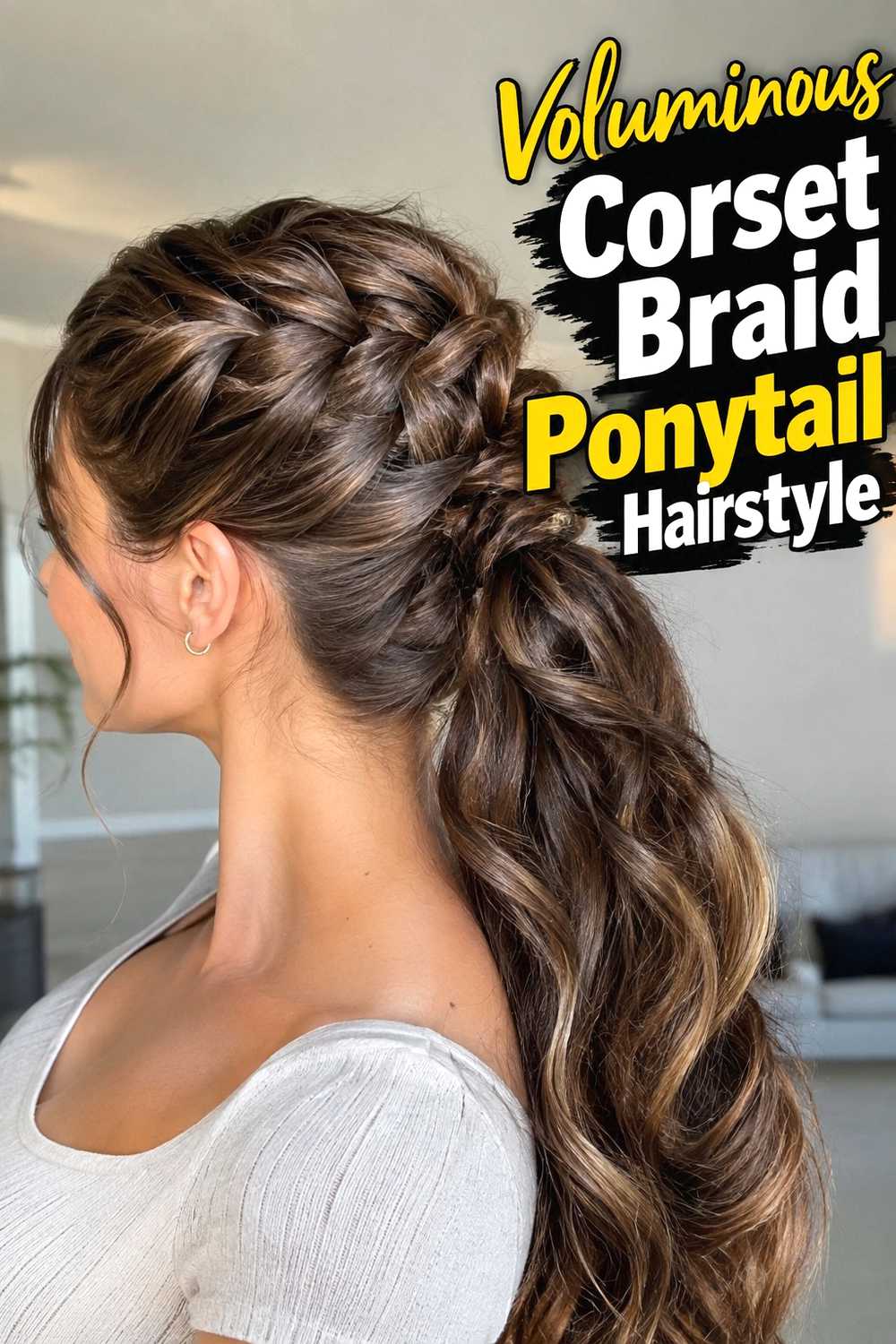
This version focuses on fullness while preserving the detailed corset structure through the upper section. The crown can be kept slightly lifted rather than completely flat, and the finished ponytail can be expanded with waves, curls, or naturally dense texture. Because both the braid and the ponytail have visual volume, maintaining clear separation is important. The laced pattern should stay defined enough that it does not disappear into the surrounding fullness. Gentle root lift near the crown can create shape without making the hairstyle look teased or stiff. The final ponytail works especially well with long, dense hair, although careful texturizing and controlled loosening can create a fuller appearance on medium-density hair as well.
Why It Works
Volume gives the ponytail presence while the corset panel provides structure, creating a balanced combination of softness and detail.
Pro Tip
Loosen volume gradually after the ponytail is secure rather than pulling large sections outward before the braid structure is stabilized.
13. Boho Corset Braid Ponytail Hairstyle
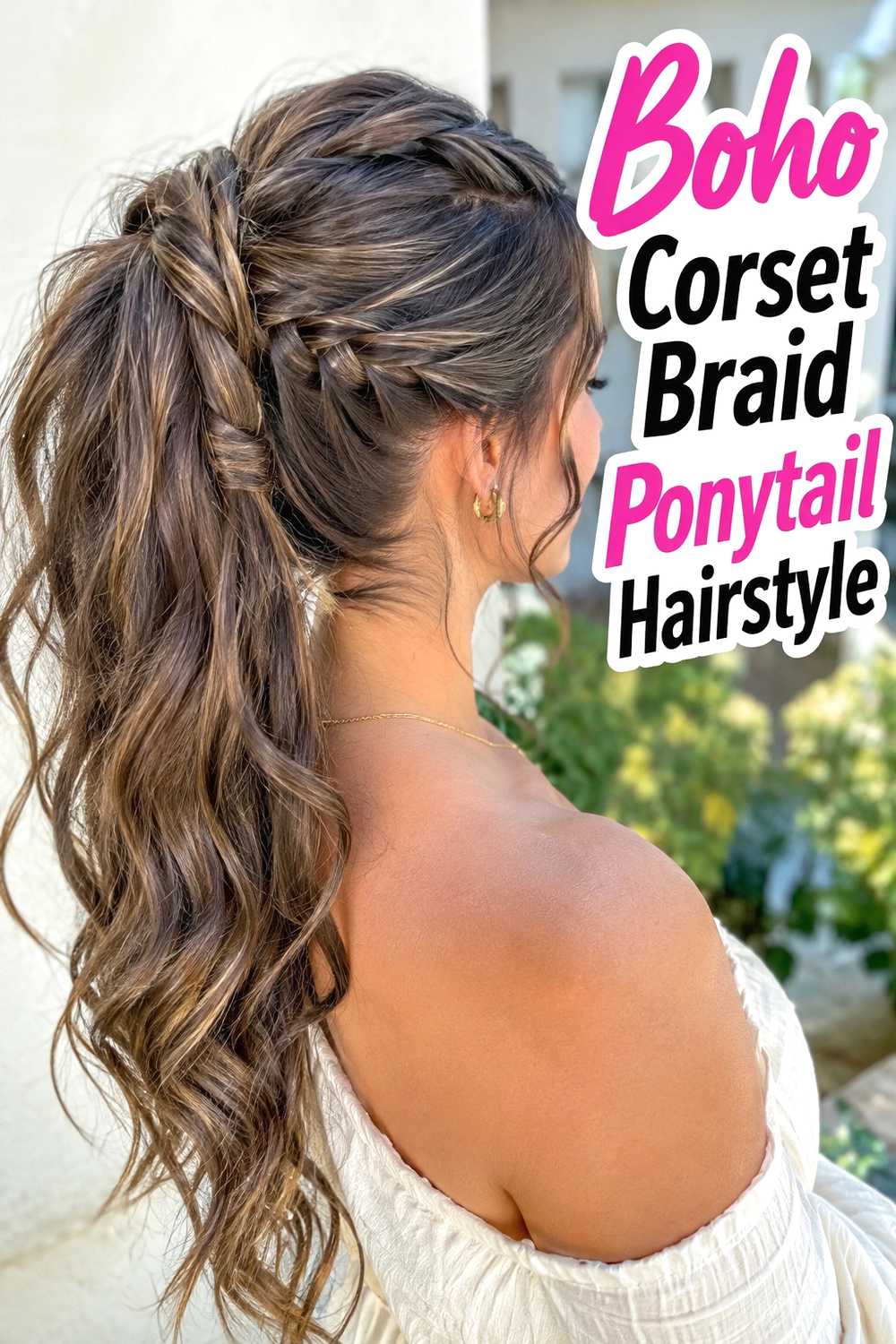
A boho interpretation allows the corset pattern to look deliberately softer and less symmetrical. Instead of making every woven section perfectly tight, gently expand selected braid edges and leave a few fine face-framing pieces around the front. The ponytail can have undone waves or naturally textured lengths, creating movement that complements the relaxed lacing above. Small irregularities are part of the appeal, but the main braid anchors still need enough structure to prevent the design from unraveling. This style can pair naturally with subtle woven strands or understated hair accessories without becoming overly formal. Medium-to-long hair offers plenty of room for texture, while layered ends can enhance the casual, airy silhouette.
Styling Notes
Keep the structural braids secure first, then soften the visible edges. This gives a relaxed appearance without sacrificing the hairstyle’s hold.
Best For
The softer finish suits casual events, festivals, outdoor celebrations, and anyone who prefers detailed braids without a highly polished look.
14. Pearl Accented Corset Braid Ponytail Hairstyle
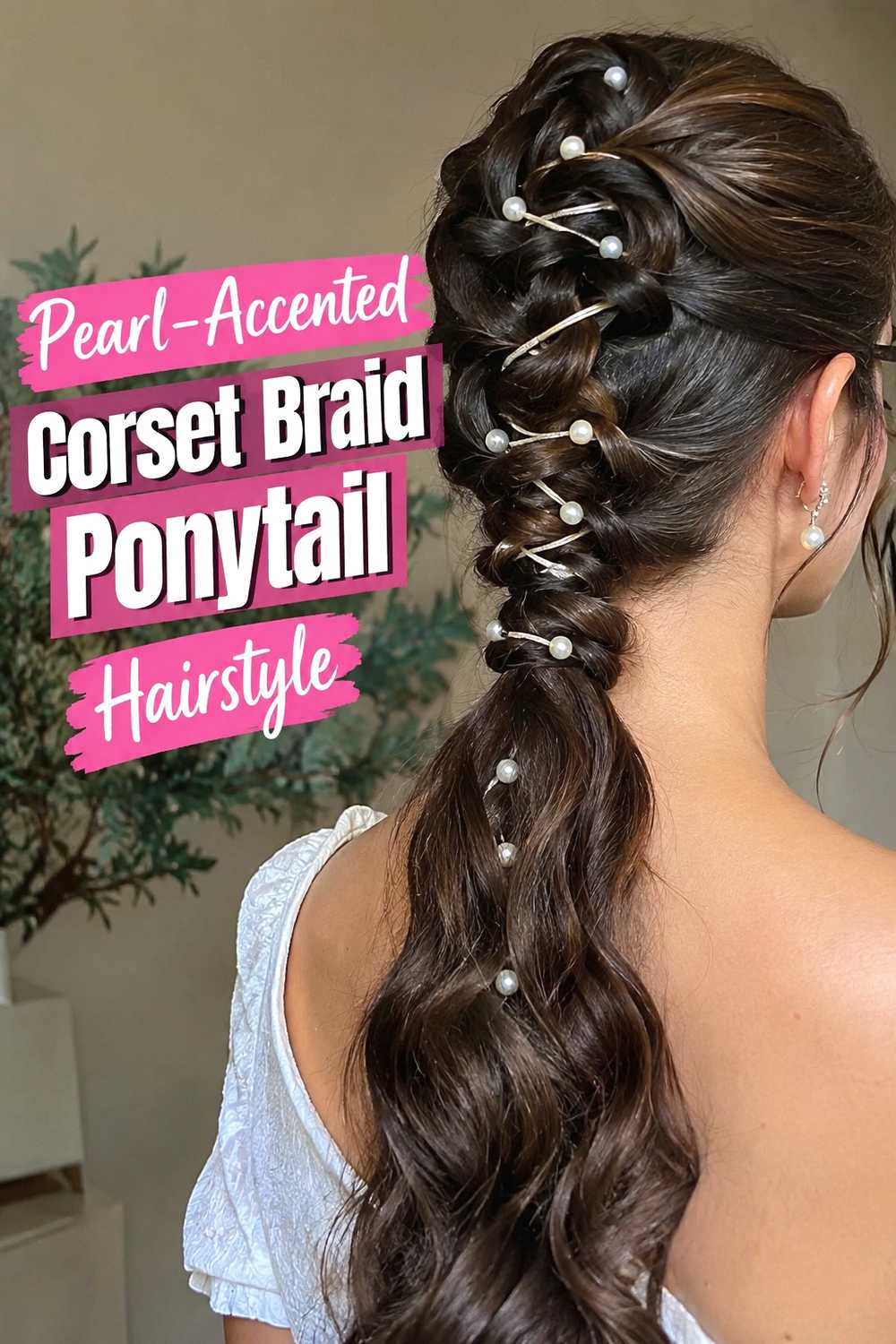
Small pearl accents bring a delicate decorative finish to the corset pattern without hiding its construction. Place a few individual pearls or pearl pins along the outer braid edges or at selected crossing points rather than covering every section. The restraint helps the woven design remain visible and gives the accessories space to stand out. A smooth low or medium ponytail creates an elegant base, while gentle waves can make the look feel more romantic. Because decorative pins add weight and can catch on strands, they should be inserted into stable braid sections rather than loosely textured areas. Keeping the rest of the hairstyle relatively simple prevents the pearls, corset lacing, and ponytail from competing with one another.
Pro Tip
Add decorative pieces only after the braid and ponytail are fully secured so you can position them without disturbing the structure.
15. Crisscross Corset Braid Ponytail Hairstyle
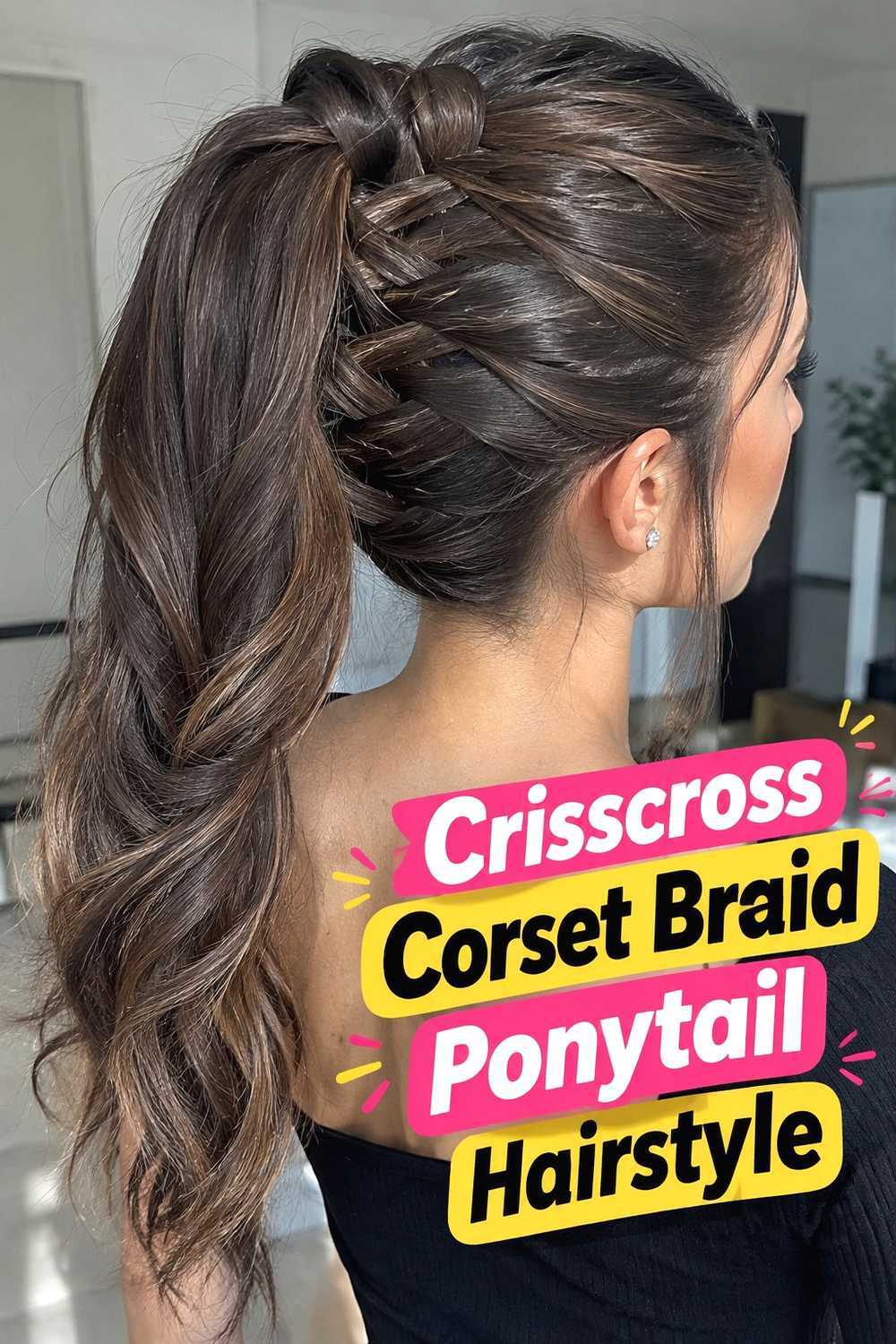
A pronounced crisscross pattern creates one of the most graphic variations of the corset ponytail. Instead of subtle lacing, slightly wider sections are passed diagonally across the center so each crossing remains clearly visible. The two outer braids act like rails, keeping the design contained as it moves toward the ponytail. Straight or softly textured hair works well because the defined diagonal pattern already provides plenty of visual detail. For a balanced finish, keep the crossing points evenly spaced and avoid allowing one side to dominate. Long hair makes the technique easier, but the most important factor is having enough length in the selected sections to travel comfortably across the center without excessive pulling.
Styling Notes
Lay each diagonal section flat before securing or threading it. Twisted pieces can make the crisscross pattern look uneven even when the spacing is correct.
Why It Works
The larger crossings make the corset influence instantly visible while the ponytail keeps the overall silhouette familiar and wearable.
16. Wrapped Base Corset Braid Ponytail Hairstyle
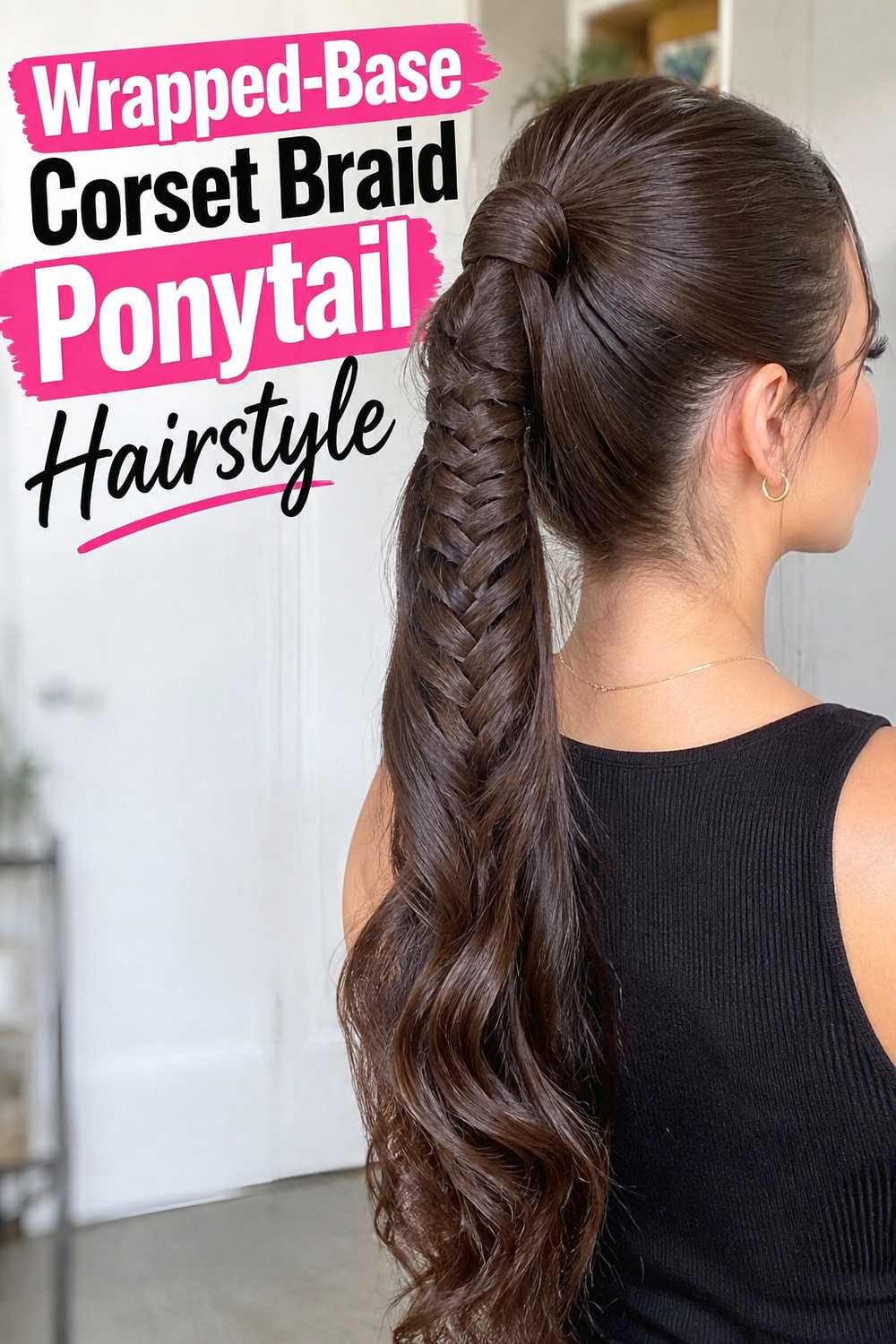
A wrapped ponytail base creates a polished transition between the intricate lacing and the flowing lengths. After completing the corset braid and securing everything with an elastic, take a slim section from underneath the ponytail and wrap it neatly around the tie. The hidden elastic makes the finished style feel more intentional and allows the eye to move smoothly from the woven upper section into the ponytail. This finishing technique can be paired with straight, wavy, or curly lengths, so it adapts easily to different styling preferences. Make sure the wrapping section is long enough to circle the base without becoming too bulky, particularly if the ponytail is already thick.
Pro Tip
Secure the wrapped piece underneath the ponytail where the pin or small elastic will be less noticeable from the back and sides.
17. Side Corset Braid Ponytail Hairstyle
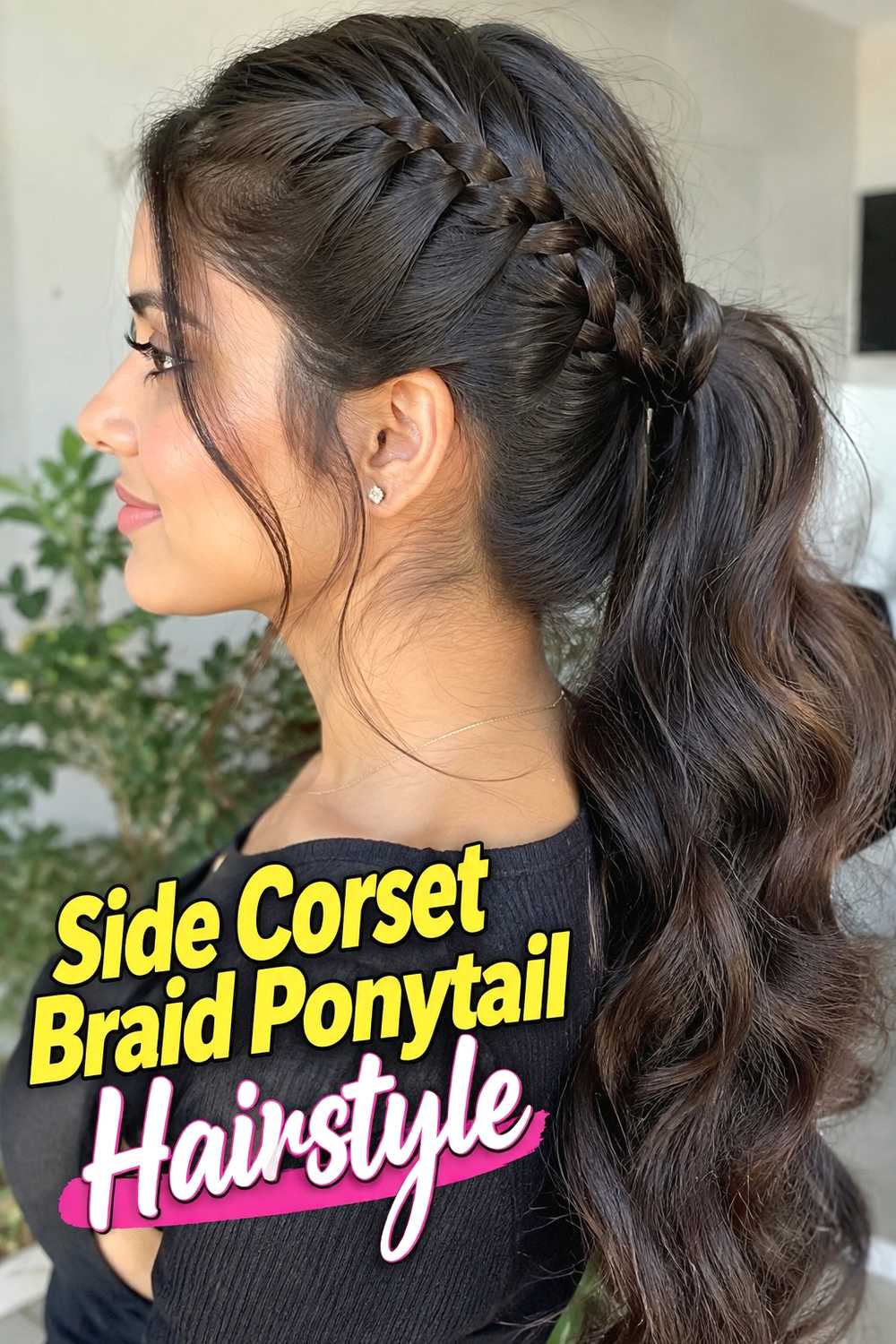
Moving the corset construction slightly to one side creates an asymmetric hairstyle with a different appearance from every angle. The woven panel can travel diagonally from the upper side of the head toward a low or medium ponytail, giving the design a natural sense of direction. This layout is especially useful when you want the braid detail to remain visible from a three-quarter view rather than only from directly behind. The opposite side can stay comparatively smooth to keep the look balanced. Loose waves through the ponytail complement the diagonal shape, while a straight finish makes the asymmetry appear sharper. Thoughtful sectioning is essential because the lacing still needs even spacing despite its angled placement.
Best For
This version suits anyone looking for a less traditional composition while keeping the recognizable corset-braid technique.
Styling Notes
Plan the ponytail position before beginning the braids so every woven section naturally travels toward the same final tie point.
18. Glam Corset Braid Ponytail Hairstyle
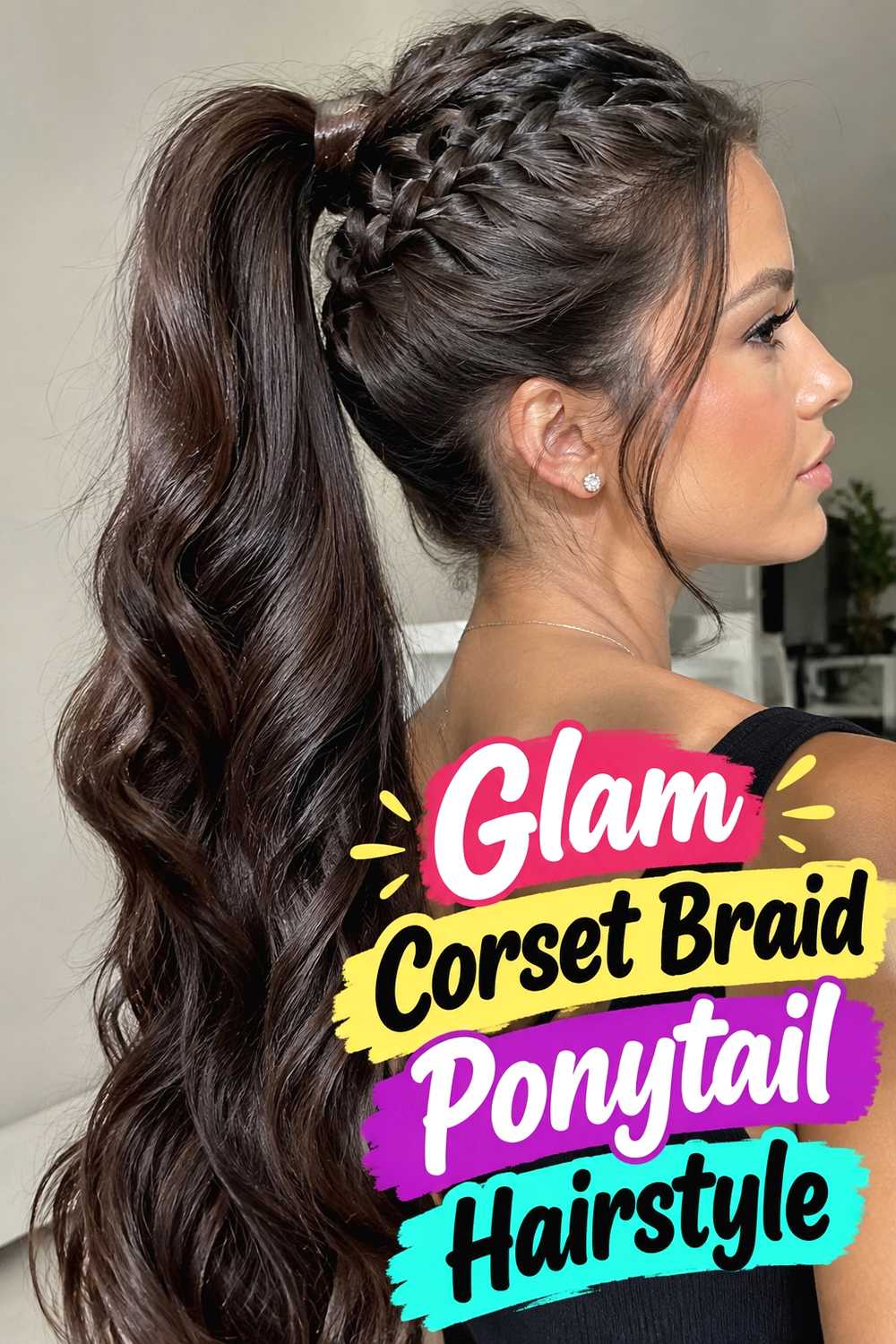
For a dressier finish, combine a precise corset braid with a full, polished ponytail and controlled shine. The upper section should look clean and deliberate, with smooth braid edges and evenly spaced lacing that leads into a secure medium or high base. Through the ponytail, large curls or sculpted waves can provide movement and volume without hiding the intricate construction above. A wrapped elastic base adds another polished detail, while a few carefully placed face-framing strands can soften the front if desired. This style requires more preparation than a casual ponytail, so it is best suited to occasions when you have time to refine both the braid pattern and the final texture.
Wear & Maintenance
Use secure anchors through the braid and ponytail, then finish the lengths separately so repeated adjustments do not loosen the corset structure.
Why It Works
The combination of precise lacing and polished volume creates an occasion-ready look while keeping the ponytail silhouette recognizable.
How to Choose the Right Look
Start with your hair length and the amount of material available for braiding. Medium-to-long hair generally gives you more freedom for center panels, double braids, and dramatic crisscross sections. A half-up version can be more practical when shorter layers do not comfortably reach a full ponytail.
Next, consider the finish you prefer. Sleek low ponytails and French-braid variations emphasize clean lines, while curly, wavy, boho, and voluminous versions create a softer effect. If you want the corset construction itself to stand out strongly, choose defined Dutch braids, pronounced crisscross lacing, or contrasting ribbon.
Placement also affects comfort and styling time. High ponytails create lift and movement but need a secure base, while lower versions distribute the style differently and can feel more understated. Detailed double-sided or accessory-heavy designs usually require more sectioning and adjustment than a classic centered corset braid.
Finally, match the level of decoration to the occasion. Ribbon and pearls create an obvious focal point, while a wrapped elastic or simple wave pattern offers a subtler finish. Whatever design you choose, comfortable tension and secure braid anchors matter more than making every section extremely tight.
Final Thoughts
Corset braid ponytail hairstyles can range from sleek and architectural to soft, curly, and romantic. The most wearable version is usually the one that matches your available length, natural texture, preferred ponytail placement, and realistic styling time. Keep the lacing secure but comfortable, then use texture or accessories to personalize the finished look.
FAQs
1. What is a corset braid ponytail?
A corset braid ponytail uses two or more braided sections with hair, ribbon, or another flexible element woven between them to create a laced appearance before the hair finishes in a ponytail.
2. How long does hair need to be for a corset braid ponytail?
Medium-to-long hair is generally easier to work with because the woven sections need enough length to cross between the braids and reach the ponytail. Half-up versions can work with somewhat shorter lengths.
3. Can curly hair be used for a corset braid ponytail?
Yes. Curly hair can create a beautifully full ponytail while the braided section provides structure. Keeping the curl pattern visible in the lengths can create attractive contrast with the tighter lacing.
4. How can I make the corset pattern easier to see?
Use clean sections, even spacing, and clearly defined outer braids. Contrasting ribbon, Dutch-braid edges, or a smoother surrounding finish can also make the lacing stand out more clearly.
5. Are corset braid ponytails suitable for formal events?
They can be. Sleek low versions, pearl-accented styles, wrapped bases, and polished curled ponytails can all create a more formal finish, while looser boho variations feel more relaxed.
Save your favorite corset braid ponytail hairstyles for your next styling session, and explore more braided ponytail inspiration to find a look that fits your hair.