18 Sculptural Twist-Out Hairstyle Ideas
Defined texture meets intentional shape in these sculptural twist-out hairstyles, from dramatic crowns and faux hawks to polished puffs and asymmetrical silhouettes.
A twist-out already creates beautiful separation, definition, and volume, but sculptural styling takes that texture further by deliberately shaping where the hair rises, curves, falls, or narrows. Strategic pinning, parting, fluffing, and gathering can transform a traditional twist-out into something more architectural without losing the natural movement of the strands.
The right option depends on your length, density, shrinkage, desired hold, and how much manipulation you want after unraveling the twists. Some looks rely mostly on volume and directional shaping, while others use flat twists, pins, ponytails, or tucked sections to create stronger structure.
Quick List
- Classic Sculptural Twist Out Hairstyle
- Asymmetrical Sculptural Twist Out Hairstyle
- High Crown Sculptural Twist Out Hairstyle
- Side Swept Sculptural Twist Out Hairstyle
- Pinned Back Sculptural Twist Out Hairstyle
- Sculptural Twist Out Puff Hairstyle
- Half Up Sculptural Twist Out Hairstyle
- Center Part Sculptural Twist Out Hairstyle
- Tapered Sculptural Twist Out Hairstyle
- Flat Twist Sculptural Twist Out Hairstyle
- Sculptural Twist Out Faux Hawk Hairstyle
- Sculptural Twist Out Ponytail Hairstyle
- Sculptural Twist Out Bob Hairstyle
- Jeweled Sculptural Twist Out Hairstyle
- Sculptural Twist Out Crown Hairstyle
- Sculptural Twist Out Updo Hairstyle
- Defined Spiral Sculptural Twist Out Hairstyle
- Editorial Sculptural Twist Out Hairstyle
1. Classic Sculptural Twist Out Hairstyle
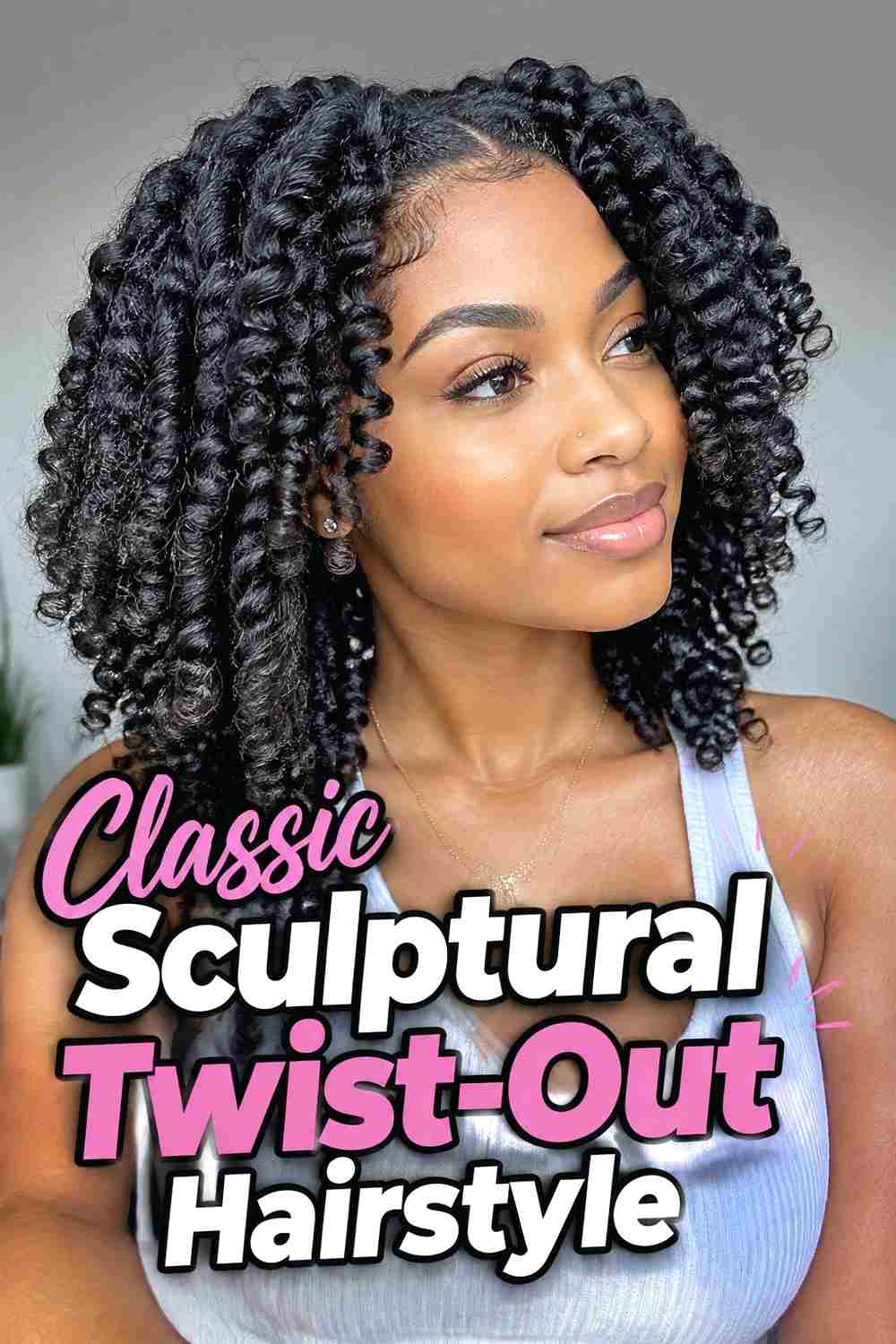
The classic sculptural twist-out keeps the full texture loose but shapes it deliberately into a rounded, balanced silhouette. After unraveling the twists, separate only as much as needed to preserve definition, then lift the roots strategically to build volume without creating excess frizz. The outer shape can be gently refined so the crown, sides, and ends feel intentional rather than uniformly expanded. This version works beautifully when individual twist sections remain visible throughout the surface, giving the hairstyle both structure and movement. Instead of chasing perfect symmetry, focus on a cohesive outline with enough natural variation to keep the texture believable and touchable.
Styling Notes
Lift at the roots with your fingers or a pick without dragging through the defined ends, which helps preserve the twist pattern.
2. Asymmetrical Sculptural Twist Out Hairstyle
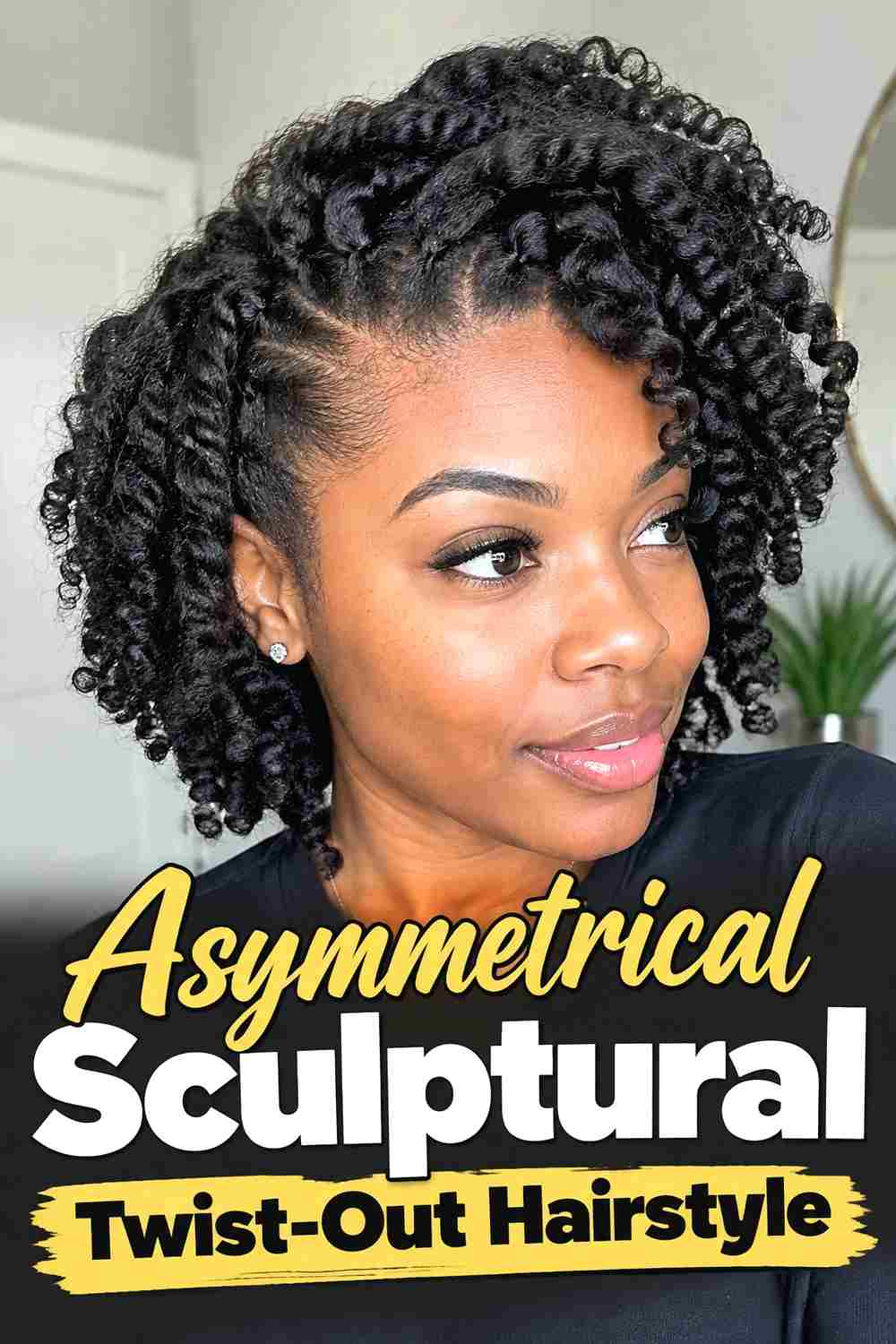
An asymmetrical twist-out shifts most of the visual weight to one side, creating a bold silhouette while keeping the texture fully visible. One side can be pinned flatter near the temple or above the ear, allowing the opposite side to expand upward and outward with more volume. The result feels intentional and editorial without requiring the hair to be tightly gathered. Defined twist sections help emphasize the contrast between the controlled side and the fuller section. This style is especially effective when the front has a curved or diagonal shape rather than a simple straight part. Keep hidden pins secure but avoid flattening more hair than necessary.
Why It Works
The difference in volume from side to side creates immediate structure while preserving the softness and definition of the twist-out.
3. High Crown Sculptural Twist Out Hairstyle
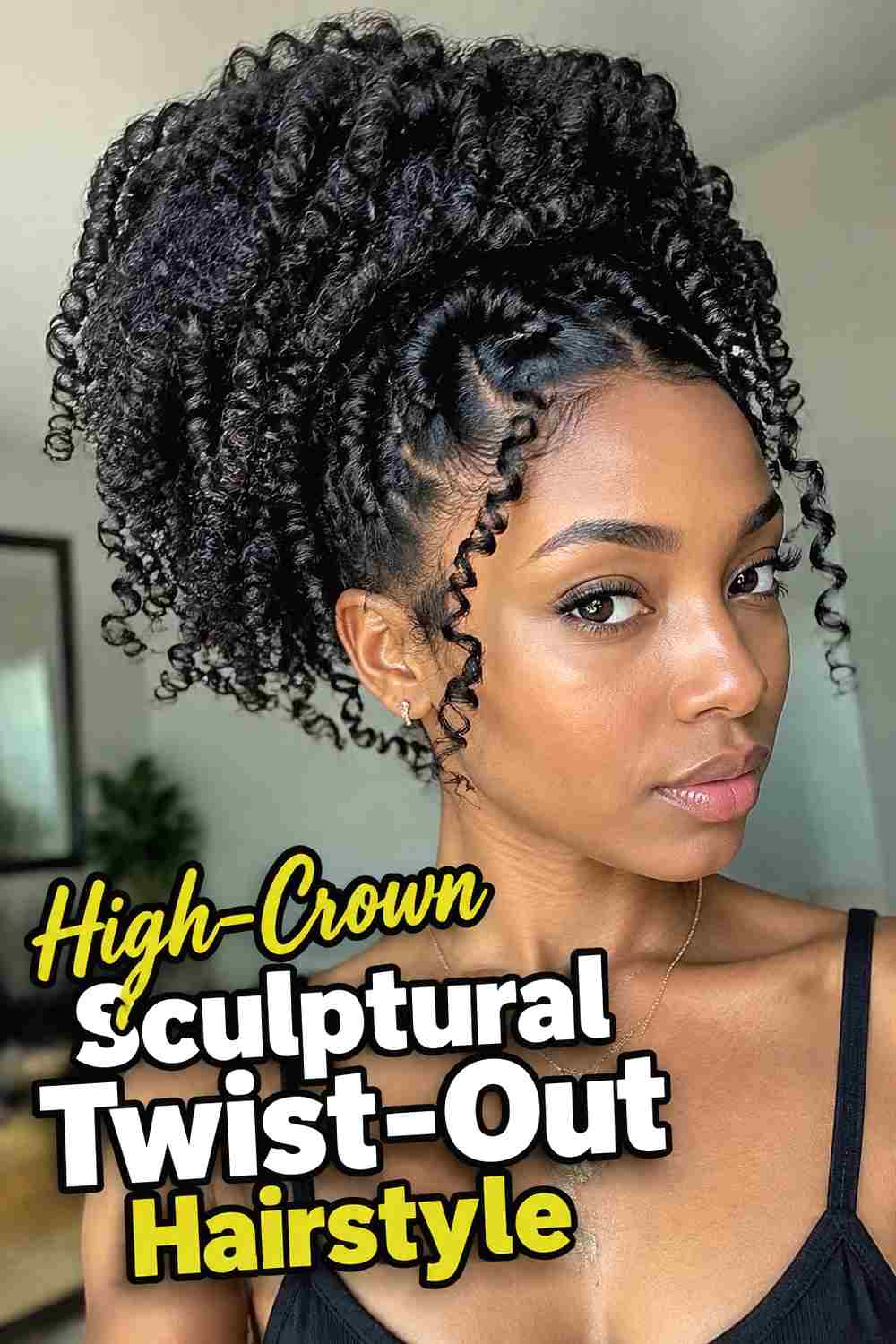
This version concentrates volume at the top of the head, creating a lifted crown with a narrower shape around the sides. After separating the twist-out, gently direct the upper sections upward and use discreet pins where needed to support the height. The sides can remain textured but slightly controlled so the crown becomes the dominant feature. This silhouette works particularly well on medium and longer lengths with enough density to create height without forcing the hair into an excessively tight shape. Keep the ends soft and defined rather than teasing them into a fuzzy mass. The finished style should look elevated and dimensional while still showing the original twist pattern.
Hair Type & Length
Medium-length and longer textured hair usually offers enough volume and flexibility for a noticeable crown without requiring excessive stretching.
4. Side Swept Sculptural Twist Out Hairstyle
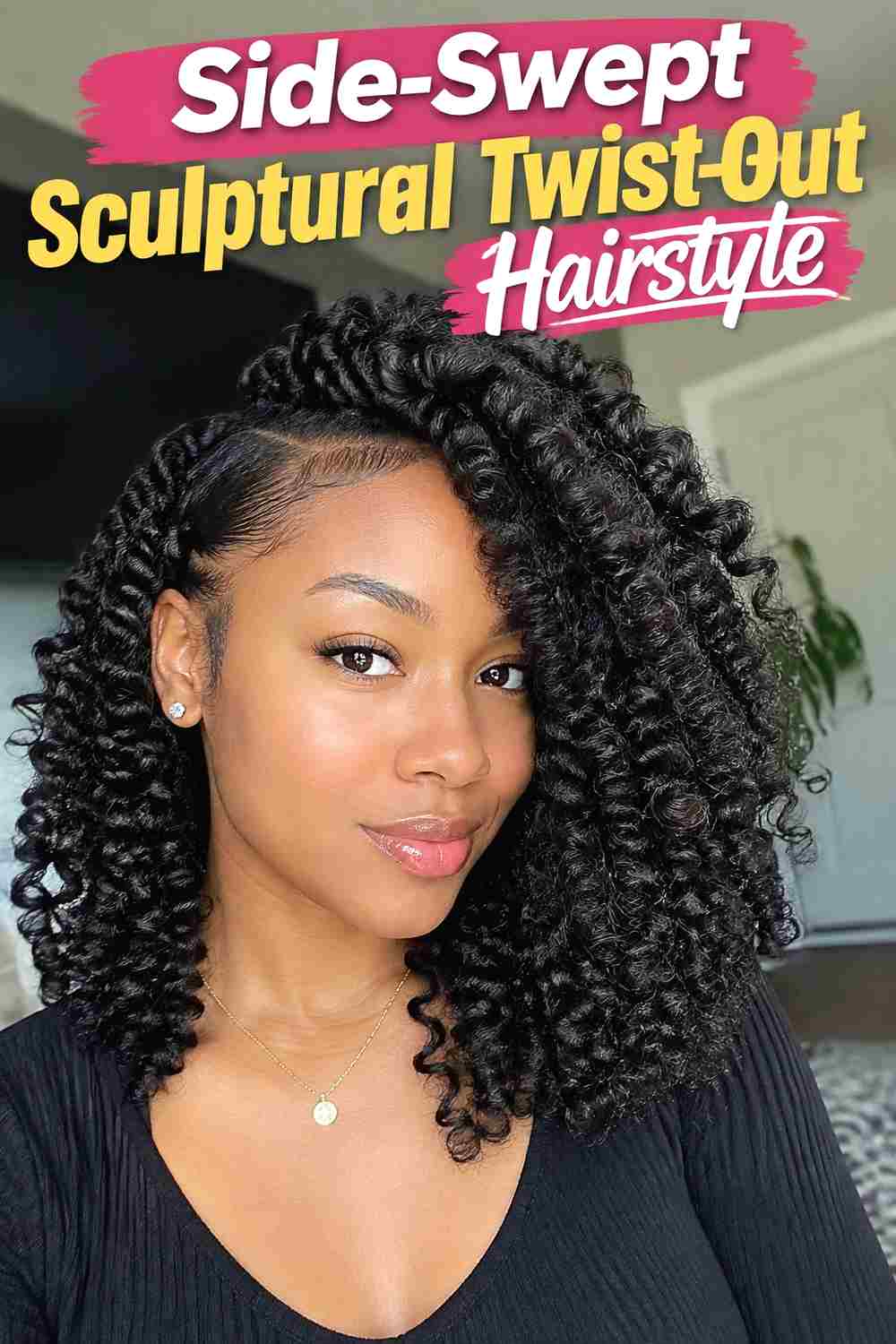
A side-swept twist-out directs the texture diagonally across the head, creating movement and a strong profile. Start with a deep side part or use hidden pins to guide one section across the crown, allowing the remaining hair to fall toward the opposite side. The defined twists can stay fuller near the ends, while the roots are shaped to control the direction. This approach works particularly well when you want the hair visible from the front without losing the dimensional quality of a full twist-out. A few shorter pieces can frame the face naturally, but keep the overall sweep clear so the silhouette does not become visually scattered.
Styling Notes
Build the directional shape at the roots first, then arrange the defined ends so they follow the same sweep naturally.
5. Pinned Back Sculptural Twist Out Hairstyle
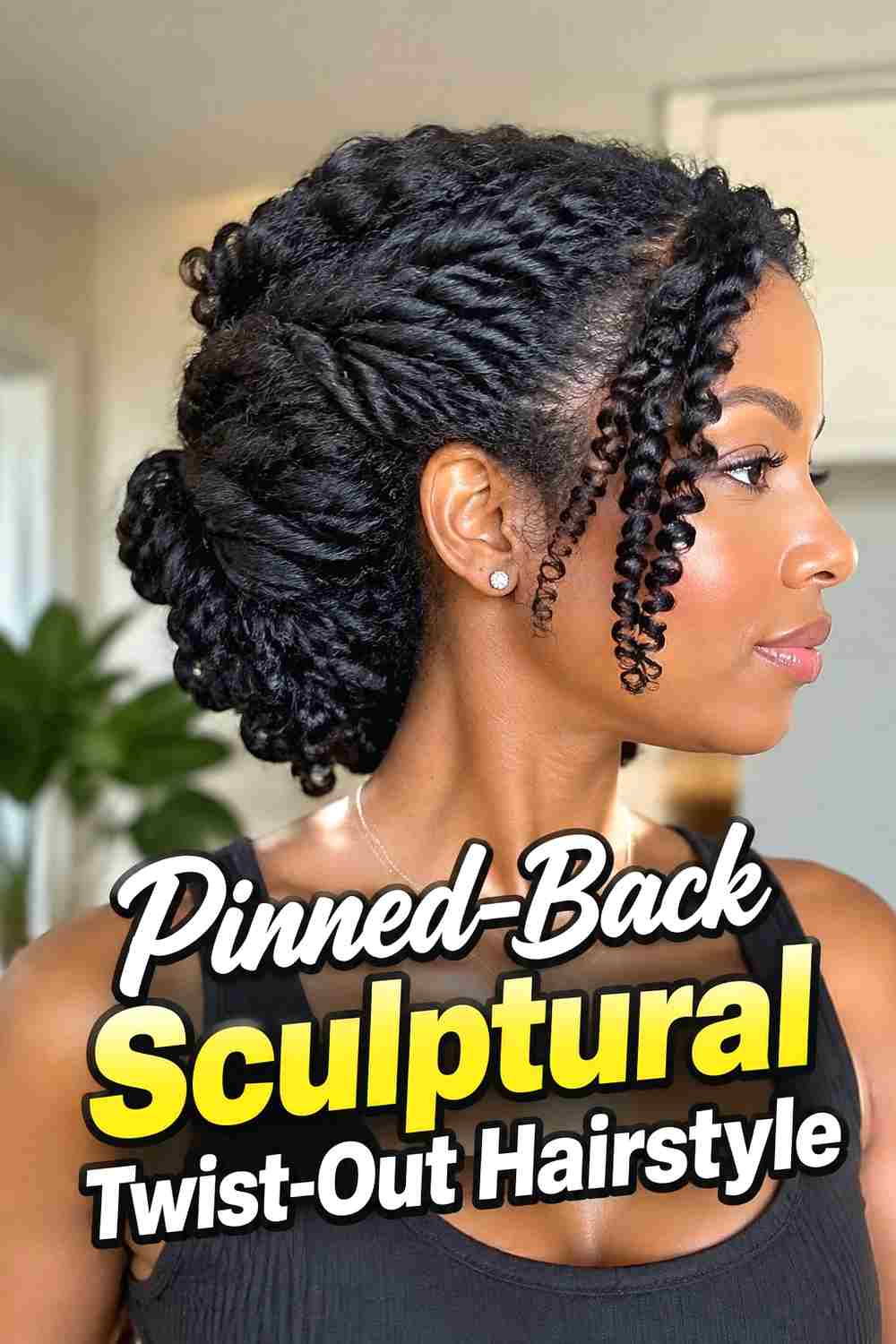
Pinning selected sections away from the face gives a twist-out more structure while leaving most of the texture loose. The front or temple areas can be swept backward and anchored discreetly, creating a sculpted contour around the sides while the crown and back remain full. This is useful when you want definition and volume without hair falling forward throughout the day. Decorative pins can be added, but simple hidden pins keep attention on the texture itself. The strongest version maintains some lift at the roots rather than pulling the side sections completely flat, which helps the pinned areas transition naturally into the rest of the twist-out.
Best For
This style works well for dinners, work events, celebrations, photos, and occasions where you want an open face with plenty of textured volume.
6. Sculptural Twist Out Puff Hairstyle
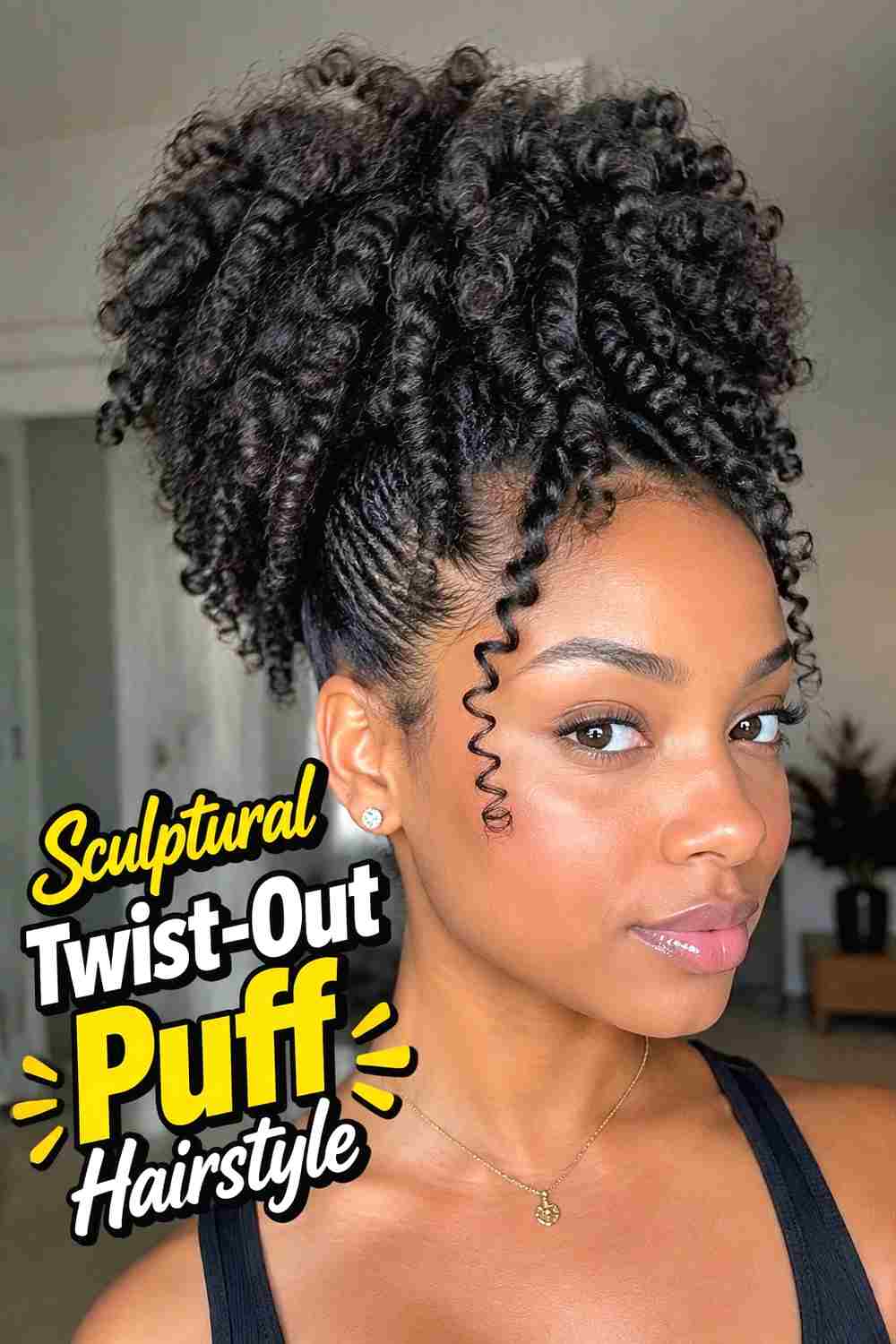
A twist-out puff combines a gathered base with highly defined ends, giving the familiar puff silhouette more visible texture and shape. Bring the hair upward or toward the back using a comfortable band, leaving the twist-out sections free to expand above the base. Instead of fluffing everything into one rounded cloud, shape selected areas to create height, width, and intentional curves. Keeping some individual spirals visible around the surface makes the puff look dimensional rather than overly brushed. The base should hold securely without pulling tightly at the edges, and a little controlled asymmetry can make the finished puff feel more sculptural and modern.
Wear & Maintenance
Use a soft band or adjustable tie and avoid tightening repeatedly throughout the day, especially around the hairline.
7. Half Up Sculptural Twist Out Hairstyle
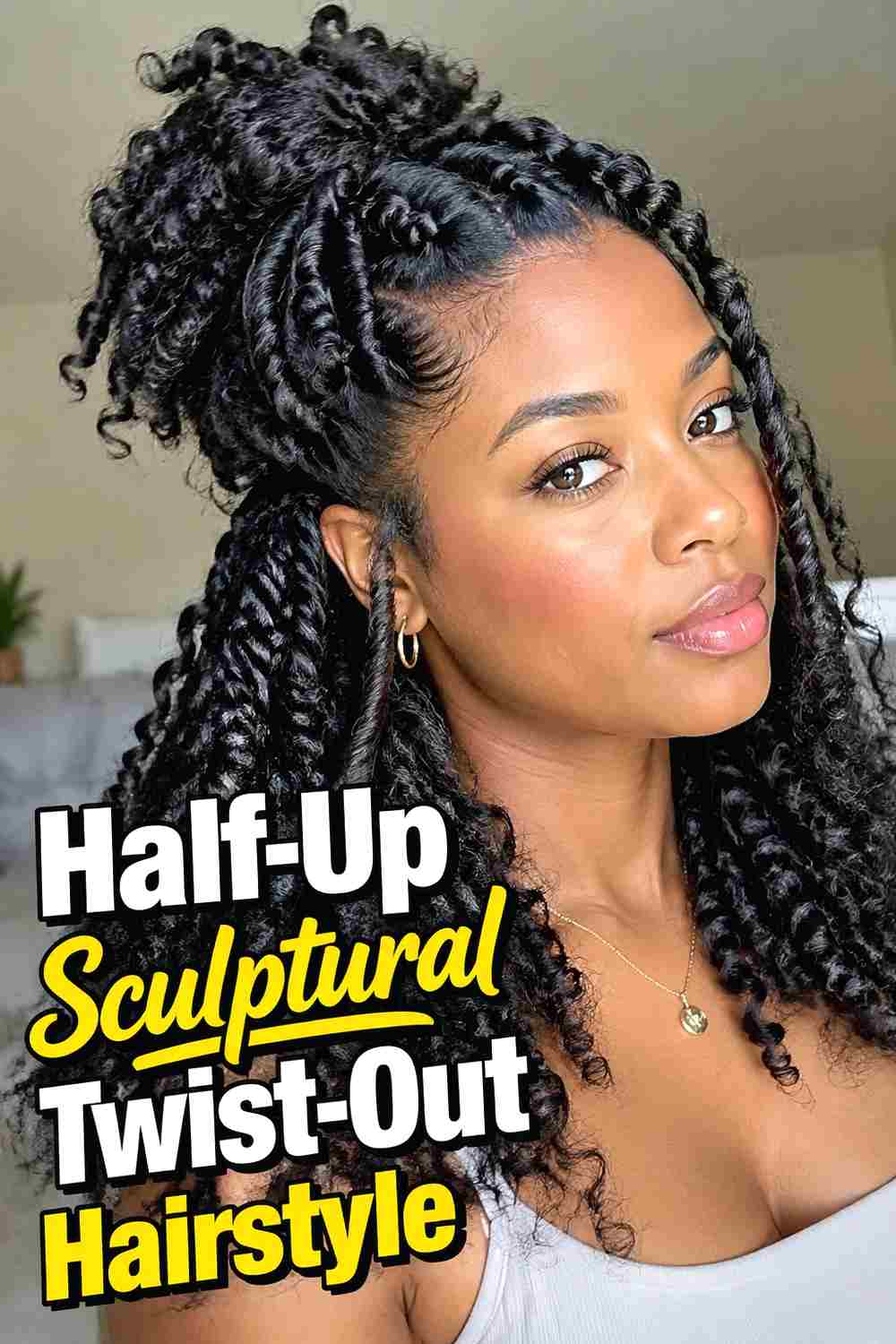
A half-up sculptural twist-out creates height through the crown while leaving the lower texture free. Gather only the upper sections and secure them with hidden pins, a small elastic, or a discreet clip, then shape the raised portion into a defined mound rather than a flat ponytail. The lower twist-out can remain full and rounded, producing two levels of texture that make the hairstyle more dimensional. This approach is especially practical when you want volume without keeping the entire twist-out around the face. Preserve definition through the ends and avoid pulling the top section too tightly, since softness helps the gathered and loose portions blend naturally.
Why It Works
The lifted crown adds structure while the loose lower sections preserve the movement and fullness associated with a traditional twist-out.
8. Center Part Sculptural Twist Out Hairstyle
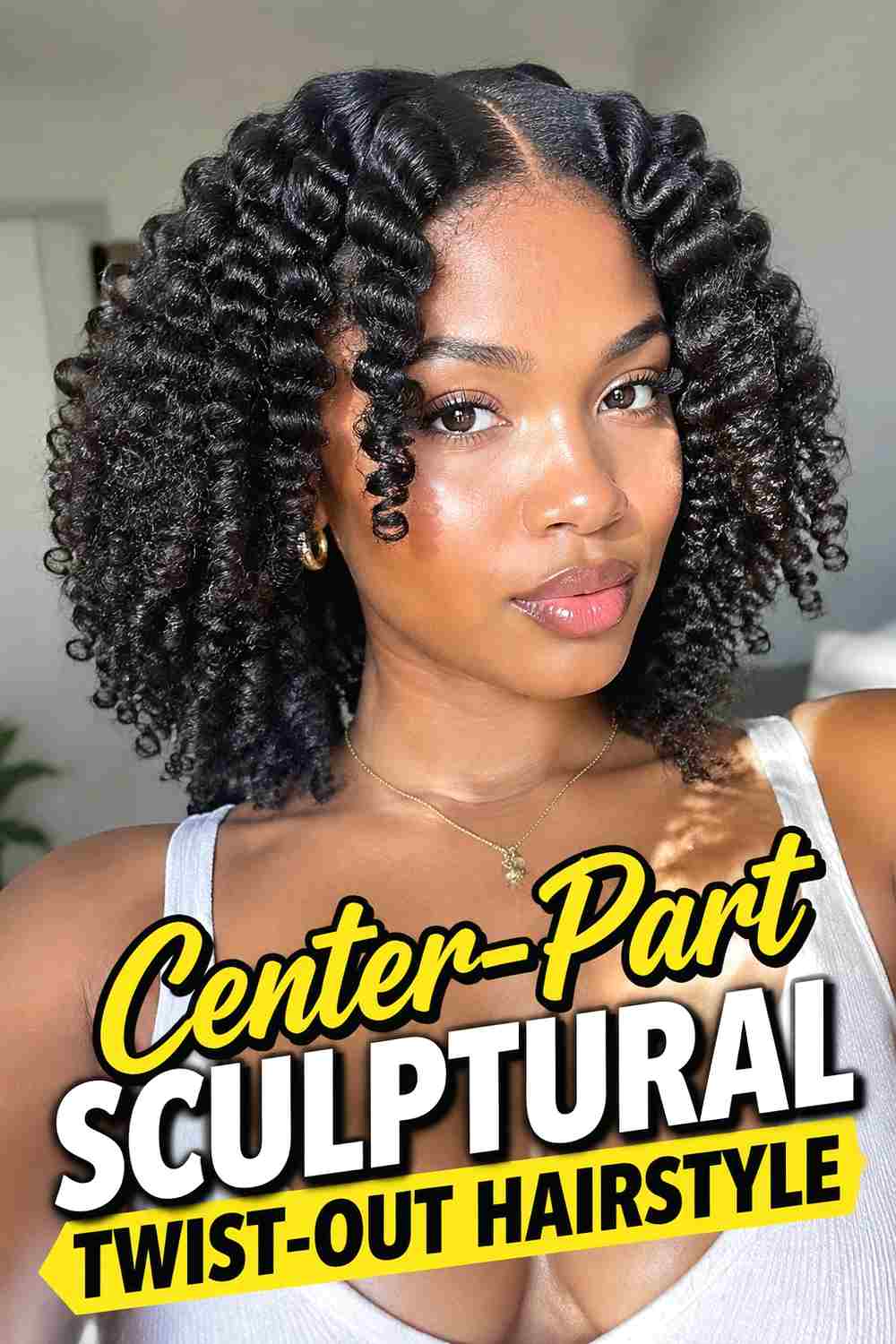
A center part gives sculptural texture a strong symmetrical framework. Rather than allowing both sides to fall identically, shape the roots so the hair expands outward in balanced arcs while the defined ends maintain natural variation. The part can remain sharp for a graphic finish or soften slightly toward the crown for a less rigid effect. This version is especially attractive when the twist-out has consistent definition because the central line emphasizes the texture on both sides. Keep the crown lifted enough to prevent the style from appearing flat, and separate the ends selectively instead of over-fluffing everything in pursuit of identical volume.
Styling Notes
Establish the center part before shaping the volume so the two sides can be adjusted in relation to the same visual guide.
9. Tapered Sculptural Twist Out Hairstyle
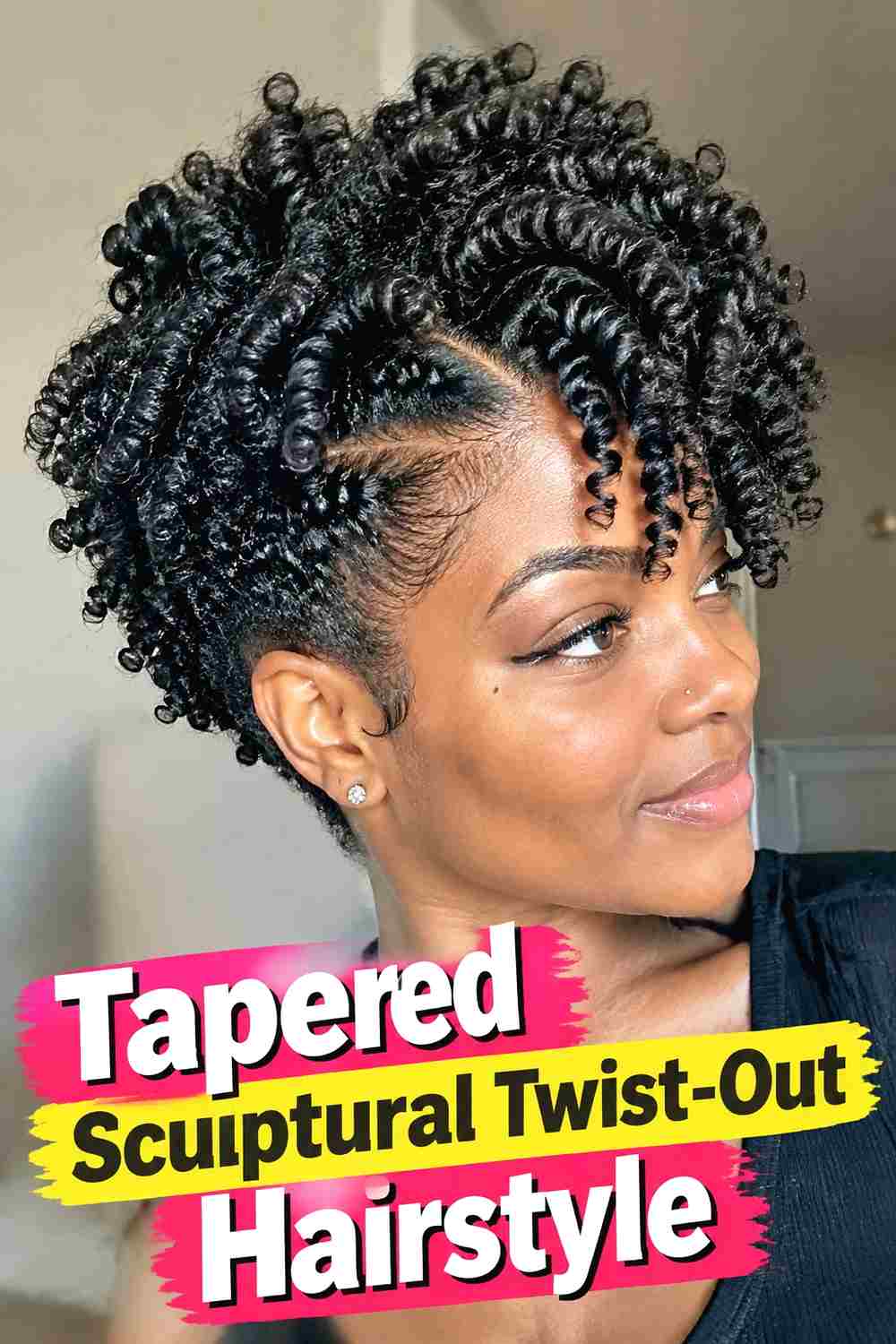
A tapered cut gives a twist-out a built-in sculptural silhouette, with shorter sides directing attention toward the textured top. Defined twists can be arranged upward, forward, or slightly to one side depending on the desired shape. Because the perimeter is already controlled by the haircut, styling can focus on preserving definition and building strategic volume through the longer crown. Smaller twists create tighter texture, while larger sections produce broader curves. This look can feel polished or playful depending on how much height you create. Keep the edges natural-looking and avoid forcing every curl into the same direction; controlled variation gives the shape more depth.
Hair Type & Length
Tapered cuts with longer texture through the top offer the clearest contrast between the sculpted crown and shorter sides.
10. Flat Twist Sculptural Twist Out Hairstyle
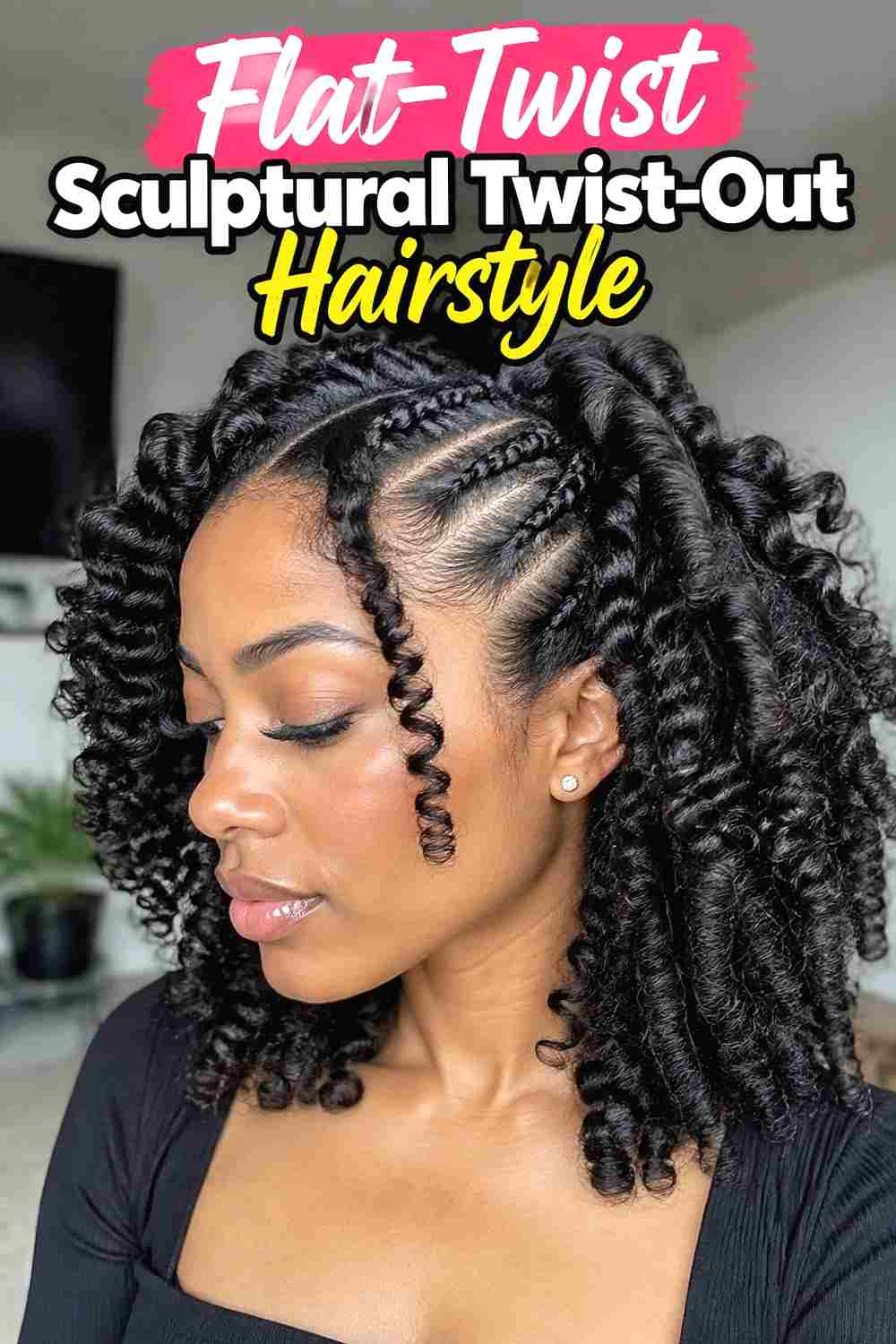
Flat twists can create a structured foundation that transitions into loose twist-out texture. One side, both temples, or the front sections can be flat-twisted close to the scalp while the remaining hair is unraveled and shaped into volume. This contrast makes the hairstyle feel more architectural than a completely loose twist-out. Keep the flat twists neat but comfortably tensioned, and allow the loose sections to retain enough definition that their texture remains distinct. A diagonal arrangement can create extra movement, while symmetrical flat twists provide a cleaner framework. This style works well when you want some sections secured without turning the entire look into an updo.
Pro Tip
Complete the flat-twist sections first, then shape the loose texture around them so you can judge the final balance accurately.
11. Sculptural Twist Out Faux Hawk Hairstyle
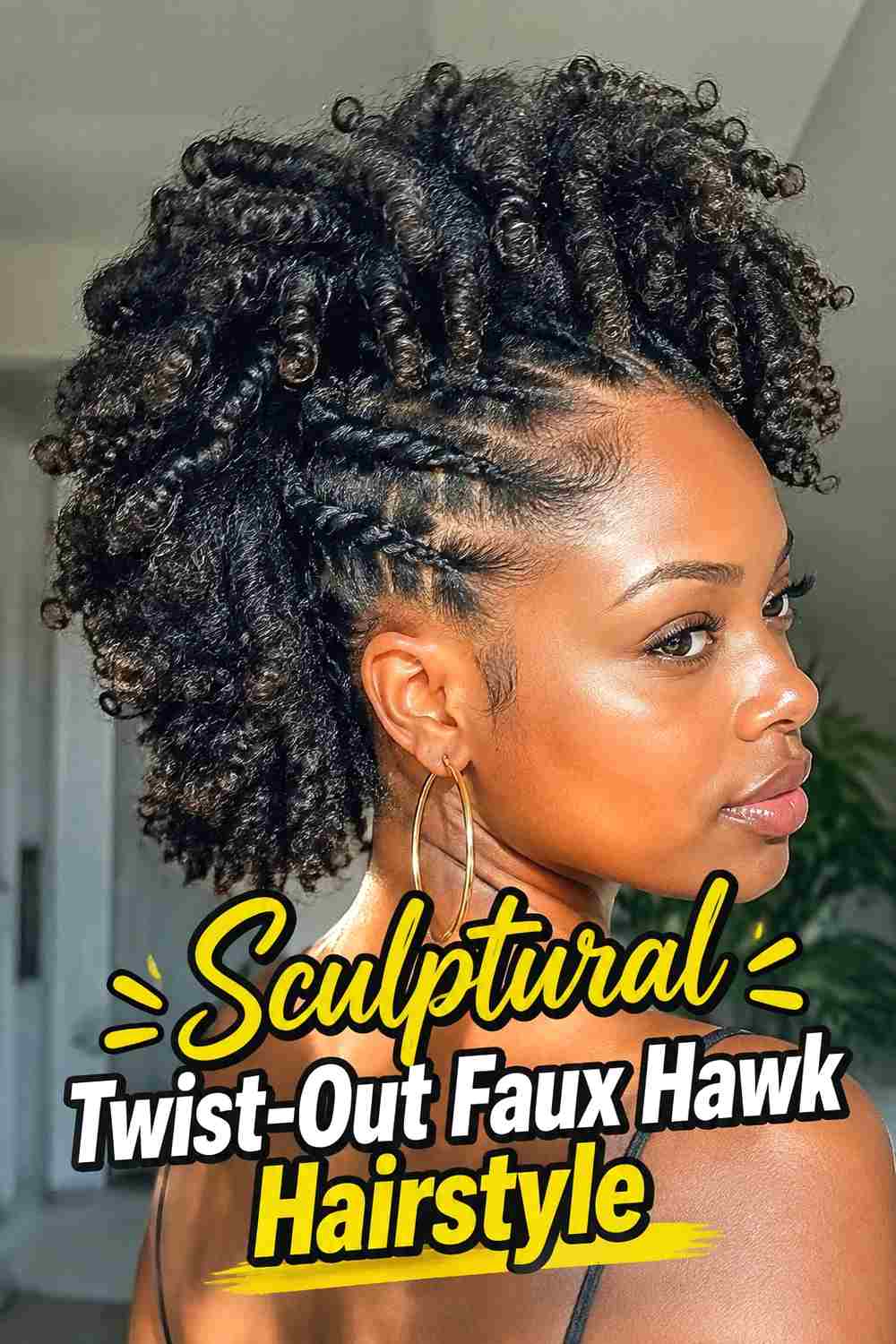
The faux hawk gathers the sides inward while preserving a bold line of twist-out volume from the forehead toward the back. Use pins to guide the side sections toward the center without flattening them completely, then arrange the loose texture into several connected mounds along the top. Individual twists should remain visible within the shape, creating definition instead of one heavily teased strip. The silhouette can be tall and dramatic or lower and more wearable depending on hair length and density. This look benefits from secure pinning because the side tension determines the central shape, but the scalp should still feel comfortable throughout wear.
Best For
This style suits parties, creative events, photo sessions, concerts, and occasions where a stronger sculptural silhouette feels appropriate.
12. Sculptural Twist Out Ponytail Hairstyle
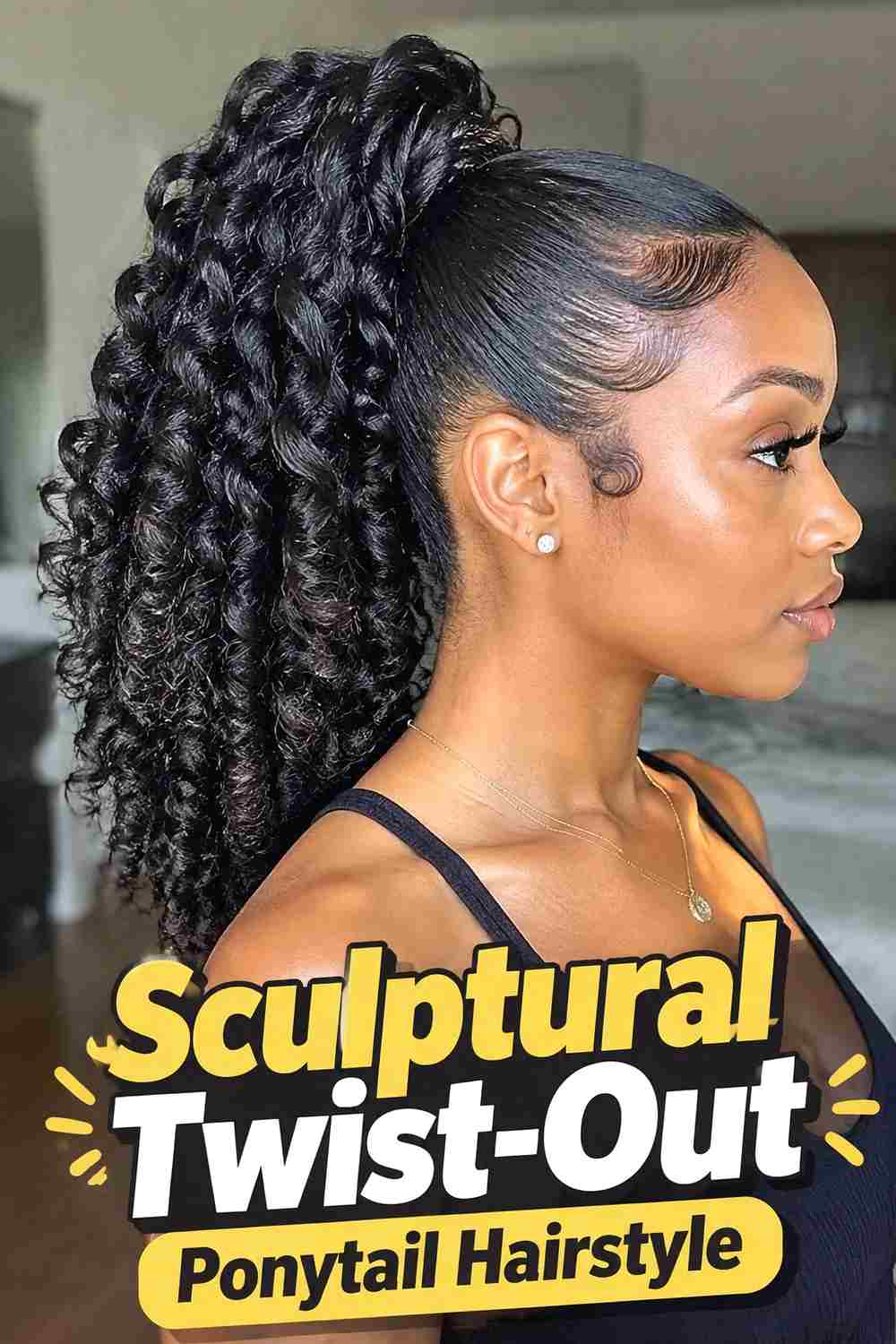
Gathering a twist-out into a ponytail concentrates the texture into one defined shape while keeping the ends visible and full. A high ponytail creates lift, while a lower placement gives the style a softer profile. Instead of brushing the lengths smooth, preserve the twist-out pattern and arrange the ponytail so its volume feels balanced from several angles. The crown can remain sleek, lightly textured, or gently raised depending on the overall mood. Wrapping a small section around the elastic creates a cleaner finish, but the base should still be supported by a regular tie. Keep tension moderate so the ponytail looks polished without sacrificing comfort.
Styling Notes
Gather the hair after the twist-out is fully separated, then reshape the ponytail ends rather than combing through them again.
13. Sculptural Twist Out Bob Hairstyle
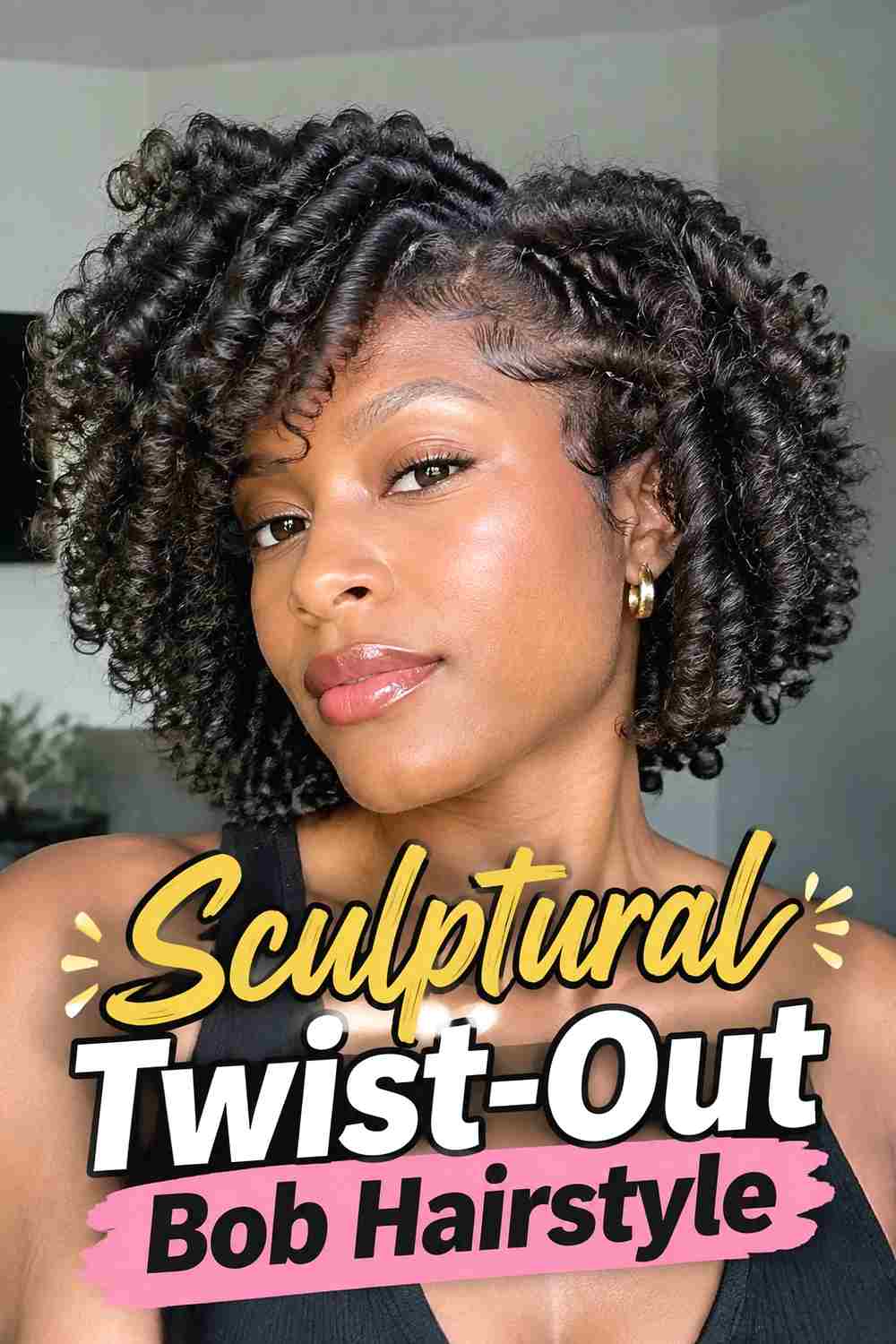
A bob-length twist-out can look especially sculptural because the shorter perimeter makes the overall silhouette easy to shape. Let the defined sections sit around the jaw or shoulders, then adjust the roots to create a rounded, angled, or slightly asymmetrical outline. A side part can produce more height on one side, while a center part emphasizes balance and width. Keep the ends defined enough to show the twist pattern instead of fluffing them into an indistinct edge. This version is practical for medium and shorter lengths because it uses the haircut itself as part of the structure rather than relying on pins or gathered sections.
Why It Works
The shorter length keeps the volume close to the head, making subtle changes in shape and parting especially noticeable.
14. Jeweled Sculptural Twist Out Hairstyle
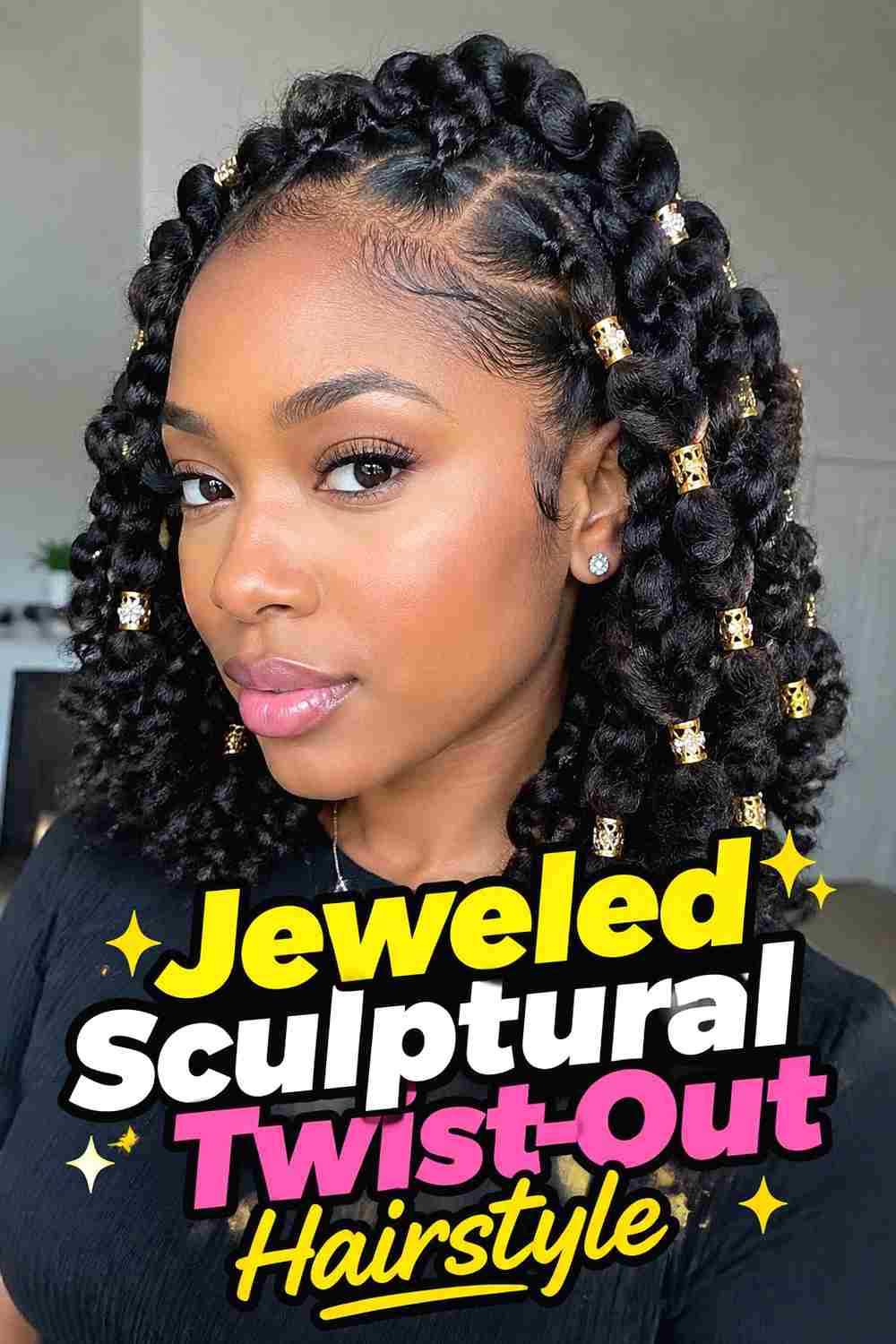
Small jeweled pins can highlight the shape of a twist-out without covering its texture. Choose one side, a pinned-back temple section, or a defined part as the accessory zone, then keep the rest of the hair free and sculpted. Crystals, pearls, or metallic pieces work best when used sparingly, since a twist-out already contains plenty of visual detail. The jewelry should sit against a secure section rather than being pushed randomly into loose strands. Shaping the hair first makes accessory placement easier because you can see exactly where sparkle will enhance the silhouette instead of interrupting an important curve or defined twist cluster.
Wear & Maintenance
Use lightweight accessories and anchor them near secure pins or gathered sections so they do not drag on individual twists.
15. Sculptural Twist Out Crown Hairstyle
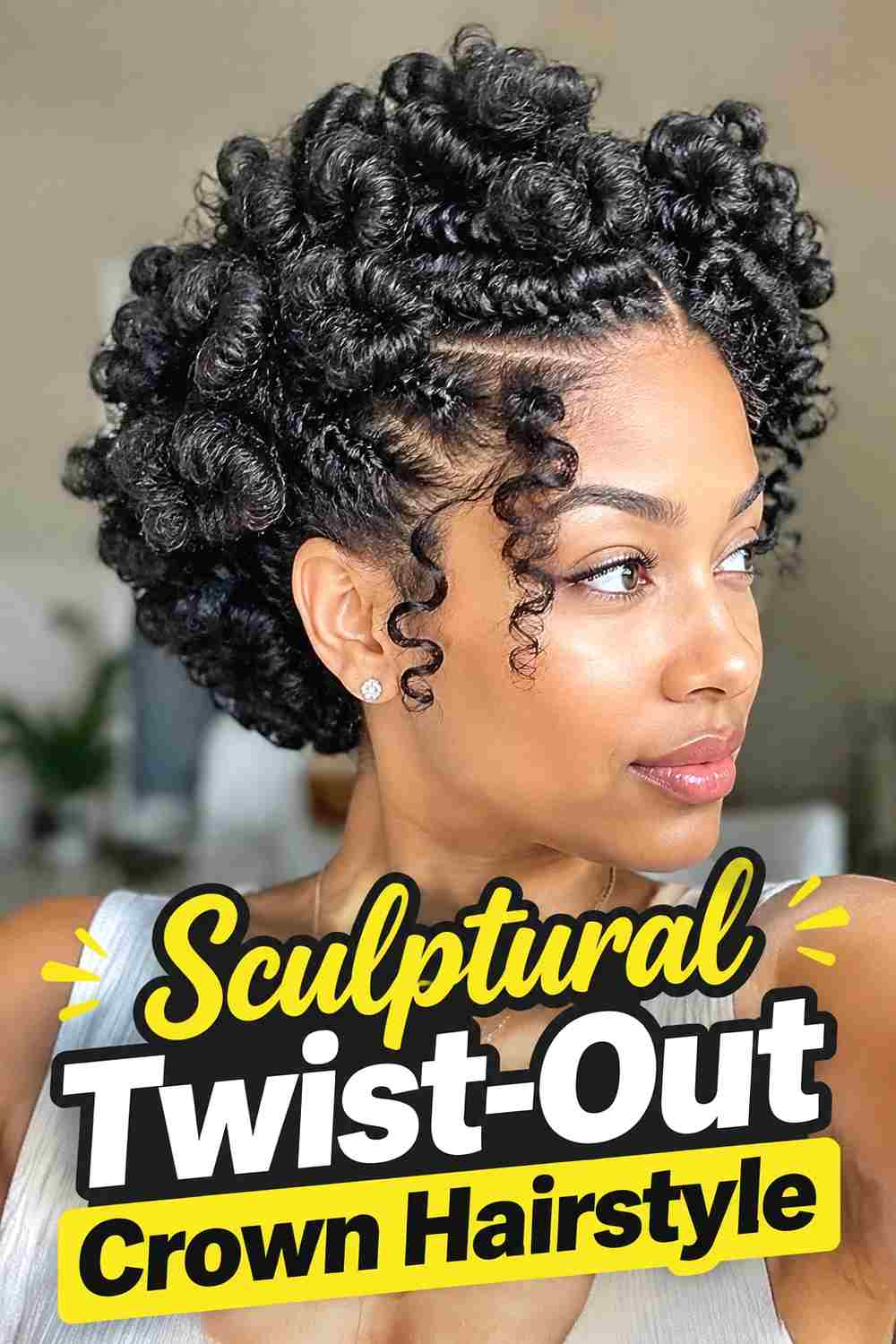
The crown version directs twist-out volume around the upper perimeter of the head, creating a halo-like shape while leaving the center or lower back slightly more controlled. Sections can be pinned upward from the sides, allowing defined twists to form a textured ring around the crown. The effect can be symmetrical or subtly irregular depending on how editorial you want the result to feel. Avoid packing the twists too tightly together; small spaces between clusters help the individual texture remain visible. This style is especially striking from side and back angles because the elevated perimeter creates a clear silhouette against the neck and shoulders.
Styling Notes
Pin the structural sections first, then arrange the visible twist clusters around the crown so the shape stays balanced without looking rigid.
16. Sculptural Twist Out Updo Hairstyle
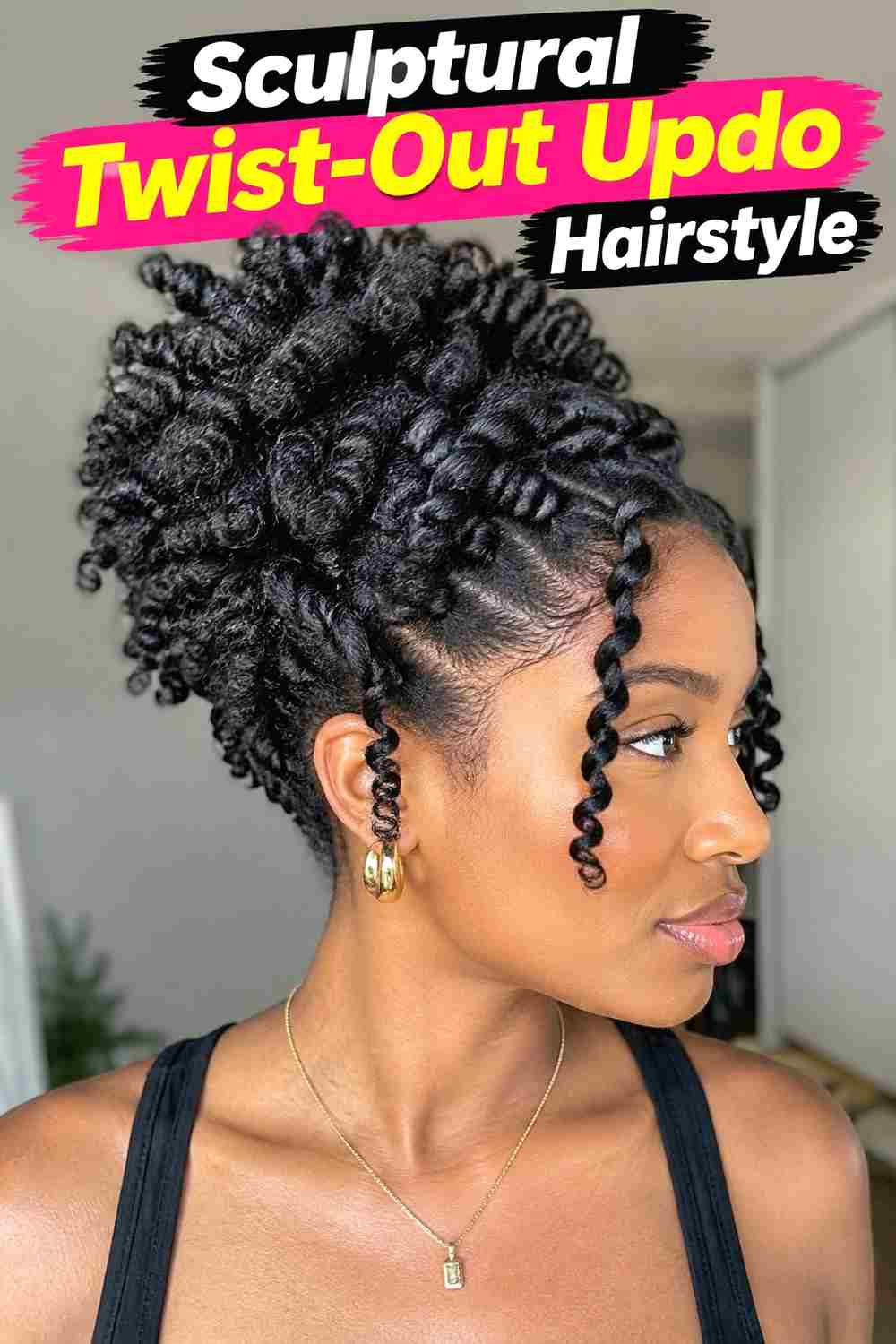
A sculptural updo gathers the twist-out into a series of pinned curves, rolls, and textured clusters rather than one conventional bun. Leave enough definition in each section for the original twist pattern to remain visible, then overlap pieces strategically at the back or crown. The shape can be compact for formal wear or taller and more directional for a statement finish. Hidden pins should support every major section independently so one loose area does not destabilize the whole style. A few face-framing twists can soften the front, while the main body of the updo remains controlled and dimensional.
Best For
Choose this version for weddings, formal events, creative evenings, portraits, and occasions where you want the twist-out fully lifted off the shoulders.
17. Defined Spiral Sculptural Twist Out Hairstyle
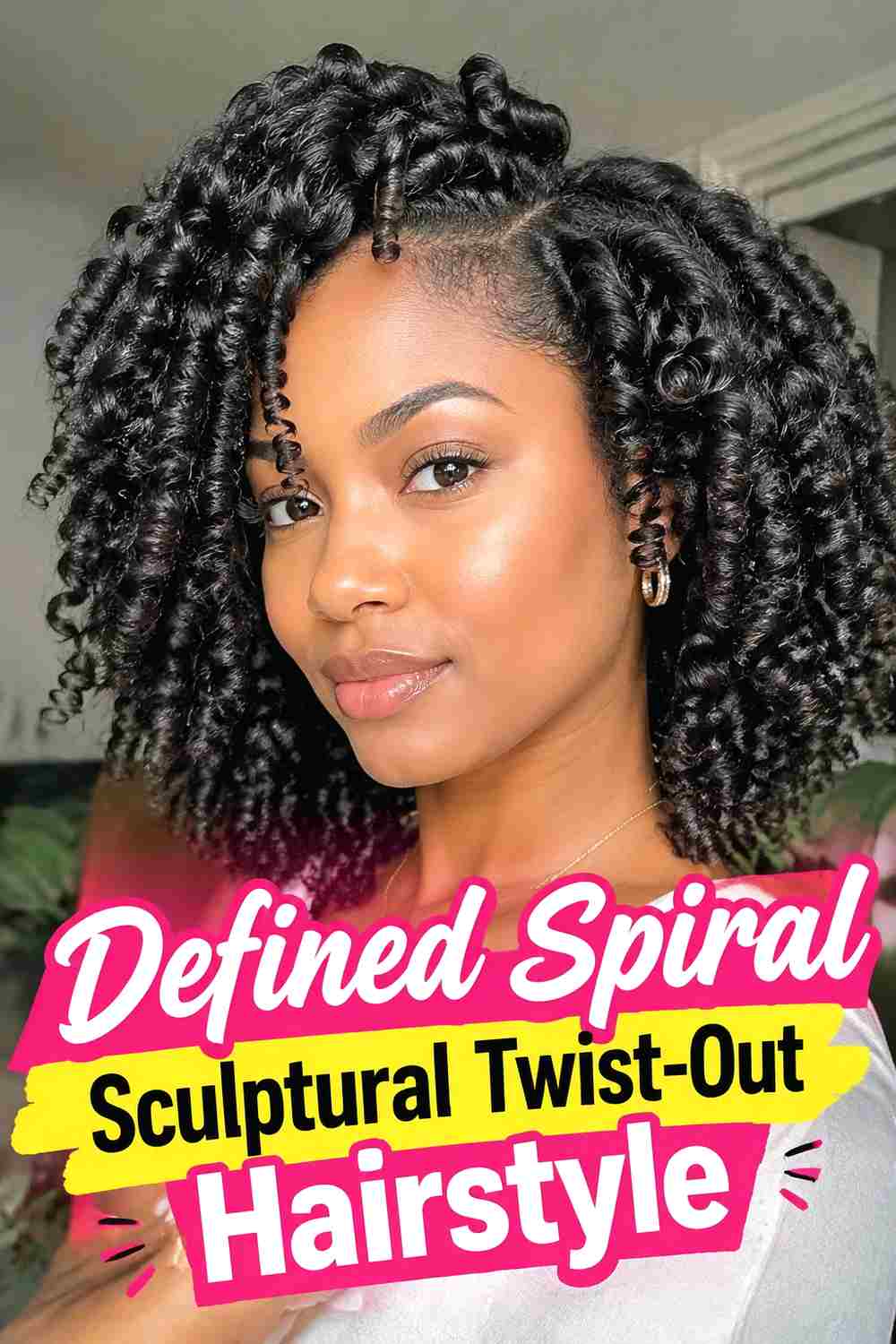
This version emphasizes separation and springy spiral definition while shaping the overall hair into a deliberate silhouette. Use smaller twists during the set for tighter, more numerous spirals, then separate minimally after unraveling. Instead of maximizing fluff, focus on arranging clusters so they build volume in selected areas such as the crown, front, or sides. The result should show individual curls clearly while still reading as one cohesive shape. A side or off-center part can add direction, while a rounded outline keeps the style classic. Handle the ends gently to avoid frizzing away the crisp texture that gives this variation its visual impact.
Pro Tip
Separate each twist only where it naturally divides, then build volume from the roots rather than repeatedly splitting the ends.
18. Editorial Sculptural Twist Out Hairstyle
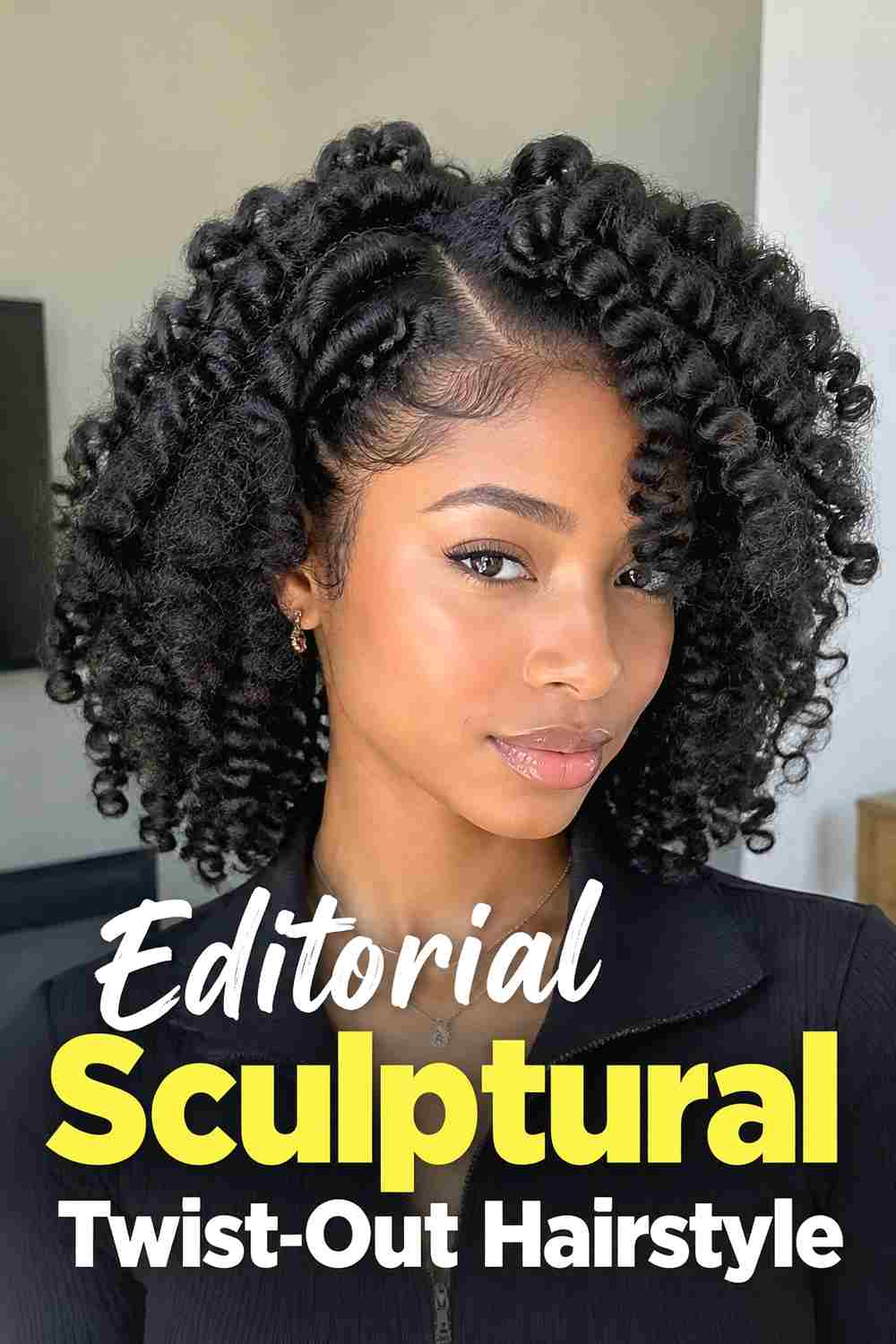
An editorial twist-out pushes shape further with exaggerated height, directional volume, or carefully controlled asymmetry. The texture might rise dramatically at the crown, sweep across one side, or form several distinct sculpted sections connected into one silhouette. Despite the stronger shape, the hair should still look physically believable, with visible strands, natural density, and movement. Strategic pins can support the architecture without appearing on the surface, while selected twist clusters remain defined enough to show how the texture was created. This variation is ideal when the hairstyle itself is meant to be the statement, so keep accessories minimal and let the silhouette carry the visual impact.
Why It Works
Amplified proportions turn familiar twist-out texture into a fashion-forward shape while preserving the definition that keeps the hairstyle recognizable.
How to Choose the Right Look
Start with how much structure you want. A classic, center-part, bob, or defined spiral twist-out keeps most of the hair loose, while faux hawks, crowns, puffs, ponytails, and updos use pinning or gathering to create stronger silhouettes.
Length and density matter as well. Shorter tapered cuts and bobs can create dramatic shapes close to the head, while medium and longer hair gives you more flexibility for crowns, ponytails, sculptural updos, and tall faux hawks. Fuller density can support larger shapes, but smaller, more controlled sections can be equally striking on less dense hair.
Think about definition versus volume. Minimal separation preserves crisp spirals, while more root lifting creates a broader silhouette. Avoid over-separating the ends if you want the twist pattern to remain visible.
For longer wear, use comfortable bands and secure hidden pins at structural points rather than relying on excessive tension or heavy product.
Final Thoughts
Sculptural twist-outs show how much variety can come from defined texture and thoughtful shaping. A simple change in volume, parting, pinning, or direction can turn the same twist-out technique into a crown, faux hawk, puff, ponytail, bob, or editorial statement. Choose a silhouette that suits your length and density, then preserve enough definition for the texture itself to remain the focus.
FAQs
1. What makes a twist-out look sculptural?
A sculptural twist-out uses intentional shaping, directional volume, pinning, parting, or gathering to create a clear silhouette instead of simply letting the twist-out fall naturally.
2. How can I add volume without losing twist-out definition?
Lift gently at the roots while leaving the defined ends mostly untouched. Separating each twist only where it naturally divides can also preserve definition.
3. Can short hair create a sculptural twist-out?
Yes. Tapered cuts and bob-length hair can create strong sculptural shapes because the shorter perimeter makes crown height, asymmetry, and directional styling especially visible.
4. How can I keep a sculptural twist-out secure?
Use hidden pins, soft bands, or small elastics at structural points while keeping tension comfortable. Build the shape in sections rather than depending on one tight anchor.
5. Can accessories be added to a sculptural twist-out?
Yes. Lightweight pearl, crystal, or metallic pins can complement pinned-back or asymmetrical styles, but keeping accessories minimal helps the natural texture stay visible.
Save your favorite sculptural twist-out hairstyle ideas, share them for inspiration, and explore more creative ways to shape and showcase defined textured hair.