12 Short Ivy Braids Bob Hairstyle Ideas
Loose texture, softly lived-in roots, and compact bob silhouettes give these short Ivy braids a fresh, expressive finish with plenty of natural-looking movement.
Ivy braids are associated with a deliberately loose, textured look rather than the ultra-sleek finish of more tightly controlled braid styles, and specialist braiders offer the style in bob lengths as well as longer versions. That relaxed quality makes a short bob especially interesting because the airy roots and individual braid texture contrast with a clearly defined cropped silhouette.
When choosing a version, compare braid thickness, parting, perimeter shape, and how much fullness you want around the cheeks and jaw. A center part creates balance, a side part shifts the volume, and tapered or layered shapes feel softer than a blunt perimeter. Comfortable root tension matters too, particularly if you plan to wear the braids for an extended period.
Quick List
- Classic Chin Length Ivy Braids Bob Hairstyle
- Center Part Short Ivy Braids Bob Hairstyle
- Side Part Short Ivy Braids Bob Hairstyle
- Layered Short Ivy Braids Bob Hairstyle
- Curved End Ivy Braids Bob Hairstyle
- Blunt Shape Ivy Braids Bob Hairstyle
- Face Framing Ivy Braids Bob Hairstyle
- Asymmetrical Ivy Braids Bob Hairstyle
- Micro Ivy Braids Bob Hairstyle
- Chunky Ivy Braids Bob Hairstyle
- Soft Tapered Ivy Braids Bob Hairstyle
- Tousled Ivy Braids Bob Hairstyle
1. Classic Chin Length Ivy Braids Bob Hairstyle
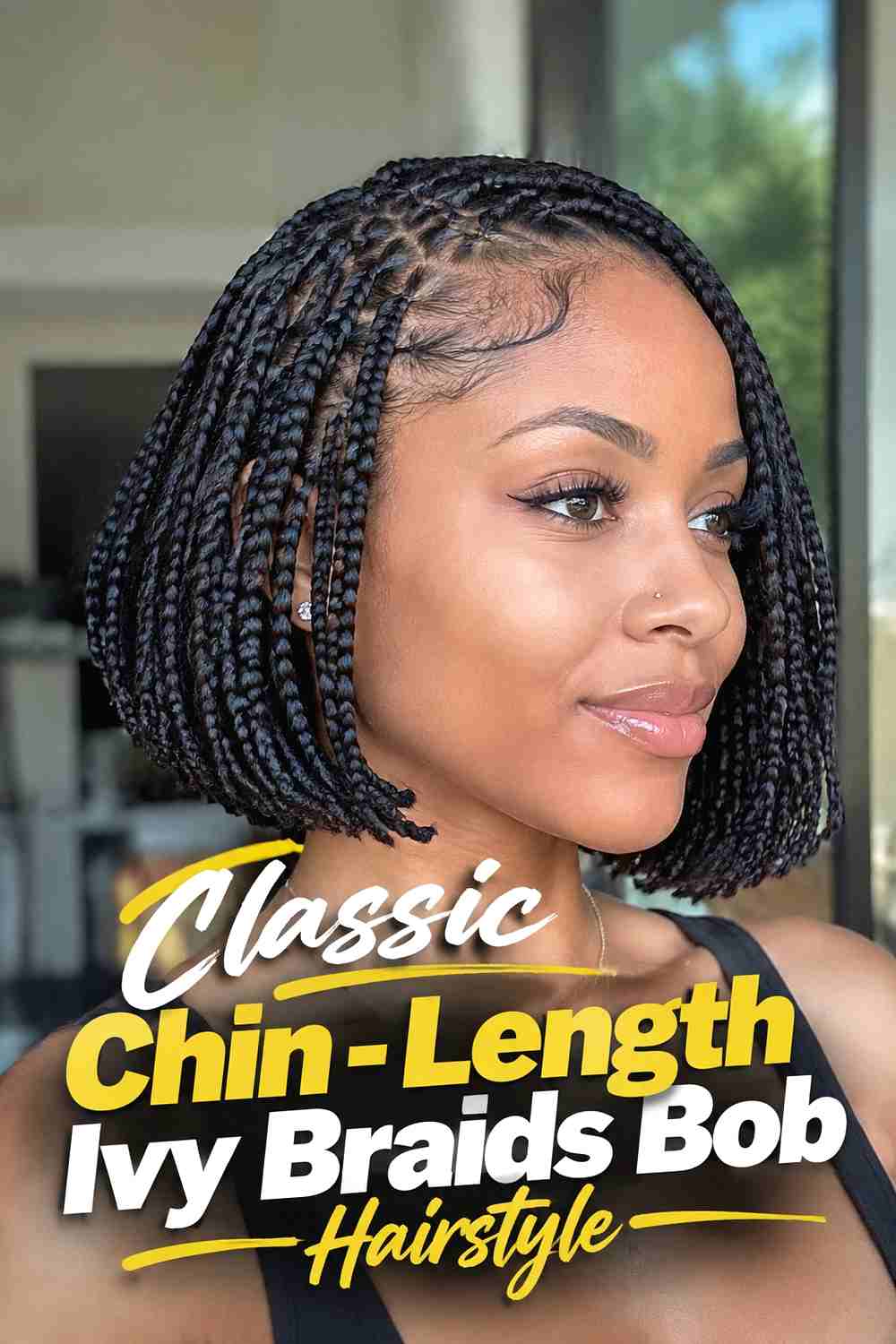
A chin-length Ivy braids bob keeps the silhouette compact while letting the style’s loose, textural character remain visible. The braids fall around the jaw in a relatively even perimeter, creating enough structure to read clearly as a bob without requiring every section to look perfectly uniform. Slightly relaxed roots and natural-looking separation give the shape softness, while medium-size braids keep the overall volume balanced. This version works well if you want a straightforward introduction to the look without dramatic layering or asymmetry. Keep the ends neat enough to preserve the bob outline, and ask for comfortable root tension so the style feels as relaxed as it looks.
Best For
Choose this version when you want a recognizable short bob shape with plenty of braid texture but no complicated shaping.
2. Center Part Short Ivy Braids Bob Hairstyle
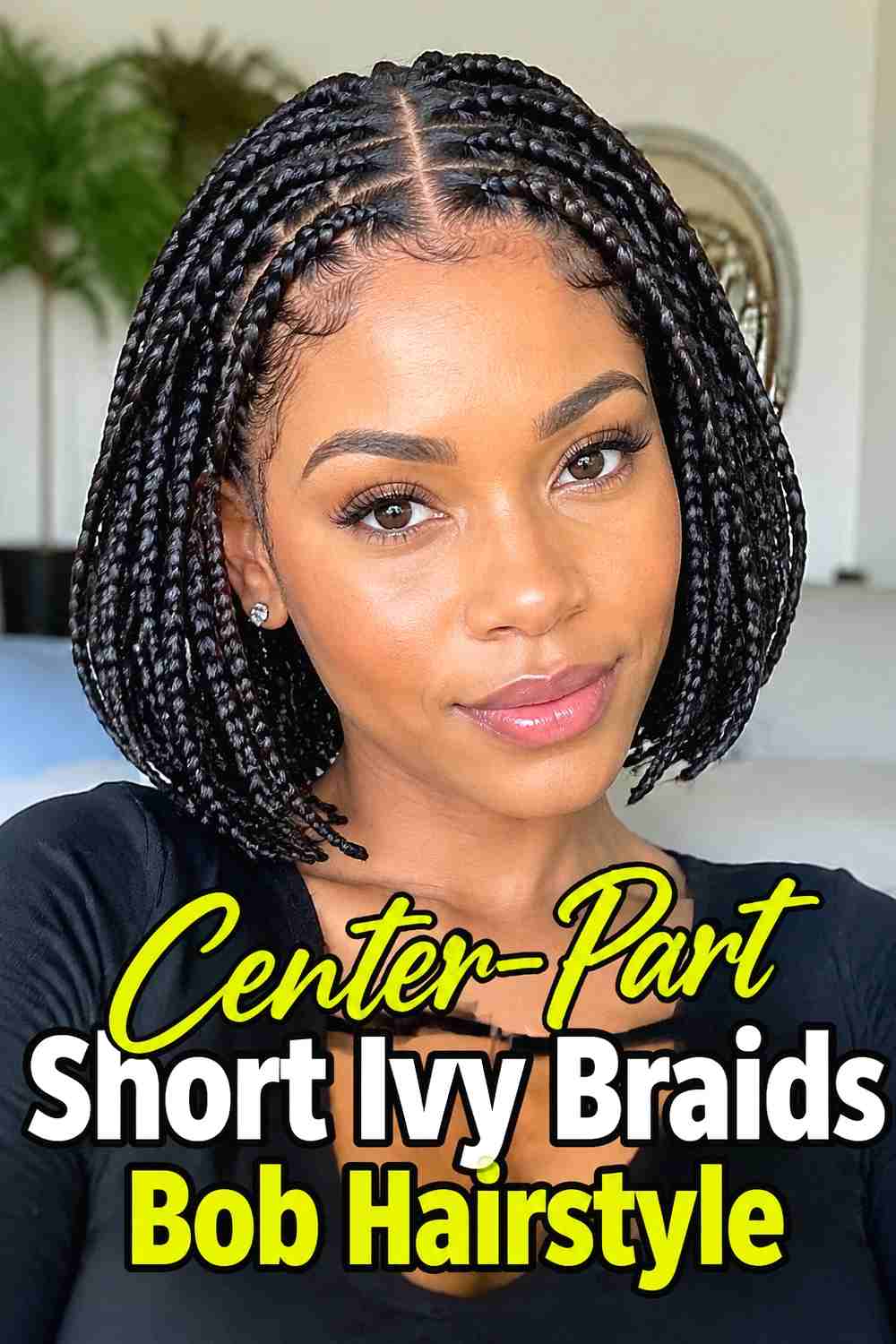
A center part gives short Ivy braids a balanced frame, with similar amounts of texture falling on both sides of the face. The braids can sit between jaw and chin length, with slightly irregular movement keeping the look from appearing overly precise. Because the roots are intentionally softer, the part does not need to look razor-sharp from every angle; a clean overall division is enough to give the bob structure. Medium braid density usually works well because it provides fullness without making the short shape too wide. This is a useful choice if you prefer symmetry and want the textural character of the braids to provide most of the visual interest.
Styling Notes
Set the part before braiding begins so the finished distribution feels balanced. Avoid forcing every braid to fall identically on both sides.
3. Side Part Short Ivy Braids Bob Hairstyle
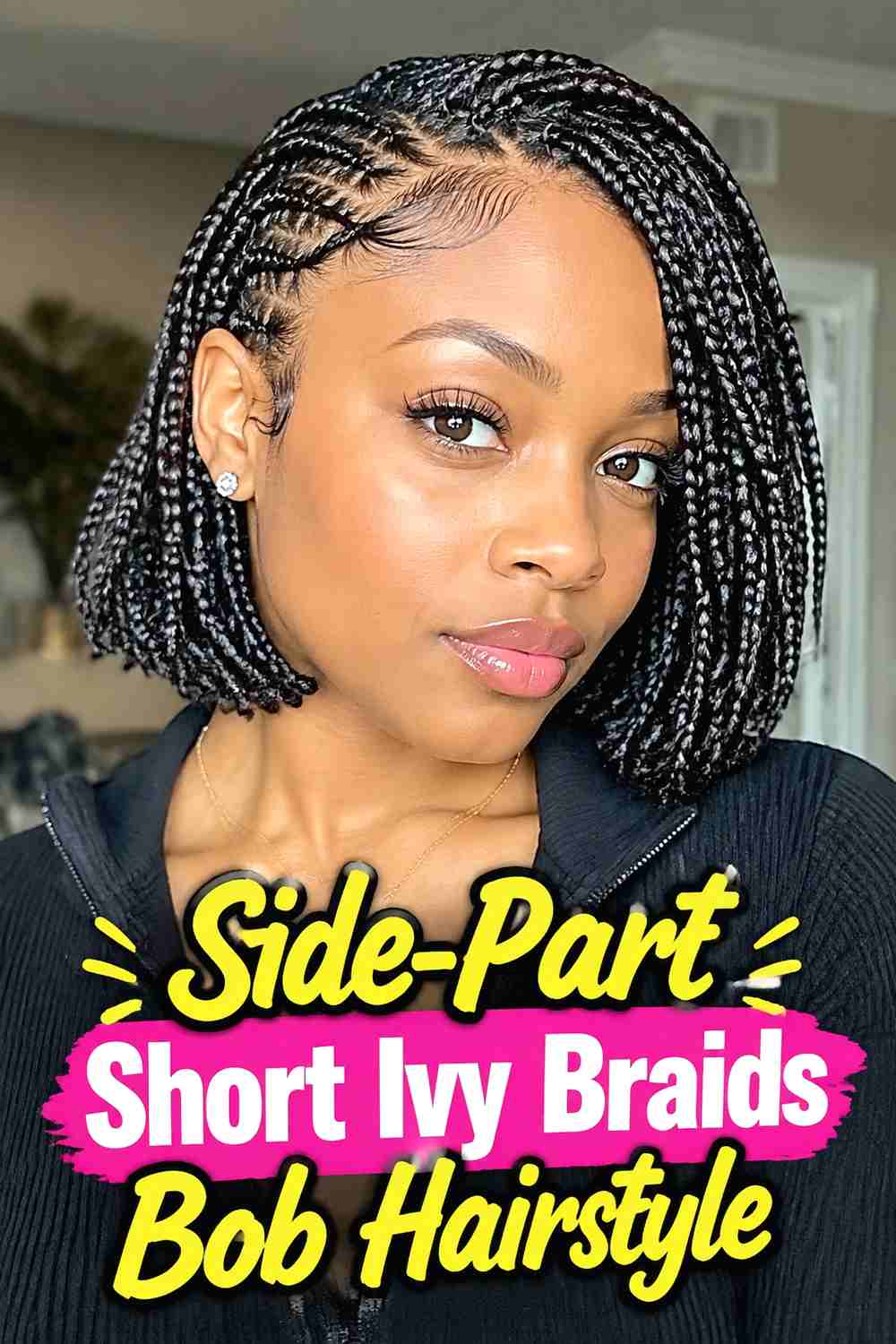
A side part shifts the weight of an Ivy braids bob toward one side, creating a fuller sweep across the forehead and a lighter section near the opposite temple. The asymmetry makes a short braided bob feel more dynamic without changing the actual length very much. Keep the braids loose enough at the roots to preserve the style’s airy texture, but make sure the heavier side does not become so dense that it hides the bob outline. This version can be especially effective with medium or slightly larger braids because their shape remains easy to see. Let the ends fall naturally around the jaw rather than arranging them into a rigid line.
Why It Works
The side part introduces movement while keeping the basic bob construction simple, making texture and direction the main styling details.
4. Layered Short Ivy Braids Bob Hairstyle
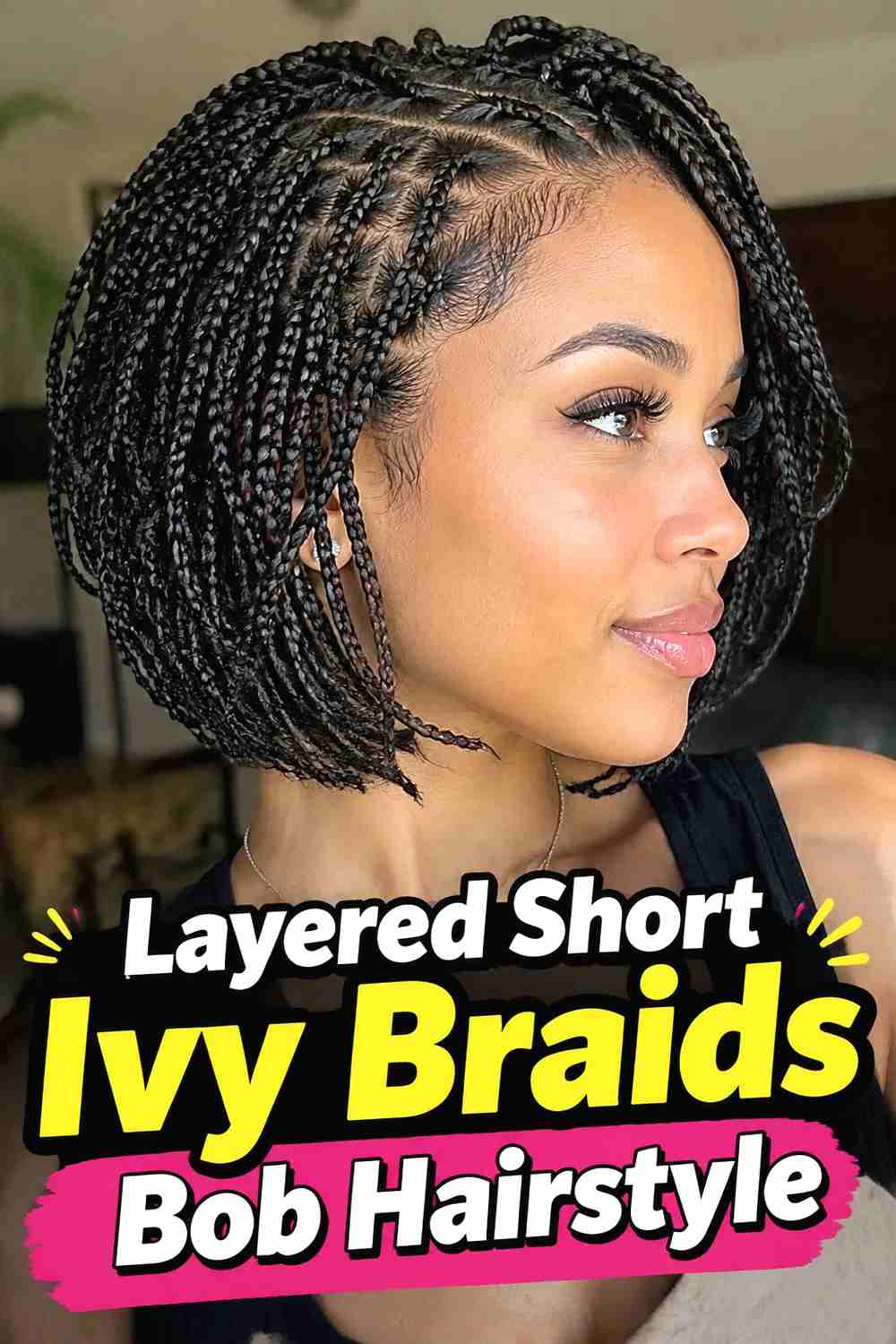
A layered Ivy braids bob uses slightly varied braid lengths to prevent the perimeter from feeling heavy or overly square. Shorter pieces can sit near the cheekbones and jaw while longer braids reach the lower edge of the bob, creating a softly stepped silhouette. The variation should be subtle rather than dramatically chopped so the hairstyle still reads as one cohesive short shape. This approach works particularly well when you want extra movement around the face or a lighter feel through the sides. The relaxed texture of Ivy braids helps the layers blend naturally, while the short overall length keeps the result controlled rather than excessively voluminous.
Hair Type & Length
This shape works well when the finished braids sit from cheekbone to chin length and you want visible movement without a blunt lower edge.
5. Curved End Ivy Braids Bob Hairstyle
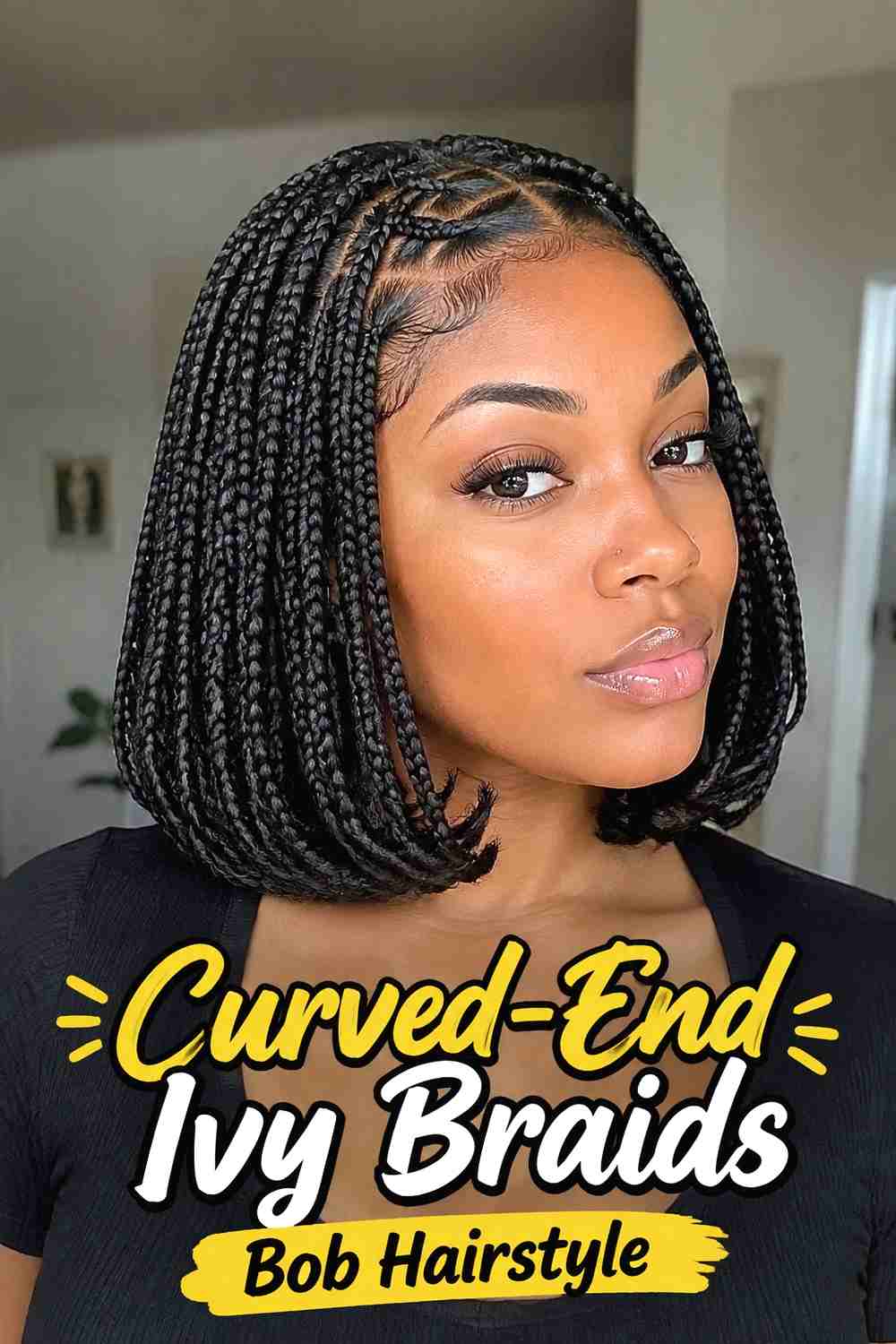
Curved ends give a short Ivy braids bob a softer perimeter by directing the lowest sections gently inward toward the jaw and neck. Instead of ending in a completely straight line, the braids follow a subtle rounded shape that makes the bob feel compact and polished while preserving textured roots. The bend should look relaxed rather than sharply curled, with individual ends sitting slightly differently for a believable finish. This version works well with chin-length or slightly shorter bobs because the curved outline remains easy to see. Keep the upper portion airy and lightly separated so the hairstyle does not become too uniformly rounded from root to tip.
Styling Notes
Focus the curved effect at the lowest part of the bob. Too much shaping through the upper sections can reduce the loose character that defines the look.
6. Blunt Shape Ivy Braids Bob Hairstyle
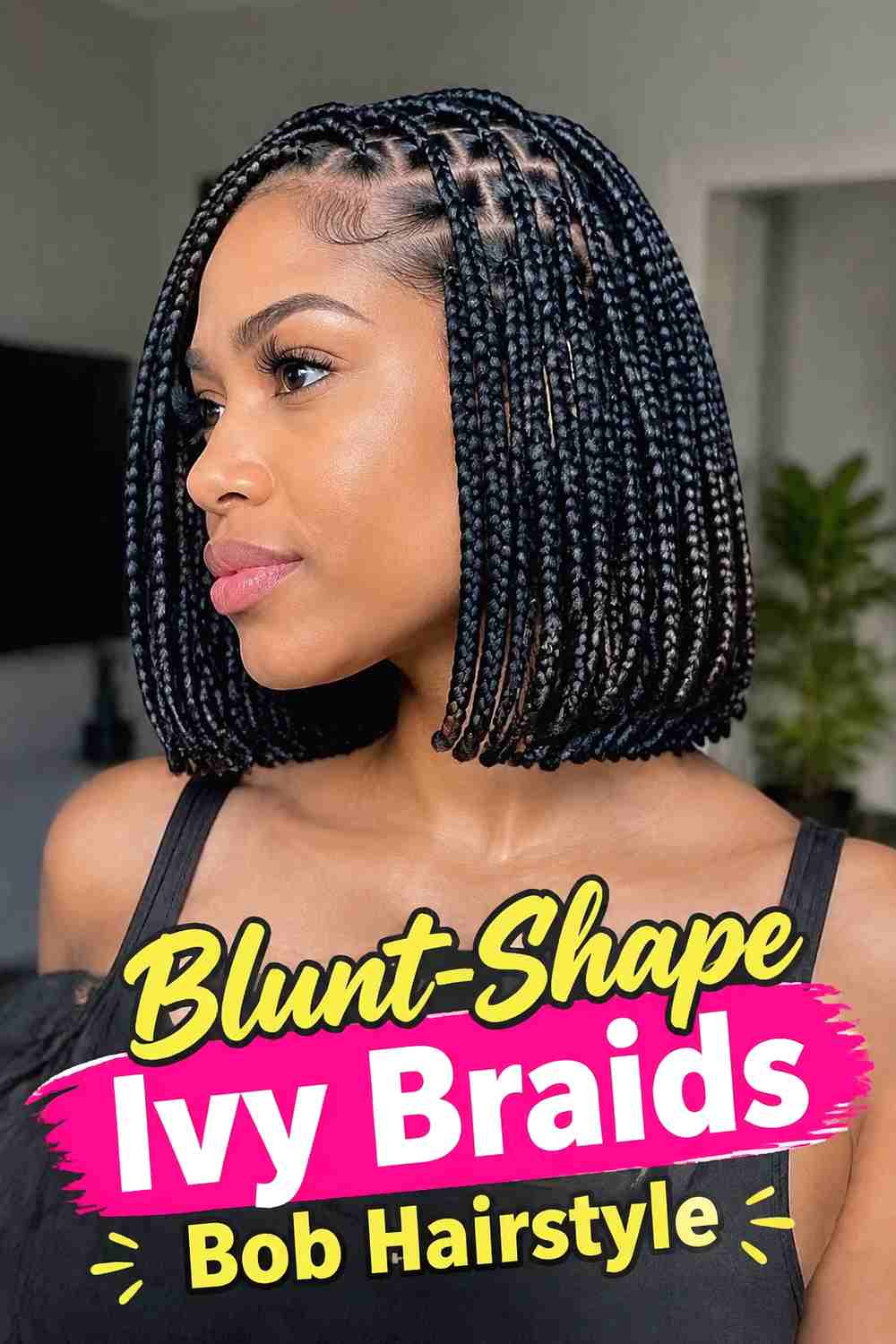
A blunt-shape Ivy braids bob creates strong contrast between a crisp lower silhouette and deliberately relaxed texture above it. The braids finish at a similar chin or jaw length, giving the perimeter a clear horizontal line without requiring every individual braid to look identical. Slightly fuzzy roots and subtle variation through the body keep the style from appearing stiff. This version is especially striking with medium braids because they provide enough substance for the blunt edge to register clearly. If you prefer a more graphic bob, keep the front and back lengths close to even; for softer movement, allow only minimal variation around the face.
Why It Works
The defined perimeter provides structure, while the looser braid texture stops the bob from feeling too severe or overly controlled.
7. Face Framing Ivy Braids Bob Hairstyle
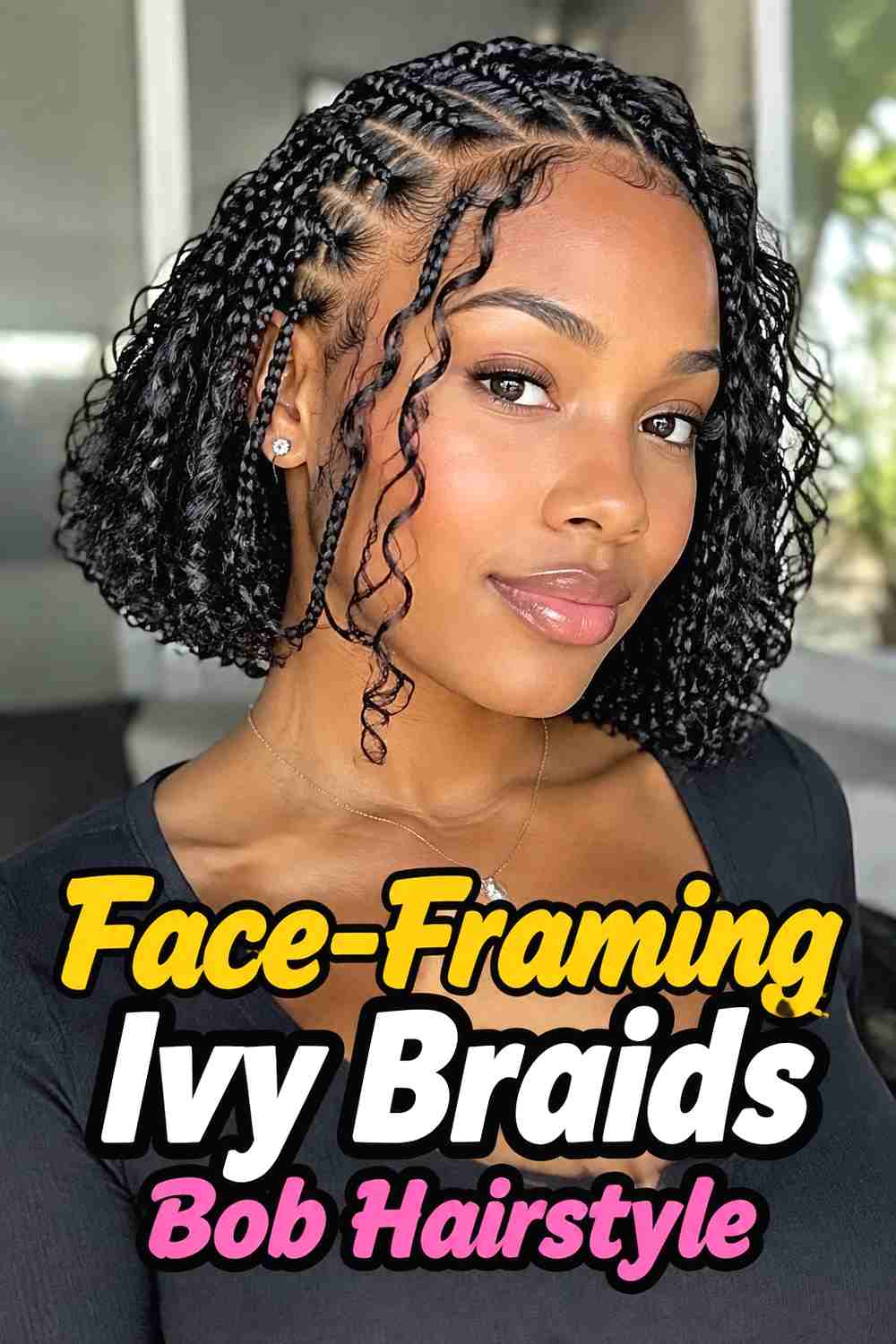
A face-framing Ivy braids bob uses several shorter front braids to create movement around the cheeks while the rest of the style stays closer to chin length. The variation can be subtle, with a few sections ending near the cheekbones or upper jaw instead of creating dramatic layers. This gives the bob more dimension from the front and makes the loose root texture feel especially intentional. Medium or fine braids work well because the shorter pieces can move naturally without becoming bulky around the temples. Keep the face-framing sections uneven enough to feel relaxed but coordinated enough that they still look like part of the overall bob shape.
Pro Tip
Decide where you want the shortest front pieces to sit before braiding. Small differences in length can noticeably change how the bob frames the face.
8. Asymmetrical Ivy Braids Bob Hairstyle
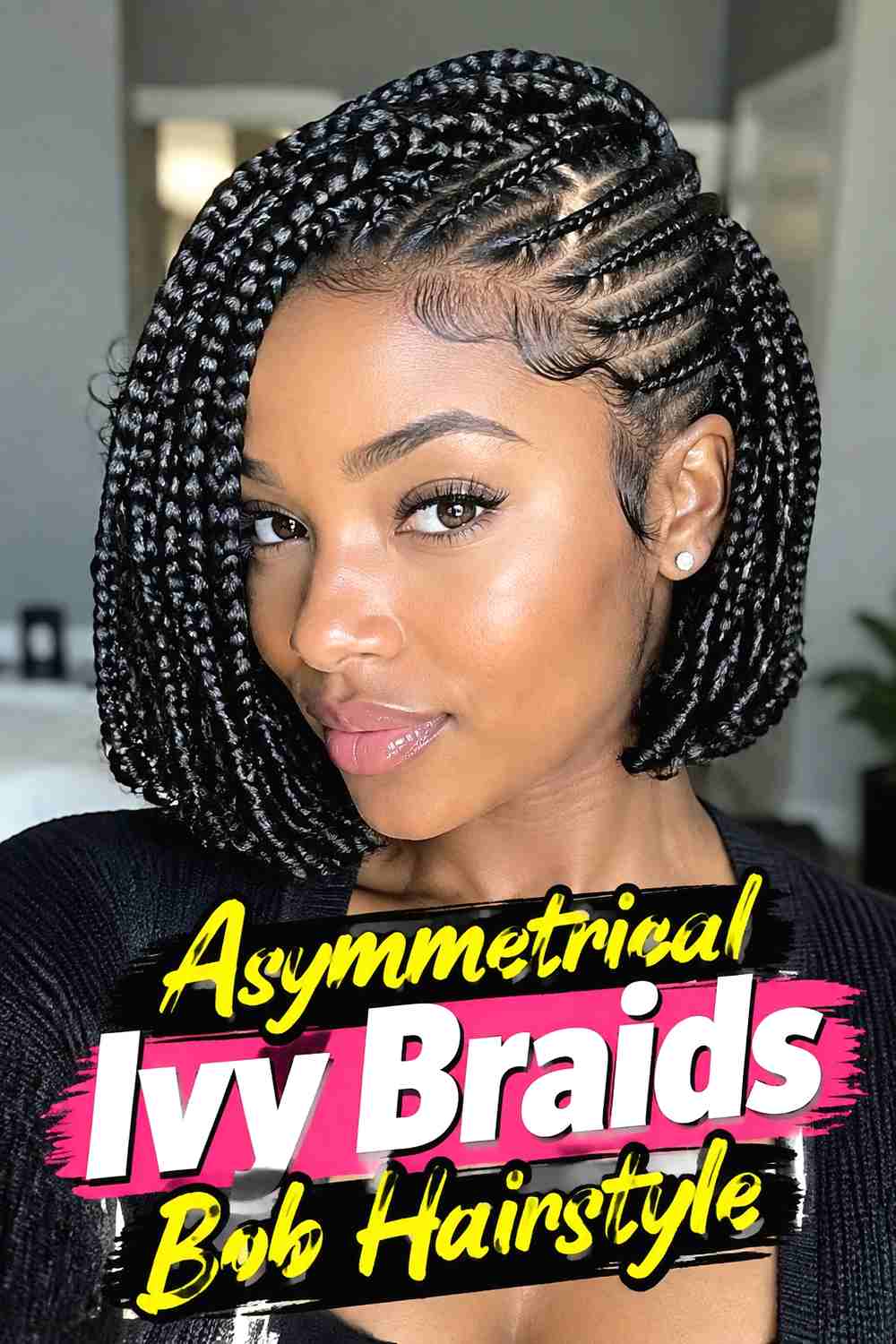
An asymmetrical Ivy braids bob makes one side slightly longer than the other, creating a modern diagonal outline beneath the loose textured roots. The difference does not need to be dramatic; even an inch or two can make the shape visibly directional while keeping it easy to wear. A side part can emphasize the asymmetry, or a center part can create a more unexpected contrast between balanced roots and an uneven perimeter. Medium-size braids make the length difference easier to recognize without creating too much bulk. Keep the longer side around chin length and the shorter side closer to the jaw for a compact shape that still feels distinctly different from a classic bob.
Best For
Choose this option when you want a more directional silhouette while keeping the braid pattern itself relatively simple.
9. Micro Ivy Braids Bob Hairstyle
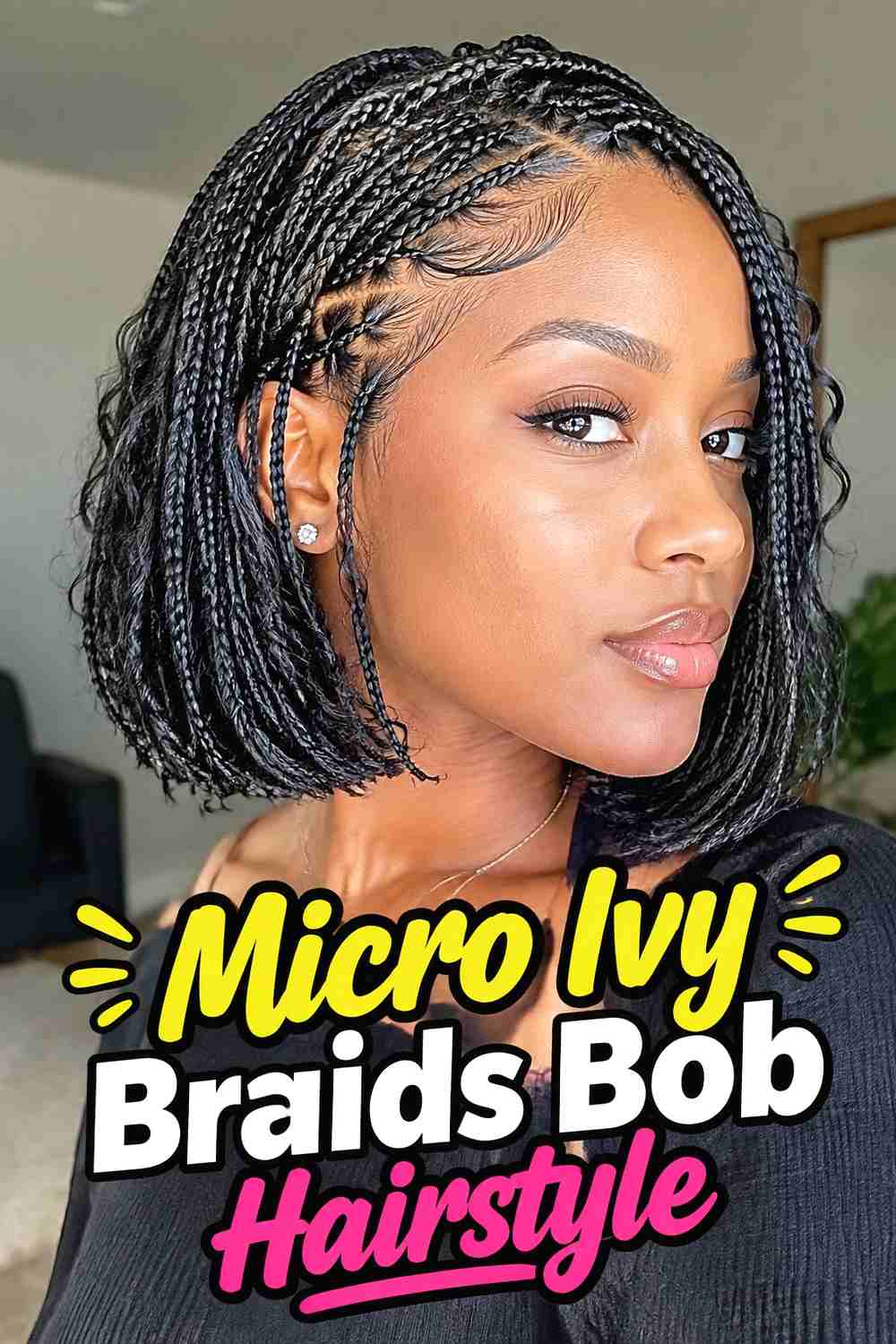
Micro Ivy braids create a finer, more intricate bob with lots of individual movement through the short length. The smaller braid size gives the hairstyle a fuller surface texture, so keeping the perimeter around jaw or chin level helps prevent the overall shape from becoming visually heavy. The roots can remain deliberately soft and lived-in, while the finer braids create contrast through the lengths. Because there are more individual sections, this version generally involves more detailed installation and removal than larger braids. The finished bob can be worn with a center or side part, and subtle irregularity in the ends helps preserve the easy, textured character.
Wear & Maintenance
Handle the finer braids gently and avoid unnecessary pulling at the roots. A comfortable installation is more important than forcing an extremely tight finish.
10. Chunky Ivy Braids Bob Hairstyle
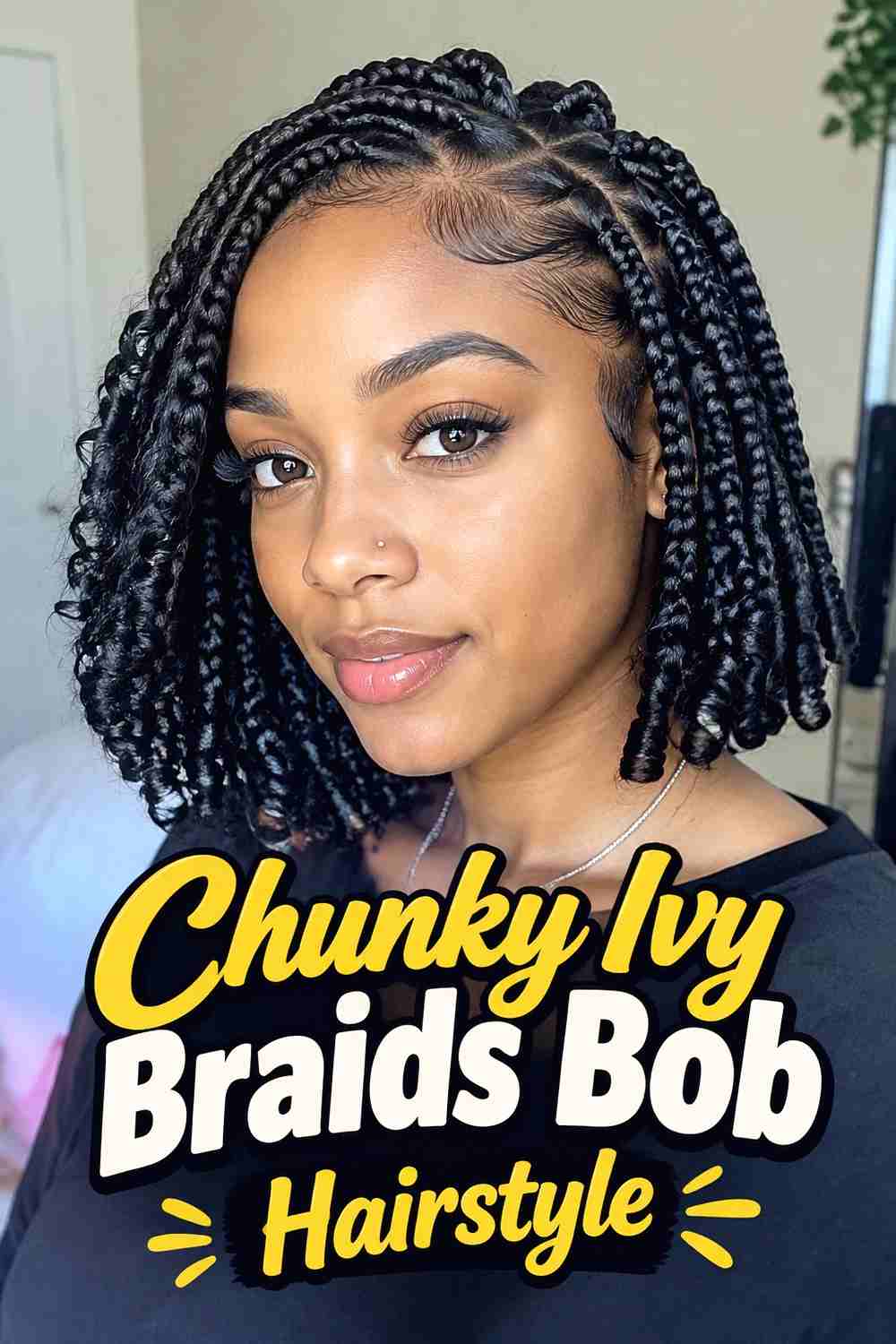
Chunky Ivy braids make the bob silhouette bolder by using fewer, thicker sections with more visible individual shape. The larger braids create natural spacing and volume, which works especially well with the deliberately relaxed root texture of the style. Keep the length around the jaw or just below it so the heavier braid size does not overwhelm the short proportions. A center part produces a strong balanced frame, while a side part can make the larger sections feel even more dynamic. Because every braid is visually prominent, small differences in texture and placement become part of the look rather than something that needs to be hidden.
Styling Notes
Keep the braid count and thickness balanced enough that one side does not feel significantly heavier. Comfortable root tension is especially important with larger sections.
11. Soft Tapered Ivy Braids Bob Hairstyle
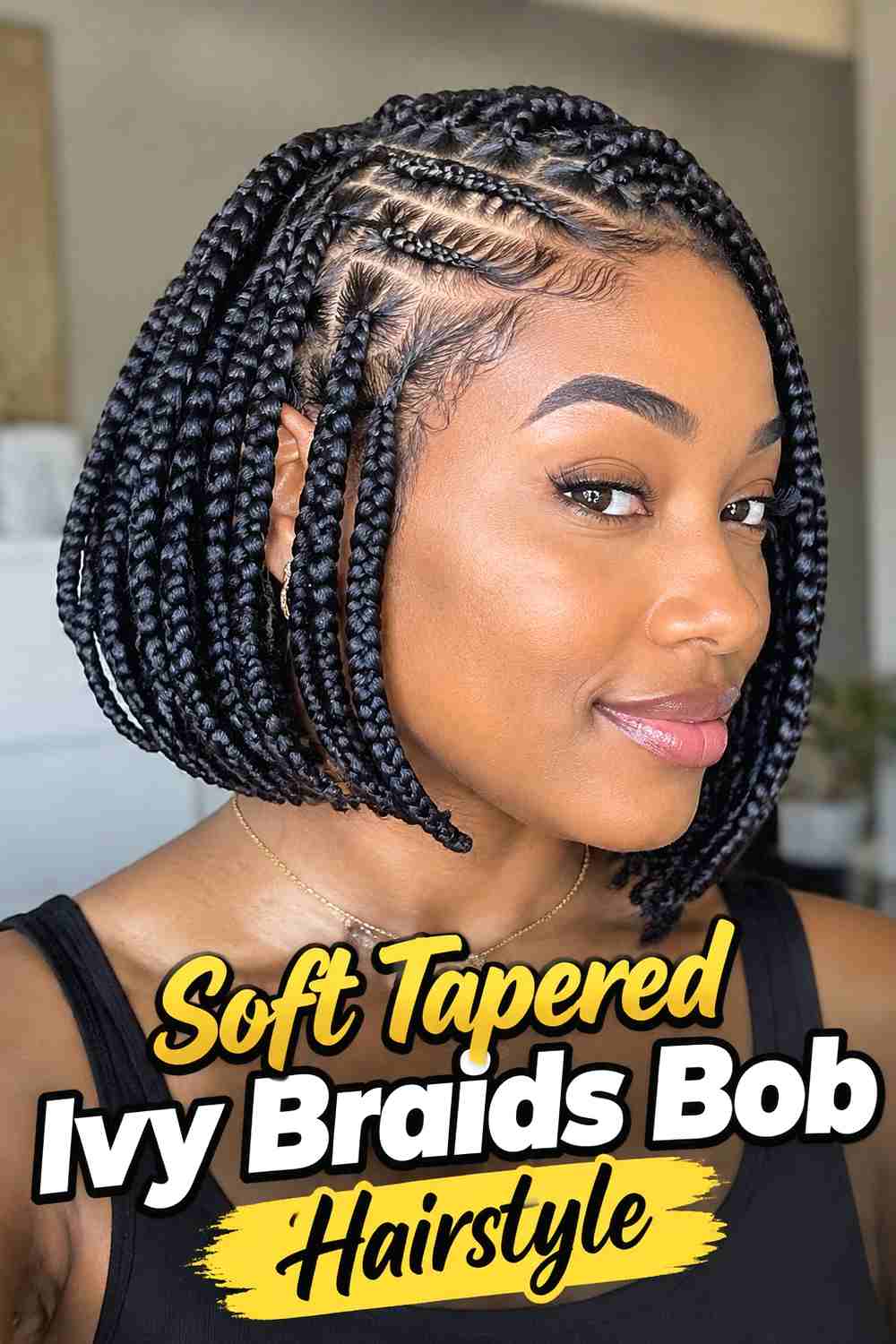
A soft tapered Ivy braids bob is slightly fuller around the upper sides and gradually narrower toward the nape and lower perimeter. The shape feels less boxy than a blunt bob and works well when you want short braids that sit close to the head without looking flat. Subtle differences in length help create the taper, with front sections around the jaw and slightly shorter pieces toward the back. The loose, textured roots prevent the silhouette from appearing overly sculpted. Medium braids are particularly effective because they show the change in shape clearly while still allowing enough movement. Keep the taper gradual so the bob remains soft and wearable.
Best For
This version suits anyone who prefers a compact short shape with less width through the lower half of the hairstyle.
12. Tousled Ivy Braids Bob Hairstyle
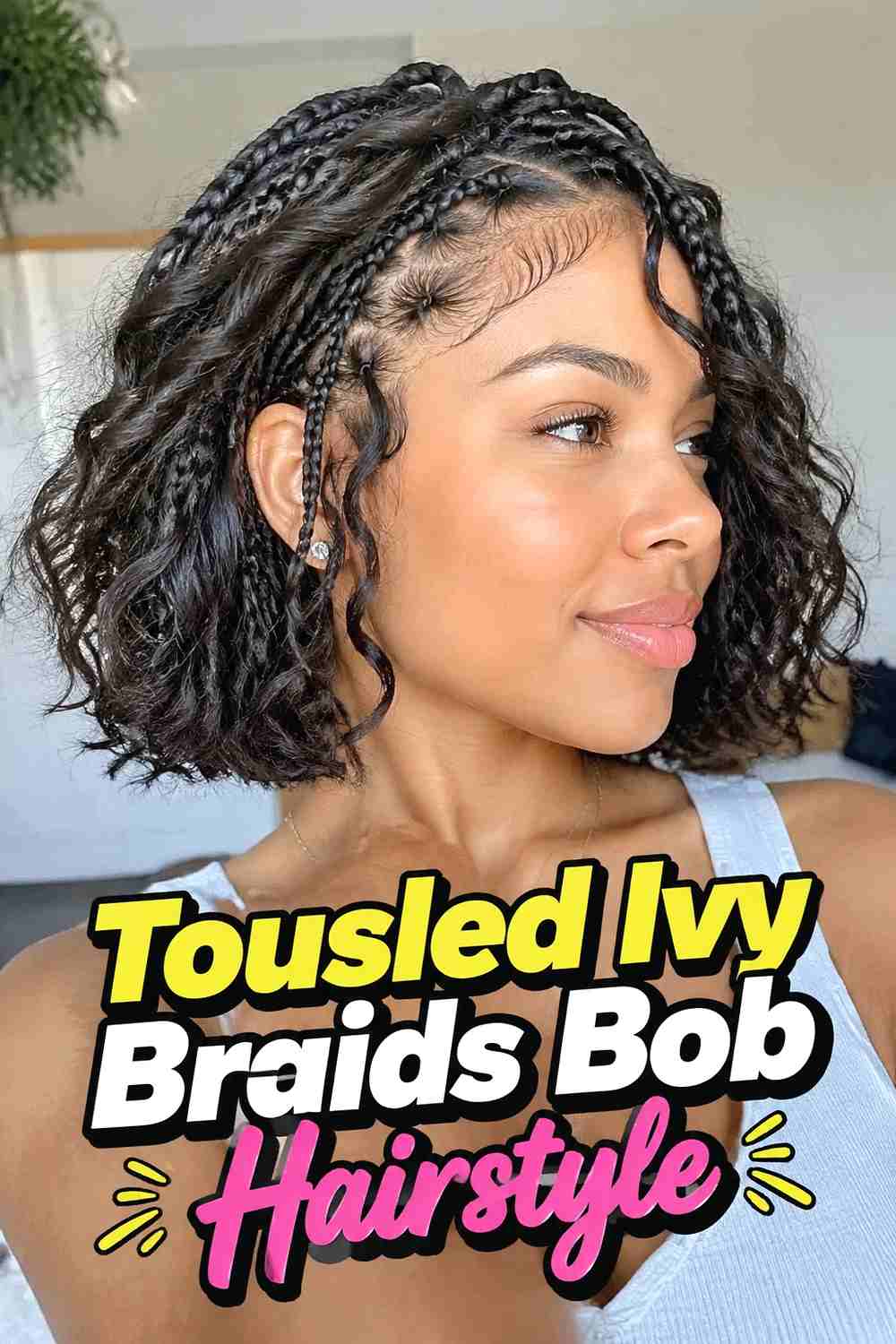
A tousled Ivy braids bob leans fully into the style’s loose, lived-in character. The roots remain soft, the braid placement feels slightly irregular, and individual pieces fall naturally rather than being arranged into a perfectly uniform curtain. The bob still needs a recognizable short perimeter, so keep most of the braids around jaw or chin length even if a few sections vary slightly. This version works particularly well with medium braids and gentle side-to-side movement because the texture remains visible without becoming excessively dense. Avoid trying to smooth every flyaway or force the braids into fixed positions; controlled softness is what gives this bob its distinctive personality.
Wear & Maintenance
Refresh only the areas that genuinely need attention rather than trying to make the entire style look newly installed every day. Preserve the relaxed texture while keeping the scalp comfortable.
How to Choose the Right Look
Start with braid size. Micro Ivy braids create the most intricate texture and movement but involve more individual sections, while chunky braids make the bob bolder and easier to read from a distance. Medium braids offer a useful middle ground for classic, layered, tapered, and face-framing shapes.
Next, choose the perimeter. A blunt bob looks graphic and structured, a curved or tapered shape feels softer, and subtle layers add movement around the cheeks. If you want something more directional, the asymmetrical version creates a visible change without requiring a completely different braid technique.
Parting changes the front view just as much. Center parts create symmetry, while side parts shift fullness toward one side and can make a compact bob feel more dynamic. Whatever layout you choose, avoid equating extra tightness with a better finish. Ivy braids are meant to look relaxed, so comfortable root tension and believable texture suit the style naturally.
Finally, consider maintenance. Finer braids have more individual sections to manage, while larger braids make each section more noticeable. Choose the scale and length that fit the amount of styling attention you realistically want to give the bob.
Final Thoughts
Short Ivy braids work especially well in bob form because the compact perimeter gives the intentionally loose braid texture a clear shape. Small changes in length, parting, braid size, and layering can make the same basic concept feel completely different.
Choose the version that matches your preferred fullness and maintenance level, and keep the roots comfortable rather than chasing an excessively tight finish. A relaxed installation paired with a thoughtful bob silhouette gives the style its strongest visual balance.
FAQs
1. What makes Ivy braids different from a very sleek braided style?
Ivy braids are associated with a looser, more lived-in texture, including softer-looking roots and less emphasis on perfectly slick uniformity.
2. Can Ivy braids be worn as a short bob?
Yes. Bob-length Ivy braid services are offered in different braid sizes, making short versions a practical variation of the style.
3. Which braid size works best for an Ivy braids bob?
Medium braids offer a balanced look, micro braids create finer movement, and chunky braids produce a stronger, more graphic silhouette. The choice depends on your preferred density and styling time.
4. Can a short Ivy braids bob have layers?
Yes. Slightly shorter front or upper sections can create soft layering while the longest braids maintain the overall bob perimeter.
5. How tight should the roots feel?
The installation should feel comfortably secure rather than painful or excessively tight. The naturally relaxed appearance of Ivy braids works well with a softer root finish.
Save your favorite short Ivy braids bob hairstyle ideas, share the collection for later inspiration, and explore more ways to personalize this loose, textured braided look.