15 Velvet Hair Snood Updo Hairstyle Ideas
Rich velvet texture and neatly shaped updos make these hair snood ideas feel beautifully vintage while still offering polished, wearable ways to contain longer hair.
A velvet hair snood gives an updo a distinctive silhouette by gathering or covering the back lengths while leaving the front styling visible. Unlike a standard bun accessory, a snood becomes part of the hairstyle itself, creating contrast between soft fabric and carefully arranged hair.
The look can lean strongly vintage with rolls and sculpted waves or feel quieter with a smooth part and simple tucked shape. Hair length, density, snood size, and the amount of front texture you leave visible all affect the finished result. These ideas explore polished, braided, curled, twisted, and softly romantic variations while keeping the velvet snood central to each style.
Quick List
- Sleek Center Part Velvet Hair Snood Updo Hairstyle
- Soft Side Part Velvet Hair Snood Updo Hairstyle
- Rolled Nape Velvet Hair Snood Updo Hairstyle
- Braided Crown Velvet Hair Snood Updo Hairstyle
- Victory Roll Velvet Hair Snood Updo Hairstyle
- Twisted Side Velvet Hair Snood Updo Hairstyle
- Curly Tuck Velvet Hair Snood Updo Hairstyle
- Low Chignon Velvet Hair Snood Updo Hairstyle
- Face Framing Velvet Hair Snood Updo Hairstyle
- Pompadour Front Velvet Hair Snood Updo Hairstyle
- Double Twist Velvet Hair Snood Updo Hairstyle
- Soft Wave Velvet Hair Snood Updo Hairstyle
- Sculpted Roll Velvet Hair Snood Updo Hairstyle
- Minimalist Velvet Hair Snood Updo Hairstyle
- Romantic Tendril Velvet Hair Snood Updo Hairstyle
1. Sleek Center Part Velvet Hair Snood Updo Hairstyle
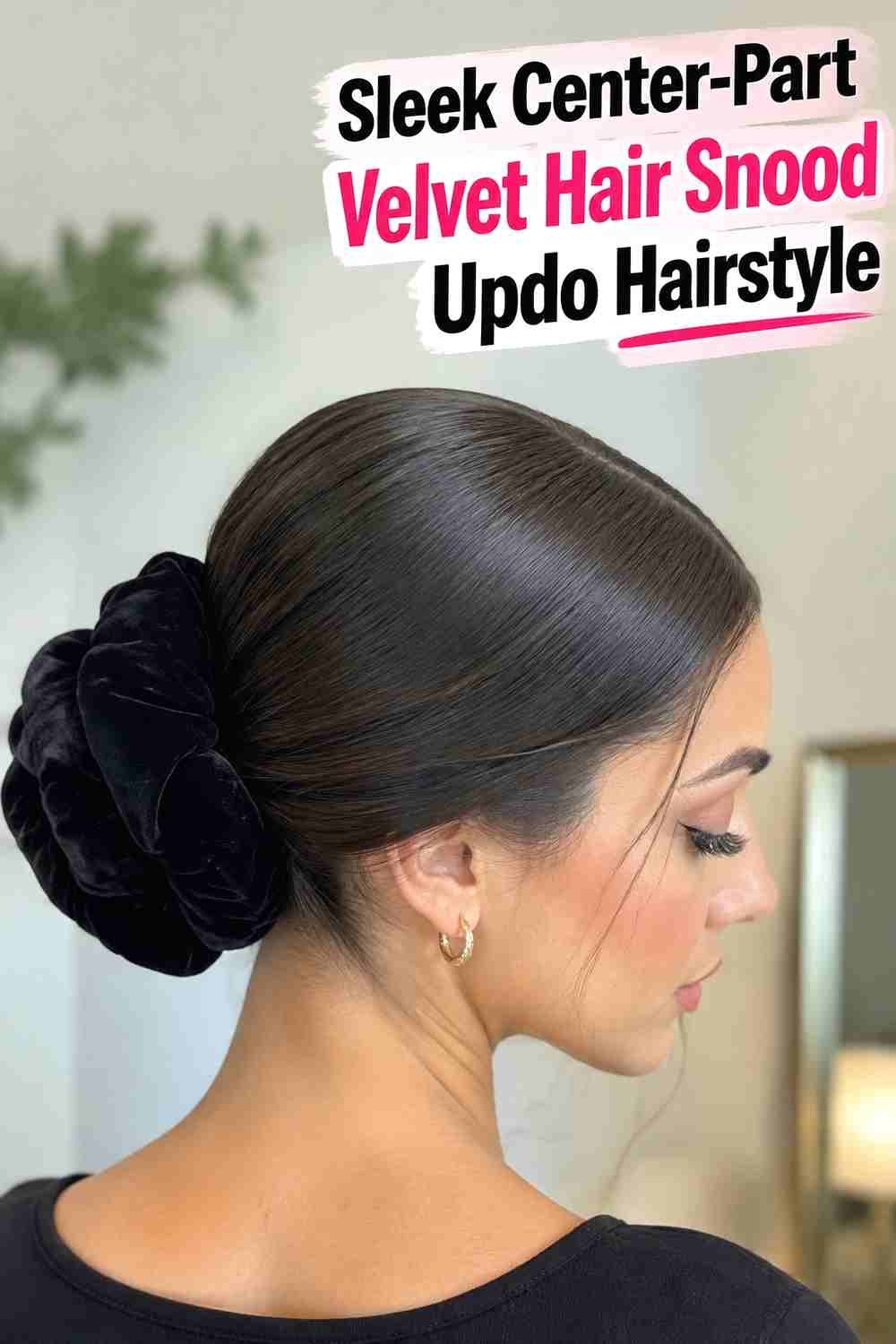
A sleek center part gives a velvet snood updo a clean, symmetrical front while the accessory creates softness and shape at the back. Smooth the hair toward the nape without removing all natural strand detail, then gather the lengths securely before settling them into the snood. The fabric should contain the hair rather than appear empty or overly stretched, so choose a size that suits your density and length. A deep burgundy, black, navy, or jewel-toned velvet can provide an elegant contrast against glossy hair. This version works particularly well when you want the accessory to make the statement while the visible front remains controlled and uncluttered.
Styling Notes
Establish the center part before fitting the snood and secure the back hair first if needed. The accessory should sit comfortably without pulling backward on the hairline.
2. Soft Side Part Velvet Hair Snood Updo Hairstyle
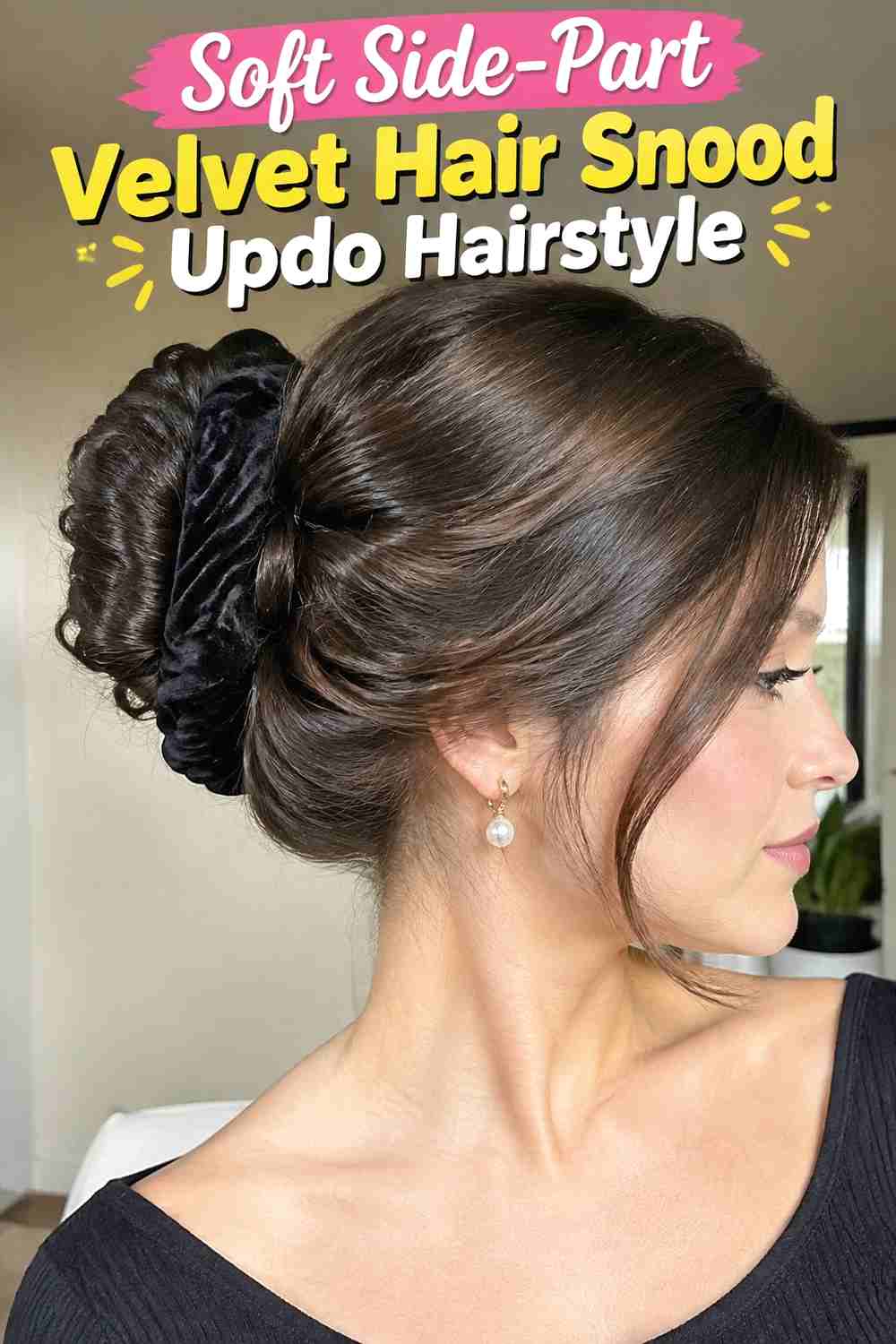
A soft side part gives a velvet hair snood updo a less formal, gently asymmetric appearance. Sweep the heavier front section across the forehead and direct both sides toward the back, preserving a small amount of natural lift rather than flattening the entire crown. The gathered lengths sit inside the snood, creating a rounded shape near the nape while the side part remains clearly visible from the front. This style works across straight, wavy, and softly curled textures because the visible surface does not need to be perfectly sleek. A muted velvet shade can keep the effect subtle, while jewel tones make the vintage-inspired accessory more noticeable.
Best For
This variation suits everyday vintage styling, dinners, seasonal events, and occasions where a center part feels too structured but you still want a polished silhouette.
3. Rolled Nape Velvet Hair Snood Updo Hairstyle
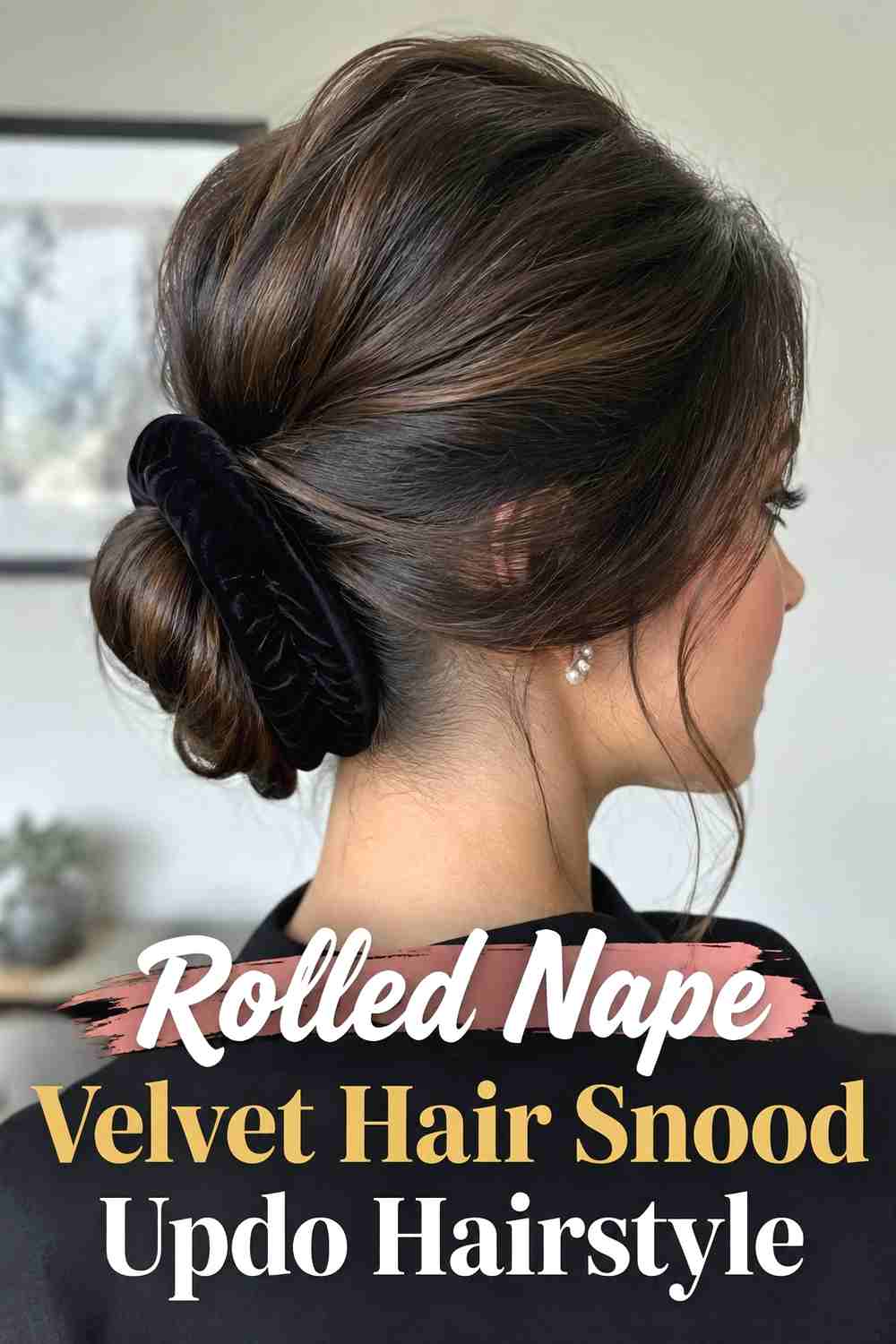
The rolled nape version adds visible structure before the hair enters the snood. Sweep the sides backward and form a soft inward roll near the nape, then allow the remaining length to sit inside the velvet pouch. The roll creates a defined transition between exposed hair and accessory, making the back view more detailed without requiring braids or decorative pins. Medium and long hair are easiest to adapt, while very thick hair may need hidden anchors beneath the roll to keep the weight distributed. Keep the snood slightly lower than the rolled section so both elements remain visible instead of allowing the velvet edge to cover the hairstyle completely.
Styling Notes
Build the roll securely before positioning the snood. Hidden pins can support the hair while the fabric provides containment and the finished vintage-inspired silhouette.
4. Braided Crown Velvet Hair Snood Updo Hairstyle
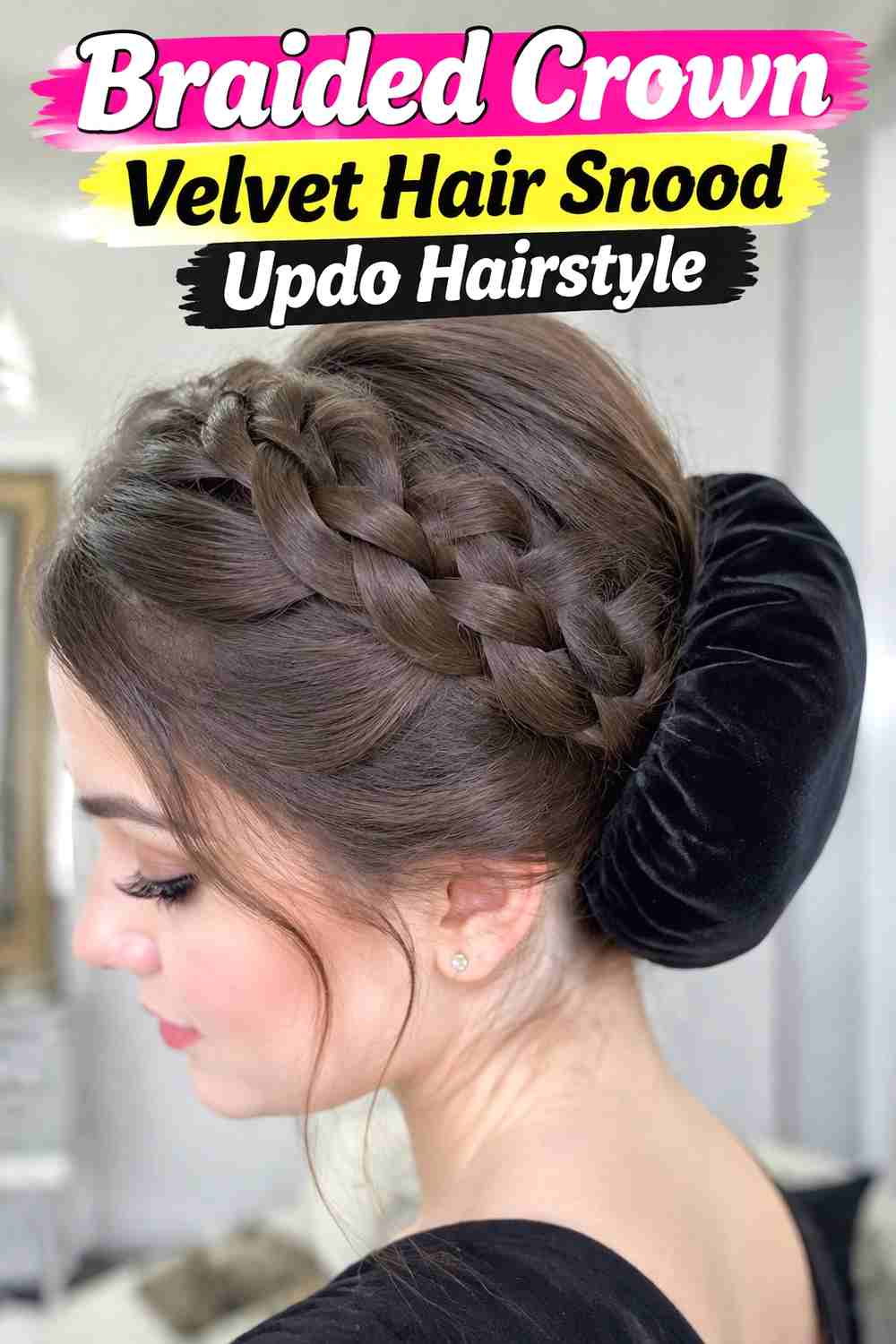
A braided crown brings detail around the upper head while the velvet snood keeps the lower lengths contained. Create one or two braids from the side sections and direct them across or around the crown before securing their ends near the back. The remaining hair can then be gathered into the snood, creating a contrast between woven texture above and smooth velvet below. This combination works especially well on medium to long hair because there is enough length to create the braid without reducing the fullness inside the accessory. Keep the braid softly expanded rather than extremely tight so it remains proportional to the fabric snood and does not look like a separate hairstyle sitting above it.
Why It Works
The braid adds visible structure from the front and sides, while the snood handles the bulk of the remaining length. Each element stays distinct without making the updo feel overloaded.
5. Victory Roll Velvet Hair Snood Updo Hairstyle
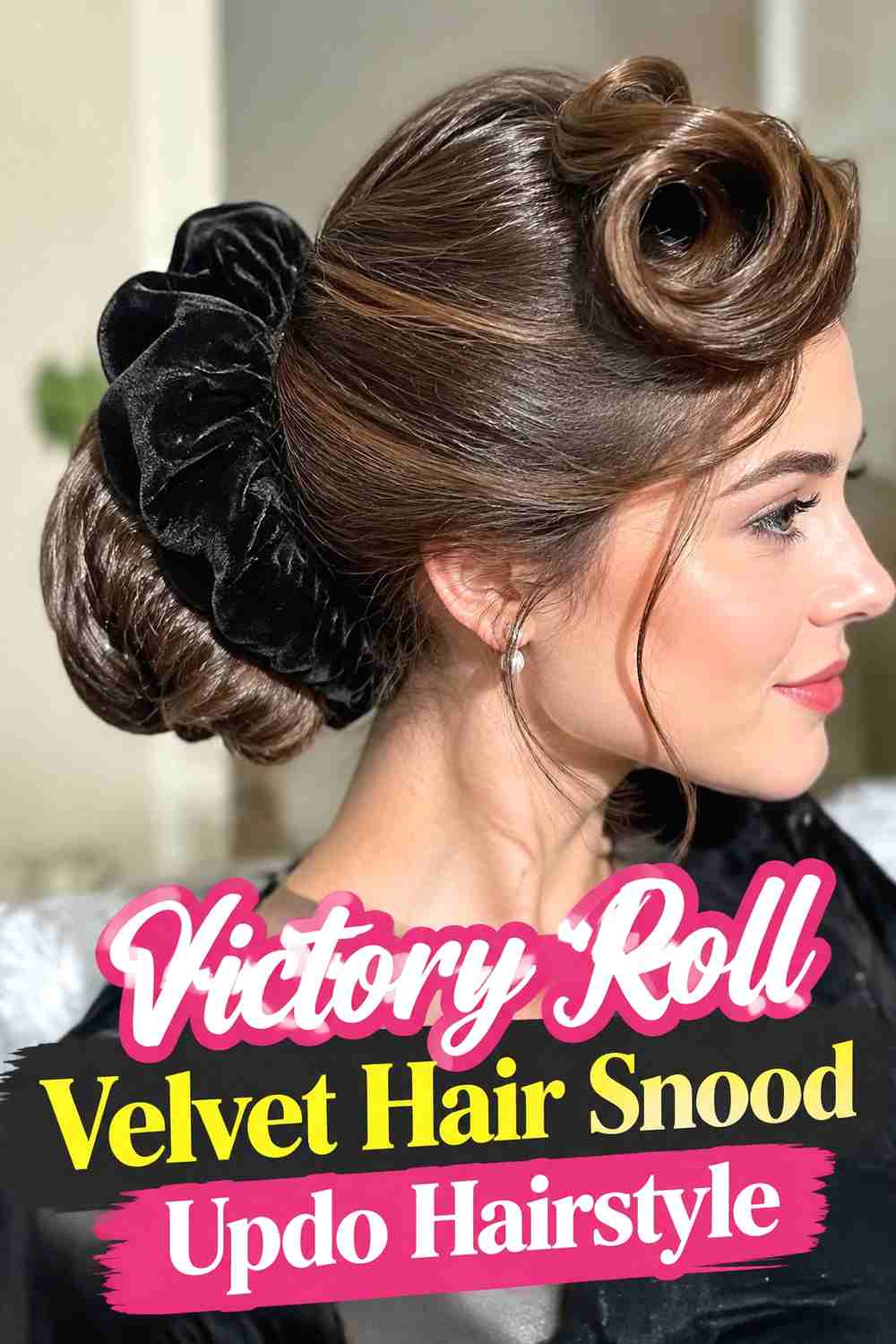
Victory rolls paired with a velvet snood create one of the strongest vintage-inspired looks in this collection. Shape one or two front sections into smooth inward rolls, keeping their curves clear and proportionate rather than excessively large. The rest of the hair is directed toward the back and contained inside the snood, which keeps the lower silhouette neat while the front provides height. This style works best on medium to long hair with enough front length to form secure rolls. Because both the rolls and velvet fabric are visually distinctive, avoid adding several extra accessories. Clean surfaces and intentional proportions give the finished hairstyle a polished rather than costume-like appearance.
Pro Tip
Set the victory rolls first and make sure they feel secure before fitting the snood. Adjusting the accessory afterward is easier than reshaping the front once the back is contained.
6. Twisted Side Velvet Hair Snood Updo Hairstyle
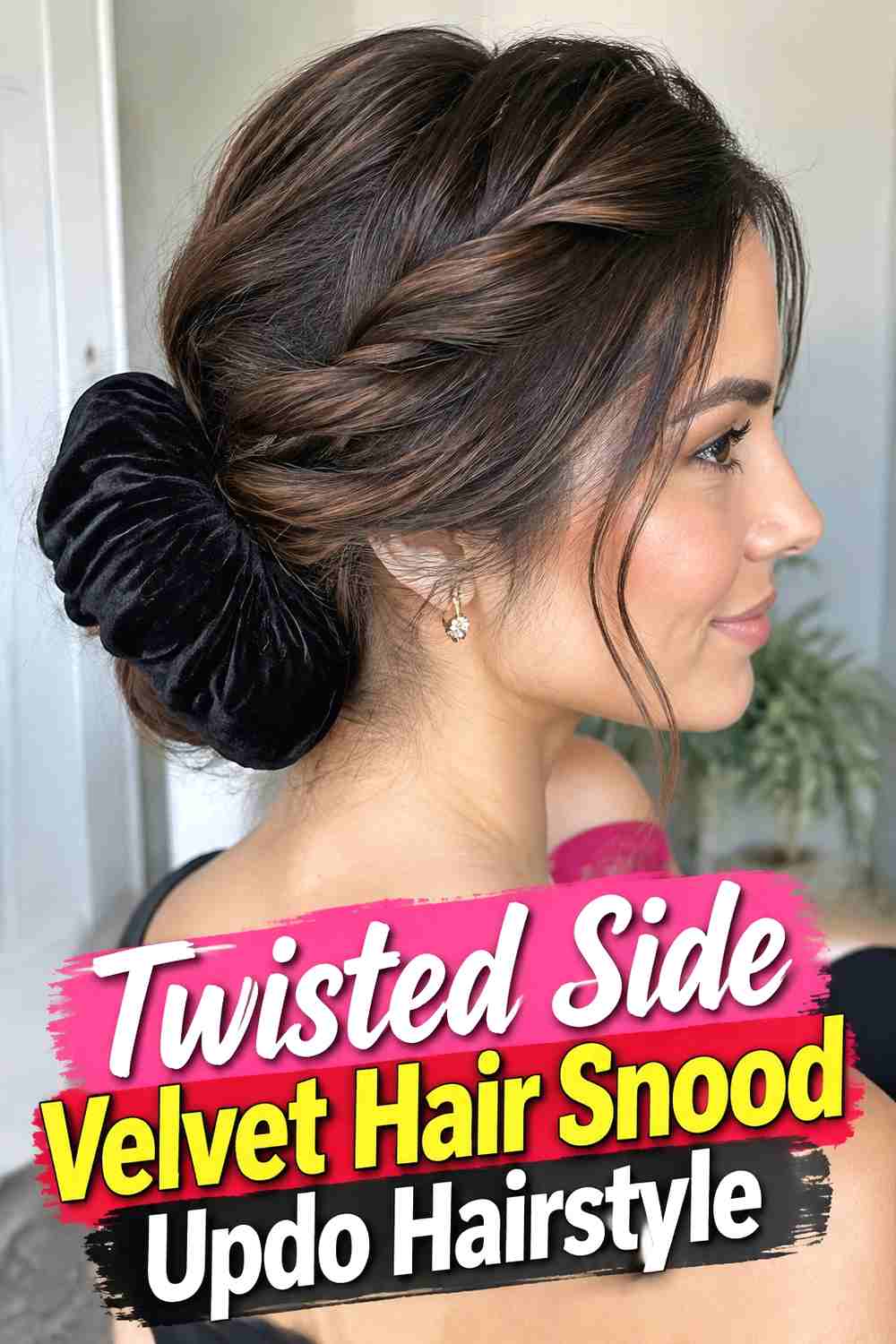
A twisted side detail adds soft movement to a velvet snood updo without creating the complexity of a full braid. Take a broad section from one temple, twist it gradually toward the back, and secure it near the upper edge of the snood. Repeat on the other side for symmetry or keep a single twist for a more asymmetric effect. The remaining hair sits inside the velvet pouch, allowing the twist to remain clearly visible against the head. This style works particularly well with wavy or textured hair because slight natural separation adds dimension. Keep the twists relaxed enough to show their shape but firm enough that they do not sag during wear.
Styling Notes
Anchor each twist underneath the snood edge rather than relying on the fabric to hold it. This keeps the front structure stable if the accessory shifts slightly.
7. Curly Tuck Velvet Hair Snood Updo Hairstyle
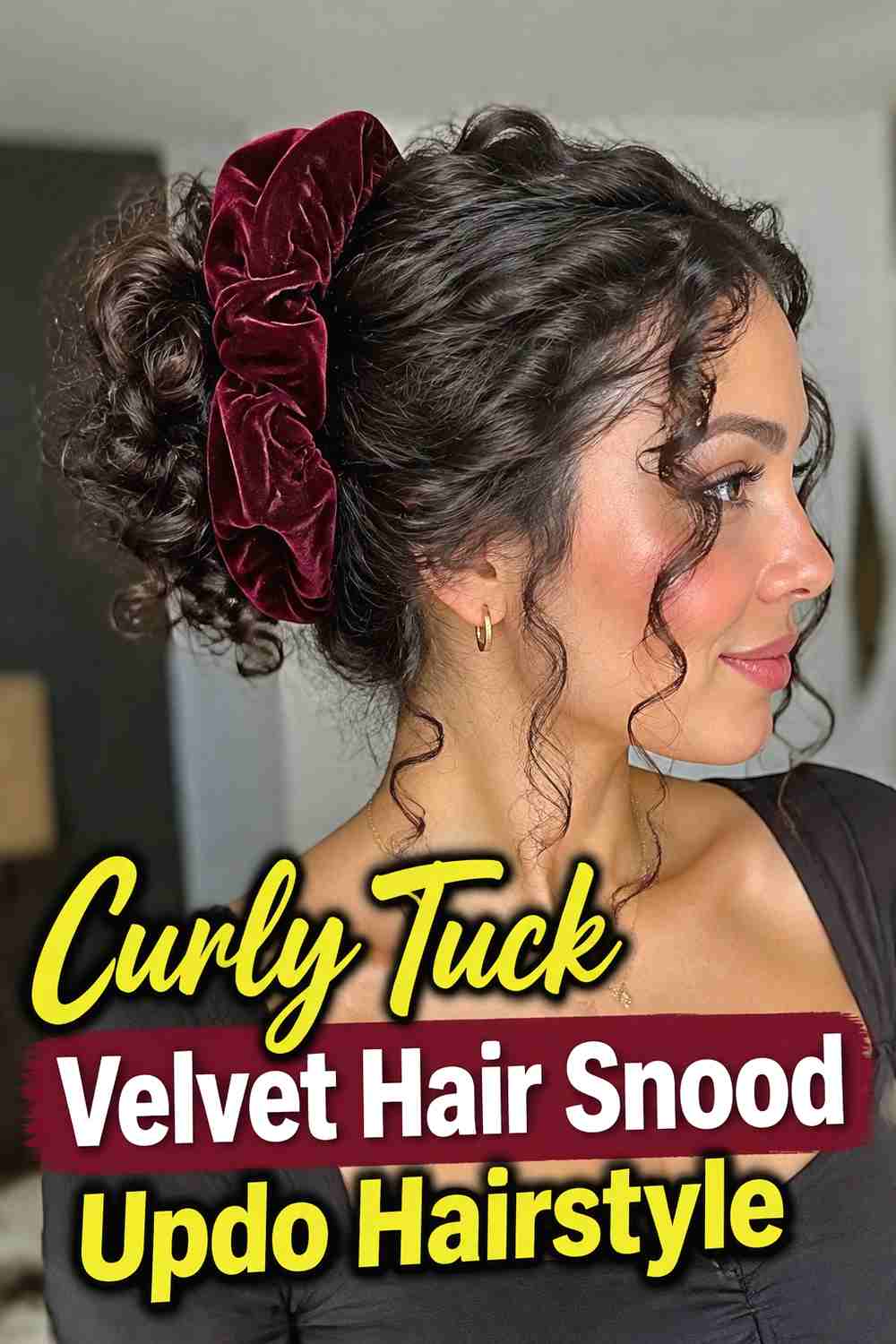
A curly tuck lets natural or styled curls remain visible near the upper edge of the snood instead of concealing every section. Gather the hair low and loosely tuck the bulk of the curls into the velvet pouch, leaving a few defined loops or curls visible where the accessory meets the head. The result feels fuller and softer than a completely smooth version while still keeping the overall updo contained. This approach works especially well with naturally curly hair because the existing texture creates dimension without extensive reshaping. Avoid stuffing the curls too tightly into a small snood, which can flatten their pattern and make the accessory pull uncomfortably.
Hair Type & Length
Curly and coily medium-to-long hair naturally support this fuller look. Choose a snood with enough capacity to contain the length without compressing the texture excessively.
8. Low Chignon Velvet Hair Snood Updo Hairstyle
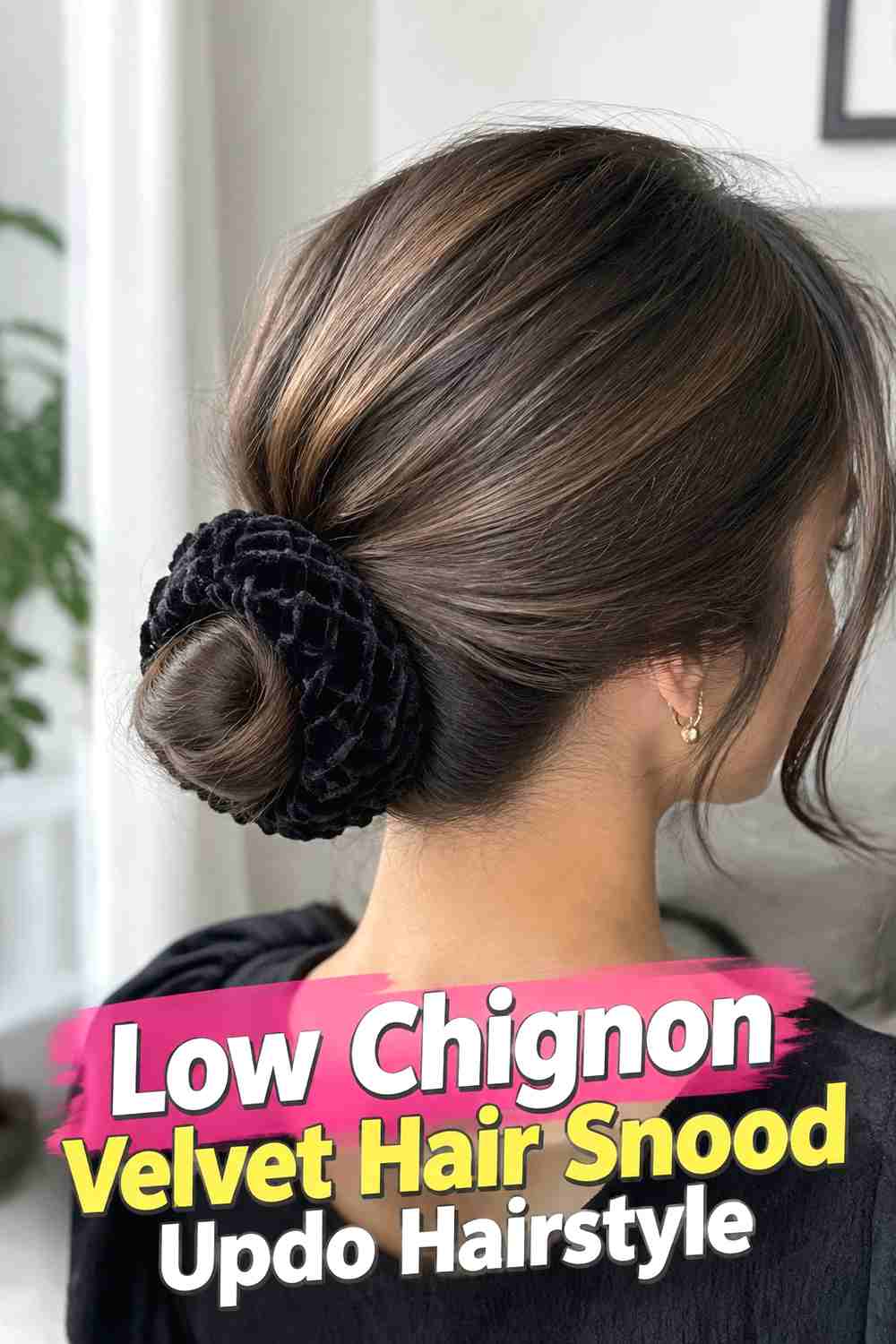
A low chignon can sit partially inside a velvet snood, creating a more structured foundation than loose tucked hair. Form a compact chignon at the nape first, then position the snood around or beneath it so the velvet frames the bun instead of hiding its entire shape. This works particularly well with smaller snoods or designs that have an open upper edge. The chignon provides stability while the accessory adds color and texture. Medium to long hair is suitable, although thick hair may create a larger bun that needs a roomier snood. Keep the front styling simple so the layered detail at the back remains the focus.
Wear & Maintenance
Secure the chignon independently before adding the snood. This prevents the fabric from carrying the full weight of the hair and makes the updo more dependable for longer wear.
9. Face Framing Velvet Hair Snood Updo Hairstyle
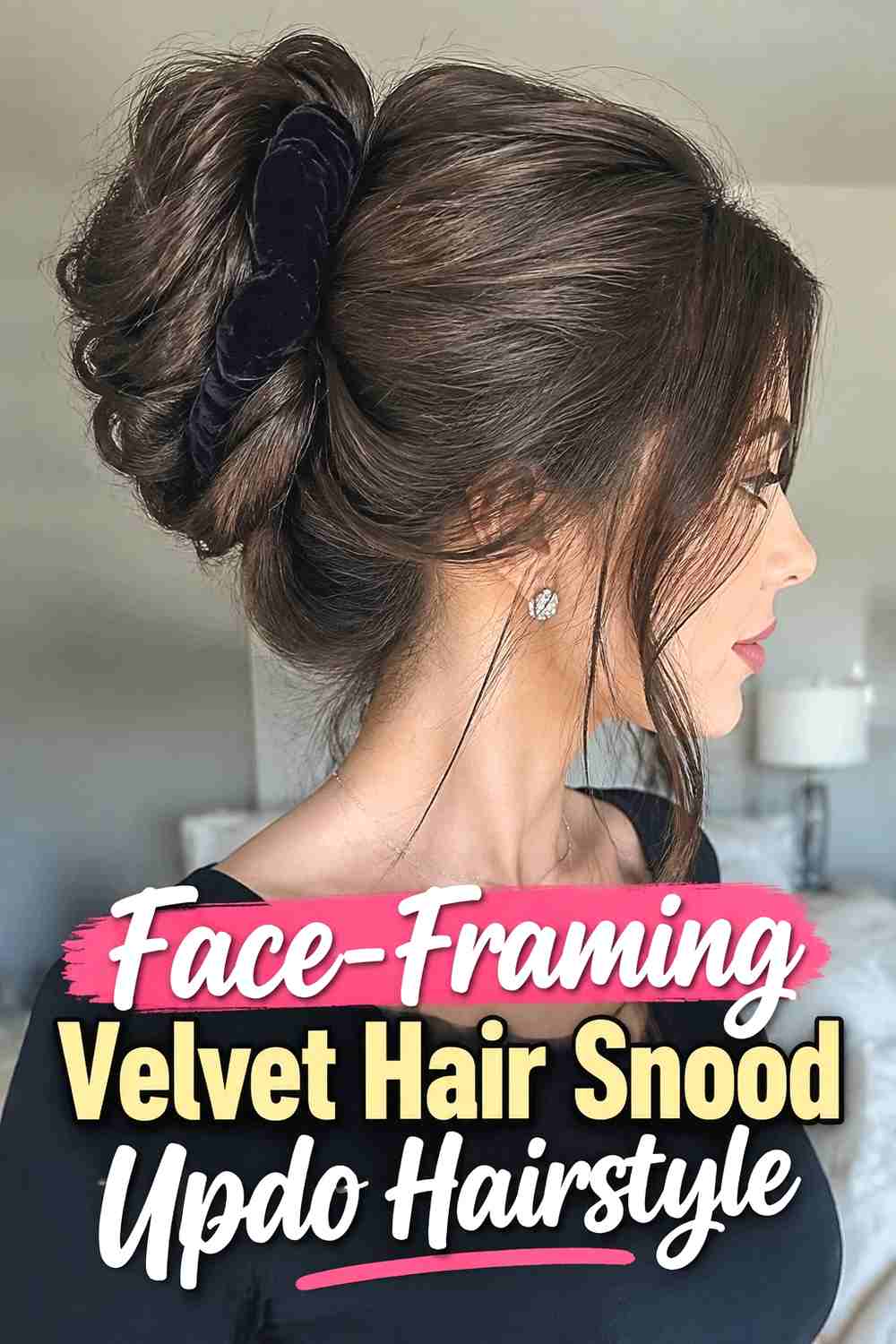
Leaving a few face-framing pieces loose can soften the vintage structure of a velvet snood updo. Separate one narrow section near each temple before gathering the rest of the hair, then shape those pieces into gentle bends or relaxed curls. The back remains neatly contained in the snood, providing a strong contrast with the lighter movement around the face. This style works especially well if fully swept-back hair feels too severe or if you already have shorter layers around the front. Keep the loose pieces fine and deliberate rather than pulling out large sections, which can weaken the contained silhouette and make the hairstyle feel less polished.
Pro Tip
Choose the front pieces before fitting the snood. Doing this afterward can disturb the secured back sections and create uneven framing around the face.
10. Pompadour Front Velvet Hair Snood Updo Hairstyle
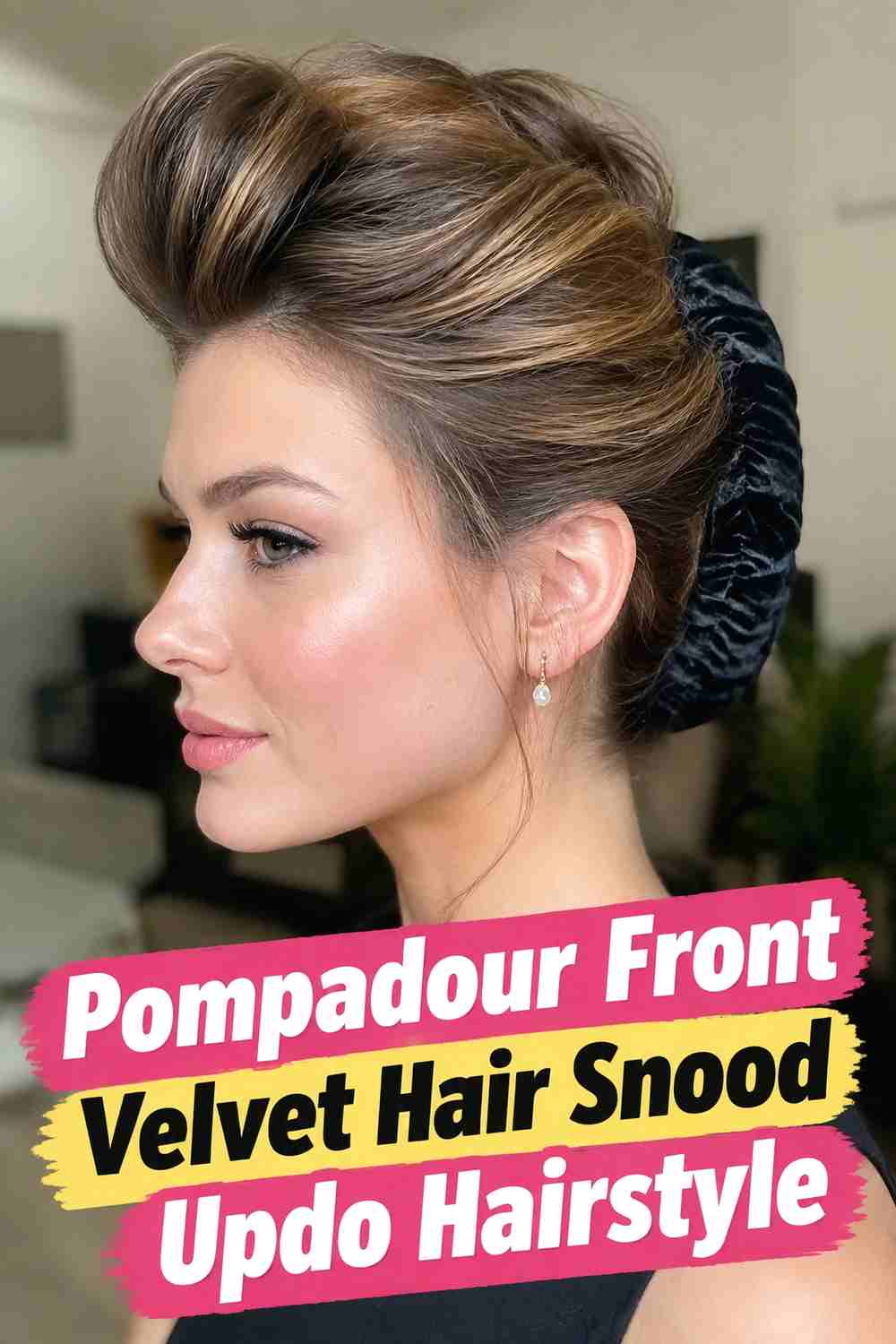
A softly lifted pompadour adds height to the front while the velvet snood keeps the back compact. Take the top section above the forehead, gently lift and roll it backward, then secure it without creating an excessively stiff or exaggerated shape. Smooth the sides toward the nape and gather the remaining hair inside the snood. The contrast between front height and low back volume produces a distinctive profile that feels strongly vintage-inspired. Medium and long hair are easiest to work with, though the front section does not need to be especially long. Keep the snood placement low enough that it does not visually compete with the elevated front.
Best For
This look works well for vintage-themed events, styled portraits, or occasions when you want more height and presence than a simple swept-back snood provides.
11. Double Twist Velvet Hair Snood Updo Hairstyle
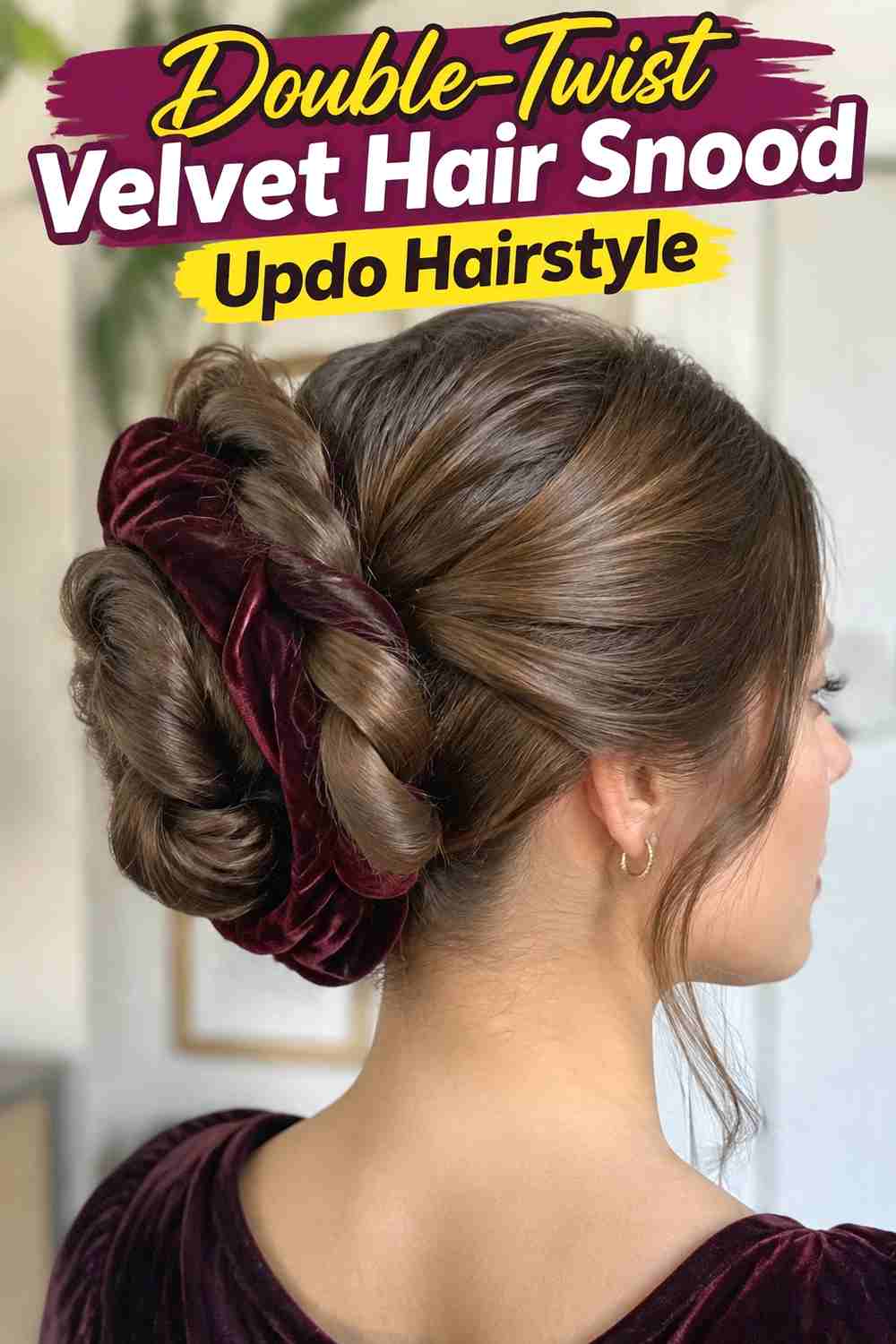
The double-twist version creates balanced texture on both sides of the head before the hair meets the velvet snood. Divide two broad side sections, twist each one backward with even tension, and secure them near the center of the nape. Gather the remaining length underneath and place it inside the snood, leaving both twists visible above the fabric edge. This construction works well on medium-to-thick hair because the sections have enough substance to create clear ridges. Slightly loosen the outer edges after securing them if you want more softness. The snood should sit beneath the twists rather than covering their ends completely.
Why It Works
The paired twists guide the eye naturally toward the accessory while adding texture across the sides. The velvet snood then creates a simple, unified finish for the remaining hair.
12. Soft Wave Velvet Hair Snood Updo Hairstyle
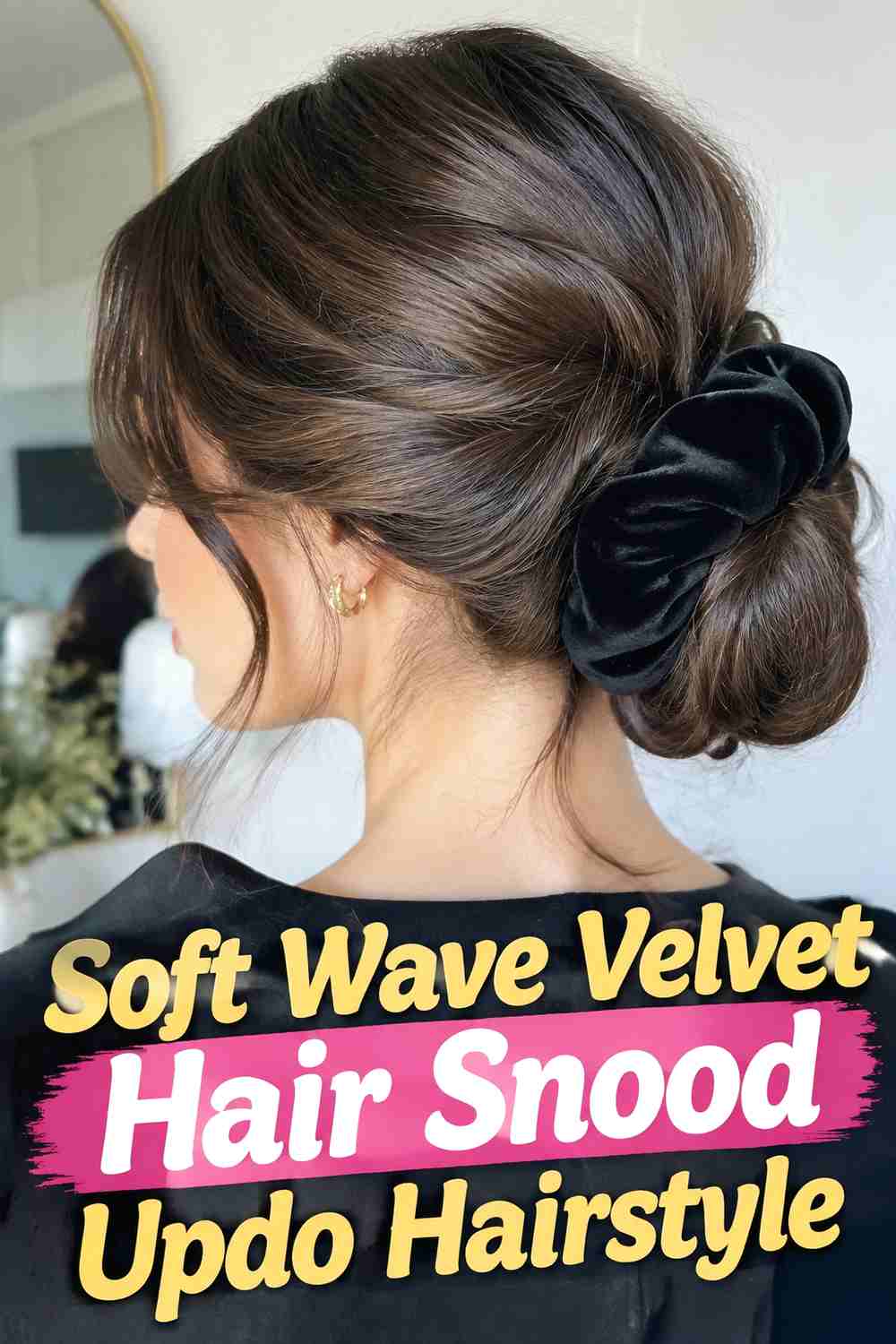
Soft waves give a velvet snood updo a more relaxed, romantic surface than a fully smoothed style. Create broad bends through the visible front and side sections, then direct the hair toward the back without brushing away all of the wave pattern. The lower lengths are tucked comfortably inside the snood, leaving the upper waves visible above its edge. This version works particularly well on naturally wavy hair or hair that already has loose texture from a previous style. Keep the wave pattern broad rather than tightly curled so the overall silhouette remains fluid. A simple velvet snood provides enough visual weight without additional clips or decorative pieces.
Styling Notes
Shape the waves before gathering the hair and use only light tension when directing them backward. Pulling too tightly can flatten the bends near the temples and crown.
13. Sculpted Roll Velvet Hair Snood Updo Hairstyle
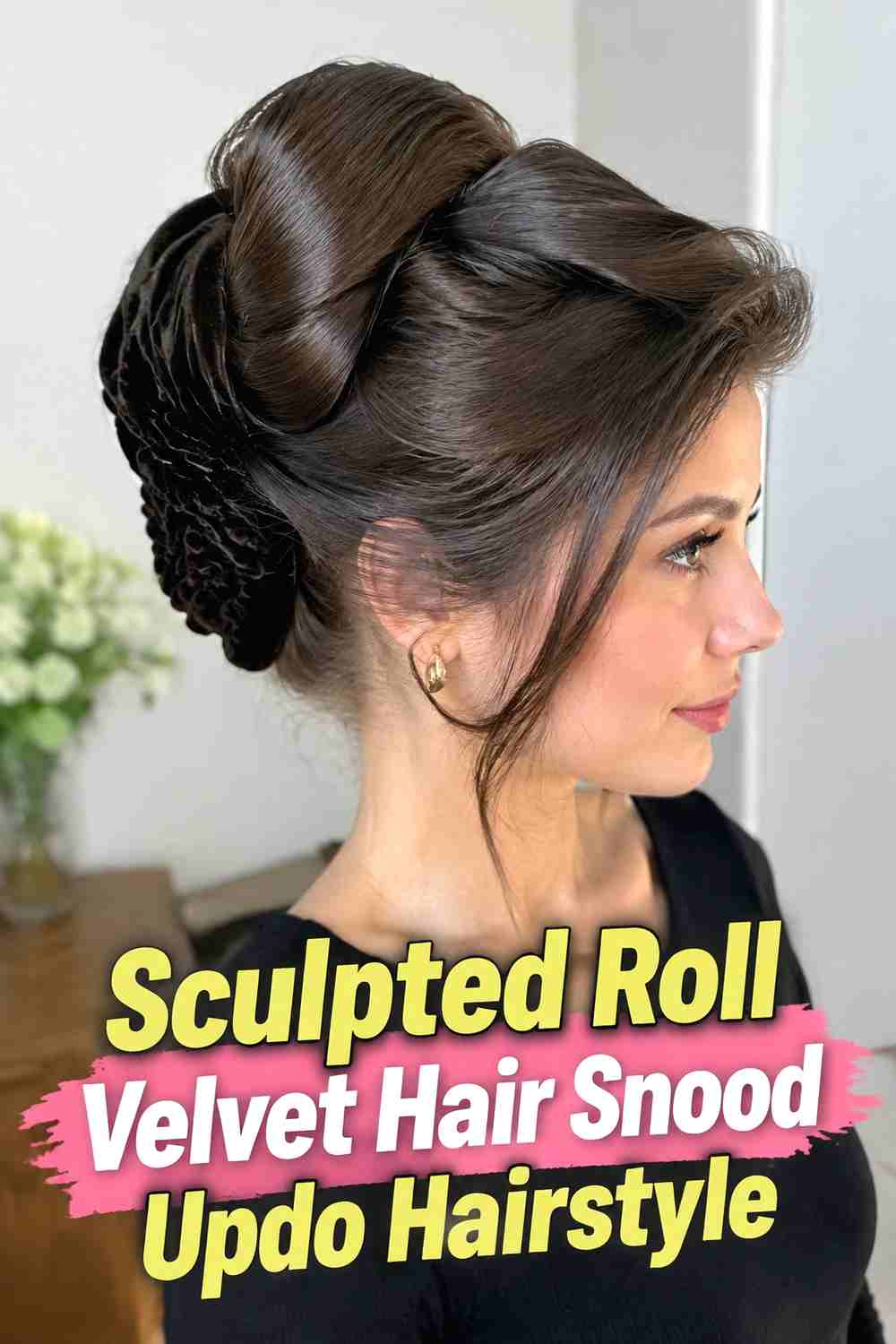
A sculpted roll gives the upper back of the hairstyle an architectural quality while the snood provides a soft fabric finish underneath. Direct the side sections inward and fold them into a controlled horizontal or slightly diagonal roll, securing the shape before gathering the remaining ends inside the velvet accessory. The exposed roll should be smooth enough to show its curve clearly but not so rigid that it looks artificial. This style works best on medium to long hair with enough length for clean folding. Choose a snood that sits close to the roll and complements its proportions instead of hanging far below the nape.
Styling Notes
Create the roll with hidden pins first, then fit the snood around the remaining lengths. Check the side profile to make sure the roll stays balanced and close to the head.
14. Minimalist Velvet Hair Snood Updo Hairstyle
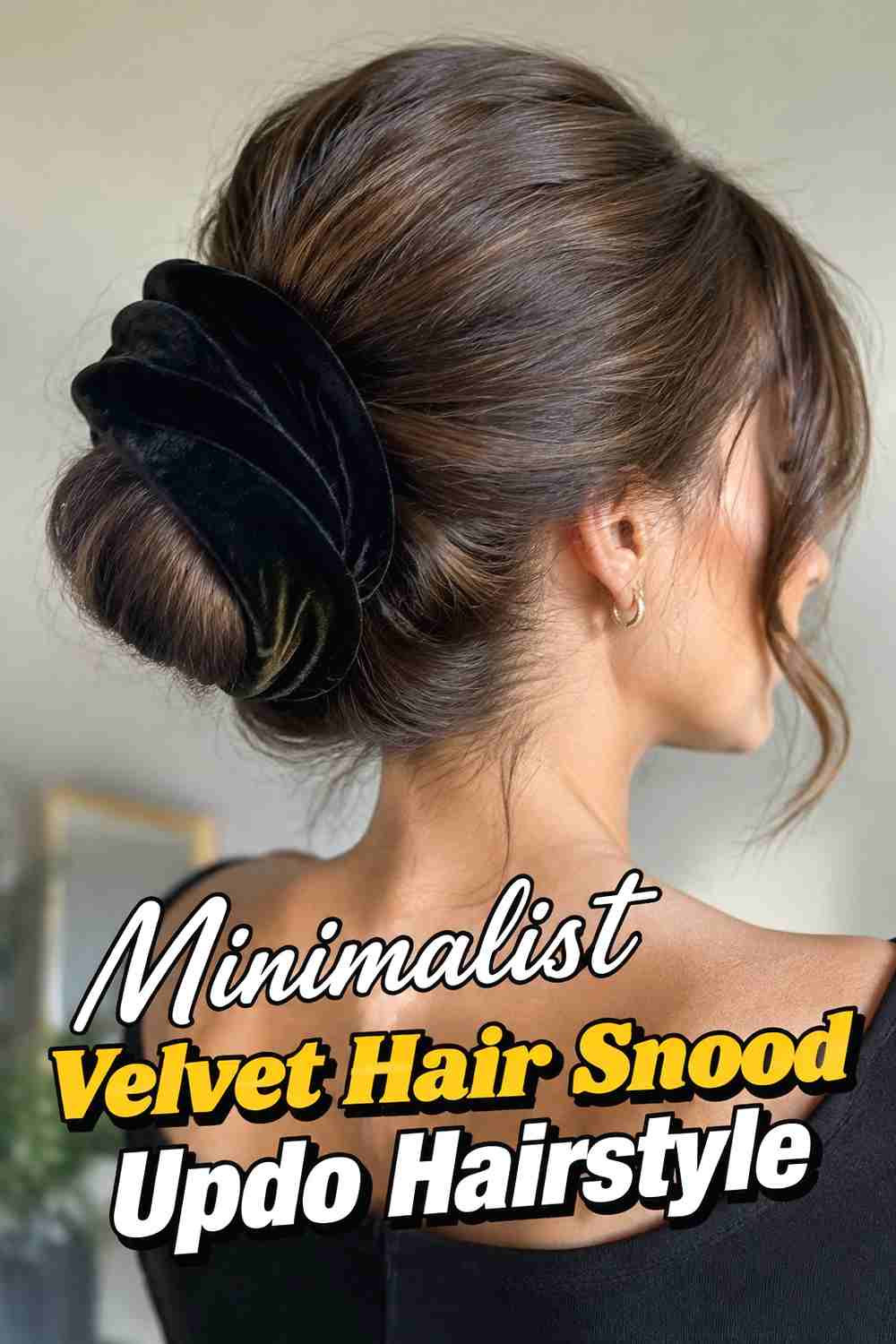
A minimalist velvet snood updo keeps the hair itself uncomplicated so the fabric accessory becomes the main design feature. Smooth the front and sides backward with a center, side, or no visible part, gather the length at the nape, and place it neatly inside a plain velvet snood. There are no braids, rolls, decorative clips, or loose curls competing for attention. This makes the look especially effective when the snood has a rich color or subtle sheen. Straight, wavy, and stretched textures can all work as long as the visible surface remains controlled. Choose a snug but comfortable fit so the accessory looks intentional rather than oversized.
Best For
This style suits simple outfits, understated vintage looks, and everyday wear when you want a distinctive accessory without spending much time on elaborate hair construction.
15. Romantic Tendril Velvet Hair Snood Updo Hairstyle
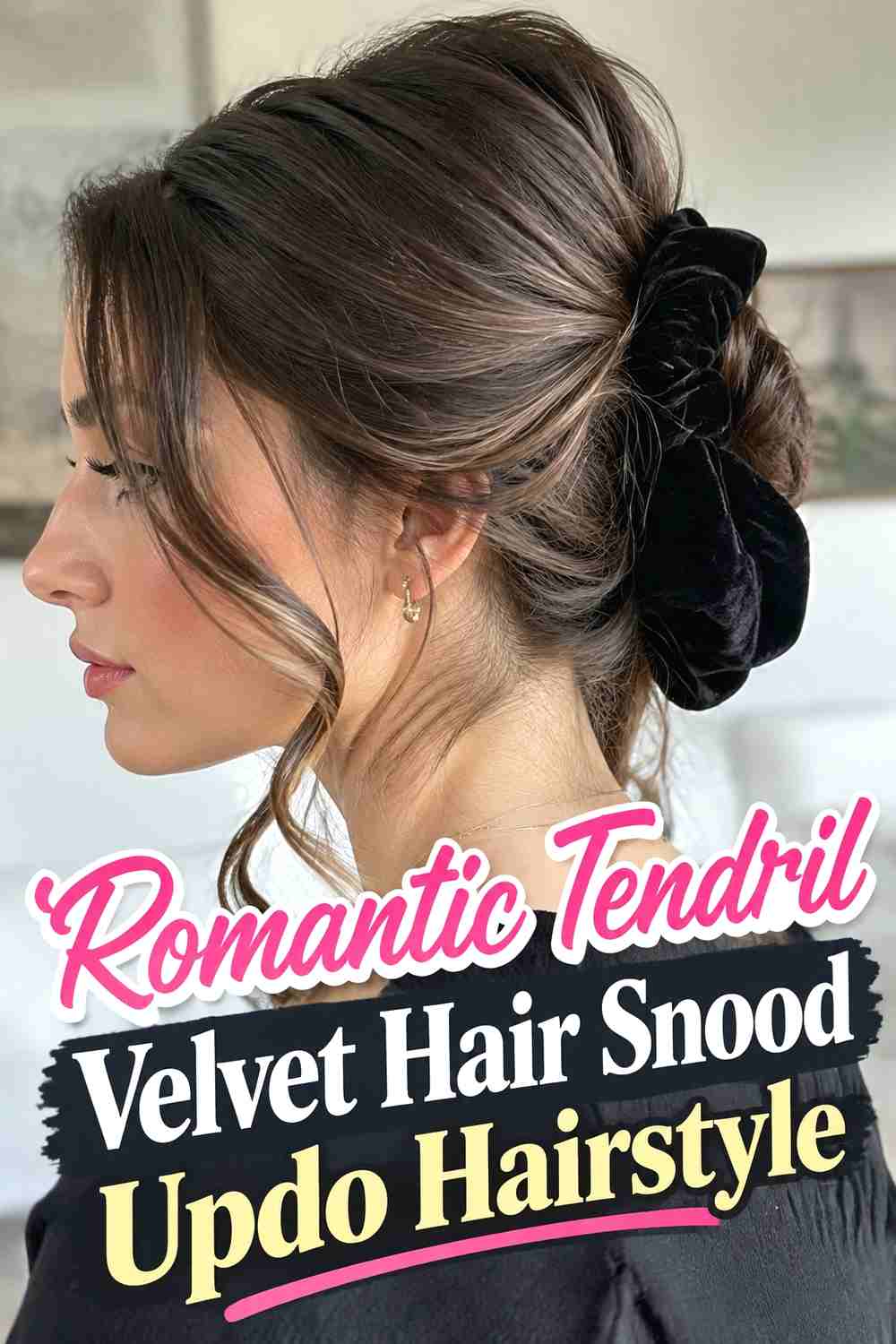
A romantic tendril version balances the contained shape of a velvet snood with soft movement around the face and neckline. Leave a few narrow sections loose near the temples and ears before gathering the rest of the hair. Shape those pieces into gentle curls or naturally irregular tendrils, then place the back lengths inside the snood. One or two very fine pieces near the nape can soften the transition between hair and velvet, but avoid releasing too many strands. The style works beautifully on wavy and curly textures and can also be created with selectively curled straight hair. Keep the snood simple so the movement of the tendrils remains visible.
Pro Tip
Start with fewer loose pieces than you think you need. Once the snood is secure, you can release one additional tendril if the finished hairstyle needs more softness.
How to Choose the Right Look
Begin by deciding how much of the hairstyle you want visible outside the snood. Minimalist, center-part, and side-part versions keep the exposed hair smooth and uncomplicated, allowing the velvet accessory to dominate. Rolled, braided, twisted, and pompadour styles make the hair itself a stronger part of the design.
Hair texture also matters. Straight or smoothed hair naturally supports sleek parts, sculpted rolls, and structured vintage shapes. Wavy hair works especially well with side twists and soft-wave styling, while curly and coily textures can create beautiful tucked or softly visible volume around the snood.
Choose the snood size according to your hair density and length. A small accessory may compress thick or very long hair, while an oversized snood can look empty on finer or shorter lengths. The fabric should contain the hair comfortably without excessive stretching.
For formal or vintage-inspired events, victory rolls, pompadour fronts, braided crowns, and sculpted rolls create stronger silhouettes. For quieter everyday styling, a soft side part, minimalist finish, or face-framing version can be easier to wear.
Comfort should remain part of the decision. Secure heavy hair independently when necessary and allow the snood to contain or decorate the updo rather than relying on the fabric alone to support significant weight.
Final Thoughts
A velvet hair snood can make a simple updo feel instantly distinctive by adding rich texture and a softly vintage silhouette. The accessory works with everything from sleek parts and low rolls to curls, twists, braids, and romantic tendrils.
Choose the amount of visible styling that suits your hair texture and occasion, then select a snood that comfortably fits your length and density. A secure foundation and balanced proportions will keep the finished look polished rather than overly complicated.
FAQs
1. What is a hair snood?
A hair snood is an accessory designed to contain or cover part of the hair, often around the back or nape. Depending on the design, it may be made from fabric, netting, knit material, or decorative textiles such as velvet.
2. How do you wear a velvet hair snood with an updo?
Secure or gather the back hair first, then position the snood so it contains the lengths while leaving your chosen front, side, or rolled details visible.
3. Can thick hair fit inside a velvet snood?
Yes, but the snood needs enough capacity for the hair’s density and length. Very thick or long hair may also benefit from hidden pins or a low anchor underneath.
4. Can curly hair be worn with a velvet hair snood?
Yes. Curly and coily textures can be tucked inside while selected curls remain visible above the accessory or around the face for additional dimension.
5. How can I make a velvet snood hairstyle look modern?
Use cleaner parting, restrained volume, natural texture, and minimal extra accessories. A simple silhouette helps the velvet texture feel distinctive without making the hairstyle look overly themed.
Save your favorite velvet hair snood updo hairstyle ideas, share the collection for future inspiration, and explore more ways to combine vintage accessories with modern styling.