18 Side Dutch Braid Ponytail Hairstyle Ideas
A raised side braid flowing into a ponytail creates the perfect mix of visible texture, secure styling, and movement from every angle.
A side Dutch braid ponytail uses an inside-out braid along one side of the head before feeding the remaining hair into a ponytail. Because the braid sits above the surface, its woven structure stays visible even when the rest of the hairstyle is simple.
You can change the mood by adjusting braid width, ponytail height, texture, volume, and finishing details. A tight braid with sleek lengths feels polished, while a widened braid with waves creates a softer look. These 18 ideas cover practical everyday options, playful versions, and more refined styles for events.
Quick List
- Classic Side Dutch Braid Ponytail Hairstyle
- Sleek Side Dutch Braid Ponytail Hairstyle
- Loose Side Dutch Braid Ponytail Hairstyle
- High Side Dutch Braid Ponytail Hairstyle
- Low Side Dutch Braid Ponytail Hairstyle
- Wavy Side Dutch Braid Ponytail Hairstyle
- Curly Side Dutch Braid Ponytail Hairstyle
- Wrapped Base Side Dutch Braid Ponytail Hairstyle
- Bubble Side Dutch Braid Ponytail Hairstyle
- Face Framing Side Dutch Braid Ponytail Hairstyle
- Voluminous Side Dutch Braid Ponytail Hairstyle
- Double Side Dutch Braid Ponytail Hairstyle
- Ribbon Accent Side Dutch Braid Ponytail Hairstyle
- Textured Side Dutch Braid Ponytail Hairstyle
- Long Hair Side Dutch Braid Ponytail Hairstyle
- Soft Romantic Side Dutch Braid Ponytail Hairstyle
- Polished Event Side Dutch Braid Ponytail Hairstyle
- Quick Everyday Side Dutch Braid Ponytail Hairstyle
1. Classic Side Dutch Braid Ponytail Hairstyle
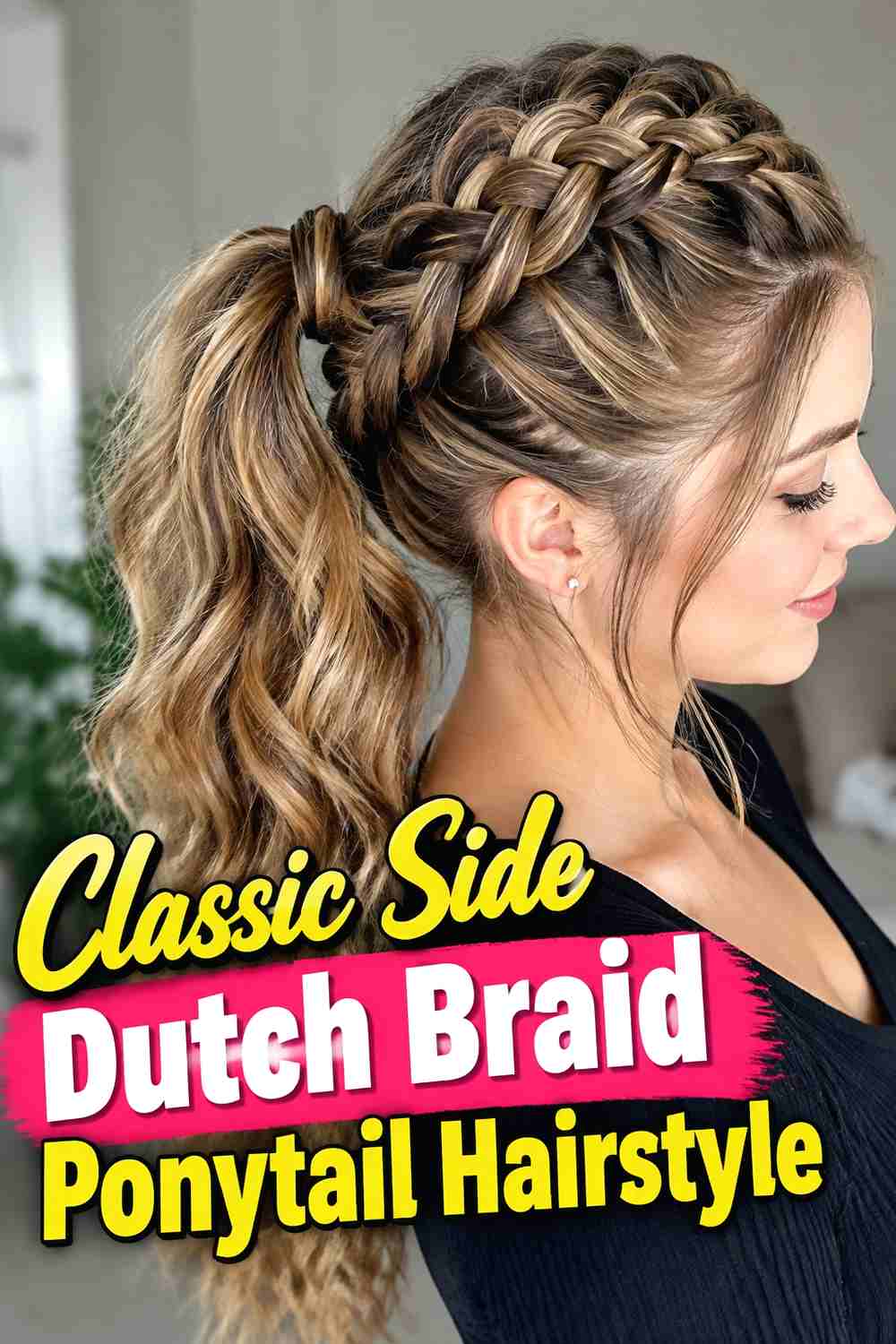
The Classic Side Dutch Braid Ponytail Hairstyle begins near one temple and travels diagonally toward the back, where it merges into a clean mid-height ponytail. Crossing sections underneath instead of over creates the raised Dutch-braid pattern, making the texture easy to see from the side. Keep the braid moderately firm while adding hair, then loosen its outer edges slightly after the ponytail is secured if you want more width. The ponytail can remain straight or carry a soft bend through the ends. Medium to long hair gives the braid enough distance to develop before meeting the ponytail, while a strong elastic helps keep the combined style secure.
Styling Notes
Finish and secure the braid before loosening its edges so the woven structure stays stable.
Best For
This balanced version works for everyday wear, casual events, school, work, or a polished weekend hairstyle.
2. Sleek Side Dutch Braid Ponytail Hairstyle
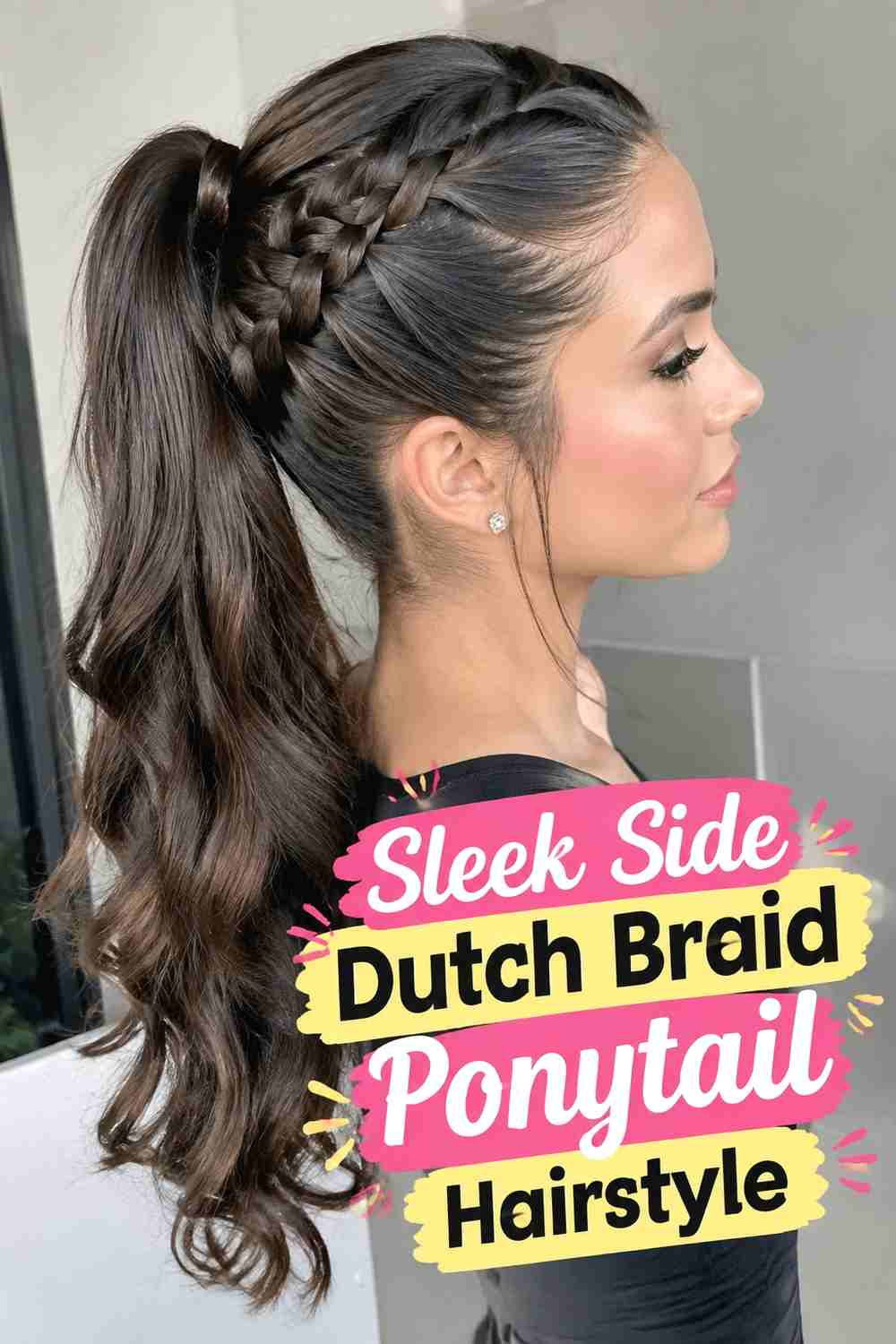
The Sleek Side Dutch Braid Ponytail Hairstyle keeps the braid crisp and the remaining hair smooth for a more controlled finish. Start with a clean side section and braid close to the scalp, adding similarly sized pieces so the raised pattern remains consistent. Brush the unbraided hair neatly toward the ponytail base before combining it with the braid. The lengths can stay straight and glossy, making the woven detail the main focal point. Use smoothing product lightly around the surface instead of saturating the roots. A wrapped elastic can make the base look even cleaner while keeping the ponytail firmly anchored.
Why It Works
The contrast between the dimensional braid and sleek ponytail makes the woven pattern look sharper and more deliberate.
Pro Tip
Keep each added braid section similar in size to maintain an even, polished pattern from temple to ponytail.
3. Loose Side Dutch Braid Ponytail Hairstyle
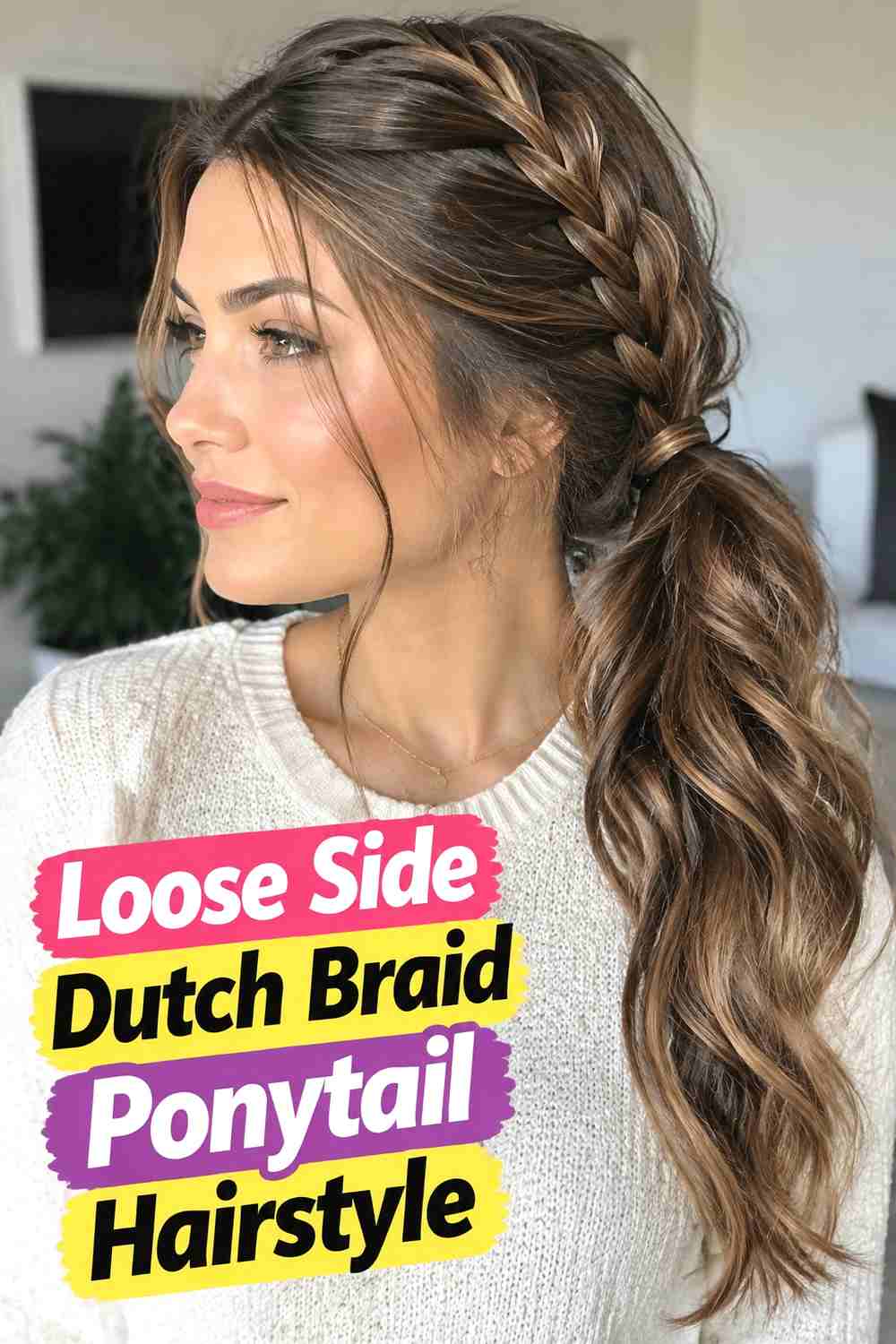
The Loose Side Dutch Braid Ponytail Hairstyle softens the raised braid by widening its edges and keeping the crown slightly relaxed. Build the Dutch braid with secure tension first, then gently pull outward on selected loops after everything is tied together. This creates a fuller appearance without weakening the center of the braid. The ponytail can stay natural, softly waved, or lightly tousled so it matches the relaxed upper section. Leave a few fine pieces near the hairline if they naturally fall out, but avoid removing large sections after braiding. The finished look should feel airy and casual while the base remains dependable enough for comfortable wear.
Styling Notes
Loosen the braid gradually from the bottom upward so you can control its width and keep the shape balanced.
Wear & Maintenance
If one section loosens during the day, adjust that braid loop individually instead of rebuilding the entire ponytail.
4. High Side Dutch Braid Ponytail Hairstyle
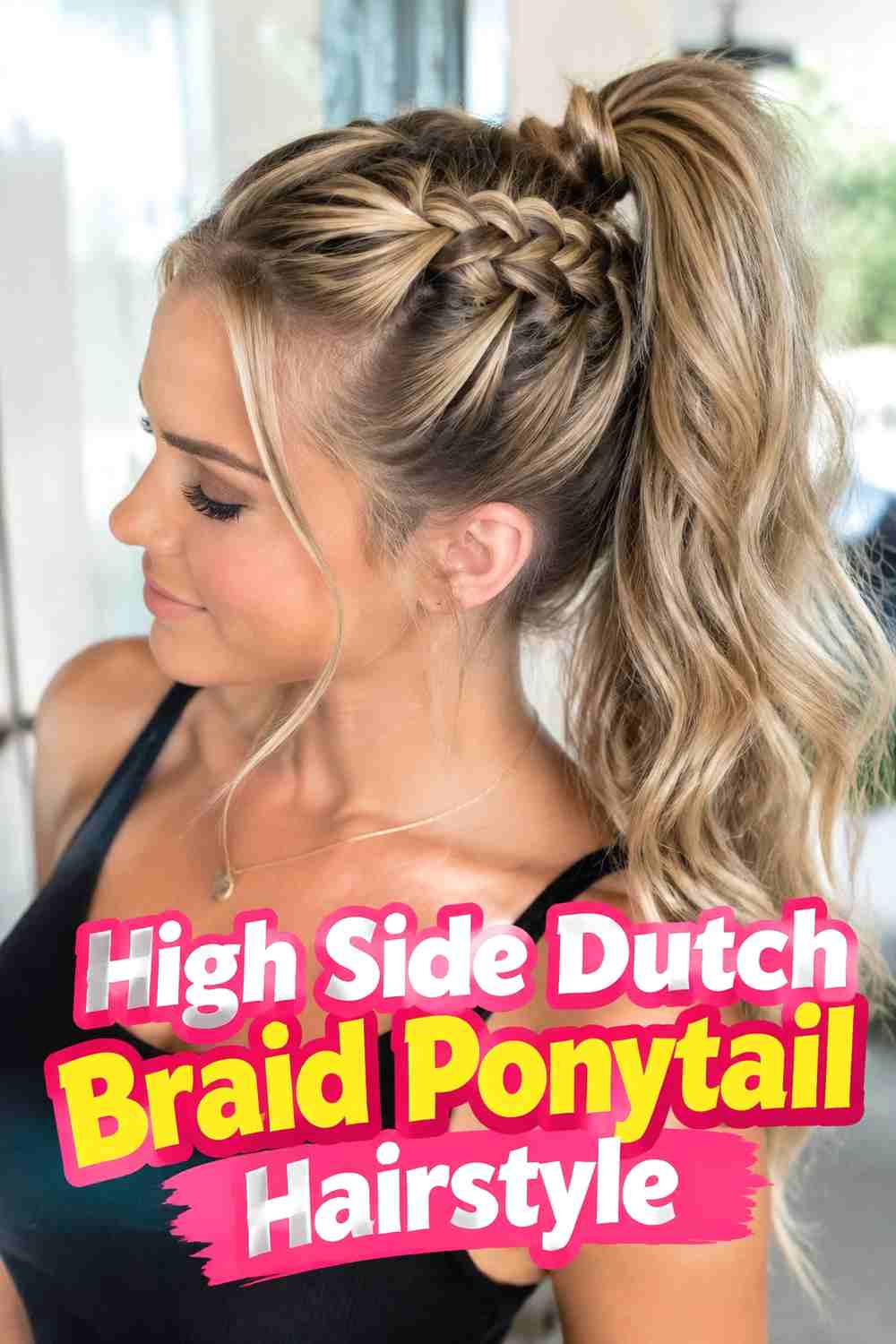
The High Side Dutch Braid Ponytail Hairstyle sends the braid upward toward a ponytail positioned near the crown, creating a lifted, energetic silhouette. Start the braid near the temple and angle it diagonally toward the intended high base rather than directing it straight backward. Secure the braid and loose hair together with a strong elastic, then tighten the ponytail gently in small sections if needed. Keeping the braid slightly wider near the crown can help it blend naturally into the raised ponytail. Straight, wavy, and curled lengths can all work, but avoid making the base overly bulky since high placement already creates plenty of visual height.
Best For
This version works well for sporty looks, casual events, parties, or any style where you want noticeable lift and movement.
Pro Tip
Plan the ponytail position before you start braiding so the braid travels toward the correct point from the beginning.
5. Low Side Dutch Braid Ponytail Hairstyle
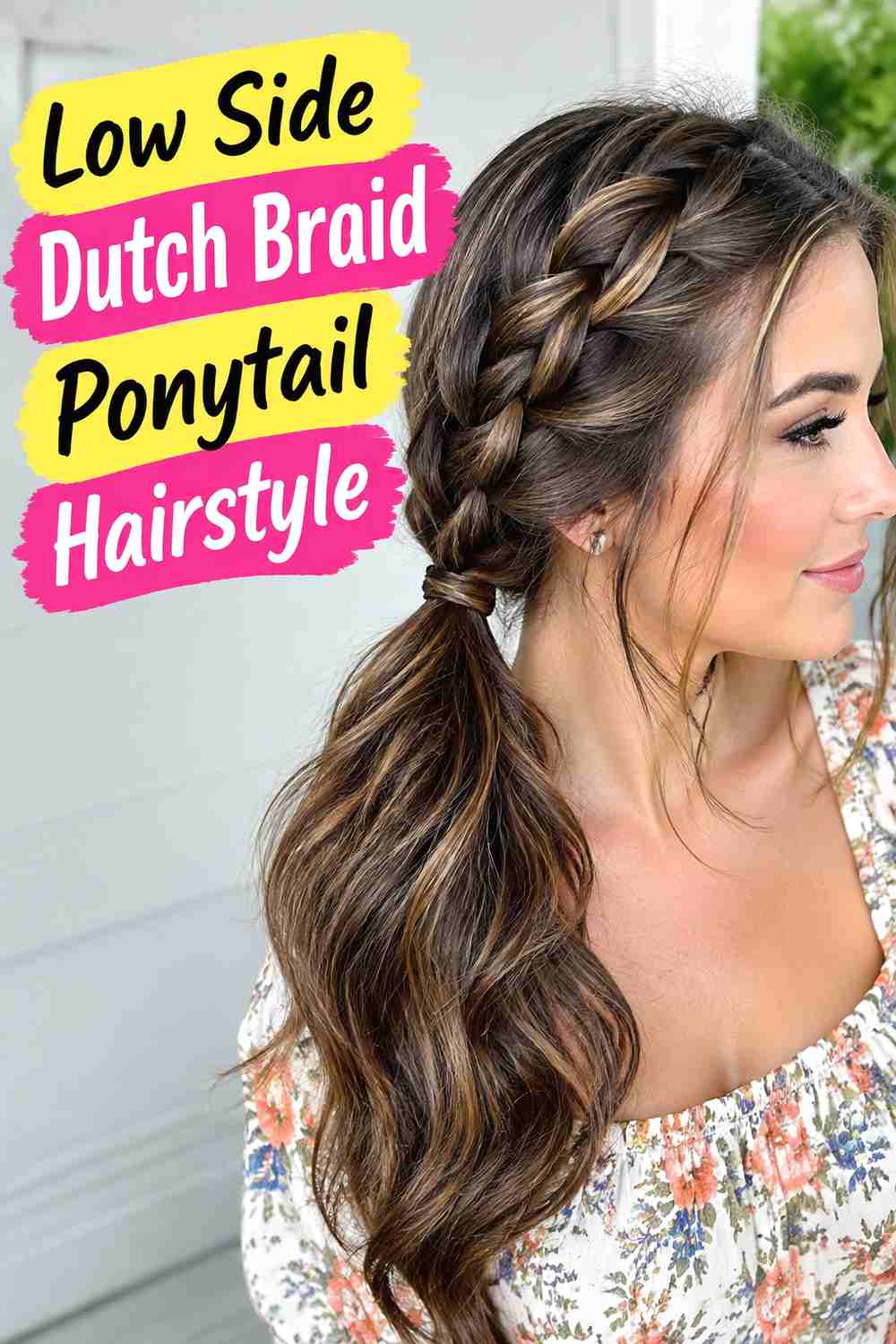
The Low Side Dutch Braid Ponytail Hairstyle keeps the woven section close to the side of the head before feeding it into a ponytail near the nape. The lower placement creates a calmer silhouette than a high ponytail and works particularly well with smooth or softly waved lengths. Begin the Dutch braid near the front, follow the curve above the ear, and angle it down toward the neckline. Keep the braid snug until the base is secure, then widen it slightly for softness. A wrapped elastic can make the low ponytail look more finished. This style is comfortable for longer wear because the weight stays lower on the head.
Why It Works
The downward braid direction naturally guides the eye toward the low ponytail, giving the style a cohesive, flowing shape.
Styling Notes
Keep the final few braid passes close to the nape so the braid does not form a bump above the ponytail base.
6. Wavy Side Dutch Braid Ponytail Hairstyle
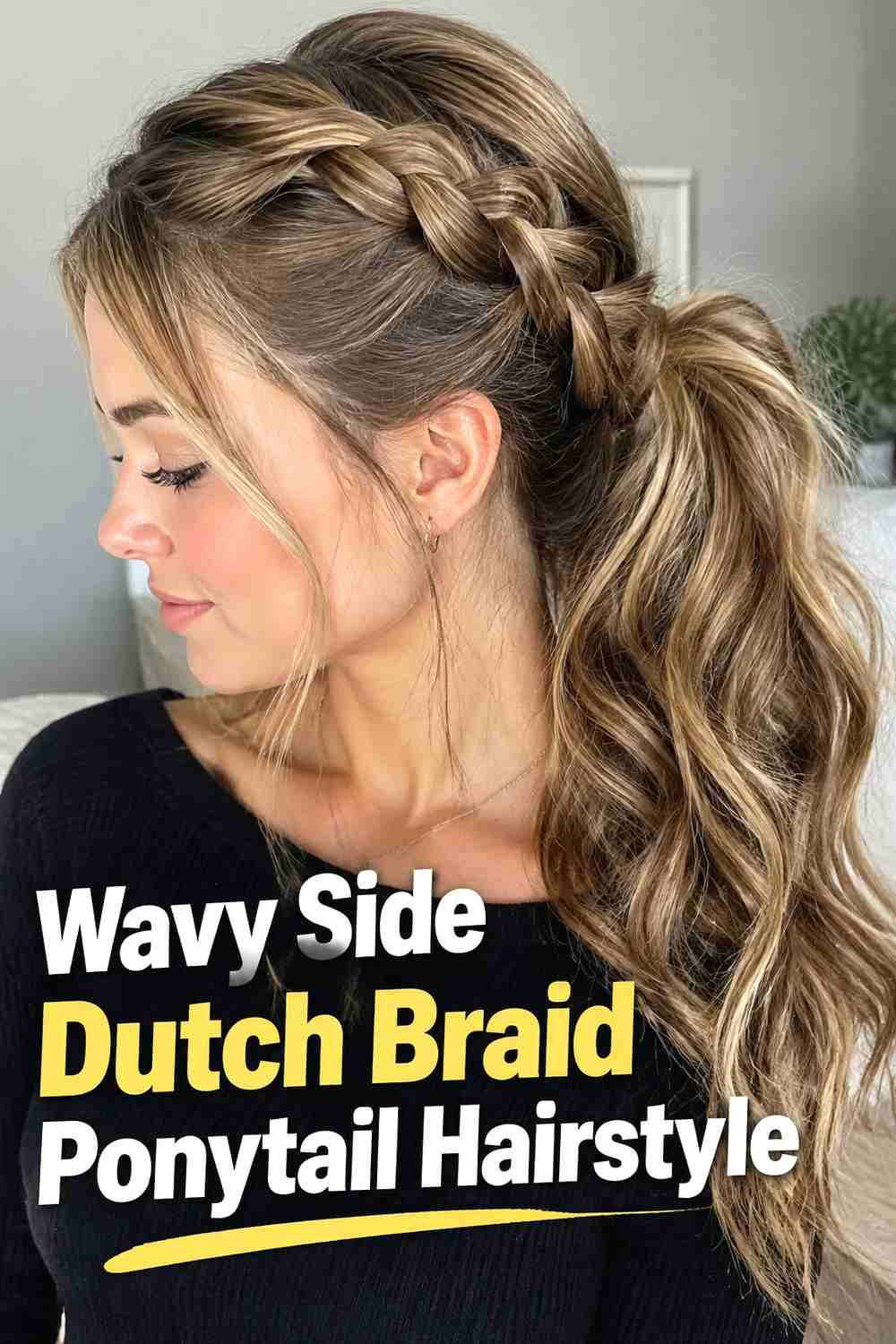
The Wavy Side Dutch Braid Ponytail Hairstyle combines a structured raised braid with soft movement through the lengths. You can create the waves before braiding or style the ponytail afterward, depending on which method is easier for your hair. Keep the side braid visible and moderately widened, then allow the ponytail to fall into loose, broad bends rather than tight curls. A little texture can make the transition from braid to ponytail feel softer and less severe. Use flexible hold if the waves need support, but keep the lengths touchable. This version works especially well when you want the braid to look detailed while the ponytail still feels relaxed and flowing.
Hair Type & Length
Medium-to-long naturally wavy or pre-waved hair gives this style an easy foundation and plenty of visible movement.
Pro Tip
Style large wave sections so the ponytail complements the chunky Dutch braid rather than looking overly curled.
7. Curly Side Dutch Braid Ponytail Hairstyle
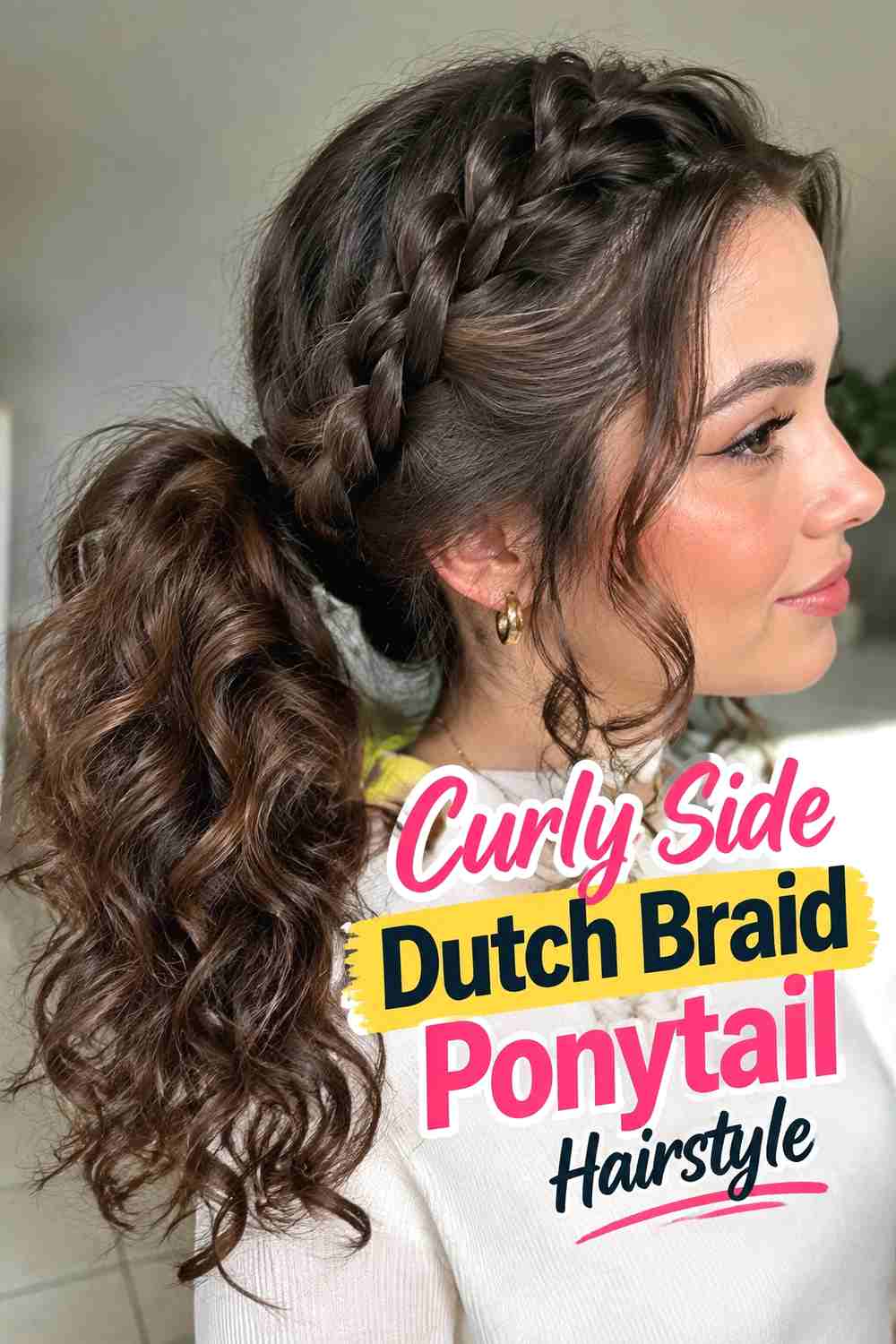
The Curly Side Dutch Braid Ponytail Hairstyle keeps natural or styled curls visible through the ponytail while adding a defined braid along one side. If working with natural curls, separate the braid section gently and avoid unnecessary brushing through the remaining hair. Create the Dutch braid with enough tension to stay secure but not so much that it pulls uncomfortably at the hairline. Gather the rest into a ponytail and let the curl pattern provide fullness through the lengths. Choose a strong elastic that can hold the density without excessive tightening. The raised braid creates contrast against the softer curly ponytail, giving the finished style both structure and volume.
Hair Type & Length
Curly and coily medium-to-long hair can work beautifully when the ponytail base is sized appropriately for the hair’s density.
Wear & Maintenance
Refresh individual curls instead of combing through the full ponytail if definition changes during wear.
8. Wrapped Base Side Dutch Braid Ponytail Hairstyle
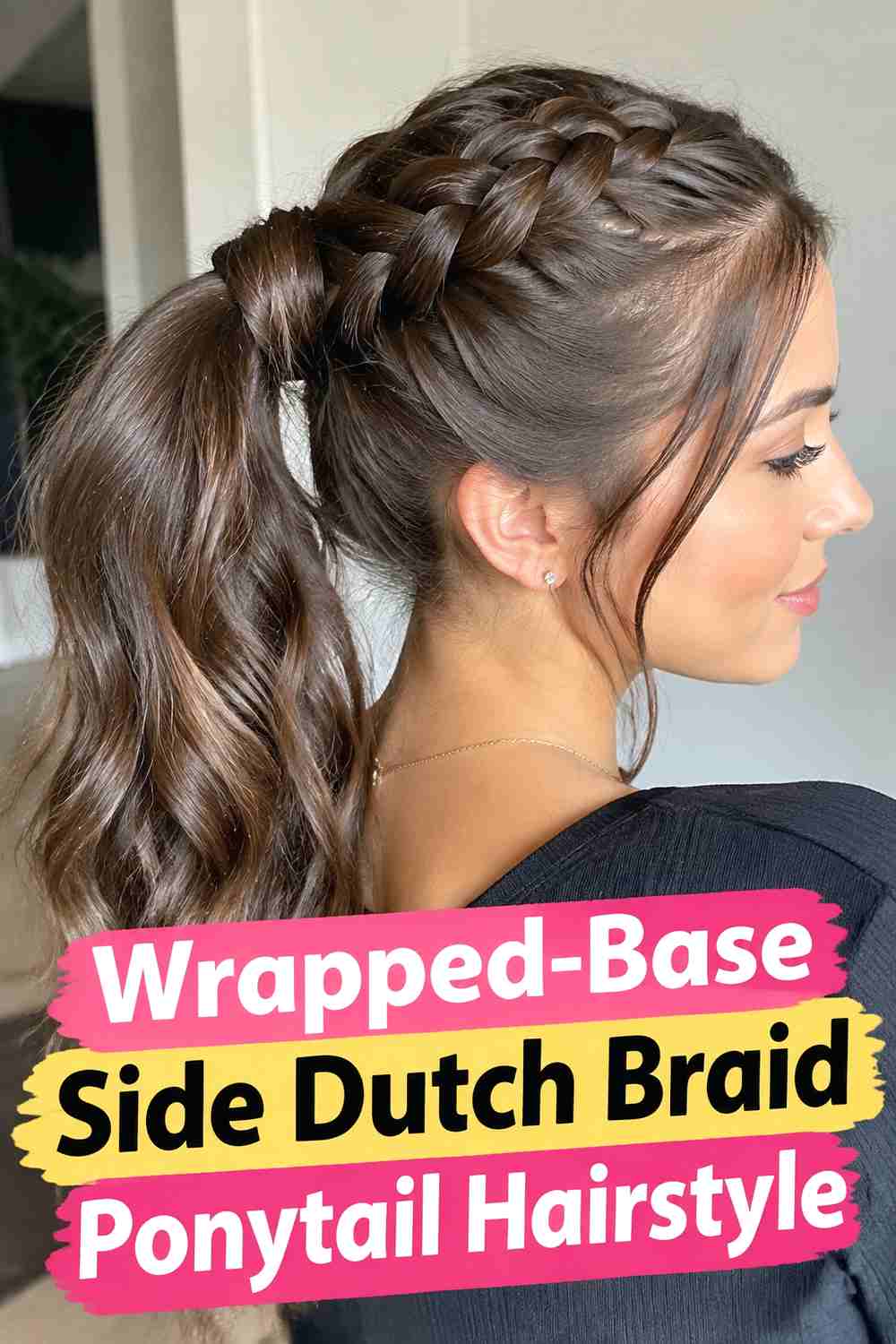
The Wrapped-Base Side Dutch Braid Ponytail Hairstyle finishes the braided look by hiding the elastic beneath a smooth section of hair. Create the Dutch braid first and secure it together with the remaining hair. Then take a narrow strand from underneath the ponytail, wrap it around the elastic, and pin the end discreetly below the base. This simple detail makes the transition from braid to ponytail look cleaner and more intentional. Keep the wrapping section smooth so it contrasts with the woven texture above. The ponytail itself can stay straight, wavy, or softly curled depending on the occasion.
Why It Works
Covering the elastic allows the raised braid and ponytail shape to connect visually without a distracting fastening in between.
Pro Tip
Take the wrapping strand from underneath so the missing section is hidden naturally by the rest of the ponytail.
9. Bubble Side Dutch Braid Ponytail Hairstyle
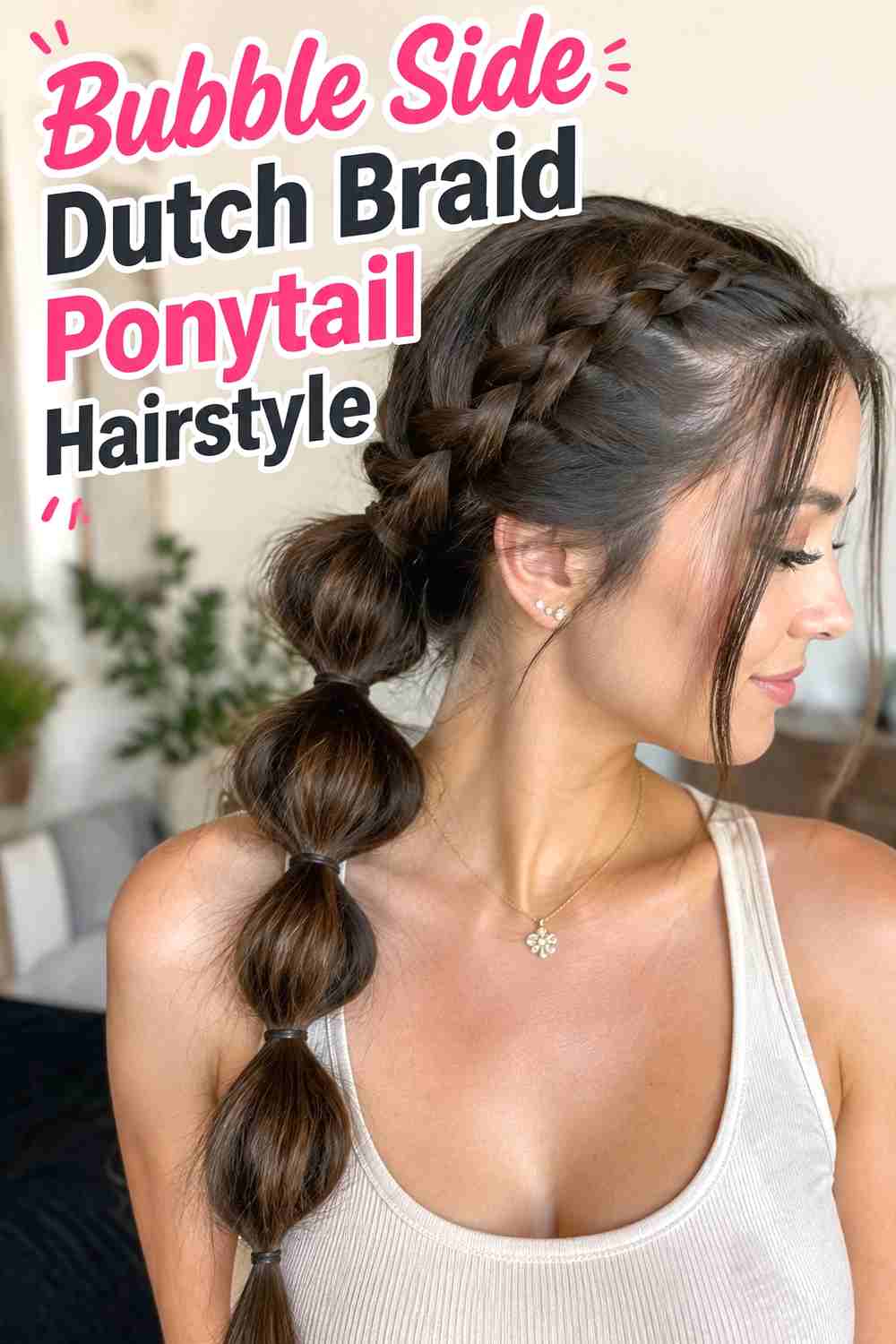
The Bubble Side Dutch Braid Ponytail Hairstyle pairs a detailed braid at the scalp with rounded bubble sections through the ponytail. Once the side Dutch braid and loose hair are secured together, add small elastics at even intervals down the length. Gently pull each section outward to create soft bubbles, adjusting them until the sizes look balanced. Because both the braid and bubbles have strong texture, keep the crown relatively controlled so the hairstyle does not become visually crowded. This variation works best on medium-long or long hair with enough length for several separated sections. Use elastics that hold securely without cutting too sharply into the hair.
Styling Notes
Create each bubble gradually and compare its width with the previous section before moving farther down the ponytail.
Best For
This playful version suits festivals, parties, casual events, and creative everyday styling.
10. Face Framing Side Dutch Braid Ponytail Hairstyle
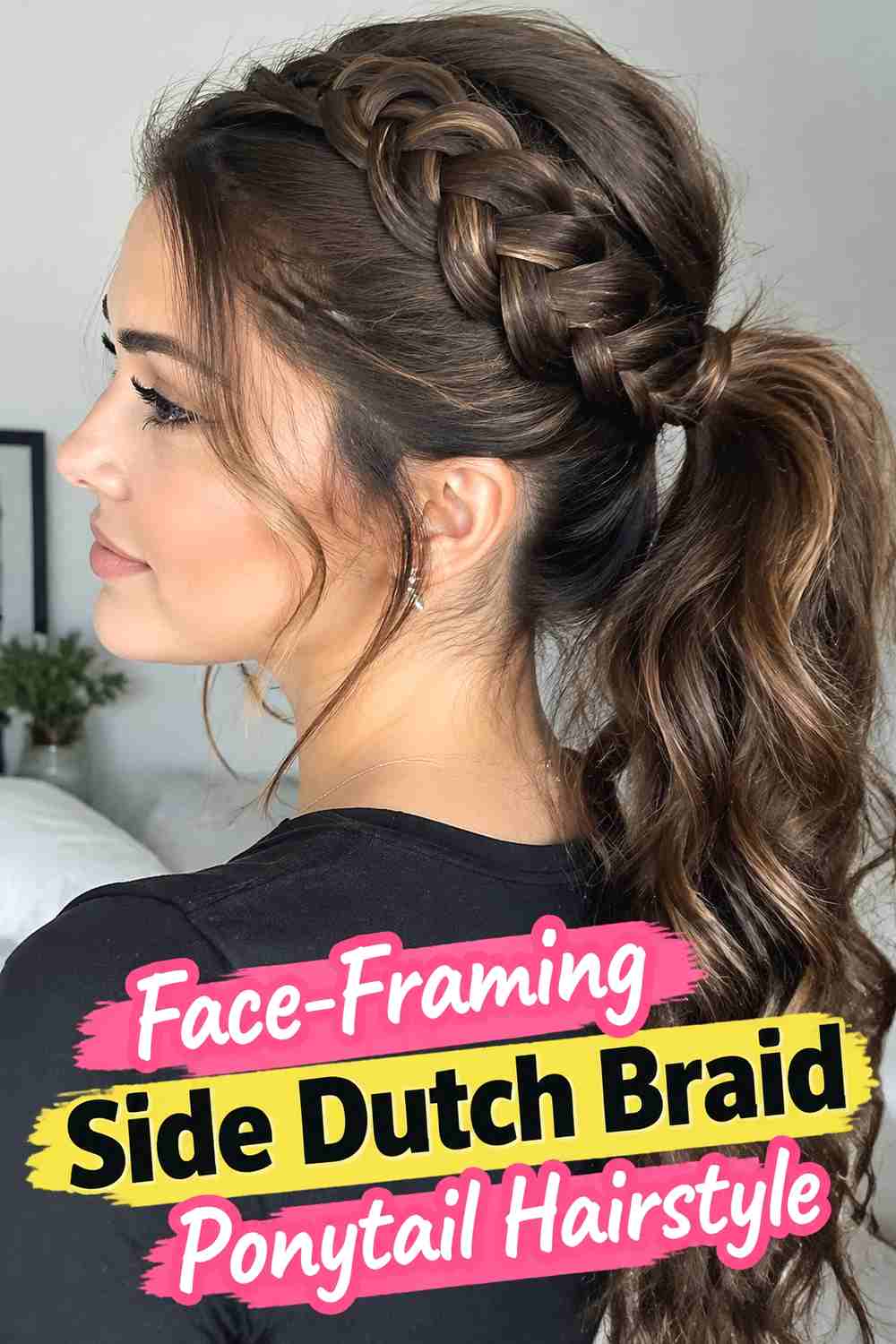
The Face-Framing Side Dutch Braid Ponytail Hairstyle combines the raised side braid with a few soft pieces around the cheeks or jawline. Leave these sections out before beginning the braid rather than pulling them free afterward, which can loosen the woven edge. Braid the remaining side section toward the ponytail and secure everything firmly at the back. The loose front pieces can stay natural or receive a gentle bend away from the face. Keep the braid moderately widened to match the softer finish. This works especially well on layered hair because shorter front sections naturally create movement while the braid and ponytail provide secure structure.
Why It Works
Loose front layers soften the strong geometry of the Dutch braid without taking attention away from its raised woven pattern.
Pro Tip
Leave out only the sections you actually want around the face so the braid keeps enough hair to stay full.
11. Voluminous Side Dutch Braid Ponytail Hairstyle
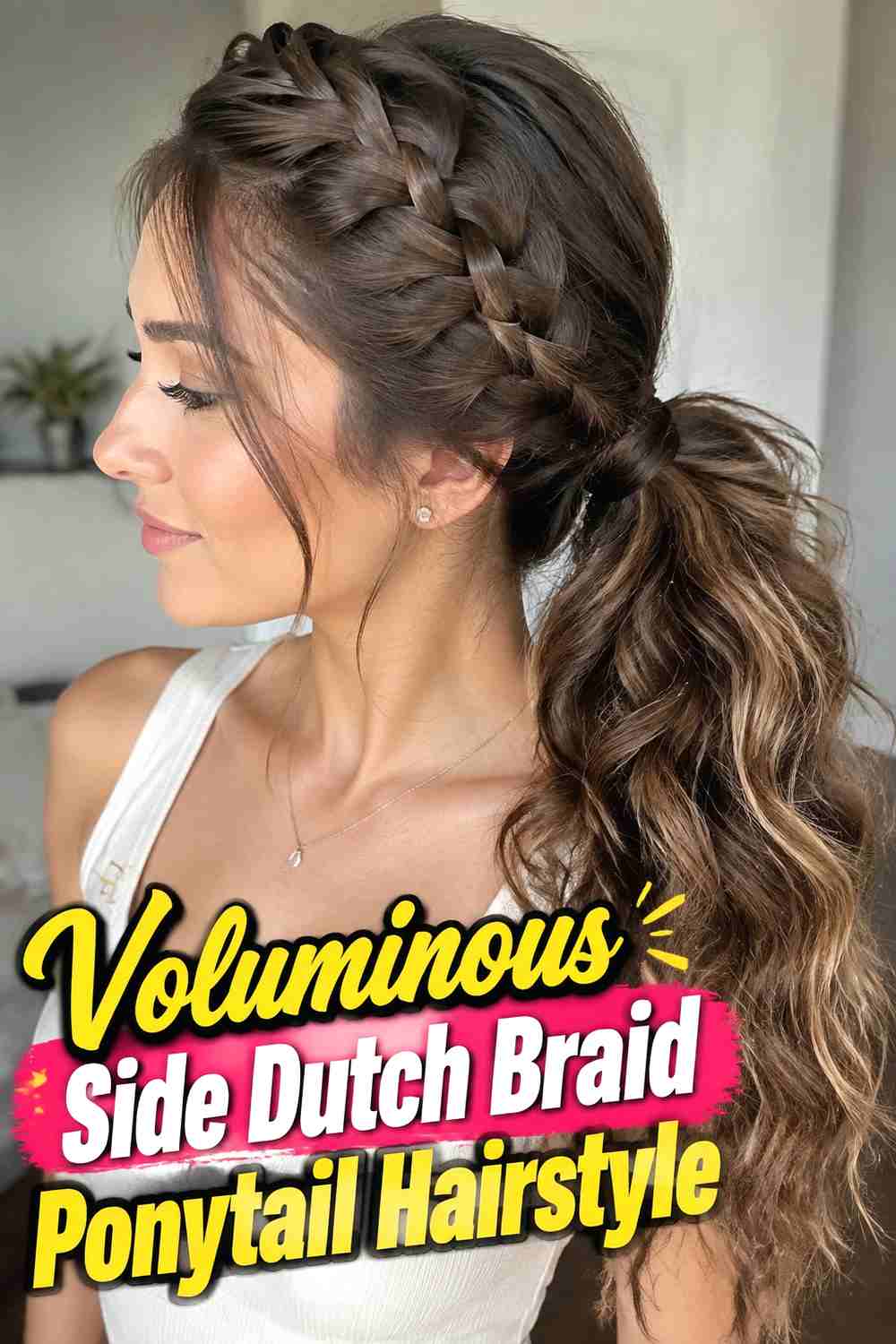
The Voluminous Side Dutch Braid Ponytail Hairstyle adds fullness through both the braid and ponytail for a more dramatic silhouette. Start with light root volume, then build the side braid with secure tension before gently widening its outer edges. Gather the remaining hair into a ponytail without flattening the crown completely. Soft waves, curls, or strategic root lift at the ponytail base can provide extra body through the lengths. Keep the volume controlled rather than heavily teased so the braid remains clearly visible. Lightweight texture or volumizing products are usually more useful than heavy creams, which can pull down the shape.
Styling Notes
Create the crown and braid volume before securing the final ponytail, then make only small adjustments afterward.
Best For
Choose this option when you want a fuller hairstyle for parties, photographs, dinners, or statement everyday looks.
12. Double Side Dutch Braid Ponytail Hairstyle
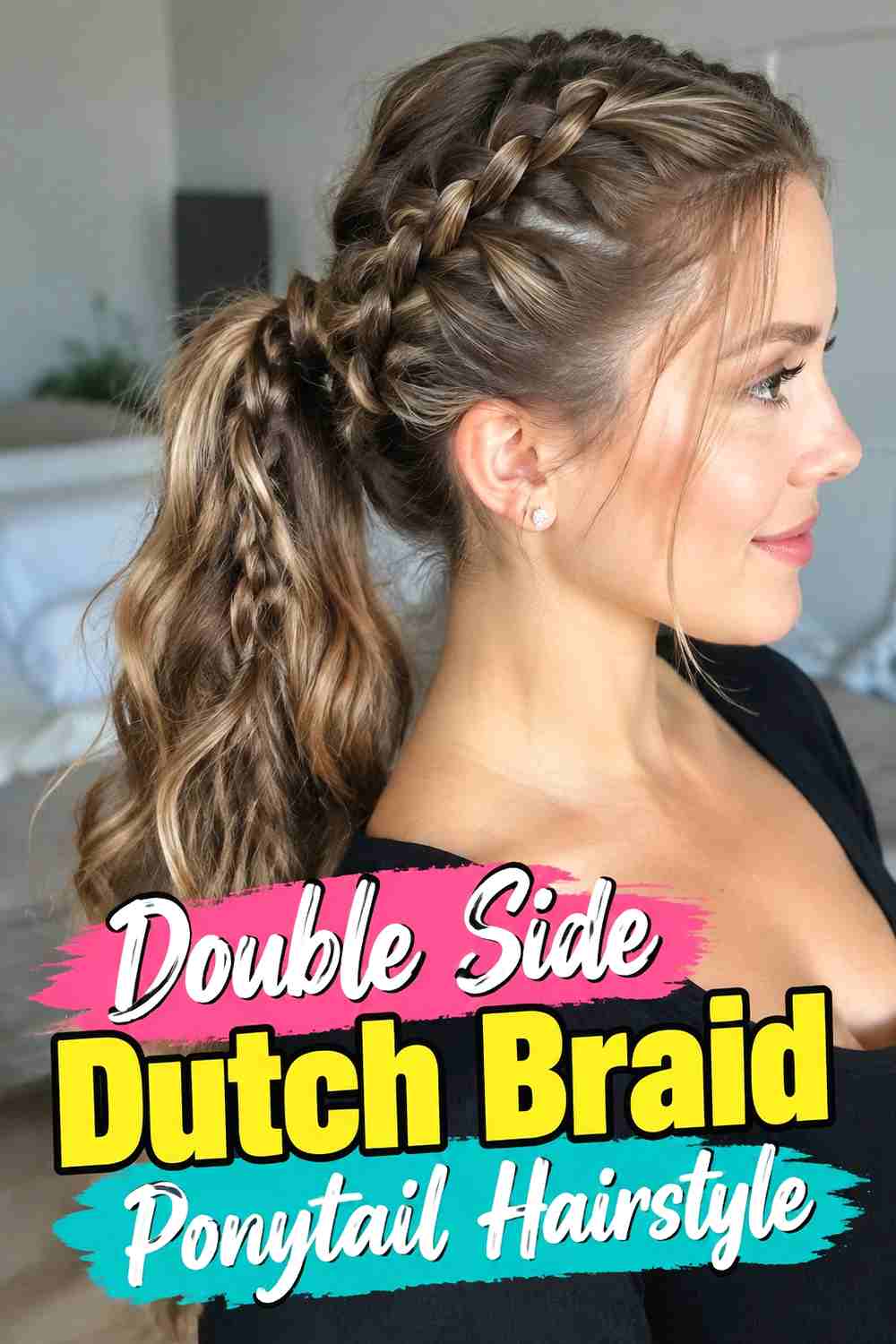
The Double Side Dutch Braid Ponytail Hairstyle uses two raised braids that travel along one side or from opposite sides before meeting at the ponytail. For a side-heavy version, create one braid above the other and direct both toward the same base. For a more balanced look, braid each side toward the back and combine them together. Keep both braids similar in size so one does not overpower the other. Secure their meeting point before tying the ponytail if necessary. The lengths can stay simple because the double woven detail already provides plenty of texture. Long or dense hair often gives the braids the fullest appearance.
Why It Works
Two Dutch braids create stronger visual detail while still directing the hairstyle toward one clear ponytail base.
Styling Notes
Plan both braid paths before starting so they meet naturally instead of crossing awkwardly near the elastic.
13. Ribbon Accent Side Dutch Braid Ponytail Hairstyle
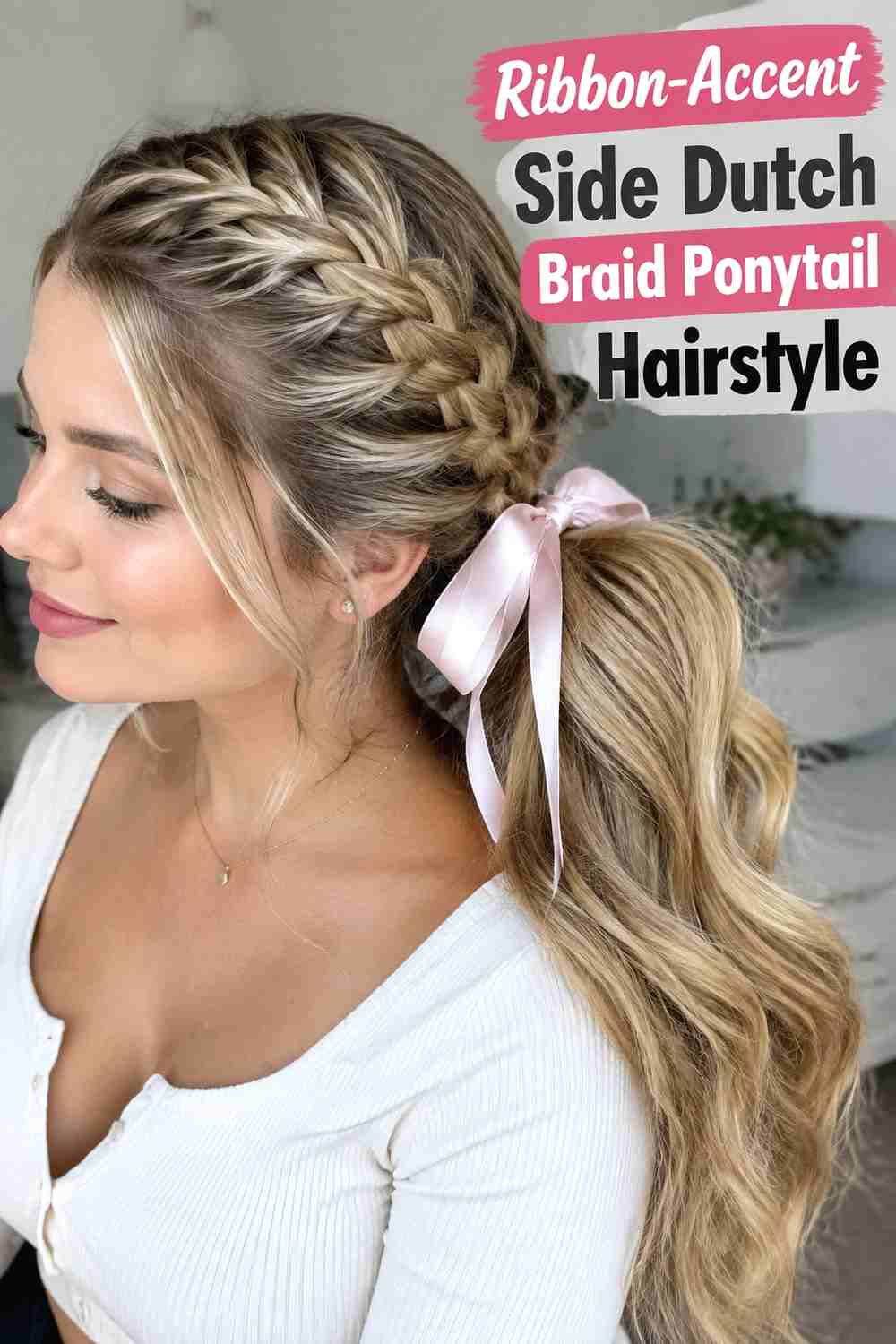
The Ribbon-Accent Side Dutch Braid Ponytail Hairstyle adds a narrow ribbon to the braid or ponytail base for a decorative finish. The ribbon can be introduced near the beginning of the Dutch braid and woven through selected crossings, or it can simply wrap around the ponytail elastic once the braid is complete. Keep the ribbon slim enough that the raised braid remains clearly visible. Secure the hairstyle structurally with hair ties first so the ribbon functions as an accent rather than the main support. A soft fabric ribbon usually sits more naturally against the hair than a stiff material.
Best For
This option works well for celebrations, festivals, date nights, seasonal outfits, and playful everyday styling.
Pro Tip
Choose a ribbon with enough contrast to be visible without overpowering the braid pattern.
14. Textured Side Dutch Braid Ponytail Hairstyle
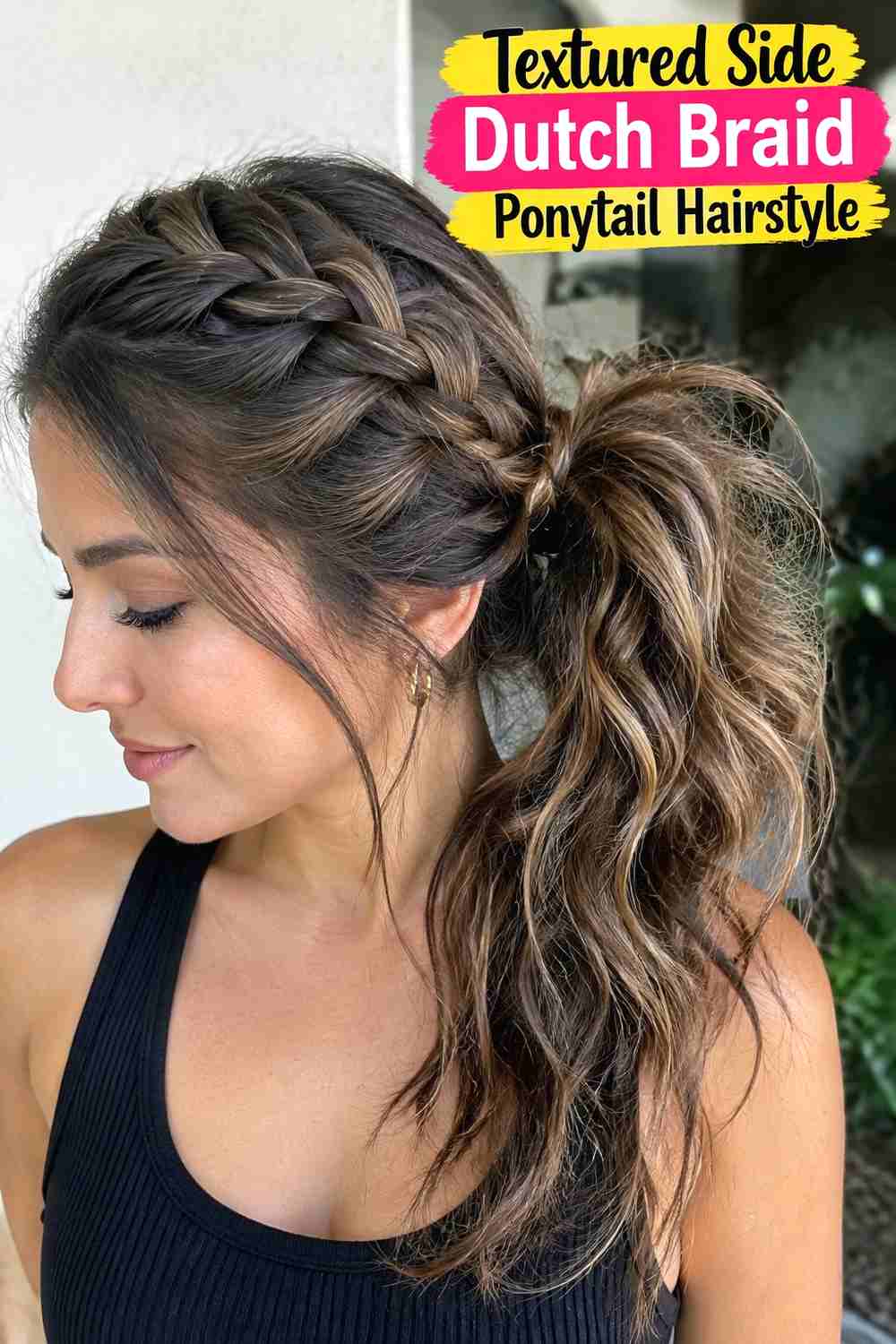
The Textured Side Dutch Braid Ponytail Hairstyle embraces natural movement through the braid, crown, and ponytail instead of aiming for a perfectly sleek finish. Start with second-day hair, natural waves, or a little texture spray for extra grip. Build the Dutch braid securely, then widen selected sections unevenly so the pattern feels softer and more organic. Gather the remaining hair without brushing away all of its texture, and let the ponytail retain gentle separation through the lengths. A few flyaways can remain around the hairline if they suit the finish. The style should look deliberately relaxed while the base remains stable enough for comfortable wear.
Hair Type & Length
Wavy, layered, or naturally textured medium-to-long hair makes this style especially easy to create.
Wear & Maintenance
Refresh only individual loose pieces instead of brushing through the braid or ponytail once the style is finished.
15. Long Hair Side Dutch Braid Ponytail Hairstyle
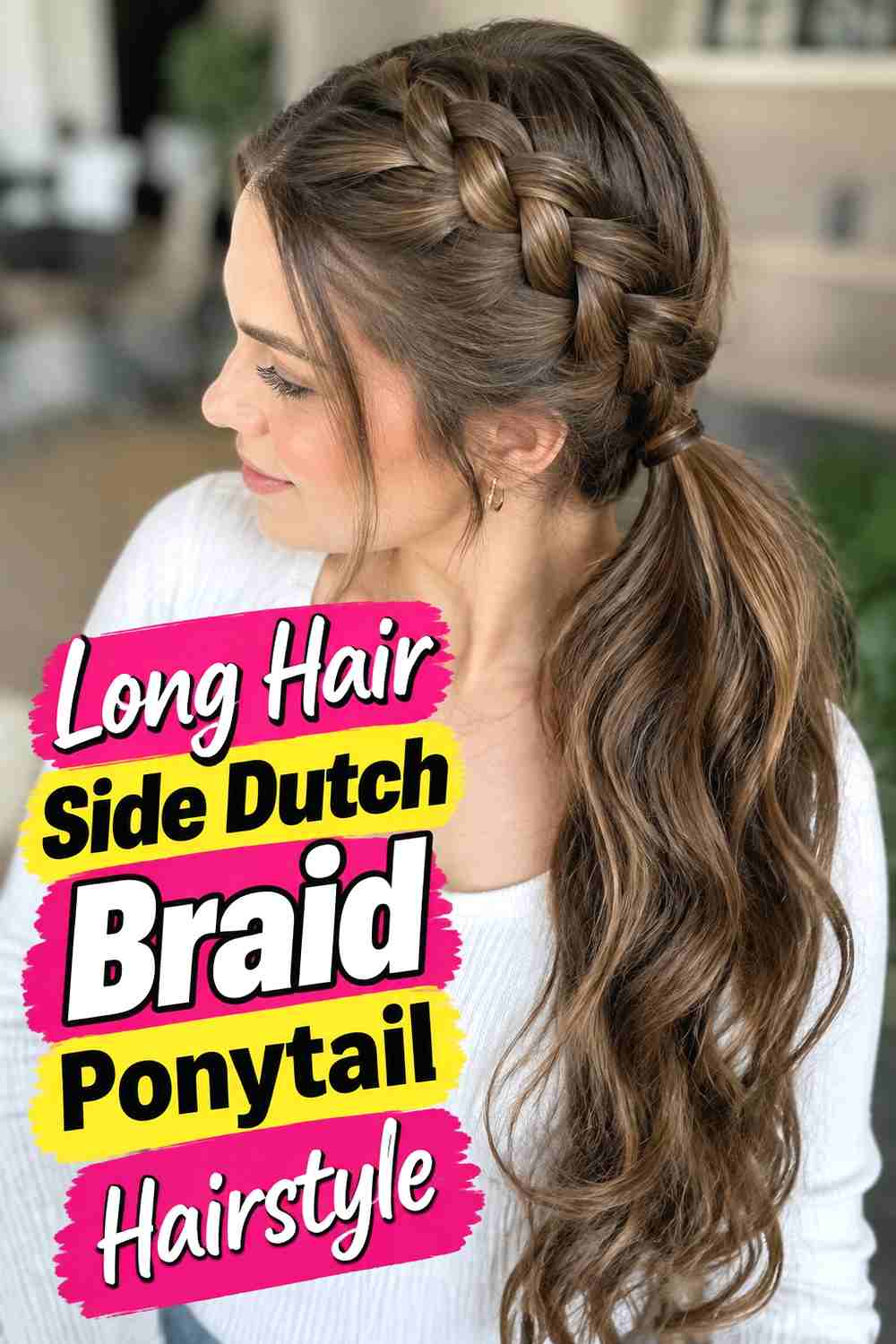
The Long Hair Side Dutch Braid Ponytail Hairstyle uses extra length to create a dramatic contrast between a detailed scalp braid and a flowing ponytail. Begin the Dutch braid near the front and keep it visible as it travels toward the back, then gather the full length into a secure base. Long hair can make the ponytail heavy, so choose a strong elastic and avoid placing the base higher than is comfortable. The braid can stay tighter for a sleek effect or be widened for softness. Waves through the ponytail can add dimension, but straight lengths also show the dramatic scale of the style clearly.
Hair Type & Length
This variation is designed for long to extra-long hair that provides enough length for both an extended braid path and a substantial ponytail.
Pro Tip
Support a heavy ponytail with an extra elastic or hidden pin near the base if needed rather than over-tightening the braid.
16. Soft Romantic Side Dutch Braid Ponytail Hairstyle
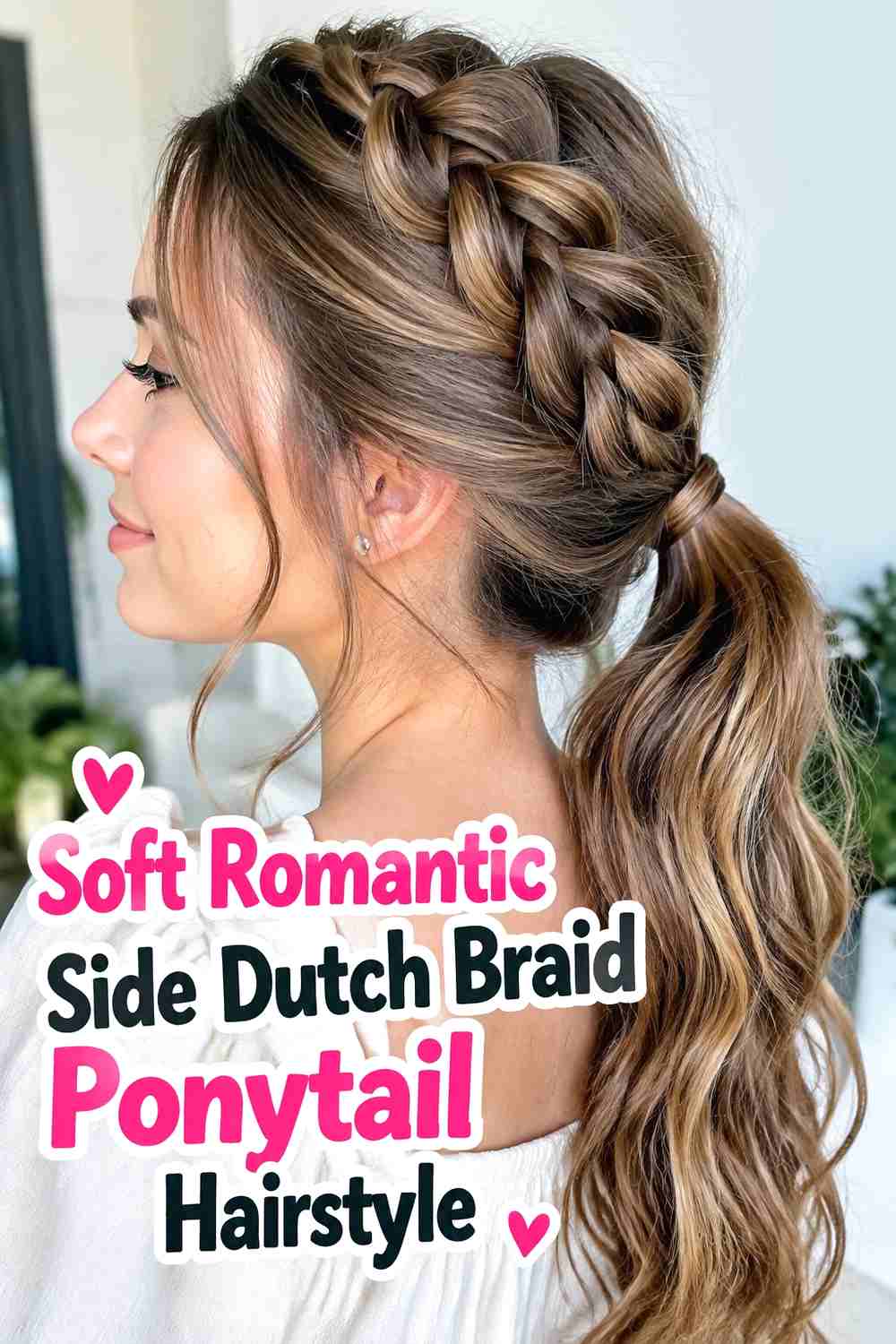
The Soft Romantic Side Dutch Braid Ponytail Hairstyle combines a widened braid, gentle crown volume, loose face-framing pieces, and softly waved lengths. Build the braid firmly first, then loosen selected loops so it looks airy without becoming unstable. Keep a few front layers out before braiding and curve them softly away from the face. Gather the rest into a mid or low ponytail and add broad waves through the lengths for movement. The result should feel relaxed and touchable rather than heavily sprayed. A wrapped elastic or small delicate accessory can finish the base without distracting from the braid.
Why It Works
Soft texture around the face and through the ponytail balances the strong raised structure of the Dutch braid.
Best For
This version suits date nights, weddings, garden events, dinners, and romantic photo-ready looks.
17. Polished Event Side Dutch Braid Ponytail Hairstyle
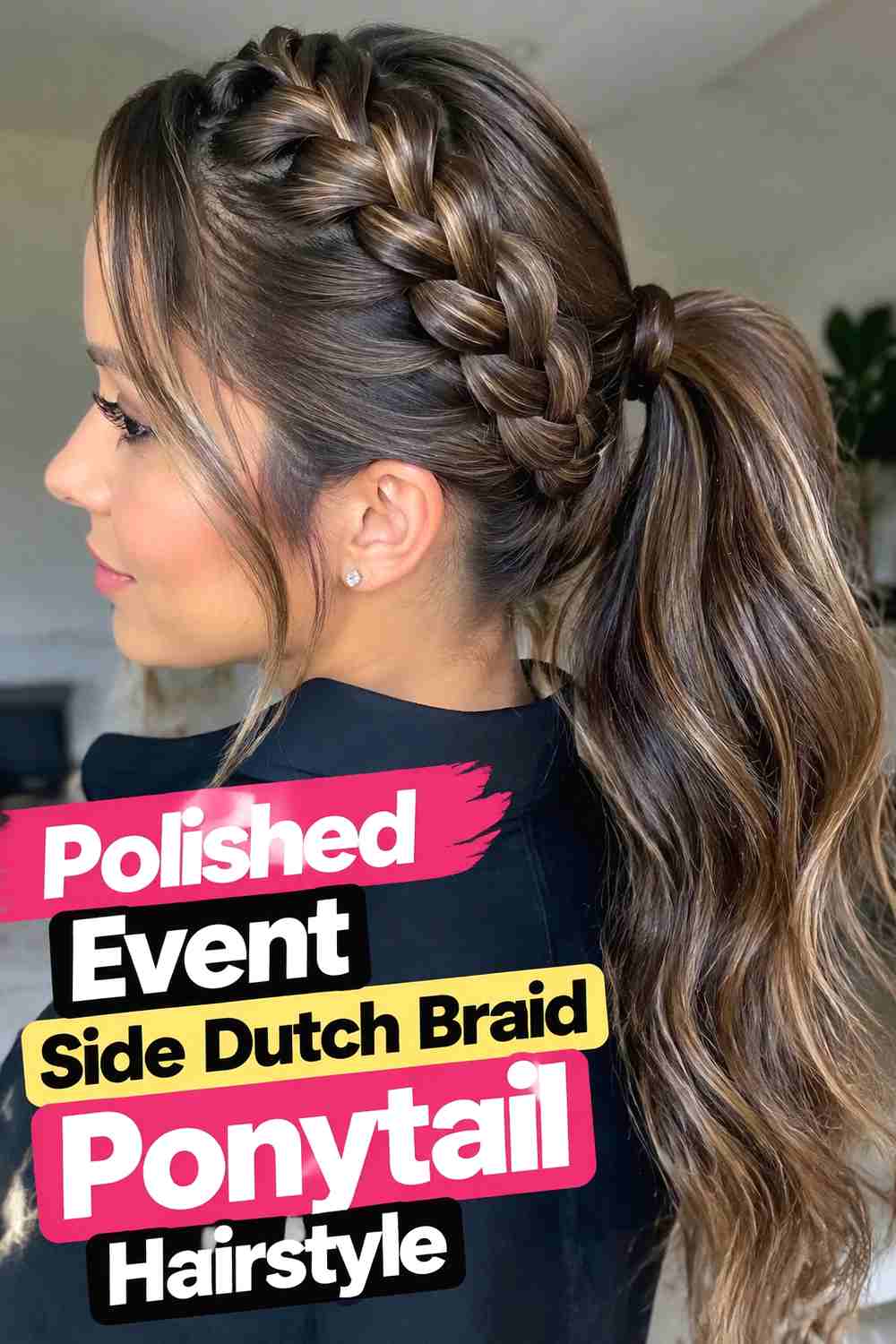
The Polished Event Side Dutch Braid Ponytail Hairstyle uses a neatly defined braid, secure base, controlled shine, and carefully finished lengths for longer wear. Start with clean sectioning so the Dutch braid remains even as it travels toward the ponytail. Once the braid reaches the base, secure everything firmly and conceal the elastic with a hair wrap if desired. Smooth the ponytail or style it into broad waves depending on the outfit. Flexible hairspray can control flyaways without making the braid rigid. The overall construction should feel stable from multiple angles, especially when the hairstyle needs to last through photographs, dancing, or several hours of wear.
Best For
This is the most formal option for weddings, parties, ceremonies, dinners, and other events requiring a polished hairstyle.
Wear & Maintenance
Carry a few small pins and a spare elastic for the base rather than repeatedly pulling on the finished braid.
18. Quick Everyday Side Dutch Braid Ponytail Hairstyle
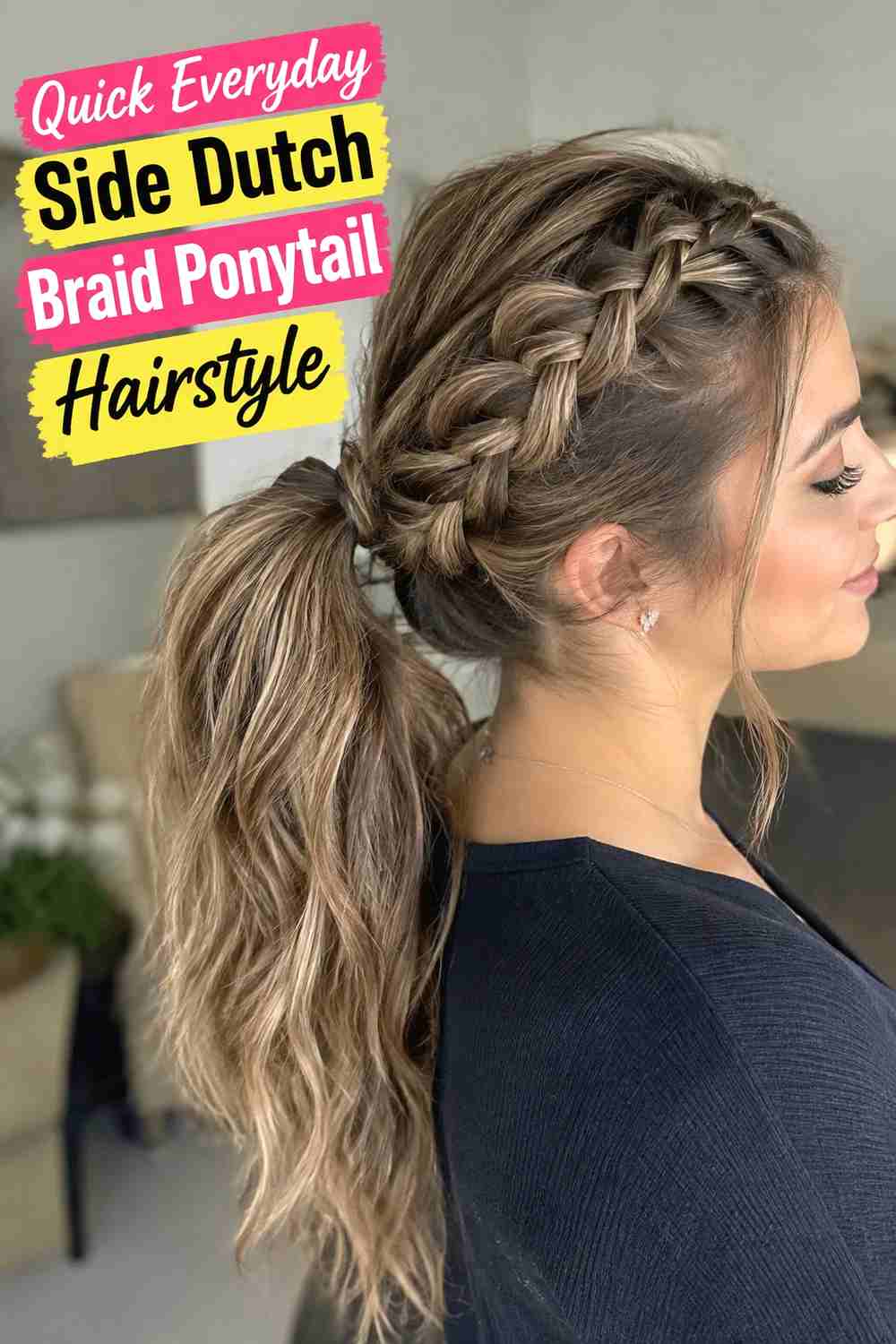
The Quick Everyday Side Dutch Braid Ponytail Hairstyle simplifies the technique by using a shorter braid section and an uncomplicated ponytail. Start near the temple, add hair for only several Dutch-braid passes, then combine the braid with the remaining hair before it reaches the back center. This creates visible woven detail without requiring a full side braid. Tie the ponytail at a comfortable mid or low height and leave the lengths natural. There is no need to smooth every flyaway or widen the braid perfectly. Second-day hair can be particularly helpful because a little natural grip makes the braid faster to control.
Styling Notes
Stop the braid earlier and join it into the ponytail once you have enough raised texture to make the detail visible.
Best For
This practical version works for rushed mornings, workdays, errands, travel, school, or relaxed weekend plans.
How to Choose the Right Look
Start with ponytail height. A high ponytail creates a lifted, energetic silhouette, while a low ponytail feels softer and more understated. Mid-height placement works well for the classic version and is usually comfortable for everyday wear.
Next, consider how much braid texture you want. A sleek braid keeps the raised pattern crisp, while widening the outer loops creates a fuller, more romantic effect. Double braids and bubble ponytails add stronger detail if you want the hairstyle to become more decorative.
Hair texture also matters. Naturally wavy or curly hair can make the ponytail look fuller, while straight hair highlights the braid’s clean shape. Long hair gives you more room for dramatic ponytail lengths, but the base may need stronger support.
For events, prioritize secure sectioning, a dependable elastic, and controlled finishing. For everyday wear, a shorter side braid feeding into a natural ponytail can deliver the same idea with less styling time.
Final Thoughts
Side Dutch braid ponytails combine the visibility of a raised braid with the practicality and movement of a ponytail. By changing the braid width, ponytail height, texture, accessories, and finish, you can make the style feel sporty, romantic, playful, sleek, or fully event-ready.
FAQs
1. What makes a Dutch braid different from a French braid?
In a Dutch braid, sections cross underneath the center rather than over it, creating a raised braid that sits more visibly on top of the hair.
2. How do I make a side Dutch braid look fuller?
Secure the hairstyle first, then gently pull outward on the braid’s outer loops. Work gradually so the center of the braid remains stable.
3. Can layered hair work in a side Dutch braid ponytail?
Yes. Shorter layers may create a few soft pieces around the braid or face, while the longer sections can still feed securely into the ponytail.
4. Can curly hair be used for a side Dutch braid ponytail?
Yes. A Dutch braid can add structure along the side while the ponytail keeps its natural curl pattern and volume.
5. How can I help a braided ponytail last longer?
Keep the braid secure while building it, use a strong elastic at the ponytail base, and add flexible hold where needed without coating the hair heavily.
Save your favorite side Dutch braid ponytail ideas, share the looks that inspire you, and explore more braided ponytail styles for everyday wear and special events.