11 Side-Part Afro Hairstyle Ideas
A strong side part can completely reshape an Afro, creating beautiful asymmetry, lift, definition, and a polished frame around natural textured hair.
Side-part Afro hairstyles combine the fullness of natural curls and coils with a clear directional shape. Moving the part away from the center shifts more volume to one side, which can make a rounded Afro feel softer, a tapered cut more dramatic, or a defined style more structured. The part itself can be crisp or gently separated depending on the finish you prefer.
The best version depends on length, density, shrinkage, and how much definition you want to keep. Some looks emphasize a large, airy silhouette, while others rely on tighter coils, controlled tapering, pins, or accessories. These ideas offer different ways to use the same side-part concept without losing the texture and movement that make an Afro distinctive.
Quick List
- Classic Side Part Afro Hairstyle
- Voluminous Side Part Afro Hairstyle
- Tapered Side Part Afro Hairstyle
- Soft Defined Side Part Afro Hairstyle
- Rounded Side Part Afro Hairstyle
- Short Side Part Afro Hairstyle
- Stretched Side Part Afro Hairstyle
- Pinned Side Afro Hairstyle
- Side Part Afro With Curly Bangs Hairstyle
- Side Part Afro With Hair Cuff Hairstyle
- Asymmetrical Side Part Afro Hairstyle
1. Classic Side Part Afro Hairstyle
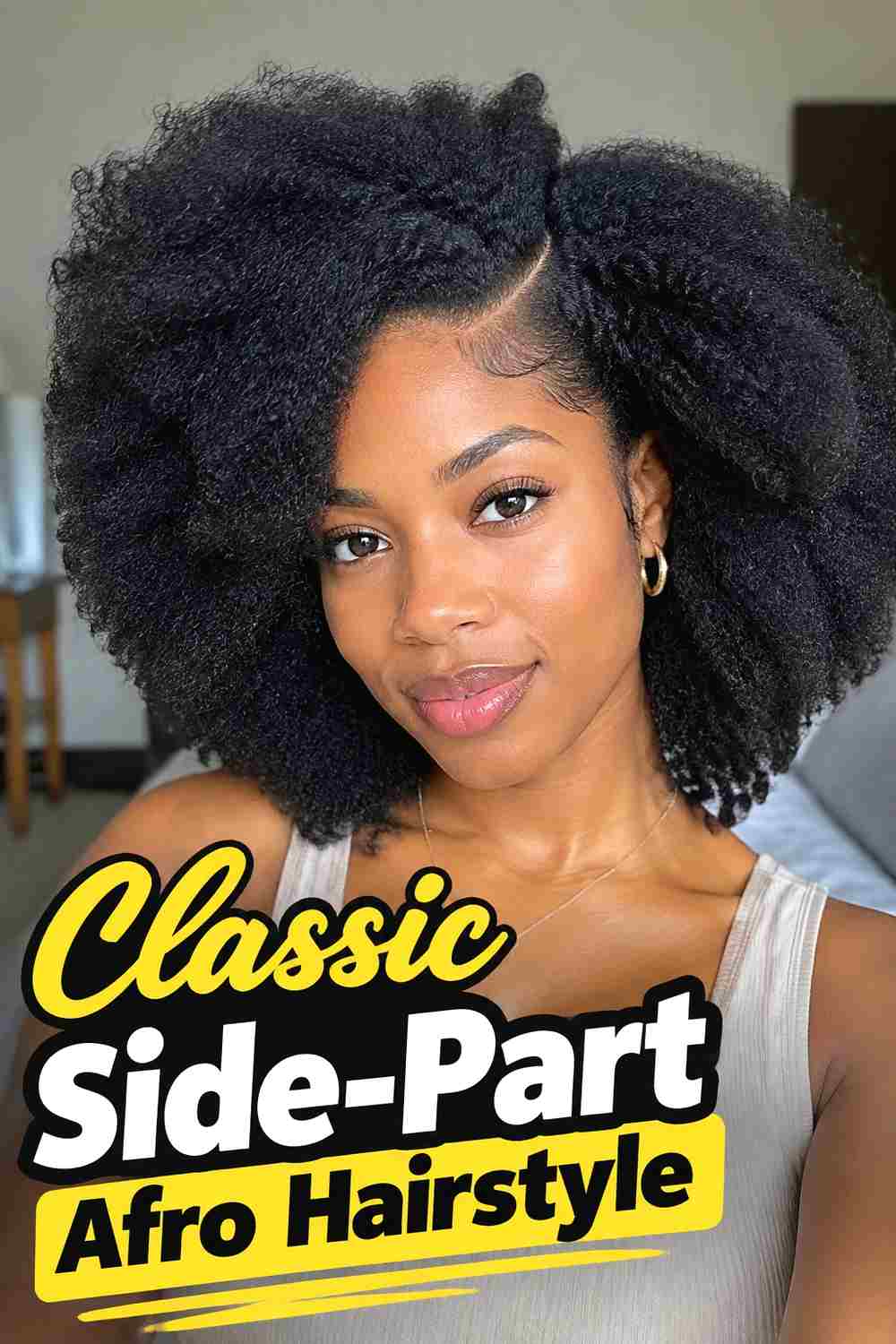
The classic side-part Afro keeps the overall shape full and natural while using a clean part to introduce direction. Most of the volume sits on the heavier side, while the smaller section follows the head more closely without being flattened completely. The result feels balanced, expressive, and easy to adapt to different curl and coil patterns. Rather than aiming for a perfectly spherical finish, let the part create a subtle difference in height from one side to the other. Gentle root lifting can enhance the crown, while preserving natural texture through the ends keeps the style soft. This version works especially well when you want a recognizable Afro silhouette with one simple structural detail.
Styling Notes
Create the side part before fluffing so the roots already fall in the intended direction. Lift gradually instead of combing through the ends.
Best For
Medium to dense natural hair that holds volume comfortably and responds well to light root shaping.
2. Voluminous Side Part Afro Hairstyle
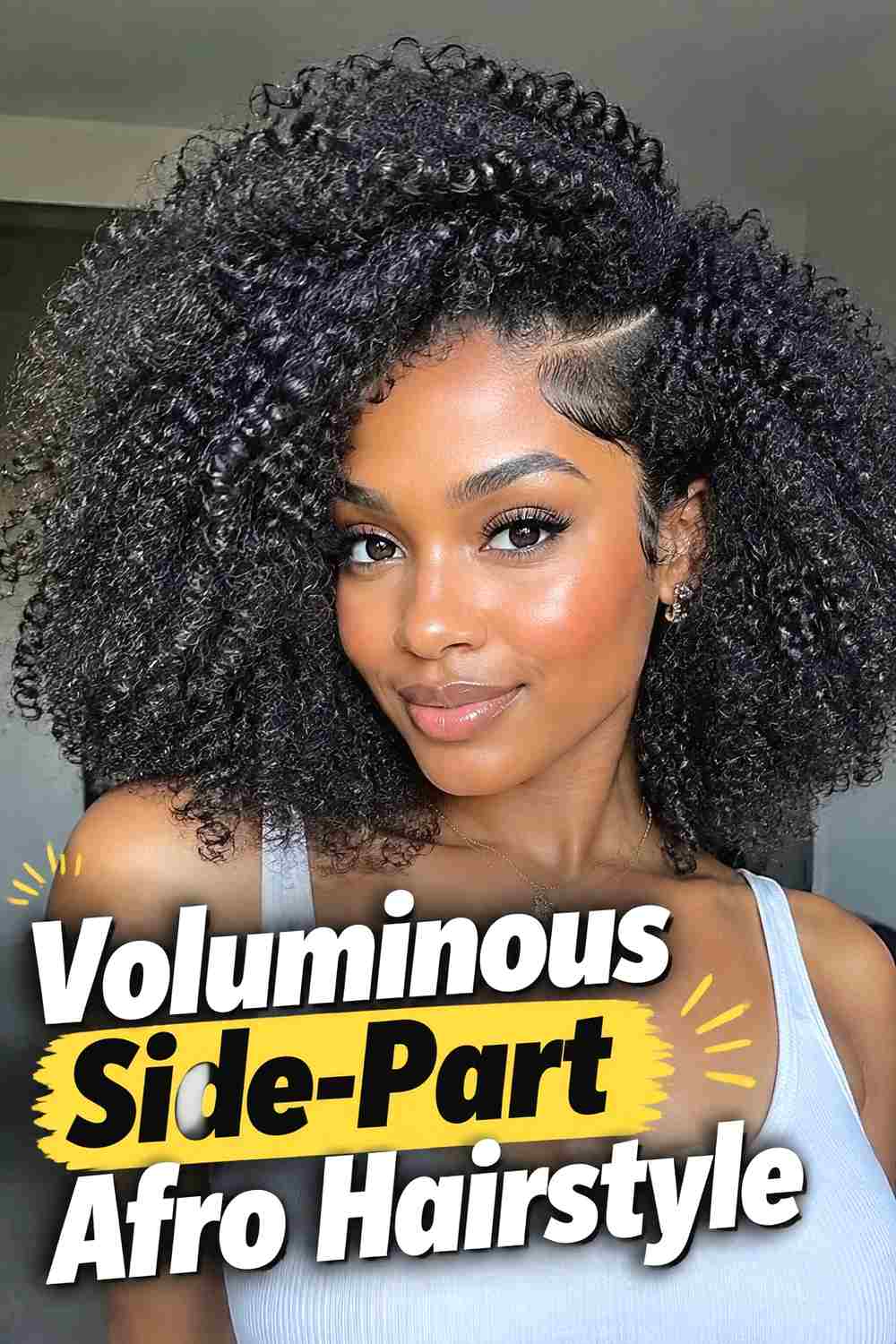
A voluminous side-part Afro makes the directional shape much more dramatic by building extra height and width on the heavier side. Start with stretched or well-separated curls and lift the roots carefully, concentrating more fullness above and beside the deeper section of the part. The opposite side can stay slightly narrower so the asymmetry remains visible. This style looks best when the texture still shows variation instead of being brushed into one uniform cloud. Individual coils and bends around the surface help the volume feel natural and dimensional. Because the shape is intentionally large, balance matters: enough lift at the crown prevents the width from sitting too low around the sides.
Why It Works
The side part gives large-volume hair a clear direction, preventing the overall silhouette from appearing shapeless.
Pro Tip
Build fullness in stages and check the shape from the front and profile before adding more volume.
3. Tapered Side Part Afro Hairstyle
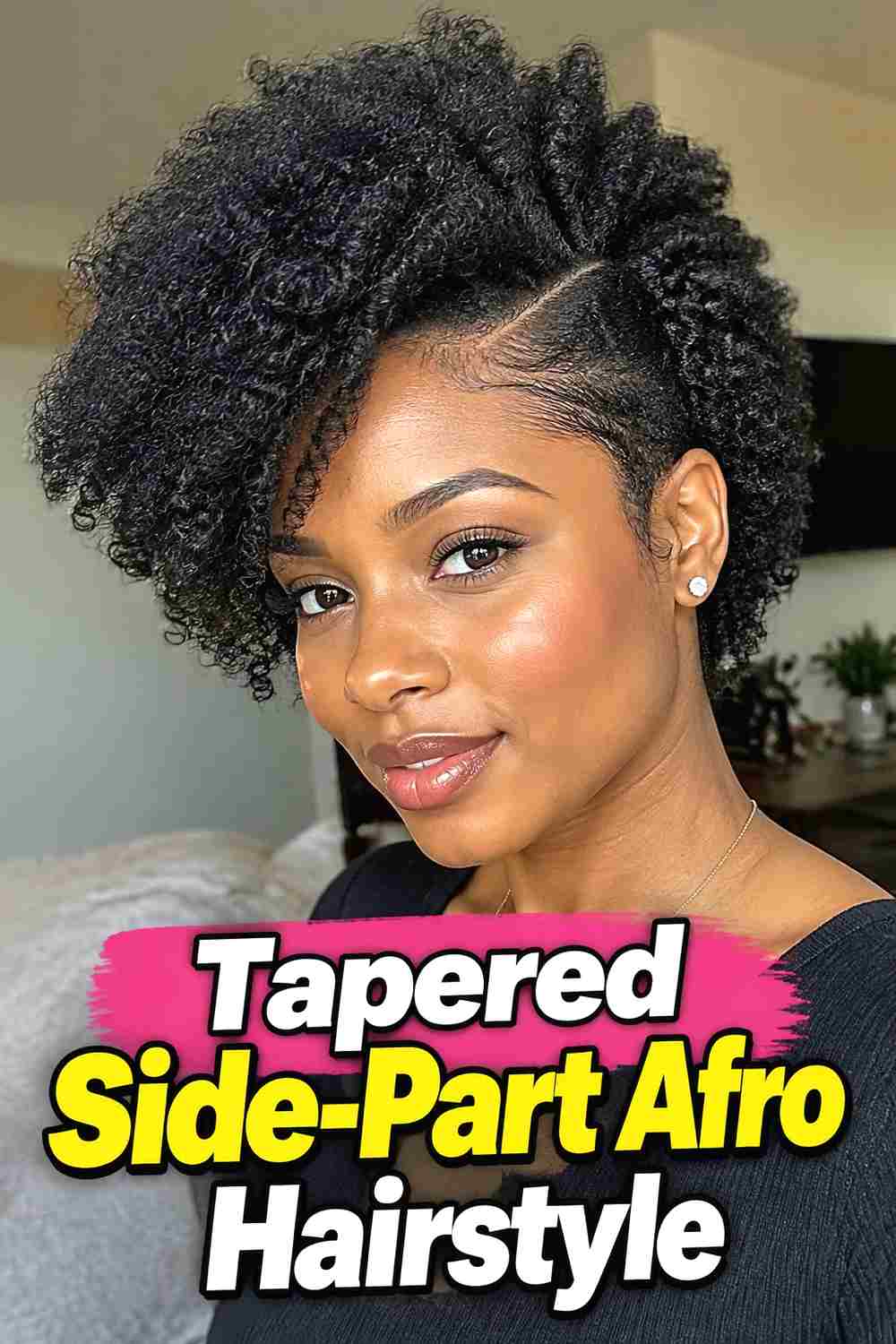
A tapered side-part Afro combines shorter sides and back with more length through the crown, creating a compact but highly defined silhouette. The side part directs the longer top section toward one side, which emphasizes the contrast between the closely shaped perimeter and fuller upper texture. The top can remain tightly coiled or be lightly stretched for additional height. Because the haircut already provides structure, this look requires less daily reshaping than a larger free-form Afro. Maintaining the taper is important, though, because growth around the sides can quickly soften the intended outline. A crisp part creates a sharper effect, while a slightly irregular part keeps the style relaxed and natural.
Hair Type & Length
This works best when the crown has enough length to show texture while the sides remain noticeably shorter.
Wear & Maintenance
Refresh the perimeter as needed and reshape the top with your fingers rather than overworking the entire style.
4. Soft Defined Side Part Afro Hairstyle
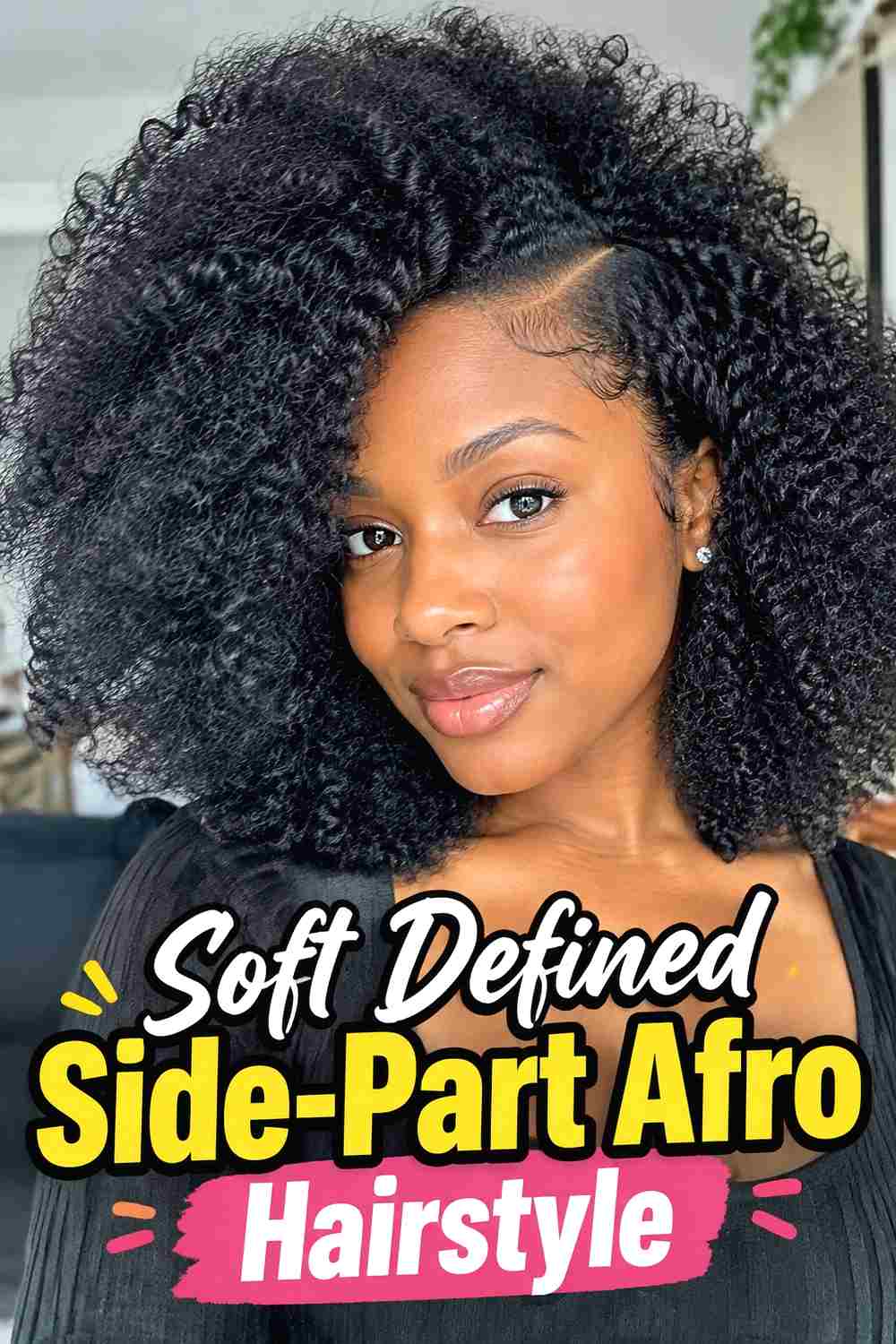
A soft defined side-part Afro highlights curl and coil pattern while keeping enough volume to preserve the classic shape. Instead of separating every section for maximum fullness, leave some clumps intact so the surface shows clear spirals and bends. The side part gives the definition a natural direction, with the heavier section falling slightly forward or outward and the lighter side sitting closer to the head. This is a good option when you prefer visible texture over extreme size. A light styling product can help maintain separation, but the finish should remain touchable rather than stiff. A few softly shaped pieces around the hairline can add movement without disrupting the overall outline.
Styling Notes
Define the hair first and create volume mainly at the roots. Excessive separation through the ends can reduce the soft, grouped texture.
Best For
Fresh wash-and-go, coil-out, or twist-out textures where visible curl definition is a priority.
5. Rounded Side Part Afro Hairstyle
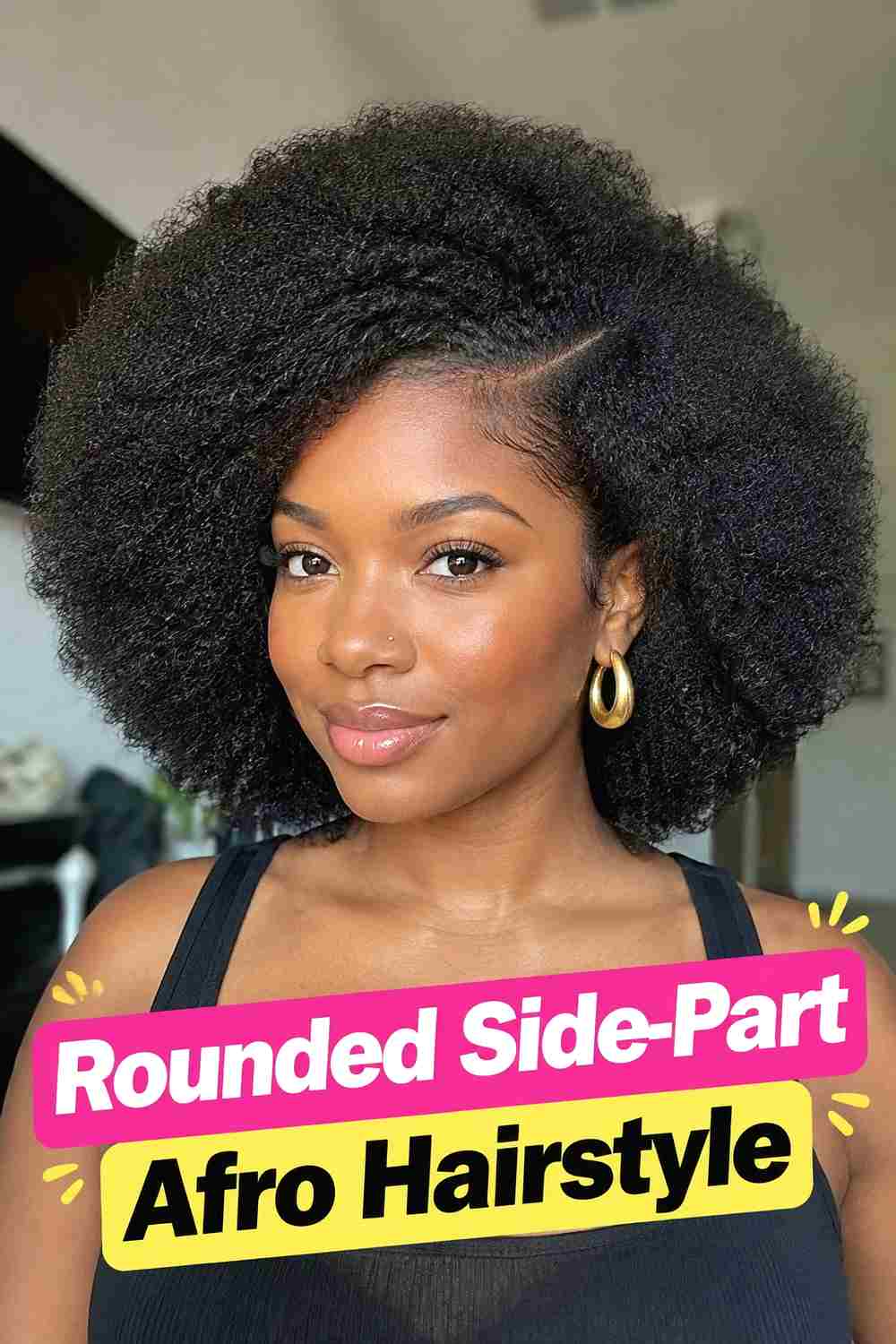
A rounded side-part Afro maintains a smooth outer silhouette while allowing the part to create subtle asymmetry inside the shape. The perimeter is shaped into a soft curve around the crown and sides, but the heavier section naturally carries more fullness away from the part. This makes the look feel polished without requiring every coil to sit in exactly the same direction. Dense hair works particularly well because it can support a continuous rounded outline, though careful layering can help prevent too much bulk near the lower sides. The finished style can be compact or expansive depending on length, but the rounded exterior should remain visible from both the front and profile.
Why It Works
The combination of a controlled outer shape and directional part creates structure without flattening the natural fullness of the hair.
Wear & Maintenance
Use light root fluffing to restore the silhouette after sleeping instead of repeatedly reshaping the ends.
6. Short Side Part Afro Hairstyle
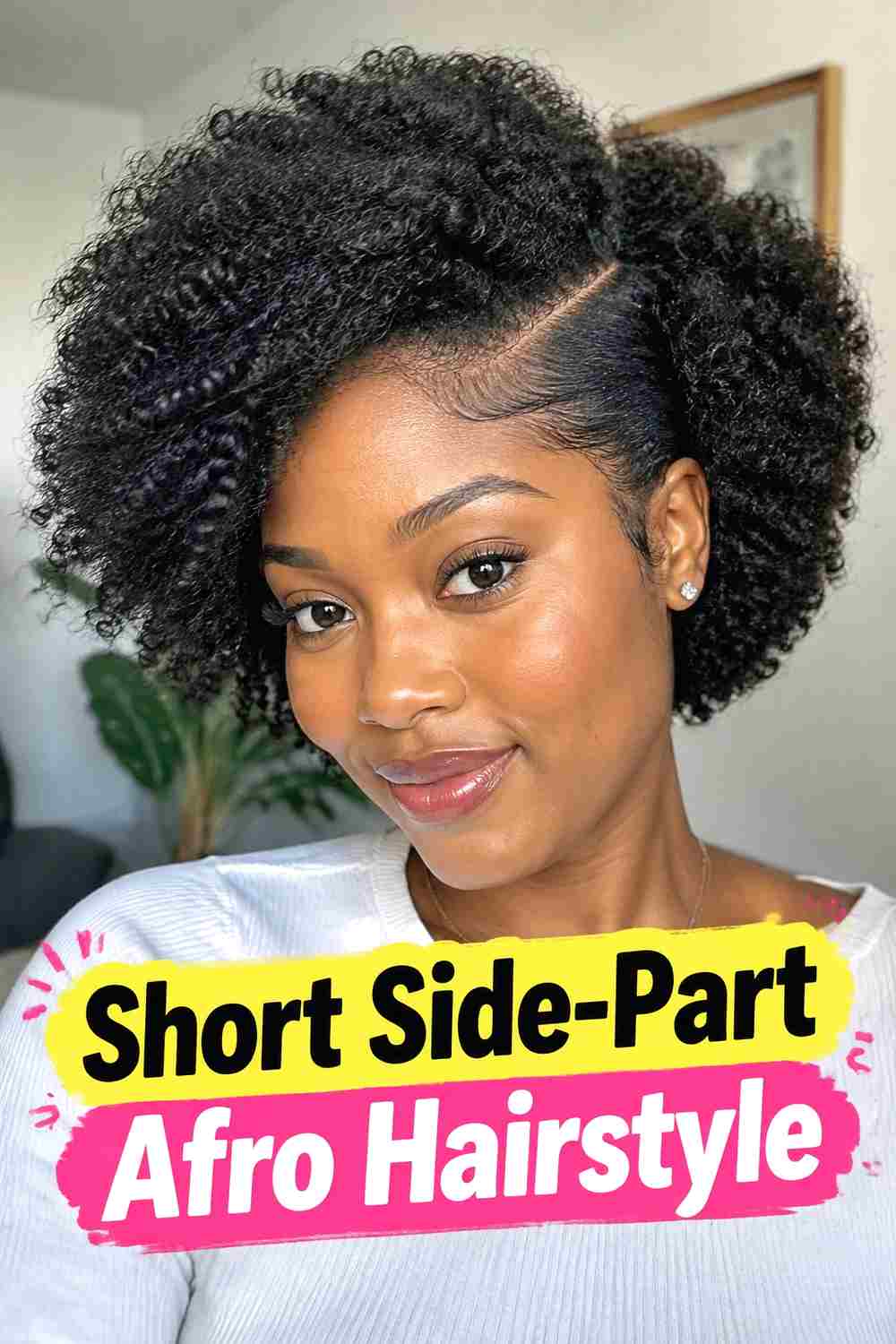
A short side-part Afro creates a neat, defined shape that lets the part stand out clearly. With less length, the difference between the heavier and lighter sides becomes more visible at the roots, giving the hairstyle immediate direction without requiring dramatic volume. The texture can remain compact and tightly coiled or be lightly picked for a softer finish. Keeping the perimeter shaped prevents the style from becoming uneven as it grows, while a natural hairline keeps the overall look relaxed. This option is especially practical for anyone who enjoys an Afro silhouette but prefers less daily manipulation and shorter styling time than a larger, longer version usually requires.
Styling Notes
Use your fingers or a small pick mainly at the roots. Short lengths can lose definition quickly if the ends are separated too aggressively.
Best For
Short natural hair with enough length to establish a visible part while still maintaining a compact Afro shape.
7. Stretched Side Part Afro Hairstyle
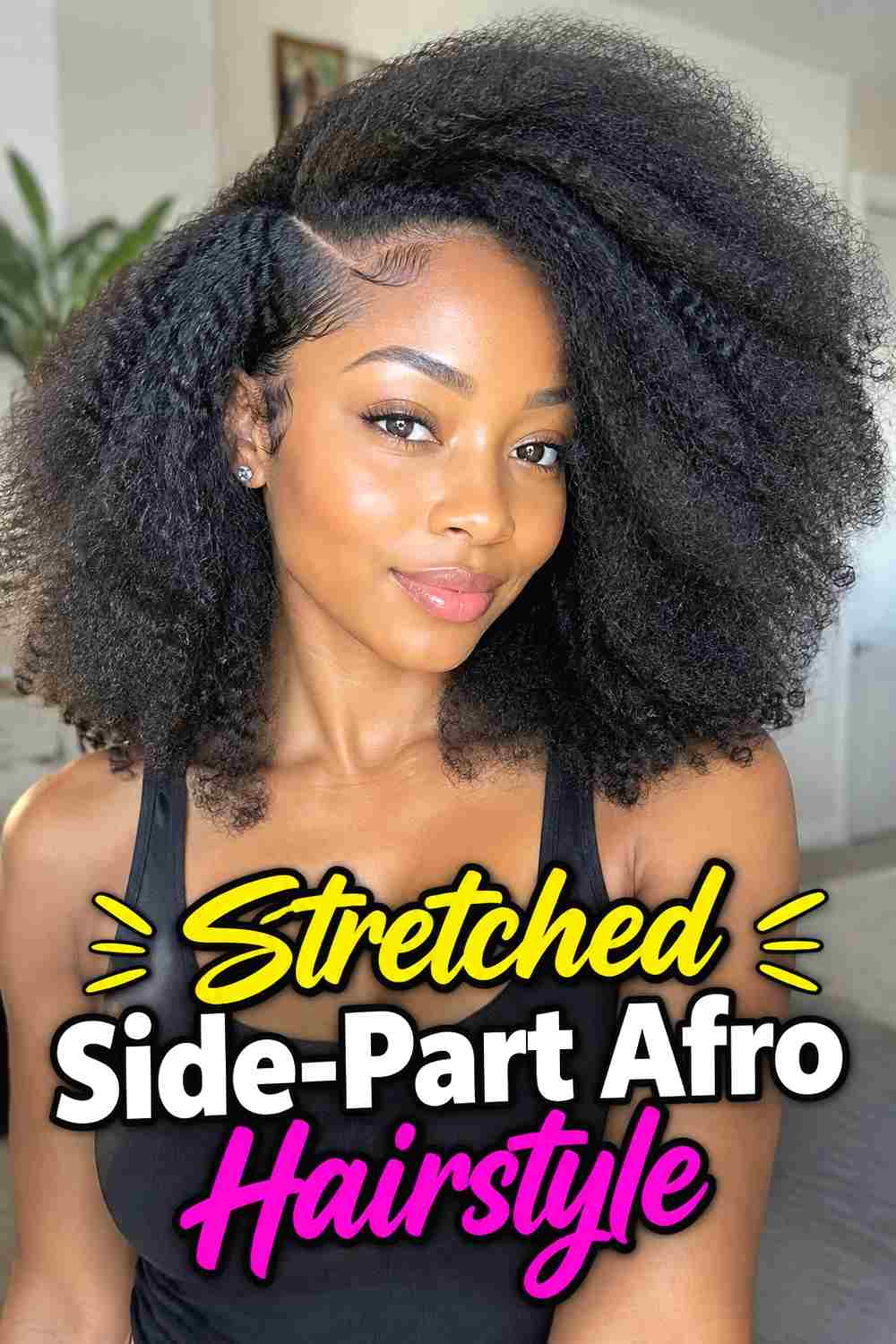
A stretched side-part Afro shows more length while keeping the fullness associated with natural textured hair. Gently elongating the curls reduces some shrinkage, allowing the heavier side to fall farther outward or downward from the part. The result is a broader, softer silhouette with more visible movement than a compact Afro. Keep the roots lifted so stretching does not flatten the crown, and avoid smoothing the texture so much that the natural bends disappear. This style works especially well when you want a larger shape with more visible length through the sides and ends. A deep side part can make the directional effect stronger without requiring extra pins or accessories.
Hair Type & Length
Medium and longer natural hair provides enough length to show a clear difference between compact and stretched texture.
Pro Tip
Stretch gradually and stop once the desired length appears so you do not soften the natural texture more than intended.
8. Pinned Side Afro Hairstyle
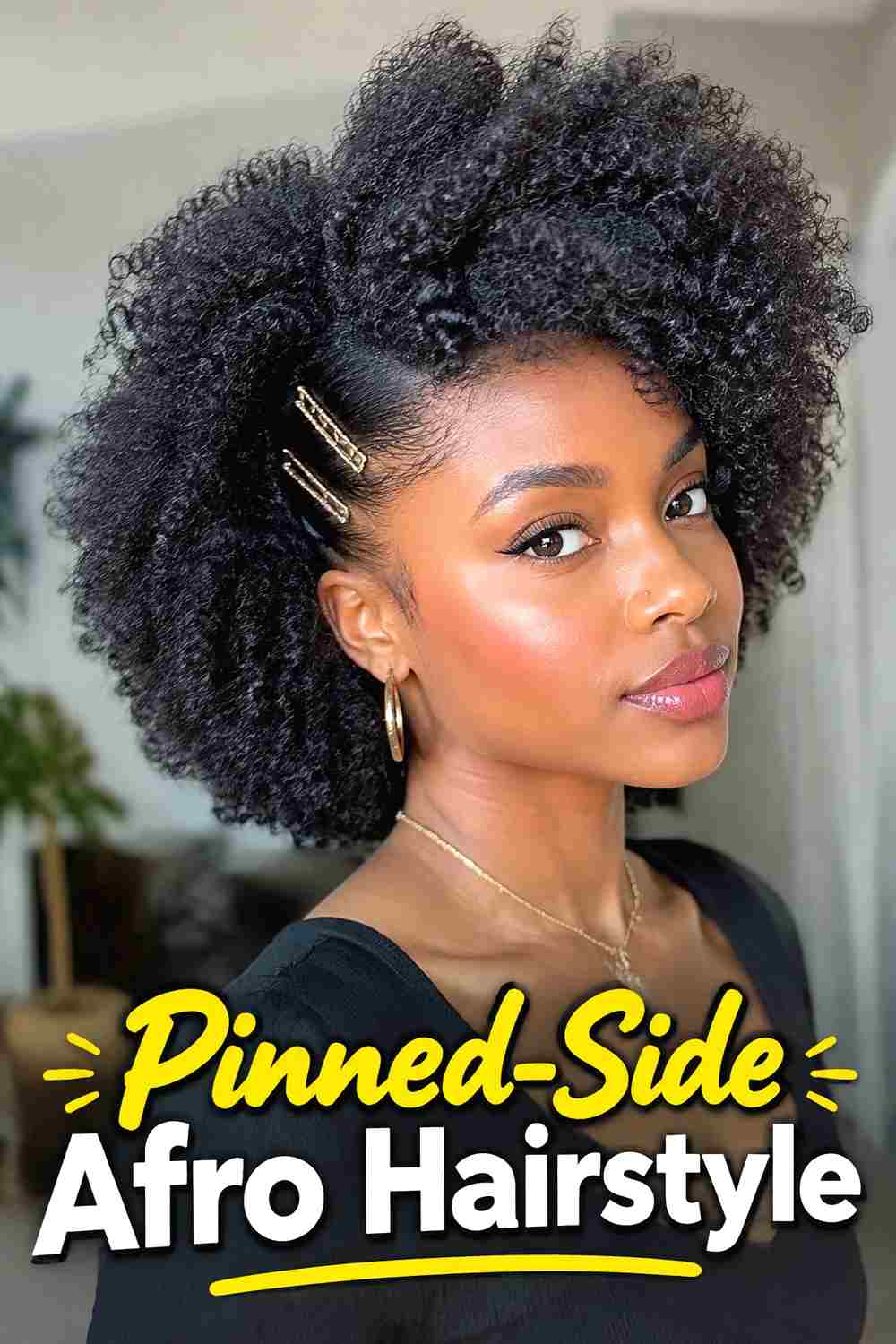
A pinned-side Afro increases the contrast created by a side part by bringing the smaller section closer to the head. After creating the part, gently sweep the lighter side upward or backward and secure it with hidden pins near the temple or above the ear. Leave the heavier side full and textured so it becomes the main focal point. This styling technique can make an everyday Afro feel more polished without changing the entire shape. A few visible decorative pins can be added if desired, but simple hidden hardware keeps attention on the volume. Avoid pulling the pinned side extremely tight; a little softness helps the style remain comfortable and natural-looking.
Why It Works
Reducing volume on one side makes the opposite side appear fuller, creating a clear asymmetrical silhouette with very little manipulation.
Styling Notes
Cross two pins beneath the surface texture for a more secure hold without flattening a large section of hair.
9. Side Part Afro With Curly Bangs Hairstyle
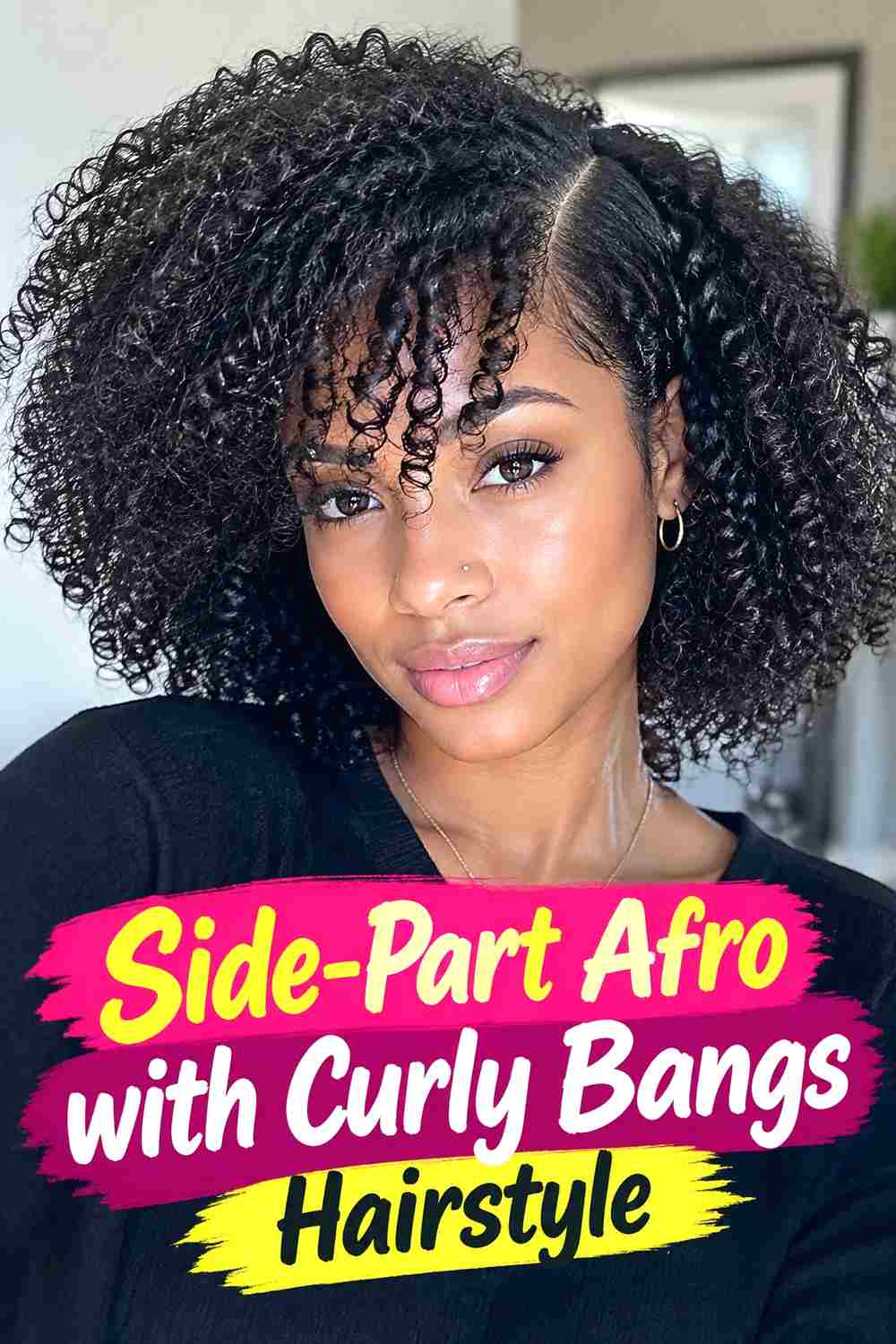
Curly bangs add another layer of shape to a side-part Afro by bringing a few shorter coils forward across the forehead. The fringe can sweep slightly toward the heavier side, connecting visually with the direction of the part while remaining distinct from the main volume. Keep the bangs light enough that they do not create a dense block across the front, especially if the surrounding Afro is already full. A rounded crown and soft side volume help balance the shorter fringe. This look can feel playful on shorter cuts and more romantic on medium lengths. The most natural finish comes from allowing each front curl to follow its own pattern rather than forcing identical placement.
Styling Notes
Style the bang section separately and account for dry shrinkage before deciding where the curls should sit across the forehead.
Best For
Natural hair with shorter front layers or enough flexibility to create a soft, textured fringe without stretching the curls.
10. Side Part Afro With Hair Cuff Hairstyle
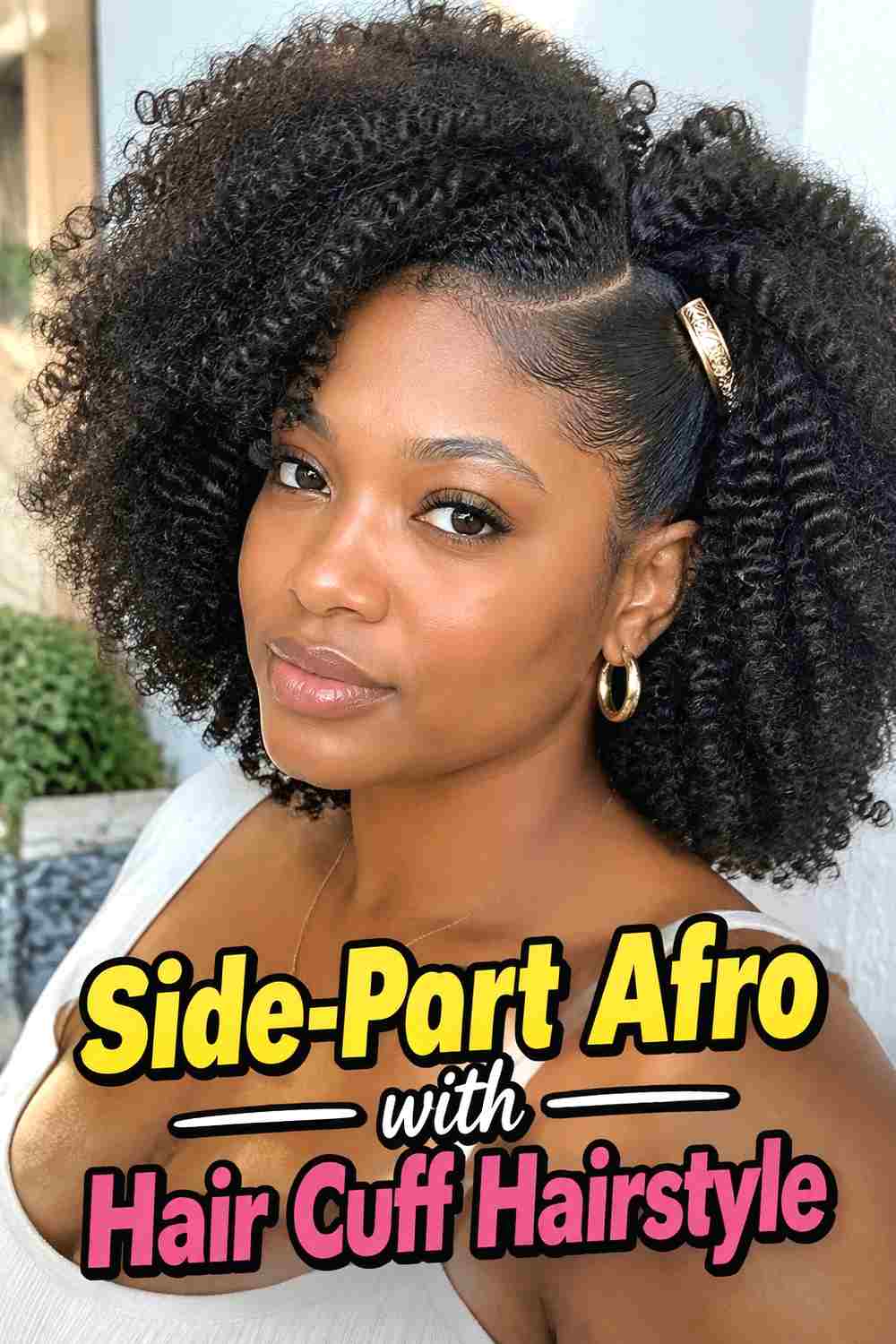
A metallic or decorative hair cuff can turn a simple side-part Afro into a more styled look without interfering with its volume. Create a small twist, braid, or gathered section on the lighter side and attach the cuff there, leaving the heavier side loose and full. Positioning the accessory near the temple creates a focal point while preserving the overall Afro silhouette. Gold, silver, pearl-toned, or minimal cuffs can each create a different mood, but one or two accents are often enough. The key is keeping the accessory section small so the natural texture remains dominant. This option works well for dinners, parties, celebrations, or everyday styling with a slightly dressed-up finish.
Best For
Side-part styles where one smaller section can be twisted or secured without significantly reducing overall volume.
Pro Tip
Anchor the section first and add the cuff afterward so the accessory is decorative rather than responsible for holding the hair.
11. Asymmetrical Side Part Afro Hairstyle
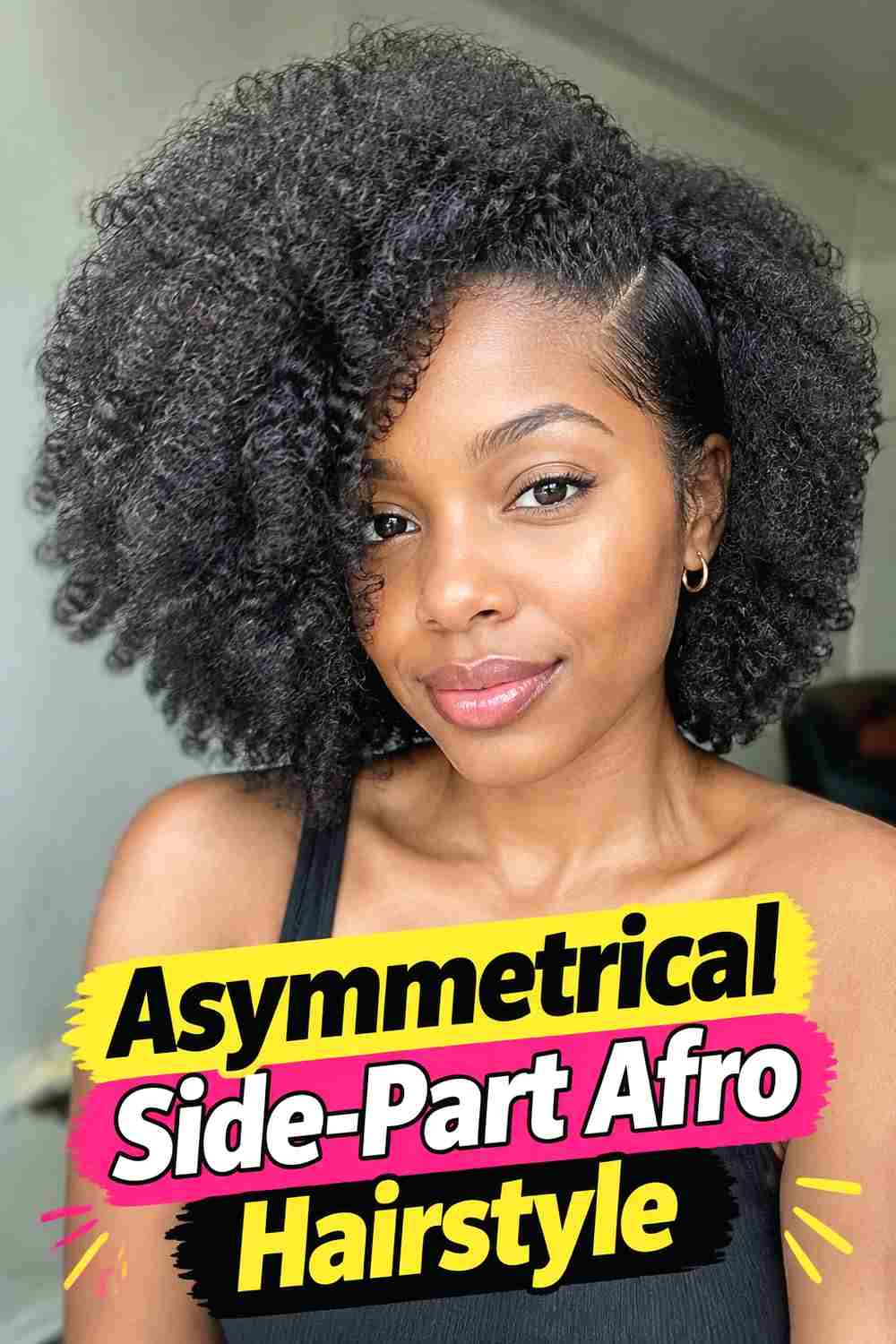
An asymmetrical side-part Afro deliberately exaggerates the difference in volume between the two sides. A deep part creates the foundation, while the heavier section is lifted and expanded to form a strong sweeping shape. The opposite side remains narrower, tucked, or lightly compressed near the head. Unlike a balanced rounded Afro, this version embraces uneven proportions as the main design feature. Defined coils around the surface keep the larger side textured and prevent the silhouette from looking overly brushed out. This style can be subtle with moderate volume or dramatic with a wider sweep, making it adaptable to everyday wear, creative events, and statement photographs.
Why It Works
The strong difference in width and height gives the Afro a clear directional silhouette while still showcasing natural texture.
Pro Tip
Build the larger side slowly so the shape remains intentional and does not become heavier at the ends than at the crown.
How to Choose the Right Look
Start with the amount of volume you prefer. A Classic, Rounded, or Soft Defined Side-Part Afro Hairstyle keeps the silhouette balanced, while the Voluminous and Asymmetrical versions make the difference between the two sides much more pronounced. If you prefer a compact shape, the Short or Tapered options are easier to maintain without creating a wide perimeter.
Texture finish matters too. Keeping curls and coils grouped gives the Soft Defined look more visible pattern, while separating and lifting the roots creates a larger, airier Afro. A stretched style shows more length and movement but still needs enough crown lift to avoid looking flat.
For extra detail, a pinned side, curly bangs, or a small hair cuff can change the shape without requiring a new haircut. Whatever you choose, use the side part to guide the silhouette instead of forcing every section into the same direction.
Final Thoughts
A side part can give an Afro a completely different personality, from softly balanced and rounded to bold and dramatically asymmetrical. Choose a version that works with your natural density, shrinkage, and preferred level of definition, then shape the volume around the part rather than working against your texture.
FAQs
1. How do I create a clean side part in an Afro?
Create the part while the hair is slightly damp or already stretched enough to separate comfortably, then guide each side in the intended direction before adding volume.
2. Does a side-part Afro need to be perfectly symmetrical?
No. The part naturally shifts more volume to one side, so slight or dramatic asymmetry can be an intentional part of the style.
3. Can a side-part Afro work on short natural hair?
Yes. Even a short Afro can show a visible side part, especially when the top has enough length to move in different directions.
4. How can I add volume without ruining curl definition?
Lift mainly at the roots with your fingers or a pick while leaving the ends relatively untouched. This increases fullness without separating every curl.
5. What accessories work well with a side-part Afro?
Minimal cuffs, decorative pins, slim clips, and small pearl accents can work well, especially when placed on the lighter side so they do not compete with the fuller section.
Save your favorite side-part Afro hairstyle ideas, share the looks that inspire you, and explore more ways to shape and style natural textured hair.