19 Side-Part Ivy Braids Hairstyle Ideas for Relaxed Texture
Loose roots, a sweeping side part, and deliberately lived-in braid texture give these Ivy braid ideas an easy shape with plenty of natural movement.
Ivy braids are being highlighted in 2026 beauty coverage for their relaxed, intentionally undone appearance. Hairstylist Susan Oludele describes creating the current viral look while experimenting with braids on Zazie Beetz in 2025; loose gripping at the roots, little or no gel, and natural movement are central to the finish.
Adding a side part gives that textured braid style a clear direction without requiring a highly slick finish. You can deepen the sweep, vary the braid thickness and length, add accessories, or gather sections into ponytails and buns. The strongest versions keep the relaxed character recognizable rather than smoothing every root into a rigid pattern.
Quick List
- Deep Side Part Classic Ivy Braids Hairstyle
- Soft Side Swept Ivy Braids Hairstyle
- Jumbo Side Part Ivy Braids Hairstyle
- Medium Side Part Ivy Braids Hairstyle
- Extra Long Side Part Ivy Braids Hairstyle
- Afro Kinky Side Part Ivy Braids Hairstyle
- Half Up Side Part Ivy Braids Hairstyle
- High Ponytail Side Part Ivy Braids Hairstyle
- Low Ponytail Side Part Ivy Braids Hairstyle
- Loose Bun Side Part Ivy Braids Hairstyle
- Beaded Side Part Ivy Braids Hairstyle
- Gold Cuff Side Part Ivy Braids Hairstyle
- Ombre Side Part Ivy Braids Hairstyle
- Face Framing Side Part Ivy Braids Hairstyle
- Tucked Behind Ear Side Part Ivy Braids Hairstyle
- Layered Length Side Part Ivy Braids Hairstyle
- Mixed Braid And Twist Side Part Ivy Braids Hairstyle
- Shoulder Length Side Part Ivy Braids Hairstyle
- Statement Swept Over Side Part Ivy Braids Hairstyle
1. Deep Side Part Classic Ivy Braids Hairstyle
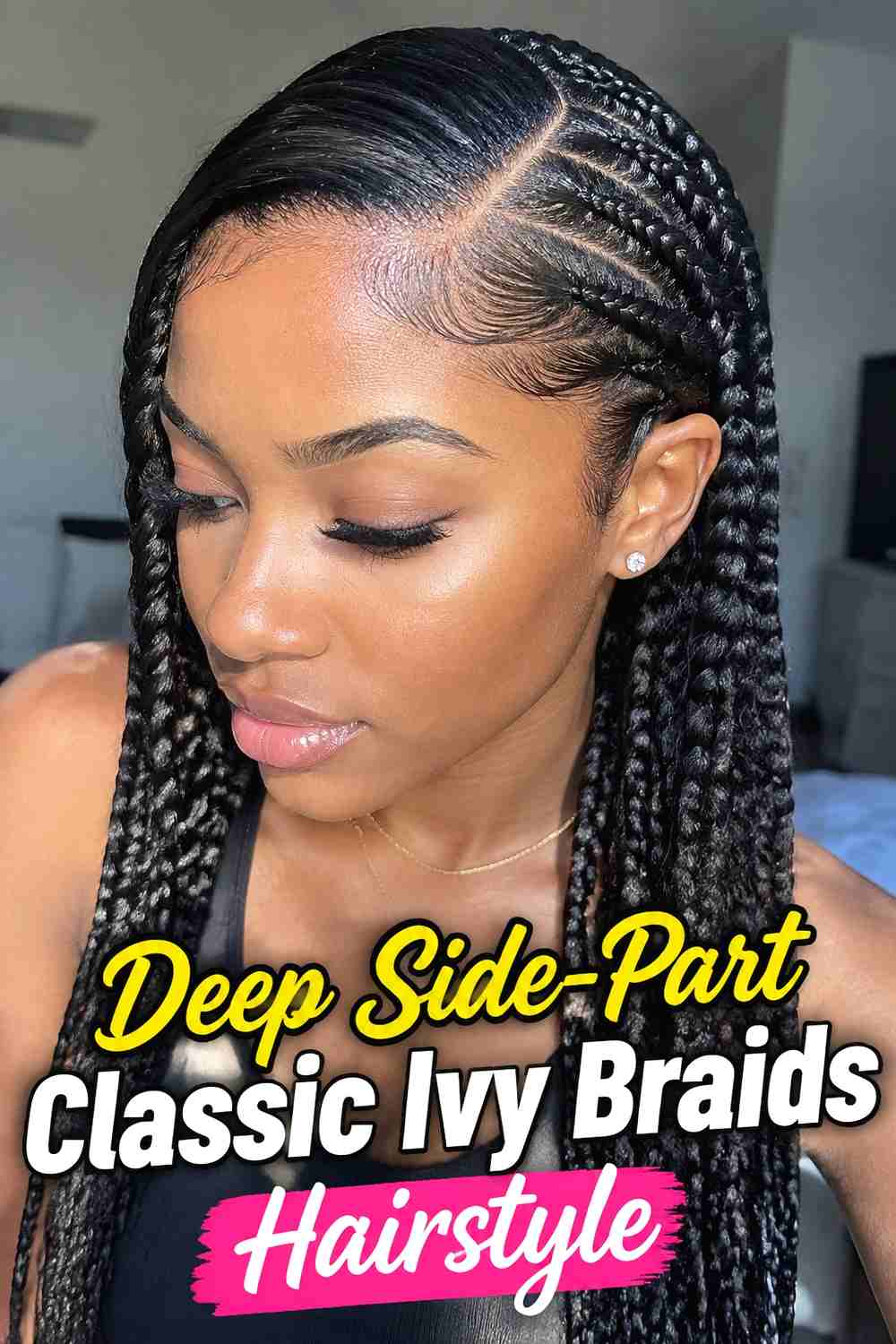
The Deep Side-Part Classic Ivy Braids Hairstyle emphasizes the contrast between a strong directional part and the soft, loose-root character of the braids. Rather than slicking the heavier side flat, allow the sections to fall naturally across the forehead and temple before dropping over one shoulder. Medium-width braids keep the textured finish visible without making the side sweep too bulky. The roots can remain fuzzy and softly separated, which fits the intentionally lived-in Ivy aesthetic described by current stylists. Keeping the lengths fairly simple lets the dramatic part become the main styling detail. Natural black, dark brown, or another understated shade works especially well when texture is the focus.
Styling Notes
Establish the side part before braiding so the section pattern naturally supports the heavier sweep rather than fighting against it.
Why It Works
The defined direction gives the relaxed braids structure without requiring a highly polished or tightly gripped finish.
2. Soft Side Swept Ivy Braids Hairstyle
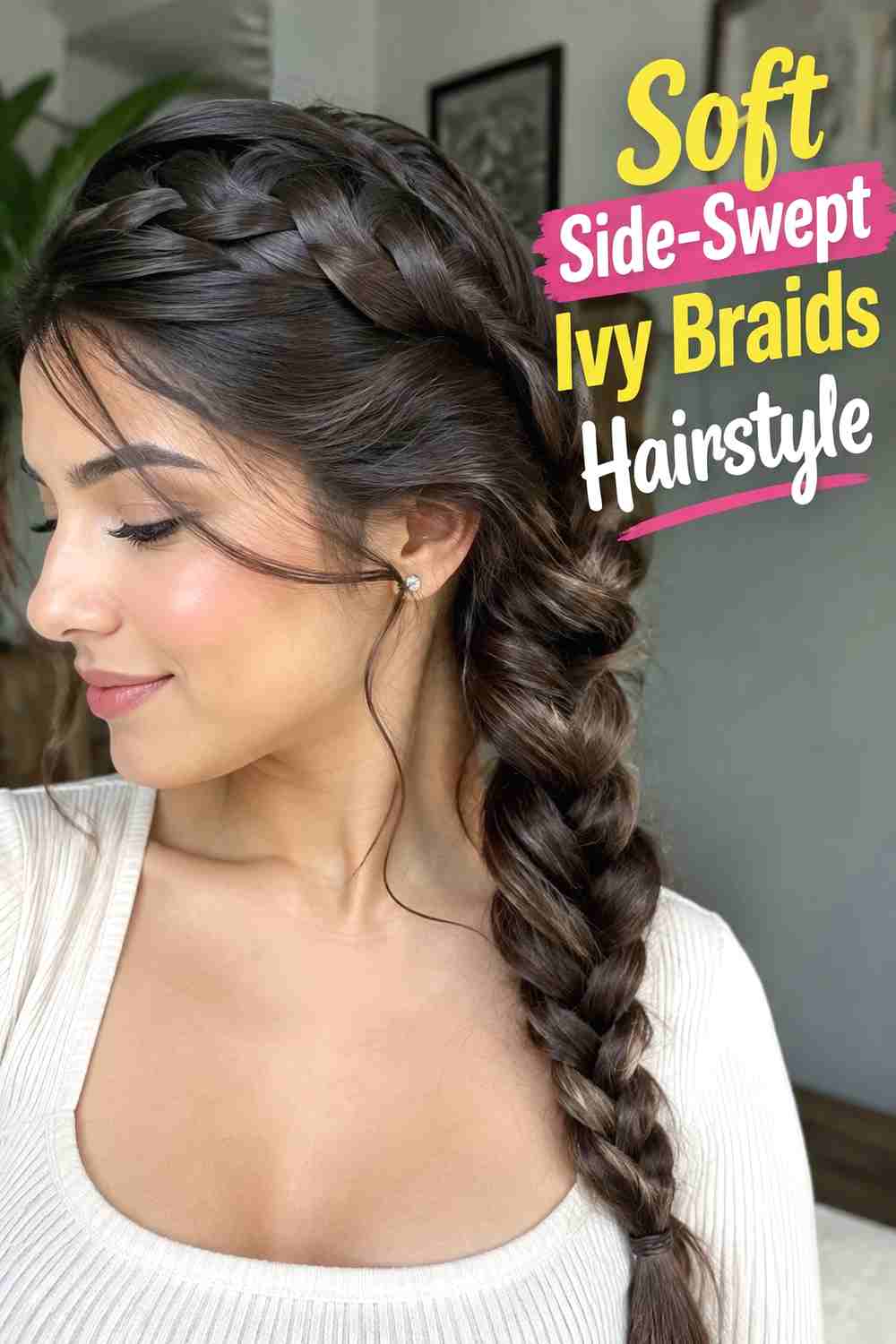
The Soft Side-Swept Ivy Braids Hairstyle uses a gentler part and lets most of the braids drift casually toward one shoulder. Instead of drawing a sharply defined line through the scalp, the front is divided loosely enough that the fuzzy root texture remains visible. This creates an effortless finish that feels especially compatible with the natural movement associated with Ivy braids. Medium or long lengths work well because the braids need enough weight to hold the sweep while still moving freely. A few front sections can remain closer to the face for softness. Avoid over-securing the heavier side; the appeal comes from allowing the braids to shift naturally rather than fixing every strand into one permanent position.
Best For
This variation suits anyone who wants the side-part effect to look relaxed rather than sharply styled or formal.
Pro Tip
Let the braids settle into their natural side sweep before deciding whether any sections actually need pinning or tucking.
3. Jumbo Side Part Ivy Braids Hairstyle
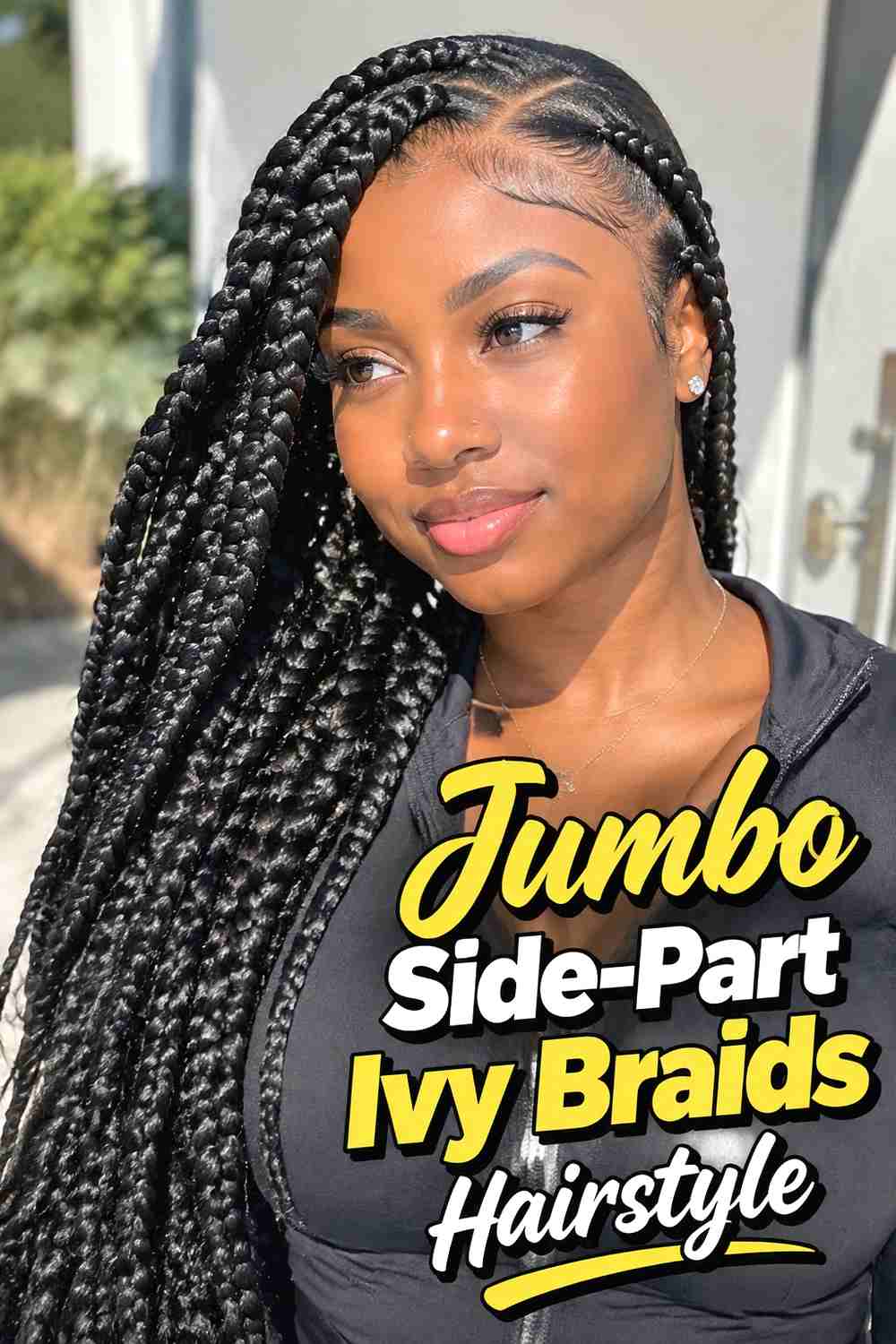
The Jumbo Side-Part Ivy Braids Hairstyle makes each braid more substantial, creating a bold silhouette with fewer individual sections. A deep side part helps distribute the larger braids so the fuller side feels intentional rather than crowded. Because current Ivy braid descriptions emphasize loose roots and low-tension styling, jumbo sections should still avoid excessive gripping around the hairline. Textured braiding hair gives the larger plaits a soft, slightly fuzzy surface that feels more natural than an ultra-silky finish. Shoulder-to-chest or longer lengths can work, but the total amount of added hair should remain comfortable. The finished style looks expressive without needing many accessories because the braid scale and sweeping part already create significant visual impact.
Hair Type & Length
Added hair can create jumbo volume and length, but braid size and extension weight should be adjusted to the strength and density of the natural hair.
Wear & Maintenance
Avoid gathering all of the jumbo braids into tight elevated styles if the combined weight creates uncomfortable pulling.
4. Medium Side Part Ivy Braids Hairstyle
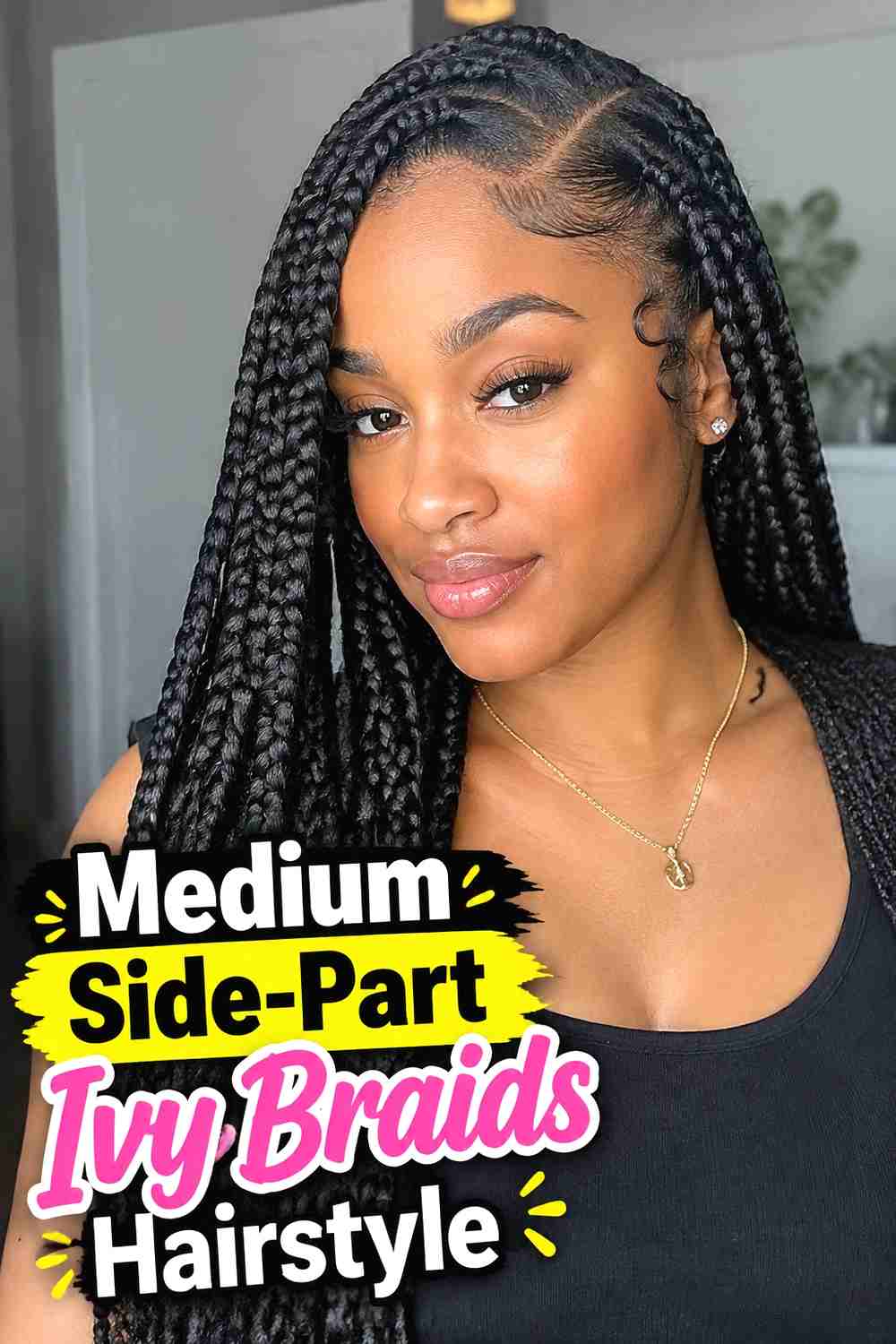
The Medium Side-Part Ivy Braids Hairstyle offers a balanced option between oversized and small braids. Medium sections create enough definition to show the woven structure while still allowing the braids to move easily across the side part. The heavier side can fall toward the cheek and shoulder, while the lighter side remains slightly more open around the ear. Keeping the roots relaxed maintains the distinctive lived-in finish without making the style appear neglected. Chest-length or mid-back lengths provide plenty of movement without the commitment of extremely long extensions. This size is also versatile for later styling because the braids can be gathered, clipped, or loosely tied without creating as much bulk as jumbo sections.
Why It Works
Medium braid sizing gives the side part visible direction while preserving enough flexibility for everyday styling changes.
Styling Notes
Keep the front section pattern clear enough to support the part, but do not overcorrect every fuzzy strand at the roots.
5. Extra Long Side Part Ivy Braids Hairstyle
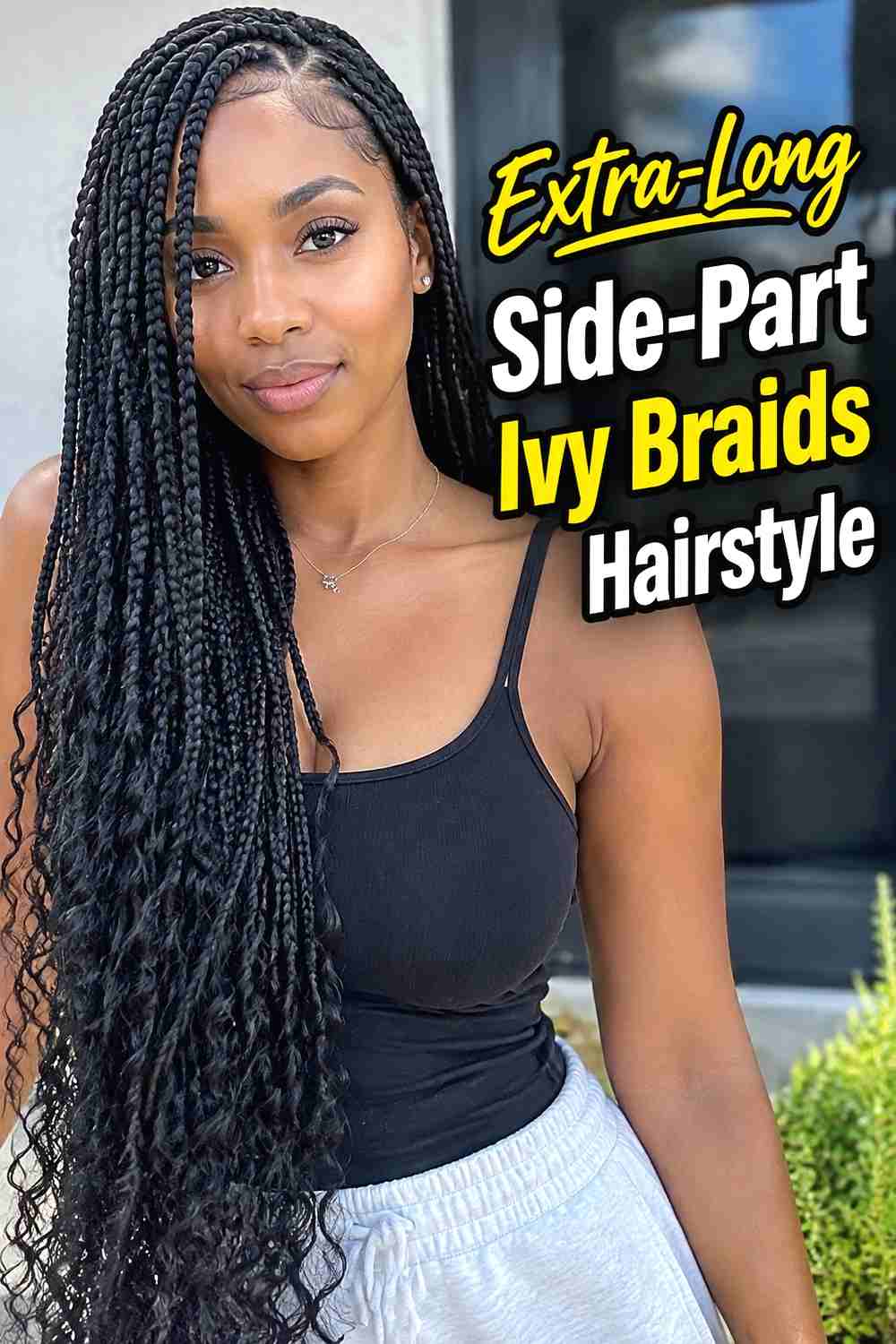
The Extra-Long Side-Part Ivy Braids Hairstyle uses waist- or hip-length braids to create dramatic movement beneath a strong asymmetric front. The longer sections make the heavier side especially noticeable as it falls over the shoulder and down the torso. A slightly narrower braid size can keep the total silhouette fluid instead of excessively bulky. The loose roots should remain visible near the part, helping the style retain its Ivy character even though the length itself is dramatic. Current coverage emphasizes natural movement as part of the trend, and extra length amplifies that quality whenever the braids shift. Accessories are optional because the sweeping length provides enough visual interest on its own.
Styling Notes
Plan the extension length and braid density together so the finished installation remains manageable rather than unnecessarily heavy.
Best For
Choose this look when you want the side part and flowing braid length to become equally strong parts of the silhouette.
6. Afro Kinky Side Part Ivy Braids Hairstyle
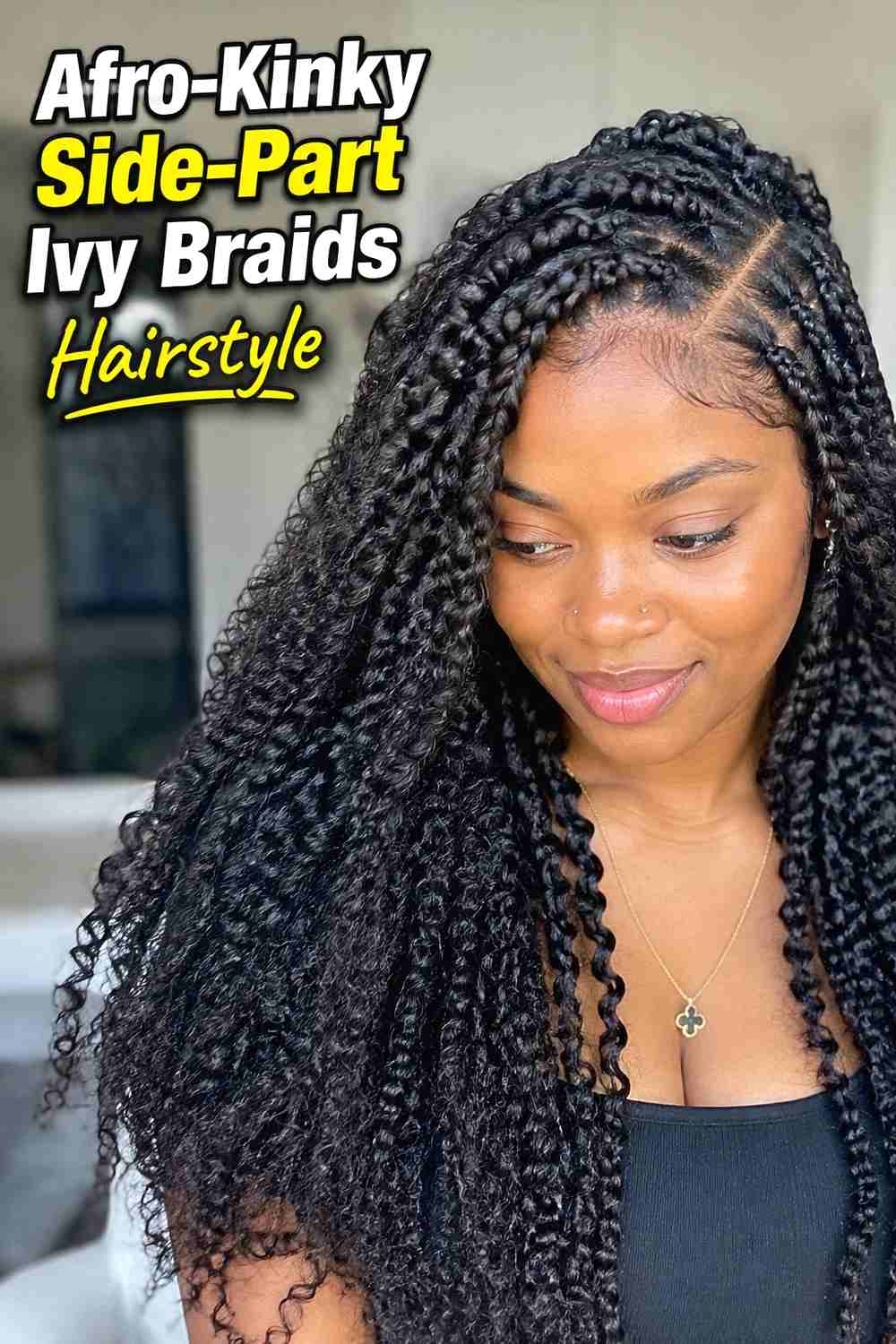
The Afro-Kinky Side-Part Ivy Braids Hairstyle heightens the intentionally textured finish by using added hair with a more natural-looking, kinky surface. Allure specifically notes Afro-kinky hair as an option when a more textured Ivy braid result is desired. The side part gives that fullness a directional shape, letting the heavier section cascade toward one side while the roots stay visibly soft. Medium or large braids are especially effective because the textured fiber remains easy to appreciate through each plait. Natural black and rich brown tones emphasize the tactile surface beautifully. Rather than smoothing the style afterward, allow modest fuzziness and variation to remain part of the finished result.
Hair Type & Length
The extension texture strongly influences the final appearance, so choose Afro-kinky hair when you want visible texture from roots through lengths.
Pro Tip
Keep the braid hand consistent but not overly tight so the textured fiber retains dimension instead of becoming compressed and rope-like.
7. Half Up Side Part Ivy Braids Hairstyle
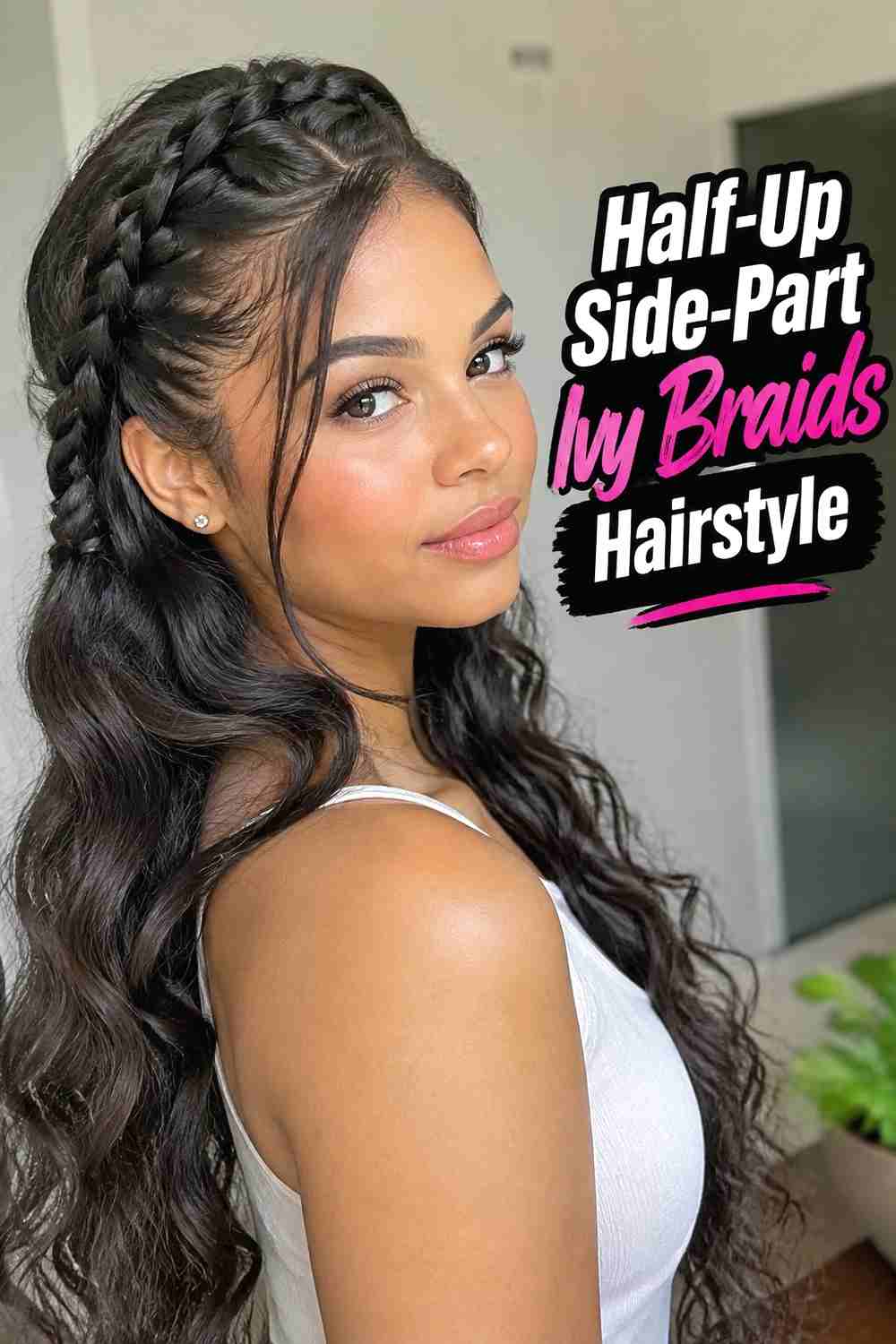
The Half-Up Side-Part Ivy Braids Hairstyle keeps the directional front visible while lifting some of the upper braids away from the face. After establishing the side part, a portion from the crown and sides can be gathered into a relaxed half-up ponytail or small wrapped knot. The remaining braids stay down, preserving the length and lived-in texture that make Ivy braids distinctive. The gathered section should not be pulled so tightly that it erases the soft roots or drags the deeper part backward. Leaving a few braids loose on the heavier side can reinforce the sweep. This version works particularly well with longer installations because it changes the silhouette without hiding most of the braids.
Styling Notes
Gather only the upper layer and maintain slight looseness at the base so the side part and root texture remain visible.
Wear & Maintenance
Use a braid-friendly tie and reposition the half-up section if it begins creating uncomfortable tension at the crown.
8. High Ponytail Side Part Ivy Braids Hairstyle
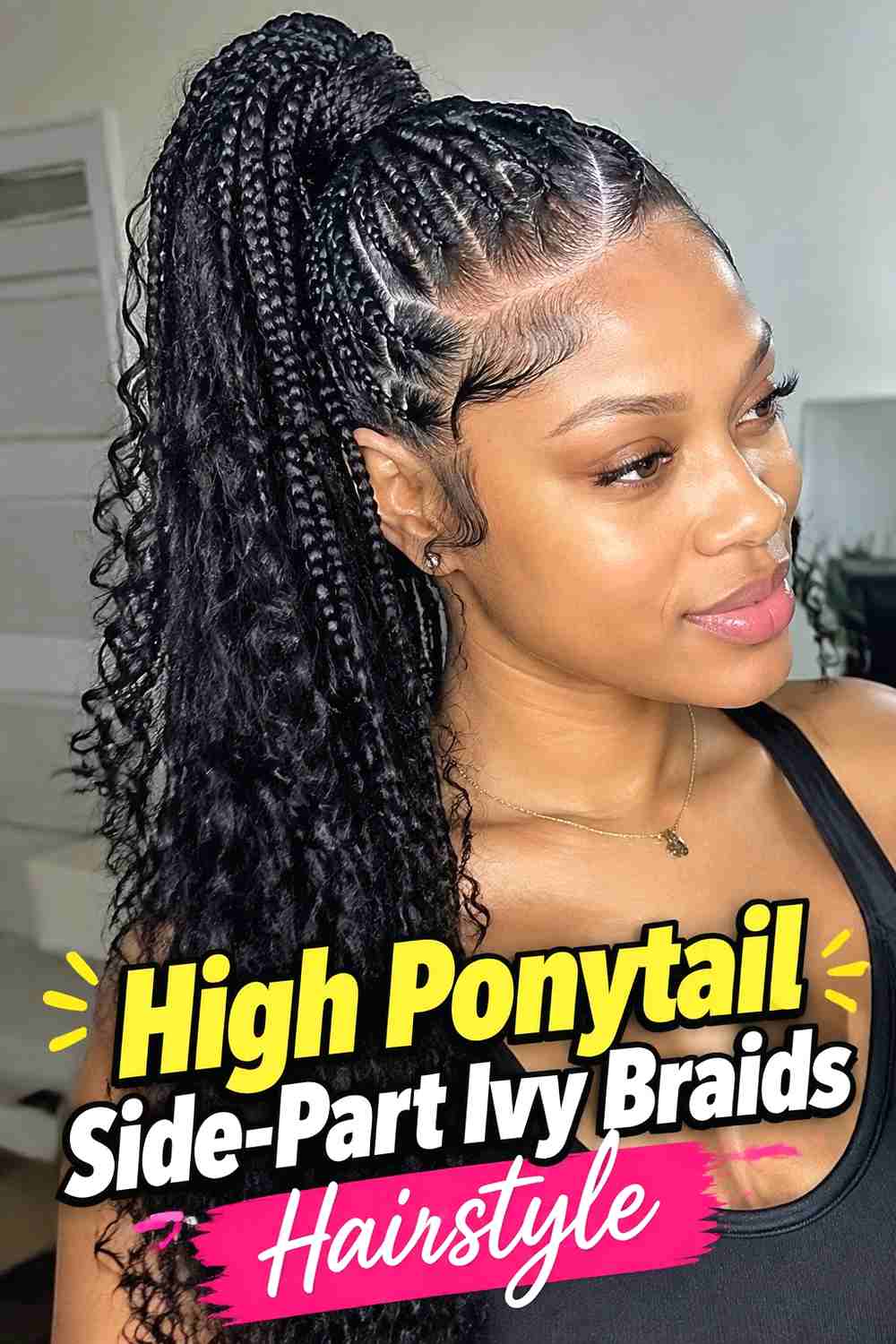
The High Ponytail Side-Part Ivy Braids Hairstyle transforms the loose installation into a more lifted shape while preserving a visible side sweep near the front. Instead of pulling every braid straight backward, allow a few sections from the deeper side to follow the part before joining the ponytail. This keeps the asymmetric styling readable even once most of the length is elevated. Longer, medium-width braids create the most noticeable cascade from the ponytail base. Because lifting many braids can concentrate weight at one point, the style should feel supportive rather than painfully tight. The fuzzy root finish does not need to be gelled flat; a little softness actually helps the ponytail stay connected to the relaxed Ivy aesthetic.
Best For
This look works well when you want the drama of an elevated braided ponytail without abandoning the loose-root finish.
Pro Tip
Use a wide tie or wrapped braid at the base rather than repeatedly tightening a thin elastic around the full installation.
9. Low Ponytail Side Part Ivy Braids Hairstyle
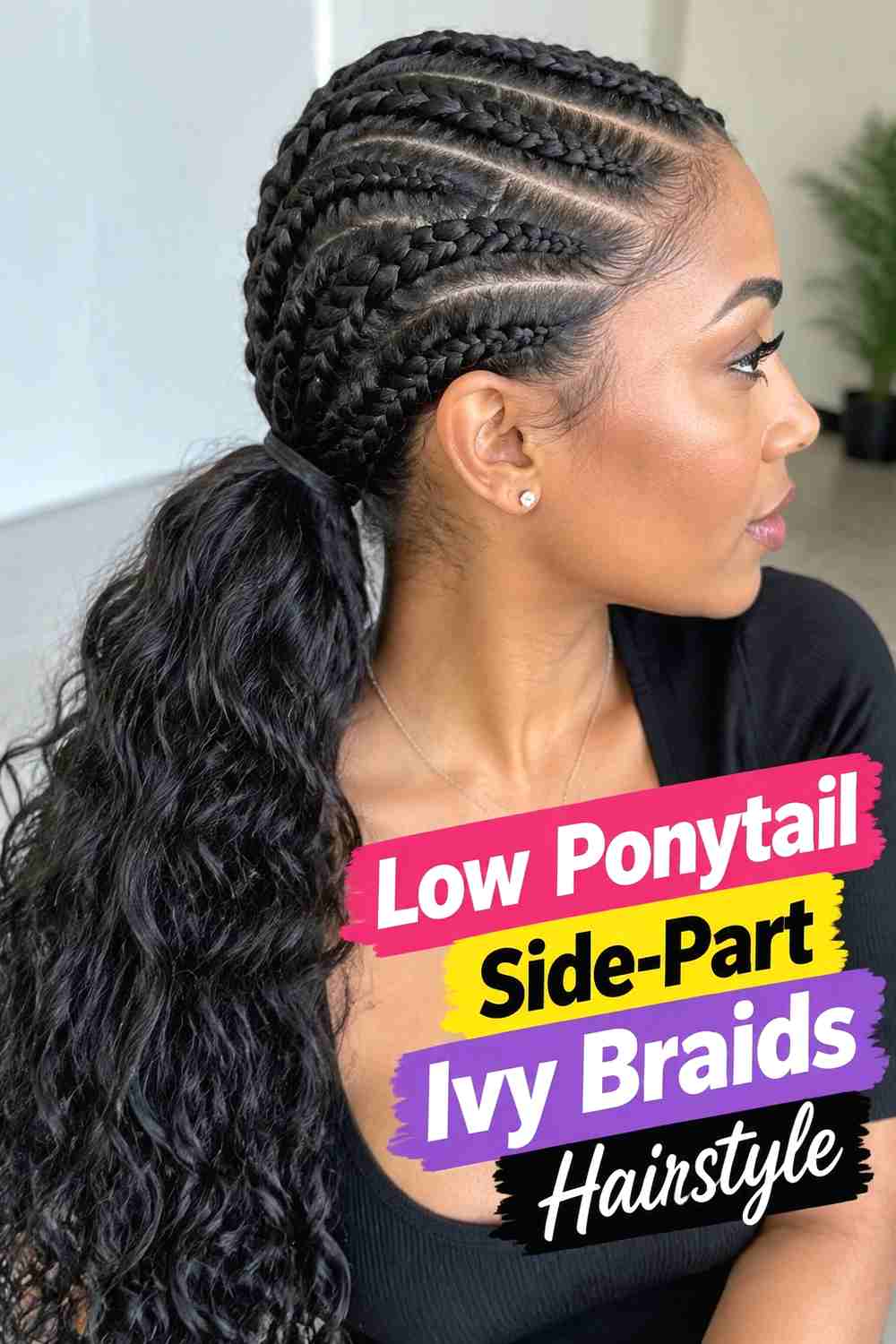
The Low Ponytail Side-Part Ivy Braids Hairstyle is one of the easiest ways to control the lengths while keeping the relaxed side part intact. The braids follow their natural direction toward the nape, where they are gathered loosely into a low ponytail. Because the placement does not require lifting the entire installation upward, the roots can remain soft and undisturbed. A single braid can wrap around the base to hide the tie, or the attachment can stay simple for a casual finish. The deeper side should still have enough movement around the temple to show the part clearly. Medium and long Ivy braids both work, making this a useful styling option for everyday wear or understated event looks.
Why It Works
The low placement follows the natural fall of the side-parted braids, so it creates control without forcing the roots into a tighter shape.
Styling Notes
Gather the braid lengths first and tighten the base only as much as necessary to keep the ponytail secure.
10. Loose Bun Side Part Ivy Braids Hairstyle
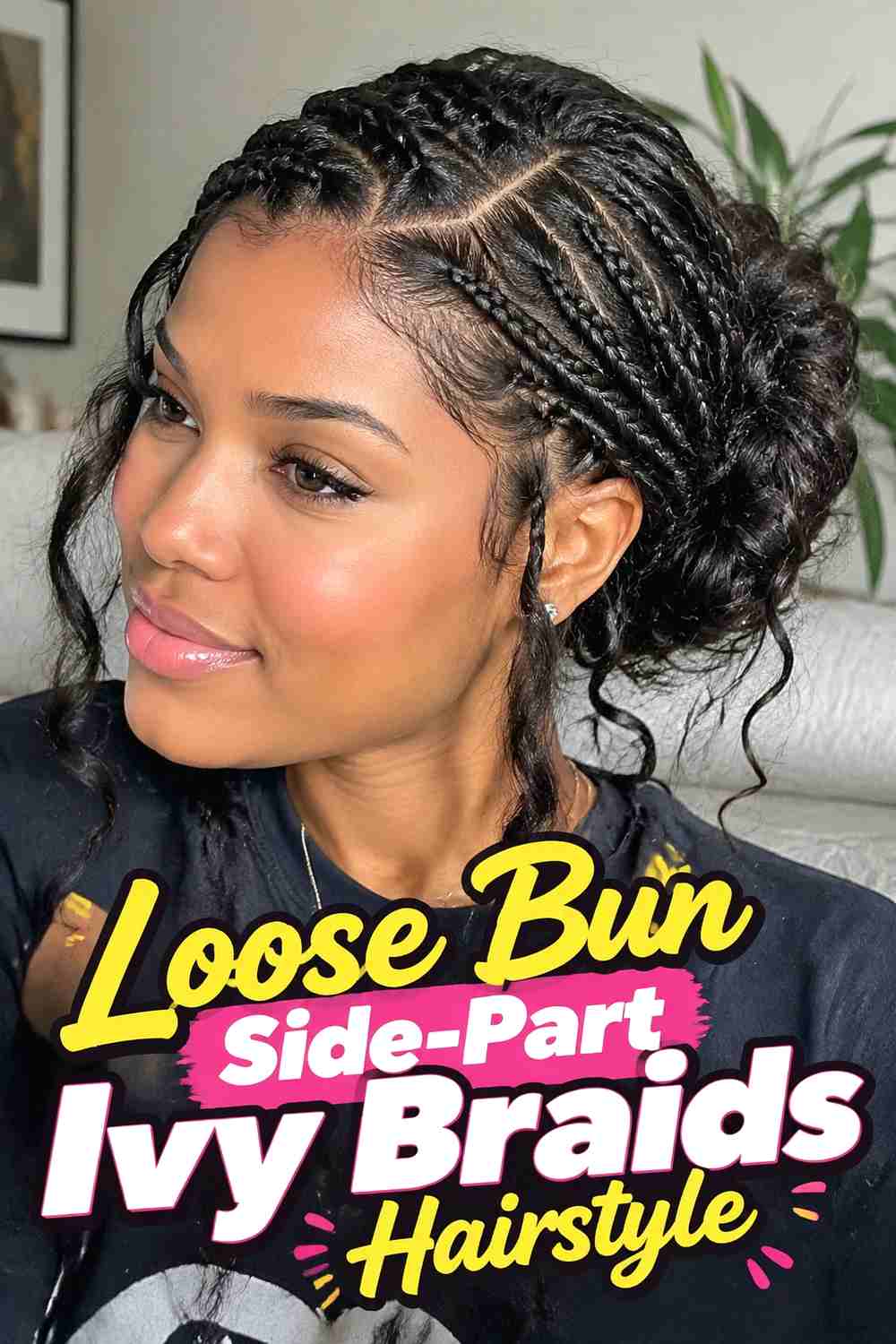
The Loose Bun Side-Part Ivy Braids Hairstyle brings the lengths up while maintaining an intentionally relaxed surface. After creating the side part, the braids can be swept toward a high, mid, or low position and loosely coiled into a substantial bun. A few braids on the deeper side may remain free near the front, helping preserve the asymmetry and soften the profile. The bun should be secure, but it does not need to form a perfectly smooth sphere; slight variation fits naturally with the Ivy braid aesthetic. This style is most comfortable when the installation is light enough to wrap without creating excessive concentrated weight. It makes a useful occasional updo for longer braids.
Wear & Maintenance
Spread the support across a broad tie or several anchor points so the entire bun is not hanging from one tight section.
Best For
Try this variation when you want the braids off the shoulders while keeping the side part and lived-in character visible.
11. Beaded Side Part Ivy Braids Hairstyle
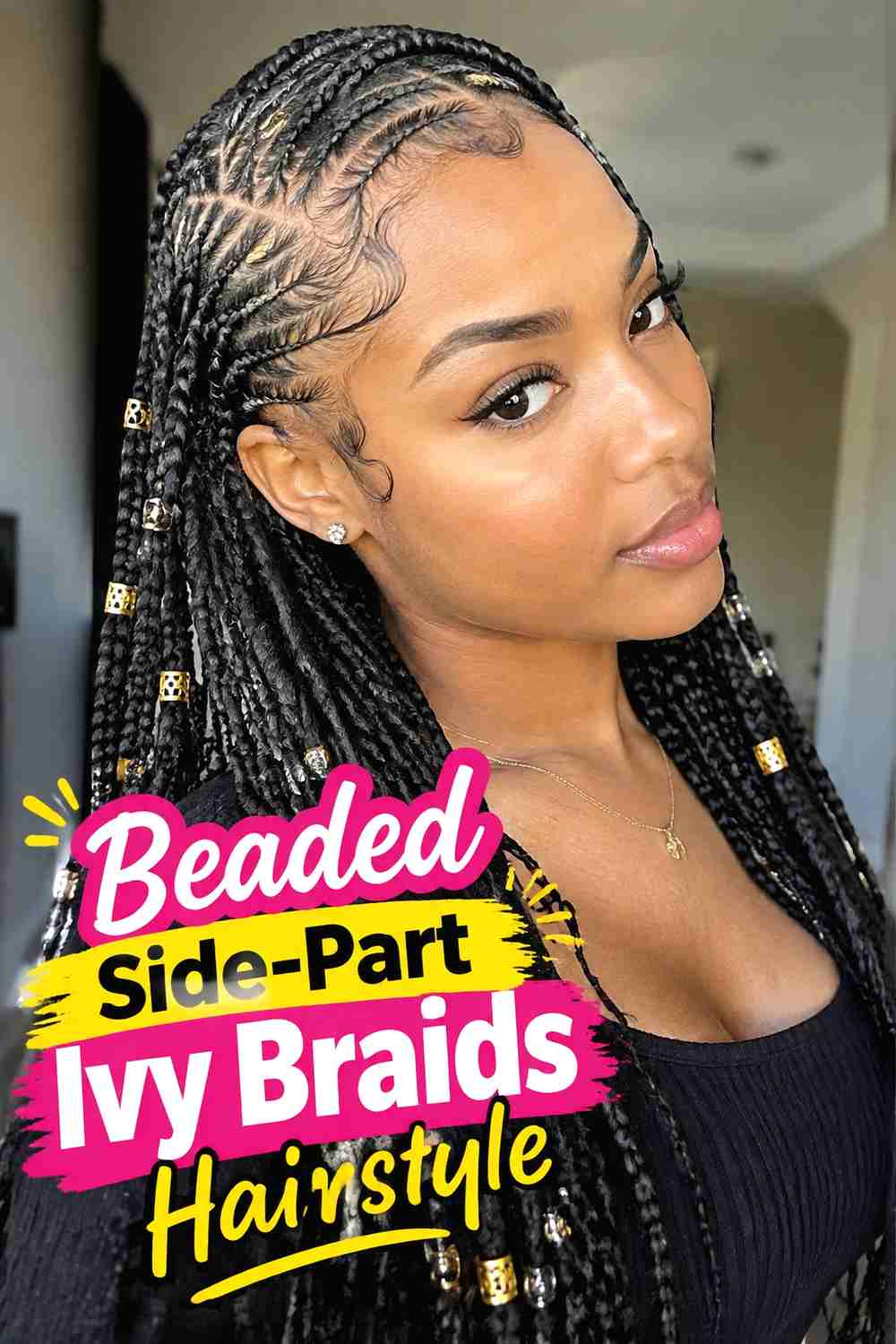
The Beaded Side-Part Ivy Braids Hairstyle adds selective ornament to the sweeping, textured base. Small beads can decorate several braids on the heavier side, drawing extra attention to the direction of the part while leaving most sections unadorned. Wooden, clear, metallic, or tonal beads all work, but keeping their distribution slightly irregular fits the relaxed nature of Ivy braids better than a perfectly repeated pattern. The loose-root construction should remain visible near the scalp rather than being hidden by accessories. Medium and long braid lengths offer plenty of room for bead placement, especially around the lower third. The finished look feels personalized without sacrificing the intentionally undone quality that defines the style.
Styling Notes
Add beads after the braids are fully installed and ensure their openings do not snag the fuzzier fibers.
Pro Tip
Concentrate a few accents on the fuller side of the part to reinforce the hairstyle’s directional movement.
12. Gold Cuff Side Part Ivy Braids Hairstyle
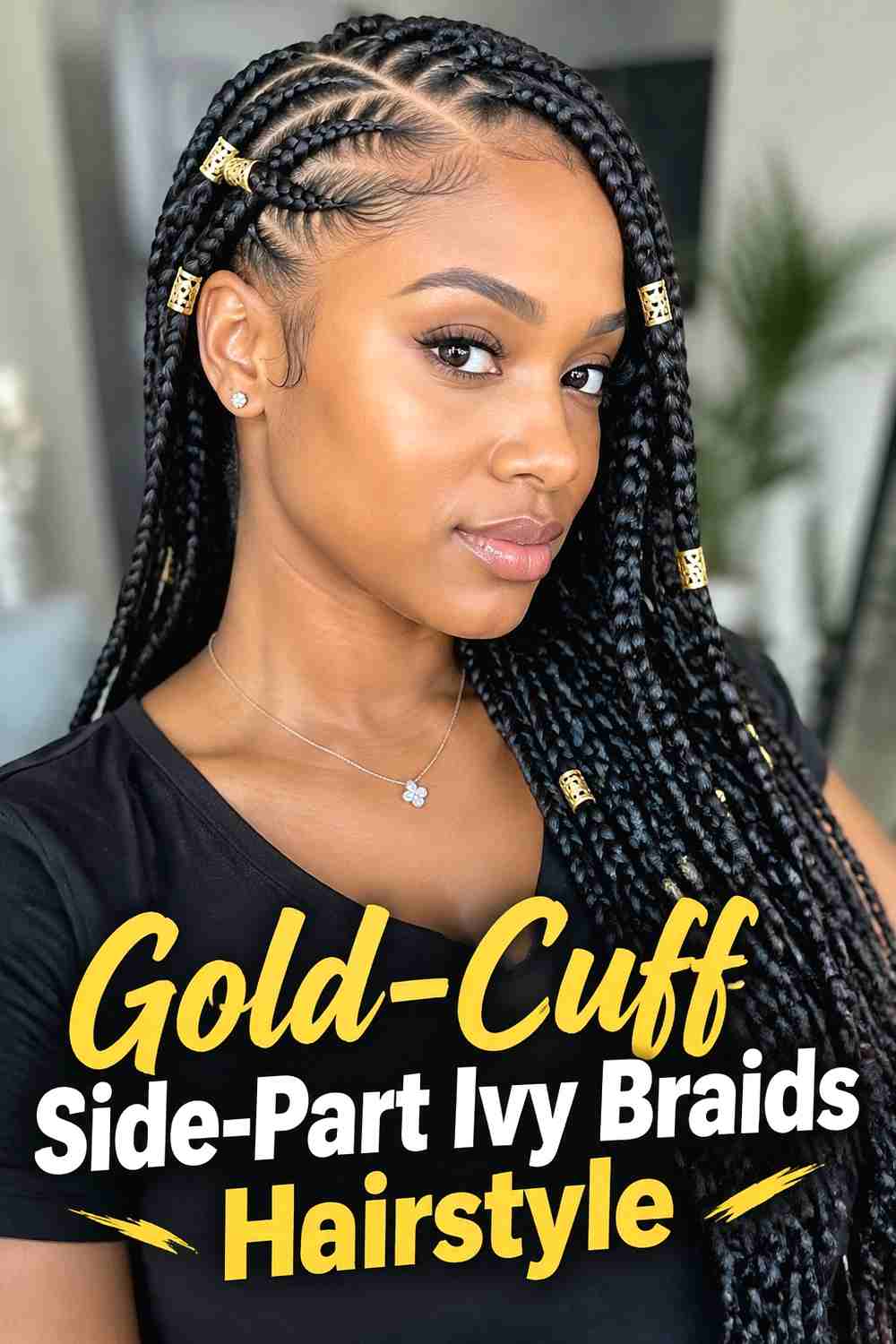
The Gold-Cuff Side-Part Ivy Braids Hairstyle uses small metallic accents to create points of shine against the soft, distressed braid texture. Cuffs can be placed along selected sections on the heavier side of the part, allowing them to catch light without overwhelming the natural movement. Dark brown or black hair provides strong contrast with warm gold, while coppery or lighter brown braids produce a softer tonal effect. The cuffs should remain secondary to the relaxed roots and woven texture. Instead of positioning every accent at the same height, stagger them slightly for a less formal look. This approach works especially well on medium-width braids, where the accessory can sit securely without hiding too much of the plait itself.
Why It Works
Precise metallic details create an attractive contrast with the intentionally fuzzy, irregular surface of the Ivy braids.
Wear & Maintenance
Check that each cuff is smooth and properly closed so exposed edges do not repeatedly catch loose braid fibers.
13. Ombre Side Part Ivy Braids Hairstyle
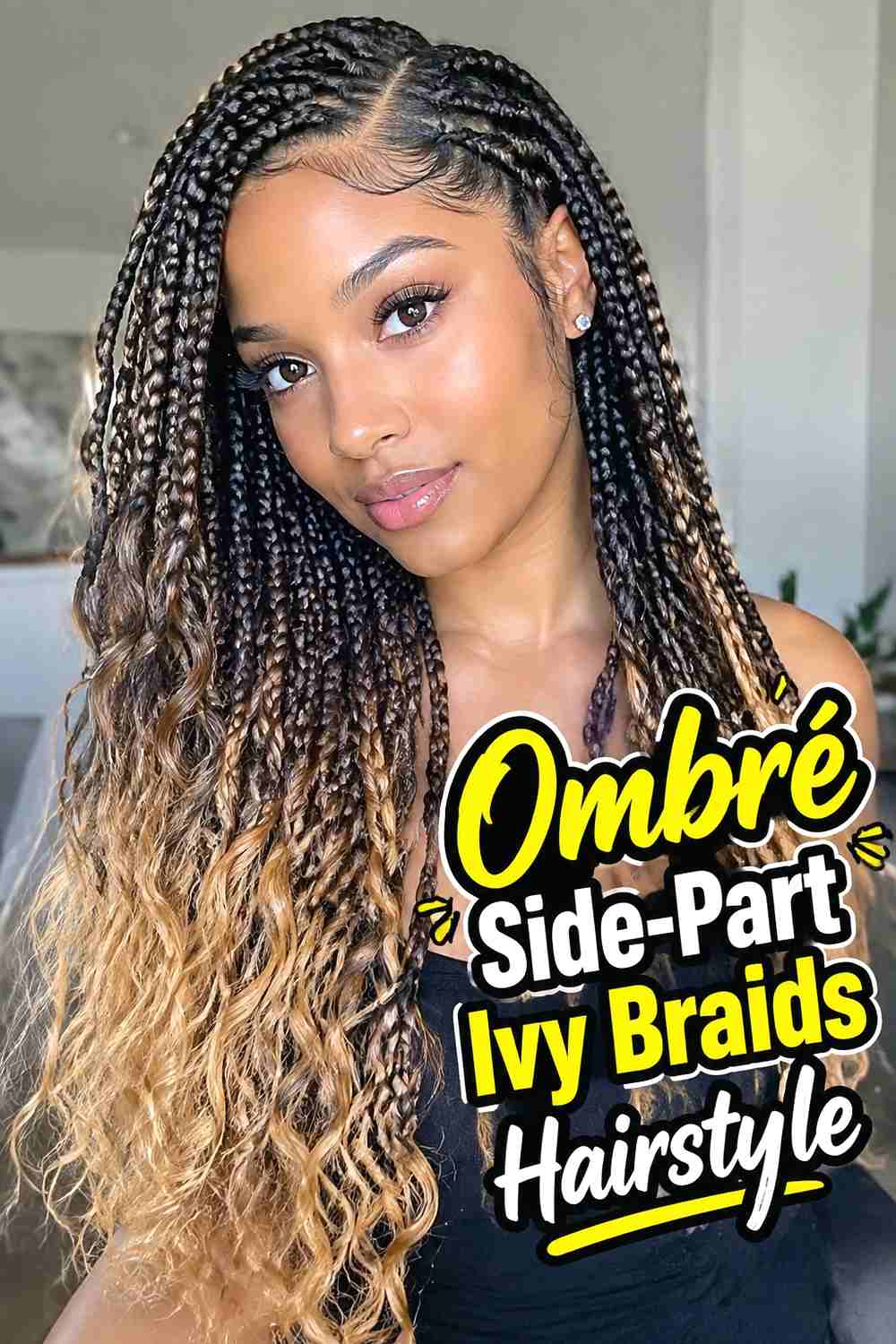
The Ombré Side-Part Ivy Braids Hairstyle combines relaxed root texture with a gradual tonal transition through the lengths. Dark natural-looking roots can move into chestnut, copper, auburn, honey brown, or another complementary shade as the braids travel downward. The side part makes the color especially visible because a larger section of braids falls together across one shoulder, allowing the gradient to read as a cohesive sweep. Medium to long lengths provide enough space for a soft transition instead of an abrupt color block. Since the ombré already adds substantial visual detail, extra beads or cuffs are optional. Keeping the roots close to the natural base tone also helps the fuzzy, lived-in finish look integrated.
Styling Notes
Choose the approximate point where the color change should begin before installation so the ombré remains balanced around the head.
Why It Works
The directional side sweep displays multiple braid lengths together, making the tonal transition especially easy to see.
14. Face Framing Side Part Ivy Braids Hairstyle
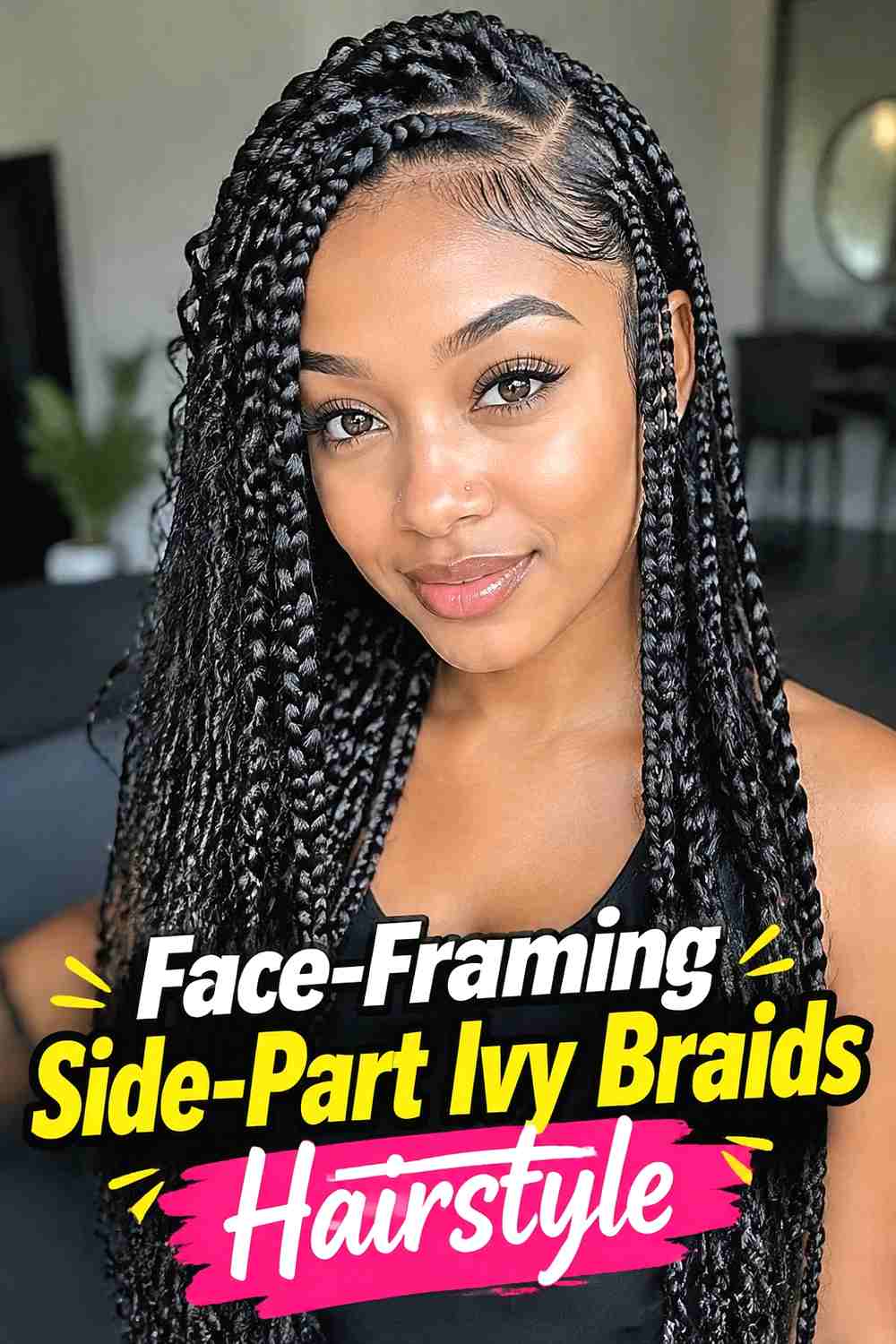
The Face-Framing Side-Part Ivy Braids Hairstyle uses the deeper part to position a few individual braids deliberately around the cheek and jawline. Instead of moving the entire heavier section behind the shoulder, selected front braids remain loose so the asymmetric framing is visible from the front. Slightly narrower pieces near the hairline can feel softer than using the same jumbo size everywhere. The roots should remain comfortably loose, preserving the fuzzy finish that current Ivy braid coverage highlights. Longer lengths naturally continue past the shoulders, while medium braids create a more compact frame. The result feels expressive without requiring a separate bang or loose curly leave-out.
Best For
This version works well when you want the side part and relaxed braid texture to remain obvious in front-facing photos.
Styling Notes
Let the chosen front braids follow their natural fall instead of pinning them into a fixed curve against the face.
15. Tucked Behind Ear Side Part Ivy Braids Hairstyle
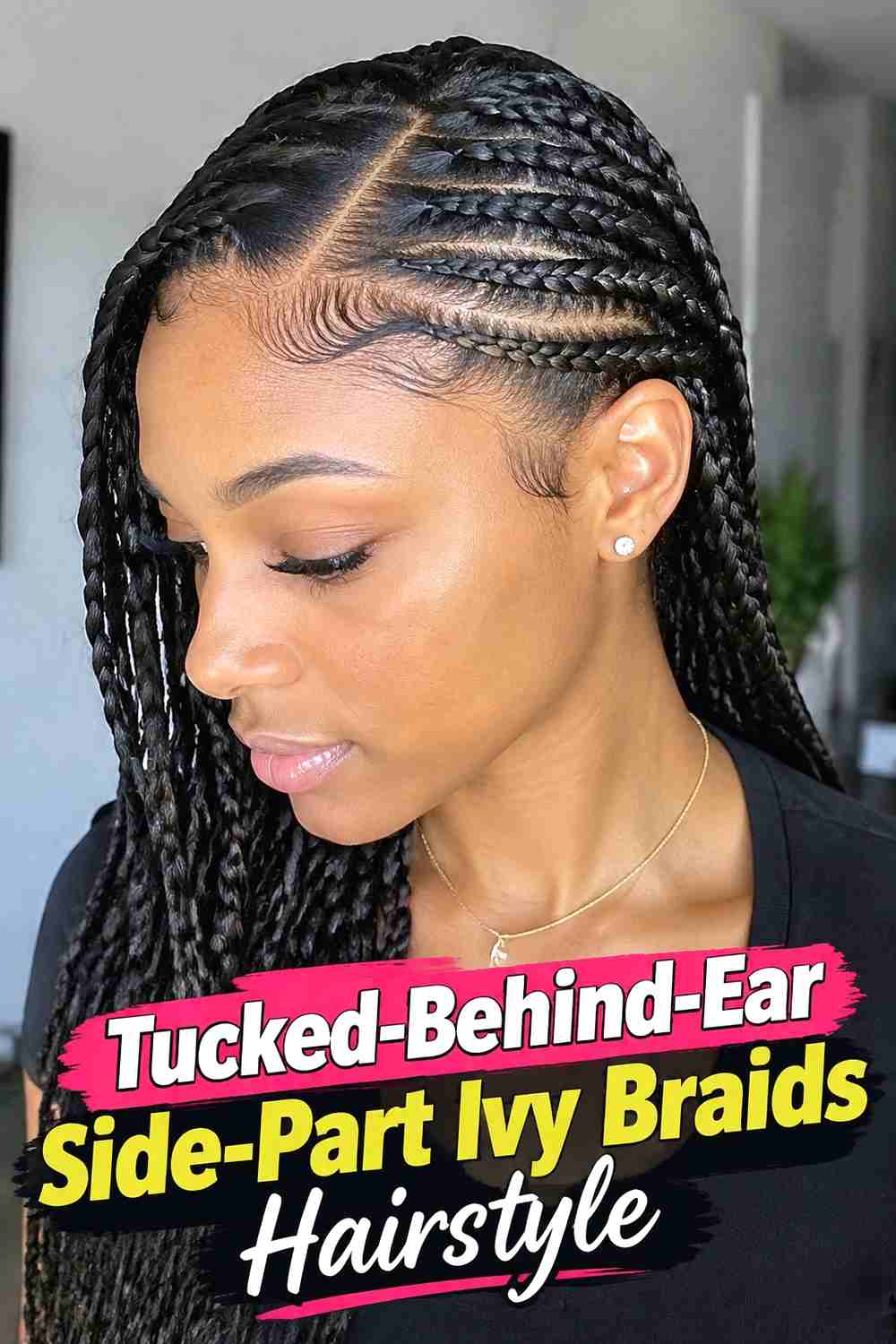
The Tucked-Behind-Ear Side-Part Ivy Braids Hairstyle creates contrast between a fuller sweeping side and a cleaner, more exposed opposite side. After establishing the part, several braids from the lighter side are guided behind the ear, revealing the profile while the majority of the length falls across the other shoulder. The tucked section can be left naturally in place or held discreetly with a small pin if necessary. This styling method works particularly well with medium-size braids because they are flexible enough to redirect without creating a bulky cluster behind the ear. The loose roots remain untouched, keeping the style relaxed even though the overall silhouette feels slightly more polished and intentional.
Why It Works
Exposing one side of the face strengthens the asymmetry already created by the part and makes the heavier braid sweep look more dramatic.
Pro Tip
Tuck only a few braids at a time rather than forcing a thick group behind the ear where it may feel bulky.
16. Layered Length Side Part Ivy Braids Hairstyle
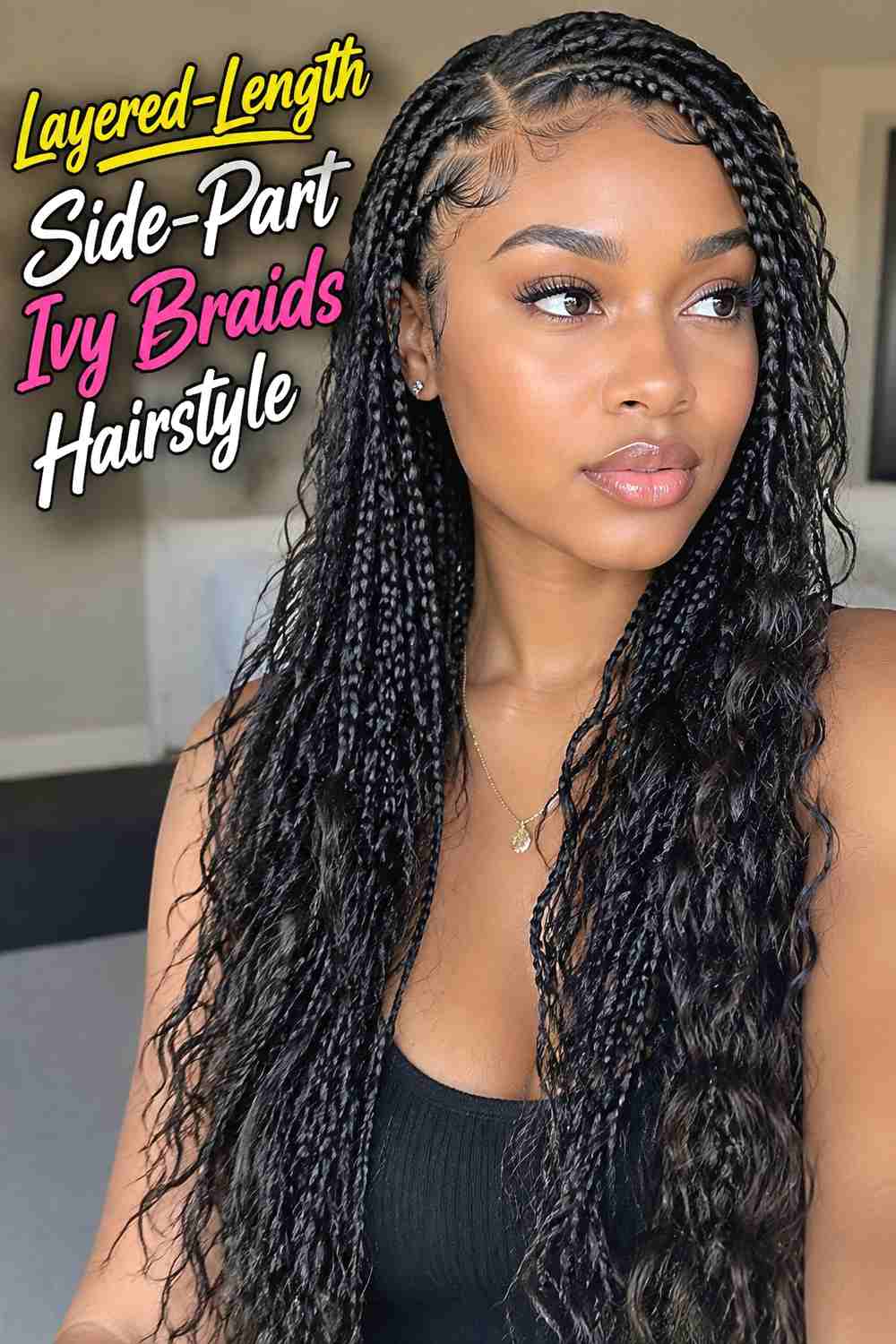
The Layered-Length Side-Part Ivy Braids Hairstyle introduces controlled differences in finished length, creating movement around the shoulders and chest. Shorter front braids can frame the face while longer sections fall beneath them, making the side sweep look less like one heavy curtain of equal-length braids. The difference should remain gradual enough that the installation still feels coordinated. Textured, slightly fuzzy braid surfaces enhance the layered effect because each length catches light and moves independently. A deep or moderate side part works equally well, depending on how strongly you want the asymmetry to show. This approach can also reduce some visual weight around the front while retaining dramatic length through the back.
Styling Notes
Plan the length changes before cutting or sealing ends so the layers form a deliberate progression rather than random unevenness.
Best For
Choose this style when you like long Ivy braids but want more movement and shape around the face and shoulders.
17. Mixed Braid And Twist Side Part Ivy Braids Hairstyle
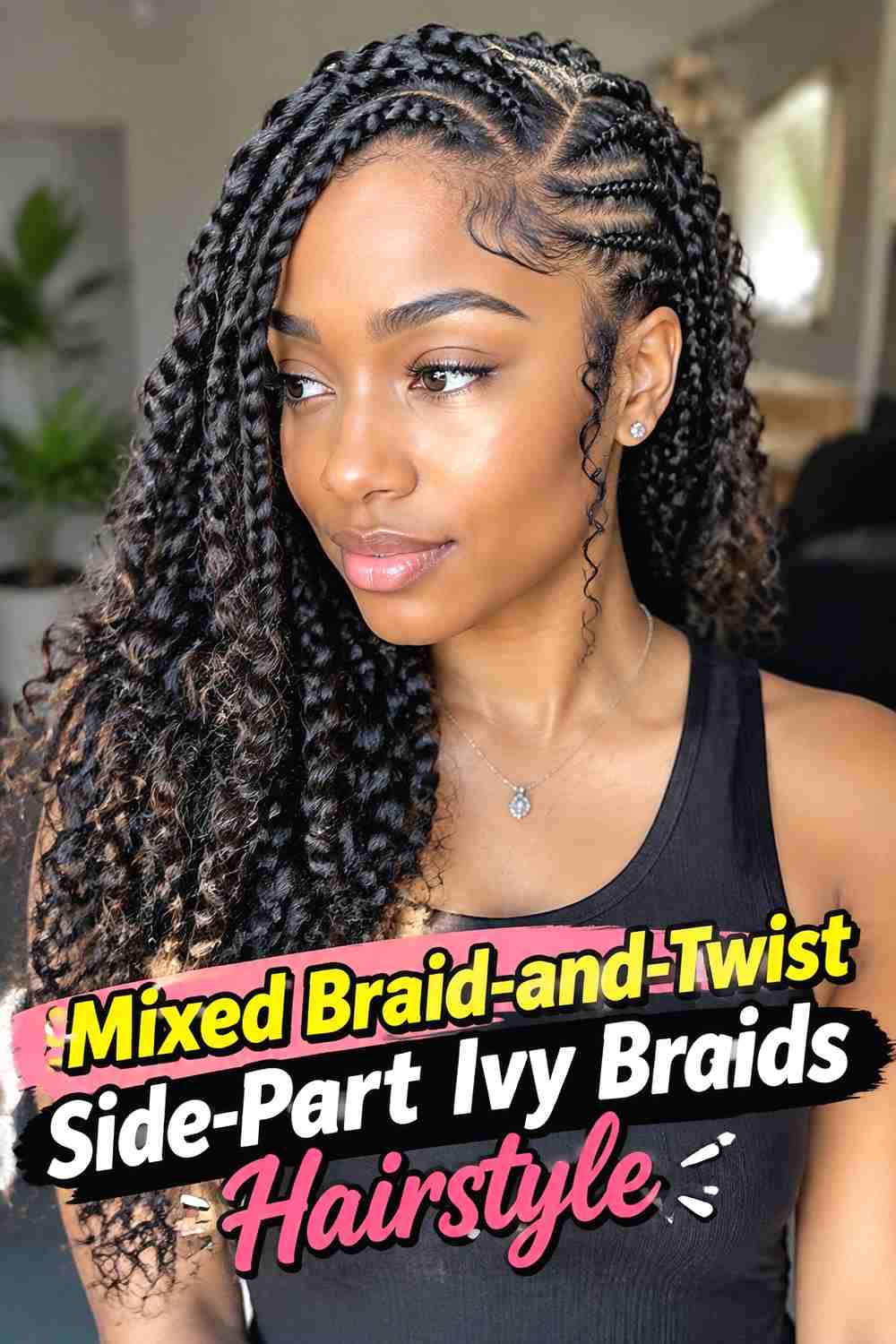
The Mixed Braid-and-Twist Side-Part Ivy Braids Hairstyle combines predominantly braided sections with a smaller number of textured two-strand twists. The deep part helps organize the varied textures, while using similar extension hair and color keeps the overall design cohesive. Online discussions sometimes visually group distressed braids and Marley-like twists together, so this is best treated as an intentional hybrid interpretation rather than the defining Ivy construction itself. Keeping loose roots across both textures provides continuity. Medium sections allow the difference between braid and twist patterns to remain visible without making the installation overly busy. The result feels dimensional, especially when the heavier side displays several textures together over one shoulder.
Why It Works
The side sweep places braids and twists next to each other, making the contrasting woven patterns visible while their shared texture keeps them connected.
Pro Tip
Use braids as the dominant element and twists as accents if you want the Ivy braid identity to remain clear.
18. Shoulder Length Side Part Ivy Braids Hairstyle
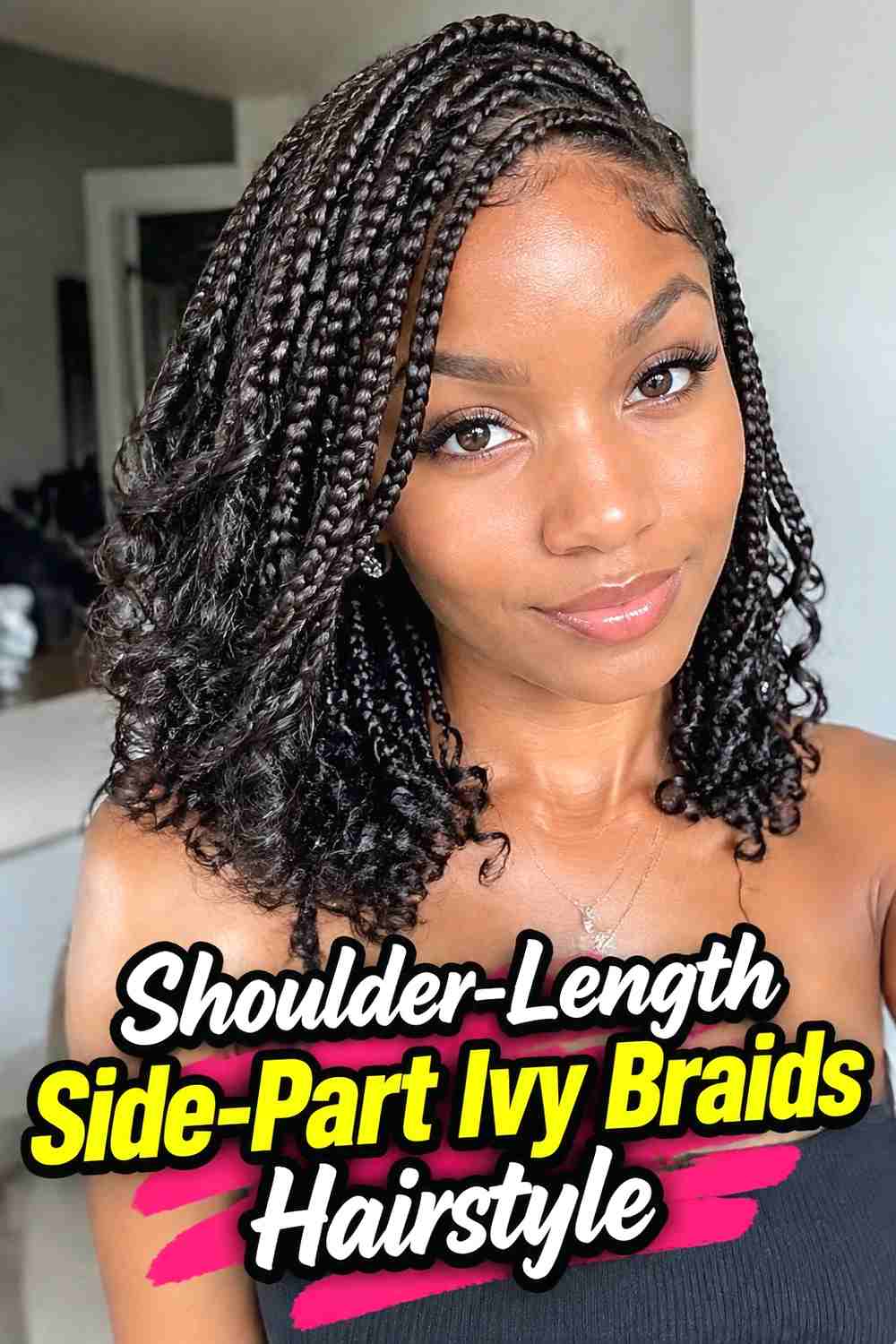
The Shoulder-Length Side-Part Ivy Braids Hairstyle keeps the installation compact, with textured braids ending around the shoulders or upper chest. This shorter length makes the deeper part especially prominent because the hair forms a clear asymmetric outline around the face instead of cascading far down the body. Medium or jumbo braids work well, depending on how much fullness you want. The relaxed roots give the silhouette softness, while carefully finished ends keep the shorter shape intentional. This length can also be easier to leave fully down throughout the day because there is less braid mass to manage. The final look feels casual, current, and easy to pair with everyday outfits.
Hair Type & Length
Shoulder-length extensions provide visible fullness with less overall added length, though actual weight will still depend on braid size and density.
Wear & Maintenance
Protect the ends from repeated friction against collars and jackets if you want the shorter perimeter to stay neat.
19. Statement Swept Over Side Part Ivy Braids Hairstyle
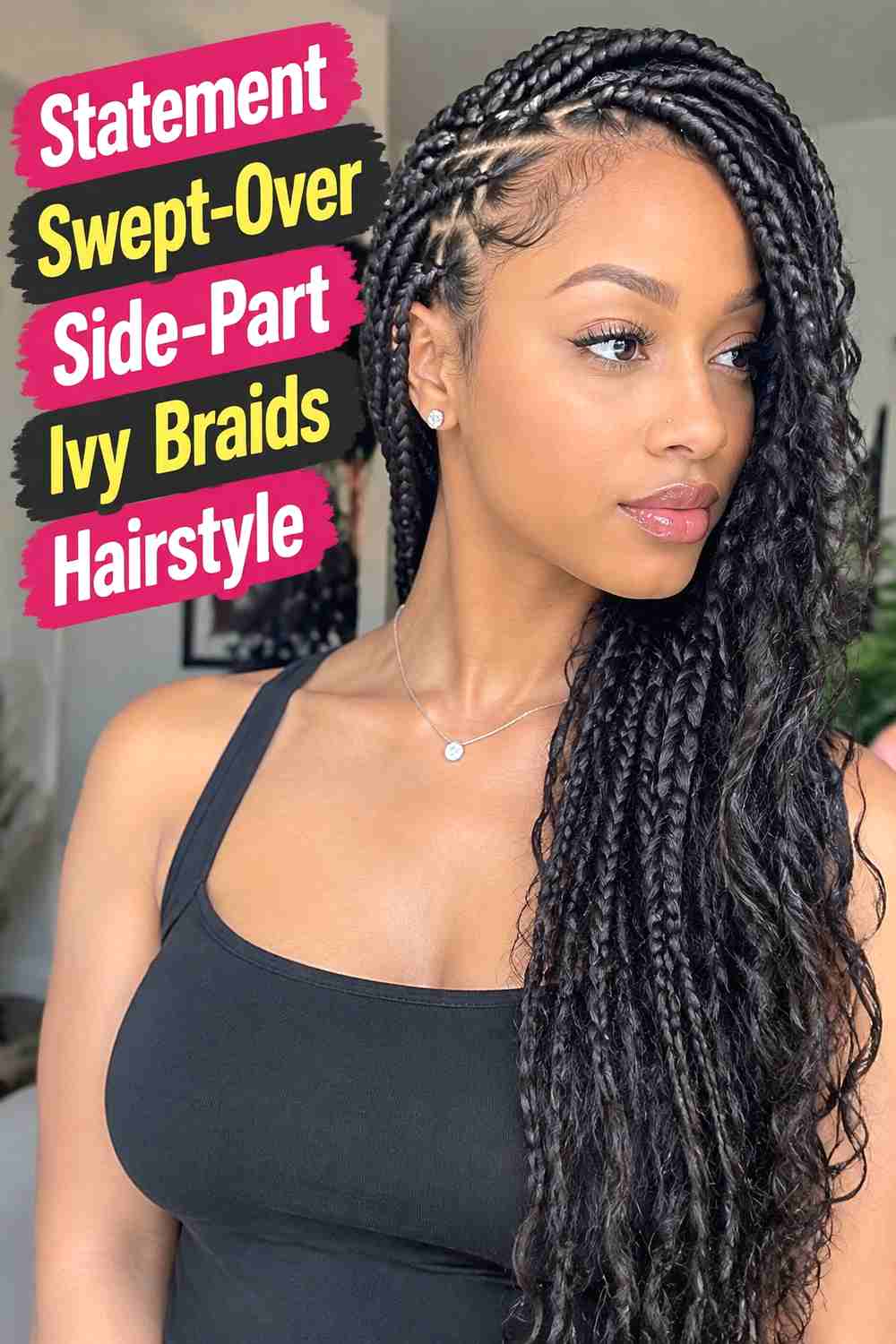
The Statement Swept-Over Side-Part Ivy Braids Hairstyle exaggerates the asymmetry by directing most of the braid length over one shoulder. A deep part establishes the shape, while the lighter side remains relatively open and the fuller side creates a dramatic textured cascade. Long or extra-long braids make this version particularly striking because multiple fuzzy, lived-in sections overlap and move together. The roots should remain soft rather than slicked tightly into the sweep, keeping the styling aligned with the low-tension, natural-movement character described in current Ivy braid coverage. Minimal accessories often work best because the exaggerated placement already provides a strong focal point.
Styling Notes
Allow the majority of the braids to fall naturally across the chosen shoulder instead of permanently pinning the entire installation into position.
Best For
This variation suits portraits, events, and styling days when you want the side part itself to become the defining feature.
How to Choose the Right Look
Start with how dramatic you want the side part to appear. A soft side sweep creates gentle asymmetry, while a deep part with most braids moved over one shoulder makes the directional shape much stronger. Tucking the lighter side behind the ear can emphasize that contrast even further.
Next, compare braid size and length. Jumbo sections create a bold silhouette with fewer braids, while medium braids offer more styling flexibility. Shoulder-length versions feel compact and manageable, whereas extra-long braids provide more movement but also involve more added hair.
Texture is equally important. Current descriptions of Ivy braids emphasize loose roots, less gel, visible fuzziness, and natural movement rather than an ultra-slick finish. Kanekalon can be used, while Afro-kinky hair can increase the textured effect.
Finally, consider how often you want to restyle the braids. Half-up looks, low ponytails, and loose buns can provide variety, but secondary styles should remain comfortable. Accessories such as beads and cuffs work best when they enhance the braid texture instead of dominating it.
Final Thoughts
Side-part Ivy braids combine the trend’s intentionally relaxed texture with an easy directional shape around the face. The part can be subtle or dramatic, and changes in length, braid size, color, and accessories create plenty of variation without requiring the roots to become highly polished.
The most convincing versions preserve the soft, lived-in quality that distinguishes the current Ivy braid look. Choose a length and density that feel comfortable, then let the side sweep, texture, and natural movement provide the character.
FAQs
1. What makes side-part Ivy braids different from side-part box braids?
Current beauty coverage describes Ivy braids as intentionally loose at the roots with less gel, visible fuzziness, and a lived-in surface. A side-part version keeps those characteristics while arranging the braids asymmetrically.
2. Can Ivy braids have a deep side part?
Yes. The section pattern can be organized around a deeper side part as long as the roots remain comfortable and the hairstyle retains the relaxed texture associated with Ivy braids.
3. What type of braiding hair works for textured Ivy braids?
Regular Kanekalon can be used, while Afro-kinky extension hair can produce an even more textured result, according to hairstylist Susan Oludele in Allure’s 2026 trend coverage.
4. Can side-part Ivy braids be put into a ponytail or bun?
Yes. Half-up styles, low ponytails, high ponytails, and loose buns can all work. Avoid secondary styles that create uncomfortable pulling or erase the loose-root character.
5. Are Ivy braids supposed to look a little fuzzy?
Yes. The current Ivy braid aesthetic deliberately favors fuzzy roots and an undone, natural finish rather than treating every visible flyaway as something that must be slicked down.
Save your favorite side-part Ivy braids hairstyle ideas for your next braid appointment or inspiration board, and choose the length, texture, and sweep that best fits your routine.