15 Sleek Midi Blowout Hairstyle Ideas for Polished Volume
Sleek midi blowouts combine glossy control with just enough bounce, giving medium-length hair a polished shape that still moves naturally and feels wearable.
A midi blowout usually sits around the shoulders or collarbone, where the hair has enough length to develop movement without the extra weight of very long styles. The sleek version focuses on smooth roots, controlled body, reflective shine, and deliberately shaped ends rather than oversized volume.
Small changes can completely alter the finish. A center part feels clean and balanced, layered ends create softness, outward flips add energy, and tucked-under curves emphasize a compact silhouette. Consider your density, layering, fringe, natural texture, and preferred styling time before choosing the version that fits your routine.
Quick List
- Center Part Sleek Midi Blowout Hairstyle
- Side Part Sleek Midi Blowout Hairstyle
- Glassy Straight Sleek Midi Blowout Hairstyle
- Soft Bend Sleek Midi Blowout Hairstyle
- Face Framing Sleek Midi Blowout Hairstyle
- Tucked End Sleek Midi Blowout Hairstyle
- Flipped End Sleek Midi Blowout Hairstyle
- Rounded Layer Sleek Midi Blowout Hairstyle
- Collarbone Sleek Midi Blowout Hairstyle
- Low Volume Sleek Midi Blowout Hairstyle
- Bouncy Ends Sleek Midi Blowout Hairstyle
- Sleek Midi Blowout With Curtain Fringe Hairstyle
- Sleek Midi Blowout With Side Swept Fringe Hairstyle
- Polished U Shape Sleek Midi Blowout Hairstyle
- Glossy One Length Sleek Midi Blowout Hairstyle
1. Center Part Sleek Midi Blowout Hairstyle
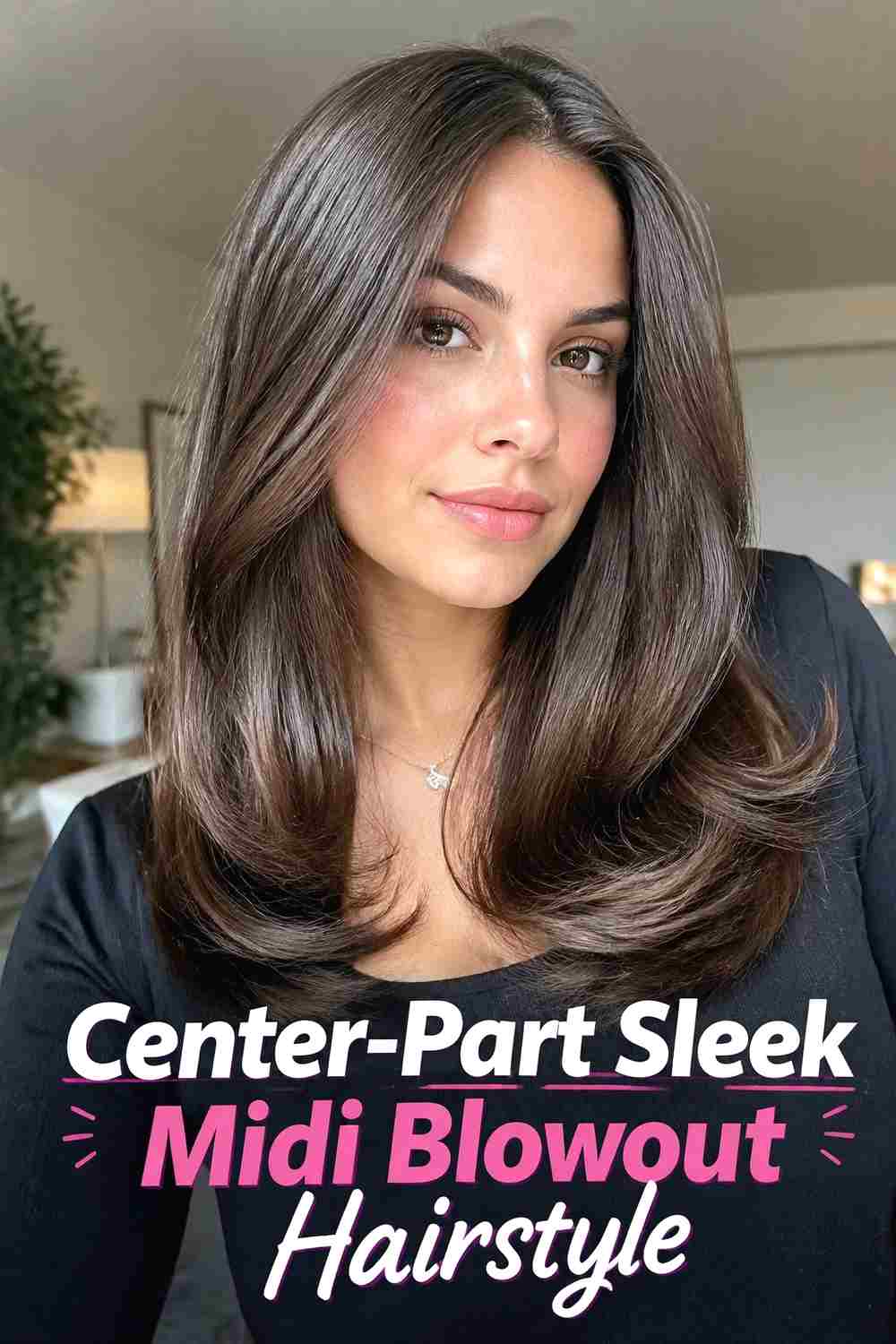
A precise center part gives a midi blowout a balanced, minimalist shape that works especially well when the surface is smooth and the ends retain gentle movement. Keep the roots relatively close to the head, then allow subtle body to develop from the cheekbones downward. The lengths can curve slightly inward or remain nearly straight, depending on how polished you want the finish. Shoulder and collarbone lengths are particularly suitable because the symmetrical front sections fall naturally on either side of the face. A little movement through the ends prevents the hairstyle from looking flat, while controlled shine emphasizes the clean part and healthy-looking strand detail.
Styling Notes
Establish the center part before drying and direct each side away from the part so the roots settle smoothly without losing natural movement.
Best For
This version suits straight to softly wavy midi cuts when you prefer symmetry, subtle volume, and a clean everyday finish.
2. Side Part Sleek Midi Blowout Hairstyle
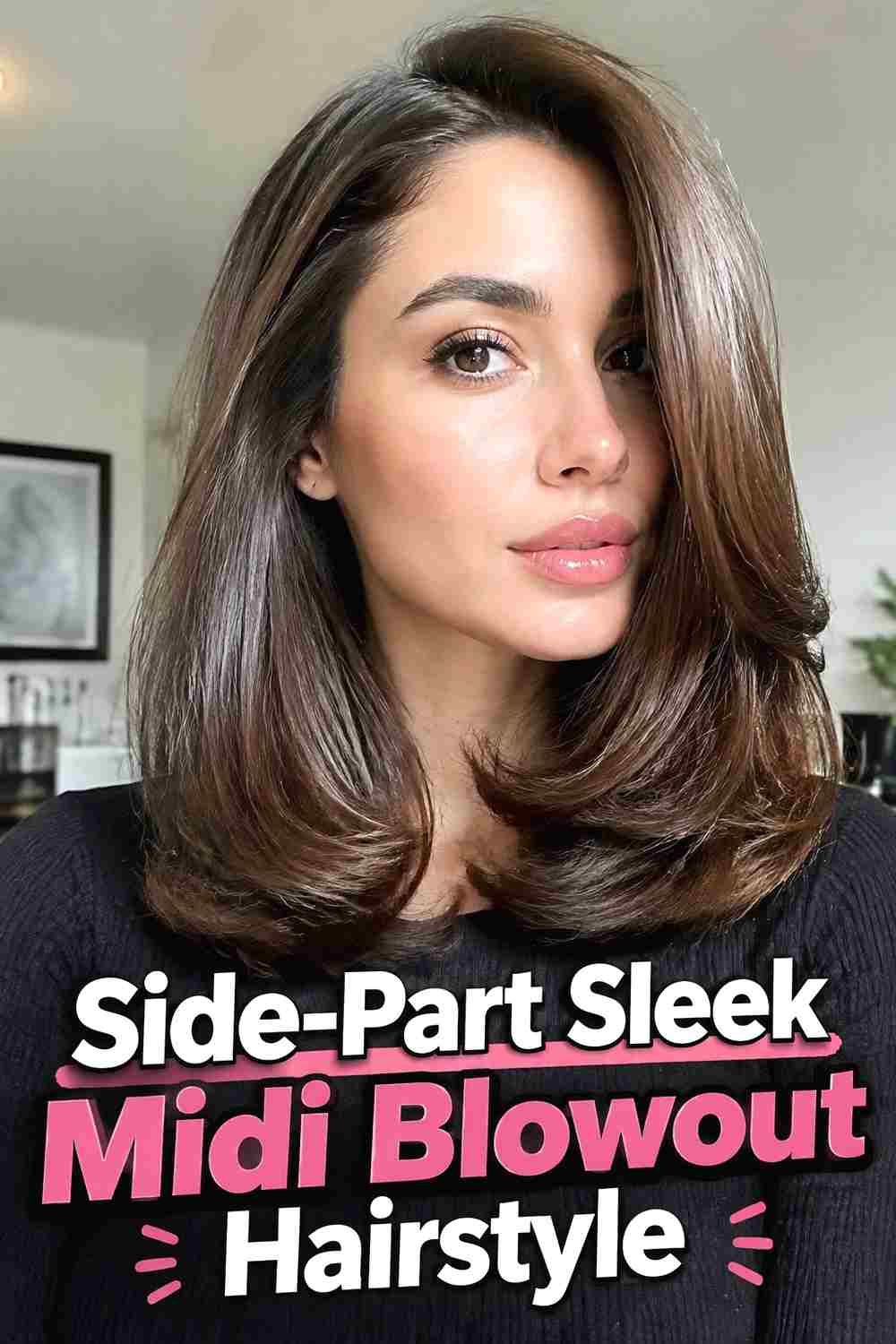
A side part introduces gentle asymmetry to an otherwise controlled midi blowout. The heavier side gains a little extra lift near the front, while the smaller side can stay tucked behind the ear or fall smoothly against the cheek. Keep the mid-lengths polished and shape the ends into broad, soft bends instead of tight curls. This creates visible movement without sacrificing the sleek character. The style is especially effective on shoulder-length cuts with light layering because those pieces naturally follow the direction of the part. Avoid building equal volume on both sides; allowing the fuller side to remain slightly more prominent is what gives the hairstyle its distinctive shape.
Why It Works
The side part creates movement around the face without requiring exaggerated crown volume or heavily curled lengths.
Pro Tip
Dry the front section in the direction opposite its final placement first, then sweep it back over for natural lift at the root.
3. Glassy Straight Sleek Midi Blowout Hairstyle
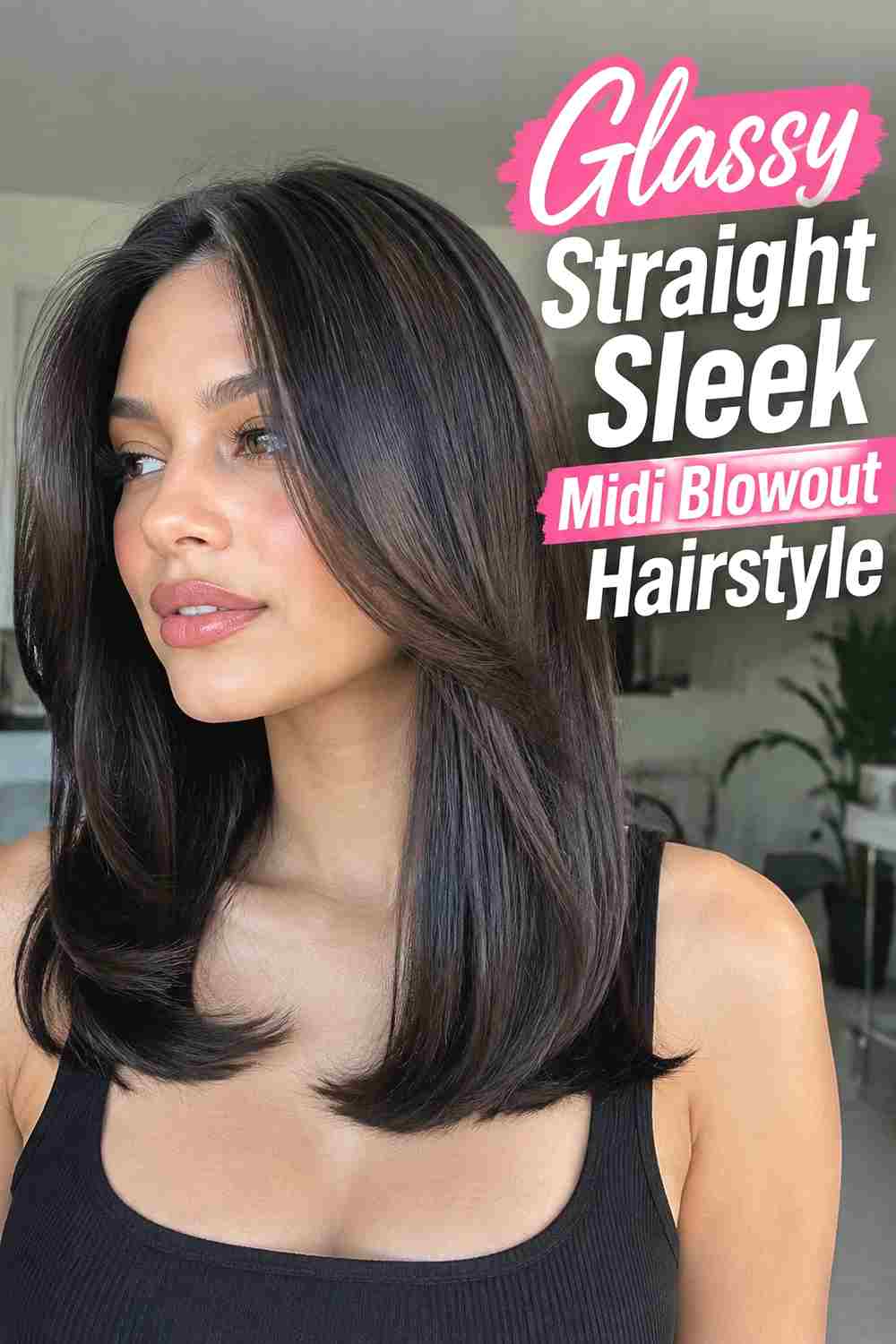
This version keeps the blowout almost straight, using smoothness, shine, and a softly controlled finish as the main features. The hair falls cleanly from the roots through the mid-lengths, with only a slight curve at the ends so it still reads as a blowout rather than pin-straight styling. A midi length makes the glassy finish especially visible because the perimeter remains compact and easy to define. This look works best when flyaways are controlled without coating the hair in heavy product. Fine strand detail should still be visible, and the ends should move naturally. A center or subtle off-center part keeps the overall silhouette simple and modern.
Styling Notes
Use tension for smoothness but avoid flattening the hair completely against the scalp; a small amount of root movement keeps the finish natural.
Wear & Maintenance
Lightweight smoothing products are usually more suitable than heavy oils, which can make midi lengths lose body quickly.
4. Soft Bend Sleek Midi Blowout Hairstyle
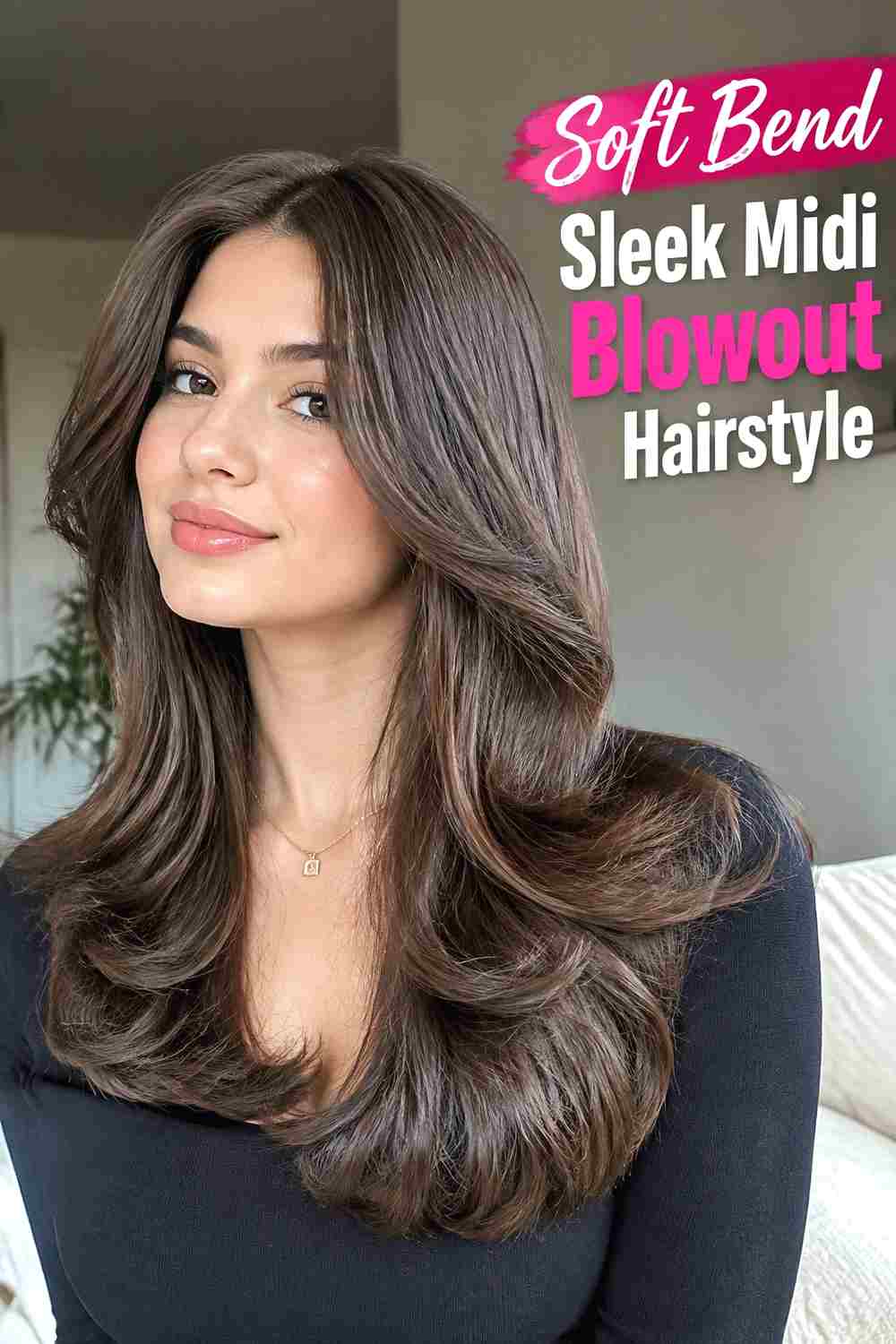
A soft bend adds just enough shape to keep a sleek midi blowout from looking completely straight. Instead of curling the ends dramatically, introduce a broad curve through the lower third of the hair so the lengths move gently around the shoulders. The roots stay smooth, and the midsection remains polished, creating a gradual transition into the bend. This style works particularly well on collarbone cuts because the curve sits naturally where the hair meets the shoulders. Lightly layered hair can show more movement, while one-length cuts create a cleaner sweep. Keep the bends relaxed and slightly varied so the finished style retains natural flow rather than looking mechanically uniform.
Why It Works
The subtle curve creates softness and dimension while preserving the controlled, glossy character that defines a sleek blowout.
Best For
Choose this look when you want movement without obvious flips, curls, or high-volume styling.
5. Face Framing Sleek Midi Blowout Hairstyle
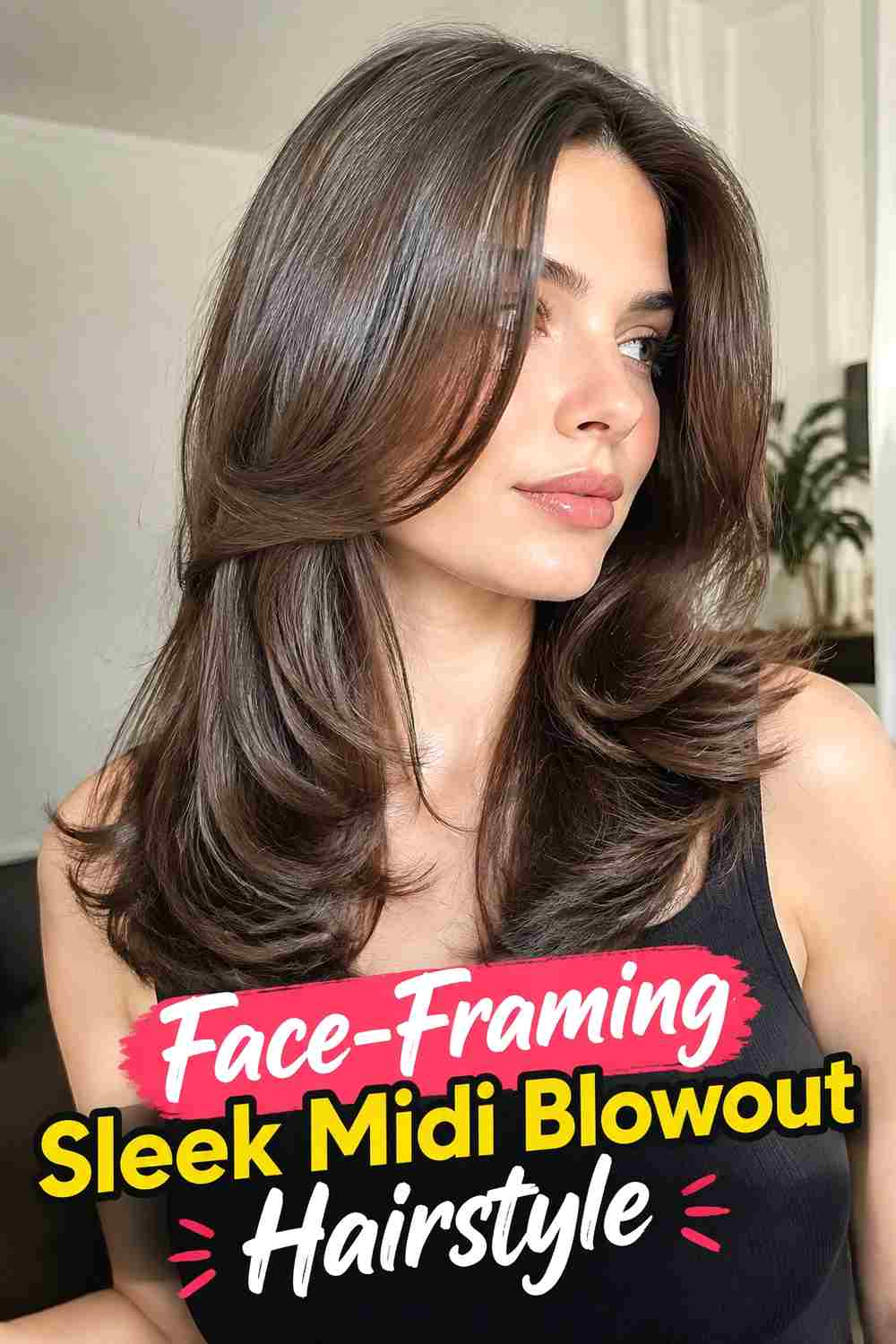
Face-framing layers bring extra movement to the front of a midi blowout while allowing the back to remain relatively smooth. Shorter pieces can begin near the cheekbones or jaw and curve gently away from the face before blending into shoulder-length sections. Keeping the crown sleek ensures the layered movement feels deliberate rather than overly voluminous. This version is particularly effective when the haircut already includes graduated front pieces, since each layer can create a slightly different bend. The back lengths should stay softly rounded instead of heavily curled so the front remains the main feature. A center or soft side part can both work depending on the direction of the layers.
Styling Notes
Shape the longest front layers first, then work upward toward the shorter pieces so their curves overlap naturally.
Pro Tip
Keep the strongest movement around the face and use a softer bend through the back to avoid making the midi shape too wide.
6. Tucked End Sleek Midi Blowout Hairstyle
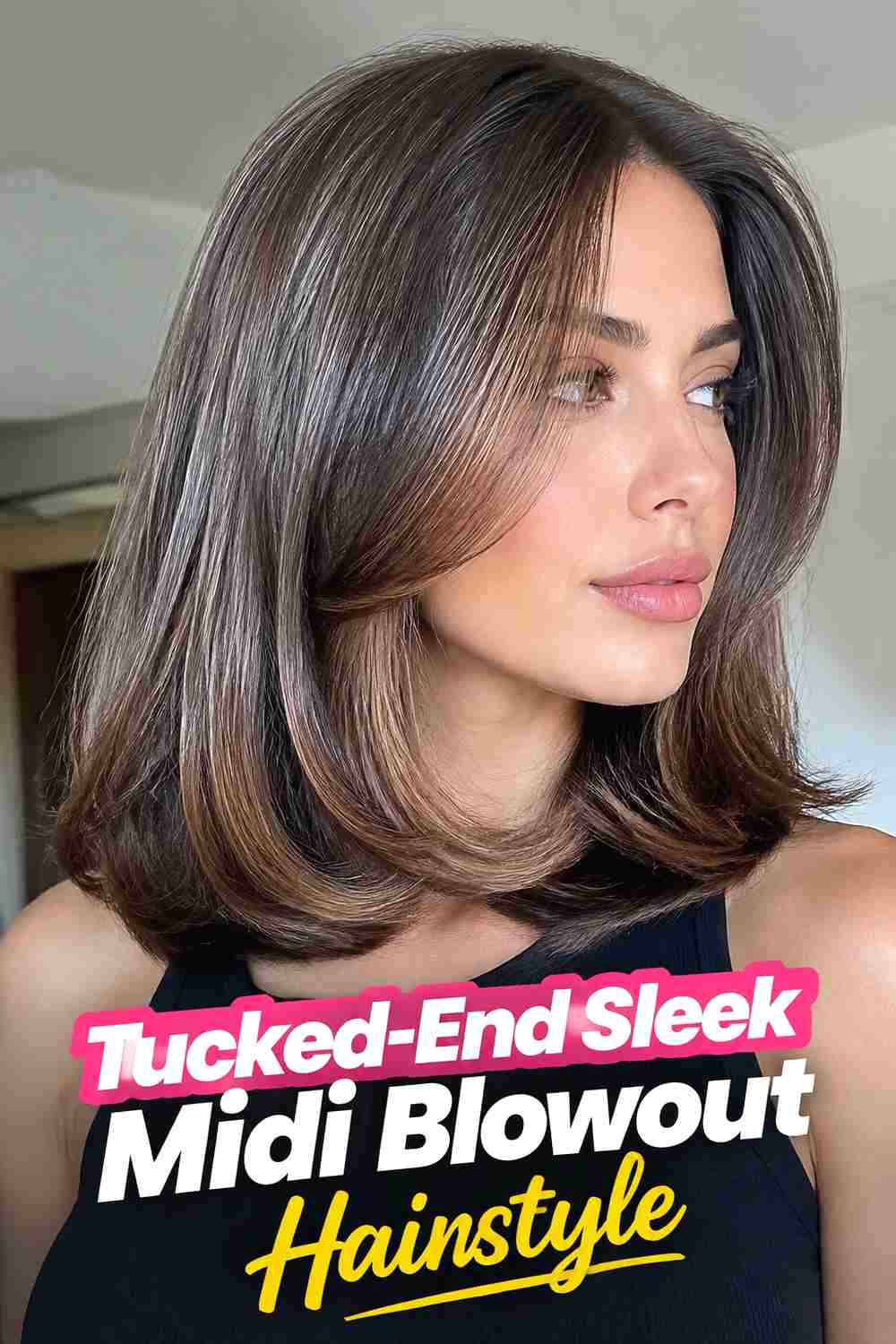
Tucking the ends inward creates a neat, rounded perimeter that makes a midi cut feel compact and highly polished. The roots and mid-lengths stay sleek, while the final few inches gradually curve toward the neck and shoulders. This finish looks especially effective on one-length or lightly layered hair because the inward bend forms a recognizable lower outline. Shoulder-length cuts may require slightly more control where the ends meet clothing, since friction can cause them to flip outward. The overall volume should remain moderate; too much lift at the crown can compete with the smooth, tucked-under base. A glossy surface and clearly defined ends complete the refined silhouette.
Hair Type & Length
Straight and softly wavy shoulder-to-collarbone hair is particularly suited to this finish because the ends can be directed inward without excessive shaping.
Wear & Maintenance
Refresh only the lower sections if the ends begin flipping outward during the day rather than restyling the entire blowout.
7. Flipped End Sleek Midi Blowout Hairstyle
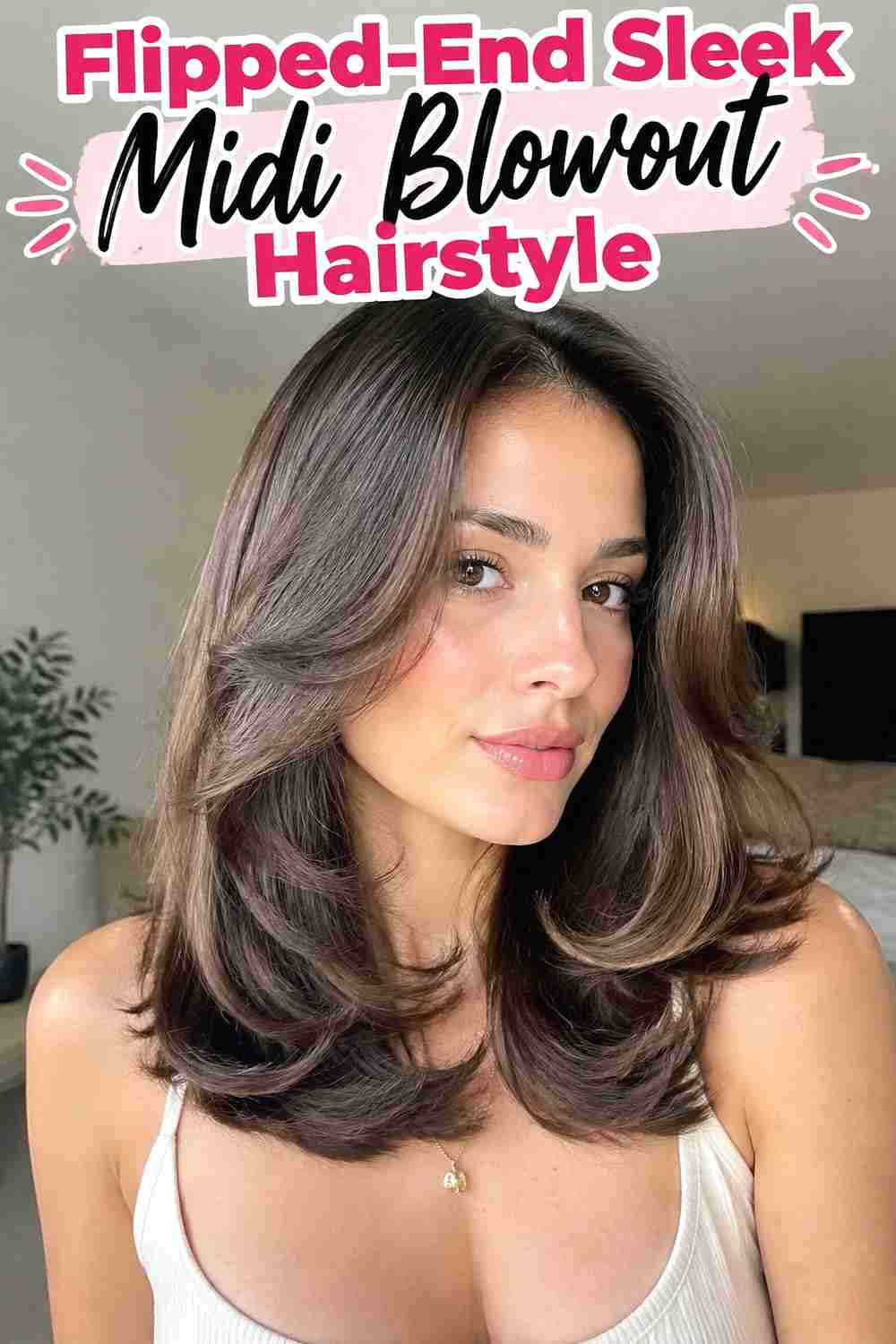
Flipped ends give a sleek midi blowout more energy by directing the lower sections outward while keeping the upper hair smooth. The contrast is strongest when the roots and mid-lengths stay controlled, allowing the outward movement to begin only near the shoulders. This style works especially well on layered midi cuts because different lengths can create light, staggered flips instead of one rigid horizontal line. A little crown lift is enough to keep the proportions balanced, but the ends should remain the visual focus. Keep the flip soft rather than sharply curled, and allow a few pieces to vary slightly in direction for a contemporary finish.
Styling Notes
Turn only the last inch or two outward to preserve the sleek mid-lengths and avoid creating excessive width.
Best For
This version suits shoulder-length cuts when you want a lively finish that still feels polished and easy to wear.
8. Rounded Layer Sleek Midi Blowout Hairstyle
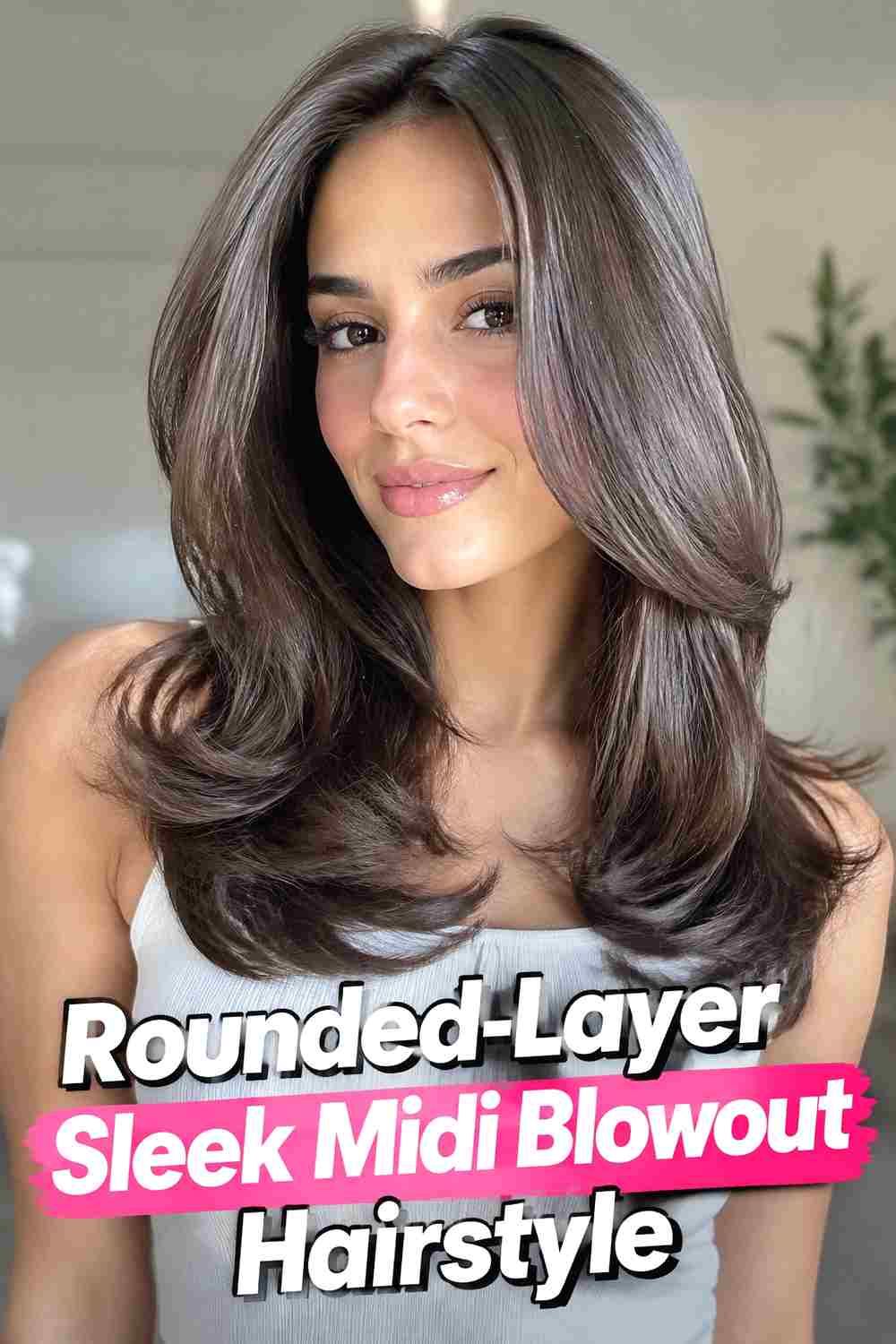
Rounded layers create soft dimension through a midi blowout without sacrificing smoothness. The shorter sections curve gently into the longer ones, producing subtle fullness around the sides and a polished lower shape. Unlike a heavily feathered blowout, this version keeps each layer relatively close to the overall silhouette, so the effect is controlled rather than airy. Shoulder and collarbone lengths show the graduated movement particularly well. A smooth crown and softly reflective surface help the layers look intentional, while broad bends keep them connected. This is a useful option if a one-length midi cut feels too heavy but you still prefer a refined finish over dramatic volume.
Why It Works
Graduated curves remove visual heaviness from the perimeter while maintaining the clean lines associated with sleek blowout styling.
Pro Tip
Shape each layer with a broad bend rather than a tight curl so the sections overlap smoothly instead of separating into obvious tiers.
9. Collarbone Sleek Midi Blowout Hairstyle
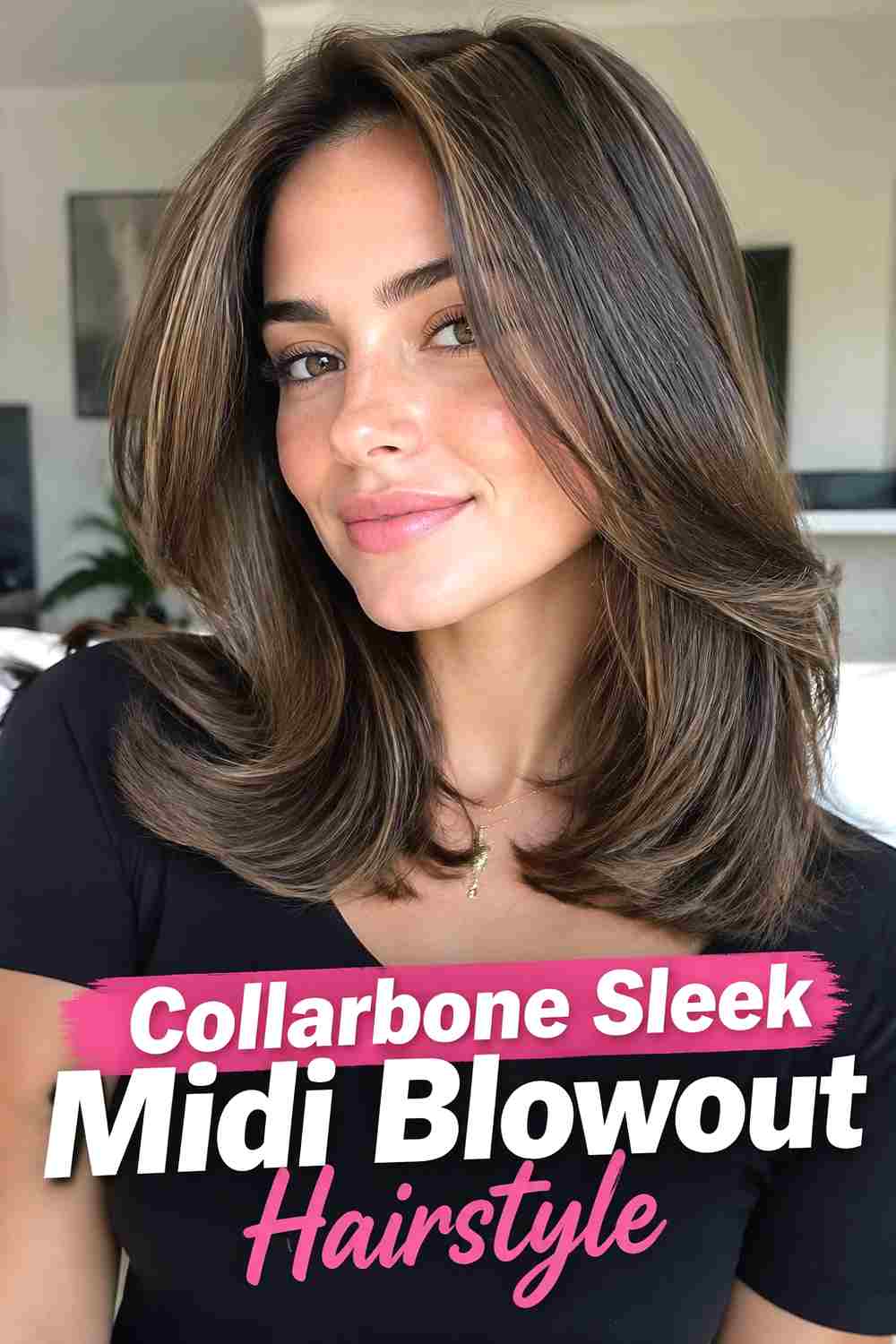
A collarbone-length cut sits at an ideal point for a sleek blowout because it has enough length for movement but remains light enough to hold its shape. Keep the roots smooth and introduce subtle body through the lower half, allowing the ends to rest naturally near the collarbones. They can curve inward, outward, or alternate slightly depending on the cut. A clean part reinforces the polished finish, while light front layering keeps the style from feeling heavy around the face. Because this length often touches clothing, maintaining soft flexibility is important. Stiff ends can bend unpredictably, whereas movable strands settle more naturally after contact with collars and shoulders.
Styling Notes
Direct the ends according to how they naturally meet the collarbone instead of forcing every section into an identical curve.
Wear & Maintenance
Flexible hold helps preserve movement while allowing the hair to settle naturally after brushing against clothing.
10. Low Volume Sleek Midi Blowout Hairstyle
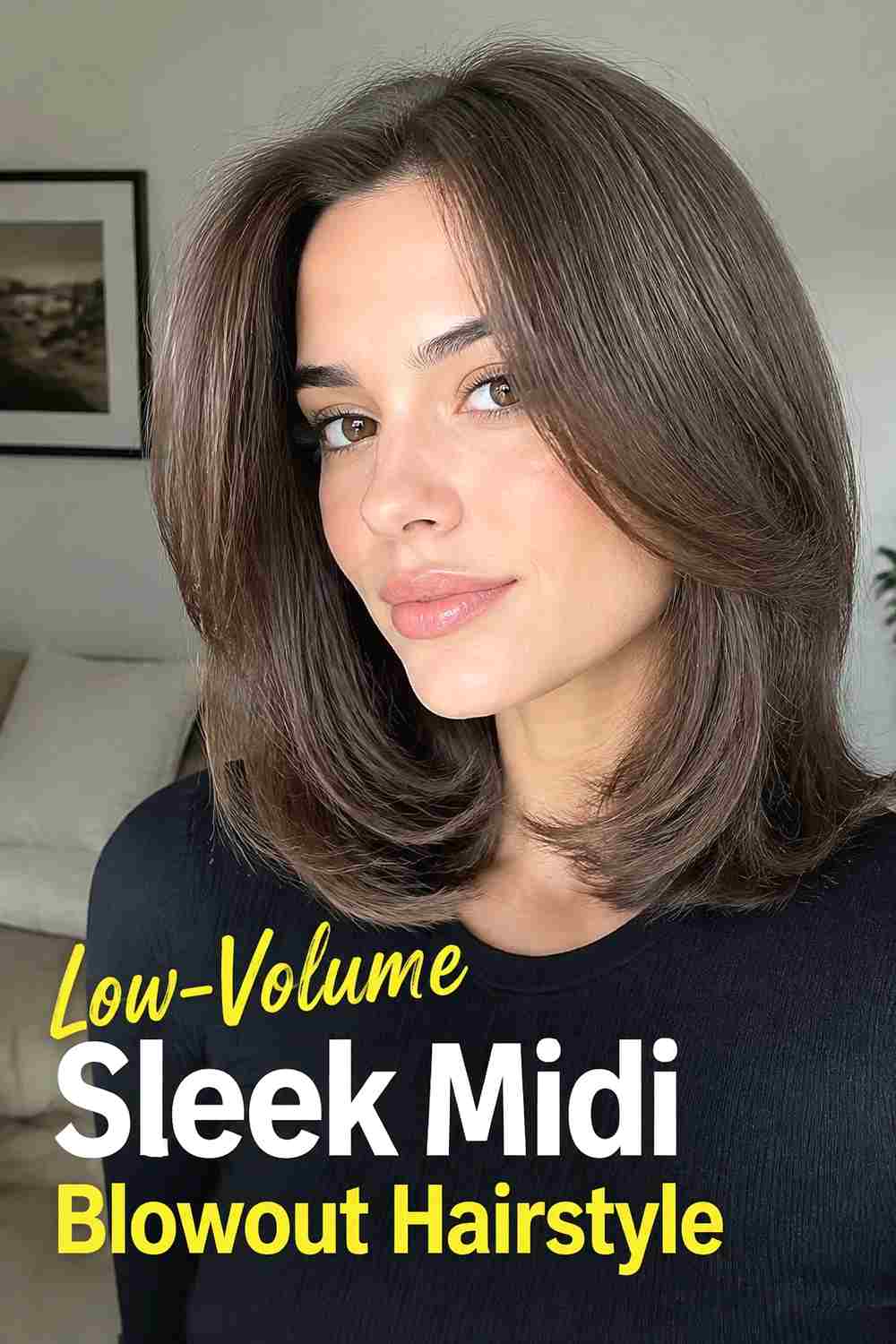
Not every blowout needs dramatic lift. A low-volume midi version keeps the roots close to the head and concentrates movement through the lower lengths, creating a streamlined finish that feels understated and polished. The hair can remain nearly straight through the midsection, with a slight curve or bend at the ends to keep the shape from appearing flat. This approach can be especially useful for dense hair that already has plenty of natural body. It also works well when you want a style that feels appropriate for work or minimalist outfits. Keep the surface smooth but not overly compressed, preserving enough natural movement for the strands to look soft.
Why It Works
Reducing crown volume emphasizes the clean length and glossy surface, giving the blowout a quieter and more contemporary profile.
Best For
This version is particularly practical for thick hair or anyone who prefers sleekness over oversized bounce.
11. Bouncy Ends Sleek Midi Blowout Hairstyle
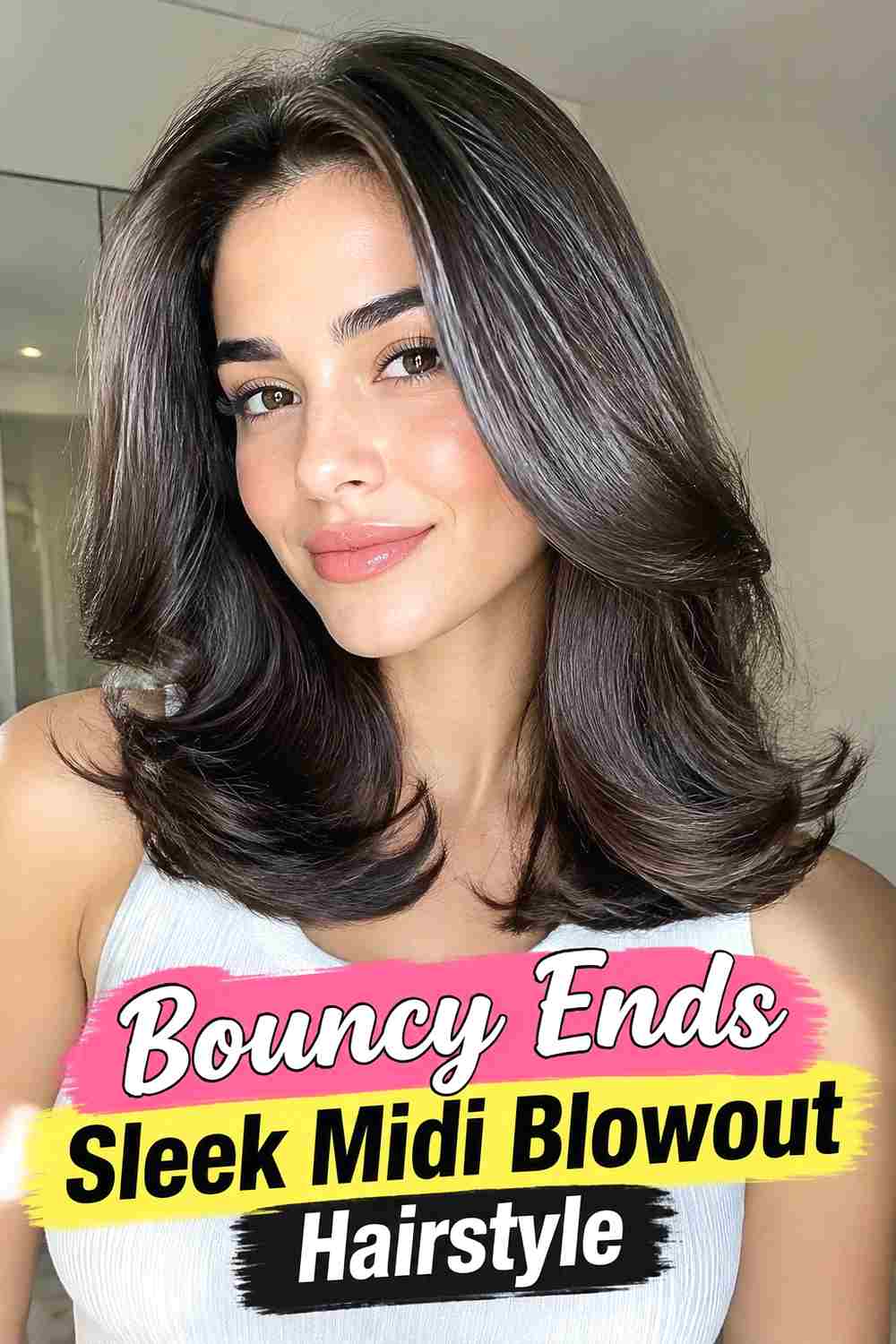
Bouncy ends add movement without disturbing the sleek roots and smooth mid-lengths that define this style. The strongest curve begins around the lower third of the hair, where sections turn under or outward in broad, springy bends. Keeping the top controlled prevents the hairstyle from becoming too voluminous for a midi length. Light layering can enhance the bounce by allowing the ends to sit at different levels, but a one-length cut can also create a beautifully rounded lower edge. The finished movement should remain flexible rather than heavily set. This makes the hairstyle especially wearable for everyday situations where you want a polished finish with a little extra energy.
Styling Notes
Allow the ends to cool in their curved shape before separating them, which helps the bounce remain visible without excessive finishing product.
Pro Tip
Concentrate volume below the jaw instead of at the crown to keep the silhouette sleek and balanced.
12. Sleek Midi Blowout With Curtain Fringe Hairstyle
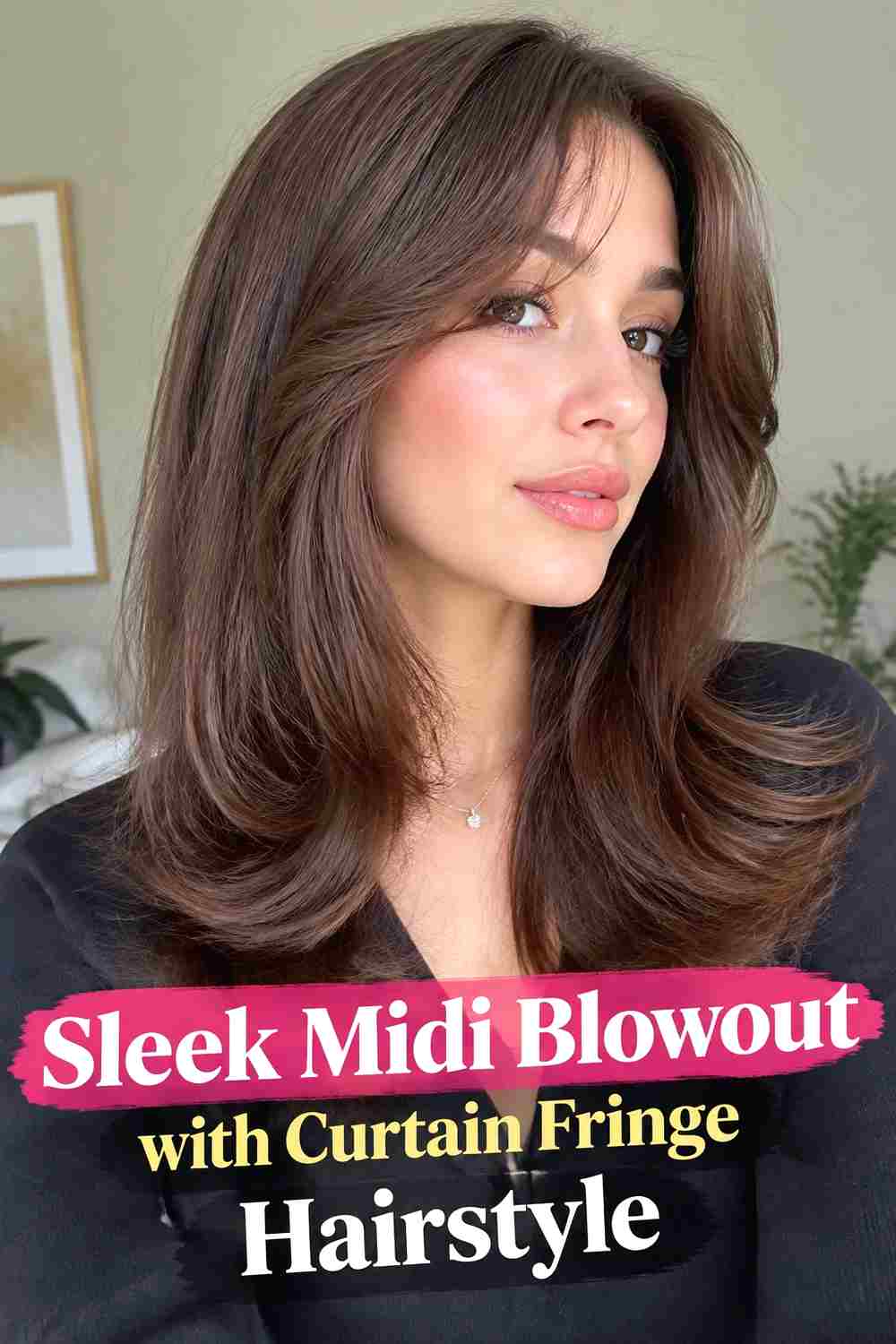
Curtain fringe adds a soft opening around the face while the rest of the midi blowout stays smooth and controlled. The fringe separates near the center or slightly off-center, then bends outward toward the temples before blending into longer face-framing pieces. Keeping the roots of the main haircut sleek gives the fringe enough space to move without making the overall style overly fluffy. This works particularly well when the bangs have grown to eyebrow or cheekbone length, allowing them to connect naturally with the midi layers. The ends can remain softly rounded to echo the movement at the front, creating a cohesive shape from fringe to perimeter.
Why It Works
The open fringe introduces softness around the forehead while maintaining the balanced, polished structure of the midi blowout.
Hair Type & Length
Shoulder and collarbone cuts with longer curtain fringe are ideal because the front sections can transition smoothly into the surrounding layers.
13. Sleek Midi Blowout With Side Swept Fringe Hairstyle
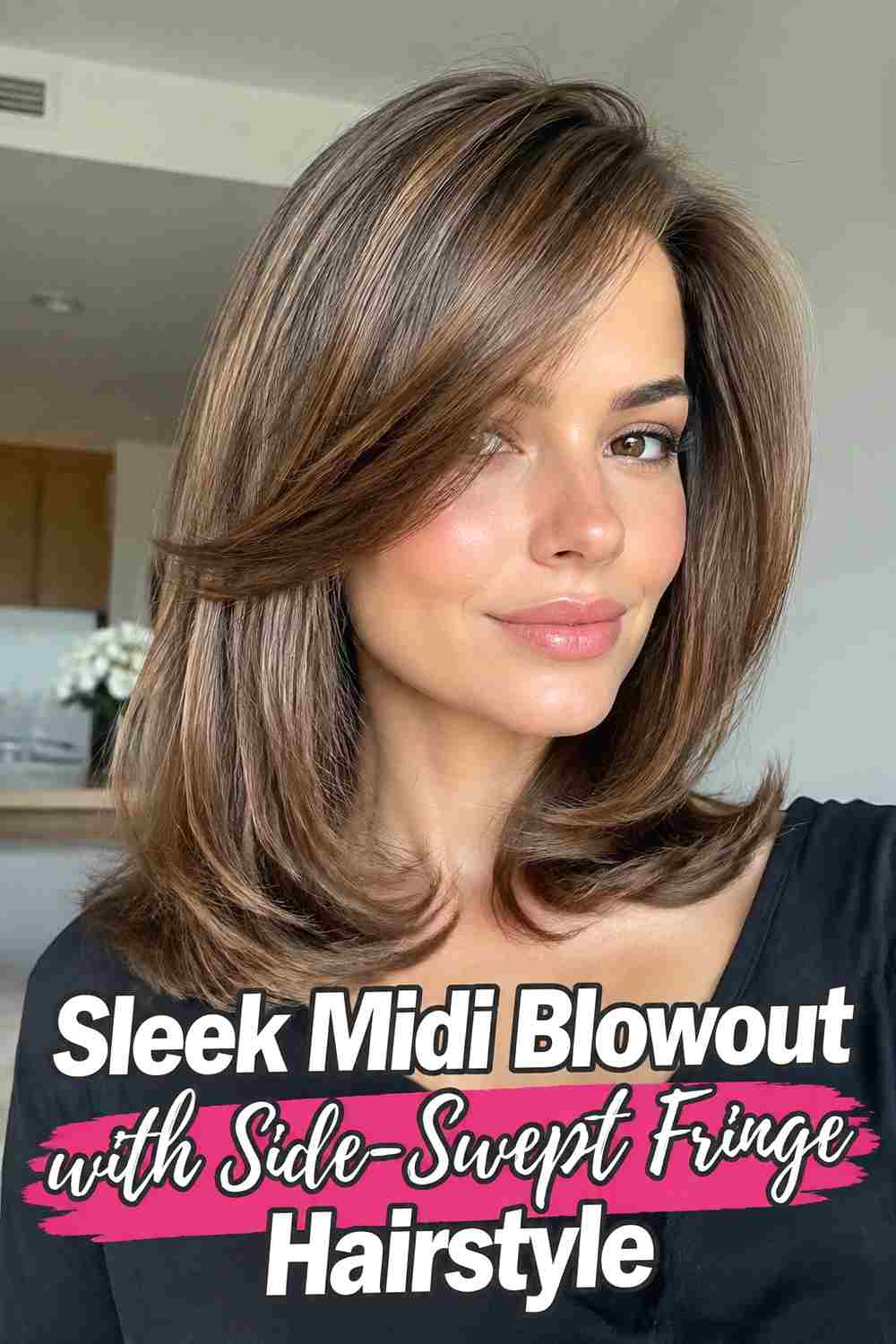
A side-swept fringe gives the midi blowout a more directional front without requiring extra volume through the full hairstyle. The fringe travels diagonally across the forehead and blends into the heavier side, while the crown and lengths stay polished. A subtle root lift at the front prevents the fringe from falling flat, but the rest of the style can remain close to the head. This works especially well when the fringe reaches at least eyebrow length and can move naturally into longer layers. Shape the ends with a broad bend so they complement the sweep instead of competing with it. The result feels refined, soft, and suitable for both everyday and dressier styling.
Styling Notes
Dry the fringe across the forehead in its intended direction, then introduce only a small amount of lift at the root.
Best For
Choose this look if you prefer asymmetry around the face while keeping the overall midi silhouette sleek and controlled.
14. Polished U Shape Sleek Midi Blowout Hairstyle
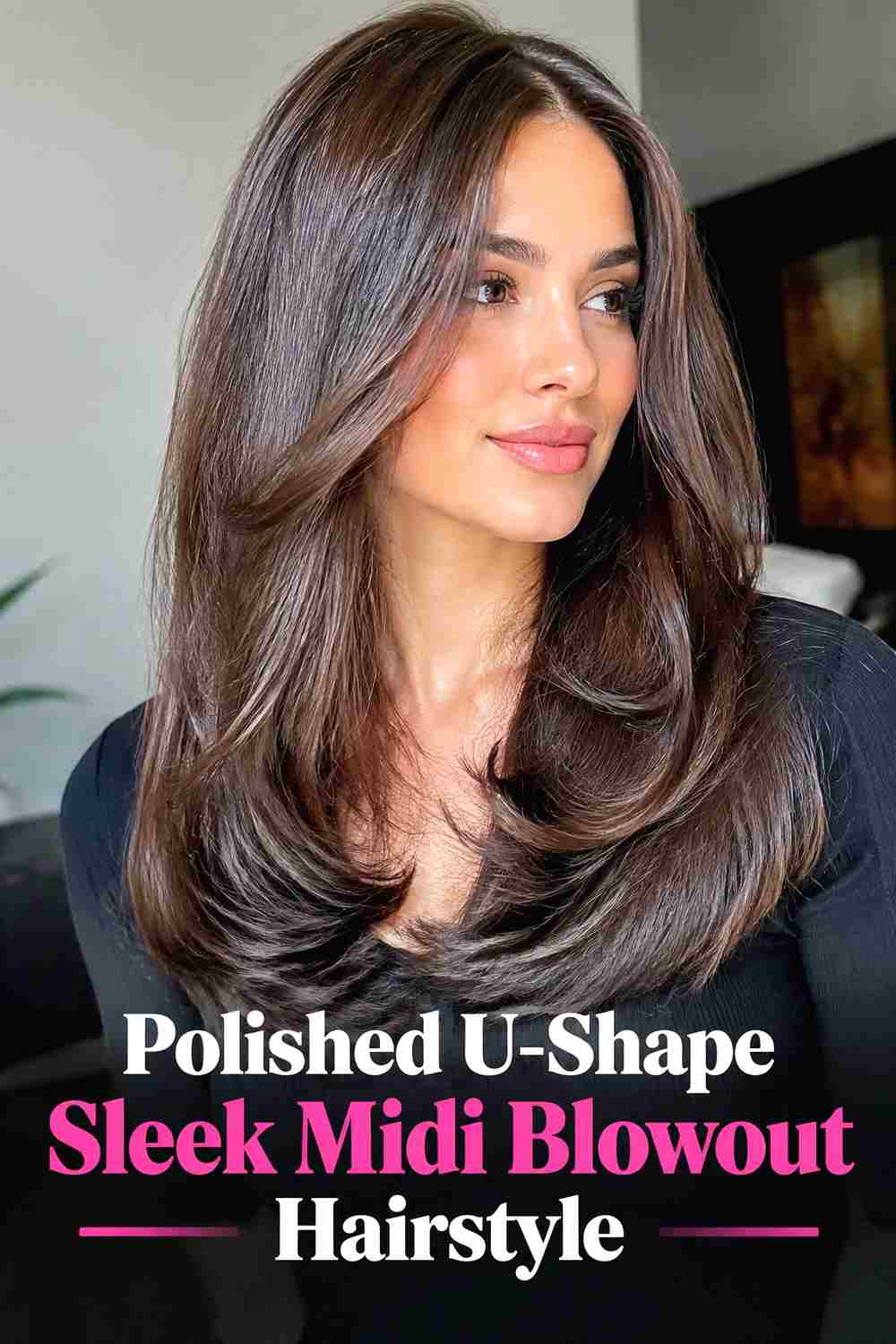
A subtle U-shaped perimeter gives a midi blowout a softer back profile than a completely blunt edge. The center back remains slightly longer while the sides rise gradually toward the front, creating a gentle curve that becomes visible when the ends are smoothed and shaped. Keep layering minimal so the perimeter remains the main feature. The blowout itself should use moderate body, smooth roots, and broad bends through the lower section rather than high crown volume. This option works particularly well when the hair sits between shoulder and collarbone length. The curved edge adds movement while still maintaining enough density at the ends for a polished appearance.
Why It Works
The U-shaped perimeter creates subtle movement through the back without requiring heavy layering or dramatic styling.
Wear & Maintenance
Regular perimeter trims help the curved outline remain visible as the midi length grows.
15. Glossy One Length Sleek Midi Blowout Hairstyle
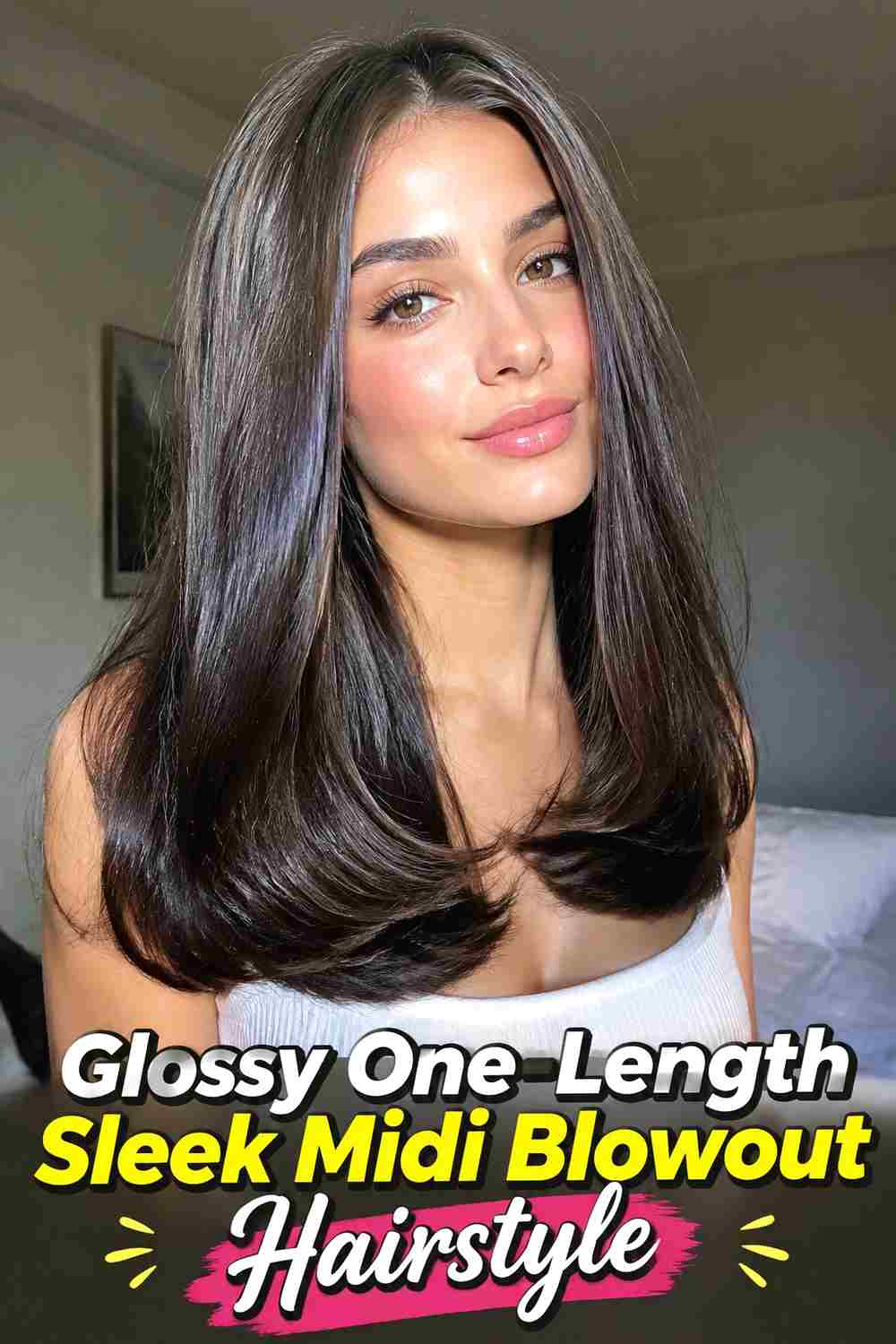
A one-length midi cut makes shine and precision the focus of the blowout. With little or no visible layering, the hair falls in a dense, clean line around the shoulders or collarbones. The roots remain smooth, while a slight bend through the ends prevents the cut from looking rigid. This style can feel particularly striking with a center part because the simple structure emphasizes symmetry, though a soft side part also works. The ends should look full and healthy rather than overly thinned. Since the silhouette is uncomplicated, strand detail, controlled flyaways, and natural shine become especially important. Avoid excessive volume, which can weaken the strong one-length shape.
Styling Notes
Use broad sections to maintain smoothness and keep the ends moving together rather than separating them into individual curls.
Best For
This version suits anyone who likes dense-looking ends, minimal layering, and a sleek blowout with a strong, uncomplicated silhouette.
How to Choose the Right Look
Start with the exact length of your midi cut. Shoulder-length hair naturally interacts with the shoulders, making flipped ends, tucked curves, and bouncy finishes especially noticeable. Collarbone lengths provide a little more weight and often suit softer bends, face-framing layers, or sleek one-length shapes.
Next, consider density. Thick hair may look best with low-volume styling, rounded layers, or controlled face-framing movement so the overall shape does not become too wide. Fine to medium hair can benefit from bouncy ends, subtle crown support, or strategically placed layers that create movement without sacrificing fullness.
Your haircut matters just as much as styling. One-length cuts emphasize shine and perimeter density, while layered cuts offer more movement. Curtain or side-swept fringe can add softness without changing the midi length itself.
Finally, think about maintenance. Glassy, tucked-under, and highly polished finishes require more control, while soft bends and lightly flipped ends tolerate natural movement more easily.
Final Thoughts
A sleek midi blowout works best when smoothness and movement stay in balance. You can keep the silhouette minimal with straight lengths and low volume, introduce softness through layers or fringe, or make the ends the main feature with flips and bounce. Choose the variation that works naturally with your haircut, density, and usual styling routine rather than adding more volume than the length needs.
FAQs
1. What length is a midi blowout?
A midi blowout typically works on medium-length hair around the shoulders or collarbones, where there is enough length for movement without the weight of very long hair.
2. Can a sleek blowout still have volume?
Yes. Sleek refers to controlled, smooth styling rather than completely flat hair. Volume can be concentrated through the ends, face-framing layers, or selected root areas.
3. What haircut works best for a sleek midi blowout?
One-length, lightly layered, U-shaped, and face-framing midi cuts can all work. The best option depends on whether you prefer dense ends or more visible movement.
4. How can I keep midi blowout ends from flipping randomly?
Shape the ends deliberately while styling and consider how the hair naturally rests against your shoulders or collarbones. Flexible hold can help without making the ends stiff.
5. Are sleek midi blowouts suitable for thick hair?
Yes. Thick hair often suits sleek midi styling particularly well because controlled roots and larger, softer bends can manage fullness while preserving natural density.
Save your favorite sleek midi blowout hairstyle ideas, share them for inspiration, and explore more polished medium-length looks for your next styling day.