17 Soft Butterfly Bangs Hairstyle Ideas
Soft butterfly bangs bring airy movement around the face, blending sweeping fringe with flowing layers for a hairstyle that feels light, dimensional, and wearable.
Butterfly bangs are designed to move naturally into the surrounding haircut rather than sitting as a heavy block across the forehead. Shorter pieces through the front can open around the face, while longer outer sections sweep toward the temples and cheekbones. Combined with layered lengths, that shape creates the soft, wing-like movement that makes this fringe style especially versatile.
The best version depends on your hair texture, density, length, and usual styling routine. You can emphasize airy separation, loose waves, curls, sleek lengths, or a fuller blowout while keeping the same face-framing concept. These 17 ideas show how different finishes and haircut shapes can change the personality of soft butterfly bangs.
Quick List
- Soft Layered Butterfly Bangs Hairstyle
- Wispy Butterfly Bangs Hairstyle
- Curtain Blend Butterfly Bangs Hairstyle
- Wavy Butterfly Bangs Hairstyle
- Long Layered Butterfly Bangs Hairstyle
- Feathered Butterfly Bangs Hairstyle
- Voluminous Butterfly Bangs Hairstyle
- Straight Butterfly Bangs Hairstyle
- Curly Butterfly Bangs Hairstyle
- Side Swept Butterfly Bangs Hairstyle
- Shaggy Butterfly Bangs Hairstyle
- Shoulder Length Butterfly Bangs Hairstyle
- Face Framing Butterfly Bangs Hairstyle
- Sleek Butterfly Bangs Hairstyle
- Tousled Butterfly Bangs Hairstyle
- Blowout Butterfly Bangs Hairstyle
- Polished Butterfly Bangs Hairstyle
1. Soft Layered Butterfly Bangs Hairstyle
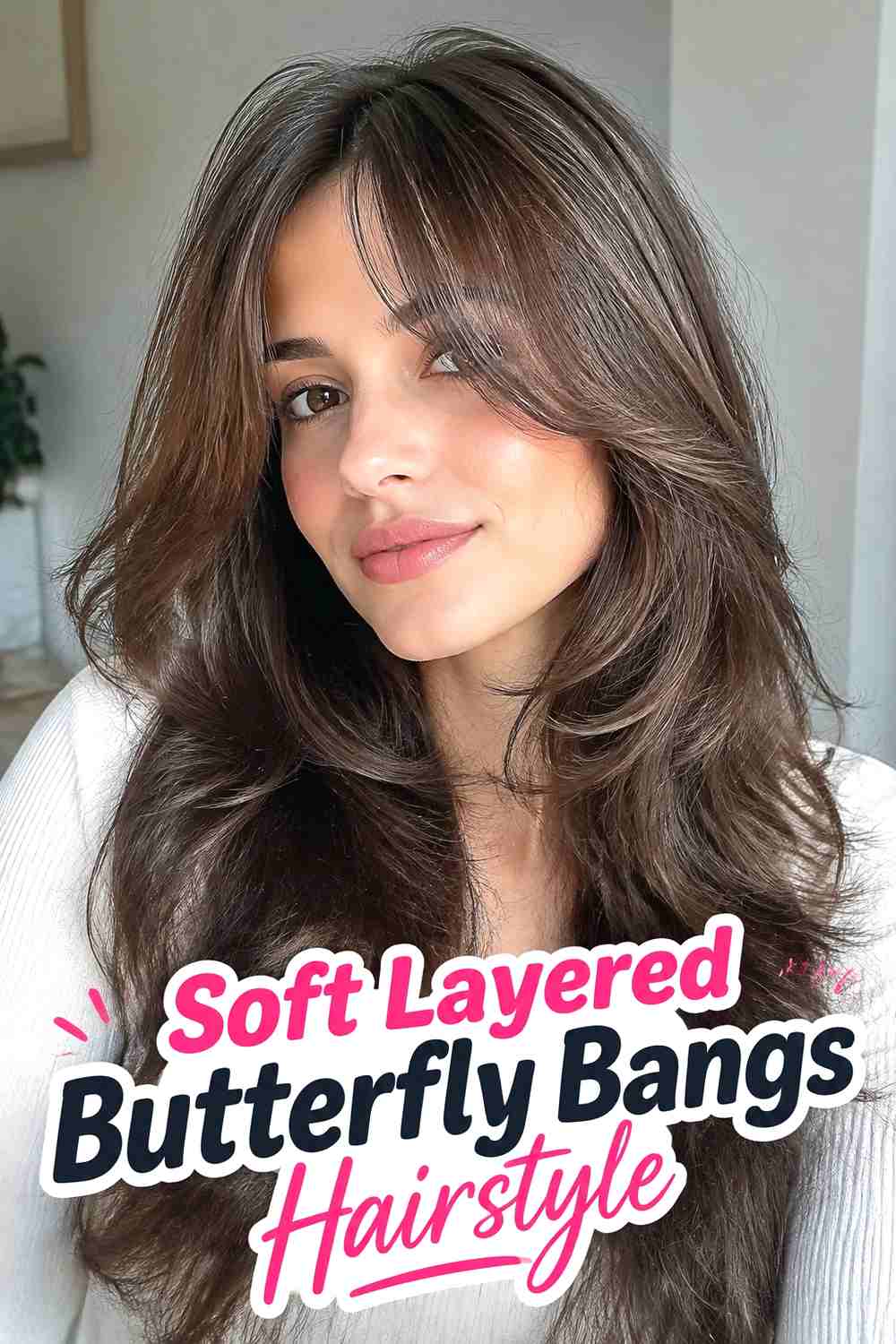
The Soft Layered Butterfly Bangs Hairstyle creates a gentle transition from airy fringe into longer layers around the cheekbones and jaw. The front pieces stay light enough to move, while the surrounding layers give the haircut a flowing shape instead of making the bangs look separate. This version works especially well when you want noticeable face framing without a dense line across the forehead. Medium or long lengths can carry the layered effect beautifully, whether worn smooth or with a subtle bend. The key is keeping the front soft rather than overly thinned. A lightweight blowout can encourage the bangs outward while preserving natural strands and a relaxed, touchable finish.
Styling Notes
Dry the fringe forward first, then divide it softly and guide the outer pieces away from the face with a round brush.
2. Wispy Butterfly Bangs Hairstyle
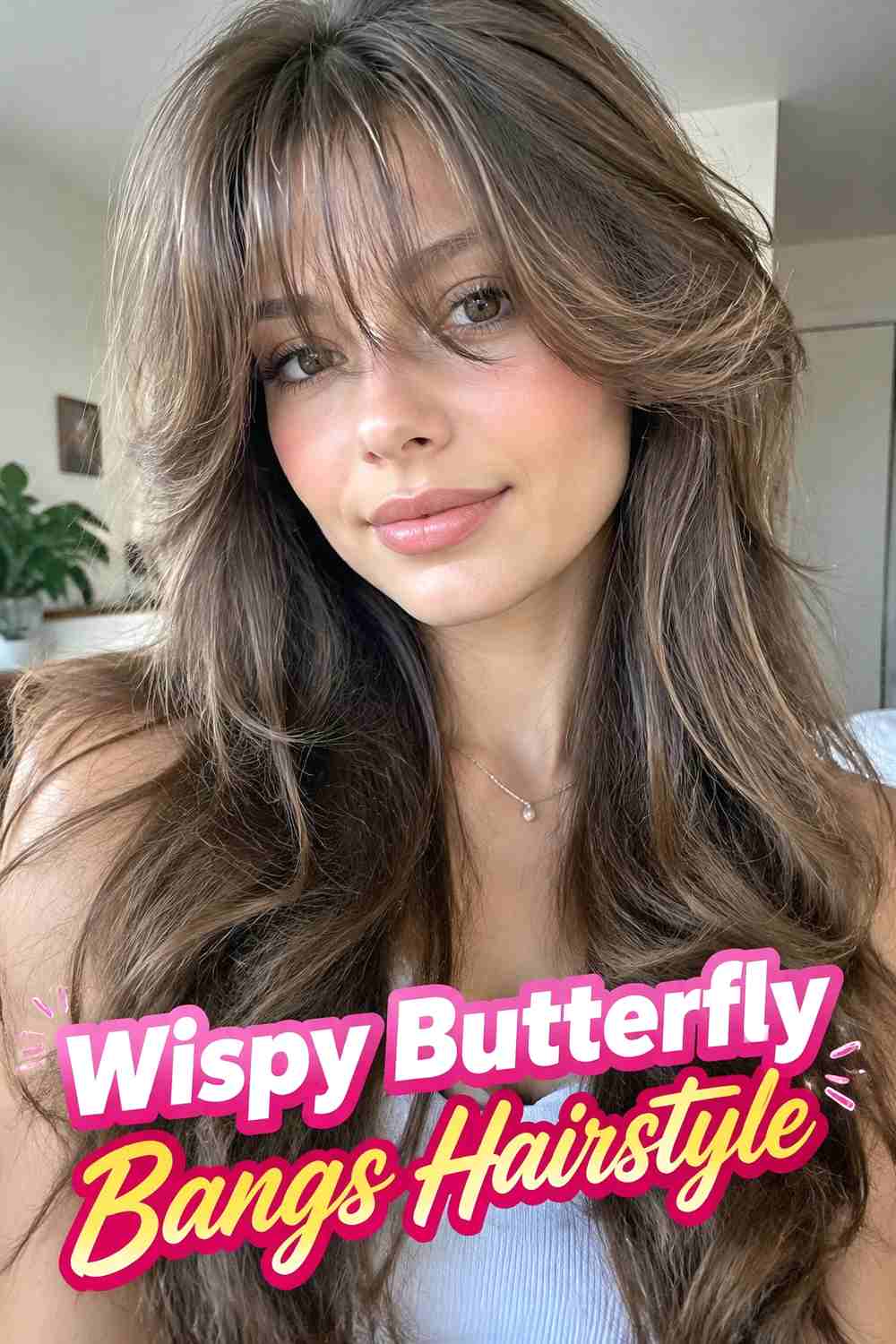
A Wispy Butterfly Bangs Hairstyle keeps the fringe delicate and separated, with small sections of forehead visible between the strands. The lightest pieces sit nearer the center, while slightly longer sections stretch toward the temples and blend into the rest of the haircut. This gives butterfly bangs a softer, lower-density finish that can feel less dramatic than a thick fringe. It can pair nicely with straight, wavy, or lightly layered hair, especially when the main lengths retain enough fullness to balance the airy front. Styling should remain minimal; too much cream or serum can cause the fine fringe to clump together and lose the feathery separation that makes this version distinctive.
Best For
This variation can work particularly well for fine to medium-density hair or anyone who prefers lighter bangs with visible movement and flexible parting.
3. Curtain Blend Butterfly Bangs Hairstyle
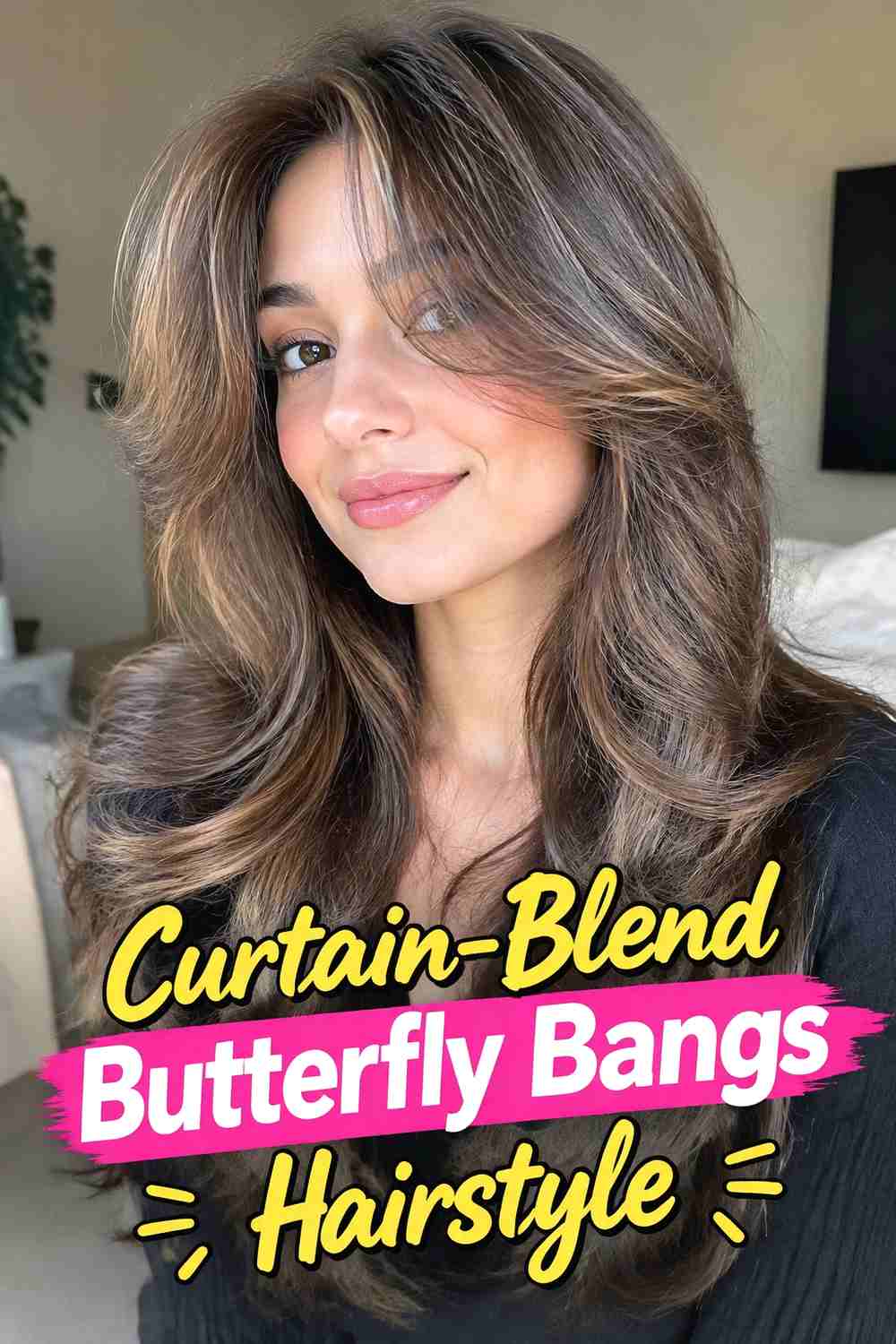
The Curtain-Blend Butterfly Bangs Hairstyle combines the softness of butterfly fringe with the open shape of curtain bangs. The central pieces sit shorter while the sides progressively lengthen, allowing the fringe to split gently and sweep outward toward the cheekbones. Unlike a heavier curtain fringe, this version keeps the ends airy and integrates them closely with surrounding layers. It is especially useful if you want bangs that can be worn both forward and slightly parted depending on the day. A smooth blow-dry can create a defined winged shape, while natural waves make the transition even softer. Avoid forcing a perfectly symmetrical split, since a little irregularity often makes the finish look more relaxed.
Why It Works
The gradual increase in length lets the fringe flow directly into face-framing layers, creating movement without an abrupt break between bangs and the rest of the hair.
4. Wavy Butterfly Bangs Hairstyle
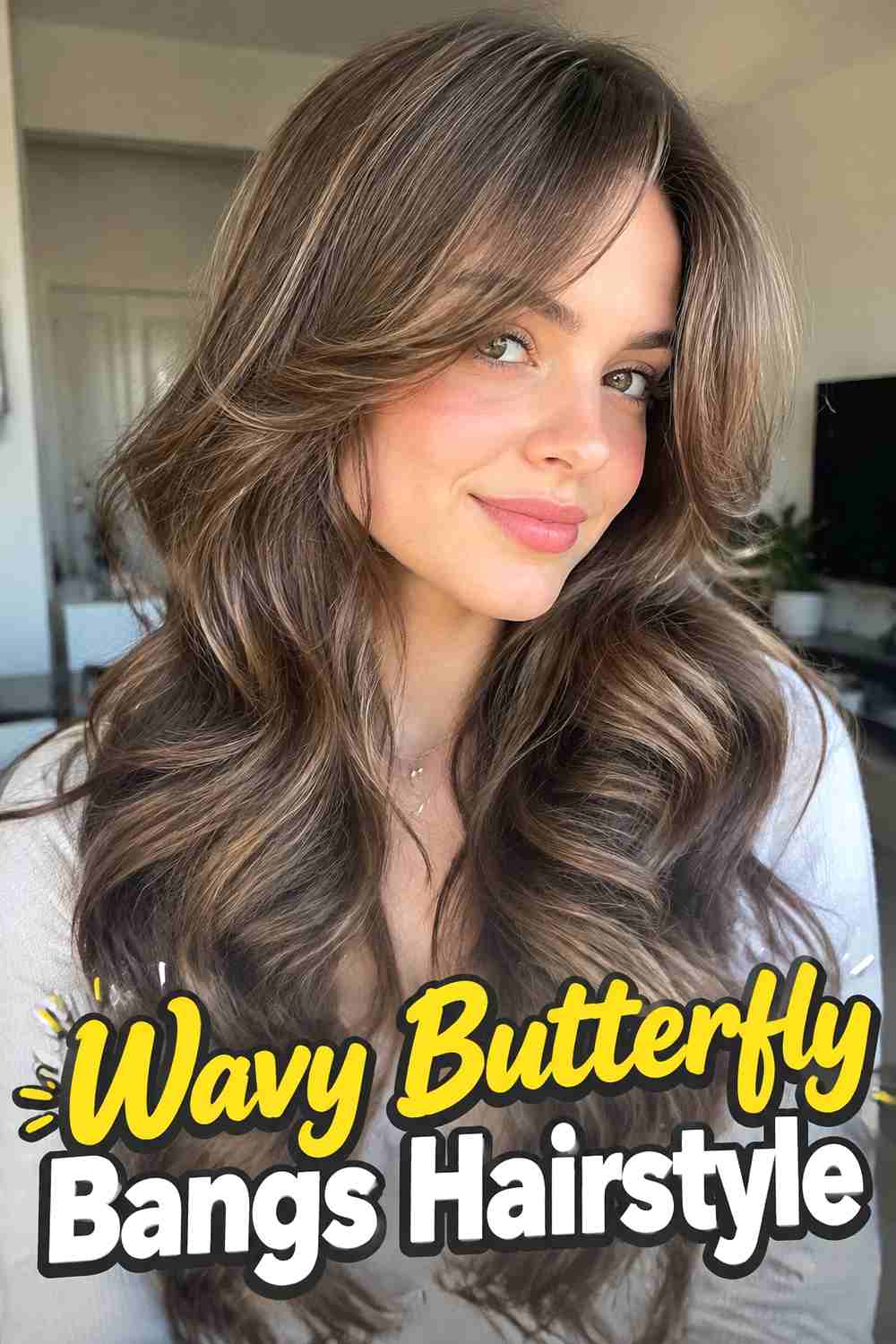
A Wavy Butterfly Bangs Hairstyle uses loose bends through the lengths to echo the sweeping direction of the fringe. The bangs can open gently around the forehead while longer side sections curl away from the cheekbones, giving the whole haircut a continuous sense of movement. Naturally wavy hair may need little more than lightweight mousse or styling cream, while straighter textures can create the effect with a curling iron or flat-iron bends. The most modern finish usually comes from varying the waves rather than making every section identical. Keep the fringe softer than the main lengths so it frames the face without becoming overly curled or losing its recognizable butterfly shape.
Pro Tip
Curl or bend the longer bang pieces away from the face, then loosen them with your fingers once they cool for a softer, more natural sweep.
5. Long Layered Butterfly Bangs Hairstyle
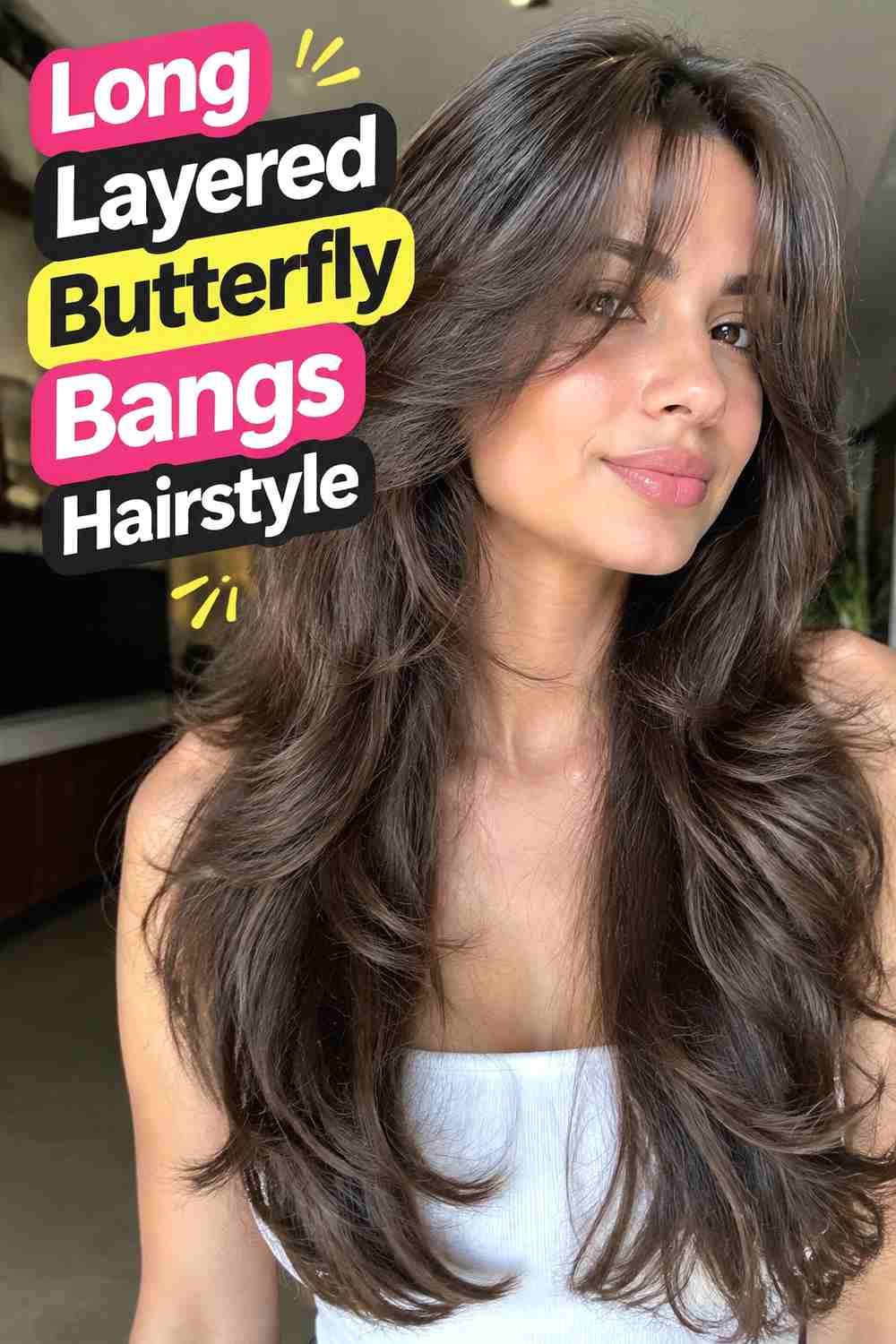
The Long Layered Butterfly Bangs Hairstyle creates a flowing silhouette by connecting sweeping fringe to several gradually longer layers through the front and body of the hair. The bangs form the shortest point of the face-framing structure, while cheekbone, jaw, and shoulder-level pieces continue the movement downward. This makes the fringe feel like part of the entire haircut rather than an isolated feature. Long hair benefits from the added dimension because strategic layering can prevent the lengths from appearing visually heavy. A soft blowout highlights the transitions, but loose waves or natural texture also work well. Preserve enough density through the ends so the style maintains fullness even with multiple layers.
Hair Type & Length
Medium to long hair offers enough space for the cascading layers to develop. Thick hair can support more layering, while finer hair usually benefits from a lighter approach.
6. Feathered Butterfly Bangs Hairstyle
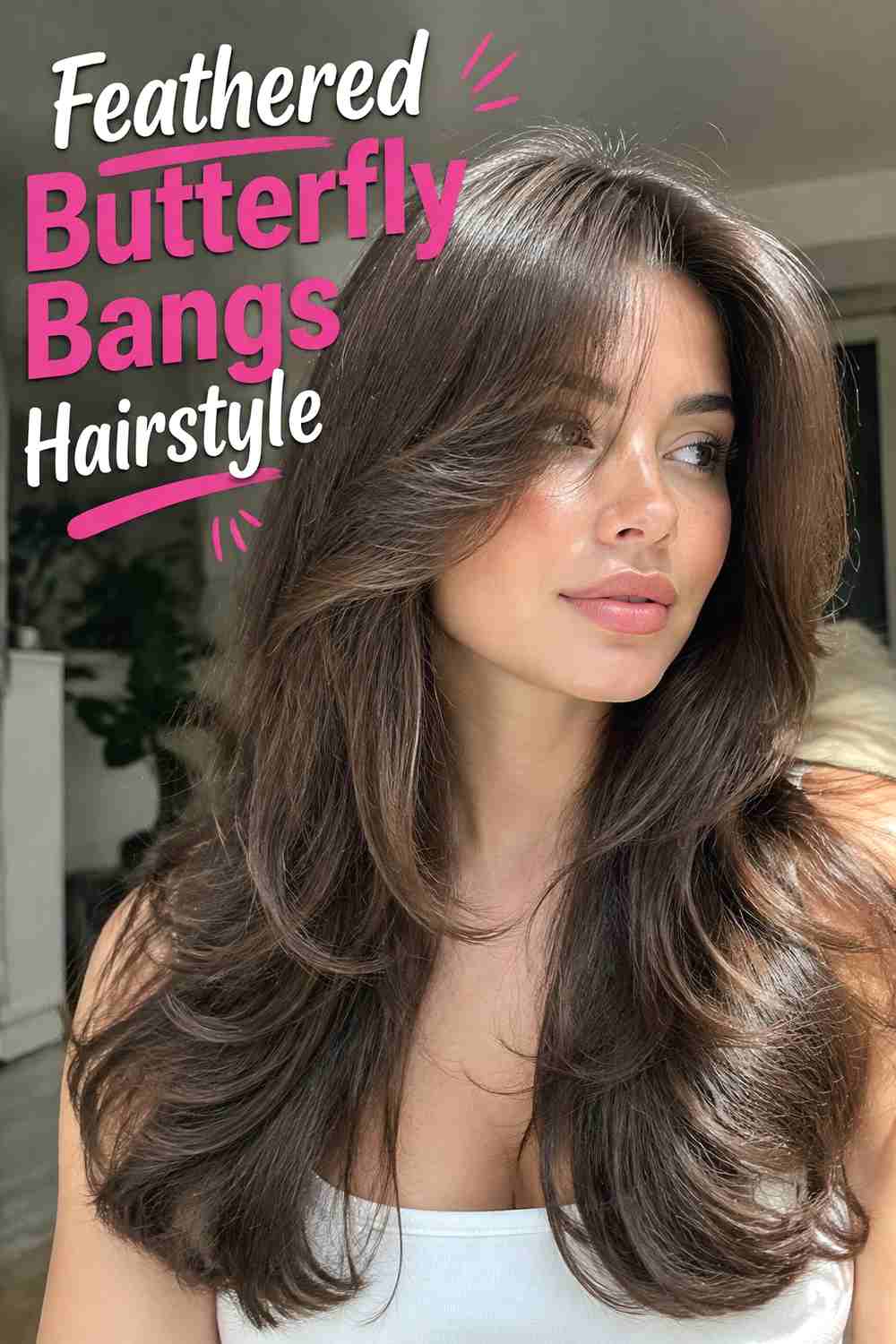
A Feathered Butterfly Bangs Hairstyle emphasizes outward direction and tapered movement around the eyes and cheekbones. The fringe remains soft through the center, then becomes longer and more feathered toward the sides, where it blends into coordinating face-framing sections. This creates a light, sweeping shape that works especially well with a round-brush blowout. The feathering can be subtle for everyday wear rather than dramatically flipped, helping the haircut feel modern instead of overly styled. Straight and slightly wavy textures can show the layered detail clearly, but the main goal is movement rather than perfect smoothness. Keeping the ends softly tapered gives the fringe lift without making it appear thin or sparse.
Styling Notes
Use a medium round brush on the outer fringe and rotate it gently away from the face. Avoid excessive tension if you want a softer feather rather than a rigid flip.
7. Voluminous Butterfly Bangs Hairstyle
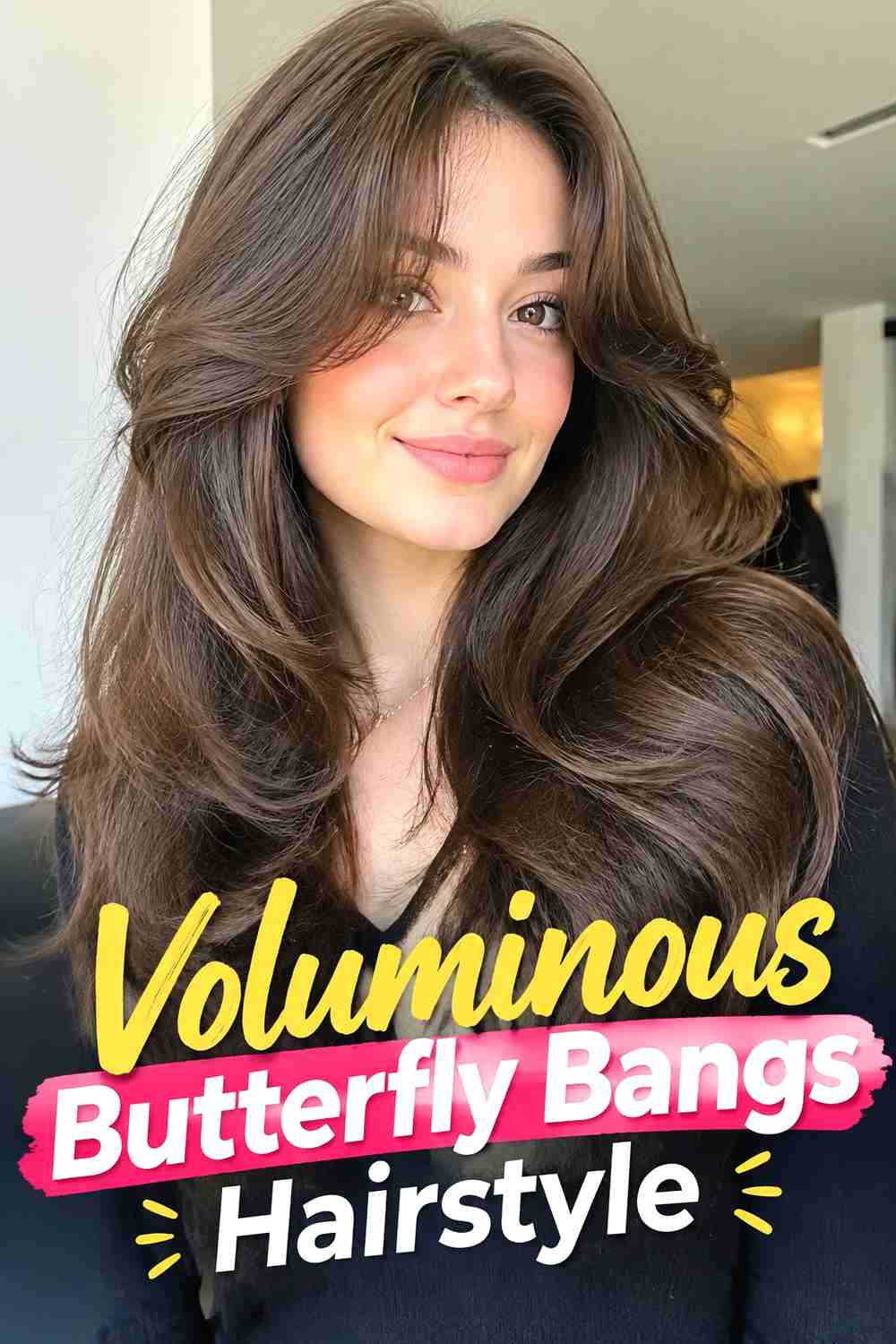
The Voluminous Butterfly Bangs Hairstyle brings extra lift through the crown, sides, and lengths while allowing the fringe to sweep outward with plenty of bounce. A rounded blowout can make the longer bang sections curve around the cheekbones, creating a full silhouette without requiring extremely short fringe. Layers through the body of the haircut help support movement, especially when the hair is medium to thick. The front should stay airy enough to separate naturally because dense, stiff bangs can compete with the overall volume. Root-lifting mousse can provide support, while heavy oils are better kept away from the scalp. Once styled, allowing each section to cool before brushing helps preserve a softer, longer-lasting shape.
Pro Tip
Lift the roots while drying rather than pulling every section downward. Save the lightest tension for the bangs so they retain movement and separation.
8. Straight Butterfly Bangs Hairstyle
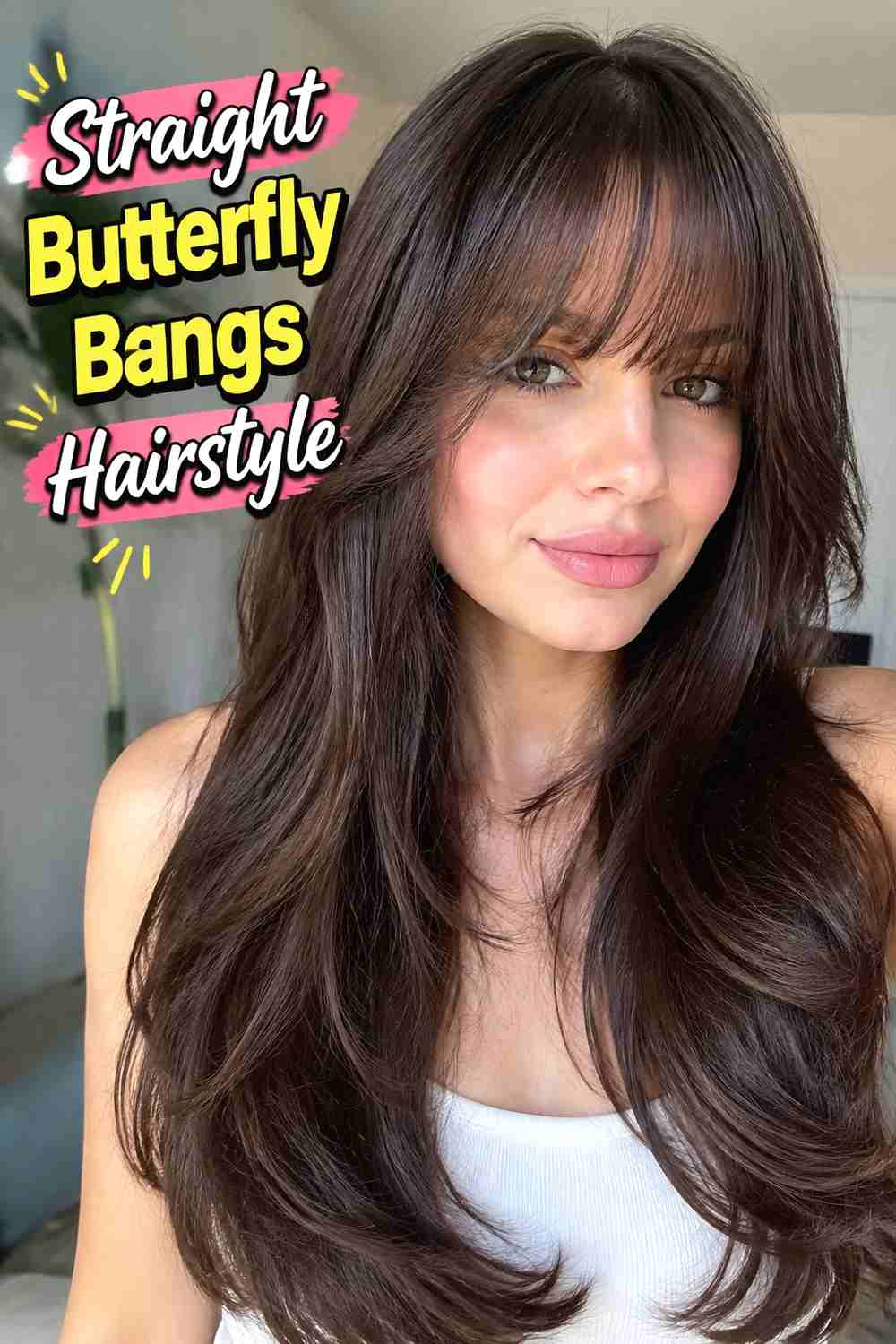
A Straight Butterfly Bangs Hairstyle offers a cleaner interpretation of the trend by pairing smooth lengths with softly angled fringe. The main hair can fall straight with visible strand detail, while the bangs open slightly around the center and lengthen toward the outer edges. A small bend near the cheekbones keeps the front from appearing rigid and helps maintain the signature sweeping shape. Naturally straight hair can make this version easy to wear, although other textures may need controlled blow-drying or a flat iron. The contrast between sleek lengths and lighter fringe gives the haircut definition without making it severe. Avoid flattening the bang roots completely, since a little lift helps the outer sections fall more naturally.
Wear & Maintenance
Straight styles reveal changes in fringe length quickly, so occasional reshaping can help preserve the intended graduation from shorter center pieces to longer sides.
9. Curly Butterfly Bangs Hairstyle
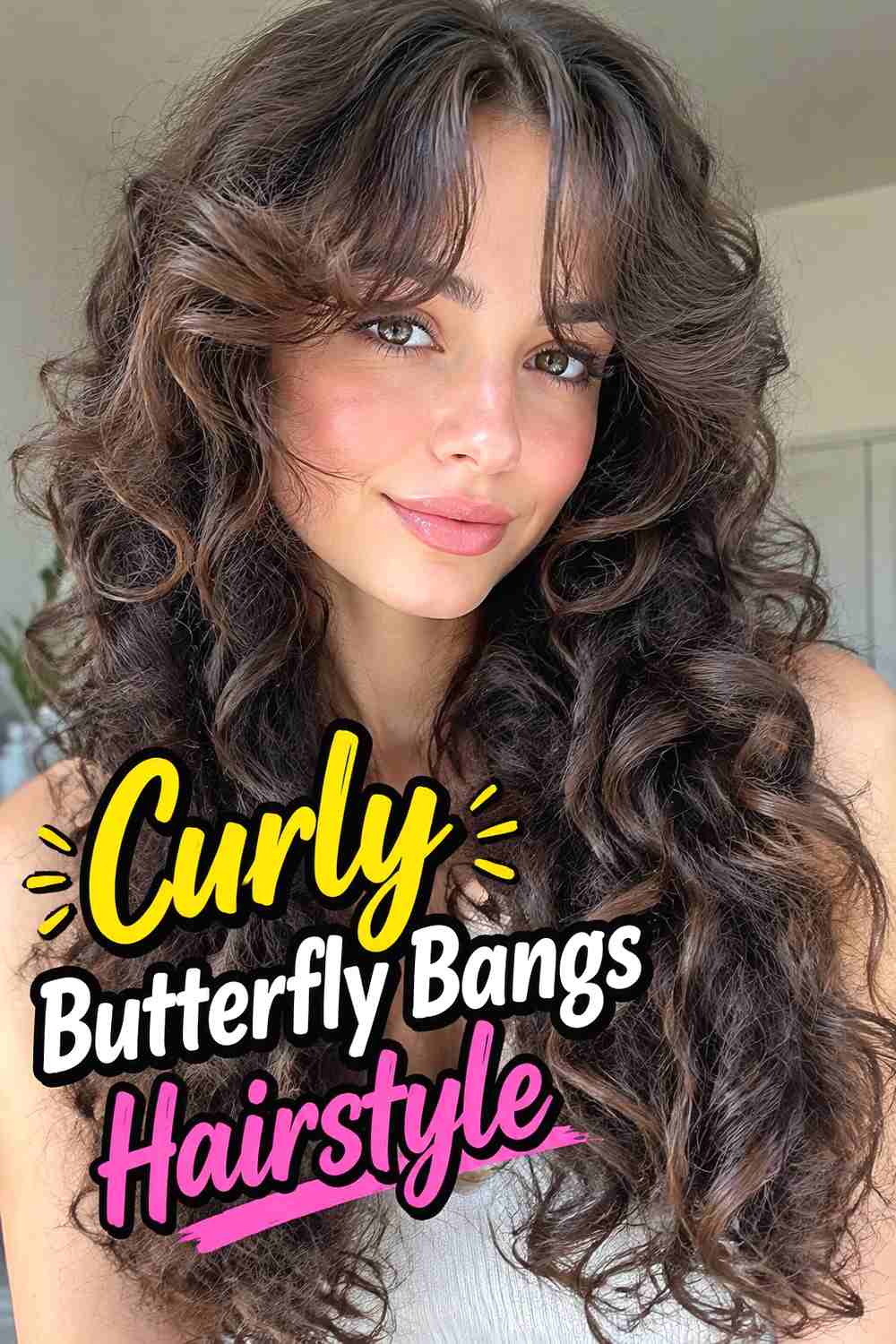
The Curly Butterfly Bangs Hairstyle adapts the winged, face-framing concept to natural curl patterns. Instead of forcing the fringe into a smooth sweep, shorter curls can fall near the forehead while progressively longer curls frame the temples and cheekbones. The different lengths should connect naturally with layers through the rest of the hair, creating a rounded, dimensional silhouette. Curl shrinkage matters when shaping this style, so the fringe should be planned according to how the hair sits when dry. Leave-in conditioner, curl cream, mousse, or gel can help define individual sections depending on the hold you prefer. Variation between curls is part of the finished look and keeps the bangs feeling soft rather than overly uniform.
Wear & Maintenance
Refresh individual front curls with water and a small amount of styler when needed instead of restyling the entire head each morning.
10. Side Swept Butterfly Bangs Hairstyle
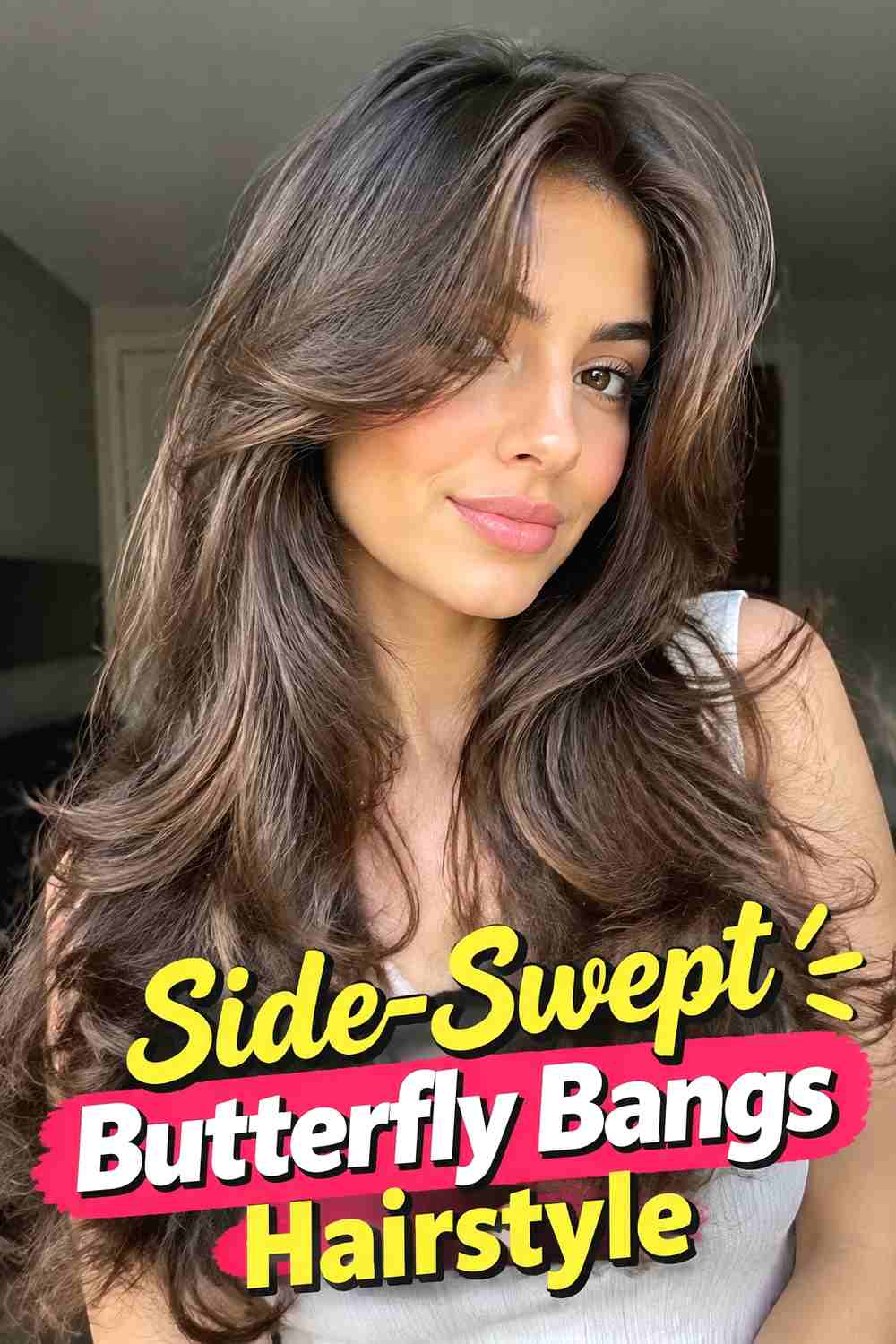
A Side-Swept Butterfly Bangs Hairstyle shifts the usual center-opening shape toward one side for a softer, asymmetrical finish. The shorter fringe pieces can move diagonally across the forehead, while longer sections sweep toward the temple and blend into face-framing layers. This variation is useful when you prefer an off-center part or want more flexibility as the bangs grow. It can work with straight, wavy, or lightly layered hair because the butterfly effect comes from the gradual length and outward movement rather than a strict middle split. Keep the styling flexible so the fringe can move naturally throughout the day instead of being fixed into one stiff section with heavy hairspray.
Styling Notes
Blow-dry the bangs briefly toward the opposite side first, then sweep them back into position. This can create lift and prevent the fringe from lying too flat.
11. Shaggy Butterfly Bangs Hairstyle
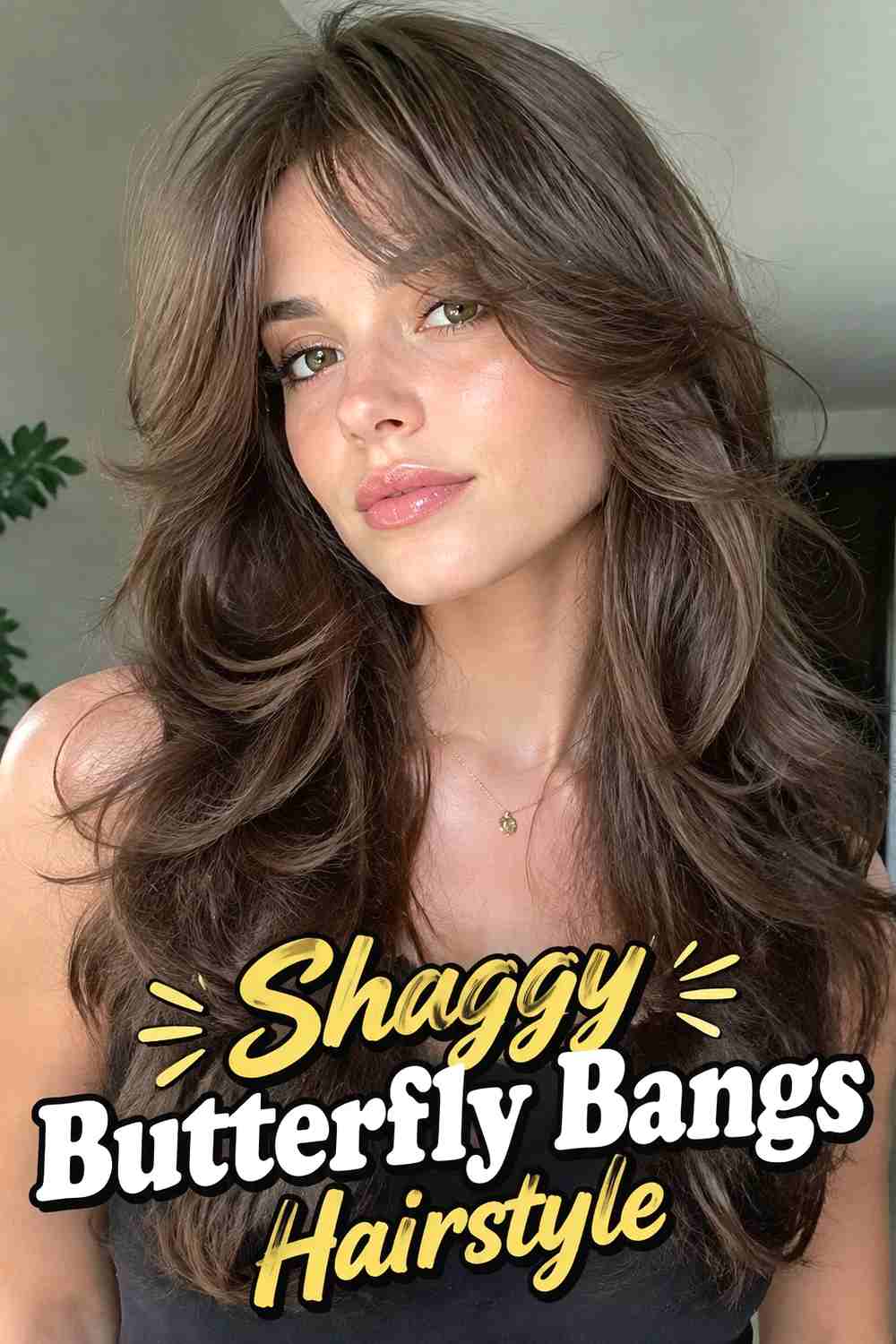
The Shaggy Butterfly Bangs Hairstyle gives the soft fringe a more relaxed personality through choppy layers, airy ends, and slightly undone texture. The bangs still open around the face, but their outer pieces merge into shorter cheekbone and jaw-length layers rather than a highly polished blowout. Crown layering can add lift, while movement through the mid-lengths keeps the haircut loose and casual. This approach works particularly well with waves or hair that develops texture easily. The important balance is maintaining enough density through the lower lengths so the style looks intentionally shaggy instead of excessively thinned. Texture spray or mousse can enhance separation, but natural movement should remain visible throughout the finished look.
Best For
This version suits anyone who prefers an easy, lived-in finish and does not want their butterfly bangs to depend on precise styling every day.
12. Shoulder Length Butterfly Bangs Hairstyle
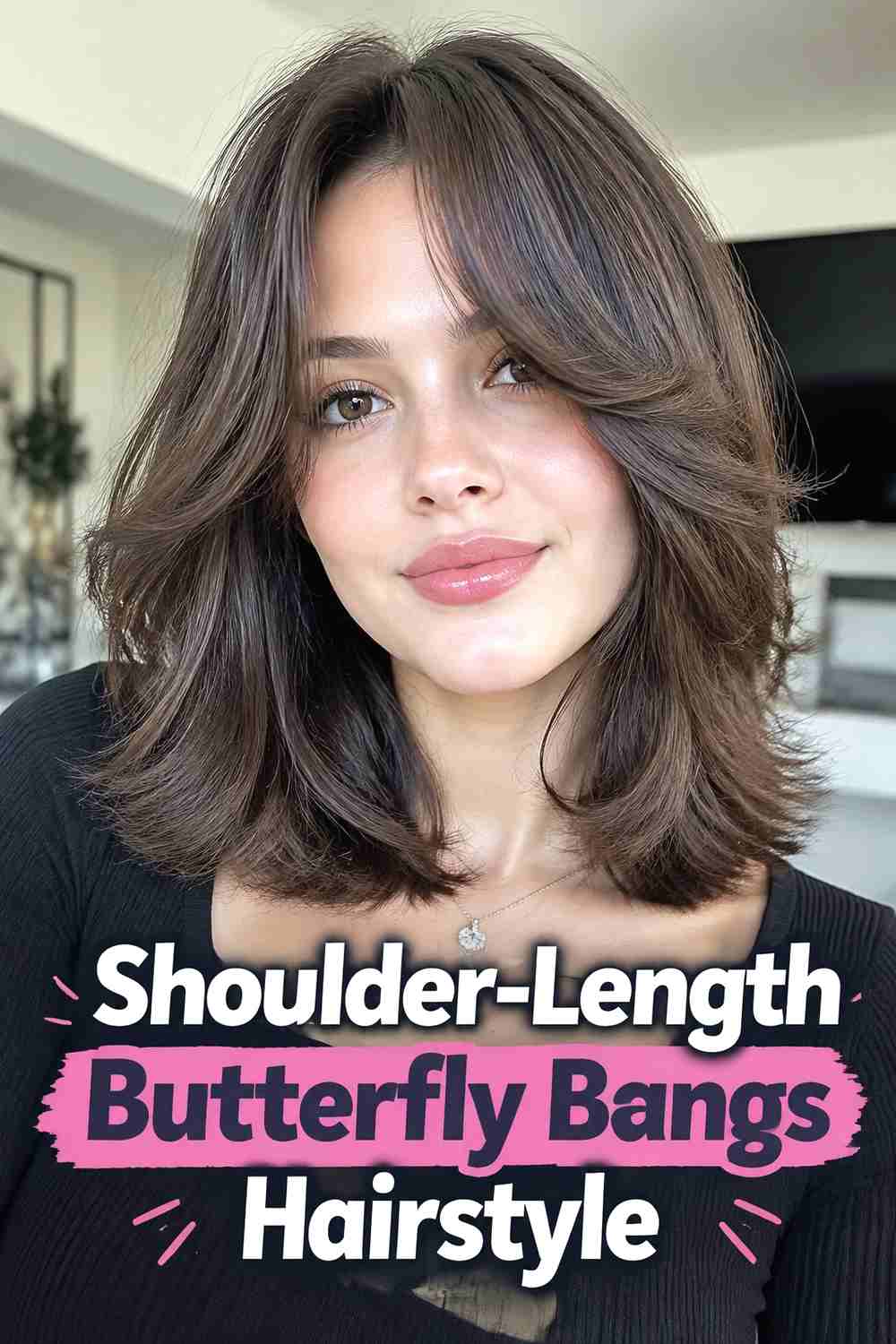
A Shoulder-Length Butterfly Bangs Hairstyle pairs sweeping fringe with manageable medium length, creating enough space for face-framing layers without the weight of very long hair. The bangs can curve outward from the forehead and connect to cheekbone or jaw-level sections, while the main length rests around the shoulders. This silhouette works well straight, lightly waved, or with a soft blowout, making it adaptable to different routines. Keeping a little fullness through the perimeter helps balance the layered front and prevents the haircut from becoming too feathered. Because the length is moderate, the butterfly detail remains easy to see and can become a clear focal point rather than disappearing into a large amount of hair.
Hair Type & Length
Medium-density shoulder-length hair can carry this shape naturally. Fine hair may need fewer layers, while thicker hair can usually handle more internal movement and weight removal.
13. Face Framing Butterfly Bangs Hairstyle
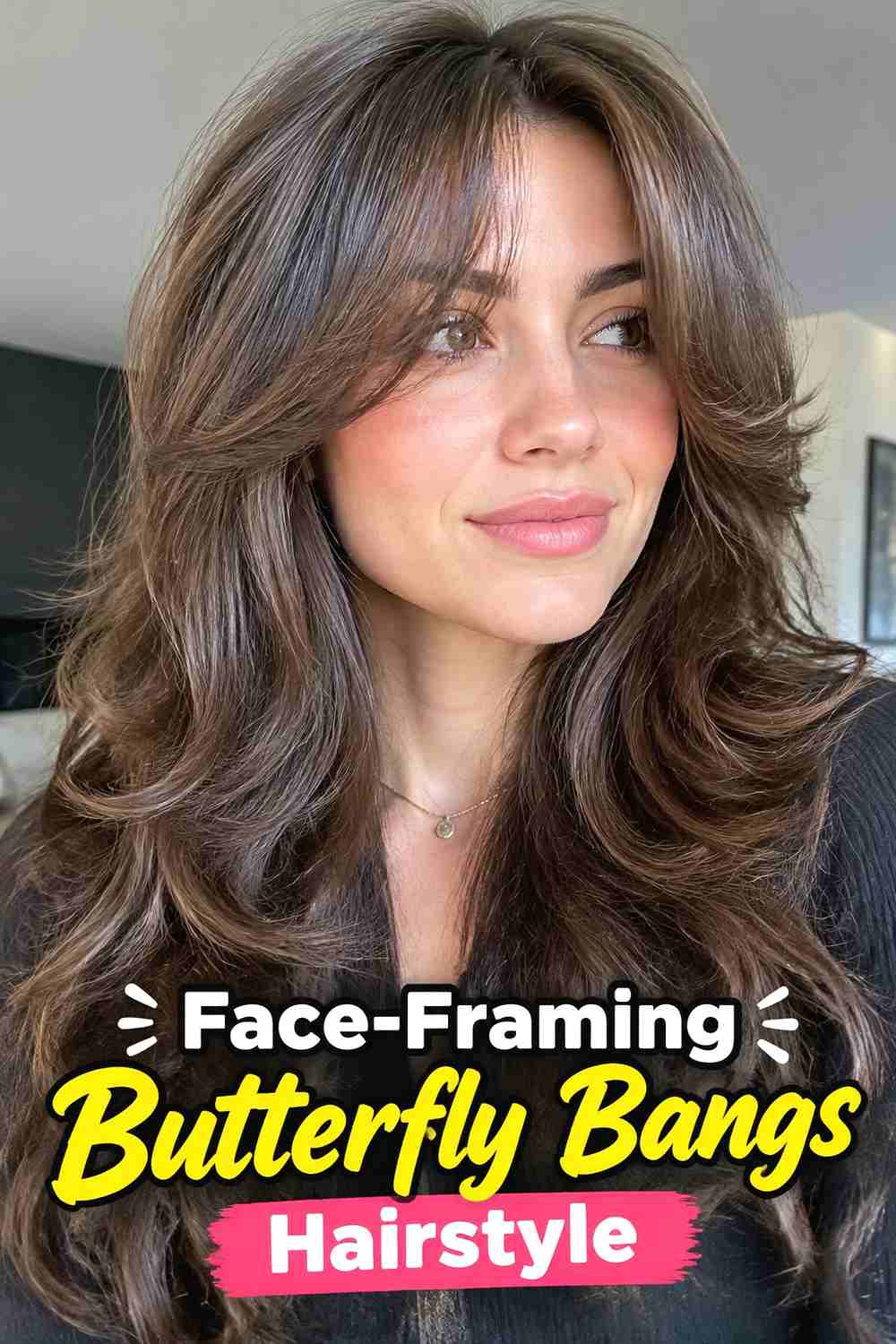
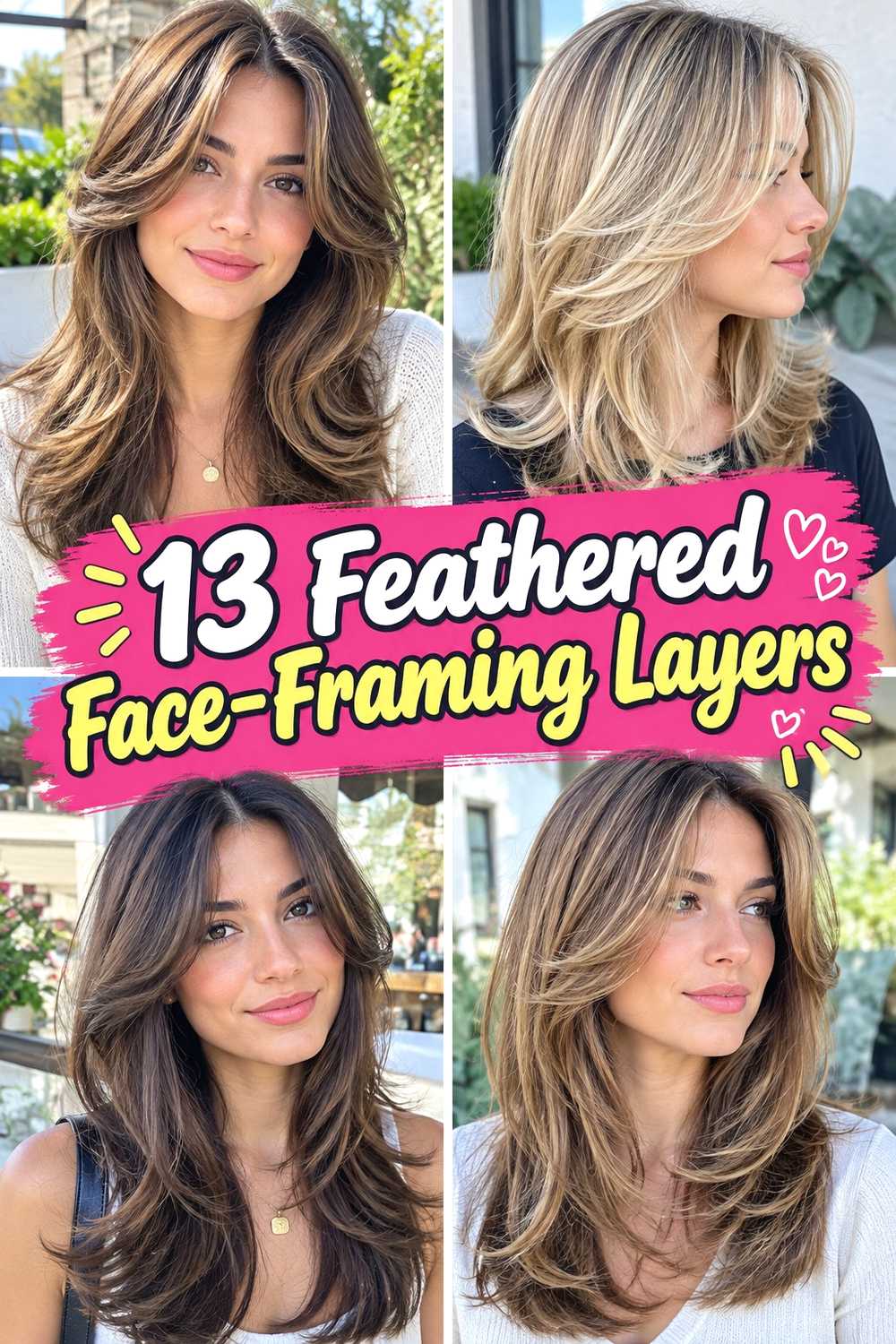
The Face-Framing Butterfly Bangs Hairstyle puts the emphasis on a smooth progression from fringe to longer pieces around the cheekbones, jaw, and shoulders. The bangs stay light and softly divided, while each surrounding section becomes gradually longer to create a cascading frame. This design can be especially useful when you want the front of the haircut to feel detailed without adding extensive layers through the back. Straight hair shows the graduation clearly, while waves create an even softer transition. The outer bang pieces should remain long enough to sweep away from the face rather than dropping straight down. A flexible blowout can highlight the framing while keeping the overall result touchable and natural.
Why It Works
The layered front creates continuity, so the bangs do not appear disconnected from the rest of the haircut. It also offers several styling options as the fringe grows.
14. Sleek Butterfly Bangs Hairstyle
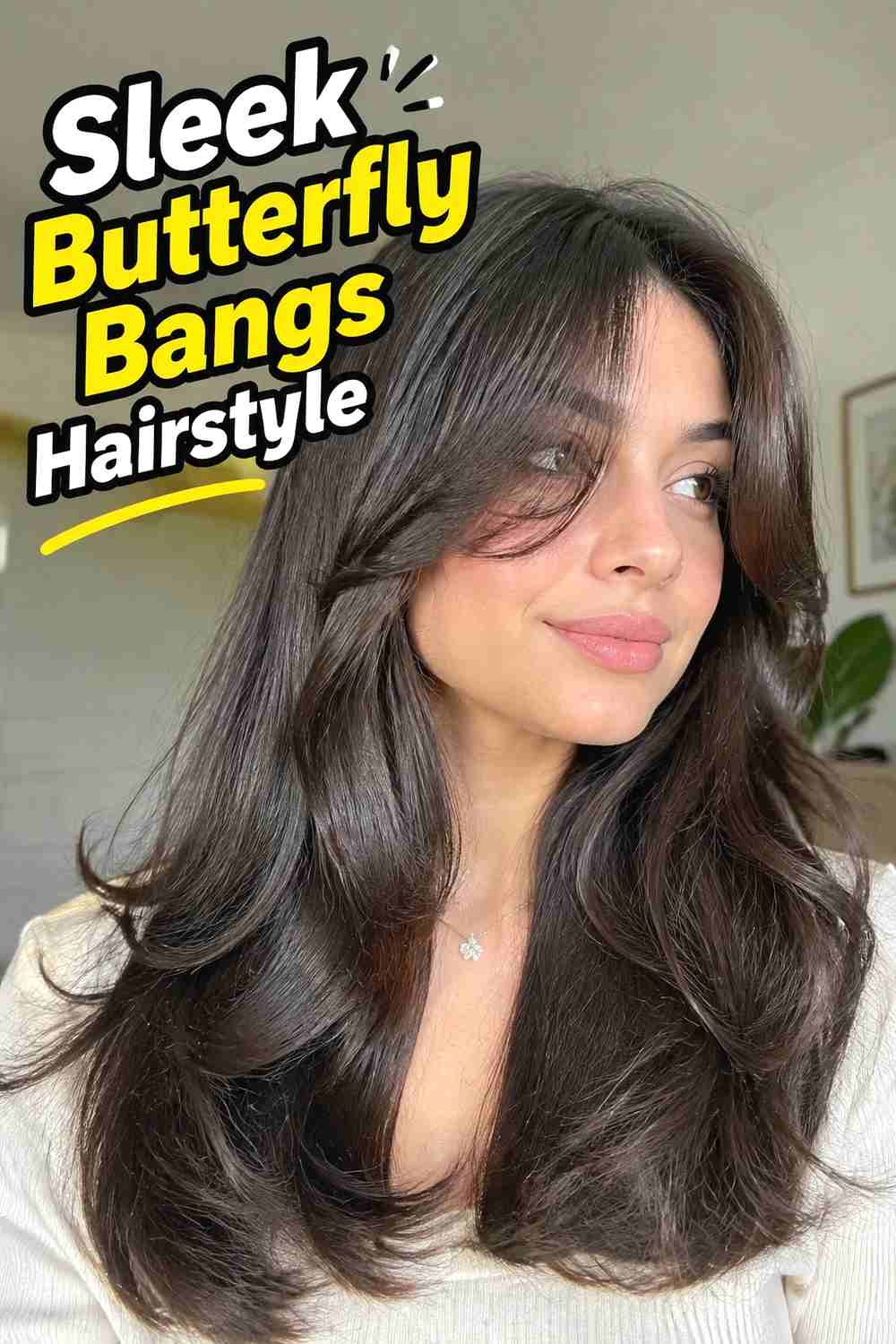
A Sleek Butterfly Bangs Hairstyle balances smooth, polished lengths with a softer fringe that retains gentle lift around the forehead. The main hair can be straightened or blown smooth, while the bangs are directed slightly outward so the longer edges frame the temples and cheekbones. Keeping the front less rigid than the lengths prevents the style from losing its butterfly movement. A light smoothing serum can add shine through the mid-lengths and ends, but minimal product should be used near the fringe roots. This look works well when you want the face-framing effect in a cleaner, more controlled style. A subtle curve through the ends keeps the silhouette polished without making it appear flat or overly severe.
Pro Tip
Smooth the lengths first, then style the bangs separately with lower tension. This helps preserve their lift and keeps them from looking pressed against the forehead.
15. Tousled Butterfly Bangs Hairstyle
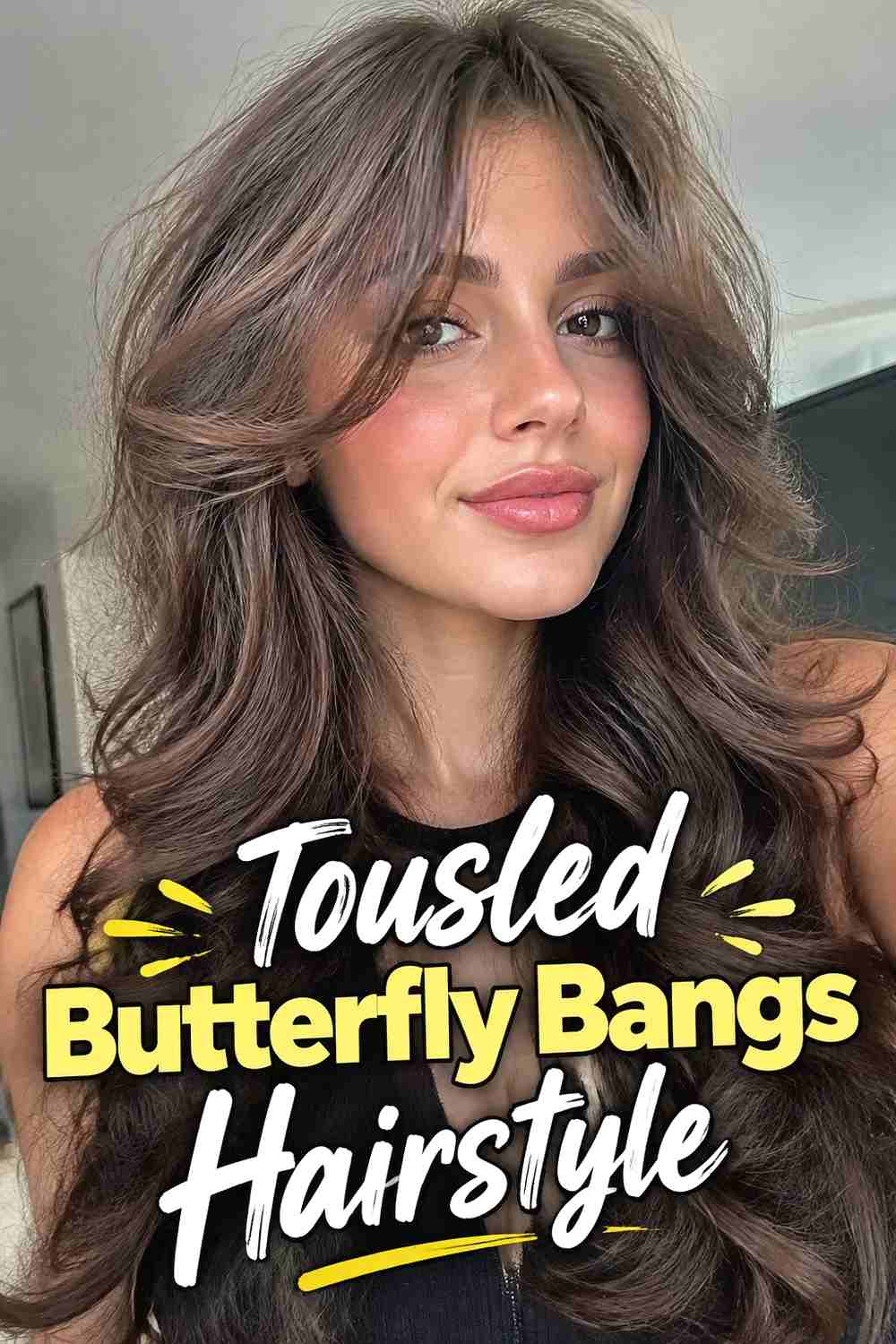
The Tousled Butterfly Bangs Hairstyle gives the fringe an effortless feel by combining soft outward movement with irregular bends through the rest of the hair. Instead of a perfectly coordinated blowout, the layers are allowed to separate and fall in slightly different directions, creating a relaxed finish. The bangs can split naturally near the center, with longer pieces sweeping around the cheeks and merging into the tousled lengths. Lightweight texture spray or mousse can add definition without making the hair crunchy. This version is especially appealing for natural waves or anyone who prefers a style that looks better with a little imperfection. Keep the ends soft so the texture remains touchable rather than overly piecey.
Best For
This look works well for casual routines, second-day texture, and hair that naturally develops bends or movement instead of staying completely smooth.
16. Blowout Butterfly Bangs Hairstyle
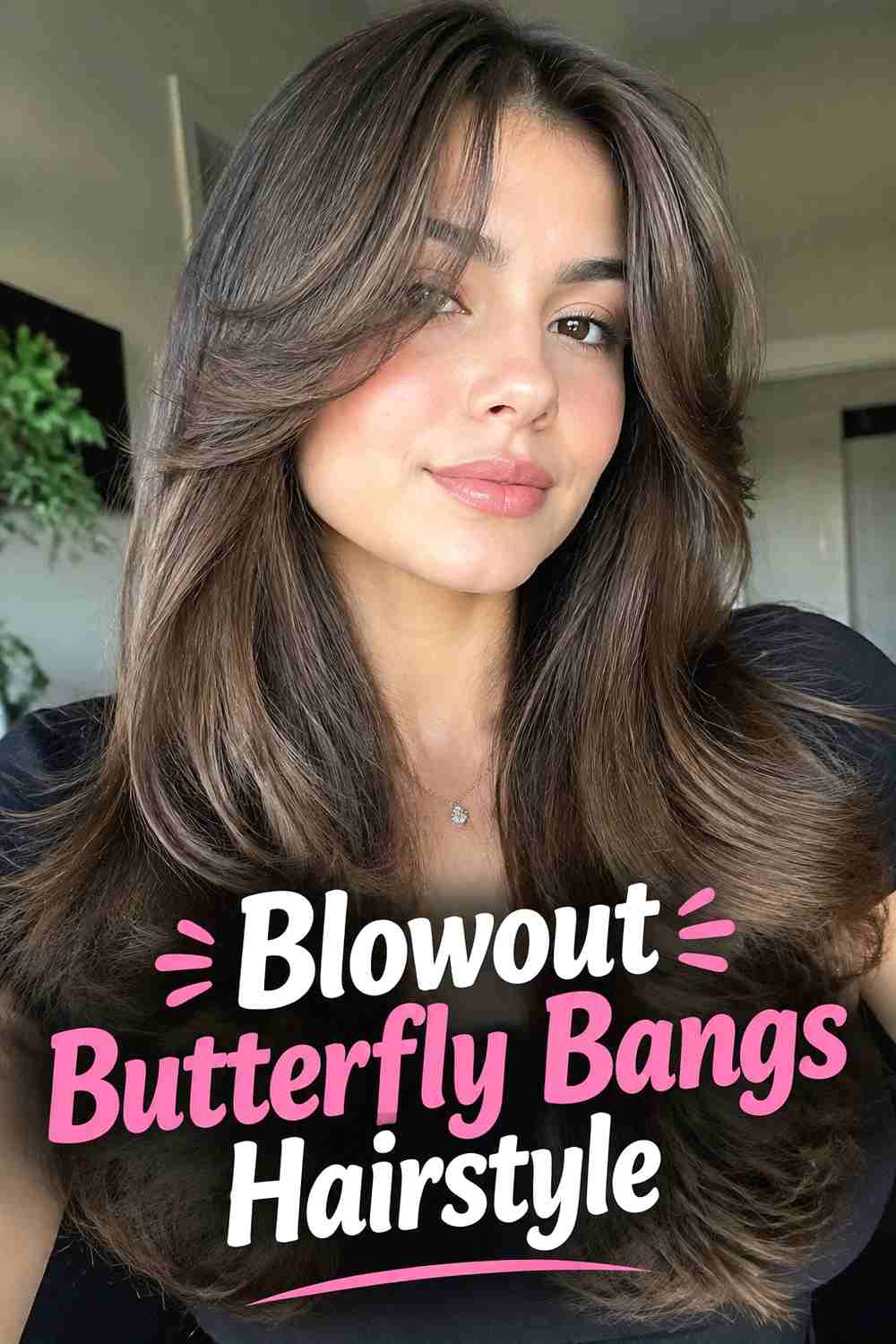
A Blowout Butterfly Bangs Hairstyle makes the layered structure more noticeable by adding rounded volume, smooth movement, and a pronounced outward sweep around the face. The fringe can lift slightly at the roots before opening toward the temples, while cheekbone and jaw-length layers continue the shape into the main haircut. Longer sections can curve softly at the ends for a cohesive finish. A large round brush or rollers can help create the body, but the style should still retain natural strands rather than looking rigid. This version works particularly well on medium to long layered hair when you want the butterfly shape to feel full and glamorous while remaining wearable for everyday occasions.
Styling Notes
Set the front pieces away from the face and let them cool before brushing through. Cooling helps preserve the curve while allowing the final finish to stay soft.
17. Polished Butterfly Bangs Hairstyle
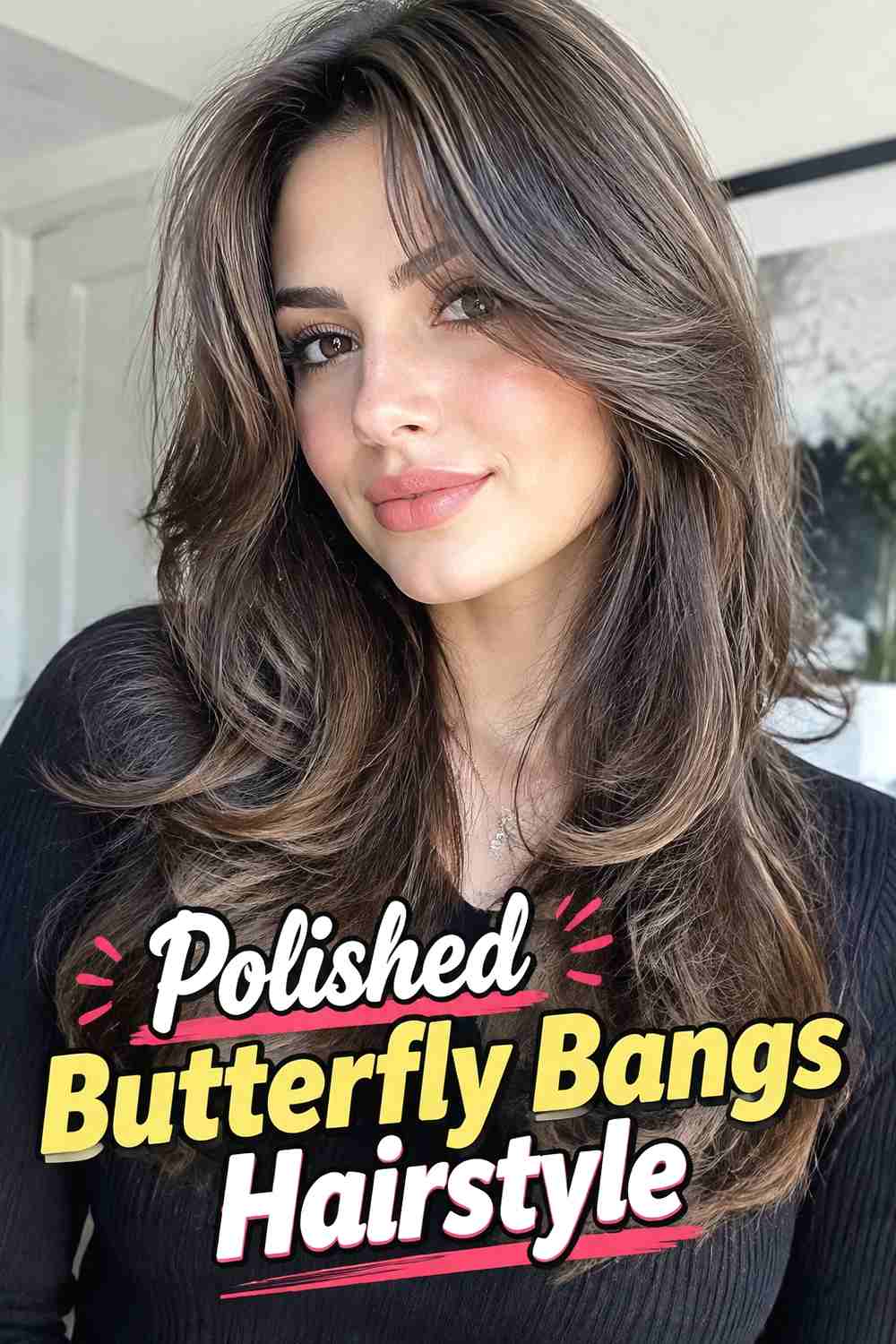
The Polished Butterfly Bangs Hairstyle refines the layered fringe with controlled movement, smooth lengths, and neatly blended face-framing pieces. The bangs open softly around the forehead and sweep toward the cheekbones, while the rest of the hair maintains a tidy, glossy finish. This version can work well for professional settings, dinners, celebrations, or any time you want butterfly bangs to look more deliberate. The key is polish without stiffness: individual strands should still move, and the fringe should retain a gentle curve instead of being sprayed into place. A smooth blowout, light heat protection, and minimal finishing serum through the lengths can create shine while keeping the face-framing sections soft and flexible.
Wear & Maintenance
Regular fringe shaping helps preserve the graduated outline. Use flexible hold when needed so the bangs stay controlled without losing the movement that defines the style.
How to Choose the Right Look
Start with your natural texture and the amount of daily styling you want to do. Straight hair can make sleek, feathered, and polished versions easier to maintain, while waves naturally support tousled and layered butterfly bangs. Curly hair can wear the same face-framing concept when the cut accounts for shrinkage and individual curl behavior.
Length also changes the effect. Shoulder-length hair keeps the fringe visually prominent, while long layers create a more dramatic cascading transition. If your hair is fine, limit excessive layering so the ends retain fullness. Medium or thick hair can often support more face-framing movement and internal layers.
Think about your preferred level of volume. Wispy and straight options feel lighter and more understated, while blowout and voluminous versions need more root lift and styling. Side-swept and curtain-blend options can be useful when you want flexible parting.
Finally, consider maintenance. The shorter pieces may need reshaping before the rest of the haircut, so choose a fringe length that still looks good as it grows and fits your normal salon schedule.
Final Thoughts
Soft butterfly bangs can range from barely-there wisps to full, sweeping blowout layers, making the style easy to adapt to different lengths and textures. The most wearable version will connect naturally to the surrounding haircut, preserve enough density for your hair type, and fit the amount of styling you realistically want to do.
FAQs
1. What are butterfly bangs?
Butterfly bangs are soft, face-framing fringe with shorter pieces toward the front and longer sections that sweep outward and blend into surrounding layers.
2. Are butterfly bangs the same as curtain bangs?
They can look similar, but butterfly bangs often emphasize a more layered, wing-like transition into the rest of the haircut. Curtain bangs may be worn with or without extensive surrounding layers.
3. Can butterfly bangs work on curly hair?
Yes. The shape can be adapted by using shorter curls near the front and gradually longer curls around the sides while accounting for natural shrinkage.
4. Do butterfly bangs need a daily blowout?
Not necessarily. Naturally wavy, curly, or textured hair can wear softer versions with minimal heat, while more sculpted feathered or voluminous styles may benefit from blow-drying.
5. Are butterfly bangs easy to grow out?
Their longer outer sections can make grow-out relatively flexible. As the shorter pieces lengthen, they can be blended into face-framing layers, swept sideways, or styled more like curtain fringe.
Save your favorite soft butterfly bangs hairstyle, share these ideas with someone planning a fringe refresh, and explore more hairstyle inspiration for your next cut.