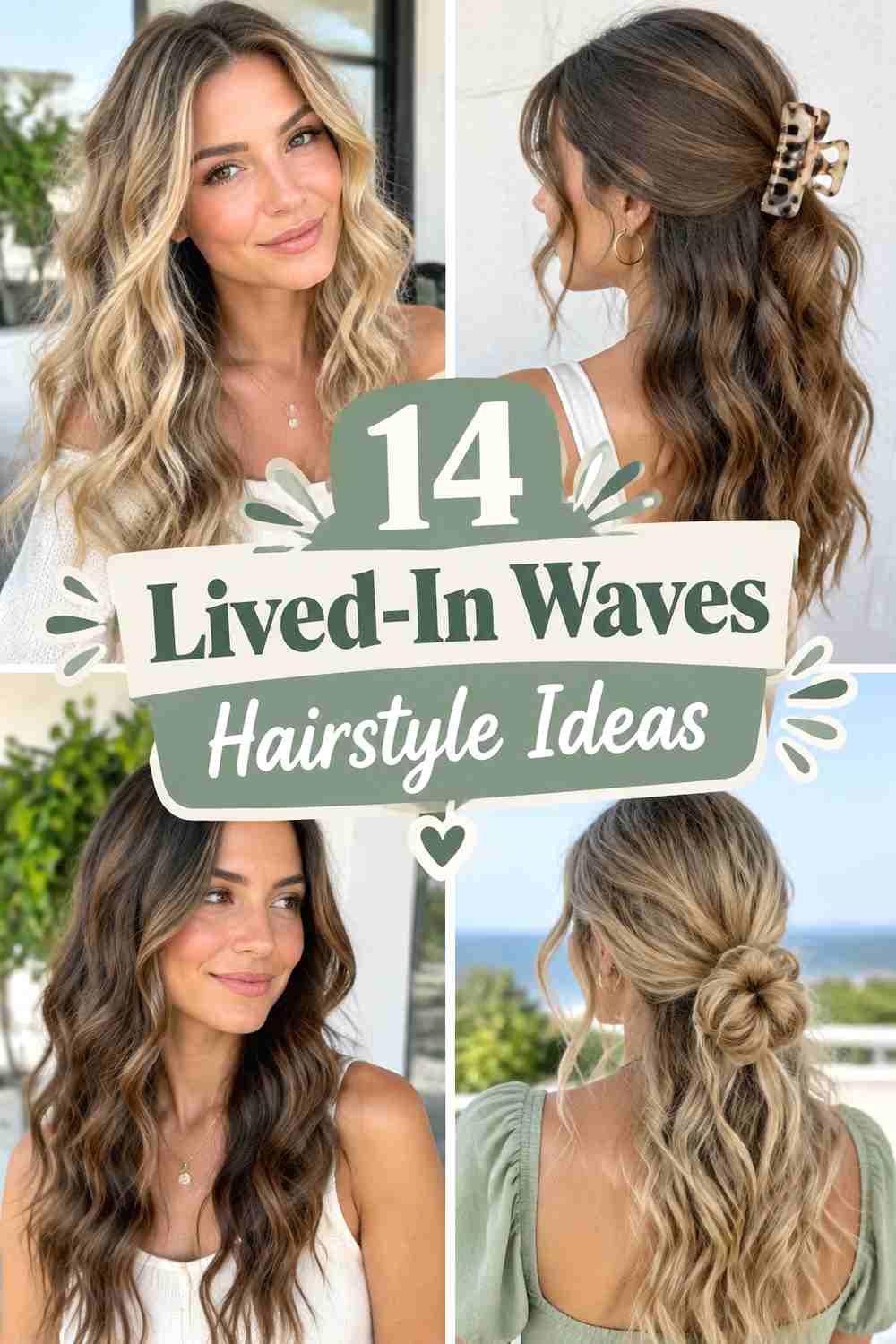
12 Soft Curtain Fringe Hairstyle Ideas
Light, flowing fringe that opens gently around the face gives these soft curtain hairstyles an easy balance of movement, polish, and everyday wearability.
A soft curtain fringe is lighter and less rigid than a dense traditional fringe, usually opening through the center or just off-center before blending into longer pieces around the temples. Depending on the length and texture, it can skim the brows, sweep around the cheekbones, or merge almost completely into face-framing layers.
The best version depends on how much fringe you want across the forehead and how often you plan to style it. Straight hair makes the shape easy to see, waves and curls create more natural movement, and layered cuts help the outer pieces blend into the rest of the haircut. Longer versions usually offer more flexibility, while shorter fringe creates a stronger visual change.
Quick List
- Long Layered Soft Curtain Fringe Hairstyle
- Shoulder Length Soft Curtain Fringe Hairstyle
- Wavy Soft Curtain Fringe Hairstyle
- Feathered Soft Curtain Fringe Hairstyle
- Wispy Soft Curtain Fringe Hairstyle
- Curly Soft Curtain Fringe Hairstyle
- Straight Soft Curtain Fringe Hairstyle
- Blowout Soft Curtain Fringe Hairstyle
- Textured Lob Soft Curtain Fringe Hairstyle
- Butterfly Layer Soft Curtain Fringe Hairstyle
- Side Part Soft Curtain Fringe Hairstyle
- Romantic Updo Soft Curtain Fringe Hairstyle
1. Long Layered Soft Curtain Fringe Hairstyle
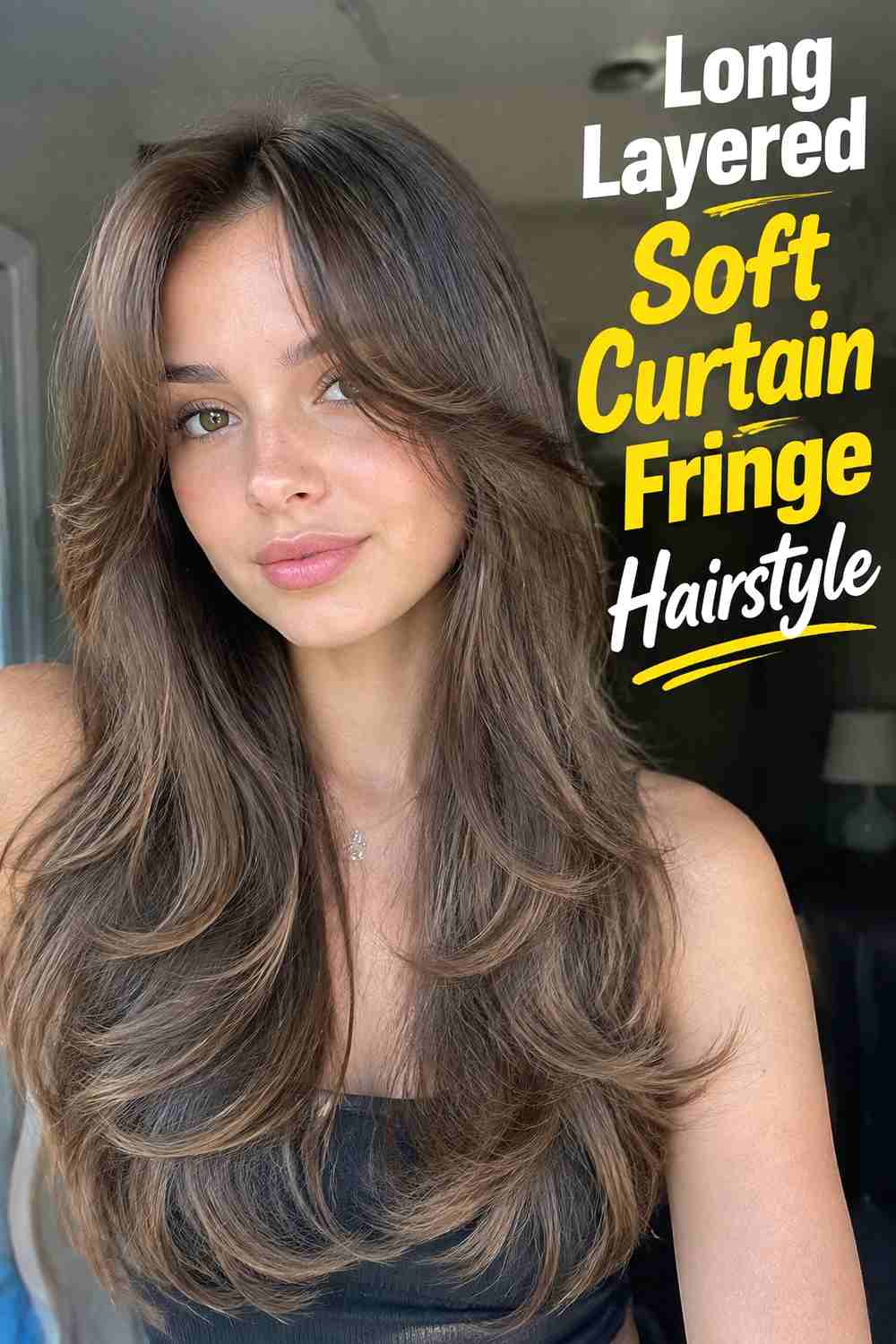
Long layered soft curtain fringe blends a gently divided front section into progressively longer pieces around the cheekbones, jaw, and shoulders. The gradual transition keeps the fringe from looking disconnected from the rest of a long haircut, especially when the surrounding layers have plenty of movement. A soft blowout can sweep the front away from the face, while loose waves create a more relaxed finish. This version is especially useful if you want noticeable face framing without committing to a short brow-level fringe. Keeping the outer pieces long also makes them easier to tuck behind the ears or blend into a ponytail. The result should feel fluid, light, and naturally connected to the longer lengths.
Styling Notes
Use a medium round brush to guide the fringe outward, then style the longer face-framing pieces in the same direction for a seamless transition.
Best For
This version suits medium-long and long hair when you want softness around the face without losing much overall length.
2. Shoulder Length Soft Curtain Fringe Hairstyle
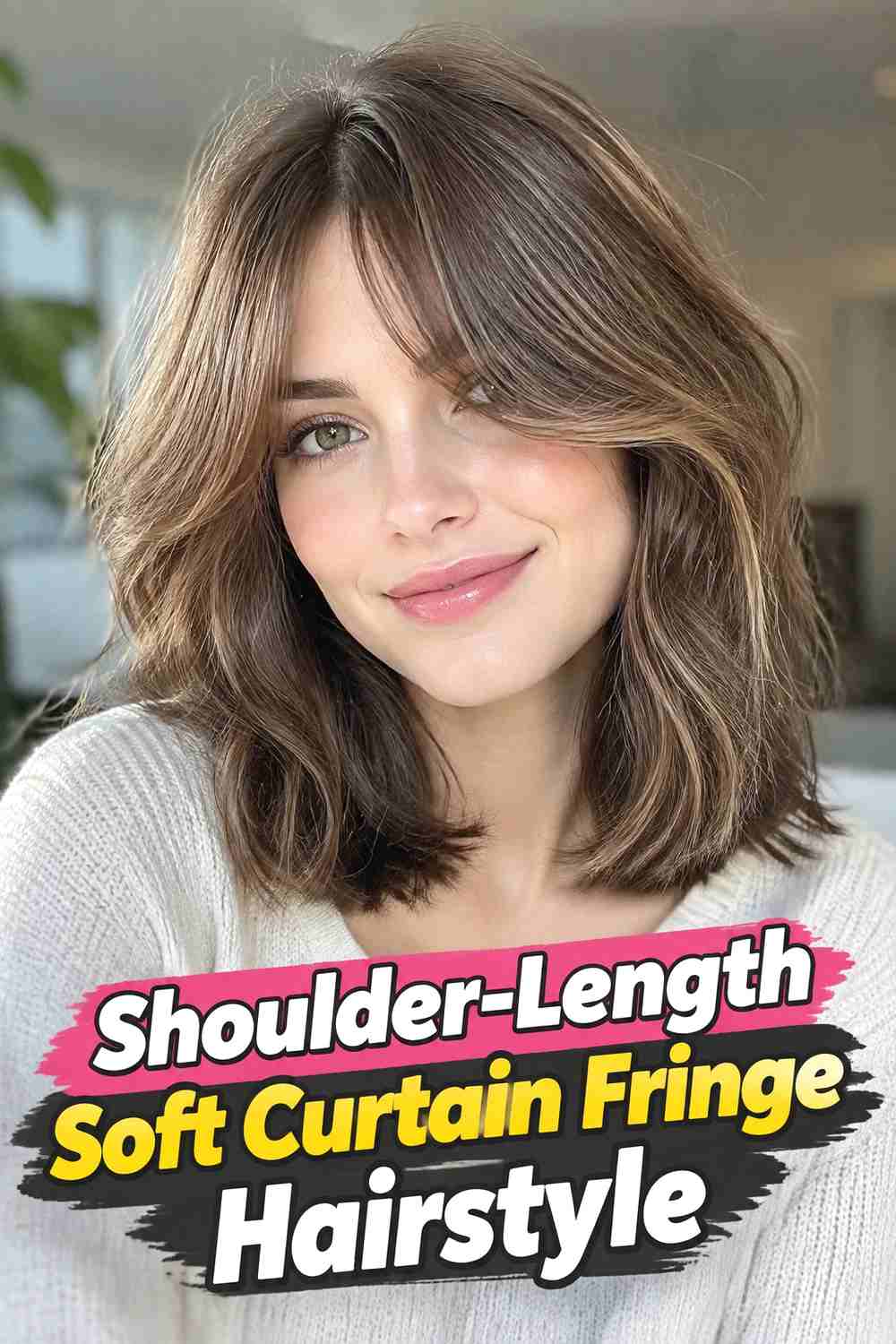
A shoulder-length cut gives soft curtain fringe a compact frame where every front layer remains visible. The fringe can open lightly across the forehead, then taper toward the cheekbones and jaw before connecting with the shoulder-skimming perimeter. Because the overall haircut is shorter, the transition feels intentional without needing many additional layers through the back. This version works beautifully with a smooth blowout, slight end flip, or natural wave pattern. It can also be easier to manage than very long layers if you prefer less hair around the shoulders. Keep the fringe soft and mobile rather than overly rounded so the haircut retains an effortless finish and does not appear too heavily styled at the front.
Why It Works
The medium length keeps the fringe and face-framing pieces visually connected, making the soft curtain shape easy to appreciate from the front and sides.
Styling Notes
A subtle outward bend through the ends can echo the fringe movement and make the entire haircut feel more cohesive.
3. Wavy Soft Curtain Fringe Hairstyle
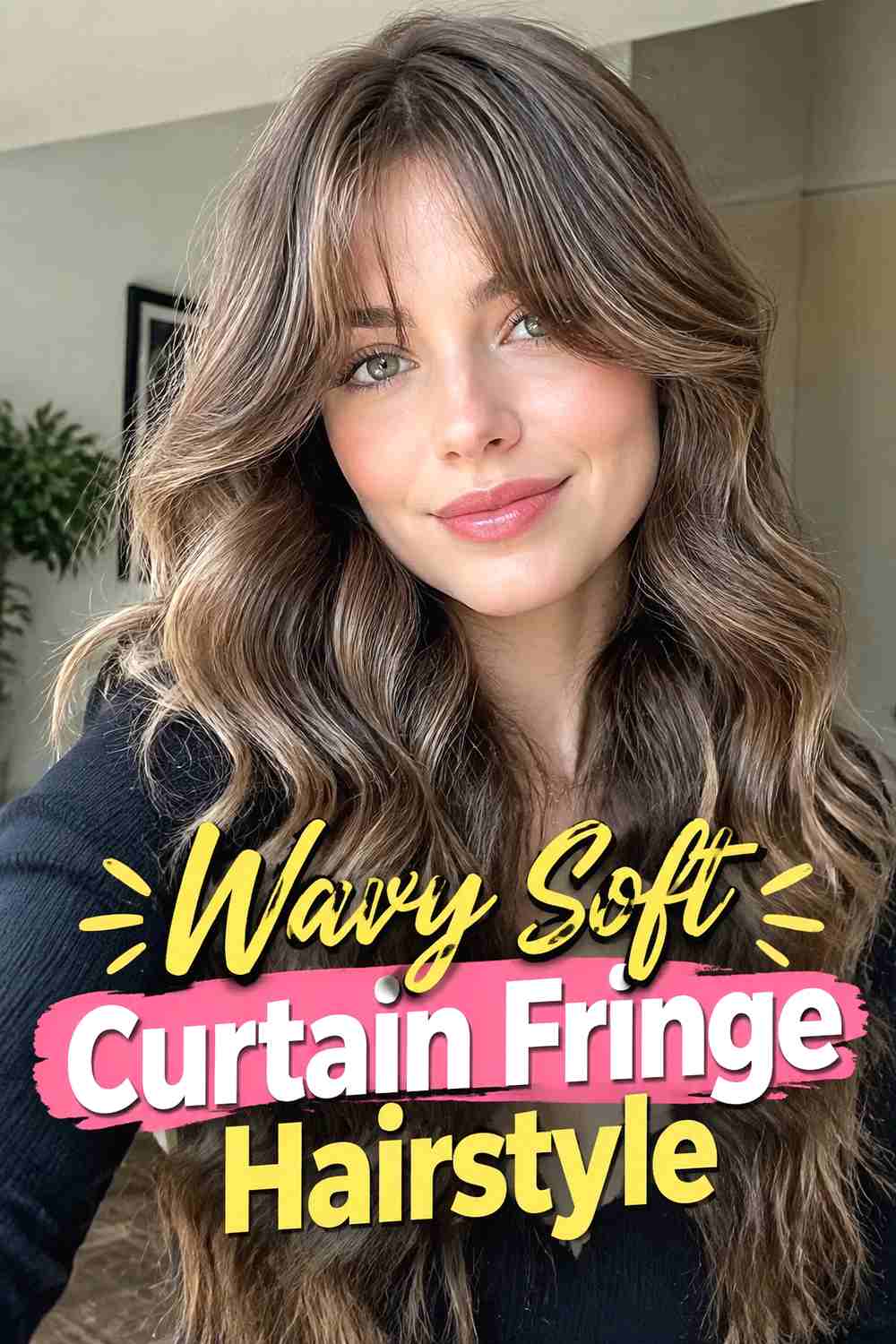
Natural-looking waves give soft curtain fringe an easy, flowing finish because the fringe can follow the same movement as the surrounding hair. The shorter center pieces open gently, while longer sections curve toward the cheekbones and blend into loose waves through the sides. Slight variation in the wave pattern helps the hairstyle look believable and prevents every piece from falling in an identical direction. This version works particularly well when the fringe is long enough to move with the rest of the haircut instead of sitting separately across the forehead. Keep the front soft rather than tightly curled, and allow a little natural separation so the center opening remains visible without looking overly precise or symmetrical.
Styling Notes
Use loose bends through the lengths and give the fringe only a gentle outward curve so it remains lighter than the rest of the wave pattern.
Best For
This style suits naturally wavy hair or anyone who prefers relaxed texture over a polished round-brush finish.
4. Feathered Soft Curtain Fringe Hairstyle
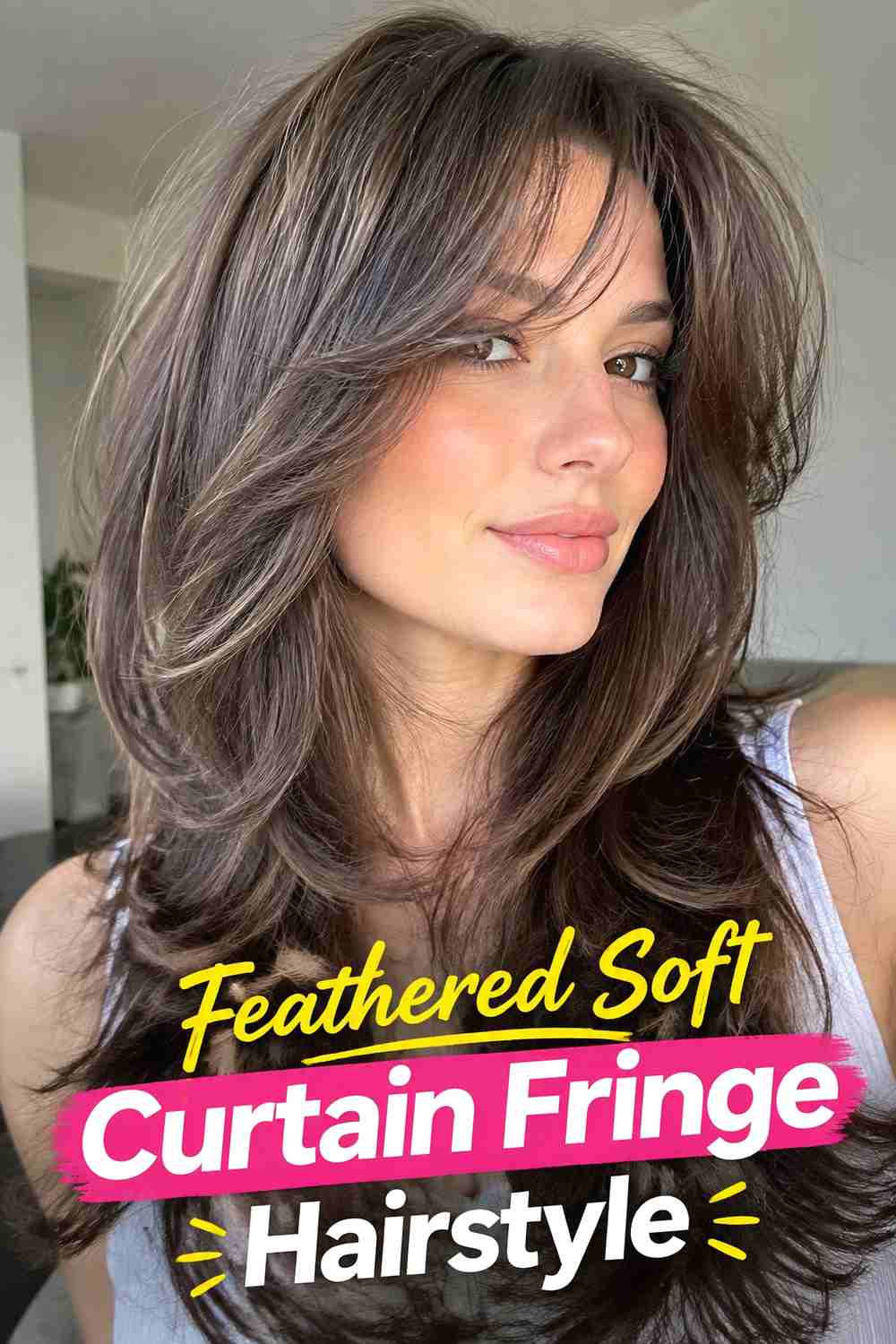
Feathered soft curtain fringe uses tapered ends and gentle separation to create an airy frame around the forehead and temples. The shortest pieces remain light, while the outer sections extend toward the cheekbones and gradually blend into longer layers. A smooth blowout shows the feathering clearly because each piece can fan slightly outward instead of collapsing into one heavy fringe. The look feels polished but still soft enough for everyday wear. It works particularly well if you want more definition than a wispy fringe but less density than a full curtain bang. Avoid overly thinning the outer sections; enough weight should remain for the fringe to flow naturally into the surrounding haircut instead of appearing disconnected.
Hair Type & Length
Straight and softly wavy medium-to-long hair can show the feathered edges clearly, especially when the front layers are blended gradually.
Pro Tip
Keep the outer pieces longer than the center so the fringe naturally opens instead of falling straight across the forehead.
5. Wispy Soft Curtain Fringe Hairstyle
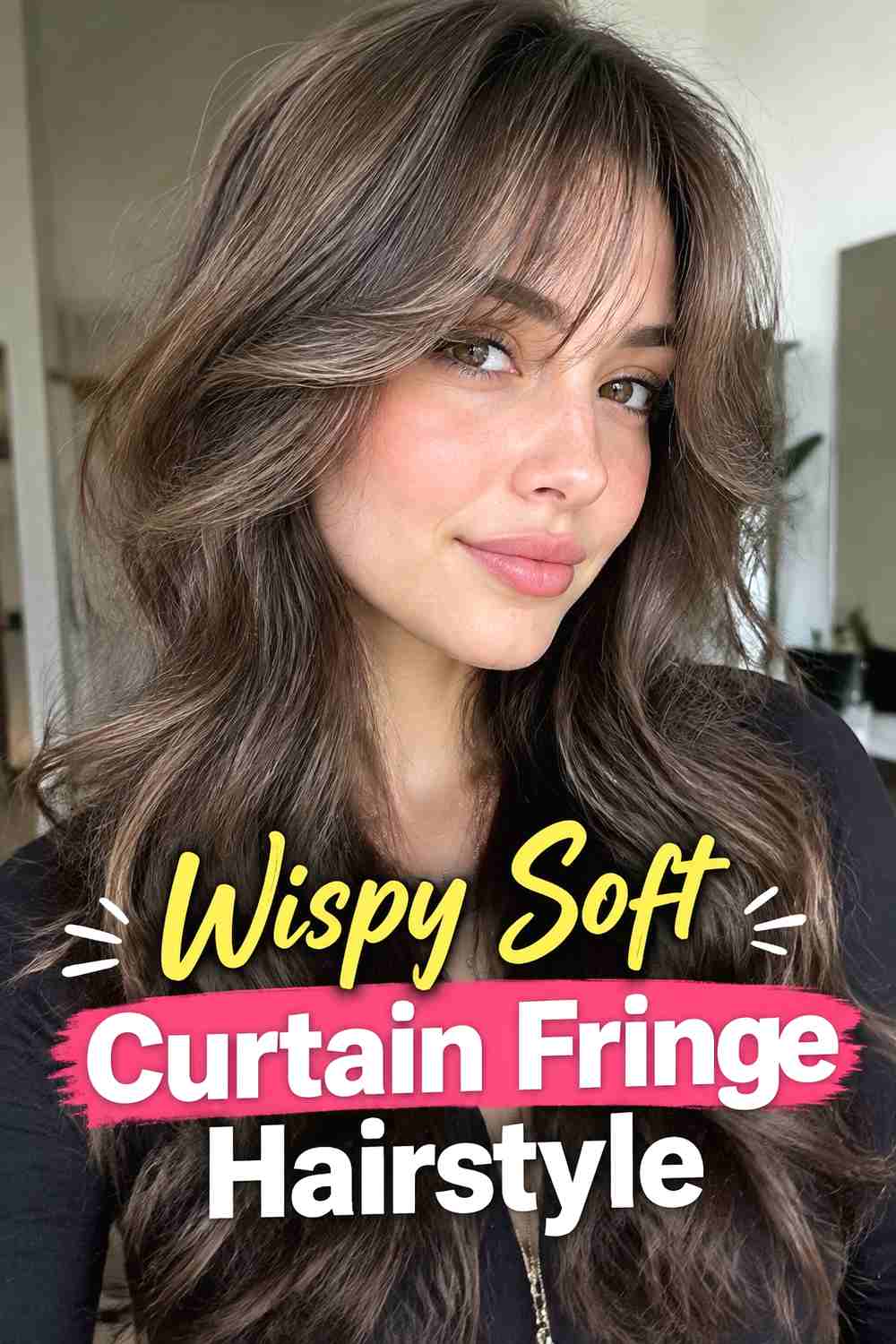
Wispy soft curtain fringe is one of the lightest interpretations, using fewer strands across the forehead and plenty of separation between pieces. The center opens naturally, while delicate sections extend toward the temples and blend into longer face-framing layers. This makes the fringe especially flexible if you want some movement without covering much of the forehead. It can work with straight, wavy, or softly curled hair, although very light sections may need a little root direction to stay open. Heavy styling products can quickly weigh down the fringe, so the best finish is usually soft and touchable. The overall effect should look airy and intentional rather than sparse, oily, or unevenly separated.
Styling Notes
Use minimal product near the fringe and focus on directing the roots rather than heavily shaping the ends.
Wear & Maintenance
Light fringe can separate more quickly with humidity or oil, so gentle refreshing may be useful between wash days.
6. Curly Soft Curtain Fringe Hairstyle
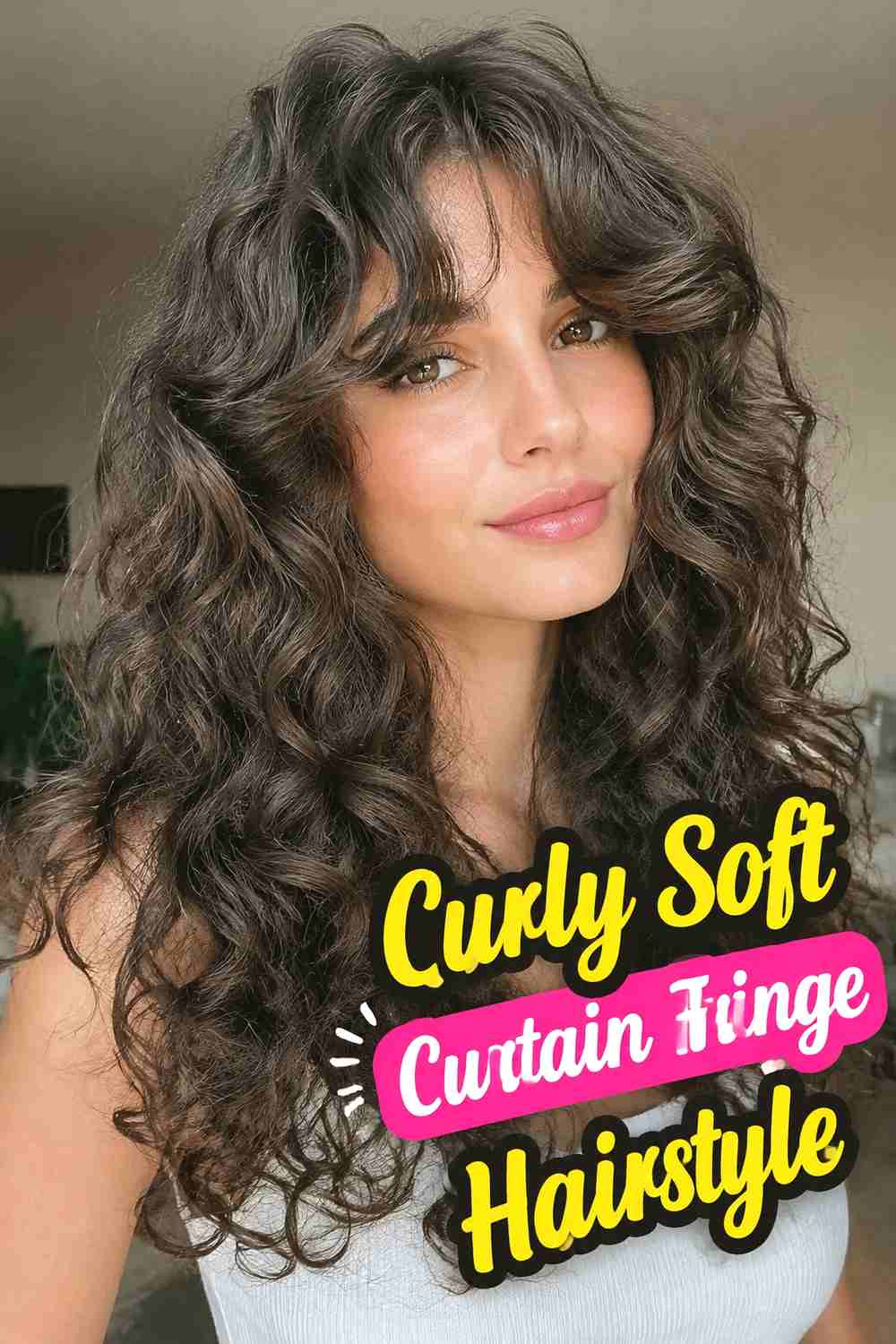
Curly soft curtain fringe adapts the open, face-framing shape to natural curl movement. Instead of forcing the fringe into two smooth wings, shorter curls around the forehead transition gradually into longer curls near the temples and cheeks. The center can remain slightly open while still allowing individual curls to fall naturally. Because curly hair may spring upward as it dries, the finished dry length is especially important when shaping the fringe. This version looks best when the front curls have some variation in size and direction rather than forming a perfectly uniform row. Keep enough density around the sides to connect the fringe with the rest of the hairstyle while preserving softness through the forehead.
Hair Type & Length
The shape should be adapted to the natural curl pattern, shrinkage, density, and the way the hair is normally worn when dry.
Pro Tip
Evaluate the fringe in its natural dry state before deciding whether additional shortening is needed.
7. Straight Soft Curtain Fringe Hairstyle
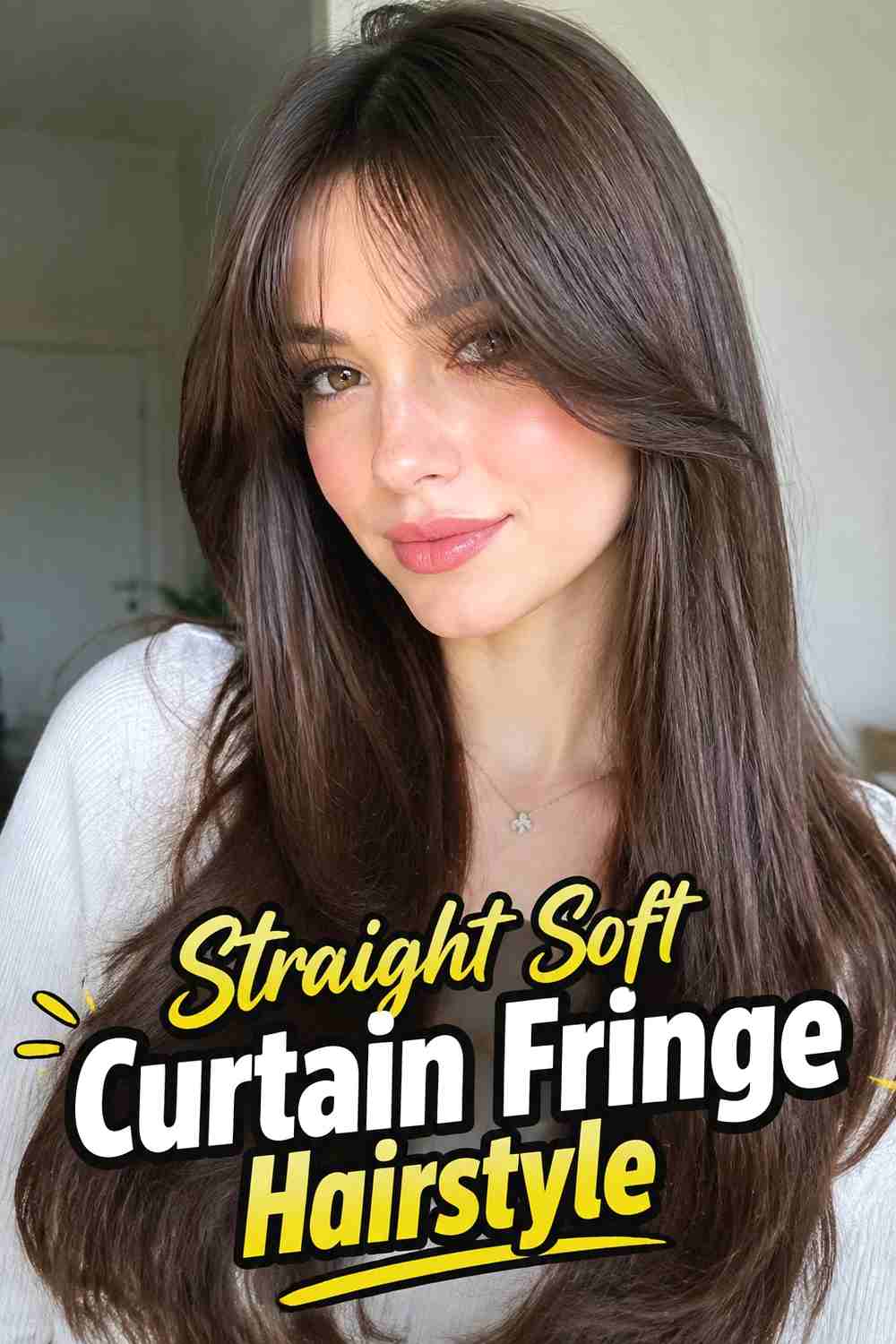
Straight hair gives soft curtain fringe a clean, understated look where the shape of the cut remains easy to see. Fine or medium-density pieces can fall lightly across the forehead before lengthening toward the temples and cheekbones. A subtle bend away from the face prevents the fringe from dropping straight down and helps maintain the curtain opening without adding excessive volume. This version works well with long straight hair, a polished lob, or medium-length layers because the soft front pieces add movement without disrupting the sleek finish. Blending is especially important on straight hair, since abrupt differences in length are more visible. The finished fringe should feel smooth, light, and connected to the surrounding layers.
Styling Notes
Create only a gentle outward curve through the front and keep the longer lengths mostly straight for a clean, modern finish.
Best For
Choose this version if you prefer sleek styling but still want softness and movement around the face.
8. Blowout Soft Curtain Fringe Hairstyle
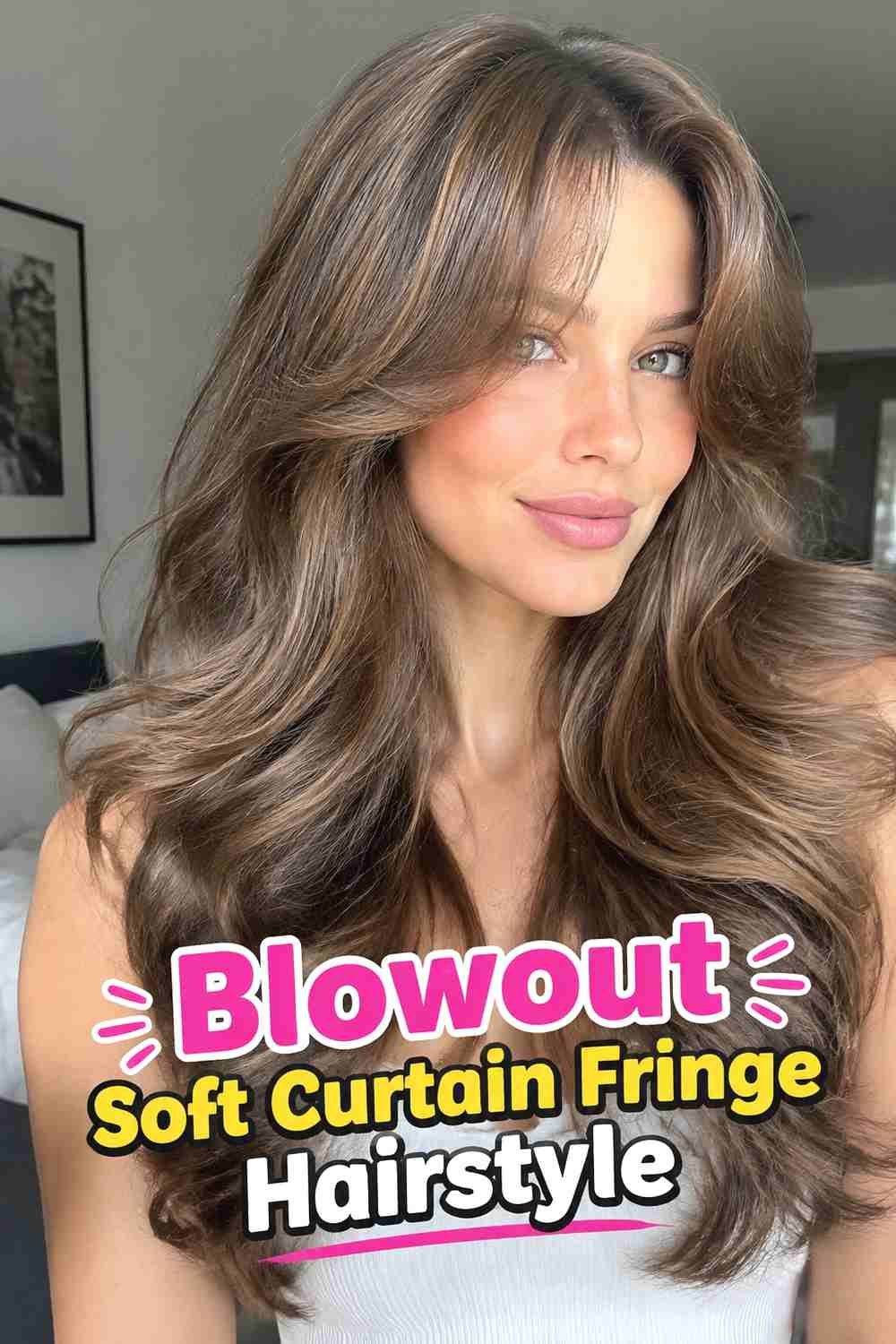
A blowout gives soft curtain fringe more lift and shape while keeping the front lighter than a dense retro bang. The fringe rises gently at the root, separates around the center, and curves outward toward cheekbone-length pieces. Larger layers through the sides can echo that movement, creating a rounded silhouette without turning the style into tight curls. This version works particularly well on medium-long and long hair with some face-framing layers already built into the cut. The key is controlled volume: enough to keep the fringe open, but not so much that it becomes stiff or oversized. Lightweight hold can preserve the shape while still allowing the hair to move naturally throughout the day.
Styling Notes
Dry the fringe forward first, then separate it and use a round brush to direct each side away from the face.
Wear & Maintenance
Avoid heavy oils at the roots, since they can flatten the lift and cause the soft front sections to clump together.
9. Textured Lob Soft Curtain Fringe Hairstyle
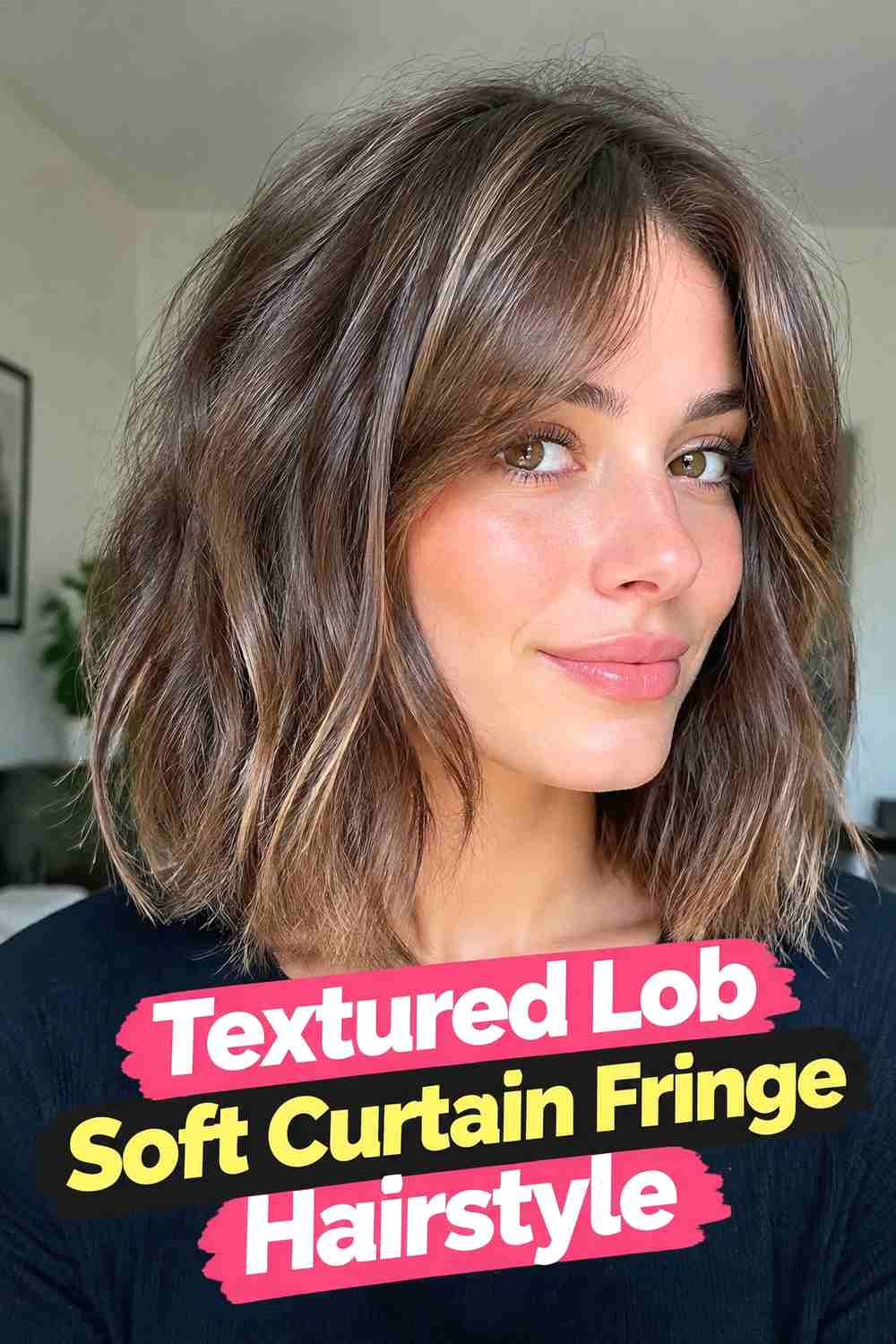
A textured lob gives soft curtain fringe a modern, compact shape that works especially well around collarbone length. The fringe opens lightly over the forehead and blends into cheekbone and jaw-level pieces, while subtle texture through the lob prevents the perimeter from feeling overly blunt. Soft bends or piecey waves help connect the shorter front sections with the rest of the cut. This version is useful if you want visible fringe without maintaining very long hair, and it can shift easily between polished and relaxed styling. Keep the outer fringe sections soft enough to move with the lob instead of sitting rigidly around the face. A little internal texture can help dense hair feel lighter without thinning the ends excessively.
Why It Works
The lob keeps the longest fringe pieces close to the overall perimeter, making the transition feel intentional and easy to see.
Styling Notes
Add bends to selected sections rather than curling every piece uniformly for a more natural textured finish.
10. Butterfly Layer Soft Curtain Fringe Hairstyle
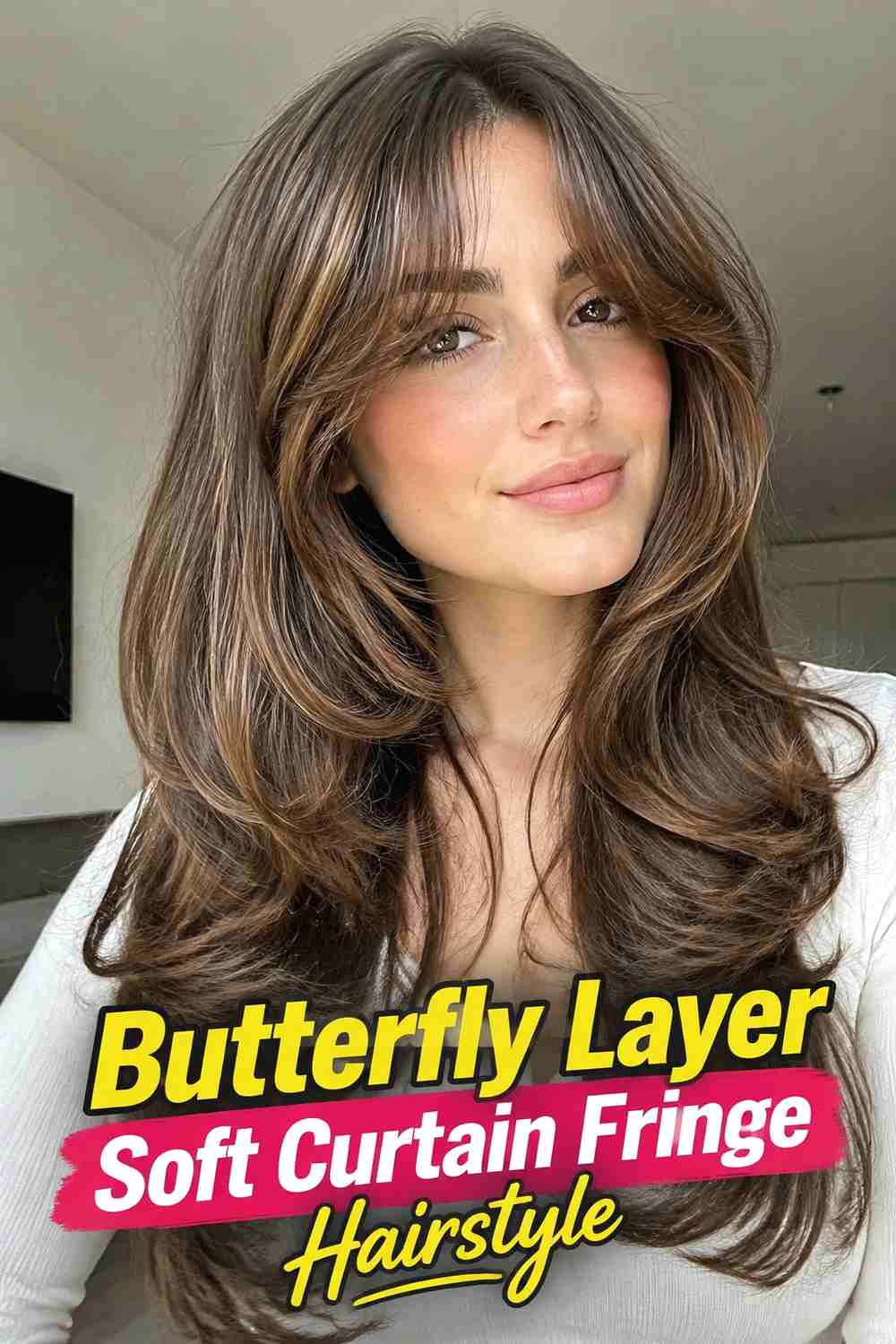
Butterfly layers give soft curtain fringe a fuller, more dramatic framework while preserving lightness around the forehead. The fringe opens gently through the center, then flows into cheekbone, jaw, and shoulder-level layers that sweep outward around the face. When styled with a blowout, those multiple lengths create broad movement without requiring a heavy bang section. Long hair with enough density can support the layering particularly well because the lower lengths remain full while the front gains shape. This version also works with loose waves when you want a softer finish. The main goal is to connect each layer gradually so the curtain fringe feels like the starting point of the haircut rather than a separate feature added at the front.
Why It Works
The outward movement of butterfly layers naturally continues the direction of the curtain fringe, creating one flowing silhouette from forehead to ends.
Pro Tip
Keep sufficient weight through the lower perimeter so the front layering does not leave the ends looking overly thin.
11. Side Part Soft Curtain Fringe Hairstyle
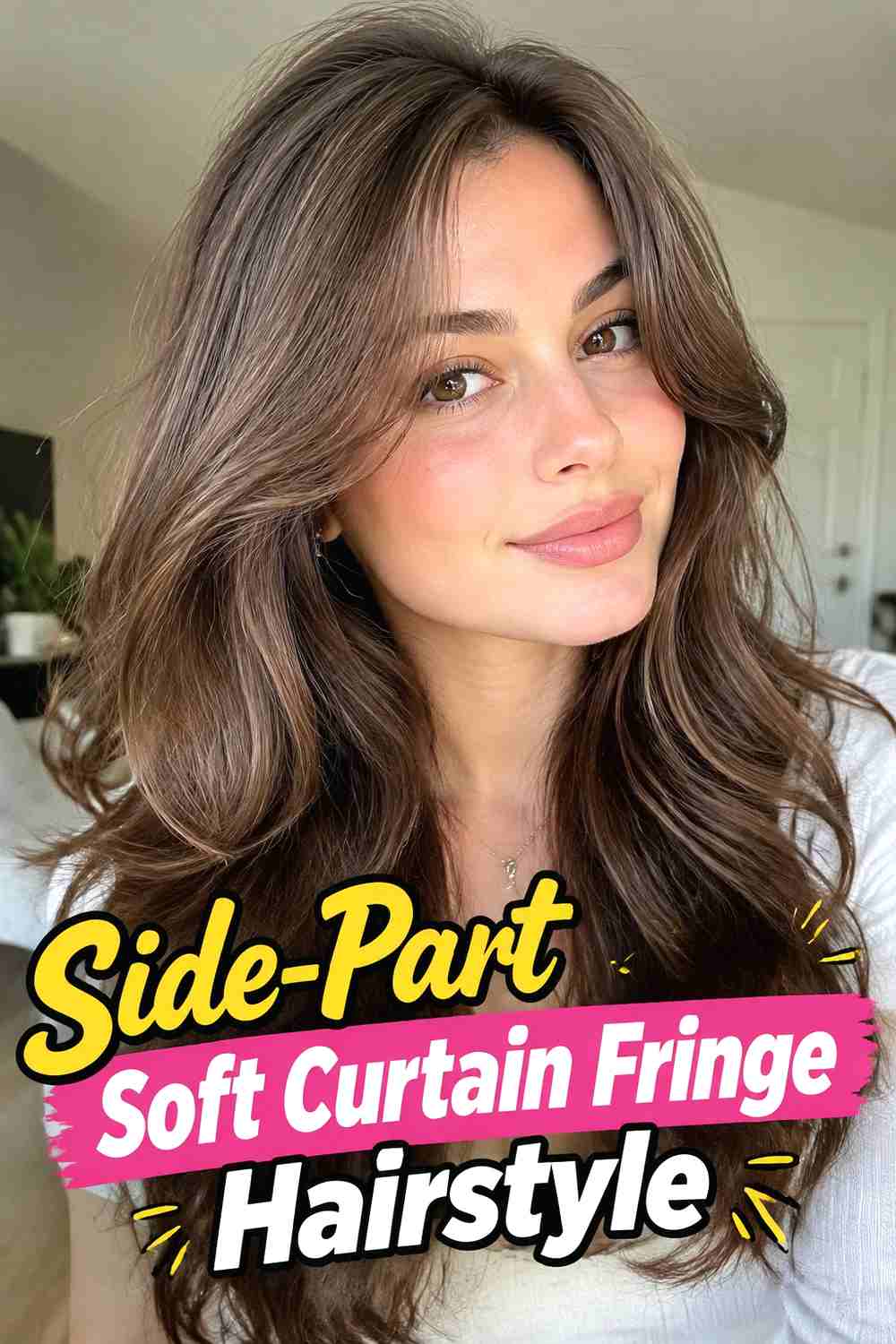
A side part gives soft curtain fringe an asymmetric update without completely changing its open shape. One side can sweep more broadly across the forehead while the other opens sooner and falls into a shorter face-framing section. The result feels less symmetrical than a classic center part but still keeps both sides connected to longer pieces around the temples and cheeks. This version works particularly well with medium and long layers, especially when styled with loose waves or a soft blowout. Keep the part moderate rather than extremely deep if you want the style to retain a curtain-like appearance. A small amount of root lift on the fuller side can help the sweep stay light and mobile.
Why It Works
The shifted part adds movement and variety while preserving the gradual length transition that gives curtain fringe its softness.
Pro Tip
Experiment with part placement before trimming because even a small change can alter how each side of the fringe naturally falls.
12. Romantic Updo Soft Curtain Fringe Hairstyle
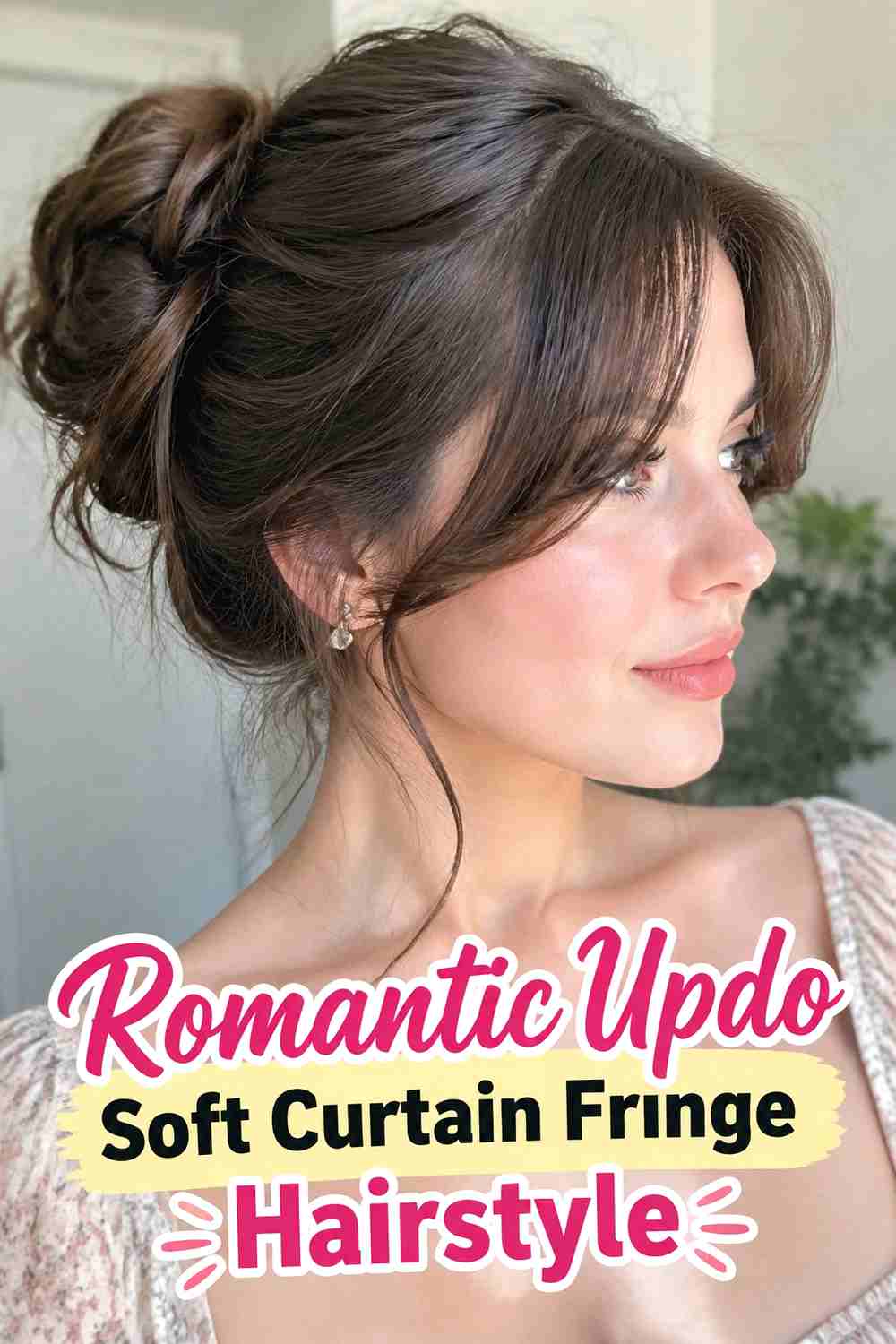
A romantic updo lets soft curtain fringe become the main face-framing detail while the rest of the hair is lifted into a bun, twist, or textured chignon. Leave the fringe and a few longer temple pieces free before pinning the main lengths so the front stays soft and undisturbed. The shortest pieces can open lightly over the forehead, while the longer sections curve around the cheekbones and blend into one or two loose tendrils. This creates a polished updo without exposing a completely severe hairline. Keep the fringe flexible rather than coating it with strong hold. The style works particularly well for parties, dinners, weddings, and other occasions where you want softness around the face with a more formal back.
Styling Notes
Separate the fringe and longer framing pieces before building the updo so you do not have to pull them free from the finished style.
Why It Works
The light fringe balances the structure of an updo and creates movement at the front even when the main lengths are fully pinned.
How to Choose the Right Look
Start with the amount of fringe you want across the forehead. Wispy and longer versions create the lightest effect, while feathered and blowout styles provide more visible structure. If you want something easy to brush aside, keep the shortest section closer to cheekbone length rather than cutting it very short.
Next, consider natural texture. Straight hair shows the shape clearly but may need a gentle outward bend to stay open. Waves can blend the fringe naturally into the sides, while curls need length decisions based on their dry shape and shrinkage.
Haircut length matters too. Lobs and shoulder-length cuts create a concentrated frame, while long layers and butterfly cuts give the fringe more room to cascade into the rest of the hair.
Finally, think about daily styling. Blowout and feathered versions benefit from more deliberate shaping, while wavy, curly, and lightly textured options can often work with a softer routine. Choose a fringe that still looks intentional on ordinary days, not only immediately after styling.
Final Thoughts
Soft curtain fringe can be wispy, feathered, curly, sleek, voluminous, or almost seamlessly blended into longer layers. The most important factors are density, starting length, and how smoothly the outer sections connect to the haircut. Choosing a shape that works with your natural texture and realistic styling routine can make the fringe easier to wear as it grows.
FAQs
1. What is a soft curtain fringe?
A soft curtain fringe is a lighter, blended fringe that opens around the center or slightly off-center and lengthens gradually toward the temples and face-framing layers.
2. Is soft curtain fringe the same as curtain bangs?
The terms can overlap, but “soft curtain fringe” usually suggests a lighter, less rigid finish with gentle blending rather than a dense, strongly shaped bang section.
3. Does soft curtain fringe work on curly hair?
Yes. Curly versions can work beautifully when the length is planned around natural shrinkage and the fringe follows the curl pattern instead of being forced straight.
4. Which soft curtain fringe is easiest to grow out?
Longer, wispy, and face-framing versions usually blend into the surrounding haircut more easily as they grow.
5. How do you style a soft curtain fringe?
You can use a round brush, roller, loose wave, natural curl pattern, or gentle air-drying. The main goal is to keep the fringe opening away from the face and blending into longer side pieces.
Save your favorite soft curtain fringe hairstyle ideas, compare the lengths and textures, and share the looks that best match the light, flowing frame you want.