14 Soft Flat Twist Crown Hairstyle Ideas
Soft flat twist crowns frame the face beautifully, combining sculpted texture, gentle volume, and elegant detail without creating an overly formal finish.
A flat twist crown follows the shape of the head, creating a smooth, raised pattern that can look polished, romantic, casual, or softly dramatic depending on its placement. By changing the part, twist thickness, finishing technique, or loose texture, the same basic crown concept can produce many noticeably different looks.
When choosing your version, think about where you want the crown to sit, how much hair you want tucked away, and whether you prefer a clean finish or visible curls and texture. Comfortable tension matters too: soft crowns should feel secure while still allowing natural movement around the hairline and scalp.
Quick List
- Soft Halo Flat Twist Crown Hairstyle
- Side Parted Flat Twist Crown Hairstyle
- Low Wrapped Flat Twist Crown Hairstyle
- Double Flat Twist Crown Hairstyle
- Half Up Flat Twist Crown Hairstyle
- Curly Puff Flat Twist Crown Hairstyle
- Asymmetrical Flat Twist Crown Hairstyle
- Center Part Flat Twist Crown Hairstyle
- Loose Curl Flat Twist Crown Hairstyle
- Low Bun Flat Twist Crown Hairstyle
- Tucked Ends Flat Twist Crown Hairstyle
- Textured Volume Flat Twist Crown Hairstyle
- Sculpted Side Flat Twist Crown Hairstyle
- Minimal Flat Twist Headband Crown Hairstyle
1. Soft Halo Flat Twist Crown Hairstyle
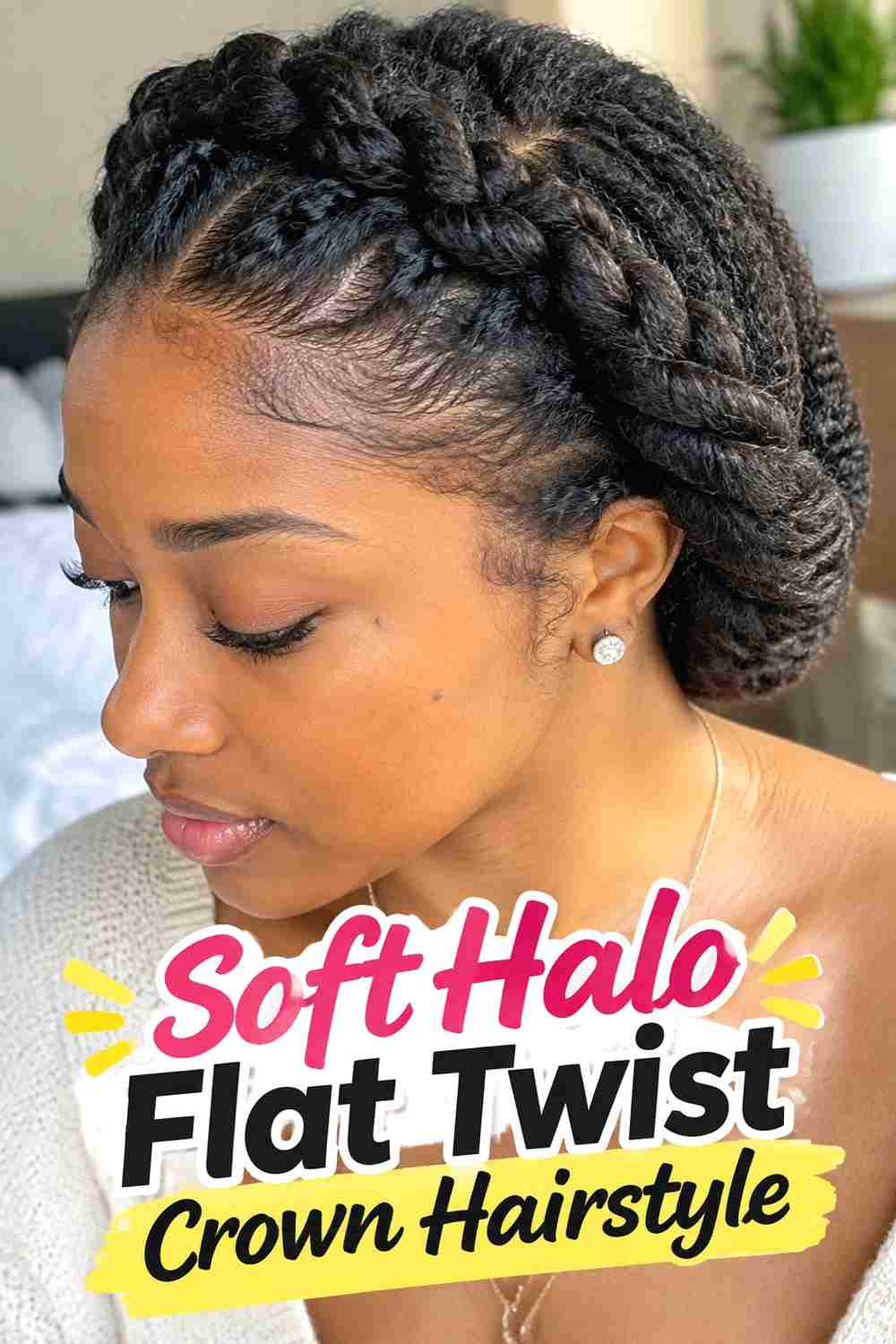
The soft halo flat twist crown wraps smoothly around the head, creating an elegant circular silhouette without looking stiff or overly sculpted. The twists sit close to the scalp while maintaining enough fullness to show their curved pattern clearly. A few soft pieces around the temples can make the finish feel more relaxed, while neatly tucked ends keep the back polished. This style can be especially attractive on natural or stretched textured hair because the twist definition remains visible from every angle. It works well when you want an updo that keeps the lengths contained while still preserving a gentle, feminine shape around the face.
Styling Notes
Work around the head in consistent sections and keep the twist tension comfortable. Slightly fuller twists usually create a softer halo than very narrow, tightly pulled sections.
Best For
This look suits everyday polished styling, dinners, celebrations, weddings, and occasions where you want the hair completely up without choosing a traditional bun.
2. Side Parted Flat Twist Crown Hairstyle
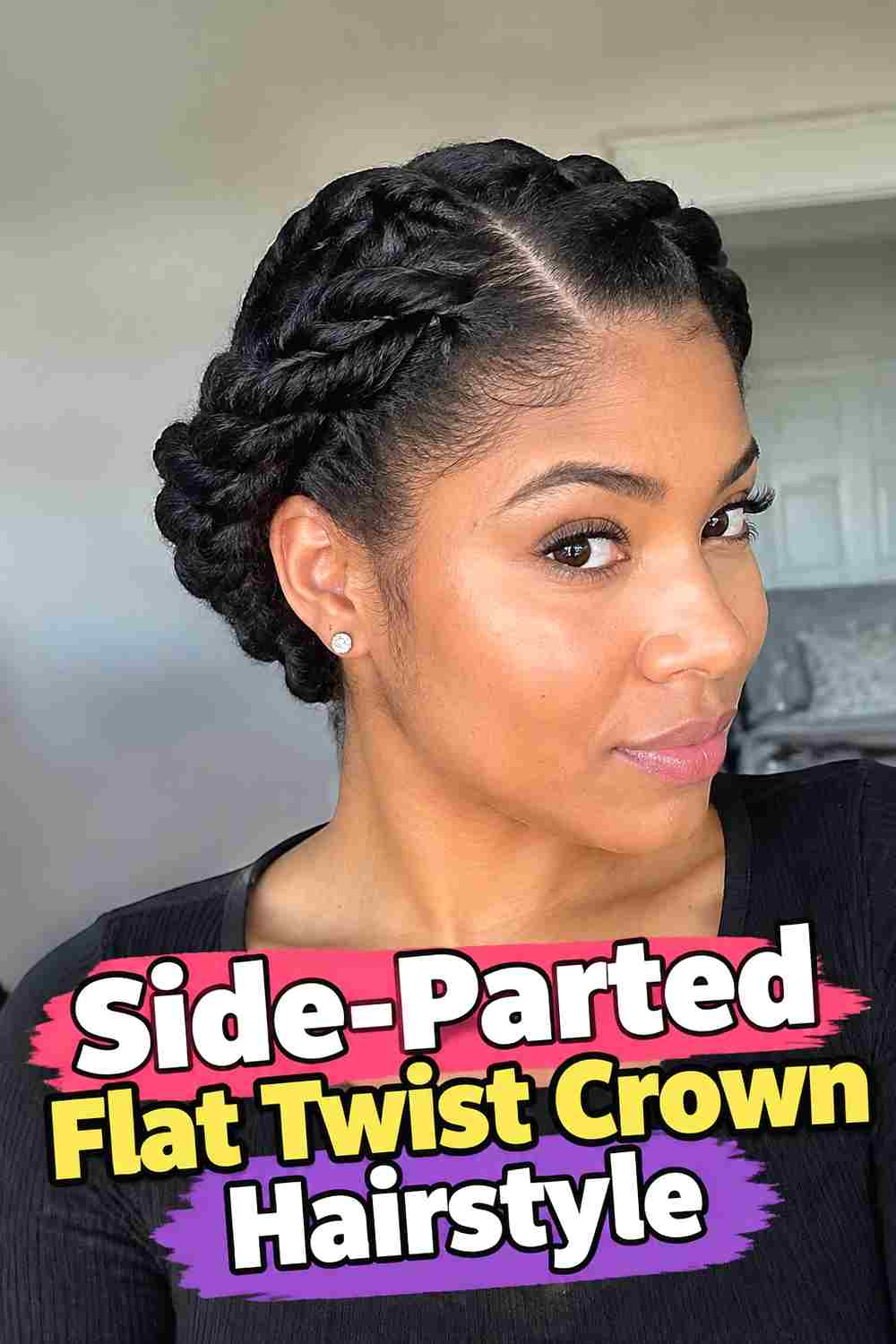
A defined side part gives the flat twist crown a naturally asymmetrical flow. The larger front section can sweep softly across the hairline before joining the crown, creating flattering movement and a little more visual volume on one side. Instead of making every twist identical, allow the front twist to appear slightly fuller so the part remains noticeable. The rest of the hair can continue around the head in a smooth crown shape with the ends tucked discreetly near the back or side. This variation feels refined but not too formal, and the side placement gives the hairstyle extra personality without requiring decorative accessories or complicated finishing details.
Why It Works
The side part changes the balance of the crown and creates a natural focal point near the front, helping the twist pattern feel more directional and dynamic.
Pro Tip
Create the part before sectioning the crown so the front sweep stays intentional rather than being forced into place after the twists are completed.
3. Low Wrapped Flat Twist Crown Hairstyle
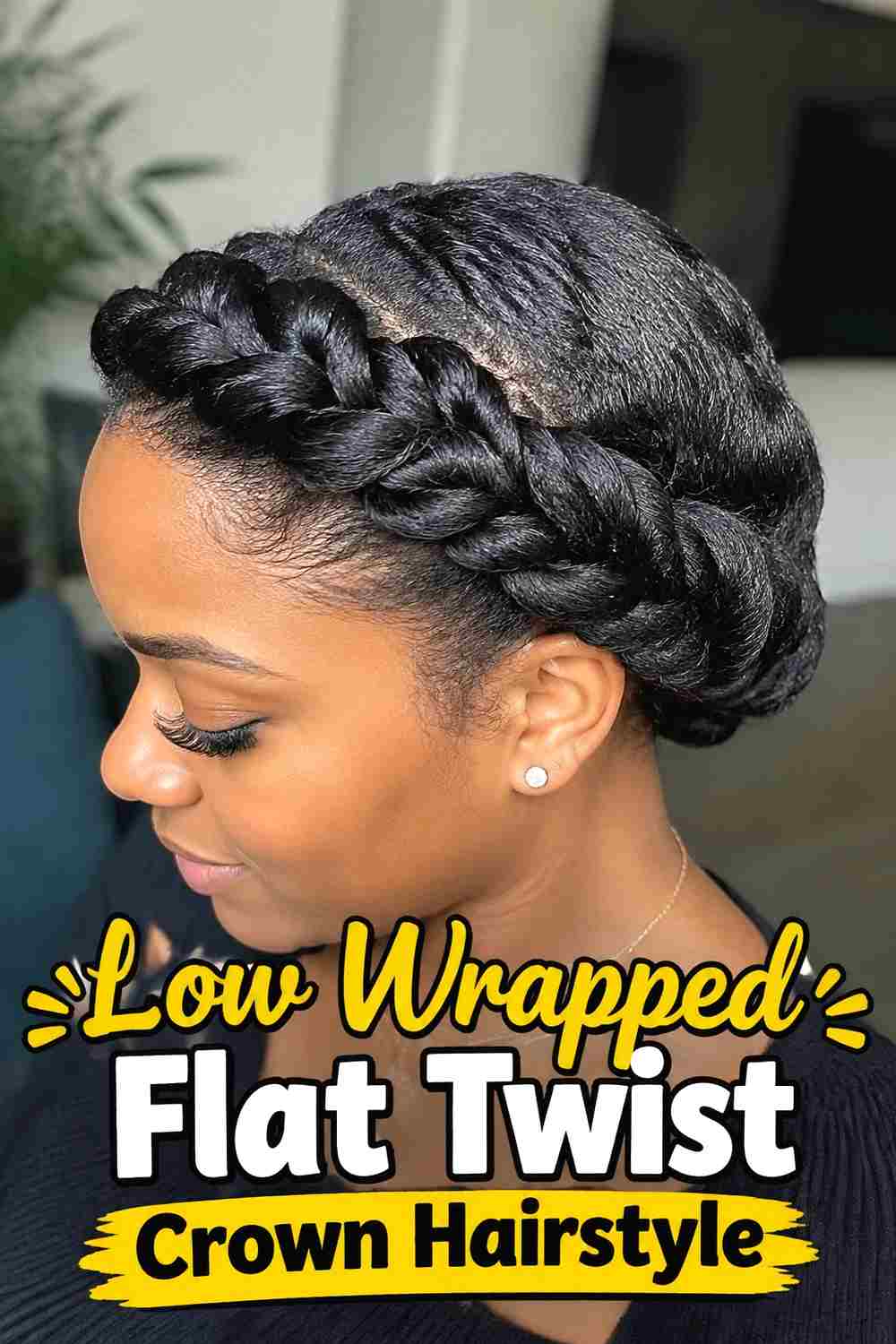
The low wrapped flat twist crown sits closer to the nape instead of circling high around the head. This lower placement creates a softer, more understated silhouette that can feel especially comfortable when you prefer less volume near the crown. The twists curve from the sides toward the back, where they overlap or tuck into one another to form a smooth wrapped finish. A little natural texture at the roots keeps the style from appearing too flat, while neatly secured ends help maintain its rounded shape. This option works beautifully when you want an elegant protective-style-inspired look that still feels simple enough for daytime wear.
Best For
Choose this variation for work, relaxed special occasions, or days when you want your hair off your neck with a lower-profile finish.
Wear & Maintenance
Secure tucked ends with small pins positioned underneath the twists. Covering the style at night can help preserve the smooth wrapped shape for longer wear.
4. Double Flat Twist Crown Hairstyle
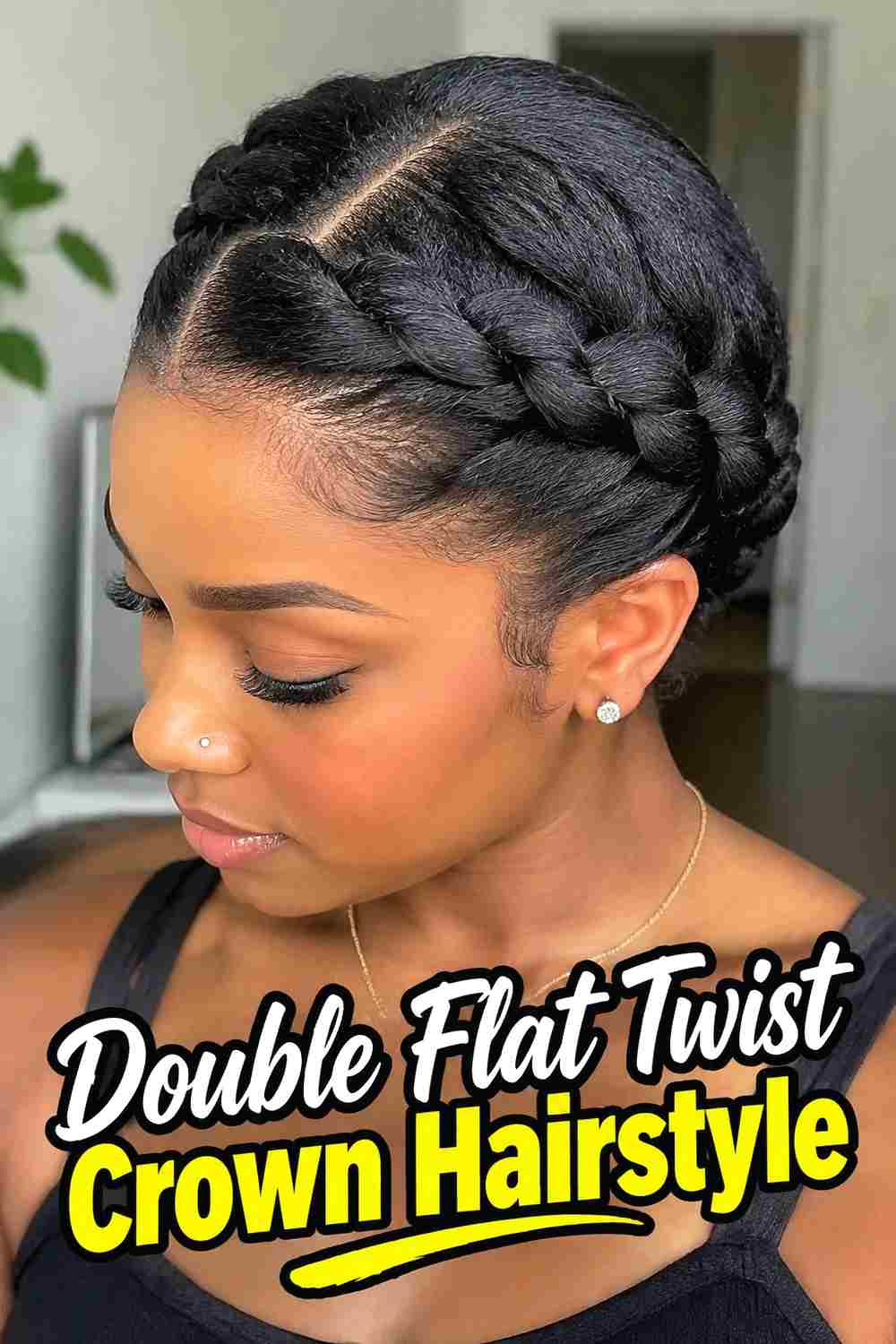
A double flat twist crown uses two visible rows instead of one, giving the style extra dimension while maintaining a soft overall appearance. One twist can sit near the hairline while the second follows slightly behind it, creating a layered crown effect that looks detailed from the front, sides, and back. Keeping both rows similar in fullness gives the hairstyle balance, although the inner crown can be made slightly smaller for a more graduated finish. This variation is particularly useful when you want more visual texture without adding beads, cuffs, or other accessories. It can also distribute the hair across smaller sections, which may make the crown easier to shape evenly.
Hair Type & Length
The style works well on medium-length or longer textured hair that can be flat twisted securely and tucked without leaving bulky ends.
Styling Notes
Map both twist paths before you begin. Consistent spacing between the two rows helps the layered crown remain visible instead of blending into one large twist.
5. Half Up Flat Twist Crown Hairstyle
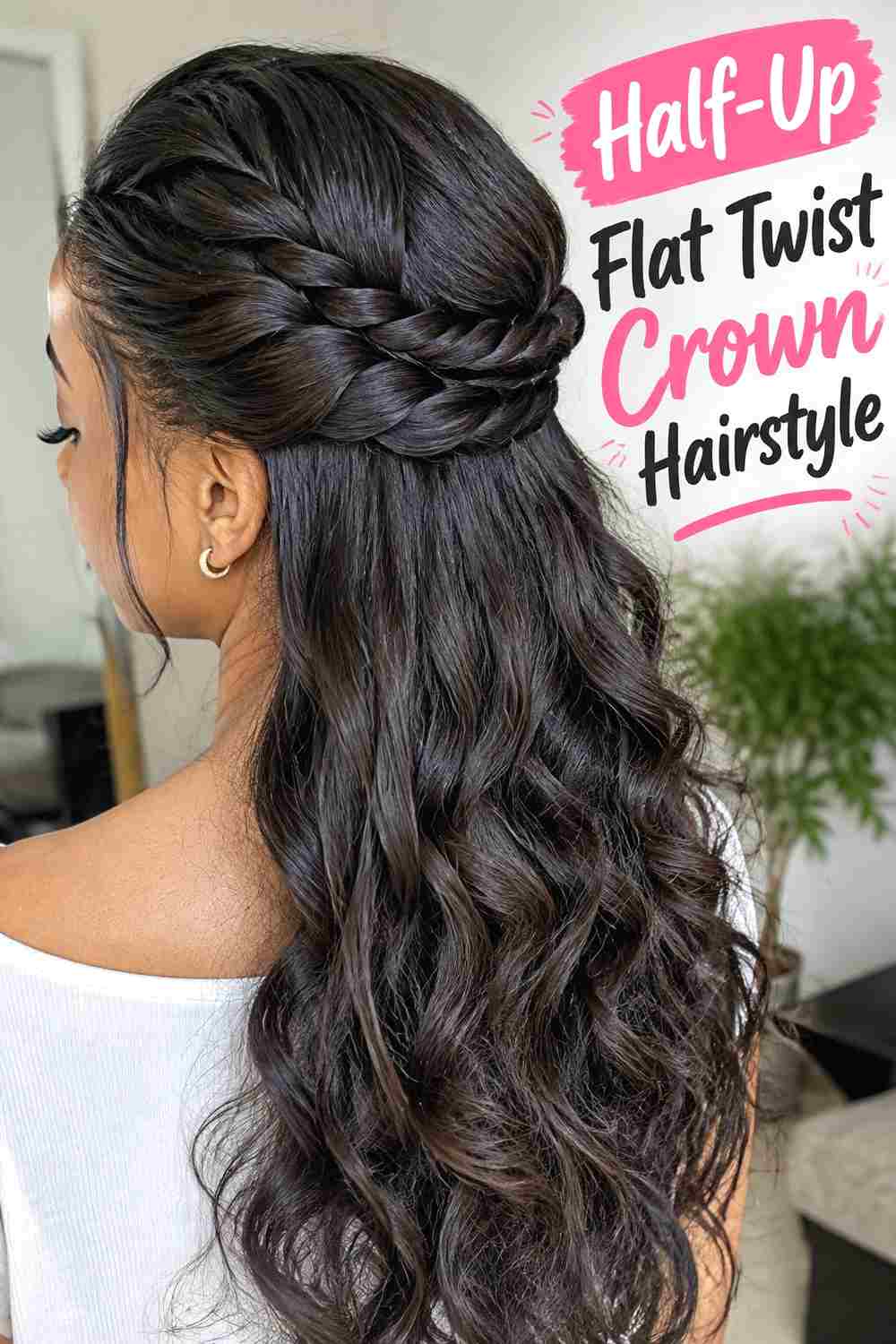
A half-up flat twist crown offers the structure of a crown while leaving the lower lengths free. Flat twists from each side follow the hairline and meet toward the back, forming a curved frame across the upper section. Below the crown, the hair can remain naturally curly, coily, stretched, or softly defined depending on the finish you prefer. This contrast between sculpted twists and loose texture gives the hairstyle movement and makes it feel less formal than a fully tucked crown. It is also a useful choice when you want to showcase your natural length while keeping the front sections controlled and away from the face.
Best For
This style works well for casual events, date nights, photos, celebrations, or days when you want both visible texture and a neatly shaped front.
Pro Tip
Define the loose section before completing the crown so you can judge the finished volume and position the twists in proportion to the hair underneath.
6. Curly Puff Flat Twist Crown Hairstyle
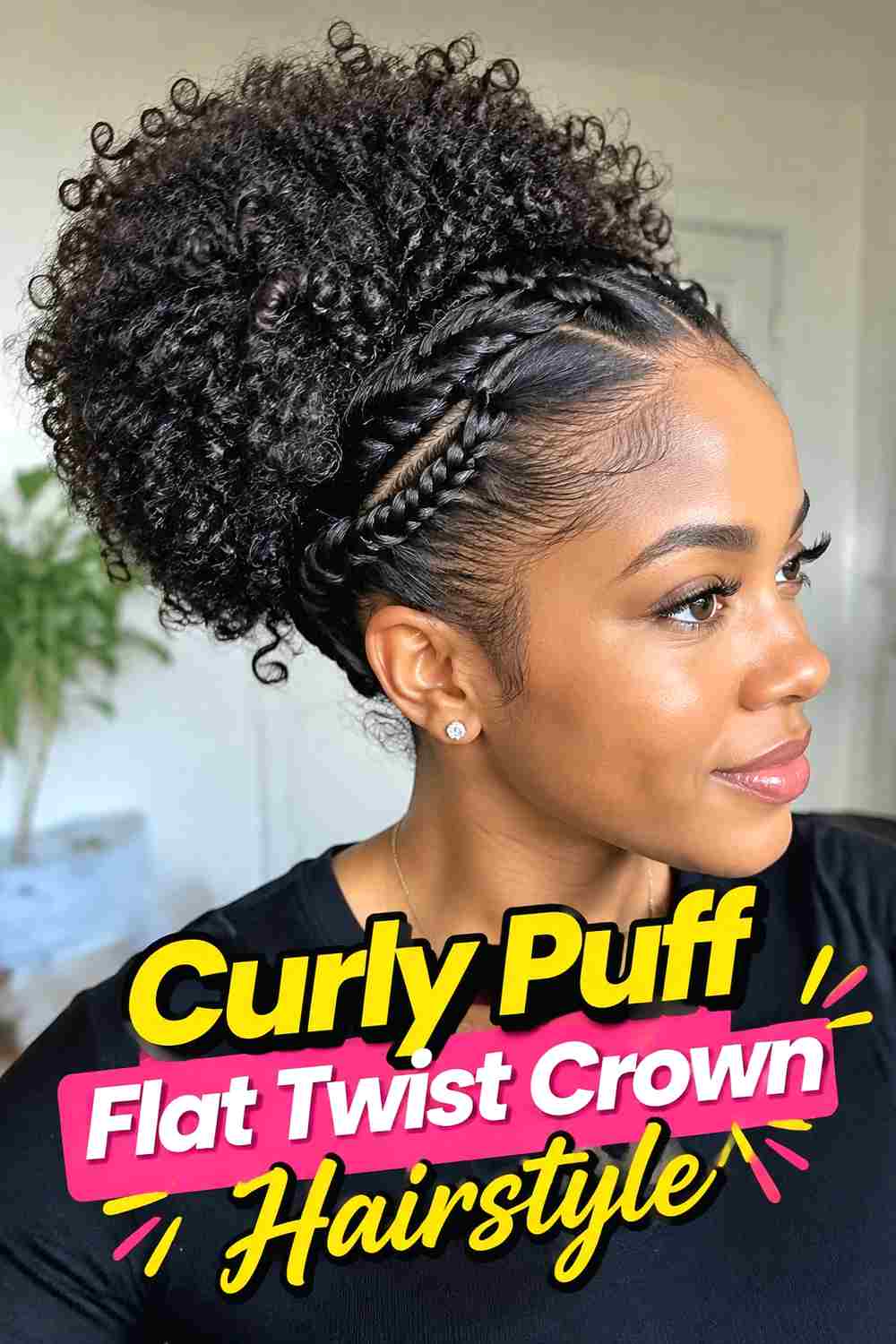
This variation combines a flat twist crown around the perimeter with a soft curly puff left visible toward the top or back. The contrast between smooth directional twists and airy curls creates a balanced look with plenty of texture. Depending on your preferred silhouette, the puff can stay compact and rounded or be gently expanded for more height. The crown itself helps frame the face and creates a neat base, while the loose curls prevent the style from feeling too controlled. It is a versatile option for textured hair because it allows part of the natural curl pattern to remain visible rather than tucking every section into the updo.
Hair Type & Length
Naturally curly, coily, or textured hair works particularly well, especially when there is enough length to gather the central section into a secure puff.
Wear & Maintenance
Refresh the puff separately from the flat twists. Gentle fluffing can restore its shape without disturbing the structured crown around the perimeter.
7. Asymmetrical Flat Twist Crown Hairstyle
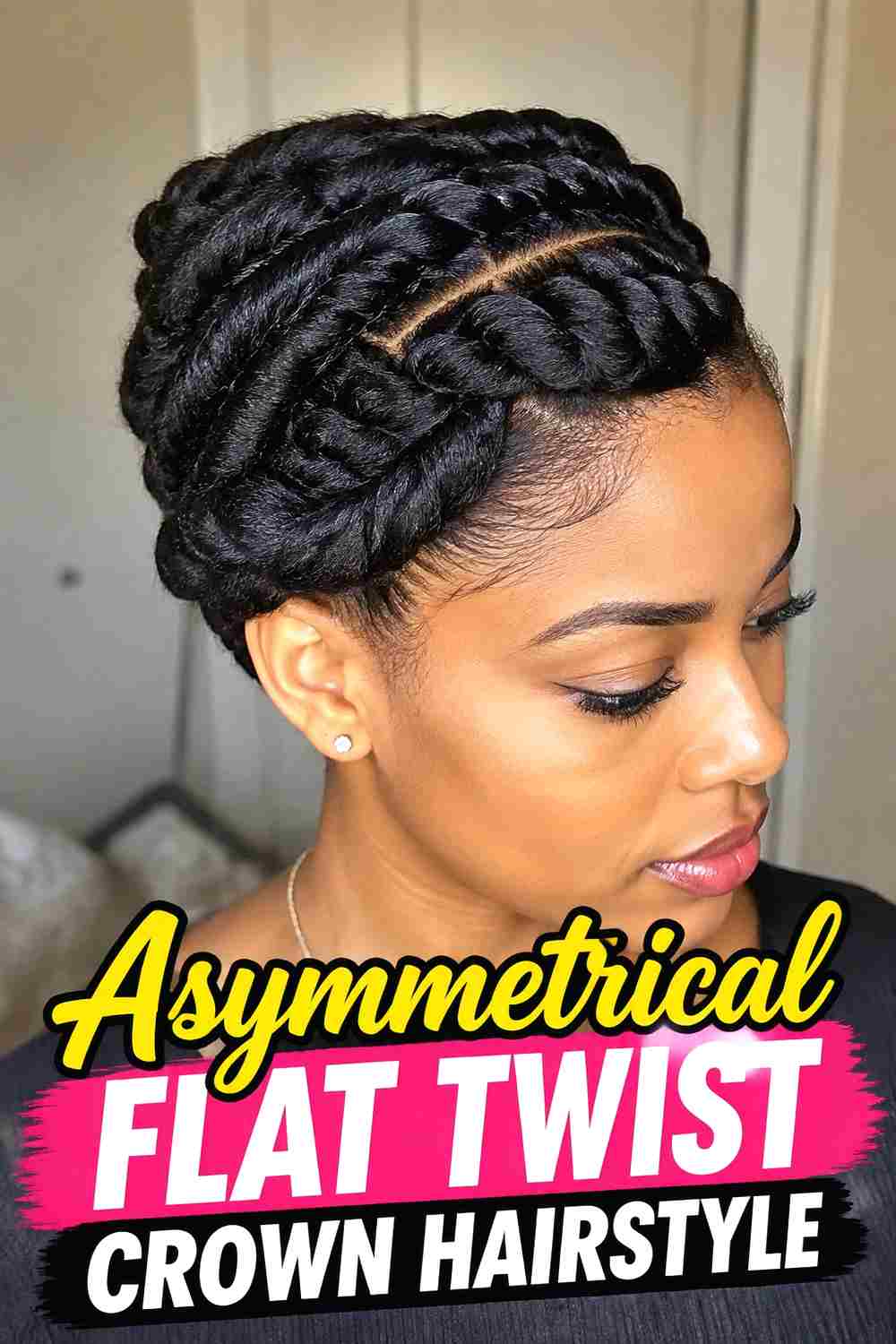
An asymmetrical flat twist crown creates visual interest by placing more twist detail on one side of the head. The crown may begin with several narrower sections near one temple before gradually becoming fuller as it sweeps toward the opposite side. This uneven distribution feels deliberate and modern while still keeping the overall shape soft. The ends can be tucked behind the ear, wrapped at the nape, or blended into a fuller twist near the back. Because the hairstyle does not depend on perfect mirror-image symmetry, it can be a creative option for anyone who prefers organic lines and a slightly more editorial finish.
Why It Works
The changing width and placement guide the eye around the head, giving the crown dimension without relying on added accessories or excessive volume.
Styling Notes
Decide where the main focal point will sit before twisting. Keeping one side intentionally simpler helps the asymmetrical detail look purposeful rather than uneven.
8. Center Part Flat Twist Crown Hairstyle
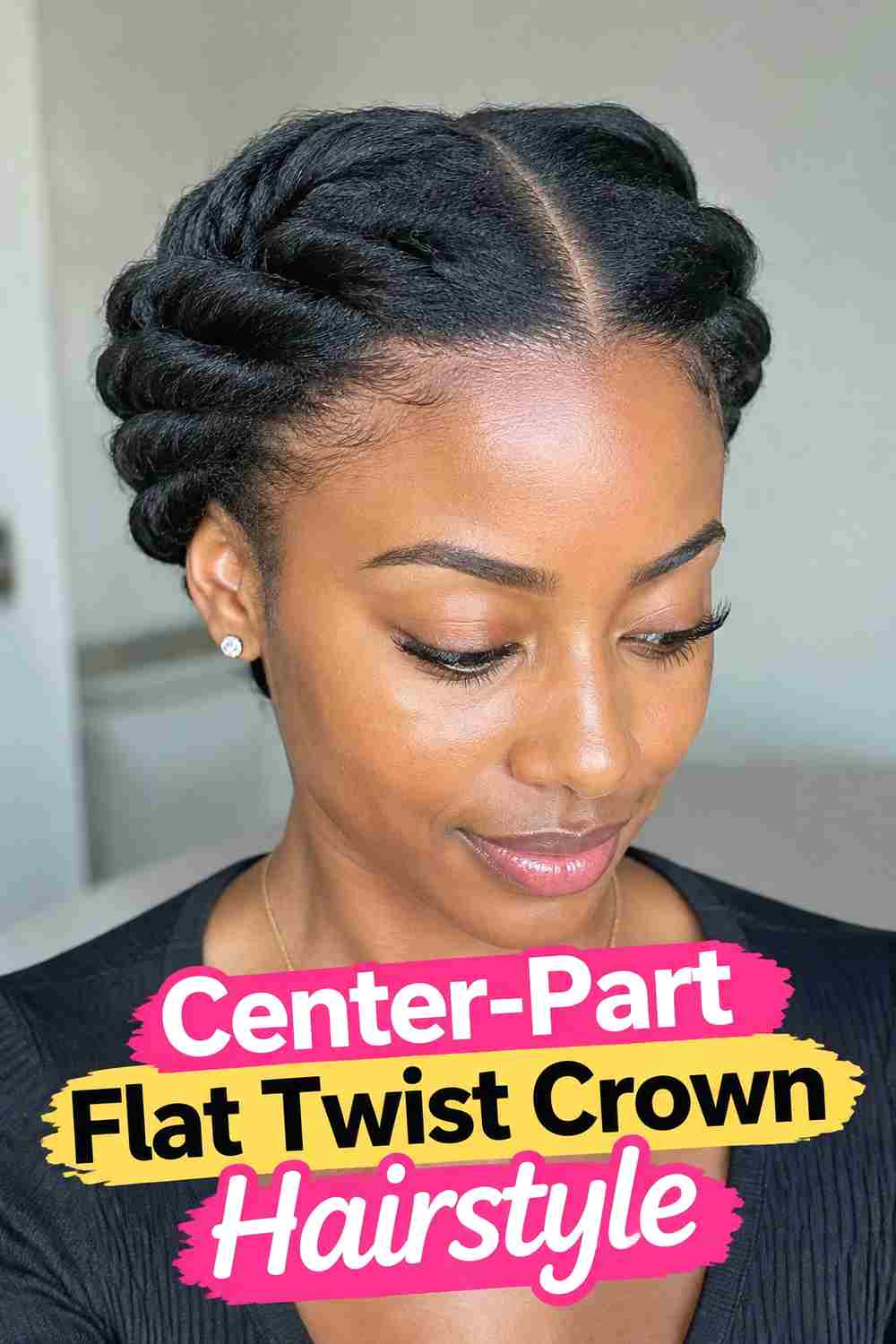
A center part gives the flat twist crown a balanced, graceful structure that frames both sides of the face evenly. Two front sections begin at the part and move outward along the hairline before curving toward the back, where they can join, overlap, or tuck into the opposite side. The clean separation at the center makes the twist pattern especially easy to see and creates a polished front view. For a softer result, avoid pulling the hairline completely flat; a little natural fullness helps the crown feel comfortable and modern. This style works particularly well when you enjoy symmetrical hairstyles with a neat but uncomplicated finish.
Best For
The balanced shape can suit work, formal events, family celebrations, and everyday styling when you want an elegant look without dramatic height.
Pro Tip
Use the center part as your guide for matching the size of the first twist on each side, then adjust the later sections as needed for even fullness.
9. Loose Curl Flat Twist Crown Hairstyle
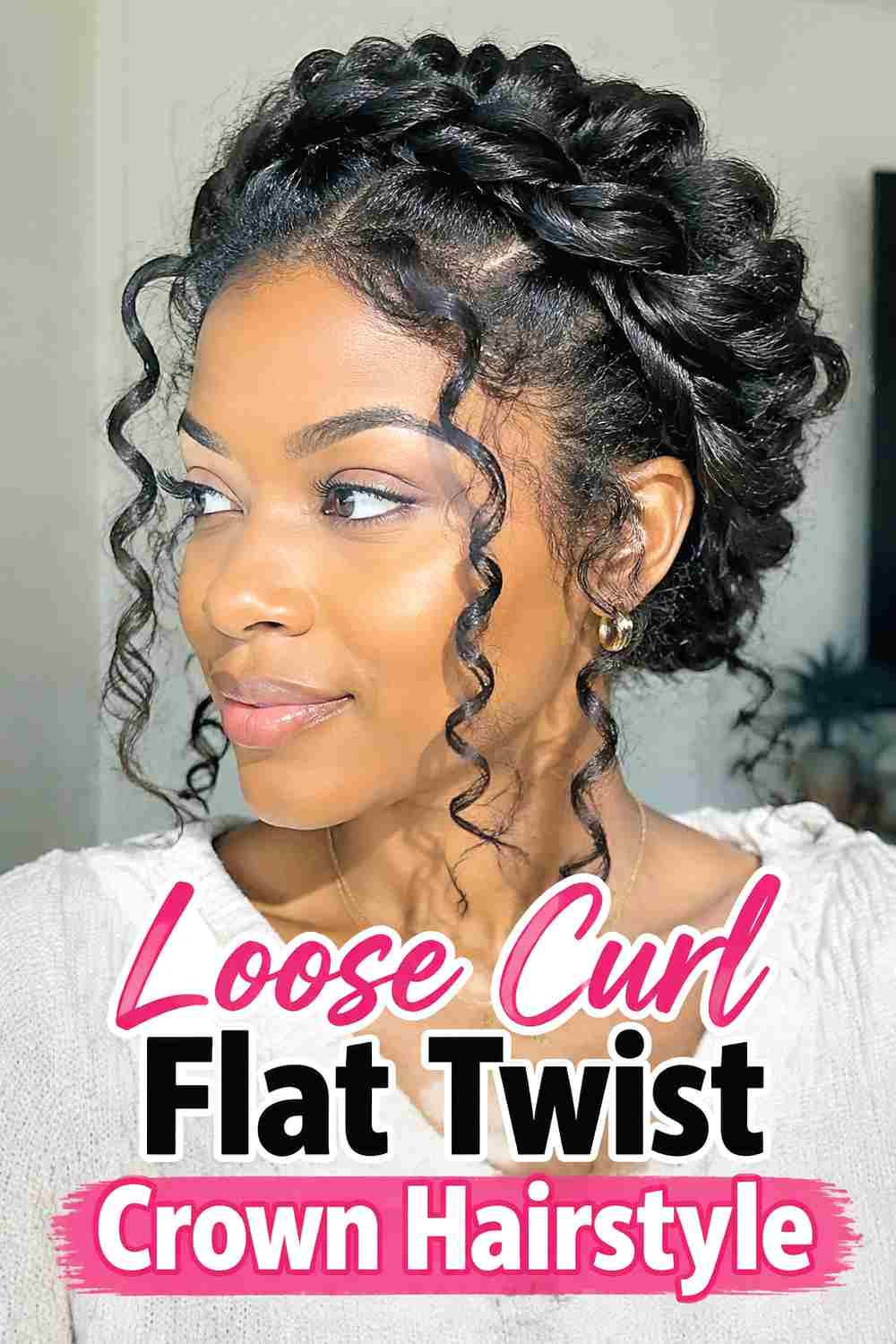
The loose curl flat twist crown combines sculpted flat twists with strategically released curls around the front, side, or back. Instead of tucking every end away, selected sections are left free to create soft movement around the crown. This can give the style a romantic, relaxed appearance while still keeping most of the hair structured and secure. Defined curls near the temples or nape can be especially effective because they break up the circular line of the crown without hiding its twist pattern. Keep the loose pieces intentional and limited so the finished look feels airy rather than unfinished, particularly if the hairstyle is being worn for a special occasion.
Styling Notes
Choose which curls will remain loose before you begin flat twisting. Separating them early prevents accidental tension or uneven pulling later.
Best For
This variation is a natural fit for weddings, parties, dinners, and romantic styling where a completely tucked crown might feel too structured.
10. Low Bun Flat Twist Crown Hairstyle
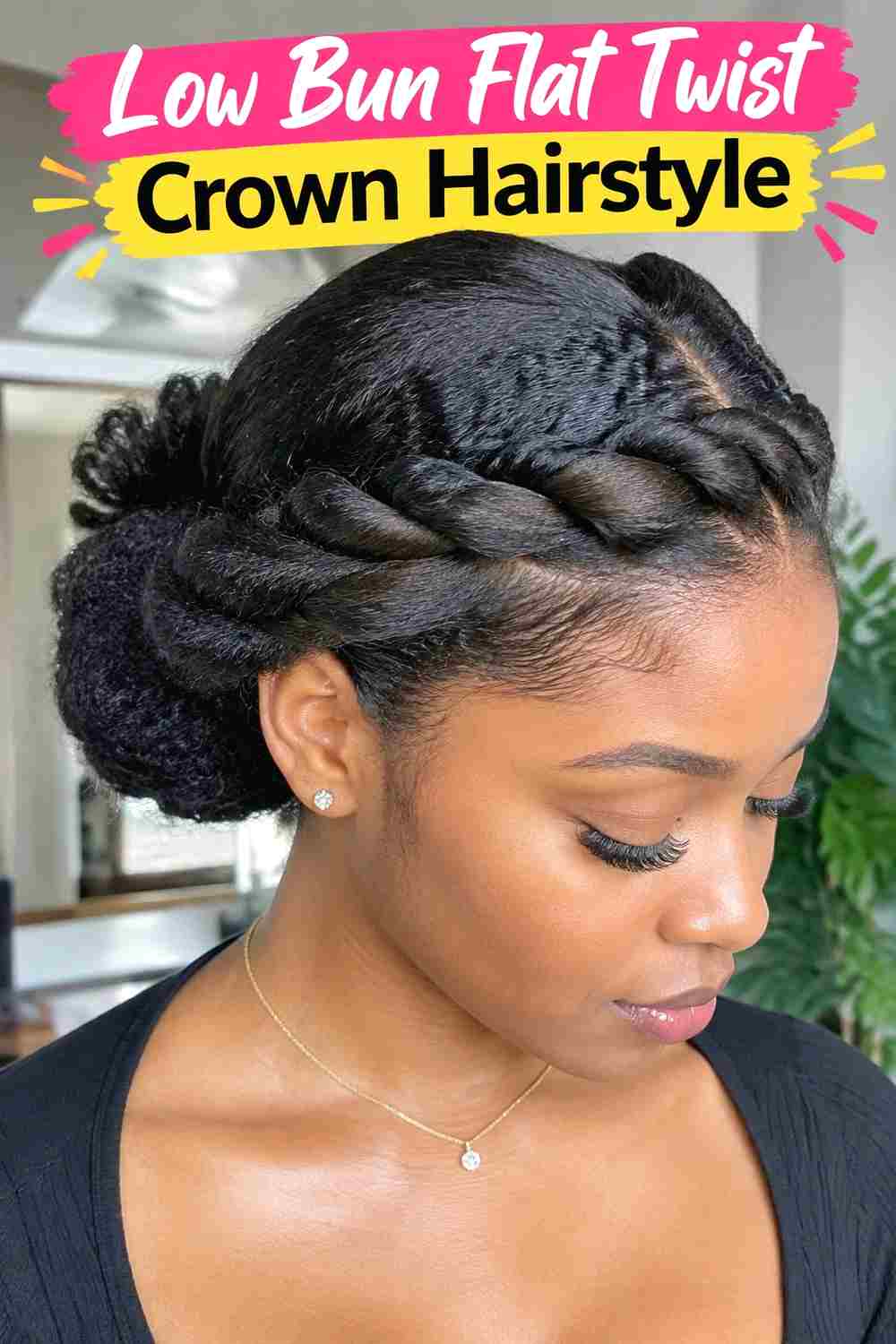
A low bun flat twist crown directs the twists toward a compact bun at the nape, creating a clean transition from textured sides to a rounded finish. The crown can wrap almost completely around the head or begin near the temples and move backward into the bun. Keeping the bun relatively soft rather than tightly compressed helps it match the gentle appearance of the twists. This style can be particularly practical when the ends are long enough to form a bun but difficult to tuck invisibly into a full halo. It also creates a defined back view, making it a strong option for events where the hairstyle will be seen from several angles.
Why It Works
The bun gives the twist ends a natural finishing point, reducing the need for extensive tucking while preserving the crown effect around the front and sides.
Wear & Maintenance
Secure the bun close to the nape with pins that feel comfortable when sitting or leaning back, especially if you plan to wear the style for several hours.
11. Tucked Ends Flat Twist Crown Hairstyle
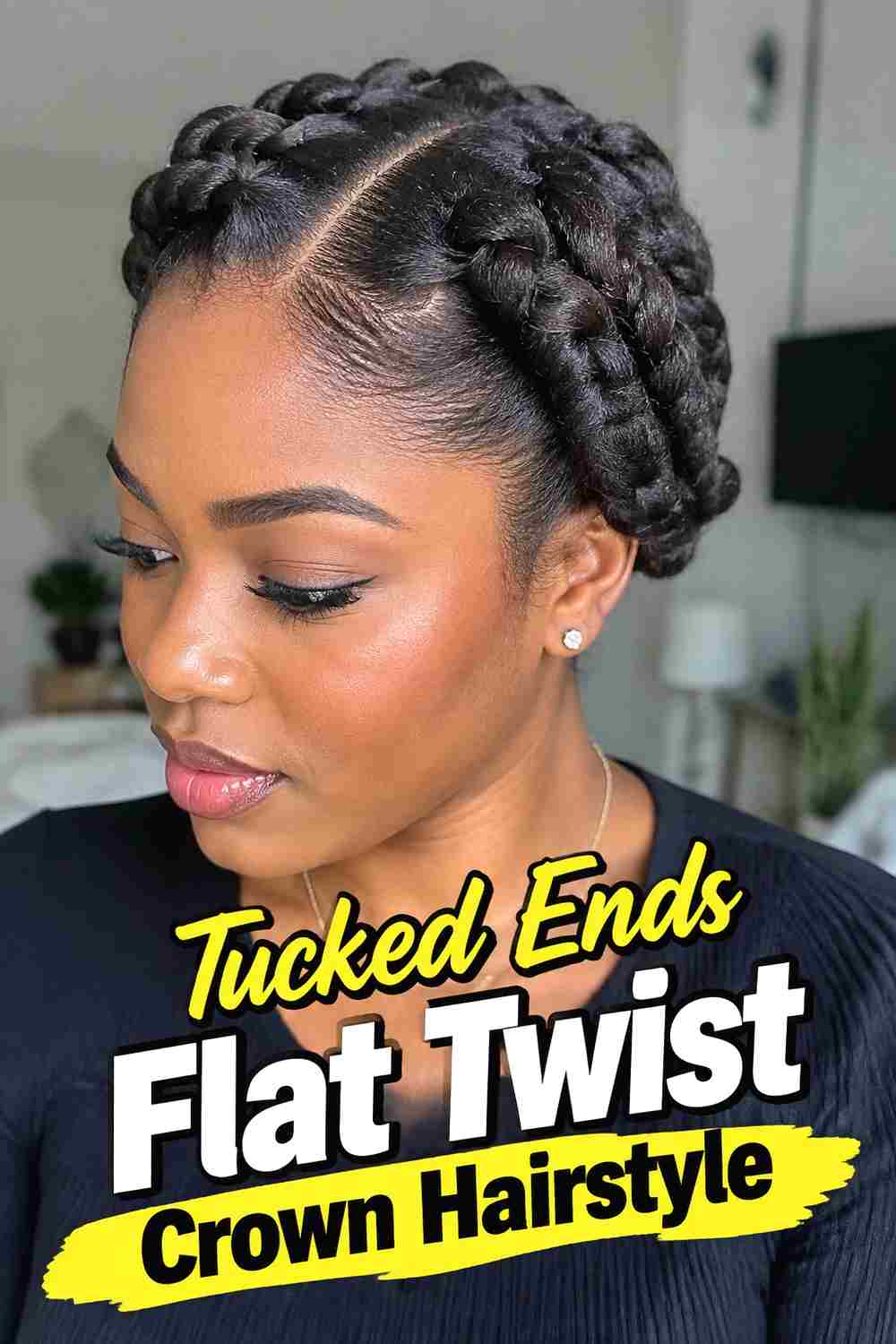
The tucked ends flat twist crown focuses on a seamless finish, with every loose end hidden beneath the neighboring twist. This technique creates a continuous-looking crown with no obvious starting or stopping point. The result is especially polished from the back, where visible elastics or loose ends can sometimes interrupt the circular shape. Medium to long hair provides more flexibility for overlapping and tucking, but the sections should not be so bulky that they create uneven bumps. Softly smoothing the surface while leaving some natural texture visible helps the hairstyle look refined without becoming overly sleek or rigid.
Styling Notes
Tuck each end in the direction the next twist naturally travels. Following the existing curve makes hidden sections less likely to create visible lumps.
Pro Tip
Use only as many pins as needed for security. Too many pins placed close together can make an otherwise soft crown feel unnecessarily firm.
12. Textured Volume Flat Twist Crown Hairstyle
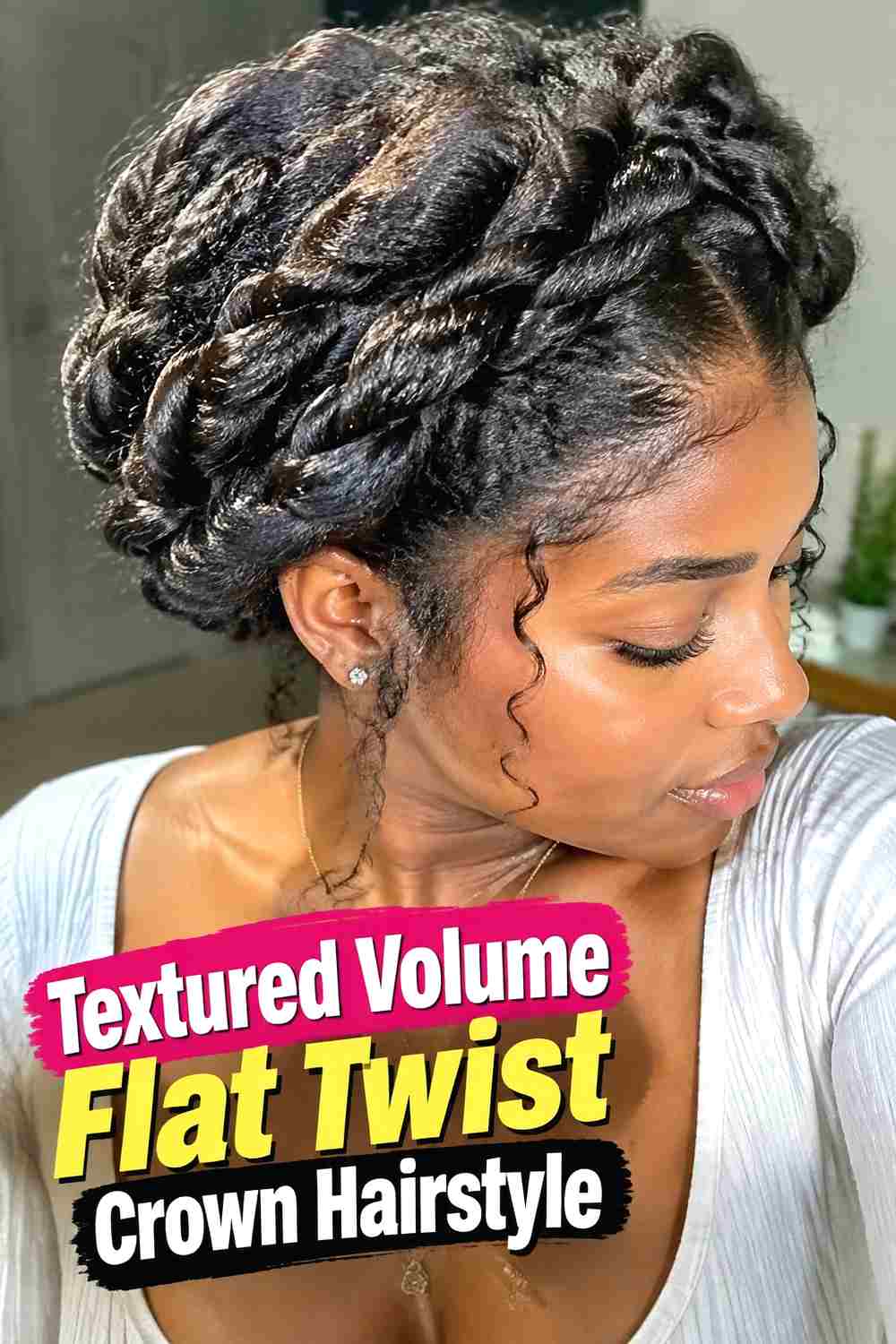
A textured volume flat twist crown is designed to look fuller rather than tightly sculpted against the scalp. Slightly larger sections create broader twists, while gentle root volume gives the crown an airy, dimensional silhouette. The key is keeping the structure visible without flattening every natural curve in the hair. This approach works beautifully when you want the style to celebrate texture rather than emphasizing an ultra-smooth finish. The crown can sit high around the head for added presence or slightly lower for a softer shape. Because the twists are fuller, careful sectioning is important to keep the overall crown balanced from one side to the other.
Hair Type & Length
Dense, curly, coily, or naturally voluminous hair can work especially well because the texture helps create full twists without requiring excessive pulling or manipulation.
Pro Tip
Avoid overloading the hair with heavy products before twisting. A lighter finish can help preserve natural volume and visible strand detail.
13. Sculpted Side Flat Twist Crown Hairstyle
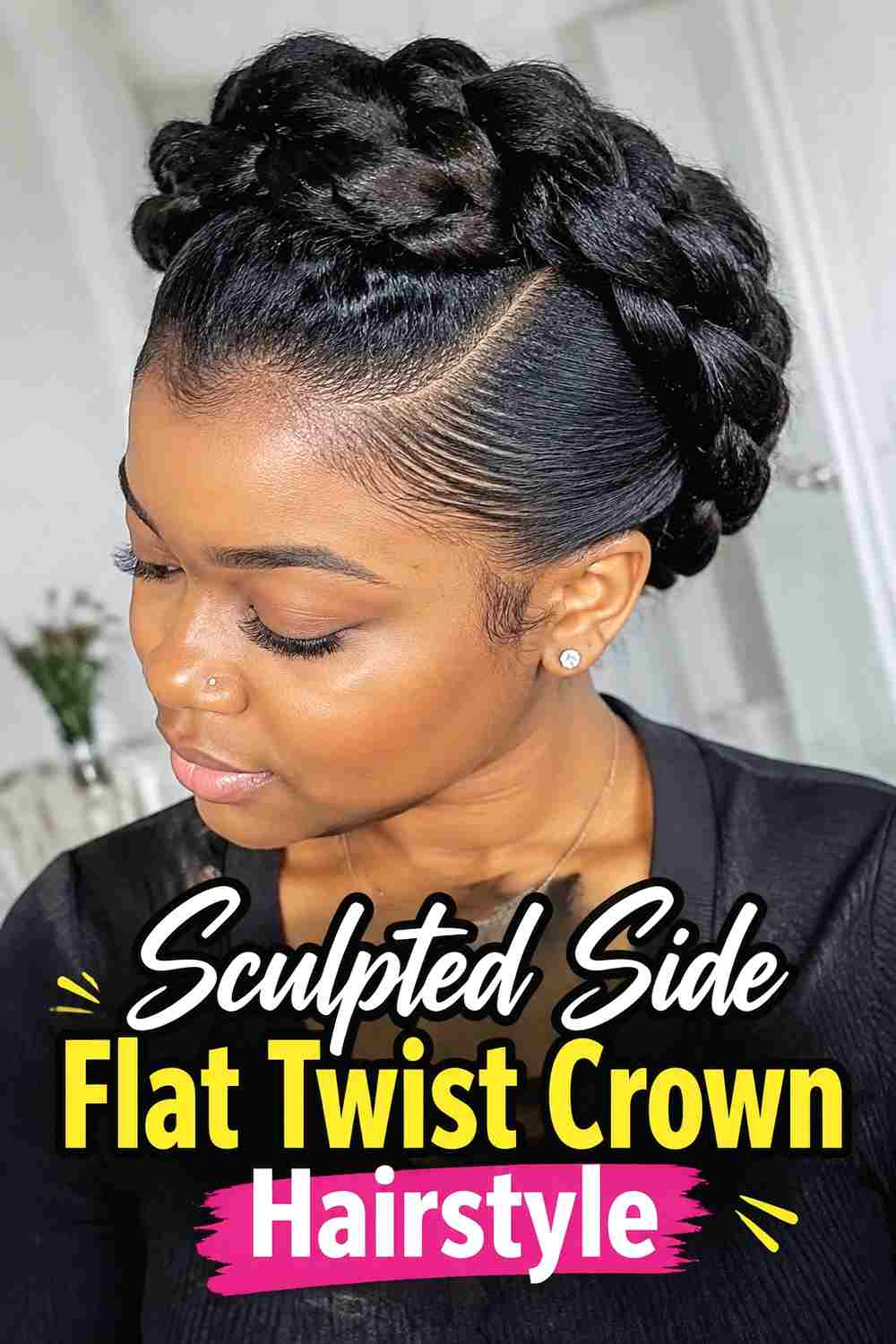
The sculpted side flat twist crown concentrates curved twist lines along one side before they sweep into a softer crown at the back. Instead of following a simple circular path, the front sections can arc upward or backward to create a more designed, dimensional pattern. The opposite side stays cleaner, allowing the sculpted section to stand out without making the hairstyle feel overly busy. This variation works especially well when viewed from the side, so it can be a striking choice for portraits or occasions where you want a little more detail near the face. Keep the twist widths coordinated so the pattern remains easy to follow.
Styling Notes
Part the curved sections carefully before applying styling product. Clear section lines help the sculpted pattern stay readable once the twists begin to overlap visually.
Best For
This look suits creative events, special occasions, portraits, and anyone who wants a crown style with more directional detail than a classic halo.
14. Minimal Flat Twist Headband Crown Hairstyle
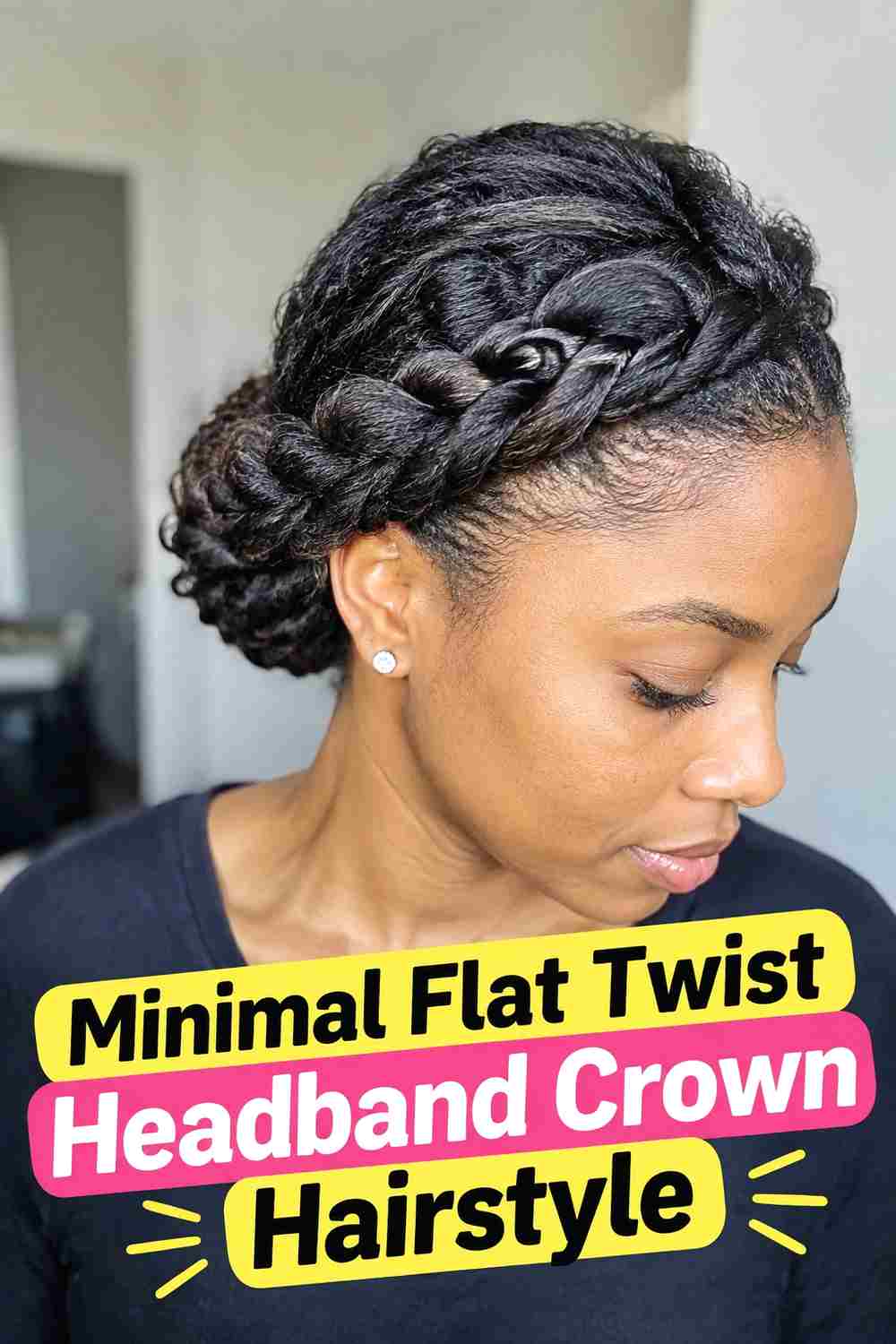
The minimal flat twist headband crown uses a narrower band of twists along the front or upper hairline, creating the appearance of a natural braided headband without wrapping the entire head. The remaining hair can be worn in a puff, curls, a low ponytail, or loose textured lengths. Because the crown detail is concentrated near the face, the hairstyle feels light and easy while still providing noticeable definition. It is also a practical introduction to flat twist crowns if you prefer simpler sectioning or do not want every strand incorporated into an updo. A slightly fuller twist can make the headband shape more visible without requiring additional accessories.
Best For
This option is ideal for everyday styling, casual outings, and anyone who wants a crown-inspired look while keeping most of their natural texture loose.
Wear & Maintenance
Protect the front twist overnight and refresh the loose section separately. This lets you maintain the headband detail without repeatedly restyling the entire head.
How to Choose the Right Look
Start by deciding how much of your hair you want contained. A full halo, tucked crown, or low wrapped style keeps nearly everything secured, while half-up, curly puff, and headband versions leave more texture visible.
Next, consider placement. High crowns create more visual presence around the top of the head, while low crowns and bun finishes feel quieter and more compact. Side parts and asymmetrical designs add movement, whereas a center-part crown gives you a more balanced, symmetrical frame.
Your natural density and length also matter. Fuller hair can create beautifully substantial twists, while finer or shorter hair may be easier to manage in a narrow crown or half-up variation. Adjust section sizes instead of forcing every hairstyle to have the same thickness.
Comfort should remain a priority. Flat twists need enough tension to hold their shape, but the crown should not feel painfully tight around the hairline or scalp. For longer wear, choose a design that can be protected at night and refreshed without completely rebuilding the style.
Final Thoughts
Soft flat twist crowns can range from understated headband details to full halo updos, making the technique surprisingly adaptable. Choose your version based on how much texture you want visible, where you prefer the crown to sit, and how long you plan to wear it. A clean sectioning pattern, comfortable tension, and neatly secured ends can make even a simple variation look beautifully finished.
FAQs
1. How long does hair need to be for a flat twist crown?
You need enough length to feed the hair smoothly into the flat twist and secure the ends. Shorter hair can often work with a partial crown or headband-style version, while longer hair makes full halos and tucked finishes easier.
2. Can a flat twist crown be done on natural hair?
Yes. Flat twists are particularly well suited to curly, coily, and textured hair because the pattern stays visible and the hair can be shaped close to the scalp.
3. How can I make a flat twist crown look softer?
Use slightly larger sections, avoid excessive tension, preserve some natural root volume, and consider leaving a few curls or soft pieces around the face.
4. Can I sleep with a flat twist crown hairstyle?
Many flat twist crown styles can be preserved overnight. Covering the hair with a smooth bonnet or scarf and minimizing friction can help maintain the twist pattern and tucked ends.
5. What is the easiest flat twist crown variation to try first?
A half-up or minimal headband crown is often easier to manage because it uses fewer sections and does not require every end to be wrapped around the entire head.
Save your favorite soft flat twist crown ideas, share the looks you love, and explore more textured hairstyle inspiration for your next style.