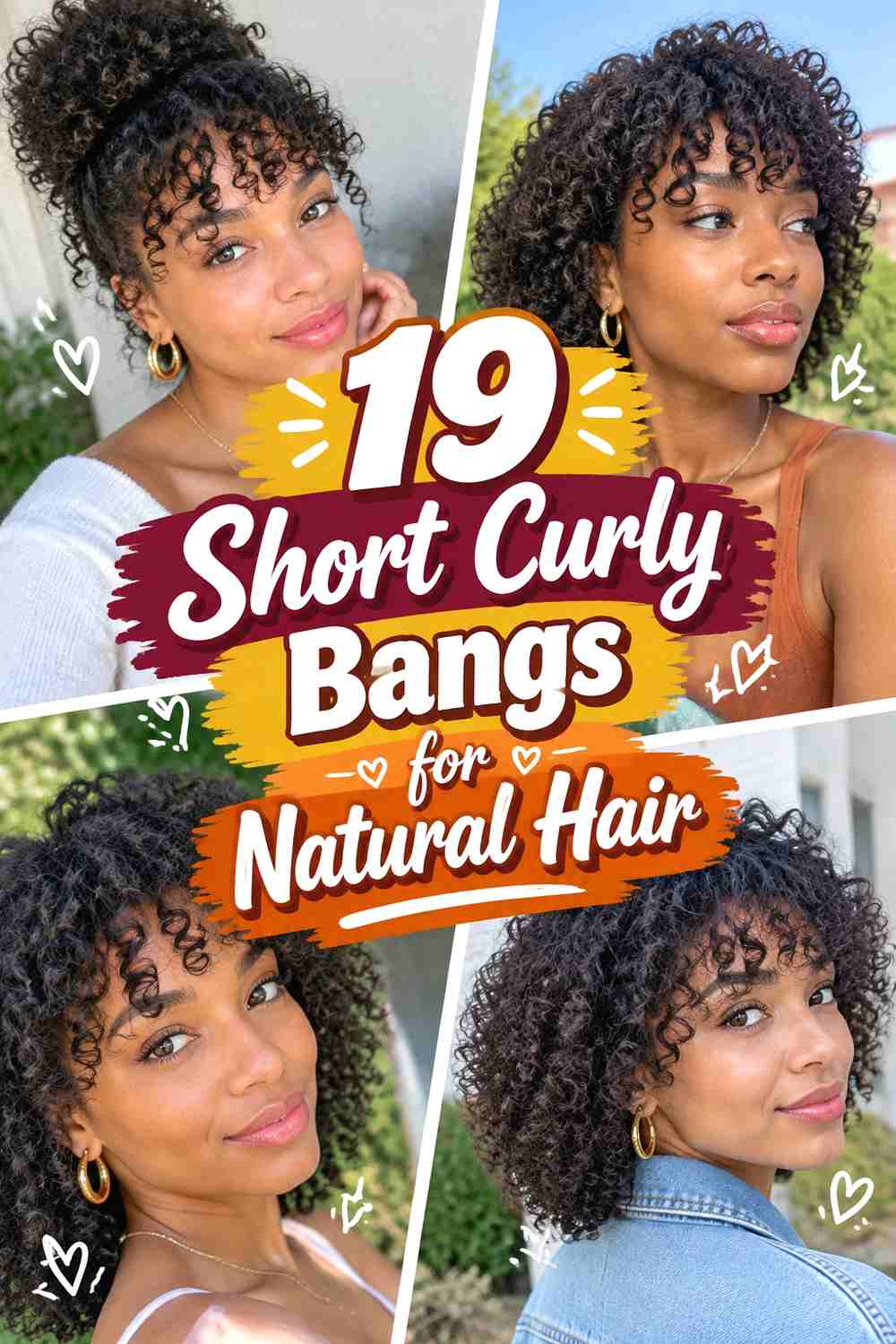
18 Defined Twist-Out Bob Hairstyle Ideas
Defined twist-out bobs combine springy texture, flattering shape, and versatile volume for a natural hairstyle that can shift from softly polished to bold and fluffy.
A twist-out bob gets its personality from both curl definition and silhouette. Smaller twists can create tighter, more detailed texture, while larger sections usually produce broader bends and a fuller finish. Parting, layering, stretching, and root volume also change how the bob sits around the face.
Before choosing a version, consider your current length, shrinkage, density, and how much separation you enjoy. Some looks preserve highly defined twist sections, while others deliberately fluff the roots or separate more pieces for volume. The best balance is one that gives you the shape you want without losing the texture that makes the twist-out distinctive.
Quick List
- Rounded Defined Twist Out Bob Hairstyle
- Deep Side Part Twist Out Bob Hairstyle
- Chin Length Defined Twist Out Bob Hairstyle
- Layered Twist Out Bob Hairstyle
- Side Swept Defined Twist Out Bob Hairstyle
- Fluffy Defined Twist Out Bob Hairstyle
- Tapered Twist Out Bob Hairstyle
- Asymmetrical Defined Twist Out Bob Hairstyle
- Soft Fringe Twist Out Bob Hairstyle
- Voluminous Crown Twist Out Bob Hairstyle
- Stretched Defined Twist Out Bob Hairstyle
- Mini Twist Out Bob Hairstyle
- Sculpted Side Part Twist Out Bob Hairstyle
- Shoulder Grazing Twist Out Bob Hairstyle
- Soft Edge Defined Twist Out Bob Hairstyle
- Pinned Side Twist Out Bob Hairstyle
- Chunky Defined Twist Out Bob Hairstyle
- Glossy Defined Twist Out Bob Hairstyle
1. Rounded Defined Twist Out Bob Hairstyle
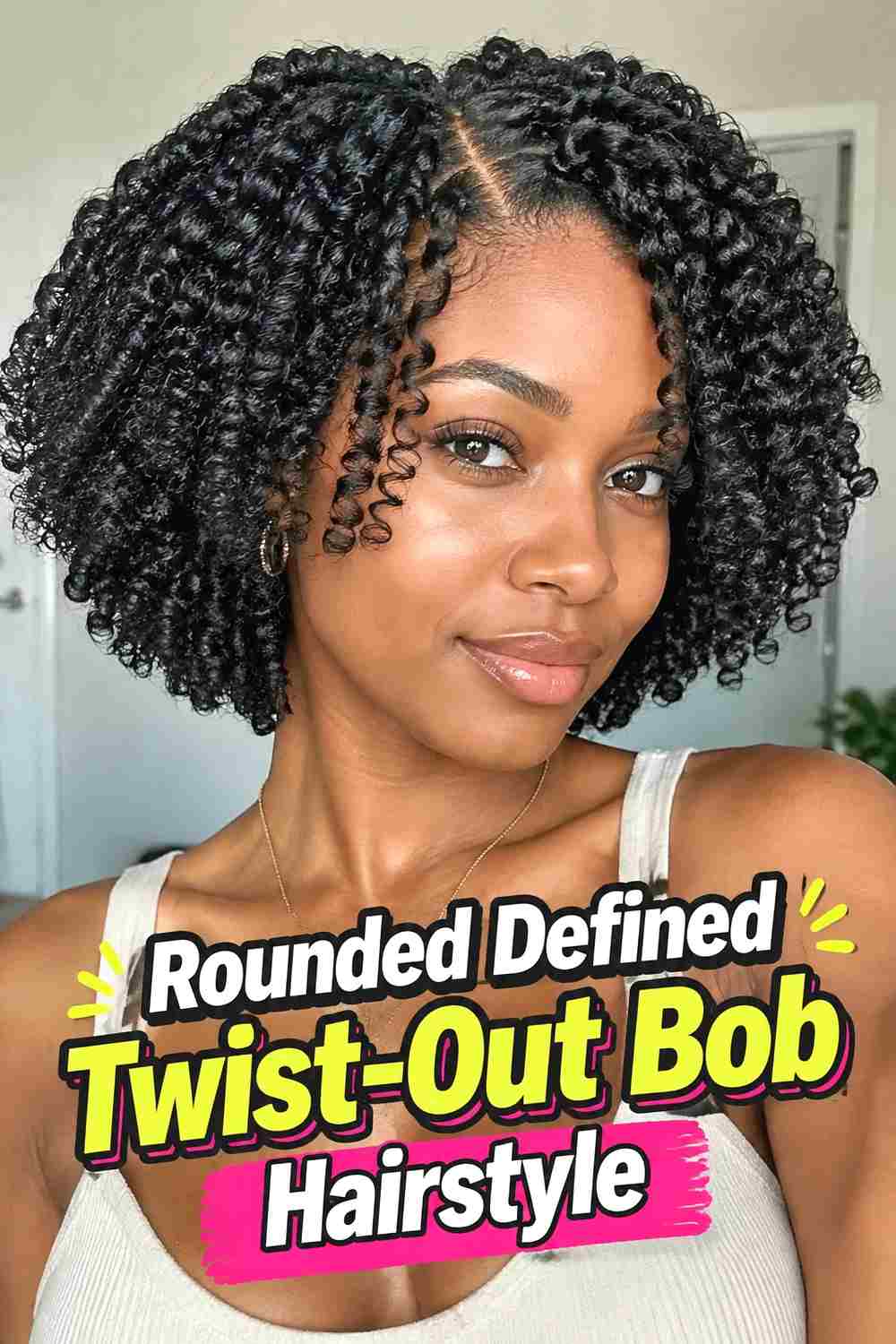
A rounded defined twist-out bob creates an even, softly curved silhouette around the head while keeping individual twist patterns visible. The volume is distributed through the sides, crown, and lower perimeter rather than concentrated in one area, giving the hairstyle a balanced shape. Separate enough twists to create movement but stop before the texture becomes overly fluffy. This version works especially well when the hair shrinks into a natural bob length after unraveling. Gentle root lifting can fill small gaps without disturbing the defined ends. Shape the perimeter with your hands instead of pulling every section outward, allowing the curls to settle into a believable rounded outline.
Styling Notes
Unravel the twists carefully, then separate each section only where it naturally divides. Lift the roots last so you can judge how much additional volume the finished shape actually needs.
Best For
This balanced style works well when you want visible definition and fullness without a dramatic part, fringe, or intentionally asymmetrical shape.
2. Deep Side Part Twist Out Bob Hairstyle
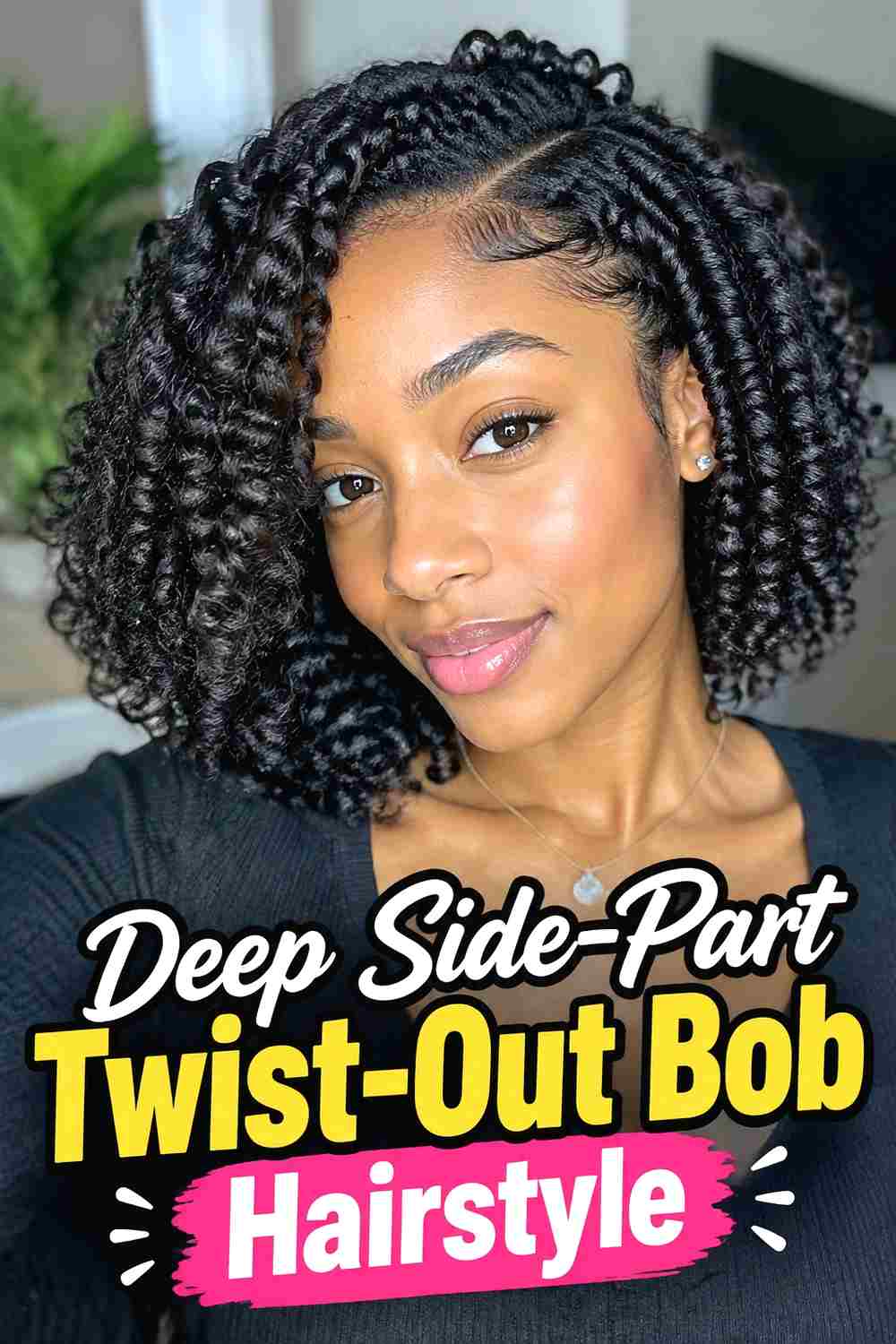
A deep side part gives the twist-out bob immediate direction and creates a noticeable difference in volume from one side to the other. The larger section can sweep across the forehead and open into soft, defined curls, while the smaller side stays closer to the head. This placement adds movement without changing the fundamental bob length. Keep the part visible at the roots, but avoid over-smoothing the surrounding texture because the contrast between the clean line and springy twist-out is part of the appeal. If the fuller side feels too heavy, lift gently at the crown rather than separating every curl, which helps preserve definition through the ends.
Why It Works
The deep part creates a strong focal point and naturally redistributes volume, making a simple twist-out bob feel more sculpted without requiring extra accessories.
Pro Tip
Decide on the side part before setting the twists so the finished sections naturally fall in the direction you plan to wear them.
3. Chin Length Defined Twist Out Bob Hairstyle
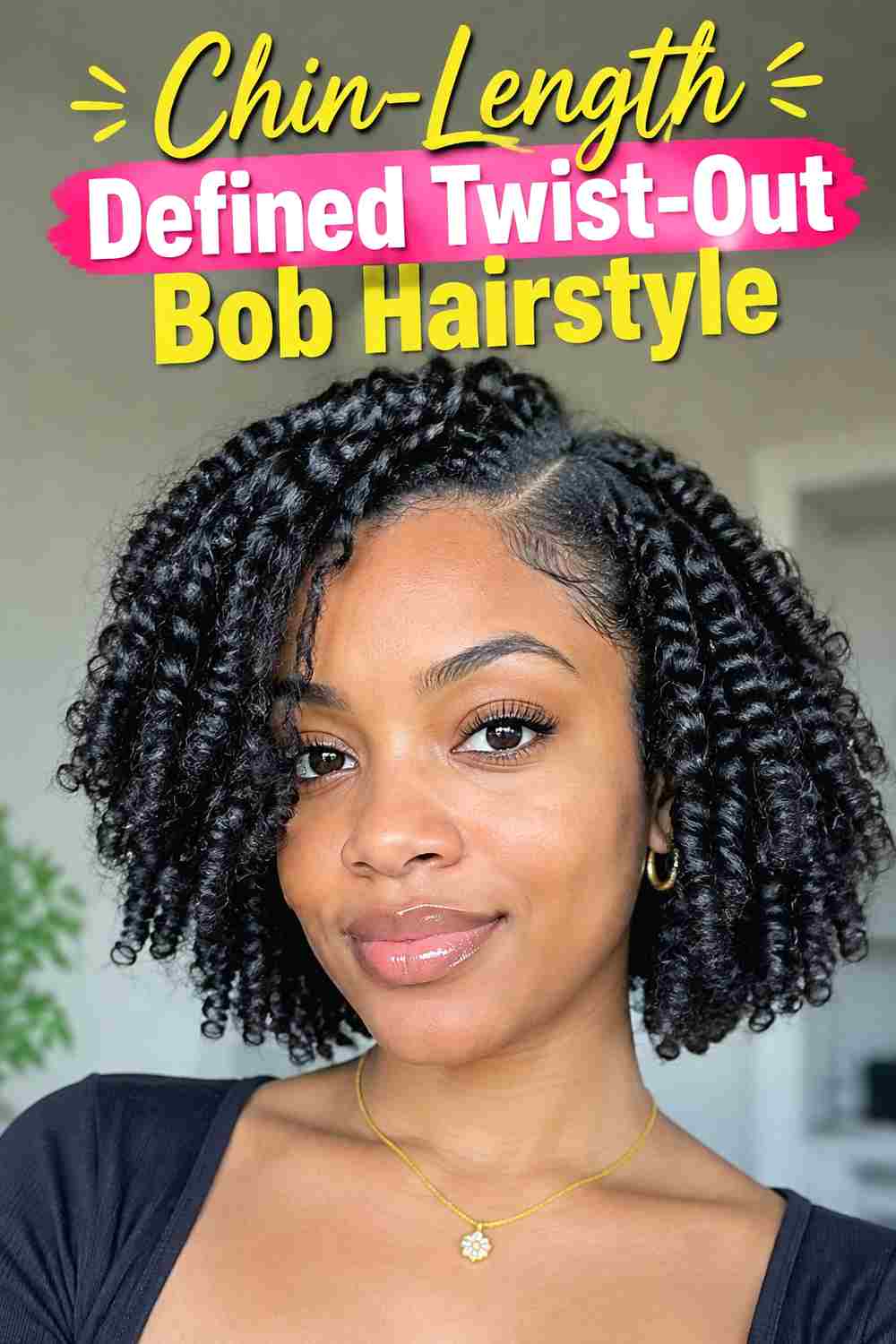
A chin-length defined twist-out bob has a compact silhouette that places the textured ends close to the jawline. Because the length is shorter, curl definition becomes especially noticeable and can give the perimeter a lively, springy finish. Smaller to medium twist sections help create enough detail without making the style look overly dense. Keep some lift at the roots so the bob does not collapse against the head, but allow the lower sections to retain their natural weight. This length can work particularly well when shrinkage brings longer natural hair into a shorter-looking shape after drying. A soft side or center part can be added without disrupting the clean outline.
Hair Type & Length
This style suits hair that settles around chin level after the twist-out is released, whether that length comes from a bob haircut or natural shrinkage.
Wear & Maintenance
Avoid repeatedly pulling the ends apart during refreshing. Preserving the lower definition helps keep the chin-length silhouette easy to recognize.
4. Layered Twist Out Bob Hairstyle
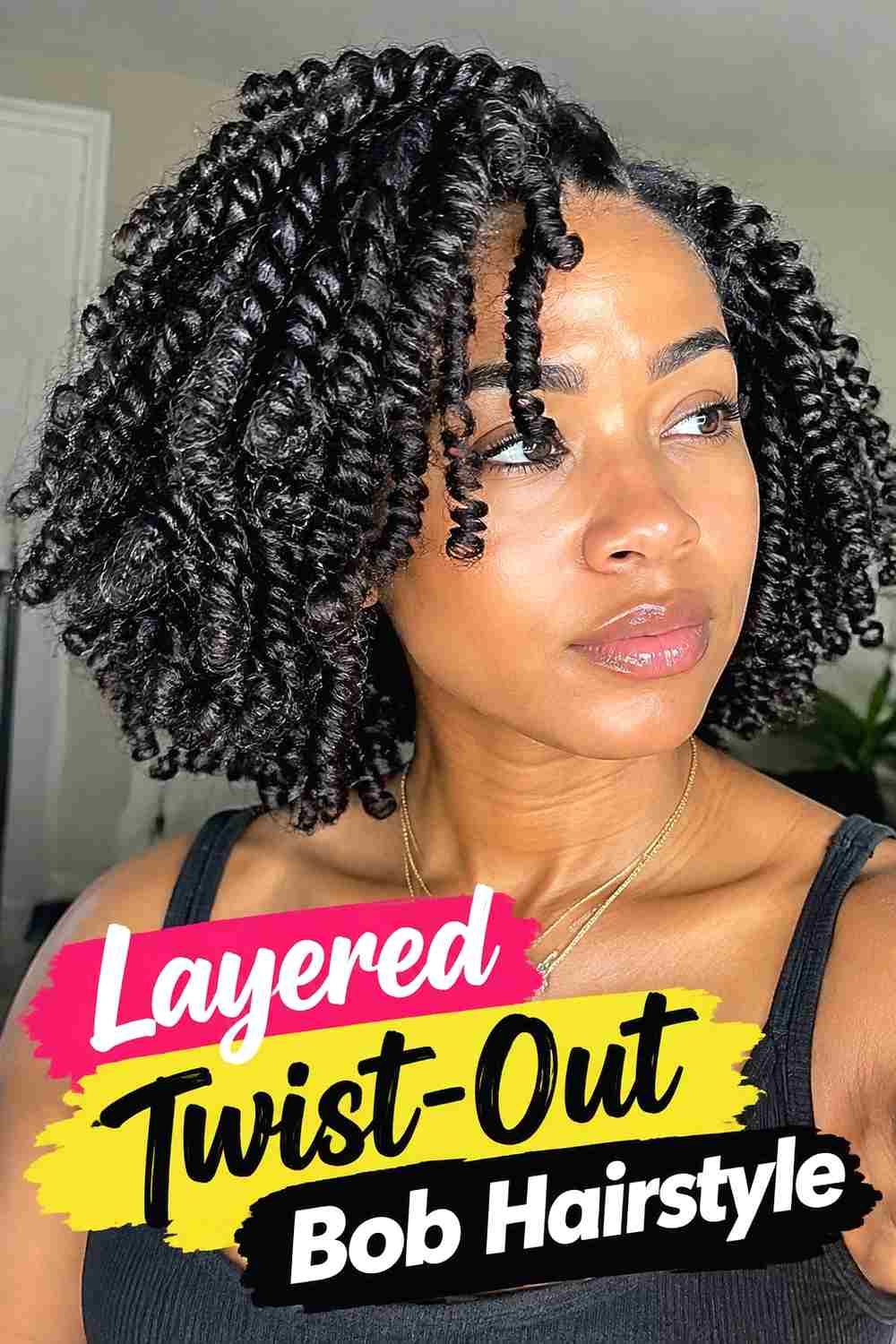
Layers give a twist-out bob extra movement by distributing volume across different lengths instead of allowing all the curls to finish at one level. Shorter sections near the crown can create lift, while longer pieces around the sides provide fullness and frame the face. The twist-out pattern helps those layers remain visible because defined bends naturally separate from one another. This version can feel especially light and dimensional on dense hair that might otherwise form a heavier rounded shape. When fluffing, work with the existing layers rather than forcing the hair into a perfectly symmetrical outline. A slightly irregular perimeter often makes the texture look softer and more natural.
Why It Works
Layering creates built-in separation between curl groups, allowing the bob to show more movement while retaining a clear overall shape.
Styling Notes
Set twists in sizes that complement the layers. Very large twists can cause shorter sections to blend into longer ones and reduce the dimensional effect.
5. Side Swept Defined Twist Out Bob Hairstyle
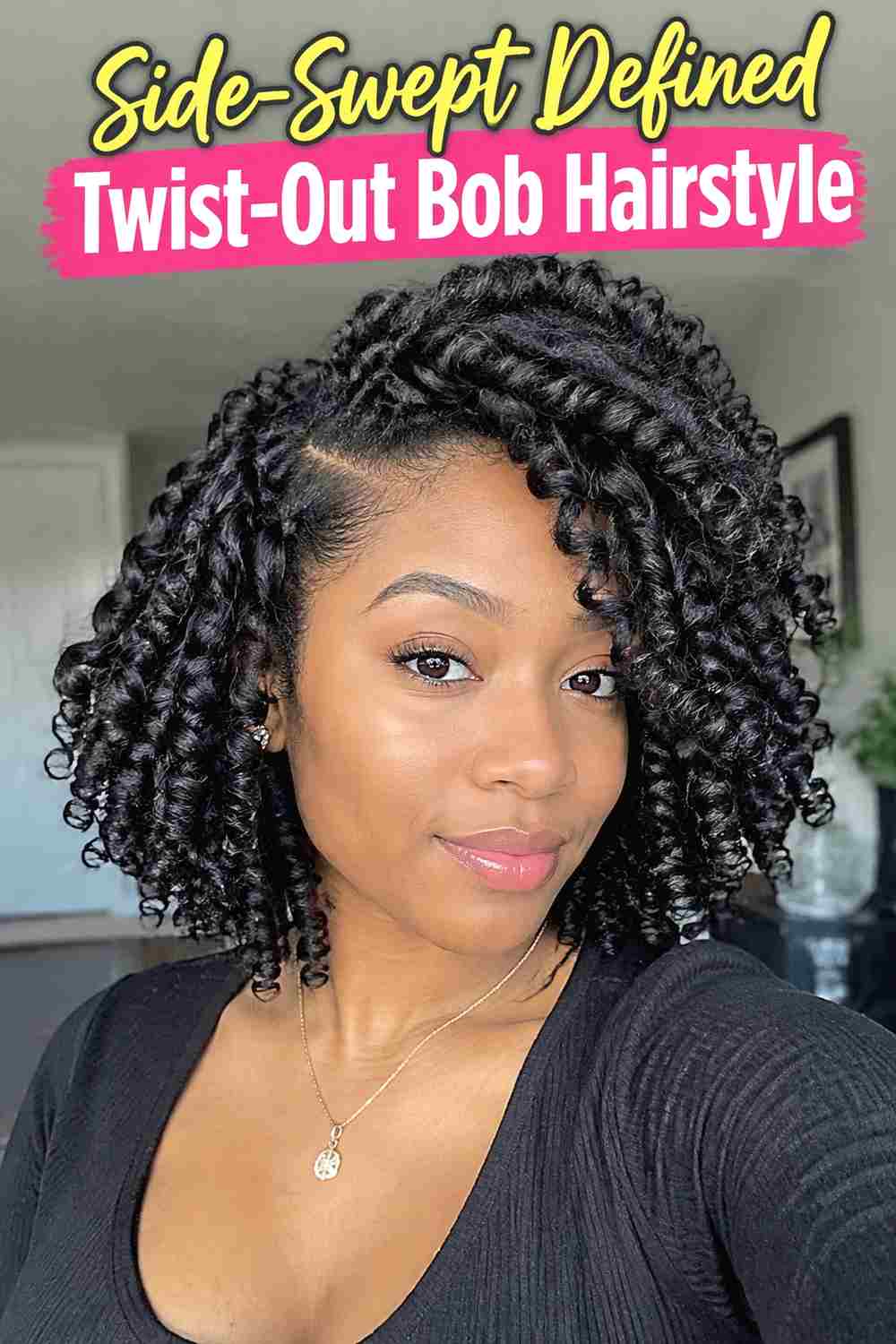
The side-swept twist-out bob lets defined curls move diagonally across the front instead of sitting evenly around a fixed part. One section can fall lightly toward the eyebrow or temple before blending into the fuller side, creating a softer alternative to a sharply divided side part. The remaining curls should stay airy enough to support the sweep without becoming flat near the roots. This look works especially well when the twist-out has medium definition—clear enough to show individual sections but flexible enough to shift naturally. Use your fingers to direct the front pieces, and let the rest of the bob retain its own organic movement rather than sculpting every curl into place.
Best For
Choose this variation when you want face-framing movement and a relaxed finish without committing to a full fringe or highly structured part.
Pro Tip
Move the front sections while the twist-out is being separated so they settle naturally rather than being forced across the head after shaping is complete.
6. Fluffy Defined Twist Out Bob Hairstyle
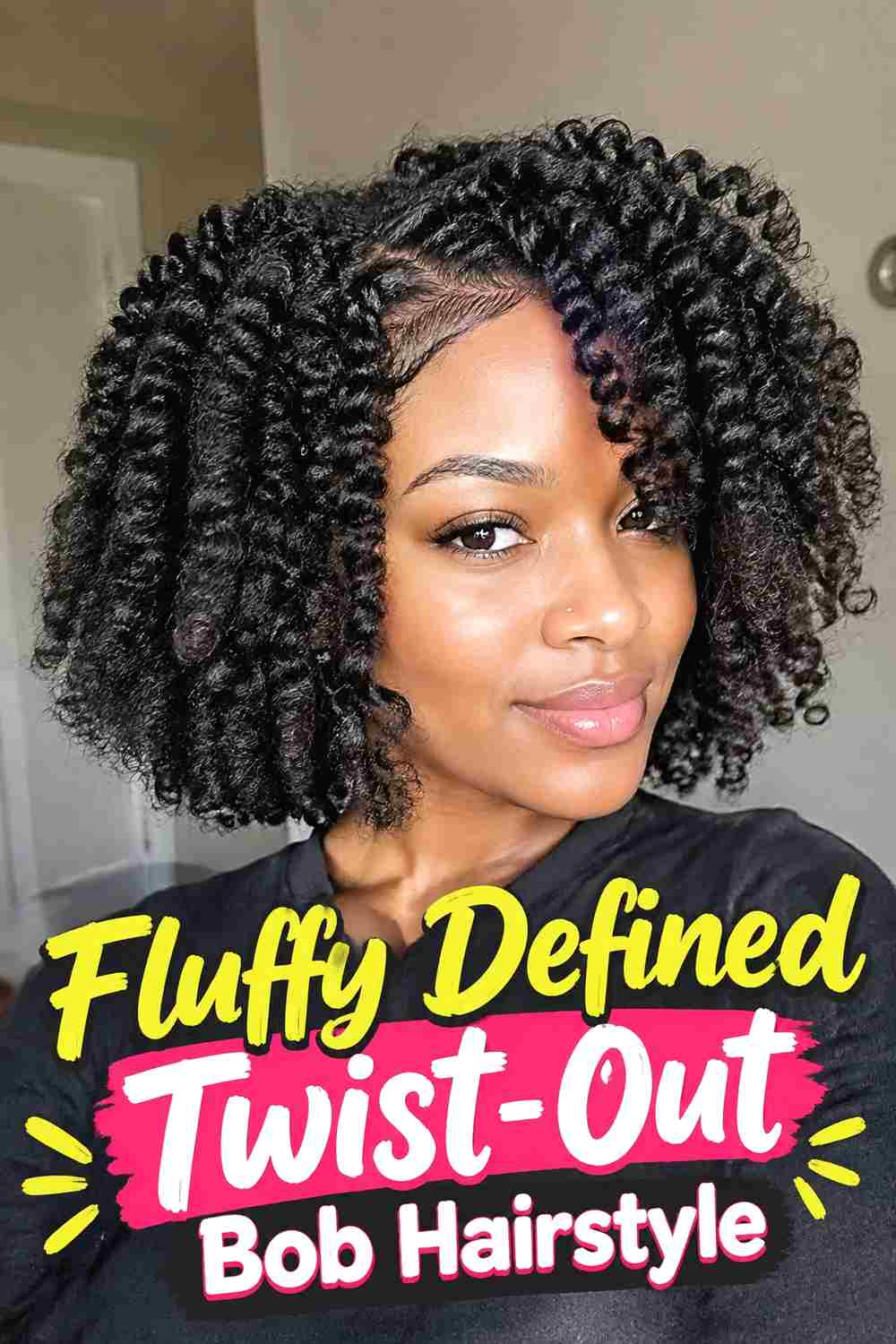
A fluffy defined twist-out bob strikes a balance between visible curl pattern and generous volume. After unraveling, separate more pieces than you would for a highly polished twist-out, then lift gently at the roots to expand the silhouette. The ends should still show recognizable twists and bends, preventing the style from becoming a completely undefined Afro shape. This version works particularly well when you want softness around the face and an airy perimeter. Instead of chasing perfect symmetry, focus on an overall bob outline with natural variations in height and width. The finished texture should appear touchable, dimensional, and full rather than stiff or uniformly arranged.
Styling Notes
Fluff primarily at the roots and mid-lengths. Leaving more of the ends intact is the easiest way to preserve definition while increasing overall volume.
Wear & Maintenance
Light reshaping with your hands is usually more useful than repeatedly separating curls after the first day, especially if you want the definition to last.
7. Tapered Twist Out Bob Hairstyle
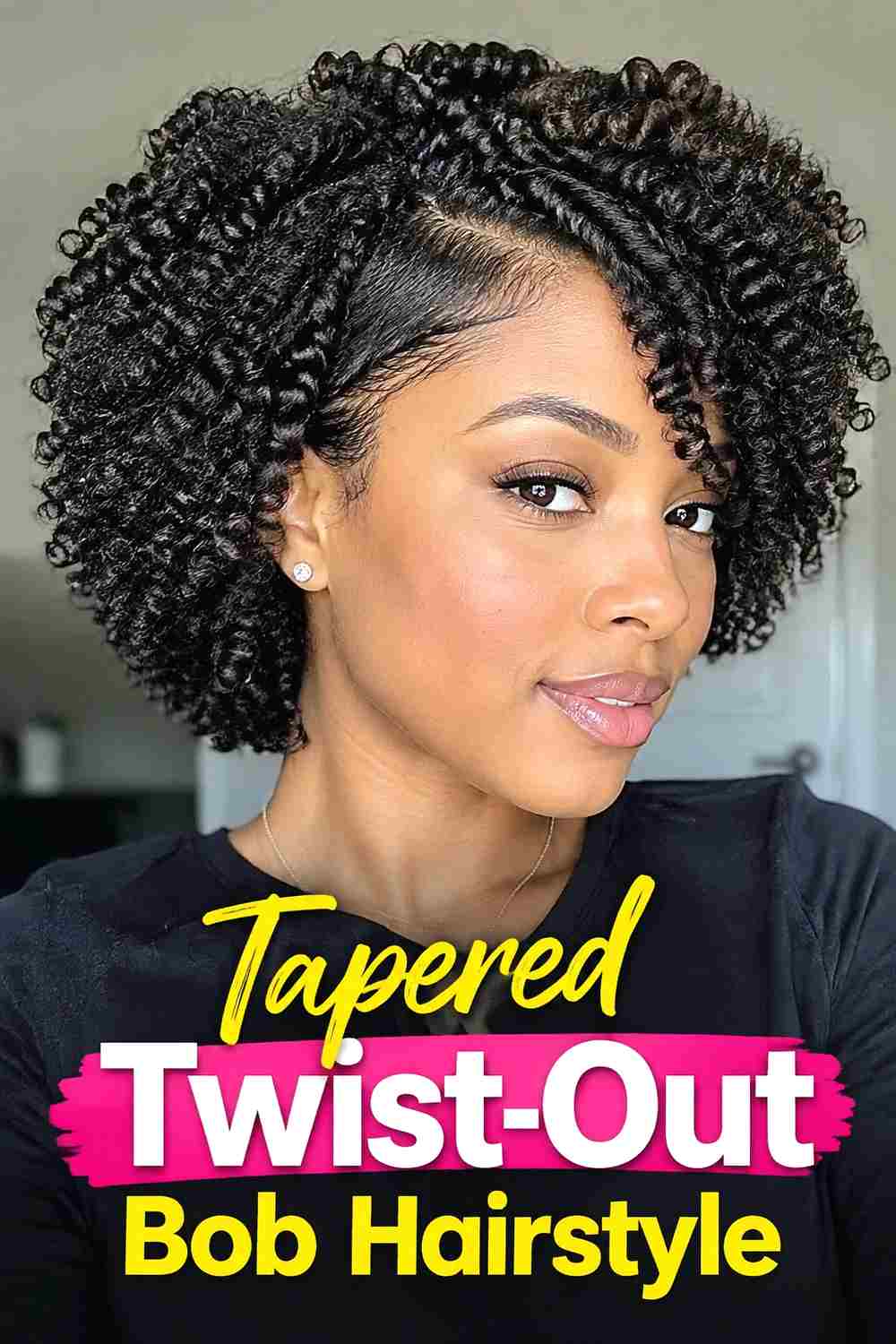
A tapered twist-out bob keeps more fullness near the crown and upper sides while narrowing gradually toward the nape. The contrast creates a defined silhouette that feels structured without sacrificing the softness of the twist-out texture. Shorter lower sections naturally support the tapered shape, while slightly longer curls above them provide movement and lift. Keep the definition visible throughout so the outline does not become too rigid. This style can work especially well with a layered or tapered haircut, but careful shaping can also suggest the effect on hair with varied shrinkage. Focus your root lifting toward the top rather than widening the lower sides.
Best For
This variation suits anyone who prefers crown volume with a cleaner neckline and less width through the lower portion of the bob.
Styling Notes
Shape the lower perimeter first, then add height above it. Starting with maximum crown volume can make it harder to judge how narrow the tapered base should remain.
8. Asymmetrical Defined Twist Out Bob Hairstyle
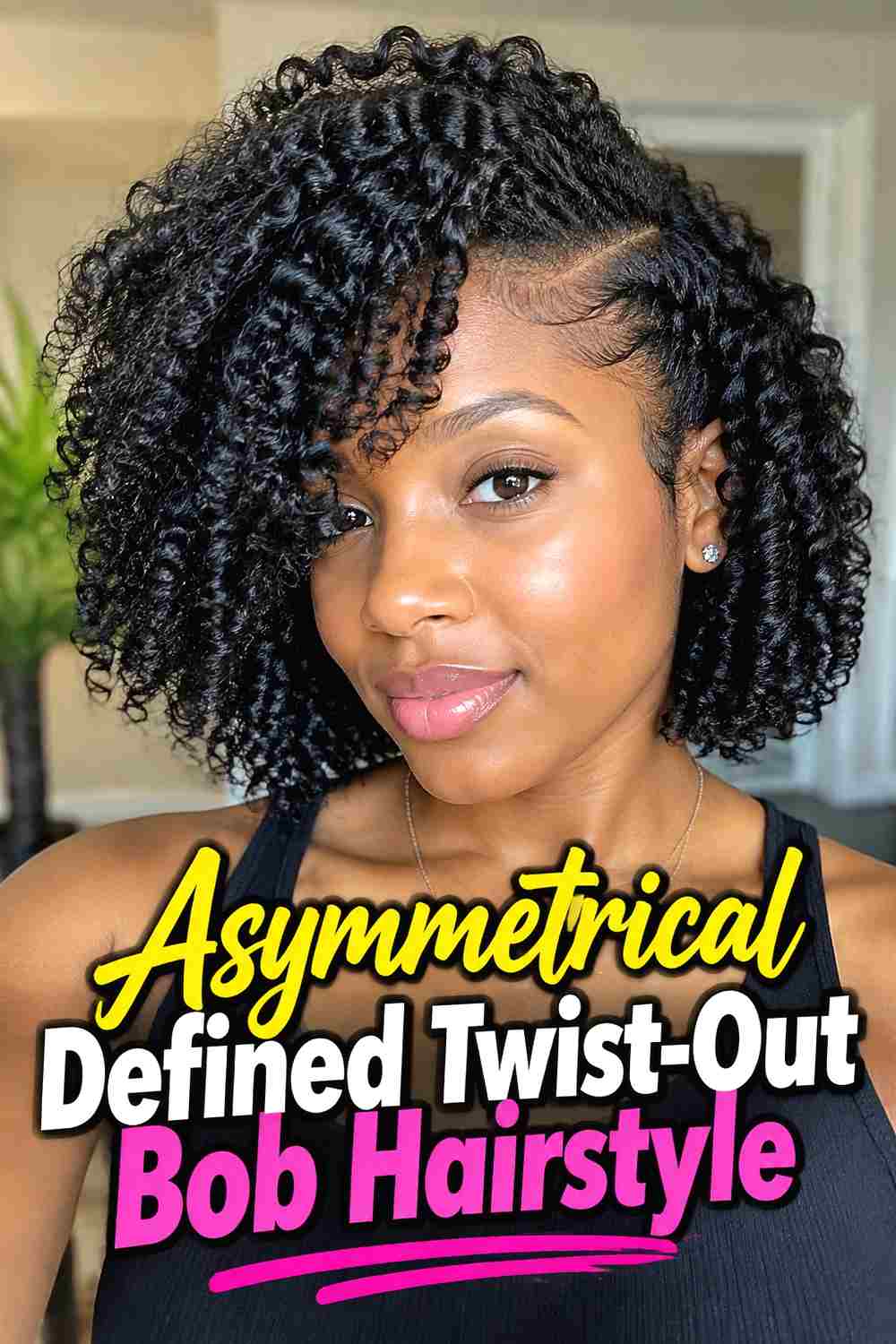
An asymmetrical defined twist-out bob intentionally gives one side more length, volume, or both. The fuller section can extend closer to the shoulder while the opposite side sits nearer the cheek or jaw, creating a visible diagonal through the perimeter. Twist definition keeps the uneven shape looking deliberate because each curl cluster contributes to the overall direction. A side part usually reinforces the asymmetry, although the look can also be created by pinning or shaping one side more compactly. Avoid forcing both sides to match when fluffing; the difference is what gives this bob its character. Keep enough balance at the crown so the hairstyle still feels connected.
Why It Works
Uneven length and volume add movement to a familiar bob silhouette while allowing the natural texture to remain the central feature.
Pro Tip
Shape the smaller side first. Once its outline feels right, expand the fuller side gradually until the asymmetry is noticeable but still wearable.
9. Soft Fringe Twist Out Bob Hairstyle
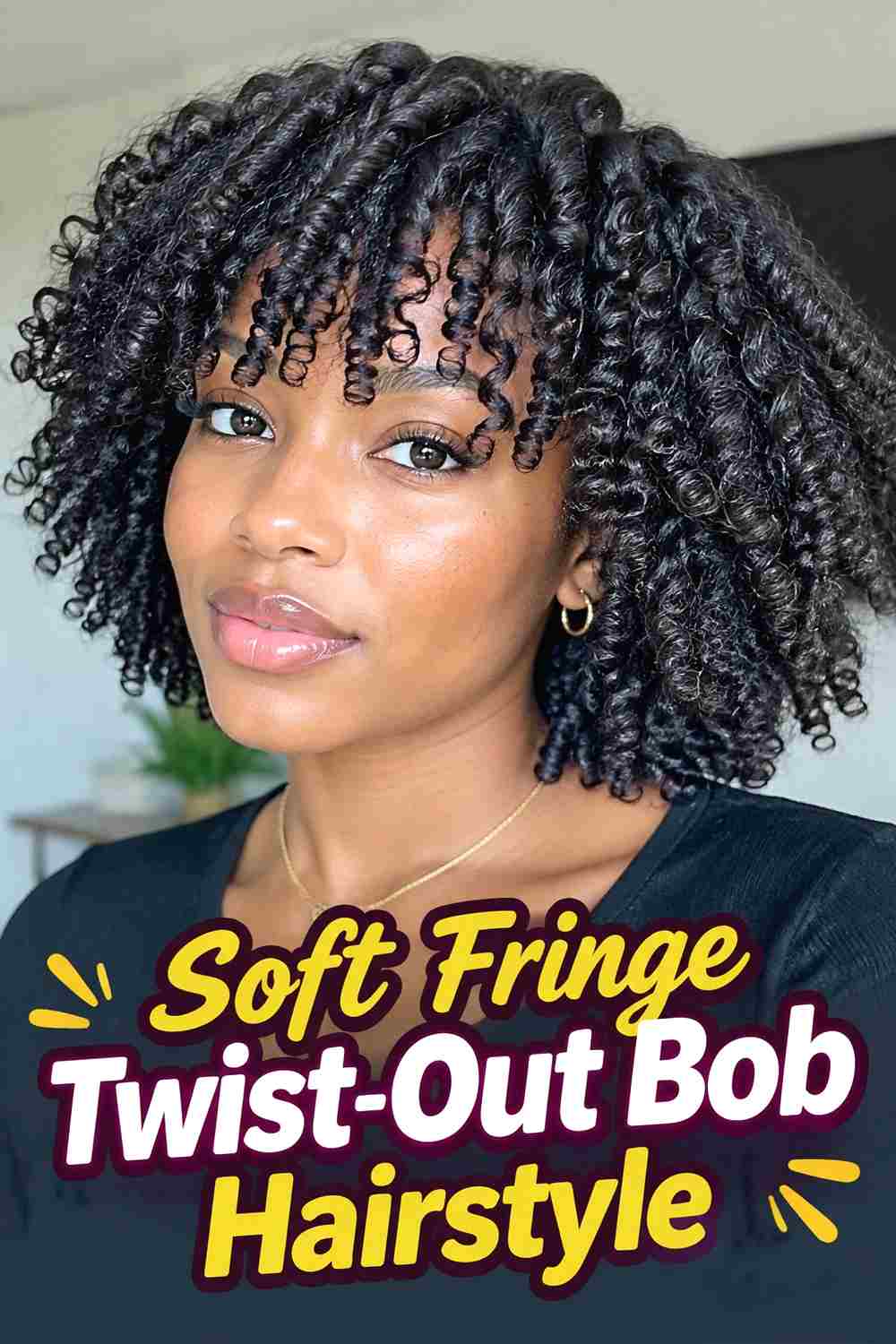
A soft fringe brings the front curls forward, giving the twist-out bob a playful frame around the forehead and eyes. Unlike a blunt bang, this version uses separated, textured pieces of slightly varied lengths so the fringe blends naturally into the sides. The rest of the bob can stay rounded or lightly layered, depending on how much volume you want. Definition matters around the fringe because clear curl clusters prevent the front from looking like an accidental section falling forward. Keep the roots flexible enough for the pieces to move, and avoid stretching the fringe more than the surrounding hair unless you specifically want extra length across the forehead.
Best For
This style works well when shorter front layers naturally fall forward or when you enjoy a face-framing bob with visible texture around the forehead.
Wear & Maintenance
Refresh only the fringe when necessary. Reworking the entire bob can create unnecessary frizz when the front is the only area that has lost its shape.
10. Voluminous Crown Twist Out Bob Hairstyle
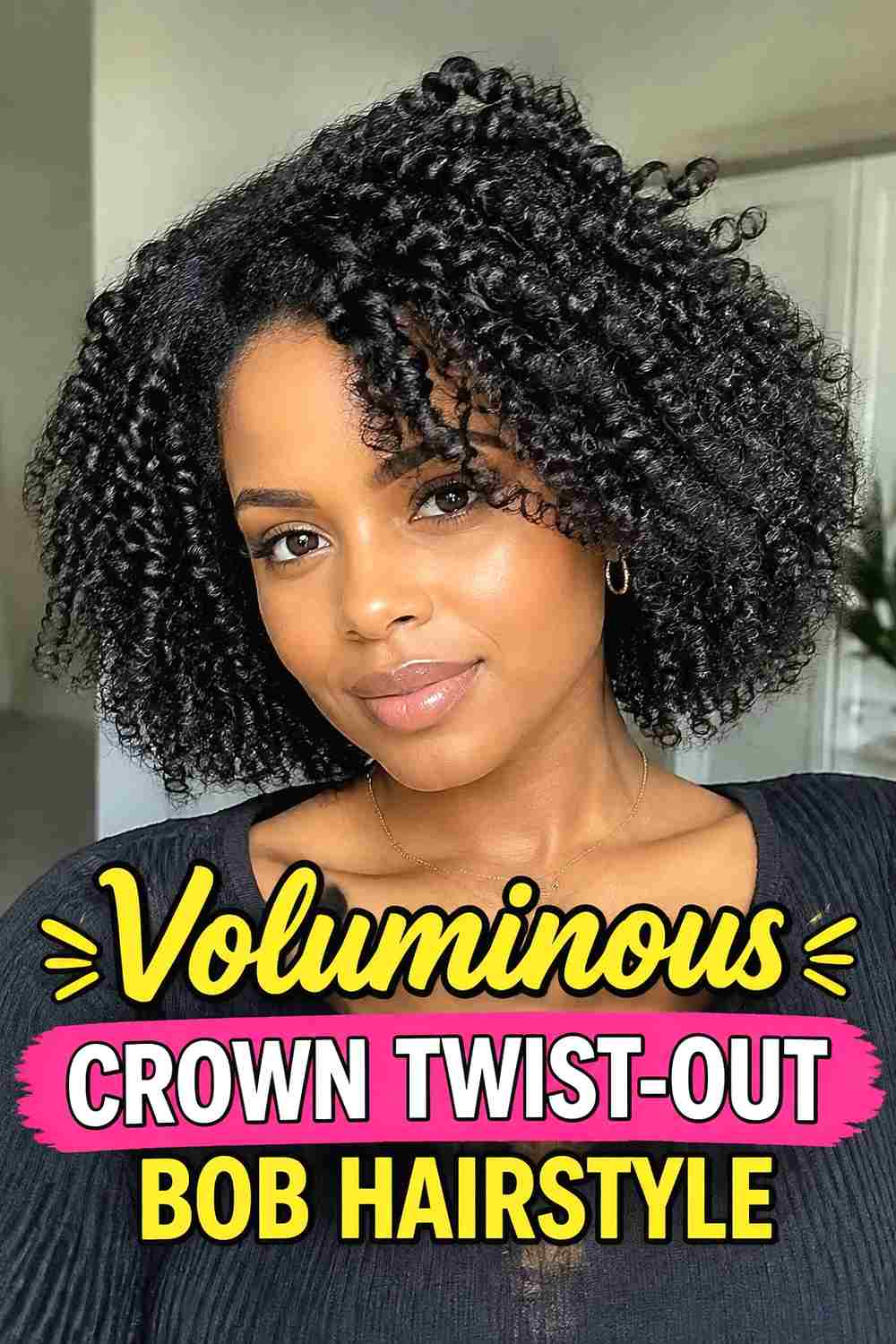
The voluminous crown twist-out bob concentrates lift toward the top of the head while allowing the sides and lower perimeter to remain more controlled. That extra height creates a slightly elongated silhouette and can make the texture look especially dimensional from the side. Preserve defined curls across the surface while using gentle root lifting underneath to build volume where it is needed. The front can be swept to one side, parted softly, or left without a visible part depending on the desired finish. Avoid picking through the ends at the crown, since too much separation can make the top look frizzy rather than intentionally elevated.
Styling Notes
Insert a pick only at the roots and lift a small amount at a time. The goal is height beneath the defined surface, not complete separation of the curl pattern.
Why It Works
Placing volume higher on the head changes the bob’s proportions without requiring additional length or major changes to the twist-out itself.
11. Stretched Defined Twist Out Bob Hairstyle
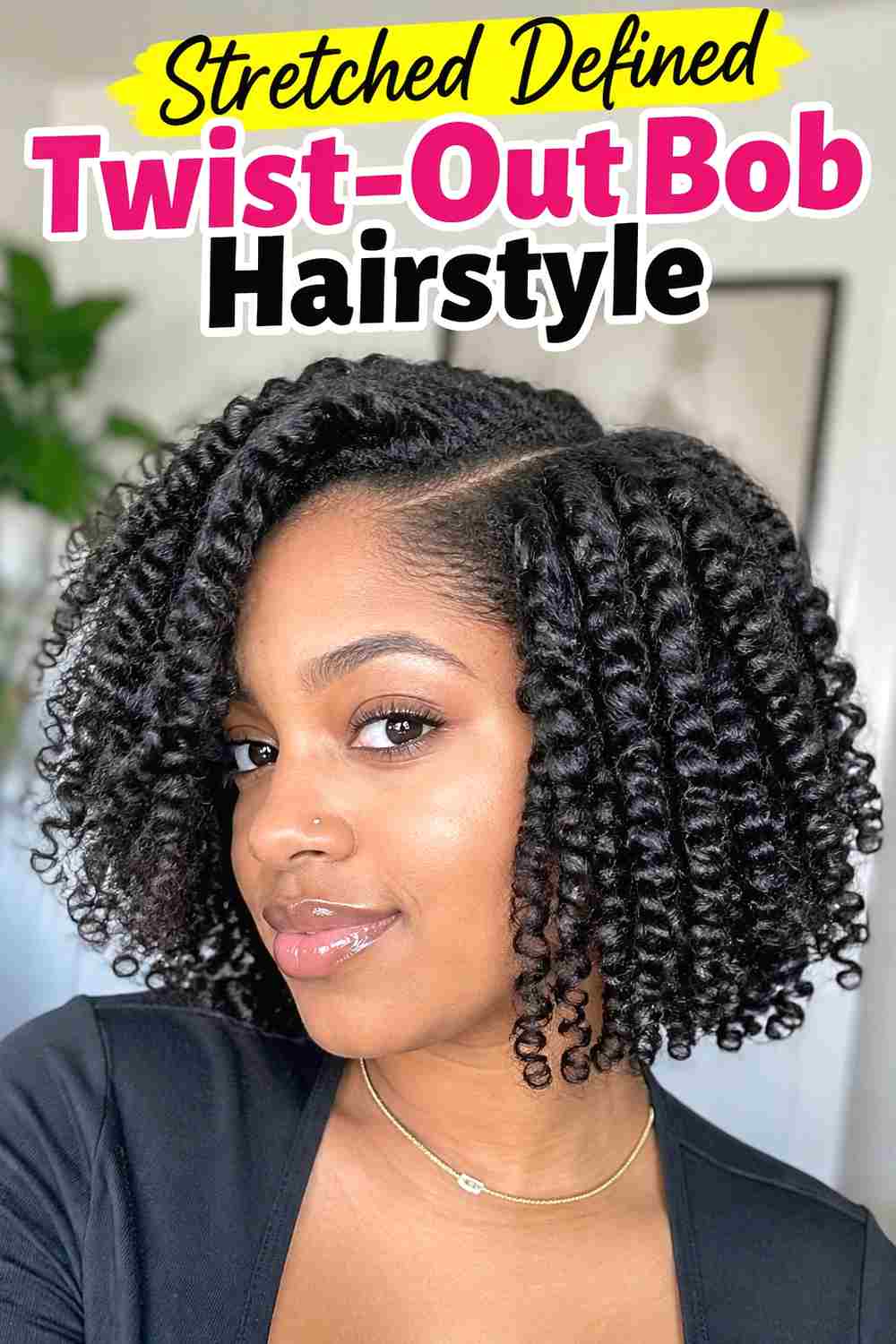
A stretched defined twist-out bob shows more of the hair’s length while retaining the bends and texture created by the twist set. The roots and mid-lengths can be gently elongated before or after styling, allowing the bob to sit slightly lower around the jaw or neck. The important detail is preserving enough twist definition that the result does not become a simple blowout. Defined ends help maintain movement, while the stretched roots create a softer transition and a little less shrinkage. This approach is useful when you want to reveal more length or create a looser silhouette without abandoning the textured character of a twist-out.
Hair Type & Length
This look can work well on medium-length natural hair that normally shrinks into a shorter bob but has additional length available when gently stretched.
Pro Tip
Stretch gradually and focus on the roots or larger sections. Excessive manipulation through the ends can weaken the visible twist pattern.
12. Mini Twist Out Bob Hairstyle
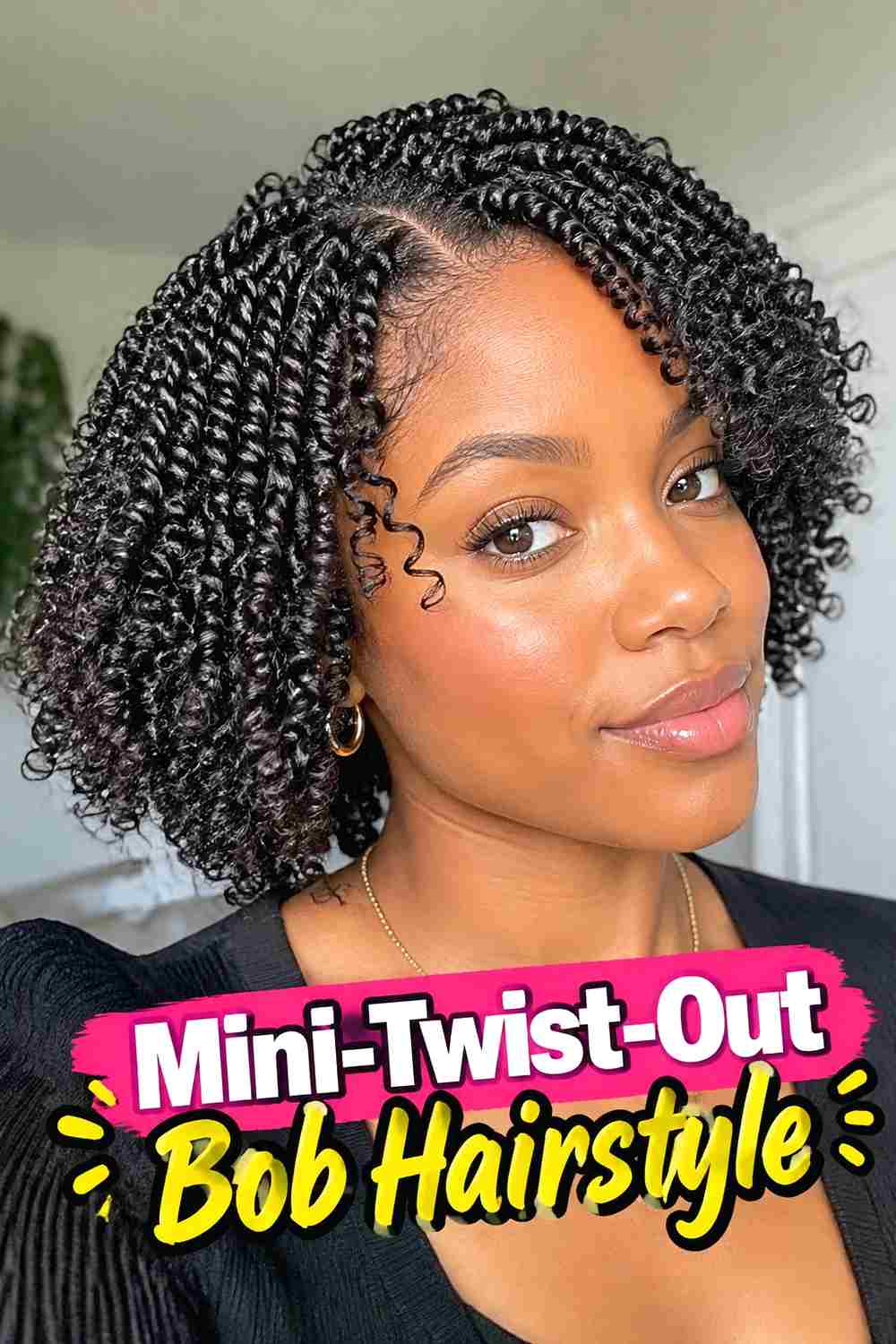
A mini-twist-out bob begins with smaller twists, resulting in finer, more numerous sections of definition after unraveling. The finished texture can look intricate and springy, with plenty of small bends creating movement throughout the bob. Because there are more twist sections, separation can be kept minimal; the density of the pattern already provides visual fullness. This version is especially attractive when you prefer detailed texture over an extremely fluffy finish. The shape can remain rounded, lightly layered, or side-parted, but avoid excessive picking that might blur the smaller definition. Patient unraveling is particularly important because smaller twists can tangle more easily if they are pulled apart too quickly.
Styling Notes
Unravel from the ends upward and follow the natural direction of each twist. Slow separation helps preserve the finer pattern and reduces unnecessary disturbance.
Best For
Choose this version when you want compact, detailed definition and do not mind spending more time on the initial twist set.
13. Sculpted Side Part Twist Out Bob Hairstyle
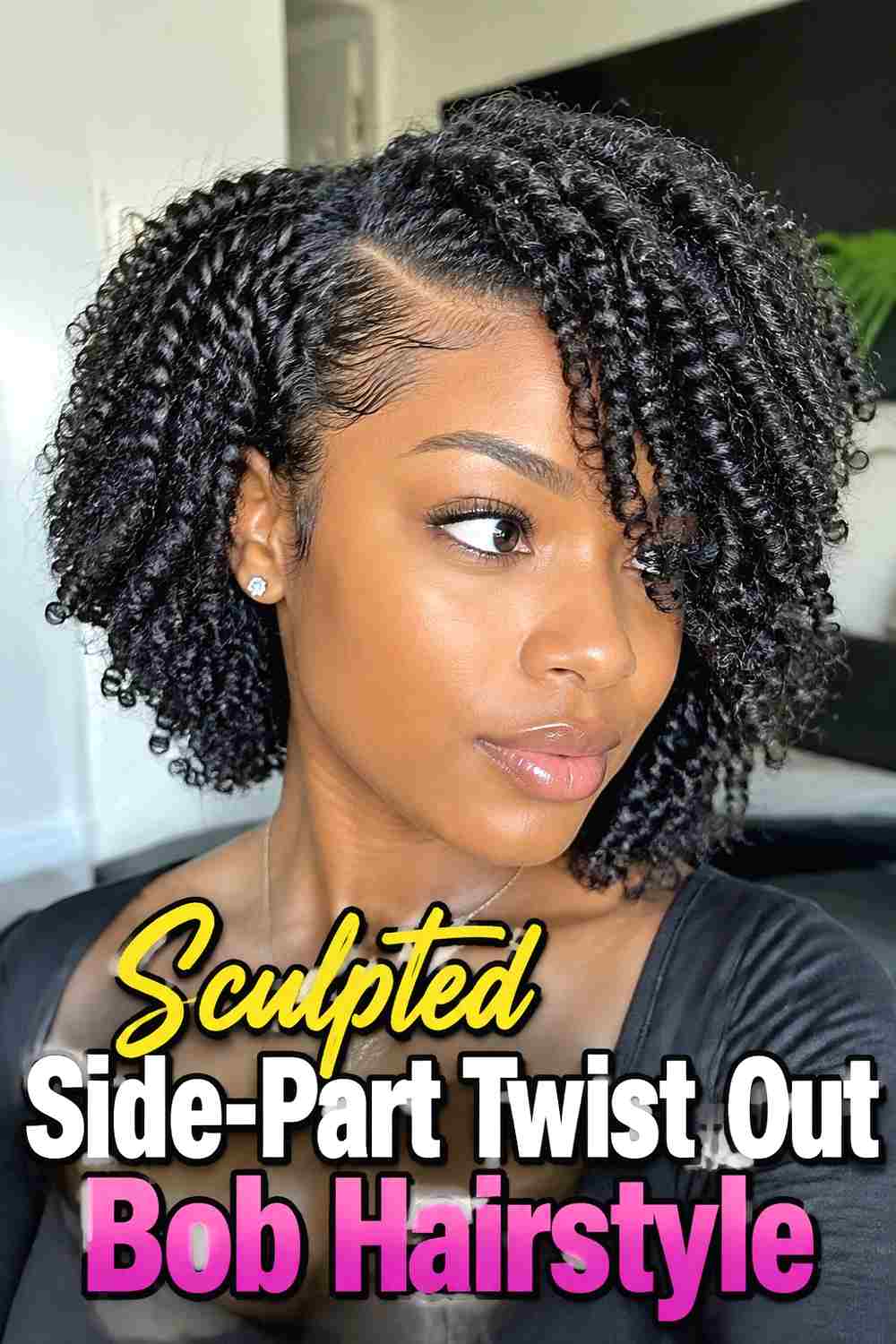
The sculpted side-part twist-out bob combines crisp part placement with controlled volume around the temples, crown, and lower sides. Unlike a very fluffy version, the silhouette is deliberately shaped so the curls create a clear bob outline. The larger side can rise slightly above the part before curving toward the cheek, while the smaller side remains closer to the head without being flattened completely. Defined twist sections should stay visible across the surface to prevent the sculpted shape from appearing too smooth. This variation is ideal when you enjoy natural texture but want the finished style to look particularly intentional from the front and profile.
Styling Notes
Shape with your palms and fingertips before reaching for a pick. Small surface adjustments can create a polished outline without sacrificing curl definition.
Best For
This style fits dinners, professional settings, portraits, and occasions where a more controlled twist-out silhouette complements the overall look.
14. Shoulder Grazing Twist Out Bob Hairstyle
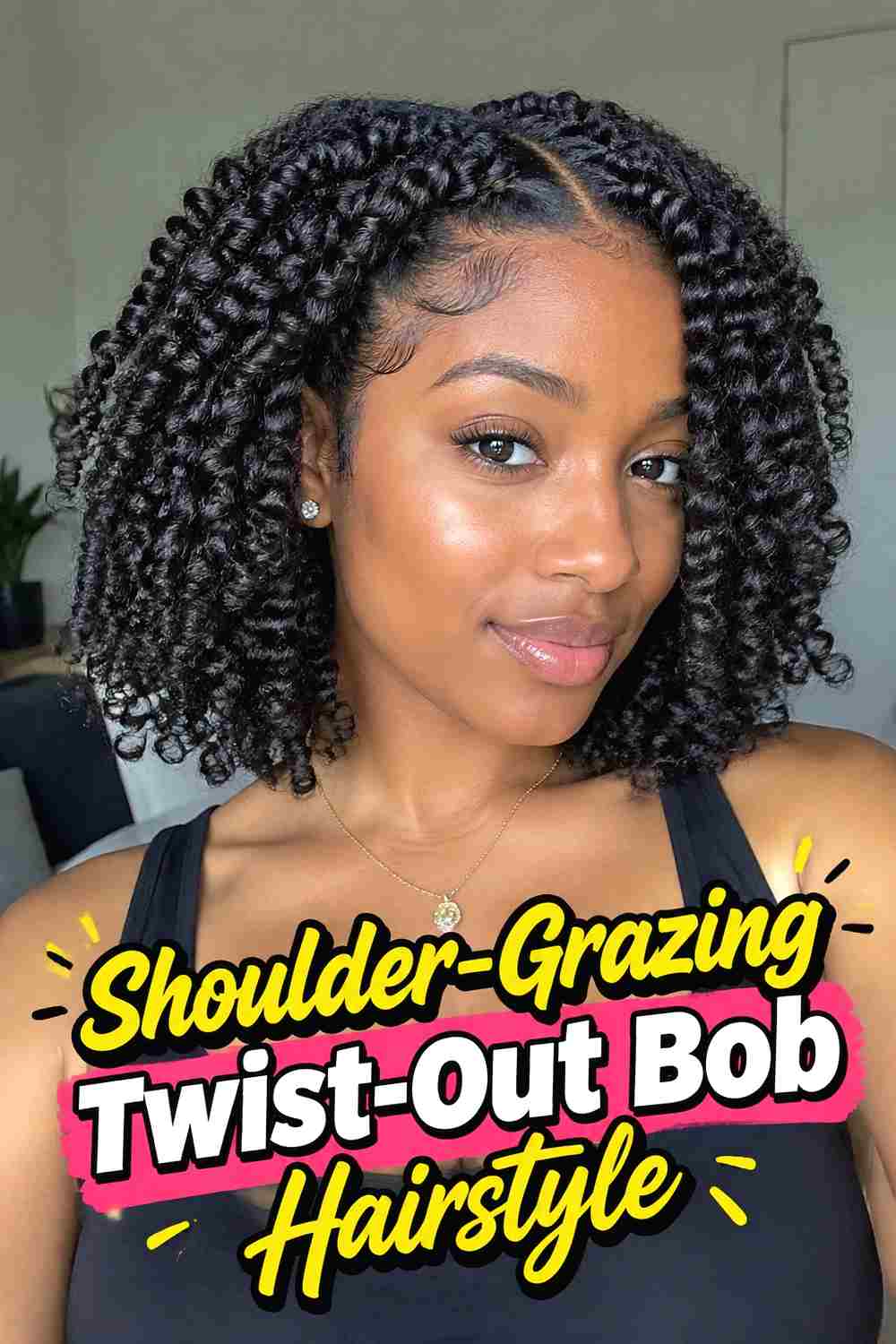
A shoulder-grazing twist-out bob sits at the longer end of the bob spectrum, allowing the defined sections to brush the shoulders while still maintaining a distinct rounded or slightly layered shape. The additional length gives the curls more natural weight, so the roots may need gentle lifting to prevent the style from appearing too flat at the crown. Medium or chunky twist sections can help the ends remain visible and substantial instead of separating into many tiny pieces. A side part adds movement, while a center part can emphasize balance. Let the lower sections fall naturally rather than forcing them outward, since their slight weight is part of this longer silhouette.
Hair Type & Length
This option works best when the twist-out naturally settles near shoulder level after shrinkage, giving enough length to show movement at the perimeter.
Wear & Maintenance
Protect the ends from excessive friction against clothing whenever practical, especially if you want the lower definition to stay neat through multiple days.
15. Soft Edge Defined Twist Out Bob Hairstyle
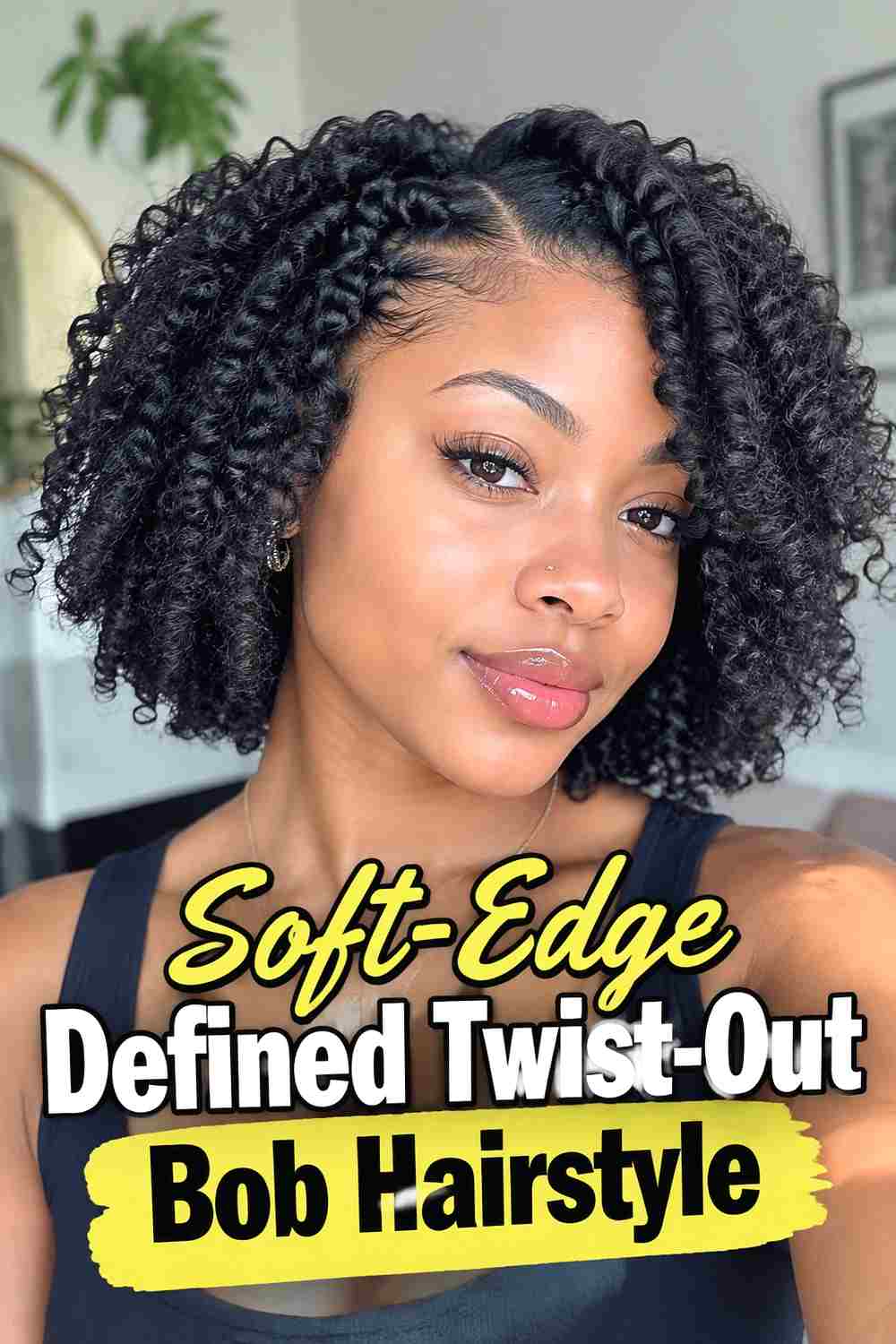
A soft-edge twist-out bob keeps the hairline natural and understated while allowing the defined texture to remain the main focus. There is no need for sharply sculpted baby hairs or a highly polished perimeter; instead, small wisps and natural texture blend into the curls around the temples. The bob itself can be rounded or lightly side-parted, with moderate volume that complements the relaxed front. This approach creates an easy, contemporary finish and works especially well when the twist-out has a touchable, flexible hold. Concentrate on clean curl separation and overall shape rather than making every strand near the hairline behave identically.
Why It Works
The understated hairline supports the softness of the twist-out, letting definition, movement, and the bob silhouette carry the visual interest.
Pro Tip
Use minimal product around the front if you want the edges to stay soft. Heavy smoothing can create a finish that feels disconnected from the textured lengths.
16. Pinned Side Twist Out Bob Hairstyle
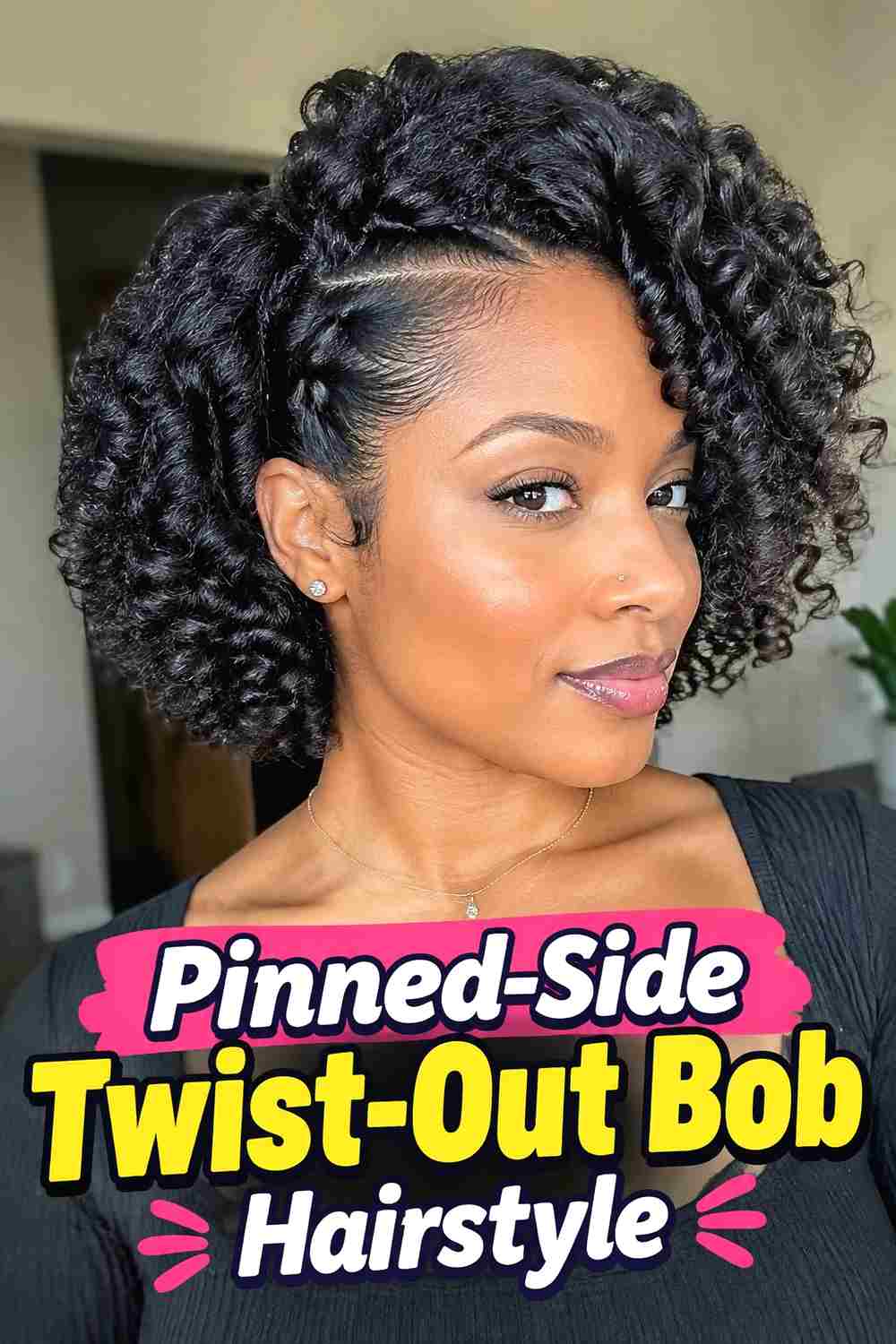
Pinning one side of a defined twist-out bob creates instant asymmetry while opening the face and allowing the opposite side to appear fuller. A small barrette or discreet pin can hold a section above or behind the ear without disturbing the rest of the curl pattern. The pinned side should still show some texture rather than being pulled completely flat, keeping it connected to the twist-out. On the loose side, preserve definition through the ends and add root volume only where the shape needs balance. This is a simple way to change an existing bob after several hours or days of wear without resetting or restyling every section.
Best For
This look works for casual days, dinners, events, and situations where you want one side kept comfortably away from the face.
Styling Notes
Secure a small section rather than a large panel of hair. Using less hair helps maintain the bob’s overall volume and keeps the pin from pulling uncomfortably.
17. Chunky Defined Twist Out Bob Hairstyle
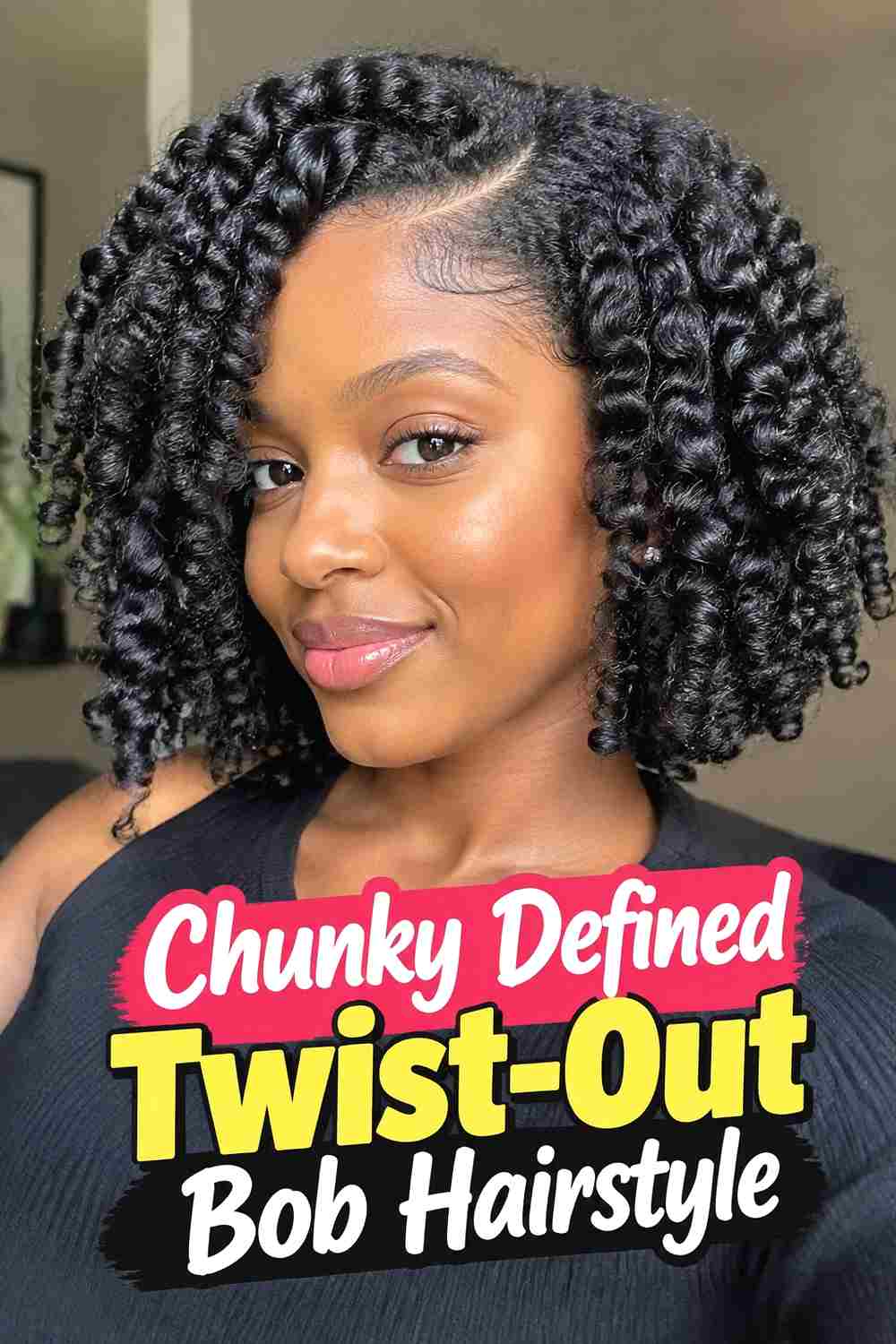
A chunky defined twist-out bob features broad, visible curl groups created from larger twists. The texture appears softer and more substantial than a mini-twist-out, with fewer separations and a slightly looser pattern. These larger sections can give the bob a modern, touchable finish, particularly when the roots are gently fluffed for fullness. Because chunky definition can create gaps between curl groups, lift and arrange the roots carefully rather than breaking every section apart. The perimeter may look especially attractive when kept softly irregular instead of perfectly rounded. This variation works well when you want noticeable twist texture without spending as much time creating many small sections.
Why It Works
Larger twist sections create bold texture that is easy to see, giving the bob definition without an overly intricate or tightly separated finish.
Pro Tip
Separate each chunky section only once or twice at first. You can always add more fullness later, but definition is harder to restore after excessive separation.
18. Glossy Defined Twist Out Bob Hairstyle
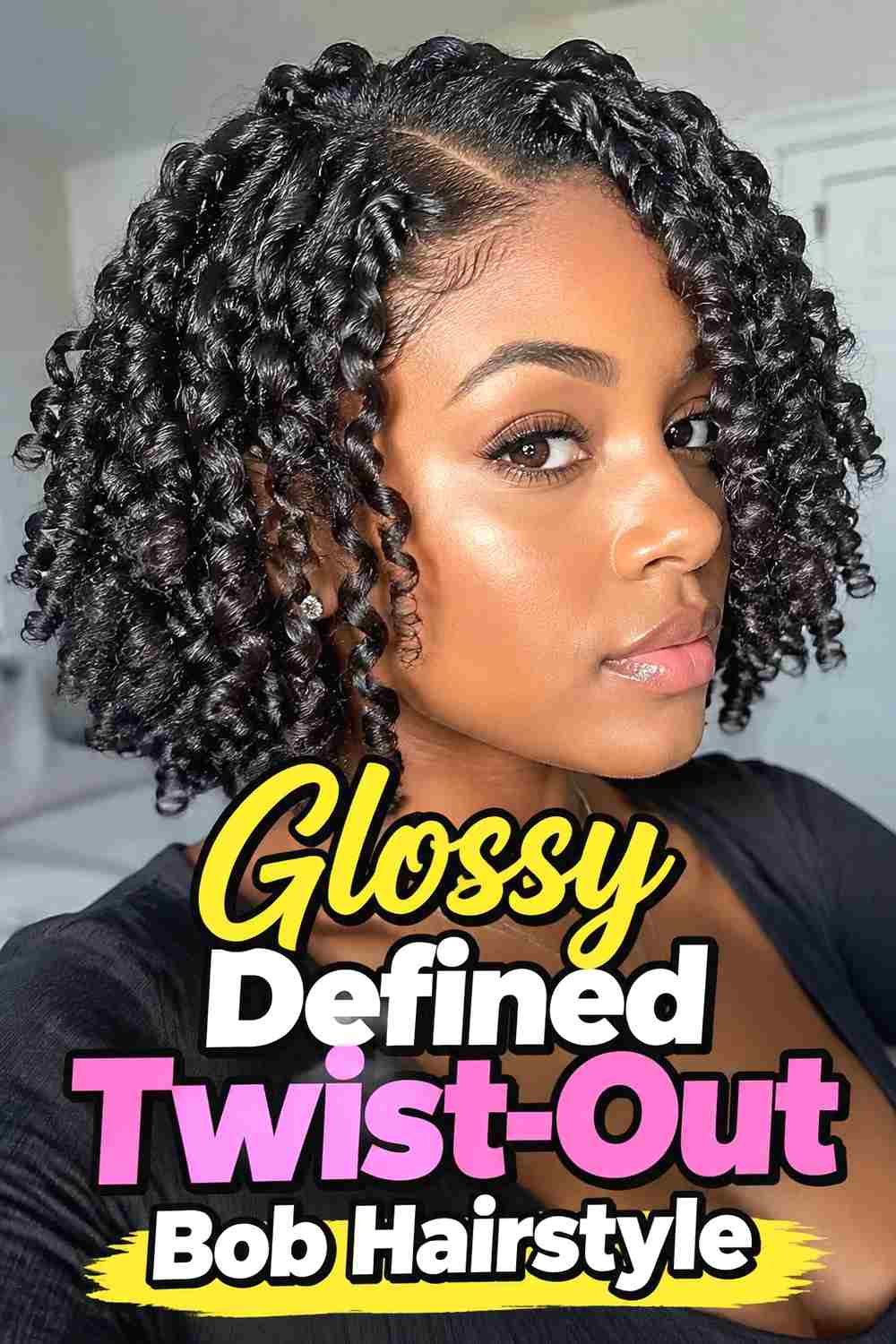
A glossy defined twist-out bob emphasizes healthy-looking sheen and clear curl separation while keeping the texture believable and soft. The goal is not a wet or coated appearance; instead, individual sections catch the light naturally while maintaining visible strand detail. A rounded or side-parted silhouette works especially well because the smooth highlights help reveal the shape of each twist-out section. Keep product application moderate so the curls remain flexible and do not clump into stiff pieces. Gentle separation with lightly coated fingertips can help reduce unnecessary frizz while preserving movement. Finish by lifting only the roots that need extra volume, leaving the shiny, defined lengths largely undisturbed.
Styling Notes
Use a small amount of lightweight finishing product on your hands during separation rather than repeatedly adding product directly to the finished bob.
Wear & Maintenance
Limit unnecessary handling once the desired shine and definition are in place. Frequent touching can separate the curls further and change the polished finish.
How to Choose the Right Look
Start with the kind of definition you prefer. Mini-twist-outs create smaller, detailed sections, while chunky twist-outs produce broader bends and a softer pattern. If you like a balance of definition and volume, rounded, fluffy, or layered versions offer plenty of flexibility.
Length changes the overall silhouette. Chin-length bobs feel compact and springy, while shoulder-grazing versions reveal more movement and natural weight. If shrinkage makes your hair appear shorter than you prefer, a stretched twist-out can show additional length while still keeping visible texture.
Think about volume placement as well. A voluminous crown adds height, a tapered style keeps the lower perimeter narrower, and an asymmetrical or pinned-side bob shifts more fullness to one side. Side parts and fringes can further change how the texture frames the face.
Finally, consider maintenance. Styles with highly preserved definition usually benefit from less daily manipulation, while fluffy looks are more forgiving when the curl pattern gradually softens. Whatever version you choose, comfortable shaping and realistic texture generally look better than forcing every curl into identical placement.
Final Thoughts
Defined twist-out bobs can look completely different depending on section size, length, parting, volume, and how much you separate the finished twists. A compact chin-length bob offers a different effect from a fluffy layered or shoulder-grazing version, even when the same basic styling technique is used. Start with the silhouette you want, preserve the definition that matters most to you, and adjust the roots gradually until the bob feels balanced and natural.
FAQs
1. How do I get more definition in a twist-out bob?
Allow the twists to set fully before unraveling, work carefully from the ends upward, and separate only as much as needed. Too much handling can quickly soften the visible pattern.
2. Should I use small or large twists for a bob?
Smaller twists generally create finer definition, while larger twists produce broader, chunkier bends. The better choice depends on how detailed or fluffy you want the finished bob to look.
3. How can I add volume without losing twist-out definition?
Lift mainly at the roots with your fingers or a pick while leaving the mid-lengths and ends relatively undisturbed.
4. Can a twist-out create a bob shape without a bob haircut?
Sometimes. Shrinkage, layering, pinning, and careful shaping can create a bob-like silhouette on longer hair, although the result depends on your length and texture.
5. How can I preserve a defined twist-out bob overnight?
Protecting the hair with a smooth bonnet or scarf and minimizing friction can help maintain the pattern. Reshape gently the next day rather than completely separating the curls again.
Save your favorite defined twist-out bob ideas, share the looks you love, and explore more natural hairstyle inspiration for your next style.