18 Thin Headband Hairstyles with Long Straight Hair
Thin headbands give long straight hair a polished focal point while keeping its smooth length, shine, movement, and clean silhouette beautifully visible.
Long straight hair pairs especially well with thin headbands because the accessory adds definition without covering the sleek texture underneath. A narrow band can sharpen a center part, keep layers away from the face, balance a ponytail, or add contrast to an otherwise minimal hairstyle. Small changes in placement can make the same type of headband feel sporty, romantic, formal, or understated.
The most flattering option depends on your parting, layers, hair density, desired volume, and how much of the length you want to leave loose. These ideas range from simple down styles to ponytails, twists, braids, and polished event looks while keeping the naturally straight appearance central to the overall design.
Quick List
- Sleek Center Part Thin Headband Hairstyle
- Side Part Tucked Thin Headband Hairstyle
- Low Ponytail Thin Headband Hairstyle
- Half Up Thin Headband Hairstyle
- Face Framing Layers Thin Headband Hairstyle
- Behind The Ears Thin Headband Hairstyle
- Braided Accent Thin Headband Hairstyle
- High Ponytail Thin Headband Hairstyle
- Twisted Half Up Thin Headband Hairstyle
- Double Thin Headband Hairstyle
- Low Bubble Ponytail Thin Headband Hairstyle
- Slicked Back Thin Headband Hairstyle
- Curtain Fringe Thin Headband Hairstyle
- Crown Lift Thin Headband Hairstyle
- Side Braid Thin Headband Hairstyle
- Long Layers Thin Headband Hairstyle
- Minimalist Black Thin Headband Hairstyle
- Pearl Thin Headband Hairstyle
1. Sleek Center Part Thin Headband Hairstyle
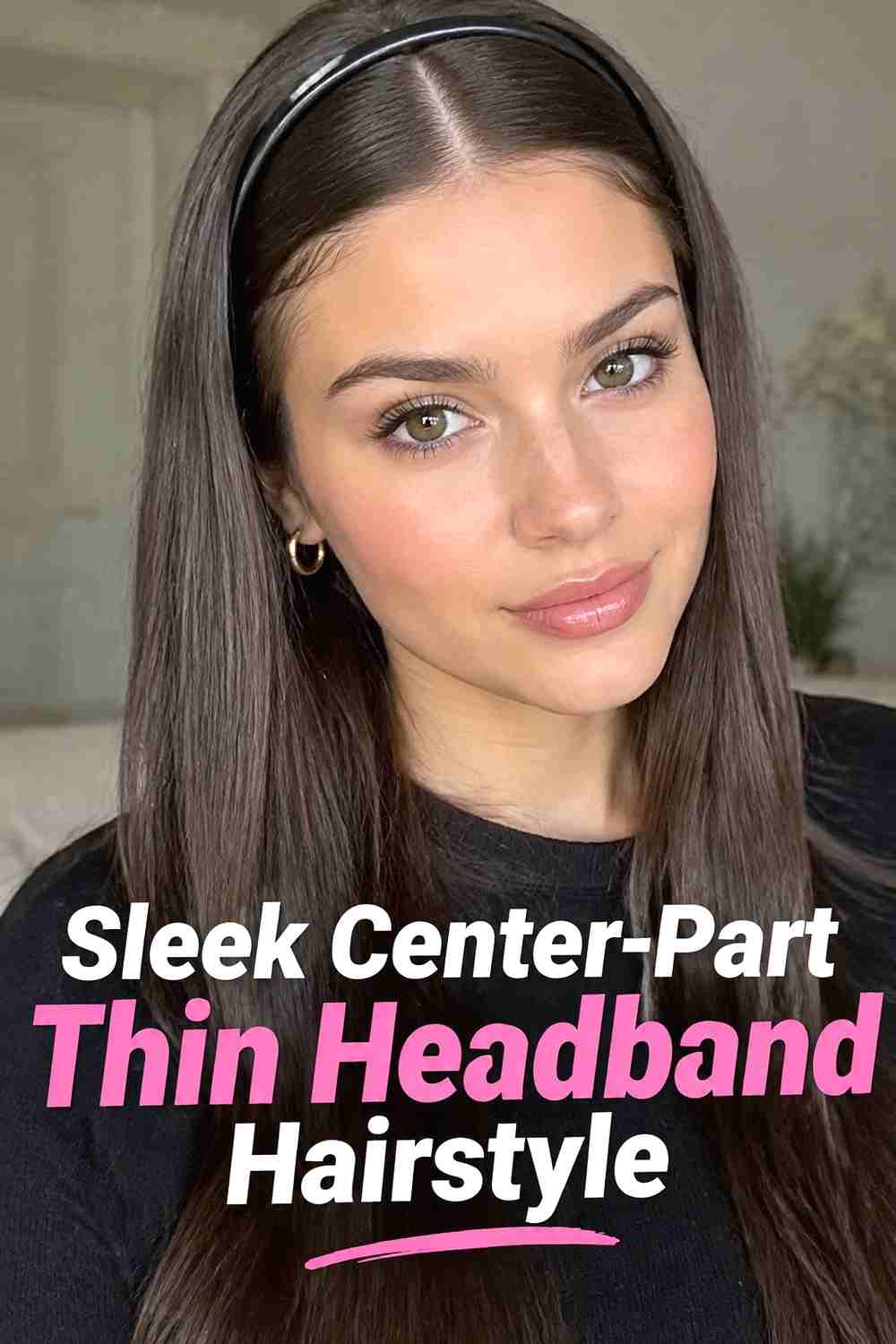
The Sleek Center-Part Thin Headband Hairstyle makes symmetry the main feature. Create a precise middle part and smooth the long lengths so they fall evenly on both sides, preserving natural strand detail and movement rather than making the hair look rigid. Place a narrow headband a short distance behind the hairline so the center part remains visible in front. The thin profile gives the style definition without interrupting the clean vertical lines of straight hair. You can leave the lengths over the shoulders for a softer effect or move them behind the shoulders for a sharper finish. This simple combination works especially well when the hair is glossy, healthy-looking, and cut with a neat perimeter.
Styling Notes
Smooth flyaways lightly, but avoid heavy product at the roots. Too much product can make the section in front of the headband look flat or separated.
Best For
This style is ideal for work, everyday outfits, dinners, minimalist fashion, and occasions where you want a polished look without putting the hair up.
2. Side Part Tucked Thin Headband Hairstyle
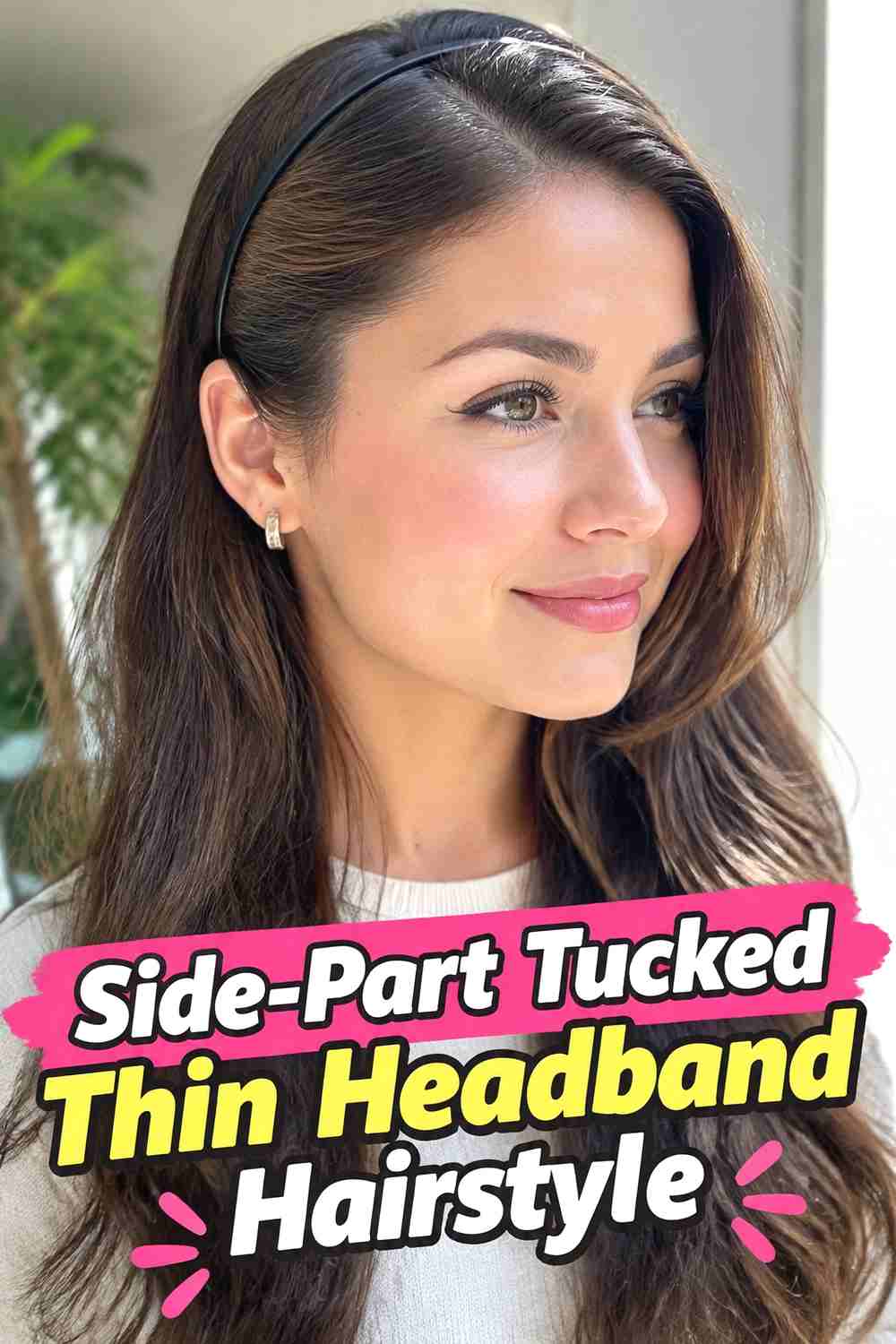
The Side-Part Tucked Thin Headband Hairstyle uses a clean asymmetrical part and tucked side sections to give straight hair more shape around the face. Create a deep or moderate side part, place the thin headband just behind the front sections, and tuck the lighter side neatly behind the ear. Leave the fuller side loose so the straight length falls naturally over the shoulder. The band helps define the separation between the smooth crown and flowing lengths while keeping shorter strands controlled. This look is especially effective on long hair with little layering because the side part creates visual movement without needing curls or extra texture. A metallic, colored, or neutral headband can completely change the mood.
Why It Works
The side part breaks up the strong vertical lines of long straight hair, while the tuck makes the headband and facial profile more visible.
Pro Tip
Use one discreet pin behind the ear if the tucked section tends to fall forward. Let the headband remain decorative rather than relying on it for all the hold.
3. Low Ponytail Thin Headband Hairstyle
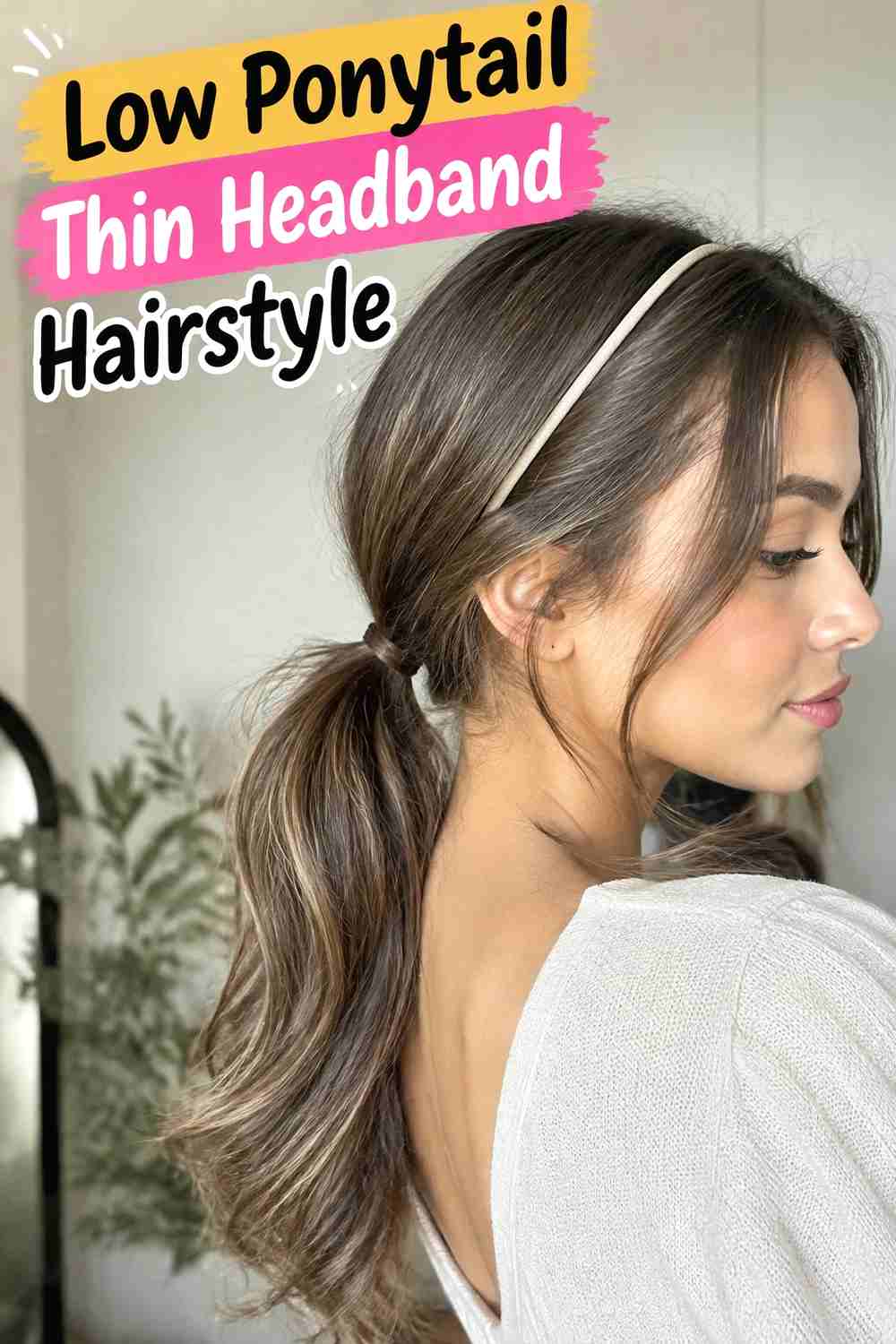
The Low Ponytail Thin Headband Hairstyle combines a smooth front with a long, controlled length at the back. Create a center or soft side part, place the headband near the hairline, and gather the rest of the hair into a low ponytail at the nape. Keep the ponytail straight to emphasize its length, and wrap a small section of hair around the elastic if you want a cleaner finish. A little crown softness prevents the style from feeling overly tight, while the narrow headband adds a polished line around the face. This look is practical for long hair because it keeps the lengths contained without hiding their sleek texture or requiring a complicated updo.
Wear & Maintenance
Secure the ponytail with a reliable elastic before adding the headband. This allows you to adjust the accessory without disturbing the gathered hair.
Best For
Choose this style for work, travel, dinners, casual events, or any day when you want long hair controlled but still clearly visible.
4. Half Up Thin Headband Hairstyle
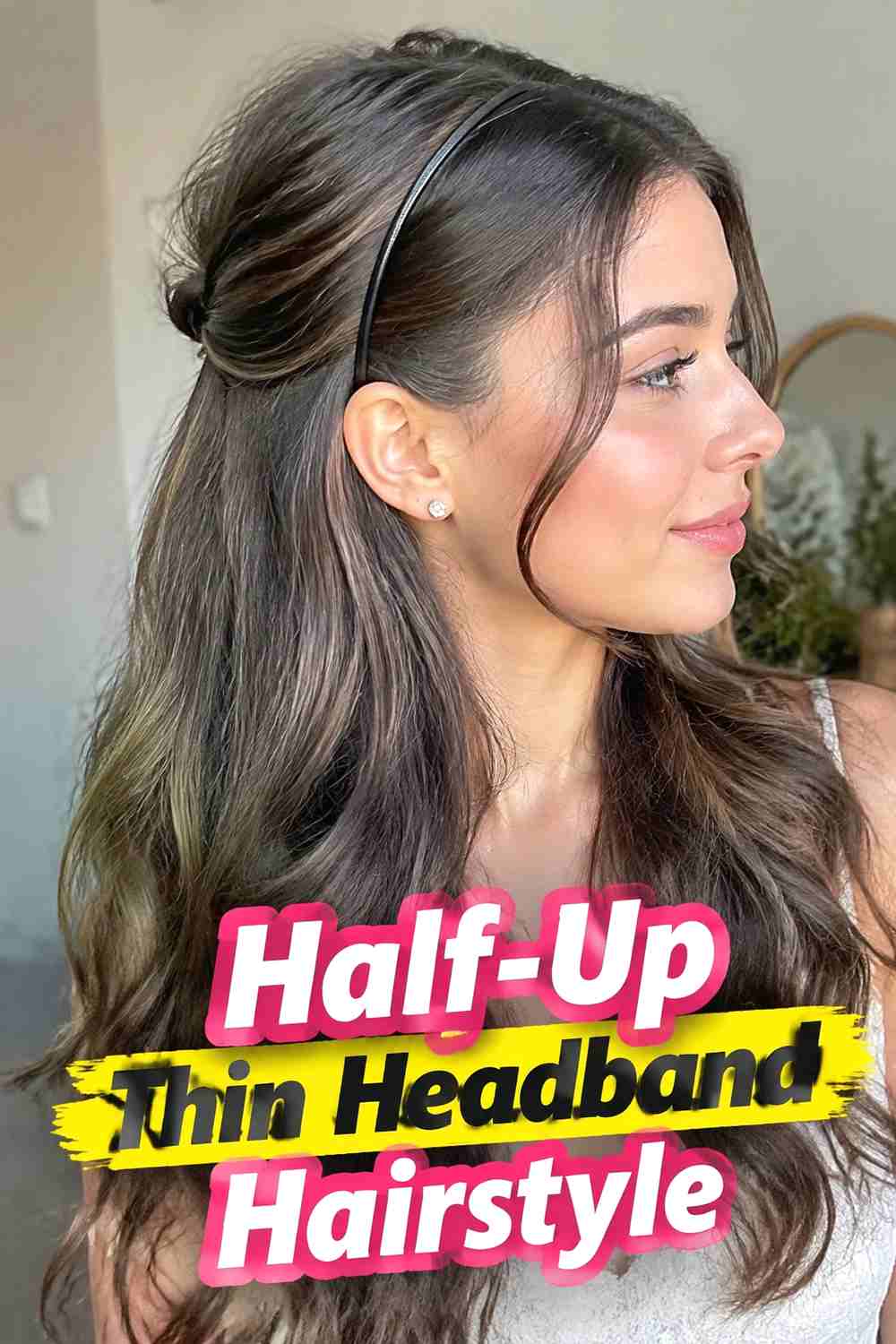
The Half-Up Thin Headband Hairstyle gives long straight hair structure while preserving most of its length. Gather small sections from each side and secure them at the center back, leaving enough hair around the crown to maintain natural fullness. Place a thin headband just behind the front hairline, allowing the accessory to frame the hairstyle without covering the half-up detail. The straight lower lengths create a smooth cascade down the back, giving the look a clean, feminine finish. Keep the gathered section relatively narrow so the sides do not become flat. A simple metal, satin, or colored band works particularly well because the hairstyle already has two distinct visual zones: the framed crown and the long loose lengths.
Styling Notes
Secure the half-up section before positioning the headband. Keeping the two elements independent makes adjustments easier and prevents unnecessary tension.
Best For
This style suits dates, parties, office outfits, family gatherings, and occasions where wearing all of your hair down feels a little too simple.
5. Face Framing Layers Thin Headband Hairstyle
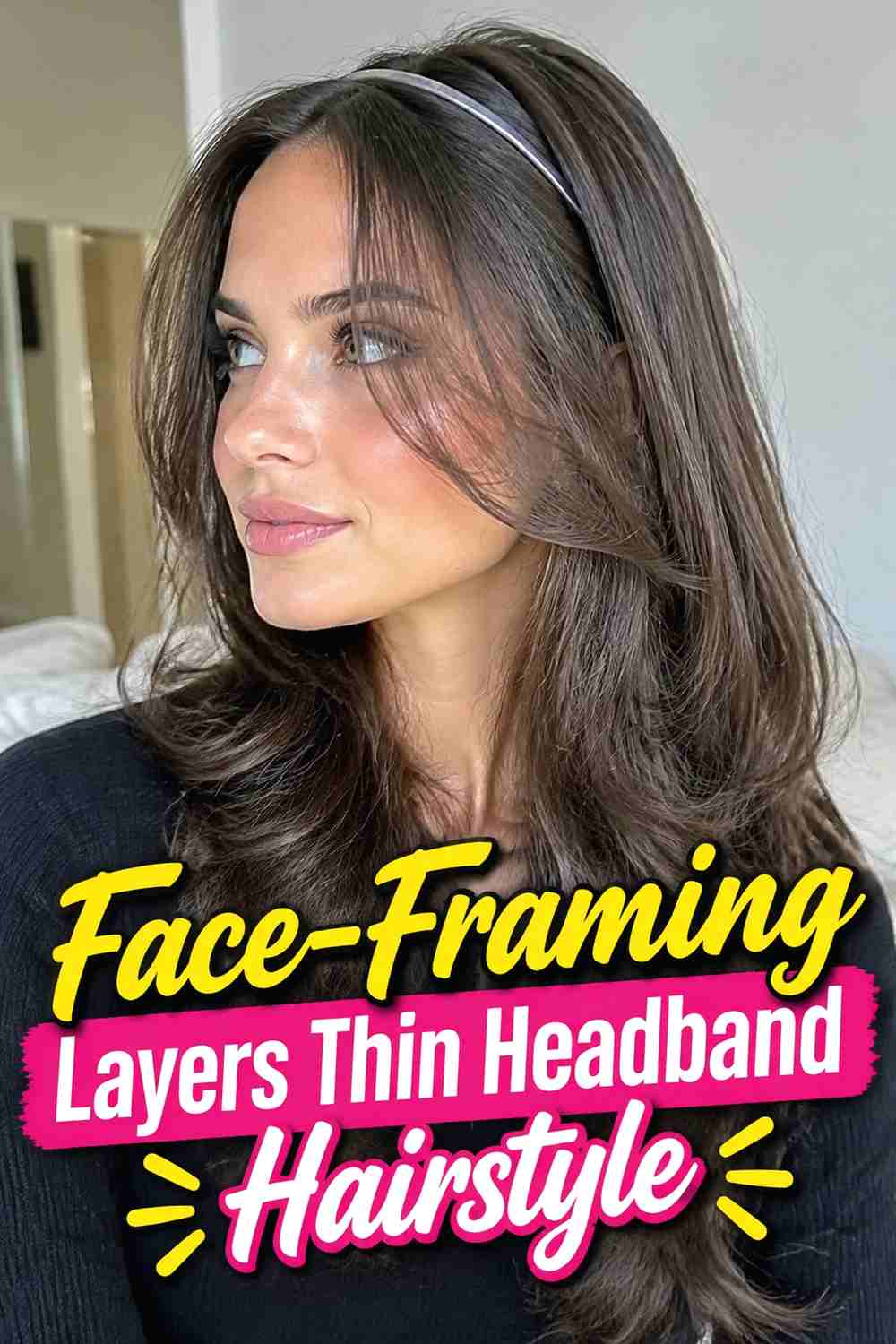
The Face-Framing Layers Thin Headband Hairstyle lets shorter front pieces soften the clean shape of long straight hair. Style the lengths smooth, allowing the front layers to curve naturally toward the cheekbones or jaw. Position a thin headband slightly behind those layers instead of pushing every strand away from the face. This creates a defined frame while preserving movement in the haircut. The accessory can be neutral for a subtle finish or jewel-toned and metallic for more contrast. Because the layers remain visible, the hairstyle feels less severe than a fully slicked-back headband look. It is particularly flattering on long cuts with graduated front pieces that already provide shape without requiring curls.
Why It Works
Leaving the shorter layers outside the band breaks up the length around the face and prevents very straight hair from appearing overly flat.
Pro Tip
Shape the front pieces before adding the headband so they fall naturally. Avoid repeatedly pulling them forward afterward, which can disturb the placement of the band.
6. Behind The Ears Thin Headband Hairstyle
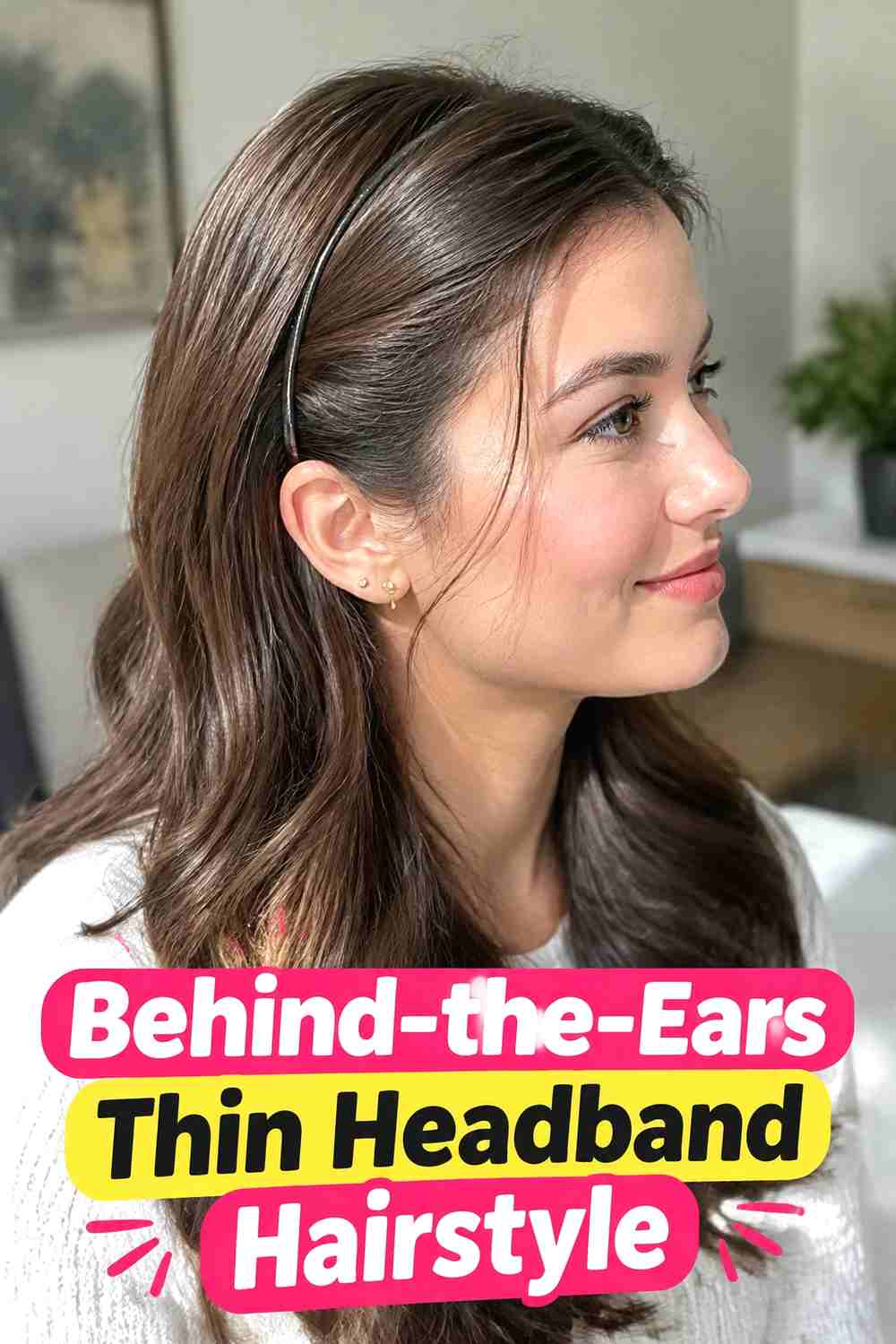
The Behind-the-Ears Thin Headband Hairstyle creates a crisp, streamlined silhouette by exposing the sides of the face while leaving the long lengths loose. Start with smooth straight hair, place a narrow band behind the hairline, and tuck both sides neatly behind the ears. The hair can fall directly down the back or over the shoulders depending on the outfit. This style is particularly effective with statement earrings because the ears remain visible, while the thin headband prevents the front sections from drifting forward. It also highlights the shine and uniform texture of long straight hair without introducing extra volume or complicated styling. The result feels modern, practical, and easy to adapt.
Styling Notes
Keep the sections around the ears smooth but not tightly stretched. A tiny amount of lightweight finishing product can control short flyaways without making the hair look stiff.
Best For
This works well for office wear, dinners, minimalist outfits, events with statement earrings, and everyday styling that needs a clean finish.
7. Braided Accent Thin Headband Hairstyle
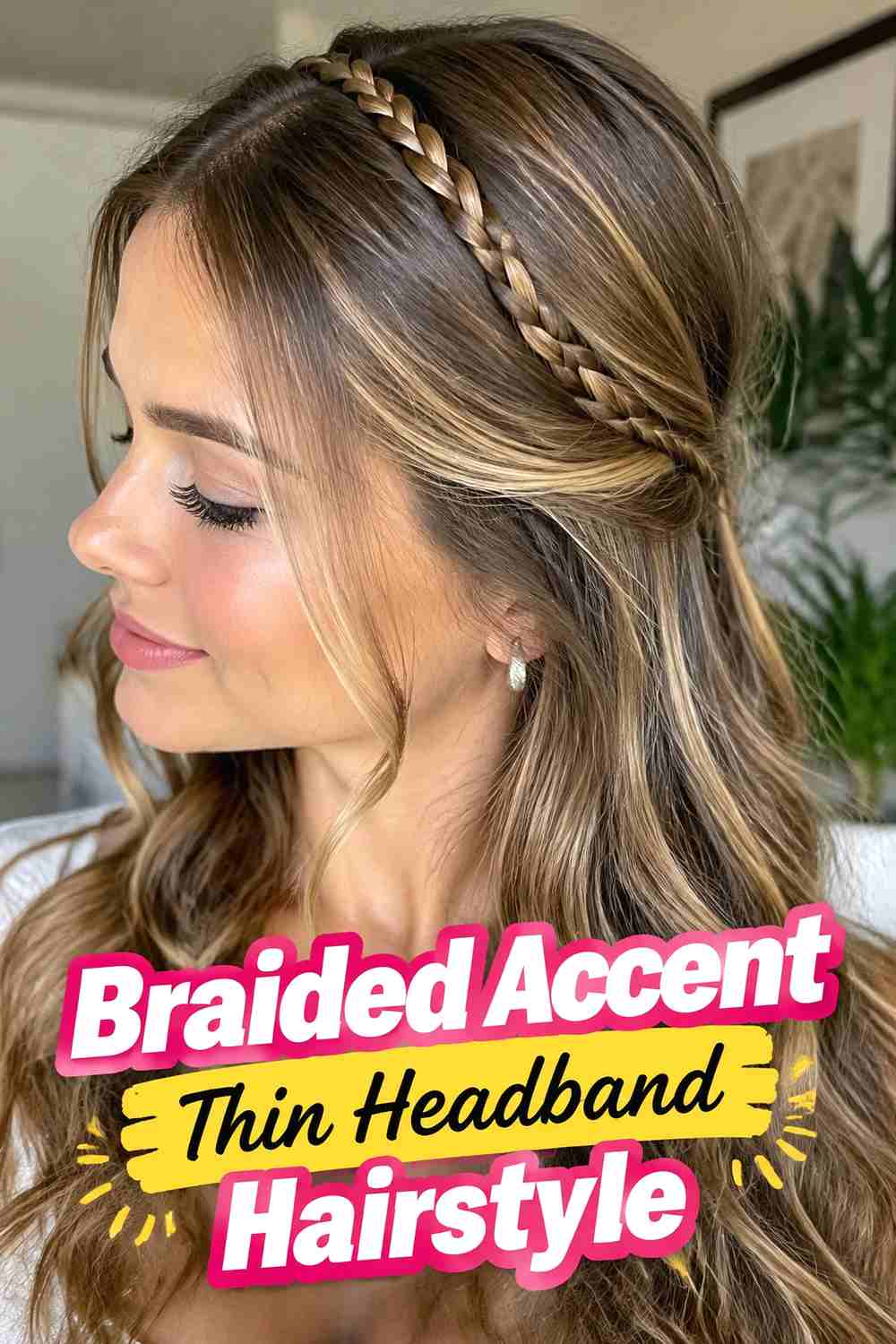
The Braided Accent Thin Headband Hairstyle introduces a small amount of texture while allowing most of the hair to stay long and straight. Create one narrow braid near a temple or along one side, secure it discreetly toward the back, and leave the remaining lengths smooth. Place a thin headband just behind the hairline so the braid remains visible beside or slightly behind it. The contrast between the woven section and straight strands makes the hairstyle more detailed without changing the overall sleek character. A very small braid usually works better than a large one because it complements rather than competes with the headband. This idea suits medium-density and thick long hair particularly well.
Styling Notes
Keep the braid narrow and moderately tight so it lies flat beneath or beside the band. A bulky braid can push the headband outward.
Best For
Choose this style when you want a subtle bohemian or romantic detail without curling the entire head or creating a full braided hairstyle.
8. High Ponytail Thin Headband Hairstyle
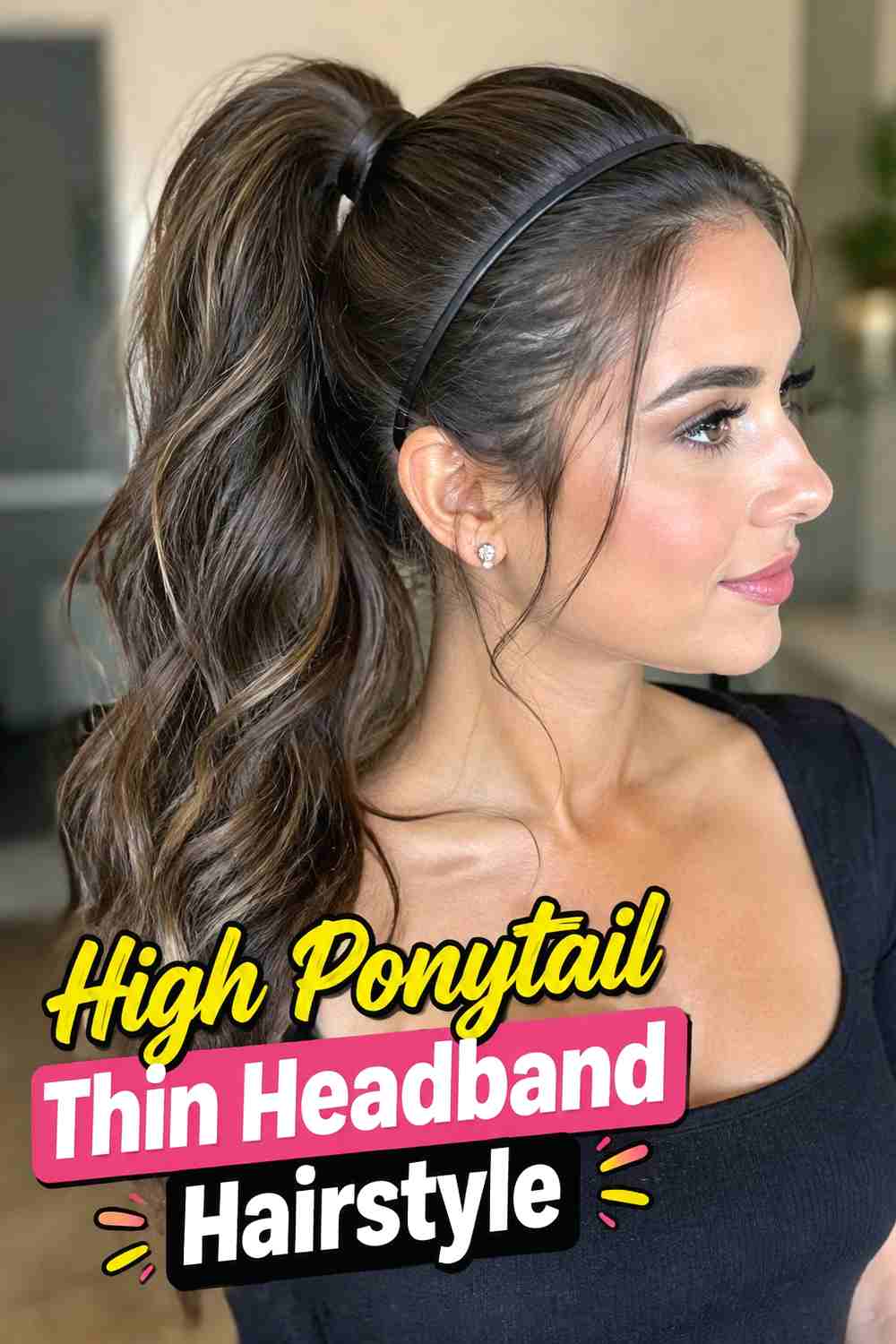
The High Ponytail Thin Headband Hairstyle gives long straight hair a sharper, more energetic silhouette. Smooth the hair upward into a high ponytail while keeping the tail straight and fluid, then add a narrow headband behind the hairline. The accessory separates the polished front from the lifted ponytail and can help keep shorter pieces controlled around the face. Wrap a small strand around the elastic if you want a more refined base, or keep the tie visible for a casual finish. Avoid pulling the headband too far backward, where it may compete with the ponytail placement. The long straight tail should remain the main source of movement, especially when viewed from the side or back.
Wear & Maintenance
Use a strong ponytail elastic and secure the base independently. The headband should control front sections, not carry any of the ponytail’s weight.
Pro Tip
Brush the ponytail itself separately after securing it so the long lengths remain aligned and smooth instead of becoming tangled around the base.
9. Twisted Half Up Thin Headband Hairstyle
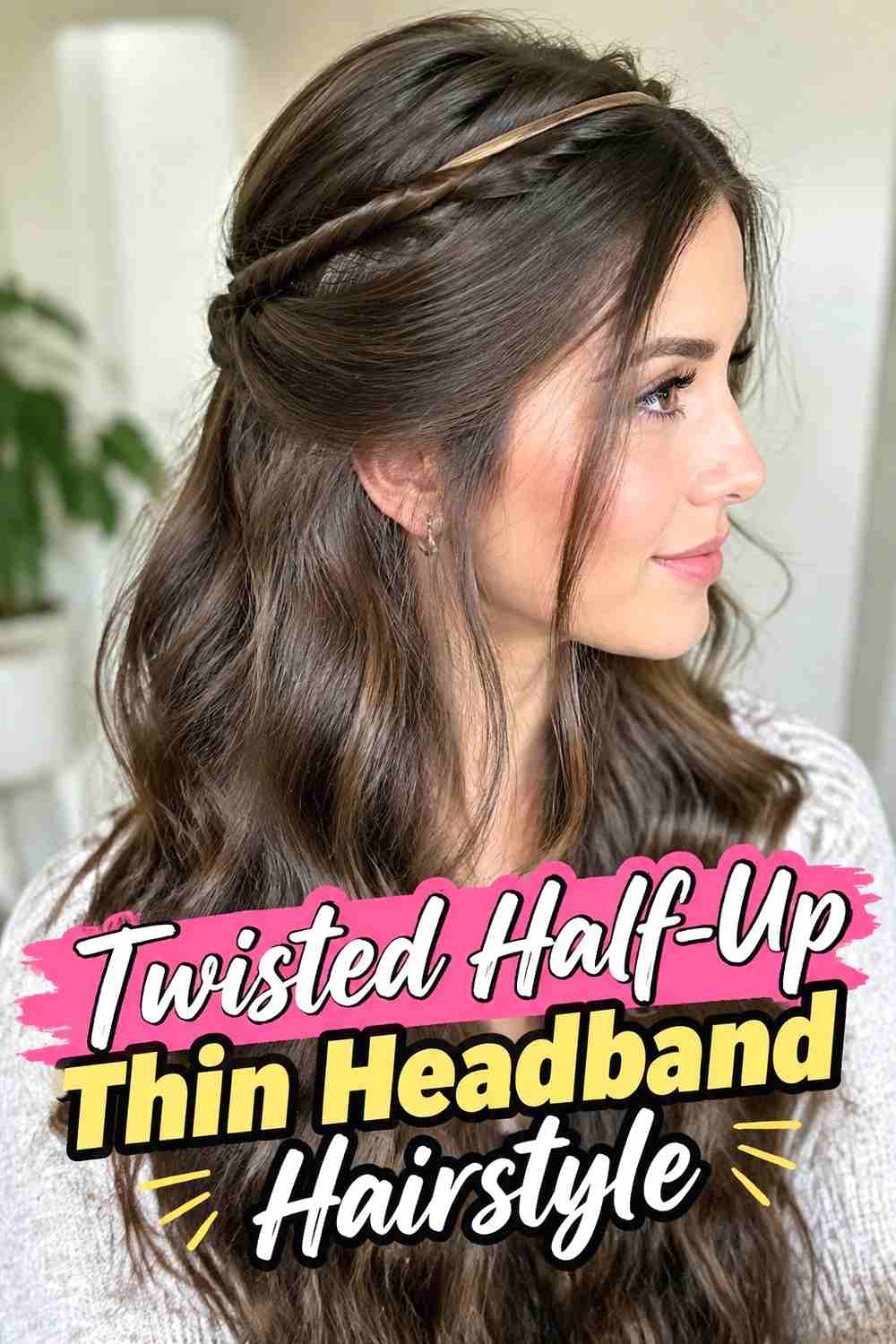
The Twisted Half-Up Thin Headband Hairstyle adds gentle detail at the back while keeping the lower lengths completely straight. Take a section from each temple, twist both pieces loosely away from the face, and secure them where they meet at the center back. Place a thin headband at the crown, leaving a small amount of hair visible between the accessory and the twists. The subtle spacing keeps the two details distinct. Straight hair makes the twist pattern especially clear because the smooth lower lengths do not compete with it. Keep the twists slightly expanded for softness rather than making them tight ropes. This style works beautifully on very long hair because the decorative upper section balances the uninterrupted length below.
Why It Works
The twists add dimension through the upper half while the long straight sections preserve a sleek, uncomplicated finish.
Best For
This is a good option for romantic dinners, parties, graduations, casual weddings, or anytime a basic half-up style needs more detail.
10. Double Thin Headband Hairstyle
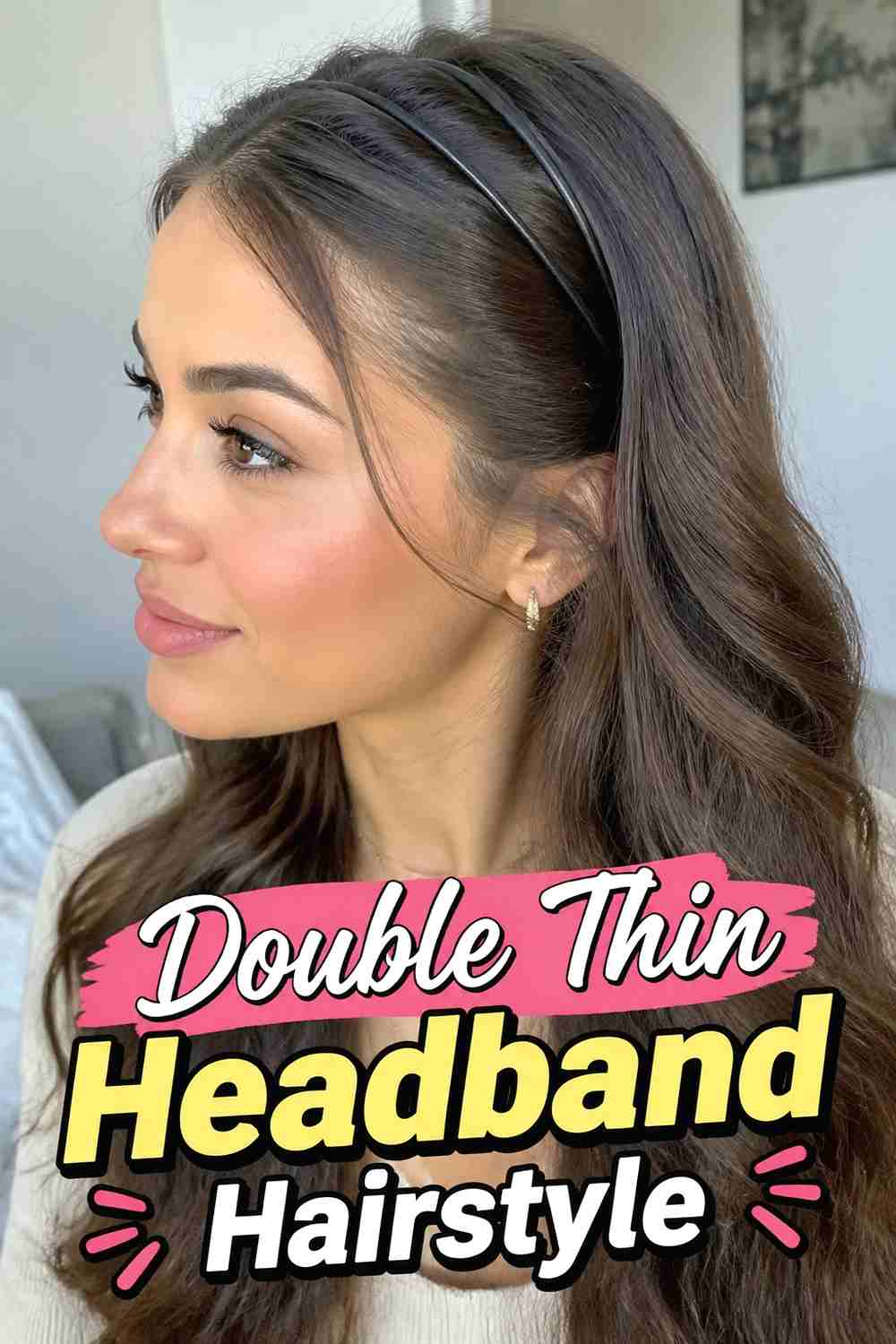
The Double Thin Headband Hairstyle uses two closely spaced narrow bands to create a graphic effect without hiding much of the hair. Style the long lengths straight and smooth, then place the first headband just behind the hairline and the second a short distance behind it. Matching bands create a clean, coordinated look, while two related tones can add subtle contrast. Keep the spacing even and the crown relatively flat so both lines remain visible from the front and sides. This style works especially well with simple clothing because the doubled accessory becomes a stronger visual element. Long straight hair provides an ideal background since its smooth texture keeps the overall look from becoming too busy.
Styling Notes
Choose lightweight bands with similar tension. If one sits much tighter than the other, the spacing may shift or feel uncomfortable after extended wear.
Pro Tip
Place the front band first, then use it as a guide for the second so the gap stays consistent across the crown.
11. Low Bubble Ponytail Thin Headband Hairstyle
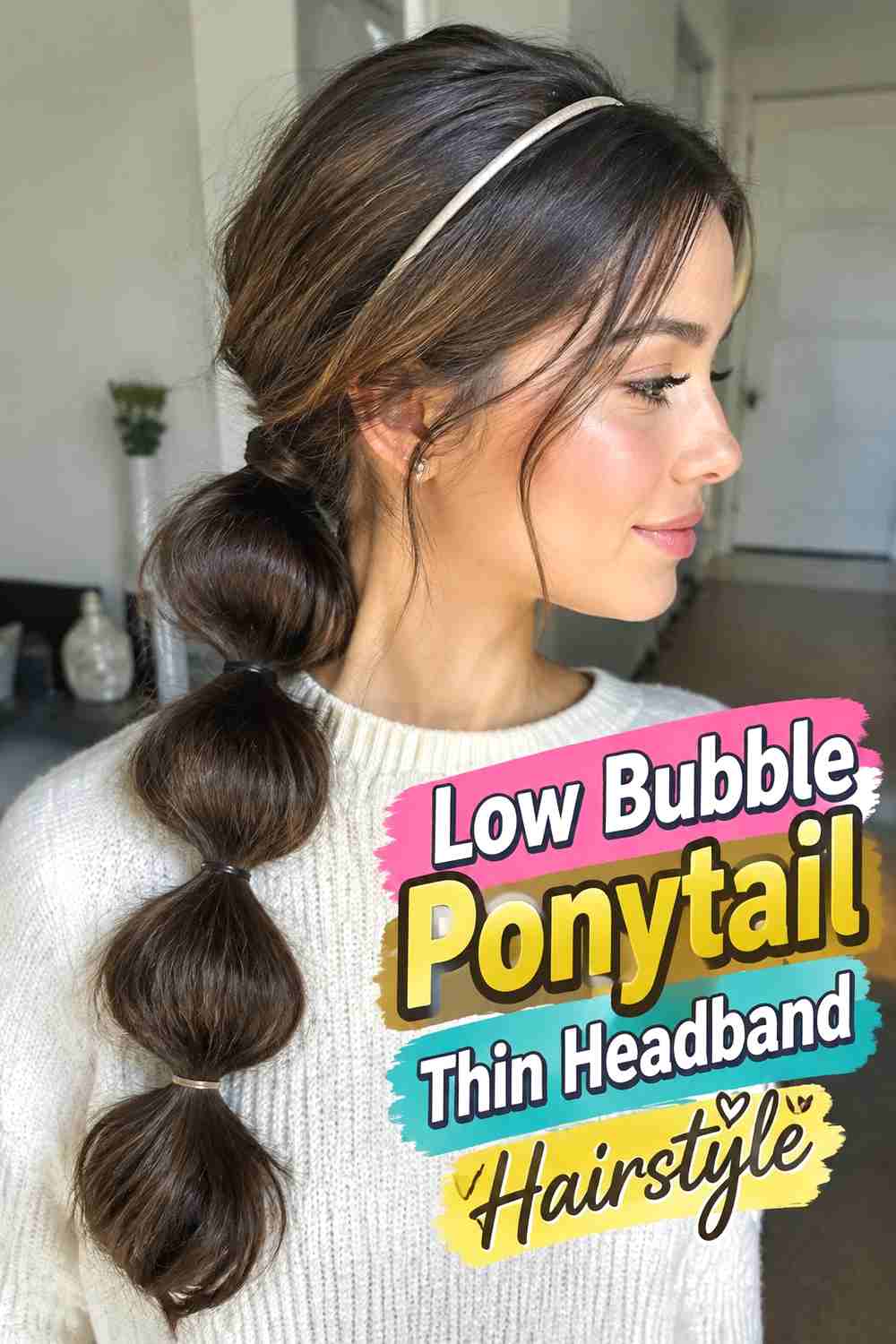
The Low Bubble Ponytail Thin Headband Hairstyle adds playful structure to long straight hair while keeping the front polished. Create a low ponytail at the nape, then place small elastics down the length at even intervals. Gently expand each section just enough to form soft bubbles without making them excessively round. Add a thin headband near the hairline to balance the detail at the back. Because straight hair naturally forms clean sections, the bubble pattern can look especially defined and modern. Keep the crown simple so the ponytail remains the more decorative element. This hairstyle works best on long hair because several bubbles can form without making the final section too short.
Hair Type & Length
Long and extra-long straight hair gives the clearest bubble effect. Medium-long hair can still work with two or three larger sections.
Wear & Maintenance
Use lightweight elastics that hold firmly but do not create bulky knots along the ponytail. Adjust every bubble before adding finishing spray.
12. Slicked Back Thin Headband Hairstyle
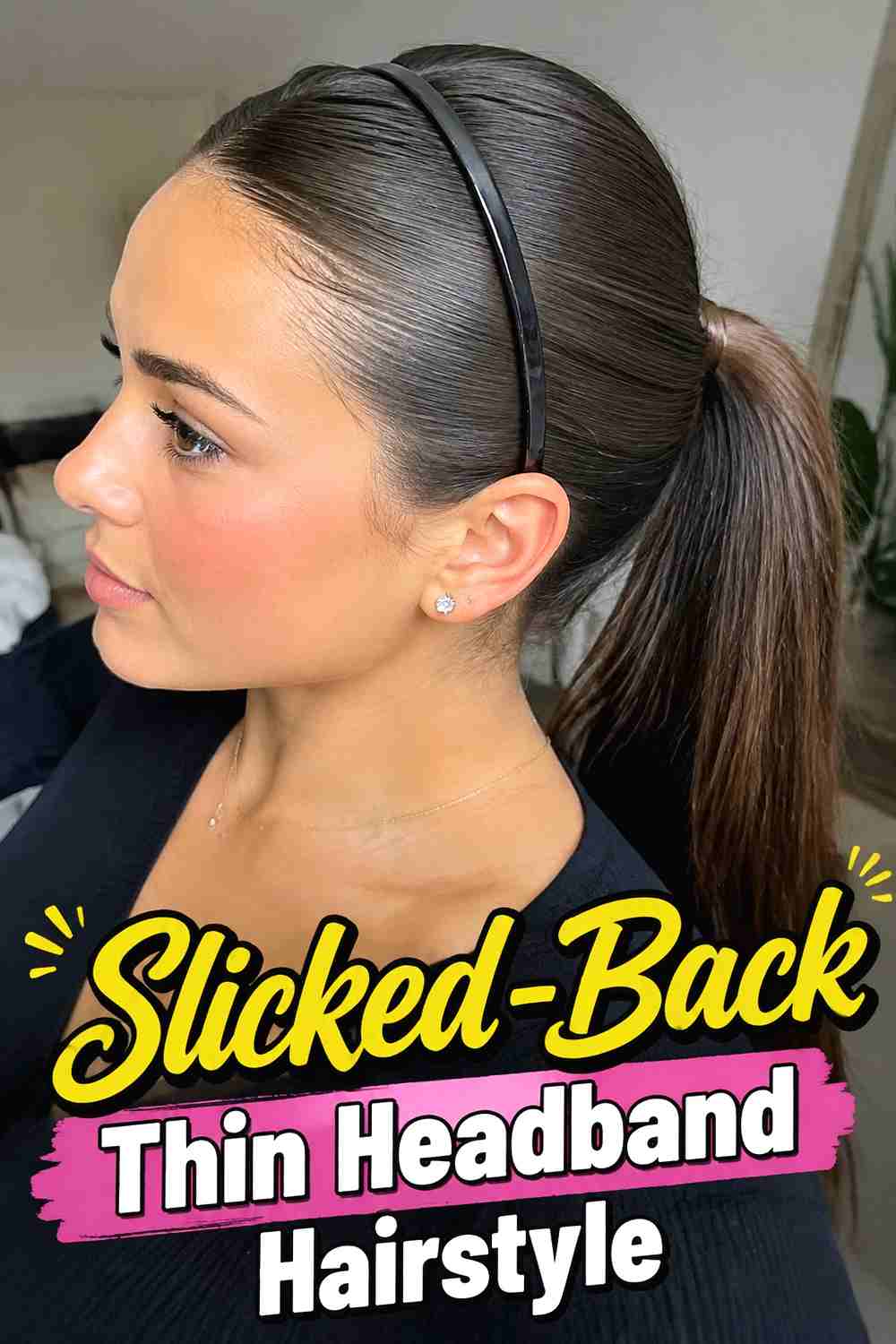
The Slicked-Back Thin Headband Hairstyle emphasizes shine and clean lines rather than volume. Smooth the hair away from the face using a lightweight styling product, keeping the long lengths straight and neatly aligned. Place a narrow headband just behind the slicked front section to create a clear transition into the loose hair behind it. The band can be black, metallic, tortoiseshell-inspired, or colorful depending on the outfit. Keep the lengths free-moving rather than coating them heavily with product, which preserves a natural contrast between the polished front and softer back. This style can feel distinctly modern and works particularly well when paired with structured clothing, clean makeup, and simple jewelry.
Styling Notes
Concentrate smoothing product around the hairline and crown instead of coating the full length. This keeps the ends from looking heavy or overly stiff.
Best For
Choose this style for evening events, polished workwear, minimalist outfits, or occasions where you want the face fully visible.
13. Curtain Fringe Thin Headband Hairstyle
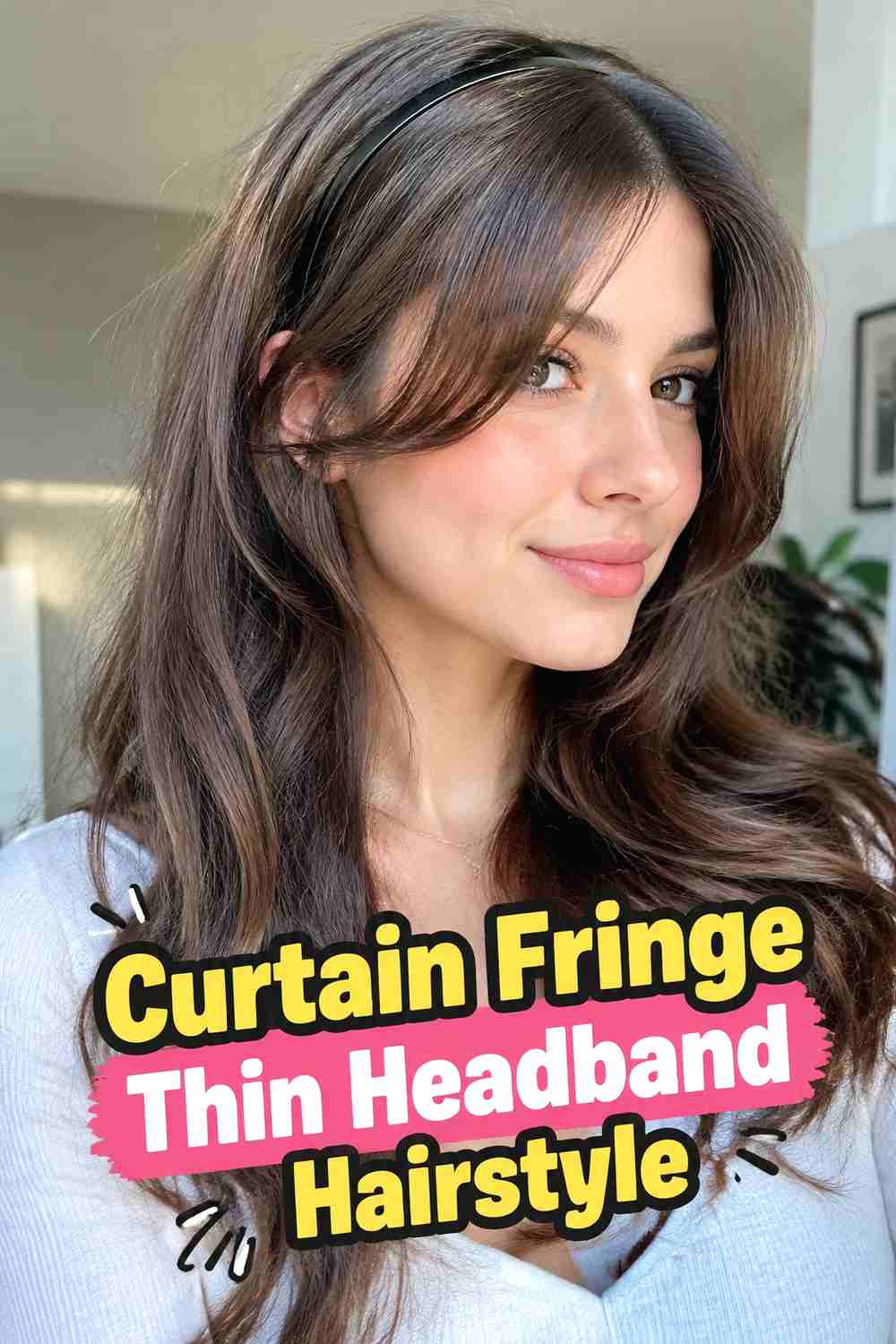
The Curtain Fringe Thin Headband Hairstyle keeps a soft fringe visible while using the band to control the longer sections behind it. Style the curtain bangs so they separate naturally at the center and curve away from the face, then place a thin headband behind the fringe. Leave the rest of the long hair straight and smooth, either over the shoulders or down the back. The key is to keep the band far enough behind the fringe that the shorter pieces can move naturally without becoming trapped underneath. This creates a softer appearance than a fully pushed-back look while still adding definition near the crown. The combination works particularly well with long layered cuts.
Why It Works
The exposed fringe provides movement around the face, while the headband keeps the longer front layers controlled and clearly separated.
Pro Tip
Set the curtain fringe first and let it cool before adding the band. This helps the shape stay intact instead of being flattened during placement.
14. Crown Lift Thin Headband Hairstyle
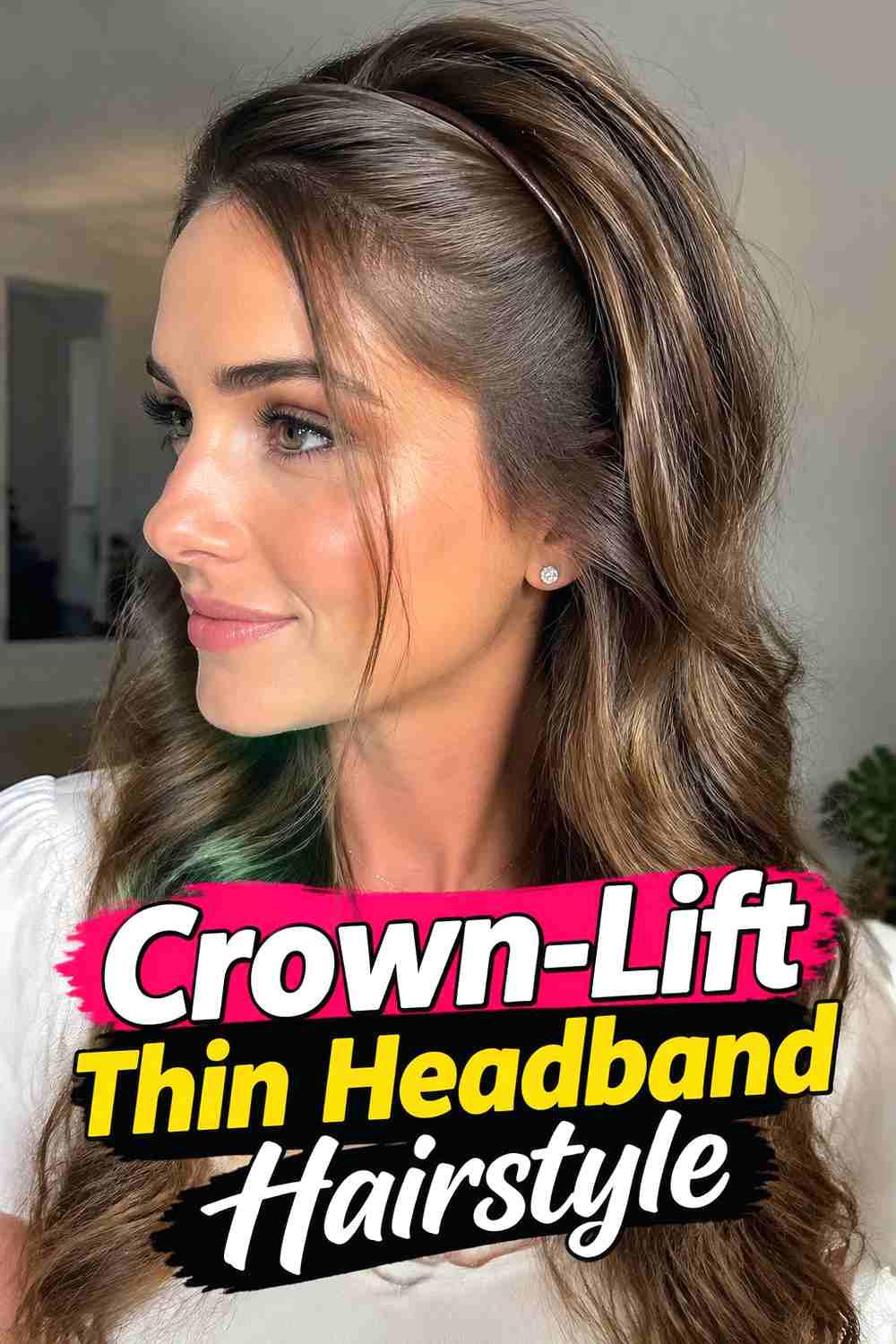
The Crown-Lift Thin Headband Hairstyle adds subtle height to long straight hair without turning the style into a full bouffant. Create a small amount of lift at the crown by gently backcombing underneath a narrow upper section or using natural root volume. Smooth the visible surface, then position a thin headband near the front so the lifted section begins just behind it. Leave the long lengths straight and flowing to keep the final look contemporary. The slight height gives the profile more shape and can make very long hair feel less vertically heavy. Keep the volume moderate and believable; the goal is a graceful transition from the headband into a softly raised crown.
Styling Notes
Backcomb only underneath the crown section and smooth the surface lightly. Excessive teasing can make the profile look uneven against the narrow band.
Best For
This style suits dinners, retro-inspired outfits, events, or anyone who wants a little more shape without curling or shortening the long lengths.
15. Side Braid Thin Headband Hairstyle
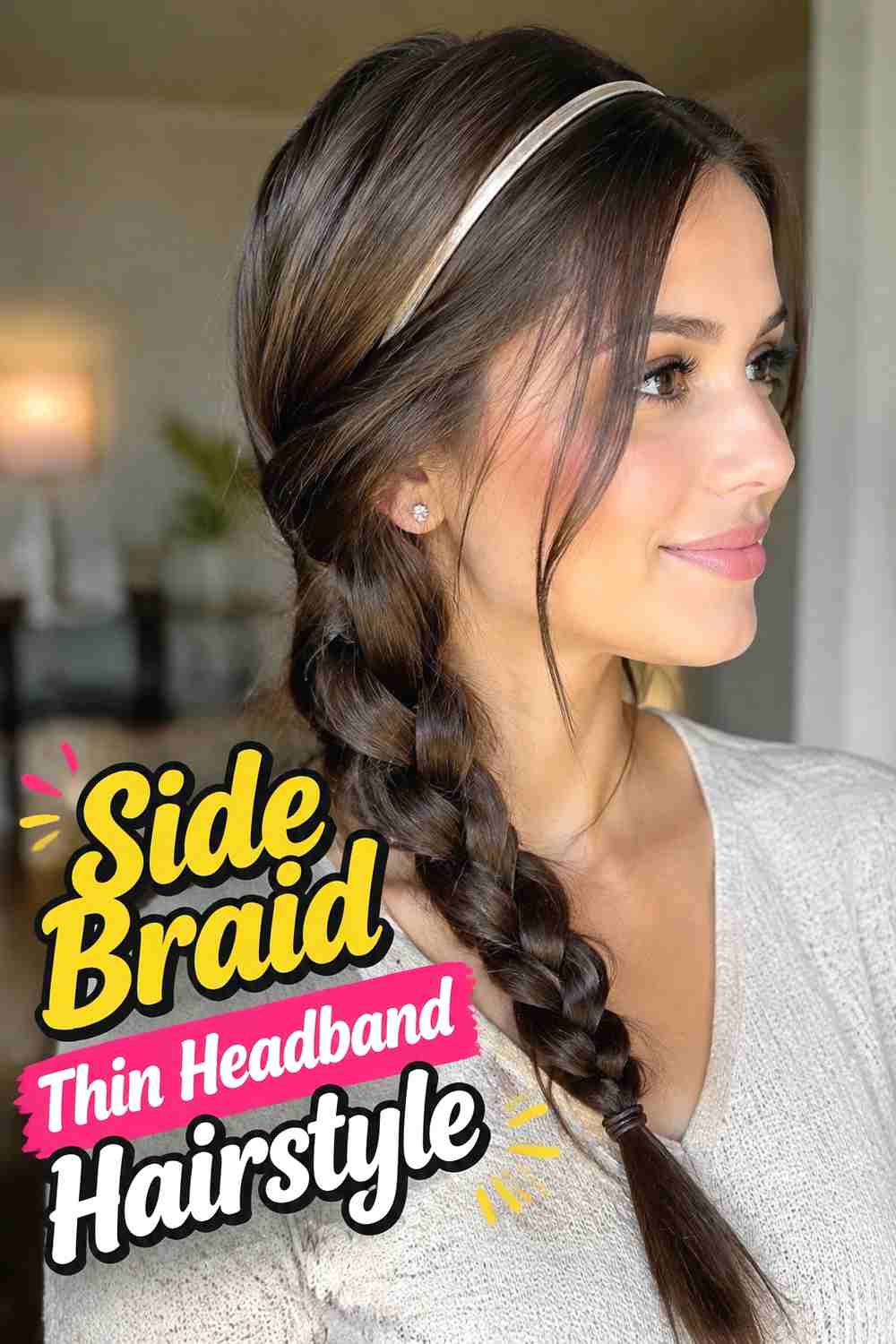
The Side Braid Thin Headband Hairstyle gathers long hair over one shoulder while keeping the crown neat and framed. Place the thin headband first, then sweep the lengths to one side and create a loose three-strand braid beginning below the ear or near the shoulder. Keep the braid smooth enough to reflect the naturally straight texture, but loosen the outer edges slightly if you want a softer result. A few front pieces can stay tucked behind the headband or remain free around the face. This hairstyle is practical for extra-long hair because the braid controls the lengths without requiring an updo, while the headband keeps the front sections from falling forward throughout the day.
Hair Type & Length
Long and extra-long hair works best because the braid remains substantial after being brought over one shoulder.
Pro Tip
Secure the hair near the nape with a hidden elastic before braiding if the side position tends to shift during wear.
16. Long Layers Thin Headband Hairstyle
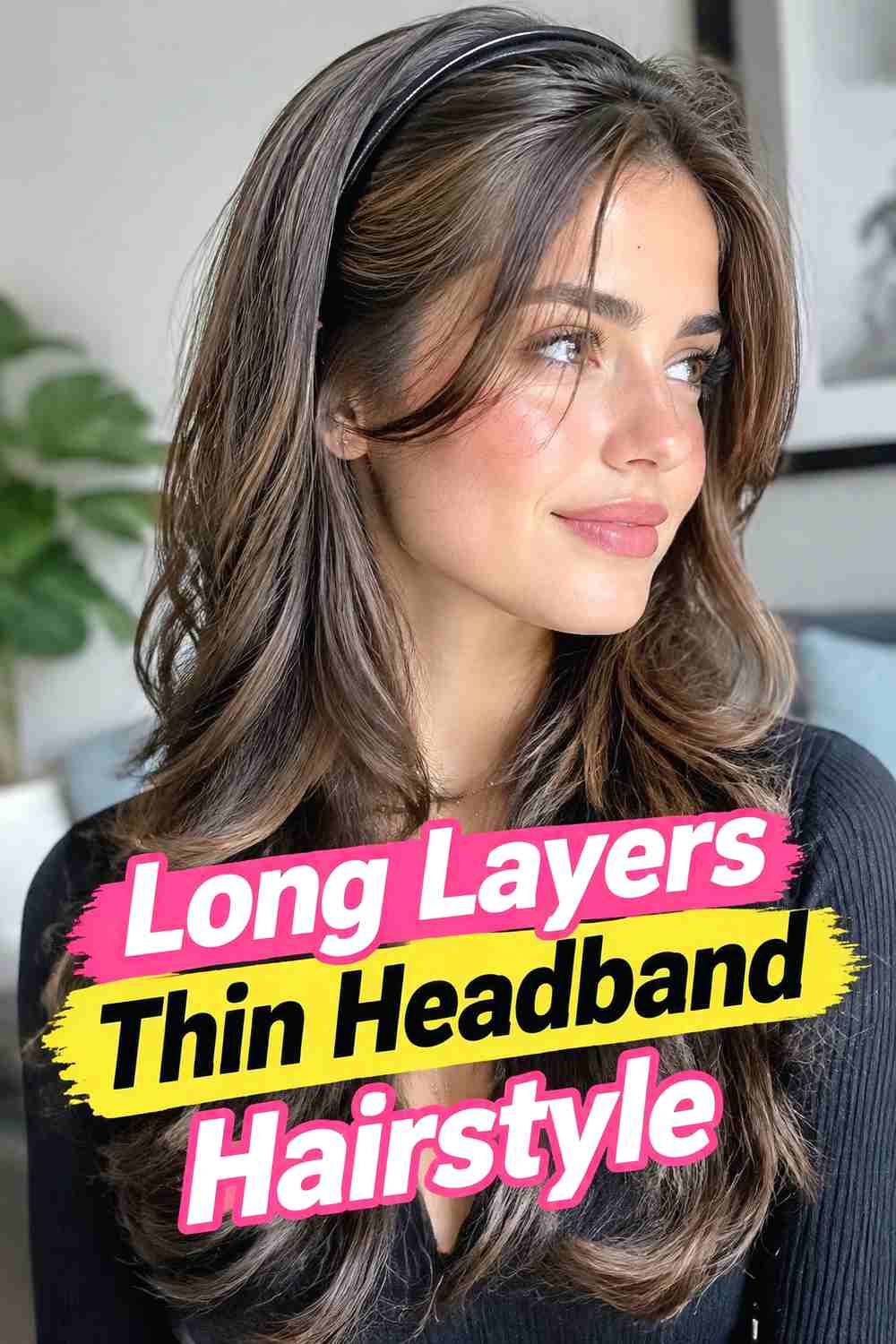
The Long Layers Thin Headband Hairstyle celebrates a layered haircut instead of hiding it. Blow-dry or smooth the hair straight while allowing the ends of each layer to retain slight natural separation. Place a thin headband behind the hairline and arrange the lengths over both shoulders so the different layer levels remain visible. If the shortest front layers fall near the cheekbones or jaw, leave them in front of the band for added movement. The narrow accessory gives the hairstyle structure near the crown while the graduated lengths create dimension below. This look feels especially effortless because the haircut itself provides most of the visual interest, making elaborate accessories or curls unnecessary.
Why It Works
Layering breaks up the weight of very long straight hair, while the headband creates a clean focal point without disrupting the cut’s natural movement.
Best For
This is an easy everyday option for work, shopping, casual dinners, or any setting where you want the haircut itself to remain the main feature.
17. Minimalist Black Thin Headband Hairstyle
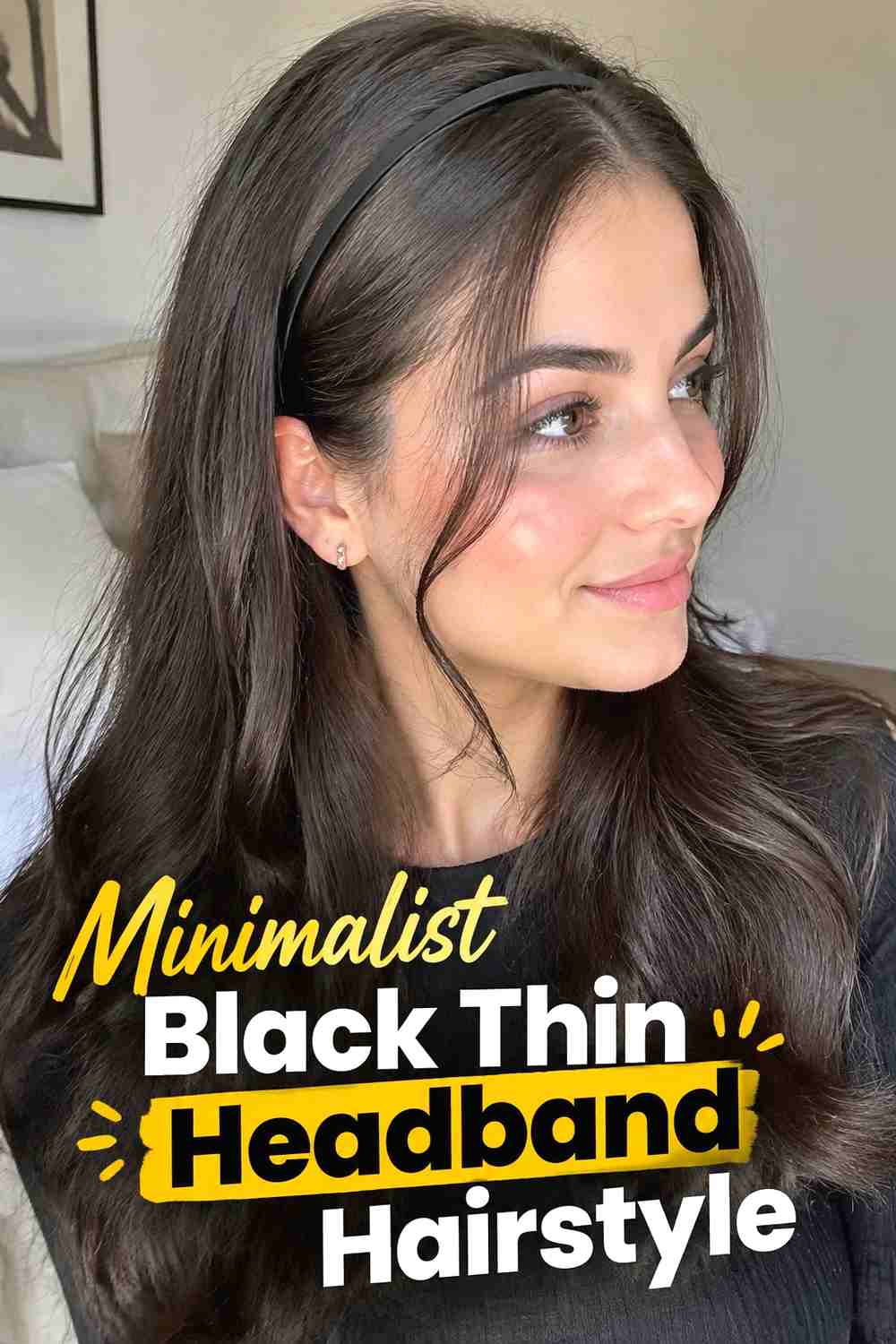
The Minimalist Black Thin Headband Hairstyle relies on simplicity, clean lines, and a strong contrast between the accessory and the hair or skin. Style long straight hair with a center or gentle side part, smooth the lengths, and add a narrow black headband slightly behind the hairline. Keep the rest of the hairstyle uncomplicated: no additional clips, large bows, or heavy texture are needed. On lighter hair, the black band creates obvious definition, while on dark hair it produces a more tonal and understated effect. The long straight lengths keep the silhouette elegant and uncluttered. This is one of the easiest styles to repeat because it does not depend on precise curls, braiding, or elaborate sectioning.
Wear & Maintenance
Choose a flexible band with comfortable pressure behind the ears. A simple style loses its appeal quickly if the accessory needs constant adjustment.
Best For
This look works with casual outfits, tailored clothing, office wear, evening basics, and minimalist wardrobes where understated accessories feel most natural.
18. Pearl Thin Headband Hairstyle
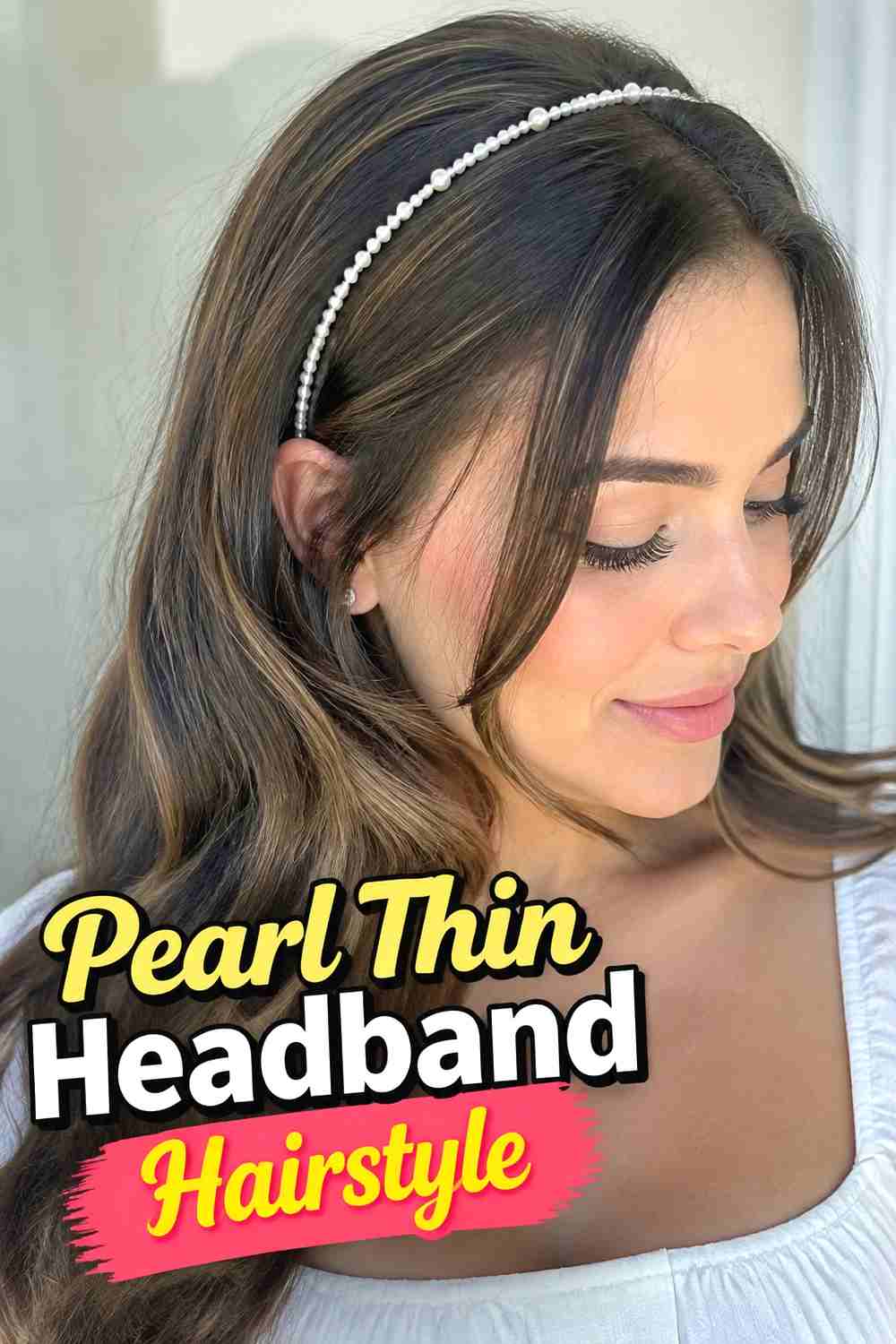
The Pearl Thin Headband Hairstyle adds a delicate formal accent while allowing long straight hair to remain loose and glossy. Choose a narrow band with a single row of small pearls rather than a heavily padded design, then place it just behind the hairline. A center part creates a balanced, refined finish, while a side part gives the pearls a softer, more romantic feel. Keep the lengths smooth and naturally moving so the accessory does not make the overall style look overly bridal. Tucking one side behind the ear can reveal earrings and give the headband more visibility from an angle. This elegant combination works particularly well when you want understated decoration without changing the straight texture.
Styling Notes
Keep other hair accessories minimal so the narrow pearl band remains the clear decorative feature. A small amount of shine product through the ends can enhance the polished effect.
Best For
This style suits weddings, dinners, engagement events, holiday parties, graduations, or occasions where a plain headband feels too casual but a full jeweled piece feels excessive.
How to Choose the Right Look
Start with your haircut. Long hair with a blunt perimeter often looks particularly sleek with center parts, tucked sides, low ponytails, and minimalist headbands. Layered cuts can benefit from styles that leave face-framing pieces or curtain fringe visible, allowing movement around the face while the band controls the longer sections.
Next, consider how much volume you want. Slicked-back and behind-the-ears styles create the flattest, cleanest profile. Crown-lift and half-up options add more shape without requiring curls. If your hair is very fine or silky, choose a headband with gentle grip rather than an overly smooth interior.
Think about styling time as well. Loose center-part looks and simple tucks require very little preparation, while braids, bubble ponytails, twists, and elevated ponytails take more sectioning and securing.
Finally, match the finish to the occasion. Minimal black bands work easily for everyday outfits, while pearl, metallic, or refined satin bands can make straight hair feel dressier. Comfort matters too: a headband should stay secure without pinching behind the ears or pressing tightly into the scalp.
Final Thoughts
Long straight hair gives thin headbands a clean canvas, making even a very narrow accessory easy to notice. Keep the lengths loose for a sleek everyday look, add twists or braids when you want extra detail, or pair the band with a ponytail for greater control. The best style preserves the natural shine and movement of straight hair while using the headband to add shape, contrast, or a polished finishing line.
FAQs
1. Where should a thin headband sit on long straight hair?
Most thin headbands look balanced when placed slightly behind the hairline. You can move the band farther back when leaving bangs or face-framing layers loose in front.
2. How do I stop a thin headband from sliding on straight hair?
Choose a band with gentle interior grip, position it where the roots have some natural texture, or use discreet pins behind the ears. Avoid applying heavy smoothing products directly where the band sits.
3. Can I wear a thin headband with a center part?
Yes. Keep the center part visible in front of the band for a sleek, symmetrical look, or place the band closer to the hairline for a more pushed-back effect.
4. Which thin headband hairstyle works best for very long hair?
Low ponytails, side braids, bubble ponytails, half-up styles, and simple loose-hair looks are practical because they either control the length or allow it to remain a deliberate part of the silhouette.
5. Do thin headbands work with straight layered hair?
Yes. They pair especially well with layers because you can leave shorter face-framing pieces in front while the band keeps longer sections away from the face.
Save your favorite thin headband hairstyle, share the ideas you love, and explore more polished ways to style long straight hair.